EP1912376B1 - Procédé et dispositif d'authentification - Google Patents
Procédé et dispositif d'authentification Download PDFInfo
- Publication number
- EP1912376B1 EP1912376B1 EP06122041A EP06122041A EP1912376B1 EP 1912376 B1 EP1912376 B1 EP 1912376B1 EP 06122041 A EP06122041 A EP 06122041A EP 06122041 A EP06122041 A EP 06122041A EP 1912376 B1 EP1912376 B1 EP 1912376B1
- Authority
- EP
- European Patent Office
- Prior art keywords
- client
- node
- server
- certificate
- public
- Prior art date
- Legal status (The legal status is an assumption and is not a legal conclusion. Google has not performed a legal analysis and makes no representation as to the accuracy of the status listed.)
- Not-in-force
Links
Images

Classifications
-
- H—ELECTRICITY
- H04—ELECTRIC COMMUNICATION TECHNIQUE
- H04L—TRANSMISSION OF DIGITAL INFORMATION, e.g. TELEGRAPHIC COMMUNICATION
- H04L9/00—Cryptographic mechanisms or cryptographic arrangements for secret or secure communications; Network security protocols
- H04L9/32—Cryptographic mechanisms or cryptographic arrangements for secret or secure communications; Network security protocols including means for verifying the identity or authority of a user of the system or for message authentication, e.g. authorization, entity authentication, data integrity or data verification, non-repudiation, key authentication or verification of credentials
- H04L9/3236—Cryptographic mechanisms or cryptographic arrangements for secret or secure communications; Network security protocols including means for verifying the identity or authority of a user of the system or for message authentication, e.g. authorization, entity authentication, data integrity or data verification, non-repudiation, key authentication or verification of credentials using cryptographic hash functions
-
- H—ELECTRICITY
- H04—ELECTRIC COMMUNICATION TECHNIQUE
- H04L—TRANSMISSION OF DIGITAL INFORMATION, e.g. TELEGRAPHIC COMMUNICATION
- H04L9/00—Cryptographic mechanisms or cryptographic arrangements for secret or secure communications; Network security protocols
- H04L9/32—Cryptographic mechanisms or cryptographic arrangements for secret or secure communications; Network security protocols including means for verifying the identity or authority of a user of the system or for message authentication, e.g. authorization, entity authentication, data integrity or data verification, non-repudiation, key authentication or verification of credentials
- H04L9/3263—Cryptographic mechanisms or cryptographic arrangements for secret or secure communications; Network security protocols including means for verifying the identity or authority of a user of the system or for message authentication, e.g. authorization, entity authentication, data integrity or data verification, non-repudiation, key authentication or verification of credentials involving certificates, e.g. public key certificate [PKC] or attribute certificate [AC]; Public key infrastructure [PKI] arrangements
-
- H—ELECTRICITY
- H04—ELECTRIC COMMUNICATION TECHNIQUE
- H04L—TRANSMISSION OF DIGITAL INFORMATION, e.g. TELEGRAPHIC COMMUNICATION
- H04L9/00—Cryptographic mechanisms or cryptographic arrangements for secret or secure communications; Network security protocols
- H04L9/50—Cryptographic mechanisms or cryptographic arrangements for secret or secure communications; Network security protocols using hash chains, e.g. blockchains or hash trees
Definitions
- the present invention relates to a method and an apparatus for authentication, in particular in an ad-hoc network or an infrastructureless network.
- client and server are used to respectively designate the entity that is authenticated and the one that performs the authentication. They are not intended to be understood as being limited to define client-server type communication. The solution of the invention which will later be presented can be applied to any type of communication (client-server, peer to peer, etc.).
- TTP online trusted third party
- Fig. 1 This use of one-way hash chains is schematically illustrated in Fig. 1 .
- the client sends K m to the server.
- the client sends K m - i .
- a method for authenticating a client or first node towards a server or second node in an ad-hoc network comprising:
- each client say A, chooses (or somehow obtains) a secret key s and uses it to generate a one-way hash chain. That chain is bound to A's identity through a unique hash-code value contained in a certificate.
- the client uses its chain to derive a number of public/private key pairs. These public/private key pairs are bound to one another and to the hash code value contained in A's certificate.
- the server B the client just needs to send one of its public keys to B along with its certificate.
- B can authenticate A by verifying that the disclosed public key is bound to the hash-code contained in A's certificate.
- the public/private key pairs "being bound to each other" can be implemented by deriving the public/private key pairs based on the elements of a hash chain. This ensures that they are not independent of each other but to some extent “depend on each other” and therefore may be regarded as "being bound to each other". If the hash code contained in the certificate of the client is also based on the hash chain this hash code may therefore also be regarded as "being bound to the public/private key pairs".
- said public/private key pairs are bound to each other by each of said public/private key pairs being generated based on a first one-way hash chain which is generated based on said secret key s using a first hash function, and said method comprises: sending one or more elements of the same hash chain on which said public key is based from said client to said server.
- This enables a plurality of keys to be generated based on a single secret value s. It further enables the checking by using one or more elements of the same hash chain on which the public key sent from the client to the server is based.
- said public/private key pairs are bound to said unique hash-code value contained in a certificate by applying a second hash function to said one way hash chain. This makes it necessary to store only a single hash value in said certificate.
- said hash-code value is bound to the identity of said client contained in said client's node certificate through a signature generated using the private key of a trusted third party. This initially generates trust during an initialization phase of the proposed scheme.
- g ⁇ G is a generator of G
- f is a cryptographic (one-way) hash-function mapping the set ⁇ 0,1,..., q -1 ⁇ onto itself.
- a clock drift is taken into account by defining a maximum clock drift between synchronized clocks and further whether more than one key may be disclosed during authentication to take into account a possible clock drift. This can take into account imperfect synchronization or a drift of the clocks.
- This provides a solution that permits a client and a server that do not share a secret key in advance to establish an authenticated session key without using a public key certificate but by using one-way hash chains.
- an apparatus for authenticating a client node towards a server node in an ad-hoc network comprising:
- a computer program for performing authentication in ad-hoc networks comprising computer program code which when being executed on a computer enable said computer to carry out the method of one of the embodiments of the invention.
- the proposed authentication scheme may be used to provide other security services such as authorization, integrity, etc. It can secure applications such as the secure exchange of resources: (e.g. multimedia files) in ad hoc networks.
- resources e.g. multimedia files
- mobile phones are also MP3 players. Therefore mobile phones may be used to extend (legal) platforms for multimedia file distribution permitting distribution even when no infrastructure is accessible.
- the proposed scheme may further be used to secure confidential communication between business partners, e.g. during trade fairs, or the exchange of confidential and authentic data by rescue teams during natural disasters such as earthquakes, etc.
- the client chooses a secret s E ⁇ 0, 1, ... , q -1 ⁇ .
- TTP trusted third party
- the client is synchronized with the TTP and divides time into intervals of equal length L, where L is a public value. Each interval is assigned a key generated with elements from the client's one-way hash chain obtained by repeatedly applying f to s.
- Fig. 2 This is schematically illustrated in Fig. 2 where it is shown how the time is divided into intervals of length L, and each interval at time iL has assigned a different key.
- a time different from the issuance time t 0 of the certificate may also be chosen as long as the time identifies correctly a certain moment in time so that based on the reference time at any moment later in time it can be determined which interval iL is valid at a certain time so that the corresponding key can be identified.
- the client sends the server:
- the server knows that g K w was generated by the client whose identity is contained in the received certificate.
- Fig. 3 illustrates that at a certain moment in time when the authentication is performed only the value of the hash chain belonging to the interval into which the moment falls is published. The preceding values of the hash chain are not published. Therefore and because at different intervals different values are published the proposed mechanism achieves a high level of security.
- the server and the client agree to use asymmetric encryption, the server is able to send to the client a confidential message by encrypting it with g K w . Then, the client will be able to decrypt the message with its private key K w .
- the server can prove its identity to the client by disclosing the key g K y .
- client, server and TTP should have synchronized clocks.
- Many solutions can be used to achieve such a synchronization, including use of the network time protocol (see D. Mills. Network Time Protocol (Version 3) Specification, Implementation and Analysis. RFC 1305, March 1992 ), making the client and server become synchronized with the TTP's clock, etc. This is done at the initialization phase, while client and server are connected to the fixed network. However, afterwards they may run independently of the TTP and the fixed network. Synchronization is performed to permit verification of the freshness and the validity of keys published during the authentication process. However, entities do not need to have perfectly synchronized clocks.
- a clock drift of few seconds may not be a problem if, for instance, two keys, or more, are valid during one time period as represented in Fig. 4 . If d is the maximum clock drift that is tolerated between two entities synchronized with the TTP, then d can be the period of time that separates, in the same time interval, the beginning of the validity period of these two keys. This guarantees that at least one key will permit to establish an authenticated session key in each time interval. To illustrate this, reference is made to Fig. 4 .
- an entity does not need to verify the validity of the certificate by obtaining updated revocation status information. Indeed, if the value s is well protected - this could, for example, be based on a password or pass-phrase, and only stored in the machine for the brief period necessary to generate K i , for some i - only the client that knows s is able to generate the key K m - i -1 valid in interval T i as well as the corresponding public key g K m -1- i .
- K m - i -1 is generated with elements of the client's one-way hash chain that have not been published in another time period, and since one-way hash chains are computationally hard to reverse, an attacker is not able to find K m - i -1 from keys that the client used in the past. It is also computationally hard for an attacker to find K m - i -1 from g K m -1- i (see W. Diffie and M. Hellman. New Directions in Cryptography. In IEEE Transactions on Information Theory, Vol. IT-22, No. 6, pp. 644--654, 1976 ). For these reasons, only the legitimate owner of a certificate is able to generate a valid authenticated session key with a given server during a given time interval.
- certain optimizations in the public key verification process are possible if the server caches a trusted copy of a past public key for the client.
- a computer program either stored in a data carrier or in some other way embodied by some physical means such as a recording medium or a transmission link which when being executed on a computer enables the computer to operate in accordance with the embodiments of the invention described hereinbefore.
- Embodiments of the invention may be implemented e.g. by nodes in a network or any entities in a network which are programmed to operate in accordance with the authentication mechanisms as described before.
Landscapes
- Engineering & Computer Science (AREA)
- Computer Security & Cryptography (AREA)
- Computer Networks & Wireless Communication (AREA)
- Signal Processing (AREA)
- Computer And Data Communications (AREA)
Claims (21)
- Procédé pour authentifier un noeud client ou un premier noeud vers un noeud serveur ou un deuxième noeud, ledit procédé comprenant les étapes consistant à :obtenir une clé secrète s par ledit noeud client et l'utiliser pour générer une chaîne de hachage unidirectionnelle qui est liée à l'identité dudit noeud client à travers une valeur de code de hachage unique contenue dans un certificat ;dériver un nombre de m paires de clés publiques/privées, m étant un nombre entier, par ledit premier noeud en utilisant ladite chaîne de hachage unidirectionnelle dudit premier noeud, lesdites paires de clés publiques/privées étant liées entre elles et à la valeur de code de hachage contenue dans le certificat dudit noeud client ;envoyer par ledit noeud client une de ses clés publiques générées avec son certificat au dit noeud serveur ;authentifier ledit premier noeud par ledit deuxième noeud en vérifiant que la clé publique divulguée est liée à la valeur de code de hachage contenue dans le certificat dudit noeud client.
- Procédé selon la revendication 1, dans lequel lesdites paires de clés publiques/privées sont liées entre elles par chacune desdites paires de clés publiques/privées générées sur la base d'une première chaîne de hachage unidirectionnelle qui est générée sur la base de ladite clé secrète s en utilisant une première fonction de hachage, et ledit procédé comprend l'étape consistant à :envoyer un ou plusieurs éléments de la même chaîne de hachage sur laquelle ladite clé publique est basée dudit client au dit serveur.
- Procédé selon la revendication 1 ou 2, dans lequel lesdites paires de clés publiques/privées sont liées à ladite valeur de code de hachage unique en appliquant une deuxième fonction de hachage à ladite chaîne de hachage.
- Procédé selon l'une des revendications précédentes, dans lequel :ladite valeur de code de hachage est liée à l'identité dudit client contenue dans le certificat de noeud dudit client à travers une signature générée en utilisant la clé privée d'un tiers de confiance.
- Procédé selon l'une des revendications 1 à 4, ledit procédé comprenant :une phase d'initialisation au cours de laquelle ledit noeud client est connecté à un tiers de confiance et une phase d'authentification au cours de laquelle aucune connexion à un tiers de confiance n'est nécessaire, dans lequel ladite phase d'initialisation comprend les étapes consistant à :synchroniser l'horloge du client avec celle du tiers de confiance ;dériver une valeur de contrôle
 demander au dit tiers de confiance un certificat qui lie l'identité dudit client à ladite valeur de contrôle, ledit certificat contenant une valeur de temps de référencé ;diviser le temps en m intervalles égaux de longueur L, et affecter une clé respectivement différente générée avec des éléments de la chaîne de hachage unidirectionnelle dudit client à chacun desdits intervalles, ladite fonction de hachage unidirectionnelle étant générée sur la base de l'application à répétition de ladite fonction de hachage f à s, dans lequelledit noeud client utilise dans un intervalle de temps Ti , 0 ≤ i ≤ m en tant que clé privée
m-1-i , ledit procédé comprenant en outre une phase d'authentification qui comprend les étapes consistant à :envoyer ladite valeur de contrôle dudit client au dit serveur ;envoyer la clé publique gKw =g Km-1-i affectée à l'intervalle de temps présent dudit client au dit serveur ;envoyer f w+1(s) =f m-i(s) et ledit certificat dudit client au dit serveur ;et utiliser ces valeurs par ledit noeud serveur qui calcule ensuite : pour vérifier l'identité dudit noeud client en contrôlant que v=h(v*).
 - Procédé selon la revendication 5, dans lequel G=(G,*) est un groupe cyclique fini d'ordre q, g ∈ G est un générateur de G, et f est une fonction de hachage unidirectionnelle cryptographique mappant l'ensemble {0,1,...,q -1} sur lui-même.
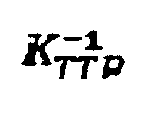
- Procédé selon l'une des revendications précédentes, dans lequel ladite initialisation comprend les étapes consistant à :distribuer sur ledit noeud serveur un ou plusieurs de G, g, f, m, la clé publique du tiers de confiance KTTP et h étant une fonction de hachage unidirectionnelle ;et pour le noeud client qui souhaite prouver son identité, calculer ladite valeur de contrôle en conséquence et un certificat selon


- Procédé selon l'une des revendications 2 à 7, dans lequel :une dérive d'horloge est prise en compte en définissant une dérive d'horloge maximale entre des horloges synchronisées et en outre si plus d'une clé peut être divulguée au cours de l'authentification pour prendre en compte une dérive d'horloge possible.
- Procédé selon l'une des revendications précédentes, ledit procédé comprenant l'étape consistant à :authentifier ledit noeud serveur vers ledit noeud client de la même manière que ledit noeud client a été authentifié vers ledit noeud serveur.
- Procédé selon la revendication 9, comprenant en outre l'étape consistant à :établir une clé de session entre ledit noeud client et ledit noeud serveur en calculant : SK=(gK
w ) Ky = (gKy ) Kw , où gKw est la clé publique envoyée dudit client au dit serveur et Ky est la clé privée dudit serveur et gKy est la clé publique envoyée dudit serveur au dit client et Kw est la clé privée dudit client. - Appareil pour authentifier un noeud client ou un premier noeud vers un noeud serveur ou un deuxième noeud dans un réseau ad hoc, ledit appareil comprenant :un module pour obtenir une clé secrète s par ledit noeud client et l'utiliser pour générer une chaîne de hachage unidirectionnelle qui est liée à l'identité dudit noeud client à travers une valeur de code de hachage unique contenue dans un certificat ;un module pour dériver un nombre de m paires de clés publiques/privées, m étant un nombre entier, par ledit premier noeud en utilisant ladite chaîne de hachage unidirectionnelle dudit premier noeud, lesdites paires de clés publiques/privées étant liées entre elles et à la valeur de code de hachage contenue dans le certificat dudit noeud client ;un module pour envoyer par ledit noeud client une de ses clés publiques générées avec son certificat au dit noeud serveur ;un module pour authentifier ledit premier noeud par ledit deuxième noeud en vérifiant que la clé publique divulguée est liée à la valeur de code de hachage contenue dans le certificat dudit noeud client.
- Appareil selon la revendication 11, dans lequel lesdites paires de clés publiques/privées sont liées entre elles par chacune desdites paires de clés publiques/privées générées sur la base d'une première chaîne de hachage unidirectionnelle qui est générée sur la base de ladite clé secrète s en utilisant une première fonction de hachage unidirectionnelle, et ledit appareil comprend :un module pour envoyer un ou plusieurs éléments de la même chaîne de hachage sur laquelle ladite clé publique est basée dudit client au dit serveur.
- Appareil selon la revendication 11 ou 12, dans lequel lesdites paires de clés publiques/privées sont liées à ladite valeur de code de hachage unique en appliquant une deuxième fonction de hachage à ladite chaîne de hachage.
- Appareil selon l'une des revendications 11 à 13, dans lequel :ladite valeur de code de hachage est liée à l'identité dudit client contenue dans le certificat de noeud dudit client à travers une signature générée en utilisant la clé privée d'un tiers de confiance.
- Appareil selon l'une des revendications 11 à 14, ledit appareil comprenant :un module d'initialisation pour exécuter une initialisation au cours de laquelle ledit noeud client est connecté à un tiers de confiance et une phase d'authentification au cours de laquelle aucune connexion à un tiers de confiance n'est nécessaire, dans lequel ladite initialisation comprend les étapes consistant à :synchroniser l'horloge du client avec celle du tiers de confiance ;dériver une valeur de contrôle
 demander au dit tiers de confiance un certificat qui lie l'identité dudit client à ladite valeur de contrôle, ledit certificat contenant une valeur de temps de référence ;diviser le temps en m intervalles égaux de longueur L, et affecter une clé respectivement différente générée avec des éléments de la chaîne de hachage unidirectionnelle dudit client à chacun desdits intervalles, ladite fonction de hachage unidirectionnelle étant générée sur la base de l'application à répétition de ladite fonction de hachage f à s, dans lequelledit noeud client utilise dans un intervalle de temps Ti , 0 ≤ i ≤ m en tant que clé privée
m-1-i , ledit appareil comprenant en outre un module d'authentification qui comprend :un module pour envoyer ladite valeur de contrôle dudit client au dit serveur ;un module pour envoyer la clé publique gKw = g Km-1-i affectée à l'intervalle de temps présent dudit client au dit serveur ;un module pour envoyer f w+1(s) = f m-i (s) et ledit certificat dudit client au dit serveur ;et un module pour utiliser ces valeurs par ledit noeud serveur qui calcule ensuite : pour vérifier l'identité dudit noeud client en contrôlant que v=h(v*).
 - Appareil selon la revendication 15, dans lequel G=(G,*) est un groupe cyclique fini d'ordre q, g ∈ G est un générateur de G, et f est une fonction de hachage unidirectionnelle cryptographique mappant l'ensemble {0,1,...q-1} sur lui-même.
- Appareil selon l'une des revendications 11 à 16, dans lequel ladite initialisation comprend les étapes consistant à :distribuer sur ledit noeud serveur un ou plusieurs de G, g, f, m, la clé publique du tiers de confiance KTTP et h étant une fonction de hachage unidirectionnelle ;et pour le noeud client qui souhaite prouver son identité, calculer ladite valeur de contrôle en conséquence et un certificat selon


- Appareil selon l'une des revendications 11 à 17, comprenant en outre :un module pour prendre en compte une dérive d'horloge en définissant une dérive d'horloge maximale entre des horloges synchronisées et en outre si plus d'une clé peut être divulguée au cours de l'authentification pour prendre en compte une dérive d'horloge possible.
- Appareil selon l'une des revendications 11 à 18, comprenant en outre :un module pour authentifier ledit noeud serveur vers ledit noeud client de la même manière que ledit noeud client a été authentifié vers ledit noeud serveur.
- Appareil selon la revendication 19, comprenant en outre :un module pour établir une clé de session entre ledit noeud client et ledit noeud serveur en calculant : SK =(gK
w ) Ky = (gKy )Kw , où gKw est la clé publique envoyée dudit client au dit serveur et Ky est la clé privée dudit serveur et gKy est la clé publique envoyée dudit serveur au dit client et Kw est la clé privée dudit client. - Programme informatique pour effectuer l'authentification dans des réseaux ad hoc, ledit programme informatique comprenant un code de programme informatique qui, lorsqu'il est exécuté sur un ordinateur, permet au dit ordinateur d'effectuer le procédé selon l'une des revendications 1 à 10.
Priority Applications (3)
| Application Number | Priority Date | Filing Date | Title |
|---|---|---|---|
| EP06122041A EP1912376B1 (fr) | 2006-10-10 | 2006-10-10 | Procédé et dispositif d'authentification |
| DE602006006454T DE602006006454D1 (de) | 2006-10-10 | 2006-10-10 | Verfahren und Vorrichtung zur Authentifizierung |
| JP2007264555A JP4709815B2 (ja) | 2006-10-10 | 2007-10-10 | 認証方法および装置 |
Applications Claiming Priority (1)
| Application Number | Priority Date | Filing Date | Title |
|---|---|---|---|
| EP06122041A EP1912376B1 (fr) | 2006-10-10 | 2006-10-10 | Procédé et dispositif d'authentification |
Publications (2)
| Publication Number | Publication Date |
|---|---|
| EP1912376A1 EP1912376A1 (fr) | 2008-04-16 |
| EP1912376B1 true EP1912376B1 (fr) | 2009-04-22 |
Family
ID=37672206
Family Applications (1)
| Application Number | Title | Priority Date | Filing Date |
|---|---|---|---|
| EP06122041A Not-in-force EP1912376B1 (fr) | 2006-10-10 | 2006-10-10 | Procédé et dispositif d'authentification |
Country Status (3)
| Country | Link |
|---|---|
| EP (1) | EP1912376B1 (fr) |
| JP (1) | JP4709815B2 (fr) |
| DE (1) | DE602006006454D1 (fr) |
Cited By (1)
| Publication number | Priority date | Publication date | Assignee | Title |
|---|---|---|---|---|
| CN110896390A (zh) * | 2018-09-12 | 2020-03-20 | 华为技术有限公司 | 一种发送消息的方法、验证消息的方法、装置及通信系统 |
Families Citing this family (32)
| Publication number | Priority date | Publication date | Assignee | Title |
|---|---|---|---|---|
| FR2941115B1 (fr) * | 2009-01-14 | 2011-02-25 | Sagem Securite | Codage de points d'une courbe elliptique |
| EP2222015A1 (fr) * | 2009-02-19 | 2010-08-25 | Thomson Licensing | Procédé et dispositif pour hacher sur des points d'une courbe elliptique |
| CN102035815B (zh) * | 2009-09-29 | 2013-04-24 | 华为技术有限公司 | 数据获取方法、接入节点和系统 |
| US8942377B2 (en) | 2010-02-12 | 2015-01-27 | Telefonaktiebolaget L M Ericsson (Publ) | Trust discovery in a communications network |
| DE102011117931A1 (de) * | 2011-11-07 | 2013-05-08 | Giesecke & Devrient Gmbh | Verfahren und System zur Identifizierung eines RFID-Tags durch ein Lesegerät |
| US10223327B2 (en) | 2013-03-14 | 2019-03-05 | Fisher-Rosemount Systems, Inc. | Collecting and delivering data to a big data machine in a process control system |
| US10909137B2 (en) | 2014-10-06 | 2021-02-02 | Fisher-Rosemount Systems, Inc. | Streaming data for analytics in process control systems |
| US9665088B2 (en) | 2014-01-31 | 2017-05-30 | Fisher-Rosemount Systems, Inc. | Managing big data in process control systems |
| US10649424B2 (en) | 2013-03-04 | 2020-05-12 | Fisher-Rosemount Systems, Inc. | Distributed industrial performance monitoring and analytics |
| US9823626B2 (en) | 2014-10-06 | 2017-11-21 | Fisher-Rosemount Systems, Inc. | Regional big data in process control systems |
| US9740802B2 (en) | 2013-03-15 | 2017-08-22 | Fisher-Rosemount Systems, Inc. | Data modeling studio |
| US9397836B2 (en) | 2014-08-11 | 2016-07-19 | Fisher-Rosemount Systems, Inc. | Securing devices to process control systems |
| US10678225B2 (en) | 2013-03-04 | 2020-06-09 | Fisher-Rosemount Systems, Inc. | Data analytic services for distributed industrial performance monitoring |
| US10282676B2 (en) | 2014-10-06 | 2019-05-07 | Fisher-Rosemount Systems, Inc. | Automatic signal processing-based learning in a process plant |
| US10866952B2 (en) | 2013-03-04 | 2020-12-15 | Fisher-Rosemount Systems, Inc. | Source-independent queries in distributed industrial system |
| US10649449B2 (en) | 2013-03-04 | 2020-05-12 | Fisher-Rosemount Systems, Inc. | Distributed industrial performance monitoring and analytics |
| US10386827B2 (en) | 2013-03-04 | 2019-08-20 | Fisher-Rosemount Systems, Inc. | Distributed industrial performance monitoring and analytics platform |
| US9804588B2 (en) | 2014-03-14 | 2017-10-31 | Fisher-Rosemount Systems, Inc. | Determining associations and alignments of process elements and measurements in a process |
| US9558220B2 (en) | 2013-03-04 | 2017-01-31 | Fisher-Rosemount Systems, Inc. | Big data in process control systems |
| US10133243B2 (en) | 2013-03-15 | 2018-11-20 | Fisher-Rosemount Systems, Inc. | Method and apparatus for seamless state transfer between user interface devices in a mobile control room |
| US10862690B2 (en) | 2014-09-30 | 2020-12-08 | Telefonaktiebolaget Lm Ericsson (Publ) | Technique for handling data in a data network |
| US10168691B2 (en) | 2014-10-06 | 2019-01-01 | Fisher-Rosemount Systems, Inc. | Data pipeline for process control system analytics |
| EP3259873B1 (fr) | 2015-02-20 | 2018-12-12 | Telefonaktiebolaget LM Ericsson (publ) | Procédé de fourniture d'une valeur de hachage pour un élément de données, dispositif électronique et programme informatique |
| PT3259871T (pt) * | 2015-02-20 | 2020-11-10 | Ericsson Telefon Ab L M | Método para proporcionar um valor de dispersão para uma parte de dados, dispositivo eletrónico e programa de computador |
| EP3281145B1 (fr) | 2015-04-10 | 2019-11-06 | Telefonaktiebolaget LM Ericsson (publ) | Chemins de vérification de feuilles d'un arbre |
| US10503483B2 (en) | 2016-02-12 | 2019-12-10 | Fisher-Rosemount Systems, Inc. | Rule builder in a process control network |
| EP3382612A1 (fr) * | 2017-03-31 | 2018-10-03 | Siemens Aktiengesellschaft | Une méthode pour la fourniture assistée par ordinateur de satellitennavigationsdatemsätzen de sécurité protégé |
| CN109687967B (zh) * | 2017-10-18 | 2022-02-08 | 克洛斯比尔有限公司 | 电子签名方法和设备 |
| US11985225B2 (en) | 2018-05-14 | 2024-05-14 | Nchain Licensing Ag | Computer-implemented systems and methods for using veiled values in blockchain |
| EP3745640A1 (fr) * | 2019-05-31 | 2020-12-02 | Siemens Aktiengesellschaft | Établissement d'une communication sécurisée sans informations temporelles locales |
| CN111865593B (zh) * | 2020-09-22 | 2022-02-18 | 中国人民解放军国防科技大学 | 一种基于混合密钥的节点群密钥的预分配方法和装置 |
| CN114679261B (zh) * | 2021-12-22 | 2024-05-31 | 北京邮电大学 | 基于密钥派生算法的链上匿名通信方法和系统 |
Family Cites Families (1)
| Publication number | Priority date | Publication date | Assignee | Title |
|---|---|---|---|---|
| JP4427227B2 (ja) * | 2002-02-28 | 2010-03-03 | 株式会社東芝 | 序列的認証システム、装置、プログラム及び方法 |
-
2006
- 2006-10-10 EP EP06122041A patent/EP1912376B1/fr not_active Not-in-force
- 2006-10-10 DE DE602006006454T patent/DE602006006454D1/de active Active
-
2007
- 2007-10-10 JP JP2007264555A patent/JP4709815B2/ja not_active Expired - Fee Related
Cited By (2)
| Publication number | Priority date | Publication date | Assignee | Title |
|---|---|---|---|---|
| CN110896390A (zh) * | 2018-09-12 | 2020-03-20 | 华为技术有限公司 | 一种发送消息的方法、验证消息的方法、装置及通信系统 |
| CN110896390B (zh) * | 2018-09-12 | 2021-05-11 | 华为技术有限公司 | 一种发送消息的方法、验证消息的方法、装置及通信系统 |
Also Published As
| Publication number | Publication date |
|---|---|
| JP2008113426A (ja) | 2008-05-15 |
| JP4709815B2 (ja) | 2011-06-29 |
| EP1912376A1 (fr) | 2008-04-16 |
| DE602006006454D1 (de) | 2009-06-04 |
Similar Documents
| Publication | Publication Date | Title |
|---|---|---|
| EP1912376B1 (fr) | Procédé et dispositif d'authentification | |
| KR100827650B1 (ko) | 그룹에 참여하도록 초대된 잠재적 회원을 인증하는 방법 | |
| US10951423B2 (en) | System and method for distribution of identity based key material and certificate | |
| CN107948189B (zh) | 非对称密码身份鉴别方法、装置、计算机设备及存储介质 | |
| CN112104453B (zh) | 一种基于数字证书的抗量子计算数字签名系统及签名方法 | |
| JP4527358B2 (ja) | 鍵供託を使用しない、認証された個別暗号システム | |
| US7596690B2 (en) | Peer-to-peer communications | |
| EP3808025B1 (fr) | Authentification décentralisée | |
| Mao et al. | BTAA: Blockchain and TEE-assisted authentication for IoT systems | |
| Perugini et al. | On the integration of Self-Sovereign Identity with TLS 1.3 handshake to build trust in IoT systems | |
| CN115987519A (zh) | 面向多用户共同管理的区块链智能协同认证方法 | |
| Chen et al. | Provable secure group key establishment scheme for fog computing | |
| Zhang et al. | Ndn-mps: Supporting multiparty authentication over named data networking | |
| EP3954083B1 (fr) | Établissement d'une communication sécurisée sans informations temporelles locales | |
| KR100456624B1 (ko) | 이동 통신망에서의 인증 및 키 합의 방법 | |
| Liu et al. | Bccg: Blockchain-assisted cross-domain and group authentication protocol for vehicle networks | |
| Wang et al. | BCADS: Blockchain-Assisted Cross-Domain Authentication with Decentralized Identity for VANETs under Strict Oversight | |
| CN114692128B (zh) | 一种抗量子攻击的电子合同签署方法及系统 | |
| Yin et al. | A Semi-centralized Dynamic Session Key Agreement Protocol Based on CL-PKC for In-vehicle Network | |
| Schilcher | Key management and distribution for threshold cryptography schemes | |
| CN121841730A (zh) | 一种严格监管下基于区块链的车联网去中心化跨域身份认证方法 | |
| Papalilo et al. | Combining incomparable public session keys and certificateless public key cryptography for securing the communication between grid participants | |
| Sun et al. | A Mediated RSA-based End Entity Certificates Revocation Mechanism with Secure Concerned in Grid. | |
| Indra | SINGLE SIGN ON (SSO) MECHANISM ENHANCED WITH FIREWALL SECURITY IN MULTIPLE SERVICE PROVIDER |
Legal Events
| Date | Code | Title | Description |
|---|---|---|---|
| PUAI | Public reference made under article 153(3) epc to a published international application that has entered the european phase |
Free format text: ORIGINAL CODE: 0009012 |
|
| AK | Designated contracting states |
Kind code of ref document: A1 Designated state(s): AT BE BG CH CY CZ DE DK EE ES FI FR GB GR HU IE IS IT LI LT LU LV MC NL PL PT RO SE SI SK TR |
|
| AX | Request for extension of the european patent |
Extension state: AL BA HR MK RS |
|
| 17P | Request for examination filed |
Effective date: 20070925 |
|
| 17Q | First examination report despatched |
Effective date: 20080801 |
|
| GRAP | Despatch of communication of intention to grant a patent |
Free format text: ORIGINAL CODE: EPIDOSNIGR1 |
|
| AKX | Designation fees paid |
Designated state(s): DE GB |
|
| GRAS | Grant fee paid |
Free format text: ORIGINAL CODE: EPIDOSNIGR3 |
|
| RIN1 | Information on inventor provided before grant (corrected) |
Inventor name: WALTER, THOMAS Inventor name: MITCHELL, CHRIS Inventor name: KOUNGA, GINA |
|
| GRAA | (expected) grant |
Free format text: ORIGINAL CODE: 0009210 |
|
| AK | Designated contracting states |
Kind code of ref document: B1 Designated state(s): DE GB |
|
| REG | Reference to a national code |
Ref country code: GB Ref legal event code: FG4D |
|
| REF | Corresponds to: |
Ref document number: 602006006454 Country of ref document: DE Date of ref document: 20090604 Kind code of ref document: P |
|
| PLBE | No opposition filed within time limit |
Free format text: ORIGINAL CODE: 0009261 |
|
| STAA | Information on the status of an ep patent application or granted ep patent |
Free format text: STATUS: NO OPPOSITION FILED WITHIN TIME LIMIT |
|
| 26N | No opposition filed |
Effective date: 20100125 |
|
| PGFP | Annual fee paid to national office [announced via postgrant information from national office to epo] |
Ref country code: DE Payment date: 20121003 Year of fee payment: 7 |
|
| PGFP | Annual fee paid to national office [announced via postgrant information from national office to epo] |
Ref country code: GB Payment date: 20121010 Year of fee payment: 7 |
|
| GBPC | Gb: european patent ceased through non-payment of renewal fee |
Effective date: 20131010 |
|
| PG25 | Lapsed in a contracting state [announced via postgrant information from national office to epo] |
Ref country code: GB Free format text: LAPSE BECAUSE OF NON-PAYMENT OF DUE FEES Effective date: 20131010 |
|
| REG | Reference to a national code |
Ref country code: DE Ref legal event code: R119 Ref document number: 602006006454 Country of ref document: DE Effective date: 20140501 |
|
| PG25 | Lapsed in a contracting state [announced via postgrant information from national office to epo] |
Ref country code: DE Free format text: LAPSE BECAUSE OF NON-PAYMENT OF DUE FEES Effective date: 20140501 |