EP1912380A1 - Procédé de contrôle d'acces à un élément de réseau - Google Patents
Procédé de contrôle d'acces à un élément de réseau Download PDFInfo
- Publication number
- EP1912380A1 EP1912380A1 EP06291595A EP06291595A EP1912380A1 EP 1912380 A1 EP1912380 A1 EP 1912380A1 EP 06291595 A EP06291595 A EP 06291595A EP 06291595 A EP06291595 A EP 06291595A EP 1912380 A1 EP1912380 A1 EP 1912380A1
- Authority
- EP
- European Patent Office
- Prior art keywords
- network element
- specific configuration
- network
- request
- user identifier
- Prior art date
- Legal status (The legal status is an assumption and is not a legal conclusion. Google has not performed a legal analysis and makes no representation as to the accuracy of the status listed.)
- Withdrawn
Links
- 238000000034 method Methods 0.000 title claims abstract description 18
- 102100025525 Cullin-5 Human genes 0.000 claims description 23
- 101150003556 cul-5 gene Proteins 0.000 claims description 23
- 238000004590 computer program Methods 0.000 claims 3
- 102100022183 E3 ubiquitin-protein ligase MIB1 Human genes 0.000 description 37
- 101000973503 Homo sapiens E3 ubiquitin-protein ligase MIB1 Proteins 0.000 description 37
- 238000012423 maintenance Methods 0.000 description 3
- 230000007246 mechanism Effects 0.000 description 2
- 230000004044 response Effects 0.000 description 2
- 102100022199 E3 ubiquitin-protein ligase MIB2 Human genes 0.000 description 1
- 101000973495 Homo sapiens E3 ubiquitin-protein ligase MIB2 Proteins 0.000 description 1
- 238000012544 monitoring process Methods 0.000 description 1
Images
Classifications
-
- H—ELECTRICITY
- H04—ELECTRIC COMMUNICATION TECHNIQUE
- H04L—TRANSMISSION OF DIGITAL INFORMATION, e.g. TELEGRAPHIC COMMUNICATION
- H04L41/00—Arrangements for maintenance, administration or management of data switching networks, e.g. of packet switching networks
- H04L41/28—Restricting access to network management systems or functions, e.g. using authorisation function to access network configuration
-
- H—ELECTRICITY
- H04—ELECTRIC COMMUNICATION TECHNIQUE
- H04L—TRANSMISSION OF DIGITAL INFORMATION, e.g. TELEGRAPHIC COMMUNICATION
- H04L41/00—Arrangements for maintenance, administration or management of data switching networks, e.g. of packet switching networks
- H04L41/02—Standardisation; Integration
- H04L41/0213—Standardised network management protocols, e.g. simple network management protocol [SNMP]
-
- H—ELECTRICITY
- H04—ELECTRIC COMMUNICATION TECHNIQUE
- H04L—TRANSMISSION OF DIGITAL INFORMATION, e.g. TELEGRAPHIC COMMUNICATION
- H04L41/00—Arrangements for maintenance, administration or management of data switching networks, e.g. of packet switching networks
- H04L41/08—Configuration management of networks or network elements
- H04L41/0866—Checking the configuration
-
- H—ELECTRICITY
- H04—ELECTRIC COMMUNICATION TECHNIQUE
- H04L—TRANSMISSION OF DIGITAL INFORMATION, e.g. TELEGRAPHIC COMMUNICATION
- H04L41/00—Arrangements for maintenance, administration or management of data switching networks, e.g. of packet switching networks
- H04L41/22—Arrangements for maintenance, administration or management of data switching networks, e.g. of packet switching networks comprising specially adapted graphical user interfaces [GUI]
-
- H—ELECTRICITY
- H04—ELECTRIC COMMUNICATION TECHNIQUE
- H04L—TRANSMISSION OF DIGITAL INFORMATION, e.g. TELEGRAPHIC COMMUNICATION
- H04L63/00—Network architectures or network communication protocols for network security
- H04L63/10—Network architectures or network communication protocols for network security for controlling access to devices or network resources
- H04L63/105—Multiple levels of security
-
- H—ELECTRICITY
- H04—ELECTRIC COMMUNICATION TECHNIQUE
- H04L—TRANSMISSION OF DIGITAL INFORMATION, e.g. TELEGRAPHIC COMMUNICATION
- H04L63/00—Network architectures or network communication protocols for network security
- H04L63/10—Network architectures or network communication protocols for network security for controlling access to devices or network resources
Definitions
- the present invention relates to the field of management of a telecommunications network and in particular to a method for controlling access to a plurality of network elements.
- Network architectures are based on a Network Management System controlling a telecommunications network including a plurality of network elements.
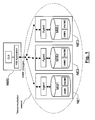
- the Network Management System is indicated with NMS and the controlled network elements are indicated with NE1, NE2, NE3.
- Fig.1 schematically shows only three network elements, but the network can include a different number of a plurality of network elements.
- the Network Management System is connected to the controlled network elements through channels carrying management data in the same physical network carrying user data or through a different physical network carrying only management data.
- the Network Management System includes a software application (indicated in Fig.1 with "NM Application", where NM stands for Network Management) running on hardware (for example, a processor of a personal computer, a workstation or a server) and performing configuration of the network elements, which includes configuration of network connections, monitoring alarms and performance of the connections, protection of the connections providing a backup connection in case of a fault on a segment of a nominal connection.
- the Network Management System further includes a Graphic User Interface (indicated in Fig.1 with GUI) for receiving from a network operator a request of for performing a specific configuration of a network element and for transmitting this request to the NM Application.
- Fig.1 shows the GUI included into the Network Management System NMS, but the GUI can also be external (and connected) to the Network Management System NMS.
- the Network Management System performs the network elements configuration according to the model Network Management System - Agent - MIB.
- MIB stands for Management Information Base and it is a data structure (indicated with MIB1, MIB2, MIB3 for NE1, NE2, NE3 respectively) arranged into a hierarchical model and stored into each network element .
- the MIB defines groups and objects in the groups, the objects including object instances for managing the network element; for example, an object instance stores the number of bytes received from a network interface.
- the Network Management System transmits and receives messages to MIB of a network element according to a management protocol, like SNMP (Simple Network Management Protocol), Qx, Q3 or Qecc, for performing the network element configuration by reading and writing into the object instances of the MIB and consequently for reading and changing the status of the network element.
- the Agent is a software program running on a processor of a network element: it receives and elaborates the SNMP messages and afterwards it reads or writes the information stored into the MIB.
- the advantage of this architecture is a standard management protocol between the Network Management System and the Agent and a standard data structure of MIB, while the Network Management System and the Agent is specific for each network element.
- SNMPv1 is the first implementation of the SNMP protocol and it includes the basic operations for configuration of the network elements: Set, Get, Trap, Response, GetNext.
- SNMPv2 is an enhancement of SNMPv1: SNMPv2 includes the new operations of GetBulk and Inform and it includes a weak authentication by defining a community: only Network Management Systems belonging to the same community can perform SNMP operations on network elements belonging this community.
- SNMPv3 is an extension of the SNMP architecture for improving the network security, introducing a new message format, authentication and encryption of the messages, access control.
- USM User Security Model
- RFC 3414 defines the mechanisms for performing authentication and encryption of the SNMP messages; this is performed in the network elements using a MIB (indicated in Fig.1 with blocks USM1, USM2, USM3 for NE1, NE2, NE3 respectively), which includes some tables.
- the Network Management System and the USM MIB in the network elements are configured by storing a list of the same user identifiers.
- the user configuration is stored into the USM MIB into the table indicated with "usmUserTable".
- the user can be an individual (or a group of individuals) acting in a particular role, like for example a network operator having tasks for administration or maintenance.
- the user can also be an application or a set of applications (or a combination of both).
- the user has an identifier (or a user-name), which is a human readable string.
- VACM View-based Access Control Module
- RFC 3415 defines the mechanisms for performing control of access to MIB of a network element, that is if a user has the right to access to a part of the MIB and thus to a managed object or object instance in this part of the MIB.
- Access control is performed retrieving information stored into a MIB (indicated in Fig.1 with blocks VACM1, VACM2, VACM3 for NE1, NE2, NE3 respectively), which stores the rights of the user identifiers, that is which user can access which part of the MIB under specified conditions.
- Conditions include:
- VACM does not specify access rights for every single object instance in the MIB, but it specifies access rights per sub-tree; it defines views which are sub-sets of the full MIB tree and access control is available for this views. This is achieved through information stored into the tables indicated in RFC 3415 with "vacmSecurityToGroupTable”, “vacmContextTable”, “vacmAccessTable”, “vacmviewTreeFamilyTable”.
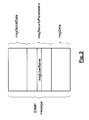
- SNMP message according to version 3 includes three sections:
- the msgGlobalData section is an header including the SNMP version.
- the msgSecurityParameters section is used for performing authentication and encryption (USM) and access control (VACM). Specifically, the msgSecurityParameters section includes the msgUserName field, which includes the user identifier required for performing the access control, like it will be explained in details herein after.
- the msgData section includes the configuration command (Get, Set, Response,.%) and the object instance involved in the configuration command.
- network element NE1 includes Management Information Base MIB1, which includes block USM1 for storing the user identifiers and block VACM1 for storing corresponding rights enabled to perform different types of configurations of network element NE1.
- Blocks MIB1, USM1 and VACM1 are implemented into the same database, but they can also be implemented into different databases. The same applies for blocks USM2/ VACM2 and USM3/ VACM3 of network elements NE2 and NE3 respectively.
- VACM1 stores the tables indicated in RFC 3415 with vacmContenxtTable, vacmSecurityToGroupTable, vacmAccessTable, vacmViewTreeFamilyTable; these tables store information of the rights assigned to the users.
- the Agent in the network elements performs the access control by retrieving the information stored into USM1/VACM1, USM2/ VACM2, USM3/ VACM3 of network elements NE1, NE2, NE3 respectively.
- a first example is a first user having USER1 identifier and having rigths only for maintenance, that is the first user is enabled only to read the values of object instances in a Management Information Base, while the first user is not enabled to write any value in the object instances.
- the Network Management System NMS receives from the first user a request for performing a specific configuration of network element NE1; the Network Management System NMS also receives the USER1 identifier.
- the first user controls the GUI and performs a login providing his user identifier (USER1) in the GUI (and, preferably, a corresponding password); afterwards, the first user provides in the GUI the request for performing a specific configuration of a network element.
- the USER1 identifier and the request is transmitted to the NM Application.
- the request includes the USER1 identifier.
- the request of the specific configuration is a request to write a value of an object instance (identified hereinafter with OI1) of MIB1 into network element NE1.
- the Network Management System transmits in the telecommunication network a SNMP message towards network element NE1: the SNMP message includes USER1 in the msgUserName field and includes a Set command of object instance OI1 in the msgData field (the Set command performs the write).
- the SNMP message is received by network element NE1, wherein the Agent reads USER1 in the msgUserName field and reads the Set command.
- the Agent retrieves the user identifiers stored into USM1 and corresponding rights stored into VACM1: in this example, USER1 is assigned to condition (indicated above) user-name and the write request is assigned to view-type.
- a SNMP message is transmitted from network element NE1 to the Network Management System to notify the unsuccessfull performing of the write.
- the transmitted SNMP message includes a Get command (instead of the Set) of object instance OI1 in the msgData field.
- a second example is a second user having USER2 identifier and having rigths for administration, that is the second user is enabled both to read and to write values of object instances in a Management Information Base.
- the Network Management System receives from the second user a request for performing a specific configuration of network element NE1; the Network Management System NMS also receives the USER2 identifier. Preferaly, the request includes the USER2 identifier.
- the request of the specific configuration is a request to write a value of object instance OI2 into MIB1 of network element NE1.
- the Network Management System transmits in the telecommunication network a SNMP message towards network element NE1: the transmitted SNMP message includes in the msgData field a Set of object instance OI2 and the value to write.
- a SNMP message is transmitted from network element NE1 to the Network Management System to acknowledge the successfull performing of the write.
- the above solution has the disadvantage to increase the management traffic between the Network Management System and the controlled network elements, but the bandwidth available for carrying management traffic is limited.
- the SNMP messages are always transmitted to the network elements and the messages are rejected at the network elements in case the user is not enabled to perform the configuration request.
- useless management traffic received by the network element can also overload the processing resources in the network elements.
- the main object of the present invention is to provide a solution for improving control of access to a network element.
- the basic idea is to perform the access control at the Network Management System: this is achieved by receiving at the Network Management System a request for performing a specific configuration of a network element, wherein the request includes a user identifier, by checking if the user identifier and corresponding right of the requested specific configuration is included into an information set stored into the Network Management System, wherein the information set includes user identifiers and corresponding rights enabled to perform different types of configurations of at least one of the plurality of network elements and, in case of a positive check at the Network Management System, by transmitting towards the network element a message including a first field indicating the request for performing the specific configuration .
- This solution has the advantages to reduce the management traffic between the Network Management System and the network elements, not to overload processing resources in the network elements and to increase the network security.
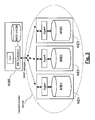
- the Network Management System includes a block indicated with NMS-VACM storing an information set required for performing access control in the Network Management System; the prefix NMS stands for Network Management System, for indicating that it is a block in the Network Management System.
- the NMS-VACM can be a database (or part of a database) storing an information set including user identifiers and corresponding rights enabled to perform different types of configurations of at least one of the network elements controlled by the Network Management System.
- the database NMS-VACM in the Network Management System can be a copy of all or part of the MIB for the access control stored into the network elements, that is a copy of all or part of VACM1, VACM2, VACM3 according to RFC 3415 and a copy of all or part of USM1, USM2, USM3 according to RFC 3414.
- information stored into NMS-VACM can be arranged into a more efficient data structure, in order to save memory occupation or to have a more efficient access to the stored information.
- Network Management Application (still indicated with “NM Application” in Fig.3) is modified in order to include new functionalities for performing the access control, like explained hereinafter.
- Access control is performed in the NM Application by retrieving the information stored into database NMS-VACM, according to the following examples of the first embodiment.
- a first example is the first user having USER1 identifier and having rigths only for maintenance, that is the first user is enabled only to read the values of object instances in a Management Information Base, while the first user is not enabled to write any value in the object instances.
- the Network Management System includes the block NMS-VACM storing an information set indicating the user identifiers (for example, a list of the user identifiers) and corresponding rights enabled to perform different types of configurations of network element NE1; for example, NMS-VACM stores (for the list of user identifiers) the table indicated with "usmUserTable" in RFC 3414 and it stores (for the rights of the user identifiers) the tables of VACM1 described in RFC 3415.
- NMS-VACM also stores the user identifiers and corresponding rights enabled to perform different types of configurations of network elements NE2 and NE3.
- the NM Application receives from the first user a request for performing a specific configuration of network element NE1 and it receives the USER1 identifier; preferably, the request includes the USER1 identifier.
- the request of the specific configuration is a request to write a value of an object instance (identified hereinafter with OI1) into MIB1 of network element NE1.
- the NM Application receives the USER1 identifier and the write request; moreover, the NM Application retrieves the information stored into database NM-VACM.
- the NM Application takes into account the USER1 identifier and the write request, it checks if USER1 has the right to perform the write according to the access rights retrieved from NMS-VACM and rejects the write request (because USER1 is not allowed to perform the write). Comparing the first example of the prior art with the first example of the invention, according to the invention the Network Management System does not transmit towards network element NE1 the SNMP message for the configuration request: the management traffic is reduced and the network security is increased.
- a second example of the first embodiment is the second user having USER2 identifier and having rigths for administration, that is the second user is enabled both to read and to write values of object instances in a Management Information Base.
- the Network Management System includes the block NMS-VACM storing an information set indicating the user identifiers (for example, a list of the user identifiers) and corresponding rights enabled to perform different types of configurations of network element NE1; for example, NMS-VACM stores (for the list of user identifiers) the table indicated with "usmUserTable" in RFC 3414 and it stores (for the rights of the user identifiers) the tables of VACM1 described in RFC 3415.
- NMS-VACM stores (for the list of user identifiers) the table indicated with "usmUserTable" in RFC 3414 and it stores (for the rights of the user identifiers) the tables of VACM1 described in RFC 3415.
- the NM Application receives from the second user a request for performing a specific configuration of network element NE1 and it receives the USER2 identifier; preferably, request includes the USER2 identifier.
- the request of the specific configuration is a request to write a value into object instance OI2 of MIB1 of network element NE1.
- the NM Application receives the USER2 identifier and the write request; moreover, the NM Application retrieves the information stored into database NM-VACM.
- the NM Application takes into account the USER2 identifier and the write request, it checks if USER2 has the right to perform the write according to the access rights retrieved from NMS-VACM and accepts the write request (because USER2 is allowed to perform the write).
- the Network Management System transmits in the telecommunication network a SNMP message towards network element NE1: the SNMP message includes a Set command of object instance OI2 in the msgData field (the Set command performs the write).
- the SNMP message is received by network element NE1, wherein the Agent reads the Set command in the msgData field. Finally, the Agent performs the write: the value is written into object-instance O12 of MIB1. Preferably, another SNMP message is transmitted from network element NE1 to the Network Management System to acknowledge the successfull performing of the write.
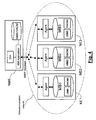
- Fig.4 shows a second embodiment of the invention.
- the Network Management System includes the block NMS-VACM storing information required for performing access control in the Network Management System.
- the network elements also include the blocks storing information required for performing the access control in the network elements: NE1, NE2, NE3 include USM1/ VACM1, USM2/ VACM2, USM3/ VACM3 respectively. Therefore a first access control is performed at the NM Application of the Network Management System and a second access control is performed at the Agent of the network element. This can be required in order to increase the network security.
- USM1/ VACM1, USM2/ VACM2, USM3/ VACM3 can be the same MIB indicated in RFC 3414/ 3415; alternatevely, they can be different from the MIB indicated in RFC 3414/ 3415, storing only a sub-set of the information indicated in RFC 3414/ 3415.
- the first access control can be performed on a part of the user rights and the second access control can be performed on another part of the user rights, according to different criteria: for example, the first access control can be performed for the user rights less important for the network security and/or for the user rights generating more management traffic between the Network Management System and the network elements.
- the first access control is performed at the NM Application of the Network Management System like explained for the second example of the first embodiment.
- the second access control is performed at the Agent of network element NE1 according to the following steps.
- the transmitted SNMP message includes the USER2 in the msgUserName field.
- the message is received by network element NE1, wherein the Agent reads USER2 in the msgUserName field and reads the Set command.
- the Agent retrieves the user identifiers stored into USM1 and corresponding rights stored into VACM1: in this example, USER2 is assigned to condition user-name and the write request is assigned to view-type.
- a SNMP message is transmitted from network element NE1 to the Network Management System to acknowledge the successfull performing of the write.
- the NM Application can change the user identifier into a super-user identifier (indicated hereinafter with SUPER-USER) having the right to perform any type of configuration of a specific network element (or of a group of network elements).
- a super-user identifier indicated hereinafter with SUPER-USER
- the Network Management System includes the block NMS-VACM storing an information set including the user identifiers (for example, a list of the user identifiers) and corresponding rights enabled to perform different types of configurations of network element NE1; for example, NMS-VACM stores (for the list of user identifiers) the table indicated with "usmUserTable" in RFC 3414 and it stores (for the rights of the user identifiers) the tables of VACM1 (described in RFC 3415).
- NMS-VACM stores (for the list of user identifiers) the table indicated with "usmUserTable" in RFC 3414 and it stores (for the rights of the user identifiers) the tables of VACM1 (described in RFC 3415).
- a first access control is performed at the Network Management System, like explained in the first embodiment.
- a second access control is performed at the network element; in fact, the network element includes a functionality for taking into account the SUPER-USER identifier in the received SNMP message.
- This functionality can be implemented into the Agent which takes into account the msgUserName field in the received SNMP message; in case the Agent reads the SUPER-USER identifier in the msgUserName field, the Agent performs the read or write into the MIB.
- the functionality is implemented like in the second embodiment of the invention, that is the network elements NE1, NE2, NE3 include the blocks USM1/ VACM1, USM2/ VACM2, USM3/ VACM3 respectively (or a sub-set of the information stored into this block), like explained hereinafter.
- the first access control is performed at the Network Management System, like explained in the first embodiment.
- the NM Application in the Network Management System changes the user identifier USER2 to SUPER-USER.
- the Network Management System transmits towards network element NE1 an SNMP message including in the msgUserName field the SUPER-USER identifier.
- the message is received by network element NE1, wherein the Agent reads the SUPER-USER in the msgUserName field and reads the Set command.
- the Agent retrieves the user identifiers stored into USM1 and corresponding rights stored into VACM1: SUPER-USER is assigned to condition user-name, and the write request is assigned to view-type.
- a SNMP message is transmitted from network element NE1 to the Network Management System to acknowledge the successfull performing of the write.
- the third embodiment has the advantage to require less processing resources (and less processing time) in the network elements, because only the SUPER-USER identifier is taken into account for deciding if to accept or reject the configuration request.
- the second embodiment has the advantage to increase the network security, because a second access control is performed in the network elements.
- the second embodiment has the further advantage to support the access control also in case of a configuration request from an element management station.
- the element management station can control only one network element, through a local or a remote connection to the controlled network element, while the Network Management System can control a plurality of network elements (that is, a network).
- the element management station can not be modified like the Network Management System by including a block (NM-VACM) for the access control and thus the access control can still be performed retrieving the information stored into the blocks (USM1/ VACM1, USM2/ VACM2, USM3/ VACM3) of the network elements.
- NM-VACM block
- the invention can be implemented into a Network Management System for controlling access to a plurality of network elements.
- the Network Management System includes:
- the invention can be implemented into a Telecommunications system comprising:
- the invention can be implemented into a Graphic User Interface for controlling access to a plurality of network elements.
- the graphic user interface includes a window for receiving a request for performing a specific configuration of a network element, wherein the request includes a user identifier; the window displays a menu for performing the specific configuration of the network element if the user identifier has a right enabled to perform the specific configuration of the network element. For example, if the user identifier has right only to read object instances from the MIB in a network element, the window will not display the menu for writing, but only the menu for reading.
- the method according to the invention can be performed through a software program running on hardware of a Network Management System; the software program can be recorded on a computer readable medium.
- the management station can be a workstation, a personal computer or a server; the hardware can be a processor.
- the programming language of the software program can be for example C, C++ or Java.
- the software program performs the steps of:
Landscapes
- Engineering & Computer Science (AREA)
- Computer Networks & Wireless Communication (AREA)
- Signal Processing (AREA)
- Computer Security & Cryptography (AREA)
- Computer Hardware Design (AREA)
- Computing Systems (AREA)
- General Engineering & Computer Science (AREA)
- Human Computer Interaction (AREA)
- Data Exchanges In Wide-Area Networks (AREA)
Priority Applications (1)
| Application Number | Priority Date | Filing Date | Title |
|---|---|---|---|
| EP06291595A EP1912380A1 (fr) | 2006-10-12 | 2006-10-12 | Procédé de contrôle d'acces à un élément de réseau |
Applications Claiming Priority (1)
| Application Number | Priority Date | Filing Date | Title |
|---|---|---|---|
| EP06291595A EP1912380A1 (fr) | 2006-10-12 | 2006-10-12 | Procédé de contrôle d'acces à un élément de réseau |
Publications (1)
| Publication Number | Publication Date |
|---|---|
| EP1912380A1 true EP1912380A1 (fr) | 2008-04-16 |
Family
ID=37695935
Family Applications (1)
| Application Number | Title | Priority Date | Filing Date |
|---|---|---|---|
| EP06291595A Withdrawn EP1912380A1 (fr) | 2006-10-12 | 2006-10-12 | Procédé de contrôle d'acces à un élément de réseau |
Country Status (1)
| Country | Link |
|---|---|
| EP (1) | EP1912380A1 (fr) |
Cited By (1)
| Publication number | Priority date | Publication date | Assignee | Title |
|---|---|---|---|---|
| CN113220359A (zh) * | 2021-04-24 | 2021-08-06 | 深圳市骅鼎鹏智能科技有限公司 | 信息处理方法、装置及储能系统 |
Citations (5)
| Publication number | Priority date | Publication date | Assignee | Title |
|---|---|---|---|---|
| WO2001029658A2 (fr) * | 1999-10-15 | 2001-04-26 | Thomson Licensing S.A. | Interface utilisateur pour systeme de communication bidirectionnel |
| US6236996B1 (en) * | 1997-10-31 | 2001-05-22 | Sun Microsystems, Inc. | System and method for restricting database access to managed object information using a permissions table that specifies access rights to the managed objects |
| US6247052B1 (en) * | 1997-12-23 | 2001-06-12 | Alcatel Usa Sourcing, L.P. | Graphic user interface system for a telecommunications switch management system |
| US6499059B1 (en) * | 1998-05-20 | 2002-12-24 | Alcatel | Method of controlling a network element using a service profile and apparatus of the same |
| WO2003107133A2 (fr) * | 2002-06-01 | 2003-12-24 | Engedi Technologies, Inc. | Appareil de gestion a distance en toute securite |
-
2006
- 2006-10-12 EP EP06291595A patent/EP1912380A1/fr not_active Withdrawn
Patent Citations (5)
| Publication number | Priority date | Publication date | Assignee | Title |
|---|---|---|---|---|
| US6236996B1 (en) * | 1997-10-31 | 2001-05-22 | Sun Microsystems, Inc. | System and method for restricting database access to managed object information using a permissions table that specifies access rights to the managed objects |
| US6247052B1 (en) * | 1997-12-23 | 2001-06-12 | Alcatel Usa Sourcing, L.P. | Graphic user interface system for a telecommunications switch management system |
| US6499059B1 (en) * | 1998-05-20 | 2002-12-24 | Alcatel | Method of controlling a network element using a service profile and apparatus of the same |
| WO2001029658A2 (fr) * | 1999-10-15 | 2001-04-26 | Thomson Licensing S.A. | Interface utilisateur pour systeme de communication bidirectionnel |
| WO2003107133A2 (fr) * | 2002-06-01 | 2003-12-24 | Engedi Technologies, Inc. | Appareil de gestion a distance en toute securite |
Cited By (1)
| Publication number | Priority date | Publication date | Assignee | Title |
|---|---|---|---|---|
| CN113220359A (zh) * | 2021-04-24 | 2021-08-06 | 深圳市骅鼎鹏智能科技有限公司 | 信息处理方法、装置及储能系统 |
Similar Documents
| Publication | Publication Date | Title |
|---|---|---|
| US6892309B2 (en) | Controlling usage of network resources by a user at the user's entry point to a communications network based on an identity of the user | |
| EP0691056B1 (fr) | Modele generique d'objet gere pour reseaux locaux (lan) | |
| US20040205689A1 (en) | System and method for managing a component-based system | |
| US20090182849A1 (en) | System and Method for Using SNMP in an Application Server Environment | |
| US7855972B2 (en) | Creating, modifying and storing service abstractions and role abstractions representing one or more packet rules | |
| US7136858B2 (en) | Network update manager | |
| CN101562541B (zh) | 一种统一管理方法和装置 | |
| US20130305393A1 (en) | Method for configuring access rights, control point, device and communication system | |
| US8331348B2 (en) | Method and system for providing signaling gateway management | |
| US20130304920A1 (en) | Controlling Access to Managed Objects in Networked Devices | |
| CN107241221A (zh) | 支持不同网管协议的网管协议数据统一处理系统及方法 | |
| CN103516543A (zh) | 设备管理协议查询中的过滤 | |
| US6944657B1 (en) | Automatic network synchronization of the network configuration with the management information database | |
| CN114338419B (zh) | 一种IPv6全球组网边缘节点监测及预警方法及系统 | |
| US20130173909A1 (en) | Key encryption system, method, and network devices | |
| US20140280855A1 (en) | Generic snmp information collection | |
| CN100375969C (zh) | 集群管理系统、方法和装置 | |
| WO1999034557A1 (fr) | Procede et systeme permettant de gerer les differentes versions d'un logiciel dans un systeme de gestion de reseau | |
| US7526533B1 (en) | Active call context reconstruction for primary/backup resource manager servers | |
| EP1479192B1 (fr) | Procede et dispositif de gestion de la configuration d'un reseau | |
| EP1912380A1 (fr) | Procédé de contrôle d'acces à un élément de réseau | |
| US7293052B1 (en) | Method and apparatus for value-based access to network management information | |
| CN109120443A (zh) | 一种网络附加存储nas设备的管理方法和装置 | |
| WO2025036112A1 (fr) | Procédé et appareil de sélection de protection de sécurité de données, et support de stockage | |
| CN111343193B (zh) | 云网络端口安全防护方法、装置、电子设备及存储介质 |
Legal Events
| Date | Code | Title | Description |
|---|---|---|---|
| PUAI | Public reference made under article 153(3) epc to a published international application that has entered the european phase |
Free format text: ORIGINAL CODE: 0009012 |
|
| AK | Designated contracting states |
Kind code of ref document: A1 Designated state(s): AT BE BG CH CY CZ DE DK EE ES FI FR GB GR HU IE IS IT LI LT LU LV MC NL PL PT RO SE SI SK TR |
|
| AX | Request for extension of the european patent |
Extension state: AL BA HR MK RS |
|
| AKX | Designation fees paid |
Designated state(s): AT BE BG CH CY CZ DE DK EE ES FI FR GB GR HU IE IS IT LI LT LU LV MC NL PL PT RO SE SI SK TR |
|
| STAA | Information on the status of an ep patent application or granted ep patent |
Free format text: STATUS: THE APPLICATION IS DEEMED TO BE WITHDRAWN |
|
| 18D | Application deemed to be withdrawn |
Effective date: 20081017 |