EP1912438A2 - System und Verfahren zur Verbindung MPEG-kodierter und adaptiv steuerbarer audiovisueller Objekte - Google Patents
System und Verfahren zur Verbindung MPEG-kodierter und adaptiv steuerbarer audiovisueller Objekte Download PDFInfo
- Publication number
- EP1912438A2 EP1912438A2 EP08150704A EP08150704A EP1912438A2 EP 1912438 A2 EP1912438 A2 EP 1912438A2 EP 08150704 A EP08150704 A EP 08150704A EP 08150704 A EP08150704 A EP 08150704A EP 1912438 A2 EP1912438 A2 EP 1912438A2
- Authority
- EP
- European Patent Office
- Prior art keywords
- mpeg
- api
- decoder
- media
- decoding
- Prior art date
- Legal status (The legal status is an assumption and is not a legal conclusion. Google has not performed a legal analysis and makes no representation as to the accuracy of the status listed.)
- Withdrawn
Links
- 238000000034 method Methods 0.000 title claims description 34
- 230000003044 adaptive effect Effects 0.000 title description 2
- 238000004891 communication Methods 0.000 claims abstract description 4
- 230000000007 visual effect Effects 0.000 claims description 34
- 239000000872 buffer Substances 0.000 claims description 12
- 230000010354 integration Effects 0.000 claims description 3
- 239000008186 active pharmaceutical agent Substances 0.000 claims 2
- 238000009877 rendering Methods 0.000 claims 1
- 239000011800 void material Substances 0.000 description 35
- 230000002123 temporal effect Effects 0.000 description 14
- 230000003993 interaction Effects 0.000 description 12
- 230000033001 locomotion Effects 0.000 description 10
- 230000006870 function Effects 0.000 description 9
- 238000002360 preparation method Methods 0.000 description 6
- 230000000750 progressive effect Effects 0.000 description 6
- 230000002452 interceptive effect Effects 0.000 description 4
- 238000000638 solvent extraction Methods 0.000 description 4
- 230000003068 static effect Effects 0.000 description 4
- 230000005540 biological transmission Effects 0.000 description 3
- 238000010586 diagram Methods 0.000 description 3
- 230000004044 response Effects 0.000 description 3
- 230000002441 reversible effect Effects 0.000 description 3
- 238000013461 design Methods 0.000 description 2
- 238000011161 development Methods 0.000 description 2
- 230000007246 mechanism Effects 0.000 description 2
- 230000006855 networking Effects 0.000 description 2
- 230000008569 process Effects 0.000 description 2
- 238000012545 processing Methods 0.000 description 2
- 230000009471 action Effects 0.000 description 1
- 230000006978 adaptation Effects 0.000 description 1
- 230000003466 anti-cipated effect Effects 0.000 description 1
- 238000013459 approach Methods 0.000 description 1
- 230000008901 benefit Effects 0.000 description 1
- 230000015556 catabolic process Effects 0.000 description 1
- 238000005352 clarification Methods 0.000 description 1
- 230000006835 compression Effects 0.000 description 1
- 238000007906 compression Methods 0.000 description 1
- 238000010276 construction Methods 0.000 description 1
- 230000001186 cumulative effect Effects 0.000 description 1
- 238000006731 degradation reaction Methods 0.000 description 1
- 230000001419 dependent effect Effects 0.000 description 1
- 230000001815 facial effect Effects 0.000 description 1
- 239000007788 liquid Substances 0.000 description 1
- 238000013507 mapping Methods 0.000 description 1
- 230000004048 modification Effects 0.000 description 1
- 238000012986 modification Methods 0.000 description 1
- 230000008520 organization Effects 0.000 description 1
- VYMDGNCVAMGZFE-UHFFFAOYSA-N phenylbutazonum Chemical compound O=C1C(CCCC)C(=O)N(C=2C=CC=CC=2)N1C1=CC=CC=C1 VYMDGNCVAMGZFE-UHFFFAOYSA-N 0.000 description 1
- 230000001360 synchronised effect Effects 0.000 description 1
- 230000001960 triggered effect Effects 0.000 description 1
- 239000013598 vector Substances 0.000 description 1
Images

Classifications
-
- H—ELECTRICITY
- H04—ELECTRIC COMMUNICATION TECHNIQUE
- H04N—PICTORIAL COMMUNICATION, e.g. TELEVISION
- H04N21/00—Selective content distribution, e.g. interactive television or video on demand [VOD]
- H04N21/20—Servers specifically adapted for the distribution of content, e.g. VOD servers; Operations thereof
- H04N21/23—Processing of content or additional data; Elementary server operations; Server middleware
- H04N21/234—Processing of video elementary streams, e.g. splicing of video streams or manipulating encoded video stream scene graphs
- H04N21/23412—Processing of video elementary streams, e.g. splicing of video streams or manipulating encoded video stream scene graphs for generating or manipulating the scene composition of objects, e.g. MPEG-4 objects
-
- H—ELECTRICITY
- H04—ELECTRIC COMMUNICATION TECHNIQUE
- H04N—PICTORIAL COMMUNICATION, e.g. TELEVISION
- H04N21/00—Selective content distribution, e.g. interactive television or video on demand [VOD]
- H04N21/20—Servers specifically adapted for the distribution of content, e.g. VOD servers; Operations thereof
- H04N21/23—Processing of content or additional data; Elementary server operations; Server middleware
- H04N21/234—Processing of video elementary streams, e.g. splicing of video streams or manipulating encoded video stream scene graphs
- H04N21/2343—Processing of video elementary streams, e.g. splicing of video streams or manipulating encoded video stream scene graphs involving reformatting operations of video signals for distribution or compliance with end-user requests or end-user device requirements
- H04N21/234318—Processing of video elementary streams, e.g. splicing of video streams or manipulating encoded video stream scene graphs involving reformatting operations of video signals for distribution or compliance with end-user requests or end-user device requirements by decomposing into objects, e.g. MPEG-4 objects
-
- H—ELECTRICITY
- H04—ELECTRIC COMMUNICATION TECHNIQUE
- H04N—PICTORIAL COMMUNICATION, e.g. TELEVISION
- H04N21/00—Selective content distribution, e.g. interactive television or video on demand [VOD]
- H04N21/40—Client devices specifically adapted for the reception of or interaction with content, e.g. set-top-box [STB]; Operations thereof
- H04N21/43—Processing of content or additional data, e.g. demultiplexing additional data from a digital video stream; Elementary client operations, e.g. monitoring of home network or synchronising decoder's clock; Client middleware
- H04N21/44—Processing of video elementary streams, e.g. splicing a video clip retrieved from local storage with an incoming video stream or rendering scenes according to encoded video stream scene graphs
- H04N21/44012—Processing of video elementary streams, e.g. splicing a video clip retrieved from local storage with an incoming video stream or rendering scenes according to encoded video stream scene graphs involving rendering scenes according to scene graphs, e.g. MPEG-4 scene graphs
-
- H—ELECTRICITY
- H04—ELECTRIC COMMUNICATION TECHNIQUE
- H04N—PICTORIAL COMMUNICATION, e.g. TELEVISION
- H04N21/00—Selective content distribution, e.g. interactive television or video on demand [VOD]
- H04N21/40—Client devices specifically adapted for the reception of or interaction with content, e.g. set-top-box [STB]; Operations thereof
- H04N21/43—Processing of content or additional data, e.g. demultiplexing additional data from a digital video stream; Elementary client operations, e.g. monitoring of home network or synchronising decoder's clock; Client middleware
- H04N21/443—OS processes, e.g. booting an STB, implementing a Java virtual machine in an STB or power management in an STB
-
- H—ELECTRICITY
- H04—ELECTRIC COMMUNICATION TECHNIQUE
- H04N—PICTORIAL COMMUNICATION, e.g. TELEVISION
- H04N21/00—Selective content distribution, e.g. interactive television or video on demand [VOD]
- H04N21/40—Client devices specifically adapted for the reception of or interaction with content, e.g. set-top-box [STB]; Operations thereof
- H04N21/43—Processing of content or additional data, e.g. demultiplexing additional data from a digital video stream; Elementary client operations, e.g. monitoring of home network or synchronising decoder's clock; Client middleware
- H04N21/443—OS processes, e.g. booting an STB, implementing a Java virtual machine in an STB or power management in an STB
- H04N21/4431—OS processes, e.g. booting an STB, implementing a Java virtual machine in an STB or power management in an STB characterized by the use of Application Program Interface [API] libraries
Definitions
- the invention relates to the field of coded multimedia and its storage and delivery to users, and more particularly to such coding when either the channel and decoding resources may be limited and time varying, or user applications require advanced interaction with coded multimedia objects.
- Digital multimedia offers advantages including manipulation, multigeneration processing, error robustness and others, but incurs constraints due to the storage capacity or transmission bandwidth required, and thus frequently requires compression or coding for practical applications.
- a number of coding schemes, storage formats, retrieval techniques and transmission protocols have evolved. For instance, for image and graphics files, GIF, TIF and other formats have been used.
- audio files have been coded and stored in RealAudio, WAV, MIDI and other formats. Animations and video files have often been stored using GIF89a, Cinepak, Indeo and others.
- decoders and interpreters are often needed and may offer various degrees of speed and quality performance depending on whether these decoders and interpreters are implemented in hardware or in software, and particularly in the case of software, on the capabilities of the host computer. If such content is embedded in web pages accessed via a computer (e.g. a PC), the web browser needs to be set up correctly for all the anticipated content and recognize each type of content and support a mechanism of content handlers (software plugins or hardware) to deal with such content.
- a computer e.g. a PC
- MPEG-1 International Standards Organization Motion Picture Experts Group
- DSM digital storage media
- MPEG-2 was primarily intended for use in a broadcast environment (transport stream), although it also supports an MPEG-1 like mechanism for use on DSM (program stream).
- MPEG-2 also included additional features such as DSM Command and Control for basic user interaction as may be needed for standardized playback of MPEG-2, either standalone or networked.
- MPEG-1 and MPEG-2 are expected to be utilized in various other configurations, in streams communicated over network and streams stored over hard disks/CDs, as well as in the combination of networked and local access.
- MPEG-4 The MPEG-4 standard has addressed coding of audio-visual information in the form of individual objects and a system for composition and synchronized playback of these objects. While the MPEG-4 development of such a fixed parametric system continues, in the meantime, new paradigms in communication, software and networking such as that offered by the Java language have offered new opportunities for flexibility, adaptivity and user interaction.
- bandwidth for networked access of multimedia may be either limited or time-varying, necessitating transmission of the most significant information only and followed by other information as more bandwidth becomes available.
- the client side PC on which decoding may have to take place may be limited in CPU and/or memory resources, and furthermore, these resources may be time-varying.
- a multimedia user (consumer) may require highly interactive nonlinear browsing and playback; this is not unusual, since a lot of textual content on web pages is capable of being browsed using hyperlinked features and the same paradigm is expected for presentations employing coded audio-visual objects.
- the parametric MPEG-4 system may only be able to deal with the aforementioned situations in a very limited way, such as by dropping objects or temporal occurrences of objects it is incapable of decoding or presenting, resulting in choppy audio-visual presentations. Further, MPEG-4 may not offer any sophisticated control by the user of those kinds of situations. To get around such limitations of the parametric system, one potential option for MPEG-4 development is in a programmatic system.
- APIs application programming interfaces
- BIFS binary representation
- the invention provides a system and method for interfacing coded audiovisual objects, allowing a nonadpative client system, such as the parametric MPEG-4 system, to play and browse coded audiovisual objects in adaptive fashion.
- the system and method of the invention is programmatic at an architectural level, and adds a layer of adaptivity on top of the parametric system by virtue of a defined set of application programming interfaces specifically configured to access and process MPEG-4 coded data.
- MPEG-4 can be considered a parametric system consisting of a Systems Demultiplex (Demux) overseen by digital media integration framework (DMIF), scene graph and media decoders, buffers, compositor and renderer.
- Enhancements or extensions offered by the system and method of the invention to standard MPEG-4 include a set of defined APls in the categories of media decoding, user functionalities and authoring which client applications can invoke.
- the invention allows a number of enhanced realtime and other functions in response to user input, as well as graceful degradation in the face of limited system resources available to MPEG-4 clients.
- the invention is motivated in part by the desirability of standardized interfaces for MPEG-4 playback and browsing under user control, as well as effective response to time-varying local and networked resources.
- Interfaces specified in the invention are intended to facilitate adaptation of coded media data to immediately available terminal resources.
- the specified interfaces also facilitate interactivity expected to be sought by users, either directly as a functionality or indirectly embedded in audiovisual applications and services expected to be important in the future.
- the invention specifies an interfacing method in the form of a robust application programming interface (API) specification including several categories.
- API application programming interface
- a visual decoding interface is specified.
- progressive, hot object, directional, trick mode and transparency interfaces are specified.
- stream editing interface is specified. The overall set of interfaces, although not an exhaustive set, facilitates a substantial degree of adaptivity.
- the system of method of the invention will be described in the environment of MPEG-4 decoding, in which environment the invention specifies not a single API but a collection of APIs that address various interfaces for an extended MPEG-4 system.
- the Java language familiar to persons skilled in the art, is used for specification of the APIs, and is executed on general or special purpose processors with associated electronic memory, storage, buses and related components familiar to persons skilled in the art.
- three categories of API are illustratively identified, and representative functions in each category are provided.
- Table 1 APIs of invention No API Category and specifics Explanation Media Decoding 1.
- Visual Decoding Decoding of visual objects with or without scalability from a coded bitstream Functionality 2.
- Progressive Progressive decoding and composition of an AV object under user control 3.
- Hot Object 4.
- Directional Decoding, enhancement and composition of an AV object based on user control 5.
- Transparency Decoding of portions of AV object and composition of an AV object under user control Decoding, refinement and composition of sn AV object based on transparency and user control Partial Authoring 7.
- Packages are a means to organize the implementation of APIs. Taking into account the library of APIs presented by the invention, a partial list of packages follows.
- FIG. 1 illustrates a high level block diagram of a system implementation of the invention.
- the implementation consists of two major components.
- the first is the known parametric system which consists of Digital Media Integration Framework (DMIF) 160, providing delivery interface to the channel 155, and connecting to the Systems Demux 165, the output of which goes through a sequence of blocks, represented for simplicity as an aggregated block: BIFS and Media Decoders, Buffers, Compositor and Renderer 170, the output of which on line 175 is presented to Display.
- the second major component consists of an MPEG Application/Applet (MPEG App) 100, which interfaces to the external Authoring Unit 130, and User Input respectively via 120, the Authoring API and Functionality API of the invention.
- MPEG App MPEG Application/Applet
- Java Virtual Machine and Java Media Framework (JVM and JMF) 110 are used as the underlying basis to connect to BIFS and Media Decoders, Buffers, Compositor and Renderer 170, as well as directly interfaces to BIFS and Media Decoders, Buffers, Compositor and Renderer 170, via the Scene Graph API 150 (provided by MPEG and used in the invention) and the Decoder API.
- JVM and JMF Java Virtual Machine and Java Media Framework
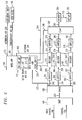
- FIG. 2 illustrates in greater detail the various blocks, components and interfaces of FIG.1 .
- the Authoring Unit 130 is shown interfacing on line 200 to MPEG App 100, separately from the User Input 140 which interfaces via line 205.
- the respective interfaces, Authoring API 290 as well as Functionality API 295, are also shown.
- MPEG App 100, and the underlying JVM and JMF 110, are shown acting upon BIFS Decoder and Scene Graph 225 via line 215, as well as interfacing via 207 to Scene Graph API, 210.
- the BIFS Decoder and Scene Graph 225 controls instantiation of a number of media decoders, 270,271,272 via lines 260, 261, 262, and also controls (via lines 268 and 269) the Compositor 282 and the Renderer 284.
- the JVM and JMF 110 associated with MPEG App 100, can also control media decoders 270, 271 and 272 via respective lines 263, 264, 265.
- FIG. 2 up to now, the various programmatic controls and interfaces have been discussed.
- FIG. 2 provides details of the MPEG-4 parametric system, on top of which the operation of the programmatic system and method of the invention will now be examined.
- An MPEG-4 system bitstream to be decoded arrives via channel 155 to the network/storage delivery interface DMIF 160, which passes this over line 230 to the DeMux 165.
- the depacketized and separated bitstream consists of portions that contain the scene description information and are sent to BIFS Decoder and Scene Graph 225.
- the bitstream also contains other portions intended for each of the various media decoders and pass respectively through lines 240, 245 and 250, decoding Buffers, 251, 252 and 253, lines 255, 256, and 257, to arrive at media decoders 270, 271 and 272 which output the decoded media on lines 273, 274 and 275 which form input to composition Buffers 276, 277 and 278.
- the output of Buffer 276 on line 279 passes to the compositor along with output of Buffer 277 on line 280 and the output of Buffer 278 on line 281.
- the Compositor 282 positions the decoded media relative to each other based on BIFS Scene Graph (and possibly user input) and composes the scene, and this information is conveyed via line 283 to the Renderer 284.
- Renderer 284 renders the pixels and audio samples and sends them via line 175 to a display (with speakers, not shown) 285.
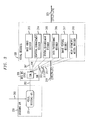
- FIG. 3 illustrates the media decoding aspect of the invention using visual decoding as the specific example.
- media decoding is referred to simply as decoding.
- the Decoding API 220 represents an interface, more specifically, the Visual Decoding API 301. Using the Visual Decoding API 301 it is possible to instantiate a number of different Visual Decoders 320. The instantiation can be thought of as a control via the block Selective Decode Logic (SDL) 306, which is shown to belong along with other pieces of logic to BIFS Dec(oder) Logic 305, a portion or component of the BIFS Decoder and Scene Graph 225.
- SDL Selective Decode Logic
- the BIFS Dec Logic 305 exerts control on various visual decoders, such as the Base Video Decoder 313, via control line 307, the Temporal Enhancement Decoder 314 via control line 308, the Spatial Enhancement Decoder 315 via control line 309, the Data Partitioning Decoder 316 via control line 310, the Image Texture Decoder 317 via control line 311, the Mesh Geometry/Motion Decoder 318 via line 312 and so forth.
- the bitstream to be decoded is applied via line 319 (which corresponds to media decoder input of 255 or 256 or 257 in Fig.
- the Base Video Decoder 313 decodes the nonscalable video
- the Spatial Enhancement Decoder 315 decodes the spatial scalability video layer/s
- the Temporal Enhancement Decoder 314 decodes the temporal scalability video layer/s
- the Data Partitioning Decoder 316 decodes the data partitioned video layer/s
- the Image Texture Decoder 317 decodes the spatia1/SNR scalable layers of still image texture
- the Mesh Geometry/Motion Decoder 318 decodes the wireframe mesh node location and movement of these nodes with the movement of the object
- Such decoders are specified by the MPEG-4 visual standard known in the art. Details of this category of API presented by the invention used to access the MPEG-4 visual decoders in a flexible and consistent manner will now be described.
- BaseAVObject This is a basic class allowing decoding of base AV object stream.
- public void startDec Start decoding of data.
- public void stopDec Stop decoding of data.
- public void attachDecoder (Mp4Stream basestrm) Attach a decoder to basestrm in preparation to decode a valid MPEG-4 stream to whose decoding is to take place.
- VideoDecoder This class extends VideoDecoder, an abstract class (not shown). It contains methods to decode various types of visual bitstreams.
- VObject baseDecode (Mp4Stream basestrm) Decodes a base MPEG-4 video stream, basestrm, and returns a decoded visual object ,VObject.
- public VObject sptEnhDecode (Mp4Stream enhstrm) Decodes a spatial enhancement MPEG-4 video stream, enhstream, and returns a decoded visual object,
- VObject public VObject tmpEnhDecode (Mp4Stream enhstrm) Decodes a temporal enhancement MPEG-4 video stream, enhstrm, and returns a decoded visual object, VObject.
- VObject snrEnhDecode Mp4Stream enhstrm, int level
- public VObject datapartDecode (Mp4Stream enhstrm, int level)
- public VObject trickDecode (Mp4Stream trkstrm, int mode) Depending on the mode, skip and decode trick stream, trkstrm, and returns a decoded visual object, Vobject.
- public MeshObject meshAuxDecode (Mp4Stream auxstrm) Decodes an MPEG-4 auxillary video stream, auxstrm, and returns a mesh object, MeshObject, which includes mesh geometry and motion vectors.
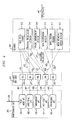
- FIG. 4 describes the functionality of certain aspects of the invention using a number of example functionalities for which interfaces are defined in terms of another category of API.
- the Functionality API 295 represents interfaces, more specifically, for Trick Mode (401), Directional (402), Transparency (403), Hot Object (404) and Progressive (405) functions.
- Using each of the APIs it is possible to instantiate a number of different decoders; visual decoders are again used as an example.
- the instantiation can be thought of as a control via several block Selective Decode Logic (SDL), 416,417, 418, 419, 420, which are shown to belong to APP/BIFS Dec(oder) Logic 415, component of the BIFS Decoder and Scene Graph 225 or/and the MPEG-4 App 100.
- SDL Selective Decode Logic
- the APP/BIFS Dec Logic 415 exerts control on various visual decoders, such as the Base Video Decoder 313 via control lines 421, 422, 424, 425, the Temporal Enhancement Decoder 315 via control lines 423 and 426, the Spatial Enhancement Decoder 315 via control line 427, the Data Partitioning Decoder 316 via control line 429, the Image Texture Decoder 317 via control line 430, the Mesh Geometry/Motion Decoder 318 via line 428 and so forth.
- various visual decoders such as the Base Video Decoder 313 via control lines 421, 422, 424, 425, the Temporal Enhancement Decoder 315 via control lines 423 and 426, the Spatial Enhancement Decoder 315 via control line 427, the Data Partitioning Decoder 316 via control line 429, the Image Texture Decoder 317 via control line 430, the Mesh Geometry/Motion Decoder 318 via line 428 and so forth.
- the bitstream to be decoded is applied via line 431 (which corresponds to media decoder input of 255 or 256 or 257 in Fig. 2 ) to the appropriate decoder and the decoded output is available on line 445 (which corresponds to media decoder output of 273 or 274 or 275 in FIG. 2 ). It is important to realize that often a user functionality relative to visual objects may be realized by use of one or more visual decoders.
- the SDL is used to not only make a selection between the specific decoder to be instantiated for decoding each visual object, but also, the decoder used for a piece of the bitstream, and the specific times during which it is engaged or disengaged.
- SDL SDL 416, 417, 418, 419, 420 are shown, one corresponding to each functionality.
- Each SDL in this figure has one control input but - one of the several potential control outputs. Further, for clarification, as in the case of Fig.
- the Base Video Decoder 313 decodes the nonscalable video
- the Spatial Enhancement Decoder 314 decodes the spatial scalability video layer/s
- the Temporal Enhancement Decoder 315 decodes the temporal scalability video layer/s
- the Data Partitioning Decoder 316 decodes the data partitioned video layer/s
- the Image Texture Decoder 317 decodes the spatial/SNR scalable layers of still image texture
- the Mesh Geometry/Motion Decoder 31 decodes the wireframe mesh node location and movement of these nodes with the movement of the object; such decoders are again specified by the MPEG-4 visual standard. Details of this category of APIs presented by the invention used to achieve these functionalities in a flexible and robust manner will now be described.
- a ProgAVObject allows progressive refinement of quality of an AV object under user control.
- visual objects are assumed to be static (still image "vops", a Video Object Plane, which is an instance in time of an arbitrarily shaped object; when the shape is rectangular, then a vop is identical to a fiame).
- public void startDec Start decoding of data.
- public void stopDec Stop decoding of data.
- public void pauseDec Temporarily suspend decoding of data.
- public void resumeDec Restart decoding of data from current state of pause.
- public int selectProgLevel
- a level constitutes coefficients up to a certain position in scan order.
- public void attachDecoder (Mp4Stream srcstrm, int proglvl) Attach a decoder to srcstrm in preparation to decode a valid MPEG-4 stream and specifies the prog level up to which decoding is to take place public void offsetstream (Mp4Stream srcstrm, ulong offset) Allow an offset into the srcstrm as the target where the decoding may start. In practice, the actual target location may be beyond the required target and depends on the location of valid entry point in the stream.
- This API allows interaction with hot (active) AV objects. It may be extended to allow interaction with hot regions within an object. This API is intended to allow one or more advanced functionalities such as spatial resolution enhancement, quality enhancement, temporal quality enhancement of an AV object. The actual enhancement that occurs is dependent on user interaction (via mouse clicks/menu) and the enhancement streams locally/remotely as well as enhancement decoders available.
- HotAVObject is a class that triggers the action of enhancement of an AVObject provided that the object is a hot object.
- hot objects have some enhancement streams associated with them that are triggered when needed.
- This class extends BaseAVObject, which is used primarily to decode base (layer) streams. Further, the definition of hot objects may be extended to include regions of interest (KeyRegions).
- public void startDec Start decoding of data.
- public void stopDec Stop decoding of data.
- public void pauseDec Temporarily suspend decoding of data.
- public void resumeDec Restart decoding of data from current state of pause.
- public int selectHotType Select type of enhancement (spatial, quality, temporal etc).
- public Mp4Stream enhanceObject Use selected enhancement type to obtain needed enhancement stream.
- public void attachDecoder (Mp4Stream srcstrm, int type) Attach a decoder to srcstrm in preparation to decode a valid MPEG-4 stream and specifies the type of decoding is to take place public void offsetStream (Mp4Stream srcstrm, ulong offset) Allow an offset into the srcstrm as the target where the decoding may start. In reality, the actual target location may be beyond the required target and depends on the location of valid entry point in the stream.
- This API allows interaction with directionally sensitive AV objects. It supports static visual objects (still vops), dynamic visual objects (moving vops), as well as directional speech and audio. For visual objects it permits a viewpoint to be selected and only the corresponding bitstreams are decoded and decoded data forwarded to compositor. For aural objects an analogous operation takes place depending on desired aural point. At present, predefined directional choices are assumed.
- DirecAVObject is a class that allows creation of objects that respond to x-y-z location in space (in the form of prequantized directions). This class is most easily explained by assuming a bitstream composed of a number of static visual vops coded as an AV object such that depending on the user interaction, vops corresponding to one or more viewpoint are decoded as needed. The class is equally suitable to decoding dynamic AVObjects.
- public void startDec Start decoding of data.
- public void stopDec Stop decoding of data.
- public void pauseDec Temporarily suspend decoding of data.
- public void resumeDec Restart decoding of data from current state of pause.
- public void loopDec This method allows user interactive decoding of a dynamic visual object as a defined sequence of static vops forming a closed loop. A similar analogy may be applicable to audio as well.
- User selection occurs via mouse clicks or menus.
- public int selectDirec Select the direction (scene orientation). A number of prespecified directions are allowed and selection takes place by clicking a mouse on hot points on the object or via a menu.
- public Mp4Stream enhanceObject Use selected scene orientation to obtain needed temporal auxillary (enhancement) stream.
- public void attachDecoder Mp4Stream srcstrm, int orient
- Attach temporal auxiliary (enhancement) decoder to srcstrm in preparation to decode a valid MPEG-4 stream and specifies the selected scene direction of AV object.
- public void offsetStream (Mp4Stream srcstrm, ulong offset) Allow an offset into the srcstrm as the target where the decoding may start. In reality, the actual target location may be beyond the required target and depends on the location of valid entry point in the stream.
- Trick Mode API supports conditional decoding under user control to permit enhanced trick play capabilities.
- Enhanced trick play can be conceived as enabling of VCR/CDPlayer like functions such as different speeds for FF or FR, Freeze Frame, Random Access as well others such as reverse play etc, however with the difference that MPEG-4 can allow these capabilities on individual AV object basis in addition to that on composited full scene basis.
- TrickAVObject is a class that can be used to form objects that allow decoding suitable for trick play.
- public void stopDec Stop decoding of data.
- public void pauseDec Temporarily suspend decoding of data.
- public void resumeDec Restart decoding of data from current state of pause.
- public void IoopDec This allows user interactive decoding of selected portions of the srcstream for forward or reverse playback at a variety of speeds.
- public boolean selectDirec Select the direction of decoding. Returns true when trick decoding is done in (normal) forward direction, else it returns false when reverse direction for trick decoding is selected.
- public Mp4Stream enhanceObject (boolean decdirec) Obtain the MPEG-4 stream to be decoded in direction specified by decdirec public void attachDecoder (Mp4Stream srcstrm, int decdirec) Attach trick decoder to srcstrm in preparation to decode a valid trick mode MPEG-4 stream and specifies the direction of decoding.
- public void offsetStream (Mp4Stream srcstrm, ulong offset) Allow an offset into the srcstrm as the target where the decoding may start. In reality, the actual target location may be beyond the required target and depends on the location of valid entry point in the stream.
- Transparency API supports selective decoding of regions of an object under user control.
- encoding is done in a manner where a large object is segmented into a few smaller regions by changing the transparency of other pixels in the object.
- the pixels not belonging to region of interest are coded by assigning them a selected key color not present in the region being coded.
- This API allows decoding under user control such that a few or all of the regions may be coded.
- enhancement bitstream may be requested to improve the spatial or temporal quality.
- the key color for each region is identified to compositor.
- the user may not need to decode all regions either due to limited bandwidth/computing resources, portions of object being hidden and are thus not needed, or a much higher quality being needed for a specific region at the cost of no image or poor image in other regions.
- the process of using a key color is similar to "chroma key" technique in broadcast applications.
- TranspAVObject is a class that can be used to form objects with transparency information. Both aural and visual object types are handled.
- public void startDec Start decoding of data.
- public void stopDec Stop decoding of data.
- public void pauseDec Temporarily suspend decoding of data.
- public void reaumeDec Restart decoding of data from current state of pause.
- public int getRegion Select the region by number in a listed menu or by clicking on hotpoints (also translates to a number).
- public Mp4Stream enhanceObject int type, int regnum
- public void attachDecoder (Mp4Stream srcstrm, int type, int regnum) Attach decoder to srcstrm in preparation to decode a region and its key color.
- public void offsetStream (Mp4Stream srcstrm, ulong offset) Allow an offset into the srcstrm as the target where the decoding may start. In practice, the actual target location may be beyond the required target and depends on the location of valid entry point in the stream.
- Fig. 5 illustrates the authoring aspects of the invention using an example of stream editing for which an interface is defined in terms of another category of API.
- the Authoring API 290 represents authoring-related interfaces, more specifically, Stream Editing API (501).
- Stream Editing API 501
- the API 501 exerts control on MPEG APP 100 via control line 505, and on BIFS Decoder and Scene Graph 225 via control line 506.
- the Stream Editing API thus can help edit/modify an MPEG-4 bitstream containing various audio-visual media objects as well as the BIFS scene description.
- Stream Editing API other API allowing authoring are also possible but are not specified by this invention. Details of the Stream Editing API are now possible.
- StreamEdit This class allows determination of contents as well as modification of MPEG-4 systems streams. Operations such as access, copy, add, replace, delete and others are supported.
- the returned object is the cumulative table of objects in the bitstream.
- public boolean replaceObject (Mp4Stream srcstrm, ulong srcobjid, Mp4Stream deststrm, ulong destobjid) Replaces the occurrence of objects with object id destobjid in deststrm with corresponding occurrences of object with object id srcobjid in the srcstrm.
- the object tables are updated accordingly. The operation returns true on successful replace whereas false indicates a failure to replace.
- public boolean containsObjectType (MP4Stream srcstrm, ulong objtype) Returns true if srcstrm contains an object of objtype, else returns false.
- public boolean addObjects (Mp4Stream srcstrm, ulong srcobjid, Mp4Stream deststrm) Adds objects of srcobjid from srcstrm to deststrm. Returns true if successful, else returns false.
- public boolean copyObjects (Mp4Stream srcstrm, ulong srcobjid, Mp4Stream deststream, destobjid) Copies objects with srcabjid in srcstrm to deststream with new object id, deatobjid. If deststrm does not exist, it is created. If it exists it is overwritten. This operation can be used to create elementary stream objects from multiplexed streams for subsequent operations. Returns true if successful, else returns false.
- public boolean deleteObjects (Mp4Stream deststrm, ulong destobjid) Delete all objects with destobjid in deststrm.
- the flexible system and method including the set of library functions reflected in the APIs of Figs. 1 through 5 provide a new level of adaptivity allowing matching of coded media streams to decoding terminal resources, such as remote laptop PCs or other devices.
- the inventions also includes support for user interaction allowing advanced new functions in conjunction with appropriate decoders as well as selective decoding of coded media object bitstreams.
- categories including defined AV-related Functionalities are introduced, and API set is established to enable simpler as well as more complicated interactions between decoding and composition of embedded audiovisual objects, all in a universal and consistent manner.
Landscapes
- Engineering & Computer Science (AREA)
- Multimedia (AREA)
- Signal Processing (AREA)
- Software Systems (AREA)
- Library & Information Science (AREA)
- Compression, Expansion, Code Conversion, And Decoders (AREA)
- Compression Or Coding Systems Of Tv Signals (AREA)
- Two-Way Televisions, Distribution Of Moving Picture Or The Like (AREA)
Applications Claiming Priority (2)
| Application Number | Priority Date | Filing Date | Title |
|---|---|---|---|
| US4279897P | 1997-04-07 | 1997-04-07 | |
| EP98918021A EP0922360A4 (de) | 1997-04-07 | 1998-04-07 | Adaptive steuerung ermöglichendes system und verfahren zur schnittstellenbildung mit mpeg-codierten audiovisuellen objekten |
Related Parent Applications (1)
| Application Number | Title | Priority Date | Filing Date |
|---|---|---|---|
| EP98918021A Division EP0922360A4 (de) | 1997-04-07 | 1998-04-07 | Adaptive steuerung ermöglichendes system und verfahren zur schnittstellenbildung mit mpeg-codierten audiovisuellen objekten |
Publications (2)
| Publication Number | Publication Date |
|---|---|
| EP1912438A2 true EP1912438A2 (de) | 2008-04-16 |
| EP1912438A3 EP1912438A3 (de) | 2008-08-20 |
Family
ID=39167348
Family Applications (1)
| Application Number | Title | Priority Date | Filing Date |
|---|---|---|---|
| EP08150704A Withdrawn EP1912438A3 (de) | 1997-04-07 | 1998-04-07 | System und Verfahren zur Verbindung MPEG-kodierter und adaptiv steuerbarer audiovisueller Objekte |
Country Status (1)
| Country | Link |
|---|---|
| EP (1) | EP1912438A3 (de) |
Cited By (1)
| Publication number | Priority date | Publication date | Assignee | Title |
|---|---|---|---|---|
| CN115918090A (zh) * | 2020-06-24 | 2023-04-04 | 高通股份有限公司 | 使用场景描述访问媒体 |
-
1998
- 1998-04-07 EP EP08150704A patent/EP1912438A3/de not_active Withdrawn
Non-Patent Citations (5)
| Title |
|---|
| "Adaptive Audio-Visul session (AAVS) VM 2.0" March 1998 (1998-03), ISO/IEC JTC1/SC29/WG11/N2224 SUBPART 3 , TOKYO , XP002486344 * the whole document * * |
| "APIs for MPEG-4 Systems" 2 April 1997 (1997-04-02), ISO/IEC JTC1/SC29/WG11/MPEG97/2133 , BRISTOL , XP002486345 * the whole document * * |
| AVARO O ET AL: "THE MPEG-4 SYSTEMS AND DESCRIPTION LANGUAGES: A WAY AHEAD IN AUDIO VISUAL INFORMATION REPRESENTATION" SIGNAL PROCESSING. IMAGE COMMUNICATION,NL,ELSEVIER SCIENCE PUBLISHERS, AMSTERDAM, vol. 9, no. 4, May 1997 (1997-05), page 385-431, XP000700947 ISSN: 0923-5965 * |
| DOENGES P K ET AL: "AUDIO/VIDEO AND SYNTHETIC GRAPHICS/AUDIO FOR MIXED MEDIA" SIGNAL PROCESSING. IMAGE COMMUNICATION,NL,ELSEVIER SCIENCE PUBLISHERS, AMSTERDAM, vol. 9, no. 4, May 1997 (1997-05), page 433-463, XP000700948 ISSN: 0923-5965 * |
| PEREIRA F ET AL: "VERY LOW BIT-RATE AUDIO-VISUAL APPLICATIONS" SIGNAL PROCESSING. IMAGE COMMUNICATION,NL,ELSEVIER SCIENCE PUBLISHERS, AMSTERDAM, vol. 9, no. 1, November 1996 (1996-11), page 55-77, XP000630909 ISSN: 0923-5965 * |
Cited By (1)
| Publication number | Priority date | Publication date | Assignee | Title |
|---|---|---|---|---|
| CN115918090A (zh) * | 2020-06-24 | 2023-04-04 | 高通股份有限公司 | 使用场景描述访问媒体 |
Also Published As
| Publication number | Publication date |
|---|---|
| EP1912438A3 (de) | 2008-08-20 |
Similar Documents
| Publication | Publication Date | Title |
|---|---|---|
| US6092107A (en) | System and method for interfacing MPEG-coded audiovisual objects permitting adaptive control | |
| US6044397A (en) | System and method for generation and interfacing of bitstreams representing MPEG-coded audiovisual objects | |
| US6631403B1 (en) | Architecture and application programming interfaces for Java-enabled MPEG-4 (MPEG-J) systems | |
| US10334278B2 (en) | Methods and apparatus for integrating external applications into an MPEG-4 scene | |
| Koenen et al. | MPEG-4: Context and objectives | |
| US9973557B2 (en) | Media acceleration for virtual computing services | |
| US6185602B1 (en) | Multi-user interaction of multimedia communication | |
| US8276056B1 (en) | Systems and methods for playing, browsing and interacting with MPEG-4 coded audio-visual objects | |
| EP1131930B1 (de) | Aufteilung einer datei zur emulation eines datenstroms | |
| CN102007484A (zh) | 提供/接收用户接口的方法及装置 | |
| JP2002519954A (ja) | Mpeg−4ビデオプログラムを構成しかつ提示するためのターミナル | |
| WO2001077897A2 (en) | System and method using a web catalog with dynamic multimedia data using java | |
| EP1912438A2 (de) | System und Verfahren zur Verbindung MPEG-kodierter und adaptiv steuerbarer audiovisueller Objekte | |
| Signès et al. | MPEG-4: Scene Representation and Interactivity | |
| Becchini et al. | Java enabled MPEG-4 services: The MPEG-J framework | |
| CN1256047A (zh) | Mpeg-4系统一致的体系结构 | |
| Huang et al. | Design and implementation of an efficient MPEG-4 interactive terminal on embedded devices | |
| CN116939263A (zh) | 显示设备、媒资播放装置以及媒资播放方法 | |
| CN117834982A (zh) | 视频播放处理方法、装置、电子设备及存储介质 | |
| De Pietro | Multimedia Applications for Parallel and Distributed Systems |
Legal Events
| Date | Code | Title | Description |
|---|---|---|---|
| PUAI | Public reference made under article 153(3) epc to a published international application that has entered the european phase |
Free format text: ORIGINAL CODE: 0009012 |
|
| AC | Divisional application: reference to earlier application |
Ref document number: 0922360 Country of ref document: EP Kind code of ref document: P |
|
| AK | Designated contracting states |
Kind code of ref document: A2 Designated state(s): DE FR GB |
|
| PUAL | Search report despatched |
Free format text: ORIGINAL CODE: 0009013 |
|
| AK | Designated contracting states |
Kind code of ref document: A3 Designated state(s): DE FR GB |
|
| 17P | Request for examination filed |
Effective date: 20090218 |
|
| 17Q | First examination report despatched |
Effective date: 20090402 |
|
| AKX | Designation fees paid |
Designated state(s): DE FR GB |
|
| APBK | Appeal reference recorded |
Free format text: ORIGINAL CODE: EPIDOSNREFNE |
|
| APBN | Date of receipt of notice of appeal recorded |
Free format text: ORIGINAL CODE: EPIDOSNNOA2E |
|
| APBR | Date of receipt of statement of grounds of appeal recorded |
Free format text: ORIGINAL CODE: EPIDOSNNOA3E |
|
| APAF | Appeal reference modified |
Free format text: ORIGINAL CODE: EPIDOSCREFNE |
|
| APAQ | Information on invitation to file observation in appeal modified |
Free format text: ORIGINAL CODE: EPIDOSCOBA2E |
|
| APBX | Invitation to file observations in appeal sent |
Free format text: ORIGINAL CODE: EPIDOSNOBA2E |
|
| APBT | Appeal procedure closed |
Free format text: ORIGINAL CODE: EPIDOSNNOA9E |
|
| STAA | Information on the status of an ep patent application or granted ep patent |
Free format text: STATUS: THE APPLICATION HAS BEEN WITHDRAWN |
|
| 18R | Application refused |
Effective date: 20131213 |
|
| 18W | Application withdrawn |
Effective date: 20131213 |