EP1918372A1 - Zur bindung an immunglobulin g fähige nukleinsäure und verwendung davon - Google Patents
Zur bindung an immunglobulin g fähige nukleinsäure und verwendung davon Download PDFInfo
- Publication number
- EP1918372A1 EP1918372A1 EP06780981A EP06780981A EP1918372A1 EP 1918372 A1 EP1918372 A1 EP 1918372A1 EP 06780981 A EP06780981 A EP 06780981A EP 06780981 A EP06780981 A EP 06780981A EP 1918372 A1 EP1918372 A1 EP 1918372A1
- Authority
- EP
- European Patent Office
- Prior art keywords
- aptamer
- nucleotide
- igg
- seq
- rna
- Prior art date
- Legal status (The legal status is an assumption and is not a legal conclusion. Google has not performed a legal analysis and makes no representation as to the accuracy of the status listed.)
- Withdrawn
Links
- 0 CC(*C***)NNC=C Chemical compound CC(*C***)NNC=C 0.000 description 8
Images












Classifications
-
- C—CHEMISTRY; METALLURGY
- C12—BIOCHEMISTRY; BEER; SPIRITS; WINE; VINEGAR; MICROBIOLOGY; ENZYMOLOGY; MUTATION OR GENETIC ENGINEERING
- C12N—MICROORGANISMS OR ENZYMES; COMPOSITIONS THEREOF; PROPAGATING, PRESERVING, OR MAINTAINING MICROORGANISMS; MUTATION OR GENETIC ENGINEERING; CULTURE MEDIA
- C12N15/00—Mutation or genetic engineering; DNA or RNA concerning genetic engineering, vectors, e.g. plasmids, or their isolation, preparation or purification; Use of hosts therefor
- C12N15/09—Recombinant DNA-technology
-
- G—PHYSICS
- G01—MEASURING; TESTING
- G01N—INVESTIGATING OR ANALYSING MATERIALS BY DETERMINING THEIR CHEMICAL OR PHYSICAL PROPERTIES
- G01N33/00—Investigating or analysing materials by specific methods not covered by groups G01N1/00 - G01N31/00
- G01N33/48—Biological material, e.g. blood, urine; Haemocytometers
- G01N33/50—Chemical analysis of biological material, e.g. blood, urine; Testing involving biospecific ligand binding methods; Immunological testing
- G01N33/53—Immunoassay; Biospecific binding assay; Materials therefor
- G01N33/543—Immunoassay; Biospecific binding assay; Materials therefor with an insoluble carrier for immobilising immunochemicals
- G01N33/54366—Apparatus specially adapted for solid-phase testing
-
- C—CHEMISTRY; METALLURGY
- C07—ORGANIC CHEMISTRY
- C07K—PEPTIDES
- C07K16/00—Immunoglobulins [IG], e.g. monoclonal or polyclonal antibodies
-
- C—CHEMISTRY; METALLURGY
- C07—ORGANIC CHEMISTRY
- C07K—PEPTIDES
- C07K16/00—Immunoglobulins [IG], e.g. monoclonal or polyclonal antibodies
- C07K16/06—Immunoglobulins [IG], e.g. monoclonal or polyclonal antibodies from serum
- C07K16/065—Purification, fragmentation
-
- C—CHEMISTRY; METALLURGY
- C12—BIOCHEMISTRY; BEER; SPIRITS; WINE; VINEGAR; MICROBIOLOGY; ENZYMOLOGY; MUTATION OR GENETIC ENGINEERING
- C12N—MICROORGANISMS OR ENZYMES; COMPOSITIONS THEREOF; PROPAGATING, PRESERVING, OR MAINTAINING MICROORGANISMS; MUTATION OR GENETIC ENGINEERING; CULTURE MEDIA
- C12N15/00—Mutation or genetic engineering; DNA or RNA concerning genetic engineering, vectors, e.g. plasmids, or their isolation, preparation or purification; Use of hosts therefor
- C12N15/09—Recombinant DNA-technology
- C12N15/11—DNA or RNA fragments; Modified forms thereof; Non-coding nucleic acids having a biological activity
- C12N15/115—Aptamers, i.e. nucleic acids binding a target molecule specifically and with high affinity without hybridising therewith ; Nucleic acids binding to non-nucleic acids, e.g. aptamers
-
- G—PHYSICS
- G01—MEASURING; TESTING
- G01N—INVESTIGATING OR ANALYSING MATERIALS BY DETERMINING THEIR CHEMICAL OR PHYSICAL PROPERTIES
- G01N33/00—Investigating or analysing materials by specific methods not covered by groups G01N1/00 - G01N31/00
- G01N33/48—Biological material, e.g. blood, urine; Haemocytometers
- G01N33/50—Chemical analysis of biological material, e.g. blood, urine; Testing involving biospecific ligand binding methods; Immunological testing
- G01N33/53—Immunoassay; Biospecific binding assay; Materials therefor
- G01N33/543—Immunoassay; Biospecific binding assay; Materials therefor with an insoluble carrier for immobilising immunochemicals
-
- G—PHYSICS
- G01—MEASURING; TESTING
- G01N—INVESTIGATING OR ANALYSING MATERIALS BY DETERMINING THEIR CHEMICAL OR PHYSICAL PROPERTIES
- G01N33/00—Investigating or analysing materials by specific methods not covered by groups G01N1/00 - G01N31/00
- G01N33/48—Biological material, e.g. blood, urine; Haemocytometers
- G01N33/50—Chemical analysis of biological material, e.g. blood, urine; Testing involving biospecific ligand binding methods; Immunological testing
- G01N33/68—Chemical analysis of biological material, e.g. blood, urine; Testing involving biospecific ligand binding methods; Immunological testing involving proteins, peptides or amino acids
- G01N33/6854—Immunoglobulins
-
- C—CHEMISTRY; METALLURGY
- C12—BIOCHEMISTRY; BEER; SPIRITS; WINE; VINEGAR; MICROBIOLOGY; ENZYMOLOGY; MUTATION OR GENETIC ENGINEERING
- C12N—MICROORGANISMS OR ENZYMES; COMPOSITIONS THEREOF; PROPAGATING, PRESERVING, OR MAINTAINING MICROORGANISMS; MUTATION OR GENETIC ENGINEERING; CULTURE MEDIA
- C12N2310/00—Structure or type of the nucleic acid
- C12N2310/10—Type of nucleic acid
- C12N2310/16—Aptamers
-
- C—CHEMISTRY; METALLURGY
- C12—BIOCHEMISTRY; BEER; SPIRITS; WINE; VINEGAR; MICROBIOLOGY; ENZYMOLOGY; MUTATION OR GENETIC ENGINEERING
- C12N—MICROORGANISMS OR ENZYMES; COMPOSITIONS THEREOF; PROPAGATING, PRESERVING, OR MAINTAINING MICROORGANISMS; MUTATION OR GENETIC ENGINEERING; CULTURE MEDIA
- C12N2310/00—Structure or type of the nucleic acid
- C12N2310/30—Chemical structure
- C12N2310/32—Chemical structure of the sugar
- C12N2310/321—2'-O-R Modification
-
- C—CHEMISTRY; METALLURGY
- C12—BIOCHEMISTRY; BEER; SPIRITS; WINE; VINEGAR; MICROBIOLOGY; ENZYMOLOGY; MUTATION OR GENETIC ENGINEERING
- C12N—MICROORGANISMS OR ENZYMES; COMPOSITIONS THEREOF; PROPAGATING, PRESERVING, OR MAINTAINING MICROORGANISMS; MUTATION OR GENETIC ENGINEERING; CULTURE MEDIA
- C12N2310/00—Structure or type of the nucleic acid
- C12N2310/30—Chemical structure
- C12N2310/32—Chemical structure of the sugar
- C12N2310/322—2'-R Modification
Definitions
- the present invention relates to a nucleic acid having binding affinity for immunoglobulin G (IgG).
- This nucleic acid enables the purification, labeling, immobilization, modification and the like of antibodies for general purposes.
- IgG is a major protein of serum, and plays an important role in recognizing and eliminating foreign matter in the immune system. Making use of this characteristic, IgG is widely studied for applications to therapeutic drugs and diagnostic reagents for various diseases, and test reagents. Such applications include antibody therapies for cancer; therapies based on antibody-dependent cellular cytotoxicity (ADCC) or complement-dependent cytotoxicity (CDC), molecular-targeted drugs that specifically block and starve receptors and the like expressed in cancer cells by means of antibodies, or missile therapy based on cancer cell specific antibody coupled with an anticancer agent, and the like are under development. Amid this situation, an anti-HER2 receptor humanized monoclonal antibody was developed and launched as a therapeutic agent for malignant tumors such as breast cancer (trade name Herceptin). IgG is also used as an essential tool for a range of biochemical experiments, including immunoassay, cell or protein functional analysis, and gene expression screening, on the basis of its property of specific binding to antigens.
- ADCC antibody-dependent cellular cytotoxicity
- IgG has a Y-shaped structure wherein two H chains and two L chains are bound via disulfide bonds (S-S bonds).
- S-S bonds disulfide bonds
- IgG can be divided into an Fc fragment, which consists of a constant region, and a Fab fragment, which comprises an antigen-binding site.
- IgG involves subclasses; in the case of human IgG, there are four subclasses IgG1, IgG2, IgG3, and IgG4.
- Antibodies are purified from serum or hybridoma cell culture supernatant liquid using a column for antibody purification.
- Protein A is used as the ligand.
- Protein A is a protein with a molecular weight of 42 kDa, produced by Staphylococcus aureus, and binds strongly to the Fc region of IgG.
- Protein A is expensive, and there are some cases in which highly pure antibody cannot be obtained because of animal species or subclass, or in which antibodies undergo denaturation under purification conditions with the use of Protein A; there is a demand for a novel separating agent with higher performance than that of Protein A.
- Antibodies labeled with fluorescent substances or enzymes are used in a range of experiments, including immunohistochemical experiments, histological staining, ELISA, Western blotting, flowcytometry and the like.
- histological staining by using an antibody having a fluorescent substance such as FITC bound thereto, the tissue localization of desired protein can be examined.
- assays such as ELISA and Western blotting, more sensitive assays can be performed by first reacting a primary antibody to the substance to be detected, then reacting a labeled secondary antibody that binds to the primary antibody.
- an antibody having horseradish peroxidase bound thereto is used as the secondary antibody, and luminol is oxidized and allowed to produce light by the catalytic action of the horseradish peroxidase, whereby the desired substance is detected.
- luminol is oxidized and allowed to produce light by the catalytic action of the horseradish peroxidase, whereby the desired substance is detected.
- For labeled secondary antibodies there is a demand for less expensive ones with higher sensitivity.
- One problem to be solved is to develop a method for immobilizing an antibody to a substrate, wherein the antigen binding sites of the antibody are arranged at high density in a highly active state on the surface of the substrate.
- methods of immobilization utilizing non-specific adsorption and methods of immobilization utilizing amino groups antibody molecules become arranged randomly so that no sufficient sensitivity can be obtained.
- One of monoclonal antibody drugs used for antibody therapy is prepared by binding an anticancer agent or toxin to an antibody that specifically recognizes cancer cells, and this is internalized in target cells to kill the target cells.
- the anticancer agent or toxin needs to be detached from the antibody after internalization. For this reason, a manipulation is made to allow the anticancer agent or toxin to be detached from the antibody after internalization by, for example, adding a protease recognition site to the linker that binds the antibody and the anticancer agent or toxin.
- gemtuzumab ozogamicin which has been developed as a therapeutic drug for acute myelocytic leukemia, comprises a humanized anti-CD33 monoclonal antibody and a calicheamicin derivative bound thereto; when Mylotarg binds to CD33 and becomes internalized in cells, the calicheamicin derivative is liberated to kill the cells.
- Mylotarg binds an antibody and an anticancer agent or toxin; to achieve higher pharmacological efficacy, development of novel linkers is ongoing.
- RNA aptamers In recent years, applications of RNA aptamers to therapeutic drugs, diagnostic reagents, and test reagents have been drawing attention; some RNA aptamers have already been in clinical stage or actual use stage.
- Macugen the world's first RNA aptamer drug, Macugen
- An RNA aptamer refers to an RNA that binds specifically to a target substance such as a protein, and can be prepared using the SELEX method (Systematic Evolution of Ligands by Exponential Enrichment) ( Ellington et al., (1990) Nature, 346, 818-822 ; Tuerk et al., (1990) Science, 249, 505-510 ).
- the SELEX method is a method by which an RNA that binds specifically to a target substance is selected from a pool of about 10 14 RNAs having different nucleotide sequences.
- the RNA used has a structure wherein a random sequence of about 40 residues is sandwiched by primer sequences. This RNA pool is allowed to associate with a target substance, and only the RNA that has bound to the target substance is recovered using a filter and the like. The RNA recovered is amplified by RT-PCR, and this is used as the template for the next round. By repeating this operation about 10 times, an RNA aptamer that binds specifically to the target substance can be acquired.
- RNA aptamers that bind specifically to the human translation initiation factor eIF4A ( JP-A-2002-300885 , Oguro et al., (2003) RNA 9, 394-407 ), eIF4E ( JP-A-2004-344008 , Mochizuki et al., (2005) RNA 11, 77-89 ), the bone metabolism-related receptor RANK (Receptor Activator of NF- ⁇ B, Mori et al., (2004) Nucleic Acids Res.
- eIF4A human translation initiation factor 4A
- eIF4E JP-A-2004-344008 , Mochizuki et al., (2005) RNA 11, 77-89
- the bone metabolism-related receptor RANK Receptor Activator of NF- ⁇ B, Mori et al., (2004) Nucleic Acids Res.
- RNA aptamer that binds via an antigen recognition site of anti-DNA autoantibody has also been reported ( Kim et al., (2003) Biochemical and Biophysical Research Communication 300, 516-523 ) .
- the present invention is directed to providing an aptamer for IgG and a method for utilizing the same, and the like.
- the present inventors investigated diligently to solve the problem described above, and, as a result, succeeded in preparing a finely designed aptamer of good quality for IgG, tc thereby develop the present invention.
- the present invention provides the following.
- the present invention provides an aptamer for immunoglobulin G (IgG).
- An aptamer refers to a nucleic acid molecule having a binding affinity for a particular target molecule.
- the aptamer can also have an action to inhibit the activity of a particular target molecule by binding to the particular target molecule.
- the aptamer of the present invention can be an RNA, a DNA, a modified nucleic acid or a mixture thereof.
- the aptamer of the present invention can also be in a linear or circular form.
- the aptamer of the present invention can bind specifically to an Fc region of IgG.
- IgG human IgG (e.g., IgG1, IgG2, IgG3, IgG4), hamster IgG, and swine IgG can be mentioned.
- the aptamer of the present invention can be one capable of binding to an optionally chosen portion of an Fc region of IgG.
- Fc regions of IgG are known to bind to a receptor protein (Fc ⁇ R) expressed in immunocompetent cells such as macrophages and neutrophils; the aptamer of the present invention may be one that binds to an Fc region different from the Fc region responsible for the binding to Fc ⁇ R.
- Protein A is known to bind to an Fc region of IgG; the aptamer of the present invention may be one that binds to an Fc region different from the Fc region responsible for the binding to Protein A.
- the aptamer of the present invention is not particularly limited, as long as it is capable of binding to IgG; for example, as evaluated on the basis of dissociation constant (Kd value), the aptamer of the present invention can be one having a Kd value of not more than about 1x10 -6 M, preferably not more than about 1x10 -7 M, more preferably not more than about 1x10 -8 M.
- the Kd value can be calculated by, for example, a method based on surface plasmon resonance.
- the length of the aptamer of the present invention is not limited, and can usually be about 16 to about 200 nucleotides, and can be, for example, not more than about 100 nucleotides, preferably not more than about 50 nucleotides, more preferably not more than about 40 nucleotides, still more preferably not more than about 30 nucleotides, most preferably not more than about 25 nucleotides.
- the length of the aptamer of the present invention may be, for example, not less than about 18 nucleotides, preferably not less than about 20 nucleotides. If the total number of nucleotides is smaller, chemical synthesis and mass-production will be easier, and there is a major advantage in terms of cost. It is also thought that chemical modification is easy, stability in the body is high, and toxicity is low.
- Each of the nucleotides contained in the aptamer of the present invention can be a nucleotide comprising a hydroxyl group at the 2' position of ribose (i.e., an unsubstituted nucleotide) or a nucleotide having the hydroxyl group substituted by an optionally chosen atom or group at the 2' position of ribose.
- a nucleotide substituted by a hydrogen atom, a fluorine atom or an -O- alkyl group (e.g., -O-Me group), an -O- acyl group (e.g., -O-CHO group), or an amino group (e.g., -NH 2 group) can be mentioned.
- the aptamer of the present invention can be one comprising a nucleotide sequence shown by GGUG (C/A) (U/T).
- GGUG (C/A) (U/T) As examples of the GGUG (C/A) (U/T), GGUGCU, GGUGAU, GGUGCT, and GGUGAT can be mentioned; from the viewpoint of being an RNA molecule, GGUGCU and GGUGAU are preferable.
- the aptamer of the present invention comprises GGUG (C/A) (U/T)
- the number of GGUG (C/A) (U/T) contained in the nucleic acid can be one or a plurality (e.g., 2 or 3). Two units of the aptamer of the present invention can bind to one IgG.
- the aptamer of the present invention can be one having the 2' position of the ribose of the 3rd U in GGUG (C/A) (U/T) is fluorated (i.e., 2'-F modification) or one having the 2' position of the ribose of the 3rd U has undergone a modification other than fluoration so that the binding affinity of the aptamer of the present invention for IgG can be retained.
- -O-Me derivatization and amination NH 2
- the aptamer of the present invention can also be a chemically synthesized one, and can be different from an aptamer having a triphosphate group at the 5' end thereof, synthesized by transcription (e.g., SELEX method), in that it can have a monophosphate group at the 5' end thereof.
- the aptamer of the present invention can also be one wherein at least one kind (e.g., 1, 2, 3 or 4 kinds) of nucleotide comprises a nucleotide comprising a hydroxyl group, or the above-described optionally chosen atom or group, for example, at least two kinds (e.g., 2, 3 or 4 kinds) of groups selected from the group consisting of a hydrogen atom, a fluorine atom, a hydroxyl group and an -O-Me group, at the 2' position of ribose.
- at least one kind (e.g., 1, 2, 3 or 4 kinds) of nucleotide comprises a nucleotide comprising a hydroxyl group, or the above-described optionally chosen atom or group, for example, at least two kinds (e.g., 2, 3 or 4 kinds) of groups selected from the group consisting of a hydrogen atom, a fluorine atom, a hydroxyl group and an -O-Me group, at
- the aptamer of the present invention comprises a nucleotide sequence shown by GGUG (C/A) (U/T)
- the aptamer can have a stem structure at both ends thereof.
- the stem structure can be one that sufficiently stabilizes the bulge structure.
- the 5'-end G of GGUG (C/A) (U/T) (1st nucleotide) and one or more nucleotides adjoining thereto on the 5' side, and the 3'-end U/T (6th nucleotide) and one or more nucleotides adjoining thereto on the 3' side can each form an intramolecular base pair.
- the number of one or more nucleotides adjoining on the 5' side or 3' side is not limited, as long as it is one or more, and can be, for example, two or more, preferably three or more.
- the aptamer of the present invention can also comprise a nucleotide sequence shown by ANC, in addition to the above-described nucleotide sequence shown by GGUG (C/A) (U/T).
- the N in ANC can be an optionally chosen nucleotide selected from the group consisting of A, G, C, U and T, and is preferably A, G, C or U, more preferably A or G, and most preferably A.
- the aptamer of the present invention comprises nucleotide sequences shown by GGUG (C/A) (U/T) and ANC
- the GGUG (C/A) (U/T) may be present on the 5' side and the ANC on the 3' side
- the ANC may be present on the 5' side and the GGUG (C/A) (U/T) on the 3' side.
- the aptamer of the present invention has a structure wherein the 5'-end G in GGUG (C/A) (U/T) is capable of forming an intramolecular base pair with the C in ANC, and/or a structure wherein the 3'-end U/T in GGUG (C/A) (U/T) is capable of forming an intramolecular base pair with the A in ANC.
- the aptamer of the present invention can comprise both GGUG (C/A) (U/T) and ANC
- the number of units of each of GGUG (C/A) (U/T) and ANC contained in the aptamer can be one or a plurality (e.g., 2 or 3).
- the aptamer of the present invention can also be one of the following (i) to (iii):
- the aptamer of the present invention can also comprise a nucleotide sequence shown by AGGUG (C/A) (U/T)C and/or a nucleotide sequence shown by GANCU (N is a nucleotide selected from the group consisting of A, G, C, U and T).
- the 4th U in AGGUG (C/A) (U/T)C can be a nucleotide having the hydroxyl group substituted by a fluorine atom at the 2' position or a nucleotide having the 2' position of the ribose of the 4th U has undergone a modification other than fluoration so that the binding affinity of the aptamer of the present invention for IgG can be retained.
- Each of the nucleotides other than the above-described U can be a nucleotide comprising a hydroxyl group at the 2' position of ribose or a nucleotide having the hydroxyl group substituted by a hydrogen atom, a fluorine atom or an -O-Me group at the 2' position of ribose.
- the aptamer of the present invention has a potential secondary structure comprising a bulge structure, two stem structures (S1, S2) present at both ends of the bulge structure and a loop structure.
- potential secondary structure refers to a secondary structure capable of occur stably under physiological conditions; for example, whether or not a potential secondary structure is present can be determined using the structure prediction programs described in Examples.
- nucleotides in the loop structure can be nucleotides comprising a hydroxyl group at the 2' position of ribose (i.e., unsubstituted nucleotides) or nucleotides having the hydroxyl group substituted by an optionally chosen atom or group (e.g., hydrogen atom, fluorine atom or -O-Me group) at the 2' position of ribose; from the viewpoint of binding affinity, it is also preferable that the nucleotides be nucleotides having the hydroxyl group substituted by a hydrogen atom at the 2' position of ribose.
- an optionally chosen atom or group e.g., hydrogen atom, fluorine atom or -O-Me group
- the aptamer of the present invention can have a potential secondary structure represented by one of the formulas (I) to (III): [wherein each of N 1 , N 2 , N 3 , N 4 , and N 5 , whether identical or different, is a nucleotide selected from the group consisting of A, G, C, U and T; N 2 and N 3 are mutually complementary nucleotides; N 4 and N 5 are mutually complementary nucleotides].
- the solid line (bald line) indicates that a nucleotide selected from the group consisting of A, G, C, U and T is joined in an optionally chosen length; the solid line (thin line) indicates that the nucleotide potentially has the ability to bind complementarily (to form a base pair).
- Each of S1 and S2 represents a stem structure.
- the number of nucleotides capable of forming a base pair can be one or more, and may be two or more, three or more or four or more.
- the curved portion indicates a loop structure.
- the loop structure can be configured preferably by three or more nucleotides, and is preferably configured by four nucleotides.
- the structure represented by one of the formulas (I) to (III) above can be a structure represented by one of the formulas (I') to (III') above, the formulas (I") to (III") or (I"') to (III"') below.
- the 3rd U in GGUG (C/A) (U/T) can be a nucleotide substituted by a fluorine atom at the 2' position of ribose
- each of the other nucleotides (excluding the above-described U) contained in the aptamer of the present invention, whether identical or different can be a nucleotide comprising a hydroxyl group at the 2' position of ribose or a nucleotide having the hydroxyl group substituted by an optionally chosen atom or group (e.g., hydrogen atom, fluorine atom, or -O-Me group) at the 2' position of ribose.
- an optionally chosen atom or group e.g., hydrogen atom, fluorine atom, or -O-Me group
- the aptamer of the present invention can also have a potential secondary structure represented by one of the formulas (Ia) to (IIIa): [wherein each of N 1 , N 2 , N 3 , N 4 , N 5 , N 6 , and N 7 , whether identical or different, is a nucleotide selected from the group consisting of A, G, C, U and T, and wherein N 2 and N 3 are mutually complementary nucleotides, N 4 and N 5 are mutually complementary nucleotides, and N 6 and N 7 are mutually complementary nucleotides].
- the solid line (bald line) indicates that a nucleotide selected from the group consisting of A, G, C, U and T is joined in an optionally chosen length; the solid line (thin line) indicates that the nucleotide potentially has the ability to bind complementarily (to form a base pair).
- Each of S1 and S2 represents a stem structure.
- the number of nucleotides capable of forming a base pair can be one or more, and may be two or more, three or more or four or more.
- the curved portion indicates a loop structure.
- the loop structure can be configured preferably with three or more nucleotides, and is preferably configured by four nucleotides.
- the structure represented by one of the formulas (Ia) to (IIIa) above can be a structure represented by one of the formulas (Ia') to (IIIa') above, the formulas (Ia") to (IIIa") below or the formulas (Ia"') to (IIIa"') above.
- the nucleotide can also be a nucleotide having the 3rd U in GGUG (C/A) (U/T) substituted by a fluorine atom at the 2' position of ribose, and each of the other nucleotides contained in the aptamer of the present invention (excluding the above-described U), whether identical or different, can be a nucleotide comprising a hydroxyl group at the 2' position of ribose or a nucleotide having the hydroxyl group substituted by an optionally chosen atom or group (e.g., hydrogen atom, fluorine atom, -O-Me group) at the 2' position of ribose.
- an optionally chosen atom or group e.g., hydrogen atom, fluorine atom, -O-Me group
- each of N 9 and N 6 be a nucleotide having the hydroxyl group substituted by a hydrogen atom at the 2' position of ribose
- each of N 5 and N 7 be a nucleotide comprising a hydroxyl group at the 2' position of ribose.
- the aptamer of the present invention can also be (a) an aptamer consisting of a nucleotide sequence shown by one of SEQ ID NO:1 to 23 (but the uracil may be thymine), (b) an aptamer consisting of a nucleotide sequence shown by one of SEQ ID NO:1 to 23 (but the uracil may be thymine) having one or more nucleotides substituted, deleted, inserted or added, or (c) a conjugate selected from the group consisting of a conjugate of a plurality of units of (a) above, a conjugate of a plurality of units of (b) above, and a conjugate of a plurality of units of (a) and (b) above.
- the number of nucleotides substituted, deleted, inserted or added is not particularly limited, as long as it is several, and the number of nucleotides can be, for example, not more than about 10, preferably not more than about 8, more preferably not more than about 6, still more preferably not more than 5, most preferably 4, 3, 2 or 1.
- conjugation can be achieved by tandem binding. In the conjugation, a linker may be utilized.
- nucleotide chains e.g., 1 to about 20 nucleotides
- non-nucleotide chains e.g., -(CH 2 )n- linker, -(CH 2 CH 2 O)n linker, hexaethylene glycol linker, TEG linker, peptide-containing linker, -S-S- bond-containing linker, -CONH- bond-containing linker, -OPO 3 - bond-containing linker
- the plurality as mentioned in the above-described plurality of conjugates is not particularly limited, as long as it is two or more, and the plurality can be, for example, 2 to 4.
- Each of the nucleotides in (a) to (c) above, whether identical or different, can be a nucleotide comprising a hydroxyl group at the 2' position of ribose or a nucleotide having the hydroxyl group substituted by an optionally chosen group (e.g., hydrogen atom, fluorine atom or -O-Me group) at the 2' position of ribose.
- an optionally chosen group e.g., hydrogen atom, fluorine atom or -O-Me group
- the aptamer of the present invention can also be regenerated and sterilized by heat treatment.
- heat treatment treatment at 65 to 85°C for several minutes (e.g., 5 to 15 minutes) can be mentioned.
- the aptamer of the present invention may be one wherein a sugar residue (e.g., ribose) of each nucleotide has been modified to increase the IgG bindability, stability, drug deliverability and the like.
- a sugar residue e.g., ribose
- As examples of the site to be modified in a sugar residue one having the oxygen atom at the 2'-position, 3'-position and/or 4'-position of the sugar residue replaced with another atom, and the like can be mentioned.
- fluoration O-alkylation (e.g., O-methylation, O-ethylation), O-arylation, S-alkylation (e.g., S-methylation, S-ethylation), S-arylation, and amination (e.g., -NH 2 )
- O-alkylation e.g., O-methylation, O-ethylation
- O-arylation e.g., S-methylation, S-ethylation
- S-arylation e.g., S-NH 2
- amination e.g., -NH 2
- Such alterations in the sugar residue can be performed by a method known per se (see, for example, Sproat et al., (1991) Nucle. Acid. Res. 19, 733-738 ; Cotton et al., (1991) Nucl. Acid. Res. 19, 2629-2635 ; Hobbs et al., (1973) Biochemistry 12, 5138-5145 ).
- the aptamer of the present invention may also have purine or pyrimidine altered (e.g., chemical substitution) to increase the IgG bindability and the like.
- purine or pyrimidine altered e.g., chemical substitution
- 5-position pyrimidine alteration 8-position purine alteration, alteration with an extracyclic amine, substitution with 4-thiouridine, and substitution with 5-bromo or 5-iodo-uracil can be mentioned.
- the phosphate group contained in the aptamer of the present invention may be altered to confer resistance to nuclease and hydrolysis.
- the P(O)O group may be substituted with P(O)S (thioate), P(S)S (dithioate), P(O)NR 2 (amidate), P(O)R, R(O)OR', CO or CH 2 (formacetal) or 3'-amine (-NH-CH 2 -CH 2 -) [wherein each unit of R or R' is independently H or a substituted or unsubstituted alkyl (e.g., methyl, ethyl)].
- the joining group is capable of binding to an adjoining nucleotide via -O-, -Nor -S- linkage.
- An alteration may also comprise a 3' and 5' alteration like capping.
- An alteration can be performed by adding polyethylene glycol or another lipid to an end. For such alterations, see, for example, US Patents 5,660,985 and 5,756,703 .
- the aptamer of the present invention can be chemically synthesized according to the disclosures given herein and the technical knowledge in the art.
- an aptamer comprising a nucleotide sequence shown by GGUG (C/A) (U/T) (and, if required, a nucleotide sequence shown by ANC) can be mentioned; such an aptamer can be designed in sophisticated fashion by utilizing the SELEX method or a modification thereof (for example, Ellington et al., (1990) Nature, 346, 818-822 ; Tuerk et al., (1990) Science, 249, 505-510 ).
- nucleic acid molecule consisting of a nucleotide sequence shown by the formula: Primer sequence i - N a - GGUG C / A ⁇ U / T - ( N ) b - Primer sequence ii [wherein (N)a represents a nucleotide chain consisting of "a" units of N; (N)b represents a nucleotide chain consisting of "b" units of N; each of the units of N, whether identical or different, is a nucleotide selected from the group consisting of A, G, C, U and T (preferably, A, G, C and U).
- Each of "a” and “b”, whether identical or different, can be an optionally chosen number, and can be, for example, 1 to about 100, preferably 1 to about 50, more preferably 1 to about 30, still more preferably 1 to about 20 or 1 to about 10.] or a plurality of kinds of nucleic acid molecules (e.g., a library of nucleic acid molecules with different numbers for "a” or “b"), and primer pairs corresponding to the primer sequences (i) and (ii), respectively, the aptamer of the present invention comprising a nucleotide sequence shown by GGUG (C/A) (U/T) can be designed in sophisticated fashion.
- the present invention also provides a method for aptamer production that enables such sophisticated design.
- the aptamer of the present invention can be useful as, for example, a ligand as a separating agent for antibody purification, a linker that binds an antibody and a labeled substance, an antibody-immobilizing agent, and a linker that binds an antibody and a modified substance.
- a separating agent for antibody purification is used as a ligand is generally the same as the method for antibody purification using Protein A; however, because of the capability of eluting an antibody with a neutral solution, the former method is advantageous over the method using Protein A, which necessitates antibody elution with an acidic solution, in that antibody denaturation can be prevented.
- the aptamer of the present invention is used as a linker for binding an antibody and a labeled substance, high binding affinity such that the aptamer of the present invention does not dissociate from the antibody is necessary.
- the aptamer of the present invention is used as a separating agent for antibody purification, the once-adsorbed antibody must be eluted, so that the binding affinity does not always need to be as high as possible.
- an aptamer having different binding forces and stability profiles for IgG through the use of different sequences, different lengths, and different methods of modification, and having advantages such as inexpensiveness.
- the aptamer of the present invention also has the various utilities described below.
- the present invention also provides a complex comprising the aptamer of the present invention and a functional substance bound thereto.
- the bond between the aptamer and the functional substance in the complex of the present invention can be a covalent bond or a non-covalent bond.
- the complex of the present invention can be one wherein the aptamer of the present invention and one or more (e.g., 2 or 3) of functional substances of the same kind or different kinds are bound together.
- functional substances proteins, peptides, amino acids, lipids, sugars, monosaccharides, polynucleotides, and nucleotides can be mentioned.
- affinity substances, labeling substances, enzymes, drugs, toxins, and drug delivery vehicles can be mentioned.
- affinity substances biotin, streptavidin, polynucleotides having affinity for target complementary sequence, antibodies, glutathione Sepharose, and histidine can be mentioned.
- fluorescent substances fluorescent substances, luminescent substances, and radioisotopes can be mentioned.
- fluorescent substances SYBR Green I, SYBR Green II, SYBR Gold, SYPRO Ruby, SYPRO Orange, SYPRO Tangerine, FITC, FAM, EGFP, ECFP, AttoPhos, SYPRO Red, Cy3, TAMRA, ROX, HEX, Alexa Fluor 532, Alexa Fluor 546, Deep Purple, Pro-Q Diamond, Rhodamine Red, BODIPY 576/589, NED, R-phycoerythrin, RFP, HNPP, Alexa Flour 633, Alexa Flour 635, Alexa Flour 647, Cy5, BODIPY 650/665, DiD, TOTO-3, DDAO phosphate, Ethidium Bromide, SYPRO Rose, Cy7, and fluorescein can be mentioned.
- luminescent substances luminol, luciferin, and lucigenin can be mentioned.
- radioisotopes 3 H, 14 C 32 P, 35 S, 90 Y, 123 I, 125 I, and 131 I can be mentioned.
- horseradish peroxidase and alkaline phosphatase can be mentioned.
- anticancer agents can be mentioned.
- anticancer agents those used in missile therapy such as calicheamicin and duocarmycin; nitrogen mustard analogues such as cyclophosphamide, melphalan, ifosfamide or trofosfamide; ethylenimines such as thiotepa; nitrosoureas such as carmustine; reast agents such as temozolomide or dacarbazine; folate-like metabolic antagonists such as methotrexate or raltitrexed; purine analogues such as thioguanine, cladribine or fludarabine; pyrimidine analogues such as fluorouracil, tegafur or gemcitabine; vinca alkaloids such as vinblastine, vincristine or vinorelbine and analogues thereof; podophyllotoxin derivatives such as etoposide, taxans, docetaxel or paclitaxe
- ricin toxin As examples of toxins, ricin toxin and liatoxin can be mentioned.
- liposomes As examples of drug delivery vehicles, liposomes, microspheres, polyethylene glycol, cholesterol, and peptides can be mentioned.
- the aptamer of the present invention and/or the complex of the present invention can be used as, for example, a pharmaceutical or a reagent (e.g., diagnostic reagents, test reagents (including experimental reagents)).
- the pharmaceutical or diagnostic reagent of the present invention is useful in, for example, diseases caused by abnormal IgG and/or overexpression of IgG (e.g., rheumatism, nephritis, Castleman's disease, Wegener's granulomatosis, glomerulosclerosis, glomerular disease, polyarteritis, purpura, erythematosus, graft rejections in organ transplantation), IgG-related diseases, including autoimmune diseases, such as diseases associated with IgG production (e.g., B cell lymphoma), or cancer treatment or diagnosis (e.g., understanding of pathologic condition, monitoring of therapeutic effect).
- cancer treatment by using the complex of the present invention (e.g., a complex prepared by binding
- the reagent of the present invention can be used in the same manner as immunological methods, except that the aptamer of the present invention is used in place of antibody. Therefore, by using the aptamer of the present invention in place of the antibody, it is possible to diagnose the above-described diseases and detect and quantify the IgG described below in the same way as methods such as enzyme immunoassay (EIA) (e.g., direct competitive ELISA, indirect competitive ELISA, sandwich ELISA), radioimmunoassay (RIA), fluorescent immunoassay (FIA), immunochromatography, luminescence immunoassay, spin immunoassay, Western blotting (e.g., used in place of secondary antibody in Western blotting), immunohistochemical staining, and cell sorting.
- EIA enzyme immunoassay
- RIA radioimmunoassay
- FFA fluorescent immunoassay
- immunochromatography e.g., used in place of secondary antibody in Western blotting
- Western blotting e.
- the pharmaceutical of the present invention can be one formulated with a pharmaceutically acceptable carrier.
- a pharmaceutically acceptable carrier examples include excipients such as sucrose, starch, mannit, sorbit, lactose, glucose, cellulose, talc, calcium phosphate, and calcium carbonate; binders such as cellulose, methylcellulose, hydroxylpropylcellulose, polypropylpyrrolidone, gelatin, gum arabic, polyethylene glycol, sucrose, and starch; disintegrants such as starch, carboxymethylcellulose, hydroxylpropylstarch, sodium-glycol-starch, sodium hydrogen carbonate, calcium phosphate, and calcium citrate; lubricants such as magnesium stearate, Aerosil, talc, and sodium lauryl sulfate; flavoring agents such as citric acid, menthol, glycyrrhizin-ammonium salt, glycine, and orange powder; preservatives such as sodium benzoate, sodium hydrogen sulfit
- Preparations suitable for oral administration are a liquid preparation prepared by dissolving an effective amount of ligand in a diluent such as water, physiological saline, or orange juice; capsules, sachets or tablets comprising an effective amount of ligand in solid or granular form; a suspension prepared by suspending an effective amount of active ingredient in an appropriate dispersant; an emulsion prepared by dispersing and emulsifying a solution of an effective amount of active ingredient in an appropriate dispersant, and the like.
- a liquid preparation prepared by dissolving an effective amount of ligand in a diluent such as water, physiological saline, or orange juice
- capsules, sachets or tablets comprising an effective amount of ligand in solid or granular form
- a suspension prepared by suspending an effective amount of active ingredient in an appropriate dispersant
- an emulsion prepared by dispersing and emulsifying a solution of an effective amount of active ingredient in an appropriate dispersant and
- aqueous and non-aqueous isotonic sterile injectable liquids are available, which may comprise an antioxidant, a buffer solution, a bacteriostatic agent, an isotonizing agent and the like.
- Aqueous and non-aqueous sterile suspensions can also be mentioned, which may comprise a suspending agent, a solubilizer, a thickener, a stabilizer, an antiseptic and the like.
- the preparation can be included in a container such as an ampoule or a vial in a unit dosage volume or in several divided doses.
- An active ingredient and a pharmaceutically acceptable carrier can also be freeze-dried and stored in a state that may be dissolved or suspended in an appropriate sterile vehicle just before use.
- the dosage of the pharmaceutical of the present invention varies depending on the kind and activity of active ingredient, seriousness of disease, animal species being the subject of administration, drug tolerability of the subject of administration, body weight, age and the like, and the usual dosage, based on the amount of active ingredient per day for an adult, can be about 0.0001 to about 2.0 g/kg, for example, about 0.0001 to about 0.1 g/kg, preferably about 0.005 to about 0.05 g/kg.
- the present invention also provides a solid phase carrier having the aptamer of the present invention and/or the complex of the present invention immobilized thereon.
- a substrate e.g., a resin, a plate (e.g., multiwell plate), a filter, a cartridge, a column, and a porous material can be mentioned.
- the substrate can be one used in DNA chips, protein chips and the like; for example, nickel-PTFE (polytetrafluoroethylene) substrates, glass substrates, apatite substrates, silicon substrates, alumina substrates and the like, and substrates prepared by coating these substrates with a polymer and the like can be mentioned.
- resins for packing in columns for antibody purification chromatography, affinity chromatography with an antibody as the ligand and the like, and resins for purifying or immobilizing an antibody by the batch process can be mentioned, including various concentrations of agarose particles, highly crosslinked agarose particles, silica particles, a copolymer of acrylamide and N,N'-methylenebisacrylamide, polystyrene-crosslinked divinylbenzene particles, particles of dextran crosslinked with epichlorohydrin, cellulose fiber, crosslinked polymers of aryldextran and N,N'-methylenebisacrylamide, monodispersed synthetic polymers, monodispersed hydrophilic polymers, Sepharose, Toyopearl and the like, and also including resins prepared by binding various functional groups to these resins.
- the aptamer of the present invention and/or the complex of the present invention can be immobilized onto a solid phase carrier by a method known per se.
- a method comprising introducing an affinity substance (e.g., those described above) or a predetermined functional group into the aptamer of the present invention and/or the complex of the present invention, and then immobilizing the aptamer or complex onto a solid phase carrier via the affinity substance or predetermined functional group can be mentioned.
- the present invention also provides such methods.
- the predetermined functional group can be a functional group that can be subjected to a coupling reaction; for example, an amino group, a thiol group, a hydroxyl group, and a carboxyl group can be mentioned.
- the present invention also provides an aptamer having such a functional group introduced thereto.
- the solid phase carrier of the present invention can be useful in, for example, purifying IgG and detecting and quantifying IgG.
- the solid phase carrier of the present invention can also be utilized for the treatment for the above-described diseases caused by abnormal IgG or overexpression of IgG.
- Blood is drawn from a blood vessel of a patient into the solid phase carrier of the present invention (e.g., cartridge) using a liquid supply pump, and a specified amount of IgG is adsorbed and removed, after which the purified blood is returned to the patient.
- the amount of IgG removed can be adjusted by the amount of blood passed and the volume of the solid phase carrier of the present invention adsorbed.
- the solid phase carrier of the present invention can be regenerated by washing using a neutral eluent, and sterilizing by heating or ultraviolet irradiation and the like.
- purification can be performed by reference to hemodialytic therapy or a method of blood purification using Prosorba (manufactured by Fresenius) or Immunosorba (manufactured by Fresenius), which are IgG removing agents using Protein A, with respect to details of the method of use and therapeutic effect. Therefore, the present invention also provides medical equipment comprising the solid phase carrier of the present invention, and enabling such blood purification.
- the present invention provides a method for antibody purification and/or concentration.
- the method for purification and/or concentration of the present invention can comprise adsorbing an IgG antibody to the solid phase carrier of the present invention, and eluting the adsorbed IgG antibody with an eluent.
- the method for purification and/or concentration of the present invention can also be a static method comprising performing purification or concentration with the solid phase carrier of the present invention packed in a container (e.g., flask, test tube, tube), and a dynamic method comprising performing purification or concentration with an IgG-containing solution pumped to the solid phase carrier of the present invention (e.g., column).
- Adsorption of IgG antibody to the solid phase carrier of the present invention can be performed by a method known per se.
- an IgG-containing sample e.g., blood, plasma, serum, ascites fluid, cell culture supernatant, tissue extract
- IgG binds to the solid phase carrier of the present invention when the sample is allowed to stand with stirring at room temperature for about 1 to 60 minutes.
- IgG binds to the solid phase carrier of the present invention when the sample is introduced at a flow rate of about 0.1 to 20 mL/minute.
- the IgG-containing sample may be diluted before being introduced to the solid phase carrier of the present invention. This dilution is preferably performed using a solution containing NaCl and MgCl 2 . After the IgG has bound to the solid phase carrier of the present invention, the solid phase carrier of the present invention is washed with a washing liquid to remove impurities.
- the washing liquid is preferably a solution containing NaCl and MgCl 2 .
- Elution of IgG antibody can be performed using a neutral solution.
- elution needs to be performed with an acidic solution; therefore, the conventional method is disadvantageous in that the antibody is likely to undergo denaturation.
- the aptamer of the present invention enables elution to be performed with a neutral solution; therefore, the aptamer of the present invention is advantageous over the conventional method in that antibody denaturation can be prevented.
- the neutral eluent is not particularly limited, and can have a pH of, for example, about 6 to about 9, preferably about 6.5 to about 8.5, more preferably about 7 to about 8.
- the neutral solution can comprise a potassium salt (e.g., potassium chloride (KCl), potassium acetate, potassium formate, potassium dihydrogen phosphate, dipotassium hydrogen phosphate, tripotassium phosphate, potassium nitrate, potassium sulfate, potassium sulfite, potassium perchlorate, potassium citrate, potassium malate, potassium oxalate, potassium cyanide), a magnesium salt (e.g., magnesium chloride, magnesium acetate, magnesium formate, magnesium sulfate, magnesium oxalate), a calcium salt (e.g., calcium chloride, calcium acetate, calcium formate, calcium sulfate, calcium oxalate), an ammonium salt (e.g., ammonium chloride, ammonium acetate, ammonium formate
- the concentration of the KC1 solution is 100 to 1000 mM, preferably 200 to 800 mM, more preferably 300 to 600 mM.
- the concentration of the EDTA solution is 1 to 100 mM, preferably 5 to 50 mM, more preferably 10 to 20 mM.
- the method for purification of the present invention can further comprise washing the solid phase carrier after adsorbing the IgG antibody.
- solutions containing urea e.g., sodium hydroxide, potassium hydroxide), a weak base (e.g., ammonia), a strong acid (e.g., hydrochloric acid, nitric acid, sulfuric acid, trifluoroacetic acid), or a weak acid (e.g., acetic acid, formic acid) can be mentioned.
- the urea can be, for example, 1 to 10 M.
- the strong base and the weak base are preferably 0.01 to 10 N, more preferably 0.01 to 1 N, still more preferably 0.01 to 0.1 N.
- the strong acid and the weak base are preferably 0.01 to 10 N, more preferably 0.01 to 1 N, still more preferably 0.01 to 0.1 N.
- the method for purification of the present invention can further comprise heat treatment of the solid phase carrier.
- This step enables the regeneration and sterilization of the solid phase carrier.
- heat treatment a treatment at about 50 to about 100°C, preferably about 60 to about 90°C, more preferably about 65 to about 85°C, for several minutes, for example, 1 to 30 minutes, preferably 1 to 20 minutes, more preferably 5 to 15 minutes, can be mentioned.
- the heat treatment can be performed in urea (e.g., 1 to 10 M).
- the present invention also provides a method for producing a purified antibody.
- the method for production of the present invention can comprise preparing an IgG antibody, and purifying the prepared IgG antibody by means of the aptamer and complex of the present invention (e.g., by using the solid phase carrier of the present invention).
- the antibody prepared in the method for production of the present invention can be IgG.
- the antibody can also be a polyclonal antibody or a monoclonal antibody.
- a polyclonal antibody or a monoclonal antibody can be prepared by a method known per se.
- the antibody can further be a humanized antibody or a human antibody, and a humanized antibody or a human antibody is preferable.
- a humanized antibody can be prepared by reference to, for example, JP-T-HEI-4-506458 , JP-A-SHO-62-296890 and the like; a human antibody can be prepared by reference to, for example, " Nature Genetics, Vol.15, p.146-156, 1997 ", “ Nature Genetics, Vol.7, p.13-21, 1994 ", JP-T-HEI-4-504365 , International Patent Application Publication WO94/25585 , " Nikkei Science, June issue, pp.40 to 50, 1995 ", “ Nature, Vol.368, p.856-859, 1994 “, JP-T-HEI-6-500233 and the like.
- the prepared antibody can be purified using an aptamer.
- the details of the purification can be the same as those for the method for purification of the present invention.
- the present invention also provides a method for detection and/or quantitation of IgG.
- the method for detection and/or quantitation of the present invention can comprise measuring IgG by means of the aptamer of the present invention (e.g., by using the complex of the present invention and/or solid phase carrier).
- detection and/or quantitation can be performed in the same manner as immunological methods except that the aptamer of the present invention is used in place of the antibody.
- the present invention also provides a method for antibody modification.
- the method for modification of the present invention can comprise binding a functional substance to an antibody via the aptamer of the present invention.
- the present invention also provides a modified antibody prepared by such a method of modification.
- a nucleic acid that binds specifically to IgG was prepared using the SELEX method.
- SELEX was performed by the method of Ellington et al. ( Ellington and Szostak, Nature 346, 818-822, 1990 ) and the method of Tuerk et al. ( Tuerk and Gold, Science 249, 505-510, 1990 ) with improvements.
- Used as the target substance was a chimera (IgG1-Fc, manufactured by R&D Systems) of an Fc region of human IgG1 with a histidine tag (Pro100 to Lys330) and RANK (Receptor activator of NF- ⁇ B). This chimera had been expressed using mouse myeloma cells.
- the RNA used in the first round was obtained by transcribing a DNA obtained by chemical synthesis, using the DuraScribeTM T7 Transcription Kit (manufactured by Epicentre). The RNA obtained by this method has been fluorated at the 2'-position of the ribose of each pyrimidine base-containing nucleotide.
- Used as the DNA template was a DNA 90 residue long having a primer sequence on each side of a 40-residue random sequence.
- the DNA template and the primers were prepared by chemical synthesis (manufactured by Operon). The sequence of the DNA template and the sequences of the primers are shown below.
- DNA template 5'-ctctcatgtcggccgtta-40N-cgtccattgtgtccctatagtgagtcgtatta -3' (SEQ ID NO:24)
- Primer A 5'-taatacgactcactatagggacacaatggacg-3' (SEQ ID NO:25)
- Primer B 5'-ctctcatgtcggccgtta-3' (SEQ ID NO:26)
- Primer A comprises a promoter sequence of T7 RNA polymerase.
- the variation of the RNA pool used in the first round was theoretically 10 14 .
- the target substance IgG1-Fc was adsorbed and immobilized onto Ni-NTA affinity resin (manufactured by Qiagen) or BD Talon TM affinity resin (manufactured by BD Biosciences).
- the RNA pool was added thereto, and the resin was kept at room temperature for 30 minutes, after which the RNA not bound to the IgG1-Fc was washed away with a solution A.
- the solution A here was a mixed solution of 145 mM sodium chloride, 5.4 mM potassium chloride, 1.8 mM calcium chloride, 0.8 mM magnesium chloride, and 20 mM pH 7.6 Tris.
- RNA bound to the IgG1-Fc was recovered by the addition of an eluent, and amplified by RT-PCR, after which it was transcribed using the DuraScribe TM T7 Transcription Kit, and used in the next round.
- Used as the eluent was a solution A supplemented with 250 mM imidazole.
- the PCR product was cloned into the pGEM-T Easy vector (manufactured by Promega), and the Escherichia coli strain DH5 ⁇ (manufactured by Toyobo) was transformed by the vector.
- nucleotide sequences were determined using a DNA sequencer (ABI PRISM 3100, manufactured by ABI). Of the 48 clones, 10 clones had the sequence shown by SEQ ID NO:1. Of the 48 clones, 2, 7, 14, 2, 5, 4, and 4 clones had the sequences shown by SEQ ID NO:2, 3, 4, 5, 6, 7, and 8, respectively.
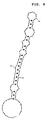
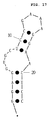
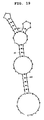
- RNAs shown by SEQ ID NO:1 to 8 were estimated using the MFOLD program ( M. Zuker, Mfold web server for nucleic acid folding and hybridization prediction. Nucleic Acids Res. 31 (13), 3406-15, (2003) ). The structures are shown in FIGs. 1 to 8 . As shown in the figures, these RNAs comprised the shared sequence GGUGCU, and this shared sequence had formed a bulge.
- RNA shown by SEQ ID NO:9 was present in 1 of the 48 clones sequenced. This RNA bound specifically to human IgG1, and had the GGUGCU sequence therein. However, when the secondary structure of this RNA was estimated using the MFOLD program, the bulge structure of GGUGCU was not present therein.
- the secondary structure of the RNA shown by SEQ ID NO:9 was estimated using the vsfold4 program (http://www.rna.it-chiba.ac.jp/vsfold4/); the bulge structure of GGUGCU appeared ( FIG. 9 ). On the other hand, none of the other 47.clones bound to IgG1.
- IgG-Fc Fc fragment of IgG
- 100 ⁇ g of human IgG-Fc (manufactured by Athens Research & Technology) was immobilized onto 30 ⁇ L of NHS-activated Sepharose beads (manufactured by Amersham Bioscience). Since the IgG-Fc solution purchased comprised a Tris buffer solution, coupling was performed after the Tris buffer solution was replaced with 20 mM HEPES buffer solution (manufactured by Sigma). Coupling was performed as directed in the kit specifications.
- the amount immobilized was confirmed by examining the IgG-Fc solution before immobilization and the supernatant liquid just after immobilization by SDS-PAGE. No IgG-Fc band was detected in the supernatant liquid; it is thought that almost all of the IgG-Fc used underwent coupling.
- the RNA used was found to be fluorated at the 2'-position of the ribose of each pyrimidine base-containing nucleotide as described above. Used as the DNA template for preparing an initial pool of RNA was one wherein a 40-residue random sequence was sandwiched between the primer sequences shown below.
- RNAs shown by SEQ ID NO:19, 20, and 21 were present in 13, 9, and 6 clones, respectively, of the 48 clones sequenced. These RNAs comprised the shared sequence GGUGCU.
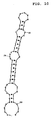
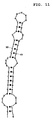
- the RNAs of SEQ ID NO:20 and 21 comprised the same bulge structure as that of the RNA of SEQ ID NO:1, but did not comprise the RNA of SEQ ID NO:19 ( FIGs. 19 to 21 ).
- the sequences of the RNAs that were present only in 1 clone of the 48 clones were examined extensively; the RNAs shown by SEQ ID NO:22 and 23 comprised the shared sequence GGUGCU.
- the RNA of SEQ ID NO:22 comprised a shared bulge structure, whereas the RNA of SEQ ID NO:23 did not comprise the same.
- there were 15 sequences found in 1 clone None of the latter sequences comprised GGUGCU. Of these sequences, eight sequences were examined for binding affinity; none of them had binding affinity.
- RNAs formed with pyrimidine base-containing nucleotides fluorated at the 2'-position of ribose and natural type purine base-containing nucleotides were performed; in all these runs, RNAs comprising the shared sequence GGUGCU were selected. There was no special feature in the sequences on both sides of this shared sequence; it was postulated that GGUGCU is important for the binding to IgG.
- GGUGCU is important for the binding to IgG.
- the secondary structures were estimated using the MFOLD program, it is postulated that almost all of the RNAs selected comprise the bulge structure of GGUGCU, and that all the RNA having the shared sequence assume the bulge structure of GGUGCU.
- the binding affinities of the RNAs shown by SEQ ID NO:1 to 9 for human IgG-Fc were determined by a surface plasmon resonance method. Used for the measurements was BIAcore 2000 manufactured by BIAcore. Used as the sensor chip was the SA chip having streptavidin immobilized thereon. Bound thereto was about 1000 RU of 16-residue Poly dT having biotin bound to the 5' end thereof. The RNA for use as the ligand had 16-residue Poly A added to the 3' end thereof, and immobilized to the SA chip via a bond between dT and A. The amount immobilized was adjusted to about 1000 RU by injecting 60 ⁇ L at a concentration of 0.01 ⁇ g/ ⁇ L.
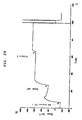
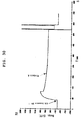
- FIG. 24 or 25 Sensorgrams obtained by immobilizing the RNA shown by SEQ ID NO:1 or 3, and injecting IgG-Fc, are shown in FIG. 24 or 25 , respectively. How the RNA and IgG-Fc are bound together is shown. For control, a measurement was performed on an immobilized RNA pool comprising a random sequence; IgG-Fc did not bind ( FIG. 26 ). The same measurement was performed on the RNAs shown by SEQ ID NO:2 to 9; all of the RNAs bound to IgG-Fc.
- binding affinities for full-length human IgG1 were determined in the same manner. All the RNAs shown by SEQ ID NO:1 to 9 bound to IgG1. The RNA pool containing random sequences did not exhibit binding affinity.
- kinetic analysis was performed using different concentrations of IgG (0.6 ⁇ M to 0.05 ⁇ M) to determine the dissociation constant (Kd) of each RNA aptamer.
- the dissociation constant was determined by immobilizing an RNA having 16-residue PolyA added to the 3' end thereof onto a sensor chip via an A-dT bond, injecting different concentrations of IgG (0.6 ⁇ M to 0.05 ⁇ M) , and performing surface plasmon resonance. The results are shown in Table 1.
- RNA aptamer human IgG1 human IgG1-Fc SEQ ID NO:1 3x10 -10 1.1x10 -12 SEQ ID NO:2 5x10 -9 7.4x10 -9 SEQ ID NO:3 1x10 -8 5x10 -13 SEQ ID NO:4 2x10 -8 6x10 -12 SEQ ID NO:5 3x10 -8 6x10 -13 SEQ ID NO:6 1x10 -9 3x10 -9 SEQ ID NO:7 1x10 -12 1x10 -12 SEQ ID NO:8 3x10 -9 7x10 -9 SEQ ID NO:9 2x10 -8 SEQ ID NO:10 6x10 -9 SEQ ID NO:11 1x10 -9 SEQ ID NO:14 4x10 -9 SEQ ID NO:15 5x10 -9 SEQ ID NO:16 6x10 -9 SEQ ID NO:17 1x10 -8
- the binding affinities of the RNAs shown by SEQ ID NO:19 to 23 for human IgG1
- Biacore2000 The binding affinities of aptamers were measured using Biacore2000 (manufactured by Biacore).
- Biacore2000 incorporates kinetic analytical software; by fitting a theoretical equation to the shape of a sensorgram obtained, the dissociation constant can be determined.
- SEQ ID NO:1 to 9 and 19 to 23 the theoretical equation for the 1:1 binding model fitted well, whereas to the short aptamers such as the one shown by SEQ ID NO:17, the theoretical equation for the Bivalent model, a 1:2 binding model, fitted better. Because antibodies have a symmetric structure, it is a quite easily acceptable thought that two aptamers are bound to one antibody.
- RNAs shown by SEQ ID NO:1 to 9 and 19 to 23, prepared by the SELEX method have binding affinity for human IgG. This shows that the shared sequence GGUGCU is important for the binding to IgG.
- the lengths of the RNAs shown by SEQ ID NO:1 to 9 and 19 to 23 are about 70 residues; if the length can be shortened to about 40 residues or less, it will become possible to prepare an RNA aptamer by chemical synthesis. Hence, attempts were made to miniaturize the RNAs shown by SEQ ID NO:1 to 9 and 19 to 23.
- the RNAs shown by SEQ ID NO:1 to 9 and 19 to 23 have been fluorated at the 2'-position of the ribose of each pyrimidine base-containing nucleotide (U, C), and the purine base-containing nucleotides (A, G) are of the natural RNA type. All short RNAs newly prepared in this Example have been fluorated at the 2'-position of the ribose of the pyrimidine base.
- the RNA shown by SEQ ID NO:10 was prepared by cutting the 5'-end GGGACAC and 3'-end GAGAG of the RNA shown by SEQ ID NO:1, and adding GG to the 5' end thereof for transcription.
- the RNA shown by SEQ ID NO:11 was prepared by cutting the 5'-end GGAAU and the 3'-end ACAU of the RNA shown by SEQ ID NO:10.
- the RNA shown by SEQ ID NO:12 was prepared by cutting the 5'-end GGACGAGUU and 3'-end AACGGCCG of the RNA shown by SEQ ID NO:11, and adding GG to the 5' end thereof and CC to the 3' end thereof.
- the RNA shown by SEQ ID NO:13 was prepared by replacing the stem loop structure behind the bulge of GGUGCU of the RNA shown by SEQ ID NO:12 with the stem loop structure of the RNA shown by SEQ ID NO:2.
- the RNA shown by SEQ ID NO:14 was prepared by replacing the loop portion of the RNA shown by SEQ ID NO:13 with the GAAA tetra-loop.
- the RNA shown by SEQ ID NO:15 was prepared by removing two base pairs from the first stem of the RNA shown by SEQ ID NO:13 to shorten the whole stem.
- the RNA shown by SEQ ID NO:16 was prepared by removing three base pairs from the second stem of the RNA shown by SEQ ID NO:13 to shorten the whole stem.
- the RNA shown by SEQ ID NO:17 was prepared by removing two base pairs from the first stem of the RNA shown by SEQ ID NO:16 to shorten the whole stem.
- the RNA shown by SEQ ID NO:18 was prepared by removing one base pair from the second stem of the RNA shown by SEQ ID NO:17 to shorten the whole stem.
- the binding affinities of the miniaturized RNAs were confirmed using a surface plasmon resonance method. Measurements were performed in the same manner as Example 1 by immobilizing an RNA having 16-residue Poly A added thereto via an A-pT bond, and injecting IgG thereto. As a result, the RNAs shown by SEQ ID NO:10 to 18, which comprise the GGUGCU consensus sequence, were found to have binding affinity for human IgG1. Of these RNAs, the RNA shown by SEQ ID NO:18 consisted of 21 residues. The respective dissociation constants are shown in Table 1.
- RNA aptamer with a length such that chemical synthesis is possible was prepared. It was also shown that if a bulge structure for the shared sequence GGUGCU is present, the binding affinity for IgG is retained.
- RNA aptamers also have binding affinity for subclasses of IgG other than human IgG1 or for IgG of animal species other than humans was determined using a surface plasmon resonance method. Measurements were performed in the same manner as Example 1 by immobilizing a nucleic acid having 16-residue Poly A added thereto via an A-pT bond, and injecting IgG thereto. Used as the RNA aptamers were the nucleic acids shown by SEQ ID NO:1 and 17.
- human IgG1 human IgG2 (manufactured by Calbiochem), human IgG2 (manufactured by Calbiochem), human IgG3 (manufactured by Calbiochem), human IgG4 (manufactured by Calbiochem), mouse IgG1 (manufactured by Chemicon International), mouse IgG2a (manufactured by Chemicon International), mouse IgG2b (manufactured by Zymed Laboratories), mouse IgG3 (manufactured by Bethyl Laboratories), rat IgG1 (manufactured by R & D Systems), rat IgG2a (manufactured by Zymed Laboratories), rat IgG2b (manufactured by Zymed Laboratories), rat IgG2c (manufactured by UK-Serotec), rabbit IgG (manufactured by Zymed Laboratories), bovine IgG1 (manufacture
- RNAs shown by SEQ ID NO:1 and 17 were found to having binding affinity for human IgG1, human IgG2, human IgG3, human IgG4, hamster IgG, and swine IgG, but not to have binding affinity for the IgG of any other animal species.
- the nucleic acids shown by SEQ ID N0:1 and 17 also did not have binding affinity for human IgD (manufactured by Biogenesis) and human IgE (manufactured by Calbiochem).
- nucleic acid shown by SEQ ID NO:17 did not have binding affinity for human IgA (manufactured by Bethyl Laboratories), but exhibited very weak but measurable binding affinity for human IgM (manufactured by Chemicon International).
- the RNA aptamers provided by the present invention were found to be RNAs that bind specifically to human, hamster, and swine IgG.
- human IgG the RNA aptamers were found to bind to all of IgG1 to 4, irrespective of subclass. This is a characteristic not found in Protein A, which is currently used as a ligand for antibody purification resin.
- An Fc region of IgG binds to a receptor protein (Fc ⁇ R) expressed in immunocompetent cells such as macrophages and neutrophils to promote cell activation or suppression.
- Fc ⁇ R receptor protein
- whether or not an RNA provided by the present invention has bound to the Fc ⁇ R binding site of IgG was determined using a surface plasmon resonance method.
- an RNA aptamer having 16-residue Poly A added thereto was immobilized in the same manner as Example 1, and human IgG1 was injected thereto and bound to the RNA aptamer, after which Fc ⁇ R was injected.
- RNA aptamer binding site of IgG overlaps the binding site of Fc ⁇ R over the entire portion or in a primary portion, Fc ⁇ R cannot bind to the IgG bound to the RNA aptamer. If the binding strength between IgG and Fc ⁇ R is stronger than the binding strength between IgG and the RNA aptamer, and a substitution reaction between the RNA aptamer and Fc ⁇ R occurs, it is postulated that IgG dissociates from the immobilized RNA aptamer, forms a complex with Fc ⁇ R, and is washed away.
- RNA shown by SEQ ID NO:1 as the RNA aptamer
- human IgG-Fc manufactured by Athens Research & Technology
- human Fc ⁇ RI manufactured by R & D Systems
- RNA aptamer was found to be bound to a portion other than the Fc ⁇ RI binding site of IgG.
- Protein A As another substance that binds to IgG-Fc, Protein A is known well. Since Protein A binds specifically to an Fc region of IgG, it is used as a ligand for a separating agent for antibody purification. Hence, in the same manner as Example 5, whether or not an RNA provided by the present invention has bound to the Protein A binding site of IgG.
- RNA aptamer was found to have bound to a portion different from the Protein A binding site of IgG-Fc.
- RNA aptamer prepared in Example 1 was found to be fluorated at the 2'-position of the ribose of each pyrimidine base-containing nucleotide.
- RNAs were prepared using different methods of modifying the 2'-position of ribose, and their binding affinities for IgG were examined using a surface plasmon resonance method.
- the natural type RNAs shown by SEQ ID NO:11 and 13 were prepared, and their binding affinities for IgG were examined.
- the natural type RNAs were prepared by chemically synthesizing a template DNA (manufactured by OPERON), and transcribing using T7 RNA polymerase (manufactured by Takara).
- the binding affinities were measured by a surface plasmon resonance method as in Example 1.
- Used as the IgG was human IgG1 (manufactured by Calbiochem). As a result, it was found that the amount of IgG1 bound decreased, but the natural type RNAs shown by SEQ ID NO:11 and 13 have binding affinity for IgG.
- SEQ ID NO:17 SEQ ID NO:17-1 (23F1) SEQ ID NO:17-2 (23F2) SEQ ID NO: 17-3 (23F3) SEQ ID NO:17-4 (23F10) SEQ ID NO: 17-5 (23F11) SEQ ID NO:17-6 (23F12) SEQ ID NO:17-7 (23F23) SEQ ID NO:17-8 (23F25) SEQ ID NO:17-9 (23F32) SEQ ID NO:17-10 (23F33) SEQ ID NO:17-11 (23F41) SEQ ID NO:17-12 (23F42) SEQ ID NO:17-13 (23F43) SEQ ID NO:17-14 (23F31)
- RNAs were prepared by chemical synthesis (manufactured by Gene Design). Their binding affinities were measured by a surface plasmon resonance method as in Example 1. Used as the IgG was human IgG1 (manufactured by Calbiochem). As a result of the measurements, the RNA shown by SEQ ID NO:17-1 exhibited a binding affinity equivalent to that of the RNA shown by SEQ ID NO:17. The RNAs shown by SEQ ID NO:17-2, 17-4 to 17-14 were higher in binding affinity than the RNA shown by SEQ ID NO:17. On the other hand, the RNA shown by SEQ ID NO:17-3 was lower in binding affinity than the RNA shown by SEQ ID NO:17.
- SEQ ID NO:15 SEQ ID NO:15-1 (30F-1) SEQ ID NO:15-2 (30F-2) SEQ ID NO:15-3 (30F-3) SEQ ID NO:15-4 (30F-4)
- nucleic acids shown by SEQ ID NO:15-1 to 15-3 were found to have a binding affinity equivalent to that of the nucleic acid shown by SEQ ID NO:15.
- RNA aptamer binding affinity SEQ ID NO:15 ++++ SEQ ID NO:15-1 ++++ SEQ ID NO:15-2 ++++ SEQ ID NO:15-3 ++++ SEQ ID NO:15-4 ++++ Table 3-2 RNA aptamer binding affinity SEQ ID NO:17 ++ SEQ ID NO:17-1 ++ SEQ ID NO:17-2 ++++ SEQ ID NO:17-3 + SEQ ID NO:17-4 ++++ SEQ ID NO:17-5 +++ SEQ ID NO:17-6 +++ SEQ ID NO:17-7 ++++ SEQ ID NO:17-8 ++++ SEQ ID NO:17-9 ++ SEQ ID NO:17-10 +++ SEQ ID NO:17-11 ++++ SEQ ID NO:17-12 ++++ SEQ ID NO:17-13 ++++ SEQ ID NO:17-14 ++ natural RNA +
- RNAs having the GGUGCU portion changed to a random sequence was prepared by transcribing using the DuraScribeTM T7 Transcription Kit (manufactured by Epicentre) with the following chemically synthesized DNA as the template.
- DNA template 5'- tgtcggccgttacagttccggtttccgg-6N-tgtaactcgtccattgtccc-3' (SEQ ID NO:31)
- Primer G 5'- taatacgactcactatagggacaatggacgagttac-3' (SEQ ID NO:32)
- Primer H 5'- tgtcggccgttacagttc-3' (SEQ ID NO:33)
- RNA pool The theoretical variation of the RNA pool is 4096. As directed in the kit specifications, 40 ⁇ g of human IgG (Zymed Laboratories) was immobilized onto 40 ⁇ l of NHS-activated Sepharose resin (manufactured by Amasham Bioscience). SELEX was performed in the same manner as Example 1.
- sequences were examined; 36 sequences of the 48 sequences comprised GGUGCU. Their secondary structures were examined using the MFOLD program; there was no sequence other than GGUGCU that forms the same bulge structure as that for GGUGCU. Using a surface plasmon resonance method, binding affinity was examined; there were no sequences other than GGUGCU that have binding affinity for human IgG.
- nucleic acids comprising such a sequence in place of the GGUGCU of the nucleic acid shown by SEQ ID NO:17-7 were chemically synthesized, and their binding affinities for human IgG1 were measured using a surface plasmon resonance method. Used in place of GGUGCU were the following sequences.
- the GGUGCU of the nucleic acid shown by SEQ ID NO:17-7 like G (OH) G (OH) U (F) G (OH) C (F) U (F), has been fluorated at the 2' - position of the ribose of each pyrimidine base-containing nucleotide. Whether or not there is a sequence having binding affinity for human IgG was determined by other methods of modification.
- the nucleic acids used for the experiments were as shown below, and were prepared by chemical synthesis. Their binding affinities for human IgG1 were examined using a surface plasmon resonance method.
- 17-7-101 and 17-7-104 to 107 were found to have a binding affinity equivalent to that of 17-7.
- 17-7-102 and 17-7-103 did not have binding affinity.
- RNA aptamer binding affinity SEQ ID NO:17-7 +++ SEQ ID NO:17-7-1 - SEQ ID NO:17-7-2 - SEQ ID NO:17-7-3 - SEQ ID NO:17-7-4 - SEQ ID NO:17-7-5 - SEQ ID NO:17-7-101 +++ SEQ ID NO:17-7-102 - SEQ ID NO:17-7-103 - SEQ ID NO:17-7-104 +++ SEQ ID NO:17-7-105 +++ SEQ ID NO:17-7-106 +++ SEQ ID NO:17-7-107 +++
- the bulge structures of GGUGCU and GGUGAU were found to be important to the binding to IgG.
- RNAs shown by SEQ ID NO:15 and 17 were immobilized on beads, and a pull-down experiment of human IgG1 was performed.
- Each 10 ⁇ L of Oligo(dT)-Cellulose beads (manufactured by Amersham Biosciences) was placed in a 200 ⁇ L tube (manufactured by Axygen), and coated with bovine serum albumin (manufactured by Boehringer Mannheim). Added thereto was about 10 ⁇ g of each RNA having 16 "A" units added to the 3' end thereof to achieve immobilization.
- RNAs were prepared by chemically synthesizing a DNA template and primers (manufactured by Operon), and transcribing this using the DuraScribeTM T7 Transcription Kit (manufactured by Epicentre). After the unbound RNA was removed by washing with solution A, 20 ⁇ g of human IgG1 (Calbiochem) was added, and the mixture was kept at room temperature for 30 minutes. The human IgG1 that did not bind to the RNA was washed down with solution A. Next, a sample buffer was added to the beads, and the mixture was heated at 65°C for 15 minutes, and analyzed by SDS-PAGE.
- a 6x sample buffer was prepared by mixing 1.3 g of sodium dodecyl sulfate (SDS), 3 mL of 2-mercaptoethanol, 4.2 mL of glycerin, and 1.5 mg of Bromophenol Blue.
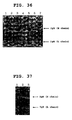
- SDS-PAGE The results of SDS-PAGE are shown in FIG. 32 .
- Lane 1 shows the result obtained using the aptamer of SEQ ID NO:15 as the ligand;
- lane 2 shows the result obtained using the aptamer of SEQ ID NO:17.
- the upper band is the band of the heavy chain (H chain) of IgG, and the lower band is the band of the light chain (L chain). It is seen that by using the RNA shown by SEQ ID NO:15 or 17 as the ligand for a separating agent for antibody purification, IgG can be pulled down.
- RNA shown by SEQ ID NO:15 was determined. Also determined was whether or not IgG can be eluted with a neutral eluent. 10 ⁇ L of streptavidin-coupled Sepharose beads (manufactured by Amersham Biosciences) was placed in each 200 ⁇ L tube (manufactured by Axygen), and coated with bovine serum albumin. Added thereto was about 10 ⁇ g of the RNA with biotin bound to the 5' end thereof (manufactured by Gene Design) to achieve immobilization.
- human serum components not bound to the RNA were washed down using an NaCl-MgCl 2 buffer.
- the NaCl-MgCl 2 buffer comprised 150 mM NaCl, 2.5 mM MgCl 2 , and pH 7.6 20 mM Tris buffer.
- Used as the neutral eluents were (1) a 200 mM KCl + 10 mM EDTA mixed solution, (2) a 200 mM KCl + 10 mM EDTA + 10% glycerol mixed solution, and (3) a 600 mM KCl + 10 mM EDTA + 10% glycerol mixed solution.
- the eluent was analyzed by SDS-PAGE.
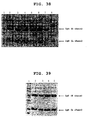
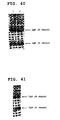
- a sample buffer was added to the beads after removing the eluent, and the mixture was heated at 65°C for 15 minutes, and analyzed by SDS-PAGE. The results of SDS-PAGE are shown in FIG. 33 .
- the aptamer resin is capable of purifying IgG with a purity about equivalent to that of rProtein A resin.
- the aptamer resin can be said to surpass rProtein A resin in that IgG can be eluted under neutral conditions when the aptamer resin is used.
- RNA ligand for antibody purification of the present invention is capable of purifying a human antibody alone at high purity.
- RNA shown by SEQ ID NO:15 can be used repeatedly as a ligand for a separating agent for antibody purification.
- RNA with biotin bound thereto was immobilized onto 10 ⁇ L of streptavidin beads, human serum was added, and IgG was eluted with a neutral solution.
- the beads were washed with 50 ⁇ L of 6 M urea three times, and the beads were further washed with NaCl-MgCl 2 buffer three times to remove the urea, after which 20 ⁇ L of human serum was added again, and IgG was eluted with a neutral solution.
- human IgG can be purified at high efficiency and at high purity from human serum under neutral conditions.
- RNA shown by SEQ ID NO:15 was immobilized onto beads by thiol coupling, and a pull-down experiment was performed in the same manner as Example 9.
- a thiol group was bound to the 5' end of the RNA shown by SEQ ID NO:15 via a C18 linker (manufactured by Gene Design).
- About 20 ⁇ g of this RNA was immobilized onto 10 ⁇ L of Activated Thiol Sepharose beads (manufactured by Amersham Bioscience). Immobilization was performed as directed in the kit specifications. The amount immobilized was estimated by measuring the amount of the RNA before immobilization and the amount of RNA in the supernatant immediately after immobilization using an absorption photometer.
- RNA aptamer beads in the same manner as Example 9. 5 ⁇ L and 10 ⁇ L of human serum was added to 10 ⁇ g of beads, and the beads were washed, eluted with a neutral eluent, and analyzed by SDS-PAGE ( FIG. 36 ). As a result, it was shown that IgG was pulled down at high purity ( FIG. 36 lanes 2 and 3).
- a pull-down experiment using rProtein A beads was performed in the same manner as Example 9. 5 ⁇ L of human serum was added to 10 ⁇ L of rProtein A beads, and the beads were washed, after which a sample buffer for SDS-PAGE was added, and the mixture was heated at 65°C for 15 minutes, and analyzed by SDS-PAGE ( FIG. 36 lane 5).
- RNA was immobilized onto the resin by amino coupling.
- the amino group-coupled RNA was prepared by chemical synthesis (manufactured by Gene Design).
- Tresyl-TOYOPEARL resin manufactured by Tosoh Corporation
- 10 mg of the RNA per ml of the resin about 8 mg of the RNA was immobilized.
- the amount immobilized was determined by measuring the amount of RNA in the supernatant using an absorption photometer both before and after coupling.
- An experiment of pulling down IgG from human serum was performed using this aptamer resin in the same manner as Example 9.
- RNAs shown by SEQ ID NO:15 FIG. 37
- SEQ ID NO:17-7, 17-8, 17-7-107, 15 FIG. 38
- IgG was pulled down from all these aptamer resins at a purity equivalent to that with rProtein A resin ( FIGS. 37 and 38 ).
- Example 9 it was shown that when an aptamer resin was used, IgG could be eluted with a 200 mM KCl + 10 mM EDTA neutral eluent.
- aptamer resin shown by SEQ ID NO:17-7 immobilized by amino coupling, experiments of IgG elution with neutral eluents with different ingredients were performed.
- eluents were (1) 200 mM KC1 + 10 mM EDTA + pH 7.6 10 mM Tris, (2) 200 mM KC1 + pH 7.6 10 mM Tris, (3) 300 mM NaCl + 10 mM EDTA + pH 7.6 10 mM Tris, and (4) 10 mM EDTA + pH 7.6 10 mM Tris.
- IgG was pulled down from human serum, eluted with the above-described eluent, and analyzed using SDS-PAGE. As a result, it was found that IgG could be eluted with KCl or EDTA alone ( FIG. 39 ).
- IgG can be eluted with 1 M NaCl solution. Because nucleic acids bear a negative charge, it is generally thought that an ionic bond is important for the binding to protein. Hence, the binding to protein can be broken using a solution with a high salt concentration. With 1 M NaCl solution as the eluent, the same experiment was performed as described above; IgG was not detected in the eluent, most of which remained adsorbed to the aptamer resin. To confirm that the aptamer and IgG are bound together in the presence of high concentrations of NaCl, an experiment using a surface plasmon resonance method was performed.
- Used as the running buffer was a 500 mM NaCl + 2 mM MgCl 2 + 10 mM pH 7.6 Tris mixture. As a result, it was found that the binding affinity did not decrease at all even in the presence of 500 mM NaCl.
- the IgG bound to the aptamer resin could be eluted with 200 mM KCl solution, but could not be eluted with 1 M NaCl solution.
- the aptamer resin shown by SEQ ID NO:17-17 or 17-18 after being used three times, was (1) heated at 85°C for 5 minutes with the addition of ultrapure water or (2) heated at 65°C for 15 minutes with the addition of 6M urea, and a pull-down experiment was performed again.
- 10 ⁇ L of human serum was used; used as the eluent was 200 mM KCl + 10 mM EDTA + pH 7.6 10 mM Tris solution.
- the eluent was analyzed by SDS-PAGE; it was found that the aptamer resin was hardly deteriorated by heat treatment with (1) and (2) ( FIG. 40 ).
- IgG can be purified in dynamic state.
- 100 ⁇ L of the aptamer resin was packed in a small column (MoBiTec/mobicols), and 100 ⁇ L of human serum was added. Soon after that, solution A was added using a syringe to wash the resin (solution A: 4 mL, flow rate about 1 mL/min).
- solution A was added using a syringe to wash the resin (solution A: 4 mL, flow rate about 1 mL/min).
- the IgG bound to the aptamer ligand was eluted using a neutral eluent (neutral eluent: 2 mL, flow rate about 1 mL/min).
- the fraction eluted was examined using SDS-PAGE; it was confirmed that IgG was eluted.
- the absorbance of each fraction was measured, and the amount of IgG purified dynamically was calculated; it was found that 3.5 mg of IgG per mL
- an aptamer prepared by chemical synthesis was used after being immobilized on the resin via a polyA-polydT bond, a biotin-streptavidin bond, thiol coupling, or amino coupling.
- the nucleic acid was synthesized in a state immobilized onto the resin, and used after being cleaved from the resin after synthesis.
- nucleic acid was used as is, without being cleaved from the resin, for the pull-down experiment after completion of synthesis (resin-bound oligo).
- RNA shown by SEQ ID NO:15 used as the resin-bound oligo was the RNA shown by SEQ ID NO:15, synthesized on the Oligo affinity support (manufactured by Glen Research) (manufactured by Gene Design). 10 ⁇ L of human serum was added to 10 ⁇ L of the resin, and IgG was pulled down, and eluted with a neutral eluent; IgG was purified at high purity ( FIG. 41 ).
- this aptamer has binding affinity for an antibody for pharmaceutical use prepared using gene recombination technology was determined using a surface plasmon resonance method.
- Used as the antibody was Rituxan (manufactured by Roche), a pharmaceutical in actual use; used as the ligand was the nucleic acid shown by SEQ ID NO:17-7.
- the nucleic acid shown by SEQ ID NO:17-7 had binding affinity for Rituxan ( FIG. 42 ).
- nucleic acid ligand having the capability of binding to IgG.
- the nucleic acid ligand provided by the present invention retains high binding affinity and specificity for IgG. Also, because the nucleic acid ligand can be synthesized chemically, it allows easy alteration or modification of the nucleotide sequence. Therefore, when an antibody is utilized for a pharmaceutical, a chemical reagent, or a diagnostic reagent, it is easily possible to alter the binding affinity or stability thereof according to respective needs, and to add new functions by binding a fluorescent substance, an anticancer agent and the like. In recent years, humanized monoclonal antibodies have been brought into practical applications as molecular-targeted drugs, and antibody preparations are being developed worldwide.
- the nucleic acid ligand provided by the present invention can be used as ligands of a separating agent for antibody purification, and makes it possible to purify a desired antibody under neutral conditions easily at high purity. This aspect is widely different from the conventional purification under acidic conditions using Protein A in that the antibody is unlikely to lose activity during purification.
- the nucleic acid ligand provided by the present invention can be utilized for general purposes as a novel linker for binding an antibody and a fluorescent substance or an enzyme, as a novel immobilizing agent for immobilizing an antibody to a substrate or resin, and as a novel linker for binding an antibody and an anticancer agent or a toxin.
- the present invention is expected to find general-purpose applications as a tool of industrialization and investigation of novel separating agents, chemical reagents, and pharmaceuticals concerning antibodies, having a major economic effect.
Landscapes
- Health & Medical Sciences (AREA)
- Life Sciences & Earth Sciences (AREA)
- Engineering & Computer Science (AREA)
- Immunology (AREA)
- Chemical & Material Sciences (AREA)
- Molecular Biology (AREA)
- Biomedical Technology (AREA)
- Genetics & Genomics (AREA)
- Urology & Nephrology (AREA)
- Hematology (AREA)
- General Health & Medical Sciences (AREA)
- Biotechnology (AREA)
- Biochemistry (AREA)
- Organic Chemistry (AREA)
- Medicinal Chemistry (AREA)
- Microbiology (AREA)
- Physics & Mathematics (AREA)
- General Physics & Mathematics (AREA)
- Cell Biology (AREA)
- Pathology (AREA)
- Analytical Chemistry (AREA)
- Food Science & Technology (AREA)
- Biophysics (AREA)
- Bioinformatics & Cheminformatics (AREA)
- Zoology (AREA)
- Wood Science & Technology (AREA)
- General Engineering & Computer Science (AREA)
- Proteomics, Peptides & Aminoacids (AREA)
- Plant Pathology (AREA)
- Pharmaceuticals Containing Other Organic And Inorganic Compounds (AREA)
- Apparatus Associated With Microorganisms And Enzymes (AREA)
- Peptides Or Proteins (AREA)
- Medicines Containing Antibodies Or Antigens For Use As Internal Diagnostic Agents (AREA)
Applications Claiming Priority (3)
| Application Number | Priority Date | Filing Date | Title |
|---|---|---|---|
| JP2005195717 | 2005-07-05 | ||
| US74902605P | 2005-12-12 | 2005-12-12 | |
| PCT/JP2006/313811 WO2007004748A1 (ja) | 2005-07-05 | 2006-07-05 | 免疫グロブリンgに結合する核酸とその利用法 |
Publications (2)
| Publication Number | Publication Date |
|---|---|
| EP1918372A1 true EP1918372A1 (de) | 2008-05-07 |
| EP1918372A4 EP1918372A4 (de) | 2009-08-12 |
Family
ID=37604595
Family Applications (1)
| Application Number | Title | Priority Date | Filing Date |
|---|---|---|---|
| EP06780981A Withdrawn EP1918372A4 (de) | 2005-07-05 | 2006-07-05 | Zur bindung an immunglobulin g fähige nukleinsäure und verwendung davon |
Country Status (5)
| Country | Link |
|---|---|
| US (1) | US8637656B2 (de) |
| EP (1) | EP1918372A4 (de) |
| KR (1) | KR20080036595A (de) |
| CA (1) | CA2614145A1 (de) |
| WO (1) | WO2007004748A1 (de) |
Cited By (6)
| Publication number | Priority date | Publication date | Assignee | Title |
|---|---|---|---|---|
| FR2920024A1 (fr) * | 2007-08-14 | 2009-02-20 | Lfb Biotechnologies Soc Par Ac | Procede de purification ou de detection d'une proteine cible |
| DE102008013622A1 (de) * | 2008-03-10 | 2009-09-17 | Freie Universität Berlin | Pharmazeutische Zusammensetzung zur Diagnose oder Behandlung des Plasmozytoms |
| EP2098594A4 (de) * | 2006-11-24 | 2010-10-20 | Nec Software Ltd | Nukleinsäuremolekül mit fähigkeit zur bindung an aus kaninchen stammenden igg-antikörper |
| WO2018019538A1 (en) * | 2016-07-28 | 2018-02-01 | Laboratoire Francais Du Fractionnement Et Des Biotechnologies | Anti- immunoglobulin g aptamers and uses thereof |
| WO2018019537A1 (en) | 2016-07-28 | 2018-02-01 | Laboratoire Francais Du Fractionnement Et Des Biotechnologies | Method for obtaining aptamers |
| WO2019215112A1 (de) | 2018-05-09 | 2019-11-14 | Lifetaq-Analytics Gmbh | In-situ zellanalyse im zellkultursystem |
Families Citing this family (19)
| Publication number | Priority date | Publication date | Assignee | Title |
|---|---|---|---|---|
| JP5344671B2 (ja) * | 2008-02-14 | 2013-11-20 | 国立大学法人山口大学 | 心不全治療薬 |
| CN102099471B (zh) * | 2008-07-14 | 2014-05-07 | 国立大学法人东京大学 | 针对il-17的适配体及其用途 |
| FR2942232B1 (fr) * | 2009-02-19 | 2015-03-13 | Lfb Biotechnologies | Moyens pour la purification d'une proteine de la coagulation et procedes pour sa mise en oeuvre |
| US9045756B2 (en) * | 2009-11-16 | 2015-06-02 | Memorial Sloan Kettering Cancer Center | Compositions and methods for treating cancer and other diseases |
| JPWO2013024763A1 (ja) * | 2011-08-12 | 2015-03-05 | 独立行政法人理化学研究所 | 核酸アプタマーの作製方法 |
| US20150017662A1 (en) * | 2012-01-27 | 2015-01-15 | University-Industry Cooperation Group fo Kyung Hee University | Method for detecting and quantifying a target protein or a target cell using an aptamer chip |
| MX356413B (es) * | 2012-06-07 | 2018-05-29 | Somalogic Inc | Ensayos multiplexados basados en aptámeros. |
| CN105264072B (zh) | 2013-03-22 | 2019-05-10 | 国立大学法人东京大学 | 针对il-17的适体及其用途 |
| WO2017136849A1 (en) * | 2016-02-05 | 2017-08-10 | Base Pair Biotechnologies, Inc. | Functional ligands to igg |
| JP2018126117A (ja) * | 2017-02-10 | 2018-08-16 | 学校法人日本大学 | 核酸アプタマー、固相担体、ヒトIgG精製用カラム、及びヒトIgGの精製方法 |
| ES3066090T3 (en) | 2017-04-28 | 2026-05-11 | Ajinomoto Co Inc | Compound having substance that has affinity for soluble protein, cleavable moiety, and reactive group, or salt thereof |
| AU2018363996B2 (en) * | 2017-11-09 | 2024-11-07 | Ribomic Inc. | Aptamer for ADAMTS5, and use for aptamer for ADAMTS5 |
| JPWO2019240288A1 (ja) | 2018-06-14 | 2021-07-26 | 味の素株式会社 | 抗体に対する親和性物質、および生体直交性官能基を有する化合物またはその塩 |
| CN110483643B (zh) * | 2018-09-19 | 2021-06-08 | 深圳市雅为泓源生物科技有限公司 | 一种新型的抗体组合物、分离的核酸和制备方法 |
| EP3867383A1 (de) * | 2018-10-15 | 2021-08-25 | Somalogic, Inc. | Nukleinsäureverbindungen zur bindung von immunoglobulin g |
| WO2020124095A1 (en) * | 2018-12-14 | 2020-06-18 | Board Of Regents, The University Of Texas System Aka | Dna aptamers and use thereof for the treatment of cancer |
| EP3990637A1 (de) * | 2019-06-26 | 2022-05-04 | Waters Technologies Corporation | Verfahren zur aptamerbasierten affinitätserfassung zur selektiven anreicherung von humanen immunoglobulin-fc-domänen |
| JP7748944B2 (ja) | 2020-06-30 | 2025-10-03 | 株式会社ガイアバイオメディシン | Nk細胞と抗体との結合を安定化する方法、及びその利用 |
| KR20250019100A (ko) | 2022-06-02 | 2025-02-07 | 아지노모토 가부시키가이샤 | 친화성 물질, 화합물, 항체 및 그것들의 염 |
Family Cites Families (19)
| Publication number | Priority date | Publication date | Assignee | Title |
|---|---|---|---|---|
| US5270163A (en) * | 1990-06-11 | 1993-12-14 | University Research Corporation | Methods for identifying nucleic acid ligands |
| US5686592A (en) * | 1990-06-11 | 1997-11-11 | Nexstar Pharmaceuticals, Inc. | High-affinity oligonucleotide ligands to immunoglobulin E (IgE) |
| US6344321B1 (en) * | 1990-06-11 | 2002-02-05 | Gilead Sciences, Inc. | Nucleic acid ligands which bind to hepatocyte growth factor/scatter factor (HGF/SF) or its receptor c-met |
| KR970002255B1 (ko) * | 1990-06-11 | 1997-02-26 | 넥스스타 파아마슈티컬드, 인크. | 핵산 리간드 |
| AU8507191A (en) | 1990-08-29 | 1992-03-30 | Genpharm International, Inc. | Transgenic non-human animals capable of producing heterologous antibodies |
| WO1992014843A1 (en) * | 1991-02-21 | 1992-09-03 | Gilead Sciences, Inc. | Aptamer specific for biomolecules and method of making |
| US5840867A (en) * | 1991-02-21 | 1998-11-24 | Gilead Sciences, Inc. | Aptamer analogs specific for biomolecules |
| US6762290B1 (en) | 1999-07-29 | 2004-07-13 | Gilead Sciences, Inc. | High affinity vascular endothelial growth factor (VEGF) receptor nucleic acid ligands and inhibitors |
| US5756291A (en) * | 1992-08-21 | 1998-05-26 | Gilead Sciences, Inc. | Aptamers specific for biomolecules and methods of making |
| PT668931E (pt) | 1992-09-29 | 2006-05-31 | Gilead Sciences Inc | Ligandos de acidos nucleicos e metodos para producao dos mesmos |
| EP1793006A3 (de) | 1993-09-08 | 2007-08-22 | Gilead Sciences, Inc. | Nukleïnesaüreliganden und Produktion Verfahren dafür |
| US20030186311A1 (en) | 1999-05-21 | 2003-10-02 | Bioforce Nanosciences, Inc. | Parallel analysis of molecular interactions |
| DE60042021D1 (de) * | 1999-07-29 | 2009-05-28 | Gilead Sciences Inc | Nukleinsäureliganden für den hepatozytischen wachstumsfaktor/dispersionsfaktor (hgf/sf) und seines c-met rezeptors |
| JP4167403B2 (ja) | 2001-04-05 | 2008-10-15 | 株式会社リボミック | 翻訳開始因子に特異的に結合する核酸リガンド |
| US20050124565A1 (en) * | 2002-11-21 | 2005-06-09 | Diener John L. | Stabilized aptamers to platelet derived growth factor and their use as oncology therapeutics |
| WO2004104586A1 (en) | 2003-05-16 | 2004-12-02 | Ciphergen Biosystems, Inc. | Allergen test devices and methods for their use |
| JP3940097B2 (ja) | 2003-05-20 | 2007-07-04 | 株式会社リボミック | 翻訳開始因子eIF4Eに結合するリガンド |
| KR101159071B1 (ko) * | 2005-01-14 | 2012-06-26 | 삼성전자주식회사 | 신규한 히드로겔 공중합체, 상기 공중합체가 코팅되어있는 기판, 상기 공중합체를 이용하여 마이크로어레이를제조하는 방법 및 그에 의하여 제조된 마이크로어레이 |
| US20090018093A1 (en) * | 2005-03-07 | 2009-01-15 | Sharon Cload | Nucleic Acid Ligands Specific to Immunoglobuline E and Their Use as Atopic Disease Therapeutics |
-
2006
- 2006-07-05 KR KR1020087002768A patent/KR20080036595A/ko not_active Withdrawn
- 2006-07-05 US US11/988,164 patent/US8637656B2/en not_active Expired - Fee Related
- 2006-07-05 CA CA002614145A patent/CA2614145A1/en not_active Abandoned
- 2006-07-05 EP EP06780981A patent/EP1918372A4/de not_active Withdrawn
- 2006-07-05 WO PCT/JP2006/313811 patent/WO2007004748A1/ja not_active Ceased
Cited By (10)
| Publication number | Priority date | Publication date | Assignee | Title |
|---|---|---|---|---|
| EP2098594A4 (de) * | 2006-11-24 | 2010-10-20 | Nec Software Ltd | Nukleinsäuremolekül mit fähigkeit zur bindung an aus kaninchen stammenden igg-antikörper |
| US8283457B2 (en) | 2006-11-24 | 2012-10-09 | Nec Soft, Ltd. | Nucleic acid molecule capable of binding to rabbit-derived IgG antibody |
| FR2920024A1 (fr) * | 2007-08-14 | 2009-02-20 | Lfb Biotechnologies Soc Par Ac | Procede de purification ou de detection d'une proteine cible |
| WO2009024726A3 (fr) * | 2007-08-14 | 2009-04-30 | Lfb Biotechnologies | Procede de purification ou de detection d'une proteine cible |
| US9175034B2 (en) | 2007-08-14 | 2015-11-03 | Laboratoire Francais Du Fractionnement Et Des Biotechnologies | Method for purifying or detecting a target protein |
| DE102008013622A1 (de) * | 2008-03-10 | 2009-09-17 | Freie Universität Berlin | Pharmazeutische Zusammensetzung zur Diagnose oder Behandlung des Plasmozytoms |
| WO2018019538A1 (en) * | 2016-07-28 | 2018-02-01 | Laboratoire Francais Du Fractionnement Et Des Biotechnologies | Anti- immunoglobulin g aptamers and uses thereof |
| WO2018019537A1 (en) | 2016-07-28 | 2018-02-01 | Laboratoire Francais Du Fractionnement Et Des Biotechnologies | Method for obtaining aptamers |
| WO2019215112A1 (de) | 2018-05-09 | 2019-11-14 | Lifetaq-Analytics Gmbh | In-situ zellanalyse im zellkultursystem |
| US11279971B2 (en) | 2018-05-09 | 2022-03-22 | Lifetaq-Analytics Gmbh | In situ cell analysis in cell culture system |
Also Published As
| Publication number | Publication date |
|---|---|
| US8637656B2 (en) | 2014-01-28 |
| CA2614145A1 (en) | 2007-01-11 |
| EP1918372A4 (de) | 2009-08-12 |
| WO2007004748A1 (ja) | 2007-01-11 |
| KR20080036595A (ko) | 2008-04-28 |
| US20090170219A1 (en) | 2009-07-02 |
Similar Documents
| Publication | Publication Date | Title |
|---|---|---|
| US8637656B2 (en) | Nucleic acid capable of binding to immunoglobulin G and use thereof | |
| AU2009273052B2 (en) | Aptamer against IL-17 and use thereof | |
| US9012420B2 (en) | Aptamer for chymase, and use thereof | |
| US10260070B2 (en) | Aptamer for NGF and use thereof | |
| EP3135766B1 (de) | Aptamer zur bindung an autotaxin und hemmung der biologischen aktivität von autotaxin sowie verwendung dafür | |
| JP4910195B2 (ja) | 免疫グロブリンgに結合する核酸とその利用法 | |
| CA3031390A1 (en) | Anti- immunoglobulin g aptamers and uses thereof | |
| HK1122063A (en) | Nucleic acid capable of binding to immunoglobulin g and use thereof | |
| CA2907636C (en) | Aptamer to il-17 and use thereof | |
| JP2018126117A (ja) | 核酸アプタマー、固相担体、ヒトIgG精製用カラム、及びヒトIgGの精製方法 | |
| CA3083760A1 (en) | Anti-chymase aptamer and use for same | |
| TW200825097A (en) | Nucleic acid capable of binding to immunoglobulin G and use thereof | |
| CA2943788A1 (en) | Aptamer inhibiting biological activity of autotaxin by binding with autotaxin, and use thereof | |
| HK1157390A (en) | Aptamer against il-17 and use thereof |
Legal Events
| Date | Code | Title | Description |
|---|---|---|---|
| PUAI | Public reference made under article 153(3) epc to a published international application that has entered the european phase |
Free format text: ORIGINAL CODE: 0009012 |
|
| 17P | Request for examination filed |
Effective date: 20080129 |
|
| AK | Designated contracting states |
Kind code of ref document: A1 Designated state(s): AT BE BG CH CY CZ DE DK EE ES FI FR GB GR HU IE IS IT LI LT LU LV MC NL PL PT RO SE SI SK TR |
|
| RIN1 | Information on inventor provided before grant (corrected) |
Inventor name: MIYAKAWA, SHIN, Inventor name: NAKAMURA, YOSHIKAZU,C/O RIBOMIC INC. |
|
| A4 | Supplementary search report drawn up and despatched |
Effective date: 20090715 |
|
| 17Q | First examination report despatched |
Effective date: 20091030 |
|
| DAX | Request for extension of the european patent (deleted) | ||
| STAA | Information on the status of an ep patent application or granted ep patent |
Free format text: STATUS: EXAMINATION IS IN PROGRESS |
|
| STAA | Information on the status of an ep patent application or granted ep patent |
Free format text: STATUS: THE APPLICATION IS DEEMED TO BE WITHDRAWN |
|
| 18D | Application deemed to be withdrawn |
Effective date: 20220201 |