EP1919110A2 - Verfahren und System zur Anzeige digitaler Rundfunkdaten - Google Patents
Verfahren und System zur Anzeige digitaler Rundfunkdaten Download PDFInfo
- Publication number
- EP1919110A2 EP1919110A2 EP07018922A EP07018922A EP1919110A2 EP 1919110 A2 EP1919110 A2 EP 1919110A2 EP 07018922 A EP07018922 A EP 07018922A EP 07018922 A EP07018922 A EP 07018922A EP 1919110 A2 EP1919110 A2 EP 1919110A2
- Authority
- EP
- European Patent Office
- Prior art keywords
- broadcast
- external device
- portable terminal
- information
- short
- Prior art date
- Legal status (The legal status is an assumption and is not a legal conclusion. Google has not performed a legal analysis and makes no representation as to the accuracy of the status listed.)
- Granted
Links
Images




Classifications
-
- H—ELECTRICITY
- H04—ELECTRIC COMMUNICATION TECHNIQUE
- H04H—BROADCAST COMMUNICATION
- H04H60/00—Arrangements for broadcast applications with a direct linking to broadcast information or broadcast space-time; Broadcast-related systems
- H04H60/76—Arrangements characterised by transmission systems other than for broadcast, e.g. the Internet
- H04H60/78—Arrangements characterised by transmission systems other than for broadcast, e.g. the Internet characterised by source locations or destination locations
- H04H60/80—Arrangements characterised by transmission systems other than for broadcast, e.g. the Internet characterised by source locations or destination locations characterised by transmission among terminal devices
-
- H—ELECTRICITY
- H04—ELECTRIC COMMUNICATION TECHNIQUE
- H04N—PICTORIAL COMMUNICATION, e.g. TELEVISION
- H04N21/00—Selective content distribution, e.g. interactive television or video on demand [VOD]
- H04N21/40—Client devices specifically adapted for the reception of or interaction with content, e.g. set-top-box [STB]; Operations thereof
- H04N21/43—Processing of content or additional data, e.g. demultiplexing additional data from a digital video stream; Elementary client operations, e.g. monitoring of home network or synchronising decoder's clock; Client middleware
- H04N21/436—Interfacing a local distribution network, e.g. communicating with another STB or one or more peripheral devices inside the home
-
- H—ELECTRICITY
- H04—ELECTRIC COMMUNICATION TECHNIQUE
- H04H—BROADCAST COMMUNICATION
- H04H60/00—Arrangements for broadcast applications with a direct linking to broadcast information or broadcast space-time; Broadcast-related systems
- H04H60/76—Arrangements characterised by transmission systems other than for broadcast, e.g. the Internet
- H04H60/81—Arrangements characterised by transmission systems other than for broadcast, e.g. the Internet characterised by the transmission system itself
- H04H60/90—Wireless transmission systems
- H04H60/91—Mobile communication networks
-
- H—ELECTRICITY
- H04—ELECTRIC COMMUNICATION TECHNIQUE
- H04N—PICTORIAL COMMUNICATION, e.g. TELEVISION
- H04N21/00—Selective content distribution, e.g. interactive television or video on demand [VOD]
- H04N21/40—Client devices specifically adapted for the reception of or interaction with content, e.g. set-top-box [STB]; Operations thereof
- H04N21/41—Structure of client; Structure of client peripherals
- H04N21/4104—Peripherals receiving signals from specially adapted client devices
- H04N21/4122—Peripherals receiving signals from specially adapted client devices additional display device, e.g. video projector
-
- H—ELECTRICITY
- H04—ELECTRIC COMMUNICATION TECHNIQUE
- H04N—PICTORIAL COMMUNICATION, e.g. TELEVISION
- H04N21/00—Selective content distribution, e.g. interactive television or video on demand [VOD]
- H04N21/40—Client devices specifically adapted for the reception of or interaction with content, e.g. set-top-box [STB]; Operations thereof
- H04N21/41—Structure of client; Structure of client peripherals
- H04N21/4104—Peripherals receiving signals from specially adapted client devices
- H04N21/4126—The peripheral being portable, e.g. PDAs or mobile phones
- H04N21/41265—The peripheral being portable, e.g. PDAs or mobile phones having a remote control device for bidirectional communication between the remote control device and client device
-
- H—ELECTRICITY
- H04—ELECTRIC COMMUNICATION TECHNIQUE
- H04N—PICTORIAL COMMUNICATION, e.g. TELEVISION
- H04N21/00—Selective content distribution, e.g. interactive television or video on demand [VOD]
- H04N21/40—Client devices specifically adapted for the reception of or interaction with content, e.g. set-top-box [STB]; Operations thereof
- H04N21/41—Structure of client; Structure of client peripherals
- H04N21/414—Specialised client platforms, e.g. receiver in car or embedded in a mobile appliance
- H04N21/41407—Specialised client platforms, e.g. receiver in car or embedded in a mobile appliance embedded in a portable device, e.g. video client on a mobile phone, PDA, laptop
-
- H—ELECTRICITY
- H04—ELECTRIC COMMUNICATION TECHNIQUE
- H04N—PICTORIAL COMMUNICATION, e.g. TELEVISION
- H04N21/00—Selective content distribution, e.g. interactive television or video on demand [VOD]
- H04N21/40—Client devices specifically adapted for the reception of or interaction with content, e.g. set-top-box [STB]; Operations thereof
- H04N21/41—Structure of client; Structure of client peripherals
- H04N21/422—Input-only peripherals, i.e. input devices connected to specially adapted client devices, e.g. global positioning system [GPS]
- H04N21/42204—User interfaces specially adapted for controlling a client device through a remote control device; Remote control devices therefor
-
- H—ELECTRICITY
- H04—ELECTRIC COMMUNICATION TECHNIQUE
- H04N—PICTORIAL COMMUNICATION, e.g. TELEVISION
- H04N21/00—Selective content distribution, e.g. interactive television or video on demand [VOD]
- H04N21/40—Client devices specifically adapted for the reception of or interaction with content, e.g. set-top-box [STB]; Operations thereof
- H04N21/41—Structure of client; Structure of client peripherals
- H04N21/422—Input-only peripherals, i.e. input devices connected to specially adapted client devices, e.g. global positioning system [GPS]
- H04N21/4227—Providing Remote input by a user located remotely from the client device, e.g. at work
-
- H—ELECTRICITY
- H04—ELECTRIC COMMUNICATION TECHNIQUE
- H04N—PICTORIAL COMMUNICATION, e.g. TELEVISION
- H04N21/00—Selective content distribution, e.g. interactive television or video on demand [VOD]
- H04N21/40—Client devices specifically adapted for the reception of or interaction with content, e.g. set-top-box [STB]; Operations thereof
- H04N21/41—Structure of client; Structure of client peripherals
- H04N21/426—Internal components of the client ; Characteristics thereof
-
- H—ELECTRICITY
- H04—ELECTRIC COMMUNICATION TECHNIQUE
- H04N—PICTORIAL COMMUNICATION, e.g. TELEVISION
- H04N21/00—Selective content distribution, e.g. interactive television or video on demand [VOD]
- H04N21/40—Client devices specifically adapted for the reception of or interaction with content, e.g. set-top-box [STB]; Operations thereof
- H04N21/43—Processing of content or additional data, e.g. demultiplexing additional data from a digital video stream; Elementary client operations, e.g. monitoring of home network or synchronising decoder's clock; Client middleware
- H04N21/434—Disassembling of a multiplex stream, e.g. demultiplexing audio and video streams, extraction of additional data from a video stream; Remultiplexing of multiplex streams; Extraction or processing of SI; Disassembling of packetised elementary stream
- H04N21/4341—Demultiplexing of audio and video streams
-
- H—ELECTRICITY
- H04—ELECTRIC COMMUNICATION TECHNIQUE
- H04N—PICTORIAL COMMUNICATION, e.g. TELEVISION
- H04N21/00—Selective content distribution, e.g. interactive television or video on demand [VOD]
- H04N21/40—Client devices specifically adapted for the reception of or interaction with content, e.g. set-top-box [STB]; Operations thereof
- H04N21/43—Processing of content or additional data, e.g. demultiplexing additional data from a digital video stream; Elementary client operations, e.g. monitoring of home network or synchronising decoder's clock; Client middleware
- H04N21/436—Interfacing a local distribution network, e.g. communicating with another STB or one or more peripheral devices inside the home
- H04N21/43615—Interfacing a Home Network, e.g. for connecting the client to a plurality of peripherals
-
- H—ELECTRICITY
- H04—ELECTRIC COMMUNICATION TECHNIQUE
- H04N—PICTORIAL COMMUNICATION, e.g. TELEVISION
- H04N21/00—Selective content distribution, e.g. interactive television or video on demand [VOD]
- H04N21/40—Client devices specifically adapted for the reception of or interaction with content, e.g. set-top-box [STB]; Operations thereof
- H04N21/43—Processing of content or additional data, e.g. demultiplexing additional data from a digital video stream; Elementary client operations, e.g. monitoring of home network or synchronising decoder's clock; Client middleware
- H04N21/436—Interfacing a local distribution network, e.g. communicating with another STB or one or more peripheral devices inside the home
- H04N21/4363—Adapting the video stream to a specific local network, e.g. a Bluetooth® network
- H04N21/43637—Adapting the video stream to a specific local network, e.g. a Bluetooth® network involving a wireless protocol, e.g. Bluetooth®, RF or wireless LAN [IEEE 802.11]
-
- H—ELECTRICITY
- H04—ELECTRIC COMMUNICATION TECHNIQUE
- H04N—PICTORIAL COMMUNICATION, e.g. TELEVISION
- H04N21/00—Selective content distribution, e.g. interactive television or video on demand [VOD]
- H04N21/40—Client devices specifically adapted for the reception of or interaction with content, e.g. set-top-box [STB]; Operations thereof
- H04N21/43—Processing of content or additional data, e.g. demultiplexing additional data from a digital video stream; Elementary client operations, e.g. monitoring of home network or synchronising decoder's clock; Client middleware
- H04N21/438—Interfacing the downstream path of the transmission network originating from a server, e.g. retrieving encoded video stream packets from an IP network
- H04N21/4383—Accessing a communication channel
-
- H—ELECTRICITY
- H04—ELECTRIC COMMUNICATION TECHNIQUE
- H04N—PICTORIAL COMMUNICATION, e.g. TELEVISION
- H04N5/00—Details of television systems
- H04N5/44—Receiver circuitry for the reception of television signals according to analogue transmission standards
- H04N5/50—Tuning indicators; Automatic tuning control
-
- H—ELECTRICITY
- H04—ELECTRIC COMMUNICATION TECHNIQUE
- H04N—PICTORIAL COMMUNICATION, e.g. TELEVISION
- H04N7/00—Television systems
- H04N7/16—Analogue secrecy systems; Analogue subscription systems
- H04N7/161—Constructional details of the subscriber equipment
Definitions
- the present invention relates generally to digital broadcasting, and in particular, to a method and system for displaying digital broadcast signals on an external device that is linked to a portable terminal including a digital broadcast receiver.
- Portable terminals are intended to install a multimedia-dedicated processor to enhance multimedia functions.
- Portable terminals install a digital broadcast receiver to enhance multimedia functions.
- portable terminals must be configured to include a plurality of parts, which increases complexity of their configurations and makes their control harder.
- the portable terminals have a restriction in the size of a display unit for displaying multimedia data and in the playback ability of the speaker. Since the conventional portable terminals, such as a mobile phone, etc., are relatively small, the screen size of the display unit for displaying the received broadcast signal and the sound performance must be necessarily restricted. To resolve such a restriction, the portable terminals add a function to associate with an external device that their outputs can be played back through the external device. In that case, the portable terminals demodulate received broadcast signals; separate video and audio signals from the demodulated broadcast signals to decode them, respectively; and convert the decoded video and audio signals into the video and audio signals to output the converted signals to the external device.
- the conventional broadcast signal process increases the amount of audio and video signals that the portable terminal will transmit.
- the portable terminal must transmit decoded broadcast signals to the external device.
- the decoded broadcast signals include a large amount of information much greater than that of compressed broadcast signals.
- the broadcast signals are digital broadcast signals, it is difficult for the portable terminal to transmit video data to the external device at 25 frames per second.
- the conventional broadcast signal process is disadvantageous in that the external device is only able to play back the broadcast signals transmitted from the portable terminal but not to control the broadcast signals.
- the conventional portable terminal is configured to be equipped with a communication function and thus provides incoming and outgoing call functions, it cannot process an incoming call signal received while the external device is playing broadcast signals back. Also, the conventional portable terminal cannot process an outgoing call signal while the external device is playing broadcast signals back.
- the present invention is made to solve the above problems, and therefore, the present invention provides a method and system for displaying broadcast signals on an external device, which are transmitted from a portable terminal including a digital broadcast receiver.
- the present invention further provides a method and system where an external device play back a broadcast signal transmitted from a portable terminal including a digital broadcast receiver when the external device requests selecting a channel to the portable terminal, the portable terminal demodulates broadcast signals of the selected channel and transmits the demodulated broadcast signals to the external device; and the external device decodes the demodulated broadcast signals and plays back the decoded broadcast signals.
- the present invention further provides a method and system where an external device plays back a broadcast signal transmitted from a portable terminal including a digital broadcast receiver; and when requesting an outgoing call, the portable terminal transmits the broadcast signal to the external device, thereby providing the outgoing call.
- the present invention further provides a method and system where an external device plays back a broadcast signal transmitted from a portable terminal including a digital broadcast receiver; and when requesting incoming call, the portable terminal transmits the broadcast signal to the external device, thereby providing the incoming call.
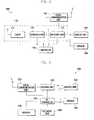
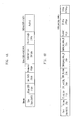
- FIG. 1 is a schematic block diagram illustrating a system for displaying received digital broadcast data, according to an embodiment of the present invention.
- the system includes a portable terminal 100 having a digital broadcast receiver 170 for changing a service channel and an external device 200 displaying a broadcast signal transmitted from the portable terminal 100.
- the controller 110 controls the entire operation of the portable terminal 100 including the digital broadcast receiver 170.
- the key input unit 140 generates key data according to a user's selection and applies it to the controller 110.
- the user commands generated through the key input unit 140 may generate key data so that it can control the operations of the portable terminal 100 and the digital broadcast receiver 170.
- the controller 110 includes a data processing unit (not shown).
- the data processing unit is configured to include: a coder and decoder (CODEC) for encoding a transmission signal and decoding an encoded receive signal; and a modulator and demodulator (MODEM) for modulating the encoded transmission signal and demodulating the modulated receive signal.
- CDEC coder and decoder
- MODEM modulator and demodulator
- the data processing unit is separated from the controller 110 and positioned between the communication unit 120 and the controller 110.
- the controller 110 serves to demodulate and transmit a broadcast signal of a selected broadcast channel when the external device 200 requests a digital broadcast playback. Also, the controller 110 sets or switches a broadcast channel according to the control of the external device 200.
- the memory 130 is configured to include a program memory that stores programs for controlling the operations of the digital broadcast receiver 170 and for communicating broadcast information with the external device 200; and a data memory for storing data generated while the programs are executed.
- the communication unit 120 serves to perform outgoing and incoming calls of the portable terminal.
- the communication unit 120 may be configured to include a frequency converter for up-converting the frequency of a transmission signal and down-converting the frequency of a received signal; and a duplexer for separating signals received/transmitted from/to an antenna.
- the communication unit 120 may be modified to include the data processing unit of the controller 110.
- the digital broadcast receiver 170 selects broadcast signals received under the control of the controller 110 to demodulate/decode the selected broadcast signals and then outputs them.
- the digital broadcast receiver 170 includes a tuner, demodulator, and decoder.
- the digital broadcast receiver 170 may be implemented with a Digital Multimedia Broadcasting (DMB) receiver or a Digital Video Broadcasting (DVB) receiver.
- the DMB receiver may be implemented by a terrestrial DMB receiver or a satellite DMB receiver.
- the DVB receiver may be implemented by a DMB-Terrestrial (DVB-T) receiver or a DVB-Handhelds (DVB-H) receiver.
- the short-range communication unit 180 serves to perform short-range communication with the external device 200 under the control of the controller 110.
- the short-range communication unit 180 converts a broadcast signal, output from the digital broadcast receiver 170, into a signal suitable for short-range communication to transmit it to the external device 200, and transmits data generated in the controller 110 to the external device 200.
- the short-range communication unit 180 serves to receive a signal transmitted from the external device 200 and transmit it to the controller 110.
- the short-range communication unit 180 may adopt Bluetooth® (hereinafter "Bluetooth”) communication, Wireless Broadband (WiBro) communication, WiMax communication, wireless Local Area Network (LAN) communication, and Universal Serial Bus (USB) communication.
- Bluetooth® hereinafter "Bluetooth” communication
- WiBro Wireless Broadband
- WiMax wireless Local Area Network
- USB Universal Serial Bus
- the short-range communication unit 180 is implemented by a Bluetooth communication unit.
- the portable terminal 100 and the external device 200 must include the Bluetooth communication unit, respectively, and both Bluetooth communication units must be paired to communicate with each other.
- the Bluetooth communication units establish a communication link to communicate broadcast signals and control information with each other.
- pairing and establishing the communication link may be achieved through a conventional Bluetooth communication protocol.
- the speaker 160 and display unit 150 serve to playback the broadcast signals, output from the digital broadcast receiver 170, and the data of the portable terminal 100, output from the controller 110.
- the external device 200 includes a short-range communication unit (not shown) that is operable in the same communication way as that of the portable terminal 100, so that they can communicate with each other.
- the external device 200 serves to decode and playback a broadcast signal received through its short-range communication unit.
- FIG. 2 is a schematic block diagram illustrating a portable terminal 100 including a digital broadcast receiver 170 of FIG. 1.
- the digital broadcast receiver 170 includes a tuner 171 for tuning a frequency of a channel selected by a user and receiving a broadcast signal according to the control of the controller 110; a demodulator 173 for demodulating the broadcast signal of the selected channel frequency; and a decoding unit 175 for extracting audio, video, and broadcast data from the demodulated broadcast signal, and decoding them to output the decoded results through corresponding decoders, respectively.
- the demodulator 173 outputs its output to the short-range communication unit 180 to transmit it to the external device 200 according to the control of the controller 110.
- the controller 110 sets a frequency for a broadcast signal, transmitted through a broadcast channel selected by a user, to the tuner 171.
- the tuner 171 tunes to the set frequency to receive a broadcast channel signal.
- the demodulator 173 demodulates the broadcast channel signal to the original signal and outputs it.
- the decoding unit 175 classifies the demodulated broadcast signal into audio and video signals, and broadcast information, and decodes them through corresponding decoders, respectively.
- the decoded audio signal is played back through the speaker 160 and the decoded video signal is played back through the display unit 150.
- the controller 110 transmits the broadcast information of the digital broadcast receiver 170 to the external device 200, and controls the operation of the digital broadcast receiver 170.
- the controller 110 receives a command requesting digital broadcast playback from the external device 200 through the short-range communication unit 180
- the controller 110 identifies broadcast channels selected by the external device 200; transmits identification information about a corresponding broadcast channel to the external device 200 through the short-range communication unit 180; and controls the tuner 171 to set a frequency channel that the selected broadcast channel signals can be received.
- the controller 110 controls the short-range communication unit 180 that the demodulated broadcast signal output from the demodulator 173 can be transmitted to the external device 200.
- the controller 110 may or may not transmit the demodulated signal output from the demodulator 173 to the decoding unit 175. Specifically, when the digital broadcast signal is played back through the external device 200, the decoding unit 175 of the portable terminal may be selectively controlled during the operation.
- the digital broadcast receiver 170 described above may be modified according to broadcasting modes.
- the digital broadcast receiver 170 may adopt DMB or DVB.
- the DMB includes terrestrial DMB (DMB-T) or satellite DMB.
- the DVB includes DVB-T or DVB-H.
- Broadcast data in the DMB and DVB is transmitted in an MPEG2-transport stream (MPEG2-TS) structure.
- MPEG2-TS structure MPEG2-transport stream
- the broadcast data of MPEG2-TS structure is packet streams where each packet includes a packet header and a payload.
- the packet header includes Packet IDentification (PID) information to identify broadcast channels. Therefore, the digital broadcast receiver 170 can select a broadcast channel using the PID information.
- PID Packet IDentification
- the payload of each packet with an MPEG2-TS structure is filled with broadcast signals (for example, audio, video, and broadcast data) for the DMB and DVB_T and with Internet Protocol (IP) information and the broadcast signals for the DVB-H. Therefore, the demodulator 173 demodulates service channel data to generate MPEG2-TS.
- the MPEG2-TS signal demodulated in the demodulator 173 is outputted to the short-range communication unit 180 and/or to the decoding unit 175.
- the MPEG2-TS signal is a type of compressed encoded signal, and thus the broadcast signal transmitted through the short-range communication unit 180 also becomes a type of compressed encoded signal. Therefore, since the compressed encoded broadcast signal is transmitted from the short-range communication unit 180 to the external device 200, a decoded broadcast signal can be transmitted at a high transmission rate, and thus the total transmission rate of the broadcast signals can be enhanced, as well.
- the decoding unit 175 is configured to classify broadcast information and audio and video signals.
- the decoding unit 175 includes a plurality of decoders that decode the broadcast information and audio and video signals, respectively.
- the classification configuration of the decoding unit 175 may be implemented with a demultiplexer for DMB and DVB-T or with an IP decapsulator for DVB-H.
- the demultiplexer or IP decapsulator classifies audio and video signals and broadcast information of a selected broadcast channel from the MPEG2-TS stream output from the demodulator 173.
- the decoding unit 175 may further include audio, video, and broadcast information decoders.
- the broadcast information may include broadcast program information, and a variety of image information related to the broadcast.
- the broadcast information may further include interactive information allowing a viewer to participate in a broadcast program.
- the broadcast information may include an Electronic Program Guide (EPG) for DMB and an Electronic Service Guide (ESG) for DVB-H.
- EPG Electronic Program Guide
- ESG Electronic Service Guide
- the controller 110 of the portable terminal 100 can receive operation control commands for the digital broadcast receiver 170 through the key input unit 140 from a user and/or through the short-range communication unit 180 from the external device 200.
- the controller 110 transmits an identifier of a selected broadcast channel (PID information, etc.) to the external device 200 through the short-range communication unit 180.
- the external device 200 demultiplexes video and audio signals of the selected broadcast channel from demodulation signals that are received according to the identification information of the selected broadcast channel, and also extracts the broadcast information from the received demodulation signals. Therefore, the video and audio signals and broadcast information can be decoded through corresponding decoders, respectively, and then played back.
- the controller 110 can transmit the output of the digital broadcast receiver 170 to the external device 200 and, simultaneously, provide the incoming or outgoing call function.
- FIG. 3 is a schematic block diagram illustrating an external device 200 of FIG. 1, which plays back digital broadcast signals transmitted from the portable terminal 100.
- the external device 200 may be implemented with a Personal Computer (PC).
- PC Personal Computer
- a PC controller 210 when inputting a digital broadcast playback request through a key input unit 260, a PC controller 210 transmits it to the portable terminal 100 through a short-range communication unit 220.
- commands such as a broadcast channel switch, broadcasting termination, and recording, etc.
- the PC controller 210 transmits them to the portable terminal 100 through the short-range communication unit 220.
- the short-range communication unit 220 receives a demodulated broadcast channel signal and a decoding unit 230 decodes the demodulated broadcast signal to generate audio and video signals and broadcast information, such that the decoded audio signal is played back through a speaker 250 and the decoded video signals is played back through a display unit 240.
- the decoded broadcast information is stored in a memory 270 that it can be played back through the display unit 240 and the speaker 250 according to the control of the PC controller 210.
- the portable terminal 100 controls the operation of the digital broadcast receiver 170 to play a received broadcast signal back.
- the portable terminal 100 outputs a demodulated broadcast signal of the digital broadcast receiver 170 through the short-range communication unit 180.
- the external device 200 receives the demodulated broadcast signals through the short-range communication unit 220 and decodes the received broadcast signal through a decoding unit 230 to play it back.
- the external device 200 may generate and transmit a control command for controlling the operation of the digital broadcast receiver 170 to the portable terminal 100.
- the portable terminal 100 controls the digital broadcast receiver 170 and transmits its state information to the external device 200.
- the decoding unit 230 of the external device 200 may be modified to various forms as follows, depending on broadcast signals transmitted for the portable terminal 100.
- the decoding unit 230 may be configured to include a demultiplexer or an IP decapsulator, and decoders for audio and video signals and broadcast information.
- the decoding unit 230 may employ a decoder of DMB when the digital broadcast receiver 170 is implemented by a DMB receiver and a decoder of DVB-H when the digital broadcast receiver 170 is implemented by a DVB-H receiver.
- the decoding unit 230 may be configured to include both the decoder of DMB and decoder of DVB-H to selectively decode broadcast signals according to the types of the digital broadcast receiver 170.
- the decoding unit 230 may be configured to include decoders for audio and video signals and broadcast information.
- the decoding unit 230 includes an audio decoder, video decoder, and broadcast information decoder, such that the respective decoders decode encoded audio signal, encoded video signal, and encoded broadcast information, transmitted from the portable terminal 100, based on corresponding decoding methods.
- the decoding unit 230 may include a plurality of audio, video, and broadcast information decoders for decoding data that was encoded based on DMB and DVB-H.
- the decoding unit 230 may be operated in a way that the audio, video, and broadcast information decoders are selected depending on which type of data is output from the digital broadcast receiver 170 of the portable terminal 100 under the control of the PC controller 210 of the external device 200, and the selected decoders decode the received encoded data.
- the decoding unit 230 of the external device 200 is not used. In this case, the external device 200 just processes audio and video signals and broadcast information, and skips the decoding process.
- the portable terminal 100 can process incoming and outgoing calls. This is because the portable terminal 100 has just set the route for the digital broadcast signal. Therefore, the portable terminal 100 can establish a communication route that incoming and outgoing call can be processed through the communication unit 120, independent of the digital broadcast receiver 170. In this case, a portable terminal's user can view a digital broadcast played back through the external device 200 and perform communication using his/her portable terminal 100. Here, the route for a voice call and data communication is established, independent of the digital broadcast currently being played back.
- Short-range communication includes short-range wireless communication and short-range wired communication.
- the short-range wireless communication includes Bluetooth communication and Zigbee communication
- the short-range wired communication includes USB communication.
- the digital broadcast receiver 170 is a DMB receiver.
- the portable terminal 100 and the external device 200 communicate with each other through their short-range communication units 180 and 220, in a short-range communication.
- the external device 200 communicates commands for controlling operations of the digital broadcast receiver 170 of the portable terminal 100 and reply information corresponding to the commands with the portable terminal 100 through their short-range communication units 180 and 220. While the external device 200 plays back the digital broadcast, when the portable terminal 100 transmits its status information to the external device 200 through the short-range communication unit 180, the external device 200 receives the status information through the short-range communication unit 220 and displays it thereon.
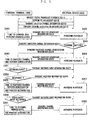
- FIGS. 4A and 4B show streams of the short-range communication units 180 and 220 through which the portable terminal 100 and external device 200 communicate digital broadcast signals and control information with each other.
- Table 1 describes types of information that the external device 200 transmits to the portable terminal 100 and types of information that the portable terminal 100 replies to respective types of information of the external device 200.
- Table 2 describes types of information that the portable terminal 100 transmits to the external device 200.
- Pasted - 0x31 Outgoing Call - 0x32 : Incoming Call - 0x33 : Receive SMS - 0x34 : Send SMS - 0x35 : Call Connect - 0x36 : Call End - 0x37 : Reserve Alarm - 0x40 0x38 : Message Box - 0x50 0x3C : Volume Up - 0x3D : Volume Down - 0x3E : Mute - 0x41 : Ch. Select Success Main Ch. (2byte), Sub. Ch. (2byte) 0x42 : Ch.
- the stream structure shown in FIG. 4A is employed by the stream transmitted and received between the external device 200 and the portable terminal 100.
- the stream structure has a main Command (main CMD) field and a sub Command (sub CMD) field.
- the main CMD and sub CMD are commands for notifying an opposite party of digital broadcasting and a control and state of a portable terminal.
- the main CMD may be a command to indicate types of transmission sides and transmitted information.
- the main CMD is 0x10, 0x20, 0x30, 0x40, and 0x50.
- the 0x10 is indicative of information on a digital broadcast control request, DMB_PKT_TYPE_REQ, which is transmitted from the external device 200 to the portable terminal 100.
- the 0x20 is indicative of information that the short-range communication unit replies to with, DMB_PKT_TYPE_ACK.
- the 0x30 is indicative of replay information, DMB_PKT_TYPE_RES, in response to the request information transmitted from the portable terminal 100 to the external device 200.
- the 0x40 is indicative of information, DMB_PKT_TYPE_NOTI, which notifies the external device 200 of a status of the portable terminal 100 while the digital broadcast function is performing.
- the 0x50 is indicative of stream transmitted from the portable terminal 100 to the external device 200.
- the sub CMD is indicative of information to be substantially processed through messages transmitted to the main CMD.
- Parameters may be information for executing the sub CMD.
- the parameters may exist or may not exist, depending on the sub CMD.
- Call/SMS data may be information to be displayed on the external device 200, indicating that the call and the message are generated in the portable terminal 100.
- the sub CMD is effective provided that it is 0x31-0x34 described in Table 2.
- Payload is indicative of a digital broadcast signal that may be demodulated video and audio signals and/or broadcast information (for example, Electronic Program Guide (EPG)).
- EPG Electronic Program Guide
- the main CMD may be an EPG provided that it is 0x50 described in Table 2.
- FIG. 4B shows a stream structure in the case that the information of the payload is an EPG.
- the stream transmitted from the external device 200 to the portable terminal 100 includes a variety of control information related to digital broadcast playback, such as start, stop, and pause, etc., and other information related to selection of digital broadcast channel, PIP (picture in picture) function selection, channel switch and control, etc., as described in Table 1.
- the portable terminal 100 transmits the followings to the external device 200, which is information related to the types and performance of digital broadcast receivers, such as types of DMB (a satellite DMB and a terrestrial DMB), and whether a PIP function is provided.
- the external device 200 identifies the type of DMB and sets audio, video, and broadcast information decoders of the decoding unit 230.
- the portable terminal 100 While performing the digital broadcasting function, the portable terminal 100 transmits its status information and a variety of information related to the digital broadcast receiver 170 to the external device 200. As described in Table 2, the stream transmitted from the portable terminal 100 to the external device 200 includes status of the portable terminal 100, user's preference of digital broadcast channel, information related to call and message communication, operation control of digital broadcast receivers, and a variety of information related to digital broadcasting.
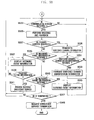
- FIG. 5 is a flow chart illustrating a procedure of performing digital broadcast playback and communication between the portable terminal 100 and the external device 200.
- the digital broadcast receiver 170 of the portable terminal 100 adopts DMB.
- the DMB includes terrestrial DMB and satellite DMB.
- the terrestrial DMB allows a terrestrial broadcast transmitter to identify channels based on respective frequencies.
- the broadcast channels are identified by the frequency channels.
- signals of a plurality of broadcast channels are transmitted through one channel frequency in packets. These broadcast channels are identified by broadcast channel identifiers, such as PID.
- the broadcast channel identifier may include broadcast information.
- the broadcast information includes identifiers of respective broadcast channels. The following will be described under the assumption that the identification information of the broadcast channel includes a channel frequency and PID, etc. Also, the following will describe a procedure where frequency channel and broadcast channel identifiers are set when a broadcast channel is selected.
- the information communicated between the portable terminal 100 and the external device 200 has the structure as shown in FIGS. 4A and 4B. Also, the information transmissible between the portable terminal 100 and the external device 200 has the structure as described in Tables 1 and 2.
- FIG. 5 shows a case where a digital broadcast playback request is created through the external device 200.
- the PC controller 210 of the external device 200 transmits the playback request command (main CMD: 0x10 and sub CMD: 0x02 in Table 1) to the portable terminal 100 at step S311.
- the portable terminal 100 receives the playback request command and then transmits a reply signal (main CMD: 0x30 sub CMD: 0x07, and parameter: 0x00(SDMB) in Table 1) to the external device 200 at step S313.
- the external device 200 In response to the reply signal, the external device 200 reads the type of the digital broadcast receiver 170 of the portable terminal 100 and then selects proper decoders in the decoding unit 230.
- the digital broadcast receiver 170 is SDMB
- the external device 200 selects audio, video, and broadcast information decoders adopting SDMB in the decoding unit 230.
- the digital broadcast receiver 170 is TDMB
- the external device 200 selects audio, video, and broadcast information decoders adopting TDMB in the decoding unit 230.
- the external device 200 transmits information (main CMD: 0x10, sub CMD: 0x06, and parameter (main ch.
- the portable terminal 100 transmits identification information (main CMD: 0x40, sub CMD: 0x41, and parameter (main ch. sub.ch.) in Table 1) of the selected broadcast channel to the external device 200 at step S317.
- the external device 200 sets the selected broadcast channel based on the received channel identification information.
- the channel identification information may be PID or a channel number of a selected broadcasting as shown in FIG. 5.
- the portable terminal 100 transmits a demodulated broadcast signal to the external device 200, and then the external device 200 separates audio and video signals and broadcast information from the demodulated broadcast signal to decode them using its demultiplexer.
- the portable terminal 100 When the channel identification information employs a channel number, the portable terminal 100 separates audio and video signals and broadcast information from a demodulated broadcast signal to transmit them to the external device 200, and then the external device 200 decodes the received signals, respectively. After that, the portable terminal 100 tunes a channel frequency of the broadcast channel to a tuner 171 of a corresponding digital broadcast 170, and allows the demodulator 173 to demodulate the broadcast signals received through the tuner 171 at step S341.
- the demultiplexer can separate audio and video signals and broadcast information from the demodulated broadcast signals.
- the portable terminal 100 transmits the demodulated broadcast signal (main CMD: 0x50, TS data in Table 1) to the external device 200 through its short-range communication unit 180, and then the external device 200 receives them through its short-range communication unit 220 at step S319.
- the external device 200 decodes the received audio and video signals to play them back through the display unit 240 and the speaker 250, respectively at step S343.
- the extraction and decoding of the audio and video signals are performed by the decoding unit 230 of the external device 200.
- the portable terminal 100 transmits the demodulated digital broadcast signals to the external device 200, and the external device 200 decodes the received signals to audio and video signals of the selected broadcast channel to play them back.
- the display unit 240 of the external device 200 is relatively larger than the display unit 150 of the portable terminal 100.
- the digital broadcast signal that the portable terminal 100 receives is set to the display standard of the portable terminal 100, which is approximately 7 inches in size.
- the external device 200 such as a computer, has a display unit greater than that of the display unit 150 of the portable terminal 100. The external device 200 can then display the broadcast on its entire screen or in a portion of area on the display unit 240.
- the external device 200 can also display receiving broadcast information on other areas of the display unit 240, not just on the portion stated above.
- the receiving broadcast information includes EPG or ESG, etc.
- the PC controller 210 of the external device 200 interpolates the video signal and displays it on the entire screen.
- the PC controller 210 of the external device 200 may display menus for the broadcast information so that a user can select them, and, when the user selects a menu, display the selected broadcast information.
- the menus of broadcast information serve to display: broadcast program information of respective broadcast channels through which broadcast programs are broadcast at times selected by a user; broadcast programs of broadcast channels that the user has selected; broadcast channels, through which broadcast programs of specific genres that the user has selected are broadcast, and information about the broadcast programs; and broadcast program information about all broadcast channels.
- the user can switch the channel to another broadcast cannel.
- the user can generate a broadcast channel switch signal through the portable terminal 100 or the external device 200.
- a generated switch signal serves to switch broadcast channel numbers.
- the PC controller 210 of the external device 200 detects the command at step S345.
- the PC controller 210 transmits broadcast information (main CMD: 0x10, sub CMD: 0x0A, and parameter (main ch. sub. ch) in Table 1) about a channel, to which a current channel is switched, to the short-range communication unit 220 at step S321.
- the short-range communication unit 220 modulates the received switched channel information to transmit it.
- the controller 110 of the portable terminal 100 reads that the modulated information received through its short-range communication unit 180 corresponds to channel switch, and sets up a channel frequency so that the tuner 171 of the digital broadcast receiver 170 can receive broadcast signals through the switched channel. After that, the controller 110 transmits the identification information of the switched channel to the external device 200 at step S323.
- the external device 200 identifies the identification information and sets the decoding unit 230 based on the identification information so that audio and video data of the switched broadcast channel can be selected.
- step S323 described above can be omitted.
- the portable terminal 100 tunes the channel frequency of the broadcast channel to the tuner 171 of a corresponding digital broadcast receiver 170 and demodulates the broadcast signals received through the tuner 171 at step S347.
- the portable terminal 100 demultiplexes the demodulated broadcast signals and separates audio, video, and broadcast information therefrom to transmit them to the external device 200 through the short-range communication unit 180 at step S325.
- the external device 200 decodes the audio and video signals of a selected broadcast channel, received through its short-range communication unit 220, and plays them back through the display unit 240 and the speaker 250, respectively, at step S349.
- the audio and video signals are decoded by the decoding unit 230 of the external device 200.
- the communication event may be an incoming event or an outgoing event.
- the incoming event may occur when a call or a message is received, and the outgoing event may occur when an outgoing call function (a call or a message) is selected.
- the controller 110 of the portable terminal 100 detects it at step S351. After that, the controller 110 warns the incoming event generation and transmits the incoming event information (main CMD: 0x40, sub CMD: 0x32, and CallSMSdata in Table 1) to the external device 200, through its short-range communication unit 180, at step S327.
- the incoming event information of the portable terminal 100 is implemented to be displayed through the display unit 150 and to output a warning sound through the speaker 160, simultaneously.
- the incoming event information includes a caller name and phone number. Since the external device 200 plays back the digital broadcast, the portable terminal 100 sounds a warning through its speaker 160. It should be understood that the controller 110 of the portable terminal 100 does not sound a warning through the speaker 160.
- the external device 200 displays the outgoing event information, transmitted from the portable terminal 100, on its display unit 240. Therefore, through the incoming warning sound of the portable terminal 100 and/or the indication of the incoming event information displayed on the display unit 240 of the external device 200, a user can recognize that the incoming event has occurred.
- Response to the incoming event can be processed through the portable terminal 100 or external device 200. In an embodiment of the present invention, it is assumed that the response is processed by the portable terminal 100.
- the portable terminal 100 When the user responds to the incoming event, the portable terminal 100 detects the response at step S353. The portable terminal 100 transmits the user's response information (main CMD: 0x40, sub CMD: 0x35 in Table 1) to the external device 200 at step S329 and processes the incoming event at step S355.
- the incoming event includes an incoming call or incoming message process.
- the controller 110 of the portable terminal 100 controls the digital broadcast receiver 170, demodulates the received broadcast signals, and keeps transmitting the result information (main CMD: 0x50, TS data in Table 1) to the external device 200. Therefore, the external device 200 can keep playing back the broadcast signals of a selected broadcast channel while the portable terminal 100 is processing the incoming event.
- the controller 110 of the portable terminal 100 detects it at step S359. After that the controller 110 transmits the outgoing event information to the external device 200 through the short-range communication unit 180 at step S333. In that case, the portable terminal 100 and external device 200 display the outgoing event information (man CMD: 0x40, sub DMD: 0x31, and CallSMSdata in Table 1) on the display units 150 and 240, respectively, and then process the outgoing event.
- the controller 110 of the portable terminal 100 detects it at step S359. After that the controller 110 transmits the outgoing event information to the external device 200 through the short-range communication unit 180 at step S333. In that case, the portable terminal 100 and external device 200 display the outgoing event information (man CMD: 0x40, sub DMD: 0x31, and CallSMSdata in Table 1) on the display units 150 and 240, respectively, and then process the outgoing event.
- the controller 110 of the portable terminal 100 controls the digital broadcast receiver 170, demodulates the received broadcast signals, and keeps transmitting the result information (main CMD: 0x50, TS data in Table 1) to the external device 200. Therefore, the external device 200 can keep playing back the broadcast signals for a selected broadcast channel while the portable terminal 100 is processing the incoming event.
- FIG. 6 is a flow chart illustrating a procedure for controlling the portable terminal 100 while digital broadcast signals are transmitted from the portable terminal 100 to the external device 200, according to an embodiment of the present invention.
- the controller 110 of the portable terminal 100 detects the request at step S411 and transmits response information thereto at step S413.
- the controller 110 detects the information at step S415, and transmits identification information of the selected channel to the external device 200 through the short-range communication unit 180 at step S417.
- the controller 110 controls the digital broadcast receiver 170 to set up a frequency of the selected broadcast channel. After that, the controller 110 controls the digital broadcast receiver 170 and short-range communication unit 180 and demodulates received broadcast channel signals to transmit them to the external device 200.
- the external device 200 receives, decodes, and plays back the broadcast signals transmitted from the portable terminal 100.
- the external device 200 can generate a channel switch command.
- the external device 200 transmits it to the portable terminal 100 through the short-range communication unit 220.
- the controller 110 determines whether the channel switch is requested at step S421.
- the controller 110 controls the digital broadcast receiver 170 to switch the broadcast channel, according to requested channel information at step S423, and controls the short-range communication unit 180 to transmit identification information about the switched broadcast channel to the external device 200 at step S425. After that, the procedure is returned to step S419.
- the controller 110 While receiving the digital broadcast signals, when an incoming event occurs at the portable terminal 100, the controller 110 detects it at step S427. The controller 110 transmits the incoming event information to the external device 200 and indicates that the incoming event has occurred, through the display unit 150 and/or speaker 160, at step S429. Also, the external device 200 is implemented in a way as indicate or not to indicate that the incoming event has occurred through the display unit 240 and/or the speaker 250 when the incoming event information is received. The incoming event of the portable terminal 100 may be implemented to generate or not generate an incoming warning sound. The controller 110 checks whether the incoming event is processed at step S431. When the incoming event has been processed, the controller 110 processes the incoming event at step S433. The incoming event is processed through the procedure described in FIG. 7.
- the controller 110 of the portable terminal 100 detects it at step S461 and processes the incoming call at step S463. Also, the controller 110 controls the digital broadcast receiver 170 and the short-range communication unit 180, and transmits demodulated signals of a selected broadcast channel to the external device 200. The incoming call may be continuously processed until the call is terminated at step S465. Also, the controller 110 controls the communication unit 120 and establishes a call when responding to the incoming response at step S463. Also, the controller may control the digital broadcast receiver 170 to temporarily stop transmitting the digital broadcast signal. In this case, the digital broadcast signals stops being transmitted to the external device 200 while the incoming call is processed. When the incoming call is ended, the controller 110 controls the digital broadcast receiver 170 to resume the playback of the broadcast channel that had been provided before the incoming call was processed.
- the external device 200 outputs the states of the incoming call to the display unit 150 and speaker 160, according to a user's setting, in video (image and/or test data) and audio (voice, sound or music). Also, the external device 200 may be implemented in a way that video is displayed through the display unit 150 or the states of the incoming call are not displayed. Therefore, when the external device 200 receives the incoming event information of the portable terminal 100 through the short-range communication unit 220, it displays the incoming event based on the setting of the portable terminal 100 and, simultaneously, processes the received digital broadcast signals to display them.
- the incoming event information includes a caller name and phone number.
- the portable terminal 100 may not respond to the incoming event. While performing a digital broadcast playback mode according to a user's selection, the portable terminal 100 may display a message inquiring whether the termination will be denied, when an incoming call event is displayed at time when an incoming call is generated. When an incoming rejection is selected, the controller 110 detects it at step S461, outputs a guide message to notify that the portable terminal 100 cannot be picked up at step S467, and then terminates the incoming call. And, the controller 110 transmits broadcast channel information processed by the digital broadcast receiver 170 to the external device 200 to continue playing back the digital broadcast.
- the controller 110 transmits information about a received message through the short-range communication unit 180.
- the controller 110 may transmit the received text message to the external device 200.
- the controller 100 displays incoming information about the message and may provide the incoming message according to a user's selection.
- the portable terminal 100 can process the incoming event independent of the digital broadcast.
- the incoming event includes an incoming call and an incoming message event.
- the portable terminal 100 can process an outgoing event while receiving the digital broadcast signals.
- the controller 110 detects it at step S435.
- the controller 110 transmits the outgoing event information to the external device 200 to display it through both the external device 200 and the portable terminal 100 at step S437.
- the controller 110 processes the generated outgoing event at step S439 through the procedure as described in FIG. 8.
- the controller 110 processes an outgoing call according to the outgoing event, and controls the digital broadcast receiver 170 and the short-range communication unit 180 to transmit demodulated signals of the selected broadcast channel to the external device 200 at step S481. This process may be repeated until the call is terminated at step S483.
- the portable terminal 100 can process the outgoing event independent of the digital broadcast.
- the incoming event includes an outgoing call and an outgoing message event.
- the controller 110 While paying the digital broadcast back in FIG. 6, when a termination command is inputted, the controller 110 receives the termination command at step S441, and terminates the digital broadcast playback at step S443.
- FIGS. 9A and 9B are a flow chart illustrating the operation of the external device 200 that plays back digital broadcast signals transmitted from the portable terminal 100.
- the PC controller 210 of the external device 200 detects the request at step S511.
- the PC controller 210 establishes a short-range communication link with the portable terminal 100 through the short-range communication unit 220 and then transmits information about the broadcast playback request through the communication link at step S513.
- the short-range communication link may be implemented by wired and a wireless communication links.
- the short-range communication link may employ USB communication for wired communication, and Bluetooth communication and Ultra-WideBand (UWB) for wireless communication.
- UWB Ultra-WideBand
- the PC controller 210 When response information of a portable terminal 100 is received through the short-range communication unit 220, the PC controller 210 detects the response information at step S515 and transmits information about a user's selected broadcast channel through the short-range communication unit 220 at step S517. When receiving identification information of the selected broadcast channel from the portable terminal 100, the PC controller 210 detects the identification information at step S519, and allows the decoding unit 230 to set the identification information at step S521. When the PC controller 210 already knows the identification information of the selected broadcast channel, it can skip step S521. When the digital broadcast is received through one broadcast channel allocated to one frequency channel, for example, terrestrial DMB, the PC controller 210 can skip the processes where of receiving and setting the broadcast channel identification information.
- the portable terminal 100 transmits broadcast signals demodulated in the digital broadcast receiver 170 through the short-range communication unit 180.
- the short-range communication unit 220 of the external device 200 receives the demodulated broadcast signals to output them to the decoding unit 230.
- the PC controller 210 detects whether TS stream of the demodulated broadcast signals is received at step S523, and, when received, decodes the demodulated broadcast signals at step S525.
- the decoding unit 230 may include a demultiplexer (or an IP decapsulator) that classifies the broadcast stream into audio, vide, and broadcast information.
- the PC controller 210 of the external device 200 may perform the functions of the demultiplexer (or an IP decapsulator). Therefore the broadcast signals having undergone the above processes are played back through the display unit 240 and the speaker 250, respectively.
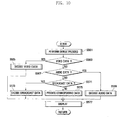
- FIG. 10 is a flow chart illustrating a detailed decoding process of the external device 200 at step S525 of FIG. 9B, in which the decoding unit 230 decodes the received broadcast signals.
- the decoding unit 230 adopts DMB, preferably.
- the decoding unit 230 extracts broadcast information, and audio and video streams, which include the identification information of the selected broadcast channel, from received demodulated broadcast streams, and allows corresponding decoders to demultiplex the extracted result, respectively at step S561.
- the decoding unit 230 includes an audio decoder for decoding encoded audio data, a video decoder for decoding encoded video data, and a broadcast information decoder for decoding broadcast information.
- the decoding unit 230 detects the encoded video data at step S563 and decodes it at step S565.
- the decoded video data is displayed on the display unit 240 at step S577.
- the decoding unit 230 detects the encoded audio data at step S567 and decodes it at step S569. The decoded audio data is output through the speaker 250 at step S577.
- the decoding unit 230 detects the encoded broadcast information at step S571 and decodes it at step S573.
- the decoded broadcast information is stored in the memory 270 at step S577.
- the broadcast information stored in the memory 270 may be displayed on the display unit 240 according to the control of the PC controller 210, as occasion demands.
- FIG. 11 is a flow chart illustrating a procedure of displaying broadcast signals in FIG. 10.
- the controller-220 determines whether terminal data is received through the short-range communication unit 220 at step S591.
- the PC controller 210 displays it on a preset area of the display unit 240 at step S593.
- the terminal data may include data related to the operation of the terminals, for example, incoming event information, and outgoing event information, etc.
- the terminal data may be displayed on the broadcast screen, on screen, on the displays unit 240 or on an area where broadcast data is not displayed.
- the PC controller 210 detects the setting at step S595.
- the PC controller 210 outputs audio and video data to the speaker 250 and the display unit 240, respectively, and displays the broadcast information on a screen area of the display unit 240, where the video data is not displayed at step S597.
- the displayed broadcast information can be selected by the user.
- the broadcast information includes: currently viewing program information of a broadcast channel; program information of other broadcast channels airing at the current time; program information of a user's favorite broadcast programs; and program information of all broadcast channels.
- the broadcast information may display, in text and/or image, on a screen area of the display unit 240 where the broadcast screen is not displayed.
- the PC controller 210 detects the setting at step S595, and processes the received broadcast signal (audio and video signals) to display it at step S599.
- the PC controller 210 detects the channel switch request at step S527, and transmits information of the user's selected switched channel to the portable terminal 100 at step S529.
- the PC controller 210 receives identification information of the switched channel and sets the decoding unit 230 based on the received identification information at steps S531 and S533. Thereafter, the broadcast signals are received through the switched channel and then undergo decoding and playing back at steps S523 and S525.
- the PC controller 210 While the digital broadcast signals are decoding and playing back, when incoming event information is received through the short-range communication unit 220, the PC controller 210 detects it at step S535. The PC controller 210 displays the incoming event information on the display unit 240 and continues to decode and playback the digital broadcast at steps S537, S539, and S541. When outgoing event information is received, the PC controller 210 detects it at step S543. The controller displays the outgoing event information on the display unit 240 and continues to play back the digital broadcast at step S545.
- the PC controller 210 requests broadcast termination to the portable terminal 100 at step S549, and controls the short-range communication unit 220 to disconnect the short-range communication link.
- the method and system for displaying digital broadcast signals establishes a short-range communication link between the portable terminal including a digital broadcast receiver and the external device, transmits the digital broadcast signals from the portable terminal to the external device through the short-range communication link, and allows the external device to process and play back the received digital broadcast signals.
- the external device includes a decoding unit.
- the portable terminal demodulates the broadcast signals of the established broadcast channel and transmits them to the external device 200 through the short-range communication link.
- the external device decodes the received demodulated broadcast signals to play them back. Therefore, the amount of data communicated between the portable terminal and the external device can be reduced. Since the system of the present invention displays broadcast signals on the display unit of the external device, which is relatively greater than that of the portable terminal, it can also display broadcast information on a screen area where the broadcast signals are not displayed, thereby enabling viewing of the digital broadcast to be convenient.
- the portable terminal since the portable terminal only receives broadcast signals and transmits them to the external device that the external device can play back the broadcast, it can process incoming and outgoing events, independent of the digital broadcast, while the external device is playing back the broadcast.
Landscapes
- Engineering & Computer Science (AREA)
- Signal Processing (AREA)
- Multimedia (AREA)
- Computer Networks & Wireless Communication (AREA)
- General Engineering & Computer Science (AREA)
- Human Computer Interaction (AREA)
- Telephone Function (AREA)
- Two-Way Televisions, Distribution Of Moving Picture Or The Like (AREA)
- Circuits Of Receivers In General (AREA)
Applications Claiming Priority (1)
| Application Number | Priority Date | Filing Date | Title |
|---|---|---|---|
| KR1020060095541A KR100765888B1 (ko) | 2006-09-29 | 2006-09-29 | 디지털 방송 표시 장치 및 방법 |
Publications (3)
| Publication Number | Publication Date |
|---|---|
| EP1919110A2 true EP1919110A2 (de) | 2008-05-07 |
| EP1919110A3 EP1919110A3 (de) | 2011-01-26 |
| EP1919110B1 EP1919110B1 (de) | 2015-07-15 |
Family
ID=39199977
Family Applications (1)
| Application Number | Title | Priority Date | Filing Date |
|---|---|---|---|
| EP07018922.0A Not-in-force EP1919110B1 (de) | 2006-09-29 | 2007-09-26 | Verfahren und System zur Anzeige digitaler Rundfunkdaten |
Country Status (3)
| Country | Link |
|---|---|
| US (1) | US8898700B2 (de) |
| EP (1) | EP1919110B1 (de) |
| KR (1) | KR100765888B1 (de) |
Families Citing this family (9)
| Publication number | Priority date | Publication date | Assignee | Title |
|---|---|---|---|---|
| EP2297883A1 (de) * | 2008-07-02 | 2011-03-23 | Thomson Licensing | Filterung von dynamischen diensten bei zwischengespeicherten diensterfassungsdaten |
| US20110102264A1 (en) * | 2009-11-04 | 2011-05-05 | Electronics And Telecommunications Research Institute | Apparatus and method for detecting interior position using digital broadcasting signal |
| GB2489688A (en) * | 2011-04-01 | 2012-10-10 | Ant Software Ltd | Television receiver with single demultiplexer to serve a local display and wirelessly connected display |
| CN103313111A (zh) * | 2012-10-29 | 2013-09-18 | 中兴通讯股份有限公司 | 一种媒体播放方法及装置 |
| JP6467822B2 (ja) * | 2014-08-29 | 2019-02-13 | セイコーエプソン株式会社 | 表示システム、送信装置、及び、表示システムの制御方法 |
| WO2017007926A1 (en) * | 2015-07-07 | 2017-01-12 | Ilumi Solutions, Inc. | Wireless communication methods |
| US11978336B2 (en) | 2015-07-07 | 2024-05-07 | Ilumi Solutions, Inc. | Wireless control device and methods thereof |
| US20180074833A1 (en) * | 2016-09-14 | 2018-03-15 | Motorola Mobility Llc | Configuring mobile devices with connected accessories for incoming communications |
| US11109309B2 (en) * | 2019-03-29 | 2021-08-31 | Blackberry Limited | Systems and methods for establishing short-range communication links between asset tracking devices |
Family Cites Families (17)
| Publication number | Priority date | Publication date | Assignee | Title |
|---|---|---|---|---|
| US6177931B1 (en) * | 1996-12-19 | 2001-01-23 | Index Systems, Inc. | Systems and methods for displaying and recording control interface with television programs, video, advertising information and program scheduling information |
| US7580005B1 (en) | 2000-08-15 | 2009-08-25 | Nokia Corporation | Display change between mobile terminal display and external device display |
| JP2003009011A (ja) | 2001-06-20 | 2003-01-10 | Sharp Corp | デジタル放送受信機 |
| JP2003101812A (ja) | 2001-09-26 | 2003-04-04 | Hitachi Ltd | 受信システムおよび携帯端末 |
| EP1307062A1 (de) | 2001-10-24 | 2003-05-02 | Nokia Corporation | Benutzerschnittstelle für die Übertragung von Videodaten von einem mobilen Endgerät zu einem externen Anzeigemittel |
| KR20030046733A (ko) | 2001-12-06 | 2003-06-18 | 삼성전자주식회사 | 디지털방송 시청시스템 및 시청방법 |
| US20040203835A1 (en) * | 2002-04-24 | 2004-10-14 | Kevin Trottier | Integrated telephony and television system |
| US8707373B2 (en) * | 2003-05-14 | 2014-04-22 | The Directv Group, Inc. | Method and system for providing digital video distribution |
| JP4352797B2 (ja) | 2003-07-07 | 2009-10-28 | ソニー株式会社 | 受信装置および受信方法 |
| KR100606060B1 (ko) | 2004-02-21 | 2006-07-26 | 삼성전자주식회사 | 휴대단말기의 데이터를 외부장치로 출력하는 장치 및 방법 |
| KR20060039503A (ko) * | 2004-11-03 | 2006-05-09 | 주식회사 팬택 | 외부 디스플레이 장치를 통해 위성 dmb 방송을디스플레이하는 개인 휴대 단말기 및 위성 dmb 방송디스플레이 방법 |
| KR100585785B1 (ko) * | 2004-11-22 | 2006-06-07 | 엘지전자 주식회사 | 디엠비 휴대단말기의 멀티타스크 장치 및 방법 |
| KR101085717B1 (ko) | 2004-12-08 | 2011-11-21 | 삼성전자주식회사 | 컨텐츠 외부 녹화 방지 장치 및 방법 |
| KR20060093579A (ko) | 2005-02-22 | 2006-08-25 | (주)씨아이피시스템 | 통합형 다기능 휴대용 단말기. |
| KR20050037456A (ko) * | 2005-03-31 | 2005-04-21 | (주)넥스지텔레콤 | 디엠비 수신용 휴대전화기로 수신된 디엠비 방송을컴퓨터로 수신하는 방법 |
| KR100735429B1 (ko) * | 2005-11-11 | 2007-07-04 | 삼성전자주식회사 | 개인용 컴퓨터를 이용한 디지털멀티미디어 방송 재생 방법및 시스템 |
| US20070250894A1 (en) * | 2006-04-11 | 2007-10-25 | Jeongki Kim | Digital television system using high-speed serial bus and method for controlling the same |
-
2006
- 2006-09-29 KR KR1020060095541A patent/KR100765888B1/ko not_active Expired - Fee Related
-
2007
- 2007-09-21 US US11/859,608 patent/US8898700B2/en not_active Expired - Fee Related
- 2007-09-26 EP EP07018922.0A patent/EP1919110B1/de not_active Not-in-force
Also Published As
| Publication number | Publication date |
|---|---|
| EP1919110A3 (de) | 2011-01-26 |
| US20080082997A1 (en) | 2008-04-03 |
| US8898700B2 (en) | 2014-11-25 |
| KR100765888B1 (ko) | 2007-10-10 |
| EP1919110B1 (de) | 2015-07-15 |
Similar Documents
| Publication | Publication Date | Title |
|---|---|---|
| EP1919110B1 (de) | Verfahren und System zur Anzeige digitaler Rundfunkdaten | |
| US7031746B2 (en) | Apparatus and method for processing multimedia audio signal for a voice call in a mobile terminal capable of receiving digital multimedia broadcasting service | |
| KR101728911B1 (ko) | 화상 통화 연결 방법, 그를 이용한 화상 통신 장치 및 디스플레이 장치 | |
| US8013942B2 (en) | Remote control device programming and indication of programming mode status | |
| US20090013363A1 (en) | Broadcast system and broadcast reception method and apparatus thereof | |
| CN101064807B (zh) | 用于接收数字多媒体广播的装置和方法 | |
| US9621943B2 (en) | Multimedia processing resource with interactive voice response | |
| US20030041333A1 (en) | System and method for automatically answering and recording video calls | |
| US20030041332A1 (en) | System and method for mitigating interruptions during television viewing | |
| KR101083098B1 (ko) | 디지털 텔레비전에 대한 채널 번호 정렬 | |
| US7647607B2 (en) | Viewing limit apparatus, viewing limit system, and viewing limit program | |
| CN102487392A (zh) | 数字电视接收终端与移动终端交互方法、装置和系统 | |
| US20140380385A1 (en) | Digital Broadcast Receiver | |
| WO2003019945A1 (en) | System and method for mitigating interruptions during television viewing | |
| US20030041331A1 (en) | System and method for mitigating interruptions during television viewing | |
| EP1739869A1 (de) | Rundfunksender, Rundfunkempfänger, Übertragungsverfahren eines Rundfunksignals und Verfahren zur vorprogrammierten Aufzeichnung eines Rundfunksignals | |
| CN101453599A (zh) | 广播接收器及广播数据处理方法 | |
| CN107295419A (zh) | 机顶盒视频通话实现方法 | |
| KR20060090332A (ko) | 화면전환시간 표시기능을 구비한 방송수신장치 및화면전환시간 표시방법 | |
| JP5052149B2 (ja) | デジタル放送受信装置の制御方法 | |
| CN101094342A (zh) | 一种手机电视终端和周边设备协作收看电视的方法及系统 | |
| JP2001211441A (ja) | 放送受信装置 | |
| JP5047474B2 (ja) | デジタル放送受信装置および記憶方法 | |
| KR100754646B1 (ko) | 디지털 방송 수신용 이동 통신 단말기의 오디오 전송 방법 | |
| KR100812329B1 (ko) | 디지털 방송 표시 장치 및 방법 |
Legal Events
| Date | Code | Title | Description |
|---|---|---|---|
| PUAI | Public reference made under article 153(3) epc to a published international application that has entered the european phase |
Free format text: ORIGINAL CODE: 0009012 |
|
| 17P | Request for examination filed |
Effective date: 20070926 |
|
| AK | Designated contracting states |
Kind code of ref document: A2 Designated state(s): AT BE BG CH CY CZ DE DK EE ES FI FR GB GR HU IE IS IT LI LT LU LV MC MT NL PL PT RO SE SI SK TR |
|
| AX | Request for extension of the european patent |
Extension state: AL BA HR MK RS |
|
| PUAL | Search report despatched |
Free format text: ORIGINAL CODE: 0009013 |
|
| AK | Designated contracting states |
Kind code of ref document: A3 Designated state(s): AT BE BG CH CY CZ DE DK EE ES FI FR GB GR HU IE IS IT LI LT LU LV MC MT NL PL PT RO SE SI SK TR |
|
| AX | Request for extension of the european patent |
Extension state: AL BA HR MK RS |
|
| RIC1 | Information provided on ipc code assigned before grant |
Ipc: H04N 5/00 20110101ALI20101221BHEP Ipc: H04M 1/725 20060101ALI20101221BHEP Ipc: G06F 1/16 20060101ALI20101221BHEP Ipc: H04H 60/80 20080101ALI20101221BHEP Ipc: H04N 5/44 20110101ALI20101221BHEP Ipc: H04H 60/91 20080101AFI20101221BHEP |
|
| AKX | Designation fees paid |
Designated state(s): DE GB NL |
|
| 17Q | First examination report despatched |
Effective date: 20111227 |
|
| RAP1 | Party data changed (applicant data changed or rights of an application transferred) |
Owner name: SAMSUNG ELECTRONICS CO., LTD. |
|
| REG | Reference to a national code |
Ref country code: DE Ref legal event code: R079 Ref document number: 602007042131 Country of ref document: DE Free format text: PREVIOUS MAIN CLASS: H04H0060800000 Ipc: H04N0021410000 |
|
| GRAP | Despatch of communication of intention to grant a patent |
Free format text: ORIGINAL CODE: EPIDOSNIGR1 |
|
| RIC1 | Information provided on ipc code assigned before grant |
Ipc: H04N 21/4227 20110101ALI20150116BHEP Ipc: H04H 60/91 20080101ALI20150116BHEP Ipc: H04N 21/422 20110101ALI20150116BHEP Ipc: H04N 21/41 20110101AFI20150116BHEP Ipc: H04N 5/44 20110101ALI20150116BHEP Ipc: H04H 60/80 20080101ALI20150116BHEP Ipc: H04N 21/438 20110101ALI20150116BHEP Ipc: H04N 21/414 20110101ALI20150116BHEP Ipc: H04N 5/50 20060101ALI20150116BHEP Ipc: H04N 21/434 20110101ALI20150116BHEP Ipc: H04N 21/4363 20110101ALI20150116BHEP Ipc: H04N 21/436 20110101ALI20150116BHEP Ipc: H04N 7/16 20110101ALI20150116BHEP |
|
| INTG | Intention to grant announced |
Effective date: 20150202 |
|
| GRAS | Grant fee paid |
Free format text: ORIGINAL CODE: EPIDOSNIGR3 |
|
| GRAA | (expected) grant |
Free format text: ORIGINAL CODE: 0009210 |
|
| AK | Designated contracting states |
Kind code of ref document: B1 Designated state(s): DE GB NL |
|
| REG | Reference to a national code |
Ref country code: GB Ref legal event code: FG4D |
|
| REG | Reference to a national code |
Ref country code: DE Ref legal event code: R096 Ref document number: 602007042131 Country of ref document: DE |
|
| REG | Reference to a national code |
Ref country code: NL Ref legal event code: FP |
|
| REG | Reference to a national code |
Ref country code: DE Ref legal event code: R097 Ref document number: 602007042131 Country of ref document: DE |
|
| PLBE | No opposition filed within time limit |
Free format text: ORIGINAL CODE: 0009261 |
|
| STAA | Information on the status of an ep patent application or granted ep patent |
Free format text: STATUS: NO OPPOSITION FILED WITHIN TIME LIMIT |
|
| 26N | No opposition filed |
Effective date: 20160418 |
|
| PGFP | Annual fee paid to national office [announced via postgrant information from national office to epo] |
Ref country code: NL Payment date: 20190821 Year of fee payment: 13 |
|
| PGFP | Annual fee paid to national office [announced via postgrant information from national office to epo] |
Ref country code: DE Payment date: 20190820 Year of fee payment: 13 |
|
| PGFP | Annual fee paid to national office [announced via postgrant information from national office to epo] |
Ref country code: GB Payment date: 20190821 Year of fee payment: 13 |
|
| REG | Reference to a national code |
Ref country code: DE Ref legal event code: R119 Ref document number: 602007042131 Country of ref document: DE |
|
| REG | Reference to a national code |
Ref country code: NL Ref legal event code: MM Effective date: 20201001 |
|
| GBPC | Gb: european patent ceased through non-payment of renewal fee |
Effective date: 20200926 |
|
| PG25 | Lapsed in a contracting state [announced via postgrant information from national office to epo] |
Ref country code: NL Free format text: LAPSE BECAUSE OF NON-PAYMENT OF DUE FEES Effective date: 20201001 |
|
| PG25 | Lapsed in a contracting state [announced via postgrant information from national office to epo] |
Ref country code: DE Free format text: LAPSE BECAUSE OF NON-PAYMENT OF DUE FEES Effective date: 20210401 |
|
| PG25 | Lapsed in a contracting state [announced via postgrant information from national office to epo] |
Ref country code: GB Free format text: LAPSE BECAUSE OF NON-PAYMENT OF DUE FEES Effective date: 20200926 |