EP1919234A2 - Détermination des stations émettrices dans un réseau OFDMA - Google Patents
Détermination des stations émettrices dans un réseau OFDMA Download PDFInfo
- Publication number
- EP1919234A2 EP1919234A2 EP07117581A EP07117581A EP1919234A2 EP 1919234 A2 EP1919234 A2 EP 1919234A2 EP 07117581 A EP07117581 A EP 07117581A EP 07117581 A EP07117581 A EP 07117581A EP 1919234 A2 EP1919234 A2 EP 1919234A2
- Authority
- EP
- European Patent Office
- Prior art keywords
- network
- station
- relay station
- assigned
- group
- Prior art date
- Legal status (The legal status is an assumption and is not a legal conclusion. Google has not performed a legal analysis and makes no representation as to the accuracy of the status listed.)
- Withdrawn
Links
Images


Classifications
-
- H—ELECTRICITY
- H04—ELECTRIC COMMUNICATION TECHNIQUE
- H04W—WIRELESS COMMUNICATION NETWORKS
- H04W16/00—Network planning, e.g. coverage or traffic planning tools; Network deployment, e.g. resource partitioning or cells structures
- H04W16/02—Resource partitioning among network components, e.g. reuse partitioning
- H04W16/12—Fixed resource partitioning
-
- H—ELECTRICITY
- H04—ELECTRIC COMMUNICATION TECHNIQUE
- H04B—TRANSMISSION
- H04B7/00—Radio transmission systems, i.e. using radiation field
- H04B7/14—Relay systems
- H04B7/15—Active relay systems
- H04B7/155—Ground-based stations
-
- H—ELECTRICITY
- H04—ELECTRIC COMMUNICATION TECHNIQUE
- H04B—TRANSMISSION
- H04B7/00—Radio transmission systems, i.e. using radiation field
- H04B7/24—Radio transmission systems, i.e. using radiation field for communication between two or more posts
- H04B7/26—Radio transmission systems, i.e. using radiation field for communication between two or more posts at least one of which is mobile
- H04B7/2603—Arrangements for wireless physical layer control
- H04B7/2606—Arrangements for base station coverage control, e.g. by using relays in tunnels
-
- H—ELECTRICITY
- H04—ELECTRIC COMMUNICATION TECHNIQUE
- H04W—WIRELESS COMMUNICATION NETWORKS
- H04W16/00—Network planning, e.g. coverage or traffic planning tools; Network deployment, e.g. resource partitioning or cells structures
- H04W16/24—Cell structures
- H04W16/26—Cell enhancers or enhancement, e.g. for tunnels, building shadow
-
- H—ELECTRICITY
- H04—ELECTRIC COMMUNICATION TECHNIQUE
- H04W—WIRELESS COMMUNICATION NETWORKS
- H04W72/00—Local resource management
- H04W72/04—Wireless resource allocation
-
- H—ELECTRICITY
- H04—ELECTRIC COMMUNICATION TECHNIQUE
- H04W—WIRELESS COMMUNICATION NETWORKS
- H04W84/00—Network topologies
- H04W84/02—Hierarchically pre-organised networks, e.g. paging networks, cellular networks, WLAN [Wireless Local Area Network] or WLL [Wireless Local Loop]
- H04W84/04—Large scale networks; Deep hierarchical networks
- H04W84/042—Public Land Mobile systems, e.g. cellular systems
- H04W84/047—Public Land Mobile systems, e.g. cellular systems using dedicated repeater stations
Definitions
- Wireless communication networks have become increasingly popular and generally include a base station that provides service to a cell area located around the base station.
- Mobile stations such as cell phones, etc.
- Mobile stations are able to communicate with the base station when they are within the service area of the base station.
- "last mile" connectivity of mobile stations within the network is the focus.
- the base station will transmit a signal that includes a robust preamble.
- the preamble generally has a low sensitivity threshold and is not provided for transmitting data, but instead is used for identifying the base station, such that the base station can be synchronized with a mobile station seeking service within the cell area.
- the mobile station is provided with a preamble detector that receives the robust preamble from the base station and identifies the signal as being from a base station based on a cell ID that is modulated in the preamble.
- relay stations could be employed for providing enhanced transmission capabilities by acting as intermediaries between mobile stations operating in a given cell of the network and the related servicing base station. In this manner, a mobile station that is incapable of connecting directly to a base station within its cell service area may still connect indirectly to the base station by first communicating with a relay station that does have a direct link to the base station.
- OFDMA Orthogonal Frequency Division Multiple Access
- Each relay station is also provided with a preamble detector that receives robust preambles from other base or relay stations within the network, allowing the relay station to identify the station transmitting the signal containing the preamble.
- a relay station attempting to execute a network entry or a hard handover procedure will generally use the same preamble signal detector algorithm as a standard compliant mobile station, therefore making it impossible for a relay station to differentiate between the base station and another relay station in the network.
- a relay station attempting to execute a network entry or a hard handover procedure may attempt to make a sub-optimal connection to another relay station in the network, instead of connecting directly to the base station that is within its range, as is desired. If this occurs, the relay station attempting to execute a network entry or a hard handover procedure will exchange data with the base station through a link between the other relay station and the base station, thereby degrading the bandwidth efficiency of the link between the other relay station and the base station and increasing the time required for connection, due to the supplementary data and control traffic requested by the relay station attempting to execute a network entry or a hard handover procedure and its assigned mobile stations. Furthermore, a relay station may not be able to provide the same range of services and capabilities of a base station.
- Various embodiments of the present invention provide a method which includes (a) assigning preamble modulation codes employed in an Orthogonal Frequency Division Multiple Access (OFDMA) network to one of at least two groups, one of the groups indicating that codes assigned to the group are for base stations in the network and a different one of the groups indicating that codes assigned to the group are for relay stations in the network; (b) receiving a signal transmitted from a station in the network, the received signal including a preamble modulation code; and (c) determining whether the station that transmitted the received signal is a base station or a relay station based on the group to which the preamble modulation code of the received signal was assigned.
- OFDMA Orthogonal Frequency Division Multiple Access
- Various embodiments of the present invention provide a method which includes (a) detecting a preamble modulation code of a signal transmitted by a station in an Orthogonal Frequency Division Multiple Access (OFDMA) network; and (b) determining whether the station is a base station or a relay station based on a group to which the detected preamble modulation code is assigned.
- OFDMA Orthogonal Frequency Division Multiple Access
- a relay station including (a) means for detecting a preamble modulation code of a signal transmitted by a station in an Orthogonal Frequency Division Multiple Access (OFDMA) network; and (b) means for determining whether the station is a base station or a relay station based on a group to which the detected preamble modulation code was assigned.
- OFDMA Orthogonal Frequency Division Multiple Access
- Fig. 1 is an illustration of an example of an inter-cell topology involving two relay stations operating in an OFDMA network under the 802.16 standard.
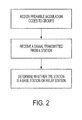
- Fig. 2 is a flowchart illustrating the method of a relay station attempting to execute a network entry or a hard handover procedure, according to an embodiment of the present invention.
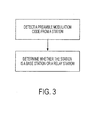
- Fig. 3 is a flowchart illustrating the method of a relay station attempting to execute a network entry or a hard handover procedure, according to an embodiment of the present invention.
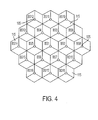
- Fig. 4 is an illustration of an example of a tier 1+2 wireless network topology for modeling the assignment of preamble modulation codes in an OFDMA network, according to an embodiment of the present invention.
- Fig. 5 is chart illustrating the assignment of preamble modulation codes into a group indicating relation to a base station and a group indicating relation to a relay station, according to an embodiment of the present invention.
- Various embodiments of the present invention provide a relay station attempting to execute a network entry or a hard handover procedure in an Orthogonal Frequency Division Multiple Access (OFDMA) network with a method of distinguishing between other relay stations and a base station by assigning preamble modulation codes employed in the OFDMA network to one of at least two groups.
- OFDMA Orthogonal Frequency Division Multiple Access
- a relay station attempting to execute a network entry or a hard handover procedure in an OFDMA network can distinguish between another relay station and the base station, thereby ensuring the maximum desired transmission capabilities of the network.
- Fig. 1 is an illustrative example of an inter-cell topology involving two relay stations operating in an OFDMA network.
- the network cell includes a base station (BS) 15, a first relay station (RS1) 55, a second relay station (RS2) 65, a first mobile station (MS1) 25, a second mobile station (MS2) 35, and a third mobile station (MS3) 45.
- BS base station
- RS1 relay station
- RS2 second relay station
- MS1 mobile station
- MS2 second mobile station
- MS3 third mobile station
- mobile station 25 is within range of base station 15, and, therefore, can communicate directly with base station 15 through the MS1-BS link 17.
- Mobile station 35 is within range of base station 15 and relay station 55 and, therefore, can communicate directly with base station 15 through the MS2-BS link 27, or, in the alternative, can communicate with base station 15 indirectly through relay station 55, preferably using the MS2-RS1 link 77 and the RS1-BS link 37, or, alternatively, using the MS2-RS1 link 77, the RS1-RS2 link 57, and the RS2-BS link 47.
- Mobile station 45 is out of range of base station 15 and, therefore, can only communicate with base station 15 indirectly through relay station 55, using MS3-RS1 link 67 and RS1-BS link 37.
- relay station 65 using network compliant preamble detection circuitry, may detect a set of superimposed preamble signals.
- Relay station 65 while attempting to execute a network entry or re-entry procedure, may attempt to execute a network entry or re-entry procedure (hard handover) with relay station 55, instead of base station 15, because the preamble detector of relay station 65 receives a preamble signal from relay station 55.
- bandwidth efficiency of RS1-BS link 37 is degraded, due to the supplementary data and control traffic requested by relay station 65.
- relay station 55 may not be capable of providing relay station 65 with same range of services and capabilities as base station 15.
- Various embodiments of the present invention propose a method to manage the OFDMA preamble modulation codes in such a way that a relay station, such as relay station 65, attempting to enter or re-enter the network (handover procedure) will be able to differentiate between a base station, such as base station 15, and another relay station entity, such as relay station 55, by reading the preamble modulation codes without the need to exchange any other control signaling with the network.
- a relay station such as relay station 65
- another relay station entity such as relay station 55
- Fig. 1 is only an illustrative example of an inter-cell topology involving two relay stations operating in an OFDMA network.
- the various embodiments of the present invention are not limited to an OFDMA network including only a single base station, two relays stations, and three mobile stations as illustrated in Fig. 1, but may include any wireless communication network supporting any number of base stations, relay stations, and mobile stations.
- Fig. 2 is a flowchart illustrating a procedure of a relay station attempting to execute a network entry or a hard handover procedure, according to an embodiment of the present invention.
- preamble modulation codes in an OFDMA network are assigned to one of at least two groups, one of the groups indicating that codes assigned to the group are for base stations in the network and a different one of the groups indicating that codes assigned to the group are for relay stations in the network.
- the OFDMA preamble modulation codes can be Pseudo Noise (PN) sequences and, for example, under the Institute of Electrical and Electronics Engineers (IEEE) 802.16 standard, base stations are designed to use 114 distinct preamble modulation codes, each preamble modulation code being a distinct PN sequence. Furthermore, these 114 PN sequences are represented by cell ID's, which are modulated in the PN sequences and can be numbered 0 through 113. A relay station attempting to enter the network, or roaming throughout the network (if the relay station is a mobile relay station), may not be allowed to detect PN sequences transmitted by two base station entities using the same cell ID.
- PN Pseudo Noise
- the relay station If the relay station detects an identical cell ID, it will not be able to complete the network entry or re-entry procedure.
- This is provided as an example of an OFDMA network under the 802.16 standard.
- the various embodiments of the present invention are not limited to preamble modulation codes that are PN sequences, and can include any number of preamble modulation codes, which can be represented by any number of cell ID's numbered in any manner.
- these 114 PN sequences, and their representative cell ID's must be divided up into at least two groups, with one group indicating that codes assigned to the group are for base stations in the network and a different one of the groups indicating that codes assigned to the group are for relay stations in the network.
- This re-organization and assignment should not attract any break in the backwards compatibility with other 802.16 networks, thereby making it transparent for any 802.16 OFDMA mobile station.
- the various embodiments of the present invention are not limited to preamble modulation codes that are assigned into two groups, and can include any number of groups larger than two indicating that codes assigned to each respective group are for any type of entity within the network.
- the process moves to operation 20, where the relay station attempting to enter or re-enter the network receives a signal transmitted from a station in the network, the received signal including a preamble modulation code.
- the relay station As the relay station enters or re-enters the network, its preamble detector will begin to detect preamble modulation codes from other station entities within the network that are within range of the relay station.
- the process moves to operation 30, where the relay station determines whether the station that transmitted the received signal is a base station or a relay station based on the group to which the preamble modulation code of the received signal was assigned. At this point, the relay station is able to distinguish between a base station and another relay station due to the re-organization and assignment of the PN sequences, and related cell ID's, which was carried out in operation 10.
- Fig. 3 is a flowchart illustrating a procedure of a relay station attempting to execute a network entry or a hard handover procedure, according to an embodiment of the present invention.
- a preamble modulation code of a signal transmitted by a station in an OFDMA network is detected.
- its preamble detector will begin the detect preamble modulation codes, from other station entities within the network that are within range of the relay station.
- the process moves to operation 200, where it is determined whether the station is a base station or a relay station based on a group to which the detected preamble modulation code is assigned.
- the OFDMA preamble modulation codes can be, for example, Pseudo Noise (PN) sequences and, for example, under the Institute of Electrical and Electronics Engineers (IEEE) 802.16 standard, base stations use 114 distinct PN sequences as preamble modulation codes. Furthermore, these 114 PN sequences are represented by cell ID's, which can be numbered 0 through 113.
- PN Pseudo Noise
- preamble modulation codes that are 114 PN sequences, and can include any number of preamble modulation codes which can be represented by any number of cell ID's numbered in any manner.
- these 114 PN sequences, and their representative cell ID's are assigned to one of at least two groups, with one group indicating that PN sequences assigned to the group are for base stations in the network and a different one of the groups indicating that PN sequences assigned to the group are for relay stations in the network and a determination is made based on these assigned groups.
- the various embodiments of the present invention are not limited to preamble modulation codes that are assigned into two groups, and can include any number of groups larger than two indicating that codes assigned to each respective group are for any type of entity within the network.
- Figs. 4 illustrates an example of a tier 1 +2 wireless network topology for modeling the assignment of preamble modulation codes in an OFDMA network, according to an embodiment of the present invention.
- the minimal distance between two cells using the same ID is 8r, where r is the radius of the cell radius.
- LOS Line-of-Sight
- Various embodiments of the present invention are not limited to a tier 1+2 wireless network topology as shown in Fig. 4, and can include any wireless network topology.
- the tier 1+2 wireless network topology as shown in Fig. 4 is provided only as a model for illustrating the attenuation between two signals received by a given relay station.
- the equation assumes one user positioned between two cells using the same cell ID, operating on the cell edge.
- the preamble modulation code is, for example, based on Binary Phase-Shift Keying (BPSK) modulation
- BPSK Binary Phase-Shift Keying
- the related correlator that forms the preamble detector requires a low received CINR.
- the related preamble decoder receiving two preamble sequences transmitted by two base stations or two relay stations using the same cell ID, deployed in a network topology as presented in Fig. 4, will not process the lower level CINR preamble, due to the estimated large received power level difference between the two.
- the CINR degradation provided by the equation provides a negligible impact upon the operation of the regular preamble detector. This is the reason that a tier 1+2 model, like that shown in Fig. 4, is considered suitable for modeling the process of the present application.
- the various embodiments of the present invention are not limited to a tier 1+2 wireless network topology as shown in Fig. 4, and can include any wireless network topology.
- the various embodiments of the present invention are not limited to preamble modulation codes based on BPSK modulation and a preamble detector that requires a low received CINR, and can include any type of preamble code modulation and any compliant preamble detector circuitry.
- the tier 1+2 network uses fifty-seven sectors 115 (three sectors per base station times nineteen base stations 105).
- 57 PN sequences, and related cell ID's are designated for indicating and distinguishing base stations within the network
- the remaining 57 PN sequences, and related cell ID's can be designated for indicating and distinguishing relay stations within the network.
- the various embodiments of the present invention are not limited to a network frequency plan as shown in the tier 1+2 network of Fig. 4 and are not limited to preamble modulation codes using 114 PN sequences, and can include any number of total preamble modulation codes, base station preamble modulation codes, and relay station preamble modulation codes.
- Fig. 5 is chart 300 illustrating the assignment of preamble modulation codes, in this case PN sequences and their relate cell ID's, into groups indicating relation to a base station and groups indicating relation to a relay station, according to an embodiment of the present invention.
- Cell ID's 0-18, 32-50, and 64-82 are assigned to groups indicating relation to a base station and Cell ID's 19-31, 51-63, and 83-113 are assigned to groups indicating relation to a relay station.
- Fig. 5 is chart 300 illustrating the assignment of preamble modulation codes, in this case PN sequences and their relate cell ID's, into groups indicating relation to a base station and groups indicating relation to a relay station, according to an embodiment of the present invention.
- Cell ID's 0-18, 32-50, and 64-82 are assigned to groups indicating relation to a base station
- Cell ID's 19-31, 51-63, and 83-113 are assigned to groups indicating relation to a relay station.
- the various embodiments of the present invention are not limited to preamble modulation codes in an 802.16 network using 114 PN sequences, and can include any wireless communication network using any number of preamble modulation codes, which can be represented by any number of cell ID's numbered in any manner.
- the present invention relates to relay stations acting in OFDMA networks, and in particular, 802.16 networks.
- the present invention is not limited to any specific types of networks, and the method and apparatus of the relay station could be applied in various different types of wireless communications networks.
- the invention also provides a computer program or a computer program product for carrying out any of the methods described herein, and a computer readable medium having stored thereon a program for carrying out any of the methods described herein.
- a computer program embodying the invention may be stored on a computer-readable medium, or it could, for example, be in the form of a signal such as a downloadable data signal provided from an Internet website, or it could be in any other form.
Landscapes
- Engineering & Computer Science (AREA)
- Computer Networks & Wireless Communication (AREA)
- Signal Processing (AREA)
- Mobile Radio Communication Systems (AREA)
- Small-Scale Networks (AREA)
- Radio Relay Systems (AREA)
Applications Claiming Priority (2)
| Application Number | Priority Date | Filing Date | Title |
|---|---|---|---|
| US85604006P | 2006-11-02 | 2006-11-02 | |
| US11/643,810 US20080107078A1 (en) | 2006-11-02 | 2006-12-22 | Determining transmitting stations in an OFDMA network |
Publications (1)
| Publication Number | Publication Date |
|---|---|
| EP1919234A2 true EP1919234A2 (fr) | 2008-05-07 |
Family
ID=39060191
Family Applications (1)
| Application Number | Title | Priority Date | Filing Date |
|---|---|---|---|
| EP07117581A Withdrawn EP1919234A2 (fr) | 2006-11-02 | 2007-09-28 | Détermination des stations émettrices dans un réseau OFDMA |
Country Status (3)
| Country | Link |
|---|---|
| US (1) | US20080107078A1 (fr) |
| EP (1) | EP1919234A2 (fr) |
| JP (1) | JP2008118652A (fr) |
Cited By (9)
| Publication number | Priority date | Publication date | Assignee | Title |
|---|---|---|---|---|
| US20100142433A1 (en) * | 2008-12-10 | 2010-06-10 | Research In Motion Corporation | Method and Apparatus for Discovery of Relay Nodes |
| US8040904B2 (en) | 2008-12-17 | 2011-10-18 | Research In Motion Limited | System and method for autonomous combining |
| US8265128B2 (en) | 2008-12-19 | 2012-09-11 | Research In Motion Limited | Multiple-input multiple-output (MIMO) with relay nodes |
| US8311061B2 (en) | 2008-12-17 | 2012-11-13 | Research In Motion Limited | System and method for multi-user multiplexing |
| US8335466B2 (en) | 2008-12-19 | 2012-12-18 | Research In Motion Limited | System and method for resource allocation |
| US8355388B2 (en) | 2008-12-17 | 2013-01-15 | Research In Motion Limited | System and method for initial access to relays |
| US8402334B2 (en) | 2008-12-17 | 2013-03-19 | Research In Motion Limited | System and method for hybrid automatic repeat request (HARQ) functionality in a relay node |
| US8446856B2 (en) | 2008-12-19 | 2013-05-21 | Research In Motion Limited | System and method for relay node selection |
| EP2512165A4 (fr) * | 2009-12-14 | 2013-08-21 | Ntt Docomo Inc | Système de communication mobile et station de base radio |
Families Citing this family (9)
| Publication number | Priority date | Publication date | Assignee | Title |
|---|---|---|---|---|
| US7742452B2 (en) * | 2007-01-05 | 2010-06-22 | Motorola, Inc. | System and method for dynamic preamble assignment |
| US9083434B2 (en) * | 2011-09-21 | 2015-07-14 | Telefonaktiebolaget L M Ericsson (Publ) | System and method for operating a repeater |
| US20100111229A1 (en) * | 2008-08-08 | 2010-05-06 | Assaf Kasher | Method and apparatus of generating packet preamble |
| KR101075964B1 (ko) * | 2009-02-02 | 2011-10-21 | 아주대학교산학협력단 | 통신 시스템에서 다중 링크 중계 장치 및 방법 |
| US8958357B2 (en) * | 2009-06-12 | 2015-02-17 | Nokia Corporation | Method and apparatus for facilitating relay node communications |
| CN101938775B (zh) * | 2009-06-29 | 2017-07-18 | 宏达国际电子股份有限公司 | 处理移动装置移动性的方法及其相关通信装置 |
| US20110287787A1 (en) * | 2009-11-25 | 2011-11-24 | Qualcomm Incorporated | Location-based service based on access point identifiers |
| KR20120016388A (ko) * | 2010-08-16 | 2012-02-24 | 삼성전자주식회사 | 휴대용 단말기에서 신체 정보 획득을 위한 장치 및 방법 |
| US11770171B2 (en) * | 2021-06-29 | 2023-09-26 | Qualcomm Incorporated | Reconfigurable intelligent surface link identification |
Family Cites Families (5)
| Publication number | Priority date | Publication date | Assignee | Title |
|---|---|---|---|---|
| US6104910A (en) * | 1997-06-09 | 2000-08-15 | Koths; Kerry R. | Stabilized mobile relay station |
| KR100369791B1 (ko) * | 1999-04-29 | 2003-01-29 | 삼성전자 주식회사 | 비동기 방식의 부호분할다중접속 통신시스템의 동기장치및 방법 |
| EP1779552A4 (fr) * | 2004-08-16 | 2009-07-08 | Zte San Diego Inc | Recherche cellulaire rapide et synchronisation exacte dans des communications sans fil |
| KR100810201B1 (ko) * | 2005-06-18 | 2008-03-06 | 삼성전자주식회사 | 다중 홉 릴레이 셀룰라 네트워크에서 라우팅 장치 및 방법 |
| US20080107075A1 (en) * | 2006-11-07 | 2008-05-08 | Motorola, Inc. | System and method to facilitate path selection in a multihop network |
-
2006
- 2006-12-22 US US11/643,810 patent/US20080107078A1/en not_active Abandoned
-
2007
- 2007-09-28 EP EP07117581A patent/EP1919234A2/fr not_active Withdrawn
- 2007-10-31 JP JP2007284157A patent/JP2008118652A/ja not_active Withdrawn
Cited By (22)
| Publication number | Priority date | Publication date | Assignee | Title |
|---|---|---|---|---|
| KR101328535B1 (ko) * | 2008-12-10 | 2013-11-13 | 블랙베리 리미티드 | 릴레이 노드의 발견을 위한 방법 및 장치 |
| WO2010068302A1 (fr) * | 2008-12-10 | 2010-06-17 | Research In Motion Limited | Procédé et appareil de découverte de nœuds relais |
| CN102246562B (zh) * | 2008-12-10 | 2016-03-02 | 黑莓有限公司 | 用于发现中继节点的方法和装置 |
| US20100142433A1 (en) * | 2008-12-10 | 2010-06-10 | Research In Motion Corporation | Method and Apparatus for Discovery of Relay Nodes |
| US8848594B2 (en) * | 2008-12-10 | 2014-09-30 | Blackberry Limited | Method and apparatus for discovery of relay nodes |
| US8856607B2 (en) | 2008-12-17 | 2014-10-07 | Blackberry Limited | System and method for hybrid automatic repeat request (HARQ) functionality in a relay node |
| US9379804B2 (en) | 2008-12-17 | 2016-06-28 | Blackberry Limited | System and method for hybrid automatic repeat request (HARQ) functionality in a relay node |
| US8402334B2 (en) | 2008-12-17 | 2013-03-19 | Research In Motion Limited | System and method for hybrid automatic repeat request (HARQ) functionality in a relay node |
| US9571179B2 (en) | 2008-12-17 | 2017-02-14 | Blackberry Limited | System and method for multi-user multiplexing |
| US9484989B2 (en) | 2008-12-17 | 2016-11-01 | Blackberry Limited | System and method for autonomous combining |
| US8355388B2 (en) | 2008-12-17 | 2013-01-15 | Research In Motion Limited | System and method for initial access to relays |
| US8040904B2 (en) | 2008-12-17 | 2011-10-18 | Research In Motion Limited | System and method for autonomous combining |
| US8311061B2 (en) | 2008-12-17 | 2012-11-13 | Research In Motion Limited | System and method for multi-user multiplexing |
| US8837303B2 (en) | 2008-12-17 | 2014-09-16 | Blackberry Limited | System and method for multi-user multiplexing |
| US8824359B2 (en) | 2008-12-19 | 2014-09-02 | Blackberry Limited | System and method for resource allocation |
| US8265128B2 (en) | 2008-12-19 | 2012-09-11 | Research In Motion Limited | Multiple-input multiple-output (MIMO) with relay nodes |
| US9191878B2 (en) | 2008-12-19 | 2015-11-17 | Blackberry Limited | System and method for relay node selection |
| US8699547B2 (en) | 2008-12-19 | 2014-04-15 | Blackberry Limited | Multiple-input Multiple-output (MIMO) with relay nodes |
| US8335466B2 (en) | 2008-12-19 | 2012-12-18 | Research In Motion Limited | System and method for resource allocation |
| US8446856B2 (en) | 2008-12-19 | 2013-05-21 | Research In Motion Limited | System and method for relay node selection |
| US9923628B2 (en) | 2008-12-19 | 2018-03-20 | Blackberry Limited | System and method for relay node selection |
| EP2512165A4 (fr) * | 2009-12-14 | 2013-08-21 | Ntt Docomo Inc | Système de communication mobile et station de base radio |
Also Published As
| Publication number | Publication date |
|---|---|
| JP2008118652A (ja) | 2008-05-22 |
| US20080107078A1 (en) | 2008-05-08 |
Similar Documents
| Publication | Publication Date | Title |
|---|---|---|
| EP1919141A1 (fr) | Détermination des stations émettrices dans un réseau OFDMA | |
| US20080107078A1 (en) | Determining transmitting stations in an OFDMA network | |
| KR101002885B1 (ko) | 통신 시스템에서 주파수 자원의 할당 장치 및 방법 | |
| KR100557509B1 (ko) | 유엠티에스 시스템에서의 셀 탐색 방법 | |
| KR102240566B1 (ko) | 무선 통신 시스템에서 반사체를 포함하는 전자 장치의 적응적 모드 결정 방법 | |
| CN102577573A (zh) | 控制无线通信系统中的资源使用 | |
| EP1806851A2 (fr) | Système de contrôle d'alimentation de transmission de la station de base, station mobile et station de base | |
| EP1814349A1 (fr) | Procédé et système permettant d'optimiser les paramètres d'accès et de transfert intercellulaire sans coupure basé sur des informations de localisation | |
| EP2205031B1 (fr) | Détermination de la localisation d'un équipement utilisateur sur la base d'un signal en liaison montante | |
| CN112753268B (zh) | 无线系统中的干扰管理 | |
| KR20070027999A (ko) | 광대역 다중 접속 통신 시스템에서 자원 할당 방법 및할당된 자원 수신 방법 | |
| EP1985030B1 (fr) | Determination et utilisation de seuils adaptatifs pour des messages reçus | |
| CN109392071A (zh) | 一种功率控制的方法及装置 | |
| Caso et al. | NB-IoT random access: Data-driven analysis and ML-based enhancements | |
| US7627319B2 (en) | Mobile terminal | |
| EP2359494A2 (fr) | Procédé et dispositif de communication rélais | |
| US20170047989A1 (en) | Apparatus and method for transmitting and receiving signal in communication system | |
| Khodaverdizadeh et al. | Improving the Performance of HF Radio Networks in the Presence of Interference through Automatic Link Establishment with Frequency Hopping Technique: M. Khodaverdizadeh et al. | |
| EP2292045B1 (fr) | Appareil et procédé de multiplexage d'un pilote fortement détectable à base de cellule | |
| KR101257104B1 (ko) | 펨토셀 기지국 장치 및 자기 설정 방법 | |
| EP2285010B1 (fr) | Détecteur multi-utilisateur et son procédé d'utilisation dans un système de communication | |
| KR101626952B1 (ko) | 인지 중계 네트워크에서 최소 수신 전력을 이용하여 상향 링크의 데이터 전송률을 최대화하는 방법 및 그 장치 | |
| CN103379500A (zh) | 基于双载波下行链路系统的同频干扰消除方法和设备 | |
| KR20100120379A (ko) | 무선 자원 할당 방법 및 장치 | |
| Thompson | Modelling adjacent channel interference in 3G networks |
Legal Events
| Date | Code | Title | Description |
|---|---|---|---|
| PUAI | Public reference made under article 153(3) epc to a published international application that has entered the european phase |
Free format text: ORIGINAL CODE: 0009012 |
|
| AK | Designated contracting states |
Kind code of ref document: A2 Designated state(s): AT BE BG CH CY CZ DE DK EE ES FI FR GB GR HU IE IS IT LI LT LU LV MC MT NL PL PT RO SE SI SK TR |
|
| AX | Request for extension of the european patent |
Extension state: AL BA HR MK RS |
|
| RAP1 | Party data changed (applicant data changed or rights of an application transferred) |
Owner name: FUJITSU MICROELECTRONICS LIMITED |
|
| RAP1 | Party data changed (applicant data changed or rights of an application transferred) |
Owner name: FUJITSU SEMICONDUCTOR LIMITED |
|
| STAA | Information on the status of an ep patent application or granted ep patent |
Free format text: STATUS: THE APPLICATION HAS BEEN WITHDRAWN |
|
| 18W | Application withdrawn |
Effective date: 20110623 |