EP1919983B1 - Oxidationsbeständiges homogenisiertes polymermaterial - Google Patents
Oxidationsbeständiges homogenisiertes polymermaterial Download PDFInfo
- Publication number
- EP1919983B1 EP1919983B1 EP06801842A EP06801842A EP1919983B1 EP 1919983 B1 EP1919983 B1 EP 1919983B1 EP 06801842 A EP06801842 A EP 06801842A EP 06801842 A EP06801842 A EP 06801842A EP 1919983 B1 EP1919983 B1 EP 1919983B1
- Authority
- EP
- European Patent Office
- Prior art keywords
- polymeric material
- antioxidant
- linked
- cross
- doped
- Prior art date
- Legal status (The legal status is an assumption and is not a legal conclusion. Google has not performed a legal analysis and makes no representation as to the accuracy of the status listed.)
- Active
Links
Images



Classifications
-
- C—CHEMISTRY; METALLURGY
- C08—ORGANIC MACROMOLECULAR COMPOUNDS; THEIR PREPARATION OR CHEMICAL WORKING-UP; COMPOSITIONS BASED THEREON
- C08J—WORKING-UP; GENERAL PROCESSES OF COMPOUNDING; AFTER-TREATMENT NOT COVERED BY SUBCLASSES C08B, C08C, C08F, C08G or C08H
- C08J5/00—Manufacture of articles or shaped materials containing macromolecular substances
-
- C—CHEMISTRY; METALLURGY
- C08—ORGANIC MACROMOLECULAR COMPOUNDS; THEIR PREPARATION OR CHEMICAL WORKING-UP; COMPOSITIONS BASED THEREON
- C08J—WORKING-UP; GENERAL PROCESSES OF COMPOUNDING; AFTER-TREATMENT NOT COVERED BY SUBCLASSES C08B, C08C, C08F, C08G or C08H
- C08J3/00—Processes of treating or compounding macromolecular substances
- C08J3/28—Treatment by wave energy or particle radiation
-
- C—CHEMISTRY; METALLURGY
- C08—ORGANIC MACROMOLECULAR COMPOUNDS; THEIR PREPARATION OR CHEMICAL WORKING-UP; COMPOSITIONS BASED THEREON
- C08J—WORKING-UP; GENERAL PROCESSES OF COMPOUNDING; AFTER-TREATMENT NOT COVERED BY SUBCLASSES C08B, C08C, C08F, C08G or C08H
- C08J2300/00—Characterised by the use of unspecified polymers
-
- C—CHEMISTRY; METALLURGY
- C08—ORGANIC MACROMOLECULAR COMPOUNDS; THEIR PREPARATION OR CHEMICAL WORKING-UP; COMPOSITIONS BASED THEREON
- C08J—WORKING-UP; GENERAL PROCESSES OF COMPOUNDING; AFTER-TREATMENT NOT COVERED BY SUBCLASSES C08B, C08C, C08F, C08G or C08H
- C08J2323/00—Characterised by the use of homopolymers or copolymers of unsaturated aliphatic hydrocarbons having only one carbon-to-carbon double bond; Derivatives of such polymers
-
- Y—GENERAL TAGGING OF NEW TECHNOLOGICAL DEVELOPMENTS; GENERAL TAGGING OF CROSS-SECTIONAL TECHNOLOGIES SPANNING OVER SEVERAL SECTIONS OF THE IPC; TECHNICAL SUBJECTS COVERED BY FORMER USPC CROSS-REFERENCE ART COLLECTIONS [XRACs] AND DIGESTS
- Y02—TECHNOLOGIES OR APPLICATIONS FOR MITIGATION OR ADAPTATION AGAINST CLIMATE CHANGE
- Y02P—CLIMATE CHANGE MITIGATION TECHNOLOGIES IN THE PRODUCTION OR PROCESSING OF GOODS
- Y02P20/00—Technologies relating to chemical industry
- Y02P20/50—Improvements relating to the production of bulk chemicals
- Y02P20/54—Improvements relating to the production of bulk chemicals using solvents, e.g. supercritical solvents or ionic liquids
Definitions
- the present invention relates to methods for making oxidation resistant homogenized polymeric materials and medical implants that comprise the material.
- Methods of doping polyethylene with an additive, for example, vitamin E, and annealing the additive-doped polyethylene in a super critical fluid, for example, CO 2 , and materials used therewith also are provided.
- UHMWPE ultra-high molecular weight polyethylenes
- the post-irradiation melting step used to impart oxidation resistance to irradiated UHMWPE, generally reduces the fatigue strength of irradiated polyethylene by about 20% (see Oral et al., Biomaterials, 2004. 25: p. 5515-5522 ).
- the addition of the antioxidant to the UHMWPE prior to irradiation can inhibit crosslinking of the UHMWPE during irradiation ( Parth et al., J Mater Sci-Mater Med, 2002. 13(10): p. 917-921 ; Oral et al., Biomaterials, 2005. 26: p. 6657-6663 ).
- crosslinking is needed to increase the wear resistance of the polymer.
- Vitamin E-stabilized highly cross-linked UHMWPE is a next generation highly cross-linked UHMWPE and has been developed (see Oral et al., Biomaterials, 2004. 25: p. 5515-5522 ; Muratoglu et al., Transactions of the Orthopaedic Research Society, 2005. 1661 ; Oral et al., Transactions of the Orthopaedic Research Society, 2005. 1171 , Oral et al., J Arthroplasty, 2005 . in print) to decrease the extent of mechanical and fatigue strength degradation seen in first generation irradiated and melted highly cross-linked UHMWPEs.
- An antioxidant can be used to interact with the free radicals induced by irradiation and prevent them from reacting with other chains to further the oxidation cascade. This eliminates the need for post-irradiation melting of radiation cross-linked UHMWPE and avoids the decrease in crystallinity and strength accompanying post-irradiation melting. Vitamin-E ( ⁇ -tocopherol) is such an antioxidant and protects irradiated UHMWPE against oxidation. However, for a long-term oxidative stability of an irradiated implant, vitamin E must be present throughout the component at all times.
- the invention provides a method of making an antioxidant-doped homogenized cross-linked polymeric material as defined in claim 1, to which reference should now be made.
- Preferred and/or advantageous features of the invention, including a method of making a medical implant comprising the polymeric material of claim 1, are set out in dependant sub-claims.
- the present invention relates generally to methods of making oxidation resistant medical devices that comprises one or more homogenized polymeric materials. More specifically, the invention relates to methods of manufacturing antioxidant doped medical devices containing cross-linked homogenized polyethylene, for example, cross-linked ultra-high molecular weight polyethylene (UHMWPE), and materials used therein. More specifically, the invention relates to methods of manufacturing an additive-doped such as antioxidant-doped and homogenized by doping in a super critical fluid, non-oxidizing medical device containing cross-linked polyethylene with residual free radicals, for example, irradiated ultra-high molecular weight polyethylene (UHMWPE) and materials used therein.
- UHMWPE ultra-high molecular weight polyethylene
- the invention provides a method of making an antioxidant-doped homogenized cross-linked polymeric material comprising the steps of: a) irradiating a consolidated polymeric material at temperature below the melt with ionizing radiation; thereby forming a cross-linked polymeric material; b) doping the cross-linked consolidated polymeric material with an antioxidant by diffusion at ambient pressure; and c) annealing the antioxidant-doped, cross-linked polymeric material at a temperature below the melt in a supercritical fluid; thereby forming an antioxidant-doped homogenized cross-linked polymeric material.
- Methods of making an antioxidant-doped homogenized cross-linked polymeric material may comprise: a) doping the polymeric material with an antioxidant at ambient pressure; b) annealing the antioxidant-doped polymeric material at a temperature below the melt in a supercritical fluid; thereby forming an antioxidant-doped homogenized polymeric material; and c) irradiating the polymeric material at a temperature below the melt with ionizing radiation; thereby forming a antioxidant-doped homogenized cross-linked polymeric material.
- Methods of making a medical implant may comprise: a) providing a polymeric material; b) consolidating the polymeric material; c) irradiating the consolidated polymeric material with ionizing radiation, thereby forming a consolidated and cross-linked polymeric material; d) machining the consolidated and cross-linked polymeric material, thereby forming a medical implant; e) doping the medical implant with an antioxidant by diffusion, thereby forming an antioxidant-doped cross-linked medical implant; and f) annealing the antioxidant-doped cross-linked medical implant at a temperature below the melt in a supercritical fluid; thereby forming an antioxidant-doped homogenized cross-linked medical implant.
- Methods of making a medical implant may comprise: a) providing a polymeric material; b) consolidating the polymeric material; c) machining the consolidated polymeric material, thereby forming a medical implant; d) irradiating the medical implant with ionizing radiation, thereby forming a cross-linked medical implant; e) doping the medical implant with an antioxidant by diffusion, thereby forming an antioxidant-doped cross-linked medical implant; and f) annealing the antioxidant-doped cross-linked medical implant at a temperature below the melt in a supercritical fluid; thereby forming an antioxidant-doped homogenized cross-linked medical implant.
- Methods of making a medical implant may comprise: a) providing a polymeric material; b) consolidating the polymeric material; c) irradiating the polymeric material with ionizing radiation, thereby forming a cross-linked polymeric material; e) doping the polymeric material with an antioxidant by diffusion, thereby forming an antioxidant-doped cross-linked polymeric material; f) annealing the antioxidant-doped cross-linked polymeric material at a temperature below the melt in a supercritical fluid; thereby forming an antioxidant-doped homogenized cross-linked polymeric material; g) machining the antioxidant-doped homogenized cross-linked polymeric material, thereby forming an antioxidant-doped homogenized cross-linked medical implant.
- Methods of making a medical implant may comprise: a) providing a polymeric material; b) consolidating the polymeric material; c) doping the consolidated polymeric material with an antioxidant by diffusion; d) annealing the antioxidant-doped polymeric material at a temperature below the melt in a supercritical fluid; thereby forming an antioxidant-doped homogenized polymeric material; e) machining the antioxidant doped polymeric material, thereby forming an antioxidant doped polymeric material; and f) irradiating the antioxidant doped cross-linked polymeric material by ionizing radiation, thereby forming an antioxidant-doped cross-linked medical implant.
- Methods of making a medical implant may comprise: a) providing a polymeric material; b) consolidating the polymeric material; c) doping the consolidated polymeric material with an antioxidant by diffusion; d) annealing the antioxidant-doped polymeric material at a temperature below the melt in a supercritical fluid; thereby forming an antioxidant-doped homogenized polymeric material; e) irradiating the antioxidant-doped polymeric material by ionizing radiation, thereby forming an antioxidant doped cross-linked polymeric material; and f) machining the cross-linked polymeric material, thereby forming an antioxidant doped cross-linked medical implant.
- Methods of making a medical implant may comprise: a) providing a polymeric material; b) consolidating the polymeric material; c) machining the consolidated polymeric material, thereby forming a medical implant; d) doping the medical implant with an antioxidant by diffusion, thereby forming an antioxidant doped medical implant; e) annealing the antioxidant-doped medical implant at a temperature below the melt in a supercritical fluid; thereby forming an antioxidant-doped homogenized medical implant; f) packaging the medical implant; and g) irradiating the packaged medical implant by ionizing radiation, thereby forming an antioxidant doped cross-linked and sterile medical implant.
- Methods of making a medical implant may comprise: a) providing a polymeric material; b) consolidating the polymeric material, c) machining the consolidated polymeric material, thereby forming a medical implant; d) doping the medical implant with an antioxidant by diffusion, thereby forming an antioxidant doped medical implant; e) annealing the antioxidant-doped medical implant at a temperature below the melt in a supercritical fluid; thereby forming an antioxidant-doped homogenized medical implant; f) packaging the medical implant; and f) irradiating the packaged medical implant by ionizing radiation, thereby forming an antioxidant doped cross-linked and sterile medical implant.
- Methods of making a medical implant may comprise: a) providing a polymeric material; b) consolidating the polymeric material, c) machining the consolidated polymeric material, thereby forming a medical implant; d) irradiating the medical implant by ionizing radiation, thereby forming a cross-linked medical implant; e) doping the cross-linked medical implant with an antioxidant by diffusion, thereby forming an antioxidant doped cross-linked medical implant; e) annealing the antioxidant-doped cross-linked medical implant at a temperature below the melt in a supercritical fluid; thereby forming an antioxidant-doped homogenized cross-linked medical implant.
- Methods of making a medical implant may comprise: a) providing a polymeric material; b) compression molding the polymeric material, thereby forming a medical implant; c) doping the medical implant with an antioxidant by diffusion, thereby forming an antioxidant doped medical implant; d) annealing the antioxidant-doped medical implant at a temperature below the melt in a supercritical fluid; thereby forming an antioxidant-doped homogenized medical implant; e) packaging the medical implant; and f) irradiating the packaged medical implant by ionizing radiation, thereby forming an antioxidant doped cross-linked and sterile medical implant.
- Methods of making a medical implant may comprise: a) providing a consolidated polymeric material; b) irradiating the consolidated polymeric material with ionizing radiation, thereby forming a consolidated and cross-linked polymeric material; c) machining the consolidated and cross-linked polymeric material, thereby forming a medical implant; d) doping the medical implant with an antioxidant by diffusion, thereby forming an antioxidant-doped cross-linked medical implant; and e) annealing the antioxidant-doped cross-linked medical implant at a temperature below the melt in a supercritical fluid; thereby forming an antioxidant-doped cross-linked homogenized medical implant.
- Homogenized polymeric materials may contain detectable residual free radicals, wherein the polymeric material is non-oxidizing and cross-linked.
- Medical implants comprising non-oxidizing cross-linked homogenized polymeric material may contain detectable residual free radicals.
- Methods may be provided of making a medical implant containing cross-linked antioxidant-doped homogenized polymeric material, wherein the implant comprises medical devices, including acetabular liner, shoulder glenoid, patellar component, finger joint component, ankle joint component, elbow joint component, wrist joint component, toe joint component, bipolar hip replacements, tibial knee insert, tibial knee inserts with reinforcing metallic and polyethylene posts, intervertebral discs, heart valves, tendons, stents, and vascular grafts, wherein the polymeric material is polymeric resin powder, polymeric flakes, polymeric particles, or the like, or a mixture thereof.
- the implant comprises medical devices, including acetabular liner, shoulder glenoid, patellar component, finger joint component, ankle joint component, elbow joint component, wrist joint component, toe joint component, bipolar hip replacements, tibial knee insert, tibial knee inserts with reinforcing metallic and polyethylene posts, intervertebral discs, heart
- Methods may be provided of making medical implants, including non-permanent implants, containing cross-linked antioxidant-doped homogenized polymeric material, wherein the implant comprises medical device, including balloon catheters, sutures, tubing, and intravenous tubing, wherein the polymeric material is polymeric resin powder, polymeric flakes, polymeric particles, or the like, or a mixture thereof.
- the polymeric balloons for example, polyether-block co-polyamide polymer (PeBAX®), Nylon, and polyethylene terephthalate (PET) balloons are doped with vitamin E and irradiated before, during, or after doping.
- Methods may be provided of making a packaging for a medical device, wherein the packaging is resistant to oxidation when subjected to sterilization with ionizing radiation or gas sterilization.
- the packaging include barrier materials, for example, blow-molded blister packs, heat-shrinkable packaging, thermally-sealed packaging, or the like or a mixture thereof.
- Antioxidant-doped medical implants may be packaged and sterilized by ionizing radiation or gas sterilization to obtain sterile and cross-linked medical implants.
- the polymeric material may be a polymeric resin powder, polymeric flakes, polymeric particles, or the like, or a mixture thereof, wherein the irradiation can be carried out in an atmosphere containing between about 1% and about 22% oxygen, wherein the radiation dose is between about 25 kGy and about 1000 kGy.
- the polymeric material may be polymeric resin powder, polymeric flakes, polymeric particles, or the like, or a mixture thereof, wherein the polymeric material is irradiated after consolidation in an inert atmosphere containing a gas, for example, nitrogen, argon, helium, neon, or the like, or a combination thereof, wherein the radiation dose is between about 25 kGy and about 1000 kGy.
- a gas for example, nitrogen, argon, helium, neon, or the like, or a combination thereof, wherein the radiation dose is between about 25 kGy and about 1000 kGy.
- the polymeric material may be consolidated polymeric material, where the consolidation can be carried out by compression molding to form a slab from which a medical device is machined.
- the polymeric material may be consolidated polymeric material, where the consolidation can be carried out by direct compression molding to form a finished medical device.
- the polymeric material may be consolidated polymeric material, where the consolidation can be carried out by compression molding to another piece to form an interface and an interlocked hybrid material.
- Doping can also be done in inert, air or supercritical at low or high pressure before annealing in supercritical.
- Methods may be provided to increase the penetration of antioxidant and the homogeneity or the uniformity of an antioxidant in a doped polymeric material by annealing the doped polymeric material below the melting point of the doped polymeric material in a super critical fluid, for example, CO 2 .
- Methods of making oxidation-resistant highly crystalline, cross-linked polymeric material by high pressure crystallization may comprise: a) heating a polymeric material at temperature above the melt; b) pressurizing the highly crystalline cross-linked polymeric material under at least about 10-1000 MPa; c) holding at this pressure; d) cooling the heated polymeric material to below the melting point of the polymer at ambient pressure or to about room temperature; e) releasing the pressure to an atmospheric pressure level; f) doping the polymeric material with an antioxidant by diffusion, thereby forming an antioxidant-doped polymeric material; g) irradiating the antioxidant-doped polymeric material at temperature below the melt with ionizing radiation, thereby forming an antioxidant-doped highly crystalline cross-linked polymeric material; and h) annealing the antioxidant-doped highly crystalline cross-linked polymeric material at a temperature below the melt in a supercritical fluid; thereby forming an antioxidant-doped homogenized cross-linked polymeric material.
- Methods of making oxidation-resistant highly crystalline, cross-linked polymeric material by high pressure crystallization may comprise: a) pressurizing a polymeric material under at least above 10-1000 MPa; b) heating the pressurized polymeric material at temperature below the melt of the pressurized polymeric material; c) holding at this pressure and temperature; d) cooling the heated polymeric material to below the melting point of the polymer at ambient pressure or to about room temperature; e) releasing the pressure to an atmospheric pressure level; f) doping the highly crystalline polymeric material with an antioxidant by diffusion, thereby forming an antioxidant-doped highly crystalline polymeric material; g) irradiating the antioxidant-doped polymeric material at temperature below the melt with ionizing radiation, thereby forming an antioxidant-doped highly crystalline cross-linked polymeric material; and h) annealing the antioxidant-doped highly crystalline cross-linked polymeric material at a temperature below the melt in a supercritical fluid; thereby forming an antioxidant-doped
- the present invention provides methods of making oxidation resistant medical implants that comprise medical devices, and packaging that comprises cross-linked homogenized polymeric material, such as cross-linked homogenized polyethylene.
- the invention pertains to methods of doping consolidated polyethylene, such as UHMWPE, with antioxidants, before, during, or after crosslinking the consolidated polyethylene, and followed by annealing the antioxidant-doped polyethylene in a super critical fluid.
- the invention provides methods for using supercritical carbon dioxide (SC-CO 2 ) in post-doping annealing for homogenization of polymeric materials.
- SC-CO 2 supercritical carbon dioxide
- post-doping annealing in SC-CO 2 enhanced ⁇ -tocopherol penetration in polymeric materials compared to inert gas due to the ability of SC-CO 2 to swell the polymeric materials, thus enhance the rate of ⁇ -tocopherol diffusion.
- Post-doping annealing of polymeric materials in SC-CO 2 can also be applied to highly crystalline polymeric materials as disclosed in Muratoglu et al., U. S. Application Serial No. 10/757,551, filed January 15, 2004 .
- the doping of consolidated polyethylene can be carried out by diffusion of an antioxidant, for example, ⁇ -tocopherol, such as vitamin E.
- the diffusion of the antioxidant may be accelerated by increasing the temperature and/or pressure or by using a supercritical fluid, such as CO 2 and subsequent annealing in a super critical fluid.
- An antioxidant may be delivered in various forms, including in a pure form, for example, as pure vitamin E, or dissolved in a solvent.
- Diffusion rate of an antioxidant into the polyethylene may be increased by increasing the concentration of the antioxidant solution, for example, a vitamin E solution.
- Diffusion rate of an antioxidant into the polyethylene may be increased by swelling the consolidated polyethylene in a supercritical fluid, for example, in a supercritical CO 2 , i.e., the temperature being above the supercritical temperature, which is 31.3°C, and the pressure being above the supercritical pressure, which is 73.8 bar.
- a supercritical fluid for example, in a supercritical CO 2 , i.e., the temperature being above the supercritical temperature, which is 31.3°C, and the pressure being above the supercritical pressure, which is 73.8 bar.
- the solubility of vitamin E can be changed in supercritical carbon dioxide by the addition of a third component such as an alcohol or a surfactant such as Tween 80.
- a third component may be added into the chamber to be solubilized during heating and pressurization or is pumped together or separately with the supercritical fluid (or fluids) into the annealing environment.
- Heating and pressurization into the supercritical phase during annealing can be done in several ways.
- the samples are heated to the desired temperature, then they are pressurized in a supercritical fluid or mixtures of supercritical fluids.
- liquid carbon dioxide is charged into the pressurization environment, subsequently, the samples are heated to the desired temperature at the same time raising the pressure of the environment. Heating and cooling is done at a rate of about 0.01°C to about 500°C/min, preferable at about 0.1°C/min to 10°C/min, more preferably about 1°C/min.
- Pressurization is done at about 0.01 psi/min to about 20000 psi/min, preferably about 1 psi/min to 50 psi/min, more preferably about 10 psi/min.
- Depressurization is done at about 0.01 psi/min to about 20000 psi/min, preferably about 1 psi/min to 50 psi/min, more preferably about 50 psi/min.
- the samples are maintained in the supercritical phase at one temperature and pressure, then at another temperature and/or pressure during the course of annealing.
- vitamin E as the antioxidant, mixing the resin powder, flakes, particles, or a mixture thereof, with vitamin E and consolidation thereafter result in changes in color of polymeric material to yellow.
- Doping subsequent to consolidation avoids the exposure of vitamin E to high temperatures and pressures of consolidation and prevents the discoloration of the polymeric material. This also decreases the thermal effects on the antioxidant. The thermal effects can reduce the effectiveness of the antioxidant in protecting the polymeric material against oxidation.
- Doping in the consolidated state also allows one to achieve a gradient of antioxidant in consolidated polymeric material.
- an antioxidant for example, vitamin E
- the methods further comprise a step of annealing in a supercritical fluid.
- the antioxidant-doped cross-linked or not cross-linked polymeric material at a temperature below the melt in a supercritical fluid, for example, Super critical CO 2 .
- the doped antioxidant can leach out of the polymeric material used in fabrication of medical implants or medical devices either during storage prior to use or during in vivo service.
- the in vivo duration can be as long as the remaining life of the patient, which is the length of time between implantation of the device and the death of the patient, for example, 1-120 years. If leaching out of the antioxidant is an issue, the irradiation of the medical implant or medical device or irradiation of any portion thereof can be carried out after doping the antioxidant. This can ensure crosslinking of the antioxidant to the host polymer through covalent bonds and thereby prevent loss of antioxidant from the medical implant or the device.
- the starting material can be a blend of additive and polymeric material.
- the additive can be an antioxidant and/or its derivatives, and/or a blend of antioxidants and/or their derivatives, one such antioxidant is vitamin E.
- Consolidated polymeric material for example, consolidated resin powder, molded sheet, blown films, tubes, balloons, flakes, particles, or a mixture thereof, can be doped with an additive such as antioxidant, for example, vitamin E in the form of ⁇ -Tocopherol, by diffusion.
- Consolidated polymeric material for example, consolidated UHMWPE can be soaked in, for example, 100% vitamin E or in a solution of ⁇ -Tocopherol in an alcohol, for example, ethanol or isopropanol.
- a solution of ⁇ -Tocopherol, about 50% by weight in ethanol can be used to diffuse in to UHMWPE in contact with a supercritical fluid, such as CO 2 .
- the balloons for example, PeBAX®, Nylon, and PET balloons can be doped with vitamin E and irradiated before, during, or after doping.
- the invention also relates to the following processing steps to fabricate medical devices made out of highly cross-linked polyethylene and containing metallic pieces such as bipolar hip replacements, tibial knee inserts with reinforcing metallic and polyethylene posts, intervertebral disc systems, and for any implant that contains a surface that cannot be readily sterilized by a gas sterilization method.
- the polyethylene component of a medical implant may be in close contact with another material, such as a metallic mesh or back, a non-metallic mesh or back, a tibial tray, a patella tray, or an acetabular shell, wherein the polyethylene, such as resin powder, flakes and particles are directly compression molded to these counter faces.
- a polyethylene tibial insert is manufactured by compression molding of polyethylene resin powder to a tibial tray, to a metallic mesh or back or to a non-metallic mesh or back.
- the mesh is shaped to serve as a fixation interface with the bone, through either bony in-growth or the use of an adhesive, such as polymethylmethacrylate (PMMA) bone cement.
- PMMA polymethylmethacrylate
- These shapes are of various forms including, acetabular liner, tibial tray for total or unicompartmental knee implants, patella tray, and glenoid component, ankle, elbow or finger component.
- the interface geometry is crucial in that polyethylene assumes the geometry as its consolidated shape.
- Polyethylene has a remarkable property of 'shape memory' due to its very high molecular weight that results in a high density of physical entanglements.
- plastic deformation introduces a permanent shape change, which attains a preferred high entropy shape when melted. This recovery of the original consolidated shape is due to the 'shape memory', which is achieved when the polyethylene is consolidated.
- Balloon catheters often can have intended axial and radial alignment of the polymeric chains.
- Balloon catheters made from polyethylene benefit from the improved wear resistance generated from crosslinking when used with stents.
- the use of catheters and stents coated with drugs precludes the use of ethylene oxide sterilization in some cases; thus ionizing radiation must be used, and the balloon catheter has to be protected from the deleterious effects of free-radical induced oxidation. Annealing of these materials close to the melt transition temperature would result in bulk chain motion and subsequent loss of dimensional tolerances of the part.
- the problems associated with post-irradiation oxidation can be avoided without the need for thermal treatment.
- the balloons for example, PeBAX®, Nylon, and PET balloons can be doped with vitamin E and irradiated before, during, or after doping.
- the hybrid component may be irradiated using ionizing radiation to a desired dose level, for example, about 25 kGy to about 1000 kGy, preferably between about 25 kGy and about 150 kGy, more preferably between about 50 kGy and about 100 kGy.
- the irradiation step generates residual free radicals and therefore, a melting step may be introduced thereafter to quench the residual free radicals. Since the polyethylene is consolidated into the shape of the interface, thereby setting a 'shape memory' of the polymer, the polyethylene does not separate from the counterface.
- Methods may be provided of crosslinking polyethylene, to create a polyethylene-based medical device, wherein the device is immersed in a non-oxidizing medium such as inert gas or inert fluid, wherein the medium is heated to a temperature below the melting point of the irradiated polyethylene, for example, UHMWPE (below about 137°C) to eliminate some crystalline matter during cross-linking.
- a non-oxidizing medium such as inert gas or inert fluid
- Methods may be provided of crosslinking polyethylene, to create a polyethylene-based medical device, wherein the device is immersed in a non-oxidizing medium such as inert gas or inert fluid, wherein the medium is heated to above the melting point of the irradiated polyethylene, for example, UHMWPE (above about 137°C) to eliminate the crystalline matter and to allow the recombination/elimination of the residual free radicals.
- a non-oxidizing medium such as inert gas or inert fluid
- UHMWPE above about 137°C
- the interface between the metal and the polymer may become sterile due to the high irradiation dose level used during irradiation.
- the device surface can be further machined to remove the oxidized surface layer.
- the melting step can be carried out in the presence of an inert gas.
- the device may be further sterilized with ethylene oxide, gas plasma, or the other gases, when the interface is sterile but the rest of the component is not.
- Packaging of irradiated and antioxidant-doped medical implants or medical devices including compression molded implants or devices is disclosed, wherein the implants or the devices can be sterilized by ionizing radiation or gas sterilization to obtain sterile and cross-linked medical implants or medical devices.
- Ultra-high molecular weight polyethylene refers to linear non-branched chains of ethylene having molecular weights in excess of about 500,000, preferably above about 1,000,000, and more preferably above about 2,000,000. Often the molecular weights can reach about 8,000,000 or more. By initial average molecular weight is meant the average molecular weight of the UHMWPE starting material, prior to any irradiation. See US Patent 5,879,400 , PCT/US99/16070, filed on July 16, 1999 , and PCT/US97/02220, filed February 11, 1997 .
- polymeric materials for example, any polyolefin, including high-density-polyethylene, low-density-polyethylene, linear-low-density-polyethylene, ultra-high molecular weight polyethylene (UHMWPE), or mixtures thereof.
- Polymeric materials, as used herein, also applies to polyethylene of various forms, for example, resin powder, flakes, particles, powder, or a mixture thereof, or a consolidated form derived from any of the above.
- Crosslinking Polymeric Material Polymeric Materials, for example, UHMWPE can be cross-linked by a variety of approaches, including those employing cross-linking chemicals (such as peroxides and/or silane) and/or irradiation. Preferred approaches for cross-linking employ irradiation. Cross-linked UHMWPE also can be obtained according to the teachings of US Patent 5,879,400 , US Patent 6,641,617 , and PCT/US97/02220 .
- cross-linked UHMWPE also can be obtained according to the teachings of US Patent 5,879,400 , US Patent 6,641,617 , and PCT/US97/02220 .
- Consolidated polymeric material refers to a solid, consolidated bar stock, solid material machined from stock, or semi-solid form of polymeric material derived from any forms as described herein, for example, resin powder, flakes, particles, or a mixture thereof, that can be consolidated.
- the consolidated polymeric material also can be in the form of a slab, block, solid bar stock, machined component, film, tube, balloon, pre-form, implant, or finished medical device.
- non-permanent device refers to what is known in the art as a device that is intended for implantation in the body for a period of time shorter than several months. Some non-permanent devices could be in the body for a few seconds to several minutes, while other may be implanted for days, weeks, or up to several months. Non-permanent devices include catheters, tubing, intravenous tubing, and sutures, for example.
- “Pharmaceutical compound”, as described herein, refers to a drug in the form of a powder, suspension, emulsion, particle, film, cake, or molded form.
- the drug can be freestanding or incorporated as a component of a medical device.
- pressure chamber refers to a vessel or a chamber in which the interior pressure can be raised to levels above atmospheric pressure.
- Packaging refers to the container or containers in which a medical device is packaged and/or shipped.
- Packaging can include several levels of materials, including bags, blister packs, heat-shrink packaging, boxes, ampoules, bottles, tubes, trays, or the like or a combination thereof.
- a single component may be shipped in several individual types of package, for example, the component can be placed in a bag, which in turn is placed in a tray, which in turn is placed in a box. The whole assembly can be sterilized and shipped.
- the packaging materials include, but not limited to, vegetable parchments, multi-layer polyethylene, Nylon 6, polyethylene terephthalate (PET), and polyvinyl chloride-vinyl acetate copolymer films, polypropylene, polystyrene, and ethylene-vinyl acetate (EVA) copolymers.
- EVA ethylene-vinyl acetate
- sealing refers to the process of isolating a chamber or a package from the outside atmosphere by closing an opening in the chamber or the package. Sealing can be accomplished by a variety of means, including application of heat (for example, thermally-sealing), use of adhesive, crimping, cold-molding, stapling, or application of pressure.
- blister packs refers to a packaging comprised of a rigid plastic bowl with a lid or the like that is either peeled or punctured to remove the packaged contents.
- the lid is often made of aluminum, or a gas-permeable membrane such as a Tyvek.
- the blister packs are often blow-molded, a process where the plastic is heated above its deformation temperature, at which point pressurized gas forces the plastic into the required shape.
- heat-shrinkable packaging refers to plastic films, bags, or tubes that have a high degree of orientation in them. Upon application of heat, the packaging shrinks down as the oriented chains retract, often wrapping tightly around the medical device.
- intervertebral disc system refers to an artificial disc that separates the vertebrae in the spine. This system can either be composed of one type of material, or can be a composite structure, for example, cross-linked UHMWPE with metal edges.
- Balloon catheters refers to what is known in the art as a device used to expand the space inside blood vessels or similar. Balloon catheters are usually thin wall polymeric devices with an inflatable tip, and can expand blocked arteries, stents, or can be used to measure blood pressure. Commonly used polymeric balloons include, for example, polyether-block co-polyamide polymer (PeBAX®), Nylon, and polyethylene terephthalate (PET) balloons. Commonly used polymeric material used in the balloons and catheters include, for example, copolymers of polyether and polyamide (for example, PeBAX®), Polyamides, Polyesters (for example, PET), and ethylene vinyl alcohol (EVA) used in catheter fabrication.
- PeBAX® polyether-block co-polyamide polymer
- PET polyethylene terephthalate
- Commonly used polymeric material used in the balloons and catheters include, for example, copolymers of polyether and polyamide (for example, PeBAX®), Polyamides, Polyesters (
- Medical device tubing Materials used in medical device tubing, including an intravenous tubing include, polyvinyl chloride (PVC), polyurethane, polyolefins, and blends or alloys such as thermoplastic elastomers, polyamide/imide, polyester, polycarbonate, or various fluoropolymers.
- PVC polyvinyl chloride
- polyurethane polyurethane
- polyolefins polyolefins
- blends or alloys such as thermoplastic elastomers, polyamide/imide, polyester, polycarbonate, or various fluoropolymers.
- Stent refers to what is known in the art as a metallic or polymeric cage-like device that is used to hold bodily vessels, such as blood vessels, open. Stents are usually introduced into the body in a collapsed state, and are inflated at the desired location in the body with a balloon catheter, where they remain.
- Melt transition temperature refers to the lowest temperature at which all the crystalline domains in a material disappear.
- Interface in this specification is defined as the niche in medical devices formed when an implant is in a configuration where a component is in contact with another piece (such as a metallic or a non-metallic component), which forms an interface between the polymer and the metal or another polymeric material.
- a component such as a metallic or a non-metallic component
- interfaces of polymer-polymer or polymer-metal are in medical prosthesis, such as orthopedic joints and bone replacement parts, for example, hip, knee, elbow or ankle replacements.
- Irradiation Preferably ionizing radiation is used.
- a dose of ionizing radiation ranging from about 25 kGy to about 1000 kGy may be used.
- the radiation dose can be about 25 kGy, about 50 kGy, about 65 kGy, about 75 kGy, about 100 kGy, about 150, kGy, about 200 kGy, about 300 kGy, about 400 kGy, about 500 kGy, about 600 kGy, about 700 kGy, about 800 kGy, about 900 kGy, or about 1000 kGy, or above 1000 kGy, or any integer or any fractional value thereabout or therebetween.
- the radiation dose can be between about 25 kGy and about 150 kGy or between about 50 kGy and about 100 kGy.
- These types of radiation including gamma and/or electron beam, kills or inactivates bacteria, viruses, or other microbial agents potentially contaminating medical implants, including the interfaces, thereby achieving product sterility.
- the irradiation which may be electron or gamma irradiation, in accordance with the present invention can be carried out in air atmosphere containing oxygen, wherein the oxygen concentration in the atmosphere is at least 1%, 2%, 4%, or up to about 22%, or any integer or any fractional value thereabout or therebetween.
- the irradiation may be carried out in an inert atmosphere, wherein the atmosphere contains gas selected from the group consisting of nitrogen, argon, helium, neon, or the like, or a combination thereof.
- the irradiation also can be carried out in a vacuum.
- the irradiation may be carried out in a sensitizing atmosphere.
- a sensitizing atmosphere This may comprise a gaseous substance which is of sufficiently small molecular size to diffuse into the polymer and which, on irradiation, acts as a polyfunctional grafting moiety.
- gases include substituted or unsubstituted polyunsaturated hydrocarbons; for example, acetylenic hydrocarbons such as acetylene; conjugated or unconjugated olefinic hydrocarbons such as butadiene and (meth)acrylate monomers; sulphur monochloride, with chloro-tri-fluoroethylene (CTFE) or acetylene being particularly preferred.
- CTFE chloro-tri-fluoroethylene
- gaseous is meant herein that the sensitizing atmosphere is in the gas phase, either above or below its critical temperature, at the irradiation temperature.
- the piece forming an interface with polymeric material may be a metal.
- the metal piece in functional relation with polyethylene can be made of a cobalt chrome alloy, stainless steel, titanium, titanium alloy or nickel cobalt alloy, for example.
- Non-metallic Piece The piece forming an interface with polymeric material may be a non-metal.
- the non-metal piece in functional relation with polyethylene, according to an embodiment of the present invention, can be made of ceramic material, for example.
- inert atmosphere refers to an environment having no more than 1% oxygen and more preferably, an oxidant-free condition that allows free radicals in polymeric materials to form cross links without oxidation during a process of sterilization.
- An inert atmosphere is used to avoid O 2 , which would otherwise oxidize the medical device comprising a polymeric material, such as UHMWPE.
- Inert atmospheric conditions such as nitrogen, argon, helium, or neon are used for sterilizing polymeric medical implants by ionizing radiation.
- Inert atmospheric conditions such as nitrogen, argon, helium, neon, or vacuum are also used for sterilizing interfaces of polymeric-metallic and/or polymeric-polymeric in medical implants by ionizing radiation.
- Inert atmospheric conditions also refer to an inert gas, inert fluid, or inert liquid medium, such as nitrogen gas or silicon oil.
- Anoxic environment refers to an environment containing gas, such as nitrogen, with less than 21%-22% oxygen, preferably with less than 2% oxygen.
- the oxygen concentration in an anoxic environment also can be at least 1%, 2%, 4%, 6%, 8%, 10%, 12% 14%, 16%, 18%, 20%, or up to about 22%, or any integer or any fractional value thereabout or therebetween.
- Vacuum refers to an environment having no appreciable amount of gas, which otherwise would allow free radicals in polymeric materials to form cross links without oxidation during a process of sterilization.
- a vacuum is used to avoid O 2 , which would otherwise oxidize the medical device comprising a polymeric material, such as UHMWPE.
- a vacuum condition can be used for sterilizing polymeric medical implants by ionizing radiation.
- a vacuum condition can be created using a commercially available vacuum pump.
- a vacuum condition also can be used when sterilizing interfaces of polymeric-metallic and/or polymeric-polymeric in medical implants by ionizing radiation.
- Residual free radicals refers to free radicals that are generated when a polymer is exposed to ionizing radiation such as gamma or e-beam irradiation. While some of the free radicals recombine with each other to from crosslinks, some become trapped in crystalline domains. The trapped free radicals are also known as residual free radicals.
- the levels of residual free radicals in the polymer generated during an ionizing radiation is preferably determined using electron spin resonance and treated appropriately to reduce the free radicals.
- a process of sterilization of medical implants containing polymeric material, such as cross-linked UHMWPE comprises sterilizing the medical implants by ionizing sterilization with gamma or electron beam radiation, for example, at a dose level ranging from 25-70 kGy, or by gas sterilization with ethylene oxide or gas plasma.
- a further process of sterilization of medical implants containing polymeric material, such as cross-linked UHMWPE comprises sterilizing the medical implants by ionizing sterilization with gamma or electron beam radiation, for example, at a dose level ranging from 25-200 kGy.
- the dose level of sterilization is higher than standard levels used in irradiation. This is to allow crosslinking or further crosslinking of the medical implants during sterilization.
- a process is disclosed of sterilizing medical implants containing polymeric material, such as cross-linked UHMWPE, that is in contact with another piece, including polymeric material consolidated by compression molding to another piece, thereby forming an interface and an interlocked hybrid material, comprising sterilizing an interface by ionizing radiation; heating the medium to above the melting point of the irradiated UHMWPE (above about 137°C) to eliminate the crystalline matter and allow for the recombination/elimination of the residual free radicals; and sterilizing the medical implant with a gas, for example, ethylene oxide or gas plasma.
- a gas for example, ethylene oxide or gas plasma.
- a process is disclosed of increasing the uniformity of the antioxidant following doping in polymeric component of a medical implant during the manufacturing process by heating for a time period depending on the melting temperature of the polymeric material.
- the preferred temperature is about 137°C or less.
- a heating step is disclosed that can be carried in the air, in an atmosphere, containing oxygen, wherein the oxygen concentration is at least 1%, 2%, 4%, or up to about 22%, or any integer or any fractional value thereabout or therebetween.
- a heating step is disclosed that can be carried while the implant is in contact with an inert atmosphere, wherein the inert atmosphere contains gas selected from the group consisting of nitrogen, argon, helium, neon, or the like, or a combination thereof.
- a heating step is disclosed that can be carried while the implant is in contact with a non-oxidizing medium, such as an inert fluid medium, wherein the medium contains no more than about 1% oxygen.
- a heating step is disclosed that can be carried while the implant is in a vacuum.
- the heating method of implants to reduce increase the uniformity of the antioxidant is described.
- the medical device comprising a polymeric raw material, such as UHMWPE, is generally heated to a temperature of about 137°C or less following the step of doping with the antioxidant.
- the medical device is kept heated in the inert medium until the desired uniformity of the antioxidant is reached.
- low melting point refers to a temperature below the melting point of a polyethylene, for example, UHMWPE.
- low melting point or “below the melt” refers to a temperature less than 145°C, which may vary depending on the melting temperature of the polyethylene, for example, 145°C, 140°C or 135°C, which again depends on the properties of the polyethylene being treated, for example, molecular weight averages and ranges, batch variations, etc.
- the melting temperature is typically measured using a differential scanning calorimeter (DSC) at a heating rate of 10°C per minute.
- DSC differential scanning calorimeter
- the peak melting temperature thus measured is referred to as melting point and occurs, for example, at approximately 137°C for some grades of UHMWPE. It may be desirable to conduct a melting study on the starting polyethylene material in order to determine the melting temperature and to decide upon an irradiation and annealing temperature.
- Annealing refers to heating the polymer above or below its peak melting point. Annealing time can be at least 1 minute to several weeks long. In one aspect the annealing time is about 4 hours to about 48 hours, preferably 24 to 48 hours and more preferably about 24 hours. "Annealing temperature” refers to the thermal condition for annealing in accordance with the invention.
- annealing also refers to annealing of additive-doped (such as antioxidant-doped) polymeric materials, including cross-linked and not cross-linked, consolidated or unconsolidated, solid blocks or machined, preform or finished polymeric materials, medical implants or fabricated articles, at a temperature below the melt in a supercritical fluid, for example, CO 2 .
- Annealing can be carried out in a supercritical fluid at a temperature below the melt and under pressure, preferably above 200 psi, more preferably above about 1100 psi.
- contacted includes physical proximity with or touching such that the sensitizing agent can perform its intended function.
- a polyethylene composition or pre-form is sufficiently contacted such that it is soaked in the sensitizing agent, which ensures that the contact is sufficient.
- Soaking is defined as placing the sample in a specific environment for a sufficient period of time at an appropriate temperature, for example, soaking the sample in a solution of an antioxidant.
- the environment is heated to a temperature ranging from room temperature to a temperature below the melting point of the material.
- the contact period ranges from at least about 1 minute to several weeks and the duration depending on the temperature of the environment.
- non-oxidizing refers to a state of polymeric material having an oxidation index (A. U.) of less than about 0.5 following aging polymeric materials for 5 weeks in air at 80°C oven.
- a non-oxidizing cross-linked polymeric material generally shows an oxidation index (A. U.) of less than about 0.5 after the aging period.
- Doping refers to a process well known in the art (see, for example, US Patent Nos. 6,448,315 and 5,827,904 ). In this connection, doping generally refers to contacting a polymeric material with an antioxidant under certain conditions, as set forth herein, for example, doping UHMWPE with an additive such as an antioxidant under supercritical conditions.
- consolidated polymeric material can be doped with an additive by soaking the material in a solution of the additive.
- the material can be soaked in 100% additive, such as 100% antioxidant.
- the material also can be soaked in an additive solution where a carrier solvent can be used to dilute the additive concentration.
- the material can be doped for longer durations, at higher temperatures, at higher pressures, and/or in presence of a supercritical fluid.
- the doping process can involve soaking of a polymeric material, medical implant or device with an additive such as an antioxidant, for example, vitamin E, for about an hour up to several days, preferably for about one hour to 24 hours, more preferably for one hour to 16 hours.
- an antioxidant for example, vitamin E
- the antioxidant can be heated to room temperature or up to about 160°C and the doping can be carried out at room temperature or up to about 160°C.
- the antioxidant can be heated to 100°C and the doping is carried out at 100°C.
- the doping step can be followed by a heating step in air or in anoxic environment to improve the uniformity of the additive (such as antioxidant) within the polymeric material, medical implant or device.
- the heating may be carried out above or below or at the peak melting point.
- the medical implant or device may be cleaned before packaging and sterilization.
- Methods of making a medical implant may comprise: blending polymeric material with an additive such as vitamin E; consolidating the polymer blend; annealing below or above the melt in a supercritical fluid; irradiating the polymer blend; thereby forming a cross-linked polymer blend; and machining the cross-linked blend; thereby forming an antioxidant-doped medical implant.
- an additive such as vitamin E
- Methods of making a medical implant may comprise: blending polymeric material with an additive such as vitamin E; consolidating the polymer blend; irradiating the polymer blend; thereby forming a cross-linked polymer blend; annealing below or above the melt in a supercritical fluid; and machining the cross-linked blend; thereby forming a antioxidant-doped medical implant.
- an additive such as vitamin E
- Methods of making a medical implant may comprise: providing a polymeric material; irradiating the consolidated polymeric material; thereby forming a cross-linked polymeric material; deforming the irradiated polymeric material below the melting temperature; doping the deformed irradiated polymeric material with an antioxidant; annealing the antioxidant-doped deformed irradiated polymeric material in a supercritical fluid(s) below or above the melting temperature; and machining the antioxidant-doped cross-linked polymeric material; thereby forming a antioxidant-doped cross-linked medical implant.
- Methods of making a medical implant may comprise: providing a consolidated polymeric material; irradiating the consolidated polymeric material with ionizing radiation, thereby forming a consolidated and cross-linked polymeric material; machining the consolidated and cross-linked polymeric material, thereby forming a medical implant; doping the medical implant with an antioxidant by diffusion, thereby forming an antioxidant-doped cross-linked medical implant; and annealing the antioxidant-doped cross-linked medical implant at a temperature below or above the melt in a supercritical fluid; thereby forming an antioxidant-doped cross-linked homogenized medical implant.
- Methods of making a medical implant may comprise: providing a consolidated polymeric material; irradiating the consolidated polymeric material with ionizing radiation, thereby forming a consolidated and cross-linked polymeric material; machining the consolidated and cross-linked polymeric material, thereby forming a perform; doping the perform with an antioxidant by diffusion, thereby forming an antioxidant-doped cross-linked medical implant; annealing the antioxidant-doped cross-linked medical implant at a temperature below or above the melt in a supercritical fluid; and machining the perform, thereby forming an antioxidant-doped cross-linked homogenized medical implant.
- Methods of making oxidation-resistant highly crystalline, cross-linked polymeric material by high pressure crystallization may comprise: providing a consolidated polymeric material or a blend of polymeric material and antioxidant; irradiating the polymeric material or blend; pressurizing the irradiated polymeric material or blend under at least above 10-1000 MPa; heating the pressurized irradiated polymeric material or blend at a temperature below the melt of the pressurized irradiated polymeric material or blend; holding at this pressure and temperature; cooling the heated polymeric material to below the melting point of the polymer at ambient pressure or to about room temperature; releasing the pressure to an atmospheric pressure level; doping the highly crystalline polymeric material with an antioxidant by diffusion, thereby forming an antioxidant-doped highly crystalline, cross-linked polymeric material; and annealing the antioxidant-doped highly crystalline cross-linked polymeric material at a temperature below the melt in a supercritical fluid; thereby forming an antioxidant-doped homogenized cross-linked polymeric material.
- Methods of making oxidation-resistant highly crystalline, cross-linked polymeric material by high pressure crystallization may comprise: providing a consolidated polymeric material or a blend of polymeric material and antioxidant; irradiating the polymeric material or blend; heating the irradiated polymeric material or blend to above the melting point; pressurizing the irradiated polymeric material or blend under at least above 10-1000 MPa; holding at this pressure and temperature; cooling the heated polymeric material to below the melting point of the polymer at ambient pressure or to about room temperature; releasing the pressure to an atmospheric pressure level; doping the highly crystalline polymeric material with an antioxidant by diffusion, thereby forming an antioxidant-doped highly crystalline, cross-linked polymeric material; and annealing the antioxidant-doped highly crystalline cross-linked polymeric material at a temperature below the melt in a supercritical fluid; thereby forming an antioxidant-doped homogenized cross-linked polymeric material.
- High pressure crystallization is generally referred to as all of the methods of allowing the formation of extended chain crystals in the hexagonal phase.
- This transformation can be done by several different methods. The first is by heating to a temperature above the melting point of the polyethylene at ambient pressure, then pressurizing so that the sample is in the melt during the pressurization until the conditions are met for the melt-to-hexagonal phase transition to occur. Alternatively, stepwise heating and pressurization can be performed such that the sample is not always in the melt until close to the hexagonal phase. The sample heating and pressurization can be done in a variety of manners such that when the hexagonal phase transformation occurs, the UHMWPE does not have a substantial amount of preformed crystals and is considered in the melt phase.
- any cooling and depressurization scheme allowing the sample to stay in the hexagonal or orthorhombic regions can be used.
- a sample is high pressure crystallized at 200°C and 380 MPa (55,000 psi) and cooled down to approximately below the melting point of polyethylene at room temperature (about 135-140°C), then the pressure is released.
- a stepwise cooling and depressurization method can be used as long as the sample does not melt substantially.
- the ratio of orthorhombic to hexagonal crystals may be dependent on the time spent in the hexagonal phase and whether or not the sample has melted during the cool down. If a sample is fully crystallized in the hexagonal phase, is cooled down and/or depressurized to a pressure such that it encounters the melt phase partially or completely, and solely decreasing the temperature at the new pressure would not cause the sample to be in the hexagonal phase then some or all of the crystals would be converted to orthorhombic crystals when the sample is further cooled down and depressurized.
- UHMWPE may be incorporated with an additive by either doping by diffusion or by blending with powder and consolidation of the blend, wherein the UHMWPE is high pressure crystallized, and subsequently irradiated and annealed in a supercritical fluid(s).
- High pressure crystallization is carried out by heating to a temperature above the melting point of the irradiated or unirradiated UHMWPE at ambient pressure, pressurizing to at least about 10-1000 MPa, preferably at least about 150 MPa, more preferably at least about 250 MPa, heating to a temperature above the melting point, cooling to about room temperature and releasing the pressure.
- High pressure crystallization also can be carried out by pressurizing to at least about 10-1000 MPa, preferably at least about 150 MPa, more preferably at least about 250 MPa, heating to a temperature above the melting point of the irradiated or unirradiated UHMWPE at ambient pressure and below the melting point of the pressurized irradiated or unirradiated UHMWPE, cooling to about room temperature, and releasing the pressure.
- a finished product may be machined.
- the finished product may be packaged and sterilized.
- Example 1 Diffusion of antioxidant into polyethylene subsequent to irradiation (100 kGy) followed by homogenization in supercritical carbon dioxide (SC-CO 2 ).
- Test samples (2 cm cubes) were machined out of 100-kGy irradiated 2" rods of GUR 1050 UHMWPE. The samples were then doped with ⁇ -tocopherol at 120 °C for 2 hours in a 2-liter glass reaction flask under argon flow.
- High pressure homogenization was performed in a one liter cell disruption vessel (HC4635, Parr Instruments, Moline, IL) stored in an air convection oven. Pressure was released after the vessel had cooled to room temperature.
- HC4635 Parr Instruments, Moline, IL
- liquid CO 2 purity 99.97%, Airgas East, Hingham, MA
- 120°C Supercritical 24, Constant Pressure Dual Piston Pump, SSI/Lab Alliance
- the samples were analyzed with infra-red spectroscopy to determine the ⁇ -tocopherol profiles. Opposite faces of each 2 cm sample were removed to eliminate smearing during sectioning. The samples were then cut in half, perpendicular to the excised face, and sectioned (150 ⁇ m) using a microtome. Infrared spectra were collected by a BioRad UMA 500 microscope (Natick, MA) as a function of depth with an aperture size of 50 x 50 ⁇ m. The average surface ⁇ -tocopherol index (STI) was the average of the surface indices of three samples. The penetration depth was defined as a vitamin E index of 0.02.
- SC-CO 2 also has been shown to dissolve ⁇ -tocopherol. Since the crystalline lamellae are impermeable to even small molecules such as oxygen, this swelling would take place almost exclusively in the amorphous phase, creating free volume for ⁇ -tocopherol diffusion. The combination of these factors caused the diffusion rate to improve.
- Example 2 Diffusion of antioxidant into polyethylene followed by homogenization in supercritical carbon dioxide.
- Slab compression molded GUR1050 UHMWPE is used as stock material. Test samples (2 cm cubes) are machined out of this stock material. The samples are then doped with ⁇ -tocopherol at 120 °C for 2 hours in a 2-liter glass reaction flask under argon flow. Following doping, excess ⁇ -tocopherol is wiped from the surface and the samples are subjected supercritical CO 2 at 1700 psi and 120° C for 24 hrs.
- Example 3 Diffusion of antioxidant into polyethylene followed by homogenization in supercritical carbon dioxide followed by irradiation .
- Slab compression molded GUR1050 UHMWPE is used as stock material. Test samples (2 cm cubes) are machined out of this stock material. The samples are then doped with ⁇ -tocopherol at 120 °C for 2 hours in a 2-liter glass reaction flask under argon flow. Following doping, excess ⁇ -tocopherol is wiped from the surface and the samples are subjected supercritical CO 2 at 1700 psi and 120° C for 24 hrs. Then these blocks are packaged in vacuum and irradiated to 25, 65, 100, 150 and 200 kGy by gamma irradiation.
- the 1895 cm -1 wave number is a typical choice as an internal reference.
- the normalized value which is the ratio of the integrated absorbances of 1260 cm -1 and 1895 cm -1 , is an index that provides a relative metric of ⁇ -tocopherol composition in polyethylene.
- Vitamin E (Acros TM 99% D- ⁇ -Tocopherol, Fisher Brand), was used in the experiments described herein, unless otherwise specified.
- the vitamin E used is very light yellow in color and is a viscous fluid at room temperature. Its melting point is 2-3°C.
- Example 6 Gamma irradiation of polyethylene for sterilization or crosslinking.
- Cylindrical blocks (diameter 89 mm, length larger than 50 cm) were gamma irradiated using a Co 60 source (Steris Isomedix, Northborough, MA). A group of these blocks were vacuum packaged prior to irradiation and packaged blocks were irradiated. Another group of blocks were packaged and irradiated under nitrogen.
- Example 7 Fabrication of a highly cross-linked medical device.
- a tibial knee insert for example, is machined from compression molded GUR1050 UHMWPE. The insert is then soaked in 100% vitamin E or a solution of vitamin E. The diffusion of vitamin E into the insert is accelerated by increasing temperature and/or pressure, which can be carried out either in air or inert or anoxic environment. Vitamin e-doped tibial knee insert is then annealed at a temperature below the melt in a supercritical fluid, for example CO 2 , under high pressure, for example at above 1100 psi. After reaching desired level of vitamin E diffusion, the insert is packaged either in air or inert or anoxic environment. The packaged insert is then irradiated to 100 kGy dose. The irradiation serves two purposes: (1) crosslinks the polyethylene and improves wear resistance and (2) sterilizes the implant.
- the polyethylene implant can be any polyethylene medical device including those with abutting interfaces to other materials, such as metals.
- An example of this is non-modular, metal-backed, polyethylene components used in total joint arthroplasty.
- Example 8 Sequences of processing UHMWPE.
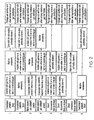
- UHMWPE can be doped with antioxidants at various stages, for example, as schematically shown in Figures 2 and 3 .
- the methods further comprise a step of annealing in a supercritical fluid.
- the antioxidant-doped cross-lined or not cross-cross-linked polymeric material at a temperature below the melt in a supercritical fluid, for example, super critical CO 2 .
- Example 9 Doping with vitamin E and annealing in supercritical carbon dioxide of high pressure crystallized (first melting, then pressurizing) and irradiated UHMWPE.
- Ram extruded GUR1050 UHMWPE is used as stock.
- a 2" diameter cylinder is placed in the pressure chamber, where it is heated to 180°C in water and held for 5 hours. Then, the pressure is increased to 310 MPa (45,000 psi) and the sample is held at this temperature and pressure for 5 hours. Finally, the sample is cooled to room temperature and the pressure is subsequently released. The bar is irradiated in vacuum to 100 kGy. Then it is doped in vitamin E at 120°C under argon flow at ambient pressure for 24 hours. Subsequently, it is taken out of the vitamin E bath, cooled down to room temperature.
- the excess vitamin E from the surface is cleaned and the bar is placed in a pressure chamber, which is then filled with carbon dioxide pressurized to 1700 psi.
- the chamber is heated to 120°C and kept at this pressure and temperature for 72 hours.
- the vessel is cooled to room temperature and the pressure is released.
- Example 10 Doping with vitamin E and annealing in supercritical carbon dioxide of high pressure crystallized (first melting, then pressurizing) UHMWPE.
- Ram extruded GUR1050 UHMWPE is used as stock.
- a 2" diameter cylinder is placed in the pressure chamber, where it is heated to 180°C in water and held for 5 hours. Then, the pressure is increased to 310 MPa (45,000 psi) and the sample is held at this temperature and pressure for 5 hours. Finally, the sample is cooled to room temperature and the pressure is subsequently released. Then it is doped in vitamin E at 120°C under argon flow at ambient pressure for 24 hours. Subsequently, it is taken out of the vitamin E bath, cooled down to room temperature. The excess vitamin E from the surface is cleaned and the bar is placed in a pressure chamber, which is then filled with carbon dioxide pressurized to 1700 psi.
- the chamber is heated to 120°C and kept at this pressure and temperature for 72 hours.
- the vessel is cooled to room temperature and the pressure is released.
- the highly crystalline UHMWPE vitamin E-doped and annealed bar is then irradiated in vacuum to 100 kGy.
- Example 11 Doping with vitamin E and annealing in supercritical carbon dioxide of high pressure crystallized (first melting, then pressurizing) and irradiated UHMWPE medical implant.
- Ram extruded GUR1050 UHMWPE is used as stock.
- a 2" diameter cylinder is placed in the pressure chamber, where it is heated to 180°C in water and held for 5 hours. Then, the pressure is increased to 310 MPa (45,000 psi) and the sample is held at this temperature and pressure for 5 hours. Finally, the sample is cooled to room temperature and the pressure is subsequently released.
- the bar is machined into a medical implant. The medical implant is packaged and irradiated to 100 kGy. Then it is doped in vitamin E at 120°C under argon flow at ambient pressure for 6 hours. Subsequently, it is taken out of the vitamin E bath, cooled down to room temperature.
- the excess vitamin E from the surface is cleaned and the bar is placed in a pressure chamber, which is then filled with carbon dioxide pressurized to 1700 psi.
- the chamber is heated to 120°C and kept at this pressure and temperature for 24 hours.
- the vessel is cooled to room temperature and the pressure is released.
- Example 12 Doping with vitamin E and annealing in supercritical carbon dioxide of high pressure crystallized (first melting, then pressurizing) and irradiated UHMWPE.
- Ram extruded GUR1050 UHMWPE is used as stock.
- a 2" diameter cylinder is placed in the pressure chamber, where it is heated to 180°C in water and held for 5 hours. Then, the pressure is increased to 310 MPa (45,000 psi) and the sample is held at this temperature and pressure for 5 hours. Finally, the sample is cooled to room temperature and the pressure is subsequently released.
- the bar is irradiated in vacuum to 100 kGy.
- a medical implant is machined from this high pressure crystallized and irradiated bar. Then it is doped in vitamin E at 120°C under argon flow at ambient pressure for 6 hours. Subsequently, it is taken out of the vitamin E bath, cooled down to room temperature.
- the excess vitamin E from the surface is cleaned and the bar is placed in a pressure chamber, which is then filled with carbon dioxide pressurized to 1700 psi.
- the chamber is heated to 120°C and kept at this pressure and temperature for 24 hours.
- the vessel is cooled to room temperature and the pressure is released.
- Example 13 Doping with vitamin E and annealing in supercritical carbon dioxide of high pressure crystallized (first pressurizing, then heating) and irradiated UHMWPE.
- Ram extruded GUR1050 UHMWPE is used as stock.
- a 2" diameter cylinder is placed in the pressure chamber, where the pressure is increased to 310 MPa (45,000 psi).
- the sample is then heated to 180°C in water and held at this temperature and pressure for 5 hours.
- the sample is cooled to room temperature and the pressure is subsequently released.
- the bar is irradiated in vacuum to 100 kGy.
- it is doped in vitamin E at 120°C under argon flow at ambient pressure for 24 hours.
- it is taken out of the vitamin E bath, cooled down to room temperature.
- the excess vitamin E from the surface is cleaned and the bar is placed in a pressure chamber, which is then filled with carbon dioxide pressurized to 1700 psi.
- the chamber is heated to 120°C and kept at this pressure and temperature for 72 hours.
- the vessel is cooled to room temperature and the pressure is released.
- Example 14 Doping with vitamin E and annealing in supercritical carbon dioxide of high pressure crystallized (first pressurizing, then heating) UHMWPE.
- Ram extruded GUR1050 UHMWPE is used as stock.
- a 2" diameter cylinder is placed in the pressure chamber, where the pressure is increased to 310 MPa (45,000 psi).
- the sample is then heated to 180°C in water and held at this temperature and pressure for 5 hours.
- the sample is cooled to room temperature and the pressure is subsequently released.
- it is doped in vitamin E at 120°C under argon flow at ambient pressure for 24 hours. Subsequently, it is taken out of the vitamin E bath, cooled down to room temperature. The excess vitamin E from the surface is cleaned and the bar is placed in a pressure chamber, which is then filled with carbon dioxide pressurized to 1700 psi.
- the chamber is heated to 120°C and kept at this pressure and temperature for 72 hours.
- the vessel is cooled to room temperature and the pressure is released.
- the highly crystalline UHMWPE vitamin E-doped and annealed bar is then irradiated in vacuum to 100 kGy.
- Example 15 Doping with vitamin E and annealing in supercritical carbon dioxide of high pressure crystallized (first pressurizing, then heating) and irradiated UHMWPE medical implant.
- Ram extruded GUR1050 UHMWPE is used as stock.
- a 2" diameter cylinder is placed in the pressure chamber, where the pressure is increased to 310 MPa (45,000 psi).
- the sample is then heated to 180°C in water and held at this temperature and pressure for 5 hours. Finally, the sample is cooled to room temperature and the pressure is subsequently released.
- the bar is machined into a medical implant.
- the medical implant is packaged and irradiated to 100 kGy. Then it is doped in vitamin E at 120°C under argon flow at ambient pressure for 6 hours. Subsequently, it is taken out of the vitamin E bath, cooled down to room temperature.
- the excess vitamin E from the surface is cleaned and the bar is placed in a pressure chamber, which is then filled with carbon dioxide pressurized to 1700 psi.
- the chamber is heated to 120°C and kept at this pressure and temperature for 24 hours.
- the vessel is cooled to room temperature and the pressure is released.
- Example 16 Doping with vitamin E and annealing in supercritical carbon dioxide of high pressure crystallized (first pressurizing, then heating) and irradiated UHMWPE .
- Ram extruded GUR1050 UHMWPE is used as stock.
- a 2" diameter cylinder is placed in the pressure chamber, where the pressure is increased to 310 MPa (45,000 psi).
- the sample is then heated to 180°C in water and held at this temperature and pressure for 5 hours. Finally, the sample is cooled to room temperature and the pressure is subsequently released.
- the bar is irradiated in vacuum to 100 kGy.
- a medical implant is machined from this high pressure crystallized and irradiated bar. Then it is doped in vitamin E at 120°C under argon flow at ambient pressure for 6 hours. Subsequently, it is taken out of the vitamin E bath, cooled down to room temperature.
- the excess vitamin E from the surface is cleaned and the bar is placed in a pressure chamber, which is then filled with carbon dioxide pressurized to 1700 psi.
- the chamber is heated to 120°C and kept at this pressure and temperature for 24 hours.
- the vessel is cooled to room temperature and the pressure is released.
- Example 17 Doping with vitamin E and annealing in supercritical carbon dioxide of UHMWPE prior to high pressure crystallized (first pressurizing, then heating) .
- Ram extruded GUR1050 UHMWPE is used as stock.
- a 2" bar is doped in vitamin E at 120°C under argon flow at ambient pressure for 24 hours. Subsequently, it is taken out of the vitamin E bath, cooled down to room temperature. The excess vitamin E from the surface is cleaned and the bar is placed in a pressure chamber, which is then filled with carbon dioxide pressurized to 1700 psi. The chamber is heated to 120°C and kept at this pressure and temperature for 72 hours. The vessel is cooled to room temperature and the pressure is released. Then the 2" diameter cylinder is placed in the pressure chamber, where the pressure is increased to 310 MPa (45,000 psi). The sample is then heated to 180°C in water and held at this temperature and pressure for 5 hours. Finally, the sample is cooled to room temperature and the pressure is subsequently released. It is then packaged and irradiated.
- Example 18 Doping with vitamin E and annealing in supercritical carbon dioxide of high pressure crystallized (first melting, then pressurizing) and irradiated UHMWPE.
- Ram extruded GUR1050 UHMWPE is used as stock.
- a 2" diameter cylinder is doped in vitamin E at 120°C under argon flow at ambient pressure for 24 hours. Subsequently, it is taken out of the vitamin E bath, cooled down to room temperature. The excess vitamin E from the surface is cleaned and the bar is placed in a pressure chamber, which is then filled with carbon dioxide pressurized to 1700 psi. The chamber is heated to 120°C and kept at this pressure and temperature for 72 hours. The vessel is cooled to room temperature and the pressure is released. Then it is placed in a pressure chamber, where it is heated to 180°C in water and held for 5 hours. Then, the pressure is increased to 310 MPa (45,000 psi) and the sample is held at this temperature and pressure for 5 hours. Finally, the sample is cooled to room temperature and the pressure is subsequently released. It is then packaged and irradiated.
- Slab compression molded GUR1050 UHMWPE was irradiated to 100-kGy by e-beam irradiation. Cubes (2 cm cubes) were machined from the irradiated stock. These cubes were doped in pure vitamin E (D,L- ⁇ -tocopherol, DSM Nutritional Products, XX, NJ) at 120°C for 2 hours under argon flow. Subsequently, they were cooled down to about room temperature to 60°C and the excess vitamin E on the surface was wiped off with a cotton gauze pad.
- vitamin E D,L- ⁇ -tocopherol, DSM Nutritional Products, XX, NJ
- the samples were placed in a pressure bomb ((HC4635, Parr Instruments, Moline, IL) and placed in an air convection oven and connected to a liquid carbon dioxide tank.
- the pressure bomb was purged with carbon dioxide, then closed off.
- the carbon dioxide was pumped (Supercritical 24, Constant Pressure Dual Piston Pump, SSI/Lab Alliance) to 1500 psi as the bomb heated to the desired temperature. If the pressure exceeded 1500 psi, then about 100-200 psi of carbon dioxide was vented off until equilibrium temperature and pressure was reached.
- the experiment was performed with three cubes each at 90, 110, 120 and 130°C. After the respective temperature and 1500 psi were reached, the samples were kept at temperature and pressure for 24 hours. Then, the bomb was cooled down to about room temperature and then depressurized.
- FIG. 4 shows the vitamin E concentration profiles from the surface of these 100-kGy irradiated, vitamin E-doped and supercritical carbon dioxide-annealed UHMWPE cubes. The penetration improved with increasing annealing temperature until 120°C ( Fig 4 ). Annealing at 130°C did not improve penetration over that obtained for annealing at 120°C ( Fig 5 ).
Landscapes
- Chemical & Material Sciences (AREA)
- Health & Medical Sciences (AREA)
- Chemical Kinetics & Catalysis (AREA)
- Medicinal Chemistry (AREA)
- Polymers & Plastics (AREA)
- Organic Chemistry (AREA)
- Engineering & Computer Science (AREA)
- Manufacturing & Machinery (AREA)
- Materials Engineering (AREA)
- Materials For Medical Uses (AREA)
- Compositions Of Macromolecular Compounds (AREA)
- Treatments Of Macromolecular Shaped Articles (AREA)
- Prostheses (AREA)
Claims (25)
- Verfahren zur Herstellung eines mit einem Antioxidationsmittel dotierten, homogenisierten, vernetzten Polymermaterials, das die folgenden Schritte beinhaltet:a) Bestrahlen eines verfestigten Polymermaterials bei einer Temperatur unterhalb des Schmelzpunktes mit Ionisationsstrahlung, so dass ein vernetztes, verfestigtes Polymermaterial gebildet wird;b) Dotieren des vernetzten, verfestigten Polymermaterials mit einem Antioxidationsmittel durch Diffusion bei Umgebungsdruck; undc) Tempern des mit einem Antioxidationsmittel dotierten, vernetzten Polymermaterials bei einer Temperatur unter dem Schmelzpunkt in einem superkritischen Fluid, so dass ein mit einem Antioxidationsmittel dotiertes, homogenisiertes, vernetztes Polymermaterial gebildet wird.
- Verfahren zur Herstellung eines medizinischen Implantats, das ein gemäß Anspruch 1 hergestelltes Polymermaterial umfasst, wobei das Polymermaterial vor oder nach dem Bestrahlungoschritt maschinell bearbeitet wird, so dass ein medizinisches Implantat gebildet wird.
- Verfahren zur Herstellung eines medizinischen Implantats, das ein gemäß Anspruch 1 hergestelltes, mit einem Antioxidationsmittel dotiertes, homogenisiertes, vernetztes Polymermaterial umfasst, wobei das mit einem Antioxidationsmittel dotierte, homogenisierte, vernetzte Polymermaterial maschinell bearbeitet wird, so dass das medizinische Implantat gebildet wird.
- Verfahren nach Anspruch 2 oder 3, wobei das medizinische Implantat des Weiteren verpackt und sterilisiert wird durch Ionisationsstrahlung oder Gassterilisation, so dass ein steriles und vernetztes medizinisches Implantat gebildet wird.
- Verfahren nach Anspruch 1, wobei das Tempern über 30°C und über 200 psi erfolgt.
- Verfahren nach Anspruch 1, wobei das Tempern bei etwa 120°C und bei etwa 1700 psi erfolgt.
- Verfahren nach Anspruch 1, wobei das Tempern bei über 120°C und über 1700 psi erfolgt.
- Verfahren nach Anspruch 1, wobei das Polymermaterial bei einer Temperatur zwischen etwa Raumtemperatur und etwa 90°C bestrahlt wird.
- Verfahren nach Anspruch 1, wobei das Polymermaterial bei einer Temperatur zwischen etwa 90°C und dem Spitzenschmelzpunkt des Polymermaterials bestrahlt wird.
- Verfahren nach Anspruch 1, wobei das Polymermaterial bei einer Temperatur zwischen etwa Raumtemperatur und dem Spitzenschmelzpunkt des Polymermaterials bestrahlt wird.
- Verfahren nach Anspruch 1, wobei das Dotieren durch Einweichen des vernetzten, verfestigten Polymermaterials in dem Antioxidationsmittel für etwa eine Stunde oder etwa 16 Stunden erfolgt.
- Verfahren nach Anspruch 1, wobei das Antioxidationsmittel auf eine Temperatur zwischen Raumtemperatur und etwa 100°C erhitzt wird und das Dotieren bei einer Temperatur zwischen Raumtemperatur und etwa 100°C erfolgt.
- Verfahren nach Anspruch 1, wobei das Polymermaterial ein Polyolefin, ein Polyethylen niedriger Dichte, ein Polyethylen hoher Dichte, ein lineares Polyethylen niedriger Dichte, ein ultrahochmolekulargewichtiges Polyethylen (UHMWPE), ein Polypropylen, ein Polyamid, ein Polyetherketon oder ein Gemisch davon ist.
- Verfahren nach Anspruch 2 oder 3, wobei das Implantat medizinische Vorrichtungen umfasst, die ausgewählt sind aus der Gruppe bestehend aus einer Hüftgelenkpfannenauskleidung, Schultergelenkpfanne, Patellakomponente, Fingergelenkkomponente, Sprunggelenkkomponente, Ellbogengelenkkomponente, Handgelenkkomponente, Zehgelenkkomponente, einem bipolaren Hüftgelenkersatz, einer tibialen Knieeinlage, tibialen Knieeinlagen mit verstärkenden Metall- und Polyethylenstreben, Bandscheiben, Nähten, Sehnen, Tierzklappen, Stents und Gefäßtransplantaten.
- Verfahren nach Anspruch 1, wobei das Polymermaterial Polymerharzpulver, Polymerflocken, Polymerpartikel oder dergleichen oder ein Gemisch davon ist.
- Verfahren nach Anspruch 1, wobei die Bestrahlung in einer inerten Atmosphäre erfolgt, wobei die inerte Atmosphäre Gas enthält, das ausgewählt ist aus der Gruppe bestehend aus Stickstoff, Argon, Helium, Neon oder dergleichen oder einer Kombination davon.
- Verfahren nach Anspruch 1, wobei die Strahlungsdosis zwischen etwa 25 und etwa 1000 kGy legt.
- Verfahren nach Anspruch 1, wobei die Strahlungsdosis etwa 65 kGy, etwa 75 kGy oder etwa 100 kGy beträgt.
- Verfahren nach Anspruch 1, wobei die Strahlung Gamma-oder Elektronenstrahlbestrahlung ist.
- Verfahren nach Anspruch 1, wobei das superkritische Fluid CO2 ist.
- Verfahren nach Anspruch 1, wobei das Antioxidationsmittel Vitamin E ist.
- Verfahren nach Anspruch 1, wobei das Antioxidationsmittel α-Tocopherol ist.
- Verfahren nach Anspruch 1, wobei das superkritische Fluid ein Gemisch von Fluids ist.
- Verfahren nach Anspruch 1, wobei das superkritische Fluid ein Auflösungsmittel enthält.
- Verfahren nach Anspruch 1, wobei das Ausgangsmaterial eine Mischung aus einem Polymermaterial und einem Antioxidationsmittel ist.
Priority Applications (3)
| Application Number | Priority Date | Filing Date | Title |
|---|---|---|---|
| EP11005082.0A EP2420527B1 (de) | 2005-08-22 | 2006-08-18 | Oxidationsbeständiges homogenisiertes polymeres Material |
| EP11005081.2A EP2420526B1 (de) | 2005-08-22 | 2006-08-18 | Oxidationsbeständiges homogenisiertes polymeres Material |
| EP11005083A EP2420528A1 (de) | 2005-08-22 | 2006-08-18 | Oxidationsbeständiges homogenisiertes polymeres Material |
Applications Claiming Priority (2)
| Application Number | Priority Date | Filing Date | Title |
|---|---|---|---|
| US70979505P | 2005-08-22 | 2005-08-22 | |
| PCT/US2006/032329 WO2007024689A2 (en) | 2005-08-22 | 2006-08-18 | Oxidation resistant homogenized polymeric material |
Related Child Applications (6)
| Application Number | Title | Priority Date | Filing Date |
|---|---|---|---|
| EP11005081.2A Division EP2420526B1 (de) | 2005-08-22 | 2006-08-18 | Oxidationsbeständiges homogenisiertes polymeres Material |
| EP11005082.0A Division EP2420527B1 (de) | 2005-08-22 | 2006-08-18 | Oxidationsbeständiges homogenisiertes polymeres Material |
| EP11005083.8 Division-Into | 2011-06-22 | ||
| EP11005082.0 Division-Into | 2011-06-22 | ||
| EP11005080.4 Division-Into | 2011-06-22 | ||
| EP11005081.2 Division-Into | 2011-06-22 |
Publications (3)
| Publication Number | Publication Date |
|---|---|
| EP1919983A2 EP1919983A2 (de) | 2008-05-14 |
| EP1919983A4 EP1919983A4 (de) | 2009-05-13 |
| EP1919983B1 true EP1919983B1 (de) | 2011-10-19 |
Family
ID=37772205
Family Applications (4)
| Application Number | Title | Priority Date | Filing Date |
|---|---|---|---|
| EP11005083A Withdrawn EP2420528A1 (de) | 2005-08-22 | 2006-08-18 | Oxidationsbeständiges homogenisiertes polymeres Material |
| EP11005081.2A Active EP2420526B1 (de) | 2005-08-22 | 2006-08-18 | Oxidationsbeständiges homogenisiertes polymeres Material |
| EP06801842A Active EP1919983B1 (de) | 2005-08-22 | 2006-08-18 | Oxidationsbeständiges homogenisiertes polymermaterial |
| EP11005082.0A Not-in-force EP2420527B1 (de) | 2005-08-22 | 2006-08-18 | Oxidationsbeständiges homogenisiertes polymeres Material |
Family Applications Before (2)
| Application Number | Title | Priority Date | Filing Date |
|---|---|---|---|
| EP11005083A Withdrawn EP2420528A1 (de) | 2005-08-22 | 2006-08-18 | Oxidationsbeständiges homogenisiertes polymeres Material |
| EP11005081.2A Active EP2420526B1 (de) | 2005-08-22 | 2006-08-18 | Oxidationsbeständiges homogenisiertes polymeres Material |
Family Applications After (1)
| Application Number | Title | Priority Date | Filing Date |
|---|---|---|---|
| EP11005082.0A Not-in-force EP2420527B1 (de) | 2005-08-22 | 2006-08-18 | Oxidationsbeständiges homogenisiertes polymeres Material |
Country Status (8)
| Country | Link |
|---|---|
| US (2) | US8461225B2 (de) |
| EP (4) | EP2420528A1 (de) |
| JP (2) | JP2009504899A (de) |
| AT (1) | ATE529464T1 (de) |
| AU (1) | AU2006283601B2 (de) |
| CA (1) | CA2619942C (de) |
| ES (1) | ES2372742T3 (de) |
| WO (1) | WO2007024689A2 (de) |
Families Citing this family (43)
| Publication number | Priority date | Publication date | Assignee | Title |
|---|---|---|---|---|
| US8262976B2 (en) * | 2004-10-07 | 2012-09-11 | Biomet Manufacturing Corp. | Solid state deformation processing of crosslinked high molecular weight polymeric materials |
| US7344672B2 (en) | 2004-10-07 | 2008-03-18 | Biomet Manufacturing Corp. | Solid state deformation processing of crosslinked high molecular weight polymeric materials |
| EP2277560B1 (de) * | 2005-08-18 | 2013-10-09 | Zimmer GmbH | Ultrahochmolekulare Polyethylen-Artikel und Verfahren zur Herstellung von ultrahochmolekularen Polyethylen-Artikeln |
| ATE529464T1 (de) | 2005-08-22 | 2011-11-15 | Gen Hospital Corp Dba Massachusetts General Hospital | Oxidationsbeständiges homogenisiertes polymermaterial |
| CA2679274C (en) | 2007-03-02 | 2018-02-20 | The General Hospital Corporation | Cross-linking of antioxidant-containing polymers |
| US8664290B2 (en) | 2007-04-10 | 2014-03-04 | Zimmer, Inc. | Antioxidant stabilized crosslinked ultra-high molecular weight polyethylene for medical device applications |
| EP2150285B1 (de) | 2007-04-10 | 2012-02-08 | Zimmer, Inc. | Antioxidans-stabilisiertes vernetztes ultrahochmolekulares polyethylen für anwendungen in medizinprodukten |
| WO2008130956A2 (en) * | 2007-04-19 | 2008-10-30 | Smith & Nephew, Inc. | Knee and shoulder joint prosthesis |
| US8641959B2 (en) | 2007-07-27 | 2014-02-04 | Biomet Manufacturing, Llc | Antioxidant doping of crosslinked polymers to form non-eluting bearing components |
| CA2712559C (en) | 2008-01-30 | 2015-03-31 | Zimmer, Inc. | Orthopedic component of low stiffness |
| GB0812890D0 (en) * | 2008-07-11 | 2008-08-20 | Smith & Nephew Orthopaedics Ag | Compositions and methods of making compositions |
| WO2010057644A1 (en) * | 2008-11-20 | 2010-05-27 | Zimmer Gmbh | Polyethylene materials |
| US8933145B2 (en) | 2009-02-20 | 2015-01-13 | The General Hospital Corporation | High temperature melting |
| US20120070600A1 (en) * | 2009-05-20 | 2012-03-22 | Muratoglu Orhun K | Metods of preventing oxidation |
| JP4806717B2 (ja) * | 2009-06-25 | 2011-11-02 | 株式会社沖データ | 画像処理システム |
| GB0922339D0 (en) | 2009-12-21 | 2010-02-03 | Mcminn Derek J W | Acetabular cup prothesis and introducer thereof |
| US8399535B2 (en) | 2010-06-10 | 2013-03-19 | Zimmer, Inc. | Polymer [[s]] compositions including an antioxidant |
| WO2012004681A2 (en) * | 2010-07-06 | 2012-01-12 | Ticona Gmbh | Shaped high molecular weight polyethylene articles, their production and use |
| US8966868B2 (en) * | 2011-05-09 | 2015-03-03 | Abbott Cardiovascular Systems Inc. | Methods of stabilizing molecular weight of polymer stents after sterilization |
| WO2013174782A1 (en) * | 2012-05-22 | 2013-11-28 | Total Research & Technology Feluy | Process for preparing a polymeric product |
| EP3019556B1 (de) * | 2013-07-12 | 2017-12-27 | Datwyler Pharma Packaging Belgium NV | Teil aus einem material sowie verfahren zur herstellung solch eines teils und verfahren zur strahlungssterilisation solch eines teils |
| US9586370B2 (en) | 2013-08-15 | 2017-03-07 | Biomet Manufacturing, Llc | Method for making ultra high molecular weight polyethylene |
| WO2015041347A1 (ja) * | 2013-09-20 | 2015-03-26 | 東洋合成工業株式会社 | 構造体の製造方法、製品の製造方法、構造体、フォルダ、成形物、生体試料の精製方法、検査装置及び化合物 |
| WO2015050851A1 (en) | 2013-10-01 | 2015-04-09 | Zimmer, Inc. | Polymer compositions comprising one or more protected antioxidants |
| JP2016536391A (ja) | 2013-10-17 | 2016-11-24 | ザ ジェネラル ホスピタル コーポレイション | 過酸化物架橋および高温溶融 |
| CN104587534A (zh) * | 2013-10-31 | 2015-05-06 | 先健科技(深圳)有限公司 | 可吸收铁基合金支架 |
| US10184031B2 (en) * | 2014-03-12 | 2019-01-22 | Zimmer, Inc. | Melt-stabilized ultra high molecular weight polyethylene and method of making the same |
| US20150368375A1 (en) | 2014-06-24 | 2015-12-24 | Biomet Manufacturing, Llc | Methods For Making Crosslinked Ultra High Molecular Weight Polyethylene |
| CA2969751C (en) | 2014-12-03 | 2020-09-22 | Zimmer, Inc. | Antioxidant-infused ultra high molecular weight polyethylene |
| EP3373990A1 (de) | 2015-11-12 | 2018-09-19 | The General Hospital Corporation | Verfahren zur herstellung eines therapeutischen polymermaterials |
| EP3411422A1 (de) | 2016-02-05 | 2018-12-12 | The General Hospital Corporation | Medikamenteneluierendes polymer aus biologisch abbaubaren polymeren zum auftragen auf die oberfläche von medizinprodukten |
| AU2017261160A1 (en) | 2016-05-02 | 2018-11-22 | The General Hospital Corporation | Implant surfaces for pain control |
| WO2019046243A2 (en) | 2017-08-29 | 2019-03-07 | The General Hospital Corporation | UV-INITIATED REACTIONS IN POLYMERIC MATERIALS |
| US11376128B2 (en) | 2018-12-31 | 2022-07-05 | Depuy Ireland Unlimited Company | Acetabular orthopaedic prosthesis and method |
| US12171666B2 (en) | 2019-12-10 | 2024-12-24 | Depuy Ireland Unlimited Company | Metal reinforced acetabular shell liner |
| US11628066B2 (en) | 2019-12-11 | 2023-04-18 | Depuy Ireland Unlimited Company | Ceramic acetabular shell liner with a metal ring having a lead-in surface |
| US11291549B2 (en) | 2019-12-11 | 2022-04-05 | Depuy Ireland Unlimited Company | Ceramic acetabular shell liners with augments |
| US20240010597A1 (en) * | 2020-08-20 | 2024-01-11 | Basf Se | Process for the preparation of c6-12 saturated aliphatic carboxylic acids |
| US12083018B2 (en) | 2020-09-18 | 2024-09-10 | Globus Medical, Inc. | Hip arthroplasty implants |
| US12053383B2 (en) | 2020-09-18 | 2024-08-06 | Globus Medical Inc. | Hip arthroplasty implants |
| US11970600B2 (en) | 2021-03-31 | 2024-04-30 | The General Hospital Corporation | Di-cumyl peroxide crosslinking of UHMWPE |
| US12042389B2 (en) | 2021-04-30 | 2024-07-23 | Depuy Ireland Unlimited Company | Apparatus and method for installing an acetabular liner on an acetabular cup |
| US12376964B2 (en) | 2021-04-30 | 2025-08-05 | Depuy Ireland Unlimited Company | Apparatus and method for locking an acetabular liner to an acetabular cup |
Family Cites Families (26)
| Publication number | Priority date | Publication date | Assignee | Title |
|---|---|---|---|---|
| US5414049A (en) * | 1993-06-01 | 1995-05-09 | Howmedica Inc. | Non-oxidizing polymeric medical implant |
| US5879400A (en) * | 1996-02-13 | 1999-03-09 | Massachusetts Institute Of Technology | Melt-irradiated ultra high molecular weight polyethylene prosthetic devices |
| CA2246342C (en) | 1996-02-13 | 2008-04-22 | Massachusetts Institute Of Technology | Radiation and melt treated ultra high molecular weight polyethylene prosthetic devices |
| US8865788B2 (en) * | 1996-02-13 | 2014-10-21 | The General Hospital Corporation | Radiation and melt treated ultra high molecular weight polyethylene prosthetic devices |
| EP0935446B1 (de) | 1996-07-09 | 2007-02-07 | Orthopaedic Hospital | Vernetzung von polyethylen zur verringerung der abnutzung unter anwendung von strahlung und thermischer behandlung |
| US5827904A (en) * | 1996-09-27 | 1998-10-27 | Hahn; David | Medical implant composition |
| JP3444781B2 (ja) * | 1998-03-10 | 2003-09-08 | 旭化成アイミー株式会社 | 医療用ポリマーの改質方法及び医療用ポリマー基材 |
| EP0995450B1 (de) | 1998-10-21 | 2002-06-26 | Sulzer Orthopädie AG | UHMW-Polyethylen für Implantate |
| SE9900519D0 (sv) * | 1999-02-17 | 1999-02-17 | Lars Lidgren | A method for the preparation of UHMWPE doped with an antioxidant and an implant made thereof |
| JP4256096B2 (ja) | 2000-04-27 | 2009-04-22 | ザ オーソピーディック ホスピタル | 人工関節用の耐酸化性及び耐摩耗性ポリエチレン及び該ポリエチレンの製造方法 |
| DE10041003A1 (de) * | 2000-08-22 | 2002-03-28 | Sueddeutsche Kalkstickstoff | Verfahren zum Imprägnieren einer Trägermatrix mit festen und/oder flüssigen Verbindungen mit Hilfe komprimierter Gase und so imprägnierte Stoffe |
| US20030208278A1 (en) * | 2000-09-29 | 2003-11-06 | Robert Richard | Supercritical fluid treatment of irradiated polyethylene |
| JP4144778B2 (ja) * | 2001-11-06 | 2008-09-03 | 国立大学法人東京工業大学 | イオン伝導性高分子およびその製造方法ならびにその処理方法 |
| JP2003171485A (ja) * | 2001-12-04 | 2003-06-20 | Yoshiyuki Namita | 樹脂フイルムの処理法 |
| US6765030B2 (en) * | 2002-03-22 | 2004-07-20 | The University Of North Carolina At Chapel Hill | Methods of forming polymeric structures using carbon dioxide and polymeric structures formed therapy |
| CA2429930C (en) * | 2002-06-06 | 2008-10-14 | Howmedica Osteonics Corp. | Sequentially cross-linked polyethylene |
| CN100338133C (zh) | 2002-10-22 | 2007-09-19 | 可乐丽股份有限公司 | 聚烯烃系树脂组合物及其用途 |
| AU2004206826B8 (en) * | 2003-01-16 | 2009-03-26 | Cambridge Polymer Group, Inc. | Methods for making oxidation resistant polymeric material |
| SG118223A1 (en) | 2003-01-20 | 2006-01-27 | Sumitomo Chemical Co | Metal compound and catalyst component and catalystfor addition polymerization and process for produ cing addition polymer |
| US6932930B2 (en) * | 2003-03-10 | 2005-08-23 | Synecor, Llc | Intraluminal prostheses having polymeric material with selectively modified crystallinity and methods of making same |
| AT412969B (de) * | 2003-05-19 | 2005-09-26 | Klaus Dr Lederer | Vernetztes, ultra-hochmolekulares polyethylen (uhmw-pe) |
| EP1720485B8 (de) * | 2004-02-03 | 2016-10-12 | The General Hospital Corporation | Hochkristallines vernetztes oxidationsresistentes polyethylen |
| EP1750614B1 (de) * | 2004-05-11 | 2017-09-27 | The General Hospital Corporation | Verfahren zur herstellung von oxidationsbeständigem polymermaterial |
| ATE529464T1 (de) | 2005-08-22 | 2011-11-15 | Gen Hospital Corp Dba Massachusetts General Hospital | Oxidationsbeständiges homogenisiertes polymermaterial |
| US8872847B2 (en) | 2008-08-28 | 2014-10-28 | Google Inc. | Architectures and methods for creating and representing time-dependent imagery |
| WO2013126592A2 (en) | 2012-02-21 | 2013-08-29 | Cameron International Corporation | Well tree hub and interface for retrievable processing modules |
-
2006
- 2006-08-18 AT AT06801842T patent/ATE529464T1/de not_active IP Right Cessation
- 2006-08-18 AU AU2006283601A patent/AU2006283601B2/en not_active Ceased
- 2006-08-18 EP EP11005083A patent/EP2420528A1/de not_active Withdrawn
- 2006-08-18 ES ES06801842T patent/ES2372742T3/es active Active
- 2006-08-18 EP EP11005081.2A patent/EP2420526B1/de active Active
- 2006-08-18 CA CA2619942A patent/CA2619942C/en active Active
- 2006-08-18 US US11/465,544 patent/US8461225B2/en not_active Expired - Fee Related
- 2006-08-18 WO PCT/US2006/032329 patent/WO2007024689A2/en not_active Ceased
- 2006-08-18 EP EP06801842A patent/EP1919983B1/de active Active
- 2006-08-18 JP JP2008528014A patent/JP2009504899A/ja active Pending
- 2006-08-18 EP EP11005082.0A patent/EP2420527B1/de not_active Not-in-force
-
2013
- 2013-03-13 US US13/799,247 patent/US8889757B2/en not_active Expired - Fee Related
- 2013-03-18 JP JP2013055269A patent/JP5763115B2/ja not_active Expired - Fee Related
Also Published As
| Publication number | Publication date |
|---|---|
| US8889757B2 (en) | 2014-11-18 |
| EP2420526A1 (de) | 2012-02-22 |
| WO2007024689A2 (en) | 2007-03-01 |
| JP2013151693A (ja) | 2013-08-08 |
| CA2619942A1 (en) | 2007-03-01 |
| JP2009504899A (ja) | 2009-02-05 |
| CA2619942C (en) | 2014-04-29 |
| WO2007024689A3 (en) | 2007-11-08 |
| JP5763115B2 (ja) | 2015-08-12 |
| US8461225B2 (en) | 2013-06-11 |
| AU2006283601B2 (en) | 2011-10-20 |
| ES2372742T3 (es) | 2012-01-26 |
| ATE529464T1 (de) | 2011-11-15 |
| EP1919983A2 (de) | 2008-05-14 |
| AU2006283601A1 (en) | 2007-03-01 |
| US20080214692A1 (en) | 2008-09-04 |
| EP2420528A1 (de) | 2012-02-22 |
| EP1919983A4 (de) | 2009-05-13 |
| EP2420527A1 (de) | 2012-02-22 |
| EP2420527B1 (de) | 2016-06-22 |
| US20130203885A1 (en) | 2013-08-08 |
| EP2420526B1 (de) | 2016-06-29 |
Similar Documents
| Publication | Publication Date | Title |
|---|---|---|
| EP1919983B1 (de) | Oxidationsbeständiges homogenisiertes polymermaterial | |
| EP1596755B1 (de) | Verfahren zur herstellung von oxidationsbeständigem polymermaterial | |
| EP2110002B1 (de) | Verfahren zur herstellung von oxidationsbeständigem vernetztem polymermaterial | |
| AU2010206016B2 (en) | Methods for making oxidation resistant polymeric material |
Legal Events
| Date | Code | Title | Description |
|---|---|---|---|
| PUAI | Public reference made under article 153(3) epc to a published international application that has entered the european phase |
Free format text: ORIGINAL CODE: 0009012 |
|
| 17P | Request for examination filed |
Effective date: 20080319 |
|
| AK | Designated contracting states |
Kind code of ref document: A2 Designated state(s): AT BE BG CH CY CZ DE DK EE ES FI FR GB GR HU IE IS IT LI LT LU LV MC NL PL PT RO SE SI SK TR |
|
| AX | Request for extension of the european patent |
Extension state: AL BA HR MK RS |
|
| A4 | Supplementary search report drawn up and despatched |
Effective date: 20090409 |
|
| 17Q | First examination report despatched |
Effective date: 20090622 |
|
| GRAP | Despatch of communication of intention to grant a patent |
Free format text: ORIGINAL CODE: EPIDOSNIGR1 |
|
| DAX | Request for extension of the european patent (deleted) | ||
| RAP1 | Party data changed (applicant data changed or rights of an application transferred) |
Owner name: THE GENERAL HOSPITAL CORPORATION DBA MASSACHUSETTS |
|
| DAC | Divisional application: reference to earlier application (deleted) | ||
| GRAS | Grant fee paid |
Free format text: ORIGINAL CODE: EPIDOSNIGR3 |
|
| GRAA | (expected) grant |
Free format text: ORIGINAL CODE: 0009210 |
|
| AK | Designated contracting states |
Kind code of ref document: B1 Designated state(s): AT BE BG CH CY CZ DE DK EE ES FI FR GB GR HU IE IS IT LI LT LU LV MC NL PL PT RO SE SI SK TR |
|
| REG | Reference to a national code |
Ref country code: GB Ref legal event code: FG4D |
|
| REG | Reference to a national code |
Ref country code: CH Ref legal event code: EP |
|
| REG | Reference to a national code |
Ref country code: IE Ref legal event code: FG4D |
|
| REG | Reference to a national code |
Ref country code: DE Ref legal event code: R096 Ref document number: 602006025306 Country of ref document: DE Effective date: 20111215 |
|
| REG | Reference to a national code |
Ref country code: CH Ref legal event code: NV Representative=s name: ING. MARCO ZARDI C/O M. ZARDI & CO. S.A. Ref country code: CH Ref legal event code: PK |
|
| REG | Reference to a national code |
Ref country code: ES Ref legal event code: FG2A Ref document number: 2372742 Country of ref document: ES Kind code of ref document: T3 Effective date: 20120126 |
|
| REG | Reference to a national code |
Ref country code: NL Ref legal event code: VDEP Effective date: 20111019 |
|
| LTIE | Lt: invalidation of european patent or patent extension |
Effective date: 20111019 |
|
| REG | Reference to a national code |
Ref country code: AT Ref legal event code: MK05 Ref document number: 529464 Country of ref document: AT Kind code of ref document: T Effective date: 20111019 |
|
| PG25 | Lapsed in a contracting state [announced via postgrant information from national office to epo] |
Ref country code: IS Free format text: LAPSE BECAUSE OF FAILURE TO SUBMIT A TRANSLATION OF THE DESCRIPTION OR TO PAY THE FEE WITHIN THE PRESCRIBED TIME-LIMIT Effective date: 20120219 Ref country code: BE Free format text: LAPSE BECAUSE OF FAILURE TO SUBMIT A TRANSLATION OF THE DESCRIPTION OR TO PAY THE FEE WITHIN THE PRESCRIBED TIME-LIMIT Effective date: 20111019 Ref country code: LT Free format text: LAPSE BECAUSE OF FAILURE TO SUBMIT A TRANSLATION OF THE DESCRIPTION OR TO PAY THE FEE WITHIN THE PRESCRIBED TIME-LIMIT Effective date: 20111019 |
|
| PG25 | Lapsed in a contracting state [announced via postgrant information from national office to epo] |
Ref country code: PT Free format text: LAPSE BECAUSE OF FAILURE TO SUBMIT A TRANSLATION OF THE DESCRIPTION OR TO PAY THE FEE WITHIN THE PRESCRIBED TIME-LIMIT Effective date: 20120220 Ref country code: SI Free format text: LAPSE BECAUSE OF FAILURE TO SUBMIT A TRANSLATION OF THE DESCRIPTION OR TO PAY THE FEE WITHIN THE PRESCRIBED TIME-LIMIT Effective date: 20111019 Ref country code: GR Free format text: LAPSE BECAUSE OF FAILURE TO SUBMIT A TRANSLATION OF THE DESCRIPTION OR TO PAY THE FEE WITHIN THE PRESCRIBED TIME-LIMIT Effective date: 20120120 Ref country code: NL Free format text: LAPSE BECAUSE OF FAILURE TO SUBMIT A TRANSLATION OF THE DESCRIPTION OR TO PAY THE FEE WITHIN THE PRESCRIBED TIME-LIMIT Effective date: 20111019 Ref country code: LV Free format text: LAPSE BECAUSE OF FAILURE TO SUBMIT A TRANSLATION OF THE DESCRIPTION OR TO PAY THE FEE WITHIN THE PRESCRIBED TIME-LIMIT Effective date: 20111019 Ref country code: SE Free format text: LAPSE BECAUSE OF FAILURE TO SUBMIT A TRANSLATION OF THE DESCRIPTION OR TO PAY THE FEE WITHIN THE PRESCRIBED TIME-LIMIT Effective date: 20111019 |
|
| PG25 | Lapsed in a contracting state [announced via postgrant information from national office to epo] |
Ref country code: CY Free format text: LAPSE BECAUSE OF FAILURE TO SUBMIT A TRANSLATION OF THE DESCRIPTION OR TO PAY THE FEE WITHIN THE PRESCRIBED TIME-LIMIT Effective date: 20111019 |
|
| REG | Reference to a national code |
Ref country code: DE Ref legal event code: R097 Ref document number: 602006025306 Country of ref document: DE |
|
| PG25 | Lapsed in a contracting state [announced via postgrant information from national office to epo] |
Ref country code: EE Free format text: LAPSE BECAUSE OF FAILURE TO SUBMIT A TRANSLATION OF THE DESCRIPTION OR TO PAY THE FEE WITHIN THE PRESCRIBED TIME-LIMIT Effective date: 20111019 Ref country code: DK Free format text: LAPSE BECAUSE OF FAILURE TO SUBMIT A TRANSLATION OF THE DESCRIPTION OR TO PAY THE FEE WITHIN THE PRESCRIBED TIME-LIMIT Effective date: 20111019 Ref country code: BG Free format text: LAPSE BECAUSE OF FAILURE TO SUBMIT A TRANSLATION OF THE DESCRIPTION OR TO PAY THE FEE WITHIN THE PRESCRIBED TIME-LIMIT Effective date: 20120119 Ref country code: CZ Free format text: LAPSE BECAUSE OF FAILURE TO SUBMIT A TRANSLATION OF THE DESCRIPTION OR TO PAY THE FEE WITHIN THE PRESCRIBED TIME-LIMIT Effective date: 20111019 Ref country code: SK Free format text: LAPSE BECAUSE OF FAILURE TO SUBMIT A TRANSLATION OF THE DESCRIPTION OR TO PAY THE FEE WITHIN THE PRESCRIBED TIME-LIMIT Effective date: 20111019 |
|
| PLBE | No opposition filed within time limit |
Free format text: ORIGINAL CODE: 0009261 |
|
| STAA | Information on the status of an ep patent application or granted ep patent |
Free format text: STATUS: NO OPPOSITION FILED WITHIN TIME LIMIT |
|
| PG25 | Lapsed in a contracting state [announced via postgrant information from national office to epo] |
Ref country code: PL Free format text: LAPSE BECAUSE OF FAILURE TO SUBMIT A TRANSLATION OF THE DESCRIPTION OR TO PAY THE FEE WITHIN THE PRESCRIBED TIME-LIMIT Effective date: 20111019 Ref country code: RO Free format text: LAPSE BECAUSE OF FAILURE TO SUBMIT A TRANSLATION OF THE DESCRIPTION OR TO PAY THE FEE WITHIN THE PRESCRIBED TIME-LIMIT Effective date: 20111019 |
|
| 26N | No opposition filed |
Effective date: 20120720 |
|
| REG | Reference to a national code |
Ref country code: DE Ref legal event code: R082 Ref document number: 602006025306 Country of ref document: DE Representative=s name: MEISSNER & MEISSNER, DE |
|
| REG | Reference to a national code |
Ref country code: DE Ref legal event code: R097 Ref document number: 602006025306 Country of ref document: DE Effective date: 20120720 |
|
| REG | Reference to a national code |
Ref country code: DE Ref legal event code: R081 Ref document number: 602006025306 Country of ref document: DE Owner name: THE GENERAL HOSPITAL CORPORATION, US Free format text: FORMER OWNER: THE GENERAL HOSPITAL CORPORATION DBA MASSACHUSETTS GENERAL HOSPITAL, BOSTON, MASS., US Effective date: 20121001 Ref country code: DE Ref legal event code: R081 Ref document number: 602006025306 Country of ref document: DE Owner name: THE GENERAL HOSPITAL CORPORATION, BOSTON, US Free format text: FORMER OWNER: THE GENERAL HOSPITAL CORPORATION DBA MASSACHUSETTS GENERAL HOSPITAL, BOSTON, MASS., US Effective date: 20121001 Ref country code: DE Ref legal event code: R082 Ref document number: 602006025306 Country of ref document: DE Representative=s name: ANWALTSKANZLEI MEISSNER & MEISSNER, DE Effective date: 20121001 Ref country code: DE Ref legal event code: R082 Ref document number: 602006025306 Country of ref document: DE Representative=s name: MEISSNER & MEISSNER, DE Effective date: 20121001 |
|
| PG25 | Lapsed in a contracting state [announced via postgrant information from national office to epo] |
Ref country code: AT Free format text: LAPSE BECAUSE OF FAILURE TO SUBMIT A TRANSLATION OF THE DESCRIPTION OR TO PAY THE FEE WITHIN THE PRESCRIBED TIME-LIMIT Effective date: 20111019 |
|
| PG25 | Lapsed in a contracting state [announced via postgrant information from national office to epo] |
Ref country code: MC Free format text: LAPSE BECAUSE OF NON-PAYMENT OF DUE FEES Effective date: 20120831 |
|
| REG | Reference to a national code |
Ref country code: IE Ref legal event code: MM4A |
|
| PG25 | Lapsed in a contracting state [announced via postgrant information from national office to epo] |
Ref country code: FI Free format text: LAPSE BECAUSE OF FAILURE TO SUBMIT A TRANSLATION OF THE DESCRIPTION OR TO PAY THE FEE WITHIN THE PRESCRIBED TIME-LIMIT Effective date: 20111019 |
|
| PG25 | Lapsed in a contracting state [announced via postgrant information from national office to epo] |
Ref country code: IE Free format text: LAPSE BECAUSE OF NON-PAYMENT OF DUE FEES Effective date: 20120818 |
|
| PG25 | Lapsed in a contracting state [announced via postgrant information from national office to epo] |
Ref country code: TR Free format text: LAPSE BECAUSE OF FAILURE TO SUBMIT A TRANSLATION OF THE DESCRIPTION OR TO PAY THE FEE WITHIN THE PRESCRIBED TIME-LIMIT Effective date: 20111019 |
|
| PG25 | Lapsed in a contracting state [announced via postgrant information from national office to epo] |
Ref country code: LU Free format text: LAPSE BECAUSE OF NON-PAYMENT OF DUE FEES Effective date: 20120818 |
|
| PG25 | Lapsed in a contracting state [announced via postgrant information from national office to epo] |
Ref country code: HU Free format text: LAPSE BECAUSE OF FAILURE TO SUBMIT A TRANSLATION OF THE DESCRIPTION OR TO PAY THE FEE WITHIN THE PRESCRIBED TIME-LIMIT Effective date: 20060818 |
|
| REG | Reference to a national code |
Ref country code: FR Ref legal event code: PLFP Year of fee payment: 11 |
|
| REG | Reference to a national code |
Ref country code: FR Ref legal event code: PLFP Year of fee payment: 12 |
|
| REG | Reference to a national code |
Ref country code: FR Ref legal event code: PLFP Year of fee payment: 13 |
|
| PGFP | Annual fee paid to national office [announced via postgrant information from national office to epo] |
Ref country code: IT Payment date: 20190620 Year of fee payment: 14 |
|
| PGFP | Annual fee paid to national office [announced via postgrant information from national office to epo] |
Ref country code: ES Payment date: 20190916 Year of fee payment: 14 Ref country code: FR Payment date: 20190715 Year of fee payment: 14 Ref country code: DE Payment date: 20190711 Year of fee payment: 14 |
|
| PGFP | Annual fee paid to national office [announced via postgrant information from national office to epo] |
Ref country code: CH Payment date: 20190712 Year of fee payment: 14 |
|
| REG | Reference to a national code |
Ref country code: DE Ref legal event code: R119 Ref document number: 602006025306 Country of ref document: DE |
|
| REG | Reference to a national code |
Ref country code: CH Ref legal event code: PL |
|
| PG25 | Lapsed in a contracting state [announced via postgrant information from national office to epo] |
Ref country code: LI Free format text: LAPSE BECAUSE OF NON-PAYMENT OF DUE FEES Effective date: 20200831 Ref country code: CH Free format text: LAPSE BECAUSE OF NON-PAYMENT OF DUE FEES Effective date: 20200831 |
|
| PG25 | Lapsed in a contracting state [announced via postgrant information from national office to epo] |
Ref country code: FR Free format text: LAPSE BECAUSE OF NON-PAYMENT OF DUE FEES Effective date: 20200831 Ref country code: IT Free format text: LAPSE BECAUSE OF NON-PAYMENT OF DUE FEES Effective date: 20200818 Ref country code: DE Free format text: LAPSE BECAUSE OF NON-PAYMENT OF DUE FEES Effective date: 20210302 |
|
| REG | Reference to a national code |
Ref country code: ES Ref legal event code: FD2A Effective date: 20220110 |
|
| PG25 | Lapsed in a contracting state [announced via postgrant information from national office to epo] |
Ref country code: ES Free format text: LAPSE BECAUSE OF NON-PAYMENT OF DUE FEES Effective date: 20200819 |
|
| PGFP | Annual fee paid to national office [announced via postgrant information from national office to epo] |
Ref country code: GB Payment date: 20250707 Year of fee payment: 20 |