EP1920704A1 - Empfängergerät - Google Patents
Empfängergerät Download PDFInfo
- Publication number
- EP1920704A1 EP1920704A1 EP06796985A EP06796985A EP1920704A1 EP 1920704 A1 EP1920704 A1 EP 1920704A1 EP 06796985 A EP06796985 A EP 06796985A EP 06796985 A EP06796985 A EP 06796985A EP 1920704 A1 EP1920704 A1 EP 1920704A1
- Authority
- EP
- European Patent Office
- Prior art keywords
- recording medium
- portable recording
- receiving
- signal
- warning
- Prior art date
- Legal status (The legal status is an assumption and is not a legal conclusion. Google has not performed a legal analysis and makes no representation as to the accuracy of the status listed.)
- Withdrawn
Links
- 0 C[C@]1CC(*)CC1 Chemical compound C[C@]1CC(*)CC1 0.000 description 1
Images



Classifications
-
- A—HUMAN NECESSITIES
- A61—MEDICAL OR VETERINARY SCIENCE; HYGIENE
- A61B—DIAGNOSIS; SURGERY; IDENTIFICATION
- A61B1/00—Instruments for performing medical examinations of the interior of cavities or tubes of the body by visual or photographical inspection, e.g. endoscopes; Illuminating arrangements therefor
- A61B1/04—Instruments for performing medical examinations of the interior of cavities or tubes of the body by visual or photographical inspection, e.g. endoscopes; Illuminating arrangements therefor combined with photographic or television appliances
- A61B1/041—Capsule endoscopes for imaging
-
- A—HUMAN NECESSITIES
- A61—MEDICAL OR VETERINARY SCIENCE; HYGIENE
- A61B—DIAGNOSIS; SURGERY; IDENTIFICATION
- A61B1/00—Instruments for performing medical examinations of the interior of cavities or tubes of the body by visual or photographical inspection, e.g. endoscopes; Illuminating arrangements therefor
- A61B1/00002—Operational features of endoscopes
- A61B1/00011—Operational features of endoscopes characterised by signal transmission
- A61B1/00016—Operational features of endoscopes characterised by signal transmission using wireless means
-
- A—HUMAN NECESSITIES
- A61—MEDICAL OR VETERINARY SCIENCE; HYGIENE
- A61B—DIAGNOSIS; SURGERY; IDENTIFICATION
- A61B1/00—Instruments for performing medical examinations of the interior of cavities or tubes of the body by visual or photographical inspection, e.g. endoscopes; Illuminating arrangements therefor
- A61B1/00002—Operational features of endoscopes
- A61B1/00025—Operational features of endoscopes characterised by power management
- A61B1/00036—Means for power saving, e.g. sleeping mode
-
- A—HUMAN NECESSITIES
- A61—MEDICAL OR VETERINARY SCIENCE; HYGIENE
- A61B—DIAGNOSIS; SURGERY; IDENTIFICATION
- A61B1/00—Instruments for performing medical examinations of the interior of cavities or tubes of the body by visual or photographical inspection, e.g. endoscopes; Illuminating arrangements therefor
- A61B1/00002—Operational features of endoscopes
- A61B1/00043—Operational features of endoscopes provided with output arrangements
- A61B1/00055—Operational features of endoscopes provided with output arrangements for alerting the user
-
- A—HUMAN NECESSITIES
- A61—MEDICAL OR VETERINARY SCIENCE; HYGIENE
- A61B—DIAGNOSIS; SURGERY; IDENTIFICATION
- A61B5/00—Measuring for diagnostic purposes; Identification of persons
- A61B5/07—Endoradiosondes
- A61B5/073—Intestinal transmitters
-
- A—HUMAN NECESSITIES
- A61—MEDICAL OR VETERINARY SCIENCE; HYGIENE
- A61B—DIAGNOSIS; SURGERY; IDENTIFICATION
- A61B2560/00—Constructional details of operational features of apparatus; Accessories for medical measuring apparatus
- A61B2560/04—Constructional details of apparatus
- A61B2560/0475—Special features of memory means, e.g. removable memory cards
Definitions
- the present invention relates to a receiving apparatus that receives a radio signal transmitted from a body-insertable apparatus such as a capsule endoscope to be introduced into a subject, and records the radio signal on a portable recording medium detachably attached thereto.
- image data acquired in the body cavity by the capsule endoscope is sequentially transmitted to the outside of the examinee by the radio communication function such as radio communications, and stored in a memory provided in an external receiving device. If the examinee carries the receiving device having the radio communication function and the memory function, the examinee swallows the capsule endoscope and then can freely move without any inconvenience even during the observation period until the endoscope is discharged. After the observation, a doctor or a nurse can perform diagnosis by displaying images of the body cavity on a display unit, such as a display, based on the image data stored in the memory in the receiving device (see Patent Document 1).
- Patent Document 1 Japanese Patent Application Laid-open No. 2003-19111
- a portable recording medium such as a CompactFlash® Memory, which is detachable relative to a receiver and a display device such as a workstation, and has a structure capable of outputting or recording information at the time of being set in both the receiver and the workstation.
- the portable recording medium is set in the receiver attached to the subject to record data transmitted from the capsule endoscope, and after the capsule endoscope is discharged from the subject, the portable recording medium is taken out from the receiver and set in the display device, so that the display device reads the data recorded on the portable recording medium. Since transfer of data between the receiver and the display device is performed by the portable recording medium, the subject can freely moves during taking pictures of the body cavity, which also contributes to reduction of a transfer period of data between the receiver and the display device.
- the portable recording medium is detachable to the receiver, even while the data of the body cavity imaged by the capsule endoscope is being received and recorded, if a user (such as a doctor, a nurse, or a patient) wishes to eject the portable recording medium from the receiver, the portable recording medium can be ejected. If the portable recording medium is erroneously ejected from the receiver during receiving and recording data (during examination), the receiver cannot record and store the imaged data of the body cavity transmitted from the capsule endoscope and received, and hence the sequentially acquired valuable imaged data of the body cavity for the examination is lost. In other words, since the examination by the capsule endoscope extends over a long time, for example, about eight hours, the examination cannot be redone.
- the present invention has been achieved to solve the above problems, and it is an object of the present invention to provide a receiving apparatus that can prevent beforehand the portable recording medium from being erroneously ejected, and can prevent the imaged data of the body cavity from being lost and the portable recording medium from being damaged.
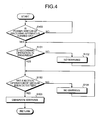
- a receiving apparatus receives a radio signal transmitted from a body-insertable apparatus introduced into a subject, and records the radio signal on a portable recording medium detachably attached thereto, and includes an in-operation detector that detects that a recording operation is in progress, an ejection operation detector that detects an ejection operation of the portable recording medium, a warning unit that gives a warning to a user, and a control unit that operates the warning unit before the portable recording medium is ejected, when the ejection operation of the portable recording medium is detected during the recording operation.
- the portable recording medium is detachably attached by a plurality of operations or actions, and the ejection operation detector detects the ejection operation of the portable recording medium, at the time of starting the first one of the plurality of operations or actions.
- the warning unit generates a warning by a warning display on a display unit.
- the warning unit generates a warning by lighting-on or blinking of a light emission element.
- the light emission element is provided near an ejector of the portable recording medium.
- the warning unit generates a warning by a warning sound.
- the warning unit when the ejection operation of the portable recording medium is detected, the warning unit is operated before the portable recording medium is ejected to give a warning to the user so that the ejection operation is not performed. Accordingly, it can be prevented beforehand that the portable recording medium is erroneously ejected during the recording operation, and hence it can be prevented that the imaged data of the body cavity is lost and the portable recording medium is damaged.
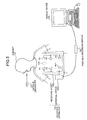
- Fig. 1 is a schematic diagram of an overall configuration diagram of a wireless in-vivo information acquiring system according to a first embodiment of the present invention.
- the wireless in-vivo information acquiring system uses a capsule endoscope as one example of the body-insertable apparatus, which is a transmitting unit.
- the wireless in-vivo information acquiring system includes a receiving apparatus 2 having a radio receiving function, and a capsule endoscope 3 introduced into a subject 1 to take pictures of body cavity images and transmits data such as an image signal to the receiving apparatus 2.
- the wireless in-vivo information acquiring system also includes a display device 4 that displays the body cavity image based on the image signal received by the receiving apparatus 2, and a portable recording medium 5 for transferring data between the receiving apparatus 2 and the display device 4.
- the receiving apparatus 2 includes an antenna unit 2a including a plurality of receiving antennas A1 to An attached to the body surface of the subject 1, and a main receiving unit 2b as a main receiving apparatus that performs processing of radio signals received via the receiving antennas A1 to An, and these units are detachably connected with each other via a connector or the like.
- the receiving antennas A1 to An can be equipped on a receiving jacket wearable by the subject, and the subject 1 can carry the receiving antennas A1 to An by wearing the receiving jacket. In this case, the receiving antennas A1 to An can be detachable to the jacket.
- the display device 4 displays the body cavity images and the like taken by the capsule endoscope 3, and has a configuration of a workstation or the like that displays images based on data acquired by the portable recording medium 5.
- the display device 4 can have a configuration such that images are directly displayed by a CRT display, a liquid crystal display, or the like, or a configuration such that images are output to other media, like a printer.
- the portable recording medium 5 can be prevented beforehand that the portable recording medium 5 is erroneously ejected during the recording operation, and hence the body cavity image data can be prevented from being lost and the portable recording medium can be prevented from being damaged.
- two actions are required for ejecting the portable recording medium 5, and the ejection operation is detected at the time of starting the opening operation of the card cover 22, which is the first operation, and at this point in time, a warning so as not to perform the ejection operation is generated before the portable recording medium 5 is pulled out from the connector. Accordingly, the portable recording medium 5 can be prevented beforehand from being detached from the connector during the recording operation.
- the warning is generated by the LED 23 provided near the card insertion port 21, from which the portable recording medium 5 is ejected, a warning so as not to perform ejection can be given to the user effectively.
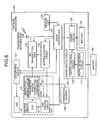
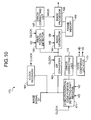
- the control unit C has a selection controller C1, which connects a storage unit 113, a display unit 114, and a switching controller SC corresponding to the signal processing circuit 112, the A/D converter 116, and the portable recording medium 105 to each other.
- the switching controller SC has strength-receiving-antenna number information N1 and image-receiving-antenna number information N2, generates a changeover instruction of the changeover switch SW based on these pieces of number information, and instructs a processing timing of the sample-hold circuit 115, the A/D converter 116, and the selection controller C1.
- a power supply unit 117 supplies power to respective units, and is achieved by a battery, for example.
- the selection controller C1 in the control unit C selects a receiving antenna, which has received the largest received electric-field strength of the electric-field strength received during a part of the synchronization period and a horizontal blanking period in the image signal period as a receiving antenna in the image signal period. Further, the selection controller C1 sequentially selects a receiving antenna other than the selected receiving antenna as the receiving antenna during a part of the synchronization period and the horizontal blanking period in the image signal period, and outputs a signal S4, in which the respective receiving antenna numbers are designated as strength-receiving-antenna number information N1 and image-receiving-antenna number information N2, to the switching controller SC.
- the control unit C stores the received electric-field strength during a part of the synchronization period and the horizontal blanking period in the image signal period and the received electric-field strength during an image receiving period excluding at least the horizontal blanking period in the storage unit 113 in correspondence with the receiving antenna selected at that time, together with the image data.
- the stored received electric-field strength of respective receiving antennas becomes information for calculating the position of the capsule endoscope 103 in the subject when the image data is received.
- the switching controller SC outputs a signal S5 instructing the changeover switch SW so as to selectively connect any one of the receiving antennas A1 to An corresponding to the image-receiving-antenna number information N2 during the image receiving period excluding at least the horizontal blanking period, to the changeover switch SW, and outputs a signal S3a instructing a sample-hold timing by the sample-hold circuit 115, a signal S3b instructing an A/D conversion timing by the A/D converter 116, and a signal S3c instructing a selection control by the selection controller C1.
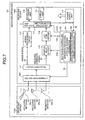
- the signal processing circuit 112 is explained with reference to Fig. 8 .
- the signal processing circuit 112 has a function for performing predetermined processing with respect to the body cavity image data wirelessly transmitted from the capsule endoscope 103 and received, and storing the body cavity image data in the storage unit 113 (the portable recording medium 105) after subjecting the image data to compression processing and the like.
- Fig. 8 is a block diagram schematically showing a configuration of the signal processing circuit 112.
- the signal processing circuit 112 includes the clock recovery 161 to which the image signal from the receiving apparatus 11 is input, an S/P converter 162, a synchronization detector 163, an image generator 164 connected to the output side of the S/P converter 162, a WB/ID position detector 165, a frame memory 166 connected to the output side of the image generator 164, an error correcting unit 167 connected to the output side of the WB/ID position detector 165, and an image processor 168 connected to the frame memory 166 and the error correcting unit 167 to output a processing result to the control unit C.
- the synchronization detector 163 Upon detection of, for example, the code "55 AA FF 55", the synchronization detector 163 outputs a pulse of the horizontal synchronization signal HD to the image generator 164.
- the image generator 164 generates frame image data by performing the image generation processing with respect to the parallel-converted image signal at a timing synchronized with the vertical synchronization signal VD and the horizontal synchronization signal HD, and temporarily stores the frame image data in the frame memory 166.
- the image processor 168 uses the error-corrected white balance factor data "WB" to perform white balance processing and required image processing such as compression processing, with respect to the frame image data generated and temporarily stored in the frame memory 166, and stores the data in the storage unit 113 (the portable recording medium 105) under control of the control unit C. At the time of such image processing, the image processor 168 checks the error-corrected ID information "ID" specific to the capsule, and when the ID information "ID" does not agree with the ID information "ID” specific to the capsule in the previous frame, determines that the image data is transmitted from another capsule endoscope 103, so that the image data is not stored in the storage unit 113 (the portable recording medium 105).
- the Reed-Solomon codes "RS1" and “RS2” are added to the white balance factor information "WB” specific to the capsule endoscope 103 and the ID information "ID” specific to the capsule for deciding the capsule endoscope 103 and transmitted.
- the Reed-Solomon codes "RS1” and “RS2” are used to perform error correction of the white balance factor information "WB” and the ID information "ID” specific to the capsule. Accordingly, even if a bit error such as data garbling occurs in the white balance factor information "WB” and the ID information "ID” specific to the capsule, the information can be corrected to right data by the error correction processing.
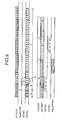
- the 16-bit code of "55 AA FF 55" is used as the code indicating the horizontal synchronization signal HSYNC (HV), and the horizontal synchronization signal HSYNC (HV) is set so as to be allocated to particular line positions specified by "0", “1", “2", and “3” as count values HCOUNT of the horizontal synchronization signal in the phase having the count value VCOUNT of "11" since start of the operation, and transmitted, and the Reed-Solomon codes "RS5", and “RS6” for error correction are set so as to be allocated to particular line positions specified by "4" and "5" as count values HCOUNT immediately thereafter, and transmitted.
- the synchronization-code-position detecting shift register 171 detects whether the count values VCOUNT and HCOUNT have reached the count value VCOUNT "10" and the count values HCOUNT "350” to "353" where the code indicating the vertical synchronization signal VD should be present, while shifting the image signal S1 input corresponding to the clock, and when the count values have reached these positions, receives 6-byte data including the Reed-Solomon codes "RS3" and "RS4" immediately thereafter.
- the error correcting unit 172 performs error correction with respect to a code indicating the vertical synchronization signal VD by the Reed-Solomon codes "RS3" and "RS4" by using the received 6-byte data.
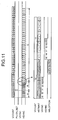
- the code comparator 173 compares and determines whether the error-corrected code indicating the vertical synchronization signal VD agrees with the code "55 00 FF 55" indicating the original vertical synchronization signal VD. When these codes agrees with each other, the code comparator 173 determines that the code has been detected correctly and outputs a pulse of the vertical synchronization signal VD to the image generator 164 and the WB/ID position detector 165. Accordingly, even if there is a bit error in the code indicating the vertical synchronization signal VD, the correct vertical synchronization signal VD can be detected, and the arrangement position of the white balance factor information "WB" and the ID information "ID” specific to the capsule can be correctly detected. The code comparator 73 also outputs the vertical synchronization signal VD to the synchronization-code-position detecting shift register 171, and resets the counter.
- the code comparator 173 compares and determines whether the error-corrected code indicating the horizontal synchronization signal VD agrees with the code "55 AA FF 55" indicating the original horizontal synchronization signal HD. When these codes agree with each other, the code comparator 173 determines that the code has been detected correctly and outputs a pulse of the horizontal synchronization signal HD to the image generator 164. Accordingly, even if there is a bit error in the code indicating the horizontal synchronization signal HD, the correct horizontal synchronization signal HD can be detected, and the line synchronization can be achieved reliably. The code comparator 173 also outputs the horizontal synchronization signal HD to the synchronization-code-position detecting shift register 171, and resets the counter.
- the first to the third embodiments described in this specification can be embodied by combining each other.
- the receiving apparatus is useful at the time of receiving a radio signal transmitted from the body-insertable apparatus such as the capsule endoscope and recording the radio signal on a portable recording medium detachably attached thereto.
- the receiving apparatus is suitable for preventing erroneous operations when the portable recording medium can be ejected even during the examination.
Landscapes
- Health & Medical Sciences (AREA)
- Life Sciences & Earth Sciences (AREA)
- Surgery (AREA)
- Engineering & Computer Science (AREA)
- General Health & Medical Sciences (AREA)
- Molecular Biology (AREA)
- Pathology (AREA)
- Veterinary Medicine (AREA)
- Public Health (AREA)
- Biophysics (AREA)
- Biomedical Technology (AREA)
- Heart & Thoracic Surgery (AREA)
- Medical Informatics (AREA)
- Physics & Mathematics (AREA)
- Animal Behavior & Ethology (AREA)
- Optics & Photonics (AREA)
- Nuclear Medicine, Radiotherapy & Molecular Imaging (AREA)
- Radiology & Medical Imaging (AREA)
- Computer Networks & Wireless Communication (AREA)
- Endoscopes (AREA)
- Measurement Of The Respiration, Hearing Ability, Form, And Blood Characteristics Of Living Organisms (AREA)
Applications Claiming Priority (3)
| Application Number | Priority Date | Filing Date | Title |
|---|---|---|---|
| JP2005248011A JP4855738B2 (ja) | 2005-08-29 | 2005-08-29 | 受信装置 |
| JP2005265704A JP4823621B2 (ja) | 2005-09-13 | 2005-09-13 | 受信装置、送信装置及び送受信システム |
| PCT/JP2006/317008 WO2007026713A1 (ja) | 2005-08-29 | 2006-08-29 | 受信装置 |
Publications (2)
| Publication Number | Publication Date |
|---|---|
| EP1920704A1 true EP1920704A1 (de) | 2008-05-14 |
| EP1920704A4 EP1920704A4 (de) | 2010-11-03 |
Family
ID=37808800
Family Applications (1)
| Application Number | Title | Priority Date | Filing Date |
|---|---|---|---|
| EP06796985A Withdrawn EP1920704A4 (de) | 2005-08-29 | 2006-08-29 | Empfängergerät |
Country Status (4)
| Country | Link |
|---|---|
| US (2) | US20090076352A1 (de) |
| EP (1) | EP1920704A4 (de) |
| AU (1) | AU2006285874B2 (de) |
| WO (1) | WO2007026713A1 (de) |
Families Citing this family (12)
| Publication number | Priority date | Publication date | Assignee | Title |
|---|---|---|---|---|
| US9007478B2 (en) | 2007-01-09 | 2015-04-14 | Capso Vision, Inc. | Methods to compensate manufacturing variations and design imperfections in a capsule camera |
| US10499029B2 (en) | 2007-01-09 | 2019-12-03 | Capso Vision Inc | Methods to compensate manufacturing variations and design imperfections in a display device |
| US8405711B2 (en) * | 2007-01-09 | 2013-03-26 | Capso Vision, Inc. | Methods to compensate manufacturing variations and design imperfections in a capsule camera |
| JP4918438B2 (ja) * | 2007-08-31 | 2012-04-18 | オリンパスメディカルシステムズ株式会社 | 被検体内情報取得システム |
| US8599824B2 (en) * | 2008-01-11 | 2013-12-03 | Broadcom Corporation | Method and system for bluetooth conditional synchronization |
| WO2012042987A1 (ja) * | 2010-09-28 | 2012-04-05 | オリンパスメディカルシステムズ株式会社 | 画像表示装置及びカプセル型内視鏡システム |
| JP5734614B2 (ja) * | 2010-10-08 | 2015-06-17 | オリンパス株式会社 | 生体情報取得装置 |
| JP2012081016A (ja) * | 2010-10-08 | 2012-04-26 | Olympus Corp | 生体情報取得装置 |
| EP2647329A4 (de) * | 2010-11-29 | 2016-01-13 | Olympus Corp | Empfangsvorrichtung und eingekapseltes endoskopsystem |
| JP2013009056A (ja) * | 2011-06-22 | 2013-01-10 | Toshiba Corp | 半導体装置、及びそのパラメータ設定方法 |
| US11607120B2 (en) * | 2018-04-09 | 2023-03-21 | Electronics And Telecommunications Research Institute | Capsule endoscopic receiving device, capsule endoscope system including the same, and operating method of capsule endoscopic receiving device |
| CN113271836A (zh) * | 2019-01-11 | 2021-08-17 | 奥林巴斯株式会社 | 胶囊型内窥镜系统和接收装置 |
Family Cites Families (24)
| Publication number | Priority date | Publication date | Assignee | Title |
|---|---|---|---|---|
| JPH04205691A (ja) * | 1990-11-30 | 1992-07-27 | Toshiba Corp | 携帯可能電子装置 |
| JPH06225273A (ja) | 1993-01-25 | 1994-08-12 | Matsushita Electric Ind Co Ltd | 誤り訂正装置 |
| US6571361B1 (en) * | 1995-09-29 | 2003-05-27 | Kabushiki Kaisha Toshiba | Encoder and decoder |
| JPH10285526A (ja) * | 1997-04-03 | 1998-10-23 | Konica Corp | デジタルスチルカメラ |
| JP2000067182A (ja) * | 1998-08-24 | 2000-03-03 | Nec Corp | カード抜き防止方法及びカード抜き防止装置 |
| JP4454832B2 (ja) | 1999-11-22 | 2010-04-21 | オリンパス株式会社 | 電子機器 |
| US6470049B1 (en) * | 2000-05-31 | 2002-10-22 | Next Level Communications, Inc. | Method for dealing with missing or untimely synchronization signals in digital communications systems |
| WO2002034331A2 (en) * | 2000-10-26 | 2002-05-02 | Medtronic, Inc. | Externally worn transceiver for use with an implantable medical device |
| US6975752B2 (en) * | 2001-01-31 | 2005-12-13 | General Electric Company | Imaging system including detector framing node |
| JP4154129B2 (ja) | 2001-02-16 | 2008-09-24 | 株式会社リコー | デジタルスチルカメラ |
| US20020163971A1 (en) | 2001-02-23 | 2002-11-07 | Goran Roth | Video bitstream washer |
| JP2002330384A (ja) | 2001-04-27 | 2002-11-15 | Canon Inc | 警告装置、デジタルカメラの警告装置、その制御方法、及び制御プログラムを提供する媒体 |
| IL143260A (en) | 2001-05-20 | 2006-09-05 | Given Imaging Ltd | Array and method for locating an intra-body signal source |
| JP4009939B2 (ja) * | 2002-02-22 | 2007-11-21 | 株式会社ジーエス・ユアサコーポレーション | 電動油圧工具 |
| JP4276811B2 (ja) * | 2002-02-26 | 2009-06-10 | オリンパス株式会社 | 画像記録装置 |
| JP2004037239A (ja) * | 2002-07-03 | 2004-02-05 | Fuji Heavy Ind Ltd | 同一対象物判断方法および装置、並びに、位置ずれ補正方法および装置 |
| JP4022874B2 (ja) | 2002-11-22 | 2007-12-19 | 富士フイルム株式会社 | 電子機器 |
| JP4402655B2 (ja) * | 2003-05-14 | 2010-01-20 | オリンパス株式会社 | カプセル型医療装置 |
| JP4574983B2 (ja) | 2003-11-04 | 2010-11-04 | オリンパス株式会社 | 画像表示装置、画像表示方法、及び画像表示プログラム |
| JP4503987B2 (ja) | 2003-11-12 | 2010-07-14 | オリンパス株式会社 | カプセル型内視鏡 |
| JP2005192632A (ja) * | 2003-12-26 | 2005-07-21 | Olympus Corp | 被検体内移動状態検出システム |
| US7370932B2 (en) * | 2004-05-27 | 2008-05-13 | Silverbrook Research Pty Ltd | Cartridge having integrated circuit for enabling validation thereof by a mobile device |
| JP4205691B2 (ja) | 2005-04-11 | 2009-01-07 | 株式会社モリタ製作所 | 医療用x線撮影装置 |
| JP4816140B2 (ja) * | 2006-02-28 | 2011-11-16 | ソニー株式会社 | 画像処理システムおよび方法、画像処理装置および方法、撮像装置および方法、プログラム記録媒体、並びにプログラム |
-
2006
- 2006-08-29 US US11/576,512 patent/US20090076352A1/en not_active Abandoned
- 2006-08-29 AU AU2006285874A patent/AU2006285874B2/en not_active Ceased
- 2006-08-29 WO PCT/JP2006/317008 patent/WO2007026713A1/ja not_active Ceased
- 2006-08-29 EP EP06796985A patent/EP1920704A4/de not_active Withdrawn
-
2011
- 2011-06-21 US US13/165,513 patent/US8732546B2/en active Active
Also Published As
| Publication number | Publication date |
|---|---|
| WO2007026713A1 (ja) | 2007-03-08 |
| US8732546B2 (en) | 2014-05-20 |
| AU2006285874A1 (en) | 2007-03-08 |
| US20090076352A1 (en) | 2009-03-19 |
| EP1920704A4 (de) | 2010-11-03 |
| AU2006285874B2 (en) | 2009-10-29 |
| US20110252291A1 (en) | 2011-10-13 |
Similar Documents
| Publication | Publication Date | Title |
|---|---|---|
| US8732546B2 (en) | Radio receiver with an error correction code detector and with a correction unit | |
| JP4530931B2 (ja) | 撮像表示システムおよび被検体内留置システム | |
| EP2011430B1 (de) | Antenneneinheit und empfangssystem | |
| CN101790343B (zh) | 被检体内信息获取系统 | |
| AU2005283435B2 (en) | Capsule-type endoscope | |
| JP4847075B2 (ja) | 受信装置 | |
| JP4823659B2 (ja) | 生体内画像表示装置 | |
| CN100441138C (zh) | 接收装置 | |
| JP4767631B2 (ja) | 受信装置 | |
| JP2005192819A (ja) | 受信装置 | |
| CN100579441C (zh) | 接收装置和接收系统 | |
| JP4398414B2 (ja) | 受信装置 | |
| JP4855738B2 (ja) | 受信装置 | |
| JP4823621B2 (ja) | 受信装置、送信装置及び送受信システム | |
| JP4663279B2 (ja) | 受信装置、医療装置および識別情報生成登録方法 | |
| JP4445806B2 (ja) | 受信装置 | |
| JP4009610B2 (ja) | 受信装置 | |
| JP2006026299A (ja) | 受信装置 | |
| CN1937950A (zh) | 接收装置 | |
| JP2005319095A (ja) | 受信装置 | |
| JP2006320649A (ja) | 受信装置および受信システム | |
| JP2005223427A (ja) | 受信装置 | |
| JP2006043109A (ja) | 受信装置および医療装置 |
Legal Events
| Date | Code | Title | Description |
|---|---|---|---|
| PUAI | Public reference made under article 153(3) epc to a published international application that has entered the european phase |
Free format text: ORIGINAL CODE: 0009012 |
|
| 17P | Request for examination filed |
Effective date: 20080211 |
|
| AK | Designated contracting states |
Kind code of ref document: A1 Designated state(s): DE FR GB |
|
| DAX | Request for extension of the european patent (deleted) | ||
| RBV | Designated contracting states (corrected) |
Designated state(s): DE FR GB |
|
| A4 | Supplementary search report drawn up and despatched |
Effective date: 20101006 |
|
| 17Q | First examination report despatched |
Effective date: 20110609 |
|
| STAA | Information on the status of an ep patent application or granted ep patent |
Free format text: STATUS: THE APPLICATION IS DEEMED TO BE WITHDRAWN |
|
| 18D | Application deemed to be withdrawn |
Effective date: 20111020 |