EP1921047A1 - Verfahren zur herstellung eines glasmaterials und verfahren zur herstellung einer glasfaser - Google Patents
Verfahren zur herstellung eines glasmaterials und verfahren zur herstellung einer glasfaser Download PDFInfo
- Publication number
- EP1921047A1 EP1921047A1 EP06796901A EP06796901A EP1921047A1 EP 1921047 A1 EP1921047 A1 EP 1921047A1 EP 06796901 A EP06796901 A EP 06796901A EP 06796901 A EP06796901 A EP 06796901A EP 1921047 A1 EP1921047 A1 EP 1921047A1
- Authority
- EP
- European Patent Office
- Prior art keywords
- glass
- optical fiber
- glass pipe
- pipe
- manufacturing
- Prior art date
- Legal status (The legal status is an assumption and is not a legal conclusion. Google has not performed a legal analysis and makes no representation as to the accuracy of the status listed.)
- Withdrawn
Links
Images



Classifications
-
- C—CHEMISTRY; METALLURGY
- C03—GLASS; MINERAL OR SLAG WOOL
- C03B—MANUFACTURE, SHAPING, OR SUPPLEMENTARY PROCESSES
- C03B37/00—Manufacture or treatment of flakes, fibres, or filaments from softened glass, minerals, or slags
- C03B37/01—Manufacture of glass fibres or filaments
- C03B37/012—Manufacture of preforms for drawing fibres or filaments
- C03B37/014—Manufacture of preforms for drawing fibres or filaments made entirely or partially by chemical means, e.g. vapour phase deposition of bulk porous glass either by outside vapour deposition [OVD], or by outside vapour phase oxidation [OVPO] or by vapour axial deposition [VAD]
- C03B37/018—Manufacture of preforms for drawing fibres or filaments made entirely or partially by chemical means, e.g. vapour phase deposition of bulk porous glass either by outside vapour deposition [OVD], or by outside vapour phase oxidation [OVPO] or by vapour axial deposition [VAD] by glass deposition on a glass substrate, e.g. by inside-, modified-, plasma- or plasma modified- chemical vapour deposition [ICVD, MCVD, PCVD, PMCVD], i.e. by thin layer coating on the inside or outside of a glass tube or on a glass rod
-
- C—CHEMISTRY; METALLURGY
- C03—GLASS; MINERAL OR SLAG WOOL
- C03B—MANUFACTURE, SHAPING, OR SUPPLEMENTARY PROCESSES
- C03B37/00—Manufacture or treatment of flakes, fibres, or filaments from softened glass, minerals, or slags
- C03B37/01—Manufacture of glass fibres or filaments
- C03B37/012—Manufacture of preforms for drawing fibres or filaments
- C03B37/014—Manufacture of preforms for drawing fibres or filaments made entirely or partially by chemical means, e.g. vapour phase deposition of bulk porous glass either by outside vapour deposition [OVD], or by outside vapour phase oxidation [OVPO] or by vapour axial deposition [VAD]
- C03B37/018—Manufacture of preforms for drawing fibres or filaments made entirely or partially by chemical means, e.g. vapour phase deposition of bulk porous glass either by outside vapour deposition [OVD], or by outside vapour phase oxidation [OVPO] or by vapour axial deposition [VAD] by glass deposition on a glass substrate, e.g. by inside-, modified-, plasma- or plasma modified- chemical vapour deposition [ICVD, MCVD, PCVD, PMCVD], i.e. by thin layer coating on the inside or outside of a glass tube or on a glass rod
- C03B37/01853—Thermal after-treatment of preforms, e.g. dehydrating, consolidating, sintering
-
- C—CHEMISTRY; METALLURGY
- C03—GLASS; MINERAL OR SLAG WOOL
- C03B—MANUFACTURE, SHAPING, OR SUPPLEMENTARY PROCESSES
- C03B37/00—Manufacture or treatment of flakes, fibres, or filaments from softened glass, minerals, or slags
- C03B37/01—Manufacture of glass fibres or filaments
- C03B37/012—Manufacture of preforms for drawing fibres or filaments
- C03B37/014—Manufacture of preforms for drawing fibres or filaments made entirely or partially by chemical means, e.g. vapour phase deposition of bulk porous glass either by outside vapour deposition [OVD], or by outside vapour phase oxidation [OVPO] or by vapour axial deposition [VAD]
- C03B37/018—Manufacture of preforms for drawing fibres or filaments made entirely or partially by chemical means, e.g. vapour phase deposition of bulk porous glass either by outside vapour deposition [OVD], or by outside vapour phase oxidation [OVPO] or by vapour axial deposition [VAD] by glass deposition on a glass substrate, e.g. by inside-, modified-, plasma- or plasma modified- chemical vapour deposition [ICVD, MCVD, PCVD, PMCVD], i.e. by thin layer coating on the inside or outside of a glass tube or on a glass rod
- C03B37/01861—Means for changing or stabilising the diameter or form of tubes or rods
- C03B37/01869—Collapsing
-
- C—CHEMISTRY; METALLURGY
- C03—GLASS; MINERAL OR SLAG WOOL
- C03B—MANUFACTURE, SHAPING, OR SUPPLEMENTARY PROCESSES
- C03B2201/00—Type of glass produced
- C03B2201/06—Doped silica-based glasses
- C03B2201/30—Doped silica-based glasses doped with metals, e.g. Ga, Sn, Sb, Pb or Bi
-
- C—CHEMISTRY; METALLURGY
- C03—GLASS; MINERAL OR SLAG WOOL
- C03B—MANUFACTURE, SHAPING, OR SUPPLEMENTARY PROCESSES
- C03B2201/00—Type of glass produced
- C03B2201/06—Doped silica-based glasses
- C03B2201/30—Doped silica-based glasses doped with metals, e.g. Ga, Sn, Sb, Pb or Bi
- C03B2201/32—Doped silica-based glasses doped with metals, e.g. Ga, Sn, Sb, Pb or Bi doped with aluminium
-
- C—CHEMISTRY; METALLURGY
- C03—GLASS; MINERAL OR SLAG WOOL
- C03B—MANUFACTURE, SHAPING, OR SUPPLEMENTARY PROCESSES
- C03B2207/00—Glass deposition burners
- C03B2207/30—For glass precursor of non-standard type, e.g. solid SiH3F
- C03B2207/32—Non-halide
Definitions
- the present invention relates to a method for manufacturing a glass body containing bismuth, which is suitable for an optical fiber preform, and relates to a method for manufacturing an optical fiber including the method for manufacturing the glass body.
- a bismuth-doped silica glass has a broad fluorescence spectrum having a peak wavelength at 1250 nm and a half-width of about 300 nm, for example. Such glass is expected to be applied for an amplification fiber used for a 1300 nm waveband application.
- a method for manufacturing a bismuth-doped glass As a method for manufacturing a bismuth-doped glass, a method using a sol-gel process (e.g., Y. Fujimoto and M. Nakatsuka: Jpn. J. Appl. Phys. Vol. 40 (2001) pp. L279-L281 , and Japanese Unexamined Patent Application Publication No. 11-29334 ) and a melt quenching process (i.e., a method for obtaining a glass by mixing powder materials, melting the materials in a crucible, and rapidly cooling the materials (e.g., Japanese Unexamined Patent Application Publication No. 2002-252397 )) are known.
- a sol-gel process e.g., Y. Fujimoto and M. Nakatsuka: Jpn. J. Appl. Phys. Vol. 40 (2001) pp. L279-L281 , and Japanese Unexamined Patent Application Publication No. 11-2
- the glass when the glass is manufactured by the sol-gel process or the melt quenching process, impurities are introduced in the glass during bismuth doping of the glass. Therefore, it is difficult to manufacture a glass body suitable for an optical fiber preform. If an optical fiber is made of this glass body, the optical fiber cannot be used as an amplification fiber because of a high background loss of the optical fiber.
- the modified chemical vapor deposition (MCVD) method is known as a method for manufacturing an optical fiber having a low background loss.
- MCVD chemical vapor deposition
- a metal-element-doped optical fiber is manufactured as follows. First, a SiO 2 micro-particle soot layer (glass micro-particle layer) is formed on an inner wall of a glass pipe, the SiO 2 micro-particle soot layer is impregnated with a solution containing a metal element, and the SiO 2 micro-particle soot layer is consolidated to form a glass layer. Next, the glass pipe including the glass layer is reduced in diameter and collapsed to form an optical fiber preform and the optical fiber preform is drawn so as to form a metal-element-doped optical fiber.
- Non-Patent Document 1 Y. Fujimoto and M. Nakatsuka: Jpn. J. Appl. Phys. Vol. 40 (2001) pp. L279-L281
- Patent Document 1 Japanese Unexamined Patent Application Publication 11-29334
- Patent Document 2 Japanese Unexamined Patent Application Publication 2002-252397
- the object of the present invention is to provide a method for manufacturing a glass body containing bismuth, which is suitable for use in manufacturing an optical fiber with a low background loss, and a method for manufacturing an optical fiber including the method for manufacturing the glass body.
- a method for manufacturing a glass body including the steps of (1) depositing a glass micro-particle layer on an inner wall of a glass pipe; (2) consolidating the glass micro-particle layer to form a glass layer; (3) diameter-reducing the glass pipe having the glass layer on the inner wall of the glass pipe; and (4) collapsing the glass pipe having been reduced in diameter at the diameter-reducing step so as to form the glass body.
- the glass micro-particle layer is formed while an organobismuth compound is being supplied into the glass pipe
- the consolidation step the glass layer is consolidated while an organobismuth compound is being supplied into the glass pipe.
- the glass pipe may be heated in the temperature range between 900°C and 1300°C, while at the consolidation step, the glass pipe may be heated in the temperature range between 1250°C and 1500°C.
- the temperature of the glass pipe means the temperature measured at the outer surface of the glass pipe, unless otherwise stated.
- the diameter-reducing step diameter reduction may be performed while an organobismuth compound is supplied into the glass pipe.
- the organobismuth compound tri-tert-amyloxybismuth (Bi(OtAm) 3 , which may also be expressed as Bi(O-t-C 5 H 11 ) 3
- the glass body an optical fiber preform or an intermediate thereof, both having silica glass as a host material, may be provided.
- a method for manufacturing an optical fiber including the step of drawing the glass body that is manufactured according to the method for manufacturing the glass body of the present invention.
- a glass body containing bismuth and being usable for manufacturing an optical fiber with a low background loss can be manufactured. Also, according to the method for manufacturing the optical fiber of the present invention, an optical fiber that can be used as an amplification optical fiber that operates in the 1300 nm waveband can be obtained since background loss can be lowered and a desired amount of bismuth can be doped.
- 10 glass pipe, 10a: inner wall, 10b: outer surface, 20: oxyhydrogen burner, 31: glass micro-particle layer, 32: glass layer, 33: glass body, 34: optical fiber
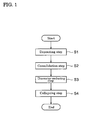
- FIG. 1 is a flowchart showing a method for manufacturing a glass body according to an embodiment of the present invention.
- the MCVD method is applied to manufacture a glass body and this method includes a depositing step S1, a consolidation step S2, a diameter-reducing step S3, and a collapsing step S4.
- each of the depositing step S1 and the consolidation step S2 are repeated two times and then the diameter-reducing step S3 and the collapsing step S4 are conducted in this order so as to form a glass body.
- the steps is described below.
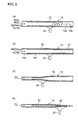
- FIGS. 2(a) to 2(d) are drawings describing each of the steps of the flowchart shown in Fig. 1 , wherein each of the figures shows a cross-sectional view of a glass pipe cut along the central axis at each of the steps, respectively.
- a glass pipe 10 is heated using an oxyhydrogen burner 20 as a heat source while a mixture gas including silicon tetrachloride (SiCl 4 ), aluminum chloride (AlCl 3 ), tri-tert-amyloxybismuth (Bi(OtAm) 3 , oxygen (O 2 ), helium (He), and the like is being supplied into the glass pipe 10 as a material gas.
- SiCl 4 silicon tetrachloride
- AlCl 3 aluminum chloride
- Bi(OtAm) 3 tri-tert-amyloxybismuth
- oxygen (O 2 ) oxygen
- He helium
- silica glass micro-particles are deposited on an inner wall 10a of the glass pipe 10 and a glass micro-particle layer 31 including bismuth (100 wppm to 1 w%) and aluminum (1 w% to 15 w%) is formed.
- the glass pipe 10 is to be a cladding region (or a part of a cladding region) and is composed of a fluorine-doped silica glass or a pure silica glass without fluorine.
- the glass micro-particle layer 31 is to be a core region.
- the moving speed (traverse speed) of the oxyhydrogen burner 20 in the longitudinal direction along the glass pipe 10 is, for example, 60 mm/min.
- the oxyhydrogen burner 20 heats the glass pipe 10 so that the temperature of the outer surface 10b of the glass pipe 10 is kept at about 1100°C.
- the glass pipe 10 is heated using the oxyhydrogen burner 20 while a mixture gas including Bi(OtAm) 3 , oxygen, and helium is being supplied into the glass pipe 10. Under these conditions, the glass micro-particle layer 31 is consolidated into a glass layer 32.
- the moving speed of the oxyhydrogen burner 20 in the longitudinal direction along the glass pipe 10 is, for example, about 60 mm/min.
- the oxyhydrogen burner 20 heats the glass pipe 10 such that the temperature of the glass pipe 10 is increased step by step, for example from 600°C to a maximum of about 1400°C.
- the diameter-reducing step S3 is performed after each of the depositing step S1 and the consolidation step S2 is performed once more.
- the glass pipe 10 having the glass layer 32 is reduced in diameter by heating using the oxyhydrogen burner 20 while oxygen is being supplied into the glass pipe 10.
- the moving speed of the oxyhydrogen burner 20 in the longitudinal direction along the glass pipe 10 is, for example, about 20 mm/min.
- the glass pipe 10 is heated while a mixture gas including Bi(OtAm) 3 , oxygen, and helium is being supplied into the glass pipe 10. Under these conditions, the vapor pressure of the bismuth in the glass pipe 10 can be kept at a high level, and thus the bismuth in the glass layer 32 can be inhibited from being evaporated.
- the glass pipe 10 is heated using the oxyhydrogen burner 20 while oxygen is being supplied into the glass pipe 10 having been reduced in diameter, so that the glass pipe 10 is collapsed to be a glass body 33.
- the moving speed of the oxyhydrogen burner 20 in the longitudinal direction along the glass pipe 10 is, for example, 5 mm/min.
- the glass body 33 serves as the optical fiber preform.
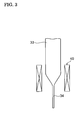
- Figure 3 is a schematic view illustrating a drawing step for forming an optical fiber from the glass body.
- An optical fiber 34 is obtained by drawing the glass body 33, as an optical fiber preform, set in a drawing furnace 40.
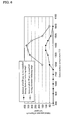
- Figure 4 is a refractive index profile of the optical fiber 34. Since the glass micro-particle layer 31 formed at the depositing step S1 constitutes a core region 34a of the optical fiber 34, the core region 34a contains bismuth oxide (Bi 2 O 3 ) and aluminum oxide (Al 2 O 3 ). The refractive index of the core region 34a is higher than that of the cladding region 34b so as to propagate light within the core region 34a. Furthermore, since a silica glass containing bismuth has a broad fluorescence spectrum extending to the long-wavelength side with a peak wavelength at 1250 nm, the optical fiber 34 can be suitably used as an amplification optical fiber for 1300 nm wavelength band in wavelength division multiplexing transmission.
- the metal element is bismuth having high volatility
- bismuth evaporates when the glass micro-particle layer containing bismuth is consolidated.
- it is difficult to manufacture a fiber preform or an optical fiber having a desired amount of bismuth.
- the formed glass micro-particle layer 31 includes bismuth. Therefore, when the glass pipe 10 is heated at the consolidation step S2 at a temperature higher than the temperature at the depositing step S1, the bismuth contained in the glass micro-particle layer 31 is not easily evaporated. Furthermore, at the consolidation step S2, the vapor pressure of the bismuth in the glass pipe 10 is kept at a high level by supplying the Bi(OtAm) 3 gas into the glass pipe 10.
- the evaporation of bismuth in the glass micro-particle layer 31 can be suppressed resulting in the formation of a glass body 33 and optical fiber 34 containing a desired amount of bismuth. Furthermore, in the method for manufacturing a glass body of the embodiment, since the glass body is formed according to the MCVD method, a contamination by impurities causing a background loss of an optical fiber is suppressed. As a result, the glass body can be suitably used for producing a low background loss optical fiber.
- FIG. 5 is a graph showing an example of relationships between the amount of bismuth contained in a glass body 33 and a temperature of a glass pipe 10 at depositing step S1. More specifically, Fig. 5 shows the amount of bismuth at a corresponding temperature with a mark " ⁇ ", wherein the bismuth is contained in each glass body 33 which has been manufactured in a manner where the temperature of the glass pipe 10 has been varied in the range between 800°C and 1500°C by 100°C or 50°C. An abscissa is the temperature of the glass pipe 10 and an ordinate is the added amount of bismuth. At the consolidation step S2 in the manufacturing process of the glass body 33, the highest temperature of the glass pipe 10 was about 1400°C.
- the temperature of the glass pipe 10 may preferably be about 950°C to 1300°C, more preferably, about 1100°C.
- the amount of bismuth contained in the glass body 33 which is manufactured in a manner where bismuth is being supplied into the glass pipe 10 in the diameter-reducing step S3, is plotted with a mark " ⁇ " on the graph shown in Fig. 5 . Since bismuth was supplied at the diameter-reducing step S3, the amount of bismuth contained in the glass body 33 was further increased.
- Figure 6 is a graph showing an example of relationships between the amount of bismuth contained in the glass body 33 and the temperature of the glass pipe 10 at consolidation step S2. More specifically, Fig. 6 shows the amount of bismuth at a corresponding temperature with a mark " ⁇ ", wherein the bismuth is contained in each glass body 33 which has been manufactured in a manner where the temperature of the glass pipe 10 has bee varied in the range between 800°C and 1600°C by 100°C or 50°C. An abscissa is the temperature of the glass pipe 10 and an ordinate is the added amount of bismuth. As mentioned above, the temperature of the glass pipe 10 is increased step-by-step in the consolidation step S2.
- the temperature of the glass pipe 10 at the consolidation step S2 means the highest temperature in a profile of the temperature in which the temperature increases step-by-step.
- the temperature of the glass pipe 10 was about 1100°C.
- the temperature of the glass pipe 10 is preferably about 1250°C to about 1400°C, more preferably about 1400°C.
- the temperature of the glass pipe is set at from 900°C or higher to 1300°C or lower in the depositing step, and set at from 1250°C or higher to 1500°C or lower in the consolidation step, so that the glass layer containing bismuth is formed more certainly.
- the amount of bismuth contained in the glass body 33, which is manufactured while bismuth is being supplied into the glass pipe 10 in the diameter-reducing step S3, is measured and the measured value is plotted with a mark " ⁇ " on the graph shown in Fig. 6 . Since bismuth was supplied at the diameter-reducing step S3, the amount of bismuth contained in the glass body 33 was further increased.
- the glass body 33 containing bismuth is certainly manufactured using the method for manufacturing the glass body of the embodiment.
- Bismuth contained in the glass layer may evaporate by heating of the glass pipe in the diameter-reducing step S3.
- the diameter-reducing is performed while bismuth is being supplied, the evaporation of bismuth from the glass layer is suppressed and the glass body 33 having larger amount of bismuth can be manufactured.
- the glass micro-particle layer 31 that is to be a core region is formed on the inner wall 10a of the glass pipe 10
- the glass micro-particle layer that is to be a core region may be formed after the formation of a glass micro-particle layer, which is to be a cladding region on the inner wall 10a.
- the glass pipe 10 acts as a part of the cladding region or a jacket.
- the glass body 33 was used as an optical fiber preform, however, the glass body 33 may be used as an intermediate optical fiber preform.
- aluminum oxide Al 2 O 3
- the refractive-index adjustor may include germanium oxide, phosphorus oxide, chlorine, and fluorine.
- each step may be performed once, or may be performed three times or more.
- a method for manufacturing a glass body and a method for manufacturing an optical fiber of the present invention are described more specifically with reference to EXAMPLE 1, EXAMPLE 2, and COMPARATIVE EXAMPLE. Note that the present invention is not limited to the EXAMPLE 1 and EXAMPLE 2.
- Example 1 is described as follows.
- a glass micro-particle layer 31 was formed by heating a glass pipe 10 with an oxyhydrogen burner 20 while a mixture gas including AlCl 3 , Bi(OtAm) 3 , oxygen, and helium is being supplied into the glass pipe 10.
- the outer diameter of the glass pipe 10 is 25 mm, and the inner diameter of the glass pipe 10 is 16 mm ⁇ .
- a supply rate of Bi(OtAm) 3 was 0.018 standard cubic centimeter (sccm) and the supply rate of a helium carrier gas was 45 sccm in the depositing step S1.
- the temperature of the glass pipe 10 was kept at about 1100°C using the oxyhydrogen burner 20.
- the moving speed of the oxyhydrogen burner 20 was about 60 mm/min.
- the glass micro-particle layer 31 was consolidated into the glass layer 32 by heating the glass pipe 10 to a temperature of 600°C to 1400°C, in which the temperature was increased step by step, using the oxyhydrogen burner 20 while the gases including Bi(OtAm) 3 , helium, and oxygen were being supplied into the glass pipe 10.
- the supply rate of a Bi(OtAm) 3 gas was 0.018 sccm and the supply rate of a helium carrier gas was 45 sccm.
- the moving speed of the oxyhydrogen burner 20 was about 60 mm/min.
- the depositing step S1 and the consolidation step S2 were performed once again, and then, the glass pipe 10 was reduced in diameter in the diameter-reducing step S3. At this step, oxygen was being supplied into the glass pipe 10.
- the moving speed of the oxyhydrogen burner 20 was about 20 mm/min and the temperature of the glass pipe 10 was from 1600 to 1800°C.
- the glass pipe 10 was collapsed by heating the glass pipe 10 to 1700°C using the oxyhydrogen burner 20 while oxygen was being supplied into the glass pipe 10 that has already been reduced in diameter.
- the moving speed of the oxyhydrogen burner 20 was 5 mm/min.
- the concentration of Al contained in the glass body (optical fiber preform) 33, which was obtained by collapsing, was about 3.8 wt% and the concentration of bismuth was about 100 wt-ppm. This means that bismuth was certainly contained in the glass body 33.
- EXAMPLE 2 is described as follows.
- the glass body 33 was manufactured in a same manner as EXAMPLE 1 except that the glass pipe 10 was reduced in diameter while a Bi(OtAm) 3 gas was being supplied into the glass pipe 10 at the diameter-reducing step S3.
- the supply rate of a Bi(OtAm) 3 gas was 0.018 sccm and a supply rate of a helium carrier gas was 45 sccm.
- the concentration of Al contained in the resulting glass body 33 is about 4.2 wt% and the concentration of bismuth is about 370 wt ⁇ ppm.
- an optical fiber 34 was formed by drawing the glass body 33, as an optical fiber preform, using a drawing furnace 40. At this step, the drawing speed was 50 m/min and the temperature in the furnace was 1750°C. A background loss of an optical fiber 34 was measured using a cutback method.
- Figure 7 is a graph showing a wavelength dependence of a background loss of the optical fiber 34.
- the background loss at around 1300 nm in wavelength was about 48.4 dB/km, and at around 1550 nm, it was about 34.6 dB/km. That is, an optical fiber having a low background loss and being satisfactorily usable as the amplification optical fiber could be manufactured using the method for manufacturing the glass body shown in Fig. 1 .
- COMPARATIVE EXAMPLE is described as follows. That is, the glass body was manufactured in a same manner as EXAMPLE 1 except that the Bi(OtAm) 3 gas was not being supplied at the consolidation step S2 and that the temperature of the glass pipe 10 was about 1550°C at the consolidation step S2. Although a concentration of Al contained in a core region of the glass body manufactured in this manner was about 4.5 wt%, bismuth was hardly contained in the region.
- a comparison between EXAMPLE 1 and COMPARATIVE EXAMPLE shows that bismuth can be more certainly contained by dehydration and consolidation of the glass micro-particle layer 31 while a Bi(OtAm) 3 gas is being supplied at the consolidation step S2.
- the comparison between EXAMPLE 1 and EXAMPLE 2 shows that a larger amount of bismuth can be contained by diameter-reducing the glass pipe 10 while a Bi(OtAm) 3 gas is being supplied into the glass pipe 10.
- an optical fiber that is usable as an amplification optical fiber used for a 1300 nm waveband application can be obtained.
Landscapes
- Chemical & Material Sciences (AREA)
- Engineering & Computer Science (AREA)
- Geochemistry & Mineralogy (AREA)
- Life Sciences & Earth Sciences (AREA)
- General Chemical & Material Sciences (AREA)
- General Life Sciences & Earth Sciences (AREA)
- Chemical Kinetics & Catalysis (AREA)
- Manufacturing & Machinery (AREA)
- Materials Engineering (AREA)
- Organic Chemistry (AREA)
- Physics & Mathematics (AREA)
- Thermal Sciences (AREA)
- Manufacture, Treatment Of Glass Fibers (AREA)
- Glass Melting And Manufacturing (AREA)
Applications Claiming Priority (2)
| Application Number | Priority Date | Filing Date | Title |
|---|---|---|---|
| JP2005253893A JP2007063095A (ja) | 2005-09-01 | 2005-09-01 | ガラス体製造方法及び光ファイバ |
| PCT/JP2006/316921 WO2007029555A1 (ja) | 2005-09-01 | 2006-08-29 | ガラス体製造方法および光ファイバ製造方法 |
Publications (2)
| Publication Number | Publication Date |
|---|---|
| EP1921047A1 true EP1921047A1 (de) | 2008-05-14 |
| EP1921047A4 EP1921047A4 (de) | 2009-07-22 |
Family
ID=37835676
Family Applications (1)
| Application Number | Title | Priority Date | Filing Date |
|---|---|---|---|
| EP06796901A Withdrawn EP1921047A4 (de) | 2005-09-01 | 2006-08-29 | Verfahren zur herstellung eines glasmaterials und verfahren zur herstellung einer glasfaser |
Country Status (6)
| Country | Link |
|---|---|
| US (1) | US20090133445A1 (de) |
| EP (1) | EP1921047A4 (de) |
| JP (1) | JP2007063095A (de) |
| CN (1) | CN101253126A (de) |
| RU (1) | RU2008112309A (de) |
| WO (1) | WO2007029555A1 (de) |
Cited By (1)
| Publication number | Priority date | Publication date | Assignee | Title |
|---|---|---|---|---|
| CN109052972A (zh) * | 2018-08-31 | 2018-12-21 | 北京涑水科技有限公司 | 掺铋石英光纤预制棒及其制备方法 |
Families Citing this family (5)
| Publication number | Priority date | Publication date | Assignee | Title |
|---|---|---|---|---|
| RU2302066C1 (ru) * | 2005-09-22 | 2007-06-27 | Научный центр волоконной оптики при Институте общей физики им. А.М. Прохорова Российской академии наук | Волоконный световод для оптического усиления излучения на длине волны в диапазоне 1000-1700 нм, способы его изготовления и волоконный лазер |
| DE202008017383U1 (de) * | 2008-12-19 | 2009-08-20 | J-Fiber Gmbh | Glas, insbesondere Glasfaser-Preform |
| CN103601364B (zh) * | 2013-11-16 | 2016-01-13 | 华中科技大学 | 成分和价态可控的掺铋石英光纤制备方法及掺铋石英光纤 |
| US10185084B2 (en) * | 2016-02-23 | 2019-01-22 | Corning Incorporated | Layered glass structures |
| JP7281328B2 (ja) * | 2019-04-12 | 2023-05-25 | 日東電工株式会社 | プラスチック光ファイバーの製造方法 |
Family Cites Families (11)
| Publication number | Priority date | Publication date | Assignee | Title |
|---|---|---|---|---|
| US4504299A (en) * | 1974-02-22 | 1985-03-12 | At&T Bell Laboratories | Optical fiber fabrication method |
| JPS5611408A (en) * | 1979-07-09 | 1981-02-04 | Nippon Telegr & Teleph Corp <Ntt> | Optical fiber |
| US4965093A (en) * | 1988-07-05 | 1990-10-23 | Ppg Industries, Inc. | Chemical vapor deposition of bismuth oxide |
| JP3191408B2 (ja) * | 1992-06-03 | 2001-07-23 | 住友電気工業株式会社 | 光ファイバ用母材の製造方法 |
| JP3307861B2 (ja) * | 1997-10-21 | 2002-07-24 | ホシザキ電機株式会社 | 流下式製氷機 |
| JP4212013B2 (ja) * | 1998-01-30 | 2009-01-21 | 富士通株式会社 | 誘電体膜の作製方法 |
| US6109065A (en) * | 1998-04-22 | 2000-08-29 | Lucent Technologies, Inc. | Method of making optical waveguide devices using perchloryl fluoride to make soot |
| JP4086219B2 (ja) * | 2000-02-10 | 2008-05-14 | 株式会社高純度化学研究所 | 高純度ビスマストリス(β−ジケトネート)及びその製造方法 |
| JP2004091282A (ja) * | 2002-09-02 | 2004-03-25 | National Institute Of Advanced Industrial & Technology | 揮発性元素を含む電子セラミックスの組成緩衝材とその製造方法 |
| JP2005041702A (ja) * | 2003-07-22 | 2005-02-17 | Sumitomo Electric Ind Ltd | 光ファイバ用ガラス母材の製造方法及び光ファイバ用ガラス母材 |
| JP2005187254A (ja) * | 2003-12-25 | 2005-07-14 | Sumitomo Electric Ind Ltd | ガラス体の製造方法 |
-
2005
- 2005-09-01 JP JP2005253893A patent/JP2007063095A/ja not_active Withdrawn
-
2006
- 2006-08-29 US US11/991,266 patent/US20090133445A1/en not_active Abandoned
- 2006-08-29 CN CNA2006800320291A patent/CN101253126A/zh active Pending
- 2006-08-29 WO PCT/JP2006/316921 patent/WO2007029555A1/ja not_active Ceased
- 2006-08-29 RU RU2008112309/03A patent/RU2008112309A/ru not_active Application Discontinuation
- 2006-08-29 EP EP06796901A patent/EP1921047A4/de not_active Withdrawn
Cited By (2)
| Publication number | Priority date | Publication date | Assignee | Title |
|---|---|---|---|---|
| CN109052972A (zh) * | 2018-08-31 | 2018-12-21 | 北京涑水科技有限公司 | 掺铋石英光纤预制棒及其制备方法 |
| CN109052972B (zh) * | 2018-08-31 | 2021-07-30 | 北京涑水科技有限公司 | 掺铋石英光纤预制棒及其制备方法 |
Also Published As
| Publication number | Publication date |
|---|---|
| WO2007029555A1 (ja) | 2007-03-15 |
| US20090133445A1 (en) | 2009-05-28 |
| RU2008112309A (ru) | 2009-10-10 |
| JP2007063095A (ja) | 2007-03-15 |
| EP1921047A4 (de) | 2009-07-22 |
| CN101253126A (zh) | 2008-08-27 |
Similar Documents
| Publication | Publication Date | Title |
|---|---|---|
| US4812155A (en) | Method for production of glass preform for optical fibers | |
| EP2479150B1 (de) | Optische Faservorform, optische Faser und Verfahren zur Herstellung einer optischen Faservorform | |
| AU658047B2 (en) | Method of doping porous glass preforms | |
| CN1628080A (zh) | 包括含氟区的光波导产品 | |
| CN1537083A (zh) | 包括含氟区的光波导产品 | |
| EP3001834B1 (de) | Verfahren zur herstellung einer ytterbium-dotierten glasfaser | |
| US20140161406A1 (en) | Method of manufacturing optical fiber preform and optical fiber | |
| US9776907B2 (en) | Optical fibers and preforms with one step fluorine trench and overclad and methods for making the same | |
| EP3359498B1 (de) | Verfahren zur herstellung einer glaskernvorform für optische fasern | |
| US6474106B1 (en) | Rare earth and alumina-doped optical fiber preform process | |
| JP3764040B2 (ja) | 光ファイバ | |
| US6542690B1 (en) | Chalcogenide doping of oxide glasses | |
| JP5572022B2 (ja) | 光ファイバ用一次プリフォームの製造方法 | |
| JP2004536765A (ja) | 複雑なフッ素添加分布を有する乾燥ファイバのシングルステップレイダウン製造法 | |
| EP1921047A1 (de) | Verfahren zur herstellung eines glasmaterials und verfahren zur herstellung einer glasfaser | |
| US8381549B2 (en) | Optical fiber preform fabricating method | |
| US7079738B2 (en) | Method for manufacturing a glass doped with a rare earth element and fiber for optical amplification using the same | |
| US20020186942A1 (en) | Low-loss highly phosphorus-doped fibers for Raman amplification | |
| EP2108624B1 (de) | Mit Seltenerdmetallen dotierte Glasfaser, Glasfaserverstärker und Verfahren zur Herstellung eines Vorformlings für eine solche Faser | |
| EP1183560A1 (de) | Chalkogen-dotierung von oxid-gläsern | |
| JP2003300744A (ja) | 光ファイバの製造方法及び光ファイバ | |
| KR100591085B1 (ko) | 싱글모드 광섬유용 모재의 제조 방법 | |
| WO2020060754A1 (en) | Method of forming halogen doped optical fiber preforms | |
| KR100528436B1 (ko) | 저손실 광섬유의 제조방법 | |
| JP4236181B2 (ja) | 光ファイバ用プリフォームの製造方法 |
Legal Events
| Date | Code | Title | Description |
|---|---|---|---|
| PUAI | Public reference made under article 153(3) epc to a published international application that has entered the european phase |
Free format text: ORIGINAL CODE: 0009012 |
|
| 17P | Request for examination filed |
Effective date: 20080219 |
|
| AK | Designated contracting states |
Kind code of ref document: A1 Designated state(s): DE GB |
|
| RBV | Designated contracting states (corrected) |
Designated state(s): DE GB |
|
| A4 | Supplementary search report drawn up and despatched |
Effective date: 20090623 |
|
| STAA | Information on the status of an ep patent application or granted ep patent |
Free format text: STATUS: THE APPLICATION HAS BEEN WITHDRAWN |
|
| 18W | Application withdrawn |
Effective date: 20100805 |