EP1921062A2 - Amino acid derivatives as HIV aspartyl protease inhibitors - Google Patents
Amino acid derivatives as HIV aspartyl protease inhibitors Download PDFInfo
- Publication number
- EP1921062A2 EP1921062A2 EP07025193A EP07025193A EP1921062A2 EP 1921062 A2 EP1921062 A2 EP 1921062A2 EP 07025193 A EP07025193 A EP 07025193A EP 07025193 A EP07025193 A EP 07025193A EP 1921062 A2 EP1921062 A2 EP 1921062A2
- Authority
- EP
- European Patent Office
- Prior art keywords
- group
- compound
- formula
- salts
- lysine
- Prior art date
- Legal status (The legal status is an assumption and is not a legal conclusion. Google has not performed a legal analysis and makes no representation as to the accuracy of the status listed.)
- Withdrawn
Links
- 0 *#*CCCCC(CC(O)=O)N Chemical compound *#*CCCCC(CC(O)=O)N 0.000 description 3
Classifications
-
- C—CHEMISTRY; METALLURGY
- C07—ORGANIC CHEMISTRY
- C07D—HETEROCYCLIC COMPOUNDS
- C07D215/00—Heterocyclic compounds containing quinoline or hydrogenated quinoline ring systems
- C07D215/02—Heterocyclic compounds containing quinoline or hydrogenated quinoline ring systems having no bond between the ring nitrogen atom and a non-ring member or having only hydrogen atoms or carbon atoms directly attached to the ring nitrogen atom
- C07D215/16—Heterocyclic compounds containing quinoline or hydrogenated quinoline ring systems having no bond between the ring nitrogen atom and a non-ring member or having only hydrogen atoms or carbon atoms directly attached to the ring nitrogen atom with hetero atoms or with carbon atoms having three bonds to hetero atoms with at the most one bond to halogen, e.g. ester or nitrile radicals, directly attached to ring carbon atoms
- C07D215/36—Sulfur atoms
-
- C—CHEMISTRY; METALLURGY
- C07—ORGANIC CHEMISTRY
- C07C—ACYCLIC OR CARBOCYCLIC COMPOUNDS
- C07C271/00—Derivatives of carbamic acids, i.e. compounds containing any of the groups, the nitrogen atom not being part of nitro or nitroso groups
- C07C271/06—Esters of carbamic acids
- C07C271/08—Esters of carbamic acids having oxygen atoms of carbamate groups bound to acyclic carbon atoms
- C07C271/10—Esters of carbamic acids having oxygen atoms of carbamate groups bound to acyclic carbon atoms with the nitrogen atoms of the carbamate groups bound to hydrogen atoms or to acyclic carbon atoms
- C07C271/22—Esters of carbamic acids having oxygen atoms of carbamate groups bound to acyclic carbon atoms with the nitrogen atoms of the carbamate groups bound to hydrogen atoms or to acyclic carbon atoms to carbon atoms of hydrocarbon radicals substituted by carboxyl groups
-
- C—CHEMISTRY; METALLURGY
- C07—ORGANIC CHEMISTRY
- C07C—ACYCLIC OR CARBOCYCLIC COMPOUNDS
- C07C311/00—Amides of sulfonic acids, i.e. compounds having singly-bound oxygen atoms of sulfo groups replaced by nitrogen atoms, not being part of nitro or nitroso groups
- C07C311/01—Sulfonamides having sulfur atoms of sulfonamide groups bound to acyclic carbon atoms
- C07C311/10—Sulfonamides having sulfur atoms of sulfonamide groups bound to acyclic carbon atoms of a saturated carbon skeleton containing rings
-
- C—CHEMISTRY; METALLURGY
- C07—ORGANIC CHEMISTRY
- C07C—ACYCLIC OR CARBOCYCLIC COMPOUNDS
- C07C311/00—Amides of sulfonic acids, i.e. compounds having singly-bound oxygen atoms of sulfo groups replaced by nitrogen atoms, not being part of nitro or nitroso groups
- C07C311/01—Sulfonamides having sulfur atoms of sulfonamide groups bound to acyclic carbon atoms
- C07C311/12—Sulfonamides having sulfur atoms of sulfonamide groups bound to acyclic carbon atoms of an unsaturated carbon skeleton containing rings
- C07C311/13—Sulfonamides having sulfur atoms of sulfonamide groups bound to acyclic carbon atoms of an unsaturated carbon skeleton containing rings the carbon skeleton containing six-membered aromatic rings
-
- C—CHEMISTRY; METALLURGY
- C07—ORGANIC CHEMISTRY
- C07C—ACYCLIC OR CARBOCYCLIC COMPOUNDS
- C07C311/00—Amides of sulfonic acids, i.e. compounds having singly-bound oxygen atoms of sulfo groups replaced by nitrogen atoms, not being part of nitro or nitroso groups
- C07C311/15—Sulfonamides having sulfur atoms of sulfonamide groups bound to carbon atoms of six-membered aromatic rings
- C07C311/16—Sulfonamides having sulfur atoms of sulfonamide groups bound to carbon atoms of six-membered aromatic rings having the nitrogen atom of at least one of the sulfonamide groups bound to hydrogen atoms or to an acyclic carbon atom
- C07C311/19—Sulfonamides having sulfur atoms of sulfonamide groups bound to carbon atoms of six-membered aromatic rings having the nitrogen atom of at least one of the sulfonamide groups bound to hydrogen atoms or to an acyclic carbon atom to an acyclic carbon atom of a hydrocarbon radical substituted by carboxyl groups
-
- C—CHEMISTRY; METALLURGY
- C07—ORGANIC CHEMISTRY
- C07C—ACYCLIC OR CARBOCYCLIC COMPOUNDS
- C07C311/00—Amides of sulfonic acids, i.e. compounds having singly-bound oxygen atoms of sulfo groups replaced by nitrogen atoms, not being part of nitro or nitroso groups
- C07C311/22—Sulfonamides, the carbon skeleton of the acid part being further substituted by singly-bound oxygen atoms
- C07C311/29—Sulfonamides, the carbon skeleton of the acid part being further substituted by singly-bound oxygen atoms having the sulfur atom of at least one of the sulfonamide groups bound to a carbon atom of a six-membered aromatic ring
-
- C—CHEMISTRY; METALLURGY
- C07—ORGANIC CHEMISTRY
- C07C—ACYCLIC OR CARBOCYCLIC COMPOUNDS
- C07C311/00—Amides of sulfonic acids, i.e. compounds having singly-bound oxygen atoms of sulfo groups replaced by nitrogen atoms, not being part of nitro or nitroso groups
- C07C311/30—Sulfonamides, the carbon skeleton of the acid part being further substituted by singly-bound nitrogen atoms, not being part of nitro or nitroso groups
- C07C311/37—Sulfonamides, the carbon skeleton of the acid part being further substituted by singly-bound nitrogen atoms, not being part of nitro or nitroso groups having the sulfur atom of at least one of the sulfonamide groups bound to a carbon atom of a six-membered aromatic ring
- C07C311/38—Sulfonamides, the carbon skeleton of the acid part being further substituted by singly-bound nitrogen atoms, not being part of nitro or nitroso groups having the sulfur atom of at least one of the sulfonamide groups bound to a carbon atom of a six-membered aromatic ring having sulfur atoms of sulfonamide groups and amino groups bound to carbon atoms of six-membered rings of the same carbon skeleton
- C07C311/39—Sulfonamides, the carbon skeleton of the acid part being further substituted by singly-bound nitrogen atoms, not being part of nitro or nitroso groups having the sulfur atom of at least one of the sulfonamide groups bound to a carbon atom of a six-membered aromatic ring having sulfur atoms of sulfonamide groups and amino groups bound to carbon atoms of six-membered rings of the same carbon skeleton having the nitrogen atom of at least one of the sulfonamide groups bound to hydrogen atoms or to an acyclic carbon atom
- C07C311/42—Sulfonamides, the carbon skeleton of the acid part being further substituted by singly-bound nitrogen atoms, not being part of nitro or nitroso groups having the sulfur atom of at least one of the sulfonamide groups bound to a carbon atom of a six-membered aromatic ring having sulfur atoms of sulfonamide groups and amino groups bound to carbon atoms of six-membered rings of the same carbon skeleton having the nitrogen atom of at least one of the sulfonamide groups bound to hydrogen atoms or to an acyclic carbon atom to an acyclic carbon atom of a hydrocarbon radical substituted by carboxyl groups
-
- C—CHEMISTRY; METALLURGY
- C07—ORGANIC CHEMISTRY
- C07C—ACYCLIC OR CARBOCYCLIC COMPOUNDS
- C07C323/00—Thiols, sulfides, hydropolysulfides or polysulfides substituted by halogen, oxygen or nitrogen atoms, or by sulfur atoms not being part of thio groups
- C07C323/50—Thiols, sulfides, hydropolysulfides or polysulfides substituted by halogen, oxygen or nitrogen atoms, or by sulfur atoms not being part of thio groups containing thio groups and carboxyl groups bound to the same carbon skeleton
- C07C323/51—Thiols, sulfides, hydropolysulfides or polysulfides substituted by halogen, oxygen or nitrogen atoms, or by sulfur atoms not being part of thio groups containing thio groups and carboxyl groups bound to the same carbon skeleton having the sulfur atoms of the thio groups bound to acyclic carbon atoms of the carbon skeleton
- C07C323/60—Thiols, sulfides, hydropolysulfides or polysulfides substituted by halogen, oxygen or nitrogen atoms, or by sulfur atoms not being part of thio groups containing thio groups and carboxyl groups bound to the same carbon skeleton having the sulfur atoms of the thio groups bound to acyclic carbon atoms of the carbon skeleton with the carbon atom of at least one of the carboxyl groups bound to nitrogen atoms
-
- C—CHEMISTRY; METALLURGY
- C07—ORGANIC CHEMISTRY
- C07D—HETEROCYCLIC COMPOUNDS
- C07D209/00—Heterocyclic compounds containing five-membered rings, condensed with other rings, with one nitrogen atom as the only ring hetero atom
- C07D209/02—Heterocyclic compounds containing five-membered rings, condensed with other rings, with one nitrogen atom as the only ring hetero atom condensed with one carbocyclic ring
- C07D209/04—Indoles; Hydrogenated indoles
- C07D209/10—Indoles; Hydrogenated indoles with substituted hydrocarbon radicals attached to carbon atoms of the hetero ring
- C07D209/18—Radicals substituted by carbon atoms having three bonds to hetero atoms with at the most one bond to halogen, e.g. ester or nitrile radicals
-
- C—CHEMISTRY; METALLURGY
- C07—ORGANIC CHEMISTRY
- C07D—HETEROCYCLIC COMPOUNDS
- C07D209/00—Heterocyclic compounds containing five-membered rings, condensed with other rings, with one nitrogen atom as the only ring hetero atom
- C07D209/02—Heterocyclic compounds containing five-membered rings, condensed with other rings, with one nitrogen atom as the only ring hetero atom condensed with one carbocyclic ring
- C07D209/04—Indoles; Hydrogenated indoles
- C07D209/30—Indoles; Hydrogenated indoles with hetero atoms or with carbon atoms having three bonds to hetero atoms with at the most one bond to halogen, directly attached to carbon atoms of the hetero ring
- C07D209/42—Carbon atoms having three bonds to hetero atoms with at the most one bond to halogen, e.g. ester or nitrile radicals
-
- C—CHEMISTRY; METALLURGY
- C07—ORGANIC CHEMISTRY
- C07D—HETEROCYCLIC COMPOUNDS
- C07D215/00—Heterocyclic compounds containing quinoline or hydrogenated quinoline ring systems
- C07D215/02—Heterocyclic compounds containing quinoline or hydrogenated quinoline ring systems having no bond between the ring nitrogen atom and a non-ring member or having only hydrogen atoms or carbon atoms directly attached to the ring nitrogen atom
- C07D215/16—Heterocyclic compounds containing quinoline or hydrogenated quinoline ring systems having no bond between the ring nitrogen atom and a non-ring member or having only hydrogen atoms or carbon atoms directly attached to the ring nitrogen atom with hetero atoms or with carbon atoms having three bonds to hetero atoms with at the most one bond to halogen, e.g. ester or nitrile radicals, directly attached to ring carbon atoms
- C07D215/48—Carbon atoms having three bonds to hetero atoms with at the most one bond to halogen
-
- C—CHEMISTRY; METALLURGY
- C07—ORGANIC CHEMISTRY
- C07D—HETEROCYCLIC COMPOUNDS
- C07D311/00—Heterocyclic compounds containing six-membered rings having one oxygen atom as the only hetero atom, condensed with other rings
- C07D311/02—Heterocyclic compounds containing six-membered rings having one oxygen atom as the only hetero atom, condensed with other rings ortho- or peri-condensed with carbocyclic rings or ring systems
- C07D311/78—Ring systems having three or more relevant rings
- C07D311/80—Dibenzopyrans; Hydrogenated dibenzopyrans
- C07D311/82—Xanthenes
- C07D311/84—Xanthenes with hetero atoms or with carbon atoms having three bonds to hetero atoms with at the most one bond to halogen, e.g. ester or nitrile radicals, directly attached in position 9
-
- C—CHEMISTRY; METALLURGY
- C07—ORGANIC CHEMISTRY
- C07D—HETEROCYCLIC COMPOUNDS
- C07D317/00—Heterocyclic compounds containing five-membered rings having two oxygen atoms as the only ring hetero atoms
- C07D317/08—Heterocyclic compounds containing five-membered rings having two oxygen atoms as the only ring hetero atoms having the hetero atoms in positions 1 and 3
- C07D317/44—Heterocyclic compounds containing five-membered rings having two oxygen atoms as the only ring hetero atoms having the hetero atoms in positions 1 and 3 ortho- or peri-condensed with carbocyclic rings or ring systems
- C07D317/46—Heterocyclic compounds containing five-membered rings having two oxygen atoms as the only ring hetero atoms having the hetero atoms in positions 1 and 3 ortho- or peri-condensed with carbocyclic rings or ring systems condensed with one six-membered ring
- C07D317/48—Methylenedioxybenzenes or hydrogenated methylenedioxybenzenes, unsubstituted on the hetero ring
- C07D317/50—Methylenedioxybenzenes or hydrogenated methylenedioxybenzenes, unsubstituted on the hetero ring with only hydrogen atoms, hydrocarbon or substituted hydrocarbon radicals, directly attached to atoms of the carbocyclic ring
- C07D317/60—Radicals substituted by carbon atoms having three bonds to hetero atoms with at the most one bond to halogen, e.g. ester or nitrile radicals
-
- C—CHEMISTRY; METALLURGY
- C07—ORGANIC CHEMISTRY
- C07C—ACYCLIC OR CARBOCYCLIC COMPOUNDS
- C07C2601/00—Systems containing only non-condensed rings
- C07C2601/02—Systems containing only non-condensed rings with a three-membered ring
-
- C—CHEMISTRY; METALLURGY
- C07—ORGANIC CHEMISTRY
- C07C—ACYCLIC OR CARBOCYCLIC COMPOUNDS
- C07C2602/00—Systems containing two condensed rings
- C07C2602/36—Systems containing two condensed rings the rings having more than two atoms in common
- C07C2602/42—Systems containing two condensed rings the rings having more than two atoms in common the bicyclo ring system containing seven carbon atoms
-
- C—CHEMISTRY; METALLURGY
- C07—ORGANIC CHEMISTRY
- C07C—ACYCLIC OR CARBOCYCLIC COMPOUNDS
- C07C2603/00—Systems containing at least three condensed rings
- C07C2603/02—Ortho- or ortho- and peri-condensed systems
- C07C2603/04—Ortho- or ortho- and peri-condensed systems containing three rings
- C07C2603/06—Ortho- or ortho- and peri-condensed systems containing three rings containing at least one ring with less than six ring members
- C07C2603/10—Ortho- or ortho- and peri-condensed systems containing three rings containing at least one ring with less than six ring members containing five-membered rings
- C07C2603/12—Ortho- or ortho- and peri-condensed systems containing three rings containing at least one ring with less than six ring members containing five-membered rings only one five-membered ring
- C07C2603/18—Fluorenes; Hydrogenated fluorenes
Definitions
- the present invention relates to a novel class of compounds with aspartyl protease inhibitory properties.
- This invention in particular relates to a class of amino acid derivatives with HIV aspartyl protease inhibitory properties that have been characterized by specific structural and physicochemical characteristics.
- this invention relates to different pharmaceutical compositions comprising these compounds, The compounds and the pharmaceutical compositions of this invention have been demonstrated to inhibit the activity of HIV aspartyl protease. Accordingly, this inhibitory property may be advantageously used to provide compounds with antiviral properties against HIV viruses, including the HIV-1 and HIV-2 viruses.
- the HIV (human immunodeficiency virus) retrovirus is the causative agent for AIDS (acquired immunodeficiency syndrome).
- the HIV-1 retrovirus primarily uses the CD4 receptor (a 58 kDa transmembrane protein) to gain entry into susceptible cells, through high-affinity interactions between the viral envelope glycoprotein (gp 120) and a specific region of the CD4 molecule found in CD4 (+) T.helper lymphocytes and other cells carrying the receptor ( Lasky L.A. et al., Cell vol. 50, p. 975-985 (1987) ). HIV infection is characterized by a period immediately following infection called "asymptomatic" which is devoid of clinical manifestations in the patient.
- AIDS-related complex characterized by symptoms such as persistent generalized lymphadenopathy, fever, weight loss, followed itself by full blown AIDS.
- viral RNA After entry of the retrovirus into a cell, viral RNA, is converted into DNA, which is then integrated into the host cell DNA.
- the reverse transcriptase encoded by the viral genome catalyzes the first of these reactions ( Haseltine W. A. FASEB J. Vol.
- RNA-dependent DNA polymerase activity which catalyzes the synthesis of the minus strand DNA from viral RNA
- RNase H ribonuclease H
- DNA-dependent DNA polymerase activity which catalyzes the synthesis of a second DNA strand from the minus strand DNA template
- the viral genome now in the form of DNA is integrated into host genomic DNA and serves as a template for viral gene expression by the host transcription system, which leads eventually to the production ofnew viral particles ( Sakai, H al.,J. Virol. Vol. 67, p.1169-1174 (1993) ).
- the preintegration complex consists ofintegrase, reverse transcriptase, p17 and proviral DNA ( Bukrinsky et al., Proc. Nat. Acad. Sci. USA vol. 89, p. 6580 - 6584 (1992) ).
- the phosphorylated p 17 protein plays a key role in targeting the preintegration complex into the nucleus of the host cell ( Gallay et al., Cell, vol. 80, p. 379 - 388 (1995) ), a necessary step for integration to take place.
- the primary RNA transcripts made from the provirus are synthesized by the host cell RNA polymerase II whose activity is modulated by two virus-encoded proteins called Tat and Rev.
- the viral proteins are formed as polyproteins,
- Post-translational modifications of viral polyproteins include processing and glycosylation of Env (envelope) proteins, and myristylation of the N-terminal residue of the p17 protein in the Gag and Gag-Pol polyproteins,
- the Gag and Gag-Pol precursors will give rise after cleavage to structural proteins and viral enzymes
- the viral protease is the enzyme responsible for the cleavage of polyproteins Gag and Gag-Pol into mature proteins, a step essential for virus infectivity.
- a number of synthetic antiviral agents have been designed to block various stages in the replication cycle of HIV. These agents include compounds which interfere with viral binding to CD4 T-lymphocytes (for example, soluble CD4), compounds which block viral reverse transcriptase (for example, didanosine and zidovudine (AZT)), budding of virion from the cell (interferon), or the viral protease (for example Ritonavir and Indinavir). Some of these agents proved ineffective in clinical tests. Others, targeting primarily early stages of viral replication, have no effect on the production of infectious virions in chronically infected cells. Furthermore, administration of many of these agents in effective therapeutic doses has led to cell-toxicity and unwanted side effects, such as anemia, neurotoxicity and bone marrow suppression.
- Anti-protease compounds represent the most recent drugs developed to block HIV replication. These compounds inhibit the formation of infectious virions by interfering with the processing of viral polyprotein precursors. Thus, the antiviral potential of HIV protease inhibition has been demonstrated using peptidic inhibitors. Such peptidic compounds, however, are typically large and complex molecules that tend to exhibit poor bioavailability and are not generally consistent with oral administration. Accordingly, the need exists for compounds that can effectively inhibit the action of viral proteases, for use as agents for preventing and treating chronic and acute viral infections, such as HIV. The problem of viral resistance also underlines the need for new drugs to fight HIV infections.
- the present invention relates to a class amino acid derivatives as well as their pharmaceutically acceptable derivatives (e.g. salts).
- the present invention in accordance with one aspect thereof provides a compound of formula I (as well as pharmaceutically acceptable derivatives thereof) and when the compound of formula I comprises an amino group pharmaceutically acceptable ammonium salts thereof, wherein W is selected from the group consisting of -(CH 2 ) n -, and -CH 2 -XX-CH 2 -CH 2 - wherein n is 1, 2, 3 , 4 or 5, wherein XX is selected from the group consisting of O, NR 5 , S, SO and SO 2 wherein Cx is selected from the group consisting of -COOM, -COOR 5 , -CH 2 OH, -CONR 5 R 6 -CONHOH, 9-fluorenylmethoxycarbonyl-lysyl-NH-CO, benzyloxycarbonyl, and tetrazolyl, wherein M is an alkali metal (e.g.
- R 1 and R 3 are selected (i.e. independently) from the group consisting of H, tert -butoxycarbonyl, a straight or branched alkyl group of 1 to 6 carbon atoms, a cycloalkylalkyl group having 3 to 7 carbon atoms in the cycloalkyl part thereof and 1 to 3 carbon atoms in the alkyl part thereof (e.g.
- H a straight or branched alkyl group of 1 to 6 carbon atoms, F, Cl, Br, I, -CF 3 , - NO 2 , -NH 2 -NHR 5 , -NR 5 R 6 , -NHCOR 5 , -NHCOheterocycle, heterocycle being as defined above, -OR 5 , -SR 5 , -SOR 5 , -SO 2 R 5 , -COOR 5 , -CH 2 OH, -COR 5 , and -NHCOAryl, Aryl being an unsubstituted phenyl group or a phenyl group substituted by one or more members of the group consisting of a straight or branched alkyl group of 1 to 6 carbon atoms, F, Cl, Br, I, - CF 3 , -NO 2 , -NH 2 -NHR 5 , -NR 5 R 6 , -NHCOR 5 , -
- the present invention in particular relates to a compound of formula I as defined herein pharmaceutically acceptable derivatives thereof and where applicable or appropriate pharmaceutically acceptable salts thereof, wherein W is -(CH 2 ) n - , n is 3 or 4 and D is O.
- R 2 may in particular be a sulfonyl group of formula (3) as defined herein.
- the present invention in particular provides a compound of formula Ia (as well as pharmaceutically acceptable derivatives thereof) and when the compound of formula Ia comprises an amino group pharmaceutically acceptable ammonium salts thereof, wherein W, C x , R 1 , R 2 , R 3 and R 4 are as defined herein.
- the present invention more particularly provides a compound of formula Ib (as well as pharmaceutically acceptable derivatives thereof) and when the compound of formula Ib comprises an amino group pharmaceutically acceptable ammonium salts thereof, wherein C x , n, R 1 , R 2 , R 3 and R 4 are as defined herein.
- the present invention particularly relates to a compound of formula I, Ia or Ib as defined herein (as well as pharmaceutically acceptable derivatives thereof) and where applicable or appropriate pharmaceutically acceptable ammonium salts thereof, wherein Cx is selected from the group consisting of -COOM, -COOR 5 , -CH 2 OH, -CONHOH, and benzyloxycarbonyl, wherein M is an alkali metal (e.g.
- R 1 and R 3 are selected (i.e, independently) from the group consisting of H, a straight or branched alkyl group of 1 to 6 carbon atoms, a cycloalkylalkyl group having 3 to 7 carbon atoms in the cycloalkyl part thereof and 1 to 3 carbon atoms in the alkyl part thereof and an arylalkyl group of formula (2) as defined herein wherein Z and Y are each H, m is 1 and X is H, Br or F wherein R 2 and R 4 the same or different are selected (i.e.
- the present invention particularly provides a compound of formula I, Ia or Ib as defined herein (as well as pharmaceutically acceptable derivatives thereof) and when applicable or appropriate pharmaceutically acceptable ammonium salts thereof, wherein R 1 is selected from the group consisting of isobutyl, cyclopropylmethyl and benzyl, wherein R 2 is a sulfonyl group of formula (3) as defined above, wherein R 3 is H and wherein Cx is selected from the group consisting of COOM, and COOR 5 , M being an alkali metal (e.g. Na, K Cs, etc.) and R 5 being as defined herein.
- R 1 is selected from the group consisting of isobutyl, cyclopropylmethyl and benzyl
- R 2 is a sulfonyl group of formula (3) as defined above
- R 3 is H and wherein Cx is selected from the group consisting of COOM, and COOR 5
- M being an alkali metal (e.g. Na, K C
- the present invention for example provides a compound of formula Ib as defined herein pharmaceutically acceptable derivatives thereof and where applicable or appropriate pharmaceutically acceptable salts thereof, wherein n is 4, wherein R 1 is selected from the group consisting of isobutyl, cyclopropylmethyl and benzyl, wherein R 2 is a sulfonyl group of formula (3) as defined herein, wherein T is -(CH 2 ) mm -, wherein mm is 0, wherein X, Y and Z , the same or different, are selected (i.e.
- R 5 is as defined herein and wherein R 4 is selected from the group consisting of 9-fluorenylmethoxycarbonyl, 2,3-(CH 3 O) 2 C 6 H 3 CH 2 CH 2 CO-, 2,4-(CH 3 O) 2 C 6 H 3 CH 2 CH 2 CO-, 3-indole-CH 2 CH 2 CO-, C 6 H 5 CH 2 CH 2 CO-, C 6 H 5 SCH 2 CO-, C 6 H 5 OCH 2 CO-, xanthene-9-CO-, 4-CH 3 OC 6 H 4 CH 2 CH 2 CO-, 3-CH 3 OC 6 H 4 CH 2 CH 2 CO-, 2-CH 3 OC 6 H 4 CH 2 CH 2 CO-, 3-NH 2 C 6 H 4 CH 2 CH 2 CO- and
- the compounds of the present invention have an affinity for aspartyl proteases, in particular, HIV aspartyl protease. Therefore, these compounds are useful as inhibitors of such proteases. These compounds can be used alone or in combination with other therapeutic or prophylactic agents, such as antivirals, antibiotics, immunomodulators or vaccines, for the treatment or prophylaxis of viral infection,
- the compounds of this invention are capable of inhibiting HIV viral replication in human CD4+ T-cells, by inhibiting the ability of HIV aspartyl proteases to catalyze the hydrolysis of peptide bonds.
- These novel compounds can thus serve to reduce the production of infectious virions from acutely and chronically infected cells, and can inhibit the initial or further infection of host cells.
- these compounds are useful as therapeutic and prophylactic agents to treat or prevent infection by HIV-1 and HIV-2, which may result in asymptomatic infection, AIDS-related complex (ARC), acquired immunodeficiency syndrome (AIDS), AIDS-related dementia, or similar diseases of the immune system, and related viruses such as HTLV-I and HTLV-II, and simian immunodeficiency virus.
- heterocycle refers to a stable 5 - 7 membered monocycle or bicyclic heterocycle; it may be optionally benzofused or heterocyclofused.
- Each heterocycle consists of carbon atoms and from one to four heteroatoms selected from the group consisting of nitrogen, oxygen and sulfur.
- nitrogen and sulfur heteroatoms include any oxidized form of nitrogen and sulfur, and the quaternized form of any basic nitrogen.
- the heterocyclic ring may be attached by any heteroatom or carbon atom of the cycle, which results in the benzimidazolyl, imidazolyl, imidazolinyl, imidazolidinyl, quinolyl, isoquinolyl, indolyl, pyridyl, pyrrolyl, pyrrolinyl, pyrrolidinyl, pyrazolyl, pyrazinyl, quinoxolyl, piperidinyl, morpholinyl, ⁇ -carbolinyl, tetrazolyl, thiazolidinyl, benzofuranyl, thiamorpholinyl, benzoxazolyl, oxopiperidinyl, oxopyrroldinyl, oxoazepinyl, azepinyl, isoxazolyl, tetrahydropyranyl, tetrahydrofuranyl, thiadiazolyl, thiadiazinyl,
- R 2 and R 4 are each independently (i.e. same or different) selected from the above mentioned class of substituents; the may in particular be 9-fluorenylmethoxycarbonyl (Fmoc), tert -butoxycarbonyl (t-Boc), benzyloxycarbonyl (Cbz), 2-chlorobenzyloxycarbonyl (2-ClCbz), substituted arylSO 2 , substituted arylalkylSO 2 , heteroarylSO 2 , acyl, substituted arylalkylacyl or hoteroalkylacyl groups.
- Fmoc 9-fluorenylmethoxycarbonyl
- t-Boc tert -butoxycarbonyl
- benzyloxycarbonyl (Cbz) 2-chlorobenzyloxycarbonyl (2-ClCbz)
- substituted arylSO 2 substituted arylalkylSO 2
- heteroarylSO 2 acyl
- the configuration of the asymmetric centre can be D, L and DL, preferably the configuration corresponding to that found in L-lysine and L-ornithine.
- this invention provides pharmaceutical compositions in which these novel compounds of formula I derived from L-amino acids are used to inhibit aspartyl proteases, including HIV aspartyl proteases, thus providing protection against HIV infection.
- HIV protease and “HIV aspartyl protease” are used interchangeably and refer to the aspartyl protease encoded by the human immunodeficiency virus type 1 or 2. In a preferred embodiment of this invention, these terms refer to the human immunodeficiency virus type 1 aspartyl protease.
- pharmaceutically effective amount refers to an amount effective in treating HIV infection in a patient.
- prophylactically effective amount refers to an amount effective in preventing HIV infection in a patient.
- patient refers to a mammal, including a human.
- pharmaceutically acceptable carrier or adjuvant and “physiologically acceptable vehicle” refer to a non-toxic carrier or adjuvant that may be administered to a patient, together with a compound of this invention, and which does not destroy the pharmacological activity thereof.
- the compounds of this invention including the compounds of formula I are defined to include pharmaceutically acceptable derivatives thereof.
- a "pharmaceutically acceptable derivative” means any pharmaceutically acceptable salt, ester, or salt of such ester, of a compound of this invention or any other compound which, upon administration to a recipient, is capable of providing (directly or indirectly) a compound of this invention or an antivirally active metabolite or residue thereof.
- the compounds of this invention contain one or more asymmetric carbon atoms and thus may occur as racemates and racemic mixtures, single enantiomer, diastereomeric mixtures and individual diastereoisomers. All such isomeric forms of these compounds are expressly included in the present invention.
- Each stereogenic carbon may be of the R or S configuration.
- stable refers to compounds which possess stability sufficient to allow manufacture and administration to a mammal by methods known in the art, Typically, such compounds are stable at a temperature of 40°C or less, in the absence of moisture or other chemically reactive conditions, for at least a week.
- Salts of the compounds of this invention include those derived from pharmaceutically acceptable inorganic and organic acids and bases (e.g. salts of acidic compounds of formula I with bases).
- Salts derived from appropriate inorganic and organic bases include for example, alkali metal (e.g., sodium), alkaline earth metal (e.g., magnesium), ammonium and N - (C 1-4 alkyl) 4 * salts.
- ammonium salts i.e. salts of amino groups
- halide acid salts e.g. hydrochloride, hydrobromide, hydroiodide salts.
- the invention envisions the quaternization of any basic nitrogen containing groups (i.e. amino group(s)) of the compounds disclosed herein.
- the basic nitrogen can be quaternized with any agents known to those of ordinary skill in the art including, for example, lower alkyl halides, such as methyl, ethyl, propyl and butyl chlorides, bromides and iodides; dialkyl sulfates including dimethyl, diethyl, dibutyl and diamyl sulfates; long chain halides such as decyl, lauryl, myristyl and stearyl chlorides, bromides and iodides, and aralkyl halides including benzyl and phenethyl bromides. Water or oil-soluble or dispersible products may be obtained by such quaternization.
- lower alkyl halides such as methyl, ethyl, propyl and butyl chlorides, bromides and iodides
- dialkyl sulfates including dimethyl, diethyl, dibutyl and diamyl sulfates
- acid salts include: acetate, adipate, alginate, aspartate, benzoate, benzenesulfonate, bisulfate, butyrate, citrate, camphorate, camphorsulfonate, cyclopentanepropionate, digluconate, dodecylhydrogensulfate, dodecylsulfate, ethanesulfonate, formate, fumarate, glucoheptanoate, glycerophosphate, glycollate, hemisulfate, heptanoate, hexanoate, 2-hydroxyethanesulfonate, lactate, maleate, malonate, methanesulfonate, 2-naphthylsulfonate, nicotinate, nitrate, oxalate, pamoate, pectinate, perchlorate, persulfate, 3-phenylpropionate, phosphate, picrate
- the compounds of this invention are readily prepared using conventional techniques from commercially available and cheap starting materials.
- the compounds of this invention are among the most readily prepared HIV protease inhibitors known at this point.
- Previously described HIV protease inhibitors are resulting from long synthetic sequences and contain more than six chiral centers, numerous peptide bonds and require air-sensitive reagents such as organometallic complexes to achieve their successful preparations.
- air-sensitive reagents such as organometallic complexes to achieve their successful preparations.
- the very easy synthesis of the products described in this invention represent a marked advantage, especially for the large scale preparation of these compounds.
- amino acid derivatives of formula I are readily obtained from commercially available sources.
- the N ⁇ -benzyloxycarbonyl blocking group of N ⁇ -(9-fluorenylmethoxycarbonyl)- N ⁇ -benzyloxycarbonyl ornithine or lysine 1 is removed by a treatment with TFA in CH 2 Cl 2 according to the indications found in protective groups in Organic Synthesis, 3rd Edition, p. 520-521 (T.W. Greene and P. G. M. Wuts (John Wiley & Sons, Inc. 1999 ).
- the intermediate is obtained by the evaporation of the solvent and then reacted with a sulfonyl chloride or an acyl chloride derivative in the presence of a base such as 1M potassium carbonate, affording after normal work-up the desired product 2 in excellent yields.
- a base such as 1M potassium carbonate
- Another possible starting material could be N ⁇ - tert -butoxycarbonyl-N ⁇ -benzyloxycarbonyl-L-ornithine or L-lysine 1a with the removal of the tert butoxycarbonyl group being also achieved by a treatment with TFA in CH 2 Cl 2 .
- Products 2 with the Fmoc or the t -Boc groups were obtained in excellent yields.
- Reductive alkylation of the free amino group with isobutyraldehyde utilizing sodium cyanoborohydride provided the N ⁇ -isobutylamino acid derivative 6 .
- Reaction with a substituted benzenesulfonyl chloride provides the product 7 , the HCl scavenger being triethylamine or diisopropylethylamine.
- Hydrolysis of the methyl ester is accomplished with sodium hydroxide in methanol providing the acid 8 in good yield. It should be noted that extensive epimerisation takes place in this base catalysed hydrolytic reaction.
- the DL derivative 8 is then submitted to hydrogenolysis to remove the terminal blocking group and the free amino group can then be acylated with 9-fluorenylmethyl chloroformate or N -(9-fluorenylmethoxycarbonyloxy) succinimide to provide the desired product 9 in its racemized form.
- use of a substituted sulfonyl chloride provided the corresponding sulfonyl derivative and an acylation of the same amino group with an acyl chloride or an activated acid provided the acylated derivative of general structure 9 .
- Scheme 4 demonstrates another improved approach to similar derivatives in a much shorter sequence and provide higher yields and avoid the use of protection-deprotection steps.
- the starting material for this sequence is a readily available commercial product, L- ⁇ -amino- ⁇ -caprolactam 14 .
- Reductive alkylation utilizing the sodium cyanoborohydride conditions provided the alkylated derivative 15 in 95% yield as a crystalline solid that can then be subjected to reaction with a substituted sulfonyl chloride in presence of triethylamine in methylene chloride.
- Product 16 was obtained in 87% yield.
- Scheme 4a illustrates a particular example of the process of scheme 4.
- Scheme 5 summarizes the work done to obtain derivatives of structure I where n is 1.
- the starting material is L-serine 19a .
- Treatment with DEAD and triphenyl phosphine provided the ⁇ -laetone 20 that was then treated with ammonia in ethanol.
- the N ⁇ - tert -butoxycarbonyl- N ⁇ -amino propionic acid derivative was then reacted as usual with a substituted benzenesulfonyl chloride, providing product 21
- the removal of the blocking group and its replacement by another one (v.g. Fmoc) provided compound 22 .
- Scheme 5a illustrates a particular example of the process of scheme 5 .
- the ⁇ , ⁇ -unsaturated ester 25 may be treated with a variety of reagents to provide compounds containing a heteroatom as shown in Table 2 for compound nos. 205, 206 and 207.
- the chiral derivatives may also be obtained via ring opening of a ⁇ -lactone derived form 24 to give pure L isomers 26 ,
- Scheme 7 provides a summary of the approach of products of structure I where n is 2.
- the starting material is a simple product L-homoserine 27 .
- the amino group is protected by the tert -butoxycarbonyl group and treatmemt with diazomethane in ether provided derivative 28 .
- the next sequence is the transformation of the hydroxyl group to an amino group, which is easily achieved by treatment of 28 with 4-methylbenzenesulfonyl chloride in pyridine and methylene chloride followed by displacement of the tosyl group by azide in DMF.
- the product 29 is then reduced by hydrogen gas in presence of 10% Pd/C and the resulting amino group is reacted with a substituted benzenesulfonyl chloride, providing an excellent yield of derivative 30 .
- Its conversion to another group on the alpha amino group is performed as previously described by the removal of the tert -butoxycarbonyl group with TFA in methylene chloride and then reaction with 9-fluorenylmethyl chloroformate or N -(9-fluorenylmethoxycarbonyloxy) succinimide, providing the final compound 31 .
- the compounds of this invention may be modified by appending appropriate functionalities to enhance selective biological properties.
- modifications are known in the art and include those which increase biological penetration into a given biological system (e.g., blood, lymphatic system, central nervous system), increase oral availability, increase solubility to allow administration by injection, alter metabolism and alter rate of excretion.
- the novel compounds of the present invention are excellent ligands for aspartyl proteases, particularly HIV-1 protease. Accordingly, these compounds are capable of targeting and inhibiting late stage events in the replication, i.e.; the processing of the viral polyproteins by HIV encoded protease.
- Compounds according to this invention advantageously inhibit the ability of the HIV-1 virus to infect immortalized human T cells over a period of days, as determined by an assay of extracellular p24 antigen - a specific marker of viral replication (see, Meek et al., Nature, 343, pp. 90-92 (1990) ).
- the compounds according to this invention may also be used as inhibitory or interruptive agents for other viruses which depend on aspartyl proteases, similar to HIV or HTLV aspartyl proteases, for obligatory events in their life cycle.
- Such compounds inhibit the proteolytic processing of viral polyprotein precursors by inhibiting aspartyl protease.
- aspartyl protease is essential for the production of mature virions, inhibition of that processing effectively blocks the spread of virus by inhibiting the production and reproduction of infectious virions, particularly from chronically infected cells.
- the compounds of this invention advantageously inhibit aspartyl proteases, thus blocking the ability of aspartyl proteases to catalyze the hydrolysis of peptide bonds.
- the compounds of this invention may be employed in a conventional manner for the treatment or prevention of HIV, HTLV, and other viruses, which depend on aspartyl proteases for obligatory events in their life cycle. Such methods of treatment their dosage levels and requirements may be selected by those of ordinary skill in the art from available methods and techniques.
- a compound of this invention may be combined with a pharmaceutically acceptable adjuvant for administration to a virally infected patient in a pharmaceutically acceptable manner and in an amount effective to lessen the severity of the viral infection.
- the compounds of this invention may be used in vaccines and methods for protecting individuals against viral infection over an extended period of time.
- the compounds may be employed in such vaccines either alone or together with other compounds of this invention in a manner consistent with the conventional utilization of protease inhibitors in vaccines.
- a compound of this invention may be combined with pharmaceutically acceptable adjuvants conventionally employed in vaccines and administered in prophylactically effective amounts to protect individuals over an extended period of time against viral infections, such as HIV infection.
- the novel protease inhibitors of this invention can be administered as agents for treating or preventing viral infections, including HIV infection, in a mammal.
- the compounds of this invention may be administered to a healthy or HIV-infected patient either as a single agent or in combination with other antiviral agents which interfere with the replication cycle of HIV.
- the compounds of this invention may be administered with other antiviral agents which target different events in the viral life cycle, the therapeutic effect of these compounds is potentiated.
- the co-administered antiviral agent can be one which targets early events in the life viral cycle, such as cell entry, reverse transcription and viral DNA integration into cellular DNA
- Antiviral agents targeting such early life cycle events include didanosine (ddI), zalcitabine (ddC), stavudine (d4T), zidovudine (AZT), polysulfated polysaccharides, sT4 (soluble CD4) -- which blocks attachment or adsorption of the virus to host cells -- and other compounds which block binding of virus to CD4 receptors on CD4 bearing T-lymphocytes and other CD4(+) cells, or inhibit fusion of the viral envelope with the cytoplasmic membrane.
- ddI didanosine
- ddC zalcitabine
- d4T stavudine
- ZT zidovudine
- polysulfated polysaccharides sT4 (soluble CD4) -- which blocks attachment or adsorption of the virus to host cells -- and other compounds
- retroviral reverse transcriptase inhibitors such as derivatives of AZT
- retroviral reverse transcriptase inhibitors may also be co-administered with the compounds of this invention to provide therapeutic treatment for substantially reducing or eliminating viral infectivity and the symptoms associated therewith.
- antiviral agents include ganciclovir, dideoxycytidine, trisodium phosphonoformate, eflornithine, ribavirin, acyclovir, alpha interferon and trimenotrexate.
- non-ribonucleoside inhibitors of reverse, transcriptase such as TIBO or nevirapine
- TIBO tat.or rev
- antisense molecules inhibitors of the viral integrase.
- These compounds may also be co-administered with other inhibitors of HIV aspartyl protease.
- Combination therapies according to this invention exert a synergistic effect in inhibiting HIV replication because each component agent of the combination acts on a different site of HIV replication.
- the use of such combinations also advantageously reduces the dosage of a given conventional anti-retroviral agent that would be required for a desired therapeutic or prophylactic effect as compared to when that agent is administered as a monotherapy.
- These combinations may reduce or eliminate the side effects of conventional single anti-retroviral agent therapies while not interfering with the anti-retroviral activity of those agents.
- These combinations reduce the potential of resistance to single agent therapies, while minimizing any associated toxicity.
- These combinations may also increase the efficacy of the conventional agent without increasing the associated toxicity.
- Preferred combination therapies include the administration of a compound of this invention with AZT, 3TC, ddI, ddC, d4T or other reverse transcriptase inhibitors.
- the compounds of this invention may also be co-administered with other HIV protease inhibitors such as Ro 31-8959 (Saquinavir/Fortovase; Roche), L-735,524(Indinavir; Merck), AG-1343 (Nelfinavir; Agouron), A-84538 (Ritonavir; Abbott) and VX-478 (Amprenavir; Glaxo) to increase the effect of therapy or prophylaxis against various viral mutants or members of other HIV quasi species.
- other HIV protease inhibitors such as Ro 31-8959 (Saquinavir/Fortovase; Roche), L-735,524(Indinavir; Merck), AG-1343 (Nelfinavir; Agouron), A-84538 (Ritonavir; Abbott) and VX-478 (Amprenavir; Glaxo) to increase the effect of therapy or prophylaxis against various viral mutants or members of other HIV quasi species.
- the compounds of this invention can also be administered in combination with immunomodulators (e.g., bropirimine, anti-human alpha interferon antibody, IL-2, GM-CSF, methionine enkephalin, interferon alpha , diethyldithiocarbante, tumor necrosis factor, naltrexone and rEPO) antibiotics (e.g., pentamidine isethionate) or vaccines to prevent or combat infection and disease associated with HIV infection, such as AIDS and ARC.
- immunomodulators e.g., bropirimine, anti-human alpha interferon antibody, IL-2, GM-CSF, methionine enkephalin, interferon alpha , diethyldithiocarbante, tumor necrosis factor, naltrexone and rEPO
- antibiotics e.g., pentamidine isethionate
- vaccines to prevent or combat infection and disease associated with HIV infection, such as
- compositions according to this invention may be comprised of a combination of an aspartyl protease inhibitor of this invention and another therapeutic or prophylactic agent.
- the compounds of this invention can also be used as inhibitory agents for other viruses that depend on similar aspartyl proteases for obligatory events in their life cycle. These viruses include, but are not limited to other AIDS-like diseases caused by retroviruses, such as simian immunodeficiency viruses, HIV-2, HTLV-I and HTLV-II.
- viruses include, but are not limited to other AIDS-like diseases caused by retroviruses, such as simian immunodeficiency viruses, HIV-2, HTLV-I and HTLV-II.
- the compounds of this invention may also be used to inhibit other aspartyl proteases and, in particular, other human aspartyl proteases including renin and aspartyl proteases that process endothelin precursors.
- compositions of this invention comprise any of the compounds of the present invention, and pharmaceutically acceptable salts thereof, with any pharmaceutically acceptable carrier, adjuvant or vehicle.
- Pharmaceutically acceptable carriers, adjuvants and vehicles that may be used in the pharmaceutical compositions of this invention include, but are not limited to ion exchangers, alumina, aluminum stearate, lecithin, serum proteins, such as human serum albumin, buffer substances such as phosphates, glycine, sorbic acid, potassium sorbate, partial glyceride mixtures of saturated vegetable fatty acids, water, salts or electrolytes, such as protamine sulfate, disodium hydrogen phosphate, potassium hydrogen phosphate, sodium chloride, zinc salts, colloidal silica, magnesium trisilicate, polyvinyl pyrrolidone, cellulose-based substances, polyethyleneglycol, sodium carboxymethylcellulose, polyacrylates, waxes, polyethylene-polyoxypropylene-block polymers, polyethylene glycol and wool fat.
- compositions of this invention may be administered orally, parenterally by inhalation spray, topically, rectally, nasally, buccally, vaginally or via an implanted reservoir. We prefer oral administration or administration by injection.
- the pharmaceutical compositions of this invention may contain any conventional non-toxic pharmaceutically acceptable carriers, adjuvants or vehicles,
- parenteral as used herein includes subcutaneous, intracutaneous, intravenous, intramuscular, intra-articular, intrasynovial, intrasternal, intrathecal, intralesional and intracranial injection or infusion techniques.
- the pharmaceutical compositions may be in the form of a sterile injectable preparation, for example, as a sterile injectable aqueous or oleaginous suspension.
- This suspension may be formulated according to techniques known in the art using suitable dispersing or wetting agents (such as, for example, Tween 80) and suspending agents.
- the sterile injectable preparation may also be a sterile injectable solution or suspension in a non-toxic parenterally acceptable diluent or solvent, for example, as a solution in 1,3-butanediol, Among the acceptable vehicles and solvents that may be employed are amino acid, water, Ringer's solution and isotonic sodium chloride solution.
- sterile, fixed oils are conventionally employed as a solvent or suspending medium.
- any bland fixed oil may be employed including synthetic mono- or diglycerides.
- Fatty acids, such as oleic acid and its glyceride derivatives are useful in the preparation of injectables, as are natural pharmaceutically-acceptable oils, such as olive oil or castor oil, especially in their polyoxyethylated versions.
- These oil solutions or suspensions may also contain a long-chain alcohol diluent or dispersant, such as Ph. Helv. or a similar alcohol.
- compositions of this invention may be orally administered in any orally acceptable dosage form including, but not limited to, capsules, tablets, and aqueous suspension and solutions.
- carriers that are commonly used include lactose and corn starch.
- Lubricating agents such as magnesium stearate, are also typically added.
- useful diluents include lactose and dried corn starch.
- aqueous suspensions are administered orally, the active ingredient is combined with emulsifying and suspending agents. If desired, certain sweetening and/or flavoring and/or coloring agents may be added.
- compositions of this invention may also be administered in the form of suppositories for rectal administration.
- These compositions can be prepared by mixing a compound of this invention with a suitable non-irritating excipient which is solid at room temperature but liquid at the rectal temperature and therefore will melt in the rectum to release the active components.
- suitable non-irritating excipient include, but are not limited to, cocoa butter, beeswax, and polyethylene glycols.
- Topical administration of the pharmaceutical compositions of this invention is especially useful when the desired treatment involves areas or organs readily accessible by topical application.
- the pharmaceutical composition should be formulated with a suitable ointment containing the active components suspended or dissolved in a carrier.
- Carriers for topical administration of the compounds of this invention include, but are not limited to, mineral oil, liquid petroleum, white petroleum, propylene glycol, polyoxyethylene or polyoxypropylene compound, emulsifying wax and water.
- the pharmaceutical compositions can be formulated with a suitable lotion or cream containing the active compound suspended or dissolved in a carrier.
- Suitable carriers include, but are not limited to, mineral oil, sorbitan monostearate, polysorbate 60, cetyl esters wax cetearyl alcohol, 2-octyldodecanol, benzyl alcohol and water.
- the pharmaceutical compositions of this invention may also be topically applied to the lower intestinal tract by rectal suppository formulation or in a suitable neat formulation. Topically-transdermal patches are also included in this invention.
- compositions of this invention may be administered by nasal aerosol or inhalation.
- Such compositions are prepared according to techniques well-known in the art of pharmaceutical formulation and may be prepared as solutions in saline employing benzyl alcohol or other suitable preservatives, absorption promoters to enhance bioavailability, fluorocarbons, and/or other solubilizing or dispersing agents known in the art.
- Dosage levels of between about 0.01 and about 25 mg/kg body weight per day, preferably between about 0.5 and about 25 mg/kg body weight per day of the active ingredient compound are useful in the prevention and treatment of viral infection, including HIV infection.
- the pharmaceutical compositions of this invention will be administered from about 1 to about 5 times per day or alternatively, as a continuous infusion. Such administration can be used as a chronic or acute therapy.
- the amount of active ingredient that may be combined with the carrier materials to produce a single dosage form will vary depending upon the patient treated and the particular mode of administration.
- a typical preparation will contain from about 5% to about 95% active compound (w/w).
- such preparations contain from about 20% to about 80% active compound.
- a maintenance dose of a compound, composition or combination of this invention may be administered if necessary. Subsequently, the dosage or frequency of administration, or both, may be reduced, as a function of the symptoms, to a level at which the improved condition is retained, When the symptoms have been alleviated to the desired level, treatment should cease. Patients may, however, require intermittent treatment on a long-term basis, upon any recurrence of disease symptoms.
- the compounds of this invention are also useful as commercial reagents which effectively bind to aspartyl proteases, particularly HIV aspartyl protease.
- aspartyl proteases particularly HIV aspartyl protease.
- the compounds of this invention, and their derivatives may be used to block proteolysis of a target peptide, such as an aspartyl protease, or may be derivatized to bind to a stable resin as a tethered substrate for affinity chromatography applications.
- An Enzymatic assay for determining the inhibition constant (Ki) of synthetic compounds targeting the HIV protease may be carried out as follows; This is a fluorometric assay based on the cleavage by protease of a substrate carrying a donor group (EDANS) and an acceptor group (DABCYL) on each side of the cleavage site, interacting together through fluorescence resonance energy transfer (FRET). Cleavage of the substrate by protease stops energy exchange between the two groups, resulting in a time-dependent increase in fluorescence intensity that is linearly related to the extent of substrate hydrolysis.
- EDANS donor group
- DABBCYL acceptor group
- the enzymatic assay is done at 31 °C in white 96-well fluorescence microplates, in a total volume of 200 ⁇ L per well.
- the apparatus used for analysis is a FL600 fluorescence microplate reader (Biotek Instruments).
- the reaction is run first in the absence of protease inhibitors for 4 min, using 156 ⁇ L of buffer at pH 4.7 (sodium acetate 100 mM, NaCl 1 M, EDTA 1 mM, DTT I mM, dimethylsulfoxide 10%, and BSA 1 mg/mL), 20 ⁇ L of substrate H-2930 from Molecular Probes (final concentration 10 ⁇ M) and 20 ⁇ L of recombinant HIV-1 protease (final concentration 2.18 nM) purchased from Bachem Bioscience.
- Excitation of the fluorophore is done at 340 nm and emission at 485 nm is recorded continuously during the reaction, allowing determination of the enzyme's initial velocity (v o ).
- the potential inhibitor at a defined concentration in a volume of 4 ⁇ L is added to the reaction, and fluorescence readings are taken for another 4 min, allowing determination of enzyme velocity (v i ) in the presence of the inhibitory compound.
- the Michaelis-Menten constant of HIV protease is determined by running the assay without inhibitors, using several concentrations of substrate, and plotting the results as a Cornish-Bowden graph with the ratio substrate concentration / velocity as the ordinate and substrate concentration as the abscissa. Graphs are traced and the Ki determined using GraphPad Prism software v. 3.0.
- Tables 1 and 2 were prepared by following Schemes 1, 2 , 3, 4, 5, 6 or 7 above or using reaction conditions known to those skilled in the art. The activities of the compounds are also listed in the same table demonstrating their potential usefulness.
- Table 1 compounds of formula Ia, as defined above, wherein W is -(CH 2 ) n - and wherein n, Cx, R 1 , R 2 , R 3 , and R 4 , are set forth for each compound mentioned therein.
- Table 2 are shown compounds of formula Ia, as defined above, wherein W is -CH 2 -XX-CH 2 CH 2 - and wherein Cx, R 1 , R 2 , R 3 , and R 4 , are set forth for each compound mentioned therein.
- Detection of the compounds was carried out by exposing eluted plates, analytical or preparative, to UV light and treating analytical plates either with a 2% p -anisaldehyde solution in ethanol containing 1% acetic acid and 3% sulfuric acid or with a 0.3% ninhydrin solution in ethanol containing 3% acetic acid, followed by heating.
- NMR nuclear magnetic resonance
- spectra were recorded on a Bruker AMX-2 500 MHz equipped with a reversed or QNP probe
- Samples were dissolved in deuterochloroform (CDCl 3 ), deuteroacetone (acetone-d 6 ) or deuterated dimethylsulfoxide (DMSO-d 6 ) for data acquisition using tetramethylsilane (TMS) as internal standard.
- Chemical shifts are expressed in parts per million (ppm)
- the coupling constants J are expressed in hertz (Hz) and multiplicities (denoted as s for singlet, d for doublet, dd for doublet of doublets, t for triplet, q for quartet, m for multiplet, and br s for broad singlet).
- N ⁇ -(9-fluorenylmethoxycarbonyl)- N ⁇ -benzyloxycarbonyl-L-lysine 502 mg, 1.00 mmol was dissolved in TFA/CH 2 Cl 2 (3 mL/3 mL) and stirred at room temperature for 1h. The volatiles were removed in vacuo to afford the title compound quantitatively as a white solid.
- the D-isomer was obtained by using N ⁇ -(9-fluorenylmethoxycarbonyl)- N ⁇ -benzyloxycarbonyl-D-lysine.
- the D-isomer was prepared by following essentially the same conditions.
- N ⁇ -(9-fluorenylmethoxyoarbonyl)-L-lysine was reacted with 2,4,6-triisopropylbenzenesulfonyl chloride under the conditions used in example 2 giving 34% of the title compound.
- N ⁇ -(9-fluorenylmethoxycarbanyl)-L-lysine was reacted with 4- tert -butylbenzenesulfonyl chloride under the conditions used in example 2 giving 72% of the title compound.
- Step B Preparation of N ⁇ -benzyloxycarbonyl- N ⁇ -isobutyl-L-lysine methyl ester
- Step C Preparation of N ⁇ -isobutyl- N ⁇ -(4-methylbenzenesulfonyl)- N ⁇ -benzyloxycarbonyl-L-lysine methyl ester
- step B of this example To a stirred solution of the amine obtained in step B of this example (1,00 g, 2.34 mmol) in CH 2 Cl 2 (3 mL) was added 4-methylbenzenesulfonyl chloride (670 mg, 3.51 mmol) and diisopropylethylamine (0.5 mL, 2.8 mmol). The reaction mixture was stirred overnight at room temperature. The mixture was treated with 1N HCl and extracted with CH 2 Cl 2 . The organic layer was dried over MgSO 4 and concentrated in vacuo. The crude material was purified by flash chromatography eluting with 30% EtOAc in hexane to yield 1.3 g (89%) of the title compound as a colorless oil.
- Step D Preparation of N ⁇ -isobutyl- N ⁇ -(4-methylbenzenesulfonyl)- N ⁇ -benzyloxycarbonyl-DL-lysine
- step C of this example To a stirred solution of the ester obtained in step C of this example (505 mg, 1,00 mmol) in a mixture of 50% MeOH in THF (4 mL) was added a 1N NaOH solution (3 mL, 3 mmol). The reaction was stirred at room temperature overnight, then diluted with 1N HCl until acidic and extracted twice with EtOAc. The combined organic layers were dried with MgSO 4 and concentrated in vacuo to give the title compound (490 mg, 100%) as an amorphous solid.
- Step E Preparation of N ⁇ -isobutyl- N ⁇ -(4-methylbenzenesulfonyl)- N ⁇ -(9-fluorenylmethoxycarbonyl) DL-lysine
- Example 36 N ⁇ -isobutyl- N ⁇ -(4-chlorobenzenesulfonyl)- N ⁇ -(9-fluorenylmethoxycarbonyl)-DL-lysine (compound no. 1)
- Example 38 General preparation of N ⁇ -isobutyl- N ⁇ -(4-substituted benzenesulfonyl)- N ⁇ -(9-fluorenylmethoxycarbonyl)-L-lysine
- Step B Preparation of N ⁇ -alkyl- N ⁇ -benzyloxycarbonyl-L-lysine benzyl ester
- step A To a stirred solution of the product obtained in step A (4.32 g, 9.17 mmol), acetic acid (1.3 mL, 23 mmol) and sodium cyanoborohydride (691 mg, 11.0 mmol) in MeOH (120 mL) at 0 °C was added a solution of aldehyde (11.0 mmol) in MeOH (40 mL). The reaction mixture was warmed to room temperature and stirred for a period of 1h. A saturated solution of K 2 CO 3 (55 mL) was added and the mixture was partitioned between EtOAc (150 mL) and water (100 mL). The organic layer was washed with 1M K 2 CO 3 and with brine, then dried over MgSO 4 . The organic solvent was removed in vacuo and the residue was purified by flash chromatography eluting with hexane/EtOAc (60:40) to yield 65 - 95% of the title compound.
- Step C Preparation of N ⁇ -(4-substituted benzenesulfonyl)- N ⁇ -alkyl- N ⁇ -benzyloxybonyl-L-lysine benzyl ester
- Step D Preparation of N ⁇ -(4-substituted benzenesulfonyl)- N ⁇ -alkyl- N ⁇ -(9-fluorenylmethoxycarbonyl)-L-lysine
- step C of this example To the product obtained in step C of this example (1 mmol) in AcOH (5 mL) was added 10% Pd/C (120 mg). The suspension was flushed with hydrogen gas and maintained under H 2 atmosphere for 2 h. After filtering and evaporating in vacuo, the resulting white solid was partially dissolved in K 2 CO 3 (1M)/THF/CH 3 CN (4 mL/4 mL/4 mL). To this suspension was added N -(9-fluorenylmethoxycarbonyloxy) succinimide (371 mg, 1.10 mmol). The reaction turned slowly to colorless and was left stirring for 1h, HCl (1M) was added until acidic pH and the reaction mixture was extracted twice with EtOAc.
- Step A Preparation of N ⁇ -isobutyl- N ⁇ -benzyloxycarbonyl-L-lysine benzyl ester
- Step B Preparation of N ⁇ -isobutyl- N ⁇ -(4-bromobenzenesulfonyl)- N ⁇ -benzyloxycarbonyl-L-lysine benzyl ester
- step A of this example was treated as described in step C of example 38 with 4-bromobenzenesulfonyl chloride to yield the title compound.
- Step C Preparation of N ⁇ -isobutyl- N ⁇ -(4-bromobenzenesulfonyl)- N ⁇ -(9-fluorenylmethoxycarbonyl)-L-lysine
- the D-lysine derivative was prepared in a similar manner.
- Step A Preparation of N ⁇ -isobutyl- N ⁇ -(4-nitrobenzenesulfonyl)- N ⁇ -benzyloxycarbonyl-L-lysine benzyl ester (compound no. 78).
- step A of example 39 was treated as described in step C of example 38 with 4-nitrobenzenesulfonyl chloride to yield the title compound.
- Step B Preparation of N ⁇ -(4-aminobenzesulfonyl)- N ⁇ -isobutyl- N ⁇ -(9-fluorenylmethoxycarbonyl)-L-lysine
- step D of example 38 The title compound was prepared by following the indications of step D of example 38 using the product obtained in step A of this example and reacting it with N -(9-fluorenylmethoxycarbonyloxy) succinimide. In this case, the hydrogenolysis of the benzyl groups and the reduction of the nitro group took place simultaneously.
- Step A Preparation of N ⁇ -isobutyl- N ⁇ -benzenesulfonyl- N ⁇ -benzyloxycarbonyl-L-lysine benzyl ester
- step A of example 39 was treated as described in step C of example 38 with benzenesulfonyl chloride to yield the title compound.
- Step B Preparation of N ⁇ -isobutyl- N ⁇ -benzenesulfonyl- N ⁇ -(9-fluorenylmethoxycarbonyl)-L-lysine
- Step A Preparation of N ⁇ -isobutyl- N ⁇ -(1-naphthalenesulfonyl)- N ⁇ -benzyloxycarbonyl-L-lysine benzyl ester
- Step B Preparation of N ⁇ -isobutyl- N ⁇ -(1-naphthalenesulfonyl)- N ⁇ -(9-fluorenylmethoxycarbonyl)-L-lysine
- Step A Preparation of N ⁇ -isobutyl- N ⁇ -(4- tert -butylbenzenesulfonyl)- N ⁇ -benzyloxycarbonyl-L-lysine benzyl ester
- step A of example 39 was treated as described in step C of example 38 with 4- tert -butylbenzenesulfonyl chloride to yield the title compound.
- Step B Preparation of N ⁇ -isobutyl- N ⁇ -(4- tert -butylbenzenesulfonyl)- N ⁇ -(9-fluorenylmethoxycarbonyl)-L-lysine
- Step A Preparation of N ⁇ -isobutyl- N ⁇ -(4-methoxybenzenesulfonyl)- N ⁇ -benzyloxycarbonyl-L-lysine benzyl ester
- step A of example 39 was treated as described in step C of example 38 with 4-methoxybenzenesulfonyl chloride to yield the title compound.
- Step B Preparation of N ⁇ -isobutyl- N ⁇ -(4-methoxybenzenesulfonyl)- N ⁇ -(9-fluorenylmethoxycarbonyl)-L-lysine
- Step A Preparation of N ⁇ -isobutyl- N ⁇ -(4-methylbenzenesulfonyl)- N ⁇ -benzyloxycarbonyl-L-lysine benzyl ester (compound no. 75)
- step A of example 39 was treated as described in step C of example 38 with 4-methylbenzenesulfonyl chloride to yield the title compound.
- Step B Preparation of N ⁇ -isobutyl- N ⁇ -(4-methylbenzenesulfonyl)- N ⁇ -(9-fluorenylmethoxycarbonyl)-L-lysine
- Step A Preparation of N ⁇ -isobutyl- N ⁇ -(2,4,6-trimethylbenzenesulfonyl)- N ⁇ -benzyloxycarbonyl-L-lysine benzyl ester
- step A of example 39 was treated as described in step C of example 38 with 2,4,6-trimethylbenzenesulfonyl chloride to yield the title compound.
- Step B Preparation of N ⁇ -isobutyl- N ⁇ -(2,4,6-trimethylbenzenesulfonyl)- N ⁇ -(9-fluorenylmethoxycarbonyl)-L-lysine
- Step A Preparation of N ⁇ -isobutyl- N ⁇ -(4-iodobenzenesulfonyl)- N ⁇ -benzyloxycarbonyl-L-lysine benzyl ester
- step A of example 39 was treated as described in step C of example 38 with 4-iodobenzenesulfonyl chloride to yield the title compound.
- Step B Preparation of N ⁇ -isobutyl- N ⁇ -(4-iodobenzenesulfonyl)- N ⁇ -benzyloxycarbonyl-DL-lysine
- step A of this example was saponified according to the indication of step D of example 35 to provide the title compound.
- Step A Preparation of N ⁇ -isobutyl- N ⁇ -benzyloxycarbonyl-DL-ornithine methyl ester
- the title compound was prepared by reacting N ⁇ - tert -butoxycarbonyl- N ⁇ -benzyloxycarbonyl-DL-ornithine with methyl iodide according to the indications of step A of example 35.
- the product treated with TFA in CH 2 Cl 2 and the residue was directly subjected to the reductive alkylation as described in step B of example 35.
- Step B Preparation of N ⁇ -isobutyl- N ⁇ -(4-methylbenzenesulfonyl)- N ⁇ -benzyloxycarbonyl-DL-ornithine methyl ester
- Step C Preparation of N ⁇ -isobutyl- N ⁇ -(4-methylbenzenesulfonyl)- N ⁇ -(9-fluorenylmethoxycarbonyl)-DL-ornithine
- Step A Preparation of N ⁇ -benzyl- N ⁇ -benzyloxycarbonyl-L-lysine benzyl ester
- Step B Preparation of N ⁇ -benzyl- N ⁇ -(4-methylbenzenesulfonyl)- N ⁇ -benzyloxycarbonyl-L-lysine benzyl ester
- step A of this example was treated as described in step C of example 38 with 4-methylbenzenesulfonyl chloride to yield the title compound.
- Step C Preparation of N ⁇ -benzyl- N ⁇ -(4-methylbenzenesulfonyl)- N ⁇ -(9-fluorenylmethoxycarbonyl)-L-lysine
- Step A Preparation of N ⁇ -cyclopropylmethyl- N ⁇ -benzyloxycarbonyl-L-lysine benzyl ester
- the title compound was prepared by reacting N ⁇ -benzyloxycarbonyl-L-lysine benzyl ester according to the indications of step B of example 38 using cyclopropylcarboxaldehyde instead of isobutyraldehyde.
- Step B Preparation of N ⁇ -cyclopropylmethyl- N ⁇ -(4-methylbenzenesulfonyl)- N ⁇ -benzyloxycarbonyl-L-lysine benzyl ester
- step A of this example was treated as described in step C of example 38 with 4-methylbenzenesulfonyl chloride to yield the title compound.
- Step C Preparation of N ⁇ -benzyl- N ⁇ -(4-methylbenzenesulfonyl)- N ⁇ -(9-fluorenylmethoxycarbonyl)-L-lysine
- N ⁇ - tert -butoxycarbonyl- N ⁇ -(9-fluorenylmethoxycarbonyl)-L-lysine was deprotected at the a position by treatment with TFA/CH 2 Cl 2 as described in the procedure outlined in example 24 and the resulting trifluoroacetate salt was alkylated with 4-chlorobenzenesulfonyl chloride as described in example 2, affording the title compound in 38% yield.
- N ⁇ - tert -butoxycarbonyl- N ⁇ -(9-fluorenylmethoxycarbonyl)-L-ornithine was deprotected at the ⁇ position by treatment with TFA/CH 2 Cl 2 as described in the procedure outlined in example 24 and the resulting trifluoroacetate salt was alkylated with 4-chlorobenzenesulfonyl chloride as described in example 2, affording the title compound in 33% yield.
- N ⁇ - tert -butoxycarbonyl- N ⁇ -(9-fluorenylmethoxycarbonyl)-L-lysine was deprotected at the a position by treatment with TFA/CH 2 Cl 2 as described in the procedure outlined in example 24 and the resulting trifluoroacetate salt was alkylated with 2-natrobenzenesulfonyl chloride as described in example 2, affording the title compound in 48% yield.
- N ⁇ - tert -butoxycarbonyl- N ⁇ -(9-fluorenylmethoxycarbonyl)-L-lysine was deprotected at the ⁇ position by treatment with TFA/CH 2 Cl 2 as described in the procedure outlined in example 24 and the resulting trifluoroacetate salt was alkylated with 4-bromobenzenesulfonyl chloride as described in example 2, affording the title compound in 65% yield.
- N ⁇ - tert -butoxycarbonyl- N ⁇ -(9-fluorenylmethoxycarbonyl)-L-lysine was deprotected at the ⁇ position by treatment with TFA/CH 2 Cl 2 as described in the procedure outlined in example 24 and the resulting trifluoroacetate salt was alkylated with 1-naphthalanebenzenesulfonyl chloride as described in example 2, affording the title compound in 71% yield.
- N ⁇ - tert -butoxycarbonyl- N ⁇ -(9-fluorenylmethoxycarbonyl)-L-lysine was deprotected at the ⁇ position by treatment with TFA/CH 2 Cl 2 as described in the procedure outlined in example 24 and the resulting trifluoroacetate salt was alkylated with 4-methoxybenzenesulfonyl chloride as described in example 2, affording the title compound in 65% yield.
- Step A Preparation of N ⁇ - tert -butoxycarbonyl- N ⁇ -isobutyl- N ⁇ -(4-bromobenzenesulfonyl)-L-lysine methyl ester
- Step B Preparation of N ⁇ -(9-fluorenylmethoxycarbonyl)- N ⁇ -isobutyl- N ⁇ -(4-bromobenzesulfonyl)-L-lysine
- step A of this example was reacted utilizing the conditions found in step D of example 38 to yield 67% of the title compound.
- Step A Preparation of N ⁇ - tert -butoxycarbonyl- N ⁇ -isobutyl- N ⁇ -(4-bromobenzenesulfonyl)-L-ornithine methyl ester
- Step B Preparation of N ⁇ -(9-fluorenylmethoxycarbonyl)- N ⁇ -isobutyl- N ⁇ -(4-bromobenzenesulfonyl)-L-ornithine.
- step A of this example was reacted utilizing the conditions found in step D of example 38 to yield 63% of the title compound.
- N ⁇ -(9-fluorenylmethoxycarbonyl)- N ⁇ - tert -butoxycarbonyl-L-ornithine (234 mg, 0.50 mmol) was treated with TFA/CH 2 Cl 2 to remove the tert -butoxycarbonyl and the product obtained from evaporating off the volatiles was reacted with 1-naphthalenesulfonyl chloride under the conditions indicated in example 2 to afford a 50% yield of the title compound.
- Step B Preparation of ( S )-2- tert -butoxycarbonylamino-4-azido-butanoic acid methyl ester
- Step C Preparation of methyl ( S )-2- tert -butoxycarbonylamino-4-(4-bromobenzenesulfonylamino)butanoate
- Step D Preparation of ( S )-2-(9-fluorenymethoxycarbonylamino)-4-(4-bromobenzenesulfonylamino)-butanoic acid
- Step B Preparation of ( S )-2- tert- butoxycarbonylamino-3-(4-bromobenzenesulfonylamino)-propionic acid
- Step C Preparation of ( S )-2-(9-fluorenylmethoxycarbonylamino)-3-(4-bromobenzenesulfonylamino)-propionic acid
- Step B Preparation of L- N ⁇ -isobutyl- N ⁇ -(4-nitrobenzenesulfonyl)- ⁇ -caprolactam
- Step C Preparation of N ⁇ -isobutyl- N ⁇ -(4-nitrobenzenesulfonyl)-L-lysine hydrochloride
- step B of this example 1.0 g, 2.7 mmol was dissolved in AcOH (4 mL). This solution is added to 12N HCl and the mixture was refluxed for 2 h until all solids had disappeared. The solution was evaporated in vacuo to give 1.12 g (quantitative yield) of the desired product as its hydrochloride salt.
- Step D Preparation of N ⁇ -isobutyl- N ⁇ -(4-nitrobenzenesulfonyl)- N ⁇ -(3-indolepropionyl)-L-lysine
- step C of this example 100 mg, 0,24 mmol was weighed in the Bohdahn robotic reaction vessels. 3.3 M Cs 2 CO 3 (1 mL) and THF (2 mL) were then added. The tube was then stirred vigorously and indole-3-proprionic acid (80 mg, 0,4 mmol), activated by carbonyl diimidazole (65 mg, 0.4 mmol) in THF ( 1 mL), was added. Gas evolution was observed. The stirring continued for 2 h. EtOAc (3 mL) was then added and the organic phase was removed.
- Step A Preparation of (2 S )- tert -butoxycarbonylamino-6-(4-bromobenzenesulfonylamino)-1-hexanol
- Step B Preparation of (2 S )-(9-fluorenylmethoxycarbonylamino)-6-(4-bromobenzenesulfonylamino)-1-hexanol.
- Step A Preparation of (2 R ,2 S )- tert -butoxycarbonyl-6-(4-bromobenzenesulfonylamino)-1-hexanamide
- Step B Preparation of (2 R ,2 S )-(9-fluorenylmethoxycarbonylamino)-6-(4-bromobenzenesulfonylamino)-1-hexanamide
- Step A Preparation of N ⁇ - tert -butoxycarbonyl- N ⁇ -(4-bromobenzenesulfonylamino)-L-lysine methyl ester
- the title compound was prepared by reacting N ⁇ - tert -butoxycarbonyl- N ⁇ -(4-benzyloxycarbonyl)-L-lysine with diazomethane using conditions similar to those found in example 70.
- the product was then hydrogenolyzed (H 2 , 10% Pd/C, MeOH) following indications of example 4.
- the product was treated under the conditions of example 2 to provide after purification by flash chromatography the title compound (72% yield).
- Step B Preparation of N ⁇ -benzoyl- N ⁇ -(4-bromobenzenesulfonyl)-L-lysine
- step A of this example (0.30 mmol) was taken up in a mixture of TFA/CH 2 Cl 2 (1 mL/1 mL) for 1 h and the solution was concentrated to dryness.
- the crude product was dissolved in DMF (2 mL) to which was added benzoic acid, the BOP reagent (159 mg, 0.36 mmol) and DIEA (156 ⁇ L, 0.90 mmol).
- the reaction mixture was stirred overnight and then quenched with 1N HCl and extracted with EtOAc; The organic extract was washed with brine and concentrated in vacuo.
- the residue was dissolved in THF to which was added 1N NaOH (0.3 mL). The mixture was stirred for 2 h and 1N HCl was added.
- Example 80 General preparation of N ⁇ -alkyl- N ⁇ -(substituted benzenesulfonyl)- N ⁇ -benzyloxycarbonyl-L-lysine benzyl ester
- Step A Preparation of (2 R )- N -isobutyl- N -(4-methylbenzenesulfonylamino)-6-(9-fluorenylmethoxycarbonylamino)-1-hexanol
- Step B Preparation of (2 R )- N -isobutyl- N -(4-methylbenzenesulfonylamino)-6-(9-fluorenylmethoxycarboxylamino)-1-hexanol
- step A of this example 150 mg, 0.31 mmol was dissolved in MeOH (3 mL) and hydrogenated in the presence of 10% Pd/C (50 mg). After 1h, N -(9-fluorenylmethoxycarbonyloxy) succinimide (177 mg, 0.34 mmol) and triethylamine (62 mg, 0.62 mmol) were added. The reaction mixture was stirred at room temperature for 1h, then filtered and concentrated in vacuo . The residue was purified by flash chlormatography eluting with 70% EtOAc in hexane to provide 90% yield of the title compound.
- Step A Preparation of (2 R ,2 S )- N -isobutyl- N -(4-methylbenzenesulfonylamino)-6-benzyloxycarbonylamino-1-hexanamide
- step D To a stirred solution of the product of example 35 step D (245 mg, 0.50 mmol) in DMF (4 mL) was added successively ammonium chloride (106 mg, 2.00 mmol), triethylamine (202 mg, 2.00 mmol) and EDC-HCl. The reaction mixture was stirred for 36 h, then quenched with water and extracted with EtOAc. The organic layer was dried over MgSO 4 , concentrated and purified by flash chromatography, eluting with 10% MeOH in CH 2 Cl 2 , affording 190 mg (77%) of the title compound.
- Step B Preparation of (2 R ,2 S )- N -isobutyl- N -(4-methylbenzenesulfonylamino)-6-(9-fluorenylmethoxycarbonylamino)-1-hexanamide
- Step A (2 R, 2 S )- N -isobutyl- N -(4-methylbenzenesulfonylamino)-6-benzyloxycarbonylamino-1-benzyloxylaminohexane
- step D The product of example 35 step D was reacted under the conditions outlined in step A of example 84 substituting ammonium chloride with benzyloxyamine, the crude material (38%) was used without purification in step B.
- Step B Preparation of (2 R ,2 S )- N -isobutyl- N -(4-methylbenzenesulfonylamino)-6-(9-fluorenylmethoxycarboxylamino)-1-hydroxylaminohexane
- Example 106 Preparation of N ⁇ -isobutyl- N ⁇ -(4-nitrobenzenesulfonyl)- N ⁇ -(3,4-methylenedioxycinnamoyl)-L-lysine-(compound no. 163)
- N ⁇ -isobutyl- N ⁇ -(4-nitrobenzenesulfonyl)-L-lysine was reacted with 3,4-dimethoxycinnamic acid under the conditions described in example 86 to yield 73% of the desired product.
- Example 115 Preparation of N ⁇ -isobutyl- N ⁇ -(4-aminobenzenesulfonyl)- N ⁇ -(3,4-aminobenzenesulfonyl)- N ⁇ -(3,4-dimethoxydihydrocinnamoyl)-L-lysine (compound no. 200)
- Example 120 Preparation of N ⁇ -isobutyl- N ⁇ -(4-aminobenzenesulfonyl)- N ⁇ -[3-(3-pyridyl)propionyl]-L-lysine (compound no. 195)
- Example 122 Preparation of N ⁇ -isobutyl- N ⁇ -(4-aminobenzesulfonyl)- N ⁇ -(2,S-dimethoxydihydrocinnamoyl)-L-lysine (compound no. 197)
- Step A Preparation of N ⁇ -isobutyl- N ⁇ -(4-methylbenzenesulfonyl)- N ⁇ -dihydrocinnamoyl-L-lysine methyl ester
- Step B Preparation of N ⁇ -isobutyl- N ⁇ -(4-methylbenzenesulfonyl)- N ⁇ -dihydrothiocinnamoyl-L-lysine methyl ester
- Step C Preparation of N ⁇ -isobutyl- N ⁇ -(4-methylbenzenesulfonyl)- N ⁇ -dihydrothiocinnamoyl-DL-lysine
- step B of this example was saponified according to the indications of example 35 step D to afford the title compound quantitatively.
- Step A Preparation of N ⁇ , N ⁇ -diisobutyl- N ⁇ -(4-methylbenzenesulfonyl)- N ⁇ -(phenylpropanoyl)-L-lysine methyl ester
- step C N ⁇ -isobutyl- N ⁇ -(4-methylbenzenesulfonyl)- N ⁇ -benzyloxycarbonyl-L-lysine methyl ester
- step C The product of example 35 (step C) ( N ⁇ -isobutyl- N ⁇ -(4-methylbenzenesulfonyl)- N ⁇ -benzyloxycarbonyl-L-lysine methyl ester) was reduced by catalytic hydrogenation under the conditions described in example 4 to yield the free amine which was subjected to reductive alkylation under the conditions described in example 35 (step B) followed by acylation with 3-phenylpropionyl chloride under the conditions described in example 35 (step C) to give the title compound (75% yield).
- Step B Preparation of N ⁇ , N ⁇ -diisobutyl- N ⁇ -(4-methylbenzenesulfonyl)- N ⁇ -(3-phenylpropanoyl)-DL-lysine
- step A of this example was saponified according to the indications of example 35 step D to afford the title compound quantitatively.
- Step A Preparation of N ⁇ -isobutyl- N ⁇ -(4-methylbenzenesulfonyl)- N ⁇ -(2,3-dimethoxycinnamoyl)-L-lysine
- Step B Preparation of N ⁇ -isobutyl- N ⁇ -(4-methylbenzenesulfonyl)- N ⁇ -(2,3-dimethoxydihydrocinnamoyl)-L-lysine
- step A The product of step A was reduced by catalytic hydrogenation under the conditions described in example 4 to yield 95% of the title compound.
- Step B Preparation of N ⁇ -isobutyl- N ⁇ -4-methylbenzenesulfonyl-L-serine methyl ester
- Step D Preparation of (2 R ,2 S )-2-[ N -isobutyl- N -(4-methylbenzenesulfonyl)]-3-[2'-( N '-dihydrocinnamoyl)ethylamino]-propionic acid methyl ester
- Triethylamine (55 ⁇ L, 0.4 mmol) was added to a stirred solution of the acrylate (104 mg, 0.33 mmol) and N -dihydrocinnamoyl ethylenediamine trifluoroacetic acid salt (111 mg, 0.36 mmol) in MeOH. The mixture was stirred for 2 days then concentrated and purified by flash chromatography (CH 2 Cl 2 : MeOH, 95:05) to yield the amine ester (80 mg, 50%).
- Step E Preparation of ( 2R,2S )-2-[ N -isobutyl- N -(4-methylbenzenesulfonyl)]-3-[2'-( N'- dihydrocinnamoyl)ethylamino]- propionic acid
Landscapes
- Chemical & Material Sciences (AREA)
- Organic Chemistry (AREA)
- Pharmaceuticals Containing Other Organic And Inorganic Compounds (AREA)
- Medicines That Contain Protein Lipid Enzymes And Other Medicines (AREA)
- Organic Low-Molecular-Weight Compounds And Preparation Thereof (AREA)
- Nitrogen Condensed Heterocyclic Rings (AREA)
Abstract
Description
- The present invention relates to a novel class of compounds with aspartyl protease inhibitory properties. This invention in particular relates to a class of amino acid derivatives with HIV aspartyl protease inhibitory properties that have been characterized by specific structural and physicochemical characteristics. In addition, this invention relates to different pharmaceutical compositions comprising these compounds, The compounds and the pharmaceutical compositions of this invention have been demonstrated to inhibit the activity of HIV aspartyl protease. Accordingly, this inhibitory property may be advantageously used to provide compounds with antiviral properties against HIV viruses, including the HIV-1 and HIV-2 viruses.
- The HIV (human immunodeficiency virus) retrovirus is the causative agent for AIDS (acquired immunodeficiency syndrome). Thus the HIV-1 retrovirus primarily uses the CD4 receptor (a 58 kDa transmembrane protein) to gain entry into susceptible cells, through high-affinity interactions between the viral envelope glycoprotein (gp 120) and a specific region of the CD4 molecule found in CD4 (+) T.helper lymphocytes and other cells carrying the receptor (Lasky L.A. et al., Cell vol. 50, p. 975-985 (1987)). HIV infection is characterized by a period immediately following infection called "asymptomatic" which is devoid of clinical manifestations in the patient. Progressive HIV-induced destruction of the immune system then leads to increased susceptibility to opportunistic infections, which eventually produces a syndrom called AIDS-related complex (ARC) characterized by symptoms such as persistent generalized lymphadenopathy, fever, weight loss, followed itself by full blown AIDS.
- After entry of the retrovirus into a cell, viral RNA, is converted into DNA, which is then integrated into the host cell DNA. The reverse transcriptase encoded by the viral genome catalyzes the first of these reactions (Haseltine W. A. FASEB J. Vol. 5 2349 - 2360 (1991)), At least three functions have been attributed to reverse transcriptase: RNA-dependent DNA polymerase activity which catalyzes the synthesis of the minus strand DNA from viral RNA, ribonuclease H (RNase H) activity which cleaves the RNA template from RNA-DNA hybrids, and DNA-dependent DNA polymerase activity which catalyzes the synthesis of a second DNA strand from the minus strand DNA template (Goff S. P. J. Acq. Imm. Defic. Syndr., vol. 3 p. 817 - 831 (1990)). The double stranded DNA produced by reverse transcriptase, now called provirus, is then able to be inserted into host genomic DNA.
At the end of reverse transcription, the viral genome now in the form of DNA is integrated into host genomic DNA and serves as a template for viral gene expression by the host transcription system, which leads eventually to the production ofnew viral particles (Sakai, H al.,J. Virol. Vol. 67, p.1169-1174 (1993)). The preintegration complex consists ofintegrase, reverse transcriptase, p17 and proviral DNA (Bukrinsky et al., Proc. Nat. Acad. Sci. USA vol. 89, p. 6580 - 6584 (1992)). The phosphorylated p 17 protein plays a key role in targeting the preintegration complex into the nucleus of the host cell (Gallay et al., Cell, vol. 80, p. 379 - 388 (1995)), a necessary step for integration to take place. - The primary RNA transcripts made from the provirus are synthesized by the host cell RNA polymerase II whose activity is modulated by two virus-encoded proteins called Tat and Rev. The viral proteins are formed as polyproteins,
- Post-translational modifications of viral polyproteins include processing and glycosylation of Env (envelope) proteins, and myristylation of the N-terminal residue of the p17 protein in the Gag and Gag-Pol polyproteins, The Gag and Gag-Pol precursors will give rise after cleavage to structural proteins and viral enzymes, The viral protease is the enzyme responsible for the cleavage of polyproteins Gag and Gag-Pol into mature proteins, a step essential for virus infectivity.
- A number of synthetic antiviral agents have been designed to block various stages in the replication cycle of HIV. These agents include compounds which interfere with viral binding to CD4 T-lymphocytes (for example, soluble CD4), compounds which block viral reverse transcriptase (for example, didanosine and zidovudine (AZT)), budding of virion from the cell (interferon), or the viral protease (for example Ritonavir and Indinavir). Some of these agents proved ineffective in clinical tests. Others, targeting primarily early stages of viral replication, have no effect on the production of infectious virions in chronically infected cells. Furthermore, administration of many of these agents in effective therapeutic doses has led to cell-toxicity and unwanted side effects, such as anemia, neurotoxicity and bone marrow suppression.
- Anti-protease compounds represent the most recent drugs developed to block HIV replication. These compounds inhibit the formation of infectious virions by interfering with the processing of viral polyprotein precursors. Thus, the antiviral potential of HIV protease inhibition has been demonstrated using peptidic inhibitors. Such peptidic compounds, however, are typically large and complex molecules that tend to exhibit poor bioavailability and are not generally consistent with oral administration. Accordingly, the need exists for compounds that can effectively inhibit the action of viral proteases, for use as agents for preventing and treating chronic and acute viral infections, such as HIV. The problem of viral resistance also underlines the need for new drugs to fight HIV infections.
- It would be advantageous to have a class of derivatives that are aspartyl protease inhibitors, and particularly, HIV aspartyl protease inhibitors.
- The present invention relates to a class amino acid derivatives as well as their pharmaceutically acceptable derivatives (e.g. salts).
- Accordingly, the present invention in accordance with one aspect thereof provides a compound of formula I

wherein W is selected from the group consisting of -(CH2)n-, and -CH2-XX-CH2-CH2-
wherein n is 1, 2, 3 , 4 or 5,
wherein XX is selected from the group consisting of O, NR5, S, SO and SO2
wherein Cx is selected from the group consisting of -COOM, -COOR5, -CH2OH, -CONR5R6 -CONHOH, 9-fluorenylmethoxycarbonyl-lysyl-NH-CO, benzyloxycarbonyl, and tetrazolyl, wherein M is an alkali metal (e.g. Na, K, Cs, etc.) or an alkaline earth metal,
wherein R1 and R3, the same or different, are selected (i.e. independently) from the group consisting of H, tert-butoxycarbonyl, a straight or branched alkyl group of 1 to 6 carbon atoms, a cycloalkylalkyl group having 3 to 7 carbon atoms in the cycloalkyl part thereof and 1 to 3 carbon atoms in the alkyl part thereof (e.g. cyclopropylmethyl, cyclopentylmethyl, cyclohexylmethyl, cycloheptylmethyl, etc.) an arylalkyl group of formula (2)
wherein R2 and R4 the same or different are selected (i.e. independently) from the group consisting of H, CHO-, CF3-, CH3CO-, benzoyl, 9-fluorenylmethoxycarbonyl, tert-butoxycarbonyl, benzyloxycarbonyl, 2-chlorobenzyloxycarbonyl, 4-OH-7-CF3-quinoline-3-CO-, 3-indole-CH2CH2CO-, 3-indole-CH2CO-, 3-indole-CO-, 2-indole-CO-, C6H5OCH2CO-, (C6H5)2COHCO-, C6H5SCH2CO-, C6H5CH2CH2CS-, cholesteryl-OCO-, 2-quinoline-CO-, xanthene-9-CO-, 4-C6H5CH2CH2CONHC6H4SO2-, 2-NO2C6H4CHCHCO-, 3-C5H4NCHCHCO-, 3-C5H4NCH2CH2CO-, fluorene-CH2CO-, camphor-10-CH2-SO2-, (C6H5)2CH-CO-, fluorene-CO-, 1-naphthyl-SO2-, 2-naphthyl-SO2-, fluorenyl-SO2-, phenanthryl-SO2-, anthracenyl-SO2-, quinoline-SO2-, 4-CH3COONHC6H4-SO2-, C6H5CHCH-SO2-, 4-NO2C6H4-SO2-, an aryalkyl group of formula (2) as defined above, a sulfonyl group of formula (3)
and
a carbonyl group of formula (4)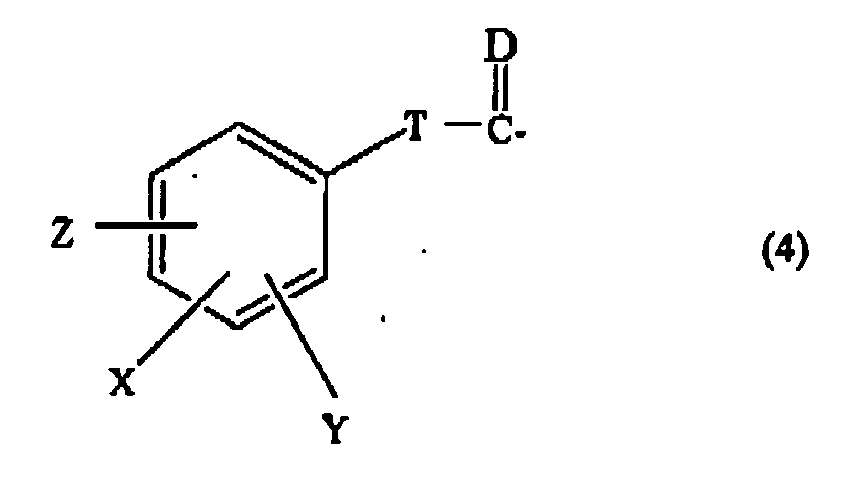
wherein D is selected from the group consisting of O, NR7 and S,
wherein m is 1, 2, 3 or 4;
wherein mm is 0, 1, 2, 3 or 4
wherein X, Y and Z, the same or different, are selected (i.e. independently) from the group consisting of H, a straight or branched alkyl group of 1 to 6 carbon atoms, F, Cl, Br, I, -CF3, - NO2, -NH2 -NHR5, -NR5R6, -NHCOR5, -NHCOheterocycle, heterocycle being as defined above, -OR5, -SR5, -SOR5, -SO2R5, -COOR5, -CH2OH, -COR5, and -NHCOAryl, Aryl being an unsubstituted phenyl group or a phenyl group substituted by one or more members of the group consisting of a straight or branched alkyl group of 1 to 6 carbon atoms, F, Cl, Br, I, - CF3, -NO2, -NH2 -NHR5, -NR5R6, -NHCOR5, -OR5, -SR5, -SOR5, -SO2R5, -COOR5, -CH2OH, -COR5,
wherein R5 and R6, are independently selected from the group consisting of H, and a straight or branched alkyl group of 1 to 6 carbon atoms
wherein R7 is selected from the group consisting of HO-, CH3O-, NC-, benzyloxy, and H2N- and
wherein heterocycle is selected from the group consisting of heterocyclic groups comprising 5 to 7 ring atoms, said ring atoms comprising carbon atoms and from one to four heteroatoms selected from the group consisting of nitrogen, oxygen and sulfur, said heterocyclic groups being monocycylic, bicycylic or monocycylic fused with one or two benzene rings. - The present invention in particular relates to a compound of formula I as defined herein pharmaceutically acceptable derivatives thereof and where applicable or appropriate pharmaceutically acceptable salts thereof, wherein W is -(CH2)n- , n is 3 or 4 and D is O. In accordance with the present invention R2 may in particular be a sulfonyl group of formula (3) as defined herein.
- The present invention in particular provides a compound of formula Ia

wherein W, Cx, R1, R2, R3 and R4 are as defined herein. - The present invention more particularly provides a compound of formula Ib

wherein Cx, n, R1, R2, R3 and R4 are as defined herein. - The present invention particularly relates to a compound of formula I, Ia or Ib as defined herein (as well as pharmaceutically acceptable derivatives thereof) and where applicable or appropriate pharmaceutically acceptable ammonium salts thereof,
wherein Cx is selected from the group consisting of -COOM, -COOR5, -CH2OH, -CONHOH, and benzyloxycarbonyl, wherein M is an alkali metal (e.g. Na, K, Cs, etc.) and R5 is as defined herein,
wherein R1 and R3, the same or different, are selected (i.e, independently) from the group consisting of H, a straight or branched alkyl group of 1 to 6 carbon atoms, a cycloalkylalkyl group having 3 to 7 carbon atoms in the cycloalkyl part thereof and 1 to 3 carbon atoms in the alkyl part thereof and an arylalkyl group of formula (2) as defined herein wherein Z and Y are each H, m is 1 and X is H, Br or F
wherein R2 and R4 the same or different are selected (i.e. independently) from the group consisting of H, 9-fluorenylmethoxycarbonyl, benzyloxycarbonyl, 2-chlorobenzyloxycarbonyl, 4-OH-7-CF3-quinoline-3-CO-, 3-indole-CH2CH2CO-, 3-indole-CH2CO-, 3-indole-CO-, 2-indole-CO-, C6H5CHCHCO-, C6H5CH2CH2CO-, C6H5CH2CH2CH2CO-, C6H5CH2CHCHCO-, C6H5OCH2CO-, (C6H5)2COHCO-, C6H5SCH2CO-, C6H5CH2CH2CS-, 4-HOC6CH4CH2CH2CO-, cholesteryl-OCO-, 2-quinoline-CO-, fluorene-CO-, xanthene-9-CO-, 4-C6CH5CH2CH2CONHC6H4SO2-, 4-NO2C6H4CHCHCO-, 3-NO2C6H4CHCHCO-, 2-NO2C6H4CHCHCO-, 2,3-(CH3O)2C6H3CHCHCO-, 3,4-(CH3O)2C6H3CHCHCO-, 2,5-(CH3O)2C6H3CHCHCO-, 2,5-(CH3O)2C6H3CH2CH2CO-, 3,5-(CH3O)2C6H3CH2CH2CO-, 3,4-(CH3O)2C6H3CH2CH2CO-, 2,4-(CH3O)2C6CHCHCO-, 2,4-(CH3O)2C6H3CH2CH2CO-, 3,4-(CH3O)2C6H3CHCHCO-, 2,3-(CH3O)2C6H3CH2CH2CO-, 4-CH3OC6H4CHCHCO-, 4-CH3OC6H4CH2CH2CO-, 2-CH3OC6H4CHCHCO-, 3-CH3OC6H4CHCHCO-, 3-CH3OC6H4CH2CH2CO-, 2-CH3OC6H4CH2CH2CO-, 4-CH3C6H4CHCHCO-, 4-HOC6H4CHCHCO-, 3-NH2C6H4CH2CH2CO-, 3-C5H4NCHCHCO-, 3-C5H4NCH2CH2CO-, fluorene-CH2CO-, camphor-10-CH2-SO2- (C6H5)2CH-CO-, 1-naphthyl-SO2-, 2-naphthyl-SO2-, fluorenyl-SO2-, phenanthryl-SO2- anthracenyl-SO2-, quinoline-SO2-, 4-CH3COONHC6H4-SO2-, C6H5CHCH-SO2-, 4-NO2C6H4-SO2-, and a sulfonyl group of formula (3) as defined herein wherein T is -(CH2)mm- wherein mm is 0 and wherein X, Y and Z, are independently selected from the group consisting of H, a straight or branched alkyl group of 1 to 6 carbon atoms, F, Cl, Br, I, -CF3, -NO2, -NH2, and -COR5, wherein R5 is as defined herein. - The present invention particularly provides a compound of formula I, Ia or Ib as defined herein (as well as pharmaceutically acceptable derivatives thereof) and when applicable or appropriate pharmaceutically acceptable ammonium salts thereof, wherein R1 is selected from the group consisting of isobutyl, cyclopropylmethyl and benzyl, wherein R2 is a sulfonyl group of formula (3) as defined above, wherein R3 is H and wherein Cx is selected from the group consisting of COOM, and COOR5, M being an alkali metal (e.g. Na, K Cs, etc.) and R5 being as defined herein.
- The present invention for example provides a compound of formula Ib as defined herein pharmaceutically acceptable derivatives thereof and where applicable or appropriate pharmaceutically acceptable salts thereof, wherein n is 4, wherein R1 is selected from the group consisting of isobutyl, cyclopropylmethyl and benzyl, wherein R2 is a sulfonyl group of formula (3) as defined herein, wherein T is -(CH2)mm-, wherein mm is 0, wherein X, Y and Z , the same or different, are selected (i.e. independently) from the group consisting ofH, a straight or branched alkyl group of 1 to 6 carbon atoms, Br, NO2, NH2, and OR5, wherein R3 is H, wherein wherein Cx is selected from the group consisting of COOM, and COOR5, wherein M is an alkali metal (e.g. Na, K, Cs, etc.), wherein R5 is as defined herein and wherein R4 is selected from the group consisting of 9-fluorenylmethoxycarbonyl, 2,3-(CH3O)2C6H3CH2CH2CO-, 2,4-(CH3O)2C6H3CH2CH2CO-, 3-indole-CH2CH2CO-, C6H5CH2CH2CO-, C6H5SCH2CO-, C6H5OCH2CO-, xanthene-9-CO-, 4-CH3OC6H4CH2CH2CO-, 3-CH3OC6H4CH2CH2CO-, 2-CH3OC6H4CH2CH2CO-, 3-NH2C6H4CH2CH2CO- and

- The compounds of the present invention have an affinity for aspartyl proteases, in particular, HIV aspartyl protease. Therefore, these compounds are useful as inhibitors of such proteases. These compounds can be used alone or in combination with other therapeutic or prophylactic agents, such as antivirals, antibiotics, immunomodulators or vaccines, for the treatment or prophylaxis of viral infection,
- According to the present invention, the compounds of this invention are capable of inhibiting HIV viral replication in human CD4+ T-cells, by inhibiting the ability of HIV aspartyl proteases to catalyze the hydrolysis of peptide bonds. These novel compounds can thus serve to reduce the production of infectious virions from acutely and chronically infected cells, and can inhibit the initial or further infection of host cells. Accordingly, these compounds are useful as therapeutic and prophylactic agents to treat or prevent infection by HIV-1 and HIV-2, which may result in asymptomatic infection, AIDS-related complex (ARC), acquired immunodeficiency syndrome (AIDS), AIDS-related dementia, or similar diseases of the immune system, and related viruses such as HTLV-I and HTLV-II, and simian immunodeficiency virus.
- As mentioned above heterocycle refers to a stable 5 - 7 membered monocycle or bicyclic heterocycle; it may be optionally benzofused or heterocyclofused. Each heterocycle consists of carbon atoms and from one to four heteroatoms selected from the group consisting of nitrogen, oxygen and sulfur. As used herein, the terms "nitrogen and sulfur heteroatoms" include any oxidized form of nitrogen and sulfur, and the quaternized form of any basic nitrogen. The heterocyclic ring may be attached by any heteroatom or carbon atom of the cycle, which results in the benzimidazolyl, imidazolyl, imidazolinyl, imidazolidinyl, quinolyl, isoquinolyl, indolyl, pyridyl, pyrrolyl, pyrrolinyl, pyrrolidinyl, pyrazolyl, pyrazinyl, quinoxolyl, piperidinyl, morpholinyl, β-carbolinyl, tetrazolyl, thiazolidinyl, benzofuranyl, thiamorpholinyl, benzoxazolyl, oxopiperidinyl, oxopyrroldinyl, oxoazepinyl, azepinyl, isoxazolyl, tetrahydropyranyl, tetrahydrofuranyl, thiadiazolyl, thiadiazinyl, benzodioxolyl, thiophenyl, tetrahydrothiophenyl, nicoticoyl, morpholinecarbodithioyl and sulfolanyl.
- As mentioned above R2 and R4 are each independently (i.e. same or different) selected from the above mentioned class of substituents; the may in particular be 9-fluorenylmethoxycarbonyl (Fmoc), tert-butoxycarbonyl (t-Boc), benzyloxycarbonyl (Cbz), 2-chlorobenzyloxycarbonyl (2-ClCbz), substituted arylSO2, substituted arylalkylSO2, heteroarylSO2, acyl, substituted arylalkylacyl or hoteroalkylacyl groups.
- The configuration of the asymmetric centre can be D, L and DL, preferably the configuration corresponding to that found in L-lysine and L-ornithine.
- In addition, this invention provides pharmaceutical compositions in which these novel compounds of formula I derived from L-amino acids are used to inhibit aspartyl proteases, including HIV aspartyl proteases, thus providing protection against HIV infection.
- The terms "HIV protease" and "HIV aspartyl protease" are used interchangeably and refer to the aspartyl protease encoded by the human immunodeficiency virus type 1 or 2. In a preferred embodiment of this invention, these terms refer to the human immunodeficiency virus type 1 aspartyl protease.
- The term "pharmaceutically effective amount" refers to an amount effective in treating HIV infection in a patient.
- The term "prophylactically effective amount" refers to an amount effective in preventing HIV infection in a patient. As used herein, the term "patient" refers to a mammal, including a human.
The term "pharmaceutically acceptable carrier or adjuvant" and "physiologically acceptable vehicle" refer to a non-toxic carrier or adjuvant that may be administered to a patient, together with a compound of this invention, and which does not destroy the pharmacological activity thereof. - As used herein, the compounds of this invention, including the compounds of formula I are defined to include pharmaceutically acceptable derivatives thereof. A "pharmaceutically acceptable derivative" means any pharmaceutically acceptable salt, ester, or salt of such ester, of a compound of this invention or any other compound which, upon administration to a recipient, is capable of providing (directly or indirectly) a compound of this invention or an antivirally active metabolite or residue thereof.
- The compounds of this invention contain one or more asymmetric carbon atoms and thus may occur as racemates and racemic mixtures, single enantiomer, diastereomeric mixtures and individual diastereoisomers. All such isomeric forms of these compounds are expressly included in the present invention. Each stereogenic carbon may be of the R or S configuration.
- Combinations of substituents and variables envisioned by this invention are only those that result in the formation of stable compounds. The term "stable", as used herein, refers to compounds which possess stability sufficient to allow manufacture and administration to a mammal by methods known in the art, Typically, such compounds are stable at a temperature of 40°C or less, in the absence of moisture or other chemically reactive conditions, for at least a week.
- The compounds of the present invention as mention above include salts. Salts of the compounds of this invention include those derived from pharmaceutically acceptable inorganic and organic acids and bases (e.g. salts of acidic compounds of formula I with bases). Salts derived from appropriate inorganic and organic bases include for example, alkali metal (e.g., sodium), alkaline earth metal (e.g., magnesium), ammonium and N - (C1-4 alkyl)4 * salts.
- This invention also envisions ammonium salts (i.e. salts of amino groups) such as for example halide acid salts (e.g. hydrochloride, hydrobromide, hydroiodide salts). Thus the invention envisions the quaternization of any basic nitrogen containing groups (i.e. amino group(s)) of the compounds disclosed herein. The basic nitrogen can be quaternized with any agents known to those of ordinary skill in the art including, for example, lower alkyl halides, such as methyl, ethyl, propyl and butyl chlorides, bromides and iodides; dialkyl sulfates including dimethyl, diethyl, dibutyl and diamyl sulfates; long chain halides such as decyl, lauryl, myristyl and stearyl chlorides, bromides and iodides, and aralkyl halides including benzyl and phenethyl bromides. Water or oil-soluble or dispersible products may be obtained by such quaternization.
- Other examples of acid salts include: acetate, adipate, alginate, aspartate, benzoate, benzenesulfonate, bisulfate, butyrate, citrate, camphorate, camphorsulfonate, cyclopentanepropionate, digluconate, dodecylhydrogensulfate, dodecylsulfate, ethanesulfonate, formate, fumarate, glucoheptanoate, glycerophosphate, glycollate, hemisulfate, heptanoate, hexanoate, 2-hydroxyethanesulfonate, lactate, maleate, malonate, methanesulfonate, 2-naphthylsulfonate, nicotinate, nitrate, oxalate, pamoate, pectinate, perchlorate, persulfate, 3-phenylpropionate, phosphate, picrate, pivalate, propionate, salicylate, succinate, sulfate, tartrate, thiocyanate, tosylate, and undecanoate.
- The compounds of this invention are readily prepared using conventional techniques from commercially available and cheap starting materials.
- The compounds of this invention are among the most readily prepared HIV protease inhibitors known at this point. Previously described HIV protease inhibitors are resulting from long synthetic sequences and contain more than six chiral centers, numerous peptide bonds and require air-sensitive reagents such as organometallic complexes to achieve their successful preparations. The very easy synthesis of the products described in this invention represent a marked advantage, especially for the large scale preparation of these compounds.
- In the following the preparation of compounds in accordance with the present convention will be described with reference to a number of process schemes wherein the various starting reactants as well as products thereof are designated by reference numbers e,g, in scheme 1 the starting ornithine or lysine is designated with the reference number 1,
- In general, amino acid derivatives of formula I are readily obtained from commercially available sources. Following the indications summarized in Scheme 1, the Nω-benzyloxycarbonyl blocking group of Nα-(9-fluorenylmethoxycarbonyl)-Nω-benzyloxycarbonyl ornithine or lysine 1 is removed by a treatment with TFA in CH2Cl2 according to the indications found in protective groups in Organic Synthesis, 3rd Edition, p. 520-521 (T.W. Greene and P. G. M. Wuts (John Wiley & Sons, Inc. 1999). The intermediate is obtained by the evaporation of the solvent and then reacted with a sulfonyl chloride or an acyl chloride derivative in the presence of a base such as 1M potassium carbonate, affording after normal work-up the desired product 2 in excellent yields. Another possible starting material could be Nα-tert-butoxycarbonyl-Nω-benzyloxycarbonyl-L-ornithine or L-lysine 1a with the removal of the tert butoxycarbonyl group being also achieved by a treatment with TFA in CH2Cl2. Products 2 with the Fmoc or the t-Boc groups were obtained in excellent yields.


Za = C6H5CH2O-CO-
n = 3 Ornithine
n = 4 Lysine - Scheme 2, below, illustrates the preparation of Nα-isobutyl-Nα-(substituted benzenesulfonyl-Nε-(9-fluorenylmethoxycarbonyl) derivatives 9 from readily available material Nα-tert-butoxycarbonyl-Nε-benzyloxycarbonyl-L-lysine 3. The esterification with methyl iodide is achieved by treatment of the potassium salt in DMF with methyl iodide. Removal of the tert-butoxycarbonyl group from product 4 is done by treatment with TFA in methylene chloride. Reductive alkylation of the free amino group with isobutyraldehyde utilizing sodium cyanoborohydride provided the Nα-isobutylamino acid derivative 6. Reaction with a substituted benzenesulfonyl chloride provides the product 7, the HCl scavenger being triethylamine or diisopropylethylamine. Hydrolysis of the methyl ester is accomplished with sodium hydroxide in methanol providing the acid 8 in good yield. It should be noted that extensive epimerisation takes place in this base catalysed hydrolytic reaction. The DL derivative 8 is then submitted to hydrogenolysis to remove the terminal blocking group and the free amino group can then be acylated with 9-fluorenylmethyl chloroformate or N-(9-fluorenylmethoxycarbonyloxy) succinimide to provide the desired product 9 in its racemized form. At that step, use of a substituted sulfonyl chloride provided the corresponding sulfonyl derivative and an acylation of the same amino group with an acyl chloride or an activated acid provided the acylated derivative of general structure 9.

- The problem of racemization was resolved by the use of a benzyl ester to block the carboxylic acid instead of a methyl ester. An additional advantage is the simultaneous removal of the two blocking groups (ester and carbamate) by hydrogenolysis, thus shortening the sequence by one step. The scheme 3, outlined below exemplifies this approach clearly.

- Scheme 4 demonstrates another improved approach to similar derivatives in a much shorter sequence and provide higher yields and avoid the use of protection-deprotection steps. The starting material for this sequence is a readily available commercial product, L-α-amino-ε-caprolactam 14. Reductive alkylation utilizing the sodium cyanoborohydride conditions provided the alkylated derivative 15 in 95% yield as a crystalline solid that can then be subjected to reaction with a substituted sulfonyl chloride in presence of triethylamine in methylene chloride. Product 16 was obtained in 87% yield. Treatment with 12N HCl and acetic acid for 2 hours at reflux provided the lysine derivative 17 quantitatively and the terminal amino group was then acylated with an acyl chloride or an activated carboxylic acid to provide compound 18, Scheme 4a illustrates a particular example of the process of scheme 4.


- Scheme 5 summarizes the work done to obtain derivatives of structure I where n is 1. The starting material is L-serine 19a. Treatment with DEAD and triphenyl phosphine provided the β-laetone 20 that was then treated with ammonia in ethanol. The Nα-tert-butoxycarbonyl-Nβ-amino propionic acid derivative was then reacted as usual with a substituted benzenesulfonyl chloride, providing product 21 The removal of the blocking group and its replacement by another one (v.g. Fmoc) provided compound 22. Scheme 5a illustrates a particular example of the process of scheme 5.


- Scheme 6 below relates to an alternative process whereby compounds of formula I as defined herein may be obtained wherein W is -CH2-XX-CH2-CH2,-, XX being as defined herein. Thus reductive alkylation of L-serine methyl ester 19b may give rise to compound 23 which may be treated with a substituted benzenesulfonyl chloride to give a compound 24. Further treatment of compound 24 with tosyl chloride in dichloromethane and triethylamine may give rise to a α,β-unsaturated ester 25. Michael addition of a substituted ethylenediamine and saponification may give rise to compound 26. The α,β-unsaturated ester 25 may be treated with a variety of reagents to provide compounds containing a heteroatom as shown in Table 2 for compound nos. 205, 206 and 207. The chiral derivatives may also be obtained via ring opening of a β-lactone derived form 24 to give pure L isomers 26,

- Scheme 7 provides a summary of the approach of products of structure I where n is 2. Again the starting material is a simple product L-homoserine 27. The amino group is protected by the tert-butoxycarbonyl group and treatmemt with diazomethane in ether provided derivative 28. The next sequence is the transformation of the hydroxyl group to an amino group, which is easily achieved by treatment of 28 with 4-methylbenzenesulfonyl chloride in pyridine and methylene chloride followed by displacement of the tosyl group by azide in DMF. The product 29 is then reduced by hydrogen gas in presence of 10% Pd/C and the resulting amino group is reacted with a substituted benzenesulfonyl chloride, providing an excellent yield of derivative 30. Its conversion to another group on the alpha amino group is performed as previously described by the removal of the tert-butoxycarbonyl group with TFA in methylene chloride and then reaction with 9-fluorenylmethyl chloroformate or N-(9-fluorenylmethoxycarbonyloxy) succinimide, providing the final compound 31.

- As it can be appreciated by the skilled artisan, the above synthetic schemes are not intended to be a comprehensive list of all means by which the compounds described and claimed in this application may be synthesized. Further methods will be evident to those of ordinary skill in the art.
- The compounds of this invention may be modified by appending appropriate functionalities to enhance selective biological properties. Such modifications are known in the art and include those which increase biological penetration into a given biological system (e.g., blood, lymphatic system, central nervous system), increase oral availability, increase solubility to allow administration by injection, alter metabolism and alter rate of excretion.
- As discussed above, the novel compounds of the present invention are excellent ligands for aspartyl proteases, particularly HIV-1 protease. Accordingly, these compounds are capable of targeting and inhibiting late stage events in the replication, i.e.; the processing of the viral polyproteins by HIV encoded protease. Compounds according to this invention advantageously inhibit the ability of the HIV-1 virus to infect immortalized human T cells over a period of days, as determined by an assay of extracellular p24 antigen - a specific marker of viral replication (see, Meek et al., Nature, 343, pp. 90-92 (1990)).
- In addition to their use in the prophylaxis or treatment of HIV or HTLV infection, the compounds according to this invention may also be used as inhibitory or interruptive agents for other viruses which depend on aspartyl proteases, similar to HIV or HTLV aspartyl proteases, for obligatory events in their life cycle. Such compounds inhibit the proteolytic processing of viral polyprotein precursors by inhibiting aspartyl protease. Because aspartyl protease is essential for the production of mature virions, inhibition of that processing effectively blocks the spread of virus by inhibiting the production and reproduction of infectious virions, particularly from chronically infected cells. The compounds of this invention advantageously inhibit aspartyl proteases, thus blocking the ability of aspartyl proteases to catalyze the hydrolysis of peptide bonds.
- The compounds of this invention may be employed in a conventional manner for the treatment or prevention of HIV, HTLV, and other viruses, which depend on aspartyl proteases for obligatory events in their life cycle. Such methods of treatment their dosage levels and requirements may be selected by those of ordinary skill in the art from available methods and techniques. For example, a compound of this invention may be combined with a pharmaceutically acceptable adjuvant for administration to a virally infected patient in a pharmaceutically acceptable manner and in an amount effective to lessen the severity of the viral infection.
- Alternatively, the compounds of this invention may be used in vaccines and methods for protecting individuals against viral infection over an extended period of time. The compounds may be employed in such vaccines either alone or together with other compounds of this invention in a manner consistent with the conventional utilization of protease inhibitors in vaccines. For example, a compound of this invention may be combined with pharmaceutically acceptable adjuvants conventionally employed in vaccines and administered in prophylactically effective amounts to protect individuals over an extended period of time against viral infections, such as HIV infection. As such, the novel protease inhibitors of this invention can be administered as agents for treating or preventing viral infections, including HIV infection, in a mammal.
- The compounds of this invention may be administered to a healthy or HIV-infected patient either as a single agent or in combination with other antiviral agents which interfere with the replication cycle of HIV. By administering the compounds of this invention with other antiviral agents which target different events in the viral life cycle, the therapeutic effect of these compounds is potentiated. For instance, the co-administered antiviral agent can be one which targets early events in the life viral cycle, such as cell entry, reverse transcription and viral DNA integration into cellular DNA, Antiviral agents targeting such early life cycle events include didanosine (ddI), zalcitabine (ddC), stavudine (d4T), zidovudine (AZT), polysulfated polysaccharides, sT4 (soluble CD4) -- which blocks attachment or adsorption of the virus to host cells -- and other compounds which block binding of virus to CD4 receptors on CD4 bearing T-lymphocytes and other CD4(+) cells, or inhibit fusion of the viral envelope with the cytoplasmic membrane. Other retroviral reverse transcriptase inhibitors, such as derivatives of AZT, may also be co-administered with the compounds of this invention to provide therapeutic treatment for substantially reducing or eliminating viral infectivity and the symptoms associated therewith. Examples of other antiviral agents include ganciclovir, dideoxycytidine, trisodium phosphonoformate, eflornithine, ribavirin, acyclovir, alpha interferon and trimenotrexate. Additionally, non-ribonucleoside inhibitors of reverse, transcriptase, such as TIBO or nevirapine, may be used to potentiate the effect.of the compounds of this invention, as may viral uncoating inhibitors, inhibitors of trans-activating proteins such as tat.or rev, antisense molecules or inhibitors of the viral integrase. These compounds may also be co-administered with other inhibitors of HIV aspartyl protease.
- Combination therapies according to this invention exert a synergistic effect in inhibiting HIV replication because each component agent of the combination acts on a different site of HIV replication. The use of such combinations also advantageously reduces the dosage of a given conventional anti-retroviral agent that would be required for a desired therapeutic or prophylactic effect as compared to when that agent is administered as a monotherapy. These combinations may reduce or eliminate the side effects of conventional single anti-retroviral agent therapies while not interfering with the anti-retroviral activity of those agents. These combinations reduce the potential of resistance to single agent therapies, while minimizing any associated toxicity. These combinations may also increase the efficacy of the conventional agent without increasing the associated toxicity. Preferred combination therapies include the administration of a compound of this invention with AZT, 3TC, ddI, ddC, d4T or other reverse transcriptase inhibitors.
- Alternatively, the compounds of this invention may also be co-administered with other HIV protease inhibitors such as Ro 31-8959 (Saquinavir/Fortovase; Roche), L-735,524(Indinavir; Merck), AG-1343 (Nelfinavir; Agouron), A-84538 (Ritonavir; Abbott) and VX-478 (Amprenavir; Glaxo) to increase the effect of therapy or prophylaxis against various viral mutants or members of other HIV quasi species.
- We prefer administering the compounds of this invention as single agents or in combination with retroviral reverse transcriptase inhibitors, or other HIV aspartyl protease inhibitors. We believe that the co-administration of the compounds of this invention with retroviral reverse transcriptase inhibitors or HIV aspartyl protease inhibitors may exert a substantial synergistic effect, thereby preventing, substantially reducing, or completely eliminating viral infectivity and its associated symptoms.
- The compounds of this invention can also be administered in combination with immunomodulators (e.g., bropirimine, anti-human alpha interferon antibody, IL-2, GM-CSF, methionine enkephalin, interferon alpha, diethyldithiocarbante, tumor necrosis factor, naltrexone and rEPO) antibiotics (e.g., pentamidine isethionate) or vaccines to prevent or combat infection and disease associated with HIV infection, such as AIDS and ARC.
- When the compounds of this invention are administered in combination therapies with other agents, they may be administered sequentially or concurrently to the patient. Alternatively, pharmaceutical or prophylactic compositions according to this invention may be comprised of a combination of an aspartyl protease inhibitor of this invention and another therapeutic or prophylactic agent.
- Although this invention focuses on the use of the compounds disclosed herein for preventing and treating HIV infection, the compounds of this invention can also be used as inhibitory agents for other viruses that depend on similar aspartyl proteases for obligatory events in their life cycle. These viruses include, but are not limited to other AIDS-like diseases caused by retroviruses, such as simian immunodeficiency viruses, HIV-2, HTLV-I and HTLV-II. In addition, the compounds of this invention may also be used to inhibit other aspartyl proteases and, in particular, other human aspartyl proteases including renin and aspartyl proteases that process endothelin precursors.
- Pharmaceutical compositions of this invention comprise any of the compounds of the present invention, and pharmaceutically acceptable salts thereof, with any pharmaceutically acceptable carrier, adjuvant or vehicle. Pharmaceutically acceptable carriers, adjuvants and vehicles that may be used in the pharmaceutical compositions of this invention include, but are not limited to ion exchangers, alumina, aluminum stearate, lecithin, serum proteins, such as human serum albumin, buffer substances such as phosphates, glycine, sorbic acid, potassium sorbate, partial glyceride mixtures of saturated vegetable fatty acids, water, salts or electrolytes, such as protamine sulfate, disodium hydrogen phosphate, potassium hydrogen phosphate, sodium chloride, zinc salts, colloidal silica, magnesium trisilicate, polyvinyl pyrrolidone, cellulose-based substances, polyethyleneglycol, sodium carboxymethylcellulose, polyacrylates, waxes, polyethylene-polyoxypropylene-block polymers, polyethylene glycol and wool fat.
- The pharmaceutical compositions of this invention may be administered orally, parenterally by inhalation spray, topically, rectally, nasally, buccally, vaginally or via an implanted reservoir. We prefer oral administration or administration by injection. The pharmaceutical compositions of this invention may contain any conventional non-toxic pharmaceutically acceptable carriers, adjuvants or vehicles, The term "parenteral" as used herein includes subcutaneous, intracutaneous, intravenous, intramuscular, intra-articular, intrasynovial, intrasternal, intrathecal, intralesional and intracranial injection or infusion techniques.
- The pharmaceutical compositions may be in the form of a sterile injectable preparation, for example, as a sterile injectable aqueous or oleaginous suspension. This suspension may be formulated according to techniques known in the art using suitable dispersing or wetting agents (such as, for example, Tween 80) and suspending agents. The sterile injectable preparation may also be a sterile injectable solution or suspension in a non-toxic parenterally acceptable diluent or solvent, for example, as a solution in 1,3-butanediol, Among the acceptable vehicles and solvents that may be employed are amino acid, water, Ringer's solution and isotonic sodium chloride solution. In addition, sterile, fixed oils are conventionally employed as a solvent or suspending medium. For this purpose, any bland fixed oil may be employed including synthetic mono- or diglycerides. Fatty acids, such as oleic acid and its glyceride derivatives are useful in the preparation of injectables, as are natural pharmaceutically-acceptable oils, such as olive oil or castor oil, especially in their polyoxyethylated versions. These oil solutions or suspensions may also contain a long-chain alcohol diluent or dispersant, such as Ph. Helv. or a similar alcohol.
- The pharmaceutical compositions of this invention may be orally administered in any orally acceptable dosage form including, but not limited to, capsules, tablets, and aqueous suspension and solutions. In the case of tablets for oral use, carriers that are commonly used include lactose and corn starch. Lubricating agents, such as magnesium stearate, are also typically added. For oral administration in a capsule form, useful diluents include lactose and dried corn starch. When aqueous suspensions are administered orally, the active ingredient is combined with emulsifying and suspending agents. If desired, certain sweetening and/or flavoring and/or coloring agents may be added.
- The pharmaceutical compositions of this invention may also be administered in the form of suppositories for rectal administration. These compositions can be prepared by mixing a compound of this invention with a suitable non-irritating excipient which is solid at room temperature but liquid at the rectal temperature and therefore will melt in the rectum to release the active components. Such materials include, but are not limited to, cocoa butter, beeswax, and polyethylene glycols.
- Topical administration of the pharmaceutical compositions of this invention is especially useful when the desired treatment involves areas or organs readily accessible by topical application. For application topically to the skin, the pharmaceutical composition should be formulated with a suitable ointment containing the active components suspended or dissolved in a carrier. Carriers for topical administration of the compounds of this invention include, but are not limited to, mineral oil, liquid petroleum, white petroleum, propylene glycol, polyoxyethylene or polyoxypropylene compound, emulsifying wax and water. Alternatively, the pharmaceutical compositions can be formulated with a suitable lotion or cream containing the active compound suspended or dissolved in a carrier. Suitable carriers include, but are not limited to, mineral oil, sorbitan monostearate, polysorbate 60, cetyl esters wax cetearyl alcohol, 2-octyldodecanol, benzyl alcohol and water. The pharmaceutical compositions of this invention may also be topically applied to the lower intestinal tract by rectal suppository formulation or in a suitable neat formulation. Topically-transdermal patches are also included in this invention.
- The pharmaceutical compositions of this invention may be administered by nasal aerosol or inhalation. Such compositions are prepared according to techniques well-known in the art of pharmaceutical formulation and may be prepared as solutions in saline employing benzyl alcohol or other suitable preservatives, absorption promoters to enhance bioavailability, fluorocarbons, and/or other solubilizing or dispersing agents known in the art.
- Dosage levels of between about 0.01 and about 25 mg/kg body weight per day, preferably between about 0.5 and about 25 mg/kg body weight per day of the active ingredient compound are useful in the prevention and treatment of viral infection, including HIV infection. Typically, the pharmaceutical compositions of this invention will be administered from about 1 to about 5 times per day or alternatively, as a continuous infusion. Such administration can be used as a chronic or acute therapy. The amount of active ingredient that may be combined with the carrier materials to produce a single dosage form will vary depending upon the patient treated and the particular mode of administration. A typical preparation will contain from about 5% to about 95% active compound (w/w). Preferably, such preparations contain from about 20% to about 80% active compound.
- Upon improvement of a patient's condition, a maintenance dose of a compound, composition or combination of this invention may be administered if necessary. Subsequently, the dosage or frequency of administration, or both, may be reduced, as a function of the symptoms, to a level at which the improved condition is retained, When the symptoms have been alleviated to the desired level, treatment should cease. Patients may, however, require intermittent treatment on a long-term basis, upon any recurrence of disease symptoms.
- As the skilled artisan will appreciate, lower or higher doses than those recited above may be required. Specific dosage and treatment regimen for any particular patient will depend upon a variety of factors, including the activity of the specific compound employed, the age, body weight, general health status, sex, diet, time of administration, rate of excretion, drug combination, the severity and course of the infection, the patient's disposition to the infection and the judgment of the treating physician,
- The compounds of this invention are also useful as commercial reagents which effectively bind to aspartyl proteases, particularly HIV aspartyl protease. As commercial reagents, the compounds of this invention, and their derivatives, may be used to block proteolysis of a target peptide, such as an aspartyl protease, or may be derivatized to bind to a stable resin as a tethered substrate for affinity chromatography applications. These and other uses which characterize commercial aspartyl protease inhibitors will be evident to those of ordinary skill in the art.
- An Enzymatic assay for determining the inhibition constant (Ki) of synthetic compounds targeting the HIV protease may be carried out as follows; This is a fluorometric assay based on the cleavage by protease of a substrate carrying a donor group (EDANS) and an acceptor group (DABCYL) on each side of the cleavage site, interacting together through fluorescence resonance energy transfer (FRET). Cleavage of the substrate by protease stops energy exchange between the two groups, resulting in a time-dependent increase in fluorescence intensity that is linearly related to the extent of substrate hydrolysis.
- The enzymatic assay is done at 31 °C in white 96-well fluorescence microplates, in a total volume of 200 µL per well. The apparatus used for analysis is a FL600 fluorescence microplate reader (Biotek Instruments). The reaction is run first in the absence of protease inhibitors for 4 min, using 156 µL of buffer at pH 4.7 (sodium acetate 100 mM, NaCl 1 M, EDTA 1 mM, DTT I mM, dimethylsulfoxide 10%, and BSA 1 mg/mL), 20 µL of substrate H-2930 from Molecular Probes (final concentration 10 µM) and 20 µL of recombinant HIV-1 protease (final concentration 2.18 nM) purchased from Bachem Bioscience. Excitation of the fluorophore is done at 340 nm and emission at 485 nm is recorded continuously during the reaction, allowing determination of the enzyme's initial velocity (vo). At the end of the 4 min incubation, the potential inhibitor at a defined concentration in a volume of 4 µL is added to the reaction, and fluorescence readings are taken for another 4 min, allowing determination of enzyme velocity (vi) in the presence of the inhibitory compound. Several concentrations of the putative inhibitors are tested in the assay, After calculation of vo and vi, the inhibition constant (Ki) of the compound is determined using the equation of Henderson :

- Note that the Michaelis-Menten constant of HIV protease is determined by running the assay without inhibitors, using several concentrations of substrate, and plotting the results as a Cornish-Bowden graph with the ratio substrate concentration/ velocity as the ordinate and substrate concentration as the abscissa. Graphs are traced and the Ki determined using GraphPad Prism software v. 3.0.
- The compounds listed in Tables 1 and 2 below were prepared by following Schemes 1, 2 , 3, 4, 5, 6 or 7 above or using reaction conditions known to those skilled in the art. The activities of the compounds are also listed in the same table demonstrating their potential usefulness. In Table 1 are shown compounds of formula Ia, as defined above, wherein W is -(CH2)n- and wherein n, Cx, R1, R2, R3, and R4, are set forth for each compound mentioned therein. In Table 2 are shown compounds of formula Ia, as defined above, wherein W is -CH2-XX-CH2CH2- and wherein Cx, R1, R2, R3, and R4, are set forth for each compound mentioned therein.
TABLE 1 Compound No. Cx R1 R2 R3 R4 n Ki (nM) D. L, DL R, S, RS 1 COOH i-C4H9 4-ClC6H4SO2 H Fmoc 4 20.5 DL 2 COOH i-C4H9 4-CH3C6H4SO2 H Fmoc 4 5.0 DL 3 COOH i-C4H9 4-FC6H4SO2 H Fmoc 4 17.4 DL 4 COOH i-C4H9 4-BrC6H4SO2 H Fmoc 4 11.4 L 5 COOH i-C4H9 4-CH3C6H4SO2 H Fmoc 4 334 D 6 COOH i-C4H9 4-CH3C6H4SO2 H Fmoc 3 180 DL 7 COOH i-C4H9 4-CH3OC6H4SO2 H Fmoc 4 10.6 L 8 COOH i-C4H9 1-naphthyl-SO2 H Fmoc 4 54.9 L 9 COOH i-C4H9 C6H5SO2 H Fmoc 4 18.7 L 10 COOH i-C4H9 4-t-BuC6H4SO2 H Fmoc 4 257 L 11 COOH i-C4H9 4-BrC6H4SO2 H Fmoc 4 15.4 DL 12 COOH H 4-CH3C6H4SO2 H Fmoc 4 8,000 L 13 COOH H Fmoc H t-Boc 3 25,000 L 14 COOH H Fmoc H 4-BrC6H4SO2 2 49,000 L 15 COOCH3 H Fmoc H 4-BrC6H4SO2 4 47,000 L 16 COOH H Fmoc H 4-BrC6H4SO2 4 13,000 L 17 COOH H 4-BrC6H4SO2 H 4-BrC6H4SO2 4 7,700 L 18 COOH H Fmoc H 4-BrC6H4SO2 1 75,000 S 19 COOH H Fmoc H 4-BrC6H4SO2 4 12,900 D 20 CONH2 H Fmoc H 4-BrC6H4SO2 4 23,000 RS 21 COOH H Fmoc i-C4H9 4-BrC6H4SO2 4 2,000 L 22 CH2OH H Fmoc H 4-BrC6H4SO2 4 >6,000 S 23 COOH H 3-CO-4-OH-7-CF3-quinoline H 4-BrC6H4SO2 4 >50,000 L 24 COOH H Fmoc H 2-BrC6H4SO2 4 36,000 L 25 COOH H Fmoc H 2,4,6-(i-C3H7)3C6H2SO2 4 >3,100 L 26 CO-NH-Fmoclysyl H Fmoc H 2,4,6-(CH3)3C6H2SO2 4 63,000 L 27 COOH H Fmoc H 2,4,6-(CH3)3C6H2SO2 4 >50,000 L 28 COOH H Fmoc H 6-quinoline-SO2 4 15,000 L 29 COOH H CO-CH2-3-indole H 4-BrC6H4SO2 4 10,500 L 30 COOH H CO-CH2-9-fluorene H 4-BrC6H4SO2 4 71,000 L 31 COOH H Fmoc H 1-naphthyl-SO2 4 11,500 L 32 COOH H Fmoc H 2-naphthyl-SO2 4 10,000 L 33 COOH H Fmoc H C6H5CH2SO2 4 20,000 L 34 COOH H Fmoc H 3-CF3C6H4SO2 4 22,000 L 35 COOH H Fmoc H camphor-10-CH2SO2 4 33,000 L 36 COOH H CO-CH(C6H5)2 H 4-BrC6H4SO2 4 24,000 L 37 COOH H CO-COH(C6H5)2 H 4-BrC6H4SO2 4 54,000 L 38 CCOH H CO-9-fluorene H 4-BrC6H4SO2 4 4,700 L 39 COOH i-C4-H9 4-ClC6H4SO2 H COOCH2C6H5 4 >100 L 40 COOH C6H5CH2 4-CH3C6H2SO2 H Fmoc 4 19.6 L 41 COOH H Fmoc i-C4H9 4-BrC6H4SO2 3 >50,000 L 42 COOH i-C4H9 2,4,6-(CH3)3C6H2SO2 H Fmoc 4 >100 L 43 COOH CH2-c-C3H5 4-CH3C6H4SO2 H Fmoc 4 3.9 L 44 COOH i-C4H9 4-NH2C6H4SO2 H Fmoc 4 2.1 L 45 COOH i-C4H9 4-BrC6H4SO2 H COOCH2C6H5 4 >100 DL 46 COOH i-C4H9 COC6H5 H Fmoc 4 >100 L 47 COOH i-C4H9 4-CH3C6H4SO2 H COOCH2C6H5 4 >100 L 48 COOH i-C4H9 4-iC6H4SO2 H COOCH2C6H5 4 >100 DL 49 COOH H Fmoc H C6H5SO2 4 8,900 L 50 COOH H Fmoc H 4-NO2C6H4SO2 4 6,000 L 51 COOH H CO-9-fluorene H 4-BrC6H4SO2 3 9,300 L 52 COOH H Fmoc H 4-NH2C6H4SO2 4 6,800 L 53 COOH H Fmoc H 4-ClC6H4SO2 4 4,80D L 64 COOH H Fmoc H 2,5-Cl2C6H3SO2 4 >6,250 L 55 COOH H Fmoc H 4-FC6H4SO2 4 6,500 L 56 COOH t-Boc 4-BrC6H4CH2 4-BrC6H4CH2 4-BrC6H4SO2 4 >25,000 L 57 COOH H 4-BrC6H4SO2 H 4-BrC6H4SO2 3 42.400 L 58 COOH H 4-BrC6H4SO2 4-FC6H4CH2 COOCH2C6H5 4 >6,500 59 COOH H 4-BrC6H4SO2 4-FC6H4CH2 4-BrC6H4SO2 3 >34,900 L 60 COOH H 4-BrC6H4SO2 4-FC6H4CH2 4-BrC6H4SO2 4 >50,000 L 61 COOH H Fmoc H 4-CH3OC6H4SO2 4 17.400 L 62 COOH H Fmoc H 4-NO2C6H4SO2 3 26,200 L 63 COOH H Fmoc H 4-CH3C6H4SO2 4 L 64 COOH H Fmoc H 4-iC6H4SO2 4 19,200 L 65 COOH H C6H5CO H 4-BrC6H4SO2 4 >50,000 L 66 COOH H 4-BrC6H4SO2 H Fmoc 4 1,900 L 67 COOH i-C4H9 4-CH3C6H4SO2 H Fmoc 4 4.3 L 68 COONa i-C4H9 4-CH3C6H4SO2 H Fmoc 4 6.1 L 69 COOH H Fmoc H 4-NH2C6H4SO2 3 23,600 L 70 COOH H Fmoc H 2-NO2C6H4SO2 4 >12,500 L 71 COOH H Fmac H Fmoc 4 44,800 L 72 COOH H 4-ClC6H4SO2 H Fmoc 4 2,385 L 73 COOH H Fmoc H Fmoc 3 1,300 L 74 COOH H 4-ClC6H4SO2 H Fmoc 3 14,200 L 75 COOCH2C6H5 i-C4H9 4-CH3C6H4SO2 H COOCH2C6H5 4 >1,250 L 76 COOCH2C6H5 i-C4H9 C6H5CH=CHSO2 H COOCH2C6H5 4 >1,250 L 77 COOCH2C6H5 i-C4H9 4-AcNHC6H4SO2 H COOCH2C6H5 4 >1,250 L 78 COOCH2C6H5 i-C4H9 4-NO2C6H4SO2 H COOCH2C6H5 4 >1,250 L 79 COOCH2C6H5 i-C4H9 2-NO2C6H4SO2 H COOCH2C6H5 4 >1,250 L 80 COOCH2C6H5 Et2CHCH2 4-MeC6H4SO2 H COOCH2C6H5 4 >1,250 L 81 COOCH2C6H5 MeEtCHCH2 4-MeC6H4SO2 H COOCH2C6H5 4 >1,250 L 82 COOH H Fmoc H Fmoc CH2SSCH2 >1,250 L 83 COOH i-C4H9 4-CH3C6H4SO2 H CO-9-fluorene 4 105 L 64 COOH i-C4H9 4-CH3C6H4SO2 H CO-CH2-9-fluorene 4 89.7 L 85 COOH i-C4H9 4-CH3C6H4SO2 H CO-9-xanthene 4 14.5 L 86 COOH i-C4H9 4-CH3C6H4SO2 H CO-CH(C6H5)2 4 171 L 87 COOH i-C4H9 4-CH3C6H4SO2 H CO-3-indole 4 >1,250 L 88 COOH i-C4H9 4-CH3C6H4SO2 H CO-2-indole 4 >625 L 89 COOH i-C4H9 4-CH3C6H4SO2 H COCH2CH2-3-indole 4 6.9 L 90 COOH i-C4H9 4-CH3C6H4SO2 H COCH=CHC6H5 4 747 L 91 COOH i-C4H9 4-CH3C6H4SO2 H COCH2CH2C6H5 4 8.0 L 92 COOH i-C4H9 4-CH3C6H4SO2 H COO-Cholesteryl 4 >1,250 L 93 COOH i-C4H9 4-CH3C6H4SO2 H CO-2-quinoline 4 152 L 94 COOH i-C4H9 4-NO2C6H4SO2 H COCH2CH2C6H5 4 33.9 L 95 COOH i-C4H9 4-NO2C6H4SO2 H COCH2CH2-3-indole 4 33.4 L 96 COOH i-C4H9 4-NO2C6H4SO2 H CO-9-xanthene 4 43.9 L 97 COOH i-C4H9 4-C6H5CH2CH2CONHC6H4SO2 H COCH2CH2C6H5 4 33.0 L 98 COOH i-C4H9 4-NH2C6H4SO2 H COCH2CH2-3-indole 4 10.1 L 99 COOH i-C4H9 4-NH2C6H4SO2 H CO-9-xanthene 4 12.1 L 100 COOH i-C4H9 4-NH2C6H4SO2 H COCH2CH2C6H5 4 18.1 L 101 COOH i-C4H9 4-CH3C6H4SO2 H C6H5CH=CHSO2 4 >3,000 L 102 COOH H 1-naphthyl-SO2 H Fmoc 4 2,320 L 103 COOH H 4-NO2C6H4SO2 H Fmoc 4 3,300 L 104 COOH H 4-CH3OC6H4SO2 H Fmoc 4 3,160 L 105 COOH H 2-NH2C6H4SO2 H Fmoc 4 16,000 L 106 COOH H 4-NH2C6H4SO2 H Fmoc 4 4,490 L 107 COOH H 2-NO2C6H4SO2 H Fmoc 4 3,970 L 108 COOH i-C4H9 4-NO2C6H4SO2 H 3-NO2C6H4CH=CHCO 4 >300 L 109 COOH i-C4H9 4-NO2C6H4SO2 H 2-NO2C6H4CH=CHCO 4 >300 L 110 COOH i-C4H9 4-NO2C6H4SO2 H 2,3-(CH3O)2C6H3CH=CHCO 4 >300 L 111 COOH i-C4H9 4-NO2C6H4SO2 H 4-NO2C6H4CH=CHCO 4 34.4 L 112 COOH i-C4H9 4-NO2C6H4SO2 H C6H5CH2CH=CHCO 4 21.7 L 113 COOH i-C4H9 4-NO2C6H4SO2 H 4-CH3OC6H4CH=CHCO 4 >300 L 114 COOH i-C4H9 4-NO2C6H4SO2 H 4-CH3C6H4CH=CHCO 4 >300 L 115 COOH i-C4H9 4-NO2C6H4SO2 H C6H5CH2SO2 4 >300 L 116 COOH i-C4H9 4-NO2C6H4SO2 H 4-NO2C6H4SO2 4 >30D L 117 COOH i-C4H9 4-NH2C6H4SO2 H 4-NH2C6H4SO2 4 L 118 COOH i-C4H9 4-NH2C6H4SO2 H 3-NH2C6H4CH2CH2CO 4 20.5 L 119 COOH i-C4H9 4-NH2C6H4SO2 H 2,3-(CH3O)2C6H3CH2CH2CO 4 6.2 L 120 COOH i-C4H9 4-NH2C6H4SO2 H 4-CH3OC6H4CH2CH2CO 4 12.4 L 121 COOH i-C4H9 4-NH2C6H4SO2 H C6H5CH2CH2CH2CO 4 >300 L 122 COOH i-C4H9 4-NH2C6H4SO2 H 2-NH2C6H4CH2CH2CO 4 >300 L 123 COOCH3 i-C4H9 4-CH3C6H4SO2 H Fmoc 4 >300 L 124 CH2OH i-C4H9 4-CH3C6H4SO2 H Fmoc 4 208 R 125 CONH2 i-C4H9 4-CH3C6H4SO2 H Fmoc 4 107 RS 126 COOH i-C4H9 4-CH3C6H4SO2 H 4-HOC6H4CH2CH2CO 4 >300 L 127 COOH H t-Boc H COOCH2C6H4-2-Cl 4 >200 L 128 COOH H t-Boc H COOCH2C6H4-2-Cl 4 >200 D 129 COOH H Fmoc H t-Boc 4 28,000 L 130 COOH H Fmoc H COOCH2C6H5 4 20,000 L 131 COOH H Fmoc H Ac 4 56,000 L 132 COOH H Fmoc H t-Boc 4 8,400 D 133 COOH H Fmoc H COOCH2C6H5 4 16,000 D 134 COOH H COOCH2C6H5 H t-Boc 4 >200,000 L 135 COOH H COOCH2C6H5 H COOCH2C6H5 3 >200,000 L 136 COOH H COOCH2C6H5 H t-Boc 4 >200,000 D 137 COOH H t-Boc H COOCH2C6H5 3 >200,000 L 138 COOH H t-Boc H Fmoc 4 >200 L 139 COOH H Fmoc H 3-NO2C6H4SO2 4 L 140 COOH H Fmoc H 4-t-BuC6H4SO2 4 L 141 CONHOH i-C4H9 4-CH3C6H4SO2 H Fmoc 4 245 RS 142 COOH H Fmoc H 4-CH3C6H4SO2 4 9,400 D 143 COOH H t-Boc H 4-BrC6H4SO2 4 660,000 L 144 COOH H Fmoc H H 3 L 145 COOH H Fmoc H H 4 L 146 COOH H- Fmoc H 3-NO2C6H4SO2 3 L 147 COOH H Fmoc H 4-BrC6H4SO2 3 L 148 COOH H Fmoc H 4-CH3OC6H4SO2 3 L 149 COOH H Fmoc H 4-CH3C6H4SO2 3 10,100 L 150 COOH H Fmoc H 4-FC6H4SO2 3 L 151 COOH H 4-CH3C6H4SO2 H 4-CH3C6H4SO2 4 L 152 COOH i-C4H9 4-NO2C6H4SO2 H Fmoc 4 L 153 COOH i-C4H9 4-CH3C6H4SO2 H C6H5CH2CH2CS 4 151 DL 154 COOH i-C4H9 4-NO2C6H4SO2 H C6H5SCH2CO 4 10.2 L 155 COOH I-C4H9 4-NH2C6H4SO2 H 3,4-(OCH2O)C6H3CH2CH2CO 4 15.7 L 156 COOH i-C4H9 4-NH2C6H4SO2 H 3-CH3OC6H4CH2CH2CO 4 16.7 L 157 COOH i-C4H9 4-NH2C6H4SO2 H 2-CH3OC6H4CH2CH2CO 4 18.9 L 158 COOH i-C4H9 4-NH2C6H4SO2 H C6H5CH2CH2CO 4 >300 L 159 COOH i-C4H9 4-CH3C6H4SO2 i-C4H9 C6H5CH2CH2CO 4 >300 DL 160 COOH i-C4H9 4-NO2C6H4SO2 H C8H5OCH2CO 4 24.5 L 161 COOH i-C4H9 4-NO2C6H4SO2 H 2-CH3OC6H4CH=CHCO (trans) 4 >300 L 162 COOH i-C4H9 4-NO2C6H4SO2 H 3-CH3OC6H4CH=CHCO 4 >300 L 163 COOH i-C4H9 4-NO2C6H4SO2 H 3,4-(OCH2O)C6H3CH=CHCO 4 >300 L 164 COOH i-C4H9 4-NO2C6H4SO2 H 3-C5H4NCH=CHCO (trans) 4 >300 L 165 CONHOH i-C4H9 4-CH3C6H4SO2 H Fmoc 4 L 166 COOH H 4-FC6H4SO2 H 4-FC6H4SO2 3 L 167 COOH H Fmoc H 2-FC6H4SO2 4 L 168 COOH H Fmoc H 1-naphthyl-SO2 3 L 169 COOCH2C6H5 i-C4H9 C6H5SO2 H COOCH2C6H5 4 L 170 COOCH2C6H5 i-C4H9 4-CH3OC6H4SO2 H COOCH2C6H5 4 L 171 COOCH2C6H5 i-C4H9 4-BrC6H4SO2 H COOCH2C6H5 4 L 172 COOCH2C6H5 i-C4H9 2-NO2C6H4SO2 H COOCH2C6H5 4 L 173 COOCH2C6H5 Et2CHCH2 C6H5SO2 H COOCH2C6H5 4 L 174 COOCH2C6H5 Et2CHCH2 4-CH3OC6H4SO2 H COOCH2C6H5 4 L 175 COOCH2C6H5 Et2CHCH2 C6H5CH=CHSO2 H COOCH2C6H5 4 L 176 COOCH2C6H5 Et2CHCH2 4-AcNHC6H4SO2 H COOCH2C6H5 4 L 177 COOCH2C6H5 Et2CHCH2 4-BrC6H4SO2 H COOCH2C6H5 4 L 178 COOCH2C6H5 Et2CHCH2 4-NO2C6H4SO2 H COOCH2C6H5 4 L 179 COOCH2C6H5 MeEtCHCH2 C6H5SO2 H COOCH2C6H5 4 L 180 COOCH2C6H5 MeEtCHCH2 4-CH3OC6H4SO2 H COOCH2C6H5 4 L 181 COOCH2C6H5 MeEtCHCH2 C6H5CH=CHSO2 H COOCH2C6H5 4 L 182 COOCH2C6H5 MeEtCHCH2 4-AcNHC6H4SO2 H COOCH2C6H5 4 L 183 COOCH2C6H5 MeEtCHCH2 4-BrC6H4SO2 H COOCH2C6H5 4 L 184 COOCH2C6H5 MeEtCHCH2 4-NO2C6H4SO2 H COOCH2C6H5 4 L 185 COOCH2C6H5 MeEtCHCH2 2-NO2C6H4SO2 H COOCH2C6H5 4 L 186 COOH i-C4H9 4-NO2C6H4SO2 H 2-CH3OC6H4CH=CHCO (cis) 4 39.8 L 187 COOH i-C4H9 4-NO2C6H4SO2 H C6H5CH2CH=CHCO (trans) 4 L 188 COOH i-C4H9 4-CH3C6H4SO2 H 4-HOC6H4CH=CHCO (trans) 4 L 189 COOH i-C4H9 4-NO2C6H4SO2 H 3,5-(CH3O)2C6H3CH=CHCO 4 108 L 190 COOH i-C4H9 4-NO2C6H4SO2 H 2,5-(CH3O)2C6H3CH=CHCO 4 >75 L 191 COOH i-C4H9 4-NO2C6H4SO2 H 2,4-(CH3O)2C6H3CH=CHCO 4 >75 L 192 COOH i-C4H9 4-NH2C6H4SO2 H C6H5OCH2CO 4 6.2 L 193 COOH i-C4H9 4-NO2C6H4SO2 H 3,4-(CH3O)2C6H3CH=CHCO 4 >75 L 194 COOH i-C4H9 4-NH2C6H4SO2 H 4-NH2C6H4CH2CH2CO 4 >300 L 195 COOH i-C4H9 4-NH2C6H4SO2 H 3-C5H3NCH2CH2CO 4 >300 L 196 COOH i-C4H9 4-NH2C6H4SO2 H 2,4-(CH3O)2C6H3CH2CH2CO 4 17.1 L 197 COOH i-C4H9 4-NH2C6H4SO2 H 2,5-(CH3O)2C6H3CH2CH2CO 4 20.7 L 198 COOH i-C4H9 4-NH2C6H4SO2 H 3,5-(CH3O)2C6H3CH2CH2CO 4 32.2 L 199 COOH i-C4H9 4-NO2C6H4SO2 H 4-CH3C6H4SO2 4 L 200 COOH i-C4H9 4-NH2C6H4SO2 H 3,4-(CH3O)2C6H3CH2CH2CO 4 132 L 201 COOH i-C4H9 4-CH3C6H4SO2 H 2,3-(CH3O)2C6H3CH2CH2CO 4 15.0 L 202 COOH i-C4H9 4-CH3C6H4SO2 H C6H5SCH2CO 4 160 L 203 COOH i-C4H9 4-CH3C6H4SO2 H C6H5OCH2CO 4 17.5 L 204 COOH i-C4H9 4-CH3C6H4SO2 H C6H5CH2CH2C=N-CN 4 34.0 DL TABLE 2 Compound No. Cx R1 R2 R3 R4 XX Ki (nM) D, L, DL R,C, RS 205 COOH i-C4H9 4-CH3C6H4SO2 H COCH2CH2C6H5 O DL 206 COOH i-C4H9 4-CH3C6H4SO2 H COCH2CH2C6H5 NH >300 DL 207 COOH i-C4H9 4-CH3C6H4SO2 H COCH2CH2C6H5 S DL - In the description herein, the following abbreviations are used:
Abbreviation Meaning AcOH Acetic acid ARC AIDS-related complex AIDS Acquired Immunodeficiency Syndrome AZT 3-Azido-3-deoxythymine (Zidovudine) Boc tert-Butoxycarbonyl BOP 1-Benzotriazolyloxy-tris-dimethylamino-phosphonium hexafluorophosphate BSA Bovine serum albumin i-Bu iso-Butyl Cbz Benzyloxycarbonyl 2-ClCbz 2-Chlorobenzyloxycarbonyl DABCYL 4-[[4'-(dimethylamino)phenyl]azo]benzoic acid DEAD Diethyl azodicarboxylate DIEA N,N-Diisopropylethylamine DMF Dimethylformamide DNA Deoxyribose nucleic acid DTT Dithiothreitol EDANS 5-[(2'-aminoethyl)amino]naphthalene sulfonic acid EDC 1-Ethyl-3-(3-dimethylaminopropyl)carbodiimide hydrochloride EDTA Ethylenediaminetetraacetic acid EtOAc Ethyl acetate EtOH Ethyl alcohol Fmoc 9-Fluorenylmethoxycarbonyl g gram HIV-1, -2 Human immunodeficiency virus type 1, type 2 HTLV-I, -II Human T-cell lymphotropic virus type I, type II IL-2 Interleukine-2 LC-MS liquid chromotography-mass spectrometry M Molar MeOH Methyl alcohol mg Milligram MP Melting point min Minute mL Milliliter mmol Millimole nM Nanomolar rEPO Recombinant erythropoietin . RNA Ribose nucleic acid 3TC 2',3'-Dideoxy-3-thiacytidine TFA Trifluoroacetic acid THF Tetrahydrofuran Za Benzyloxycarbonyl - In order that this invention be more fully understood, the following examples are set forth relating to the preparation of example compounds in accordance with the present invention. These examples are for the purpose of illustration only and are not to be construed as limiting the scope of the invention in any way. When an example relates to the preparation of a compound identified in Table 1 or 2 above, the compound number used in Table 1 or 2 will appear after the name of the compound prepared in accordance to the example; additionally with respect to the compound numbers used in the tables of examples 80, and 81 these numbers identify the compounds as the compounds corresponding to that respective number which appears in Table 1.
- Analytical thin layer chromatography (TLC) was carried out with 0.25 mm silica gel E. Merck 60 F254 plates and eluted with the indicated solvent systems. Preparative chromatography was performed either by flash chromatography, using Silica Gel 60 (EM Science) with the indicated solvent systems and a positive nitrogen pressure to allow proper elution, or by preparative thin layer chromatography, again employing E. Merck 60 F254 plates of 0.5, 1.0, or 2.0 mm thickness. Detection of the compounds was carried out by exposing eluted plates, analytical or preparative, to UV light and treating analytical plates either with a 2% p-anisaldehyde solution in ethanol containing 1% acetic acid and 3% sulfuric acid or with a 0.3% ninhydrin solution in ethanol containing 3% acetic acid, followed by heating.
- Nuclear magnetic resonance (NMR) spectra were recorded on a Bruker AMX-2 500 MHz equipped with a reversed or QNP probe Samples were dissolved in deuterochloroform (CDCl3), deuteroacetone (acetone-d6) or deuterated dimethylsulfoxide (DMSO-d6) for data acquisition using tetramethylsilane (TMS) as internal standard. Chemical shifts are expressed in parts per million (ppm), the coupling constants J are expressed in hertz (Hz) and multiplicities (denoted as s for singlet, d for doublet, dd for doublet of doublets, t for triplet, q for quartet, m for multiplet, and br s for broad singlet).
- The following compounds were prepared either from a derivative of a L-amino acid or, when indicated, from a derivative of a D-amino acid using the procedures summarized in Schemes 1, 2, 3, 4, 4a, 5, 5a, 6 or 7.
- Nα-(9-fluorenylmethoxycarbonyl)-Nε-benzyloxycarbonyl-L-lysine (502 mg, 1.00 mmol) was dissolved in TFA/CH2Cl2 (3 mL/3 mL) and stirred at room temperature for 1h. The volatiles were removed in vacuo to afford the title compound quantitatively as a white solid.
1H NMR (DMSO-d6): 1.30 - 1.43 (m, 2H), 1.50 -1.78 (m, 6H), 2.78 (d, J = 5.5, 2H), 3.94 (m, 1H), 4.22 (m, 1H), 4.25 - 4.3 (m, 2H), 7.31 (dd, J = 7.4, 7, 4, 2H), 7.40 (dd, J = 7.5, 7.4, 2H), 7.61 (d, J = 7.7, 1H), 7.71 (m, 2H), 7.82 (br s, 3H), 7.88 (d, J = 7.5, 2H). - The D-isomer was obtained by using Nα-(9-fluorenylmethoxycarbonyl)-Nε-benzyloxycarbonyl-D-lysine.
- The product of example 1 (368 mg, 1.00 mmol) was dissolved in a 1M aqueous K2CO3 solution (5 mL) and THF (3 mL). The reaction mixture was cooled to 0 °C, before a solution of 4-bromobenzenesulfonyl chloride (280 mg; 1.10 mmol) in dioxane (6 mL) was added. The mixture was stirred at 0 °C for 1 h and then at room temperature for 2 h. The pH of the reaction mixture was acidified (pH ~ 3) with 1N HCl. The mixture was then extracted with EtOAc. The organic layer was washed with brine and dried over MgSO4. After filtration, the filtrate was evaporated to dryness in vacuo, and the crude material was purified by flash chromatography eluting with 70% EtOAc in hexane containing 0.4% AcOH, to yield 417 mg (71%) of the title compound.
1H NMR (DMSO-d6): 1.20 - 1.80 (m, 6H), 2.70 (dd, J = 12.8,6.5, 2H), 3.88 - 3.92 (m, 1H), 4.20 (t, J = 7.0, 1H), 4.30 (d, J = 7.0, 2H), 7.20 - 7.40 (m, 5H), 7.55 - 7.60 (m, 1H), 7.67 - 7.92 (m, 8H), 12.50 (br s, 1H). - Utilising the D-isomer and following the indications of example 2, the D isomer was obtained,
- Nα-(9-fluorenylmethoxycarbonyl)-L-lysine was reacted with 4-nitrobenzenesulfonyl chloride under the conditions used in example 2 giving 89% of the title compound.
1H NMR (DMSO-d6): 1.22 -1.65 (m, 6H), 2.79 (dd, J = 12.8, 6.2, 2H), 3.85 (m, 1H), 4.20 (t, J = 7.0, 1H), 4.28 (d, J = 7.0, 2H), 7.28 - 7.42 (m, 4H), 7.56 (d, J = 8.1, 2H), 7.70 (d, J = 6.3, 2H), 7.88 (d, J = 7.4, 2H), 7.98 8 (t J = 5.4, 1H), 8.03 (d, J = 8.5, 2H), 8.40 (d, J = 8.4, 2H), 12.40 (br s, 1H). - The product obtained from example 3 (553 mg, 1.00 mmol) was dissolved in EtOAc (10 mL) and then hydrogenated using 10% Pd on charcoal as catalyst at atmospheric pressure for 2 h. The catalyst was filtered off and the filtrate was evaporated in vacuo to yield the title compound in 95% yield.
1H NMR (DMSO-d6): 1.20 - 1.72 (m, 6H), 2.60 (dd, J =12.8, 6.2, 2H), 3.80 (m, 1H), 4.20 (m, 2H), 4.31 (m, 1H), 5.90 (br s, 2H), 6.61 (d, J = 8.2, 2H), 7.00 - 7.10 (m, 2H), 7.28 - 7.48 (m, 6H), 7.68 - 7.90 (m, 4H). - Nα-(9-fluorenylmethoxycarbonyl)-L-lysine was reacted with 4-iodobenzenesulfonyl chloride under the conditions used in example 2 giving 68% of the title compound.
1H NMR (DMSO-d6): 1.23 1.45 (m, 4H), 1.50 - 1,68 (m, 2H), 2.70 (dd, J = 13.0,6.9, 2H), 3.38 (m, 1H), 4.20 (t, J = 7.0, 1H), 4.30 (d, J = 7.0, 2H), 7.28 - 7.42 (m, 4H), 7.52 - 7.60 (m, 1H), 7.67 (t, J = 5.5, 1H), 7.70 (d, J = 7.4, 2H), 7.88 (d, J = 7.4, 2H), 7.97 (d, J = 8.6, 2H), 11.30 (br s, 1H). - Nα-(9-fluorenylmethoxycarbonyl)-L-lysine was reacted with 4-fluorobenzenesulfonyl chloride under the conditions used in example 2 giving 51% of the title compound.
1H NMR (DMSO-d6)- 1.22 -1.70 (m, 6H), 2.75 (dd, J = 12.8, 6.2, 2H), 3.85 - 3.92 (m, 1H), 4.20 (t, J = 7.0, 1H), 4.30 (d, J = 7.0, 2H), 7.25 7.45 (m, 6H), 7.57 (d, J = 8.3, 1H), 7.62 (t, J = 5.2, 1H), 7.72 (d, J = 6.5, 2H), 7.82 - 7.90 (m, 4H), 12.40 (br s, 1H). - Nα-(9-fluorenylmethoxycarbonyl)-L-lysine was reacted with 2,5-dichlorobenzenesulfonyl chloride under the conditions used in example 2 giving 28% of the title compound.
1H NMR (DMSO-d6): 1.20 - 1.45 (m, 6H), 1.48 - 1.68 (m, 2H), 2,70 (dd, J = 12.8, 6.7, 2H), 3.83 - 3.89 (m, 1H), 4.20 (t, J = 7.0, 1H), 4.28 (d, J = 6.8, 2H), 7.30 (t, J = 7.3, 2H), 7.40 (t, J = 7.3, 2H), 7.55 (d, J = 8.1, 1H), 7.62 - 7.65 (m, 4H), 7.78 (d, J = 7.8, 2H), 7.92 (d, J = 7.9, 2H). - Nα-(9-fluorenylmethoxycarbonyl)-L-lysine was reacted with 4-methylbenzenesulfonyl chloride under the conditions used in example 2 giving 71 % of the title compound.
1H NMR (DMSO-d6): 1.20 - 1.75 (m, 6H), 2.35 (s, 3H), 2.70 (dd, J =12.9, 7.0, 2H), 3.82 - 3.90 (m, 1H), 4.20 (t, J = 7.0, 1H), 4.30 (d, J = 7.0, 2H), 7.20 - 7.50 (m, 7H), 7.52 - 7.90 (m, 7H), 12.30 (br s, 1H). - The D-isomer was prepared by following essentially the same conditions.
- Nα-(9-fluorenylmethoxycarbonyl)-L-lysine was reacted with 3-nitrobenzenesulfonyl chloride under the conditions used in example 2 giving 42% of the title compound.
1H NMR: 1.3 -1.7 (m, 6H), 2.76 (m, 2H), 3,76 (m, 1H), 4.0-4.5 (m, 1H), 4.22 (m, 2H), 4.32 (m, 1H), 6.3-7.0 (m, 1H), 7.9-8.2 (m, 1H), 7.2-8.6 (m, 12H). - Nα-(9-fluorenylmethoxycarbonyl)-L-lysine was reacted with 4-methoxybenzenesulfonyl chloride under the conditions used in example 2 giving 61% of the title compound.
1H NMR (DMSO-d6); 1.10 - 1.68 (m, 6H), 2.70 (m, 2H), 3.80 (s, 3H), 3.88 (m, 1H), 4.20 (t, J = 7.0,1H), 4.28 (t, J = 7.0, 2H), 7.08 (d, J = 8.3, 2H), 7.30 - 7.45 (m, 4H), 7.60 (d, J = 7.7, 1H), 7.70 (m, 2H), 7.90 (d, J = 7.4, 2H), 12.50 (br s, 1H). - Nα-(9-fluorenylmethoxyoarbonyl)-L-lysine was reacted with 2,4,6-triisopropylbenzenesulfonyl chloride under the conditions used in example 2 giving 34% of the title compound.
1H NMR (DMSO-d6): 1.17 (d, J = 6.0, 6H), 1.20 (d, J = 6.8, 12H), 1.22 1.65 (m, 6H), 2.78 (dd, J = 13.0, 6.9, 2H), 2.90 (h, J = 6.5, 1H), 3.85 (m, 1H), 4.13 (h, J = 7.0, 1H), 4.27 (d, J = 7.0, 2H), 7.21 (s, 2H), 7.29 - 7.40 (m, 4H), 7.44 (t, J = 5.3, 1H), 7.53 (d, J = 7.7, 1H), 7.70 (m, 2H), 7.88 (d, J = 7.4, 2H), 12.20 (br s, 1H). - Nα-(9-fluorenylmethoxycarbonyl)-L-lysine was reacted with 2,4,6-trimethylbenzenesulfonyl chloride under the conditions used in example 2 giving 37% of the title compound.
1H NMR (DMSO-d6): 1.22 - 1.45 (m, 4H), 1.50 - 1.70 (m, 2H), 2.24 (s, 3H), 2.56 (s, 6H), 2.74 (dd, J = 13.0, 6.9, 2H), 3.90 (m, 1H), 4,23 (t, J = 7.0, 1H), 4.30 (d, J = 7.0, 2H), 7.00 (s, 2H), 7.29 - 7.45 (m, 6H), 7.71 (m, 2H), 7.8B (d, J = 7.5, 2H), 12.30 (br s, 1H). - Also isolated in small yield (25%) from the reaction mixture was Nα-(9-fluorenylmethoxycarbonyl)-L-lysyl-Nα-(9-fluorenylmethoxycarbonyl)-Nε-(2,4,6-trimethylbenzenesulfonyl)-L-lysine (compound no. 26).
1H NMR (DMSO-d6): 1.10 -1.75 (m, 12H), 2.22 (s, 3H), 2.52 (s, 6H), 2.68 (m, 2H), 3.02 (m, 2H), 3.82 (m, 1H), 3.90 (m, 1H), 4.20 (m, 2H), 4.28 (m, 4H), 6.98 (s, 2H), 7.28 - 7.42 (m, 1H), 7.57 (d, J = 7.5, 2H), 7.70 (m, 4H), 7.80 (t, J = 5,0 1H), 7,89 (d, J = 7.3, 4H), 12.20 (br s, 1H). - Nα-(9-fluorenylmethoxycarbanyl)-L-lysine was reacted with 4-tert-butylbenzenesulfonyl chloride under the conditions used in example 2 giving 72% of the title compound.
1H NMR (DMSO-d6): 1.20 -1.45 (m, 4H), 1.29 (s, 9H), 1.50 1.65 (m, 2H), 2.70 (dd, J =13.0, 6.9, 2H), 3,85 (m, 1H), 4.22 (t, J = 7.0, 1H), 4.28 (d, J = 7.5, 2H), 4.47 (t, J = 5.5, 1H), 7.28 - -7.43 (m, 6H), 7.55 (d, J = 8.2, 2H), 7.60 (d, J = 8.5, 2H), 7.70 (d, J = 7.0, 2H), 7.88 (d, J = 7.3, 2H), 12.30 (br s, 1H). - Nα-(9-fluorenylmethoxycarbonyl)-L-lysine was reacted with benzenesulfonyl chloride under the conditions used in example 2 giving 68% of the title compound.
1H NMR (DMSO-d6): 1.15 -1.45 (m, 4H), 1.50 - 1,65 (m, 2H), 2.70 (m, 1H), 3.77 (m, 1H), 4.20 (t, J = 7.0, 1H), 4-28 (t, J = 7.0, 2H), 7.30 - 7.80 (m, 15H), 12,70 (br s, 1H). - Nα-(9-fluorenylmethoxycarbonyl)-L-lysine was reacted with 3-trifluoromethylbenzenesulfonyl chloride under the conditions used in example 2 giving 61% of the title compound.
1H NMR (DMSO-d6): 1.20 - 1.68 (m, 6H), 2.75 (dd, J = 12.8,6.8,2H), 3.87 (m, 1H), 4.21 (t, J = 7.0, 1H), 4.28 (d, J = 7.0, 2H), 7.30 - 7.42 (m, 4H), 7.52 (d, J = 7.8, 1H), 7.70 (d, J = 6.4, 2H), 7.80 - 7.90 (m, 4H), 8.02 - 8.10 (m, 3H), 12.50 (br s, 1H). - Nα-(9-fluorenylmethoxycarbonyl)-L-lysine was reacted with 1-naphthalenesulfonyl chloride under the conditions used in example 2 giving 66% of the title compound.
1H NMR (DMSO-d6): 1.18 - 1.60 (m, 6H), 2.75 (dd, J = 13.0, 7.0, 2H), 3.80 (m, 1H), 4.21 (t, J = 7.0, 1H), 4.27 (d, J = 7.0, 2H), 7.28 - 7.40 (m, 4H), 7.51 (d, J = 7.7, 1H), 7.61-7.71 (m, 5H), 7.86 (d, J = 7.1, 2H), 7.91 (t, J = 5.2, 1H), 8.06 (d, J = 8.2, 1H), 8.11 (d, J = 7.3, 1H), 8.20 (d, J = 8.3, 1H), 8.66 (d, J = 8.5, 1H), 12.30 (br s, I H). - Nα-(9-fluorenylmethoxycarbonyl)-L-lysine was reacted with 2-naphthalenesulfonyl chloride under the conditions used in example 2 giving 71% of the title compound.
1H NMR (DMSO-d6): 1.25 -1.60 (m, 6H), 2.74 (dd, J = 12.6, 6.5, 2H), 3.85 (m, 1H), 4.19 (t, J = 6.9, 1H), 4.28 (d, J = 7.0, 2H), 7.25 - 7.40 (m, 4H), 7.53 (d, J = 8.2, 1 H), 7.64 - 7.87 (m, 7H), 8.00 - 8.20 (m, 3H), 8.42 (s, 1H), 12.50 (br s, 1H). - Nα-(9-fluorenylmethoxycarbonyl)-L-lysine was reacted with 8-quinolinesulfonyl chloride under the conditions used in example 2 giving 81% of the title compound.
1H NMR (DMSO-d6); 1.20 -1.52 (m, 6H), 2.70 (dd, J =12.9, 6.9, 2H), 3.38 (m, 1H), 4.20 (t, J = 6.9, 1H), 4.30 (d, J = 7.0, 2H), 7.15 (t, J = 5.6, 1H), 7.28 - 7.40 (m, 4H), 7.50 (d, J = 7.6,1H), 7.68 - 7.76 (m, 6H), 8,28 (dd, J = 13.0, 8.0, 2H), 8.53 (d, J = 8.3, 1H), 9.05 (d, J = 3.0, 1H), 12.30 (br s, 1H). - Nα-(9-fluorenylmethoxycarbonyl)-L-lysine was reacted with phenylmethylsulfonyl chloride under the conditions used in example 2 giving 15% of the title compound.
1H NMR (DMSO-d6): 1.20 - 1.80 (m,6H), 2.86 (dd, J =12.5, 6.5, 2H), 3.90 (m, 1H), 4.20 (t, J= 7.0, 1H), 4.26 (d, J = 7.0, 2H), 4,29 (s, 2H), 7.28 - 7.45 (m, 9H), 7.60 (d, J = 8.3, 1H), 7.72 (d, J = 7.4, 2H), 7.89 (d, J = 7.4, 2H), 12.50 (br s, 1H). - Nα-(9-fluorenylmethoxycarbonyl)-L-lysine was reacted with (1S)-(+)-10-camphorsulfonyl chloride under the conditions used in example 2 giving 72% of the title compound.
1H NMR (DMSO-d6): 0.80 (s, 3H), 1.00 (s, 3H), 1.30-1.78 (m, 7H), 1.88 - 1.92 (m, 2H), 2.05 (m, 1H), 2.30 - 2.42 (m, 2H), 2.87 (d, J = 14.9, 2H), 2.90 - 3.03 (m, 2H), 3.31 (s, 2H), 3.90 (m, 1H), 4.20 (t, J = 7.0, 1H), 4.30 (d, J = 7.0, 2H), 7.00 (t, J = 5.3, 1H), 7.28 - 7.45 (m, 4H), 7.60 (d, J = 7.9, 1H), 7.70 (d, J = 7.3, 2H), 7.89 (d, J = 7.4, 2H), 12.50 (br s, 1H). - Nα-(9-fluorenylmethoxycarbonyl)-L-lysine was reacted with 2-nitrobenzenesulfonyl chloride under the conditions used in example 2 giving 44% of the title compound.
1H NMR (DMSO-d6): 1.18 - 1.40 (m, 4H), 1.52 -1.73 (m, 2H), 2.90 (m, 2H), 3.82 (m, 1H), 4.20 (t, J = 6.3, 1H), 4.28 (d, J = 7.0, 1H), 7.22 (t, J = 5.2, 1H), 7.31 - 7.45 (m, 4H), 7.67 (d, J = 7.3, 1H), 7.80 - 8.08 (m, 6H), 8,45 (d, J = 8.4, 1H). - Nα-(9-fluorenylmethoxycarbonyl)-L-lysine was reacted with 4-chlorobenzenesulfonyl chloride under the conditions used in example 2 giving 37% of the title compound.
1H NMR (DMSO-d6): 1.20 - 1.70 (m, 6H), 2.72 (dd, J = 13.5, 6.8, 2H), 3.85 (m, 1H), 4.21 (t, J = 7.0, 1H), 4.27 (d, J = 7.1, 2H), 7.25 - 7.42 (m, 4H), 7.56 (d, J = 8.1, 1H), 7.63 - 7.67 (m, 5H), 7.78 (d, J = 7.8, 2H), 7.88 (d, J = 7.5, 2H), 12.50 (br s, 1H). - Nα-(9-fluorenylmethoxycarbonyl)-L-lysine was reacted with 2-bromobenzenesulfonyl chloride under the conditions used in example 2 giving 61 % of the title compound.
1H NMR (DMSO-d6): 1.20 -1.70 (m, 6H), 2.80 (dd, J = 12.8, 6.9, 2H), 3.80 (m, 1H), 4.20 (t, J = 7.0, 1H), 4.28 (d, J = 6.9, 2H), 7.30 - 7.57 (m, 7H), 7.66 - 7.88 (m, 6H), 7.98 (d, J = 7.5, 1H). - Nα-(9-fluorenylmethoxycarbonyl)-N-δ-tert-butoxycarbonyl-L-ornithine (454 mg, 1,00 mmol) was reacted under the conditions used in example 1 to afford the title compound quantitatively as a white solid.
1H NMR (DMSO-d6): 1.60 - 1.86 (m, 4H), 2.80 (m, 2H), 4.00 (m, 1H), 4.20 - 4.38 (m, 3H), 7.30 (t, J = 7.4, 2H), 7.40 (t, J = 7.3, 2H), 7.68 (d, J = 8.1, 1H), 7.72 (d, J = 7.4, 2H), 7.80 (br s, 2H), 7.90 (d, J = 7.4, 2H). - The product of example 24 was reacted with 3-nitrobenzenesulfonyl chloride under the conditions of example 2 giving 64% of the title compound.
1H NMR (DMSO-d6): 1.3-1.8 (m, 4H), 2.76 (t, 2H, J = 7 Hz), 3,71 (d, 1H), 4.19 (m, 2H), 4.28 (m, 1H), 6.2-7.8 (m, 1H), 7.5-8,2 (m, 1H), 7.3-8.6 (m, 12H). - The product of example 24 was reacted with 4-bromobenzenesulfonyl chloride under the conditions of example 2 giving 67% of the title compound..
1H NMR (DMSO-d6): 1.38 -1.62 (m, 3H), 1.65 -1.80 (m, 1H), 2,75 (dd, J =13.0, 6.9, 2H), 3.78 (m, 1H), 4.21 (t, J = 6.9,1H), 4.27 (d, J = 6.9,2H), 7.30 - 7.43 (m, 4H), 7.58 (d, J = 7.7,1H), 7.71 (m, 4H), 7.79 (d, J = 8.1,2H), 7.89 (d, J = 7.3,2H), 12.30 (br s, 1H). - The product of example 24 was reacted with 4-methoxybenzenesulfonyl chloride under the conditions of example 2 giving 61 % of the title compound.
1H NMR (DMSO-d6): 1.40 - 1.62 (m, 3H), 1.68 - 1.78 (m, 1H), 2.70 (dd, J = 13.0, 6.8, 2H), 3.81 (s, 3H), 3.86 (m, 1H), 4.21 (t, J = 7.0, 1H), 4.27 (d, J = 6.9, 2H), 7.08 (d, J = 8.3, 2H), 7.28 - 7.42 (m, 4H), 7.58 (d, J = 7.7, 1H), 7.70 (m, 2H), 7.89 (d, J = 7.4, 2H), 12.35 (br s, 1H). - The product of example 24 was reacted with 4-nitrobenzenesulfonyl chloride under the conditions of example 2 giving 71% of the title compound.
1H NMR (DMSO-d6): 1.42 - 1.65 (m, 3H), 1.68 -1.70 (m, 1H), 2.80 (dd; J = 12.6, 6.8, 2H), 3.85 (m, 1H), 4.21 (t, J = 6.9, 1H), 4.27 (d, J = 7.0, 2H), 7.30 -7.45 (m, 2H), 7.60 (d, J = 8.4, 1H), 7.71 (d, J = 7.3, 2H), 7.88 (d, J = 7.4, 2H), 8,00 (d, J = 5.3, 1H), 8.03 (d, J = 8.2, 2H), 8.40 (d,1= 7.8, 2H), 12.40 (br s, 1H). - The product of example 24 was reacted with 4-methylbenzenesulfonyl chloride under the conditions of example 2 giving 71% of the title compound.
1H NMR (DMSO-d6): 1.30 - 1.80 (m, 4H), 2.33 (s, 3H), 2.71 (m, 2H), 2.90 - 3.2 (m, 1H), 3.82 (m, 1H), 4.21 (m, 2H), 4.31 (m, 1H), 6.40-6.90 (m, 1H), 7.50 - 7.70 (m, 1H), 7.20 - 7.90 (m, 12H). - The product of example 24 was reacted with 4-fluorobenzenesulfonyl chloride under the conditions of example 2 giving 46% of the title compound.
1H NMR (DMSO-d6): 1.3-1.8 (m, 4H), 2.71 (m, 2H), 3.77 (m, 1H), 4.22 (m, 2H), 4.27 (m, 1H), 6.4-7.1 (m, 1H), 7.5-8.2 (m, 1H), 7.3-7.9 (m, 12H) - The product obtained from example 28 (54.0 mg, 0.10 mmol) was dissolved in MeOH (5 mL) and then hydrogenated using 10% Pd/C as catalyst at atmospheric pressure for 1h. The catalyst was filtered off and the filtrate was evaporated in vacuo to yield 96% of the title compound.
1H NMR (DMSO-d6): 1.3-1,8 (m, 4H), 2.79 (m, 2H), 3.14 (m, 1H), 5.76 5.76 (s, 1H), 6.28 (s, 2H), 7.3-7.8 (m, 14H). - To a stirred solution of L-lysine dihydrochloride (1 mmol) in a mixture ofTHF and 1M K2CO3 (3 mL/3 mL) was added 4-methylbenzenesulfonyl chloride (381 mg, 2.00 mmol). The reaction mixture was stirred for 2 h and then quenched with 1N HCl and extracted twice with EtOAc. The combined organic extracts were dried over MgSO4 and concentrated. The crude was purified by flash chromatography using hexane/EtOAc/AcOH (30:69.410.6) to give 75% of the desired product.
1H NMR (DMSO-d6): 1.05 - 1.30 (m, 4H), 1.32 - -1.52 (m, 2H), 2.34 (s, 3H), 2,37 (s, 3H), 2.60 (dd, J =12.9,6.9, 2H), 3.56 (m, 1H), 7.32 (d, J = 7.9, 2H), 7.38 (d, J = 8.0, 2H), 7.42 (t, J = 5.9, 1H), 7.62 (d, J = 8.3, 2H), 7.66 (d, J = 8.5, 2H), 7.97 (d,j = 7.7, 1H),12.4 (br s, 1H). - Following the indications of example 32 substituting 4-methylbenzenesulfonyl chloride with 4-bromobenzenesulfonyl chloride, the product was obtained in 78% yield.
1H NMR (DMSO-d6): 1,12 - 1.35 (m, 4H), 1.40 - 1.58 (m, 2H), 2.60 - 2.68 (m, 2H). 3.42 - 3.50 (m, 1H), 7.60 - 7.80 (m, 10H), 12.80 (br s, 1H). - Following the indications of example 32 substituting L-lysine with L-ornithine and using 4-bromobenzcnesulfonyl chloride instead of 4-methylbenzenesulfonyl chloride, the title product was obtained in 66% yield.
1H NMR (DMSO-d6): 1.30 - 1-52 (m, 3H), 1.58 - 1.67 (m, 1 H), 2.62 - 2.70 (m, 2H), 3.61 - 3.70 (m, 1H), 7.62 - 7.82 (m, 9H), 12.70 (br s, 1H). - To a stirred Nα-tert-butoxycarbonyl-Nε-benzyloxycarbonyl-L-lysine (7.6 g, 20 mmol) in DMF (120 mL) was added KHCO3 (2.2 g, 22 mmol). After stirring the suspension for 1h, methyl iodide (3.6 g, 25 mmol) was added dropwise. The reaction mixture was stirred overnight. It was quenched with 1N HCl until acidic (app. pH = 3) and extracted with EtOAc. The organic layer was washed twice with brine, dried over MgSO4 and concentrated in vacuo to afford the methyl ester that was used without further purification. It was dissolved in CH2Cl2 (60 mL), and to this solution was added TFA (20 mL). The reaction mixture was stirred at room temperature for 2 h, evaporated in vacuo, and taken up in 1 M K2CO3 and EtOAc. The aqueous layer was extracted with EtOAc. The combined organic layers were dried over MgSO4 and concentrated to give 5.42 g (92%) of the title compound as a colorless oil.
1H NMR (CDCl3): 1.35 - 1.48 (m, 2H), 1.50 - 1.65 (m, 3H), 1.70 - 1.79 (m, 1H), 1.82 (br s, 2H), 3.17 (m, 2H), 3.43 (t, J = 6.5, 1H), 3.71 (s, 3H), 4.90 (br s, 1H), 5.09 (s, 2H), 7.27 - 7.35 (m, 5H). - To a stirred solution of amine from step A of this example (5.0 g, 17 mmol), AcOH (2.0 mL, 42 mmol) and NaCNBH3 (1.39 g, 22.1 mmol) in MeOH (200 mL) at 0 °C was added a solution of isobutyraldehyde (2.02 mL, 22.1 mmol) in MeOH (10 mL). The solution was warmed to room temperature and stirred for 2h. The mixture was quenched with a saturated solution of K2CO3 (106 mL). The solution was filtered and the filtrate was evaporated in vacuo. The residue was taken up in EtOAc (200 mL) and water (150 mL). The organic layer was separated, washed successively with 1M K2CO3 and brine, dried over Na2SO4 and concentrated in vacuo. The residue was filtered on silica gel, giving 4.04 g (68%) of the title compound.
1H NMR (CDCl3): 0.88 (d, J = 7.4, 6H), 1.32 - 1.70 (m, 7H), 2.22 and 2.35 (ABX, J = 11.0, 7.1, 2H), 3.16 (m, 2H), 3.69 (s, 3H), 4.95 (br s, 1H), 5.07 (s, 2H), 7.28 - 7.34 (m, 5H). - To a stirred solution of the amine obtained in step B of this example (1,00 g, 2.34 mmol) in CH2Cl2 (3 mL) was added 4-methylbenzenesulfonyl chloride (670 mg, 3.51 mmol) and diisopropylethylamine (0.5 mL, 2.8 mmol). The reaction mixture was stirred overnight at room temperature. The mixture was treated with 1N HCl and extracted with CH2Cl2. The organic layer was dried over MgSO4 and concentrated in vacuo. The crude material was purified by flash chromatography eluting with 30% EtOAc in hexane to yield 1.3 g (89%) of the title compound as a colorless oil.
1H NMR (DMSO-d6): 0.84 (d, J = 7.2, 3H), 0.86 (d, J = 6.3, 3H), 1.30 - 1.68 (m, 5H), 1.88 - 2.00 (m, 2H), 2.42 (s, 3H), 2.92 and 3.00 (ABX, J = 14.7, 8.2, 2H), 3.18 (m, 2H), 3.50 (s, 3H), 4.40 (t, J = 7.4, 1H), 4.7 (br s, 1H), 5.11 (s, 2H), 7.27 - 7.71 (m, 9H). - To a stirred solution of the ester obtained in step C of this example (505 mg, 1,00 mmol) in a mixture of 50% MeOH in THF (4 mL) was added a 1N NaOH solution (3 mL, 3 mmol). The reaction was stirred at room temperature overnight, then diluted with 1N HCl until acidic and extracted twice with EtOAc. The combined organic layers were dried with MgSO4 and concentrated in vacuo to give the title compound (490 mg, 100%) as an amorphous solid.
1H NMR (DMSO-d6): 0.78 (d, J = 6.9, 3H), 0.81 (d, J = 6.5, 3H), 1.15 - 1.50 (m, 5H), 1.75 -1.80 (m, 2H), 2.36 (s, 3H), 2.75 - 3.00 (m, 4H), 4.20 (t, J = 7.0, 1H), 5.00 (s, 2H), 7.20 (t, J = 5.0, 1H), 7.30 - 7.67 (m, 9H), 12.70 (br s, 1H). - 10% Pd/C (120 mg) was added to a stirred solution of the product from step D of this example (490 mg, 1.00 mmol). The suspension was flushed with hydrogen gas and maintained under H2 pressure for 2h. It was then filtered and concentrated in vacuo. The resulting white solid was partially dissolved in 1M K2CO3 (4 mL, 4 mmol), THF (6 mL) and acetonitrile (4 mL). To this suspension was added N-(9-fluorenylmethoxycarbonyloxy) succinimide (371 mg, 1.10 mmol). The reaction became clear and was stirred for 1h at room temperature. The mixture was quenched by the addition of 2N HCl until acidic. The mixture was extracted twice with EtOAc, the combined organic layer was washed with brine, dried over MgSO4 and concentrated in vacuo. The residue was purified by flash chromatography eluting with 60% EtOAc in hexane containing 0.4% AcOH to yield 480 mg (83%) of the title compound as a white solid.
1H NMR (DMSO-d6): 0.79 (d, J = 7.1,3H), 0.81 (d, J = 7.1, 3H), 1.12 -1.25 (m, 2H), 1.30.1.40 (m, 2H), 1.42 - 1,50 (m, 2H), 1.75 - 1.90 (m, 2H), 2.36 (s, 3H), 2.85 (m, 2H), 2.90 and 3.00 (ABX, J = 14.3, 7.3, 2H), 4,16 - 4.21 (m, 2H), 4.28 (d, J = 7.0, 2H), 7.21 (t, J = 5.2, 1H), 7,30 - 7.42 (m, 6H), 7.60 (m, 4H), 7.88 (d, J = 7.5, 2H), 12.69 (br s, 1H). - Following the indications found in example 35 step C and substituting 4-methylbenzenesulfonyl chloride with 4-chlorobenzenesulfonyl chloride, the title compound was obtained (67% yield).
1H NMR (DMSO-d6): 0.78 (d, J = 6.1, 3H), 0.81 (d, J = 6.1, 3H), 1.15 -1.52 (m, 5H), 1.75 - 1.91 (m, 2H), 2.80 - 2.95 (m, 3H), 3.00 (dd, J = 14.2,7.2,1H), 4.20 (m, 2H). 4,31 (d, J = 6.5, 2H), 7.20 (t, J = 5.6,1H), 7.23 - 7-42 (m, 4H), 7.53 - 7.68 (m, 4H), 7.79 (d, J = 7.4, 2H), 7.88 (d, J = 7.4, 2H), 12.70 (br s, 1H). - Following the indications found in example 35 and substituting 4-bromobenzenesulfonyl chloride with 4-fluorobenzenesulfonyl chloride, the title compound was obtained (62% yield).
1H NMR (DMSO-d6): 0.78 (d, J = 6.8, 3H), 0.81 (d,J= 6.9, 3H), 1.18 - 1.28 (m, 2H), 1.30 - 1.42 (m, 2H), 1.45 -1.53 (m, 1H), 1.79 - 1.95 (m, 2H), 2.90 (m, 3H), 3.00 (dd, J = 14.6, 7.4, 1H), 4.20 (m, 2H), 4.31 (d, J = 6.4, 2H), 7.22 (t, J = 5.0, 1H), 7.30 - 7.45 (m, 6H), 7.67 (d, J = 7.5, 1H), 7,82 - 7.91 (m, 4H). - To a stirred solution of Nα-tert-butoxycarbonyl-Nε-benzyloxycarbonyl-L-lysine (7.6 g, 20 mmol) in DMF (120 mL) was added potassium bicarbonate. After stirring the suspension for 1h, benzyl bromide (1.31 mL, 11.0 mmol) was added dropwise. The reaction mixture was stirred overnight, then diluted with 1N HCl until acidic (pH approximately 3) and extracted with EtOAc. The organic layer was washed twice with brine, dried over MgSO4 and concentrated in vacuo to yield the benzyl ester that was dissolved in CH2Cl2/TFA (60 mL/20 mL). The mixture was stirred until the disappearance of the starting material (1.2 h). The volatiles were removed in vacuo and dissolved in EtOAc and a solution of 1M K2CO3. The two phases were separated and the aqueous layer was washed twice with EtOAc. The combined layers were dried over MgSO4 and concentrated in vacuo to give the title compound as a colourless oil (8.9 g, 95%).
1H NMR (DMSO-d6): 1.22 -1.50 (m, 5H),1.53 - 1,62 (m,1H), 2.00 (br s, 2H), 2.95 (m, 2H), 3.30 (m, 1H), 5.00 (s, 2H), 5,10 (s, 2H), 7.20 (t, J= 5.0, 1H), 7.25.7.40 (m, 5H), - To a stirred solution of the product obtained in step A (4.32 g, 9.17 mmol), acetic acid (1.3 mL, 23 mmol) and sodium cyanoborohydride (691 mg, 11.0 mmol) in MeOH (120 mL) at 0 °C was added a solution of aldehyde (11.0 mmol) in MeOH (40 mL). The reaction mixture was warmed to room temperature and stirred for a period of 1h. A saturated solution of K2CO3 (55 mL) was added and the mixture was partitioned between EtOAc (150 mL) and water (100 mL). The organic layer was washed with 1M K2CO3 and with brine, then dried over MgSO4. The organic solvent was removed in vacuo and the residue was purified by flash chromatography eluting with hexane/EtOAc (60:40) to yield 65 - 95% of the title compound.
- To a stirred solution of the product of step B of this example (1.0 mmol) in CH2Cl2 (1 mL) was added a substituted benzenesulfonyl chloride (1.5 mmol) followed by the addition of diisopropylethyl amine (174 µL). The reaction mixture was stirred for three days at room temperature. It was then diluted with 1N HCl. The organic phase was dried over MgSO4 and concentrated in vacuo. The crude residue was flash chromatographed eluting with 40% EtOAc in hexane to yield the title compound at about 85%.
- To the product obtained in step C of this example (1 mmol) in AcOH (5 mL) was added 10% Pd/C (120 mg). The suspension was flushed with hydrogen gas and maintained under H2 atmosphere for 2 h. After filtering and evaporating in vacuo, the resulting white solid was partially dissolved in K2CO3 (1M)/THF/CH3CN (4 mL/4 mL/4 mL). To this suspension was added N-(9-fluorenylmethoxycarbonyloxy) succinimide (371 mg, 1.10 mmol). The reaction turned slowly to colorless and was left stirring for 1h, HCl (1M) was added until acidic pH and the reaction mixture was extracted twice with EtOAc. The combined organic layers were washed with brine, dried over MgSO4 and concentrated. The residue was purified by flash chromatography eluting with a mixture of hexane/EtOAc containing 0.4% AcOH to yield 69 - 88% of the title compound.
- The title compound was prepared by reacting Nε-benzyloxycarbonyl-L-lysine benzyl ester with isobutyraldehyde according to the indications of step B of example 38.
1H NMR (CDCl3): 0.88 (d, J = 5.0, 6H), 1.30 - 1.41 (m, 2H). 1,42 -1.53 (m, 2H), 1.58 - 1.62 (m, 3H), 2.28 and 2.35 (ABX, J = 15.2, 7.4, 2H), 3.10 - 3.18 (m, 2H), 3.25 (t, J = 7.0, 1H), 4.85 (br s, 1H), 5.10 (s, 2H), 5.12 and 5.20 (AB, J = 12.5, 2H), 7.30 - 7.38 (m, 10H). - The product obtained in step A of this example was treated as described in step C of example 38 with 4-bromobenzenesulfonyl chloride to yield the title compound.
1H NMR (CDCl3): 0.78 (d, J = 6.7, 3H), 0.83 (d, J = 6.1, 3H), 1.35 - 1.60 (m, 4H), 1.65 - 1.74 (m, 1H), 1,86 - 2.06 (m, 2H), 2.85 and 3.00 (ABX, J = 14.5, 7.4, 2H), 3.17 - 3.24 (m, 2H), 4.45 (t, J = 7.2, 1H), 4.84 (br s, 1H), 4.93 (s, 2H), 5.11 (s, 2H), 7.21 - 7.62 (m, 14H). - The title compound was prepared by following the indications of step D of example 38 using the product obtained in step B of this example and reacting it with N-(9-fluorenylmethoxycarbonyloxy) succinimide.
1H NMR (DMSO-d6): 0.79 (d, J = 7.0, 3H), 0.81 (d, J = 7.1, 3H), 1.15 - 1,25 (m, 2H), 1.30 - 1.40 (m, 2H), 1.42 - 1.50 (m, 1H), 1.78 - 1.92 (m, 2H), 2.89 (m, 2H), 2.95 and 3.00 (ABX, J = 14.8, 7.3, 2H), 4.20 (m, 2H), 4.30 (d, J = 6.4, 2H), 7.21 (t, J = 5.0, 1H), 7.30 - 7.52 (m, 6H), 7.62 (d, J = 7.4, 1H), 7.67 - 7.90 (m, 6H), 12.70 (br s, 1H). - The D-lysine derivative was prepared in a similar manner.
- The product obtained in step A of example 39 was treated as described in step C of example 38 with 4-nitrobenzenesulfonyl chloride to yield the title compound.
1H NMR (CDCl3): 0.79 (d, J = 6.0, 3H), 0.85 (d, J = 6.1, 3H), 1.42 -1.65 (m, 4H), 1.67 - 1.73 (m, 1H), 1.93 (h, J = 6.0, 1H), 2.00 - 2.10 (m, 1H), 2.90 and 3.05 (ABX, J = 14,5, 7.4, 2H), 3.20 (m, 2H), 4.51 (t, J = 7.2, 1H), 4.80 (br s, 1H), 4.91 (s, 2H), 5.10 (s, 2H), 7.15 (d, J = 7.0, 2H), 7.30 - 7.42 (m, 9H). - The title compound was prepared by following the indications of step D of example 38 using the product obtained in step A of this example and reacting it with N-(9-fluorenylmethoxycarbonyloxy) succinimide. In this case, the hydrogenolysis of the benzyl groups and the reduction of the nitro group took place simultaneously.
1H NMR (DMSO-d6), 0.78 (d, J = 6.9, 3H), 0.80 (d, J = 6,0, 3H), 1.18 -1.48 (m, 5H), 1.73 -1.82 (m, 2H), 2,82 - 3.00 (m, 4H), 4.10 (t, J = 7.1.1H), 4.20 (t, J = 7.0. 1H), 4.28 (d, J = 7.6, 2H), 5.95 (br s, 2H), 6.57 (d, J = 7.6, 2H), 7.22 (t, J = 5.2, 1H), 7.30 - 7.45 (m, 6H), 7.67 (d, J = 7.1, 2H), 7.88 (d, J = 7.3, 2H), 12.60 (br s, 1H). - The product obtained in step A of example 39 was treated as described in step C of example 38 with benzenesulfonyl chloride to yield the title compound.
1H NMR (CDCl3): 0.78 (d, J = 6.0, 3H), 0.83 (d, J = 6.8, 3H), 1.30 - 1.73 (m, 5H), 1.85 - 2.00 (m, 2H), 2.88 and 3.15 (ABX, J = 14.0, 7.2, 2H), 3.16 (m, 2H), 4.45 (t, J = 7.2, 1H), 2.82 (br s, 1H), 4.91 (s, 2H), 5.10 (s, 2H), 7.21 - 7.55 (m, 13H), 7.79 (d, J = 7.7, 2H). - The title compound was prepared by following the indications of step D of example 38 using the product obtained in step A of this example and reacting it with N-(9-fluorenylmethoxycarbonyloxy) succinimide.
1H NMR (DMSO-d6): 0.79 (d, J = 6.1, 3H), 0.81 (d, J = 6.7, 3H), 1.15 -1.50 (m, 5H), 1.82 -1.93 (m, 2H), 2.89 (m, 2H), 2.93 and 3.00 (ABX, J = 14.7,7.1,2H), 4.20 (m, 2H), 4.30 (d, J = 6.5, 2H), 7.22 (t, J = 5.2, 1H), 7.31 - 7.42 (m, 4H), 7.52 - 7.70 (m, 5H), 7.80 (d, J = 7.7, 2H), 7.87 (d, J = 7.3, 2H), 12.70 (br s, 1H). - The product obtained in step A of example 39 was treated as described in step C of example 38 with 1-naphthalenesulfonyl chloride to yield the title compound,
1H NMR (CDCl3): 0.71 (d, J = 7.3,3H), 0.78 (d, J = 7.0, 3H), 1,20 - 1.48 (m, 4H), 1.55 - 1.65 (m, 1H), 1.82 - 2.00 (m, 2H), 3.00 and 3.20 (ABX, J =14.2, 7.4, 2H), 3.12 (m, 2H), 4.50 (t, J = 7.2, 1H), 4.71 - 4.82 (m, 3H), 5.10 (s, 2H), 7.10 - 7.60 (m, 4H), 7.90 (d, J = 6.4, 1H), 8.00 (d, J = 8.0, 1H), 8.29 (d, J = 7.3,1H), 8.76 (d, J = 7.8, 1H). - The title compound was prepared by following the indications of step D of example 38 using the product obtained in step A of this example and reacting it with N-(9-fluorenylmethoxycarbonyloxy) succinimide.
1H NMR (DMSO-d6): 0.70 (d, J = 6.2, 3H), 0,73 (d, J = 6.3, 3H), 1.10 1.18 (m, 2H), 1.20 -1.28 (m, 2H), 1.34 - 1,45 (m, 1H), 1.75 - 1.92 (m, 2H), 2, 80 (m, 2H), 3.00 and 3.11 (ABX, J = 14.6, 6.2, 2H), 4,20 (m, 1H), 4.30 (m, 2H), 5.00 (s, 1H), 7.21 (m, 1H), 7,28 - 7.45 (m, 4H), 7.60 - 8.30 (m, 9H), 8.65 (d, J = 9.0, 1H). - The product obtained in step A of example 39 was treated as described in step C of example 38 with 4-tert-butylbenzenesulfonyl chloride to yield the title compound.
1H NMR (CDCl3): 0.77 (d, J = 6.0, 3H), 0,82 (d, J = 7.0, 3H), 1.32 (s, 9H), 1.28 - 1.70 (m, 5H), 1.88 - 2.00 (m, 2H), 2.87 and 3.00 (ABX, J = 14.0, 7.0, 2H), 3.15 (m, 2H), 4.47 (t, J = 7.2, 1H), 4.83 (br s, 1H), 4.90 (s, 2H), 5.10 (s, 2H), 7.20 - 7.43 (m, 12H), 7.72 (d, J = 7.8, 2H). - The title compound was prepared by following the indications of step D of example 38 using the product obtained in step A of this example and reacting it with N-(9-fluorenylmethoxycarbonyloxy) succinimide.
1H NMR (CDCl3): 0.80 (d, J = 6.9, 3H), 0.82 (d, J = 6.2, 3H), 1.10 - 1.20 (m,2H), 1.27 (s, 9H), 1.28 - 1.42 (m, 3H), 1.75 -1.92 (m, 2H), 2.82 (m, 2H), 2.95 (m, 2H), 4.15 (t, J = 6.5, 1H), 4.20 (t, J = 7.1, 1H), 4.28 (d, J = 6.6, 2H), 7.20 (t, J = 5.2, 1H), 7.28 - 7.45 (m, 4H), 7.56 (d, J = 7.0, 2H), 7.67 (m, 4H), 7.88 (d, J = 7.1,2H), 12.70 (br s, 1H). - The product obtained in step A of example 39 was treated as described in step C of example 38 with 4-methoxybenzenesulfonyl chloride to yield the title compound.
1H NMR (CDCl3): 0.78 (d, J = 6.6,3H), 0.83 (d, J = 6.1, 3H), 1.33 - 1.80 (m, 5H), 1.86 - 2.00 (m, 2H), 2.90 and 3.00 (ABX, J =14,3, 7.6, 2H), 3.15 - 3.20 (m, 2H), 3.82 (s, 3H), 4.43 (t, J = 7.3,1H), 4.82 (br s, 1H), 4.94 and 4.96 (AB, J =12.6, 2H), 5.10 (s, 2H), 6.83 (d, J = 8.4, 2H), 7.20 - 7,40 (m, 10H), 7.70 (d, J = 8.1, 2H). - The title compound was prepared by following the indications of step D of example 38 using the product obtained in step A of this example and reacting it with N-(9-fluorenylmethoxycarbonyloxy) succinimide.
1H NMR (CDCl3): 0.78 (d, J = 6.9, 3H), 0.81 (d, J = 6.9, 3H), 1.15 - 1.51 (m, 5H), 1.75 - 1.90 (m, 2H), 2.88 - 2.92 (m, 3H), 2.97 (dd, J = 14.5, 7.6, 2H), 3.81 (s, 3H), 4.15 (t, J = 6.8, 1H), 4.18 (t, J = 6.7, 1H), 4.20 (d, J = 6.6, 2H), 7.06 (d, J = 8.7, 2H), 7.22 (t, J = 4.9, 1H), 7.70 (m, 4H), 7.89 (d, J = 7.4, 2H), 12.60 (br s, 1H). - The product obtained in step A of example 39 was treated as described in step C of example 38 with 4-methylbenzenesulfonyl chloride to yield the title compound.
1H NMR (CDCl3): 0.79 (d, J = 7.0, 3H), 0.83 (d, J = 7.0, 3H), 1.30 -1.45 (m, 2H), 1.48 -1.57 (m, 2H), 1.60 -1.72 (m, 1H), 1.91 - 2.00 (m, 2H), 2.40 (s, 3H), 2.88 and 3.14 (ABX, J = 14.5, 7.4, 2H), 3.16 (m, 2H), 4,44 (t, J = 7.3,1H), 4.85 (br s, 1H), 4.93 (s, 2H), 5.10 (s, 2H), 7.16 (d, J = 7.7, 2H), 7.20 - 7.42 (m, 10H), 7.65 (d, J = 8.3, 2H). - The title compound was prepared by following the indications of step D of example 38 using the product obtained in step A of this example and reacting it with N-(9-fluorenylmethoxycarbonyloxy) succinimide.
1H NMR (CDCl3): 0,79 (d, J = 7.1, 3H), 0.81 (d, J = 7.1, 3H), 1.12 - 1.25 (m, 2H), 1.30 - 1.40 (m, 2H), 1.42 - 1.50 (m, 2H), 1.78 - 1.90 (m, 2H), 2.36 (s, 3H), 2.85 (m, 2H), 2.88 and 3.04 (ABX, J = 14.3, 7.3, 2H), 4.16 - 4.21 (m, 2H), 4,28 (d, J = 7.0, 2H), 7.30 - 7.42 (m, 6H), 7.60 (m, 4H), 7.88 (d, J = 7.5, 2H), 12.69 (br s, 1H). - The product obtained in step A of example 39 was treated as described in step C of example 38 with 2,4,6-trimethylbenzenesulfonyl chloride to yield the title compound.
1H NMR(CDCl3): 0.70 (d, J = 6.7, 3H), 0.78 (d, J = 6.5, 3H), 1.22 - 1.55 (m, 4H), 1.65 -1.80 (m, 2H), 1.95 - 2.05 (m, 1H), 2.27 (s, 3H), 2.56 (s, 6H), 3.10 - 3.20 (m, 4H), 4.26 (t, J = 6.5, 1H), 4.83 (br s, 1H), 5.06 and 5.11 (AB, J = 12.6,2H), 5.10 (s, 2H), 6.87 (s, 2H), 7.27 - 7.36 (m, 10H). - The title compound was prepared by following the indications of step D of example 39 using the product obtained in step A of this example and reacting it with N-(9-fluorenylmethoxycarbonyloxy) succinimide,
1H NMR (CDCl3); 0.69 (d, J = 6.8, 3H), 0.73 (d, J = 6.0, 3H), 1.15 - 1.40 (m, 4H), 1.52 - 1.62 (m, 1H), 1.72 (h, J = 6.5, 1H), 1.82 - 1.93 (m, 1H), 2.24 (s, 3H), 2.53 (s, 6H), 2.90 (m, 2H), 3.10 (t, J = 7.2, 2H), 3.98 (t, J = 7.0, 1H), 4.20 (t, J = 6.7, 1H), 4.28 (d, J = 6.8, 2H), 7.03 (s, 2H), 7.20 (t, J = 5.2, 1H), 7.30 - 7.45 (m, 4H), 7.67 (d, J = 7.3, 2H), 7-87 (d, J = 7.5, 2H), 12.80 (br s, 1H), - The product obtained in step A of example 39 was treated as described in step C of example 38 with 4-iodobenzenesulfonyl chloride to yield the title compound.
1H NMR (CDCl3): 0.78 (d, J = 6.1, 3H), 0.83 (d, J = 6.3, 3H), 1.38 - 1.60 (m, 4H), 1.65 -1.75 (m, 1H), 1.90 (h, J = 6.2, 1H), 1.91 - 2.02 (m, 1H), 2.85 and 3.00 (ABX, J =14.5, 7.4, 2H), 3.20 (m, 2H), 4.45 (t, J = 7.2, 1H), 4.83 (br s, 1H), 4.93 (s, 2H), 5.11 (s, 2H), 7.20 - 7,70 (m, 14H). - The product from step A of this example was saponified according to the indication of step D of example 35 to provide the title compound.
1H NMR (DMSO-d6): 0.79 (d, J = 6.1, 3H), 0.82 (d, J = 6.4, 3H), 1.18 - 1.55 (m, 5H), 1.74 -1.93 (m, 2H), 2.86 - 2.99 (m, 3H), 3.00 (dd, J = 15,5, 7.7, 1H), 4.20 (t, J = 7.2, 1H), 5.00 (s, 2H), 7.20 (br s, 1H), 7.28 - 7.36 (m, 5H), 7.55 (d, J = 7.0, 2H), 7.93 (d, J = 8.0, 2H), 12.73 (br s, 1H). - The title compound was prepared by reacting Nα-tert-butoxycarbonyl-Nδ-benzyloxycarbonyl-DL-ornithine with methyl iodide according to the indications of step A of example 35. The product treated with TFA in CH2Cl2 and the residue was directly subjected to the reductive alkylation as described in step B of example 35.
1H NMR (CDCl3): 0.87 (d, J = 6.5, 6H), 1.50 (br s, 1H), 1.55 - 1.72 (m, 5H), 2.25 and 2.38 (ABX, J = 11.1, 6.0, 2H), 3.16 - 3.25 (m, 3H), 3.70 (s, 3H), 5.08 (s, 2H), 5.25 (br s, 1H), 7.29 - 7.40 (m, 5H). - The title compound was prepared (89% yield) by following the indications of step C of example 35 using the product obtained in step B of this example and reacting it with 4-methylbenzenesulfonyl chloride.
1H NMR (CDCl3); 0.84 (d, J = 7.4, 3H), 0.87 (d, J = 7.8, 3H), 1.52 -1.70 (m, 3H), 1.88-2.00 (m, 2H), 2.90 and 3.05 (ABX, J = 14.5, 7.5, 2H), 3.15 - 3.22 (m, 2H), 3.48 (s, 3H), 4.41 (t, J = 6.3, 1H), 4.90 (brs, 1H), 5.10 (s, 2H), 7.27 (d, J = 8.1, 2H), 7,31- 7.36 (m, 5H), 7.70 (d, J = 7.5, 2H). - The title compound was prepared by following the indications of step D of example 35 using the product obtained in step B of this example and reacting it with N-(9-fluorenylmethoxycarbonyloxy) succinimide.
1H NMR (DMSO-d6): 0.77 (d, J = 7.2, 3H), 0.80 (d, J = 7.1, 3H), 1.30 -1.52 (m, 3H), 1.68 - 1.90 (m, 2H), 2.35 (s, 3H), 2.85 and 2.95 (ABX, J = 14.0, 7.3, 2H), 2.90 (m, 2H), 4.20 (m, 2H), 4.30 (d, J = 6.4, 2H), 7.20 - 7.42 (m, 7H), 7.60 (m, 4H), 7.88 (d, J = 7.5, 2H), 12.65 (br s, 1H). - To a stirred solution of Nα-isobutyl-Nε-benzyloxycarbonyl-L-lysine (213 mg, 0,50 mmol) in CH2Cl2 (5 mL) was added benzoyl chloride (140 mg, 1.00 mmol) and DIEA (130 mg, 1.00 mmol). The reaction mixture was stirred at room temperature for 1 h and then diluted with 1N HCl. The mixture was extracted with EtOAc, dried over MgSO4 and evaporated to dryness. The residue was purified by flash chromatography. Elution with 70% EtOAc in hexane provided Nα-isobutyl-Nα-benzoyl-Nε-benzyloxycarbonyl-L-lysine that was further hydrogenolyzed using 10% Pd/C and then treated with 9-fluorenylmethyl chloroformate instead of N-(9-fluorenylmethoxycarbonyloxy) succinimide as outlined in step D of example 38 to provide the title compound (90% yield).
1H NMR (DMSO-d6): 0.70 (d, J = 6.3, 3H), 0.89 (d, J = 6.5, 3H), 1.22 - 1.55 (m, 4H), 1.62 - 1.90 (m, 3H), 2.90 - 3.22 (m, 4H), 3.92 - 4.12 (m, 1H), 4.20 (t, J = 6.8, 1H), 4.28 (t, J = 6.2, 2H), 7.20 - 7.45 (m, 10H), 7.70 (d, J = 7.2, 2H), 7.90 (d, J = 7.5, 2H), 12.50 (s, 1H). - The title compound was prepared by reacting Nε-benzyloxycarbonyl-L-lysine benzyl ester according to the indications of step B of example 38 using benzaldehyde instead of isobutyraldehyde.
1H NMR (CDCl3): 1.30 - 1.52 (m, 4H), 1.60 - 1.74 (in, 2H), 3.15 (m, 2H), 3.30 (t, J = d.5, 1H), 3.60 and 3.80 (AB, J = 16.7, 2H), 4.76 (br s, 1H), 5.11 (s, 2H), 5.18 (q, J = 11.7, 2H), 7.22 - 7.40 (m, 15H). - The product obtained in step A of this example was treated as described in step C of example 38 with 4-methylbenzenesulfonyl chloride to yield the title compound.
1H NMR (CDCl3): 1,05 - 1.32 (m, 4H), 1.45-1.58 (m, 1H), 1.72 - 1.80 (m, 1H), 2.40 (s, 3H), 3.00 (m, 2H), 4.31 and 4.70 (AB, J = 16.1, 2H), 4.57 (dd, J = 9.0, 5.7, 1H), 4.70 (d, J = 16.1, 1H), 4.80 (br s, 1H), 4.85 (s, 2H), 5.11 (s, 2H), 7.16 - 7.37 (m, 17H), 7.68 (d, J = 7.5, 2H). - The title compound was prepared by following the indications of step D of example 38 using the product obtained in step B of this example and reacting it with N-(9-fluorenylmethoxycarbonyloxy) succinimide.
1H NMR (DMSO-d6): 1.00,1.20 (m, 4H), 1.27 - 1.40 (m, 1H), 1,55 - 1.62 (m, 1H), 2.37 (s, 3H), 2.75 (m, 2H), 4.20 (t, J = 6.5, 1H), 4.25 - 4.30 (m, 3H), 4.33 and 4.65 (AB, J = 16.4, 2H), 7.15. (t. J = 5.2, 1H), 7.20 - 7.42 (m, 11H), 7.67 (d, J = 7.3, 4H), 7.88 (d, J = 7.5, 2H), 12.70 (br s, 1H). - The title compound was prepared by reacting Nε-benzyloxycarbonyl-L-lysine benzyl ester according to the indications of step B of example 38 using cyclopropylcarboxaldehyde instead of isobutyraldehyde.
1H NMR (CDCl3): 0.00 - 0,07 (m, 2H), 0.41 - 0.47 (m, 2H), 0.86 - 0,93 (m, 1H), 1.22 - 1.70 (m, 6H), 1.78 (br s, 1H), 2.20 and 2.50 (ABX, J = 12.0, 8.1, 2H), 3.10 (m, 2H), 3.30 (m, 1H), 5.00 (br s, 1H), 5.12 (s, 2H), 5.15 and 5.18 (AB, J = 12.7,2H), 7,30 - 7.36 (m, 10H). - The product obtained in step A of this example was treated as described in step C of example 38 with 4-methylbenzenesulfonyl chloride to yield the title compound.
1H NMR (CDCl3): 0.04 (m, 1H), 0.15 (m, 1H), 0.41 (d, J = 7.7, 2H), 0.90 (m, 1H), 1.22 -1.60 (m, 4H), 1.65 - 1.80 (m, 1H), 1.90 - 2.03 (m, 1H), 2.35 (s, 3H), 2.90 and 3.20 (ABX, J = 15.3, 7.2, 2H), 3.15 (m, 2H), 4.58 (dd, J = 9.1, 5.4, 1H), 4.90 (s, 2H), 5.00 (br s, 1H), 5.10 (s, 2H), 7.10 - 7.40 (m, 12H), 7.67 (d, J = 8.5, 2H). - The title compound was prepared by following the indications of step D of example 38 using the product obtained in step B of this example and reacting it with N-(9-fluorenylmethoxycarbonyloxy) succinimide.
1HNMR (DMSO-d6): 0.12 (m, 1H), 0.21 (m, 1H), 0.40 (d, J = 7.8, 2H), 0.95 -1.03 (m, 1H), 1.17 - 1.45 (m, 4H), 1.55 - 1.68 (m, 1H), 1. 80 - 1.90 (m, 1H), 2.90 and 3.20 (ABX, J = 15.4, 5.8, 2H), 2.95 (m, 2H), 4.20 (t, J = 6.5, 1H), 4,29 (d, J = 6.6, 2H), 7.25 (t, J = 5.4, 1H), 7.30 - 7.45 (m, 6H), 7.69 (d, J = 7.5, 4H), 7.88 (d, J = 7.4, 2H), 12,70 br s, 1H). - The reaction of 9-fluorenylmethyl chloroformate with L-lysine according to the conditions described in example 2 provided the title product in 71% yield.
1H NMR (DMSO-d6): 1.20 - 1.50 (m, 4H), 1.55- 1.78 (m, 1H), 3.00 (m, 2H), 3.92 (m, 1H), 4.20 (t, J = 6.3, 2H), 4.29 (d, J = 7.0, 4H), 7.27 (t, J = 5.3, 1H), 7.29 - 7.42 (m, 8H), 7.60 (d, J = 7.9, 1H), 7.67 - 7.73 (m, 4H), 7.88 (m, 4H), 12.50 (br s, 1H). - The reaction of 9-fluorenylmethyl chloroformate with L-ornithine according to the conditions described in example 2 provided the title product in 79% yield.
1HNMR (DMSO6): 1.42 - 1.80 (m, 4H), 3.00 (m, 2H), 3.94 (m, 1H), 4.20 (t, J = 6.3, 2H), 4.29 (d, J = 7.0, 4H), 7.28 (t, J = 5.2, 1H), 7.30 - 7.48 (m, 8H), 7.63 (d, J = 7.6, 1H), 7.67 - 7.73 (m, 4H), 7.88 (m, 4H), 12.50 (br s, 1H). - Nα-tert-butoxycarbonyl-Nε-(9-fluorenylmethoxycarbonyl)-L-lysine was deprotected at the a position by treatment with TFA/CH2Cl2 as described in the procedure outlined in example 24 and the resulting trifluoroacetate salt was alkylated with 4-nitrobenzenesulfonyl chloride as described in example 2, affording the title compound in 51 % yield.
1H NMR (DMSO-d6): 1.13 - 1.33 (m, 4H), 1.45 -1.70 (m, 2H), 2.90 (m, 2H), 3.75 (dd, J = 13.0, 7.3. 1H), 4.20 (t, J = 6.3, 1H), 4.28 (d, J = 7.0, 2H), 7.20 (t, J = 5.2, 1H), 7.30 - 7.48 (m, 4H), 7.67 (d, J = 7.3, 1H), 7.88 (d, J = 7.3, 2H), 8.01 (d, J = 8,8, 2H), 8.38 (d, J = 8.1,2H), 8.50 (d, J = 8.1, 1H). - Nα-tert-butoxycarbonyl-Nε-(9-fluorenylmethoxycarbonyl)-L-lysine was deprotected at the a position by treatment with TFA/CH2Cl2 as described in the procedure outlined in example 24 and the resulting trifluoroacetate salt was alkylated with 4-chlorobenzenesulfonyl chloride as described in example 2, affording the title compound in 38% yield.
1H NMR (DMSO-d6): 1,12 -1.38 (m, 4H),1.42 - 1.65 (m, 2H), 2.90 (m, 2H), 3.67 (dd, J =13.0, 7.7, 1H), 4.20 (t, J = 6.5, 1H), 4.29 (d, J = 6.9, 2H), 7.20 (t, J = 5.2, 1H), 7.30 -7.42 (m, 4H), 7, 62 (d, J = 7.3, 1H), 7.67 (d, J = 7.9, 2H), 7.75 (d, J = 7,9,2H), 7.88 (d, J = 8.2, 2H), 8.23 (d, J = 8,9, 1H). - Nα-tert-butoxycarbonyl-Nδ-(9-fluorenylmethoxycarbonyl)-L-ornithine was deprotected at the α position by treatment with TFA/CH2Cl2 as described in the procedure outlined in example 24 and the resulting trifluoroacetate salt was alkylated with 4-chlorobenzenesulfonyl chloride as described in example 2, affording the title compound in 33% yield.
1H NMR (DMSO-d6): 1.32 1.52 (m, 3H), 1.56 - 1.68 (m, 1H), 2.90 (m, 2H), 3.70 (dd, J =13.1, 7.2, 1 H), 4.20 (t, J = 6.3,1H), 4.28 (d, J = 6.7, 2H), 7.26 (t, J = 5. 1, 1H), 7.31- 7,45 (m, 4H), 7.60 (d, J = 8.3, 2H), 7.67 (d, J = 7.3, 2H), 7.75 (d, J = 8,3, 2H), 7.87 (d, J = 7.2, 2H), 8.25 (d, J = 8.9, 1H). - Nα-tert-butoxycarbonyl-Nε-(9-fluorenylmethoxycarbonyl)-L-lysine was deprotected at the a position by treatment with TFA/CH2Cl2 as described in the procedure outlined in example 24 and the resulting trifluoroacetate salt was alkylated with 2-natrobenzenesulfonyl chloride as described in example 2, affording the title compound in 48% yield.
1H NMR (DMSO-d6): 1.32 - 1.52 (m, 3H), 1.56 -1,68 (m, 1H), 2.90 (m, 2H), 3.70 (dd, J = 13.1, 7.2, 1H), 4.20 (t, J = 6.3, 1H), 4:28 (d, J = 6.7, 2H), 7.26 (t, J = 5.1, 1H), 7.31 - 7.45 (m, 4H), 7.60 (d, J = 8.3, 2H), 7.67 (d, J = 7.3, 2H), 7.75 (d, J = 8.3, 2H), 7.87 (d, J = 7.2, 2H), 8.25 (d, J = 8.9, 1H). - Nα-tert-butoxycarbonyl-Nε-(9-fluorenylmethoxycarbonyl)-L-lysine was deprotected at the α position by treatment with TFA/CH2Cl2 as described in the procedure outlined in example 24 and the resulting trifluoroacetate salt was alkylated with 4-bromobenzenesulfonyl chloride as described in example 2, affording the title compound in 65% yield.
1H NMR (DMSO-d6): 1.15 - 1.38 (m, 4H), 1.42 - 1.55 (m, 2H), 2.90 (m, 2H), 3.67 (dd, J = 12.0, 5.6, 1H), 4.20 (t, J = 7.0, 1H), 4.27 (d, J = 7.0, 2H), 7.20 (t, J = 5.0, 1H), 7.30 - 7.90 (m, 12H), 8.24 (d, J = 8.8, 1H), 12.50 (br s, 1H). - Nα-tert-butoxycarbonyl-Nε-(9-fluorenylmethoxycarbonyl)-L-lysine was deprotected at the α position by treatment with TFA/CH2Cl2 as described in the procedure outlined in example 24 and the resulting trifluoroacetate salt was alkylated with 1-naphthalanebenzenesulfonyl chloride as described in example 2, affording the title compound in 71% yield.
1H NMR (DMSO-d6): 1.15 - 1.38 (m, 4H), 1.42 - 1.63 (m, 2H), 2.80 (m, 2H), 3.61 (m, 1H), 4.20 (t, J = 7.0, 1H), 4.27 (d, J = 7.0, 2H), 7.17 (t, J = 5.0, 1H), 7.25 - 8.13 (m, 15H), 8.40 (s, 1H), 12.40 (br s, 1H). - Nα-tert-butoxycarbonyl-Nε-(9-fluorenylmethoxycarbonyl)-L-lysine was deprotected at the α position by treatment with TFA/CH2Cl2 as described in the procedure outlined in example 24 and the resulting trifluoroacetate salt was alkylated with 4-methoxybenzenesulfonyl chloride as described in example 2, affording the title compound in 65% yield.
1H NMR (DMSO-d6): 1.10 - 1.40 (m, 4H), 1.42 - 1.60 (m, 2H), 2.86 (m, 2H), 3.60 (m, 1H), 3.80 (s, 3H), 4.20 (t, J = 7.0, 1H), 4.27 (d, J = 7.0, 2H), 7.05 (d, J = 8.5, 2H), 7.20 (t, J = 5.0, 1H), 7.25 - 7.90 (m, 11H), 12.50 (br s, 1H). - The product of example 54 was hydrogenolized following the conditions found in example 4 affording the title compound in 90% yield.
1HNMR (DMSO-d6): 1.12 - 1.38 (m, 4H), 1.42-1.60 (m, 2H), 2.90 (m, 2H), 3.42 (m, 1H), 4.20 (t, J = 7.0,1H), 4.27 (d, J = 7.0, 2H), 5.86 (s, 2H), 6.55 (d, J = 8.6, 2H), 7.20 (t, J = 5.0, 1H), 7,25 - 7.90 (m, 11H), 12.35 (br s, 1H). - The product of example 57 was hydrogenolized following the conditions found in example 4 affording the title compound in 88% yield.
1H NMR (DMSO-d6): 1.12 - 1.38 (m, 4H), 1.48 -1.60 (m, 2H), 2.80 (m, 2H), 3.55 (m, 1 H), 4.20 (t, J = 7.2,1H), 4.27 (d, J = 7.0,2H), 5.88 (s, 2H), 6.55 (t, J = 7.4, 1H), 6.76 (d, J = 7.8, 1H), 7.16 (t, J = 5.0, 1H), 7.22 (t, J = 7.4, 1H), 7.30 - 7.92 (m, 10H), 12.60 (br s, 1H). - To a stirred solution of Nα-tert-butoxycarbonyl-Nε-benzyloxycarbonyl-L-lysine methyl ester (380 mg, 1.00 mmol) in MeOH (5 mL) was added 10% Pd/C (70 mg), followed by isobutyraldehyde (91 µL, 2.0 mmol). This suspension was maintained under hydrogen atmosphere for 1 h. The solids were filtered off and to the filtrate was added triethylamine (210 µL, 1.50 mmol) and 4-bromobenzenesulfonyl chloride (765 mg, 3.00 mmol) in 3 portions (1.00 mmol per hour). The reaction mixture was concentrated, diluted with 1N HCl and extracted with EtOAc. The organic layer was dried (MgSO4) and concentrated in vacuo. The residue was purified by flash chromatography eluting with 25% EtOAc in hexane to yield 444 mg (83%) of the title compound.
1H NMR (DMSO-d6): 0.83 (d, J = 6.0, 6H), 1.18 - 1.30 (m, 2H), 1.32 -1.48 (m, 2H), 1.37 (s, 9H), 1.50 -1.65 (m, 2H), 1.84 (m, 1H), 2.83 (d, J = 7.4,2H), 3.00 (m, 2H), 3.60 (s, 3H), 3.91 (m, 1H), 7.18 (d, J = 7.6, 1H), 7.71 (d, J = 7.9, 2H), 7.80 (d, J = 8.1, 2H). - Step B. Preparation of Nα-(9-fluorenylmethoxycarbonyl)-Nα-isobutyl-Nε-(4-bromobenzesulfonyl)-L-lysine
- The product from step A of this example was reacted utilizing the conditions found in step D of example 38 to yield 67% of the title compound.
1H NMR (DMSO-d6): 0.80 (d, J = , 6H), 1.20 - 1.50 (m, 4H), 1.52 - 1.70 (m, 2H), 1.75 - 1.84 (m, 1H), 2.82 (d, J = 7.3, 2H), 3.00 (m, 2H), 3.90 (m, 2H), 4.23 (t, J = 6.8, 1H), 4.27 (d, J = 6.7, 2H), 7.33 (t, J = 7.4, 2H), 7.40 (t, J = 7.4, 2H), 7.59 (d, J = 8.1, 1H), 7.72 (m, 4H), 7.79 (d, J = 8.1, 2H), 7.89 (d, J = 7.8, 2H), 12.55 (br s, 1H). - Following the indications of example 63 substituting Nα-tert-butoxycarbonyl-Nε-benzyloxycarbonyl-L-lysine methyl ester with Nα-tert-butoxycarbonyl-Nδ-benxyloxycarbonyl-L-ornithine methyl ester, the title compound was obtained in 72% yield.
1H NMR (DMSO-d6): 0.88 (d, J = 6.0, 3H), 0.89 (d, J = 6.0, 3H), 1.44 (s, 9H), 1.55 - 1.88 (m, 4H), 1.90 (h, J = 6.1, 1H), 2.86 (d, J = 7.5, 2H), 3. 10 (d, J = 6.3, 2H), 3.73 (s, 3H), 4.25 (br s, 1H), 5.05 (d, J = 7.5, 1H), 7.65 (s, 4H). - The product from step A of this example was reacted utilizing the conditions found in step D of example 38 to yield 63% of the title compound.
1H NMR (DMSO-d6): 0.79 (d, J =, 3H), 0.81 (d, J = 6.0, 3H), 1.47 - -1.61 (m, 3H), 1.63 - -1.76 (m, 1H), 1.85 (h, J = 6.1, 1H), 2.81 (d, J = 7.3, 2H), 3.05 (m, 2H), 3.92 (m, 1H), 4.22 (t, J = 7.2, 1H), 4.28 (d, J = 7.2, 2H), 7,28 - 7,45 (m, 4H), 7.65 (d, J = 8.0, 1H), 7.72 (d, J = 7.4, 4H), 7.78 (d, J = 8.7, 2H), 7.88 (d, J = 7.5, 2H), 12.55 (br s, 1H). - Nα-(9-fluorenylmethoxycarbonyl)-Nε-tert-butoxycarbonyl-L-lysine (234 mg, 0.50 mmol) was treated with TFA/CH2Cl2 to remove the tert-butoxycarbonyl and the product obtained from evaporating off the volatiles was reacted with 2-fluorobenzenesulfonyl chloride under the conditions indicated in example 2 to afford a 67% yield of the title compound.
1H NMR (DMSO-d6): 1.20 -1.70 (m, 6H), 2.80 (dd, J = 12.8, 6.9, 2H), 3.84 (m, 1H), 4.20 (t, J = 7.0, 1H), 4.28 (d, J = 6.9, 2H), 7.30 - 7.57 (m, 7H), 7.66 - 7.88 (m, 6H), 7.98 (d, J = 7.5, 1H). - Nα-(9-fluorenylmethoxycarbonyl)-Nδ-tert-butoxycarbonyl-L-ornithine (234 mg, 0.50 mmol) was treated with TFA/CH2Cl2 to remove the tert-butoxycarbonyl and the product obtained from evaporating off the volatiles was reacted with 1-naphthalenesulfonyl chloride under the conditions indicated in example 2 to afford a 50% yield of the title compound.
1H NMR (DMSO-d6): 1.38 - 1.62 (m, 3H), 1.65 -1.80 (m, 1H), 2.75 (dd, J =13.0, 6.9, 2H), 3.78 (m, 1H), 4.21 (t, J = 6.9, 1H), 4.27 (d, J = 6.9, 2H), 7.30 - 7.43 (m, 4H), 7.58 (d, J = 7.7, 1H), 7.71 (m, 4H), 7.79 (d, J = 8.1, 2H), 7.89 (d, J = 7.3,12), 12.30 (brs, 1H). - To a stirred solution of L-homoserine (1.0 g, 8.4 mmol) in dioxane/water (35 mL/70 mL) was added sodium hydroxide (738 mg; 18.5 mmol). After stirring for 5 min, di-tert-butyl dicarbonate (2.20 g, 10.0 mmol) was added in one portion and the mixture was stirred for 2 h and then diluted with 1N HCl (pH ~ 3) and extracted twice with EtOAc. The combined organic layers were dried over magnesium sulfate and concentrated. The crude was diluted in MeOH and CH2N2 in ether was added until the yellow colour persisted. Excess diazomethane was destroyed by the addition of AcOH. The mixture was concentrated in vacuo to afford a colorless oil that was flash chromatographed eluting with 60% EtOAc in hexane to yield 1.4 g (71%) of the title compound.
1H NMR (CDCl3): 1.43 (s, 9H), 1.60 - 1,72 (m, 1H), 2.10 - 2.22 (m, 1H), 2,60 - 2.76 (m, 2H), 2.74 (s, 3H), 4.50 (br s, 1H), 5,42 (br s, 1H). - 4-Methylbenzenesulfonyl chloride (572 mg, 3.00 mmol) was added to a stirred solution of the product of step A of this example in a mixture of pyridine/CH2Cl2 (7.5 mL/7.5 mL). The mixture was stirred at room temperature until complete disappearance of the starting material and was then diluted with 10% HCl, and extracted with CH2Cl2. The organic layer was dried over MgSO4 and concentrated in vacuo. The residue was diluted in DMF to which was added sodium azide (260 mg, 4.00 mmol). The suspension was heated at 70 °C for 3h, cooled to room temperature, diluted with 1N HCl and extracted with EtOAc. The organic layer was washed with brine, dried over MgSO4 and concentrated in vacuo. The residue was purified by flash chromatography eluting with 30% EtOAc in hexane to afford 470 mg (91%) of the title compound.
1H NMR (CDCl3): 1.42 (s, 9H), 1.82 - 1.92 (m, 1H), 2.07-2.15 (m, 1H), 3.38 (t, J = 6.0, 2H), 3.74 (s, 3H), 4.38 (br s, 1H), 5.24 (br s, 1H). - To a stirred solution of the product of step B of this example (520 mg, 2.00 mmol) in EtOAc (6 mL) was added 10% Pd/C (60 mg). The suspension was stirred under hydrogen for 1 h, filtered and concentrated in vacuo. The residue was diluted with THF (6 mL) and 4-bromobenzenesulfonyl chloride (613 mg, 2.40 mmol) was added followed by triethylamine (557 µL, 4.00 mmol). The mixture was stirred for 3 h and then acidified with 1N HCl and extracted with EtOAc, The organic layer was dried over MgSO4 and concentrated in vacuo. The crude material was purified by flash chromatography eluting with 30% EtOAc in hexane to afford 770 mg (85%) of the title compound.
1H NMR (DMSO-d6): 1.35 (s, 9H), 1.65 - 1.72 (m, 1H), 1.75 - 1,85 (m, 1H), 2.35 - 2.42 (m. 2H), 3.90 (m, 1H), 7.10 (d, J = 6.3, 1H), 7.70 (d, J = 7.0,2H), 7.80 (d, J = 7.0, 2H), 12.40 (br s, 1H). - A solution of the product of step C of this example (225 mg, 0.50 mmol) in TFA/CH2Cl2 (2 mL/2 mL) was stirred for 2 h, then concentrated under reduced pressure. The residue was dissolved in THF/H2O (1 mL/1mL) to which was added sodium carbonate (159 mg, 1.50 mmol) and 9-fluorenylmethyl chloroformate (155 mg, 0.60 mmol). The mixture was stirred for 1 h, then 1M sodium hydroxide (0,5 mL) was added. After stirring for 30 min, the reaction mixture was acidified with 1N HCl and extracted twice with EtOAc. The combined organic layers were dried over MgSO4 and concentrated in vacuo. The residue was purified by flash chromatography eluting with 5% MeOH in CH2Cl2 to afford 187 mg (67%) of the title compound.
1H NMR (DMSO-d6): 1,70 - 1.80 (m, 1H), 1.82 -1.90 (m, 1H), 2.78 - 2.87 (m, 2H), 3.95 (m, 1H), 4.18 - 4.27 (m, 3H), 7.28 - 7.45 (m, 4H), 7.50 (d, J = 7.0, 1H), 7.72 - 7.92 (m, 9H). - DEAD (1.76 g, 10.0 mmol) was added to a cold (-78 °C) solution of triphenylphosphine (2.62 g, 10.0 mmol) in THF (30 mL). The mixture was stirred for 15 min and a solution of tert-butoxycarbonyl-L-serine (2.05, 10.0 mmol) in acetonitrile (10 mL) was added, The mixture was stirred for 30 min then allowed to warn up to room temperature. The solvent was then removed under reduced pressure and the crude was purified by flash chromatography eluting with 30% EtOAc in hexane to afford 1.37 g (73%) of the title compound.
1H NMR (CDCl3): 1.43 (s, 9H), 4.40 - 4.50 (m, 2H), 5.10 (br s, 1H), 5.45 (br s, 1H). - To a stirred solution of the product prepared in step A of this example (561 mg, 4.00 mmol) in CH3CN (20 mL) was added NH3 (2M solution in EtOH, 10 mL). The mixture was stirred at 0°C for 2 h and then at room temperature. After 3 h, it was concentrated and rediluted with dioxane (10 mL), To this solution was added 4-bromobenzenesulfonyl chloride (2.04 g, 8.00 mmol) followed by 1M Na2CO3 (8 mL). The reaction mixture was vigorously stirred for 2 h and then acidified with 1N HCl and extracted with EtOAc. The organic layer was dried over MgSO4 and concentrated in vacuo. The crude material was purified by flash chromatography eluting with 5% MeOH in CH2Cl2 containing 0.5% AcOH, affording 500 mg (30%) of the title compound.
1H NMR (DMSO-d6): 1.34 (s, 9H), 2.96 - 3.12 (m, 2H), 3.90 (m, 1H), 6.65 (br s, 1H), 7.70 (d, J = 7.2, 2H), 7.80 (d, J = 7.0, 2H). - A solution of the acid prepared in step B of this example (50 mg, 0.12 mmol) in TFA/CH2Cl2 (1 mL/1 mL) was stirred for 1 h and concentrated in vacuo. The residue was taken up in a mixture of 1M Na2CO3 and dioxane (1 mL/1 mL), to which was added 9-fluorenylmethyl chloroformate (37 mg, 0.10 mmol). The reaction mixture was stirred for 1h and then diluted with 1N HCl and extracted with EtOAc. The organic layers were dried over MgSO4 and concentrated in vacuo. The residue was purified by flash chromatography eluting with 10% MeOH in CH2Cl2 containing 1% AcOH affording 42 mg (62%) of the title compound.
1H NMR (DMSO-d6): 2.95 - 3.03 (m, 1H), 3.08 - 3.15 (m, 1H), 3.78 - 3.85 (m, 1H), 4.20-4.31 (m, 3H), 7.00 (br s, 1H), 7.25 - 7.50 (m, 4H), 7.68 - 7.92 (m, 9H), 12.30 (br s, 1H). - L-α-amino-ε-caprolactam (6.0 g, 47 mmol) was dissolved in MeOH (300 mL) containing AcOH (3.5 mL). Isobutyraldehyde (3.0 g, 50 mmol) was added to the solution followed by sodium cyanoborohydride (3.3 g, 50 mmol). The mixture was stirred at room temperature for 2 h after which MeOH was removed in vacuo, 1M K2CO3 (30 mL) was added to the residue which was then extracted with two 100 mL portions of EtOAc. The organic layer was dried with MgSO4, filtered and concentrated in vacuo. The crude residue, which contains traces of dialkylated product was taken up in hot EtOH (8 mL) and diluted with ~300 mL ice cold ether until two phases began to appear. 10 mL of trimethylsilyl chloride was then added slowly which gave a precipitate of pure product which was filtered and dried under vacuum affording 9.57g (95%) of the title compound as the HCl salt. The salt was suspended in 200 mL EtOAc and 20% NaOH slowly until the solid disappears. The organic layer was dried with MgSO4 and concentrated in vacuo to give 7.55 g (91%) of a thick oil which crystallized on standing. MP 52-54°C.
1H NMR (CDCl3): 0.93 (d, J = 6.8, 3H), 0.97 (d, J = 6.5, 3H), 1.39.(t, J = 9.8, 1H), 1.47 (m, 1H), 1.61 (m, 1H), 1.65 - 1.78 (m, 2H), 1.93 - 2.01 (m, 2H), 2.20 - 2.32 (m, 2H), 2.38 (t, J = 9.7, 1H), 3.16 (m, 3H), 6.62 (s, 1H). - To the product from step A of this example (4.14 g, 22.5 mmol) dissolved in CHCl2 (50 mL) was added diisopropylethyl amine (6,00 mL, 30.0 mmol) and 4-nitrobenzenesulfonyl chloride (5.09 g, 23.0 mmol). The mixture was stirred overnight. Afterwards, the solution was acidified with 1N HCl and extracted with EtOAc. The organic layer was dried and concentrated in vacuo. The residue was recrystallized from MeOH. The thin needles were filtered off and air dried giving 6.9g (83%) of the pure title product. MP 152-154°C.
1H NMR (CDCl3): 0.93 (d, J = 6.0, 3H), 0.96 (d, J = 6.0, 3H), 1.39 (t, J = 12.0, 1H), 1.65 -1.85 (m, 3H), 2.08 - 2.18 (m, 3H), 3.06 (dd, J = 14.3, 8.5, 1H), 3,35 (dd, J =14.2, 8.5, 1H), 4.65 (d, J = 8.7, 1H), 5.7 (s, 1H), 7.92 (d, J = 8.8, 2H), 8.3 (d, J = 8.8, 2H). - The product of step B of this example (1.0 g, 2.7 mmol) was dissolved in AcOH (4 mL). This solution is added to 12N HCl and the mixture was refluxed for 2 h until all solids had disappeared. The solution was evaporated in vacuo to give 1.12 g (quantitative yield) of the desired product as its hydrochloride salt.
1H NMR (DMSO-d6 + 10% D2O): 0.79 (d, J = 6.8, 3H), 0.86 (d, J = 6.8, 3H), 1,25 (t, J = 11.9, 2H), 1.28 -1.32 (m, 2H), 1.45 - 1,51 (m, 2H), 1.75 - 1.85 (m, 2H), 1.70 (m, 1H), 2.83 - 2.87 (m, 1H), 3.03 - 3.07 (m, 1H), 4.21 (t, J = 10.1, 1H), 8.10 (d, J = 7,9, 2H), 8.37 (d, J = 7.9, 2H). - The product of step C of this example (100 mg, 0,24 mmol) was weighed in the Bohdahn robotic reaction vessels. 3.3 M Cs2CO3 (1 mL) and THF (2 mL) were then added. The tube was then stirred vigorously and indole-3-proprionic acid (80 mg, 0,4 mmol), activated by carbonyl diimidazole (65 mg, 0.4 mmol) in THF ( 1 mL), was added. Gas evolution was observed. The stirring continued for 2 h. EtOAc (3 mL) was then added and the organic phase was removed. This phase was washed with 1N HCl and the organic phase was concentrated in vacuo giving a very crude product which was purified by flash chromatography to yield 140 mg of the title product (90%).
1H NMR (DMSO-d6): 0.79 (d, J = 6.8, 3H), 0.86 (d, J = 6.8, 3H), 0.91 (m, 1H), 1.25 (t, J = 10.6, 2H), 1,28 -1.34 (m, 2H), 1.45 -1.52 (m, 2H), 1.75 - 1.85 (m, 2H), 2.35 (t, J = 7.1, 2H), 2.60 (t, J = 7.1, 2H), 2.85 - 3.05 (m, 2H), 4.18 (t, J = 5.2, 1H), 6.85 - 6.91 (m, 1H), 6.96 - 7.11 (m, 3H), 7.22 - 7.31 (m, 2H), 7.45 (d, J = 7.9, 2H), 7.67 (d, J = 7.9, 2H). - A solution of diazomethane in ether was added to a solution of N-α-(9-fluorenylmethoxycarbonyl)-Nε-(4-bromobenzenesulfonyl)-L-lysine (35 mg, 0.06 mmol) in MeOH (0.5 mL) until the yellow color persisted. The solvents were removed in vacuo and the residue was purified by flash chromatography eluting with 5% MeOH in CH2Cl2, affording 20 mg (55%) of the title compound.
1H NMR (DMSO-d6): 1.20 - 1.40 (m, 4H), 1.51 - 1.65 (m, 2H), 2.70 (dd, J= 12.3,6.0, 2H), 3,61 (s, 3H), 3.95 (dd, J = 13.0, 6.1, 2H), 4.20 (t, J= 7.0, 1H), 4.30 (d, J = 7.0, 2H), 7.30 - 7.42 (m, 4H), 7.68 - 7.72 (m, 4H), 7.80 (d, J = 8.1, 2H), 7.88 (d, J = 8.1, 2H). - To a cold (0 °C) solution of the ester (240 mg, 0.50 mmol) in ether (4 mL) was added in one portion LiAlH4 (76 mg, 2.0 mmol). The reaction mixture was stirred at 0 °C for 1 h and at room temperature for an additional 30 min The mixture was quenched with water and 1N HCl and extracted with EtOAc. The organic extract was dried over MgSO4 and concentrated in vacuo. The residue was purified by flash chromatography eluting with 30% EtOAc in hexane to provide 207 mg (92%) of the title compound.
1H NMR (DMSO-d6); 1.30 - 1.58 (m, 6H), 1.43 (s, 9H), 2.92 (dd, J = 12.4, 6.5, 2H), 2.70 (br s, 1H), 3.50 - 3.68 (m, 2H), 4.80 (d, J = 7.1, 1H), 5.30 (t, J = 8.2, 1H), 7.63 (d, J = 8.2, 2H), 7,72 (d, J = 8.0, 2H). - Step B. Preparation of (2S)-(9-fluorenylmethoxycarbonylamino)-6-(4-bromobenzenesulfonylamino)-1-hexanol.
- A solution of the alcohol from step A of this example in TFA/CH2Cl2 (1 mL/1 mL) was stirred for 1 h and then concentrated in vacuo. The residue was taken up in a mixture of THF and 1M K2CO3 (1 mL/1 mL). To this solution was added 9-fluorenylmethyl chloroformate (103 mg, 0.40 mmol) and the mixture was stirred at room temperature for 1 h. The reaction was quenched by adding 1NHCl and was extracted with EtOAc. The organic extracts were washed with brine, dried over MgSO4 and concentrated in vacuo. The residue was purified by flash chromatography eluting with 50% EtOAc in hexane, providing 142 mg (75%) of the title compound.
1H NMR (DMSO-d6): 1,12 - -1.50 (m, 6H), 2.70 (dd, J = 12.8, 6.8, 2H), 3.18 - 3.22 (m, 1H), 3.27 - 3.36 (m, 1H), 4.19 - 4.30 (m, 3H), 4,58 (t, J = 5.4.1H), 6.92 (d, J = 8.5, 1 H), 7.25 - 7.42 (m, 4H), 7.65 - 7.73 (m, 5H), 7.80 (d, J = 8.6, 2H), 7.86 (d, J = 8.0, 2H). - To a stirred solution of methyl (2R,2S)-tert-butoxycarbonyl-6-(4-bromobenzenesulfonylamino)-1-hexanoate (415 mg, 1.00 mmol) in THF (5 mL) was added ammonium hydroxide (3 mL) and sodium hydroxide (3 mL). The mixture was stirred for 2 h, diluted with 1N HCl until acidic and extracted twice with EtOAc. The extracts were dried over MgSO4 and concentrated in vacuo. Purification by flash chromatography eluting with 5% MeOH in CH2Cl2 afforded 350 mg (82%) of the title compound.
1H NMR (DMSO-d6): 1.44 (s, 9H), 1.47 -1.90 (m, 6H), 3.20 (m, 2H), 4.12 (br s, 1H), 5.03 (m, 1H), 5.20 (br s, 1H), 5.88 (br s, 1H), 6.30 (br s, 1H), 7.20 - 7.45 (m, 4H). - The tert-butoxycarbonyl was removed as indicated in example 24 and the resulting salt was treated with N-(9-fluorenylmethoxycarbonyloxy) succinimide as in step D of example 38 to afford the title product in 67% yield.
1H NMR (DMSO-d6): 1.15 -1.62 (m, 6H), 2.70 (dd, J = 12.6, 6.5, 2H), 3.85 (m, 1H), 4.20 - 4.35 (m, 3H), 6.94 (s, 1H), 7.24 (s, 1H), 7.28 - 7.42 (m, 4H), 7.68 - 7.90 (m, 8H). - The title compound was prepared by reacting Nα-tert-butoxycarbonyl-Nε-(4-benzyloxycarbonyl)-L-lysine with diazomethane using conditions similar to those found in example 70. The product was then hydrogenolyzed (H2, 10% Pd/C, MeOH) following indications of example 4. The product was treated under the conditions of example 2 to provide after purification by flash chromatography the title compound (72% yield).
1H NMR (DMSO-d6): 1.32-1.42 (m, 2H), 1.45 (s, 9H), 1.47 - -1.62 (m, 3H), 1.68 - 1.72 (m, 2H), 2.95 (dd, J =13.0, 6,4, 2H), 3.74 (s, 3H), 4.28 (br s, 1H), 4.80 (t, J = 5.3, 1H), 5.07 (br s, 1H), 7.66 (d, J = 8.3, 2H), 7.73 (d, J = 8.5, 2H). - Step B. Preparation of Nα-benzoyl-Nε-(4-bromobenzenesulfonyl)-L-lysine
- The product from step A of this example (0.30 mmol) was taken up in a mixture of TFA/CH2Cl2 (1 mL/1 mL) for 1 h and the solution was concentrated to dryness. The crude product was dissolved in DMF (2 mL) to which was added benzoic acid, the BOP reagent (159 mg, 0.36 mmol) and DIEA (156 µL, 0.90 mmol). The reaction mixture was stirred overnight and then quenched with 1N HCl and extracted with EtOAc; The organic extract was washed with brine and concentrated in vacuo. The residue was dissolved in THF to which was added 1N NaOH (0.3 mL). The mixture was stirred for 2 h and 1N HCl was added. The mixture was extracted with EtOAc, washed with brine, dried over MgSO4 and concentrated in vacuo. The crude material was purified by flash chromatography to yield the title compound in 83% yield.
1H NMR (DMSO-d6): 1.30 - 1.47 (m, 4H), 1.57 -1,70 (m, 2H), 2.73 (dd, J =11.5, 6.1, 2H), 4.31 (dd, J =13.1, 7.7, 1H), 7.42 - 7.55 (m, 3H), 7.65 - 7.90 (m, 7H), 8.52 (d, J = 7.6, 1H), 12.40 (br s, 1H). - Following the indications of example 73 and substituting benzoic acid by 4-hydroxy-7-trifluoromethylquinoline-3-carboxylic acid, the title compound was obtained in 25% yield.
1H NMR (DMSO-d6): 1.22 - 1.57 (m, 4H), 1.65 -1.82 (m, 2H). 2.70 (m, 2H), 4.46 (m, 1H), 7.67 - 7.82 (m, 7H), 8.08 (s, 1H), 8.45 (d, J = 8.5, 1H), 10.25 (d, J = 7.5, 1H), 12.80 (br s, 1H). - Following the indications of example 73 and substituting benzoic acid by 9-fluoreneacetic acid, the title compound was obtained in 71% yield.
1H NMR (DMSO-d6): 1,22 - 1.45 (m, 4H), 1.47.1.55 (m, 1H), 1.62 - 1.70 (m, 1H), 2.58 (dd, J = 14.5, 6.5, 2H), 2.70 - 2.74 (m, 2H), 4.25 (m, 1H), 4.34 (t, J = 7.5, 1H), 7.20 - 7.38 (m, 4H), 7.48 (d, J = 7,5, 1H), 7.60 (d, J = 7.5, 1H), 7.70 - 7.90 (m, 6H), 8.12 (d, J = 6.6, 1H), 12.50 (br s, 1H). - Following the indications of example 73 and substituting benzoic acid by 9-fluoreneacetic acid, the title compound was obtained in 71 % yield. The NMR indicates a 1;1 equilibrium between the amide form and its enol form.
1H NMR (DMSO-d6): 1.26 - 1.45 (m, 4H), 1.72 - 1.80 (m, 2H), 2.72 (m, 2H), 4.18 (dd, J = 12.5, 6.5, 0.5H), 4.25 (dd, J = 12.5, 0.5H), 6.76 (s, 0.5H, fluorene methine), 7.22 - 7.30 (m, 2H), 7.32 - 7.43 (m, 3H), 7,53 (d, J = 7.6, 0.5H), 7.56 (d, J = 7.5, 0.5H), 7.68 - 7. 80 (m, 7H), 8.15 (d, J = 8.4, 0.5H), 8.26 (d, J = 8.0, 0.5H), 12.21 (br s, 0.5H, OH, enol), 12.71 (br s, 1H). - Following the indications of example 73 and substituting benzoic acid by benzilic acid, the title compound was obtained in 55% yield.
1H NMR (DMSO-d6): 1.13 - 1.20 (m, 2H), 1.28 -1.37 (m, 2H), 1.60 - 1.75 (m, 2H), 2.65 (dd, 12.5, 6.1, 2H), 4.22 (dd, J = 12.7, 7.8, 2H), 6.83 (s, 1H), 7.20 - 7.42 (m, 11H), 7.65 (t, J = 5.5, 1H), 7.70 (d, J = 8.1, 2H), 7.80 (d, J = 8.1, 2H), 8.04 (d,J= 8.3, 1H), 12.70 (br s, 1H). - Following the indications of example 73 and substituting benzoic acid by diphenylacetic acid, the title compound was obtained in 67% yield.
1H NMR (DMSO-d6): 1.18 - 1.25 (m, 4H), 1.48 - 1.68 (m, 2H), 2.67 (dd, J = 12.3, 6.3, 2H), 4.17 (dd, J = 12.1,7.3,1H), 5.05 (s, 1H), 7.17 - 7.30 (m, 10H), 7.65 (t, J = 5.3, 1H), 7.70 (d, J= 8.4, 2H), 7.80 (d, J = 8.3, 2H), 8.51 (d, J = 8.3, 2H), 12.50 (br s, 1H). - Following the indications of example 73 and substituting benzoic acid by 3-indoleacetic acid, the title compound was obtained in 32% yield.
1H NMR (DMSO-d6): 1.20 -1.40 (m, 4H), 1.45 -1.70 (m, 2H), 2.70 (dd, J = 12.5, 7.5, 2H), 3.55 (d, J = 11.2, 2H), 4,10 (dd, J = 12.5, 7.4, 1H), 6.90 - 7.05 (m, 2H), 7.18 (s, 1H), 7.30 (d, J = 7.8, 1H), 7.52 (d, J = 7.7, 1H). 7.68 - 7.75 (m, 3H), 7.80 (d, J = 8.1, 2H), 8.05 (d, J = 7.1, 1H), 10.82 (br s, 1H). - The products of reductive alkylation with isobutyraldehyde (BSP-4), 2-ethylbutyraldehyde (BSP-5) and 2-methylpentanaldehyde (BSP-6) are dissolved in CH2Cl2 at a concentration of 100 mg /mL and a volume of 8 mL. The three solutions are added (I mL aliquots) to 24 reactor block tubes in the Bohdahn AWS and purged with argon. A solution of 400 mg DIPEA in 10 mL CH2Cl2 is made and aliquots of 1 mL are placed in all the tubes. The solution is stirred for 20 min The solutions of substituted sulfonyl chlorides are added in 2 mL aliquots. The concentrations are as follows:
Substituted benzenesulfonyl chloride Concentration in CH2Cl2 tosyl chloride 25 mg/mL benzenesulfonyl chloride 25 mg/mL trans-β-styrenesulfonyl chloride 25 mg/mL acetamidobenzenesulfonyl chloride 25 mg/mL methoxybenzenesulfonyl chloride 25 mg/mL bromobenzenesulfonyl chloride 30 mg/mL 4-nitrobenzenesulfonyl chloride 30 mg/mL 2-nitrobenzenesulfonyl chloride 30 mg/mL - The solutions were then subjected to a gentle reflux and the CH2Cl2 was reduced to about 0.5 mL. The solutions were stirred under argon for 72 h. The CH2Cl2 was then removed in vacuo and replaced with I mL of acetone. 2 mL of 1M K2CO3 was then added and the tubes shaken manually. CH2Cl2 (4 mL) was added and the organic phase was separated and evaporated off. A small aliquot was then provided for LC-MS.
Compound no. MASS YIELD mg LC-MS purity (%) 75 580.73 145 > 90 169 566.71 122 > 90 170 596.73 136 > 90 76 592.75 85 > 90 77 623.76 137 > 90 171 645.6 210 > 90 79 611.71 116 > 90 78 611.71 106 > 90 80 608.79 140 > 90 172 594.76 112 > 90 173 624.79 139 > 90 175 620.80 125 > 90 174 651.81 129 > 90 176 673.66 131 > 90 177 639.76 110 > 90 178 639.76 129 impure 88 608.79 124 > 90 179 594.76 128 > 90 180 624.79 125 > 90 181 620.8 112 > 80 182 651.81 134 > 90 183 673.66 117 > 90 184 639.76 101 ≃ 60 185 639.76 84 Impure - In some cases some DIPEA remained; Excess tosylate was hydrolyzed and extracted during work up.
- Nα-isobutyl-Nα-(4-methylbenzenesulfonyl)-L-lysine acetate salt, was weighed in Bohdahn robotic reaction vessels. The mass varied from 80 to 100 mg. These were then suspended in a 3.3M Cs2CO3 solution and THF (2 mL) was added. This formed a white suspension. The tubes were then stirred vigorously and the various acid chlorides dissolved in THF (1 mL) were added. In most cases gas evolution was observed. The stirring continued for 2 h.
-
Product no. Starting material mg mmol Carboxylic acid chloride mg (Carboxylic acid precursors) 83 105 0.25 60 (9-Fluorenecarboxylic acid) 84 94 0.22 73 (9-Fluoreneacetic acid) 85 106 0.25 73 (Xanthene-9-carboxylic acid) 86 87 0.21 70 (Diphenylacetic acid) 87 81 0.2 60 (Indolyl-3-carboxylic acid) 88 83 0.2 60 (Indolyl-2-carboxylic acid) 89 93 0.22 60 (3-Indolepropionic acid) 90 88 0.21 60 (trans-Cinnamic acid) 91 86 0.21 60 (3-Phenylpropionic acid) 92 87 0.21 112 (Cholesteryl chloroformate) 93 86 0.21 60 (2-Quinolinecarboaiylic acid) - After 2 h, EtOAc (3 mL) was added to each flask and the two phases were separated. In the case of the reaction producing derivatives no. 90, 92, 95 and 96, an insoluble precipitate was formed. These were acidified with 1N HCl which gave two clear phases. The organic layers were separated and evacuated to leave the crude products as either acids or as the cesium salt. These were placed under high vacuum for 16 h. The flasks were weighed and tabulated above. The products were then analysed by MS to determine if the reaction had taken place and to get an estimate of the purity of the final adducts.
-
Product no. Yield MW % purity 83 98 548.69 > 50 84 89 562.72 > 85 694.72 (Cs) 85 95 564.69 > 85 86 90 550.71 > 85 682.71(Cs) 87 123 499.62 > 50 88 91 499.62 > 50 631.62 (Cs) 89 101 527.68 > 85 90 105 486.62 > 85 618.62 (Cs) 91 97 488.64 > 80 620.64 (Cs) 92 115 511.63 > 85 643.63 (Cs) 93 112 769.13 > 85 900.14 (Cs) - The product from example 45 was treated with excess diazomethane, yielding the title compound in 68% yield.
1H NMR (DMSO-d6): 0.84 (d, J = 7.1, 3H), 0.87 (d, J = 7.0, 3H), 1.35 -1.65 (m, 5H), 1.90 - 2.00 (m, 2H), 2.40 (s, 3H), 2.95 and 3.04 (ABX, J = 14.3, 7.7, 2H), 3.18 (m, 2H), 3.49 (s, 3H), 4.20 (t, J = 7.0, 1H), 4.40 (m, 2H), 4.85 (t, J= 5.5, 1H), 7.23 - 7.40 (m, 6H), 7.55 - 7.80 (m, 6H). - The product from example 35 step C was treated under conditions described in example 71 step 1 to yield the title compound in 92% yield,
1H NMR (DMSO-d 6 ): 0.90 (d, J = 6.5, 3H), 0.92 (d, J = 6.7, 3H), 1.25 - 1.50 (m, 5H), 1.88 - 2.00 (m, 2H), 2.39 (s, 3R), 2.90 (dd, J = 14.5, 7.5, 1H), 2.95 - 3.10 (m, 3H), 3.50 - 3.65 (m, 3H), 4.80 (bt s, 1H), 5.10 (s, 2H), 7.26 (d, J = 7.3, 2H), 7.30 - 7.40 (m, 5H), 7.68 (d, J=7.8, 2H). - The alcohol of step A of this example (150 mg, 0.31 mmol) was dissolved in MeOH (3 mL) and hydrogenated in the presence of 10% Pd/C (50 mg). After 1h, N-(9-fluorenylmethoxycarbonyloxy) succinimide (177 mg, 0.34 mmol) and triethylamine (62 mg, 0.62 mmol) were added. The reaction mixture was stirred at room temperature for 1h, then filtered and concentrated in vacuo. The residue was purified by flash chlormatography eluting with 70% EtOAc in hexane to provide 90% yield of the title compound.
1H NMR (DMSO-d6): 0.82 (d, J = 7.0, 3H), 0.84 (d, J = 7.0, 3H), 0.90 -1.30 (m, 5H), 1.45 - 1.55 (m, 1H), 1.82 - 1.90 (m, 1H), 2.36 (s, 3H), 2.53 (s, 1H), 2.78 and 2.95 (ABX, J = 15.0, 7.5, 2H), 2.82 (m, 2H), 3.26 and 3.55 (ABX, J = 14.0, 7.0, 2H), 3.50 (m, 1H), 4.20 (t, J = 7.0, 1H), 4.30 (t, J = 7.0, 2H), 7.18 (t, J = 5.0, 1H), 7.30 - 7.42 (m, 6H), 7.65 (m, 4H), 7.90 (d, J = 7.4, 2H). - To a stirred solution of the product of example 35 step D (245 mg, 0.50 mmol) in DMF (4 mL) was added successively ammonium chloride (106 mg, 2.00 mmol), triethylamine (202 mg, 2.00 mmol) and EDC-HCl. The reaction mixture was stirred for 36 h, then quenched with water and extracted with EtOAc. The organic layer was dried over MgSO4, concentrated and purified by flash chromatography, eluting with 10% MeOH in CH2Cl2, affording 190 mg (77%) of the title compound.
1H NMR (DMSO-d6): 0.80 (d, J = 7.0, 3H), 0.81 (d, J - 7.0, 3H), 1.00 - -1.32 (m, 5H), 1.60 - 2.00 (m, 2H), 2.37 (s, 3H), 2.85 (m, 2H), 2.90 and 3.17 (ABX, J =13.5, 7.5, 2H), 4.10 (t, J = 7.2, 1H), 5.00 (s, 2H), 7.07 (s, 1H), 7.14 (s, 1H), 7.16 (m, 1H), 7.30 - 7.40 (m, 7H), 7.71 (d, J = 7.8, 2H). - The title product was obtained in 61% yield by following the indications of step B of example 83, substituting the hexanol derivative by the product obtained in step A of this example.
1H NMR (DMSO-d6): 0.79 (d, J = 6.5, 3H), 0.82 (d, J = 6.5, 3H), 1.00 - 1.35 (m, 5H), 1.60 -1.99 (m, 2H), 2.37 (s, 3H), 2.85 (m, 2H), 2,90 and 3.20 (ABX, J = 13.5, 7.5, 2H), 4.10 (t, J = 7.1, 1H), 4.20 (t, J = 7.0, 1H), 4.27 (d, J = 7.0, 2H), 7.07 (s, 1H), 7.14 (s, 1H), 7.20 (m, 1H), 7.30 - 7.45 (m, 5H), 7.60 - 7.72 (m, 6H), 7.89 (d, J = 7.5, 2H). - The product of example 35 step D was reacted under the conditions outlined in step A of example 84 substituting ammonium chloride with benzyloxyamine, the crude material (38%) was used without purification in step B.
- The title product was obtained in 82% yield by following the indications of step B of example 83, substituting the hexanol derivative by the product obtained in step A of this example.
1H NMR (DMSO-d6): 0.76 (d, J = 6.6, 3H), 0.79 (d, J = 6.6, 3H), 1.00 - 1.32 (m, 5H), 1.63 - -1.69 (m, 1H), 2.00 - 2.10 (m, 1H), 2.36 (s, 3H), 2.85 (m, 2H), 2.90 and 3.16 (ABX, J = 13.5,7.5,2H), 4.05 (t, J = 7.2, 1H), 4,20 (t, J = 7.0, 1H), 4.28 (d, J = 7.0, 2H), 7.20 (t, J = 5.5, 2H), 7.30 - 7.45 (m, 6H), 7.70 (m, 4H), 7.90 (d, J = 7.4, 2H), 8.86 (s, 1H), 10.63 (br s, 1H). - A mixture of trans-2-methoxycinnamic acid (106 mg, 0.55 mmol) and carbonyldiimidazole (89 mg, 0.55 mmol) in THF (3 mL) was stirred at room temperature for 1h, and then at 40°C until gas evolution ceased. The mixture was cooled to room temperature and Nα-isobutyl-Nα-(4-nitrobenzenesulfonyl)-L-lysine (212 mg, 0.50 mmol) in solution in 1M K2CO3 was added. The reaction mixture was stirred at room temperature for 3 h, then diluted with 1N HCl and extracted with EtOAc. The organic layer was dried over MgSO4, concentrated in vacuo and purified by flash chromatography eluting with 70% EtOAc in hexane containing 0.4% AcOH to give the title compound (71 % yield).
1H NMR (DMSO-d6): 0.82 (d, J = 6.0, 3H), 0.87 (d, J = 6.4, 3H), 1.25 - 1.63 (m, 5H), 1.85 - 2.00 (m, 2H), 2.95 (dd, J =13.5, 7.5, 1H), 3.05 3.15 (m, 3H), 3.85 (s, 3H), 4.28 (t, J = 7.8, 1H), 6.60 (d, J = 16.3, 1H), 6.90 - 7.50 (m, 4H), 7.63 (d, J =16.3, 1H), 8.02 (t, J= 8.7, 2H), 8.37 (d, J= 8.6, 2H), 12.70 (br s, 1H). - Nα-isobutyl-Nα-(4-nitrobenzenesulfonyl)-L-lysine was reacted with cis-2-methoxycinnamic acid under the conditions described in example 86 to yield 32% of the desired product.
1H NMR (DMSO-d6): 0,82 (d, J = 6.0, 3H), 0.87 (d, J= 6.4, 3H), 1.20 - 1.64 (m, 7H), 2.95 (dd, J = 13.5, 7.5, 1 H), 3.00 (m, 2H), 3.10 (m, 1H), 3.78 (s, 3H), 4.25 (t, J = 7.8, 1H), 5.95 (d, J =12.4, 1H), 6,80 (d, J =12.4, 1H), 6.85 (t, J = 7.2, 1H), 7.00 (m, 1H), 7.26 (t, J = 7.0, 1H), 7.55 (d, J = 7.2, 1H), 7.95 (t, J = 5.5, 1H), 8.06 (d, J = 8.8, 2H), 8.37 (d, J = 8.8, 2H), 12.75 (br s, 1H). - Nα-isobutyl-Nα-(4-nitrobenzenesulfonyl)-L-lysine was reacted with dihydrocinnamic acid under the conditions described in example 86 to yield 81 % of the desired product.
1H NMR (DMSO-d6): 0.82 (d, J = 7.0, 3H), 0.86 (d, J = 7.0, 3H), 1.18 - 1.60 (m, 5H), 1.80 - 1.95 (m, 2H), 2.33 (t, J = 7.2, 2H), 2.80 (t, J = 7.2, 2H), 2.91 - 3.00 (m, 3H), 3.10 (dd, J = 13.2, 7.0, 1H), 4.27 (t, J = 7.2, 1H), 7.15 - 7.30 (m, 5H), 7.74 (t, J = 5.2, 1H), 8.06 (d, J = 8.0, 2H), 8.38 (d, J = 8.0, 2H), 12.70 (br s, 1H). - Nα-isobutyl-Nα-(4-nitrobenzenesulfonyl)-L-lysine was reacted with xanthene-9-carboxylic acid under the conditions described in example 86 to yield the desired product.
1H NMR (DMSO-d6): 0.75 (d, J = 6.5, 3H), 0.78 (d, J = 6.8, 3H), 1.2 (br s, 2H), 1,32 -1.42 (m, 3H), 1.74 - 1.86 (m, 2H), 2.82 - 2.90 (m, 4H), 4.12 - 4.15 (t, J = 14, 1H), 4.85 (s, 1H), 7.04 - 7.16 (q, J = 6.2, 4H), 7.22 - 7.32 (q, J = 6.2, 4H), 8,05 (d, J =14, 2H), 8.45 (d, J = 5.14, 2H). - The product of example 69 was reduced by catalytic hydrogenation under the conditions described in example 4 to yield the desired product (95% yield).
LC-MS: 529.3 (M+ +H). - Nα-isobutyl-Nα-(4-nitrobenzenesulfonyl)-L-lysine was reacted with 3-nitrocinnamic acid under the conditions described in example 86 to yield 52% of the desired product.
1H NMR (DMSO-d6): 0.82 (d, J = 6.3, 3H), 0.86 (d, J = 6.1, 3H), 1.28 - 1.62 (m, 5H), 1.88 - -1.96 (m, 2H), 2.95 and 3.10 (ABX, J =14.3, 7.5, 2H), 3.15 (m, 2H), 4.3 0 (t, J = 7.0, 1H), 6.60 (d, J = 15.5, 1H), 7.62 (m, 1H), 7.68 (d, J = 15.5, 1H), 7.80 (m, 2H), 8.00 - 8.10 (m, 3H), 8.20 (t, J = 5.5, 1H), 8.40 (d, J = 8,8, 2H), 12.80 (br s, 1H). - Nα-isobutyl-Nα-(4-nitrobenzenesulfonyl)-L-lysine was reacted with 2-nitrocinnamic acid under the conditions described in example 86 to yield 42% of the desired product.
1H NMR (DMSO-d6): 0.82 (d, J = 6.7, 3H), 0.86 (d, J = 7.0, 3H), 1.27 -1.63 (m, 5H), 1.85 - 1.95 (m, 2H), 2.92 and 3.10 (ABX, J = 14.3, 7.5, 2H), 3.13 (m, 2H), 4.30 (t, J = 7.0, 1H), 6.80 (d, J = 15.1, 1H), 7.50 (d, J = 15.1, 1H), 7.70 (t, J = 7.8, 1H), 8,00 - 8.40 (m, 8H),12.80 (br s, 1H). - Nα-isobutyl-Nα-(4-nitrobenzenesulfonyl)-L-lysine was reacted with 2,3-dimethoxycinnamic acid under the conditions described in example 86 to yield 70% of the desired product.
1H NMR (DMSO-d6): 0.81 (d, J = 6.5, 3H), 0.86 (d, J = 6.5, 3H), 1.15 - 1.60 (m, 5H), 1.82 - 1.95 (m, 2H), 2.53 (s, 3H), 2,90 (dd, J = 14.3, 7.3, 1H), 3.10 - 3.18 (m, 3H), 3.74 (s, 3H), 3.82 (s, 3H), 4.30 (t, J = 7.2, 1H), 6.60 (d, J =15.5, 1H), 7.05 - 7.15 (m, 3H), 7.60 (d, J =15.5, 1H), 8.10 (m, 3H), 8.36 (d, J = 8.0, 1H), 12.80 (br s, 1H). - Nα-isobutyl-Nα-(4-nitrobenzenesulfonyl)-L-lysine was reacted with 3,5-dimethoxycinnamic acid under the conditions described in example 86 to yield 66% of the desired product.
1H NMR (DMSO-d6): 0.79 (d, J = 7.0, 3H), 0.82 (d, J = 6.1, 3H), 1.25 - 1.60 (m, 5H), 1.85 - 2.00 (m, 2H), 2.90 (dd, J = 13.5, 7.5, 1H), 3.05 - 3.15 (m, 3H), 3.76 (s, 6H), 4.27 (t, J = 7.0, 1H), 6.51 (s, 1H), 6.60 (d, J = 16.5, 1H), 6.71 (s, 2H), 7.30 (d, J = 16.5, 1H), 8.02 (t, J = 5.5, 1H), 8.10 (d, J = 8.2, 2H), 8.38 (d, J = 8.2, 2H), 12.70 (br s, 1H). - Nα-isobutyl-Nα-(4-nitrobenzenesulfonyl)-L-lysine was reacted with 2,5-dimethoxycinnamic acid under the conditions described in example 86 to yield 69% of the desired product.
1H NMR (DMSO-d6); 0.82 (d, J = 6.8, 3H), 0.87 (d, J = 6.8, 3H), 1.25 - 1.62 (m, 5H), 1.82 -1.98 (m, 2H), 2.95 (dd, J =13.5, 7.3, 1H), 3.10 - 3.18 (m, 3H), 3.73 (s, 3H), 3.78 (s, 3H), 4.28 (t, J = 7.2, 1H), 6.60 (d, J = 16.5,1H), 6.90 - 7.05 (m, 3H), 7.60 (d, J =16.5, 1H), 8.00 (t, J = 5.5, 1H), 8.10 (d, J = 8.3, 2H), 8.40 (d, J = 8.2, 2H), 12.70 (br s, 1H). - Nα-isobutyl-Nα-(4-nitrobenzeuesulfonyl)-L-lysine was reacted with 2,4-dimethoxycinnamic acid under the conditions described in example 86 to yield 72% of the desired product.
1H NMR (DMSO-d6): 0.81 (d, J = 6.0, 3H), 0.86 (d, J = 6.2, 3H), 1.25 - 1.62 (m, 5H), 1.85 - 1.98 (m, 2H), 2.95 (dd, J = 13.5, 7.5, 1H), 3.05 - 3.12 (m, 3H), 3.80 (s, 3H), 3.84 (s, 3H), 4.30 (t, J = 7.2, 1H), 6.48 (d, J = 16.5, 1H), 6.60 (m, 2H), 7.42 (d, J = 8.6, 1H), 7.55 (d, J = 16.2, 1H), 7.89 (t J = 5.5, 1H), 8.10 (d, J = 8.8, 2H), 8.38 (d, J = 8.8, 2H), 12.70 (br s, 1H). - Nα-isobutyl-Nα-(4-nitrobenzenesulfonyl)-L-lysine was reacted with 4-nitrocinnamic acid under the conditions described in example 86 to yield 49% of the desired product.
1H NMR (DMSO-d6): 0.81 (d, J = 6.0, 3H), 0.86 (d, J = 6.0, 3H), 1.25 - 1.60 (m, 5H), 1.85 - 1.95 (m, 2H), 2.72 (m, 2H), 2.90 and 3.10 (ABX, J = 14.3, 7.5, 2H), 4.15 (m, 2H), 6.80 (d, J = 15.5, 1H), 7.50 (d, J = 15.5, 1H), 7.82 (d, 8.7, 2H), 8.10 (d, J = 8.5, 2H), 8,22 (t, J = 5.0, 1H), 8.25 (d, J = 8.8, 2H), 8.38 (d, J = 8.8, 2H), 12.80 (br s, 1H). - Nα-isobutyl-Nα-(4-nitrobenzenesulfonyl)-L-lysine was reacted with trans-4-phenylbuten-2-oic acid under the conditions described in example 86 to yield 45% of the desired product.
1H NMR (DMSO-d6): 0.81 (d, J = 6.1,3H), 0.86 (d, J = 6.7, 3H), 1.22 - 1.62 (m, 5H), 1.84 .1.95 (m, 2H), 2.92 and 3.10 (ABX, J =13.5, 7.5, 2H), 3.00 (m, 2H), 4.28 (t, J = 7.1,1H), 6.30 (dt, 16.3,7.6, 1H), 6.45 (d, J = 16.0, 1H), 7.20 - 7.40 (m, 5H), 7.85 (t, J = 5.3, 1H), 8.06 (d, J = 8.0, 2H), 8.38 (d, J = 8.0, 2H), 12.70 (br s, 1H). - Nα-isobutyl-Nα-(4-nitrobenzenesulfonyl)-L-lysine was reacted with 4-methoxycinnamic acid under the conditions described in example 86 to yield 65% of the desired product
1H NMR (DMSO-d6): 0.81 (d, J = 6.0, 3H), 0.86 (d, J = 6.9, 3H), 1.25 - 1.62 (m, 5H), 1.85 -1.97 (m, 2H), 2.90 (dd, J =14.5, 7.5, 1H), 3.05 - 3.14 (m, 3H), 3.78 (s, 3H), 4.30 (t, J = 7.0, 1 H), 6.42 (d, J = 15.3, 1H), 7.00 (d, J = 8.0, 2H), 7.34 (d, J = 15.3, 1H), 7.50 (d, J = 8.0, 2H), 7.95 (t, J = 5.5, 1H), 8.02 - 8.40 (m, 4H), 12.70 (br s, 1H). - Nα-isobutyl-Nα-(4-nitrobenzenesulfonyl)-L-lysine was reacted with benzylsulfonyl chloride under the conditions described in example 2 to yield 24% of the desired product.
1H NMR (DMSO-d6): 0.82 (d, J = 6.5, 3H), 0.88 (d, J = 6.5, 3H), 1.22 - 1.60 (m, 5H), 1.80 - 1.98 (m, 2H), 2.80 (m, 2H), 2.92 and 3.10 (ABX, J = 14.5, 7.3, 2H), 4.25 (m, 1H), 4.28 (s, 2H), 7.00 (t, J = 5.5, 1H), 7.30 - 7.40 (m, 5H), 8.08 (d, J = 8.7, 2H), 8.40 (d, J = 8.5, 2H), 12.70 (br s, 1H). - Nα-isobutyl-Nα-(4-nitrobenzenesulfonyl)-L-lysine was reacted with 4-nitrobenzenesulfonyl chloride under the conditions described in example 2 to yield 32% of the desired product.
1H NMR (DMSO-d6): 0.80 (d, J = 6.2, 3H), 0.84 (d, J = 7.1, 3H), 1.18 - 1.55 (m, 5H), 1.75 - 1.90 (m, 2H), 2.72 (m, 2H), 2.90 and 3-07 (ABX, J = 14.5,7.5,2H), 4.20 (dd, J = 8.5, 6.0, 1H), 7.90 (t, J = 5.5,1H), 8.02 (d, J= 8.0, 2H), 8,06 (d, J = 8.0, 2H), 8.35 (d, J = 8.2, 2H), 8.42 (d, J = 8.0, 2H), 12.80 (br s, 1H) - Nα-isobutyl-Nα-(4-nitrobenzenesulfonyl)-L-lysine was reacted with 4-methylbenzylsulfonyl chloride under the conditions described in example 2 to yield 28% of the desired product.
1H NMR (DMSO-d6): 0.80 (d, J = 7.0, 3H), 0.84 (d, J = 6.2, 3H), 1.18 -1.55 (m, 5H), 1.72 - 1.95 (m, 2H), 2.38 (s, 3H), 2.62 (m, 2H), 2.90 and 3.10 (ABX. J = 14.5, 7.5, 2H), 4.22 (t, J = 6.1, 1 H), 7.37 (d, J = 8.2, 2H), 7.40 (t, J = 5.5, 2H), 7.65 (d, J = 8.2, 2H), 8.10 (d, J = 8.0, 2H), 8.40 (d, J = 8.2, 2H), 12.70 (br s, 1H). - Nα-isobutyl-Nα-(4-nitrobenzenesulfonyl)-L-lysine was reacted with (phenylthio)acctyl chloride under the conditions described in example 2 to yield 74°/a of the desired product.
1H NMR (DMSO-d6): 0.81 (d, J = 5.8, 3H), 0.85 (d, J = 6.9, 3H), 1.16 - 1.55 (m, 5H), 1.80 - 1.95 (m, 2H), 2.90 and 3,10 (ABX, J = 14.5, 7.5, 2H), 3.00 (m, 2H), 3.60 (s, 3H), 4.23 (t,J= 7.0, 1H), 7.18 (t, J = 5.5, 1H), 7.27 - 7.35 (m, 4H), 8.05 m, 3H), 8.40 (d, J = 8.0, 2H), 12.75 (br s, 1H). - Nα-isobutyl-Nα-(4-nitrobenzenesulfonyl)-L-lysine was reacted with phenoxyacetyl chloride under the conditions described in example 2 to yield 88% of the desired product.
1H NMR (DMSO-d6): 0.82 (d, J = 6.0, 3H), 0.85 (d, J = 6.0, 3H), 1.20 - 1.60 (m, 5H), 1.80 - 1.96 (m, 2H), 2.92 (dd, J = 14.2, 7.5, 1H), 3.05 - 3.12 (m, 3H), 4.28 (t, J = 7.0, 1 H), 4.45 (s, 2H), 6.90 - 7.00 (m, 3H), 7.30 (m, 2H), 8.00 (t, J = 4.5, 1H), 8.08 (d, J = 8.8, 2H), 8.37 (d, J = 8.5, 2H), 12.50 (br s, 1H). - Nα-isobutyl-Nα-(4-nitrobenzenesulfonyl)-L-lysine was reacted with 3-methoxycinnamic acid under the conditions described in example 86 to yield 50% of the desired product.
1H NMR (DMSO-d6); 0.82 (d, J = 7.0, 3H), 0.87 (d, J = 7.0, 3H), 1.27 - 1.62 (m, 5H), 1.85. 1,95 (m 2H), 2.95 and 3.10 (ABX, J = 14.3, 7.3, 2H), 3.12 (m, 2H), 3.78 (s, 3H), 4.30 (t, J = 6.5, 1H), 6.60 (d, J = 16.4, 1H), 6.95 (m, 1H), 7.10 (m, 2H), 7.30 - 7.40 (m, 2H), 8.03 (t, J = 5.0, 1H), 8.08 (d, J = 9.0, 2H), 8.38 (d, J = 8.8, 2H), 12.70 (br s, 1H). - Nα-isobutyl-Nα-(4-nitrobenzenesulfonyl)-L-lysine was reacted with 3,4-methylenedioxycinnamic acid under the conditions described in example 86 to yield 76% of the desired product.
1H NMR (DMSO-d6): 0.81 (d, J = 6.0, 3H), 0.86 (d, J = 6.8, 3H),1.25 -1.60 (m, 5H), 1.84 - 2.00 (m, 2H), 2.93 and 3.10 (ABX, J= 14.8, 7.4, 2H), 3.13 (m, 2H), 4.30 (t, J = 6.2, 1H), 6.05 (s, 2H), 6.42 (d, J = 15.2,1H), 6.93 (d, J = 7.5, 1H), 7.05 (d, J= 7.5,1H), 7.12 (s, 1H), 7.30 (d, J = 15.3, 1H), 7.90 (t, J = 5,2, 1H), 8,10 (d, J = 8.0, 2H), 8.37 (d, J = 8.3, 2H), 12.70 (br s, 1H). - Nα-isobutyl-Nα-(4-nitrobenzenesulfonyl)-L-lysine was reacted with 3,4-dimethoxycinnamic acid under the conditions described in example 86 to yield 73% of the desired product.
1H NMR (DMSO-d6); 0.82 (d, J = 7.0, 3H), 0.87 (d, J = 7.0, 3H), 1.20 - 1.60 (m, 5H), 1.82 - 1.98 (m, 2H), 2.95 (dd, J = 13.5, 7.5, 2H), 3.10 - 3.17 (m, 2H), 3.78 (s, 3H), 3.79 (s, 3H), 4.30 (m, 1H), 6.56 (d, J = 16.5, 1H), 7.00 (d, J = 8.0, 1H), 7.10 (d, J = 8.2, 1H), 7.13 (s, 1H), 7.32 (d, J = 16.5, 1H), 7.93 (t, J = 5.5, 1H), 8.10 (d, J = 8.3, 2H), 8.38 (d, J = 8.0, 2H), 12.70 (br s, 1H). - Nα-isobutyl-Nα-(4-nitrobenzenesulfonyl)-L-lysine was reacted with trans-3-(3-pyridyl)acrylic acid under the conditions described in example 86 to yield 60% of the desired product.
1H NMR (DMSO-d6): 0.82 (d, J = 7.0, 3H), 0.87 (d, J = 6.1, 3H), 1.25 - 1.62 (m, 5H), 1.88 - 1.92 (m, 2H), 2.93 and 3.08 (ABX, J=13.5, 7.3, 2H), 3.15 (m, 2H), 4.30 (t, J= 6.3, 1H), 6.70 (d, J=15.2, 1H), 7.45 (m, 2H), 7.95 (m, 1H), 8.08 (d, J = 8.8, 2H), 8.12 (t, J = 5.4, 1H), 8.40 (d, J = 8.5, 2H), 12.70 (br s, 1H). - Nα-isobutyl-Nα-(4-methylbenzenesulfonyl)-L-lysine was reacted with trans-4-hydroxycinnamic acid under the conditions described in example 86 to yield 45% of the desired product.
1H NMR (DMSO-d6): 0.80 (d, J = 6.1, 3H), 0.82 (d, J = 6.2, 3H),1.20 - 1.55 (m, 5H), 1.78 - -1.95 (m, 2H), 2.37 (s, 3H), 2.90 and 3.00 (ABX, J = 14.3, 7.0, 2H), 3.10 (m, 2H), 4.17 (t, J = 6.5, 1H), 6.40 (d, J = 16.0, 1H), 6.80 (d, J = 7.5,2H), 7.30 (d, J = 16.0, 1H), 7.38 (m, 4H), 7.78 (d, J = 7.0, 2H), 7,90 (t, J = 5.0, 1H), 9.80 (s, 1H), 12.70 (br s, 1H). - The product of example 91 was reduced by catalytic hydrogenation under the conditions described in example 4 to yield the desired product. The yields of the catalytic hydrogenation were usually ranging form 85% to 100%.
1H NMR (DMSO-d6): 0.78 (d, J = 7.2, 3H), 0.80 (d, J = 7.0, 3H), 1.15 - 1.46 (m, 5H), 1.72 -1.90 (m, 2H), 2.30 (t, J = 7.0, 2H), 2.62 (t, J = 7.0, 2H), 2.90 (m, 2H), 3.00 (m, 2H), 4.10 (t, J = 7.0,1H), 5.90 (br s, 2H), 6.42 - 6.60 (m, 4H), 6.88 (m, 2H), 7.40 (d, J = 7.2, 2H), 7.80 (t, J = 5.0, 1H), 12.70 (br s, 1H). - The product of example 93 was reduced by catalytic hydrogenation under the conditions described in example 4 to yield the desired product.
1H NMR(DMSO-d6): 0.78 (d, J = 6.5, 3H), 0.80 (d, J = 6.5, 3H), 1.15 - 1.42 (m, 5H), 1.72 -1.90 (m, 2H), 2.30 (t, J = 7.2,2H), 2.76 (t, J = 7.2, 2H), 2.82 - 3.00 (m, 4H), 3.71 (s, 3H), 3.77 (s, 3H). 4.10 (t, J = 7.2, 1H), 5.95 (s, 2H), 6.60 (d, J = 7.6, 2H), 6.73 (d, J = 7.5, 1H), 6.86 (d, J = 7.4, 1H), 6.95 (t, J = 8.5, 1H), 7.40 (d, J = 7.7, 2H), 7.75 (br s, 1H), 12.55 (br s, 1H). - The product of example 99 was reduced by catalytic hydrogenation under the conditions described in example 4 to yield the desired product.
1H NMR (DMSO-d6): 0.78 (d, J = 7.0, 3H), 0.80 (d, J = 6.5, 3H), 1.15 - 1.48 (m, 5H), 1.70 -1.90 (m, 2H), 2.30 (t, J = 7.0, 2H), 2.75 (t, J = 7.0, 2H), 2.70 - 3.00 (m, 4H), 3.73 (s. 3H), 4.10 (t, J = 7.0, 1H), 5.95 (s, 2H), 6.46 (d, J = 7.5,2H), 6.57 (d, J = 7.5, 2H) 6.82 (d, J = 7.8, 2H), 7.40 (d, J = 7.5, 2H), 7.69 (t, J = 5.2, 1H), 12.60 (br s, 1H). - The product of example 92 was reduced by catalytic hydrogenation under the conditions described in example 4 to yield the desired product.
1H NMR (DMSO-d6): 0.78 (d, J = 6.0, 3H), 0.80 (d, J = 6.0, 3H), 1.18 - 1.50 (m, 5H), 1.72 - 1.90 (m, 2H), 2.27 (t, J = 7.0, 2H), 2.60 (t, J = 7.0, 2H), 2.85 - 3.00 (m, 4H), 4.00 (t, J = 7.0, 1H), 5.94 (s, 2H), 6.31 - 6.37 (m,3H), 6.58 (d,J = 8.2, 2H), 6.89 (t, J = 8.2, 1H), 7.39 (d, J = 8.2,2H), 7.73 (t, J = 4.9, 1H). - The product of example 106 was reduced by catalytic hydrogenation under the conditions described in example 4 to yield the desired product.
1HNMR (DMSO-d6): 0.78 (d, J = 7.0, 3H), 0.80 (d, J = 6.2, 3H), 1.18 - 1.50 (m, 5H), 1.70 - -1.90 (m, 2H), 2.30 (t, J = 7.2, 2H), 2.70 (t, J = 7.2, 2H), 2.80 - 3.00 (m, 4H), 4.12 (t, J = 7.0, 1H), 5.93 (s, 2H), 5.95 (s, 2H), 6.80 (m, 2H), 7.38 (d, J = 8.4, 2H), 7.78 (t, J = 4.5, 1H), 12.55 (br s, 1H). - The product of example 107 was reduced by catalytic hydrogenation under the conditions described in example 4 to yield the desired product.
1H NMR (DMSO-d6): 0.78 (d, J = 6.5, 3H), 0.80 (d, J = 6.5, 3H), 1.17 - 1.50 (m, 5H), 1.72 -1.90 (m, 2H), 2.30 (t, J = 7.2, 2H), 2.72 (t, J = 7.2,2H), 2.80 - 3.00 (m, 4H), 3.69 (s, 3H), 3-72 (s, 3H), 4.10 (t, J = 6.7, 1H), 5.94 (br s, 2H), 6.55 - 6.82 (m, 5H), 7.40 (d, J = 8.2, 2H), 7.74 (t, J = 4.5, 1H), 12.45 (br s, 1H). - The product of example 105 was reduced by catalytic hydrogenation under the conditions described in example 4 to yield the desired product.
1H NMR (DMSO-d6): 0.78(d,J=7.0,3H),0.80(d,J=7.0,3H). 1.12 - 1.48 (m, 5H), 1.71 - 1.82 (m, 2H), 2.33 (t, J = 7.2, 2H), 2,78 (t, J = 7.2,2H), 2.80 - 3.00 (m, 4H), 3.70 (s, 3H), 4.10 (t, J = 7.0, 1H), 5.95 (s, 2H), 6.60 (d, J = 8.0, 2H), 6.75 (m, 3H), 7.17 (m, 1H), 7.40 (d, J = 8.0, 2H), 7.75 (t, J = 5.5, 1H), 12.60 (br s, 1H). - The product of example 86 was reduced by catalytic hydrogenation under the conditions described in example 4 to yield the desired product.
1H NMR (DMSO-d6): 0.78 (d, J = 6.1, 3H), 0.80 (d, J = 6.5, 3H), 1.15 - 1.48 (m, 5H), 1.70 -1.92 (m, 2H), 2.30 (t, J = 7.6,2H), 2.75 (t, J = 7.6, 2H), 2.80 - 3.00 (m, 4H), 3.80 (s, 3H), 4.10 (t, J = 6.0, 1H), 5.95 (s, 2H), 6.57 (d, J = 7.8, 2H), 6.82 (t, J = 7.2, 1H), 6.92 (d, J = 8.0, 1H), 7.11 (d, J = 8.1, 1H), 8.17 (t, J = 7.2, 1H), 7.70 (t, J = 5.0, 1H), 12.50 (br s, 1H). - The product of example 98 was reduced by catalytic hydrogenation under the conditions described in example 4 to yield the desired product.
1H NMR (DMSO-d6): 0.76 (d, J = 7.0, 3H), 0.79 (d, J -7.0, 3H), 1.18 - -1.50 (m, 5H), 1.72 -1.80 (m, 4H), 2.06 (t, J = 7.0, 2H); 2.54 (t, J = 7.2, 2H), 2.82 - 2.92 (m, 2H), 2.97 (m, 2H), 4.10 (t, J = 7.0, 1H), 5,95 (s, 2H), 6.60 (d, J = 8.2, 2H), 7.18 (d, J = 8.0, 3H), 7.26 (m, 2H), 7.47 (d, J = 7.5, 2H), 7.70 (d, J = 4.2, 1 H), 12.70 (br s, 1H). - The product of example 97 was reduced by catalytic hydrogenation under the conditions described in example 4 to yield the desired product.
1H NMR (DMSO-d6): 0.78 (d, J = 7.0, 3H), 0.80 (d, J = 6.5, 3H), 1.15 -1.48 (m, 5H), 1.70 -1.90 (m, 2H), 2.21 (t, J = 7,6, 2H), 2.62 (t, J = 7.6, 2H), 2.70 - 3.00 (m, 4H), 4.12 (t, J = 7.0, 1 H), 5.94 (s, 2H), 6.46 (d, J = 7.5, 2H), 6.57 (d, J = 7.5, 2H), 6.82 (d, J = 7.5, 2H), 7.40 (d, J = 7,2, 2H), 7.69 (t, J = 5.2, 1H), 12.60 (br s, 1H). - The product of example 108 was reduced by catalytic hydrogenation under the conditions described in example 4 to yield the desired product.
1H NMR (DMSO-d6): 0.77 (d, J = 6.2, 3H), 0.80 (d, J = 6.5, 3H), 1.10 - 1,48 (m, 5H),1.70 1.90 (m, 2H), 2.38 (t, J = 7.5, 2H), 2.80 (t, J = 7.5, 2H), 2.84 - 3.00 (m, 4H), 4.10 (t, J = 7.0, 1H), 5.95 (s, 2H), 6.58 (d, J = 7.0,2H), 7.28 (m, 1H), 7.40 (d, J = 7.1, 2H), 7.60 (d, J = 8.0, 1H), 7.78 (d, J = 5.5, 2H), 8.38 (d, J = 4.3, 1H), 8.41 (s, 1H), 12.70 (br s, 1H). - The product of example 96 was reduced by catalytic hydrogenation under the conditions described in example 4 to yield the desired product.
1H NMR (DMSO-d6): 0.78 (d, J = 7.0, 3H), 0.80 (d, J = 6.5, 3H), 1.17 -1.50 (m, 5H). 1.70 - 1.95 (m, 2H), 2.22 (t, J = 7.0, 2H), 2.68 (t, J = 7.0, 2H), 2.82 - 3.00 (m, 4H), 3.71 (s, 3H), 3.75 (s, 3H), 4.10 (t, J = 7.0, 1H), 5.95 (s, 2H), 6.40 (m 1H), 6.50 (s, 1H), 6.58 (d, J = 8.7, 2H), 6.99 (d, J = 8.6,1 1H), 7.40 (d, J = 8.7, 2H), 7.70 (t, J = 5.0, 1H), 12.70 (br s, 1H). - The product of example 95 was reduced by catalytic hydrogenation under the conditions described in example 4 to yield the desired product.
1H NMR (DMSO-d6): 0,78 (d, J = 7.0, 3H), 0.80 (d, J = 7.0, 3H), 1.15 -1.50 (m, 5H), 1.72 - 1,90 (m, 2H), 2,26 (t, J = 7.6,2H), 2.70 (t, J = 7.6, 2H), 2.82 - 3.00 (m, 4H), 3.66 (s, 3H), 3,72 (s, 3H), 4.10 (t, J = 7.0, 1H), 5.95 (s, 2H), 6.5 8 (d, J = 7.9, 2H), 6.70 (s, 2H), 6.84 (m,1H), 7.70 (t, J = 5.0, 2H), 12.70 (br s, 1H). - The product of example 94 was reduced by catalytic hydrogenation under the conditions described in example 4 to yield the desired product.
1H NMR (DMSO-d6): 0.78 (d, J = 6.7, 3H), 0.80 (d, J = 7.0, 3H), 1.15 - 1.50 (m, 5H), 1.70 - 1.90 (m, 2H), 2.30 (t, J = 7.2, 2H), 2.75 (t, J = 7.2, 2H), 2.82 - 2.99 (m, 4H), 3.70 (s, 6H), 5.95 (s, 2H), 6.30 (s, 1H), 6.35 (s, 2H), 6.57 (d, J = 8.0,2H), 7.40 (d, J = 8.0, 2H), 7.75 (t, J = 5.5, 1H), 12.50 (br s, 1H). - The product of example 88 was reduced by catalytic hydrogenation under the conditions described in example 4 to yield the desired product.
1H NMR (DMSO-d6)- 0.78 (d, J = 6,2, 3H), 0.81 (d, J = 6.2, 3H),1.12 -1.46 (m, 5H), 1.70 1.80 (m, 1H), 1.81 - 1.92 (m, 1H), 2.32 (t, J = 7.0, 2H), 2.78 (t, J = 7.0, 2H), 2.80 - 3.00 (m, 4H), 4.12 (t, J = 7.0,1H), 5.95 (br s, 2H), 6.60 (d, J = 8.7, 2H), 7.13 - 7.25 (m, 5H), 7.40 (d, J = 8.5, 2H), 7.70 (t, J = 4.0,1H), 12.70 (br s, 1H). - The product of example 109 was reduced by catalytic hydrogenation under the conditions described in example 4 to yield the desired product.
1H NMR (DMSO-d6): 0.80 (d, J = 6.1, 3H), 0.82 (d, J = 6.0, 3H), 1.15 - 1.50 (m, 5H), 1.70 - 1.92 (m, 2H), 2.26 (t, J = 7.5, 2H), 2.37 (s, 3H), 2.67 (t, J = 7.5, 2H), 2.88 - 3.02 (m, 4H), 4.17 (t, J = 7,0, 1H), 6.63 (d, J = 8.5, 2H), 6.95 (d, J = 7.5, 2H), 7.36 (d, J = 8.2, 2H), 7.66 (d, J = 7.5, 2H), 7.70 (t, J = 5.0, 1H), 9.10 (s, 1H), 12.70 (br s, 1H). - Nα-isobutyl-Nα-(4-methylbenzenesulfonyl)-Nα-dihydrocinnamoyl-L-lysine was esterified with diazomethane following indications found in example 82 to provide a quantitative yield of the title methyl ester.
1H NMR (DMSO-d6): 0.83 (d, J = 6.8, 3H), 0.87 (d, J = 7.0, 3H), 1.32 - 1.75 (m, 5H), 1.88 - 2.00 (m, 2H), 2.42 (s, 3H), 2.50 (t, J = 7.2, 2H), 2.90 and 3.05 (dd, J = 14.5, 7.4, 2H), 3.00 (t, J = 7.0,2H), 3.50 (s, 3H), 4.40 (t, J = 7.0, 1H), 5.60 (br s, 1H), 7.18 - 7.32 (m, 7H), 7.69 (d, J = 7.8,2H), - To a stirred solution of the product from step A of this example (1.0 g, 2,0 mmol) in THF (20 mL) was added Lawesson's reagent (808 mg, 2.00 mmol). The reaction mixture was stirred ar room temperature for 3 h, concentrated in vacuo and purified by flash chromatography eluting with 60% EtOAc in hexane, providing 980 mg (95%) of the desired thioamide.
1H NMR (DMSO-d6): 0.82 (d, J = 7.2, 3H), 0.86 (d, J = 6.2, 3H), 1.35 - 1.45 (m, 2H), 1.55 - -1.98 (m, 5H), 2.45 (s, 3H), 2.88 and 3.05 (dd, J =14.8, 7.5, 2H), 2.95 (t, J = 7.7, 2H), 3.12 (t, J = 7.5, 2H), 3.50 (s, 3H), 3.60 (m, 2H), 4.42 (t, J = 7.2, 1H), 7.20 - 7.32 (m, 7H), 7.50 (br s, 1H), 7.72 (d, J = 7.6, 2H). - The product from step B of this example was saponified according to the indications of example 35 step D to afford the title compound quantitatively.
1H NMR (DMSO-d6): 0.79 (d, J = 6.7, 3H), 0.82 (d, J = 6.5, 3H), 1.40 - 1.50 (m, 4H), 1.78 - 1.92 (m, 3H), 2.37 (s, 3H), 2.80 (t, J = 7.2, 2H), 2.90 (dd, J = 14.3, 7.5, 2H), 2.94 - 3.05 (m, 3H), 4.20 (t, J = 7.0, 1H), 7.17 - 7.30 (m, 5H), 7.37 (d, J = 7.7, 2H), 7.67 (d, J = 7.5, 2H), 9.90 (br s, 1H), 12.70 (br s, 1H). - To a stirred solution of Nα,Nδ-di-(4-bromobenzenesulfonyl)-L-ornithine (145 mg, 0.25 mmol) in DMF (2.5 mL) was added NaH. The reaction was stirred at room temperature until the hydrogen evolution stoped. 4-fluorobenzyl bromide (57 mg, 0.3 mmol) in solution in DMF (0.5 mL) was added and the mixture was allowed to stirr at room temperature for 1 h. HCl (1N) was added until acidic pH (~3) and the reaction was extracted with EtOAc, The organic layer was dried (MgSO4) and concentrated. The crude material was purified by flash chromatography eluting with hexanes;EtOAc:AcOH, 50:50:00; 25:75:00 and then 25:70:0.5 to afford 142 mg (84%) of the title compound.
1H NMR (DMSO-d6): 1.20 - 1.50 (m, 4H), 2.98 - 3.10 (m, 2H), 3.55 (m, 1H), 4.20 (s, 2H), 7.10 - 7.33 (m, 4H), 7.60 - 7.80 (m, 8H), 8.18 (d, J = 9.0, 1H), 12.60 (br s, 1H). - Nα,Nε-di-(4-bromobenzenesulfonyl)-L-lysine was reacted with 4-fluorobenzyl bromide under the conditions described in example 127 to yield 85% of the desired product.
1H NMR (DMSO-d6): 1.05 - 1.45 (m, 6H), 2.92 - 3-05 (m, 2H), 3.55 (m, 1H), 4.26 (s, 2H), 7,12 - 7.37 (m, 4H), 7.60 - 7.85 (m, 8H), 8.17 (d, J = 8.1,1H), 12.30 (br s, 1H). - The product of example 35 (step C) (Nα-isobutyl-Nα-(4-methylbenzenesulfonyl)-Nε-benzyloxycarbonyl-L-lysine methyl ester) was reduced by catalytic hydrogenation under the conditions described in example 4 to yield the free amine which was subjected to reductive alkylation under the conditions described in example 35 (step B) followed by acylation with 3-phenylpropionyl chloride under the conditions described in example 35 (step C) to give the title compound (75% yield).
1H NMR (CDCl3): 0.83 - 0.89 (m, 12H, 4 CH3), 1.15 - 1.65 (m, 5H), 1.82 . 2.00 (m, 3H), 2.42 (s, 3H), 2.60 (m, 2H), 2.70 (m, 2H), 2.93 - 3.05 (m, 5H), 3.17 (m, 1H), 3.22 - 3.40 (m, 1H), 5,5 (s, 3H), 4.40 (m, 1H), 7.22 - 7.33 3 (m, 3H). - The product from step A of this example was saponified according to the indications of example 35 step D to afford the title compound quantitatively.
1H NMR (DMSO-d6): 0.76 - 0.83 (m,12H, 4 CH3), 1.09 - 1.50 (m, 5H), 1.78 1.92 (m, 3H), 2.3 (s, 3H), 2.52 (m, 2H), 2.80 (m, 2H), 2.85 - 3.15 (m, 6H), 4.20 (t, J = 7.0, 1H), 7.38 (m, 2H), 7.67 (t, J = 8.8, 2H), 12.65 (br s, 1H). - The product of example 104 was reduced by catalytic hydrogenation under the conditions described in example 4 to yield 100% of the title compound.
1H NMR (DMSO-d6): 0.78 (d, J = 6.0,3H), 0.80 (d, J = 6.0, 3H), 1.17 -1.50 (m, 5H), 1.72 -1.90 (m, 2H), 2.82 and 2.90 (ABX, J = 14.0, 7.5, 2H), 3.08 (m, 2H), 4.10 (t, J = 7.2, 1H), 4.43 (s, 2H), 5.95 (br s, 2H), 6,60 (d, J = 7.6, 2H), 6.90 - 7.00 (m, 3H), 7.30 (m, 2H), 7.39 (d, J = 7.5, 2H), 8.02 (t, J = 5.0. 1H), 12.70 (br s, 1H). - Nα-isobutyl-Nα-(4-methylbenzenesulfonyl)-L-lysine was reacted with 2,3-dimethoxycinnamic acid under the conditions described in example 86, The crude material was purified by flash chromatography (CH2Cl2:MeOH, 49:1 to 9:1) to yield 18% of the desired product
1H NMR (DMSO-d6): 0.81 (m, 6H), 1.24 (m, 2H), 1.40 (m, 3H),1,87 (m, 2H), 2.37 (s, 3H), 2.95 (m, 2H), 3.09 (s, 2H), 3.74 (s, 3H), 3.82 (s, 3H), 4.19 (s, 1H), 6.60 (d, J = 16.0, 1H), 7.10 (m, 3H), 7.36. (d, J = 7.0, 2H), 7.58 (d, J = 15.0, 1H), 7.68 (d, J = 7.0, 2H), 8.07 (s, 1H), 12.65 (br s, 1H). - The product of step A was reduced by catalytic hydrogenation under the conditions described in example 4 to yield 95% of the title compound.
1H NMR (CDCl3): 0.87 (s, 6H), 1.16 (m, 2H), 1.37 (m, 2H), 1.56 (m, 1H), 1.90 (m, 2H), 2.34 (t, J= 8,0, 2H), 2.40 (s, 3H), 2.82 (t, J = 8.0, 2H), 2.99 (m, 2H), 3.75 (s, 3H), 3.81 (s, 3H), 4.23 (t, J = 7.0, 1H), 6.79 (d, J = 7.0, 1H), 6.90 (d, J = 8.0, 1H), 6.99 (t, J = 8.0, 1H), 7.40 (d, J = 8.0, 2H), 7.72 (d, J = 8.0, 2H), 7.78 (s, 1H). - Nα-isobutyl-Nα-(4-methylbenzenesulfonyl)-L-lysine was reacted with (phenylthio)acetyl choride under conditions described in example 2. The crude material was purified by flash chromatography (CH2Cl2:MeOH, 19:1 to 9:1) to yield 38% of the desired product.
1H NMR (CDCl3): 0.85 (s, 6H), 1.01 (s, 2H), 1.32 (m, 2H), 1.47 (m, 1H), 1.86 (m, 2H), 2.41 (s, 3H), 3.02 (d, J = 10.0, 2H), 3.07 (m, 1H), 3.13 (m, 1H), 3.62 (s, 2H), 4.13 (m, 1H), 6.80 (s, 1H), 7.20 - 7.30 (m, 7H), 7.69 (d, J = 10.0, 2H). - Nα-isobutyl-Nα-(4-methylbenzenesulfonyl)-L-lysine was reacted with phenoxyacetyl chloride under the conditions described in example 2. The crude material was purified by flash chromatography (CH2Cl2:MeOH, 19:1 to 9:1) to yield 77% of the desired product.
1H NMR (CDCl3): 0.87 (s, 6H), 1,33 (s, 2H), 1.54 (m, 2H), 1.64 (m, 1H), 1.95 (m, 2H), 2.40 (s, 3H), 2.98 (m, 1H), 3.04 (m, 1H), 3.30 (s, 2H), 4.34 (m, 1H), 4.50 (s, 2H), 6.78 (s, 1H), 6.94 (d, J = 7.0, 2H), 7.04 (t, J = 7.0, 1H), 7.29 (m, 2H), 7.33 (m, 2H), 7.72 (d, J = 7.0, 1H), 8.47 (br s, 1H). - To a stirred solution of Nα-isobutyl-Nα-(4-methylbenzenesulfonyl)-Nε-dihydrothiocinnamoyl-L-lysine methyl ester (example 126 step B) (170 mg, 0.33 mmol) in MeOH (3 mL) was added cyanamide (28 mg, 0.66 mmol). The mixture was stirred for 5 min, then mercuric acetate (209 mg, 0.66 mmol) was added. The reaction mixture was stirred for 3 h, then diluted with a saturated solution of NH4Cl and extracted with EtOAc. The organic layer was concentrated then diluted with THF/MeOH (1 mL/1 mL) and treated with 1N NaOH (1.2 mL). After stirring for 4 h, the reaction was acidified with 1N HCl (pH~1-2) and extracted with EtOAc. The organic layer was dried, concentrated and purified by flash chromatography (hexane: EtOAc: AcOH, 30:70:0.4) to give 110 mg (65%) of the title compound.
1H NMR (DMSO-d6): 0.79 (d, J = 6.0, 3H), 0.83 (d, J = 6.0, 3H), 1.10 -1.20 (m, 2H), 1.22 -1.35 (m, 2H), 1.40 1.50 (m, 1H), 1.78 (m, 1H), 1.90 (m, 1H), 2.33 (t, J = 7.6, 2H), 2.80 (t, J = 7.5, 2H), 2.88 - 3.00 (m, 4H), 4.20 (t, J = 7.2, 1H), 7.15 - 7.30 (m, 5H). 7,37 (d, J = 7.6, 2H), 7.66 (d, J = 7.5, 2H), 7.73 (t, J= 5.3, 1H), 12.70 (br s,1H). - L-serine methyl ester was subjected to reductive alkylation under the conditions described in example 35 step B to give 66% ofthc desired product.
1H NMR (CDCl3): 0.89 (d, J = 6.3, 3H), 0.91 (d, J = 6.3, 3H), 1.70 (h, J = 7.0, 3H), 2.28 and 2,50 (ABX, J = 11.1, 7.3, 2H), 3.33 (m, 1H), 3.20 - 3.40 (br s, 1H), 3.58 (m, 1H), 3.73 (m, 3H), 3.76 (m, 1H). - Step B. Preparation of Nα-isobutyl-Nα-4-methylbenzenesulfonyl-L-serine methyl ester
- To a stirred solution of Nα-isobutyl-L-serine methyl ester (1.2 g, 6.93 mmol) in dioxane/water (20 mL/10 mL) was added NaHCO3 (614 mg, 7.63 mmol). The mixture was stirred at 40°C overnight, then acidified with 1N HCl (pH - 1) and extracted with EtOAc. The organic layer was dried (MgSO4) and concentrated. The crude was purified by flash chromatography (hexane: EtOAc, 70:30) to yield 1.3 g (81%) of the tosylate.
1H NMR (CDCl3): 0.82 (d, J = 6.3, 3H), 0.85 (d, J = 6.2, 3H), 1.85 - 1.92 (m, 1H), 2.41 (s, 3H), 2.52 (br s, 1H), 2.90 and 3.10 (ABX, J = 15.2,7.4,2H), 3.58 (s, 3H), 3.80 (m, 1H), 4.11 (t, J = 8.0, 1H), 4.39 (t, J = 7.2.1H), 7.28 (d, J = 8.2,2H), 7.70 (d, J - 8.0,2H). - To a stirred solution of the tosylate (330 mg, 1 mmol) in CH2Cl2 (10 mL) was added triethylamine (153 µL, 1.1 mmol) and tosyl chloride (209 mg, 1,1, mmol). The reaction was stirred for 4 h, then triethylamine (306 µL, 2.2 mmol) was added. The reaction mixture was allowed to stir overnight. It was diluted with 1N HCl and EtOAc, the organic layer was collected and concentrated. The crude was purified by flash chromatography (hexane: EtOAc, 4:1) to yield 220 mg (71%) of the acrylate.
1H NMR (CDCl3): 0.89 (d, J = 6.7, 6H), 1.70 (h, J = 7.0, 1H), 2,41 (s, 3H), 3.15 (d, J = 7.5, 2H), 3.65 (s, 3H), 5.71 (s, 1H), 6.36 (s, 1H), 7.28 (d, J = 8.0, 2H), 6.67 (d, J = 8.0, 2H). - Triethylamine (55 µL, 0.4 mmol) was added to a stirred solution of the acrylate (104 mg, 0.33 mmol) and N-dihydrocinnamoyl ethylenediamine trifluoroacetic acid salt (111 mg, 0.36 mmol) in MeOH. The mixture was stirred for 2 days then concentrated and purified by flash chromatography (CH2Cl2: MeOH, 95:05) to yield the amine ester (80 mg, 50%).
1H NMR (DMSO-d6): 0.79 (d, J = 7.2, 3H), 0.80 (d, J = 7.0, 3H), 1.65 (br s, 1H), 1.88 (h, J = 7.2, 1H), 2.30 - 2.36 (m, 2H), 2.38 (s, 3H), 2.42 (t, J = 6.1, 2H), 2.65 (dd, J =12.5, 7.0,1H), 2.80 (m, 3H), 2.90 - 3.10 (m, 5H), 3.46 (s, 3H), 4.35 (t, J = 7.2, 1H), 7.14 - 7.30 (m, 5H), 7.39 (d, J = 8.4,2H), 7.70 (d, J = 8.2, 2H), 7.73 (t, J = 5.0, 1H), - NaOH (100 µL, 1N) was added to a stirred solution of aminoester (45 mg, 0.089 mmol) in THF/MeOH (1 mL/1 mL). The reaction was stirred for 3 h then acidified with TFA and concentrated. The crude was purified by flash chromatography (CH2Cl2: MeOH, 4:1) to yield the desired product (35 mg, 80%).
1H NMR (DMSO-d6): 0.75 (d, J = 6.4, 3H), 0.78 (d, J = 7.1, 3H), 1.80 (h, J = 7.0, 1H), 2.36 (s, 3H), 2.39 (m, 2H), 2.80 - 2.88 (m, 4H), 2.90 and 3.00 (ABX, J = 14.5, 7.4, 2H), 3.12 (t, J = 8.0, 1H), 3.20 - 3.28 (m, 1H), 4.20 (dd, J = 11.0, 5.0, 1H), 7.16 - 7.28 (m, 5H), 7.33 (d, J = 8.0,2H), 7.73 (d, J = 8.0, 2H), 7.99 (t, J = 5.0, 1H), 9.25 - 9.75 (br s, 1H).
Claims (37)
- A compound of formula Ia

wherein W is selected from the group consisting of -(CH2)n-, and -CH2-XX-CH2-CH2-
wherein n is 1,2,3,4 or 5
wherein XX is selected from the group consisting of O, NR5, S, SO and SO2
wherein Cx is selected from the group consisting of -COOM, -COOR5, -CH2OH, -CONR5R6, -CONHOH, 9-fluorenylmethoxycarbonyl-lysyl-NH-CO-, benzyloxycarbonyl, and tetrazolyl, wherein M is an alkali metal or an alkaline earth metal,
wherein R1 and R3, the same or different, are selected from the group consisting of H, tert-butoxycarbonyl, a straight or branched alkyl group of 1 to 6 carbon atoms,
a cycloalkylalkyl group having 3 to 7 carbon atoms in the cycloalkyl part thereof and 1 to 3 carbon atoms in the alkyl part thereof, an arylalkyl group of formula (2)
wherein R2 and R4 the same or different are selected from the group consisting of H, CHO-, CF3-, CH3CO-, benzoyl, 9-fluorenylmethoxycarbonyl, tert-butoxycarbonyl, benzyloxycarbonyl, 2-chlorobenzyloxycarbonyl, 4-OH-7-CF,-quinoline-3-CO-, 3-indole-CH2CH2CO-, 3-indole-CH2CO-, 3-indole-CO-, 2-indole-CO-, C6H5OCH2CO-, (C6H5)2COHCO-, C6H5SCH2CO-, C6H5CH2CH2CS-, cholesteryl-OCO-, 2-quinoline-CO-, , xanthene-9-CO-, 4-C6H5CH2CH2CONHC6H4SO2-, 2-NO2C6H4CHCHCO-, 3-C5H4NCHCHCO-, 3-C5H4NCH2CH2CO-, fluorene-CH2CO-, camphor-10-CH2-SO2-, (C6H5)2CH-CO-, fluorene-CO-, 1-naphthyl-SO2-, 2-naphthyl-SO2-, fluorenyl-SO2-, phenanthryl-SO2-, anthracenyl-SO2-, quinoline-SO2-, 4-CH3COONHC6H4-SO2-, C6H5CHCH-SO2-, 4-NO2C6H4-SO2-, an aryalkyl group of formula (2) as defined above, a sulfonyl group of formula (3)
and
a carbonyl group of fonnula (4)
wherein D is selected from the group consisting of 0, NR7 and S,
wherein m is 1, 2, 3 or 4,
wherein mm is 0, 1, 2, 3 or 4
wherein X, Y and Z, are independently selected from the group consisting of H, a straight or branched alkyl group of 1 to 6 carbon atoms, F, Cl, Br, I, -CF3, -NO2, -NH2 -NHR5, -NR5R6, - NHCOR5, -NHCOheterocycle, heterocycle being as defined above, -OR5, -SR5, -SOR5, - SO2R5, -COOR5, -CH2OH, -COR5, and -NHCOAryl, Aryl being an unsubstituted phenyl group or a phenyl group substituted by one or more members of the group consisting of a straight or branched alkyl group of 1 to 6 carbon atoms, F, Cl, Br, I, -CF3, -NO2, -NH2 -NHR5, -NR5R6, NHCOR5, -OR5, -SR5, -SOR5, -SO2R5, -COOR5, -CH2OH, -COR5,
wherein R5 and R6, are independently selected from the group consisting ofH, and a straight or branched alkyl group of 1 to 6 carbon atoms
wherein R7 is selected from the group consisting of HO-, CH3O-, NC-, benzyloxy, and H2N- and
wherein heterocycle is selected from the group consisting of heterocyclic groups comprising 5 to 7 ring atoms, said ring atoms comprising carbon atoms and from one to four heteroatoms selected from the group consisting of nitrogen, oxygen and sulfur, said heterocyclic groups being monocycylic, bicycylic or monocycylic fused with one or two benzene rings. - A compound of formula Ia as defined in claim 1 and when the compound of formula Ia comprises an amino group pharmaceutically acceptable ammonium salts thereof, wherein W is -(CH2)n-, n is 3 or 4 and D is O.
- A compound of formula Ia as defined in claim 2 and when the compound of formula Ia comprises an amino group pharmaceutically acceptable ammonium salts thereof, wherein heterocycle is selected from the group consisting of benzimidazolyl, imidazolyl, imidazolinyl, imidazolidinyl, quinolyl, isoquinolyl, indolyl, pyridyl, pyrrolyl, pyrrolinyl, pyrrolidinyl, pyrazolyl, pyrazinyl, quinoxolyl, piperidinyl, morpholinyl, β-carbolinyl, tetrazolyl, thiazolidinyl, benzofuranyl, thiamorpholinyl, benzoxazolyl, oxopiperidinyl, oxopyrroldinyl, oxoazepinyl, azepinyl, isoxazolyl, tetrahydropyranyl, tetrahydrofuranyl, thiadiazolyl, thiadiazinyl, benzodioxolyl, thiophenyl, tetrahydrothiophenyl, nicoticoyl, morpholinecarbodithioyl and sulfolanyl.
- A compound of formula Ia as defined in claim 2 and when the compound of formula Ia comprises an amino group pharmaceutically acceptable ammonium salts thereof, wherein n is 4.
- A compound of formula Ia as defined in claim 2 and when the compound of formula Ia comprises an amino group pharmaceutically acceptable ammonium salts thereof,
wherein Cx is selected from the group consisting of -COOM, -COOR5, -CH2OH, -CONHOH, and benzyloxycarbonyl, wherein M is an alkali metal and R5 is as defined in claim 1,
wherein R1 and R3, the same or different, are selected from the group consisting of H, a straight or branched alkyl group of 1 to 6 carbon atoms, a cycloalkylalkyl group having 3 to 7 carbon atoms in the cycloalkyl part thereof and 1 to 3 carbon atoms in the alkyl part thereof and an arylalkyl group of formula (2) as defined in claim 1 wherein Z and Y are each H, m is 1 and X is H, Br or F
wherein R2 and R4 the same or different are selected from the group consisting of H, 9-fluorenylmethoxycarbonyl, benzyloxycarbonyl, 2-chlorobenzyloxycarbonyl, 4-OH-7-CF3-quinoline-3-CO-, 3-indole-CH2CH2CO-, 3-indole-CH2CO-, 3-indole-CO-, 2-indole-CO-, C6H5CHCHCO-, C6H5CH2CH2CO-, C6H5CH2CH2CH2CO-, C6H5CH2CHCHCO-, C6H5OCH2CO-, (C6H5)2COHCO-, C6H5SCH2CO-, C6H5CH2CH2CS-, 4-HOC6H4CH2CH2CO-, cholesteryl-OCO-, 2-quinoline-CO-, fluorene-CO-, xanthene-9-CO-, 4-C6H5CH2CH2CONHC6H4SO2-, 4-NO2C6H4CHCO-, 3-NO2C6H4CHCHCO-, 2-NO2C6H4CHCHCO-, 2,3-(CH3O)2C6H3CHCHCO-, 3,4,-(CH3O)2C6H3CHCHCO-, 2,5-(CH3O)2C6H3CHCHCO-, 2,5-(CH3O)2C6H3CH2CH2CO-, 3,5-(CH3O)2C6H3CH2CH2CO-, 3,4-(CH3O)2C6H3CH2CH2CO-, 2,4-(CH3O)2C6H3CHCHCO-, 2,4-(CH3O)2C6H3CH2CH2CO-, 3,4-(CH3O)2C6H3CHCHCO-, 2,3-(CH3O)2C6H3CH2CH2CO-, 4-CH3OC6H4CHCHCO-, 4-CH3OC6H4CH2CH2CO-, 2-CH3OC6H4CHCHCO-, 3-CH3OC6H4CHCHCO-, 3-CH3OC6H4CH2CH2CO-, 2-CH3OC6H4CH2CH2CO-, 4-CH3C6H4CHCHCO-, 4-HOC6H4CHCHCO-, 3-NH2C6H4CH2CH2CO-, 3-C5H4NCHCHCO-, 3-C5H4NCH2CH2CO-, fluorene-CH2CO-, camphor-10-CH2-SO2-, (C6H3)2CH-CO-, 1-naphthyl-SO2-, 2-naphthyl-SO2-, fluorenyl-SO2-, phenanthryl-SO2-, anthracenyl-SO2-, quinoline-SO2-, 4-CH3COONHC6H4-SO2-, C6H5CHCH-SO2-, 4-NO2C6H4-SO2-, and a sulfonyl group of formula (3) as defined in claim 1 wherein T is -(CH2)mm- wherein mm is 0 and wherein X, Y and Z, are independently selected from the group consisting ofH, a straight or branched alkyl group of 1 to 6 carbon atoms, F, Cl, Br, I, -CF3, -NO2, -NH2, and -COR5, wherein R5 is as defined in claim 1. - A compound of formula Ia as defined in claim 5 and when the compound of formula In comprises an amino group pharmaceutically acceptable ammonium salts thereof, wherein n is 4.
- A compound of formula Ia as defined in claim 1 and when the compound of formula Ia comprises an amino group pharmaceutically acceptable ammonium salts thereof, wherein R2 is a sulfonyl group of formula (3) as defined in claim 1.
- A compound of formula Ia as defined in claim 7 and when the compound of formula Ia comprises an amino group pharmaceutically acceptable ammonium salts thereof, wherein W is -(CH2)n-, and wherein n is 4.
- A compound of formula Ia as defined in claim 1 and when the compound of formula Ia comprises an amino group pharmaceutically acceptable ammonium salts thereof, wherein R2 is a sulfonyl group of formula (3) as defined in claim 1 and wherein R3 is H.
- A compound of formula Ia as defined in claim 9 and when the compound of formula Ia comprises an amino group pharmaceutically acceptable ammonium salts thereof, wherein W is -(CH2)n-, and wherein n is 4.
- A compound of formula Ia as defined in claim 2 and when the compound of formula Ia comprises an amino group pharmaceutically acceptable ammonium salts thereof, wherein R1 is selected from the group consisting of isobutyl, cyclopropylmethyl and benzyl, wherein R2 is a sulfonyl group of formula (3) as defined in claim 1, wherein R3 is H and wherein Cx is selected from the group consisting of-COOM, and -COOR5, M being an alkali metal and R5 being as defined in claim 1.
- A compound of formula Ia as defined in claim 2 and when the compound of formula Ia comprises an amino group pharmaceutically acceptable ammonium salts thereof, wherein n is 4, wherein R1 is selected from the group consisting of isobutyl, cyclopropylmethyl and benzyl, wherein R2 is a sulfonyl group of formula (3) as defined in claim 1, wherein T is -(CH2)mm-, wherein mm is 0, wherein X, Y and Z , the same or different, are selected from the group consisting of H, a straight or branched alkyl group of 1 to 6 carbon atoms, Br, NO2, NH2, and OR5, wherein R3 is H, wherein wherein Cx is selected from the group consisting of -COOM, and -COOR5, wherein M is an alkali metal, wherein R5 is as defined in claim 1 and wherein R4 is selected from the group consisting of 9-fluorenylmethoxycarbonyl, 2,3-(CH3O)2C6H3CH2CH2CO-, 2,4-(CH3O)2C6H3CH2CH2CO-, 3-indole-CH2CH2CO-, C6H5CH2CH2CO-, C6H5SCH2CO-, C6H5OCH2CO-, xanthene-9-CO- , 4-CH3OC6H4CH2CH2CO-, 3-CH3OC6H4CH2CH2CO-, 2-CH3OC6H4CH2CH2CO-, 3-NH2C6H4CH2CH2CO- and

- A compound of formula

- A compound of formula

- A compound of formula

- A compound of formula
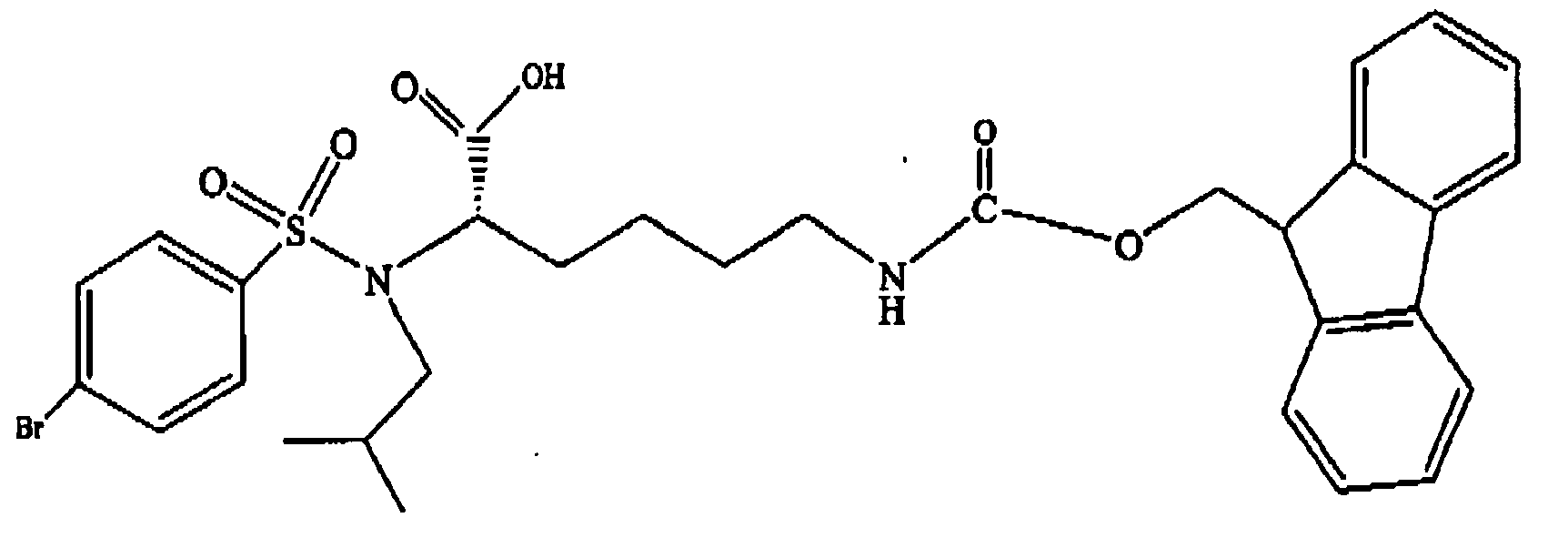
- A compound of formula

- A compound of formula

- A compound of formula

- A compound of formula

- A compound of formula

- A compound of formula

- A compound of formula

- A compound of formula

- A compound of formula

- A compound of formula

- A compound of formula

- A compound of formula

- A compound of formula

- A compound of formula
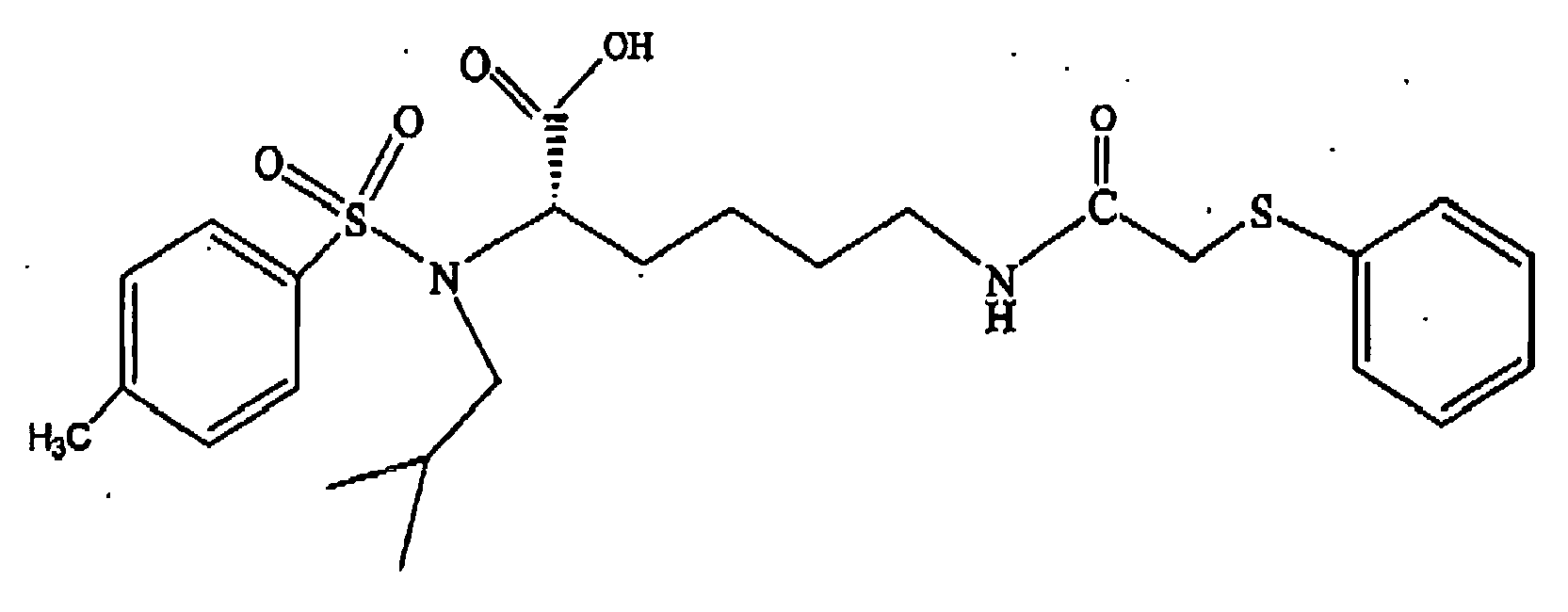
- A compound of formula
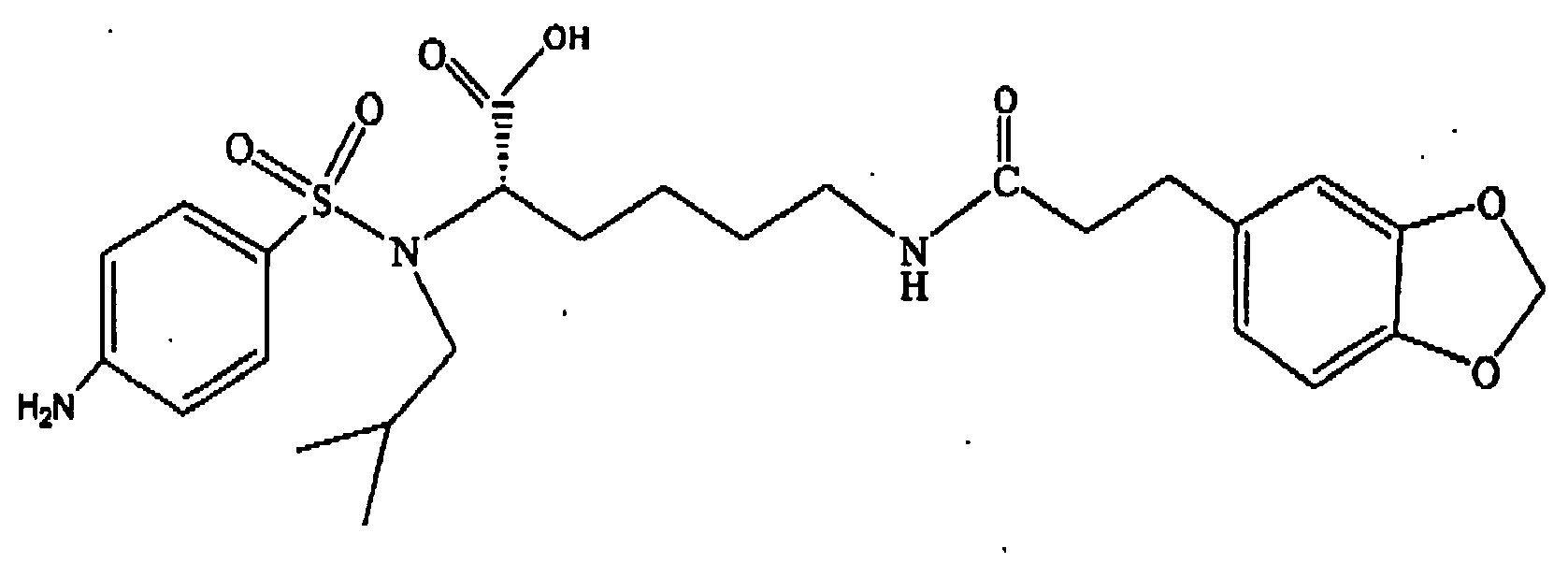
- A compound of formula

- A compound of formula

- A compound of formula

- A compound of formula

- A compound of formula
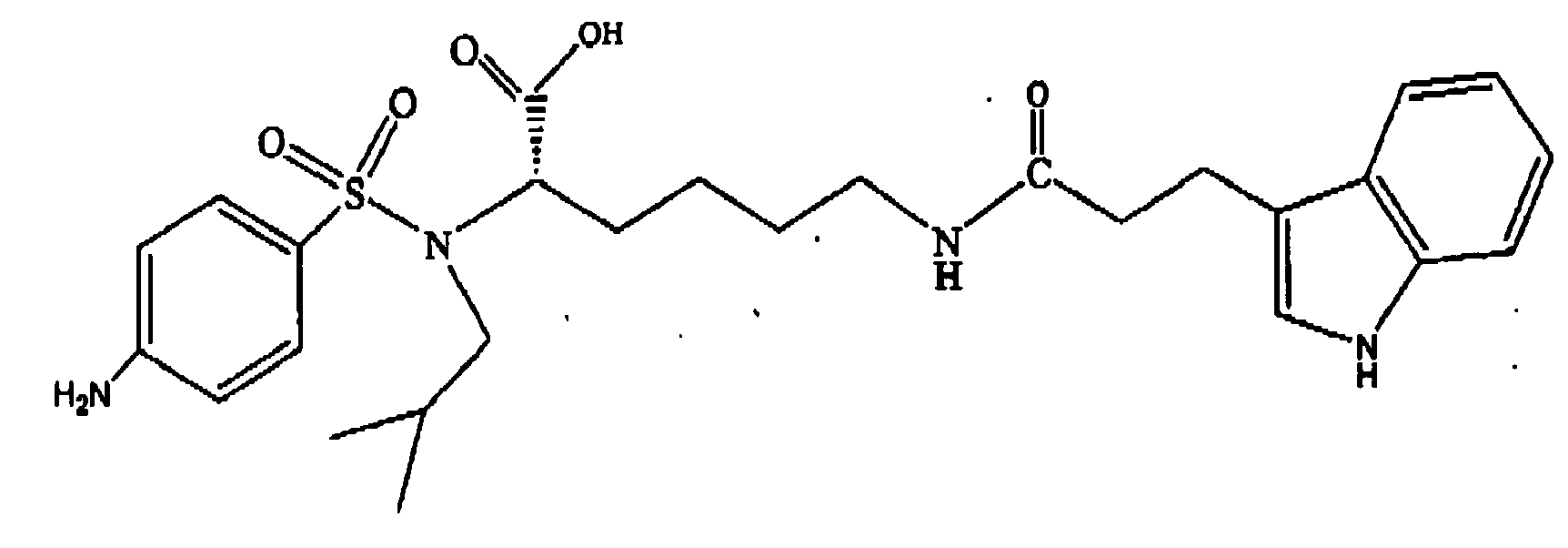
- A compound of formula I
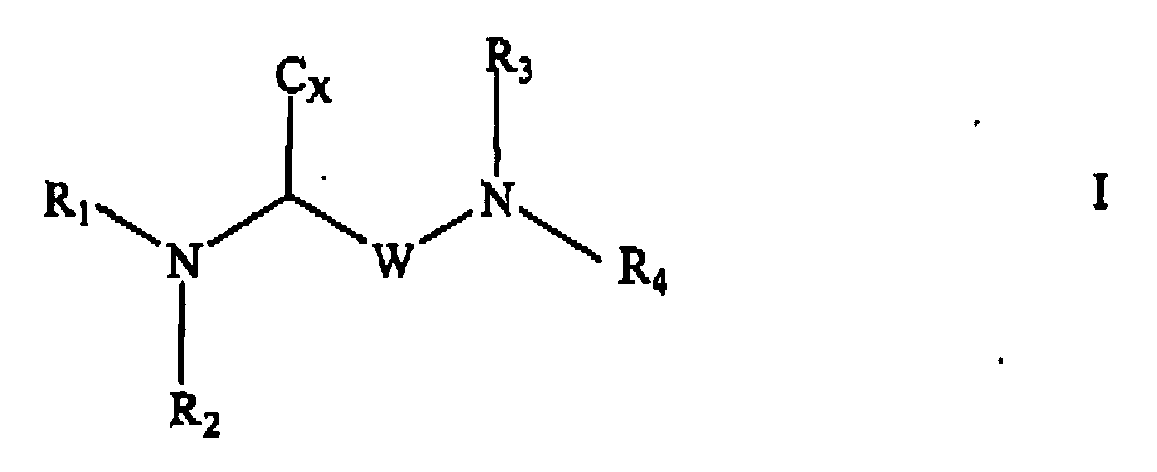
wherein W is selected from the group consisting of -(CH2)n-, and -CH2-XX-CH2-CH2-
wherein n is 1,2,3,4 or 5
wherein XX is selected from the group consisting of O, NR5, S, SO and SO2
wherein Cx is selected from the group consisting of -COOM, -COOR5, -CH2OH, -CONR5R6, - CONHOH, 9-fluorenylmethoxycarbonyl-lysyl-NH-CO-, benzyloxycarbonyl, and tetrazolyl, wherein M is an alkali metal or an alkaline earth metal,
wherein R1 and R3, the same or different, are selected from the group consisting of H, tert-butoxycarbonyl, a straight or branched alkyl group of 1 to 6 carbon atoms, a cycloalkylalkyl group having 3 to 7 carbon atoms in the cycloalkyl part thereof and 1 to 3 carbon atoms in the alkyl part thereof , an arylalkyl group of formula (2)
wherein R2 and R4 the same or different are selected from the group consisting of H, CHO-, CF3-, CH3CO-, benzoyl, 9-fluorenylmethoxycarbonyl, tert-butoxycarbonyl, benzyloxycarbonyl, 2-chlorobenzyloxycarbonyl, 4-OH-7-CF3-quinoline-3-CO-, 3-indole-CH2CH2CO-, 3-indole-CH2CO-, 3-indole-CO-, 2-indole-CO-, C6H5OCH2CO-, (C6H5)2COHCO-, C6H5SCH2CO-, C6H5CH2CH2CS-, cholesteryl-OCO-, 2-quinoline-CO-, fluorene-CO-, xanthene-9-CO-, 4-C6H5CH2CH2CONHC6H4SO2-, 2-NO2C6H4CHCHCO-, 3-C5H4NCKHCO-, 3-C5H4NCH2CH2CO-, fluorene-CH2CO-, camphor-10-CH2-SO2-, (C6H5)2CH-CO-, 1-naphthyl-SO2-, 2-naphthyl-SO2-, fluorenyl-SO2-, phenanthryl-SO2-, anthracenyl-SO2-, quinoline-SO2-, 4-CH3COONHC6H4-SO2-, C6H5CHCH-SO2-, 4-NO2C6H4-SO2-, an aryalkyl group of formula (2) as defined above, a sulfonyl group of formula (3)
and
a carbonyl group of formula (4)
wherein D is selected from the group consisting of O, NR7 and S,
wherein m is 1, 2, 3 or 4,
wherein mm is 0, 1, 2, 3 or 4
wherein X, Y and Z, are independently selected from the group consisting of H, a straight or branched alkyl group of 1 to 6 carbon atoms, F, Cl, Br, I, -CF3, -NO2, -NH2 -NH5, -NR5R6,-NHCOR5, -NHCOheterocycle, heterocycle being as defined above, -OR5, -SR5, -SOR5,-SO2R5, -COOR5, -CH2OH, -COR5, and -NHCOAryl, Aryl being an unsubstituted phenyl group or a phenyl group substituted by one or more members of the group consisting of a straight or branched alkyl group of I to 6 carbon atoms, F, Cl, Br, I, -CF3, -NO2, -NH2 -NHR5, -NR5R6, -NHCOR5, -OR5, -SR5, -SOR5, -SO2R5, -COOR5, -CH2OH, -COR5,
wherein R5 and R6, are independently selected from the group consisting of H, and a straight or branched alkyl group of 1 to 6 carbon atoms
wherein R7 is selected from the group consisting of HO-, CH3O-, NC-, benzyloxy, and H2N- and
wherein heterocycle is selected from the group consisting of heterocyclic groups comprising 5 to 7 ring atoms, said ring atoms comprising carbon atoms and from one to four heteroatoms selected from the group consisting of nitrogen, oxygen and sulfur, said heterocyclic groups being monocycylic, bicycylic or monocycylic fused with one or two benzene rings.
Applications Claiming Priority (2)
| Application Number | Priority Date | Filing Date | Title |
|---|---|---|---|
| US09/526,209 US6455587B1 (en) | 2000-03-15 | 2000-03-15 | Amino acid derivatives as HIV aspartyl protease inhibitors |
| EP01914865A EP1263716B1 (en) | 2000-03-15 | 2001-03-07 | Amino acid derivatives as hiv aspartyl protease inhibitors |
Related Parent Applications (1)
| Application Number | Title | Priority Date | Filing Date |
|---|---|---|---|
| EP01914865A Division EP1263716B1 (en) | 2000-03-15 | 2001-03-07 | Amino acid derivatives as hiv aspartyl protease inhibitors |
Publications (2)
| Publication Number | Publication Date |
|---|---|
| EP1921062A2 true EP1921062A2 (en) | 2008-05-14 |
| EP1921062A3 EP1921062A3 (en) | 2008-07-16 |
Family
ID=24096388
Family Applications (2)
| Application Number | Title | Priority Date | Filing Date |
|---|---|---|---|
| EP07025193A Withdrawn EP1921062A3 (en) | 2000-03-15 | 2001-03-07 | Amino acid derivatives as HIV aspartyl protease inhibitors |
| EP01914865A Expired - Lifetime EP1263716B1 (en) | 2000-03-15 | 2001-03-07 | Amino acid derivatives as hiv aspartyl protease inhibitors |
Family Applications After (1)
| Application Number | Title | Priority Date | Filing Date |
|---|---|---|---|
| EP01914865A Expired - Lifetime EP1263716B1 (en) | 2000-03-15 | 2001-03-07 | Amino acid derivatives as hiv aspartyl protease inhibitors |
Country Status (7)
| Country | Link |
|---|---|
| US (1) | US6455587B1 (en) |
| EP (2) | EP1921062A3 (en) |
| AT (1) | ATE382604T1 (en) |
| AU (1) | AU2001242136A1 (en) |
| CA (1) | CA2401821C (en) |
| DE (1) | DE60132177T2 (en) |
| WO (1) | WO2001068593A2 (en) |
Families Citing this family (20)
| Publication number | Priority date | Publication date | Assignee | Title |
|---|---|---|---|---|
| CA2477585A1 (en) * | 2001-11-21 | 2003-06-05 | Elan Pharmaceuticals, Inc. | Amino acid derivatives useful for the treatment of alzheimer's disease |
| CN1289469C (en) * | 2001-12-20 | 2006-12-13 | 布里斯托尔-迈尔斯斯奎布公司 | Alpha-(n-sulphonamido)acetamide derivatives as beta-amyloid inhibitors |
| CA2374362C (en) * | 2002-03-04 | 2008-01-22 | Brent Richard Stranix | Urea derivatives as hiv aspartyl protease inhibitors |
| AU2003206588A1 (en) * | 2002-03-04 | 2003-09-16 | Procyon Biopharma Inc. | Urea derivatives as hiv aspartyl protease inhibitors |
| US6632816B1 (en) * | 2002-12-23 | 2003-10-14 | Pharmacor Inc. | Aromatic derivatives as HIV aspartyl protease inhibitors |
| US7230133B2 (en) | 2003-05-01 | 2007-06-12 | Bristol-Myers Squibb Company | Malonamides and malonamide derivatives as modulators of chemokine receptor activity |
| RU2364587C2 (en) * | 2003-10-29 | 2009-08-20 | Элан Фармасьютикалз, Инк. | N-replaced benzosulphonamides |
| US7388008B2 (en) | 2004-08-02 | 2008-06-17 | Ambrilia Biopharma Inc. | Lysine based compounds |
| ES2539527T3 (en) * | 2005-04-27 | 2015-07-01 | Taimed Biologics, Inc. | Method for improving the pharmacokinetics of protease inhibitors and protease inhibitor precursors |
| CN101405293B (en) * | 2005-11-30 | 2013-03-13 | 中裕新药股份有限公司 | Lysine-based prodrugs of aspartyl protease inhibitors and methods of making the same |
| US8410300B2 (en) * | 2006-09-21 | 2013-04-02 | Taimed Biologics, Inc. | Protease inhibitors |
| EP2285774B1 (en) | 2008-06-05 | 2015-02-25 | Yissum Research Development Company of the Hebrew University of Jerusalem Ltd. | Novel modulators of protein kinase signaling |
| CA2762582A1 (en) | 2009-05-27 | 2010-12-02 | Merck Sharp & Dohme Corp. | Hiv protease inhibitors |
| WO2012055031A1 (en) | 2010-10-28 | 2012-05-03 | Merck Canada Inc. | Hiv protease inhibitors |
| US9187415B2 (en) | 2010-10-29 | 2015-11-17 | Merck Canada Inc. | Sulfonamides as HIV protease inhibitors |
| EP2771332B1 (en) | 2011-10-26 | 2016-06-29 | Merck Canada Inc. | Thiophen and thiazol sulfonamid derivatives as HIV protease inhibitors for the treatment of AIDS |
| US9770454B2 (en) | 2013-07-14 | 2017-09-26 | Yissum Research Development Company Of The Hebrew University Of Jerusalem, Ltd. | IGF-1R signaling pathway inhibitors useful in the treatment of neurodegenerative diseases |
| CN112353938A (en) | 2015-02-05 | 2021-02-12 | 特尔诺沃有限公司 | Combination of IRS/STAT3 dual modulators and anticancer agents for the treatment of cancer |
| WO2018045376A2 (en) * | 2016-09-02 | 2018-03-08 | Ikaria Inc. | Functionally modified polypeptides and radiobiosynthesis |
| CN109824547A (en) * | 2019-03-20 | 2019-05-31 | 康化(上海)新药研发有限公司 | A kind of synthetic method of double different protected amino acids |
Citations (16)
| Publication number | Priority date | Publication date | Assignee | Title |
|---|---|---|---|---|
| EP0606046A1 (en) * | 1993-01-06 | 1994-07-13 | Ciba-Geigy Ag | Arylsulfonamido-substituted hydroxamic acids |
| JPH0827129A (en) * | 1994-07-18 | 1996-01-30 | Rikagaku Kenkyusho | Cyclic polyamine compound and antiviral agent containing the same as active ingredient |
| US5506242A (en) * | 1993-01-06 | 1996-04-09 | Ciba-Geigy Corporation | Arylsufonamido-substituted hydroxamic acids |
| US5552419A (en) * | 1993-01-06 | 1996-09-03 | Ciba-Geigy Corporation | Arylsulfonamido-substituted hydroxamic acids |
| HUP9601036A2 (en) * | 1996-04-19 | 1996-12-30 | Pfizer | Hydroxamic acid derivatives of aryl sulfonyl cyclic amines and pharmaceutical compositions containg them |
| US5646167A (en) * | 1993-01-06 | 1997-07-08 | Ciba-Geigy Corporation | Arylsulfonamido-substituted hydroxamix acids |
| WO1999017790A1 (en) * | 1997-10-07 | 1999-04-15 | Cephalon Inc. | PEPTIDE-CONTAINING α-KETOAMIDE CYSTEINE AND SERINE PROTEASE INHIBITORS |
| WO1999017778A1 (en) * | 1997-10-07 | 1999-04-15 | Cephalon Inc. | α-KETOAMIDE MULTICATALYTIC PROTEASE INHIBITORS |
| WO1999041246A1 (en) * | 1998-02-11 | 1999-08-19 | Du Pont Pharmaceuticals Company | Novel cyclic sulfonamide derivatives as metalloproteinase inhibitors |
| WO2002046171A2 (en) * | 2000-12-06 | 2002-06-13 | Signal Pharmaceuticals, Inc. | Anilinopyrimidine derivatives as ikk inhibitors and compositions and methods related thereto |
| WO2002046170A2 (en) * | 2000-12-06 | 2002-06-13 | Signal Pharmaceuticals, Inc. | Anilinopyrimidine derivatives as jnk pathway inhibitors and compositions and methods related thereto |
| WO2003001206A1 (en) * | 2001-06-26 | 2003-01-03 | Glaxo Group Limited | Method of mass spectrometry |
| WO2003004472A1 (en) * | 2001-07-05 | 2003-01-16 | Astrazeneca Ab | Arylamines for the treatment of conditions associated with gsk-3 |
| US20040209921A1 (en) * | 2003-04-11 | 2004-10-21 | Gary Bridger | CXCR4 chemokine receptor binding comounds |
| WO2009105781A1 (en) * | 2008-02-21 | 2009-08-27 | Sequoia Pharmaceuticals, Inc. | Methods for inhibiting drug degradation |
| WO2009105782A1 (en) * | 2008-02-21 | 2009-08-27 | Sequoia Pharmaceuticals, Inc. | Hiv protease inhibitor and cytochrome p450 inhibitor combinations |
Family Cites Families (6)
| Publication number | Priority date | Publication date | Assignee | Title |
|---|---|---|---|---|
| WO1992006998A1 (en) * | 1990-10-11 | 1992-04-30 | Boehringer Ingelheim Kg | Cyclopeptides, a method of preparing them, and their use as drugs |
| JPH06321950A (en) * | 1993-05-14 | 1994-11-22 | Takeda Chem Ind Ltd | Water-soluble lankacidin derivative |
| WO1995006998A1 (en) | 1993-08-31 | 1995-03-09 | Stanley Kugell | Telephone billing method |
| JPH10500938A (en) | 1994-03-07 | 1998-01-27 | バーテックス ファーマシューティカルズ インコーポレイテッド | Sulfonamide derivatives as asparatyl protease inhibitors |
| AU720615B2 (en) | 1997-01-17 | 2000-06-08 | Pharmacia & Upjohn Company | Bis-sulfonomides hydroxamic acids as MMP inhibitors |
| US5986102A (en) | 1998-04-29 | 1999-11-16 | Pharmacopeia, Inc. | Hydroxypropylamide peptidomimetics as inhibitors of aspartyl proteases |
-
2000
- 2000-03-15 US US09/526,209 patent/US6455587B1/en not_active Expired - Lifetime
-
2001
- 2001-03-07 CA CA2401821A patent/CA2401821C/en not_active Expired - Fee Related
- 2001-03-07 AU AU2001242136A patent/AU2001242136A1/en not_active Abandoned
- 2001-03-07 EP EP07025193A patent/EP1921062A3/en not_active Withdrawn
- 2001-03-07 DE DE60132177T patent/DE60132177T2/en not_active Expired - Lifetime
- 2001-03-07 EP EP01914865A patent/EP1263716B1/en not_active Expired - Lifetime
- 2001-03-07 AT AT01914865T patent/ATE382604T1/en not_active IP Right Cessation
- 2001-03-07 WO PCT/CA2001/000296 patent/WO2001068593A2/en not_active Ceased
Patent Citations (16)
| Publication number | Priority date | Publication date | Assignee | Title |
|---|---|---|---|---|
| EP0606046A1 (en) * | 1993-01-06 | 1994-07-13 | Ciba-Geigy Ag | Arylsulfonamido-substituted hydroxamic acids |
| US5506242A (en) * | 1993-01-06 | 1996-04-09 | Ciba-Geigy Corporation | Arylsufonamido-substituted hydroxamic acids |
| US5552419A (en) * | 1993-01-06 | 1996-09-03 | Ciba-Geigy Corporation | Arylsulfonamido-substituted hydroxamic acids |
| US5646167A (en) * | 1993-01-06 | 1997-07-08 | Ciba-Geigy Corporation | Arylsulfonamido-substituted hydroxamix acids |
| JPH0827129A (en) * | 1994-07-18 | 1996-01-30 | Rikagaku Kenkyusho | Cyclic polyamine compound and antiviral agent containing the same as active ingredient |
| HUP9601036A2 (en) * | 1996-04-19 | 1996-12-30 | Pfizer | Hydroxamic acid derivatives of aryl sulfonyl cyclic amines and pharmaceutical compositions containg them |
| WO1999017790A1 (en) * | 1997-10-07 | 1999-04-15 | Cephalon Inc. | PEPTIDE-CONTAINING α-KETOAMIDE CYSTEINE AND SERINE PROTEASE INHIBITORS |
| WO1999017778A1 (en) * | 1997-10-07 | 1999-04-15 | Cephalon Inc. | α-KETOAMIDE MULTICATALYTIC PROTEASE INHIBITORS |
| WO1999041246A1 (en) * | 1998-02-11 | 1999-08-19 | Du Pont Pharmaceuticals Company | Novel cyclic sulfonamide derivatives as metalloproteinase inhibitors |
| WO2002046171A2 (en) * | 2000-12-06 | 2002-06-13 | Signal Pharmaceuticals, Inc. | Anilinopyrimidine derivatives as ikk inhibitors and compositions and methods related thereto |
| WO2002046170A2 (en) * | 2000-12-06 | 2002-06-13 | Signal Pharmaceuticals, Inc. | Anilinopyrimidine derivatives as jnk pathway inhibitors and compositions and methods related thereto |
| WO2003001206A1 (en) * | 2001-06-26 | 2003-01-03 | Glaxo Group Limited | Method of mass spectrometry |
| WO2003004472A1 (en) * | 2001-07-05 | 2003-01-16 | Astrazeneca Ab | Arylamines for the treatment of conditions associated with gsk-3 |
| US20040209921A1 (en) * | 2003-04-11 | 2004-10-21 | Gary Bridger | CXCR4 chemokine receptor binding comounds |
| WO2009105781A1 (en) * | 2008-02-21 | 2009-08-27 | Sequoia Pharmaceuticals, Inc. | Methods for inhibiting drug degradation |
| WO2009105782A1 (en) * | 2008-02-21 | 2009-08-27 | Sequoia Pharmaceuticals, Inc. | Hiv protease inhibitor and cytochrome p450 inhibitor combinations |
Non-Patent Citations (47)
| Title |
|---|
| ACTA CHEMICA SCANDINAVICA , 48(4), 324-33 CODEN: ACHSE7; ISSN: 0904-213X, 1994 * |
| BIOCHEMICAL JOURNAL , 107(1), 97-102 CODEN: BIJOAK; ISSN: 0264-6021, 1968 * |
| BUKRINSKY ET AL., PROC. NAT. ACAD. SCI., vol. 89, 1992, pages 6580 - 6584 |
| CHEMICAL ABSTRACTS, vol. 1962, Columbus, Ohio, US; abstract no. 449585, CURRAGH, E. F. ET AL: "Kinetics of lactamization of methyl esters of some .alpha.-N-p-toluenesulfonyl derivatives of .alpha.,.omega.-diamino acids in aqueous solution" * |
| CHEMICAL COMMUNICATIONS (CAMBRIDGE, UNITED KINGDOM) , (17), 2302-2304 CODEN: CHCOFS; ISSN: 1359-7345, 2009 * |
| CHEMISTRY LETTERS , (6), 589-90 CODEN: CMLTAG; ISSN: 0366-7022, 1978 * |
| COLLECTION OF CZECHOSLOVAK CHEMICAL COMMUNICATIONS , 53(11A), 2473-94 CODEN: CCCCAK; ISSN: 0010-0765, 1988 * |
| CURRAGH, E. F. ET AL: "Kinetics of lactamization of methyl esters of some .alpha.-N-p-toluenesulfonyl derivatives of .alpha.,.omega.-diamino acids in aqueous solution", JOURNAL OF THE CHEMICAL SOCIETY 2948-52 CODEN: JCSOA9; ISSN: 0368-1769, 1962 * |
| DATABASE CA [online] CHEMICAL ABSTRACTS SERVICE, COLUMBUS, OHIO, US; BERG, STEFAN ET AL: "Preparation of pyrazine-2-carboxamides as glycogen synthase kinase-3 (GSK3) inhibitors", retrieved from STN Database accession no. 2003:42250 * |
| DATABASE CA [online] CHEMICAL ABSTRACTS SERVICE, COLUMBUS, OHIO, US; BONNARD, VANESSA ET AL: "Polyamide amino acids: a new class of RNA ligands", retrieved from STN Database accession no. 2009:475717 * |
| DATABASE CA [online] CHEMICAL ABSTRACTS SERVICE, COLUMBUS, OHIO, US; BRIDGER, GARY ET AL: "Preparation of pyridine derivatives as CXCR4 chemokine receptor binding compounds", retrieved from STN Database accession no. 2004:878165 * |
| DATABASE CA [online] CHEMICAL ABSTRACTS SERVICE, COLUMBUS, OHIO, US; CHATTERJEE, SANKAR ET AL: "Preparation of .alpha.-ketoamide arginine peptide derivatives as multicatalytic protease inhibitors", retrieved from STN Database accession no. 1999:249083 * |
| DATABASE CA [online] CHEMICAL ABSTRACTS SERVICE, COLUMBUS, OHIO, US; CHATTERJEE, SANKAR ET AL: "Preparation of peptide-containing .alpha.-ketoamide cysteine and serine protease inhibitors", retrieved from STN Database accession no. 1999:249093 * |
| DATABASE CA [online] CHEMICAL ABSTRACTS SERVICE, COLUMBUS, OHIO, US; CURRAGH, E. F. ET AL: "Kinetics of lactamization of methyl esters of some .alpha.-N-p-toluenesulfonyl derivatives of .alpha.,.omega.-diamino acids in aqueous solution", retrieved from STN Database accession no. 1962:449585 * |
| DATABASE CA [online] CHEMICAL ABSTRACTS SERVICE, COLUMBUS, OHIO, US; DUAN, JINGWU ET AL: "Novel cyclic sulfonamide derivatives as metalloproteinase inhibitors", retrieved from STN Database accession no. 1999:529140 * |
| DATABASE CA [online] CHEMICAL ABSTRACTS SERVICE, COLUMBUS, OHIO, US; EISSENSTAT, MICHAEL ET AL: "HIV protease inhibitor and cytochrome P450 inhibitor combinations", retrieved from STN Database accession no. 2009:1049219 * |
| DATABASE CA [online] CHEMICAL ABSTRACTS SERVICE, COLUMBUS, OHIO, US; EISSENSTAT, MICHAEL ET AL: "Methods for inhibiting drug degradation", retrieved from STN Database accession no. 2009:1041441 * |
| DATABASE CA [online] CHEMICAL ABSTRACTS SERVICE, COLUMBUS, OHIO, US; ELMORE, DONALD T. ET AL: "Behavior of trypsin towards .alpha.-N-methyl-.alpha.-N-toluene-p-sulfonyl- L-lysine .beta.-naphthyl ester. New method for determining the absolute molarity of solutions of trypsin", retrieved from STN Database accession no. 1968:101979 * |
| DATABASE CA [online] CHEMICAL ABSTRACTS SERVICE, COLUMBUS, OHIO, US; HLAVACEK, JAN ET AL: "Amino acids and peptides. Part CCV. An alternative route to N.alpha.-methylamino acid derivatives. Synthesis and conformation of some N.alpha.-acetyl-N.alpha.-methylamino acid methylamides", retrieved from STN Database accession no. 1990:21273 * |
| DATABASE CA [online] CHEMICAL ABSTRACTS SERVICE, COLUMBUS, OHIO, US; IWATA, MASAAKI ET AL: "Preparation of cyclic polyamines as antiviral agents", retrieved from STN Database accession no. 1996:294877 * |
| DATABASE CA [online] CHEMICAL ABSTRACTS SERVICE, COLUMBUS, OHIO, US; KOIS, ADAM ET AL: "Preparation of anilinopyrimidines as IKK inhibitors", retrieved from STN Database accession no. 2002:449662 * |
| DATABASE CA [online] CHEMICAL ABSTRACTS SERVICE, COLUMBUS, OHIO, US; KOIS, ADAM ET AL: "Preparation of anilinopyrimidines as JNK pathway inhibitors", retrieved from STN Database accession no. 2002:449661 * |
| DATABASE CA [online] CHEMICAL ABSTRACTS SERVICE, COLUMBUS, OHIO, US; MACPHERSON, LAWRENCE J. ET AL: "Arylsulfonamido-substituted hydroxamic acid antiinflammatory agents", retrieved from STN Database accession no. 1995:31799 * |
| DATABASE CA [online] CHEMICAL ABSTRACTS SERVICE, COLUMBUS, OHIO, US; MACPHERSON, LAWRENCE J. ET AL: "Arylsulfonamido-substituted hydroxamic acids and method of inhibiting metalloelastase activity, inhibiting elastin degradation, or treating macrophage metalloelastase dependent conditions in mammals", retrieved from STN Database accession no. 1996:275067 * |
| DATABASE CA [online] CHEMICAL ABSTRACTS SERVICE, COLUMBUS, OHIO, US; MACPHERSON, LAWRENCE J. ET AL: "Arylsulfonamido-substituted hydroxamic acids", retrieved from STN Database accession no. 1997:456150 * |
| DATABASE CA [online] CHEMICAL ABSTRACTS SERVICE, COLUMBUS, OHIO, US; MACPHERSON, LAWRENCE J. ET AL: "Discovery of CGS 27023A, a Non-Peptidic, Potent, and Orally Active Stromelysin Inhibitor that Blocks Cartilage Degradation in Rabbits", retrieved from STN Database accession no. 1997:528478 * |
| DATABASE CA [online] CHEMICAL ABSTRACTS SERVICE, COLUMBUS, OHIO, US; MACPHERSON, LAWRENCE J. ET AL: "Preparation of arylsulfonamido-substituted hydroxamic acids as matrix-degrading metalloproteinase inhibitors", retrieved from STN Database accession no. 1996:563630 * |
| DATABASE CA [online] CHEMICAL ABSTRACTS SERVICE, COLUMBUS, OHIO, US; MCKEOWN, STEPHEN CARL: "Mass spectrometric analysis of peptide cleavage based on differential isotopic labeling", retrieved from STN Database accession no. 2003:6240 * |
| DATABASE CA [online] CHEMICAL ABSTRACTS SERVICE, COLUMBUS, OHIO, US; NOMOTO, SHINYA ET AL: "Synthesis of N.beta.-methyl-L-.beta.-arginine, a component amino acid in a new antibiotic, LL-BM547.beta.", retrieved from STN Database accession no. 1978:510320 * |
| DATABASE CA [online] CHEMICAL ABSTRACTS SERVICE, COLUMBUS, OHIO, US; PAPAIOANNOU, DIONISSIOS ET AL: "Redox N-alkylation of tosyl protected amino acid and peptide esters", retrieved from STN Database accession no. 1994:605985 * |
| DATABASE CA [online] CHEMICAL ABSTRACTS SERVICE, COLUMBUS, OHIO, US; PATINO, NADIA ET AL: "Modeling, synthesis and biological evaluation of an ethidium-arginine conjugate linked to a ribonuclease mimic directed against TAR RNA of HIV -1", retrieved from STN Database accession no. 2002:532518 * |
| DATABASE CA [online] CHEMICAL ABSTRACTS SERVICE, COLUMBUS, OHIO, US; PISCOPIO, ANTHONY D. ET AL: "Preparation of hydroxamic acid derivatives of arylsulfonyl cyclic amines for use in pharmaceutical compositions", retrieved from STN Database accession no. 2007:77240 * |
| DATABASE CA [online] CHEMICAL ABSTRACTS SERVICE, COLUMBUS, OHIO, US; SOLOMON, M. E. ET AL: "Synthesis of N.alpha.,N.beta.-alkylated diaminopropionic acid analogs", retrieved from STN Database accession no. 1995:695499 * |
| DATABASE CA [online] CHEMICAL ABSTRACTS SERVICE, COLUMBUS, OHIO, US; WANG, TINGMIN ET AL: "Synthesis of novel polyazadipyridinocyclophane scaffolds and their application for the generation of libraries", retrieved from STN Database accession no. 1998:417011 * |
| ELMORE, DONALD T. ET AL: "Behavior of trypsin towards .alpha.-N-methyl-.alpha.-N-toluene-p-sulfonyl- L-lysine .beta.-naphthyl ester. New method for determining the absolute molarity of solutions of trypsin", BIOCHEMICAL JOURNAL , 107(1), 97-102 CODEN: BIJOAK; ISSN: 0264-6021, 1968 * |
| EUROPEAN JOURNAL OF MEDICINAL CHEMISTRY , 37(7), 573-584 CODEN: EJMCA5; ISSN: 0223-5234, 2002 * |
| GALLAY ET AL., CELL, vol. 80, 1995, pages 379 - 388 |
| GOFFS. P. J., ACQ. IMM. DEFIC. SYNDR., vol. 3, 1990, pages 817 - 831 |
| HASELTINE W. A., FASEB J., vol. 5, 1991, pages 2349 - 2360 |
| JOURNAL OF MEDICINAL CHEMISTRY , 40(16), 2525-2532 CODEN: JMCMAR; ISSN: 0022-2623, 1997 * |
| JOURNAL OF THE CHEMICAL SOCIETY 2948-52 CODEN: JCSOA9; ISSN: 0368-1769, 1962 * |
| LASKY L.A. ET AL., CELL, vol. 50, 1987, pages 975 - 985 |
| MEEK ET AL., NATURE, vol. 343, 1990, pages 90 - 92 |
| SAKAI, H, J. VIROL., vol. 67, 1993, pages 1169 - 1174 |
| T.W. GREENE; P. G. M. WUTS: "Organic Synthesis", 1999, JOHN WILEY & SONS, INC., pages: 520 - 521 |
| TETRAHEDRON , 54(28), 7955-7976 CODEN: TETRAB; ISSN: 0040-4020, 1998 * |
| TETRAHEDRON LETTERS , 36(28), 4955-8 CODEN: TELEAY; ISSN: 0040-4039, 1995 * |
Also Published As
| Publication number | Publication date |
|---|---|
| DE60132177T2 (en) | 2009-02-05 |
| DE60132177D1 (en) | 2008-02-14 |
| ATE382604T1 (en) | 2008-01-15 |
| CA2401821A1 (en) | 2001-09-20 |
| EP1263716B1 (en) | 2008-01-02 |
| EP1263716A2 (en) | 2002-12-11 |
| US6455587B1 (en) | 2002-09-24 |
| WO2001068593A2 (en) | 2001-09-20 |
| CA2401821C (en) | 2013-05-21 |
| AU2001242136A1 (en) | 2001-09-24 |
| WO2001068593A3 (en) | 2002-02-28 |
| EP1921062A3 (en) | 2008-07-16 |
Similar Documents
| Publication | Publication Date | Title |
|---|---|---|
| US6455587B1 (en) | Amino acid derivatives as HIV aspartyl protease inhibitors | |
| JP5250732B2 (en) | Aromatic derivatives as HIV aspartyl protease inhibitors | |
| EP1377542B1 (en) | Hiv protease inhibitors based on amino acid derivatives | |
| WO2000059867A1 (en) | Hydroxyphenyl derivatives with hiv integrase inhibitory properties | |
| EP1480941B1 (en) | Urea derivatives as hiv aspartyl protease inhibitors | |
| US6528532B1 (en) | Urea derivatives as HIV aspartyl protease inhibitors | |
| US6362165B1 (en) | Hydroxyphenyl derivatives with HIV integrase inhibitory properties | |
| KR20040037189A (en) | Preparation of hiv protease inhibitors | |
| CA2302144A1 (en) | Hydroxyphenyl derivatives with hiv integrase inhibitory properties | |
| CA2267657A1 (en) | Hydroxyphenyl derivatives with hiv integrase inhibitory properties |
Legal Events
| Date | Code | Title | Description |
|---|---|---|---|
| PUAI | Public reference made under article 153(3) epc to a published international application that has entered the european phase |
Free format text: ORIGINAL CODE: 0009012 |
|
| 17P | Request for examination filed |
Effective date: 20080111 |
|
| AC | Divisional application: reference to earlier application |
Ref document number: 1263716 Country of ref document: EP Kind code of ref document: P |
|
| AK | Designated contracting states |
Kind code of ref document: A2 Designated state(s): AT BE CH CY DE DK ES FI FR GB GR IE IT LI LU MC NL PT SE TR |
|
| PUAL | Search report despatched |
Free format text: ORIGINAL CODE: 0009013 |
|
| AK | Designated contracting states |
Kind code of ref document: A3 Designated state(s): AT BE CH CY DE DK ES FI FR GB GR IE IT LI LU MC NL PT SE TR |
|
| RIC1 | Information provided on ipc code assigned before grant |
Ipc: C07C 311/29 20060101ALI20080606BHEP Ipc: C07C 311/10 20060101ALI20080606BHEP Ipc: C07C 311/46 20060101ALI20080606BHEP Ipc: A61K 31/395 20060101ALI20080606BHEP Ipc: C07C 271/22 20060101ALI20080606BHEP Ipc: C07C 311/18 20060101ALI20080606BHEP Ipc: C07C 311/19 20060101AFI20080408BHEP Ipc: A61K 31/325 20060101ALI20080606BHEP Ipc: C07C 311/13 20060101ALI20080606BHEP Ipc: C07C 311/42 20060101ALI20080606BHEP |
|
| 17Q | First examination report despatched |
Effective date: 20090211 |
|
| AKX | Designation fees paid |
Designated state(s): AT BE CH CY DE DK ES FI FR GB GR IE IT LI LU MC NL PT SE TR |
|
| STAA | Information on the status of an ep patent application or granted ep patent |
Free format text: STATUS: THE APPLICATION IS DEEMED TO BE WITHDRAWN |
|
| 18D | Application deemed to be withdrawn |
Effective date: 20100615 |