EP1921555A1 - Procédé et appareil pour déplacer, diviser ou fusionner un contenu protégé par le droit d'auteur - Google Patents
Procédé et appareil pour déplacer, diviser ou fusionner un contenu protégé par le droit d'auteur Download PDFInfo
- Publication number
- EP1921555A1 EP1921555A1 EP07005041A EP07005041A EP1921555A1 EP 1921555 A1 EP1921555 A1 EP 1921555A1 EP 07005041 A EP07005041 A EP 07005041A EP 07005041 A EP07005041 A EP 07005041A EP 1921555 A1 EP1921555 A1 EP 1921555A1
- Authority
- EP
- European Patent Office
- Prior art keywords
- rights
- terminal
- information
- key
- rights object
- Prior art date
- Legal status (The legal status is an assumption and is not a legal conclusion. Google has not performed a legal analysis and makes no representation as to the accuracy of the status listed.)
- Withdrawn
Links
Images

















Classifications
-
- G—PHYSICS
- G06—COMPUTING OR CALCULATING; COUNTING
- G06F—ELECTRIC DIGITAL DATA PROCESSING
- G06F21/00—Security arrangements for protecting computers, components thereof, programs or data against unauthorised activity
- G06F21/10—Protecting distributed programs or content, e.g. vending or licensing of copyrighted material ; Digital rights management [DRM]
-
- H—ELECTRICITY
- H04—ELECTRIC COMMUNICATION TECHNIQUE
- H04L—TRANSMISSION OF DIGITAL INFORMATION, e.g. TELEGRAPHIC COMMUNICATION
- H04L63/00—Network architectures or network communication protocols for network security
- H04L63/04—Network architectures or network communication protocols for network security for providing a confidential data exchange among entities communicating through data packet networks
- H04L63/0428—Network architectures or network communication protocols for network security for providing a confidential data exchange among entities communicating through data packet networks wherein the data content is protected, e.g. by encrypting or encapsulating the payload
- H04L63/0442—Network architectures or network communication protocols for network security for providing a confidential data exchange among entities communicating through data packet networks wherein the data content is protected, e.g. by encrypting or encapsulating the payload wherein the sending and receiving network entities apply asymmetric encryption, i.e. different keys for encryption and decryption
-
- H—ELECTRICITY
- H04—ELECTRIC COMMUNICATION TECHNIQUE
- H04L—TRANSMISSION OF DIGITAL INFORMATION, e.g. TELEGRAPHIC COMMUNICATION
- H04L63/00—Network architectures or network communication protocols for network security
- H04L63/12—Applying verification of the received information
-
- H—ELECTRICITY
- H04—ELECTRIC COMMUNICATION TECHNIQUE
- H04L—TRANSMISSION OF DIGITAL INFORMATION, e.g. TELEGRAPHIC COMMUNICATION
- H04L9/00—Cryptographic mechanisms or cryptographic arrangements for secret or secure communications; Network security protocols
- H04L9/08—Key distribution or management, e.g. generation, sharing or updating, of cryptographic keys or passwords
- H04L9/0816—Key establishment, i.e. cryptographic processes or cryptographic protocols whereby a shared secret becomes available to two or more parties, for subsequent use
- H04L9/0819—Key transport or distribution, i.e. key establishment techniques where one party creates or otherwise obtains a secret value, and securely transfers it to the other(s)
- H04L9/0822—Key transport or distribution, i.e. key establishment techniques where one party creates or otherwise obtains a secret value, and securely transfers it to the other(s) using key encryption key
-
- H—ELECTRICITY
- H04—ELECTRIC COMMUNICATION TECHNIQUE
- H04L—TRANSMISSION OF DIGITAL INFORMATION, e.g. TELEGRAPHIC COMMUNICATION
- H04L9/00—Cryptographic mechanisms or cryptographic arrangements for secret or secure communications; Network security protocols
- H04L9/32—Cryptographic mechanisms or cryptographic arrangements for secret or secure communications; Network security protocols including means for verifying the identity or authority of a user of the system or for message authentication, e.g. authorization, entity authentication, data integrity or data verification, non-repudiation, key authentication or verification of credentials
- H04L9/3236—Cryptographic mechanisms or cryptographic arrangements for secret or secure communications; Network security protocols including means for verifying the identity or authority of a user of the system or for message authentication, e.g. authorization, entity authentication, data integrity or data verification, non-repudiation, key authentication or verification of credentials using cryptographic hash functions
- H04L9/3242—Cryptographic mechanisms or cryptographic arrangements for secret or secure communications; Network security protocols including means for verifying the identity or authority of a user of the system or for message authentication, e.g. authorization, entity authentication, data integrity or data verification, non-repudiation, key authentication or verification of credentials using cryptographic hash functions involving keyed hash functions, e.g. message authentication codes [MACs], CBC-MAC or HMAC
-
- H—ELECTRICITY
- H04—ELECTRIC COMMUNICATION TECHNIQUE
- H04L—TRANSMISSION OF DIGITAL INFORMATION, e.g. TELEGRAPHIC COMMUNICATION
- H04L9/00—Cryptographic mechanisms or cryptographic arrangements for secret or secure communications; Network security protocols
- H04L9/32—Cryptographic mechanisms or cryptographic arrangements for secret or secure communications; Network security protocols including means for verifying the identity or authority of a user of the system or for message authentication, e.g. authorization, entity authentication, data integrity or data verification, non-repudiation, key authentication or verification of credentials
- H04L9/3247—Cryptographic mechanisms or cryptographic arrangements for secret or secure communications; Network security protocols including means for verifying the identity or authority of a user of the system or for message authentication, e.g. authorization, entity authentication, data integrity or data verification, non-repudiation, key authentication or verification of credentials involving digital signatures
-
- H—ELECTRICITY
- H04—ELECTRIC COMMUNICATION TECHNIQUE
- H04L—TRANSMISSION OF DIGITAL INFORMATION, e.g. TELEGRAPHIC COMMUNICATION
- H04L2209/00—Additional information or applications relating to cryptographic mechanisms or cryptographic arrangements for secret or secure communication H04L9/00
- H04L2209/60—Digital content management, e.g. content distribution
- H04L2209/603—Digital right managament [DRM]
-
- H—ELECTRICITY
- H04—ELECTRIC COMMUNICATION TECHNIQUE
- H04L—TRANSMISSION OF DIGITAL INFORMATION, e.g. TELEGRAPHIC COMMUNICATION
- H04L2463/00—Additional details relating to network architectures or network communication protocols for network security covered by H04L63/00
- H04L2463/101—Additional details relating to network architectures or network communication protocols for network security covered by H04L63/00 applying security measures for digital rights management
Definitions
- the present invention relates to a method and apparatus which enable the moving, dividing, or merging of, e.g., copyrighted content.
- An information terminal that uses a service of this kind temporarily stores downloaded content in memory. In accordance with a user's play operation, the stored content is read from the memory and played.
- Some content has rights information to secure its copyright.
- Content of this type is encrypted and stored.
- the encrypted content is decrypted and played under conditions defined by the rights information.
- the play conditions include, e.g., the number of times of play and the period of play.
- a scheme is used which encrypts the content by using a content encryption key formed from, e.g., a random number, encrypts the content encryption key by using a key encryption key, and encrypts the key encryption key by using a binding key.
- the binding key uses, e.g., specific identification information of a terminal. When this encryption scheme is used, the content is bound to the terminal. Hence, only the information terminal that has encrypted the content can play it.
- a rights transfer method which transfers content bound by specific identification information from a terminal to another terminal and transfers the specific identification information via a secure transmission path. After the transfer, use of the specific identification information on the terminal of the transfer destination is enabled while use of the specific identification information by the terminal of the transfer source is inhibited (e.g., Jpn. Pat. Appln. KOKAI Publication No. 2003-303137 ).
- each terminal acquires terminal binding rights from, e.g., a rights server.
- Effective measures to transfer the rights upon changing the model or assign the rights to another terminal are not proposed yet.
- rights object RO need to be re-encrypted.
- any detailed mechanism for it is not proposed yet.
- OMA DRM SCE Open Mobile Alliance Digital Rights Management Secure Content Exchange
- a user domain is set for, e.g., each family or group to allow terminals in the user domain to share rights.
- OMA DRM SCE Open Mobile Alliance Digital Rights Management Secure Content Exchange
- a first terminal acquires a public key of a second terminal from the second terminal, re-encrypts encryption key information contained in a rights object as a moving target on the basis of the acquired public key of the second terminal, and transmits encrypted content and a rights object containing the re-encrypted encryption key information to the second terminal.
- a first terminal acquires a public key of a rights server from the rights server and re-encrypt encryption key information contained in a rights object as a moving target on the basis of the acquired public key of the rights server, and transmits a second rights object containing the re-encrypted encryption key information to the rights server.
- the rights server acquires a public key of a second terminal of a moving destination from the second terminal, re-encrypts, on the basis of the acquired public key of the second terminal, the encryption key information contained in the second rights object sent from the first terminal, and transmits a third rights object containing the re-encrypted encryption key information to the second terminal, and the encrypted content is transmitted from the first terminal to the second terminal.
- a first terminal acquires a public key of a second terminal from the second terminal, re-encrypts encryption key information contained in a rights object as a moving target on the basis of the acquired public key of the second terminal, and transmits a second rights object containing the re-encrypted encryption key information to a rights server.
- the rights server changes, on the basis of its private key, signature information contained in the second rights object sent from the first terminal, and transmits a third rights object containing the changed signature information to the second terminal, and encrypted content is transmitted from the first terminal to the second terminal.
- a first terminal acquires a public key of a second terminal from the second terminal, re-encrypts encryption key information contained in a rights object as a moving target on the basis of the acquired public key of the second terminal, and transmits encrypted content and a second rights object containing the re-encrypted encryption key information to the second terminal.
- the second rights object sent from the first terminal from the second terminal is transferred to a rights server.
- the rights server changes, on the basis of its private key, signature information contained in the second rights object sent from the second terminal, and transmits a third rights object containing the changed signature information to the second terminal.
- user domain management information including a first user domain key and a second user domain key different from the first user domain key is stored, and upon receiving a user domain division/merger request, a second rights object corresponding to a user domain of a division/merger destination is generated by re-encrypting, on the basis of the stored second user domain key, encryption key information contained in a first rights object.
- a second rights object corresponding to a user domain of a merger destination is generated by re-encrypting, on the basis of a second user domain key stored in advance, encryption key information encrypted by a first user domain key and adding the re-encrypted encryption key information to a first rights object.
- a second rights object corresponding to a user domain of a division destination is generated by deleting, from a first rights object, one of encryption key information encrypted by a first user domain key and encryption key information encrypted by a second user domain key.
- a moving source terminal TA executes binding conversion processing of a rights object RO and rewrite processing of rights information and its signature, thereby moving copyrighted content directly from a terminal to another terminal.
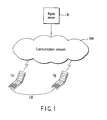
- FIG. 1 is a schematic view showing the configuration of a communication system which practices a copyrighted content moving method according to the first embodiment of the present invention.
- This system makes a plurality of terminals TA and TB held by users connectable to a rights server RI via a communication network NW and connects the terminals TA and TB via a signal cable CB.
- the rights server RI includes a Web server having a module serving as a rights issuer.
- the communication network NW includes, e.g., an Internet Protocol (IP) network represented by the Internet and a plurality of access networks to access the IP network.
- IP Internet Protocol
- a cable subscriber network using, e.g., a digital subscriber line (DSL) and optical transmission line, a wireless local area network (LAN), and a mobile communication network are used as the access networks.
- a Universal Serial Bus (USB) cable as the signal cable CB, Bluetooth® (BT) or local communication such as wireless LAN is used.
- Each of the terminals TA and TB includes a mobile terminal such as a mobile phone or personal digital assistant (PDA) and has the following arrangement.
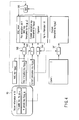
- FIG. 2 is a block diagram showing its module arrangement.
- Each of the terminals TA and TB comprises an antenna 11, radio unit 12, baseband unit 13, user interface unit 14, control unit 15, and storage unit 16.
- Each terminal also has an external connection interface 17.
- the radio unit 12 wirelessly communicates with a base station of the communication network NW by using a wireless access scheme such as code division multiple access-frequency division duplex (CDMA-FDD) defined by the communication network NW.
- the baseband unit 13 encodes/decodes transmission/reception data and multiplexes/demultiplexes transmission/reception packets under the control of the control unit 15.
- the user interface unit 14 has a loudspeaker 141, a microphone 142, an input device 143 including various kinds of module keys and a key pad, and a display device 144 including an LCD and LEDs.
- the storage unit 16 uses, e.g., a hard disk memory or NAND flash memory as a storage medium and stores application programs and copyrighted content downloaded from the rights server RI.
- the external connection interface 17 transfers data to another terminal via the signal cable CB under the control of the control unit 15.
- the control unit 15 comprises a central processing unit (CPU).
- the control unit 15 has an RO conversion control module 151 and a transfer control module 152 as control modules necessary for practicing the present invention. These control modules are implemented by causing the CPU to execute application programs stored in the program memory in the storage unit 16 in advance.
- the RO conversion control module 151 executes, for the rights object RO of the copyrighted content as a moving target, conversion processing necessary for movement.
- the rights object RO is re-encrypted by using a terminal public key acquired from a moving destination terminal, and rights information and signature are rewritten by using the terminal private key of a moving source terminal.
- the transfer control module 152 executes processing of transferring the copyrighted content as the moving target from its terminal to another terminal of the moving destination in cooperation with the conversion processing by the RO conversion control module 151.
- the rights object RO is transferred from the external connection interface 17 via the signal cable CB.
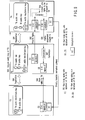
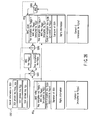
- FIG. 3 is a view showing the operation procedure.
- the copyrighted content includes encrypted content EC and the rights object RO, which are generated by the rights server RI in the following way.
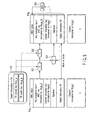
- FIG. 4 is a view showing the format of the encrypted content EC and rights object RO.
- step S41 content C is encrypted by a content encryption key K CEK .
- step S42 the content encryption key K CEK is encrypted by a key encryption key K REK .
- step S43 the key encryption key K REK is encrypted together with a MAC key K MAC by a public key K PUB_A of the terminal TA, which is managed as secret information RD in the RI.
- the content encryption key K CEK and key encryption key K REK are generated on the basis of random numbers.
- step S44 the signature of the rights issuer of rights information is generated on the basis of an RI private key K PRI_RI managed as the secret information RD in the RI.
- the rights object RO contains the rights information, the signature, the content encryption key K CEK encrypted by the key encryption key K REK , and the key encryption key K REK and MAC key K MAC encrypted by the public key K PUB _ A of the terminal TA. That is, the rights object RO binds the rights information signed by the rights server RI to the terminal TA.
- a message authentication code (MAC) value is added to the rights object RO.
- the MAC value is calculated in step S45 on the basis of the elements contained in the rights object RO and used to verify the presence/absence of alteration of the rights object RO.
- the copyrighted content is acquired in the following manner.
- the terminal TA executes registration processing in the rights server RI.
- the terminal TA and rights server RI exchange each other's public keys.
- the terminal TA acquires the encrypted content EC and rights object RO from the rights server RI in step S32.
- the rights object RO binds rights information with the signature of the rights server RI to the terminal TA, as indicated by (1) and (2) in FIG. 3.
- the storage unit 16 stores the acquired encrypted content EC and rights object RO.
- the above-described processing is done via the communication network NW.
- the terminal TA changes its model, the user operates the input device 143 of the terminal TA to input a request to move the copyrighted content to the terminal TB.
- the terminal TA connects to the terminal TB of the moving destination via the signal cable CB or local communication.
- registration processing is executed between the terminals TA and TB. They exchange each other's terminal public keys.
- the terminal TA After confirming each other's validity, the terminal TA converts the rights object RO as the moving target, i.e., the rights object RO (2) that binds the rights information with the signature of the rights server RI to the terminal TA into a rights object RO for the terminal TB, i.e., a rights object RO (3) that binds rights information with the signature of the terminal TA to the terminal TB in step S34.
- the rights object RO conversion method will be described later in detail.
- the terminal TA Upon completing the conversion processing, the terminal TA transfers the encrypted content EC and rights object RO (4) as the moving target to the terminal TB via the signal cable CB or local communication in step S35.
- the terminal TB stores the transferred encrypted content EC and rights object RO (5) in the storage unit 16. The copyrighted content is thus moved. From then on, the terminal TB can play the copyrighted content.
- the terminal TA To convert a rights object RO A of the terminal TA into a rights object RO B for the terminal TB, the terminal TA changes the key encryption key K REK + MAC key K MAC and the MAC value of the elements contained in the rights object RO A - In addition, if details of rights information R2 after movement change from details of rights information R1 before movement, the terminal TA rewrites the signature of the rights holder of the rights information R2 after change. Even when details of rights information do not change, the signature of the rights holder is rewritten in accordance with the same procedure.
- FIG. 5 is a view showing the processing procedure.
- FIG. 5 does not illustrate the MAC key K MAC for the descriptive convenience.
- step S51 the control unit 15 of the terminal TA temporarily decrypts the encrypted key encryption key K REK + MAC key K MAC in the rights object RO A by using a terminal private key Kp RI _ A of the terminal TA, which is saved as secret information AD in the terminal TA.
- step S52 the decrypted key encryption key K REK + MAC key K MAC are re-encrypted on the basis of a public key K PUB _ B of the terminal TB of the moving destination and added to the rights object RO B for the terminal TB as a constituent element.
- step S54 the control unit 15 recalculates the MAC value for the constituent elements of the new rights object RO B for the terminal TB and adds the recalculated MAC value to the rights object RO B for the terminal TB.
- the terminal TA changes the key encryption key K REK + MAC key K MAC and the MAC value of the elements contained in the rights object RO A .
- the terminal TA also adds rights consumption information to the rights object RO B for the terminal TB.
- the terminal TA also generates the signature of the rights holder of the rights consumption information and adds it to the rights object RO B .
- FIG. 6 is a view showing the processing procedure. FIG. 6 does not illustrate the MAC key K MAC for the descriptive convenience.
- step S61 the control unit 15 of the terminal TA temporarily decrypts the encrypted key encryption key K REK + MAC key K MAC in the rights object RO A by using the terminal private key Kp RI_A of the terminal TA, which is saved as the secret information AD in the terminal TA.
- step S62 the decrypted key encryption key K REK + MAC key K MAC are re-encrypted on the basis of the public key K PUB _ B of the terminal TB of the moving destination and added to the rights object RO B for the terminal TB as a constituent element.
- the control unit 15 generates rights consumption information and adds the generated rights consumption information to the rights object RO B for the terminal TB.
- the control unit 15 generates a signature for the rights consumption information on the basis of the terminal private key K PRI _ A of the terminal TA, which is saved as the secret information AD in the terminal TA, and adds the newly generated signature to the rights consumption information in the rights object RO B for the terminal TB. If no rights consumption information is necessary (when the rights information is Stateless or, when no rights consumption and division is necessary even if the rights information is Stateful), this processing can be omitted.
- step S64 the control unit 15 recalculates the MAC value for the constituent elements of the new rights object RO B for the terminal TB and adds the recalculated MAC value to the rights object RO B for the terminal TB.
- the terminal TA changes the key encryption key K REK + MAC key K MAC and the MAC value of the elements contained in the rights object RO A .
- the terminal TA also adds rights consumption information to the rights object RO B for the terminal TB.
- the terminal TA also generates the signature of the rights holder of the rights consumption information and adds it to the rights object RO B .
- the terminal TA also rewrites the signature of existing rights information to the signature of the terminal TA.
- FIG. 7 is a view showing the processing procedure. FIG. 7 does not illustrate the MAC key K MAC for the descriptive convenience.
- step S71 the control unit 15 of the terminal TA temporarily decrypts the encrypted key encryption key K REK + MAC key K MAC in the rights object RO A by using the terminal private key K PRI_A of the terminal TA, which is saved as the secret information AD in the terminal TA.
- step S72 the decrypted key encryption key K REK + MAC key K MAC are re-encrypted on the basis of the public key K PUB_B of the terminal TB of the moving destination and added to the rights object RO B for the terminal TB as a constituent element.
- the control unit 15 generates rights consumption information and adds the generated rights consumption information to the rights object RO B for the terminal TB.
- the control unit 15 generates a signature for the rights consumption information on the basis of the terminal private key K PRI_A of the terminal TA, which is saved as the secret information AD in the terminal TA, and adds the newly generated signature to the rights consumption information in the rights object RO B for the terminal TB. If no rights consumption information is necessary (when the rights information is Stateless or, when no rights consumption and division is necessary even if the rights information is Stateful), this processing can be omitted.
- step S73 the control unit 15 regenerates the signature of the rights information in the rights object RO B for the terminal TB on the basis of the terminal private key K PRI_A of the terminal TA, which is saved as the secret information AD in the terminal TA, and writes the signature in the rights object RO B .
- step S75 the control unit 15 recalculates the MAC value for the constituent elements of the new rights object RO B for the terminal TB and adds the recalculated MAC value to the rights object RO B for the terminal TB.
- the terminal TA of the moving source re-encrypts the key encryption key K REK + MAC key K MAC in the rights object RO A ((2) in FIG. 3) of the copyrighted content as the moving target on the basis of the terminal public key K PUB_B of the terminal TB of the moving destination.
- the terminal TA also regenerates at least one of the signature of existing rights information and the signature of added rights consumption information on the basis of the terminal private key K PRI_A of the terminal TA. If no rights consumption information is added, the signature need not always be changed.
- the rights object RO is binding-converted from the terminal TA of the moving source to the terminal TB of the moving destination. Even when the rights information itself changes, or rights consumption information is added, the signature is appropriately regenerated. It is therefore possible to move the copyrighted content directly from the terminal TA to the terminal TB.
- copyrighted content moves from a moving source terminal to a moving destination terminal via a rights server.
- the rights server and moving source terminal cooperatively execute binding conversion processing of a rights object RO and rewrite processing of rights information and its signature.
- FIG. 8 is a block diagram showing the module arrangement of a rights server RI used to practice a copyrighted content moving method according to the second embedment of the present invention.
- Terminals TA and TB basically have the same arrangement as in FIG. 2, and a description thereof will be omitted.
- the rights server RI includes a Web server and has a central processing unit (CPU) 21.
- a program memory 23 and a content memory 24 connect to the CPU 21 via a bus 22.
- a communication interface 25 and an RO management table 26 also connect to the CPU 21.
- the content memory 24 stores copyrighted content as a download target.
- Copyrighted content contains encrypted content EC and a rights object RO which are stored in correspondence with each other.
- the RO management table 26 stores rights information and a key encryption key + MAC key in correspondence with the RO information (ROID) of each rights object RO.
- FIG. 16 shows an example. The RO management table 26 is used in only the fifth example to be described later.
- the program memory 23 includes a hard disk or a nonvolatile memory such as a ROM and stores an RO conversion control program 231 and a transfer control program 232 as control application programs according to the present invention.
- the RO conversion control program 231 Upon receiving a rights object conversion request from a moving source (assignment source) terminal or moving destination (assignment destination) terminal, the RO conversion control program 231 causes the CPU 21 to execute, for the rights object RO, conversion processing necessary for movement. In this conversion processing, the rights object RO is re-encrypted by using a terminal public key acquired from a moving destination terminal, and rights information and signature are rewritten by the private key of the rights server RI.
- the transfer control program 232 Upon receiving a rights object conversion request from a moving source terminal or moving destination terminal, the transfer control program 232 causes the CPU 21 to execute processing of transferring the copyrighted content as the moving target from the moving source terminal to the moving destination terminal in cooperation with the conversion processing by the RO conversion control program 231.
- the rights object is transferred via the communication network NW.
- FIG. 14 is a view showing the format of the encrypted content EC and rights object RO.
- step S141 content C is encrypted by a content encryption key K CEK .
- step S142 the content encryption key K CEK is encrypted by a key encryption key K REK ⁇
- step S143 the key encryption key K REK is encrypted together with a MAC key K MAC by a public key K PUB_A of the terminal TA, which is managed as secret information RD in the RI.
- the content encryption key K CEK and key encryption key K REK are generated on the basis of random numbers.
- step S144 the signature of the rights issuer of rights information is generated on the basis of an RI private key K PRI_RI managed as the secret information RD in the RI.
- the rights object RO contains the rights information, the signature, the content encryption key K CEK encrypted by the key encryption key K REK , and the key encryption key K REK and MAC key K MAC encrypted by the public key K PUB _ A of the terminal TA.
- RO information to identify the object is added to the rights object RO.
- the RO information uses an identifier (ROID) unique to each rights object RO.
- a message authentication code (MAC) value is added to the rights object RO.
- the MAC value is calculated in step S145 on the basis of the elements contained in the rights object RO and used to verify the presence/absence of alteration of the rights object RO.
- the RO management table 26 in the rights server RI manages the rights object RO generated for each item of copyrighted content in the above-described way. For example, rights information and a key encryption key K REK + MAC key K MAC are stored for each rights object RO in correspondence with ROID, as shown in FIG. 16.
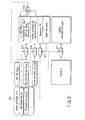
- FIG. 9 shows the operation procedure of the first example.
- step S91 the terminal TA executes registration processing in the rights server RI.
- the terminal TA and rights server RI exchange each other's public keys.
- the terminal TA acquires the rights object RO from the rights server RI in step S92.
- the rights object RO binds rights information with the signature of the rights server RI to the terminal TA, as indicated by (1) and (2) in FIG. 9.
- a storage unit 16 stores the acquired rights object RO together with separately acquired encrypted content EC.
- the above-described processing is done via the communication network NW.
- the terminal TA changes its model, the user operates an input device 143 of the terminal TA to input a request to move (assign) the copyrighted content to the terminal TB.
- the terminal TA connects to the terminal TB of the moving destination via a signal cable CB or local communication.
- registration processing is executed between the terminals TA and TB. They exchange each other's terminal public keys.
- the terminal TA converts the rights object RO as the moving target, i.e., the rights object RO (2) that binds the rights information with the signature of the rights server RI to the terminal TA into a rights object RO to request the rights server RI to transfer to the terminal TB in step S94.
- the key encryption key K REK + MAC key K MAC of the rights object RO ((2) in FIG. 9) as the moving target are re-encrypted by a public key K PUB_RI of the rights server RI of the transfer destination, the rights information is rewritten to only rights information to be assigned to the terminal TB, and the signature of a private key K PRI_A of the terminal TA for the rewritten rights information is generated.
- a rights object RO (3) that binds the rights information with the signature of the terminal TA to the rights server RI is thus generated.
- the terminal TA Upon completing the conversion processing, the terminal TA transfers the converted rights object RO to the rights server RI via the communication network NW and requests the rights server RI to assign the rights object to the terminal TB in step S95.
- the rights server RI Upon receiving the assignment request, the rights server RI executes registration processing in the terminal TB of the assignment destination, and the rights server RI and terminal TB exchange each other's public keys in step S96. After confirming each other's validity, the rights server RI converts the rights object RO (3) sent from the terminal TA, i.e., the rights object that binds the rights information with the signature of the terminal TA to the rights server RI into the rights object RO for the terminal TB in step S97.
- the key encryption key K REK + MAC key K MAC of the rights object RO ((3) in FIG. 9) as the moving target are re-encrypted by a public key K PUB_B of the terminal TB of the assignment destination, and the signature of the rights information is changed from the signature by the private key K PRI_A of the terminal TA to a signature by the rights server RI.
- a rights object RO (4) that binds the rights information with the signature of the rights server RI to the terminal TB is thus generated.
- the rights server RI Upon completing the conversion processing, the rights server RI transmits the generated rights object RO (4) to the terminal TB of the assignment destination via the communication network NW in step S98.
- the encrypted content EC is transferred directly from the terminal TA of the assignment source to the terminal TB via the signal cable CB, local communication, or memory card.
- the terminal TB stores, in the storage unit 16, the encrypted content EC transferred from the terminal TA and the rights object RO (5) sent from the rights server RI.
- the copyrighted content is thus assigned via the rights server RI. From then on, the terminal TB can play the copyrighted content.
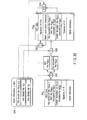
- FIG. 10 shows the operation procedure of the second example.
- step S101 the terminal TA executes registration processing in the rights server RI.
- the terminal TA and rights server RI exchange each other's public keys.
- the terminal TA acquires the rights object RO from the rights server RI in step S102.
- the rights object RO binds rights information with the signature of the rights server RI to the terminal TA, as indicated by (1) and (2) in FIG. 10.
- the storage unit 16 stores the acquired rights object RO together with the separately acquired encrypted content EC.
- the above-described processing is done via the communication network NW.
- the user inputs, from the input device 143, a request to move the copyrighted content to the terminal TB.
- the terminal TA connects to the terminal TB of the moving destination via the signal cable CB or local communication.
- registration processing is executed between the terminals TA and TB. They exchange each other's terminal public keys.
- the terminal TA converts the rights object RO as the moving target, i.e., the rights object RO (2) that binds the rights information with the signature of the rights server RI to the terminal TA into a rights object RO to request the rights server RI to transfer in step S104.
- the key encryption key K REK of the rights object RO ((2) in FIG. 10) as the moving target is re-encrypted by the public key K PUB_B of the terminal TB of the assignment destination, the rights information is rewritten to only rights information to be assigned to the terminal TB, and the signature of the private key K PRI_A of the terminal TA for the rewritten rights information is generated.
- a rights object RO (3) that binds the rights information with the signature of the terminal TA to the terminal TB is thus generated.
- the terminal TA Upon completing the conversion processing, the terminal TA transfers the converted rights object RO to the rights server RI via the communication network NW and requests the rights server RI to assign the rights object to the terminal TB in step S105.
- the rights server RI Upon receiving the assignment request, the rights server RI executes registration processing in the terminal TB of the assignment destination, and the rights server RI and terminal TB exchange each other's public keys in step S106. After confirming each other's validity, the rights server RI converts the rights object RO sent from the terminal TA, i.e., the rights object RO (3) that binds the rights information with the signature of the terminal TA to the terminal TB into the rights object RO for the terminal TB in step S107.
- the rights server RI converts the rights object RO sent from the terminal TA, i.e., the rights object RO (3) that binds the rights information with the signature of the terminal TA to the terminal TB into the rights object RO for the terminal TB in step S107.
- the rights server RI Upon completing the conversion processing, the rights server RI transmits the generated rights object RO (4) to the terminal TB of the assignment destination via the communication network NW in step S108.
- the encrypted content EC is transferred directly from the terminal TA of the assignment source to the terminal TB via the signal cable CB, local communication, or a storage medium such as a memory card, as in the first example.
- the terminal TB stores, in the storage unit 16, the encrypted content EC transferred from the terminal TA and the rights object RO (5) sent from the rights server RI.
- the copyrighted content is thus assigned via the rights server RI. From then on, the terminal TB can play the copyrighted content.
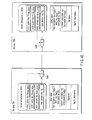
- FIG. 11 shows the operation procedure of the third example.
- step S111 the terminal TA executes registration processing in the rights server RI.
- the terminal TA and rights server RI exchange each other's public keys.
- the terminal TA acquires the rights object RO from the rights server RI in step S112.
- the rights object RO binds rights information with the signature of the rights server RI to the terminal TA, as indicated by (1) and (2) in FIG. 11.
- the storage unit 16 stores the acquired rights object RO together with the separately acquired encrypted content EC.
- the above-described processing is done via the communication network NW.
- the user inputs, from the input device 143, a request to move the copyrighted content to the terminal TB.
- the terminal TA connects to the terminal TB of the moving destination via the signal cable CB or local communication.
- registration processing is executed between the terminals TA and TB. They exchange each other's terminal public keys.
- the terminal TA converts the rights object RO as the moving target, i.e., the rights object RO (2) that binds the rights information with the signature of the rights server RI to the terminal TA into a rights object RO for which it is necessary to request the rights server RI to only rewrite the signature in step S114.
- the key encryption key K REK of the rights object RO ((2) in FIG. 11) as the moving target is re-encrypted by the public key K PUB_B of the terminal TB of the assignment destination, the rights information is rewritten to only rights information to be assigned to the terminal TB, and the signature of the private key K PRI_A of the terminal TA for the rewritten rights information is generated.
- a rights object RO (3) that binds the rights information with the signature of the terminal TA to the terminal TB is thus generated.
- the terminal TA Upon completing the conversion processing, the terminal TA directly transfers the encrypted content EC and the converted rights object RO to the terminal TB of the assignment destination in step S115 via the signal cable CB, local communication, or a storage medium such as a memory card.
- the terminal TB confirms the necessity of signature rewrite request to the rights server RI.
- the terminal TB Upon confirming the necessity of signature rewrite, the terminal TB executes registration processing in the rights server RI in step S116.
- the terminal TB and rights server RI exchange each other's public keys.
- the terminal TB transmits, to the rights server RI via the communication network NW, the rights object RO (4) transferred from the terminal TA and also transmits the rights rewrite request of the rights object RO (4) in step S117.
- the rights server RI Upon receiving the rights rewrite request from the terminal TB, the rights server RI converts the rights object RO (4) received simultaneously, i.e., the rights object RO (4) that binds the rights information with the signature of the terminal TA to the terminal TB into the rights object RO for the terminal TB.
- the rights server RI Upon completing the conversion processing, the rights server RI transmits the generated rights object RO (5) to the terminal TB of the assignment destination via the communication network NW in step S119.
- the terminal TB stores, in the storage unit 16, the encrypted content EC transferred from the terminal TA and the rights object RO (6) sent from the rights server RI.
- the copyrighted content is thus assigned via the rights server RI. From then on, the terminal TB can play the copyrighted content.
- FIG. 12 shows the operation procedure of the fourth example.
- step S121 the terminal TA executes registration processing in the rights server RI.
- the terminal TA and rights server RI exchange each other's public keys.
- the terminal TA acquires the rights object RO from the rights server RI in step S122.
- the rights object RO binds rights information with the signature of the rights server RI to the terminal TA, as indicated by (1) and (2) in FIG. 12.
- the storage unit 16 stores the acquired rights object RO together with the separately acquired encrypted content EC.
- the above-described processing is done via the communication network NW.
- the user inputs, from the input device 143, a request to move the copyrighted content to the terminal TB.
- the terminal TA connects to the terminal TB of the moving destination via the signal cable CB or local communication.
- registration processing is executed between the terminals TA and TB. They exchange each other's terminal public keys.
- the terminal TA converts the rights object RO as the moving target, i.e., the rights object RO (2) that binds the rights information with the signature of the rights server RI to the terminal TA into a rights object RO for the terminal TB of the moving destination (assignment destination) in step S124.
- the key encryption key K REK of the rights object RO ((2) in FIG. 12) as the moving target is re-encrypted by the public key K PUB_B of the terminal TB of the assignment destination, the rights information is rewritten to only rights information to be assigned to the terminal TB, and the signature of the private key K PRI _ A of the terminal TA for the rewritten rights information is generated.
- a rights object RO (3) that binds the rights information with the signature of the terminal TA to the terminal TB is thus generated.
- the terminal TA Upon completing the conversion processing, the terminal TA transfers the converted rights object RO to the rights server RI via the communication network NW and requests the rights server RI to replace the signature of the rights object RO in step S125.
- the rights server RI Upon receiving the signature replacement request, the rights server RI converts the rights object RO sent from the terminal TA, i.e., the rights object RO (3) that binds the rights information with the signature of the terminal TA to the terminal TB into a rights object RO for the terminal TB in step S126.
- the rights server RI Upon completing the conversion processing, the rights server RI returns the generated rights object RO (4) to the terminal TA of the assignment source via the communication network NW in step S127. Upon receiving the rights object RO (4) with the rewritten signature, the terminal TA transfers the returned rights object RO (5) and encrypted content EC to the terminal TB of the assignment destination via the signal cable CB.
- the terminal TB stores, in the storage unit 16, the encrypted content EC and the rights object RO (6) transferred from the terminal TA. Additionally, the terminal TB executes registration processing in the rights server RI, and they exchange each other's public keys. The copyrighted content is thus assigned from the terminal TA to the terminal TB via the rights server RI. From then on, the terminal TB can play the copyrighted content.
- FIG. 13 shows the operation procedure of the fifth example.
- step S131 the terminal TA executes registration processing in the rights server RI.
- the terminal TA and rights server RI exchange each other's public keys.
- the terminal TA acquires the rights object RO from the rights server RI in step S132.
- the rights object RO binds rights information with the signature of the rights server RI to the terminal TA, as indicated by (1) and (2) in FIG. 13.
- the storage unit 16 stores the acquired rights object RO together with the separately acquired encrypted content EC.
- the above-described processing is done via the communication network NW.
- the user operates the input device 143 of the terminal TA to input a request to move (assign) the copyrighted content to the terminal TB.
- the terminal TA connects to the terminal TB of the moving destination via the signal cable CB or local communication.
- registration processing is executed between the terminals TA and TB. They exchange each other's terminal public keys.
- the terminal TA converts the rights object RO as the moving target, i.e., the rights object RO (2) that binds the rights information with the signature of the rights server RI to the terminal TA into a rights object RO (3) to request the rights server RI to transfer to the terminal TB in step S134.
- FIG. 15 is a view showing the processing procedure. If no rights consumption information is to be added, the rights object RO conversion processing is unnecessary.
- a control unit 15 of the terminal TA adds rights consumption information to a rights object RO A2 of the assignment destination.
- the control unit 15 generates a signature for the added rights consumption information on the basis of the private key K PRI_A of the terminal TA, which is saved as secret information in the terminal TA, and adds the signature of the terminal TA to the rights object RO A2 -
- the control unit 15 of the terminal TA decrypts the key encryption key K REK + MAC key K MAC , which are encrypted by the public key K PUB_A of the terminal TA and contained in the rights object RO A1 of the assignment source, on the basis of the private key K PRI_A of the terminal TA saved as the secret information in the terminal TA.
- step S153 the control unit 15 recalculates the MAC value for the constituent elements of the rights object RO A2 of the assignment destination, which has the added rights consumption information and signature, on the basis of the decrypted MAC key K MAC .
- the recalculated MAC value is added to the rights object RO A2 .
- the terminal TA Upon completing the conversion processing from the rights object RO (2) to the rights object RO (3), the terminal TA transfers the converted rights object RO (3) to the rights server RI via the communication network NW and requests the rights server RI to assign the rights object to the terminal TB in step S135.
- the rights server RI Upon receiving the assignment request, the rights server RI executes registration processing in the terminal TB of the assignment destination, and the rights server RI and terminal TB exchange each other's public keys in step S136. After confirming each other's validity, the rights server RI converts the rights object RO (3) sent from the terminal TA, i.e., the rights object RO that binds the rights information with the signature of the rights server RI to the terminal TA into a rights object RO (4) for the terminal TB in step S137.
- FIG. 17 is a view showing the conversion procedure.
- the CPU 21 of the rights server RI extracts RO information, i.e., ROID added to the rights object RO A2 received from the terminal TA. On the basis of the ROID, the CPU 21 accesses the RO management table 26 as shown in FIG. 16 and reads a corresponding key encryption key and MAC key.
- step S171 on the basis of the public key K PUB_B of the terminal TB of the assignment destination, which is saved as secret information in the RI, the CPU 21 of the rights server RI encrypts the key encryption key and MAC key read from the RO management table 26. The CPU 21 rewrites the key encryption key and MAC key in a rights object RO B as the assignment target to the encrypted key encryption key and MAC key.
- step S172 the CPU 21 recalculates the MAC value of the elements of the rights object RO B as the assignment target having the rewritten key encryption key and MAC key on the basis of the MAC key read from the RO management table 26.
- the CPU 21 rewrites the MAC value of the elements of the rights object RO B as the assignment target to the recalculated MAC value.
- FIG. 18 is a view showing the conversion procedure.
- the CPU 21 of the rights server RI extracts RO information, i.e., ROID added to the rights object RO A2 received from the terminal TA. On the basis of the ROID, the CPU 21 accesses the RO management table 26 as shown in FIG. 16 and reads a corresponding key encryption key and MAC key.
- step S181 on the basis of the public key K PUB_B of the terminal TB of the assignment destination, which is saved as secret information in the RI, the CPU 21 of the rights server RI encrypts the key encryption key and MAC key read from the RO management table 26. The CPU 21 rewrites the key encryption key and MAC key in the rights object RO B as the assignment target to the encrypted key encryption key and MAC key.
- the CPU 21 generates rights information R2 from rights information R1 and rights consumption information.
- the CPU 21 changes the signature of the existing rights information R2 contained in the rights object RO B as the assignment target on the basis of the private key K PRI_RI of the rights server RI, which is saved as secret information in RI, and adds the changed signature to the rights information R2.
- step S183 the CPU 21 recalculates the MAC value of the elements of the rights object RO B as the assignment target having the rewritten key encryption key and MAC key and changed signature of the existing rights information R2 on the basis of the MAC key read from the RO management table 26.
- the CPU 21 rewrites the MAC value of the elements of the rights object RO B as the assignment target to the recalculated MAC value.
- the rights server RI Upon completing the conversion processing to the rights object RO (4), the rights server RI transmits the generated rights object RO (4) to the terminal TB of the assignment destination via the communication network NW in step S138.
- the encrypted content EC is transferred directly from the terminal TA of the assignment source to the terminal TB via the signal cable CB.
- the terminal TB stores, in the storage unit 16, the encrypted content EC transferred from the terminal TA and the rights object RO (5) sent from the rights server RI.
- the copyrighted content is thus assigned via the rights server RI.
- the terminal TB can therefore play the copyrighted content.
- the terminal TA of the assignment source re-encrypts the key encryption key K REK + MAC key K MAC in the rights object RO by using the terminal public key K PUB_B of the terminal TB of the moving destination.
- the rights server RI regenerates the signature of existing rights information or the signature of added rights consumption information on the basis of the private key K PRI_RI of the rights server RI.
- the rights object RO is binding-converted from the terminal TA of the moving source to the terminal TB of the moving destination. Even when the rights information itself changes, or rights consumption information is added, the signature is appropriately regenerated from a signature by the terminal TA to a signature by the rights server RI. It is therefore possible to move the copyrighted content from the terminal TA to the terminal TB via the rights server RI.
- the rights server RI has the RO management table 26.
- the rights server RI Upon receiving a rights object assignment request from the terminal TA of the assignment source, the rights server RI searches the RO management table 26 for a key encryption key and MAC key corresponding to the rights object on the basis of the ROID of the rights object and executes binding conversion processing of the found key encryption key and MAC key of the rights object.
- the rights server RI can reissue the rights object of the assignment destination on the basis of past rights object RO element information. That is, the processing in the terminal TA can be reduced.
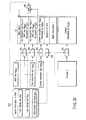
- FIG. 19 is a block diagram showing the functional arrangement of an information terminal apparatus according to the third embodiment of the present invention.
- An information terminal (to be referred to as a terminal hereinafter) TM includes, e.g., a mobile phone, a mobile terminal such as a Personal Digital Assistant (PDA), or a personal computer.
- the terminal TM can access a content server (not shown) via a communication network.
- the terminal TM downloads desired content from the content server and stores it in a memory device such as a hard disk drive.
- a communication network NW includes, e.g., an Internet Protocol (IP) network represented by the Internet and a plurality of access networks to access the IP network.
- IP Internet Protocol
- a cable subscriber network using, e.g., a digital subscriber line (DSL) and optical transmission line, a wireless local area network (LAN), and a mobile communication network are used as the access networks.
- the terminal TM can connect to another terminal via a signal cable CB such as a universal serial bus (USB) cable.
- the other terminal also includes a mobile terminal or personal computer.
- the terminal TM comprises a central processing unit (CPU) 31.
- a program memory 33 and a content memory 34 connect to the CPU 31 via a bus 32.
- a communication interface 35, external connection interface 37, and input/output interface 38 also connect to the CPU 31.
- the communication interface 35 connects to an antenna 36 to execute wireless communication with a base station (not shown).
- the communication interface 35 also communicates with a content server via the base station to download content.
- a Transmission Control Protocol/Internet Protocol (TCP/IP) is used as the communication protocol.
- the external connection interface 37 has, e.g., a USB interface function and transfers, e.g., encrypted content to another terminal via the signal cable CB.
- An input device 39, output device 40, and display device 41 connect to the input/output interface 38.
- the input device 39 includes a plurality of function keys and a key pad. A user uses the input device 39 to input commands related to communication and content play.
- the output device 40 has a speaker and outputs an audio signal decoded by an audio decoder provided in the input/output interface 38.
- the display device 41 includes a liquid crystal display and displays various kinds of information necessary for the communication operation of the terminal and related to play of content.
- the program memory 33 includes a hard disk or a nonvolatile memory such as a ROM and stores a domain enforcement agent (DEA) 331 and a digital rights management (DRM) agent 332 as control application programs according to the present invention.
- DEA domain enforcement agent
- DRM digital rights management
- the DRM agent 332 has an RO management program 3321.
- Copyrighted content downloaded from the content server contains content and rights object RO.
- the RO management program 3321 causes the CPU 31 to manage the rights object RO.
- To play the content the RO management program 3321 causes the CPU 31 to decrypt the rights object RO and the encrypted content.
- the DEA 331 is an entity that shares a policy (domain policy) for a user domain in place of a domain authority (DA).
- the DEA 331 has a user domain management program 3311 and an RO generation program 3312.
- the user domain management program 3311 causes the CPU 31 to execute processing related to user domain member management and user domain key issue.
- the RO generation program 3312 causes the CPU 31 to generate or regenerate the rights object RO in dividing or merging user domains.
- the domain policy indicates an attribute group including the number of terminals using the same user domain, the life of a user domain, and permission/inhibition of user domain division/merger.
- the content memory 34 uses, e.g., a hard disk or NAND flash memory as a storage medium and comprises a content management unit 341.
- the content management unit 341 encrypts and stores content contained in the rights object RO that includes the content and rights object RO.
- FIG. 20 is a view showing the encryption format.
- step S21 content C is encrypted by a content encryption key K CEK and stored in the content management unit 341.
- step S23 the content encryption key K CEK is encrypted by a key encryption key K REK .
- step S24 the key encryption key K REK is encrypted together with the MAC key K MAC by a user domain key K D managed as secret information DS0 in DEA.
- the content encryption key K CEK and key encryption key K REK are generated on the basis of random numbers.
- step S22 the signature of the rights holder of rights information is generated on the basis of a DEA private key K PRI_DEA managed as the secret information DS0 in DEA.
- the key encryption key K REK may be generated by using not a random number but information (e.g., device number or telephone number) unique to the terminal.
- the rights object RO contains the rights information, the signature, the content encryption key K CEK encrypted by the key encryption key K REK , and the key encryption key K REK and MAC key K MAC encrypted by the user domain key K D .
- the RO management program 3321 stores the rights object RO.
- a message authentication code (MAC) value is added to the rights object RO.
- the MAC value is calculated in step S25 on the basis of the elements contained in the rights object RO. The presence/absence of alteration of the rights object can be verified by calculating the MAC value except that of the rights object RO by using the MAC key K MAC and determining whether the calculated value matches the MAC value added to the rights object RO.
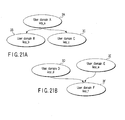
- a new user domain key is used to divide/merge user domains. For example, as shown in FIGS. 21A and 21B, to divide a user domain A (3A) using a user domain key key_a into user domains B (3B) and C (3C), new user domain keys key_b and key_c are used. To merge user domains D (3D) and E (3E) using user domain keys key_d and key_e, respectively, into one user domain F (3F), a new user domain key key_f is used.
- the program memory 33 of the terminal TM stores, as secret information DS1 in DEA, a new user domain key K D2 to be used for user domain division/merger in addition to an active user domain key K D1 .
- the program memory 33 also stores the DEA private key K PRI_DEA .
- the terminal changes only the key encryption key K REK + MAC key K MAC and the MAC value of the elements contained in the rights object RO A .
- the CPU 31 of the terminal temporarily decrypts the encrypted key encryption key K REK + MAC key K MAC in the rights object RO A by using the active user domain key K D1 in step S221.
- the decrypted key encryption key K REK + MAC key K MAC are re-encrypted on the basis of the new user domain key K D2 and added to the new rights object RO B as a constituent element.
- the CPU 31 recalculates the MAC value of the new rights object RO B on the basis of the decrypted MAC key K MAC and adds the recalculated MAC value to the new rights object RO B .
- the terminal To generate a new rights object RO B based on a rights object RO A upon user domain division/merger, the terminal changes the key encryption key K REK + MAC key K MAC and the MAC value of the elements contained in the rights object RO A - If details of rights information R2 after division/merger change from those of rights information R1 before merger, the terminal changes the signature of the rights holder of the rights information R2 after change.
- the CPU 31 of the terminal decrypts the encrypted key encryption key K REK + MAC key K MAC in the rights object RO A by using the active user domain key K D1 in step S231.
- the decrypted key encryption key K REK + MAC key K MAC are re-encrypted on the basis of the new user domain key K D2 and added to the new rights object RO B as a constituent element.
- the CPU 31 generates the rights information R2 by moving or dividing part of the rights information R1 in the rights object RO A .
- the CPU 31 regenerates the signature of the rights holder of the rights information R2 after change on the basis of the DEA private key K PRI_DEA managed as the secret information DS1 in DEA and adds the signature to the new rights object RO B .
- step S233 the CPU 31 recalculates the MAC value for the constituent elements of the new rights object RO B on the basis of the decrypted MAC key K MAC and adds the recalculated MAC value to the new rights object RO B .
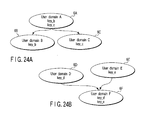
- a plurality of user domain keys prepared in advance are assigned to divided user domains.
- user domain keys used in the plurality of user domains before merger are assigned to the merged user domain.
- the user domain keys key_b and key_c are assigned to the divided user domains B and C, respectively.
- the user domain keys key_d and key_e used in the user domains D and E before merger are assigned to the merged user domain F 6F.
- the encryption format of the rights object RO valid for a plurality of user domains has, e.g., the following structure.
- FIG. 25 is a view showing the structure.
- the content C is encrypted by the content encryption key K CEK and stored in the content management unit 341.
- the content encryption key K CEK is encrypted by the key encryption key K REK .
- the key encryption key K REK is encrypted together with the MAC key K MAC by the two different user domain keys K D1 and K D2 managed as secret information DS2 in DEA.
- the content encryption key K CEK and key encryption key K REK are generated on the basis of random numbers.
- the signature of the rights holder of rights information is generated on the basis of the DEA private key K PRI_DEA managed as the secret information DS2 in DEA.
- the rights object RO contains the rights information, the signature, the content encryption key K CEK encrypted by the key encryption key K REK , and the key encryption keys K REK and MAC keys K MAC encrypted by the user domain keys K D1 and K D2 .
- the RO management program 3321 stores the rights object RO.
- a message authentication code (MAC) value is added to the rights object RO.
- the MAC value is calculated in step S256 on the basis of the elements contained in the rights object RO.
- the program memory 33 of the terminal TM stores, as the secret information DS2 in DEA, the user domain key K D2 for user domain merger in addition to the active user domain key K D1 .
- the program memory 33 also stores the DEA private key K PRI_DEA ⁇
- the terminal In merging two user domains into one user domain, the terminal re-encrypts the key encryption key K REK + MAC key K MAC of the rights object RO A , which are encrypted by the user domain key K D1 , by using the user domain key K D2 and adds the re-encrypted key encryption key K REK + MAC key K MAC to the new rights object RO B after merger so as to validate both the user domain keys used in the user domains before merger.
- the CPU 31 copies the key encryption key K REK + MAC.
- the key encryption key K REK + MAC key K MAC encrypted by the user domain key K D1 are decrypted by using the user domain key K D1 of the secret information DS2 in DEA.
- step S262 the CPU 31 re-encrypts the decrypted key encryption key K REK + MAC key K MAC by using the user domain key K D2 of the secret information DS2 in DEA and adds the key encryption key K REK + MAC key K MAC re-encrypted by the user domain key K D2 to the new rights object RO B after merger.
- step S263 the CPU 31 recalculates the MAC value for the constituent elements of the new rights object RO B after merger on the basis of the MAC key K MAC decrypted in step S261 and adds the recalculated MAC value to the rights object RO B .
- the terminal In merging two user domains into one user domain, the terminal re-encrypts the key encryption key K REK + MAC key K MAC of the rights object RO A , which are encrypted by the user domain key K D1 , by using the user domain key K D2 and adds the re-encrypted key encryption key K REK + MAC key K MAC to the new rights object RO B after merger so as to validate both the user domain keys used in the user domains before merger. If details of rights information change before and after merger, the terminal changes the signature of the rights holder of the rights information R2 after change.
- the CPU 31 of the terminal copies the key encryption key K REK + MAC key K MAC encrypted by the user domain key K D1 and contained in the rights object RO A to the new rights object RO B after merger.
- the key encryption key K REK + MAC key K MAC encrypted by the user domain key K D1 are decrypted by using the user domain key K D1 of the secret information DS2 in DEA.
- step S272 the CPU 31 re-encrypts the decrypted key encryption key K REK + MAC key K MAC by using the user domain key K D2 of the secret information DS2 in DEA and adds the key encryption key K REK + MAC key K MAC re-encrypted by the user domain key K D2 to the new rights object RO B after merger.
- the CPU 31 generates the rights information R2 by moving or dividing part of the rights information R1 in the rights object RO A .
- the CPU 31 generates the signature of the rights holder of the rights information R2 after change on the basis of the DEA private key K PRI _ DEA managed as the secret information DS2 in DEA and adds the generated signature to the new rights object RO B .
- step S273 the CPU 31 recalculates the MAC value for the constituent elements of the new rights object RO B after merger on the basis of the MAC key K MAC decrypted in step S271 and adds the recalculated MAC value to the rights object RO B .
- the terminal In dividing a user domain using two user domain keys into two user domains, the terminal deletes the key encryption key K REK + MAC key K MAC , which are encrypted by one of the two user domain keys, to validate only the other user domain key in the rights object after division.
- the CPU 31 of the terminal copies, of the constituent elements of the rights object RO A before division i.e., the rights information, the signature, the content encryption key K CEK encrypted by the key encryption key K REK , and the key encryption keys K REK + MAC keys K MAC encrypted by the user domain keys K D1 and K D2 , the constituent elements except the key encryption key K REK + MAC key K MAC encrypted by the user domain key K D2 to the rights object RO B after division.
- the key encryption key K REK + MAC key K MAC encrypted by the user domain key K D2 are deleted.
- the CPU 31 recalculates the MAC value for the copied constituent elements of the rights object RO B after division and adds the calculated MAC value to the rights object RO B after division.
- the terminal In dividing a user domain using two user domain keys into two user domains, the terminal deletes the key encryption key K REK + MAC key K MAC , which are encrypted by one of the two user domain keys, to validate only the other user domain key in the rights object after division. If details of rights information change before and after division, the terminal changes the signature of the rights holder of the rights information R2 after change.
- the CPU 31 of the terminal copies, of the constituent elements of the rights object RO A before division only the content encryption key K CEK encrypted by the key encryption key K REK and the key encryption keys K REK + MAC keys K MAC encrypted by the user domain key K D1 to the rights object RO B after division.
- step S291 the key encryption key K REK + MAC key K MAC encrypted by the user domain key K D2 and contained in the rights object RO A before division are deleted.
- the CPU 31 generates the rights information R2 by moving or dividing part of the rights information R1 in the rights object RO A .
- the CPU 31 generates the signature of the rights holder of the rights information R2 after change on the basis of the DEA private key K PRI_DEA managed as the secret information DS2 in DEA and adds the generated signature to the new rights object RO B after division.
- the CPU 31 recalculates the MAC value for the constituent elements of the new rights object RO B after division and adds the recalculated MAC value to the new rights object RO B after division.
- the DEA may move between terminals.
- the terminal executes the RO generation processing and then DEA moving processing in accordance with the following procedure.
- the DEA moves even at a time except user domain division/merger, e.g., when a terminal disjoins from a user domain.
- FIG. 30 is a view showing the procedure.
- User domain management information including the user domain key and domain policy is securely moved between DEA1 before movement and DEA2 after movement, i.e., between a terminal TM1 and a terminal TM2.
- the terminals TM1 and TM2 exchange each other's public keys K PUB_DEAL and K PUB_DEA2 .
- the terminal TM1 of the moving source confirms the validity of the DEA2 of the terminal TM2 of the moving destination.
- the terminal TM1 encrypts user domain management information including the user domain key and domain policy by using the public key K PUB_DEA2 of the DEA2 in step S301.
- the encrypted user domain management information of the DEA1 is transferred to the terminal TM2.
- the terminal TM1 of the moving source deletes the user domain key K D in the DEA1.
- step S302 the terminal TM2 of the moving destination decrypts the user domain management information of the DEA1, which is encrypted and received from the terminal TM1 of the moving source, by using a private key Kp RI_DEA2 of the DEA2 and saves the decrypted user domain key K D and domain policy as secret information in the DEA2.
- the terminal TM2 executes rights object RO conversion processing upon DNA movement in the following way.
- the terminal TM2 verifies the validity of the signature of a rights object R01 transferred from the terminal TM1 by decrypting it using the public key K PUB _ DEAL of the DEA1. If the validity of the signature is confirmed by the verification, the terminal TM2 generates a new signature for the DEA2 by encrypting the decrypted signature by the private key K PRI _ DEA2 of the DEA2 in step S304.
- the signature in a rights object RO2 after movement is rewritten to the newly generated signature of the DEA2.
- the terminal TM2 calculates the MAC value of the constituent elements in the rights object RO2 and adds the MAC value to the rights object RO2 again.
- the rights object RO bound by a user domain key is converted upon user domain division/merger, and the DEA is moved between the terminals TM1 and TM2, as needed. More specifically, the following processing is executed.
- the member can continuously share the rights of content used before movement. Even when details of rights information change upon division/merger, the holder of the rights can be made clear. In addition, it is possible to take a proper measure against DNA movement upon user domain division/merger in consideration of security.
- the signature of each rights information before and after change may be omitted.
- the DEA adds a signature to rights information.
- a rights issuer such as a rights server adds a signature to rights information. Under this condition, a terminal regenerates a rights object RO upon user domain division/merger.
- An information terminal apparatus (terminal) TM stores an RO update program not in the RO generation program 3312 shown in FIG. 19 but in a program memory 33.
- the remaining components of the information terminal apparatus (terminal) TM are the same as those described in the third embodiment.
- the fourth embodiment will also be described with reference to FIG. 19.
- FIG. 31 is a view showing the format of the rights object RO for a user domain used in the fourth embodiment of the present invention.
- the rights issuer RI such as a rights server generates the rights object RO for a user domain.
- content C is encrypted by a content encryption key K CEK .
- the content encryption key K CEK is encrypted by a key encryption key K REK .
- the key encryption key K REK is encrypted together with a MAC key K MAC by a user domain key K D acquired from a DEA.
- the content encryption key K CEK and key encryption key K REK are generated on the basis of random numbers.
- the signature of the rights holder of rights information is generated on the basis of an RI private key K PRI_RI managed as secret information DS3 in RI.
- the rights object RO contains the rights information, the signature, the content encryption key K CEK encrypted by the key encryption key K REK , and the key encryption key K REK and MAC key K MAC encrypted by the user domain key K D .
- An RO management program 3321 in a DRM agent 332 stores the rights object RO.
- a message authentication code (MAC) value is added to the rights object RO.
- the MAC value is calculated in step S315 on the basis of the elements contained in the rights object RO.
- the MAC value is used to verify the presence/absence of alteration of the rights object.
- a new user domain key is used to divide/merge user domains. For example, as shown in FIGS. 21A and 21B, to divide a user domain A (3A) using a user domain key key_a into user domains B (3B) and C (3C), new user domain keys key_b and key_c are used. To merge user domains D (3D) and E (3E) using user domain keys key_d and key_e, respectively, into one user domain F (3F), a new user domain key key_f is used.
- the program memory 33 of the terminal TM stores, as secret information DS4 in DEA, a new user domain key K D2 to be used for user domain division/merger in addition to an active user domain key K D1 .
- the program memory 33 also stores a DEA private key K PRI_DEA .
- the terminal changes only the key encryption key K REK + MAC key K MAC and the MAC value of the elements contained in the rights object RO A .
- a CPU 31 of the terminal temporarily decrypts the encrypted key encryption key K REK + MAC key K MAC in the rights object RO A by using the active user domain key K D1 in step S321.
- the decrypted key encryption key K REK + MAC key K MAC are re-encrypted on the basis of the new user domain key K D2 and added to the new rights object RO B as a constituent element.
- the CPU 31 recalculates the MAC value of the new rights object RO B on the basis of the decrypted MAC key K MAC and adds the recalculated MAC value to the new rights object RO B .
- the terminal changes the key encryption key K REK + MAC key K MAC and the MAC value of the elements contained in the rights object RO A .
- the terminal adds rights consumption information representing the rights information after change to the new rights object RO B .
- the terminal also generates the signature of the DEA for the rights consumption information and adds the signature to the rights object RO B .
- the CPU 31 of the terminal decrypts the encrypted key encryption key K REK + MAC key K MAC in the rights object RO A by using the active user domain key K D1 in step S331.
- the decrypted key encryption key K REK + MAC key K MAC are re-encrypted on the basis of the new user domain key K D2 and added to the new rights object RO B as a constituent element.
- the CPU 31 In changing the details of the rights information of the new rights object RO B from the rights information in the rights object RO A , the CPU 31 generates rights consumption information separately from the existing rights information and adds the generated rights consumption information to the new rights object RO B .
- the CPU 31 In step S333, the CPU 31 generates a signature for the rights consumption information on the basis of the DEA private key K PRI_DEA in the secret information DS4 in DEA and adds the newly generated signature to the rights consumption information in the new rights object RO B .
- step S334 the CPU 31 recalculates the MAC value for the constituent elements of the new rights object RO B on the basis of the decrypted MAC key K MAC and adds the recalculated MAC value to the new rights object RO B .
- a plurality of user domain keys prepared in advance are assigned to divided user domains.
- user domain keys used in the plurality of user domains before merger are assigned to the merged user domain.
- the user domain keys key_b and key_c are assigned to the divided user domains B and C, respectively.
- the user domain keys key_d and key_e used in the user domains D and E before merger are assigned to the merged user domain F (6F).
- the rights object RO valid for a plurality of user domains is generated by the rights server RI and has an encryption format having, e.g., the following structure.
- FIG. 34 is a view showing the structure.
- step S341 the content C is encrypted by the content encryption key K CEK -
- step S343 the content encryption key K CEK is encrypted by the key encryption key K REK .
- step S344 and S345 the key encryption key K REK is encrypted together with the MAC key K MAC by the two different user domain keys K D1 and K D2 acquired from the DEA.
- the content encryption key K CEK and key encryption key K REK are generated on the basis of random numbers.
- step S342 the signature of the rights holder of rights information is generated on the basis of the RI private key Kp RI _ RI managed as the secret information DS3 in RI.
- the rights object RO contains the rights information, the signature, the content encryption key K CEK encrypted by the key encryption key K REK , and the key encryption keys K REK and MAC keys K MAC encrypted by the user domain keys K D1 and K D2 .
- the RO management program 3321 stores the rights object RO.
- a message authentication code (MAC) value is added to the rights object RO.
- the MAC value is calculated in step S346 on the basis of the elements contained in the rights object RO.
- the MAC value is used to verify the presence/absence of alteration of the rights object.
- the program memory 33 of the terminal TM stores, as secret information DS2 in DEA, the user domain key K D2 for user domain merger in addition to the active user domain key K D1 .
- the terminal TM In merging two user domains into one user domain, the terminal TM re-encrypts the key encryption key K REK + MAC key K MAC of the rights object RO A , which are encrypted by the user domain key K D1 , by using the user domain key K D2 and adds the re-encrypted key encryption key K REK + MAC key K MAC to the new rights object RO B after merger so as to validate both the user domain keys used in the user domains before merger.
- the CPU 31 copies the key encryption key K REK + MAC key K MAC encrypted by the user domain key K D1 and contained in the rights object RO A to the new rights object RO B after merger.
- the key encryption key K REK + MAC key K MAC encrypted by the user domain key K D1 are decrypted by using the user domain key K D1 of the secret information DS4 in DEA.
- step S352 the CPU 31 re-encrypts the decrypted key encryption key K REK + MAC key K MAC by using the user domain key K D2 of the secret information DS4 in DEA and adds the key encryption key K REK + MAC key K MAC re-encrypted by the user domain key K D2 to the new rights object RO B after merger.
- step S353 the CPU 31 recalculates the MAC value for the constituent elements of the new rights object RO B after merger on the basis of the MAC key K MAC decrypted in step S351 and adds the recalculated MAC value to the rights object RO B .
- the terminal TM copies, to the rights object RO B , the key encryption key K REK + MAC key K MAC of the rights object RO A , which are encrypted by the user domain key K D1 , re-encrypts the key encryption key K REK + MAC key K MAC by using the user domain key K D2 , adds the re-encrypted key encryption key K REK + MAC key K MAC to the new rights object RO B after merger so as to validate both the user domain keys used in the user domains before merger. If details of rights information change before and after merger, the terminal generates rights consumption information separately from the existing rights information and its signature and adds them to the rights information R2 after change.
- the CPU 31 of the terminal copies the key encryption key K REK + MAC key K MAC encrypted by the user domain key K D1 and contained in the rights object RO A to the new rights object RO B after merger.
- the key encryption key K REK + MAC key K MAC encrypted by the user domain key K D1 are decrypted by using the user domain key K D1 of the secret information DS4 in DEA.
- step S362 the CPU 31 re-encrypts the decrypted key encryption key K REK + MAC key K MAC by using the user domain key K D2 of the secret information DS4 in DEA and adds the key encryption key K REK + MAC key K MAC re-encrypted by the user domain key K D2 to the new rights object RO B after merger.
- the CPU 31 generates rights consumption information separately from the rights information in the rights object RO and adds the generated rights consumption information to the new rights object RO B after merger.
- the CPU 31 also generates the signature of the DEA for the rights consumption information on the basis of the DEA private key K PRI_DEA managed as the secret information DS4 in DEA and adds the generated signature to the rights consumption information in the new rights object RO B .
- step S363 the CPU 31 recalculates the MAC value for the constituent elements of the new rights object RO B after merger on the basis of the MAC key K MAC decrypted in step S361 and replaces the MAC value of the rights object RO B after merger with the recalculated MAC value.
- the terminal In dividing a user domain using two user domain keys into two user domains, the terminal deletes the key encryption key K REK + MAC key K MAC , which are encrypted by one of the two user domain keys, to validate only the other user domain key in the rights object after division.
- the CPU 31 of the terminal copies, of the constituent elements of the rights object RO A before division i.e., the rights information, the signature, the content encryption key K CEK encrypted by the key encryption key K REK , and the key encryption keys K REK + MAC keys K MAC encrypted by the user domain keys K D1 and K D2 , the constituent elements except the key encryption key K REK + MAC key K MAC encrypted by the user domain key K D2 to the rights object RO B after division.
- step S371 the CPU 31 decrypts the key encryption key K REK + MAC key K MAC , which are encrypted by the user domain key K D2 , in the rights object RO A by using the user domain key K D2 of the secret information DS4 in DEA.
- step S372 the CPU 31 recalculates the MAC value for the constituent elements of the rights object RO B after division and adds the recalculated MAC value to the rights object RO B after division.
- the terminal In dividing a user domain using two user domain keys into two user domains, the terminal deletes the key encryption key K REK + MAC key K MAC , which are encrypted by one of the two user domain keys, to validate only the other user domain key in the rights object after division. If details of rights information change before and after division, the terminal newly generates rights consumption information and its signature and adds them to the rights object RO B after division.
- the CPU 31 newly generates rights consumption information and adds it to the rights object RO B after division.
- the CPU 31 generates the signature of the DEA for the rights consumption information on the basis of the DEA private key K PRI_DEA managed as the secret information DS4 in DEA and adds the generated signature to the rights consumption information in the new rights object RO B of the division destination.
- step S381 the CPU 31 decrypts, on the basis of the user domain key K D2 of the secret information DS4 in DEA, the key encryption key K REK + MAC key K MAC encrypted by the user domain key K D1 in the rights object RO before division.
- step S382 the CPU 31 recalculates the MAC value for the constituent elements of the rights object RO B after division on the basis of the decrypted MAC key K MAC and replaces the MAC value of the rights object RO B after division with the recalculated MAC value.
- the key encryption key K REK + MAC key K MAC encrypted by the user domain key K D1 are copied to the rights object RO B after division. Instead, the key encryption key K REK + MAC key K MAC encrypted by the user domain key K D2 may be copied to the rights object RO B after division.
- the signatures of rights information and rights consumption information may be omitted.
- FIG. 39 is a sequence chart showing the procedure.
- User domain management information including the user domain key and domain policy is securely moved between DEA1 before movement and DEA2 after movement, i.e., between a terminal TM1 and a terminal TM2. If secure transfer of the user domain management information is successful, the terminal TM2 of the moving destination returns a DEA registration completion notification to the terminal TM1 of the moving source. Upon receiving the DEA registration completion notification, the terminal TM1 of the moving source erases the user domain management information including the user domain key and domain policy from a DEA 331 in step S391. The user domain management information may be erased upon completing transmission of the user domain management information before receiving the DEA registration completion notification. (3-1) First Example of DEA Moving Processing Between Terminals
- the terminal TM1 of the moving source confirms the validity of the DEA2 of the terminal TM2 of the moving destination.
- the terminal TM1 encrypts user domain management information by using the public key K PUB_DEA2 of the DEA2 and transfers it to the terminal TM2 in step S401.
- step S402 the terminal TM2 of the moving destination decrypts the user domain management information of the DEA1, which is encrypted and received from the terminal TM1 of the moving source, by using a private key K PRI_DEA2 of the DEA2.
- the terminal TM2 saves the decrypted user domain management information in the DEA 331 as secret information in the DEA2.
- FIG. 41 is a view showing the processing procedure.
- the terminals TM1 and TM2 establish a secure session between them and share the session key.
- the terminal TM1 encrypts user domain management information including the user domain key K D and user policy by using the session key and transfers the encrypted user domain management information to the terminal TM2.
- the terminal TM2 decrypts, on the basis of the session key, the user domain management information encrypted and transferred from the terminal TM1.
- the terminal TM2 saves the decrypted user domain key K D and user policy in the DEA 331 as secret information in the DEA2.
- FIG. 42 is a sequence chart showing the transfer procedure.
- Information representing the terminal TM2 of the moving destination and user domain management information including the user domain key K D and user policy are securely transmitted from the terminal TM1 of the transfer source to the rights server RI via a communication network (not shown).
- the rights server RI transmits the user domain management information sent from the terminal TM1 to the terminal TM2 of the moving destination via the communication network.
- the terminal TM2 of the moving destination Upon receiving the user domain management information from the rights server RI, the terminal TM2 of the moving destination saves the information in its DEA 331 and determines whether the user domain management information is successfully received. If reception is successful, the terminal TM2 returns a DEA registration completion notification to the rights server RI. If reception fails, the terminal TM2 returns a registration failure notification to the rights server RI.
- the rights server RI Upon receiving the DEA registration completion notification from the terminal TM2 of the moving destination, the rights server RI transmits a movement completion notification to the terminal TM1 of the moving source. Upon receiving the movement completion notification from the rights server RI, the terminal TM1 determines that the moving processing is completed and erases the user domain management information in step S421. If the rights server RI that has received the registration failure notification transmits a movement failure notification, the terminal TM1 displays "movement failure" for the user and continuously holds the user domain management information without erasing.
- FIG. 43 is a view showing details of user domain management information transfer processing via the rights server RI.
- the terminal TM1 and rights server RI exchange the public keys K PUB_DEA1 and K PUB_RI to confirm each other's validity. After confirming the validity, the terminal TM1 encrypts the user domain management information including the user domain key K D and domain policy by using the public key K PUB_RI of the rights server RI and transfers the user domain management information to the rights server RI in step S431. In step S432, the rights server RI decrypts the user domain management information of the DEA1, which is encrypted and received from the terminal TM1 of the moving source, by using the private key K PRI_RI of the rights server RI.
- the rights server RI and terminal TM2 exchange the public keys K PUB _ RI and K PUB_DEA2 to confirm each other's validity. After confirming the validity, the rights server RI encrypts, by the public key K PUB_DEA2 of the terminal TM2, the user domain management information sent from the terminal TM1 and decrypted and transfers the user domain management information to the terminal TM2 in step S433. In step S434, the terminal TM2 decrypts, by using its public key K PUB_DEA2 , the user domain management information which is encrypted and sent from the rights server RI. The terminal TM2 saves the decrypted user domain management information in the DEA 331 as secret information in the DEA2.
- the fourth embodiment assumes that the rights issuer RI such as a rights server adds a signature to rights information. Under this condition, the terminal TM regenerates (changes) the rights object RO upon user domain division/merger. The DEA is moved between the terminals TM1 and TM2 directly or via the rights server RI, as needed. More specifically, the following processing is executed as in the third embodiment.
- the rights issuer RI such as a rights server adds a signature to rights information.
- the terminal TM regenerates (changes) the rights object RO upon user domain division/merger.
- the DEA is moved between the terminals TM1 and TM2 directly or via the rights server RI, as needed. More specifically, the following processing is executed as in the third embodiment.
- the member can continuously share the rights of content used before movement. Even when details of rights information change upon division/merger, it is unnecessary to change the existing rights information and its signature because rights consumption information and its signature are generated in addition to the existing rights information. In addition, it is possible to take a proper measure against DNA movement upon user domain division/merger in consideration of security. When DEA transfer is done via the rights server RI, DEA movement can more strictly be managed.
- the signature of each rights information and rights consumption information before and after change may be omitted.
- rights consumption information representing a rights consumption state is added to the rights object.
- information representing the rights usable range may be added.
- the rights object RO conversion procedure and details of the processing in the terminal TA or rights server RI upon movement (assignment) of copyrighted content, the type and arrangement of the information terminal apparatus, and the type of the copyrighted content and details of its rights can variously be changed or modified without departing from the spirit and scope of the present invention.
- one user domain is divided into two user domains, or two user domains are merged into one user domain.
- the present invention is also applicable to division/merger of three or more user domains.
- a MAC value is added to the rights object.
- the MAC value need not always be added.
- copyrighted content acquisition method copyrighted content is downloaded from a content server or rights server or read from a recording medium.
- rights object RO generation procedure and details of the processing upon user domain division/merger, the moving procedure and details of the processing upon DEA movement, the type and arrangement of the information terminal apparatus, and the type of the copyrighted content and details of its rights can variously be changed or modified without departing from the spirit and scope of the present invention.
- the present invention is not limited to the above-described embodiments and can be practiced by modifying the constituent elements without departing from its spirit and scope.
- Various inventions can be formed by appropriately combining the plurality of constituent elements disclosed in the above-described embodiments. For example, some of the constituent elements disclosed in the embodiments may be removed. Alternatively, the constituent elements of different embodiments may appropriately be combined.
Landscapes
- Engineering & Computer Science (AREA)
- Computer Security & Cryptography (AREA)
- Signal Processing (AREA)
- Computer Networks & Wireless Communication (AREA)
- Computer Hardware Design (AREA)
- General Engineering & Computer Science (AREA)
- Computing Systems (AREA)
- Software Systems (AREA)
- Theoretical Computer Science (AREA)
- Power Engineering (AREA)
- Multimedia (AREA)
- Technology Law (AREA)
- Physics & Mathematics (AREA)
- General Physics & Mathematics (AREA)
- Storage Device Security (AREA)
Applications Claiming Priority (2)
| Application Number | Priority Date | Filing Date | Title |
|---|---|---|---|
| JP2006304362A JP2008124649A (ja) | 2006-11-09 | 2006-11-09 | 権利付きコンテンツの移動方法 |
| JP2006329519A JP4886491B2 (ja) | 2006-12-06 | 2006-12-06 | 情報端末装置 |
Publications (1)
| Publication Number | Publication Date |
|---|---|
| EP1921555A1 true EP1921555A1 (fr) | 2008-05-14 |
Family
ID=39167425
Family Applications (1)
| Application Number | Title | Priority Date | Filing Date |
|---|---|---|---|
| EP07005041A Withdrawn EP1921555A1 (fr) | 2006-11-09 | 2007-03-12 | Procédé et appareil pour déplacer, diviser ou fusionner un contenu protégé par le droit d'auteur |
Country Status (2)
| Country | Link |
|---|---|
| US (1) | US20080114687A1 (fr) |
| EP (1) | EP1921555A1 (fr) |
Cited By (2)
| Publication number | Priority date | Publication date | Assignee | Title |
|---|---|---|---|---|
| CN109802948A (zh) * | 2018-12-27 | 2019-05-24 | 石更箭数据科技(上海)有限公司 | 数据处理设备及交易系统 |
| CN109802947A (zh) * | 2018-12-27 | 2019-05-24 | 石更箭数据科技(上海)有限公司 | 数据处理方法、设备及交易系统 |
Families Citing this family (13)
| Publication number | Priority date | Publication date | Assignee | Title |
|---|---|---|---|---|
| KR100834752B1 (ko) * | 2006-02-17 | 2008-06-05 | 삼성전자주식회사 | 컨텐츠의 라이센스를 전달하기 위한 장치 및 방법 |
| CN101431412B (zh) * | 2007-11-07 | 2011-12-07 | 华为技术有限公司 | 一种导入许可的方法和许可服务器 |
| KR100988374B1 (ko) * | 2007-12-14 | 2010-10-18 | 엘지전자 주식회사 | 사용권리 이동 방법, 사용권리의 발급권한 관리 방법 및시스템 |
| KR100981419B1 (ko) * | 2008-01-31 | 2010-09-10 | 주식회사 팬택 | 디지털 권한 관리를 위한 사용자 도메인 가입방법 및 그정보 교환 방법 |
| KR101613083B1 (ko) * | 2008-08-21 | 2016-04-20 | 삼성전자주식회사 | 디지털 저작권 관리에서 컨텐츠 정보를 사용하기 위한 장치및 방법 |
| US20120303967A1 (en) * | 2011-05-25 | 2012-11-29 | Delta Electronics, Inc. | Digital rights management system and method for protecting digital content |
| US9553725B2 (en) * | 2011-11-21 | 2017-01-24 | Combined Conditional Access Development And Support, Llc | System and method for authenticating data |
| JP6269209B2 (ja) * | 2014-03-18 | 2018-01-31 | 富士通株式会社 | 情報処理装置、方法、及びプログラム |
| US9736870B1 (en) | 2014-10-31 | 2017-08-15 | Aruba Networks, Inc. | Architecture of managing beacons using access points |
| US9510136B2 (en) | 2014-10-31 | 2016-11-29 | Aruba Networks, Inc. | Access control in bluetooth® low energy devices |
| US11088834B2 (en) * | 2015-04-28 | 2021-08-10 | Palo Alto Research Center Incorporated | System for privacy-preserving monetization of big data and method for using the same |
| US11362824B2 (en) * | 2018-05-25 | 2022-06-14 | Intertrust Technologies Corporation | Content management systems and methods using proxy reencryption |
| TWI758636B (zh) * | 2019-09-09 | 2022-03-21 | 阿證科技股份有限公司 | 具有高安全性的資料傳輸系統及方法 |
Citations (6)
| Publication number | Priority date | Publication date | Assignee | Title |
|---|---|---|---|---|
| WO2001063822A2 (fr) * | 2000-02-22 | 2001-08-30 | Portalplayer, Inc. | Systeme et procede de communication de contenu a echange de cles |
| WO2005093989A1 (fr) * | 2004-03-29 | 2005-10-06 | Smart Internet Technology Crc Pty Limited | Systeme et procede de partage de licences numeriques |
| WO2005116794A1 (fr) * | 2004-05-28 | 2005-12-08 | Koninklijke Philips Electronics N.V. | Gestion de licences dans un systeme de distribution d'informations preservant la confidentialite |
| GB2418271A (en) * | 2004-09-15 | 2006-03-22 | Vodafone Plc | Digital rights management in a domain |
| EP1646204A1 (fr) * | 2003-08-21 | 2006-04-12 | Samsung Electronics Co., Ltd. | Méthode pour partager des objets de droits entre des utilisateurs |
| WO2006063194A2 (fr) * | 2004-12-07 | 2006-06-15 | Time Warner Cable Inc. | Technique pour communiquer de facon securisee un contenu de programmation |
Family Cites Families (2)
| Publication number | Priority date | Publication date | Assignee | Title |
|---|---|---|---|---|
| JPH08263438A (ja) * | 1994-11-23 | 1996-10-11 | Xerox Corp | ディジタルワークの配給及び使用制御システム並びにディジタルワークへのアクセス制御方法 |
| US7073063B2 (en) * | 1999-03-27 | 2006-07-04 | Microsoft Corporation | Binding a digital license to a portable device or the like in a digital rights management (DRM) system and checking out/checking in the digital license to/from the portable device or the like |
-
2007
- 2007-03-09 US US11/716,056 patent/US20080114687A1/en not_active Abandoned
- 2007-03-12 EP EP07005041A patent/EP1921555A1/fr not_active Withdrawn
Patent Citations (6)
| Publication number | Priority date | Publication date | Assignee | Title |
|---|---|---|---|---|
| WO2001063822A2 (fr) * | 2000-02-22 | 2001-08-30 | Portalplayer, Inc. | Systeme et procede de communication de contenu a echange de cles |
| EP1646204A1 (fr) * | 2003-08-21 | 2006-04-12 | Samsung Electronics Co., Ltd. | Méthode pour partager des objets de droits entre des utilisateurs |
| WO2005093989A1 (fr) * | 2004-03-29 | 2005-10-06 | Smart Internet Technology Crc Pty Limited | Systeme et procede de partage de licences numeriques |
| WO2005116794A1 (fr) * | 2004-05-28 | 2005-12-08 | Koninklijke Philips Electronics N.V. | Gestion de licences dans un systeme de distribution d'informations preservant la confidentialite |
| GB2418271A (en) * | 2004-09-15 | 2006-03-22 | Vodafone Plc | Digital rights management in a domain |
| WO2006063194A2 (fr) * | 2004-12-07 | 2006-06-15 | Time Warner Cable Inc. | Technique pour communiquer de facon securisee un contenu de programmation |
Cited By (2)
| Publication number | Priority date | Publication date | Assignee | Title |
|---|---|---|---|---|
| CN109802948A (zh) * | 2018-12-27 | 2019-05-24 | 石更箭数据科技(上海)有限公司 | 数据处理设备及交易系统 |
| CN109802947A (zh) * | 2018-12-27 | 2019-05-24 | 石更箭数据科技(上海)有限公司 | 数据处理方法、设备及交易系统 |
Also Published As
| Publication number | Publication date |
|---|---|
| US20080114687A1 (en) | 2008-05-15 |
Similar Documents
| Publication | Publication Date | Title |
|---|---|---|
| EP1921555A1 (fr) | Procédé et appareil pour déplacer, diviser ou fusionner un contenu protégé par le droit d'auteur | |
| US7219227B2 (en) | Data distribution system and recording device and data provision device used therefor | |
| JP4795727B2 (ja) | コンテンツの利用端末を制限する方法、記憶装置およびシステム | |
| ES2528934T3 (es) | Gestión de derechos digitales (DRM) robusta y flexible con un módulo de identidad inviolable | |
| US7845011B2 (en) | Data transfer system and data transfer method | |
| JP3759455B2 (ja) | データ再生装置 | |
| US9548859B2 (en) | Ticket-based implementation of content leasing | |
| CN100579005C (zh) | 存储媒体处理方法、存储媒体处理装置及一种服务器 | |
| US20020138442A1 (en) | Content provision device and method and license server capable of facilitating circulation of encrypted content data | |
| JP5911784B2 (ja) | ストレージシステム、セキュア記憶媒体、及びストレージ制御方法 | |
| JP2004139433A (ja) | 端末装置とこの装置で使用する記録媒体、及びコンテンツ管理システムとその管理サーバ | |
| JP4701733B2 (ja) | 管理サーバ、機器、およびライセンス管理システム | |
| JP2003330896A (ja) | 情報処理装置および方法、情報処理システム、記録媒体、並びにプログラム | |
| JP2005332377A (ja) | コンピューティングデバイスなどのネットワーク内における保護されたデジタルコンテンツのレンダリング | |
| KR20030074382A (ko) | 기밀 데이터의 안전한 액세스를 제공하는 데이터 기억 장치 | |
| JP2004048749A (ja) | 対話式認証なしのデバイス上のコンテンツに関するデジタル権利管理(drm)暗号化およびデータ保護方法 | |
| US20030009667A1 (en) | Data terminal device that can easily obtain content data again, a program executed in such terminal device, and recording medium recorded with such program | |
| JP2005057701A (ja) | 情報処理装置、およびコンテンツ情報管理方法、並びにコンピュータ・プログラム | |
| WO2005048149A1 (fr) | Procede de gestion de licences, appareil et procede de traitement de l'information, et logiciel | |
| KR20050033615A (ko) | 기밀 데이터의 입출력 처리에 관한 이력 정보를 중복하지않고 복수 저장할 수 있는 데이터 기억 장치 | |
| JP4914255B2 (ja) | サービス提供方法、および、属性情報管理装置、サービス提供装置、ユーザ端末ならびにそれらのプログラム | |
| US20080313468A1 (en) | Information terminal and user domain management method | |
| JP5560723B2 (ja) | 情報処理装置および方法、並びに、情報処理システムおよび方法 | |
| JPWO2006038622A1 (ja) | コンテンツ配信システム | |
| JP2005128960A (ja) | コンテンツの再生装置及び方法 |
Legal Events
| Date | Code | Title | Description |
|---|---|---|---|
| PUAI | Public reference made under article 153(3) epc to a published international application that has entered the european phase |
Free format text: ORIGINAL CODE: 0009012 |
|
| 17P | Request for examination filed |
Effective date: 20070312 |
|
| AK | Designated contracting states |
Kind code of ref document: A1 Designated state(s): AT BE BG CH CY CZ DE DK EE ES FI FR GB GR HU IE IS IT LI LT LU LV MC MT NL PL PT RO SE SI SK TR |
|
| AX | Request for extension of the european patent |
Extension state: AL BA HR MK RS |
|
| 17Q | First examination report despatched |
Effective date: 20080724 |
|
| AKX | Designation fees paid |
Designated state(s): DE FR GB |
|
| STAA | Information on the status of an ep patent application or granted ep patent |
Free format text: STATUS: THE APPLICATION IS DEEMED TO BE WITHDRAWN |
|
| 18D | Application deemed to be withdrawn |
Effective date: 20111001 |