EP1922730B1 - Authentifizierung von informationsträgern über eine physische einwegfunktion - Google Patents
Authentifizierung von informationsträgern über eine physische einwegfunktion Download PDFInfo
- Publication number
- EP1922730B1 EP1922730B1 EP06795666A EP06795666A EP1922730B1 EP 1922730 B1 EP1922730 B1 EP 1922730B1 EP 06795666 A EP06795666 A EP 06795666A EP 06795666 A EP06795666 A EP 06795666A EP 1922730 B1 EP1922730 B1 EP 1922730B1
- Authority
- EP
- European Patent Office
- Prior art keywords
- information carrier
- data
- authentication data
- response
- authentication
- Prior art date
- Legal status (The legal status is an assumption and is not a legal conclusion. Google has not performed a legal analysis and makes no representation as to the accuracy of the status listed.)
- Active
Links
Images




Classifications
-
- G—PHYSICS
- G11—INFORMATION STORAGE
- G11B—INFORMATION STORAGE BASED ON RELATIVE MOVEMENT BETWEEN RECORD CARRIER AND TRANSDUCER
- G11B20/00—Signal processing not specific to the method of recording or reproducing; Circuits therefor
- G11B20/00086—Circuits for prevention of unauthorised reproduction or copying, e.g. piracy
-
- G—PHYSICS
- G06—COMPUTING OR CALCULATING; COUNTING
- G06F—ELECTRIC DIGITAL DATA PROCESSING
- G06F21/00—Security arrangements for protecting computers, components thereof, programs or data against unauthorised activity
- G06F21/10—Protecting distributed programs or content, e.g. vending or licensing of copyrighted material ; Digital rights management [DRM]
- G06F21/101—Protecting distributed programs or content, e.g. vending or licensing of copyrighted material ; Digital rights management [DRM] by binding digital rights to specific entities
- G06F21/1014—Protecting distributed programs or content, e.g. vending or licensing of copyrighted material ; Digital rights management [DRM] by binding digital rights to specific entities to tokens
-
- G—PHYSICS
- G11—INFORMATION STORAGE
- G11B—INFORMATION STORAGE BASED ON RELATIVE MOVEMENT BETWEEN RECORD CARRIER AND TRANSDUCER
- G11B20/00—Signal processing not specific to the method of recording or reproducing; Circuits therefor
- G11B20/00086—Circuits for prevention of unauthorised reproduction or copying, e.g. piracy
- G11B20/00094—Circuits for prevention of unauthorised reproduction or copying, e.g. piracy involving measures which result in a restriction to authorised record carriers
-
- G—PHYSICS
- G11—INFORMATION STORAGE
- G11B—INFORMATION STORAGE BASED ON RELATIVE MOVEMENT BETWEEN RECORD CARRIER AND TRANSDUCER
- G11B20/00—Signal processing not specific to the method of recording or reproducing; Circuits therefor
- G11B20/00086—Circuits for prevention of unauthorised reproduction or copying, e.g. piracy
- G11B20/00094—Circuits for prevention of unauthorised reproduction or copying, e.g. piracy involving measures which result in a restriction to authorised record carriers
- G11B20/00123—Circuits for prevention of unauthorised reproduction or copying, e.g. piracy involving measures which result in a restriction to authorised record carriers the record carrier being identified by recognising some of its unique characteristics, e.g. a unique defect pattern serving as a physical signature of the record carrier
-
- G—PHYSICS
- G11—INFORMATION STORAGE
- G11B—INFORMATION STORAGE BASED ON RELATIVE MOVEMENT BETWEEN RECORD CARRIER AND TRANSDUCER
- G11B20/00—Signal processing not specific to the method of recording or reproducing; Circuits therefor
- G11B20/00086—Circuits for prevention of unauthorised reproduction or copying, e.g. piracy
- G11B20/00166—Circuits for prevention of unauthorised reproduction or copying, e.g. piracy involving measures which result in a restriction to authorised contents recorded on or reproduced from a record carrier, e.g. music or software
- G11B20/00173—Circuits for prevention of unauthorised reproduction or copying, e.g. piracy involving measures which result in a restriction to authorised contents recorded on or reproduced from a record carrier, e.g. music or software wherein the origin of the content is checked, e.g. determining whether the content has originally been retrieved from a legal disc copy or another trusted source
-
- G—PHYSICS
- G11—INFORMATION STORAGE
- G11B—INFORMATION STORAGE BASED ON RELATIVE MOVEMENT BETWEEN RECORD CARRIER AND TRANSDUCER
- G11B20/00—Signal processing not specific to the method of recording or reproducing; Circuits therefor
- G11B20/00086—Circuits for prevention of unauthorised reproduction or copying, e.g. piracy
- G11B20/0021—Circuits for prevention of unauthorised reproduction or copying, e.g. piracy involving encryption or decryption of contents recorded on or reproduced from a record carrier
- G11B20/00217—Circuits for prevention of unauthorised reproduction or copying, e.g. piracy involving encryption or decryption of contents recorded on or reproduced from a record carrier the cryptographic key used for encryption and/or decryption of contents recorded on or reproduced from the record carrier being read from a specific source
- G11B20/00253—Circuits for prevention of unauthorised reproduction or copying, e.g. piracy involving encryption or decryption of contents recorded on or reproduced from a record carrier the cryptographic key used for encryption and/or decryption of contents recorded on or reproduced from the record carrier being read from a specific source wherein the key is stored on the record carrier
- G11B20/0026—Circuits for prevention of unauthorised reproduction or copying, e.g. piracy involving encryption or decryption of contents recorded on or reproduced from a record carrier the cryptographic key used for encryption and/or decryption of contents recorded on or reproduced from the record carrier being read from a specific source wherein the key is stored on the record carrier the key being stored as a barcode
- G11B20/00268—Circuits for prevention of unauthorised reproduction or copying, e.g. piracy involving encryption or decryption of contents recorded on or reproduced from a record carrier the cryptographic key used for encryption and/or decryption of contents recorded on or reproduced from the record carrier being read from a specific source wherein the key is stored on the record carrier the key being stored as a barcode said barcode being recorded in a burst cutting area [BCA]
-
- G—PHYSICS
- G11—INFORMATION STORAGE
- G11B—INFORMATION STORAGE BASED ON RELATIVE MOVEMENT BETWEEN RECORD CARRIER AND TRANSDUCER
- G11B20/00—Signal processing not specific to the method of recording or reproducing; Circuits therefor
- G11B20/00086—Circuits for prevention of unauthorised reproduction or copying, e.g. piracy
- G11B20/00876—Circuits for prevention of unauthorised reproduction or copying, e.g. piracy wherein physical copy protection means are attached to the medium, e.g. holograms, sensors, or additional semiconductor circuitry
-
- H—ELECTRICITY
- H04—ELECTRIC COMMUNICATION TECHNIQUE
- H04L—TRANSMISSION OF DIGITAL INFORMATION, e.g. TELEGRAPHIC COMMUNICATION
- H04L9/00—Cryptographic mechanisms or cryptographic arrangements for secret or secure communications; Network security protocols
- H04L9/32—Cryptographic mechanisms or cryptographic arrangements for secret or secure communications; Network security protocols including means for verifying the identity or authority of a user of the system or for message authentication, e.g. authorization, entity authentication, data integrity or data verification, non-repudiation, key authentication or verification of credentials
- H04L9/3234—Cryptographic mechanisms or cryptographic arrangements for secret or secure communications; Network security protocols including means for verifying the identity or authority of a user of the system or for message authentication, e.g. authorization, entity authentication, data integrity or data verification, non-repudiation, key authentication or verification of credentials involving additional secure or trusted devices, e.g. TPM, smartcard, USB or software token
-
- H—ELECTRICITY
- H04—ELECTRIC COMMUNICATION TECHNIQUE
- H04L—TRANSMISSION OF DIGITAL INFORMATION, e.g. TELEGRAPHIC COMMUNICATION
- H04L9/00—Cryptographic mechanisms or cryptographic arrangements for secret or secure communications; Network security protocols
- H04L9/32—Cryptographic mechanisms or cryptographic arrangements for secret or secure communications; Network security protocols including means for verifying the identity or authority of a user of the system or for message authentication, e.g. authorization, entity authentication, data integrity or data verification, non-repudiation, key authentication or verification of credentials
- H04L9/3236—Cryptographic mechanisms or cryptographic arrangements for secret or secure communications; Network security protocols including means for verifying the identity or authority of a user of the system or for message authentication, e.g. authorization, entity authentication, data integrity or data verification, non-repudiation, key authentication or verification of credentials using cryptographic hash functions
-
- H—ELECTRICITY
- H04—ELECTRIC COMMUNICATION TECHNIQUE
- H04L—TRANSMISSION OF DIGITAL INFORMATION, e.g. TELEGRAPHIC COMMUNICATION
- H04L9/00—Cryptographic mechanisms or cryptographic arrangements for secret or secure communications; Network security protocols
- H04L9/32—Cryptographic mechanisms or cryptographic arrangements for secret or secure communications; Network security protocols including means for verifying the identity or authority of a user of the system or for message authentication, e.g. authorization, entity authentication, data integrity or data verification, non-repudiation, key authentication or verification of credentials
- H04L9/3271—Cryptographic mechanisms or cryptographic arrangements for secret or secure communications; Network security protocols including means for verifying the identity or authority of a user of the system or for message authentication, e.g. authorization, entity authentication, data integrity or data verification, non-repudiation, key authentication or verification of credentials using challenge-response
- H04L9/3278—Cryptographic mechanisms or cryptographic arrangements for secret or secure communications; Network security protocols including means for verifying the identity or authority of a user of the system or for message authentication, e.g. authorization, entity authentication, data integrity or data verification, non-repudiation, key authentication or verification of credentials using challenge-response using physically unclonable functions [PUF]
-
- H—ELECTRICITY
- H04—ELECTRIC COMMUNICATION TECHNIQUE
- H04L—TRANSMISSION OF DIGITAL INFORMATION, e.g. TELEGRAPHIC COMMUNICATION
- H04L2209/00—Additional information or applications relating to cryptographic mechanisms or cryptographic arrangements for secret or secure communication H04L9/00
- H04L2209/60—Digital content management, e.g. content distribution
Definitions
- the invention relates to a method of enabling authentication of an information carrier, the information carrier comprising a writeable part and a physical token arranged to supply a response upon receiving a challenge, the method comprising the following steps; applying a first challenge to the physical token resulting in a first response, and detecting the .. first response of the physical token resulting in a detected first response data.
- the invention further relates to an apparatus for enabling authentication of an information carrier.
- the invention further relates to a method of authenticating an information carrier, the information carrier comprising an at least formerly writeable part comprising stored information, and a physical token arranged to supply a response upon receiving a challenge, the method comprising the following steps; applying a first challenge to the physical token resulting in a first response, and detecting the first response of the physical token resulting in a detected first response data.
- the invention further relates to an apparatus for authenticating an information carrier.
- the need to reliably establish authenticity of such information carriers is an important focus of the content industry as well as of the consumer electronics industry.
- consumer electronics devices By enabling consumer electronics devices to differentiate between authentic and pirated information carriers it is possible to block access to illegitimate information carriers.
- the first step in doing so is to reliably authenticate an information carrier.
- the method as set forth in the first paragraph further comprises the following steps: forming a first authentication data based on information derived from the detected first response data, signing the first authentication data, and writing the signed authentication data in the writeable part of the information carrier.
- the method as set forth in the second paragraph further comprises the following steps; forming a first authentication data based on information derived from the detected first response data, reading a signed authentication data from the at least formerly writeable part of the information carrier, deriving a second authentication data from the signed authentication data using a secret device key, and authenticating the information carrier by verifying that the first authentication data matches the second authentication data.
- the present invention enables the authentication of an information carrier.
- the information carrier is fitted with a physical token.
- This physical token can be embedded in the actual information carrier or could alternatively be attached to the information carrier. In fact the physical token could even be a unique physical property of the information carrier itself.
- the physical token functions as a physical one-way function.
- the physical token can be presented with a challenge that results in a response characteristic for , the physical token. The response cannot be predicted without knowledge of the physical token that was challenged.
- a physical token is often a complex physical system comprising many randomly distributed components.
- the complex physics governing the interaction between the physical token and the challenge leads to a random-looking output, or response, for each challenge.
- the complex small-scale structure of the physical token makes it hard to produce a physical copy.
- an optical physical token could comprise an optical medium containing many randomly distributed light scatterers.
- a challenge could be an incident laser-beam, the response the consequent speckle pattern detected by a detector.
- the pattern of bright and dark spots can be converted into a bit string for further use in authenticating a product.
- the challenges presented to the physical token could be pre-determined, and could for example be standardized for a particular information carrier.
- a description of possible challenges could be downloaded, or could even be embedded in the device that is used to access the information carrier.
- a first challenge is applied to the physical token associated with the information carrier.
- a first challenge data is obtained, such as the configuration data needed to steer the incident light in the above example, and the corresponding challenge is then applied to the physical token.
- a first response of the physical token is detected resulting in a detected first response data.
- the challenge data and detected first response data when represented in a binary format, comprise a plurality of bits, typically in the order of 40 to 512 bits.
- the size is relevant to facilitate sufficient opportunity for differentiation between objects.
- the present invention applies a different approach that does not require the administration of the detected first response data in a database.
- the present invention proposes to form a first authentication data based on the detected first response data.
- This first authentication data is subsequently signed by a trusted party using a secret device key of a particular device.
- a particular information carrier can be assigned to a particular device. Both symmetric and asymmetric encryption method are suitable for this purpose.
- the present invention proposes to store the signed authentication data on the writeable part of the information carrier itself. As a result it is possible to assign the information carrier to a particular device and verify authenticity of the medium without the need to access a response database with access control.
- this writeable part could be a part that is only writeable once by the manufacturer. In another embodiment this could be a writeable part that is a write-once part that is writeable by the end-user or the manufacturer. In yet another embodiment this could be a re-writeable part, writeable by either.
- the physical token on the information carrier is challenged once more using the same pre-determined challenge(s) as was(/were) used in the above method for enabling authentication.
- the response of the physical token is detected, and a first authentication data is formed during authentication using the detected first response data.
- a signed authentication data can be read from the information carrier that was generated using the method for enabling authentication according to the present invention.
- a second authentication data is derived from the signed authentication data using a secret device key. This second authentication data is subsequently matched with the first authentication data that was formed during the authentication. If a match is found then the authenticity of the information carrier is established.
- the detection of the first response of the physical function is susceptible to variations of physical parameters, in particular those related to configuring the challenging means, but also to perturbations resulting from measurement noise. This is particularly relevant when the detected first response data is used as the basis for cryptographic processing, and hard decisions. For example, small perturbations at the input of a cryptographic function, such as a bit inversion in a decryption key, will render the output of the decryption useless.
- a first improvement to the above method could be applying a particular challenge multiple times in order to obtain more reliable detected first response data, e.g. by using a majority vote on individual bits over all detected first response data. Depending on the robustness of the system further improvements may be required.
- Delta contracting functions as described in international application WO 2004/104899 , "Authentication of a physical object", hereby included by reference, can be used to compensate for such variations and can be used to obtain more reliable authentication data.
- WO2004/104899 describes in detail how to generate so-called helper data that can be used during authentication to improve reliability.
- the helper data and the detected first response data are used as input to a delta-contracting function during authentication.
- the delta contracting function capitalizes on the redundancy in helper data and the detected first response data to correct for errors in the detected first response data.
- the output of the delta-contracting function can be interpreted as a noise-compensated response that can be used in further processing.
- the step of forming a first authentication data in the method of enabling authentication of an information carrier further comprises a sub-step to generate a first helper data for use in authentication of said information carrier. In doing so the method facilitates a more robust authentication.
- the method as described above is further extended in that this first helper data is subsequently stored in the writeable part of the information carrier for future usage. In doing so, all data required for authentication is kept local to the information carrier and, as a result, authentication can take place off-line.
- the method of authenticating an information carrier is further extended in that the step of generating the first authentication data involves a sub-step of reading a first helper data from the writeable part of the information carrier, and applying a delta contracting function on the detected first response data using the first helper data.
- the first authentication data is generated using information comprising both the challenge data as well as the detected first response data.
- the relationship between challenge data and response data is also warranted. As a result it would not be possible to cheat by modifying the challenge presented to the physical token in order to obtain the same response.
- the first authentication data is based on a plurality of responses, or alternatively a plurality of challenge-response pairs.
- tampering is further complicated as various challenges will be presented to the physical token, and all responses will have to match.
- the writeable part on the information carrier is small, such as is the case for the Burst Cutting Area (BCA) on a DVD-ROM disc
- a size reduction for the first authentication data is in order.
- the first authentication data is matched with the second authentication data.
- the step for generating the first authentication data comprises the application of a (cryptographic) one-way hash function, or a message digest function. Both functions can be used to further reduce the size of the first authentication data without compromising the ability to differentiate between information carriers.
- writeable part should be interpreted such as to cover information carriers that have a once-writeable and/or re-writeable part. Furthermore such a writeable part could be written either by the manufacturer and/or the end-user.
- the detected response data can be deleted once the signed authentication data has been generated.
- the detected response data is not stored in its entirety on the information carrier and the detected response data cannot be reconstructed without challenging the physical token embedded in the information carrier. As a result the secrecy of the response, and/or noise-compensated response data are preserved.
- a further preferred embodiment stores a Uniform Resource Locator (URL) in the writeable part of the information carrier.
- URL Uniform Resource Locator
- an index for selecting a set of challenges stored at a predetermined URL could be stored on the information carrier.
- a subset of the (noise-compensated) response data is used to form a further authentication data in a cryptographically different manner than the first authentication data formed by the method in claim 1.
- This further authentication data can be used as, or used to generate, a first content key.
- the first content key is preferably based on the noise-compensated response data.
- Such a first content key could be based on the same (challenge/response data used to generate the first authentication data, but using an alternate message digest or one-way hash. As the first content key is based on detected (noise-compensated) response data from the physical token there is a high probability that the first content key will be unique for this particular information carrier.
- this first content key is subsequently used to generate a second content key that could be identical for several information carriers.
- the first content key is combined with a conversion data.
- the conversion data is selected to map the information carrier specific first content key to the desired second content key. Effectively this conversion data will need to be computed for each individual information carrier and stored on the information carrier.
- the apparatus as set forth in the first paragraph further comprises: an authentication data generation means arranged to form a first authentication data based on information derived from the detected first response data, a signing means arranged to sign the first authentication data using a secret device key, and a writing means arranged to write the signed authentication data in the writeable part of the information carrier.
- the apparatus as set forth in the second paragraph further comprises: an authentication data generation means arranged to form a first authentication data based on information derived from the detected first response data, a reading means arranged to read a signed authentication data from the at least formerly writeable part of the information carrier, a derivation means arranged to derive a second authentication data from the signed authentication data using a secret device key, and an authentication means arranged to verify that the first authentication data matches the second authentication data.
- the present invention uses a physical token attached to or embedded in an information carrier for authenticating the information carrier. In order to reliably authenticate an information carrier two constraints should be satisfied
- the present invention however provides a solution for this problem in that a Physical Uncloneable Function can be used to help authenticate the information carrier.
- the challenge/response data associated with a PUF are in general much larger than the very small amount of storage available in the BCA.
- the present invention facilitates the authentication of such a bulk information-carrier using a physical token even in the presence of only a very small write-once writeable part.
- the BCA is a feature described in Annex K of the DVD physical specification that normally provides a bar code that is individually written to DVDs inside the lead-in area.
- the BCA can be written using a powerful laser such as a YAG or CO2 laser that burns and darkens the aluminium or other reflective metal layer in the centre of the DVD.
- the BCA contains up to 188 bytes.
- Signed authentication data can be stored in the BCA instead of the bar code, thereby enabling the authentication of said DVD-ROM disc, provided it is fitted with the corresponding physical token 125.
- a particularly advantageous way to sign the first authentication data employs a scheme in which the size of the first authentication data equals the size of the signed authentication data.
- One way to accomplish this is using an RSA signature for which this property holds.
- the present invention is particularly useful for authenticating optical discs that comprise only a small write-once section such as a BCA in that the present invention does not require further administration of response data in a controlled database by the manufacturer.
- the present invention fits well in the current optical disc manufacturing process in that the means for enabling the authentication of an information carrier 105 can be incorporated in devices that are currently used to write the BCA.
- DVD-ROMs Apart from application on DVD-ROMs the present invention could also be applied to other optical information carriers that comprise a small writeable part such DVD_RW discs that comprise a Narrow Burst Cutting Area.
- Fig. 2 depicts an apparatus 200 for authenticating an information carrier 105 as well as an information carrier 105.
- the information carrier 105 comprises a physical token 125, as well as an at least formerly writeable part 155 in which a signed authentication data is stored.
- Part of the authentication process conducted by the apparatus 200 for authenticating an information carrier 105 is similar to the situation as described with reference to Fig. 1 in that both generate a first authentication data 180.
- the first authentication data 180 is formed in order to compare it with an earlier generated second authentication data 225 that is stored in a signed format on the information carrier 105.
- the signed authentication data 185 was generated using multiple different challenges and corresponding responses the same process will have to be repeated for generating the first authentication data 180.
- these challenges can be pre-determined, downloaded in the apparatus 200, or information with respect to the challenges might be provided in the writeable part 155 and/or non-writeable part if present.
- authentication data 180 could be based on a single response to a single challenge, it is further possible to use a plurality of responses to a single challenge, or a plurality of responses to a plurality of challenges.
- the authentication data 180 could be based solely on the response data, but the authentication data generation means 135 could also cover the challenge data. In doing so the present invention can relate both challenges and responses to the authentication data.
- the apparatus 200 for authenticating an information carrier 105 will have to verify whether the first authentication data 180 established during authentication corresponds with the second authentication data 225 used to generate the signed authentication data 185.
- the apparatus 200 further comprises a reading means 210 arranged to read the signed authentication data 185 from the at least formerly writeable part 155 from the information carrier.
- the signed authentication data 185 is then submitted to a derivation means 220.
- the apparatus 200 for authenticating can decrypt the second authentication data 225 using the public key of the trusted party.
- the second authentication data 225 is derived from the signed authentication data 185 by a derivation means 220. Subsequently it is verified by an authentication means 230 whether the first authentication data and the second authentication data match; in case of a match the information carrier 105 is reported to be authentic in report 235.
- the signed authentication data 185 could be a certificate, a document signed by a trusted party, comprising: a Uniform Resource Locator (URL), as defined in RFC 1738, indicating where the public key of the trusted party can be obtained, and the signed authentication data.
- a Uniform Resource Locator URL
- the signed authentication data 185 could comprise the actual public key of the trusted party signed using the private key of a Certifying Authority. This allows devices/parties that are known to the Certifying Authority as being trustworthy to sign the second authentication data. A person skilled in the art it will appreciate that the above methods are exemplary instances of procedures for proving authenticity/integrity of the second authentication data to the authenticating party/device.
- the signed authentication data 185 could further be signed using a secret device key (not shown) particular to a device. In doing so the information carrier 105 is effectively configured for exclusive use by that particular device.
- the apparatus 200 for authenticating an information carrier 105 could grant a user access to further information on the information carrier 105. In order to enforce such access control it is advisable to encrypt content on the information carrier 105 using a content key.
- an information carrier 105 comprises a physical token 125
- the response data of the token could be used to generate a (plurality) of key(s) that can be used to decrypt (part of) the content on the information carrier 105.
- Two scenarios can be envisaged:
- the same (challenge/)response data could be used as was used for generating the first authentication data followed by a different message digest, or one-way hash function. In doing so it is possible to generate a first content key that is very likely to be unique for each individual disc in a secure manner.
- This further step maps the unique first content key onto the second content key, that may be pre-determined, that is the same for groups of information carriers.
- a simple method of doing so is to introduce a conversion data that is stored on the information carrier 105 in the writeable part, optionally the conversion data is also signed by the trusted party.
- the conversion data can e.g. be generated by exor-ing (boolean operation) the first content key with the second content key.
- Subsequent generating the second content key from the first content key comprises exor-ing (boolean operation) the first content key with the conversion data.
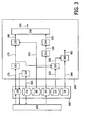
- Fig. 3 depicts a schematic representation of an apparatus 100 for enabling authentication of an information carrier 105, an information carrier 105, and an apparatus 200 for authenticating an information carrier 105 according to the present invention that employs both a first helper data 310 and conversion data 320.
- the information carrier 105 depicted in Fig. 3 shows in a simplified manner the various types of information stored on the information carrier 105.
- the information carrier 105 comprises; .
- the apparatus 200 for authenticating an information carrier 105 resembles that in Fig. 2 .
- the authentication data generation means 135 is further arranged to obtain a first helper data 310 associated with the first challenge 160 from the corresponding repository 305 on the information carrier 105.
- the first helper data 310 is used together with the detected first response data 175 to form the first authentication data 180.
- the first helper data 310 and the detected first response data 175 are offered to a delta contracting function resulting in a robust first response.
- the delta contracting function capitalizes on the redundancy present in the first helper data 310 and the detected first response data 175, and uses this redundancy to compensate for bit errors in the detected first response data 175.
- the first helper data need not be signed, signing the first helper data can help to provide proof of authenticity of the first helper data.
- the authentication data generation means 135 uses the robust first response to map the robust first response onto the first authentication data 180.
- the embodiment in Fig 3 further comprises a first key generation means 325 arranged to generate a second content key 330 using the detected first response data 175, the first helper data 310, and the conversion data 320.
- the first step is to generate a first content key (not shown) by obtaining a robust response analogous to the procedure followed in the authentication data generation means 135.
- the resulting robust response is subsequently presented to an alternate secret message digest function or alternate one-way hash function in order to obtain a first content key.
- the first key generation means 325 next retrieves a conversion data 320 from the conversion data repository 315 on the information carrier 105.
- the conversion data 320 is subsequently combined with the first content key using a boolean exclusive-or operation resulting in the second content key 330.
- the conversion data 320 can be generated by first establishing the first content key, establishing a desired second content key, and subsequently determining the boolean exclusive-or over the first and second content key.
- exclusive-or operation is used as a particularly simple example, other more complex operations can be applied.
- This indirect approach using the conversion data 320 allows the generation of a content encryption key that can be used to encrypt read-only content on multiple information carriers that have different physical tokens.
- a practical example of such an application would be the encryption of pre-pressed content on a DVD-ROM disc.
- the embodiment in Fig. 3 further comprises a content decryption means 345 that on user request uses the first content key 330 to decrypt the encrypted content data 340 stored on the information carrier 105, resulting in the decrypted content data 350. Effectively this particular embodiment enables authentication of an information carrier and subsequent decryption in order to enable the rendition of encrypted content data for a user.
- Fig. 4 depicts a schematic representation of an apparatus 100 for enabling authentication of an information carrier 105, an information carrier 105, and an apparatus 200 for authenticating an information carrier 105 according to the present invention that employs a first helper data 310.
- the apparatus 200 for authenticating an information carrier 105 depicted in Fig. 4 resembles the apparatus 200 presented in Fig. 3 , in that it uses the same procedure to establish a robust first response based on the detected first response data 175.
- the robust first response is determined in the authentication data generation means 135, as well as in a second key generation means 420.
- the second key generation means applies a message digest function on the robust first response, different from the message digest function employed in the authentication data generation means 135.
- the second key generation means retrieves a secret device key 415 from its device key repository 410. This secret device key 415 is used to generate a first content key 425 by encrypting the output of the message digest function with the secret device key 415.
- the resulting first content key is not only unique for this particular information carrier 105, it is also unique for this particular device 200, in that it was generated using the secret device key.
- this particular apparatus 200 can be used to decrypt data 430 stored on the information carrier 105 that is solely intended for this device 200, thereby enabling e.g. a selective firmware upgrade for a particular device, or a device specific software license for a particular personal computer.
- Fig. 5 presents a further application of an apparatus 200 for authenticating an information carrier 105.
- Fig. 5 depicts an information carrier 105 according to the present invention further comprising pre-pressed content, and an apparatus 200 for authenticating an information carrier 105 according to the present invention.
- the apparatus 200 can use the physical token 125 embedded in the information carrier 105 to generate a first content key 520 that is likely to be unique for this particular information carrier 105.
- the first content key 520 generated by the apparatus 200 can subsequently be used to obtain access to further content or services 525 from a server 500, e.g. from the studio that released the information carrier 105.
- a server 500 e.g. from the studio that released the information carrier 105.
- the apparatus 200 is connected to a network 515, such as the Internet, a Local Area Network, or a UMTS network, that facilitates the exchange of such content and services.
- any reference signs placed between parentheses shall not be construed as limiting the claim.
- the word “comprising” does not exclude the presence of elements or steps other than those listed in a claim.
- the word “a” or “an” preceding an element does not exclude the presence of a plurality of such elements.
- the invention can be implemented by means of hardware comprising several distinct elements, and by means of a suitably programmed computer.
- the device claim enumerating several means several of these means can be embodied by one and the same stem of hardware.
- the mere fact that certain measures are recited in mutually different dependent claims does not indicate that a combination of these measures cannot be used to advantage.
Landscapes
- Engineering & Computer Science (AREA)
- Computer Security & Cryptography (AREA)
- Signal Processing (AREA)
- Computer Networks & Wireless Communication (AREA)
- Multimedia (AREA)
- Software Systems (AREA)
- Theoretical Computer Science (AREA)
- Physics & Mathematics (AREA)
- Computer Hardware Design (AREA)
- General Engineering & Computer Science (AREA)
- General Physics & Mathematics (AREA)
- Technology Law (AREA)
- Storage Device Security (AREA)
- Signal Processing For Digital Recording And Reproducing (AREA)
- Measuring Pulse, Heart Rate, Blood Pressure Or Blood Flow (AREA)
- Management, Administration, Business Operations System, And Electronic Commerce (AREA)
Claims (18)
- Verfahren welches das Authentisieren eines Datenträgers (105) ermöglicht, wobei der Datenträger (105) einen beschreibbaren Teil (155) und ein physikalisches Token (125) enthält, welches physikalische Token reguliert ist um einen Respons auf eine empfangene Challenge zu geben und wobei das Verfahren die folgenden Schritte enthält:- das an das physikalische Token (125) richten einer ersten Challenge (165) woraus ein erster Respons (170) hervorgeht, und- die Aufspürung des ersten Responses (170) des physikalischen Tokens (125) woraus Daten des ersten aufgespürten Responses (175) hervorgehen,wobei das Verfahren sich dadurch kennzeichnet dass es außerdem die folgenden Schritte enthält:- die Gestaltung erster Authentisierungsdaten (180), beruhend auf Information die abgeleitet wurde aus den Daten des ersten aufgespürten Responses (175),- die Signierung der ersten Authentisierungsdaten (180) unter Benutzung eines geheimen Gerätschlüssels, und- die Speicherung der signierten Authentisierungsdaten (185) in den beschreibbaren Teil (155) des Datenträgers (105).
- Verfahren gemäß dem Anspruch 1, dass sich weiter dadurch kennzeichnet dass die erwähnte Gestaltung der ersten Authentisierungsdaten (180) einen weiteren Subschritt der Generierung von ersten Helferdaten (310) mit sich bringt, zur Benutzung in einer Delta-Contracting-Funktion während des Authentisierens des Datenträgers (105).
- Verfahren gemäß dem Anspruch 2, dass sich weiter dadurch kennzeichnet dass die ersten Helferdaten (310) gespeichert werden in den beschreibbaren Teil (155) des Datenträgers (105).
- Verfahren für das Authentisieren eines Datenträgers (105), wobei der Datenträger (105) einen mindestens vorher beschreibbaren Teil (155) mit gespeicherte Information enthält, sowie ein physikalisches Token (125) welches reguliert ist um einen Respons auf eine empfangene Challenge zu geben und wobei das Verfahren die folgenden Schritte enthält:- das an das physikalische Token (125) richten einer ersten Challenge (165) woraus ein erster Respons (170) hervorgeht, und- die Aufspürung des ersten Responses (170) des physikalischen Tokens (125) woraus Daten des ersten aufgespürten Responses (175) hervorgehen,wobei das Verfahren sich dadurch kennzeichnet dass es außerdem die folgenden Schritte enthält:- die Gestaltung erster Authentisierungsdaten (180), beruhend auf Information die abgeleitet wurde aus den Daten des ersten aufgespürten Responses (175),- das ablesen von signierten Authentisierungsdaten (185) von dem mindestens vorher beschreibbaren Teil (155) des Datenträgers (105),- die Ableitung zweiter Authentisierungsdaten (225) aus den signierten Authentisierungsdaten (185) unter Benutzung eines geheimen Gerätschlüssels, und- das Authentisieren des Datenträgers durch Verifikation ob die ersten Authentisierungsdaten (180) übereinstimmen mit den zweiten Authentisierungsdaten (225).
- Verfahren gemäß dem Anspruch 4, dass sich weiter dadurch kennzeichnet dass die Gestaltung der ersten Authentisierungsdaten (180) mit sich bringt:- das ablesen erster Helferdaten (310) von dem beschreibbaren Teil (155) des Datenträgers (105), und- die Anwendung einer Delta-Contracting-Funktion auf die Daten des ersten aufgespürten Responses (175) unter Benutzung der ersten Helferdaten (310).
- Verfahren gemäß dem Anspruch 1 oder 4, dass sich weiter dadurch kennzeichnet dass das physikalische Token (125) eine physikalische Einwegfunktion ist.
- Verfahren gemäß dem Anspruch 1 oder 4, dass sich weiter dadurch kennzeichnet dass die Information die benutzt wird bei der Gestaltung der ersten Authentisierungsdaten (180) außerdem eine Repräsentation von wenigstens eine Challenge enthält.
- Verfahren gemäß dem Anspruch 1 oder 4, dass sich weiter dadurch kennzeichnet dass die Information die benutzt wird bei der Gestaltung der ersten Authentisierungsdaten (180) eine Pluralität von Daten des ersten aufgespürten Responses enthält, welche hervorgeht aus einer vorherbestimmten Pluralität von Challenges.
- Verfahren gemäß dem Anspruch 1 oder 4, dass sich weiter dadurch kennzeichnet dass die Gestaltung der ersten Authentisierungsdaten (180) die Anwendung mit sich bringt von wenigstens einer der folgenden Funktionen:- eine kryptografische Einwegfunktion,- eine Verschlüsselungsfunktion, und- eine Entschlüsselungsfunktion.
- Verfahren gemäß dem Anspruch 1 oder 4, dass sich weiter dadurch kennzeichnet dass die Signierung der ersten Authentisierungsdaten (180) die Anwendung einer Verschlüsselungsfunktion mit sich bringt.
- Gerät welches das Authentisieren eines Datenträgers (105) ermöglicht, wobei der Datenträger (105) einen beschreibbaren Teil (155) und ein physikalisches Token (125) enthält, welches physikalische Token reguliert ist um einen Respons auf eine empfangene Challenge zu geben und wobei das Gerät enthält:- ein Challenge-Mittel (120) welches reguliert ist um eine erste Challenge (165) an das physikalische Token (125) zu richten, woraus ein erster Respons (170) hervorgeht, und- ein Aufspürungsmittel (130) welches reguliert ist um den ersten Respons (170) des physikalischen Tokens (125) aufzuspüren, woraus Daten des ersten aufgespürten Responses (175) hervorgehen,wobei das Gerät sich dadurch kennzeichnet dass es außerdem enthält:- ein Mittel zur Generierung von Authentisierungsdaten (135) welches reguliert ist um erste Authentisierungsdaten (180) zu gestalten, beruhend auf Information die abgeleitet wurde aus den Daten des ersten aufgespürten Responses (175),- ein Signierungsmittel (140) welches reguliert ist um die ersten Authentisierungsdaten (180) zu signieren unter Benutzung eines geheimen Gerätschlüssels, und- ein Speicherungsmittel (145) welches reguliert ist um die signierten Authentisierungsdaten (185) in den beschreibbaren Teil (155) des Datenträgers (105) zu speichern.
- Gerät für das Authentisieren eines Datenträgers (105), wobei der Datenträger (105) einen mindestens vorher beschreibbaren Teil (155) mit gespeicherte Information enthält, sowie ein physikalisches Token (125) welches reguliert ist um einen Respons auf eine empfangene Challenge zu geben und wobei das Gerät enthält:- ein Challenge-Mittel (120) welches reguliert ist um eine erste Challenge (165) an das physikalische Token (125) zu richten, woraus ein erster Respons (170) hervorgeht, und- ein Aufspürungsmittel (130) welches reguliert ist um den ersten Respons (170) des physikalischen Tokens (125) aufzuspüren, woraus Daten des ersten aufgespürten Responses (175) hervorgehen,wobei das Gerät sich dadurch kennzeichnet dass es außerdem enthält:- ein Mittel zur Generierung von Authentisierungsdaten (135) welches reguliert ist um erste Authentisierungsdaten (180) zu gestalten, beruhend auf Information die abgeleitet wurde aus den Daten des ersten aufgespürten Responses (175),- ein Lesemittel (210) welches reguliert ist um signierten Authentisierungsdaten (185) abzulesen von dem mindestens vorher beschreibbaren Teil (155) des Datenträgers (105),- ein Ableitungsmittel (220) welches reguliert ist um zweite Authentisierungsdaten (225) abzuleiten aus den signierten Authentisierungsdaten (185), unter Benutzung eines geheimen Gerätschlüssels, und- ein Authentisierungsmittel (230) welches reguliert ist für die Verifikation ob die ersten Authentisierungsdaten übereinstimmen mit den zweiten Authentisierungsdaten.
- Ein Datenträger (105) der enthält:- einen mindestens vorher beschreibbaren Teil (155) welcher gespeicherte Information enthält, und- ein physikalisches Token (125) welches reguliert ist um einen Respons auf eine empfangene Challenge zu geben,wobei der Datenträger dadurch gekennzeichnet wird dass er signierten Authentisierungsdaten (185) enthält, welche generiert wurden gemäß dem Verfahren wie beansprucht im Anspruch 1.
- Ein Datenträger (105) wie beansprucht im Anspruch 13, dessen physikalischen Token (125) eine physikalische Einwegfunktion ist.
- Ein Datenträger (105) wie beansprucht im Anspruch 13, wobei der Datenträger (105) eine optische Speicherplatte ist und wobei der beschreibbare Teil (155) ein BCA (Burst Cutting Area) ist.
- Ein Datenträger (105) wie beansprucht im Anspruch 13, welcher Datenträger (105) außerdem digitalen Inhalte enthält die verschlüsselt wurden mit einem ersten Inhaltschlüssel (425), und die rekonstruiert werden können unter Benutzung weiterer Authentisierungsdaten die beruhen auf die erwähnten Daten des ersten aufgespürten Responses (175) des physikalischen Tokens (125).
- Ein Datenträger (105) wie beansprucht im Anspruch 13, welcher Datenträger (105) außerdem digitale Inhalte enthält die verschlüsselt wurden mit einem zweiten Inhaltschlüssel (330), und die rekonstruiert werden können unter Benutzung weiterer Authentisierungsdaten die beruhen auf die erwähnten Daten des ersten aufgespürten Responses (175) des physikalischen Tokens (125) sowie auf Konversionsdaten (320) die in den beschreibbaren Teil (155) gespeichert sind.
- Ein Computerprogrammprodukt welches Programmcode-Mittel enthält die gespeichert sind auf einem computerlesbaren Medium für das Anwenden des Verfahrens gemäß einem der Ansprüche 1 oder 4 wenn das erwähnte Programmprodukt auf einem Computer ausgeführt wird.
Priority Applications (1)
| Application Number | Priority Date | Filing Date | Title |
|---|---|---|---|
| EP06795666.4A EP1922730B2 (de) | 2005-08-23 | 2006-08-16 | Authentifizierung von informationsträgern über eine physische einwegfunktion |
Applications Claiming Priority (3)
| Application Number | Priority Date | Filing Date | Title |
|---|---|---|---|
| EP05107719 | 2005-08-23 | ||
| PCT/IB2006/052820 WO2007023420A1 (en) | 2005-08-23 | 2006-08-16 | Information carrier authentication with a physical one-way function |
| EP06795666.4A EP1922730B2 (de) | 2005-08-23 | 2006-08-16 | Authentifizierung von informationsträgern über eine physische einwegfunktion |
Publications (3)
| Publication Number | Publication Date |
|---|---|
| EP1922730A1 EP1922730A1 (de) | 2008-05-21 |
| EP1922730B1 true EP1922730B1 (de) | 2009-06-10 |
| EP1922730B2 EP1922730B2 (de) | 2013-07-24 |
Family
ID=37606976
Family Applications (1)
| Application Number | Title | Priority Date | Filing Date |
|---|---|---|---|
| EP06795666.4A Active EP1922730B2 (de) | 2005-08-23 | 2006-08-16 | Authentifizierung von informationsträgern über eine physische einwegfunktion |
Country Status (7)
| Country | Link |
|---|---|
| US (2) | US8887309B2 (de) |
| EP (1) | EP1922730B2 (de) |
| JP (1) | JP2009506613A (de) |
| CN (1) | CN101243513A (de) |
| AT (1) | ATE433596T1 (de) |
| DE (1) | DE602006007237D1 (de) |
| WO (1) | WO2007023420A1 (de) |
Cited By (1)
| Publication number | Priority date | Publication date | Assignee | Title |
|---|---|---|---|---|
| WO2011048126A1 (en) | 2009-10-21 | 2011-04-28 | Intrinsic Id B.V. | Distribution system and method for distributing digital information |
Families Citing this family (26)
| Publication number | Priority date | Publication date | Assignee | Title |
|---|---|---|---|---|
| WO2006053304A2 (en) | 2004-11-12 | 2006-05-18 | Pufco, Inc. | Volatile device keys and applications thereof |
| ATE433596T1 (de) * | 2005-08-23 | 2009-06-15 | Koninkl Philips Electronics Nv | Authentifizierung von informationsträgern über eine physische einwegfunktion |
| US8224018B2 (en) * | 2006-01-23 | 2012-07-17 | Digimarc Corporation | Sensing data from physical objects |
| US8077905B2 (en) * | 2006-01-23 | 2011-12-13 | Digimarc Corporation | Capturing physical feature data |
| KR101366376B1 (ko) | 2006-01-24 | 2014-02-24 | 베라요, 인크. | 신호 제너레이터에 기반한 장치 보안 |
| CN101681657A (zh) * | 2007-06-12 | 2010-03-24 | Nxp股份有限公司 | 安全存储器 |
| CA2593897C (en) * | 2007-07-16 | 2016-06-14 | Tet Hin Yeap | Method, system and apparatus for accessing a resource based on data supplied by a local user |
| CN101755269B (zh) * | 2007-07-20 | 2012-06-27 | Nxp股份有限公司 | 具有安全虚拟机的设备 |
| CN101542496B (zh) | 2007-09-19 | 2012-09-05 | 美国威诚股份有限公司 | 利用物理不可克隆功能的身份验证 |
| US8881254B2 (en) * | 2007-11-02 | 2014-11-04 | Magtek, Inc. | Method and system for managing virtual objects in a network |
| JP5034921B2 (ja) | 2007-12-14 | 2012-09-26 | ソニー株式会社 | 情報処理装置、ディスク、および情報処理方法、並びにプログラム |
| EP2355930B1 (de) | 2008-11-06 | 2018-01-10 | Koninklijke Philips N.V. | Küvette und verfahren zur authentifizierung einer küvette |
| TW201039170A (en) * | 2009-04-28 | 2010-11-01 | Thomson Licensing | System and method for detecting genuine copies of pre-recorded digital media |
| US9032476B2 (en) * | 2009-05-12 | 2015-05-12 | Empire Technology Development Llc | Secure authentication |
| WO2011110887A1 (en) | 2010-03-11 | 2011-09-15 | Luis Rocha | Cryptographic system and method using new one-way function families |
| US8694687B2 (en) | 2010-07-16 | 2014-04-08 | Intryca, Inc. | Computing-system identifier using software extraction of manufacturing variability |
| US8842827B2 (en) | 2010-07-16 | 2014-09-23 | Intryca, Inc. | Mobile phone aided operations system and method |
| WO2012122994A1 (en) * | 2011-03-11 | 2012-09-20 | Kreft Heinz | Off-line transfer of electronic tokens between peer-devices |
| DE102012208834A1 (de) * | 2012-05-25 | 2013-11-28 | Siemens Aktiengesellschaft | Authentisierung eines Produktes gegenüber einem Authentisierer |
| US9038133B2 (en) | 2012-12-07 | 2015-05-19 | International Business Machines Corporation | Self-authenticating of chip based on intrinsic features |
| DE102014210282A1 (de) * | 2014-05-30 | 2015-12-03 | Siemens Aktiengesellschaft | Erzeugen eines kryptographischen Schlüssels |
| US10032011B2 (en) | 2014-08-12 | 2018-07-24 | At&T Intellectual Property I, L.P. | Method and device for managing authentication using an identity avatar |
| WO2017177105A1 (en) | 2016-04-07 | 2017-10-12 | The Johns Hopkins University | System and method for physical one-way function authentication via chaotic integrated photonic resonators |
| ES2764128T3 (es) * | 2016-12-21 | 2020-06-02 | Merck Patent Gmbh | Dispositivo de lectura para leer una marca compuesta que comprende una función física no clonable para la lucha contra la falsificación |
| CN106972926B (zh) * | 2017-03-29 | 2019-12-10 | 北京经纬恒润科技有限公司 | 一种无线汽车钥匙的加密解密方法、装置及系统 |
| JP2021528925A (ja) * | 2018-06-27 | 2021-10-21 | ユーエヌエム レインフォレスト イノベーションズUNM Rainforest Innovations | ヘルパーデータのみを使用する相関型ロバスト認証技術 |
Family Cites Families (58)
| Publication number | Priority date | Publication date | Assignee | Title |
|---|---|---|---|---|
| EP1006516B1 (de) * | 1995-10-09 | 2001-11-21 | Matsushita Electric Industrial Co., Ltd. | Optische Platte und Gerät zur Wiedergabe optischer Platten |
| US6144742A (en) * | 1996-05-16 | 2000-11-07 | Mitsushita Electric Industrial Co., Ltd. | Optical disk, an optical disk barcode forming method, an optical disk reproduction apparatus, a marking forming apparatus, a method of forming a laser marking on an optical disk, and a method of manufacturing an optical disk |
| US5920628A (en) * | 1997-01-09 | 1999-07-06 | Washington University | Method and apparatus for fingerprinting and authenticating various magnetic media |
| JPH11196084A (ja) | 1997-10-31 | 1999-07-21 | Matsushita Electric Ind Co Ltd | 暗号化システム |
| KR100255191B1 (ko) | 1997-12-31 | 2000-06-01 | 윤종용 | 광 디스크 재생장치에서 종류 검출을 위한 디스크와그 종류 검출방법 |
| US6385651B2 (en) * | 1998-05-05 | 2002-05-07 | Liberate Technologies | Internet service provider preliminary user registration mechanism provided by centralized authority |
| US6317829B1 (en) * | 1998-06-19 | 2001-11-13 | Entrust Technologies Limited | Public key cryptography based security system to facilitate secure roaming of users |
| EP0984346A1 (de) * | 1998-09-02 | 2000-03-08 | Hitachi Europe Limited | Kopierschutzverfahren und -vorrichtung |
| EP1536422B1 (de) * | 1998-09-22 | 2011-11-09 | Panasonic Corporation | Optische Platte und Verfahren zur Aufzeichnung zusätzlicher Informationen auf einer optischen Platte |
| CA2285872C (en) * | 1998-10-16 | 2009-10-06 | Matsushita Electric Industrial Co., Ltd. | Digital content protection system |
| US6609199B1 (en) * | 1998-10-26 | 2003-08-19 | Microsoft Corporation | Method and apparatus for authenticating an open system application to a portable IC device |
| EP1145482B1 (de) | 1999-01-27 | 2019-01-02 | Callahan Cellular L.L.C. | Verfahren zum nachweis der autentizität einer einheit oder der integrität einer nachricht mittels eines öffentlichen exponenten, der gleich einer potenz von zwei ist |
| EP1152402B1 (de) | 1999-07-15 | 2006-11-15 | Matsushita Electric Industrial Co., Ltd. | Optisches aufzeichnungsmedium und verfahren zur aufzeichnung auf einem optischen aufzeichnungsmedium |
| EP1076279A1 (de) * | 1999-08-13 | 2001-02-14 | Hewlett-Packard Company | Computerplattformen und deren Betriebsverfahren |
| DE10008973B4 (de) * | 2000-02-25 | 2004-10-07 | Bayerische Motoren Werke Ag | Autorisierungsverfahren mit Zertifikat |
| US7805764B1 (en) * | 2000-03-31 | 2010-09-28 | Doug Carson & Associates, Inc. | Sequencing data blocks to provide hidden data on a recording medium |
| TWI239447B (en) | 2000-06-02 | 2005-09-11 | Koninkl Philips Electronics Nv | Recordable storage medium with protected data area |
| JP4219680B2 (ja) * | 2000-12-07 | 2009-02-04 | サンディスク コーポレイション | 不揮発性メモリカード、コンパクトディスクまたはその他のメディアから記録済みのオーディオ、ビデオまたはその他のコンテンツを再生するためのシステム、方法およびデバイス |
| US7111175B2 (en) | 2000-12-28 | 2006-09-19 | Intel Corporation | Method and apparatus for verifying the integrity of a media key block |
| US7178027B2 (en) * | 2001-03-30 | 2007-02-13 | Capital One-Financial Corp. | System and method for securely copying a cryptographic key |
| US7404080B2 (en) * | 2001-04-16 | 2008-07-22 | Bjorn Markus Jakobsson | Methods and apparatus for efficient computation of one-way chains in cryptographic applications |
| US20040228487A1 (en) * | 2001-07-09 | 2004-11-18 | Shigenori Maeda | Content reading apparatus |
| EP1289326A1 (de) * | 2001-08-30 | 2003-03-05 | Motorola, Inc. | Verfahren und Gerät zum Überprüfen von heruntergeladener Software |
| GB0129065D0 (en) | 2001-12-05 | 2002-01-23 | Philips Electronics Uk Ltd | Method and apparatus for verifying the integrity of system data |
| US7840803B2 (en) * | 2002-04-16 | 2010-11-23 | Massachusetts Institute Of Technology | Authentication of integrated circuits |
| US7065787B2 (en) * | 2002-06-12 | 2006-06-20 | Microsoft Corporation | Publishing content in connection with digital rights management (DRM) architecture |
| US7395435B2 (en) * | 2002-09-20 | 2008-07-01 | Atmel Corporation | Secure memory device for smart cards |
| US7895443B2 (en) * | 2002-11-05 | 2011-02-22 | Safenet, Inc. | Secure authentication using hardware token and computer fingerprint |
| US7592829B2 (en) * | 2002-12-02 | 2009-09-22 | Silverbrook Research Pty Ltd | On-chip storage of secret information as inverse pair |
| EP1590804B1 (de) * | 2003-01-24 | 2014-07-09 | Intrinsic ID B.V. | Verfahren und vorrichtung zur zuverlässigen zugangskontrolle zu einem speichermedium |
| JP4043388B2 (ja) | 2003-03-20 | 2008-02-06 | ソニー株式会社 | 再生装置および再生方法 |
| EP1629628B1 (de) * | 2003-05-21 | 2010-07-14 | Koninklijke Philips Electronics N.V. | Verfahren und Vorrichtung zur Authentifikation eines physischen Gegenstandes |
| US7729992B2 (en) * | 2003-06-13 | 2010-06-01 | Brilliant Digital Entertainment, Inc. | Monitoring of computer-related resources and associated methods and systems for disbursing compensation |
| CN100498948C (zh) | 2003-06-18 | 2009-06-10 | 松下电器产业株式会社 | 重放装置、重放方法 |
| EP1642206B1 (de) | 2003-07-07 | 2017-12-20 | Irdeto B.V. | Umprogrammierbare sicherheit zur kontrolle von widerrechtlichen kopien und zur ermöglichung eines interaktiven inhalts |
| JP2005044425A (ja) | 2003-07-25 | 2005-02-17 | Memory Tec Kk | 海賊版制作の難易度を高めたデジタル多用途ディスク、その再生装置 |
| KR20050021733A (ko) | 2003-08-25 | 2005-03-07 | 삼성전자주식회사 | 디스크의 복제방지를 위한 데이터를 기록한 기록매체,변조방법, 기록장치 및 재생장치 |
| KR20060113685A (ko) * | 2003-10-29 | 2006-11-02 | 코닌클리케 필립스 일렉트로닉스 엔.브이. | 물리적 랜덤 함수들을 함께 공유하는 신뢰성 있는 포워드비밀 키의 시스템 및 방법 |
| US7475255B1 (en) * | 2003-11-03 | 2009-01-06 | Guthery Scott B | Analog physical signature devices and methods and systems for using such devices to secure the use of computer resources |
| JP4126699B2 (ja) * | 2003-11-05 | 2008-07-30 | インターナショナル・ビジネス・マシーンズ・コーポレーション | コンテンツの再生を制限するコンテンツ再生装置、情報処理システム、再生制限方法、コンテンツ再生プログラム、及び記録媒体 |
| WO2005048256A2 (en) * | 2003-11-14 | 2005-05-26 | Koninklijke Philips Electronics N.V. | A data carrier having security mark and apparatus for handling such data carrier. |
| US20080149700A1 (en) * | 2004-02-24 | 2008-06-26 | Koninklijke Philips Electronics, N.V. | Speckle Pattern For Authenticating An Information Carrier |
| EP1759484A1 (de) * | 2004-06-09 | 2007-03-07 | Koninklijke Philips Electronics N.V. | Schutz biometrischer vorlagen und strukturelement-behandlung |
| EP1759259A2 (de) * | 2004-06-09 | 2007-03-07 | Koninklijke Philips Electronics N.V. | Architekturen für den datenschutz bei biometrischen templates |
| US7480940B1 (en) * | 2004-06-10 | 2009-01-20 | Symantec Corporation | Structures and methods for a low and slow network reconnaissance detector |
| WO2006053304A2 (en) | 2004-11-12 | 2006-05-18 | Pufco, Inc. | Volatile device keys and applications thereof |
| US7386736B2 (en) * | 2004-12-16 | 2008-06-10 | International Business Machines Corporation | Method and system for using a compact disk as a smart key device |
| US20060174110A1 (en) * | 2005-01-31 | 2006-08-03 | Microsoft Corporation | Symmetric key optimizations |
| CN101111845A (zh) * | 2005-02-02 | 2008-01-23 | 皇家飞利浦电子股份有限公司 | 用于校准的方法、装置、设备、系统和程序 |
| US8024809B2 (en) * | 2005-04-04 | 2011-09-20 | Research In Motion Limited | System and method for deleting confidential information |
| US7726566B2 (en) * | 2005-04-15 | 2010-06-01 | Research In Motion Limited | Controlling connectivity of a wireless smart card reader |
| US7677438B2 (en) * | 2005-06-29 | 2010-03-16 | Microsoft Corporation | Radio frequency certificates of authenticity |
| EP1752937A1 (de) * | 2005-07-29 | 2007-02-14 | Research In Motion Limited | System und Verfahren zur verschlüsselten Eingabe einer persönlichen Identifizierungsnummer für eine Chipkarte |
| ATE433596T1 (de) * | 2005-08-23 | 2009-06-15 | Koninkl Philips Electronics Nv | Authentifizierung von informationsträgern über eine physische einwegfunktion |
| CN101292466A (zh) * | 2005-10-17 | 2008-10-22 | 皇家飞利浦电子股份有限公司 | 具有结合的传感器和显示器的集成物理不可复制功能件(puf) |
| JP2009533742A (ja) * | 2006-04-11 | 2009-09-17 | コーニンクレッカ フィリップス エレクトロニクス エヌ ヴィ | データベースなしのノイジーな低電力puf認証 |
| US20130298211A1 (en) * | 2012-04-03 | 2013-11-07 | Verayo, Inc. | Authentication token |
| JP6622795B2 (ja) * | 2014-05-22 | 2019-12-18 | アナログ ディヴァイスィズ インク | 動的鍵生成を用いるネットワーク認証システム |
-
2006
- 2006-08-16 AT AT06795666T patent/ATE433596T1/de active
- 2006-08-16 CN CNA2006800304392A patent/CN101243513A/zh active Pending
- 2006-08-16 JP JP2008527555A patent/JP2009506613A/ja active Pending
- 2006-08-16 WO PCT/IB2006/052820 patent/WO2007023420A1/en not_active Ceased
- 2006-08-16 US US12/064,089 patent/US8887309B2/en active Active
- 2006-08-16 EP EP06795666.4A patent/EP1922730B2/de active Active
- 2006-08-16 DE DE602006007237T patent/DE602006007237D1/de active Active
-
2014
- 2014-10-18 US US14/517,848 patent/US10803900B2/en active Active
Cited By (1)
| Publication number | Priority date | Publication date | Assignee | Title |
|---|---|---|---|---|
| WO2011048126A1 (en) | 2009-10-21 | 2011-04-28 | Intrinsic Id B.V. | Distribution system and method for distributing digital information |
Also Published As
| Publication number | Publication date |
|---|---|
| EP1922730A1 (de) | 2008-05-21 |
| US8887309B2 (en) | 2014-11-11 |
| US20150040247A1 (en) | 2015-02-05 |
| EP1922730B2 (de) | 2013-07-24 |
| DE602006007237D1 (de) | 2009-07-23 |
| WO2007023420A1 (en) | 2007-03-01 |
| US20080229119A1 (en) | 2008-09-18 |
| US10803900B2 (en) | 2020-10-13 |
| CN101243513A (zh) | 2008-08-13 |
| ATE433596T1 (de) | 2009-06-15 |
| JP2009506613A (ja) | 2009-02-12 |
Similar Documents
| Publication | Publication Date | Title |
|---|---|---|
| US10803900B2 (en) | Method and apparatus for information carrier authentication | |
| CN102426640B (zh) | 用于产品验证和激活的安全软件产品标识符 | |
| US9214183B2 (en) | Secure storage | |
| US7839278B2 (en) | Volatile device keys and applications thereof | |
| US8065533B2 (en) | Reliable storage medium access control method and device | |
| EP1855281B1 (de) | Vorrichtung zum Schreiben von Daten auf ein Medium | |
| JP5839659B2 (ja) | 半導体装置 | |
| US8775797B2 (en) | Reliable software product validation and activation with redundant security | |
| US9672333B2 (en) | Trusted storage | |
| US20080149700A1 (en) | Speckle Pattern For Authenticating An Information Carrier | |
| KR20100133373A (ko) | 간단 비자율 피어링 환경 워터마킹, 인증 및 바인딩 | |
| WO2011152065A1 (ja) | コントローラ、制御方法、コンピュータプログラム、プログラム記録媒体、記録装置及び記録装置の製造方法 | |
| US8307217B2 (en) | Trusted storage | |
| CN101656087B (zh) | 信息处理设备和信息处理方法 | |
| CN101124767A (zh) | 密钥生成以及证明真实性的方法和设备 | |
| JP2008033512A (ja) | セキュリティチップ及びプラットフォーム | |
| CN116599750A (zh) | 一种利用加密技术确保数据变更可追溯的系统和方法 | |
| JP5986279B2 (ja) | 半導体装置 | |
| US20080189794A1 (en) | Secure Host Interface | |
| WO2007128418A1 (en) | Apparatus for writing data to a medium | |
| WO2007093946A1 (en) | Improved method of content protection | |
| WO2007148433A1 (ja) | 記録媒体の固定データ領域形成方法 |
Legal Events
| Date | Code | Title | Description |
|---|---|---|---|
| PUAI | Public reference made under article 153(3) epc to a published international application that has entered the european phase |
Free format text: ORIGINAL CODE: 0009012 |
|
| 17P | Request for examination filed |
Effective date: 20080325 |
|
| AK | Designated contracting states |
Kind code of ref document: A1 Designated state(s): AT BE BG CH CY CZ DE DK EE ES FI FR GB GR HU IE IS IT LI LT LU LV MC NL PL PT RO SE SI SK TR |
|
| GRAP | Despatch of communication of intention to grant a patent |
Free format text: ORIGINAL CODE: EPIDOSNIGR1 |
|
| GRAP | Despatch of communication of intention to grant a patent |
Free format text: ORIGINAL CODE: EPIDOSNIGR1 |
|
| GRAS | Grant fee paid |
Free format text: ORIGINAL CODE: EPIDOSNIGR3 |
|
| GRAA | (expected) grant |
Free format text: ORIGINAL CODE: 0009210 |
|
| AK | Designated contracting states |
Kind code of ref document: B1 Designated state(s): AT BE BG CH CY CZ DE DK EE ES FI FR GB GR HU IE IS IT LI LT LU LV MC NL PL PT RO SE SI SK TR |
|
| REG | Reference to a national code |
Ref country code: GB Ref legal event code: FG4D |
|
| REG | Reference to a national code |
Ref country code: CH Ref legal event code: EP |
|
| REG | Reference to a national code |
Ref country code: IE Ref legal event code: FG4D |
|
| REF | Corresponds to: |
Ref document number: 602006007237 Country of ref document: DE Date of ref document: 20090723 Kind code of ref document: P |
|
| RAP2 | Party data changed (patent owner data changed or rights of a patent transferred) |
Owner name: INTRINSIC ID B.V. |
|
| NLT2 | Nl: modifications (of names), taken from the european patent patent bulletin |
Owner name: INTRINSIC ID B.V. Effective date: 20090819 |
|
| REG | Reference to a national code |
Ref country code: GB Ref legal event code: 732E Free format text: REGISTERED BETWEEN 20090924 AND 20090930 |
|
| PG25 | Lapsed in a contracting state [announced via postgrant information from national office to epo] |
Ref country code: LT Free format text: LAPSE BECAUSE OF FAILURE TO SUBMIT A TRANSLATION OF THE DESCRIPTION OR TO PAY THE FEE WITHIN THE PRESCRIBED TIME-LIMIT Effective date: 20090610 Ref country code: FI Free format text: LAPSE BECAUSE OF FAILURE TO SUBMIT A TRANSLATION OF THE DESCRIPTION OR TO PAY THE FEE WITHIN THE PRESCRIBED TIME-LIMIT Effective date: 20090610 |
|
| PG25 | Lapsed in a contracting state [announced via postgrant information from national office to epo] |
Ref country code: SI Free format text: LAPSE BECAUSE OF FAILURE TO SUBMIT A TRANSLATION OF THE DESCRIPTION OR TO PAY THE FEE WITHIN THE PRESCRIBED TIME-LIMIT Effective date: 20090610 Ref country code: SE Free format text: LAPSE BECAUSE OF FAILURE TO SUBMIT A TRANSLATION OF THE DESCRIPTION OR TO PAY THE FEE WITHIN THE PRESCRIBED TIME-LIMIT Effective date: 20090910 Ref country code: PL Free format text: LAPSE BECAUSE OF FAILURE TO SUBMIT A TRANSLATION OF THE DESCRIPTION OR TO PAY THE FEE WITHIN THE PRESCRIBED TIME-LIMIT Effective date: 20090610 Ref country code: LV Free format text: LAPSE BECAUSE OF FAILURE TO SUBMIT A TRANSLATION OF THE DESCRIPTION OR TO PAY THE FEE WITHIN THE PRESCRIBED TIME-LIMIT Effective date: 20090610 |
|
| NLS | Nl: assignments of ep-patents |
Owner name: INTRINSIC ID B.V. Effective date: 20091102 |
|
| PG25 | Lapsed in a contracting state [announced via postgrant information from national office to epo] |
Ref country code: RO Free format text: LAPSE BECAUSE OF FAILURE TO SUBMIT A TRANSLATION OF THE DESCRIPTION OR TO PAY THE FEE WITHIN THE PRESCRIBED TIME-LIMIT Effective date: 20090610 Ref country code: IS Free format text: LAPSE BECAUSE OF FAILURE TO SUBMIT A TRANSLATION OF THE DESCRIPTION OR TO PAY THE FEE WITHIN THE PRESCRIBED TIME-LIMIT Effective date: 20091010 Ref country code: ES Free format text: LAPSE BECAUSE OF FAILURE TO SUBMIT A TRANSLATION OF THE DESCRIPTION OR TO PAY THE FEE WITHIN THE PRESCRIBED TIME-LIMIT Effective date: 20090921 Ref country code: EE Free format text: LAPSE BECAUSE OF FAILURE TO SUBMIT A TRANSLATION OF THE DESCRIPTION OR TO PAY THE FEE WITHIN THE PRESCRIBED TIME-LIMIT Effective date: 20090610 Ref country code: CZ Free format text: LAPSE BECAUSE OF FAILURE TO SUBMIT A TRANSLATION OF THE DESCRIPTION OR TO PAY THE FEE WITHIN THE PRESCRIBED TIME-LIMIT Effective date: 20090610 |
|
| PG25 | Lapsed in a contracting state [announced via postgrant information from national office to epo] |
Ref country code: SK Free format text: LAPSE BECAUSE OF FAILURE TO SUBMIT A TRANSLATION OF THE DESCRIPTION OR TO PAY THE FEE WITHIN THE PRESCRIBED TIME-LIMIT Effective date: 20090610 |
|
| PLBI | Opposition filed |
Free format text: ORIGINAL CODE: 0009260 |
|
| PG25 | Lapsed in a contracting state [announced via postgrant information from national office to epo] |
Ref country code: BG Free format text: LAPSE BECAUSE OF FAILURE TO SUBMIT A TRANSLATION OF THE DESCRIPTION OR TO PAY THE FEE WITHIN THE PRESCRIBED TIME-LIMIT Effective date: 20090910 Ref country code: MC Free format text: LAPSE BECAUSE OF NON-PAYMENT OF DUE FEES Effective date: 20090831 Ref country code: PT Free format text: LAPSE BECAUSE OF FAILURE TO SUBMIT A TRANSLATION OF THE DESCRIPTION OR TO PAY THE FEE WITHIN THE PRESCRIBED TIME-LIMIT Effective date: 20091010 |
|
| PLAX | Notice of opposition and request to file observation + time limit sent |
Free format text: ORIGINAL CODE: EPIDOSNOBS2 |
|
| 26 | Opposition filed |
Opponent name: VERAYO, INC. Effective date: 20100310 |
|
| PG25 | Lapsed in a contracting state [announced via postgrant information from national office to epo] |
Ref country code: DK Free format text: LAPSE BECAUSE OF FAILURE TO SUBMIT A TRANSLATION OF THE DESCRIPTION OR TO PAY THE FEE WITHIN THE PRESCRIBED TIME-LIMIT Effective date: 20090610 |
|
| PLAF | Information modified related to communication of a notice of opposition and request to file observations + time limit |
Free format text: ORIGINAL CODE: EPIDOSCOBS2 |
|
| PG25 | Lapsed in a contracting state [announced via postgrant information from national office to epo] |
Ref country code: IE Free format text: LAPSE BECAUSE OF NON-PAYMENT OF DUE FEES Effective date: 20090816 |
|
| PLBB | Reply of patent proprietor to notice(s) of opposition received |
Free format text: ORIGINAL CODE: EPIDOSNOBS3 |
|
| PG25 | Lapsed in a contracting state [announced via postgrant information from national office to epo] |
Ref country code: GR Free format text: LAPSE BECAUSE OF FAILURE TO SUBMIT A TRANSLATION OF THE DESCRIPTION OR TO PAY THE FEE WITHIN THE PRESCRIBED TIME-LIMIT Effective date: 20090911 |
|
| PG25 | Lapsed in a contracting state [announced via postgrant information from national office to epo] |
Ref country code: IT Free format text: LAPSE BECAUSE OF FAILURE TO SUBMIT A TRANSLATION OF THE DESCRIPTION OR TO PAY THE FEE WITHIN THE PRESCRIBED TIME-LIMIT Effective date: 20090610 |
|
| REG | Reference to a national code |
Ref country code: CH Ref legal event code: PL |
|
| PG25 | Lapsed in a contracting state [announced via postgrant information from national office to epo] |
Ref country code: LU Free format text: LAPSE BECAUSE OF NON-PAYMENT OF DUE FEES Effective date: 20090816 Ref country code: LI Free format text: LAPSE BECAUSE OF NON-PAYMENT OF DUE FEES Effective date: 20100831 Ref country code: CH Free format text: LAPSE BECAUSE OF NON-PAYMENT OF DUE FEES Effective date: 20100831 |
|
| PG25 | Lapsed in a contracting state [announced via postgrant information from national office to epo] |
Ref country code: HU Free format text: LAPSE BECAUSE OF FAILURE TO SUBMIT A TRANSLATION OF THE DESCRIPTION OR TO PAY THE FEE WITHIN THE PRESCRIBED TIME-LIMIT Effective date: 20091211 |
|
| PG25 | Lapsed in a contracting state [announced via postgrant information from national office to epo] |
Ref country code: TR Free format text: LAPSE BECAUSE OF FAILURE TO SUBMIT A TRANSLATION OF THE DESCRIPTION OR TO PAY THE FEE WITHIN THE PRESCRIBED TIME-LIMIT Effective date: 20090610 |
|
| PG25 | Lapsed in a contracting state [announced via postgrant information from national office to epo] |
Ref country code: CY Free format text: LAPSE BECAUSE OF FAILURE TO SUBMIT A TRANSLATION OF THE DESCRIPTION OR TO PAY THE FEE WITHIN THE PRESCRIBED TIME-LIMIT Effective date: 20090610 |
|
| RIC2 | Information provided on ipc code assigned after grant |
Ipc: H04L 9/32 20060101ALI20120216BHEP Ipc: G11B 20/00 20060101AFI20120216BHEP |
|
| PLAF | Information modified related to communication of a notice of opposition and request to file observations + time limit |
Free format text: ORIGINAL CODE: EPIDOSCOBS2 |
|
| PLAN | Information deleted related to communication of a notice of opposition and request to file observations + time limit |
Free format text: ORIGINAL CODE: EPIDOSDOBS2 |
|
| PLAX | Notice of opposition and request to file observation + time limit sent |
Free format text: ORIGINAL CODE: EPIDOSNOBS2 |
|
| PLAY | Examination report in opposition despatched + time limit |
Free format text: ORIGINAL CODE: EPIDOSNORE2 |
|
| PLBB | Reply of patent proprietor to notice(s) of opposition received |
Free format text: ORIGINAL CODE: EPIDOSNOBS3 |
|
| PLBC | Reply to examination report in opposition received |
Free format text: ORIGINAL CODE: EPIDOSNORE3 |
|
| APBM | Appeal reference recorded |
Free format text: ORIGINAL CODE: EPIDOSNREFNO |
|
| APBP | Date of receipt of notice of appeal recorded |
Free format text: ORIGINAL CODE: EPIDOSNNOA2O |
|
| APAH | Appeal reference modified |
Free format text: ORIGINAL CODE: EPIDOSCREFNO |
|
| APBU | Appeal procedure closed |
Free format text: ORIGINAL CODE: EPIDOSNNOA9O |
|
| APBC | Information on closure of appeal procedure deleted |
Free format text: ORIGINAL CODE: EPIDOSDNOA9O |
|
| APBU | Appeal procedure closed |
Free format text: ORIGINAL CODE: EPIDOSNNOA9O |
|
| PUAH | Patent maintained in amended form |
Free format text: ORIGINAL CODE: 0009272 |
|
| STAA | Information on the status of an ep patent application or granted ep patent |
Free format text: STATUS: PATENT MAINTAINED AS AMENDED |
|
| 27A | Patent maintained in amended form |
Effective date: 20130724 |
|
| AK | Designated contracting states |
Kind code of ref document: B2 Designated state(s): AT BE BG CH CY CZ DE DK EE ES FI FR GB GR HU IE IS IT LI LT LU LV MC NL PL PT RO SE SI SK TR |
|
| REG | Reference to a national code |
Ref country code: DE Ref legal event code: R102 Ref document number: 602006007237 Country of ref document: DE Effective date: 20130724 |
|
| REG | Reference to a national code |
Ref country code: NL Ref legal event code: T3 |
|
| PG25 | Lapsed in a contracting state [announced via postgrant information from national office to epo] |
Ref country code: LV Free format text: LAPSE BECAUSE OF FAILURE TO SUBMIT A TRANSLATION OF THE DESCRIPTION OR TO PAY THE FEE WITHIN THE PRESCRIBED TIME-LIMIT Effective date: 20130724 |
|
| REG | Reference to a national code |
Ref country code: FR Ref legal event code: PLFP Year of fee payment: 11 |
|
| REG | Reference to a national code |
Ref country code: FR Ref legal event code: PLFP Year of fee payment: 12 |
|
| REG | Reference to a national code |
Ref country code: FR Ref legal event code: PLFP Year of fee payment: 13 |
|
| REG | Reference to a national code |
Ref country code: DE Ref legal event code: R082 Ref document number: 602006007237 Country of ref document: DE Ref country code: DE Ref legal event code: R081 Ref document number: 602006007237 Country of ref document: DE Owner name: SYNOPSYS, INC. (N.D.GES. DES STAATES DELAWARE), US Free format text: FORMER OWNER: INTRINSIC ID B.V., EINDHOVEN, NL |
|
| REG | Reference to a national code |
Ref country code: AT Ref legal event code: PC Ref document number: 433596 Country of ref document: AT Kind code of ref document: T Owner name: SYNOPSYS, INC., US Effective date: 20241021 |
|
| REG | Reference to a national code |
Ref country code: GB Ref legal event code: 732E Free format text: REGISTERED BETWEEN 20250313 AND 20250319 |
|
| PGFP | Annual fee paid to national office [announced via postgrant information from national office to epo] |
Ref country code: NL Payment date: 20250723 Year of fee payment: 20 |
|
| PGFP | Annual fee paid to national office [announced via postgrant information from national office to epo] |
Ref country code: DE Payment date: 20250724 Year of fee payment: 20 |
|
| PGFP | Annual fee paid to national office [announced via postgrant information from national office to epo] |
Ref country code: BE Payment date: 20250723 Year of fee payment: 20 Ref country code: GB Payment date: 20250725 Year of fee payment: 20 |
|
| PGFP | Annual fee paid to national office [announced via postgrant information from national office to epo] |
Ref country code: FR Payment date: 20250725 Year of fee payment: 20 Ref country code: AT Payment date: 20250725 Year of fee payment: 20 |
|
| REG | Reference to a national code |
Ref country code: BE Ref legal event code: PD Owner name: SYNOPSYS, INC.; US Free format text: DETAILS ASSIGNMENT: CHANGE OF OWNER(S), ASSIGNMENT; FORMER OWNER NAME: INTRINSIC ID B.V. Effective date: 20251010 |