EP1925718A2 - Procédé de fabrication d'un textile comprenant des régions conductrices intégrées et textile ainsi obtenu - Google Patents
Procédé de fabrication d'un textile comprenant des régions conductrices intégrées et textile ainsi obtenu Download PDFInfo
- Publication number
- EP1925718A2 EP1925718A2 EP07120785A EP07120785A EP1925718A2 EP 1925718 A2 EP1925718 A2 EP 1925718A2 EP 07120785 A EP07120785 A EP 07120785A EP 07120785 A EP07120785 A EP 07120785A EP 1925718 A2 EP1925718 A2 EP 1925718A2
- Authority
- EP
- European Patent Office
- Prior art keywords
- conductive
- area
- substrate
- flexible substrate
- textile
- Prior art date
- Legal status (The legal status is an assumption and is not a legal conclusion. Google has not performed a legal analysis and makes no representation as to the accuracy of the status listed.)
- Withdrawn
Links
Images
Classifications
-
- D—TEXTILES; PAPER
- D06—TREATMENT OF TEXTILES OR THE LIKE; LAUNDERING; FLEXIBLE MATERIALS NOT OTHERWISE PROVIDED FOR
- D06M—TREATMENT, NOT PROVIDED FOR ELSEWHERE IN CLASS D06, OF FIBRES, THREADS, YARNS, FABRICS, FEATHERS OR FIBROUS GOODS MADE FROM SUCH MATERIALS
- D06M11/00—Treating fibres, threads, yarns, fabrics or fibrous goods made from such materials, with inorganic substances or complexes thereof; Such treatment combined with mechanical treatment, e.g. mercerising
- D06M11/73—Treating fibres, threads, yarns, fabrics or fibrous goods made from such materials, with inorganic substances or complexes thereof; Such treatment combined with mechanical treatment, e.g. mercerising with carbon or compounds thereof
- D06M11/74—Treating fibres, threads, yarns, fabrics or fibrous goods made from such materials, with inorganic substances or complexes thereof; Such treatment combined with mechanical treatment, e.g. mercerising with carbon or compounds thereof with carbon or graphite; with carbides; with graphitic acids or their salts
-
- A—HUMAN NECESSITIES
- A61—MEDICAL OR VETERINARY SCIENCE; HYGIENE
- A61B—DIAGNOSIS; SURGERY; IDENTIFICATION
- A61B5/00—Measuring for diagnostic purposes; Identification of persons
- A61B5/24—Detecting, measuring or recording bioelectric or biomagnetic signals of the body or parts thereof
- A61B5/25—Bioelectric electrodes therefor
- A61B5/263—Bioelectric electrodes therefor characterised by the electrode materials
- A61B5/266—Bioelectric electrodes therefor characterised by the electrode materials containing electrolytes, conductive gels or pastes
-
- A—HUMAN NECESSITIES
- A61—MEDICAL OR VETERINARY SCIENCE; HYGIENE
- A61B—DIAGNOSIS; SURGERY; IDENTIFICATION
- A61B5/00—Measuring for diagnostic purposes; Identification of persons
- A61B5/24—Detecting, measuring or recording bioelectric or biomagnetic signals of the body or parts thereof
- A61B5/25—Bioelectric electrodes therefor
- A61B5/263—Bioelectric electrodes therefor characterised by the electrode materials
- A61B5/27—Conductive fabrics or textiles
-
- A—HUMAN NECESSITIES
- A61—MEDICAL OR VETERINARY SCIENCE; HYGIENE
- A61B—DIAGNOSIS; SURGERY; IDENTIFICATION
- A61B5/00—Measuring for diagnostic purposes; Identification of persons
- A61B5/68—Arrangements of detecting, measuring or recording means, e.g. sensors, in relation to patient
- A61B5/6801—Arrangements of detecting, measuring or recording means, e.g. sensors, in relation to patient specially adapted to be attached to or worn on the body surface
- A61B5/6802—Sensor mounted on worn items
- A61B5/6804—Garments; Clothes
-
- D—TEXTILES; PAPER
- D06—TREATMENT OF TEXTILES OR THE LIKE; LAUNDERING; FLEXIBLE MATERIALS NOT OTHERWISE PROVIDED FOR
- D06M—TREATMENT, NOT PROVIDED FOR ELSEWHERE IN CLASS D06, OF FIBRES, THREADS, YARNS, FABRICS, FEATHERS OR FIBROUS GOODS MADE FROM SUCH MATERIALS
- D06M11/00—Treating fibres, threads, yarns, fabrics or fibrous goods made from such materials, with inorganic substances or complexes thereof; Such treatment combined with mechanical treatment, e.g. mercerising
- D06M11/83—Treating fibres, threads, yarns, fabrics or fibrous goods made from such materials, with inorganic substances or complexes thereof; Such treatment combined with mechanical treatment, e.g. mercerising with metals; with metal-generating compounds, e.g. metal carbonyls; Reduction of metal compounds on textiles
-
- D—TEXTILES; PAPER
- D06—TREATMENT OF TEXTILES OR THE LIKE; LAUNDERING; FLEXIBLE MATERIALS NOT OTHERWISE PROVIDED FOR
- D06M—TREATMENT, NOT PROVIDED FOR ELSEWHERE IN CLASS D06, OF FIBRES, THREADS, YARNS, FABRICS, FEATHERS OR FIBROUS GOODS MADE FROM SUCH MATERIALS
- D06M23/00—Treatment of fibres, threads, yarns, fabrics or fibrous goods made from such materials, characterised by the process
- D06M23/16—Processes for the non-uniform application of treating agents, e.g. one-sided treatment; Differential treatment
-
- G—PHYSICS
- G01—MEASURING; TESTING
- G01L—MEASURING FORCE, STRESS, TORQUE, WORK, MECHANICAL POWER, MECHANICAL EFFICIENCY, OR FLUID PRESSURE
- G01L5/00—Apparatus for, or methods of, measuring force, work, mechanical power, or torque, specially adapted for specific purposes
- G01L5/04—Apparatus for, or methods of, measuring force, work, mechanical power, or torque, specially adapted for specific purposes for measuring tension in flexible members, e.g. ropes, cables, wires, threads, belts or bands
- G01L5/10—Apparatus for, or methods of, measuring force, work, mechanical power, or torque, specially adapted for specific purposes for measuring tension in flexible members, e.g. ropes, cables, wires, threads, belts or bands using electrical means
- G01L5/102—Apparatus for, or methods of, measuring force, work, mechanical power, or torque, specially adapted for specific purposes for measuring tension in flexible members, e.g. ropes, cables, wires, threads, belts or bands using electrical means using sensors located at a non-interrupted part of the flexible member
-
- A—HUMAN NECESSITIES
- A61—MEDICAL OR VETERINARY SCIENCE; HYGIENE
- A61B—DIAGNOSIS; SURGERY; IDENTIFICATION
- A61B5/00—Measuring for diagnostic purposes; Identification of persons
- A61B5/02—Detecting, measuring or recording for evaluating the cardiovascular system, e.g. pulse, heart rate, blood pressure or blood flow
- A61B5/024—Measuring pulse rate or heart rate
-
- A—HUMAN NECESSITIES
- A61—MEDICAL OR VETERINARY SCIENCE; HYGIENE
- A61B—DIAGNOSIS; SURGERY; IDENTIFICATION
- A61B5/00—Measuring for diagnostic purposes; Identification of persons
- A61B5/103—Measuring devices for testing the shape, pattern, colour, size or movement of the body or parts thereof, for diagnostic purposes
- A61B5/11—Measuring movement of the entire body or parts thereof, e.g. head or hand tremor or mobility of a limb
- A61B5/113—Measuring movement of the entire body or parts thereof, e.g. head or hand tremor or mobility of a limb occurring during breathing
- A61B5/1135—Measuring movement of the entire body or parts thereof, e.g. head or hand tremor or mobility of a limb occurring during breathing by monitoring thoracic expansion
-
- D—TEXTILES; PAPER
- D06—TREATMENT OF TEXTILES OR THE LIKE; LAUNDERING; FLEXIBLE MATERIALS NOT OTHERWISE PROVIDED FOR
- D06M—TREATMENT, NOT PROVIDED FOR ELSEWHERE IN CLASS D06, OF FIBRES, THREADS, YARNS, FABRICS, FEATHERS OR FIBROUS GOODS MADE FROM SUCH MATERIALS
- D06M2200/00—Functionality of the treatment composition and/or properties imparted to the textile material
Definitions
- the present invention relates to a process for making a textile or flexible substrate comprising conductive areas, and to the related textile or substrate obtained by said process.
- it relates to manufacture of conductive areas on a textile or flexible substrate of any nature, which areas are adapted to acquire or send electric signals or others; the invention also relates to manufacture, on a textile or flexible substrate of any nature, of conductive areas or conductors suitable for carrying said signal to any point of said textile.
- the invention further relates to the process for making said textile comprising said conductive areas and said conductors or other conductors in contact with said conductive areas, and to the related textile obtained by said process.
- the application field of the present invention is that of conductive textiles or textiles provided with sensors for producing garments with sensors incorporated thereinto or capable of transmitting or receiving signals of the electric or electronic type, and useful for monitoring body signals.
- the electric signals generated by a body are of small intensity and require that an optimal contact exists between the skin and the electrode, as well as an optimal electric conduction between the electrode and the device receiving, transmitting or recording the signal.
- a long-duration monitoring operation must be done in a comfortable manner, by means of a garment having conductive areas used as electrodes and/or sensors, for example.
- Conductive textiles also have other applications.
- conductive textiles obtained through use of conductive fibres.
- two techniques are used: during the weaving step a thread consisting of a conductive fibre is inserted, or a thread consisting of a conductive fibre is embroidered on the previously existing textile. Both the above processes have many problems.
- a silk-screen process for printing circuits with conductive ink on a flexible substrate is disclosed in US2002/0047107 .
- the resulting conductive region is thin, and has no possibility of forming a connection in a simple manner with the conductors extended from one side to the other of the textile or made of a material different from the ink therein used.
- the present invention discloses a process for making a textile or a flexible substrate containing conductive regions, and the related textile or substrate obtained by said process.
- the invention in particular solves the above problems and allows acquisition, transmission and possible variation of electric signals or other types of signals, as well as manufacture of conductive paths or circuits on a textile or flexible substrate for carrying an electric signal to any textile or substrate point, or to an external device.
- This textile can be used for producing garments, adapted to read measurements on the human body in the medical and clinical field, to electrically stimulate muscles, to build sensors for detecting variations in the environmental parameters, to produce printed circuits.
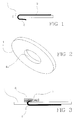
- the process being the object of the invention enables a flexible substrate 1 to be obtained which is provided with electric conduction areas 6, 6a, 6b formed on the original textile, that give rise to an electric conduction also between the two sides of the textile 1 and towards the outside from both sides or only one, as well as conductive paths applied to the textile surface and joining the conductive areas and/or enabling electric connection to the outside.
- a suitable conductive paste which preferably consists of a resin enriched with a conductive material which can be liquid or solid, in powder or fibres.
- the resins used can be the normal resins already known in the field for printing textiles or flexible substrates. They include acrylic, phenolic, epoxy, polyurethane, polyester, cellulose, plastic, silicone, vinyl resins, etc. for example.
- the conductive material to be added to the selected resin can in turn be any type of liquid or solid, powdered or in fibre conductive material, adapted to be mixed with the above resins.
- Examples of conductive materials that can be used are: carbon, precious and non precious metals, conductive polymers, etc.
- the conductive material is mixed with the resin in percentages that can widely vary depending on the desired conductivity and/or resistance effect.
- the support on which the conductive paste is applied i.e. said flexible substrate 1
- the process according to the present invention first of all comprises a step of providing a flexible substrate 1, preferably of the above type; the flexible substrate is made up of a sheet material, i.e. has a dimension - typically identified as thickness - much smaller than the two other dimensions.
- forming means 4 for a first electrically conductive area the forming means 4 has a profile 4a delimiting a determined area on substrate 1, and a thickness determined along a direction substantially orthogonal to the substrate 1 itself.
- the perpendicular line used for determining said thickness is identified at said area defined on substrate 1, on which the first conductive area 6, 6a is formed.
- the forming means 4 may comprises pressing means for example, that preferably consists of a die built with one or more suitably shaped rigid plates.
- a conductive paste preferably of the above stated type, is applied onto the flexible substrate 1 so as to obtain a first conductive area 6.
- the first conductive area 6 has a shape defined by the profile 4a of the forming means 4; in more detail, by means of profile 4a the shape of the conductive area is delimited both as regards the projection of said conductive area onto substrate 1, and as regards the thickness of the first conductive area 6 defined along a direction orthogonal to the substrate 1 itself.
- thickness of the first conductive area 6 can be controlled.
- profile 4a can be the inner profile of a through cavity of the forming means 4, into which the conductive paste is poured when it is not yet solidified.
- the conductive paste of the first area 6 is then caused to solidify and engagement between this conductive paste of the first area 6 and the flexible substrate 1 is obtained.
- the last-mentioned two steps are performed substantially simultaneously.
- the solidification step and/or the step for obtaining mutual engagement between the conductive paste and substrate 1 are carried out by polymerisation of the conductive paste itself.
- the flexible substrate 1 (a textile for example, as above mentioned) is placed on an apparatus for silk-screen printing.
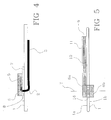
- the die 4, with the selected shape defining the design of the first conductive area 6 (a circle or an ellipse for example, as diagrammatically shown in Fig. 2 ), is such placed as to be able to print the conductive region in a predetermined part of textile 1.
- the die 4 used is obtained by means of a stiff plate of a specified thickness and made of a material adapted to be shaped, by working it with a numeric-control machine for example, or using other methods known in the art, and with the accuracy allowed by the technique used in manufacturing this die.
- the thickness of the layer thus laid down can be controlled by the thickness of the selected stiff plate for manufacturing die 4.
- Die 4 is mounted in the apparatus for silk-screen printing in place of the usual frame for silk-screen printing, or is disposed directly over the textile 1 if a silk-screen printing apparatus is not used, but another known method for fixing the textile position on a printing plane is adopted.
- the conductive paste can be spread on the textile in the region defined by the die shape.
- the process according to the present invention also enables printing with very viscous pastes, because the printing process can be assisted by application of pressure promoting covering and penetration of the textile by the paste.
- auxiliary forming means (not shown) the shape of which matches that of said forming means 4 and a step of applying a predetermined pressure onto the conductive paste through said auxiliary forming means.
- the forming means 4 have a through cavity provided with the above mentioned profile defining the design of the first conductive area 6; the auxiliary forming means have a raised design (high relief) with the same profile.
- This pressure can be for example applied both by means of a second plate conforming in shape to the shape of the first plate (the latter defining the forming means 4), and by means of a roller made of elastic material, or by adopting another suitable method.
- Laying of the conductive paste on substrate 1 is preferably carried out using a cold procedure and then preferably substrate 1 (together with the mentioned conductive paste) is submitted to a heating process (it is inserted into an oven, for example) for polymerisation of the bonding agent of the paste that becomes therefore fixed to the textile.
- the polymerisation process can also take place by a cold procedure, in a longer period of time.
- the process of the invention further comprises a step of providing an electrically non conductive layer 7 between the substrate 1 and the first conductive area 6.
- the non conductive layer 7 can be made beforehand on substrate 1 in the region where the first conductive area 6 will be laid, so that, should the textile get wet, due to the presence of sweat for example, this does not cause an undesirable effect of electric conduction from the conductive area 6 to textile 1.
- the electrically insulating layer 7 is laid by means of a die having a predetermined shape; preferably this shape is substantially coincident with the profile defined by the forming means 4 of the first conductive area 6 so that the electrically insulating layer 7 and the first conductive area 6 substantially have the same profile.
- the process in accordance with the invention can also involve a step of engaging a conductive cable 3 with the substrate 1.
- the first conductive area 6 is preferably obtained at one end 2 of the conductive cable 3 and is in electric contact with this end.
- the conductive cable 3 has an electrically insulating sheath; said end 2 of cable 3 has a first portion 8 coated with the insulating sheath and a second portion 5 not covered by the insulating sheath.
- the non conductive layer 7 interposed between substrate 1 and first conductive area 6 incorporates the first portion 8 of the cable end 2, while the first conductive area 6 incorporates the second portion 5 of the end 2 of said cable 3.
- the conductive cable 3 can be sewn onto the flexible substrate 1 and be then exposed to the outside in an alternated manner on either side of the flexible substrate 1 itself.
- the process according to the invention can further comprise a step of making a second conductive area 6b on the opposite side of the flexible substrate 1 relative to the first conductive area; therefore, being denoted as the first surface 1a, the surface of the flexible substrate 1 on which the first conductive area is made (identified by 6a in Fig. 5 ), the second conductive area 6b is made on a second surface 1b of the flexible substrate 1.
- forming means for the second conductive area 6b is provided, said means having a profile defining the desired shape for the second conductive area; in particular, the profile of the forming means of the second conductive area 6b delimits an area defined on substrate 1 and a thickness defined along a direction substantially orthogonal to the substrate 1 itself.
- this profile is substantially coincident with the shape of the first conductive area.
- a conductive paste preferably of one of the above described types, and in particular of the same type as that of the first conductive area 6a, is applied to the second surface 1b of the flexible substrate 1, through said forming means, so as to obtain the second conductive area 6b.
- first and second conductive areas 6a, 6b at least partly overlap one another along an axis Y orthogonal to the flexible substrate 1.
- the conductive paste of the second conductive area 6b is then solidified using one of the above described techniques for solidification of the conductive paste of the first area 6a.
- solidification of the paste of the first conductive area 6a and the paste of the second conductive area 6b takes place simultaneously, by a single polymerisation step for example.
- auxiliary forming means may be used, preferably of the same type as those described above for the first conductive area, in order to exert a predetermined pressure on this conductive paste and facilitate adhesion of same to substrate 1.
- an insulating layer preferably substantially having the same profile as the second conductive area may be interposed between the paste of the second conductive area 6b and substrate 1.
- the electrically non conductive layer interposed between the first conductive area and the substrate, and/or the electrically non conductive layer interposed between the second conductive area and substrate 1 can be made of the same resin as used for the conductive paste, with the difference that no electrically conductive material is added to this resin, in the case of the insulating layer.
- a microperforation step is carried out on at least part of a predetermined region 16 of substrate 1, said predetermined region 16 being defined by the overlapped region between the first and second conductive areas 6a, 6b.
- This microperforation step is particularly advantageous in case of very "closed” or thick textiles or substrates or in any case textiles or substrates forming a barrier that can be hardly penetrated by the conductive paste.
- said microperforation can be obtained by any process adapted to perforate a textile (by mechanical punching, by laser, etc., for example), to promote penetration of the paste.
- the microperforation step can be also carried out when a conductive area on a single part alone of substrate 1 is made, i.e. without adding a second conductive area at least partly superposed over the first one, along a direction perpendicular to substrate 1; in this case microperforation is carried out close to the area on which the first conductive area is then made and has the task of improving adhesion between this first area (or the insulating layer laid down before the conductive paste of said first area) and substrate 1.
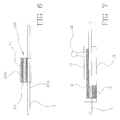
- Obtaining of a conductive area or sensor through a microperforation process is diagrammatically shown in Fig. 5 .
- the predetermined microperforation region 16 of substrate 1 is made where the conductive paste of the first area 6a is laid, with the aid of a shaped die defining the shape and position of the first area, and a second die complementary to the first one used for applying pressure (i.e. the above mentioned forming means 4 and auxiliary forming means) to enable the paste to penetrate into the holes and reach the other side of substrate 1.
- a conductive paste is applied onto the other side of the textile, causing partial or full overlapping of the two parts along said axis Y orthogonal to the flexible substrate 1.
- the two conductive areas 6a, 6b are in direct contact and amalgamated, and portions of electric contact between the two sides of the textile are obtained.
- the process can also involve one or more steps of making other conductive areas on one or both surfaces of substrate 1.
- an electrically conductive path 9 can be made.
- the performed steps are substantially similar to those carried out for making a conductive area.
- forming means (and, if necessary, auxiliary forming means for applying a suitable pressure) is provided, which means has a profile defining the path shape, and a conductive paste is applied onto the substrate so as to obtain a path 9 having this shape.
- the conductive paste used can be of one of the above stated types for the conductive areas.
- the conductive paste of the path is then solidified and engagement of same with substrate 1 is caused.
- An electrically insulating layer 10 can be interposed between the conductive path 9 and flexible substrate 1.
- the conductive path 9 can be made in order to carry the signal acquired by the sensors (i.e. by the conductive areas adapted to be brought into contact with the human or animal body), or to send a signal to the conductive areas from any point of the textile or from the outside.
- an auxiliary insulating layer 11 is applied onto the first area and/or the second area and/or the conductive path on the opposite side (i.e. externally) relative to the flexible substrate 1, so as to electrically insulate these elements from the outside.
- This insulating layer 11 can also cover possible other conductive areas or conductive paths made on the flexible substrate 1.
- the above described laying process can be also used in order to obtain one or more multi-layer conductive areas 20.
- the process through which multi-layer structures can be obtained is made by repeating the above described operation on the same region of substrate 1, the concerned substrate region being printed several times both with the same design or shape and with different designs.
- the multi-layer laying can be carried out on a single side of the textile or on both sides.
- the first and second conductive pastes 20a, 20b are not necessarily in contact with each other; other layers can be interposed between said pastes 20a, 20b.
- At least one conductive area has a layer 12 of material varying its electric features on varying of the external mechanical stresses.
- this layer of material can be interposed between two layers of conductive material (the conductive pastes 20a, 20b, for example) belonging to the same conductive area.
- this conductive area can be used to make sensors detecting deformations, forces (a weight variation, for example), etc.
- Fig. 6 Shown in Fig. 6 is an example of a multi-layer sensor 20 in which the resistivity value is varying as a function of the pressure applied along the perpendicular line of the sensor itself.
- layer 12 of soft, spongy, conductive material is inserted between two conductive layers 20a and 20b, the conductivity of same will be varied depending on compression.
- This layer can be laid by means of the previously described process using the suitable resin that, as known in the art, will generate a spongy layer, and the conductive material, graphite for example, for making the paste.
- the above mentioned insulating layer interposed between the conductive area and the substrate is particularly useful for insulating the deformation-detecting sensor (or other physico-mechanical magnitude) from the textile or substrate on which it is engaged.
- an interface 14 is provided which is made for example by crimping, riveting with clips or other suitable system.
- Fig. 7 the conductive area 6 is connected to other devices through a suitable conductor abutting on a metallic clip 14 placed on a conductive path 9, insulated both from the side in contact with the skin and towards the outside through the insulating layers 11, 15.
- the sensors are therefore electric contact areas that can be connected with each other by conductors susceptible of many applications.
- the textile can take the shape of a garment worn by a patient under clinical examination, in which the sensors are applied at suitable positions and are directly in contact with the skin of the patient, for an electrocardiographic detection for example.
- the textiles being the object of the present invention enable articles of garment to be made that can be worn for many hours without particular inconvenience.
- Another possible application can be, by way of example, that of acquiring also rough vital parameters (such as breath or heartbeat detection) and send them to a detector, also remote, that can be able to send alarms. Let us think of newborn babies to be monitored in the cradle to prevent respiratory arrests or of persons performing high-risk operations.
- rough vital parameters such as breath or heartbeat detection
- the substrate in accordance with the invention can generally be used both for receiving signals from the human or animal body to which it is applied, and to transmit signals to said body, and also to vary signals coming from the body or addressed thereto.
- the variation can for instance consist in a conversion of a physiological quantity - signals for pressure/deformation representative of the respiratory activity of the body under examination, for example - into an electrical quantity, i.e. the electric signal that is then transmitted from the substrate to an instrument for analysis associated therewith.
- a similar speech can also apply to all other applications of the substrate, both in terms of reception and in terms of transmission, where there is a variation in the type of the treated signal.
- the paste hereinafter labelled as P25 has been obtained with 99 g of acrylic resin "NEO GLUE GLT”, produced by "Lamberti S.p.A.” - Gallarate (Italy), by mixing it with 1 g of "TUBASSIST FIX 104 W”, produced by "CHT R. BEITLICH GmbH”, Tubingen (Germany) and 25 g of "SIGRAFIL C” produced by "SGL TECHNICAL LTD", Leatherhead, United Kingdom.
- the components have been fully mixed to form the conductive paste P25.
- a cotton textile was placed on a table for making silk-screen printings on cloth.
- a circular hole of a 4 cm diameter was formed in a plate of polypropylene having a thickness of 2 mm and the plate too was placed on the printing table over said cloth.
- the paste P25 was spread on the cloth by use of a doctor blade in the region defined by the die hole.
- the die was separated from the textile and the latter was introduced into a drying oven at 130°C for three minutes and three times.
- Other pastes prepared in the same manner as P25 but with a composition as defined in the table were applied onto the textile following the described process. Then the resistance of the conductive regions was measured and the results are reproduced in the table; these values were obtained by making an average of the measurements carried out in different conductive areas.
Landscapes
- Health & Medical Sciences (AREA)
- Life Sciences & Earth Sciences (AREA)
- Engineering & Computer Science (AREA)
- Physics & Mathematics (AREA)
- Surgery (AREA)
- Animal Behavior & Ethology (AREA)
- Biomedical Technology (AREA)
- Heart & Thoracic Surgery (AREA)
- Medical Informatics (AREA)
- Molecular Biology (AREA)
- Biophysics (AREA)
- Pathology (AREA)
- General Health & Medical Sciences (AREA)
- Public Health (AREA)
- Veterinary Medicine (AREA)
- Textile Engineering (AREA)
- Chemical & Material Sciences (AREA)
- Analytical Chemistry (AREA)
- General Physics & Mathematics (AREA)
- Chemical Or Physical Treatment Of Fibers (AREA)
Applications Claiming Priority (1)
| Application Number | Priority Date | Filing Date | Title |
|---|---|---|---|
| IT002224A ITMI20062224A1 (it) | 2006-11-21 | 2006-11-21 | Procedimento per la fabbricazione di un tessuto comprendente aree conduttive integrate e relativo tessuto |
Publications (1)
| Publication Number | Publication Date |
|---|---|
| EP1925718A2 true EP1925718A2 (fr) | 2008-05-28 |
Family
ID=39148832
Family Applications (1)
| Application Number | Title | Priority Date | Filing Date |
|---|---|---|---|
| EP07120785A Withdrawn EP1925718A2 (fr) | 2006-11-21 | 2007-11-15 | Procédé de fabrication d'un textile comprenant des régions conductrices intégrées et textile ainsi obtenu |
Country Status (2)
| Country | Link |
|---|---|
| EP (1) | EP1925718A2 (fr) |
| IT (1) | ITMI20062224A1 (fr) |
Cited By (12)
| Publication number | Priority date | Publication date | Assignee | Title |
|---|---|---|---|---|
| US8945328B2 (en) | 2012-09-11 | 2015-02-03 | L.I.F.E. Corporation S.A. | Methods of making garments having stretchable and conductive ink |
| US8948839B1 (en) | 2013-08-06 | 2015-02-03 | L.I.F.E. Corporation S.A. | Compression garments having stretchable and conductive ink |
| WO2016009251A1 (fr) * | 2014-07-15 | 2016-01-21 | Comftech S.R.L. | Capteur pour la mesure de signaux électriques physiologiques |
| US9282893B2 (en) | 2012-09-11 | 2016-03-15 | L.I.F.E. Corporation S.A. | Wearable communication platform |
| US9817440B2 (en) | 2012-09-11 | 2017-11-14 | L.I.F.E. Corporation S.A. | Garments having stretchable and conductive ink |
| US10154791B2 (en) | 2016-07-01 | 2018-12-18 | L.I.F.E. Corporation S.A. | Biometric identification by garments having a plurality of sensors |
| US10159440B2 (en) | 2014-03-10 | 2018-12-25 | L.I.F.E. Corporation S.A. | Physiological monitoring garments |
| US10201310B2 (en) | 2012-09-11 | 2019-02-12 | L.I.F.E. Corporation S.A. | Calibration packaging apparatuses for physiological monitoring garments |
| US10462898B2 (en) | 2012-09-11 | 2019-10-29 | L.I.F.E. Corporation S.A. | Physiological monitoring garments |
| US10467744B2 (en) | 2014-01-06 | 2019-11-05 | L.I.F.E. Corporation S.A. | Systems and methods to automatically determine garment fit |
| US10653190B2 (en) | 2012-09-11 | 2020-05-19 | L.I.F.E. Corporation S.A. | Flexible fabric ribbon connectors for garments with sensors and electronics |
| US11246213B2 (en) | 2012-09-11 | 2022-02-08 | L.I.F.E. Corporation S.A. | Physiological monitoring garments |
-
2006
- 2006-11-21 IT IT002224A patent/ITMI20062224A1/it unknown
-
2007
- 2007-11-15 EP EP07120785A patent/EP1925718A2/fr not_active Withdrawn
Cited By (20)
| Publication number | Priority date | Publication date | Assignee | Title |
|---|---|---|---|---|
| US10258092B2 (en) | 2012-09-11 | 2019-04-16 | L.I.F.E. Corporation S.A. | Garments having stretchable and conductive ink |
| US10653190B2 (en) | 2012-09-11 | 2020-05-19 | L.I.F.E. Corporation S.A. | Flexible fabric ribbon connectors for garments with sensors and electronics |
| US11246213B2 (en) | 2012-09-11 | 2022-02-08 | L.I.F.E. Corporation S.A. | Physiological monitoring garments |
| US9282893B2 (en) | 2012-09-11 | 2016-03-15 | L.I.F.E. Corporation S.A. | Wearable communication platform |
| US9817440B2 (en) | 2012-09-11 | 2017-11-14 | L.I.F.E. Corporation S.A. | Garments having stretchable and conductive ink |
| US9986771B2 (en) | 2012-09-11 | 2018-06-05 | L.I.F.E. Corporation S.A. | Garments having stretchable and conductive ink |
| US10045439B2 (en) | 2012-09-11 | 2018-08-07 | L.I.F.E. Corporation S.A. | Garments having stretchable and conductive ink |
| US11013275B2 (en) | 2012-09-11 | 2021-05-25 | L.I.F.E. Corporation S.A. | Flexible fabric ribbon connectors for garments with sensors and electronics |
| US10201310B2 (en) | 2012-09-11 | 2019-02-12 | L.I.F.E. Corporation S.A. | Calibration packaging apparatuses for physiological monitoring garments |
| US10736213B2 (en) | 2012-09-11 | 2020-08-04 | L.I.F.E. Corporation S.A. | Physiological monitoring garments |
| US8945328B2 (en) | 2012-09-11 | 2015-02-03 | L.I.F.E. Corporation S.A. | Methods of making garments having stretchable and conductive ink |
| US10462898B2 (en) | 2012-09-11 | 2019-10-29 | L.I.F.E. Corporation S.A. | Physiological monitoring garments |
| US8948839B1 (en) | 2013-08-06 | 2015-02-03 | L.I.F.E. Corporation S.A. | Compression garments having stretchable and conductive ink |
| US10467744B2 (en) | 2014-01-06 | 2019-11-05 | L.I.F.E. Corporation S.A. | Systems and methods to automatically determine garment fit |
| US10699403B2 (en) | 2014-01-06 | 2020-06-30 | L.I.F.E. Corporation S.A. | Systems and methods to automatically determine garment fit |
| US10159440B2 (en) | 2014-03-10 | 2018-12-25 | L.I.F.E. Corporation S.A. | Physiological monitoring garments |
| US10736568B2 (en) | 2014-07-15 | 2020-08-11 | Comftech S.R.L. | Sensor for measurement of physiological electrical signals |
| WO2016009251A1 (fr) * | 2014-07-15 | 2016-01-21 | Comftech S.R.L. | Capteur pour la mesure de signaux électriques physiologiques |
| US10869620B2 (en) | 2016-07-01 | 2020-12-22 | L.I.F.E. Corporation S.A. | Biometric identification by garments having a plurality of sensors |
| US10154791B2 (en) | 2016-07-01 | 2018-12-18 | L.I.F.E. Corporation S.A. | Biometric identification by garments having a plurality of sensors |
Also Published As
| Publication number | Publication date |
|---|---|
| ITMI20062224A1 (it) | 2008-05-22 |
Similar Documents
| Publication | Publication Date | Title |
|---|---|---|
| EP1925718A2 (fr) | Procédé de fabrication d'un textile comprenant des régions conductrices intégrées et textile ainsi obtenu | |
| EP3852609B1 (fr) | Patch d'électrode à plusieurs points de mesure | |
| EP2679107B1 (fr) | Ensemble textile électronique | |
| EP2696752B1 (fr) | Tissu servant à acquérir des signaux physiologiques | |
| JP4460306B2 (ja) | 着用可能モニターシステム及び着用可能モニターシステムの製造方法 | |
| DK2640262T3 (en) | SENSOR TO DETECT PHYSIOLOGICAL SIGNALS | |
| Merritt et al. | Fabric-based active electrode design and fabrication for health monitoring clothing | |
| JP6386582B2 (ja) | 生体電極および衣類 | |
| US8548558B2 (en) | Electrode capable of attachment to a garment, system, and methods of manufacturing | |
| CA2700493A1 (fr) | Feuille d'electrode et son procede de fabrication | |
| JP2019068901A (ja) | 生体電極、及びこれを備える衣類 | |
| CN110996783A (zh) | 生物体接触型电极和生理信息测量用衣服 | |
| JP2016106877A (ja) | 生体電極および衣類 | |
| CN116018259A (zh) | 导电性橡胶布 | |
| EP4674347A1 (fr) | Dispositif portable d'électrode et procédé de fabrication | |
| HK1193008B (en) | Electronic textile assembly | |
| HK1194950A (en) | Fabric for acquiring physiological signals | |
| HK1194950B (en) | Fabric for acquiring physiological signals |
Legal Events
| Date | Code | Title | Description |
|---|---|---|---|
| PUAI | Public reference made under article 153(3) epc to a published international application that has entered the european phase |
Free format text: ORIGINAL CODE: 0009012 |
|
| AK | Designated contracting states |
Kind code of ref document: A2 Designated state(s): AT BE BG CH CY CZ DE DK EE ES FI FR GB GR HU IE IS IT LI LT LU LV MC MT NL PL PT RO SE SI SK TR |
|
| AX | Request for extension of the european patent |
Extension state: AL BA HR MK RS |
|
| STAA | Information on the status of an ep patent application or granted ep patent |
Free format text: STATUS: THE APPLICATION IS DEEMED TO BE WITHDRAWN |
|
| 18D | Application deemed to be withdrawn |
Effective date: 20110601 |