EP1926217A2 - Appareil et procédé d'annulation d'interface destiné à être utilisé dans un système de communications sans fil à large bande - Google Patents
Appareil et procédé d'annulation d'interface destiné à être utilisé dans un système de communications sans fil à large bande Download PDFInfo
- Publication number
- EP1926217A2 EP1926217A2 EP07022649A EP07022649A EP1926217A2 EP 1926217 A2 EP1926217 A2 EP 1926217A2 EP 07022649 A EP07022649 A EP 07022649A EP 07022649 A EP07022649 A EP 07022649A EP 1926217 A2 EP1926217 A2 EP 1926217A2
- Authority
- EP
- European Patent Office
- Prior art keywords
- interference
- channel
- estimate value
- data
- signal
- Prior art date
- Legal status (The legal status is an assumption and is not a legal conclusion. Google has not performed a legal analysis and makes no representation as to the accuracy of the status listed.)
- Withdrawn
Links
Images


Classifications
-
- H—ELECTRICITY
- H04—ELECTRIC COMMUNICATION TECHNIQUE
- H04L—TRANSMISSION OF DIGITAL INFORMATION, e.g. TELEGRAPHIC COMMUNICATION
- H04L25/00—Baseband systems
- H04L25/02—Details ; arrangements for supplying electrical power along data transmission lines
- H04L25/06—DC level restoring means; Bias distortion correction ; Decision circuits providing symbol by symbol detection
- H04L25/067—DC level restoring means; Bias distortion correction ; Decision circuits providing symbol by symbol detection providing soft decisions, i.e. decisions together with an estimate of reliability
-
- H—ELECTRICITY
- H04—ELECTRIC COMMUNICATION TECHNIQUE
- H04L—TRANSMISSION OF DIGITAL INFORMATION, e.g. TELEGRAPHIC COMMUNICATION
- H04L25/00—Baseband systems
- H04L25/02—Details ; arrangements for supplying electrical power along data transmission lines
- H04L25/0202—Channel estimation
- H04L25/0204—Channel estimation of multiple channels
-
- H—ELECTRICITY
- H04—ELECTRIC COMMUNICATION TECHNIQUE
- H04B—TRANSMISSION
- H04B1/00—Details of transmission systems, not covered by a single one of groups H04B3/00 - H04B13/00; Details of transmission systems not characterised by the medium used for transmission
- H04B1/06—Receivers
- H04B1/10—Means associated with receiver for limiting or suppressing noise or interference
- H04B1/1027—Means associated with receiver for limiting or suppressing noise or interference assessing signal quality or detecting noise/interference for the received signal
-
- H—ELECTRICITY
- H04—ELECTRIC COMMUNICATION TECHNIQUE
- H04B—TRANSMISSION
- H04B1/00—Details of transmission systems, not covered by a single one of groups H04B3/00 - H04B13/00; Details of transmission systems not characterised by the medium used for transmission
- H04B1/69—Spread spectrum techniques
- H04B1/707—Spread spectrum techniques using direct sequence modulation
- H04B1/7097—Interference-related aspects
- H04B1/7103—Interference-related aspects the interference being multiple access interference
- H04B1/7107—Subtractive interference cancellation
-
- H—ELECTRICITY
- H04—ELECTRIC COMMUNICATION TECHNIQUE
- H04J—MULTIPLEX COMMUNICATION
- H04J11/00—Orthogonal multiplex systems, e.g. using WALSH codes
- H04J11/0023—Interference mitigation or co-ordination
- H04J11/005—Interference mitigation or co-ordination of intercell interference
-
- H—ELECTRICITY
- H04—ELECTRIC COMMUNICATION TECHNIQUE
- H04L—TRANSMISSION OF DIGITAL INFORMATION, e.g. TELEGRAPHIC COMMUNICATION
- H04L25/00—Baseband systems
- H04L25/02—Details ; arrangements for supplying electrical power along data transmission lines
- H04L25/03—Shaping networks in transmitter or receiver, e.g. adaptive shaping networks
- H04L25/03828—Arrangements for spectral shaping; Arrangements for providing signals with specified spectral properties
- H04L25/03866—Arrangements for spectral shaping; Arrangements for providing signals with specified spectral properties using scrambling
- H04L25/03872—Parallel scrambling or descrambling
-
- H—ELECTRICITY
- H04—ELECTRIC COMMUNICATION TECHNIQUE
- H04L—TRANSMISSION OF DIGITAL INFORMATION, e.g. TELEGRAPHIC COMMUNICATION
- H04L27/00—Modulated-carrier systems
- H04L27/26—Systems using multi-frequency codes
- H04L27/2601—Multicarrier modulation systems
- H04L27/2647—Arrangements specific to the receiver only
- H04L27/2649—Demodulators
- H04L27/265—Fourier transform demodulators, e.g. fast Fourier transform [FFT] or discrete Fourier transform [DFT] demodulators
-
- H—ELECTRICITY
- H04—ELECTRIC COMMUNICATION TECHNIQUE
- H04L—TRANSMISSION OF DIGITAL INFORMATION, e.g. TELEGRAPHIC COMMUNICATION
- H04L5/00—Arrangements affording multiple use of the transmission path
- H04L5/003—Arrangements for allocating sub-channels of the transmission path
- H04L5/0058—Allocation criteria
- H04L5/0073—Allocation arrangements that take into account other cell interferences
-
- H—ELECTRICITY
- H04—ELECTRIC COMMUNICATION TECHNIQUE
- H04L—TRANSMISSION OF DIGITAL INFORMATION, e.g. TELEGRAPHIC COMMUNICATION
- H04L1/00—Arrangements for detecting or preventing errors in the information received
- H04L1/004—Arrangements for detecting or preventing errors in the information received by using forward error control
- H04L1/0045—Arrangements at the receiver end
-
- H—ELECTRICITY
- H04—ELECTRIC COMMUNICATION TECHNIQUE
- H04L—TRANSMISSION OF DIGITAL INFORMATION, e.g. TELEGRAPHIC COMMUNICATION
- H04L27/00—Modulated-carrier systems
- H04L27/26—Systems using multi-frequency codes
- H04L27/2601—Multicarrier modulation systems
- H04L27/2647—Arrangements specific to the receiver only
-
- H—ELECTRICITY
- H04—ELECTRIC COMMUNICATION TECHNIQUE
- H04L—TRANSMISSION OF DIGITAL INFORMATION, e.g. TELEGRAPHIC COMMUNICATION
- H04L5/00—Arrangements affording multiple use of the transmission path
- H04L5/003—Arrangements for allocating sub-channels of the transmission path
- H04L5/0058—Allocation criteria
- H04L5/0062—Avoidance of ingress interference, e.g. ham radio channels
Definitions
- the present invention relates to a receiving apparatus and method in a wireless communication system. More particularly, the present invention relates to an apparatus and method for canceling interference of a neighboring sector or cell in a broadband multiple access wireless communication system.
- Communication systems were originally developed to provide voice services. Now, communication systems are being developed to provide packet data services and various multimedia services as well as voice services.
- An exemplary system capable of providing wireless packet data services is a third generation (3G) mobile communication system.
- the 3G mobile communication system provides various high speed multimedia services.
- the 3G mobile communication system distinguishes users using a Code Division Multiple Access (CDMA) scheme.
- CDMA Code Division Multiple Access
- the CDMA scheme distinguishes channels by allocating different orthogonal codes to users or to data transmitted to users.
- the 3G mobile communication system fails to provide high speed data with high quality because of a lack of available codes. In other words, since the amount of usable codes are restricted, transmission rates are limited.
- 4G fourth generation
- the broadband wireless communication system is able to classify and transmit users or data to be sent, using an Orthogonal Frequency Division Multiple Access (OFDMA) scheme.
- OFDMA Orthogonal Frequency Division Multiple Access
- the 4G wireless communication system features a high transmission rate of up to 100 Mbps.
- the 4G system can provide services having various level of Quality of Service (QoS).
- QoS Quality of Service
- BWA Broadband Wireless Access
- LAN Local Area Network
- MAN wireless Metropolitan Area Network
- IEEE Institute of Electrical and Electronics Engineers
- OFDMA OFDMA
- the broadband wireless communication system adopts the OFDMA scheme, ensures mobility, and utilizes the same frequency in every cell to increase frequency efficiency.
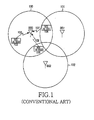
- FIG. 1 is a simplified diagram of a conventional BWA system implemented with multiple cells.
- Base Station (BS) 0, BS 1, and BS 2 are each communicating within their respective cells 100, 101 and 102 using the same frequency.
- the multicell system has a frequency reutilization of '1,' thereby increasing its frequency efficiency.
- the resulting inter-cell or inter-sector interference may impair the performance of the system.
- a transmit signal of an MS 104 communicating with BS 1 of the neighboring cell and a transmit signal of an MS 105 communicating with BS 2 of the neighboring cell acts as interference signals to BS 0.
- BS 0 receives the interference signals 107 and 108 in addition to the received signal 106 from MS 103 in its cell.
- the interference signals of the neighboring cells affects the signal of MS 103 in the corresponding cell and thus deteriorates demodulation performance.
- An aspect of the present invention is to address at least the above problems and/or disadvantages and to provide at least the advantages below. Accordingly, an aspect of exemplary embodiments of the present invention is to provide an apparatus and method for canceling inter-sector or inter-cell interference in a broadband wireless communication system.
- Another aspect of exemplary embodiments of the present invention is to provide an apparatus and method for estimating a channel by taking into account inter-sector or inter-cell interference in a broadband wireless communication system.
- Yet another aspect of exemplary embodiments of the present invention is to provide an apparatus and method for channel-compensating received data by taking into account interference and for calculating a Carrier to Interference and Noise Ratio (CINR) with the compensated data in a broadband wireless communication system.
- CINR Carrier to Interference and Noise Ratio
- Still another aspect of exemplary embodiments of the present invention is to provide an apparatus and method for generating an interference signal using an estimated interference channel and demodulating a received signal by removing the interference signal from the received signal in a broadband wireless communication system.
- the above aspects are achieved in an exemplary embodiment of the present invention by providing a receiver of a broadband wireless communication system.
- the receiver includes a first channel estimator for deriving a first channel estimate value of a desired signal and a first interference channel estimate value of an interference signal by using burst allocation information of one or more selected sectors or cells, and deriving a noise estimate value using the first channel estimate value and first interference channel estimate value; an interference detector for detecting an interference signal interfering with the desired signal by using the first interference channel estimate value and the noise estimate value provided from the first channel estimator, and outputting burst allocation information of the detected interference signal and the desired signal; and a second channel estimator for deriving a second channel estimate value of the desired signal and a second interference channel estimate value of the interference signal by using the burst allocation information provided from the interference detector.
- the receiver may further include an interference signal generator for generating an interference signal using the second interference channel estimate value and decoded bits of one or more bursts from a corresponding interfering sector or cell; and a subtracter for generating a substantially interference-free signal by subtracting the generated interference signal from the received signal.
- an interference signal generator for generating an interference signal using the second interference channel estimate value and decoded bits of one or more bursts from a corresponding interfering sector or cell
- a subtracter for generating a substantially interference-free signal by subtracting the generated interference signal from the received signal.
- a receiving method in a broadband wireless communication system includes deriving a first channel estimate value of a desired signal and a first interference channel estimate value of an interference signal by using burst allocation information of selected sectors or cells; deriving a first noise estimate value using the first channel estimate value and the first interference channel estimate value; detecting an interference signal interfering the desired signal by using the first interference channel estimate value and the noise estimate value; deriving burst allocation information of the detected interference signal and the desired signal; and deriving a second channel estimate value of the desired signal and a second interference channel estimate value of the interference signal using the derived burst allocation information.
- the receiving method may further include generating an interference signal using the second interference channel estimate value and decoded bits of one or more bursts from a corresponding interfering sector or cell; and generating a substantially interference-free signal by subtracting the generated interference signal from the received signal.
- FIG. 1 illustrates a conventional multicell BWA system
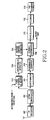
- FIG. 2 illustrates a receiver in a Broadband Wireless Access (BWA) system according to an exemplary embodiment of the present invention
- FIG. 3 illustrates a receiver in a BWA system according to another exemplary embodiment of the present invention
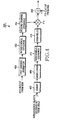
- FIG. 4 illustrates an interference remover according to an exemplary embodiment of the present invention
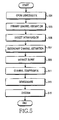
- FIG. 5 illustrates operations of a receiver in the broadband wireless communication system according to an exemplary embodiment of the present invention.
- FIG. 6 illustrates operations of a receiver in the broadband wireless communication system according to another exemplary embodiment of the present invention.
- Exemplary embodiments of the present invention provide a technique for canceling inter-cell or inter-sector interference in a Broadband Wireless Access (BWA) communication system.
- BWA Broadband Wireless Access
- BWA communication system is illustrated by way of example, the present invention is applicable to any multicell communication system.
- a receiver of a Base Station (BS) is illustrated by way of example, the exemplary embodiments of the present invention are applicable to any receiver of the BS and any user terminal.
- BS Base Station
- FIG. 2 illustrates a receiver in a BWA system according to an exemplary embodiment of the present invention.
- the receiver of FIG. 2 includes a Radio Frequency (RF) processor 200, an Orthogonal Frequency Division Multiplexing (OFDM) demodulator 202, a descrambler 204, a subchannel demapper 206, a channel compensator 208, a demodulator 210, a decoder 212, a Cyclic Redundancy Check (CRC) examiner 214, a first channel estimator 216, an interference detector 218, and a second channel estimator 220.
- RF Radio Frequency
- OFDM Orthogonal Frequency Division Multiplexing
- the RF processor 200 includes components such as a filter and a frequency converter.
- the RF processor 200 converts an RF signal received by an antenna into a baseband signal and converts the baseband signal into a digital signal.
- the OFDM demodulator 202 outputs frequency-domain data by Fast Fourier Transform (FFT)-processing the sample data fed from the RF processor 200.
- the descrambler 204 descrambles the data fed from the OFDM demodulator 202 with codes that are uniquely allocated to sectors.
- the subchannel demapper 206 extracts and arranges data of bursts to be demodulated, from the data fed from the descrambler 204.
- the first channel estimator 216 receives burst allocation information of selected sectors, such as sectors interfering with each other. Further, the first channel estimator 216 determines a burst allocation status of the sectors by analyzing the burst allocation information of the sectors.
- the burst allocation information can include a position and size of the allocated resource, the adopted subchannel scheme, and scrambling values masked to pilot symbols.
- the first channel estimator 216 extracts pilot symbols from the data fed from the OFDM demodulator 202 using the burst allocation status, and estimates values for channels and noise using the extracted pilot symbols and the scrambling codes uniquely allocated to the sectors.
- the first channel estimator 216 derives a first channel estimate value of a desired signal and a first interference channel estimate value of an interference signal by using a Joint Channel Estimation (JCE), and derives a first noise estimate value for noise occurring in the desired sector using the first channel estimate value and first interference channel estimate value.
- JCE Joint Channel Estimation
- a desired signal and an interference signal are described herein, exemplary embodiments of the present invention are equally applicable with more than one desired signal and/or more than one interference signal.
- the interference detector 218 detects the interference signal that is actually affecting the desired sector by using the first channel estimate value, the first interference channel estimate value and the noise estimate value provided from the first channel estimator 216, and derives burst allocation information of the sectors which substantially interfere.
- the interference signal can be detected based on Equation (1).
- Equation (1) T is a preset value.
- Equation (1) the interference signal that is actually causing the interference is determined.
- the second channel estimator 220 derives a second channel estimate value, a second interference channel estimate and second noise estimate value by using the burst allocation information fed from the interference detector 218, Since the second channel estimator 220 performs the JCE with the interference signals that are actually causing the interference, it can achieve better estimation performance than the first channel estimator 216.
- the second channel estimator 220 calculates and outputs a total channel estimate values with respect to the burst to be demodulated.
- the channel compensator 208 channel-compensates the burst data output from the subchannel demapper 206 using the total channel estimate values provided from the second channel estimator 220.
- the channel compensator 208 calculates a Carrier to Interference and Noise Ratio (CINR) using the second channel estimate value, the second interference channel estimate value and the second noise estimate value of the corresponding burst provided from the second channel estimator 220 and provides the calculated CINR to a controller (not shown).
- the CINR of the burst can be used for scheduling or power control.
- the demodulator 210 demodulates the data output from the channel compensator 208.
- the demodulator 210 can generate and output a Log Likelihood Ratio (LLR) value for use in soft decision decoding.
- LLR Log Likelihood Ratio
- the decoder 212 outputs an information bit string by decoding the data from the demodulator 210.
- the CRC examiner 214 extracts a CRC code from the information bit string provided from the decoder 212 and examines whether or not error occurs by comparing a CRC code generated from the received information bit string with the extracted CRC code.
- interference can be canceled by directly generating interference signals using an interference control scheme.
- the technique for directly canceling interference is described.
- FIG. 3 illustrates a receiver in a BWA system according to another exemplary embodiment of the present invention.
- the receiver of FIG. 3 includes an RF processor 300, an OFDM demodulator 302, a descrambler 304, a subchannel demapper 306, a channel compensator 308, a demodulator 310, a decoder 312, a CRC examiner 314, a switch 316, and an interference controller 318.
- the interference controller 318 includes an interference remover 320, a descrambler 322, a subchannel demapper 324, a channel compensator 326, a demodulator 328, a decoder 330, and a CRC examiner 332.
- the cancellation of the inter-sector interference is described as an example. However, exemplary embodiments of the present invention are equally applicable to inter-cell interference.
- the RF processor 300 includes components such as a filter and a frequency converter.
- the RF processor 300 converts a RF signal received by an antenna into a baseband signal and converts the baseband signal into a digital signal.
- the OFDM demodulator 302 outputs frequency-domain data by FFT-processing the sample data output from the RF processor 300.
- the descrambler 304 descrambles the data output from the OFDM demodulator 304 with codes that are uniquely allocated to the sectors.
- the subchannel demapper 306 extracts and arranges data of bursts to be demodulated from the data fed from the descrambler 304.
- the channel compensator 308 derives a channel estimation value for the burst and channel-compensates the burst data fed from the subchannel demapper 306 using the channel estimate value.
- the channel compensator 308 calculates a CINR (burst CINR0) using the channel estimate value and a noise estimate value of the burst and provides the calculated CINR to a controller (not shown).
- the CINR of the burst can be used for scheduling or power control.
- the demodulator 310 demodulates the data output from the channel compensator 308.
- the demodulator 310 can generate and output a LLR value for use in soft decision decoding.
- the decoder 312 outputs an information bit string by decoding the data from the demodulator 310.
- the CRC examiner 314 extracts a CRC code from the information bit string fed from the decoder 312 and checks for error by comparing a CRC code generated from the received information bit string with the extracted CRC code. When an error occurs in the corresponding burst, the CRC examiner 314 activates the interference controller 318 by controlling the switch 316.
- the switch 316 is switched under the control of the CRC examiner 314 to forward the data from the OFDM demodulator 302 to the interference remover 320 of the interference controller 318.
- the interference remover 320 derives a interference channel estimate value of the interference signal using burst allocation information of the selected sectors, and generates an interference signal using the interference channel estimate value and interference burst decoded bits of the corresponding interfering sector. Next, the interference remover 320 generates a substantially interference-free signal by subtracting the interference signal from the received signal, which in this case is an OFDM demodulated signal.
- the detailed structure of the interference remover 320 will be explained by referring to FIG. 4.
- the interference-free received signal at the output of interference remover 320 is converted into an information bit string by descrambler 322, CRC examiner 332 and the functional elements there between. Since the operations of the descrambler 322 to the CRC examiner 332 are the same as the operations of the descrambler 304 to the CRC examiner 314, further explanation shall be omitted. Meanwhile, the burst CINR (burst CINR1) calculated at the channel compensator 326 is based on the interference-free burst, and accordingly, it can be more accurate than the CINR (CINR0) calculated at the channel compensator 308. Hence, when scheduling is carried out with the CINR calculated at the channel compensator 326, system performance can be enhanced.
- the interference controller 318 is activated when an error has been detected by the CRC examiner 314 in the explanation of FIG. 3, the interference controller 318 can be activated even when no error has been detected by the CRC examiner 314. In this case, when no error has been detected by the CRC examiner 314, the interference controller 318 can calculate and provide only the burst CINR to the controller.
- FIG. 4 illustrates an interference remover according to an exemplary embodiment of the present invention.
- the interference remover illustrated in FIG. 4 will be discussed, by way of example, as being the interference remover 320 of FIG. 3.
- the interference remover 320 includes a first channel estimator 400, an interference detector 402, a second channel estimator 404, a coder 406, a modulator 408, a subchannel mapper 410, a scrambler 412, a multiplier 414, and a subtracter 416,
- the first channel estimator 400 receives the OFDM demodulated data from the switch 316 and determines the burst allocation status of the sectors by analyzing the burst allocation information of the selected sectors.
- the selected sectors being the sectors that are interfering with each other.
- the first channel estimator 400 extracts pilot symbols from the OFDM demodulated data by using the burst allocation status, and derives a first channel estimate value, a first interference channel estimate value and a first noise estimate value by using the extracted pilot symbols and scrambling codes uniquely allocated to the sectors. In doing so, the first channel estimator 400 derives a first channel estimate value of the desired signal and a first interference channel estimate value of the interference signal by using the JCE.
- the first channel estimator 400 further derives a first noise estimate value of the actual noise in the desired sector by using the first channel estimate value and the first interference channel estimate value.
- the interference detector 402 detects an interference signal that is actually affecting the desired sector by using first channel estimate value, the first interference channel estimate value and the noise estimate value provided from the first channel estimator 400, and derives burst allocation information of the actually interfering sectors.
- the interference signal can be detected in accordance with Equation (1).
- the second channel estimator 404 re-estimates by using the burst allocation information output from the interference detector 402.
- the second channel estimator 404 calculates and outputs a second interference channel estimate value, such as the total channel estimate value of the burst of the interference signal.
- the second channel estimator 404 can acquire a more accurate estimation by using the updated burst allocation information.
- the coder 406 receives the decoded bits of the burst determined as being the interference signal and encodes the decoded data.
- the decoded data of the burst determined as being the interference signal can be received from the corresponding neighbor sector or may be acquired by decoding the received signal with information of the burst.
- the information may include any of resource allocation information, a subchannel scheme, and a Modulation and Coding Scheme (MCS) level.
- the modulator 408 modulates the coded data fed from the coder 406.
- the subchannel mapper 410 rearranges the modulated data from the modulator 408 according to the subchannel scheme.
- the scrambler 412 scrambles the data from the subchannel mapper 410 with the code allocated to the corresponding neighbor sector.
- the multiplier 414 generates the interference signal by multiplying the second interference channel estimate value from the second channel estimator 404 by data from the scrambler 412.
- the subtracter 416 subtracts the interference signal of the multiplier 414 from the OFDM demodulated signal of the switch 316. That is, the subtracter 416 substantially removes the interference signal from the received signal.
- the substantially interference-free signal is then fed to the descrambler 322.
- FIG. 5 illustrates operations of a receiver in the broadband wireless communication system according to an exemplary embodiment of the present invention.
- step 501 the receiver converts the RF signal received on the antenna into the baseband signal and OFDM-demodulates the baseband signal through an FFT operation.
- the receiver extracts the pilot symbols from the OFDM-demodulated data using the burst allocation information of the selected sectors, and performs the primary channel estimation using the extracted pilot symbols and the scrambling codes uniquely allocated to the sectors. In doing so, the receiver derives a channel estimate value of the desired signal and an interference channel estimate value of the interference signal, and accurately derives a noise estimate value of the actual noise in the desired sector by using the channel estimate value and interference channel estimate value.
- the receiver After the primary channel estimation, in step 505, the receiver detects the interference signal actually affecting the desired sector using the channel estimate value, the interference channel estimate value and the noise estimate value acquired through the primary estimation, and derives the burst allocation information of the actually interfering sectors.
- the interference signal can be detected using Equation (1).
- the receiver performs the secondary channel estimation by using the burst allocation information of the actually interfering sectors. Since the receiver performs estimates by using the updated burst allocation information, a more accurate channel estimate value, interference channel estimate value and noise estimate value can be attained with respect to the burst to be demodulated.
- the receiver After acquiring the estimates to be used for the channel compensation, the receiver extracts and arranges the burst data from the OFDM-demodulated data in step 509. In step 511, the receiver channel-compensates the burst data using the acquired channel estimate value.
- the CINR can be calculated using the channel estimate value, the interference channel estimate value and the noise estimate value of the burst.
- the CINR of the burst can be used for scheduling or power control.
- the receiver demodulates the channel-compensated data in step 513, and decodes the demodulated data into the information bit stream in step 515.
- FIG. 6 illustrates operations of a receiver in the broadband wireless communication system according to another exemplary embodiment of the present invention.
- step 601 the receiver restores the information bit stream by OFDM-demodulating, channel-compensating, demodulating, and decoding the received signal, and performs the CRC with respect to the information bit stream.
- step 603 the receiver determines whether error occurs in the received data based on the result of the CRC.
- the receiver determines an interference channel estimate value of the interference signal by using the burst allocation information of the selected sectors. The selected sectors being the s interfering with each other. Further, the receiver generates the interference signal using the interference channel estimate value and the decoded data of the corresponding interfering sector.
- the decoded data of the corresponding interfering sector is the decoded data of the burst.
- the decoded data of the interfering sector can be received from the corresponding neighbor sector. Alternatively, the decoded data of the interfering sector can be acquired by decoding the received signal with known information. Exemplary known information includes resource allocation information, subchannel scheme, and MCS level.
- the interference signal can be generated as many times as the number of the detected interference signals.
- the receiver After generating the interference signal, the receiver generates a substantially interference-free signal by subtracting the interference signal from the received signal in step 607.
- the received signal being an OFDM-demodulated signal.
- the receiver extracts the burst data from the substantially interference-free signal.
- the receiver derives a channel estimate value for the burst and channel-compensates the extracted burst data using the channel estimate value.
- the CINR can be calculated using the channel estimate value, the interference channel estimate value and the noise estimate value of the burst.
- the CINR of the burst can be used for scheduling or power control.
- the receiver demodulates the channel-compensated data in step 613, and restores the information bit stream by decoding the demodulated data in step 615.
- the interference cancellation is performed in steps 605 through 615 when the error is determined according to the CRC
- the interference cancellation can be carried out at any time regardless of the result of the CRC.
- the receiver can merely calculate the CINR for the corresponding burst in steps 605 through 611.
- the interference control scheme of the present invention can enhance the demodulation performance and increase cell capacity.
- Certain aspects of the present invention can also be embodied as computer readable code on a computer readable recording medium.
- a computer readable recording medium is any data storage device that can store data which can be thereafter read by a computer system. Examples of the computer readable recording medium include read-only memory (ROM), random-access memory (RAM), CD-ROMs, magnetic tapes, floppy disks, optical data storage devices, and carrier waves (such as data transmission through the Internet).
- the computer readable recording medium can also be distributed over network coupled computer systems so that the computer readable code is stored and executed in a distributed fashion. Also, functional programs, code, and code segments for accomplishing the present invention can be easily construed by programmers skilled in the art to which the present invention pertains.
Landscapes
- Engineering & Computer Science (AREA)
- Signal Processing (AREA)
- Computer Networks & Wireless Communication (AREA)
- Power Engineering (AREA)
- Physics & Mathematics (AREA)
- Spectroscopy & Molecular Physics (AREA)
- Discrete Mathematics (AREA)
- General Physics & Mathematics (AREA)
- Mathematical Physics (AREA)
- Noise Elimination (AREA)
- Mobile Radio Communication Systems (AREA)
Applications Claiming Priority (1)
| Application Number | Priority Date | Filing Date | Title |
|---|---|---|---|
| KR1020060116859A KR100954818B1 (ko) | 2006-11-24 | 2006-11-24 | 광대역 무선통신시스템에서 간섭 제거 장치 및 방법 |
Publications (2)
| Publication Number | Publication Date |
|---|---|
| EP1926217A2 true EP1926217A2 (fr) | 2008-05-28 |
| EP1926217A3 EP1926217A3 (fr) | 2011-04-13 |
Family
ID=39166881
Family Applications (1)
| Application Number | Title | Priority Date | Filing Date |
|---|---|---|---|
| EP07022649A Withdrawn EP1926217A3 (fr) | 2006-11-24 | 2007-11-21 | Appareil et procédé d'annulation d'interface destiné à être utilisé dans un système de communications sans fil à large bande |
Country Status (3)
| Country | Link |
|---|---|
| US (1) | US20080123760A1 (fr) |
| EP (1) | EP1926217A3 (fr) |
| KR (1) | KR100954818B1 (fr) |
Cited By (11)
| Publication number | Priority date | Publication date | Assignee | Title |
|---|---|---|---|---|
| WO2010003034A1 (fr) * | 2008-07-02 | 2010-01-07 | Qualcomm Incorporated | Acquisition de système avec annulation d'interférence en présence de femtocellules |
| WO2010108149A1 (fr) * | 2009-03-19 | 2010-09-23 | Qualcomm Incorporated | Systèmes, appareil et procédés pour gérer des interférences dans des réseaux sans fil |
| WO2010129368A1 (fr) * | 2009-05-04 | 2010-11-11 | Qualcomm Incorporated | Procédé et système d'annulation de brouillage entre cellules |
| WO2010148131A1 (fr) * | 2009-06-16 | 2010-12-23 | Qualcomm Incorporated | Mécanismes d'échange d'informations entre cellules afin de faciliter la réception dans un réseau hétérogène |
| WO2009157723A3 (fr) * | 2008-06-26 | 2011-01-20 | Electronics And Telecommunications Research Institute | Procédé permettant de transmettre un signal et procédé permettant de recevoir un signal |
| EP2536053A1 (fr) * | 2011-06-14 | 2012-12-19 | Telefonaktiebolaget LM Ericsson (publ) | Dispositif et procédé de contrôle conditionnel d'interférence |
| US8451963B2 (en) | 2009-06-09 | 2013-05-28 | Qualcomm Incorporated | Method and system for interference cancellation |
| US8494029B2 (en) | 2009-05-04 | 2013-07-23 | Qualcomm Incorporated | Method and system for multi-user detection in the presence of multiple spreading factors |
| US8615030B2 (en) | 2009-05-04 | 2013-12-24 | Qualcomm Incorporated | Method and system for multi-user detection using two-stage processing |
| US8774307B2 (en) | 2008-06-26 | 2014-07-08 | Samsung Electronics Co., Ltd. | Method of transmitting signal and method of receiving signal |
| US9246541B2 (en) | 2008-02-01 | 2016-01-26 | Qualcomm Incorporated | UTRAN enhancements for the support of inter-cell interference cancellation |
Families Citing this family (12)
| Publication number | Priority date | Publication date | Assignee | Title |
|---|---|---|---|---|
| KR100962114B1 (ko) * | 2006-11-23 | 2010-06-10 | 삼성전자주식회사 | 광대역 무선통신시스템에서 채널 추정 장치 및 방법 |
| KR101497618B1 (ko) * | 2008-09-04 | 2015-03-03 | 삼성전자주식회사 | 무선통신 시스템에서 스크램블링 장치 및 방법 |
| US20110124289A1 (en) * | 2009-11-20 | 2011-05-26 | Krishna Balachandran | Opportunistic Network Interference Cancellation For Wireless Networks |
| US9065583B2 (en) | 2010-04-13 | 2015-06-23 | Qualcomm Incorporated | Method and apparatus for inferring user equipment interference suppression capability from measurements report |
| US8225252B2 (en) * | 2010-06-25 | 2012-07-17 | Intel Corporation | Systems, methods, apparatus and computer readable mediums for use in association with systems having interference |
| US9306678B2 (en) * | 2014-04-24 | 2016-04-05 | Comcast Cable Communications, Llc | Data interpretation with noise signal analysis |
| CN107171693B (zh) * | 2017-04-25 | 2019-03-26 | 西安电子科技大学 | 基于波形重构的宽带干扰抑制方法 |
| CN108173583B (zh) * | 2017-12-07 | 2021-06-04 | 西安电子科技大学 | 基于大规模mimo单目标干扰导向方法、移动通信系统及应用 |
| IT201800010814A1 (it) * | 2018-12-05 | 2020-06-05 | Telecom Italia Spa | Ricevitore riconfigurabile per reti di telecomunicazioni senza fili |
| KR20220055988A (ko) * | 2020-10-27 | 2022-05-04 | 현대자동차주식회사 | 연료전지용 분리판 조립체 및 이를 포함하는 연료전지 스택 |
| US11652667B2 (en) * | 2020-11-25 | 2023-05-16 | Silicon Laboratories Inc. | System and method for detecting of channel conditions and channel estimation in an orthogonal frequency division multiplexing (OFDM) receiver |
| US12348350B2 (en) | 2022-10-05 | 2025-07-01 | Skyworks Solutions, Inc. | Joint sample rate offset and symbol timing offset correction |
Citations (1)
| Publication number | Priority date | Publication date | Assignee | Title |
|---|---|---|---|---|
| KR20060116859A (ko) | 2004-03-03 | 2006-11-15 | 미쓰비시덴키 가부시키가이샤 | 광학식 인코더 |
Family Cites Families (8)
| Publication number | Priority date | Publication date | Assignee | Title |
|---|---|---|---|---|
| EP1263179B1 (fr) * | 2001-05-29 | 2007-06-27 | Lucent Technologies Inc. | Estimation de canal dans un système CDMA utilisant des symboles de service codés comme symboles pilotes supplémentaires |
| KR100571802B1 (ko) | 2001-09-03 | 2006-04-17 | 삼성전자주식회사 | 통신 효율을 높이는 이동통신 시스템 및 그 방법 |
| US20050107039A1 (en) * | 2001-11-09 | 2005-05-19 | Bengt Lindoff | Co-channel interference detector for cellular communications systems |
| KR20050000201A (ko) * | 2003-06-23 | 2005-01-03 | 삼성전자주식회사 | 시분할-부호분할다중접속 이동통신시스템에서 간섭신호제거장치 및 방법 |
| US20050111408A1 (en) * | 2003-11-25 | 2005-05-26 | Telefonaktiebolaget Lm Ericsson (Publ) | Selective interference cancellation |
| KR100560386B1 (ko) * | 2003-12-17 | 2006-03-13 | 한국전자통신연구원 | 무선 통신 시스템의 상향 링크에서 코히어런트 검출을위한 직교주파수 분할 다중 접속 방식의 송수신 장치 및그 방법 |
| KR100589678B1 (ko) * | 2003-12-24 | 2006-06-15 | 삼성전자주식회사 | 직교 주파수 분할 다중 접속 시스템의 상향 링크 채널추정 시스템 및 그 방법 |
| US7711035B2 (en) | 2004-09-17 | 2010-05-04 | Telefonaktiebolaget Lm Ericsson (Publ) | Method and apparatus for suppressing communication signal interference |
-
2006
- 2006-11-24 KR KR1020060116859A patent/KR100954818B1/ko not_active Expired - Fee Related
-
2007
- 2007-11-21 US US11/943,803 patent/US20080123760A1/en not_active Abandoned
- 2007-11-21 EP EP07022649A patent/EP1926217A3/fr not_active Withdrawn
Patent Citations (1)
| Publication number | Priority date | Publication date | Assignee | Title |
|---|---|---|---|---|
| KR20060116859A (ko) | 2004-03-03 | 2006-11-15 | 미쓰비시덴키 가부시키가이샤 | 광학식 인코더 |
Cited By (31)
| Publication number | Priority date | Publication date | Assignee | Title |
|---|---|---|---|---|
| US9246541B2 (en) | 2008-02-01 | 2016-01-26 | Qualcomm Incorporated | UTRAN enhancements for the support of inter-cell interference cancellation |
| US8774307B2 (en) | 2008-06-26 | 2014-07-08 | Samsung Electronics Co., Ltd. | Method of transmitting signal and method of receiving signal |
| WO2009157723A3 (fr) * | 2008-06-26 | 2011-01-20 | Electronics And Telecommunications Research Institute | Procédé permettant de transmettre un signal et procédé permettant de recevoir un signal |
| US20100085913A1 (en) * | 2008-07-02 | 2010-04-08 | Qualcomm Incorporated | System acquisition with interference cancellation in the presence of femtocells |
| WO2010003034A1 (fr) * | 2008-07-02 | 2010-01-07 | Qualcomm Incorporated | Acquisition de système avec annulation d'interférence en présence de femtocellules |
| KR101233256B1 (ko) | 2008-07-02 | 2013-02-15 | 퀄컴 인코포레이티드 | 펨토 셀들에서 간섭 제거를 이용하는 시스템 획득 |
| WO2010108147A1 (fr) * | 2009-03-19 | 2010-09-23 | Qualcomm Incorporated | Systèmes, appareil et procédés de gestion d'interférence dans des réseaux sans fil |
| US9402193B2 (en) | 2009-03-19 | 2016-07-26 | Qualcomm Incorporated | Systems, apparatus and methods for interference management in wireless networks |
| US20100240382A1 (en) * | 2009-03-19 | 2010-09-23 | Qualcomm Incorporated | Systems, apparatus and methods for interference management in wireless networks |
| WO2010108150A1 (fr) * | 2009-03-19 | 2010-09-23 | Qualcomm Incorporated | Systemes, appareil et procedes de gestion du brouillage dans des reseaux sans fil |
| CN102356659A (zh) * | 2009-03-19 | 2012-02-15 | 高通股份有限公司 | 用于无线网络中的干扰管理的系统、装置和方法 |
| CN102356657A (zh) * | 2009-03-19 | 2012-02-15 | 高通股份有限公司 | 用于无线网络中的干扰管理的系统、装置和方法 |
| JP2012521680A (ja) * | 2009-03-19 | 2012-09-13 | クゥアルコム・インコーポレイテッド | ワイヤレスネットワーク中での干渉管理のためのシステム、装置および方法 |
| CN102356657B (zh) * | 2009-03-19 | 2015-03-11 | 高通股份有限公司 | 用于无线网络中的干扰管理的系统、装置和方法 |
| CN102356659B (zh) * | 2009-03-19 | 2014-12-03 | 高通股份有限公司 | 用于无线网络中的干扰管理的装置和方法 |
| JP2014150539A (ja) * | 2009-03-19 | 2014-08-21 | Qualcomm Incorporated | ワイヤレスネットワーク中での干渉管理のためのシステム、装置および方法 |
| KR101326619B1 (ko) | 2009-03-19 | 2013-11-08 | 퀄컴 인코포레이티드 | 무선 네트워크들에서 간섭 관리를 위한 시스템들, 장치 및 방법들 |
| US20100238888A1 (en) * | 2009-03-19 | 2010-09-23 | Qualcomm Incorporated | Systems, apparatus and methods for interference management in wireless networks |
| WO2010108149A1 (fr) * | 2009-03-19 | 2010-09-23 | Qualcomm Incorporated | Systèmes, appareil et procédés pour gérer des interférences dans des réseaux sans fil |
| US8615030B2 (en) | 2009-05-04 | 2013-12-24 | Qualcomm Incorporated | Method and system for multi-user detection using two-stage processing |
| US8494098B2 (en) | 2009-05-04 | 2013-07-23 | Qualcomm Incorporated | Method and system for inter-cell interference cancellation |
| US8494029B2 (en) | 2009-05-04 | 2013-07-23 | Qualcomm Incorporated | Method and system for multi-user detection in the presence of multiple spreading factors |
| WO2010129368A1 (fr) * | 2009-05-04 | 2010-11-11 | Qualcomm Incorporated | Procédé et système d'annulation de brouillage entre cellules |
| US8451963B2 (en) | 2009-06-09 | 2013-05-28 | Qualcomm Incorporated | Method and system for interference cancellation |
| CN102804849A (zh) * | 2009-06-16 | 2012-11-28 | 高通股份有限公司 | 有助于异构网络中的接收的跨小区信息交换机制 |
| KR101551863B1 (ko) | 2009-06-16 | 2015-09-18 | 퀄컴 인코포레이티드 | 이종 네트워크에서의 수신을 용이하게 하기 위해 셀들에 걸친 정보 교환을 위한 메커니즘들 |
| WO2010148131A1 (fr) * | 2009-06-16 | 2010-12-23 | Qualcomm Incorporated | Mécanismes d'échange d'informations entre cellules afin de faciliter la réception dans un réseau hétérogène |
| US10090956B2 (en) | 2009-06-16 | 2018-10-02 | Qualcomm Incorporated | Mechanisms for information exchange across cells to facilitate reception in a heterogeneous network |
| WO2012171805A1 (fr) * | 2011-06-14 | 2012-12-20 | Telefonaktiebolaget Lm Ericsson (Publ) | Dispositif et procédé de limitation de brouillage |
| EP2536053A1 (fr) * | 2011-06-14 | 2012-12-19 | Telefonaktiebolaget LM Ericsson (publ) | Dispositif et procédé de contrôle conditionnel d'interférence |
| US9385833B2 (en) | 2011-06-14 | 2016-07-05 | Optis Cellular Technology, Llc | Device and method for controlling interference |
Also Published As
| Publication number | Publication date |
|---|---|
| US20080123760A1 (en) | 2008-05-29 |
| KR20080047028A (ko) | 2008-05-28 |
| EP1926217A3 (fr) | 2011-04-13 |
| KR100954818B1 (ko) | 2010-04-28 |
Similar Documents
| Publication | Publication Date | Title |
|---|---|---|
| EP1926217A2 (fr) | Appareil et procédé d'annulation d'interface destiné à être utilisé dans un système de communications sans fil à large bande | |
| US8149957B2 (en) | Apparatus and method for interference cancellation in a broadband wireless communication system | |
| EP1793507B1 (fr) | Procédé et appareil permettant de supprimer les signaux d'interférence de cellules voisines dans un système d'accès multiple par répartition en fréquences sur des porteuses orthogonales | |
| KR100881619B1 (ko) | 광대역 무선접속 시스템에서 수신 장치 및 방법 | |
| US8514958B2 (en) | Interference mitigation for orthogonal frequency division multiplexing communication | |
| KR100633483B1 (ko) | 셀룰러 시스템 수신기에서의 이레이져 검출 및 연판정복호 장치와 그 방법 | |
| KR100922938B1 (ko) | 통신 시스템에서 데이터 수신 방법 및 장치 | |
| US20100195597A1 (en) | Transmission apparatus, reception apparatus, communication system and transmission method | |
| KR100877750B1 (ko) | 직교주파수 분할 다중 접속 시스템의 파일럿 톤 생성 방법및 장치와 이를 이용한 채널추정 방법 및 장치 | |
| KR101457690B1 (ko) | 통신 시스템에서 간섭 신호를 제거하기 위한 수신 장치 및 방법 | |
| EP1926266B1 (fr) | Appareil et procédé d'estimation de canal destiné à être utilisé dans un système de communications sans fil à large bande | |
| KR100871259B1 (ko) | 통신 시스템에서 신호 수신 장치 및 방법 | |
| US8699546B2 (en) | Blind detection of modulation configuration for interfering signals | |
| KR20070064933A (ko) | 직교 주파수 다중 접속 시스템에서 인접 셀 간섭신호 제거방법 및 장치 | |
| KR100975742B1 (ko) | 무선 통신 시스템에서 간섭 제거 장치 및 방법 | |
| KR20070058271A (ko) | 직교 주파수 분할 다중 접속 시스템의 수신기에서 인접 셀간섭 신호를 제거하는 방법 및 장치 | |
| JPWO2009038018A1 (ja) | 無線送信装置、無線通信システム及び無線送信方法 | |
| EP1908243B1 (fr) | Attenuation d'interferences entre canaux pour système OFDM | |
| JP2010011023A (ja) | 無線通信システム、無線送信装置、無線受信装置及び無線通信方法 |
Legal Events
| Date | Code | Title | Description |
|---|---|---|---|
| PUAI | Public reference made under article 153(3) epc to a published international application that has entered the european phase |
Free format text: ORIGINAL CODE: 0009012 |
|
| 17P | Request for examination filed |
Effective date: 20071121 |
|
| AK | Designated contracting states |
Kind code of ref document: A2 Designated state(s): AT BE BG CH CY CZ DE DK EE ES FI FR GB GR HU IE IS IT LI LT LU LV MC MT NL PL PT RO SE SI SK TR |
|
| AX | Request for extension of the european patent |
Extension state: AL BA HR MK RS |
|
| PUAL | Search report despatched |
Free format text: ORIGINAL CODE: 0009013 |
|
| AK | Designated contracting states |
Kind code of ref document: A3 Designated state(s): AT BE BG CH CY CZ DE DK EE ES FI FR GB GR HU IE IS IT LI LT LU LV MC MT NL PL PT RO SE SI SK TR |
|
| AX | Request for extension of the european patent |
Extension state: AL BA HR MK RS |
|
| STAA | Information on the status of an ep patent application or granted ep patent |
Free format text: STATUS: THE APPLICATION HAS BEEN WITHDRAWN |
|
| 18W | Application withdrawn |
Effective date: 20110617 |