EP1926224A1 - Procede et dispositif de regulation de puissance par boucle externe pour systemes de communication sans fil - Google Patents
Procede et dispositif de regulation de puissance par boucle externe pour systemes de communication sans fil Download PDFInfo
- Publication number
- EP1926224A1 EP1926224A1 EP06807852A EP06807852A EP1926224A1 EP 1926224 A1 EP1926224 A1 EP 1926224A1 EP 06807852 A EP06807852 A EP 06807852A EP 06807852 A EP06807852 A EP 06807852A EP 1926224 A1 EP1926224 A1 EP 1926224A1
- Authority
- EP
- European Patent Office
- Prior art keywords
- power control
- target
- loop
- interference ratio
- desired signal
- Prior art date
- Legal status (The legal status is an assumption and is not a legal conclusion. Google has not performed a legal analysis and makes no representation as to the accuracy of the status listed.)
- Granted
Links
Images


Classifications
-
- H—ELECTRICITY
- H04—ELECTRIC COMMUNICATION TECHNIQUE
- H04W—WIRELESS COMMUNICATION NETWORKS
- H04W52/00—Power management, e.g. Transmission Power Control [TPC] or power classes
- H04W52/04—Transmission power control [TPC]
- H04W52/06—TPC algorithms
- H04W52/12—Outer and inner loops
-
- H—ELECTRICITY
- H04—ELECTRIC COMMUNICATION TECHNIQUE
- H04W—WIRELESS COMMUNICATION NETWORKS
- H04W52/00—Power management, e.g. Transmission Power Control [TPC] or power classes
- H04W52/04—Transmission power control [TPC]
- H04W52/06—TPC algorithms
- H04W52/14—Separate analysis of uplink or downlink
- H04W52/143—Downlink power control
-
- H—ELECTRICITY
- H04—ELECTRIC COMMUNICATION TECHNIQUE
- H04W—WIRELESS COMMUNICATION NETWORKS
- H04W52/00—Power management, e.g. Transmission Power Control [TPC] or power classes
- H04W52/04—Transmission power control [TPC]
- H04W52/06—TPC algorithms
- H04W52/14—Separate analysis of uplink or downlink
- H04W52/146—Uplink power control
-
- H—ELECTRICITY
- H04—ELECTRIC COMMUNICATION TECHNIQUE
- H04W—WIRELESS COMMUNICATION NETWORKS
- H04W52/00—Power management, e.g. Transmission Power Control [TPC] or power classes
- H04W52/04—Transmission power control [TPC]
- H04W52/18—TPC being performed according to specific parameters
- H04W52/24—TPC being performed according to specific parameters using SIR [Signal to Interference Ratio] or other wireless path parameters
- H04W52/241—TPC being performed according to specific parameters using SIR [Signal to Interference Ratio] or other wireless path parameters taking into account channel quality metrics, e.g. SIR, SNR, CIR or Eb/lo
Definitions
- the present invention can be applied within the field of telecommunications and especially in the industry dedicated to the manufacture of both base stations and mobiles in cellular infrastructures for wireless communication systems.
- the invention described herein within the field of communications relates to a method and device for the outer-loop power control system in a cellular mobile telephone network.
- One object of the invention is to allow power control by means of the outer-loop process including the detection of normal operation, wind-up and unwinding modes of said outer loop and, for the latter unwinding mode, it provides the suitable modification of the desired signal-to-interference ratio target in order to rapidly adjust it to the outer-loop power control operation in normal mode.
- Other objects of the invention are to reduce the convergence time of outer-loop power control at the end of the wind-up mode and to prevent unnecessary interferences reducing the capacity of a wireless communication system when the inevitable wind-up and unwinding phenomena occur.
- ETSI European Telecommunications Standards Institute
- UMTS Universal Mobile Telecommunications System
- WCDMA Wideband Code Division Multiple Access
- 3G Third Generation
- QoS quality of service
- the power control system in WCDMA-based cellular networks is necessary given that it is an interference-limited technology, due to the fact that all the users share the same frequency spectrum and their codes are not completely orthogonal (see Holma & Toskala: "WCDMA for UMTS, Radio Access for Third Generation Mobile Communications", John Wiley & Sons .).
- the ultimate purpose of the power control system in WCDMA is to reach the quality of service required in a particular link, a downlink from the base station to the mobile or terminal equipment, or an uplink from the mobile to the base station, with a minimum transmitted power level (the invention is focused on precisely this aspect).
- the main objectives of the power control system in WCDMA networks are:
- a power control system for WCDMA is implemented as a whole by means of three different processes:
- the received desired signal-to-interference ratio (SIR rec ) can occasionally be always lower than the desired signal-to-interference ratio target (SIR target ), either because the channel conditions worsen abruptly, whereby the receiving unit does not properly receive the power control bits sent by the transmitting unit, or because the transmitting unit has reached the maximum power it has available for that link.
- the received frame error rate (FER rec ) is greater than the target frame error rate (FER target ), i.e. the quality of the link is degraded. Nevertheless, this degradation may not be large enough for the communication to be cut off, such that this communication is maintained although with a quality lower than that desired.
- the outer-loop power control (OLPC) method will increase the desired signal-to-interference ratio target (SIR target ) in order to attempt reaching the target quality criterion, i.e. the target frame error rate (FER target ), but the received desired signal-to-interference ratio (SIR rec ) will not be able to follow the desired signal-to-interference ratio target (SIR target ) for the aforementioned reasons (worsening of the channel conditions or saturation of the transmitting unit).
- the outer-loop power control (OLPC) method will continue to indefinitely increase the desired signal-to-interference ratio target (SIR target ) up to a much higher level than the level it had before the abrupt worsening of the propagation conditions or the power limitation.
- SIR target desired signal-to-interference ratio target
- the received desired signal-to-interference ratio (SIR rec ) will at last be able to reach the desired signal-to-interference ratio target (SIR target ), which will then have a much higher value than that corresponding to the target frame error rate (FER target ).
- the received frame error rate (FER rec ) that is being obtained at that time will be much lower than the necessary rate and therefore the interference in the cannel will be increasing, reducing the capacity and deteriorating the quality of other links.
- This process for decreasing for the desired signal-to-interference ratio target (SIR target ), after the described condition has ended, i.e. after the wind-up, is known as the unwinding mode or condition of the outer loop, and the present invention proposes a method for precisely this mode.
- the problem is that due to the characteristics of the outer-loop power control (OLPC) algorithm that is usually used (see Holma H., Toskala A., "WCDMA for UMTS", Wiley, 2002 ) the process for decreasing the desired signal-to-interference ratio target (SIR target ) is very slow.
- This slow convergence is due to the fact that the down step size used by said algorithm is, measured in dBs, of the order of the target frame error rate (FER target ) (typical values are 10 -2 for the voice service and 10 -3 for the videoconference service), i.e. it is very small, which means that tens of seconds are necessary for each down dB.
- FER target target frame error rate
- the up step is much greater than the down step size; while as mentioned, the latter is the order of the target frame error rate (FER target ) in dBs, the up step has a size of about 1dB. This is relevant because it means that the outer-loop power control (OLPC) method can react rapidly in situations involving an increase of the desired signal-to-interference ratio target (SIR target ) and this is taken into account in the present invention.
- FER target target frame error rate
- the present invention solves, among others, the previously mentioned problems in each and every one of the different aspects set forth in the background.
- the proposed outer-loop power control method and device for mobile communications systems especially designed for third generation technologies (3G) based on one or several of the standardized Code Division Multiple Access (CDMA) protocols, modify the desired signal-to-interference ratio target (SIR target ) at the end of the wind-up condition, or in other words, once the unwinding process has started.
- 3G third generation technologies
- CDMA Code Division Multiple Access
- the mentioned target is equaled to a value that is suitably close to the value that the desired signal-to-interference ratio target (SIR target ) had prior to the beginning of the wind-up.
- a suitable value whereby the invention establishes said desired signal-to-interference ratio target (SIR target ) when the outer-loop power control enters the unwinding mode is as close as possible to the established value that the desired signal-to-interference ratio target (SIR target ) had prior to entering the wind-up condition, so that the power control continues the variation determined in the normal mode immediately after the unwinding state of the outer loop has ended.
- the reason for modifying the desired signal-to-interference target (SiR target ) at the beginning of the unwinding situation of the outer loop and equaling it to a value that is as close as possible to the value that it had at the beginning of the wind-up mode is due to the fact that conventional outer-loop power control (OLPC) starts operating defectively from the time that these wind-up and subsequent unwinding phenomena start. In reality, from the time the wind-up detection takes place until its end, the mentioned outer-loop power control (OLPC) is not allowed to operate in normal mode, i.e. the desired signal-to-interference target (SIR target ) does not continue to be increased indefinitely.
- OLPC outer-loop power control
- One aspect of the invention is thus an outer-loop power control method for wireless communication systems which, based on a received data signal from a base station or mobile, comprises the following phases:
- the desired signal-to-interference ratio target (SIR target ) thus established at the beginning of this condition will be equal to that which is as close as possible to the desired signal-to-interference ratio target (SIR target ) suitable for new propagation conditions, i.e. any one meeting the corresponding target frame error rate (FER target )
- the invention thus presents a considerable improvement compared to that described in the aforementioned patent application US 2003148769 , as it considerably reduces the time the unwinding process lasts and thus reduces the interference in the communication channel, consequently increasing its capacity and the quality of other links.
- the programmable electronic device can be a general purpose processor, a digital signal processor (DSP), an application-specific integrated circuit (ASIC) and a programmable card (FPGA) or any combination of the above.
- the general purpose processor can preferably be a microprocessor or other possible alternatives: a conventional processor, a microcontroller or any state machine in general.
- the programmable electronic device can even consist of a combination of multiple microprocessors, a microprocessor and one or more DSP devices, or any other configuration in which the execution of the different phases comprised in the method which has been described is distributed in series or in parallel.
- the proposed outer-loop power control device for wireless communication systems can optionally comprise a radiofrequency receiver which can receive the data signal coming from a base station or mobile.
- a radiofrequency transmitter which can send the power control information to the corresponding base station or mobile can also be additionally incorporated in said device.
- Such outer-loop power control device can thus be incorporated in a wireless communications network controller, or in the user terminal equipment or mobile of the wireless communications systems.
- Radio Network Controller including the logics for processing calls
- UE user equipment or remote terminal
- the invention can be applied to any wireless communications system supporting one or more CDMA protocol standards, such as the WCDMA, IS-95, CDMA2000 standards, the HDR specification, etc.
- CDMA protocol standards such as the WCDMA, IS-95, CDMA2000 standards, the HDR specification, etc.
- FIG. 1 shows a part (100) of a WCDMA mobile communications system.
- the elements shown in the figure are well known and not described in detail:
- the WCDMA mobile communications system also comprises several base stations (102, 103) or Nodes-B in the UMTS network, containing embedded software programs, interface cards, memories and processors.
- This part of the system includes a radio network controller (101) or RNC providing call processing, among other functions.
- the two base stations (102, 103) and the mobile station (104) represent endpoints of the cordless interface.
- Each base station (102, 103) is associated to an RNC (101) through land lines (105,106).
- the mobile station (104) communicates with the base station (102) by means of the downlink data signal (107) and of the uplink data signal (108).
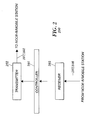
- Figure 2 shows the part (200) of both stations, base station (102) and mobile station (104), including the principles on which this invention is based.
- the known aspects of the elements shown in the mentioned figure are not discussed because a radiofrequency transmitter (202) and receiver (203) are described in detail in the state of the art.
- Both the base station (102) and the mobile station (104) contain a controller (201), a transmitter (202) and a receiver (203).
- the received signal corresponds to the uplink (108) and in the case of the mobile station (104), the signal that it receives is that of the downlink (107), both of them reach the controller (201) through the receiver (203).
- the power control device object of the invention is incorporated in the controller (201) and sends through the transmitter (202) a command indicating to the receiving station at that time to increase or decrease its power, depending on the result of the outer-loop power control method described below, the purpose of which is to establish the desired signal-to-interference ratio target (SIR target ) acting as threshold in the closed loop for power control.
- SIR target desired signal-to-interference ratio target
- the outer-loop power control method of the invention incorporates wind-up situation detection mechanisms, therefore once such situation is detected, the outer loop leaves the normal mode and enters a wind-up operation mode, as can be seen in Figures 7 and 8 of the previous patent application US2003148769 , according to known outer-loop power control algorithms in the distinguished situations: normal and wind-up mode.
- the method object of the invention also incorporates detection mechanisms for the end of this wind-up phenomenon, coinciding with the beginning of the unwinding process by the definitions mentioned above.
- the desired signal-to-interference ratio target (SIR target ) in wind-up mode is calculated according to known algorithms, then an unwinding detector (302) is enabled for determining the end of the wind-up and the beginning of the unwinding and in the last block (303), the desired signal-to-interference ratio target (SIR target ) is modified such that it is adjusted to a suitable value for outer-loop power control operating in normal mode.
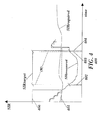
- the modification of said desired signal-to-interference ratio target (SIR target ) at the beginning of the unwinding is the object of this invention and is shown in Figure 4 explained below.
- the method object of the invention modifies the desired signal-to-interference ratio target (SIR target ), giving it a value that is equal or as close as possible to the original value (401) that it had prior to the beginning (402) of the wind-up of the outer loop.
- SIR target desired signal-to-interference ratio target
- This value (401) is the last correct value of the desired signal-to-interference ratio target (SIR target ) established before abandoning the execution of outer-loop power control in normal mode, so that the variation of the desired signal-to-interference ratio target (SIR target ) and therefore of the power level determined by the normal mode of the outer loop continues immediately after leaving the wind-up situation.
- the last correct value (401) is the value existing before the wind-up situation.
- the value of the desired signal-to-interference ratio target (SIR target ) is incorrect because all the mechanisms operating during the wind-up mode are responsible for limiting or canceling outer-loop power control so that the desired signal-to-interference ratio target (SIR target ) does not continue to increase indefinitely.
- This Figure 4 also shows with a dotted line the so-called required desired signal-to-interference ratio (SIR required ), which is defined as a theoretical minimum of the received desired signal-to-interference ratio (SIR rec ) fulfilling the target frame error rate (FER target ).
- the measured desired signal-to-interference ratio (SIR measured ) is also depicted with a solid line, and this ratio is a real estimation of the received desired signal-to-interference ratio (SIR rec ) carried out first by the controller (201) of the base station or mobile in the radio network.
- the method of the invention proposes the following mechanism, preferably applicable if wind-up detection has been provided using a detection margin (M) between said desired signal-to-interference ratio target (SIR target ) and the received desired signal-to-interference ratio (SIR rec ), as specified in Figure 4 .
- M detection margin
- the detection of the wind-up situation by the detector (302) occurs at the beginning (402) of the wind-up of the outer loop.
- Said detector (302) subsequently also determines the end of the wind-up mode and thus detects the beginning (403) of the unwinding.
- this mechanism reduces the desired signal-to-interference ratio target (SIR target ) by an amount equal to the detection margin (M). This mechanism thus allows the value of the desired signal-to-interference ratio target (SIR target ) to again take a value that is very close to the original value (401) that it had prior to the beginning (402) of the wind-up.
- the value of the desired signal-to-interference ratio target (SIR target ) obtained after subtracting the detection margin (M) from the set value (406) during the wind-up which can be a fixed value or a value varying within a limit according to the wind-up mechanism applied, is slightly below the required desired signal-to-interference ratio (SIR required ), which involves a slight quality loss in the channel, but this quality decrease will be very brief since, as has already been mentioned, the known outer-loop power control hop algorithm is very fast when the desired signal-to-interference ratio target (SIR target ) must be later increased.
- the great advantage involved in the new unwinding mechanism included in the proposed method for wireless communication systems lies in the fact that it drastically reduces the convergence time of the outer-loop power control at the end of the wind-up state and as a result, it prevents unnecessary interferences reducing the capacity of the system.
- the invention can be applied for other standards apart from WCDMA, as well as for the power control of any signal received by base stations and by the user terminal equipment or mobile stations.
Landscapes
- Engineering & Computer Science (AREA)
- Computer Networks & Wireless Communication (AREA)
- Signal Processing (AREA)
- Mobile Radio Communication Systems (AREA)
Applications Claiming Priority (2)
| Application Number | Priority Date | Filing Date | Title |
|---|---|---|---|
| ES200502057A ES2250009B1 (es) | 2005-08-17 | 2005-08-17 | Metodo y aparato de control de potencia por lazo externo para sistemas de comunicacion inalambrica. |
| PCT/ES2006/000402 WO2007020304A1 (fr) | 2005-08-17 | 2006-07-13 | Procede et dispositif de regulation de puissance par boucle externe pour systemes de communication sans fil |
Publications (3)
| Publication Number | Publication Date |
|---|---|
| EP1926224A1 true EP1926224A1 (fr) | 2008-05-28 |
| EP1926224A4 EP1926224A4 (fr) | 2013-04-17 |
| EP1926224B1 EP1926224B1 (fr) | 2015-05-06 |
Family
ID=36179025
Family Applications (1)
| Application Number | Title | Priority Date | Filing Date |
|---|---|---|---|
| EP20060807852 Active EP1926224B1 (fr) | 2005-08-17 | 2006-07-13 | Procédé et dispositif de régulation de puissance par boucle externe pour systèmes de communication sans fil |
Country Status (6)
| Country | Link |
|---|---|
| US (1) | US7532865B2 (fr) |
| EP (1) | EP1926224B1 (fr) |
| JP (1) | JP4933549B2 (fr) |
| CN (1) | CN101305527B (fr) |
| ES (2) | ES2250009B1 (fr) |
| WO (1) | WO2007020304A1 (fr) |
Families Citing this family (5)
| Publication number | Priority date | Publication date | Assignee | Title |
|---|---|---|---|---|
| EP2119040B1 (fr) | 2007-03-08 | 2017-12-27 | Marvell International, Ltd. | Récepteur dynamiquement reconfigurable |
| BRPI0819196A2 (pt) * | 2007-11-06 | 2015-05-05 | Ericsson Telefon Ab L M | Métodos em um nó de rede, e em um nó de controle de rede via rádio, e, nós de rede, e de controle de rede via rádio |
| CN102802248B (zh) * | 2012-08-13 | 2015-08-05 | 天津三星通信技术研究有限公司 | 外环功率控制方法及设备 |
| US8897829B2 (en) * | 2013-02-01 | 2014-11-25 | Nvidia Corporation | Controlling transmit power in a wireless device |
| CN107623941A (zh) * | 2017-09-29 | 2018-01-23 | 陕西烽火实业有限公司 | 一种电台的功率控制装置及方法 |
Family Cites Families (6)
| Publication number | Priority date | Publication date | Assignee | Title |
|---|---|---|---|---|
| EP1054518B1 (fr) * | 1999-05-21 | 2004-04-28 | Alcatel Alsthom Compagnie Generale D'electricite | Procédé d'amélioration des performances d'un système de communication radio mobile utilisant contrôle de puissance |
| JP4054550B2 (ja) * | 2001-06-29 | 2008-02-27 | 株式会社エヌ・ティ・ティ・ドコモ | 送信電力制御方法及び装置 |
| US7010321B2 (en) * | 2002-02-04 | 2006-03-07 | Qualcomm Inc. | Power control avoiding outer loop wind-up |
| CN1208977C (zh) * | 2002-04-19 | 2005-06-29 | 华为技术有限公司 | 用于移动通信系统的外环功率控制方法 |
| US7162262B2 (en) * | 2002-09-23 | 2007-01-09 | Telefonaktiebolaget Lm Ericsson (Publ) | Methods, systems and computer program products for requesting received power levels based on received block error rates utilizing an anti-windup and/or emergency procedure |
| KR100585792B1 (ko) * | 2005-01-19 | 2006-06-07 | 엘지전자 주식회사 | 이동통신시스템의 wind-up 전력 제어 방법 |
-
2005
- 2005-08-17 ES ES200502057A patent/ES2250009B1/es not_active Expired - Lifetime
- 2005-12-01 US US11/293,287 patent/US7532865B2/en active Active
-
2006
- 2006-07-13 WO PCT/ES2006/000402 patent/WO2007020304A1/fr not_active Ceased
- 2006-07-13 CN CN2006800385366A patent/CN101305527B/zh active Active
- 2006-07-13 EP EP20060807852 patent/EP1926224B1/fr active Active
- 2006-07-13 ES ES06807852.6T patent/ES2541424T3/es active Active
- 2006-07-13 JP JP2008526514A patent/JP4933549B2/ja active Active
Also Published As
| Publication number | Publication date |
|---|---|
| JP2009505540A (ja) | 2009-02-05 |
| EP1926224B1 (fr) | 2015-05-06 |
| CN101305527B (zh) | 2013-05-08 |
| ES2250009A1 (es) | 2006-04-01 |
| US20070042719A1 (en) | 2007-02-22 |
| JP4933549B2 (ja) | 2012-05-16 |
| US7532865B2 (en) | 2009-05-12 |
| CN101305527A (zh) | 2008-11-12 |
| EP1926224A4 (fr) | 2013-04-17 |
| WO2007020304A1 (fr) | 2007-02-22 |
| ES2541424T3 (es) | 2015-07-20 |
| ES2250009B1 (es) | 2007-05-16 |
| HK1119852A1 (en) | 2009-03-13 |
Similar Documents
| Publication | Publication Date | Title |
|---|---|---|
| JP3028802B2 (ja) | Cdma移動通信システムにおける呼出捕捉時の電力制御方法 | |
| US20100009625A1 (en) | Base Station Repeater | |
| EP2218287B1 (fr) | Procédés et montages mis en oeuvre dans un système de communication sans fil | |
| CZ20021920A3 (cs) | Způsob přenosu při různých bitových rychlostech pro zlepšení oblasti pokrytí buňky a systém pro úpravu bitové rychlosti | |
| EP2327259B1 (fr) | Procédé et appareil pour déterminer un facteur de gain de puissance d'émission minimal pour une communication de données en liaison montante améliorée | |
| EP2774425B1 (fr) | Gestion de congestion lente | |
| KR20060118017A (ko) | 무선 통신 시스템의 외부 루프 전력 제어에서의 목표 신호대 잡음 비의 조정 | |
| CN1274247A (zh) | 无线移动台的开环功率控制 | |
| US20030156554A1 (en) | Method for regulating transmission power in a radiocommunications system | |
| US7599319B2 (en) | Radio communications system and control method therefor | |
| JP5358657B2 (ja) | 電力制御アルゴリズムを用いて移動無線通信システムの性能を向上させる方法 | |
| US7664519B2 (en) | Power control for multiple transport channels in a wireless communication system | |
| EP1926224B1 (fr) | Procédé et dispositif de régulation de puissance par boucle externe pour systèmes de communication sans fil | |
| JP4004853B2 (ja) | 電気通信ネットワーク、最大ダウンリンク電力調整方法、ベース局、および無線通信ネットワークコントローラ | |
| US7336629B1 (en) | Power control method and device | |
| US7558593B2 (en) | Outer loop power control method and apparatus for wireless communication systems | |
| HK1119852B (en) | Outer-loop power control method and device for wireless communication systems | |
| HK1155201B (en) | A method and arrangement for determining a minimum transmit power gain factor for an enhanced uplink data communication |
Legal Events
| Date | Code | Title | Description |
|---|---|---|---|
| PUAI | Public reference made under article 153(3) epc to a published international application that has entered the european phase |
Free format text: ORIGINAL CODE: 0009012 |
|
| 17P | Request for examination filed |
Effective date: 20080317 |
|
| AK | Designated contracting states |
Kind code of ref document: A1 Designated state(s): AT BE BG CH CY CZ DE DK EE ES FI FR GB GR HU IE IS IT LI LT LU LV MC NL PL PT RO SE SI SK TR |
|
| REG | Reference to a national code |
Ref country code: HK Ref legal event code: DE Ref document number: 1119852 Country of ref document: HK |
|
| RAP1 | Party data changed (applicant data changed or rights of an application transferred) |
Owner name: TOT POWER CONTROL, S.L. |
|
| DAX | Request for extension of the european patent (deleted) | ||
| A4 | Supplementary search report drawn up and despatched |
Effective date: 20130320 |
|
| RIC1 | Information provided on ipc code assigned before grant |
Ipc: H04W 52/12 20090101AFI20130314BHEP |
|
| 17Q | First examination report despatched |
Effective date: 20140122 |
|
| REG | Reference to a national code |
Ref country code: DE Ref legal event code: R079 Ref document number: 602006045384 Country of ref document: DE Free format text: PREVIOUS MAIN CLASS: H04B0007005000 Ipc: H04W0052120000 |
|
| GRAP | Despatch of communication of intention to grant a patent |
Free format text: ORIGINAL CODE: EPIDOSNIGR1 |
|
| RIC1 | Information provided on ipc code assigned before grant |
Ipc: H04W 52/24 20090101ALN20150210BHEP Ipc: H04W 52/14 20090101ALN20150210BHEP Ipc: H04W 52/12 20090101AFI20150210BHEP |
|
| INTG | Intention to grant announced |
Effective date: 20150225 |
|
| GRAS | Grant fee paid |
Free format text: ORIGINAL CODE: EPIDOSNIGR3 |
|
| GRAA | (expected) grant |
Free format text: ORIGINAL CODE: 0009210 |
|
| AK | Designated contracting states |
Kind code of ref document: B1 Designated state(s): AT BE BG CH CY CZ DE DK EE ES FI FR GB GR HU IE IS IT LI LT LU LV MC NL PL PT RO SE SI SK TR |
|
| REG | Reference to a national code |
Ref country code: GB Ref legal event code: FG4D |
|
| REG | Reference to a national code |
Ref country code: CH Ref legal event code: EP |
|
| REG | Reference to a national code |
Ref country code: IE Ref legal event code: FG4D |
|
| REG | Reference to a national code |
Ref country code: AT Ref legal event code: REF Ref document number: 726431 Country of ref document: AT Kind code of ref document: T Effective date: 20150615 |
|
| REG | Reference to a national code |
Ref country code: DE Ref legal event code: R096 Ref document number: 602006045384 Country of ref document: DE Effective date: 20150618 |
|
| REG | Reference to a national code |
Ref country code: ES Ref legal event code: FG2A Ref document number: 2541424 Country of ref document: ES Kind code of ref document: T3 Effective date: 20150720 |
|
| REG | Reference to a national code |
Ref country code: AT Ref legal event code: MK05 Ref document number: 726431 Country of ref document: AT Kind code of ref document: T Effective date: 20150506 |
|
| REG | Reference to a national code |
Ref country code: NL Ref legal event code: MP Effective date: 20150506 |
|
| REG | Reference to a national code |
Ref country code: LT Ref legal event code: MG4D |
|
| PG25 | Lapsed in a contracting state [announced via postgrant information from national office to epo] |
Ref country code: LT Free format text: LAPSE BECAUSE OF FAILURE TO SUBMIT A TRANSLATION OF THE DESCRIPTION OR TO PAY THE FEE WITHIN THE PRESCRIBED TIME-LIMIT Effective date: 20150506 Ref country code: PT Free format text: LAPSE BECAUSE OF FAILURE TO SUBMIT A TRANSLATION OF THE DESCRIPTION OR TO PAY THE FEE WITHIN THE PRESCRIBED TIME-LIMIT Effective date: 20150907 Ref country code: FI Free format text: LAPSE BECAUSE OF FAILURE TO SUBMIT A TRANSLATION OF THE DESCRIPTION OR TO PAY THE FEE WITHIN THE PRESCRIBED TIME-LIMIT Effective date: 20150506 |
|
| PG25 | Lapsed in a contracting state [announced via postgrant information from national office to epo] |
Ref country code: BG Free format text: LAPSE BECAUSE OF FAILURE TO SUBMIT A TRANSLATION OF THE DESCRIPTION OR TO PAY THE FEE WITHIN THE PRESCRIBED TIME-LIMIT Effective date: 20150806 Ref country code: IS Free format text: LAPSE BECAUSE OF FAILURE TO SUBMIT A TRANSLATION OF THE DESCRIPTION OR TO PAY THE FEE WITHIN THE PRESCRIBED TIME-LIMIT Effective date: 20150906 Ref country code: LV Free format text: LAPSE BECAUSE OF FAILURE TO SUBMIT A TRANSLATION OF THE DESCRIPTION OR TO PAY THE FEE WITHIN THE PRESCRIBED TIME-LIMIT Effective date: 20150506 Ref country code: AT Free format text: LAPSE BECAUSE OF FAILURE TO SUBMIT A TRANSLATION OF THE DESCRIPTION OR TO PAY THE FEE WITHIN THE PRESCRIBED TIME-LIMIT Effective date: 20150506 |
|
| REG | Reference to a national code |
Ref country code: HK Ref legal event code: GR Ref document number: 1119852 Country of ref document: HK |
|
| PG25 | Lapsed in a contracting state [announced via postgrant information from national office to epo] |
Ref country code: EE Free format text: LAPSE BECAUSE OF FAILURE TO SUBMIT A TRANSLATION OF THE DESCRIPTION OR TO PAY THE FEE WITHIN THE PRESCRIBED TIME-LIMIT Effective date: 20150506 Ref country code: DK Free format text: LAPSE BECAUSE OF FAILURE TO SUBMIT A TRANSLATION OF THE DESCRIPTION OR TO PAY THE FEE WITHIN THE PRESCRIBED TIME-LIMIT Effective date: 20150506 |
|
| REG | Reference to a national code |
Ref country code: DE Ref legal event code: R097 Ref document number: 602006045384 Country of ref document: DE |
|
| PG25 | Lapsed in a contracting state [announced via postgrant information from national office to epo] |
Ref country code: SK Free format text: LAPSE BECAUSE OF FAILURE TO SUBMIT A TRANSLATION OF THE DESCRIPTION OR TO PAY THE FEE WITHIN THE PRESCRIBED TIME-LIMIT Effective date: 20150506 Ref country code: CZ Free format text: LAPSE BECAUSE OF FAILURE TO SUBMIT A TRANSLATION OF THE DESCRIPTION OR TO PAY THE FEE WITHIN THE PRESCRIBED TIME-LIMIT Effective date: 20150506 Ref country code: PL Free format text: LAPSE BECAUSE OF FAILURE TO SUBMIT A TRANSLATION OF THE DESCRIPTION OR TO PAY THE FEE WITHIN THE PRESCRIBED TIME-LIMIT Effective date: 20150506 Ref country code: MC Free format text: LAPSE BECAUSE OF FAILURE TO SUBMIT A TRANSLATION OF THE DESCRIPTION OR TO PAY THE FEE WITHIN THE PRESCRIBED TIME-LIMIT Effective date: 20150506 Ref country code: RO Free format text: LAPSE BECAUSE OF NON-PAYMENT OF DUE FEES Effective date: 20150506 |
|
| REG | Reference to a national code |
Ref country code: CH Ref legal event code: PL |
|
| PLBE | No opposition filed within time limit |
Free format text: ORIGINAL CODE: 0009261 |
|
| STAA | Information on the status of an ep patent application or granted ep patent |
Free format text: STATUS: NO OPPOSITION FILED WITHIN TIME LIMIT |
|
| PG25 | Lapsed in a contracting state [announced via postgrant information from national office to epo] |
Ref country code: LU Free format text: LAPSE BECAUSE OF FAILURE TO SUBMIT A TRANSLATION OF THE DESCRIPTION OR TO PAY THE FEE WITHIN THE PRESCRIBED TIME-LIMIT Effective date: 20150713 |
|
| 26N | No opposition filed |
Effective date: 20160209 |
|
| REG | Reference to a national code |
Ref country code: IE Ref legal event code: MM4A |
|
| PG25 | Lapsed in a contracting state [announced via postgrant information from national office to epo] |
Ref country code: CH Free format text: LAPSE BECAUSE OF NON-PAYMENT OF DUE FEES Effective date: 20150731 Ref country code: LI Free format text: LAPSE BECAUSE OF NON-PAYMENT OF DUE FEES Effective date: 20150731 Ref country code: IT Free format text: LAPSE BECAUSE OF FAILURE TO SUBMIT A TRANSLATION OF THE DESCRIPTION OR TO PAY THE FEE WITHIN THE PRESCRIBED TIME-LIMIT Effective date: 20150506 |
|
| REG | Reference to a national code |
Ref country code: FR Ref legal event code: ST Effective date: 20160331 |
|
| PG25 | Lapsed in a contracting state [announced via postgrant information from national office to epo] |
Ref country code: SI Free format text: LAPSE BECAUSE OF FAILURE TO SUBMIT A TRANSLATION OF THE DESCRIPTION OR TO PAY THE FEE WITHIN THE PRESCRIBED TIME-LIMIT Effective date: 20150506 Ref country code: FR Free format text: LAPSE BECAUSE OF NON-PAYMENT OF DUE FEES Effective date: 20150731 |
|
| PG25 | Lapsed in a contracting state [announced via postgrant information from national office to epo] |
Ref country code: IE Free format text: LAPSE BECAUSE OF NON-PAYMENT OF DUE FEES Effective date: 20150713 |
|
| PG25 | Lapsed in a contracting state [announced via postgrant information from national office to epo] |
Ref country code: BE Free format text: LAPSE BECAUSE OF FAILURE TO SUBMIT A TRANSLATION OF THE DESCRIPTION OR TO PAY THE FEE WITHIN THE PRESCRIBED TIME-LIMIT Effective date: 20150506 |
|
| PG25 | Lapsed in a contracting state [announced via postgrant information from national office to epo] |
Ref country code: HU Free format text: LAPSE BECAUSE OF FAILURE TO SUBMIT A TRANSLATION OF THE DESCRIPTION OR TO PAY THE FEE WITHIN THE PRESCRIBED TIME-LIMIT; INVALID AB INITIO Effective date: 20060713 |
|
| PG25 | Lapsed in a contracting state [announced via postgrant information from national office to epo] |
Ref country code: SE Free format text: LAPSE BECAUSE OF FAILURE TO SUBMIT A TRANSLATION OF THE DESCRIPTION OR TO PAY THE FEE WITHIN THE PRESCRIBED TIME-LIMIT Effective date: 20150506 Ref country code: GR Free format text: LAPSE BECAUSE OF FAILURE TO SUBMIT A TRANSLATION OF THE DESCRIPTION OR TO PAY THE FEE WITHIN THE PRESCRIBED TIME-LIMIT Effective date: 20150506 Ref country code: NL Free format text: LAPSE BECAUSE OF FAILURE TO SUBMIT A TRANSLATION OF THE DESCRIPTION OR TO PAY THE FEE WITHIN THE PRESCRIBED TIME-LIMIT Effective date: 20150506 Ref country code: CY Free format text: LAPSE BECAUSE OF FAILURE TO SUBMIT A TRANSLATION OF THE DESCRIPTION OR TO PAY THE FEE WITHIN THE PRESCRIBED TIME-LIMIT Effective date: 20150506 |
|
| PG25 | Lapsed in a contracting state [announced via postgrant information from national office to epo] |
Ref country code: TR Free format text: LAPSE BECAUSE OF FAILURE TO SUBMIT A TRANSLATION OF THE DESCRIPTION OR TO PAY THE FEE WITHIN THE PRESCRIBED TIME-LIMIT Effective date: 20150506 |
|
| REG | Reference to a national code |
Ref country code: DE Ref legal event code: R039 Ref document number: 602006045384 Country of ref document: DE Ref country code: DE Ref legal event code: R008 Ref document number: 602006045384 Country of ref document: DE |
|
| PGFP | Annual fee paid to national office [announced via postgrant information from national office to epo] |
Ref country code: GB Payment date: 20250609 Year of fee payment: 20 |
|
| PGFP | Annual fee paid to national office [announced via postgrant information from national office to epo] |
Ref country code: ES Payment date: 20250804 Year of fee payment: 20 |
|
| PGFP | Annual fee paid to national office [announced via postgrant information from national office to epo] |
Ref country code: DE Payment date: 20250722 Year of fee payment: 20 |
|
| REG | Reference to a national code |
Ref country code: DE Ref legal event code: R042 Ref document number: 602006045384 Country of ref document: DE |
|
| PG25 | Lapsed in a contracting state [announced via postgrant information from national office to epo] |
Ref country code: DE Free format text: THE PATENT HAS BEEN ANNULLED BY A DECISION OF A NATIONAL AUTHORITY Effective date: 20251016 |