EP1926251B1 - Scannage intelligent en préparation d'un transfert - Google Patents
Scannage intelligent en préparation d'un transfert Download PDFInfo
- Publication number
- EP1926251B1 EP1926251B1 EP06301171.2A EP06301171A EP1926251B1 EP 1926251 B1 EP1926251 B1 EP 1926251B1 EP 06301171 A EP06301171 A EP 06301171A EP 1926251 B1 EP1926251 B1 EP 1926251B1
- Authority
- EP
- European Patent Office
- Prior art keywords
- radio access
- access point
- access technology
- technology network
- network
- Prior art date
- Legal status (The legal status is an assumption and is not a legal conclusion. Google has not performed a legal analysis and makes no representation as to the accuracy of the status listed.)
- Not-in-force
Links
Images



Classifications
-
- H—ELECTRICITY
- H04—ELECTRIC COMMUNICATION TECHNIQUE
- H04W—WIRELESS COMMUNICATION NETWORKS
- H04W36/00—Hand-off or reselection arrangements
- H04W36/0005—Control or signalling for completing the hand-off
- H04W36/0083—Determination of parameters used for hand-off, e.g. generation or modification of neighbour cell lists
- H04W36/0085—Hand-off measurements
-
- H—ELECTRICITY
- H04—ELECTRIC COMMUNICATION TECHNIQUE
- H04W—WIRELESS COMMUNICATION NETWORKS
- H04W36/00—Hand-off or reselection arrangements
- H04W36/14—Reselecting a network or an air interface
- H04W36/144—Reselecting a network or an air interface over a different radio air interface technology
- H04W36/1446—Reselecting a network or an air interface over a different radio air interface technology wherein at least one of the networks is unlicensed
Definitions
- Multiple mode communications devices can connect to multiple radio access technology (RAT) networks.
- RAT radio access technology
- a multiple mode device might have the ability to connect to both a wide area network, such as a Global System for Mobile Communications (GSM) network and a wireless local area network (WLAN), such as a WiFi Hot Spot.
- GSM Global System for Mobile Communications
- WLAN wireless local area network
- these mechanisms include some sort of scanning operation by which a device that is associated with a first network monitors certain characteristics of one or more other networks. If the device has to change networks, it will then have the information it needs to reconfigure itself for operation on one of the other networks. Examples of such multiple mode devices are given by the prior art documents WO 2006107104 and WO02 093955 .
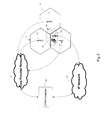
- a system comprises a first RAT network 110 and a second RAT network 120.
- RAT networks 110, 120 include but are not limited to, UTRA (UMTS Terrestrial Radio Access), CDMA2000®, Global System for Mobile Communications (GSM), GSM EDGE Radio Access (GERAN). WiMAX (802.16e), Bluetooth, WiFi (802.11), and the like.
- first RAT network 110 will sometimes be referred to hereafter as a GSM network and second RAT network will be referred to as a WLAN network, such as a WiFi network. It should be noted, however, that these descriptions for exemplary purposes only and the principles and operation described herein should not be construed as limited to these network types.
- network 110 includes a plurality of cells 112, which are each serviced by a corresponding base station 114.
- Network 120 includes a coverage area 122 that is serviced by an access point 124.
- the composition and operation of networks 110, 120 is known so a detailed description of each will not be provided. Nevertheless, it is noted that each network will include additional provider equipment comprised of hardware and/or software components that are needed for the network to function. Detailed descriptions of these components have been omitted for the sake of brevity, but such components typically include components, such as base station controllers, switching systems, and other operation and support systems.
- user equipment 130 is shown positioned in an area of overlapping coverage between first RAT network 110 and second RAT network 120.
- User equipment 130 in one example comprises a dual mode device capable of communicating with each network 110, 120.
- Examples of such devices include, but are not limited to, mobile phones, pagers, radios, personal digital assistants (PDAs), mobile data terminals, laptop computers, application specific gaming devices, video gaming devices incorporating wireless modems, and combinations or subcombinations of these devices.
- PDAs personal digital assistants
- Such devices generally include components such as processors, controllers, memory components, user interface devices, data transmission logic, network interfaces, antennas, and the like. The design and operation of these devices is well known so a detailed description of each possibility will be omitted.
- the components of networks 110, 120, and user equipment 130 are formed of one or more computer software and/or hardware components. A number of such components can be combined or divided.
- an exemplary component of each device employs and/or comprises a series of computer instructions written in or implemented with any of a number of programming languages, as will be appreciated by those skilled in the art.
- the components of networks 110, 120, and UE can each employ at least one computer-readable signal-bearing medium.
- An example of a computer-readable signal-bearing medium is a recordable data storage medium such as a magnetic, optical, and/or atomic scale data storage medium.
- a computer-readable signal-bearing medium is a modulated carrier signal transmitted over a network.
- a computer-readable signal-bearing medium can store software and/or logic components that are employable to carry out the functionality described herein.
- intelligent scanning in accordance with the present application, can occur in many situations. For exemplary purposes, one such situation will now be described.
- mobile device 130 moves from an area of sole coverage by first RAT network 110 to an area of shared coverage with second RAT network 120, mobile device 130 will associate with access point 124 of second RAT network 120.
- mobile device 130 can then access core provider network 201 of first RAT network 110 through a Generic Access Network (GAN) controller 203.
- GAN Generic Access Network
- the access point 124 of second RAT network 120 is connected to GAN controller 203 through another network, such as IP network 205. Accordingly, mobile device 130 can utilize core network 201 through access point 124 and roam between first network 110 and second network 120 without service disruption.
- GAN Generic Access Network
- mobile device 130 in one example comprises a WiFi interface component 301, a GSM interface component 303, a GAN engine component 305, a GSM engine component 307, and an AP database 309.
- WiFi components and GSM components are described for illustrative purposes only.
- network 110 were a UMTS network and network 120 were a Bluetooth network
- the GSM components i.e. interface 303, engine 307
- the WiFi components e.g. interface 301
- WiFi interface component 301 in one example comprises the hardware and/or software components (e.g. antenna, transceiver, chipsets) that allow mobile device 130 to access a WiFi network.
- GSM interface component 303 provides the hardware and/software components that allow mobile device 130 to access a GSM network.
- GAN engine component 305 is utilized by mobile device 130 to oversee and coordinate handover or rove out of mobile device 130 from second RAT network 120 to first RAT network 110, as will be further discussed herein.
- GSM engine component 307 is utilized to scan for cells 112 of first RAT network 110 and to measure and/or detect certain characteristics of signals emanating from cells 112, as will be further discussed herein.
- AP database 309 is utilized to store identities of access points to which mobile device 130 either is connected or has connected. AP database 309 also includes the identities of cells 112, for each access point, to which mobile device can rove or be handed over.
- AP database 309 an exemplary embodiment of AP database 309 is now described for illustrative purposes.
- AP database 309 includes at least one entry 401.
- Each entry 401 corresponds to an AP to which mobile device 130 either is or has been connected. For example, if mobile device 130 associated with AP 124 on second RAT network 120, then the MAC address of AP 124 would be provided in the AP database. Similarly, if mobile device 130 associated with another AP on the second RAT network 120, then the MAC address of the second AP would also be included in AP database 309. It is also possible that mobile device could have associated with APs on networks other than second RAT network, in which case identities of these APs would also be included in the AP database 309. A further description of the building and maintenance of AP database 309 will be provided herein.
- each entry 401 includes information 403 about cells 112 on first RAT network 110 to which mobile device 130 can rove out or be handed over.
- information includes at least one of a cell identifier (CellID), an Absolute Radio Frequency Channel Number (ARFCN), a Location Area Identify (LAI), and a Base Station Identity Code (BSIC) for each cell 112.
- CellID cell identifier
- ARFCN Absolute Radio Frequency Channel Number
- LAI Location Area Identify
- BSIC Base Station Identity Code
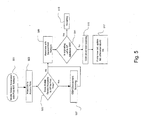
- step 501 mobile device 130 is associated with first RAT network 110. Accordingly, mobile device is transmitting and receiving data to/from a base station 114 serving the particular cell 112 to which mobile device 130 is connected.
- WiFi interface component 301 When mobile device 130 comes within range of AP 124, WiFi interface component 301 will, in step 503, detect AP 124 and begin to associate with AP 124.
- GAN engine component 305 will determine whether or not AP 124 has met a first predetermined criterion that would trigger intelligent scanning.
- the first predetermined criterion is whether mobile device 130 has associated with AP 124 previously or whether mobile device 130 is associating with AP 124 for the first time.
- the GAN engine component makes the determination in step 505 by searching AP database 309 for an entry containing the MAC address of AP 124.
- GSM engine component 307 will scan the environment of mobile device 130 for cells 112 to which mobile device can be handed over or to which mobile device 130 can rove out. In one example, for each available cell 112, the GSM engine component 307 will detect at least one of LAI, CellID, ARFCN, and BSIC. It should be noted, however, that GSM engine component 307 could also scan for additional information for each available cell, such as data contained in system information 3 and system information 4, which could be broadcast by the network 120 (i.e. in the example of GSM RAT). After the environment scanning, flow proceeds to step 509 in which mobile device 130 roves in or is handed over to second RAT network 120. As another alternative example, it should be noted that the mobile device 130 could perform the scanning and the rove in procedures in parallel. It is not necessary for the scanning procedure to reach completion before the rove in procedure is begun.
- step 509 mobile device roves in (if a call is not taking place) or is handed over (if a call is taking place) to second RAT network 120.
- mobile device 130 can utilize GAN controller 203 ( Fig. 2 ) to continue utilizing the core provider network 201.
- step 505 mobile device 130 is not associating with AP 124 for the first time, then flow proceeds directly to step 509.
- GAN engine component 305 will determine whether or not AP 124 has met a second predetermined criterion that would trigger intelligent scanning. In step 511, GAN engine component 305 determines whether or not the cell 112 from which mobile device 130 originates (i.e. from which the mobile device roved in or was handed over from) is present in the entry corresponding to AP 124 in AP database 309. If the answer is yes, then no action is taken and the process terminates in step 513.
- GSM engine component 307 will scan the environment, in a manner similar to step 507, of mobile device 130 for cells 112 to which mobile device can be handed over or to which mobile device 130 can rove out. The reason being that if the cell 112 from which mobile device 130 originates is not present in the cell list associated to the current AP, then it is likely that the AP 124 location has changed and then a scan is performed to rebuild the list.
- the GSM engine component 307 determines whether or not the originating cell 112 is the only cell that is the in the list of cells corresponding to AP 124. If the originating cell is the only new cell, then the list of cells corresponding to AP 124 is updated to include the originating cell 112. If one or more other cells are also new (i.e. not the in the list of cells corresponding to AP 124), then the list of cells corresponding to AP 124 is rebuilt to include all of the cells detected in step 515.
- first RAT network 110 is a GSM network and second RAT network 120 is a WiFi network, through which mobile device 130 is connected to GANC 203 ( Fig. 2 .)
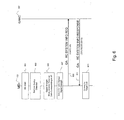
- step 601 mobile device 130 is in idle state while associated to second RAT network 120.
- step 603 mobile device 130 detects a bad link quality indication from AP 124, thereby indicating that mobile device 130 is in danger of leaving the coverage area of AP 124.
- GAN engine component 305 searches AP database 309 to determine whether or not there are cells from GSM network 110 to which mobile device can rove. If there are cells, then GSM component 307, in step 605, will take signal strength measurements on the ARFCN of cells corresponding to AP 124 in AP database 309. In one example, the signal strength measurements are only performed on a subset (e.g. 5 or 6) of the available cells 112.
- the GAN component selects a target cell, which in one example, is the cell 112 with the highest signal strength.
- the GAN component sends a system request message through GAN controller 203 requesting that core network 201 provide mobile device 130 with system information (SI) for the target cell 112 ( Fig. 2 ).
- the system information request message includes the CellID and LAI for the target cell.
- the core network 201 sends, through GAN controller 207, a system info response message that includes at least one SI parameter for the target cell.
- the SI parameters are utilized by the mobile device 130 to camp onto the target cell and initiate communication with the network, as will be understood by those of skill in the art.
- the mobile device 130 utilizes the system information to connect to the target cell. It should be noted that in one example the system info request and system info response message can be sent, as addition to, and in conformity with the 3GPP 44.318.
- steps 609 and 611 could be omitted from the process set forth in Fig. 6 .
- mobile device 130 could simply read one or more SI parameters directly from the target cell and immediately advance to step 613 in which the mobile device 130 would utilize the SI parameters to connect to the target cell.
- first RAT network 110 is a GSM network and second RAT network 120 is a WiFi network, through which mobile device 130 is connected to GANC 203 ( Fig. 2 .)
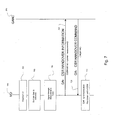
- step 701 mobile device 130 is engaged in an active call GSM call through utilization of GANC 203 while being associated to second RAT network 120.
- step 703 mobile device 130 detects a bad link quality indication from AP 124, thereby indicating that mobile device 130 is in danger of leaving the coverage area of AP 124.
- GAN engine component 305 searches AP database 309 to determine whether or not there are cells from GSM network 110 to which mobile device can rove. If there are cells, then GSM component 307, in step 705, will take signal strength measurements on the ARFCN of cells corresponding to AP 124 in AP database 309. In one example, the signal strength measurements are only performed on a subset (e.g. 5 or 6) of the available cells 112.
- the GAN component sends the list of cells 112, for which signal strength measurements where take, and the corresponding signal strengths to core network 201 through GAN controller 203.
- the core network 201 will send a handover command to mobile device 130.
- the handover command will include the identity of a target cell.
- GSM engine component 307 of mobile device 130 will synchronize with the target cell.
- the MS uses this message to get system information from GSM/UTRA cell through GANC.
- GANC uses this message to send back system information from GSM/UTRA cell to MS.
- the purpose of the Cell Data Container information element is to provide all SI or PSI of a cell necessary for the MS to camp on. 8 7 6 5 4 3 2 1 GERAN Cell Data Container octet 1 ext Length of GERAN Cell Data IE contents octet 2, 2a Lengthof GERAN Cell Data IE contents octet 2 Container Data represents the concatenation of all necessary SI or PSI : Container repetition struct octet 4 .... octet n
- the Container Data contains the System information or Packet System Information concatenated.
- a way to concatenate SI or PSI may be the following:
- Each container data contain one entire SI or PSI.
- the information contained in the Cell Data Container shall be encoded as specified in 44.018 but shall exclude the following information elements from the beginning of the messages: L2 Pseudo Length, RR management Protocol Discriminator and Skip Indicator.
- the information contained in the Cell Data Container shall include the complete PSI message as specified in 44.060.
- the purpose of the Cell Identity information element is to identify a cell within a location area. 8 7 6 5 4 3 2 1 GERAN Cell Identity IEI octet 1 Length of GERAN Cell Identity IE contents octet 2 The rest of the IE is coded as in [8] not including IEI and length, if present. octet 3 .... octet n
- the purpose of the Location Area Identification information element is to provide an unambiguous identification of location areas within the area covered by the GSM system. 8 7 6 5 4 3 2 1 Location Area Identification IEI octet 1 Length of Location Area Identification IE contents octet 2 The rest of the IE is coded as in [24.008] not including IEI and length, if present. octet 3 .... octet n
Landscapes
- Engineering & Computer Science (AREA)
- Computer Networks & Wireless Communication (AREA)
- Signal Processing (AREA)
- Mobile Radio Communication Systems (AREA)
Claims (15)
- Procédé, dans un dispositif mobile (130), comportant :la détection (503), lorsqu'il est associé (501) avec un premier réseau de technologie d'accès radio (110), d'un point d'accès (124) d'un second réseau de technologie d'accès radio (120) ; caractérisé en ce qu'il comporte en outre :l'utilisation d'une base de données de points d'accès (309), dans le dispositif mobile (130), pour déterminer si le point d'accès (124) a été préalablement associé audit dispositif mobile (130) ou si le dispositif mobile (130) est associé audit point d'accès (124) pour la première fois ; etle balayage (507) du premier réseau de technologie d'accès radio (110) si le point d'accès (124) n'a pas été préalablement associé à ladite station mobile (130), pour détecter des cellules correspondantes dudit premier réseau de technologie d'accès radio (110), correspondant audit point d'accès (124) et l'ajout (517) d'une entrée (401) à la base de données (309) qui inclut le point d'accès (124), une liste de toutes cellules (112) détectées par l'intermédiaire dudit balayage (507), et une information ayant trait à chacune desdites cellules quelconques (112) détectées.
- Procédé selon la revendication 1, dans lequel l'étape d'utilisation de la base de données de points d'accès (309) comporte :la recherche dans la base de données de points d'accès (309) pour déterminer si une entrée (401) n'existe pas pour le point d'accès (124) du second réseau de technologie d'accès radio (120).
- Procédé selon la revendication 2, dans lequel l'étape de balayage comporte : le balayage du premier réseau de technologie d'accès radio (110) si une entrée (401) n'existe pas pour le point d'accès (124) du second réseau de technologie d'accès radio (120).
- Procédé selon la revendication 3, comportant en outre :l'ajout (517) d'une entrée (401) à la base de données (309) qui comprend le point d'accès (124), une liste de cellules (112) détectées par l'intermédiaire du balayage, et une information ayant trait à chaque cellule détectée (112).
- Procédé selon la revendication 1, dans lequel l'étape d'utilisation comporte :la localisation d'une entrée (401) pour le point d'accès (124) du second réseau (120) ; etla recherche de l'entrée (401) pour déterminer la présence d'une information ayant trait à une cellule grâce à laquelle le dispositif mobile est relié au premier réseau de technologie d'accès radio (110).
- Procédé selon la revendication 5, dans lequel l'étape de balayage comporte :le balayage du premier réseau de technologie d'accès radio (110) si l'information ayant trait à la cellule n'est pas présente dans l'entrée (401).
- Procédé selon la revendication 6, comportant en outre :la détection d'au moins une autre cellule (112) à partir du premier réseau de technologie d'accès radio (110); etla détermination si oui ou non une information ayant trait à la au moins une autre cellule (112) est présente dans la base de données (309).
- Procédé selon la revendication 7, comportant en outre :si l'information ayant trait à la au moins une autre cellule n'est pas présente, l'ajout d'une entrée (401) à la base de données (309) qui inclut le point d'accès (124), une liste de cellules (112) détectées par l'intermédiaire du balayage, et une information ayant trait à chaque cellule détectée (112) ; etsi l'information ayant trait à la au moins une autre cellule est détectée, l'ajout d'une information ayant trait à la cellule dans l'entrée (401) dans la base de données (309) qui inclut le point d'accès (124).
- Procédé, dans un dispositif mobile (130), comportant :la détection, lorsqu'il est associé à un premier réseau de technologie d'accès radio (110), d'au moins un point d'accès (124) d'un second réseau de technologie d'accès radio (120) ; caractérisé en ce qu'il comporte en outre :le balayage du premier réseau de technologie d'accès radio (110) pour identifier des cellules disponibles (112) du premier réseau de technologie d'accès radio (110) et pour détecter une information concernant chaque cellule disponible ;la création d'une base de données de points d'accès (309) ;la création d'une entrée (401) dans la base de données de points d'accès (309) pour le au moins un point d'accès (124), où l'entrée (401) inclut chaque cellule disponible (112) et une information pour chaque cellule disponible ;l'association avec le point d'accès (124) du second réseau de technologie d'accès radio (120) et la dissociation du premier réseau de technologie d'accès radio (110) ; etl'envoi d'un message de requête par l'intermédiaire dudit point d'accès (124) dudit second réseau de technologie d'accès radio (120) à un équipement de fournisseur dudit premier réseau de technologie d'accès radio (110) demandant une information de système d'une cellule cible sélectionnée pour un transfert à partir desdites cellules disponibles (112).
- Procédé selon la revendication 9, dans lequel l'étape de détection comporte :la détection d'un point d'accès (124) d'un réseau local sans fil (120) tout en étant associé à un réseau GSM (110).
- Procédé selon la revendication 10, dans lequel l'étape de balayage comporte :la tentative, pour chaque cellule disponible (112), de détecter une information comprenant au moins l'un d'un identifiant, identifiant de cellule, numéro absolu de canal Radio Fréquence, identifiant d'aire de localisation et code d'identité de station de base.
- Procédé selon la revendication 9, comportant en outre :la détermination que la force du signal entre le dispositif mobile (130) et le au moins un point d'accès (124) du second réseau de technologie d'accès radio (120) est tombée en dessous d'un niveau prédéterminé ; etla mesure de la force du signal pour chaque cellule disponible dans la base de données de points d'accès qui correspond à au moins un point d'accès (124) du second réseau (120).
- Procédé selon la revendication 12, comportant en outre :la sélection de la cellule disponible avec la force de signal la plus élevée pour un transfert ; etl'envoi d'un message à l'équipement de fournisseur du premier réseau de technologie d'accès radio (110) demandant une information de système pour la cellule avec la force de signal la plus élevée.
- Procédé selon la revendication 13, comportant :la réception de ladite information de système depuis le premier réseau de technologie d'accès radio (110); etl'utilisation de l'information de système pour s'associer avec le premier réseau de technologie d'accès radio (110).
- Dispositif (130) comportant des moyens adaptés pour effectuer les étapes de processus selon la revendication 9, caractérisé en ce que le dispositif comporte :un premier élément de traitement (303) adapté pour s'associer avec le premier réseau de technologie d'accès radio (110) ;un second élément de traitement (301) adapté pour s'associer avec le second réseau de technologie d'accès radio (120) et pour détecter, lorsqu'il est associé au premier réseau de technologie d'accès radio (110), le au moins un point d'accès (124) du second réseau de technologie d'accès radio (120) ;un élément de balayage (307) pour balayer le premier réseau de technologie d'accès radio (110) pour identifier des cellules disponibles (112) du premier réseau de technologie d'accès radio (110) et pour détecter une information concernant chaque cellule disponible (112) ;une base de données de points d'accès (309) pour mémoriser une information concernant chaque cellule disponible et des entrées associant des points d'accès dudit premier réseau de technologie d'accès radio (110) aux cellules dudit second réseau de technologie d'accès radio (120) ; etun contrôleur d'accès au réseau générique pour envoyer un message de requête par l'intermédiaire dudit point d'accès (124) dudit second réseau de technologie d'accès radio (120) à l'équipement de fournisseur dudit premier réseau de technologie d'accès radio (110) demandant une information de système d'une cellule cible sélectionnée pour un transfert parmi lesdites cellules disponibles (112).
Priority Applications (3)
| Application Number | Priority Date | Filing Date | Title |
|---|---|---|---|
| EP06301171.2A EP1926251B1 (fr) | 2006-11-22 | 2006-11-22 | Scannage intelligent en préparation d'un transfert |
| EP10195380.0A EP2373087B1 (fr) | 2006-11-22 | 2006-11-22 | Sélection de cellule intelligente en préparation d'un transfert |
| PCT/US2007/085118 WO2008064165A2 (fr) | 2006-11-22 | 2007-11-19 | Balayage intelligent lors de la préparation d'un transfert intercellulaire |
Applications Claiming Priority (1)
| Application Number | Priority Date | Filing Date | Title |
|---|---|---|---|
| EP06301171.2A EP1926251B1 (fr) | 2006-11-22 | 2006-11-22 | Scannage intelligent en préparation d'un transfert |
Related Child Applications (2)
| Application Number | Title | Priority Date | Filing Date |
|---|---|---|---|
| EP10195380.0A Division EP2373087B1 (fr) | 2006-11-22 | 2006-11-22 | Sélection de cellule intelligente en préparation d'un transfert |
| EP10195380.0A Division-Into EP2373087B1 (fr) | 2006-11-22 | 2006-11-22 | Sélection de cellule intelligente en préparation d'un transfert |
Publications (2)
| Publication Number | Publication Date |
|---|---|
| EP1926251A1 EP1926251A1 (fr) | 2008-05-28 |
| EP1926251B1 true EP1926251B1 (fr) | 2015-01-07 |
Family
ID=37946448
Family Applications (2)
| Application Number | Title | Priority Date | Filing Date |
|---|---|---|---|
| EP06301171.2A Not-in-force EP1926251B1 (fr) | 2006-11-22 | 2006-11-22 | Scannage intelligent en préparation d'un transfert |
| EP10195380.0A Not-in-force EP2373087B1 (fr) | 2006-11-22 | 2006-11-22 | Sélection de cellule intelligente en préparation d'un transfert |
Family Applications After (1)
| Application Number | Title | Priority Date | Filing Date |
|---|---|---|---|
| EP10195380.0A Not-in-force EP2373087B1 (fr) | 2006-11-22 | 2006-11-22 | Sélection de cellule intelligente en préparation d'un transfert |
Country Status (2)
| Country | Link |
|---|---|
| EP (2) | EP1926251B1 (fr) |
| WO (1) | WO2008064165A2 (fr) |
Families Citing this family (7)
| Publication number | Priority date | Publication date | Assignee | Title |
|---|---|---|---|---|
| US8412189B2 (en) | 2009-01-22 | 2013-04-02 | Research In Motion Limited | Method for wireless system selection optimization |
| EP2421303B1 (fr) * | 2009-01-22 | 2013-08-07 | Research In Motion Limited | Procédé pour l'optimisation de la sélection d'un système sans fil |
| FR2942097A1 (fr) | 2009-02-06 | 2010-08-13 | Thomson Licensing | Procede d'emission dans un reseau sans fil et procede de reception correspondant |
| FR2986929A1 (fr) * | 2012-02-09 | 2013-08-16 | France Telecom | Procede de gestion, sur un terminal, de l'activation des interfaces de communication avec des reseaux de communication |
| WO2014209194A1 (fr) * | 2013-06-28 | 2014-12-31 | Telefonaktiebolaget L M Ericsson (Publ) | Procédés et nœuds de réseau pour mobilité améliorée entre réseaux mobiles de communication |
| CN104053166A (zh) * | 2014-06-10 | 2014-09-17 | 四川长虹电器股份有限公司 | 智能电视智能连接无线网络的方法 |
| JP6847983B2 (ja) * | 2016-07-13 | 2021-03-24 | オッポ広東移動通信有限公司Guangdong Oppo Mobile Telecommunications Corp., Ltd. | システム情報伝送方法、及び装置 |
Family Cites Families (5)
| Publication number | Priority date | Publication date | Assignee | Title |
|---|---|---|---|---|
| US6829481B2 (en) * | 2001-05-15 | 2004-12-07 | Novatel Wireless, Inc. | Systems and methods for intelligent inter-system handoff |
| US7047036B2 (en) * | 2002-07-02 | 2006-05-16 | Interdigital Technology Corporation | Method and apparatus for handoff between a wireless local area network (WLAN) and a universal mobile telecommunication system (UMTS) |
| US7082301B2 (en) * | 2003-09-12 | 2006-07-25 | Cisco Technology, Inc. | Method and system for triggering handoff of a call between networks |
| DE10356661A1 (de) * | 2003-12-04 | 2005-07-14 | Siemens Ag | Verfahren zum Anmelden eines Kommunikationsendgerätes in einem drahtlosen lokalen Netzwerk |
| US7505433B2 (en) * | 2005-04-01 | 2009-03-17 | Toshiba America Research, Inc. | Autonomous and heterogeneous network discovery and reuse |
-
2006
- 2006-11-22 EP EP06301171.2A patent/EP1926251B1/fr not_active Not-in-force
- 2006-11-22 EP EP10195380.0A patent/EP2373087B1/fr not_active Not-in-force
-
2007
- 2007-11-19 WO PCT/US2007/085118 patent/WO2008064165A2/fr not_active Ceased
Also Published As
| Publication number | Publication date |
|---|---|
| WO2008064165A2 (fr) | 2008-05-29 |
| EP2373087A3 (fr) | 2013-08-14 |
| EP1926251A1 (fr) | 2008-05-28 |
| WO2008064165B1 (fr) | 2008-09-04 |
| EP2373087B1 (fr) | 2015-03-04 |
| WO2008064165A3 (fr) | 2008-07-10 |
| EP2373087A2 (fr) | 2011-10-05 |
Similar Documents
| Publication | Publication Date | Title |
|---|---|---|
| US7089008B1 (en) | Inter-system handover | |
| CN106559848B (zh) | 用于增强的切换机制和小区重选的装置、系统和方法 | |
| US8094619B2 (en) | Multi-mode multi-band mobile communication terminal and mode switching method thereof | |
| US8615244B2 (en) | Measurement control method, user equipment and network-side device | |
| AU2006276217B2 (en) | Method and system for supporting an evolved UTRAN | |
| US9125094B2 (en) | Apparatuses and methods for reporting availability of measurement log | |
| US20040242199A1 (en) | Mobile telecommunications networks | |
| US20130029668A1 (en) | Radio base station and method for mobile communication systems | |
| WO2008064165A2 (fr) | Balayage intelligent lors de la préparation d'un transfert intercellulaire | |
| US20090036134A1 (en) | Revision level notification method and system for mobile station | |
| KR101578137B1 (ko) | 이기종 시스템을 지원하는 이동 단말에서 핸드오버 방법 및 장치 | |
| US10165474B2 (en) | Volunteer domain change of existed service for supporting multiple services with service continuity | |
| US20210385700A1 (en) | Wireless communication method, network device and terminal device | |
| US8620300B2 (en) | Method of transmitting cell identity information | |
| US20120040673A1 (en) | Method of Handling Measurement Procedure and Related Communication Device | |
| EP1626601B1 (fr) | Transfert de communication inter-système d'une seléction d'une cellule cible modifiée | |
| US20100309888A1 (en) | Method of performing communication according to control information in a wireless communication system | |
| US20120094671A1 (en) | Method and system for relocation | |
| CN1965605B (zh) | 改进从geran到utran的系统间小区重选 | |
| EP1916858A1 (fr) | Optimisation de transfert inter-RAT | |
| CN101228714B (zh) | 支持演进型utran方法及系统 | |
| CN121218281A (zh) | 无线通信系统中的快速定向重定向方法、用户设备及基站 | |
| AU2013270474B2 (en) | Method and System for Supporting an Evolved Utran | |
| KR20250003464A (ko) | 가입 기반 무인 항공기(uav)를 식별하기 위한 시스템 및 방법 |
Legal Events
| Date | Code | Title | Description |
|---|---|---|---|
| PUAI | Public reference made under article 153(3) epc to a published international application that has entered the european phase |
Free format text: ORIGINAL CODE: 0009012 |
|
| AK | Designated contracting states |
Kind code of ref document: A1 Designated state(s): AT BE BG CH CY CZ DE DK EE ES FI FR GB GR HU IE IS IT LI LT LU LV MC NL PL PT RO SE SI SK TR |
|
| AX | Request for extension of the european patent |
Extension state: AL BA HR MK RS |
|
| 17P | Request for examination filed |
Effective date: 20081120 |
|
| 17Q | First examination report despatched |
Effective date: 20081217 |
|
| AKX | Designation fees paid |
Designated state(s): AT BE BG CH CY CZ DE DK EE ES FI FR GB GR HU IE IS IT LI LT LU LV MC NL PL PT RO SE SI SK TR |
|
| RAP1 | Party data changed (applicant data changed or rights of an application transferred) |
Owner name: MOTOROLA MOBILITY, INC. |
|
| RAP1 | Party data changed (applicant data changed or rights of an application transferred) |
Owner name: MOTOROLA MOBILITY LLC |
|
| RIC1 | Information provided on ipc code assigned before grant |
Ipc: H04W 36/00 20090101AFI20140407BHEP Ipc: H04W 36/14 20090101ALN20140407BHEP |
|
| REG | Reference to a national code |
Ref country code: DE Ref legal event code: R079 Ref document number: 602006044241 Country of ref document: DE Free format text: PREVIOUS MAIN CLASS: H04L0012280000 Ipc: H04W0036000000 |
|
| GRAP | Despatch of communication of intention to grant a patent |
Free format text: ORIGINAL CODE: EPIDOSNIGR1 |
|
| INTG | Intention to grant announced |
Effective date: 20140605 |
|
| RIC1 | Information provided on ipc code assigned before grant |
Ipc: H04W 36/14 20090101ALN20140523BHEP Ipc: H04W 36/00 20090101AFI20140523BHEP |
|
| GRAS | Grant fee paid |
Free format text: ORIGINAL CODE: EPIDOSNIGR3 |
|
| GRAA | (expected) grant |
Free format text: ORIGINAL CODE: 0009210 |
|
| AK | Designated contracting states |
Kind code of ref document: B1 Designated state(s): AT BE BG CH CY CZ DE DK EE ES FI FR GB GR HU IE IS IT LI LT LU LV MC NL PL PT RO SE SI SK TR |
|
| REG | Reference to a national code |
Ref country code: GB Ref legal event code: FG4D |
|
| REG | Reference to a national code |
Ref country code: CH Ref legal event code: EP |
|
| REG | Reference to a national code |
Ref country code: IE Ref legal event code: FG4D |
|
| REG | Reference to a national code |
Ref country code: AT Ref legal event code: REF Ref document number: 706465 Country of ref document: AT Kind code of ref document: T Effective date: 20150215 |
|
| REG | Reference to a national code |
Ref country code: DE Ref legal event code: R096 Ref document number: 602006044241 Country of ref document: DE Effective date: 20150226 |
|
| REG | Reference to a national code |
Ref country code: NL Ref legal event code: T3 |
|
| REG | Reference to a national code |
Ref country code: NL Ref legal event code: T3 |
|
| REG | Reference to a national code |
Ref country code: NL Ref legal event code: T3 |
|
| REG | Reference to a national code |
Ref country code: AT Ref legal event code: MK05 Ref document number: 706465 Country of ref document: AT Kind code of ref document: T Effective date: 20150107 |
|
| REG | Reference to a national code |
Ref country code: LT Ref legal event code: MG4D |
|
| PG25 | Lapsed in a contracting state [announced via postgrant information from national office to epo] |
Ref country code: FI Free format text: LAPSE BECAUSE OF FAILURE TO SUBMIT A TRANSLATION OF THE DESCRIPTION OR TO PAY THE FEE WITHIN THE PRESCRIBED TIME-LIMIT Effective date: 20150107 Ref country code: LT Free format text: LAPSE BECAUSE OF FAILURE TO SUBMIT A TRANSLATION OF THE DESCRIPTION OR TO PAY THE FEE WITHIN THE PRESCRIBED TIME-LIMIT Effective date: 20150107 Ref country code: SE Free format text: LAPSE BECAUSE OF FAILURE TO SUBMIT A TRANSLATION OF THE DESCRIPTION OR TO PAY THE FEE WITHIN THE PRESCRIBED TIME-LIMIT Effective date: 20150107 Ref country code: ES Free format text: LAPSE BECAUSE OF FAILURE TO SUBMIT A TRANSLATION OF THE DESCRIPTION OR TO PAY THE FEE WITHIN THE PRESCRIBED TIME-LIMIT Effective date: 20150107 Ref country code: BG Free format text: LAPSE BECAUSE OF FAILURE TO SUBMIT A TRANSLATION OF THE DESCRIPTION OR TO PAY THE FEE WITHIN THE PRESCRIBED TIME-LIMIT Effective date: 20150407 |
|
| PG25 | Lapsed in a contracting state [announced via postgrant information from national office to epo] |
Ref country code: PL Free format text: LAPSE BECAUSE OF FAILURE TO SUBMIT A TRANSLATION OF THE DESCRIPTION OR TO PAY THE FEE WITHIN THE PRESCRIBED TIME-LIMIT Effective date: 20150107 Ref country code: LV Free format text: LAPSE BECAUSE OF FAILURE TO SUBMIT A TRANSLATION OF THE DESCRIPTION OR TO PAY THE FEE WITHIN THE PRESCRIBED TIME-LIMIT Effective date: 20150107 Ref country code: AT Free format text: LAPSE BECAUSE OF FAILURE TO SUBMIT A TRANSLATION OF THE DESCRIPTION OR TO PAY THE FEE WITHIN THE PRESCRIBED TIME-LIMIT Effective date: 20150107 Ref country code: GR Free format text: LAPSE BECAUSE OF FAILURE TO SUBMIT A TRANSLATION OF THE DESCRIPTION OR TO PAY THE FEE WITHIN THE PRESCRIBED TIME-LIMIT Effective date: 20150408 Ref country code: IS Free format text: LAPSE BECAUSE OF FAILURE TO SUBMIT A TRANSLATION OF THE DESCRIPTION OR TO PAY THE FEE WITHIN THE PRESCRIBED TIME-LIMIT Effective date: 20150507 |
|
| REG | Reference to a national code |
Ref country code: DE Ref legal event code: R097 Ref document number: 602006044241 Country of ref document: DE |
|
| PG25 | Lapsed in a contracting state [announced via postgrant information from national office to epo] |
Ref country code: RO Free format text: LAPSE BECAUSE OF FAILURE TO SUBMIT A TRANSLATION OF THE DESCRIPTION OR TO PAY THE FEE WITHIN THE PRESCRIBED TIME-LIMIT Effective date: 20150107 Ref country code: SK Free format text: LAPSE BECAUSE OF FAILURE TO SUBMIT A TRANSLATION OF THE DESCRIPTION OR TO PAY THE FEE WITHIN THE PRESCRIBED TIME-LIMIT Effective date: 20150107 Ref country code: CZ Free format text: LAPSE BECAUSE OF FAILURE TO SUBMIT A TRANSLATION OF THE DESCRIPTION OR TO PAY THE FEE WITHIN THE PRESCRIBED TIME-LIMIT Effective date: 20150107 Ref country code: EE Free format text: LAPSE BECAUSE OF FAILURE TO SUBMIT A TRANSLATION OF THE DESCRIPTION OR TO PAY THE FEE WITHIN THE PRESCRIBED TIME-LIMIT Effective date: 20150107 Ref country code: DK Free format text: LAPSE BECAUSE OF FAILURE TO SUBMIT A TRANSLATION OF THE DESCRIPTION OR TO PAY THE FEE WITHIN THE PRESCRIBED TIME-LIMIT Effective date: 20150107 |
|
| PLBE | No opposition filed within time limit |
Free format text: ORIGINAL CODE: 0009261 |
|
| STAA | Information on the status of an ep patent application or granted ep patent |
Free format text: STATUS: NO OPPOSITION FILED WITHIN TIME LIMIT |
|
| 26N | No opposition filed |
Effective date: 20151008 |
|
| PG25 | Lapsed in a contracting state [announced via postgrant information from national office to epo] |
Ref country code: IT Free format text: LAPSE BECAUSE OF FAILURE TO SUBMIT A TRANSLATION OF THE DESCRIPTION OR TO PAY THE FEE WITHIN THE PRESCRIBED TIME-LIMIT Effective date: 20150107 |
|
| PG25 | Lapsed in a contracting state [announced via postgrant information from national office to epo] |
Ref country code: SI Free format text: LAPSE BECAUSE OF FAILURE TO SUBMIT A TRANSLATION OF THE DESCRIPTION OR TO PAY THE FEE WITHIN THE PRESCRIBED TIME-LIMIT Effective date: 20150107 |
|
| PG25 | Lapsed in a contracting state [announced via postgrant information from national office to epo] |
Ref country code: BE Free format text: LAPSE BECAUSE OF FAILURE TO SUBMIT A TRANSLATION OF THE DESCRIPTION OR TO PAY THE FEE WITHIN THE PRESCRIBED TIME-LIMIT Effective date: 20150107 |
|
| REG | Reference to a national code |
Ref country code: DE Ref legal event code: R119 Ref document number: 602006044241 Country of ref document: DE |
|
| PG25 | Lapsed in a contracting state [announced via postgrant information from national office to epo] |
Ref country code: MC Free format text: LAPSE BECAUSE OF FAILURE TO SUBMIT A TRANSLATION OF THE DESCRIPTION OR TO PAY THE FEE WITHIN THE PRESCRIBED TIME-LIMIT Effective date: 20150107 Ref country code: LU Free format text: LAPSE BECAUSE OF FAILURE TO SUBMIT A TRANSLATION OF THE DESCRIPTION OR TO PAY THE FEE WITHIN THE PRESCRIBED TIME-LIMIT Effective date: 20151122 |
|
| REG | Reference to a national code |
Ref country code: CH Ref legal event code: PL |
|
| REG | Reference to a national code |
Ref country code: DE Ref legal event code: R082 Ref document number: 602006044241 Country of ref document: DE Representative=s name: CBDL PATENTANWAELTE, DE Ref country code: DE Ref legal event code: R081 Ref document number: 602006044241 Country of ref document: DE Owner name: GOOGLE TECHNOLOGY HOLDINGS LLC, MOUNTAIN VIEW, US Free format text: FORMER OWNER: MOTOROLA MOBILITY LLC, LIBERTYVILLE, ILL., US |
|
| GBPC | Gb: european patent ceased through non-payment of renewal fee |
Effective date: 20151122 |
|
| PG25 | Lapsed in a contracting state [announced via postgrant information from national office to epo] |
Ref country code: LI Free format text: LAPSE BECAUSE OF NON-PAYMENT OF DUE FEES Effective date: 20151130 Ref country code: CH Free format text: LAPSE BECAUSE OF NON-PAYMENT OF DUE FEES Effective date: 20151130 |
|
| REG | Reference to a national code |
Ref country code: NL Ref legal event code: MM Effective date: 20151201 |
|
| REG | Reference to a national code |
Ref country code: IE Ref legal event code: MM4A |
|
| REG | Reference to a national code |
Ref country code: FR Ref legal event code: ST Effective date: 20160729 |
|
| REG | Reference to a national code |
Ref country code: GB Ref legal event code: 732E Free format text: REGISTERED BETWEEN 20160804 AND 20160810 |
|
| PG25 | Lapsed in a contracting state [announced via postgrant information from national office to epo] |
Ref country code: NL Free format text: LAPSE BECAUSE OF NON-PAYMENT OF DUE FEES Effective date: 20151201 |
|
| REG | Reference to a national code |
Ref country code: FR Ref legal event code: TP Owner name: GOOGLE TECHNOLOGY HOLDINGS LLC, US Effective date: 20160912 |
|
| PG25 | Lapsed in a contracting state [announced via postgrant information from national office to epo] |
Ref country code: DE Free format text: LAPSE BECAUSE OF NON-PAYMENT OF DUE FEES Effective date: 20160601 Ref country code: GB Free format text: LAPSE BECAUSE OF NON-PAYMENT OF DUE FEES Effective date: 20151122 Ref country code: IE Free format text: LAPSE BECAUSE OF NON-PAYMENT OF DUE FEES Effective date: 20151122 |
|
| PG25 | Lapsed in a contracting state [announced via postgrant information from national office to epo] |
Ref country code: FR Free format text: LAPSE BECAUSE OF NON-PAYMENT OF DUE FEES Effective date: 20151130 |
|
| PG25 | Lapsed in a contracting state [announced via postgrant information from national office to epo] |
Ref country code: HU Free format text: LAPSE BECAUSE OF FAILURE TO SUBMIT A TRANSLATION OF THE DESCRIPTION OR TO PAY THE FEE WITHIN THE PRESCRIBED TIME-LIMIT; INVALID AB INITIO Effective date: 20061122 |
|
| PG25 | Lapsed in a contracting state [announced via postgrant information from national office to epo] |
Ref country code: CY Free format text: LAPSE BECAUSE OF FAILURE TO SUBMIT A TRANSLATION OF THE DESCRIPTION OR TO PAY THE FEE WITHIN THE PRESCRIBED TIME-LIMIT Effective date: 20150107 |
|
| PG25 | Lapsed in a contracting state [announced via postgrant information from national office to epo] |
Ref country code: TR Free format text: LAPSE BECAUSE OF FAILURE TO SUBMIT A TRANSLATION OF THE DESCRIPTION OR TO PAY THE FEE WITHIN THE PRESCRIBED TIME-LIMIT Effective date: 20150107 |
|
| PG25 | Lapsed in a contracting state [announced via postgrant information from national office to epo] |
Ref country code: PT Free format text: LAPSE BECAUSE OF FAILURE TO SUBMIT A TRANSLATION OF THE DESCRIPTION OR TO PAY THE FEE WITHIN THE PRESCRIBED TIME-LIMIT Effective date: 20150107 |
|
| P01 | Opt-out of the competence of the unified patent court (upc) registered |
Effective date: 20230512 |