EP1927647A1 - Schmierölzusammensetzung mit Traktionskoeffizientenreduktion - Google Patents
Schmierölzusammensetzung mit Traktionskoeffizientenreduktion Download PDFInfo
- Publication number
- EP1927647A1 EP1927647A1 EP07254637A EP07254637A EP1927647A1 EP 1927647 A1 EP1927647 A1 EP 1927647A1 EP 07254637 A EP07254637 A EP 07254637A EP 07254637 A EP07254637 A EP 07254637A EP 1927647 A1 EP1927647 A1 EP 1927647A1
- Authority
- EP
- European Patent Office
- Prior art keywords
- percent
- lubricating oil
- lubricating
- oil composition
- oil
- Prior art date
- Legal status (The legal status is an assumption and is not a legal conclusion. Google has not performed a legal analysis and makes no representation as to the accuracy of the status listed.)
- Withdrawn
Links
- 239000000203 mixture Substances 0.000 title claims abstract description 256
- 239000010687 lubricating oil Substances 0.000 title claims abstract description 204
- 239000002199 base oil Substances 0.000 claims abstract description 200
- 230000001050 lubricating effect Effects 0.000 claims abstract description 91
- 239000003921 oil Substances 0.000 claims abstract description 80
- 238000000034 method Methods 0.000 claims abstract description 40
- 239000000654 additive Substances 0.000 claims abstract description 29
- 239000003607 modifier Substances 0.000 claims abstract description 28
- 238000002485 combustion reaction Methods 0.000 claims abstract description 24
- 230000009467 reduction Effects 0.000 claims description 53
- 229910052751 metal Inorganic materials 0.000 claims description 42
- 239000002184 metal Substances 0.000 claims description 42
- 239000002270 dispersing agent Substances 0.000 claims description 29
- 239000003599 detergent Substances 0.000 claims description 26
- 239000012141 concentrate Substances 0.000 claims description 25
- 239000003795 chemical substances by application Substances 0.000 claims description 22
- 239000003963 antioxidant agent Substances 0.000 claims description 21
- 235000006708 antioxidants Nutrition 0.000 claims description 21
- 230000003078 antioxidant effect Effects 0.000 claims description 13
- 229910052750 molybdenum Inorganic materials 0.000 claims description 12
- 239000011733 molybdenum Substances 0.000 claims description 12
- ZOKXTWBITQBERF-UHFFFAOYSA-N Molybdenum Chemical group [Mo] ZOKXTWBITQBERF-UHFFFAOYSA-N 0.000 claims description 11
- DMBHHRLKUKUOEG-UHFFFAOYSA-N diphenylamine Chemical compound C=1C=CC=CC=1NC1=CC=CC=C1 DMBHHRLKUKUOEG-UHFFFAOYSA-N 0.000 claims description 11
- 239000002530 phenolic antioxidant Substances 0.000 claims description 10
- BDHFUVZGWQCTTF-UHFFFAOYSA-M sulfonate Chemical compound [O-]S(=O)=O BDHFUVZGWQCTTF-UHFFFAOYSA-M 0.000 claims description 9
- YGSDEFSMJLZEOE-UHFFFAOYSA-M salicylate Chemical compound OC1=CC=CC=C1C([O-])=O YGSDEFSMJLZEOE-UHFFFAOYSA-M 0.000 claims description 8
- 229960001860 salicylate Drugs 0.000 claims description 8
- KZNICNPSHKQLFF-UHFFFAOYSA-N succinimide Chemical compound O=C1CCC(=O)N1 KZNICNPSHKQLFF-UHFFFAOYSA-N 0.000 claims description 8
- FTLVRKAESVXGQL-UHFFFAOYSA-N (phosphonooxydisulfanyl) dihydrogen phosphate Chemical compound OP(=O)(O)OSSOP(=O)(O)O FTLVRKAESVXGQL-UHFFFAOYSA-N 0.000 claims description 5
- BRESEFMHKFGSDY-UHFFFAOYSA-N molybdenum;pyrrolidine-2,5-dione Chemical compound [Mo].O=C1CCC(=O)N1 BRESEFMHKFGSDY-UHFFFAOYSA-N 0.000 claims description 5
- SNRUBQQJIBEYMU-UHFFFAOYSA-N Dodecane Natural products CCCCCCCCCCCC SNRUBQQJIBEYMU-UHFFFAOYSA-N 0.000 claims description 4
- VGGSQFUCUMXWEO-UHFFFAOYSA-N Ethene Chemical compound C=C VGGSQFUCUMXWEO-UHFFFAOYSA-N 0.000 claims description 4
- 239000005977 Ethylene Substances 0.000 claims description 4
- 229940035422 diphenylamine Drugs 0.000 claims description 4
- KHFVGGRBRAHSFE-UHFFFAOYSA-N nonapotassium;triborate Chemical compound [K+].[K+].[K+].[K+].[K+].[K+].[K+].[K+].[K+].[O-]B([O-])[O-].[O-]B([O-])[O-].[O-]B([O-])[O-] KHFVGGRBRAHSFE-UHFFFAOYSA-N 0.000 claims description 4
- VXOXNEZRNVAGDF-UHFFFAOYSA-J dizinc (phosphonatooxydisulfanyl) phosphate Chemical compound P(=O)(OSSOP(=O)([O-])[O-])([O-])[O-].[Zn+2].[Zn+2] VXOXNEZRNVAGDF-UHFFFAOYSA-J 0.000 claims description 3
- 229960002317 succinimide Drugs 0.000 claims description 3
- 229910000831 Steel Inorganic materials 0.000 description 66
- 239000010959 steel Substances 0.000 description 66
- -1 hydrocarbyl phosphites Chemical class 0.000 description 33
- 239000003112 inhibitor Substances 0.000 description 29
- 229910052799 carbon Inorganic materials 0.000 description 22
- 230000008569 process Effects 0.000 description 21
- 238000009472 formulation Methods 0.000 description 20
- 239000003054 catalyst Substances 0.000 description 19
- 239000000314 lubricant Substances 0.000 description 18
- 150000002148 esters Chemical class 0.000 description 13
- 238000006243 chemical reaction Methods 0.000 description 12
- JEIPFZHSYJVQDO-UHFFFAOYSA-N iron(III) oxide Inorganic materials O=[Fe]O[Fe]=O JEIPFZHSYJVQDO-UHFFFAOYSA-N 0.000 description 12
- 238000002156 mixing Methods 0.000 description 12
- 229920003171 Poly (ethylene oxide) Polymers 0.000 description 11
- NINIDFKCEFEMDL-UHFFFAOYSA-N Sulfur Chemical compound [S] NINIDFKCEFEMDL-UHFFFAOYSA-N 0.000 description 10
- 230000000052 comparative effect Effects 0.000 description 10
- 238000005260 corrosion Methods 0.000 description 10
- 230000007797 corrosion Effects 0.000 description 10
- 229930195733 hydrocarbon Natural products 0.000 description 10
- 150000002430 hydrocarbons Chemical class 0.000 description 10
- 229910052717 sulfur Inorganic materials 0.000 description 10
- 239000011593 sulfur Substances 0.000 description 10
- 229920001577 copolymer Polymers 0.000 description 9
- BASFCYQUMIYNBI-UHFFFAOYSA-N platinum Substances [Pt] BASFCYQUMIYNBI-UHFFFAOYSA-N 0.000 description 9
- 238000012360 testing method Methods 0.000 description 9
- 229910019142 PO4 Inorganic materials 0.000 description 8
- 238000007792 addition Methods 0.000 description 8
- 229910052784 alkaline earth metal Inorganic materials 0.000 description 8
- 150000001342 alkaline earth metals Chemical class 0.000 description 8
- 235000021317 phosphate Nutrition 0.000 description 8
- 229910052783 alkali metal Inorganic materials 0.000 description 7
- 150000001340 alkali metals Chemical class 0.000 description 7
- 230000015572 biosynthetic process Effects 0.000 description 7
- 150000001875 compounds Chemical class 0.000 description 7
- 239000006260 foam Substances 0.000 description 7
- 238000005461 lubrication Methods 0.000 description 7
- 239000002808 molecular sieve Substances 0.000 description 7
- URGAHOPLAPQHLN-UHFFFAOYSA-N sodium aluminosilicate Chemical compound [Na+].[Al+3].[O-][Si]([O-])=O.[O-][Si]([O-])=O URGAHOPLAPQHLN-UHFFFAOYSA-N 0.000 description 7
- 239000002904 solvent Substances 0.000 description 7
- 238000003786 synthesis reaction Methods 0.000 description 7
- 239000004711 α-olefin Substances 0.000 description 7
- IJGRMHOSHXDMSA-UHFFFAOYSA-N Atomic nitrogen Chemical compound N#N IJGRMHOSHXDMSA-UHFFFAOYSA-N 0.000 description 6
- KDLHZDBZIXYQEI-UHFFFAOYSA-N Palladium Chemical compound [Pd] KDLHZDBZIXYQEI-UHFFFAOYSA-N 0.000 description 6
- 239000002585 base Substances 0.000 description 6
- 235000014113 dietary fatty acids Nutrition 0.000 description 6
- 239000000194 fatty acid Substances 0.000 description 6
- 229930195729 fatty acid Natural products 0.000 description 6
- 238000005984 hydrogenation reaction Methods 0.000 description 6
- 239000000463 material Substances 0.000 description 6
- 238000005259 measurement Methods 0.000 description 6
- 150000003013 phosphoric acid derivatives Chemical class 0.000 description 6
- 239000011148 porous material Substances 0.000 description 6
- 239000001993 wax Substances 0.000 description 6
- 239000004215 Carbon black (E152) Substances 0.000 description 5
- OAICVXFJPJFONN-UHFFFAOYSA-N Phosphorus Chemical compound [P] OAICVXFJPJFONN-UHFFFAOYSA-N 0.000 description 5
- HCHKCACWOHOZIP-UHFFFAOYSA-N Zinc Chemical compound [Zn] HCHKCACWOHOZIP-UHFFFAOYSA-N 0.000 description 5
- 150000001336 alkenes Chemical class 0.000 description 5
- 125000000217 alkyl group Chemical group 0.000 description 5
- 229910017052 cobalt Inorganic materials 0.000 description 5
- 239000010941 cobalt Substances 0.000 description 5
- GUTLYIVDDKVIGB-UHFFFAOYSA-N cobalt atom Chemical compound [Co] GUTLYIVDDKVIGB-UHFFFAOYSA-N 0.000 description 5
- 239000007788 liquid Substances 0.000 description 5
- 239000002480 mineral oil Substances 0.000 description 5
- 235000010446 mineral oil Nutrition 0.000 description 5
- 230000000051 modifying effect Effects 0.000 description 5
- 229910052698 phosphorus Inorganic materials 0.000 description 5
- 239000011574 phosphorus Substances 0.000 description 5
- 229910052697 platinum Inorganic materials 0.000 description 5
- 229910052725 zinc Inorganic materials 0.000 description 5
- 239000011701 zinc Substances 0.000 description 5
- VYPSYNLAJGMNEJ-UHFFFAOYSA-N Silicium dioxide Chemical compound O=[Si]=O VYPSYNLAJGMNEJ-UHFFFAOYSA-N 0.000 description 4
- PNEYBMLMFCGWSK-UHFFFAOYSA-N aluminium oxide Inorganic materials [O-2].[O-2].[O-2].[Al+3].[Al+3] PNEYBMLMFCGWSK-UHFFFAOYSA-N 0.000 description 4
- 239000000356 contaminant Substances 0.000 description 4
- 150000004665 fatty acids Chemical class 0.000 description 4
- 229910052739 hydrogen Inorganic materials 0.000 description 4
- 239000001257 hydrogen Substances 0.000 description 4
- 238000004519 manufacturing process Methods 0.000 description 4
- VNWKTOKETHGBQD-UHFFFAOYSA-N methane Chemical compound C VNWKTOKETHGBQD-UHFFFAOYSA-N 0.000 description 4
- PXHVJJICTQNCMI-UHFFFAOYSA-N nickel Substances [Ni] PXHVJJICTQNCMI-UHFFFAOYSA-N 0.000 description 4
- 229910052757 nitrogen Inorganic materials 0.000 description 4
- 229910000510 noble metal Inorganic materials 0.000 description 4
- 239000003208 petroleum Substances 0.000 description 4
- 239000000047 product Substances 0.000 description 4
- 150000003839 salts Chemical class 0.000 description 4
- AFFLGGQVNFXPEV-UHFFFAOYSA-N 1-decene Chemical compound CCCCCCCCC=C AFFLGGQVNFXPEV-UHFFFAOYSA-N 0.000 description 3
- ZWEHNKRNPOVVGH-UHFFFAOYSA-N 2-Butanone Chemical compound CCC(C)=O ZWEHNKRNPOVVGH-UHFFFAOYSA-N 0.000 description 3
- 229920000089 Cyclic olefin copolymer Polymers 0.000 description 3
- KMTRUDSVKNLOMY-UHFFFAOYSA-N Ethylene carbonate Chemical compound O=C1OCCO1 KMTRUDSVKNLOMY-UHFFFAOYSA-N 0.000 description 3
- UFHFLCQGNIYNRP-UHFFFAOYSA-N Hydrogen Chemical compound [H][H] UFHFLCQGNIYNRP-UHFFFAOYSA-N 0.000 description 3
- 235000021355 Stearic acid Nutrition 0.000 description 3
- YXFVVABEGXRONW-UHFFFAOYSA-N Toluene Chemical compound CC1=CC=CC=C1 YXFVVABEGXRONW-UHFFFAOYSA-N 0.000 description 3
- 239000002253 acid Substances 0.000 description 3
- 150000007513 acids Chemical class 0.000 description 3
- 230000000996 additive effect Effects 0.000 description 3
- 150000001412 amines Chemical class 0.000 description 3
- 238000009835 boiling Methods 0.000 description 3
- 230000000881 depressing effect Effects 0.000 description 3
- NAGJZTKCGNOGPW-UHFFFAOYSA-N dithiophosphoric acid Chemical class OP(O)(S)=S NAGJZTKCGNOGPW-UHFFFAOYSA-N 0.000 description 3
- 239000007789 gas Substances 0.000 description 3
- 230000005764 inhibitory process Effects 0.000 description 3
- 239000006078 metal deactivator Substances 0.000 description 3
- 150000002739 metals Chemical class 0.000 description 3
- 239000005078 molybdenum compound Substances 0.000 description 3
- 150000002752 molybdenum compounds Chemical class 0.000 description 3
- 239000010705 motor oil Substances 0.000 description 3
- 229910052759 nickel Inorganic materials 0.000 description 3
- QIQXTHQIDYTFRH-UHFFFAOYSA-N octadecanoic acid Chemical compound CCCCCCCCCCCCCCCCCC(O)=O QIQXTHQIDYTFRH-UHFFFAOYSA-N 0.000 description 3
- OQCDKBAXFALNLD-UHFFFAOYSA-N octadecanoic acid Natural products CCCCCCCC(C)CCCCCCCCC(O)=O OQCDKBAXFALNLD-UHFFFAOYSA-N 0.000 description 3
- 230000003647 oxidation Effects 0.000 description 3
- 238000007254 oxidation reaction Methods 0.000 description 3
- 229910052763 palladium Inorganic materials 0.000 description 3
- 229920000642 polymer Polymers 0.000 description 3
- 238000005096 rolling process Methods 0.000 description 3
- 239000008117 stearic acid Substances 0.000 description 3
- 230000007704 transition Effects 0.000 description 3
- WMYJOZQKDZZHAC-UHFFFAOYSA-H trizinc;dioxido-sulfanylidene-sulfido-$l^{5}-phosphane Chemical compound [Zn+2].[Zn+2].[Zn+2].[O-]P([O-])([S-])=S.[O-]P([O-])([S-])=S WMYJOZQKDZZHAC-UHFFFAOYSA-H 0.000 description 3
- FFJCNSLCJOQHKM-CLFAGFIQSA-N (z)-1-[(z)-octadec-9-enoxy]octadec-9-ene Chemical compound CCCCCCCC\C=C/CCCCCCCCOCCCCCCCC\C=C/CCCCCCCC FFJCNSLCJOQHKM-CLFAGFIQSA-N 0.000 description 2
- YXIWHUQXZSMYRE-UHFFFAOYSA-N 1,3-benzothiazole-2-thiol Chemical class C1=CC=C2SC(S)=NC2=C1 YXIWHUQXZSMYRE-UHFFFAOYSA-N 0.000 description 2
- YHMYGUUIMTVXNW-UHFFFAOYSA-N 1,3-dihydrobenzimidazole-2-thione Chemical class C1=CC=C2NC(S)=NC2=C1 YHMYGUUIMTVXNW-UHFFFAOYSA-N 0.000 description 2
- OIWIYLWZIIJNHU-UHFFFAOYSA-N 1-sulfanylpyrazole Chemical class SN1C=CC=N1 OIWIYLWZIIJNHU-UHFFFAOYSA-N 0.000 description 2
- XDOFQFKRPWOURC-UHFFFAOYSA-N 16-methylheptadecanoic acid Chemical compound CC(C)CCCCCCCCCCCCCCC(O)=O XDOFQFKRPWOURC-UHFFFAOYSA-N 0.000 description 2
- BVUXDWXKPROUDO-UHFFFAOYSA-N 2,6-di-tert-butyl-4-ethylphenol Chemical compound CCC1=CC(C(C)(C)C)=C(O)C(C(C)(C)C)=C1 BVUXDWXKPROUDO-UHFFFAOYSA-N 0.000 description 2
- HIXDQWDOVZUNNA-UHFFFAOYSA-N 2-(3,4-dimethoxyphenyl)-5-hydroxy-7-methoxychromen-4-one Chemical compound C=1C(OC)=CC(O)=C(C(C=2)=O)C=1OC=2C1=CC=C(OC)C(OC)=C1 HIXDQWDOVZUNNA-UHFFFAOYSA-N 0.000 description 2
- SZAQZZKNQILGPU-UHFFFAOYSA-N 2-[1-(2-hydroxy-3,5-dimethylphenyl)-2-methylpropyl]-4,6-dimethylphenol Chemical compound C=1C(C)=CC(C)=C(O)C=1C(C(C)C)C1=CC(C)=CC(C)=C1O SZAQZZKNQILGPU-UHFFFAOYSA-N 0.000 description 2
- RURPJGZXBHYNEM-UHFFFAOYSA-N 2-[2-[(2-hydroxyphenyl)methylideneamino]propyliminomethyl]phenol Chemical compound C=1C=CC=C(O)C=1C=NC(C)CN=CC1=CC=CC=C1O RURPJGZXBHYNEM-UHFFFAOYSA-N 0.000 description 2
- MUHFRORXWCGZGE-KTKRTIGZSA-N 2-hydroxyethyl (z)-octadec-9-enoate Chemical compound CCCCCCCC\C=C/CCCCCCCC(=O)OCCO MUHFRORXWCGZGE-KTKRTIGZSA-N 0.000 description 2
- LSNNMFCWUKXFEE-UHFFFAOYSA-M Bisulfite Chemical compound OS([O-])=O LSNNMFCWUKXFEE-UHFFFAOYSA-M 0.000 description 2
- OYPRJOBELJOOCE-UHFFFAOYSA-N Calcium Chemical compound [Ca] OYPRJOBELJOOCE-UHFFFAOYSA-N 0.000 description 2
- CURLTUGMZLYLDI-UHFFFAOYSA-N Carbon dioxide Chemical compound O=C=O CURLTUGMZLYLDI-UHFFFAOYSA-N 0.000 description 2
- HBEMHMNHYDTVRE-UHFFFAOYSA-N ClC(CCCCCCCCCCCCCCCCC(=O)OC)(Cl)Cl Chemical compound ClC(CCCCCCCCCCCCCCCCC(=O)OC)(Cl)Cl HBEMHMNHYDTVRE-UHFFFAOYSA-N 0.000 description 2
- FBPFZTCFMRRESA-FSIIMWSLSA-N D-Glucitol Natural products OC[C@H](O)[C@H](O)[C@@H](O)[C@H](O)CO FBPFZTCFMRRESA-FSIIMWSLSA-N 0.000 description 2
- LFQSCWFLJHTTHZ-UHFFFAOYSA-N Ethanol Chemical compound CCO LFQSCWFLJHTTHZ-UHFFFAOYSA-N 0.000 description 2
- CPLXHLVBOLITMK-UHFFFAOYSA-N Magnesium oxide Chemical compound [Mg]=O CPLXHLVBOLITMK-UHFFFAOYSA-N 0.000 description 2
- WHNWPMSKXPGLAX-UHFFFAOYSA-N N-Vinyl-2-pyrrolidone Chemical compound C=CN1CCCC1=O WHNWPMSKXPGLAX-UHFFFAOYSA-N 0.000 description 2
- 239000002202 Polyethylene glycol Substances 0.000 description 2
- 229920002367 Polyisobutene Polymers 0.000 description 2
- GWEVSGVZZGPLCZ-UHFFFAOYSA-N Titan oxide Chemical compound O=[Ti]=O GWEVSGVZZGPLCZ-UHFFFAOYSA-N 0.000 description 2
- WERKSKAQRVDLDW-ANOHMWSOSA-N [(2s,3r,4r,5r)-2,3,4,5,6-pentahydroxyhexyl] (z)-octadec-9-enoate Chemical compound CCCCCCCC\C=C/CCCCCCCC(=O)OC[C@H](O)[C@@H](O)[C@H](O)[C@H](O)CO WERKSKAQRVDLDW-ANOHMWSOSA-N 0.000 description 2
- 229910052785 arsenic Inorganic materials 0.000 description 2
- RQNWIZPPADIBDY-UHFFFAOYSA-N arsenic atom Chemical compound [As] RQNWIZPPADIBDY-UHFFFAOYSA-N 0.000 description 2
- 125000003118 aryl group Chemical group 0.000 description 2
- 229910052791 calcium Inorganic materials 0.000 description 2
- 239000011575 calcium Substances 0.000 description 2
- 150000001733 carboxylic acid esters Chemical class 0.000 description 2
- 239000003638 chemical reducing agent Substances 0.000 description 2
- LTYMSROWYAPPGB-UHFFFAOYSA-N diphenyl sulfide Chemical compound C=1C=CC=CC=1SC1=CC=CC=C1 LTYMSROWYAPPGB-UHFFFAOYSA-N 0.000 description 2
- RTZKZFJDLAIYFH-UHFFFAOYSA-N ether Substances CCOCC RTZKZFJDLAIYFH-UHFFFAOYSA-N 0.000 description 2
- 238000002474 experimental method Methods 0.000 description 2
- 239000000446 fuel Substances 0.000 description 2
- 229910052742 iron Inorganic materials 0.000 description 2
- XEEYBQQBJWHFJM-UHFFFAOYSA-N iron Substances [Fe] XEEYBQQBJWHFJM-UHFFFAOYSA-N 0.000 description 2
- GIWKOZXJDKMGQC-UHFFFAOYSA-L lead(2+);naphthalene-2-carboxylate Chemical compound [Pb+2].C1=CC=CC2=CC(C(=O)[O-])=CC=C21.C1=CC=CC2=CC(C(=O)[O-])=CC=C21 GIWKOZXJDKMGQC-UHFFFAOYSA-L 0.000 description 2
- 239000011159 matrix material Substances 0.000 description 2
- 229910044991 metal oxide Inorganic materials 0.000 description 2
- 150000004706 metal oxides Chemical class 0.000 description 2
- DDTIGTPWGISMKL-UHFFFAOYSA-N molybdenum nickel Chemical compound [Ni].[Mo] DDTIGTPWGISMKL-UHFFFAOYSA-N 0.000 description 2
- 150000002790 naphthalenes Chemical class 0.000 description 2
- 229920002114 octoxynol-9 Polymers 0.000 description 2
- 229920001083 polybutene Polymers 0.000 description 2
- 229920001223 polyethylene glycol Polymers 0.000 description 2
- 229920000259 polyoxyethylene lauryl ether Polymers 0.000 description 2
- 238000002360 preparation method Methods 0.000 description 2
- 229910052702 rhenium Inorganic materials 0.000 description 2
- 229910052707 ruthenium Inorganic materials 0.000 description 2
- 238000010008 shearing Methods 0.000 description 2
- 239000000377 silicon dioxide Substances 0.000 description 2
- 239000002002 slurry Substances 0.000 description 2
- 239000000344 soap Substances 0.000 description 2
- 239000000600 sorbitol Substances 0.000 description 2
- 150000005846 sugar alcohols Polymers 0.000 description 2
- 239000004094 surface-active agent Substances 0.000 description 2
- 229940042055 systemic antimycotics triazole derivative Drugs 0.000 description 2
- 239000013638 trimer Substances 0.000 description 2
- 238000005292 vacuum distillation Methods 0.000 description 2
- WRIDQFICGBMAFQ-UHFFFAOYSA-N (E)-8-Octadecenoic acid Natural products CCCCCCCCCC=CCCCCCCC(O)=O WRIDQFICGBMAFQ-UHFFFAOYSA-N 0.000 description 1
- WJECKFZULSWXPN-UHFFFAOYSA-N 1,2-didodecylbenzene Chemical compound CCCCCCCCCCCCC1=CC=CC=C1CCCCCCCCCCCC WJECKFZULSWXPN-UHFFFAOYSA-N 0.000 description 1
- KGRVJHAUYBGFFP-UHFFFAOYSA-N 2,2'-Methylenebis(4-methyl-6-tert-butylphenol) Chemical compound CC(C)(C)C1=CC(C)=CC(CC=2C(=C(C=C(C)C=2)C(C)(C)C)O)=C1O KGRVJHAUYBGFFP-UHFFFAOYSA-N 0.000 description 1
- OPLCSTZDXXUYDU-UHFFFAOYSA-N 2,4-dimethyl-6-tert-butylphenol Chemical compound CC1=CC(C)=C(O)C(C(C)(C)C)=C1 OPLCSTZDXXUYDU-UHFFFAOYSA-N 0.000 description 1
- GSOYMOAPJZYXTB-UHFFFAOYSA-N 2,6-ditert-butyl-4-(3,5-ditert-butyl-4-hydroxyphenyl)phenol Chemical compound CC(C)(C)C1=C(O)C(C(C)(C)C)=CC(C=2C=C(C(O)=C(C=2)C(C)(C)C)C(C)(C)C)=C1 GSOYMOAPJZYXTB-UHFFFAOYSA-N 0.000 description 1
- QHPKIUDQDCWRKO-UHFFFAOYSA-N 2,6-ditert-butyl-4-[2-(3,5-ditert-butyl-4-hydroxyphenyl)propan-2-yl]phenol Chemical compound CC(C)(C)C1=C(O)C(C(C)(C)C)=CC(C(C)(C)C=2C=C(C(O)=C(C=2)C(C)(C)C)C(C)(C)C)=C1 QHPKIUDQDCWRKO-UHFFFAOYSA-N 0.000 description 1
- FALRKNHUBBKYCC-UHFFFAOYSA-N 2-(chloromethyl)pyridine-3-carbonitrile Chemical compound ClCC1=NC=CC=C1C#N FALRKNHUBBKYCC-UHFFFAOYSA-N 0.000 description 1
- XQESJWNDTICJHW-UHFFFAOYSA-N 2-[(2-hydroxy-5-methyl-3-nonylphenyl)methyl]-4-methyl-6-nonylphenol Chemical compound CCCCCCCCCC1=CC(C)=CC(CC=2C(=C(CCCCCCCCC)C=C(C)C=2)O)=C1O XQESJWNDTICJHW-UHFFFAOYSA-N 0.000 description 1
- GTLMTHAWEBRMGI-UHFFFAOYSA-N 2-cyclohexyl-4-methylphenol Chemical compound CC1=CC=C(O)C(C2CCCCC2)=C1 GTLMTHAWEBRMGI-UHFFFAOYSA-N 0.000 description 1
- YFHKLSPMRRWLKI-UHFFFAOYSA-N 2-tert-butyl-4-(3-tert-butyl-4-hydroxy-5-methylphenyl)sulfanyl-6-methylphenol Chemical compound CC(C)(C)C1=C(O)C(C)=CC(SC=2C=C(C(O)=C(C)C=2)C(C)(C)C)=C1 YFHKLSPMRRWLKI-UHFFFAOYSA-N 0.000 description 1
- PFANXOISJYKQRP-UHFFFAOYSA-N 2-tert-butyl-4-[1-(5-tert-butyl-4-hydroxy-2-methylphenyl)butyl]-5-methylphenol Chemical compound C=1C(C(C)(C)C)=C(O)C=C(C)C=1C(CCC)C1=CC(C(C)(C)C)=C(O)C=C1C PFANXOISJYKQRP-UHFFFAOYSA-N 0.000 description 1
- MQWCQFCZUNBTCM-UHFFFAOYSA-N 2-tert-butyl-6-(3-tert-butyl-2-hydroxy-5-methylphenyl)sulfanyl-4-methylphenol Chemical compound CC(C)(C)C1=CC(C)=CC(SC=2C(=C(C=C(C)C=2)C(C)(C)C)O)=C1O MQWCQFCZUNBTCM-UHFFFAOYSA-N 0.000 description 1
- BKZXZGWHTRCFPX-UHFFFAOYSA-N 2-tert-butyl-6-methylphenol Chemical compound CC1=CC=CC(C(C)(C)C)=C1O BKZXZGWHTRCFPX-UHFFFAOYSA-N 0.000 description 1
- LQJBNNIYVWPHFW-UHFFFAOYSA-N 20:1omega9c fatty acid Natural products CCCCCCCCCCC=CCCCCCCCC(O)=O LQJBNNIYVWPHFW-UHFFFAOYSA-N 0.000 description 1
- MDWVSAYEQPLWMX-UHFFFAOYSA-N 4,4'-Methylenebis(2,6-di-tert-butylphenol) Chemical compound CC(C)(C)C1=C(O)C(C(C)(C)C)=CC(CC=2C=C(C(O)=C(C=2)C(C)(C)C)C(C)(C)C)=C1 MDWVSAYEQPLWMX-UHFFFAOYSA-N 0.000 description 1
- QSBYPNXLFMSGKH-UHFFFAOYSA-N 9-Heptadecensaeure Natural products CCCCCCCC=CCCCCCCCC(O)=O QSBYPNXLFMSGKH-UHFFFAOYSA-N 0.000 description 1
- 241000269350 Anura Species 0.000 description 1
- ZOXJGFHDIHLPTG-UHFFFAOYSA-N Boron Chemical compound [B] ZOXJGFHDIHLPTG-UHFFFAOYSA-N 0.000 description 1
- NLZUEZXRPGMBCV-UHFFFAOYSA-N Butylhydroxytoluene Chemical compound CC1=CC(C(C)(C)C)=C(O)C(C(C)(C)C)=C1 NLZUEZXRPGMBCV-UHFFFAOYSA-N 0.000 description 1
- OKTJSMMVPCPJKN-UHFFFAOYSA-N Carbon Chemical compound [C] OKTJSMMVPCPJKN-UHFFFAOYSA-N 0.000 description 1
- UGFAIRIUMAVXCW-UHFFFAOYSA-N Carbon monoxide Chemical compound [O+]#[C-] UGFAIRIUMAVXCW-UHFFFAOYSA-N 0.000 description 1
- VYZAMTAEIAYCRO-UHFFFAOYSA-N Chromium Chemical compound [Cr] VYZAMTAEIAYCRO-UHFFFAOYSA-N 0.000 description 1
- OTMSDBZUPAUEDD-UHFFFAOYSA-N Ethane Chemical compound CC OTMSDBZUPAUEDD-UHFFFAOYSA-N 0.000 description 1
- IAYPIBMASNFSPL-UHFFFAOYSA-N Ethylene oxide Chemical compound C1CO1 IAYPIBMASNFSPL-UHFFFAOYSA-N 0.000 description 1
- 239000002841 Lewis acid Substances 0.000 description 1
- NTIZESTWPVYFNL-UHFFFAOYSA-N Methyl isobutyl ketone Chemical compound CC(C)CC(C)=O NTIZESTWPVYFNL-UHFFFAOYSA-N 0.000 description 1
- UIHCLUNTQKBZGK-UHFFFAOYSA-N Methyl isobutyl ketone Natural products CCC(C)C(C)=O UIHCLUNTQKBZGK-UHFFFAOYSA-N 0.000 description 1
- XQVWYOYUZDUNRW-UHFFFAOYSA-N N-Phenyl-1-naphthylamine Chemical compound C=1C=CC2=CC=CC=C2C=1NC1=CC=CC=C1 XQVWYOYUZDUNRW-UHFFFAOYSA-N 0.000 description 1
- 239000005642 Oleic acid Substances 0.000 description 1
- ZQPPMHVWECSIRJ-UHFFFAOYSA-N Oleic acid Natural products CCCCCCCCC=CCCCCCCCC(O)=O ZQPPMHVWECSIRJ-UHFFFAOYSA-N 0.000 description 1
- ISWSIDIOOBJBQZ-UHFFFAOYSA-N Phenol Chemical compound OC1=CC=CC=C1 ISWSIDIOOBJBQZ-UHFFFAOYSA-N 0.000 description 1
- ABLZXFCXXLZCGV-UHFFFAOYSA-N Phosphorous acid Chemical class OP(O)=O ABLZXFCXXLZCGV-UHFFFAOYSA-N 0.000 description 1
- BUGBHKTXTAQXES-UHFFFAOYSA-N Selenium Chemical compound [Se] BUGBHKTXTAQXES-UHFFFAOYSA-N 0.000 description 1
- XUIMIQQOPSSXEZ-UHFFFAOYSA-N Silicon Chemical compound [Si] XUIMIQQOPSSXEZ-UHFFFAOYSA-N 0.000 description 1
- 229910052776 Thorium Inorganic materials 0.000 description 1
- 229910052770 Uranium Inorganic materials 0.000 description 1
- 150000001299 aldehydes Chemical class 0.000 description 1
- 150000004996 alkyl benzenes Chemical class 0.000 description 1
- 150000005215 alkyl ethers Chemical class 0.000 description 1
- 229910052782 aluminium Inorganic materials 0.000 description 1
- XAGFODPZIPBFFR-UHFFFAOYSA-N aluminium Chemical compound [Al] XAGFODPZIPBFFR-UHFFFAOYSA-N 0.000 description 1
- ILRRQNADMUWWFW-UHFFFAOYSA-K aluminium phosphate Chemical class O1[Al]2OP1(=O)O2 ILRRQNADMUWWFW-UHFFFAOYSA-K 0.000 description 1
- 229920006125 amorphous polymer Polymers 0.000 description 1
- 238000013459 approach Methods 0.000 description 1
- 150000004982 aromatic amines Chemical class 0.000 description 1
- 150000001491 aromatic compounds Chemical class 0.000 description 1
- QVGXLLKOCUKJST-UHFFFAOYSA-N atomic oxygen Chemical compound [O] QVGXLLKOCUKJST-UHFFFAOYSA-N 0.000 description 1
- SAOKZLXYCUGLFA-UHFFFAOYSA-N bis(2-ethylhexyl) adipate Chemical compound CCCCC(CC)COC(=O)CCCCC(=O)OCC(CC)CCCC SAOKZLXYCUGLFA-UHFFFAOYSA-N 0.000 description 1
- 229910052796 boron Inorganic materials 0.000 description 1
- SNCZNSNPXMPCGN-UHFFFAOYSA-N butanediamide Chemical class NC(=O)CCC(N)=O SNCZNSNPXMPCGN-UHFFFAOYSA-N 0.000 description 1
- 235000010354 butylated hydroxytoluene Nutrition 0.000 description 1
- AVVIDTZRJBSXML-UHFFFAOYSA-L calcium;2-carboxyphenolate;dihydrate Chemical compound O.O.[Ca+2].OC1=CC=CC=C1C([O-])=O.OC1=CC=CC=C1C([O-])=O AVVIDTZRJBSXML-UHFFFAOYSA-L 0.000 description 1
- ZMRQTIAUOLVKOX-UHFFFAOYSA-L calcium;diphenoxide Chemical compound [Ca+2].[O-]C1=CC=CC=C1.[O-]C1=CC=CC=C1 ZMRQTIAUOLVKOX-UHFFFAOYSA-L 0.000 description 1
- 150000004657 carbamic acid derivatives Chemical class 0.000 description 1
- DKVNPHBNOWQYFE-UHFFFAOYSA-N carbamodithioic acid Chemical class NC(S)=S DKVNPHBNOWQYFE-UHFFFAOYSA-N 0.000 description 1
- 125000004432 carbon atom Chemical group C* 0.000 description 1
- 239000001569 carbon dioxide Substances 0.000 description 1
- 229910002092 carbon dioxide Inorganic materials 0.000 description 1
- 229910002091 carbon monoxide Inorganic materials 0.000 description 1
- 150000001735 carboxylic acids Chemical class 0.000 description 1
- 230000003197 catalytic effect Effects 0.000 description 1
- 230000008859 change Effects 0.000 description 1
- 229910052804 chromium Inorganic materials 0.000 description 1
- 239000011651 chromium Substances 0.000 description 1
- 239000004927 clay Substances 0.000 description 1
- 239000007859 condensation product Substances 0.000 description 1
- 238000005336 cracking Methods 0.000 description 1
- 238000000354 decomposition reaction Methods 0.000 description 1
- 230000002939 deleterious effect Effects 0.000 description 1
- 238000011161 development Methods 0.000 description 1
- HIKZOIYUQFYFBB-UHFFFAOYSA-N didodecyl decanedioate Chemical compound CCCCCCCCCCCCOC(=O)CCCCCCCCC(=O)OCCCCCCCCCCCC HIKZOIYUQFYFBB-UHFFFAOYSA-N 0.000 description 1
- GHKVUVOPHDYRJC-UHFFFAOYSA-N didodecyl hexanedioate Chemical compound CCCCCCCCCCCCOC(=O)CCCCC(=O)OCCCCCCCCCCCC GHKVUVOPHDYRJC-UHFFFAOYSA-N 0.000 description 1
- 125000000118 dimethyl group Chemical group [H]C([H])([H])* 0.000 description 1
- 238000009826 distribution Methods 0.000 description 1
- 230000001747 exhibiting effect Effects 0.000 description 1
- 150000002191 fatty alcohols Chemical class 0.000 description 1
- 239000012530 fluid Substances 0.000 description 1
- 238000005194 fractionation Methods 0.000 description 1
- 239000003502 gasoline Substances 0.000 description 1
- 229910052735 hafnium Inorganic materials 0.000 description 1
- 229910052736 halogen Inorganic materials 0.000 description 1
- 150000002367 halogens Chemical class 0.000 description 1
- 125000005842 heteroatom Chemical group 0.000 description 1
- 150000002431 hydrogen Chemical class 0.000 description 1
- 150000002440 hydroxy compounds Chemical class 0.000 description 1
- 230000006872 improvement Effects 0.000 description 1
- 239000012535 impurity Substances 0.000 description 1
- QXJSBBXBKPUZAA-UHFFFAOYSA-N isooleic acid Natural products CCCCCCCC=CCCCCCCCCC(O)=O QXJSBBXBKPUZAA-UHFFFAOYSA-N 0.000 description 1
- 239000004922 lacquer Substances 0.000 description 1
- 229910052746 lanthanum Inorganic materials 0.000 description 1
- 150000007517 lewis acids Chemical class 0.000 description 1
- 239000003879 lubricant additive Substances 0.000 description 1
- 229910052749 magnesium Inorganic materials 0.000 description 1
- 239000000395 magnesium oxide Substances 0.000 description 1
- 150000002734 metacrylic acid derivatives Chemical class 0.000 description 1
- VUZPPFZMUPKLLV-UHFFFAOYSA-N methane;hydrate Chemical compound C.O VUZPPFZMUPKLLV-UHFFFAOYSA-N 0.000 description 1
- 229940043265 methyl isobutyl ketone Drugs 0.000 description 1
- 238000012986 modification Methods 0.000 description 1
- 230000004048 modification Effects 0.000 description 1
- 150000002751 molybdenum Chemical class 0.000 description 1
- KHYKFSXXGRUKRE-UHFFFAOYSA-J molybdenum(4+) tetracarbamodithioate Chemical class C(N)([S-])=S.[Mo+4].C(N)([S-])=S.C(N)([S-])=S.C(N)([S-])=S KHYKFSXXGRUKRE-UHFFFAOYSA-J 0.000 description 1
- 150000002763 monocarboxylic acids Chemical class 0.000 description 1
- 239000003345 natural gas Substances 0.000 description 1
- CLDVQCMGOSGNIW-UHFFFAOYSA-N nickel tin Chemical compound [Ni].[Sn] CLDVQCMGOSGNIW-UHFFFAOYSA-N 0.000 description 1
- QJGQUHMNIGDVPM-UHFFFAOYSA-N nitrogen group Chemical group [N] QJGQUHMNIGDVPM-UHFFFAOYSA-N 0.000 description 1
- JRZJOMJEPLMPRA-UHFFFAOYSA-N olefin Natural products CCCCCCCC=C JRZJOMJEPLMPRA-UHFFFAOYSA-N 0.000 description 1
- ZQPPMHVWECSIRJ-KTKRTIGZSA-N oleic acid Chemical compound CCCCCCCC\C=C/CCCCCCCC(O)=O ZQPPMHVWECSIRJ-KTKRTIGZSA-N 0.000 description 1
- 238000006384 oligomerization reaction Methods 0.000 description 1
- 229920000620 organic polymer Polymers 0.000 description 1
- 229910052760 oxygen Inorganic materials 0.000 description 1
- 239000001301 oxygen Substances 0.000 description 1
- AQSJGOWTSHOLKH-UHFFFAOYSA-N phosphite(3-) Chemical class [O-]P([O-])[O-] AQSJGOWTSHOLKH-UHFFFAOYSA-N 0.000 description 1
- 229920000193 polymethacrylate Polymers 0.000 description 1
- 229920005862 polyol Polymers 0.000 description 1
- 150000003077 polyols Chemical class 0.000 description 1
- 229920001296 polysiloxane Polymers 0.000 description 1
- 229920000136 polysorbate Polymers 0.000 description 1
- 230000001376 precipitating effect Effects 0.000 description 1
- HAGOTFOZRNXJTQ-UHFFFAOYSA-N pyrrolidine-2,5-dione;terephthalic acid Chemical class O=C1CCC(=O)N1.OC(=O)C1=CC=C(C(O)=O)C=C1 HAGOTFOZRNXJTQ-UHFFFAOYSA-N 0.000 description 1
- 239000003870 refractory metal Substances 0.000 description 1
- 238000000518 rheometry Methods 0.000 description 1
- 150000003902 salicylic acid esters Chemical class 0.000 description 1
- 229910052711 selenium Inorganic materials 0.000 description 1
- 239000011669 selenium Substances 0.000 description 1
- 238000000926 separation method Methods 0.000 description 1
- 229910052710 silicon Inorganic materials 0.000 description 1
- 239000010703 silicon Substances 0.000 description 1
- 229920005573 silicon-containing polymer Polymers 0.000 description 1
- 239000010802 sludge Substances 0.000 description 1
- 229940014800 succinic anhydride Drugs 0.000 description 1
- 150000003871 sulfonates Chemical class 0.000 description 1
- 238000004227 thermal cracking Methods 0.000 description 1
- 239000002562 thickening agent Substances 0.000 description 1
- 238000012546 transfer Methods 0.000 description 1
- 229910052723 transition metal Inorganic materials 0.000 description 1
- 150000003624 transition metals Chemical class 0.000 description 1
- WFKWXMTUELFFGS-UHFFFAOYSA-N tungsten Chemical compound [W] WFKWXMTUELFFGS-UHFFFAOYSA-N 0.000 description 1
- 229910052721 tungsten Inorganic materials 0.000 description 1
- 239000010937 tungsten Substances 0.000 description 1
- 229910052720 vanadium Inorganic materials 0.000 description 1
- GPPXJZIENCGNKB-UHFFFAOYSA-N vanadium Chemical compound [V]#[V] GPPXJZIENCGNKB-UHFFFAOYSA-N 0.000 description 1
- XLYOFNOQVPJJNP-UHFFFAOYSA-N water Substances O XLYOFNOQVPJJNP-UHFFFAOYSA-N 0.000 description 1
- 239000010457 zeolite Substances 0.000 description 1
- 229910052726 zirconium Inorganic materials 0.000 description 1
Images


Classifications
-
- C—CHEMISTRY; METALLURGY
- C10—PETROLEUM, GAS OR COKE INDUSTRIES; TECHNICAL GASES CONTAINING CARBON MONOXIDE; FUELS; LUBRICANTS; PEAT
- C10M—LUBRICATING COMPOSITIONS; USE OF CHEMICAL SUBSTANCES EITHER ALONE OR AS LUBRICATING INGREDIENTS IN A LUBRICATING COMPOSITION
- C10M169/00—Lubricating compositions characterised by containing as components a mixture of at least two types of ingredient selected from base-materials, thickeners or additives, covered by the preceding groups, each of these compounds being essential
- C10M169/04—Mixtures of base-materials and additives
-
- C—CHEMISTRY; METALLURGY
- C10—PETROLEUM, GAS OR COKE INDUSTRIES; TECHNICAL GASES CONTAINING CARBON MONOXIDE; FUELS; LUBRICANTS; PEAT
- C10M—LUBRICATING COMPOSITIONS; USE OF CHEMICAL SUBSTANCES EITHER ALONE OR AS LUBRICATING INGREDIENTS IN A LUBRICATING COMPOSITION
- C10M107/00—Lubricating compositions characterised by the base-material being a macromolecular compound
- C10M107/02—Hydrocarbon polymers; Hydrocarbon polymers modified by oxidation
-
- C—CHEMISTRY; METALLURGY
- C10—PETROLEUM, GAS OR COKE INDUSTRIES; TECHNICAL GASES CONTAINING CARBON MONOXIDE; FUELS; LUBRICANTS; PEAT
- C10M—LUBRICATING COMPOSITIONS; USE OF CHEMICAL SUBSTANCES EITHER ALONE OR AS LUBRICATING INGREDIENTS IN A LUBRICATING COMPOSITION
- C10M111/00—Lubrication compositions characterised by the base-material being a mixture of two or more compounds covered by more than one of the main groups C10M101/00 - C10M109/00, each of these compounds being essential
- C10M111/04—Lubrication compositions characterised by the base-material being a mixture of two or more compounds covered by more than one of the main groups C10M101/00 - C10M109/00, each of these compounds being essential at least one of them being a macromolecular organic compound
-
- C—CHEMISTRY; METALLURGY
- C10—PETROLEUM, GAS OR COKE INDUSTRIES; TECHNICAL GASES CONTAINING CARBON MONOXIDE; FUELS; LUBRICANTS; PEAT
- C10M—LUBRICATING COMPOSITIONS; USE OF CHEMICAL SUBSTANCES EITHER ALONE OR AS LUBRICATING INGREDIENTS IN A LUBRICATING COMPOSITION
- C10M2201/00—Inorganic compounds or elements as ingredients in lubricant compositions
- C10M2201/087—Boron oxides, acids or salts
-
- C—CHEMISTRY; METALLURGY
- C10—PETROLEUM, GAS OR COKE INDUSTRIES; TECHNICAL GASES CONTAINING CARBON MONOXIDE; FUELS; LUBRICANTS; PEAT
- C10M—LUBRICATING COMPOSITIONS; USE OF CHEMICAL SUBSTANCES EITHER ALONE OR AS LUBRICATING INGREDIENTS IN A LUBRICATING COMPOSITION
- C10M2203/00—Organic non-macromolecular hydrocarbon compounds and hydrocarbon fractions as ingredients in lubricant compositions
- C10M2203/10—Petroleum or coal fractions, e.g. tars, solvents, bitumen
- C10M2203/1006—Petroleum or coal fractions, e.g. tars, solvents, bitumen used as base material
-
- C—CHEMISTRY; METALLURGY
- C10—PETROLEUM, GAS OR COKE INDUSTRIES; TECHNICAL GASES CONTAINING CARBON MONOXIDE; FUELS; LUBRICANTS; PEAT
- C10M—LUBRICATING COMPOSITIONS; USE OF CHEMICAL SUBSTANCES EITHER ALONE OR AS LUBRICATING INGREDIENTS IN A LUBRICATING COMPOSITION
- C10M2205/00—Organic macromolecular hydrocarbon compounds or fractions, whether or not modified by oxidation as ingredients in lubricant compositions
- C10M2205/17—Fisher Tropsch reaction products
- C10M2205/173—Fisher Tropsch reaction products used as base material
-
- C—CHEMISTRY; METALLURGY
- C10—PETROLEUM, GAS OR COKE INDUSTRIES; TECHNICAL GASES CONTAINING CARBON MONOXIDE; FUELS; LUBRICANTS; PEAT
- C10M—LUBRICATING COMPOSITIONS; USE OF CHEMICAL SUBSTANCES EITHER ALONE OR AS LUBRICATING INGREDIENTS IN A LUBRICATING COMPOSITION
- C10M2207/00—Organic non-macromolecular hydrocarbon compounds containing hydrogen, carbon and oxygen as ingredients in lubricant compositions
- C10M2207/02—Hydroxy compounds
- C10M2207/023—Hydroxy compounds having hydroxy groups bound to carbon atoms of six-membered aromatic rings
- C10M2207/026—Hydroxy compounds having hydroxy groups bound to carbon atoms of six-membered aromatic rings with tertiary alkyl groups
-
- C—CHEMISTRY; METALLURGY
- C10—PETROLEUM, GAS OR COKE INDUSTRIES; TECHNICAL GASES CONTAINING CARBON MONOXIDE; FUELS; LUBRICANTS; PEAT
- C10M—LUBRICATING COMPOSITIONS; USE OF CHEMICAL SUBSTANCES EITHER ALONE OR AS LUBRICATING INGREDIENTS IN A LUBRICATING COMPOSITION
- C10M2207/00—Organic non-macromolecular hydrocarbon compounds containing hydrogen, carbon and oxygen as ingredients in lubricant compositions
- C10M2207/02—Hydroxy compounds
- C10M2207/023—Hydroxy compounds having hydroxy groups bound to carbon atoms of six-membered aromatic rings
- C10M2207/028—Overbased salts thereof
-
- C—CHEMISTRY; METALLURGY
- C10—PETROLEUM, GAS OR COKE INDUSTRIES; TECHNICAL GASES CONTAINING CARBON MONOXIDE; FUELS; LUBRICANTS; PEAT
- C10M—LUBRICATING COMPOSITIONS; USE OF CHEMICAL SUBSTANCES EITHER ALONE OR AS LUBRICATING INGREDIENTS IN A LUBRICATING COMPOSITION
- C10M2207/00—Organic non-macromolecular hydrocarbon compounds containing hydrogen, carbon and oxygen as ingredients in lubricant compositions
- C10M2207/26—Overbased carboxylic acid salts
- C10M2207/262—Overbased carboxylic acid salts derived from hydroxy substituted aromatic acids, e.g. salicylates
-
- C—CHEMISTRY; METALLURGY
- C10—PETROLEUM, GAS OR COKE INDUSTRIES; TECHNICAL GASES CONTAINING CARBON MONOXIDE; FUELS; LUBRICANTS; PEAT
- C10M—LUBRICATING COMPOSITIONS; USE OF CHEMICAL SUBSTANCES EITHER ALONE OR AS LUBRICATING INGREDIENTS IN A LUBRICATING COMPOSITION
- C10M2215/00—Organic non-macromolecular compounds containing nitrogen as ingredients in lubricant Compositions
- C10M2215/02—Amines, e.g. polyalkylene polyamines; Quaternary amines
- C10M2215/06—Amines, e.g. polyalkylene polyamines; Quaternary amines having amino groups bound to carbon atoms of six-membered aromatic rings
- C10M2215/064—Di- and triaryl amines
-
- C—CHEMISTRY; METALLURGY
- C10—PETROLEUM, GAS OR COKE INDUSTRIES; TECHNICAL GASES CONTAINING CARBON MONOXIDE; FUELS; LUBRICANTS; PEAT
- C10M—LUBRICATING COMPOSITIONS; USE OF CHEMICAL SUBSTANCES EITHER ALONE OR AS LUBRICATING INGREDIENTS IN A LUBRICATING COMPOSITION
- C10M2215/00—Organic non-macromolecular compounds containing nitrogen as ingredients in lubricant Compositions
- C10M2215/24—Organic non-macromolecular compounds containing nitrogen as ingredients in lubricant Compositions having hydrocarbon substituents containing thirty or more carbon atoms, e.g. nitrogen derivatives of substituted succinic acid
- C10M2215/28—Amides; Imides
-
- C—CHEMISTRY; METALLURGY
- C10—PETROLEUM, GAS OR COKE INDUSTRIES; TECHNICAL GASES CONTAINING CARBON MONOXIDE; FUELS; LUBRICANTS; PEAT
- C10M—LUBRICATING COMPOSITIONS; USE OF CHEMICAL SUBSTANCES EITHER ALONE OR AS LUBRICATING INGREDIENTS IN A LUBRICATING COMPOSITION
- C10M2219/00—Organic non-macromolecular compounds containing sulfur, selenium or tellurium as ingredients in lubricant compositions
- C10M2219/04—Organic non-macromolecular compounds containing sulfur, selenium or tellurium as ingredients in lubricant compositions containing sulfur-to-oxygen bonds, i.e. sulfones, sulfoxides
- C10M2219/046—Overbased sulfonic acid salts
-
- C—CHEMISTRY; METALLURGY
- C10—PETROLEUM, GAS OR COKE INDUSTRIES; TECHNICAL GASES CONTAINING CARBON MONOXIDE; FUELS; LUBRICANTS; PEAT
- C10M—LUBRICATING COMPOSITIONS; USE OF CHEMICAL SUBSTANCES EITHER ALONE OR AS LUBRICATING INGREDIENTS IN A LUBRICATING COMPOSITION
- C10M2223/00—Organic non-macromolecular compounds containing phosphorus as ingredients in lubricant compositions
- C10M2223/02—Organic non-macromolecular compounds containing phosphorus as ingredients in lubricant compositions having no phosphorus-to-carbon bonds
- C10M2223/04—Phosphate esters
- C10M2223/045—Metal containing thio derivatives
-
- C—CHEMISTRY; METALLURGY
- C10—PETROLEUM, GAS OR COKE INDUSTRIES; TECHNICAL GASES CONTAINING CARBON MONOXIDE; FUELS; LUBRICANTS; PEAT
- C10M—LUBRICATING COMPOSITIONS; USE OF CHEMICAL SUBSTANCES EITHER ALONE OR AS LUBRICATING INGREDIENTS IN A LUBRICATING COMPOSITION
- C10M2227/00—Organic non-macromolecular compounds containing atoms of elements not provided for in groups C10M2203/00, C10M2207/00, C10M2211/00, C10M2215/00, C10M2219/00 or C10M2223/00 as ingredients in lubricant compositions
- C10M2227/09—Complexes with metals
-
- C—CHEMISTRY; METALLURGY
- C10—PETROLEUM, GAS OR COKE INDUSTRIES; TECHNICAL GASES CONTAINING CARBON MONOXIDE; FUELS; LUBRICANTS; PEAT
- C10N—INDEXING SCHEME ASSOCIATED WITH SUBCLASS C10M RELATING TO LUBRICATING COMPOSITIONS
- C10N2010/00—Metal present as such or in compounds
- C10N2010/12—Groups 6 or 16
-
- C—CHEMISTRY; METALLURGY
- C10—PETROLEUM, GAS OR COKE INDUSTRIES; TECHNICAL GASES CONTAINING CARBON MONOXIDE; FUELS; LUBRICANTS; PEAT
- C10N—INDEXING SCHEME ASSOCIATED WITH SUBCLASS C10M RELATING TO LUBRICATING COMPOSITIONS
- C10N2030/00—Specified physical or chemical properties which is improved by the additive characterising the lubricating composition, e.g. multifunctional additives
- C10N2030/06—Oiliness; Film-strength; Anti-wear; Resistance to extreme pressure
-
- C—CHEMISTRY; METALLURGY
- C10—PETROLEUM, GAS OR COKE INDUSTRIES; TECHNICAL GASES CONTAINING CARBON MONOXIDE; FUELS; LUBRICANTS; PEAT
- C10N—INDEXING SCHEME ASSOCIATED WITH SUBCLASS C10M RELATING TO LUBRICATING COMPOSITIONS
- C10N2030/00—Specified physical or chemical properties which is improved by the additive characterising the lubricating composition, e.g. multifunctional additives
- C10N2030/40—Low content or no content compositions
-
- C—CHEMISTRY; METALLURGY
- C10—PETROLEUM, GAS OR COKE INDUSTRIES; TECHNICAL GASES CONTAINING CARBON MONOXIDE; FUELS; LUBRICANTS; PEAT
- C10N—INDEXING SCHEME ASSOCIATED WITH SUBCLASS C10M RELATING TO LUBRICATING COMPOSITIONS
- C10N2040/00—Specified use or application for which the lubricating composition is intended
- C10N2040/25—Internal-combustion engines
-
- C—CHEMISTRY; METALLURGY
- C10—PETROLEUM, GAS OR COKE INDUSTRIES; TECHNICAL GASES CONTAINING CARBON MONOXIDE; FUELS; LUBRICANTS; PEAT
- C10N—INDEXING SCHEME ASSOCIATED WITH SUBCLASS C10M RELATING TO LUBRICATING COMPOSITIONS
- C10N2060/00—Chemical after-treatment of the constituents of the lubricating composition
-
- C—CHEMISTRY; METALLURGY
- C10—PETROLEUM, GAS OR COKE INDUSTRIES; TECHNICAL GASES CONTAINING CARBON MONOXIDE; FUELS; LUBRICANTS; PEAT
- C10N—INDEXING SCHEME ASSOCIATED WITH SUBCLASS C10M RELATING TO LUBRICATING COMPOSITIONS
- C10N2060/00—Chemical after-treatment of the constituents of the lubricating composition
- C10N2060/14—Chemical after-treatment of the constituents of the lubricating composition by boron or a compound containing boron
Definitions
- the present invention is directed to a traction coefficient reducing lubricating oil composition
- a traction coefficient reducing lubricating oil composition comprising (a) a major amount of an oil of lubricating viscosity comprising a blend of two or more isomerized Fischer-Tropsch derived base oils wherein the kinematic viscosity of the blend is in a range from about 2 to about 14 centistokes at 100°C, and (b) one or more lubricating oil additives wherein the lubricating oil composition is essentially free of friction modifiers.
- the present invention is also directed to a method for reducing the traction coefficient in internal combustion engines comprising lubricating the internal combustion engines with a lubricating oil composition comprising (a) a major amount of an oil of lubricating viscosity comprising a blend of two or more isomerized Fischer-Tropsch derived base oils wherein the kinematic viscosity of the blend is in a range from about 2 to about 14 centistokes at 100°C, and (b) one or more lubricating oil additives wherein the lubricating oil composition is essentially free of friction modifiers.
- a lubricating oil composition comprising (a) a major amount of an oil of lubricating viscosity comprising a blend of two or more isomerized Fischer-Tropsch derived base oils wherein the kinematic viscosity of the blend is in a range from about 2 to about 14 centistokes at 100°C, and (b) one or more lubricating oil additives wherein the
- Lubricating oils for internal combustion engines contain one or more additives in addition to at least one base lubricating oil.
- Lubricating oils are used to perform the critical function of lubricating moving parts in the internal combustion engine. Lubricating oils perform this function by maintaining a sufficiently high lubricating film thickness on metal surfaces in order to maintain low friction and reduce wear of the metal parts. Reduction in friction ultimately results in improved fuel economy and enhanced mechanical efficiency.
- Reduction in friction can be accomplished by reducing the viscosity of the lubricating oil. While this approach works well at higher contact speeds, it may increase wear at lower contact speeds if a sufficiently thick lubricating oil cannot be maintained.
- Conventional lubricating oils rely on friction reducing agents, such as surface active friction modifiers, for protecting the metal surfaces at these lower contact speeds.
- the present invention describes the use of a new type of base lubricating oil with properties that allow a reduction of friction at high contact speeds without sacrificing the ability to maintain a lubricating oil film at lower contact speeds. Even more surprising was the observation that the lubricating oils of the present invention allowed for a reduction in friction at very low contact speeds without the addition of any surface active friction modifier.
- Patent Cooperation Treaty Application No. PCT/US92/10373 discloses lubricant compositions comprising blends or mixtures of low viscosity, 3-8 cS, e.g. about 5 cS (100°C), HVI lube basestock with higher viscosity, 15 cS + e.g. 30+ cS (100°C) HVI PAO lube basestock produced from slack wax by thermal cracking to alpha olefins followed by Lewis acid catalyzed oligomerization of the alpha olefin mixture to lube base stock.
- Blending these components in appropriate proportions produces lube basestock having viscosities in the range of 8-15 cS (100°C) from which material suitable for formulation of 10 W-30 automobile engine lube can be produced.
- the blends are notable for exhibiting high VI values greater than that of either component of the blend.
- Patent Cooperation Treaty Application No. PCT/EP02/01352 discloses a lubricant composition comprising a base oil and one or more additions wherein the lubricant compositions has a kinematic viscosity at 100°C of more than 5.6 cSt, a cold cranking simulated dynamic viscosity at -35°C according to ASSTM D 5293 of less than 62 centiPoise (cP) and a mini rotary viscosity test value of less than 60,000 cP according to ASTM d 4684, wherein the base oil has been obtained from a waxy paraffinic Fischer-Tropsch synthesized hydrocarbons.
- UK Patent Application No. 0319242.4 discloses a process for preparing Fischer-Tropsch derived lubricating base oils by blending Fischer-Tropsch distillate fraction having a viscosity of 2 or greater but less than 3 cSt at 100°C with at least one additional Fischer-Tropsch derived distillate fraction having a viscosity of greater than 3.8 cSt at 100°C; lubricating base oil compositions having a viscosity between about 3 and about 10 cSt at 100°C and a TGA Novack volatility of less than about 35 weight percent; and finished lubricants using aforesaid lubricating base oils.
- U.S. Patent Application No. 10/301,391 discloses a process for producing a lubricating base oil blend which comprises (a) recovering a Fischer-Tropsch derived distillate fraction characterized by a kinematic viscosity of 2 or greater but less than 3 cSt at 100°C; and (b) blending the Fischer-Tropsch derived distillate fraction with a petroleum derived base oil selected from the group consisting of a Group I base oil, a Group II base oil, a Group III base oil, and a mixture of two or more of any of the foregoing conventional base oils in the proper proportion to produce a lubricating base oil blend characterized as having a viscosity of about 3 or greater; also the base oil blends, finished lubricants, and their use in internal combustion engines.
- U.S. Patent Application No. 10/704,031 discloses a method for improving the lubricating properties of a distillate base oil characterized by a pour point of 0°C or less and a boiling range having the 10 percent point falling between about 625°F and about 790°F and the 90 percent point falling between about 725°F and about 950°F, the method comprises blending with said distillate base oil a sufficient amount of a pour point depressing base oil blending component to reduce the pour point of the resulting base oil blend at least 3°C below the pour point of the distillate base oil wherein the pour point depressing base oil blending component is an isomerized Fischer-Tropsch derived bottoms product having a pour point that is at least 3°C higher than the pour point of the distillate base oil.
- Patent Cooperation Treaty Application No. PCT/EP04/038849 discloses a process for manufacturing a finished lubricant by (a) performing Fischer-Tropsch synthesis on syngas to provide a product stream (b) isolating from said product stream a substantially paraffinic wax feed having less than about 30 ppm total nitrogen and sulfur, and less than about 1 weight percent oxygen (c) dewaxing said feed by hydroisomerization dewaxing using a shape selective intermediate pore size molecular sieve comprising a noble metal hydrogenation component, wherein the hydroisomerization temperature is between about 600°F (315°C) and about 750°F (399°C), to produce an isomerized oil; and (d) hydrofinishing said isomerized oil, whereby a lubricating base oil is produced having specific desired properties; and (e) blending the lubricating base oil with at least one lubricant additive.
- U.S. Patent Application No. 10/835,219 discloses a method of operating a wormgear drive at high efficiency comprising filing an oil reservoir with wormgear lubricant comprising an isomerized Fischer-Tropsch derived distillate fraction having a low traction coefficient and operating the wormgear derive with the filled oil reservoir at an equilibrium temperature between 20 and 225°C.
- This invention is also directed to a process for reducing the traction coefficient of higher-traction coefficient lubricating base oil by blending it with an isomerized Fischer-Tropsch derived distillate fraction.
- This invention is also directed to a wormgear lubricant comprising an isomerized Fischer-Tropsch distillate fraction and between 2 and 50 weight percent thickener.
- U. S. Patent Application No. 10/949,779 discloses a multigrade engine oil meeting the specifications for SAE J300 revised June 2001 requirements and a process for preparing it, said engine oil comprising (a) between about 15 to about 94.5 weight percent of a hydroisomerized distillate Fischer-Tropsch base oil characterized by (i) a kinematic viscosity between 2.5 and about 8 cSt at 100°C, (ii) at least about 3 weight percent of the molecules having cycloparaffin functionality, and (iii) a ratio of weight percent molecules with monocycloparaffin functionality to weight percent molecules with multiparaffin functionality greater than about 15; (b) between about 0.5 and about 20 weight percent of a pour point depressing base oil blending component prepared from a hydroisomerized bottoms material having an average degree of branching in the molecules between about 5 and about 9 alkyl-branches per 100 carbon atoms and wherein not more than 10 weight percent boils
- the present invention is directed to a traction coefficient reducing lubricating oil composition
- a traction coefficient reducing lubricating oil composition comprising (a) a major amount of an oil of lubricating viscosity comprising a blend of two or more isomerized Fischer-Tropsch derived base oils wherein the kinematic viscosity of the blend is in a range from about 2 to about 14 centistokes at 100°C, and (b) one or more lubricating oil additives wherein the lubricating oil composition is essentially free of friction modifiers.
- the present invention is also directed to a method for reducing the traction coefficient in internal combustion engines comprising lubricating the internal combustion engines with a lubricating oil composition comprising (a) a major amount of an oil of lubricating viscosity comprising a blend of two or more isomerized Fischer-Tropsch derived base oils wherein the kinematic viscosity of the blend is in a range from about 2 to about 14 centistokes at 100°C, and (b) one or more lubricating oil additives wherein the lubricating oil composition is essentially free of friction modifiers.
- a lubricating oil composition comprising (a) a major amount of an oil of lubricating viscosity comprising a blend of two or more isomerized Fischer-Tropsch derived base oils wherein the kinematic viscosity of the blend is in a range from about 2 to about 14 centistokes at 100°C, and (b) one or more lubricating oil additives wherein the
- the invention is directed to traction coefficient reducing lubricating oil composition for internal combustion engines comprising:
- the traction coefficient reducing lubricating oil composition above further comprises one or more conventional base oils.
- the conventional base oil in the lubricating oil composition is a maximum of 30 weight percent based on the total weight percent of the lubricating oil composition. More preferably the conventional base oil in the lubricating oil composition is a maximum of 10 weight percent based on the total weight percent of the lubricating oil composition.
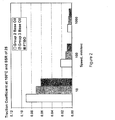
- the of the lubricating oil composition the reduction in the traction coefficient of the lubricating oil composition compared to Group II base oils at 100 °C, in a configuration with a 19.05 mm diameter steel ball on a flat steel disk, both made of AISI-SAE 52100 steel with Young's Modulus of 207 GPa and Poisson Ratio 0.293, at an applied load of 10 Newton creating an average contact pressure of 433 Mpa and a maximum contact pressure of 649 MPa, a slide to roll ratio of 25 and at a speed of 10 millimeters per second is in the range of about 17 percent to about 47 percent, at a speed of 100 millimeters per second it is in the range of about 44 percent to about 74 percent and at a speed of 1,000 millimeters per second is in the range of about 25 percent to about 55 percent.
- the of the lubricating oil composition the reduction in the traction coefficient of the lubricating oil composition compared to Group III base oils at 100°C, in a configuration with a 19.05 mm diameter steel ball on a flat steel disk, both made of AISI-SAE 52100 steel with Young's Modulus of 207 GPa and Poisson Ratio 0.293, at an applied load of 10 Newton creating an average contact pressure of 433 Mpa and a maximum contact pressure of 649 MPa, a slide to roll ratio of 25 and at a speed of 10 millimeters per second is in the range of about 3 percent to about 28 percent, at a speed of 100 millimeters per second it is in the range of about 9 percent to about 39 percent and at a speed of 1,000 millimeters per second is in the range of about 10 percent to about 40 percent.
- the oil of lubricating viscosity blend has a kinematic viscosity in the range from about 3 to about 12 centistokes at 100°C. More preferably the oil of lubricating viscosity blend has a kinematic viscosity in the range from about 4 to about 10 centistokes at 100°C.
- the oil of lubricating viscosity is a blend of (i) one or more low kinematic viscosity isomerized Fischer-Tropsch derived base oil having a kinematic viscosity ranging from about 2 to about 9 centistokes at 100°C and (ii) one or more high kinematic viscosity isomerized Fischer-Tropsch derived base oil having a kinematic viscosity ranging from about 5 to about 16 centistokes at 100°C.
- the oil of lubricating viscosity is a blend of (i) the low kinematic viscosity isomerized Fischer-Tropsch derived base oil having a kinematic viscosity ranging from about 3 to about 8 centistokes at 100°C and (ii) the high kinematic viscosity isomerized Fischer-Tropsch derived base oil having a kinematic viscosity ranging from about 6 to about 15 centistokes at 100°C.
- the oil of lubricating viscosity is a blend of (i) the low kinematic viscosity isomerized Fischer-Tropsch derived base oil having a kinematic viscosity of about 4 centistokes at 100°C and (ii) the high kinematic viscosity isomerized Fischer-Tropsch derived base oil having a kinematic viscosity of about 14 centistokes at 100°C.
- oil of lubricating viscosity blend has isomerized Fischer-Tropsch derived base oils having greater than 95 weight percent saturates. Also preferred is that the oil of lubricating viscosity blend has isomerized Fischer-Tropsch derived base oils having less than 0.3 weight percent aromatics.
- the (i) in the blend is an isomerized Fischer-Tropsch derived base oil having a ratio of paraffinic carbons to naphthenic carbons in the range of 99.0 weight percent to 1.0 to about 99.4 weight percent to about 0.6 weight percent and (ii) in the blend is an isomerized Fischer-Tropsch derived base oil having a ratio of paraffinic carbons to naphthenic carbons in the range of 97.0 weight percent to 3.0 to about 95.0 weight percent to about 5.0 weight percent.
- the lubricating oil composition (b) is a low, medium or high overbased metal sulfonate, metal phenate, metal salicylate, or any combination thereof; (c) is a post-treated dispersant, a non-post-treated dispersant, or any combination thereof; (d) is a metal di-thio di-phosphate, a metal tri-borate, or any combination thereof; and (e) is a sulfurized molybdenum anti-oxidant, di-phenyl amine, a phenolic anti-oxidant, or any combination thereof.
- the lubricating oil composition (b) is a mixture of a low overbased alkylaromatic sulfonate, a medium overbased alkylaromatic salicylate and a high overbased alkylphenate; (c) is a mixture of a borated bissuccinimide and an ethylene carbonated bissuccinimide; (d) is a mixture of a zinc di-thiophosphate and a potassium tri-borate; and (e) a mixture of a molybdenum-succinimide complex, an octylbutyl diphenyl amine and a phenolic anti-oxidant.
- the present invention is also directed to a method for reducing the traction coefficient in internal combustion engines comprising lubricating the internal combustion engines with a lubricating oil composition comprising:
- the traction coefficient reducing lubricating oil composition for reducing traction coefficient in internal combustion engines further comprises one or more conventional base oils.
- the conventional base oil in the lubricating oil composition is a maximum of 30 weight percent based on the total weight percent of the lubricating oil composition. More preferably the conventional base oil in the lubricating oil composition is a maximum of 10 weight percent based on the total weight percent of the lubricating oil composition.
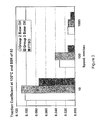
- the reduction in the traction coefficient of the lubricating oil composition compared to Group II base oils at 100°C in a configuration with a 19.05 mm diameter steel ball on a flat steel disk, both made of AISI-SAE 52100 steel with Young's Modulus of 207 GPa and Poisson Ratio 0.293, at an applied load of 10 Newton creating an average contact pressure of 433 Mpa and a maximum contact pressure of 649 MPa, a slide to roll ratio of 75 and at a speed of 10 millimeters per second is in the range of about 9 percent to about 39 percent, at a speed of 100 millimeters per second it is in the range of about 41 percent to about 71 percent and at a speed of 1,000 millimeters per second is in the range of about 22 percent to about 52 percent.
- the of the lubricating oil composition the reduction in the traction coefficient of the lubricating oil composition compared to Group III base oils at 100 °C, in a configuration with a 19.05 mm diameter steel ball on a flat steel disk, both made of AISI-SAE 52100 steel with Young's Modulus of 207 GPa and Poisson Ratio 0.293, at an applied load of 10 Newton creating an average contact pressure of 433 Mpa and a maximum contact pressure of 649 MPa, a slide to roll ratio of 25 and at a speed of 10 millimeters per second is in the range of about 3 percent to about 28 percent, at a speed of 100 millimeters per second it is in the range of about 9 percent to about 39 percent and at a speed of 1,000 millimeters per second is in the range of about 10 percent to about 40 percent.
- the oil of lubricating viscosity blend has a kinematic viscosity in the range from about 3 to about 12 centistokes at 100°C. More preferably the oil of lubricating viscosity blend has a kinematic viscosity in the range from about 4 to about 10 centistokes at 100°C.
- the oil of lubricating viscosity is a blend of (i) one or more low kinematic viscosity isomerized Fischer-Tropsch derived base oil having a kinematic viscosity ranging from about 2 to about 9 centistokes at 100°C and (ii) one or more high kinematic viscosity isomerized Fischer-Tropsch derived base oil having a kinematic viscosity ranging from about 5 to about 16 centistokes at 100°C.
- the oil of lubricating viscosity is a blend of (i) the low kinematic viscosity isomerized Fischer-Tropsch derived base oil having a kinematic viscosity ranging from about 3 to about 8 centistokes at 100°C and (ii) the high kinematic viscosity isomerized Fischer-Tropsch derived base oil having a kinematic viscosity ranging from about 6 to about 15 centistokes at 100°C.
- the oil of lubricating viscosity is a blend of (i) the low kinematic viscosity isomerized Fischer-Tropsch derived base oil having a kinematic viscosity of about 4 centistokes at 100°C and (ii) the high kinematic viscosity isomerized Fischer-Tropsch derived base oil having a kinematic viscosity of about 14 centistokes at 100°C.
- the oil of lubricating viscosity blend has isomerized Fischer-Tropsch derived base oils having greater than 95 weight percent saturates. It is also preferred that the oil of lubricating viscosity blend in the above method have isomerized Fischer-Tropsch derived base oils having less than 0.3 weight percent aromatics.
- the oil of lubricating viscosity is a blend of (i) an isomerized Fischer-Tropsch derived base oil having a ratio of paraffinic carbons to naphthenic carbons in the range of 99.0 weight percent to 1.0 to about 99.4 weight percent to about 0.6 weight percent and (ii) an isomerized Fischer-Tropsch derived base oil having a ratio of paraffinic carbons to naphthenic carbons in the range of 97.0 weight percent to 3.0 to about 95.0 weight percent to about 5.0 weight percent.
- (b) is a low, medium or high overbased metal sulfonate, metal phenate, metal salicylate, or any combination thereof;
- (c) is a treated post-treated dispersant, a non-post-treated dispersant, or any combination thereof;
- (d) is a metal di-thio di-phosphate or a metal tri-borate, or any combination thereof;
- (e) is a sulfurized molybdenum anti-oxidant, di-phenyl amine or a phenolic anti-oxidant, or any combination thereof.
- (b) in the above embodiment is a mixture of a low overbased alkylaromatic sulfonate, a medium overbased alkylaromatic salicylate and a high overbased alkylphenate; (c) is a mixture of a borated bissuccinimide and a ethylene carbonated bissuccinimide; (d) is a mixture of a zinc di-thiophosphate and a potassium tri-borate; and (e) a mixture of a molybdenum-succinimide complex, an octylbutyl diphenyl amine and phenolic anti-oxidant.
- the present invention is also directed to a traction coefficient reducing lubricating oil concentrate for internal combustion engines comprising:
- the oil of lubricating viscosity has a kinematic viscosity in the range from about 3 to about 12 centistokes at 100°C. More preferably the oil of lubricating viscosity has a kinematic viscosity in the range from about 4 to about 10 centistokes at 100°C.
- the Fischer-Tropsch derived base oil is a blend of (i) one or more low kinematic viscosity isomerized Fischer-Tropsch derived base oil having a kinematic viscosity ranging from about 2 to about 9 centistokes at 100°C and (ii) one or more high kinematic viscosity isomerized Fischer-Tropsch derived base oil having a kinematic viscosity ranging from about 5 to about 16 centistokes at 100°C.
- the Fischer-Tropsch derived base oil is a blend of (i) the low kinematic viscosity isomerized Fischer-Tropsch derived base oil having a kinematic viscosity ranging from about 3 to about 8 centistokes at 100°C and (ii) the high kinematic viscosity isomerized Fischer-Tropsch derived base oil having a kinematic viscosity ranging from about 6 to about 15 centistokes at 100°C.
- the Fischer-Tropsch derived base oil is a blend of (i) the low kinematic viscosity isomerized Fischer-Tropsch derived base oil having a kinematic viscosity of about 4 centistokes at 100°C and (ii) the high kinematic viscosity isomerized Fischer-Tropsch derived base oil having a kinematic viscosity of about 14 centistokes at 100°C.
- the isomerized Fischer-Tropsch derived base oils having greater than 95 weight percent saturates.
- the isomerized Fischer-Tropsch derived base oils have less than 0.3 weight percent aromatics.
- the isomerized Fischer-Tropsch derived base oil is a blend of (i) an isomerized Fischer-Tropsch derived base oil having a ratio of paraffinic carbons to naphthenic carbons in the range of 99.0 weight percent to 1.0 to about 99.4 weight percent to about 0.6 weight percent and (ii) an isomerized Fischer-Tropsch derived base oil having a ratio of paraffinic carbons to naphthenic carbons in the range of 97.0 weight percent to 3.0 to about 95.0 weight percent to about 5.0 weight percent.
- the Fischer-Tropsch derived base oil is a blend of (i) one or more low kinematic viscosity isomerized Fischer-Tropsch derived base oil having a kinematic viscosity ranging from about 2 to about 9 centistokes at 100°C and (ii) one or more high kinematic viscosity isomerized Fischer-Tropsch derived base oil having a kinematic viscosity ranging from about 5 to about 16 centistokes at 100°C.
- the Fischer-Tropsch derived base oil is a blend of (i) the low kinematic viscosity isomerized Fischer-Tropsch derived base oil having a kinematic viscosity ranging from about 3 to about 8 centistokes at 100°C and (ii) the high kinematic viscosity isomerized Fischer-Tropsch derived base oil having a kinematic viscosity ranging from about 6 to about 15 centistokes at 100°C.
- the Fischer-Tropsch derived base oil is a blend of (i) the low kinematic viscosity isomerized Fischer-Tropsch derived base oil having a kinematic viscosity of about 4 centistokes at 100°C and (ii) the high kinematic viscosity isomerized Fischer-Tropsch derived base oil having a kinematic viscosity of about 14 centistokes at 100°C.
- the isomerized Fischer-Tropsch derived base oils having greater than 95 weight percent saturates.
- the isomerized Fischer-Tropsch derived base oils have less than 0.3 weight percent aromatics.
- the isomerized Fischer-Tropsch derived base oil is a blend of (i) an isomerized Fischer-Tropsch derived base oil having a ratio of paraffinic carbons to naphthenic carbons in the range of 99.0 weight percent to 1.0 to about 99.4 weight percent to about 0.6 weight percent and (ii) an isomerized Fischer-Tropsch derived base oil having a ratio of paraffinic carbons to naphthenic carbons in the range of 97.0 weight percent to 3.0 to about 95.0 weight percent to about 5.0 weight percent .
- Friction modifiers that are not employable in the lubricating oil composition of the present invention are, generally compounds that have C 10 -C 20 hydrocarbyl chains with a polar head. These include ash-containing as well as ashless friction modifiers. Friction modifiers that are excluded from the lubricating oil composition, include, but are not limited to, fatty alcohols, fatty acids, such as stearic acid, isostearic acid, oleic acid and other fatty acids or salts and esters thereof, borated esters, amines, phosphates, and di-, and tri-hydrocarbyl phosphates, hydrocarbyl phosphites and phosphonates. Friction modifiers may also contain molybdenum. Also excluded are organic polymer friction modifiers, for example methacrylates.
- the lubricating oil compositions described above may also contain viscosity index improvers such as olefin copolymers, examples of which are ethylene-propylene copolymers, styrene-isoprene copolymers, hydrated styrene-isoprene copolymers, polybutene, polyisobutylene and vinylpyrrolidone and dispersant type viscosity index improvers.
- viscosity index improvers such as olefin copolymers, examples of which are ethylene-propylene copolymers, styrene-isoprene copolymers, hydrated styrene-isoprene copolymers, polybutene, polyisobutylene and vinylpyrrolidone and dispersant type viscosity index improvers.
- Pour point depressants that lower the temperature at which the fluid will flow or can be poured may also be included in the lubricating oil composition of the present invention.
- Additives that optimize the low temperature fluidity of the lubricating oil are various copolymers. Preferred are pour point depressants that do not have friction modifying properties.
- Rust inhibitors include nonionic polyoxyethylene surface active agents, such as polyoxyethylene lauryl ether, polyoxyethylene higher alcohol ether, polyoxyethylene nonyl phenyl ether, polyoxyethylene octyl phenyl ether, polyoxyethylene octyl stearyl ether, polyoxyethylene oleyl ether, polyoxyethylene sorbitol monostearate, polyoxyethylene sorbitol mono-oleate, and polyethylene glycol mono-oleate.
- nonionic polyoxyethylene surface active agents such as polyoxyethylene lauryl ether, polyoxyethylene higher alcohol ether, polyoxyethylene nonyl phenyl ether, polyoxyethylene octyl phenyl ether, polyoxyethylene octyl stearyl ether, polyoxyethylene oleyl ether, polyoxyethylene sorbitol monostearate, polyoxyethylene sorbitol mono-oleate, and polyethylene glycol mono-oleate.
- rust inhibitors include stearic acid and other fatty acids, di-carboxylic acids, metal soaps, fatty acid amine salts, metal salts of heavy sulfonic acid, partial carboxylic acid ester of polyhydric alcohol, and phosphoric ester.
- the more preferred rust inhibitors are those that do not contribute to the phosphorus or sulfur content of the lubricating oil.
- Some of the above listed rust inhibitors may have friction modifying properties. However, these could be added in quantities sufficient for rust inhibition, but not high enough to provide their friction modifying property.
- Extreme pressure agents that may be used in the lubricating oil composition of the present invention include alkaline earth metal borated extreme pressure agents and alkali metal borated extreme pressure agents. Extreme pressure agents containing molybdenum may also be employed in the lubricating oil composition of the present invention.
- Preferred corrosion inhibitors that may be employed in the lubricating oil of the present invention are derivatives of di-phenyl amines, derivatives of succinimides, sulfurized olefins and the co-sulfurized alkenyl esters/alpha olefin corrosion inhibitors.
- the corrosion inhibitors also include metal di-thiophosphates, especially zinc di-alkyl di-thiophosphate. More preferred corrosion inhibitors are the derivatives of succinimides. Most preferred are terephthalic acid succinimide complexes.
- Metal deactivators that are employable in the lubricating oil of the present invention include di-salicylidene propylenediamine, triazole derivatives, mercaptobenzothiazoles, thiodiazole derivatives, and mercaptobenzimidazoles.
- Useful foam inhibitors for the present invention are silicon-based.
- base oil refers to base oil or lubricating oil which may be mineral oil or synthetic oils of lubricating viscosity derived from natural or synthetic sources.
- Mineral oil for use as the base oil in this invention includes paraffinic, naphthenic and other oils that are ordinarily used in lubricating oil compositions.
- Synthetic oils include hydrocarbon synthetic oils and synthetic esters.
- Useful synthetic hydrocarbon oils include liquid polymers of alpha-olefins having the proper viscosity.
- Base oils include those that are preferably useful in the crankcase of an internal combustion engine.
- Crankcase lubricating oils ordinarily have a viscosity of about 1300 centistokes at -17.8°C to 22.7 centistokes at 98.9°C.
- base oils in Groups I-V Preferred are base oils in Groups I-V.
- PAO synthetic lubricants Group V All other base oils not included in Group I, II, III, IV
- friction modifier content in the lubricating oil composition is less than 0.2 weight percent based on the total weight of the lubricating oil composition. More preferably the friction modifier content in the lubricating oil composition is less than 0.1 weight percent based on the total weight of the lubricating oil composition. Even more preferably the friction modifier content in the lubricating oil composition is less than 0.05 weight percent based on the total weight of the lubricating oil composition. Most preferably the friction modifier content in the lubricating oil composition is 0.0 weight percent based on the total weight of the lubricating oil composition.
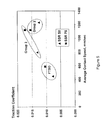
- traction coefficient refers to the force that needs to be applied to overcome the resistance between two contacting surfaces in relation to surface pressure in that contact.
- the traction coefficient measurement was conducted at 100°C, in a configuration with a 19.05 mm diameter steel ball on a flat steel disk, both made of AISI-SAE 52100 steel with Young's Modulus of 207 GPa and Poisson Ratio 0.293, at an applied load of 10 Newton creating an average contact pressure of 433 Mpa and a maximum contact pressure of 649 MPa, slide to roll ratios of 25, 50 and 75 at a speeds of 10, 100 and 1,000 millimeters per second.
- low, medium and high overbased refers to alkali metal and alkaline earth metal content of the detergents.
- Low overbased refers to alkali metal or alkaline earth metal detergents having a Total Base Number (TBN) greater than 1 and less than 20
- medium overbased refers to alkali metal or alkaline earth metal detergents having a TBN greater than 20 and less than 200
- High overbased refers to alkali metal or alkaline earth metal detergents having a TBN greater than 200.
- SRR segment to roll ratio
- Table I Speed (millimeters per second) SSR 25 10 100 1,000 Group II Base Oil 17 to 47 44 to 74 25 to 55 Group III Base Oil 3 to 28 9 to 39 10 to 40 SSR 50 Group II Base Oil 13 to 43 41 to 71 25 to 55 Group III Base Oil 17 to 47 51 to 81 22 to 52 SSR 75 Group II Base Oil 9 to 39 41 to 71 22 to 52 Group III Base Oil 9 to 39 44 to 74 14 to 44
- the lubricating oil composition of the present invention may be prepared by simple blending or mixing of the compounds described in more detail below. These compounds may also be preblended as a concentrate or package with various other additives in appropriate ratios to facilitate blending of a lubricating oil composition containing the desired concentration of additives.
- Oil of lubricating viscosity, or base oil as used herein refer to lubricating oils which may be mineral oil or synthetic oils of lubricating viscosity and preferably useful in the crankcase of an internal combustion engine.
- Crankcase lubricating oils ordinarily have a viscosity of about 1300 centistokes at -17.8°C to 22.7 centistokes at 98.9°C.
- the lubricating oils may be derived from synthetic or natural sources.
- Mineral oil for use as the base oil in this invention includes paraffinic, naphthenic and other oils that are ordinarily used in lubricating oil compositions. Most preferred are Fischer-Tropsch derived base oils. These are prepared as described below.
- syngas is converted to liquid hydrocarbons by contact with a Fischer Tropsch catalyst under reactive conditions.
- methane and optionally heavier hydrocarbons ethane and heavier
- synthesis gas contains hydrogen and carbon monoxide, and may include minor amounts of carbon dioxide and/or water.
- sulfur, nitrogen, halogen, selenium, phosphorus and arsenic contaminants in the syngas is undesirable. For this reason and depending on the quality of the syngas, it is preferred to remove sulfur and other contaminants from the feed before performing the Fischer-Tropsch chemistry. Means for removing these contaminants are well known to those of skill in the art.
- the fractions of the Fischer-Tropsch synthesis process may range from C 1 to C 200+ with a majority in the C 5 to C 100+ range.
- the reaction can be conducted in a variety of reactor types, such as fixed bed reactors containing one or more catalyst beds, slurry reactors, fluidized bed reactors, or a combination of different type reactors. Such reaction processes and reactors are well known and documented in the literature.
- the slurry Fischer-Tropsch process which is preferred in the practice of the invention, utilizes superior heat (and mass) transfer characteristics for the strongly exothermic synthesis reaction and is able to produce relatively high molecular weight, paraffinic hydrocarbons when using a cobalt catalyst.
- a particularly preferred Fischer-Tropsch process is taught in European Patent Application No. 9400600.7 (Publication No. EP 060 9079 B1 ).
- Fischer Tropsch catalysts contain a Group VIII transition metal on a metal oxide support.
- the catalysts may also contain a noble metal promoter(s) and/or crystalline molecular sieves.
- Suitable Fischer-Tropsch catalysts comprise one or more of Fe, Ni, Co, Ru and Re, with cobalt being preferred.
- a preferred Fischer-Tropsch catalyst comprises effective amounts of cobalt and one or more of Re, Ru, Pt, Fe, Ni, Th, Zr, Hf, U, Mg and La on a suitable inorganic support material, preferably one which comprises one or more refractory metal oxides.
- Useful catalysts and their preparation are known and illustrated in U.S. Patent No. 4,568,663 , which is intended to be illustrative but not limiting the selection of the catalyst.
- a particularly preferred Fischer-Tropsch process is taught in European Patent Application No. 9400600.7 (Publication No. EP 060 9079 B1 ).
- Examples of processes producing waxes of higher carbon number distribution are taught in PCT International Application PCT/98 EP/08545 (Publication No. WO9934917 A1 ).
- the fractions from Fischer-Tropsch reactions generally include a light reaction fraction and a waxy reaction fraction, which typically contain predominantly paraffins. It is the waxy reaction fraction (i.e., the wax fraction) that is used as a feedstock to the process for providing the Fischer-Tropsch derived lubricating base oil used in the blended lubricants and blended finished lubricants of the present invention.
- the isomerized Fischer-Tropsch distillate fractions with low traction coefficients are prepared from the waxy fractions of the Fischer-Tropsch syncrude by a process including hydroisomerization.
- the Fischer-Tropsch lubricant base oils are made by a process as described in U. S. Patent No. 7,083,713 , and U. S. Patent Application No. 10/744,870 , filed December 23, 2003, and herein incorporated by reference in their entirety.
- Hydroisomerization is intended to improve the cold flow properties of the lubricating base oil by the selective addition of branching into the molecular structure. Hydroisomerization ideally will achieve high conversion levels of the Fischer-Tropsch wax to non-waxy iso-paraffins while at the same time minimizing the conversion by cracking.
- Hydroisomerization catalysts useful in the present invention comprise a shape selective intermediate pore size molecular sieve and optionally a catalytically active metal hydrogenation component on a refractory oxide support.
- Preferred shape selective intermediate pore size molecular sieves used for hydroisomerization are based upon aluminum phosphates, with SAPO-11 being preferred.
- SM-3 is a particularly preferred shape selective intermediate pore size SAPO, which has a crystalline structure falling within that of the SAPO-11 molecular sieves. The preparation of SM-3 and its unique characteristics are described in U.S. Patent Nos. 4,943,424 and 5,158,665 .
- Other shape selective intermediate pore size molecular sieves used for hydroisomerization are zeolites, and SSZ-32 and ZSM-23 are preferred.
- Hydroisomerization catalysts useful in the present invention comprise a catalytically active hydrogenation metal.
- a catalytically active hydrogenation metal leads to fraction improvement, especially VI and stability.
- Typical catalytically active hydrogenation metals include chromium, molybdenum, nickel, vanadium, cobalt, tungsten, zinc, platinum, and palladium.
- the metals platinum and palladium are especially preferred, with platinum most especially preferred.
- the refractory oxide support may be selected from those oxide supports, which are conventionally used for catalysts, including silica, alumina, silica-alumina, magnesia, titania and combinations thereof.
- Hydrogen is present in the reaction zone during the hydroisomerization process. Hydrogen may be separated from the fraction and recycled to the reaction zone.
- Waxy feed to the hydroisomerization process may be hydrotreated prior to hydroisomerization dewaxing.
- Hydrotreating refers to a catalytic process, usually carried out in the presence of free hydrogen, in which the primary purpose is the removal of various metal contaminants, such as arsenic, aluminum, and cobalt; heteroatoms, such as sulfur and nitrogen; oxygenates; or aromatics from the feed stock.
- Catalysts used in carrying out hydrotreating operations are well known in the art, for example, U.S. Patent Nos. 4,347,121 and 4,810,357 , the contents of which are hereby incorporated by reference in their entirety.
- Other suitable catalysts are described, for example, in U.S. Patent Nos. 4,157,294 and 3,904,513 .
- the non-noble hydrogenation metals, such as nickel-molybdenum, are usually present in the final catalyst composition as oxides.
- Typical hydrotreating conditions vary over a wide range.
- Hydrofinishing is a hydrotreating process that may be used as a step following hydroisomerization to provide the Fischer-Tropsch lubricating base oil. Hydrofinishing is intended to improve oxidation stability, UV stability, and appearance of the Fischer-Tropsch lubricating base oil fraction by removing traces of aromatics, olefins, color bodies, and solvents. A general description of hydrofinishing may be found in U.S. Patent Nos. 3,852,207 and 4,673,487 .
- the conditions for hydrofinishing will be tailored to achieve an isomerized Fischer-Tropsch derived distillate fraction comprising weight percent aromatics less than 0.30.
- Suitable hydrofinishing catalysts include noble metals from Group VIIIA, such as platinum or palladium on an alumina or siliceous matrix, and unsulfided Group VIIIA and Group VIB, such as nickel-molybdenum or nickel-tin on an alumina or silica matrix.
- noble metals from Group VIIIA such as platinum or palladium on an alumina or siliceous matrix
- unsulfided Group VIIIA and Group VIB such as nickel-molybdenum or nickel-tin on an alumina or silica matrix.
- U.S. Patent No. 3,852,207 describes a suitable noble metal catalyst and mild conditions.
- Other suitable catalysts are described in U.S. Patent Nos. 4,157,294 and 3,904,513 .
- Clay treating to remove impurities is an alternative final process step to provide an isomerized Fischer-Tropsch derived distillate fraction having a low traction coefficient.
- Fischer-Tropsch derived fractions and petroleum derived fractions into various fractions having characteristic boiling ranges is generally accomplished by either atmospheric or vacuum distillation or by a combination of atmospheric and vacuum distillation. Fractionating the lubricating base oil into different boiling range cuts enables the lubricating base oil manufacturing plant to produce more than one grade, or viscosity, of lubricating base oil.
- the isomerized Fischer-Tropsch derived distillate fractions of this invention make excellent lubricating base oils.
- the isomerized Fischer-Tropsch derived distillate fractions used in carrying out the invention are characterized by having a low traction coefficient, a weight percent aromatics less than 0.30 and extremely low levels of unsaturates.
- the process to make an isomerized Fischer-Tropsch derived distillate fraction having a low traction coefficient may also include a solvent dewaxing step following the hydroisomerization process.
- Solvent dewaxing optionally may be used to remove small amounts of remaining waxy molecules from the lubricating base oil after hydroisomerization dewaxing.
- Solvent dewaxing is done by dissolving the lubricating base oil in a solvent, such as methyl ethyl ketone, methyl iso-butyl ketone, or toluene, and precipitating the wax molecules.
- Solvent dewaxing is described in U.S. Patent Nos. 4,477,333 , 3,773,650 and 3,775,288 and 7,018,525 .
- hydrocarbon synthetic oils include hydrocarbon synthetic oils and synthetic esters.
- Useful synthetic hydrocarbon oils include liquid polymers of alpha-olefins having the proper viscosity. Especially useful are the hydrogenated liquid oligomers of C 6 to C 12 alpha-olefins such as 1-decene trimer. Similarly, alkyl benzenes of proper viscosity, such as didodecyl benzene, may be used.
- Useful synthetic esters include the esters of mono-carboxylic acids and polycarboxylic acids as well as mono-hydroxy alkanols and polyols.
- Typical examples are didodecyl adipate, pentaerthritol tetracapoate, di-2-ethylhexyl adipate, di-laurylsebacate and the like.
- Complex esters prepared from mixtures of mono- and di-carboxylic acid and mono- and di-hydroxy alkanols can also be used.
- Blends of hydrocarbon oils and synthetic oils may also be used. For example, blends of 10 weight percent to 25 weight percent hydrogenated 1-decene trimer with 75 weight percent to 90 weight percent 683 centistokes at 37.8°C mineral oil gives an excellent oil base
- API base oil categories Group I-V Preferred are base oils in Groups II-V.
- API Base Oil Categories Base Oil Category Sulfur (%) Saturates (%) Viscosity Index Group I >0.03 and/or ⁇ 90 80 to 120 Group II ⁇ 0.03 and >90 80 to 120 Group III ⁇ 0.03 and >90 >120 Group IV
- PAO synthetic lubricants Group V All other base oils not included in Group I, II, III, IV
- the lubricating oil composition of the present invention contains dispersants.
- the ashless dispersants are nitrogen-containing dispersants formed by reacting alkenyl succinic acid anhydride with an amine.
- examples of such dispersants are alkenyl succinimides and succinamides.
- These dispersants can be further modified by reaction with, for example, boron or ethylene carbonate.
- Ester-based ashless dispersants derived from long chain hydrocarbon-substituted carboxylic acids and hydroxy compounds may also be employed.
- Preferred ashless dispersants are those derived from polyisobutenyl succinic anhydride. A large number of dispersants are commercially available.
- Traditional wear inhibitors may be employed in the lubricating oil compositions of this invention. As their name implies, these agents reduce wear of moving metallic parts.
- anti-wear agents include, but are not limited to phosphates, phosphites, carbamates, esters, sulfur containing compounds, and molybdenum complexes.
- the lubricating oil compositions of this invention may comprise one or more anti-wear agents, such as metal di-thio di-phosphates and metal di-thiocarbamates or mixtures thereof.
- a preferred anti-wear agent for use in this invention comprises zinc di-thio di-phosphate.
- Anti-oxidants are used in lubricating oils for inhibition of decomposition processes that occur naturally in lubricating oils as they age or oxidize in the presence of air. These oxidation processes may cause formation of gums, lacquers and sludge resulting in an increase in acidity and viscosity.
- antioxidants such as 4,4'-methylene-bis(2,6-di-tert-butylphenol), 4,4'-bis(2,6-di-tertbutylphenol), 4,4'-bis(2-methyl-6-tert-butylphenol), 2,2'-methylene-bis(4-methyl-6-tert-butylphenol), 4,4'-butylidene-bis(3-methyl-6-tert-butylphenol), 4,4'-isopropylidene-bis(2,6-di-tert-butylphenol), 2,2'-methylene-bis(4-methyl-6-nonylphenol), 2,2'-isobutylidene-bis(4,6-dimethylphenol), 2,2'-5-methylene-bis(4-methyl-6-cyclohexylphenol), 2,6-di-tert-butyl-4-methylphenol, 2,6-di-tert-butyl-4-ethy
- alkylated and non-alkylated aromatic amines are alkylated diphenylamine, phenyl-alpha-naphthylamine, and alkylated-alpha-naphthylamine.
- Other classes of anti-oxidants are esters of thiodicarboxylic acids, salts of dithiophosphoric acids, alkyl or aryl phosphates and molybdenum compounds, such as amine-molybdenum complex compound and molybdenum di-thiocarbamates may also be used as anti-oxidants, provided the molybdenum compounds do not include tri-nuclear molybdenum. However, their addition of the will contribute to the phosphorus, sulfur and sulfated ash content of the lubricating oil.
- Examples of the low and medium overbased metal detergents employed in the lubricating oil composition of the present invention are low, medium or high overbased sulfonates, salicylates, phenates or Mannich condensation products of alkylphenols, aldehydes and amines.
- These detergents may be alkali metal detergents or alkaline earth metal detergents. Preferably they are alkaline earth metal detergents and more preferably they are calcium detergents.
- the TBN of these detergents is greater than 1 and about 500, or more. These detergents are well known in the art and are commercially available.
- the lubricating oil composition of the present invention may also contain, in addition to the additives discussed above, other additives used to impart desirable properties to the lubricating oil composition of the present invention.
- the lubricating oil may contain one or more of additives, such as viscosity index improvers, pour point depressants, demulsifiers, extreme pressure agents and foam inhibitors. These additional additives are described in more detail below.
- Viscosity index improvers are added to lubricating oil to regulate viscosity changes due to the change in temperature.
- Some commercially available examples of viscosity index improvers are olefin copolymers, such as ethylene-propylene copolymers, styrene-isoprene copolymers, hydrated styrene-isoprene copolymers, polybutene, polyisobutylene, polymethacrylates, vinylpyrrolidone and methacrylate copolymers and dispersant type viscosity index improvers.
- Extreme pressure agents that may be used in the lubricating oil composition of the present invention include alkaline earth metal borated extreme pressure agents and alkali metal borated extreme pressure agents. Extreme pressure agents containing molybdenum may also be employed in the lubricating oil composition of the present invention, provided the molybdenum compounds do not include tri-nuclear molybdenum.
- Sulfurized olefins zinc dialky-1-dithiophosphate (primary alkyl, secondary alkyl, and aryl type), di-phenyl sulfide, methyl tri-chlorostearate, chlorinated naphthalene, fluoroalkylpolysiloxane, lead naphthenate, neutralized or partially neutralized phosphates, di-thiophosphates, and sulfur-free phosphates.
- the preferred extreme pressure agents are those that will not contribute to the phosphorus content of the lubricating oil.
- Pour point depressants are additives that optimize the low temperature fluidity of the lubricating oil. Examples are various copolymers.
- Rust inhibitors include nonionic polyoxyethylene surface active agents, such as polyoxyethylene lauryl ether, polyoxyethylene higher alcohol ether, polyoxyethylene nonyl phenyl ether, polyoxyethylene octyl phenyl ether, polyoxyethylene octyl stearyl ether, polyoxyethylene oleyl ether, polyoxyethylene sorbitol monostearate, polyoxyethylene sorbitol mono-oleate, and polyethylene glycol mono-oleate.
- nonionic polyoxyethylene surface active agents such as polyoxyethylene lauryl ether, polyoxyethylene higher alcohol ether, polyoxyethylene nonyl phenyl ether, polyoxyethylene octyl phenyl ether, polyoxyethylene octyl stearyl ether, polyoxyethylene oleyl ether, polyoxyethylene sorbitol monostearate, polyoxyethylene sorbitol mono-oleate, and polyethylene glycol mono-oleate.
- rust inhibitors include stearic acid and other fatty acids, di-carboxylic acids, metal soaps, fatty acid amine salts, metal salts of heavy sulfonic acid, partial carboxylic acid ester of polyhydric alcohol, and phosphoric ester.
- preferred rust inhibitors are those that do not contribute to the phosphorus or sulfur content of the lubricating oil.
- Some of the above listed rust inhibitors may have friction modifying properties. However, these could be added in quantities sufficient for rust inhibition, but not high enough to provide their friction modifying property.
- Corrosion inhibitors are included in lubricating oils to protect vulnerable metal surfaces. Such corrosion inhibitors are generally used in very small amounts in the range of from about 0.02 weight percent to about 1.0 weight percent. Examples of corrosion inhibitors that may be used are sulfurized olefin corrosion inhibitor and the co-sulfurized alkenyl ester/alpha olefin corrosion inhibitor.
- Metal deactivators that may be employed in the lubricating oil composition of the present invention include but are not limited to di-salicylidene propylenediamine, triazole derivatives, mercaptobenzothiazoles, thiodiazole derivatives, and mercaptobenzimidazoles.
- Addition product of alkylphenol and ethylene oxide, polyoxyethylene alkyl ether, and polyoxyethylene sorbitan ester may be employed in the lubricating oil composition of the present invention.
- Useful foam inhibitors for the present invention are alkyl methacrylate polymers, dimethyl silicone polymers and polysiloxane type foam inhibitors.
- the lubricating oil may contain a compatible combination of additives of each of the above classes of additives in effective amounts.
- Comparative Formulations A and B and Test Formulation C were prepared as described in Table III below.
- Table III Component (wt %) Comparative Formulation A Comparative Formulation B Test Formulation C Base Oil Group II Group III Fischer-Tropsch Derived Base Oil Borated Succinimide Dispersant 3.0 3.0 3.0 Ethylene Carbonate Treated Succinimide Dispersant 5 5 5 Low Overbased Calcium Sulfonate Detergent 0.7 0.7 0.7 Medium Overbased Calcium Salicylate Detergent 2.4 2.4 2.4 High Overbased Sulfurized Calcium Phenate Detergent 0.9 0.9 0.9 Zinc Di-thiophosphate Anti-wear 1.6 1.6 1.6 Di-phenylamine Anti-oxidant 0.5 0.5 0.5 Phenolic Anti-oxidant 0.5 0.5 0.5 Molybdenum Succinimide Anti-oxidant 0.4 0.4 0.4 Foam Inhibitors 0.16 0.16 0.16 0.16
- Test Formulation C The ability to reduce the coefficient of traction of Test Formulation C was compared to Comparative Formulations A and B was evaluated as described below.
- Comparative Formulations A and B were compared with Test Formulation C in a series of Ball-on-Disk Rheometer experiments. As noted in Table II above, the three Formulations differ only in the selection of the base oils used to make the formulations. The rheometry experiments were designed to measure the traction coefficient under a variety of different conditions. The main variables were:
- the SRR number represents the speed difference as a percentage of the average speed of the two surfaces, where both the disk speed and the ball speed are controlled individually.
- both surfaces are moving in the same direction but not at the same speed, thus creating a mixture of a sliding and a rolling motion.
- the relative motion in the contact moves from rolling to sliding.
- the traction coefficient was measured as a function of the average contact speed, which was increased from just under 10 millimeters per second to well over 1000 millimeters per second.
- the first curve, X in Figure 1 represents the reduction in friction between two surfaces that are in contact with increasing contact speed and the consequent build-up of an oil film.
- the second curve, Y in Figure 1 represents the increase in the traction coefficient due to frictional loss in the lubricant film itself when the film thickness increases with increasing contact speed.
- a comparison of measured points on the Stribeck curves in Figure 1 shows differences between Comparative Formulations A and B and Test Formulation C.
- Figures 2 , 3 , and 4 show the traction coefficients measured at 100°C, in a configuration with a 19.05 mm diameter steel ball on a flat steel disk, both made of AISI-SAE 52100 steel with Young's Modulus of 207 GPa and Poisson Ratio 0.293, at an applied load of 10 Newton creating an average contact pressure of 433 Mpa and a maximum contact pressure of 649 MPa, for three different contact speeds and SRR of respectively 25, 50, and 75. While the traction coefficients for Comparative Formulation A containing Group II base oil and Comparative Formulation B containing Group III base oil are similar, the traction coefficients for Test Formulation C containing Fischer-Tropsch derived base oil are consistently lower, regardless of the contact speed.
- Figure 5 shows the traction coefficient as a function of average contact speed for the point where the traction coefficient reaches its minimum.
- Data points are shown for Comparative Formulations A and B and Test Formulation C containing Group II, Group III and Fischer-Tropsch derived base oil, respectively, for SRR 50 and 75.
- the graph clearly shows that the use of Fischer-Tropsch derived base oil in Test formulation C allows for both a reduction in the traction coefficient as well as a reduction of the speed where the contact transitions from hydrodynamic to boundary lubrication.
- the surprising result observed in the data will have a very practical application in the development of new low friction engine oils.
Landscapes
- Chemical & Material Sciences (AREA)
- Chemical Kinetics & Catalysis (AREA)
- General Chemical & Material Sciences (AREA)
- Oil, Petroleum & Natural Gas (AREA)
- Organic Chemistry (AREA)
- Lubricants (AREA)
Applications Claiming Priority (1)
| Application Number | Priority Date | Filing Date | Title |
|---|---|---|---|
| US11/565,443 US20080128322A1 (en) | 2006-11-30 | 2006-11-30 | Traction coefficient reducing lubricating oil composition |
Publications (1)
| Publication Number | Publication Date |
|---|---|
| EP1927647A1 true EP1927647A1 (de) | 2008-06-04 |
Family
ID=39190301
Family Applications (1)
| Application Number | Title | Priority Date | Filing Date |
|---|---|---|---|
| EP07254637A Withdrawn EP1927647A1 (de) | 2006-11-30 | 2007-11-29 | Schmierölzusammensetzung mit Traktionskoeffizientenreduktion |
Country Status (5)
| Country | Link |
|---|---|
| US (1) | US20080128322A1 (de) |
| EP (1) | EP1927647A1 (de) |
| JP (1) | JP2008138204A (de) |
| CA (1) | CA2605673A1 (de) |
| SG (1) | SG143198A1 (de) |
Cited By (2)
| Publication number | Priority date | Publication date | Assignee | Title |
|---|---|---|---|---|
| WO2011042552A1 (en) * | 2009-10-09 | 2011-04-14 | Shell Internationale Research Maatschappij B.V. | Lubricating composition |
| CN102504914A (zh) * | 2011-11-21 | 2012-06-20 | 华北电力大学 | 一种离子液稀土配合物添加剂的制备方法 |
Families Citing this family (11)
| Publication number | Priority date | Publication date | Assignee | Title |
|---|---|---|---|---|
| CN101796170B (zh) * | 2007-08-13 | 2014-07-02 | 国际壳牌研究有限公司 | 润滑基油共混物 |
| EP2181180B1 (de) * | 2007-08-31 | 2016-01-27 | Shell Internationale Research Maatschappij B.V. | Verwendung eines schmiermittels in einem verbrennungsmotor |
| US20100152074A1 (en) | 2008-12-17 | 2010-06-17 | Chevron Oronite Company Llc | Lubricating oil compositions |
| US20100152072A1 (en) | 2008-12-17 | 2010-06-17 | Chevron Oronite Company Llc | Lubricating oil compositions |
| JP5349088B2 (ja) * | 2009-03-09 | 2013-11-20 | コスモ石油ルブリカンツ株式会社 | ガスエンジン用エンジン油組成物 |
| EP2159275A3 (de) * | 2009-10-14 | 2010-04-28 | Shell Internationale Research Maatschappij B.V. | Schmiermittelzusammensetzung |
| WO2011094566A1 (en) * | 2010-02-01 | 2011-08-04 | Exxonmobil Research And Engineering Company | Method for improving the fuel efficiency of engine oil compositions for large low and medium speed gas engines by reducing the traction coefficient |
| EP2194114A3 (de) * | 2010-03-19 | 2010-10-27 | Shell Internationale Research Maatschappij B.V. | Composition de lubrification |
| US20120157359A1 (en) * | 2010-12-21 | 2012-06-21 | Chevron U.S.A. Inc. | Lubricating oil with improved wear properties |
| US20140221260A1 (en) * | 2012-12-21 | 2014-08-07 | Exxonmobil Research And Engineering Company | Method for improving engine fuel efficiency |
| CN108949293A (zh) * | 2017-12-08 | 2018-12-07 | 锦州新兴石油添加剂有限责任公司 | 一种sm级别汽油机油复合剂及应用 |
Citations (34)
| Publication number | Priority date | Publication date | Assignee | Title |
|---|---|---|---|---|
| US3773650A (en) | 1971-03-31 | 1973-11-20 | Exxon Co | Dewaxing process |
| US3775288A (en) | 1972-05-26 | 1973-11-27 | Exxon Research Engineering Co | Combination of dilution chilling with scraped surface chilling in dewaxing lubricating oils |
| US3852207A (en) | 1973-03-26 | 1974-12-03 | Chevron Res | Production of stable lubricating oils by sequential hydrocracking and hydrogenation |
| US3904513A (en) | 1974-03-19 | 1975-09-09 | Mobil Oil Corp | Hydrofinishing of petroleum |
| US4157294A (en) | 1976-11-02 | 1979-06-05 | Idemitsu Kosan Company Limited | Method of preparing base stocks for lubricating oil |
| US4347121A (en) | 1980-10-09 | 1982-08-31 | Chevron Research Company | Production of lubricating oils |
| US4477333A (en) | 1982-09-29 | 1984-10-16 | Exxon Research And Engineering Co. | Dewaxing by a combination centrifuge/catalytic process including solvent deoiling |
| US4568663A (en) | 1984-06-29 | 1986-02-04 | Exxon Research And Engineering Co. | Cobalt catalysts for the conversion of methanol to hydrocarbons and for Fischer-Tropsch synthesis |
| US4673487A (en) | 1984-11-13 | 1987-06-16 | Chevron Research Company | Hydrogenation of a hydrocrackate using a hydrofinishing catalyst comprising palladium |
| US4810357A (en) | 1984-05-03 | 1989-03-07 | Mobil Oil Corporation | Catalytic dewaxing of light and heavy oils in dual parallel reactors |
| US4943424A (en) | 1988-02-12 | 1990-07-24 | Chevron Research Company | Synthesis of a crystalline silicoaluminophosphate |
| US5135638A (en) | 1989-02-17 | 1992-08-04 | Chevron Research And Technology Company | Wax isomerization using catalyst of specific pore geometry |
| US5158665A (en) | 1988-02-12 | 1992-10-27 | Chevron Research And Technology Company | Synthesis of a crystalline silicoaluminophosphate |
| WO1993014049A1 (en) | 1992-01-09 | 1993-07-22 | Mobil Oil Corporation | High vi lubricant blends from slack wax |
| US5282958A (en) | 1990-07-20 | 1994-02-01 | Chevron Research And Technology Company | Use of modified 5-7 a pore molecular sieves for isomerization of hydrocarbons |
| EP0609079B1 (de) | 1993-01-27 | 1998-07-22 | Sasol Chemical Industries (Proprietary) Limited | Verfahren zur Herstellung von flüssigen und, gegebenfalls von gasförmigen Produkte aus gasförmigen Reaktanten |
| WO1999034917A1 (en) | 1997-12-30 | 1999-07-15 | Shell Internationale Research Maatschappij B.V. | Cobalt based fisher-tropsch catalyst |
| WO2000014187A2 (en) * | 1998-09-04 | 2000-03-16 | Exxon Research And Engineering Company | Premium synthetic lubricants |
| WO2002064711A1 (en) | 2001-02-13 | 2002-08-22 | Shell Internationale Research Maatschappij B.V. | Lubricant composition |
| WO2003027210A1 (en) * | 2001-09-27 | 2003-04-03 | Chevron U.S.A. Inc. | Lube base oils with improved stability |
| US20030166473A1 (en) | 2002-01-31 | 2003-09-04 | Deckman Douglas Edward | Lubricating oil compositions with improved friction properties |
| US20030166474A1 (en) | 2002-01-31 | 2003-09-04 | Winemiller Mark D. | Lubricating oil compositions with improved friction properties |
| US20040043910A1 (en) * | 2002-09-04 | 2004-03-04 | Lok Brent K. | Blending of low viscosity fischer-tropsch base oils to produce high quality lubricating base oils |
| US20040094453A1 (en) | 2002-11-20 | 2004-05-20 | Lok Brent K. | Blending of low viscosity fischer-tropsch base oils with conventional base oils to produce high quality lubricating base oils |
| US20050098476A1 (en) | 2003-11-07 | 2005-05-12 | Chevron U.S.A. Inc. | Process for improving the lubricating properties of base oils using a Fischer-Tropsch derived bottoms |
| US20050133409A1 (en) | 2003-12-23 | 2005-06-23 | Chevron U.S.A. Inc. | Process for manufacturing lubricating base oil with high monocycloparaffins and low multicycloparaffins |
| US20050133407A1 (en) * | 2003-12-23 | 2005-06-23 | Chevron U.S.A. Inc. | Finished lubricating comprising lubricating base oil with high monocycloparaffins and low multicycloparaffins |
| US20050241990A1 (en) | 2004-04-29 | 2005-11-03 | Chevron U.S.A. Inc. | Method of operating a wormgear drive at high energy efficiency |
| US20060027486A1 (en) | 2004-08-05 | 2006-02-09 | Chevron U.S.A. Inc. | Multigrade engine oil prepared from Fischer-Tropsch distillate base oil |
| US7018525B2 (en) | 2003-10-14 | 2006-03-28 | Chevron U.S.A. Inc. | Processes for producing lubricant base oils with optimized branching |
| US7083713B2 (en) | 2003-12-23 | 2006-08-01 | Chevron U.S.A. Inc. | Composition of lubricating base oil with high monocycloparaffins and low multicycloparaffins |
| US20060199743A1 (en) * | 2005-03-03 | 2006-09-07 | Chevron U.S.A. Inc. | Polyalphaolefin & fischer-tropsch derived lubricant base oil lubricant blends |
| WO2007063125A1 (en) * | 2005-12-02 | 2007-06-07 | Shell Internationale Research Maatschappij B.V. | Diesel engine system |
| WO2008013754A2 (en) * | 2006-07-28 | 2008-01-31 | Exxonmobil Research And Engineering Company | Lubricant compositions, their preparation and use |
Family Cites Families (3)
| Publication number | Priority date | Publication date | Assignee | Title |
|---|---|---|---|---|
| US7067049B1 (en) * | 2000-02-04 | 2006-06-27 | Exxonmobil Oil Corporation | Formulated lubricant oils containing high-performance base oils derived from highly paraffinic hydrocarbons |
| US20060135375A1 (en) * | 2004-12-21 | 2006-06-22 | Chevron Oronite Company Llc | Anti-shudder additive composition and lubricating oil composition containing the same |
| US20080183743A1 (en) * | 2007-01-30 | 2008-07-31 | Urjan Claassen | Method and computer based system for performance management |
-
2006
- 2006-11-30 US US11/565,443 patent/US20080128322A1/en not_active Abandoned
-
2007
- 2007-10-04 CA CA002605673A patent/CA2605673A1/en not_active Abandoned
- 2007-11-22 SG SG200717979-9A patent/SG143198A1/en unknown
- 2007-11-29 JP JP2007309335A patent/JP2008138204A/ja not_active Withdrawn
- 2007-11-29 EP EP07254637A patent/EP1927647A1/de not_active Withdrawn
Patent Citations (36)
| Publication number | Priority date | Publication date | Assignee | Title |
|---|---|---|---|---|
| US3773650A (en) | 1971-03-31 | 1973-11-20 | Exxon Co | Dewaxing process |
| US3775288A (en) | 1972-05-26 | 1973-11-27 | Exxon Research Engineering Co | Combination of dilution chilling with scraped surface chilling in dewaxing lubricating oils |
| US3852207A (en) | 1973-03-26 | 1974-12-03 | Chevron Res | Production of stable lubricating oils by sequential hydrocracking and hydrogenation |
| US3904513A (en) | 1974-03-19 | 1975-09-09 | Mobil Oil Corp | Hydrofinishing of petroleum |
| US4157294A (en) | 1976-11-02 | 1979-06-05 | Idemitsu Kosan Company Limited | Method of preparing base stocks for lubricating oil |
| US4347121A (en) | 1980-10-09 | 1982-08-31 | Chevron Research Company | Production of lubricating oils |
| US4477333A (en) | 1982-09-29 | 1984-10-16 | Exxon Research And Engineering Co. | Dewaxing by a combination centrifuge/catalytic process including solvent deoiling |
| US4810357A (en) | 1984-05-03 | 1989-03-07 | Mobil Oil Corporation | Catalytic dewaxing of light and heavy oils in dual parallel reactors |
| US4568663A (en) | 1984-06-29 | 1986-02-04 | Exxon Research And Engineering Co. | Cobalt catalysts for the conversion of methanol to hydrocarbons and for Fischer-Tropsch synthesis |
| US4673487A (en) | 1984-11-13 | 1987-06-16 | Chevron Research Company | Hydrogenation of a hydrocrackate using a hydrofinishing catalyst comprising palladium |
| US4943424A (en) | 1988-02-12 | 1990-07-24 | Chevron Research Company | Synthesis of a crystalline silicoaluminophosphate |
| US5158665A (en) | 1988-02-12 | 1992-10-27 | Chevron Research And Technology Company | Synthesis of a crystalline silicoaluminophosphate |
| US5135638A (en) | 1989-02-17 | 1992-08-04 | Chevron Research And Technology Company | Wax isomerization using catalyst of specific pore geometry |
| US5282958A (en) | 1990-07-20 | 1994-02-01 | Chevron Research And Technology Company | Use of modified 5-7 a pore molecular sieves for isomerization of hydrocarbons |
| WO1993014049A1 (en) | 1992-01-09 | 1993-07-22 | Mobil Oil Corporation | High vi lubricant blends from slack wax |
| EP0609079B1 (de) | 1993-01-27 | 1998-07-22 | Sasol Chemical Industries (Proprietary) Limited | Verfahren zur Herstellung von flüssigen und, gegebenfalls von gasförmigen Produkte aus gasförmigen Reaktanten |
| WO1999034917A1 (en) | 1997-12-30 | 1999-07-15 | Shell Internationale Research Maatschappij B.V. | Cobalt based fisher-tropsch catalyst |
| WO2000014187A2 (en) * | 1998-09-04 | 2000-03-16 | Exxon Research And Engineering Company | Premium synthetic lubricants |
| WO2002064711A1 (en) | 2001-02-13 | 2002-08-22 | Shell Internationale Research Maatschappij B.V. | Lubricant composition |
| WO2003027210A1 (en) * | 2001-09-27 | 2003-04-03 | Chevron U.S.A. Inc. | Lube base oils with improved stability |
| US20030166473A1 (en) | 2002-01-31 | 2003-09-04 | Deckman Douglas Edward | Lubricating oil compositions with improved friction properties |
| US20030166474A1 (en) | 2002-01-31 | 2003-09-04 | Winemiller Mark D. | Lubricating oil compositions with improved friction properties |
| US20040043910A1 (en) * | 2002-09-04 | 2004-03-04 | Lok Brent K. | Blending of low viscosity fischer-tropsch base oils to produce high quality lubricating base oils |
| GB2392673A (en) | 2002-09-04 | 2004-03-10 | Chevron Usa Inc | Fischer-Tropsch lubricants having specified viscosity |
| US20040094453A1 (en) | 2002-11-20 | 2004-05-20 | Lok Brent K. | Blending of low viscosity fischer-tropsch base oils with conventional base oils to produce high quality lubricating base oils |
| US7018525B2 (en) | 2003-10-14 | 2006-03-28 | Chevron U.S.A. Inc. | Processes for producing lubricant base oils with optimized branching |
| US20050098476A1 (en) | 2003-11-07 | 2005-05-12 | Chevron U.S.A. Inc. | Process for improving the lubricating properties of base oils using a Fischer-Tropsch derived bottoms |
| US20050133409A1 (en) | 2003-12-23 | 2005-06-23 | Chevron U.S.A. Inc. | Process for manufacturing lubricating base oil with high monocycloparaffins and low multicycloparaffins |
| US20050133407A1 (en) * | 2003-12-23 | 2005-06-23 | Chevron U.S.A. Inc. | Finished lubricating comprising lubricating base oil with high monocycloparaffins and low multicycloparaffins |
| WO2005066314A1 (en) | 2003-12-23 | 2005-07-21 | Chevron U.S.A. Inc. | Finished lubricants comprising lubricating base oil with high monocycloparafins and low multicycloparafins |
| US7083713B2 (en) | 2003-12-23 | 2006-08-01 | Chevron U.S.A. Inc. | Composition of lubricating base oil with high monocycloparaffins and low multicycloparaffins |
| US20050241990A1 (en) | 2004-04-29 | 2005-11-03 | Chevron U.S.A. Inc. | Method of operating a wormgear drive at high energy efficiency |
| US20060027486A1 (en) | 2004-08-05 | 2006-02-09 | Chevron U.S.A. Inc. | Multigrade engine oil prepared from Fischer-Tropsch distillate base oil |
| US20060199743A1 (en) * | 2005-03-03 | 2006-09-07 | Chevron U.S.A. Inc. | Polyalphaolefin & fischer-tropsch derived lubricant base oil lubricant blends |
| WO2007063125A1 (en) * | 2005-12-02 | 2007-06-07 | Shell Internationale Research Maatschappij B.V. | Diesel engine system |
| WO2008013754A2 (en) * | 2006-07-28 | 2008-01-31 | Exxonmobil Research And Engineering Company | Lubricant compositions, their preparation and use |
Cited By (3)
| Publication number | Priority date | Publication date | Assignee | Title |
|---|---|---|---|---|
| WO2011042552A1 (en) * | 2009-10-09 | 2011-04-14 | Shell Internationale Research Maatschappij B.V. | Lubricating composition |
| CN102504914A (zh) * | 2011-11-21 | 2012-06-20 | 华北电力大学 | 一种离子液稀土配合物添加剂的制备方法 |
| CN102504914B (zh) * | 2011-11-21 | 2013-06-12 | 华北电力大学 | 一种离子液稀土配合物添加剂的制备方法 |
Also Published As
| Publication number | Publication date |
|---|---|
| US20080128322A1 (en) | 2008-06-05 |
| CA2605673A1 (en) | 2008-05-30 |
| JP2008138204A (ja) | 2008-06-19 |
| SG143198A1 (en) | 2008-06-27 |
Similar Documents
| Publication | Publication Date | Title |
|---|---|---|
| EP1927647A1 (de) | Schmierölzusammensetzung mit Traktionskoeffizientenreduktion | |
| JP5755251B2 (ja) | トラクション係数を低下させることによって大きい低速および中速ガスエンジン用のエンジンオイル組成物の燃料効率を向上させる方法 | |
| AU2006262378B2 (en) | Lower ash lubricating oil with low cold cranking simulator viscosity | |
| JP2010507720A (ja) | 異なる最終ワックス処理経路によって得られた基材混合物から作製された、0wおよび5w低温性能規格を満足する処方潤滑油 | |
| CA2650639C (en) | Lubricating oil composition | |
| US20070232506A1 (en) | Blends of lubricant basestocks with polyol esters | |
| JP2009516062A (ja) | グラフト化ヒンダードフェノールを有するグリセリン誘導体および/またはチオエーテル基を含むヒンダードフェノールを用いる、持続的な高負荷条件下で用いられる潤滑油のデポジット制御の強化方法 | |
| JP2009516061A (ja) | 持続的な高負荷条件下で用いられる潤滑油の強化されたデポジット制御 | |
| KR101532455B1 (ko) | 액화 가스 수첨이성체화된 기재 스톡에서의 헤이즈 경감 및 여과능 개선 방법 | |
| JP2009520078A (ja) | 溶解性が改良された潤滑油組成物 | |
| EP2970805B1 (de) | Verwendung eines gruppe ii öls | |
| JP5659163B2 (ja) | 潤滑組成物 | |
| US9376642B2 (en) | Multi-grade engine oil formulations with improved mini-rotary viscometer results | |
| JP2008545815A (ja) | 触媒酸化防止剤 | |
| EP1833950A2 (de) | Nichtionische aschefreie verschleiss-schutzadditive enthaltendes hochwertiges verschleissfestes schmiermittel | |
| US20120157359A1 (en) | Lubricating oil with improved wear properties | |
| US9290713B2 (en) | Base oil blend upgrading process with a group II base oil to yield improved mini-rotary viscometer results | |
| JP2022160461A (ja) | エーテル系の潤滑剤組成物、方法および使用 | |
| US20130296202A1 (en) | Lubricating oil with improved wear properties | |
| JP2020502339A (ja) | エーテルベースの潤滑剤組成物、製法および使用 | |
| CN101175843A (zh) | 催化抗氧化剂 |
Legal Events
| Date | Code | Title | Description |
|---|---|---|---|
| PUAI | Public reference made under article 153(3) epc to a published international application that has entered the european phase |
Free format text: ORIGINAL CODE: 0009012 |
|
| AK | Designated contracting states |
Kind code of ref document: A1 Designated state(s): AT BE BG CH CY CZ DE DK EE ES FI FR GB GR HU IE IS IT LI LT LU LV MC MT NL PL PT RO SE SI SK TR |
|
| AX | Request for extension of the european patent |
Extension state: AL BA HR MK RS |
|
| 17P | Request for examination filed |
Effective date: 20081126 |
|
| 17Q | First examination report despatched |
Effective date: 20090109 |
|
| AKX | Designation fees paid |
Designated state(s): DE FR GB NL |
|
| STAA | Information on the status of an ep patent application or granted ep patent |
Free format text: STATUS: THE APPLICATION IS DEEMED TO BE WITHDRAWN |
|
| 18D | Application deemed to be withdrawn |
Effective date: 20110601 |
|
| P01 | Opt-out of the competence of the unified patent court (upc) registered |
Effective date: 20230522 |