EP1928117A2 - Verfahren und Vorrichtung zur Funkkommunikation mit HARQ - Google Patents
Verfahren und Vorrichtung zur Funkkommunikation mit HARQ Download PDFInfo
- Publication number
- EP1928117A2 EP1928117A2 EP07121618A EP07121618A EP1928117A2 EP 1928117 A2 EP1928117 A2 EP 1928117A2 EP 07121618 A EP07121618 A EP 07121618A EP 07121618 A EP07121618 A EP 07121618A EP 1928117 A2 EP1928117 A2 EP 1928117A2
- Authority
- EP
- European Patent Office
- Prior art keywords
- ack
- radio communication
- information element
- nack information
- communication apparatus
- Prior art date
- Legal status (The legal status is an assumption and is not a legal conclusion. Google has not performed a legal analysis and makes no representation as to the accuracy of the status listed.)
- Granted
Links
Images












Classifications
-
- H—ELECTRICITY
- H04—ELECTRIC COMMUNICATION TECHNIQUE
- H04L—TRANSMISSION OF DIGITAL INFORMATION, e.g. TELEGRAPHIC COMMUNICATION
- H04L1/00—Arrangements for detecting or preventing errors in the information received
- H04L1/12—Arrangements for detecting or preventing errors in the information received by using return channel
- H04L1/16—Arrangements for detecting or preventing errors in the information received by using return channel in which the return channel carries supervisory signals, e.g. repetition request signals
- H04L1/18—Automatic repetition systems, e.g. Van Duuren systems
- H04L1/1867—Arrangements specially adapted for the transmitter end
-
- H—ELECTRICITY
- H04—ELECTRIC COMMUNICATION TECHNIQUE
- H04L—TRANSMISSION OF DIGITAL INFORMATION, e.g. TELEGRAPHIC COMMUNICATION
- H04L1/00—Arrangements for detecting or preventing errors in the information received
- H04L1/12—Arrangements for detecting or preventing errors in the information received by using return channel
- H04L1/16—Arrangements for detecting or preventing errors in the information received by using return channel in which the return channel carries supervisory signals, e.g. repetition request signals
- H04L1/1607—Details of the supervisory signal
- H04L1/1614—Details of the supervisory signal using bitmaps
-
- H—ELECTRICITY
- H04—ELECTRIC COMMUNICATION TECHNIQUE
- H04L—TRANSMISSION OF DIGITAL INFORMATION, e.g. TELEGRAPHIC COMMUNICATION
- H04L1/00—Arrangements for detecting or preventing errors in the information received
- H04L1/12—Arrangements for detecting or preventing errors in the information received by using return channel
- H04L1/16—Arrangements for detecting or preventing errors in the information received by using return channel in which the return channel carries supervisory signals, e.g. repetition request signals
- H04L1/1607—Details of the supervisory signal
- H04L1/1628—List acknowledgements, i.e. the acknowledgement message consisting of a list of identifiers, e.g. of sequence numbers
-
- H—ELECTRICITY
- H04—ELECTRIC COMMUNICATION TECHNIQUE
- H04L—TRANSMISSION OF DIGITAL INFORMATION, e.g. TELEGRAPHIC COMMUNICATION
- H04L1/00—Arrangements for detecting or preventing errors in the information received
- H04L1/12—Arrangements for detecting or preventing errors in the information received by using return channel
- H04L1/16—Arrangements for detecting or preventing errors in the information received by using return channel in which the return channel carries supervisory signals, e.g. repetition request signals
- H04L1/18—Automatic repetition systems, e.g. Van Duuren systems
- H04L1/1803—Stop-and-wait protocols
-
- H—ELECTRICITY
- H04—ELECTRIC COMMUNICATION TECHNIQUE
- H04L—TRANSMISSION OF DIGITAL INFORMATION, e.g. TELEGRAPHIC COMMUNICATION
- H04L1/00—Arrangements for detecting or preventing errors in the information received
- H04L1/12—Arrangements for detecting or preventing errors in the information received by using return channel
- H04L1/16—Arrangements for detecting or preventing errors in the information received by using return channel in which the return channel carries supervisory signals, e.g. repetition request signals
- H04L1/18—Automatic repetition systems, e.g. Van Duuren systems
- H04L1/1822—Automatic repetition systems, e.g. Van Duuren systems involving configuration of automatic repeat request [ARQ] with parallel processes
-
- H—ELECTRICITY
- H04—ELECTRIC COMMUNICATION TECHNIQUE
- H04L—TRANSMISSION OF DIGITAL INFORMATION, e.g. TELEGRAPHIC COMMUNICATION
- H04L1/00—Arrangements for detecting or preventing errors in the information received
- H04L1/12—Arrangements for detecting or preventing errors in the information received by using return channel
- H04L1/16—Arrangements for detecting or preventing errors in the information received by using return channel in which the return channel carries supervisory signals, e.g. repetition request signals
- H04L1/18—Automatic repetition systems, e.g. Van Duuren systems
- H04L1/1825—Adaptation of specific ARQ protocol parameters according to transmission conditions
-
- H—ELECTRICITY
- H04—ELECTRIC COMMUNICATION TECHNIQUE
- H04L—TRANSMISSION OF DIGITAL INFORMATION, e.g. TELEGRAPHIC COMMUNICATION
- H04L1/00—Arrangements for detecting or preventing errors in the information received
- H04L1/12—Arrangements for detecting or preventing errors in the information received by using return channel
- H04L1/16—Arrangements for detecting or preventing errors in the information received by using return channel in which the return channel carries supervisory signals, e.g. repetition request signals
- H04L1/18—Automatic repetition systems, e.g. Van Duuren systems
- H04L1/1829—Arrangements specially adapted for the receiver end
Definitions
- the present invention relates to a method and apparatuses for radio communication preferably used in a communication system which employs the HSDPA (High Speed Downlink Packet Access) method, one of mobile communication systems.
- HSDPA High Speed Downlink Packet Access
- W-CDMA Wideband-Code Division Multiple Access
- HSDPA High Speed Downlink Packet Access
- HSDPA adopts an adaptive coding and modulation method, in which communication between a base station and a mobile station is switched between, for example, QPSK (Quadrature Phase Shift Keying) modulation method and 16QAM (Quadrature Amplitude Modulation) method according to a radio environment between these stations.
- QPSK Quadrature Phase Shift Keying
- 16QAM Quadrature Amplitude Modulation
- HSDPA employs an HARQ (Hybrid Automatic Repeat reQuest) method which is characterized by that, if a mobile station detects an error in received data from a base station, the base station retransmits the same data responsive to a request from the mobile station and the mobile station performs an error correction decoding process using both received data and the retransmitted data.
- HARQ Hybrid Automatic Repeat reQuest
- HSDPA mainly uses radio channels of HS-SCCH (High Speed-Shared Control Channel), HS-DSCH (High Speed-Downlink Shared Channel), and HS-DPCCH (High Speed-Dedicated Physical Control Channel).
- HS-SCCH High Speed-Shared Control Channel
- HS-DSCH High Speed-Downlink Shared Channel
- HS-DPCCH High Speed-Dedicated Physical Control Channel
- HS-SCCH and HS-DSCH are common downlink channels (i.e., in the direction from a base station to a mobile station) .
- HS-SCCH is a control channel to transmit various parameters (L1 information) concerning data transmitted through HS-DSCH.
- the parameters are exemplified by modulation type information indicating that data is transmitted through HS-DSCH in which modulation method, the number of spreading codes to be allocated (a code multiplication number), a process number of HS-DSCH, a retransmission/new indicator whether or not transmission data is retransmission data or new data, and a pattern used for rate matching to be performed on transmission data.
- HS-SCCH is capable of concurrently transmitting a control signal to a number of mobile stations using a number (e.g., four) of spreading codes, and each of the mobile stations specifies HS-SCCH destined for the own mobile station with reference to UE-ID (User Equipment-IDentity).
- UE-ID User Equipment-IDentity
- HS-DPCCH is a dedicated control channel to uplink communication from an individual mobile station to a base station, and is specifically used to transmit an ACK signal (ACK information) and a NACK signal (NACK information), respectively indicating successfully reception and failure reception of data through HS-DSCH, from the mobile station to the base station.
- ACK information ACK information
- NACK information NACK information
- the mobile station transmits a NACK signal to the base station, which performs retransmission control.
- CRC Cyclic Redundancy Check
- HS-DPCCH is used to send a base station a CQI (Channel Quality Indicator) that is a measurement result (e.g., SIR (Signal to Interference Ratio)) of receipt quality of a signal from the base station when measurement is performed by a mobile station.
- the base station judges, according to the CQI, whether or not the downlink radio environment is good, and switches a modulation method to a method able to transmit data in a higher speed if the judgment result is positive and conversely switches to a method to transmit data in a lower speed if the judgment result is negative (in other words, performs an adaptive modulation) .
- a frame format for HS-DPCCH is shown in Fig. 21 and a field for HS-DPCCH is shown in Fig. 22 .
- N-channel Stop and Wait method in which N (an integer of two or more) HARQ processes are provided in a radio communication between a base station and mobile stations.
- N an integer of two or more
- the first station before reception confirmation information (ACK/NACK information) concerning a certain transmission process reaches either station (the mobile or base station) from the opposite station (the base or the mobile station), the first station can transmit a PDU for the next process to the opposite station.
- N 6
- the base station sequentially transmits PDUs for six processes at maximum in advance before ACK/NACK information for the PDU of process number "1" from the mobile station reaches the base station. That improves communication efficiency in a radio communication system even large in response delay.
- ACK/NACK information reception confirmation information
- Fig. 23 is a diagram showing examples of a transmission operation performed in the base station when the base station has misrecognized ACK/NACK information from the mobile station.
- the base station if the base station misrecognizes ACK/NACK information, the base station does not retransmit data which should be retransmitted or unnecessarily retransmits data that has been normally received by the mobile station.
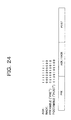
- Non-Patent Reference 1 discloses that previously-known training patterns called Preamble and Postamble (hereinafter called PRE and POST, respectively) are attached to ACK/NACK information so as to sandwich the ACK/NACK information as shown in Fig. 24 , so that adjustment of a detection threshold value by such training patterns can improve accuracy of detection of ACK/NACK information at the receiver side, avoiding an increase in the transmission electricity power.
- PRE and POST previously-known training patterns
- Parent Reference 1 discloses the technique that soft-decision combination values of all the symbols of ACK/NACK information are combined and ACK/NACK information is judged on the basis of a comparison of the combination result and the predetermined threshold value.
- Non-Patent Reference 2 describes an allowable error rate on a radio propagation path between a mobile station and a base station.
- an allowable error rate of a radio propagation path between a mobile station and a base station in a predetermined environment is defined to be less than the specification condition 10 -2 (see above Non-Patent Reference 2). _This allowable error rate is for a long period and is therefore excessively large for an instant error rate in communication on the high-speed movement or in a multi-path fading environment, resulting in tendency of occurring an error.
- the base station transmits new data (a packet) having process number "1" (Process #1) and packet number "X" (Packet No. X) to the mobile station (packet transmission). If the mobile station cannot normally receive the data piece in question, the mobile station transmits NACK information to the base station (feedback of the reception result of the packet).
- the base station receives the reception confirmation result (the feedback information) from the mobile station and, if however misrecognizes the NACK information to be ACK information due to an error occurring at the radio propagation path, transmits new data having process number "1" (Process #1) and packet number "X+1" (Packet No. X+1) when performing a transmission process of the next process umber "1" (HARQ block) .
- the mobile station plans to perform a combination of retransmission process on the data of process number "1" and packet number "X”, but cannot carry out the planed process because the new data received from the base station has process number "1" and packet number "X+1". Further, the base station does not retransmit data of process number "1" and packet number "X" to the mobile station, the data (packet) is lost.
- the base station misrecognizes ACK/NACK information from the mobile station, normal operation for data communication cannot be performed.
- the base station misjudged an ACK response to be NACK or DTX, the base station should transmit a new data but actually carries out a retransmission process whereby the communication rate is lowered.
- the process ACK/NACK information of which is misrecognized is temporarily deadlocked until the next reception confirmation information (i.e., ACK/NACK information) of the same process is correctly received by the base station.
- Embodiments of the present invention may be provided by using the radio communication method and the radio communication apparatuses described below.
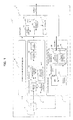
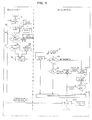
- Figs. 1 and 2 are block diagrams schematically illustrating the main parts of radio communication apparatuses according to the first embodiment of the present invention.
- Apparatus 1 shown in Fig. 1 is, for example, a mobile station that is one of the components of a radio communication system; and apparatus 21 is a base station in the system.
- base station 21 corresponds to a transmission source communication apparatus of packets and mobile station 1 corresponds to a transmission destination communication apparatus of the packets.
- Mobile station 1 shown in Fig. 1 is a radio communication apparatus that performs data transmission-and-receiving processes according to process numbers (cyclic process numbers) defined for specifying signals (data pieces) that are to be subjected to combination of retransmission (signals being objects for HARQ combining).
- Mobile station 1 in this example includes antenna 2, duplexer 3, control channel receipt processor 4, data channel receipt processor 5, controller 6, and transmission processor 7.
- antenna 2 receives downlink signals transmitted from base station 21 and transmits uplink signals to the destination base station 21.
- Duplexer 3 sends signals received at antenna 2 to control channel receipt processor 4 and data channel receipt processor 5, and sends signals from transmission processor 7 to antenna 2.
- Control channel receipt processor 4 has a function for demodulating and decoding the control channel (e.g., HS-SCCH of HSDPA) of downlink signals received through antenna 2.
- control channel e.g., HS-SCCH of HSDPA
- Data channel receipt processor 5 has a function for demodulating and decoding the data channels of downlink signals (e.g., HS-PDSCH (High Speed-Physical Downlink Shared Channel) of HSDPA) received through antenna 2, and includes demodulator 8, SIR measuring section 9, retransmission combining section 10, memory buffer 11 for combination of retransmission, channel decoder 12, and CRC checker 13 to realize the function in the illustrated example.
- downlink signals e.g., HS-PDSCH (High Speed-Physical Downlink Shared Channel) of HSDPA
- Demodulator 8 demodulates the data channels of downlink signals received through antenna 2 in a demodulation method conforming to the modulation method (e.g., QPSK or 16QAM) used in base station 21, and specifically demodulates bit data for each data channel which bit data is from duplexer 3 to symbol data and input the demodulated symbol data of each data channel to the retransmission combining section 10. If an adaptive coding and modulation method such as HSDPA is employed, information about the modulation method can be notified through the control channel (HS-SCCH).
- HS-SCCH control channel
- SIR measuring section 9 measures an SIR, which represents receipt quality information of a downlink signal transmitted from base station 21. Controller 6 generates, according to the value of an SIR measured by SIR measuring section 9, a CQI, and feedbacks the CQI to base station 21 through the control channel.
- Retransmission combining section 10 combines retransmission (HARQ combines) data from demodulator 8 and data which has been stored in memory buffer 11 (for combination of retransmission) and which is the same in the process number as the former data if the former data is data retransmitted.
- Memory buffer 11 (for combination of retransmission) retains (contain) data from demodulator 8 for future possible combination of retransmission of data.
- Channel decoder 12 performs a channel decoding process (e.g., an error correction decoding process) conforming to the coding method and the coding rate at base station 21 on data from retransmission combining section 10. For example, if base station 21 uses an adaptive coding and modulation method such as HSDPA, information about the modulation method is also notified through the control channel (HS-SCCH).
- a channel decoding process e.g., an error correction decoding process
- HSDPA adaptive coding and modulation method
- HSDPA control channel
- CRC checker 13 performs a CRC check process (CRC operation) on data from channel decoder 12. If the result of CRC process is normal (OK), ACK information is transmitted to base station 21, and if the result is abnormal (NG), NACK information is transmitted to 21 as a feedback.
- CRC check process CRC operation
- Controller 6 has supervisory control over the processes performed in mobile station 1, and includes clear processor 14, timer 15, rearrangement processor 16, and RLC processor 17 in the illustrated example as shown in Fig. 1 .
- the functions of these elements are realized by processors such as a CPU (Central Processing Unit) and a DSP (Digital Signal Processor), a requisite memory and others, which are however not shown in the drawing.
- processors such as a CPU (Central Processing Unit) and a DSP (Digital Signal Processor), a requisite memory and others, which are however not shown in the drawing.
- Rearrangement processor 16 rearranges a number of data pieces (PDUs) received in a certain order from data channel receipt processor 5 to assemble the data pieces into data in a predetermined format. Specifically, rearrangement processor 16 temporarily stores each received PDU in a non-illustrated buffer (memory), rearranges a number of PDUs same in process number in an order fitting the predetermined format, and then transmits rearranged data to a non-illustrated upper layer so that PDUs in the predetermined format can be assembled.
- a non-illustrated buffer memory
- rearrangement processor 16 stores PDUs having different process numbers from the certain process number which PDUs have been issued from base station 21 into the buffer (memory) (i.e., making the PDUs stand-by state).
- RLC processor 17 makes an ACK/NACK judgment on the basis of the result of CRC check by CRC checker 13, and transmits ACK information if the result is normal (OK) and NACK information if the result is abnormal (NG) to transmission processor 7. In addition, RLC processor 17 generates a CQI based on an SIR value measured by SIR measuring section 9 and sends the generated CQI to transmission processor 7.
- Timer 15 determines the upper limit or time which is taken by rearrangement processor 16 to carry out the rearrangement and controls the rearrangement. In other words, if the maximum waiting time (WT) determined in timer 15 has passed, rearrangement processor 16 aborts the rearrangement and transmits received data to upper layer.
- WT maximum waiting time
- Clear processor 14 clears the buffer region each predetermined time period WT.
- Transmission processor 7 carries out a transmission process of uplink signals destined for base station 21 which process is exemplified by generation of a data transmission frame by combining ACK/NACK information of a received data piece and transmission data destined for base station 21.
- transmission processor 7 here includes ACK/NACK generator 18, multiplexer (MUX) 19, and process counter 20 as shown in Fig. 1 .
- ACK/NACK generator 18 generates, for each individual process number assigned by process counter 20, two kinds of ACK/NACK information concerning a received data piece of the individual process number that is to be processed on the basis of the result of ACK/NACK judgment in controller 6.
- the two kinds of ACK/NACK data are Own ACK/NACK information element (first information element) that is fundamental ACK/NACK information indicating a reception result of a received data piece of a certain process number and Other ACK/NACK data (second information element) indicating the receipt result of the same data piece of the certain process number that is additive ACK/NACK information to be added to Own ACK/NACK information element indicating a reception result of a received data piece of another process number.
- ACK/NACK generator 18 optionally, generates predetermined training pattern information (e.g., PRE and POST described above with reference to Fig. 24 ) as well as such ACK/NACK information and adds the training pattern data to the ACK/NACK information.
- predetermined training pattern information e.g., PRE and POST described above with reference to Fig. 24
- ACK/NACK generator 18 of the present invention includes, as shown in Fig. 1 , at least Own ACK/NACK generator (first generating means) 38 for generating Own ACK/NACK information elements and other ACK/NACK generator (second generating means) 39 for generating Other ACK/NACK information elements.
- the data amount (the number of bits) of Own ACK/NACK information element and that of Other ACK/NACK information element may be adaptively modified (controlled) according to a parameter concerning a radio communication environment.
- the parameter is exemplified by an SIR value measured by SIR measuring section 9.
- the function for the modification may be realized by, for example, controller 6.
- MUX multiplexes transmission data destined for base station 21, Own ACK/NACK information element and Other ACK/NACK information element from ACK/NACK generator 18, and the above training pattern information under process control by process counter 20 so that the data generated by the multiplication conforms to a predetermined frame format (for example, shown in Fig. 3 or 4 ) and sends the generated data to duplexer 3.
- Process counter 20 counts the process number in increments of one and notifies the counts to MUX 19 and ACK/NACK generator 18 in order to manage and control generation and multiplication of ACK/NACK information and the training pattern information for each individual process number.
- transmission processor 7 of the first embodiment includes ACK/NACK generator 18 (38 and 39), MUX 19 and process counter 20, which make transmission processor 7 possible to function as transmitting means that transmits response signals, each of which is generated by adding Other ACK/NACK information element (second information element) for another process number to Own ACK/NACK information element (first information element) for a certain process number, to base station 21 that is the transmission source of the received (data) signals.
- ACK/NACK generator 18 38 and 39
- MUX 19 and process counter 20 which make transmission processor 7 possible to function as transmitting means that transmits response signals, each of which is generated by adding Other ACK/NACK information element (second information element) for another process number to Own ACK/NACK information element (first information element) for a certain process number, to base station 21 that is the transmission source of the received (data) signals.
- MUX 19 of the first embodiment functions as a multiplexing transmitter that adds Other ACK/NACK information elements (second information elements) indicating reception results of a number of a number of received data pieces different in process number from Own ACK/NACK information element, to the Own ACK/NACK information element (first information element) and transmits the data generated by the addition to base station 21 that is the transmission source of the received signals (data pieces).
- second information elements Other ACK/NACK information elements
- antenna 2 receives downlink signals from base station 21.
- the control channel of the (received) signals is demodulated and decoded in control channels receipt processor 4 and the data channels of the (received) signals demodulated and decoded in data channel receipt processor 5, which carries out a retransmission combining process on the signals demodulated and decoded as required.
- controller 6 makes an ACK judgment; conversely, if the result of the CRC check on the same received signal is negative (NG), controller 6 makes a NACK judgment.
- transmission processor 7 On the basis of the result of ACK/NACK judgment made by controller 6, transmission processor 7 generates, for each individual process number designated by process counter 20, fundamental ACK/NACK information element (Own ACK/NACK information element) to a received data piece of a certain process number which element indicates a reception result of the same received data piece and additive ACK/NACK information element (Other ACK/NACK information element) concerning a reception result of the same received data piece which element is to be added to OwnACK/NACK information element for a received data piece of another process number other than the certain process number.
- transmission processor 7 combines these ACK/NACK information elements and transmission data destined for base station 21 and transmits the combined data to base station 21.
- the frame format in Fig. 3 has the forward part in which training patterns (PRE and POST) sandwich Own ACK/NACK information element and the backward part containing Other ACK/NACK information elements adaptive to the forward part.
- an Other ACK/NACK information element which is to be multiplexed and which is ACK/NACK information indicating a reception result of each of received data pieces of the process numbers from "1" to "5" takes the form of a 2-bit ACK information element (here, "11") or a 2-bit NACK information element (here, "00").
- data for a received data piece of each process number is in a frame format containing a fundamental ACK/NACK information element (i.e., Own ACK/NACK information element) for a certain process number and five 2-bit ACK/NACK information elements, which totals 10 bits and each of which indicates a reception result of one of the received data pieces of other five process numbers.
- a fundamental ACK/NACK information element i.e., Own ACK/NACK information element
- the reception result of a received data piece of each process number is transmitted in a 2-bit ACK/NACK information element (i.e., Other ACK/NACK information element) which is adaptive to Own ACK/NACK information elements concerning the other five process numbers and which is distributed by repetitiously transmission, in addition to in the fundamental Own ACK/NACK information element.
- a 2-bit ACK/NACK information element i.e., Other ACK/NACK information element
- receipt of data in the above frame format for 6 processes makes base station 21 possible to make an ACK/NACK judgment for each process number in consideration of Other ACK/NACK information elements (2 bits for each of the five remaining process, total 10 bits) in addition to Own ACK/NACK information element, resulting in enhancing error concealment of ACK/NACK information and therefore reducing the occurrence rate of misjudgment as compared with judgment based only on Own ACK/NACK information element.
- the mapping (multiplexing) order in the frame format that is the order of training pattern information, Own ACK/NACK information element, and Other ACK/NACK information elements may be properly modified.
- PRE and POST training patterns
- use of the frame format shown in Fig. 3 easily ensures the compatibility with existing format (see Fig. 24 ).
- Figs. 5 and 6 show frame formats for individual processes if the frame format of Fig. 3 is adopted.
- a frame including Own ACK/NACK information element indicating a reception result of a received data piece of another process number "1" additionally includes Other ACK/NACK information elements (each being two bits) indicating reception results of received data pieces of five process numbers "6" to "2" (as a result of multiplication).
- a frame including Own ACK/NACK information element indicating the reception result of a received data piece of the process number "2" additionally includes Other ACK/NACK information elements indicating reception results of received data pieces of process numbers "1" and “6" to "3"; and each frame including Own ACK/NACK information, element indicating one of process numbers "3” to “6” additionally includes Other ACK/NACK information elements concerning "N-1" process numbers other than that of the Own ACK/NACK information element.
- the total bits of Other ACK/NACK information elements can be properly modified.
- a ratio of ACK/NACK information for the same process number which information is to be mapped as another ACK/NACK information element in ACK/NACK information for other N processes i.e, the number of times of repeating an Other ACK/NACK information element for the same process number may also be properly modified.
- Other ACK/NACK information elements each of which is five bits and which are for two processes may be added as shown in Fig. 7 .
- the number of Other ACK/NACK information elements that are to be added to Own ACK/NACK information for a different process number and the number of bits of each Other ACK/NACK information element can be properly modified in accordance with a parameter (e.g., an SIR value) indicating a communication environment (radio communication environment) between mobile station 1 and base station 21 and other factors.
- a parameter e.g., an SIR value
- the number of processes whose reception results are indicated by Other ACK/NACK information elements and the number of bits for an Other ACK/NACK information element can be reduced and that makes it possible to reduce an amount of data required for ACK/NACK information, inhibiting the possibility in occurrence of ACK/NACK-information misrecognized (misjudgment).
- MUX 19 of this embodiment serves to function as an added bit number changing section for changing the number of bits of an Other ACK/NACK information element (second information element) that are to be added to an Own ACK/NACK information element (first information element) according to a radio communication environment (e.g., an SIR value) between base station 21 that is the transmission source communication apparatus of received (data) signals and mobile station 1 that is the transmission destination communication apparatus of the received (data) signals.
- MUX 19 also function as a training pattern adding section which adds a predetermined training pattern information element, in addition to Other ACK/NACK information elements (second information element), to the Own ACK/NACK information element (first information element).
- An ACK/NACK judgment made in base station 21 on the basis of two kinds of ACK/NACK information transmitted from mobile station 1 to base station 21 increases the redundancy of ACK/NACK information indicating the reception result of a received data piece of each individual process number and can thereby reduce the possibility of misrecognition on ACK/NCAK information as compared with the case where the reception result of the data piece are corresponded only to a single ACK/NACK information element, which is transmitted to base station 21.
- Base station 21 shown in Fig. 2 is an apparatus that performs a transmission and receiving process on data (packets) in accordance with the process numbers described above.
- Base station 21 of the present embodiment includes upper layer processor 22, data frame processor 23, CRC attaching section 24, channel coder 25, modulator 26, transmitter 27, duplexer28, antenna 29, receiver 30, ACK/NACK combination judging section 31, retransmitting controller 32, buffer 33 for retransmission, and scheduler 34.
- Upper layer processor 22 has functions for performing various data processes for upper layers of the layer 2 or higher on transmitting data destined for mobile station 1 and for inputting service information that is obtained through the above data processes on transmission data into scheduler 34 and ACK/NACK combination judging section 31.
- Service information represents of a kind of each data piece (packet) transmitted and received mobile station 1 and base station 21.
- Scheduler 34 discriminates service information whether the packet in question does not require a real-time process as mail transmission and receipt or require a real-time process as streaming communication.
- Data frame processor 23 frames transmission data from upper layer processor 22 into a predetermined frame format under control by scheduler 34, and CRC attaching section 24 attaches a CRC code to be used for a CRC check to transmission data (frame) from data frame processor 23.
- Channel coder 25 performs a channel coding process using a turbo code or a convolutional code on the transmission frame from CRC attaching section 24.
- Modulator 26 modulates the transmission frame on which the channel coding process has been performed by mapping the frame into symbols each having a signal point for a predetermined modulation method such as QPSK or 16QAM.
- Transmitter 27 performs a required radio communication process including DA (Digital to Analog) conversion and frequency up-conversion to RF (Radio Frequency) on the transmission frame from modulator 26.
- Duplexer 28 sends the transmission RF signal to antenna 29 and sends an RF signal received at antenna 29 to receiver 30.
- Antenna 29 radiates the transmission RF signal from duplexer 28 to the aerial space to reach mobile station 1, and receives an RF signal transmitted from mobile station 1.
- Receiver 30 performs a required radio communication process including frequency down-conversion to a baseband frequency and AD (Analog to Digital) conversion on data received from mobile station 1 through antenna 29 and duplexer 28. While undergoing the succession of the required radio communication process, receiver 30 can extract Own ACK/NACK information element, Other ACK/NACK information elements, and an SIR value (or CQI) from the received data. In other words, receiver 30 functions as receiving means for receiving, from mobile station 1, data in which Other ACK/NACK information elements (second information elements) indicating reception results of received data pieces of other process numbers are added to Own ACK/NACK information element (first information element) indicating a reception result of a received data piece of a certain process number as described above.
- Second information elements indicating reception results of received data pieces of other process numbers are added to Own ACK/NACK information element (first information element) indicating a reception result of a received data piece of a certain process number as described above.
- ACK/NACK combination judging section 31 judges ACK/NACK information on the basis of an SIR value (or CQI), Own ACK/NACK information element, and Other ACK/NACK information elements extracted in receiver 30 and service information from upper layer processor 22, and sends the judgment result (Final Result ACK/NACK) to scheduler 34 and to retransmitting controller 32.
- ACK/NACK combination judging section 31 functions as judging means for judging a reception result of a data piece that base station 21 has transmitted to mobile station 1 in accordance with Own ACK/NACK information element and Other ACK/NACK information elements included in data received by receiver 30.
- ACK/NACK information from mobile station 1 does not arrive at base station 21 within a predetermined time period set by a T1 timer shown in Fig. 20 , an ACK/NACK judgment can be made on the basis of ACK/NACK information data that have already arrived at that time.
- the T1 timer discontinues receipt of ACK/NACK information. Further, in the event of disconnection of data communication, discontinuation of receipt of ACK/NACK information elements by the T1 timer is required because data delay occurs unless received data is notified to the upper layer.
- the T1 timer is set to be within a delay time permissible by the upper layer. For example, the T1 timer set to be 20 ms or shorter makes voice communication to prevent dialog response from lowering.
- the T1 timer is set to be a time period, after which a data piece would not be retransmitted in the lower layer, and therefore notifies the upper layer that no data is to be retransmitted even if the upper layer waits any longer.
- the time period of the T1 timer is set in the both transmitting side (base station 21) and receiving side (mobile station 1).
- ACK/NACK combination judging section 31 optionally has a function for correcting a received Own ACK/NACK information element. For example, if the majority (e.g., eight bits out of total ten bits) of bits of an Own ACK/NACK information element is "1", all the bits can be corrected to be "1". In the same manner, if the majority (e.g., eight bits out of total ten bits) of bits of an Own ACK/NACK information element is "0", all the bits can be corrected to be "0".
- the majority e.g., eight bits out of total ten bits
- Retransmitting controller 32 controls retransmission of transmission data in accordance with the result of ACK/NACK information judgment made by ACK/NACK combination judging section 31.
- Buffer 33 for retransmission temporarily retains a transmission frame which has been channel-coded in channel coder 25 until the frame is retransmitted (to mobile station 1), and takes the form of a dedicated memory (not shown) containable data for the number of processes or a common memory (not shown) installed in base station 21. Under retransmission control from retransmitting controller 32, buffer 33 sends a transmission frame in question to channel coder 25 again.
- Scheduler 34 schedules transmission of transmission frames according to the service information from upper layer processor 22 and the result of judgment from ACK/NACK combination judging section 31.
- Scheduler 34 controls a schedule of processes to be performed by data frame processor 23 so that, if no retransmission is being required, a transmission frame of a new process number is transmitted for example.
- base station 21 performs a requisite transmission process on transmission data destined for mobile station 1 and transmits the processed transmission data to mobile station 1. Subsequently, base station 21 receives a (data) signal from mobile station 1 through antenna 29, and receiver 30 extracts ACK/NACK information concerning the transmission data from the received data signal. ACK/NACK combination judging section 31 makes an ACK/NACK judgment using the extracted ACK/NACK information.
- transmission data of a process number corresponding to the ACK/NACK information is judged to have been normally received by mobile station 1 and base station 21 transmits new transmission data, as the ensuing data of the transmission data of the process number, to mobile station 1.
- the result of the ACK/NACK judgment is NG, transmission data of a process number corresponding to the ACK/NACK information element is judged not to be normally received by mobile station 1 and base station 21 transmits retransmitting data, as the ensuing data of the transmission data of the process number, to mobile station 1.
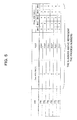
- a judgment process performed on ACK/NACK information element will now be described with reference to Fig. 6 , which focuses on ACK/NACK information elements concerning transmission data of the process number "1" in the frame format table in Fig. 5 .
- Fig. 6 indicates that base station 21 receives Own ACK/NACK information element for transmission data piece of the process number "1" in the form of 10-bit data "1111111111” and also five two-bit Other ACK/NACK information elements "11", “10", “00”, “11” and “11” attached to Own ACK/NACK information elements concerning the remaining five processes from mobile station 1.
- two-bit digits "00" and “10” are called ACK information (sometimes simplified as ACK) and NACK information (sometimes simplified as NACK) information, respectively, and two-bit digit of "10” represents DTX.
- ACK/NACK combination judging section 31 judges whether the reception result of the transmission data pieces in question is ACK or NACK by undergoing, for example, hard-decision combination. For example, if at least one of the above Own and Other ACK/NACK information elements that have been received is ACK information, base station 21 judges that the transmission data piece of the process number in question has been normally received by mobile station 1.
- ACK/NACK combination judging section 31 may judge whether the result of the reception result of the data piece in question is ACK or NACK by undergoing soft-decision combination based on the Own and Other ACK/NACK information elements. For example, assuming that ACK information, NACK information and DTX information are allocated scores "2", "-2", and "0", respectively, the total score of the above Own and Other ACK/NACK information elements of "0" or more judges the reception result received from mobile station 1 to be ACK and conversely the total score of less than "0" judges the reception result to be NACK. In the example shown in Fig.
- the score of the Own ACK/NACK information element is "10" and those of the five Other ACK/NACK information elements are "2", “0", “-2", “2", and “2", the total of which is "14". Accordingly, the total score judged to be 0 or more causes base station 21 to judges the transmission data piece in question has been normally received in mobile station 1.
- base station 21 confirms receipt of a transmission data piece of a certain process number according to ACK/NACK information (i.e., Other ACK/NACK information elements) received for a reception confirmation of other transmission data pieces of other process numbers in addition to the Own ACK/NACK information element.
- ACK/NACK information i.e., Other ACK/NACK information elements
- increase in redundancy of ACK/NACK information element reduces the possibility of occurrence of misrecognition to be made on received ACK/NCAK information elements as compared with the case where the reception result of the data piece of a process number are corresponded to a single ACK/NACK information element, which is transmitted to base station 21.
- receiver 30 receives ACK/NACK information transmitted from mobile station 1 (step S1), and ACK/NACK combination judging section 31 judges the received ACK/NACK information element on the basis of a process count (process number), an SIR, a service kind (service information from upper layer processor 22), and a timer (T1 timer) value (steps S2 and S3).
- process count process number
- SIR service information from upper layer processor 22
- T1 timer timer
- step S3 the procedure takes the "new" route in step S3 to prompt scheduler 34 to read new data piece from a buffer (step S4). Conversely, if the result of the judgment is NACK, the procedure takes the "retransmission" route in step S3 to prompt channel coder 25 to read retransmission data piece from buffer 33 under retransmission control by retransmitting controller 32 (step S5).
- base station 21 performs a predetermined transmission process on the new or retransmission data, which is then transmitted to mobile station 1 by transmitter 27 (step S6).
- control channel receipt processor 4 and data channel receipt processor 5 perform a data reception process on the transmission data piece (new data or retransmitted data) that has been transmitted from base station 21 (step S7).
- step S8 On the basis of the data pieces undergone the reception process and the process number notification from process counter 20, judgment is made on as to whether the received data piece is new data piece or retransmitted data piece (step S8).
- judgment to be new data piece takes the "new" route in step S8 and prompts CRC checker 13 to perform CRC check on the received data piece (step S9).
- the result of the CRC check is NG, the procedure takes the "NG" route in step S9 to store HARQ information (such as data for combination of retransmission) into HARQ information retaining buffer (memory buffer for combination of retransmission) 11.
- the procedure takes the "OK" route in step S9 to cause ACK/NACK generator 18 to generate ACK/NACK information (step S13).
- the procedure takes the "retransmission" route in step S8 to prompt combining retransmission section 10 to read data for combination of retransmission, from memory buffer 11 and carries out an HARQ combination process on the read data (step S10).
- step S11 the data that has been subjected to the HARQ combination is subjected to a data channel decoding process by channel decoder 12 (step S11) and further to a CRC check on CRC checker 13 (step S12).
- step S12 the procedure takes the "NG" route in step S12 to update the HARQ data stored in the HARQ information retaining buffer and ACK/NACK generator 18 generates ACK/NACK information (step S13).
- step S12 the procedure takes the "OK" route in step S12 to prompt ACK/NACK generator 18 to generate ACK/NACK information (step S13).
- the ACK/NACK information (Own ACK/NACK information element and Other ACK/NACK information elements) generated by ACK/NACK generator 18 and transmission data destined for base station 21 are multiplexed by MUX 19 (step S14), and the data generated as a result of the multiplication is transmitted to base station 21 by transmission processor 7.
- Mobile station 1 transmits ACK/NACK information indicating the reception result of a data piece that base station 21 has transmitted to mobile station 1, which information serves as feedback, to base station 21 in the manner described above.
- Fig. 9 schematically shows data communication (a retransmission process) carried out when at least one of the ACK/NACK information elements misrecognizes the reception result.
- N 6
- base station 21 transmits (executes packet transmission of) new data piece having the process number "1" (Process #1), and the packet number "X" (Packet No. X)
- mobile station 1 transmits NACK information which indicates that mobile station 1 has not normally received the data piece in question from base station 21 and which takes the form of an Own ACK/NACK information element and Other ACK/NACK information elements to base station 21 (feedback of the reception result of the packet).
- Base station 21 receives ACK/NACK information (feedback information) from mobile station 1, and misrecognizes the Own ACK/NACK information from mobile station 1 (i.e., misrecognized of ACK information to be NACK information) .
- mobile station 1 transmits NACK information which base station 21 however misrecognizes as ACK information.
- base station 21 recognizes each Other ACK/NACK information element to be NACK information and therefore can correctly confirm (judge) the ACK/NACK information from mobile station 1 to be NACK information by making, for example, soft-decision combination. As the result of the correct judgment, base station 21 can retransmit the same data piece of the process number "1" (Process #1) and the packet number "X" (Packet No. X) (HARQ block).
- base station 21 can confirm the reception result of a transmission data piece of a certain process number on the basis of Other ACK/NACK information elements in addition to the Own ACK/NACK information element, redundancy of ACK/NACK information indicating a receipt result of transmission data piece of a certain process number makes it possible to reduce the possibility of misrecognition on ACK/NACK information that occurs during transmission and receipt of the ACK/NACK information as compared with the case where the reception result of the data piece are related to a single ACK/NACK information element.
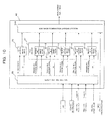
- Weighting judgment section 40 makes a weighting combination among an Own ACK/NACK information element (first information element) and Other ACK/NACK information elements (second information elements) and judges (confirms) ACK/NACK information.
- weighting judgment section 40 includes weight setting section 35, first weight adder 36, second weight adder 37, and ACK/NACK combination judging section 31A.
- weight setting section 35 outputs a weight ⁇ 1 for an Own ACK/NACK information element and the Own ACK/NACK information element to the downstream first weight adder (adder for Own ACK/NACK weight) 36 and also outputs weights ⁇ 2 to ⁇ 6 one for each of Other ACK/NACK information elements and the Other ACK/NACK information elements (Process #N-1 ACK/NACK Signal to Process #N-5 ACK/NACK Signal) to downstream second weight adder (adder of Other ACK/NACK weight) 37.
- First weight adder 36 combines (multiplies) an Own ACK/NACK information element and weight ⁇ 1 for Own ACK/NACK information element
- second weight adder 37 combines (multiplies) an Other ACK/NACK information element and corresponding one of weights ⁇ 2 to ⁇ 6 for Other ACK/NACK information elements.
- Process-specific weight adder 37-1 combines (multiplexes) Process #N-1 ACK/NACK Signal from weight setting section 35 and weight ⁇ 2, and the remaining process-specific weight adders 37-2 to 37-5 similarly function.
- ACK/NACK combination judging section 31A outputs the ultimate judgment result on ACK/NACK information (Final Result ACK/NACK) considering the Own ACK/NACK information element and the Other ACK/NACK information elements which have been weighted by first weight adder 36 and second weight adder 37, respectively.
- ACK/NACK combination judging section 31A determines scores for Own and Other ACK/NACK information elements, carries out a soft-decisicn combination and finally outputs the judgment result on ACK/NACK information, similarly to the foregoing embodiment.
- ACK/NACK combination judging section 31A functions as a weighting combining section for making a weighting combination among Other ACK/NACK information elements.
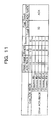
- Fig. 11 is a table showing ACK/NACK information elements (i.e., an Own ACK/NACK information element and Other ACK/NACK information elements), scores for the ACK/NACK information elements, and a judgment result on the ACK/NACK information when weight ⁇ 1 is assumed to be "1" and each of weights ⁇ 2 to ⁇ 6 to be "0".
- ACK/NACK information elements i.e., an Own ACK/NACK information element and Other ACK/NACK information elements
- scores for the ACK/NACK information elements i.e., an Own ACK/NACK information element and Other ACK/NACK information elements
- a judgment result on the ACK/NACK information when weight ⁇ 1 is assumed to be "1" and each of weights ⁇ 2 to ⁇ 6 to be "0".
- Own ACK/NACK information element is "1111111111”
- other ACK/NACK information elements are “11”, “11”, “10”, “00”, and “11”
- weight ⁇ 1 is “1”
- each of weights ⁇ 2 to ⁇ 6 is "0”.
- the total score is 10 X 1 + 2 X 0 + 2 X 0 + 0 X 0 + (-2)
- X 0 + 2 X 0 10 ( ⁇ 0)
- base station 21 causes base station 21 to judge (confirm) the judgment result on the ACK/NACK information to be ACK.
- weight ⁇ 1 set to be "1” and each of weights ⁇ 2 to ⁇ 6 set to be “0” make it possible to make an ACK/NACK judgment on ACK/NACK information same as conventional ACK/NACK information whereby compatibility with a conventional format (PRE, ACK/NACK, POST) can be maintained.
- PRE ACK/NACK
- POST ACK/NACK
- the accuracy in detection of ACK/NACK information (a misrecognition occurrence rate) in this modification is the same as the conventional manner.
- weighting pattern causes an interface with a base station for a conventional system, which does not support the frame format of the first embodiment of the present invention, to receive the frame format of the present invention in the same manner as a conventional frame format simply by setting the above weights without chaining the circuit configuration of the base station.
- Fig. 12 is a table showing ACK/NACK information elements (i.e., Own ACK/NACK information element and Other ACK/NACK information elements), scores for the ACK/NACK information elements, and a judgment result on the ACK/NACK information if weight ⁇ 1 is assumed to be "1" and each of weights ⁇ 2 to ⁇ 6 to be "0.5".
- ACK/NACK information elements i.e., Own ACK/NACK information element and Other ACK/NACK information elements
- the Own ACK/NACK information element is "1111111111”
- the other ACK/NACK information elements are “11”, “11”, “10”, “00”, and “11”
- weight ⁇ 1 is “1”
- each of weights ⁇ 2 to ⁇ 6 are "0.5”.
- the total score is 10 X 1 + 2 X 0.5 + 2 X 0.5 + 0 X 0.5 + (-2)
- X 0.5 + 2 X 0.5 12 ( ⁇ 0)
- base station 21 causes base station 21 to judge (confirm) the judgment result on the ACK/NACK information to be ACK.
- redundancy of ACK/NACK information is increased by setting weight ⁇ 1 to be "1" and each of weights ⁇ 2 to ⁇ 6 to be "0.5".
- weights ⁇ 2 to ⁇ 6 can be set to be "1".
- such setting of weights for other ACK/NACK information elements may contrarily increase the possibility of misrecognition of ACK/NACK information on the base-station-21 side if the weights are improperly set.
- setting weights ⁇ 2 to ⁇ 6 to be "1" doubles the redundancy of ACK/NACK information.
- setting weights ⁇ 2 to ⁇ 6 to be "0.5" emphasize the reception result of an Own ACK/NACK information element.
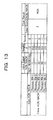
- Fig. 13 is a diagram showing an operation performed in weighting judgment section 40 if the Own ACK/NACK information element is not received under the setting of weights shown in Fig. 12 .
- the Own ACK/NACK information element is "not received (no data)"
- other ACK/NACK information elements are "11", “11", “10”, “00”, and “11”
- weight ⁇ 1 is "1”
- each of weights ⁇ 2 to ⁇ 6 is "0.5”.
- the total score is 0 X 1 + 2 X 0.5 + 2 X 0.5 + 0 X 0.5 + (-2)
- X 0.5 + 2 X 0.5 2 (>0)
- Fig. 14 is a table showing ACK/NACK information elements (i.e., Own ACK/NACK information element and Other ACK/NACK information elements), scores for the ACK/NACK information elements, and a judgment result on the ACK/NACK information if weights ⁇ 1 and ⁇ 3 are assumed to be "1" and each of weights ⁇ 2 and ⁇ 4 to ⁇ 6 to be "0.5".
- weights ⁇ 1 and ⁇ 3 are assumed to be "1" and each of weights ⁇ 2 and ⁇ 4 to ⁇ 6 to be "0.5".
- the bit in Own ACK/NACK information element are the same digits of "1" or the same digits of "0" when data of Process #N-2 is received, the data for the process in question is received in a fine state (in a fine communication environment) and Other ACK/NACK information element received at Process #N-2 is highly reliable. Consequently, weight ⁇ 3 for Process #N-2 is set to be larger.
- the Own ACK/NACK information element is "1100111100”
- other ACK/NACK information elements are "11”, “11”, “10”, “00”, and “11”
- weights ⁇ 1 and ⁇ 3 are “1”
- each weights ⁇ 2 and ⁇ 4 to ⁇ 6 is "0”.
- weighting pattern makes it possible to set weights based on reliability of a reception result for each process, and ACK/NACK information can be thereby controlled focusing on a process received in a fine state (in a fine communication environment), so that a variation in a reception state can be compensated with ease.
- a weight "1" can be set for Other ACK/NACK information element attached to an Own ACK/NACK information element of a process number received in a fine communication environment and a weight "0" can be set for Other ACK/NACK information elements for the remaining process number.
- Such a weight setting manner can further reduce an occurrence rate of misrecognition made on ACK/NACK information.
- ACK/NACK information e.g., the case of the total score being "0"
- the score or an Own ACK/NACK information element and the subtotal score of Other ACK/NACK information elements are independently calculated and on the basis of the scores, weights are then set.
- the total score at that time is "0", which judges the ACK/NACK information to be low in reliability.
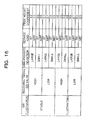
- the weighting pattern example shown in Fig. 15 sets weights ⁇ ', considering SIR values when received data for each process is received.
- the SIR value when reception of the Own ACK/NACK information element is assumed to be larger than that when reception of Other ACK/NACK information elements, weight ⁇ ' for the score of the Own ACK/NACK information element and weight ⁇ ' for the subtotal score of the Other ACK/NACK information elements are set to be "1" and "0.5", respectively.
- each weight determined by a number of combination processes makes it possible to develop flexibility in judgment on ACK/NACK information as compared with the weighting patterns shown in Figs. 11-14 .
- Fig. 16 shows an example of a weight for an Own ACK/NACK information element which weight is determined on the basis of parameters of a communication environment
- Fig. 17 is an example of a weight for an Other ACK/NACK information element which weight is determined on the basis of parameters of a communication environment.
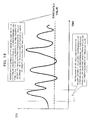
- SIR fluctuation is exemplified by a parameter that indicates a value of SIR fluctuation (or a deviation) in the time period (T) for six processes.
- An SIR fluctuation value of a threshold value or more is judged to be “stable'” but that less than the threshold value is judged to be "fluctuating".
- an SIR fluctuation can be judged according to the case; if an SIR fluctuation (the average or the deviation) within the above time period T is a predetermined threshold value or more, the SIR fluctuation is judged to be “stable", and the SIR fluctuation other than the above value range is judged to be "fluctuating".
- the threshold value is predetermined so as to make the misrecognition possibility low on the basis of an SIR value and the accuracy in receipt judgment and is exemplified by an SIR value which results in an error rate of 20 % or less.
- a receiving-timing SIR value is judged to be "high” if the SIR value at the time when receipt of ACK/NACK information (the Own ACK/NACK information element) corresponding to the received data pieces of the own process number is the threshold value or more, and is judged to be “low” if the SIR value is other than the above “high” case.
- An own process deviation is judged to be "large” if the bits in Own ACK/NACK information element corresponding to the received data piece of each process deviates from a predetermined ratio, and is judged to be “small” in the remaining case. For example, if 80 percent or more of all the bits of an Own ACK/NACK information element are the same digits of "1" or "0", the Own ACK/NACK information element is judged to be "large”, and the Own ACK/NACK information element is judged to be "small” in the case except the above.
- a service kind is used to determine the largeness of weight according to each service.
- communication such as mail transmission and receipt that does not require a real-time process is represented by NRT (Non Real Time) and communication such as streaming communication that requires a real-time process is represented by RT (Real Time).
- NRT Non Real Time
- RT Real Time
- weights are determined as shown in the examples of Figs, 16 and 17 .
- a weight is set to be larger if an SIR fluctuation is "stable", the receiving-timing SIR value is "high”, an own process deviation is "large” and a service kind is "RT”.
- Fig. 19 is a flow diagram showing a succession of procedural steps performed to setting a weight.
- base station 21 receives ACK/NACK information transmitted by mobile station 1 (step S20) and weighting judgment section 40 then judges the process timing on the basis of a process count (a process number) (step S21).
- weighting judgment section 40 judges that data transmitted by mobile station 1 concerns the own process timing
- weighting judgment section 40 takes the own process-timing route in step S21 to extract the Own ACK/NACK information element from the received data (step S22), and performing CRC check on the Own ACK/NACK information element detects a bit error in the Own ACK/NACK information element (step S23).
- weighting judgment section 40 judges whether or not the Own ACK/NACK information element of the own process has the ACK/NACK bit deviation equal to or more than the threshold value (e.g., 80 %) (step S24).
- weighting judgment section 40 judges that the data transmitted by mobile station 1 is another process timing, weighting judgment section 40 takes the other process-timing route in step S21 to extract Own ACK/NACK information element of another process from the received data (step S25). In succession weighting judgment section 40 performs a CRC check on the extracted Own ACK/NACK information element to detect a bit error in the Own ACK/NACK information element of the process other than the own process (step S26). Further, weighting judgment section 40 judges whether or not the Own ACK/NACK information element of another process has the ACK/NACK deviation equal to or more than the threshold value (e.g., 80 %) (step S27) .
- the threshold value e.g. 80 %
- step S21 If weighting judgment section 40 judges that the data transmitted by mobile station 1 is another process timing, the procedure takes the another process-timing route in step S21 also extract Other ACK/NACK information element of the process other than the own process (step S28).
- base station 21 measures an SIR value based on the received data transmitted by mobile station 1 in order to obtain the above parameters (an SIR fluctuation, a receiving-timing SIR value and a service kind) (step S29).
- Weighting judgment section 40 further measures a fluctuation (the average or the deviation) in the SIR value within the time period T (step S30) and judges whether or not the result of the measurement is equal to or more than the threshold value (step S31).
- weighting judgment section 40 also measures the SIR value at the time when ACK/NACK information is being received (step S32) and judges whether or not the measurement result is the predetermined threshold value or more (step S33).
- weighting judgment section 40 discriminates a service kind on the basis of the received data transmitted by mobile station 1 (step S34) to judge whether the service kind is "RT" or "NRT” (step S35).
- weight setting section 35 determines first weight (Own Weight) and second weights (Other weights) (steps S36 and S37).
- first weight adder 36 and second weight adder 37 combine the first weight, the second weights, and measurement results obtained in steps S22, S25, and S28, and ACK/NACK combination judging section 31A outputs the ultimate ACK/NACK judgment result (Final ACK/NACK result) (step S38).
- the modification can further reduce an occurrence rate of misrecognition on ACK/NACK information, dead lock caused by misrecognition on ACK/NACK information in base station 21 can be resolved, so that throughput reduction can be avoided.
- the present invention should by no means be limited to the foregoing embodiment and modification that have been detailed above, and various changes or modifications may be suggested without departing from the gist of the invention.
Landscapes
- Engineering & Computer Science (AREA)
- Computer Networks & Wireless Communication (AREA)
- Signal Processing (AREA)
- Mobile Radio Communication Systems (AREA)
- Detection And Prevention Of Errors In Transmission (AREA)
- Communication Control (AREA)
Applications Claiming Priority (1)
| Application Number | Priority Date | Filing Date | Title |
|---|---|---|---|
| JP2006322367A JP4829754B2 (ja) | 2006-11-29 | 2006-11-29 | 無線通信方法及び無線通信装置 |
Publications (4)
| Publication Number | Publication Date |
|---|---|
| EP1928117A2 true EP1928117A2 (de) | 2008-06-04 |
| EP1928117A3 EP1928117A3 (de) | 2013-01-23 |
| EP1928117B1 EP1928117B1 (de) | 2015-05-27 |
| EP1928117B8 EP1928117B8 (de) | 2015-10-28 |
Family
ID=39186994
Family Applications (1)
| Application Number | Title | Priority Date | Filing Date |
|---|---|---|---|
| EP07121618.8A Ceased EP1928117B8 (de) | 2006-11-29 | 2007-11-27 | Verfahren und Vorrichtung zur Funkkommunikation mit HARQ |
Country Status (3)
| Country | Link |
|---|---|
| US (1) | US8068496B2 (de) |
| EP (1) | EP1928117B8 (de) |
| JP (1) | JP4829754B2 (de) |
Cited By (4)
| Publication number | Priority date | Publication date | Assignee | Title |
|---|---|---|---|---|
| WO2010012298A1 (en) * | 2008-07-29 | 2010-02-04 | Nokia Siemens Networks Oy | Transmission of redundant arq feedback message in unused space of a data transmission slot |
| WO2017134414A1 (en) * | 2016-02-05 | 2017-08-10 | 3G Wave Ltd. | Sequential ack/nack encoding |
| GB2566952A (en) * | 2017-09-27 | 2019-04-03 | 3Gwave Ltd | Coding of alternately transmitted time series |
| EP4236169A3 (de) * | 2016-11-03 | 2023-09-27 | Huawei Technologies Co., Ltd. | Harq-signalisierung für berechtigungsfreie uplink-übertragungen |
Families Citing this family (7)
| Publication number | Priority date | Publication date | Assignee | Title |
|---|---|---|---|---|
| US7437161B2 (en) * | 2005-03-16 | 2008-10-14 | Lucent Technologies Inc. | Method of fast data transmission of mobile stations via the same base station |
| KR20130045395A (ko) * | 2007-03-15 | 2013-05-03 | 인터디지탈 테크날러지 코포레이션 | 진화된 고속 패킷 액세스 시스템에서 데이터를 재정렬하기 위한 방법 및 장치 |
| CN101505212B (zh) * | 2008-02-04 | 2012-11-07 | 上海贝尔股份有限公司 | 操作harq缓冲器的方法 |
| US8162022B2 (en) * | 2008-10-03 | 2012-04-24 | Nike, Inc. | Method of customizing an article and apparatus |
| US9118442B2 (en) * | 2009-08-18 | 2015-08-25 | Broadcom Corporation | Method and system for continuous packet connectivity |
| WO2016145601A1 (zh) | 2015-03-16 | 2016-09-22 | 华为技术有限公司 | 一种退避窗口的调整方法和装置 |
| US10873698B1 (en) * | 2019-06-17 | 2020-12-22 | Wipro Limited | Method and system for improving efficiency of optical camera communication |
Citations (3)
| Publication number | Priority date | Publication date | Assignee | Title |
|---|---|---|---|---|
| WO2003043218A1 (en) | 2001-11-16 | 2003-05-22 | Koninklijke Philips Electronics N.V. | Radio communication system |
| EP1424799A2 (de) | 2002-11-27 | 2004-06-02 | Alcatel Canada Inc. | System und Verfahren zur Erkennung von, zwischen Modulen eines Kommunikationsgerätes übertragenen, verlorenen Nachrichten |
| EP1744482A1 (de) | 2004-05-06 | 2007-01-17 | NEC Corporation | Drahtloses kommunikationssystem, drahtloses kommunikationsverfahren und drahtlose kommunikationseinrichtung |
Family Cites Families (22)
| Publication number | Priority date | Publication date | Assignee | Title |
|---|---|---|---|---|
| US6161207A (en) * | 1996-11-15 | 2000-12-12 | Motorola, Inc. | Communications unit and method of communicating having efficient packet acknowledgement |
| US6134237A (en) * | 1997-09-30 | 2000-10-17 | Motorola, Inc. | Method and apparatus for tracking data packets in a packet data communication system |
| US6301249B1 (en) * | 1998-08-04 | 2001-10-09 | Opuswave Networks, Inc | Efficient error control for wireless packet transmissions |
| US6389016B1 (en) * | 1998-10-14 | 2002-05-14 | Nortel Networks Limited | Data communication system and method for transporting data |
| US7310336B2 (en) * | 2001-05-18 | 2007-12-18 | Esa Malkamaki | Hybrid automatic repeat request (HARQ) scheme with in-sequence delivery of packets |
| KR100790131B1 (ko) * | 2001-08-24 | 2008-01-02 | 삼성전자주식회사 | 패킷 통신시스템에서 매체 접속 제어 계층 엔터티들 간의 시그널링 방법 |
| JP3828431B2 (ja) * | 2002-01-31 | 2006-10-04 | 株式会社エヌ・ティ・ティ・ドコモ | 基地局、制御装置、通信システム及び通信方法 |
| GB2386513B (en) * | 2002-02-07 | 2004-08-25 | Samsung Electronics Co Ltd | Apparatus and method for transmitting/receiving serving hs-scch set information in an hsdpa communication system |
| DE60322235D1 (de) * | 2002-09-20 | 2008-08-28 | Nokia Corp | Verfahren und vorrichtung zur anzeige von hsdpa-aktivitätsinformationen |
| US7254769B2 (en) * | 2002-12-24 | 2007-08-07 | Electronics And Telecommunications Research Insitute | Encoding/decoding apparatus using low density parity check code |
| US7414989B2 (en) * | 2003-05-07 | 2008-08-19 | Motorola, Inc. | ACK/NACK determination reliability for a communication device |
| EP1628428A4 (de) * | 2003-05-27 | 2011-10-19 | Fujitsu Ltd | Empfänger und hybrides apq-kommunikationssystem |
| JP2005051713A (ja) | 2003-07-31 | 2005-02-24 | Mitsubishi Electric Corp | パケット伝送方法および通信装置 |
| FI20031200A0 (fi) * | 2003-08-26 | 2003-08-26 | Nokia Corp | Menetelmä ja tukiasema siirtoyhteyden sovituksen ja pakettiajoituksen ohjaamiseksi HSDPA-radiojärjestelmässä |
| CN100355231C (zh) * | 2003-12-19 | 2007-12-12 | 上海贝尔阿尔卡特股份有限公司 | 多载波系统中具有混合自动重传请求的数据传输方法 |
| JP4421935B2 (ja) * | 2004-04-30 | 2010-02-24 | 株式会社エヌ・ティ・ティ・ドコモ | 無線基地局装置及び無線通信制御方法 |
| JP2005328317A (ja) * | 2004-05-14 | 2005-11-24 | Fujitsu Ltd | 通信装置、再送制御方法 |
| WO2005119959A1 (en) * | 2004-06-02 | 2005-12-15 | Nokia Corporation | Acknowledgement signaling for automatic repeat request mechanisms in wireless networkds |
| US7882412B2 (en) * | 2004-10-05 | 2011-02-01 | Sanjiv Nanda | Enhanced block acknowledgement |
| KR100663278B1 (ko) * | 2004-11-15 | 2007-01-02 | 삼성전자주식회사 | 상향링크 패킷 데이터 서비스를 지원하는이동통신시스템에서 하향링크 제어정보의 송수신 방법 및장치 |
| JP2006270788A (ja) * | 2005-03-25 | 2006-10-05 | Nec Corp | 移動無線通信システムと移動局及びデータ伝送方法 |
| CN101606344A (zh) * | 2007-02-09 | 2009-12-16 | 株式会社Ntt都科摩 | 重发控制方法以及接收侧装置 |
-
2006
- 2006-11-29 JP JP2006322367A patent/JP4829754B2/ja not_active Expired - Fee Related
-
2007
- 2007-11-27 EP EP07121618.8A patent/EP1928117B8/de not_active Ceased
- 2007-11-27 US US11/987,089 patent/US8068496B2/en not_active Expired - Fee Related
Patent Citations (3)
| Publication number | Priority date | Publication date | Assignee | Title |
|---|---|---|---|---|
| WO2003043218A1 (en) | 2001-11-16 | 2003-05-22 | Koninklijke Philips Electronics N.V. | Radio communication system |
| EP1424799A2 (de) | 2002-11-27 | 2004-06-02 | Alcatel Canada Inc. | System und Verfahren zur Erkennung von, zwischen Modulen eines Kommunikationsgerätes übertragenen, verlorenen Nachrichten |
| EP1744482A1 (de) | 2004-05-06 | 2007-01-17 | NEC Corporation | Drahtloses kommunikationssystem, drahtloses kommunikationsverfahren und drahtlose kommunikationseinrichtung |
Cited By (5)
| Publication number | Priority date | Publication date | Assignee | Title |
|---|---|---|---|---|
| WO2010012298A1 (en) * | 2008-07-29 | 2010-02-04 | Nokia Siemens Networks Oy | Transmission of redundant arq feedback message in unused space of a data transmission slot |
| WO2017134414A1 (en) * | 2016-02-05 | 2017-08-10 | 3G Wave Ltd. | Sequential ack/nack encoding |
| GB2537017B (en) * | 2016-02-05 | 2020-06-03 | 3G Wave Ltd | Sequential ACK/NACK encoding |
| EP4236169A3 (de) * | 2016-11-03 | 2023-09-27 | Huawei Technologies Co., Ltd. | Harq-signalisierung für berechtigungsfreie uplink-übertragungen |
| GB2566952A (en) * | 2017-09-27 | 2019-04-03 | 3Gwave Ltd | Coding of alternately transmitted time series |
Also Published As
| Publication number | Publication date |
|---|---|
| EP1928117A3 (de) | 2013-01-23 |
| EP1928117B1 (de) | 2015-05-27 |
| EP1928117B8 (de) | 2015-10-28 |
| US20080123567A1 (en) | 2008-05-29 |
| JP4829754B2 (ja) | 2011-12-07 |
| US8068496B2 (en) | 2011-11-29 |
| JP2008136142A (ja) | 2008-06-12 |
Similar Documents
| Publication | Publication Date | Title |
|---|---|---|
| EP1928117B1 (de) | Verfahren und Vorrichtung zur Funkkommunikation mit HARQ | |
| EP1508213B1 (de) | Vorrichtung und verfahren zum dynamischen auswählen eines arq-verfahrens | |
| KR100494251B1 (ko) | Arq 송신기, arq 수신기 및 arq 방법 | |
| US8631296B2 (en) | Automatic retransmission controller and retransmission block recombination apparatus | |
| US7350125B2 (en) | HARQ method for guaranteeing QoS in a wireless communication system | |
| EP2012456B1 (de) | Kommunikationssystem und Empfangsverfahren | |
| EP1777867B1 (de) | Vorrichtung und Verfahren zur Übertragung von Paketdaten unter Verwendung von HARQ in einem mobilen Kommunikationssystem | |
| JP5298648B2 (ja) | 送信機及び受信機並びに送信方法及び受信方法 | |
| US7907906B2 (en) | Mobile station | |
| EP2103000B1 (de) | Leistung für die aufwärtsstrecken-bestätigungsübertragung | |
| US20050249163A1 (en) | Method and apparatus for determining rate matching parameters for a transport channel in a mobile telecommunication system | |
| US20030217319A1 (en) | Reliability-based type-ii hybrid arq scheme | |
| US9118472B2 (en) | Method of transmitting control information in wireless communication system | |
| EP1662688A2 (de) | Mobilkommunikationssystem mit adaptiver Modulation | |
| KR100678156B1 (ko) | 무선 패킷 데이터 송신기 및 수신기와 송신 및 수신방법 | |
| JP4432645B2 (ja) | 通信装置、無線通信システム | |
| KR101433834B1 (ko) | 이동통신 시스템에서 전송 시간 간격 재구성 장치 및 방법 | |
| EP1641170B1 (de) | Funkgerät mit hybriden automatischen Wiederholungsaufforderungsprotokoll | |
| EP1701465A2 (de) | Procédé et dispositif de récupération d'erreur du canal de commande dans un système de communication sans fils | |
| WO2005029760A1 (en) | Methods and apparatus for efficient decoding | |
| US7783327B2 (en) | Mobile station | |
| US20110014907A1 (en) | Methods and arrangments in a wireless communications system | |
| EP1961145A1 (de) | Verfahren und sender/empfänger zur reduzierten signalisierung in einem neuübertragungssystem mit hybrider automatischer wiederholung | |
| CN103825686A (zh) | 一种配置lte终端上行重传调度的装置及方法 | |
| US20080198788A1 (en) | Hybrid automatic repeat request system and method thereof in a communication system |
Legal Events
| Date | Code | Title | Description |
|---|---|---|---|
| PUAI | Public reference made under article 153(3) epc to a published international application that has entered the european phase |
Free format text: ORIGINAL CODE: 0009012 |
|
| AK | Designated contracting states |
Kind code of ref document: A2 Designated state(s): AT BE BG CH CY CZ DE DK EE ES FI FR GB GR HU IE IS IT LI LT LU LV MC MT NL PL PT RO SE SI SK TR |
|
| AX | Request for extension of the european patent |
Extension state: AL BA HR MK RS |
|
| PUAL | Search report despatched |
Free format text: ORIGINAL CODE: 0009013 |
|
| AK | Designated contracting states |
Kind code of ref document: A3 Designated state(s): AT BE BG CH CY CZ DE DK EE ES FI FR GB GR HU IE IS IT LI LT LU LV MC MT NL PL PT RO SE SI SK TR |
|
| AX | Request for extension of the european patent |
Extension state: AL BA HR MK RS |
|
| RIC1 | Information provided on ipc code assigned before grant |
Ipc: H04L 1/18 20060101AFI20121219BHEP Ipc: H04L 1/16 20060101ALI20121219BHEP |
|
| 17P | Request for examination filed |
Effective date: 20130717 |
|
| RBV | Designated contracting states (corrected) |
Designated state(s): AT BE BG CH CY CZ DE DK EE ES FI FR GB GR HU IE IS IT LI LT LU LV MC MT NL PL PT RO SE SI SK TR |
|
| AKX | Designation fees paid |
Designated state(s): DE FR GB IT |
|
| 17Q | First examination report despatched |
Effective date: 20131115 |
|
| GRAP | Despatch of communication of intention to grant a patent |
Free format text: ORIGINAL CODE: EPIDOSNIGR1 |
|
| INTG | Intention to grant announced |
Effective date: 20150212 |
|
| GRAS | Grant fee paid |
Free format text: ORIGINAL CODE: EPIDOSNIGR3 |
|
| GRAA | (expected) grant |
Free format text: ORIGINAL CODE: 0009210 |
|
| AK | Designated contracting states |
Kind code of ref document: B1 Designated state(s): DE FR GB IT |
|
| REG | Reference to a national code |
Ref country code: GB Ref legal event code: FG4D |
|
| REG | Reference to a national code |
Ref country code: DE Ref legal event code: R096 Ref document number: 602007041558 Country of ref document: DE Effective date: 20150709 |
|
| REG | Reference to a national code |
Ref country code: FR Ref legal event code: PLFP Year of fee payment: 9 |
|
| RAP2 | Party data changed (patent owner data changed or rights of a patent transferred) |
Owner name: FUJITSU LIMITED |
|
| RIN2 | Information on inventor provided after grant (corrected) |
Inventor name: SUZUKI, MASAAKI |
|
| REG | Reference to a national code |
Ref country code: DE Ref legal event code: R082 Ref document number: 602007041558 Country of ref document: DE Representative=s name: HOFFMANN - EITLE PATENT- UND RECHTSANWAELTE PA, DE |
|
| REG | Reference to a national code |
Ref country code: DE Ref legal event code: R097 Ref document number: 602007041558 Country of ref document: DE |
|
| PLBE | No opposition filed within time limit |
Free format text: ORIGINAL CODE: 0009261 |
|
| STAA | Information on the status of an ep patent application or granted ep patent |
Free format text: STATUS: NO OPPOSITION FILED WITHIN TIME LIMIT |
|
| PG25 | Lapsed in a contracting state [announced via postgrant information from national office to epo] |
Ref country code: IT Free format text: LAPSE BECAUSE OF FAILURE TO SUBMIT A TRANSLATION OF THE DESCRIPTION OR TO PAY THE FEE WITHIN THE PRESCRIBED TIME-LIMIT Effective date: 20150527 |
|
| 26N | No opposition filed |
Effective date: 20160301 |
|
| REG | Reference to a national code |
Ref country code: FR Ref legal event code: PLFP Year of fee payment: 10 |
|
| REG | Reference to a national code |
Ref country code: FR Ref legal event code: PLFP Year of fee payment: 11 |
|
| PGFP | Annual fee paid to national office [announced via postgrant information from national office to epo] |
Ref country code: DE Payment date: 20171121 Year of fee payment: 11 Ref country code: FR Payment date: 20171012 Year of fee payment: 11 |
|
| PGFP | Annual fee paid to national office [announced via postgrant information from national office to epo] |
Ref country code: GB Payment date: 20171122 Year of fee payment: 11 |
|
| REG | Reference to a national code |
Ref country code: DE Ref legal event code: R119 Ref document number: 602007041558 Country of ref document: DE |
|
| GBPC | Gb: european patent ceased through non-payment of renewal fee |
Effective date: 20181127 |
|
| PG25 | Lapsed in a contracting state [announced via postgrant information from national office to epo] |
Ref country code: FR Free format text: LAPSE BECAUSE OF NON-PAYMENT OF DUE FEES Effective date: 20181130 Ref country code: DE Free format text: LAPSE BECAUSE OF NON-PAYMENT OF DUE FEES Effective date: 20190601 |
|
| PG25 | Lapsed in a contracting state [announced via postgrant information from national office to epo] |
Ref country code: GB Free format text: LAPSE BECAUSE OF NON-PAYMENT OF DUE FEES Effective date: 20181127 |