EP1930234A2 - Motorrad mit Luftfederungen - Google Patents
Motorrad mit Luftfederungen Download PDFInfo
- Publication number
- EP1930234A2 EP1930234A2 EP07122393A EP07122393A EP1930234A2 EP 1930234 A2 EP1930234 A2 EP 1930234A2 EP 07122393 A EP07122393 A EP 07122393A EP 07122393 A EP07122393 A EP 07122393A EP 1930234 A2 EP1930234 A2 EP 1930234A2
- Authority
- EP
- European Patent Office
- Prior art keywords
- motorcycle
- frame
- engine
- hinged
- rocker arm
- Prior art date
- Legal status (The legal status is an assumption and is not a legal conclusion. Google has not performed a legal analysis and makes no representation as to the accuracy of the status listed.)
- Withdrawn
Links
Images



Classifications
-
- B—PERFORMING OPERATIONS; TRANSPORTING
- B62—LAND VEHICLES FOR TRAVELLING OTHERWISE THAN ON RAILS
- B62K—CYCLES; CYCLE FRAMES; CYCLE STEERING DEVICES; RIDER-OPERATED TERMINAL CONTROLS SPECIALLY ADAPTED FOR CYCLES; CYCLE AXLE SUSPENSIONS; CYCLE SIDECARS, FORECARS, OR THE LIKE
- B62K25/00—Axle suspensions
- B62K25/04—Axle suspensions for mounting axles resiliently on cycle frame or fork
- B62K25/12—Axle suspensions for mounting axles resiliently on cycle frame or fork with rocking arm pivoted on each fork leg
- B62K25/22—Axle suspensions for mounting axles resiliently on cycle frame or fork with rocking arm pivoted on each fork leg with more than one arm on each fork leg
- B62K25/24—Axle suspensions for mounting axles resiliently on cycle frame or fork with rocking arm pivoted on each fork leg with more than one arm on each fork leg for front wheel
-
- B—PERFORMING OPERATIONS; TRANSPORTING
- B60—VEHICLES IN GENERAL
- B60G—VEHICLE SUSPENSION ARRANGEMENTS
- B60G17/00—Resilient suspensions having means for adjusting the spring or vibration-damper characteristics, for regulating the distance between a supporting surface and a sprung part of vehicle or for locking suspension during use to meet varying vehicular or surface conditions, e.g. due to speed or load
- B60G17/015—Resilient suspensions having means for adjusting the spring or vibration-damper characteristics, for regulating the distance between a supporting surface and a sprung part of vehicle or for locking suspension during use to meet varying vehicular or surface conditions, e.g. due to speed or load the regulating means comprising electric or electronic elements
- B60G17/016—Resilient suspensions having means for adjusting the spring or vibration-damper characteristics, for regulating the distance between a supporting surface and a sprung part of vehicle or for locking suspension during use to meet varying vehicular or surface conditions, e.g. due to speed or load the regulating means comprising electric or electronic elements characterised by their responsiveness, when the vehicle is travelling, to specific motion, a specific condition, or driver input
-
- B—PERFORMING OPERATIONS; TRANSPORTING
- B60—VEHICLES IN GENERAL
- B60G—VEHICLE SUSPENSION ARRANGEMENTS
- B60G17/00—Resilient suspensions having means for adjusting the spring or vibration-damper characteristics, for regulating the distance between a supporting surface and a sprung part of vehicle or for locking suspension during use to meet varying vehicular or surface conditions, e.g. due to speed or load
- B60G17/015—Resilient suspensions having means for adjusting the spring or vibration-damper characteristics, for regulating the distance between a supporting surface and a sprung part of vehicle or for locking suspension during use to meet varying vehicular or surface conditions, e.g. due to speed or load the regulating means comprising electric or electronic elements
- B60G17/017—Resilient suspensions having means for adjusting the spring or vibration-damper characteristics, for regulating the distance between a supporting surface and a sprung part of vehicle or for locking suspension during use to meet varying vehicular or surface conditions, e.g. due to speed or load the regulating means comprising electric or electronic elements characterised by their use when the vehicle is stationary, e.g. during loading, engine start-up or switch-off
-
- B—PERFORMING OPERATIONS; TRANSPORTING
- B62—LAND VEHICLES FOR TRAVELLING OTHERWISE THAN ON RAILS
- B62K—CYCLES; CYCLE FRAMES; CYCLE STEERING DEVICES; RIDER-OPERATED TERMINAL CONTROLS SPECIALLY ADAPTED FOR CYCLES; CYCLE AXLE SUSPENSIONS; CYCLE SIDECARS, FORECARS, OR THE LIKE
- B62K11/00—Motorcycles, engine-assisted cycles or motor scooters with one or two wheels
- B62K11/02—Frames
- B62K11/04—Frames characterised by the engine being between front and rear wheels
-
- B—PERFORMING OPERATIONS; TRANSPORTING
- B62—LAND VEHICLES FOR TRAVELLING OTHERWISE THAN ON RAILS
- B62K—CYCLES; CYCLE FRAMES; CYCLE STEERING DEVICES; RIDER-OPERATED TERMINAL CONTROLS SPECIALLY ADAPTED FOR CYCLES; CYCLE AXLE SUSPENSIONS; CYCLE SIDECARS, FORECARS, OR THE LIKE
- B62K25/00—Axle suspensions
- B62K25/04—Axle suspensions for mounting axles resiliently on cycle frame or fork
-
- B—PERFORMING OPERATIONS; TRANSPORTING
- B62—LAND VEHICLES FOR TRAVELLING OTHERWISE THAN ON RAILS
- B62K—CYCLES; CYCLE FRAMES; CYCLE STEERING DEVICES; RIDER-OPERATED TERMINAL CONTROLS SPECIALLY ADAPTED FOR CYCLES; CYCLE AXLE SUSPENSIONS; CYCLE SIDECARS, FORECARS, OR THE LIKE
- B62K25/00—Axle suspensions
- B62K25/04—Axle suspensions for mounting axles resiliently on cycle frame or fork
- B62K25/12—Axle suspensions for mounting axles resiliently on cycle frame or fork with rocking arm pivoted on each fork leg
- B62K25/22—Axle suspensions for mounting axles resiliently on cycle frame or fork with rocking arm pivoted on each fork leg with more than one arm on each fork leg
- B62K25/26—Axle suspensions for mounting axles resiliently on cycle frame or fork with rocking arm pivoted on each fork leg with more than one arm on each fork leg for rear wheel
-
- B—PERFORMING OPERATIONS; TRANSPORTING
- B62—LAND VEHICLES FOR TRAVELLING OTHERWISE THAN ON RAILS
- B62K—CYCLES; CYCLE FRAMES; CYCLE STEERING DEVICES; RIDER-OPERATED TERMINAL CONTROLS SPECIALLY ADAPTED FOR CYCLES; CYCLE AXLE SUSPENSIONS; CYCLE SIDECARS, FORECARS, OR THE LIKE
- B62K25/00—Axle suspensions
- B62K25/04—Axle suspensions for mounting axles resiliently on cycle frame or fork
- B62K25/28—Axle suspensions for mounting axles resiliently on cycle frame or fork with pivoted chain-stay
- B62K25/286—Axle suspensions for mounting axles resiliently on cycle frame or fork with pivoted chain-stay the shock absorber being connected to the chain-stay via a linkage mechanism
-
- B—PERFORMING OPERATIONS; TRANSPORTING
- B60—VEHICLES IN GENERAL
- B60G—VEHICLE SUSPENSION ARRANGEMENTS
- B60G2202/00—Indexing codes relating to the type of spring, damper or actuator
- B60G2202/10—Type of spring
- B60G2202/15—Fluid spring
- B60G2202/152—Pneumatic spring
-
- B—PERFORMING OPERATIONS; TRANSPORTING
- B60—VEHICLES IN GENERAL
- B60G—VEHICLE SUSPENSION ARRANGEMENTS
- B60G2204/00—Indexing codes related to suspensions per se or to auxiliary parts
- B60G2204/80—Interactive suspensions; arrangement affecting more than one suspension unit
- B60G2204/81—Interactive suspensions; arrangement affecting more than one suspension unit front and rear unit
-
- B—PERFORMING OPERATIONS; TRANSPORTING
- B60—VEHICLES IN GENERAL
- B60G—VEHICLE SUSPENSION ARRANGEMENTS
- B60G2300/00—Indexing codes relating to the type of vehicle
- B60G2300/12—Cycles; Motorcycles
-
- B—PERFORMING OPERATIONS; TRANSPORTING
- B62—LAND VEHICLES FOR TRAVELLING OTHERWISE THAN ON RAILS
- B62K—CYCLES; CYCLE FRAMES; CYCLE STEERING DEVICES; RIDER-OPERATED TERMINAL CONTROLS SPECIALLY ADAPTED FOR CYCLES; CYCLE AXLE SUSPENSIONS; CYCLE SIDECARS, FORECARS, OR THE LIKE
- B62K25/00—Axle suspensions
- B62K25/04—Axle suspensions for mounting axles resiliently on cycle frame or fork
- B62K2025/044—Suspensions with automatic adjustment
Definitions
- the present invention relates to a motorcycle with air suspensions.
- a motorcycle comprises a front wheel; a rear wheel; a frame (possibly also comprising part of the engine block, in the case of a load-bearing engine); a front suspension connecting the front wheel to the frame, and comprising at least one front spring and a front shock absorber; and a rear suspension connecting the rear wheel to the frame, and comprising at least one rear spring and a rear shock absorber.
- the front suspension comprises a telescopic fork housing two mechanical front springs and two front hydraulic or air shock absorbers
- the rear suspension comprises an oscillating beam with one mechanical rear spring and one rear hydraulic or air shock absorber.
- the suspensions are widely adjustable to achieve the best riding position and adapt the dynamic performance of the vehicle to the user's physical characteristics and riding style.
- adjusting the suspensions to achieve the best riding position is a fairly painstaking job (i.e. calls for a good deal of mechanical skill) and, above all, is extremely complicated (i.e. calls for a thorough understanding of the dynamic performance of the vehicle in all operating conditions) and tricky (i.e. may render the vehicle unsafe and therefore highly dangerous in extreme operating conditions).
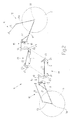
- Number 1 in Figure 1 indicates as a whole a motorcycle comprising a front wheel 2 and rear wheel 3 connected to a frame 4.
- Motorcycle 1 is powered by an internal combustion engine 5, which, in the embodiment shown in the drawings, is, for example, a one-cylinder engine.
- Front wheel 2 is connected to frame 4 by a front suspension 6 with a front air spring 7; and rear wheel 3 is connected to frame 4 by a rear suspension 8 with a rear air spring 9.
- the elastic characteristics of air springs 7 and 9 are adjustable by adjusting the internal pressure of air springs 7 and 9.
- each air spring 7, 9 is connected to a respective external damping device (not shown) to achieve a damping effect.
- each air spring 7, 9 has built-in dissipating members to achieve a damping effect, e.g. laminated valves (possibly controlled electrically) housed inside respective air spring 7, 9.
- each suspension 6, 8 comprises at least one articulated quadrilateral 10 having two cranks 11, 12 (a top crank 11 and bottom crank 12) hinged to frame 4, and a connecting rod 13 hinged to both cranks 11 and 12.
- Rear suspension 8 normally comprises one asymmetrical articulated quadrilateral 10, while front suspension 6 may comprise either one asymmetrical articulated quadrilateral 10, or two articulated quadrilaterals 10 located symmetrically on opposite sides of front wheel 2.
- Each articulated quadrilateral 10 comprises a supporting seat 14 for supporting wheel 2, 3, and located at the hinge between bottom crank 12 and connecting rod 13; and a transmission lever mechanism 15 connecting an intermediate point of bottom crank 12 to respective air spring 7, 9. More specifically, each transmission lever mechanism 15 comprises a rotary transmission member 16 hinged to frame 4; a transmission push rod 17 connecting an intermediate point of bottom crank 12 to transmission member 16; and a transmission push rod 18 connecting transmission member 16 to respective air spring 7, 9.
- Each air spring 7, 9 is activated by transmission lever mechanism 15 via a double-acting-tie rocker arm system 19.
- Each double-acting-tie rocker arm system 19 comprises a rocker arm 20 hinged to frame 4 and having a first end hinged to push rod 18, and a second end opposite the first end and hinged to respective air spring 7, 9; a rocker arm 21 hinged to frame 4 and having a free first end, and a second end opposite the first end and hinged to respective air spring 7, 9; and a tie 22 hinged at one end to rocker arm 20, and at the opposite end to rocker arm 21, so that rotation of rocker arm 20 in one direction corresponds to rotation of rocker arm 21 in the opposite direction.
- Each tie 22 preferably comprises two ends with spherical articulated joints.
- Each transmission push rod 17 is hinged at one end to an intermediate point of bottom crank 12, and at the opposite end to rotary transmission member 16; and each transmission push rod 18 is hinged at one end to rotary transmission member 16, and at the opposite end to rocker arm 20.
- the two air springs 7 and 9 are preferably positioned parallel and side by side, and housed underneath engine 5 for easy access. This arrangement also lowers the centre of gravity of motorcycle 1, and reduces roll, thus making the vehicle much easier to ride and manoeuvre.
- FIG. 3 shows operation of rear suspension 8 : if rear wheel 3 moves up (e.g. when accelerating, by centrifugal acceleration pushing motorcycle 1 down when cornering, or on encountering a bump in the road), top crank 11 rotates upwards (clockwise) with respect to frame 4; this is transmitted by transmission lever mechanism 15 (in this case, rotary transmission member 16 rotating clockwise with respect to frame 4) to double-acting-tie rocker arm system 19; rocker arm 20 therefore rotates clockwise, and, by means of tie 22, rotates rocker arm 21 anticlockwise, thus expanding rear air spring 9.
- Front suspension 6 operates in exactly the same way as rear suspension 8, and therefore needs no explanation.
- each rocker arm 20, 21 comprises a number of seats 23 in which to hinge tie 22, and tie 22 is adjustable in length, so the geometry of suspensions 6 and 8 can be adjusted quickly and easily by altering the seating of respective ties 22 in seats 23. It is important to note that this can be done without changing any of the existing parts, and with no difficulty, even by an inexperienced user, by virtue of the accessible location of ties 22.
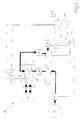
- air springs 7 and 9 are connected to an electronically controlled pneumatic circuit 24, which regulates the pressure of air springs 7 and 9, and has an electronic control unit 25.
- Pneumatic circuit 24 comprises a displacement compressor 26 activated directly by a drive shaft of engine 5; a tank 27 pressurized by displacement compressor 26; two solenoid regulating valves 28, each connecting a respective air spring 7, 9 to tank 27 or to the atmosphere; and two pressure sensors 29, each for measuring the pressure of a respective air spring 7, 9.
- Pneumatic circuit 24 also comprises a solenoid exhaust valve 30 for connecting tank 27 to the atmosphere; and a further pressure sensor 31 for measuring the pressure of tank 27.
- displacement compressor 26 is activated by the drive shaft of engine 5 via a gear transmission (not shown), and comprises a lobed displacement pump that provides small work fluid flows at high delivery pressures.
- a rotor of displacement compressor 26 is connected permanently to the drive shaft of engine 5; and a solenoid relief valve 32 is interposed between displacement compressor 26 and tank 27 to connect the delivery of displacement compressor 26 to tank 27 or to the atmosphere.
- displacement compressor 26 is always on, but only performs significant work (i.e. absorbs other than negligible mechanical power) when the delivery of displacement compressor 26 is connected to tank 27 by solenoid relief valve 32. Conversely, when solenoid relief valve 32 connects the delivery of displacement compressor 26 to the atmosphere, the difference in pressure between the intake and delivery of displacement compressor 26 is zero, so displacement compressor 26 performs no significant work (i.e. absorbs negligible mechanical power due solely to very low internal friction).
- control unit 25 uses pressure sensor 31 to feedback monitor the pressure in tank 27. If the pressure in tank 27 is above the desired value, control unit 25 activates solenoid exhaust valve 30 to connect tank 27 to the atmosphere; and, if the pressure in tank 27 is below the desired value, control unit 25 activates solenoid relief valve 32 to connect tank 27 to the delivery of displacement compressor 26.
- Control unit 25 uses pressure sensors 29 to feedback monitor the pressure in air springs 7 and 9. If the pressure in air spring 7 or 9 is above the desired value, control unit 25 activates the respective solenoid regulating valve 28 to connect spring 7 or 9 to the atmosphere; and, if the pressure in air spring 7 or 9 is below the desired value, control unit 25 activates the respective solenoid regulating valve 28 to connect air spring 7 or 9 to tank 27.
- pneumatic circuit 24 may also comprise a solenoid bypass valve 33 to connect air springs 7 and 9.
- Control unit 25 is also connected to a linear sensor 34 fitted to front air spring 7 to directly measure the actual length of front air spring 7, and to a linear sensor 35 fitted to rear air spring 9 to directly measure the actual length of rear air spring 9.
- linear sensors 34 and 35 may be eliminated, and their function performed by pressure sensors 29, which determine the actual length of air springs 7 and 9 indirectly as a function of the actual pressure in air springs 7 and 9. This embodiment, however, is inevitably less accurate in determining the actual length of air springs 7 and 9.
- control unit 25 acquires the negative excursion (i.e. compression) of air springs 7 and 9 by means of linear sensors 34 and 35; determines the load on motorcycle 1 (i.e. the weight of the rider, the passenger, if any, and any luggage) as a function of the negative excursion of air springs 7 and 9; determines an optimum pressure of air springs 7 and 9 as a function of the load on motorcycle 1; and controls pneumatic circuit 24 to apply the optimum pressure to air springs 7 and 9.
- the load on motorcycle 1 i.e. the weight of the rider, the passenger, if any, and any luggage
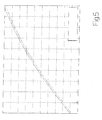
- a memory of control unit 25 stores at least one curve (an example of which is shown schematically in the Figure 5 graph), which gives the optimum pressure of air spring 7 or 9 (y axis) as a function of the negative excursion (x axis) of air spring 7 or 9.
- the curve is determined at the design and set-up stage of motorcycle 1, and is first calculated theoretically, and later refined on the basis of tests.
- control unit 25 does not actually determine the load on motorcycle 1, this being incorporated in the curve, stored in control unit 25, giving the optimum pressure of air springs 7 and 9 as a function of the negative excursion of air springs 7 and 9.
- One curve may obviously be provided for front air spring 7, and another for rear air spring 9.
- a selector device 36 is connected to control unit 25 to enable the rider to select from a number of alternative response modes of air springs 7 and 9.
- selector device 36 comprises a switch or push-button panel by which to select a race mode, a comfort mode, or an intermediate or normal mode.
- Control unit 25 determines the rider-selected mode setting on selector device 36, and adjusts the optimum pressure of air springs 7 and 9 for a given load on motorcycle 1.
- a memory of control unit 25 stores a curve (an example of which is shown schematically in the Figure 6 graph), which gives, for the three response modes of air springs 7 and 9, the optimum pressure of air springs 7 and 9 (y axis) as a function of the negative excursion (x axis) of air springs 7 and 9.
- the curve is determined at the design and set-up stage of motorcycle 1, and is first calculated theoretically, and later refined on the basis of tests.
- control unit 25 determines the excursions of air springs 7 and 9 by means of linear sensors 34 and 35, determines riding conditions as a function of the excursions of air springs 7 and 9, and adjusts the pressure of air springs 7 and 9 as a function of the riding conditions.
- control unit 25 actively controls air springs 7 and 9 to adapt response of air springs 7 and 9 to the riding condition. For example, on determining (e.g. by means of linear sensors 34 and 35) maximum excursion of one of air springs 7 and 9, control unit 25 may opt to increase the internal pressure of (i.e. stiffen) the air spring 7, 9 in question. It is important to note that adjustments by control unit 25 to the internal pressure of air springs 7 and 9 must always be made gradually, to avoid confusing the rider.
- engine 5 is load-bearing and forms an integral part of frame 4. More specifically, suspensions 6 and 8 are connected directly to engine 5, and frame 4 comprises a bracket 37 supported by engine 5 and fitted with a saddle (not shown); and a bracket 38 supported by engine 5 and in turn supporting a supporting member 39 for a handlebar (not shown).
- the innovative suspensions 6 and 8 described above provide for a high degree of integration of frame 4 and engine 5.
- a one-cylinder engine 5 is an excellent solution, by being geometrically and structurally symmetrical and compact. Employing a load-bearing engine 5 specially designed for motorcycle 1 provides for further reducing the overall mass (by as much as roughly 5 to 15%).
- the conventional telescopic fork is eliminated in favour of an articulated antidive quadrilateral 10 with adjustable-length connecting rod-crank members and an articulated lever steering system.
- the handlebar no longer being connected directly to the unsuspended mass by rods and cover tubes, but indirectly by the articulated transmission system, is mechanically suspended to greatly improve riding comfort.
- Performance of the articulated quadrilateral arrangement ensures maintenance of characteristic hub angles with respect to the ground (i.e. provides for an antidive front suspension 6), thus greatly improving bump road holding ability.
- the same technology is also applied to rear suspension 8, using an asymmetrical one-arm articulated quadrilateral 10, or two symmetrical articulated quadrilaterals 10; the aim being the same as for front suspension 6, i.e. to ensure antidive performance.
- motorcycle 1 as described above has numerous advantages.
- it has a high degree of passive safety, and is extremely easy to drive, by virtue of the articulated linkage system of suspensions 6 and 8; and the characteristic hub angles with respect to the ground remain more or less unchanged (antidive function) to ensure maximum safety when braking or turning.
- suspensions 6 and 8 are easily adjustable by simply altering the seating of ties 22 in seats 23.
- suspensions 6 and 8 are designed to ensure nonlinear performance, which in fact is what determines the progressivity demanded of a motorcycle suspension, i.e. increasing stiffness of the suspension alongside an increase in stress.
- a progressive suspension i.e. characterized by nonlinear geometric-structural elements, is capable of performing satisfactorily regardless of the loads applied.
Landscapes
- Engineering & Computer Science (AREA)
- Mechanical Engineering (AREA)
- Axle Suspensions And Sidecars For Cycles (AREA)
- Automatic Cycles, And Cycles In General (AREA)
Applications Claiming Priority (1)
| Application Number | Priority Date | Filing Date | Title |
|---|---|---|---|
| ITBO20060828 ITBO20060828A1 (it) | 2006-12-05 | 2006-12-05 | Motocicletta provvista di sospensioni pneumatiche |
Publications (2)
| Publication Number | Publication Date |
|---|---|
| EP1930234A2 true EP1930234A2 (de) | 2008-06-11 |
| EP1930234A3 EP1930234A3 (de) | 2008-07-23 |
Family
ID=39166869
Family Applications (1)
| Application Number | Title | Priority Date | Filing Date |
|---|---|---|---|
| EP07122393A Withdrawn EP1930234A3 (de) | 2006-12-05 | 2007-12-05 | Motorrad mit Luftfederungen |
Country Status (2)
| Country | Link |
|---|---|
| EP (1) | EP1930234A3 (de) |
| IT (1) | ITBO20060828A1 (de) |
Cited By (3)
| Publication number | Priority date | Publication date | Assignee | Title |
|---|---|---|---|---|
| CN106080926A (zh) * | 2016-07-24 | 2016-11-09 | 天津同瑞祥和科技有限公司 | 一种碰撞缓冲前叉结构 |
| US10967930B2 (en) | 2017-09-01 | 2021-04-06 | Bruce Minaker | Multi-link suspension system |
| WO2023194086A1 (de) * | 2022-04-07 | 2023-10-12 | Bayerische Motoren Werke Aktiengesellschaft | Verfahren und vorrichtung zur ermittlung des beladungszustands eines motorrads |
Citations (8)
| Publication number | Priority date | Publication date | Assignee | Title |
|---|---|---|---|---|
| US4638881A (en) | 1983-12-26 | 1987-01-27 | Honda Giken Kogyo Kabushiki Kaisha | Motorcycle, and body structure therefor |
| US4650027A (en) | 1984-06-08 | 1987-03-17 | Elf France | Coupling device between a front suspension and a rear suspension of a vehicle |
| US4700799A (en) | 1985-06-25 | 1987-10-20 | Honda Giken Kogyo Kabushiki Kaisha | Frameless motorcycle |
| US4723621A (en) | 1985-10-30 | 1988-02-09 | Honda Giken Kogyo Kabushiki Kaisha | Motorcycle |
| US4744579A (en) | 1987-05-11 | 1988-05-17 | Renato Roatta | Motorcycle with single-shock-absorber, front suspension |
| US4756379A (en) | 1986-06-04 | 1988-07-12 | Honda Giken Kogyo Kabushiki Kaisha | Motorcycle |
| US5050699A (en) | 1988-06-13 | 1991-09-24 | Franck Savard | Transmission for a vehicle having at least one driving wheel |
| US5361864A (en) | 1990-11-30 | 1994-11-08 | Yamaha Hatsudoki Kabushiki Kaisha | Front wheel suspension for motorcycle |
Family Cites Families (3)
| Publication number | Priority date | Publication date | Assignee | Title |
|---|---|---|---|---|
| US4568101A (en) * | 1984-05-02 | 1986-02-04 | Harley-Davidson Motor Co., Inc. | Automatic suspension system |
| US4709934A (en) * | 1985-12-18 | 1987-12-01 | Kabushiki Kaisha Showa Seisakusho | Vehicle leveling system |
| JPH0281784A (ja) * | 1988-09-16 | 1990-03-22 | Honda Motor Co Ltd | 自動二輪車等車両における車高調整方法 |
-
2006
- 2006-12-05 IT ITBO20060828 patent/ITBO20060828A1/it unknown
-
2007
- 2007-12-05 EP EP07122393A patent/EP1930234A3/de not_active Withdrawn
Patent Citations (8)
| Publication number | Priority date | Publication date | Assignee | Title |
|---|---|---|---|---|
| US4638881A (en) | 1983-12-26 | 1987-01-27 | Honda Giken Kogyo Kabushiki Kaisha | Motorcycle, and body structure therefor |
| US4650027A (en) | 1984-06-08 | 1987-03-17 | Elf France | Coupling device between a front suspension and a rear suspension of a vehicle |
| US4700799A (en) | 1985-06-25 | 1987-10-20 | Honda Giken Kogyo Kabushiki Kaisha | Frameless motorcycle |
| US4723621A (en) | 1985-10-30 | 1988-02-09 | Honda Giken Kogyo Kabushiki Kaisha | Motorcycle |
| US4756379A (en) | 1986-06-04 | 1988-07-12 | Honda Giken Kogyo Kabushiki Kaisha | Motorcycle |
| US4744579A (en) | 1987-05-11 | 1988-05-17 | Renato Roatta | Motorcycle with single-shock-absorber, front suspension |
| US5050699A (en) | 1988-06-13 | 1991-09-24 | Franck Savard | Transmission for a vehicle having at least one driving wheel |
| US5361864A (en) | 1990-11-30 | 1994-11-08 | Yamaha Hatsudoki Kabushiki Kaisha | Front wheel suspension for motorcycle |
Cited By (3)
| Publication number | Priority date | Publication date | Assignee | Title |
|---|---|---|---|---|
| CN106080926A (zh) * | 2016-07-24 | 2016-11-09 | 天津同瑞祥和科技有限公司 | 一种碰撞缓冲前叉结构 |
| US10967930B2 (en) | 2017-09-01 | 2021-04-06 | Bruce Minaker | Multi-link suspension system |
| WO2023194086A1 (de) * | 2022-04-07 | 2023-10-12 | Bayerische Motoren Werke Aktiengesellschaft | Verfahren und vorrichtung zur ermittlung des beladungszustands eines motorrads |
Also Published As
| Publication number | Publication date |
|---|---|
| EP1930234A3 (de) | 2008-07-23 |
| ITBO20060828A1 (it) | 2008-06-06 |
Similar Documents
| Publication | Publication Date | Title |
|---|---|---|
| US4546997A (en) | Vehicle steering and suspension system | |
| US7931286B2 (en) | Vehicle lean and alignment control system | |
| US4809179A (en) | Control system for motor vehicle suspension unit | |
| CN108137118B (zh) | 车辆悬吊装置 | |
| EP2046589B1 (de) | System zur steuerung des trimms von motorrädern mit drei oder vier rädern | |
| US6823958B2 (en) | Progressive suspension device for the rear wheel of a motorcycle | |
| US20020084619A1 (en) | Vehicle front suspension system | |
| US20180009281A1 (en) | Multi-bearing-point independent suspension | |
| CN105082921B (zh) | 用于倾斜底盘的车轮悬架和倾斜底盘以及它们的操作方法和相应配备的车辆 | |
| CN1655982A (zh) | 车辆悬挂系统 | |
| JP2005219617A (ja) | ステアリングダンパ装置 | |
| EP0277788A2 (de) | Kraftfahrzeugaufhängung mit regelbarer Vorrichtung und Regelvorrichtung dafür | |
| FR2719000A1 (fr) | Système de suspension actif, en particulier pour automobiles. | |
| EP1930234A2 (de) | Motorrad mit Luftfederungen | |
| US7017893B1 (en) | Pull-type suspension | |
| US6899193B1 (en) | Motorcycle lateral suspension mechanism | |
| JP2010096347A (ja) | 油圧緩衝器 | |
| WO2025123136A1 (en) | Front suspension system | |
| JP6917449B2 (ja) | 流体作動式下降装置を備えるオートバイ | |
| WO2010032231A1 (en) | Connected suspension for two-wheeled vehicles, namely bicycles and motorcycles | |
| JP2010159018A (ja) | 懸架装置 | |
| WO2019016690A1 (en) | SUSPENSION WITH CHARGE-SENSITIVE DEVICE | |
| US8403092B1 (en) | Motorcycle suspension system | |
| CN118478973A (zh) | 调整车辆悬架的悬架装置 | |
| JP2932598B2 (ja) | 自動二輪車の車高調整装置 |
Legal Events
| Date | Code | Title | Description |
|---|---|---|---|
| PUAI | Public reference made under article 153(3) epc to a published international application that has entered the european phase |
Free format text: ORIGINAL CODE: 0009012 |
|
| AK | Designated contracting states |
Kind code of ref document: A2 Designated state(s): AT BE BG CH CY CZ DE DK EE ES FI FR GB GR HU IE IS IT LI LT LU LV MC MT NL PL PT RO SE SI SK TR |
|
| AX | Request for extension of the european patent |
Extension state: AL BA HR MK RS |
|
| PUAL | Search report despatched |
Free format text: ORIGINAL CODE: 0009013 |
|
| AK | Designated contracting states |
Kind code of ref document: A3 Designated state(s): AT BE BG CH CY CZ DE DK EE ES FI FR GB GR HU IE IS IT LI LT LU LV MC MT NL PL PT RO SE SI SK TR |
|
| AX | Request for extension of the european patent |
Extension state: AL BA HR MK RS |
|
| AKX | Designation fees paid | ||
| REG | Reference to a national code |
Ref country code: DE Ref legal event code: 8566 |
|
| STAA | Information on the status of an ep patent application or granted ep patent |
Free format text: STATUS: THE APPLICATION IS DEEMED TO BE WITHDRAWN |
|
| 18D | Application deemed to be withdrawn |
Effective date: 20090124 |