EP1931061B1 - Verwalten des verbindungsstatus drahtloser kommunikation - Google Patents
Verwalten des verbindungsstatus drahtloser kommunikation Download PDFInfo
- Publication number
- EP1931061B1 EP1931061B1 EP06810528.7A EP06810528A EP1931061B1 EP 1931061 B1 EP1931061 B1 EP 1931061B1 EP 06810528 A EP06810528 A EP 06810528A EP 1931061 B1 EP1931061 B1 EP 1931061B1
- Authority
- EP
- European Patent Office
- Prior art keywords
- server
- client
- status
- connection
- change
- Prior art date
- Legal status (The legal status is an assumption and is not a legal conclusion. Google has not performed a legal analysis and makes no representation as to the accuracy of the status listed.)
- Not-in-force
Links
- 238000004891 communication Methods 0.000 title claims description 58
- 230000008859 change Effects 0.000 claims description 59
- 238000000034 method Methods 0.000 claims description 24
- 238000012545 processing Methods 0.000 claims description 11
- 230000004044 response Effects 0.000 claims description 9
- 238000010586 diagram Methods 0.000 description 10
- 239000003795 chemical substances by application Substances 0.000 description 4
- 238000011161 development Methods 0.000 description 3
- 230000018109 developmental process Effects 0.000 description 3
- 238000005516 engineering process Methods 0.000 description 3
- 230000002093 peripheral effect Effects 0.000 description 3
- 230000008901 benefit Effects 0.000 description 2
- 230000005540 biological transmission Effects 0.000 description 2
- 230000001413 cellular effect Effects 0.000 description 2
- 230000000694 effects Effects 0.000 description 2
- 230000003993 interaction Effects 0.000 description 2
- 238000013461 design Methods 0.000 description 1
- 230000010365 information processing Effects 0.000 description 1
- 230000007246 mechanism Effects 0.000 description 1
- 230000008569 process Effects 0.000 description 1
- 230000011664 signaling Effects 0.000 description 1
- 230000003068 static effect Effects 0.000 description 1
Images



Classifications
-
- H—ELECTRICITY
- H04—ELECTRIC COMMUNICATION TECHNIQUE
- H04L—TRANSMISSION OF DIGITAL INFORMATION, e.g. TELEGRAPHIC COMMUNICATION
- H04L65/00—Network arrangements, protocols or services for supporting real-time applications in data packet communication
- H04L65/1066—Session management
- H04L65/1069—Session establishment or de-establishment
-
- H—ELECTRICITY
- H04—ELECTRIC COMMUNICATION TECHNIQUE
- H04W—WIRELESS COMMUNICATION NETWORKS
- H04W76/00—Connection management
- H04W76/10—Connection setup
- H04W76/19—Connection re-establishment
-
- H—ELECTRICITY
- H04—ELECTRIC COMMUNICATION TECHNIQUE
- H04L—TRANSMISSION OF DIGITAL INFORMATION, e.g. TELEGRAPHIC COMMUNICATION
- H04L69/00—Network arrangements, protocols or services independent of the application payload and not provided for in the other groups of this subclass
- H04L69/16—Implementation or adaptation of Internet protocol [IP], of transmission control protocol [TCP] or of user datagram protocol [UDP]
-
- H—ELECTRICITY
- H04—ELECTRIC COMMUNICATION TECHNIQUE
- H04W—WIRELESS COMMUNICATION NETWORKS
- H04W76/00—Connection management
- H04W76/20—Manipulation of established connections
-
- H—ELECTRICITY
- H04—ELECTRIC COMMUNICATION TECHNIQUE
- H04W—WIRELESS COMMUNICATION NETWORKS
- H04W80/00—Wireless network protocols or protocol adaptations to wireless operation
- H04W80/06—Transport layer protocols, e.g. TCP [Transport Control Protocol] over wireless
-
- H—ELECTRICITY
- H04—ELECTRIC COMMUNICATION TECHNIQUE
- H04W—WIRELESS COMMUNICATION NETWORKS
- H04W88/00—Devices specially adapted for wireless communication networks, e.g. terminals, base stations or access point devices
- H04W88/02—Terminal devices
Definitions
- the invention relates to a mobile radio communication device, and a method of managing connectivity status for the same.
- a mobile radio communication device such as a cellular phone handset
- a mobile radio communication device such as a cellular phone handset
- the increased functionality offered by a mobile radio communication device has arisen from technical developments relating to the various circuit elements of the cellular phone handset, the operating and application software and also from improvements relating to network operation and characteristics.
- SIM Subscriber Identification Module
- One such development relates to the provision of a web server running in a subscriber identification module card, which allows for the provision of SIM-based services whilst taking advantage of the multimedia capability already present in the mobile phone handset and relating, for example, to data display and/or information processing.
- GUI graphical user interface
- control of a SIM-based services menu can readily be profiled so as to match the end-user's preferences and common requirements.
- BIP Bearer Independent Protocol
- ETSI Standard No. TS 102 223 titled " Smart cards; Card Application Toolkit (CAT) (Release 6)", published in May 2005 discloses the interface between the Universal Integrated Circuit Card (UICC) and the terminal, and terminal procedures, specifically for the Card Application Toolkit.
- the Card Application Toolkit is a set of generic commands and procedures for use by the UICC, irrespective of the access technology of the network.
- the UICC supports at least one application in order to access a network. This application is called Network Access Application (NAA).
- NAA Network Access Application
- the standard document specifies the mechanisms in order to expand the generic set of commands and procedures by access technology specific ones.
- US Patent No. 6 944 650 B1 discloses a method and an architecture for securely accessing virtual objects distributed in systems connected to the internet network, and for obtaining an instance of same. This access is performed via a smart card, through a web browser.
- the terminal and the smart card each comprise a specific protocol layer.
- the latter comprises intelligent agents for establishing two-way data exchange sessions, thereby allowing the smart card to have a web server functionality.
- the smart card also comprises intelligent agents, called script translators, and a virtual file management system cooperating with a specialized script-translating intelligent agent.
- Each virtual object is associated with a virtual file of the virtual file management system.
- the specialized intelligent agent presents the browser with a list of the accessible virtual objects and generates methods for accessing these objects.
- channel status signals are developed and employed within the mobile phone handset particularly with regard to connectivity to the smartcard web server and to a related transport connection protocol (TCP) client/server pair.
- TCP transport connection protocol
- the mobile phone handset can disadvantageously lose local connection within the TCP client/server pair within the mobile phone handset, and then, the browser associated with the smartcard web server will then make an attempt at reconnection.
- the data exchanges that arise in relation to such reconnection will lead to a decrease in the speed of operational processing within the mobile phone handset.
- FIGs. 1 , 2 and 3 are timing charts showing channel status found in the related mobile radio communication device.
- FIG. 1 is a timing chart illustrating channel status events with regard to status transmissions within a mobile radio communication device handset and between a network connection 10, a browser 12, a TCP/IP client 14, a TCP/IP server 16, USAT 18, USIMM 20, and a web server circuit card 22 in the form of a Universal Mobile Telecommunications System Integrated Circuit Card (UICC).
- UICC Universal Mobile Telecommunications System Integrated Circuit Card
- channel status signals 26 are provided from SAT 18 and USIMM 20, confirming packet connection activated and link established.
- the mobile radio communication device is in a mode waiting for receipt of a new network status, as indicated by an arrow 28.
- the channel status 32 to the circuit card 22 is changed as indicated to packet connection activated and line dropped.
- the "no service” signal can arise through the mobile phone handset being out-zone temporarily, but with its packet connection context, not deactivated by the network 10. This leads to the "line dropped with packet connection activated" or "line dropped” status signal 32.
- the mobile radio communication device is then again waiting for a new network status such as indicated by an arrow 34.
- the packet connection context On receipt of a new network status, such as "service detached” as indicated by an arrow 36 from the network 10, the packet connection context is then deactivated by the network 10, and the data link is downed. This leads to the channel status signal 38 indicating "packet connection deactivated” or "line not established”.
- channel status signals are used primarily in order to indicate the network status, i.e., the incoming signals arising from the network source 10, and are not employed for describing the TCP client/server pair status connection.
- the TCP client/server pair status connection can comprise various status such as “listening”, “listening and connected”, “listening and disconnected”, and, again "listening”.
- the TCP/IP server 16 When listening, the TCP/IP server 16 is waiting for connection from a remote client, and the status "listening and connected" arises when connection from a remote client to the TCP/IP server 16 is achieved for subsequent data exchange.
- the shutdown status is sent to the TCP/IP server 16, leading to the "listening and disconnected" status.
- the subscriber identification module card (smartcard) web server is enable to determine if a client is connected or not, as indicated by the "link established” and "link not established” status signals.
- the subscriber identification module card (smartcard) web server to determine the difference between a client connection status signal and a network change status signal.
- the mobile radio communication device then will send a "link not established” signal as indicated in FIG. 1 such that the web server circuit card 22 will then proceed to send a close channel status signal.
- This close channel status signal will serve to reset the local connection with the client.
- FIG. 2 is a timing diagram showing status signals arising within a network connected mobile radio communication device, and illustrating the network connection 40, the browser 42, the TCP/IP client 44, the TCP/IP server 46, the BIP/SATS 48, and the web server circuit card 50.
- the channel status indicated by the web server circuit card 50 is initially an OPEN_CHANNEL status indicated by an arrow 52, which arises with an automatic re-connection flag off.
- the browser 42 sends a first request as indicated by an arrow 54, but, prior to this, the BIP channel status is indicated by an arrow 56 as "link not established".
- This TCP connection status as sent to the web server circuit card 50 then changes to "link established" as indicated by an arrow 58 upon connection 60 being achieved between the TCP/IP client 44 and the TCP/IP server 46.
- the browser 42 and the web server client card 50 are then able to exchange data, as indicated at block 62, prior to receipt of a "service detached" status signal 64 received from the network 40.
- the network 40 releases the packet connection during data exchanges between the web server circuit card 50 and the browser 42.
- a CLOSE_CHANNEL status signal 66 is then generated and issued by the web server circuit card 50 in response to the web server circuit card 50 receiving a "link not established" status signal on its BIP channel.
- Disconnection 68 between the TCP/IP client 44 and the TCP/IP sever 46 then arises such that the close channel status signal 66 transmitted from the web server circuit card 50 leads to the browser 42 losing connection to the web server circuit card 50.
- the channel status signal delivered to the web server circuit card 50 remains as "link not established".
- FIG. 3 is a timing diagram illustrating channel status signals arising within a mobile radio communication device according to the current art, and illustrating standard TCP connection with channel status events arising without network interaction.
- FIG. 3 illustrates in particular a further problem arising in the current art in that there is no manner for indicating to the web server circuit card 50 that the TCP/IP server is ready to receive a further connection consistent with the previous connection.
- the web server circuit card 50 has to operate to close, and then, re-open the BIP channel in spite of presence of the automatic re-connection flag.
- the number of messages arising within the mobile radio communication device channel will increase and serve to slow down the general data change within the mobile radio communication device such that normal service from the mobile radio communication device will be unavailable temporarily, i.e. during the close/open phase of operation initiated by the web server smart card.
- FIG. 3 illustrates the network 40, the browser 42, the TCP/IP client 44, the TCP/IP server 46, a BIP/SA 48, and the web server circuit card 50.
- An OPEN_CHANELL status signal 52 is provided from the web server circuit card 50, arising with the automatic re-connection flag set.
- no status signals are transmitted from the network connector 40, and the process proceeds to the browser 42 sending a first request, as indicated by an arrow 54.
- a channel status signal "link not established" is sent from the TCP/IP server 46 to the web server circuit card 50, as illustrated by an arrow 56.
- An event is changed to the channel status to "link established", as indicated by an arrow 58, and subsequent to connection 60 is established between the TCP/IP client 44 and the TCP/IP server 46.
- the TCP connection status signal is sent to the web server circuit card 50, but there is no information concerning the server status, in particular, whether the TCP/IP server 46 might be considered to be listening on the channel.
- the browser 42 and the web server circuit card 50 exchange data as required, as indicated by block 62.
- a signal indicative of the connection cut 72 may be sent while a receiver buffer is empty and not during or before a transmission so as to simplify the web server circuit card 50.
- the TCP/IP server 46 initiates the change in connection status to the web server circuit card 50 such that the channel status to the web server circuit card 50 is changed to "link established", as indicated by an arrow 80.
- the browser 42 and the web server circuit card 50 initiate a new data exchange, as indicated by block 82.
- the present invention provides a method of managing connection status for a server device within a mobile radio communications device, the mobile radio communications device including a client/server pair, wherein said client/server pair is a transport connection protocol (TCP) client/server pair and wherein the server device comprises a Universal Integrated Circuit Card (UICC) server device, the method including the steps of: receiving an indication of a change of connection status for a client/server pair, wherein said change of connection status is a change to a state in which the TCP server is listening for a connection from a remote client, or receiving an indication of a change of network status, wherein said change of network status comprises a failure to establish a link with the network; processing the received indication to discriminate between a TCP client/server connection event and a network event comprising a failure to establish a link with the network; generating, in response to said processing, a client/server status signal when a connection event for the client/server pair occurs, the generated client/server status signal indicating that the TCP
- said processing step may determine the nature of said change; and said generation step may generate a corresponding client/server status signal in dependence on a result of said determination.
- the client/server status signal indicating the server is listening for a connection from the remote client may be generated prior to the remote client sending a request.
- the client/server status signal indicating the client/server pair is connected may be generated after the remote client sends a request.
- the client/server status signal indicating the client/server pair is connected may be generated subsequent to the client/server status signal indicating that the server is listening for a connection from the remote client.
- the present invention further provides a mobile radio communications device for communicating with a network, the device comprising: a client/server pair, wherein said client/server pair is a transport connection protocol (TCP) client/server pair and wherein the server device comprises a Universal Integrated Circuit Card (UICC) server device; and means for managing connection status of a server device for a channel between said server device and the client/server pair; wherein said managing means is configured for: receiving an indication of a change of connection status for a client/server pair, wherein said change of connection status is a change to a state in which the TCP server is listening for a connection from a remote client, or receiving an indication of a change of network status, wherein said change of network status comprises a failure to establish a link with the network; processing the received indication to discriminate between a TCP client/server connection event and a network event comprising a failure to establish a link with the network; generating, in response to said processing, a client/server status signal when a connection event for the client/server pair occurs
- the device may further comprise said server device, for example, a smartcard server device.
- said server device for example, a smartcard server device.
- the managing means may be configured for: processing a received indication of a change of connection status for the client/server pair to determine the nature of said change; and generating a corresponding client/server status signal in dependence on said determination.
- the managing means may be configured such that the client/server status signal indicating the server is listening for a connection from the remote client is generated prior to the remote client sending a request.
- the managing means may be configured such that a client/server status signal indicating the client/server pair is connected is generated after the remote client sends a request.
- the managing means may be configured such that said client/server status signal indicating the client/server pair is connected is generated subsequent to the client/server status signal indicating that the server is listening for a connection from the remote client.
- the present invention also provides a server device for use with a mobile radio communications device, the server device comprising: means for establishing a channel with a client/server pair of the mobile radio communications device, wherein said client/server pair is a transport connection protocol (TCP) client/server pair and wherein the server device comprises a Universal Integrated Circuit Card (UICC) server device; means for receiving a client/server status signal from the mobile radio communications device when a change of connection status for the client/server pair occurs, the client/server status signal indicating that the TCP server is listening for a connection from a remote client, and for receiving a different status signal from the mobile radio communications device when a change of network status occurs, wherein said change of network status comprises a failure to establish a link with the network; means for processing the received status signal to discriminate between a TCP client/server connection event and a network event comprising a failure to establish a link with the network; and means for maintaining the channel when said client/server status signal is received.
- TCP transport connection protocol
- UICC Universal
- the receiving means may be configured to receive a subsequent client/server signal indicating that the client/server pair is connected; and said server device may comprise means for exchanging data over said channel after receipt of said client/server signal indicating the client/server pair is connected.
- the present invention also provides a method performed in a server device for managing communication with a mobile radio communications device, the method including the steps of: establishing a channel with a client/server pair of the mobile radio communications device, wherein said client/server pair is a transport connection protocol (TCP) client/server pair and wherein the server device comprises a Universal Integrated Circuit Card (UICC) server device; receiving a client/server status signal from the mobile radio communications device, the client/server status signal indicating that the TCP server is listening for a connection from a remote client, wherein the status signal is a client/server status signal generated in response to a change in client/server status or receiving a different status signal generated in response to a change in network status, wherein said change of network status comprises failure to establish a link with the network; processing the received status signal to discriminate between a TCP client/server connection event and a network event comprising a failure to establish a link with the network; and maintaining the channel when said processing indicates a client/server connection event.
- TCP transport connection protocol
- the receiving step may comprise receiving a subsequent client/server signal indicating that the client/server pair is connected; and the method may further comprise exchanging data over said channel after receipt of said client/server signal indicating that the client/server pair is connected.
- the present invention advantageously provides for a subscriber identification module (smartcard) device operating in server mode. This is advantageously achieved within the concept of the present invention through dividing the reporting between the bearer connection status and the transport connection status, i.e. the TCP connection. This provides particularly useful when a client of a subscriber identification module (smartcard) device comprises a remote client.
- specific channel status signals are generated in order to indicate the accurate TCP server status to the web server circuit card 50.
- a "link not established” status signal was transmitted to the web server circuit card 50 when the local client disconnects in the current state of the art.
- the mobile radio communication device can be arranged to send a "disconnection" status signal to the web server circuit card 50 in place of sending a "link not established” status signal.
- the mobile radio communication device may be arranged to send a "in connection" status signal to the web server circuit card 50.
- the mobile radio communication device when arranged to listen on a specified port of the web server circuit card 50, can be arranged to send a "listening'' status signal to the web server circuit card 50.
- the present invention is advantageous in providing improved operation and management of the channels in the mobile radio communication device as compared with the current state of the art.
- the web server circuit card 50 when arranged for operation in accordance with the present invention will be able to discriminate between a network event and a TCP client/server connection event.
- the smartcard web server circuit card 50 can be accessed from a location remote from the mobile radio communication device, and can provide a specific local address.
- the data exchanges between the mobile radio communication device and the web server circuit card 50 can be improved.
- a "listening" status signal is generated and received for each of the web server circuit card 50 between subsequent TCP client connections.
- the web server circuit card 50 will not then need to initiate a close/open channel procedure in order to ensure the current state of TCP server connectivity.
- a "listening" status event indicates that the server is waiting for a connection from a remote client, whereas a "connected" status event indicates that a client is connected to the server. For instance, this is indicated by an open channel without an automatic re-connection flag.
- the "disconnected" status indicates that the client has reset the connection. This is indicated by, for instance, an open channel without the automatic re-connection flag.
- a "connected and listening" channel status which indicates that the client is connected to the server and that the server is ready for the follow-up connection with a status of open channel with an automatic re-connection flag.
- a "disconnected and listening" channel status which indicates that the client has reset the connection with the server and that the server is immediately ready for the next attempted connection. This is as associated with an open channel with an automatic re-connection flag, for instance.
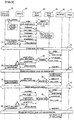
- FIG. 4 is a timing diagram with channel status events arising in a mobile radio communication device in accordance with the embodiment of the present invention.
- FIG. 4 serves to illustrate how the problems illustrated in the timing diagram of FIG. 2 can be overcome by the present invention.
- FIG. 4 serves to indicate again in FIG. 4 the signaling relationship between the network connector 40, the browser 42, the TCP/IP server 46, the TCP/IP client 44, the BIP/SATS 48, and the web server circuit card 50.
- the present invention illustrated in FIG. 4 is different in operation from the current state of the art in that the two altered channel status signals "listening" 84 and "connected" 86 arise prior to the browser 42 sending a first request 54, the initial connection 60 between the TCP/IP client 44 and the TCP/IP server 46, and the data exchange 62 between the browser 42 and the web server circuit card 50.
- the TCP connection status signal as indicated by arrows 84 and 86 is sent to the web server circuit card 50.
- the "service detached" status signal 64 again arises as initiated from the network connection 40 since, in this scenario, the network 40 releases the packet connection context during the data exchange 62 between the browser 42 and the web server circuit card 50.
- the web server circuit card 50 is then not influenced by the SERVICE DETACHED network-originating signal 64, and the web server circuit card 50, as indicated at 88, does not serve to close the BIP channel.
- the browser 42 and the web server circuit card 50 can then continue to exchange data as indicated by block 90, and thus, the disadvantages arising in the current state of the art and as illustrated in FIG. 2 do not arise in the present invention.
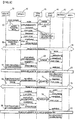
- FIG. 5 is a timing diagram of a mobile radio communication device in accordance with the embodiment of the present invention, and illustrates the manner in which the present invention can overcome the problems of the current art as illustrated in FIG. 3 .
- the reference numerals shown in FIG. 3 are used also in FIG. 5 .
- a channel status "listening" signal 92 is delivered to the web server circuit card 50 from the BIP/SATS 48.
- the channel status is switched to "connected and listening" in accordance with the present invention.
- connection cut 72 between the TCP/IP client 44 and the TCP/IP server 46
- the BIP channel status becomes "disconnected and listening" as illustrated by an arrow 96. It should be appreciated that a signal indicative of the connection cut 72 may be sent when the receiver buffer is emptied and not during or before data transport in order to simplify the web server circuit card 50.
- the channel status changes to "connected and listening" as indicated by an arrow 98, and subsequently the browser 42 and the smartcard web server can then exchange new data as indicated by block 82.
- the TCP server status can then be readily determined such that it becomes readily possible to indicate to the web server circuit card 50 that the TCP server is ready to achieve further connectivity.
- the present invention provides for improved management of a BIP channel connection status when in server mode, and serves to divide the semantic report in between the bearer connection status and the transport connection status of the TCP connection. This proves particular useful in that the client of the web server card comprises a remote client.
- the management of the connection status for the BIP channel between, for example, a mobile radio communication device and a UICC smartcard when in server mode is advantageously improved.
- the present invention is not restricted to the details of the above-mentioned embodiments.
- the present invention not only relates to local TCP connection, but is also equally relevant to remote connection.
- the user can then connect to the web server through his/her own browser.
- the present invention can be extended for use in relation to a variety of peripheral devices for use, for example, in relation to a handset such as a demotic device, memory cards in the form of a SD card or MMC cards, camera devices or indeed any peripheral device offering a server feature employing a mobile TCP/IP stack.
- a handset such as a demotic device, memory cards in the form of a SD card or MMC cards, camera devices or indeed any peripheral device offering a server feature employing a mobile TCP/IP stack.
- the present invention can find employment in relation to any appropriate protocols used between such peripherals and handling delegation of TCP connections.
Landscapes
- Engineering & Computer Science (AREA)
- Computer Networks & Wireless Communication (AREA)
- Signal Processing (AREA)
- Business, Economics & Management (AREA)
- General Business, Economics & Management (AREA)
- Multimedia (AREA)
- Computer Security & Cryptography (AREA)
- Mobile Radio Communication Systems (AREA)
- Computer And Data Communications (AREA)
- Communication Control (AREA)
Claims (16)
- Verfahren zum Verwalten des Verbindungsstatus für ein Servergerät (50) in einem mobilen Funkkommunikationsgerät, wobei das mobile Funkkommunikationsgerät ein Client/Server-Paar (44, 46) beinhaltet, wobei das genannte Client/Server-Paar (44, 46) ein TCP-(Transport Connection Protocol)-Client/Server-Paar ist und wobei das Servergerät ein UICC-(Universal Integrated Circuit Card)-Servergerät umfasst,
wobei das Verfahren die folgenden Schritte beinhaltet:Empfangen einer Anzeige einer Änderung des Verbindungsstatus für das Client/Server-Paar (44, 46), wobei die genannte Änderung des Verbindungsstatus eine Änderung eines Zustands ist, in dem der TCP-Server (46) auf eine Verbindung von einem fernen Client horcht oder eine Anzeige einer Änderung des Netzwerkstatus empfängt, wobei die genannte Änderung des Netzwerkstatus eine Nichtherstellung einer Verbindung mit dem Netzwerk umfasst;Unterscheiden zwischen einer Änderung des Verbindungsstatus und einer Änderung des Netzwerkstatus;Erzeugen, als Reaktion auf die genannte Unterscheidung, eines Client/Server-Statussignals, wenn die Verbindungsstatusänderung auftritt, wobei das erzeugte Client/Server-Statussignal anzeigt, dass der TCP-Server (46) auf eine Verbindung von dem fernen Client horcht und ein anderes Statussignal erzeugt, wenn die Netzwerkstatusänderung auftritt; undSenden des erzeugten Client/Server-Statussignals zum Servergerät (50). - Verfahren nach Anspruch 1, das ferner, wenn eine Anzeige einer Verbindungsstatusänderung für das Client/Server-Paar (44, 46) empfangen wird, das Feststellen der Natur der genannten Änderung beinhaltet, wenn der genannte Erzeugungsschritt ein entsprechendes Client/Server-Statussignal in Abhängigkeit von einem Ergebnis der genannten Feststellung erzeugt.
- Verfahren nach Anspruch 1, wobei das Client/Server-Statussignal, das anzeigt, dass der Server auf eine Verbindung von dem fernen Client horcht, vor dem Senden einer Anforderung zu dem fernen Client erzeugt wird.
- Verfahren nach einem vorherigen Anspruch, wobei ein Client/Server-Statussignal, das anzeigt, dass das Client/Server-Paar (44, 46) verbunden ist, nach dem Senden einer Anforderung durch den fernen Client erzeugt wird.
- Verfahren nach Anspruch 4, wobei das genannte Client/Server-Statussignal, das anzeigt, dass das Client/Server-Paar (44, 46) verbunden ist, nach der Anzeige durch das Client/Server-Statussignal erzeugt wird, dass der Server auf eine Verbindung von dem fernen Client horcht.
- Mobiles Funkkommunikationsgerät zum Kommunizieren mit einem Netzwerk (40), wobei das Gerät Folgendes umfasst: ein Client/Server-Paar (44, 46), wobei das genannte Client/Server-Paar (44, 46) ein TCP-(Transport Connection Protocol)-Client/Server-Paar ist;
und Mittel zum Verwalten des Verbindungsstatus eines Servergeräts (50) für einen Kanal zwischen dem genannten Servergerät (50) und dem Client/Server-Paar (44, 46), wobei das Servergerät (50) ein UICC-(Universal Integrated Circuit Card)-Servergerät umfasst;
wobei das genannte Verwaltungsmittel konfiguriert ist zum:Empfangen einer Anzeige einer Änderung des Verbindungsstatus für ein Client/Server-Paar (44, 46), wobei die genannte Änderung des Verbindungsstatus eine Änderung eines Zustands ist, in dem der TCP-Server (46) auf eine Verbindung von einem fernen Client horcht oder eine Anzeige einer Änderung des Netzwerkstatus empfängt, wobei die genannte Änderung des Netzwerkstatus eine Nichtherstellung einer Verbindung mit dem Netzwerk umfasst;Unterscheiden zwischen der Änderung des Verbindungsstatus und der Änderung des Netzwerkstatus;Erzeugen, als Reaktion auf die genannte Unterscheidung, eines Client/Server-Statussignals, wenn die Verbindungsstatusänderung auftritt, wobei das erzeugte Client/Server-Statussignal anzeigt, dass der TCP-Server (46) auf eine Verbindung von dem fernen Client horcht, und Erzeugen eines anderen Statussignals, wenn die Netzwerkstatusänderung auftritt; undSenden des erzeugten Client/Server-Statussignals zum Servergerät (50). - Gerät nach Anspruch 6, das ferner das genannte Servergerät (50) umfasst.
- Gerät nach Anspruch 7, wobei das genannte Servergerät (50) ein Chipkarten-Servergerät (50) umfasst.
- Gerät nach einem der Ansprüche 6 bis 8, wobei das genannte Verwaltungsmittel konfiguriert ist zum:Verarbeiten einer empfangenen Anzeige einer Änderung des Verbindungsstatus für das Client/Server-Paar (44, 46), um die Natur der genannten Änderung festzustellen; und Erzeugen eines entsprechenden Client/Server-Statussignals in Abhängigkeit von der genannten Feststellung.
- Gerät nach einem der Ansprüche 6 bis 9, wobei das Verwaltungsmittel so konfiguriert ist, dass das Client/Server-Statussignal, das anzeigt, dass der Server auf eine Verbindung von dem fernen Client horcht, vor dem Senden einer Anforderung durch den fernen Client erzeugt wird.
- Gerät nach einem der Ansprüche 6 bis 10, wobei das Verwaltungsmittel so konfiguriert ist, dass ein Client/Server-Statussignal, das anzeigt, dass das Client/Server-Paar (44, 46) verbunden ist, nach dem Senden einer Anforderung durch den fernen Client erzeugt wird.
- Gerät nach Anspruch 11, wobei das Verwaltungsmittel so konfiguriert ist, dass das genannte Client/Server-Statussignal, das anzeigt, dass das Client/Server-Paar (44, 46) verbunden ist, nach dem Client/Server-Statussignal erzeugt wird, das anzeigt, dass der Server auf eine Verbindung von dem fernen Client horcht.
- Servergerät (50) zur Verwendung mit einem mobilen Funkkommunikationsgerät, wobei das Servergerät (50) Folgendes umfasst:ein UICC-(Universal Integrated Circuit Card)-Servergerät;Mittel zum Einrichten eines Kanals mit einem Client/Server-Paar (44, 46) des mobilen Funkkommunikationsgeräts, wobei das genannte Client/Server-Paar (44, 46) ein TCP-(Transport Connection Protocol)-Client/Server-Paar ist;Mittel zum Empfangen eines Client/Server-Statussignals von dem mobilen Funkkommunikationsgerät, wenn eine Änderung des Verbindungsstatus für das Client/Server-Paar (44, 46) auftritt, wobei das Client/Server-Statussignal anzeigt, dass der TCP-Server (46) auf eine Verbindung von einem fernen Client horcht, und zum Empfangen eines anderen Statussignals von dem mobilen Funkkommunikationsgerät, wenn eine Änderung des Netzwerkstatus auftritt, wobei die genannte Änderung des Netzwerkstatus eine Nichtherstellung einer Verbindung mit dem Netzwerk beinhaltet;Mittel zum Unterscheiden zwischen der Änderung des Verbindungsstatus und der Änderung des Netzwerkstatus; undMittel zum Verwalten des Kanals, wenn das genannte Client/Server-Statussignal empfangen wird.
- Gerät nach Anspruch 13, wobei das genannte Empfangsmittel zum Empfangen eines nachfolgenden Client/Server-Signals konfiguriert ist, das anzeigt, dass das Client/Server-Paar (44, 46) verbunden ist; und
das genannte Servergerät (50) Mittel zum Austauschen von Daten über den genannten Kanal nach dem Empfang des genannten Client/Server-Signals umfasst, das anzeigt, dass das Client/Server-Paar (44, 46) verbunden ist. - Verfahren, ausgeführt in einem Servergerät (50) zum Verwalten von Kommunikationen mit einem mobilen Funkkommunikationsgerät, wobei das Verfahren die folgenden Schritte beinhaltet:Einrichten eines Kanals mit einem Client/Server-Paar (44, 46) des mobilen Funkkommunikationsgeräts, wobei das genannte Client/Server-Paar (44, 46) ein TCP-(Transport Connection Protocol)-Client/Server-Paar ist und wobei das Servergerät (50) ein UICC-(Universal Integrated Circuit Card)-Servergerät umfasst;Empfangen eines Client/Server-Statussignals von dem mobilen Funkkommunikationsgerät, wobei das Client/Server-Statussignal anzeigt, dass der TCP-Server (46) auf eine Verbindung von einem fernen Client horcht, wobei das Statussignal ein Client/Server-Statussignal ist, das als Reaktion auf eine Änderung des Client/Server-Status erzeugt wird, oder Empfangen eines anderen Statussignals, das als Reaktion auf eine Änderung des Netzwerkstatus erzeugt wird, wobei die genannte Änderung des Netzwerkstatus eine Nichtherstellung einer Verbindung mit dem Netzwerk umfasst;Unterscheiden zwischen der Änderung des Verbindungsstatus und der Änderung des Netzwerkstatus; undWarten des Kanals, wenn das genannte Client/Server-Statussignal empfangen wird.
- Verfahren nach Anspruch 15, wobei der genannte Empfangsschritt das Empfangen eines nachfolgenden Client/Server-Signals beinhaltet, das anzeigt, dass das Client/Server-Paar (44, 46) verbunden ist; und wobei das genannte Verfahren ferner das Austauschen von Daten über den genannten Kanal nach dem Empfang des genannten Client/Server-Signals beinhaltet, das anzeigt, dass das Client/Server-Paar (44, 46) verbunden ist.
Applications Claiming Priority (2)
| Application Number | Priority Date | Filing Date | Title |
|---|---|---|---|
| GB0519573A GB2430582B (en) | 2005-09-26 | 2005-09-26 | Method of managing connectivity status for a mobile radio communications device, and such a device |
| PCT/JP2006/319003 WO2007034954A1 (ja) | 2005-09-26 | 2006-09-25 | 移動式無線通信装置及びその接続状態の管理方法 |
Publications (3)
| Publication Number | Publication Date |
|---|---|
| EP1931061A1 EP1931061A1 (de) | 2008-06-11 |
| EP1931061A4 EP1931061A4 (de) | 2011-09-28 |
| EP1931061B1 true EP1931061B1 (de) | 2016-04-13 |
Family
ID=35335450
Family Applications (1)
| Application Number | Title | Priority Date | Filing Date |
|---|---|---|---|
| EP06810528.7A Not-in-force EP1931061B1 (de) | 2005-09-26 | 2006-09-25 | Verwalten des verbindungsstatus drahtloser kommunikation |
Country Status (6)
| Country | Link |
|---|---|
| US (2) | US8495173B2 (de) |
| EP (1) | EP1931061B1 (de) |
| JP (2) | JP5012509B2 (de) |
| CN (4) | CN101273553A (de) |
| GB (1) | GB2430582B (de) |
| WO (1) | WO2007034954A1 (de) |
Families Citing this family (13)
| Publication number | Priority date | Publication date | Assignee | Title |
|---|---|---|---|---|
| GB2430582B (en) * | 2005-09-26 | 2008-04-09 | Nec Technologies | Method of managing connectivity status for a mobile radio communications device, and such a device |
| JP5406289B2 (ja) * | 2008-07-10 | 2014-02-05 | エスケープラネット株式会社 | スマートカード基盤の個人化サービスシステム及びその方法、そしてこれに適用されるスマートカード |
| US9569783B2 (en) * | 2008-08-28 | 2017-02-14 | Sk Planet Co., Ltd. | Advertisement system based on smart card, a method thereof, and smart card applied to the same |
| US8180906B2 (en) * | 2009-03-11 | 2012-05-15 | International Business Machines Corporation | Dynamically optimizing delivery of multimedia content over a network |
| CN101594614B (zh) * | 2009-06-30 | 2011-07-13 | 中兴通讯股份有限公司 | 数据下载方法以及终端 |
| US9497632B2 (en) * | 2009-10-01 | 2016-11-15 | T-Mobile Usa, Inc. | System and method for pairing a UICC card with a particular mobile communications device |
| CN101895572B (zh) * | 2010-06-28 | 2014-03-19 | 中兴通讯股份有限公司 | 一种sd卡与主控设备之间的数据交互方法及系统 |
| CN102917432A (zh) * | 2011-08-05 | 2013-02-06 | 希姆通信息技术(上海)有限公司 | 手机ps域网络连接管理装置及方法 |
| US9479386B2 (en) * | 2012-07-11 | 2016-10-25 | Samsung Electronics Co., Ltd | Scheme for device discovery and P2P group formation |
| KR102274930B1 (ko) * | 2014-09-26 | 2021-07-07 | 삼성에스디에스 주식회사 | 채널 연결 관리 방법 및 장치 |
| KR102604697B1 (ko) * | 2016-12-20 | 2023-11-22 | 삼성전자주식회사 | 모바일 기기, 모바일 기기의 사용자 인증 방법 및 사용자 인증 시스템 |
| CN113556713B (zh) * | 2021-06-22 | 2022-08-12 | 中国联合网络通信集团有限公司 | Uicc对于nfc连接关闭的管理方法、终端及uicc |
| US12445363B1 (en) * | 2024-04-01 | 2025-10-14 | Hewlett Packard Enterprise Development Lp | Cloud connection state monitoring utilizing unstable connection state analysis |
Family Cites Families (21)
| Publication number | Priority date | Publication date | Assignee | Title |
|---|---|---|---|---|
| JP3865946B2 (ja) | 1998-08-06 | 2007-01-10 | 富士通株式会社 | 文字メッセージ通信システム、文字メッセージ通信装置、文字メッセージ通信サーバ、文字メッセージ通信プログラムを記録したコンピュータ読み取り可能な記録媒体、文字メッセージ通信管理プログラムを記録したコンピュータ読み取り可能な記録媒体、文字メッセージ送受信方法及び文字メッセージ通信管理方法 |
| JP3164085B2 (ja) * | 1998-10-26 | 2001-05-08 | 日本電気株式会社 | 無線データ通信方法及びそのシステム |
| FR2791159B1 (fr) | 1999-03-15 | 2001-05-04 | Bull Cp8 | Procede d'acces a un objet a l'aide d'un navigateur de type "web" cooperant avec une carte a puce et architecture pour la mise en oeuvre du procede |
| JP4172120B2 (ja) * | 1999-06-29 | 2008-10-29 | ソニー株式会社 | 通信装置及び通信方法、通信端末装置 |
| FR2799595B1 (fr) * | 1999-10-12 | 2001-12-28 | Gemplus Card Int | Communication entre un terminal radiotelephonique et une entite de services |
| JP2002152835A (ja) * | 2000-11-13 | 2002-05-24 | Matsushita Electric Ind Co Ltd | 移動端末装置 |
| JP3632756B2 (ja) * | 2000-11-22 | 2005-03-23 | 日本電気株式会社 | 通信システム、サーバ、その方法及び記録媒体 |
| FR2823408B1 (fr) * | 2001-04-09 | 2003-05-30 | Gemplus Card Int | Procede de transmission de donnees par une station mobile comportant une etape de determination de la mds |
| EP1255416B1 (de) * | 2001-05-04 | 2011-04-06 | Siemens Aktiengesellschaft | Methode und Medium zum Speichern und Lesen von MMS (Multimedia messaging service) Daten |
| DE50204713D1 (de) * | 2001-06-25 | 2005-12-01 | Siemens Ag | Verfahren zum übertragen von daten |
| JP2004266665A (ja) * | 2003-03-03 | 2004-09-24 | Calsonic Kansei Corp | 顧客電話番号管理装置 |
| JP2004328130A (ja) | 2003-04-22 | 2004-11-18 | Matsushita Electric Ind Co Ltd | 情報公開システム |
| JP4370808B2 (ja) | 2003-05-19 | 2009-11-25 | 富士フイルム株式会社 | 通信システムおよび端末機器並びに通信方法 |
| US7181653B2 (en) * | 2003-12-11 | 2007-02-20 | Lenovo Singapore Pte, Ltd | Method for establishing network connections |
| EP1569491A3 (de) * | 2004-02-24 | 2006-11-02 | Lg Electronics Inc. | Bluetooth verwendendes Gruppennetzsystem und Generierungsverfahren dafür |
| US20050259673A1 (en) * | 2004-05-18 | 2005-11-24 | Axalto Inc. | Method and system for end-to-end communication between a universal integrated circuit card and a remote entity over an IP-based wireless wide area network and the internet |
| JP2004343783A (ja) | 2004-06-07 | 2004-12-02 | Toshiba Corp | 無線装置 |
| EP1792508A2 (de) * | 2004-09-23 | 2007-06-06 | Axalto SA | System und verfahren zur kommunikation mit universellen integrierten schaltungskarten in mobilen einrichtungen unter verwendung von internet-protocols |
| US20060168274A1 (en) * | 2004-11-08 | 2006-07-27 | Eliezer Aloni | Method and system for high availability when utilizing a multi-stream tunneled marker-based protocol data unit aligned protocol |
| US8265069B2 (en) * | 2005-06-23 | 2012-09-11 | Nokia Corporation | System, terminal, method, and computer program product for establishing a transport-level connection with a server located behind a network address translator and/or firewall |
| GB2430582B (en) * | 2005-09-26 | 2008-04-09 | Nec Technologies | Method of managing connectivity status for a mobile radio communications device, and such a device |
-
2005
- 2005-09-26 GB GB0519573A patent/GB2430582B/en not_active Expired - Fee Related
-
2006
- 2006-09-25 JP JP2007536589A patent/JP5012509B2/ja not_active Expired - Fee Related
- 2006-09-25 EP EP06810528.7A patent/EP1931061B1/de not_active Not-in-force
- 2006-09-25 US US12/066,802 patent/US8495173B2/en active Active
- 2006-09-25 CN CNA2006800354550A patent/CN101273553A/zh active Pending
- 2006-09-25 CN CN201210406317.6A patent/CN102932954B/zh not_active Expired - Fee Related
- 2006-09-25 WO PCT/JP2006/319003 patent/WO2007034954A1/ja not_active Ceased
- 2006-09-25 CN CN2013100690924A patent/CN103228058A/zh active Pending
- 2006-09-25 CN CN201310068808.9A patent/CN103220819B/zh not_active Expired - Fee Related
-
2012
- 2012-03-12 JP JP2012054640A patent/JP5321708B2/ja not_active Expired - Fee Related
-
2013
- 2013-03-01 US US13/782,915 patent/US20130185441A1/en not_active Abandoned
Non-Patent Citations (1)
| Title |
|---|
| "Smartcard Web Server Architecture ; OMA-AD-Smartcard_Web_Server-v1_0-20050927-D", 22 August 2005 (2005-08-22), XP064021902, [retrieved on 20050927] * |
Also Published As
| Publication number | Publication date |
|---|---|
| US20100146075A1 (en) | 2010-06-10 |
| CN103228058A (zh) | 2013-07-31 |
| CN102932954A (zh) | 2013-02-13 |
| JPWO2007034954A1 (ja) | 2009-04-02 |
| CN103220819B (zh) | 2016-07-06 |
| EP1931061A4 (de) | 2011-09-28 |
| EP1931061A1 (de) | 2008-06-11 |
| US8495173B2 (en) | 2013-07-23 |
| JP5012509B2 (ja) | 2012-08-29 |
| GB2430582B (en) | 2008-04-09 |
| US20130185441A1 (en) | 2013-07-18 |
| CN102932954B (zh) | 2016-01-20 |
| WO2007034954A1 (ja) | 2007-03-29 |
| CN101273553A (zh) | 2008-09-24 |
| GB0519573D0 (en) | 2005-11-02 |
| CN103220819A (zh) | 2013-07-24 |
| JP2012147468A (ja) | 2012-08-02 |
| JP5321708B2 (ja) | 2013-10-23 |
| GB2430582A (en) | 2007-03-28 |
Similar Documents
| Publication | Publication Date | Title |
|---|---|---|
| US20130185441A1 (en) | Mobile radio communication device and method of managing connectivity status for the same | |
| EP1954086B1 (de) | (U)SIM-Karte im Servermodus und Kommunikationsverfahren mit Client | |
| US5625678A (en) | Method and system for allowing switched voice and data communication among multiple application programs | |
| EP1233343B1 (de) | Verfahren und Funkschnittstellenschicht bestehend aus einer Menge von Anwendungsprogrammierungsschnittstellen (APIs) | |
| US20180091581A1 (en) | Method of switching download mode, control method thereof and control system thereof | |
| KR20010035348A (ko) | Sms와 무선 인터넷을 이용한 데이터 수신 방법 및시스템 | |
| FI113144B (fi) | Pakettidatapalvelun tarjoaminen langattomassa tietoliikennejärjestelmässä | |
| US8948101B2 (en) | Client-server communications in mobile radio communications device | |
| KR101809317B1 (ko) | 데이터 액세스 방법 및 장치 | |
| EP1338971B1 (de) | Verfahren und terminal zum sicheren bezug von programmen | |
| CN117336346A (zh) | 一种ippbx与pms对接状态转换方法、终端设备及介质 | |
| KR100541756B1 (ko) | 무선통신 시스템에서 대용량 데이터 전송방법 | |
| HK1180867A (en) | Mobile wireless communication apparatus and method for managing connection status thereof | |
| CN114567876A (zh) | 一种设备入网号码管理方法、系统、存储介质及电子设备 | |
| IE85200B1 (en) | A method and device for interfacing two incompatible devices | |
| GB2427331A (en) | Re-establishing connection between a mobile radio communications device and a socket of a SIM card web server | |
| GB2416226A (en) | A device for interfacing two incompatible devices | |
| IES83744Y1 (en) | A method and device for interfacing two incompatible devices |
Legal Events
| Date | Code | Title | Description |
|---|---|---|---|
| PUAI | Public reference made under article 153(3) epc to a published international application that has entered the european phase |
Free format text: ORIGINAL CODE: 0009012 |
|
| 17P | Request for examination filed |
Effective date: 20080331 |
|
| AK | Designated contracting states |
Kind code of ref document: A1 Designated state(s): DE FR GB IT |
|
| DAX | Request for extension of the european patent (deleted) | ||
| RBV | Designated contracting states (corrected) |
Designated state(s): DE FR GB IT |
|
| A4 | Supplementary search report drawn up and despatched |
Effective date: 20110830 |
|
| RIC1 | Information provided on ipc code assigned before grant |
Ipc: H04W 76/02 20090101AFI20110824BHEP |
|
| 17Q | First examination report despatched |
Effective date: 20120423 |
|
| RAP1 | Party data changed (applicant data changed or rights of an application transferred) |
Owner name: LENOVO INNOVATIONS LIMITED (HONG KONG) |
|
| REG | Reference to a national code |
Ref country code: DE Ref legal event code: R079 Ref document number: 602006048713 Country of ref document: DE Free format text: PREVIOUS MAIN CLASS: H04B0007260000 Ipc: H04W0076020000 |
|
| GRAP | Despatch of communication of intention to grant a patent |
Free format text: ORIGINAL CODE: EPIDOSNIGR1 |
|
| RIC1 | Information provided on ipc code assigned before grant |
Ipc: H04W 80/06 20090101ALN20150928BHEP Ipc: H04W 76/04 20090101ALN20150928BHEP Ipc: H04W 88/02 20090101ALN20150928BHEP Ipc: H04W 76/02 20090101AFI20150928BHEP |
|
| INTG | Intention to grant announced |
Effective date: 20151023 |
|
| GRAS | Grant fee paid |
Free format text: ORIGINAL CODE: EPIDOSNIGR3 |
|
| GRAA | (expected) grant |
Free format text: ORIGINAL CODE: 0009210 |
|
| AK | Designated contracting states |
Kind code of ref document: B1 Designated state(s): DE FR GB IT |
|
| REG | Reference to a national code |
Ref country code: GB Ref legal event code: FG4D |
|
| REG | Reference to a national code |
Ref country code: DE Ref legal event code: R096 Ref document number: 602006048713 Country of ref document: DE |
|
| PG25 | Lapsed in a contracting state [announced via postgrant information from national office to epo] |
Ref country code: IT Free format text: LAPSE BECAUSE OF FAILURE TO SUBMIT A TRANSLATION OF THE DESCRIPTION OR TO PAY THE FEE WITHIN THE PRESCRIBED TIME-LIMIT Effective date: 20160413 |
|
| REG | Reference to a national code |
Ref country code: DE Ref legal event code: R097 Ref document number: 602006048713 Country of ref document: DE |
|
| PLBE | No opposition filed within time limit |
Free format text: ORIGINAL CODE: 0009261 |
|
| STAA | Information on the status of an ep patent application or granted ep patent |
Free format text: STATUS: NO OPPOSITION FILED WITHIN TIME LIMIT |
|
| 26N | No opposition filed |
Effective date: 20170116 |
|
| REG | Reference to a national code |
Ref country code: FR Ref legal event code: ST Effective date: 20170531 |
|
| PG25 | Lapsed in a contracting state [announced via postgrant information from national office to epo] |
Ref country code: FR Free format text: LAPSE BECAUSE OF NON-PAYMENT OF DUE FEES Effective date: 20160930 |
|
| REG | Reference to a national code |
Ref country code: DE Ref legal event code: R079 Ref document number: 602006048713 Country of ref document: DE Free format text: PREVIOUS MAIN CLASS: H04W0076020000 Ipc: H04W0076100000 |
|
| PGFP | Annual fee paid to national office [announced via postgrant information from national office to epo] |
Ref country code: GB Payment date: 20190930 Year of fee payment: 14 |
|
| PGFP | Annual fee paid to national office [announced via postgrant information from national office to epo] |
Ref country code: DE Payment date: 20190930 Year of fee payment: 14 |
|
| REG | Reference to a national code |
Ref country code: DE Ref legal event code: R119 Ref document number: 602006048713 Country of ref document: DE |
|
| GBPC | Gb: european patent ceased through non-payment of renewal fee |
Effective date: 20200925 |
|
| PG25 | Lapsed in a contracting state [announced via postgrant information from national office to epo] |
Ref country code: DE Free format text: LAPSE BECAUSE OF NON-PAYMENT OF DUE FEES Effective date: 20210401 |
|
| PG25 | Lapsed in a contracting state [announced via postgrant information from national office to epo] |
Ref country code: GB Free format text: LAPSE BECAUSE OF NON-PAYMENT OF DUE FEES Effective date: 20200925 |