EP1931683B1 - Antagonistes mglur1 tricycliques fusionnes utilises en tant qu'agents therapeutiques - Google Patents
Antagonistes mglur1 tricycliques fusionnes utilises en tant qu'agents therapeutiques Download PDFInfo
- Publication number
- EP1931683B1 EP1931683B1 EP06813481A EP06813481A EP1931683B1 EP 1931683 B1 EP1931683 B1 EP 1931683B1 EP 06813481 A EP06813481 A EP 06813481A EP 06813481 A EP06813481 A EP 06813481A EP 1931683 B1 EP1931683 B1 EP 1931683B1
- Authority
- EP
- European Patent Office
- Prior art keywords
- group
- alkyl
- aryl
- optionally substituted
- heteroaryl
- Prior art date
- Legal status (The legal status is an assumption and is not a legal conclusion. Google has not performed a legal analysis and makes no representation as to the accuracy of the status listed.)
- Active
Links
- 0 C*=S[C@](C(*)C1=C2*c3ccnc(*)c13)N(*)C2=O Chemical compound C*=S[C@](C(*)C1=C2*c3ccnc(*)c13)N(*)C2=O 0.000 description 14
- UQCLBULSOFMSSW-UHFFFAOYSA-N COc(ccc(N(C=Cc1c2[s]c3c1c(NC1CC1)ccn3)C2=O)c1)c1F Chemical compound COc(ccc(N(C=Cc1c2[s]c3c1c(NC1CC1)ccn3)C2=O)c1)c1F UQCLBULSOFMSSW-UHFFFAOYSA-N 0.000 description 3
- WNMGAKOEKMRVJU-UHFFFAOYSA-N COc1ccnc2c1c(C=CN(c(cc1)ccc1F)C1=O)c1[s]2 Chemical compound COc1ccnc2c1c(C=CN(c(cc1)ccc1F)C1=O)c1[s]2 WNMGAKOEKMRVJU-UHFFFAOYSA-N 0.000 description 2
- VNKKQLPMKPOFNC-UHFFFAOYSA-N Cc(cc1)ccc1N(C=Cc1c2[s]c3nccc(OC)c13)C2=O Chemical compound Cc(cc1)ccc1N(C=Cc1c2[s]c3nccc(OC)c13)C2=O VNKKQLPMKPOFNC-UHFFFAOYSA-N 0.000 description 2
- AFCGAWYMXWEMSR-UHFFFAOYSA-N Cc1cccc(N(C=Cc2c3[s]c4c2c(OC)ccn4)C3=O)c1 Chemical compound Cc1cccc(N(C=Cc2c3[s]c4c2c(OC)ccn4)C3=O)c1 AFCGAWYMXWEMSR-UHFFFAOYSA-N 0.000 description 2
- XHLFMILUUUNRRX-UHFFFAOYSA-N O=C(c1c(C=C2)c(c(NC3CC3)ccn3)c3[s]1)N2c1ccc2[s]cnc2c1 Chemical compound O=C(c1c(C=C2)c(c(NC3CC3)ccn3)c3[s]1)N2c1ccc2[s]cnc2c1 XHLFMILUUUNRRX-UHFFFAOYSA-N 0.000 description 2
- IYFKVTTUQHXWDV-UHFFFAOYSA-N C#CCNc1c(c(C=CN(c(cc2)ccc2Cl)C2=O)c2[s]2)c2ncc1 Chemical compound C#CCNc1c(c(C=CN(c(cc2)ccc2Cl)C2=O)c2[s]2)c2ncc1 IYFKVTTUQHXWDV-UHFFFAOYSA-N 0.000 description 1
- LLGFGUPZHAMCTH-LUAWRHEFSA-N CC(c([s]c1ncc2)c(/C=C\Nc3ccc(C4CC4)cc3)c1c2OC)=O Chemical compound CC(c([s]c1ncc2)c(/C=C\Nc3ccc(C4CC4)cc3)c1c2OC)=O LLGFGUPZHAMCTH-LUAWRHEFSA-N 0.000 description 1
- PUVOFAJSZNCMQY-UHFFFAOYSA-N CCCNc1ccnc2c1c(C=CN(c(cc1)ccc1OC)C1=O)c1[s]2 Chemical compound CCCNc1ccnc2c1c(C=CN(c(cc1)ccc1OC)C1=O)c1[s]2 PUVOFAJSZNCMQY-UHFFFAOYSA-N 0.000 description 1
- GHOFJCOLOLFEEA-UHFFFAOYSA-N CCN(C=Cc1c2[s]c3c1c(OC)ccn3)C2=O Chemical compound CCN(C=Cc1c2[s]c3c1c(OC)ccn3)C2=O GHOFJCOLOLFEEA-UHFFFAOYSA-N 0.000 description 1
- LAYWJGOPFJTKKD-UHFFFAOYSA-N CCNC1=C(C(C=CN(c(cc2)ccc2OC)C2=O)=C2S2)C2=N[I]=N1 Chemical compound CCNC1=C(C(C=CN(c(cc2)ccc2OC)C2=O)=C2S2)C2=N[I]=N1 LAYWJGOPFJTKKD-UHFFFAOYSA-N 0.000 description 1
- UUYPBOCHCKDVFQ-UHFFFAOYSA-N CCNC1C2C(C=CN(c(c(F)c3)ccc3OC)C3=O)=C3SC2NCC1 Chemical compound CCNC1C2C(C=CN(c(c(F)c3)ccc3OC)C3=O)=C3SC2NCC1 UUYPBOCHCKDVFQ-UHFFFAOYSA-N 0.000 description 1
- KBZNXABLPPXMLN-UHFFFAOYSA-N CCNc1ccnc2c1CC(C=CN(c(cc1)ccc1C#N)C1=O)=C1S2 Chemical compound CCNc1ccnc2c1CC(C=CN(c(cc1)ccc1C#N)C1=O)=C1S2 KBZNXABLPPXMLN-UHFFFAOYSA-N 0.000 description 1
- IMQLLAFIKMYUNL-UHFFFAOYSA-N CCNc1ccnc2c1c(C=CN(c(cc1)ccc1[Br]=C)C1=O)c1[s]2 Chemical compound CCNc1ccnc2c1c(C=CN(c(cc1)ccc1[Br]=C)C1=O)c1[s]2 IMQLLAFIKMYUNL-UHFFFAOYSA-N 0.000 description 1
- UKPPGFGGYZRPPL-UHFFFAOYSA-N CCNc1ncnc2c1c(C=CN(c(cc1)ccc1OC)C1=O)c1[s]2 Chemical compound CCNc1ncnc2c1c(C=CN(c(cc1)ccc1OC)C1=O)c1[s]2 UKPPGFGGYZRPPL-UHFFFAOYSA-N 0.000 description 1
- GFFRNKSYOJSMMI-UHFFFAOYSA-N CCc(cc1)ccc1N(C=Cc1c2[s]c3c1c(OC)ccn3)C2=O Chemical compound CCc(cc1)ccc1N(C=Cc1c2[s]c3c1c(OC)ccn3)C2=O GFFRNKSYOJSMMI-UHFFFAOYSA-N 0.000 description 1
- FONMLWMEVQYZKW-UHFFFAOYSA-N CN(C)c1c(c(C=CN(c(cc2)ccc2Cl)C2=O)c2[s]2)c2ncc1 Chemical compound CN(C)c1c(c(C=CN(c(cc2)ccc2Cl)C2=O)c2[s]2)c2ncc1 FONMLWMEVQYZKW-UHFFFAOYSA-N 0.000 description 1
- SRXXXPYJRYRCQG-UHFFFAOYSA-N CN(C)c1c(c(C=CN(c(cc2)ccc2F)C2=O)c2[s]2)c2ncc1 Chemical compound CN(C)c1c(c(C=CN(c(cc2)ccc2F)C2=O)c2[s]2)c2ncc1 SRXXXPYJRYRCQG-UHFFFAOYSA-N 0.000 description 1
- JDKLUVRUHNLSBJ-UHFFFAOYSA-N CN(C)c1ccnc2c1c(C=CN(C1CCCCC1)C1=O)c1[s]2 Chemical compound CN(C)c1ccnc2c1c(C=CN(C1CCCCC1)C1=O)c1[s]2 JDKLUVRUHNLSBJ-UHFFFAOYSA-N 0.000 description 1
- UMDKBGDQXHBTGM-UHFFFAOYSA-N CN(C)c1ccnc2c1c(C=CN(c(c(F)c1)ccc1OC)C1=O)c1[s]2 Chemical compound CN(C)c1ccnc2c1c(C=CN(c(c(F)c1)ccc1OC)C1=O)c1[s]2 UMDKBGDQXHBTGM-UHFFFAOYSA-N 0.000 description 1
- UFMSTJBWDWHPDG-UHFFFAOYSA-N CN(CCO)c1ccnc2c1c(C=CN(c(cc1)ccc1OC)C1=O)c1[s]2 Chemical compound CN(CCO)c1ccnc2c1c(C=CN(c(cc1)ccc1OC)C1=O)c1[s]2 UFMSTJBWDWHPDG-UHFFFAOYSA-N 0.000 description 1
- HPTRAMMRFZGUOV-UHFFFAOYSA-N CN(c1ccnc2c1c(C=CN(c(cc1)ccc1OC)C1=O)c1[s]2)N Chemical compound CN(c1ccnc2c1c(C=CN(c(cc1)ccc1OC)C1=O)c1[s]2)N HPTRAMMRFZGUOV-UHFFFAOYSA-N 0.000 description 1
- HBQCFDFQVVKONE-UHFFFAOYSA-N CNc(cc1)ccc1N(C=Cc1c2[s]c3nccc(NC4CC4)c13)C2=O Chemical compound CNc(cc1)ccc1N(C=Cc1c2[s]c3nccc(NC4CC4)c13)C2=O HBQCFDFQVVKONE-UHFFFAOYSA-N 0.000 description 1
- GIASGKXSWXCTBM-UHFFFAOYSA-N CNc1ccnc2c1c(C=CN(c(cc1)cc3c1[s]cn3)C1=O)c1[s]2 Chemical compound CNc1ccnc2c1c(C=CN(c(cc1)cc3c1[s]cn3)C1=O)c1[s]2 GIASGKXSWXCTBM-UHFFFAOYSA-N 0.000 description 1
- YTTWCPCTWVFRJA-UHFFFAOYSA-N CNc1ccnc2c1c(C=CN(c(cc1)ccc1C#N)C1=O)c1[s]2 Chemical compound CNc1ccnc2c1c(C=CN(c(cc1)ccc1C#N)C1=O)c1[s]2 YTTWCPCTWVFRJA-UHFFFAOYSA-N 0.000 description 1
- GIMODLKOZWMPLJ-UHFFFAOYSA-N CNc1ccnc2c1c(C=CN(c(cc1)ccc1Cl)C1=O)c1[s]2 Chemical compound CNc1ccnc2c1c(C=CN(c(cc1)ccc1Cl)C1=O)c1[s]2 GIMODLKOZWMPLJ-UHFFFAOYSA-N 0.000 description 1
- WZZOVCDYQXGSPZ-UHFFFAOYSA-N CNc1ccnc2c1c(C=CN(c(cc1)ccc1F)C1=O)c1[s]2 Chemical compound CNc1ccnc2c1c(C=CN(c(cc1)ccc1F)C1=O)c1[s]2 WZZOVCDYQXGSPZ-UHFFFAOYSA-N 0.000 description 1
- FKJICIXCJNKELE-UHFFFAOYSA-N COc(cc1)ccc1N(C=Cc1c2[s]c3c1c(NCCCCCO)ccn3)C2=O Chemical compound COc(cc1)ccc1N(C=Cc1c2[s]c3c1c(NCCCCCO)ccn3)C2=O FKJICIXCJNKELE-UHFFFAOYSA-N 0.000 description 1
- CPTVWNQKWVEHCR-UHFFFAOYSA-N COc(cc1)ccc1N(C=Cc1c2[s]c3c1c(NCCCO)ccn3)C2=O Chemical compound COc(cc1)ccc1N(C=Cc1c2[s]c3c1c(NCCCO)ccn3)C2=O CPTVWNQKWVEHCR-UHFFFAOYSA-N 0.000 description 1
- KCSXUJCNYCRMMU-UHFFFAOYSA-N COc(cc1)ccc1N(C=Cc1c2[s]c3c1c(O)ccn3)C2=O Chemical compound COc(cc1)ccc1N(C=Cc1c2[s]c3c1c(O)ccn3)C2=O KCSXUJCNYCRMMU-UHFFFAOYSA-N 0.000 description 1
- ZUUBRGCTXRXCLV-UHFFFAOYSA-N COc(cc1)ccc1N(C=Cc1c2[s]c3nccc(NC4CC4)c13)C2=O Chemical compound COc(cc1)ccc1N(C=Cc1c2[s]c3nccc(NC4CC4)c13)C2=O ZUUBRGCTXRXCLV-UHFFFAOYSA-N 0.000 description 1
- NIMGJSAITDKSCM-UHFFFAOYSA-N COc(cc1F)ccc1N(C=Cc1c2[s]c3c1c(NC1CC1)ccn3)C2=O Chemical compound COc(cc1F)ccc1N(C=Cc1c2[s]c3c1c(NC1CC1)ccn3)C2=O NIMGJSAITDKSCM-UHFFFAOYSA-N 0.000 description 1
- XYMUGGASSJEAJN-UHFFFAOYSA-N COc(ccc(N(C=Cc1c2[s]c3c1c(NCC#C)ccn3)C2=O)c1)c1F Chemical compound COc(ccc(N(C=Cc1c2[s]c3c1c(NCC#C)ccn3)C2=O)c1)c1F XYMUGGASSJEAJN-UHFFFAOYSA-N 0.000 description 1
- KBQPTPBPSUMSHP-UHFFFAOYSA-N COc1c(c(C=CN(C2=CCC(C=C)C=C2)C2=O)c2[s]2)c2ncc1 Chemical compound COc1c(c(C=CN(C2=CCC(C=C)C=C2)C2=O)c2[s]2)c2ncc1 KBQPTPBPSUMSHP-UHFFFAOYSA-N 0.000 description 1
- CNGAAPLMYAITRA-UHFFFAOYSA-N COc1c(c(C=CN(c(cc2)ccc2C#N)C2=O)c2[s]2)c2ncc1 Chemical compound COc1c(c(C=CN(c(cc2)ccc2C#N)C2=O)c2[s]2)c2ncc1 CNGAAPLMYAITRA-UHFFFAOYSA-N 0.000 description 1
- NIDRLMLRYSZXIK-UHFFFAOYSA-N COc1c(c(C=CN(c2ccc(C3CC3)cc2)C2=O)c2[s]2)c2ncc1 Chemical compound COc1c(c(C=CN(c2ccc(C3CC3)cc2)C2=O)c2[s]2)c2ncc1 NIDRLMLRYSZXIK-UHFFFAOYSA-N 0.000 description 1
- XJZLJOSFUWHKJC-UHFFFAOYSA-N COc1ccnc2c1c(C=CN(C1O)C3=CCC4OC=CC4=C3)c1[s]2 Chemical compound COc1ccnc2c1c(C=CN(C1O)C3=CCC4OC=CC4=C3)c1[s]2 XJZLJOSFUWHKJC-UHFFFAOYSA-N 0.000 description 1
- QBCIKFDTSSBLEJ-UHFFFAOYSA-N COc1ccnc2c1c(C=CN(c(cc1)cc3c1OCO3)C1=O)c1[s]2 Chemical compound COc1ccnc2c1c(C=CN(c(cc1)cc3c1OCO3)C1=O)c1[s]2 QBCIKFDTSSBLEJ-UHFFFAOYSA-N 0.000 description 1
- NKMUZMQLYAKJPC-UHFFFAOYSA-N COc1ccnc2c1c(C=CN(c(cc1)ccc1Br)C1=O)c1[s]2 Chemical compound COc1ccnc2c1c(C=CN(c(cc1)ccc1Br)C1=O)c1[s]2 NKMUZMQLYAKJPC-UHFFFAOYSA-N 0.000 description 1
- BULXHEAZDHUJFQ-UHFFFAOYSA-N COc1ccnc2c1c(C=CN(c(cc1F)ccc1OC)C1=O)c1[s]2 Chemical compound COc1ccnc2c1c(C=CN(c(cc1F)ccc1OC)C1=O)c1[s]2 BULXHEAZDHUJFQ-UHFFFAOYSA-N 0.000 description 1
- MBXFZWVTBANMES-UHFFFAOYSA-N COc1ccnc2c1c(C=CN(c1cc(Cl)ccc1)C1=O)c1[s]2 Chemical compound COc1ccnc2c1c(C=CN(c1cc(Cl)ccc1)C1=O)c1[s]2 MBXFZWVTBANMES-UHFFFAOYSA-N 0.000 description 1
- LFFGLMNKIKLWED-UHFFFAOYSA-N COc1ccnc2c1c(C=CN(c1ccc3[s]cnc3c1)C1=O)c1[s]2 Chemical compound COc1ccnc2c1c(C=CN(c1ccc3[s]cnc3c1)C1=O)c1[s]2 LFFGLMNKIKLWED-UHFFFAOYSA-N 0.000 description 1
- YOOZCAVBGUBKKE-LLVKDONJSA-N C[C@H](CNc1ccnc2c1c(C=CN(C(CC1)=CC=C1Cl)C1=O)c1[s]2)O Chemical compound C[C@H](CNc1ccnc2c1c(C=CN(C(CC1)=CC=C1Cl)C1=O)c1[s]2)O YOOZCAVBGUBKKE-LLVKDONJSA-N 0.000 description 1
- FKCGAOJXLFANNO-UHFFFAOYSA-N Cc(cc1)ccc1N(C=Cc1c2[s]c3c1c(N(C)C)ccn3)C2=O Chemical compound Cc(cc1)ccc1N(C=Cc1c2[s]c3c1c(N(C)C)ccn3)C2=O FKCGAOJXLFANNO-UHFFFAOYSA-N 0.000 description 1
- BSGDAQUITSTZGB-UHFFFAOYSA-N Cc(cc1)ccc1N(C=Cc1c2[s]c3c1c(NC)ccn3)C2=O Chemical compound Cc(cc1)ccc1N(C=Cc1c2[s]c3c1c(NC)ccn3)C2=O BSGDAQUITSTZGB-UHFFFAOYSA-N 0.000 description 1
- YPJAOGHLKNRCSM-UHFFFAOYSA-N Cc(cc1)ccc1N(C=Cc1c2[s]c3c1c(NCC(F)(F)F)ccn3)C2=O Chemical compound Cc(cc1)ccc1N(C=Cc1c2[s]c3c1c(NCC(F)(F)F)ccn3)C2=O YPJAOGHLKNRCSM-UHFFFAOYSA-N 0.000 description 1
- BNCYUNIQXTWGFQ-UHFFFAOYSA-N Cc(cc1)ccc1N(C=Cc1c2[s]c3nccc(N)c13)C2=O Chemical compound Cc(cc1)ccc1N(C=Cc1c2[s]c3nccc(N)c13)C2=O BNCYUNIQXTWGFQ-UHFFFAOYSA-N 0.000 description 1
- QAPGIGLYOJYXTB-UHFFFAOYSA-N Cc(cc1)ccc1N(C=Cc1c2[s]c3nccc(NCC#C)c13)C2=O Chemical compound Cc(cc1)ccc1N(C=Cc1c2[s]c3nccc(NCC#C)c13)C2=O QAPGIGLYOJYXTB-UHFFFAOYSA-N 0.000 description 1
- IZXQPAIBAFLWPA-UHFFFAOYSA-N Cc(cc1)ccc1N(C=Cc1c2[s]c3ncnc(NC4CC4)c13)C2=O Chemical compound Cc(cc1)ccc1N(C=Cc1c2[s]c3ncnc(NC4CC4)c13)C2=O IZXQPAIBAFLWPA-UHFFFAOYSA-N 0.000 description 1
- NIZXCVPRAHJPGP-UHFFFAOYSA-N Cc(cc1)ccc1N(CCc1c2[s]c3nccc(NCCO)c13)C2=O Chemical compound Cc(cc1)ccc1N(CCc1c2[s]c3nccc(NCCO)c13)C2=O NIZXCVPRAHJPGP-UHFFFAOYSA-N 0.000 description 1
- WHLPWUWOABRVSE-UHFFFAOYSA-N N#Cc(cc1)ccc1N(C1O)C=Cc2c1[s]c1c2c(NC2CC2)ccn1 Chemical compound N#Cc(cc1)ccc1N(C1O)C=Cc2c1[s]c1c2c(NC2CC2)ccn1 WHLPWUWOABRVSE-UHFFFAOYSA-N 0.000 description 1
- MGQJHWKCCUWSGR-UHFFFAOYSA-N O=C(c([s]c1ncc2)c(C=C3)c1c2NCC(F)(F)F)N3c(cc1)ccc1Cl Chemical compound O=C(c([s]c1ncc2)c(C=C3)c1c2NCC(F)(F)F)N3c(cc1)ccc1Cl MGQJHWKCCUWSGR-UHFFFAOYSA-N 0.000 description 1
- AIKMKUBZPSFYFF-UHFFFAOYSA-N O=C(c1c(C=C2)c(c(NC3CC3)ccn3)c3[s]1)N2c(cc1)ccc1Br Chemical compound O=C(c1c(C=C2)c(c(NC3CC3)ccn3)c3[s]1)N2c(cc1)ccc1Br AIKMKUBZPSFYFF-UHFFFAOYSA-N 0.000 description 1
- UNJMUJAMZSLRJS-UHFFFAOYSA-N O=C(c1c(C=C2)c(c(NC3CC3)ccn3)c3[s]1)N2c(cc1)ccc1F Chemical compound O=C(c1c(C=C2)c(c(NC3CC3)ccn3)c3[s]1)N2c(cc1)ccc1F UNJMUJAMZSLRJS-UHFFFAOYSA-N 0.000 description 1
- PKPJLVWQYOGJAL-UHFFFAOYSA-N OCCNc1c(c(C=CN(c(cc2)ccc2Cl)C2=O)c2[s]2)c2ncc1 Chemical compound OCCNc1c(c(C=CN(c(cc2)ccc2Cl)C2=O)c2[s]2)c2ncc1 PKPJLVWQYOGJAL-UHFFFAOYSA-N 0.000 description 1
Classifications
-
- C—CHEMISTRY; METALLURGY
- C07—ORGANIC CHEMISTRY
- C07D—HETEROCYCLIC COMPOUNDS
- C07D495/00—Heterocyclic compounds containing in the condensed system at least one hetero ring having sulfur atoms as the only ring hetero atoms
- C07D495/12—Heterocyclic compounds containing in the condensed system at least one hetero ring having sulfur atoms as the only ring hetero atoms in which the condensed system contains three hetero rings
- C07D495/14—Ortho-condensed systems
-
- A—HUMAN NECESSITIES
- A61—MEDICAL OR VETERINARY SCIENCE; HYGIENE
- A61P—SPECIFIC THERAPEUTIC ACTIVITY OF CHEMICAL COMPOUNDS OR MEDICINAL PREPARATIONS
- A61P1/00—Drugs for disorders of the alimentary tract or the digestive system
- A61P1/08—Drugs for disorders of the alimentary tract or the digestive system for nausea, cinetosis or vertigo; Antiemetics
-
- A—HUMAN NECESSITIES
- A61—MEDICAL OR VETERINARY SCIENCE; HYGIENE
- A61P—SPECIFIC THERAPEUTIC ACTIVITY OF CHEMICAL COMPOUNDS OR MEDICINAL PREPARATIONS
- A61P11/00—Drugs for disorders of the respiratory system
- A61P11/06—Antiasthmatics
-
- A—HUMAN NECESSITIES
- A61—MEDICAL OR VETERINARY SCIENCE; HYGIENE
- A61P—SPECIFIC THERAPEUTIC ACTIVITY OF CHEMICAL COMPOUNDS OR MEDICINAL PREPARATIONS
- A61P13/00—Drugs for disorders of the urinary system
- A61P13/02—Drugs for disorders of the urinary system of urine or of the urinary tract, e.g. urine acidifiers
-
- A—HUMAN NECESSITIES
- A61—MEDICAL OR VETERINARY SCIENCE; HYGIENE
- A61P—SPECIFIC THERAPEUTIC ACTIVITY OF CHEMICAL COMPOUNDS OR MEDICINAL PREPARATIONS
- A61P17/00—Drugs for dermatological disorders
- A61P17/02—Drugs for dermatological disorders for treating wounds, ulcers, burns, scars, keloids, or the like
-
- A—HUMAN NECESSITIES
- A61—MEDICAL OR VETERINARY SCIENCE; HYGIENE
- A61P—SPECIFIC THERAPEUTIC ACTIVITY OF CHEMICAL COMPOUNDS OR MEDICINAL PREPARATIONS
- A61P19/00—Drugs for skeletal disorders
- A61P19/02—Drugs for skeletal disorders for joint disorders, e.g. arthritis, arthrosis
-
- A—HUMAN NECESSITIES
- A61—MEDICAL OR VETERINARY SCIENCE; HYGIENE
- A61P—SPECIFIC THERAPEUTIC ACTIVITY OF CHEMICAL COMPOUNDS OR MEDICINAL PREPARATIONS
- A61P19/00—Drugs for skeletal disorders
- A61P19/08—Drugs for skeletal disorders for bone diseases, e.g. rachitism, Paget's disease
-
- A—HUMAN NECESSITIES
- A61—MEDICAL OR VETERINARY SCIENCE; HYGIENE
- A61P—SPECIFIC THERAPEUTIC ACTIVITY OF CHEMICAL COMPOUNDS OR MEDICINAL PREPARATIONS
- A61P21/00—Drugs for disorders of the muscular or neuromuscular system
-
- A—HUMAN NECESSITIES
- A61—MEDICAL OR VETERINARY SCIENCE; HYGIENE
- A61P—SPECIFIC THERAPEUTIC ACTIVITY OF CHEMICAL COMPOUNDS OR MEDICINAL PREPARATIONS
- A61P21/00—Drugs for disorders of the muscular or neuromuscular system
- A61P21/04—Drugs for disorders of the muscular or neuromuscular system for myasthenia gravis
-
- A—HUMAN NECESSITIES
- A61—MEDICAL OR VETERINARY SCIENCE; HYGIENE
- A61P—SPECIFIC THERAPEUTIC ACTIVITY OF CHEMICAL COMPOUNDS OR MEDICINAL PREPARATIONS
- A61P25/00—Drugs for disorders of the nervous system
-
- A—HUMAN NECESSITIES
- A61—MEDICAL OR VETERINARY SCIENCE; HYGIENE
- A61P—SPECIFIC THERAPEUTIC ACTIVITY OF CHEMICAL COMPOUNDS OR MEDICINAL PREPARATIONS
- A61P25/00—Drugs for disorders of the nervous system
- A61P25/02—Drugs for disorders of the nervous system for peripheral neuropathies
-
- A—HUMAN NECESSITIES
- A61—MEDICAL OR VETERINARY SCIENCE; HYGIENE
- A61P—SPECIFIC THERAPEUTIC ACTIVITY OF CHEMICAL COMPOUNDS OR MEDICINAL PREPARATIONS
- A61P25/00—Drugs for disorders of the nervous system
- A61P25/06—Antimigraine agents
-
- A—HUMAN NECESSITIES
- A61—MEDICAL OR VETERINARY SCIENCE; HYGIENE
- A61P—SPECIFIC THERAPEUTIC ACTIVITY OF CHEMICAL COMPOUNDS OR MEDICINAL PREPARATIONS
- A61P25/00—Drugs for disorders of the nervous system
- A61P25/08—Antiepileptics; Anticonvulsants
-
- A—HUMAN NECESSITIES
- A61—MEDICAL OR VETERINARY SCIENCE; HYGIENE
- A61P—SPECIFIC THERAPEUTIC ACTIVITY OF CHEMICAL COMPOUNDS OR MEDICINAL PREPARATIONS
- A61P25/00—Drugs for disorders of the nervous system
- A61P25/14—Drugs for disorders of the nervous system for treating abnormal movements, e.g. chorea, dyskinesia
-
- A—HUMAN NECESSITIES
- A61—MEDICAL OR VETERINARY SCIENCE; HYGIENE
- A61P—SPECIFIC THERAPEUTIC ACTIVITY OF CHEMICAL COMPOUNDS OR MEDICINAL PREPARATIONS
- A61P25/00—Drugs for disorders of the nervous system
- A61P25/14—Drugs for disorders of the nervous system for treating abnormal movements, e.g. chorea, dyskinesia
- A61P25/16—Anti-Parkinson drugs
-
- A—HUMAN NECESSITIES
- A61—MEDICAL OR VETERINARY SCIENCE; HYGIENE
- A61P—SPECIFIC THERAPEUTIC ACTIVITY OF CHEMICAL COMPOUNDS OR MEDICINAL PREPARATIONS
- A61P25/00—Drugs for disorders of the nervous system
- A61P25/18—Antipsychotics, i.e. neuroleptics; Drugs for mania or schizophrenia
-
- A—HUMAN NECESSITIES
- A61—MEDICAL OR VETERINARY SCIENCE; HYGIENE
- A61P—SPECIFIC THERAPEUTIC ACTIVITY OF CHEMICAL COMPOUNDS OR MEDICINAL PREPARATIONS
- A61P25/00—Drugs for disorders of the nervous system
- A61P25/22—Anxiolytics
-
- A—HUMAN NECESSITIES
- A61—MEDICAL OR VETERINARY SCIENCE; HYGIENE
- A61P—SPECIFIC THERAPEUTIC ACTIVITY OF CHEMICAL COMPOUNDS OR MEDICINAL PREPARATIONS
- A61P25/00—Drugs for disorders of the nervous system
- A61P25/24—Antidepressants
-
- A—HUMAN NECESSITIES
- A61—MEDICAL OR VETERINARY SCIENCE; HYGIENE
- A61P—SPECIFIC THERAPEUTIC ACTIVITY OF CHEMICAL COMPOUNDS OR MEDICINAL PREPARATIONS
- A61P25/00—Drugs for disorders of the nervous system
- A61P25/28—Drugs for disorders of the nervous system for treating neurodegenerative disorders of the central nervous system, e.g. nootropic agents, cognition enhancers, drugs for treating Alzheimer's disease or other forms of dementia
-
- A—HUMAN NECESSITIES
- A61—MEDICAL OR VETERINARY SCIENCE; HYGIENE
- A61P—SPECIFIC THERAPEUTIC ACTIVITY OF CHEMICAL COMPOUNDS OR MEDICINAL PREPARATIONS
- A61P25/00—Drugs for disorders of the nervous system
- A61P25/30—Drugs for disorders of the nervous system for treating abuse or dependence
- A61P25/34—Tobacco-abuse
-
- A—HUMAN NECESSITIES
- A61—MEDICAL OR VETERINARY SCIENCE; HYGIENE
- A61P—SPECIFIC THERAPEUTIC ACTIVITY OF CHEMICAL COMPOUNDS OR MEDICINAL PREPARATIONS
- A61P25/00—Drugs for disorders of the nervous system
- A61P25/30—Drugs for disorders of the nervous system for treating abuse or dependence
- A61P25/36—Opioid-abuse
-
- A—HUMAN NECESSITIES
- A61—MEDICAL OR VETERINARY SCIENCE; HYGIENE
- A61P—SPECIFIC THERAPEUTIC ACTIVITY OF CHEMICAL COMPOUNDS OR MEDICINAL PREPARATIONS
- A61P27/00—Drugs for disorders of the senses
- A61P27/02—Ophthalmic agents
-
- A—HUMAN NECESSITIES
- A61—MEDICAL OR VETERINARY SCIENCE; HYGIENE
- A61P—SPECIFIC THERAPEUTIC ACTIVITY OF CHEMICAL COMPOUNDS OR MEDICINAL PREPARATIONS
- A61P27/00—Drugs for disorders of the senses
- A61P27/02—Ophthalmic agents
- A61P27/06—Antiglaucoma agents or miotics
-
- A—HUMAN NECESSITIES
- A61—MEDICAL OR VETERINARY SCIENCE; HYGIENE
- A61P—SPECIFIC THERAPEUTIC ACTIVITY OF CHEMICAL COMPOUNDS OR MEDICINAL PREPARATIONS
- A61P29/00—Non-central analgesic, antipyretic or antiinflammatory agents, e.g. antirheumatic agents; Non-steroidal antiinflammatory drugs [NSAID]
-
- A—HUMAN NECESSITIES
- A61—MEDICAL OR VETERINARY SCIENCE; HYGIENE
- A61P—SPECIFIC THERAPEUTIC ACTIVITY OF CHEMICAL COMPOUNDS OR MEDICINAL PREPARATIONS
- A61P3/00—Drugs for disorders of the metabolism
- A61P3/08—Drugs for disorders of the metabolism for glucose homeostasis
- A61P3/10—Drugs for disorders of the metabolism for glucose homeostasis for hyperglycaemia, e.g. antidiabetics
-
- A—HUMAN NECESSITIES
- A61—MEDICAL OR VETERINARY SCIENCE; HYGIENE
- A61P—SPECIFIC THERAPEUTIC ACTIVITY OF CHEMICAL COMPOUNDS OR MEDICINAL PREPARATIONS
- A61P37/00—Drugs for immunological or allergic disorders
- A61P37/02—Immunomodulators
-
- A—HUMAN NECESSITIES
- A61—MEDICAL OR VETERINARY SCIENCE; HYGIENE
- A61P—SPECIFIC THERAPEUTIC ACTIVITY OF CHEMICAL COMPOUNDS OR MEDICINAL PREPARATIONS
- A61P43/00—Drugs for specific purposes, not provided for in groups A61P1/00-A61P41/00
-
- A—HUMAN NECESSITIES
- A61—MEDICAL OR VETERINARY SCIENCE; HYGIENE
- A61P—SPECIFIC THERAPEUTIC ACTIVITY OF CHEMICAL COMPOUNDS OR MEDICINAL PREPARATIONS
- A61P9/00—Drugs for disorders of the cardiovascular system
- A61P9/10—Drugs for disorders of the cardiovascular system for treating ischaemic or atherosclerotic diseases, e.g. antianginal drugs, coronary vasodilators, drugs for myocardial infarction, retinopathy, cerebrovascula insufficiency, renal arteriosclerosis
-
- C—CHEMISTRY; METALLURGY
- C07—ORGANIC CHEMISTRY
- C07D—HETEROCYCLIC COMPOUNDS
- C07D471/00—Heterocyclic compounds containing nitrogen atoms as the only ring hetero atoms in the condensed system, at least one ring being a six-membered ring with one nitrogen atom, not provided for by groups C07D451/00 - C07D463/00
- C07D471/12—Heterocyclic compounds containing nitrogen atoms as the only ring hetero atoms in the condensed system, at least one ring being a six-membered ring with one nitrogen atom, not provided for by groups C07D451/00 - C07D463/00 in which the condensed system contains three hetero rings
- C07D471/14—Ortho-condensed systems
-
- C—CHEMISTRY; METALLURGY
- C07—ORGANIC CHEMISTRY
- C07D—HETEROCYCLIC COMPOUNDS
- C07D487/00—Heterocyclic compounds containing nitrogen atoms as the only ring hetero atoms in the condensed system, not provided for by groups C07D451/00 - C07D477/00
- C07D487/12—Heterocyclic compounds containing nitrogen atoms as the only ring hetero atoms in the condensed system, not provided for by groups C07D451/00 - C07D477/00 in which the condensed system contains three hetero rings
- C07D487/14—Ortho-condensed systems
Definitions
- the present invention relates to fused tricyclic compounds useful as metabotropic glutamate receptor (mGluR) antagonists, particularly as selective metabotropic glutamate receptor 1 antagonists, pharmaceutical compositions containing the compounds, and methods of manufacturing a medicament using the compounds and compositions for the treatment of diseases associated with metabotropic glutamate receptor (e.g., mGluR1) such as, for example, pain, migraine, anxiety, urinary incontinence and neurodegeneratived diseases such as Alzheimer's disease.
- mGluR metabotropic glutamate receptor
- Glutamate is an important excitatory neurotransmitter in the mammalian central nervous system. Glutamate synaptic responses in the central nervous system (CNS) are mediated via activation of two families of receptors: ligand-gated cation channels, referred to as ionotropic glutamate receptors, and G-protein-coupled receptors known as metabotropic glutamate receptors (mGluRs).
- CNS central nervous system
- mGluRs G-protein-coupled receptors
- Group I receptors (mGluR1 and mGluR5) couple through G q / 11 proteins to the activation of phospholipase C(PLC) resulting in phosphoinositide (PI) hydrolysis, the release of calcium from intracellular stores.
- group II mGluR2 and mGluR3
- III mGluR4, mGluR6 mGluR7 and mGluR8
- AC adenyl cyclase
- cAMP cyclic AMP
- Glutamate plays a major role in nociceptive processing. Glutamate receptors, including mGluRs, are expressed in relevant areas of the brain, spinal cord and periphery that are involved in pain sensation and transmission.
- Chronic pain may be due to tissue injury and diseases (inflammatory pain) or to the central and peripheral nervous system (neuropathic pain) and is associated with severe chronic sensory disturbances characterized by spontaneous pain, hyperalgesia (exaggerated responsiveness to painful stimuli) and allodynia (wrong perception of non-noxious stimuli as painful).
- Prevalent symptoms in human patients include cold hyperalgesia, mechanical allodynia and less commonly, heat hyperalgesia.
- Chronic pain is a true disease. It is believed to be a result of the plasticity at synapses in nociceptive processing centers, a phenomenon referred to as "central sensitization" which consists of increased excitability of spinal cord dorsal horn neurons. Glutamate receptors have been identified for their key role in central sensitization. Plasticity at synapses involved in nociceptive processing requires activation of ionotropic glutamate receptors such as NMDA and this plasticity is modulated by mGluRs including mGluR1. NMDA receptor antagonists have been tested in experimental therapies for the prevention and treatment of persistent pain following injury.
- NMDA antagonists due largely to the critical role of those receptors in normal excitatory synaptic transmission throughout the nervous system. These side effects include pyschosis, hyperactivity, fatigue, dizziness, and in the case of higher levels of NMDA antagonists, amnesia and neuronal toxicity.
- Drugs designed to antagonize mGluR1 receptors are expected to have less side effect liability since they appear to selectively modulate the pathologically abnormal spinal NMDA receptor activation associated with persistent pain states whilst having little effect on the normal spinal synaptic processes involved in non-painful sensory perception.
- mGluR antagonists might perform well clinically in chronic pain states because they avoid the side effects inherent to widespread spinal and supraspinal NMDA receptor antagonism.
- mGluR1 appears to be localized primarily on postsynaptic elements throughout the dorsal and ventral horns. ( Neugebauer, Trends Neurosci., 2001, 24, 550-552 ). The intrinsic activation of spinal mGluR1 in chronic nociception has been demonstrated using antagonists, antibodies and antisense oligonucleotides.
- Intrathecal administration of an mGluR1 antagonist produced antinociceptive effects in the second phase of formalin-induced nociceptive behavior ( Neugebauer, Trends Neurosci., 2001, 24, 550-552 ). Behavioral studies have also addressed the role of spinal mGluR1 receptors in the spinal injury and ligation models of neuropathic pain. Expression of mGluR1 is increased in rats following spinal cord injury and this may mediate the chronic central pain induced by the injury ( Mills and Hulsebosch, Neurosci. Lett., 2002, 319, 59-62 ).
- WO 02/062803 discloses thienopyrimidine derivatives having metabotropic glutamate receptor activity.
- the present disclosure provides a novel class of tricyclic compounds useful as metabotroplc glutamate receptor (mGluR) antagonists, particularly as selective mGluR1 antagonists, pharmaceutical compositions comprising one or more such compounds, methods of preparing pharmaceutical formulations comprising one or more such compounds, and methods of treatment, prevention, inhibition or amelioration of one or more diseases associated with the mGluRs, particularly mGluR1, using such compounds or pharmaceutical compositions.
- mGluR metabotroplc glutamate receptor
- the present disclosure provides a compound of formula I: or a pharmaceutically acceptable salt or solvate thereof, wherein:
- the present disclosure provides a compound of formula I: or a pharmaceutical acceptable salt or solvate, thereof, wherein:
- the compounds of formula I are useful as selective metabotropic Glutamate receptor 1 antagonists and thus are useful in the treatment and prevention of pain (neurotropic or inflammatory), migraine, anxiety, urinary incontinence and neurodegenerative diseases such as Alzheimer's disease.
- the present disclosure provides tricyclic compounds which are represented by structural formula I or a pharmaceutically acceptable salt, solvate or ester thereof, wherein the various moieties are as described above.
- J 1 is N
- J 2 and J 3 are CH
- X is -NR 5 R 6
- R 2 and R 3 and R 6 are H
- R 6 is cyclopropyl
- Z is S
- w is 0, and R 1 is p-methoxyphenyl.
- Z is S
- J 1 is N
- J 2 and J 3 are each C.
- Z is S
- J 1 and J 2 are N
- J 3 is C
- Z is S
- J 1 and J 3 are N
- J 2 is C
- Z is S
- J 2 is N
- J 1 and J 3 are C.
- Z is S
- J 1 is C
- J 2 and J 3 are N.
- Z is S
- J 1 and J 2 are C
- J 3 is N.
- X is -NR 5 R 6 , R 5 and R 6 are Independently selected from the group consisting of hydrogen, and alkyl and cycloalkyl groups optionally substituted with at least one R 8 .
- X is -NR 6 R 6 , wherein R 5 and R 6 are each alkyl.
- X is -NR 5 R 6 , wherein R 5 is H and R 6 is alkyl which is optionally substituted with at least one substituent selected from the group consisting of -OH, alkoxy, -CF 3 , and -C ⁇ CH.
- X is -NR 5 R 6 , wherein R 5 is H and R 6 is hydroxyalkyl.
- X is -NR 5 R 6 , wherein at least one of R 5 and R 6 is cycloalkyl.
- X is -NR 5 R 6 , wherein R 5 is H and R 6 is cyclopropyl.
- X is -OR 7 , wherein R 7 is H or alkyl.
- R 2 and R 3 are H.
- R 1 and R 2 are H.
- R 1 is selected from the group consisting of cycloalkyl, and aryl, each of which is optionally substituted with at least one R 8 , or wherein said R 1 aryl may optionally contain two radicals on adjacent carbon atoms, which radicals are taken together with the carbon atoms to which they are attached to form a five to six membered heterocyclyl or heteroaryl ring, which is optionally substituted with at least one R 8 .
- R 1 is selected from the group consisting of cycloalkyl, and aryl, each of which is optionally substituted with at least one R 8 , or wherein said R 1 aryl may optionally contain two radicals on adjacent carbon atoms, which radicals are taken together with the carbon atoms to which they are attached to form a five to six membered heterocyclyl or heteroaryl ring, which is optionally substituted with at least one R 8 , wherein said R 8 is selected from the group consisting of alkyl, cycloalkyl, cyano, alkoxy, halo, and hydroxy.
- R 1 is selected from the group consisting of cycloalkyl, and aryl, each of which is optionally substituted with at least one R 8 , or wherein said R 1 aryl may optionally contain two radicals on adjacent carbon atoms, which radicals are taken together with the carbon atoms to which they are attached to form a five to six membered heterocyclyl or heteroaryl ring, which is optionally substituted with at least one R 8 , wherein said R 1 aryl, including R 1 aryl containing two radicals on adjacent carbon atoms which are taken together with the carbon atoms to which they are attached to form a five to six membered heterocyclic or heteroaryl ring, is selected from the group consisting of phenyl, and each of which is optionally substituted with at least one R 8 .
- R 1 is p-methoxyphenyl.
- the present disclosure provides tricyclic compounds which are represented by structural formulae II-VII or a pharmaceutically acceptable salt, solvate or ester thereof, wherein the various moieties are as described above:
- the present disclosure provides tricyclic compounds which are represented by structural formulae II-VI or a pharmaceutically acceptable salt, solvate or ester thereof, wherein the various moieties are as described above:
- Z is NR 5 then X, R 1 , R 2 , R 3 ,R 4 , and R 5 are not all simultaneously H.
- Table 1 A list of representative compounds of the present invention is shown in Table 1 below.
- Table 1 Cpd Structure Cpd Structure 9A 9B 9C 9D 9E 9F 9G 9H 16A 16B 16C 16D 16E 16F 16G 16H 161 16J 16K 16L 16M 16N 160 16P 16Q 16R 16S 16T 16U 16V 16W 16X 17A 17B 17C 19A 19B 19C 19D 19E 19F 19G 19H 19I 19J 19K 19L 19M 19N 190 19P 19Q 19R 19S 19T 19U 19V 19W 19X 19Y 19Z 19A
- the compounds are selected from the group consisting of 9A-G, 16A-C, 16E, 19A-B, 19K, 190-P, 19AS, 19AV, 19Aw, 19AX, 19AY, and 19BE.
- the compounds are selected from the group consisting of 9C, 9G, 16B, 19AX and 19AY.
- the compounds are selected from the group consisting of 9B, 190 and 19P.
- composition is intended to encompass a product comprising the specified ingredients in the specified amounts, as well as any product which results, directly or indirectly, from a combination of the specified ingredients in the specified amounts.
- Lines drawn into the ring systems such as, for example: indicate that the indicated line (bond) may be attached to any of the substitutable ring carbon atoms.
- Solvate means a physical association of a compound of formula 1 of this disclosure with one or more solvent molecules. This physical association involves varying degrees of Ionic and covalent bonding, including hydrogen bonding. In certain instances, the solvate will be capably of isolation, for example when one or more solvent molecules are Incorporated in the crystal lattice of the crystalline solid. “Solvate” encompasses both sotution-phase and isolatable solvates. Non-limiting examples of suitable solvates include ethanolates, methanolates, and the like. "Hydrate” is a solvate wherein the solvent molecule is H 2 O.
- Effective amount or “therapeutically effective amount” is meant to describe an amount of a compound or a composition of the disclosure, e.g. an amount of a compound of composition of the present invention, effective in antagonizing mGluRs, in particular mGluR1, and thus producing the desired therapeutic, ameliorative, inhibitory or preventative effect In a suitable patient.
- the compounds of formula I e.g. compounds of the invention, form salts.
- Reference to a compound of formula I, e.g. to a compound of the invention, herein is understood to include reference to salts thereof, unless otherwise indicated.
- the term "saft(s)", as employed herein, denotes acidic salts formed with inorganic and/or organic acids, as well as basic salts formed with inorganic and/or organic bases.
- a compound of formula I e.g.
- a compound of the invention contains both a basic moiety, such as, but not limited to a pyridine or imidazole, and an acidic moiety, such as, but not limited to a carboxylic acid, zwitterions ("inner salts") may be formed and are included within the term "salt(s)" as used herein.
- Pharmaceutically acceptable (i.e., non-toxic, physiologically acceptable) salts are preferred although other salts are also useful.
- Salts of the compounds of the formula I e.g. salts of compounds of the invention, may be formed, for example, by reacting a compound of formura I, e.g.
- a compound of the invention with an amount of acid or base, such as an equivalent amount, In a medium such as one in which the salt precipitates or in an aqueous medium followed by lyophilization.
- Acids (and bases) which are generally considered suitable for the formation of pharmaceutically useful salts from basic (or acidic) pharmaceutical compounds are discussed, for example, by S. Berge et al., Journal of Pharmaceutical Sciences (1977) 66(1) 1-19 ; P. Gould, International J. of Pharmaceutics (1986) 23 201-217 ; Anderson et al, The Practice of Medicinal Chemistry (1996), Academic Press, New York ; in The Orange Book (Food & Drug Administration, Washington, D.C. on their website ); and P. Heinrich Stahl, Camille G. Wermuth (Eds.), Handbook of Pharmaceutical Salts: Properties, Selection, and Use, (2002) lnt'l. Union of Pure and Applied Chemistry, pp. 330-331 .
- Exemplary acid addition salts include acetates, adipates, alginates, ascorbates, aspartates, benzoates, benzenesulfonates, bisulfates, borates, butyrates, citrates, camphorates, camphorsulfonates, cyclopentanepropionates, digluconates, dodecylsulfates, ethanesulfonates, fumarates, glucoheptanoates, glycemphosphates, hemisulfates, heptanoates, hexanoates, hydrochlorides, hydrobromides, hydroiodides, 2-hydroxyethanesulfonates, lactates, maleates, methanesulfonates, methyl sulfates, 2-naphthalenesulfonates, nicotinates, nitrates, oxalates, pamoates, pectinates, persulfates, 3-
- Exemplary basic salts include ammonium salts, alkali metal salts such as sodium, lithium, and potassium salts, alkaline earth metal salts such as calcium and magnesium salts, aluminum salts, zinc salts, salts with organic bases (for example, organic amines) such as benzathines, diethylamine; dicyclohexylamines, hydrabamines (formed with N,N-bis(dehydroabietyl) ethylenediamine), N-methyl-D-glucamines, N-methyl-D-glucamides, t-butyl amines, piperazine, phenylcyclohexylamine, choline, tromethamine, and salts with amino acids such as arginine; lysine and the like
- Basic nitrogen-containing groups may be quarternized with agents such as lower alkyl halides (e.g.
- dialkyl sulfates e.g. dimethyl, diethyl, dibutyl, and diamyl sulfates
- long chain halides e.g. decyl lauryl, myristyl and stearyl chlorides, bromides and iodides
- aralkyl halides e.g. benzyl and phenethyl bromides
- All stereoisomers (for example, geometric isomers, optical Isomers and the like) of the present compounds including those of the safts, solvates and prodrugs of the compounds as well as the salts and solvates of the prodrugs), such as those which may exist due to asymmetric carbons on various substituents, including enantiomeric forms (which may exist even in the absence of asymmetric carbons), rotameric forms, atropisomers, and diastereomeric forms, are contemplated within the scope of this invention.
- Individual stereoisomers of the compounds may, for example, be substantially free of other isomers, or may be admixed, for example, as racemates or with all other, or other selected, stereoisomers.
- the chiral centers of the compounds can have the S or R configuration as defined by the IUPAC 1974 Recommendations.
- the use of the terms “salt”, “solvate” and the like, is intended to equally apply to the salt, and solvate of enantiomers, stereoisomers, rotamers, tautomers, racemates or prodrugs of the present compounds.
- the compounds of the disclosure e.g. the compounds of the invention have pharmacological properties; in particular, the compounds of formula I , e.g. compounds of the invention, (metabotropic glutamate receptor) antagonists, more particularly, selective mGluR1 antagonists. Accordingly, the compounds are useful in the treatment or prevention of conditions that are treatable or preventable by inhibiting mGluR, more particularly, mGiuR1 function. Such conditions include a variety of acute and chronic neurological disorders associated with excessive or inappropriate stimulation of excitatory amino acid transmission as well as conditions which lead to glutamate-deficient functions.
- Examples of treatable or preventable acute neurological disorders include, but are not limited to, cerebral deficits subsequent to cardiac bypass surgery and grafting, cerebral ischemia, stroke (ischemic or hemorrhagic), spinal cord injuries (due to trauma, infarction/Ischemia or inflammation), head trauma, perinatal hypoxia, cardiac arrest and hypoglycemic neuronal damage.
- Examples of treatable or preventable chronic neurological disorders include, but are not limited to, Alzheimers disease, Huntington's Chorea, amyotrophic lateral sclerosis (ALS), AIDS-induced dementia, inherited ataxias, ocular damage and retinopathy, cognitive disorders, and idiopathic and drug-induced Parkinson's.
- Other conditions associated with glutamate dysfunctions treatable or preventable by compounds of formula I include, but are not limited to, muscle spasms, convulsions (e.g., epilepsy), spasticity, migraine (including menstrual migraine), psychoses (e.g., schizophrenia and bipolar disorder), urinary incontinence, anxiety and related disorders (e.g. panic attack), emesis, brain edema, tardive dyskinesia, depression, drug tolerance and withdrawal (e.g., opiates, benzodiazepines, nicotine, cocaine, or ethanol), and smoking cessation.
- muscle spasms e.g., epilepsy
- spasticity migraine (including menstrual migraine)
- psychoses e.g., schizophrenia and bipolar disorder
- urinary incontinence e.g. panic attack
- emesis e.g., brain edema, tardive dyskinesia, depression, drug tolerance and withdrawal (e.g., opiates, benzodiazep
- the compounds of formula I are also useful for treating or preventing pain which may be neuropathic (nerve damage) or Inflammatory (tissue damage). These compounds are particularly useful for treating or preventing neuropathic pain.
- Neuropathic pain used herein refers to an abnormal state of pain sensation, in which a reduction of pain threshold and the like are continued, due to functional abnormalities accompanying damage or degeneration of a nerve, plexus or perineural soft tissue, which is caused by wound, compression, infection, cancer, ischemia and the like, or metabolic disorders such as diabetes mellitus and the like.
- Neuropathic pain includes pain caused by either central or peripheral nerve damage. It Also includes the pain caused by either mononeuropathy or polyneuropathy.
- the neuropathic paints induced by diabetes in other embodiments, the neuropathic pain is induced by compression of nerves.
- neuropathic pain treatable or preventable by the present compounds include, but are not limited to, allodynia (a pain sensation induced by mechanical or thermal stimulus that does not normally provoke pain), hyperalgesia (an excessive response to a stimulus that is normally painful), hyperesthesia (an excessive response to a contact stimulus), diabetic polyneuropathy, entrapment neuropathy, cancer pain, central pain, labor pain, myocardial infarction pain, post-stroke pain, pancreatic pain, colic pain, muscle pain, post-operative pain, pain associated with intensive care, pain associated with, a periodontal disease (including gingivitis and periodontitis), menstrual pain, migraine pain, persistent headaches (e.g., duster headache or chronic tension headache), persistent pain states (e.g., fibromyalgia or myofascial pain), trigeminal neuralgia, postherpetic neuralgia, arthritic pain (e.g., pain due to osteoarthritis or rheumatoid arthritis),
- Compounds of formula I are also useful for treating or preventing pain associated with inflammation or an inflammatory disease in a patient.
- the pain associated with inflammation or an inflammatory disease treatable or preventable by the present compounds may arise where there is an inflammation of the body tissue which may be a local inflammatory response and/or a systemic inflammation.
- the present compounds can be used to treat or prevent pain associated with inflammatory diseases including, but not limited to, organ transplant rejection; reoxygenation injury resulting from organ transplantation including transplantation of the heart, lung, liver, or kidney; chronic inflammatory diseases of the joints, including arthritis, rheumatoid arthritis, osteoarthritis and bone diseases associated with increased, bone resorption; Inflammatory lung diseases, such as asthma, adult respiratory distress syndrome, and chronic obstructive airway disease; inflammatory diseases of the eye, including corneal dystrophy, trachoma, onchocerciasis, uveitis, sympathetic ophthalmitis and endophthalmitis; chronic inflammatory diseases of the gum, including gingivitis and periodontitis; tuberculosis; leprosy; inflammatory diseases of the kidney, including uremic complications, glomerulonephritis and nephrosis; inflammatory diseases of the skin, including sclerodermatitis, psoriasis and eczema
- the compounds of the disclosure can also be used for treating or preventing pain associated with an inflammatory disease that Involves a systemic inflammation of the body, such as gram-positive or gram negative shock, hemorrhagic or anaphylactic shock, shock induced by cancer chemotherapy in response to pro-inftammatory cytokines (e.g., shock associated with pro-inflammatory cytokines), and shock induced by a chemotherapeutic agent that is administered as a treatment for cancer.
- an inflammatory disease that Involves a systemic inflammation of the body, such as gram-positive or gram negative shock, hemorrhagic or anaphylactic shock, shock induced by cancer chemotherapy in response to pro-inftammatory cytokines (e.g., shock associated with pro-inflammatory cytokines), and shock induced by a chemotherapeutic agent that is administered as a treatment for cancer.
- One aspect of this diclosure relates to compounds of formula I for use in a method of selectively antagonizing mGluR1 In a cell in need thereof, comprising contacting said cell with at least one compound of formula I, e.g. at least one compound of the invention, or a pharmaceutically acceptable salt or solvate thereof.
- an antagonist of metabatropic glutamate receptor refers to a compound that binds to the metabatropic glutamate receptor (e.g., mGluR1) but falls to elicit a response thereby blocking agonist action, i.e, inhibiting a function of mGluRs (e.g., mGluR1).
- mGluR e.g., mGluR1
- an antagonist of mGluR e.g., mGluR1
- an antagonist of the present invention is a selective antagonist of mGluR1.
- a selective antagonist of mGluR1 is one that antagonizes mGluR1, but antagonizes other mGluRs only weakly or substantially not at all, or at least antagonizes other mGluRs with an IC 50 at least 10 or even 100 or 1000 times greater than the IC 50 at which it antagonizes mGluR1.
- Most preferred antagonists are those which can selectively antagonize mGluR1 at low concentrations, for example, those that cause a level of antagonism of 50% or greater at a concentration of 100nM or less.
- Another aspect of this disclosure relates to compounds of formula I for use in a method of treating or preventing a disease or condition associated with mGluR1 in a mammal ( e.g. , human) in need thereof comprising administering a therapeutically effective amount of at least one compound of formula I , e.g. at least one compound of the invention, or a pharmaceutically acceptable salt, solvate, or ester thereof to said mammal.
- a mammal e.g. , human
- a preferred dosage is about 0.001 to 500 mg/kg of body weight/day of the compound of formula I.
- An especially preferred dosage is about 0.01 to 25 mg/kg of body weight/day of a compound of formula I , e.g. of a compound of the invention, or a pharmaceutically acceptable salt, solvate, or ester thereof.
- the compounds of this disclosure may also be useful in combination (administered together or sequentially) with one or more additional therapeutic agents for the treatment of the above disorders or conditions.
- additional therapeutic agents may be a pain management agent, including non-opioid analgesics such as acetylsalicylic acid, choline magnesium trisalicylate, acetaminophen, ibuprofen, fenoprofen, diflusinal, and naproxen; and opioid analgesics, such as morphine, hydromorphone, methadone, levorphanol, fentanyl, oxycodone, and oxymorphone.
- non-opioid analgesics such as acetylsalicylic acid, choline magnesium trisalicylate, acetaminophen, ibuprofen, fenoprofen, diflusinal, and naproxen
- opioid analgesics such as morphine, hydromorphone, methad
- Such therapeutic agents may be a non-steroid anti-inflammatory agent, an antimigraine agent, a Cox-II inhibitor, an antiemetic, a ⁇ -adrenergic blocker, an anticonvulsant, an antidepressant, a Ca 2+ -channel blocker, an anticancer agent, an agent for treating or preventing urinary incontinence (Ul), an agent for treating Alzheimer's disease, an agent for treating or preventing inflammatory bowel disease (IBD), an agent for treating or preventing inflammatory bowel syndrome (IBS), an agent for treating Parkinson's disease and parkinsonism, an agent for treating anxiety, an agent for treating epilepsy, an agent for treating a stroke, an agent for treating psychosis, an agent for treating Huntington's chorea, an agent for treating ALS, an agent for treating vomiting, an agent for treating dyskinesia, or an agent for treating depression, and mixtures thereof.
- a non-steroid anti-inflammatory agent an antimigraine agent, a Cox-I
- Such combination products employ the compounds of this diclosure, e.g. the compounds of the invention, within the dosage range described herein and the other pharmaceutically active agent or treatment within its dosage range.
- Compounds of formula I may also be administered sequentially with known therapeutic agents when a combination formulation is inappropriate.
- the disclosure is not limited in the sequence of administration; compounds of formula I, e.g. compounds of the invention, may be administered either prior to or after administration of the known therapeutic agent.
- Such techniques are within the skills of persons skilled in the art as well as attending physicians.
- this diclosure includes combinations comprising an amount of at least one compound of formula I, e.g. at least one compound of the invention, or a pharmaceutically acceptable salt, solvate, or ester thereof, and an amount of one or more additional therapeutic agents listed above wherein the amounts of the compounds/ treatments result in a desired therapeutic effect.
- the pharmacological properties of the compounds of this disclosure may be confirmed by a number of pharmacological assays.
- the selective antagonistic activity of the present compounds towards the metabotropic glutamate receptor 1 (mGluR1) may be assayed by methods known in the art, for example, by using the methods as described in the examples.
- compositions of the disclosure e.g. the compositions of the present invention, comprise at least one active ingredient, as defined above, together with one or more acceptable carriers, adjuvants or vehicles thereof and optionally other therapeutic agents.
- acceptable carriers, adjuvants or vehicles thereof and optionally other therapeutic agents e.g., sodium bicarbonate, sodium bicarbonate, sodium bicarbonate, sodium bicarbonate, sodium bicarbonate, sodium bicarbonate, sodium bicarbonate, sodium bicarbonate, sodium bicarbonate, sodium bicarbonate, sodium bicarbonate, sodium bicarbonate, sodium bicarbonate, sodium bicarbonate, sodium bicarbonate, sodium bicarbonate, sodium bicarbonate, sodium bicarbonate, sodium bicarbonate, sodium bicarbonate, sodium bicarbonate, sodium bicarbonate, sodium bicarbonate, sodium bicarbonate, sodium bicarbonate, sodium bicarbonate, sodium bicarbonate, sodium bicarbonate, sodium bicarbonate, sodium bicarbonate, sodium bicarbonate, sodium bicarbonate, sodium bicarbonate, sodium bicarbonate, sodium bicarbonate, sodium bicarbonate
- compositions comprising at least one compound of formula I , e.g. at least one compound of the invention, or a pharmaceutically acceptable salt or solvate thereof and at least one pharmaceutically acceptable carrier, adjuvant or vehicle.
- inert, pharmaceutically acceptable carriers can be either solid or liquid.
- Solid form preparations include powders, tablets, dispersible granules, capsules, cachets and suppositories.
- the powders and tablets may be comprised of from about 5 to about 95 percent active ingredient.
- Suitable solid carriers are known in the art, e.g., magnesium carbonate, magnesium stearate, talc, sugar or lactose. Tablets, powders, cachets and capsules can be used as solid dosage forms suitable for oral administration. Examples of pharmaceutically acceptable carriers and methods of manufacture for various compositions may be found in A. Gennaro (ed.), Remington's Pharmaceutical Sciences, 18 th Edition, (1990), Mack Publishing Co., Easton, Pennsylvania.
- Liquid form preparations include solutions, suspensions and emulsions. As an example may be mentioned water or water-propylene glycol solutions for parenteral injection or addition of sweeteners and opacifiers for oral solutions, suspensions and emulsions. Liquid form preparations may also include solutions for intranasal administration.
- Aerosol preparations suitable for inhalation may include solutions and solids in powder form, which may be in combination with a pharmaceutically acceptable carrier, such as an inert compressed gas, e.g. nitrogen.
- a pharmaceutically acceptable carrier such as an inert compressed gas, e.g. nitrogen.
- solid form preparations that are intended to be converted, shortly before use, to liquid form preparations for either oral or parenteral administration.
- liquid forms include solutions, suspensions and emulsions.
- the compounds of the disclosure may also be deliverable transdermally.
- the transdermal compositions can take the form of creams, lotions, aerosols and/or emulsions and can be included in a transdermal patch of the matrix or reservoir type as are conventional in the art for this purpose.
- the compounds of this disclosure e.g. the compounds of the invention may also be delivered subcutaneously.
- the compound is administered orally.
- the pharmaceutical preparation is in a unit dosage form.
- the preparation is subdivided into suitably sized unit doses containing appropriate quantities of the active component, e.g., an effective amount to achieve the desired purpose.
- the quantity of active compound in a unit dose of preparation may be varied or adjusted from about 1 mg to about 100 mg, preferably from about 1 mg to about 50 mg, more preferably from about 1 mg to about 25 mg, according to the particular application.
- the actual dosage employed may be varied depending upon the requirements of the patient and the severity of the condition being treated. Determination of the proper dosage regimen for a particular situation is within the skill of the art. For convenience, the total daily dosage may be divided and administered in portions during the day as required.
- a typical recommended daily dosage regimen for oral administration can range from about 1 mg/day to about 500 mg/day, preferably 1 mg/day to 200 mg/day, in two to four divided doses.
- kits comprising a therapeutically effective amount of at least one compound of formula I , e.g. at least one compound of the invention, or a pharmaceutically acceptable salt, or solvate thereof and at least one pharmaceutically acceptable carrier, adjuvant or vehicle.
- kits comprising an amount of at least one compound of formula I, e.g. at least one compound of the invention, or a pharmacutically acceptable salt or solvate thereof and an amount of at least one additional therapeutic agent listed above, wherein the amounts of the two or more ingredients result in desired therapeutic effect.
- the compounds of this disclosure may be prepared from known or readily prepared starting materials, following methods known to one skilled in the art and those illustrated below. All stereoisomers and tautomeric forms of the compounds are contemplated.
- a microwave reaction vial was charged with compound 6 (2.01 g, 6.38 mmol), (Z)-2-ethoxy-1-tri-n-butylstannanylethene (4.61 g, 12.8 mmol), di-iso-propylethylamine (3.3 mL, 19 mmol), and toluene (10 mL). Nitrogen was bubbled through this mixture for several minutes with stirring. Tetrakis(triphenyl-phosphine)palladium (0.37 g, 0.32 mmol) was added to the mixture, and then the vial was sealed. This mixture was irradiated in a microwave reactor for 20 minutes at 180 °C. To the resulting black mixture was added aq.
- reaction vessel was charged with compound 8 (0.098 g, 0.35 mmol), cyclohexylamine (0.40 mL, 3.5 mmol), glacial acetic acid (0.18 mL), and toluene (3.5 mL). The vessel was then purged with N 2 , sealed, and placed in a 120°C. After being heated for 3.25 hours, the reaction mixture was cooled, diluted with dichloromethane (10 mL), and stirred vigorously with saturated aq. NaHCO 3 (25 mL) for 10 min. The resulting layers were separated, and then the aq. layer was extracted with dichloromethane (2 x 10 mL).
- the four reaction mixtures were combined, diluted with acetonitrile (200 mL), and extracted with hexanes (3 x 100 mL). The combined hexane layers were extracted with acetonitrile (2 x 15 mL). The combined acetonitrile layers were dried over Na 2 SO 4 , filtered, absorbed onto silica gel (26 g), and purified by silica gel chromatography with hexanes/ethyl acetate to afford 4.27 g of a yellow solid. This solid was dissolved in tetrahydrofuran (100 mL), and the aqueous 1 M HCI (29 mL) was added. This resulting solution was then heated at reflux for 2 hours.
- reaction solution was then poured into saturated aqueous NaHCO 3 (150 mL). This mixture was stirred vigorously for 5 minutes, and then extracted with dichloromethane (1 x 150 mL, 2 x 50 mL). The combined organic layers were dried over Na 2 SO 4 , filtered, concentrated, and stored at 5 °C overnight.
- dichloromethane absorbed onto silica gel (20 g), and purified by silica gel chromatography with hexanes/ethyl acetate to afford compound 15 (2.54 g, 36%) as a pale yellow solid.
- reaction solution was diluted with ethyl acetate (25 mL), washed with water (1 x 10 mL), washed with saturated aqueous ammonium chloride (2x10 mL), washed with saturated aqueous sodium bicarbonate (1x10 mL), and washed with brine (1x10 mL).
- the resulting organic layer was dried over Na 2 SO 4 , filtered, absorbed onto silica gel (2 g), and purified by silica gel chromatography with hexanes/ethyl acetate to afford compound 18A (56.1 mg, 69%) as a dark yellow solid.
- Nitrogen was bubbled through a mixture of compound 16E (60 mg, 0.155 mmol), cyclopropylboronic acid (27 mg, 0.31 mmol), K 3 PO 4 (108 mg, 0.51 mmol), NaBr (16 mg, 0.16 mmol), and toluene (5 mL) for several minutes. Tetrakis(triphenylphosphine)palladium(0) (9 mg, 0.008 mmol) was added to the mixture, which was then placed in a 100°C oil bath.
- reaction mixture was purified by silica gel chromatography with dichloromethane/methanol/ammonium hydroxide to provide an off-white solid (12.3 mg).
- the resulting solid purified by reverse phase HPLC with acetonitrile/water/formic acid to afford compound 26A (2.6 mg) as a white solid.
- a CHO cell line stably expressing hmGluR1 receptor was established.
- cells were split in growth media at concentration of 50,000 cells/well in a volume of 100 ⁇ l and seeded into black clear-bottom 96-well plates. After two to six hours, when cells were well attached to the plate, growth medium was replaced with assay medium (100 ⁇ L) consisting of DMEM high glucose, supplemented with GPT (1 U/mL) and sodium pyruvate, 1 mM. Following overnight incubation, medium was discarded and cells were loaded for 2 hours with dye from the Calcium 3 Assay Reagent Kit (Molecular Devices, # R8033), prepared according to manufacturers' instructions.
- a 96-tip pipettor/fluorometric imaging plate reader (FLIPR 384; Molecular Devices) was used and intracellular calcium mobilization was measured by increases in fluorescence upon agonist Quisqualate stimulation following 6 sec-baseline measurement. Test compounds were added 10 minutes before Quisqualate. IC 50 determinations for tested compounds were generated against Quisqualate 1 ⁇ M corresponding to EC 80 value in a standard dose response curve.
- those compounds having an mGluR1 IC 50 value of less than 20 nM are designated with letter "A”; those with an IC 50 value of from 20 to less than 100 nM (20 - ⁇ 100 nM) are designated with letter "B”; those with an IC 50 value of from 100 to 1000 nM are designated with letter "C”; and those with an IC 50 value of more than 1000 nM (>1000 nM) are designated with letter "D".
Landscapes
- Health & Medical Sciences (AREA)
- Organic Chemistry (AREA)
- Chemical & Material Sciences (AREA)
- Engineering & Computer Science (AREA)
- Bioinformatics & Cheminformatics (AREA)
- Nuclear Medicine, Radiotherapy & Molecular Imaging (AREA)
- General Chemical & Material Sciences (AREA)
- Medicinal Chemistry (AREA)
- Chemical Kinetics & Catalysis (AREA)
- Pharmacology & Pharmacy (AREA)
- Life Sciences & Earth Sciences (AREA)
- Animal Behavior & Ethology (AREA)
- General Health & Medical Sciences (AREA)
- Public Health (AREA)
- Veterinary Medicine (AREA)
- Neurology (AREA)
- Neurosurgery (AREA)
- Biomedical Technology (AREA)
- Psychiatry (AREA)
- Physical Education & Sports Medicine (AREA)
- Orthopedic Medicine & Surgery (AREA)
- Pain & Pain Management (AREA)
- Addiction (AREA)
- Diabetes (AREA)
- Rheumatology (AREA)
- Immunology (AREA)
- Ophthalmology & Optometry (AREA)
- Urology & Nephrology (AREA)
- Hospice & Palliative Care (AREA)
- Pulmonology (AREA)
- Psychology (AREA)
- Emergency Medicine (AREA)
- Hematology (AREA)
- Endocrinology (AREA)
- Obesity (AREA)
- Heart & Thoracic Surgery (AREA)
- Cardiology (AREA)
- Dermatology (AREA)
- Vascular Medicine (AREA)
- Otolaryngology (AREA)
Abstract
Claims (51)
- Composé selon la formule I:
 J1, J2 et J3 sont indépendamment N ou C, à condition que 1-2 de J1, J2 et J3 soient N;= est une liaison simple ou double;R1 est sélectionné parmi le groupe consistant en H, -NR5R6, -OR8, -SR11, -CN, - C(O)R6, -C(O)2R6, -OC(O)R6, -C(O)NR6R7, -N(R6)C(O)R6, -S(O2)NR6R7,-N(R6)S(O2)R11, -N(R6)C(O)NR6R7 et des groupes alkyle, alcoxy, alcényle, alcényloxy, alcynyle, cycloalkyle, cycloalcoxy, aryle, aryloxy, arylalkyle, hétéroaryle, hétéroarylalkyle, hétérocyclyle et hétérocyclylalkyle optionnellement substitués par au moins un R8 ou bien où ledit aryle de R1 peut être optionnellement substitué par deux radicaux sur des atomes de carbone adjacents, lesquels radicaux sont pris ensemble avec les atomes de carbone auxquels ils sont attachés pour former un cycle hétérocyclyle ou hétéroaryle de cinq à six chaînons, lequel cycle est optionnellement substitué par au moins un R8;X est sélectionné parmi le groupe consistant en H, -NR5R6, -OR7, -SR11, -C(O)R6, -SO2R11, -C(O)NR6R7 et des groupes alkyle, alcoxy, alcényloxy, alcynyle, cycloalkyle, cycloalkyloxy, aryloxy, arylalkyle, hétéroaryle, hétéroarylalkyle, hétérocyclyle et hétérocyclylalkyle optionnellement substitués par au moins un R8;Z est sélectionné parmi le groupe consistant en S et O;R2 et R3 sont sélectionnés chacun indépendamment parmi le groupe consistant en H, halo, -CN, -NO2, -OR7, -SR11, -NR5R6, -C(O)R6, -C(O2)R6, -OC(O)R6, -C(O)NR6R7, - N(R9)C(O)R6, -OS(O2)R11, -S(O2)R11, -S(O2)NR5R6, -N(R6)S(O2)R11 et - N(R9)C(O)NR5R6 et des groupes alkyle, alcoxy, alcényle, alcényloxy, alcynyle, cycloalkyle, cycloalcoxy, aryle, aryloxy, arylalkyle, hétéroaryle, hétéroarylalkyle, hétérocyclyle et hétérocyclylalkyle optionnellement substitués par au moins un R8;R4 est sélectionné indépendamment parmi le groupe consistant en H, halo, -CN, - NHC(O)R6, -NHSO2R11, -NR5R6, -OR7, -C(O)R6, -C(O2)R6, -C(O)NR6R7 et des groupes alkyle, alcoxy, alcényle, alcényloxy, alcynyle, cycloalkyle, cyloalcoxy, aryle, aryloxy, arylalkyle, hétéroaryle, hétéroarylalkyle, hétérocyclyle et hétérocyclylalkyle optionnellement substitués par au moins un R8 ou bien lorsque w = 2, deux R4 pris ensemble avec les atomes de carbone auxquels ils sont attachés, forment un groupe de la formule:
 w est un nombre entier allant de 1-2;R5 est sélectionné parmi le groupe consistant en H, halo, -NH2, -C(O)R6, -SO2R11, C(O)NR6R7 et des groupes alkyle, alcényle, alcynyle, cycloalkyle, aryle, arylalkyle, hétéroaryle, hétéroarylalkyle, hétérocyclyle et hétérocyclylalkyle optionnellement substitués par au moins un R8;R6 et R7 sont sélectionnés indépendamment parmi le groupe consistant en H et des groupes alkyle, alcényle, alcynyle, cycloalkyle, aryle, arylalkyle, hétéroaryle, hétéroarylalkyle, hétérocyclyle et hétérocyclylalkyle optionnellement substitués par au moins un R8; ou bienR5 et R6 ou R6 et R7, lorsque attachés au même atome d'azote, optionnellement pris ensemble avec l'atome d'azote, forment un cycle hétérocyclique de 3-8 chaînons contenant 0-3 hétéroatomes sélectionnés indépendamment parmi O, N ou S en plus dudit atome d'azote;R8 est sélectionné parmi le groupe consistant en H, halo, -OR9, NO2, -CN, - NR9C(O)R10, -NR9SO2R11, -NR9R10, -C(O)R10, -C(O)NR5R6, S(O2)NR5R6 et des groupes alkyle, alcoxy, alcényle, alcényloxy, alcynyle, cycloalkyle, cycloalcoxy, aryle, aryloxy, arylalkyle, hétéroaryle, hétéroarylalkyle, hétérocyclyle et hétérocyclylalkyle optionnellement substitués par au moins l'un d'entre halo, -CN, -NO2, -OR6, -SR11, - NR5R6, -C(O)R6, -C(O2)R6, -OC(O)R6, -C(O)NR6R7, -N(R6)C(O)R6, -OS(O2)R11, - S(O2)R11, -S(O2)NR5R6, -N(R6)S(O2)R11, -N(R6)C(O)NR5R6 et -NR9SO2R11;R9 est sélectionné parmi le groupe consistant en H et des groupes alkyle, alcényle, alcynyle, cycloalkyle, aryle, arylalkyle, hétéroaryle, hétéroarylalkyle, hétérocyclyle et hétérocyclylalkyle optionnellement substitués par au moins l'un d'entre halo, -CN, -NO2, - OR6, -SR11, -NR5R6, -C(O)R6, -C(O2)R6, -OC(O)R6 -C(O)NR6R7, -N(R6)C(O)R6, - OS(O2)R11, -S(O2)R11, -S(O2)NR5R6, -N(R6)S(O2)R11 et -N(R6)C(O)NR5R6;R10 est sélectionné parmi le groupe consistant en H et des groupes alkyle, alcoxy, alcényle, alcényloxy, alcynyle, cycloalkyle, cycloalcoxy, aryle, aryloxy, arylalkyle, hétéroaryle, hétéroarylalkyle et hétérocyclyle optionnellement substitués par au moins l'un d'entre halo, -CN, -NO2, -OR6, -SR11, -NR5R6, -C(O)R6, -C(O2)R6, -OC(O)R6, - C(O)NR6R', -N(R6)C(O)R6, -OS(O2)R11, -S(O2)R11, -S(O2)NR5R6, -N(R6)S(O2)R11 et - N(R6)C(O)NR5R6 etR11 est sélectionné parmi le groupe consistant en des groupes alkyle, alcényle, alcynyle, cycloalkyle, aryle, arylalkyle, hétéroaryle, hétéroarylalkyle et hétérocyclyle optionnellement substitués par au moins un R8;où tout atome de carbone ou hétéroatome ayant des valences incomplètes a l'atome ou les atomes d'hydrogène pour compléter les valences.
 - Composé selon la revendication 1, dans lequel Z est S, J1 est N, J2 et J3 sont chacun C, X est -NR5R6, R2, R3 et R5 sont H, R6 est cyclopropyle, w est 0 et R1 est p-méthoxyphényle.
- Composé selon la revendication 1, dans lequel Z est S, J1 est N, J2 et J3 sont chacun C.
- Composé selon la revendication 1, dans lequel Z est S, J1 et J2 sont N et J3 est C.
- Composé selon la revendication 1, dans lequel Z est S, J1 et J3 sont N et J2 est C.
- Composé selon la revendication 1, dans lequel Z est S, J2 est N et J1 et J3 sont C.
- Composé selon la revendication 1, dans lequel Z est S, J1 est C et J2 et J3 sont N.
- Composé selon la revendication 1, dans lequel Z est S, J1 et J2 sont C et J3 est N.
- Composé selon la revendication 1, dans lequel X est -NR5R6.
- Composé selon la revendication 9, dans lequel R5 et R6 sont sélectionnés indépendamment parmi le groupe consistant en hydrogène et des groupes alkyle et cycloalkyle optionnellement substitués par au moins un R8.
- Composé selon la revendication 9, dans lequel R5 et R6 sont chacun alkyle.
- Composé selon la revendication 9, dans lequel R5 est H et R6 est alkyle qui est optionnellement substitué par au moins un substituant sélectionné parmi le groupe consistant en -OH, alcoxy, -CF3 et -C≡CH.
- Composé selon la revendication 9, dans lequel au moins l'un d'entre R5 et R6 est cycloalkyle.
- Composé selon la revendication 12, R5 est H et R6 est cyclopropyle.
- Composé selon la revendication 1, dans lequel X est -OR7.
- Composé selon la revendication 15, dans lequel R7 est H ou alkyle.
- Composé selon la revendication 1, dans lequel R2 et R3 sont H.
- Composé selon la revendication 1, dans lequel R1 est sélectionné parmi le groupe consistant en cycloalkyle et aryle, chacun desquels est optionnellement substitué par au moins un R8 ou dans lequel ledit aryle de R1 peut optionnellement contenir deux radicaux sur des atomes de carbone adjacents, lesquels radicaux sont pris ensemble avec les atomes de carbone auxquels ils sont attachés pour former un cycle hétérocyclyle ou hétéroaryle de cinq à six chaînons qui est optionnellement substitué par au moins un R8.
- Composé selon la revendication 18, dans lequel ledit R8 est sélectionné parmi le groupe consistant en alkyle, cycloalkyle, cyano, alcoxy, halo et hydroxy.
- Composé selon la revendication 18, dans lequel ledit aryle de R1, y compris l'aryle de R1 contenant deux radicaux sur des atomes de carbone adjacents qui sont pris ensemble avec les atomes de carbone auxquels ils sont attachés pour former un cycle hétérocyclique ou hétéroaryle de cinq à six chaînons, est sélectionné parmi le groupe consistant en phényle,


- Composé sélectionné parmi les formules suivantes:

 Z est sélectionné parmi le groupe consistant en S, O et NR5; etX, R1, R2, R3, R4, R5 et w sont tels que définis dans la revendication 1, à condition que, lorsque Z est NR5 dans la Formule II, alors X, R1, R2, R3, R4 et R5 ne sont pas tous simultanément H; et lorsque Z est NR5 dans la Formule IV et dans la Formule V, alors X, R1, R2, R3 et R4 ne sont pas tous simultanément H.
 - Composé selon la revendication 1, dans lequel le composé est sélectionné parmi le groupe consistant en ceux présentés ci-dessous ou en un sel pharmaceutiquement acceptable ou solvate de ceux-ci:
Composé Structure Composé Structure 9A 
9B 
9C 
9D 
9E 
9F 
9G 
9H 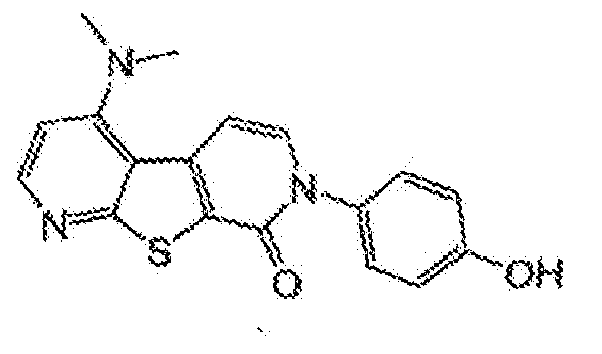
16A 
16B 
16C 
16D 
16E 
16F 
16G 
16H 
16I 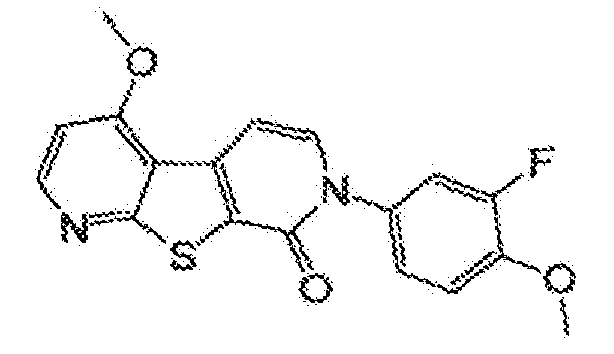
16J 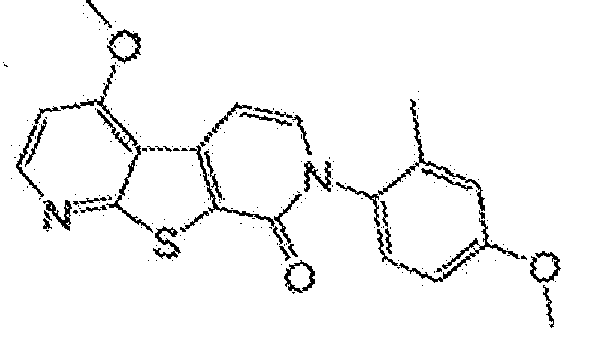
16K 
16L 
16M 
16N 
16O 
16P 
16Q 
16R 
16S 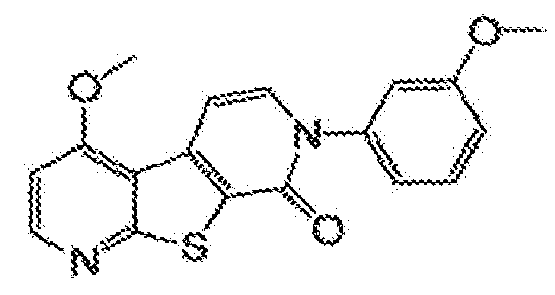
16T 
16U 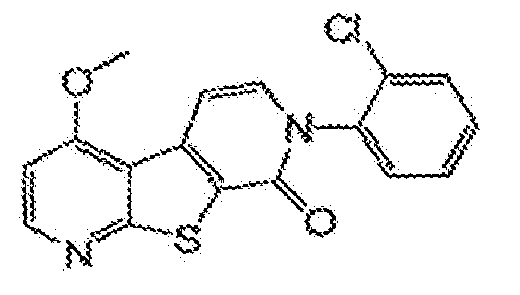
16V 
16W 
16X 
17A 
17B 
17C 
19A 
19B 
19C 
19D 
19E 
19F 
19G 
19H 
19I 
19J 
19K 
19L 
19M 
19N 
190 
19P 
19Q 
19R 
19S 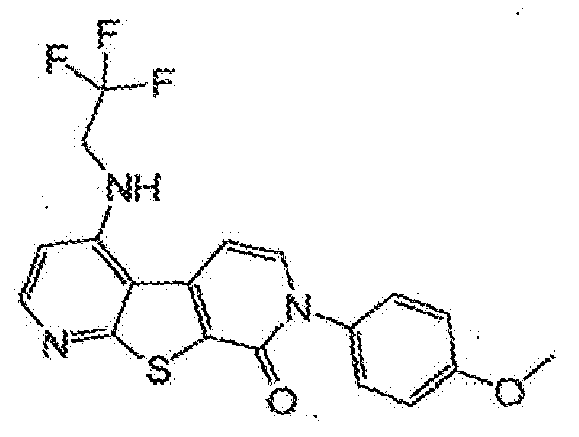
19T 
19U 
19V 
19W 
19X 
19Y 
19Z 
19AA 
19AB 
19AC 
19AD 
19AE 
19AF 
19AG 
19AH 
19AI 
19AJ 
19AK 
19AL 
19AM 
19AN 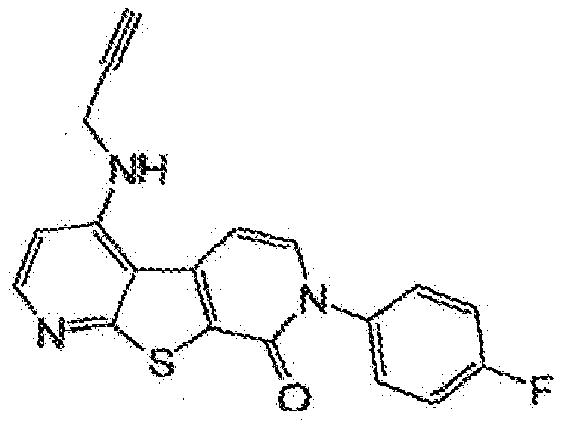
19AQ 
19AP 
19AQ 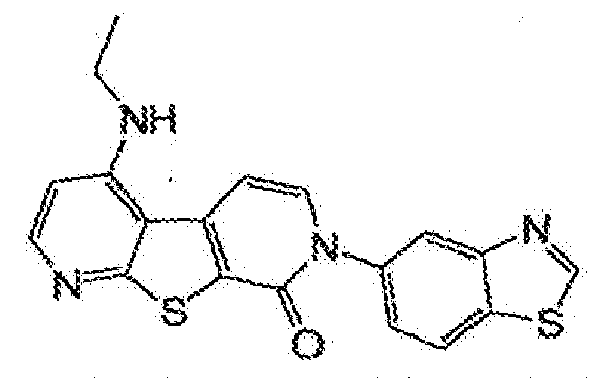
19AR 
19AS 
19AT 
19AU 
19AV 
19AW 
19AX 
19AY 
19AZ 
19BA 
19BB 
18BC 
19BD 
19BE 
19BF 
19BG 
19BH 
23A 
23B 
23C 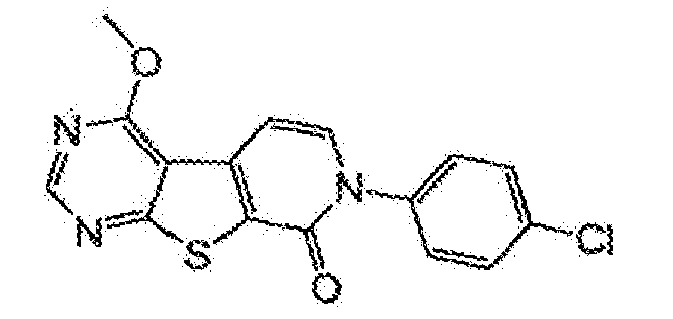
26A 
26B 
26C 
26D 
26E 
26F 
26G 
26H 
- Composé sélectionné parmi le groupe consistant en
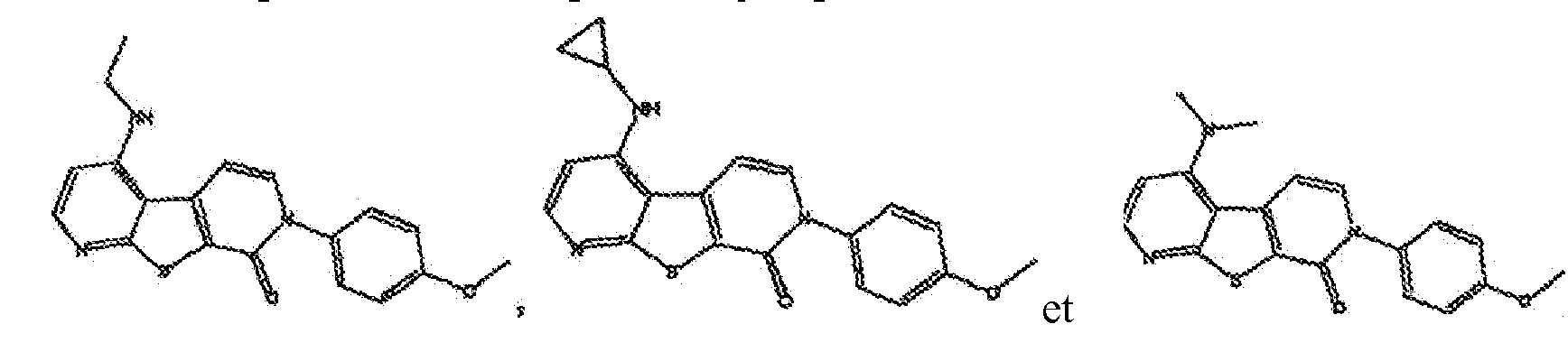
ou un sel pharmaceutiquement acceptable ou solvate de celui-ci. - Composition pharmaceutique comprenant au moins un composé selon la revendication 1 ou la revendication 21 ou un sel pharmaceutiquement acceptable ou solvate de ceux-ci et au moins un excipient, adjuvant ou véhicule pharmaceutiquement acceptables.
- Composition pharmaceutique comprenant au moins un composé selon la revendication 22 ou un sel pharmaceutiquement acceptable ou solvate de ceux-ci et au moins un excipient, adjuvant ou véhicule pharmaceutiquement acceptables.
- Composition pharmaceutique selon la revendication 24, comprenant en outre un ou plusieurs agents thérapeutiques supplémentaires.
- Composition pharmaceutique selon la revendication 25, comprenant en outre un ou plusieurs agents thérapeutiques supplémentaires.
- Composition pharmaceutique selon la revendication 26, dans laquelle lesdits agents thérapeutiques supplémentaires sont sélectionnés parmi le groupe consistant en agents thérapeutiques convenant à la prise en charge de la douleur, en agents anxiolytiques, en agents antimigraineux et en agents thérapeutiques convenant au traitement de l'incontinence urinaire.
- Composition pharmaceutique selon la revendication 27, dans laquelle lesdits agents thérapeutiques supplémentaires sont sélectionnés parmi le groupe consistant en agents thérapeutiques convenant à la prise en charge de la douleur, en agents anxiolytiques, en agents antimigraineux et en agents thérapeutiques convenant au traitement de l'incontinence urinaire.
- Méthode ex vivo destinée à antagoniser sélectivement l'activité des récepteurs métabotropes au glutamate du groupe 1 (mGluR1) dans une cellule en ayant besoin, comprenant mettre ladite cellule en contact avec une quantité thérapeutiquement efficace d'au moins un composé de la formule I:
 J1, J2 et J3 sont indépendamment N ou C, à condition que 1-2 de J1, J2 et J3 soient N;--- est une liaison simple ou double;R1 est sélectionné parmi le groupe consistant en H, -NR5R6, -OR6, -SR11, -CN, - C(O)R6, -C(O2)R6, -OC(O)R6, -C(O)NR6R7, -N(R6)C(O)R6, -S(O2)NR6R7,-N(R6)S(O2)R11, -N(R6)C(O)NR6R7 et des groupes alkyle, alcoxy, alcényle, alcényloxy, alcynyle, cycloalkyle, cycloalcoxy, aryle, aryloxy, arylalkyle, hétéroaryle, hétéroarylalkyle, hétérocyclyle et hétérocyclylalkyle optionnellement substitués par au moins un R8 ou bien où ledit aryle de R1 peut être optionnellement substitué par deux radicaux sur des atomes de carbone adjacents, lesquels radicaux sont pris ensemble avec les atomes de carbone auxquels ils sont attachés pour former un cycle hétérocyclyle ou hétéroaryle de cinq à six chaînons, lequel cycle est optionnellement substitué par au moins un R8;X est sélectionné parmi le groupe consistant en H, -NR5R6, -OR7, -SR11, -C(O)R6, -SO2R11, -C(O)NR6R7 et des groupes alkyle, alcoxy, alcényloxy, alcynyle, cycloalkyle, cycloalkyloxy, aryloxy, arylalkyle, hétéroaryle, hétéroarylalkyle, hétérocyclyle et hétérocyclylalkyle optionnellement substitués par au moins un R8;Z est sélectionné parmi le groupe consistant en S, O et NR5;R2 et R3 sont sélectionnés chacun indépendamment parmi le groupe consistant en H, halo, -CN, -NO2, -OR7, -SR11, -NR5R6, -C(O)R6, -C(O2)R6, -OC(O)R6, -C(O)NR6R7 N(R9)C(O)R6, -OS(O2)R11, -S(O2)R11, -S(O2)NR5R6, -N(R6)S(O2)R11 et - N(R9)C(O)NR5R6 et des groupes alkyle, alcoxy, alcényle, alcényloxy, alcynyle, cycloalkyle, cycloalcoxy, aryle, aryloxy, arylalkyle, hétéroaryle, hétéroarylalkyle, hétérocyclyle et hétérocyclylalkyle optionnellement substitués par au moins un R8;R4 est sélectionné indépendamment parmi le groupe consistant en H, halo, -CN, - NHC(O)R6, -NHSO2R11, -NR5R6, -OR7, -C(O)R6, -C(O2)R6, -C(O)NR6R7 et des groupes alkyle, alcoxy, alcényle, alcényloxy, alcynyle, cycloalkyle, cyloalcoxy, aryle, aryloxy, arylalkyle, hétéroaryle, hétéroarylalkyle, hétérocyclyle et hétérocyclylalkyle optionnellement substitués par au moins un R8 ou bien lorsque w = 2, deux R4 pris ensemble avec les atomes de carbone auxquels ils sont attachés, forment un groupe de la formule:
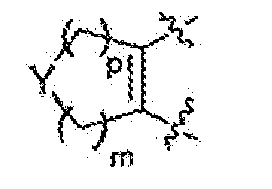 w est un nombre entier allant de 1-2;R5 est sélectionné parmi le groupe consistant en H, halo, -NH2, -C(O)R6, -SO2R11, C(O)NR6R7 et des groupes alkyle, alcényle, alcynyle, cycloalkyle, aryle, arylalkyle, hétéroaryle, hétéroarylalkyle, hétérocyclyle et hétérocyclylalkyle optionnellement substitués par au moins un R8;R6 et R7 sont sélectionnés indépendamment parmi le groupe consistant en H et des groupes alkyle, alcényle, alcynyle, cycloalkyle, aryle, arylalkyle, hétéroaryle, hétéroarylalkyle, hétérocyclyle et hétérocyclylalkyle optionnellement substitués par au moins un R8; ou bienR5 et R6 ou R6 et R7, lorsque attachés au même atome d'azote, optionnellement pris ensemble avec l'atome d'azote, forment un cycle hétérocyclique de 3-8 chaînons contenant 0-3 hétéroatomes sélectionnés indépendamment parmi O, N ou S en plus dudit atome d'azote;R8 est sélectionné parmi le groupe consistant en H, halo, -OR9, NO2, -CN, - NR9C(O)R10, -NR9SO2R11, -NR9R10, -C(O)R10, -C(O)NR5R6, S(O2)NR5R6 et des groupes alkyle, alcoxy, alcényle, alcényloxy, alcynyle, cycloalkyle, cycloalcoxy, aryle, aryloxy, arylalkyle, hétéroaryle, hétéroarylalkyle, hétérocyclyle et hétérocyclylalkyle optionnellement substitués par au moins l'un d'entre halo, -CN, -NO2, -OR6, -SR11, - NR5R6, -C(O)R6, -C(O2)R6, -OC(O)R6, -C(O)NR6R7, -N(R6)C(O)R6, -OS(O2)R11, - S(O2)R11, -S(O2)NR5R6, -N(R6)S(O2)R11, -N(R6)C(O)NR5R6 et -NR9SO2R11;R9 est sélectionné parmi le groupe consistant en H et des groupes alkyle, alcényle, alcynyle, cycloalkyle, aryle, arylalkyle, hétéroaryle, hétéroarylalkyle, hétérocyclyle et hétérocyclylalkyle optionnellement substitués par au moins l'un d'entre halo, -CN, -NO2, - OR6, -SR11, -NR5R6, -C(O)R6, -C(O2)R6, -OC(O)R6, -C(O)NR6R7, -N(R6)C(O)R6, - OS(O2)R11, -S(O2)R11, -S(O2)NR5R6, -N(R6)S(O2)R11 et -N(R6)C(O)NR5R6;R10 est sélectionné parmi le groupe consistant en H et des groupes alkyle, alcoxy, alcényle, alcényloxy, alcynyle, cycloalkyle, cycloalcoxy, aryle, aryloxy, arylalkyle, hétéroaryle, hétéroarylalkyle et hétérocyclyle optionnellement substitués par au moins l'un d'entre halo, -CN, -NO2, -OR6, -SR11, -NR5R6, -C(O)R6, -C(O2)R6, -OC(O)R6, - C(O)NR6R7, -N(R6)C(O)R6, -OS(O2)R11, -S(O2)R11, -S(O2)NR5R6, -N(R6)S(O2)R11 et - N(R6)C(O)NR5R6 etR11 est sélectionné parmi le groupe consistant en des groupes alkyle, alcényle, alcynyle, cycloalkyle, aryle, arylalkyle, hétéroaryle, hétéroarylalkyle et hétérocyclyle optionnellement substitués par au moins un R8;où tout atome de carbone ou hétéroatome ayant des valences incomplètes a l'atome ou les atomes d'hydrogène pour compléter les valences.
 - Utilisation d'au moins un composé de la formule I:
 J1, J2 et J3 sont indépendamment N ou C, à condition que 1-2 de J1, J2 et J3 soient N;--- est une liaison simple ou double;R1 est sélectionné parmi le groupe consistant en H, -NR5R6, -OR6, -SR11, -CN, - C(O)R6, -C(O)2R6, -OC(O)R6, -C(O)NR6R7, -N(R6)C(O)R6, -S(O2)NR6R7,-N(R6)S(O2)R11, -N(R6)C(O)NR6R7 et des groupes alkyle, alcoxy, alcényle, alcényloxy, alcynyle, cycloalkyle, cycloalcoxy, aryle, aryloxy, arylalkyle, hétéroaryle, hétéroarylalkyle, hétérocyclyle et hétérocyclylalkyle optionnellement substitués par au moins un R8 ou bien où ledit aryle de R1 peut être optionnellement substitué par deux radicaux sur des atomes de carbone adjacents, lesquels radicaux sont pris ensemble avec les atomes de carbone auxquels ils sont attachés pour former un cycle hétérocyclyle ou hétéroaryle de cinq à six chaînons, lequel cycle est optionnellement substitué par au moins un R8;X est sélectionné parmi le groupe consistant en H, -NR5R6, -OR7, -SR11, -C(O)R6, -SO2R11, -C(O)NR6R7 et des groupes alkyle, alcoxy, alcényloxy, alcynyle, cycloalkyle, cycloalkyloxy, aryloxy, arylalkyle, hétéroaryle, hétéroarylalkyle, hétérocyclyle et hétérocyclylalkyle optionnellement substitués par au moins un R8;Z est sélectionné parmi le groupe consistant en S, O et NR5;R2 et R3 sont sélectionnés chacun indépendamment parmi le groupe consistant en H, halo, -CN, -NO2, -OR7, -SR11, -NR5R6, -C(O)R6, -C(O2)R6, -OC(O)R6, -C(O)NR6R7, - N(R9)C(O)R6, -OS(O2)R11, -S(O2)R11, -S(O2)NR5R6, -N(R6)S(O2)R11 et - N(R9)C(O)NR5R6 et des groupes alkyle, alcoxy, alcényle, alcényloxy, alcynyle, cycloalkyle, cycloalcoxy, aryle, aryloxy, arylalkyle, hétéroaryle, hétéroarylalkyle, hétérocyclyle et hétérocyclylalkyle optionnellement substitués par au moins un R8;R4 est sélectionné indépendamment parmi le groupe consistant en H, halo, -CN, - NHC(O)R6, -NHSO2R11, -NR5R6, -OR7, -C(O)R6, -C(O2)R6, -C(O)NR6R7 et des groupes alkyle, alcoxy, alcényle, alcényloxy, alcynyle, cycloalkyle, cyloalcoxy, aryle, aryloxy, arylalkyle, hétéroaryle, hétéroarylalkyle, hétérocyclyle et hétérocyclylalkyle optionnellement substitués par au moins un R8 ou bien lorsque w = 2, deux R4 pris ensemble avec les atomes de carbone auxquels ils sont attachés, forment un groupe de la formule:
 w est un nombre entier allant de 1-2;R5 est sélectionné parmi le groupe consistant en H, halo, -NH2, -C(O)R6, -SO2R11, C(O)NR6R7 et des groupes alkyle, alcényle, alcynyle, cycloalkyle, aryle, arylalkyle, hétéroaryle, hétéroarylalkyle, hétérocyclyle et hétérocyclylalkyle optionnellement substitués par au moins un R8;R6 et R7 sont sélectionnés indépendamment parmi le groupe consistant en H et des groupes alkyle, alcényle, alcynyle, cycloalkyle, aryle, arylalkyle, hétéroaryle, hétéroarylalkyle, hétérocyclyle et hétérocyclylalkyle optionnellement substitués par au moins un R8; ou bienR5 et R6 ou R6 et R7, lorsque attachés au même atome d'azote, optionnellement pris ensemble avec l'atome d'azote, forment un cycle hétérocyclique de 3-8 chaînons contenant 0-3 hétéroatomes sélectionnés indépendamment parmi O, N ou S en plus dudit atome d'azote;R8 est sélectionné parmi le groupe consistant en H, halo, -OR9, NO2, -CN, - NR9C(O)R10, -NR9SO2R11, -NR9R10, -C(O)R10, -C(O)NR5R6, S(O2)NR5R6 et des groupes alkyle, alcoxy, alcényle, alcényloxy, alcynyle, cycloalkyle, cycloalcoxy, aryle, aryloxy, arylalkyle, hétéroaryle, hétéroarylalkyle, hétérocyclyle et hétérocyclylalkyle optionnellement substitués par au moins l'un d'entre halo, -CN, -NO2, -OR6, -SR11, - NR5R6, -C(O)R6, -C(O2)R6, -OC(O)R6, -C(O)NR6R7, -N(R6)C(O)R6, -OS(O2)R11, - S(O2)R11, -S(O2)NR5R6, -N(R6)S(O2)R11, -N(R6)C(O)NR5R6 et -NR9SO2R11;R9 est sélectionné parmi le groupe consistant en H et des groupes alkyle, alcényle, alcynyle, cycloalkyle, aryle, arylalkyle, hétéroaryle, hétéroarylalkyle, hétérocyclyle et hétérocyclylalkyle optionnellement substitués par au moins l'un d'entre halo, -CN, -NO2, - OR6, -SR11, -NR5R6, -C(O)R6, -C(O2)R6, -OC(O)R6, -C(O)NR6R7, -N(R6)C(O)R6, - OS(O2)R11, -S(O2)R11, -S(O2)NR5R6, -N(R6)S(O2)R11 et -N(R6)C(O)NR5R6,R10 est sélectionné parmi le groupe consistant en H et des groupes alkyle, alcoxy, alcényle, alcényloxy, alcynyle, cycloalkyle, cycloalcoxy, aryle, aryloxy, arylalkyle, hétéroaryle, hétéroarylalkyle et hétérocyclyle optionnellement substitués par au moins l'un d'entre halo, -CN, -NO2, -OR6, -SR11, -NR5R6, -C(O)R6, -C(O2)R6, -OC(O)R6, - C(O)NR6R7, -N(R6)C(O)R6, -OS(O2)R11, -S(O2)R11, -S(O2)NR5R6, -N(R6)S(O2)R11 et - N(R6)C(O)NR5R6 etR11 est sélectionné parmi le groupe consistant en des groupes alkyle, alcényle, alcynyle, cycloalkyle, aryle, arylalkyle, hétéroaryle, hétéroarylalkyle et hétérocyclyle optionnellement substitués par au moins un R8;où tout atome de carbone ou hétéroatome ayant des valences incomplètes a l'atome ou les atomes d'hydrogène pour compléter les valences;
dans la fabrication d'un médicament pour le traitement d'une maladie ou condition associée à la fonction des récepteurs métabotropes au glutamate du groupe 1 (mGluR1). - Utilisation selon la revendication 31, dans laquelle la maladie ou condition est la douleur.
- Utilisation selon la revendication 31, dans laquelle la maladie ou condition est une douleur neuropathique.
- Utilisation selon la revendication 31, dans laquelle la maladie ou condition est l'allodynie.
- Utilisation selon la revendication 31, dans laquelle la maladie ou condition est l'hyperalgésie.
- Utilisation selon la revendication 31, dans laquelle la maladie ou condition est la douleur associée à une inflammation ou à une maladie inflammatoire.
- Utilisation selon la revendication 31, dans laquelle le traitement comprend en outre administrer un ou plusieurs agents thérapeutiques supplémentaires convenant à la prise en charge de la douleur.
- Utilisation selon la revendication 37, dans laquelle ledit agent thérapeutique supplémentaire est un analgésique opioïde.
- Utilisation selon la revendication 37, dans laquelle ledit agent thérapeutique supplémentaire est un analgésique non opioïde.
- Utilisation selon la revendication 31, dans laquelle ladite maladie ou condition est sélectionnée parmi le groupe consistant en spasmes musculaires, convulsions, spasmodicité, migraine, psychoses, incontinence urinaire, anxiété et troubles associés, vomissements, oedème cérébral, dyskinésie tardive, dépression, tolérance aux drogues et sevrage de drogues et arrêt du tabac.
- Utilisation selon la revendication 40, dans laquelle ladite maladie ou condition est l'anxiété.
- Utilisation selon la revendication 41, dans laquelle le traitement comprend en outre administrer un ou plusieurs agents anxiolytiques supplémentaires.
- Utilisation selon la revendication 40, dans laquelle ladite maladie ou condition est la migraine.
- Utilisation selon la revendication 43, dans laquelle le traitement comprend en outre administrer un ou plusieurs agents antimigraineux supplémentaires.
- Utilisation selon la revendication 40, dans laquelle ladite maladie ou condition est l'incontinence urinaire.
- Utilisation selon la revendication 45, dans laquelle le traitement comprend en outre administrer un ou plusieurs agents thérapeutiques supplémentaires convenant au traitement de l'incontinence urinaire.
- Utilisation selon la revendication 31, dans laquelle ladite maladie ou condition est sélectionnée parmi le groupe consistant en déficits cérébraux subséquents à une intervention chirurgicale de pontage cardiaque ou de greffe, ischémie cérébrale, attaque, lésions de la moelle épinière, traumatisme crânien, hypoxie périnatale, arrêt cardiaque, lésion neuronale hypoglycémique, maladie d'Alzheimer, chorée de Huntington, sclérose latérale amyotrophique (SLA), démence induite par le SIDA, ataxie héréditaire, lésion oculaire et rétinopathie, troubles cognitifs et maladie de Parkinson idiopathique ou induite par les médicaments.
- Utilisation selon la revendication 47, dans laquelle le traitement comprend en outre administrer un ou plusieurs agents thérapeutiques supplémentaires.
- Utilisation selon la revendication 31, dans laquelle ledit composé est sélectionné parmi le groupe consistant en
Composé Structure Composé Structure 9A 
9B 
9C 
9D 
9E 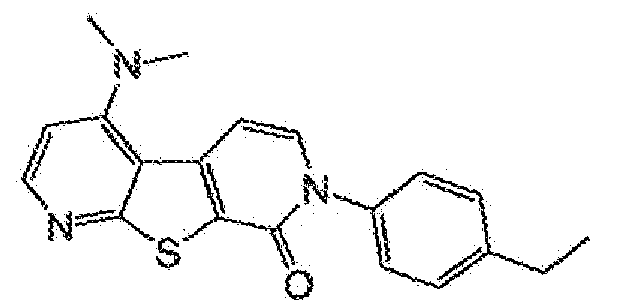
9F 
9G 
9H 
16A 
16B 
16C 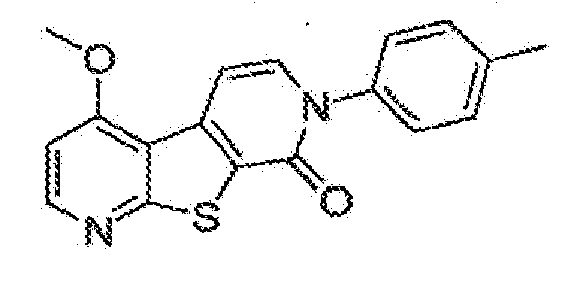
16D 
16E 
16F 
16G 
16H 
16I 
16J 
16K 
16L 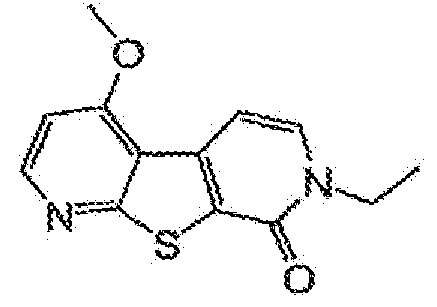
16M 
16N 
16O 
16P 
16Q 
16R 
16S 
16T 
16U 
16V 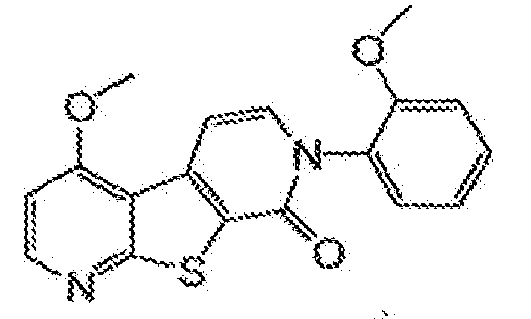
16W 
16X 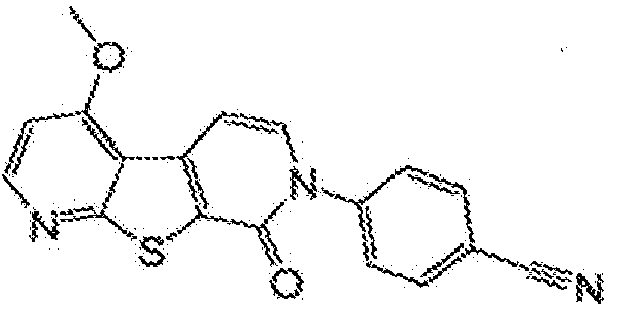
17A 
17B 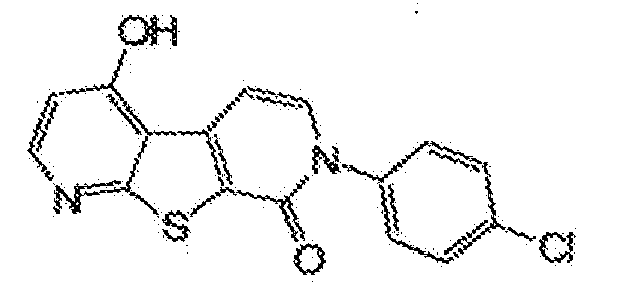
17C 
19A 
19B 
19C 
19D 
19E 
19F 
19G 
19H 
19I 
19J 
19K 
19L 
19M 
19N 
19O 
19P 
19Q 
19R 
19S 
19T 
19U 
19V 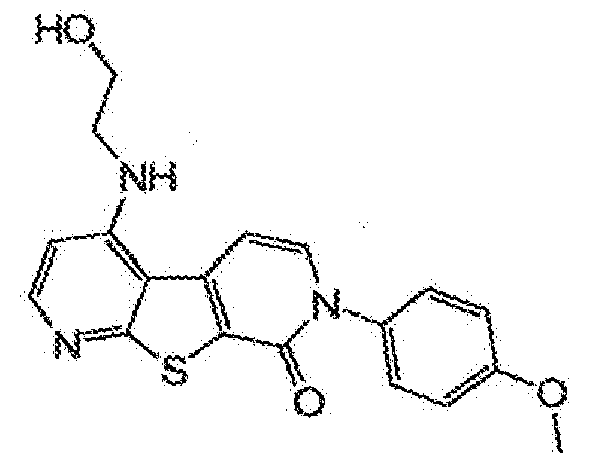
19W 
19X 
19Y 
19Z 
19AA 
19AB 
19AC 
19AD 
19AE 
19AF 
19AG 
19AH 
19AI 
19AJ 
19AK 
19AL 
19AM 
19AN 
19AO 
19AP 
19AQ 
19AR 
19AS 
19AT 
19AU 
19AV 
19AW 
19AX 
19AY 
19AZ 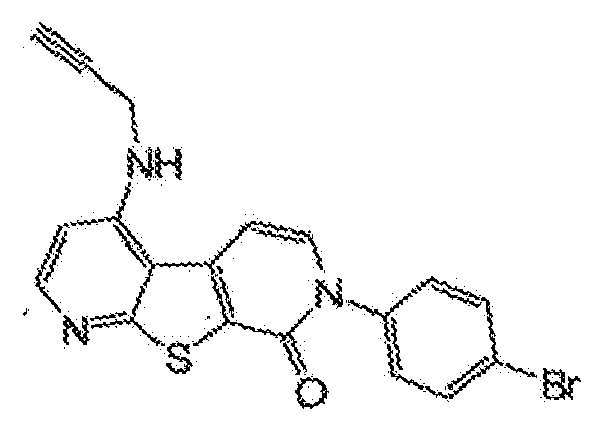
19BA 
19BB 
19BC 
19BD 
19BE 
19BF 
19BG 
19BH 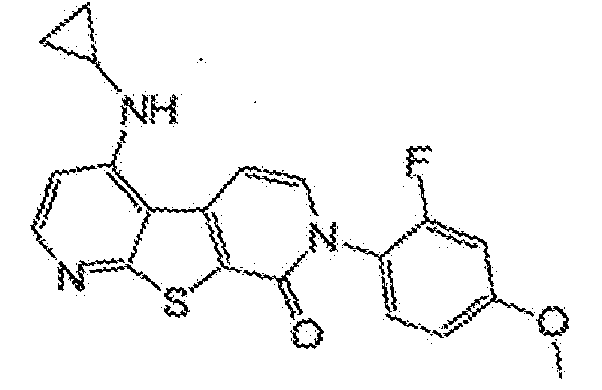
23A 
23B 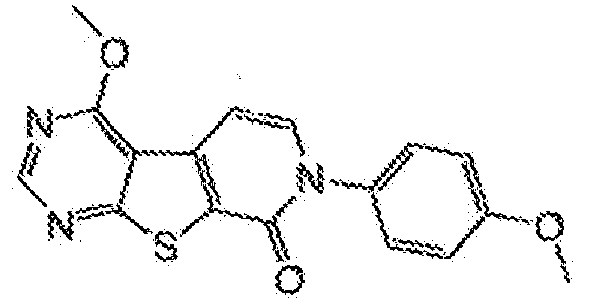
23C 
26A 
26B 
26C 
26D 
26E 
26F 
26G 
26H 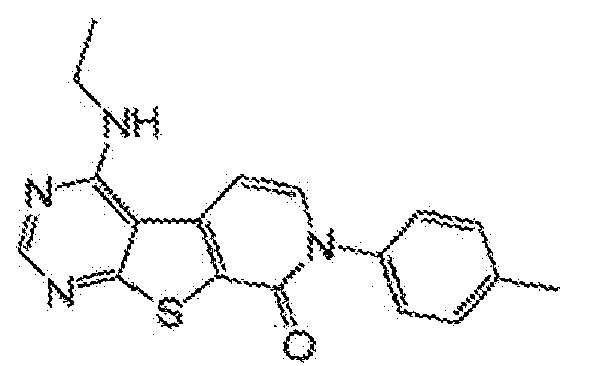
- Composé selon la revendication 1 ou la revendication 21, sous une forme isolée et purifiée.
- Kit comprenant au moins un composé selon la revendication 1 ou la revendication 21 ou un sel pharmaceutiquement acceptable ou solvate de celui-ci et au moins un excipient, adjuvant ou véhicule pharmaceutiquement acceptable.
Applications Claiming Priority (2)
| Application Number | Priority Date | Filing Date | Title |
|---|---|---|---|
| US70947505P | 2005-08-19 | 2005-08-19 | |
| PCT/US2006/031972 WO2007024593A1 (fr) | 2005-08-19 | 2006-08-16 | Antagonistes mglur1 tricycliques fusionnes utilises en tant qu'agents therapeutiques |
Publications (2)
| Publication Number | Publication Date |
|---|---|
| EP1931683A1 EP1931683A1 (fr) | 2008-06-18 |
| EP1931683B1 true EP1931683B1 (fr) | 2011-07-13 |
Family
ID=37550082
Family Applications (1)
| Application Number | Title | Priority Date | Filing Date |
|---|---|---|---|
| EP06813481A Active EP1931683B1 (fr) | 2005-08-19 | 2006-08-16 | Antagonistes mglur1 tricycliques fusionnes utilises en tant qu'agents therapeutiques |
Country Status (10)
| Country | Link |
|---|---|
| US (1) | US7767815B2 (fr) |
| EP (1) | EP1931683B1 (fr) |
| JP (1) | JP2009504755A (fr) |
| CN (1) | CN101291936A (fr) |
| AR (1) | AR055379A1 (fr) |
| AT (1) | ATE516292T1 (fr) |
| CA (1) | CA2619362A1 (fr) |
| MX (1) | MX2008002365A (fr) |
| TW (1) | TWI327147B (fr) |
| WO (1) | WO2007024593A1 (fr) |
Families Citing this family (8)
| Publication number | Priority date | Publication date | Assignee | Title |
|---|---|---|---|---|
| US7687501B2 (en) * | 2005-08-19 | 2010-03-30 | Schering Corporation | Pyridothienopyridazinone derivatives as mGluR1 antagonists |
| BRPI0821209A2 (pt) * | 2007-12-19 | 2019-09-24 | Amgen Inc | composto, composição farmacêutica, métodos de tratar câncer, para reduzir o tamanho de tumor, para tratar distúrbios, e para reduzir metástase em um tumor. |
| US8389533B2 (en) * | 2008-04-07 | 2013-03-05 | Amgen Inc. | Gem-disubstituted and spirocyclic amino pyridines/pyrimidines as cell cycle inhibitors |
| WO2011035416A1 (fr) * | 2009-09-25 | 2011-03-31 | Aegera Therapeutics Inc. | Composés modulateurs de la hsp90, compositions, procédés et utilisations correspondants |
| CN103703000B (zh) | 2011-03-23 | 2015-11-25 | 安姆根有限公司 | Cdk4/6和flt3的稠合三环双重抑制剂 |
| WO2014011906A2 (fr) * | 2012-07-11 | 2014-01-16 | Nimbus Iris, Inc. | Inhibiteurs d'irak et leurs utilisations |
| HK1210696A1 (en) | 2012-07-11 | 2016-05-06 | Nimbus Iris, Inc. | Irak inhibitors and uses thereof |
| JP2016505012A (ja) | 2013-01-10 | 2016-02-18 | ニンバス アイリス, インコーポレイテッド | Irak阻害剤およびその使用 |
Family Cites Families (5)
| Publication number | Priority date | Publication date | Assignee | Title |
|---|---|---|---|---|
| US5783575A (en) | 1994-03-14 | 1998-07-21 | Novo Nordisk A/S | Antagonists, their preparation and use |
| WO2002062803A1 (fr) | 2001-02-08 | 2002-08-15 | Yamanouchi Pharmaceutical Co., Ltd. | Derive de thienopyrimidine |
| US7598259B2 (en) | 2004-06-15 | 2009-10-06 | Schering Corporation | mGluR1 antagonists as therapeutic agents |
| AR049300A1 (es) | 2004-06-15 | 2006-07-12 | Schering Corp | Compuestos triciclicos antagonistas de mglur1 como agentes terapeuticos |
| US7687501B2 (en) | 2005-08-19 | 2010-03-30 | Schering Corporation | Pyridothienopyridazinone derivatives as mGluR1 antagonists |
-
2006
- 2006-08-16 WO PCT/US2006/031972 patent/WO2007024593A1/fr not_active Ceased
- 2006-08-16 AT AT06813481T patent/ATE516292T1/de not_active IP Right Cessation
- 2006-08-16 MX MX2008002365A patent/MX2008002365A/es unknown
- 2006-08-16 CN CNA2006800384683A patent/CN101291936A/zh active Pending
- 2006-08-16 JP JP2008527099A patent/JP2009504755A/ja not_active Withdrawn
- 2006-08-16 EP EP06813481A patent/EP1931683B1/fr active Active
- 2006-08-16 US US11/504,860 patent/US7767815B2/en not_active Expired - Fee Related
- 2006-08-16 CA CA002619362A patent/CA2619362A1/fr not_active Abandoned
- 2006-08-17 TW TW095130195A patent/TWI327147B/zh active
- 2006-08-17 AR ARP060103595A patent/AR055379A1/es not_active Application Discontinuation
Also Published As
| Publication number | Publication date |
|---|---|
| JP2009504755A (ja) | 2009-02-05 |
| EP1931683A1 (fr) | 2008-06-18 |
| TW200740826A (en) | 2007-11-01 |
| WO2007024593A1 (fr) | 2007-03-01 |
| TWI327147B (en) | 2010-07-11 |
| ATE516292T1 (de) | 2011-07-15 |
| US20070072863A1 (en) | 2007-03-29 |
| CN101291936A (zh) | 2008-10-22 |
| CA2619362A1 (fr) | 2007-03-01 |
| AR055379A1 (es) | 2007-08-22 |
| MX2008002365A (es) | 2008-03-18 |
| US7767815B2 (en) | 2010-08-03 |
Similar Documents
| Publication | Publication Date | Title |
|---|---|---|
| EP1765829B1 (fr) | Composes tricycliques et leur utilisation comme antagonistes du mglur1 | |
| US7482360B2 (en) | Fused tetracyclic mGluR1 antagonists as therapeutic agents | |
| US7989464B2 (en) | mGluR1 antagonists as therapeutic agents | |
| DE69609051T2 (de) | Tricyclische substituierte hexahydrobenz[e]isoindol alpha-1-adrenergische antagonisten | |
| CN101983059A (zh) | 新的2,3,4,5-四氢-1h-吡啶并[4,3-b]吲哚化合物及其使用方法 | |
| EP1931683B1 (fr) | Antagonistes mglur1 tricycliques fusionnes utilises en tant qu'agents therapeutiques | |
| US7687501B2 (en) | Pyridothienopyridazinone derivatives as mGluR1 antagonists | |
| HK1097269B (en) | Tricyclic compounds and their use as mglur1 antagonists |
Legal Events
| Date | Code | Title | Description |
|---|---|---|---|
| PUAI | Public reference made under article 153(3) epc to a published international application that has entered the european phase |
Free format text: ORIGINAL CODE: 0009012 |
|
| 17P | Request for examination filed |
Effective date: 20080319 |
|
| AK | Designated contracting states |
Kind code of ref document: A1 Designated state(s): AT BE BG CH CY CZ DE DK EE ES FI FR GB GR HU IE IS IT LI LT LU LV MC NL PL PT RO SE SI SK TR |
|
| AX | Request for extension of the european patent |
Extension state: AL BA HR MK RS |
|
| 17Q | First examination report despatched |
Effective date: 20080812 |
|
| REG | Reference to a national code |
Ref country code: HK Ref legal event code: DE Ref document number: 1117515 Country of ref document: HK |
|
| GRAP | Despatch of communication of intention to grant a patent |
Free format text: ORIGINAL CODE: EPIDOSNIGR1 |
|
| GRAS | Grant fee paid |
Free format text: ORIGINAL CODE: EPIDOSNIGR3 |
|
| GRAA | (expected) grant |
Free format text: ORIGINAL CODE: 0009210 |
|
| AK | Designated contracting states |
Kind code of ref document: B1 Designated state(s): AT BE BG CH CY CZ DE DK EE ES FI FR GB GR HU IE IS IT LI LT LU LV MC NL PL PT RO SE SI SK TR |
|
| AX | Request for extension of the european patent |
Extension state: AL BA HR MK RS |
|
| REG | Reference to a national code |
Ref country code: GB Ref legal event code: FG4D |
|
| REG | Reference to a national code |
Ref country code: CH Ref legal event code: EP |
|
| REG | Reference to a national code |
Ref country code: CH Ref legal event code: NV Representative=s name: SERVOPATENT GMBH |
|
| REG | Reference to a national code |
Ref country code: IE Ref legal event code: FG4D |
|
| REG | Reference to a national code |
Ref country code: NL Ref legal event code: T3 |
|
| REG | Reference to a national code |
Ref country code: DE Ref legal event code: R096 Ref document number: 602006023098 Country of ref document: DE Effective date: 20110908 |
|
| PGFP | Annual fee paid to national office [announced via postgrant information from national office to epo] |
Ref country code: CH Payment date: 20110722 Year of fee payment: 6 |
|
| PGFP | Annual fee paid to national office [announced via postgrant information from national office to epo] |
Ref country code: DE Payment date: 20110727 Year of fee payment: 6 Ref country code: FR Payment date: 20110811 Year of fee payment: 6 Ref country code: GB Payment date: 20110714 Year of fee payment: 6 |
|
| PGFP | Annual fee paid to national office [announced via postgrant information from national office to epo] |
Ref country code: NL Payment date: 20110907 Year of fee payment: 6 |
|
| REG | Reference to a national code |
Ref country code: AT Ref legal event code: MK05 Ref document number: 516292 Country of ref document: AT Kind code of ref document: T Effective date: 20110713 |
|
| PG25 | Lapsed in a contracting state [announced via postgrant information from national office to epo] |
Ref country code: LT Free format text: LAPSE BECAUSE OF FAILURE TO SUBMIT A TRANSLATION OF THE DESCRIPTION OR TO PAY THE FEE WITHIN THE PRESCRIBED TIME-LIMIT Effective date: 20110713 Ref country code: FI Free format text: LAPSE BECAUSE OF FAILURE TO SUBMIT A TRANSLATION OF THE DESCRIPTION OR TO PAY THE FEE WITHIN THE PRESCRIBED TIME-LIMIT Effective date: 20110713 Ref country code: BE Free format text: LAPSE BECAUSE OF FAILURE TO SUBMIT A TRANSLATION OF THE DESCRIPTION OR TO PAY THE FEE WITHIN THE PRESCRIBED TIME-LIMIT Effective date: 20110713 Ref country code: SE Free format text: LAPSE BECAUSE OF FAILURE TO SUBMIT A TRANSLATION OF THE DESCRIPTION OR TO PAY THE FEE WITHIN THE PRESCRIBED TIME-LIMIT Effective date: 20110713 Ref country code: PT Free format text: LAPSE BECAUSE OF FAILURE TO SUBMIT A TRANSLATION OF THE DESCRIPTION OR TO PAY THE FEE WITHIN THE PRESCRIBED TIME-LIMIT Effective date: 20111114 Ref country code: IS Free format text: LAPSE BECAUSE OF FAILURE TO SUBMIT A TRANSLATION OF THE DESCRIPTION OR TO PAY THE FEE WITHIN THE PRESCRIBED TIME-LIMIT Effective date: 20111113 |
|
| PG25 | Lapsed in a contracting state [announced via postgrant information from national office to epo] |
Ref country code: AT Free format text: LAPSE BECAUSE OF FAILURE TO SUBMIT A TRANSLATION OF THE DESCRIPTION OR TO PAY THE FEE WITHIN THE PRESCRIBED TIME-LIMIT Effective date: 20110713 Ref country code: SI Free format text: LAPSE BECAUSE OF FAILURE TO SUBMIT A TRANSLATION OF THE DESCRIPTION OR TO PAY THE FEE WITHIN THE PRESCRIBED TIME-LIMIT Effective date: 20110713 Ref country code: PL Free format text: LAPSE BECAUSE OF FAILURE TO SUBMIT A TRANSLATION OF THE DESCRIPTION OR TO PAY THE FEE WITHIN THE PRESCRIBED TIME-LIMIT Effective date: 20110713 Ref country code: GR Free format text: LAPSE BECAUSE OF FAILURE TO SUBMIT A TRANSLATION OF THE DESCRIPTION OR TO PAY THE FEE WITHIN THE PRESCRIBED TIME-LIMIT Effective date: 20111014 Ref country code: CY Free format text: LAPSE BECAUSE OF FAILURE TO SUBMIT A TRANSLATION OF THE DESCRIPTION OR TO PAY THE FEE WITHIN THE PRESCRIBED TIME-LIMIT Effective date: 20110713 Ref country code: LV Free format text: LAPSE BECAUSE OF FAILURE TO SUBMIT A TRANSLATION OF THE DESCRIPTION OR TO PAY THE FEE WITHIN THE PRESCRIBED TIME-LIMIT Effective date: 20110713 |
|
| PG25 | Lapsed in a contracting state [announced via postgrant information from national office to epo] |
Ref country code: MC Free format text: LAPSE BECAUSE OF NON-PAYMENT OF DUE FEES Effective date: 20110831 |
|
| PG25 | Lapsed in a contracting state [announced via postgrant information from national office to epo] |
Ref country code: CZ Free format text: LAPSE BECAUSE OF FAILURE TO SUBMIT A TRANSLATION OF THE DESCRIPTION OR TO PAY THE FEE WITHIN THE PRESCRIBED TIME-LIMIT Effective date: 20110713 Ref country code: SK Free format text: LAPSE BECAUSE OF FAILURE TO SUBMIT A TRANSLATION OF THE DESCRIPTION OR TO PAY THE FEE WITHIN THE PRESCRIBED TIME-LIMIT Effective date: 20110713 |
|
| PLBE | No opposition filed within time limit |
Free format text: ORIGINAL CODE: 0009261 |
|
| STAA | Information on the status of an ep patent application or granted ep patent |
Free format text: STATUS: NO OPPOSITION FILED WITHIN TIME LIMIT |
|
| REG | Reference to a national code |
Ref country code: IE Ref legal event code: MM4A |
|
| PG25 | Lapsed in a contracting state [announced via postgrant information from national office to epo] |
Ref country code: EE Free format text: LAPSE BECAUSE OF FAILURE TO SUBMIT A TRANSLATION OF THE DESCRIPTION OR TO PAY THE FEE WITHIN THE PRESCRIBED TIME-LIMIT Effective date: 20110713 Ref country code: IT Free format text: LAPSE BECAUSE OF FAILURE TO SUBMIT A TRANSLATION OF THE DESCRIPTION OR TO PAY THE FEE WITHIN THE PRESCRIBED TIME-LIMIT Effective date: 20110713 Ref country code: RO Free format text: LAPSE BECAUSE OF FAILURE TO SUBMIT A TRANSLATION OF THE DESCRIPTION OR TO PAY THE FEE WITHIN THE PRESCRIBED TIME-LIMIT Effective date: 20110713 |
|
| 26N | No opposition filed |
Effective date: 20120416 |
|
| PG25 | Lapsed in a contracting state [announced via postgrant information from national office to epo] |
Ref country code: DK Free format text: LAPSE BECAUSE OF FAILURE TO SUBMIT A TRANSLATION OF THE DESCRIPTION OR TO PAY THE FEE WITHIN THE PRESCRIBED TIME-LIMIT Effective date: 20110713 |
|
| PG25 | Lapsed in a contracting state [announced via postgrant information from national office to epo] |
Ref country code: IE Free format text: LAPSE BECAUSE OF NON-PAYMENT OF DUE FEES Effective date: 20110816 |
|
| REG | Reference to a national code |
Ref country code: DE Ref legal event code: R097 Ref document number: 602006023098 Country of ref document: DE Effective date: 20120416 |
|
| REG | Reference to a national code |
Ref country code: NL Ref legal event code: V1 Effective date: 20130301 |
|
| REG | Reference to a national code |
Ref country code: CH Ref legal event code: PL |
|
| GBPC | Gb: european patent ceased through non-payment of renewal fee |
Effective date: 20120816 |
|
| PG25 | Lapsed in a contracting state [announced via postgrant information from national office to epo] |
Ref country code: NL Free format text: LAPSE BECAUSE OF NON-PAYMENT OF DUE FEES Effective date: 20130301 Ref country code: ES Free format text: LAPSE BECAUSE OF FAILURE TO SUBMIT A TRANSLATION OF THE DESCRIPTION OR TO PAY THE FEE WITHIN THE PRESCRIBED TIME-LIMIT Effective date: 20111024 Ref country code: CH Free format text: LAPSE BECAUSE OF NON-PAYMENT OF DUE FEES Effective date: 20120831 Ref country code: LI Free format text: LAPSE BECAUSE OF NON-PAYMENT OF DUE FEES Effective date: 20120831 |
|
| REG | Reference to a national code |
Ref country code: FR Ref legal event code: ST Effective date: 20130430 |
|
| PG25 | Lapsed in a contracting state [announced via postgrant information from national office to epo] |
Ref country code: LU Free format text: LAPSE BECAUSE OF NON-PAYMENT OF DUE FEES Effective date: 20110816 |
|
| PG25 | Lapsed in a contracting state [announced via postgrant information from national office to epo] |
Ref country code: BG Free format text: LAPSE BECAUSE OF FAILURE TO SUBMIT A TRANSLATION OF THE DESCRIPTION OR TO PAY THE FEE WITHIN THE PRESCRIBED TIME-LIMIT Effective date: 20111013 |
|
| PG25 | Lapsed in a contracting state [announced via postgrant information from national office to epo] |
Ref country code: GB Free format text: LAPSE BECAUSE OF NON-PAYMENT OF DUE FEES Effective date: 20120816 Ref country code: DE Free format text: LAPSE BECAUSE OF NON-PAYMENT OF DUE FEES Effective date: 20130301 |
|
| PG25 | Lapsed in a contracting state [announced via postgrant information from national office to epo] |
Ref country code: FR Free format text: LAPSE BECAUSE OF NON-PAYMENT OF DUE FEES Effective date: 20120831 |
|
| REG | Reference to a national code |
Ref country code: DE Ref legal event code: R119 Ref document number: 602006023098 Country of ref document: DE Effective date: 20130301 |
|
| PG25 | Lapsed in a contracting state [announced via postgrant information from national office to epo] |
Ref country code: TR Free format text: LAPSE BECAUSE OF FAILURE TO SUBMIT A TRANSLATION OF THE DESCRIPTION OR TO PAY THE FEE WITHIN THE PRESCRIBED TIME-LIMIT Effective date: 20110713 |
|
| PG25 | Lapsed in a contracting state [announced via postgrant information from national office to epo] |
Ref country code: HU Free format text: LAPSE BECAUSE OF FAILURE TO SUBMIT A TRANSLATION OF THE DESCRIPTION OR TO PAY THE FEE WITHIN THE PRESCRIBED TIME-LIMIT Effective date: 20110713 |
|
| REG | Reference to a national code |
Ref country code: HK Ref legal event code: WD Ref document number: 1117515 Country of ref document: HK |