EP1933301A2 - Procédé et système de reconnaissance vocale avec identification de haut-parleur intelligent et adaptation - Google Patents
Procédé et système de reconnaissance vocale avec identification de haut-parleur intelligent et adaptation Download PDFInfo
- Publication number
- EP1933301A2 EP1933301A2 EP07150007A EP07150007A EP1933301A2 EP 1933301 A2 EP1933301 A2 EP 1933301A2 EP 07150007 A EP07150007 A EP 07150007A EP 07150007 A EP07150007 A EP 07150007A EP 1933301 A2 EP1933301 A2 EP 1933301A2
- Authority
- EP
- European Patent Office
- Prior art keywords
- speech
- user
- adaptation
- error
- recognition result
- Prior art date
- Legal status (The legal status is an assumption and is not a legal conclusion. Google has not performed a legal analysis and makes no representation as to the accuracy of the status listed.)
- Withdrawn
Links
Images

Classifications
-
- G—PHYSICS
- G10—MUSICAL INSTRUMENTS; ACOUSTICS
- G10L—SPEECH ANALYSIS TECHNIQUES OR SPEECH SYNTHESIS; SPEECH RECOGNITION; SPEECH OR VOICE PROCESSING TECHNIQUES; SPEECH OR AUDIO CODING OR DECODING
- G10L15/00—Speech recognition
- G10L15/08—Speech classification or search
- G10L15/18—Speech classification or search using natural language modelling
- G10L15/183—Speech classification or search using natural language modelling using context dependencies, e.g. language models
-
- G—PHYSICS
- G10—MUSICAL INSTRUMENTS; ACOUSTICS
- G10L—SPEECH ANALYSIS TECHNIQUES OR SPEECH SYNTHESIS; SPEECH RECOGNITION; SPEECH OR VOICE PROCESSING TECHNIQUES; SPEECH OR AUDIO CODING OR DECODING
- G10L15/00—Speech recognition
- G10L15/06—Creation of reference templates; Training of speech recognition systems, e.g. adaptation to the characteristics of the speaker's voice
- G10L15/065—Adaptation
- G10L15/07—Adaptation to the speaker
-
- G—PHYSICS
- G10—MUSICAL INSTRUMENTS; ACOUSTICS
- G10L—SPEECH ANALYSIS TECHNIQUES OR SPEECH SYNTHESIS; SPEECH RECOGNITION; SPEECH OR VOICE PROCESSING TECHNIQUES; SPEECH OR AUDIO CODING OR DECODING
- G10L17/00—Speaker identification or verification techniques
Definitions
- the present invention relates to a speech recognition method and system, and more particularly to a speech recognition method and system with intelligent speaker identification and adaptation.
- the inventors provide a speech recognition method and system with a mechanism that automatically identify the speaker and learn the speech characteristics of the speaker to improve the recognition performance, via the intelligent speaker identification and adaptation to effectively overcome the above defects in the prior art.
- a speech recognition method comprises (a) receiving a speech from a user; (b) recognizing the speech to generate a recognition result with a score; and (c) according to the score of the recognition result, performing one of the following steps, (c1) preventing from performing an adaptation for an acoustic model but using a utility rate of the speech to learn a new language and grammar probability model when the score is relatively high, (c2) performing a confirmation by the user when the score is relatively low, further comprising: (c21) when the recognition result is confirmed in the confirmation by the user, performing the adaptation in the acoustic model to increase an occurrence probability of the speech and using the utility rate of the speech to learn the new language and grammar probability model, (c22) when the recognition result is rejected in the confirmation by the user, performing the adaptation in the acoustic model to decrease the occurrence probability of the speech.
- the speech is an oral command.
- a speech recognition method for recognizing a respective speech of a plurality of users.
- the speech recognition method is used in a speech recognition system having a plurality of speech recognition subsystems respectively, and comprises (a) receiving the speech from a specific user; (b) recognizing the speech to generate a recognition result with a score; (c) when the score is relatively high, switching automatically from a first one of the speech recognition subsystems to a specific one of the speech recognition subsystems for the specific user; (d) when the score is relatively low and in a normal condition, recognizing the speech of the specific user continuously until an enough confidence is accumulated for being switched to the subsystem for the specific user; and (e) when the score is relatively low and in a special condition, asking the specific user directly for immediately switching to the subsystem for the specific user.
- each of the users has his own subsystem for recording respective related success and error records for a respective oral command of each of the users and for training and adapting a respective acoustic model and language probability for each of the users.
- the speech is an oral command.
- the special condition is that a successive error is occurring for recognizing the oral command.
- the special condition is that a private data of the specific user is processed.
- a speech processing method comprises (a) receiving a speech from a user; (b) recognizing the speech to generate a recognition result; (c) when errors are successively occurred in the recognition result, detecting the recognition result for getting an error pattern; and (d) performing an adaptation according to the error pattern.
- the speech is an oral command.
- the error pattern comprises (a) a first pattern where a successive oral command is recognized identically and rejected repeatedly; (b) a second pattern where a successive oral command is recognized differently but rejected repeatedly; (c) a third pattern where a successive voice input is recognized as meaningful speech commands but rejected, the voice input has low energy and is a non-oral voice input with background noises; and (d) a fourth pattern where the errors are successively odd input errors.
- the adaptation comprises an inhibition of an error option repeatedly occurring in order to proceed a temporary adaptation of a language and grammar probability model for the user.
- the adaptation comprises additionally establishing a temporary database for inhibitive commands for decreasing an occurrence probability of an error option successively rejected by the user.
- a speech recognition/processing system comprises a speech recognition unit for receiving and recognizing the speech from a user to generate a recognition result; an error detecting unit connected with the speech recognition unit for detecting the recognition result to get an error pattern thereof when successive errors for the recognition result continuously occur; and an error inhibiting unit connected with the error detecting unit for performing an adaptation according to the error pattern.
- the speech is an oral command.
- the error pattern comprises (a) a first pattern where a successive oral command is recognized identically and rejected repeatedly; (b) a second pattern where a successive oral command is recognized differently but rejected repeatedly; (c) a third pattern where a successive voice input is recognized as meaningful speech commands but rejected, the voice input has low energy and is a non-oral voice input with background noises; and (d) a fourth pattern where the errors are successively odd input errors.
- the adaptation comprises an inhibition of an error option repeatedly occurring in order to proceed a temporary adaptation of a language and grammar probability model for the user.
- the adaptation comprises additionally establishing a temporary database for inhibitive commands for decreasing an occurrence probability of an error option successively rejected by the user.
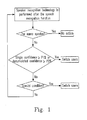
- Fig. 1 is a flow chart showing the switching process of the users in the present invention
- Fig. 2 is a block diagram showing the speech recognition/processing system in the present invention.
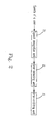
- Fig. 3 is a flow chart showing the identification process of successively recognized errors in the present invention.
- the learning mechanism designed in the present invention is on the premise of the frame of the following speech recognition system.
- the oral recognition operating steps of the speech recognition system include inputting a speech, recognizing the speech, identifying the recognition result automatically, responding to the recognition result by sound or image, and identifying the recognition result by hand or other oral input for correction.
- Each recognition result of each oral input has a score.
- Oral commands with high scores could be executed without hand identification, but those with low scores need hand identification to assist in execution.
- the system will inform the user of a further oral or hand identification step in the form of sound or image as response, for example, confirmation or rejection could be identified via the keystroke, or could be answered via oral commands. If the user confirms the oral command, then the process of the oral commands is completed. However, if the user rejects the oral command, then the process of repeated input or error correction has to be performed until the recognition result is correct.
- the system of learning mechanism designed in the present invention includes an automatic speaker recognition technology.
- the speaker recognition system includes a learning stage for new users and a normal using stage for known users.
- the acoustic models of new users need to be built up.
- the Graphics User Interface (GUI) or keyboard input could be served as the operating interface for selecting speakers.
- the acoustic data of the speaker is recorded when the oral speech recognition is performed. The user could start to use the system without selecting his own name or number by the GUI or keyboard input after enough acoustic comparison data of the speaker are accumulated.
- the speaker recognition system should be able to recognize speakers automatically for convenient operation. Therefore, via the speaker recognition system, the system not only could recognize the speakers automatically, but also could switch user environments automatically for providing more convenient information service.
- Oral commands could be classified to three sorts, including the automatic pass with a high score, the confirmed pass with a low score and the rejected pass with a low score.
- the adaptation for the acoustic model is not performed in the present invention, but a utility rate of the oral command is used to learn a new language and grammar probability model.
- a confirmation by the user is performed.
- the present invention will perform an adaptation in an acoustic model to increase the occurrence probability of the speech and use the utility rate of the speech to learn a new language and grammar probability model.
- the present invention will perform an adaptation in an acoustic model to decrease the occurrence probability of the speech without using the utility rate of the speech to learn a new language and grammar probability model.
- the adaptation of the basic entirety is helpful to learn special errors of users and to establish the specific acoustic and language models of the users.
- the above adaptation of the basic entirety can automatically learn a plurality of speech recognition subsystems of a plurality of users according to the speaker recognition technology, and use the subsystems in the speech recognition system for a plurality of users.
- Each of the users recorded in the system has his own subsystem for recording respective related success and error records for respective oral commands of each user and for training and adapting a respective acoustic model and language probability for each of the users.
- Fig. 1 is a flow chart showing the switching process of the users in the present invention. The mechanism of switching users is performed as follows.
- the speaker recognition technology is performed after the speech recognition function. When the same speaker is recognized, then the speech recognition subsystem in the speech recognition system is not switched.
- the speech recognition system will ask the specific user directly for immediately switching to the subsystem for the specific user. For example, when successive errors occur in an oral command, the switch of the subsystems will be performed and the quality of the recognition will be improved immediately. For another example, when private data of a specific user are processed, the speech recognition system will ask the specific user directly for processing the private data in a correct subsystem for the specific user.
- the occurrence of successive errors a principle of inhibiting the repeated occurrence of errors is designed in the present invention.
- a temporary adaptation is performed for effectively inhibiting the successive occurrence of the errors and maintaining the convenience of the oral operating interface.
- the definition of the successive errors is when the operated machine is under the same condition, errors occur successively in a speech recognition result of an oral command and thus the command is not executed.
- the so called "the operated machine is under the same condition” means that the operated range of the oral command is not changed, including that the channel of a TV is not changed, the volum is not changed, the brightness is not changed and so on. If "the machine is under the same condition" is conformed therewith, the occurrence of the successive errors of the oral commands can be assumed that it is because of inputting the same oral command. Therefore, the occurence of the same error can be detected and inhibited thereby.
- Fig. 2 is a block diagram showing the speech recognition/processing system in the present invention.
- the system includes a speech recognition unit 21, an error-detecting unit 22 and an error-inhibiting unit 23.
- the temporary adaptation for successive errors in the present invention detects error patterns via the error-detecting unit 22 and performs different error inhibitions for different error patterns via the error-inhibiting unit 23.
- the successive errors detected by the error-detecting unit 22 can be classified into the following patterns A-D.
- Pattern A the errors are the successive oral commands recognized identically and rejected repeatedly.
- Pattern B the errors are the successive oral commands recognized differently but rejected repeatedly.
- Pattern C the errors are the successive voice inputrecognized as meaningful speech commands but rejected.
- the voice input has low energy and may be a non-oral voice input with background noises.
- Pattern D the errors are successively odd input errors.
- Fig. 3 is a flow chart showing the identification process of successively recognized errors in the present invention.
- the system will detect whether the speech energy is larger than or equal to a default value E; if not, then the speech is determined as pattern C.
- the system will detect whether the error similarity of the speech (whole segments) is larger than or equal to a default value P1%; if yes, then the speech is determined as pattern A.
- the system will detect whether the error similarity of the middle segments (without indicated percentage of head and tail segments) of the speech is larger than or equal to a default value P2%; if yes, then the speech is determined as pattern B. The speech in the remaining situations is determined as pattern D.
- the error-inhibiting unit 23 in the present invention performs respective adaptation according to the detected error patterns.
- the adaptation mainly comprises an inhibition of an error option repeatedly occurring for a temporary adaptation of a language and grammar probability model, or additionally establishing a temporary database for inhibitive commands for decreasing an occurrence probability of an error option successively rejected by a user.
- the temporary adaptation would be relieved and the system would return to the original using state, and the successive number of times of the occurence of the errors would be recounted as well.
- the temporary adaptation of a language and grammar probability could be a decrease of the probability to a certain percentage, even to zero percent.
- the system could directly adapt the ongoing language and grammar probability model; however, the normal model should be additionally stored, so that after the temporary adaptation is relieved, the system could return to the normal model therefor.
- a language and grammar inhibiting probability model could be additionally stored, so that the result of subtracting the inhibiting model from the normal model will be adopted when the ongoing language and grammar probability is calculated.
- the present invention provides a speech recognition method with intelligent speaker identification and adaptation.
- the method is deeply concerned about the feeling of users and thus advances the recognition accuracy of the system without increasing inconvenience of the users.
- the use of the speech recognition technology can enlarge the above learning mechanism to become an operating surface for a plurality of users. Therefore, the present invention can effectively improve the defects of prior arts, and thus it fits the demand of the industry and is industrially valuable.
Landscapes
- Engineering & Computer Science (AREA)
- Health & Medical Sciences (AREA)
- Audiology, Speech & Language Pathology (AREA)
- Human Computer Interaction (AREA)
- Physics & Mathematics (AREA)
- Acoustics & Sound (AREA)
- Multimedia (AREA)
- Artificial Intelligence (AREA)
- Computational Linguistics (AREA)
- Machine Translation (AREA)
Applications Claiming Priority (1)
| Application Number | Priority Date | Filing Date | Title |
|---|---|---|---|
| TW095146777A TWI342010B (en) | 2006-12-13 | 2006-12-13 | Speech recognition method and system with intelligent classification and adjustment |
Publications (2)
| Publication Number | Publication Date |
|---|---|
| EP1933301A2 true EP1933301A2 (fr) | 2008-06-18 |
| EP1933301A3 EP1933301A3 (fr) | 2008-09-17 |
Family
ID=39167945
Family Applications (1)
| Application Number | Title | Priority Date | Filing Date |
|---|---|---|---|
| EP07150007A Withdrawn EP1933301A3 (fr) | 2006-12-13 | 2007-12-13 | Procédé et système de reconnaissance vocale avec identification de haut-parleur intelligent et adaptation |
Country Status (3)
| Country | Link |
|---|---|
| US (1) | US20080147396A1 (fr) |
| EP (1) | EP1933301A3 (fr) |
| TW (1) | TWI342010B (fr) |
Cited By (1)
| Publication number | Priority date | Publication date | Assignee | Title |
|---|---|---|---|---|
| EP3537434A1 (fr) * | 2014-06-24 | 2019-09-11 | Google LLC | Seuil dynamique de vérification de locuteur |
Families Citing this family (20)
| Publication number | Priority date | Publication date | Assignee | Title |
|---|---|---|---|---|
| US8073681B2 (en) | 2006-10-16 | 2011-12-06 | Voicebox Technologies, Inc. | System and method for a cooperative conversational voice user interface |
| US7818176B2 (en) | 2007-02-06 | 2010-10-19 | Voicebox Technologies, Inc. | System and method for selecting and presenting advertisements based on natural language processing of voice-based input |
| US8140335B2 (en) | 2007-12-11 | 2012-03-20 | Voicebox Technologies, Inc. | System and method for providing a natural language voice user interface in an integrated voice navigation services environment |
| US9305548B2 (en) | 2008-05-27 | 2016-04-05 | Voicebox Technologies Corporation | System and method for an integrated, multi-modal, multi-device natural language voice services environment |
| US8326637B2 (en) | 2009-02-20 | 2012-12-04 | Voicebox Technologies, Inc. | System and method for processing multi-modal device interactions in a natural language voice services environment |
| US9171541B2 (en) | 2009-11-10 | 2015-10-27 | Voicebox Technologies Corporation | System and method for hybrid processing in a natural language voice services environment |
| US9502025B2 (en) | 2009-11-10 | 2016-11-22 | Voicebox Technologies Corporation | System and method for providing a natural language content dedication service |
| US9263034B1 (en) * | 2010-07-13 | 2016-02-16 | Google Inc. | Adapting enhanced acoustic models |
| KR20120046627A (ko) * | 2010-11-02 | 2012-05-10 | 삼성전자주식회사 | 화자 적응 방법 및 장치 |
| US8639508B2 (en) * | 2011-02-14 | 2014-01-28 | General Motors Llc | User-specific confidence thresholds for speech recognition |
| GB2489489B (en) * | 2011-03-30 | 2013-08-21 | Toshiba Res Europ Ltd | A speech processing system and method |
| TWI466101B (zh) * | 2012-05-18 | 2014-12-21 | Asustek Comp Inc | 語音識別方法及系統 |
| CN104282303B (zh) | 2013-07-09 | 2019-03-29 | 威盛电子股份有限公司 | 利用声纹识别进行语音辨识的方法及其电子装置 |
| US9898459B2 (en) | 2014-09-16 | 2018-02-20 | Voicebox Technologies Corporation | Integration of domain information into state transitions of a finite state transducer for natural language processing |
| EP4478276A3 (fr) | 2014-09-16 | 2025-01-22 | VB Assets, LLC | Commerce vocal |
| CN107003999B (zh) | 2014-10-15 | 2020-08-21 | 声钰科技 | 对用户的在先自然语言输入的后续响应的系统和方法 |
| US10614799B2 (en) | 2014-11-26 | 2020-04-07 | Voicebox Technologies Corporation | System and method of providing intent predictions for an utterance prior to a system detection of an end of the utterance |
| US10431214B2 (en) | 2014-11-26 | 2019-10-01 | Voicebox Technologies Corporation | System and method of determining a domain and/or an action related to a natural language input |
| US10331784B2 (en) | 2016-07-29 | 2019-06-25 | Voicebox Technologies Corporation | System and method of disambiguating natural language processing requests |
| US20180158462A1 (en) * | 2016-12-02 | 2018-06-07 | Cirrus Logic International Semiconductor Ltd. | Speaker identification |
Family Cites Families (16)
| Publication number | Priority date | Publication date | Assignee | Title |
|---|---|---|---|---|
| US5852801A (en) * | 1995-10-04 | 1998-12-22 | Apple Computer, Inc. | Method and apparatus for automatically invoking a new word module for unrecognized user input |
| US5719921A (en) * | 1996-02-29 | 1998-02-17 | Nynex Science & Technology | Methods and apparatus for activating telephone services in response to speech |
| US6088669A (en) * | 1997-01-28 | 2000-07-11 | International Business Machines, Corporation | Speech recognition with attempted speaker recognition for speaker model prefetching or alternative speech modeling |
| US6122613A (en) * | 1997-01-30 | 2000-09-19 | Dragon Systems, Inc. | Speech recognition using multiple recognizers (selectively) applied to the same input sample |
| JP4267081B2 (ja) * | 1997-10-20 | 2009-05-27 | コーニンクレッカ フィリップス エレクトロニクス エヌ ヴィ | 分散システムにおけるパターン認識登録 |
| US5970451A (en) * | 1998-04-14 | 1999-10-19 | International Business Machines Corporation | Method for correcting frequently misrecognized words or command in speech application |
| US7505905B1 (en) * | 1999-05-13 | 2009-03-17 | Nuance Communications, Inc. | In-the-field adaptation of a large vocabulary automatic speech recognizer (ASR) |
| US7016835B2 (en) * | 1999-10-29 | 2006-03-21 | International Business Machines Corporation | Speech and signal digitization by using recognition metrics to select from multiple techniques |
| US7203651B2 (en) * | 2000-12-07 | 2007-04-10 | Art-Advanced Recognition Technologies, Ltd. | Voice control system with multiple voice recognition engines |
| US6836758B2 (en) * | 2001-01-09 | 2004-12-28 | Qualcomm Incorporated | System and method for hybrid voice recognition |
| US20020104027A1 (en) * | 2001-01-31 | 2002-08-01 | Valene Skerpac | N-dimensional biometric security system |
| US6898567B2 (en) * | 2001-12-29 | 2005-05-24 | Motorola, Inc. | Method and apparatus for multi-level distributed speech recognition |
| US6996526B2 (en) * | 2002-01-02 | 2006-02-07 | International Business Machines Corporation | Method and apparatus for transcribing speech when a plurality of speakers are participating |
| US7620547B2 (en) * | 2002-07-25 | 2009-11-17 | Sony Deutschland Gmbh | Spoken man-machine interface with speaker identification |
| EP1422691B1 (fr) * | 2002-11-15 | 2008-01-02 | Sony Deutschland GmbH | Méthode d'adaptation d'un système de reconnaissance de la parole |
| US7917364B2 (en) * | 2003-09-23 | 2011-03-29 | Hewlett-Packard Development Company, L.P. | System and method using multiple automated speech recognition engines |
-
2006
- 2006-12-13 TW TW095146777A patent/TWI342010B/zh not_active IP Right Cessation
-
2007
- 2007-07-03 US US11/772,877 patent/US20080147396A1/en not_active Abandoned
- 2007-12-13 EP EP07150007A patent/EP1933301A3/fr not_active Withdrawn
Cited By (2)
| Publication number | Priority date | Publication date | Assignee | Title |
|---|---|---|---|---|
| EP3537434A1 (fr) * | 2014-06-24 | 2019-09-11 | Google LLC | Seuil dynamique de vérification de locuteur |
| EP3937166A1 (fr) * | 2014-06-24 | 2022-01-12 | Google LLC | Seuil dynamique de vérification de haut-parleur |
Also Published As
| Publication number | Publication date |
|---|---|
| US20080147396A1 (en) | 2008-06-19 |
| EP1933301A3 (fr) | 2008-09-17 |
| TWI342010B (en) | 2011-05-11 |
| TW200826064A (en) | 2008-06-16 |
Similar Documents
| Publication | Publication Date | Title |
|---|---|---|
| EP1933301A2 (fr) | Procédé et système de reconnaissance vocale avec identification de haut-parleur intelligent et adaptation | |
| CN103458056B (zh) | 自动外呼系统基于自动分类技术的语音意图判定系统 | |
| EP0653701B1 (fr) | Méthode et système d'exécution de commandes vocales dépendant du lieu, dans un système de contrôle à base d'ordinateur | |
| US20090125299A1 (en) | Speech recognition system | |
| US11263198B2 (en) | System and method for detection and correction of a query | |
| JP2006154724A (ja) | 対話システム、対話方法、及びコンピュータプログラム | |
| JP2005503590A (ja) | 認識されたテキスト中の音声シーケンスと手動入力される補正ワードの音声転写との比較を通した音声認識により認識されたテキストの補正 | |
| JP5779032B2 (ja) | 話者分類装置、話者分類方法および話者分類プログラム | |
| US20100131275A1 (en) | Facilitating multimodal interaction with grammar-based speech applications | |
| CN102024454A (zh) | 基于语音输入激活多种功能的系统和方法 | |
| WO2023029220A1 (fr) | Procédé, appareil et dispositif de reconnaissance de parole, et support d'enregistrement | |
| CN111261166A (zh) | 一种语音识别方法及装置 | |
| CN118197299B (zh) | 一种基于人机交互的数字人语音识别方法及系统 | |
| JPH11352992A (ja) | 複数ワ―ドを表示する方法および装置 | |
| EP3790000B1 (fr) | Système et procédé de détection et de correction d'une interrogation de la parole | |
| CN119441439A (zh) | 一种基于情感模块的lui及gui方法及系统 | |
| KR100833096B1 (ko) | 사용자 인식 장치 및 그에 의한 사용자 인식 방법 | |
| JP2007322523A (ja) | 音声翻訳装置及びその方法 | |
| US20060095267A1 (en) | Dialogue system, dialogue method, and recording medium | |
| CN112269863A (zh) | 智能机器人的人机对话数据处理方法及系统 | |
| Bohus et al. | A principled approach for rejection threshold optimization in spoken dialog systems | |
| US20220122593A1 (en) | User-friendly virtual voice assistant | |
| JPH0830290A (ja) | 音声入力可能な情報処理装置およびそれにおける誤処理検出方法 | |
| CN101221761A (zh) | 具有智慧型鉴别调适功能的语音辨识方法及系统 | |
| CN120356470A (zh) | 基于唇动和语音融合识别的语音交互方法、系统及垃圾车 |
Legal Events
| Date | Code | Title | Description |
|---|---|---|---|
| PUAI | Public reference made under article 153(3) epc to a published international application that has entered the european phase |
Free format text: ORIGINAL CODE: 0009012 |
|
| AK | Designated contracting states |
Kind code of ref document: A2 Designated state(s): AT BE BG CH CY CZ DE DK EE ES FI FR GB GR HU IE IS IT LI LT LU LV MC MT NL PL PT RO SE SI SK TR |
|
| AX | Request for extension of the european patent |
Extension state: AL BA HR MK RS |
|
| PUAL | Search report despatched |
Free format text: ORIGINAL CODE: 0009013 |
|
| AK | Designated contracting states |
Kind code of ref document: A3 Designated state(s): AT BE BG CH CY CZ DE DK EE ES FI FR GB GR HU IE IS IT LI LT LU LV MC MT NL PL PT RO SE SI SK TR |
|
| AX | Request for extension of the european patent |
Extension state: AL BA HR MK RS |
|
| RIC1 | Information provided on ipc code assigned before grant |
Ipc: G10L 15/06 20060101AFI20080326BHEP Ipc: G10L 15/22 20060101ALN20080326BHEP Ipc: G10L 17/00 20060101ALI20080809BHEP Ipc: G10L 15/18 20060101ALI20080809BHEP |
|
| 17P | Request for examination filed |
Effective date: 20090310 |
|
| 17Q | First examination report despatched |
Effective date: 20090415 |
|
| AKX | Designation fees paid |
Designated state(s): DE FR GB |
|
| STAA | Information on the status of an ep patent application or granted ep patent |
Free format text: STATUS: THE APPLICATION IS DEEMED TO BE WITHDRAWN |
|
| 18D | Application deemed to be withdrawn |
Effective date: 20091027 |