EP1936010A2 - Sprühbare, wasserbasierte Farbe mit einer Platingruppe und ihre Verwendung - Google Patents
Sprühbare, wasserbasierte Farbe mit einer Platingruppe und ihre Verwendung Download PDFInfo
- Publication number
- EP1936010A2 EP1936010A2 EP07122371A EP07122371A EP1936010A2 EP 1936010 A2 EP1936010 A2 EP 1936010A2 EP 07122371 A EP07122371 A EP 07122371A EP 07122371 A EP07122371 A EP 07122371A EP 1936010 A2 EP1936010 A2 EP 1936010A2
- Authority
- EP
- European Patent Office
- Prior art keywords
- platinum
- group
- containing layer
- water
- substrate
- Prior art date
- Legal status (The legal status is an assumption and is not a legal conclusion. Google has not performed a legal analysis and makes no representation as to the accuracy of the status listed.)
- Granted
Links
- 239000003973 paint Substances 0.000 title claims abstract description 43
- 239000000758 substrate Substances 0.000 claims abstract description 73
- 238000000151 deposition Methods 0.000 claims abstract description 42
- XLYOFNOQVPJJNP-UHFFFAOYSA-N water Substances O XLYOFNOQVPJJNP-UHFFFAOYSA-N 0.000 claims abstract description 26
- 238000000034 method Methods 0.000 claims abstract description 22
- 239000011230 binding agent Substances 0.000 claims abstract description 16
- 238000005507 spraying Methods 0.000 claims abstract description 16
- 238000010438 heat treatment Methods 0.000 claims abstract description 15
- 239000000843 powder Substances 0.000 claims abstract description 14
- 229910052782 aluminium Inorganic materials 0.000 claims description 32
- XAGFODPZIPBFFR-UHFFFAOYSA-N aluminium Chemical compound [Al] XAGFODPZIPBFFR-UHFFFAOYSA-N 0.000 claims description 32
- 229910052751 metal Inorganic materials 0.000 claims description 12
- 239000002184 metal Substances 0.000 claims description 12
- 229920000609 methyl cellulose Polymers 0.000 claims description 4
- 239000001923 methylcellulose Substances 0.000 claims description 4
- 235000010981 methylcellulose Nutrition 0.000 claims description 4
- 238000002156 mixing Methods 0.000 claims description 4
- 238000001035 drying Methods 0.000 claims description 2
- 239000010410 layer Substances 0.000 description 104
- BASFCYQUMIYNBI-UHFFFAOYSA-N platinum Chemical group [Pt] BASFCYQUMIYNBI-UHFFFAOYSA-N 0.000 description 24
- 238000013459 approach Methods 0.000 description 18
- 239000000203 mixture Substances 0.000 description 17
- 230000008021 deposition Effects 0.000 description 15
- 239000007789 gas Substances 0.000 description 12
- 229910052697 platinum Inorganic materials 0.000 description 10
- 238000000576 coating method Methods 0.000 description 8
- 238000012545 processing Methods 0.000 description 8
- 239000011248 coating agent Substances 0.000 description 7
- OKTJSMMVPCPJKN-UHFFFAOYSA-N Carbon Chemical compound [C] OKTJSMMVPCPJKN-UHFFFAOYSA-N 0.000 description 4
- PXHVJJICTQNCMI-UHFFFAOYSA-N Nickel Chemical compound [Ni] PXHVJJICTQNCMI-UHFFFAOYSA-N 0.000 description 4
- 229910045601 alloy Inorganic materials 0.000 description 4
- 239000000956 alloy Substances 0.000 description 4
- 230000008901 benefit Effects 0.000 description 4
- 229910052799 carbon Inorganic materials 0.000 description 4
- 238000005260 corrosion Methods 0.000 description 4
- 230000007797 corrosion Effects 0.000 description 4
- NINIDFKCEFEMDL-UHFFFAOYSA-N Sulfur Chemical compound [S] NINIDFKCEFEMDL-UHFFFAOYSA-N 0.000 description 3
- 229910052804 chromium Inorganic materials 0.000 description 3
- 239000011651 chromium Substances 0.000 description 3
- 238000004070 electrodeposition Methods 0.000 description 3
- 230000006870 function Effects 0.000 description 3
- 239000007788 liquid Substances 0.000 description 3
- 150000002739 metals Chemical class 0.000 description 3
- 239000002245 particle Substances 0.000 description 3
- 239000012071 phase Substances 0.000 description 3
- 229910052717 sulfur Inorganic materials 0.000 description 3
- 239000011593 sulfur Substances 0.000 description 3
- 229910000601 superalloy Inorganic materials 0.000 description 3
- 239000012808 vapor phase Substances 0.000 description 3
- 239000012855 volatile organic compound Substances 0.000 description 3
- XKRFYHLGVUSROY-UHFFFAOYSA-N Argon Chemical compound [Ar] XKRFYHLGVUSROY-UHFFFAOYSA-N 0.000 description 2
- KDLHZDBZIXYQEI-UHFFFAOYSA-N Palladium Chemical compound [Pd] KDLHZDBZIXYQEI-UHFFFAOYSA-N 0.000 description 2
- 238000005275 alloying Methods 0.000 description 2
- 238000005229 chemical vapour deposition Methods 0.000 description 2
- 238000011109 contamination Methods 0.000 description 2
- 230000001627 detrimental effect Effects 0.000 description 2
- 238000009792 diffusion process Methods 0.000 description 2
- 229910052759 nickel Inorganic materials 0.000 description 2
- 230000003647 oxidation Effects 0.000 description 2
- 238000007254 oxidation reaction Methods 0.000 description 2
- 238000003756 stirring Methods 0.000 description 2
- 239000000126 substance Substances 0.000 description 2
- 229910052726 zirconium Inorganic materials 0.000 description 2
- 229910000838 Al alloy Inorganic materials 0.000 description 1
- 229910000951 Aluminide Inorganic materials 0.000 description 1
- ZOXJGFHDIHLPTG-UHFFFAOYSA-N Boron Chemical compound [B] ZOXJGFHDIHLPTG-UHFFFAOYSA-N 0.000 description 1
- VYZAMTAEIAYCRO-UHFFFAOYSA-N Chromium Chemical compound [Cr] VYZAMTAEIAYCRO-UHFFFAOYSA-N 0.000 description 1
- ZOKXTWBITQBERF-UHFFFAOYSA-N Molybdenum Chemical compound [Mo] ZOKXTWBITQBERF-UHFFFAOYSA-N 0.000 description 1
- 229920003171 Poly (ethylene oxide) Polymers 0.000 description 1
- KJTLSVCANCCWHF-UHFFFAOYSA-N Ruthenium Chemical compound [Ru] KJTLSVCANCCWHF-UHFFFAOYSA-N 0.000 description 1
- 230000001464 adherent effect Effects 0.000 description 1
- GIGQFSYNIXPBCE-UHFFFAOYSA-N alumane;platinum Chemical compound [AlH3].[Pt] GIGQFSYNIXPBCE-UHFFFAOYSA-N 0.000 description 1
- 229910052786 argon Inorganic materials 0.000 description 1
- 125000004429 atom Chemical group 0.000 description 1
- QVGXLLKOCUKJST-UHFFFAOYSA-N atomic oxygen Chemical compound [O] QVGXLLKOCUKJST-UHFFFAOYSA-N 0.000 description 1
- 238000005422 blasting Methods 0.000 description 1
- 229910052796 boron Inorganic materials 0.000 description 1
- 230000001680 brushing effect Effects 0.000 description 1
- 230000015556 catabolic process Effects 0.000 description 1
- 238000004140 cleaning Methods 0.000 description 1
- 229910017052 cobalt Inorganic materials 0.000 description 1
- 239000010941 cobalt Substances 0.000 description 1
- GUTLYIVDDKVIGB-UHFFFAOYSA-N cobalt atom Chemical compound [Co] GUTLYIVDDKVIGB-UHFFFAOYSA-N 0.000 description 1
- 239000000567 combustion gas Substances 0.000 description 1
- 238000013329 compounding Methods 0.000 description 1
- 238000006731 degradation reaction Methods 0.000 description 1
- 239000008367 deionised water Substances 0.000 description 1
- 238000010586 diagram Methods 0.000 description 1
- 238000007598 dipping method Methods 0.000 description 1
- 239000003792 electrolyte Substances 0.000 description 1
- 238000009472 formulation Methods 0.000 description 1
- 229910052735 hafnium Inorganic materials 0.000 description 1
- VBJZVLUMGGDVMO-UHFFFAOYSA-N hafnium atom Chemical compound [Hf] VBJZVLUMGGDVMO-UHFFFAOYSA-N 0.000 description 1
- 230000006872 improvement Effects 0.000 description 1
- 229910052741 iridium Inorganic materials 0.000 description 1
- GKOZUEZYRPOHIO-UHFFFAOYSA-N iridium atom Chemical compound [Ir] GKOZUEZYRPOHIO-UHFFFAOYSA-N 0.000 description 1
- 230000000873 masking effect Effects 0.000 description 1
- 238000012986 modification Methods 0.000 description 1
- 230000004048 modification Effects 0.000 description 1
- 229910052750 molybdenum Inorganic materials 0.000 description 1
- 239000011733 molybdenum Substances 0.000 description 1
- 239000003960 organic solvent Substances 0.000 description 1
- 229910052762 osmium Inorganic materials 0.000 description 1
- SYQBFIAQOQZEGI-UHFFFAOYSA-N osmium atom Chemical compound [Os] SYQBFIAQOQZEGI-UHFFFAOYSA-N 0.000 description 1
- 239000007800 oxidant agent Substances 0.000 description 1
- 229910052760 oxygen Inorganic materials 0.000 description 1
- 239000001301 oxygen Substances 0.000 description 1
- 229910052763 palladium Inorganic materials 0.000 description 1
- 238000005240 physical vapour deposition Methods 0.000 description 1
- -1 platinum group metals Chemical class 0.000 description 1
- 239000010970 precious metal Substances 0.000 description 1
- 238000001556 precipitation Methods 0.000 description 1
- 230000008569 process Effects 0.000 description 1
- 230000009993 protective function Effects 0.000 description 1
- 239000011241 protective layer Substances 0.000 description 1
- 229910052702 rhenium Inorganic materials 0.000 description 1
- WUAPFZMCVAUBPE-UHFFFAOYSA-N rhenium atom Chemical compound [Re] WUAPFZMCVAUBPE-UHFFFAOYSA-N 0.000 description 1
- 229910052703 rhodium Inorganic materials 0.000 description 1
- 239000010948 rhodium Substances 0.000 description 1
- MHOVAHRLVXNVSD-UHFFFAOYSA-N rhodium atom Chemical compound [Rh] MHOVAHRLVXNVSD-UHFFFAOYSA-N 0.000 description 1
- 229910052707 ruthenium Inorganic materials 0.000 description 1
- 150000003839 salts Chemical class 0.000 description 1
- 239000007787 solid Substances 0.000 description 1
- 238000009987 spinning Methods 0.000 description 1
- 239000007921 spray Substances 0.000 description 1
- 239000000725 suspension Substances 0.000 description 1
- 229910052715 tantalum Inorganic materials 0.000 description 1
- GUVRBAGPIYLISA-UHFFFAOYSA-N tantalum atom Chemical compound [Ta] GUVRBAGPIYLISA-UHFFFAOYSA-N 0.000 description 1
- 238000012360 testing method Methods 0.000 description 1
- WFKWXMTUELFFGS-UHFFFAOYSA-N tungsten Chemical compound [W] WFKWXMTUELFFGS-UHFFFAOYSA-N 0.000 description 1
- 229910052721 tungsten Inorganic materials 0.000 description 1
- 239000010937 tungsten Substances 0.000 description 1
- 229910052727 yttrium Inorganic materials 0.000 description 1
- VWQVUPCCIRVNHF-UHFFFAOYSA-N yttrium atom Chemical compound [Y] VWQVUPCCIRVNHF-UHFFFAOYSA-N 0.000 description 1
Images
Classifications
-
- C—CHEMISTRY; METALLURGY
- C23—COATING METALLIC MATERIAL; COATING MATERIAL WITH METALLIC MATERIAL; CHEMICAL SURFACE TREATMENT; DIFFUSION TREATMENT OF METALLIC MATERIAL; COATING BY VACUUM EVAPORATION, BY SPUTTERING, BY ION IMPLANTATION OR BY CHEMICAL VAPOUR DEPOSITION, IN GENERAL; INHIBITING CORROSION OF METALLIC MATERIAL OR INCRUSTATION IN GENERAL
- C23C—COATING METALLIC MATERIAL; COATING MATERIAL WITH METALLIC MATERIAL; SURFACE TREATMENT OF METALLIC MATERIAL BY DIFFUSION INTO THE SURFACE, BY CHEMICAL CONVERSION OR SUBSTITUTION; COATING BY VACUUM EVAPORATION, BY SPUTTERING, BY ION IMPLANTATION OR BY CHEMICAL VAPOUR DEPOSITION, IN GENERAL
- C23C30/00—Coating with metallic material characterised only by the composition of the metallic material, i.e. not characterised by the coating process
-
- C—CHEMISTRY; METALLURGY
- C23—COATING METALLIC MATERIAL; COATING MATERIAL WITH METALLIC MATERIAL; CHEMICAL SURFACE TREATMENT; DIFFUSION TREATMENT OF METALLIC MATERIAL; COATING BY VACUUM EVAPORATION, BY SPUTTERING, BY ION IMPLANTATION OR BY CHEMICAL VAPOUR DEPOSITION, IN GENERAL; INHIBITING CORROSION OF METALLIC MATERIAL OR INCRUSTATION IN GENERAL
- C23C—COATING METALLIC MATERIAL; COATING MATERIAL WITH METALLIC MATERIAL; SURFACE TREATMENT OF METALLIC MATERIAL BY DIFFUSION INTO THE SURFACE, BY CHEMICAL CONVERSION OR SUBSTITUTION; COATING BY VACUUM EVAPORATION, BY SPUTTERING, BY ION IMPLANTATION OR BY CHEMICAL VAPOUR DEPOSITION, IN GENERAL
- C23C10/00—Solid state diffusion of only metal elements or silicon into metallic material surfaces
- C23C10/02—Pretreatment of the material to be coated
-
- C—CHEMISTRY; METALLURGY
- C23—COATING METALLIC MATERIAL; COATING MATERIAL WITH METALLIC MATERIAL; CHEMICAL SURFACE TREATMENT; DIFFUSION TREATMENT OF METALLIC MATERIAL; COATING BY VACUUM EVAPORATION, BY SPUTTERING, BY ION IMPLANTATION OR BY CHEMICAL VAPOUR DEPOSITION, IN GENERAL; INHIBITING CORROSION OF METALLIC MATERIAL OR INCRUSTATION IN GENERAL
- C23C—COATING METALLIC MATERIAL; COATING MATERIAL WITH METALLIC MATERIAL; SURFACE TREATMENT OF METALLIC MATERIAL BY DIFFUSION INTO THE SURFACE, BY CHEMICAL CONVERSION OR SUBSTITUTION; COATING BY VACUUM EVAPORATION, BY SPUTTERING, BY ION IMPLANTATION OR BY CHEMICAL VAPOUR DEPOSITION, IN GENERAL
- C23C10/00—Solid state diffusion of only metal elements or silicon into metallic material surfaces
- C23C10/18—Solid state diffusion of only metal elements or silicon into metallic material surfaces using liquids, e.g. salt baths, liquid suspensions
-
- C—CHEMISTRY; METALLURGY
- C23—COATING METALLIC MATERIAL; COATING MATERIAL WITH METALLIC MATERIAL; CHEMICAL SURFACE TREATMENT; DIFFUSION TREATMENT OF METALLIC MATERIAL; COATING BY VACUUM EVAPORATION, BY SPUTTERING, BY ION IMPLANTATION OR BY CHEMICAL VAPOUR DEPOSITION, IN GENERAL; INHIBITING CORROSION OF METALLIC MATERIAL OR INCRUSTATION IN GENERAL
- C23C—COATING METALLIC MATERIAL; COATING MATERIAL WITH METALLIC MATERIAL; SURFACE TREATMENT OF METALLIC MATERIAL BY DIFFUSION INTO THE SURFACE, BY CHEMICAL CONVERSION OR SUBSTITUTION; COATING BY VACUUM EVAPORATION, BY SPUTTERING, BY ION IMPLANTATION OR BY CHEMICAL VAPOUR DEPOSITION, IN GENERAL
- C23C10/00—Solid state diffusion of only metal elements or silicon into metallic material surfaces
- C23C10/18—Solid state diffusion of only metal elements or silicon into metallic material surfaces using liquids, e.g. salt baths, liquid suspensions
- C23C10/20—Solid state diffusion of only metal elements or silicon into metallic material surfaces using liquids, e.g. salt baths, liquid suspensions only one element being diffused
-
- C—CHEMISTRY; METALLURGY
- C23—COATING METALLIC MATERIAL; COATING MATERIAL WITH METALLIC MATERIAL; CHEMICAL SURFACE TREATMENT; DIFFUSION TREATMENT OF METALLIC MATERIAL; COATING BY VACUUM EVAPORATION, BY SPUTTERING, BY ION IMPLANTATION OR BY CHEMICAL VAPOUR DEPOSITION, IN GENERAL; INHIBITING CORROSION OF METALLIC MATERIAL OR INCRUSTATION IN GENERAL
- C23C—COATING METALLIC MATERIAL; COATING MATERIAL WITH METALLIC MATERIAL; SURFACE TREATMENT OF METALLIC MATERIAL BY DIFFUSION INTO THE SURFACE, BY CHEMICAL CONVERSION OR SUBSTITUTION; COATING BY VACUUM EVAPORATION, BY SPUTTERING, BY ION IMPLANTATION OR BY CHEMICAL VAPOUR DEPOSITION, IN GENERAL
- C23C10/00—Solid state diffusion of only metal elements or silicon into metallic material surfaces
- C23C10/28—Solid state diffusion of only metal elements or silicon into metallic material surfaces using solids, e.g. powders, pastes
-
- C—CHEMISTRY; METALLURGY
- C23—COATING METALLIC MATERIAL; COATING MATERIAL WITH METALLIC MATERIAL; CHEMICAL SURFACE TREATMENT; DIFFUSION TREATMENT OF METALLIC MATERIAL; COATING BY VACUUM EVAPORATION, BY SPUTTERING, BY ION IMPLANTATION OR BY CHEMICAL VAPOUR DEPOSITION, IN GENERAL; INHIBITING CORROSION OF METALLIC MATERIAL OR INCRUSTATION IN GENERAL
- C23C—COATING METALLIC MATERIAL; COATING MATERIAL WITH METALLIC MATERIAL; SURFACE TREATMENT OF METALLIC MATERIAL BY DIFFUSION INTO THE SURFACE, BY CHEMICAL CONVERSION OR SUBSTITUTION; COATING BY VACUUM EVAPORATION, BY SPUTTERING, BY ION IMPLANTATION OR BY CHEMICAL VAPOUR DEPOSITION, IN GENERAL
- C23C10/00—Solid state diffusion of only metal elements or silicon into metallic material surfaces
- C23C10/28—Solid state diffusion of only metal elements or silicon into metallic material surfaces using solids, e.g. powders, pastes
- C23C10/30—Solid state diffusion of only metal elements or silicon into metallic material surfaces using solids, e.g. powders, pastes using a layer of powder or paste on the surface
-
- C—CHEMISTRY; METALLURGY
- C23—COATING METALLIC MATERIAL; COATING MATERIAL WITH METALLIC MATERIAL; CHEMICAL SURFACE TREATMENT; DIFFUSION TREATMENT OF METALLIC MATERIAL; COATING BY VACUUM EVAPORATION, BY SPUTTERING, BY ION IMPLANTATION OR BY CHEMICAL VAPOUR DEPOSITION, IN GENERAL; INHIBITING CORROSION OF METALLIC MATERIAL OR INCRUSTATION IN GENERAL
- C23C—COATING METALLIC MATERIAL; COATING MATERIAL WITH METALLIC MATERIAL; SURFACE TREATMENT OF METALLIC MATERIAL BY DIFFUSION INTO THE SURFACE, BY CHEMICAL CONVERSION OR SUBSTITUTION; COATING BY VACUUM EVAPORATION, BY SPUTTERING, BY ION IMPLANTATION OR BY CHEMICAL VAPOUR DEPOSITION, IN GENERAL
- C23C10/00—Solid state diffusion of only metal elements or silicon into metallic material surfaces
- C23C10/60—After-treatment
-
- C—CHEMISTRY; METALLURGY
- C23—COATING METALLIC MATERIAL; COATING MATERIAL WITH METALLIC MATERIAL; CHEMICAL SURFACE TREATMENT; DIFFUSION TREATMENT OF METALLIC MATERIAL; COATING BY VACUUM EVAPORATION, BY SPUTTERING, BY ION IMPLANTATION OR BY CHEMICAL VAPOUR DEPOSITION, IN GENERAL; INHIBITING CORROSION OF METALLIC MATERIAL OR INCRUSTATION IN GENERAL
- C23C—COATING METALLIC MATERIAL; COATING MATERIAL WITH METALLIC MATERIAL; SURFACE TREATMENT OF METALLIC MATERIAL BY DIFFUSION INTO THE SURFACE, BY CHEMICAL CONVERSION OR SUBSTITUTION; COATING BY VACUUM EVAPORATION, BY SPUTTERING, BY ION IMPLANTATION OR BY CHEMICAL VAPOUR DEPOSITION, IN GENERAL
- C23C4/00—Coating by spraying the coating material in the molten state, e.g. by flame, plasma or electric discharge
- C23C4/02—Pretreatment of the material to be coated, e.g. for coating on selected surface areas
-
- C—CHEMISTRY; METALLURGY
- C23—COATING METALLIC MATERIAL; COATING MATERIAL WITH METALLIC MATERIAL; CHEMICAL SURFACE TREATMENT; DIFFUSION TREATMENT OF METALLIC MATERIAL; COATING BY VACUUM EVAPORATION, BY SPUTTERING, BY ION IMPLANTATION OR BY CHEMICAL VAPOUR DEPOSITION, IN GENERAL; INHIBITING CORROSION OF METALLIC MATERIAL OR INCRUSTATION IN GENERAL
- C23C—COATING METALLIC MATERIAL; COATING MATERIAL WITH METALLIC MATERIAL; SURFACE TREATMENT OF METALLIC MATERIAL BY DIFFUSION INTO THE SURFACE, BY CHEMICAL CONVERSION OR SUBSTITUTION; COATING BY VACUUM EVAPORATION, BY SPUTTERING, BY ION IMPLANTATION OR BY CHEMICAL VAPOUR DEPOSITION, IN GENERAL
- C23C4/00—Coating by spraying the coating material in the molten state, e.g. by flame, plasma or electric discharge
- C23C4/04—Coating by spraying the coating material in the molten state, e.g. by flame, plasma or electric discharge characterised by the coating material
- C23C4/06—Metallic material
-
- C—CHEMISTRY; METALLURGY
- C23—COATING METALLIC MATERIAL; COATING MATERIAL WITH METALLIC MATERIAL; CHEMICAL SURFACE TREATMENT; DIFFUSION TREATMENT OF METALLIC MATERIAL; COATING BY VACUUM EVAPORATION, BY SPUTTERING, BY ION IMPLANTATION OR BY CHEMICAL VAPOUR DEPOSITION, IN GENERAL; INHIBITING CORROSION OF METALLIC MATERIAL OR INCRUSTATION IN GENERAL
- C23C—COATING METALLIC MATERIAL; COATING MATERIAL WITH METALLIC MATERIAL; SURFACE TREATMENT OF METALLIC MATERIAL BY DIFFUSION INTO THE SURFACE, BY CHEMICAL CONVERSION OR SUBSTITUTION; COATING BY VACUUM EVAPORATION, BY SPUTTERING, BY ION IMPLANTATION OR BY CHEMICAL VAPOUR DEPOSITION, IN GENERAL
- C23C4/00—Coating by spraying the coating material in the molten state, e.g. by flame, plasma or electric discharge
- C23C4/18—After-treatment
Definitions
- This invention relates to the deposition of a platinum-group-containing layer on a surface and, more particularly, to deposition using a water-base platinum-group-containing paint that may be applied by spraying.
- a platinum-group-containing layer may be applied to the surfaces of a substrate to improve the corrosion resistance and oxidation resistance of the substrate.
- the platinum-group precious metals do not react to any substantial degree with oxygen, exhaust gas, or most other common oxidants and corrodants. The result is that the substrate with the platinum-group-containing layer thereon is at least partially inert in such environments. Platinum-group metals are expensive, but the improvement in properties produced by even a thin platinum-group-containing layer often justifies the cost.
- Electrodeposition is slow and can be difficult to apply in practice, such as in conditions where the substrate is irregularly shaped or the platinum-group layer is to be deposited only in selected areas of the surface of the substrate.
- the present invention provides a method for depositing a platinum-group-containing layer overlying a substrate.
- the layer is deposited from a water-base platinum-group-containing paint that contains no volatile organic compounds whose release would be detrimental to the environment. Organic solvents often leave residues or produce volatile organic compounds when heated, and the present approach avoids these detrimental features.
- the deposition is preferably performed by spraying, which produces a uniform deposited layer of controllably small thickness. The spraying approach is fast and economical.
- the deposition of a platinum-group-containing layer on a complexly shaped article, and the masking of areas that are not to be coated, are readily accomplished.
- a method for depositing a platinum-group-containing layer on a substrate comprises the steps of furnishing the substrate, preparing a water-base paint comprising metallic platinum-group powder, water, and a binder, and depositing the water-base paint overlying the substrate to form a platinum-group-containing layer.
- Liquid water is the carrier for the remaining metallic and binder components, and no liquid organic carrier is used.
- platinum group of elements includes platinum, palladium, rhodium, iridium, ruthenium, and osmium.
- a “platinum-group-containing layer” may include any one of these elements of the platinum group, or a mixture of elements of the platinum group.
- the substrate is a nickel-base superalloy substrate.
- the types of substrates and articles that may be provided with the platinum-containing layer but some examples of interest are a turbine blade, a turbine vane, and a combustor splash plate.
- the water-based paint is prepared by mixing together from about 25 to about 40 percent by weight metallic platinum-group powder, from about 10 to about 30 percent by weight binder, balance water.
- the preferred binder is methyl cellulose.
- the water-base paint may be deposited by any operable technique. However, a preferred approach is spraying the water-base paint overlying the substrate. Spraying, as with an air or airless sprayer, is fast, and can produce a uniform layer on the substrate, both before and after a subsequent diffusion heat treatment.
- the application of the water-base paint desirably produces the platinum-group-containing layer in a thickness of from about 0.0001 to about 0.0003 inches of high-purity platinum group metal after a heat treatment of 1950°F for 4 hours.
- the platinum-group-containing layer desirably includes at least about 96 percent, most preferably at least about 99 percent, platinum-group metal (or mixture of platinum-group metals) by weight exclusive of the water and the binder.
- the platinum-group-containing layer may be left unmodified on the substrate. More typically, however, the platinum-group-containing layer is heated to interdiffuse the platinum-group-containing layer into the underlying layer, which may be the substrate or a previously deposited underlayer.
- One application of the present approach is to transform the platinum-group-containing layer into an alloy layer, preferably with aluminum.
- Various platinum-group/aluminum compositions provide excellent corrosion and oxidation protection for the underlying substrate.
- the heating of the aluminum-containing layer and the platinum-group-containing layer to accomplish interdiffusion may be performed concurrently with the deposition of the aluminum-containing layer, or after the deposition of the aluminum-containing layer is complete, or both.
- the platinum-group-containing layer may be deposited directly upon the substrate. It may instead be deposited upon a previously applied layer or structure.
- an MCrAIY underlayer is first applied to the substrate.
- the platinum-group-containing layer is deposited overlying and contacting the MCrAlY underlayer, and may be interdiffused with the MCrAlY underlayer.
- a NiAl-base underlayer (which may include other alloying elements such as Cr and Zr) is applied to the substrate.
- the platinum-group-containing layer is deposited overlying and contacting the NiAl-base underlayer, and may be interdiffused with the NiAl-base underlayer.
- a method for depositing a platinum-group-containing layer on a substrate comprises the steps of furnishing the substrate, preparing a water-base paint comprising metallic platinum-group powder, water, and a binder, spraying the water-base paint overlying the substrate to form a platinum-group-containing layer, and thereafter heating the platinum-group-containing layer to interdiffuse the platinum-group-containing layer and the substrate.
- Other compatible processing such as that described herein, may be employed in conjunction with this approach.
- the present approach provides important advances in the art of platinum-group-containing layers and coatings by using a water-base platinum-group-containing paint that does not produce volatile organic compounds during application or subsequent processing.
- the water-base platinum-group-containing paint may be applied to the substrate by spraying, which produces a uniform and thin deposited layer that is suitable for interdiffusion and is suitable for further processing into a platinumgroup/aluminide layer.
- Spray application is fast and economical, and may be used for irregularly shaped substrate workpieces and in situations where only a portion of the surface is to be coated and another portion is masked.
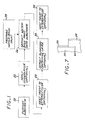
- Figure 1 depicts the steps in a method for depositing a platinum-group-containing layer on a substrate.
- the substrate is furnished, numeral 20. Any operable substrate may be used, and examples include a gas turbine blade and particularly its airfoil, a gas turbine vane and particularly its airfoil, and a gas turbine combustor splash plate.
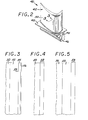
- Figure 2 depicts a gas turbine blade 40.
- the gas turbine blade 40 has an airfoil 42 against which the flow of hot combustion gas impinges during service operation, a downwardly extending shank 44, and an attachment in the form of a dovetail 46, which attaches the gas turbine blade 40 to a gas turbine disk (not shown) of the gas turbine engine.
- a platform 48 extends transversely outwardly at a location between the airfoil 42, and the shank 44 and dovetail 46.
- the airfoil 42 serves as the substrate 50 for subsequent deposition.
- the entire gas turbine blade 40 is preferably made of a nickel-base superalloy.
- a nickel-base alloy has more nickel than any other element, and a nickel-base superalloy is a nickel-base alloy that is strengthened by the precipitation of gamma-prime phase or a related phase.
- the substrate 50 is typically processed to remove any pre-existing scale, excessive oxide or corrosion, dirt, or other contamination in the areas to be painted.
- the cleaning procedure is appropriate to the nature of the contamination.
- One effective technique is to use fine grit blasting on the substrate 50, which also prepares the surface to receive the subsequently deposited water-base paint.
- an underlayer 52 may be applied, numeral 22 of Figure 1 , to a surface 54 of the substrate 50, as shown in Figures 3 and 4 .
- Examples of underlayers 52 include a MCrAlY coating or a NiAl-base coating that may also contain alloying elements such as Cr and Zr.
- the MCrAlY coating is an overlay coating, and the NiAl-base coating is a diffusional coating.
- a water-base paint comprising metallic platinum-group powder, water, and a binder is prepared, numeral 24 of Figure 1 .
- Any operable platinum-group powder may be used.
- the preferred metallic platinum powder has a globular particle shape and an average particle size of about 0.2 micrometers. Such a powder is available as Johnson Matthey 100/2A powder.
- the binder is preferably methyl cellulose, available in solid powder form from Fisher Scientific Co. Methyl cellulose forms polyethylene oxide during subsequent heating, which is completely volatilized in the subsequent heating steps.
- the water is preferably de-ionized water. The water and the binder are removed during subsequent processing.
- the platinum-group powder, water, and binder are mixed together in an operable ratio.
- the platinum-group powder is present as 25 to 40 percent by weight of the total mixture
- the methyl cellulose is present as 10 to 30 percent by weight of the total mixture
- the water is the balance.
- the amount of water may be adjusted as desired to control the fluidity and consistency of the mixture as necessary for the selected application technique.
- This mixture is first manually mixed by hand or by machine stirring, and then is further mixed and compounded by mixing in a ball mill without media for at least 1 hour.
- the resulting mixture performs satisfactorily as a paint, with the platinum-group particles remaining in suspension for an extended period of time. If the paint is not used immediately after mixing and compounding, it may be used at a later time after mechanical re-stirring.
- the water-base paint is deposited, step 26, overlying a surface 53 of the substrate 50 (or underlayer 52 if present) to form a platinum-group-containing layer 54, as shown in Figure 3. ( Figures 3-5 are not drawn to scale.) If optional step 22 is not performed, the water-base paint is deposited directly onto and in contact with the substrate 50. If optional step 22 is performed, the water-base paint is deposited onto and in contact with the underlay 52. In either case, the water-based paint overlies the substrate 50, and may in some embodiments contact the substrate 50. That is, “overlying” means that the layer lies over but does not necessarily contact the surface, while “overlying and contacting” means that the layer lies over and does necessarily contact the surface. In the case of the gas turbine blade 40 of Figure 2 or a gas turbine vane, the preferred region for deposition 26 is the airfoil 42.
- the water-base paint may be applied by any operable approach. Examples include air or airless spraying, dipping, spinning, and brushing.
- the viscosity consistency of the water-base paint may be adjusted by adding a higher proportion of water.
- the greatest advantages of the water-base paint are realized when it is sprayed onto the substrate 50 or the underlayer 52.
- the particular formulation of the water-base paint allows it to be sprayed through fine nozzles, and it may be thinned as needed with the addition of more water. Spraying deposits a thin liquid layer that dries as the water evaporates.
- the sprayed paint layer, and thence the platinum-group-containing layer 54 may be made highly uniform using automated spraying and, with skill, even using manual spraying. Fine details of the substrate article may be uniformly painted, for example by using an airbrush. Areas of the surface that are not to be painted may be masked to prevent any deposition of the water-based paint.
- the thickness of the as-deposited layer may be carefully controlled. Because the platinum-group metals are expensive, the thickness of the platinum-group-containing layer 54 is made no thicker than necessary to accomplish the required protective function. For most applications, the platinum-group-containing layer 54 is preferably from 0.0001 to 0.0003 inches in thickness, after drying and subsequent heat treatment. If the layer 54 is thicker, an undesirable gold-colored PtAl 2 phase is formed, and platinum-group metal is wasted. If the layer 54 is thinner, there is a risk of pinholes through the layer 54 and unpainted areas. Normally, a single coat of the water-based paint is sufficient and is preferred. Such a single coat is preferably accomplished by a single pass of the paint sprayer.
- the final platinum-group-containing layer 54 includes at least 96 percent, more preferably at least 99 percent, platinum-group metal (or mixture of platinum group metals) by weight exclusive of the water and the binder. It is preferred that there be less than 100 parts per million (ppm), more preferably less than 25 ppm, total of the elements sulfur and carbon. Sulfur and carbon, when present in larger amounts, may contribute to the degradation of the coating during service.
- ppm parts per million
- the water-based paint After the water-based paint is deposited upon the substrate 50, the water therein quickly evaporates so that the paint dries to the touch, resulting in the platinum-group containing layer 54 on the substrate 50.
- the platinum-group-containing layer 54 may be used in this as-deposited-and-dried state. More typically, however, it is further processed.
- the platinum-group-containing layer 54 is heated, to interdiffuse the platinum-group-containing layer 54 and the substrate 50 (or underlayer 52, if present), step 28.
- Atoms of the platinum-group metal(s) diffuse into the substrate 50 (or the underlayer 52, if present), and atoms of the substrate 50 (or the underlayer 52, if present) diffuse into the platinum-group-containing layer 54.
- This interdiffusion serves to densify the platinum-group-containing layer 54, to bind the platinum-group-containing layer 54 more strongly to the substrate 50 (or the underlayer 52, if present), and to create a surface compositional gradient.
- Any operable heat treatment 28 may be used. In a preferred approach, the heating 28 is at 1950°F for 4 hours in vacuum. The result is that the platinum-group-containing layer 54 becomes highly adherent and highly corrosion-resistant.
- the interdiffused substrate 50, underlayer 52 if present, and platinum-group containing layer 54 may be used in this state, or may be further processed as described next
- an aluminum-containing layer 56 is deposited in contact with the platinum-group-containing layer, numeral 30.
- the aluminum-containing layer 56 may be pure aluminum or an aluminum alloy.
- the aluminum-containing layer 56 may be deposited by any operable technique. Examples of operable deposition techniques include chemical vapor deposition, vapor phase aluminiding, or physical vapor deposition.
- the thickness of the aluminum-containing layer 56 is typically approximately the same as the initial thickness of the platinum-group-containing layer 54 prior to interdiffusion, or slightly thicker. In the preferred embodiment, the aluminum-containing layer 56 has about the same thickness as the platinum-group-containing layer 54.
- the substrate 50, the underlayer 52 if present, the platinum-group-containing layer 54, and the aluminum-containing layer 56 are then heated, step 32, to interdiffuse the atoms of the aluminum-containing layer 56, the platinum-group-containing layer 54, the underlayer 52 if present, and the substrate 50.
- Any operable heat treatment 32 may be used.
- the heating 32 is at 1975°F for 6 hours in a flow of 150 standard cubic feet per hour of argon.
- the result is an interdiffused layer 58, as illustrated in Figure 4 for the case of no underlayer, and in Figure 5 for the case of an underlayer 52.
- the interdiffused layer 58 forms the exposed surface but penetrates into the substrate 50 (or underlayer 52, if present) for a substantial distance, typically 40-60 micrometers or more.
- the interdiffused layer 58 is formed of platinum, aluminum, and atoms from the substrate 50 (or underlayer 52, if present).
- the present invention has been reduced to practice using the processing defined by steps 20, 24, 26, 28, 30, and 32, using the preferred values discussed above.
- the substrate 50 was Rene TM N5 alloy, having a nominal composition in weight percent of about 7.5 percent cobalt, about 7.0 percent chromium, about 1.5 percent molybdenum, about 5 percent tungsten, about 3 percent rhenium, about 6.5 percent tantalum, about 6.2 percent aluminum, about 0.15 percent hafnium, about 0.05 percent carbon, about 0.004 percent boron, about 0.01 percent yttrium, balance nickel and minor elements.
- the as-deposited platinum-group-containing layer 54 was pure platinum about 3-4 micrometers thick deposited by spraying.
- the aluminum-containing layer 56 was pure aluminum deposited by vapor phase aluminiding.
- the vapor phase aluminiding was accomplished at elevated temperature, so that the resulting structure was like that shown in Figure 4 .
- distinct layers 54 and 56 are not present, but instead the structure has the interdiffused layer 58.
- the chemical composition of the specimen was measured as a function of distance from the surface of the specimen.
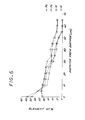
- Figure 6 presents the chemical composition profile for the platinum and aluminum as a function of distance from the free surface (the remainder of the composition is elements diffused from the substrate 50). The profile was measured at two different locations, resulting in two sets of values for the platinum and aluminum. These two sets of values agree well.
- the composition profile of Figure 6 is similar to that produced by a conventional approach of depositing platinum by electrodeposition and depositing aluminum by chemical vapor deposition.
- the average composition integrated in the first 20 micrometers below the free surface for this test specimen is 21.9-weight percent platinum and 21.2 weight percent aluminum, which is satisfactory for a platinum-aluminum protective layer.
- a mask 60 may be placed over the portion of the substrate 50 that is not to be coated with the layers 54 and 56.
- the layers 54 and 56 are deposited, and the mask 60 is thereafter stripped away to leave the previously masked portion uncoated.
- the mask 60 may be of any operable form.
- the mask 60 may be paper, tape, or the like.
- the mask 60 must withstand the deposition temperature. In some cases, it may be desirable to deposit both layers 54 and 56 in some areas, and only the layer 54 or the layer 56 (but not both) in other areas.
Landscapes
- Chemical & Material Sciences (AREA)
- Engineering & Computer Science (AREA)
- Organic Chemistry (AREA)
- Materials Engineering (AREA)
- Mechanical Engineering (AREA)
- Metallurgy (AREA)
- Chemical Kinetics & Catalysis (AREA)
- Physics & Mathematics (AREA)
- Plasma & Fusion (AREA)
- Other Surface Treatments For Metallic Materials (AREA)
- Turbine Rotor Nozzle Sealing (AREA)
- Application Of Or Painting With Fluid Materials (AREA)
- Paints Or Removers (AREA)
Applications Claiming Priority (1)
| Application Number | Priority Date | Filing Date | Title |
|---|---|---|---|
| US11/613,507 US7749570B2 (en) | 2006-12-20 | 2006-12-20 | Method for depositing a platinum-group-containing layer on a substrate |
Publications (3)
| Publication Number | Publication Date |
|---|---|
| EP1936010A2 true EP1936010A2 (de) | 2008-06-25 |
| EP1936010A3 EP1936010A3 (de) | 2008-07-23 |
| EP1936010B1 EP1936010B1 (de) | 2013-04-17 |
Family
ID=39046789
Family Applications (1)
| Application Number | Title | Priority Date | Filing Date |
|---|---|---|---|
| EP07122371.3A Expired - Fee Related EP1936010B1 (de) | 2006-12-20 | 2007-12-05 | Sprühbare, wasserbasierte Farbe mit einer Platingruppe und ihre Verwendung |
Country Status (3)
| Country | Link |
|---|---|
| US (1) | US7749570B2 (de) |
| EP (1) | EP1936010B1 (de) |
| JP (1) | JP5398978B2 (de) |
Cited By (1)
| Publication number | Priority date | Publication date | Assignee | Title |
|---|---|---|---|---|
| CN118792616A (zh) * | 2021-10-29 | 2024-10-18 | 立讯电子科技(昆山)有限公司 | 一种半导体芯片产品及其局部溅镀治具、局部溅镀方法 |
Families Citing this family (6)
| Publication number | Priority date | Publication date | Assignee | Title |
|---|---|---|---|---|
| DE102007008011A1 (de) * | 2007-02-15 | 2008-08-21 | Rolls-Royce Deutschland Ltd & Co Kg | Verfahren zur Ausbildung einer Aluminium-Diffusionsschicht zum Oxidationsschutz |
| US9719353B2 (en) * | 2011-04-13 | 2017-08-01 | Rolls-Royce Corporation | Interfacial diffusion barrier layer including iridium on a metallic substrate |
| US9297089B2 (en) * | 2011-07-08 | 2016-03-29 | Barson Composites Corporation | Coatings for gas turbine components |
| JP5821572B2 (ja) * | 2011-11-28 | 2015-11-24 | 株式会社Ihi | 高い表面Al濃度を有するPt含有γ−Ni+γ’−Ni3Al耐酸化コーティング皮膜が付いたNi基基材およびその製造方法 |
| EP2918705B1 (de) | 2014-03-12 | 2017-05-03 | Rolls-Royce Corporation | Beschichtungs mit Diffusionssperrschicht mit Iridium und Oxidschicht und Beschichtungsverfahren |
| DE112022002426T5 (de) * | 2021-04-26 | 2024-02-22 | Agilent Technologies, Inc. | Mehrlagige Beschichtung für Interface-Konen |
Citations (5)
| Publication number | Priority date | Publication date | Assignee | Title |
|---|---|---|---|---|
| EP1079002A1 (de) | 1999-08-23 | 2001-02-28 | General Electric Company | Verfahren zur Herstellung von Beschichtungen auf Gegenständen |
| EP1091020A1 (de) | 1999-10-04 | 2001-04-11 | General Electric Company | Verfahren zum Aufbringen einer Haftbeschichtung und einer Wärmedämmschicht auf einem Metallsubstrat und daraus hergestellte Artikel |
| US20040115355A1 (en) | 2002-12-13 | 2004-06-17 | Bauer Steven Earl | Method for coating an internal surface of an article with an aluminum-containing coating |
| EP1528117A1 (de) | 2003-10-31 | 2005-05-04 | General Electric Company | Diffusionsbeschichtungsverfahren |
| EP1772530A2 (de) | 2005-09-29 | 2007-04-11 | General Electric Company | Beschichtungzusammensetzung enthaltend Platinum für eine Gasturbine |
Family Cites Families (25)
| Publication number | Priority date | Publication date | Assignee | Title |
|---|---|---|---|---|
| GB1281532A (en) * | 1968-11-15 | 1972-07-12 | Rolls Royce | Improvements in clamping of workpieces for machining |
| JPS5696067A (en) * | 1979-09-07 | 1981-08-03 | Alloy Surfaces Co Inc | Diffusion coating through limited part |
| US4396480A (en) | 1982-02-02 | 1983-08-02 | W. R. Grace & Co. | Solid electrolyte sheet |
| US5306411A (en) | 1989-05-25 | 1994-04-26 | The Standard Oil Company | Solid multi-component membranes, electrochemical reactor components, electrochemical reactors and use of membranes, reactor components, and reactor for oxidation reactions |
| US4904501A (en) * | 1987-05-29 | 1990-02-27 | The Babcock & Wilcox Company | Method for chromizing of boiler components |
| US4913970A (en) * | 1987-11-03 | 1990-04-03 | Eastman Kodak Company | Adhesion promoting composition and coated film |
| JPH0689471B2 (ja) * | 1989-05-09 | 1994-11-09 | ザ ダウ ケミカル カンパニー | チタン隙間腐蝕防止方法 |
| US5034275A (en) * | 1989-11-24 | 1991-07-23 | Pearson James M | Paint coated sheet material with adhesion promoting composition |
| US5648416A (en) * | 1992-01-21 | 1997-07-15 | Monsanto Company | Corrosion resistant paint |
| US5569633A (en) | 1994-01-12 | 1996-10-29 | Air Products And Chemicals, Inc. | Ion transport membranes with catalyzed dense layer |
| EP0699721B1 (de) * | 1994-09-01 | 2002-05-15 | Toda Kogyo Corporation | Mit modifizierten Polysiloxan beschichtete anorganische Teilchen |
| US5753316A (en) * | 1997-01-14 | 1998-05-19 | Ppg Industries, Inc. | Treatment of metal parts to provide improved sealcoat coatings |
| US5914439A (en) | 1997-05-08 | 1999-06-22 | Owens Corning Fiberglas Technology, Inc. | Diffusion barrier for bores of glass fiber spinners providing high corrosion and oxidative resistance at high temperatures |
| FR2781494B1 (fr) * | 1998-07-22 | 2000-10-06 | Colas Sa | Accelerateur de temps de sechage d'une peinture aqueuse et peinture et procede d'application correspondants |
| US6060174A (en) * | 1999-05-26 | 2000-05-09 | Siemens Westinghouse Power Corporation | Bond coats for turbine components and method of applying the same |
| US6395406B1 (en) | 2000-04-24 | 2002-05-28 | General Electric Company | Methods for preparing and applying coatings on metal-based substrates, and related compositions and articles |
| US6676992B2 (en) | 2001-08-22 | 2004-01-13 | General Electric Company | Article protected by a diffusion aluminide coating applied by painting techniques |
| US20090057436A1 (en) * | 2002-06-25 | 2009-03-05 | Valdes Renato J | Portable Water-Based Paint Spray Apparatus and Method of Use |
| US8071168B2 (en) | 2002-08-26 | 2011-12-06 | Nanoink, Inc. | Micrometric direct-write methods for patterning conductive material and applications to flat panel display repair |
| US6884524B2 (en) | 2002-12-27 | 2005-04-26 | General Electric Company | Low cost chrome and chrome/aluminide process for moderate temperature applications |
| US6893737B2 (en) * | 2002-12-27 | 2005-05-17 | General Electric Company | Low cost aluminide process for moderate temperature applications |
| DE10331351A1 (de) | 2003-07-11 | 2005-01-27 | Mtu Aero Engines Gmbh | Verfahren und Vorrichtung zum Herstellen einer korrosionsbeständigen und oxidationsbeständigen Beschichtung sowie Bauteil mit einer solchen Beschichtung |
| FR2870858B1 (fr) | 2004-05-28 | 2007-04-06 | Snecma Moteurs Sa | Procede de fabrication ou de reparation d'un revetement sur un substrat metallique |
| US8383203B2 (en) * | 2004-12-15 | 2013-02-26 | Kennametal Inc. | Imparting high-temperature degradation resistance to components for internal combustion engine systems |
| US20060257633A1 (en) | 2005-04-27 | 2006-11-16 | Hitachi Maxell, Ltd. | Method for modifying surface of polymer substrate, method for forming plated film on polymer substrate, method for producing polymer member, and coating member |
-
2006
- 2006-12-20 US US11/613,507 patent/US7749570B2/en not_active Expired - Fee Related
-
2007
- 2007-12-05 EP EP07122371.3A patent/EP1936010B1/de not_active Expired - Fee Related
- 2007-12-18 JP JP2007325423A patent/JP5398978B2/ja not_active Expired - Fee Related
Patent Citations (5)
| Publication number | Priority date | Publication date | Assignee | Title |
|---|---|---|---|---|
| EP1079002A1 (de) | 1999-08-23 | 2001-02-28 | General Electric Company | Verfahren zur Herstellung von Beschichtungen auf Gegenständen |
| EP1091020A1 (de) | 1999-10-04 | 2001-04-11 | General Electric Company | Verfahren zum Aufbringen einer Haftbeschichtung und einer Wärmedämmschicht auf einem Metallsubstrat und daraus hergestellte Artikel |
| US20040115355A1 (en) | 2002-12-13 | 2004-06-17 | Bauer Steven Earl | Method for coating an internal surface of an article with an aluminum-containing coating |
| EP1528117A1 (de) | 2003-10-31 | 2005-05-04 | General Electric Company | Diffusionsbeschichtungsverfahren |
| EP1772530A2 (de) | 2005-09-29 | 2007-04-11 | General Electric Company | Beschichtungzusammensetzung enthaltend Platinum für eine Gasturbine |
Cited By (1)
| Publication number | Priority date | Publication date | Assignee | Title |
|---|---|---|---|---|
| CN118792616A (zh) * | 2021-10-29 | 2024-10-18 | 立讯电子科技(昆山)有限公司 | 一种半导体芯片产品及其局部溅镀治具、局部溅镀方法 |
Also Published As
| Publication number | Publication date |
|---|---|
| US20080152814A1 (en) | 2008-06-26 |
| EP1936010A3 (de) | 2008-07-23 |
| JP2008169479A (ja) | 2008-07-24 |
| JP5398978B2 (ja) | 2014-01-29 |
| US7749570B2 (en) | 2010-07-06 |
| EP1936010B1 (de) | 2013-04-17 |
Similar Documents
| Publication | Publication Date | Title |
|---|---|---|
| US6613445B2 (en) | Metal slurry coatings on substrates, and related articles | |
| US20120177830A1 (en) | Corrosion-resistant layered coatings | |
| EP1936010B1 (de) | Sprühbare, wasserbasierte Farbe mit einer Platingruppe und ihre Verwendung | |
| JP3431474B2 (ja) | 超合金の高温腐食に対して高い効果をもつ保護コーティングの製造方法、前記方法により得られる保護コーティング及び前記コーティングにより保護された部品 | |
| US20070287013A1 (en) | Aluminizing slurry Compositions Free of Hexavalent Chromium, and Related Methods and Articles | |
| US6676992B2 (en) | Article protected by a diffusion aluminide coating applied by painting techniques | |
| US20100151125A1 (en) | Slurry chromizing process | |
| US20160230263A1 (en) | Slurry chromizing compositions | |
| JPH0788564B2 (ja) | 超合金基体上への白金−ケイ素−添加拡散アルミニド被膜の形成法 | |
| US7390534B2 (en) | Diffusion coating process | |
| CA2292370C (en) | Improved coating and method for minimizing consumption of base material during high temperature service | |
| EP1793012A3 (de) | Haftbeschichtung mit geringem Gehalt an abgeschiedenem Aluminium und Verfahren dafür | |
| CA2304829C (en) | Enhancement of coating uniformity by alumina doping | |
| CA2378908C (en) | One-step noble metal-aluminide coatings | |
| US20020031683A1 (en) | Vapor phase co-deposition coating for superalloy applications | |
| US20120088121A1 (en) | Bilayer protection coating and related method | |
| EP1790825B1 (de) | Verfahren zum Auftragen einer Haftbeschichtung und einer Wärmedämmschicht auf einer aluminisierten Oberfläche | |
| CN1903562A (zh) | 热阻挡涂层 | |
| Liburdi et al. | LSR™ Slurry Coating Technologies |
Legal Events
| Date | Code | Title | Description |
|---|---|---|---|
| PUAI | Public reference made under article 153(3) epc to a published international application that has entered the european phase |
Free format text: ORIGINAL CODE: 0009012 |
|
| PUAL | Search report despatched |
Free format text: ORIGINAL CODE: 0009013 |
|
| AK | Designated contracting states |
Kind code of ref document: A2 Designated state(s): AT BE BG CH CY CZ DE DK EE ES FI FR GB GR HU IE IS IT LI LT LU LV MC MT NL PL PT RO SE SI SK TR |
|
| AX | Request for extension of the european patent |
Extension state: AL BA HR MK RS |
|
| AK | Designated contracting states |
Kind code of ref document: A3 Designated state(s): AT BE BG CH CY CZ DE DK EE ES FI FR GB GR HU IE IS IT LI LT LU LV MC MT NL PL PT RO SE SI SK TR |
|
| AX | Request for extension of the european patent |
Extension state: AL BA HR MK RS |
|
| RIC1 | Information provided on ipc code assigned before grant |
Ipc: C23C 4/18 20060101ALI20080618BHEP Ipc: C23C 4/08 20060101ALI20080618BHEP Ipc: C23C 4/06 20060101ALI20080618BHEP Ipc: C23C 4/02 20060101ALI20080618BHEP Ipc: C23C 10/60 20060101ALI20080618BHEP Ipc: C23C 10/30 20060101ALI20080618BHEP Ipc: C23C 10/28 20060101ALI20080618BHEP Ipc: C23C 10/20 20060101ALI20080618BHEP Ipc: C23C 10/18 20060101ALI20080618BHEP Ipc: C23C 10/02 20060101ALI20080618BHEP Ipc: C23C 30/00 20060101AFI20080219BHEP |
|
| 17P | Request for examination filed |
Effective date: 20090123 |
|
| 17Q | First examination report despatched |
Effective date: 20090227 |
|
| AKX | Designation fees paid |
Designated state(s): DE FR GB |
|
| GRAP | Despatch of communication of intention to grant a patent |
Free format text: ORIGINAL CODE: EPIDOSNIGR1 |
|
| GRAS | Grant fee paid |
Free format text: ORIGINAL CODE: EPIDOSNIGR3 |
|
| GRAA | (expected) grant |
Free format text: ORIGINAL CODE: 0009210 |
|
| AK | Designated contracting states |
Kind code of ref document: B1 Designated state(s): DE FR GB |
|
| REG | Reference to a national code |
Ref country code: GB Ref legal event code: FG4D |
|
| REG | Reference to a national code |
Ref country code: DE Ref legal event code: R096 Ref document number: 602007029791 Country of ref document: DE Effective date: 20130613 |
|
| PLBE | No opposition filed within time limit |
Free format text: ORIGINAL CODE: 0009261 |
|
| STAA | Information on the status of an ep patent application or granted ep patent |
Free format text: STATUS: NO OPPOSITION FILED WITHIN TIME LIMIT |
|
| 26N | No opposition filed |
Effective date: 20140120 |
|
| REG | Reference to a national code |
Ref country code: DE Ref legal event code: R097 Ref document number: 602007029791 Country of ref document: DE Effective date: 20140120 |
|
| REG | Reference to a national code |
Ref country code: DE Ref legal event code: R119 Ref document number: 602007029791 Country of ref document: DE |
|
| GBPC | Gb: european patent ceased through non-payment of renewal fee |
Effective date: 20131205 |
|
| REG | Reference to a national code |
Ref country code: DE Ref legal event code: R119 Ref document number: 602007029791 Country of ref document: DE Effective date: 20140701 |
|
| REG | Reference to a national code |
Ref country code: FR Ref legal event code: ST Effective date: 20140829 |
|
| PG25 | Lapsed in a contracting state [announced via postgrant information from national office to epo] |
Ref country code: DE Free format text: LAPSE BECAUSE OF NON-PAYMENT OF DUE FEES Effective date: 20140701 |
|
| PG25 | Lapsed in a contracting state [announced via postgrant information from national office to epo] |
Ref country code: FR Free format text: LAPSE BECAUSE OF NON-PAYMENT OF DUE FEES Effective date: 20131231 Ref country code: GB Free format text: LAPSE BECAUSE OF NON-PAYMENT OF DUE FEES Effective date: 20131205 |