EP1936459A2 - Handhabung von Ausnahmefällen - Google Patents
Handhabung von Ausnahmefällen Download PDFInfo
- Publication number
- EP1936459A2 EP1936459A2 EP07123359A EP07123359A EP1936459A2 EP 1936459 A2 EP1936459 A2 EP 1936459A2 EP 07123359 A EP07123359 A EP 07123359A EP 07123359 A EP07123359 A EP 07123359A EP 1936459 A2 EP1936459 A2 EP 1936459A2
- Authority
- EP
- European Patent Office
- Prior art keywords
- plan
- plans
- new
- exception
- planner
- Prior art date
- Legal status (The legal status is an assumption and is not a legal conclusion. Google has not performed a legal analysis and makes no representation as to the accuracy of the status listed.)
- Ceased
Links
Images



Classifications
-
- G—PHYSICS
- G05—CONTROLLING; REGULATING
- G05B—CONTROL OR REGULATING SYSTEMS IN GENERAL; FUNCTIONAL ELEMENTS OF SUCH SYSTEMS; MONITORING OR TESTING ARRANGEMENTS FOR SUCH SYSTEMS OR ELEMENTS
- G05B19/00—Program-control systems
- G05B19/02—Program-control systems electric
- G05B19/418—Total factory control, i.e. centrally controlling a plurality of machines, e.g. direct or distributed numerical control [DNC], flexible manufacturing systems [FMS], integrated manufacturing systems [IMS] or computer integrated manufacturing [CIM]
- G05B19/4184—Total factory control, i.e. centrally controlling a plurality of machines, e.g. direct or distributed numerical control [DNC], flexible manufacturing systems [FMS], integrated manufacturing systems [IMS] or computer integrated manufacturing [CIM] characterised by fault tolerance, reliability of production system
-
- G—PHYSICS
- G05—CONTROLLING; REGULATING
- G05B—CONTROL OR REGULATING SYSTEMS IN GENERAL; FUNCTIONAL ELEMENTS OF SUCH SYSTEMS; MONITORING OR TESTING ARRANGEMENTS FOR SUCH SYSTEMS OR ELEMENTS
- G05B19/00—Program-control systems
- G05B19/02—Program-control systems electric
- G05B19/418—Total factory control, i.e. centrally controlling a plurality of machines, e.g. direct or distributed numerical control [DNC], flexible manufacturing systems [FMS], integrated manufacturing systems [IMS] or computer integrated manufacturing [CIM]
- G05B19/41865—Total factory control, i.e. centrally controlling a plurality of machines, e.g. direct or distributed numerical control [DNC], flexible manufacturing systems [FMS], integrated manufacturing systems [IMS] or computer integrated manufacturing [CIM] characterised by job scheduling, process planning, material flow
-
- G—PHYSICS
- G06—COMPUTING OR CALCULATING; COUNTING
- G06F—ELECTRIC DIGITAL DATA PROCESSING
- G06F3/00—Input arrangements for transferring data to be processed into a form capable of being handled by the computer; Output arrangements for transferring data from processing unit to output unit, e.g. interface arrangements
- G06F3/12—Digital output to print unit, e.g. line printer, chain printer
- G06F3/1201—Dedicated interfaces to print systems
- G06F3/1202—Dedicated interfaces to print systems specifically adapted to achieve a particular effect
- G06F3/121—Facilitating exception or error detection and recovery, e.g. fault, media or consumables depleted
-
- G—PHYSICS
- G06—COMPUTING OR CALCULATING; COUNTING
- G06F—ELECTRIC DIGITAL DATA PROCESSING
- G06F3/00—Input arrangements for transferring data to be processed into a form capable of being handled by the computer; Output arrangements for transferring data from processing unit to output unit, e.g. interface arrangements
- G06F3/12—Digital output to print unit, e.g. line printer, chain printer
- G06F3/1201—Dedicated interfaces to print systems
- G06F3/1223—Dedicated interfaces to print systems specifically adapted to use a particular technique
- G06F3/1229—Printer resources management or printer maintenance, e.g. device status, power levels
- G06F3/1234—Errors handling and recovery, e.g. reprinting
-
- G—PHYSICS
- G06—COMPUTING OR CALCULATING; COUNTING
- G06F—ELECTRIC DIGITAL DATA PROCESSING
- G06F3/00—Input arrangements for transferring data to be processed into a form capable of being handled by the computer; Output arrangements for transferring data from processing unit to output unit, e.g. interface arrangements
- G06F3/12—Digital output to print unit, e.g. line printer, chain printer
- G06F3/1201—Dedicated interfaces to print systems
- G06F3/1223—Dedicated interfaces to print systems specifically adapted to use a particular technique
- G06F3/1275—Print workflow management, e.g. defining or changing a workflow, cross publishing
-
- G—PHYSICS
- G06—COMPUTING OR CALCULATING; COUNTING
- G06Q—INFORMATION AND COMMUNICATION TECHNOLOGY [ICT] SPECIALLY ADAPTED FOR ADMINISTRATIVE, COMMERCIAL, FINANCIAL, MANAGERIAL OR SUPERVISORY PURPOSES; SYSTEMS OR METHODS SPECIALLY ADAPTED FOR ADMINISTRATIVE, COMMERCIAL, FINANCIAL, MANAGERIAL OR SUPERVISORY PURPOSES, NOT OTHERWISE PROVIDED FOR
- G06Q10/00—Administration; Management
- G06Q10/06—Resources, workflows, human or project management; Enterprise or organisation planning; Enterprise or organisation modelling
- G06Q10/063—Operations research, analysis or management
- G06Q10/0633—Workflow analysis
-
- G—PHYSICS
- G05—CONTROLLING; REGULATING
- G05B—CONTROL OR REGULATING SYSTEMS IN GENERAL; FUNCTIONAL ELEMENTS OF SUCH SYSTEMS; MONITORING OR TESTING ARRANGEMENTS FOR SUCH SYSTEMS OR ELEMENTS
- G05B2219/00—Program-control systems
- G05B2219/30—Nc systems
- G05B2219/31—From computer integrated manufacturing till monitoring
- G05B2219/31363—Action, if one station defect, execute special program for other stations
-
- G—PHYSICS
- G05—CONTROLLING; REGULATING
- G05B—CONTROL OR REGULATING SYSTEMS IN GENERAL; FUNCTIONAL ELEMENTS OF SUCH SYSTEMS; MONITORING OR TESTING ARRANGEMENTS FOR SUCH SYSTEMS OR ELEMENTS
- G05B2219/00—Program-control systems
- G05B2219/30—Nc systems
- G05B2219/31—From computer integrated manufacturing till monitoring
- G05B2219/31364—If one station defect, return other stations to original programmed modes
-
- Y—GENERAL TAGGING OF NEW TECHNOLOGICAL DEVELOPMENTS; GENERAL TAGGING OF CROSS-SECTIONAL TECHNOLOGIES SPANNING OVER SEVERAL SECTIONS OF THE IPC; TECHNICAL SUBJECTS COVERED BY FORMER USPC CROSS-REFERENCE ART COLLECTIONS [XRACs] AND DIGESTS
- Y02—TECHNOLOGIES OR APPLICATIONS FOR MITIGATION OR ADAPTATION AGAINST CLIMATE CHANGE
- Y02P—CLIMATE CHANGE MITIGATION TECHNOLOGIES IN THE PRODUCTION OR PROCESSING OF GOODS
- Y02P90/00—Enabling technologies with a potential contribution to greenhouse gas [GHG] emissions mitigation
- Y02P90/02—Total factory control, e.g. smart factories, flexible manufacturing systems [FMS] or integrated manufacturing systems [IMS]
Definitions
- the following relates to machine control planning.
- it is directed towards exception handling.
- it is directed towards exceptions handling using flexible planning based at least in part user preferences.
- Model-based planning is used for creating machine control plans. It is based on a notion that each component of the system can send a model of its behavior to a central planner or controller.
- the controller interprets the models to determine the capabilities and constraints of the system components. Subsequently, upon receiving one or more jobs to process, the controller generates a plan to process the one or more jobs based on the components' capabilities and capability constraints described within each of the component models. The plan may then be confirmed by each component of the system to ensure that each component can execute its portion of the plan.
- plans are often built based on the assumption that all components will work as expected.
- model-based planning is often used to create plans only for normal behavior and is not involved in recovering from failures or exceptions (e.g., associated with one or more malfunctioning components/modules of a system, etc.) in the execution of these plans.
- failures or exceptions e.g., associated with one or more malfunctioning components/modules of a system, etc.
- this assumption is often erroneous.
- conventional systems handle such exceptions associated with such plans by bringing the machine, apparatus, process, etc. to a safe state (e.g., stop, idled, off, etc.) and then trying to recover from the safe state.
- a safe state e.g., stop, idled, off, etc.
- gracefully halting a running system may be difficult or even impossible.
- frequent halting the system for error recovery e.g., with every component failure
- a set of pre-defined rules are used to determine an alternative plan, for example, without invoking the planner.
- creating a set of rules for all possible exceptions may be time-consuming, error-prone, and/or not possible.
- a set of pre-defined rules may become invalid or lead to inefficient handling of exceptions.
- a system that re-plans jobs based at least in part on user preferences in response to system component errors.
- the system includes an exception handler that receives an exception from one of a plurality of components executing a plan to process a job.
- the system further includes a planner/replanner that creates a new plan for the job based at least in part on a model-based planning technique and at least one user preference.
- the job includes a description of one or more inputs, outputs, goals, attributes, parameters, variables, and constraints.
- the planner switches to a re-planning mode to create the new plan and returns to a normal mode to execute the new plan.
- the system is one of a printing platform, a manufacturing system, a packaging system, a logistic system, a routing system, a process, and an analysis system.
- the original plan is forward simulated for an amount of time that depends on a number of plans that need to be re-built.
- the method further includes anticipating an affect the forward simulation will have on future failures.
- the method further includes creating the new goals based on one of the following approaches: purging executing portions of executing plans; only purging executing portions of plans associated with the exception; and only purging executing portions that are rebuilt.
- the method further includes selecting the approach based on at least one of a user preference, a goal, a system model, a type of exception, a cost, a benefit, an inference, a probability, a classifier. In a further embodiment the method further includes:
- FIGURE 1 illustrates a system with a planner that generates plans for processing jobs and that provides exception handling based at least on user preferences;
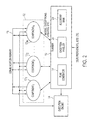
- FIGURE 2 illustrates the planner having a plan generator, an exception handler, and an algorithm bank that stores algorithms used to facilitates creating new plans along with the user preferences;
- FIGURE 3 illustrates a method for re-planning jobs upon execution failure of at least a portion of a plan
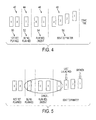
- FIGURE 4 illustrates a sequence of sheets that are serially handled by the planner
- FIGURE 5 illustrates an exemplary technique in which unlaunched sheets are cancelled because they may not be valid or are no longer of good quality due to the exception
- FIGURE 6 illustrates exemplary techniques in which all sheets associated with executing plans or all sheets associated with a failed executing plan are purged.
- FIGURE 7 illustrates an exemplary technique in which the system attempts to save sheets associated with a failed executing plan.
- the systems and/or methods described herein provide model-based planning for systems with modular components. Unlike conventional systems and/or method, exception handling is performed on-line and/or off-line without pre-determined rules for each possible exception. Although, such rules can be used to facilitate the exception handling described herein. In addition, various exception handling approaches and/or strategies are contemplated. These approaches and/or strategies can be based on trade-offs between saving resources (e.g., input, output, etc.), exception handling time/effort, and/or on user preferences, unlike conventional systems.
- a system with a planner 10 that generates one or more plans for processing one or more jobs with one or more components 12 of the system is illustrated.
- the system is able to manipulate one or more batches of jobs (e.g., each with a description of work to be performed by the system), wherein each batch may include one or more jobs.
- the jobs within a batch(s) may follow a certain or random order.
- the planner 10 may have to handle multiple batches of jobs at substantially the same time. This can be achieved by directing elements in different batches to separate output locations following the job ordering in each batch.
- the planner 10 also provides exception handling (e.g., re-planning) to recover from errors associated with the execution of a plan by the one or more components 12.
- exception handling provides a framework for generating a new plan in an online and/or offline planning context when a failure or exception occurs during plan execution.
- the framework takes into account user preferences to find a suitable replacement strategy, which can be based on quickly solving the problem, saving as many unfinished products as possible, some combination thereof, and/or other criteria.
- An example of a suitable application is online re-planning for a tightly integrated high-speed parallel printing platform to re-route in-flight sheets due to paper-jams and/or other system and/or component failure(s).
- the foregoing allows the system to appear "self-healing," requires less user-intervention, and increases the perceived reliability of the system controlled by the planner 10.
- the exception handling also enables the system to continue running instead of bringing it to a complete and/or sudden stop during re-planning process, which can be very hard to do for a complex system running at high-speed like tightly integrated printing systems. System life can also be increased by not allowing the system to follow abnormal mechanisms when an exception occurs.
- the exception handling approaches described herein mitigates having to determine rules for all possible exceptions and provides different strategies with different levels of trade-off between exception handling time/efforts and the saving of the unfinished products. The user can provide his preferred exception handling approach up-front.
- the user can also indirectly provide his preferences using a general objective function and the system model that is relevant to the objective function (e.g. the objective function of minimizing operation cost in money and the system model containing information about all relevant costs such as computation cost, module's wear and tear cost, machine health maintaining cost etc).
- the planner 10 can also learn from a cost-model without a specific objective function (e.g. if the user needs to pay a lot for a given product, then saving media is likely to be more important than time/effort in handling exceptions, if the user is on a tight-deadline, then saving processing time is more important) or past user's behaviors in selecting the preferred exception handling approaches.
- the framework is flexible and can employ different search and planning algorithms to come up with the new plans. Thus, if planning speed is important, it can employ algorithms that find new plans fast; if machine health or cost is more important, it can use algorithms that not optimal on time but take a minimal use of the expensive modules.
- the system can be a machine, an apparatus, a process, a print platform, or the like.
- the one or more components 12 can be and/or include modular hardware.
- Each of the components 12 can be associated with one or more capabilities that can be used to process one or more jobs, and each of the one or more capabilities can be associated with one or more constraints.
- the capabilities and constraints thereon for a particular component 12 are described within a model corresponding to that component.
- Such model may be stored with its corresponding component 12 and/or elsewhere (local or remote).
- the model can also be provided to the planner 10 and/or made accessible to the planner 10 in order to apprise the planner 10 of the capabilities and the constraints on these capabilities. This can be achieved via wire and/or wireless approaches.
- the model can be dynamically updated as the capabilities and/or constraints of the components 12 change, and the planner 10 can be provided access to and/or notified about the updated capabilities and/or constraints. This can include whether a component of the system can execute a capability under a corresponding constraint at a given time if requested to by the planner 10.
- the components 12 could include a paper feeder, a marking engine, a fuser, etc.
- Such fuser may be capable of fusing images on print medium, and the fusing capability may be temperature and/or toner constrained.
- Each of these components e.g., the paper feeder, a marking engine, a fuser, etc.
- the model associated with the fuser may describe the fusing capabilities and temperature and toner constraints.
- Non-limiting examples include an analysis system with components such as a preparation module, heating module, mixing module, analysis module, transport robot, etc., a manufacturing system with components such as a machining module, assembling module, testing module, transport robot, packaging module, etc., a packaging system with components such as a bottle filling module, a labeling module, as well as a logistic system, a routing system, a process, among others.
- an analysis system with components such as a preparation module, heating module, mixing module, analysis module, transport robot, etc.
- a manufacturing system with components such as a machining module, assembling module, testing module, transport robot, packaging module, etc.
- a packaging system with components such as a bottle filling module, a labeling module, as well as a logistic system, a routing system, a process, among others.
- the planner 10 Upon receiving one or more jobs to process, the planner 10 creates one or more plans for processing the one or more jobs.
- the plans can include instructions and/or control signals for serially and/or concurrently processing the one or more jobs with the one or more components 12.
- the planner 10 creates such plans based on the capabilities and constraints of each of the components 12 (e.g., as determined from the component models) and a state of the system. Using such information, the plans are created to satisfy the goals of each job.
- the plans are conveyed to an execution engine 14, which executes the plans with one or more of the one or more components 12.
- the corresponding component 12 and/or other component may throw an exception. Additionally or alternatively, the planner 10 may learn of such exception through monitoring each of the components 12 for errors.
- the planner 10 creates one or more new plans to process the one or more jobs.
- Such re-planning may include determining a plan for in-flight jobs (e.g., jobs currently being executed) and/or jobs waiting to be launched according to real-time constraints and relations within a "broken," partially processed plan.
- the planner 10 may achieve this through various algorithms that facilitate recovery. For instance, the planner 10, when an exception occurs, may cancel all plans that have not started by the execution engine. Then, depending on one or more preferences of a user, the planner 10 can generate a new plan for already launched portions of a plan.
- the original plan can be forward simulated for an amount of time that depends on the number of plans that need to be re-built and the expected computational speed of the planner, which in turn may depend on the algorithm for a selected preferred strategy in handling exceptions.
- the planner 10 then creates new plans starting from the new locations for the new goals using a suitable algorithm (e.g., a chained best first search algorithm).
- the new plans are then sent to the execution engine 14 to replace the previous plans.
- the execution engine 14 executes these plans with one or more of the one or more components 12. If another one of the components 12 and/or associated processes malfunctions, the foregoing exception handling and error recovery can be performed, and another set of new plans can be created and sent to the execution engine 14.
- a set of pre-determined rules for each exception can be generated and refined over. These rules can be used to facilitate the herein described exception handling technique. Another approach would be to guide the exception handling process with the general re-planning framework discussed herein, but with help from domain-control knowledge.
- the one or more components 12 are depicted as including N components 12 1 , 12 2 , ..., 12 N , wherein N is an integer equal to or greater than one.
- Each of the components 12 1 , 12 2 , ..., 12 N may be associated with a unique model that provides a description of its capabilities and constraints, and the model and/or the capabilities and constraints can be provided and/or made accessible to the planner 10.
- a single model can be used to describe the capabilities and constraints of each of the components 12 and/or individual models can be aggregated.
- a single and/or aggregated model can be provided and/or made accessible to the planner 10.
- Each of the components 12 1 , 12 2 , ..., 12 N can interact (uni-directionally or bi-directionally) with a communication highway 16.
- execution of one or more plans may be performed by one or of the components 12.
- a plan may be executed by a single one of the components by looping through the communication highway 16.
- the plan can include cycling a job within a particular one of the components 12 (e.g., the component 12 1 ) before moving to a next component 12 (e.g., the component 12 2 ).
- the plan may include cycling a job amongst a plurality of components 12 (e.g., the components 12 1 and 12 N ) before passing it to another component (e.g., the component 12 2 ).
- the communication highway 16 may include one or more sub-highways and/or may be coupled to another communication highway (not shown) associated with similar and/or different components.
- In-coming jobs are handled by a plan generator 18, which interprets received jobs and creates the plans to process the jobs.
- Each job may include a description of one or more inputs, desired outputs, goals, attributes, parameters, variables, constraints, etc.
- the plan generator 18 may base the plans on any or all of these elements.
- a plan can be created to serially and/or concurrently process more than one job. In such instances, the plan may specify that portions of one or more jobs will be processed by similar and/or different components 12 and/or share paths within the communication highway 16.
- the plan Upon confirming a plan (e.g., via a propose/accept/confirm protocol or other suitable plan validation technique), the plan is conveyed to the execution engine 14.
- the execution engine 14 facilitates execution of plans. For instance, the execution engine 14 may send controls signals to one or more of the components 12. Such signals may provide instructions for processing the job(s), invoke warm-up routines, cycle power, activate diagnostics, reset hardware, include a query about the state of a component, etc. As depicted, the execution engine 14 can independently communicate with each of the components 12 1 , 12 2 , ..., 12 N . Each of the components 12 can communicate with the execution engine 14. Thus, if the execution engine 14 prompts or queries one of the components 12 for information, the prompted or queried one of the components 12 can answer the execution engine 14. In addition, one or more of the components 12 can forward an exception, a message, an acknowledgment, a notification, etc. to the execution engine 14. The execution engine 14 may accept and/or reply to such information and/or ignore it.
- Exceptions received by the planner 10 are handled via an exception handler 20.
- the exception handler 20 Upon receiving an exception, the exception handler 20 obtains a suitable algorithm from an algorithm bank 28.
- the suitable algorithm depends on the type of exception and user's preference and/or objective function.
- An example of a suitable algorithm includes, but is not limited to, the chained best first search algorithm.
- the planner 10 then creates one or more new plans on or off-line based on the error, the algorithm, user preferences, etc.
- a margin can be added to this estimate to mitigate underestimating.
- the currently executing plans can be forward simulated according to the estimated re-plan time. Future failures caused by the forward simulation can be anticipated. New plans with new goals, starting from the forward simulation time, can be created. The planner 10 can then switch back to a normal planning mode and continue to run in the on-line mode.
- FIGURE 3 illustrates a method for re-planning jobs upon execution failure of at least a portion of a plan.
- failure may cause other plans to fail and/or not meet one or more goals of a user.
- all plans that have not been launched are cancelled.
- new goals are created for executing portions of a plan, if necessary.
- this can be variously carried out. For example, in one approach, all executing portions of the plan(s) are terminated/purged and plan execution is restarted using the new plan.
- This approach generally consumes less time for re-planning and, thus, the system can be brought back up to a stable state relatively faster than the other techniques described herein. This may facilitate mitigating subsequent damage caused to the system by the original exception.
- a re-planning time is estimated. This time is based on the number of new plans that will be created and the time it takes to create each new plan.
- currently executing plans are forward simulated based on the estimated re-planning time. The affect this will have on future failures is anticipated.
- new plans are created for the new goals starting from the forward simulation time.
- the newly created plans are executed.
- FIGURES 4-7 illustrate exemplary implementations of the systems and methods described above.
- the system is a tightly integrate (multi-purpose) printing platform in which each printing job consists of multiple sheets that are to be printed in a particular order.
- the system can reject a given plan, turn on or off some capabilities due to user setting, or notify the planner 10 that a paper jam or other error has occurred in connection with a particular sheet.
- this example is discussed in terms of the printing platform, it is to be understood that any system that satisfies the following assumptions as well as other systems are suitable.
- each sheet of paper in this example can represent a more general manufacturing job and the different printing jobs (consists of many printing pages) can represent batch of jobs that need to be assembled at different locations.
- Other types of system are also contemplated.
- each job transitions through various states or queues.
- a newly arrived and/or unplanned job may be considered to be in a "not yet planned” state as illustrated at 50; a job currently being planned may be considered to be in a “being planned” state as illustrated at 52; a planned job that has not yet been launched may be considered to be in a "planned, unsent” state as illustrated at 54, and a planned job that is sent to the printer may be considered to be in a "sent to printer” state as illustrated at 56.
- the planner 10 switches to a re-planning mode.
- the exception may be associated with the execution of a particular plan and may cause other plans associated with different jobs to fail and/or invalidate the goals of the user (e.g. a sheet may then go out to the finisher tray out of order).
- FIGURE 3 shows that if sheet 3 is the last sheet launched, then plans for sheets 4-7 need to be cancelled because they may not be valid or are no longer of good quality after the machine model changed due to the exception.
- New goals are then created, if necessary, for in-flight sheets (e.g. send output sheets to a purge tray or shredder).
- a planning time by which a re-planning routine can reasonably be expected to complete is computed.
- the plans that are currently executing are forward simulated according to their current trajectories based on the computed re-planning time while anticipating future failures caused by this forward simulation.
- the planner 10 is then used to find plans for new goals starting from the forward simulated time together using various techniques. After re-planning, the planner 10 switches back to the normal planning mode and continues to run in the on-line mode. In the case illustrated in FIGURE 5 , one strategy is to purge sheets 2-3, and the planning mode can be restarted with all previous goals for sheets 1-9. If the exception causes an update to the status of some system component 12, the planner 10 will account for the changes via model-update messages so that the subsequent plans found in the re-planning and normal planning mode will not cause exactly the same exception again.
- the planner 10 may purge all sheets (i.e., sheets 2, and 3). For instance, if the media used for printing is inexpensive and the user does not care to save the sheets, the planner 10 can re-route them to a purge tray 68 or other device such as a shredder (not shown). With this approach, it does not matter whether an image is placed on a sheet of paper before routing it to the purge tray (or, in the general manufacturing domain, a part does not have to be calibrated before being purged). As a result, it generally takes less time to finish re-planning. Thus, the system can be brought back to a stable state faster, which can mitigate subsequent damage caused to the system by the original exception.
- sheets 2, and 3 For instance, if the media used for printing is inexpensive and the user does not care to save the sheets, the planner 10 can re-route them to a purge tray 68 or other device such as a shredder (not shown).
- a shredder not shown
- the planner 10 may only purge sheets that are out-of-order.
- this approach can be used. For instance, routing sheet 2 to its original finisher tray will violate the integrity of its corresponding job (in which sheet 1 was broken). In this case, sheet 2 can be rerouted to the purge tray 64 while avoiding crashing into sheet one.
- the planner 10 may loop or park sheets while reproducing the broken sheets. This can be achieved in systems having multiple paths, including loops that can be leveraged to save even more media.
- FIGURE 7 shows one example in which instead of re-routing out-of-order sheet 2 as in the previous approaches, it can be looped at 70 in the printer while waiting for the reprint of the broken sheet one finishes. Then, sheet 2 can b re-routed out of the loop and to a correct finisher tray.
- the system allows "parking" the sheet at some location while waiting for the reprint of broken sheet, then it can also be used as an alternative option to maximize the saving of printing media. This approach will likely take longer time than the previous approach to handle exceptions, but has the best chance of saving sheets.
- the particular approach used depends on whether saving unfinished sheets is more important than taking the shorter time to handle exception and reducing the chance of escalating the exception.
- the planner 10 and/or other components do not need to fix itself to a particular approach. Instead, it can follow a given preferred approach and switch to another if that approach is not possible or too costly. For example, to save media, the planner 10 can choose the third approach, but then if it does not find a loop or parking place in the system, it can switch to the second approach and/or the first approach.
Landscapes
- Engineering & Computer Science (AREA)
- Theoretical Computer Science (AREA)
- Physics & Mathematics (AREA)
- General Physics & Mathematics (AREA)
- Business, Economics & Management (AREA)
- General Engineering & Computer Science (AREA)
- Human Resources & Organizations (AREA)
- Quality & Reliability (AREA)
- Human Computer Interaction (AREA)
- Economics (AREA)
- Entrepreneurship & Innovation (AREA)
- Strategic Management (AREA)
- Manufacturing & Machinery (AREA)
- Automation & Control Theory (AREA)
- Educational Administration (AREA)
- Game Theory and Decision Science (AREA)
- Development Economics (AREA)
- Marketing (AREA)
- Operations Research (AREA)
- Tourism & Hospitality (AREA)
- General Business, Economics & Management (AREA)
- Management, Administration, Business Operations System, And Electronic Commerce (AREA)
- Accessory Devices And Overall Control Thereof (AREA)
- General Factory Administration (AREA)
Applications Claiming Priority (1)
| Application Number | Priority Date | Filing Date | Title |
|---|---|---|---|
| US11/612,908 US8145335B2 (en) | 2006-12-19 | 2006-12-19 | Exception handling |
Publications (2)
| Publication Number | Publication Date |
|---|---|
| EP1936459A2 true EP1936459A2 (de) | 2008-06-25 |
| EP1936459A3 EP1936459A3 (de) | 2014-11-12 |
Family
ID=39182405
Family Applications (1)
| Application Number | Title | Priority Date | Filing Date |
|---|---|---|---|
| EP07123359.7A Ceased EP1936459A3 (de) | 2006-12-19 | 2007-12-17 | Handhabung von Ausnahmefällen |
Country Status (3)
| Country | Link |
|---|---|
| US (1) | US8145335B2 (de) |
| EP (1) | EP1936459A3 (de) |
| JP (1) | JP5406448B2 (de) |
Cited By (2)
| Publication number | Priority date | Publication date | Assignee | Title |
|---|---|---|---|---|
| DE102011011679B4 (de) * | 2010-02-19 | 2013-03-07 | Fanuc Corporation | Roboter mit Lernsteuerungsfunktion |
| NL2032688B1 (en) * | 2022-08-04 | 2024-02-09 | Xsys Prepress N V | A method of controlling a relief plate production system comprising a plurality of production units, and associated relief plate production system |
Families Citing this family (20)
| Publication number | Priority date | Publication date | Assignee | Title |
|---|---|---|---|---|
| US7689311B2 (en) * | 2007-05-29 | 2010-03-30 | Palo Alto Research Center Incorporated | Model-based planning using query-based component executable instructions |
| US20090327148A1 (en) * | 2008-06-27 | 2009-12-31 | Microsoft Corporation | Mechanisms and architecture for mobile opportunistic commerce |
| US8266092B2 (en) * | 2008-07-10 | 2012-09-11 | Palo Alto Research Center Incorporated | Methods and systems for target value path identification |
| US7937175B2 (en) * | 2008-07-10 | 2011-05-03 | Palo Alto Research Center Incorporated | Methods and systems for pervasive diagnostics |
| US8219437B2 (en) | 2008-07-10 | 2012-07-10 | Palo Alto Research Center Incorporated | Methods and systems for constructing production plans |
| US8145334B2 (en) | 2008-07-10 | 2012-03-27 | Palo Alto Research Center Incorporated | Methods and systems for active diagnosis through logic-based planning |
| US8165705B2 (en) * | 2008-07-10 | 2012-04-24 | Palo Alto Research Center Incorporated | Methods and systems for continuously estimating persistent and intermittent failure probabilities for production resources |
| US8612050B2 (en) * | 2008-07-29 | 2013-12-17 | Palo Alto Research Center Incorporated | Intelligent product feed system and method |
| US8169626B2 (en) | 2008-08-29 | 2012-05-01 | Xerox Corporation | Using buffers to support uncertainties in marking engine execution |
| US8359110B2 (en) * | 2009-03-23 | 2013-01-22 | Kuhn Lukas D | Methods and systems for fault diagnosis in observation rich systems |
| US20110022197A1 (en) * | 2009-07-27 | 2011-01-27 | Rec Advanced Silicon Materials Llc | Process control application development environment and features |
| US9355009B2 (en) | 2011-10-31 | 2016-05-31 | International Business Machines Corporation | Performance of scheduled tasks via behavior analysis and dynamic optimization |
| US9047396B2 (en) * | 2011-10-31 | 2015-06-02 | International Business Machines Corporation | Method, system and computer product for rescheduling processing of set of work items based on historical trend of execution time |
| US8904397B2 (en) | 2011-10-31 | 2014-12-02 | International Business Machines Corporation | Staggering execution of scheduled tasks based on behavioral information |
| JP5928283B2 (ja) * | 2012-09-28 | 2016-06-01 | 東京エレクトロン株式会社 | 基板処理装置、基板搬送方法及び記憶媒体 |
| US9534378B2 (en) | 2014-03-12 | 2017-01-03 | Tamko Building Products, Inc. | Peel and stick waterproofing material |
| US10857759B2 (en) | 2014-03-12 | 2020-12-08 | Tamko Building Products, Llc | Peel and stick waterproofing material |
| US10229029B2 (en) | 2014-04-08 | 2019-03-12 | Oracle International Corporation | Embedded instruction sets for use in testing and error simulation of computing programs |
| EP3951524A1 (de) * | 2020-08-05 | 2022-02-09 | Siemens Aktiengesellschaft | Verfahren zum betrieb eines systems und system gekoppelt mit einer anzahl von produktionsstationen zum herstellen eines produkts |
| EP4645010A1 (de) * | 2024-04-29 | 2025-11-05 | Siemens Aktiengesellschaft | Erzeugung und ausführung erweiterter pläne |
Family Cites Families (102)
| Publication number | Priority date | Publication date | Assignee | Title |
|---|---|---|---|---|
| US4579446A (en) | 1982-07-12 | 1986-04-01 | Canon Kabushiki Kaisha | Both-side recording system |
| US4587532A (en) | 1983-05-02 | 1986-05-06 | Canon Kabushiki Kaisha | Recording apparatus producing multiple copies simultaneously |
| JP2590477B2 (ja) | 1987-05-13 | 1997-03-12 | 富士ゼロックス株式会社 | 用紙搬送方向変換装置 |
| EP0303276B1 (de) | 1987-08-12 | 1994-11-30 | Canon Kabushiki Kaisha | Apparat zum Fördern von Bogen und Verfahren zum Fördern von Bogen |
| US4836119A (en) | 1988-03-21 | 1989-06-06 | The Charles Stark Draper Laboratory, Inc. | Sperical ball positioning apparatus for seamed limp material article assembly system |
| JP2636441B2 (ja) | 1989-11-09 | 1997-07-30 | 富士ゼロックス株式会社 | 画像記録装置 |
| US5095342A (en) | 1990-09-28 | 1992-03-10 | Xerox Corporation | Methods for sheet scheduling in an imaging system having an endless duplex paper path loop |
| US5080340A (en) | 1991-01-02 | 1992-01-14 | Eastman Kodak Company | Modular finisher for a reproduction apparatus |
| US5159395A (en) | 1991-08-29 | 1992-10-27 | Xerox Corporation | Method of scheduling copy sheets in a dual mode duplex printing system |
| US5272511A (en) | 1992-04-30 | 1993-12-21 | Xerox Corporation | Sheet inserter and methods of inserting sheets into a continuous stream of sheets |
| US5358238A (en) | 1993-04-27 | 1994-10-25 | Xerox Corporation | Shared user printer output dynamic "mailbox" system |
| US5326093A (en) | 1993-05-24 | 1994-07-05 | Xerox Corporation | Universal interface module interconnecting various copiers and printers with various sheet output processors |
| US5473419A (en) | 1993-11-08 | 1995-12-05 | Eastman Kodak Company | Image forming apparatus having a duplex path with an inverter |
| JPH07192051A (ja) * | 1993-12-27 | 1995-07-28 | Kobe Steel Ltd | 製造計画作成装置 |
| US5596416A (en) | 1994-01-13 | 1997-01-21 | T/R Systems | Multiple printer module electrophotographic printing device |
| US5525031A (en) | 1994-02-18 | 1996-06-11 | Xerox Corporation | Automated print jobs distribution system for shared user centralized printer |
| US5778377A (en) | 1994-11-04 | 1998-07-07 | International Business Machines Corporation | Table driven graphical user interface |
| US5570172A (en) | 1995-01-18 | 1996-10-29 | Xerox Corporation | Two up high speed printing system |
| US5557367A (en) | 1995-03-27 | 1996-09-17 | Xerox Corporation | Method and apparatus for optimizing scheduling in imaging devices |
| US5489969A (en) | 1995-03-27 | 1996-02-06 | Xerox Corporation | Apparatus and method of controlling interposition of sheet in a stream of imaged substrates |
| US5504568A (en) | 1995-04-21 | 1996-04-02 | Xerox Corporation | Print sequence scheduling system for duplex printing apparatus |
| US5629762A (en) | 1995-06-07 | 1997-05-13 | Eastman Kodak Company | Image forming apparatus having a duplex path and/or an inverter |
| US5710968A (en) | 1995-08-28 | 1998-01-20 | Xerox Corporation | Bypass transport loop sheet insertion system |
| US5568246A (en) | 1995-09-29 | 1996-10-22 | Xerox Corporation | High productivity dual engine simplex and duplex printing system using a reversible duplex path |
| US6476923B1 (en) | 1996-06-05 | 2002-11-05 | John S. Cornell | Tandem printer printing apparatus |
| US6297886B1 (en) | 1996-06-05 | 2001-10-02 | John S. Cornell | Tandem printer printing apparatus |
| US6493098B1 (en) | 1996-06-05 | 2002-12-10 | John S. Cornell | Desk-top printer and related method for two-sided printing |
| US5995721A (en) | 1996-10-18 | 1999-11-30 | Xerox Corporation | Distributed printing system |
| US6059284A (en) | 1997-01-21 | 2000-05-09 | Xerox Corporation | Process, lateral and skew sheet positioning apparatus and method |
| US5884910A (en) | 1997-08-18 | 1999-03-23 | Xerox Corporation | Evenly retractable and self-leveling nips sheets ejection system |
| JP2000077289A (ja) * | 1998-08-27 | 2000-03-14 | Fujitsu Ltd | 製造予測管理システム |
| US6210813B1 (en) | 1998-09-02 | 2001-04-03 | Micron Technology, Inc. | Forming metal silicide resistant to subsequent thermal processing |
| US6125248A (en) | 1998-11-30 | 2000-09-26 | Xerox Corporation | Electrostatographic reproduction machine including a plurality of selectable fusing assemblies |
| IT1308720B1 (it) | 1999-06-08 | 2002-01-10 | Tecnau Srl | Sequenziatore dinamico per fogli di carta stampati |
| US6241242B1 (en) | 1999-10-12 | 2001-06-05 | Hewlett-Packard Company | Deskew of print media |
| US6384918B1 (en) | 1999-11-24 | 2002-05-07 | Xerox Corporation | Spectrophotometer for color printer color control with displacement insensitive optics |
| US6577925B1 (en) * | 1999-11-24 | 2003-06-10 | Xerox Corporation | Apparatus and method of distributed object handling |
| US6918053B1 (en) * | 2000-04-28 | 2005-07-12 | Microsoft Corporation | Compensation framework for long running transactions |
| US7864346B2 (en) | 2000-05-16 | 2011-01-04 | Xerox Corporation | Apparatus and method for describing, planning and automatically programming complex finishing tasks |
| US6450711B1 (en) | 2000-12-05 | 2002-09-17 | Xerox Corporation | High speed printer with dual alternate sheet inverters |
| US6550762B2 (en) | 2000-12-05 | 2003-04-22 | Xerox Corporation | High speed printer with dual alternate sheet inverters |
| US6633790B2 (en) | 2001-01-29 | 2003-10-14 | Xerox Corporation | Systems and methods for optimizing a production facility |
| US6554276B2 (en) | 2001-03-30 | 2003-04-29 | Xerox Corporation | Flexible sheet reversion using an omni-directional transport system |
| US6607320B2 (en) | 2001-03-30 | 2003-08-19 | Xerox Corporation | Mobius combination of reversion and return path in a paper transport system |
| US6621576B2 (en) | 2001-05-22 | 2003-09-16 | Xerox Corporation | Color imager bar based spectrophotometer for color printer color control system |
| US6633382B2 (en) | 2001-05-22 | 2003-10-14 | Xerox Corporation | Angular, azimuthal and displacement insensitive spectrophotometer for color printer color control systems |
| US6639669B2 (en) | 2001-09-10 | 2003-10-28 | Xerox Corporation | Diagnostics for color printer on-line spectrophotometer control system |
| US6608988B2 (en) | 2001-10-18 | 2003-08-19 | Xerox Corporation | Constant inverter speed timing method and apparatus for duplex sheets in a tandem printer |
| JP2003162313A (ja) * | 2001-11-26 | 2003-06-06 | Kawasaki Heavy Ind Ltd | 生産システム計画方法および生産システム計画装置 |
| US6612571B2 (en) | 2001-12-06 | 2003-09-02 | Xerox Corporation | Sheet conveying device having multiple outputs |
| US6476376B1 (en) | 2002-01-16 | 2002-11-05 | Xerox Corporation | Two dimensional object position sensor |
| JP2004094900A (ja) * | 2002-07-09 | 2004-03-25 | National Institute Of Advanced Industrial & Technology | 生産計画作成システム及び方法、並びにプログラム |
| US7230736B2 (en) | 2002-10-30 | 2007-06-12 | Palo Alto Research Center, Incorporated | Planning and scheduling reconfigurable systems with alternative capabilities |
| US8315898B2 (en) | 2002-10-30 | 2012-11-20 | Palo Alto Research Center, Incorporated | Planning and scheduling reconfigurable systems around off-line resources |
| US7233405B2 (en) | 2002-10-30 | 2007-06-19 | Palo Alto Research Center, Incorporated | Planning and scheduling reconfigurable systems with regular and diagnostic jobs |
| US6944838B2 (en) | 2003-02-03 | 2005-09-13 | Cadence Design Systems, Inc. | Method and system for design verification using proof-partitioning |
| US7093831B2 (en) | 2003-02-04 | 2006-08-22 | Palo Alto Research Center Inc. | Media path modules |
| US20040150156A1 (en) | 2003-02-04 | 2004-08-05 | Palo Alto Research Center, Incorporated. | Frameless media path modules |
| US7139629B2 (en) * | 2003-04-28 | 2006-11-21 | Palo Alto Research Center Incorporated | Planning and scheduling for failure recovery system and method |
| US6895292B2 (en) | 2003-04-28 | 2005-05-17 | Palo Alto Research Center Inc. | Predictive and preemptive planning and scheduling for different job priorities system and method |
| US6856845B2 (en) | 2003-04-28 | 2005-02-15 | Palo Alto Research Center Inc. | Monitoring and reporting incremental job status system and method |
| US7226049B2 (en) | 2003-06-06 | 2007-06-05 | Xerox Corporation | Universal flexible plural printer to plural finisher sheet integration system |
| US6819906B1 (en) | 2003-08-29 | 2004-11-16 | Xerox Corporation | Printer output sets compiler to stacker system |
| US20050125275A1 (en) * | 2003-12-03 | 2005-06-09 | Wright Robert H. | Method and system for measuring work productivity |
| US6973286B2 (en) | 2004-01-21 | 2005-12-06 | Xerox Corporation | High print rate merging and finishing system for parallel printing |
| US20080137213A1 (en) * | 2004-05-07 | 2008-06-12 | Koninklijke Philips Electronics, N.V. | Electrowetting Cell and Method for Driving it |
| US7188929B2 (en) | 2004-08-13 | 2007-03-13 | Xerox Corporation | Parallel printing architecture with containerized image marking engines |
| US7024152B2 (en) | 2004-08-23 | 2006-04-04 | Xerox Corporation | Printing system with horizontal highway and single pass duplex |
| US7224913B2 (en) | 2005-05-05 | 2007-05-29 | Xerox Corporation | Printing system and scheduling method |
| US7123873B2 (en) | 2004-08-23 | 2006-10-17 | Xerox Corporation | Printing system with inverter disposed for media velocity buffering and registration |
| US7324779B2 (en) | 2004-09-28 | 2008-01-29 | Xerox Corporation | Printing system with primary and secondary fusing devices |
| US7336920B2 (en) | 2004-09-28 | 2008-02-26 | Xerox Corporation | Printing system |
| US7751072B2 (en) | 2004-09-29 | 2010-07-06 | Xerox Corporation | Automated modification of a marking engine in a printing system |
| US7283762B2 (en) | 2004-11-30 | 2007-10-16 | Xerox Corporation | Glossing system for use in a printing architecture |
| US20060114497A1 (en) | 2004-11-30 | 2006-06-01 | Xerox Corporation | Printing system |
| US7412180B2 (en) | 2004-11-30 | 2008-08-12 | Xerox Corporation | Glossing system for use in a printing system |
| US7245856B2 (en) | 2004-11-30 | 2007-07-17 | Xerox Corporation | Systems and methods for reducing image registration errors |
| US7310108B2 (en) | 2004-11-30 | 2007-12-18 | Xerox Corporation | Printing system |
| US7791751B2 (en) | 2004-11-30 | 2010-09-07 | Palo Alto Research Corporation | Printing systems |
| US7162172B2 (en) | 2004-11-30 | 2007-01-09 | Xerox Corporation | Semi-automatic image quality adjustment for multiple marking engine systems |
| JP4665621B2 (ja) * | 2004-12-24 | 2011-04-06 | オムロン株式会社 | 工程改善支援システム |
| US7226158B2 (en) | 2005-02-04 | 2007-06-05 | Xerox Corporation | Printing systems |
| US7873962B2 (en) | 2005-04-08 | 2011-01-18 | Xerox Corporation | Distributed control systems and methods that selectively activate respective coordinators for respective tasks |
| US8819103B2 (en) | 2005-04-08 | 2014-08-26 | Palo Alto Research Center, Incorporated | Communication in a distributed system |
| US7791741B2 (en) | 2005-04-08 | 2010-09-07 | Palo Alto Research Center Incorporated | On-the-fly state synchronization in a distributed system |
| US8014024B2 (en) | 2005-03-02 | 2011-09-06 | Xerox Corporation | Gray balance for a printing system of multiple marking engines |
| US7515305B2 (en) | 2005-03-18 | 2009-04-07 | Xerox Corporation | Systems and methods for measuring uniformity in images |
| US7697151B2 (en) | 2005-03-25 | 2010-04-13 | Xerox Corporation | Image quality control method and apparatus for multiple marking engine systems |
| US7258340B2 (en) | 2005-03-25 | 2007-08-21 | Xerox Corporation | Sheet registration within a media inverter |
| US7416185B2 (en) | 2005-03-25 | 2008-08-26 | Xerox Corporation | Inverter with return/bypass paper path |
| US7206536B2 (en) | 2005-03-29 | 2007-04-17 | Xerox Corporation | Printing system with custom marking module and method of printing |
| US7272334B2 (en) | 2005-03-31 | 2007-09-18 | Xerox Corporation | Image on paper registration alignment |
| US7444108B2 (en) | 2005-03-31 | 2008-10-28 | Xerox Corporation | Parallel printing architecture with parallel horizontal printing modules |
| US7305198B2 (en) | 2005-03-31 | 2007-12-04 | Xerox Corporation | Printing system |
| US7245844B2 (en) | 2005-03-31 | 2007-07-17 | Xerox Corporation | Printing system |
| US7706007B2 (en) | 2005-04-08 | 2010-04-27 | Palo Alto Research Center Incorporated | Synchronization in a distributed system |
| US7593130B2 (en) | 2005-04-20 | 2009-09-22 | Xerox Corporation | Printing systems |
| US20060244980A1 (en) | 2005-04-27 | 2006-11-02 | Xerox Corporation | Image quality adjustment method and system |
| US8392236B2 (en) * | 2005-05-13 | 2013-03-05 | The Boeing Company | Mobile network dynamic workflow exception handling system |
| US7620470B1 (en) * | 2005-09-30 | 2009-11-17 | Advanced Micro Devices, Inc. | Method and apparatus for impasse detection and resolution |
| US7689312B2 (en) * | 2005-10-31 | 2010-03-30 | Infoprint Solutions Company, Llc | Downstream error handling in manufacturing systems |
| US7739135B2 (en) * | 2006-03-30 | 2010-06-15 | Microsoft Corporation | Asynchronous fault handling in process-centric programs |
-
2006
- 2006-12-19 US US11/612,908 patent/US8145335B2/en active Active
-
2007
- 2007-12-17 EP EP07123359.7A patent/EP1936459A3/de not_active Ceased
- 2007-12-17 JP JP2007324523A patent/JP5406448B2/ja not_active Expired - Fee Related
Non-Patent Citations (1)
| Title |
|---|
| None * |
Cited By (2)
| Publication number | Priority date | Publication date | Assignee | Title |
|---|---|---|---|---|
| DE102011011679B4 (de) * | 2010-02-19 | 2013-03-07 | Fanuc Corporation | Roboter mit Lernsteuerungsfunktion |
| NL2032688B1 (en) * | 2022-08-04 | 2024-02-09 | Xsys Prepress N V | A method of controlling a relief plate production system comprising a plurality of production units, and associated relief plate production system |
Also Published As
| Publication number | Publication date |
|---|---|
| US20080148257A1 (en) | 2008-06-19 |
| US8145335B2 (en) | 2012-03-27 |
| EP1936459A3 (de) | 2014-11-12 |
| JP2008152785A (ja) | 2008-07-03 |
| JP5406448B2 (ja) | 2014-02-05 |
Similar Documents
| Publication | Publication Date | Title |
|---|---|---|
| US8145335B2 (en) | Exception handling | |
| JP4786139B2 (ja) | 故障復旧システムおよび方法のためのプラニングおよびスケジューリング | |
| US6856845B2 (en) | Monitoring and reporting incremental job status system and method | |
| US8145334B2 (en) | Methods and systems for active diagnosis through logic-based planning | |
| US7043321B2 (en) | Exception handling in manufacturing systems combining on-line planning and predetermined rules | |
| EP2144129B1 (de) | Verfahren und Systeme für tiefgreifende Diagnosen | |
| US6895292B2 (en) | Predictive and preemptive planning and scheduling for different job priorities system and method | |
| JP5266153B2 (ja) | 生産リソースの持続的失敗確率および間欠的失敗確率を継続的に推定するための方法およびシステム | |
| TW546930B (en) | Network fault isolation | |
| US7233405B2 (en) | Planning and scheduling reconfigurable systems with regular and diagnostic jobs | |
| US8219437B2 (en) | Methods and systems for constructing production plans | |
| JP4541886B2 (ja) | プリンタ又はコピー機でのエラー処理方法及び装置 | |
| JP5261423B2 (ja) | 観察に富んだシステムにおける障害診断の方法およびシステム | |
| US6964530B2 (en) | Self-correcting printing system | |
| JPH09319270A (ja) | 画像形成装置 | |
| Do et al. | Planning for Modular Printers: Beyond Productivity. | |
| Bertens et al. | Supervisory control synthesis for exception handling in printers | |
| JP2792214B2 (ja) | プリンタシステムの制御装置 | |
| JP2026052377A (ja) | 処理実行装置、画像形成装置、不具合判定方法および不具合判定プログラム | |
| JP2006279177A (ja) | 画像形成装置およびその制御システム | |
| JP2026045811A (ja) | 処理実行装置、画像形成装置、不具合判定方法および不具合判定プログラム | |
| JP2020166062A (ja) | 画像形成装置および画像形成装置の制御方法 | |
| Kuhn | Self-diagnosing Agent: Tight Integration of Operational Planning and Active Diagnosis |
Legal Events
| Date | Code | Title | Description |
|---|---|---|---|
| PUAI | Public reference made under article 153(3) epc to a published international application that has entered the european phase |
Free format text: ORIGINAL CODE: 0009012 |
|
| AK | Designated contracting states |
Kind code of ref document: A2 Designated state(s): AT BE BG CH CY CZ DE DK EE ES FI FR GB GR HU IE IS IT LI LT LU LV MC MT NL PL PT RO SE SI SK TR |
|
| AX | Request for extension of the european patent |
Extension state: AL BA HR MK RS |
|
| PUAL | Search report despatched |
Free format text: ORIGINAL CODE: 0009013 |
|
| AK | Designated contracting states |
Kind code of ref document: A3 Designated state(s): AT BE BG CH CY CZ DE DK EE ES FI FR GB GR HU IE IS IT LI LT LU LV MC MT NL PL PT RO SE SI SK TR |
|
| AX | Request for extension of the european patent |
Extension state: AL BA HR MK RS |
|
| RIC1 | Information provided on ipc code assigned before grant |
Ipc: G06Q 10/06 20120101ALI20141007BHEP Ipc: G06F 3/12 20060101ALI20141007BHEP Ipc: G05B 19/418 20060101AFI20141007BHEP |
|
| 17P | Request for examination filed |
Effective date: 20150512 |
|
| RBV | Designated contracting states (corrected) |
Designated state(s): AT BE BG CH CY CZ DE DK EE ES FI FR GB GR HU IE IS IT LI LT LU LV MC MT NL PL PT RO SE SI SK TR |
|
| AKX | Designation fees paid |
Designated state(s): DE FR GB |
|
| AXX | Extension fees paid |
Extension state: BA Extension state: RS Extension state: MK Extension state: HR Extension state: AL |
|
| 17Q | First examination report despatched |
Effective date: 20150924 |
|
| STAA | Information on the status of an ep patent application or granted ep patent |
Free format text: STATUS: THE APPLICATION HAS BEEN REFUSED |
|
| 18R | Application refused |
Effective date: 20180428 |