EP1937264B1 - Polytherapie destinee au traitement de la pollakiurie, de la miction imperieuse et de l'incontinence urinaire - Google Patents
Polytherapie destinee au traitement de la pollakiurie, de la miction imperieuse et de l'incontinence urinaire Download PDFInfo
- Publication number
- EP1937264B1 EP1937264B1 EP06825336A EP06825336A EP1937264B1 EP 1937264 B1 EP1937264 B1 EP 1937264B1 EP 06825336 A EP06825336 A EP 06825336A EP 06825336 A EP06825336 A EP 06825336A EP 1937264 B1 EP1937264 B1 EP 1937264B1
- Authority
- EP
- European Patent Office
- Prior art keywords
- phenyl
- ethyl
- bis
- trifluoromethyl
- fluorophenyl
- Prior art date
- Legal status (The legal status is an assumption and is not a legal conclusion. Google has not performed a legal analysis and makes no representation as to the accuracy of the status listed.)
- Not-in-force
Links
- 0 C*[C@@](C[C@@]([C@](CC[C@@]1OCc2cc(C(F)(F)F)cc(C(F)(F)F)c2)[C@]1c(cc1)ccc1F)N1)(C1=O)N Chemical compound C*[C@@](C[C@@]([C@](CC[C@@]1OCc2cc(C(F)(F)F)cc(C(F)(F)F)c2)[C@]1c(cc1)ccc1F)N1)(C1=O)N 0.000 description 3
- ULWRKJUYKWNTOW-UHFFFAOYSA-N CC(C)(C(C)=C1)OC1=O Chemical compound CC(C)(C(C)=C1)OC1=O ULWRKJUYKWNTOW-UHFFFAOYSA-N 0.000 description 1
- XFYKKHNYTOEXAO-UHFFFAOYSA-N CC(C)C(C1=O)=C(C)CC1O Chemical compound CC(C)C(C1=O)=C(C)CC1O XFYKKHNYTOEXAO-UHFFFAOYSA-N 0.000 description 1
- MZTOBWCRJYWMLL-UHFFFAOYSA-N CC(C)C1=C(C)CCC1=O Chemical compound CC(C)C1=C(C)CCC1=O MZTOBWCRJYWMLL-UHFFFAOYSA-N 0.000 description 1
- QGWWSJAFEUTZMS-UHFFFAOYSA-N CC(CC(C)=C1)(C1=O)O Chemical compound CC(CC(C)=C1)(C1=O)O QGWWSJAFEUTZMS-UHFFFAOYSA-N 0.000 description 1
- MNLXKGSSWSCRSF-UHFFFAOYSA-N CC(CC1C(NC)=O)=CC1=O Chemical compound CC(CC1C(NC)=O)=CC1=O MNLXKGSSWSCRSF-UHFFFAOYSA-N 0.000 description 1
- UEAXOGDVYNZZJW-UHFFFAOYSA-N CC(CC1C(OC)=O)=CC1=O Chemical compound CC(CC1C(OC)=O)=CC1=O UEAXOGDVYNZZJW-UHFFFAOYSA-N 0.000 description 1
- FOCUOGMHGLYIGX-UHFFFAOYSA-N CC(CC[n]1nc(C)cc1)=O Chemical compound CC(CC[n]1nc(C)cc1)=O FOCUOGMHGLYIGX-UHFFFAOYSA-N 0.000 description 1
- DENOLZZKBNAHLW-UHFFFAOYSA-N CC(CN1C)=CC1=O Chemical compound CC(CN1C)=CC1=O DENOLZZKBNAHLW-UHFFFAOYSA-N 0.000 description 1
- ZZEYQBNQZKUWKY-UHFFFAOYSA-N CC(CO1)=CC1=O Chemical compound CC(CO1)=CC1=O ZZEYQBNQZKUWKY-UHFFFAOYSA-N 0.000 description 1
- TWNAXCONALFJBR-UHFFFAOYSA-N CC(COC1=O)=C1c1ccccc1 Chemical compound CC(COC1=O)=C1c1ccccc1 TWNAXCONALFJBR-UHFFFAOYSA-N 0.000 description 1
- XDMSPPHMAZVVAT-UHFFFAOYSA-N CC(C[n]1nc(C)cc1)=O Chemical compound CC(C[n]1nc(C)cc1)=O XDMSPPHMAZVVAT-UHFFFAOYSA-N 0.000 description 1
- PUVLJGUPVSVVGL-UHFFFAOYSA-N CC(C[n]1nccc1C)=O Chemical compound CC(C[n]1nccc1C)=O PUVLJGUPVSVVGL-UHFFFAOYSA-N 0.000 description 1
- OHPGVYCLRXPDNN-UHFFFAOYSA-N CC(Cc1n[nH]c(C)n1)=O Chemical compound CC(Cc1n[nH]c(C)n1)=O OHPGVYCLRXPDNN-UHFFFAOYSA-N 0.000 description 1
- UXNMMULCZUAIHE-UHFFFAOYSA-N CC(c1ccn[n]1C)=O Chemical compound CC(c1ccn[n]1C)=O UXNMMULCZUAIHE-UHFFFAOYSA-N 0.000 description 1
- QOJWQWHTTQNBIU-ZPAVIKGTSA-N C[C@H](c1cc(C(F)(F)F)cc(C(F)(F)F)c1)O[C@@H](CC[C@@H](C1)[C@H]2CN1C(C)=O)[C@H]2c(cc1)ccc1F Chemical compound C[C@H](c1cc(C(F)(F)F)cc(C(F)(F)F)c1)O[C@@H](CC[C@@H](C1)[C@H]2CN1C(C)=O)[C@H]2c(cc1)ccc1F QOJWQWHTTQNBIU-ZPAVIKGTSA-N 0.000 description 1
- XLFAJZBAHIGGGF-RQJXCIOKSA-N C[C@H](c1cc(C(F)(F)F)cc(C(F)(F)F)c1)O[C@@H](CC[C@@H]1[C@H]2CN(C)C1)[C@H]2c(cc1)ccc1F Chemical compound C[C@H](c1cc(C(F)(F)F)cc(C(F)(F)F)c1)O[C@@H](CC[C@@H]1[C@H]2CN(C)C1)[C@H]2c(cc1)ccc1F XLFAJZBAHIGGGF-RQJXCIOKSA-N 0.000 description 1
- RMURTBSDXJKGJY-BPTZGZKKSA-N C[C@H](c1cc(C(F)(F)F)cc(C(F)(F)F)c1)O[C@@H](CC[C@@H]1[C@H]2CN(CCO)C1)[C@H]2c(cc1)ccc1F Chemical compound C[C@H](c1cc(C(F)(F)F)cc(C(F)(F)F)c1)O[C@@H](CC[C@@H]1[C@H]2CN(CCO)C1)[C@H]2c(cc1)ccc1F RMURTBSDXJKGJY-BPTZGZKKSA-N 0.000 description 1
- IJAZLAKDMXFANG-REKOYLEOSA-N C[C@H](c1cc(C(F)(F)F)cc(C(F)(F)F)c1)O[C@@H](CC[C@@H]1[C@H]2CN(CCc3ccccc3)C1)[C@H]2c(cc1)ccc1F Chemical compound C[C@H](c1cc(C(F)(F)F)cc(C(F)(F)F)c1)O[C@@H](CC[C@@H]1[C@H]2CN(CCc3ccccc3)C1)[C@H]2c(cc1)ccc1F IJAZLAKDMXFANG-REKOYLEOSA-N 0.000 description 1
- QXNYEDXGJIDWMZ-BXVRPLBZSA-N C[C@H](c1cc(C(F)(F)F)cc(C(F)(F)F)c1)O[C@@H](CC[C@@H]1[C@H]2CNC1)[C@H]2c(cc1)ccc1F Chemical compound C[C@H](c1cc(C(F)(F)F)cc(C(F)(F)F)c1)O[C@@H](CC[C@@H]1[C@H]2CNC1)[C@H]2c(cc1)ccc1F QXNYEDXGJIDWMZ-BXVRPLBZSA-N 0.000 description 1
- QFCGRVHIEPORDE-BCMBITSGSA-N C[C@H](c1cc(C(F)(F)F)cc(C(F)(F)F)c1)O[C@@H](CC[C@H](C1)[C@H]2CN1C(CC1)=CC1=O)[C@H]2c1ccccc1C Chemical compound C[C@H](c1cc(C(F)(F)F)cc(C(F)(F)F)c1)O[C@@H](CC[C@H](C1)[C@H]2CN1C(CC1)=CC1=O)[C@H]2c1ccccc1C QFCGRVHIEPORDE-BCMBITSGSA-N 0.000 description 1
- MRASYQKNOSDAKO-UHFFFAOYSA-N NS(c1ccc(C2SC=C(c3ccc(C(F)(F)F)cc3)N2)cc1)(=O)=O Chemical compound NS(c1ccc(C2SC=C(c3ccc(C(F)(F)F)cc3)N2)cc1)(=O)=O MRASYQKNOSDAKO-UHFFFAOYSA-N 0.000 description 1
- WZANIDHSMILRAZ-HNNXBMFYSA-N O[C@@H](CNCCc1ccccc1)c1cccnc1 Chemical compound O[C@@H](CNCCc1ccccc1)c1cccnc1 WZANIDHSMILRAZ-HNNXBMFYSA-N 0.000 description 1
Classifications
-
- A—HUMAN NECESSITIES
- A61—MEDICAL OR VETERINARY SCIENCE; HYGIENE
- A61K—PREPARATIONS FOR MEDICAL, DENTAL OR TOILETRY PURPOSES
- A61K31/00—Medicinal preparations containing organic active ingredients
- A61K31/33—Heterocyclic compounds
- A61K31/395—Heterocyclic compounds having nitrogen as a ring hetero atom, e.g. guanethidine or rifamycins
- A61K31/40—Heterocyclic compounds having nitrogen as a ring hetero atom, e.g. guanethidine or rifamycins having five-membered rings with one nitrogen as the only ring hetero atom, e.g. sulpiride, succinimide, tolmetin, buflomedil
- A61K31/4015—Heterocyclic compounds having nitrogen as a ring hetero atom, e.g. guanethidine or rifamycins having five-membered rings with one nitrogen as the only ring hetero atom, e.g. sulpiride, succinimide, tolmetin, buflomedil having oxo groups directly attached to the heterocyclic ring, e.g. piracetam, ethosuximide
-
- A—HUMAN NECESSITIES
- A61—MEDICAL OR VETERINARY SCIENCE; HYGIENE
- A61K—PREPARATIONS FOR MEDICAL, DENTAL OR TOILETRY PURPOSES
- A61K31/00—Medicinal preparations containing organic active ingredients
- A61K31/33—Heterocyclic compounds
- A61K31/395—Heterocyclic compounds having nitrogen as a ring hetero atom, e.g. guanethidine or rifamycins
- A61K31/40—Heterocyclic compounds having nitrogen as a ring hetero atom, e.g. guanethidine or rifamycins having five-membered rings with one nitrogen as the only ring hetero atom, e.g. sulpiride, succinimide, tolmetin, buflomedil
- A61K31/403—Heterocyclic compounds having nitrogen as a ring hetero atom, e.g. guanethidine or rifamycins having five-membered rings with one nitrogen as the only ring hetero atom, e.g. sulpiride, succinimide, tolmetin, buflomedil condensed with carbocyclic rings, e.g. carbazole
- A61K31/4035—Isoindoles, e.g. phthalimide
-
- A—HUMAN NECESSITIES
- A61—MEDICAL OR VETERINARY SCIENCE; HYGIENE
- A61K—PREPARATIONS FOR MEDICAL, DENTAL OR TOILETRY PURPOSES
- A61K31/00—Medicinal preparations containing organic active ingredients
- A61K31/33—Heterocyclic compounds
- A61K31/395—Heterocyclic compounds having nitrogen as a ring hetero atom, e.g. guanethidine or rifamycins
- A61K31/435—Heterocyclic compounds having nitrogen as a ring hetero atom, e.g. guanethidine or rifamycins having six-membered rings with one nitrogen as the only ring hetero atom
- A61K31/44—Non condensed pyridines; Hydrogenated derivatives thereof
- A61K31/4427—Non condensed pyridines; Hydrogenated derivatives thereof containing further heterocyclic ring systems
- A61K31/4439—Non condensed pyridines; Hydrogenated derivatives thereof containing further heterocyclic ring systems containing a five-membered ring with nitrogen as a ring hetero atom, e.g. omeprazole
-
- A—HUMAN NECESSITIES
- A61—MEDICAL OR VETERINARY SCIENCE; HYGIENE
- A61K—PREPARATIONS FOR MEDICAL, DENTAL OR TOILETRY PURPOSES
- A61K31/00—Medicinal preparations containing organic active ingredients
- A61K31/33—Heterocyclic compounds
- A61K31/395—Heterocyclic compounds having nitrogen as a ring hetero atom, e.g. guanethidine or rifamycins
- A61K31/435—Heterocyclic compounds having nitrogen as a ring hetero atom, e.g. guanethidine or rifamycins having six-membered rings with one nitrogen as the only ring hetero atom
- A61K31/44—Non condensed pyridines; Hydrogenated derivatives thereof
- A61K31/445—Non condensed piperidines, e.g. piperocaine
- A61K31/4523—Non condensed piperidines, e.g. piperocaine containing further heterocyclic ring systems
- A61K31/454—Non condensed piperidines, e.g. piperocaine containing further heterocyclic ring systems containing a five-membered ring with nitrogen as a ring hetero atom, e.g. pimozide, domperidone
-
- A—HUMAN NECESSITIES
- A61—MEDICAL OR VETERINARY SCIENCE; HYGIENE
- A61K—PREPARATIONS FOR MEDICAL, DENTAL OR TOILETRY PURPOSES
- A61K45/00—Medicinal preparations containing active ingredients not provided for in groups A61K31/00 - A61K41/00
- A61K45/06—Mixtures of active ingredients without chemical characterisation, e.g. antiphlogistics and cardiaca
-
- A—HUMAN NECESSITIES
- A61—MEDICAL OR VETERINARY SCIENCE; HYGIENE
- A61P—SPECIFIC THERAPEUTIC ACTIVITY OF CHEMICAL COMPOUNDS OR MEDICINAL PREPARATIONS
- A61P13/00—Drugs for disorders of the urinary system
Definitions
- compositions for use in the treatment of urinary frequency, urinary urgency and urinary incontinence comprising ( R )- N -[4-[2-[[2-hydroxy-2-(pyridin-3-yl)ethyl]amino]ethyl]phenyl]-4-[4-(4-trifluoromethylphenyl)thiazol-2-yl]benzenesulfonamide (compound X) and pharmaceutically acceptable salts thereof.
- This invention concerns combination therapy for urinary frequency, urinary urgencyand urinary incontinence wherein one of the active agents is (R)-N-[4-[2-[[2-Hydroxy-2-(pyridin-3-yl)ethyl]amino]ethyl]phenyl]-4-[4-(4-trifluoromethylphenyl)thiazol-2-yl]benzenesulfonamide.
- Compound X is a ⁇ 3 adrenergic receptor ( ⁇ 3AR) agonist.
- the function of the lower urinary tract is to store and periodically release urine. This requires the orchestration of storage and micturition reflexes which involve a variety of afferent and efferent neural pathways, leading to modulation of central and peripheral neuroeffector mechanisms, and resultant coordinated regulation of sympathetic and parasympathetic components of the autonomic nervous system as well as somatic motor pathways. These proximally regulate the contractile state of bladder (detrusor) and urethral smooth muscle, and urethral sphincter striated muscle.
- ⁇ adrenergic receptors ⁇ AR
- detrusor smooth muscle of various species including human, rat, guinea pig, rabbit, ferret, dog, cat, pig and non-human primate
- the latter typically involve measurement of relaxation in strips of bladder tissue pre-contracted using muscarinic agonists, endothelin agonists or KCl. Both approaches are complicated by the species differences among ⁇ 3AR which impact the potency and pharmacological specificity of putative agonists and antagonists used to characterize ⁇ 3AR.
- ⁇ 3AR responsiveness also has been compared in bladder strips obtained during cystectomy or enterocystoplasty from patients judged to have normal bladder function, and from patients with detrusor hyporeflexia or hyperreflexia. No differences in the extent or potency of ⁇ 3AR agonist mediated relaxation were observed, consistent with the concept that the ⁇ 3AR activation is an effective way of relaxing the detrusor in normal and pathogenic states.
- Urinary frequency, urinary urgencyis a disorder characterized by frequent and generally inappropriate strong urges to urinate. From a pathophysiologic point of view, urinary frequency, urinary urgencyis most often associated with detrusor instability ("overactive bladder"), which may be intrinsic or may occur secondary to neurological conditions such as stroke or spinal cord injury. Urinary frequency, urinary urgencyaffects approximately 16% of both men and women; particularly in women, urinary frequency, urinary urgencyoften is accompanied by urinary incontinence, which is defined as socially inappropriate, involuntary loss of urine. Urgency with or without incontinence has been shown to negatively impact both social and medical well-being, and represents a significant burden in terms of annual direct and indirect healthcare expenditures.
- ⁇ 3AR are the most prevalent ⁇ AR subtype expressed on human detrusor smooth muscle. See Takeda H, Yamazaki Y, Akahane M, Akahane S, Miyata H, Igawa Y, Nishizawa O. Characterization of ⁇ -Adrenoceptor Subtype in Bladder Smooth Muscle in Cynomolgus Monkey, Jap J. Pharmacol 2002;88:108-13 . Like other ⁇ AR subtypes (i.e., ⁇ 1AR, ⁇ 2AR), agonist-promoted stimulation of membrane-bound ⁇ 3AR results in increased intracellular levels of cyclic adenosine monophosphate (cAMP) via activation of G proteins and adenylyl cyclase.
- cAMP cyclic adenosine monophosphate
- ⁇ 2AR are also expressed on human detrusor, and clenbuterol, a ⁇ 2AR-selective agonist, has been approved for the treatment of urinary frequency, urinary urgencyin Japan.
- ⁇ 2AR agonists are associated with significant mechanism-based side effects such as tachycardia due to stimulation of cardiac ⁇ 2AR.
- use of ⁇ 3AR-selective agonists may offer a therapeutic advantage by promoting selective detrusor relaxation while minimizing significant mechanism-based side effects such as those associated with anticholinergics or ⁇ 2AR agonists.
- Hyperreflexia may also be induced by cerebral infarction (middle cerebral artery occlusion), the effects of which are attributed to decreased inhibitory suprapontine control.
- CL316243 administered intravenously dose-dependently normalizes voiding interval and produces decreases in voiding amplitude and increases in bladder capacity and compliance.
- CL316243 administered orally results in dose-dependent inhibition of spontaneous bladder contractions. See Takeda H, Yamazaki Y, Akahane M, Igawa Y, Ajisawa Y, Nishizawa O.
- urge incontinence is "a disease of bladder sensors". See Klein, L.A.: Urge incontinence can be a disease of bladder sensors. J Urol., 139: 1010-10-14, 1998 .
- afferent activity from the bladder is mediated largely by the myelinated A ⁇ -fibers that pass through the spinal tracts to the brainstem and then to the pontine micturition center. After spinal disruption, a different type of afferent pathway emerges that is mediated by unmyelinated C-fibers that are sensitive to capsaicin. It is thought that these primary afferent C-fibers drive the spinal segmental reflex pathway and may be involved in pathological conditions of the bladder including overactivity and incontinence.
- TK tachykinins
- NK receptor antagonists NK receptor antagonists
- C-fiber neurotoxins capsaicin and resinferatoxin
- Intravesical resinferatoxin desensitizes rat bladder sensory fibers without causing intense noxious excitation.
- the introduction of these agents into humans was supported by several animal studies that showed local or systemic treatment with capsaicin or resiniferatoxin, at doses that depleted substance P and neurokinin A in the bladder, caused an increase in bladder capacity and reduced bladder hyperactivity. See Holzer-Petsche, U. and Lembeck, F. Systemic capsaicin treatment impairs the micturition reflex in the rat. Br. J. Pharmacol. 83; 935-941, 1984 . Cheng, C.I., Ma, C.P.
- NK 1 and/or NK 2 receptor antagonists may induce the same effects as capsaicin by inhibiting the sensorial input from the bladder to the spinal cord, thus increasing the threshold to initiate micturition.
- NK 1 and NK 2 receptor antagonists have been studied in various animal models of bladder function. Using a cyclophosphamide-induced model of bladder overactivity, it has been shown that two NK 1 antagonists (GR 82334 and RP 67580) increased the volume threshold after i.t., but not i.v. administration. A moderate response in this model was also observed with the NK 2 antagonist SR 48968 (10 mnol/rat), however the i.v. co-administration of NK 1 and NK 2 , antagonists did not modify urodynamic variables in either vehicle- or cyclophosphamide-treated rats.
- TAK-637 0.1, 0.3, 1 and 3 mg/kg i.v.
- TAK-637 at 3mg/kg i.v. did not inhibit the micturition reflex induced by electrical stimulation of the rostral brainstem near the locus coeruleus, indicating that it does not impair the efferent pathways of the micturition reflex.
- TAK-637 increases bladder storage capability without inhibiting the voiding function of the lower urinary tract, presumably by inhibiting the afferent pathway of the micturition reflex rather than the efferent pathway.
- the systemic administration of TAK-637 decreased the number but not the amplitude of distension-induced rhythmic bladder contractions in guinea pig, an effect which was also observed in animals with severed spinal cords.
- TAK-637 also inhibited the micturition reflex induced by topical application of capsaicin (which stimulates primary afferent nerve endings in the bladder wall) onto the surface of the bladder dome.
- TAK-637 inhibits sensory transmission from the bladder evoked by both physiological and nociceptive stimuli by blocking tachykinin NK 1 receptors, almost certainly at the level of the spinal cord. Furthermore, TAK-637 inhibits the spinal vesico-vesical reflex induced by electrical stimulation of the proximal cut end of the pelvic nerve in spinal animals, but not bladder contractions induced by electrical stimulation of the distal cut end of the nerve. Tissue bath studies showed that TAK-637 had no effect on carbachol or electrical field stimulation induced contractions of isolated bladder strips, whereas other drugs used for abnormally frequent micturition inhibited both contractions. These results suggest that TAK-637 inhibits the micturition reflex by acting, at least in part, on NK 1 receptors in the spinal cord, a mechanism of action clearly different from antimuscarinics or spasmolytics
- NK-1 receptor antagonists and in particular, those whose use is claimed herein, are also believed to be useful in the treatment of Lower Urinary Tract Symptoms (LUTS). See Moller, et. al., BMJ 2000; 320: 1429-1432 (27 May ); Pinnock and Marshall, MJA 1997; 167: 72-75 (21 July ); Moller, et. al., Obstetrics & Gyneology 2000; 96:446-451 ; and Clinical Practice Guidelines: The Management of Uncomplicated Lower Urinary Tract Symptoms in Men, UHMRC 2000.
- this invention concerns a pharmaceutical composition for the treatment of urinary frequency, urinary urgencyand urinary incontinence comprising a therapeutically effective amount of ( R )- N -[4-[2-[[2-hydroxy-2-(pyridin-3-yl)ethyl]amino]ethyl]phenyl]-4-[4-(4-trifluoromethylphenyl)thiazol-2-yl]benzenesulfonamide (compound X) and pharmaceutically acceptable salts thereof.
- this invention concerns combination therapy and pharmaceutical compositions the treatment of urinary frequency, urinary urgencyand urinary incontinence
- one of the active agents is ( R )- N -[4-[2-[[2-hydroxy-2-(pyridin-3-yl)ethyl]amino]ethyl]phenyl]-4-[4-(4-trifluoromethylphenyl)thiazol-2-yl]benzenesulfonamide and pharmaceutically acceptable salts thereof.
- this invention concerns a pharmaceutical composition for the treatment of a disease selected from urinary frequency, urinary urgency or urinary incontinence comprising a therapeutically effect amount of ( R )- N -[4-[2-[[2-hydroxy-2-(pyridin-3-yl)ethyl]amino]ethyl]phenyl]-4-[4-(4-trifluoromethylphenyl)thiazol-2-yl]benzenesulfonamide or pharmaceutically acceptable salt thereof and a pharmaceutically acceptable carrier.
- NK-1 receptor antagonists are selected from group (a).
- theNK-1 receptor antagonists are selected from group (b).
- NK-1 receptor antagonists are selected from group (c).
- NK-1 receptor antagonists are selected from group (d).
- a method of treating a disease selected from urinary frequency, urinary urgency and urinary incontinence comprising the administration of (R)- N -[4-[2-[[2-hydroxy-2-(pyridin-3-yl)ethyl]amino]ethyl]phenyl]-4-[4-(4-trifluoromethylphenyl)thiazol-2-yl]benzenesulfonamide or a salt thereof.
- a number of compounds can be used in any of the aspects of invention as an alternative to tolterodine. These include: oxybutynin, trospium, vamicamide, solifenacin, propiverine, S-oxybutynin, temiverine, sanctura, staybla, fesoterodine, SVT40776, 202405 by GlaxoSmithKline, TD6301, RBX9841, DDP200, and PLD179.
- trospium chloride darifenacin and imidafenacin (KRP-197).
- KRP-197 imidafenacin
- these drugs may be administered orally or topically in standard or extended release forms, such as extended release tolterodine, extended relesase oxybutynin, and transdermal oxybutynin.
- his invention concerns a pharmaceutical composition for the treatment of a disease selected from urinary frequency, urinary urgency or urinary incontinence comprising a therapeutically effect amount of ( R )- N -[4-[2-[[2-hydroxy-2-(pyridin-3-yl)ethyl]amino]ethyl]phenyl]-4-[4-(4-trifluoromethylphenyl)thiazol-2-yl]benzenesulfonamide and a therapeutically effective amount of an anti-muscarinic agent selected from the group consisting of tolterodine, oxybutynin, trospium, vamicamide, solifenacin, propiverine, S-oxybutynin, temiverine, sanctura, staybla, fesoterodine, SVT40776, 202405 by GlaxoSmithKline, TD6301, RBX9841, DDP200, and PLD179.
- a disease selected from urinary frequency, urinary urgency or urinary
- his invention concerns a pharmaceutical composition for the treatment of a disease selected from urinary frequency, urinary urgency or urinary incontinence comprising a therapeutically effect amount of ( R )- N -[4-[2-[[2-hydroxy-2-(pyridin-3-yl)ethyl]amino]ethyl]phenyl]-4-[4-(4-trifluoromethylphenyl)thiazol-2-yl]benzenesulfonamide and a therapeutically effective amount of an anti-muscarinic agent selected from the group consisting of include trospium chloride, darifenacin and imidafenacin.
- his invention concerns a pharmaceutical composition for the treatment of a disease selected from urinary frequency, urinary urgency or urinary incontinence comprising a therapeutically effect amount of ( R )- N -[4-[2-[[2-hydroxy-2-(pyridin-3-yl)ethyl]amino]ethyl]phenyl]-4-[4-(4-trifluoromethylphenyl)thiazol-2-yl]benzenesulfonamide and a therapeutically effective amount of an anti-muscarinic agent selected from the group consisting of extended release tolterodine, extended relesase oxybutynin and transdermal oxybutynin.
- his invention concerns a pharmaceutical composition for the treatment of a disease selected from urinary frequency, urinary urgency or urinary incontinence comprising a therapeutically effect amount of ( R )- N -[4-[2-[[2-hydroxy-2-(pyridin-3-yl)ethyl)amino]ethyl]phenyl]-4-[4-(4-trifluoromethylphenyl)thiazol-2-yl]benzenesulfonamide and a therapeutically effective amount of an anti-muscarinic agent selected from the group consisting of darifenacin or oxybutynin, wherein the oxybutynin includes extended relesase oxybutynin and transdermal oxybutynin.
- compositions intended for oral use may be prepared according to any method known in the art for the manufacture of pharmaceutical compositions and such compositions may contain one or more agents selected from the group consisting of sweetening agents, flavoring agents, coloring agents and preserving agents in order to provide pharmaceutically elegant and palatable preparations.
- Tablets contain the active ingredient in admixture with non-toxic pharmaceutically acceptable excipients which are suitable for the manufacture of tablets.
- excipients may be for example, inert diluents, such as calcium carbonate, sodium carbonate, lactose, calcium phosphate or sodium phosphate; granulating and disintegrating agents, for example, corn starch, or alginic acid; binding agents, for example starch, gelatin or acacia, and lubricating agents, for example magnesium stearate, stearic acid or talc.
- the tablets may be uncoated or they may be coated by known techniques to delay disintegration and absorption in the gastrointestinal tract and thereby provide a sustained action over a longer period.
- compositions for oral use may also be presented as hard gelatin capsules wherein the active ingredient is mixed with an inert solid diluent, for example, calcium carbonate, calcium phosphate or kaolin, or as soft gelatin capsules wherein the active ingredient is mixed with water or an oil medium, for example peanut oil, liquid paraffin, or olive oil.
- Aqueous suspensions contain the active materials in admixture with excipients suitable for the manufacture of aqueous suspensions.
- Oily suspensions may be formulated by suspending the active ingredient in a suitable oil.
- Oil-in-water emulsions may also be employed.
- Dispersible powders and granules suitable for preparation of an aqueous suspension by the addition of water provide the active ingredient in admixture with a dispersing or wetting agent, suspending agent and one or more preservatives.
- compositions of the present compounds may be in the form of a sterile injectable aqueous or oleagenous suspension.
- the compounds of the present invention may also be administered in the form of suppositories for rectal administration.
- creams, ointments, jellies, solutions or suspensions, etc., containing the compounds of the present invention may be employed.
- the compounds of the present invention may also be formulated for administered by inhalation.
- the compounds of the present invention may also be administered by a transdermal patch by methods known in the art.
- compositions containing compounds of the present invention may be presented in unit dosage form and may be prepared by any of the methods well known in the art of pharmacy.
- unit dosage form is taken to mean a single dose wherein all active and inactive ingredients are combined in a suitable system, such that the patient or person adminstering the drug to the patient can open a single container or package with the entire dose contained therein, and does not have to mix any components together from two or more containers or packages.
- Typical examples of unit dosage forms are tablets or capsules for oral administration, single dose vials for injection, or suppositories for rectal administration. This list of unit dosage forms is not intended to be limiting in any way, but merely to represent typical examples in the pharmacy arts of unit dosage forms.
- compositions containing compounds of the present invention may also be presented as a kit, whereby two or more components, which may be active or inactive ingredients, carriers, diluents, and the like, are provided with instructions for preparation of the actual dosage form by the patient or person administering the drug to the patient.
- kits may be provided with all necessary materials and ingredients contained therein, or they may contain instructions for using or making materials or components that must be obtained independently by the patient or person administering the drug to the patient.
- pharmaceutically acceptable it is meant the carrier, diluent or excipient must be compatible with the other ingredients of the formulation and not deleterious to the recipient thereof.
- administering a should be understood to mean providing a compound of the invention to the individual in need of treatment in a form that can be introduced into that individual's body in a therapeutically useful form and therapeutically effective amount, including, but not limited to: oral dosage forms, such as tablets, capsules, syrups, suspensions, and the like; injectable dosage forms, such as IV, IM, or IP, and the like; transdermal dosage forms, including creams, jellies, powders, or patches; buccal dosage forms; inhalation powders, sprays, suspensions, and the like; and rectal suppositories.
- therapeutically effective amount refers to a sufficient quantity of the compounds of the present invention, in a suitable composition, and in a suitable dosage form to treat or prevent the noted disease conditions.
- both the compound of the present invention and the other active agent(s) will be administered to a patient, within a reasonable period of time.
- the compounds may be in the same pharmaceutically acceptable carrier and therefore administered simultaneously. They may be in separate pharmaceutical carriers such as conventional oral dosage forms which are taken simultaneously.
- the term "combination" also refers to the case where the compounds are provided in separate dosage forms and are administered sequentially. Therefore, by way of example, one active component may be administered as a tablet and then, within a reasonable period of time, the second active component may be administered either as an oral dosage form such as a tablet or a fast-dissolving oral dosage form.
- a “fast dissolving oral formulation” is meant, an oral delivery form which when placed on the tongue of a patient, dissolves within about 10 seconds.
- “reasonable period of time” is meant a time period that is not in excess of about 1 hour. That is, for example, if the first active component is provided as a tablet, then within one hour, the second active component should be administered, either in the same type of dosage form, or another dosage form which provides effective delivery of the medicament.
- the compounds of this invention may be administered to patients (humans and animals, including companion animals, such as dogs, cats and horses) in need of such treatment in dosages that will provide optimal pharmaceutical efficacy. It will be appreciated that the dose required for use in any particular application will vary from patient to patient, not only with the particular compound or composition selected, but also with the route of administration, the nature of the condition being treated, the age and condition of the patient, concurrent medication or special diets then being followed by the patient, and other factors which those skilled in the art will recognize, with the appropriate dosage ultimately being at the discretion of the attendant physician.
- a suitable dosage level of Compound X of the present invention, or pharmaceutically acceptable salts thereof is about 25 to 750 mg per day, which may be given as a single dose or divided into two or three doses per day.
- the dosage range will be about 50.0 mg to 375 mg per patient per day; more preferably about 50.0 to 250 or 100 to 375.0 mg per patient per day.
- Specific dosages of the compounds of the present invention, or pharmaceutically acceptable salts thereof, for administration include 1 mg, 25 mg, 50 mg, 100 mg, 125 mg, 200 mg, 250 mg, and 375 mg.
- a suitable dosage level of the NK-1 receptor antagonist or pharmaceutically acceptable salts thereof is about 0.001 to 50 mg/kg per day, in particular about 0.01 to about 25 mg/kg, such as from about 0.05 to about 10 mg/kg per day.
- the dosage range will generally be about 0.5 to 1000 mg per patient per day, which may be administered in single or multiple doses.
- the dosage range will be about 0.5 mg to 500 mg per patient per day; more preferably about 0.5 mg to 200 mg per patient per day; and even more preferably about 1 mg to 10 mg or 5 mg to 50 mg per patient per day.
- Specific dosages of the compounds of the present invention, or pharmaceutically acceptable salts thereof, for administration include 1 mg, 5 mg, 10 mg, 30 mg, 100 mg, and 500 mg.
- compositions of the present invention may be provided in a formulation comprising about 0.5 mg to 1000 mg active ingredient; more preferably comprising about 0.5 mg to 500 mg active ingredient; or 0.5 mg to 250 mg active ingredient; or 1 mg to 10 or 100 mg active ingredient.
- Specific pharmaceutical compositions comprise about 1 mg, 5 mg, 10 mg, 30 mg, 100 mg, and 500 mg of active ingredient.
- a suitable dosage level oftolterodine includes that presently approved for the drug, such a 1, 2 or 4 mg of tolterodine tartrate, once or twice a day.
- NK-1 receptor antagonists of group (a) and methods of making same are disclosed in the Examples section, hereinunder.
- NK-1 receptor antagonists of group (b) and methods for making same are disclosed in WP2005/073191, published August 11, 2005 .
- NK-1 receptor antagonists of group (c) and (d) and methods of making same are disclosed in the WO2005/ 032464, published April 14, 2005 .
- Tolterodine ((R)-N,N-diisopropyl-3-(2-hydroxy-5-methylphernyl)-3-propanamine) and methods of making same are disclosed in US 5,382,600 .
- the heterogeneous reaction mixture was then heated to 100 °C, generating 25 psig pressure in the vessel.
- the reaction was aged at 100 °C for 12 h, cooled to rt, and diluted with 150 mL of water.
- the resulting homogeneous mixture was distilled to remove THF and then heated to 50 °C.
- the aqueous solution was then slowly acidified using conc. HCl until a final pH of 3 was obtained (10.6 mL).
- the slurry was cooled to rt and filtered.
- the resulting POBr 3 solution was then added drop-wise to the slurry, and the mixture was heated to 65 °C for 1.5 h and cooled to rt.
- the reaction mixture was quenched with 1N KOH to a final pH of ⁇ 8.0 and aged for 30 min. During the quench the precipitation of insolubles occurs at pH ⁇ 4 which turns to an oily mass around pH 7-7.5.
- the bottom oily layer and aqueous layer were separated.
- the top MeCN layer containing the product was filtered over a small plug of solka floc, which was then rinsed with one bed volume of MeCN.
- the combined MeCN layers were then concentrated to a final volume of 500 mL.
- the resulting reaction flask was purged with nitrogen (5X) and then with CO (5X).
- the CO pressure was set at 10 psi and the reaction mixture heated at 60 °C for 12 h.
- the reaction mixture was filtered over a small plug of solka floc to remove the catalyst and the pad washed with MeOH (172 mL).
- the methanol was removed under reduced pressure.
- To the mixture was slowly added 8.6 mL of 1N HCl at such a rate to keep the temperature ⁇ 24 °C, and then the batch was seeded with 1 wt% of methyl 2-(4-fluorophenyl)-3-oxo-1-cyclopent-1-enecarboxylate.
- reaction mixture was quenched by slow addition of 2.2 liter of MeOH and allowed to warm to rt.
- the resulting toluene solution was washed with 21 L of 1N HCl, and azeotropically dried (50 °C, 25 inHg) to a final volume of 21 liters solution of methyl (3 S )-2-(4-fluorophenyl)-3-hydroxycyclopent-1-enecarboxylate.
- the toluene layer was then azeotropically dried (50 °C, 25 inHg) to a final volume of 21 L (KF 130 ug/mL) and used in the next step.
- To the toluene solution was added 820 mL (3.6 mol) of 25 wt% NaOMe in MeOH at 50 °C and the mixture heated to 75 °C for 1 h.
- the mixture was then cooled to 50 °C and 17 L of water, 1 L of MeOH, and 4.5 L of 6N NaOH was added. The mixture was stirred at 20-25 °C overnight. The layers were separated, and the toluene layer discarded.
- the aqueous layer was then washed with 15 L of MTBE and the MTBE layer discarded.
- the aqueous layer was then made acidic with conc. HCl (2.1 L, pH 1).
- the mixture was extracted with 40 L of IPAC.
- the IPAC layer containing the product (1.35 kg, 69% assay) was then treated with 500 g of Darco for 30 min at 25 °C and filtered over a pad of solka floc, rinsing the pad with and additional 5 L of IPAC.
- the IPAC solution was then azeotropically dried (45 °C, 25 inHg) to a final volume of 15 L (KF ⁇ 200) and cooled to 20 °C.
- the combined heptane extracts were then washed twice with water (2 ⁇ 100 L) and concentrated to a volume of 100 L. Negligible product was lost to the heptane washes, the acidified aqueous layer and the combined aqueous washes.
- To the concentrated heptane solution was added MTBE (10 L) and triethylamine at 45 °C. The resulting solution was then allowed to cool to 20 °C overnight during which time the ether-acid TEA salt crystallized from solution. The slurry was therefore cooled to 5 °C before filtering.
- the filtration liquors contained 1.3% of the desired product ((1R),(2R),(3S))-3-((1R)-1-(3,5-bis(trifluoromethyl)phenyl)ethoxy)-2-(4-fluorophenyl)cyclopentanecarboxylic acid 1 ⁇ 2 TEA salt.
- the crude TEA salt (12.96 kg) was dissolved in toluene (100 L) and then washed with 1M HCl (55 L) to remove the triethylamine.
- the resulting organic layer was then washed with saturated aqueous NaHCO 3 (50 L) followed by water (50 L).
- the resulting toluene solution was concentrated to 20 L and heptane (90 L) was added.
- the 1 ⁇ 2 TEA salt was suspended in water, the water was acidified with 2N HCl until the pH was less than 2, and the mixture was extracted twice with ethyl acetate. The ethyl acetate layers were each successively washed with brine, combined, and dried over sodium sulfate. Removal of solvent in vacuo afforded the free acid as a thick oil which solidified on standing.
- Step A Methyl ((1R),(2R),(3S))-3-((1R)-1-(3,5-bis(trifluoromethyl)phenyl)ethoxy)-2-(4-fluorophenyl)cyclopentanecarboxylate
- Method B Into a solution of ((1R),(2R),(3S))-3-((1R)-1-(3,5-bis(trifluoromethyl)phenyl)ethoxy)-2-(4-fluorophenyl)cyclopentanecarboxylic acid from Intermediate 1 in methanol was bubbled HCl gas until the solution was saturated. The solution was aged for 16 hr at rt and was then concentrated in vacuo. The residue was diluted with water and extracted twice with ethyl acetate. The ethyl acetate layers were each successively washed with brine containing sodium bicarbonate solution, combined, and dried over sodium sulfate. Removal of solvent in vacuo and purification by FC (20-40% ethyl acetate/hexanes) afforded the title intermediate.
- Step B ((1R),(2R),(3 S ))-3-((1R)-1-(3,5-bis(Trifluoromethyl)phenyl)ethoxy)-2-(4-fluorophenyl)cyclopentanemethanol
- Method B To a suspension of ((1R),(2R),(3S))-3-((1R)-1-(3,5-bis(trifluoromethyl)phenyl)ethoxy)-2-(4-fluorophenyl)cyclopentanecarboxylic acid 1 ⁇ 2 TEA salt (25 gm, 48.5 mmol) (see Step A) suspended in toluene (60 mL) and cooled in an ice bath was slowly added 1M borane:THF complex in THF (97 mL). After the initial gas evolution had ceased, the reaction was heated to 75 °C for 1 hr. The reaction was again cooled in an ice bath prior to slow addition of water to quench excess borane.
- Step C ((1R),(2R),(3S))-3-((1R)-1-(3,5-bis(Trifluoromethyl)phenyl)ethoxy)-2-(4-fluorophenyl)cyclopentanecarboxaldehyde
- Step D ((1S),(2R),(3R))-1-((1R)-1-(3,5-bis(Trifluoromethyl)phenyl)ethoxy)-2-(4-fluorophenyl)-3-((1R and 1S)-1-hydroxybut-3-en-1-yl)cyclopentane
- Step E ((1S),(2R),(3R) ⁇ -1-((1R)-1-(3,5-bis(Trifluoromethyl)phenyl)ethoxy)-2-(4-fluorophenyl)-3-((1R and 1S)-1,4-dihydroxybut-1-yl)cyclopentane
- Step F Methyl 4-(((1R),(2R),(3S))-3-((1R)-1-(3,5-bis(trifluoromethyl)phenyl)ethoxy)-2-(4-fluorophenyl)cyclopent-1-yl)-4-oxobutanoate
- Step G (5R and 5S)-5-(((1R),(2R),(3S))-3-((1R)-1-(3,5-bis(Trifluoromethyl)phenyl)ethoxy)-2-(4-fluorophenyl)cyclopent-1-yl)-1-methylpyrrolidin-2-one
- Step G methyl 4-(((1R),(2R),(3S))-3-((1R)-1-(3,5-bis(trifluoromethyl)phenyl)ethoxy)-2-(4-fluorophenyl)cyclopent-1-yl)-4-oxobutanoate (100 mg, 0.187 mmol) from Example 1, Step F in 2M ammonia in methanol (5 mL) and ammonium acetate (14 mg) was hydrogenated on a Parr shaker at 50 p.s.i. for 4 days. The reaction was filtered, solvent evaporated, fresh 2M ammonia in methanol and Pd/C added, and the hydrogenation continued for another 3 days.
- Step A N-Methyl,N-methoxy ((1R),(2R),(3S))-3-((1R)-1-(3,5-bis(trifluoromethyl)phenyl)-ethoxy)-2-(4-fluorophenyl)cyclopentanecarboxamide
- Step B ((1S),(2R),(3R))-1-((1R)-1-(3,5-bis(Trifluoromethyl)phenyl)ethoxy)-2-(4-fluorophenyl)-3-(1-oxopent-4-en-1-yl)cyclopentane
- Step C ((1S),(2R),(3R))-1-((1R)-1-(3,5-bis(Trifluoromethyl)phenyl)ethoxy)-2-(4-fluorophenyl)-3-((1S and 1R)-1-(benzyloxycarbonylamino)pent-4-en-1-yl)cyclopentane (higher (1S) and lower (1R) isomers)
- Method A To a solution of 7N ammonia in methanol (20 mL) was added ((1S),(2R),(3R))-1-((1R)-1-(3,5-bis(trifluoromethyl)phenyl)ethoxy)-2-(4-fluorophenyl)-3-(1-oxopent-4-en-1-yl)cyclopentane (2.0 gm, 4.0 mmol) from Step B and ammonium chloride (350 mg, 6.0 mmol). The reaction flask was sealed with a septum and stirred at rt for 60 min, at which time sodium cyanoborohydride (500 mg, 8.0 mmol) was added portionwise over another 30 min.
- sodium cyanoborohydride 500 mg, 8.0 mmol
- Method B was done essentially the same as Method A except that only 1 eq. of 7M ammonia in methanol and 10 eq. of ammonium acetate are used in place of excess ammonia and ammonium chloride. The yield of each CBZ isomer is about 40%.
- Step D (5R)-5-(((1R),(2R),(3S))-3-((1R)-1-(3,5-bis(Trifluoromethyl)phenyl)ethoxy)-2-(4-fluorophenyl)cyclopentan-1-yl)-1-benzyloxycarbonylpyrrolidin-2-one (from lower CBZ (1R) isomer)
- Method A A solution of ((1S),(2R),(3R))-1-((1R)-1-(3,5-bis(trifluoromethyl)phenyl)ethoxy)-2-(4-fluorophenyl)-3-((1R)-1-(benzyloxycarbonylamino)pent-4-en-1-yl)cyclopentane (lower (1R) isomer from Step C) (600 mg, 0.94 mmol) in methanol (30 mL) was cooled in a dry ice/acetone bath to -70 °C. Ozone was bubbled into the solution until the blue color presisted.
- Method B was done essentially the same as Method A except that on larger scale the crude ozonolysis product in acetone was slowly added to excess Jones Reagent in acetone at less than 30 °C. After 1 hr, the excess Jones Reagent was quenched with isopropanol. Work-up and purification was done as in Method A.
- Step E (5R)-5-(((1R),(2R),(3S))-1-((1R)-1-(3,5-bis(Trifluoromethyl)phenyl)ethoxy)-2-(4-fluorophenyl)cyclopentan-1-yl)pyrrolidin-2-one (lower (R) isomer)
- Step A ((1S),(2R),(3R))-1-((1R)-1-(3,5-bis(Trifluoromethyl)phenyl)ethoxy)-2-(4-fluorophenyl)-3-((2R and 2S)-2-hydroxyhex-5-en-2-yl)cyclopentane
- Step B ((1S),(2R),(3R))-1-((1R)-1-(3,5-bis(Trifluoromethyl)phenyl)ethoxy)-2-(4-fluorophenyl)-3-((2R and 2S)-2-(acetylamino)hex-5-en-2-yl)cyclopentane
- Step C N-Acetyl(5R)-5-(((1R),(2R),(3S))-3-((1R)-1-(3,5-bis(Trifluoromethyl)phenyl)ethoxy)-2-(4-fluorophenyl)cyclopentan-1-yl)-5-methylpyrrolidin-2-one
- Step D Using essentially the same procedure as in Example 3, Step D, but using the lower Rf ((1S),(2R),(3R))-1-((1R)-1-(3,5-bis(trifluoromethyl)phenyl)ethoxy)-2-(4-fluorophenyl)-3-((2R)-2-(acetylamino)hex-5-en-2-yl)cyclopentane (800 mg, 1.4 mmol) from Step B, the title intermediate was obtained after FC (15-30% ethyl acetate/hexanes).
- Step D (5R)-5-(((1R),(2R),(3S))-3-((1R)-1-(3,5-bis(Trifluoromethyl)phenyl)ethoxy)-2-(4-fluorophenyl)cyclopentan-1-yl)-5-methylpyrrolidin-2-one
- N-acetyl (SR)-5-(((1R),(2R),(3S))-3-((1R)-1-(3,5-bis(trifluoromethyl)-phenyl)ethoxy)-2-(4-fluorophenyl)cyclopentan-1-yl)-5-methylpyrrolidin-2-one 330 mg, 0.59 mmol
- isopropanol (20 mL) was added hydrazine (0.20 mL). After stirring for 24 hr at rt, additional hydrazine (0.10 mL) was added and the mixture was heated to 60°C for 4 hr.
- Step A (3R,5R and 3S,5R)-5-(((1R),(2R),(3S))-3-((1R)-1-(3,5-bis(Trifluoromethyl)phenyl-ethoxy)-2-(4-fluorophenyl)cyclopentan-1-yl)-1-benzyloxycarbonyl-3-hydroxypyrrolidin-2-one
- Step B (3F,5R and 3S,5R)-5-(((1R),(2R),(3S))-3-((1R)-1-(3,5-bis(Trifluoromethyl)phenyl)-ethoxy)-2-(4-fluorophenyl)cyclopentan-1-yl)-3-hydroxypyrrolidin-2-one
- HPLC/MS Faster
- m/e 520 (M+1)
- Rt 3.73 min
- Step A (5R)-5-(((1R),(2R),(3S))-3-((1R)-1-(3,5-bis(Trifluoromethyl)phenyl)ethoxy)-2-(4-fluorophenyl)cyclopentan-1-yl)-1-benzyloxycarbonyl-5-methylpyrrolidin-2-one
- Step B (3R,5R and 3S,5R)-5-(((1R),(2R),(3S))-3-((1R)-1-(3,5-bis(Trifluoromethyl)-phenyl)ethoxy)-2-(4-fluorophenyl)cyclopentan-1-yl)-1-benzyloxycarbonyl-3-hydroxy-5-methylpyrrolidin-2-one
- Step C (3R,5R and 3S,5R)-5-(((1R),(2R),(3S))-3-((1R)-1-(3,5-bis(Trifluoromethyl)phenyl)-ethoxy)-2-(4-fluorophenyl)cyclopentan-1-yl)-3-hydroxy-5-methylpyrrolidin-2-on
- Step A (5R)-5-(((1R),(2R),(3S))-3-((1R)-1-(3,5-bis(Trifluoromethyl)phenyl)ethoxy)-2-(4-fluorophenyl)cyclopentan-1-yl)-3-oxoypyrrolidin-2-one
- Step B (3R,5R and 3S,5R)-5-(((1R),(2R),(3S))-3-((1R)-1-(3,5-bis(Trifluoromethyl)phenyl)-ethoxy)-2-(4-fluorophenyl)cyclopentan-1-yl)-3-hydroxy-3-methylpyrrolidin-2-one
- Step A (3R,5R and 3S,5R)-5-(((1R),(2R),(3S))-3-((1R)-1-(3,5-bis(Trifluoromethyl)-phenyl)ethoxy)-2-(4-fluorophenyl)cyclopentan-1-yl)-3-mesylpyrolidin-2-one
- Step B (3R,5R)-5-(((1R),(2R),(3S))-3-((1R)-1-(3,5-bis(Trifluoromethyl)phenyl)ethoxy)-2-(4-fluorophenyl)cyclopentan-1-yl)-3-azidopyrrolidin-2-one
- Step C (3R,5R)-5-(((1R),(2R),(3S))-3-((1R)-1-(3,5-bis(Trifluoromethyl)phenyl)ethoxy)-2-(4-fluorophenyl)cyclopentan-1-yl)-3-aminoopyrrolidin-2-one hydrochloride salt
- Step A (3R,5R)-5-(((1R),(2R),(3S))-3-((1R)-1-(3,5-bis(Trifluoromethyl)phenyl)ethoxy)-2-(4-fluorophenyl)cyclopent-1-yl)-1,3-dibenzylocarbonyl-3-methylpyrrolidin-2-one
- the reaction was then stored at 0°C overnight at which time the methylation was deemed essentially complete and the reaction was slowly quenched into a stirred mixture of ethyl acetate, water, and excess 2N HCl solution. The mixture was extracted twice with ethyl acetate and the ethyl acetate layers were each successively washed with brine containing some sodium bicarbonate solution, combined, and dried over sodium sulfate.
- Step B (3R,5R)-5-(((1R),(2R),(3S))-3-((1R)-1-(3,5-bis(Trifluoromethyl)phenyl)ethoxy)-2-(4-fluorophenyl)cyclopent-1-yl)-3-carboxy-3-methylpyrrolidin-2-one
- This material was routinely used without purification after evaporating a portion of toluene to remove residual water and methanol. A portion was recrystallized from ethyl acetate/heptanes and then again from nitromethane to afford x-ray quality crystals which confirmed the indicated stereochemistries.
- Step C (3R,5R)-5-(((1R),(2R),(3S))-3-((1R)-1-(3,5-bis(Trifluoromethyl)phenyl)ethoxy)-2-(4-fluorophenyl)cyclopent-1-yl)-3-benzyloxycarbonylamino-3-methylpyrrolidin-2-one
- the toluene layers were each successively washed with cold brine containing some sodium bicarbonate solution, combined, and dried over sodium sulfate. About 2/3 of the solvent was removed in vacuo without heating to afford a dry toluene solution of the acyl azide intermediate. (Note: It is very important to keep the solution cold to prevent rearrangement to the isocyanate prior to complete drying by azeotroping any water and acetone during removal of the toluene. Also, the residual isobutanol must be removed at this time.
- acyl azide should not be concentrated to dryness due to the exothermic loss of nitrogen during the subsequent rearrangement.
- the product fractions were combined, sodium bicarbonate added to neutralize TFA, acetonitrile was mostly removed in vacuo, the product was extracted from the aqueous with 2x ethyl acetate, and the solvent was evaporated after drying with sodium sulfate to afford the title CBZ intermediate (10 gm) and 2.8 gm mixed fractions after the main isomer peak.
- Step D (3R,5R)-5-(((1R),(2R),(3S))-3-((1R)-1-(3,5-bis(Trifluoromethyl)phenyl)ethoxy)-2-(4-fluorophenyl)cyclopent-1-yl)-3-amino-3-methylpyrrolidin-2-one hydrochloride salt
Landscapes
- Health & Medical Sciences (AREA)
- Veterinary Medicine (AREA)
- Chemical & Material Sciences (AREA)
- Medicinal Chemistry (AREA)
- Pharmacology & Pharmacy (AREA)
- Life Sciences & Earth Sciences (AREA)
- Animal Behavior & Ethology (AREA)
- General Health & Medical Sciences (AREA)
- Public Health (AREA)
- Epidemiology (AREA)
- Engineering & Computer Science (AREA)
- Bioinformatics & Cheminformatics (AREA)
- Urology & Nephrology (AREA)
- Chemical Kinetics & Catalysis (AREA)
- General Chemical & Material Sciences (AREA)
- Nuclear Medicine, Radiotherapy & Molecular Imaging (AREA)
- Organic Chemistry (AREA)
- Pharmaceuticals Containing Other Organic And Inorganic Compounds (AREA)
Claims (12)
- Composition pharmaceutique pour le traitement d'une maladie sélectionnée parmi fréquence urinaire, impériosité urinaire ou incontinence urinaire, comprenant une quantité thérapeutiquement efficace de (R)-N-[4-[2-[[2-hydroxy-2-(pyridin-3-yl)éthyl]amino]éthyl]phényl]-4-[4(4-trifluorométhylphényl)thiazol-2-yl]benzènesulfonamide
 (a) un antagoniste du récepteur NK-1 sélectionné parmi


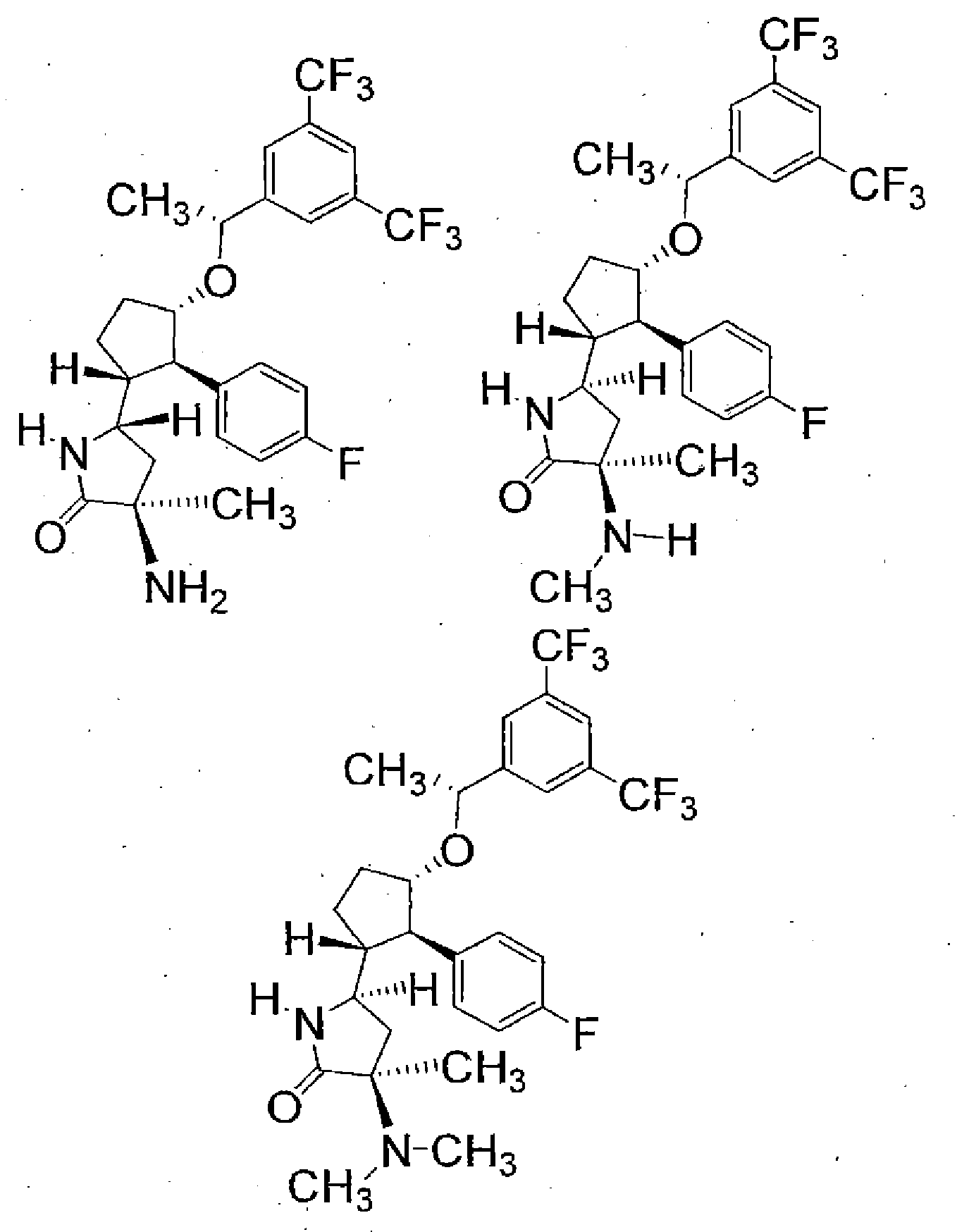 (b) un antagoniste du récepteur NK-1 sélectionné parmi


 (c) un antagoniste du récepteur NK-1 de la formule
R2 R1 
F 
H 
F 
F 
H 
F 
F 
F 
F 
F 
F 
F 
F H F 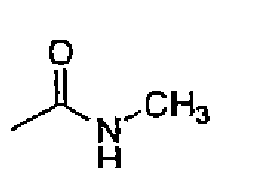
F 
F 
H 
F 
H 
F 
F 
F 
F 
F 
F 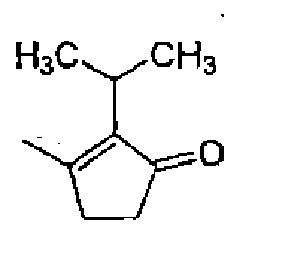
F 
F 
F 
F 
F 
F 
F 
F 
F 
F 
F 
F 
F 
F 
F 
F 
F 
F 
F 
F 
F 
F 
F 
F 
F 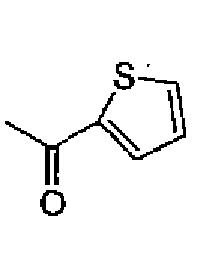
F 
F 
F 
F 
F 
F 
F 
H 
H 
F 
H 
F et 
F (d) un antagoniste du récepteur NK-1 sélectionné parmi le groupe consistant en:(3R,4S)-1-acétyl-3-({(1R)-1-[3,5-bis(trifluorométhyl)phényl]éthyl}oxy)-4-phénylpyrrolidine;(3R,4S)-3-{(1R)-1-[3,5-bis(trifluorométhyl)phényl]éthyl}oxy)-4-(4-fluorophényl)-N-méthylpyrrolidine-1-carboxamide;3-[(3R,4S)-3-({(1R)-1-[3,5-bis(trifluorométhyl)phényl]éthyl}oxy)-4-(4-fluorophényl)pyrrolidin-1-yl]cyclopent-2-en-1-one;tert-butyl-4-{[(3R,4S)-3-({(1R)-1-[3,5-bis(trifluorométhyl)phényl]éthyl}oxy)-4-phénylpyrrolidin-1-yl]carbonyl}-2,2-diméthyl-1,3-oxazolidine-3-carboxylate;2-amino-3-[(3R,4S)-3-{(1R)-1-[3,5-bis(trifluorométhyl)phényl]éthyl}oxy)-4-phénylpyrrolidin-1-yl]-3-oxopropan-1-ol;4-{[(3R,4S)-3-({(1R)-1-[3,5-bis(trifluorométhyl)phényl]éthyl}oxy)-4-phénylpyrrolidin-1-yl]carbonyl}-1,3-oxazolidin-2-one;3-[(3R,4R)-3-({(1R)-1-[3,5-bis(trifluorométhyl)phényl]éthyl}oxy)-4-(4-fluorophényl)pyrrolidin-1-yl]cyclopent-2-en-1-one;(5R)-3-[(3R,4S)-3-({(1R)-1-[3,5-bis(trifluorométhyl)phényl]éthyl}oxy)-4-(4-fluorophényl)pyrrolidin-1-yl]-5-méthylcyclopent-2-en-1-one;(5S)-3-[(3R,4S)-3-({(1R)-1-[3,5-bis(trifluorométhyl)phényl]éthyl}oxy)-4-(4-fluorophényl)pyrrolidin-1-yl]-5-méthylcyclopent-2-en-1-one;(5R)-3-[(3R,4S)-3-({(1R)-1-[3,5-bis(trifluorométhyl)phényl]éthyl}oxy)-4-(4-fluorophényl)pyrrolidin-1-yl]-5-hydroxycyclopent-2-en-1-one;(5S)-3-[(3R,4S)-3-({(1R)-1-[3,5-bis(trifluorométhyl)phényl]éthyl}oxy)-4-(4-fluorophényl)pyrrolidin-1-yl]-5-hydroxycyclopent-2-en-1-one;3-[(3R,4S)-3-({(1R)-1-[3,5-bis(trifluorométhyl)phényl]éthyl}oxy)-4-(4-fluorophényl)pyrrolidin-1-yl]-4-méthylcyclopent-2-en-1-one;(4R)-3-[(3R,4S)-3-({(1R)-1-[3,5-bis(trifluorométhyl)phényl]éthyl}oxy)-4-(4-fluorophényl)pyrrolidin-1-yl]-4-hydroxycyclopent-2-en-1-one;2-{2-[(3R,4S)-3-({(1R)-1-[3,5-bis(trifluorométhyl)phényl]éthyl}oxy)-4-(4-fluorophényl)pyrrolidin-1-yl]-5-oxycyclopent-1-en-1-yl} acétamide;Méthyl-2-[(3R,4S)-3-({(1R)-1-[3,5-bis(trifluorométhyl)phényl]éthyl}oxy)-4-(4-fluorophényl)pyrrolidin-1-yl]-5-oxycyclopent-1-ène-1-carboxylate; et2-[(3R,4S)-3-({(1R)-1-[3,5-bis(trifluorométhyl)phényl]éthyl}oxy)-4-(4-fluorophényl)pyrrolidin-1-yl]-N-méthyl-5-oxycyclopent-1-ène-1-carboxamide; et(e) un agent antimuscarinique. - Composition selon la revendication 1, dans laquelle les antagonistes du récepteur NK-1 sont sélectionnés parmi le groupe (a), (b), (c) ou (d).
- Composition selon la revendication 1, dans laquelle il y a exactement deux agents actifs:(R)-N-[4-[2[[2-hydroxy-2-(pyridin-3-yl)éthyl]amino]éthyl]phényl]-4-[4(4-trifluorométhylphényl)thiazol-2-yl]benzènesulfonamide ou un sel de celui-ci et un antagoniste du récepteur NK-1 sélectionné parmi le groupe (a), (b), (c) ou (d).
- Composition selon la revendication 1, dans laquelle il y a exactement deux agents actifs:(R)-N-[4-[2[[2-hydroxy-2-(pyridin-3-yl)éthyl]amino]éthyl]phényl]-4-[4(4-trifluorométhylphényl)thiazol-2-yl]benzènesulfonamide ou un sel de celui-ci et de la toltérodine.
- Composition pharmaceutique à utiliser dans le traitement d'une maladie sélectionnée parmi fréquence urinaire, impériosité urinaire ou incontinence urinaire, comprenant une quantité thérapeutiquement efficace de (R)-N-[4-[2[[2-hydroxy-2-(pyridin-3-yl)éthyl]amino]éthyl]phényl]-4-[4(4-trifluorométhylphényl)thiazol-2-yl]benzènesulfonamide

- Composition selon la revendication 1, dans laquelle il y a exactement trois agents actifs:(R)-N-[4-[2[[2-hydroxy-2-(pyridin-3-yl)éthyl]amino]éthyl]phényl]-4-[4(4-trifluorométhylphényl)thiazol-2-yl]benzènesulfonamide ou un sel de celui-ci etun antagoniste du récepteur NK-1 sélectionné parmi le groupe (a), (b), (c) et (d) et un agent antimuscarinique.
- Composition selon la revendication 6, dans laquelle l'agent antimuscarinique est la toltérodine.
- Composition pharmaceutique pour le traitement d'une maladie sélectionnée parmi fréquence urinaire, impériosité urinaire ou incontinence urinaire selon la revendication 1, comprenant deux agents actifs: une quantité thérapeutiquement efficace de (R)-N-[4-[2[[2-hydroxy-2-(pyridin-3-yl)éthyl]amino]éthyl]phényl]-4-[4(4-trifluorométhylphényl)thiazol-2-yl]benzènesulfonamide


- Composition selon l'une quelconque des revendications 1 à 8 pour le traitement de fréquence urinaire, d'impériosité urinaire ou d'incontinence urinaire.
- Utilisation d'une composition selon l'une quelconque des revendications 1 à 8 dans la fabrication d'un médicament pour le traitement de fréquence urinaire, d'impériosité urinaire ou d'incontinence urinaire.
- (R)-N-[4-[2[[2-hydroxy-2-(pyridin-3-yl)éthyl]amino]éthyl]phényl]-4-[4(4-trifluorométhylphényl)thiazol-2-yl]benzènesulfonamide ou un sel pharmaceutiquement acceptable de celui-ci à utiliser dans le traitement de fréquence urinaire, d'impériosité urinaire ou d'incontinence urinaire.
- Composé selon la revendication 12 ou un sel pharmaceutiquement acceptable de celui-ci à utiliser dans la fabrication d'un médicament pour le traitement de fréquence urinaire, d'impériosité urinaire ou d'incontinence urinaire.
Applications Claiming Priority (3)
| Application Number | Priority Date | Filing Date | Title |
|---|---|---|---|
| US72354705P | 2005-10-04 | 2005-10-04 | |
| US77914406P | 2006-03-03 | 2006-03-03 | |
| PCT/US2006/038419 WO2007044296A2 (fr) | 2005-10-04 | 2006-09-29 | Polytherapie destinee au traitement de la pollakiurie, de la miction imperieuse et de l'incontinence urinaire |
Publications (2)
| Publication Number | Publication Date |
|---|---|
| EP1937264A2 EP1937264A2 (fr) | 2008-07-02 |
| EP1937264B1 true EP1937264B1 (fr) | 2011-06-08 |
Family
ID=37943309
Family Applications (1)
| Application Number | Title | Priority Date | Filing Date |
|---|---|---|---|
| EP06825336A Not-in-force EP1937264B1 (fr) | 2005-10-04 | 2006-09-29 | Polytherapie destinee au traitement de la pollakiurie, de la miction imperieuse et de l'incontinence urinaire |
Country Status (6)
| Country | Link |
|---|---|
| US (1) | US7893091B2 (fr) |
| EP (1) | EP1937264B1 (fr) |
| AT (1) | ATE511842T1 (fr) |
| AU (1) | AU2006302562A1 (fr) |
| CA (1) | CA2624440A1 (fr) |
| WO (1) | WO2007044296A2 (fr) |
Families Citing this family (3)
| Publication number | Priority date | Publication date | Assignee | Title |
|---|---|---|---|---|
| US8906951B1 (en) | 2013-06-24 | 2014-12-09 | Tigercat Pharma, Inc. | Use of NK-1 receptor antagonists in pruritus |
| US9198898B2 (en) | 2013-06-24 | 2015-12-01 | Tigercat Pharma, Inc. | Use of NK-1 receptor antagonists in pruritus |
| KR20160023692A (ko) | 2013-06-24 | 2016-03-03 | 타이거캣 파마, 인크. | 소양증에서의 nk-1 수용체 길항제 세를로피탄트의 용도 |
Family Cites Families (5)
| Publication number | Priority date | Publication date | Assignee | Title |
|---|---|---|---|---|
| SK100099A3 (en) | 1997-01-28 | 2000-05-16 | Merck & Co Inc | Thiazole benzenesulfonamides as 'beta'3 agonists for the treatment of diabetes and obesity |
| US20040248979A1 (en) * | 2003-06-03 | 2004-12-09 | Dynogen Pharmaceuticals, Inc. | Method of treating lower urinary tract disorders |
| US7468437B2 (en) * | 2003-09-30 | 2008-12-23 | Merck & Co., Inc. | Phenyl pyrrolidine ether tachykinin receptor antagonists |
| AR047439A1 (es) | 2004-01-27 | 2006-01-18 | Merck & Co Inc | Antagonistas del receptor hidroisoindolina taquiquinina |
| US7196113B2 (en) * | 2004-06-22 | 2007-03-27 | Merck & Co., Inc. | Lactam tachykinin receptor antagonists |
-
2006
- 2006-09-29 US US12/083,034 patent/US7893091B2/en not_active Expired - Fee Related
- 2006-09-29 CA CA002624440A patent/CA2624440A1/fr not_active Abandoned
- 2006-09-29 EP EP06825336A patent/EP1937264B1/fr not_active Not-in-force
- 2006-09-29 AU AU2006302562A patent/AU2006302562A1/en not_active Abandoned
- 2006-09-29 AT AT06825336T patent/ATE511842T1/de not_active IP Right Cessation
- 2006-09-29 WO PCT/US2006/038419 patent/WO2007044296A2/fr not_active Ceased
Also Published As
| Publication number | Publication date |
|---|---|
| CA2624440A1 (fr) | 2007-04-19 |
| ATE511842T1 (de) | 2011-06-15 |
| WO2007044296A2 (fr) | 2007-04-19 |
| AU2006302562A1 (en) | 2007-04-19 |
| US20090270406A1 (en) | 2009-10-29 |
| EP1937264A2 (fr) | 2008-07-02 |
| US7893091B2 (en) | 2011-02-22 |
| WO2007044296A3 (fr) | 2007-09-27 |
Similar Documents
| Publication | Publication Date | Title |
|---|---|---|
| US8093268B2 (en) | Pharmaceutical compositions comprising 2-methoxy-5-(5-trifluoromethyl-tetrazol-1-yl-benzyl)-(2S-phenylpiperidin-3S-yl-) | |
| RU2621049C2 (ru) | Модуляторы рецептора нмда и их применение | |
| KR100758609B1 (ko) | 트라마돌 화합물 및 항경련 약물을 포함하는 조성물 | |
| DE60313330T2 (de) | Synergistische Zusammensetzungen enthaltend einen alpha-2-delta-Liganden, kombiniert mit einem PDEV-Inhibitor zur Behandlung von Schmerz | |
| EA002774B1 (ru) | Применение новых нейротрофных соединений для стимулирования роста и регенерации нейронов, для лечения неврологического расстройства и для предупреждения нейродегенерации и в приготовлении лекарственного средства | |
| JP2002322095A (ja) | 脳卒中及び外傷性脳損傷の治療のための医薬としての組み合わせ | |
| RU2735277C2 (ru) | 3,3-дифторпиперидинкарбаматные гетероциклические соединения в качестве антагонистов nr2b nmda-рецептора | |
| US20150218135A1 (en) | Crystalline pharmaceutical and methods of preparation and use thereof | |
| KR20090102867A (ko) | Nk1 수용체 길항제 및 나트륨 채널 차단제를 포함하는 제약 조성물 | |
| CN106344551B (zh) | 氨基金刚烷单硝酸酯类化合物在制备预防和治疗疾病药物中的应用 | |
| TW200810752A (en) | Modulators of muscarinic receptors | |
| WO2007146224A2 (fr) | Thérapie combinée pour le traitement d'une pollakiurie, d'une miction impérieuse et d'une incontinence urinaire | |
| KR20220106069A (ko) | 멜라노코르틴-4 수용체 효능제의 용도 | |
| WO1998037882A1 (fr) | Verrou orthodontique a ligature autonome | |
| CN1780616B (zh) | 治疗中枢神经系统疾病的选择性细胞因子抑制药物 | |
| US7893091B2 (en) | Combination therapy for the treatment of urinary frequency, urinary urgency and urinary incontinence | |
| JP4778419B2 (ja) | 種々のタイプの痛みの治療用医薬の製造のための2−アミノ−1,3−プロパンジオール誘導体の使用 | |
| KR20080035658A (ko) | 신경병증 및 관련 장애를 치료하기 위한 방법 및 조성물 | |
| EP1787657A1 (fr) | Agent therapeutique pour maladie psychonevrotique | |
| EP1107757A2 (fr) | Compositions a base de carbamate et d'uree et leurs utilisations neurotrophiques | |
| KR20200009093A (ko) | (r)-디미라세탐 (1) 및 (s)-디미라세탐 (2)을 비-라세미 비로 포함하는 상승작용적 조성물 | |
| JP7228897B2 (ja) | アダマンチルメチルアミン誘導体およびその医薬としての使用 | |
| US12582648B2 (en) | Method for treating central nervous system disorders using dopamine D3 partial agonists | |
| KR102905321B1 (ko) | 구강 건조증의 치료에 사용하기 위한 화합물 | |
| EP1699489B1 (fr) | Compositions pharmaceutiques a base d'un agent bloquant les canaux sodiques et d'un inhibiteur selectif de la capture de la serotonine |
Legal Events
| Date | Code | Title | Description |
|---|---|---|---|
| PUAI | Public reference made under article 153(3) epc to a published international application that has entered the european phase |
Free format text: ORIGINAL CODE: 0009012 |
|
| 17P | Request for examination filed |
Effective date: 20080506 |
|
| AK | Designated contracting states |
Kind code of ref document: A2 Designated state(s): AT BE BG CH CY CZ DE DK EE ES FI FR GB GR HU IE IS IT LI LT LU LV MC NL PL PT RO SE SI SK TR |
|
| 17Q | First examination report despatched |
Effective date: 20090224 |
|
| RAP1 | Party data changed (applicant data changed or rights of an application transferred) |
Owner name: MERCK SHARP & DOHME CORP. |
|
| GRAP | Despatch of communication of intention to grant a patent |
Free format text: ORIGINAL CODE: EPIDOSNIGR1 |
|
| RIC1 | Information provided on ipc code assigned before grant |
Ipc: A61P 13/00 20060101ALI20101119BHEP Ipc: A61K 31/4439 20060101AFI20101119BHEP |
|
| RIC1 | Information provided on ipc code assigned before grant |
Ipc: A61K 45/06 20060101ALI20101130BHEP Ipc: A61K 31/4439 20060101AFI20101130BHEP Ipc: A61P 13/00 20060101ALI20101130BHEP |
|
| DAX | Request for extension of the european patent (deleted) | ||
| GRAS | Grant fee paid |
Free format text: ORIGINAL CODE: EPIDOSNIGR3 |
|
| GRAA | (expected) grant |
Free format text: ORIGINAL CODE: 0009210 |
|
| AK | Designated contracting states |
Kind code of ref document: B1 Designated state(s): AT BE BG CH CY CZ DE DK EE ES FI FR GB GR HU IE IS IT LI LT LU LV MC NL PL PT RO SE SI SK TR |
|
| REG | Reference to a national code |
Ref country code: GB Ref legal event code: FG4D |
|
| REG | Reference to a national code |
Ref country code: CH Ref legal event code: EP |
|
| REG | Reference to a national code |
Ref country code: IE Ref legal event code: FG4D |
|
| REG | Reference to a national code |
Ref country code: DE Ref legal event code: R096 Ref document number: 602006022424 Country of ref document: DE Effective date: 20110721 |
|
| REG | Reference to a national code |
Ref country code: NL Ref legal event code: VDEP Effective date: 20110608 |
|
| PG25 | Lapsed in a contracting state [announced via postgrant information from national office to epo] |
Ref country code: LT Free format text: LAPSE BECAUSE OF FAILURE TO SUBMIT A TRANSLATION OF THE DESCRIPTION OR TO PAY THE FEE WITHIN THE PRESCRIBED TIME-LIMIT Effective date: 20110608 Ref country code: SE Free format text: LAPSE BECAUSE OF FAILURE TO SUBMIT A TRANSLATION OF THE DESCRIPTION OR TO PAY THE FEE WITHIN THE PRESCRIBED TIME-LIMIT Effective date: 20110608 |
|
| PG25 | Lapsed in a contracting state [announced via postgrant information from national office to epo] |
Ref country code: FI Free format text: LAPSE BECAUSE OF FAILURE TO SUBMIT A TRANSLATION OF THE DESCRIPTION OR TO PAY THE FEE WITHIN THE PRESCRIBED TIME-LIMIT Effective date: 20110608 Ref country code: CY Free format text: LAPSE BECAUSE OF FAILURE TO SUBMIT A TRANSLATION OF THE DESCRIPTION OR TO PAY THE FEE WITHIN THE PRESCRIBED TIME-LIMIT Effective date: 20110608 Ref country code: ES Free format text: LAPSE BECAUSE OF FAILURE TO SUBMIT A TRANSLATION OF THE DESCRIPTION OR TO PAY THE FEE WITHIN THE PRESCRIBED TIME-LIMIT Effective date: 20110919 Ref country code: AT Free format text: LAPSE BECAUSE OF FAILURE TO SUBMIT A TRANSLATION OF THE DESCRIPTION OR TO PAY THE FEE WITHIN THE PRESCRIBED TIME-LIMIT Effective date: 20110608 Ref country code: SI Free format text: LAPSE BECAUSE OF FAILURE TO SUBMIT A TRANSLATION OF THE DESCRIPTION OR TO PAY THE FEE WITHIN THE PRESCRIBED TIME-LIMIT Effective date: 20110608 Ref country code: LV Free format text: LAPSE BECAUSE OF FAILURE TO SUBMIT A TRANSLATION OF THE DESCRIPTION OR TO PAY THE FEE WITHIN THE PRESCRIBED TIME-LIMIT Effective date: 20110608 Ref country code: GR Free format text: LAPSE BECAUSE OF FAILURE TO SUBMIT A TRANSLATION OF THE DESCRIPTION OR TO PAY THE FEE WITHIN THE PRESCRIBED TIME-LIMIT Effective date: 20110909 |
|
| PG25 | Lapsed in a contracting state [announced via postgrant information from national office to epo] |
Ref country code: BE Free format text: LAPSE BECAUSE OF FAILURE TO SUBMIT A TRANSLATION OF THE DESCRIPTION OR TO PAY THE FEE WITHIN THE PRESCRIBED TIME-LIMIT Effective date: 20110608 Ref country code: NL Free format text: LAPSE BECAUSE OF FAILURE TO SUBMIT A TRANSLATION OF THE DESCRIPTION OR TO PAY THE FEE WITHIN THE PRESCRIBED TIME-LIMIT Effective date: 20110608 |
|
| PG25 | Lapsed in a contracting state [announced via postgrant information from national office to epo] |
Ref country code: CZ Free format text: LAPSE BECAUSE OF FAILURE TO SUBMIT A TRANSLATION OF THE DESCRIPTION OR TO PAY THE FEE WITHIN THE PRESCRIBED TIME-LIMIT Effective date: 20110608 Ref country code: PT Free format text: LAPSE BECAUSE OF FAILURE TO SUBMIT A TRANSLATION OF THE DESCRIPTION OR TO PAY THE FEE WITHIN THE PRESCRIBED TIME-LIMIT Effective date: 20111010 Ref country code: EE Free format text: LAPSE BECAUSE OF FAILURE TO SUBMIT A TRANSLATION OF THE DESCRIPTION OR TO PAY THE FEE WITHIN THE PRESCRIBED TIME-LIMIT Effective date: 20110608 Ref country code: IS Free format text: LAPSE BECAUSE OF FAILURE TO SUBMIT A TRANSLATION OF THE DESCRIPTION OR TO PAY THE FEE WITHIN THE PRESCRIBED TIME-LIMIT Effective date: 20111008 |
|
| PG25 | Lapsed in a contracting state [announced via postgrant information from national office to epo] |
Ref country code: PL Free format text: LAPSE BECAUSE OF FAILURE TO SUBMIT A TRANSLATION OF THE DESCRIPTION OR TO PAY THE FEE WITHIN THE PRESCRIBED TIME-LIMIT Effective date: 20110608 Ref country code: SK Free format text: LAPSE BECAUSE OF FAILURE TO SUBMIT A TRANSLATION OF THE DESCRIPTION OR TO PAY THE FEE WITHIN THE PRESCRIBED TIME-LIMIT Effective date: 20110608 Ref country code: RO Free format text: LAPSE BECAUSE OF FAILURE TO SUBMIT A TRANSLATION OF THE DESCRIPTION OR TO PAY THE FEE WITHIN THE PRESCRIBED TIME-LIMIT Effective date: 20110608 |
|
| PLBE | No opposition filed within time limit |
Free format text: ORIGINAL CODE: 0009261 |
|
| STAA | Information on the status of an ep patent application or granted ep patent |
Free format text: STATUS: NO OPPOSITION FILED WITHIN TIME LIMIT |
|
| PG25 | Lapsed in a contracting state [announced via postgrant information from national office to epo] |
Ref country code: MC Free format text: LAPSE BECAUSE OF NON-PAYMENT OF DUE FEES Effective date: 20110930 |
|
| REG | Reference to a national code |
Ref country code: CH Ref legal event code: PL |
|
| 26N | No opposition filed |
Effective date: 20120309 |
|
| GBPC | Gb: european patent ceased through non-payment of renewal fee |
Effective date: 20110929 |
|
| PG25 | Lapsed in a contracting state [announced via postgrant information from national office to epo] |
Ref country code: IT Free format text: LAPSE BECAUSE OF FAILURE TO SUBMIT A TRANSLATION OF THE DESCRIPTION OR TO PAY THE FEE WITHIN THE PRESCRIBED TIME-LIMIT Effective date: 20110608 |
|
| REG | Reference to a national code |
Ref country code: IE Ref legal event code: MM4A |
|
| REG | Reference to a national code |
Ref country code: FR Ref legal event code: ST Effective date: 20120531 |
|
| PG25 | Lapsed in a contracting state [announced via postgrant information from national office to epo] |
Ref country code: DK Free format text: LAPSE BECAUSE OF FAILURE TO SUBMIT A TRANSLATION OF THE DESCRIPTION OR TO PAY THE FEE WITHIN THE PRESCRIBED TIME-LIMIT Effective date: 20110608 |
|
| REG | Reference to a national code |
Ref country code: DE Ref legal event code: R097 Ref document number: 602006022424 Country of ref document: DE Effective date: 20120309 |
|
| REG | Reference to a national code |
Ref country code: DE Ref legal event code: R119 Ref document number: 602006022424 Country of ref document: DE Effective date: 20120403 |
|
| PG25 | Lapsed in a contracting state [announced via postgrant information from national office to epo] |
Ref country code: IE Free format text: LAPSE BECAUSE OF NON-PAYMENT OF DUE FEES Effective date: 20110929 Ref country code: LI Free format text: LAPSE BECAUSE OF NON-PAYMENT OF DUE FEES Effective date: 20110930 Ref country code: CH Free format text: LAPSE BECAUSE OF NON-PAYMENT OF DUE FEES Effective date: 20110930 Ref country code: DE Free format text: LAPSE BECAUSE OF NON-PAYMENT OF DUE FEES Effective date: 20120403 |
|
| PG25 | Lapsed in a contracting state [announced via postgrant information from national office to epo] |
Ref country code: GB Free format text: LAPSE BECAUSE OF NON-PAYMENT OF DUE FEES Effective date: 20110929 Ref country code: FR Free format text: LAPSE BECAUSE OF NON-PAYMENT OF DUE FEES Effective date: 20110930 |
|
| PG25 | Lapsed in a contracting state [announced via postgrant information from national office to epo] |
Ref country code: LU Free format text: LAPSE BECAUSE OF NON-PAYMENT OF DUE FEES Effective date: 20110929 |
|
| PG25 | Lapsed in a contracting state [announced via postgrant information from national office to epo] |
Ref country code: BG Free format text: LAPSE BECAUSE OF FAILURE TO SUBMIT A TRANSLATION OF THE DESCRIPTION OR TO PAY THE FEE WITHIN THE PRESCRIBED TIME-LIMIT Effective date: 20110908 |
|
| PG25 | Lapsed in a contracting state [announced via postgrant information from national office to epo] |
Ref country code: TR Free format text: LAPSE BECAUSE OF FAILURE TO SUBMIT A TRANSLATION OF THE DESCRIPTION OR TO PAY THE FEE WITHIN THE PRESCRIBED TIME-LIMIT Effective date: 20110608 |
|
| PG25 | Lapsed in a contracting state [announced via postgrant information from national office to epo] |
Ref country code: HU Free format text: LAPSE BECAUSE OF FAILURE TO SUBMIT A TRANSLATION OF THE DESCRIPTION OR TO PAY THE FEE WITHIN THE PRESCRIBED TIME-LIMIT Effective date: 20110608 |