EP1937616B1 - Neue binaphthalinderivate, verfahren zu deren herstellung und organisches elektronisches gerät, bei dem diese verwendet werden - Google Patents
Neue binaphthalinderivate, verfahren zu deren herstellung und organisches elektronisches gerät, bei dem diese verwendet werden Download PDFInfo
- Publication number
- EP1937616B1 EP1937616B1 EP06799356.8A EP06799356A EP1937616B1 EP 1937616 B1 EP1937616 B1 EP 1937616B1 EP 06799356 A EP06799356 A EP 06799356A EP 1937616 B1 EP1937616 B1 EP 1937616B1
- Authority
- EP
- European Patent Office
- Prior art keywords
- group
- compound
- preparation example
- mmol
- organic
- Prior art date
- Legal status (The legal status is an assumption and is not a legal conclusion. Google has not performed a legal analysis and makes no representation as to the accuracy of the status listed.)
- Not-in-force
Links
- 0 *c(cc1)cc(cc2)c1cc2-c1ccc(cc(*)cc2)c2c1 Chemical compound *c(cc1)cc(cc2)c1cc2-c1ccc(cc(*)cc2)c2c1 0.000 description 43
- DKPOLSXKEKLSJE-UHFFFAOYSA-N Cc(cc1)cc(cc2)c1cc2-c1nc(cccc2)c2[n]1-c1ccccc1 Chemical compound Cc(cc1)cc(cc2)c1cc2-c1nc(cccc2)c2[n]1-c1ccccc1 DKPOLSXKEKLSJE-UHFFFAOYSA-N 0.000 description 2
- VSMBGMBVCAERKB-UHFFFAOYSA-N Cc1c(cccc2)c2c(-c2cc(-c3nc4ccccc4[n]3-c3ccccc3)ccc2)c2ccccc12 Chemical compound Cc1c(cccc2)c2c(-c2cc(-c3nc4ccccc4[n]3-c3ccccc3)ccc2)c2ccccc12 VSMBGMBVCAERKB-UHFFFAOYSA-N 0.000 description 2
- MGKPDVRJFZOSFV-UHFFFAOYSA-N Cc1nc(cccc2)c2[n]1-c1ccccc1 Chemical compound Cc1nc(cccc2)c2[n]1-c1ccccc1 MGKPDVRJFZOSFV-UHFFFAOYSA-N 0.000 description 2
- LUEQIDSEGWXUMD-UHFFFAOYSA-N Nc1nc(cccc2)c2[n]1-c1ccccc1 Chemical compound Nc1nc(cccc2)c2[n]1-c1ccccc1 LUEQIDSEGWXUMD-UHFFFAOYSA-N 0.000 description 2
- UEDKRYAJFVOYLO-UHFFFAOYSA-N C(C1C=C2)N=CC=C1C=C2c1c(cccc2)c2c(-c2cc(-c3nc4ccccc4[n]3-c3ccccc3)ccc2)c2c1cccc2 Chemical compound C(C1C=C2)N=CC=C1C=C2c1c(cccc2)c2c(-c2cc(-c3nc4ccccc4[n]3-c3ccccc3)ccc2)c2c1cccc2 UEDKRYAJFVOYLO-UHFFFAOYSA-N 0.000 description 1
- SYRAUZNPHDFKND-UHFFFAOYSA-O C=C(C1)C=CC=C1[n]1c([NH3+])nc2c1cccc2 Chemical compound C=C(C1)C=CC=C1[n]1c([NH3+])nc2c1cccc2 SYRAUZNPHDFKND-UHFFFAOYSA-O 0.000 description 1
- SMLFFVAFEQKHHW-UHFFFAOYSA-N C=C=[I]C(CC1C=C2)=CC=C1C=C2c1nc(C=[I]C=C2)c2[n]1-c1ccccc1 Chemical compound C=C=[I]C(CC1C=C2)=CC=C1C=C2c1nc(C=[I]C=C2)c2[n]1-c1ccccc1 SMLFFVAFEQKHHW-UHFFFAOYSA-N 0.000 description 1
- QYCBINQXRJKYLY-UHFFFAOYSA-N CC(C1=CC=CCC11)=C(C=CC=C2)C2=C1c1cc(-c2nc3ccccc3[n]2-c2ccccc2)ccc1 Chemical compound CC(C1=CC=CCC11)=C(C=CC=C2)C2=C1c1cc(-c2nc3ccccc3[n]2-c2ccccc2)ccc1 QYCBINQXRJKYLY-UHFFFAOYSA-N 0.000 description 1
- USVZVUDRGWNLLL-UHFFFAOYSA-N CC1(C)ON(c(ccc2c3)cc2ccc3-c2c(ccc3cccc(cc4)c33)c3c4cc2)OC1(C)C Chemical compound CC1(C)ON(c(ccc2c3)cc2ccc3-c2c(ccc3cccc(cc4)c33)c3c4cc2)OC1(C)C USVZVUDRGWNLLL-UHFFFAOYSA-N 0.000 description 1
- WLUACQSVCDSNTR-UHFFFAOYSA-N CC1(C)O[I](c2ccc(cc(cc3)-c4c(cccc5)c5c(-c5cc(cccc6)c6cc5)c5c4cccc5)c3c2)OC1(C)C Chemical compound CC1(C)O[I](c2ccc(cc(cc3)-c4c(cccc5)c5c(-c5cc(cccc6)c6cc5)c5c4cccc5)c3c2)OC1(C)C WLUACQSVCDSNTR-UHFFFAOYSA-N 0.000 description 1
- VFCBWCXRYXRACX-UHFFFAOYSA-N CC1=C(C=CC=[I]2)C2=C(c2cccc(-c3ccc(-c4ccc(-c5ccccc5)[s]4)[s]3)c2)C2=[I]C=CC=C12 Chemical compound CC1=C(C=CC=[I]2)C2=C(c2cccc(-c3ccc(-c4ccc(-c5ccccc5)[s]4)[s]3)c2)C2=[I]C=CC=C12 VFCBWCXRYXRACX-UHFFFAOYSA-N 0.000 description 1
- AQWXXCVLVSHELH-UHFFFAOYSA-N CC1NC(c(cc2)cc(cc3)c2cc3-c2cc(cccc3)c3cc2)=NC(c(cc2)cc(cc3)c2cc3-c2ccc(cccc3)c3c2)N1 Chemical compound CC1NC(c(cc2)cc(cc3)c2cc3-c2cc(cccc3)c3cc2)=NC(c(cc2)cc(cc3)c2cc3-c2ccc(cccc3)c3c2)N1 AQWXXCVLVSHELH-UHFFFAOYSA-N 0.000 description 1
- ACZCMPREAYLKOL-BAIHPAQQSA-N CCC[C@H](C[I](C)C=C)NC/C=N/C/C=C\C=C Chemical compound CCC[C@H](C[I](C)C=C)NC/C=N/C/C=C\C=C ACZCMPREAYLKOL-BAIHPAQQSA-N 0.000 description 1
- OLLVLPAQZXQVKT-DAXSKMNVSA-N CCc1c(/C=C\C)nc(-c2cc(C)ccc2)[s]1 Chemical compound CCc1c(/C=C\C)nc(-c2cc(C)ccc2)[s]1 OLLVLPAQZXQVKT-DAXSKMNVSA-N 0.000 description 1
- SDFLTYHTFPTIGX-UHFFFAOYSA-N C[n]1c2ccccc2c2c1cccc2 Chemical compound C[n]1c2ccccc2c2c1cccc2 SDFLTYHTFPTIGX-UHFFFAOYSA-N 0.000 description 1
- HQDCFWQVTQAVKP-UHFFFAOYSA-N Cc(cc1)cc(cc2)c1cc2-[n]1c(-c2cc(cccc3)c3cc2)nc2c1cccc2 Chemical compound Cc(cc1)cc(cc2)c1cc2-[n]1c(-c2cc(cccc3)c3cc2)nc2c1cccc2 HQDCFWQVTQAVKP-UHFFFAOYSA-N 0.000 description 1
- RSUROITVFPNHRL-UHFFFAOYSA-N Cc(cc1)cc(cc2)c1cc2-c1nc(cccc2)c2[s]1 Chemical compound Cc(cc1)cc(cc2)c1cc2-c1nc(cccc2)c2[s]1 RSUROITVFPNHRL-UHFFFAOYSA-N 0.000 description 1
- BDGJZPRFMAAQNW-UHFFFAOYSA-N Cc1c(cccc2)c2c(-c(cc2)ccc2-c2nc(cccc3)c3[n]2-c2ccccc2)c2c1cccc2 Chemical compound Cc1c(cccc2)c2c(-c(cc2)ccc2-c2nc(cccc3)c3[n]2-c2ccccc2)c2c1cccc2 BDGJZPRFMAAQNW-UHFFFAOYSA-N 0.000 description 1
- FEKWWZCCJDUWLY-UHFFFAOYSA-N Cc1c[nH]cc1 Chemical compound Cc1c[nH]cc1 FEKWWZCCJDUWLY-UHFFFAOYSA-N 0.000 description 1
- KQMPDLYWSDBNJX-UHFFFAOYSA-N Cc1ccc(-c(cc2)ccc2N(c2ccccc2)c2ccc-3c4c2cccc4-c2c4c-3cccc4ccc2)[s]1 Chemical compound Cc1ccc(-c(cc2)ccc2N(c2ccccc2)c2ccc-3c4c2cccc4-c2c4c-3cccc4ccc2)[s]1 KQMPDLYWSDBNJX-UHFFFAOYSA-N 0.000 description 1
- LCCWWPSGFFRSCT-UHFFFAOYSA-N Cc1ccc(cc(cc2)-c3c(cccc4)c4c(-c4cc(-c5nc6ccccc6[n]5-c5ccccc5)ccc4)c4c3cccc4)c2c1 Chemical compound Cc1ccc(cc(cc2)-c3c(cccc4)c4c(-c4cc(-c5nc6ccccc6[n]5-c5ccccc5)ccc4)c4c3cccc4)c2c1 LCCWWPSGFFRSCT-UHFFFAOYSA-N 0.000 description 1
- VGDHBQGOEITHJY-UHFFFAOYSA-N Cc1ccc(cc(cc2)-c3c(cccc4)c4c(-c4nc(cccc5)c5[n]4-c4ccccc4)c4c3cccc4)c2c1 Chemical compound Cc1ccc(cc(cc2)-c3c(cccc4)c4c(-c4nc(cccc5)c5[n]4-c4ccccc4)c4c3cccc4)c2c1 VGDHBQGOEITHJY-UHFFFAOYSA-N 0.000 description 1
- DQSHFKPKFISSNM-UHFFFAOYSA-N Cc1nc(cccc2)c2[o]1 Chemical compound Cc1nc(cccc2)c2[o]1 DQSHFKPKFISSNM-UHFFFAOYSA-N 0.000 description 1
- NAFKMUWLIYQHHI-UHFFFAOYSA-N I[n]1c2ccccc2c2c1cccc2 Chemical compound I[n]1c2ccccc2c2c1cccc2 NAFKMUWLIYQHHI-UHFFFAOYSA-N 0.000 description 1
- LPHYNAOGLLZIIE-UHFFFAOYSA-N Oc(ccc1c2)cc1ccc2-c1cc2ccc(C=O)cc2cc1 Chemical compound Oc(ccc1c2)cc1ccc2-c1cc2ccc(C=O)cc2cc1 LPHYNAOGLLZIIE-UHFFFAOYSA-N 0.000 description 1
- BQXAKRQRNMGPHS-UHFFFAOYSA-N c(cc1)ccc1-[n]1c(-c2cccc(-c3c(cccc4)c4c(-c(cc4)cc(cc5)c4cc5-c4cc(cccc5)c5cc4)c4c3cccc4)c2)nc2c1cccc2 Chemical compound c(cc1)ccc1-[n]1c(-c2cccc(-c3c(cccc4)c4c(-c(cc4)cc(cc5)c4cc5-c4cc(cccc5)c5cc4)c4c3cccc4)c2)nc2c1cccc2 BQXAKRQRNMGPHS-UHFFFAOYSA-N 0.000 description 1
Images





Classifications
-
- C—CHEMISTRY; METALLURGY
- C07—ORGANIC CHEMISTRY
- C07C—ACYCLIC OR CARBOCYCLIC COMPOUNDS
- C07C13/00—Cyclic hydrocarbons containing rings other than, or in addition to, six-membered aromatic rings
- C07C13/28—Polycyclic hydrocarbons or acyclic hydrocarbon derivatives thereof
- C07C13/32—Polycyclic hydrocarbons or acyclic hydrocarbon derivatives thereof with condensed rings
- C07C13/54—Polycyclic hydrocarbons or acyclic hydrocarbon derivatives thereof with condensed rings with three condensed rings
- C07C13/547—Polycyclic hydrocarbons or acyclic hydrocarbon derivatives thereof with condensed rings with three condensed rings at least one ring not being six-membered, the other rings being at the most six-membered
- C07C13/567—Polycyclic hydrocarbons or acyclic hydrocarbon derivatives thereof with condensed rings with three condensed rings at least one ring not being six-membered, the other rings being at the most six-membered with a fluorene or hydrogenated fluorene ring system
-
- C—CHEMISTRY; METALLURGY
- C07—ORGANIC CHEMISTRY
- C07C—ACYCLIC OR CARBOCYCLIC COMPOUNDS
- C07C13/00—Cyclic hydrocarbons containing rings other than, or in addition to, six-membered aromatic rings
- C07C13/28—Polycyclic hydrocarbons or acyclic hydrocarbon derivatives thereof
- C07C13/32—Polycyclic hydrocarbons or acyclic hydrocarbon derivatives thereof with condensed rings
- C07C13/72—Spiro hydrocarbons
-
- C—CHEMISTRY; METALLURGY
- C07—ORGANIC CHEMISTRY
- C07C—ACYCLIC OR CARBOCYCLIC COMPOUNDS
- C07C15/00—Cyclic hydrocarbons containing only six-membered aromatic rings as cyclic parts
- C07C15/20—Polycyclic condensed hydrocarbons
-
- C—CHEMISTRY; METALLURGY
- C07—ORGANIC CHEMISTRY
- C07C—ACYCLIC OR CARBOCYCLIC COMPOUNDS
- C07C15/00—Cyclic hydrocarbons containing only six-membered aromatic rings as cyclic parts
- C07C15/20—Polycyclic condensed hydrocarbons
- C07C15/24—Polycyclic condensed hydrocarbons containing two rings
-
- C—CHEMISTRY; METALLURGY
- C07—ORGANIC CHEMISTRY
- C07C—ACYCLIC OR CARBOCYCLIC COMPOUNDS
- C07C15/00—Cyclic hydrocarbons containing only six-membered aromatic rings as cyclic parts
- C07C15/20—Polycyclic condensed hydrocarbons
- C07C15/27—Polycyclic condensed hydrocarbons containing three rings
- C07C15/28—Anthracenes
-
- C—CHEMISTRY; METALLURGY
- C07—ORGANIC CHEMISTRY
- C07C—ACYCLIC OR CARBOCYCLIC COMPOUNDS
- C07C15/00—Cyclic hydrocarbons containing only six-membered aromatic rings as cyclic parts
- C07C15/20—Polycyclic condensed hydrocarbons
- C07C15/38—Polycyclic condensed hydrocarbons containing four rings
-
- C—CHEMISTRY; METALLURGY
- C07—ORGANIC CHEMISTRY
- C07C—ACYCLIC OR CARBOCYCLIC COMPOUNDS
- C07C15/00—Cyclic hydrocarbons containing only six-membered aromatic rings as cyclic parts
- C07C15/40—Cyclic hydrocarbons containing only six-membered aromatic rings as cyclic parts substituted by unsaturated carbon radicals
- C07C15/56—Cyclic hydrocarbons containing only six-membered aromatic rings as cyclic parts substituted by unsaturated carbon radicals polycyclic condensed
- C07C15/58—Cyclic hydrocarbons containing only six-membered aromatic rings as cyclic parts substituted by unsaturated carbon radicals polycyclic condensed containing two rings
-
- C—CHEMISTRY; METALLURGY
- C07—ORGANIC CHEMISTRY
- C07C—ACYCLIC OR CARBOCYCLIC COMPOUNDS
- C07C211/00—Compounds containing amino groups bound to a carbon skeleton
- C07C211/43—Compounds containing amino groups bound to a carbon skeleton having amino groups bound to carbon atoms of six-membered aromatic rings of the carbon skeleton
- C07C211/54—Compounds containing amino groups bound to a carbon skeleton having amino groups bound to carbon atoms of six-membered aromatic rings of the carbon skeleton having amino groups bound to two or three six-membered aromatic rings
-
- C—CHEMISTRY; METALLURGY
- C07—ORGANIC CHEMISTRY
- C07C—ACYCLIC OR CARBOCYCLIC COMPOUNDS
- C07C211/00—Compounds containing amino groups bound to a carbon skeleton
- C07C211/43—Compounds containing amino groups bound to a carbon skeleton having amino groups bound to carbon atoms of six-membered aromatic rings of the carbon skeleton
- C07C211/57—Compounds containing amino groups bound to a carbon skeleton having amino groups bound to carbon atoms of six-membered aromatic rings of the carbon skeleton having amino groups bound to carbon atoms of six-membered aromatic rings being part of condensed ring systems of the carbon skeleton
- C07C211/58—Naphthylamines; N-substituted derivatives thereof
-
- C—CHEMISTRY; METALLURGY
- C07—ORGANIC CHEMISTRY
- C07C—ACYCLIC OR CARBOCYCLIC COMPOUNDS
- C07C211/00—Compounds containing amino groups bound to a carbon skeleton
- C07C211/43—Compounds containing amino groups bound to a carbon skeleton having amino groups bound to carbon atoms of six-membered aromatic rings of the carbon skeleton
- C07C211/57—Compounds containing amino groups bound to a carbon skeleton having amino groups bound to carbon atoms of six-membered aromatic rings of the carbon skeleton having amino groups bound to carbon atoms of six-membered aromatic rings being part of condensed ring systems of the carbon skeleton
- C07C211/61—Compounds containing amino groups bound to a carbon skeleton having amino groups bound to carbon atoms of six-membered aromatic rings of the carbon skeleton having amino groups bound to carbon atoms of six-membered aromatic rings being part of condensed ring systems of the carbon skeleton with at least one of the condensed ring systems formed by three or more rings
-
- C—CHEMISTRY; METALLURGY
- C07—ORGANIC CHEMISTRY
- C07D—HETEROCYCLIC COMPOUNDS
- C07D235/00—Heterocyclic compounds containing 1,3-diazole or hydrogenated 1,3-diazole rings, condensed with other rings
- C07D235/02—Heterocyclic compounds containing 1,3-diazole or hydrogenated 1,3-diazole rings, condensed with other rings condensed with carbocyclic rings or ring systems
- C07D235/04—Benzimidazoles; Hydrogenated benzimidazoles
- C07D235/18—Benzimidazoles; Hydrogenated benzimidazoles with aryl radicals directly attached in position 2
-
- C—CHEMISTRY; METALLURGY
- C07—ORGANIC CHEMISTRY
- C07D—HETEROCYCLIC COMPOUNDS
- C07D333/00—Heterocyclic compounds containing five-membered rings having one sulfur atom as the only ring hetero atom
- C07D333/02—Heterocyclic compounds containing five-membered rings having one sulfur atom as the only ring hetero atom not condensed with other rings
- C07D333/04—Heterocyclic compounds containing five-membered rings having one sulfur atom as the only ring hetero atom not condensed with other rings not substituted on the ring sulphur atom
- C07D333/06—Heterocyclic compounds containing five-membered rings having one sulfur atom as the only ring hetero atom not condensed with other rings not substituted on the ring sulphur atom with only hydrogen atoms, hydrocarbon or substituted hydrocarbon radicals, directly attached to the ring carbon atoms
- C07D333/08—Hydrogen atoms or radicals containing only hydrogen and carbon atoms
- C07D333/10—Thiophene
-
- C—CHEMISTRY; METALLURGY
- C07—ORGANIC CHEMISTRY
- C07D—HETEROCYCLIC COMPOUNDS
- C07D333/00—Heterocyclic compounds containing five-membered rings having one sulfur atom as the only ring hetero atom
- C07D333/02—Heterocyclic compounds containing five-membered rings having one sulfur atom as the only ring hetero atom not condensed with other rings
- C07D333/04—Heterocyclic compounds containing five-membered rings having one sulfur atom as the only ring hetero atom not condensed with other rings not substituted on the ring sulphur atom
- C07D333/06—Heterocyclic compounds containing five-membered rings having one sulfur atom as the only ring hetero atom not condensed with other rings not substituted on the ring sulphur atom with only hydrogen atoms, hydrocarbon or substituted hydrocarbon radicals, directly attached to the ring carbon atoms
- C07D333/14—Radicals substituted by singly bound hetero atoms other than halogen
- C07D333/18—Radicals substituted by singly bound hetero atoms other than halogen by sulfur atoms
-
- C—CHEMISTRY; METALLURGY
- C07—ORGANIC CHEMISTRY
- C07D—HETEROCYCLIC COMPOUNDS
- C07D403/00—Heterocyclic compounds containing two or more hetero rings, having nitrogen atoms as the only ring hetero atoms, not provided for by group C07D401/00
- C07D403/02—Heterocyclic compounds containing two or more hetero rings, having nitrogen atoms as the only ring hetero atoms, not provided for by group C07D401/00 containing two hetero rings
- C07D403/10—Heterocyclic compounds containing two or more hetero rings, having nitrogen atoms as the only ring hetero atoms, not provided for by group C07D401/00 containing two hetero rings linked by a carbon chain containing aromatic rings
-
- C—CHEMISTRY; METALLURGY
- C09—DYES; PAINTS; POLISHES; NATURAL RESINS; ADHESIVES; COMPOSITIONS NOT OTHERWISE PROVIDED FOR; APPLICATIONS OF MATERIALS NOT OTHERWISE PROVIDED FOR
- C09K—MATERIALS FOR MISCELLANEOUS APPLICATIONS, NOT PROVIDED FOR ELSEWHERE
- C09K11/00—Luminescent materials, e.g. electroluminescent or chemiluminescent
- C09K11/06—Luminescent materials, e.g. electroluminescent or chemiluminescent containing organic luminescent materials
-
- H—ELECTRICITY
- H05—ELECTRIC TECHNIQUES NOT OTHERWISE PROVIDED FOR
- H05B—ELECTRIC HEATING; ELECTRIC LIGHT SOURCES NOT OTHERWISE PROVIDED FOR; CIRCUIT ARRANGEMENTS FOR ELECTRIC LIGHT SOURCES, IN GENERAL
- H05B33/00—Electroluminescent light sources
- H05B33/12—Light sources with substantially two-dimensional [2D] radiating surfaces
- H05B33/14—Light sources with substantially two-dimensional [2D] radiating surfaces characterised by the chemical or physical composition or the arrangement of the electroluminescent material, or by the simultaneous addition of the electroluminescent material in or onto the light source
-
- H—ELECTRICITY
- H10—SEMICONDUCTOR DEVICES; ELECTRIC SOLID-STATE DEVICES NOT OTHERWISE PROVIDED FOR
- H10K—ORGANIC ELECTRIC SOLID-STATE DEVICES
- H10K10/00—Organic devices specially adapted for rectifying, amplifying, oscillating or switching; Organic capacitors or resistors having potential barriers
- H10K10/40—Organic transistors
- H10K10/46—Field-effect transistors, e.g. organic thin-film transistors [OTFT]
- H10K10/462—Insulated gate field-effect transistors [IGFETs]
-
- H—ELECTRICITY
- H10—SEMICONDUCTOR DEVICES; ELECTRIC SOLID-STATE DEVICES NOT OTHERWISE PROVIDED FOR
- H10K—ORGANIC ELECTRIC SOLID-STATE DEVICES
- H10K30/00—Organic devices sensitive to infrared radiation, light, electromagnetic radiation of shorter wavelength or corpuscular radiation
-
- H—ELECTRICITY
- H10—SEMICONDUCTOR DEVICES; ELECTRIC SOLID-STATE DEVICES NOT OTHERWISE PROVIDED FOR
- H10K—ORGANIC ELECTRIC SOLID-STATE DEVICES
- H10K50/00—Organic light-emitting devices
-
- H—ELECTRICITY
- H10—SEMICONDUCTOR DEVICES; ELECTRIC SOLID-STATE DEVICES NOT OTHERWISE PROVIDED FOR
- H10K—ORGANIC ELECTRIC SOLID-STATE DEVICES
- H10K85/00—Organic materials used in the body or electrodes of devices covered by this subclass
- H10K85/60—Organic compounds having low molecular weight
- H10K85/615—Polycyclic condensed aromatic hydrocarbons, e.g. anthracene
- H10K85/626—Polycyclic condensed aromatic hydrocarbons, e.g. anthracene containing more than one polycyclic condensed aromatic rings, e.g. bis-anthracene
-
- H—ELECTRICITY
- H10—SEMICONDUCTOR DEVICES; ELECTRIC SOLID-STATE DEVICES NOT OTHERWISE PROVIDED FOR
- H10K—ORGANIC ELECTRIC SOLID-STATE DEVICES
- H10K85/00—Organic materials used in the body or electrodes of devices covered by this subclass
- H10K85/60—Organic compounds having low molecular weight
- H10K85/631—Amine compounds having at least two aryl rest on at least one amine-nitrogen atom, e.g. triphenylamine
- H10K85/633—Amine compounds having at least two aryl rest on at least one amine-nitrogen atom, e.g. triphenylamine comprising polycyclic condensed aromatic hydrocarbons as substituents on the nitrogen atom
-
- H—ELECTRICITY
- H10—SEMICONDUCTOR DEVICES; ELECTRIC SOLID-STATE DEVICES NOT OTHERWISE PROVIDED FOR
- H10K—ORGANIC ELECTRIC SOLID-STATE DEVICES
- H10K85/00—Organic materials used in the body or electrodes of devices covered by this subclass
- H10K85/60—Organic compounds having low molecular weight
- H10K85/649—Aromatic compounds comprising a hetero atom
- H10K85/655—Aromatic compounds comprising a hetero atom comprising only sulfur as heteroatom
-
- H—ELECTRICITY
- H10—SEMICONDUCTOR DEVICES; ELECTRIC SOLID-STATE DEVICES NOT OTHERWISE PROVIDED FOR
- H10K—ORGANIC ELECTRIC SOLID-STATE DEVICES
- H10K85/00—Organic materials used in the body or electrodes of devices covered by this subclass
- H10K85/60—Organic compounds having low molecular weight
- H10K85/649—Aromatic compounds comprising a hetero atom
- H10K85/657—Polycyclic condensed heteroaromatic hydrocarbons
- H10K85/6572—Polycyclic condensed heteroaromatic hydrocarbons comprising only nitrogen in the heteroaromatic polycondensed ring system, e.g. phenanthroline or carbazole
-
- C—CHEMISTRY; METALLURGY
- C07—ORGANIC CHEMISTRY
- C07C—ACYCLIC OR CARBOCYCLIC COMPOUNDS
- C07C2603/00—Systems containing at least three condensed rings
- C07C2603/02—Ortho- or ortho- and peri-condensed systems
- C07C2603/04—Ortho- or ortho- and peri-condensed systems containing three rings
- C07C2603/06—Ortho- or ortho- and peri-condensed systems containing three rings containing at least one ring with less than six ring members
- C07C2603/10—Ortho- or ortho- and peri-condensed systems containing three rings containing at least one ring with less than six ring members containing five-membered rings
- C07C2603/12—Ortho- or ortho- and peri-condensed systems containing three rings containing at least one ring with less than six ring members containing five-membered rings only one five-membered ring
- C07C2603/18—Fluorenes; Hydrogenated fluorenes
-
- C—CHEMISTRY; METALLURGY
- C07—ORGANIC CHEMISTRY
- C07C—ACYCLIC OR CARBOCYCLIC COMPOUNDS
- C07C2603/00—Systems containing at least three condensed rings
- C07C2603/02—Ortho- or ortho- and peri-condensed systems
- C07C2603/04—Ortho- or ortho- and peri-condensed systems containing three rings
- C07C2603/22—Ortho- or ortho- and peri-condensed systems containing three rings containing only six-membered rings
- C07C2603/24—Anthracenes; Hydrogenated anthracenes
-
- C—CHEMISTRY; METALLURGY
- C07—ORGANIC CHEMISTRY
- C07C—ACYCLIC OR CARBOCYCLIC COMPOUNDS
- C07C2603/00—Systems containing at least three condensed rings
- C07C2603/02—Ortho- or ortho- and peri-condensed systems
- C07C2603/40—Ortho- or ortho- and peri-condensed systems containing four condensed rings
- C07C2603/42—Ortho- or ortho- and peri-condensed systems containing four condensed rings containing only six-membered rings
- C07C2603/50—Pyrenes; Hydrogenated pyrenes
-
- C—CHEMISTRY; METALLURGY
- C07—ORGANIC CHEMISTRY
- C07C—ACYCLIC OR CARBOCYCLIC COMPOUNDS
- C07C2603/00—Systems containing at least three condensed rings
- C07C2603/02—Ortho- or ortho- and peri-condensed systems
- C07C2603/52—Ortho- or ortho- and peri-condensed systems containing five condensed rings
-
- C—CHEMISTRY; METALLURGY
- C07—ORGANIC CHEMISTRY
- C07C—ACYCLIC OR CARBOCYCLIC COMPOUNDS
- C07C2603/00—Systems containing at least three condensed rings
- C07C2603/93—Spiro compounds
- C07C2603/94—Spiro compounds containing "free" spiro atoms
-
- C—CHEMISTRY; METALLURGY
- C09—DYES; PAINTS; POLISHES; NATURAL RESINS; ADHESIVES; COMPOSITIONS NOT OTHERWISE PROVIDED FOR; APPLICATIONS OF MATERIALS NOT OTHERWISE PROVIDED FOR
- C09K—MATERIALS FOR MISCELLANEOUS APPLICATIONS, NOT PROVIDED FOR ELSEWHERE
- C09K2211/00—Chemical nature of organic luminescent or tenebrescent compounds
- C09K2211/10—Non-macromolecular compounds
- C09K2211/1003—Carbocyclic compounds
- C09K2211/1007—Non-condensed systems
-
- C—CHEMISTRY; METALLURGY
- C09—DYES; PAINTS; POLISHES; NATURAL RESINS; ADHESIVES; COMPOSITIONS NOT OTHERWISE PROVIDED FOR; APPLICATIONS OF MATERIALS NOT OTHERWISE PROVIDED FOR
- C09K—MATERIALS FOR MISCELLANEOUS APPLICATIONS, NOT PROVIDED FOR ELSEWHERE
- C09K2211/00—Chemical nature of organic luminescent or tenebrescent compounds
- C09K2211/10—Non-macromolecular compounds
- C09K2211/1003—Carbocyclic compounds
- C09K2211/1011—Condensed systems
-
- C—CHEMISTRY; METALLURGY
- C09—DYES; PAINTS; POLISHES; NATURAL RESINS; ADHESIVES; COMPOSITIONS NOT OTHERWISE PROVIDED FOR; APPLICATIONS OF MATERIALS NOT OTHERWISE PROVIDED FOR
- C09K—MATERIALS FOR MISCELLANEOUS APPLICATIONS, NOT PROVIDED FOR ELSEWHERE
- C09K2211/00—Chemical nature of organic luminescent or tenebrescent compounds
- C09K2211/10—Non-macromolecular compounds
- C09K2211/1003—Carbocyclic compounds
- C09K2211/1014—Carbocyclic compounds bridged by heteroatoms, e.g. N, P, Si or B
-
- C—CHEMISTRY; METALLURGY
- C09—DYES; PAINTS; POLISHES; NATURAL RESINS; ADHESIVES; COMPOSITIONS NOT OTHERWISE PROVIDED FOR; APPLICATIONS OF MATERIALS NOT OTHERWISE PROVIDED FOR
- C09K—MATERIALS FOR MISCELLANEOUS APPLICATIONS, NOT PROVIDED FOR ELSEWHERE
- C09K2211/00—Chemical nature of organic luminescent or tenebrescent compounds
- C09K2211/10—Non-macromolecular compounds
- C09K2211/1018—Heterocyclic compounds
- C09K2211/1025—Heterocyclic compounds characterised by ligands
- C09K2211/1029—Heterocyclic compounds characterised by ligands containing one nitrogen atom as the heteroatom
-
- C—CHEMISTRY; METALLURGY
- C09—DYES; PAINTS; POLISHES; NATURAL RESINS; ADHESIVES; COMPOSITIONS NOT OTHERWISE PROVIDED FOR; APPLICATIONS OF MATERIALS NOT OTHERWISE PROVIDED FOR
- C09K—MATERIALS FOR MISCELLANEOUS APPLICATIONS, NOT PROVIDED FOR ELSEWHERE
- C09K2211/00—Chemical nature of organic luminescent or tenebrescent compounds
- C09K2211/10—Non-macromolecular compounds
- C09K2211/1018—Heterocyclic compounds
- C09K2211/1025—Heterocyclic compounds characterised by ligands
- C09K2211/1029—Heterocyclic compounds characterised by ligands containing one nitrogen atom as the heteroatom
- C09K2211/1033—Heterocyclic compounds characterised by ligands containing one nitrogen atom as the heteroatom with oxygen
-
- C—CHEMISTRY; METALLURGY
- C09—DYES; PAINTS; POLISHES; NATURAL RESINS; ADHESIVES; COMPOSITIONS NOT OTHERWISE PROVIDED FOR; APPLICATIONS OF MATERIALS NOT OTHERWISE PROVIDED FOR
- C09K—MATERIALS FOR MISCELLANEOUS APPLICATIONS, NOT PROVIDED FOR ELSEWHERE
- C09K2211/00—Chemical nature of organic luminescent or tenebrescent compounds
- C09K2211/10—Non-macromolecular compounds
- C09K2211/1018—Heterocyclic compounds
- C09K2211/1025—Heterocyclic compounds characterised by ligands
- C09K2211/1029—Heterocyclic compounds characterised by ligands containing one nitrogen atom as the heteroatom
- C09K2211/1037—Heterocyclic compounds characterised by ligands containing one nitrogen atom as the heteroatom with sulfur
-
- C—CHEMISTRY; METALLURGY
- C09—DYES; PAINTS; POLISHES; NATURAL RESINS; ADHESIVES; COMPOSITIONS NOT OTHERWISE PROVIDED FOR; APPLICATIONS OF MATERIALS NOT OTHERWISE PROVIDED FOR
- C09K—MATERIALS FOR MISCELLANEOUS APPLICATIONS, NOT PROVIDED FOR ELSEWHERE
- C09K2211/00—Chemical nature of organic luminescent or tenebrescent compounds
- C09K2211/10—Non-macromolecular compounds
- C09K2211/1018—Heterocyclic compounds
- C09K2211/1025—Heterocyclic compounds characterised by ligands
- C09K2211/1044—Heterocyclic compounds characterised by ligands containing two nitrogen atoms as heteroatoms
-
- C—CHEMISTRY; METALLURGY
- C09—DYES; PAINTS; POLISHES; NATURAL RESINS; ADHESIVES; COMPOSITIONS NOT OTHERWISE PROVIDED FOR; APPLICATIONS OF MATERIALS NOT OTHERWISE PROVIDED FOR
- C09K—MATERIALS FOR MISCELLANEOUS APPLICATIONS, NOT PROVIDED FOR ELSEWHERE
- C09K2211/00—Chemical nature of organic luminescent or tenebrescent compounds
- C09K2211/10—Non-macromolecular compounds
- C09K2211/1018—Heterocyclic compounds
- C09K2211/1025—Heterocyclic compounds characterised by ligands
- C09K2211/1059—Heterocyclic compounds characterised by ligands containing three nitrogen atoms as heteroatoms
-
- C—CHEMISTRY; METALLURGY
- C09—DYES; PAINTS; POLISHES; NATURAL RESINS; ADHESIVES; COMPOSITIONS NOT OTHERWISE PROVIDED FOR; APPLICATIONS OF MATERIALS NOT OTHERWISE PROVIDED FOR
- C09K—MATERIALS FOR MISCELLANEOUS APPLICATIONS, NOT PROVIDED FOR ELSEWHERE
- C09K2211/00—Chemical nature of organic luminescent or tenebrescent compounds
- C09K2211/10—Non-macromolecular compounds
- C09K2211/1018—Heterocyclic compounds
- C09K2211/1025—Heterocyclic compounds characterised by ligands
- C09K2211/1092—Heterocyclic compounds characterised by ligands containing sulfur as the only heteroatom
-
- H—ELECTRICITY
- H10—SEMICONDUCTOR DEVICES; ELECTRIC SOLID-STATE DEVICES NOT OTHERWISE PROVIDED FOR
- H10K—ORGANIC ELECTRIC SOLID-STATE DEVICES
- H10K50/00—Organic light-emitting devices
- H10K50/10—OLEDs or polymer light-emitting diodes [PLED]
- H10K50/11—OLEDs or polymer light-emitting diodes [PLED] characterised by the electroluminescent [EL] layers
-
- H—ELECTRICITY
- H10—SEMICONDUCTOR DEVICES; ELECTRIC SOLID-STATE DEVICES NOT OTHERWISE PROVIDED FOR
- H10K—ORGANIC ELECTRIC SOLID-STATE DEVICES
- H10K50/00—Organic light-emitting devices
- H10K50/10—OLEDs or polymer light-emitting diodes [PLED]
- H10K50/14—Carrier transporting layers
-
- Y—GENERAL TAGGING OF NEW TECHNOLOGICAL DEVELOPMENTS; GENERAL TAGGING OF CROSS-SECTIONAL TECHNOLOGIES SPANNING OVER SEVERAL SECTIONS OF THE IPC; TECHNICAL SUBJECTS COVERED BY FORMER USPC CROSS-REFERENCE ART COLLECTIONS [XRACs] AND DIGESTS
- Y02—TECHNOLOGIES OR APPLICATIONS FOR MITIGATION OR ADAPTATION AGAINST CLIMATE CHANGE
- Y02E—REDUCTION OF GREENHOUSE GAS [GHG] EMISSIONS, RELATED TO ENERGY GENERATION, TRANSMISSION OR DISTRIBUTION
- Y02E10/00—Energy generation through renewable energy sources
- Y02E10/50—Photovoltaic [PV] energy
- Y02E10/549—Organic PV cells
Definitions
- the present invention relates to a new binaphthalene derivative, a preparation method thereof, and an organic electronic device using the same.
- organic electronic device refers to a device requiring charge exchange between an electrode and an organic material, using holes and/or electrons.
- the organic electronic device can be largely classified into two types according to its operational principle as follows: One type is an electronic device having a configuration in which an exciton is formed in an organic material layer by photons flown from an external light source into the device and the exciton is separated into an electron and a hole, the electron and the hole formed are transported to a different electrode, respectively and used as a current source (voltage source), and the other type is an electronic device having a configuration in which a hole and/or electron are/is injected into an organic material semiconductor forming an interface with an electrode by applying a voltage or current to two or more electrodes to allow the device to operate by means of the injected electron and hole.
- the organic electronic device examples include an organic light-emitting device, an organic solar cell, an organic photoconductor (OPC) drum and an organic transistor, which all require a hole-injecting or hole-transporting material, an electron-injecting or electron-transporting material, or a light-emitting material for driving the device.
- OPC organic photoconductor
- the organic light-emitting device will be mainly and specifically described, but in the above-mentioned organic electronic devices, the hole-injecting or hole-transporting material, the electron-injecting or electron-transporting material, or the light-emitting material functions according to a similar principle.
- organic light-emitting phenomenon refers to a phenomenon in which electric energy is converted to light energy by means of an organic material.
- the organic light-emitting device using the organic light-emitting phenomenon has a structure usually comprising an anode, a cathode and an organic material layer interposed therebetween.
- the organic material layer may be mostly formed in a multilayer structure comprising layers of different materials, for example, the hole-injecting layer, the hole-transporting layer, the light-emitting layer, the electron-transporting layer, the electron-injecting layer and the like, in order to improve efficiency and stability of the organic light-emitting device.
- the organic light-emitting device having such a structure, when a voltage is applied between two electrodes, holes from the anode and electrons from a cathode are injected into the organic material layer, the holes and the electrons injected are combined together to form excitons. Further, when the excitons drop to a ground state, lights are emitted.
- Such the organic light-emitting device is known to have characteristics such as self-luminescence, high brightness, high efficiency, low drive voltage, wide viewing angle, high contrast and high-speed response.
- the materials used for the organic material layer of the organic light-emitting device can be classified into a light-emitting material and a charge-transporting material, for example, a hole-injecting material, a hole-transporting material, an electron-transporting material and an electron-injecting material, according to their functions. Further, the light-emitting material can be divided into a blue, green or red light-emitting material and a yellow or orange light-emitting material required for giving more natural color, according to a light-emitting color.
- an efficiency of a device is lowered owing to maximum luminescence wavelength moved to a longer wavelength due to the interaction between the molecules, the deterioration of color purity and the reduction in light emitting efficiency when only one material is used for the light-emitting material, and therefore a host/dopant system can be used as the light-emitting material for the purpose of enhancing the color purity and the light emitting efficiency through energy transfer.
- a material constituting the organic material layer in the device for example, a hole-injecting material, a hole-transporting material, a light-emitting material, an electron-transporting material and an electron-injecting material should be essentially composed of a stable and efficient material.
- a stable and efficient organic material layer material for the organic light-emitting device has not yet been fully realized. Accordingly, the development of new materials is continuously desired. The development of such a material is equally required to the above-mentioned other organic electronic devices.
- WO 2005/061656 A1 discloses a light-emitting material for organic electroluminescent devices which is composed of an asymmetric anthracene derivative of a specific structure based on the formula
- JP 2003 081923 A discloses a new amine compound suitable for an organic electroluminescent element whole injection transport material of the formula
- JP 2005 019219 A discloses a new oligo naphthalene compound for an organic electroluminescent light-emitting element of formula
- EP 1 009 043 A2 is directed to an organic multilayer electroluminescent device, the hole transport layer thereof including an organic compound having the formula
- JP 2004 018510 A discloses a compound for an electroluminescent element wherein two substituted or unsubstituted 2-naphthyl groups are combined with one substituted or unsubstituted 2,6-naphthylene group or with a divalent group which is formed by connecting two or more substituted or unsubstituted 2,6-naphtylene groups.
- EP 1 864 962 A1 discloses an anthrylarylene derivative having one of following structures (I)-(III) for use in an organic electroluminescent device.
- the present inventors have synthesized a binaphthalene derivative having a new structure, and then have found that the compound has effects of a low voltage and a long life time when it acts as a layer for electron transportation and electron injection in an organic light-emitting device, thus completing the present invention.
- the present inventors have found that the compound has effects of emitting blue, green or red light when it acts as a layer for light-emitting in an organic light-emitting device, thus completing the present invention.
- the present invention provides a binaphthalene derivative represented by the following formula (1): as defined in claim 1.
- R1 and R2 may be selected from the group consisting of the following structural formulas, but not limited thereto.
- X, X 1 , X 2 and X 3 may be each respectively the same or different from each other, and are each selected from the group consisting of hydrogen, a substituted or unsubstituted alkyl group, a substituted or unsubstituted alkoxy group, a substituted or unsubstituted alkenyl group, a substituted or unsubstituted aryl group, a substituted or unsubstituted arylamine group, a substituted or unsubstituted heterocyclic group, a substituted or unsubstituted alicyclic group, a substituted or unsubstituted silicone group, a substituted or unsubstituted boron group, a substituted or unsubstituted amino group, a nitrile group, a nitro group, a halogen group, a substituted or unsubstituted amide group, and a substituted or unsubstituted ester
- the alkyl group preferably has 1 to 30 carbon atoms and does not give steric hindrance. Specific examples thereof include, but not limited thereto, a methyl group, an ethyl group, a propyl group, an isopropyl group, a butyl group, a t-butyl group, a pentyl group, a hexyl group and a heptyl group.
- alkoxy group examples include an alkoxy group having 1 to 30 carbon atoms.
- alkenyl group examples include an alkenyl group linked with an aryl group such as a stylbenyl group and a styrenyl group.
- aryl group examples include those selected from the group consisting of a phenyl group, a naphthyl group, an anthracenyl group, a biphenyl group, a pyrenyl group and a perylenyl group.
- arylamine group examples include those selected from the group consisting of a diphenylamine group, a phenylnaphthylamine group, a ditolylamine group, a phenyltolylamine group, a carbazolyl group and a triphenylamine group.
- heterocyclic group examples include those selected from the group consisting of a pyridyl group, a bipyridyl group, an acridinyl group, a thiophene group, an imidazolyl group, an oxazolyl group, a thiazolyl group and a quinolyl group.
- the alicyclic group preferably has 3 to 30 carbon atoms and does not give steric hindrance. More preferable specific examples thereof include, but not limited thereto, a cyclopentyl group or a cyclohexyl group.
- halogen group examples include fluorine, chlorine, bromine and iodine.
- unsubstituted in the explanation regarding groups described in this specification, means that hydrogen is bonded to the groups.
- Table 1 shows specific examples of the compound in which R1 is hydrogen and R2 is a group selected from the groups defined above except for hydrogen.
- Table 2 shows specific examples of the compound in which R1 and R2 are groups selected from the groups defined above except for hydrogen.
- the present invention provides a representative method for preparing a binaphthalene derivative represented by the formula 1 according to claim 4, and the method is represented by Reaction Scheme 1.
- R1 and R2 have the same meaning as defined in the formula 1.
- the compound (B) can be easily prepared by reacting trifluoroacetic anhydride and the naphtol derivatives (A) as a starting material under the presence of a base such pyridine or triethylamine.
- the compound (C) can be prepared by reacting the compound (B) and a bispinacolatodiboron reagent.
- the compounds of the formula (1) can be prepared by Suzuki coupling reaction between the compound (B) and a naphthalene boron ester compound or a naphthalene boronic acid compound under the presence of a palladium catalyst [II] and a base(for example, an inorganic base such as potassium carbonate).
- the compounds of the formula (1) can be prepared by Suzuki coupling reaction between a naphthyl boron ester compound (C) and a bromonaphthalene derivetive or a trifluoroacetoxynaphthalene derivative under the presence of a palladium catalyst [II] and a base(for example, an inorganic base such as potassium carbonate).
- the present invention also provides an organic electronic device using the binaphthalene derivative of the formula 1 according to claim 5.
- the organic electronic device of the present invention can be prepared by a usual method and materials for preparing an organic electronic device, except that the above-described compounds are used to form an organic material layer having at least one layer.
- the compound of the formula 1 can be used as an organic material layer in the organic light-emitting device due to its structural specificity.
- the organic light-emitting device can have a structure comprising a first electrode, a second electrode, an organic material layer interposed therebetween, and can be prepared by a usual method and materials for preparing an organic electronic device, except that the above-described compound according to the present inventions are used in at least one layer of the organic material layers in the organic light-emitting device.
- the organic material layer in the organic light-emitting device of the present invention may be a monolayer structure comprising a single layer, or a multilayer structure comprising two or more layers including a light-emitting layer. If the organic material layer in the organic light-emitting device of the present invention has a multilayer structure, it can has a structure in which a hole-injecting layer, a hole-transporting layer, a light-emitting layer, electron-transporting layer, and the like are laminated. However, the structure of the organic light-emitting device is not limited thereto, and it can further include a fewer number of organic materials layer.
- the compound of the formula 1 can be contained in a hole-injecting layer, a hole-transporting layer, a light-emitting layer, a hole-injecting/hole-transporting and light-emitting layer, and a hole-transporting and light-emitting layer, or an electron-transporting and light-emitting layer, an electron-transporting layer, an electron-injecting and electron-transporting layer, and the like.
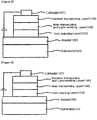
- the structure of the organic light-emitting device of the present invention can be those as shown Figs. 1 to 4 , but not limited thereto.
- Fig. 1 illustrates a structure of an organic light-emitting device in which an anode (102), a light-emitting layer (105) and a cathode (107) are sequentially laminated on a substrate (101).
- the compound of the formula 1 can be contained in the light-emitting layer (105).
- Fig. 2 illustrates a structure of an organic light-emitting device in which an anode (102), a hole-injecting/hole-transporting, and light-emitting layer (105), an electron-transporting layer (106) and a cathode (107) are sequentially laminated on a substrate (101).
- the compound of the formula 1 can be contained in the hole-injecting/hole-transporting, and light-emitting layer (105) or the electron-transporting layer (106).
- Fig. 3 illustrates a structure of an organic light-emitting device in which a substrate (101), an anode (102), a hole-injecting layer (103), a hole-transporting and light-emitting layer (105), an electron-transporting layer (106) and a cathode (107) are sequentially laminated.
- the compound of the formula 1 can be contained in the hole-injecting layer (103), the hole-transporting and light-emitting layer (105) or the electron-transporting layer (106).
- Fig. 4 illustrates a structure of an organic light-emitting device in which a substrate (101), an anode (102), a hole-injecting layer (103), a hole-transporting layer (104), an electron-transporting and light-emitting layer (105) and a cathode (107) are sequentially laminated.
- the compound of the formula 1 can be contained in the hole-injecting layer (103), the hole-transporting layer (104) or the electron-transporting and light-emitting layer (105).
- the organic light-emitting device can be prepared by depositing a metal, a metal oxide having conductivity, or metal alloys thereof on a substrate to form an anode; forming an organic material layer comprising a hole-injecting layer, a hole-transporting layer, a light-emitting layer and an electron-transporting layer on the anode; and depositing a material, which can be used as a cathode, thereon, using a PVD (physical vapor deposition) process such as sputtering and e-beam evaporation.
- an organic light-emitting device can be prepared by depositing a cathode material, an organic material layer, and an anode material on a substrate.
- the organic material layer may be of a multilayer structure containing a hole-injecting layer, a hole-transporting layer, a light-emitting layer, an electron-transporting layer, and the like, but not limited thereto, and may be of a monolayer structure. Further, the organic material layer can be produced to have a fewer number of layers, by using a variety of polymeric materials, by means of a solvent process rather than a deposit process, such as spin coating, dip coating, doctor blading, screen printing, ink jet printing, and heat transfer processes.
- the anode material is preferably a material having a large work function to facilitate hole injection usually to an organic material layer.
- Specific examples of the anode material which can be used in the present invention include metals such as vanadium, chromium, copper, zinc and gold, or an alloy thereof; metal oxides such as zinc oxide, indium oxide, indium-tin oxide (ITO), and indium zinc oxide (IZO); a combination of a metal and an oxide such as ZnO:Al and SnO 2 :Sb; conductive polymers such as poly(3-methylthiophene), poly[3,4-(ethylene-1,2-dioxy)thiophene] (PEDT), polypyrrole and polyaniline, but not limited thereto.
- the cathode material is preferably a material having a small work function to facilitate electron injection usually to an organic material layer.
- Specific examples of the cathode material include metals such as magnesium, calcium, sodium, potassium, titanium, indium, yttrium, lithium, gadolinium, aluminum, silver, tin and lead, or an alloy thereof; multilayer structure materials such as LiF/Al and LiO 2 /Al, but not limited thereto.
- the hole-injecting material is a material facilitating hole injection from an anode at low voltage.
- the HOMO (highest occupied molecular orbital) level of the hole-injecting material is preferably located between the work function of the anode materials and the HOMO level of its neighboring organic material layer.
- Specific examples of the hole-injecting material include organic materials of metal porphyrin, oligothiophene and arylamine series, organic materials of hexanitrile hexaazatriphenylene, organic materials of quinacridone series, organic materials of perylene series, and conductive polymers of anthraquinone, polyaniline, and polythiophene series, but are not limited thereto.
- the hole-transporting material is a material having high hole mobility, which can transfer holes from the anode or the hole-injecting layer toward the light-emitting layer.
- Specific examples thereof include organic materials of arylamine series, conductive polymers and block copolymers having both conjugated portions and non-conjugated portions, but are not limited thereto.
- the light-emitting material are a material capable of emitting visible light by accepting and recombining holes from the hole-transporting layer and electrons from the electron-transporting layer, preferably a material having high quantum efficiency for fluorescence and phosphorescence.
- Specific examples thereof include 8-hydroxyquinoline aluminum complex (Alq 3 ); compounds of carbazole series; dimerized styryl compounds; BAlq; 10-hydroxybenzoquinoline-metal compounds; compounds of benzoxazole, benzthiazole and benzimidazole series; polymers of poly(p-phenylenevinylene) (PPV) series; spiro compounds; and compounds of polyfluorene and rubrene series, but are not limited thereto.
- PV poly(p-phenylenevinylene)
- the electron-transporting material is suitably a material having high electron mobility, which can transfer electrons from the cathode to the light-emitting layer.
- a material having high electron mobility which can transfer electrons from the cathode to the light-emitting layer.
- Specific examples thereof include 8-hydroxyquinoline aluminum complex (Alq 3 ); complexes including Alq 3 ; organic radical compounds; and hydroxyflavone-metal complexes, but are not limited thereto.
- the organic light-emitting device according to the invention may be of a top emission structure, a bottom emission structure or a top and bottom emission structure according to the materials used.
- the compound according to the invention can function in an organic electronic device including an organic solar cell, an organic photoconductor and an organic transistor, according to a principle similar to that applied to the organic light-emitting device.
- the binaphthalene derivative according to the present invention can perform functions of hole injection and transportation, electron injection and transportation, or light emission in an organic electronic device including an organic light-emitting device, and the device according to the present invention has excellent characteristics in terms of efficiency, drive voltage and stability, and in particular excellent effects such as a low voltage and a long life time.
- a compound B-5 was prepared in the same manner as in the method for preparing the compound B-1 of Preparation Example II-1, except that in the method for preparing the compound B-1 of Preparation Example II-1, the compound A-5 prepared in the Preparation Example I-5 (12 g, 34.8 mmol) was used instead of the compound A-1. (12.1g, yield 79%): MS [M+H]+ 441
- Bromobenzene (4.24g, 27mmol) was diluted by 100 mL of tetrahydrofuran anhydride and maintained at - 78°C. To the resulting mixture, n-BuLi (2.5M in Hex, 13.0mL, 32.4mmol) was added dropwise and then stirred for 40 minutes. 2,7-dibromofluorene (7.6g, 22.5mmol) was added. The reaction solution was stirred at - 78°C for 4 hours. The temperature of the reaction solution was raised to ambient temperature, and the aqueous solution of 2N HCl was added to the reaction solution and then stirred for 6 hours. The layer was separated using ethylether and dried over magnesium anhydride.
- 6-bromo-2-naphthaldehyde (4.7g, 20 mmol) was mixed with 100 mL of toluene, 20 mL of ethylene glycol and p-toluene sulfonic acid (0.2g, 1.2 mmol) and the mixture was stirred under heating for 48 hours.
- the reaction mixture was cooled to ambient temperature and the toluene solvent was distilled off in vacuum under reduced pressure. Ethanol and a small amount of water were added thereto, and thus formed solid was filtered and dried to prepare a compound C-8-1 (5.14 g, yield 92%).
- MS [M] + 279
- a compound C-9 was prepared in the same manner as in the method for preparing the compound C-8 of Preparation Example III-8, except that in the method for preparing the compound C-8 of Preparation Example III-8, the compound B-8 prepared in the Preparation Example II-8 (10.7 g, 41.3 mmol) was used instead of the compound C-8-1. (4.44 g, yield 48%)
- a compound C-10 was prepared in the same manner as in the method for preparing the compound C-8 of Preparation Example III-8, except that in the method for preparing the compound C-8 of Preparation Example III-8, the compound B-14 prepared in the Preparation Example II-14 (18.3 g, 56.8 mmol) was used instead of the compound C-8-1 (7.1 g, yield 48.8%).
- Fig. 5 shows the synthesis data of the compound 2-41.
- Fig. 6 shows the synthesis data of the compound 1-157.
- Fig. 7 shows the synthesis data of the compound 1-173.
- Fig. 8 shows the synthesis data of the compound 1-166.
- Fig. 9 shows the synthesis data of the compound 2-44.
- Example 1-8 Preparation of Compound 1-70 compound provided for comparative purposes only
- Fig. 10 shows the synthesis data of the compound 1-70.
- Fig. 11 shows the synthesis data of the compound 1-71.
- Fig. 12 shows the synthesis data of the compound 1-72.
- Fig. 13 shows the synthesis data of the compound 1-18.
- Fig. 14 shows the synthesis data of the compound 2-8.
- Example 2-11 Preparation of Compound 2-53 compound provided for comparative purposes only
- a glass substrate on which a thin film of ITO (indium tin oxide) was coated to a thickness of 1500 ⁇ was immersed in distilled water having a detergent dissolved therein to wash the substrate with ultrasonic waves.
- the detergent was a product commercially available from Fisher Co. and the distilled water was distilled water which had been twice filtered by using a filter commercially available from Millipore Co.
- ITO was washed for 30 minutes, and then washing with ultrasonic waves was repeated twice for 10 minutes by using distilled water. After the completion of washing with distilled water, washing with ultrasonic waves was carried out by using solvents such as isopropyl alcohol, acetone and methanol.
- solvents such as isopropyl alcohol, acetone and methanol.
- the resultant product was dried, and then transported to a plasma washing machine. Using an oxygen plasma, the substrate was washed for 5 minutes and then transported to a vacuum depositing machine.
- hexanitrile hexaazatriphenylene was coated to thicknesses of 500 A by thermal vacuum deposition to form a hole-injecting layer.
- NPB (400 A) as a hole-transporting material was vacuum deposited, and then an Alq3 compound was vacuum deposited to thicknesses of 300 A for a light-emitting layer.
- the compound 2-41 as prepared in Example 1-2 was vacuum deposited on the light-emitting layer to thickness of 200 ⁇ to form an electron-injecting and -transporting layer.
- Lithium fluoride (LiF) and aluminum were sequentially deposited on the electron-injecting and -transporting layer to thicknesses of 12 ⁇ and 2000 ⁇ respectively, to form a cathode.
- the deposition rate of the organic material was maintained at 1 A /sec
- the deposition rate of lithium fluoride was maintained at 0.2 ⁇ /sec
- the deposition rate of aluminum was maintained at 3 to 7 ⁇ /sec.
Landscapes
- Chemical & Material Sciences (AREA)
- Organic Chemistry (AREA)
- Engineering & Computer Science (AREA)
- Materials Engineering (AREA)
- Physics & Mathematics (AREA)
- Spectroscopy & Molecular Physics (AREA)
- Optics & Photonics (AREA)
- Electromagnetism (AREA)
- Electroluminescent Light Sources (AREA)
- Organic Low-Molecular-Weight Compounds And Preparation Thereof (AREA)
- Indole Compounds (AREA)
- Low-Molecular Organic Synthesis Reactions Using Catalysts (AREA)
- Luminescent Compositions (AREA)
Claims (9)
- Binaphthalenderivat, dargestellt durch die folgende Formel (1):
 wobei R1 und R2 gleich oder verschieden voneinander sein können und jeweils entsprechend ausgewählt sind aus der Gruppe bestehend aus (a) einer Alkenylgruppe, welche unsubstituiert oder mit einer substituierten oder unsubstituierten C6∼C30-Arylgruppe oder einer substituierten oder unsubstituierten C5∼C30-Heteroarylgruppe substituiert ist; (b) einer C6∼C30-Arylgruppe, welche mit mindestens einer Gruppe ausgewählt aus der Gruppe bestehend aus einer Aminogruppe, einer Nitrilgruppe, einer Nitrogruppe, einem Alkylboronat, einer C1∼C30-Alkylgruppe, einer C2∼C40-Alkenylgruppe, einer C1∼C40-Alkoxygruppe, einer C3-C30-Cycloalkylgruppe, einer C3∼C30-Heterocycloalkylgruppe und einer C5∼C30-Heteroarylgruppe substituiert ist; (c) einer C5∼C30 heteroaromatischen Gruppe, welche unsubstituiert oder mit mindestens einer Gruppe ausgewählt aus der Gruppe bestehend aus einem Halogenatom, einer Aminogruppe, einer Nitrilgruppe, einer Nitrogruppe, einem Alkylboronat, einer C1-C30-Alkylgruppe, einer C2∼C40-Alkenylgruppe, einer C1∼C40-Alkoxygruppe, einer C3∼C30-Cycloalkylgruppe, einer C3∼C30-Heterocycloalkylgruppe, einer C6∼C30-Arylgruppe, einer C5-C30-Heteroarylgruppe und einer C6∼C30-Arylaminogruppe substituiert ist; (d) und einer Carbazolylgruppe, welche unsubstituiert oder mit mindestens einer Gruppe ausgewählt aus der Gruppe bestehend aus einem Halogenatom, einer Aminogruppe, einer Nitrilgruppe, einer Nitrogruppe, einem Alkylboronat, einer C1∼C30-Alkylgruppe, einer C2∼C40-Alkenylgruppe, einer C1∼C40-Alkoxygruppe, einer C3∼C30-Cycloalkylgruppe, einer C3∼C30-Heterocycloalkylgruppe, einer C6∼C30-Arylgruppe, einer C5∼C30-Heteroarylgruppe und einer C6∼C30-Arylaminogruppe substituiert ist, vorausgesetzt, dass einer aus R1 und R2 Wasserstoff sein kann;R1 Wasserstoff ist und R2 ausgewählt ist aus der Gruppe bestehend aus folgenden 1-1 bis 1-216; oderR1 und R2 ausgewählt sind aus der Gruppe bestehend aus folgenden 2-1 bis 2-74.
Nr. R2 Nr. R2 Nr. R2 1-1 
1-2 
1-3 
1-4 
1-5 
1-6 
1-7 
1-8 
1-9 
1-10 
1-11 
1-12 
1-13 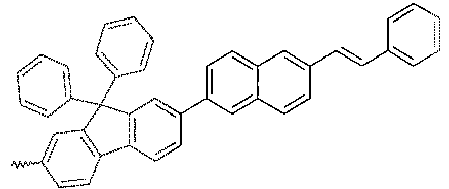
1-14 
1-15 
1-16 
1-17 
1-18 
1-19 
1-20 
1-21 
1-22 
1-23 
1-24 
1-25 
1-26 
1-27 
1-28 
1-29 
1-30 
1-31 
1-32 
1-33 
1-34 
1-38 
1-39 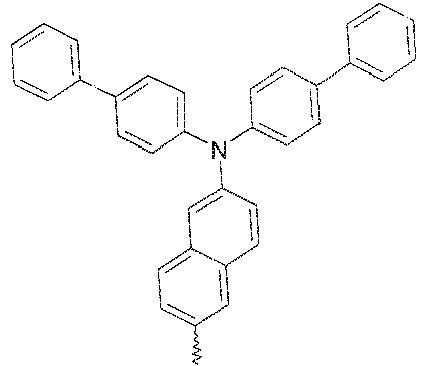
1-40 
1-41 
1-42 
1-43 
1-44 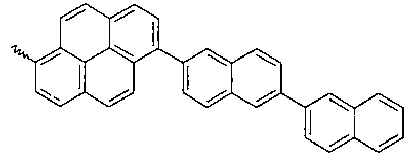
1-45 
1-46 
1-47 
1-48 
1-49 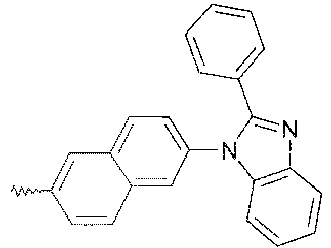
1-50 
1-51 
1-52 
1-53 
1-54 
1-55 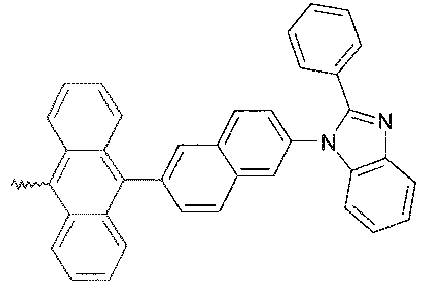
1-56 
1-57 
1-58 
1-60 
1-61 
1-62 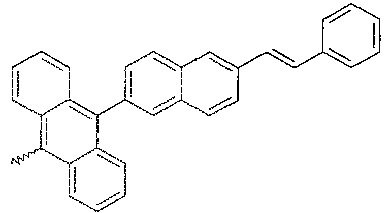
1-63 
1-64 
1-65 
1-66 
1-67 
1-69 
1-71 
1-72 
1-73 
1-74 
1-77 
1-78 
1-79 
1-80 
1-81 
1-82 
1-83 
1-84 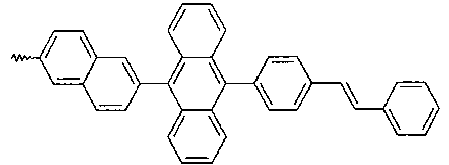
1-85 
1-86 
1-87 
1-88 
1-89 
1-90 
1-91 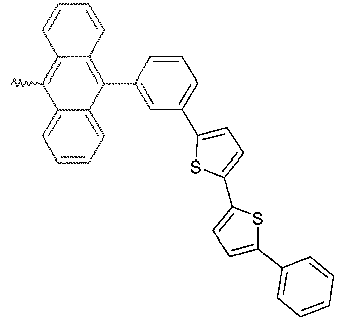
1-92 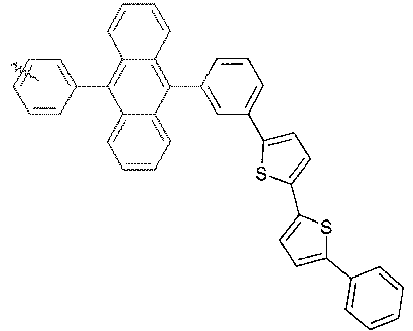
1-93 
1-94 
1-95 
1-96 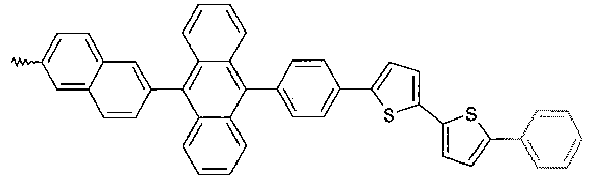
1-97 
1-98 
1-99 
1-100 
1-101 
1-102 
1-103 
1-104 
1-105 
1-106 
1-107 
1-108 
1-109 
1-110 
1-111 
1-112 
1-113 
1-114 
1-115 
1-116 
1-117 
1-118 
1-119 
1-120 
1-121 
1-122 
1-123 
1-124 
1-125 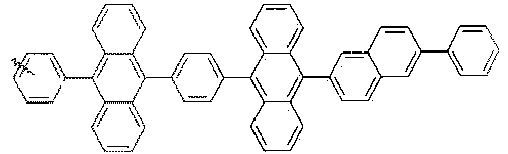
1-126 
1-127 
1-128 
1-129 
1-130 
1-131 
1-132 
1-133 
1-134 
1-135 
1-136 
1-137 
1-138 
1-139 
1-140 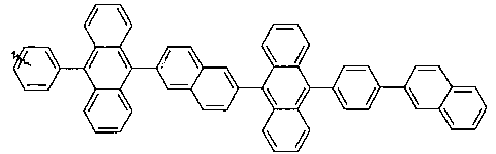
1-141 
1-142 
1-143 
1-144 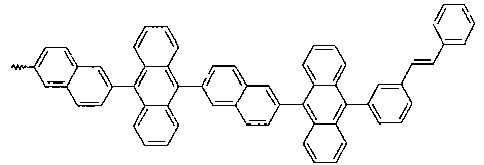
1-145 
1-146 
1-147 
1-148 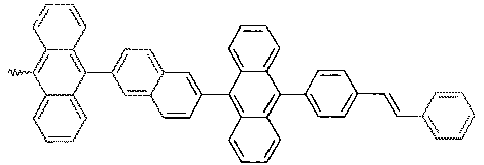
1-149 
1-150 
1-151 
1-152 
1-153 
1-154 
1-155 
1-156 
1-157 
1-158 
1-159 
1-160 
1-161 
1-162 
1-163 
1-164 
1-165 
1-166 
1-167 
1-168 
1-169 
1-170 
1-171 
1-172 
1-173 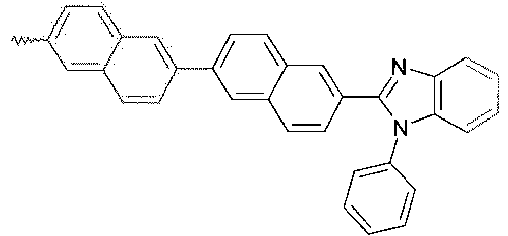
1-174 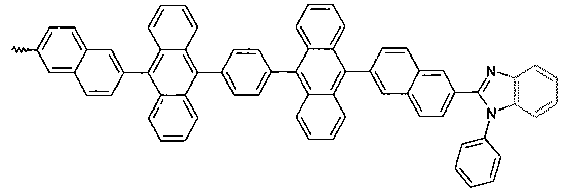
1-175 
1-176 
1-177 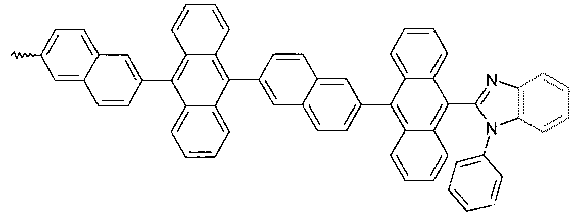
1-178 
1-179 
1-180 
1-181 
1-182 
1-183 
1-184 
1-185 
1-186 
1-187 
1-188 
1-189 
1-190 
1-191 
1-192 
1-193 
1-194 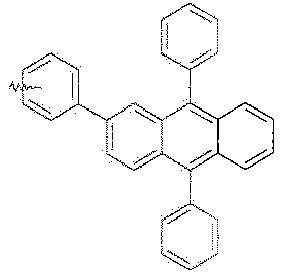
1-195 
1-196 
1-197 
1-198 
1-199 
1-200 
1-201 
1-202 
1-204 
1-205 
1-206 
1-207 
1-208 
1-209 
1-211 
1-212 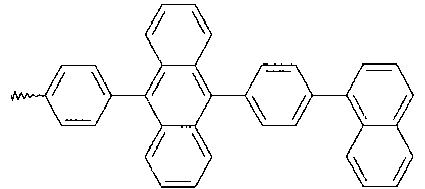
1-213 
1-214 
1-215 
1-216 
Nr. R1 R2 Nr. R1 R2 2-1 

2-2 

2-3 

2-4 

2-5 

2-6 

2-7 

2-8 

2-9 

2-10 
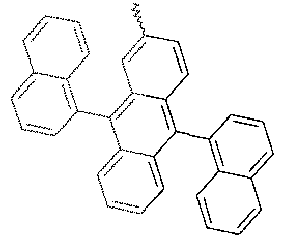
2-11 

2-12 

2-13 

2-14 

2-15 

2-16 

2-17 

2-18 

2-19 

2-20 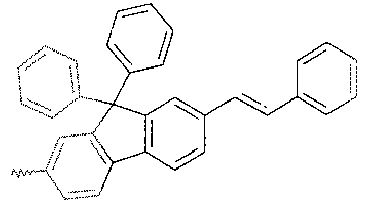

2-21 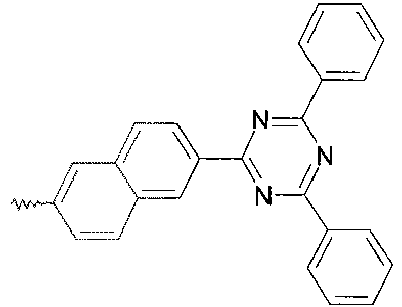

2-22 

2-23 

2-24 

2-25 

2-26 

2-27 

2-28 

2-29 

2-30 

2-31 

2-32 
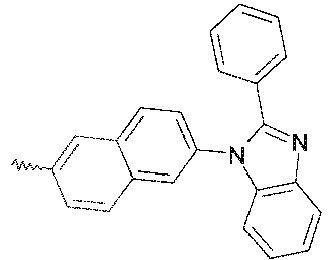
2-33 

2-34 

2-35 

2-36 

2-37 

2-38 

2-39 
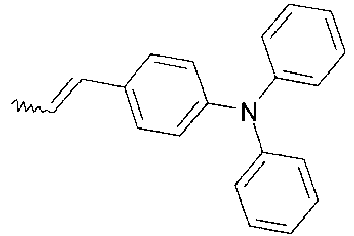
2-40 

2-41 

2-42 

2-43 

2-44 

2-45 

2-46 

2-47 

2-48 

2-49 

2-50 

2-51 

2-52 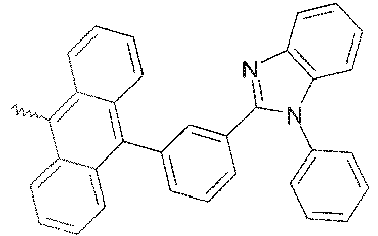

2-55 
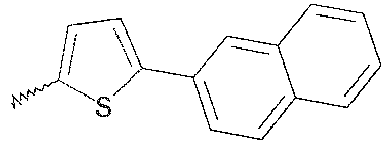
2-62 

2-63 

2-64 
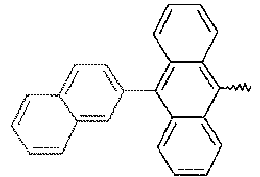
2-65 
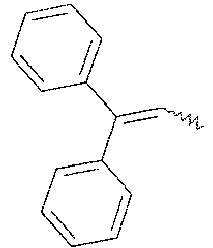
2-66 

2-67 

2-68 

2-69 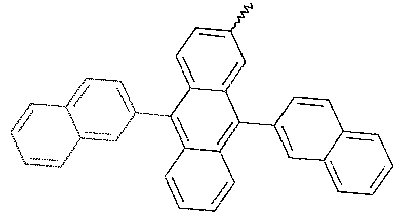

2-74 

- Binaphthalenderivat nach Anspruch 1, wobei R1 oder R2 in der Formel (1) ausgewählt ist aus den folgenden Formeln:


- Verfahren zum Herstellen der Binaphthalenderivate nach Anspruch 1, umfassend die Schritte aus(a) Reagieren einer Naphtholderivatverbindung mit Trifluoressigsäureanhydrid in der Anwesenheit einer Base; und(b) Reagieren der Verbindung, welche in dem Schritt (a) erhalten wird, mit einer Naphthalenboresterverbindung oder Naphthalenborsäureverbindung in der Anwesenheit eines Palladium[II]-Katalysators und einer Base unter Verwendung des Verfahrens der Suzuki-Kupplung.
- Verfahren zum Herstellen der Binaphthalenderivate nach Anspruch 1, umfassend die Schritte aus(a) Reagieren einer Naphtholderivatverbindung mit Trifluoressigsäureanhydrid in der Anwesenheit einer Base; und(b) Reagieren der Verbindung, welche in dem Schritt (a) erhalten wird, mit einem Bispinakolatodiborreagenz in der Anwesenheit eines Palladium[II]-Katalysators und einer Base; und(c) Reagieren der Verbindung, welche in dem Schritt (b) erhalten wird, mit einem Bromnaphthalenderivat oder einem Trifluoracetoxynaphthalenderivat in der Anwesenheit eines Palladium[II]-Katalysators und einer Base unter Verwendung des Verfahrens der Suzuki-Kupplung.
- Organische elektronische Vorrichtung umfassend eine erste Elektrode, eine zweite Elektrode und eine organische Materialschicht mit mindestens einer Schicht, welche zwischen der ersten Elektrode und der zweiten Elektrode angeordnet ist, wobei mindestens eine Schicht der organischen Materialschichten die Verbindung aus Anspruch 1 umfasst.
- Organische elektronische Vorrichtung nach Anspruch 5, wobei die organische Materialschicht eine Lochinjektionsschicht und eine Lochtransportschicht umfasst und die Lochinjektionsschicht und die Lochtransportschicht die Verbindung nach Anspruch 1 umfassen.
- Organische elektronische Vorrichtung nach Anspruch 5, wobei die organische Materialschicht eine lichtemittierende Schicht umfasst und die lichtemittierende Schicht die Verbindung nach Anspruch 1 umfasst.
- Organische elektronische Vorrichtung nach Anspruch 5, wobei die organische Materialschicht eine Elektronentransportschicht umfasst und die Elektronentransportschicht die Verbindung nach Anspruch 1 umfasst.
- Organische elektronische Vorrichtung nach Anspruch 5, wobei die organische elektronische Vorrichtung ausgewählt ist aus der Gruppe bestehend aus einer organischen lichtemittierenden Vorrichtung, einer organischen Solarzelle, einem organischen Photoleiter (OPC) und einem organischen Transistor.
Applications Claiming Priority (2)
| Application Number | Priority Date | Filing Date | Title |
|---|---|---|---|
| KR20050099873 | 2005-10-21 | ||
| PCT/KR2006/004282 WO2007046658A1 (en) | 2005-10-21 | 2006-10-20 | New binaphthalene derivatives, preparation method thereof and organic electronic device using the same |
Publications (3)
| Publication Number | Publication Date |
|---|---|
| EP1937616A1 EP1937616A1 (de) | 2008-07-02 |
| EP1937616A4 EP1937616A4 (de) | 2010-06-30 |
| EP1937616B1 true EP1937616B1 (de) | 2014-12-17 |
Family
ID=37962713
Family Applications (1)
| Application Number | Title | Priority Date | Filing Date |
|---|---|---|---|
| EP06799356.8A Not-in-force EP1937616B1 (de) | 2005-10-21 | 2006-10-20 | Neue binaphthalinderivate, verfahren zu deren herstellung und organisches elektronisches gerät, bei dem diese verwendet werden |
Country Status (7)
| Country | Link |
|---|---|
| US (2) | US8674138B2 (de) |
| EP (1) | EP1937616B1 (de) |
| JP (1) | JP4991737B2 (de) |
| KR (2) | KR100878115B1 (de) |
| CN (1) | CN101291897B (de) |
| TW (1) | TWI313675B (de) |
| WO (1) | WO2007046658A1 (de) |
Families Citing this family (47)
| Publication number | Priority date | Publication date | Assignee | Title |
|---|---|---|---|---|
| EP1696015B1 (de) | 2003-12-19 | 2015-05-13 | Idemitsu Kosan Co., Ltd. | Lichtemittierendes material für organische elektrolumineszierende vorrichtung, darauf basierende organische elektrolumineszierende vorrichtung und material für organische elektrolumineszierende vorrichtung |
| EP1937616B1 (de) * | 2005-10-21 | 2014-12-17 | LG Chem, Ltd. | Neue binaphthalinderivate, verfahren zu deren herstellung und organisches elektronisches gerät, bei dem diese verwendet werden |
| KR100989467B1 (ko) * | 2006-12-06 | 2010-10-22 | 주식회사 엘지화학 | 신규한 플루오렌 유도체 및 이를 이용한 유기 전자 소자 |
| TWI437075B (zh) * | 2006-12-28 | 2014-05-11 | 半導體能源研究所股份有限公司 | 蒽衍生物及使用該蒽衍生物之發光裝置 |
| EP2487219A1 (de) * | 2007-06-01 | 2012-08-15 | E. I. du Pont de Nemours and Company | Ladungstransportmaterialien für Lumineszenzanwendungen |
| JPWO2009008198A1 (ja) | 2007-07-07 | 2010-09-02 | 出光興産株式会社 | ナフタレン誘導体、有機el素子用材料及びそれを用いた有機el素子 |
| US8154195B2 (en) | 2007-07-07 | 2012-04-10 | Idemitsu Kosan Co., Ltd. | Organic electroluminescence device and material for organic electroluminescence device |
| US8211552B2 (en) | 2007-07-07 | 2012-07-03 | Idemitsu Kosan Co., Ltd. | Organic electroluminescence device |
| US8779655B2 (en) | 2007-07-07 | 2014-07-15 | Idemitsu Kosan Co., Ltd. | Organic electroluminescence device and material for organic electroluminescence device |
| WO2009008205A1 (ja) | 2007-07-07 | 2009-01-15 | Idemitsu Kosan Co., Ltd. | 有機エレクトロルミネッセンス素子および有機エレクトロルミネッセンス素子用材料 |
| EP2031036B1 (de) | 2007-08-31 | 2012-06-27 | Semiconductor Energy Laboratory Co., Ltd. | Lichtemittierendes Element, lichtemittierende Vorrichtung und elektronisches Gerät |
| JP5183142B2 (ja) | 2007-10-03 | 2013-04-17 | キヤノン株式会社 | ビナフチル化合物及びこれを用いた有機発光素子 |
| TWI479712B (zh) | 2007-10-19 | 2015-04-01 | Semiconductor Energy Lab | 發光裝置 |
| JP4628417B2 (ja) * | 2007-12-25 | 2011-02-09 | 財団法人山形県産業技術振興機構 | 有機エレクトロルミネッセンス材料およびそれを用いた素子 |
| WO2009084544A1 (ja) * | 2007-12-27 | 2009-07-09 | Idemitsu Kosan Co., Ltd. | 含窒素複素環誘導体及びそれを用いた有機エレクトロルミネッセンス素子 |
| KR100901887B1 (ko) * | 2008-03-14 | 2009-06-09 | (주)그라쎌 | 신규한 유기 발광 화합물 및 이를 채용하고 있는 유기 발광소자 |
| KR101511379B1 (ko) * | 2008-04-08 | 2015-04-10 | 동우 화인켐 주식회사 | 비대칭 나프탈레닐카바졸 유도체, 이를 이용하는유기전기발광소자용 유기박막재료 및 유기전기발광소자 |
| CN102159668A (zh) * | 2008-10-14 | 2011-08-17 | 第一毛织株式会社 | 苯并咪唑化合物和含有该苯并咪唑化合物的有机光电装置 |
| EP2352802A4 (de) | 2008-12-01 | 2012-10-31 | Du Pont | Elektroaktive materialien |
| EP2200407B1 (de) | 2008-12-17 | 2017-11-22 | Semiconductor Energy Laboratory Co., Ltd. | Lichtemittierendes Element, lichtemittierende Vorrichtung und elektronische Vorrichtung |
| EP2372804B1 (de) | 2008-12-26 | 2014-04-02 | Idemitsu Kosan Co., Ltd. | Organisches elektrolumineszenzelement und verbindung |
| US8940412B2 (en) | 2008-12-26 | 2015-01-27 | Idemitsu Kosan Co., Ltd. | Material for organic electroluminescent element, and organic electroluminescent element |
| KR20110117073A (ko) | 2009-01-05 | 2011-10-26 | 이데미쓰 고산 가부시키가이샤 | 유기 전기발광 소자용 재료 및 그것을 사용한 유기 전기발광 소자 |
| US8759818B2 (en) | 2009-02-27 | 2014-06-24 | E I Du Pont De Nemours And Company | Deuterated compounds for electronic applications |
| US8039129B2 (en) | 2009-04-06 | 2011-10-18 | Idemitsu Kosan Co., Ltd. | Organic electroluminescence device and material for organic electroluminescence device |
| US8039127B2 (en) | 2009-04-06 | 2011-10-18 | Idemitsu Kosan Co., Ltd. | Organic electroluminescence device and material for organic electroluminescence device |
| US9153790B2 (en) | 2009-05-22 | 2015-10-06 | Idemitsu Kosan Co., Ltd. | Organic electroluminescent device |
| KR100972993B1 (ko) | 2009-08-03 | 2010-07-30 | 주식회사 유피케미칼 | 유기 전기 발광 소자용 유기 화합물 및 이를 이용한 유기 전기발광 소자 |
| WO2012005724A1 (en) | 2010-07-07 | 2012-01-12 | Universal Display Corporation | Host material for organic light emitting devices |
| JP5737294B2 (ja) * | 2010-11-04 | 2015-06-17 | Jnc株式会社 | 電子輸送材料およびこれを用いた有機電界発光素子 |
| JP5946264B2 (ja) | 2011-11-16 | 2016-07-06 | ユー・ディー・シー アイルランド リミテッド | 有機電界発光素子、有機電界発光素子用材料、該素子を用いた発光装置、表示装置及び照明装置 |
| TWI504592B (zh) | 2012-04-13 | 2015-10-21 | Lg Chemical Ltd | 新穎含氮雜環化合物及使用其之有機電子裝置 |
| US9379336B2 (en) | 2012-08-31 | 2016-06-28 | Nitto Denko Corporation | Compounds for use in light emitting devices |
| CN102898352A (zh) * | 2012-10-26 | 2013-01-30 | 吉林奥来德光电材料股份有限公司 | 高效有机发光材料及其制备方法 |
| KR101499356B1 (ko) * | 2013-06-28 | 2015-03-05 | 주식회사 엘지화학 | 헤테로환 화합물 및 이를 포함하는 유기 발광 소자 |
| KR102181234B1 (ko) | 2013-08-28 | 2020-11-23 | 삼성디스플레이 주식회사 | 화합물 및 이를 포함한 유기 발광 소자 |
| KR101837565B1 (ko) | 2014-08-06 | 2018-03-12 | 삼성에스디아이 주식회사 | 유기 화합물, 유기 광전자 소자 및 표시 장치 |
| KR101778742B1 (ko) | 2015-12-24 | 2017-09-14 | 에스케이씨 주식회사 | 고내열성 및 고내화학성의 보호박막 조성물 및 이를 이용하여 보호박막을 제조하는 방법 |
| KR102064994B1 (ko) * | 2017-05-31 | 2020-01-10 | 주식회사 엘지화학 | 신규한 헤테로 고리 화합물 및 이를 이용한 유기발광 소자 |
| KR102064993B1 (ko) | 2017-05-31 | 2020-01-10 | 주식회사 엘지화학 | 신규한 헤테로 고리 화합물 및 이를 이용한 유기발광 소자 |
| WO2018221986A1 (ko) * | 2017-05-31 | 2018-12-06 | 주식회사 엘지화학 | 신규한 헤테로 고리 화합물 및 이를 이용한 유기발광 소자 |
| KR102214595B1 (ko) | 2018-09-20 | 2021-02-10 | 주식회사 엘지화학 | 유기 발광 소자 |
| CN109912563A (zh) * | 2019-04-10 | 2019-06-21 | 宁波大学 | 一种含三氟甲基噻吩衍生物及其制备方法和用途 |
| CN111233676B (zh) * | 2020-01-17 | 2022-03-29 | 华南理工大学 | 一种高性能空穴传输材料及其制备与应用 |
| KR20230170596A (ko) * | 2022-06-10 | 2023-12-19 | 주식회사 엘지화학 | 신규한 화합물 및 이를 이용한 유기 발광 소자 |
| KR20240078109A (ko) * | 2022-11-25 | 2024-06-03 | 엘지디스플레이 주식회사 | 유기발광다이오드 |
| CN121554389A (zh) * | 2023-06-30 | 2026-02-24 | 宁波卢米蓝新材料有限公司 | 一种有机电致发光化合物及其应用 |
Family Cites Families (26)
| Publication number | Priority date | Publication date | Assignee | Title |
|---|---|---|---|---|
| JPH0586009A (ja) * | 1991-09-24 | 1993-04-06 | Mita Ind Co Ltd | アゾ系化合物およびジアゾニウム塩 |
| DE69422256D1 (de) * | 1993-10-15 | 2000-01-27 | Merck Patent Gmbh | Reaktive Flüssigkristallverbindungen |
| US5766510A (en) * | 1995-08-25 | 1998-06-16 | Dai Nippon Printing Co., Ltd. | Liquid crystalline compound and use thereof |
| US5935721A (en) * | 1998-03-20 | 1999-08-10 | Eastman Kodak Company | Organic electroluminescent elements for stable electroluminescent |
| EP1009043A3 (de) | 1998-12-09 | 2002-07-03 | Eastman Kodak Company | Elektrolumineszente Vorrichtung mit Polyphenyl-Kohlenwasserstoff Ladungslöchertransportschicht |
| JP4112719B2 (ja) | 1998-12-25 | 2008-07-02 | 出光興産株式会社 | 芳香族炭化水素化合物およびそれを用いた有機エレクトロルミネッセンス素子 |
| JP2000273055A (ja) * | 1999-03-25 | 2000-10-03 | Idemitsu Kosan Co Ltd | ジスチリルアリーレン誘導体及びそれを用いた有機エレクトロルミネッセンス素子 |
| JP2001097897A (ja) | 1999-09-30 | 2001-04-10 | Idemitsu Kosan Co Ltd | 有機化合物及びそれを用いた有機エレクトロルミネッセンス素子 |
| JP3825969B2 (ja) * | 1999-11-29 | 2006-09-27 | キヤノン株式会社 | 導電素子およびその製造方法 |
| JP4477802B2 (ja) * | 2001-09-17 | 2010-06-09 | 三井化学株式会社 | アミン化合物および該化合物を含有する有機電界発光素子 |
| JP4060648B2 (ja) * | 2002-06-20 | 2008-03-12 | 日本放送協会 | 化合物、並びに該化合物を用いた光デバイス、電子デバイス、エレクトロルミネッセンス素子、トランジスタ、表示デバイス、及び表示装置 |
| JP2004107292A (ja) | 2002-09-20 | 2004-04-08 | Tosoh Corp | 新規ビナフタレン誘導体並びにその製造方法 |
| US6872475B2 (en) * | 2002-12-03 | 2005-03-29 | Canon Kabushiki Kaisha | Binaphthalene derivatives for organic electro-luminescent devices |
| KR101020350B1 (ko) * | 2003-03-13 | 2011-03-08 | 이데미쓰 고산 가부시키가이샤 | 신규한 질소 함유 헤테로환 유도체 및 이를 이용한 유기 전기발광 소자 |
| JP4001118B2 (ja) | 2003-03-24 | 2007-10-31 | ソニー株式会社 | 有機電界発光素子及びアミノモノスチリルナフタレン化合物 |
| JP2005019219A (ja) * | 2003-06-26 | 2005-01-20 | Sony Corp | 有機el発光素子 |
| JP2005108746A (ja) * | 2003-10-01 | 2005-04-21 | Internatl Business Mach Corp <Ibm> | 有機エレクトロ・ルミネッセンス素子および有機エレクトロ・ルミネッセンス素子の製造方法 |
| EP1696015B1 (de) * | 2003-12-19 | 2015-05-13 | Idemitsu Kosan Co., Ltd. | Lichtemittierendes material für organische elektrolumineszierende vorrichtung, darauf basierende organische elektrolumineszierende vorrichtung und material für organische elektrolumineszierende vorrichtung |
| JP4802479B2 (ja) | 2004-02-18 | 2011-10-26 | Jnc株式会社 | 重合性ビナフタレン誘導体 |
| WO2005090365A1 (ja) * | 2004-03-18 | 2005-09-29 | Sharp Kabushiki Kaisha | 有機シラン化合物、その製造方法及びその用途 |
| US9523031B2 (en) | 2004-05-14 | 2016-12-20 | Idemitsu Kosan Co., Ltd. | Organic electroluminescent device |
| CN1842510A (zh) * | 2004-06-16 | 2006-10-04 | 出光兴产株式会社 | 芴衍生物以及使用该衍生物的有机电致发光器件 |
| WO2006003842A1 (ja) * | 2004-07-02 | 2006-01-12 | Chisso Corporation | 発光材料およびこれを用いた有機電界発光素子 |
| JP4788202B2 (ja) * | 2004-07-09 | 2011-10-05 | Jnc株式会社 | 発光材料およびこれを用いた有機電界発光素子 |
| KR20070114760A (ko) * | 2005-03-28 | 2007-12-04 | 이데미쓰 고산 가부시키가이샤 | 안트릴아릴렌 유도체, 유기 전기발광 소자용 재료, 및그것을 이용한 유기 전기발광 소자 |
| EP1937616B1 (de) * | 2005-10-21 | 2014-12-17 | LG Chem, Ltd. | Neue binaphthalinderivate, verfahren zu deren herstellung und organisches elektronisches gerät, bei dem diese verwendet werden |
-
2006
- 2006-10-20 EP EP06799356.8A patent/EP1937616B1/de not_active Not-in-force
- 2006-10-20 CN CN2006800392961A patent/CN101291897B/zh not_active Expired - Fee Related
- 2006-10-20 WO PCT/KR2006/004282 patent/WO2007046658A1/en not_active Ceased
- 2006-10-20 TW TW095138889A patent/TWI313675B/zh not_active IP Right Cessation
- 2006-10-20 US US11/583,794 patent/US8674138B2/en active Active
- 2006-10-20 JP JP2008536502A patent/JP4991737B2/ja not_active Expired - Fee Related
- 2006-10-20 KR KR1020060102329A patent/KR100878115B1/ko not_active Expired - Fee Related
-
2008
- 2008-11-17 KR KR1020080114255A patent/KR100958000B1/ko not_active Expired - Fee Related
-
2014
- 2014-02-06 US US14/174,431 patent/US8951831B2/en active Active
Also Published As
| Publication number | Publication date |
|---|---|
| CN101291897B (zh) | 2012-09-05 |
| EP1937616A1 (de) | 2008-07-02 |
| US8674138B2 (en) | 2014-03-18 |
| JP4991737B2 (ja) | 2012-08-01 |
| US20140183505A1 (en) | 2014-07-03 |
| TWI313675B (en) | 2009-08-21 |
| US20070108892A1 (en) | 2007-05-17 |
| KR100958000B1 (ko) | 2010-05-17 |
| JP2009514812A (ja) | 2009-04-09 |
| US8951831B2 (en) | 2015-02-10 |
| WO2007046658A1 (en) | 2007-04-26 |
| KR100878115B1 (ko) | 2009-01-14 |
| EP1937616A4 (de) | 2010-06-30 |
| TW200728250A (en) | 2007-08-01 |
| KR20070043666A (ko) | 2007-04-25 |
| KR20080103953A (ko) | 2008-11-28 |
| CN101291897A (zh) | 2008-10-22 |
Similar Documents
| Publication | Publication Date | Title |
|---|---|---|
| US8951831B2 (en) | Binaphthalene derivatives, preparation method thereof and organic electronic device using the same | |
| CN101395105B (zh) | 新的蒽衍生物以及使用该衍生物的有机电子器件 | |
| US20240298533A1 (en) | Compound for organic electronic element, organic electronic element using the same, and an electronic device thereof | |
| EP2155760B1 (de) | Organische metallkomplexderivat und organische lichtemittierende vorrichtungen damit | |
| US8431246B2 (en) | Organic metal complexs derivative and organic light emitting device using the same | |
| US9012040B2 (en) | Anthracene derivative and an organic electronic device using the same | |
| KR102533037B1 (ko) | 유기 일렉트로루미네선스 소자 | |
| EP3670510A2 (de) | Benzo[b]naphtho[2,3-d]furanyl- oder benzo[b]naphtho[2,3-d]thiophenyl-triazin-verbindungen für organische elektronische elemente | |
| KR102768533B1 (ko) | 유기전기소자용 화합물을 포함하는 유기전기소자 및 그 전자 장치 | |
| KR102403160B1 (ko) | 유기전기소자용 화합물을 포함하는 유기전기소자 및 그 전자 장치 | |
| US20250386727A1 (en) | Compound for organic electronic element, organic electronic element using the same, and an electronic device thereof | |
| WO2016125706A1 (ja) | 有機エレクトロルミネッセンス素子 | |
| KR101415734B1 (ko) | 신규한 아릴 아민을 사용한 정공수송 물질 및 이를 포함한 유기전계 발광소자 | |
| US12610735B2 (en) | Organic electroluminescence device and electronic apparatus | |
| KR101375542B1 (ko) | 티오펜 유도체를 포함하는 정공수송 물질 및 이를 사용한 유기전계 발광소자 | |
| KR101396647B1 (ko) | 신규한 안트라센 유도체, 이의 제조방법 및 이를 이용한 유기전자소자 | |
| KR102768534B1 (ko) | 유기전기소자용 화합물을 포함하는 유기전기소자 및 그 전자 장치 | |
| KR102924501B1 (ko) | 유기전기소자용 화합물, 이를 이용한 유기전기소자 및 그 전자 장치 |
Legal Events
| Date | Code | Title | Description |
|---|---|---|---|
| PUAI | Public reference made under article 153(3) epc to a published international application that has entered the european phase |
Free format text: ORIGINAL CODE: 0009012 |
|
| 17P | Request for examination filed |
Effective date: 20080319 |
|
| AK | Designated contracting states |
Kind code of ref document: A1 Designated state(s): AT BE BG CH CY CZ DE DK EE ES FI FR GB GR HU IE IS IT LI LT LU LV MC NL PL PT RO SE SI SK TR |
|
| RIN1 | Information on inventor provided before grant (corrected) |
Inventor name: LEE, JAE-CHOL Inventor name: LEE, DAE-WOONG Inventor name: BAE, JAE-SOON Inventor name: LEE, DONG-HOON Inventor name: JANG, JUN-GI |
|
| A4 | Supplementary search report drawn up and despatched |
Effective date: 20100602 |
|
| DAX | Request for extension of the european patent (deleted) | ||
| 17Q | First examination report despatched |
Effective date: 20110701 |
|
| GRAP | Despatch of communication of intention to grant a patent |
Free format text: ORIGINAL CODE: EPIDOSNIGR1 |
|
| INTG | Intention to grant announced |
Effective date: 20141008 |
|
| GRAS | Grant fee paid |
Free format text: ORIGINAL CODE: EPIDOSNIGR3 |
|
| GRAA | (expected) grant |
Free format text: ORIGINAL CODE: 0009210 |
|
| AK | Designated contracting states |
Kind code of ref document: B1 Designated state(s): AT BE BG CH CY CZ DE DK EE ES FI FR GB GR HU IE IS IT LI LT LU LV MC NL PL PT RO SE SI SK TR |
|
| REG | Reference to a national code |
Ref country code: GB Ref legal event code: FG4D |
|
| REG | Reference to a national code |
Ref country code: CH Ref legal event code: EP |
|
| REG | Reference to a national code |
Ref country code: IE Ref legal event code: FG4D |
|
| REG | Reference to a national code |
Ref country code: AT Ref legal event code: REF Ref document number: 701762 Country of ref document: AT Kind code of ref document: T Effective date: 20150115 |
|
| REG | Reference to a national code |
Ref country code: DE Ref legal event code: R096 Ref document number: 602006044038 Country of ref document: DE Effective date: 20150129 |
|
| PG25 | Lapsed in a contracting state [announced via postgrant information from national office to epo] |
Ref country code: FI Free format text: LAPSE BECAUSE OF FAILURE TO SUBMIT A TRANSLATION OF THE DESCRIPTION OR TO PAY THE FEE WITHIN THE PRESCRIBED TIME-LIMIT Effective date: 20141217 Ref country code: LT Free format text: LAPSE BECAUSE OF FAILURE TO SUBMIT A TRANSLATION OF THE DESCRIPTION OR TO PAY THE FEE WITHIN THE PRESCRIBED TIME-LIMIT Effective date: 20141217 |
|
| REG | Reference to a national code |
Ref country code: LT Ref legal event code: MG4D |
|
| PG25 | Lapsed in a contracting state [announced via postgrant information from national office to epo] |
Ref country code: LV Free format text: LAPSE BECAUSE OF FAILURE TO SUBMIT A TRANSLATION OF THE DESCRIPTION OR TO PAY THE FEE WITHIN THE PRESCRIBED TIME-LIMIT Effective date: 20141217 Ref country code: SE Free format text: LAPSE BECAUSE OF FAILURE TO SUBMIT A TRANSLATION OF THE DESCRIPTION OR TO PAY THE FEE WITHIN THE PRESCRIBED TIME-LIMIT Effective date: 20141217 Ref country code: GR Free format text: LAPSE BECAUSE OF FAILURE TO SUBMIT A TRANSLATION OF THE DESCRIPTION OR TO PAY THE FEE WITHIN THE PRESCRIBED TIME-LIMIT Effective date: 20150318 |
|
| REG | Reference to a national code |
Ref country code: AT Ref legal event code: MK05 Ref document number: 701762 Country of ref document: AT Kind code of ref document: T Effective date: 20141217 |
|
| PG25 | Lapsed in a contracting state [announced via postgrant information from national office to epo] |
Ref country code: NL Free format text: LAPSE BECAUSE OF FAILURE TO SUBMIT A TRANSLATION OF THE DESCRIPTION OR TO PAY THE FEE WITHIN THE PRESCRIBED TIME-LIMIT Effective date: 20141217 |
|
| PG25 | Lapsed in a contracting state [announced via postgrant information from national office to epo] |
Ref country code: RO Free format text: LAPSE BECAUSE OF FAILURE TO SUBMIT A TRANSLATION OF THE DESCRIPTION OR TO PAY THE FEE WITHIN THE PRESCRIBED TIME-LIMIT Effective date: 20141217 Ref country code: CZ Free format text: LAPSE BECAUSE OF FAILURE TO SUBMIT A TRANSLATION OF THE DESCRIPTION OR TO PAY THE FEE WITHIN THE PRESCRIBED TIME-LIMIT Effective date: 20141217 Ref country code: SK Free format text: LAPSE BECAUSE OF FAILURE TO SUBMIT A TRANSLATION OF THE DESCRIPTION OR TO PAY THE FEE WITHIN THE PRESCRIBED TIME-LIMIT Effective date: 20141217 Ref country code: EE Free format text: LAPSE BECAUSE OF FAILURE TO SUBMIT A TRANSLATION OF THE DESCRIPTION OR TO PAY THE FEE WITHIN THE PRESCRIBED TIME-LIMIT Effective date: 20141217 Ref country code: ES Free format text: LAPSE BECAUSE OF FAILURE TO SUBMIT A TRANSLATION OF THE DESCRIPTION OR TO PAY THE FEE WITHIN THE PRESCRIBED TIME-LIMIT Effective date: 20141217 |
|
| PG25 | Lapsed in a contracting state [announced via postgrant information from national office to epo] |
Ref country code: PL Free format text: LAPSE BECAUSE OF FAILURE TO SUBMIT A TRANSLATION OF THE DESCRIPTION OR TO PAY THE FEE WITHIN THE PRESCRIBED TIME-LIMIT Effective date: 20141217 Ref country code: IS Free format text: LAPSE BECAUSE OF FAILURE TO SUBMIT A TRANSLATION OF THE DESCRIPTION OR TO PAY THE FEE WITHIN THE PRESCRIBED TIME-LIMIT Effective date: 20150417 Ref country code: AT Free format text: LAPSE BECAUSE OF FAILURE TO SUBMIT A TRANSLATION OF THE DESCRIPTION OR TO PAY THE FEE WITHIN THE PRESCRIBED TIME-LIMIT Effective date: 20141217 |
|
| REG | Reference to a national code |
Ref country code: DE Ref legal event code: R097 Ref document number: 602006044038 Country of ref document: DE |
|
| PLBE | No opposition filed within time limit |
Free format text: ORIGINAL CODE: 0009261 |
|
| STAA | Information on the status of an ep patent application or granted ep patent |
Free format text: STATUS: NO OPPOSITION FILED WITHIN TIME LIMIT |
|
| PG25 | Lapsed in a contracting state [announced via postgrant information from national office to epo] |
Ref country code: DK Free format text: LAPSE BECAUSE OF FAILURE TO SUBMIT A TRANSLATION OF THE DESCRIPTION OR TO PAY THE FEE WITHIN THE PRESCRIBED TIME-LIMIT Effective date: 20141217 |
|
| 26N | No opposition filed |
Effective date: 20150918 |
|
| PG25 | Lapsed in a contracting state [announced via postgrant information from national office to epo] |
Ref country code: IT Free format text: LAPSE BECAUSE OF FAILURE TO SUBMIT A TRANSLATION OF THE DESCRIPTION OR TO PAY THE FEE WITHIN THE PRESCRIBED TIME-LIMIT Effective date: 20141217 |
|
| PG25 | Lapsed in a contracting state [announced via postgrant information from national office to epo] |
Ref country code: SI Free format text: LAPSE BECAUSE OF FAILURE TO SUBMIT A TRANSLATION OF THE DESCRIPTION OR TO PAY THE FEE WITHIN THE PRESCRIBED TIME-LIMIT Effective date: 20141217 |
|
| PG25 | Lapsed in a contracting state [announced via postgrant information from national office to epo] |
Ref country code: LU Free format text: LAPSE BECAUSE OF FAILURE TO SUBMIT A TRANSLATION OF THE DESCRIPTION OR TO PAY THE FEE WITHIN THE PRESCRIBED TIME-LIMIT Effective date: 20151020 Ref country code: BE Free format text: LAPSE BECAUSE OF FAILURE TO SUBMIT A TRANSLATION OF THE DESCRIPTION OR TO PAY THE FEE WITHIN THE PRESCRIBED TIME-LIMIT Effective date: 20141217 |
|
| REG | Reference to a national code |
Ref country code: CH Ref legal event code: PL |
|
| PG25 | Lapsed in a contracting state [announced via postgrant information from national office to epo] |
Ref country code: MC Free format text: LAPSE BECAUSE OF FAILURE TO SUBMIT A TRANSLATION OF THE DESCRIPTION OR TO PAY THE FEE WITHIN THE PRESCRIBED TIME-LIMIT Effective date: 20141217 |
|
| REG | Reference to a national code |
Ref country code: IE Ref legal event code: MM4A |
|
| PG25 | Lapsed in a contracting state [announced via postgrant information from national office to epo] |
Ref country code: CH Free format text: LAPSE BECAUSE OF NON-PAYMENT OF DUE FEES Effective date: 20151031 Ref country code: LI Free format text: LAPSE BECAUSE OF NON-PAYMENT OF DUE FEES Effective date: 20151031 |
|
| REG | Reference to a national code |
Ref country code: FR Ref legal event code: PLFP Year of fee payment: 11 |
|
| PG25 | Lapsed in a contracting state [announced via postgrant information from national office to epo] |
Ref country code: IE Free format text: LAPSE BECAUSE OF NON-PAYMENT OF DUE FEES Effective date: 20151020 |
|
| PG25 | Lapsed in a contracting state [announced via postgrant information from national office to epo] |
Ref country code: HU Free format text: LAPSE BECAUSE OF FAILURE TO SUBMIT A TRANSLATION OF THE DESCRIPTION OR TO PAY THE FEE WITHIN THE PRESCRIBED TIME-LIMIT; INVALID AB INITIO Effective date: 20061020 Ref country code: BG Free format text: LAPSE BECAUSE OF FAILURE TO SUBMIT A TRANSLATION OF THE DESCRIPTION OR TO PAY THE FEE WITHIN THE PRESCRIBED TIME-LIMIT Effective date: 20141217 |
|
| PG25 | Lapsed in a contracting state [announced via postgrant information from national office to epo] |
Ref country code: CY Free format text: LAPSE BECAUSE OF FAILURE TO SUBMIT A TRANSLATION OF THE DESCRIPTION OR TO PAY THE FEE WITHIN THE PRESCRIBED TIME-LIMIT Effective date: 20141217 |
|
| PG25 | Lapsed in a contracting state [announced via postgrant information from national office to epo] |
Ref country code: TR Free format text: LAPSE BECAUSE OF FAILURE TO SUBMIT A TRANSLATION OF THE DESCRIPTION OR TO PAY THE FEE WITHIN THE PRESCRIBED TIME-LIMIT Effective date: 20141217 |
|
| REG | Reference to a national code |
Ref country code: FR Ref legal event code: PLFP Year of fee payment: 12 |
|
| PG25 | Lapsed in a contracting state [announced via postgrant information from national office to epo] |
Ref country code: PT Free format text: LAPSE BECAUSE OF FAILURE TO SUBMIT A TRANSLATION OF THE DESCRIPTION OR TO PAY THE FEE WITHIN THE PRESCRIBED TIME-LIMIT Effective date: 20141217 |
|
| REG | Reference to a national code |
Ref country code: FR Ref legal event code: PLFP Year of fee payment: 13 |
|
| PGFP | Annual fee paid to national office [announced via postgrant information from national office to epo] |
Ref country code: GB Payment date: 20230920 Year of fee payment: 18 |
|
| PGFP | Annual fee paid to national office [announced via postgrant information from national office to epo] |
Ref country code: FR Payment date: 20230922 Year of fee payment: 18 |
|
| PGFP | Annual fee paid to national office [announced via postgrant information from national office to epo] |
Ref country code: DE Payment date: 20230920 Year of fee payment: 18 |
|
| REG | Reference to a national code |
Ref country code: DE Ref legal event code: R119 Ref document number: 602006044038 Country of ref document: DE |
|
| GBPC | Gb: european patent ceased through non-payment of renewal fee |
Effective date: 20241020 |
|
| PG25 | Lapsed in a contracting state [announced via postgrant information from national office to epo] |
Ref country code: DE Free format text: LAPSE BECAUSE OF NON-PAYMENT OF DUE FEES Effective date: 20250501 |
|
| PG25 | Lapsed in a contracting state [announced via postgrant information from national office to epo] |
Ref country code: GB Free format text: LAPSE BECAUSE OF NON-PAYMENT OF DUE FEES Effective date: 20241020 |
|
| PG25 | Lapsed in a contracting state [announced via postgrant information from national office to epo] |
Ref country code: FR Free format text: LAPSE BECAUSE OF NON-PAYMENT OF DUE FEES Effective date: 20241031 |