EP1938802A1 - RNA-Interferenz (RNAi)-Moleküle gezielt auf proinflammtorische Cytokine - Google Patents
RNA-Interferenz (RNAi)-Moleküle gezielt auf proinflammtorische Cytokine Download PDFInfo
- Publication number
- EP1938802A1 EP1938802A1 EP06301289A EP06301289A EP1938802A1 EP 1938802 A1 EP1938802 A1 EP 1938802A1 EP 06301289 A EP06301289 A EP 06301289A EP 06301289 A EP06301289 A EP 06301289A EP 1938802 A1 EP1938802 A1 EP 1938802A1
- Authority
- EP
- European Patent Office
- Prior art keywords
- pharmaceutical composition
- sirna
- silencing
- lipopolyamine
- group
- Prior art date
- Legal status (The legal status is an assumption and is not a legal conclusion. Google has not performed a legal analysis and makes no representation as to the accuracy of the status listed.)
- Withdrawn
Links
- JHVPXHVKKSYHPI-UHFFFAOYSA-N CCCCCCCCCCCCCCN(CCCCCCCCCCCCCC)C(CNC(CNCCCN(CCCN)CCCN)=O)=O Chemical compound CCCCCCCCCCCCCCN(CCCCCCCCCCCCCC)C(CNC(CNCCCN(CCCN)CCCN)=O)=O JHVPXHVKKSYHPI-UHFFFAOYSA-N 0.000 description 1
Images




Classifications
-
- A—HUMAN NECESSITIES
- A61—MEDICAL OR VETERINARY SCIENCE; HYGIENE
- A61K—PREPARATIONS FOR MEDICAL, DENTAL OR TOILETRY PURPOSES
- A61K9/00—Medicinal preparations characterised by special physical form
- A61K9/10—Dispersions; Emulsions
- A61K9/127—Synthetic bilayered vehicles, e.g. liposomes or liposomes with cholesterol as the only non-phosphatidyl surfactant
- A61K9/1271—Non-conventional liposomes, e.g. PEGylated liposomes or liposomes coated or grafted with polymers
- A61K9/1272—Non-conventional liposomes, e.g. PEGylated liposomes or liposomes coated or grafted with polymers comprising non-phosphatidyl surfactants as bilayer-forming substances, e.g. cationic lipids or non-phosphatidyl liposomes coated or grafted with polymers
-
- A—HUMAN NECESSITIES
- A61—MEDICAL OR VETERINARY SCIENCE; HYGIENE
- A61K—PREPARATIONS FOR MEDICAL, DENTAL OR TOILETRY PURPOSES
- A61K47/00—Medicinal preparations characterised by the non-active ingredients used, e.g. carriers or inert additives; Targeting or modifying agents chemically bound to the active ingredient
- A61K47/50—Medicinal preparations characterised by the non-active ingredients used, e.g. carriers or inert additives; Targeting or modifying agents chemically bound to the active ingredient the non-active ingredient being chemically bound to the active ingredient, e.g. polymer-drug conjugates
- A61K47/51—Medicinal preparations characterised by the non-active ingredients used, e.g. carriers or inert additives; Targeting or modifying agents chemically bound to the active ingredient the non-active ingredient being chemically bound to the active ingredient, e.g. polymer-drug conjugates the non-active ingredient being a modifying agent
- A61K47/54—Medicinal preparations characterised by the non-active ingredients used, e.g. carriers or inert additives; Targeting or modifying agents chemically bound to the active ingredient the non-active ingredient being chemically bound to the active ingredient, e.g. polymer-drug conjugates the non-active ingredient being a modifying agent the modifying agent being an organic compound
- A61K47/543—Lipids, e.g. triglycerides; Polyamines, e.g. spermine or spermidine
-
- A—HUMAN NECESSITIES
- A61—MEDICAL OR VETERINARY SCIENCE; HYGIENE
- A61K—PREPARATIONS FOR MEDICAL, DENTAL OR TOILETRY PURPOSES
- A61K47/00—Medicinal preparations characterised by the non-active ingredients used, e.g. carriers or inert additives; Targeting or modifying agents chemically bound to the active ingredient
- A61K47/50—Medicinal preparations characterised by the non-active ingredients used, e.g. carriers or inert additives; Targeting or modifying agents chemically bound to the active ingredient the non-active ingredient being chemically bound to the active ingredient, e.g. polymer-drug conjugates
- A61K47/69—Medicinal preparations characterised by the non-active ingredients used, e.g. carriers or inert additives; Targeting or modifying agents chemically bound to the active ingredient the non-active ingredient being chemically bound to the active ingredient, e.g. polymer-drug conjugates the conjugate being characterised by physical or galenical forms, e.g. emulsion, particle, inclusion complex, stent or kit
- A61K47/6905—Medicinal preparations characterised by the non-active ingredients used, e.g. carriers or inert additives; Targeting or modifying agents chemically bound to the active ingredient the non-active ingredient being chemically bound to the active ingredient, e.g. polymer-drug conjugates the conjugate being characterised by physical or galenical forms, e.g. emulsion, particle, inclusion complex, stent or kit the form being a colloid or an emulsion
- A61K47/6911—Medicinal preparations characterised by the non-active ingredients used, e.g. carriers or inert additives; Targeting or modifying agents chemically bound to the active ingredient the non-active ingredient being chemically bound to the active ingredient, e.g. polymer-drug conjugates the conjugate being characterised by physical or galenical forms, e.g. emulsion, particle, inclusion complex, stent or kit the form being a colloid or an emulsion the form being a liposome
-
- A—HUMAN NECESSITIES
- A61—MEDICAL OR VETERINARY SCIENCE; HYGIENE
- A61P—SPECIFIC THERAPEUTIC ACTIVITY OF CHEMICAL COMPOUNDS OR MEDICINAL PREPARATIONS
- A61P19/00—Drugs for skeletal disorders
- A61P19/02—Drugs for skeletal disorders for joint disorders, e.g. arthritis, arthrosis
-
- C—CHEMISTRY; METALLURGY
- C12—BIOCHEMISTRY; BEER; SPIRITS; WINE; VINEGAR; MICROBIOLOGY; ENZYMOLOGY; MUTATION OR GENETIC ENGINEERING
- C12N—MICROORGANISMS OR ENZYMES; COMPOSITIONS THEREOF; PROPAGATING, PRESERVING, OR MAINTAINING MICROORGANISMS; MUTATION OR GENETIC ENGINEERING; CULTURE MEDIA
- C12N15/00—Mutation or genetic engineering; DNA or RNA concerning genetic engineering, vectors, e.g. plasmids, or their isolation, preparation or purification; Use of hosts therefor
- C12N15/09—Recombinant DNA-technology
- C12N15/11—DNA or RNA fragments; Modified forms thereof; Non-coding nucleic acids having a biological activity
- C12N15/113—Non-coding nucleic acids modulating the expression of genes, e.g. antisense oligonucleotides; Antisense DNA or RNA; Triplex- forming oligonucleotides; Catalytic nucleic acids, e.g. ribozymes; Nucleic acids used in co-suppression or gene silencing
- C12N15/1136—Non-coding nucleic acids modulating the expression of genes, e.g. antisense oligonucleotides; Antisense DNA or RNA; Triplex- forming oligonucleotides; Catalytic nucleic acids, e.g. ribozymes; Nucleic acids used in co-suppression or gene silencing against growth factors, growth regulators, cytokines, lymphokines or hormones
-
- C—CHEMISTRY; METALLURGY
- C12—BIOCHEMISTRY; BEER; SPIRITS; WINE; VINEGAR; MICROBIOLOGY; ENZYMOLOGY; MUTATION OR GENETIC ENGINEERING
- C12N—MICROORGANISMS OR ENZYMES; COMPOSITIONS THEREOF; PROPAGATING, PRESERVING, OR MAINTAINING MICROORGANISMS; MUTATION OR GENETIC ENGINEERING; CULTURE MEDIA
- C12N2310/00—Structure or type of the nucleic acid
- C12N2310/10—Type of nucleic acid
- C12N2310/14—Type of nucleic acid interfering nucleic acids [NA]
-
- C—CHEMISTRY; METALLURGY
- C12—BIOCHEMISTRY; BEER; SPIRITS; WINE; VINEGAR; MICROBIOLOGY; ENZYMOLOGY; MUTATION OR GENETIC ENGINEERING
- C12N—MICROORGANISMS OR ENZYMES; COMPOSITIONS THEREOF; PROPAGATING, PRESERVING, OR MAINTAINING MICROORGANISMS; MUTATION OR GENETIC ENGINEERING; CULTURE MEDIA
- C12N2320/00—Applications; Uses
- C12N2320/30—Special therapeutic applications
- C12N2320/32—Special delivery means, e.g. tissue-specific
Definitions
- the present invention relates to a pharmaceutical composition
- a pharmaceutical composition comprising interfering RNAs (iRNAs) silencing IL-1 ⁇ , IL-6, IL-18 and/or IL-17 useful for treating an inflammatory disorder such as rheumatoid arthritis.
- iRNAs interfering RNAs
- RA Rheumatoid arthritis
- TNF- ⁇ plays an important role in RA pathogenesis as evidenced by experimental and clinical data.
- transgenic mice over-expressing TNF- ⁇ develop spontaneous, severe, erosive arthritis1
- several therapies blocking the TNF- ⁇ have successfully been used in experimental arthritis -Bloquel, et al, 2004, Gould et al, 2004; Kim et al, 2004) and TNF-neutralizing agents administered to patients with long-lasting active RA were found to be beneficial (Taylor et al, 2005).
- RNA interference is a naturally occurring gene silencing mechanism used by mammalian cells to control the expression of endogenous gene in a sequence-specific manner at the mRNA level, and is of great interest for developing therapies that are based on inhibition of function (Caplen 2004, Mello, 2004).
- Small interfering RNAs siRNA of about 21 nucleotides in length can be introduced into the cell cytoplasm for specific silencing of the target RNA in a sequence-dependent manner.
- siRNA Small interfering RNAs
- siRNAs entered for the first time in a Phase I trial in patients with age-related macular degeneration in 2004 (Karagiannis and El-Osta, 2005).
- the intra-vitreal injection of a siRNA silencing the VEGFR1 has shown to be safe, well tolerated, with no evidence of clinical toxicity, as well as angiogenesis regression and stabilization of the visual acuity in all patients.
- siRNAs targeting TNF- ⁇ were first reported following electro-transfer of siRNAs targeting TNF- ⁇ in knee joints of arthritic mice (Shiffelers et al, 2005) or rat (Inoue et al, 2005). More recently, it was shown that weekly systemic injection of a cationic liposome formulated with anti-TNF- ⁇ siRNA and carrier DNA in collagen-induced arthritic mice leads to a local and systemic TNF- ⁇ inhibition, associated with a complete protection from arthritis (Khoury et al, 2006).
- TNF- ⁇ plays a key role in RA
- other pro-inflammatory cytokines have been implicated and are targeted by current biotherapies (Dinarello et al, 2002).
- IL-1b and IL-18 belong to the IL-1 superfamily and their role in RA is well established. They are important cytokines which biological properties increase the expression of many pro-inflammatory genes (Ghayur et al, 1997).
- IL-18 functions primarily as a costimulant for Th1 cytokine production and thus induces TNF- ⁇ production by macrophages and synoviocytes, and its secretion is increased by IL-1b et TNF- ⁇ (Kohno et al, 1997; Tsutsui et al, 1996; Gracie et al, 1999). Moreover, IL-1b was shown to possess many of the biological properties of TNF- ⁇ on systemic and local inflammation, and on tissue remodelling in arthritis (Dayer et al, 1977; Dinarello et al, 1986).
- IL-6 has been implicated in both local destructive and proliferative processes that accompany RA, as well as many of the systemic symptoms experienced by patients with active disease (Feldmann et al, 1996).
- a direct role of IL-6 in the pathogenesis of RA has been confirmed both in experimental models and clinic. Serum concentrations of IL-6 are elevated in patients with RA and frequently correlate with severity of clinical disease.
- IL-17 cytokine interleukin 17
- the present invention now provides a new interfering RNA formulation for treating inflammatory disorders.
- a subject of the invention is a pharmaceutical composition
- a pharmaceutical composition comprising an interfering RNA (iRNA) silencing at least one cytokine selected from the group consisting of IL-1 ⁇ , IL-6, IL-18 and IL-17, in combination with a lipopolyamine, preferably RPR209120.
- iRNA interfering RNA
- the RNA is preferably small interfering RNA (siRNA).
- the composition comprises a combination of iRNAs silencing IL-1 ⁇ , IL-6, and IL-18.
- the composition further comprises a neutral lipid, preferably dioleoylphosphatidylethanolamine (DOPE).
- DOPE dioleoylphosphatidylethanolamine
- composition further comprises DNA, as a carrier.
- Another subject of the invention is the use of such composition, for the preparation of a medicament for preventing or treating an inflammatory disorder, in particular rheumatoid arthritis.
- the inventors propose to target IL-1 ⁇ , IL-6, IL-18 and/or IL-17, by using an innovative iRNA formulation, particularly useful for systemic inhibition in RA.
- the inventors showed that experimental arthritis can be prevented by intravenous delivery of separate pro-inflammatory cytokines siRNA complexed with a lipopolyamine, and optionally a neutral lipid.
- these complexes are designated "lipoplexes".
- these complexes especially when applied intravenously, offer protection from RA and other inflammatory disorders, and provide therapeutic benefit when administered after disease onset.
- the inventors have more particularly shown that separate administration of siRNA-lipoplexes silencing IL-1 ⁇ , IL-6 or IL-18 delayed disease onset, decreased arthritis incidence and severity, and inhibited local and systemic pro-inflammatory gene expression.
- the combined IL-1 ⁇ , IL-6, IL-18 formulated siRNAs also provide a highly effective therapy for collagen-induced arthritis, with striking effects on joint damage assessed both at the radiological and histological levels, which are not reached by any of the single anti-cytokine siRNA formulations.
- siRNA-lipoplex tri-therapy strongly reduces inflammatory responses during CIA development by down-regulating the production of pro-inflammatory agents in inflamed joints, including IL-1 ⁇ , IL-6, TNF- ⁇ , as well as chemokines such as MCP-1, which have been shown to exacerbate CIA.
- the combined siRNA-lipoplexes increase secretion of the IL-10 anti-inflammatory cytokine, which have been reported to ameliorate arthritic symptoms.
- IL-17 is another cytokine which can be advantageously silenced.
- IL-1 ⁇ , IL-6, IL-18 and IL-17 are prominent pro-inflammatory cytokines in rheumatoid arthritis, secreted mainly by macrophages.
- the sequences of each of these cytokines are well-known. For instance the sequences can be found on Genebank or EMBL: hIL-1b (NM000576), hIL-6 (NM000600), hIL-17 (NM002190), hIL-18 (NM001562).
- RNA interference is a mechanism involving double-stranded RNA (dsRNA) molecules and resulting in post-transcriptional sequence-specific silencing of gene expression.
- siRNAs small interfering RNAs
- RISC RNA-induced silencing complex
- interfering RNAs means any RNA which is capable of down-regulating the expression of the targeted cytokine. It encompasses smal interfering RNA (siRNA), double-stranded RNA (dsRNA), micro-RNA (miRNA), and short hairpin RNA (shRNA) molecules.
- siRNA smal interfering RNA
- dsRNA double-stranded RNA
- miRNA micro-RNA
- shRNA short hairpin RNA
- the iRNAs can be chemically synthesized or expressed from a viral or non-viral vector or enzymatically synthesized.
- siRNA refers to a double-stranded small interfering RNA unless otherwise noted.
- the siRNAs used to silence the transcription of a cytokine selected from the group consisting of IL-1 ⁇ , IL-6, IL-18 and IL-17 may comprise a double stranded RNA wherein one strand of the RNA is complementary to the RNA of the cytokine.
- a siRNA molecule comprises a double stranded RNA wherein one strand of the RNA comprises a portion of a sequence of the cytokine RNA.
- a siRNA molecule comprises a double stranded RNA wherein both strands of RNA are connected by a non-nucleotide linker.
- a single strand component of a siRNA molecule is from about 14 to about 50 nucleotides in length. In another embodiment, a single strand component of a siRNA molecule is about 14, 15, 16, 17, 18, 19, 20, 21, 22, 23, 24, 25, 26, 27, or 28 nucleotides in length.
- the siRNA for silencing mouse and human IL-1 ⁇ may be a double strand nucleic acid having the sequences as shown in SEQ ID NO :1 or SEQ ID NO :2. The sequence is given for the sense strand.
- the siRNA for silencing mouse IL-6 may be a double strand nucleic acid having the sequence as shown in SEQ ID NO :3 or SEQ ID NO :4. Of note these sequences have been designed to silence the mouse cytokine. One skilled in the art can design other sequences targeting the human cytokine. Another siRNA for silencing human IL-6 may be SEQ ID NO:5.
- the siRNA for silencing mouse and human IL-18 may be a double strand nucleic acid having the sequence as shown in SEQ ID NO :6 or SEQ ID NO :7.
- siRNA for silencing mouse IL-17 may be a double strand nucleic acid having the sequence as shown in SEQ ID NO:8, for silencing human IL-17.
- the iRNA includes a 3'-overhang that ranges from 1 to about 6 nucleotides.
- a "3'overhang” refers to at least one unpaired nucleotide extending from the 3' end of an iRNA sequence.
- the 3' overhang can include ribonucleotides or deoxyribonucleotides or modified ribonucleotides or modified deoxyribonucleotides.
- the 3' overhang is preferably from 1 to about 5 nucleotides in length, more preferably from 1 to about 4 nucleotides in length and most preferably from about 2 to about 4 nucleotides in length.
- the 3' overhang can occur on the sense or antisense sequence, or on both sequences of an iRNA agent.
- the iRNAs can be unmodified or chemically-modified nucleic acid molecules.
- the use of a chemically-modified iRNA can improve one or more properties of an iRNA through increased resistance to degradation, increased specificity to target moieties, improved cellular uptake, and the like.
- the iRNA can include a non-nucleotide moiety, such as a 2'-O-methyl (2'-OMe) pyrimidine nucleotide, 2'-deoxy nucleotide (e.g., deoxy-cytodine), 2'-deoxy-2'-fluoro (2'-F) pyrimidine nucleotide, 2'-O-methoxyethyl (2'-O-MOE), 2'-O-aminopropyl (2'-O-AP), 2'-O--N-methylacetamido (2'-O-NMA), 2'-O-dimethylaminoethlyoxyethyl (2'-DMAEOE), 2'-O-dimethylaminoethyl (2'-O-DMAOE), 2'-O-dimethylaminopropyl (2'-O-AP), 2'-hydroxy nucleotide, or a 2'-ara-fluoro nucleotide,
- the iRNA can also include a nucleobase modification, such as a cationic modification, such as a 3'-abasic cationic modification.
- the cationic modification can be, e.g., an alkylamino-dT (e.g., a C6 amino-dT), an allylamino conjugate, a pyrrolidine conjugate, a pthalamido a hydroxyprolinol conjugate or an aminooxy conjugate, on one or more of the terminal nucleotides of the iRNA.
- An alkylamino-dT conjugate is preferably attached to the 3' end of the sense or antisense strand of an iRNA.
- the pharmaceutical composition of the invention may further comprise an iRNA for silencing TNF- ⁇ , e.g. as described in Khoury et al, 2006.
- compositions of the invention comprise a lipopolyamine.
- lipopolyamine denotes an amphiphilic molecule comprising at least one hydrophilic polyamine region combined, via a so-called spacer region, with a lipophilic region.
- the polyamine region of lipopolyamines which are cationically charged, is capable of combining reversibly with nucleic acid, which is negatively charged. This interaction compacts the nucleic acid greatly.
- the lipophilic region renders this ionic interaction insensitive to the external medium, by coating the nucleolipid particle formed with a lipid film.
- the cationic group may be represented by the L-5-carboxyspermine radical which contains four ammonium groups, two primary and two secondary. lipopolyamines,
- the lipopolyamine is a lipopolyamine in D, L or D,L form or its salts, represented by the general formula I in which:
- side chain of a natural amino acid is understood in particular to denote chains containing amidinium units such as, for example, the side chain of arginine.
- this chain may be substituted with saturated or unsaturated, linear, branched or cyclic C 1 to C24 aliphatic groups such as, for example, cholesteryl, arachidonyl or retinoyl radicals and mono- or polyaromatic groups such as, for example, benzyloxycarbonyl derivatives, benzyl ester derivatives and substituted or unsubstituted rhodaminyl derivatives.
- These lipopolyamines of general formula (I) may be in the form of non-toxic and pharmaceutically acceptable salts.
- These non-toxic salts comprise salts with inorganic acids (hydrochloric acid, sulphuric acid, hydrobromic acid, phosphoric acid and nitric acid) or with organic acids (acetic acid, propionic acid, succinic acid, maleic acid, hydroxymaleic acid, benzoic acid, fumaric acid, methanesulphonic acid and oxalic acid) or with inorganic bases (sodium hydroxide, potassium hydroxide, lithium hydroxide and lime) or organic bases (tertiary amines such as triethylamine, piperidine and benzylamine).
- inorganic acids hydroochloric acid, sulphuric acid, hydrobromic acid, phosphoric acid and nitric acid
- organic acids acetic acid, propionic acid, succinic acid, maleic acid, hydroxymaleic acid, benzoic acid, fum
- the lipopolyamine is RPR209120 which is
- Any other targeting molecule such as a lipid, may be added to the composition.
- a targeting molecule such as a lipid
- compositions of the invention further comprise an adjuvant capable of associating with the lipopolyamine/nucleic acid complex and of improving the transfecting power thereof.
- compositions of the invention may comprise one or more neutral lipids as adjuvants.
- Such compositions are particularly advantageous, especially when the ratio R is low.
- the neutral lipids used in the context of the present invention are lipids containing 2 fatty chains.
- natural or synthetic lipids which may be zwitterionic or devoid of ionic charge under the physiological conditions, are used. They may be chosen more particularly from dioleoylphosphatidylethanolamine (DOPE), oleoylpalmitoylphosphatidylethanolamine (POPE), di-stearoyl, -palmitoyl, -myristoyl phosphatidylethanolamine as well as derivatives thereof N-methylated 1 to 3 times, phosphatidylglycerols, diacylglycerols, glycosyldiacylglycerols, cerebrosides (such as galactocerebrosides in particular), sphingolipids (such as sphingomyelins in particular) or alternatively asialogangliosides (such as asialoGM1 and GM2 in particular).
- DOPE dioleoylphosphatidylethanolamine
- POPE oleoylpalmitoylphosphat
- lipids may be obtained either by synthesis or by extraction from organs (example: the brain) or from eggs, by standard techniques well known to those skilled in the art.
- extraction of natural lipids may be performed using organic solvents (see also Lehninger, Biochemistry).
- the preferred neutral lipid is DOPE.
- a preferred pharmaceutical composition of the invention comprises interfering RNAs, preferably siRNAs, silencing IL-1 ⁇ , IL-6 and IL-18, wherein the iRNAs are complexed with cationic liposome(s) comprising RPR209120 and DOPE.
- interfering RNAs preferably siRNAs, silencing IL-1 ⁇ , IL-6 and IL-18, wherein the iRNAs are complexed with cationic liposome(s) comprising RPR209120 and DOPE.
- any DNA molecule can be used as a carrier.
- the composition comprises a DNA molecule of at least 800bp, or at least 1kb, preferably, between 1kb and 3kb.
- a ratio DNA/iRNA of at least 1 for instance 10 ⁇ g iRNA+10 ⁇ g DNA
- a ratio DNA/iRNA between 1 and 4 or most preferably between 1 and 2.
- iRNAs either separately or all combined together, are associated with the lipopolyamine to form a lipopolyamine/iRNA complex.
- the respective proportions of the lipopolyamine and of the nucleic acid are preferably determined such that the ratio R of positive charges in the lipopolyamine considered to negative charges in the said nucleic acid is optimal. Since this optimal ratio varies in particular according to the mode of use, namely in vivo or in vitro, and according to the cell type to be transfected, it is optimized for each particular case. This optimization falls within the competence of a person skilled in the art.
- the ratio of lipopolyamine/iRNA may be of about 0,1 to 20nmoles, preferably 1 to 10, most preferably about 6nmoles of lipopolyamine for 1 ⁇ g of nucleic acids.
- lipopolyamine with charges in a ratio of 2 to 5, with a length of 500 to 700nm.
- the adjuvant When used, the adjuvant combines with the lipopolyamine/iRNA complex. The formation of lipoplexes is achieved, e.g. as described in Frisch, B. et al. 2004.
- a neutral lipid When a neutral lipid is used as an adjuvant, one may use a ratio of neutral lipid/lipopolyamine of 1/1.
- equal volume of liposome DOPE+RPR209120 (60 nmoles) and nucleic acids (10 ⁇ g iRNA ⁇ 10 ⁇ g cDNA) were mixed and incubated for 30 min. at room temperature before injection.
- a further subject of the invention is the use of interfering RNAs (iRNAs) silencing IL-1 ⁇ , IL-6, IL-18 and/or IL-17 in combination with a lipopolyamine, for the preparation of a medicament for preventing or treating an inflammatory disorder.
- iRNAs interfering RNAs
- Another subject of the invention is a method for preventing or treating an inflammatory disorder in a patient in need thereof, which method comprises administering to said patient interfering RNAs (iRNAs) silencing IL-1 ⁇ , IL-6, IL-18 and/or IL-17 in combination with a lipopolyamine.
- iRNAs interfering RNAs
- the patient is preferably a human, but may also be a mammal including rodents, sheep, cattle, cats, dogs, horses, monkeys etc.
- the therapeutic treatment includes a prophylactic or curative treatment. It extends from partial alleviation of at least of the symptoms of the inflammatory disorder to complete remission or cure of the disorder.
- the duration of the combination therapy depends on the type of inflammatory disorder being treated, the age and condition of the patient, the stage and type of the patient's disease, and how the patient responds to the treatment. Additionally, a person having a greater risk of developing an inflammatory disorder (e.g., a person who is genetically predisposed or previously had an inflammatory disorder) may receive prophylactic treatment to inhibit or delay an inflammatory response.
- the infammatory disorder may be selected from the group consisting of rheumatoid arthritis, Crohn's disease, psoriasis, psoriatic rhumatism, juvenile arthritis and spondylarthitis.
- the inflammatory disorder may also include other autoimmune diseases, such as asthma, multiple sclerosis, systemic lupus erythematosus, scleroderma, systemic sclerosis, or Sjogren's syndrome.
- compositions of the invention are particularly useful for preventing or treating joint inflammation.
- the inflammatory disorder is rheumatoid arthritis
- the iRNAs preferably siRNAs
- the iRNAs are complexed with cationic liposome(s) comprising RPR209120 and DOPE.
- the iRNAs in combination with a lipopolyamine may be in the form of a single formulation. Alternatively they may be in the form of separate compositions, each comprising an iRNA silencing at least one cytokine among IL-1 ⁇ , IL-6, IL-18 and/or IL-17, and said separate compositions are to be administered simultaneously or sequentially.
- a kit comprising at least two among :
- a preferred kit comprises:
- compositions according to the invention may be formulated for the purpose of topical, cutaneous, oral, rectal, vaginal, parenteral, intranasal, intravenous, intramuscular, subcutaneous, intraoccular, transdermal, etc. administration.
- the pharmaceutical compositions of the invention preferably contain a vehicle which is pharmaceutically acceptable for an injectable formulation, for systemic administration or for direct injection into the desired organ. They may in particular be sterile, isotonic solutions or dry compositions, in particular freeze-dried compositions, which, by addition depending on the case of sterilized water or of physiological saline, allow injectable solutions to be made up.
- the medicament is in a suitable form for an intravenous injection.
- EXAMPLE 1 IL-1 ⁇ , IL-6 and IL-18 siRNAs
- the synthetic IL-1 ⁇ , IL-6 and IL-18 siRNAs were purchased from CureVac (Tubingen, Germany).
- the two complementary RNA duplexes of each target were hybridized according to supplier's recommendations.
- the two sense siRNAs sequences of each cytokine were :
- DOPE 1,2-dioleoyl- sn -glycerol-3-phosphoethanolamine
- Cationic lipid RPR209120 (2- ⁇ 3-[Bis-(3-amino-propyl)-amino]-propylamino ⁇ -N-ditetradecylcarbamoylmethyl-acetamide) was prepared as described (Byk et al, 2001). The lipoplexes were formed at room temperature for at least 30 min as previously published (Frisch et al, 2004).
- siRNA and/or DNA carrier a pcDNA3 plasmid (Invitrogen, France), were suspended in 150 mM NaCl and mixed with an equivalent volume of saline liposome suspensions prepared at the appropriate concentrations as previously described (Khoury et al, 2006).
- the murine macrophage J774.1 cells were transfected in 24-well plates using siRNA duplexes with Lipofectamine as recommended (Invitrogen).
- the siControl non targeting siRNA was from Dharmacon (Perbio France).
- the medium was replaced by RPMI 1640 containing 10% heat-inactivated fetal calf serum, 100 units/ml penicillin, 100 ⁇ g/ml streptomycin, and 1 ⁇ g/ml LPS (Sigma).
- Transcriptional stop was made by adding 5 ⁇ g/ml of actinomycin D (Sigma).
- Supernatants and cells were harvested after 2h and stored for ELISA and Q-PCR respectively.
- mice were randomised and injected intravenously either with the saline buffer alone, formulation alone or complexed with siRNA. At euthanasia, the hind paws were collected for radiography with a Kodak Faxitron system (Kodak France), scored and processed for overall histo-pathological analysis as previously described (Appareilly et al, 1998). Severe arthritis were considered for radiological or histological scores over 2. Approval for these studies was obtained from the Ethic committee on Animal Research of the Languedoc-Roussillon (CE-LR-0505).
- Cytokines and anti-type II collagen assays Serum samples were obtained by retro-orbital puncture on anaesthetized animals at indicated times. At day of sacrifice, patellaes were collected and incubated 24h in RPMI (300 ⁇ l). Supernatants were stored at -20°C until assayed. The mIL-1 ⁇ , mIL-6 and mTNF- ⁇ secretions were measured by specific ELISAs (CliniSciences, Montrouge, France), and the secretion of murine IL-10, IL-12, IFN- ⁇ and MCP-1 were determined using Cytometric Bead Array (BD Biosciences, France).
- Spleens and draining lymph nodes were collected at sacrifice and cultured at 2 x 10 6 cells/well as previously published (Djouad et al, 2005). Supernatants were harvested for murine IFN- ⁇ and IL-4 quantification using specific ELISA (CliniSciences). Serum level of antibodies against type II collagen was measured by ELISA as previously reported (Perez et al, 2002). Antibody units were determined using a reference serum created from pooled sera of arthritic mice and assigned an arbitrary level of bCII-specific antibodies.
- siRNA sequences (named A and B) were designed for three different cytokines having key pro-inflammatory properties in RA, i.e. IL-1 ⁇ , Il-6 and IL-18.
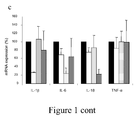
- the mouse macrophage cell line J774.1 was used to examine the ability of the different siRNAs to reduce their respective mRNA targets upon LPS challenge. RNAi being a post-transcriptional gene-silencing process, the inhibition was assessed at the mRNA level by QRT-PCR and an irrelevant siRNA sequence was used as control to verify down-regulation specificity ( Fig. 1 ). Cells transfected with the siRNA sequences A showed a 70-75% decrease of the LPS-induced IL-1 ⁇ , IL-6 and IL-18 mRNA levels compared with the control siRNA ( Fig. 1a ).
- RA macrophage-derived pro-inflammatory cytokines participate to joint inflammation and tissue destruction.
- the inventors thus investigated the therapeutic potential of the inhibitory effect of the anti-IL-1 ⁇ ; anti-IL-6 and anti-IL-18 siRNA sequences validated in vitro (sequence A) in a mouse model of RA.
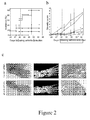
- DBA/1 mice were injected intravenously with 0,5mg/kg of siRNA separately or mixed, weekly over one month.
- the anti-cytokine siRNAs were formulated with the cationic liposome RPR209120 and a DNA carrier as previously described (Khoury et al, 2006). Formulated irrelevant siRNA and saline buffer were used as controls ( Fig. 2 ).
- Radiological examination of paws recovered from each group at euthanasia correlated with clinical observations with median radiological scores of 1.25 for the IL-1 ⁇ -, 0.75 for the IL-6-, 1 for the IL-18- and 0.5 for the mix siRNA-treated groups, compared with 1.5 in the controls.
- the histopathological analyses were in line with these results, with the most important reduction of inflammation of synovial tissue (infiltration of mononuclear cells into joint cavity), pannus formation (synovial hyperplasia), cartilage and bone destruction in the mix siRNA-treated groups ( Fig. 2c ).
- the therapeutic effect observed in all siRNA treated groups was associated with a decrease of the TNF- ⁇ (40-87%) and IL-1 ⁇ (75-82%) levels in the knee-conditioned media ( Fig. 2d ), and with a strong reduction of the circulating IL-6 (60-75%), TNF- ⁇ and MCP-1 (dropping from 38 ⁇ 13 and 37 ⁇ 12 pg/ml respectively to barely detectable levels) ( Fig. 2e ). No variation of the systemic levels of IL-4, IL-10 or IFN- ⁇ was detected according to treatment (data not shown). Considering overall clinical and biological parameters, a preferential protection was observed when using the three combined anti-IL-1 ⁇ /IL-6/IL-18 siRNAs (tri-therapy).
- siRNA tri-therapy is an alternative to anti-TNF to prevent CIA
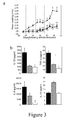
- mice showed macroscopic signs of arthritis we administered either the anti-IL-1 ⁇ /IL-6/IL-18 siRNA or the anti-TNF- ⁇ siRNA lipoplexes intravenously ( Fig. 4 ).
- mice treated with the siRNA lipoplexes targeting anti-inflammatory cytokines showed a decreased severity of CIA in comparison with saline-treated or irrelevant siRNA-treated arthritic mice, as assessed by clinical scores and paw swellings ( Fig. 4a ).
- the tri-siRNA therapy offered a significantly best protection against disease (p ⁇ 0.05 from day 33 to day 38).
- the therapeutic effect was maximal till 10 days post-injection.
- day 40 following immunization when mice relapse, the inventors re-administered the corresponding siRNAs regimen in the different groups.
- the inventors saw no remission in therapeutic effects two weeks after cessation of siRNA injection (day 40), indicating that no additional siRNA is necessary after a short period of treatment to maintain protection from the disease.
- the present data suggest that both TNF- ⁇ and mixed IL-1 ⁇ /IL-6/IL-18 siRNA lipoplexes blocked disease development and led to a stabilization in clinical scoring and incidence of arthritis.
- mice injected with the therapeutic siRNA-lipoplexes had decreased local secretion of IL-1 ⁇ , IL-6, and TNF- ⁇ and increased production of IL-10, more pronounced in the tri-therapy group.
- the collagen-specific proliferative responses of spleen cells from CIA mice was analysed. Whereas spleen cells from irrelevant siRNA-treated mice proliferated similarly to control mice in response to bCII, T cells from mice receiving both anti-inflammatory siRNA treatments did not respond to bCII ( Fig. 4c ). The proliferative response was similar in all groups following non-specific stimulation with ConA (data not shown).
- bCII-specific IgG2a and IgGl were measured during disease course as a reflection of the Th1 and Th2 switch.
- CIA resulted in high levels of bCII-specific IgG antibodies, characterized by a high IgG2a/IgGl ratio that was not modified following administration of irrelevant siRNA (ratio median of arbitrary units were respectively 3.5 and 4.0).
- siRNA-lipoplexes The best delivery route of siRNA-lipoplexes is by intravenous administration
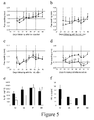
- siRNA-lipoplexes were formulated and injected once a week from disease onset (day 28), either intraperitoneally ( FIG. 5a ), intramuscularly into the anterior tibialis muscle of mice ( Fig. 5b ), or intra-articularly into both knee joints ( Fig. 5c ), and compared with intravenously administration into the tail vein ( Fig. 5d ). Except from intravenous administration, none of the other routes tested for siRNA-lipoplex injection showed a therapeutic potential as assessed by clinical score (data not shown) and paw swellings ( Fig. 5a,b,c,d ).
- the IL-1 ⁇ , IL-6 or IL-18 siRNA injection showed a high protective effect against experimental model of arthritis, that was enhanced when combined all 3 together.
- Main targeted organs by siRNA administration were liver and spleen, the addition of the RPR290120/DOPE liposome and carrier DNA significantly increased the organs uptake.
- the inventors screened siRNA sequences targeting the murine IL-17A mRNA. For that purpose 8.10 5 cells / well of murine fibroblasts (NIH cells) were deposited in 6-well plate. Cells were co-transfected with an expression plasmid encoding the IL-17A gene or a control plasmid, and a siRNA against either mIL-17A or no specific target (siRNA CT).
Landscapes
- Health & Medical Sciences (AREA)
- Life Sciences & Earth Sciences (AREA)
- Chemical & Material Sciences (AREA)
- Engineering & Computer Science (AREA)
- General Health & Medical Sciences (AREA)
- Bioinformatics & Cheminformatics (AREA)
- Genetics & Genomics (AREA)
- Molecular Biology (AREA)
- Public Health (AREA)
- Pharmacology & Pharmacy (AREA)
- Veterinary Medicine (AREA)
- Animal Behavior & Ethology (AREA)
- Medicinal Chemistry (AREA)
- Biomedical Technology (AREA)
- Epidemiology (AREA)
- Organic Chemistry (AREA)
- Biophysics (AREA)
- Biotechnology (AREA)
- General Engineering & Computer Science (AREA)
- Zoology (AREA)
- Dispersion Chemistry (AREA)
- Wood Science & Technology (AREA)
- Endocrinology (AREA)
- Rheumatology (AREA)
- Microbiology (AREA)
- Physics & Mathematics (AREA)
- Biochemistry (AREA)
- Immunology (AREA)
- Orthopedic Medicine & Surgery (AREA)
- Plant Pathology (AREA)
- Physical Education & Sports Medicine (AREA)
- Chemical Kinetics & Catalysis (AREA)
- General Chemical & Material Sciences (AREA)
- Nuclear Medicine, Radiotherapy & Molecular Imaging (AREA)
- Medicinal Preparation (AREA)
- Pharmaceuticals Containing Other Organic And Inorganic Compounds (AREA)
Priority Applications (1)
| Application Number | Priority Date | Filing Date | Title |
|---|---|---|---|
| EP06301289A EP1938802A1 (de) | 2006-12-22 | 2006-12-22 | RNA-Interferenz (RNAi)-Moleküle gezielt auf proinflammtorische Cytokine |
Applications Claiming Priority (1)
| Application Number | Priority Date | Filing Date | Title |
|---|---|---|---|
| EP06301289A EP1938802A1 (de) | 2006-12-22 | 2006-12-22 | RNA-Interferenz (RNAi)-Moleküle gezielt auf proinflammtorische Cytokine |
Publications (1)
| Publication Number | Publication Date |
|---|---|
| EP1938802A1 true EP1938802A1 (de) | 2008-07-02 |
Family
ID=37969729
Family Applications (1)
| Application Number | Title | Priority Date | Filing Date |
|---|---|---|---|
| EP06301289A Withdrawn EP1938802A1 (de) | 2006-12-22 | 2006-12-22 | RNA-Interferenz (RNAi)-Moleküle gezielt auf proinflammtorische Cytokine |
Country Status (1)
| Country | Link |
|---|---|
| EP (1) | EP1938802A1 (de) |
Cited By (14)
| Publication number | Priority date | Publication date | Assignee | Title |
|---|---|---|---|---|
| FR2941152A1 (fr) * | 2009-01-20 | 2010-07-23 | Centre Nat Rech Scient | Vecteurs comprenant une macromolecule anionique et un lipide cationique pour l'administration de petits acides nucleiques. |
| WO2011073218A1 (en) * | 2009-12-18 | 2011-06-23 | F. Hoffmann-La Roche Ag | Compositons and methods for inhibiting expression of il-18 genes |
| US7968684B2 (en) | 2003-11-12 | 2011-06-28 | Abbott Laboratories | IL-18 binding proteins |
| WO2011143608A1 (en) * | 2010-05-13 | 2011-11-17 | Avi Biopharma, Inc. | Antisense modulation of interleukins 17 and 23 signaling |
| EP2316935A4 (de) * | 2008-07-14 | 2013-01-16 | Univ Tokyo | Aptamer gegen il-17 und verwendung davon |
| US8741863B2 (en) | 2007-06-29 | 2014-06-03 | Sarepta Therapeutics, Inc. | Compound and method for treating myotonic dystrophy |
| US8877725B2 (en) | 2004-05-24 | 2014-11-04 | Sarepta Therapeutics, Inc. | Peptide conjugated, inosine-substituted antisense oligomer compound and method |
| US9161948B2 (en) | 2011-05-05 | 2015-10-20 | Sarepta Therapeutics, Inc. | Peptide oligonucleotide conjugates |
| US9499583B2 (en) | 2005-07-13 | 2016-11-22 | Sarepta Therapeutics, Inc. | Antibacterial antisense oligonucleotide and method |
| US9572899B2 (en) | 2003-04-29 | 2017-02-21 | Avi Biopharma, Inc. | Compositions for enhancing transport of molecules into cells |
| US9850492B2 (en) | 2013-03-22 | 2017-12-26 | The University Of Tokyo | Aptamer to IL-17 and use thereof |
| US10888578B2 (en) | 2016-12-19 | 2021-01-12 | Sarepta Therapeutics, Inc. | Exon skipping oligomer conjugates for muscular dystrophy |
| US11020417B2 (en) | 2015-06-04 | 2021-06-01 | Sarepta Therapeutics, Inc | Methods and compounds for treatment of lymphocyte-related diseases and conditions |
| WO2022269356A3 (en) * | 2021-06-23 | 2023-05-25 | Versameb Ag | Compositions and methods for modulating expression of genes |
-
2006
- 2006-12-22 EP EP06301289A patent/EP1938802A1/de not_active Withdrawn
Non-Patent Citations (2)
| Title |
|---|
| KHOURY MAROUN ET AL: "Efficient new cationic liposome formulation for systemic delivery of small interfering RNA silencing tumor necrosis factor alpha in experimental arthritis.", ARTHRITIS AND RHEUMATISM JUN 2006, vol. 54, no. 6, June 2006 (2006-06-01), pages 1867 - 1877, XP002432380, ISSN: 0004-3591 * |
| MAROUN KHOURY SR ET AL: "Efficient delivery of small interfering Rna targeting pro-inflammatory cytokines in experimental arthritis.", ARTHRITIS & RHEUMATISM, vol. 54, no. 9, Suppl. S, September 2006 (2006-09-01), & 70TH ANNUAL SCIENTIFIC MEETING OF THE AMERICAN-COLLEGE-OF-RHEUMATOLOG Y/41ST ANNUAL SCIENTIFIC MEETIN; WASHINGTON, DC, USA; NOVEMBER 10 -15, 2006, pages S174, XP009083272, ISSN: 0004-3591 * |
Cited By (29)
| Publication number | Priority date | Publication date | Assignee | Title |
|---|---|---|---|---|
| US10905782B2 (en) | 2003-04-29 | 2021-02-02 | Sarepta Therapeutics, Inc. | Compositions for enhancing transport of molecules into cells |
| US10300149B2 (en) | 2003-04-29 | 2019-05-28 | Sarepta Therapeutics, Inc. | Compositions for enhancing transport of molecules into cells |
| US9572899B2 (en) | 2003-04-29 | 2017-02-21 | Avi Biopharma, Inc. | Compositions for enhancing transport of molecules into cells |
| US7968684B2 (en) | 2003-11-12 | 2011-06-28 | Abbott Laboratories | IL-18 binding proteins |
| US8431130B2 (en) | 2003-11-12 | 2013-04-30 | Abbott Laboratories | IL-18 binding proteins |
| US8877725B2 (en) | 2004-05-24 | 2014-11-04 | Sarepta Therapeutics, Inc. | Peptide conjugated, inosine-substituted antisense oligomer compound and method |
| US9499583B2 (en) | 2005-07-13 | 2016-11-22 | Sarepta Therapeutics, Inc. | Antibacterial antisense oligonucleotide and method |
| US10144762B2 (en) | 2005-07-13 | 2018-12-04 | Sarepta Therapeutics, Inc. | Antibacterial antisense oligonucleotide and method |
| US11236329B2 (en) | 2007-06-29 | 2022-02-01 | Sarepta Therapeutics, Inc. | Compound and method for treating myotonic dystrophy |
| US8741863B2 (en) | 2007-06-29 | 2014-06-03 | Sarepta Therapeutics, Inc. | Compound and method for treating myotonic dystrophy |
| EP2316935A4 (de) * | 2008-07-14 | 2013-01-16 | Univ Tokyo | Aptamer gegen il-17 und verwendung davon |
| US8440801B2 (en) | 2008-07-14 | 2013-05-14 | The University Of Tokyo | Aptamer against IL-17 and use thereof |
| US9572776B2 (en) | 2009-01-20 | 2017-02-21 | Centre National De La Recherche Scientifique (Cnrs) | Vectors including an anionic macromolecule and a cationic lipid for delivering small nucleic acids |
| FR2941152A1 (fr) * | 2009-01-20 | 2010-07-23 | Centre Nat Rech Scient | Vecteurs comprenant une macromolecule anionique et un lipide cationique pour l'administration de petits acides nucleiques. |
| WO2010084129A1 (fr) * | 2009-01-20 | 2010-07-29 | Centre National De La Recherche Scientifique (Cnrs) | Vecteurs comprenant une macromolécule anionique et un lipide cationique pour l'administration de petits acides nucléiques |
| WO2011073218A1 (en) * | 2009-12-18 | 2011-06-23 | F. Hoffmann-La Roche Ag | Compositons and methods for inhibiting expression of il-18 genes |
| WO2011143608A1 (en) * | 2010-05-13 | 2011-11-17 | Avi Biopharma, Inc. | Antisense modulation of interleukins 17 and 23 signaling |
| US9238042B2 (en) | 2010-05-13 | 2016-01-19 | Sarepta Therapeutics, Inc. | Antisense modulation of interleukins 17 and 23 signaling |
| EP3023496A3 (de) * | 2010-05-13 | 2017-02-08 | Sarepta Therapeutics, Inc. | Verbindungen, die die signalaktivität von interleukin-17- und interleukin-23 modulieren |
| US9862946B2 (en) | 2011-05-05 | 2018-01-09 | Sarepta Therapeutics, Inc. | Peptide oligonucleotide conjugates |
| US10487326B2 (en) | 2011-05-05 | 2019-11-26 | Sarepta Therapeutics, Inc. | Peptide oligonucleotide conjugates |
| US9161948B2 (en) | 2011-05-05 | 2015-10-20 | Sarepta Therapeutics, Inc. | Peptide oligonucleotide conjugates |
| US11225662B2 (en) | 2011-05-05 | 2022-01-18 | Sarepta Therapeutics, Inc. | Peptide oligonucleotide conjugates |
| US11732259B2 (en) | 2011-05-05 | 2023-08-22 | Sarepta Therapeutics, Inc. | Peptide oligonucleotide conjugates |
| US9850492B2 (en) | 2013-03-22 | 2017-12-26 | The University Of Tokyo | Aptamer to IL-17 and use thereof |
| US11020417B2 (en) | 2015-06-04 | 2021-06-01 | Sarepta Therapeutics, Inc | Methods and compounds for treatment of lymphocyte-related diseases and conditions |
| US10888578B2 (en) | 2016-12-19 | 2021-01-12 | Sarepta Therapeutics, Inc. | Exon skipping oligomer conjugates for muscular dystrophy |
| US11642364B2 (en) | 2016-12-19 | 2023-05-09 | Sarepta Therapeutics, Inc. | Exon skipping oligomer conjugates for muscular dystrophy |
| WO2022269356A3 (en) * | 2021-06-23 | 2023-05-25 | Versameb Ag | Compositions and methods for modulating expression of genes |
Similar Documents
| Publication | Publication Date | Title |
|---|---|---|
| Khoury et al. | Efficient suppression of murine arthritis by combined anticytokine small interfering RNA lipoplexes | |
| EP2238251B1 (de) | Silencing der polo-like-kinase-expression unter verwendung von interferenz-rna | |
| EP1938802A1 (de) | RNA-Interferenz (RNAi)-Moleküle gezielt auf proinflammtorische Cytokine | |
| Myers et al. | Antisense oligonucleotide blockade of tumor necrosis factor-α in two murine models of colitis | |
| KR101800333B1 (ko) | 아포지방단백질 ciii (apociii) 발현의 조정 | |
| ES2820548T3 (es) | Métodos y composiciones para modular la expresión de la apolipoproteína (a) | |
| AU2015207351C1 (en) | Materials and methods for modulation of tendon healing | |
| AU2009302468A1 (en) | Use of inhibitors of toll-like receptors in the prevention and treatment of hypercholesterolemia and hyperlipidemia and diseases related thereto | |
| US20110009477A1 (en) | Oligonucleotide-based compounds as inhibitors of toll-like receptors | |
| EP3265493B1 (de) | Verfahren zur behandlung einer lokalisierten fibrotischen erkrankung unter verwendung eines il-33-antagonisten | |
| JP2018537528A (ja) | Nlrp3遺伝子発現を阻害するための組成物およびその使用 | |
| ES2743600T3 (es) | Métodos de tratamiento de los trastornos inflamatorios vasculares | |
| EP2480668A2 (de) | Zusammensetzungen und verfahren zur ausschaltung von in krebs exprimierten genen | |
| JP2011516094A (ja) | 干渉rnaを用いたcsn5遺伝子発現のサイレンシング方法 | |
| JP2011529501A (ja) | アンチセンスオリゴヌクレオチドによるToll様受容体9発現の調節 | |
| TW201219041A (en) | SiRNA targeting VEGFA and methods for treatment in vivo | |
| MX2011004670A (es) | Modulacion de la expresion del receptor 2 tipo larga distancia por oligonucleotidos antisentido. | |
| TW202111124A (zh) | 用於抑制scap表現之rnai構建體及其使用方法 | |
| US20170009230A1 (en) | Compositions for inhibiting dux4 gene expression and uses thereof | |
| Ozaki et al. | Therapeutic effect of ribbon-type nuclear factor-κB decoy oligonucleotides in a rat model of inflammatory bowel disease | |
| JP7106788B2 (ja) | Mex3b遺伝子の発現を抑制する核酸、mex3b遺伝子発現抑制剤、mex3b遺伝子発現を抑制する方法及びmex3b遺伝子発現に起因する疾病の予防又は治療剤 | |
| KR102301572B1 (ko) | 신규한 핵산 분자 전달용 조성물 및 그 용도 | |
| JP2009537118A (ja) | ホスホジエステラーゼの発現に影響するオリゴヌクレオチド | |
| US9926565B2 (en) | Aptamer-RNAi therapeutic compositions | |
| JP2009533421A (ja) | 炎症性疾患を治療するためのアセチルコリンエステラーゼに対するアンチセンスオリゴヌクレオチド |
Legal Events
| Date | Code | Title | Description |
|---|---|---|---|
| PUAI | Public reference made under article 153(3) epc to a published international application that has entered the european phase |
Free format text: ORIGINAL CODE: 0009012 |
|
| AK | Designated contracting states |
Kind code of ref document: A1 Designated state(s): AT BE BG CH CY CZ DE DK EE ES FI FR GB GR HU IE IS IT LI LT LU LV MC NL PL PT RO SE SI SK TR |
|
| AX | Request for extension of the european patent |
Extension state: AL BA HR MK RS |
|
| AKX | Designation fees paid | ||
| REG | Reference to a national code |
Ref country code: DE Ref legal event code: 8566 |
|
| STAA | Information on the status of an ep patent application or granted ep patent |
Free format text: STATUS: THE APPLICATION IS DEEMED TO BE WITHDRAWN |
|
| 18D | Application deemed to be withdrawn |
Effective date: 20090106 |