EP1941460B1 - Tête de lecture pour dispositif de mesure - Google Patents
Tête de lecture pour dispositif de mesure Download PDFInfo
- Publication number
- EP1941460B1 EP1941460B1 EP06829921.3A EP06829921A EP1941460B1 EP 1941460 B1 EP1941460 B1 EP 1941460B1 EP 06829921 A EP06829921 A EP 06829921A EP 1941460 B1 EP1941460 B1 EP 1941460B1
- Authority
- EP
- European Patent Office
- Prior art keywords
- image
- processing
- image processing
- images
- database
- Prior art date
- Legal status (The legal status is an assumption and is not a legal conclusion. Google has not performed a legal analysis and makes no representation as to the accuracy of the status listed.)
- Active
Links
Images



Classifications
-
- G—PHYSICS
- G06—COMPUTING OR CALCULATING; COUNTING
- G06T—IMAGE DATA PROCESSING OR GENERATION, IN GENERAL
- G06T7/00—Image analysis
-
- G—PHYSICS
- G16—INFORMATION AND COMMUNICATION TECHNOLOGY [ICT] SPECIALLY ADAPTED FOR SPECIFIC APPLICATION FIELDS
- G16H—HEALTHCARE INFORMATICS, i.e. INFORMATION AND COMMUNICATION TECHNOLOGY [ICT] SPECIALLY ADAPTED FOR THE HANDLING OR PROCESSING OF MEDICAL OR HEALTHCARE DATA
- G16H30/00—ICT specially adapted for the handling or processing of medical images
- G16H30/20—ICT specially adapted for the handling or processing of medical images for handling medical images, e.g. DICOM, HL7 or PACS
-
- G—PHYSICS
- G16—INFORMATION AND COMMUNICATION TECHNOLOGY [ICT] SPECIALLY ADAPTED FOR SPECIFIC APPLICATION FIELDS
- G16H—HEALTHCARE INFORMATICS, i.e. INFORMATION AND COMMUNICATION TECHNOLOGY [ICT] SPECIALLY ADAPTED FOR THE HANDLING OR PROCESSING OF MEDICAL OR HEALTHCARE DATA
- G16H30/00—ICT specially adapted for the handling or processing of medical images
- G16H30/40—ICT specially adapted for the handling or processing of medical images for processing medical images, e.g. editing
Definitions
- the invention relates to an image processing system, particularly for use with diagnostic images, comprising at least one image processing unit, which receives digital images acquired by one or more imaging apparatus and which provides output images, according to the preamble of claim 1.
- Image processing methods and systems are known and used for various purposes, e.g. for industrial purposes, in movie and television industries, in industrial and safety control systems and in the medical field, particularly to facilitate reading and interpretation tasks for the physician.
- CAD Computer Aided Diagnostic
- image processing algorithms and methods exist, having various purposes. Some of the processing methods use non expert algorithms, which are used to somehow prepare the image to further evaluation processing. The latter step requires the use of classification algorithms, such as clustering algorithms or predictive algorithms. Therefore, processing itself requires specially skilled operators, who can correctly apply the various types of image processing algorithms currently used by the processing methods. Correct use of these algorithms is critical to obtain reliable processing results for the physician to provide a correct diagnosis.
- a major problem consists in the so-called false positives, i.e.
- the personnel may be sufficiently trained to properly use imaging apparatus. Nevertheless, proper processing of acquired images, e.g. in hospitals, consulting rooms or in diagnostic laboratories, requires a special personnel team to be established, which are specifically trained for the development and use of the algorithms and corresponding programs required for image processing. This means that highly specialized personnel needs to be hired by health care organization, which involves considerable costs. Personnel training is not sufficient, because the team must be able to improve the processing tools with time, and adapt them to new techniques and standards. This means that the highly qualified personnel of the image processing management team has to be constantly retrained, which involves further costs.
- classification algorithms to be used for image evaluation intended for recognition of image regions that may be interpreted as images of suspected pathological objects require a training step which is critical for their performance in terms of both computational speed and reliability of results. Much depends, in this case, on the database of known cases, which is used to train such algorithms. The more heterogeneous the database, the better the performances. These databases are typically quite expensive, because besides they not only contain a simple collection of known cases, but also require basic preparation. In one health care structure or organization, such as a hospital or the like, the number of new cases is limited to the patients treated by this organization, as well as to the instruments and imaging techniques available in such health care organization and to the personnel resources thereof. Therefore, the number of cases that can be used for constant updating of the classification capabilities of classification algorithms is limited to the knowledge that is acquired in the health care organization.
- the skilled physicians can study the medical data of the special case shared by the physician working in the remote clinical center and they can provide their comments/advice through the teleconsultation system over the communication network. Thanks to this procedure the physician working in a remote clinical center can arrive at a diagnosis more quickly, with a great benefit for the patient that can be treated with less time delay.
- this document discloses nothing more than an interactive teleconsultation system for interactive medical information exchange, so that physicians connected through this teleconsultation system can view the medical information of a given patient, discuss the case with other physicians and send individual or group diagnostic reports to the system.
- the invention has the object of providing a system that allows to obviate the above drawbacks, by turning the image processing step into a simple service step, thereby requiring neither specialized personnel in the health care organization, nor the purchase of image processing systems, and avoiding the costs involved by maintaining such systems always efficient and up-to-date, by purchasing new software modules or software improvements.
- a further object of the present invention consist in the fact of allowing a more efficient and rapid way of furnishing the results of the image processing unit by limiting the number of skilled persons necessary for processing the images.
- the invention has the further object of facilitating the payment step, by avoiding the need of making a considerable capital investment, and allowing to record expenses as professional services and pay them based on the actual use thereof.
- the invention further allows health care organizations not to depend on installation, maintenance and service interventions provided by software companies.
- the invention fulfills the above objects by providing a system according to the preamble of claim 1 further comprising the combination of features according to the characterizing part of claim 1.
- the system automatically recognizes which kind of images has been sent by the user and automatically starts the processing of the image or images received, by choosing the image processing tools suited for the images either from the point of view of the method used for acquiring the image and also from the point of view of the object imaged and of the diagnostic purpose of the image. No specialized service person is needed for carrying out this steps and the user itself does not need to have any kind of skill in image processing.
- One or more feedback messages can be sent automatically by the system to the user requesting the service and sending the images.
- the system by analyzing the images sent by the user can inform the user of the correct receipt, of the fact that the image quality is sufficient or insufficient for carrying out a successful processing, of the time needed for processing and of possible options of processing which the user can select depending on further information about the aim of the processing requested by the user and which information was lacking in the originally sent message.
- the system provides for the fact that
- the processing subunits include a processing management unit, the so-called CAD engine, which prepares image data for processing by an image processing unit, known as ALGO, which executes the code for applying the image processing algorithms and also manages access to the image processing unit. Furthermore, the processing management unit manages and coordinates access to the training database by the image processing unit and database update.
- the central control system generates a database of cases to be processed, in which identification codes are used to uniquely identify the remote client that transmitted the images and the specific case whereto the images are related, while automatically anonymizing said specific case and patient data.
- the data records to be processed include image data, imaging mode and imaging technique data, as well as patient's personal and historical data and relevant patient's anamnestic data.
- the central control system includes means for checking the authorizations of the remote client/s and generates a catalog of cases transmitted by said client/s for processing, which cases are uniquely identified by the remote client identification code or by the case identification code.
- the authorization means enable transmission or access by the processing subunits to the database of cases to be processed.
- the processing subunits generate image processing output files to be transmitted to the central control system, which in turn has means for generating an output catalog of processed cases, in which each item is associated to an image processing output file related to such case.
- the central control system automatically generates a processing complete signal which is transmitted to the appropriate remote client/s by communication means.
- the processing output files may be also integrally transmitted to the remote clients or the latter may be allowed to access the output catalog of processed cases.
- the central control system generates a preview file of processing results for client-specific cases in the output catalog, which allows each remote client to display the processed images and/or the processing data in alphanumeric form.
- the central control system has means for allowing remote clients to only select the processing results of specific cases and/or specific images of processed cases, and to request the transmission of full processing results relating to said specific selected images.
- Such transmission may occur by using communication means or portable digital file storage media or by printing such processing results on paper, or in any other possible form.
- the users may make the final diagnosis data (resulting from biopsy or surgical sample analysis) available, through their client, for each of CAD processed cases.
- the central control unit controls the unit that manages the update of the image processing algorithm training database. This unit retrieves from the catalog of processed cases, the cases allowed by the clients for inclusion in a training database updating program, and consequently updates such database by using the system output and the final diagnosis data, which will be regarded as "gold standard”.
- the subsystem analyses the new cases to be added to the training database and generates records to be added to the training database in the specific format required for said database.
- the system of this invention allows central control of image processing, with no excessive burden either in terms of costs or in terms of organization tasks for health care organizations that need to perform diagnostic image processing.
- the technical advantage consists in that the central system may fully utilize the available computational capabilities and the processing algorithms, especially the classification algorithms, are applied to a very large number of different cases, which allows an optimized utilization of the classification capabilities and performances thereof.
- central processing assures absolute reliability of any new case data to be used for updating the training database, therefore unlike the condition in which updating occurs by an exchange of database records locally generated by the clients, this record data need not be checked for correctness and consistency.
- the records obtained by remote clients that perform independent processing within their own organization may include processing errors caused by poor personnel skills or faults in local remote client systems, whereby any inclusion thereof in a training database without an accurate check for reliability and consistency may cause the classification and processing performances to be worsened instead of improved.
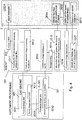
- Fig. 1 is a block diagram of the system of the present invention.
- the left side of the Figure represents the remote service unit 1, which performs central image processing functions.
- the right side represents a user 2, who is at a local service center.
- Several local users, one of which is only represented here, may connect simultaneously to the remote service unit to request image processing services.
- the remote service unit 1 comprises a central control system 101 which performs a logic control program for coordinated management of several different functions.
- This central control system, or agent controls the unit 210 for authorizing accesses and charging service costs to each user.
- the image processing units are referred to as CAD engine 301, ALGO 401 and DB 501.
- the agent unit or central control system 101 controls the storage and printer units 601 and the units, not shown in detail, for communication with the users, who have in turn a local user communication interface 102, which is used by the local user system to connect the local user system 202 with the remote service unit 1.
- the local user system 202 receives or collects locally acquired images, provided by any imaging apparatus whatever, such as a MRI apparatus, an ultrasonic imaging apparatus, a radiographic imaging apparatus and the like. Images are provided in the form of digital image data 302 and are transmitted to the remote service system which checks that the user is authorized to access the service and allows image data reception and processing. The processed digital images and/or any graphical and/or alphanumeric reports associated thereto are transmitted to the local user system which stores them in any format or form, as schematically shown by block 402. All these tasks are performed under the control of the agent or central control system 101.
- Fig. 2 is a block diagram of the remote service unit 1.
- An agent control program p101 of the agent unit or central control system supervises the authorization and debiting functions of the unit 201. Authorization occurs by user login authentication. A login request also automatically causes the corresponding user debit management programs to be started.
- the external communication interface 701 is enabled, which allows the user to upload the image data files for processing and to receive the image processing results, as shown by block 3.
- the agent control program enables an internal communication interface 4, allowing communication between the display units 5, the printer units 6, the storage units 7 and the image processing units, i.e. ALGO 301, CAD engine 401 and database 501
- Image data is then processed and the processing results are stored and made available to the user.
- the remote service unit does not transmit all the processing results, but only makes processing result files available for each image uploaded by the user, adding a notice thereto. Depending on such notice, the user will access the retrieval service and only download the result files for the desired images. The service is charged as a function of the number of files that are actually downloaded by the user.
- the remote service unit generates, by its agent control program, a catalog of image data files transmitted by users for processing, and after processing the catalog is updated with the corresponding image data processing result files.
- a further simplification may be obtained by adding graphic or alphanumeric processing result previews to the catalog, such as a miniaturized processed images and/or statistic classification reliability data for the objects detected in the image and deemed to be of interest for the user.
- Figure 3 shows the steps of result file download by users in greater detail.
- the remote service unit Once a user is connected to the remote service unit, he/she can access a list of image data files in a catalog of an image processing result database 5011.
- the images corresponding to each user, identified by an ID code of the latter, may be freely displayed on a local monitor 502 of the local user system 202.
- the images processed by the remote service unit may be displayed in combination with alphanumeric reports, indicating the statistic reliability of the results of processing and classification of the objects detected in the corresponding images being displayed. Then the user may make a selection by using the means 602.
- the authorization and debiting unit 201 controls download authorizations and charges the cost for each processing result file selected by the user.
- the selections made by the user are uniquely identified thanks to a unique ID code of the original image data and the associated processing result files.
- the agent control program After a successful debiting step 9, the agent control program enables access to the processing result files selected by the user, as shown by block 8 and uploads them to the local user system, as shown by block 10.
- processing result files for one or more images may be also transmitted by other means, such as on portable storage media, i.e. floppy disks, CD-ROM, DVD-ROM and the like, or even printed on paper.
- Figure 4 is a more detailed functional block diagram of an embodiment of the inventive system.
- Three large blocks may be found in this figure, and the first represents the automatic image processing module, which performs processing tasks using non-expert algorithm-based methods, and further expert or classification algorithm-based processing tasks.
- the second large block represents the agent or central control system 101, which performs the remote service unit tasks, whereas the third large block represents the user 2, in this case one or more users.
- Each user 2 having a valid login for authorized paying access to the remote service unit may connect to such unit to upload new images 302 in the form of digital image data.
- the agent or central control system 101 uses various devices controlled thereby, e.g. an authorization and debiting unit 201, to anonymize the image data and any personal patient data and/or patient history data. This is possible, for instance, by using encryption means, whose key is the user ID, as well as a code uniquely assigned to each image or to each set of images. Other currently available systems are also possible.
- step 1011 the agent or central control system 101 allows the image data to access the database 501 of image data to be processed, while generating a temporary catalog file and then, in step 1012, controls the automatic image processing units 401, 301 to start the processing process.
- the image data in the database 501 that is found in the temporary catalog is first processed by the CAD engine 401.
- the latter prepares the image data for further processing, for instance by encoding such image data to make them readable by the processing algorithms ALGO 301 and, in step 4012, it sends the prepared image data to said processing unit ALGO 301.
- the image data is processed by the algorithms of the ALGO unit 301. These algorithms may be one or more algorithms designed for sequential and/or parallel application in any chain of processing steps and, in step 3012, they provide a processed image data output as a processing result file containing the processed image data itself and/or graphic and/or alphanumeric processing reports.
- the agent or central control system 101 is informed that processing has been completed and, in step 1013, it updates the database and the corresponding catalog.
- the processing result files are stored and/or printed 1014.
- the agent or central control system 101 generates a Processing completed message, which is transmitted to the user that corresponds to the ID code of the processed images. Now the remote service unit will wait for a specific user request. The user may then connect to the remote service unit and access, as shown in detail with reference to Figure 3 and step 2011, the catalog of processing result files corresponding to his/her own user ID and the corresponding previews. Based on this information, the user can send, in 2012, a request for downloading the processing result files for certain desired images.
- the agent or central control system 101 processes the request and charges the user with the costs for the requested processing result files, then it sends 1017 the user the selected processing result files, which are received 2013 by the user 2.
- the base material i.e. images
- the base material is received from a large number of users, and is highly heterogeneous in terms of quality features, and this definitely helps to improve processing performances.
- a user feedback step may be provided in which users, based on the processing result files for certain images, decide to perform deeper diagnostic tests and can upload processing result data to confirm the results obtained by image processing only.
- the system has an automatic recognition unit, for instance a software component, which automatically recognizes the image and investigation type, and therefore the anatomic part, i.e. the organ, anatomic region or a portion thereof under examination, that has been imaged.
- the recognition unit is based on a trained expert system, which uses, as recognition features, both the diagnostic image data and the 'header' data of files, particularly of dicom files, which are typically used for medical data. More particularly, recognition is performed by algorithms which are characterized by an intelligent system based on an adaptation of the Eigenface method for face recognition.
- the algorithm uses a trained intelligent system based both on Eigenimages and on actual image data, such as the grey scale tones of the original image or of a transformation thereof, and characteristics deriving from skeletonizing algorithms.
- the purpose of this function is to recognize and sort various image types, by organs or anatomic regions under examination and/or possibly by imaging methods. Therefore, the recognition unit operates on two levels, one of which is related to the organ or anatomic region or portion thereof being imaged, whereas the other level constitutes a second decision line which identifies which type of investigation has been used from the information contained in the header of the dicom file, e.g. by reading the spatial resolution, the possible provision of contrast enhancement and the imaging technique being used.
- the automatic recognition unit of the system comprises two subunits, one of which is a unit designed to recognize the imaged object directly from the image, whereas the other is a unit designed to recognize the type of investigation, i.e. image, from the spatial resolution, the presence or lack of contrast enhancement, the imaging technique being used and other parameters that are specific to the imaging technique and image quality. While the first unit uses image recognition algorithms, the second unit typically reads the investigation type data from the dicom files that are typically used in the medical field.
- Fig. 5 is a block diagram of one embodiment. Here, several different images are shown, denoted by Image 1 to Image n, in DICOM format.
- This file format is a standard for digital storage of data, images or other information in medical imaging.
- DICOM image files are read by the recognition unit 20, which comprises a section 120 for recognizing the imaged object, i.e. the organ and/or the anatomic region and/or a portion thereof.
- Another section 220 operates in parallel with the former to read the DICOM file header, which generally includes information about the imaging method, such as the imaging mode, the resolution, the presence or lack of contrast enhancement and other information about the imaging techniques, which may be of interest for image analysis and interpretation.
- the two sections 120, 220 carry out two parallel decision processes and, based on their results, the image files are addressed by the agent 101 to processing by one of a number of processing algorithms 301 which have been prepared in the system and are specifically designed for processing various types of diagnostic images both as regards the imaged object and the image features related to the imaging techniques and modes being used.
- each image may be addressed to simultaneous processing by two or more algorithms.
- the result file will include separate processing information for each algorithm, and possibly a prediction of diagnostic hypotheses based on the combination of processing results of the different processing algorithms.
- the recognition unit no difficulty arises from DICOM header reading by the recognition algorithm, thanks to the fact that the numeric data or unique identification of the imaging type is coded and easily recognizable by software.
- the identification of the imaged object i.e. the organ or portion thereof and/or the anatomic region or portion thereof, requires a more complex process and, as mentioned above, utilizes specific face recognition algorithms, which are typically used in automatic recognition of biometric data.
- CBIR Content-Based Image Retrieval
- QBIC Query By Image Content
- CBVIR Content-Based Visual Information Retrieval
- CBIRS Content-Based Image Retrieval System
- An ideal CBIR system includes the so-called semantic query. This operation is relatively complicated and CBIR systems generally used lower-order features, such as textures, colors and shapes. Nevertheless, certain systems, such as the so-called face recognition systems, use higher-order features.
- CBIR or QBIC or CBVIR systems are described in greater detail in the following documents: SIMPLIcity: Semantics-Sensitive Integrated Matching for Picture Libraries (Wang, Li, and Wiederhold, 2001 ], Automatic Linguistic Indexing of Pictures by a Statistical Modeling Approach (Li and Wang, 2003 ], System for Screening Objectionable Images (Wang et al., 1998 ), Video google: A text retrieval approach to object matching in videos (Sivic & Zisserman, 2003 ), Names and Faces in the News (Berg et al, 2004 ), FACERET: An Interactive Face Retrieval System Based on Self-Organizing Maps (Ruiz-del-Solar et al, 2002 ), Costume: A New Feature for Automatic Video Content Indexing (Jaffre 2005 ), Finding Naked People (Fleck et al, 1996 ), Automatic Face Recognition for Film Character Retrieval in Feature-Length Films (Arandjelovic & Zisserman, 2005
- Face recognition systems are computer software for automatic identification of persons from a digital image. Recognition occurs by comparing an image of a person with a database of face images. Face recognition algorithms include the so-called eigenfaces, fisherfaces, the hidden Markov model and the Neuronal Motivated Dynamic Link Matching.
- Eigenfaces are a set of eigenvectors derived from the covariance matrix of the probability distribution of the high-dimensional vector space of possible faces of human beings. These eigenvectors are used in the computer vision problem of human face recognition.
- eigenfaces are a set of "standardized face ingredients” derived from statistical analysis of a many face images. Any human face can be considered to be a combination of these standard faces.
- a large set of human face images taken under the same lighting conditions, are normalized to line up the eyes and mouths. These images are then sampled at the same resolution and treated as vectors whose size corresponds to the product of the number of lines and columns of the sampled image matrix and the components of which vector are the values of the individual pixels of the sampled image matrix.
- the eigenvectors of the covariance matrix of the statistical distribution of face image vectors are then extracted.
- eigenfaces When properly weighted, eigenfaces can create an approximate gray-scale rendering of a human face and are not only used in face recognition but also for image compression purposes.
- the principle of "eigenfaces” may be used for automatic recognition of an imaged object.
- the database 401 of the processing section may be used to generate equivalents of "eigenfaces", which relate in this case to organs or portions thereof or anatomic regions or portions thereof.
- the methods may be as those described above and currently used for generation of the database of eigenfaces in face recognition.
- the combinations of eigenfaces which characterize a particular organ may be determined, therefore for each image that is uploaded for processing an eigenface composition may be determined, whereupon this combination may be compared with that defined from the database images to automatically determine which organ or part thereof or which anatomic region or part thereof is being imaged.
- a classification algorithm such as a clustering algorithm or a predictive algorithm.
- the predictive algorithm is trained using the database of known cases which forms the base for the inventive system, and using the combinations of "eigenfaces" which characterize the individual images of such database.
- the clustering algorithm or predictive algorithm such as an artificial neural network, has been trained, if an input image is uploaded for recognition, the algorithm provides the eigenface decomposition of the image and determines that the image belongs to the class of a particular organ or portion thereof or a particular anatomic region or a portion thereof.
- the output of the predictive algorithm still has to be submitted to a comparative check with the various combinations of eigenfaces obtained for each image of the database and for each organ or anatomic regions or portions thereof reproduced in these images.
- the predictive or clustering algorithm may be structured in such a manner that its output directly consists in the evaluation of the imaged object, and generates a direct association between the combination of eigenfaces obtained at the output of the predictive algorithm and the type of organ or anatomic district or a portion thereof, which is uniquely associated to said combination of eigenfaces.
Landscapes
- Health & Medical Sciences (AREA)
- Engineering & Computer Science (AREA)
- Public Health (AREA)
- General Health & Medical Sciences (AREA)
- Primary Health Care (AREA)
- Medical Informatics (AREA)
- Nuclear Medicine, Radiotherapy & Molecular Imaging (AREA)
- Radiology & Medical Imaging (AREA)
- Epidemiology (AREA)
- General Physics & Mathematics (AREA)
- Physics & Mathematics (AREA)
- Theoretical Computer Science (AREA)
- Computer Vision & Pattern Recognition (AREA)
- Medical Treatment And Welfare Office Work (AREA)
- Measuring And Recording Apparatus For Diagnosis (AREA)
- Processing Or Creating Images (AREA)
- Facsimiles In General (AREA)
Claims (25)
- Système de traitement d'images plus particulièrement destiné à être utilisé avec des images de diagnostic comprend au moins une unité de traitement d'images qui reçoit des images numériques saisies par un ou plusieurs appareils d'imagerie et qui produit des images de sortie, ledit système de traitement d'images comprenant également une unité de service à distance, comportant une interface accessible à des utilisateurs hors site qui se connectent à ladite unité de service à distance pour la transmission d'une ou plusieurs des images numériques à ladite au moins une unité de traitement d'images, caractérisé en ce que- un programme de traitement d'images est chargé ou stocké dans une mémoire de l'au moins une unité de traitement d'images et exécuté automatiquement pour le traitement desdites images numériques saisies, et- ladite au moins une unité de traitement d'images comprend également une sous-unité de reconnaissance automatique d'images conçue pour :- identifier un organe imagé ou une partie de celui-ci, ou une région anatomique imagée ou une partie de celle-ci pendant le traitement desdites images numériques saisies, et- adresser lesdites images numériques saisies à un ou plusieurs algorithmes de traitement dudit programme de traitement d'images, lesdits d'algorithmes de traitement étant conçus pour traiter des images de l'organe imagé ou de la partie de celui-ci, ou de la région anatomique imagée ou de la partie de celle-ci, reconnus par la sous-unité de reconnaissance automatique d'images,le système de traitement d'images comprend également un sous-système pour la mise à jour d'une base de données qui est utilisé pour l'instruction des algorithmes de traitement d'images, ledit sous-système récupérant d'un catalogue de cas traités les cas que les clients ont accepté d'introduire dans un programme de mise à jour de la base de données d'instruction.
- Système selon la revendication 1, caractérisé en ce quea) plusieurs programmes de traitement d'images sont stockés et/ou peuvent être chargés dans la mémoire de l'unité de traitement d'images, chacun desdits programmes de traitement d'images exécutant une opération différente ;b) lesdits programmes de traitement d'images sont exécutables de manière distincte ou comme une séquence d'étapes de fonctionnement sur au moins une image ;c) un programme de sélection et d'exécution étant prévu, qui est stocké ou peut être chargé dans la mémoire de l'unité de traitement et qui est exécuté par l'au moins une unité de traitement d'images pour sélectionner un ou plusieurs des programmes de traitement d'images et en déterminer l'exécution ;d) le programme de sélection et d'exécution analyse également les données d'image des images reçues par l'unité de traitement d'images et reconnaît automatiquement le type de programmes de traitement d'images à utiliser et l'ordre dans lequel lesdits programmes de traitement d'images doivent être exécutés sur la ou les images.
- Système selon la revendication 1 ou 2, caractérisé en ce que l'au moins une unité de traitement d'images est composée de modules, chacun composé d'unités fonctionnelles de type matériel/logiciel.
- Système selon la revendication 3, caractérisé en ce qu'au moins certaines ou la totalité des unités fonctionnelles possèdent un processeur spécialisé et une zone de mémoire spécialisée, contenant le code d'un programme de traitement qui comprend les instructions permettant d'exécuter les fonctions desdites unités fonctionnelles.
- Système selon n'importe laquelle des revendications précédentes, caractérisé en ce qu'au moins certaines ou la totalité des unités fonctionnelles possèdent une zone de mémoire spécialisée, contenant le code d'un programme de traitement qui comprend les instructions permettant d'exécuter lesdites fonctions desdites unités fonctionnelles, ledit code étant exécuté sur demande d'au moins une unité matérielle de traitement d'images.
- Système selon n'importe laquelle des revendications précédentes, caractérisé en ce qu'il comprend un système ou un agent de commande central qui exécute un programme de gestion de système logique pour coordonner des fonctions d'identification de client distant spécifique et pour vérifier les codes d'accès au service, pour débiter des coûts de service, pour coordonner des sous-unités de stockage de données d'image reçues, des sous-unités de traitement d'images, des sous-unités de gestion et de mise à jour de la base de données utilisée pour instruire les algorithmes de traitement, notamment les algorithmes de classification, et des sous-unités de génération de rapports d'évaluation graphiques et alphanumériques qui peuvent les transmettre ou autrement les mettre à la disposition des clients distants.
- Système selon la revendication 6, caractérisé en ce que les sous-unités de traitement comprennent une unité de gestion de traitement (CAD), qui prépare des données d'images destinées à être traitées par une unité de traitement d'images (ALGO), qui exécute le code d'application des algorithmes de traitement d'images et gère également l'accès à l'unité de traitement d'images.
- Système selon la revendication 7, caractérisé en ce que l'unité de gestion de traitement gère et coordonne l'accès à la base de données d'instruction par l'unité de traitement d'images et la mise à jour de la base de données.
- Système selon n'importe laquelle des revendications précédentes, caractérisé en ce que le système de commande central génère une base de données de cas à traiter, dans lequel les codes d'identification (codes ID) sont utilisés pour identifier de façon univoque le client distant qui a transmis les images et les cas précis auquel se rapportent les images, tout en anonymisant ledit cas précis et les données du patient.
- Système selon n'importe laquelle des revendications précédentes, caractérisé en ce que les enregistrements de données à traiter comprennent des données d'images, des modes d'imagerie et des données techniques d'imagerie, aussi bien que des données biologiques à caractère non personnel du patient (âge, poids, sexe, etc.) et des données historiques et des données anamnestiques du patient.
- Système selon n'importe laquelle des revendications précédentes, caractérisée en ce que les moyens d'autorisation permettent la transmission ou l'accès par les sous-unités de traitement à la base de données de cas à traiter.
- Système selon n'importe laquelle des revendications précédentes, caractérisé en ce que les sous-unités de traitement génèrent des fichiers de sortie de traitement d'images destinés à être transmis au système de commande central, qui à son tour possède des moyens permettant de générer une liste de catalogue de la base de données de sortie des cas traités, dans laquelle chaque élément est associé à un fichier de sortie de traitement d'images relatif à ce cas.
- Système selon n'importe laquelle des revendications précédentes, caractérisé en ce que le système de commande central génère automatiquement un signal complet de traitement, qui est transmis aux clients distants appropriés par des moyens de communication.
- Système selon n'importe laquelle des revendications précédentes, caractérisé en ce que les fichiers de sortie de traitement peuvent être aussi intégralement transmis aux clients distants ou ces derniers peuvent être autorisés à accéder à la liste de catalogue de la base de données de sortie des cas traités.
- Système selon n'importe laquelle des revendications précédentes, caractérisé en ce que le système de commande central génère un fichier de prévisualisation des résultats de traitement pour des cas spécifiques au client dans la liste de catalogue de la base de données de sortie, ce qui permet à chaque client distant d'afficher les images traitées et/ou les données de traitement sous forme alphanumérique.
- Système selon n'importe laquelle des revendications précédentes, caractérisé en ce que le système de commande central possède des moyens permettant à des clients distants de sélectionner uniquement les résultats de traitement de cas spécifiques et/ou d'images spécifiques de cas traités, et de demander la transmission de résultats de traitement complets relatifs auxdites images sélectionnées spécifiques.
- Système selon la revendication 16, caractérisé en ce que la transmission a lieu par le bais de moyens de communication et/ou de supports de stockage de fichiers numériques portables et/ou en imprimant ces résultats de traitement sur papier, ou sous toutes ces formes.
- Système selon n'importe laquelle des revendications précédentes, caractérisé en ce que le sous-système pour la mise à jour de la base de données d'instruction des algorithmes de traitement d'images comprend des moyens pour analyser les données d'enregistrement dans le catalogue des cas à traiter et dans le catalogue correspondant de résultats de traitement et génère les enregistrements à ajouter à la base de données de traitement dans le format fourni spécifiquement pour ladite base de données.
- Système selon n'importe laquelle des revendications précédentes, caractérisé en ce qu'il comprend une sous-unité de débit des coûts de traitement et d'autorisation, déterminant les coûts de traitement sur la base des fichiers de résultats effectivement demandés par le client.
- Système selon n'importe laquelle des revendications précédentes, caractérisé en ce que les images à traiter sont stockés dans le format DICOM et l'unité de reconnaissance d'images comprend une section de reconnaissance d'images et une section de lecture d'en-tête de fichier DICOM et extrait des informations relatives à la méthode d'imagerie et/ou à la résolution des images et/ou à l'accentuation du contraste, alors que la pluralité des algorithmes de traitement comprend des algorithmes spécialement conçus pour un traitement d'images associé aux informations relatives à la méthode d'imagerie et/ou à la résolution des images et/ou à l'accentuation du contraste, le fichier DICOM de l'image à traiter étant adressé à l'algorithme de traitement spécialement conçu pour le traitement d'images associé aux informations relatives à la méthode d'imagerie et/ou à la résolution des mages et/ou l'accentuation du contraste identifiées pour ladite image à traiter.
- Système selon la revendication 20, caractérisé en ce que l'unité de reconnaissance d'images adresse chaque image à traiter à un ou plusieurs algorithmes spécialement conçus pour traiter des images de l'organe ou de la partie de celui-ci ou de la région anatomique ou de la partie de celle-ci qui ont été reconnus par l'unité de reconnaissance d'images et de traiter des images en fonction de la méthode d'imagerie et/ou de la résolution des images et/ou de l'accentuation du contraste identifiées pour ladite image à traiter, le résultat du traitement étant déterminé par la combinaison des résultats des deux ou plusieurs algorithmes de traitement.
- Système selon n'importe laquelle des revendications précédentes 1 à 21, caractérisé en ce que l'unité de reconnaissance d'images ou l'image section de reconnaissance d'images est un système de recherche d'image par le contenu, soi-disant CBIR (Content-Based Image Retrieval).
- Système selon la revendication 23, caractérisé en ce que le système CBIR utilise des ensembles de la soi-disant « méthode EigenFace » pour l'identification de l'objet ou de la partie de celui-ci et/ou de la région anatomique ou de la partie de celle -ci qui ont été imagés.
- Système selon la revendication 23, caractérisé en ce que les EigenFaces sont générées par le traitement d'images de la base de données de cas connus, c'est-à-dire par la transformation de chacune desdites images en vecteurs dont la taille correspond au produit du nombre de lignes et de colonnes de la matrice de l'image échantillonnée, les composants desdits vecteurs sont les valeurs des pixels individuels de l'image échantillonnée, et lesdites EigenFaces sont les vecteurs propres de la matrice de covariance de la distribution des probabilités de l'espace vectoriel de grandes dimensions de faces possibles d'organes ou de parties de ceux-ci ou de régions anatomiques ou de parties de celles-ci.
- Système selon la revendication 24, caractérisé en ce qu'un algorithme de classification est utilisé pour déterminer automatiquement l'organe ou la partie de celui-ci ou la région anatomique ou la partie de celle-ci représentés dans une image, ledit algorithme de classement étant instruit par la base de données d'images de cas connus, et par l'ensemble correspondant d'EigenFaces, correspondant à chaque image de ladite base de données, l'organe ou la partie de celui-ci dans l'image étant déterminé grâce à l'identification, par l'algorithme de classification, de la combinaison d' « EigenFaces » qui caractérisent l'image, et à la comparaison de ladite combinaison de représentation d'un organe spécifique ou une partie de celui-ci ou d'une région anatomique spécifique ou d'une partie de celle-ci.
Priority Applications (1)
| Application Number | Priority Date | Filing Date | Title |
|---|---|---|---|
| EP06829921.3A EP1941460B1 (fr) | 2005-10-25 | 2006-10-24 | Tête de lecture pour dispositif de mesure |
Applications Claiming Priority (3)
| Application Number | Priority Date | Filing Date | Title |
|---|---|---|---|
| EP05425752A EP1780677A1 (fr) | 2005-10-25 | 2005-10-25 | Tête de lecture pour dispositif de mesure |
| PCT/EP2006/067730 WO2007048798A1 (fr) | 2005-10-25 | 2006-10-24 | Systeme de traitement d'images destine plus particulierement a des images de diagnostic |
| EP06829921.3A EP1941460B1 (fr) | 2005-10-25 | 2006-10-24 | Tête de lecture pour dispositif de mesure |
Publications (2)
| Publication Number | Publication Date |
|---|---|
| EP1941460A1 EP1941460A1 (fr) | 2008-07-09 |
| EP1941460B1 true EP1941460B1 (fr) | 2018-12-05 |
Family
ID=35985296
Family Applications (2)
| Application Number | Title | Priority Date | Filing Date |
|---|---|---|---|
| EP05425752A Withdrawn EP1780677A1 (fr) | 2005-10-25 | 2005-10-25 | Tête de lecture pour dispositif de mesure |
| EP06829921.3A Active EP1941460B1 (fr) | 2005-10-25 | 2006-10-24 | Tête de lecture pour dispositif de mesure |
Family Applications Before (1)
| Application Number | Title | Priority Date | Filing Date |
|---|---|---|---|
| EP05425752A Withdrawn EP1780677A1 (fr) | 2005-10-25 | 2005-10-25 | Tête de lecture pour dispositif de mesure |
Country Status (5)
| Country | Link |
|---|---|
| US (1) | US8155406B2 (fr) |
| EP (2) | EP1780677A1 (fr) |
| JP (1) | JP2009513205A (fr) |
| CN (1) | CN101297324A (fr) |
| WO (1) | WO2007048798A1 (fr) |
Cited By (3)
| Publication number | Priority date | Publication date | Assignee | Title |
|---|---|---|---|---|
| US12148163B2 (en) | 2019-09-18 | 2024-11-19 | Bayer Aktiengesellschaft | Forecast of MRI images by means of a forecast model trained by supervised learning |
| US12310741B2 (en) | 2019-09-18 | 2025-05-27 | Bayer Aktiengesellschaft | Generation of MRI images of the liver |
| US12394058B2 (en) | 2020-04-03 | 2025-08-19 | Bayer Aktiengesellschaft | Generation of radiological images |
Families Citing this family (26)
| Publication number | Priority date | Publication date | Assignee | Title |
|---|---|---|---|---|
| EP1780651A1 (fr) * | 2005-10-25 | 2007-05-02 | Bracco Imaging, S.P.A. | Procédé et système pour le traitement et l évaluation automatiques d images, notamment d images de diagnostic |
| US8208709B2 (en) * | 2008-04-17 | 2012-06-26 | The Ohio State University Research Foundation | System and method for improved real-time cine imaging |
| US9613049B2 (en) * | 2008-09-09 | 2017-04-04 | Applied Systems, Inc. | Document integration and distribution system, method and device |
| US20100135552A1 (en) * | 2008-11-28 | 2010-06-03 | David Leib | Medical Imaging with Accessible Computer Assisted Detection |
| US8504726B2 (en) * | 2009-07-27 | 2013-08-06 | Corista LLC | User targeted medical imaging and information packaging, compression and distribution system |
| BR112012006929A2 (pt) * | 2009-10-01 | 2019-09-24 | Koninl Philips Electronics Nv | sistema para identificação de um documento de um pluralidade de documentos com base em uma imagem multidimensional, sistema de banco de dados, aparelho de aquisição de imagem, estação de trabalho, método (m) para identificação de um documento de um pluralidade de documentos com base em uma imagem multidimensional e produto de programa de computador que deve ser carregado por uma disposição de computador |
| US9033879B2 (en) * | 2011-02-08 | 2015-05-19 | General Electric Company | Portable imaging system with remote accessibility |
| JP5438714B2 (ja) * | 2011-03-31 | 2014-03-12 | 富士フイルム株式会社 | 放射線撮影装置 |
| JP5887098B2 (ja) * | 2011-10-07 | 2016-03-16 | 株式会社トプコン | 眼科情報処理システム、眼科情報処理サーバー及び眼科情報処理方法 |
| CN103116626A (zh) * | 2013-01-31 | 2013-05-22 | 张粤新 | 一种医学影像的匹配方法 |
| IL225445A0 (en) * | 2013-03-24 | 2013-07-31 | Truphatek Int Ltd | Review device, system and method for reviewing patients prior to intubation |
| KR20150034061A (ko) * | 2013-09-25 | 2015-04-02 | 삼성전자주식회사 | 복수의 클라이언트들에 의한 촬영 환경 설정 방법 및 장치 |
| US10319035B2 (en) | 2013-10-11 | 2019-06-11 | Ccc Information Services | Image capturing and automatic labeling system |
| CN105468307B (zh) * | 2014-05-30 | 2019-04-23 | 上海联影医疗科技有限公司 | 混合医学图像的打印方法及系统 |
| WO2016149468A1 (fr) * | 2015-03-18 | 2016-09-22 | Proscia Inc. | Technologies de calcul pour des exploitations d'image |
| JP5951086B2 (ja) * | 2015-08-06 | 2016-07-13 | 株式会社トプコン | 眼科情報処理システム、眼科情報処理サーバー及び眼科情報処理方法 |
| CN107239722B (zh) * | 2016-03-25 | 2021-11-12 | 佳能株式会社 | 用于从医疗文档中提取诊断对象的方法和装置 |
| US10813595B2 (en) * | 2016-12-09 | 2020-10-27 | General Electric Company | Fully automated image optimization based on automated organ recognition |
| CN107092913A (zh) * | 2017-03-20 | 2017-08-25 | 上海大学 | 一种喷印字符在线识别及交互式后处理系统及方法 |
| US10135822B2 (en) | 2017-03-21 | 2018-11-20 | YouaretheID, LLC | Biometric authentication of individuals utilizing characteristics of bone and blood vessel structures |
| US11374929B2 (en) | 2017-03-21 | 2022-06-28 | Global E-Dentity, Inc. | Biometric authentication for an augmented reality or a virtual reality device |
| US10880303B2 (en) * | 2017-03-21 | 2020-12-29 | Global E-Dentity, Inc. | Real-time COVID-19 outbreak identification with non-invasive, internal imaging for dual biometric authentication and biometric health monitoring |
| US10803984B2 (en) * | 2017-10-06 | 2020-10-13 | Canon Medical Systems Corporation | Medical image processing apparatus and medical image processing system |
| US12002203B2 (en) | 2019-03-12 | 2024-06-04 | Bayer Healthcare Llc | Systems and methods for assessing a likelihood of CTEPH and identifying characteristics indicative thereof |
| JP7535575B2 (ja) | 2019-09-18 | 2024-08-16 | バイエル、アクチエンゲゼルシャフト | 組織特性を予測、予想、および/または査定するためのシステム、方法、およびコンピュータプログラム製品 |
| CN114787934B (zh) * | 2019-11-25 | 2025-05-13 | 通用电气精准医疗有限责任公司 | 有助于医疗保健成像诊断的工作流的算法编配 |
Family Cites Families (12)
| Publication number | Priority date | Publication date | Assignee | Title |
|---|---|---|---|---|
| US5235510A (en) * | 1990-11-22 | 1993-08-10 | Kabushiki Kaisha Toshiba | Computer-aided diagnosis system for medical use |
| JP3641495B2 (ja) * | 1994-07-19 | 2005-04-20 | 株式会社日立メディコ | 医用画像診断装置 |
| US5893095A (en) * | 1996-03-29 | 1999-04-06 | Virage, Inc. | Similarity engine for content-based retrieval of images |
| US6611846B1 (en) * | 1999-10-30 | 2003-08-26 | Medtamic Holdings | Method and system for medical patient data analysis |
| JP2001155019A (ja) * | 1999-11-25 | 2001-06-08 | Olympus Optical Co Ltd | 類似画像検索装置 |
| JP2002112986A (ja) * | 2000-10-06 | 2002-04-16 | Konica Corp | 画像診断支援装置 |
| US7016952B2 (en) * | 2002-01-24 | 2006-03-21 | Ge Medical Technology Services, Inc. | System and method for universal remote access and display of diagnostic images for service delivery |
| JP3934959B2 (ja) * | 2002-03-13 | 2007-06-20 | 株式会社日立製作所 | 医療画像処理システム |
| JP2004038937A (ja) * | 2002-04-12 | 2004-02-05 | Matsushita Electric Ind Co Ltd | 高次固有成分を用いる顔の記述および認識のための方法および装置 |
| JP2004295184A (ja) * | 2003-03-25 | 2004-10-21 | Fuji Photo Film Co Ltd | 診断支援画像処理サービスシステム |
| US6909795B2 (en) * | 2003-06-16 | 2005-06-21 | R2 Technology, Inc. | Communicating computer-aided detection results in a standards-based medical imaging environment |
| WO2005055008A2 (fr) * | 2003-11-26 | 2005-06-16 | Viatronix Incorporated | Systemes et procedes pour la segmentation, la visualisation et l'analyse automatisees d'images medicales |
-
2005
- 2005-10-25 EP EP05425752A patent/EP1780677A1/fr not_active Withdrawn
-
2006
- 2006-10-24 WO PCT/EP2006/067730 patent/WO2007048798A1/fr not_active Ceased
- 2006-10-24 US US12/063,435 patent/US8155406B2/en not_active Expired - Fee Related
- 2006-10-24 EP EP06829921.3A patent/EP1941460B1/fr active Active
- 2006-10-24 JP JP2008537091A patent/JP2009513205A/ja active Pending
- 2006-10-24 CN CNA2006800398667A patent/CN101297324A/zh active Pending
Non-Patent Citations (1)
| Title |
|---|
| None * |
Cited By (3)
| Publication number | Priority date | Publication date | Assignee | Title |
|---|---|---|---|---|
| US12148163B2 (en) | 2019-09-18 | 2024-11-19 | Bayer Aktiengesellschaft | Forecast of MRI images by means of a forecast model trained by supervised learning |
| US12310741B2 (en) | 2019-09-18 | 2025-05-27 | Bayer Aktiengesellschaft | Generation of MRI images of the liver |
| US12394058B2 (en) | 2020-04-03 | 2025-08-19 | Bayer Aktiengesellschaft | Generation of radiological images |
Also Published As
| Publication number | Publication date |
|---|---|
| EP1941460A1 (fr) | 2008-07-09 |
| CN101297324A (zh) | 2008-10-29 |
| US20100138422A1 (en) | 2010-06-03 |
| JP2009513205A (ja) | 2009-04-02 |
| US8155406B2 (en) | 2012-04-10 |
| WO2007048798A1 (fr) | 2007-05-03 |
| EP1780677A1 (fr) | 2007-05-02 |
Similar Documents
| Publication | Publication Date | Title |
|---|---|---|
| EP1941460B1 (fr) | Tête de lecture pour dispositif de mesure | |
| US10108780B2 (en) | Diagnostic image security system | |
| US7187790B2 (en) | Data processing and feedback method and system | |
| US7490085B2 (en) | Computer-assisted data processing system and method incorporating automated learning | |
| CN105069308B (zh) | 医疗设备智能监控系统 | |
| US20040122704A1 (en) | Integrated medical knowledge base interface system and method | |
| US20040122702A1 (en) | Medical data processing system and method | |
| US20040122706A1 (en) | Patient data acquisition system and method | |
| US20040122708A1 (en) | Medical data analysis method and apparatus incorporating in vitro test data | |
| US20040122707A1 (en) | Patient-driven medical data processing system and method | |
| US20040122709A1 (en) | Medical procedure prioritization system and method utilizing integrated knowledge base | |
| CA2471858A1 (fr) | Systeme d'aide a la prise de decision clinique | |
| CN116013552B (zh) | 一种基于区块链的远程会诊方法及系统 | |
| Gong et al. | Automated identification of hip arthroplasty implants using artificial intelligence | |
| CN116168794A (zh) | 一种大数据监管的电子病历归集管理平台 | |
| Wang et al. | Diagnosis of cognitive and motor disorders levels in stroke patients through explainable machine learning based on MRI | |
| CN115050442B (zh) | 基于挖掘聚类算法的病种数据上报方法、装置及存储介质 | |
| Dhanalakshmi et al. | Convolutional Neural Network Model based Deep Learning Approach for Osteoporosis Fracture Detection | |
| Senthil et al. | A Block Chain‐Enabled Novel Intelligent System Analysis for Medical Image Processing of Kidney Stone Prediction Using Deep Learning Techniques and Augmented Reality | |
| Mustapha et al. | DLDiagnosis: A mobile and web application for diseases classification using Deep Learning | |
| CN120280066A (zh) | 一种基于机器学习的股骨头缺血性坏死风险预测方法及装置 | |
| Pivithuru et al. | E-patient Card: An Integrated Electronic Health Recording System for Patient | |
| KR20080109425A (ko) | 영상인식을 통한 얼굴 특징 추출과 사상체질 판별 방법 및시스템 | |
| Barucci et al. | Imaging Biobank: What Are the Areas of the GDPR Bearing on an Image Biobank? | |
| Wilson et al. | Medical imagery in case-based reasoning |
Legal Events
| Date | Code | Title | Description |
|---|---|---|---|
| PUAI | Public reference made under article 153(3) epc to a published international application that has entered the european phase |
Free format text: ORIGINAL CODE: 0009012 |
|
| 17P | Request for examination filed |
Effective date: 20080123 |
|
| AK | Designated contracting states |
Kind code of ref document: A1 Designated state(s): AT BE BG CH CY CZ DE DK EE ES FI FR GB GR HU IE IS IT LI LT LU LV MC NL PL PT RO SE SI SK TR |
|
| DAX | Request for extension of the european patent (deleted) | ||
| STAA | Information on the status of an ep patent application or granted ep patent |
Free format text: STATUS: EXAMINATION IS IN PROGRESS |
|
| 17Q | First examination report despatched |
Effective date: 20161117 |
|
| GRAP | Despatch of communication of intention to grant a patent |
Free format text: ORIGINAL CODE: EPIDOSNIGR1 |
|
| STAA | Information on the status of an ep patent application or granted ep patent |
Free format text: STATUS: GRANT OF PATENT IS INTENDED |
|
| INTG | Intention to grant announced |
Effective date: 20180525 |
|
| GRAS | Grant fee paid |
Free format text: ORIGINAL CODE: EPIDOSNIGR3 |
|
| GRAA | (expected) grant |
Free format text: ORIGINAL CODE: 0009210 |
|
| GRAA | (expected) grant |
Free format text: ORIGINAL CODE: 0009210 |
|
| STAA | Information on the status of an ep patent application or granted ep patent |
Free format text: STATUS: THE PATENT HAS BEEN GRANTED |
|
| AK | Designated contracting states |
Kind code of ref document: B1 Designated state(s): AT BE BG CH CY CZ DE DK EE ES FI FR GB GR HU IE IS IT LI LT LU LV MC NL PL PT RO SE SI SK TR |
|
| REG | Reference to a national code |
Ref country code: GB Ref legal event code: FG4D |
|
| REG | Reference to a national code |
Ref country code: CH Ref legal event code: EP |
|
| REG | Reference to a national code |
Ref country code: AT Ref legal event code: REF Ref document number: 1074013 Country of ref document: AT Kind code of ref document: T Effective date: 20181215 |
|
| REG | Reference to a national code |
Ref country code: IE Ref legal event code: FG4D |
|
| REG | Reference to a national code |
Ref country code: DE Ref legal event code: R096 Ref document number: 602006057024 Country of ref document: DE |
|
| REG | Reference to a national code |
Ref country code: NL Ref legal event code: MP Effective date: 20181205 |
|
| REG | Reference to a national code |
Ref country code: AT Ref legal event code: MK05 Ref document number: 1074013 Country of ref document: AT Kind code of ref document: T Effective date: 20181205 |
|
| REG | Reference to a national code |
Ref country code: LT Ref legal event code: MG4D |
|
| PG25 | Lapsed in a contracting state [announced via postgrant information from national office to epo] |
Ref country code: BG Free format text: LAPSE BECAUSE OF FAILURE TO SUBMIT A TRANSLATION OF THE DESCRIPTION OR TO PAY THE FEE WITHIN THE PRESCRIBED TIME-LIMIT Effective date: 20190305 Ref country code: LV Free format text: LAPSE BECAUSE OF FAILURE TO SUBMIT A TRANSLATION OF THE DESCRIPTION OR TO PAY THE FEE WITHIN THE PRESCRIBED TIME-LIMIT Effective date: 20181205 Ref country code: AT Free format text: LAPSE BECAUSE OF FAILURE TO SUBMIT A TRANSLATION OF THE DESCRIPTION OR TO PAY THE FEE WITHIN THE PRESCRIBED TIME-LIMIT Effective date: 20181205 Ref country code: FI Free format text: LAPSE BECAUSE OF FAILURE TO SUBMIT A TRANSLATION OF THE DESCRIPTION OR TO PAY THE FEE WITHIN THE PRESCRIBED TIME-LIMIT Effective date: 20181205 Ref country code: LT Free format text: LAPSE BECAUSE OF FAILURE TO SUBMIT A TRANSLATION OF THE DESCRIPTION OR TO PAY THE FEE WITHIN THE PRESCRIBED TIME-LIMIT Effective date: 20181205 Ref country code: ES Free format text: LAPSE BECAUSE OF FAILURE TO SUBMIT A TRANSLATION OF THE DESCRIPTION OR TO PAY THE FEE WITHIN THE PRESCRIBED TIME-LIMIT Effective date: 20181205 |
|
| PG25 | Lapsed in a contracting state [announced via postgrant information from national office to epo] |
Ref country code: GR Free format text: LAPSE BECAUSE OF FAILURE TO SUBMIT A TRANSLATION OF THE DESCRIPTION OR TO PAY THE FEE WITHIN THE PRESCRIBED TIME-LIMIT Effective date: 20190306 Ref country code: SE Free format text: LAPSE BECAUSE OF FAILURE TO SUBMIT A TRANSLATION OF THE DESCRIPTION OR TO PAY THE FEE WITHIN THE PRESCRIBED TIME-LIMIT Effective date: 20181205 |
|
| PG25 | Lapsed in a contracting state [announced via postgrant information from national office to epo] |
Ref country code: NL Free format text: LAPSE BECAUSE OF FAILURE TO SUBMIT A TRANSLATION OF THE DESCRIPTION OR TO PAY THE FEE WITHIN THE PRESCRIBED TIME-LIMIT Effective date: 20181205 |
|
| PG25 | Lapsed in a contracting state [announced via postgrant information from national office to epo] |
Ref country code: PL Free format text: LAPSE BECAUSE OF FAILURE TO SUBMIT A TRANSLATION OF THE DESCRIPTION OR TO PAY THE FEE WITHIN THE PRESCRIBED TIME-LIMIT Effective date: 20181205 Ref country code: CZ Free format text: LAPSE BECAUSE OF FAILURE TO SUBMIT A TRANSLATION OF THE DESCRIPTION OR TO PAY THE FEE WITHIN THE PRESCRIBED TIME-LIMIT Effective date: 20181205 Ref country code: PT Free format text: LAPSE BECAUSE OF FAILURE TO SUBMIT A TRANSLATION OF THE DESCRIPTION OR TO PAY THE FEE WITHIN THE PRESCRIBED TIME-LIMIT Effective date: 20190405 |
|
| PG25 | Lapsed in a contracting state [announced via postgrant information from national office to epo] |
Ref country code: EE Free format text: LAPSE BECAUSE OF FAILURE TO SUBMIT A TRANSLATION OF THE DESCRIPTION OR TO PAY THE FEE WITHIN THE PRESCRIBED TIME-LIMIT Effective date: 20181205 Ref country code: IS Free format text: LAPSE BECAUSE OF FAILURE TO SUBMIT A TRANSLATION OF THE DESCRIPTION OR TO PAY THE FEE WITHIN THE PRESCRIBED TIME-LIMIT Effective date: 20190405 Ref country code: RO Free format text: LAPSE BECAUSE OF FAILURE TO SUBMIT A TRANSLATION OF THE DESCRIPTION OR TO PAY THE FEE WITHIN THE PRESCRIBED TIME-LIMIT Effective date: 20181205 Ref country code: SK Free format text: LAPSE BECAUSE OF FAILURE TO SUBMIT A TRANSLATION OF THE DESCRIPTION OR TO PAY THE FEE WITHIN THE PRESCRIBED TIME-LIMIT Effective date: 20181205 |
|
| REG | Reference to a national code |
Ref country code: DE Ref legal event code: R097 Ref document number: 602006057024 Country of ref document: DE |
|
| PLBE | No opposition filed within time limit |
Free format text: ORIGINAL CODE: 0009261 |
|
| STAA | Information on the status of an ep patent application or granted ep patent |
Free format text: STATUS: NO OPPOSITION FILED WITHIN TIME LIMIT |
|
| PG25 | Lapsed in a contracting state [announced via postgrant information from national office to epo] |
Ref country code: DK Free format text: LAPSE BECAUSE OF FAILURE TO SUBMIT A TRANSLATION OF THE DESCRIPTION OR TO PAY THE FEE WITHIN THE PRESCRIBED TIME-LIMIT Effective date: 20181205 Ref country code: SI Free format text: LAPSE BECAUSE OF FAILURE TO SUBMIT A TRANSLATION OF THE DESCRIPTION OR TO PAY THE FEE WITHIN THE PRESCRIBED TIME-LIMIT Effective date: 20181205 |
|
| 26N | No opposition filed |
Effective date: 20190906 |
|
| PG25 | Lapsed in a contracting state [announced via postgrant information from national office to epo] |
Ref country code: TR Free format text: LAPSE BECAUSE OF FAILURE TO SUBMIT A TRANSLATION OF THE DESCRIPTION OR TO PAY THE FEE WITHIN THE PRESCRIBED TIME-LIMIT Effective date: 20181205 |
|
| PG25 | Lapsed in a contracting state [announced via postgrant information from national office to epo] |
Ref country code: MC Free format text: LAPSE BECAUSE OF FAILURE TO SUBMIT A TRANSLATION OF THE DESCRIPTION OR TO PAY THE FEE WITHIN THE PRESCRIBED TIME-LIMIT Effective date: 20181205 |
|
| PG25 | Lapsed in a contracting state [announced via postgrant information from national office to epo] |
Ref country code: LU Free format text: LAPSE BECAUSE OF NON-PAYMENT OF DUE FEES Effective date: 20191024 |
|
| REG | Reference to a national code |
Ref country code: BE Ref legal event code: MM Effective date: 20191031 |
|
| PG25 | Lapsed in a contracting state [announced via postgrant information from national office to epo] |
Ref country code: BE Free format text: LAPSE BECAUSE OF NON-PAYMENT OF DUE FEES Effective date: 20191031 |
|
| PG25 | Lapsed in a contracting state [announced via postgrant information from national office to epo] |
Ref country code: IE Free format text: LAPSE BECAUSE OF NON-PAYMENT OF DUE FEES Effective date: 20191024 |
|
| PG25 | Lapsed in a contracting state [announced via postgrant information from national office to epo] |
Ref country code: CY Free format text: LAPSE BECAUSE OF FAILURE TO SUBMIT A TRANSLATION OF THE DESCRIPTION OR TO PAY THE FEE WITHIN THE PRESCRIBED TIME-LIMIT Effective date: 20181205 |
|
| PG25 | Lapsed in a contracting state [announced via postgrant information from national office to epo] |
Ref country code: HU Free format text: LAPSE BECAUSE OF FAILURE TO SUBMIT A TRANSLATION OF THE DESCRIPTION OR TO PAY THE FEE WITHIN THE PRESCRIBED TIME-LIMIT; INVALID AB INITIO Effective date: 20061024 |
|
| PGFP | Annual fee paid to national office [announced via postgrant information from national office to epo] |
Ref country code: FR Payment date: 20221025 Year of fee payment: 17 |
|
| PGFP | Annual fee paid to national office [announced via postgrant information from national office to epo] |
Ref country code: IT Payment date: 20221020 Year of fee payment: 17 Ref country code: GB Payment date: 20221027 Year of fee payment: 17 Ref country code: DE Payment date: 20221027 Year of fee payment: 17 |
|
| PGFP | Annual fee paid to national office [announced via postgrant information from national office to epo] |
Ref country code: CH Payment date: 20221116 Year of fee payment: 17 |
|
| REG | Reference to a national code |
Ref country code: DE Ref legal event code: R119 Ref document number: 602006057024 Country of ref document: DE |
|
| REG | Reference to a national code |
Ref country code: CH Ref legal event code: PL |
|
| GBPC | Gb: european patent ceased through non-payment of renewal fee |
Effective date: 20231024 |
|
| PG25 | Lapsed in a contracting state [announced via postgrant information from national office to epo] |
Ref country code: GB Free format text: LAPSE BECAUSE OF NON-PAYMENT OF DUE FEES Effective date: 20231024 |
|
| PG25 | Lapsed in a contracting state [announced via postgrant information from national office to epo] |
Ref country code: CH Free format text: LAPSE BECAUSE OF NON-PAYMENT OF DUE FEES Effective date: 20231031 |
|
| PG25 | Lapsed in a contracting state [announced via postgrant information from national office to epo] |
Ref country code: GB Free format text: LAPSE BECAUSE OF NON-PAYMENT OF DUE FEES Effective date: 20231024 Ref country code: FR Free format text: LAPSE BECAUSE OF NON-PAYMENT OF DUE FEES Effective date: 20231031 Ref country code: DE Free format text: LAPSE BECAUSE OF NON-PAYMENT OF DUE FEES Effective date: 20240501 Ref country code: CH Free format text: LAPSE BECAUSE OF NON-PAYMENT OF DUE FEES Effective date: 20231031 |
|
| PG25 | Lapsed in a contracting state [announced via postgrant information from national office to epo] |
Ref country code: IT Free format text: LAPSE BECAUSE OF NON-PAYMENT OF DUE FEES Effective date: 20231024 |
|
| PG25 | Lapsed in a contracting state [announced via postgrant information from national office to epo] |
Ref country code: IT Free format text: LAPSE BECAUSE OF NON-PAYMENT OF DUE FEES Effective date: 20231024 |