EP1941860A1 - Topische Formulierungen - Google Patents
Topische Formulierungen Download PDFInfo
- Publication number
- EP1941860A1 EP1941860A1 EP06126378A EP06126378A EP1941860A1 EP 1941860 A1 EP1941860 A1 EP 1941860A1 EP 06126378 A EP06126378 A EP 06126378A EP 06126378 A EP06126378 A EP 06126378A EP 1941860 A1 EP1941860 A1 EP 1941860A1
- Authority
- EP
- European Patent Office
- Prior art keywords
- formulation
- stinging
- emollient
- emulsifier
- skin
- Prior art date
- Legal status (The legal status is an assumption and is not a legal conclusion. Google has not performed a legal analysis and makes no representation as to the accuracy of the status listed.)
- Withdrawn
Links
- 239000012049 topical pharmaceutical composition Substances 0.000 title claims description 11
- 239000000203 mixture Substances 0.000 claims abstract description 152
- 238000009472 formulation Methods 0.000 claims abstract description 125
- 208000002193 Pain Diseases 0.000 claims abstract description 109
- 239000003995 emulsifying agent Substances 0.000 claims abstract description 66
- 239000002537 cosmetic Substances 0.000 claims abstract description 33
- 239000007762 w/o emulsion Substances 0.000 claims abstract description 22
- 230000002829 reductive effect Effects 0.000 claims abstract description 19
- 229940061720 alpha hydroxy acid Drugs 0.000 claims abstract description 16
- 150000001280 alpha hydroxy acids Chemical class 0.000 claims abstract description 16
- 230000000699 topical effect Effects 0.000 claims abstract description 15
- 230000001976 improved effect Effects 0.000 claims abstract description 9
- 239000008194 pharmaceutical composition Substances 0.000 claims abstract description 6
- JVTAAEKCZFNVCJ-UHFFFAOYSA-N lactic acid Chemical compound CC(O)C(O)=O JVTAAEKCZFNVCJ-UHFFFAOYSA-N 0.000 claims description 122
- 239000003974 emollient agent Substances 0.000 claims description 70
- 239000003921 oil Substances 0.000 claims description 68
- 235000019198 oils Nutrition 0.000 claims description 68
- 239000004310 lactic acid Substances 0.000 claims description 61
- 235000014655 lactic acid Nutrition 0.000 claims description 61
- 239000012071 phase Substances 0.000 claims description 34
- 239000002480 mineral oil Substances 0.000 claims description 20
- 239000004615 ingredient Substances 0.000 claims description 17
- 235000010446 mineral oil Nutrition 0.000 claims description 15
- 150000003626 triacylglycerols Chemical class 0.000 claims description 15
- XSQUKJJJFZCRTK-UHFFFAOYSA-N Urea Chemical compound NC(N)=O XSQUKJJJFZCRTK-UHFFFAOYSA-N 0.000 claims description 11
- DNIAPMSPPWPWGF-UHFFFAOYSA-N Propylene glycol Chemical compound CC(O)CO DNIAPMSPPWPWGF-UHFFFAOYSA-N 0.000 claims description 9
- 230000003325 follicular Effects 0.000 claims description 9
- 239000011859 microparticle Substances 0.000 claims description 9
- -1 polydimethylsiloxane backbones Polymers 0.000 claims description 9
- WPYMKLBDIGXBTP-UHFFFAOYSA-N benzoic acid Chemical compound OC(=O)C1=CC=CC=C1 WPYMKLBDIGXBTP-UHFFFAOYSA-N 0.000 claims description 6
- 239000004202 carbamide Substances 0.000 claims description 6
- 235000015112 vegetable and seed oil Nutrition 0.000 claims description 5
- 239000008158 vegetable oil Substances 0.000 claims description 5
- 239000004480 active ingredient Substances 0.000 claims description 4
- 125000003342 alkenyl group Chemical group 0.000 claims description 4
- 125000000217 alkyl group Chemical group 0.000 claims description 4
- 150000001732 carboxylic acid derivatives Chemical class 0.000 claims description 4
- 229940031709 peg-30-dipolyhydroxystearate Drugs 0.000 claims description 4
- 229920002545 silicone oil Polymers 0.000 claims description 4
- 239000005711 Benzoic acid Substances 0.000 claims description 3
- 239000008346 aqueous phase Substances 0.000 claims description 3
- 235000010233 benzoic acid Nutrition 0.000 claims description 3
- BEFDCLMNVWHSGT-UHFFFAOYSA-N ethenylcyclopentane Chemical compound C=CC1CCCC1 BEFDCLMNVWHSGT-UHFFFAOYSA-N 0.000 claims description 3
- 239000004334 sorbic acid Substances 0.000 claims description 3
- 235000010199 sorbic acid Nutrition 0.000 claims description 3
- 229940075582 sorbic acid Drugs 0.000 claims description 3
- 238000011200 topical administration Methods 0.000 claims description 2
- 235000013877 carbamide Nutrition 0.000 claims 1
- 235000013772 propylene glycol Nutrition 0.000 claims 1
- HNJBEVLQSNELDL-UHFFFAOYSA-N pyrrolidin-2-one Chemical compound O=C1CCCN1 HNJBEVLQSNELDL-UHFFFAOYSA-N 0.000 claims 1
- 210000003491 skin Anatomy 0.000 description 55
- 239000002562 thickening agent Substances 0.000 description 39
- XLYOFNOQVPJJNP-UHFFFAOYSA-N water Substances O XLYOFNOQVPJJNP-UHFFFAOYSA-N 0.000 description 39
- 239000003623 enhancer Substances 0.000 description 36
- FAPWRFPIFSIZLT-UHFFFAOYSA-M Sodium chloride Chemical compound [Na+].[Cl-] FAPWRFPIFSIZLT-UHFFFAOYSA-M 0.000 description 34
- 239000002245 particle Substances 0.000 description 34
- 235000013870 dimethyl polysiloxane Nutrition 0.000 description 28
- 239000000839 emulsion Substances 0.000 description 28
- 229920000435 poly(dimethylsiloxane) Polymers 0.000 description 28
- 229940008099 dimethicone Drugs 0.000 description 27
- 239000004205 dimethyl polysiloxane Substances 0.000 description 27
- 239000003795 chemical substances by application Substances 0.000 description 26
- 239000013543 active substance Substances 0.000 description 24
- 239000000470 constituent Substances 0.000 description 17
- 239000011780 sodium chloride Substances 0.000 description 17
- GWEVSGVZZGPLCZ-UHFFFAOYSA-N Titan oxide Chemical compound O=[Ti]=O GWEVSGVZZGPLCZ-UHFFFAOYSA-N 0.000 description 14
- 239000007764 o/w emulsion Substances 0.000 description 14
- HIQIXEFWDLTDED-UHFFFAOYSA-N 4-hydroxy-1-piperidin-4-ylpyrrolidin-2-one Chemical compound O=C1CC(O)CN1C1CCNCC1 HIQIXEFWDLTDED-UHFFFAOYSA-N 0.000 description 13
- 239000004359 castor oil Substances 0.000 description 13
- 235000019438 castor oil Nutrition 0.000 description 13
- 230000000694 effects Effects 0.000 description 13
- ZEMPKEQAKRGZGQ-XOQCFJPHSA-N glycerol triricinoleate Natural products CCCCCC[C@@H](O)CC=CCCCCCCCC(=O)OC[C@@H](COC(=O)CCCCCCCC=CC[C@@H](O)CCCCCC)OC(=O)CCCCCCCC=CC[C@H](O)CCCCCC ZEMPKEQAKRGZGQ-XOQCFJPHSA-N 0.000 description 13
- 230000035515 penetration Effects 0.000 description 13
- 239000000126 substance Substances 0.000 description 13
- 235000013871 bee wax Nutrition 0.000 description 12
- 239000012166 beeswax Substances 0.000 description 12
- 229940049290 hydrogenated coco-glycerides Drugs 0.000 description 11
- WWZKQHOCKIZLMA-UHFFFAOYSA-N octanoic acid Chemical compound CCCCCCCC(O)=O WWZKQHOCKIZLMA-UHFFFAOYSA-N 0.000 description 11
- 229920001223 polyethylene glycol Polymers 0.000 description 11
- VEXZGXHMUGYJMC-UHFFFAOYSA-N Hydrochloric acid Chemical compound Cl VEXZGXHMUGYJMC-UHFFFAOYSA-N 0.000 description 9
- 239000005662 Paraffin oil Substances 0.000 description 9
- NWGKJDSIEKMTRX-AAZCQSIUSA-N Sorbitan monooleate Chemical compound CCCCCCCC\C=C/CCCCCCCC(=O)OC[C@@H](O)[C@H]1OC[C@H](O)[C@H]1O NWGKJDSIEKMTRX-AAZCQSIUSA-N 0.000 description 9
- KRKNYBCHXYNGOX-UHFFFAOYSA-N citric acid Chemical compound OC(=O)CC(O)(C(O)=O)CC(O)=O KRKNYBCHXYNGOX-UHFFFAOYSA-N 0.000 description 9
- 239000000463 material Substances 0.000 description 9
- 125000000913 palmityl group Chemical group [H]C([*])([H])C([H])([H])C([H])([H])C([H])([H])C([H])([H])C([H])([H])C([H])([H])C([H])([H])C([H])([H])C([H])([H])C([H])([H])C([H])([H])C([H])([H])C([H])([H])C([H])([H])C([H])([H])[H] 0.000 description 9
- 230000035807 sensation Effects 0.000 description 9
- 229950004959 sorbitan oleate Drugs 0.000 description 9
- 238000012360 testing method Methods 0.000 description 9
- 239000006071 cream Substances 0.000 description 8
- 230000001965 increasing effect Effects 0.000 description 8
- 238000000034 method Methods 0.000 description 8
- 229940100518 polyglyceryl-4 isostearate Drugs 0.000 description 8
- 210000000434 stratum corneum Anatomy 0.000 description 8
- 238000010521 absorption reaction Methods 0.000 description 7
- AEMRFAOFKBGASW-UHFFFAOYSA-N Glycolic acid Chemical compound OCC(O)=O AEMRFAOFKBGASW-UHFFFAOYSA-N 0.000 description 6
- 206010040914 Skin reaction Diseases 0.000 description 6
- XLOMVQKBTHCTTD-UHFFFAOYSA-N Zinc monoxide Chemical compound [Zn]=O XLOMVQKBTHCTTD-UHFFFAOYSA-N 0.000 description 6
- 239000008384 inner phase Substances 0.000 description 6
- 230000035483 skin reaction Effects 0.000 description 6
- 231100000430 skin reaction Toxicity 0.000 description 6
- 238000011282 treatment Methods 0.000 description 6
- 230000000007 visual effect Effects 0.000 description 6
- 239000002253 acid Substances 0.000 description 5
- 239000003906 humectant Substances 0.000 description 5
- 230000002209 hydrophobic effect Effects 0.000 description 5
- 239000007788 liquid Substances 0.000 description 5
- 230000037361 pathway Effects 0.000 description 5
- 239000000454 talc Substances 0.000 description 5
- 229910052623 talc Inorganic materials 0.000 description 5
- 206010003645 Atopy Diseases 0.000 description 4
- 201000004624 Dermatitis Diseases 0.000 description 4
- 206010015150 Erythema Diseases 0.000 description 4
- 208000010668 atopic eczema Diseases 0.000 description 4
- 230000009286 beneficial effect Effects 0.000 description 4
- 230000001939 inductive effect Effects 0.000 description 4
- 229940105132 myristate Drugs 0.000 description 4
- 239000011164 primary particle Substances 0.000 description 4
- TUNFSRHWOTWDNC-UHFFFAOYSA-N tetradecanoic acid Chemical compound CCCCCCCCCCCCCC(O)=O TUNFSRHWOTWDNC-UHFFFAOYSA-N 0.000 description 4
- 239000008307 w/o/w-emulsion Substances 0.000 description 4
- BJEPYKJPYRNKOW-REOHCLBHSA-N (S)-malic acid Chemical compound OC(=O)[C@@H](O)CC(O)=O BJEPYKJPYRNKOW-REOHCLBHSA-N 0.000 description 3
- 206010067484 Adverse reaction Diseases 0.000 description 3
- LFQSCWFLJHTTHZ-UHFFFAOYSA-N Ethanol Chemical compound CCO LFQSCWFLJHTTHZ-UHFFFAOYSA-N 0.000 description 3
- HEMHJVSKTPXQMS-UHFFFAOYSA-M Sodium hydroxide Chemical compound [OH-].[Na+] HEMHJVSKTPXQMS-UHFFFAOYSA-M 0.000 description 3
- 101150037787 Sting gene Proteins 0.000 description 3
- 101150060741 Sting1 gene Proteins 0.000 description 3
- 150000007513 acids Chemical class 0.000 description 3
- 230000009471 action Effects 0.000 description 3
- 239000000654 additive Substances 0.000 description 3
- 230000002411 adverse Effects 0.000 description 3
- 230000006838 adverse reaction Effects 0.000 description 3
- BJEPYKJPYRNKOW-UHFFFAOYSA-N alpha-hydroxysuccinic acid Natural products OC(=O)C(O)CC(O)=O BJEPYKJPYRNKOW-UHFFFAOYSA-N 0.000 description 3
- 230000004888 barrier function Effects 0.000 description 3
- 238000006243 chemical reaction Methods 0.000 description 3
- 230000007547 defect Effects 0.000 description 3
- 230000001419 dependent effect Effects 0.000 description 3
- 231100000321 erythema Toxicity 0.000 description 3
- 210000004392 genitalia Anatomy 0.000 description 3
- 150000002632 lipids Chemical class 0.000 description 3
- 239000006210 lotion Substances 0.000 description 3
- 239000001630 malic acid Substances 0.000 description 3
- 235000011090 malic acid Nutrition 0.000 description 3
- 239000002674 ointment Substances 0.000 description 3
- 239000008385 outer phase Substances 0.000 description 3
- 239000011148 porous material Substances 0.000 description 3
- 239000003755 preservative agent Substances 0.000 description 3
- 230000001953 sensory effect Effects 0.000 description 3
- 208000017520 skin disease Diseases 0.000 description 3
- 230000007480 spreading Effects 0.000 description 3
- 238000003892 spreading Methods 0.000 description 3
- 239000003381 stabilizer Substances 0.000 description 3
- 238000003756 stirring Methods 0.000 description 3
- 238000003860 storage Methods 0.000 description 3
- 239000011787 zinc oxide Substances 0.000 description 3
- VBICKXHEKHSIBG-UHFFFAOYSA-N 1-monostearoylglycerol Chemical compound CCCCCCCCCCCCCCCCCC(=O)OCC(O)CO VBICKXHEKHSIBG-UHFFFAOYSA-N 0.000 description 2
- NIXOWILDQLNWCW-UHFFFAOYSA-M Acrylate Chemical compound [O-]C(=O)C=C NIXOWILDQLNWCW-UHFFFAOYSA-M 0.000 description 2
- 239000004342 Benzoyl peroxide Substances 0.000 description 2
- OMPJBNCRMGITSC-UHFFFAOYSA-N Benzoylperoxide Chemical compound C=1C=CC=CC=1C(=O)OOC(=O)C1=CC=CC=C1 OMPJBNCRMGITSC-UHFFFAOYSA-N 0.000 description 2
- IAYPIBMASNFSPL-UHFFFAOYSA-N Ethylene oxide Chemical compound C1CO1 IAYPIBMASNFSPL-UHFFFAOYSA-N 0.000 description 2
- 239000000232 Lipid Bilayer Substances 0.000 description 2
- CSNNHWWHGAXBCP-UHFFFAOYSA-L Magnesium sulfate Chemical compound [Mg+2].[O-][S+2]([O-])([O-])[O-] CSNNHWWHGAXBCP-UHFFFAOYSA-L 0.000 description 2
- 239000004909 Moisturizer Substances 0.000 description 2
- GOOHAUXETOMSMM-UHFFFAOYSA-N Propylene oxide Chemical compound CC1CO1 GOOHAUXETOMSMM-UHFFFAOYSA-N 0.000 description 2
- VYPSYNLAJGMNEJ-UHFFFAOYSA-N Silicium dioxide Chemical compound O=[Si]=O VYPSYNLAJGMNEJ-UHFFFAOYSA-N 0.000 description 2
- 230000002378 acidificating effect Effects 0.000 description 2
- SHGAZHPCJJPHSC-YCNIQYBTSA-N all-trans-retinoic acid Chemical compound OC(=O)\C=C(/C)\C=C\C=C(/C)\C=C\C1=C(C)CCCC1(C)C SHGAZHPCJJPHSC-YCNIQYBTSA-N 0.000 description 2
- 235000019400 benzoyl peroxide Nutrition 0.000 description 2
- 210000000746 body region Anatomy 0.000 description 2
- 230000003139 buffering effect Effects 0.000 description 2
- 230000008859 change Effects 0.000 description 2
- 229940060799 clarus Drugs 0.000 description 2
- 230000000052 comparative effect Effects 0.000 description 2
- 230000003111 delayed effect Effects 0.000 description 2
- 238000011161 development Methods 0.000 description 2
- 201000010099 disease Diseases 0.000 description 2
- 208000037265 diseases, disorders, signs and symptoms Diseases 0.000 description 2
- 238000009826 distribution Methods 0.000 description 2
- 230000001815 facial effect Effects 0.000 description 2
- 229940075529 glyceryl stearate Drugs 0.000 description 2
- 230000036571 hydration Effects 0.000 description 2
- 238000006703 hydration reaction Methods 0.000 description 2
- JYGXADMDTFJGBT-VWUMJDOOSA-N hydrocortisone Chemical compound O=C1CC[C@]2(C)[C@H]3[C@@H](O)C[C@](C)([C@@](CC4)(O)C(=O)CO)[C@@H]4[C@@H]3CCC2=C1 JYGXADMDTFJGBT-VWUMJDOOSA-N 0.000 description 2
- 230000001329 hyperkeratotic effect Effects 0.000 description 2
- 230000007794 irritation Effects 0.000 description 2
- 238000005259 measurement Methods 0.000 description 2
- 230000001333 moisturizer Effects 0.000 description 2
- 210000004400 mucous membrane Anatomy 0.000 description 2
- 238000005191 phase separation Methods 0.000 description 2
- 239000001967 plate count agar Substances 0.000 description 2
- 238000002360 preparation method Methods 0.000 description 2
- 230000008569 process Effects 0.000 description 2
- 230000004044 response Effects 0.000 description 2
- 229930002330 retinoic acid Natural products 0.000 description 2
- 239000000243 solution Substances 0.000 description 2
- 230000035900 sweating Effects 0.000 description 2
- 230000002195 synergetic effect Effects 0.000 description 2
- 229940126702 topical medication Drugs 0.000 description 2
- 229960001727 tretinoin Drugs 0.000 description 2
- 239000001993 wax Substances 0.000 description 2
- 239000000230 xanthan gum Substances 0.000 description 2
- 235000010493 xanthan gum Nutrition 0.000 description 2
- 229920001285 xanthan gum Polymers 0.000 description 2
- 229940082509 xanthan gum Drugs 0.000 description 2
- JNYAEWCLZODPBN-JGWLITMVSA-N (2r,3r,4s)-2-[(1r)-1,2-dihydroxyethyl]oxolane-3,4-diol Chemical class OC[C@@H](O)[C@H]1OC[C@H](O)[C@H]1O JNYAEWCLZODPBN-JGWLITMVSA-N 0.000 description 1
- SXNBVULTHKFMNO-UHFFFAOYSA-N 2,2-dihydroxyoctadecanoic acid Chemical compound CCCCCCCCCCCCCCCCC(O)(O)C(O)=O SXNBVULTHKFMNO-UHFFFAOYSA-N 0.000 description 1
- OPJWPPVYCOPDCM-UHFFFAOYSA-N 2-ethylhexyl octadecanoate Chemical compound CCCCCCCCCCCCCCCCCC(=O)OCC(CC)CCCC OPJWPPVYCOPDCM-UHFFFAOYSA-N 0.000 description 1
- 241001340526 Chrysoclista linneella Species 0.000 description 1
- XMSXQFUHVRWGNA-UHFFFAOYSA-N Decamethylcyclopentasiloxane Chemical compound C[Si]1(C)O[Si](C)(C)O[Si](C)(C)O[Si](C)(C)O[Si](C)(C)O1 XMSXQFUHVRWGNA-UHFFFAOYSA-N 0.000 description 1
- 229920002307 Dextran Polymers 0.000 description 1
- FEWJPZIEWOKRBE-JCYAYHJZSA-N Dextrotartaric acid Chemical compound OC(=O)[C@H](O)[C@@H](O)C(O)=O FEWJPZIEWOKRBE-JCYAYHJZSA-N 0.000 description 1
- 206010061218 Inflammation Diseases 0.000 description 1
- 239000005913 Maltodextrin Substances 0.000 description 1
- 229920002774 Maltodextrin Polymers 0.000 description 1
- 238000000585 Mann–Whitney U test Methods 0.000 description 1
- 239000004698 Polyethylene Substances 0.000 description 1
- 239000002202 Polyethylene glycol Substances 0.000 description 1
- 201000004681 Psoriasis Diseases 0.000 description 1
- 206010040880 Skin irritation Diseases 0.000 description 1
- FEWJPZIEWOKRBE-UHFFFAOYSA-N Tartaric acid Natural products [H+].[H+].[O-]C(=O)C(O)C(O)C([O-])=O FEWJPZIEWOKRBE-UHFFFAOYSA-N 0.000 description 1
- 239000004164 Wax ester Substances 0.000 description 1
- 239000003929 acidic solution Substances 0.000 description 1
- 150000001252 acrylic acid derivatives Chemical class 0.000 description 1
- 230000000996 additive effect Effects 0.000 description 1
- 150000001299 aldehydes Chemical class 0.000 description 1
- 230000001668 ameliorated effect Effects 0.000 description 1
- 238000013459 approach Methods 0.000 description 1
- 230000008901 benefit Effects 0.000 description 1
- 230000002146 bilateral effect Effects 0.000 description 1
- 230000015572 biosynthetic process Effects 0.000 description 1
- 229920001400 block copolymer Polymers 0.000 description 1
- 239000008366 buffered solution Substances 0.000 description 1
- BRPQOXSCLDDYGP-UHFFFAOYSA-N calcium oxide Chemical compound [O-2].[Ca+2] BRPQOXSCLDDYGP-UHFFFAOYSA-N 0.000 description 1
- 239000000292 calcium oxide Substances 0.000 description 1
- ODINCKMPIJJUCX-UHFFFAOYSA-N calcium oxide Inorganic materials [Ca]=O ODINCKMPIJJUCX-UHFFFAOYSA-N 0.000 description 1
- 238000004364 calculation method Methods 0.000 description 1
- 150000001735 carboxylic acids Chemical class 0.000 description 1
- 229940085262 cetyl dimethicone Drugs 0.000 description 1
- 235000015165 citric acid Nutrition 0.000 description 1
- 239000007957 coemulsifier Substances 0.000 description 1
- 239000003086 colorant Substances 0.000 description 1
- 239000008139 complexing agent Substances 0.000 description 1
- 239000003246 corticosteroid Substances 0.000 description 1
- 229960001334 corticosteroids Drugs 0.000 description 1
- 229920006037 cross link polymer Polymers 0.000 description 1
- 229940086555 cyclomethicone Drugs 0.000 description 1
- 230000003247 decreasing effect Effects 0.000 description 1
- 210000004207 dermis Anatomy 0.000 description 1
- 238000013461 design Methods 0.000 description 1
- 238000009792 diffusion process Methods 0.000 description 1
- 239000003814 drug Substances 0.000 description 1
- 230000002500 effect on skin Effects 0.000 description 1
- 230000002996 emotional effect Effects 0.000 description 1
- 230000007613 environmental effect Effects 0.000 description 1
- 150000002191 fatty alcohols Chemical class 0.000 description 1
- 230000004907 flux Effects 0.000 description 1
- 231100001261 hazardous Toxicity 0.000 description 1
- 238000010438 heat treatment Methods 0.000 description 1
- 238000000265 homogenisation Methods 0.000 description 1
- 229960000890 hydrocortisone Drugs 0.000 description 1
- 239000008172 hydrogenated vegetable oil Substances 0.000 description 1
- 150000001261 hydroxy acids Chemical class 0.000 description 1
- 206010021198 ichthyosis Diseases 0.000 description 1
- 230000001771 impaired effect Effects 0.000 description 1
- 238000000338 in vitro Methods 0.000 description 1
- 230000004054 inflammatory process Effects 0.000 description 1
- 230000003993 interaction Effects 0.000 description 1
- 230000008776 intercellular pathway Effects 0.000 description 1
- 229960000448 lactic acid Drugs 0.000 description 1
- 230000000670 limiting effect Effects 0.000 description 1
- 238000011866 long-term treatment Methods 0.000 description 1
- 229910052943 magnesium sulfate Inorganic materials 0.000 description 1
- 235000019341 magnesium sulphate Nutrition 0.000 description 1
- 229940035034 maltodextrin Drugs 0.000 description 1
- 238000004519 manufacturing process Methods 0.000 description 1
- 229910044991 metal oxide Inorganic materials 0.000 description 1
- 150000004706 metal oxides Chemical class 0.000 description 1
- WSFSSNUMVMOOMR-NJFSPNSNSA-N methanone Chemical compound O=[14CH2] WSFSSNUMVMOOMR-NJFSPNSNSA-N 0.000 description 1
- 229940078812 myristyl myristate Drugs 0.000 description 1
- 239000007922 nasal spray Substances 0.000 description 1
- 229940097496 nasal spray Drugs 0.000 description 1
- 230000007935 neutral effect Effects 0.000 description 1
- 238000006386 neutralization reaction Methods 0.000 description 1
- 230000008520 organization Effects 0.000 description 1
- 230000003647 oxidation Effects 0.000 description 1
- 238000007254 oxidation reaction Methods 0.000 description 1
- 239000003002 pH adjusting agent Substances 0.000 description 1
- 230000020477 pH reduction Effects 0.000 description 1
- 230000036961 partial effect Effects 0.000 description 1
- 238000005192 partition Methods 0.000 description 1
- 230000008447 perception Effects 0.000 description 1
- 230000035699 permeability Effects 0.000 description 1
- 150000002978 peroxides Chemical class 0.000 description 1
- 239000000546 pharmaceutical excipient Substances 0.000 description 1
- 229920001983 poloxamer Polymers 0.000 description 1
- 229920001083 polybutene Polymers 0.000 description 1
- 229920000573 polyethylene Polymers 0.000 description 1
- 229920000642 polymer Polymers 0.000 description 1
- 230000002265 prevention Effects 0.000 description 1
- 230000001737 promoting effect Effects 0.000 description 1
- 230000005855 radiation Effects 0.000 description 1
- 229920005604 random copolymer Polymers 0.000 description 1
- 239000002994 raw material Substances 0.000 description 1
- 150000003839 salts Chemical class 0.000 description 1
- 210000004761 scalp Anatomy 0.000 description 1
- 230000037307 sensitive skin Effects 0.000 description 1
- 230000035945 sensitivity Effects 0.000 description 1
- 230000021317 sensory perception Effects 0.000 description 1
- 238000000926 separation method Methods 0.000 description 1
- 238000010008 shearing Methods 0.000 description 1
- 229910052710 silicon Inorganic materials 0.000 description 1
- 239000010703 silicon Substances 0.000 description 1
- 239000000377 silicon dioxide Substances 0.000 description 1
- 230000037384 skin absorption Effects 0.000 description 1
- 231100000274 skin absorption Toxicity 0.000 description 1
- 230000037067 skin hydration Effects 0.000 description 1
- 231100000475 skin irritation Toxicity 0.000 description 1
- 230000036556 skin irritation Effects 0.000 description 1
- 231100000245 skin permeability Toxicity 0.000 description 1
- 239000000344 soap Substances 0.000 description 1
- 239000007787 solid Substances 0.000 description 1
- 230000000475 sunscreen effect Effects 0.000 description 1
- 239000000516 sunscreening agent Substances 0.000 description 1
- 230000009897 systematic effect Effects 0.000 description 1
- 239000011975 tartaric acid Substances 0.000 description 1
- 235000002906 tartaric acid Nutrition 0.000 description 1
- DZKXJUASMGQEMA-UHFFFAOYSA-N tetradecyl tetradecanoate Chemical compound CCCCCCCCCCCCCCOC(=O)CCCCCCCCCCCCC DZKXJUASMGQEMA-UHFFFAOYSA-N 0.000 description 1
- 239000004408 titanium dioxide Substances 0.000 description 1
- 238000012546 transfer Methods 0.000 description 1
- 238000011179 visual inspection Methods 0.000 description 1
- 239000011782 vitamin Substances 0.000 description 1
- 229930003231 vitamin Natural products 0.000 description 1
- 235000013343 vitamin Nutrition 0.000 description 1
- 229940088594 vitamin Drugs 0.000 description 1
- 235000019386 wax ester Nutrition 0.000 description 1
Images
Classifications
-
- A—HUMAN NECESSITIES
- A61—MEDICAL OR VETERINARY SCIENCE; HYGIENE
- A61K—PREPARATIONS FOR MEDICAL, DENTAL OR TOILETRY PURPOSES
- A61K8/00—Cosmetics or similar toiletry preparations
- A61K8/02—Cosmetics or similar toiletry preparations characterised by special physical form
- A61K8/04—Dispersions; Emulsions
- A61K8/06—Emulsions
-
- A—HUMAN NECESSITIES
- A61—MEDICAL OR VETERINARY SCIENCE; HYGIENE
- A61K—PREPARATIONS FOR MEDICAL, DENTAL OR TOILETRY PURPOSES
- A61K8/00—Cosmetics or similar toiletry preparations
- A61K8/02—Cosmetics or similar toiletry preparations characterised by special physical form
- A61K8/04—Dispersions; Emulsions
- A61K8/06—Emulsions
- A61K8/064—Water-in-oil emulsions, e.g. Water-in-silicone emulsions
-
- A—HUMAN NECESSITIES
- A61—MEDICAL OR VETERINARY SCIENCE; HYGIENE
- A61K—PREPARATIONS FOR MEDICAL, DENTAL OR TOILETRY PURPOSES
- A61K8/00—Cosmetics or similar toiletry preparations
- A61K8/18—Cosmetics or similar toiletry preparations characterised by the composition
- A61K8/19—Cosmetics or similar toiletry preparations characterised by the composition containing inorganic ingredients
- A61K8/27—Zinc; Compounds thereof
-
- A—HUMAN NECESSITIES
- A61—MEDICAL OR VETERINARY SCIENCE; HYGIENE
- A61K—PREPARATIONS FOR MEDICAL, DENTAL OR TOILETRY PURPOSES
- A61K8/00—Cosmetics or similar toiletry preparations
- A61K8/18—Cosmetics or similar toiletry preparations characterised by the composition
- A61K8/19—Cosmetics or similar toiletry preparations characterised by the composition containing inorganic ingredients
- A61K8/29—Titanium; Compounds thereof
-
- A—HUMAN NECESSITIES
- A61—MEDICAL OR VETERINARY SCIENCE; HYGIENE
- A61K—PREPARATIONS FOR MEDICAL, DENTAL OR TOILETRY PURPOSES
- A61K8/00—Cosmetics or similar toiletry preparations
- A61K8/18—Cosmetics or similar toiletry preparations characterised by the composition
- A61K8/30—Cosmetics or similar toiletry preparations characterised by the composition containing organic compounds
- A61K8/33—Cosmetics or similar toiletry preparations characterised by the composition containing organic compounds containing oxygen
- A61K8/36—Carboxylic acids; Salts or anhydrides thereof
- A61K8/365—Hydroxycarboxylic acids; Ketocarboxylic acids
-
- A—HUMAN NECESSITIES
- A61—MEDICAL OR VETERINARY SCIENCE; HYGIENE
- A61K—PREPARATIONS FOR MEDICAL, DENTAL OR TOILETRY PURPOSES
- A61K8/00—Cosmetics or similar toiletry preparations
- A61K8/18—Cosmetics or similar toiletry preparations characterised by the composition
- A61K8/72—Cosmetics or similar toiletry preparations characterised by the composition containing organic macromolecular compounds
- A61K8/81—Cosmetics or similar toiletry preparations characterised by the composition containing organic macromolecular compounds obtained by reactions involving only carbon-to-carbon unsaturated bonds
- A61K8/8141—Compositions of homopolymers or copolymers of compounds having one or more unsaturated aliphatic radicals, each having only one carbon-to-carbon double bond, and at least one being terminated by only one carboxyl radical, or of salts, anhydrides, esters, amides, imides or nitriles thereof; Compositions of derivatives of such polymers
- A61K8/8147—Homopolymers or copolymers of acids; Metal or ammonium salts thereof, e.g. crotonic acid, (meth)acrylic acid; Compositions of derivatives of such polymers
-
- A—HUMAN NECESSITIES
- A61—MEDICAL OR VETERINARY SCIENCE; HYGIENE
- A61K—PREPARATIONS FOR MEDICAL, DENTAL OR TOILETRY PURPOSES
- A61K8/00—Cosmetics or similar toiletry preparations
- A61K8/18—Cosmetics or similar toiletry preparations characterised by the composition
- A61K8/72—Cosmetics or similar toiletry preparations characterised by the composition containing organic macromolecular compounds
- A61K8/84—Cosmetics or similar toiletry preparations characterised by the composition containing organic macromolecular compounds obtained by reactions otherwise than those involving only carbon-carbon unsaturated bonds
- A61K8/86—Polyethers
-
- A—HUMAN NECESSITIES
- A61—MEDICAL OR VETERINARY SCIENCE; HYGIENE
- A61K—PREPARATIONS FOR MEDICAL, DENTAL OR TOILETRY PURPOSES
- A61K8/00—Cosmetics or similar toiletry preparations
- A61K8/18—Cosmetics or similar toiletry preparations characterised by the composition
- A61K8/72—Cosmetics or similar toiletry preparations characterised by the composition containing organic macromolecular compounds
- A61K8/84—Cosmetics or similar toiletry preparations characterised by the composition containing organic macromolecular compounds obtained by reactions otherwise than those involving only carbon-carbon unsaturated bonds
- A61K8/89—Polysiloxanes
- A61K8/891—Polysiloxanes saturated, e.g. dimethicone, phenyl trimethicone, C24-C28 methicone or stearyl dimethicone
-
- A—HUMAN NECESSITIES
- A61—MEDICAL OR VETERINARY SCIENCE; HYGIENE
- A61Q—SPECIFIC USE OF COSMETICS OR SIMILAR TOILETRY PREPARATIONS
- A61Q19/00—Preparations for care of the skin
Definitions
- the present invention generally relates to formulations based on a w/o emulsion for topical application containing a one or more alpha hydroxy acids in an amount of 1-30 % of the formulation, a polar oil and a suitable emulsifier.
- the formulations are intended for use as a cosmetic or pharmaceutical skin formulation.
- the invention also relates to the use of such w/o emulsions for preparing cosmetic and pharmaceutical formulations having reduced stinging potential.
- Substances known to cause subjective sensations include i.a . lactic acid, which may for example be included as a humectant in a topical formulation. Lactic acid is also known for its beneficial dermatological effects. However, in the art ingredients that can cause adverse reactions tend to be avoided as far as possible.
- WO0113876 generally relates to skin cosmetic compositions containing a weak carboxylic acid.
- WO0113876 discloses that hydroxy acids and other weak carboxylic acids when used at high concentrations occasionally may be associated with skin irritation, such as redness and stinging sensation upon application.
- Water soluble weak acids when delivered from an o/w emulsion at acidic pH often induce high levels of sting.
- the irritation can be ameliorated by lowering the amount of active ingredient in the composition or by reducing the active's penetration through the skin.
- a serious drawback of both approaches is that the efficacy of the active is impaired.
- the weak acid related irritation can be reduced by raising the composition's pH but this method yields reduced efficacy due to a reduced acid penetration through the skin.
- WO0113876 instead uses in an o/w skin cosmetic composition a specified amount of a random copolymer of ethylene oxide and propylene oxide of a specified molecular weight.
- US 6,440,432 offers an alternative solution to the problem of WO0113876 , according to which a certain amount of a dextran or maltodextrin is used in an o/w cosmetic skin composition containing a weak carboxylic acid to overcome the problem.
- WO0113877 offers yet an alternative solution to the problem of WO0113876 , according to which polyethylene glycol is used in an o/w cosmetic skin composition containing a weak carboxylic acid to overcome the problem.
- the present inventors have found that lactic acid produced less stinging when formulated in a w/o emulsion, as compared to a conventional o/w emulsion.
- the present inventors have further found skin appendages, such as follicles, to be a transport pathway for lactic acid, delivered to the skin from an emulsion by topical application thereto, which is associated with stinging.
- the oil By using as the emollient in a w/o emulsion an oil with good wettability in combination with a suitable emulsifier, the oil will enter the follicles and wet the surfaces thereof, effectively reducing the immediate uptake of lactic acid via the follicles, thereby further reducing the stinging as compared to prior art w/o formulations. Also, by using the oil of the invention, better cosmetic properties of the formulation will be obtained, especially a better skin feel, as compared to for example the formulation used by Sah et al. From the viewpoint of wettability and skin feel, mineral oil such as paraffin oil, should generally be avoided in the inventive formulations.
- the oil content of the formulation can be reduced to the level of a conventional o/w emulsion, such as e.g. 10-25%, thereby further improving the cosmetic properties of the formulation, and reducing the generally perceived oily feel of a conventional w/o emulsion.
- a conventional o/w emulsion such as e.g. 10-25%
- the combination of the emulsifiers and the hydrophilic emollients is also believed to have a synergistic anti-stinging effect, due to their high spreading abilities which facilitate a uniform coverage of the surface irregularities and orifices.
- follicular transport can be further reduced by including in the formulation microparticles effective for follicular closure.
- Microparticles could also be included in order to impart a dry feel to the formulation, and thus improved cosmetic properties.
- mineral oils such as paraffin oil, could be used as co-emollients, since the dry feel induced by the particles would counteract or reduce the tackiness associated with the inclusion of mineral oils.
- the topical formulation of the present invention allows for inclusion of stinging ingredients, which ingredients may be desirable to include in the formulation for their beneficial properties as humectants, conservatives, and/or as pharmaceutically active substances.
- stinging ingredients which ingredients may be desirable to include in the formulation for their beneficial properties as humectants, conservatives, and/or as pharmaceutically active substances.
- any pharmaceutically active substances contained in the formulation of the invention are not restricted to stinging substances, but can be any desirable pharmaceutically active substance for topical administration.
- inventive formulation is believed to enhance the tolerability of the formulations used for treating atopics and other patients with eczema or hyperkeratotic skin.
- the present invention relates to a formulation for topical application.
- the formulation is intended for use as a cosmetic.
- the formulation is intended for use as pharmaceutical.
- the present invention relates to the use of a w/o emulsion, containing as emollient a polar oil selected from the group consisting of alkyl or alkenyl esters, and preferably blends thereof, silicone oils, both volatile and non-volatile, triglycerides, and other vegetable oils, and a suitable emulsifier, for preparing a topical formulation containing a stinging ingredient with reduced stinging potential.
- a w/o emulsion containing as emollient a polar oil selected from the group consisting of alkyl or alkenyl esters, and preferably blends thereof, silicone oils, both volatile and non-volatile, triglycerides, and other vegetable oils, and a suitable emulsifier, for preparing a topical formulation containing a stinging ingredient with reduced stinging potential.
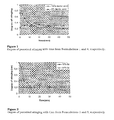
- Figure 1 shows the degree of perceived stinging with time from the comparative formulation 1 with 15% lactic acid and comparative formulation 4 without lactic acid with pH adjusted to 3 using hydrochloric acid.
- Figure 2 shows the degree of perceived stinging with time from formulation 1 having 15 % lactic acid in the o/w-emulsion with 10% fat and from formulation 5 with 50 % fat.
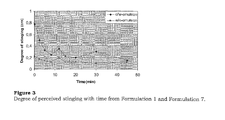
- Figure 3 shows the degree of perceived stinging with time from formulation 1 and from formulation 7.
- topical includes topical application to the human skin in general, and particularly the skin on the face, neck, chest, back, arms, armpits, hands, feet and scalp, and also to mucous membranes, such as of the nose and genitals, especially female genitals.
- stinging is intended to collectively refer to adverse subjective sensations, such as smarting, burning and stinging sensations, which may be experienced by the individual immediately after application of a topical formulation, especially on the facial skin, which is more sensitive to external stressors than other body regions, possibly due to a less efficient barrier with smaller number of stratum corneum cell layers and the presence of large follicular pores.
- stinging agents include preservatives (e.g. benzoic acid and sorbic acid), humectants (e.g. lactic acid, propylene glycol, urea and PCA), and also topical pharmaceutically active agents, such as retinoic acid and benzoyl peroxide, which are known to induce inconvenient sensory reactions.
- preservatives e.g. benzoic acid and sorbic acid
- humectants e.g. lactic acid, propylene glycol, urea and PCA
- topical pharmaceutically active agents such as retinoic acid and benzoyl peroxide, which are known to induce inconvenient sensory reactions.
- topical formulation relates to both cosmetic and pharmaceutical formulations for topical application.
- the present inventors note that it could be inferred from Sah et al that the w/o formulation disclosed could be expected to produce a reduced degree of stinging immediately after application thereof to the skin, as compared to the corresponding o/w and w/o/w emulsions.
- the w/o formulation disclosed could be expected to produce a reduced degree of stinging immediately after application thereof to the skin, as compared to the corresponding o/w and w/o/w emulsions.
- the commonly acknowledged theory on skin penetration stating a correlation between the amount in the stratum corneum and the penetration rate, i.e.
- the present inventors performed the below testing, wherein different types of emulsions containing lactic acid were tested on test subjects, and the perceived degree of stinging reported.
- the first formulation (1) was used as a reference and was compared to the other three formulations in order to distinguish the effect from lactic acid to the effect from pH (4), lipid concentration (5), and the emulsion type, w/o (7).
- Table 1 Formulation Emulsion type pH Lactic acid concentration, % by weight Lipid concentration, % by weight 1 o/w 3 15% 10% 4 o/w 3 0% 10% 5 o/w 3 15% 50% 7 w/o 3 15% 10%
- the formulations in Table 1 were composed of paraffin oil, PEG-20 glyceryl stearate, xanthan gum, lactic acid and PEG-30 dipolyhydroxystearate in the amounts given in Table 2. pH was adjusted by the addition of hydrochloric acid or sodium hydroxide. Table 2 . Composition of the studied formulations. Formulation Paraffin oil PEG-20 glyceryl stearate PEG-30 dihydroxystearate Xanthan gum Lactic acid Aqua ad 1 10% 5% - 0.3% 15.0% 100% 4 10% 5% - 0.3% 100% 5 50% 5% - 0.3% 15.0% 100% 7 10% - 5% 0.3% 15.0% 100% Percentages are by weight
- VAS visual analogue scale
- the Wilcoxon rank sum test together with corresponding two-sided 95% confidence interval and associated Hodges-Lehmann estimator (point estimate) were calculated as a test and description of treatment differences.
- the Hodges-Lehmann estimator (point estimate) is calculated as the median of all possible pairs of data from the two treatment groups and is an alternative to the difference in mean or median describing the difference between two distributions.
- Assessment of the stinging capacity of topically used substances usually includes application of the test agent to the nasolabial fold in 5-10 individuals sensitive to 5 % lactic acid.
- test agent used to the nasolabial fold in 5-10 individuals sensitive to 5 % lactic acid.
- normal healthy individuals we included normal healthy individuals and made the tests at ambient conditions.
- 15 % lactic acid in the formulations and included not less than 19 individuals.
- the degree of stinging was marked on a continuous line, which increases the sensitivity of the measurement compared to the use of category scales.
- Sweating is reported to enhance the possibility to detect stinging.
- This change in stinging threshold might be due to increased hydration, open pores or changed solubility of the stinging substances due to the water layer on the skin surface.
- stinging immediately after application of the emulsions, which lasted for about 10 minutes. During this period, water and other volatile substances will evaporate from the skin surface, and a substantial increase in the concentration of lactic acid and other non-volatile substances will occur in the applied layer on the surface. Furthermore, a minor part of the emulsion water and some lactic acid are also absorbed into the skin and give rise to skin reactions.
- Increasing the fat content in the o/w-emulsion tended to reduce the degree of stinging, although the difference was not significant.
- Changing the amount of fat in the emulsion from 10 to 50 % will also increase the concentration of lactic acid in the water phase.
- the actual change in the concentration of lactic acid will depend on the solubility of lactic acid in the fat phase and the resultant partition between the two phases.
- Increased concentration of lactic acid in the water phase should in theory favour its stinging potential, due to larger amount of lactic acid absorbed into the skin. However, this may be counteracted by the applied fat layer and the reduced amount of water in the formulation.
- skin appendages do not contribute to any significant extent to the absorption of substances.
- skin appendages such as follicles
- the rapid onset of stinging suggests penetration of lactic acid via skin appendages and not via the intercellular route.
- the appendages are believed to facilitate penetration of stinging agents, such as lactic acid, through the skin, and thereby promoting a stinging sensation perceived by the user immediately upon application by allowing for an easier diffusion pathway in parallel to the normal route through the stratum corneum per se. For the most part their effect on skin permeability is minimized owing to their relatively small total fractional area (ca. 0.1%).
- the appendages may serve for rapid passage, where the intercellular pathway is dominant for the majority of substances after reaching steady-state.
- stinging By preventing penetration of stinging agents via this pathway, stinging can be reduced. According to the present invention this is achieved by using in a w/o emulsion as the oily phase a polar oil with good wettability in combination with a suitable emulsifier. The oil will then effectively inhibit such penetration by entering the appendages and covering the surfaces thereof.
- emollients of the present invention are consequently relative hydrophilic, and are also referred to herein as polar oils.
- Suitable emollients are alkyl or alkenyl esters, such as isopropyl myristate and ethylhexyl stearate or similar, and preferably blends thereof, silicone oils, both volatile and non-volatile (cyclomethicone and dimethicone), triglycerides such as caprylic/capric triglycerides, and other vegetable oils.
- the polar oil used in the present invention can be used in same amounts as the conventionally used amounts of the non-polar oils, such as mineral oils, such as for example paraffin oil, to replace the latter.
- non-polar oils such as mineral oils, such as for example paraffin oil
- Creams are the most popular delivery forms for topical preparations.
- the inner phase of emulsions conventionally constitutes about 15-25% of the formulation.
- Any active ingredients can be dissolved in the oil-phase or in the water-phase, depending on the solubility of the actives.
- the high consumer acceptability of o/w-creams is due to the possibility to easily spread the fatty material and actives in a thin layer on the surface without inducing a greasy surface.
- approximately 1-2 mg of cream is applied per sq cm.
- the outer phase of the emulsions usually is water and constitutes 75-85% of the formulation, only about 0.2-0.5 mg/sq cm of non-volatile material from the inner phase will be deposited on the skin.
- Inverse emulsions with water in the inner phase and fatty material in the outer i.e. w/o-emulsions
- the polar oils of the present invention will reduce the greasy feeling of a conventional w/o emulsion containing paraffin oil, thus improving the cosmetic properties thereof.
- a suitable emulsifier should exhibit an HLB of ⁇ 10.
- the water content of a w/o emulsion can be increased by enlargement of the inner phase, but this enlargement induces deformations of the droplets with obvious risks for phase separation.
- the droplets in the inner phase can be deformed without inducing instability of the emulsion.
- the use of such emulsifiers makes it possible to use similar levels of fat in w/o-emulsions as in o/w-emulsions, thus further improving the cosmetic properties of the inventive emulsions.
- Preferred emulsifiers of the above type used in the invention for further improving the cosmetic properties are hydrofobically and hydrofilically (ethoxylated) modified polydimethylsiloxane backbones, especially cetyl PEG/PPG 10/1 dimethicone and bis-PEG/PPG-14/14 dimethicone.
- Another useful ethoxylated emulsifier is PEG-30 dipolyhydroxystearate.
- Derivatives of nonethoxylated components are also suitable as emulsifiers and/or co-emulsifiers.
- the emulsifiers can also be used in combinations to obtain synergistic effects on the demanded properties, such as increased storage stability, increased spreadability on the skin as well as cosmetic acceptance in general.
- the above emulsifiers used in the invention have an optimised mixture of hydrophilic and hydrophobic parts to form stable w/o emulsions with a relatively low oil content, which allows for inclusion of a large inner-phase of water without inducing instability and a too short shelf-life to the products.
- a concentration of the above emulsifiers of 0.5-6 %, especially 1-4 %, such as for example 4 %, in the inventive formulation, will provide a stable emulsion with a desired shelf-life, and increased robustness to high shearing forces. Furthermore, the reduced interfacial tensions facilitate uniform coverage of surface defects, and piling of emollient material in the surface orifices. This allows the content of emollients in the inventive emulsion to be kept low, preferably 15-25%.
- Nonionic emulsifiers are the generally preferred stabilizers for the inventive emulsions due to their mildness.
- ethoxylated emulsifiers may be susceptible to oxidation, inducing formation of peroxides and aldehydes, such as formaldehyde, which is known to be hazardous to the human body.
- ethoxylated emulsifiers (such as PEGs) should preferably be avoided in the inventive formulations.
- liquid oils at room temperature
- the preferred amounts of liquid emollients are 5-35 %, more suitable 10-30 and especially 15-25 % based on the overall formulation.
- the content of waxes may typically be within the range of 1-2 %.
- the above listed emulsifiers have also been found to reduce the importance of thickeners and emulsion stabilisers in the formulation, allowing for lower amounts of stabilisers, consistency enhancers and thickeners to be used (such as within the range of 0-10 %, more preferably 0-4%, such as 1-4%, and most preferably 0-3%, such as e.g. 2-3%), while stable emulsions are still obtained.
- the reduced amount makes the liquid oils in the formulation more available for spreading on the skin, which oils will therefore more easily cover the surface defects and orifices in the skin.
- Suitable consistency enhancers and thickeners can be chosen from all types of cosmetically acceptable conventionally used thickeners and consistency enhancers. These include polymers such as polybutene and silica, wax esters such as beeswax and myristyl myristate, fatty alcohols such as cetyl and stearyl alcohols or blends thereof, hydrogenated vegetable oils, such as for example hydrogenated castor oil and hydrogenated coco-glycerides, and hydrofobically modified or crosslinked polydimethylsiloxanes, such as cetyl dimethicone and dimethicone crosspolymer.
- polymers such as polybutene and silica
- wax esters such as beeswax and myristyl myristate
- fatty alcohols such as cetyl and stearyl alcohols or blends thereof
- hydrogenated vegetable oils such as for example hydrogenated castor oil and hydrogenated coco-glycerides
- salts or osmotically active ingredients are preferably added to the water phase, preferably sodium chloride and/or magnesium sulphate.
- Useful concentrations are 0.01-5%, and preferably 0.1-1%.
- the final consistency of the emulsion is also dependent of the droplet size and distribution.
- the viscosity can be adjusted as known in the art so that a heavy cream or a thin lotion is formed, as desired dependent on the intended application.
- a small and uniform droplet size of 20-30 ⁇ m is especially preferred with regard to the stability of the emulsion upon storage.
- microparticles are included in the inventive formulation.
- the size of the particles should be selected so as to be effective for follicular closure.
- a suitable size is considered to be 1-10 ⁇ m, and more preferably 5-6 ⁇ m, such as for example about 5 ⁇ m.
- the particles can be formed from primary particles of a smaller size. Accordingly, primary particles of a smaller size, which will agglomerate to form lager complexes within the above range in the formulation, can also be used when preparing the formulation.
- the primary particles can be of a size of about 0.01 ⁇ m or more, such as 0.01-1 ⁇ m.
- microparticles in cosmetics such as for example metal oxides such as calcium oxide, titanium dioxide and zinc oxide, or talc, or polymeric materials based on silicon, acrylates or polyethylene can be used according to the present invention.
- the microparticles are suitably included in amount within the range of 0.5-20%, and preferably 1-5%.
- the particles can be added to the aqueous or oily phase, depending on the hydrophobicity thereof.
- microparticles will also impart a powdery and dry feel to the formulation, and thus improved cosmetic properties.
- mineral oils such as paraffin oil
- the amount of mineral oil should not exceed 50% of the total amount of emollients.
- the above mentioned-particles can be used in same amounts, i.e. 0.5-20%, and preferably 1-5%.
- the size of the particles is not as critical for this purpose, and can generally be selected to be within the range of about 1 to 50 ⁇ m. Again, the particles can be formed of primary particles of a size of about 0.01 ⁇ m or more.
- microparticles such as within the range of about 1-10 ⁇ m, in the topical formulation, will generally also give rise to a whiteness of the formulation, which will typically make the formulation visible upon application to e.g. the skin.
- oils based on non-renewable raw materials such as paraffin oil
- the use vegetable oils is preferred.
- the present formulation having reduced stinging potential can advantageously be formulated for use as a pharmaceutical. Accordingly, the above described embodiments can be formulated either for use as a cosmetic or as a pharmaceutical. In this regard, it is also believed that penetration of stinging agents through the skin via fissures will also be inhibited by the inventive formulation.
- Facial skin is more sensitive to external stressors than other body regions possibly due to a less efficient barrier with smaller number of stratum corneum cell layers and the presence of large follicular pores.
- Sunburned skin, atopics and other patients with eczema are also at a higher risk for further skin reactions, due to the already excited skin and/or increased permeability.
- atopics are asked to judge the degree of adverse skin reactions to ureacontaining moisturizers 20-40% report stinging sensations (a sharp, local, superficial effect similar to the reaction noted to acidic solutions).
- Combinations with corticosteroids do not eliminate stinging and 12-30% of patients using hydrocortisone creams with 4-20% urea on eczema also reports stinging.
- the formulation of the present invention can be used for preparing cosmetics such as creams, ointments, lotions, and also pharmaceuticals based on the inventive emulsion, such as creams, ointments and lotions.
- the latter can be intended for topical application to the skin, or for application to mucous membranes such as of the nose or genitals, and formulated as e.g. a nasal spray.
- lactic acid is a particularly stinging ingredient, as compared to other more moderately stinging ingredients such as for example urea, it is also known for its beneficial dermatological effects, such as its exfoliant properties.
- the effects can be seen as purely cosmetic (e.g. dryness), or belong to the medicinal area and be used for prevention or treatment of hyperkeratotic skin (e.g. patient with ichthyosis, lichenified eczema or psoriasis).
- the exfoliant properties can also be used for chemical peeling of uneven, but otherwise normal, skin.
- Similar dermatological effects have also been attributed to other alpha hydroxy acids (AHAs), such as glycolic acid, malic acid, citric acid, and tartaric acid.
- AHAs alpha hydroxy acids
- lactic acid is known to produce a stinging action at concentrations of about 0.5% by weight of the formulation.
- the present formulation contains lactic acid as an AHA.
- Lactic acid is preferably contained in an amount ranging from about 1 to 30 %, more preferably 2-15%, and especially 5 to 10 % by weight of the inventive formulation.
- the present invention is believed to be particularly useful for reducing the stinging action of AHAs, and particularly lactic acid. Also, from the point of stinging potential, it has been found that the pH of the resulting formulation, usually in the range of the pKa of the AHA used, does not require to be further adjusted, such as by partial neutralization.
- the pH value of the inventive formulation may be in the general range of 2.0 to 10.
- the inventive compositions are particularly useful when they are at an acidic pH, preferably 2.5-6.
- the stinging potential of the AHAs is decreased by reducing the immediate absorption of the acids (via the follicular pathway. This penetration pathway is however of negligible importance when the desired beneficial effect of the acids is exerted). Only excipients contributing to excellent cosmetic properties and with demonstrated safety are used to manufacture the formulations in the present invention.
- the formulation may reduce the stinging action caused by any pharmaceutically active substance not belonging to the above group of AHAs, thus allowing for higher concentrations of such active substance to be used, while an improved tolerability of the formulation is achieved.
- the stinging ingredient included in the present formulation may additionally be selected from other substances known to cause subjective sensations, such as benzoic acid and sorbic acid, conventionally used as preservatives, in an amount of from 0.3 to 1.5 % by weight of the formulation, or propylene glycol, urea and PCA, conventionally used as humectants, in an amount of from 2 to 10 % by weight of the formulation.
- topical pharmaceutically active agents such as retinoic acid and benzoyl peroxide, which are known to induce inconvenient sensory reactions, may be included in pharmaceutically effective concentrations, such as an amount ranging from 0.1 to 10 % by weight of the formulation.
- the formulation of the present invention may contain any conventionally used additives such as preservatives, emulsifiers, skin-feel agents, humectants, oils, lipids, colours, particles, pH-adjusters, complexing agents, thickeners, vitamins or other actives.
- preservatives such as preservatives, emulsifiers, skin-feel agents, humectants, oils, lipids, colours, particles, pH-adjusters, complexing agents, thickeners, vitamins or other actives.
- the formulation includes a conventionally used sunscreen, i.e. a substance used to block ultraviolet radiation.
- the formulations of the invention can be prepared using any conventionally known methods for preparing w/o-emulsions.
- water and oil soluble ingredients are most often blended in separate vessels (this might require heating to about 60-90°C if the ingredients are solid at room temperature or difficult to solubilise).
- the water is then slowly transferred under moderate stirring to the oil/wax vessel (at 10-2000 rpm depending on equipment). After transfer of water phase the blend is homogenised (at 2000-20000 rpm).
- the viscosity, stability and properties of the product are dependent on the shear force used, as will be realised by the skilled person.
- any method which will produce a w/o emulsion in which the stinging ingredient is contained in the water phase can be used to prepare the inventive formulation.
- A denotes the aqueous phase and B denotes the oily phase, which are provided only for illustrating purposes, and should not be construed as limiting the scope of the invention thereto.
- Example 4 PEG-free composition, including hydrophobic TiO 2 particles
- Example 5 PEG-free composition, including hydrophobic TiO 2 particles
- Example 6 PEG-free composition, including acrylate particles
- Example 7 PEG-free composition, including ZnO particles
- Example 8 PEG-free composition, including hydrophilic TiO 2 particles
- Phase Constituent % w/w Remark A Water 68,2 A Sodium Chloride 0,8 osmotically active agent A Lactic Acid 5 stinging agent Uniqema; Particle size 40 nm A Tioveil 50 AQ-N 2 (20-200 nm) B Polyglyceryl-2 dipolyhydroxystearate 3 emulsifier B Sorbitan oleate 1 emulsifier B Hydrogenated castor oil 1 consistency enhancer/thickener B Beeswax 1 consistency enhancer/thickener B Dimethicone 3 polar oil (emollient) B Caprylic/capric triglycerides 7,5 polar oil (emollient) B lsopropyl myristate 7,5 polar oil (emollient)
- Example 9 PEG-free composition, including talc particles
- Phase Constituent % w/w Remark A Water 68,2 A Sodium Chloride 0,8 osmotically active agent A Lactic Acid 5 stinging agent A Talc 2 particle size ⁇ 40 ⁇ m* B Polyglyceryl-2 dipolyhydroxystearate 3 emulsifier B Sorbitan oleate 1 emulsifier B Hydrogenated coco-glycerides 1 consistency enhancer/thickener B Beeswax 1 consistency enhancer/thickener B Dimethicone 3 polar oil (emollient) B Caprylic/capric triglycerides 7,5 polar oil (emollient) B lsopropyl myristate 7,5 polar oil (emollient) * 99% of the particles having a size ⁇ 40 ⁇ m, with a predominant fraction within the interval of 1-10 ⁇ m
- Example 11 (containing mineral oil and hydrophobic TiO 2 particles)
- Example 12 (containing mineral oil and hydrophobic TiO 2 particles)
- Example 13 (containing mineral oil and acrylate particles)
- Example 14 (containing mineral oil and ZnO particles)
- Example 15 (containing mineral oil and hydrophilic TiO 2 particles)
- Example 16 (containing mineral oil and talc particles)
- Phase Constituent % w/w Remark A Water 63,2 A Sodium Chloride 0,8 osmotically active agent A Lactic Acid 10 stinging agent A Talc 2 ⁇ 40 ⁇ m* B Polyglyceryl-4 Isostearate 1 emulsifier B Cetyl PEG/PPG-10/1 Dimethicone 3 emulsifier B Hydrogenated coco-glycerides 1 consistency enhancer/thickener B Beeswax 1 consistency enhancer/thickener B Dimethicone 3 polar oil (emollient) B Paraffinum Perliquidum PhEur 7,5 mineral oil (co-emollient) B lsopropyl myristate 7,5 polar oil (emollient) * 99% of the particles having a size ⁇ 40 ⁇ m, with a predominant fraction within the interval of 1-10 ⁇ m
- compositions containing lactic acid For the inventive compositions containing lactic acid, it was also noted that the unique combination of emulsifiers and emollients further reduced the degree of stinging from lactic acid in the formulation, as compared to the prior art w/o formulation containing lactic acid, most likely due to the delayed contact between lactic acid in the outer phase of the emulsion and the skin. W/o-emulsions containing high amounts of water may otherwise give a patchy coverage (microscopically) of the skin surface upon application, due to phase-separation.
Landscapes
- Health & Medical Sciences (AREA)
- Life Sciences & Earth Sciences (AREA)
- Veterinary Medicine (AREA)
- Animal Behavior & Ethology (AREA)
- General Health & Medical Sciences (AREA)
- Public Health (AREA)
- Birds (AREA)
- Epidemiology (AREA)
- Chemical & Material Sciences (AREA)
- Inorganic Chemistry (AREA)
- Dispersion Chemistry (AREA)
- Oil, Petroleum & Natural Gas (AREA)
- Dermatology (AREA)
- Emergency Medicine (AREA)
- Cosmetics (AREA)
Priority Applications (4)
| Application Number | Priority Date | Filing Date | Title |
|---|---|---|---|
| EP06126378A EP1941860A1 (de) | 2006-12-18 | 2006-12-18 | Topische Formulierungen |
| PCT/EP2007/063302 WO2008074634A1 (en) | 2006-12-18 | 2007-12-04 | Topical formulations having reduced stinging potential |
| EP07857251A EP2099413A1 (de) | 2006-12-18 | 2007-12-04 | Topische formulierungen mit verringertem brennpotential |
| NO20092644A NO20092644L (no) | 2006-12-18 | 2009-07-13 | Topiske formuleringer som har redusert svi-potenisal |
Applications Claiming Priority (1)
| Application Number | Priority Date | Filing Date | Title |
|---|---|---|---|
| EP06126378A EP1941860A1 (de) | 2006-12-18 | 2006-12-18 | Topische Formulierungen |
Publications (1)
| Publication Number | Publication Date |
|---|---|
| EP1941860A1 true EP1941860A1 (de) | 2008-07-09 |
Family
ID=38191331
Family Applications (2)
| Application Number | Title | Priority Date | Filing Date |
|---|---|---|---|
| EP06126378A Withdrawn EP1941860A1 (de) | 2006-12-18 | 2006-12-18 | Topische Formulierungen |
| EP07857251A Ceased EP2099413A1 (de) | 2006-12-18 | 2007-12-04 | Topische formulierungen mit verringertem brennpotential |
Family Applications After (1)
| Application Number | Title | Priority Date | Filing Date |
|---|---|---|---|
| EP07857251A Ceased EP2099413A1 (de) | 2006-12-18 | 2007-12-04 | Topische formulierungen mit verringertem brennpotential |
Country Status (3)
| Country | Link |
|---|---|
| EP (2) | EP1941860A1 (de) |
| NO (1) | NO20092644L (de) |
| WO (1) | WO2008074634A1 (de) |
Cited By (2)
| Publication number | Priority date | Publication date | Assignee | Title |
|---|---|---|---|---|
| WO2019020778A1 (en) * | 2017-07-28 | 2019-01-31 | Alchemy Ingredients Limited | EMULSIONS AT HIGH INTERNAL PHASE |
| US20210220269A1 (en) * | 2018-09-28 | 2021-07-22 | Galderma Research & Development | Pharmaceutical composition in the form of a water-in-oil emulsion (w/o) and its uses |
Citations (8)
| Publication number | Priority date | Publication date | Assignee | Title |
|---|---|---|---|---|
| US4287214A (en) * | 1979-09-24 | 1981-09-01 | Scott Eugene J Van | Dithranol compositions stabilized with alpha hydroxyacids |
| JPH02167212A (ja) * | 1988-08-12 | 1990-06-27 | Shiseido Co Ltd | 油中水型乳化化粧料 |
| EP0456459A2 (de) * | 1990-05-10 | 1991-11-13 | Unilever Plc | Kosmetisches Mittel |
| US5411734A (en) * | 1993-11-15 | 1995-05-02 | Elizabeth Arden Company, Division Of Conopco, Inc. | Non-irritating α-hydroxy carboxylic acid compositions |
| US6017548A (en) * | 1995-06-06 | 2000-01-25 | The Andrew Jergens Company | Skin care composition |
| WO2001013877A1 (en) * | 1999-08-20 | 2001-03-01 | Unilever Plc | A method for reducing skin irritation and sting from weak carboxylic acid |
| US6423326B1 (en) * | 1999-07-30 | 2002-07-23 | Stepan Company | Cold-mix water-in-oil emulsions comprising quaternary ammonium compounds and process for producing same |
| US20060110414A1 (en) * | 2002-12-27 | 2006-05-25 | Shiseido Co., Ltd. | Oily skin preparation for external use |
-
2006
- 2006-12-18 EP EP06126378A patent/EP1941860A1/de not_active Withdrawn
-
2007
- 2007-12-04 EP EP07857251A patent/EP2099413A1/de not_active Ceased
- 2007-12-04 WO PCT/EP2007/063302 patent/WO2008074634A1/en not_active Ceased
-
2009
- 2009-07-13 NO NO20092644A patent/NO20092644L/no not_active Application Discontinuation
Patent Citations (8)
| Publication number | Priority date | Publication date | Assignee | Title |
|---|---|---|---|---|
| US4287214A (en) * | 1979-09-24 | 1981-09-01 | Scott Eugene J Van | Dithranol compositions stabilized with alpha hydroxyacids |
| JPH02167212A (ja) * | 1988-08-12 | 1990-06-27 | Shiseido Co Ltd | 油中水型乳化化粧料 |
| EP0456459A2 (de) * | 1990-05-10 | 1991-11-13 | Unilever Plc | Kosmetisches Mittel |
| US5411734A (en) * | 1993-11-15 | 1995-05-02 | Elizabeth Arden Company, Division Of Conopco, Inc. | Non-irritating α-hydroxy carboxylic acid compositions |
| US6017548A (en) * | 1995-06-06 | 2000-01-25 | The Andrew Jergens Company | Skin care composition |
| US6423326B1 (en) * | 1999-07-30 | 2002-07-23 | Stepan Company | Cold-mix water-in-oil emulsions comprising quaternary ammonium compounds and process for producing same |
| WO2001013877A1 (en) * | 1999-08-20 | 2001-03-01 | Unilever Plc | A method for reducing skin irritation and sting from weak carboxylic acid |
| US20060110414A1 (en) * | 2002-12-27 | 2006-05-25 | Shiseido Co., Ltd. | Oily skin preparation for external use |
Cited By (2)
| Publication number | Priority date | Publication date | Assignee | Title |
|---|---|---|---|---|
| WO2019020778A1 (en) * | 2017-07-28 | 2019-01-31 | Alchemy Ingredients Limited | EMULSIONS AT HIGH INTERNAL PHASE |
| US20210220269A1 (en) * | 2018-09-28 | 2021-07-22 | Galderma Research & Development | Pharmaceutical composition in the form of a water-in-oil emulsion (w/o) and its uses |
Also Published As
| Publication number | Publication date |
|---|---|
| WO2008074634A1 (en) | 2008-06-26 |
| NO20092644L (no) | 2009-09-14 |
| EP2099413A1 (de) | 2009-09-16 |
Similar Documents
| Publication | Publication Date | Title |
|---|---|---|
| TW508246B (en) | Stabilization of an unstable retinoid in oil-in-water emulsions for skin care compositions | |
| EP1556009B2 (de) | Kosmetischer und pharmazeutischer schaum | |
| CN1085523C (zh) | 表皮用制剂和其制备方法 | |
| US20110097279A1 (en) | Stable non-alcoholic foamable pharmaceutical emulsion compositions with an unctuous emollient and their uses | |
| JP2007503428A (ja) | 浸透性医薬発泡剤 | |
| JP2007508243A (ja) | 両親媒性コポリマーゲル化剤を含む泡坦体 | |
| JPH05262641A (ja) | 固体脂質粒子の懸濁液を含有する局所製剤 | |
| JP5101808B2 (ja) | 水中油型液状組成物 | |
| JP4444149B2 (ja) | 超微細エマルジョンで構成される皮膚外用剤 | |
| TW200916118A (en) | External preparation for skin | |
| JP5827079B2 (ja) | 粉体含有皮膚外用剤 | |
| JP2529571B2 (ja) | 皮膚刺激感抑制剤及びこれを配合してなる化粧料 | |
| US6113928A (en) | Skin cosmetic composition containing retinal | |
| JP2008222653A (ja) | 保湿性に優れる皮膚外用剤 | |
| JP3975060B2 (ja) | 水層−油層からなる液−液系の二層型化粧料 | |
| EP1941860A1 (de) | Topische Formulierungen | |
| EP1941859A1 (de) | Topische Formulierungen | |
| JP2008019230A5 (de) | ||
| JPH11246329A (ja) | 皮膚外用剤 | |
| JP5068091B2 (ja) | 乳化剤形の皮膚外用剤 | |
| JP4842553B2 (ja) | ヒドロキシカルボン酸エステルを用いてナノ乳化粒子を安定化させる方法及びナノ乳化粒子を含有する皮膚外用剤 | |
| JPH07215839A (ja) | 皮膚外用剤 | |
| TW202308591A (zh) | 化妝料 | |
| JP3492952B2 (ja) | 水層−油層からなる液−液系二層型化粧料 | |
| JP2007137822A (ja) | マッサージに好適な皮膚外用剤 |
Legal Events
| Date | Code | Title | Description |
|---|---|---|---|
| PUAI | Public reference made under article 153(3) epc to a published international application that has entered the european phase |
Free format text: ORIGINAL CODE: 0009012 |
|
| AK | Designated contracting states |
Kind code of ref document: A1 Designated state(s): AT BE BG CH CY CZ DE DK EE ES FI FR GB GR HU IE IS IT LI LT LU LV MC NL PL PT RO SE SI SK TR |
|
| AX | Request for extension of the european patent |
Extension state: AL BA HR MK RS |
|
| AKX | Designation fees paid | ||
| REG | Reference to a national code |
Ref country code: DE Ref legal event code: 8566 |
|
| STAA | Information on the status of an ep patent application or granted ep patent |
Free format text: STATUS: THE APPLICATION IS DEEMED TO BE WITHDRAWN |
|
| 18D | Application deemed to be withdrawn |
Effective date: 20090110 |