EP1944905B1 - Méthode et système d équipement de transmission codée empêchant la copie de ressources de données - Google Patents
Méthode et système d équipement de transmission codée empêchant la copie de ressources de données Download PDFInfo
- Publication number
- EP1944905B1 EP1944905B1 EP06805045.9A EP06805045A EP1944905B1 EP 1944905 B1 EP1944905 B1 EP 1944905B1 EP 06805045 A EP06805045 A EP 06805045A EP 1944905 B1 EP1944905 B1 EP 1944905B1
- Authority
- EP
- European Patent Office
- Prior art keywords
- data file
- client apparatus
- server
- data
- key
- Prior art date
- Legal status (The legal status is an assumption and is not a legal conclusion. Google has not performed a legal analysis and makes no representation as to the accuracy of the status listed.)
- Not-in-force
Links
Images





Classifications
-
- G—PHYSICS
- G06—COMPUTING OR CALCULATING; COUNTING
- G06F—ELECTRIC DIGITAL DATA PROCESSING
- G06F21/00—Security arrangements for protecting computers, components thereof, programs or data against unauthorised activity
- G06F21/10—Protecting distributed programs or content, e.g. vending or licensing of copyrighted material ; Digital rights management [DRM]
-
- H—ELECTRICITY
- H04—ELECTRIC COMMUNICATION TECHNIQUE
- H04L—TRANSMISSION OF DIGITAL INFORMATION, e.g. TELEGRAPHIC COMMUNICATION
- H04L63/00—Network architectures or network communication protocols for network security
- H04L63/04—Network architectures or network communication protocols for network security for providing a confidential data exchange among entities communicating through data packet networks
- H04L63/0428—Network architectures or network communication protocols for network security for providing a confidential data exchange among entities communicating through data packet networks wherein the data content is protected, e.g. by encrypting or encapsulating the payload
- H04L63/0457—Network architectures or network communication protocols for network security for providing a confidential data exchange among entities communicating through data packet networks wherein the data content is protected, e.g. by encrypting or encapsulating the payload wherein the sending and receiving network entities apply dynamic encryption, e.g. stream encryption
-
- H—ELECTRICITY
- H04—ELECTRIC COMMUNICATION TECHNIQUE
- H04L—TRANSMISSION OF DIGITAL INFORMATION, e.g. TELEGRAPHIC COMMUNICATION
- H04L63/00—Network architectures or network communication protocols for network security
- H04L63/04—Network architectures or network communication protocols for network security for providing a confidential data exchange among entities communicating through data packet networks
- H04L63/0428—Network architectures or network communication protocols for network security for providing a confidential data exchange among entities communicating through data packet networks wherein the data content is protected, e.g. by encrypting or encapsulating the payload
- H04L63/0471—Network architectures or network communication protocols for network security for providing a confidential data exchange among entities communicating through data packet networks wherein the data content is protected, e.g. by encrypting or encapsulating the payload applying encryption by an intermediary, e.g. receiving clear information at the intermediary and encrypting the received information at the intermediary before forwarding
-
- H—ELECTRICITY
- H04—ELECTRIC COMMUNICATION TECHNIQUE
- H04L—TRANSMISSION OF DIGITAL INFORMATION, e.g. TELEGRAPHIC COMMUNICATION
- H04L63/00—Network architectures or network communication protocols for network security
- H04L63/10—Network architectures or network communication protocols for network security for controlling access to devices or network resources
-
- H—ELECTRICITY
- H04—ELECTRIC COMMUNICATION TECHNIQUE
- H04L—TRANSMISSION OF DIGITAL INFORMATION, e.g. TELEGRAPHIC COMMUNICATION
- H04L9/00—Cryptographic mechanisms or cryptographic arrangements for secret or secure communications; Network security protocols
- H04L9/08—Key distribution or management, e.g. generation, sharing or updating, of cryptographic keys or passwords
- H04L9/0816—Key establishment, i.e. cryptographic processes or cryptographic protocols whereby a shared secret becomes available to two or more parties, for subsequent use
- H04L9/0819—Key transport or distribution, i.e. key establishment techniques where one party creates or otherwise obtains a secret value, and securely transfers it to the other(s)
-
- H—ELECTRICITY
- H04—ELECTRIC COMMUNICATION TECHNIQUE
- H04L—TRANSMISSION OF DIGITAL INFORMATION, e.g. TELEGRAPHIC COMMUNICATION
- H04L9/00—Cryptographic mechanisms or cryptographic arrangements for secret or secure communications; Network security protocols
- H04L9/08—Key distribution or management, e.g. generation, sharing or updating, of cryptographic keys or passwords
- H04L9/0891—Revocation or update of secret information, e.g. encryption key update or rekeying
-
- G—PHYSICS
- G06—COMPUTING OR CALCULATING; COUNTING
- G06F—ELECTRIC DIGITAL DATA PROCESSING
- G06F2221/00—Indexing scheme relating to security arrangements for protecting computers, components thereof, programs or data against unauthorised activity
- G06F2221/21—Indexing scheme relating to G06F21/00 and subgroups addressing additional information or applications relating to security arrangements for protecting computers, components thereof, programs or data against unauthorised activity
- G06F2221/2107—File encryption
-
- H—ELECTRICITY
- H04—ELECTRIC COMMUNICATION TECHNIQUE
- H04L—TRANSMISSION OF DIGITAL INFORMATION, e.g. TELEGRAPHIC COMMUNICATION
- H04L2209/00—Additional information or applications relating to cryptographic mechanisms or cryptographic arrangements for secret or secure communication H04L9/00
- H04L2209/60—Digital content management, e.g. content distribution
- H04L2209/605—Copy protection
-
- H—ELECTRICITY
- H04—ELECTRIC COMMUNICATION TECHNIQUE
- H04L—TRANSMISSION OF DIGITAL INFORMATION, e.g. TELEGRAPHIC COMMUNICATION
- H04L2463/00—Additional details relating to network architectures or network communication protocols for network security covered by H04L63/00
- H04L2463/101—Additional details relating to network architectures or network communication protocols for network security covered by H04L63/00 applying security measures for digital rights management
Definitions
- the present invention relates to a method and system of accessing copy-prevented encrypted data resources transmitted over a network such as the data resources provided online without being intercepted in transmission.
- the present invention can be well applied to many types of networks especially those using the "server-client" mode and is directed to providing a superior copy prevention technique over the conventional full download and streaming media techniques.
- the first method as shown in Figure 1 is a process involving authenticating a logged-in user, and transmitting encrypted data resources to the authenticated user with a time period of validity preset to the encrypted data resources designed to prevent the data resources from being illegally copied after the initial download.
- the identity of a user is first authenticated in a "user login" process to prevent unauthorized users from entering the system.
- the authenticated user may then search on a data resource platform to find the needed data resources. Thereafter, the found data resources are downloaded (payment may be required for some resources) into the user's local machine in the form of a file or a temporary directory.
- This conventional method presets an expiration time to the downloaded data resources such that the data resources will no longer be available to a user after a lapse of a preset expiration time since the initial downloading of the data resources.
- copying of the data resources is restricted by bundling the downloaded data resources with the user's machine, and the availability of the data resources is limited by a preset expiration time compared with the on-going time of the user's machine, which would then determines the period of availability of the downloaded data resources.
- this method provides some measure of protection from illegal replication
- this conventional method has a defect in that the data resources will be free to be decrypted and copied once the data resources are fully downloaded into the user's machine (e.g., a personal computer) and saved in the local hard disk drive. As a result, the copyright of the data resources is still beyond protection according to this conventional method.
- Figure 2 shows another conventional method of accessing data resources over a network intended for preventing the network data resources from unauthorized replication and decryption.
- the data resources are provided in a form of data streams as in a typical streaming media method, instead of downloading and storing in a local machine.
- a streaming media is a continuous time based media in the Internet that utilizes a streaming transmission technique, which is the key technique for achieving the streaming media.
- the streaming media technology enables a constant-rate transmission of the data from a transmitting end to a receiving end and enables the receiving end to process the data during transmission without having to wait for the entire transmission to complete.
- the second method as shown in Figure 2 is different from the first method of Figure 1 in that the data resources are not fully downloaded into a local machine but instead are cached in the system memory of the local machine.
- the second conventional method involves a process requiring a continuous downloading of data and caching of the data for use by a user.
- the data resources are not saved in the hard disk of a local machine or in any other storage device for later use but are instead temporarily stored in the system memory and are then deleted from the system memory after terminating the process.
- the second conventional method adopts a Digital Rights Management (DRM) technology (e.g., inserting anti-replication codes into digital network resources) intended for preventing the data resources from unauthorized copying and decryption after a user download, thereby to limit the illegal replication of the data resources to some extent.
- DRM Digital Rights Management
- the most commonly adopted encryption scheme is the data header encryption, which allows continuous data resource download and utilization by a user once the user terminal has gone through the data header authentication.
- a data header encryption a whole data file can be obtained only if the data header is decrypted.
- utilization of the data resources by programs on a user terminal may also be subjected to the network conditions.
- US 2004/098343 provides a contents reproducing apparatus and a contents reproducing control program that can prohibit illegitimate use of digital contents displayed on the browser screen of a browser open to the public and leakage of such digital contents to a third party.
- a "terminal unit 3 is provided with an encrypted data storage section 4 which stores encrypted data downloaded from the server system 1", and "the encrypted data storage unit 4 and...are provided on a physical recording medium, such as a hard disk, in the terminal unit 3".
- EP-A-1580644 provides an electronic musical apparatus that can reproduce encrypted music contents each recorded in plural types of recording media.
- encrypted music piece data is provided by "the memory card 8, CD-ROM 12 and internet 15". It can be seen that, the encrypted music data can be obtained from the memory card 8 or the CD-ROM 12 purchased from a seller, or from the internet 15.
- US 2002/150243 provides a solution for secure communication between a client and a server.
- the client can download application code and/or content data from a server by sending a request message which includes the client serial number and which is encrypted using the server public key.
- the server decrypts the request using the server private key, authenticates the client, searches for a client public key using the client serial number, encrypts information with the client public key, and provides the encrypted information to the client.
- the present invention provides a more effective system and method for protecting network data resources in storage or in transmission from illegal downloading, replication, interception, and decryption.
- the system of accessing a copy-prevented encrypted data file transmitted over a network includes:
- the method of accessing a copy-prevented encrypted data file from a server apparatus having data files accessible by a client apparatus which includes a temporary storage and a read apparatus, in which the client apparatus is operably connected to the server apparatus over a network includes:
- the encryption transmission method and system which are provided by the present invention for protecting data resources from being copied, greatly improve the security of data resources by applying three encryptions.
- the first encryption prevents the digital resources from being read by any other read apparatuses but the specified read apparatus, and therefore the utilization of the data resources can be controlled by controlling the use of the read apparatus.
- the second encryption binds the data resources with hardware at the server end, hence a copy of the data resources obtained from the data resource server by intruding the hardware will be unreadable due to the lack of the key for the second encryption.
- the dynamic third encryption ensures the security of the data resources in transmission on the network.
- the system in the server apparatus is configured to accept only the requests for downloading the data file into the temporary storage, and the read apparatus is not equipped with at least one function of "print” and "save as", so that the client can neither download nor save the data resources but only read the data resources with the read apparatus, which prevents the illegal utilization of the data resources to a great extent.
- an encryption transmission system for preventing copying of data resources in accordance with an embodiment of the present invention includes a client apparatus 1, a network 2, and a server apparatus 5.
- the client apparatus 1 includes a decryptor 12, a browser 11, a temporary storage 13, a transceiver 10, and a read apparatus 14.
- the temporary storage 13 may be a storage medium with a temporary storage function, e.g., a system memory or a virtual memory.
- the server apparatus 5 includes a network server 3 and a data resource server 4.
- the network server 3 includes a transceiver 30, a decryptor 32, and an encryptor 31, and the data resource server 4 includes a transceiver 41, a data file storage 42, and a data divider 44.
- the client apparatus 1 is connected via the network 2 to the server apparatus 5 which includes the network server 3 and the data resource server 4.
- the client apparatus 1 is allowed to cache the data resources from the server apparatus 5 only in the temporary storage 13, not in any other permanent storages; the read apparatus 14 is not equipped with the functions "save as” and/or "print”; and the network server 3 only accepts download requests from the client apparatus 1 which requests to download data resources into the temporary storage 13 of the client apparatus 1.
- the data file storage 42 is used for storing data files and performing a first encryption and a second encryption on the data files.
- the format of the first and second encrypted data files is shown in Figure 9 .
- the decryption key for the first encryption of a data file is embedded in the read apparatus 14 of the client apparatus 1, and this allows only a read apparatus of a corresponding type (i.e., the read apparatus 14) to read the data file.
- the decryption key for the second encryption of the data file is saved in the decryptor 32 of the network server 3 and is, together with the encryption key, associated with the hardware parameters of the network server 3, which binds the data file to the hardware of the server at the server end.
- the system shown in Figure 3 functions through the following process.
- a user first logs into the network data resource system at the client apparatus 1 and goes through a user identity authentication process.
- the user can then search for and find a needed data resource file (e.g., an e-book file) using the browser 11.
- the user would then click a corresponding button to initiate a download task by sending a data download request carrying the user identity information from the transceiver 10 of the client apparatus 1 to the network server 3.
- the network server 3 verifies and accepts the download request and sends an invoke request from the transceiver 30 to the data resource server 4 to get the corresponding data resource file.
- the data resource server 4 Upon receipt of the data resource invoke request from the network server 3, the data resource server 4 retrieves the corresponding data file from the data file storage 42, divides the data file according to a determined division policy (e.g., divides the data file by page) with the data divider 44, and sends the divided data file to the network server 3 using the transceiver 41.
- the network server 3 Upon receipt of the data file through the transceiver 30, the network server 3 decrypts the data file which has been through the second encryption with the decryptor 32 (i.e. decrypts the second encryption), and performs a third encryption on the data file with the encryptor 31.
- the format of the encrypted data file after the third encryption has been performed is shown in Figure 10 .
- the transceiver 30 sends the encrypted data file to the client apparatus 1 through the network 2.
- the client apparatus 1 caches the data file in the temporary storage 13; the decryptor 12 decrypts the received data file which has been through the third encryption in real time (i.e.
- the read apparatus 14 invokes the data file (the third encryption of which has been decrypted) from the temporary storage 13 and decrypts the data file using the embedded decryption key for the first encryption; after a user finishes utilizing the data file, the read apparatus 14 deletes the data file from the temporary storage 13 in real time.
- the third encryption adopts dynamic encryption (e.g., synchronous hopping code).
- Initial encryption and decryption keys are set in advance in the encryptor 31 of the network server 3 and the decryptor 12 of the client apparatus 1, and the keys in both apparatuses hop synchronously at the transmission of each data block, wherein the same basic information is adopted by both apparatuses as the synchronization information from which the keys hop synchronously.
- the third encryption may also adopt an asymmetrical algorithm (e.g. Rivest-Shamir-Adelman algorithm), according to which the decryptor 12 of the client apparatus 1 randomly generates a public key and a private key, sends the public key to the encryptor 31 of the network server 3 to encrypt blocks of the data file, and then decrypts the data file in the client apparatus 1 with the corresponding private key.
- an asymmetrical algorithm e.g. Rivest-Shamir-Adelman algorithm
- the third encryption may also be performed by the encryptor 31 on the data file with a random cipher key.
- the encryptor 31 sends the random third cipher key to the client apparatus 1 before sending the data file, and the data file will only be sent to the client apparatus 1 from the transceiver 30 when an acknowledgement of receipt of the key is received.
- the decryptor 12 in the client apparatus 1 decrypts the received data file with the received key in real time, saves the decrypted data in the temporary storage, and deletes the undecrypted data of the received data file and the key in real time.
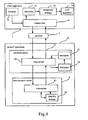
- an encryption transmission system for preventing copying of data resources in accordance with an embodiment of the present invention includes a client apparatus 1, a network 2 and a server apparatus 5.
- the client apparatus 1 includes a decryptor 12, a browser 11, a temporary storage 13, a transceiver 10, and a read apparatus 14.
- the temporary storage 13 may be a storage medium with temporary storage function (e.g., a system memory or a virtual memory).
- the server apparatus 5 includes a network server 3 and a data resource server 4.
- the network server 3 includes a transceiver 30, a decryptor 32, and an encryptor 31; and the data resource server 4 includes a transceiver 41 and a data file storage 42.
- the client apparatus 1 is connected via the network 2 to the server apparatus 5 which includes the network server 3 and the data resource server 4.
- Data files stored in the data file storage 42 are divided into relatively separate data sub-files according to a determined page dividing policy in advance, and every sub-file is subjected to a first encryption and a second encryption.
- the format of an encrypted data sub-file is shown in Figure 9 .
- the decryption key for the first encryption is embedded in the read apparatus 14 of the client apparatus 1; the decryption key for the second encryption is saved in the decryptor 32 of the network server 3 so that the decryptor 32 may decrypt a data file when the network server 3 obtains the data file.
- the client apparatus 1 is configured to limit the download function, i.e., can only cache the data resources received from the server apparatus 5 in the temporary storage 13 instead of any other permanent storages; the read apparatus 14 is not equipped with the functions of "save as” and/or "print”; and the network server 3 only accepts download requests from the client apparatus 1 which requests to download data resources into the temporary storage 13 in the client apparatus 1.
- the work flow of the system shown in Figure 4 is similar to the work flow of the system in Embodiment 1 with the difference between the two systems being that the data files have already been divided according to the determined page dividing policy and saved in the data file storage 42, and as such, the step of dividing the data file is omitted in the work flow of the system shown in Figure 4 .
- an encryption transmission system for preventing copying of data resources in accordance with an embodiment of the present invention includes a client apparatus 1, a network 2, and a server apparatus 5.
- the client apparatus 1 includes a decryptor 12, a browser 11, a temporary storage 13, a transceiver 10, and a read apparatus 14.
- the temporary storage 13 may be a storage medium with a temporary storage function (e.g., a system memory or a virtual memory).
- the server apparatus 5 includes a network server 3 and a data resource server 4.
- the network server 3 includes a transceiver 30 and an encryptor 31; and the data resource server 4 includes a transceiver 41, a data file storage 42, and a data divider 44.
- the client apparatus 1 is connected via the network 2 to the server apparatus 5 which includes the network server 3 and data resource server 4.
- the client apparatus 1 is configured to limit the download function (i.e., can only cache the data resources received from the server apparatus 5 in the temporary storage 13 instead of any other permanent storages); the read apparatus 14 is not equipped with the functions "save as” and/or "print”; and the network server 3 only accepts download requests from the client apparatus 1 which requests to download data resources into the temporary storage 13 in the client apparatus 1.
- the data file storage 42 is used for storing data files and performing a first encryption and a second encryption on the data files.
- the format of the encrypted data files is shown in Figure 9 .
- the decryption key for the first encryption of a data file is embedded in the read apparatus 14 of the client apparatus 1 and allows only a read apparatus of a corresponding type (i.e., the read apparatus 14) to read the data file.
- the decryption key for the second encryption of the data file is saved in the decryptor 31 of the network server 3 and is associated with the hardware parameters of the network server 3, which binds the data file with the hardware of the server at the server end.
- the system shown in Figure 5 functions through the following process.
- a user first logs into the network data resource system at the client apparatus 1 through a user identity authentication process.
- the user can then search for and find a needed data resource file (e.g., an e-book file) using the browser 11.
- the user would click a corresponding button to initiate a download task by sending a data download request carrying the user identity information from the transceiver 10 of the client apparatus 1 to the network server 3.
- the network server 3 verifies and accepts the download request and sends an invoke request from the transceiver 30 to the data resource server 4 to get the corresponding data resource file.
- the data resource server 4 Upon receipt of the data resource invoke request from the network server 3, the data resource server 4 retrieves the corresponding data file from the data file storage 42, divides the data file according to a determined division policy with the data divider 44, and sends the divided data file to the network server 3 using the transceiver 41.
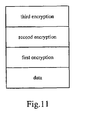
- the network server 3 Upon receipt of the data file through the transceiver 30, the network server 3 performs a third encryption on the data file with the encryptor 31. The format of the encrypted data file is shown in Figure 11 . The transceiver 30 then sends the encrypted data file to the client apparatus 1 through the network 2.
- the client apparatus 1 Upon receipt of data file through the transceiver 10, the client apparatus 1 decrypts the data file in real time with the decryptor 12 using the second and the third decryption keys, and the undecrypted data of the received data file is deleted in real time.
- the decrypted data file is stored in the temporary storage 13, and the read apparatus 14 invokes the data file from the temporary storage 13 and decrypts the data file with the embedded decryption key for the first encryption of the data file. After a user finishes utilizing the data file, the read apparatus 14 deletes the data file from the temporary storage in real time.
- the third encryption may adopt dynamic encryption (e.g., synchronous hopping code encryption) in which initial encryption and decryption keys are set in advance in the encryptor 31 of the network server 3 and the decryptor 12 of the client apparatus 1, and the encryption and decryption keys hop synchronously in both apparatuses according to the same basic information.
- dynamic encryption e.g., synchronous hopping code encryption
- the third encryption may also be performed as follows: the decryptor 12 of the client apparatus 1 randomly generates a public key and a private key and sends the public key to the encryptor 31 of the network server 3 to encrypt blocks of the data file, and then decrypts the data file in the client apparatus 1 with the corresponding private key.
- the third encryption may also be performed by the encryptor 31 on (each page of) the data file with a random cipher key.
- the encryptor 31 sends the random third cipher key to the client apparatus 1 before sending (each page of) the data file, and the data file will only be sent to the client apparatus 1 from the transceiver 30 when an acknowledgement of receipt of the key is received.
- the decryptor 12 in the client apparatus 1 decrypts the received data file with the received key in real time, saves the decrypted data in the temporary storage 13, and deletes the undecrypted data of the data and the key in real time.
- the key for the second encryption is sent from the network server 3 to the decryptor 12 of the client apparatus 1 through the network 2 for decrypting the second encryption of the data file.
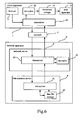
- an encryption transmission system in accordance with an embodiment of the present invention for preventing copying data resources includes a client apparatus 1, a network 2, and a server apparatus 5.
- the client apparatus 1 includes a decryptor 12, a browser 11, a temporary storage 13, a transceiver 10, and a read apparatus 14.
- the temporary storage 13 may be a storage medium with temporary storage function (e.g., a system memory or a virtual memory).
- the server apparatus 5 includes a network server 3 and a data resource server 4.
- the network server 3 includes a transceiver 30 and an encryptor 31, and the data resource server 4 includes a transceiver 41 and a data file storage 42.
- the client apparatus 1 is connected via the network 2 to the server apparatus 5 which includes the network server 3 and the data resource server 4.
- the client apparatus 1 is configured to limit the download function (i.e., can only cache the data resources received from the server apparatus 5 in the temporary storage 13 instead of any other permanent storages); the read apparatus 14 is not equipped with the functions of "save as” and/or "print”; and the network server 3 only accepts download requests from the client apparatus 1 which requests to download data resources into the temporary storage 13 of the client apparatus 1.
- Data files stored in the data file storage 42 are divided into relatively separate data sub-files according to a determined page dividing policy in advance, and every sub-file is processed through a first encryption and a second encryption.
- the format of an encrypted data sub-file is shown in Figure 9 .
- the decryption key for the first encryption of a data file is embedded in the read apparatus 14 of the client apparatus 1 and allows only a read apparatus of corresponding type (i.e., the read apparatus 14) to read the data file.
- the decryption key for the second encryption of the data file is saved in the decryptor 31 of the network server 3 and is, together with the encryption key, associated with the hardware parameters (e.g., the identification number) of the network server 3, which binds the data file with the hardware of the server at the server end.
- the hardware parameters e.g., the identification number
- the system shown in Figure 6 functions through the following process.
- a user first logs into the network data resource system at the client apparatus 1 through a user identity authentication process.
- the user searches for and finds a needed data resource file (e.g., an e-book file) using the browser 11, and clicks a corresponding button to initiate a download task by sending a data download request carrying the user identity information from the transceiver 10 of the client apparatus 1 to the network server 3.
- the network server 3 verifies and accepts the download request and sends an invoke request from the transceiver 30 to the data resource server 4 to get the corresponding data resource file.
- the data resource server 4 Upon receipt of the data resource invoke request from the network server 3, the data resource server 4 retrieves the corresponding data file from the data file storage 42, and sends the data file to the network server 3 using the transceiver 41.
- the network server 3 Upon receipt of the data file through the transceiver 30, the network server 3 performs a third encryption on the data file with the encryptor 31. The format of the encrypted data file is shown in Figure 11 .
- the transceiver 30 then sends the encrypted data file to the client apparatus 1 through the network 2.
- the client apparatus 1 Upon receipt of data units of the data file through the transceiver 10, the client apparatus 1 decrypts the data file in real time with the decryptor 12 by using the second and the third decryption keys.
- the decrypted data file is then saved in the temporary storage 13, and the undecrypted data of the received data file is deleted in real time.
- the read apparatus 14 invokes the data file from the temporary storage 13 and decrypts the data file with the embedded decryption key for the first encryption of the data file. After utilization of the data file is finished, the read apparatus 14 deletes the data file from the temporary storage 13 in real time.
- the third encryption adopts a dynamic encryption pattern (e.g., synchronous hopping code encryption) wherein initial encryption and decryption keys are set in advance in the encryptor 31 and the decryptor 12, and the encryption and decryption keys hop synchronously in both apparatuses according to the same basic information.
- a dynamic encryption pattern e.g., synchronous hopping code encryption
- the third encryption may also be performed as follows: the decryptor 12 of the client apparatus 1 randomly generates a public key and a private key, and then sends the public key to the encryptor 31 of the network server 3 to encrypt blocks of the data file, and then decrypts the data file in the client apparatus 1 with the corresponding private key.
- the third encryption may also be performed by the encryptor 31 on (each page of) the data file with a random cipher key.
- the encryptor 31 sends the random third cipher key for the client apparatus 1 before sending (each page of) the data file, and the data file will only be sent to the client apparatus 1 from the transceiver 30 when an acknowledgement of receipt of the key is received.
- the key for the second encryption is sent from the network server 3 to the decryptor 12 of the client apparatus 1 through the network 2 for decrypting the second encryption of the data file.
- the network server 3 and the data resource server 4 can be combined into a single apparatus, in which the transceiver 30 and the transceiver 41 are actually the same component of the apparatus.
- An embodiment of the present invention also provides an encryption transmission method for preventing copying data resources, as shown in Figure 7 , including the following steps.
- Step 101 a user logs in through an identity authentication process.
- the client apparatus authenticates the user identity via an authentication code or the IP address of the user, and the user is allowed to enter the data resource system only after passing the authentication. This process blocks unauthorized users from entering the system and improves the security of the data resources.
- Step 102 the authenticated user searches for needed data resources using a network resource browser.
- the browser may be Microsoft Internet Explorer or any other application through which a user may download a data file into a temporary storage (e.g., a system memory or a virtual memory).
- a temporary storage e.g., a system memory or a virtual memory.
- Step 103 the user having selected the needed data resources clicks the download button in the client apparatus to initiate a download task by sending a data resource download request to a network server; the download request carries the identity information of the client apparatus (e.g., the IP address information of the client apparatus).
- Step 104 the network server verifies and accepts the download request, and sends an invoke request to the data resource server to get the corresponding data file.
- Data resource files are saved in a data resource server in advance, and every data file is processed through two encryptions.
- the key for the first encryption is embedded in a read apparatus in the client apparatus, and the key for the second encryption is saved in a decryptor in the network server.
- the data resource server divides the requested data file according to a determined division policy (e.g., dividing by page) and sends the data file to the network server.
- Step 105 the network server decrypts the data file which has been through the second encryption (i.e. decrypts the second encryption) and performs a third encryption on the data file.
- Multiple encryption patterns can be randomly adopted for the third encryption (i.e., a data unit of the data file may be encrypted in a pattern different from the encryption pattern of the subsequent data unit) and the network server sends the encrypted data file to the client apparatus through a transceiver over the network.
- the third encryption may also adopt synchronous hopping code encryption, in which initial encryption and decryption keys are set in advance in the encryptor of the network server and the decryptor of the client apparatus, and the encryption key and decryption key hop synchronously in both apparatuses at each transmission of a data block.
- the decryptor of the client apparatus may also randomly generate a public key and a private key.
- the public key is sent to the encryptor of the network server to encrypt the data file blocks as the third encryption, and the private key is used for decrypting the data file in the client apparatus.
- the encryptor of the network server may also encrypt (each page of) the data file with a random encryption key, and send the random decryption key to the client apparatus before sending the encrypted (each page of) data file.
- the encrypted data file is sent to the client apparatus through the transceiver only when an acknowledgement of the receipt of the key is received.
- Step 106 upon receipt of the data file, the client apparatus decrypts the data file in real time with the decryption key for the third encryption, and saves the decrypted data file in the temporary storage for the read apparatus to invoke.
- the undecrypted data of the received data file is deleted in real time.
- the read apparatus decrypts the data file which has been through the first encryption with the embedded key for the first encryption.
- Step 107 having finished utilizing the data file, the read apparatus deletes the data file from the temporary storage in real time.
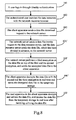
- the encryption transmission method provided by the present invention for preventing copying data resources may also include the following steps, as shown in Figure 8 .
- Step 101 a user logs in through identity authentication.
- the client apparatus authenticates the user identity via an authentication code or the IP address of the user, and the user is allowed to enter the data resource system only after passing the authentication.
- the process blocks unauthorized users from entering the system and improves the security of the data resources.
- Step 102 the authenticated user searches for needed data resources using a network resource browser.
- the browser may be Microsoft Internet Explorer or any other application which is equipped with a download function in the form of a download button that is used for downloading a data file into a temporary storage (e.g., a system memory or a virtual memory). It should be noted that the downloaded data file will not be saved in a permanent storage (e.g., a hard disk).
- a temporary storage e.g., a system memory or a virtual memory.
- Step 103 having selected the needed data resources, the user clicks the download button in the client apparatus to initiate a download task by sending a data resource download request to a network server; the download request carries the identity information of the client apparatus (e.g., the IP address information of the client apparatus).
- the identity information of the client apparatus e.g., the IP address information of the client apparatus.
- Step 104' the network server verifies and accepts the download request, and sends an invoke request to the data resource server to get the corresponding data file.
- Data resource files are saved in a data resource server and are divided into groups of sub files according to a determined division policy (e.g., divides the data source file by page) in advance. Every sub file is subjected to two encryptions. The key for the first encryption is embedded in a read apparatus in the client apparatus, and the key for the second encryption is embedded in a decryptor in the network server.
- the data resource server Upon receipt of the invoke request, the data resource server, sends the corresponding data file or a group of corresponding sub files to the network server.
- Step 105' the network server performs a third encryption on the data file on top of the first encryption and the second encryption.
- Multiple encryption patterns can be randomly adopted for the third encryption (i.e., a data file may be encrypted in a pattern different from the encryption pattern of a subsequent data file) and the network server sends the encrypted data file to the client apparatus through a transceiver over the network.
- the third encryption may also adopt a synchronous hopping code encryption, in which initial encryption and decryption keys are set in advance in the encryptor of the network server and the decryptor of the client apparatus, and the encryption key and decryption key hop synchronously in both apparatuses at each transmission of a data block.
- the decryptor of the client apparatus may also randomly generate a public key and a private key.
- the public key is sent to the encryptor of the network server to encrypt the data file blocks as the third encryption, and the private key is used for decrypting the data file in the client apparatus.
- the encryptor of the network server may also encrypt (each page of) the data file with a random encryption key, and send the random decryption key to the client apparatus before sending the encrypted (each page of the) data file.
- the encrypted data file is sent to the client apparatus through the transceiver only when an acknowledgement of the receipt of the key is received.
- Step 106' upon receipt of the data file, the client apparatus decrypts the data file in real time with the decryption keys for the second encryption and the third encryption, and saves the decrypted data file in the temporary storage for the read apparatus to invoke.
- the undecrypted data of the received data file is deleted in real time.
- the read apparatus decrypts the data file which has been through the first encryption directly with the embedded decryption key for the first encryption.
- Step 107 having finished utilizing the data file, the read apparatus deletes the data file from the temporary storage in real time.
- the encryption transmission method and system which are provided by the present invention for protecting data resources from being copied, greatly improve the security of data resources by applying three encryptions.
- the first encryption prevents the data resource file from being read with any read apparatus other than the specified read apparatus, and therefore utilization of the data resources can be controlled by controlling the use of the read apparatus.
- the second encryption binds the data resource file with hardware at the server end, and hence a copy of the data file obtained from the data resource server from its hardware storage will be unreadable.
- the dynamic third encryption ensures the security of the data file in the transmission over the network.
- the system with the server apparatus only accepts the request for downloading the data file to the temporary storage, and the read apparatus is not equipped with the functions of "print” and/or "save as". As such, the client can neither download nor save the data resources but instead can only read the data resources with the read apparatus, thus further preventing illegal utilization of the data resources to a great extent.
- the encryption transmission method and system provided by the present invention for protecting data resources from being copied are not limited to the embodiments described herein; e.g., the first encryption of data files in the data file storage may be omitted so that the type of the read apparatuses for reading the data files is not limited.
- the system on network server can be configured to disable a copy command entered to copy the data resources, and anti-copy codes may be inserted into the data files to prevent the data resources from being downloaded into the local machine of a client terminal for permanent storage which may increase the possibility of being decrypted.
Landscapes
- Engineering & Computer Science (AREA)
- Computer Security & Cryptography (AREA)
- Signal Processing (AREA)
- Computer Networks & Wireless Communication (AREA)
- Computer Hardware Design (AREA)
- General Engineering & Computer Science (AREA)
- Computing Systems (AREA)
- Software Systems (AREA)
- Theoretical Computer Science (AREA)
- Multimedia (AREA)
- Technology Law (AREA)
- Physics & Mathematics (AREA)
- General Physics & Mathematics (AREA)
- Storage Device Security (AREA)
- Information Transfer Between Computers (AREA)
Claims (18)
- Système pour accéder à un fichier de données encrypté doté d'une protection anticopie transmis sur un réseau (2), le système étant caractérisé en ce qu'il comprend :un dispositif de serveur (5) adapté pour sauvegarder des fichiers de données, un fichier de données dans le dispositif de serveur (5) étant sauvegardé en tant que fichier encrypté deux fois, une clé destinée à décrypter le fichier de données étant intégrée dans un dispositif de lecture (14), une autre clé destinée à décrypter le fichier de données étant stockée dans le dispositif de serveur (5) ; etun dispositif client (1) comprenant un dispositif de lecture (14) et une mémoire temporaire (13), le dispositif client (1) étant adapté pour envoyer une requête de téléchargement au serveur réseau (5) pour cacher le fichier de données dans la mémoire temporaire (13) du dispositif client (1), pour recevoir le fichier de données demandé en provenance du dispositif de serveur (5), et pour cacher le fichier de données dans la mémoire temporaire (13), etoù le fichier de données caché dans la mémoire temporaire (13) peut être obtenu à partir du dispositif de lecture (14) en vue d'une reconnaissance humaine du contenu du fichier de données ;le dispositif de serveur (5) ou le dispositif client (1) étant adapté pour décrypter le fichier de données en utilisant la clé stockée dans le dispositif de serveur (5),le dispositif client (1) étant autorisé à cacher le fichier de données du dispositif de serveur (5) uniquement dans la mémoire temporaire (13) et le dispositif client (1) étant adapté pour cacher le fichier de données décrypté dans la mémoire temporaire (13), etle dispositif de lecture (14) étant adapté pour décrypter le fichier de données décrypté et caché dans la mémoire temporaire (13) à l'aide de la clé intégrée dans le dispositif de lecture (14) et n'est pas doté de fonctionnalités permettant la sauvegarde et/ou l'impression.
- Système selon la revendication 1, où :le dispositif de serveur (5) peut en outre envoyer la clé stockée dans le dispositif de serveur (5) au dispositif client (1) et le dispositif client (1) peut décrypter le fichier de données en utilisant la clé reçue à partir du dispositif de serveur (5); oule dispositif de serveur (5) comprend en outre un décrypteur de dispositif de serveur (32) pour décrypter le fichier de données en utilisant la clé stockée dans le dispositif de serveur (5) avant que le dispositif client (1) n'accède au fichier de données.
- Système selon la revendication 1 ou 2, où :une partie ou la totalité de la clé stockée dans le dispositif de serveur (5) est associée à des paramètres matériels du dispositif de serveur (5).
- Système selon l'une quelconque des revendications 1 et 2,
où le dispositif de serveur comprend :un serveur réseau (3) pour encrypter plus le fichier de données avant que le dispositif client (1) n'accède au fichier de données ; etoù le dispositif client (1) comprend en outre :un émetteur-récepteur de dispositif client (30); etun décrypteur de dispositif client (12) pour décrypter le fichier de données en utilisant une clé de décryptage et en cachant le fichier de données décrypté dans la mémoire temporaire (13), le décrypteur de dispositif client (12) étant connecté de manière fonctionnelle au dispositif de serveur (5) sur le réseau (2) par l'intermédiaire de l'émetteur-récepteur du dispositif client (30) et le fichier de données pouvant être obtenu par le dispositif de lecture (14) étant le fichier de données décrypté par le décrypteur de dispositif client (12). - Système selon la revendication 4, où le décrypteur de dispositif client (12) peut en outre effacer le fichier de données encrypté en temps réel après avoir décrypté le fichier de données encrypté.
- Système selon l'une quelconque des revendications 1 à 5, où le dispositif de lecture (14) peut en outre effacer le fichier de données de la mémoire temporaire (13) en temps réel après avoir utilisé le fichier de données.
- Système selon la revendication 6, où
le serveur réseau (3) et le décrypteur de dispositif client (12) est adapté pour adopter un code de saut synchrone pour l'encryptage du fichier de données, dans lequel les clés d'encryptage et de décryptage initiales sont configurées dans le dispositif client (1) et l'encrypteur (31) au préalable, et les clés d'encryptage et de décryptage effectuent des sauts de manière synchronisée dans les deux dispositifs à chaque transmission de données ; ou
le dispositif client (1) est adapté pour générer de manière aléatoire une clé de chiffrage, pour envoyer la clé de chiffrage à l'encrypteur (31) et l'encrypteur (31) étant adapté pour encrypter un fichier de données à l'aide de la clé de chiffrage. - Système selon la revendication 7, où la clé de chiffrage comprend une clé publique et la clé de décryptage comprend une clé privée.
- Système selon la revendication 6, où le serveur réseau (3) est adapté pour envoyer une clé de chiffrage au dispositif client (1) après avoir encrypté un fichier de données à l'aide de l'encryptage dynamique.
- Système selon l'une quelconque des revendications 1 à 9 où le dispositif de serveur (5) comprend en outre un séparateur de données (44) pour séparer les fichiers de données dans la sauvegarde de fichiers de données en des sous-fichiers selon une politique de séparation de page déterminée et le fichier de données auquel accède le dispositif client (1) par l'intermédiaire du réseau (2) est un sous-fichier.
- Système selon l'une quelconque des revendications 1 à 9 où un fichier de données dans le dispositif de serveur (5) est séparé en sous-fichiers selon une politique de séparation de page déterminée et le fichier de données auquel accède le dispositif client (1) par l'intermédiaire du réseau est un sous-fichier.
- Système selon l'une quelconque des revendications 1 à 11 où la mémoire temporaire est une mémoire système ou une mémoire virtuelle.
- Procédé d'accès à un fichier de données encrypté protégé anticopie depuis un dispositif de serveur (5) ayant des fichiers de données accessibles à un dispositif client (1) qui comprend une mémoire temporaire (13) et un dispositif de lecture (14), le dispositif client (1) étant connecté de manière fonctionnelle au dispositif de serveur (5) sur un réseau (2), le procédé étant caractérisé en ce qu'il comprend les étapes consistant à :envoyer (103) une requête de téléchargement au serveur réseau (5) pour cacher le fichier de données dans la mémoire temporaire (13) du dispositif client (1) ;à la réception de la requête de téléchargement, envoyer (105), par le dispositif de serveur (5), le fichier de données demandé au dispositif client (1) ;cacher (106), par le dispositif client (1), le fichier de données dans la mémoire temporaire (13),où un fichier de données dans le dispositif de serveur (5) est sauvegardé en tant que fichier encrypté deux fois, une clé pour décrypter le fichier de données étant intégrée dans un dispositif de lecture (14) et une autre clé pour décrypter le fichier de données étant stocké dans le dispositif de serveur (5),où le fichier de données caché dans la mémoire temporaire (13) peut être obtenu par le dispositif de lecture (14) du dispositif client (1) en vue d'une reconnaissance humaine du contenu du fichier de données,où le dispositif de serveur (5) ou le dispositif client (1) décrypte le fichier de données en utilisant la clé stockée dans le dispositif de serveur (5), etoù le dispositif client (1) peut sauvegarder le fichier de données provenant du dispositif de serveur (5) uniquement dans la mémoire temporaire (13) et le dispositif client (1) cachant le fichier de données décrypté dans la mémoire temporaire (13), et le dispositif de lecture (14) décryptant le fichier de données décrypté et caché dans la mémoire temporaire (13) utilisant la clé intégrée dans le dispositif de lecture (14) et où le dispositif de lecture (14) n'est pas doté de fonctionnalités permettant la sauvegarde et/ou l'impression.
- Procédé selon la revendication 13, comprenant en outre les étapes consistant à :envoyer, par le dispositif de serveur (5), la clé stockée dans le dispositif de serveur au dispositif client (1) et à décrypter (106), par le dispositif client (1), le fichier de données en utilisant la clé reçue à partir du dispositif de serveur (5) ; oudécrypter (105), par le dispositif de serveur (5), le fichier de données en utilisant la clé stockée dans le dispositif de serveur (5) avant que le dispositif client (1) n'accède au fichier de données.
- Procédé selon l'une quelconque des revendications 13 et 14, comprenant en outre les étapes consistant à :encrypter encore plus (105), par le dispositif de serveur (5), le fichier de données avant d'envoyer le fichier de données au dispositif client (1),décrypter (106), par le dispositif client (1), le fichier de données en utilisant une clé de décryptage et cacher le fichier de données décrypté dans la mémoire temporaire (13).
- Procédé selon la revendication 15, où le fichier de données est encrypté à l'aide d'au moins un élément parmi :un modèle d'encryptage par code de saut synchrone dynamique, dans lequel des clés initiales sont configurées au préalable dans le dispositif de serveur (5) et le dispositif client (1) et les clés effectuent des sauts à chaque transmission afin d'encrypter et de décrypter le fichier de données transmis ;un modèle d'encryptage dynamique, dans lequel le dispositif client (1) génère de manière aléatoire une clé publique et une clé privée et envoie la clé publique au dispositif de serveur (5) pour encrypter le fichier de données et décrypte le fichier de données dans le dispositif client (1) à l'aide de la clé privée ; etune clé de chiffrage aléatoire, la clé de chiffrage étant envoyée au dispositif client (1).
- Procédé selon l'une quelconque des revendications 13 à 16, comprenant en outre au moins une étape parmi les étapes suivantes, consistant à :effacer, par le dispositif client (1) en temps réel, le fichier de données encrypter de la mémoire temporaire (13) après le décryptage du fichier de données encrypté ;effacer, par le dispositif de lecture (14) en temps réel, le fichier de données caché dans la mémoire temporaire (13) après utilisation du fichier de données.
- Procédé selon la revendication 13, comprenant en outre l'étape consistant à :séparer (104), par le dispositif de serveur (5), les fichiers de données dans la mémoire de fichiers de données (42) en des sous-fichiers selon une politique de séparation de page déterminée ; etoù le fichier de données envoyé au dispositif client (1) est un sous-fichier.
Applications Claiming Priority (2)
| Application Number | Priority Date | Filing Date | Title |
|---|---|---|---|
| CN200510117041XA CN1956449B (zh) | 2005-10-28 | 2005-10-28 | 数据资源防复制加密传输方法及设备系统 |
| PCT/CN2006/002838 WO2007048335A1 (fr) | 2005-10-28 | 2006-10-24 | Méthode et système d’équipement de transmission codée empêchant la copie de ressources de données |
Publications (3)
| Publication Number | Publication Date |
|---|---|
| EP1944905A1 EP1944905A1 (fr) | 2008-07-16 |
| EP1944905A4 EP1944905A4 (fr) | 2009-01-14 |
| EP1944905B1 true EP1944905B1 (fr) | 2015-10-14 |
Family
ID=37967412
Family Applications (1)
| Application Number | Title | Priority Date | Filing Date |
|---|---|---|---|
| EP06805045.9A Not-in-force EP1944905B1 (fr) | 2005-10-28 | 2006-10-24 | Méthode et système d équipement de transmission codée empêchant la copie de ressources de données |
Country Status (4)
| Country | Link |
|---|---|
| US (1) | US8464049B2 (fr) |
| EP (1) | EP1944905B1 (fr) |
| CN (1) | CN1956449B (fr) |
| WO (1) | WO2007048335A1 (fr) |
Families Citing this family (26)
| Publication number | Priority date | Publication date | Assignee | Title |
|---|---|---|---|---|
| JP4396737B2 (ja) * | 2007-07-17 | 2010-01-13 | ソニー株式会社 | 情報処理装置、コンテンツ提供システム、および情報処理方法、並びにコンピュータ・プログラム |
| CN101106451B (zh) * | 2007-08-17 | 2012-07-11 | 杭州华三通信技术有限公司 | 一种数据的传送方法和设备 |
| US8787929B2 (en) * | 2009-02-09 | 2014-07-22 | International Business Machines Corporation | System and methods for providing location information using location based queues |
| US8812451B2 (en) | 2009-03-11 | 2014-08-19 | Microsoft Corporation | Programming model for synchronizing browser caches across devices and web services |
| US9680964B2 (en) * | 2009-03-11 | 2017-06-13 | Microsoft Technology Licensing, Llc | Programming model for installing and distributing occasionally connected applications |
| CN102055781A (zh) * | 2009-10-30 | 2011-05-11 | 马杰 | 一种通过网络分发数字文件的方法 |
| JP2011150693A (ja) * | 2009-12-22 | 2011-08-04 | Tani Electronics Corp | 情報管理システム、情報管理の方法および装置、暗号化の方法およびプログラム |
| EP2943038A1 (fr) * | 2010-10-08 | 2015-11-11 | Nokia Solutions and Networks Oy | Appareil et procede de communication |
| US10102242B2 (en) * | 2010-12-21 | 2018-10-16 | Sybase, Inc. | Bulk initial download of mobile databases |
| CN102591802A (zh) * | 2011-01-05 | 2012-07-18 | 广州市国迈科技有限公司 | 一种所存储文件可被打开但不能被复制的u盘 |
| CN102708335A (zh) * | 2012-05-05 | 2012-10-03 | 南京赛孚科技有限公司 | 一种涉密文件的保护方法 |
| US8918651B2 (en) * | 2012-05-14 | 2014-12-23 | International Business Machines Corporation | Cryptographic erasure of selected encrypted data |
| CN103401885B (zh) * | 2013-08-19 | 2017-04-26 | 北京时代亿信科技股份有限公司 | 网络文档权限控制方法、装置及系统 |
| CN105024970B (zh) * | 2014-04-18 | 2018-07-13 | 中国电信股份有限公司 | 移动应用数据拷贝的控制方法、系统、客户端和服务器 |
| CN104200186B (zh) * | 2014-08-22 | 2017-06-23 | 深圳市兴通物联科技有限公司 | 防死机的方法及激光条码扫描平台 |
| CN104268480A (zh) * | 2014-10-10 | 2015-01-07 | 重庆邮电大学 | 一种xml配置文件安全保护处理方法及系统 |
| CN104537313B (zh) * | 2014-12-04 | 2017-08-08 | 阔地教育科技有限公司 | 一种数据保护方法、终端和服务器 |
| CN104573551A (zh) * | 2014-12-25 | 2015-04-29 | 广东欧珀移动通信有限公司 | 一种文件处理的方法及移动终端 |
| US9483477B2 (en) * | 2015-01-19 | 2016-11-01 | Sas Institute Inc. | Automated data intake system |
| CN108632369A (zh) * | 2018-04-28 | 2018-10-09 | 杰思敏(上海)信息科技有限公司 | 一种船舶电子图纸安全显示管理方法 |
| CN109981338A (zh) * | 2019-02-13 | 2019-07-05 | 上海易点时空网络有限公司 | 代码拉取的告警方法、装置及存储介质 |
| US12047373B2 (en) * | 2019-11-05 | 2024-07-23 | Salesforce.Com, Inc. | Monitoring resource utilization of an online system based on browser attributes collected for a session |
| CN112380292B (zh) * | 2020-12-07 | 2023-11-17 | 厦门熵基科技有限公司 | 一种生物模板数据同步方法、装置、设备和存储介质 |
| CN113221134B (zh) * | 2021-04-09 | 2024-03-22 | 北京复兴华创技术有限公司 | 离线安全数据交换方法及设备 |
| US12047778B2 (en) * | 2021-08-11 | 2024-07-23 | Texas Instruments Incorporated | Wireless battery management system setup |
| CN115632902B (zh) * | 2022-09-20 | 2024-09-06 | 深圳市同芯智控技术有限公司 | 一种基于EtherCAT总线的数据网络系统 |
Family Cites Families (8)
| Publication number | Priority date | Publication date | Assignee | Title |
|---|---|---|---|---|
| JP4614377B2 (ja) * | 2000-03-01 | 2011-01-19 | キヤノン株式会社 | 暗号化データ管理システム及び方法、記憶媒体 |
| CN1141678C (zh) * | 2000-08-31 | 2004-03-10 | 优硕资讯科技股份有限公司 | 可防止电子文件盗版的方法及其系统 |
| US7603703B2 (en) * | 2001-04-12 | 2009-10-13 | International Business Machines Corporation | Method and system for controlled distribution of application code and content data within a computer network |
| US20020161997A1 (en) * | 2001-04-26 | 2002-10-31 | Fujitsu Limited | Content distribution system |
| US20020184490A1 (en) * | 2001-06-05 | 2002-12-05 | Storage Technology Corporation | Anti-piracy network storage device |
| CN1462940A (zh) * | 2002-05-29 | 2003-12-24 | 明日工作室股份有限公司 | 一种浏览器解密系统及方法 |
| JP2004171110A (ja) * | 2002-11-18 | 2004-06-17 | Mitsubishi Electric Corp | コンテンツ再生装置、コンテンツ再生制御プログラム及びコンテンツ再生制御プログラムを記録した記録媒体 |
| EP1580644A3 (fr) | 2004-03-15 | 2005-11-09 | Yamaha Corporation | Dispositiv électronique musical pour enregistrer et reproduire du contenu musical |
-
2005
- 2005-10-28 CN CN200510117041XA patent/CN1956449B/zh not_active Expired - Fee Related
-
2006
- 2006-10-24 WO PCT/CN2006/002838 patent/WO2007048335A1/fr not_active Ceased
- 2006-10-24 EP EP06805045.9A patent/EP1944905B1/fr not_active Not-in-force
-
2008
- 2008-04-25 US US12/109,484 patent/US8464049B2/en not_active Expired - Fee Related
Also Published As
| Publication number | Publication date |
|---|---|
| WO2007048335A1 (fr) | 2007-05-03 |
| EP1944905A1 (fr) | 2008-07-16 |
| EP1944905A4 (fr) | 2009-01-14 |
| CN1956449A (zh) | 2007-05-02 |
| US8464049B2 (en) | 2013-06-11 |
| US20090319785A1 (en) | 2009-12-24 |
| CN1956449B (zh) | 2011-05-18 |
Similar Documents
| Publication | Publication Date | Title |
|---|---|---|
| US8464049B2 (en) | Method and system of accessing copy-prevented encrypted data resources over a network | |
| KR101067566B1 (ko) | 콘텐츠 배포 시스템에서 다수의 콘텐츠 단편을 갖는 미디어 저장 구조의 사용 | |
| CA2405489C (fr) | Systeme securise d'octroi de licence concernant un contenu numerique et procede associe | |
| US7975312B2 (en) | Token passing technique for media playback devices | |
| US8934624B2 (en) | Decoupling rights in a digital content unit from download | |
| US8407466B2 (en) | Controlling download and playback of media content | |
| US20040022391A1 (en) | Digital content security system and method | |
| US20020046350A1 (en) | Method and system for establishing an audit trail to protect objects distributed over a network | |
| US6711553B1 (en) | Method and apparatus for digital content copy protection | |
| US20100250926A1 (en) | Method of digital rights management about a compressed file | |
| CN1592876A (zh) | 内容分发应用中数字权利管理的方法和系统 | |
| WO2004012378A2 (fr) | Systeme et procede de securite de contenu numerique | |
| EP2466511B1 (fr) | Structures de stockage de média pour le stockage de contenu et dispositifs pour l'utilisation de telles structures | |
| US10574458B2 (en) | Media storage structures for storing content, devices for using such structures, systems for distributing such structures | |
| JP2002041347A (ja) | 情報提供システムおよび装置 | |
| CN103237011A (zh) | 数字内容加密传送方法以及服务器端 | |
| CN1559026A (zh) | 防止非法使用信息的方法和装置 | |
| JP2002099514A (ja) | デジタルデータ不正使用防止方法、デジタルデータ不正使用防止システム、登録装置、配信装置、再生装置及び記録媒体 | |
| CN110348177B (zh) | 媒体文件的版权保护方法及其系统 | |
| EP4455908A1 (fr) | Procédé de réception de contenu dans un dispositif utilisateur sur un cdn | |
| KR100995439B1 (ko) | 스트리밍 데이터 보호 장치 및 그 방법과 그를 이용한스트리밍 보안 시스템 | |
| KR20010079245A (ko) | 스트리밍 서비스를 제공하는데 있어서의 보안 유지 시스템및 방법 | |
| Server | 2.1 Design Goals |
Legal Events
| Date | Code | Title | Description |
|---|---|---|---|
| PUAI | Public reference made under article 153(3) epc to a published international application that has entered the european phase |
Free format text: ORIGINAL CODE: 0009012 |
|
| 17P | Request for examination filed |
Effective date: 20080519 |
|
| AK | Designated contracting states |
Kind code of ref document: A1 Designated state(s): AT BE BG CH CY CZ DE DK EE ES FI FR GB GR HU IE IS IT LI LT LU LV MC NL PL PT RO SE SI SK TR |
|
| A4 | Supplementary search report drawn up and despatched |
Effective date: 20081217 |
|
| RIC1 | Information provided on ipc code assigned before grant |
Ipc: H04L 29/06 20060101AFI20081211BHEP Ipc: G06F 21/00 20060101ALI20081211BHEP Ipc: H04L 9/14 20060101ALI20081211BHEP |
|
| 17Q | First examination report despatched |
Effective date: 20100111 |
|
| DAX | Request for extension of the european patent (deleted) | ||
| REG | Reference to a national code |
Ref country code: DE Ref legal event code: R079 Ref document number: 602006046965 Country of ref document: DE Free format text: PREVIOUS MAIN CLASS: H04L0009140000 Ipc: G06F0021100000 |
|
| GRAP | Despatch of communication of intention to grant a patent |
Free format text: ORIGINAL CODE: EPIDOSNIGR1 |
|
| RIC1 | Information provided on ipc code assigned before grant |
Ipc: G06F 21/10 20130101AFI20150421BHEP Ipc: H04L 29/06 20060101ALI20150421BHEP Ipc: H04L 9/08 20060101ALI20150421BHEP |
|
| RAP1 | Party data changed (applicant data changed or rights of an application transferred) |
Owner name: BEIJING SURSEN INTERNATIONAL INFORMATION TECHNOLOG |
|
| INTG | Intention to grant announced |
Effective date: 20150512 |
|
| GRAS | Grant fee paid |
Free format text: ORIGINAL CODE: EPIDOSNIGR3 |
|
| GRAA | (expected) grant |
Free format text: ORIGINAL CODE: 0009210 |
|
| AK | Designated contracting states |
Kind code of ref document: B1 Designated state(s): AT BE BG CH CY CZ DE DK EE ES FI FR GB GR HU IE IS IT LI LT LU LV MC NL PL PT RO SE SI SK TR |
|
| REG | Reference to a national code |
Ref country code: GB Ref legal event code: FG4D |
|
| REG | Reference to a national code |
Ref country code: AT Ref legal event code: REF Ref document number: 755614 Country of ref document: AT Kind code of ref document: T Effective date: 20151015 Ref country code: CH Ref legal event code: EP |
|
| REG | Reference to a national code |
Ref country code: FR Ref legal event code: PLFP Year of fee payment: 10 |
|
| REG | Reference to a national code |
Ref country code: IE Ref legal event code: FG4D |
|
| REG | Reference to a national code |
Ref country code: DE Ref legal event code: R096 Ref document number: 602006046965 Country of ref document: DE |
|
| REG | Reference to a national code |
Ref country code: NL Ref legal event code: MP Effective date: 20151014 |
|
| REG | Reference to a national code |
Ref country code: LT Ref legal event code: MG4D |
|
| REG | Reference to a national code |
Ref country code: AT Ref legal event code: MK05 Ref document number: 755614 Country of ref document: AT Kind code of ref document: T Effective date: 20151014 |
|
| PG25 | Lapsed in a contracting state [announced via postgrant information from national office to epo] |
Ref country code: IS Free format text: LAPSE BECAUSE OF FAILURE TO SUBMIT A TRANSLATION OF THE DESCRIPTION OR TO PAY THE FEE WITHIN THE PRESCRIBED TIME-LIMIT Effective date: 20160214 Ref country code: IT Free format text: LAPSE BECAUSE OF FAILURE TO SUBMIT A TRANSLATION OF THE DESCRIPTION OR TO PAY THE FEE WITHIN THE PRESCRIBED TIME-LIMIT Effective date: 20151014 Ref country code: LT Free format text: LAPSE BECAUSE OF FAILURE TO SUBMIT A TRANSLATION OF THE DESCRIPTION OR TO PAY THE FEE WITHIN THE PRESCRIBED TIME-LIMIT Effective date: 20151014 Ref country code: ES Free format text: LAPSE BECAUSE OF FAILURE TO SUBMIT A TRANSLATION OF THE DESCRIPTION OR TO PAY THE FEE WITHIN THE PRESCRIBED TIME-LIMIT Effective date: 20151014 Ref country code: NL Free format text: LAPSE BECAUSE OF FAILURE TO SUBMIT A TRANSLATION OF THE DESCRIPTION OR TO PAY THE FEE WITHIN THE PRESCRIBED TIME-LIMIT Effective date: 20151014 |
|
| PG25 | Lapsed in a contracting state [announced via postgrant information from national office to epo] |
Ref country code: FI Free format text: LAPSE BECAUSE OF FAILURE TO SUBMIT A TRANSLATION OF THE DESCRIPTION OR TO PAY THE FEE WITHIN THE PRESCRIBED TIME-LIMIT Effective date: 20151014 Ref country code: GR Free format text: LAPSE BECAUSE OF FAILURE TO SUBMIT A TRANSLATION OF THE DESCRIPTION OR TO PAY THE FEE WITHIN THE PRESCRIBED TIME-LIMIT Effective date: 20160115 Ref country code: PT Free format text: LAPSE BECAUSE OF FAILURE TO SUBMIT A TRANSLATION OF THE DESCRIPTION OR TO PAY THE FEE WITHIN THE PRESCRIBED TIME-LIMIT Effective date: 20160215 Ref country code: PL Free format text: LAPSE BECAUSE OF FAILURE TO SUBMIT A TRANSLATION OF THE DESCRIPTION OR TO PAY THE FEE WITHIN THE PRESCRIBED TIME-LIMIT Effective date: 20151014 Ref country code: SE Free format text: LAPSE BECAUSE OF FAILURE TO SUBMIT A TRANSLATION OF THE DESCRIPTION OR TO PAY THE FEE WITHIN THE PRESCRIBED TIME-LIMIT Effective date: 20151014 Ref country code: AT Free format text: LAPSE BECAUSE OF FAILURE TO SUBMIT A TRANSLATION OF THE DESCRIPTION OR TO PAY THE FEE WITHIN THE PRESCRIBED TIME-LIMIT Effective date: 20151014 Ref country code: LV Free format text: LAPSE BECAUSE OF FAILURE TO SUBMIT A TRANSLATION OF THE DESCRIPTION OR TO PAY THE FEE WITHIN THE PRESCRIBED TIME-LIMIT Effective date: 20151014 |
|
| REG | Reference to a national code |
Ref country code: CH Ref legal event code: PL |
|
| REG | Reference to a national code |
Ref country code: DE Ref legal event code: R097 Ref document number: 602006046965 Country of ref document: DE |
|
| REG | Reference to a national code |
Ref country code: IE Ref legal event code: MM4A |
|
| PG25 | Lapsed in a contracting state [announced via postgrant information from national office to epo] |
Ref country code: MC Free format text: LAPSE BECAUSE OF FAILURE TO SUBMIT A TRANSLATION OF THE DESCRIPTION OR TO PAY THE FEE WITHIN THE PRESCRIBED TIME-LIMIT Effective date: 20151014 Ref country code: LI Free format text: LAPSE BECAUSE OF NON-PAYMENT OF DUE FEES Effective date: 20151031 Ref country code: CZ Free format text: LAPSE BECAUSE OF FAILURE TO SUBMIT A TRANSLATION OF THE DESCRIPTION OR TO PAY THE FEE WITHIN THE PRESCRIBED TIME-LIMIT Effective date: 20151014 Ref country code: CH Free format text: LAPSE BECAUSE OF NON-PAYMENT OF DUE FEES Effective date: 20151031 |
|
| PLBE | No opposition filed within time limit |
Free format text: ORIGINAL CODE: 0009261 |
|
| STAA | Information on the status of an ep patent application or granted ep patent |
Free format text: STATUS: NO OPPOSITION FILED WITHIN TIME LIMIT |
|
| PG25 | Lapsed in a contracting state [announced via postgrant information from national office to epo] |
Ref country code: SK Free format text: LAPSE BECAUSE OF FAILURE TO SUBMIT A TRANSLATION OF THE DESCRIPTION OR TO PAY THE FEE WITHIN THE PRESCRIBED TIME-LIMIT Effective date: 20151014 Ref country code: DK Free format text: LAPSE BECAUSE OF FAILURE TO SUBMIT A TRANSLATION OF THE DESCRIPTION OR TO PAY THE FEE WITHIN THE PRESCRIBED TIME-LIMIT Effective date: 20151014 Ref country code: EE Free format text: LAPSE BECAUSE OF FAILURE TO SUBMIT A TRANSLATION OF THE DESCRIPTION OR TO PAY THE FEE WITHIN THE PRESCRIBED TIME-LIMIT Effective date: 20151014 Ref country code: RO Free format text: LAPSE BECAUSE OF FAILURE TO SUBMIT A TRANSLATION OF THE DESCRIPTION OR TO PAY THE FEE WITHIN THE PRESCRIBED TIME-LIMIT Effective date: 20151014 |
|
| 26N | No opposition filed |
Effective date: 20160715 |
|
| PG25 | Lapsed in a contracting state [announced via postgrant information from national office to epo] |
Ref country code: IE Free format text: LAPSE BECAUSE OF NON-PAYMENT OF DUE FEES Effective date: 20151024 |
|
| REG | Reference to a national code |
Ref country code: FR Ref legal event code: PLFP Year of fee payment: 11 |
|
| PG25 | Lapsed in a contracting state [announced via postgrant information from national office to epo] |
Ref country code: SI Free format text: LAPSE BECAUSE OF FAILURE TO SUBMIT A TRANSLATION OF THE DESCRIPTION OR TO PAY THE FEE WITHIN THE PRESCRIBED TIME-LIMIT Effective date: 20151014 |
|
| PG25 | Lapsed in a contracting state [announced via postgrant information from national office to epo] |
Ref country code: BE Free format text: LAPSE BECAUSE OF FAILURE TO SUBMIT A TRANSLATION OF THE DESCRIPTION OR TO PAY THE FEE WITHIN THE PRESCRIBED TIME-LIMIT Effective date: 20151014 |
|
| PG25 | Lapsed in a contracting state [announced via postgrant information from national office to epo] |
Ref country code: HU Free format text: LAPSE BECAUSE OF FAILURE TO SUBMIT A TRANSLATION OF THE DESCRIPTION OR TO PAY THE FEE WITHIN THE PRESCRIBED TIME-LIMIT; INVALID AB INITIO Effective date: 20061024 Ref country code: BG Free format text: LAPSE BECAUSE OF FAILURE TO SUBMIT A TRANSLATION OF THE DESCRIPTION OR TO PAY THE FEE WITHIN THE PRESCRIBED TIME-LIMIT Effective date: 20151014 |
|
| PG25 | Lapsed in a contracting state [announced via postgrant information from national office to epo] |
Ref country code: CY Free format text: LAPSE BECAUSE OF FAILURE TO SUBMIT A TRANSLATION OF THE DESCRIPTION OR TO PAY THE FEE WITHIN THE PRESCRIBED TIME-LIMIT Effective date: 20151014 |
|
| PG25 | Lapsed in a contracting state [announced via postgrant information from national office to epo] |
Ref country code: TR Free format text: LAPSE BECAUSE OF FAILURE TO SUBMIT A TRANSLATION OF THE DESCRIPTION OR TO PAY THE FEE WITHIN THE PRESCRIBED TIME-LIMIT Effective date: 20151014 |
|
| REG | Reference to a national code |
Ref country code: FR Ref legal event code: PLFP Year of fee payment: 12 |
|
| PG25 | Lapsed in a contracting state [announced via postgrant information from national office to epo] |
Ref country code: LU Free format text: LAPSE BECAUSE OF NON-PAYMENT OF DUE FEES Effective date: 20151024 |
|
| REG | Reference to a national code |
Ref country code: FR Ref legal event code: PLFP Year of fee payment: 13 |
|
| PGFP | Annual fee paid to national office [announced via postgrant information from national office to epo] |
Ref country code: DE Payment date: 20181009 Year of fee payment: 13 |
|
| REG | Reference to a national code |
Ref country code: DE Ref legal event code: R119 Ref document number: 602006046965 Country of ref document: DE |
|
| PG25 | Lapsed in a contracting state [announced via postgrant information from national office to epo] |
Ref country code: DE Free format text: LAPSE BECAUSE OF NON-PAYMENT OF DUE FEES Effective date: 20200501 |
|
| PGFP | Annual fee paid to national office [announced via postgrant information from national office to epo] |
Ref country code: FR Payment date: 20200930 Year of fee payment: 15 |
|
| PGFP | Annual fee paid to national office [announced via postgrant information from national office to epo] |
Ref country code: GB Payment date: 20201015 Year of fee payment: 15 |
|
| GBPC | Gb: european patent ceased through non-payment of renewal fee |
Effective date: 20211024 |
|
| PG25 | Lapsed in a contracting state [announced via postgrant information from national office to epo] |
Ref country code: GB Free format text: LAPSE BECAUSE OF NON-PAYMENT OF DUE FEES Effective date: 20211024 |
|
| PG25 | Lapsed in a contracting state [announced via postgrant information from national office to epo] |
Ref country code: FR Free format text: LAPSE BECAUSE OF NON-PAYMENT OF DUE FEES Effective date: 20211031 |