EP1945626B1 - Derives de l'imidazole utilises comme agonistes des recepteurs adrenergiques alpha-2c fonctionnellement selectifs - Google Patents
Derives de l'imidazole utilises comme agonistes des recepteurs adrenergiques alpha-2c fonctionnellement selectifs Download PDFInfo
- Publication number
- EP1945626B1 EP1945626B1 EP06789950A EP06789950A EP1945626B1 EP 1945626 B1 EP1945626 B1 EP 1945626B1 EP 06789950 A EP06789950 A EP 06789950A EP 06789950 A EP06789950 A EP 06789950A EP 1945626 B1 EP1945626 B1 EP 1945626B1
- Authority
- EP
- European Patent Office
- Prior art keywords
- compound
- group
- mmol
- alkyl
- pharmaceutically acceptable
- Prior art date
- Legal status (The legal status is an assumption and is not a legal conclusion. Google has not performed a legal analysis and makes no representation as to the accuracy of the status listed.)
- Active
Links
- 0 CN(*)c(cc1N(Cc2c[n]cn2)CCc1c1)c1F Chemical compound CN(*)c(cc1N(Cc2c[n]cn2)CCc1c1)c1F 0.000 description 18
- USFLDIRNDLVICR-UHFFFAOYSA-N Brc1cc(N(Cc(nc2)c[n]2[Tl])CC2)c2cc1 Chemical compound Brc1cc(N(Cc(nc2)c[n]2[Tl])CC2)c2cc1 USFLDIRNDLVICR-UHFFFAOYSA-N 0.000 description 1
- MAWGHOPSCKCTPA-UHFFFAOYSA-N Brc1ccc(cc[nH]2)c2c1 Chemical compound Brc1ccc(cc[nH]2)c2c1 MAWGHOPSCKCTPA-UHFFFAOYSA-N 0.000 description 1
- DVEYRYVXSZYQKA-UHFFFAOYSA-N CC(C)(C)OC(N(CC1)c2c1ccc(NC)c2)=O Chemical compound CC(C)(C)OC(N(CC1)c2c1ccc(NC)c2)=O DVEYRYVXSZYQKA-UHFFFAOYSA-N 0.000 description 1
- CJUJLYNWCWCRLV-UHFFFAOYSA-N CC(C)(C)OC(N1c2cc(N(C)C(NC)=O)ccc2CC1)=O Chemical compound CC(C)(C)OC(N1c2cc(N(C)C(NC)=O)ccc2CC1)=O CJUJLYNWCWCRLV-UHFFFAOYSA-N 0.000 description 1
- YBGJZMRPZWZZBI-UHFFFAOYSA-N CC(CO)c1c(CCN2Cc3c[nH]cn3)c2cc(S(C)(=O)=O)c1 Chemical compound CC(CO)c1c(CCN2Cc3c[nH]cn3)c2cc(S(C)(=O)=O)c1 YBGJZMRPZWZZBI-UHFFFAOYSA-N 0.000 description 1
- KTGHYQAUDOOAQP-UHFFFAOYSA-N CC(Nc(cc1N(Cc2c[nH]cn2)CCc1c1)c1F)=O Chemical compound CC(Nc(cc1N(Cc2c[nH]cn2)CCc1c1)c1F)=O KTGHYQAUDOOAQP-UHFFFAOYSA-N 0.000 description 1
- OTSAGCFSDHOMLH-UHFFFAOYSA-N CC(Nc1ccc(CCCN2Cc3c[nH]cn3)c2c1)=O Chemical compound CC(Nc1ccc(CCCN2Cc3c[nH]cn3)c2c1)=O OTSAGCFSDHOMLH-UHFFFAOYSA-N 0.000 description 1
- VPYGPXBHDBAHPW-UHFFFAOYSA-N CC(Nc1ccc(CCN2Cc3c[nH]cn3)c2c1)=O Chemical compound CC(Nc1ccc(CCN2Cc3c[nH]cn3)c2c1)=O VPYGPXBHDBAHPW-UHFFFAOYSA-N 0.000 description 1
- IDHPEBUJPWGCNL-UHFFFAOYSA-N CCC(Nc1cc(N(Cc2c[nH]cn2)CC2)c2cc1)=O Chemical compound CCC(Nc1cc(N(Cc2c[nH]cn2)CC2)c2cc1)=O IDHPEBUJPWGCNL-UHFFFAOYSA-N 0.000 description 1
- HTSLXTCSGPUVSO-UHFFFAOYSA-N CCCCCCCCOC(N(C)c1cc(N(Cc2c[nH]cn2)CC2)c2cc1)=O Chemical compound CCCCCCCCOC(N(C)c1cc(N(Cc2c[nH]cn2)CC2)c2cc1)=O HTSLXTCSGPUVSO-UHFFFAOYSA-N 0.000 description 1
- HHQSFIAHNGYWPA-KRWDZBQOSA-N CCCC[C@@H](C(N(C)c1cc(N(Cc2c[nH]cn2)CC2)c2cc1)=O)N Chemical compound CCCC[C@@H](C(N(C)c1cc(N(Cc2c[nH]cn2)CC2)c2cc1)=O)N HHQSFIAHNGYWPA-KRWDZBQOSA-N 0.000 description 1
- BDNSPXODGSVDFX-UHFFFAOYSA-N CCN(C(NOC)=O)c1ccc(CCN2C(OC(C)(C)C)=O)c2c1 Chemical compound CCN(C(NOC)=O)c1ccc(CCN2C(OC(C)(C)C)=O)c2c1 BDNSPXODGSVDFX-UHFFFAOYSA-N 0.000 description 1
- GQRVSNAPXSBHRI-UHFFFAOYSA-N CCN(C([n]1cncc1)=O)c1cc(N(CC2)C(OC(C)(C)C)=O)c2cc1 Chemical compound CCN(C([n]1cncc1)=O)c1cc(N(CC2)C(OC(C)(C)C)=O)c2cc1 GQRVSNAPXSBHRI-UHFFFAOYSA-N 0.000 description 1
- XVEXROORCSXAAG-UHFFFAOYSA-N CN(C(CC(C(N1)=O)NC1=O)=O)c1ccc(CCN2Cc3c[nH]cn3)c2c1 Chemical compound CN(C(CC(C(N1)=O)NC1=O)=O)c1ccc(CCN2Cc3c[nH]cn3)c2c1 XVEXROORCSXAAG-UHFFFAOYSA-N 0.000 description 1
- QKHJBBWCUBGWRK-UHFFFAOYSA-N CN(C(NCC=C)=O)c1ccc(CCN2Cc3c[nH]cn3)c2c1 Chemical compound CN(C(NCC=C)=O)c1ccc(CCN2Cc3c[nH]cn3)c2c1 QKHJBBWCUBGWRK-UHFFFAOYSA-N 0.000 description 1
- ANSRJJFXHUVSJA-UHFFFAOYSA-N CN(C(Oc1ccccc1)=O)c1cc(N(Cc2c[nH]cn2)CC2)c2cc1 Chemical compound CN(C(Oc1ccccc1)=O)c1cc(N(Cc2c[nH]cn2)CC2)c2cc1 ANSRJJFXHUVSJA-UHFFFAOYSA-N 0.000 description 1
- IBUVNOFXMZPDOY-QFIPXVFZSA-N CNC([S@](c(cc1N(Cc2c[nH]cn2)CCc1c1)c1Br)=O)=O Chemical compound CNC([S@](c(cc1N(Cc2c[nH]cn2)CCc1c1)c1Br)=O)=O IBUVNOFXMZPDOY-QFIPXVFZSA-N 0.000 description 1
- IVBXJRHIMBPNKD-UHFFFAOYSA-N CNS(c(cc1NCCc1c1)c1Br)(=O)=O Chemical compound CNS(c(cc1NCCc1c1)c1Br)(=O)=O IVBXJRHIMBPNKD-UHFFFAOYSA-N 0.000 description 1
- FOXPPPDZNLYTJX-UHFFFAOYSA-N CNS(c1cc(N(Cc2c[nH]cn2)CC2)c2cc1)(=O)=O Chemical compound CNS(c1cc(N(Cc2c[nH]cn2)CC2)c2cc1)(=O)=O FOXPPPDZNLYTJX-UHFFFAOYSA-N 0.000 description 1
- GXQXQJUREOKWIW-UHFFFAOYSA-N COC(Cc(c([N+]([O-])=O)c1)cc(F)c1[N+]([O-])=O)=O Chemical compound COC(Cc(c([N+]([O-])=O)c1)cc(F)c1[N+]([O-])=O)=O GXQXQJUREOKWIW-UHFFFAOYSA-N 0.000 description 1
- QVHTWNRCHZVBEV-UHFFFAOYSA-O COC(Nc(cc(c(cc1)c2)[n]1C(C(F)(F)F)=[OH+])c2OC)=O Chemical compound COC(Nc(cc(c(cc1)c2)[n]1C(C(F)(F)F)=[OH+])c2OC)=O QVHTWNRCHZVBEV-UHFFFAOYSA-O 0.000 description 1
- FYVXMHBGPWYZHO-UHFFFAOYSA-N COC(Nc1ccc(CCN2Cc3c[nH]cn3)c2c1)O Chemical compound COC(Nc1ccc(CCN2Cc3c[nH]cn3)c2c1)O FYVXMHBGPWYZHO-UHFFFAOYSA-N 0.000 description 1
- KNJOCGILEABMHW-UHFFFAOYSA-N COC(Nc1ccc2[nH]cc(Cc3c[nH]cn3)c2c1)=O Chemical compound COC(Nc1ccc2[nH]cc(Cc3c[nH]cn3)c2c1)=O KNJOCGILEABMHW-UHFFFAOYSA-N 0.000 description 1
- VLFXRFRDOIDLEU-UHFFFAOYSA-N COC(c1cc(N(Cc2c[nH]cn2)CC2)c2cc1)=O Chemical compound COC(c1cc(N(Cc2c[nH]cn2)CC2)c2cc1)=O VLFXRFRDOIDLEU-UHFFFAOYSA-N 0.000 description 1
- XMARPRBSCBQAQE-UHFFFAOYSA-N COC(c1cc(NC(OC)=O)cc2c1cc[nH]2)=O Chemical compound COC(c1cc(NC(OC)=O)cc2c1cc[nH]2)=O XMARPRBSCBQAQE-UHFFFAOYSA-N 0.000 description 1
- IVFIWGSRKYSLLR-UHFFFAOYSA-N COC(c1cc(NCC2)c2cc1)=O Chemical compound COC(c1cc(NCC2)c2cc1)=O IVFIWGSRKYSLLR-UHFFFAOYSA-N 0.000 description 1
- JCCWGJSBIYKYLS-UHFFFAOYSA-N COc(c(SC)c1)ccc1[N+]([O-])=O Chemical compound COc(c(SC)c1)ccc1[N+]([O-])=O JCCWGJSBIYKYLS-UHFFFAOYSA-N 0.000 description 1
- NIPDVSLAMPAWTP-UHFFFAOYSA-N COc(ccc([N+]([O-])=O)c1)c1N Chemical compound COc(ccc([N+]([O-])=O)c1)c1N NIPDVSLAMPAWTP-UHFFFAOYSA-N 0.000 description 1
- YVPTVSOHKTZRBW-UHFFFAOYSA-N CS(c1cc(NCC2)c2cc1)(=O)=O Chemical compound CS(c1cc(NCC2)c2cc1)(=O)=O YVPTVSOHKTZRBW-UHFFFAOYSA-N 0.000 description 1
- DSXUTUMPWBBNSD-UHFFFAOYSA-N CS(c1cc([n](cc2)O)c2cc1)(=O)=O Chemical compound CS(c1cc([n](cc2)O)c2cc1)(=O)=O DSXUTUMPWBBNSD-UHFFFAOYSA-N 0.000 description 1
- KRWPAWKSJGTHNH-UHFFFAOYSA-N CS(c1ccc(CCN2CC(N3)=CNC3=O)c2c1)(=O)=O Chemical compound CS(c1ccc(CCN2CC(N3)=CNC3=O)c2c1)(=O)=O KRWPAWKSJGTHNH-UHFFFAOYSA-N 0.000 description 1
- SVBVZVQNIMOCPM-UHFFFAOYSA-N C[n](cc(Cc1c[nH]cn1)c1c2)c1ccc2NC(OC)=O Chemical compound C[n](cc(Cc1c[nH]cn1)c1c2)c1ccc2NC(OC)=O SVBVZVQNIMOCPM-UHFFFAOYSA-N 0.000 description 1
- YXZUTPVJOFCKQG-UHFFFAOYSA-N Nc1cc(N(Cc(nc2)c[n]2[Tl])CC2)c2cc1 Chemical compound Nc1cc(N(Cc(nc2)c[n]2[Tl])CC2)c2cc1 YXZUTPVJOFCKQG-UHFFFAOYSA-N 0.000 description 1
- CABIDCDEJMMUFE-UHFFFAOYSA-N O=C(CC=[IH])Nc1cc(N(Cc2c[nH]cn2)CC2)c2cc1 Chemical compound O=C(CC=[IH])Nc1cc(N(Cc2c[nH]cn2)CC2)c2cc1 CABIDCDEJMMUFE-UHFFFAOYSA-N 0.000 description 1
- LCRWYQSMPBPIFQ-UHFFFAOYSA-N O=C(COCc1ccccc1)Nc1ccc(CCN2Cc3c[nH]cn3)c2c1 Chemical compound O=C(COCc1ccccc1)Nc1ccc(CCN2Cc3c[nH]cn3)c2c1 LCRWYQSMPBPIFQ-UHFFFAOYSA-N 0.000 description 1
- JNJOKEGOSFRPJE-UHFFFAOYSA-N O=C1OCCN1c1cc(N(Cc2c[nH]cn2)CC2)c2cc1 Chemical compound O=C1OCCN1c1cc(N(Cc2c[nH]cn2)CC2)c2cc1 JNJOKEGOSFRPJE-UHFFFAOYSA-N 0.000 description 1
- SNKDVVBXGKHOOS-UHFFFAOYSA-M O=CNc1cc(N(Cc(nc2)c[n]2[Tl])CC2)c2cc1 Chemical compound O=CNc1cc(N(Cc(nc2)c[n]2[Tl])CC2)c2cc1 SNKDVVBXGKHOOS-UHFFFAOYSA-M 0.000 description 1
Classifications
-
- C—CHEMISTRY; METALLURGY
- C07—ORGANIC CHEMISTRY
- C07D—HETEROCYCLIC COMPOUNDS
- C07D403/00—Heterocyclic compounds containing two or more hetero rings, having nitrogen atoms as the only ring hetero atoms, not provided for by group C07D401/00
- C07D403/02—Heterocyclic compounds containing two or more hetero rings, having nitrogen atoms as the only ring hetero atoms, not provided for by group C07D401/00 containing two hetero rings
-
- A—HUMAN NECESSITIES
- A61—MEDICAL OR VETERINARY SCIENCE; HYGIENE
- A61K—PREPARATIONS FOR MEDICAL, DENTAL OR TOILETRY PURPOSES
- A61K31/00—Medicinal preparations containing organic active ingredients
- A61K31/33—Heterocyclic compounds
- A61K31/395—Heterocyclic compounds having nitrogen as a ring hetero atom, e.g. guanethidine or rifamycins
- A61K31/41—Heterocyclic compounds having nitrogen as a ring hetero atom, e.g. guanethidine or rifamycins having five-membered rings with two or more ring hetero atoms, at least one of which being nitrogen, e.g. tetrazole
-
- A—HUMAN NECESSITIES
- A61—MEDICAL OR VETERINARY SCIENCE; HYGIENE
- A61P—SPECIFIC THERAPEUTIC ACTIVITY OF CHEMICAL COMPOUNDS OR MEDICINAL PREPARATIONS
- A61P1/00—Drugs for disorders of the alimentary tract or the digestive system
- A61P1/12—Antidiarrhoeals
-
- A—HUMAN NECESSITIES
- A61—MEDICAL OR VETERINARY SCIENCE; HYGIENE
- A61P—SPECIFIC THERAPEUTIC ACTIVITY OF CHEMICAL COMPOUNDS OR MEDICINAL PREPARATIONS
- A61P11/00—Drugs for disorders of the respiratory system
- A61P11/02—Nasal agents, e.g. decongestants
-
- A—HUMAN NECESSITIES
- A61—MEDICAL OR VETERINARY SCIENCE; HYGIENE
- A61P—SPECIFIC THERAPEUTIC ACTIVITY OF CHEMICAL COMPOUNDS OR MEDICINAL PREPARATIONS
- A61P13/00—Drugs for disorders of the urinary system
-
- A—HUMAN NECESSITIES
- A61—MEDICAL OR VETERINARY SCIENCE; HYGIENE
- A61P—SPECIFIC THERAPEUTIC ACTIVITY OF CHEMICAL COMPOUNDS OR MEDICINAL PREPARATIONS
- A61P19/00—Drugs for skeletal disorders
- A61P19/02—Drugs for skeletal disorders for joint disorders, e.g. arthritis, arthrosis
-
- A—HUMAN NECESSITIES
- A61—MEDICAL OR VETERINARY SCIENCE; HYGIENE
- A61P—SPECIFIC THERAPEUTIC ACTIVITY OF CHEMICAL COMPOUNDS OR MEDICINAL PREPARATIONS
- A61P25/00—Drugs for disorders of the nervous system
-
- A—HUMAN NECESSITIES
- A61—MEDICAL OR VETERINARY SCIENCE; HYGIENE
- A61P—SPECIFIC THERAPEUTIC ACTIVITY OF CHEMICAL COMPOUNDS OR MEDICINAL PREPARATIONS
- A61P25/00—Drugs for disorders of the nervous system
- A61P25/04—Centrally acting analgesics, e.g. opioids
-
- A—HUMAN NECESSITIES
- A61—MEDICAL OR VETERINARY SCIENCE; HYGIENE
- A61P—SPECIFIC THERAPEUTIC ACTIVITY OF CHEMICAL COMPOUNDS OR MEDICINAL PREPARATIONS
- A61P25/00—Drugs for disorders of the nervous system
- A61P25/06—Antimigraine agents
-
- A—HUMAN NECESSITIES
- A61—MEDICAL OR VETERINARY SCIENCE; HYGIENE
- A61P—SPECIFIC THERAPEUTIC ACTIVITY OF CHEMICAL COMPOUNDS OR MEDICINAL PREPARATIONS
- A61P25/00—Drugs for disorders of the nervous system
- A61P25/18—Antipsychotics, i.e. neuroleptics; Drugs for mania or schizophrenia
-
- A—HUMAN NECESSITIES
- A61—MEDICAL OR VETERINARY SCIENCE; HYGIENE
- A61P—SPECIFIC THERAPEUTIC ACTIVITY OF CHEMICAL COMPOUNDS OR MEDICINAL PREPARATIONS
- A61P25/00—Drugs for disorders of the nervous system
- A61P25/22—Anxiolytics
-
- A—HUMAN NECESSITIES
- A61—MEDICAL OR VETERINARY SCIENCE; HYGIENE
- A61P—SPECIFIC THERAPEUTIC ACTIVITY OF CHEMICAL COMPOUNDS OR MEDICINAL PREPARATIONS
- A61P25/00—Drugs for disorders of the nervous system
- A61P25/24—Antidepressants
-
- A—HUMAN NECESSITIES
- A61—MEDICAL OR VETERINARY SCIENCE; HYGIENE
- A61P—SPECIFIC THERAPEUTIC ACTIVITY OF CHEMICAL COMPOUNDS OR MEDICINAL PREPARATIONS
- A61P27/00—Drugs for disorders of the senses
- A61P27/02—Ophthalmic agents
- A61P27/06—Antiglaucoma agents or miotics
-
- A—HUMAN NECESSITIES
- A61—MEDICAL OR VETERINARY SCIENCE; HYGIENE
- A61P—SPECIFIC THERAPEUTIC ACTIVITY OF CHEMICAL COMPOUNDS OR MEDICINAL PREPARATIONS
- A61P29/00—Non-central analgesic, antipyretic or antiinflammatory agents, e.g. antirheumatic agents; Non-steroidal antiinflammatory drugs [NSAID]
-
- A—HUMAN NECESSITIES
- A61—MEDICAL OR VETERINARY SCIENCE; HYGIENE
- A61P—SPECIFIC THERAPEUTIC ACTIVITY OF CHEMICAL COMPOUNDS OR MEDICINAL PREPARATIONS
- A61P3/00—Drugs for disorders of the metabolism
- A61P3/08—Drugs for disorders of the metabolism for glucose homeostasis
- A61P3/10—Drugs for disorders of the metabolism for glucose homeostasis for hyperglycaemia, e.g. antidiabetics
-
- A—HUMAN NECESSITIES
- A61—MEDICAL OR VETERINARY SCIENCE; HYGIENE
- A61P—SPECIFIC THERAPEUTIC ACTIVITY OF CHEMICAL COMPOUNDS OR MEDICINAL PREPARATIONS
- A61P37/00—Drugs for immunological or allergic disorders
- A61P37/08—Antiallergic agents
-
- A—HUMAN NECESSITIES
- A61—MEDICAL OR VETERINARY SCIENCE; HYGIENE
- A61P—SPECIFIC THERAPEUTIC ACTIVITY OF CHEMICAL COMPOUNDS OR MEDICINAL PREPARATIONS
- A61P43/00—Drugs for specific purposes, not provided for in groups A61P1/00-A61P41/00
-
- A—HUMAN NECESSITIES
- A61—MEDICAL OR VETERINARY SCIENCE; HYGIENE
- A61P—SPECIFIC THERAPEUTIC ACTIVITY OF CHEMICAL COMPOUNDS OR MEDICINAL PREPARATIONS
- A61P9/00—Drugs for disorders of the cardiovascular system
- A61P9/10—Drugs for disorders of the cardiovascular system for treating ischaemic or atherosclerotic diseases, e.g. antianginal drugs, coronary vasodilators, drugs for myocardial infarction, retinopathy, cerebrovascula insufficiency, renal arteriosclerosis
-
- C—CHEMISTRY; METALLURGY
- C07—ORGANIC CHEMISTRY
- C07D—HETEROCYCLIC COMPOUNDS
- C07D401/00—Heterocyclic compounds containing two or more hetero rings, having nitrogen atoms as the only ring hetero atoms, at least one ring being a six-membered ring with only one nitrogen atom
- C07D401/02—Heterocyclic compounds containing two or more hetero rings, having nitrogen atoms as the only ring hetero atoms, at least one ring being a six-membered ring with only one nitrogen atom containing two hetero rings
- C07D401/06—Heterocyclic compounds containing two or more hetero rings, having nitrogen atoms as the only ring hetero atoms, at least one ring being a six-membered ring with only one nitrogen atom containing two hetero rings linked by a carbon chain containing only aliphatic carbon atoms
-
- C—CHEMISTRY; METALLURGY
- C07—ORGANIC CHEMISTRY
- C07D—HETEROCYCLIC COMPOUNDS
- C07D403/00—Heterocyclic compounds containing two or more hetero rings, having nitrogen atoms as the only ring hetero atoms, not provided for by group C07D401/00
- C07D403/02—Heterocyclic compounds containing two or more hetero rings, having nitrogen atoms as the only ring hetero atoms, not provided for by group C07D401/00 containing two hetero rings
- C07D403/06—Heterocyclic compounds containing two or more hetero rings, having nitrogen atoms as the only ring hetero atoms, not provided for by group C07D401/00 containing two hetero rings linked by a carbon chain containing only aliphatic carbon atoms
Definitions
- the present invention relates to indoline compounds useful as ⁇ 2C adrenergic receptor agonists, methods for making the compounds, pharmaceutical compositions containing the compounds, and the compounds and compositions for use in treating disease states such as congestion (including nasal), migraine, congestive heart failure, cardiac ischemia, glaucoma, pain and psychotic disorders without substantial adverse side effects associated with ⁇ 2A receptor agonist treatments.
- disease states such as congestion (including nasal), migraine, congestive heart failure, cardiac ischemia, glaucoma, pain and psychotic disorders without substantial adverse side effects associated with ⁇ 2A receptor agonist treatments.
- ⁇ -adrenergic receptors were implicated in vasodilation, bronchodilation and myocardial stimulation ( Lands et al., "Differentiation of Receptor Systems Activated by Sympathomimetic amines," Nature 214:597-598 (1967 )). Since this early work, ⁇ -adrenergic receptors have been subdivided into ⁇ 1- and ⁇ 2-adrenergic receptors.
- ⁇ -adrenergic receptors Cloning and expression of ⁇ -adrenergic receptors have confirmed the presence of multiple subtypes of both ⁇ 1 -( ⁇ 1A, ⁇ 1B, ⁇ 1D) and ⁇ 2-( ⁇ 2A ⁇ 2B, ⁇ 2C) adrenergic receptors ( Michel et al., "Classification of ⁇ 1 -Adrenoceptor Subtypes," Naunyn-Schmiedeberg's Arch. Pharmacol, 352:1-10 (1995 ); Macdonald et al., "Gene Targeting-Homing in on ⁇ 2 -Adrenoceptor-Subtype Function," TIPS, 18:211 219 (1997 )).
- ⁇ -2 adrenergic receptor drugs involve the ability of those drugs to mediate many of the physiological actions of the endogenous catecholamines. There are many drugs that act on these receptors to control hypertension, intraocular pressure, eye reddening and nasal congestion and induce analgesia and anesthesia.
- ⁇ 2 adrenergic receptors can be found in the rostral ventrolateral medulla, and are known to respond to the neurotransmitter norepinephrine and the antihypertensive drug clonidine to decrease sympathetic outflow and reduce arterial blood pressure ( Bousquet et al., "Role of the Ventral Surface of the Brain Stem in the Hypothesive Action of Clonidine,” Eur. J. Pharmacol., 34:151-156 (1975 ); Bousquet et al., "Imidazoline Receptors: From Basic Concepts to Recent Developments," 26:S1-S6 (1995 )).
- imidazoline receptors (formerly called imidazoline-guanidinium receptive sites or IGRS) ( Bousquet et al., "Imidazoline Receptors: From Basic Concepts to Recent Developments," 26:S1-S6 (1995 )).
- compositions having an adrenergic compound or compounds as the active ingredient are useful for treating, among other things, glaucoma, chronic pain, migraines, heart failure, and psychotic disorders.
- Another class of compounds reported to have affinity for ⁇ 2 receptors includes the following two compounds ( Bagley et.al., Med. Chem. Res. 1994, 4:346-364 ):
- ⁇ 2A agonists may be associated with undesirable side effects.
- side effects include hyper-and hypotension, sedation, locomotor activity, and body temperature variations.
- adrenergic compounds that act selectively, and preferably even specifically, as agonists of the ⁇ 2C or the ⁇ 2B/ ⁇ 2C (hereinafter referred to as ⁇ 2C or ⁇ 2B/2C) receptor subtypes in preference over the ⁇ 2A receptor subtype, with the adrenergic compounds that are functionally selective agonists of the ⁇ 2C or the ⁇ 2B/2C receptor subtype in preference over the ⁇ 2A receptor substype, possess desirable therapeutic properties associated with adrenergic receptors but without having one or more undesirable side effects such as changes in blood pressure or sedation.
- a compound is defined to be a specific or at least functionally selective agonist of the ⁇ 2C receptor subtype over the ⁇ 2A receptor subtype if the compound's efficacy at the ⁇ 2C receptor is ⁇ 30% E max (GTP ⁇ S assay) and its efficacy at the ⁇ 2A receptor is ⁇ 30% E max (GTP ⁇ S assay).
- the disclosure provides a novel class of heterocyclic compounds as functionally selective ⁇ 2C adrenergic receptor agonists, or metabolites, stereoisomers, salts, solvates or polymorphs thereof, methods of preparing such compounds, pharmaceutical compositions comprising one or more such compounds, methods of preparing pharmaceutical formulations comprising one or more such compounds, and methods of treatment, prevention, inhibition or amelioration of one or more conditions associated with ⁇ 2C receptors using such compounds or pharmaceutical compositions.
- the disclosure provides a compound, or pharmaceutically acceptable salts or metabolites, solvates or polymorphs of said compound, said compound having the general structure shown in Formula I: wherein:
- the compounds of Formula I can be useful as ⁇ 2C adrenergic receptor agonists, and can be useful in the treatment and prevention of allergic rhinitis, congestion (including, but not limited to nasal congestion), migraine, congestive heart failure, cardiac ischemia, glaucoma, stress-induced urinary incontence, neuronal damage from ischemia and psychotic disorders.
- the compounds of formula I e.g. compounds of the invention, can be useful in the treatment of pain (both chronic and acute), such as pain that is caused by inflammation, neuropathy, arthritis (including rheumatoid arthritis), diabetes (e.g., diabetes mellitus or diabetis insipidus), or an unknown origin.
- Other pain that can be treated is nociceptive pain and pain that is visceral in origin or pain that is secondary to inflammation or nerve damage in other diseases or diseases of unknown origin.
- the disclosure provide a method for the treatment of congestion in a mammal in need thereof which comprises administering to a mammal an effective dose of at least one compound having adrenergic activity wherein said compound is a functionally selective agonist of the ⁇ 2c receptor.
- a further instance of the disclosure is a method for the treatment of congestion in a mammal in need thereof which comprises administering to a mammal an effective dose of at least one compound having adrenergic activity wherein said compound is a functionally selective agonist of the ⁇ 2C receptor, wherein the selective agonist of the ⁇ 2c receptor has an efficacy that is greated than or equal to 30% E max when assayed in the GTP ⁇ S assay and its efficacy at the ⁇ 2A receptor is ⁇ 30% E max (GTP ⁇ S assay).
- Another instance of the disclosure is a method for the treatment of congestion in a mammal in need thereof without modifying the blood pressure at therapeutic doses which comprises administering to the mammal an effective dose of at least one compound having adrenergic activity wherein said compound is a selective agonist of the ⁇ 2C receptor.
- the disclosure provides certain heterocyclic compounds which are represented by structural Formula I, e.g. compounds of the invention, or a pharmaceutically acceptable salt or solvate thereof, wherein the various moieties are as described above.
- J 1 -J 3 are -C(H)-
- R 1 is -(CH 2 ) q OYR 7
- q is 0, and A is unsubstituted imidazolyl
- Y is other than a bond.
- J 1 -J 3 are -C(H)-, R 1 is -(CH 2 ) q YR 7 , q is 0, and A is unsubstituted imidazolyl, then Y is other than a bond.;
- J 4 is N
- J 5 is -C(R 6 )-
- J 4 is C
- J 5 is -N(R 6 )-
- J 1 -J 3 are each -C(R 2 )-;
- A is an 5-membered heterocyclic ring containing at least one ring nitrogen.
- R 3 is indepenently selected from H and alkyl, alkoxy, alkenyl, alkenyloxy, alkynyl, cycloalkyl, cycloalkoxy, aryl, aryloxy, arylalkyl, heteroaryl, heteroarylalkyl, heterocyclyl, and heterocyclylalkyl groups optionally substituted with at least one R 5 ;
- R 4 is independently selected from H and alkyl, alkoxy, alkenyl, alkenyloxy, alkynyl, cycloalkyl, cycloalkoxy, aryl, aryloxy, arylalkyl, heteroaryl, heteroarylalkyl, heterocyclyl, and heterocyclylalkyl groups optionally substituted with at least one R 5 ;
- R5 is independently selected from H, halo, -OH, -CN, -NO 2 , -NR 7 R 7' , and -SR 7 and alkyl, alkoxy, alkenyl, alkenyloxy, alkynyl, cycloalkyl, cycloalkoxy, aryl, aryloxy, arylalkyl, heteroaryl, heteroarylalkyl, heterocyclyl, and heterocyclylalkyl groups, each of which is optionally substituted with at least one of halo, -OH, -CN, -NO 2 , -NR 7 R 7' , and -S(O)pR 7 substituents;
- R 7 or R 7' is independently selected from H and alkyl, alkenyl, alkynyl, cycloalkyl, aryl, arylalkyl, heterocyclyl, heteroaryl, and heteroarylalkyl groups, each of which is optionally substituted with at least one of halo, alkoxy, -OH, -CN, -NO 2 , -N(R 11 ) 2 , and -SR 11 substituents
- R 7 and R 7' together with the N atom to which they are attached form a aziridine, azetidine, pyrrole, pyrrolidine, piperidine, piperazine or morpholine ring, each of which are optionally substituted by R 5 .
- R 8 is independently selected from alkyl, alkenyl, alkynyl, cycloalkyl, aryl, arylalkyl, heterocyclyl, heteroaryl, and heteroarylalkyl groups, each of which is optionally substituted with at least one of halo, alkoxy, -OH, -CN, - NO 2 , -N(R 11 ) 2 , and -SR 11 substituents
- n 1
- n 1
- p is 0-2.
- q is 0-3.
- A is imidazolyl
- J 4 is N.
- J 5 is -N(R 6 )-.
- the disclosure provides compounds which are represented by structural formulae II-V or a pharmaceutically acceptable salt, solvate or ester thereof, wherein the various moieties are as described above: wherein X is halo or H and z is 0-3.
- heterocyclyl containing systems of this invention there are no hydroxyl groups on carbon atoms adjacent to a N, O or S, as well as there are no N or S groups on carbon adjacent to another heteroatom.
- N, O or S there are no N or S groups on carbon adjacent to another heteroatom.
- the ring there is no -OH attached directly to carbons marked 2 and 5.
- Alkynylalkyl means an alkynyl-alkyl- group in which the alkynyl and alkyl are as previously described. Preferred alkynylalkyls contain a lower alkynyl and a lower alkyl group. The bond to the parent moiety is through the alkyl. Non-limiting examples of suitable alkynylalkyl groups include propargylmethyl.
- Heteroaralkyl means a heteroaryl-alkyl- group in which the heteroaryl and alkyl are as previously described. Preferred heteroaralkyls contain a lower alkyl group. Non-limiting examples of suitable aralkyl groups include pyridylmethyl, and quinolin-3-ylmethyl. The bond to the parent moiety is through the alkyl.
- Heterocyclylalkyl means a heterocyclyl-alkyl group in which the heterocyclyl and the alkyl are as previously described. Preferred heterocyclylalkyls contain a lower alkyl group.
- suitable heterocyclylalkyl groups include piperidylmethyl, piperidylethyl, pyrrolidylmethyl, morpholinylpropyl, piperazinylethyl, azindylmethyl, azetidylethyl, oxiranylpropyl and the like.
- the bond to the parent moiety is through the alkyl group.
- Heterocyclenyl (or “heterocycloalkeneyl”) means a non-aromatic monocyclic or multicyclic ring system comprising about 3 to about 10 ring atoms, preferably about 5 to about 10 ring atoms, in which one or more of the atoms in the ring system is an element other than carbon, for example nitrogen, oxygen or sulfur atom, alone or in combination, and which contains one carbon-carbon double bond or carbon-nitrogen double bond. There are no adjacent oxygen and/or sulfur atoms present in the ring system.
- Preferred heterocyclenyl rings contain about 5 to about 6 ring atoms.
- the prefix aza, oxa or thia before the heterocyclenyl root name means that at least a nitrogen, oxygen or sulfur atom respectively is present as a ring atom.
- the nitrogen or sulfur atom of the heterocyclenyl can be optionally oxidized to the corresponding N-oxide, S-oxide or S,S-dioxide.
- Non-limiting examples of suitable monocyclic azaheterocyclenyl groups include 1,2,3,4- tetrahydropyridyl, 1,2-dihydropyridyl, 1,4-dihydropyridyl, 1,2,3,6-tetrahydropyridyl, 1,4,5,6-tetrahydropyrimidyl, 2-pyrrolinyl, 3-pyrrolinyl, 2-imidazolinyl, 2-pyrazolinyl, and the like.
- suitable oxaheterocyclenyl groups include 3,4-dihydro-2H-pyran, dihydrofuranyl, and the like.
- Non-limiting example of a suitable multicyclic oxaheterocyclenyl group is 7-oxabicyclo[2.2.1]heptenyl.
- suitable monocyclic thiaheterocyclenyl rings include dihydrothiophenyl, dihydrothiopyranyl, and the like.
- Hydroxyalkyl means a HO-alkyl- group in which alkyl is as previously defined. Preferred hydroxyalkyls contain lower alkyl. Non-limiting examples of suitable hydroxyalkyl groups include hydroxymethyl and 2-hydroxyethyl.
- acyl means an organic acid group in which the -OH of the carboxyl group is replaced by some other substituent. Suitable non-limiting examples include H-C(O)-, alkyl-C(O)- , cycloalkyl-C(O)-, heterocyclyl-C(O)-, and heteroaryl-C(O)- groups in which the various groups are as previously described. The bond to the parent moiety is through the carbonyl.
- Preferred acyls contain a lower alkyl.
- suitable acyl groups include formyl, acetyl and propanoyl.
- Aroyl means an aryl-C(O)- group in which the aryl group is as previously described. The bond to the parent moiety is through the carbonyl.
- suitable groups include benzoyl and 1-naphthoyl.
- Alkoxy means an alkyl-O- group in which the alkyl group is as previously described.
- suitable alkoxy groups include methoxy, ethoxy, n-propoxy, isopropoxy and n-butoxy.
- the bond to the parent moiety is through the ether oxygen.
- Aryloxy means an aryl-O- group in which the aryl group is as previously described.
- suitable aryloxy groups include phenoxy and naphthoxy.
- the bond to the parent moiety is through the ether oxygen.
- Alkyloxy means an aralkyl-O- group in which the aralkyl group is as previously described.
- suitable aralkyloxy groups include benzyloxy and 1- or 2-naphthalenemethoxy.
- the bond to the parent moiety is through the ether oxygen.
- Alkylthio means an alkyl-S- group in which the alkyl group is as previously described.
- suitable alkylthio groups include methylthio and ethylthio.
- the bond to the parent moiety is through the sulfur.
- Arylthio means an aryl-S- group in which the aryl group is as previously described.
- suitable arylthio groups include phenylthio and naphthylthio.
- the bond to the parent moiety is through the sulfur.
- Alkylthio means an aralkyl-S- group in which the aralkyl group is as previously described.
- Non-limiting example of a suitable aralkylthio group is benzylthio.
- the bond to the parent moiety is through the sulfur.
- Alkoxycarbonyl means an alkyl-O-CO- group.
- suitable alkoxycarbonyl groups include methoxycarbonyl and ethoxycarbonyl.
- the bond to the parent moiety is through the carbonyl.
- Aryloxycarbonyl means an aryl-O-C(O)- group.
- suitable aryloxycarbonyl groups include phenoxycarbonyl and naphthoxycarbonyl.
- the bond to the parent moiety is through the carbonyl.
- Alkoxycarbonyl means an aralkyl-O-C(O)- group.
- a suitable aralkoxycarbonyl group is benzyloxycarbonyl.
- the bond to the parent moiety is through the carbonyl.
- Alkylsulfonyl means an alkyl-S(O 2 )- group. Preferred groups are those in which the alkyl group is lower alkyl. The bond to the parent moiety is through the sulfonyl.
- Arylsulfonyl means an aryl-S(O 2 )- group. The bond to the parent moiety is through the sulfonyl.
- substituted means that one or more hydrogens on the designated atom is replaced with a selection from the indicated group, provided that the designated atom's normal valency under the existing circumstances is not exceeded, and that the substitution results in a stable compound. Combinations of substituents and/or variables are permissible only if such combinations result in stable compounds.
- stable compound' or “stable structure” is meant a compound that is sufficiently robust to survive isolation to a useful degree of purity from a reaction mixture, and formulation into an efficacious therapeutic agent.
- carbons of formula I can be replaced with 1-3 silicon atoms, provided all valency requirements are satisfied.
- protecting groups When a functional group in a compound is termed "protected", this means that the group is in modified form to preclude undesired side reactions at the protected site when the compound is subjected to a reaction. Suitable protecting groups will be recognized by those with ordinary skill in the art as well as by reference to standard textbooks such as, for example, T. W. Greene et al, Protective Groups in organic Synthesis (1991), Wiley, New York .
- variable e.g., aryl, heterocycle, R 2 , etc.
- its definition on each occurrence is independent of its definition at every other occurrence.
- composition is intended to encompass a product comprising the specified ingredients in the specified amounts, as well as any product which results, directly or indirectly, from combination of the specified ingredients in the specified amounts.
- Prodrugs and solvates of the compounds of formula (I) are also contemplated herein.
- the term "prodrugs”, as employed herein, denotes a compound that is a drug precursor which, upon administration to a subject, undergoes chemical conversion by metabolic or chemical processes to yield a compound of formula I or a salt and/or solvate thereof.
- a discussion of prodrugs is provided in T. Higuchi and V. Stella, Pro-drugs as Novel Delivery Systems (1987) Volume 14 of the A.C.S. Symposium Series , and in Bioreversible Carriers in Drug Design, (1987) Edward B. Roche, ed., American Pharmaceutical Association and Pergamon Press .
- a prodrug can comprise an ester formed by the replacement of the hydrogen atom of the acid group with a group such as, for example, (C 1 -C 8 )alkyl, (C 2 -C 2 )alkanoyfoxymethyl, 1-(alkanoyloxy)ethyl having from 4 to 9 carbon atoms, 1-methyl-1-(alkanoyloxy)-ethyl having from 5 to 10 carbon atoms, alkoxycarbonyloxymethyl having from 3 to 6 carbon atoms, 1-(alkoxycarbonyloxy)ethyl having from 4 to 7 carbon atoms, 1-methyl-1-(alkoxycarbonyloxy)ethyl having from 5 to 8 carbon atoms, N-(alkoxycarbonyl)aminomethyl having from 3 to 9 carbon atoms, 1-(N-(alkoxycarbon
- a prodrug can be formed by the replacement of the hydrogen atom of the alcohol group with a group such as, for example, (C 1 -C 6 )alkanoyloxymethyl, 1-((C 1 -C 6 )alkanoyloxy)ethyl, 1-methyl-1-((C 1 -C 6 )alkanoyloxy)ethyl, (C 1 -C 6 )alkoxycarbonyloxymethyl, N-(C 1 -C 6 )alkoxycarbonylaminomethyl, succinoyl, (C 1 -C 6 )alkanoyl, ⁇ -amino(C 1 -C 4 )alkanyl, arylacyl and ⁇ -aminoacyl, or ⁇ -aminoacyl- ⁇ -aminoacyl, where each ⁇ -aminoacyl group is independently selected from the naturally occurring L-amino acids, -P(O)
- a prodrug can be formed by the replacement of a hydrogen atom in the amine group with a group such as, for example, R-carbonyl, RO-carbonyl, NRR'-carbonyl where R and R' are each independently (C 1 -C 10 )alkyl, (C 3 -C 7 ) cycloalkyl, benzyl, or R-carbonyl is a natural ⁇ -aminoacyl or natural ⁇ -aminoacyl, -C(OH)C(O)OY 1 wherein Y 1 is H, (C 1 -C 6 )alkyl or benzyl, -C(OY 2 )Y 3 wherein Y 2 is (C 1 -C 4 ) alkyl and Y 3 is (C 1 -C 6 )alkyl
- Effective amount or “therapeutically effective amount” is meant to describe an amount of compound or a composition of the present invention effective in producing the desired therapeutic, ameliorative, inhibitory or preventative effect.
- Capsule is meant to describe a special container or enclosure made of methyl cellulose, polyvinyl alcohols, or denatured gelatins or starch for holding or containing compositions comprising the active ingredients.
- Hard shell capsules are typically made of blends of relatively high gel strength bone and pork skin gelatins. The capsule itself may contain small amounts of dyes, opaquing agents, plasticizers and preservatives.
- Tablet is meant to describe a compressed or molded solid dosage form containing the active ingredients with suitable diluents.
- the tablet can be prepared by compression of mixtures or granulations obtained by wet granulation, dry granulation or by compaction.
- Oral gels is meant to describe to the active ingredients dispersed or solubilized in a hydrophillic semi-solid matrix.
- Powders for constitution refers to powder blends containing the active ingredients and suitable diluents which can be suspended in water or juices.
- “Diluent” refers to substances that usually make up the major portion of the composition or dosage form. Suitable diluents include sugars such as lactose, sucrose, mannitol and sorbitol; starches derived from wheat, corn, rice and potato; and celluloses such as microcrystalline cellulose.
- the amount of diluent in the composition can range from about 10 to about 90% by weight of the total composition, preferably from about 25 to about 75%, more preferably from about 30 to about 60% by weight, even more preferably from about 12 to about 60%.
- Disintegrants refers to materials added to the composition to help it break apart (disintegrate) and release the medicaments.
- Suitable disintegrants include starches; "cold water soluble” modified starches such as sodium carboxymethyl starch; natural and synthetic gums such as locust bean, karaya, guar, tragacanth and agar; cellulose derivatives such as methylcellulose and sodium carboxymethylcellulose; microcrystalline celluloses and cross-linked microcrystalline celluloses such as sodium croscarmellose; alginates such as alginic acid and sodium alginate; clays such as bentonites; and effervescent mixtures.
- the amount of disintegrant in the composition can range from about 2 to about 15% by weight of the composition, more preferably from about 4 to about 10% by weight.
- Binders refers to substances that bind or "glue” powders together and make them cohesive by forming granules, thus serving as the "adhesive" in the formulation. Binders add cohesive strength already available in the diluent or bulking agent. Suitable binders include sugars such as sucrose; starches derived from wheat, corn rice and potato; natural gums such as acacia, gelatin and tragacanth; derivatives of seaweed such as alginic acid, sodium alginate and ammonium calcium alginate; cellulosic materials such as methylcellulose and sodium carboxymethylcellulose and hydroxypropylmethylcellulose; polyvinylpyrrolidone; and inorganics such as magnesium aluminum silicate.
- the amount of binder in the composition can range from about 2 to about 20% by weight of the composition, more preferably from about 3 to about 10% by weight, even more preferably from about 3 to about 6% by weight.
- “Lubricant” is meant to describe a substance added to the dosage form to enable the tablet, granules, etc. after it has been compressed, to release from the mold or die by reducing friction or wear.
- Suitable lubricants include metallic stearates such as magnesium stearate, calcium stearate or potassium stearate; stearic acid; high melting point waxes; and water soluble lubricants such as sodium chloride, sodium benzoate, sodium acetate, sodium oleate, polyethylene glycols and d'I-leucine. Lubricants are usually added at the very last step before compression, since they must be present on the surfaces of the granules and in between them and the parts of the tablet press.
- the amount of lubricant in the composition can range from about 0.2 to about 5% by weight of the composition, preferably from about 0.5 to about 2%, more preferably from about 0.3 to about 1.5% by weight.
- “Glidents” means materials that prevent caking and improve the flow characteristics of granulations, so that flow is smooth and uniform. Suitable glidents include silicon dioxide and talc. The amount of glident in the composition can range from about 0.1 % to about 5% by weight of the total composition, preferably from about 0.5 to about 2% by weight.
- Coloring agents refers to excipients that provide coloration to the composition or the dosage form. Such excipients can include food grade dyes and food grade dyes adsorbed onto a suitable adsorbent such as clay or aluminum oxide. The amount of the coloring agent can vary from about 0.1 to about 5% by weight of the composition, preferably from about 0.1 to about 1%.
- Bioavailability refers to the rate and extent to which the active drug ingredient or therapeutic moiety is absorbed into the systemic circulation from an administered dosage form as compared to a standard or control.
- Conventional methods for preparing tablets are known. Such methods include dry methods such as direct compression and compression of granulation produced by compaction, or wet methods or other special procedures.
- Conventional methods for making other forms for administration such as, for example, capsules, suppositories and the like are also well known.
- the compounds of Formula I can form salts which are also within the scope of this invention.
- Reference to a compound of Formula I herein is understood to include reference to salts thereof, unless otherwise indicated.
- the term "salt(s)", as employed herein, denotes acidic salts formed with inorganic and/or organic acids, as well as basic salts formed with inorganic and/or organic bases.
- salts of the compounds of the Formula I may be formed, for example, by reacting a compound of Formula I, e.g. a compound of the invention with an amount of acid or base, such as an equivalent amount, in a medium such as one in which the salt precipitates or in an aqueous medium followed by lyophilization.
- Exemplary acid addition salts include acetates, ascorbates, benzoates, benzenesulfonates, bisulfates, borates, butyrates, citrates, camphorates, camphorsulfonates, fumarates, hydrochlorides, hydrobromides, hydroiodides, lactates, maleates, methanesulfonates, naphthalenesulfonates, nitrates, oxalates, phosphates, propionates, salicylates, succinates, sulfates, tartarates, thiocyanates, toluenesulfonates (also known as tosylates,) and the like.
- Exemplary basic salts include ammonium salts, alkali metal salts such as sodium, lithium, and potassium salts, alkaline earth metal salts such as calcium and magnesium salts, salts with organic bases (for example, organic amines) such as dicyclohexylamines, t-butyl amines, and salts with amino acids such as arginine, lysine and the like.
- Basic nitrogen-containing groups may be quarternized with agents such as lower alkyl halides (e.g. methyl, ethyl, and butyl chlorides, bromides and iodides), dialkyl sulfates (e.g.
- dimethyl, diethyl, and dibutyl sulfates dimethyl, diethyl, and dibutyl sulfates
- long chain halides e.g. decyl, lauryl, and stearyl chlorides, bromides and iodides
- aralkyl halides e.g. benzyl and phenethyl bromides
- All stereoisomers (for example, geometric isomers, optical isomers and the like) of the present compounds including those of the salts, solvates and prodrugs of the compounds as well as the salts and solvates of the prodrugs), such as those which may exist due to asymmetric carbons or sulfurs on various substituents, including enantiomeric forms (which may exist even in the absence of asymmetric carbons), rotameric forms, atropisomers, and diastereomeric forms, are contemplated within the scope of this invention.
- a compound of Formula (I) incorporates a double bond or a fused ring, both the cis- and trans-forms, as well as mixtures, are embraced within the scope of the invention.
- Individual stereoisomers of the compounds of the invention may, for example, be substantially free of other isomers, or may be admixed, for example, as racemates or with all other, or other selected, stereoisomers.
- the chiral centers of the compounds can have the S or R configuration as defined by the IUPAC 1974 Recommendations.
- the use of the terms "salt”, “solvate” "prodrug” and the like, is intended to equally apply to the salt, solvate and prodrug of enantiomers, stereoisomers, rotamers, tautomers, racemates or prodrugs of the inventive compounds.
- Diasteromeric mixtures can be separated into their individual diastereomers on the basis of their physical chemical differences by methods well known to those skilled in the art, such as, for example, by chromatography and/or fractional crystallization.
- Enantiomers can be separated by converting the enantiomeric mixture into a diasteromeric mixture by reaction with an appropriate optically active compound (e.g., chiral auxiliary such as a chiral alcohol or Mosher's acid chloride), separating the diastereomers and converting (e.g., hydrolyzing) the individual diastereomers to the corresponding pure enantiomers.
- an appropriate optically active compound e.g., chiral auxiliary such as a chiral alcohol or Mosher's acid chloride
- some of the compounds of Formula (I) e.g. some of the compounds of the invention, may be atropisomers (e.g., substituted biaryls) and are considered as part of this disclosure.
- Enantiomers can
- the disclosure also embraces isotopically-labelled compounds of the compounds of Formula (I) which are identical to those recited herein, but for the fact that one or more atoms are replaced by an atom having an atomic mass or mass number different from the atomic mass or mass number usually found in nature.
- isotopes that can be incorporated into compounds of the invention include isotopes of hydrogen, carbon, nitrogen, oxygen, phosphorus, fluorine and chlorine, such as 2 H, 3 H, 13 C, 14 C, 15 N, 18 O, 17 O, 31 P, 32 P, 35 S, 18 F and 36 Cl respectively.
- Certain isotopically-labelled compounds of Formula (I), e.g. of compounds of the invention, are useful in compound and/or substrate tissue distribution assays.
- Tritiated (i.e., 3 H) and carbon-14 (i.e., 14 C) isotopes are particularly preferred for their ease of preparation and detectability.
- substitution with heavier isotopes such as deuterium (i.e., 2 H) may afford certain therapeutic advantages resulting from greater metabolic stability (e.g., increased in vivo half-life or reduced dosage requirements) and hence may be preferred in some circumstances.
- Isotopically labelled compounds of Formula (I), e.g isotopically labelled compounds of the invention, can generally be prepared by following procedures analogous to those disclosed in the Schemes and/or in the Examples hereinbelow, by substituting an appropriate isotopically labelled reagent for a non-isotopically labelled reagent.
- the compounds according to the disclosure e.g. compounds at the invention, have pharmacological properties; in particular, the compounds of Formula I can be useful as a2C adrenoreceptor agonists.
- a preferred dosage is about 0.001 to 500 mg/kg of body weight/day of the compound of Formula I, e.g. of a compound of the invention.
- An especially preferred dosage is about 0.01 to 25 mg/kg of body weight/day of a compound of Formula I, e.g of a compound of the invention, or a pharmaceutically acceptable salt or solvate of said compound.
- the compounds of this disclosure may also be useful in combination (administered together or sequentially) with one or more therapeutic agents such as, for example, steroids, PDE-4 inhibitors, anti-muscarinic agents, cromolyn sodium, H 1 receptor antagonists, 5-HT 1 agonists, NSAIDs, angiotensin-converting enzyme inhibitors, angiotensin II receptor agonists, ⁇ -blockers, ⁇ -agonists (including both long and short acting), leukotriene antagonists, diuretics, aldosterone antagonists, ionotropic agents, natriuretic peptides, pain management/analgesic agents, anti-anxiety agents, anti-migraine agents, and therapeutic agents suitable for treating heart conditions, psychotic disorders, and glaucoma.
- therapeutic agents such as, for example, steroids, PDE-4 inhibitors, anti-muscarinic agents, cromolyn sodium, H 1 receptor antagonists, 5-HT 1 agonists, NSAIDs, angiotensin-
- Suitable steroids include prednisolone, fluticasone (including all ester such as the propionate or furoate esters), triamcinolone, beclomethasone, mometasone (including any ester form such as mometasone furoate), budasamine, ciclesonide betamethasone, dexamethasone, prednisone, flunisolide, and cortisone.
- Suitable PDE-4 inhibitors include roflumilast, theophylline, rolipram, piclamilast, cilomilast and CDP-840.
- Suitable antiimuscarinic agents include ipratropium bromide and tiatropium bromide.
- Suitable H 1 antagonists include astemizole, azatadine, azelastine, acrivastine, brompheniramine, cetirizine, chlorpheniramine, clemastine, cyclizine, carebastine, cyproheptadine, carbinoxamine, descarboethoxyloratidine, diphenhydramine, doxylamine, dimethindene, ebastine, epinastine, efletirizeine, fexofenadine, hydroxyzine, ketotifen, loratidine, levocabastine, meclizine, fexofenadine, hydroxyzine, ketotifen, loratadine, levocabastine, meclizine, mizolastine, mequitazine, mianserin, noberastine, norastemizole, picumast, pyrilamine, promethazine, terfenadine, tripele
- Suitable anti-inflammatory agents include aspirin, diclofenac, diflunisal, etodolac, flurbiprofen, ibuprofen, indomethacin, ketoprofen, ketorolac, nabumetone, naproxen, oxaprozin, piroxicam, sulindac, and tolmetin.
- Suitable aldosterone antagonists include spironolactone.
- Suitable ionotropic agents include digitalis.
- Suitable angiotensin II receptor agonists include irbesartan and losartan.
- Suitable diuretics include spironolactone, methyclothiazide, bumetanide, torsemide, hydroflumethiazide, trichlormethiazide, hydroclorothiazide, triamterene, ethacrynic acid, methyclothiazide, hydrochlorothiazide, benzthiazide, hydrochlorothiazide, quinethazone, hydrochlorothiazide, chlorthalidone, furosemide, indapamide, hydroclorothiazide, triamterene, trichlormethiazide, hydrochlorothiazide, amiloride HCl, amiloride HCl, metolazone, trichlormethiazide, bendroflumethiazide, hydrochlorothiazide, polythiazide, hydroflumethiazide, chlorthalidone, and metolazone.
- Suitable pain management/analgesic agents include Celecoxib, amitriptyline, ibuprofen, naproxen, gabapentin, tramadol, rofecoxib, oxycodone HCl, acetaminophenoxycodone HCl, carbamazepine, diclofenac, diclofenac, etodolac, fenoprofen calcium, flurbiprofen, ibuprofen, indomethacin, ketoprofen, ketorolac tromethamine, mefenamic acid, meloxicam, nabumetone, naproxen, oxaprozin, piroxicam, sulindac, tolmetin sodium, valdecoxib, diclofenac/ misoprostol, oxycontin, vicodin, darvocet, morphine sulfate, dilaudid, stadol, stado
- Suitable ⁇ -blockers include acebutolol, atenolol, atenolo/chlorthalidone, betaxolol, bisoprolol fumarate, bisoprolo/UHCTZ, labetolol, metoprolol tartrate, nadolol, pindolol, propranolol, propranolol/HCTZ, sotalol, and timolol.
- Suitable ⁇ -agonists include dobutamine, ritodrine, salbutamol, levalbuterol, metaproternol, formoterol, fenoterol, bambuterol, brocaterol, clenbuterol, terbutaline, tulobuterol, epinephrine, isoprenalin, and hexoprenalin.
- Suitable leucotriene antagonists include levamisole.
- Suitable anti-migraine agents include rovatriptan succinate, naratriptan HCl, rizatriptan benzoate, sumatriptan succinate, zolmitriptan, almotriptan malate, methysergide maleate, dihydroergotamine mesylate, ergotamine tartrate, ergotamine tartrate/caffeine, Fioricet ® , Flominal ® Depakene ® , and Depakote ® .
- Suitable anti-anxiety and anti-depressant agents include amitriptyline HCl, bupropion HCl, citalopram hydrobromide, clomipramine HCl, desipramine, fluoxetine, fluvoxamine maleate, maprotiline HCl, mirtazapine, nefazodone HCl, nortriptyline, paroxetine HCl, protriptyline HCl, sertraline HCl, doxepin, and trimipramine maleate.
- Suitable angiotensin converting enzyme inhibitors include Captopril, enalapril, enalapriI/HCTZ , lisinopril, lisinopril/HCTZ, and Aceon ® .
- the pharmacological properties of the compounds of this disclosure may be confirmed by a number of pharmacological assays.
- the exemplified pharmacological assays which are described later have been carried out with the compounds according to the invention and their salts.
- compositions which comprise at least one compound of Formula I, e.g. at least one compound of the invention, or a pharmaceutically acceptable salt or solvate of said compound and at least one pharmaceutically acceptable carrier.
- inert, pharmaceutically acceptable carriers can be either solid or liquid.
- Solid form preparations include powders, tablets, dispersible granules, capsules, cachets and suppositories.
- the powders and tablets may be comprised of from about 5 to about 95 percent active ingredient.
- Suitable solid carriers are known in the art, e.g., magnesium carbonate, magnesium stearate, talc, sugar or lactose. Tablets, powders, cachets and capsules can be used as solid dosage forms suitable for oral administration. Examples of pharmaceutically acceptable carriers and methods of manufacture for various compositions may be found in A. Gennaro (ed.), Remington's Pharmaceutical Sciences, 18th Edition, (1990), Mack Publishing Co., Easton, Pennsylvania .
- Liquid form preparations include solutions, suspensions and emulsions. As an example may be mentioned water or water-propylene glycol solutions for parenteral injection or addition of sweeteners and opacifiers for oral solutions, suspensions and emulsions. Liquid form preparations may also include solutions or suspensions for intranasal administration.
- Aerosol preparations suitable for inhalation may include solutions and solids in powder form, which may be in combination with a pharmaceutically acceptable carrier, such as an inert compressed gas, e.g. nitrogen.
- a pharmaceutically acceptable carrier such as an inert compressed gas, e.g. nitrogen.
- solid form preparations that are intended to be converted, shortly before use, to liquid form preparations for either oral or parenteral administration.
- liquid forms include solutions, suspensions and emulsions.
- the compounds of the disclosure may also be deliverable transdermally.
- the transdermal compositions can take the form of creams, lotions, aerosols and/or emulsions and can be included in a transdermal patch of the matrix or reservoir type as are conventional in the art for this purpose.
- the compounds of this disclosure e.g. the compounds of the invention, may also be delivered subcutaneously.
- the compound is administered orally.
- the pharmaceutical preparation is in a unit dosage form.
- the preparation is subdivided into suitably sized unit doses containing appropriate quantities of the active component, e.g., an effective amount to achieve the desired purpose.
- the quantity of active compound in a unit dose of preparation may be varied or adjusted from about 1 mg to about 100 mg, preferably from about 1 mg to about 50 mg, more preferably from about 1 mg to about 25 mg, according to the particular application.
- the actual dosage employed may be varied depending upon the requirements of the patient and the severity of the condition being treated. Determination of the proper dosage regimen for a particular situation is within the skill of the art. For convenience, the total daily dosage may be divided and administered in portions during the day as required.
- a typical recommended daily dosage regimen for oral administration can range from about 1 mg/day to about 500 mg/day, preferably 1 mg/day to 200 mg/day, in two to four divided doses.
- kits comprising a therapeutically effective amount of at least one compound of Formula I, e.g. at least one compound of the invention, or a pharmaceutically acceptable salt or solvate of said compound and a pharmaceutically acceptable carrier, vehicle or diluent.
- kits comprising an amount of at least one compound of Formula I, e.g. at least one compound of the invention, or a pharmaceutical acceptable salt or solvate of said compound and an amount of at least one therapeutic agent listed above, wherein the amounts of the two or more ingredients result in desired therapeutic effect.
- Scheme 1 shows an approach in which S1 and S2 are joined together. Examples of these approaches include reaction of S1 with an electrophilic S2 compound.
- R' is an carboxaldehyde (leading to coupling by reductive amination), a carboxylic acid (leading to amide coupling) or methylene chloride (leading to coupling by alkylation).
- compound S6 is prepared by alkylation of S4 with S5. Exemplary procedures employed in the synthesis of various S1 and S4 fragments are described in the examples below.
- the resin bound imidazole-4-carboxyaldehyde ( 1C ) was prepared as follows: 2-Chlorotrityl chloride resin (1 g, 1.1 to 1.6 mmole/g, Novabiochem, 100-200 mesh, 1 % DVB) was suspended in dry DMF (5 mL) and 1,2-dichloroethane (5 mL), followed by addition of 4-imidazolecarboxyaldehyde (0.28 g, 3.3 mmol) and TEA (0.46 mL, 3.3 mmole). The mixture was shaken overnight. The resin was filtered and washed with DMF (3 x 10mL), MeOH (3 x 10mL), and DCM (4 x 10mL) and dried under high vacuum overnight.
- Resin 1 D (25 mg) was shaken in 30% piperidine/DMF (5 mL) for 2 h. The resin was filtered and washed with DMF (3x10 mL), MeOH (3x10 mL), and DCM (4x10 mL). The resin was then suspended in DCM (4 mL) and MeNCO (0.1 g) was added. The mixture was shaken overnight. The resin was washed with DCM (3 x 10mL), MeOH (3 x 10 mL), and DCM (4x10 mL) to give resin 1F.
- Resin 1 F was cleaved in 50% TFA/DCM (10 mL) for 3 h and filtered. The filtrate was concentrated under reduced pressure to give the title compound 1 as a TFA salt. MS m/z 272 (MH+).
- Resin 2C (0.16 g) was treated with 8 mL of a solution prepared by dissolving KOH (7.2 g) in H 2 O (2 mL)/MeOH(60 mL)/dioxane(60 mL). The mixture was shaken overnight. The resin was filtered and washed with dioxane (3x10 mL), MeOH (3x10 mL), DCM (4 x 10 mL) and pumped on high vacuum to give resin 2D.
- Resin 2D (0.1 g, 0.16 mmol) was suspended in 1:1 DCM:DMF (3 mL) and treated with MeNH 2 (2 M/THF, 0.5 mL), EDCl (0.16 mL, 1 mmol) and HOBt (0.074 g, 0.48 mmol). The mixture was shaken overnight. The resin was filtered and washed with DMF (3x10 mL), MeOH (3x10 mL), and DCM (4x10 mL) to give resin 2F.
- Step 1 was deprotected and converted to the title compound 7.
- Compounds 7D - 7N in TABLE 6 can be prepared starting from compound 7B , by reaction with isocyanates, acid chlorides or chloroformates, followed by deprotection and reductive alkylation as described above.
- TABLE 6 Cpd R MS (MH+) 7D 287 7E 272 7F 271 7G 285 7H 301 7I 315 7J 348 7K 300 7L 300 7M 336 7N H 229
- Step 1 In a manner similar to that found in Example 1, Step 4 and Example 4, Step 1, 7A was deprotected and converted to 7O . MS m/z 243 (MH+). Compound 70 was then reduced by BH 3 -Me 2 S as described in Example 7, Step 2, to give compound 7N .
- Step 3 1 A was reacted with 5-chlorovaleryl chloride to give 8A.
- Step 1 8B was deprotected and converted to 8C (MS m/z 297 MH+). 8C was then reacted with BH 3 -THF in a manner similar to that found in Example 7, Step 2 to provide the title compound 8. MS m/z 283 (MH+).
- Step 3 1A was reacted with 2-chloroethyl chloroformate to provide 9A .
- Step 1 In a manner similar to that found in Example 1, Step 4 and Example 4, Step 1, 9B was deprotected and converted to the title compound 9 .
- Step 1 In a manner similar to that found in Example 10, Step 1, and Example 4, Step 1, 11B was reduced with BH 3 -THF and then converted to 11C. MS m/z 246 (MH+).
- Compound 12B can be prepared from compound 12A as follows: To a stirred solution of 12A (0.197 g, 0.88 mmol) in EtOH (100 mL) was added NH 2 OH (50% in H 2 O, 0.5 mL, 15 mmol). The reaction was refluxed for 24 h. The mixture was concentrated and subjected to chromatography (DCM containing 10 - 15% of 7N NH 3 /MeOH) to give 12B (0.22 g, 98% yield). MS m/z 258 (MH+).
- Compound 12C can be prepared from compound 12A as follows: Compound 12A (0.1 g, 0.44 mmol) was dissolved in EtOH (2 mL) and methylamine (40% in H 2 O, 1 mL) was added. The mixture was refluxed overnight. Solvent was removed sunder reduced pressure and the residue was purified by HPLC (using Waters SunFireTM Prep C18 5 ⁇ M, 19-100 mm column, gradient: 5-90% H 2 O/CH 3 CN) to give 12C (0.028 g, 25%). MS m/z 256 (MH+).
- Compound 12D can be prepared from compound 12A as follows: To a stirred solution of compound 12A (0.3 g, 1.34 mmol) in MeOH (30 mL) was bubbled in HCl gas at 0 °C for 15 min. The reaction was stirred overnight and solvent was removed under reduced pressure. The residue was dissolved in MeOH (30 mL), treated with TEA (3.4 mL, 24 mmol) and O-methylhydroxylamine hydrochloride (2 g, 24 mmol), and stirred for 24 h. Solvent was removed under reduced pressure and the residue was purified (reverse phase HPLC) to give 12D (0.16 g, 44%). MS m/z 272 (MH+).
- Step 1 2B was reacted with 4-imidazolecarboxaldehyde to provide 13A.
- Compound 15D can be prepared starting from compound 15B, by using methanesulfonic anhydride/pyridine, followed by BH 3 reduction and reductive alkylation with 4-imidazolecarboxyaldehyde as described previously. MS m/z 311, (MH+)
- Steps 3-4, 15B was reacted with benzylchloroformate and then reduced with BH 3 -SMe 2 to provide 16A.
- Steps 1-2 16A was protected and then hydrogenated to provide 16B.
- the compounds 16D and 16E (Table 7) can be prepared starting from compound 16B, using methylisocyanate or N, N-dimethylsulfamoylchloride/2,6-lutidine, followed by Boc-deprotection and reductive alkylation as described above.
- Compound 16F (Table 7) can be prepared from compound 16A by performing reductive alkylation with 4-imidazolecarboxyaldehyde and hydrogenation to remove the Cbz group, as described above. TABLE 7 Cpd R MS (MH+) 16D 290 16E 340 16F H 233
- Step 1 18A was sequentially treated with Ac 2 O and chlorosulfonic acid to provide 18B.
- Compound 20A was prepared from 2-chloro-4,6-dinitrotoluene ( J. Org. Chem., 1985, 50, 1041-1045 ) as described in US Patent No. 5,969,155 .
- Compound 21A was prepared by treating compound 5A with TFA as described previously Example 1, Step 4.
- Steps 2-4 28A was hydrogenated, alkylated and cyclized to provide 28B.
- Step 1 was reacted with CICO 2 Me to provide 30.
- Step 1 31 was reacted with CICO 2 Me to provide 32.
- Example 4 Example 4 (Step 1), and Example 6 (Step 2)
- 6-benzyloxyindole was reduced with NaCNBH 3 , reacted with 4-imidazolecarboxaldehyde and hydrogenated to provide 35A.
- Example 29 Example 29 (Step 3), and Example 27 (Step 1)
- 7-nitro-1,2,3,4-tetrahydroquinoline-( US Patent 5283336, 1994 ) was reacted with 4-imidazolecarboxaldehyde, hydrogenated, and then treated with CICO 2 Me to provide 36.
- Example 29 Example 29 (Step 3), and Example 5 (Step 1)
- 7-nitro-1,2,3,4-tetrahydroquinoline US Patent 5283336, 1994
- (BOC) 2 O/DMAP hydrogenated
- methanesulfonic anhydride/Et 3 N methanesulfonic anhydride/Et 3 N
- 39B was treated with Ac 2 O/HCO 2 H, reduced with BH 3 -SMe 2 , and treated with MeNCO to yield compound 39C.
- 39D was reduced with NaBH 3 CN (Example 14, Step 2, AcOH used as solvent) and then treated with 4-imadzolecarboxaldehyde (Example 4, Step 1) to give the title compound 39.
- Example 41 In a manner similar to that found in Example 41, 42A (Boc-Nle-OH) was coupled with 41A to afford 42B Global deprotection (TFA/Et 3 SiH) and chromatography (reverse-phase HPLC, 0-15% gradient of 0.25 % NH 3 -MeOH/H 2 O and 0.25 % NH 3 -MeOH/acetonitrile) provided the title compound 42.
- 46D was protected with TsCl (Example 38, Step 1) and reduced with SnCl 2 -2H 2 O (Example 39, Step 2) to provide 46E.
- 46E was treated with Ac 2 O/HCO 2 H, reduced with BH 3 , and treated with ClCO 2 Me/pyridine to provide 46F.
- 48B was deprotected with KOH (Example 39, Step 6), reduced with NaBH 3 CN (Example 14, Step 2, AcOH used as solvent) and treated with 4-imidazolecarboxaldehyde (Example 4, Step 1) to give the title compound 48.
- Efficacy agonist activity values for ⁇ 2A and ⁇ 2C were determined by following the general procedure detailed by Umland et. al ("Receptor reserve analysis of the human ⁇ 2c-adrenoceptor using [35S]GTP ⁇ S and cAMP functional assays" European Journal of Pharmacology 2001, 411, 211-221 ).
- a compound is defined to be a specific or at least selective agonist of the ⁇ 2C receptor subtype if the compound's efficacy at the ⁇ 2C receptor is ⁇ 30% Emax (GTP ⁇ S assay) and it's efficacy at the ⁇ 2A receptor is ⁇ 30% Emax (GTP ⁇ S assay).
- the following compounds were evaluated to be specific or at least selective agonists of the ⁇ 2C receptor subtype based on the previously defined definition: 1G, 1H, 1I, 2G, 3, 5C, 5D, 6, 7, 7D, 7F, 7G, 7H, 71, 7N, 10, 11, 11C, 12, 12B, 12D, 14, 15, 17B, 21, 23C, 30, 32, 39, 43, 45, 46, 113, 114, 115, 120, 122, 123, 124, 125, 128, 129, 132, 142, 146, 151, 168, 169, 170, 171, 174, 175, 186, and 187.
Landscapes
- Health & Medical Sciences (AREA)
- Chemical & Material Sciences (AREA)
- Organic Chemistry (AREA)
- Animal Behavior & Ethology (AREA)
- General Health & Medical Sciences (AREA)
- Veterinary Medicine (AREA)
- Public Health (AREA)
- Engineering & Computer Science (AREA)
- Life Sciences & Earth Sciences (AREA)
- Pharmacology & Pharmacy (AREA)
- Medicinal Chemistry (AREA)
- Bioinformatics & Cheminformatics (AREA)
- Nuclear Medicine, Radiotherapy & Molecular Imaging (AREA)
- General Chemical & Material Sciences (AREA)
- Chemical Kinetics & Catalysis (AREA)
- Neurosurgery (AREA)
- Biomedical Technology (AREA)
- Neurology (AREA)
- Pain & Pain Management (AREA)
- Diabetes (AREA)
- Immunology (AREA)
- Pulmonology (AREA)
- Psychiatry (AREA)
- Ophthalmology & Optometry (AREA)
- Rheumatology (AREA)
- Urology & Nephrology (AREA)
- Heart & Thoracic Surgery (AREA)
- Orthopedic Medicine & Surgery (AREA)
- Vascular Medicine (AREA)
- Obesity (AREA)
- Hematology (AREA)
- Endocrinology (AREA)
- Emergency Medicine (AREA)
- Cardiology (AREA)
- Physical Education & Sports Medicine (AREA)
- Otolaryngology (AREA)
- Epidemiology (AREA)
- Pharmaceuticals Containing Other Organic And Inorganic Compounds (AREA)
- Plural Heterocyclic Compounds (AREA)
- Indole Compounds (AREA)
Abstract
Claims (45)
- Composé représenté par la formule structurale III ou la formule structurale V:

 J1, J2 et J3 sont indépendamment -C(R2)-;
 R1 est choisi dans le groupe constitué de -(CH2)qYR7, -(CH2)qNR7YR7', - (CH2)qNR7R7', -(CH2)qOYR7, -(CH2)qON=CR7R7', -P(=O)(OR7)(OR7'), -P(=O)(NR7R7')2 et -P(=O)R8 2;Y est choisi dans le groupe constitué d'une liaison, de -C(=O)-, -C(=O)NR7-, C(=O)O-, -C(=NR7)-, -C(=NOR7)-, -C(=NR7)NR7-, -C(=NR7)NR7O-, -S(O)p-, -SO2NR7- et -C(=S)NR7-;R2 est indépendamment choisi dans le groupe constitué de H, -OH, un halo, -CN, - NO2, -SR7, -NR7R7', -(CH2)qYR7, -(CH2)qNR7YR7, -(CH2)qOYR7, -(CH2)qON=CR7R7', - P(=O)(OR7)(OR7'), -P(=O)NR7R7' et -P(=O)R8 2, et de groupes alkyle, alcoxy, alcényle, alcényloxy, alcynyle, cycloalkyle, cycloalcoxy, aryle, aryloxy, arylalkyle, hétéroaryle, hétéroarylalkyle, hétérocyclyle et hétérocyclylalkyle éventuellement substitués avec au moins un R5;R3 est indépendamment choisi dans le groupe constitué de H et de groupes alkyle, alcoxy, alcényle, alcényloxy, alcynyle, cycloalkyle, cycloalcoxy, aryle, aryloxy, arylalkyle, hétéroaryle, hétéroarylalkyle, hétérocyclyle et hétérocyclylalkyle éventuellement substitués avec au moins un R5;R4 est indépendamment choisi dans le groupe constitué de H et de groupes alkyle, alcoxy, alcényle, alcényloxy, alcynyle, cycloalkyle, cycloalcoxy, aryle, aryloxy, arylalkyle, hétéroaryle, hétéroarylalkyle, hétérocyclyle et hétérocyclylalkyle éventuellement substitués avec au moins un R5;R5 est indépendamment choisi dans le groupe constitué de H, un halo, -OH, -CN, - NO2, -NR7R7' et -SR7 et de groupes alkyle, alcoxy, alcényle, alcényloxy, alcynyle, cycloalkyle, cycloalcoxy, aryle, aryloxy, arylalkyle, hétéroaryle, hétéroarylalkyle, hétérocyclyle et hétérocyclylalkyle, chacun étant éventuellement substitué avec au moins un des substituants halo, -OH, -CN, -NO2, -NR7R7' et -S(O)pR7;R6 est indépendamment choisi dans le groupe constitué de H et de groupes alkyle, alcoxy, alcényle, alcényloxy, alcynyle, cycloalkyle, cycloalcoxy, aryle, aryloxy, arylalkyle, hétéroaryle, hétéroarylalkyle, hétérocyclyle et hétérocyclylalkyle, chacun étant éventuellement substitué avec au moins un des substituants halo, -OH, -CN, -NO2, - NR7R7' et -SR7, et -C(=O)R7, -C(=O)OR7, -C(=O)NR7R7', -SO2R7 et -SO2NR7R7';R7 est indépendamment choisi dans le groupe constitué de H et de groupes alkyle, alcényle, alcynyle, cycloalkyle, aryle, arylalkyle, hétérocyclyle, hétéroaryle et hétéroarylalkyle, chacun étant éventuellement substitué avec au moins un des substituants halo, alcoxy, -OH, -CN, -NO2, -N(R11)2 et -SR11;R7' est indépendamment choisi dans le groupe constitué de H et de groupes alkyle, alcényle, alcynyle, cycloalkyle, aryle, arylalkyle, hétéroaryle et hétéroarylalkyle, chacun étant éventuellement substitué avec au moins un des substituants halo, -OH, -CN, -NO2, - N(R11)2 et -SR11; ouR7 et R7' accompagnés de l'atome d'azote auquel ils sont attachés forment un cycle hétérocyclyle, hétérocyclényle ou hétéroaryle de 3 à 8 membres possédant, en plus de l'atome N, 1 ou 2 hétéroatomes supplémentaires choisis dans le groupe constitué de O, N, -N(R9)- et S, dans lequel lesdits cycles sont éventuellement substitués par de 1 à 5 fractions R5 indépendamment choisies;R8 est indépendamment choisi dans le groupe constitué de groupes alkyle, alcényle, alcynyle, cycloalkyle, aryle, arylalkyle, hétérocyclyle, hétéroaryle et hétéroarylalkyle, chacun étant éventuellement substitué avec au moins un des substituants halo, alcoxy, -OH, -CN, -NO2, -N(R11)2 et -SR11;R9 est indépendamment choisi dans le groupe constitué de H, -C(O)-R10, -C(O)-OR10 et -S(O)p-OR10 et de groupes alkyle, alcényle, alcynyle, cycloalkyle, aryle, arylalkyle, hétéroaryle et hétéroarylalkyle, chacun étant éventuellement substitué avec au moins un des substituants halo, -OH, -CN, -NO2, -N(R11)2 et -SR11; etR10 est choisi dans le groupe constitué de groupes alkyle, alcényle, alcynyle, cycloalkyle, aryle, arylalkyle, hétéroaryle et hétéroarylalkyle, chacun étant éventuellement substitué avec au moins un des substituants halo, -OH, -CN, -NO2, - N(R11)2 et -SR11;R11 est une fraction indépendamment choisie dans le groupe constitué de H et de groupes alkyle, alcoxy, alcényle, alcényloxy, alcynyle, cycloalkyle, cycloalcoxy, aryle, aryloxy, arylalkyle, hétéroaryle, hétéroarylalkyle, hétérocyclyle et hétérocyclylalkyle;m est 1-5;n est 1-3;p est 0-2;q est 0-6;w est 1-3; etz est 0-3,avec les réserves suivantes:(a) si J1-J3 sont -C(H)-, R1 est -(CH2)qOYR7, q est 0 et z est 0, alors Y est autre qu'une liaison; et(b) si J1-J3 sont -C(H)-, R1 est -(CH2)qYR7, q est 0 et z est 0, alors Y est autre qu'une liaison.
 - Composé selon la revendication 1, où le composé est représenté par la formule structurale III, ou un sel pharmaceutiquement acceptable ou un solvate dudit composé.
- Composé selon la revendication 2, dans lequel n est 1, m est 1 et R4 est H.
- Composé selon la revendication 3, dans lequel n est 1, m est 1, w est 0 et R4 est H.
- Composé selon la revendication 2, représenté par la formule structurale:

- Composé selon la revendication 5, dans lequel n est 1, m est 1 et R4 est H.
- Composé selon la revendication 5, dans lequel n est 1, m est 1, w est 0 et R4 est H.
- Composé selon la revendication 1, où le composé est représenté par la formule structurale V, ou un sel pharmaceutiquement acceptable ou un solvate dudit composé.
- Composé selon la revendication 8, dans lequel n est 1, m est 1 et R4 et R5 sont H.
- Composé selon la revendication 8, dans lequel n est 1, m est 1, w est 0 et R4 et R5 sont H.
- Composé selon la revendication 8, dans lequel R1 est choisi dans le groupe constitué de -(CH2)qYR7, -(CH2)qNR7YR7', -(CH2)qOYR7 et -(CH2)qON=CR7R7'.
- Composé selon la revendication 8, représenté par la formule structurale:

- Composé selon la revendication 12, dans lequel n est 1, m est 1 et R4 et R5 sont H.
- Composé selon la revendication 12, dans lequel n est 1, m est 1, w est 0 et R4 et R5 sont H.
- Composé selon la revendication 12, dans lequel R1 est choisi dans le groupe constitué de -(CH2)qYR7, -(CH2)qNR7YR7', -(CH2)qOYR7 et -(CH2)qON=CR7R7'.
- Composé selon la revendication 1, choisi dans le groupe constitué de:







- Composé selon la revendication 1 présentant la formule:
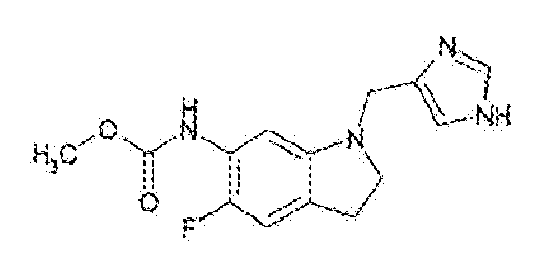
- Composé selon la revendication 1 présentant la formule:

- Composé selon la revendication 1 présentant la formule:

- Composé selon la revendication 1 présentant la formule:

- Composé selon la revendication 1 présentant la formule:

- Composé selon la revendication 1 présentant la formule:
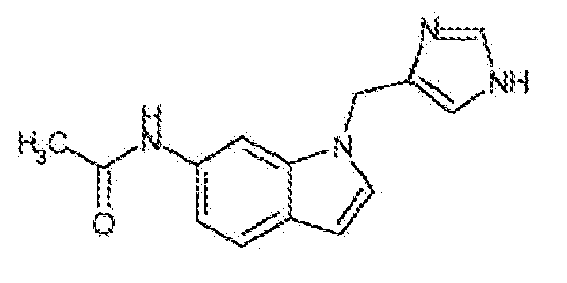
- Composé selon la revendication 1 présentant la formule:

- Composition pharmaceutique comprenant au moins un composé selon la revendication 1, ou un sel pharmaceutiquement acceptable ou un solvate de celui-ci, et au moins un support, un adjuvant ou un véhicule pharmaceutiquement acceptable.
- Composition pharmaceutique selon la revendication 24, dans laquelle ledit au moins un composé est un composé selon la revendication 16, ou un sel pharmaceutiquement acceptable ou un solvate de celui-ci.
- Composition pharmaceutique selon la revendication 24, comprenant en outre un ou plusieurs agents thérapeutiques supplémentaires.
- Composition pharmaceutique selon la revendication 25, comprenant en outre un ou plusieurs agents thérapeutiques supplémentaires.
- Composition pharmaceutique selon la revendication 26, dans laquelle lesdits agents thérapeutiques supplémentaires sont choisis dans le groupe constitué de stéroïdes, d'inhibiteurs de PDE-4, d'agents anti-muscariniques, de cromoglycate de sodium, d'antagonistes du récepteur H1, d'agonistes de 5-HT1, de NSAIDs, d'inhibiteurs de l'enzyme convertissant l'angiotensine, d'agonistes du récepteur II de l'angiotensine, de β-bloquants, de β-agonistes, d'antagonistes de leucotriène, de diurétiques, d'antagonistes d'aldostérone, d'agents ionotropiques, de peptides natriurétiques, d'agents atténuant la douleur, d'agents anti-anxiété, d'agents anti-migraine et d'agents thérapeutiques appropriés pour le traitement d'états cardiaques, de troubles psychotiques et d'un glaucome.
- Composition pharmaceutique selon la revendication 27, dans laquelle lesdits agents thérapeutiques supplémentaires sont choisis dans le groupe constitué de stéroïdes, d'inhibiteurs de PDE-4, d'agents anti-muscariniques, de cromoglycate de sodium, d'antagonistes du récepteur H1, d'agonistes de 5-HT1, de NSAIDs, d'inhibiteurs de l'enzyme convertissant l'angiotensine, d'agonistes du récepteur II de l'angiotensine, de β-bloquants, de β-agonistes, d'antagonistes de leucotriène, de diurétiques, d'antagonistes d'aldostérone, d'agents ionotropiques, de peptides natriurétiques, d'agents atténuant la douleur, d'agents anti-anxiété, d'agents anti-migraine et d'agents thérapeutiques appropriés pour le traitement d'états cardiaques, de troubles psychotiques et d'un glaucome.
- Composé selon la revendication 1, ou un sel pharmaceutiquement acceptable ou un solvate de celui-ci, pour une utilisation dans une thérapie.
- Composé selon la revendication 1, ou un sel pharmaceutiquement acceptable ou un solvate de celui-ci, pour une utilisation dans la stimulation sélective de récepteurs adrénergiques α2C dans une cellule.
- Composé selon la revendication 1, ou un sel pharmaceutiquement acceptable ou un solvate de celui-ci, pour une utilisation dans le traitement d'un ou de plusieurs états associés à des récepteurs adrénergiques α2C.
- Composé pour une utilisation selon la revendication 32, où le composé est un composé selon la revendication 2 ou un sel pharmaceutiquement acceptable ou un solvate de celui-ci.
- Composé pour une utilisation selon la revendication 32, où le composé est un composé selon la revendication 5 ou un sel pharmaceutiquement acceptable ou un solvate de celui-ci.
- Composé pour une utilisation selon la revendication 32, où le composé est un composé selon la revendication 8 ou un sel pharmaceutiquement acceptable ou un solvate de celui-ci.
- Composé pour une utilisation selon la revendication 32, où le composé est un composé selon la revendication 12 ou un sel pharmaceutiquement acceptable ou un solvate de celui-ci.
- Composé pour une utilisation selon la revendication 32, où le composé est un composé selon la revendication 16 ou un sel pharmaceutiquement acceptable ou un solvate de celui-ci.
- Composé pour une utilisation selon la revendication 32, dans lequel les états sont choisis dans le groupe constitué d'une rhinite allergique, d'une congestion, d'une douleur, d'une diarrhée, d'un glaucome, d'une insuffisance cardiaque globale, d'une ischémie cardiaque, de troubles maniaques, d'une dépression, d'une anxiété, d'une migraine, d'une incontinence urinaire induite par le stress, d'un dommage neuronal provenant d'une ischémie et d'une schizophrénie.
- Composé pour une utilisation selon la revendication 38, dans lequel l'état est une congestion.
- Composé pour une utilisation selon la revendication 39, dans lequel la congestion est associée à une rhinite allergique apériodique, une rhinite allergique saisonnière, une rhinite non allergique, une rhinite vasomotrice, une rhinite médicamenteuse, une sinusite, une rhino-sinusite aiguë ou une rhino-sinusite chronique.
- Composé pour une utilisation selon la revendication 39, dans lequel la congestion est entraînée par des polypes ou est associée à un rhume simple.
- Composé pour une utilisation selon la revendication 38, dans lequel l'état est une douleur.
- Composé pour une utilisation selon la revendication 42, dans lequel la douleur est associée à une neuropathie, une inflammation, une arthrite ou un diabète.
- Utilisation d'un composé selon la revendication 1, ou d'un sel pharmaceutiquement acceptable ou d'un solvate de celui-ci, pour la fabrication d'un médicament pour le traitement d'un ou de plusieurs états associés à des récepteurs adrénergiques α2C.
- Utilisation selon la revendication 44, dans laquelle les états sont choisis dans le groupe constitué d'une rhinite allergique, d'une congestion, d'une douleur, d'une diarrhée, d'un glaucome, d'une insuffisance cardiaque globale, d'une ischémie cardiaque, de troubles maniaques, d'une dépression, d'une anxiété, d'une migraine, d'une incontinence urinaire induite par le stress, d'un dommage neuronal provenant d'une ischémie et d'une schizophrénie.
Applications Claiming Priority (2)
| Application Number | Priority Date | Filing Date | Title |
|---|---|---|---|
| US71139805P | 2005-08-25 | 2005-08-25 | |
| PCT/US2006/032911 WO2007024944A1 (fr) | 2005-08-25 | 2006-08-23 | Derives de l'imidazole utilises comme agonistes des recepteurs adrenergiques alpha-2 fonctionnellement selectifs |
Publications (2)
| Publication Number | Publication Date |
|---|---|
| EP1945626A1 EP1945626A1 (fr) | 2008-07-23 |
| EP1945626B1 true EP1945626B1 (fr) | 2011-07-27 |
Family
ID=37401474
Family Applications (1)
| Application Number | Title | Priority Date | Filing Date |
|---|---|---|---|
| EP06789950A Active EP1945626B1 (fr) | 2005-08-25 | 2006-08-23 | Derives de l'imidazole utilises comme agonistes des recepteurs adrenergiques alpha-2c fonctionnellement selectifs |
Country Status (19)
| Country | Link |
|---|---|
| US (1) | US7803828B2 (fr) |
| EP (1) | EP1945626B1 (fr) |
| JP (1) | JP2009506047A (fr) |
| KR (1) | KR20080039982A (fr) |
| CN (1) | CN101296920A (fr) |
| AR (1) | AR056043A1 (fr) |
| AT (1) | ATE517883T1 (fr) |
| AU (1) | AU2006283104A1 (fr) |
| BR (1) | BRPI0615307A2 (fr) |
| CA (1) | CA2620171A1 (fr) |
| EC (1) | ECSP088222A (fr) |
| IL (1) | IL189679A0 (fr) |
| NO (1) | NO20081426L (fr) |
| PE (1) | PE20070336A1 (fr) |
| RU (1) | RU2008110908A (fr) |
| SG (1) | SG165314A1 (fr) |
| TW (1) | TWI316515B (fr) |
| WO (1) | WO2007024944A1 (fr) |
| ZA (1) | ZA200802453B (fr) |
Families Citing this family (70)
| Publication number | Priority date | Publication date | Assignee | Title |
|---|---|---|---|---|
| US8003624B2 (en) * | 2005-08-25 | 2011-08-23 | Schering Corporation | Functionally selective ALPHA2C adrenoreceptor agonists |
| JP5099814B2 (ja) * | 2006-02-02 | 2012-12-19 | 田辺三菱製薬株式会社 | 含窒素複素二環式化合物 |
| RU2009112496A (ru) | 2006-10-19 | 2010-11-27 | Ф. Хоффманн-Ля Рош Аг (Ch) | Аминометил-4-имидазолы |
| CA2668454A1 (fr) | 2006-11-02 | 2008-05-08 | F. Hoffmann-La Roche Ag | 2-imidazoles substitues en tant que modulateurs des recepteurs associes aux amines de trace |
| JP2010510184A (ja) | 2006-11-16 | 2010-04-02 | エフ.ホフマン−ラ ロシュ アーゲー | 置換4−イミダゾール類 |
| CA2672617A1 (fr) | 2006-12-13 | 2008-06-19 | F. Hoffmann-La Roche Ag | Utilisation de nouveaux 2-imidazoles comme ligands pour recepteurs associes a une amine de trace (taar) |
| US20080146523A1 (en) | 2006-12-18 | 2008-06-19 | Guido Galley | Imidazole derivatives |
| CN101600700B (zh) | 2007-02-02 | 2013-08-21 | 弗·哈夫曼-拉罗切有限公司 | 作为taar1配体用于cns病症的新的2-氨基噁唑啉 |
| WO2008100459A1 (fr) * | 2007-02-13 | 2008-08-21 | Schering Corporation | Dérivés et analogues de chromane en tant qu'agonistes fonctionnellement sélectifs des récepteurs adrénergiques alpha2c |
| BRPI0807961A2 (pt) * | 2007-02-13 | 2017-05-16 | Pharmacopeia Llc | agonista de alfa2c adrenorreceptor funcionalmente seletivos. |
| EP2398776A1 (fr) * | 2007-02-13 | 2011-12-28 | Schering Corporation | Agonistes fonctionnellement sélectifs du récepteur adrénergique a2c |
| KR101222412B1 (ko) | 2007-02-15 | 2013-01-15 | 에프. 호프만-라 로슈 아게 | Taar1 리간드로서의 2-아미노옥사졸린 |
| CN101687812A (zh) | 2007-07-02 | 2010-03-31 | 弗·哈夫曼-拉罗切有限公司 | 对痕量胺相关受体(taar)具有良好亲和性的2-咪唑啉化合物 |
| CA2691704A1 (fr) | 2007-07-03 | 2009-01-08 | F. Hoffmann-La Roche Ag | 4-imidazolines et leur utilisation comme antidepresseurs |
| CA2694362A1 (fr) | 2007-07-27 | 2009-02-05 | F. Hoffmann-La Roche Ag | 2-azetidinemethaneamines et 2-pyrrolidinemethaneamines comme ligands de taar |
| JP5341084B2 (ja) | 2007-08-03 | 2013-11-13 | エフ.ホフマン−ラ ロシュ アーゲー | Taar1リガンドとしてのピリジンカルボキシアミド及びベンズアミド誘導体 |
| EA201000808A1 (ru) * | 2007-11-16 | 2011-04-29 | Ньюраксон, Инк. | Индольные соединения и способы лечения висцеральной боли |
| US8242153B2 (en) | 2008-07-24 | 2012-08-14 | Hoffmann-La Roche Inc. | 4,5-dihydro-oxazol-2YL derivatives |
| EP2323734A1 (fr) * | 2008-08-04 | 2011-05-25 | Schering Corporation | Dérivés de cyclopropylchromène en tant que modulateurs du récepteur alpha-2c |
| UA103195C2 (uk) | 2008-08-11 | 2013-09-25 | Глаксосмитклайн Ллк | Похідні пурину для застосування у лікуванні алергій, запальних та інфекційних захворювань |
| WO2010033495A2 (fr) * | 2008-09-16 | 2010-03-25 | Schering Corporation | Agonistes de l'adrénorécepteur α2c à base d'azanitrile fonctionnellement sélectifs |
| US8324213B2 (en) | 2008-10-07 | 2012-12-04 | Merck Sharp & Dohme Corp. | Biaryl-spiroaminooxazoline analogues as alpha 2C adrenergic receptor modulators |
| GB0909671D0 (en) | 2009-06-04 | 2009-07-22 | Xention Discovery Ltd | Compounds |
| GB0909672D0 (en) | 2009-06-04 | 2009-07-22 | Xention Discovery Ltd | Compounds |
| US8354441B2 (en) | 2009-11-11 | 2013-01-15 | Hoffmann-La Roche Inc. | Oxazoline derivatives |
| US9452980B2 (en) | 2009-12-22 | 2016-09-27 | Hoffmann-La Roche Inc. | Substituted benzamides |
| CA2794153C (fr) | 2010-03-25 | 2018-01-02 | Glaxosmithkline Llc | Derives d'indoline substitue comme inhibiteurs de perk |
| PT2593452T (pt) | 2010-07-14 | 2017-04-24 | Novartis Ag | Compostos heterocíclicos agonistas do receptor ip |
| WO2012064744A2 (fr) * | 2010-11-08 | 2012-05-18 | Lycera Corporation | Tétrahydroquinoline et composés bicycliques associés pour l'inhibition de l'activité rorγ et le traitement de maladies |
| JP5868418B2 (ja) * | 2010-12-01 | 2016-02-24 | ヤンセン ファーマシューティカ エヌ.ベー. | Ccr2の4−置換シクロヘキシルアミノ−4−ピペリジニル−アセトアミドアンタゴニスト |
| HRP20181667T1 (hr) | 2011-07-22 | 2018-12-14 | Glaxosmithkline Llc | Pripravak |
| UY34572A (es) | 2012-01-13 | 2013-09-02 | Novartis Ag | Compuestos heterocíclicos agonistas del receptor ip |
| JP6242868B2 (ja) | 2012-05-08 | 2017-12-06 | リセラ・コーポレイションLycera Corporation | RORγのアゴニストとしての使用のためおよび疾患の処置のためのテトラヒドロ[1,8]ナフチリジンスルホンアミドおよび関連化合物 |
| WO2013169704A2 (fr) | 2012-05-08 | 2013-11-14 | Merck Sharp & Dohme Corp. | Tétrahydronaphtyridine et composés bicycliques apparentés pour l'inhibition de l'activité rorgamma et le traitement d'une maladie |
| EA026354B1 (ru) | 2012-08-24 | 2017-03-31 | ГЛАКСОСМИТКЛАЙН ЭлЭлСи | Пиразолопиримидиновые соединения |
| BR112015011439A2 (pt) | 2012-11-20 | 2017-07-11 | Glaxosmithkline Llc | composto, composição farmacêutica, composição de vacina, e, uso de um composto |
| AU2013348217B2 (en) | 2012-11-20 | 2016-10-06 | Glaxosmithkline Llc | Novel compounds |
| EA028480B1 (ru) | 2012-11-20 | 2017-11-30 | ГЛАКСОСМИТКЛАЙН ЭлЭлСи | Новые соединения |
| CN105189500A (zh) | 2013-02-13 | 2015-12-23 | 诺华股份有限公司 | Ip受体激动剂杂环化合物 |
| WO2015095788A1 (fr) | 2013-12-20 | 2015-06-25 | Merck Sharp & Dohme Corp. | Benzoxazine carbamates de 2-acylamidométhyle et de sulfonylamidométhyle pour l'inhibition de l'activité du rorgamma et le traitement d'une maladie |
| US9783511B2 (en) | 2013-12-20 | 2017-10-10 | Lycera Corporation | Carbamate benzoxazine propionic acids and acid derivatives for modulation of RORgamma activity and the treatment of disease |
| US9809561B2 (en) | 2013-12-20 | 2017-11-07 | Merck Sharp & Dohme Corp. | Tetrahydronaphthyridine, benzoxazine, aza-benzoxazine and related bicyclic compounds for inhibition of RORgamma activity and the treatment of disease |
| JP2017507950A (ja) | 2014-02-27 | 2017-03-23 | リセラ・コーポレイションLycera Corporation | レチノイン酸受容体関連オーファン受容体ガンマのアゴニストを使用する養子細胞療法及び関連治療方法 |
| EP3140291A4 (fr) | 2014-05-05 | 2018-01-10 | Lycera Corporation | Sulfonamide de tétrahydroquinoline et composés apparentés destinés à servir d'agonistes de rory et pour le traitement de maladies |
| JP6523337B2 (ja) | 2014-05-05 | 2019-05-29 | リセラ・コーポレイションLycera Corporation | RORγのアゴニストとしての使用及び疾患治療のためのベンゼンスルホンアミド及び関連化合物 |
| SG11201704764PA (en) | 2014-12-11 | 2017-07-28 | Harvard College | Inhibitors of cellular necrosis and related methods |
| CA2975997A1 (fr) | 2015-02-11 | 2016-08-18 | Merck Sharp & Dohme Corp. | Composes pyrazole substitues utilises en tant qu'inhibiteurs de rorgammat et utilisations desdits composes |
| US10421751B2 (en) | 2015-05-05 | 2019-09-24 | Lycera Corporation | Dihydro-2H-benzo[b][1,4]oxazine sulfonamide and related compounds for use as agonists of RORγ and the treatment of disease |
| AU2016276947A1 (en) | 2015-06-11 | 2017-12-14 | Lycera Corporation | Aryl dihydro-2h-benzo[b][1,4]oxazine sulfonamide and related compounds for use as agonists of RORy and the treatment of disease |
| AU2016301188A1 (en) | 2015-08-06 | 2018-02-15 | Chimerix, Inc. | Pyrrolopyrimidine nucleosides and analogs thereof useful as antiviral agents |
| AR105911A1 (es) | 2015-09-03 | 2017-11-22 | Forma Therapeutics Inc | Inhibidores de hdac8 bicíclicos fusionados [6,6] |
| US10344000B2 (en) | 2015-10-27 | 2019-07-09 | Merck Sharp & Dohme Corp. | Substituted bicyclic pyrazole compounds as RORgammaT inhibitors and uses thereof |
| JP2018535958A (ja) | 2015-10-27 | 2018-12-06 | メルク・シャープ・アンド・ドーム・コーポレーションMerck Sharp & Dohme Corp. | RORγT阻害薬としての置換インダゾール化合物及びその使用 |
| EP3368535B1 (fr) | 2015-10-27 | 2020-12-02 | Merck Sharp & Dohme Corp. | Acides benzoïques à substitution hétéroaryle en tant qu'inhibiteurs de rorgammat et leurs utilisations |
| CN108713019B (zh) | 2016-03-17 | 2021-06-15 | 豪夫迈·罗氏有限公司 | 具有作为taar的激动剂的活性的5-乙基-4-甲基-吡唑-3-甲酰胺衍生物 |
| ES3011607T3 (en) | 2017-09-21 | 2025-04-07 | Chimerix Inc | Morphic forms of 4-amino-7-(3,4-dihydroxy-5-(hydroxymethyl)tetrahydrofuran-2-yl)-2-methyl-7h-pyrrolo(2,3-d)pyrimidine-5-carboxamide and uses thereof |
| US11066404B2 (en) | 2018-10-11 | 2021-07-20 | Incyte Corporation | Dihydropyrido[2,3-d]pyrimidinone compounds as CDK2 inhibitors |
| US11384083B2 (en) | 2019-02-15 | 2022-07-12 | Incyte Corporation | Substituted spiro[cyclopropane-1,5′-pyrrolo[2,3-d]pyrimidin]-6′(7′h)-ones as CDK2 inhibitors |
| TW202100520A (zh) | 2019-03-05 | 2021-01-01 | 美商英塞特公司 | 作為cdk2 抑制劑之吡唑基嘧啶基胺化合物 |
| WO2020205560A1 (fr) | 2019-03-29 | 2020-10-08 | Incyte Corporation | Composés sulfonylamides utilisés comme inhibiteurs de la cdk2 |
| WO2020223469A1 (fr) | 2019-05-01 | 2020-11-05 | Incyte Corporation | Dérivés de n-(1-(méthylsulfonyl)pipéridin-4-yl)-4,5-di hydro-1h-imidazo[4,5-h]quinazolin-8-amine et composés apparentés utilisés en tant qu'inhibiteurs de kinase 2 dépendante des cyclines (cdk2) pour le traitement du cancer |
| US11447494B2 (en) | 2019-05-01 | 2022-09-20 | Incyte Corporation | Tricyclic amine compounds as CDK2 inhibitors |
| WO2020252240A1 (fr) * | 2019-06-14 | 2020-12-17 | Ifm Due, Inc. | Composés et compositions pour traiter des états associés à une activité de sting |
| CA3150681A1 (fr) | 2019-08-14 | 2021-02-18 | Incyte Corporation | Composes imidazolyl-pyrimidinylamines utilises comme inhibiteurs de la cdk2 |
| US11851426B2 (en) | 2019-10-11 | 2023-12-26 | Incyte Corporation | Bicyclic amines as CDK2 inhibitors |
| EP4274824A1 (fr) | 2021-01-08 | 2023-11-15 | IFM Due, Inc. | Composés hétérobicycliques ayant une urée ou un analogue et leurs compositions pour le traitement d'états associés à une activité de sting |
| US11981671B2 (en) | 2021-06-21 | 2024-05-14 | Incyte Corporation | Bicyclic pyrazolyl amines as CDK2 inhibitors |
| GB202112240D0 (en) * | 2021-08-26 | 2021-10-13 | Univ Court Univ St Andrews | Inhibitor compounds |
| US11976073B2 (en) | 2021-12-10 | 2024-05-07 | Incyte Corporation | Bicyclic amines as CDK2 inhibitors |
| PL447976A1 (pl) * | 2024-03-11 | 2025-09-15 | Celon Pharma Spółka Akcyjna | Pochodna imidazolo-indolowa wiążąca się z receptorem serotoninowym 5-HT7, kompozycja farmaceutyczna zawierająca tę pochodną, zastosowania pochodnej i kompozycji oraz produkt pośredni do wytwarzania pochodnej imidazolo-indolowej |
Family Cites Families (16)
| Publication number | Priority date | Publication date | Assignee | Title |
|---|---|---|---|---|
| DK151884C (da) * | 1979-03-07 | 1988-06-13 | Pfizer | Analogifremgangsmaade til fremstilling af 3-(1-imidazolylalkyl)indolderivater eller farmaceutisk acceptable syreadditionssalte deraf |
| US5559129A (en) * | 1990-10-15 | 1996-09-24 | Pfizer Inc | Indole derivatives |
| GB9317764D0 (en) * | 1993-08-26 | 1993-10-13 | Pfizer Ltd | Therapeutic compound |
| FR2735776B1 (fr) * | 1995-06-22 | 1997-07-18 | Synthelabo | Derives de 2,3-dihydro-1h-indole, leur preparation et leur application en therapeutique |
| GB9520150D0 (en) | 1995-10-03 | 1995-12-06 | Orion Yhtymae Oy | New imidazole derivatives |
| JP4373497B2 (ja) * | 1996-06-19 | 2009-11-25 | ローン−プーラン・ロレ・リミテツド | 置換されたアザビシクロ化合物、ならびにtnfおよびサイクリックampホスホジエステラーゼ産生の阻害剤としてのそれらの使用 |
| US5977134A (en) * | 1996-12-05 | 1999-11-02 | Merck & Co., Inc. | Inhibitors of farnesyl-protein transferase |
| US5866579A (en) * | 1997-04-11 | 1999-02-02 | Synaptic Pharmaceutical Corporation | Imidazole and imidazoline derivatives and uses thereof |
| US6841684B2 (en) * | 1997-12-04 | 2005-01-11 | Allergan, Inc. | Imidiazoles having reduced side effects |
| US20030087962A1 (en) | 1998-10-20 | 2003-05-08 | Omeros Corporation | Arthroscopic irrigation solution and method for peripheral vasoconstriction and inhibition of pain and inflammation |
| TWI283669B (en) * | 1999-06-10 | 2007-07-11 | Allergan Inc | Compounds and method of treatment having agonist-like activity selective at alpha 2B or 2B/2C adrenergic receptors |
| IL151530A0 (en) | 2000-07-14 | 2003-04-10 | Allergan Sales Inc | Compositions containing alpha-2-adrenergic agonist components |
| US7091232B2 (en) * | 2002-05-21 | 2006-08-15 | Allergan, Inc. | 4-(substituted cycloalkylmethyl) imidazole-2-thiones, 4-(substituted cycloalkenylmethyl) imidazole-2-thiones, 4-(substituted cycloalkylmethyl) imidazol-2-ones and 4-(substituted cycloalkenylmethyl) imidazol-2-ones and related compounds |
| ES2222832B1 (es) * | 2003-07-30 | 2006-02-16 | Laboratorios Del Dr. Esteve, S.A. | Derivados de 6-indolilsulfonamidas, su preparacion y su aplicacion como medicamentos. |
| WO2006036507A1 (fr) | 2004-09-24 | 2006-04-06 | Allergan, Inc. | 4-(heteroaryl-methyl et heteroaryl-methyl substitue)-imidazole-2-thiones utilisees en tant qu'agonistes des alpha2 adrenergiques |
| ZA200709038B (en) * | 2005-04-13 | 2009-01-28 | Neuraxon Inc | Substituted indole compounds having nos inhibitory activity |
-
2006
- 2006-08-23 RU RU2008110908/04A patent/RU2008110908A/ru not_active Application Discontinuation
- 2006-08-23 AT AT06789950T patent/ATE517883T1/de not_active IP Right Cessation
- 2006-08-23 CA CA002620171A patent/CA2620171A1/fr not_active Abandoned
- 2006-08-23 EP EP06789950A patent/EP1945626B1/fr active Active
- 2006-08-23 AR ARP060103665A patent/AR056043A1/es not_active Application Discontinuation
- 2006-08-23 AU AU2006283104A patent/AU2006283104A1/en not_active Abandoned
- 2006-08-23 BR BRPI0615307-0A patent/BRPI0615307A2/pt not_active IP Right Cessation
- 2006-08-23 PE PE2006001022A patent/PE20070336A1/es not_active Application Discontinuation
- 2006-08-23 SG SG201006197-6A patent/SG165314A1/en unknown
- 2006-08-23 WO PCT/US2006/032911 patent/WO2007024944A1/fr not_active Ceased
- 2006-08-23 CN CNA2006800394929A patent/CN101296920A/zh active Pending
- 2006-08-23 KR KR1020087005897A patent/KR20080039982A/ko not_active Withdrawn
- 2006-08-23 JP JP2008528106A patent/JP2009506047A/ja active Pending
- 2006-08-23 US US11/508,458 patent/US7803828B2/en not_active Expired - Fee Related
- 2006-08-24 TW TW095131072A patent/TWI316515B/zh not_active IP Right Cessation
-
2008
- 2008-02-21 IL IL189679A patent/IL189679A0/en unknown
- 2008-02-25 EC EC2008008222A patent/ECSP088222A/es unknown
- 2008-03-17 ZA ZA200802453A patent/ZA200802453B/xx unknown
- 2008-03-18 NO NO20081426A patent/NO20081426L/no not_active Application Discontinuation
Also Published As
| Publication number | Publication date |
|---|---|
| US20070099872A1 (en) | 2007-05-03 |
| WO2007024944A1 (fr) | 2007-03-01 |
| ECSP088222A (es) | 2008-03-26 |
| CN101296920A (zh) | 2008-10-29 |
| PE20070336A1 (es) | 2007-04-16 |
| BRPI0615307A2 (pt) | 2009-08-04 |
| TWI316515B (en) | 2009-11-01 |
| AR056043A1 (es) | 2007-09-12 |
| AU2006283104A1 (en) | 2007-03-01 |
| IL189679A0 (en) | 2008-06-05 |
| CA2620171A1 (fr) | 2007-03-01 |
| EP1945626A1 (fr) | 2008-07-23 |
| ZA200802453B (en) | 2008-12-31 |
| TW200808768A (en) | 2008-02-16 |
| JP2009506047A (ja) | 2009-02-12 |
| ATE517883T1 (de) | 2011-08-15 |
| NO20081426L (no) | 2008-05-23 |
| RU2008110908A (ru) | 2009-09-27 |
| KR20080039982A (ko) | 2008-05-07 |
| US7803828B2 (en) | 2010-09-28 |
| SG165314A1 (en) | 2010-10-28 |
Similar Documents
| Publication | Publication Date | Title |
|---|---|---|
| EP1945626B1 (fr) | Derives de l'imidazole utilises comme agonistes des recepteurs adrenergiques alpha-2c fonctionnellement selectifs | |
| US8003624B2 (en) | Functionally selective ALPHA2C adrenoreceptor agonists | |
| EP1934203B1 (fr) | COMPOSÉS DE 3,4-dihydro-2H-benzo[1,4]oxazine et 3,4-dihydro-2H-benzo[1,4]thiazine COMME AGONISTES D'ALPHA 2C ADRENORECEPTEUR | |
| AU2008216797A1 (en) | Functionally selective alpha2C adrenoreceptor agonists | |
| WO2010033495A2 (fr) | Agonistes de l'adrénorécepteur α2c à base d'azanitrile fonctionnellement sélectifs | |
| EP2142538B1 (fr) | Dérivés et analogues de chromane en tant qu'agonistes fonctionnellement sélectifs des récepteurs adrénergiques alpha2c | |
| EP2398776A1 (fr) | Agonistes fonctionnellement sélectifs du récepteur adrénergique a2c | |
| WO2009020578A1 (fr) | Agonistes des récepteurs adrénergiques alpha2c | |
| WO2009105504A2 (fr) | Agonistes fonctionnellement sélectifs du récepteur adrénergique alpha2c | |
| EP2356106A1 (fr) | Analogues de biaryl-spiroaminooxazoline en tant que modulateurs de récepteur adrénergique alpha2c | |
| US20110190247A1 (en) | Cyclopropylchromene derivatives as modulators of the alpha-2c receptor | |
| EP2482661A1 (fr) | Analogues de biaryle spiroaminooxazoline inversés en tant que modulateurs du récepteur alpha2c adrénergique | |
| HK1118812B (en) | 3,4-dihydro-2h-benzo[1,4]oxazine and 3,4-dihydro-2h-benzo[1,4]thiazine compounds as alpha2c adrenoreceptor agonists |
Legal Events
| Date | Code | Title | Description |
|---|---|---|---|
| PUAI | Public reference made under article 153(3) epc to a published international application that has entered the european phase |
Free format text: ORIGINAL CODE: 0009012 |
|
| 17P | Request for examination filed |
Effective date: 20080320 |
|
| AK | Designated contracting states |
Kind code of ref document: A1 Designated state(s): AT BE BG CH CY CZ DE DK EE ES FI FR GB GR HU IE IS IT LI LT LU LV MC NL PL PT RO SE SI SK TR |
|
| AX | Request for extension of the european patent |
Extension state: AL BA HR MK RS |
|
| REG | Reference to a national code |
Ref country code: HK Ref legal event code: DE Ref document number: 1119684 Country of ref document: HK |
|
| RAP1 | Party data changed (applicant data changed or rights of an application transferred) |
Owner name: PHARMACOPEIA, LLC Owner name: SCHERING CORPORATION |
|
| 17Q | First examination report despatched |
Effective date: 20091021 |
|
| GRAP | Despatch of communication of intention to grant a patent |
Free format text: ORIGINAL CODE: EPIDOSNIGR1 |
|
| GRAS | Grant fee paid |
Free format text: ORIGINAL CODE: EPIDOSNIGR3 |
|
| GRAA | (expected) grant |
Free format text: ORIGINAL CODE: 0009210 |
|
| AK | Designated contracting states |
Kind code of ref document: B1 Designated state(s): AT BE BG CH CY CZ DE DK EE ES FI FR GB GR HU IE IS IT LI LT LU LV MC NL PL PT RO SE SI SK TR |
|
| AX | Request for extension of the european patent |
Extension state: AL BA HR MK RS |
|
| REG | Reference to a national code |
Ref country code: GB Ref legal event code: FG4D |
|
| REG | Reference to a national code |
Ref country code: CH Ref legal event code: EP |
|
| REG | Reference to a national code |
Ref country code: CH Ref legal event code: NV Representative=s name: SERVOPATENT GMBH |
|
| REG | Reference to a national code |
Ref country code: NL Ref legal event code: T3 |
|
| REG | Reference to a national code |
Ref country code: DE Ref legal event code: R096 Ref document number: 602006023384 Country of ref document: DE Effective date: 20110922 |
|
| REG | Reference to a national code |
Ref country code: AT Ref legal event code: MK05 Ref document number: 517883 Country of ref document: AT Kind code of ref document: T Effective date: 20110727 |
|
| PG25 | Lapsed in a contracting state [announced via postgrant information from national office to epo] |
Ref country code: FI Free format text: LAPSE BECAUSE OF FAILURE TO SUBMIT A TRANSLATION OF THE DESCRIPTION OR TO PAY THE FEE WITHIN THE PRESCRIBED TIME-LIMIT Effective date: 20110727 Ref country code: PT Free format text: LAPSE BECAUSE OF FAILURE TO SUBMIT A TRANSLATION OF THE DESCRIPTION OR TO PAY THE FEE WITHIN THE PRESCRIBED TIME-LIMIT Effective date: 20111128 Ref country code: LT Free format text: LAPSE BECAUSE OF FAILURE TO SUBMIT A TRANSLATION OF THE DESCRIPTION OR TO PAY THE FEE WITHIN THE PRESCRIBED TIME-LIMIT Effective date: 20110727 Ref country code: BE Free format text: LAPSE BECAUSE OF FAILURE TO SUBMIT A TRANSLATION OF THE DESCRIPTION OR TO PAY THE FEE WITHIN THE PRESCRIBED TIME-LIMIT Effective date: 20110727 Ref country code: SE Free format text: LAPSE BECAUSE OF FAILURE TO SUBMIT A TRANSLATION OF THE DESCRIPTION OR TO PAY THE FEE WITHIN THE PRESCRIBED TIME-LIMIT Effective date: 20110727 Ref country code: IS Free format text: LAPSE BECAUSE OF FAILURE TO SUBMIT A TRANSLATION OF THE DESCRIPTION OR TO PAY THE FEE WITHIN THE PRESCRIBED TIME-LIMIT Effective date: 20111127 |
|
| PG25 | Lapsed in a contracting state [announced via postgrant information from national office to epo] |
Ref country code: AT Free format text: LAPSE BECAUSE OF FAILURE TO SUBMIT A TRANSLATION OF THE DESCRIPTION OR TO PAY THE FEE WITHIN THE PRESCRIBED TIME-LIMIT Effective date: 20110727 Ref country code: SI Free format text: LAPSE BECAUSE OF FAILURE TO SUBMIT A TRANSLATION OF THE DESCRIPTION OR TO PAY THE FEE WITHIN THE PRESCRIBED TIME-LIMIT Effective date: 20110727 Ref country code: GR Free format text: LAPSE BECAUSE OF FAILURE TO SUBMIT A TRANSLATION OF THE DESCRIPTION OR TO PAY THE FEE WITHIN THE PRESCRIBED TIME-LIMIT Effective date: 20111028 Ref country code: LV Free format text: LAPSE BECAUSE OF FAILURE TO SUBMIT A TRANSLATION OF THE DESCRIPTION OR TO PAY THE FEE WITHIN THE PRESCRIBED TIME-LIMIT Effective date: 20110727 Ref country code: PL Free format text: LAPSE BECAUSE OF FAILURE TO SUBMIT A TRANSLATION OF THE DESCRIPTION OR TO PAY THE FEE WITHIN THE PRESCRIBED TIME-LIMIT Effective date: 20110727 Ref country code: CY Free format text: LAPSE BECAUSE OF FAILURE TO SUBMIT A TRANSLATION OF THE DESCRIPTION OR TO PAY THE FEE WITHIN THE PRESCRIBED TIME-LIMIT Effective date: 20110727 |
|
| PG25 | Lapsed in a contracting state [announced via postgrant information from national office to epo] |
Ref country code: MC Free format text: LAPSE BECAUSE OF NON-PAYMENT OF DUE FEES Effective date: 20110831 |
|
| PG25 | Lapsed in a contracting state [announced via postgrant information from national office to epo] |
Ref country code: CZ Free format text: LAPSE BECAUSE OF FAILURE TO SUBMIT A TRANSLATION OF THE DESCRIPTION OR TO PAY THE FEE WITHIN THE PRESCRIBED TIME-LIMIT Effective date: 20110727 Ref country code: SK Free format text: LAPSE BECAUSE OF FAILURE TO SUBMIT A TRANSLATION OF THE DESCRIPTION OR TO PAY THE FEE WITHIN THE PRESCRIBED TIME-LIMIT Effective date: 20110727 |
|
| REG | Reference to a national code |
Ref country code: IE Ref legal event code: MM4A |
|
| PG25 | Lapsed in a contracting state [announced via postgrant information from national office to epo] |
Ref country code: EE Free format text: LAPSE BECAUSE OF FAILURE TO SUBMIT A TRANSLATION OF THE DESCRIPTION OR TO PAY THE FEE WITHIN THE PRESCRIBED TIME-LIMIT Effective date: 20110727 Ref country code: RO Free format text: LAPSE BECAUSE OF FAILURE TO SUBMIT A TRANSLATION OF THE DESCRIPTION OR TO PAY THE FEE WITHIN THE PRESCRIBED TIME-LIMIT Effective date: 20110727 Ref country code: IT Free format text: LAPSE BECAUSE OF FAILURE TO SUBMIT A TRANSLATION OF THE DESCRIPTION OR TO PAY THE FEE WITHIN THE PRESCRIBED TIME-LIMIT Effective date: 20110727 |
|
| PLBE | No opposition filed within time limit |
Free format text: ORIGINAL CODE: 0009261 |
|
| STAA | Information on the status of an ep patent application or granted ep patent |
Free format text: STATUS: NO OPPOSITION FILED WITHIN TIME LIMIT |
|
| PG25 | Lapsed in a contracting state [announced via postgrant information from national office to epo] |
Ref country code: DK Free format text: LAPSE BECAUSE OF FAILURE TO SUBMIT A TRANSLATION OF THE DESCRIPTION OR TO PAY THE FEE WITHIN THE PRESCRIBED TIME-LIMIT Effective date: 20110727 |
|
| 26N | No opposition filed |
Effective date: 20120502 |
|
| REG | Reference to a national code |
Ref country code: CH Ref legal event code: PFA Owner name: PHARMACOPEIA, LLC Free format text: SCHERING CORPORATION#2000 GALLOPING HILL ROAD#KENILWORTH, NJ 07033-0530 (US) $ PHARMACOPEIA, LLC#C/O LIGAND PHARMACEUTICALS, INC. 10275 SCIENCE CENTER DRIVE#SAN DIEGO, CA 92121 (US) -TRANSFER TO- PHARMACOPEIA, LLC#C/O LIGAND PHARMACEUTICALS, INC. 10275 SCIENCE CENTER DRIVE#SAN DIEGO, CA 92121 (US) $ MERCK SHARP & DOHME CORP.#126 EAST LINCOLN AVENUE#RAHWAY, NEW JERSEY 07065 (US) |
|
| PG25 | Lapsed in a contracting state [announced via postgrant information from national office to epo] |
Ref country code: IE Free format text: LAPSE BECAUSE OF NON-PAYMENT OF DUE FEES Effective date: 20110823 |
|
| REG | Reference to a national code |
Ref country code: DE Ref legal event code: R097 Ref document number: 602006023384 Country of ref document: DE Effective date: 20120502 |
|
| REG | Reference to a national code |
Ref country code: NL Ref legal event code: TD Effective date: 20120924 |
|
| REG | Reference to a national code |
Ref country code: FR Ref legal event code: CD Owner name: SCHERING CORPORATION, US Effective date: 20130319 Ref country code: FR Ref legal event code: CD Owner name: PHARMACOPEIA, LLC, US Effective date: 20130319 |
|
| PG25 | Lapsed in a contracting state [announced via postgrant information from national office to epo] |
Ref country code: ES Free format text: LAPSE BECAUSE OF FAILURE TO SUBMIT A TRANSLATION OF THE DESCRIPTION OR TO PAY THE FEE WITHIN THE PRESCRIBED TIME-LIMIT Effective date: 20111107 |
|
| PG25 | Lapsed in a contracting state [announced via postgrant information from national office to epo] |
Ref country code: LU Free format text: LAPSE BECAUSE OF NON-PAYMENT OF DUE FEES Effective date: 20110823 |
|
| PG25 | Lapsed in a contracting state [announced via postgrant information from national office to epo] |
Ref country code: BG Free format text: LAPSE BECAUSE OF FAILURE TO SUBMIT A TRANSLATION OF THE DESCRIPTION OR TO PAY THE FEE WITHIN THE PRESCRIBED TIME-LIMIT Effective date: 20111027 |
|
| REG | Reference to a national code |
Ref country code: DE Ref legal event code: R081 Ref document number: 602006023384 Country of ref document: DE Owner name: MERCK SHARP & DOHME CORP., US Free format text: FORMER OWNER: PHARMACOPEIA, LLC, SCHERING CORP., , US Effective date: 20130516 Ref country code: DE Ref legal event code: R082 Ref document number: 602006023384 Country of ref document: DE Representative=s name: ABITZ & PARTNER, DE Effective date: 20130516 Ref country code: DE Ref legal event code: R081 Ref document number: 602006023384 Country of ref document: DE Owner name: PHARMACOPEIA, LLC, US Free format text: FORMER OWNER: PHARMACOPEIA, LLC, SCHERING CORP., , US Effective date: 20130516 Ref country code: DE Ref legal event code: R081 Ref document number: 602006023384 Country of ref document: DE Owner name: PHARMACOPEIA, LLC, SAN DIEGO, US Free format text: FORMER OWNER: PHARMACOPEIA, LLC, SCHERING CORP., , US Effective date: 20130516 Ref country code: DE Ref legal event code: R081 Ref document number: 602006023384 Country of ref document: DE Owner name: MERCK SHARP & DOHME CORP., RAHWAY, US Free format text: FORMER OWNER: PHARMACOPEIA, LLC, SCHERING CORP., , US Effective date: 20130516 Ref country code: DE Ref legal event code: R082 Ref document number: 602006023384 Country of ref document: DE Representative=s name: ABITZ & PARTNER PATENTANWAELTE MBB, DE Effective date: 20130516 Ref country code: DE Ref legal event code: R081 Ref document number: 602006023384 Country of ref document: DE Owner name: MERCK SHARP & DOHME CORP., RAHWAY, US Free format text: FORMER OWNERS: PHARMACOPEIA, LLC, SAN DIEGO, CALIF., US; SCHERING CORP., 07033-0530 KENILWORTH, NEW JERSEY, US Effective date: 20130516 Ref country code: DE Ref legal event code: R081 Ref document number: 602006023384 Country of ref document: DE Owner name: PHARMACOPEIA, LLC, SAN DIEGO, US Free format text: FORMER OWNERS: PHARMACOPEIA, LLC, SAN DIEGO, CALIF., US; SCHERING CORP., 07033-0530 KENILWORTH, NEW JERSEY, US Effective date: 20130516 |
|
| PG25 | Lapsed in a contracting state [announced via postgrant information from national office to epo] |
Ref country code: TR Free format text: LAPSE BECAUSE OF FAILURE TO SUBMIT A TRANSLATION OF THE DESCRIPTION OR TO PAY THE FEE WITHIN THE PRESCRIBED TIME-LIMIT Effective date: 20110727 |
|
| PG25 | Lapsed in a contracting state [announced via postgrant information from national office to epo] |
Ref country code: HU Free format text: LAPSE BECAUSE OF FAILURE TO SUBMIT A TRANSLATION OF THE DESCRIPTION OR TO PAY THE FEE WITHIN THE PRESCRIBED TIME-LIMIT Effective date: 20110727 |
|
| PGFP | Annual fee paid to national office [announced via postgrant information from national office to epo] |
Ref country code: NL Payment date: 20140812 Year of fee payment: 9 Ref country code: CH Payment date: 20140725 Year of fee payment: 9 Ref country code: DE Payment date: 20140901 Year of fee payment: 9 |
|
| PGFP | Annual fee paid to national office [announced via postgrant information from national office to epo] |
Ref country code: GB Payment date: 20140725 Year of fee payment: 9 Ref country code: FR Payment date: 20140725 Year of fee payment: 9 |
|
| REG | Reference to a national code |
Ref country code: HK Ref legal event code: WD Ref document number: 1119684 Country of ref document: HK |
|
| REG | Reference to a national code |
Ref country code: DE Ref legal event code: R119 Ref document number: 602006023384 Country of ref document: DE |
|
| REG | Reference to a national code |
Ref country code: CH Ref legal event code: PL |
|
| GBPC | Gb: european patent ceased through non-payment of renewal fee |
Effective date: 20150823 |
|
| PG25 | Lapsed in a contracting state [announced via postgrant information from national office to epo] |
Ref country code: CH Free format text: LAPSE BECAUSE OF NON-PAYMENT OF DUE FEES Effective date: 20150831 Ref country code: LI Free format text: LAPSE BECAUSE OF NON-PAYMENT OF DUE FEES Effective date: 20150831 |
|
| REG | Reference to a national code |
Ref country code: NL Ref legal event code: MM Effective date: 20150901 |
|
| REG | Reference to a national code |
Ref country code: FR Ref legal event code: ST Effective date: 20160429 |
|
| PG25 | Lapsed in a contracting state [announced via postgrant information from national office to epo] |
Ref country code: NL Free format text: LAPSE BECAUSE OF NON-PAYMENT OF DUE FEES Effective date: 20150901 |
|
| PG25 | Lapsed in a contracting state [announced via postgrant information from national office to epo] |
Ref country code: DE Free format text: LAPSE BECAUSE OF NON-PAYMENT OF DUE FEES Effective date: 20160301 Ref country code: GB Free format text: LAPSE BECAUSE OF NON-PAYMENT OF DUE FEES Effective date: 20150823 |
|
| PG25 | Lapsed in a contracting state [announced via postgrant information from national office to epo] |
Ref country code: FR Free format text: LAPSE BECAUSE OF NON-PAYMENT OF DUE FEES Effective date: 20150831 |