EP1945806B1 - Marqueurs servant a predire le resultat d'un traitement a l'anthracycline - Google Patents
Marqueurs servant a predire le resultat d'un traitement a l'anthracycline Download PDFInfo
- Publication number
- EP1945806B1 EP1945806B1 EP06805804A EP06805804A EP1945806B1 EP 1945806 B1 EP1945806 B1 EP 1945806B1 EP 06805804 A EP06805804 A EP 06805804A EP 06805804 A EP06805804 A EP 06805804A EP 1945806 B1 EP1945806 B1 EP 1945806B1
- Authority
- EP
- European Patent Office
- Prior art keywords
- dna
- genomic dna
- seq
- sequence
- homo sapiens
- Prior art date
- Legal status (The legal status is an assumption and is not a legal conclusion. Google has not performed a legal analysis and makes no representation as to the accuracy of the status listed.)
- Active
Links
Images





























Classifications
-
- C—CHEMISTRY; METALLURGY
- C12—BIOCHEMISTRY; BEER; SPIRITS; WINE; VINEGAR; MICROBIOLOGY; ENZYMOLOGY; MUTATION OR GENETIC ENGINEERING
- C12Q—MEASURING OR TESTING PROCESSES INVOLVING ENZYMES, NUCLEIC ACIDS OR MICROORGANISMS; COMPOSITIONS OR TEST PAPERS THEREFOR; PROCESSES OF PREPARING SUCH COMPOSITIONS; CONDITION-RESPONSIVE CONTROL IN MICROBIOLOGICAL OR ENZYMOLOGICAL PROCESSES
- C12Q1/00—Measuring or testing processes involving enzymes, nucleic acids or microorganisms; Compositions therefor; Processes of preparing such compositions
- C12Q1/68—Measuring or testing processes involving enzymes, nucleic acids or microorganisms; Compositions therefor; Processes of preparing such compositions involving nucleic acids
- C12Q1/6876—Nucleic acid products used in the analysis of nucleic acids, e.g. primers or probes
- C12Q1/6883—Nucleic acid products used in the analysis of nucleic acids, e.g. primers or probes for diseases caused by alterations of genetic material
- C12Q1/6886—Nucleic acid products used in the analysis of nucleic acids, e.g. primers or probes for diseases caused by alterations of genetic material for cancer
-
- C—CHEMISTRY; METALLURGY
- C12—BIOCHEMISTRY; BEER; SPIRITS; WINE; VINEGAR; MICROBIOLOGY; ENZYMOLOGY; MUTATION OR GENETIC ENGINEERING
- C12Q—MEASURING OR TESTING PROCESSES INVOLVING ENZYMES, NUCLEIC ACIDS OR MICROORGANISMS; COMPOSITIONS OR TEST PAPERS THEREFOR; PROCESSES OF PREPARING SUCH COMPOSITIONS; CONDITION-RESPONSIVE CONTROL IN MICROBIOLOGICAL OR ENZYMOLOGICAL PROCESSES
- C12Q2600/00—Oligonucleotides characterized by their use
- C12Q2600/106—Pharmacogenomics, i.e. genetic variability in individual responses to drugs and drug metabolism
-
- C—CHEMISTRY; METALLURGY
- C12—BIOCHEMISTRY; BEER; SPIRITS; WINE; VINEGAR; MICROBIOLOGY; ENZYMOLOGY; MUTATION OR GENETIC ENGINEERING
- C12Q—MEASURING OR TESTING PROCESSES INVOLVING ENZYMES, NUCLEIC ACIDS OR MICROORGANISMS; COMPOSITIONS OR TEST PAPERS THEREFOR; PROCESSES OF PREPARING SUCH COMPOSITIONS; CONDITION-RESPONSIVE CONTROL IN MICROBIOLOGICAL OR ENZYMOLOGICAL PROCESSES
- C12Q2600/00—Oligonucleotides characterized by their use
- C12Q2600/118—Prognosis of disease development
-
- C—CHEMISTRY; METALLURGY
- C12—BIOCHEMISTRY; BEER; SPIRITS; WINE; VINEGAR; MICROBIOLOGY; ENZYMOLOGY; MUTATION OR GENETIC ENGINEERING
- C12Q—MEASURING OR TESTING PROCESSES INVOLVING ENZYMES, NUCLEIC ACIDS OR MICROORGANISMS; COMPOSITIONS OR TEST PAPERS THEREFOR; PROCESSES OF PREPARING SUCH COMPOSITIONS; CONDITION-RESPONSIVE CONTROL IN MICROBIOLOGICAL OR ENZYMOLOGICAL PROCESSES
- C12Q2600/00—Oligonucleotides characterized by their use
- C12Q2600/154—Methylation markers
-
- C—CHEMISTRY; METALLURGY
- C12—BIOCHEMISTRY; BEER; SPIRITS; WINE; VINEGAR; MICROBIOLOGY; ENZYMOLOGY; MUTATION OR GENETIC ENGINEERING
- C12Q—MEASURING OR TESTING PROCESSES INVOLVING ENZYMES, NUCLEIC ACIDS OR MICROORGANISMS; COMPOSITIONS OR TEST PAPERS THEREFOR; PROCESSES OF PREPARING SUCH COMPOSITIONS; CONDITION-RESPONSIVE CONTROL IN MICROBIOLOGICAL OR ENZYMOLOGICAL PROCESSES
- C12Q2600/00—Oligonucleotides characterized by their use
- C12Q2600/156—Polymorphic or mutational markers
-
- C—CHEMISTRY; METALLURGY
- C12—BIOCHEMISTRY; BEER; SPIRITS; WINE; VINEGAR; MICROBIOLOGY; ENZYMOLOGY; MUTATION OR GENETIC ENGINEERING
- C12Q—MEASURING OR TESTING PROCESSES INVOLVING ENZYMES, NUCLEIC ACIDS OR MICROORGANISMS; COMPOSITIONS OR TEST PAPERS THEREFOR; PROCESSES OF PREPARING SUCH COMPOSITIONS; CONDITION-RESPONSIVE CONTROL IN MICROBIOLOGICAL OR ENZYMOLOGICAL PROCESSES
- C12Q2600/00—Oligonucleotides characterized by their use
- C12Q2600/16—Primer sets for multiplex assays
Definitions
- the present invention relates to methods for predicting the outcome of anthracycline treatment, characterized in that the epigenetic modifications of the genomic DNA associated with said genes and/or genomic sequences and/or regulatory or promoter regions thereof are determined.
- the invention also relates to nucleic acid sequences, oligonucleotides and antibodies which can be used in the described methods.
- Anthracyclines are a large group of compounds synthesized by different Streptomyces species. They possess antibiotic activity and have cytotoxic effects on eukaryotic cells. All anthracyclines have a tetrahydronaphthacenedione ring structure attached by a glycosidic linkage to a sugar molecule, structural diversity of anthracyclines is generated by modifications of the backbone including a large number of different side chains.
- Anthracyclines have excellent antineoplastic activity in metastati197c, neoadjuvant, and adjuvant settings and are used in the treatment of various haematopoietic and solid tumours.
- Commonly used anthracyclines include but are not lmited to mitoxantrone, doxorubicin, aclarubicin, daunorubicin, epirubicin and idarubicin.
- their mechanism of chemotherapeutic action is unclear involves noncovalent DNA intercalation, formation of covalent DNA adducts, topoisomerase II (topo II) poisoning, and free radical effects on cellular membranes and DNA.
- topoisomerase II topo II
- the clinical utility of anthracyclines are limited due to acute and chronic toxicities, particularly cardiotoxicity, myelosuppression, nausea and vomiting, and alopecia.
- Heart failure following anthracycline therapy is a major clinical problem in cancer treatment.
- the establishment of predictors of the anthracycline treatment outcome would allow the identification and exclusion of individuals who would not benefit from said treatment, and thus to increase the safety of anthracycline treatment.
- determining which patients would be adequately treated by anthracycline treatment alone the over-treatment of patients can be prevented. Accordingly there is a longfelt need in the art for determining which patients will benefit from Anthracycline treatment.
- Topo IIalpha gene Methylation of the gene Topo IIalpha gene was recently observed in the cell line K562/MX2, which displays resistance to the anthracyclines KRN 8602 (MX2), etoposide and doxorubicin ( Asano et al. Br J Cancer. 2005 Apr 25;92(8):1486-92 .). Sensitivity to the drug was restored by treatment with the demethylating agent 5-Aza-2'-deoxycytidine, thereby implying that Topo Iialpha methylation is a mechanism of drug resistance.
- the person skilled in the art when considering WO 2004/035803 in light of Asano et al. would not have a reasonable expectation of success that a methylation marker indicative of response to treatment targeting a hormone pathway would be a predictor of response to a treatment with an unrelated mechanism of action.
- the present invention provides a novel method for predicting the outcome of anthracycline treatment of a patient with a cell proliferative disorder of the breast by determining the CpG methylation status of at least one gene selected from the group consisting of PITX2 and PLAU and predicting therefrom the outcome of anthracycline treatment.
- the present invention provides a means for the prediction of anthracycline treatment by means of analysis of the methylation of at least one gene selected from the group consisting of PITX2 and PLAU.
- the technical effect of this is to provide a predictor of treatment outcome specific to treatment of a cell proliferative disorder of the breast as opposed to other treatments that may be treated by means of anthracyclines.
- the objective technical problem solved by the method of the present invention is to predict outcome of anthracyline treatment of a cell proliferative disorder of the breast
- 5-methylcytosine is the most frequent covalent base modification in the DNA of eukaryotic cells. Methylation of DNA can play an important role in the control of gene expression in mammalian cells. It plays a role, for example, in the regulation of the transcription, in genetic imprinting, and in tumorigenesis. DNA methyltransferases are involved in DNA methylation and catalyze the transfer of a methyl group from S-adenosylmethionine to cytosine residues to form 5-methylcytosine, a modified base that is found mostly at CpG sites in the genome. The presence of methylated CpG islands in the promoter region of genes can suppress their expression.
- This process may be due to the presence of 5-methylcytosine, which apparently interferes with the binding of transcription factors or other DNA-binding proteins to block transcription.
- 5-methylcytosine which apparently interferes with the binding of transcription factors or other DNA-binding proteins to block transcription.
- aberrant or accidental methylation of CpG islands in the promoter region has been observed for many cancer-related genes, resulting in the silencing of their expression.
- Such genes include tumor suppressor genes, genes that suppress metastasis and angiogenesis, and genes that repair DNA ( Momparler and Bovenzi (2000) J. Cell Physiol. 183:145-54 ). Therefore, the identification of 5-methylcytosine as a component of genetic information is of considerable interest.
- 5-methylcytosine positions cannot be identified by sequencing since 5-methylcytosine has the same base pairing behaviour as cytosine.
- the epigenetic information carried by 5-methylcytosine is completely lost during PCR amplification.
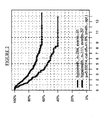
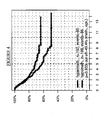
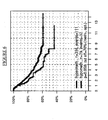
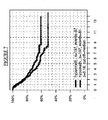
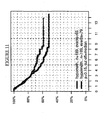
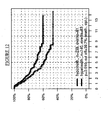
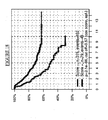
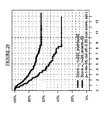
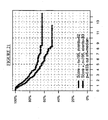
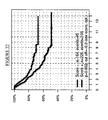
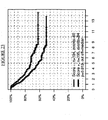
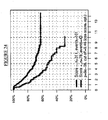
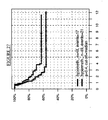
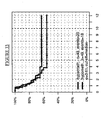
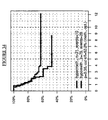
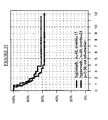
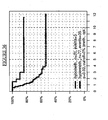
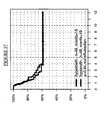
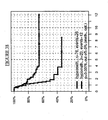
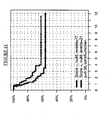
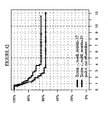
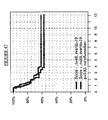
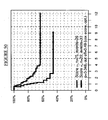
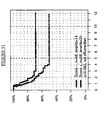
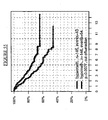
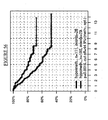
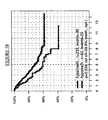
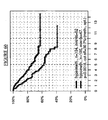
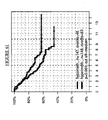
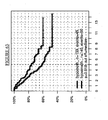
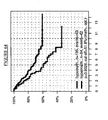
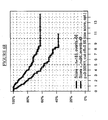
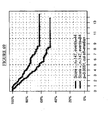
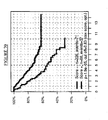
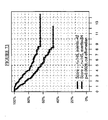
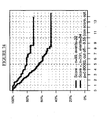
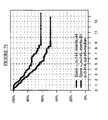
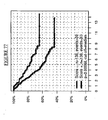
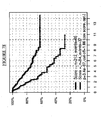
- Figures 1 to 78 show the Kaplan-Meier estimated disease-free survival curves for single assays or combinations of assays according to Example 2 and Table 5.
- the black plot shows the proportion of disease free patients in the sample set with above median or optimised cut off methylation levels
- the grey plot shows the proportion of disease free patients in the population with below median or optimised cut-off methylation levels.
- Also indicated on each plot are the number of events (i.e. metasasis) and number of individuals in each of the two sets. Proportion of metastasis free patients is shown on the Y-axis, time in years is shown on the X-axis.
- Characterization of a cancer in terms predicting treatment outcome enables the physician to make an informed decision as to a therapeutic regimen with appropriate risk and benefit trade offs to the patient.
- estrogen receptor positive and/or "progesterone receptor positive” when used to describe a cell proliferative disorder are taken to mean that the proliferating cells express said hormone receptor.
- the term 'aggressiveness' is taken to mean one or more of high likelihood of relapse post surgery; below average or below median patient survival; below average or below median disease free survival; below average or below median relapse-free survival; above average tumor-related complications; fast progression of tumor or metastases.
- an appropriate treatment or treatments may be selected from the group consisting of chemotherapy, radiotherapy, surgery, biological therapy, immunotherapy, antibody treatments, treatments involving molecularly targeted drugs, estrogen receptor modulator treatments, estrogen receptor down-regulator treatments, aromatase inhibitors treatments, ovarian ablation, treatments providing LHRH analogues or other centrally acting drugs influencing estrogen production.
- a cancer is characterized as 'aggressive' it is particularly preferred that a treatment such as, but not limited to, chemotherapy is provided in addition to or instead of an endocrine targeting therapy.
- a treatment such as, but not limited to, chemotherapy is provided in addition to or instead of an endocrine targeting therapy.
- Indicators of tumor aggressiveness standard in the art include but are not limited to, tumor stage, tumor grade, nodal status and survival.
- survival shall be taken to include all of the following: survival until mortality, also known as overall survival (wherein said mortality may be either irrespective of cause or tumor related); "recurrence-free survival” (wherein the term recurrence shall include both localized and distant recurrence) ; metastasis free survival; disease free survival (wherein the term disease shall include cancer and diseases associated therewith).
- the length of said survival may be calculated by reference to a defined start point (e.g. time of diagnosis or start of treatment) and end point (e.g. death, recurrence or metastasis).
- prognostic marker shall be taken to mean an indicator of the likelihood of progression of the disease, in particular aggressiveness and metastatic potential of a tumor.
- the term 'predictive marker' shall be taken to mean an indicator of response to therapy, said response is preferably defined according to patient survival. It is preferably used to define patients with high, low and intermediate length of survival or recurrence after treatment, that is the result of the inherent heterogeneity of the disease process.
- the term predictive marker may in some situations fall within the remit of a herein described 'prognostic marker', for example, wherein a prognostic marker differentiates between patients with different survival outcomes pursuant to a treatment, said marker is also a predictive marker for said treatment. Therefore, unless otherwise stated the two terms shall not be taken to be mutually exclusive.
- the activity of the transcribed gene may be affected by genetic variations such as but not limited to genetic modifications (including but not limited to SNPs. point mutations, deletions, insertions, repeat length, rearrangements and other polymorphisms),
- endocrine therapy or “endocrine treatment” are meant to comprise any therapy, treatment or treatments targeting the estrogen receptor pathway or estrogen synthesis pathway or estrogen conversion pathway, which is involved in estrogen metabolism, production or secretion.
- Said treatments include, but are not limited to estrogen receptor modulators, estrogen receptor down-regulators, aromatase inhibitors, ovarian ablation, LHRH analogues and other centrally acting drugs influencing estrogen production.
- the term "monotherapy” shall be taken to mean the use of a single drug or other therapy.
- chemotherapy is taken to mean the use of pharmaceutical or chemical substances to treat cancer. This definition excludes radiation therapy (treatment with high energy rays or particles), hormone therapy (treatment with hormones or hormone analogues) and surgical treatment.
- adjuvant treatment is taken to mean a therapy of a cancer patient immediately following an initial non chemotherapeutical therapy, e.g. surgery.
- adjuvant therapy is to decrease the risk of recurrence.
- determining a suitable treatment regimen for the subject is taken to mean the determination of a treatment regimen (i.e. a single therapy or a combination of different therapies that are used for the prevention and/or treatment of the cancer in the patient) for a patient that is started, modified and/or ended based or essentially based or at least partially based on the results of the analysis according to the present invention.
- a treatment regimen i.e. a single therapy or a combination of different therapies that are used for the prevention and/or treatment of the cancer in the patient
- a patient that is started, modified and/or ended based or essentially based or at least partially based on the results of the analysis according to the present invention.
- One example is starting an adjuvant endocrine therapy after surgery, another would be to modify the dosage of a particular chemotherapy.
- the determination can, in addition to the results of the analysis according to the present invention, be based on personal characteristics of the subject to be treated. In most cases, the actual determination of the suitable treatment regimen for the subject will be performed by the attending
- obtaining a biological sample or "obtaining a sample from a subject”, shall not be taken to include the active retrieval of a sample from an individual, e.g. the performance of a biopsy. Said terms shall be taken to mean the obtainment of a sample previously isolated from an individual. Said samples may be isolated by any means standard in the art, including but not limited to biopsy, surgical removal, body fluids isolated by means of aspiration. Furthermore said samples may be provided by third parties including but not limited to clinicians, couriers, commercial sample providers and sample collections.
- CpG island refers to a contiguous region of genomic DNA that satisfies the criteria of (1) having a frequency of CpG dinucleotides corresponding to an "Observed/Expected Ratio” >0.6, and (2) having a "GC Content” >0.5.
- CpG islands are typically, but not always, between about 0.2 to about 1 kb in length.
- regulatory region of a gene is taken to mean nucleotide sequences which affect the expression of a gene.
- Said regulatory regions may be located within, proximal or distal to said gene.
- Said regulatory regions include but are not limited to constitutive promoters, tissue-specific promoters, developmental-specific promoters, inducible promoters and the like.
- Promoter regulatory elements may also include certain enhancer sequence elements that control transcriptional or translational efficiency of the gene.
- methylation refers to the presence or absence of 5-methylcytosine ("5-mCyt”) at one or a plurality of CpG dinucleotides within a DNA sequence.
- methylation state is taken to mean the degree of methylation present in a nucleic acid of interest, this may be expressed in absolute or relative terms i.e. as a percentage or other numerical value or by comparison to another tissue and therein described as hypermethylated, hypomethylated or as having significantly similar or identical methylation status.
- hemi-methylation refers to the methylation state of a CpG methylation site, where only a single cytosine in one of the two CpG dinucleotide sequences-of the double stranded CpG methylation site is methylated (e.g., 5'-NNCMGNN-3' (top strand): 3'-NNGCNN-5' (bottom strand)).
- hypomethylation refers to the average methylation state corresponding to an increased presence of 5-mCyt at one or a plurality of CpG dinucleotides within a DNA sequence of a test DNA sample, relative to the amount of 5-mCyt found at corresponding CpG dinucleotides within a normal control DNA sample.
- hypomethylation refers to the average methylation state corresponding to a decreased presence of 5-mCyt at one or a plurality of CpG dinucleotides within a DNA sequence of a test DNA sample, relative to the amount of 5-mCyt found at corresponding CpG dinucleotides within a normal control DNA sample.
- microarray refers broadly to both “DNA microarrays," and 'DNA chip(s),' as recognized in the art, encompasses all art-recognized solid supports, and encompasses all methods for affixing nucleic acid molecules thereto or synthesis of nucleic acids thereon.
- Genetic parameters are mutations and polymorphisms of genes and sequences further required for their regulation. To be designated as genetic modifications or mutations are, in particular, insertions, deletions, point mutations, inversions and polymorphisms and, particularly preferred, SNPs (single nucleotide polymorphisms).
- Epigenetic modifications or “epigenetic parameters” are modifications of DNA bases of genomic DNA and sequences further required for their regulation, in particular, cytosine methylations thereof. Further epigenetic parameters include, for example, the acetylation of histones which, however, cannot be directly analyzed using the described method but which, in turn, correlate with the DNA methylation.
- bisulfite reagent refers to a reagent comprising bisulfite, disulfite, hydrogen sulfite or combinations thereof, useful as disclosed herein to distinguish between methylated and unmethylated CpG dinucleotide sequences.
- Methods refers to any assay for determining the methylation state of one or more CpG dinucleotide sequences within a sequence of DNA.
- MS.AP-PCR Metal-Sensitive Arbitrarily-Primed Polymerase Chain Reaction
- Methods of the present invention refers to the art-recognized fluorescence-based real-time PCR technique described by Eads et al., Cancer Res. 59:2302-2306, 1999 .
- HeavyMethylTM assay in the embodiment thereof implemented herein, refers to a methylation assay comprising methylation specific blocking probes covering CpG positions between the amplification primers.
- Ms-SNuPE Metal-sensitive Single Nucleotide Primer Extension
- MSP Metal-specific PCR
- COBRA combined Bisulfite Restriction Analysis
- hybridization is to be understood as a bond of an oligonucleotide to a complementary sequence along the lines of the Watson-Crick base pairings in the sample DNA, forming a duplex structure.
- “Stringent hybridization conditions,” as defined herein, involve hybridizing at 68°C in 5x SSC/5x Denhardt's solution/1.0% SDS, and washing in 0.2x SSC/0.1% SDS at room temperature, or involve the art-recognized equivalent thereof (e.g., conditions in which a hybridization is carried out at 60°C in 2.5 x SSC buffer, followed by several washing steps at 37°C in a low buffer concentration, and remains stable).
- Moderately stringent conditions as defined herein, involve including washing in 3x SSC at 42°C, or the art-recognized equivalent thereof.
- the parameters of salt concentration and temperature can be varied to achieve the optimal level of identity between the probe and the target nucleic acid.
- Background DNA refers to any nucleic acids which originate from sources other than the cancer cells to be analysed.
- said marker is used as a predictive marker of outcome of a anthracycline treatment, thereby enabling the physician to determine if said treatment is of benefit to a patient.
- patient survival can be evaluated before or during treatment for a cell proliferative disorder of the breast suitable for treatment with anthracyclines, in order to provide critical information to the patient and clinician as to the likely progression of the disease when treated by means of a therapy comprising at least one anthracycline. It will be appreciated, therefore, that the methods exemplified herein can serve to improve a patient's quality of life and odds of treatment success by allowing both patient and clinician a more accurate assessment of the patient's treatment options.
- the present invention makes available a method for the improved treatment of cell proliferative disorders, by enabling the improved prediction of a patient's survival, in particular by predicting the likelihood of relapse post-surgery both with or without anthracycline treatment.
- the method according to the invention may be used for the analysis of breast cancer suitable for treatment with anthracyclines.
- the method according to the invention may be used to provide a prediction of patient survival and/or relapse following treatment by means of a therapy comprising at least one anthracyline.
- said prediction is defined in terms of patient survival and/or relapse.
- patients survival times and/or relapse are predicted according to their epigenic modifications.
- said patients are tested prior to receiving any adjuvant anthracycline treatment.
- the invention relates to new methods and sequences, which may be used as tools for the selection of suitable treatments of patients diagnosed with cell proliferative disorder of the breast based on a prediction of likelihood of relapse, survival or outcome.
- One aspect of the invention is the provision of methods for providing a prediction of outcome of a treatment comprising at least one anthracycline of a patient with a cell proliferative disorder of the breast.
- said prognosis and/or prediction is provided in terms of likelihood of relapse or the survival of said patient. It is further preferred that said survival is disease free survival or metastasis free survival. It is also preferred that said disease is breast cancer.
- said patients are analyzed prior to receiving any treatment comprising at least one anthracycline.
- the present invention discloses a method for the use of at least one gene selected from PITX2 and PLAU as a marker of the prediction of outcome of anthracycline treatment.
- the invention provides significant improvements over the state of the art in that it provides the first proliferative disorder of the breast treatment response markers for a treatment comprising an anthracycline.
- the invention is carried out by means of CpG methylation analysis of at least one of the genes PITX2 and PLAU. It is further preferred that the methylation, state of the CpG dinucleotides within the genomic sequence of said genes according to SEQ ID NOs: 1, 2 and 4 to 6 and sequences complementary thereto are analyzed.
- the methylation state of the CpG dinucleotides within the genomic sequence of said genes according to Table 1 (SEQ ID NO: 1 and SEQ ID NO: 2) and sequences complementary thereto are analyzed.
- Table 4 provides particularly preferred CpG rich sequences of the genes according to Table 1. Accordingly it is preferred that said CpG positions are within a CpG rich region of said genes as provided in Table 4 (SEQ ID NO: 4 to SEQ ID NO: 6).
- the methylation pattern of the genes according to the present invention and their promoter and regulatory elements have heretofore not been analyzed with regard to prediction of outcome of anthracylcine treatment.
- the method for the analysis of methylation comprises contacting a nucleic acid sample obtained from a subject with at least one reagent or a series of reagents, wherein said reagent or series of reagents, distinguishes between methylated and non-methylated CpG dinucleotides within the target nucleic acid.
- said method comprises the following steps: In the first step, a sample of the tissue to be analyzed is obtained.
- the source may be any suitable source, preferably, the source of the sample is selected from the group consisting of histological slides, biopsies, paraffin-embedded tissue, bodily fluids, plasma, serum, stool, urine, blood, nipple aspirate and combinations thereof.
- the source is tumor tissue, biopsies, serum, urine, blood or nipple aspirate.
- the most preferred source is the tumor sample, surgically removed from the patient or a biopsy sample of said patient.
- Genomic DNA may be isolated by any means standard in the art, including the use of commercially available kits. Briefly, wherein the DNA of interest is encapsulated in/by a cellular membrane the biological sample must be disrupted and lysed by enzymatic, chemical or mechanical means. The DNA solution may then be cleared of proteins and other contaminants e.g. by digestion with proteinase K. The genomic DNA is then recovered from the solution. This may be carried out by means of a variety of methods including salting out, organic extraction or binding of the DNA to a solid phase support. The choice of method will be affected by several factors including time, expense and required quantity of DNA.
- genomic DNA sample is then treated in such a manner that cytosine bases which are unmethylated at the 5'-position are converted to uracil, thymine, or another base which is dissimilar to cytosine in terms of hybridization behavior. This will be understood as “treatment” or “pre-treatment” herein.
- the above described pre-treatment of genomic DNA is preferably carried out with bisulfite (hydrogen sulfite, disulfite) and subsequent alkaline hydrolysis which results in a conversion of non-methylated cytosine nucleobases to uracil or to another base which is dissimilar to cytosine in terms of base pairing behavior.
- the treated DNA is then analyzed in order to determine the methylation state of at least one of the genes PITX2 and PLAU and/or regulatory regions thereof associated with outcome of a treatment comprising at least one anthracycline. It is further preferred that the sequences of said genes as described in the accompanying sequence listing (see Table 1, or more preferably Table 4) are analyzed.
- fragments of the pretreated DNA are amplified.
- the source of the DNA is free DNA from serum, or DNA extracted from paraffin it is particularly preferred that the size of the amplificate fragment is between 100 and 200 base pairs in length, and wherein said DNA source is extracted from cellular sources (e.g. tissues, biopsies, cell lines) it is preferred that the amplificate is between 100 and 350 base pairs in length.
- said amplificates comprise at least one 20 base pair sequence comprising at least three CpG dinucleotides.
- Said amplification is carried out using sets of primer oligonucleotides according to the present invention, and a preferably heat-stable polymerase.
- the amplification of several DNA segments can be carried out simultaneously in one and the same reaction vessel, in one embodiment of the method preferably six or more fragments are amplified simultaneously.
- the amplification is carried out using a polymerase chain reaction (PCR).
- the set of primer oligonucleotides includes at least two oligonucleotides whose sequences are each reverse complementary, identical, or hybridize under stringent or highly stringent conditions to an at least 18-base-pair long segment of a base sequence selected from the group consisting SEQ ID NO: 9-12,15-20,25-28 and 31-36 and sequences complementary thereto.
- the set of primer oligonucleotides includes at least two oligonucleotides whose sequences are each reverse complementary, identical, or hybridize under stringent or highly stringent conditions to an at least 18-base-pair long segment of a pretreated sequence as listed in Table 1 (SEQ ID NO: 9 to SEQ ID NO: 12 and (SEQ ID NO: 25 to SEQ ID NO: 28) and sequences complementary thereto.
- the set of primer oligonucleotides includes at least two oligonucleotides whose sequences are each reverse complementary, identical, or hybridize under stringent or highly stringent conditions to an at least 18-base-pair long segment of a pretreated sequence as listed in Table 4 (SEQ ID NO: 15 to SEQ ID NO: 20 and SEQ ID NO: 31 to SEQ ID NO: 36) and sequences complementary thereto.
- the methylation status of pre-selected CpG positions within the nucleic acid sequences comprising SEQ ID NO: 1, 2 and 4 to 6 may be detected by use of methylation-specific primer oligonucleotides.
- This technique has been described in United States Patent No. 6,265,171 to Herman .
- the use of methylation status specific primers for the amplification of bisulfite treated DNA allows the differentiation between methylated and unmethylated nucleic acids.
- MSP primers pairs contain at least one primer which hybridizes to a bisulfite treated CpG dinucleotide. Therefore, the sequence of said primers comprises at least one CpG , TpG or CpA dinucleotide.
- MSP primers specific for non-methylated DNA contain a "T' at the 3' position of the C position in the CpG.
- the base sequence of said primers is required to comprise a sequence having a length of at least 18 nucleotides which hybridizes to a pretreated nucleic acid sequence according to SEQ ID NO: 9-12,15-20,25-28 and 31-36 and sequences complementary thereto, wherein the base sequence of said oligomers comprises at least one CpG, tpG or Cpa dinucleotide.
- said sequence has a length of at least 18 nucleotides which hybridizes to a L pretreated nucleic acid sequence selected from Table I (SEQ ID NO: 9 to SEQ ID NO: 12 and SEQ ID NO: 25 to SEQ ID NO: 28 and sequences complementary thereto.
- said sequence has a length of at least 18 nucleotides which hybridizes to a pretreated nucleic acid sequence selected from Table 4 (SEQ ID NO: 15 to SEQ ID NO: 20 and SEQ ID NO: 31 to SEQ ID NO: 36), and sequences complementary thereto.
- the MSP primers comprise between 2 and 4 CpG , tpG or Cpa dinucleotides. It is further preferred that said dinucleotides are located within the 3' half of the primer e.g. wherein a primer is 18 bases in length the specified dinucleotides are located within the first 9 bases form the 3'end of the molecule.
- said primers should further comprise several bisulfite converted bases (i.e. cytosine converted to thymine, or on the hybridizing strand, guanine converted to adenosine). In a further preferred embodiment said primers are designed so as to comprise no more than 2 cytosine or guanine bases.
- the fragments obtained by means of the amplification can carry a directly or indirectly detectable label.
- the detection may be carried out and visualized by means of, e.g., matrix assisted laser desorption/ionization mass spectrometry (MALDI) or using electron spray mass spectrometry (ESI).
- MALDI matrix assisted laser desorption/ionization mass spectrometry
- ESI electron spray mass spectrometry
- Matrix Assisted Laser Desorption/Ionization Mass Spectrometry is a very efficient development for the analysis of biomolecules ( Karas and Hillenkamp, Anal Chem., 60:2299-301. 1988 ).
- An analyte is embedded in a light-absorbing matrix.
- the matrix is evaporated by a short laser pulse thus transporting the analyte molecule into the vapor phase in an unfragmented manner.
- the analyte is ionized by collisions with matrix molecules.
- An applied voltage accelerates the ions into a field-free flight tube. Due to their different masses, the ions are accelerated at different rates. Smaller ions reach the detector sooner than bigger ones.
- MALDI-TOF spectrometry is well suited to the analysis of peptides and proteins.
- the analysis of nucleic acids is somewhat more difficult ( Gut and Beck, Current Innovations and Future Trends, 1:147-57, 1995 ).
- the sensitivity with respect to nucleic acid analysis is approximately 100-times less than for peptides, and decreases disproportionally with increasing fragment size.
- nucleic acids having a multiply negatively charged backbone the ionisation process via the matrix is considerably less efficient.
- MALDI-TOF spectrometry the selection of the matrix plays an eminently important role. For the desorption of peptides, several very efficient matrixes have been found which produce a very fine crystallisation.
- the amplification of step three is carried out in the presence of at least one species of blocker oligonucleotides.
- blocker oligonucleotides has been described by Yu et al., BioTechniques 23:714-720, 1997 .
- the use of blocking oligonucleotides enables the improved specificity of the amplification of a subpopulation of nucleic acids.
- Blocking probes hybridized to a nucleic acid suppress, or hinder the polymerase mediated amplification of said nucleic acid.
- blocking oligonucleotides are designed so as to hybridize to background DNA.
- said oligonucleotides are designed so as to hinder or suppress the amplification of unmethylated nucleic acids as opposed to methylated nucleic acids or vice versa.
- Blocking probe oligonucleotides are hybridized to the bisulfite treated nucleic acid concurrently with the PCR primers. PCR amplification of the nucleic acid is terminated at the 5' position of the blocking probe, such that amplification of a nucleic acid is suppressed where the complementary sequence to the blocking probe is present.
- the probes may be designed to hybridize to the bisulfite treated nucleic acid in a methylation status specific manner.
- the sequence of said blocking oligonucleotides should be identical or complementary to a sequence at least 18 base pairs in length selected from the group consisting of SEQ ID NO: 9-12,15-20,25-28 and 31-36 preferably comprising one or more CpG, TpG or CpA dinucleotides.
- sequence of said blocking oligonucleotides should be identical or complementary to a sequence at least 18 base pairs in length selected from a pretreated nucleic acid sequence selected from Table 1 (SEQ ID NO: 9 to SEQ ID NO: 12 and SEQ ID NO: 25 to SEQ ID NO: 28), and sequences complementary thereto preferably comprising one or more CpG, TpG or CpA dinucleotides.
- sequence of said blocking oligonucleotides should be identical or complementary to a sequence at least 18 base pairs in length selected from a pretreated nucleic acid sequence selected from Table 4 (SEQ ID NO: 15 to SEQ ID NO: 20 and SEQ ID NO: 31 to SEQ ID NO: 36), and sequences complementary thereto preferably comprising one or more CpG, TpG or CpA dinucleotides.
- blocker oligonucleotides For PCR methods using blocker oligonucleotides, efficient disruption of polymerase-mediated amplification requires that blocker oligonucleotides not be elongated by the polymerase. Preferably, this is achieved through the use of blockers that are 3'-deoxyoligonucleotides or oligonucleotides derivatised at the 3' position with other than a "free" hydroxyl group.
- 3'-O-acetyl oligonucleotides are representative of a preferred class of blocker molecule.
- polymerase-mediated decomposition of the blocker oligonucleotides should be precluded.
- such preclusion comprises either use of a polymerase lacking 5'-3' exonuclease activity, or use of modified blocker oligonucleotides having, for example, thioate bridges at the 5'-termini thereof that render the blocker molecule nuclease-resistant.
- Particular applications may not require such 5' modifications of the blocker. For example, if the blocker- and primer-binding sites overlap, thereby precluding binding of the primer (e.g., with excess blocker), degradation of the blocker oligonucleotide will be substantially precluded. This is because the polymerase will not extend the primer toward, and through (in the 5'-3' direction) the blocker - a process that normally results in degradation of the hybridized blocker oligonucleotide.
- a particularly preferred blocker/PCR embodiment for purposes of the present invention and as implemented herein, comprises the use of peptide nucleic acid (PNA) oligomers as blocking oligonucleotides.
- PNA peptide nucleic acid
- Such PNA blocker oligomers are ideally suited, because they are neither decomposed nor extended by the polymerase.
- the binding site of the blocking oligonucleotide is identical to, or overlaps with that of the primer and thereby hinders the hybridization of the primer to its binding site.
- two or more such blocking oligonucleotides are used.
- the hybridization of one of the blocking oligonucleotides hinders the hybridization of a forward primer, and the hybridization of another of the probe (blocker) oligonucleotides hinders the hybridization of a reverse primer that binds to the amplificate product of said forward primer.
- the blocking oligonucleotide hybridizes to a location between the reverse and forward primer positions of the treated background DNA, thereby hindering the elongation of the primer oligonucleotides.
- the blocking oligonucleotides are present in at least 5 times the concentration of the primers.
- the amplificates obtained during the third step of the method are analyzed in order to ascertain the methylation status of the CpG dinucleotides prior to the treatment.
- the presence or absence of an amplificate is in itself indicative of the methylation state of the CpG positions covered by the primers and or blocking oligonucleotide, according to the base sequences thereof.
- All possible known molecular biological methods may be used for this detection, including, but not limited to gel electrophoresis, sequencing, liquid chromatography, hybridizations, real time PCR analysis or combinations thereof. This step of the method further acts as a qualitative control of the preceding steps.
- amplificates obtained by means of both standard and methylation specific PCR are further analyzed in order to determined the CpG methylation status of the genomic DNA isolated in the first step of the method. This may be carried out by means of hybridization-based methods such as, but not limited to, array technology and probe based technologies as well as by means of techniques such as sequencing and template directed extension.
- the amplificates synthesized in step three are subsequently hybridized to an array or a set of oligonucleotides and/or PNA probes.
- the hybridization takes place in the following manner: the set of probes used during the hybridization is preferably composed of at least 2 oligonucleotides or PNA-oligomers; in the process, the amplificates serve as probes which hybridize to oligonucleotides previously bonded to a solid phase; the non-hybridized fragments are subsequently removed; said oligonucleotides contain at least one base sequence having a length of at least 9 nucleotides which is reverse complementary or identical to a segment of the base sequences specified in the of SEQ ID NO: 9-12,15-20,25-28 and 31-36 and the segment comprises at least one CpG , TpG or CpA dinucleotide.
- said oligonucleotides contain at least one base sequence having a length of at least 9 nucleotides which is reverse complementary or identical to a segment of the pretreated sequences specified in Table 1 (SEQ ID NO: 9 to SEQ ID NO: 12 and SEQ ID NO: 25 to SEQ ID NO: 28) and the segment comprises at least one CpG, TpG or CpA dinucleotide.
- said oligonucleotides contain at least one base sequence having a length of at least 9 nucleotides which is reverse complementary or identical to a segment of the pretreated sequences specified in Table 4 (SEQ ID NO: 15 to SEQ ID NO: 20 and SEQ ID NO: 31 to SEQ ID NO: 36) and the segment comprises at least one CpG, TpG or CpA dinucleotide.
- said oligonucleotides contain at least one base sequence having a length of at least 9 nucleotides which is reverse complementary or identical to a segment of the base sequences specified in the of SEQ ID NO: 9-12,15-20,25-28 and 31-36 and the segment comprises at least one CpG , TpG or CpA dinucleotide.
- said oligonucleotides contain at least one base sequence having a length of at least 9 nucleotides which is reverse complementary or identical to a segment of the pretreated sequences specified in Table 1 (SEQ ID NO: 9 to SEQ ID NO: 12 and SEQ ID NO: 25 to SEQ ID NO: 28) and the segment comprises at least one CpG , TpG or CpA dinucleotide.
- said oligonucleotides contain at least one base sequence having a length of at least 9 nucleotides which is reverse complementary or identical to a segment of the pretreated sequences specified in Table 4 (SEQ ID NO: 15 to SEQ ID NO: 20 and SEQ ID NO: 31 to SEQ ID NO: 36) and the segment comprises at least one CpG, TpG or CpA dinucleotide.
- said dinucleotide is present in the central third of the oligomer.
- said dinucleotide is preferably the fifth to ninth nucleotide from the 5'-end of a 13-mer.
- one oligonucleotide exists for the analysis of each CpG dinucleotide within the sequence according to of SEQ ID NO: 4 to SEQ ID NO: 6 and the equivalent positions within of SEQ ID NO: 15 to SEQ ID NO: 20 and SEQ ID NO: 31 to SEQ ID NO: 36.
- oligonucleotide exists for the analysis of each CpG dinucleotide within the sequence according to SEQ ID NO: 12 and 4-6 and the equivalent positions within SEQ ID NO 9-12,15-20,25-28 and 31-36 Said oligonucleotides may also be present in the form of peptide nucleic acids.
- the non-hybridized amplificates are then removed.
- the hybridized amplificates are detected.
- labels attached to the amplificates are identifiable at each position of the solid phase at which an oligonucleotide sequence is located.
- the genomic methylation status of the CpG positions may be ascertained by means of oligonucleotide probes that are hybridized to the bisulfite treated DNA concurrently with the PCR amplification primers (wherein said primers may either be methylation specific or standard).
- a particularly preferred embodiment of this method is the use of fluorescence-based Real Time Quantitative PCR ( Heid et al., Genome Res. 6:986-994, 1996 : also see United States Patent No. 6,331,393 ).
- the TaqManTM assay employs a dual-labeled fluorescent oligonucleotide probe.
- the TaqManTM PCR reaction employs the use of a non-extendible interrogating oligonucleotide, called a TaqManTM probe, which is designed to hybridize to a CpG-rich sequence located between the forward and reverse amplification primers.
- the TaqManTM probe further comprises a fluorescent "reporter moiety” and a "quencher moiety” covalently hound to linker moieties (e.g., phosphoramidites) attached to the nucleotides of the TaqManTM oligonucleotide.
- linker moieties e.g., phosphoramidites
- Hybridized probes are displaced and broken down by the polymerase of the amplification reaction thereby leading to an increase in fluorescence.
- the probe be methylation specific, as described in United States Patent No. 6,331,393 , also known as the MethyLight assay.
- the second preferred embodiment of this MethyLight technology is the use of dual-probe technology (Lightcycler®), each probe carrying donor or recipient fluorescent moieties, hybridization of two probes in proximity to each other is indicated by an increase or fluorescent amplification primers. Both these techniques may be adapted in a manner suitable for use with bisulfite treated DNA, and moreover for methylation analysis within CpG dinucleotides.
- the fourth step of the method comprises the use of template-directed oligonucleotide extension, such as MS-SNuPE as described by Gonzalgo and Jones, Nucleic Acids Res. 25:2529-2531, 1997 .
- the methylation specific single nucleotide extension primer (MS-SNuPE primer) is identical or complementary to a sequence at least nine but preferably no more than twenty five nucleotides in length of one or more of the sequences taken from the group to SEQ ID NO: 9-12, 15-20, 25-28 and 31-36.
- said MS-SNuPE primer is identical or complementary to a sequence at least nine but preferably no more than twenty five nucleotides in length of one or more of the pretreated sequences selected from Table 1 (SEQ ID NO: 9 to SEQ ID NO: 12 and SEQ ID NO: 25 to SEQ ID NO: 28).
- said MS-SNuPE primer is identical or complementary to a sequence at least nine but preferably no more than twenty five nucleotides in length of one or more of the pretreated sequences selected from Table 4 (SEQ ID NO: 15 to SEQ ID NO: 20 and SEQ ID NO: 31 to SEQ ID NO: 36). It is preferred to use fluorescently labeled nucleotides, instead of radiolabeled nucleotides.
- the fourth step of the method comprises sequencing and subsequent sequence analysis of the amplificate generated in the third step of the method ( Sanger F., et al., Proc Natl Acad Sci USA 74:5463-5467, 1977 ).
- genomic nucleic acids are isolated and treated according to the first three steps of the method outlined above, namely:
- said methylation specific primers comprise a sequence having a length of at least 9 nucleotides which hybridizes to a treated nucleic acid sequence according to one of SEQ ID NO: 9-12, 15-20, 25-28 and 31-36 and sequences complementary thereto, wherein the base sequence of said oligomers comprises at least one CpG dinucleotide.
- said methylation specific primers comprise a sequence having a length of at least 9 nucleotides which hybridizes to a pretreated nucleic acid sequence selected from Table 1 (SEQ ID NO: 9 to SEQ ID NO: 12 and SEQ ID NO: 25 to SEQ ID NO:28) and sequences complementary thereto, wherein the base sequence of said oligomers comprises at least one CpG dinucleotide.
- said methylation specific primers comprise a sequence having a length of at least 9 nucleotides which hybridizes to a pretreated nucleic acid sequence selected from Table 4 (SEQ ID NO: 15 to SEQ ID NO: 20 and SEQ ID NO: 31 to SEQ ID NO:36) and sequences complementary thereto, wherein the base sequence of said oligomers comprises at least one CpG dinucleotide.
- further methylation specific primers may also be used for the analysis of a gene panel as described above wherein said primers comprise a sequence having a length of at least 9 nucleotides which hybridizes to a treated nucleic acid sequence according to one of SEQ ID NO: 9-12, 15-20, 25-28 and 31-36 and sequences complementary thereto, wherein the base sequence of said oligomers comprises at least one CpG dinucleotide.
- the subsequent amplification of d) is carried out in the presence of blocking oligonucleotides, as described above.
- said blocking oligonucleotides comprise a sequence having a length of at least 9 nucleotides which hybridizes to a treated nucleic acid sequence according to one of SEQ ID NO: 9-12, 15-20, 25-28 and 31-36 and sequences complementary thereto, wherein the base sequence of said oligomers comprises at least one CpG, TpG or CpA dinucleotide.
- said blocking oligonucleotides comprise a sequence having a length of at least 9 nucleotides which hybridizes to a pretreated nucleic acid sequence selected from Table 1 (SEQ ID NO: 9 to SEQ ID NO: 12 and SEQ ID NO: 25 to SEQ ID NO: 28) and sequences complementary thereto, wherein the base sequence of said oligomers comprises at least one CpG dinucleotide.
- said blocking oligonucleotides comprise a sequence having a length of at least 9 nucleotides which hybridizes to a pretreated nucleic acid sequence selected from Table 4 (SEQ ID NO: 15 to SEQ ID NO: 20 and SEQ ID NO: 31 to SEQ ID NO: 36) and sequences complementary thereto, wherein the base sequence of said oligomers comprises at least one CpG dinucleotide.
- Step e) of the method namely the detection of the specific amplificates indicative of the methylation status of one or more CpG positions according to SEQ ID NO: 9 to SEQ ID NO: 12 and SEQ ID NO: 25 to SEQ ID NO: 28, is carried out by means of real-time detection methods as described above.
- Additional embodiments of the invention provide a method for the analysis of the methylation status of at least one gene selected from PITX2 and PLAU and/or regulatory regions thereof without the need for pre-treatment.
- a methylation sensitive restriction enzyme reagent or a series of restriction enzymes reagents comprising methylation sensitive restriction enzyme reagents that distinguishes between methylated and non-methylated CpG dinucleotides within a target region are utilized in determining methylation, for example but not limited to DMH.
- Genomic DNA is isolated from tissue or cellular sources.
- Genomic DNA may be isolated by any means standard in the art, including the use of commercially available kits. Briefly, wherein the DNA of interest is encapsulated in by a cellular membrane the biological sample must be disrupted and lysed by enzymatic, chemical or mechanical means. The DNA solution may then be cleared of proteins and other contaminants, e.g., by digestion with proteinase K. The genomic DNA is then recovered from the solution. This may be carried out by means of a variety of methods including salting out, organic extraction or binding of the DNA to a solid phase support. The choice of method will be affected by several factors including time, expense and required quantity of DNA.
- the genomic double-stranded DNA is used in the analysis.
- the DNA may be cleaved prior to treatment with methylation sensitive restriction enzymes.
- methylation sensitive restriction enzymes Such methods are known in the art and may include both physical and enzymatic means.
- Particularly preferred is the use of one or a plurality of restriction enzymes which are not methylation sensitive, and whose recognition sites are AT rich and do not comprise CG dinucleotides. The use of such enzymes enables the conservation of CpG islands and CpG rich regions in the fragmented DNA.
- the non-methylation-specific restriction enzymes are preferably selected from the group consisting of MseI, BfaI, Csp6I, Tru1I, Tvu1I, Tru9I, Tvu9I, MaeI and XspI. Particularly preferred is the use of two or three such enzymes. Particularly preferred is the use of a combination of MseI, Bfal and Csp6I.
- the fragmented DNA may then be ligated to adaptor oligonucleotides in order to facilitate subsequent enzymatic amplification.
- the ligation of oligonucleotides to blunt and sticky ended DNA fragments is known in the art, and is carried out by means of dephosphorylation of the ends (e.g. using calf or shrimp alkaline phosphatase) and subsequent ligation using ligase enzymes (e.g. T4 DNA ligase) in the presence of dATPs.
- the adaptor oligonucleotides are typically at least 18 base pairs in length.
- the DNA (or fragments thereof) is then digested with one or more methylation sensitive restriction enzymes.
- the digestion is carried out such that hydrolysis of the DNA at the restriction site is informative of the methylation status of a specific CpG dinucleotide of at least one gene selected from PITX2 and PLAU.
- the methylation-specific restriction enzyme is selected from the group consisting of Bsi El, Hga 1 HinPl, Hpy99I, Ava I, Bce AI, Bsa HI, Bisl, BstUI, BshI236I, AccII, BstFNI, McrBC, GlaI, MvnI, HpaII (HapII), HhaI, AciI, SmaI, HinPII, HpyCH4IV, Eagl and mixtures of two or more of the above enzymes.
- Preferred is a mixture containing the restriction enzymes BstUI, HpaII, HpyCH4IV and HinPII.
- the restriction fragments are amplified.
- This is preferably carried out using a polymerase chain reaction, and said amplifycates may carry suitable detectable labels as discussed above, namely fluorophore labels, radionuclides and mass labels.
- amplification by means of an amplification enzyme and at least two primers comprising, in each case a contiguous sequence at least 16 nucleotides in length that is complementary to, or hybridizes under moderately stringent or stringent conditions to a sequence selected from the group consisting SEQ ID NO: 1, 2, 4-6 and 9, or more preferably SEQ ID NO: 4 to SEQ ID NO: 6 and complements thereof.
- said contiguous sequence is at least 16, 20 or 25 nucleotides in length.
- said primers may be complementary to any adaptors linked to the fragments.
- the amplificates are detected.
- the detection may be by any means standard in the art, for example, but not limited to gel electrophoresis analysis, hybridization analysis, incorporation of detectable tags within the PCR products, DNA array analysis, MALDI or ESI analysis.
- said detection is carried out by hybridisation to at least one nucleic acid or peptide nucleic acid comprising in each case a contiguous sequence at least 16 nucleotides in length that is complementary to, or hybridizes under moderately stringent or stringent conditions to a sequence selected from the group consisting SEQ ID NO: 1, 2, 4-6 and 9 or more preferably SEQ ID NO: 4 to SEQ ID NO: 6, and complements thereof.
- said contiguous sequence is at least 16, 20 or 25 nucleotides in length.
- the prognosis of the patient after treatment with anthracyclines is determined.
- the outcome of Anthracycline treatment is deduced based upon the methylation state or level of at least one CpG dinucleotide sequence of at least one gene selected from PITX2 and PLAU.
- said methylation is determined by quantitative means the cut-off point for determining said the presence of methylation is preferably zero (i.e. wherein a sample displays any degree of methylation it is determined as having a methylated status at the analysed CpG position). Nonetheless, it is foreseen that the person skilled in the art may wish to adjust said cut-off value in order to provide an assay of a particularly preferred sensitivity or specificity.
- said cut-off value may be increased (thus increasing the specificity), said cut off value may be within a range selected form the group consisting of 0%-5%, 5%-10%, 10%-15%, 15%-20%, 20%-30% and 30%-50%. Particularly preferred are the cut-offs 10%, 15%, 25%, and 30%.
- the correlation of methylation with prognosis after treatment with anthracyclines may be determined according to Table 5.
- Patients with predicted positive outcome after said treatment will accordingly have a decreased absolute reduction of risk of recurrence and death after treatment with primary or adjuvant treatment.
- Patients with predicted negative outcome after said treatment will accordingly have a relatively larger absolute reduction of risk of recurrence and death after said treatment. Accordingly patients with a negative outcome will be considered more suitable candidates for aggressive treatment such as chemotherapy or other adjuvant therapies than patients with a positive outcome.
- Patients with a positive outcome may accordingly be prevented from over prescription of e.g. chemotherapeutic treatment.
- the classification of the sample is carried out by algorithmic means.
- machine learning predictors are trained on the methylation patterns at the investigated CpG sites of the samples with known status.
- a selection of the CpG positions which are discriminative for the machine learning predictor are used in the panel.
- both methods are combined; that is, the machine learning classifier is trained only on the selected CpG positions that are significantly differentially methylated between the classes according to the statistical analysis.
- Treatment is suitable to convert at least one unmethylated cytosine base of the genomic DNA sequence to uracil or another base that is detectably dissimilar to cytosine in terms of hybridization.
- the genomic sequences in question may comprise one, or more, consecutive or random methylated CpG positions.
- Said treatment preferably comprises use of a reagent selected from the group consisting of bisulfite, hydrogen sulfite, disulfite, and combinations thereof.
- the objective comprises analysis of a non-naturally occurring modified nucleic acid comprising a sequence of at least 16 contiguous nucleotide bases in length of a sequence selected from the group consisting of SEQ ID NO: 1, 2 and 4-6, wherein said sequence comprises at least one CpG, TpA or CpA dinucleotide and sequences complementary thereto.
- the sequences of SEQ ID NO: 9-12, 15-20, 25-18 and 31-36 provide non-naturally occurring modified versions of the nucleic acid according to SEQ ID NO: 1, 2 and 4-6, wherein the modification of each genomic sequence results in the synthesis of a nucleic acid having a sequence that is unique and distinct from said genomic sequence as follows.
- genomic DNA For each sense strand genomic DNA, e.g., SEQ ID NO: I, four converted versions are disclosed.
- a first version wherein “C” to "T,” but “CpG” remains “CpG” (i.e., corresponds to case where, for the genomic sequence, all "C” residues of CpG dinucleotide sequences are methylated and are thus not converted);
- a second version discloses the complement of the disclosed genomic DNA sequence (i.e. antisense strand), wherein “C” to "T,” but “CpG” remains “CpG” (i.e., corresponds to case where, for all "C” residues of CpG dinucleotide sequences are methylated and are thus not converted).
- the 'upmethylated' converted sequences of SEQ ID NO: 1, 2 and 4-6 correspond to SEQ ID NO: 9-12 and 15-20
- a third chemically converted version of each genomic sequences is provided, wherein "C” to "T” for all "C” residues, including those of "CpG" dinucleotide sequences (i.e., corresponds to case where, for the genomic sequences, all "C” residues of CpG dinucleotide sequences are unmethylated); a final chemically converted version of each sequence, discloses the complement of the disclosed genomic DNA sequence (i.e.
- the invention further discloses oligonucleotide or oligomer for detecting the cytosine methylation state within genomic or pre-treated DNA, according to SEQ ID NO: 1, 2 and 4-6 and SEQ ID NO: 9-12, 15-20, 25-28 and 31-36.
- Said oligonucleotide or oligomer comprising a nucleic and SEQ ID NO: 9-12, 15-20, 25-28 and 31-36.
- Said oligonucleotide or oligomer comprising a nucleic acid sequence having a length of at least nine (9) nucleotides which hybridizes, under moderately stringent or stringent conditions (as defined herein above), to a treated nucleic acid sequence according to SEQ ID NO: 9-12, 15-20, 25-28 and 31-36 and/or sequences complementary thereto, or to a genomic sequence according to SEQ ID NO: 1, 2 and 4-6 and/or sequences complementary thereto.
- Acid molecules e.g., oligonucleotides and peptide nucleic acid (PNA) molecules (PNA-oligomers) that hybridize under moderately stringent and/or stringent hybridization conditions to all or a portion of the sequences SEQ ID NO: 9-12, 15-20, 25-28 and 31-36, or to the complements thereof.
- the hybridizing portion of the hybridizing nucleic acids is typically at least 9, 15, 20, 25, 30 or 35 nucleotides in length. However, longer molecules have inventive utility, and are thus within the scope of the present invention.
- the hybridizing portion of the inventive hybridizing nucleic acids is at least 95%, or at least 98%, or 100% identical to the sequence or to a portion thereof or SEQ ID NO:9-12, 15-20, 25-28 and 31-36, or to the complements thereof.
- Hybridizing nucleic acids of the type described herein can be used, for example as a primer (e.g., a PCR primer), or a diagnostic and/or prognostic probe or primer.
- a primer e.g., a PCR primer
- a diagnostic and/or prognostic probe or primer e.g., a PCR primer
- hybridization of the oligonucleotide probe to a nucleic acid sample is performed under stringent conditions and the probe is 100% identical to the target sequence.
- Nucleic acid duplex or hybrid stability is expressed as the melting temperature or Tm, which is the temperature at which a probe dissociates from a target DNA. This melting temperature is used to define the required stringency conditions.
- target sequences that are related and substantially identical to the corresponding sequence of SEQ ID NO: 1, 2 and 4-6 (such as allelic variants and SNPs), rather than identical, it is useful to first establish the lowest temperature at which only homologous hybridization occurs with a particular concentration of salt (e.g., SSC or SSPE). Then, assuming that 1% mismatching results in a 1°C decrease in the Tm, the temperature of the final wash in the hybridisation reaction is reduced accordingly (for example, if sequences having > 95% identity with the probe are sought, the final wash temperature is decreased by 5°C). In practice, the change in Tm can be between 0.5°C and 1.5°C per 1% mismatch.
- salt e.g., SSC or SSPE
- the set is limited to those oligomers that comprise at least one CpG, TpG or CpA dinucleotide.
- Examples of 20-mer oligonucleotides include the following set of oligomers (and the antisense set complementary thereto), indicated by polynucleotide positions with reference to SEQ ID NO: 1: 1-20, 2-21, 3-22, 4-23, 5-24, ising and 29982-30001.
- the set is limited to those oligomers that comprise at least one CpG, TpG or CpA dinucleotide.
- examples of 25-mer oligonucleotides include the following set of oligomers (and the antisense set complementary thereto), indicated by polynucleotide positions with reference to SEQ ID NO: 1: 1-25, 2-26, 3-27, 4-28, 5-29, ............and 29977-30001.
- the set is limited to those oligomers that comprise at least one CpG, TpG or CpA dinucleotide.
- oligonucleotides or oligomers according to the present invention constitute effective tools useful to ascertain genetic and epigenetic parameters of the genomic sequence corresponding to SEQ ID NO: 1, 2 and 4-6.
- Preferred sets of such oligonucleotides or modified oligonucleotides of length X are those consecutively overlapping sets of oligomers corresponding to SEQ ID NO: 9-12, 15-20, 25-28 and 31-36 (and to the complements thereof).
- said oligomers comprise at least one CpG, TpG or CpA dinucleotide.
- Particularly preferred oligonucleotides or oligomers according to the present invention are those in which the cytosine of the CpG dinucleotide (or of the corresponding converted TpG or CpA dinculeotide) sequences is within the middle third of the oligonucleotide; that is, where the oligonucleotide is, for example. 13 bases in length, the CpG, TpG or CpA dinucleotide is positioned within the fifth to ninth nucleotide from the 5'-end.
- the oligonucleotides of the invention can also be modified by chemically linking the oligonucleotide to one or more moieties or conjugates to enhance the activity, stability or detection of the oligonucleotide.
- moieties or conjugates include chromophores, fluorophores, lipids such as cholesterol, cholic acid, thioether, aliphatic chains, phospholipids, polyamines, polyethylene glycol (PEG), palmityl moieties, and others as disclosed in, for example, United States Patent Numbers 5.514,758 , 5,574,142 , 5,585,481 , 5,587,371 , 5,597,696 and 5,958,773 .
- the probes may also exist in the form of a PNA (peptide nucleic acid) which has particularly preferred pairing properties.
- the oligonucleotide may include other appended groups such as peptides, and may include hybridization-triggered cleavage agents ( Krol et al., BioTechniques 6:958-976, 1988 ) or intercalating agents ( Zon, Pharm. Res. 5:539-549, 1988 ).
- the oligonucleotide may be conjugated to another molecule, e.g., a chromophore, fluorophor, peptide, hybridization-triggered cross-linking agent, transport agent, hybridisation-triggered cleavage agent, etc.
- the oligonucleotide may also comprise at least one art-recognized modified sugar and/or base moiety, or may comprise a modified backbone or non-natural internucleoside linkage.
- oligonucleotides or oligomers according to particular embodiments of the present invention are typically used in 'sets,' which contain at least one oligomer for analysis of each of the CpG dinucleotides of genomic sequences SEQ ID NO: 1, 2 and 4-6 and sequences complementary thereto, or to the corresponding CpG, TpG or CpA dinucleotide within a sequence of the treated nucleic acids according to SEQ ID NO: 9-12, 15-20, 25-28 and 31-36 and sequences complementary thereto.
- SEQ ID NO: 9-12 15-20, 25-28 and 31-36 and sequences complementary thereto.
- the present invention provides a set of at least two (2) (oligonucleotides and/or PNA-oligomers) useful for detecting the cytosine methylation state of treated genomic DNA (SEQ ID NO: 9-12, 15-20, 25-28 and 31-36), or in genomic DNA (SEQ ID NO: 1, 2 and 4-6 and sequences complementary thereto).
- These probes enable diagnosis, and/or classification of genetic and epigenetic parameters of cell proliferative disorders.
- the set of oligomers may also be used for detecting single nucleotide polymorphisms (SNPs) in treated genomic DNA (SEQ ID NO: 9-12, 15-20, 25-28 and 31-36), or in genomic DNA (SEQ ID NO: 1, 2 and 4-6 and sequences complementary thereto).
- SNPs single nucleotide polymorphisms
- At least one, and more preferably all members of a set of oligonucleotides is bound to a solid phase.
- the present invention provides a set of at least two (2) oligonucleotides that are used as 'primer' oligonucleotides for amplifying DNA sequences of one of SEQ ID NO: 9-12, 15-20, 25-28 and 31-36 and sequences complementary thereto, or segments thereof.
- the oligonucleotides may constitute all or part of an "array” or "DNA chip” (i.e., an arrangement of different oligonucleotides and/or PNA-oligomers bound to a solid phase).
- Such an array of different oligonucleotide- and/or PNA-oligomer sequences can be characterized, for example, in that it is arranged on the solid phase in the form of a rectangular or hexagonal lattice.
- the solid-phase surface may he composed of silicon, glass, polystyrene, aluminium, steel, iron, copper, nickel, silver, or gold. Nitrocellulose as well as plastics such as nylon, which can exist in the form of pellets or also as resin matrices, may also be used.
- Fluorescently labeled probes are often used for the scanning of immobilized DNA arrays.
- the simple attachment of Cy3 and Cy5 dyes to the 5'-OH of the specific probe are particularly suitable for fluorescence labels.
- the detection of the fluorescence of the hybridized probes may be carried out, for example, via a confocal microscope. Cy3 and Cy5 dyes, besides many others, are commercially available.
- the oligonucleotides, or particular sequences thereof may constitute all or part of an "virtual array" wherein the oligonucleotides, or particular sequences thereof, are used, for example, as 'specifiers' as part of, or in combination with a diverse population of unique labeled probes to analyze a complex mixture of analytes.
- a method for example is described in US 2003/0013091 (United States serial number 09/898,743. published 16 January 2003 ).
- enough labels are generated so that each nucleic acid in the complex mixture (i.e.. each analyte) can be uniquely bound by a unique label and thus detected (each label is directly counted, resulting in a digital read-out of each molecular species in the mixture).
- composition of matter useful for providing a prediction of outcome of treatment comprising at least one anthracycline of cancer patients.
- Said composition comprising at least one nucleic acid 18 base pairs in length of a segment of the nucleic acid sequence disclosed in SEQ ID NO: 9-12, 15-20, 25-28 and 31-36, and one or more substances taken from the group comprising : magnesium chloride, dNTP, taq polymerase, bovine serum albumen, an oligomer in particular an oligonucleotide or peptide nucleic acid (PNA)-oligomer, said oligomer comprising in each case at least one base sequence having a length of at least 9 nucleotides which is complementary to, or hybridizes under moderately stringent or stringent conditions to a pretreated genomic DNA according to one of the SEQ ID NO: 9-12, 15-20, 25-28 and 31-36 and sequences complementary thereto.
- said composition of matter comprises a buffer solution appropriate for the stabilization of said nucleic
- Samples were obtained from 384 lymphnode positive breast cancer patients who had received adjuvant treatment with an anthracycline based treatment regimen. Samples were received from four academic partners in the form of fresh frozen tissues.
- DNA from samples was isolated using commercially available kits.
- PCR assays were designed to match bisulfite treated DNA and to allow amplification independent of the methylation status of the respective fragment.
- a standardized primer design workflow optimized by the applicant for bisulfite treated DNA was employed. Individual PCR assays were considered established when successful amplification on bisulfite treated DNA was reproducable and no background amplification of genomic DNA was detectable, ensuring bisulfite DNA specific amplification. Primers are listed in Table 2.
- mPCR multiplex PCR
- PCR products from each individual sample were then hybridized to glass slides carrying a pair of immobilized oligonucleotides for each CpG position under analysis.
- the samples were grouped into processing batches in order to avoid a potential process-bias.
- the samples were processed randomized for bisulfite batches.
- Each detection oligonucleotide was designed to hybridize to the bisulphite converted sequence around one CpG site which was either originally unmethylated (TG) or methylated (CG). See Table 3 for further details of all hybridization oligonucleotides used (both informative and non-informative.) Hybridization conditions were selected to allow the detection of the single nucleotide differences between the TG and CG variants.
- Fluorescent signals from each hybridized oligonucleotide were detected using genepix scanner and software. Ratios for the two signals (from the CG oligonucleotide and the TG oligonucleotide used to analyze each CpG position) were calculated based on comparison of intensity of the fluorescent signals.
- the samples were processed in randomized batches. For each bisulfite treated DNA sample 2 hybridizations were performed. This means that for each sample a total number of 4 chips were processed.
- EpiScape contains a data warehouse that supports queries to sample, genome and laboratory management databases, respectively. It encompasses a variety of statistical tools for analyzing and visualizing methylation array data. In the following sections we summarize the most important data analysis techniques that were applied for analyzing the data.
- the log methylation ratio (log(CG/TG)) at each CpG position was determined according to a standardized preprocessing pipeline that includes the following steps:
- Principal component analysis projects measurement vectors (e.g. chip data, methylation profiles on several CpG sites etc.) onto a new coordinate system.
- the new coordinate axes are referred to as principal components.
- the first principal component spans the direction of largest variance of the data.
- Subsequent components are ordered by decreasing variance and are orthogonal to each other.
- Different CpG positions contribute with different weights to the extension of the data cloud along different components.
- PCA is an unsuper-vised technique, i.e. it does not take into account any group or label information of the data points (for further details see e.g. Ripley, B. D. 1996. Pattern Recognition and Neural Networks, Cambridge, UK, Cambridge University Press .).
- PCA is typically used to project high dimensional data (in our case methylation-array data) onto lower dimensional subspaces in order to visualize or extract features with high variance from the data.
- high dimensional data in our case methylation-array data
- 2 dimensional projections for statistical quality control of the data.
- T 2 charts Use of T 2 charts to monitor the chip production process allows us to efficiently detect and eliminate most systematic error sources.
- MFS metastases-free survival times
- the hazard i.e. the instantaneous risk of a relapse, is modeled as h t
- x h 0 t ⁇ exp ⁇ x and h t
- x 1 , ... , x k h 0 t ⁇ exp ⁇ 1 ⁇ x 1 + ... + ⁇ 1 ⁇ x k for univariate and multiple regression analyses, respectively, where t is the time measured in months after surgery, h 0 ( t ) is the (unspecified) baseline hazard, x i are the covariates (e.g. measurements of the assays) and ⁇ i are the regression coefficients (parameters of the model). ⁇ i will be estimated by maximizing the partial likelihood of the Cox Proportional Hazard model.
- Survival curves are estimated from MFS data using Kaplan-Meier estimator for survival (Kaplan and Meier, 1958). Log-rank tests (Cox and Oates 1984) are used to test for differences of two survival curves, e.g. survival in hyper- vs. hypomethylated groups.
- the method of calculating sensitivity and specificity using the Bayes-formula is based on the Kaplan-Meier estimates (Heagerty et al. 2000) for the survival probabilities in the marker positive and marker negative groups for a given time T Threshold .
- the ROCs were calculated for different reference times T Threshold (36 months, 48 months, 60 months, 72 months) and time dependent AUCs were calculated.
- the preferred assay format for clinically useful CpG methylation detection is a Real-Time PCR based assay. Accordingly the markers were further analysed by means of a quantitative methylation assay (hereinafter also referred to as the "QM" assay).
- QM quantitative methylation assay
- the QM assay is based on non-methylation specific amplification of a target sequence and a methylation specific detection by competitive hybridization of two different probes specific for the CG or the TG status, respectively.
- TaqMan probes were used that were labeled with two different fluorescence dyes (see below) and were further modified by a quencher molecule (see below).
- the amount of sample DNA amplified is quantified by reference to the gene GSTP1 to normalize for input DNA.
- the primers and the probe for analysis of the GSTP1 gene lack CpG dinucleotides so that amplification is possible regardless of methylation levels. As there are no methylation variable positions, only one probe oligonucleotide is required.
- TFF1 assay 1 (also referred to as TFF1(1) and TFF1-1) amplifies a target region of the promoter region of said gene on chromosome 21q22.3.
- TFF1 assay 2 (also referred to as TFF1(2) and TFF1-2) amplifies a target region of the exon 2 region of said gene, again on chromosome 21q22.3.
- PLAU assay 1 (also referred to as PLAU(1) and PLAU-1) amplifies a target region of the promoter region of said gene on chromosome 10q42.
- PITX2 assay 7b (also referred to as PITX2 (7b) and PITX2 (7b) amplifies a target region of the promoter C region of said gene on chromosome 4q25-q27.
- Primer and probe sequences were: TFF1(2) Primer + Probe sequences SEQ ID NO: Reporter Quencher Forward primer GATGGTATTAGGATAGAAGTATTA 83 Reverse primer CCCTCCCAATATACAAATAAAAACTA 84 CG-probe CACCGTTCGTAAAATCC 85 FAM BHQ TG-probe ACACCATTCATAAAATCCCCTAAT 86 HEX BHQ PITX2(7b) Primer + Probe sequences SEQ ID NO: Reporter Quencher Forward primer GAtAGGTAGGTGATATTAGATttt 87 Reverse primer CCTAAATACCTAAAACTAAACTAC 88 CG-probe cgactcctattcgaccgcccg 89 FAM BHQ TG-probe cccaactcctattcaaccacccaaaa 90 HEX BHQ PLAU(1) Primer + Probe sequences SEQ ID NO: Reporter Quencher Forward primer gtttttttaaatttt
- TFF1-1 Temperature Time Initial Denaturation 95°C 10 min Denaturation 95°C 15 sec Annealing 60°C 60 sec Cycles 50 Emulation off TFF1-2 Temperature Time Initial Denaturation 95°C 10 min Denaturation 95°C 15 sec Annealing 58°C 60 sec Cycles 50 Emulation off PLAU-1 Temperature Time Initial Denaturation 95°C 10 min Denaturation 95°C 15 sec Annealing 60°C 60 sec Cycles 50 Emulation off PITX2-7b Temperature Time Initial Denaturation 95°C 10 min Denaturation 95°C 15 sec Annealing 62°C 60 sec Cycles 50 Emulation off PITX2-1 Temperature Time Initial Denaturation 95°C 10 min Denaturation 95°C 15 sec Annealing 62°C 60 sec Cycles 50 Emulation off TFF1 Temperature Time Initial Denaturation 95°C 10 min Denaturation 95°C 15 sec Annealing 60°C 60 sec Cycles 50 Emulation off TFF1 Temperature Time Initial Denaturation 95°C 10 min Denaturation 95°C 15 sec Anne
- Reaction solution was: Eurogentec reaction buffer 1 x Eurogentec MgC12 3 mM DNTPs (MBI) 250 ⁇ M Primer mix 625 nM CG Probe 200 nM TG Probe 200 nM HotGoldStar-Taq 1U Water
- the reactions are calibrated by reference to DNA standards of known methylation levels in order to quantify the levels of methlyation within the sample.
- the DNA standards were composed of bisulfite treated phi29 amplified human genomic DNA (Promega) (i.e. unmethlyated), and/or phi29 amplified genomic DNA treated with Sss1 Methylase enzyme (thereby methylating each CpG postion in the sample), which is then treated with bisulfite solution. Seven different reference standards were used with 0%, (i.e. phi29 amplified genomic DNA only), 5%, 10%, 25%, 50%, 75% and 100% (i.e. phi29 Sss1 treated genomic only).
- the GSTP1-C3 assay design makes it suitable for quantitating DNAs from different sources.
- C meth 100 1 + 2 CT CG - CT TG % , where CT CG denotes the threshold cycle of the CG reporter (FAM channel) and CT TG denotes the threshold cycle of the TG reporter (VIC channel).
- the thresholds for the cycles were determined by human experts after a visual inspection of the Amplification Plots [ABI PRISM 7900 HT Sequence Detection System User Guide].
- the values for the cycles were calculated with these thresholds by the ABI 7900 software. Whenever the amplification curve did not exceed the threshold, the value of the cycle was set to the maximum cycle, i.e. 50.
- DFS disease-free survival times
- MFS metastasis free survival
- the hazard i.e. the instantaneous risk of a relapse, is modeled as h t
- x h 0 t ⁇ exp ⁇ x and h t
- x 1 , ... , x k h 0 t ⁇ exp ⁇ 1 ⁇ x 1 + ... + ⁇ 1 ⁇ x k for univariate and multiple regression analyses, respectively, where t is the time measured in months after surgery, h 0 ( t ) is the baseline hazard, x is the vector of covariates (e.g. measurements of the assays) and ⁇ is the vector of regression coefficients (parameters of the model). ⁇ will be estimated by maximizing the partial likelihood of the Cox proportional hazard model
- the AIC is related to the predictory performance of a model, smaller values promise better performance. Whereas the inclusion of additional variables always improves the model fit and thus increases the likelihood, the second term penalizes the estimation of additional parameters.
- the best model will present a compromise model with good fit and usually a small or moderate number of variables. Stepwise regression calculation with AIC was done with the R function "step".
- Survival curves are estimated from DFS/MFS data using the Kaplan-Meier method (Kaplan and Meier, 1958). Log-rank tests were used to test for differences of two survival curves, e.g. survival in hyper- vs. hypomethylated groups. For a description of this test see (Cox and Oates, 1984). For the Kaplan Meier Analysis the functions "survfit” and “survdiff" of the "survival" package were used.
- Results are provided in figures 1 to 78 according to Table 5.
- a Kaplan-Maier plot is provided in all samples, ER+ only and ER- only.
- Kaplan-Maier plots are provided based on an optimised %methylation or cox score cut off, as well as the median cut-off.
Landscapes
- Chemical & Material Sciences (AREA)
- Life Sciences & Earth Sciences (AREA)
- Health & Medical Sciences (AREA)
- Organic Chemistry (AREA)
- Proteomics, Peptides & Aminoacids (AREA)
- Engineering & Computer Science (AREA)
- Immunology (AREA)
- Pathology (AREA)
- Analytical Chemistry (AREA)
- Zoology (AREA)
- Genetics & Genomics (AREA)
- Wood Science & Technology (AREA)
- Physics & Mathematics (AREA)
- Biotechnology (AREA)
- Microbiology (AREA)
- Molecular Biology (AREA)
- Hospice & Palliative Care (AREA)
- Biophysics (AREA)
- Oncology (AREA)
- Biochemistry (AREA)
- Bioinformatics & Cheminformatics (AREA)
- General Engineering & Computer Science (AREA)
- General Health & Medical Sciences (AREA)
- Measuring Or Testing Involving Enzymes Or Micro-Organisms (AREA)
Claims (9)
- Procédé pour prédire le résultat d'un traitement à l'anthracycline d'un sujet ayant un désordre prolifératif cellulaire du sein, comprenanta) la mise en contact d'ADN génomique isolé à partir d'un échantillon biologique avec au moins un réactif ou série de réactifs qui distingue entre les dinucléotides CpG méthylés et non-méthylés;b) la détermination, sur la base de la mise en contact, d'un état de méthylation d'au moins une séquence de dinucléotide CpG d'au moins un gène et/ou séquence génomique choisi dans le groupe consistant en PITX2 et PLAU et/ou des séquences régulatrices de ceux-ci dans ledit échantillon, etc) la fourniture, sur la base de l'état de méthylation déterminé, d'une prédiction du résultat d'un traitement comprenant au moins une anthracycline dudit sujet ayant un désordre prolifératif cellulaire du sein.
- Procédé selon la revendication 1, comprenant en outre:d) la détermination d'un schéma de traitement approprié pour ledit sujet.
- Procédé selon la revendication 2, dans lequel ledit schéma de traitement approprié comprend une ou plusieurs thérapies choisies dans le groupe consistant en chimiothérapie, radiothérapie, chirurgie, thérapie biologique, immunothérapie, anticorps, médicaments à cible moléculaire, modulateurs de récepteur d'oestrogène, régulateurs négatifs de récepteur d'oestrogène, inhibiteurs d'aromatase, ablation d'ovaire, analogues de LHRH, et autres médicaments à action centrale ayant une influence sur la production d'oestrogène.
- Procédé selon la revendication 1, dans lequel ledit échantillon est choisi dans le groupe consistant en lignées cellulaires, lames d'histologie, tissus enrobés de paraffine, biopsies, tissu enrobé dans la paraffine, fluides corporels, produits d'aspiration sur mamelon, sang, et toutes leurs combinaisons possibles.
- Procédé selon l'une quelconque des revendications 1-4, comprenant la mise en contact d'ADN génomique isolé à partir dudit échantillon biologique obtenu à partir dudit sujet avec au moins un réactif ou série de réactifs qui distingue entre les dinucléotides CpG méthylés et non-méthylés dans au moins une région cible de l'ADN génomique, tandis que la région cible comprend ou hybride, dans des conditions stringentes, à une séquence d'au moins 16 nucléotides contigus d'au moins un gène choisi dans le groupe consistant en PITX2 et PLAU et/ou des régions de régulation de ceux-ci, tandis que lesdits nucléotides contigus comprennent au moins une séquence de dinucléotide CpG, et tandis qu'est ainsi procurée, au moins en partie, la prédiction d'un traitement à l'anthracycline de désordres prolifératifs cellulaires du sein.
- Procédé pour prédire le résultat d'un traitement à l'anthracycline d'un sujet ayant un désordre prolifératif cellulaire du sein selon l'une quelconque des revendications 1-4, dans lequel les étapes a) et b) de la revendication 1 sont mises en oeuvre par,a) isolement d'ADN génomique à partir d'un échantillon biologique prélevé sur un sujet;b) traitement dudit ADN génomique, ou d'un fragment de celui-ci, avec un ou plusieurs réactifs, afin de convertir des bases cytosine non-méthylées en position 5 en uracile ou en une autre base qui, de manière détectable, n'est pas similaire à la cytosine en termes de propriétés d'hybridation;c) mise en contact dudit ADN génomique traité, ou du fragment traité de celui-ci, avec une enzyme d'amplification et au moins deux amorces comprenant, dans chaque cas une séquence contiguë d'au moins 18 nucléotides de long qui est complémentaire de ou hybride, dans des conditions modérément stringentes ou stringentes, à une séquence choisie dans le groupe consistant en SEQ ID NO: 9-12, 15-20, 25-28 et 31-36 et leurs compléments, tandis que l'ADN traité ou un fragment de celui-ci est soit amplifié pour produire un ou plusieurs produits d'amplification, soit n'est pas amplifié;d) détermination, sur la base de la présence ou de l'absence de, ou sur la base de la quantité ou d'une propriété dudit produit d'amplification, de l'état de méthylation d'au moins une séquence de dinucléotide CpG d'au moins un gène et/ou séquence génomique choisi dans le groupe consistant en PITX2 et PLAU, ou d'une moyenne, ou d'une valeur reflétant un état de méthylation moyen d'une pluralité de séquences de dinucléotide CpG d'au moins un gène et/ou séquence génomique choisi dans le groupe consistant en PITX2 et PLAU, ete) détermination à partir dudit état de méthylation du résultat d'un traitement comprenant au moins une anthracycline dudit sujet, tandis qu'une hyperméthylation est un indice pour un pronostic négatif.
- Procédé selon la revendication 6, dans lequel ledit un ou plusieurs réactifs comprend une solution choisie dans le groupe consistant en bisulfite, hydrogéno-sulfite, disulfite, et leurs combinaisons.
- Procédé selon la revendication 6 ou 7, dans lequel l'étape d) est mise en oeuvre au moyen d'un ou plusieurs procédés choisis dans le groupe consistant en analyse d'hybridation d'oligonucléotides, Ms-SnuPE, séquençage, sondes de détection en temps réel, et analyse de matrice oligonucléotidique.
- Utilisation d'une composition comprenant: a) un acide nucléique comprenant une séquence d'au moins 18 bases de long d'un segment de l'ADN génomique prétraité chimiquement selon l'une des séquences choisies dans le groupe comprenant SEQ ID NO: 9-12, 15-20, 25-28 et 31-36 et leurs séquences complémentaires, et b) un tampon comprenant au moins l'une des substances suivantes: chlorure de magnésium, dNTP, taq polymérase, un oligomère, en particulier un oligonucléotide ou un oligomère d'acide nucléique peptidique (PNA), ledit oligomère comprenant dans chaque cas au moins une séquence de bases ayant une longueur d'au moins 9 nucléotides qui est complémentaire de ou hybride à, dans des conditions modérément stringentes ou stringentes, à un ADN génomique prétraité selon l'une parmi SEQ ID NO: 9-12, 15-20, 25-28 et 31-36 et leurs séquences complémentaires, dans la prédiction du résultat d'un traitement à l'anthracycline d'un sujet ayant un désordre prolifératif cellulaire du sein.
Priority Applications (1)
| Application Number | Priority Date | Filing Date | Title |
|---|---|---|---|
| EP06805804A EP1945806B1 (fr) | 2005-09-21 | 2006-09-21 | Marqueurs servant a predire le resultat d'un traitement a l'anthracycline |
Applications Claiming Priority (6)
| Application Number | Priority Date | Filing Date | Title |
|---|---|---|---|
| EP05090266 | 2005-09-21 | ||
| EP06090015 | 2006-01-30 | ||
| EP06090050 | 2006-04-07 | ||
| EP06090081 | 2006-05-18 | ||
| EP06805804A EP1945806B1 (fr) | 2005-09-21 | 2006-09-21 | Marqueurs servant a predire le resultat d'un traitement a l'anthracycline |
| PCT/EP2006/009193 WO2007039128A1 (fr) | 2005-09-21 | 2006-09-21 | Marqueurs servant a predire le resultat d'un traitement a l'anthracycline |
Publications (2)
| Publication Number | Publication Date |
|---|---|
| EP1945806A1 EP1945806A1 (fr) | 2008-07-23 |
| EP1945806B1 true EP1945806B1 (fr) | 2013-02-27 |
Family
ID=37663133
Family Applications (1)
| Application Number | Title | Priority Date | Filing Date |
|---|---|---|---|
| EP06805804A Active EP1945806B1 (fr) | 2005-09-21 | 2006-09-21 | Marqueurs servant a predire le resultat d'un traitement a l'anthracycline |
Country Status (4)
| Country | Link |
|---|---|
| US (1) | US10053735B2 (fr) |
| EP (1) | EP1945806B1 (fr) |
| ES (1) | ES2404066T3 (fr) |
| WO (1) | WO2007039128A1 (fr) |
Families Citing this family (9)
| Publication number | Priority date | Publication date | Assignee | Title |
|---|---|---|---|---|
| WO2007039128A1 (fr) | 2005-09-21 | 2007-04-12 | Epigenomics Ag | Marqueurs servant a predire le resultat d'un traitement a l'anthracycline |
| US20080254470A1 (en) * | 2005-10-03 | 2008-10-16 | Epigenomics Ag | Methods and Nucleic Acids For the Analysis of Gene Expression Associated With the Prognosis of Cell Proliferative Disorders |
| US7770717B2 (en) * | 2005-10-12 | 2010-08-10 | Scanvaegt International A/S | Device for transfer of items |
| EP2191020A2 (fr) * | 2007-08-16 | 2010-06-02 | Genomic Health, Inc. | Marqueurs d'expression de gène de risque de récurrence chez des patients atteints de cancer après une chimiothérapie |
| US20130065233A1 (en) * | 2010-03-03 | 2013-03-14 | Zymo Research Corporation | Detection of dna methylation |
| EP3140420B1 (fr) | 2014-05-07 | 2019-09-11 | Universite Libre De Bruxelles | Marqueurs épigénétiques du cancer du sein utiles dans le pronostic de traitement à l'anthracycline |
| WO2016138105A2 (fr) | 2015-02-24 | 2016-09-01 | Zymo Research Corporation | Dosages pour déterminer la méthylation de l'adn et marqueurs de méthylation de l'adn du cancer |
| EP3414343B1 (fr) * | 2016-02-11 | 2024-04-03 | Therawis Diagnostics GmbH | Procede de prediction de la reponse du cancer du sein triple négatif au chimiotherapie neo-adjuvante analyse de methylation cpg |
| CN116445593A (zh) | 2016-08-10 | 2023-07-18 | 格里尔公司 | 测定一生物样品的一甲基化图谱的方法 |
Citations (1)
| Publication number | Priority date | Publication date | Assignee | Title |
|---|---|---|---|---|
| EP1561821A2 (fr) * | 2003-12-11 | 2005-08-10 | Epigenomics AG | Marqueurs pour le pronostic de la réponse à la thérapie et/ou de la survie chez les patients du cancer du sein |
Family Cites Families (14)
| Publication number | Priority date | Publication date | Assignee | Title |
|---|---|---|---|---|
| US5585481A (en) | 1987-09-21 | 1996-12-17 | Gen-Probe Incorporated | Linking reagents for nucleotide probes |
| US5457183A (en) | 1989-03-06 | 1995-10-10 | Board Of Regents, The University Of Texas System | Hydroxylated texaphyrins |
| US5574142A (en) | 1992-12-15 | 1996-11-12 | Microprobe Corporation | Peptide linkers for improved oligonucleotide delivery |
| US5597696A (en) | 1994-07-18 | 1997-01-28 | Becton Dickinson And Company | Covalent cyanine dye oligonucleotide conjugates |
| US5786146A (en) | 1996-06-03 | 1998-07-28 | The Johns Hopkins University School Of Medicine | Method of detection of methylated nucleic acid using agents which modify unmethylated cytosine and distinguishing modified methylated and non-methylated nucleic acids |
| US6017704A (en) | 1996-06-03 | 2000-01-25 | The Johns Hopkins University School Of Medicine | Method of detection of methylated nucleic acid using agents which modify unmethylated cytosine and distinguishing modified methylated and non-methylated nucleic acids |
| US5958773A (en) | 1998-12-17 | 1999-09-28 | Isis Pharmaceuticals Inc. | Antisense modulation of AKT-1 expression |
| US6331393B1 (en) | 1999-05-14 | 2001-12-18 | University Of Southern California | Process for high-throughput DNA methylation analysis |
| US6783933B1 (en) * | 1999-09-15 | 2004-08-31 | The Johns Hopkins University School Of Medicine | CACNA1G polynucleotide, polypeptide and methods of use therefor |
| US7473767B2 (en) | 2001-07-03 | 2009-01-06 | The Institute For Systems Biology | Methods for detection and quantification of analytes in complex mixtures |
| ATE437962T1 (de) | 2002-10-01 | 2009-08-15 | Epigenomics Ag | Verfahren für die behandlung von proliferativen erkrankungen von brustzellen |
| WO2004111603A2 (fr) * | 2003-05-28 | 2004-12-23 | Genomic Health, Inc. | Marqueurs de l'expression genetique permettant de predire la reponse une chimiotherapie |
| CA2593546A1 (fr) | 2004-12-02 | 2006-07-06 | Epigenomics Ag | Procedes et acides nucleiques pour l'analyse de l'expression genetique associee au pronostic de troubles proliferatifs de cellules prostatiques |
| WO2007039128A1 (fr) | 2005-09-21 | 2007-04-12 | Epigenomics Ag | Marqueurs servant a predire le resultat d'un traitement a l'anthracycline |
-
2006
- 2006-09-21 WO PCT/EP2006/009193 patent/WO2007039128A1/fr not_active Ceased
- 2006-09-21 ES ES06805804T patent/ES2404066T3/es active Active
- 2006-09-21 EP EP06805804A patent/EP1945806B1/fr active Active
- 2006-09-21 US US12/067,633 patent/US10053735B2/en active Active
Patent Citations (1)
| Publication number | Priority date | Publication date | Assignee | Title |
|---|---|---|---|---|
| EP1561821A2 (fr) * | 2003-12-11 | 2005-08-10 | Epigenomics AG | Marqueurs pour le pronostic de la réponse à la thérapie et/ou de la survie chez les patients du cancer du sein |
Non-Patent Citations (1)
| Title |
|---|
| SHAH JINESH N ET AL: "Methylation screening of the TGFBI promoter in human lung and prostate cancer by methylation-specific PCR", BMC CANCER, BIOMED CENTRAL, LONDON, GB, vol. 8, no. 1, 3 October 2008 (2008-10-03), pages 284, XP021042922, ISSN: 1471-2407, DOI: 10.1186/1471-2407-8-284 * |
Also Published As
| Publication number | Publication date |
|---|---|
| ES2404066T3 (es) | 2013-05-23 |
| US20090111707A1 (en) | 2009-04-30 |
| WO2007039128A1 (fr) | 2007-04-12 |
| US10053735B2 (en) | 2018-08-21 |
| EP1945806A1 (fr) | 2008-07-23 |
Similar Documents
| Publication | Publication Date | Title |
|---|---|---|
| EP2115165B1 (fr) | Procedes et acides nucleiques pour analyses des troubles proliferatifs cellulaires | |
| EP1831399B1 (fr) | Procedes et acides nucleiques pour l'analyse de l'expression genetique associee au pronostic de troubles proliferatifs de cellules prostatiques | |
| EP1721992B1 (fr) | Méthodes et acides nucléiques pour analyses de troubles proliferatifs cellulaires | |
| EP2250287B1 (fr) | Détection et pronostic de cancer du poumon | |
| US9988683B2 (en) | Method and nucleic acids for the analysis of colon cell proliferative disorders | |
| EP2253714B1 (fr) | Méthode de dépistage du cancer du poumon au moyen d'un gene marqueur de méthylation spécifiques du cancer du poumon | |
| EP3269826B1 (fr) | Procédés et acides nucléiques pour l'analyse d'expression de gènes associés au développement des troubles de prolifération cellulaire de la prostate | |
| WO2004035806A2 (fr) | Procedes et acides nucleiques pour analyser un etat de methylation de dinucleotide cpg associe au gene de calcitonine | |
| AU2010201017A1 (en) | Prognostic markers for prediction of treatment response and/or survival of breast cell proliferative disorder patients | |
| US20090162836A1 (en) | Prognostic and Diagnostic Markers for Cell Proliferative Disorders of The Breast Tissues | |
| US20040146868A1 (en) | Methods and nucleic acids for the analysis of CpG dinucleotide methylation status associated with the development of peripheral zone prostate cancer | |
| EP1636387A2 (fr) | Methodes et acides nucleiques d'analyse des troubles de proliferation des cellules colorectales | |
| EP2099938B1 (fr) | Procedes et acides nucleiques pour l'analyse de l'expression genetique associee au developpement de troubles proliferants de cellules prostatiques | |
| EP2309005B1 (fr) | Procédés pour la conservation de la complexité de la séquence d'ADN génomique | |
| EP2966181B1 (fr) | Procedes et acides nucleiques pour l'analyse du carcinome de la vessie | |
| EP1945806B1 (fr) | Marqueurs servant a predire le resultat d'un traitement a l'anthracycline | |
| WO2005121360A2 (fr) | Marqueurs de pronostic pour la prediction de la reponse a un traitement et / ou de la survie de patientes atteintes de troubles de la proliferation des cellules du sein | |
| EP1561821B1 (fr) | Marqueurs pour le pronostic de la réponse à la thérapie et/ou de la survie chez les patients du cancer du sein | |
| WO2006002344A1 (fr) | Procedes et acides nucleiques permettant de detecter des metastases des troubles proliferatifs des cellules du colon | |
| WO2007003397A2 (fr) | Procede et acides nucleiques destines a un traitement ameliore des cancers | |
| WO2006133866A2 (fr) | Marqueurs de pronostic pour la prediction de la reponse au traitement et/ou de la survie des patients souffrant d'un trouble de proliferation cellulaire du sein |
Legal Events
| Date | Code | Title | Description |
|---|---|---|---|
| PUAI | Public reference made under article 153(3) epc to a published international application that has entered the european phase |
Free format text: ORIGINAL CODE: 0009012 |
|
| 17P | Request for examination filed |
Effective date: 20080320 |
|
| AK | Designated contracting states |
Kind code of ref document: A1 Designated state(s): AT BE BG CH CY CZ DE DK EE ES FI FR GB GR HU IE IS IT LI LT LU LV MC NL PL PT RO SE SI SK TR |
|
| 17Q | First examination report despatched |
Effective date: 20080724 |
|
| DAX | Request for extension of the european patent (deleted) | ||
| GRAP | Despatch of communication of intention to grant a patent |
Free format text: ORIGINAL CODE: EPIDOSNIGR1 |
|
| GRAS | Grant fee paid |
Free format text: ORIGINAL CODE: EPIDOSNIGR3 |
|
| GRAA | (expected) grant |
Free format text: ORIGINAL CODE: 0009210 |
|
| AK | Designated contracting states |
Kind code of ref document: B1 Designated state(s): AT BE BG CH CY CZ DE DK EE ES FI FR GB GR HU IE IS IT LI LT LU LV MC NL PL PT RO SE SI SK TR |
|
| REG | Reference to a national code |
Ref country code: GB Ref legal event code: FG4D |
|
| REG | Reference to a national code |
Ref country code: CH Ref legal event code: EP |
|
| REG | Reference to a national code |
Ref country code: CH Ref legal event code: NV Representative=s name: HANS ULRICH SEIFERT SEIFERT AND PARTNER, CH Ref country code: AT Ref legal event code: REF Ref document number: 598582 Country of ref document: AT Kind code of ref document: T Effective date: 20130315 |
|
| REG | Reference to a national code |
Ref country code: IE Ref legal event code: FG4D |
|
| REG | Reference to a national code |
Ref country code: DE Ref legal event code: R096 Ref document number: 602006034802 Country of ref document: DE Effective date: 20130425 |
|
| REG | Reference to a national code |
Ref country code: ES Ref legal event code: FG2A Ref document number: 2404066 Country of ref document: ES Kind code of ref document: T3 Effective date: 20130523 |
|
| REG | Reference to a national code |
Ref country code: AT Ref legal event code: MK05 Ref document number: 598582 Country of ref document: AT Kind code of ref document: T Effective date: 20130227 |
|
| REG | Reference to a national code |
Ref country code: LT Ref legal event code: MG4D |
|
| PG25 | Lapsed in a contracting state [announced via postgrant information from national office to epo] |
Ref country code: BG Free format text: LAPSE BECAUSE OF FAILURE TO SUBMIT A TRANSLATION OF THE DESCRIPTION OR TO PAY THE FEE WITHIN THE PRESCRIBED TIME-LIMIT Effective date: 20130527 Ref country code: SE Free format text: LAPSE BECAUSE OF FAILURE TO SUBMIT A TRANSLATION OF THE DESCRIPTION OR TO PAY THE FEE WITHIN THE PRESCRIBED TIME-LIMIT Effective date: 20130227 Ref country code: AT Free format text: LAPSE BECAUSE OF FAILURE TO SUBMIT A TRANSLATION OF THE DESCRIPTION OR TO PAY THE FEE WITHIN THE PRESCRIBED TIME-LIMIT Effective date: 20130227 Ref country code: LT Free format text: LAPSE BECAUSE OF FAILURE TO SUBMIT A TRANSLATION OF THE DESCRIPTION OR TO PAY THE FEE WITHIN THE PRESCRIBED TIME-LIMIT Effective date: 20130227 Ref country code: IS Free format text: LAPSE BECAUSE OF FAILURE TO SUBMIT A TRANSLATION OF THE DESCRIPTION OR TO PAY THE FEE WITHIN THE PRESCRIBED TIME-LIMIT Effective date: 20130627 |
|
| REG | Reference to a national code |
Ref country code: NL Ref legal event code: VDEP Effective date: 20130227 |
|
| PG25 | Lapsed in a contracting state [announced via postgrant information from national office to epo] |
Ref country code: PL Free format text: LAPSE BECAUSE OF FAILURE TO SUBMIT A TRANSLATION OF THE DESCRIPTION OR TO PAY THE FEE WITHIN THE PRESCRIBED TIME-LIMIT Effective date: 20130227 Ref country code: FI Free format text: LAPSE BECAUSE OF FAILURE TO SUBMIT A TRANSLATION OF THE DESCRIPTION OR TO PAY THE FEE WITHIN THE PRESCRIBED TIME-LIMIT Effective date: 20130227 Ref country code: PT Free format text: LAPSE BECAUSE OF FAILURE TO SUBMIT A TRANSLATION OF THE DESCRIPTION OR TO PAY THE FEE WITHIN THE PRESCRIBED TIME-LIMIT Effective date: 20130627 Ref country code: GR Free format text: LAPSE BECAUSE OF FAILURE TO SUBMIT A TRANSLATION OF THE DESCRIPTION OR TO PAY THE FEE WITHIN THE PRESCRIBED TIME-LIMIT Effective date: 20130528 Ref country code: SI Free format text: LAPSE BECAUSE OF FAILURE TO SUBMIT A TRANSLATION OF THE DESCRIPTION OR TO PAY THE FEE WITHIN THE PRESCRIBED TIME-LIMIT Effective date: 20130227 Ref country code: BE Free format text: LAPSE BECAUSE OF FAILURE TO SUBMIT A TRANSLATION OF THE DESCRIPTION OR TO PAY THE FEE WITHIN THE PRESCRIBED TIME-LIMIT Effective date: 20130227 Ref country code: LV Free format text: LAPSE BECAUSE OF FAILURE TO SUBMIT A TRANSLATION OF THE DESCRIPTION OR TO PAY THE FEE WITHIN THE PRESCRIBED TIME-LIMIT Effective date: 20130227 |
|
| PG25 | Lapsed in a contracting state [announced via postgrant information from national office to epo] |
Ref country code: DK Free format text: LAPSE BECAUSE OF FAILURE TO SUBMIT A TRANSLATION OF THE DESCRIPTION OR TO PAY THE FEE WITHIN THE PRESCRIBED TIME-LIMIT Effective date: 20130227 Ref country code: NL Free format text: LAPSE BECAUSE OF FAILURE TO SUBMIT A TRANSLATION OF THE DESCRIPTION OR TO PAY THE FEE WITHIN THE PRESCRIBED TIME-LIMIT Effective date: 20130227 Ref country code: RO Free format text: LAPSE BECAUSE OF FAILURE TO SUBMIT A TRANSLATION OF THE DESCRIPTION OR TO PAY THE FEE WITHIN THE PRESCRIBED TIME-LIMIT Effective date: 20130227 Ref country code: CZ Free format text: LAPSE BECAUSE OF FAILURE TO SUBMIT A TRANSLATION OF THE DESCRIPTION OR TO PAY THE FEE WITHIN THE PRESCRIBED TIME-LIMIT Effective date: 20130227 Ref country code: SK Free format text: LAPSE BECAUSE OF FAILURE TO SUBMIT A TRANSLATION OF THE DESCRIPTION OR TO PAY THE FEE WITHIN THE PRESCRIBED TIME-LIMIT Effective date: 20130227 Ref country code: EE Free format text: LAPSE BECAUSE OF FAILURE TO SUBMIT A TRANSLATION OF THE DESCRIPTION OR TO PAY THE FEE WITHIN THE PRESCRIBED TIME-LIMIT Effective date: 20130227 |
|
| PG25 | Lapsed in a contracting state [announced via postgrant information from national office to epo] |
Ref country code: CY Free format text: LAPSE BECAUSE OF FAILURE TO SUBMIT A TRANSLATION OF THE DESCRIPTION OR TO PAY THE FEE WITHIN THE PRESCRIBED TIME-LIMIT Effective date: 20130227 |
|
| PLBE | No opposition filed within time limit |
Free format text: ORIGINAL CODE: 0009261 |
|
| STAA | Information on the status of an ep patent application or granted ep patent |
Free format text: STATUS: NO OPPOSITION FILED WITHIN TIME LIMIT |
|
| 26N | No opposition filed |
Effective date: 20131128 |
|
| REG | Reference to a national code |
Ref country code: DE Ref legal event code: R097 Ref document number: 602006034802 Country of ref document: DE Effective date: 20131128 |
|
| PG25 | Lapsed in a contracting state [announced via postgrant information from national office to epo] |
Ref country code: MC Free format text: LAPSE BECAUSE OF FAILURE TO SUBMIT A TRANSLATION OF THE DESCRIPTION OR TO PAY THE FEE WITHIN THE PRESCRIBED TIME-LIMIT Effective date: 20130227 |
|
| REG | Reference to a national code |
Ref country code: IE Ref legal event code: MM4A |
|
| PG25 | Lapsed in a contracting state [announced via postgrant information from national office to epo] |
Ref country code: IE Free format text: LAPSE BECAUSE OF NON-PAYMENT OF DUE FEES Effective date: 20130921 |
|
| PG25 | Lapsed in a contracting state [announced via postgrant information from national office to epo] |
Ref country code: TR Free format text: LAPSE BECAUSE OF FAILURE TO SUBMIT A TRANSLATION OF THE DESCRIPTION OR TO PAY THE FEE WITHIN THE PRESCRIBED TIME-LIMIT Effective date: 20130227 |
|
| PG25 | Lapsed in a contracting state [announced via postgrant information from national office to epo] |
Ref country code: HU Free format text: LAPSE BECAUSE OF FAILURE TO SUBMIT A TRANSLATION OF THE DESCRIPTION OR TO PAY THE FEE WITHIN THE PRESCRIBED TIME-LIMIT; INVALID AB INITIO Effective date: 20060921 Ref country code: LU Free format text: LAPSE BECAUSE OF NON-PAYMENT OF DUE FEES Effective date: 20130921 |
|
| REG | Reference to a national code |
Ref country code: FR Ref legal event code: PLFP Year of fee payment: 10 |
|
| REG | Reference to a national code |
Ref country code: FR Ref legal event code: PLFP Year of fee payment: 11 |
|
| REG | Reference to a national code |
Ref country code: FR Ref legal event code: PLFP Year of fee payment: 12 |
|
| REG | Reference to a national code |
Ref country code: DE Ref legal event code: R082 Ref document number: 602006034802 Country of ref document: DE Representative=s name: ZWICKER SCHNAPPAUF & PARTNER PATENTANWAELTE PA, DE Ref country code: DE Ref legal event code: R082 Ref document number: 602006034802 Country of ref document: DE Representative=s name: ZSP PATENTANWAELTE PARTG MBB, DE Ref country code: DE Ref legal event code: R081 Ref document number: 602006034802 Country of ref document: DE Owner name: THERAWIS DIAGNOSTICS GMBH, DE Free format text: FORMER OWNER: EPIGENOMICS AG, 10178 BERLIN, DE |
|
| REG | Reference to a national code |
Ref country code: CH Ref legal event code: PUE Owner name: THERAWIS DIAGNOSTICS GMBH, DE Free format text: FORMER OWNER: EPIGENOMICS AG, DE |
|
| REG | Reference to a national code |
Ref country code: GB Ref legal event code: 732E Free format text: REGISTERED BETWEEN 20180329 AND 20180404 |
|
| REG | Reference to a national code |
Ref country code: FR Ref legal event code: TP Owner name: THERAWIS DIAGNOSTICS GMBH, DE Effective date: 20180613 |
|
| REG | Reference to a national code |
Ref country code: ES Ref legal event code: PC2A Effective date: 20180917 Ref country code: ES Ref legal event code: PC2A Owner name: THERAWIS DIAGNOSTICS GMBH Effective date: 20180917 Ref country code: FR Ref legal event code: PLFP Year of fee payment: 13 |
|
| REG | Reference to a national code |
Ref country code: DE Ref legal event code: R082 Ref document number: 602006034802 Country of ref document: DE Representative=s name: ZWICKER SCHNAPPAUF & PARTNER PATENTANWAELTE PA, DE |
|
| P01 | Opt-out of the competence of the unified patent court (upc) registered |
Effective date: 20230516 |
|
| REG | Reference to a national code |
Ref country code: CH Ref legal event code: U11 Free format text: ST27 STATUS EVENT CODE: U-0-0-U10-U11 (AS PROVIDED BY THE NATIONAL OFFICE) Effective date: 20251001 |
|
| PGFP | Annual fee paid to national office [announced via postgrant information from national office to epo] |
Ref country code: DE Payment date: 20250923 Year of fee payment: 20 |
|
| PGFP | Annual fee paid to national office [announced via postgrant information from national office to epo] |
Ref country code: GB Payment date: 20250923 Year of fee payment: 20 |
|
| PGFP | Annual fee paid to national office [announced via postgrant information from national office to epo] |
Ref country code: FR Payment date: 20250925 Year of fee payment: 20 |
|
| PGFP | Annual fee paid to national office [announced via postgrant information from national office to epo] |
Ref country code: IT Payment date: 20250930 Year of fee payment: 20 |
|
| PGFP | Annual fee paid to national office [announced via postgrant information from national office to epo] |
Ref country code: CH Payment date: 20251001 Year of fee payment: 20 |
|
| PGFP | Annual fee paid to national office [announced via postgrant information from national office to epo] |
Ref country code: ES Payment date: 20251020 Year of fee payment: 20 |