EP1947821A2 - Kommunikationssystem, Serverausrüstung und Endgerät - Google Patents
Kommunikationssystem, Serverausrüstung und Endgerät Download PDFInfo
- Publication number
- EP1947821A2 EP1947821A2 EP20070124164 EP07124164A EP1947821A2 EP 1947821 A2 EP1947821 A2 EP 1947821A2 EP 20070124164 EP20070124164 EP 20070124164 EP 07124164 A EP07124164 A EP 07124164A EP 1947821 A2 EP1947821 A2 EP 1947821A2
- Authority
- EP
- European Patent Office
- Prior art keywords
- audio data
- section
- communication
- communication status
- equipment
- Prior art date
- Legal status (The legal status is an assumption and is not a legal conclusion. Google has not performed a legal analysis and makes no representation as to the accuracy of the status listed.)
- Withdrawn
Links
Images




Classifications
-
- H—ELECTRICITY
- H04—ELECTRIC COMMUNICATION TECHNIQUE
- H04L—TRANSMISSION OF DIGITAL INFORMATION, e.g. TELEGRAPHIC COMMUNICATION
- H04L41/00—Arrangements for maintenance, administration or management of data switching networks, e.g. of packet switching networks
- H04L41/06—Management of faults, events, alarms or notifications
- H04L41/0677—Localisation of faults
-
- H—ELECTRICITY
- H04—ELECTRIC COMMUNICATION TECHNIQUE
- H04L—TRANSMISSION OF DIGITAL INFORMATION, e.g. TELEGRAPHIC COMMUNICATION
- H04L65/00—Network arrangements, protocols or services for supporting real-time applications in data packet communication
- H04L65/10—Architectures or entities
- H04L65/1016—IP multimedia subsystem [IMS]
-
- H—ELECTRICITY
- H04—ELECTRIC COMMUNICATION TECHNIQUE
- H04L—TRANSMISSION OF DIGITAL INFORMATION, e.g. TELEGRAPHIC COMMUNICATION
- H04L65/00—Network arrangements, protocols or services for supporting real-time applications in data packet communication
- H04L65/40—Support for services or applications
- H04L65/403—Arrangements for multi-party communication, e.g. for conferences
- H04L65/4038—Arrangements for multi-party communication, e.g. for conferences with floor control
-
- H—ELECTRICITY
- H04—ELECTRIC COMMUNICATION TECHNIQUE
- H04L—TRANSMISSION OF DIGITAL INFORMATION, e.g. TELEGRAPHIC COMMUNICATION
- H04L65/00—Network arrangements, protocols or services for supporting real-time applications in data packet communication
- H04L65/40—Support for services or applications
- H04L65/403—Arrangements for multi-party communication, e.g. for conferences
- H04L65/4046—Arrangements for multi-party communication, e.g. for conferences with distributed floor control
-
- H—ELECTRICITY
- H04—ELECTRIC COMMUNICATION TECHNIQUE
- H04L—TRANSMISSION OF DIGITAL INFORMATION, e.g. TELEGRAPHIC COMMUNICATION
- H04L65/00—Network arrangements, protocols or services for supporting real-time applications in data packet communication
- H04L65/80—Responding to QoS
-
- H—ELECTRICITY
- H04—ELECTRIC COMMUNICATION TECHNIQUE
- H04L—TRANSMISSION OF DIGITAL INFORMATION, e.g. TELEGRAPHIC COMMUNICATION
- H04L41/00—Arrangements for maintenance, administration or management of data switching networks, e.g. of packet switching networks
- H04L41/22—Arrangements for maintenance, administration or management of data switching networks, e.g. of packet switching networks comprising specially adapted graphical user interfaces [GUI]
Definitions
- the present invention relates to a communication system that reproduces voice in real-time at plural terminal equipments, a server equipment and terminal equipments that are used in the system.
- a voice multicast system that communicates voice simultaneously and in real-time at many locations has been spreading.
- Applications of such a voice multicast system include a Push to talk over cellular (PoC) service that enables conversation among three or more cellular phones, and a TV meeting system for having a meeting among people being far away from one another.
- PoC Push to talk over cellular
- voice can be reproduced simultaneously at multiple terminal equipments by receiving voice originated from one terminal equipment at a server equipment and then by transferring the received voice from the server equipment to other terminal equipments.
- voice is transmitted and received by being digitalized and divided into packets per certain data unit.
- a communication procedure such as an error handling
- priority is placed upon real-time communication to reliability of communication.
- information can be conveyed to one another among multiple people staying at distant locations by saving time and moving costs.
- Japanese Patent Application Laid-open No. 2005-136742 describes a technique that changes the amount of data accumulated in a buffer at each terminal equipment and timing of voice reproduction dynamically, in response to situations of packets arriving at the network (server equipment). According to a technique described in Japanese Patent Publication Laid-open No. 2005-136742 , even when packets are delayed, voice can be reproduced without causing any discomfort for users.
- Japanese Patent Application Laid-open No. 2003-37599 describes a technique that detects a fault on the network by a network management device and notifies an administrator of information about the fault.
- Japanese Patent Application Laid-open No. 11-234273 describes a technique that notifies predetermined multiple administrators of faults on the network.
- the present invention has been made in view of the above circumstances and provides a communication system that is capable of avoiding repetition of talks and missing of topics, etc. and is capable of reproducing voice in real-time at multiple terminal equipments, a server equipment and terminal equipments used in the system.
- a communication system that includes a plurality of terminal equipments and a server equipment, transmits audio data representing voice from one of the plurality of the terminal equipments, transfers the audio data to other terminal equipments at the server equipment and reproduces the voice in real-time at the other terminal equipments
- the server equipment includes:
- the server equipment at the server equipment, good or bad of a communication status between respective terminal equipments is judged and the judged result is conveyed to each of the multiple terminal equipments and to the user. Therefore, the user can confirm whether the voice the user has issued is conveyed to other users and whether the voice issued by other user is conveyed to the user.
- the communication status notifying section displays a communication status indicated by the communication status data on a given display screen.
- cellular phones and video phones are utilized as a terminal equipment and a display screen is provided in general.
- a display screen By displaying good or bad of a communication status on the display screen, the user can confirm a conveying status of voice.
- each of the terminal equipments may further include:
- the fault detecting section in the terminal equipment, it is possible to certainly notify the user of a fault on the network, in addition to abnormal data reception or timeout and the like.
- each of the terminal equipments preferably includes a response data transmitting section that repeatedly transmits response data indicating that a communication status is normal to the server equipment
- the server equipment further preferably includes a response data receiving section that receives the response data from each of the terminal equipments, and the communication status judging section of the server equipment judges that a communication status is bad for a terminal equipment from which the server equipment fails to receive the response data.
- each of the terminal equipments preferably includes:
- each of the terminal equipments further includes an audio data retransmitting section that, if communication status data indicating a bad communication status is received at the communication status data receiving section after audio data has been transmitted from the audio data transmitting section, retransmits the audio data.
- the communication system is capable of communicating both in a first communication method and in a second communication method, the second communication method being relatively slow in communication speed and relatively superior in reliability of communication compared with the first communication method, the audio data transmitting section and the transferred audio data receiving section of the terminal equipment communicate audio data based on the first communication method, and each of the terminal equipments further includes an audio data retransmitting section that, if communication status data indicating a bad communication status is received at the communication status data receiving section after audio data has been transmitted from the audio data transmitting section, retransmits the audio data based on the second communication method.
- voice is usually communicated in the first communication method that is relatively fast, and in a case where a communication status is poor, voice is communicated in the second communication method that is relatively superior in reliability of communication.
- voice is communicated in the second communication method that is relatively superior in reliability of communication.
- the server equipment further includes:
- the communication system is capable of communicating both in a first communication method and in a second communication method, the second communication method being relatively slow in communication speed and relatively superior in reliability of communication compared with the first communication method, the audio data receiving section and the audio data transfer section of the server equipment receive audio data based on the first communication method, and the server equipment further includes:
- the audio data is a series of delimited data that is delimited per certain timing
- each of the terminal equipments further includes:
- each of the terminal equipments further includes a reproducing status notifying section that notifies the server equipment of a reproducing status of the audio data, and the communication status judging section of the server equipment judges among the plurality of terminal equipments, that a communication status is bad for a terminal equipment that has notified that reproduction is unfinished and a terminal equipment that has failed to notify the reproducing status.
- each of the terminal equipments further includes a reproducing status notifying section that notifies the server equipment of a reproducing status of the audio data, the communication status judging section of the server equipment judges among the plurality of terminal equipments, that a communication status is bad for a terminal equipment that has notified that reproduction is unfinished and a terminal equipment that has failed to notify the reproducing status, and the server equipment further includes a transmission prohibiting section that, if there is a terminal equipment whose communication status is judged bad at the communication status judging section, prohibits a transmission of audio data to other terminal equipments excepting the terminal equipment that is judged bad, until reproduction of the audio data finishes at the terminal equipment.
- a server equipment being used in a communication system that includes a plurality of terminal equipments and a server equipment, transmits audio data representing voice from one of the plurality of terminal equipments, transfers the audio data to other terminal equipments at the server equipment, and reproduces the voice in real-time at the other terminal equipments
- the server equipment includes:
- the server equipment of the present invention as a communication status data is transmitted to each of the multiple terminal equipments, it is possible to certainly notify each user of the multiple terminal equipments whether a communication status is good or bad.
- server equipment includes not only the above-described basic embodiment, but also various types of embodiments corresponding to each of the embodiments of the communication system previously described.
- a terminal equipment being used in a communication system that includes a plurality of terminal equipments and a server equipment, transmits audio data representing voice from one of the plurality of terminal equipments, transfers the audio data to other terminal equipments at the server equipment, and reproduces the voice in real-time at the other terminal equipments, the terminal equipment includes:
- the terminal equipment of the present invention as the user is certainly notified whether a communication status is good or bad, it is possible to avoid such fault as one that some users are left behind conversation.
- the terminal equipment With respect to the terminal equipment, only a basic embodiment has been described here. However, this is simply to avoid redundancy, and the terminal equipment according to the present invention includes not only the above-described basic embodiment, but also various types of embodiments corresponding to each of the embodiments of the communication system previously described.
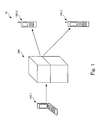
- Fig. 1 is a schematic diagram illustrating one example of a voice multicast system in which one embodiment of the communication system of the present invention is applied.
- Fig. 1 shows cellular phones 100_1, 100_2 and 100_3, and a base station 200 for conducting wireless communication between the cellular phones 100_1, 100_2 and 100_3. Actually, many cellular phones are connected to the base station 200, and furthermore, many base stations and Internet lines are connected to one another. Yet for the simplicity of drawing, Fig. 1 illustrates only the minimum necessary for the explanation of the present invention.
- the cellular phones 100_1, 100_2 and 100_3 are provided with ordinary communication functions that conducts such as one-to-one phone conversation and transmission/reception of emails via the base station 200; a voice multicast function that reproduces voice simultaneously at the cellular phones 100_1, 100_2 and 100_3 via the base station 200 by utilizing a PoC service; and a short distance communication function that conducts direct communication to one another among the cellular phones 100_1, 100_2 and 100_3 by using infrared rays.
- any user of the cellular phones 100_1, 100_2, or 100_3 specifies a cellular phone to conduct a voice multicast through a phonebook or the like, then a request for participation in the voice multicast is conveyed to cellular phones specified by the server equipment within the base station 200, and the cellular phones the user has selected to give a permission join the voice multicast communication.
- each user issues an instruction for obtaining a speaker right
- the speaker right is given to one of the cellular phones from which the server equipment within the base station 200 has received instructions for obtaining the speaker right, and voice is issued from the cellular phone having the speaker right.
- the issued voice is transferred by the server equipment within the base station 200 to other cellular phones and is reproduced.
- the speaker right is controlled by the base station 200, it is possible to have a conversation in real-time by using multiple cellular phones. A more detailed explanation of the voice multicast function will be given later.
- the cellular phones 100_1, 100_2 and 100_3 will be explained. Since these three cellular phones 100_1, 100_2 and 100_3 have almost the same configuration and functions, the explanation is given for one cellular phone 100_1 on behalf of these three cellular phones 100_1, 100_2 and 100_3.
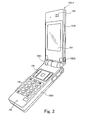
- Fig. 2 is a perspective view showing the outlook of the cellular phone 100_1.
- the cellular phone 100_1 shown in Fig. 2 is provided with an upper case 100A which a user presses on the ear during a phone call and a lower case 100B which the user holds by hand.
- the upper case 100A and the lower case 100B are connected to be foldable around a hinge section 100C.
- an LCD panel 101 is provided for displaying a menu screen and a shot image; a speaker is disposed internally (see Fig. 2 ); an earpiece 102 is provided for outputting a voice coming from the speaker; and on the side of the upper case 100A, a speaker switch 100D is to be pressed at the time of issuing a voice by using the above-described voice multicast function.
- a selection button 104 used as a button for selecting various functions and also as a shutter button to take a picture
- a push button 105 for entering telephone numbers or the like
- a microphone see Fig. 2
- a mouthpiece 106 for conveying voice to the microphone.
- Fig. 3 is an internal block diagram of the cellular phone 100_1.
- Fig. 3 shows a CPU 110, a ROM 111, a nonvolatile memory 112, a RAM 113, a microphone device 121, a display device 122, a speaker device 123, a key device 124, a camera device 125, a clock 126, an infrared device 131, a first communication device 132, a second communication device 133, a reproduction device 134, a media controller 140 and a rechargeable battery 150. These are connected to one another via a bus.
- the CPU 110 has a function to execute various kinds of programs and controls the overall of this cellular phone 100_1.
- the ROM 111 stores various kinds of programs executed at the CPU 110 and various kinds of constants required for executing these various kinds of programs.
- the CPU 110 executes programs memorized in the ROM 111 by using the RAM 113 as a work area.
- the nonvolatile memory 112 records various kinds of information such as an address book and received emails that may be rewritten.
- the microphone device 121 is a microphone for picking up user's voice and a functional block for processing the voice picked up by the microphone.
- the speaker device 123 is a speaker that outputs voice to a user and a functional block for generating a voice signal to drive the speaker.
- the camera device 125 is a block for handling collection of image data by picture taking.
- the display device 122 is a block for handling image display on the LCD panel 101 (see Fig. 2 ).
- the key device 124 is a block for detecting various kinds of key operations by a user, and the clock 126 is a block for acquiring the current time.
- the media controller 140 is for reading data from an attached recording media 141 and for writing image data or the like generated in the camera device 125 into the recording media 141.
- the infrared device 131 transmits images and phone numbers or the like to an external device placed in a short distance from the infrared device using infrared communication without involving a base station.
- the first communication device 132 works to realize communication functions such as making phone calls and exchanging emails via the base station 200 shown in Fig. 1 , and adopts a highly reliable communication method in which a retransmitting processing is arranged in the event of errors (TCP/IP in the present embodiment).
- the second communication device 133 works to realize a voice multicast function that reproduces voice simultaneously at these cellular phones 100_1, 100_2 and 100_3.
- audio data is communicated by a high-speed communication method realizing fast processing by omitting a retransmission procedure in the event of errors (UDP in the present embodiment).
- UDP event of errors
- various kinds of data is communicated by the above-described highly reliable communication method.
- functions of the first communication device 132 and the second communication device 133 are capable of being realized also by software.
- the cellular phone 100_1 is constructed in such a way as described above.
- Fig. 4 is a functional block diagram of various kinds of elements regarding voice multicast processing in a cellular phone and a base station that constitute part of the voice multicast system shown in Fig. 1 .
- Fig. 4 shows three cellular phones 100_1, 100_2 and 100_3.
- voice is issued from each of multiple cellular phones including these three cellular phones 100_1, 100_2 and 100_3.
- only two cellular phones 100_1 and 100_2 are shown, and an explanation will be made by assuming that voice is issued from the cellular phone 100_1.
- the same numbers are used for the same elements, and each element of these two cellular phones 100_1 and 100_2 is distinguished by its last digit number.
- the base station 200 includes a presence server 410 that obtains a participation status for voice multicast communication of each of the multiple cellular phones and that controls starting and ending of multicast and a speaker right; and a voice multicast server 420 that controls voice multicast processing.
- the voice multicast server 420 includes a voice receiving section 422 that receives voice originated from a cellular phone; a voice transferring section 421 that transfers received voice; an error judging section 423 that judges whether a communication status is good or bad by loss or delay of voice or the like; a multicast controlling section 424 that transmits and receives response data between cellular phones (ACK data if normal, NACK data if abnormal) and controls voice multicast processing; a highly reliable communicating section 425 that conducts retransmission of voice; and a storing section 430 that stores received voice.
- TCP/IP as a highly reliable communication method
- UDP as a high-speed communication method is adopted.
- UDP as a high-speed communication method may be adopted, instead of TCP/IP as a highly reliable communication method.
- the voice receiving section 422 corresponds to one example of the audio data receiving section according to the present invention
- the voice transferring section 421 corresponds to one example of the audio data transfer section according to the present invention.
- the error judging section 423 corresponds to one example of the communication status judging section according to the present invention;
- the highly reliable communication method 425 corresponds to one example of the retransmission conducting section;
- the presence server 410 corresponds to one example of the communication status data transferring section according to the present invention.
- the multicast controlling section 424 corresponds to one example of the response data receiving section according to the present invention
- the storing section 430 corresponds to one example of receiving data storing section according to the present invention.
- the cellular phone 100_1 includes a presence managing section 301_1 that conveys, to the presence server 410, starting and ending of multicast, addition of members, a request for obtaining a speaker right and a request for canceling the speaker right; a voice outputting section 304_1 that issues voice entered from the microphone device 121 shown in Fig. 3 to the voice multicast server 420; a voice inputting section 302_1 that receives voice transferred from the voice multicast server 420; a reproduction section 303_1 that reproduces received voice, which is conducted by the reproduction device 134 shown in Fig.
- a multicast controlling section 306_1 that transfers/receives response data (ACK data if normal, NACK data if abnormal) between the voice multicast server 420 and an error detecting section 305_1 that detects an error such as delay of data, and controls voice multicast processing
- a displaying section 307_1 that displays a communication status or the like at other cellular phones on the LCD panel 101 shown in Fig. 1 , which is conducted by the display device 122 shown in Fig. 3
- a highly reliable communicating section 308_1 that communicates retransferred audio data or the like
- various kinds of keys 309_1 that the user uses for inputting instructions
- a storing section 310_1 that stores issued voice.
- the voice outputting section 304_1 corresponds to one example of the audio data transmitting section according to the present invention
- the voice inputting section 302_1 corresponds to one example of the transferred audio data receiving section in the present invention
- the reproduction section 303_1 corresponds to one example of the voice reproduction section according to the present invention.
- the displaying section 307_1 corresponds to one example of the communication status notifying section according to the present invention
- the presence managing section 301_1 corresponds to one example of the communication status data receiving section according to the present invention
- the highly reliable communicating section 308_1 corresponds to one example of the audio data retransmitting section according to the present invention.
- the error detecting section 305_1 corresponds to one example of the fault detecting section according to the present invention
- the multicast controlling section 306_1 corresponds to one example of the response data transmitting section according to the present invention.
- Fig. 5 is a flowchart illustrating a flow of series of processing at the cellular phone 100_1 as a voice issuing side.
- Fig. 6 is a flowchart illustrating a flow of series of processing at the voice multicast server 420.
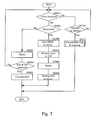
- Fig. 7 is a flowchart illustrating a flow of series of processing at the cellular phone 100_3 as a voice receiving side, and
- Fig. 8 is a flowchart illustrating a flow of conversation log processing shown in Fig. 7 .
- a presence managing section 301_1 conveys staring of multicast, a member list of multicast and a request for obtaining a speaker right to the presence server 410.
- the presence server 410 gives a speaker right to the cellular phone 100_1, and conveys the member list participating in the voice multicast communication and information of the cellular phone possessing the speaker right to other cellular phones.
- a presence managing section 301_2 such as the cellular phone 100_2 conveys information transmitted from the presence server 410 to a displaying section 307_2, and the displaying section 307_2 displays on the LCD panel 101, a participant list screen that shows information about members participating in the voice multicast communication and the speaker right or the like.
- Fig. 9 is a diagram illustrating one example of participant list screens displayed on the cellular phone.
- a participant list screen 500 shown in Part (a) of Fig. 9 shows usernames of cellular phones taking part in the voice multicast communication, and a speaker mark 510 is added to the username of the cellular phone 100_1 that possesses the speaker right.
- the voice is digitalized and audio data is generated at the microphone device 121 shown in Fig. 3 (step S101 in Fig. 5 ).
- the generated audio data is conveyed to the voice outputting section 304_1 shown in Fig. 4 and a voice number is added thereto, then issued to the voice multicast server 420 in accordance with the high-speed communication method (step S102 in Fig. 5 ) as well as temporarily stored in the storing section 310_1 (step S103 in Fig. 5 ).
- a conversation of a user is delimited per voice blank over a certain period of time to generate multiple audio data. For example, if the following two sentences, "Today's meeting starts at 10 o'clock.” and "Please let us know as soon as possible if you cannot attend the meeting.” are talked without an interval, then they are combined as one voice and one audio data is generated. If these two sentences are talked at a certain interval, then these two sentences are delimited each as a separate voice and two audio data are generated. Additionally, in the high-speed communication method, each audio data is transmitted/received in real-time, per packet that is delimited in a certain data unit at a certain timing (20 msecs).
- the voice is forwarded in a packet unit, each delimited per 20 msecs, and further, the voice is stored in the storing section 310_1.
- Input step S101 in Fig. 5
- issuing step S102 in Fig. 5
- accumulation step S103 in Fig. 5
- the voice can be forwarded in real-time.
- the audio data issued from the cellular phone 100_1 is received in packet unit (step S201 in Fig. 6 : Yes).
- a decision is made for the received audio data whether the data is normal or abnormal.
- a voice buffer where the received audio data is temporarily stored, a decision is made whether frequencies of its underflow, overflow and packet loss are within the predetermined number of times over a certain period of time, and if frequencies of the underflow, overflow and packet loss are within the predetermined number of time, the data is judged as normal (step S202 in Fig. 6 : No) ; whereas if the underflow, overflow and packet loss occur more than the predetermined number of times, the data is judged as abnormal (step S202 in Fig. 6 : Yes).
- step S202 in Fig. 6 No
- the multicast controlling section 424 of the voice multicast server 420 sets the communication status of the cellular phone 100_1 as "normal” (step S203 in Fig. 6 ).
- the audio data which is judged normal is transferred to the cellular phone 100_2 by the voice transferring section 421 in accordance with the high-speed communication method (step S204 in Fig. 6 ) and temporarily stored as well in the storing section 430 in the voice multicast server 420 (step S205 in Fig. 6 ).
- the multicast controlling section 424 After the processing of one audio data is completed by repeating a series of processing in which the data is received per packet unit, transferred to the cellular phone 100_2, and stored in the storing section 430 (step S206 in Fig. 6 : Yes), the multicast controlling section 424 transmits ACK data indicating that the processing has completed successfully to the cellular phone 100_1 (step S207 in Fig. 6 ).
- step S104 in Fig. 5 Yes
- the audio data having been temporarily stored in the storing section 310_1 is deleted (step S105 in Fig. 5 ).
- step S202 in Fig. 6 if the audio data transmitted from the cellular phone 100_1 to the voice multicast server 420 is judged as abnormal (step S202 in Fig. 6 : Yes), then the multicast controlling section 424 transmits NACK data indicating that the processing is abnormal and a voice number of the audio data to the cellular phone 100_1 (step S208 in Fig. 6 ), then sets the communication status of the cellular phone 100_1 as "abnormal” (step S209 in Fig. 6 ).
- the presence server 410 conveys that the communication status of the cellular phone 100_1 is "abnormal" to each of the cellular phones taking part in the voice multicast communication.
- the speaker right mark 510 is added to the username of the cellular phone 100_1 possessing the speaker right, and further, an abnormal mark 520 indicating an "abnormal" communication status is added.
- an abnormal mark 520 indicating an "abnormal" communication status is added.
- the highly reliable communicating section 308_1 obtains the audio data with a specified voice number from audio data that have been temporarily stored in the storing section 310_1, and retransmits in accordance with the highly reliable communication method (step S107 in Fig. 5 : Yes). In this way, by previously storing audio data, it is possible to save the labor of repeating talks even if error occurs. In addition, at the time of retransmission of the audio data, transmission in the highly reliable communication method that values certainty in communication over speed in communication enables ensured transmission of the voice.
- the audio data retransmitted from the cellular phone 100_1 is received at the highly reliable communicating section 425 of the voice multicast server 420 (step S210 in Fig. 6 ), and transferred to the cellular phone 100_2 by the voice transferring section 421 in accordance with the high-speed communication method (step S211 in Fig. 6 ), and also temporarily stored in the storing section 430 in the voice multicast server 420 (step S212 in Fig. 6 ).
- the audio data originated from the cellular phone 100_1 is received per packet unit.
- the audio data is stored as a log in the storing section 430, separately from the data in packet unit that have been temporarily stored.
- a log list is generated in which the audio data stored in the storing section 430 is associated with a reproduction status of each audio data at each cellular phone, and the generated log list is also stored in the storing section 430 together with the audio data.
- the audio data transferred from the voice multicast server 420 in packet unit is received at a voice inputting section 302_2 (step S301 in Fig. 7 : Yes).
- step S302 in Fig. 7 error judging processing similar to the step S202 in Fig. 6 is executed for the received audio data (step S302 in Fig. 7 ) .
- the audio data judged as normal (step S302 in Fig. 7 : No) is once stored in a storing section 310_2, then conveyed to a reproduction section 303_2 and the voice is reproduced sequentially at the reproduction section 303_2 (step S303 in Fig. 7 ).
- ACK data indicating normal processing is sent from a multicast controlling section 306_2 to the voice multicast server 420 (step S305 in Fig.7 ).
- the voice multicast server 420 deletes the audio data that have been temporarily stored in packet unit in the storing section 430 (step S214 in Fig. 6 ) as well as sets the reproducing status of the audio data at the cellular phone 100_2 as "reproduction is done" in the log list that has been stored in the storing section 430 together with the log of the audio data.
- step S302 in Fig. 7 if the audio data transferred from the voice multicast server 420 is judged as abnormal (step S302 in Fig. 7 : Yes), then NACK data indicating abnormal processing and a voice number of the audio data are sent from a multicast controlling section 306_2 to the voice multicast server 420 (step S306 in Fig.7 ).
- the voice multicast server 420 when the NACK data is received from the cellular phone 100_2 or timeout occurs without receiving ACK data or NACK data for a certain period of time (step S213 in Fig. 6 : No), then the communication status of the cellular phone 100_2 is set to "abnormal" (step S215 in Fig. 6 ).
- the presence server 410 conveys the "abnormal" communication status of the cellular phone 100_2 for each of the cellular phones participating in the voice multicast communication.
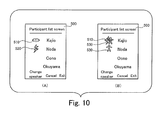
- Fig. 10 is a diagram illustrating one example of participant list screens when the communication status of the cellular phone 100_2 is abnormal.
- the abnormal mark 520 indicating that the communication status is "abnormal" is added to the username of the cellular phone 100_2 in the participant list screen 500.
- the highly reliable communicating section 425 of the voice multicast server 420 retransfers the audio data in packet unit that have been temporarily stored in the storing section 430 to the cellular phone 100_2 in accordance with the highly reliable communication method that has higher reliability than the high-speed communication method adopted in the voice transferring section 421 (step S216 in Fig. 6 ). Additionally, while the audio data is being retransferred, even if a request for obtaining a speaker right is sent from each cellular phone to the presence server 401, the speaker right is maintained without conducting a transition of the speaker right.
- the retransferred audio data is received at a highly reliable communicating section 308_2 (step S307 in Fig. 7 ).
- an alternative communicating mark 530 is added to the username of the cellular phone 100_1 as the source of originating the audio data, and the alternative communicating mark 530 is also added to the username of the cellular phone 100_2 that receives the audio data.
- the audio data is once stored in a storing section 310_2, then the voice is reproduced (step S308 in Fig. 7 ) and also a request for releasing the abnormal communication status and ACK data are sent to the voice multicast server 420 (step S309 in Fig. 7 ).
- the audio data transferred to the cellular phone 100_2 is reproduced after once having been stored in the storing section 310_2. Therefore, fluctuation in delay of voice has been absorbed.
- the storing section 430 of the voice multicast server 420 a list of audio data issued from each of the cellular phones is stored.
- conversation log processing shown in Fig. 8 is executed and a request for obtaining the log list is conveyed from a multicast controlling section 306_2 to the voice multicast server 420 (step S401 in Fig. 8 ).
- step S219 in Fig. 6 Yes
- step S220 in Fig. 6 the log list stored in the storing section 430 is transmitted to the cellular phone 100_2 (step S220 in Fig. 6 ).
- the obtained log list is conveyed to a display section 307_2 and the log list is displayed on the LCD panel 101 (step S402 in Fig. 8 ).
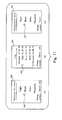
- Fig. 11 is a diagram illustrating one example of the participant list screen and the log list displayed on the cellular phone 100_2.
- a reproduction instruction mark 540 is added to the username whose audio data has not been reproduced yet at the cellular phone 100_2.
- a log list 501 of reproduction data like the one shown in Part (b) of Fig. 11 is displayed.
- the reproduction instruction mark 540 is added to the audio data that has not been reproduced yet.
- the user of the cellular phone 100_2 specifies a desired audio data in the log list 501 shown in Part (b) of Fig. 11 (step S403 in Fig. 8 : Yes), then the specified content is conveyed to the voice multicast server 420.
- step S221 in Fig. 6 Yes
- the specified audio data is obtained among the audio data having been stored in the storing section 430 as a log, and the audio data is transmitted from the highly reliable communicating section 425 to the cellular phone 100_2 (step S222 in Fig. 6 ).
- a request for issuing a tentative speaker right is conveyed from a presence managing section 301_2 to the presence server 410 (step S405 in Fig. 8 ). If the request for issuing the tentative speaker right is conveyed, the presence server 410 sets to a state of tentative speaker right in which a request for speaker right sent from all of the cellular terminals is rejected.
- the received audio data is conveyed to a reproduction section 303_2 and the voice is reproduced at the reproduction section 303_2 (step S406 in Fig. 8 ).
- the reproduced audio data is audio data that has never been reproduced before (step S407 in Fig. 8 : Yes)
- its reproducing status of "already reproduced” is conveyed to the voice multicast server 420 (step S408 in Fig. 8 ), and the voice multicast server 420 sets the reproducing status of the audio data, which has already been transmitted to the cellular phone 100_2 and reproduced thereat, to "already reproduced” in the log list (step S223 in Fig. 6 ).
- a reproduction mark 541 indicating that the voice is being reproduced is added to the username of the cellular phone that is reproducing the voice that has not been reproduced.
- a release of the tentative speaker right state is conveyed from the presence managing section 301_2 to the presence server 410 (step S409 in Fig. 8 ).
- the presence server 410 releases the state of tentative speaker right and gives a speaker right to a cellular terminal equipment that has sent out a request for the speaker right.
- step S410 in Fig. 8 No
- a request for setting the reproducing status to "all is reproduced” is conveyed from the multicast controlling section 306_2 of the cellular phone 100_2 to the voice multicast server 420 (step S411 in Fig. 8 ).
- step S217 in Fig. 6 Yes
- step S218 in Fig. 6 the reproducing status of all the audio data at the cellular phone 100_2, written in the log list stored in the storing section 430 is set to "already reproduced"
- a terminal equipment according to the present invention may be, for example, a terminal equipment for a video phone.
- the communication status notifying section may notify the users of a communication status through voice and so on.
Landscapes
- Engineering & Computer Science (AREA)
- Computer Networks & Wireless Communication (AREA)
- Signal Processing (AREA)
- Multimedia (AREA)
- Data Exchanges In Wide-Area Networks (AREA)
- Telephonic Communication Services (AREA)
- Mobile Radio Communication Systems (AREA)
- Reverberation, Karaoke And Other Acoustics (AREA)
Applications Claiming Priority (1)
| Application Number | Priority Date | Filing Date | Title |
|---|---|---|---|
| JP2007010103A JP4829135B2 (ja) | 2007-01-19 | 2007-01-19 | 通信システム、サーバ装置、および端末装置 |
Publications (2)
| Publication Number | Publication Date |
|---|---|
| EP1947821A2 true EP1947821A2 (de) | 2008-07-23 |
| EP1947821A3 EP1947821A3 (de) | 2008-10-29 |
Family
ID=39473897
Family Applications (1)
| Application Number | Title | Priority Date | Filing Date |
|---|---|---|---|
| EP20070124164 Withdrawn EP1947821A3 (de) | 2007-01-19 | 2007-12-28 | Kommunikationssystem, Serverausrüstung und Endgerät |
Country Status (4)
| Country | Link |
|---|---|
| US (1) | US8718637B2 (de) |
| EP (1) | EP1947821A3 (de) |
| JP (1) | JP4829135B2 (de) |
| CN (1) | CN101227360B (de) |
Families Citing this family (7)
| Publication number | Priority date | Publication date | Assignee | Title |
|---|---|---|---|---|
| JP5532638B2 (ja) * | 2009-03-13 | 2014-06-25 | ヤマハ株式会社 | データ配信システム |
| KR102298767B1 (ko) * | 2014-11-17 | 2021-09-06 | 삼성전자주식회사 | 음성 인식 시스템, 서버, 디스플레이 장치 및 그 제어 방법 |
| US10148708B2 (en) * | 2014-11-26 | 2018-12-04 | Ricoh Company, Ltd. | Electronic information terminal, image processing apparatus, and information processing method |
| JP7239963B2 (ja) * | 2018-04-07 | 2023-03-15 | ナレルシステム株式会社 | グループ音声通信と過去音声確認のためのコンピュータプログラム、方法及び装置 |
| JP6753480B2 (ja) * | 2019-02-21 | 2020-09-09 | 株式会社リコー | 端末および表示方法 |
| JP7393000B2 (ja) * | 2020-10-27 | 2023-12-06 | Necプラットフォームズ株式会社 | 遠隔会議装置、システム、方法及びプログラム |
| CN115148088A (zh) * | 2022-06-20 | 2022-10-04 | 上海云思智慧信息技术有限公司 | 会议席卡管理方法、系统、介质、会议管理端及数字席卡 |
Citations (3)
| Publication number | Priority date | Publication date | Assignee | Title |
|---|---|---|---|---|
| JPH11234273A (ja) | 1998-02-13 | 1999-08-27 | Nec Eng Ltd | 障害通知装置及び障害通知方法並びにその制御プログラムを記録した記録媒体 |
| JP2003037599A (ja) | 2001-07-25 | 2003-02-07 | Allied Tereshisu Kk | ネットワークの管理装置、管理方法、通信装置及びネットワークシステム |
| JP2005136742A (ja) | 2003-10-30 | 2005-05-26 | Fujitsu Ltd | データ再生装置 |
Family Cites Families (21)
| Publication number | Priority date | Publication date | Assignee | Title |
|---|---|---|---|---|
| US4517561A (en) * | 1982-07-28 | 1985-05-14 | Motorola, Inc. | Selective call, paging and priority signalling system |
| JP4067139B2 (ja) | 1995-02-13 | 2008-03-26 | 富士通株式会社 | 情報検索クライアントシステム |
| US6985499B2 (en) * | 2000-04-20 | 2006-01-10 | Symmetricom, Inc. | Precise network time transfer |
| US7079535B2 (en) * | 2000-07-28 | 2006-07-18 | The Regents Of The Universtiy Of California | Method and apparatus for real-time fault-tolerant multicasts in computer networks |
| EP1446925A1 (de) | 2001-10-25 | 2004-08-18 | Worldcom, Inc. | Qualitätsanzeiger für kommunikationssitzungen |
| SE0300555D0 (sv) * | 2003-02-24 | 2003-02-24 | Ericsson Telefon Ab L M | Improvements in or relating to push-to-talk services |
| US7936760B2 (en) * | 2003-03-18 | 2011-05-03 | Nokia Corporation | Method, communications network arrangement, communications network server, terminal, and software means for selecting and changing operating modes for packet-switched voice connection |
| JP4153356B2 (ja) | 2003-04-28 | 2008-09-24 | 株式会社東急コミュニティー | 監視システムにおける定時通報方法 |
| JP2005244384A (ja) * | 2004-02-25 | 2005-09-08 | Nippon Telegr & Teleph Corp <Ntt> | 受信品質通知方法、受信品質通知装置及び受信品質通知プログラム |
| GB0407347D0 (en) | 2004-03-31 | 2004-05-05 | Nokia Corp | Monitoring quality of service in a wireless communications network |
| US7355975B2 (en) * | 2004-04-30 | 2008-04-08 | International Business Machines Corporation | Method and apparatus for group communication with end-to-end reliability |
| KR100690752B1 (ko) * | 2004-07-28 | 2007-03-09 | 엘지전자 주식회사 | 피티티 서비스 시스템의 발언권 할당방법 |
| KR100640362B1 (ko) * | 2004-08-18 | 2006-10-30 | 삼성전자주식회사 | Ptt서비스 방법 |
| KR100700568B1 (ko) * | 2004-12-29 | 2007-03-28 | 엘지전자 주식회사 | Ptt 단말기에서의 음성 데이터 재전송 방법 |
| KR100666051B1 (ko) * | 2005-05-04 | 2007-01-10 | 삼성전자주식회사 | 대기시간을 표시하는 반이중방식 통신을 지원하는 단말기및 이의 통신방법 |
| US7751316B2 (en) * | 2005-05-13 | 2010-07-06 | Yahoo! Inc. | Relay Server for SIP/RTP messages with buffer management |
| FR2886804A1 (fr) * | 2005-06-03 | 2006-12-08 | France Telecom | Systeme et procede de telecommunication en mode ptt, module de gestion, serveurs, programme et support d'enregistrement pour ce systeme |
| US7688755B2 (en) * | 2005-10-25 | 2010-03-30 | Motorola, Inc. | Method and apparatus for group leader selection in wireless multicast service |
| JP4916171B2 (ja) * | 2005-12-27 | 2012-04-11 | 富士通株式会社 | 通信システム |
| JP4840099B2 (ja) * | 2006-11-20 | 2011-12-21 | 富士通株式会社 | 通話サーバ、通話システム、転送処理装置および転送処理プログラム |
| US7881738B2 (en) * | 2006-12-12 | 2011-02-01 | Qualcomm Incorporated | Estimation based approach to determine the retransmission timeout value for access probe retransmissions |
-
2007
- 2007-01-19 JP JP2007010103A patent/JP4829135B2/ja not_active Expired - Fee Related
- 2007-12-21 US US12/005,028 patent/US8718637B2/en not_active Expired - Fee Related
- 2007-12-28 EP EP20070124164 patent/EP1947821A3/de not_active Withdrawn
-
2008
- 2008-01-18 CN CN2008100030586A patent/CN101227360B/zh not_active Expired - Fee Related
Patent Citations (3)
| Publication number | Priority date | Publication date | Assignee | Title |
|---|---|---|---|---|
| JPH11234273A (ja) | 1998-02-13 | 1999-08-27 | Nec Eng Ltd | 障害通知装置及び障害通知方法並びにその制御プログラムを記録した記録媒体 |
| JP2003037599A (ja) | 2001-07-25 | 2003-02-07 | Allied Tereshisu Kk | ネットワークの管理装置、管理方法、通信装置及びネットワークシステム |
| JP2005136742A (ja) | 2003-10-30 | 2005-05-26 | Fujitsu Ltd | データ再生装置 |
Also Published As
| Publication number | Publication date |
|---|---|
| US20080176555A1 (en) | 2008-07-24 |
| CN101227360B (zh) | 2011-08-17 |
| US8718637B2 (en) | 2014-05-06 |
| JP4829135B2 (ja) | 2011-12-07 |
| CN101227360A (zh) | 2008-07-23 |
| EP1947821A3 (de) | 2008-10-29 |
| JP2008177896A (ja) | 2008-07-31 |
Similar Documents
| Publication | Publication Date | Title |
|---|---|---|
| US8718637B2 (en) | Communication system, server equipment and terminal equipment | |
| KR101576929B1 (ko) | 통신 네트워크에서 존재 정보 교환 | |
| US7539486B2 (en) | Wireless teleconferencing system | |
| US20090058984A1 (en) | Mobile communication terminal and method for converting mode of multiparty video call thereof | |
| WO2014196799A1 (ko) | 푸쉬 메시지의 신뢰성 판단을 위한 메시징 시스템 | |
| EP4124080A1 (de) | Datenneuübertragungsverfahren und -vorrichtung, zielknoten, quellknoten und endgerät | |
| CN100334875C (zh) | 半双工的无线通信设备、无线通信系统和无线通信方法 | |
| JP2005253046A (ja) | リモート端末からカメラを活動化する方法 | |
| US7813748B2 (en) | Group communications switching method, subscriber terminal and server used for the method | |
| US7978839B2 (en) | Communication system, server equipment and terminal equipment | |
| EP3843370B1 (de) | Relaisvorrichtung und sprachkommunikationsaufzeichnungsverfahren | |
| CN101517906B (zh) | 用于在即按即说系统中识别最后说话人的设备和方法 | |
| JP3684222B2 (ja) | コンタクト・センタ・システム | |
| US20150237484A1 (en) | Mobile communication terminal for ptt and method for processing missed call information thereof | |
| US7864715B2 (en) | Data communication method, communication server system, and communication terminal | |
| WO2020088404A1 (zh) | 一种数据处理方法及设备 | |
| KR100739168B1 (ko) | 이동통신 시스템의 엘엘시 패킷 데이터 수신장치 및 방법 | |
| KR20090002347A (ko) | 휴대 단말기 및 그의 푸시 투 토크 통신 방법 | |
| JP2004088448A (ja) | 携帯端末装置 | |
| WO2019159751A1 (ja) | 無線通信システム、無線通信方法、および無線端末 | |
| JP2005295197A (ja) | テレビ電話システム | |
| HK1075157B (en) | Half-duplex radio communication apparatus, half-duplex radio communication system, and half-duplex radio communication method | |
| JP2004304678A (ja) | 携帯電話装置 |
Legal Events
| Date | Code | Title | Description |
|---|---|---|---|
| PUAI | Public reference made under article 153(3) epc to a published international application that has entered the european phase |
Free format text: ORIGINAL CODE: 0009012 |
|
| AK | Designated contracting states |
Kind code of ref document: A2 Designated state(s): AT BE BG CH CY CZ DE DK EE ES FI FR GB GR HU IE IS IT LI LT LU LV MC MT NL PL PT RO SE SI SK TR |
|
| AX | Request for extension of the european patent |
Extension state: AL BA HR MK RS |
|
| PUAL | Search report despatched |
Free format text: ORIGINAL CODE: 0009013 |
|
| AK | Designated contracting states |
Kind code of ref document: A3 Designated state(s): AT BE BG CH CY CZ DE DK EE ES FI FR GB GR HU IE IS IT LI LT LU LV MC MT NL PL PT RO SE SI SK TR |
|
| AX | Request for extension of the european patent |
Extension state: AL BA HR MK RS |
|
| 17P | Request for examination filed |
Effective date: 20090422 |
|
| AKX | Designation fees paid |
Designated state(s): DE FR GB |
|
| 17Q | First examination report despatched |
Effective date: 20100201 |
|
| STAA | Information on the status of an ep patent application or granted ep patent |
Free format text: STATUS: THE APPLICATION HAS BEEN WITHDRAWN |
|
| 18W | Application withdrawn |
Effective date: 20171215 |