EP1949236B1 - Kommunikationskanal-interposer, verfahren und programmprodukt zum verifizieren der integrität von nichtvertrauenswürdigen subsystemantworten auf eine anforderung - Google Patents
Kommunikationskanal-interposer, verfahren und programmprodukt zum verifizieren der integrität von nichtvertrauenswürdigen subsystemantworten auf eine anforderung Download PDFInfo
- Publication number
- EP1949236B1 EP1949236B1 EP06819082A EP06819082A EP1949236B1 EP 1949236 B1 EP1949236 B1 EP 1949236B1 EP 06819082 A EP06819082 A EP 06819082A EP 06819082 A EP06819082 A EP 06819082A EP 1949236 B1 EP1949236 B1 EP 1949236B1
- Authority
- EP
- European Patent Office
- Prior art keywords
- checksum
- response
- subsystem
- communications channel
- request
- Prior art date
- Legal status (The legal status is an assumption and is not a legal conclusion. Google has not performed a legal analysis and makes no representation as to the accuracy of the status listed.)
- Not-in-force
Links
Images


Classifications
-
- G—PHYSICS
- G06—COMPUTING OR CALCULATING; COUNTING
- G06F—ELECTRIC DIGITAL DATA PROCESSING
- G06F11/00—Error detection; Error correction; Monitoring
- G06F11/07—Responding to the occurrence of a fault, e.g. fault tolerance
- G06F11/16—Error detection or correction of the data by redundancy in hardware
- G06F11/1608—Error detection by comparing the output signals of redundant hardware
-
- G—PHYSICS
- G06—COMPUTING OR CALCULATING; COUNTING
- G06F—ELECTRIC DIGITAL DATA PROCESSING
- G06F11/00—Error detection; Error correction; Monitoring
- G06F11/07—Responding to the occurrence of a fault, e.g. fault tolerance
- G06F11/16—Error detection or correction of the data by redundancy in hardware
- G06F11/1608—Error detection by comparing the output signals of redundant hardware
- G06F11/1616—Error detection by comparing the output signals of redundant hardware where the redundant component is an I/O device or an adapter therefor
-
- G—PHYSICS
- G06—COMPUTING OR CALCULATING; COUNTING
- G06F—ELECTRIC DIGITAL DATA PROCESSING
- G06F11/00—Error detection; Error correction; Monitoring
- G06F11/07—Responding to the occurrence of a fault, e.g. fault tolerance
- G06F11/16—Error detection or correction of the data by redundancy in hardware
- G06F11/1608—Error detection by comparing the output signals of redundant hardware
- G06F11/1625—Error detection by comparing the output signals of redundant hardware in communications, e.g. transmission, interfaces
Definitions
- a method of verifying integrity of subsystem responses comprising: (i) receiving a first response at a communications channel from a first subsystem of at least two duplicated subsystems, the first response being responsive to a common request sent to each subsystem of the at least two duplicated subsystems, and wherein the at least two duplicated subsystems output responses to the communications channel; (ii) determining, within the communications channel, a first checksum for the first response of the first subsystem; (iii) receiving a second response at the communications channel from a second subsystem of the at least two duplicated subsystems responsive to the common request; (iv) determining a second checksum for the second response of the second subsystem of the at least two duplicated subsystems; and (v) comparing the first checksum and the second checksum, and if matching, forwarding only one of the first response and the second response from the communications channel as the response to the common request, wherein the method is characterised by the step of: discarding the
- the solution disclosed herein generally relates to delivery of error-free results from an untrusted subsystem responsive to a request, and more particularly, to a communications channel interposer, method and program product for verifying, in accordance with a preferred embodiment, integrity of responses received to a common request from duplicated, non-error-free subsystems coupled to the communications channel.
- a system for verifying integrity of subsystem responses comprising: an interposer disposed at a communications channel coupled to at least two duplicated subsystems, the interposer comprising: an input dispatcher for providing a common request in parallel to the at least two duplicated subsystems; a checksum generator for generating a first checksum from a first response of a first subsystem of the at least two duplicated subsystems received responsive to the common request, and a second checksum from a second response of a second subsystem of the at least two duplicated subsystems received responsive to the common request; a memory for temporarily storing the first checksum until receipt of the second response; a checksum verifier for comparing the first checksum and the second checksum, and if matching, for outputting a matching control signal; the system characterised by: means for discarding the first response after calculating the first checksum and before receiving the second response; and a multiplex controller for outputting, responsive to the matching control signal from the checksum verifier, the second
- the invention can also be implemented in computer software.
- a communications channel implemented facility for cross-checking responses from two or more independent, duplicated subsystems performing the same tasks, but with not necessarily in an identical completion order.
- the approach is particularly advantageous in cases where the average processing time of each task is significantly greater than the latency introduced between the independent subsystems, for example, for a latency varying from a few to several clock cycles.
- the term "subsystem” refers to any system, logic, function, processing block, etc., implemented in hardware, software and/or firmware, and which provides a response to a request.
- a "checksum” means any checksum, signature, CRC value, etc., derived from a result output from a subsystem of the multiple independent subsystems.
- the duplicated subsystem is an untrusted (i.e., non-error-free) subsystem, that is, a subsystem which may be susceptible to soft or transient errors occurring in the output response.
- untrusted subsystem i.e., non-error-free subsystem
- non-error-free subsystems i.e., non-error checking systems
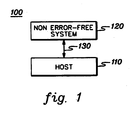
- FIG. 1 depicts one embodiment of a computing environment 100, wherein a host computer 110 is coupled to a single non-error-free system 120 via a communications channel or bus 130.
- a host computer 110 is coupled to a single non-error-free system 120 via a communications channel or bus 130.
- host 110 has no ability to discern the existence of the error.
- such a computing environment configuration would be unsuited to a high availability computing environment.
- FIG. 2 depicts a computing environment 200, in accordance with one embodiment of the present invention.
- multiple independent, duplicated (and individually not error-free) subsystems 220 provide data to external applications (for example, running on a host 210) through a single communications channel 230.
- An interposer 240 (such as a communications adapter) is provided within or in association with the communications channel to transparently verify integrity of responses received to a request, for example, from host 210. This request can be transparently forwarded in parallel by input path control logic 245 within interposer 240 (along with a request operation identifier) to each independent, duplicated subsystem 220 as a common request.
- the data source subsystems 220 independently react to the identical input (i.e., request).
- the two or more duplicated subsystems are expected to generate the same response or result from the identical request in the absence of an error.
- the request operation identifier can either arrive with a user's request or can be transparently generated by interposer 240 and associated with a common request forwarded in parallel to the duplicated subsystems. Further, a single bit in the request header received from a user can be employed to signify whether the response to the request is to undergo cross-checking as disclosed herein.
- Each input request is assumed to generate a response from each subsystem, and exactly one, error-free copy of each response is to be delivered to the requesting application (i.e., requestor) through the integrity-verifying communications channel.
- the channel/interposer recognizes if responses to the same input are identical, by matching request operation identifiers and calculating a characteristic checksum of the first response in a checksum generator 250, and verifying that all subsequent responses have the same checksum via a checksum verifier 260.
- the first checksum can be temporarily stored in a memory array 255 associated with interposer 240. If there are differences between subsequent responses to the same input request, then the interposer indicates an error condition (data mismatch) to the external application.
- This error message 270 can be sent, via a control signal generated by checksum verifier 260, through a multiplex controller 280 for return as the output responsive to the request generated by host 210. If all responses to the same request are identical, then the interposer identifies successful completion to the verification by outputting, for example, the second response received from the second responding subsystem 220 as the response to the common request received from host 210. This can be achieved by buffering the second response in a FIFO 290 within the interposer pending verification of the checksums. In one application described below, the first response from a first responding subsystem 220 is discarded after generation of a first checksum corresponding to the first response. Thus, only one response from the two or more duplicated subsystems needs to be buffered in the interposer pending verification of the response for forwarding to the requestor. All other responses may be discarded.
- the interposer may manage requests where responses may contain variations, returning a unique response to the requesting application. Assuming that all responses are generated on identical mechanisms (i.e., subsystems), then the responses should be statistically equivalent, and returning only one (selected randomly), is logically equivalent to a result from a single responder.
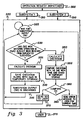
- FIG. 3 is a flowchart of processing implemented by a communications channel interposer, in accordance with one embodiment of the present invention.
- a dispatcher dispatches 300 an identical or common request (and request operation identifier) to multiple duplicated subsystems 310, which in this example comprise two independent non-error-free subsystems running asynchronously.
- the interposer 320 within the communications channel waits for subsystem output 325 and when a response (or output) is received from a subsystem, the interposer determines whether the subsystem response has a matching operation identifier already received from one of the duplicated subsystems 330.
- the interposer calculates a first checksum for the first response 335 and saves the first checksum along with the operation identifier for the request in temporary storage 340.
- the first response received as subsystem output is then discarded 345 and the interposer returns to a wait state 325.
- the interposer determines whether the second response has a matching operational identifier already received from a duplicated subsystem 330.
- the answer is "yes"
- the interposer verifies that the checksums are identical by initially calculating a second checksum for the second response 350 and then, identifying the first checksum via the operation identifier saved in temporary storage and, comparing the first checksum and the second checksum 355. Assuming that there is a mismatch 360, then an error message is sent to the user (or requestor) initiating the request for the current operation identifier 365. Otherwise, only the second response is sent as the response 370 to the user 375 initiating the request.
- At least three duplicated subsystems can communicate with an integrity-verifying communications channel as proposed herein.
- the subsystems response to the common request is sent to the user/requestor as soon as two subsystems provide an identical response.
- the responses from the first two subsystems will match, and the response from the third subsystem is employed to send a warning only if the third subsystem response differs from the first two subsystems.
- the interposer waits for the third response before sending to the user the response to the common request (i.e., if at least two responses match), and determines which subsystem if failing. If all the subsystems output different responses, then a severe error situation is encountered where two of the three subsystems are necessarily failing. Depending upon the error recovery approach, the failing subsystem(s) may be taken offline or replaced.
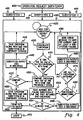
- FIG. 4 depicts the processing of this alternate interposer in accordance with one embodiment of the present invention.
- three independent subsystems 410 are duplicated and receive in parallel a common request (and operation identifier) from a dispatcher 400.
- the subsystems are coupled to a common communications channel which has an interposer 420 implemented therein for verifying integrity of the responses received from the subsystems.
- Interposer 420 waits for a subsystem output or response 425.
- the interposer Upon receipt of a first response from one subsystem 410, the interposer calculates a first checksum 430, and determines whether this response is the first, second or third response/checksum with the same operation identifier 435. Assuming that this is the first checksum, then the interposer discards the first response 440 and saves the first checksum along with the request operation identifier (OpID) and subsystem identifier (ID) in temporary storage 445 associated with interposer 420. Thereafter, upon receipt of a second response, a second checksum is calculated 430, and the interposer determines that this is the second response/second checksum with the same request operation identifier 435.
- OpID request operation identifier
- ID subsystem identifier
- the first and second checksum with the same operation identifier are compared 450 and if the comparison matches 455, then the second checksum, the request operation identifier and subsystem ID of the second responding subsystem are saved in temporary storage 460, and the second response is output as the response to the common request 465 to the requesting user 470.
- the interposer returns to wait state to await the third response from the third subsystem 410.
- a third checksum is calculated 430, and the interposer confirms that this is the third response/third checksum with the same request operation identifier 435. If so, then all checksums are compared to confirm that all checksums match 475. Assuming that the checksums match, then the third response from the third responding subsystem is discarded 480, and the interposer returns to wait for a next subsystem output.
- the interposer determines whether all checksums are mismatching 485, and if so, an error message is sent to the user of the current operation identified request that at least two subsystems of the independent duplicated subsystems are failing 490. If all checksums are not mismatching, then a warning is sent with the failing subsystem identifier 492, and the interposer determines whether the response to the common request has already been sent 494. If so, then the third response of the third responding subsystem is discarded 496, otherwise, the third response is output as the response to the user initiating the request 465.
- FIG. 5 depicts an alternate embodiment of a computing environment 500, wherein a communications channel 510 includes an interposer 520 which transparently verifies integrity of selected responses from a first set of duplicated, untrusted subsystems 530 and a second set of duplicated, untrusted subsystems 540. Operation of interposer 520 is similar to interposer 240 described above in connection with FIG. 2 . As shown, interposer 520 is coupled via an input buffer 525 and output buffer 527 with each untrusted subsystem 530, 540 and is coupled via input buffers 550 and output buffers 552 with one or more external requestors (i.e., hosts, users or applications). As shown, communications channel 570 directly forwards trusted data from trusted subsystem A 560 to an initiating requestor without undergoing any integrity checking. Trusted data, by definition, means that the data has already undergone error checking.
- an error detection mechanism or interposer such as described herein advantageously inspects responses and selects one response for delivery to a requesting application.
- the independently generated responses from duplicated, non-error-free subsystems, are verified within the communications channel.
- a first received response is used to calculate a representative checksum, which is stored in the channel's internal memory or "response contents" queue.
- This queue contains the checksums of previously delivered responses, indexed by request unique identifiers (referred to herein as request operation identifiers).
- request operation identifiers request operation identifiers
- the second response when the second response is submitted to the channel, its checksum is matched to that of the first checksum in the response contents queue. If a mismatch is detected, then the requestor application is notified of a data mismatch. Since there has been no response or data delivered so far, then no further action is necessary. If the second response checksum matches that of the first checksum, then the data is assumed to be identical, and the second response is delivered to the requestor application as the response to the request. If more than two data subsystems are coupled in parallel, then the availability of the response is not indicated to the requestor until all responses have been verified, even if the second response gets copied to the application. This could be achieved by delaying delivery of integrity confirmation to the requestor until the last response is verified.
- the request identifiers and response checksums corresponding thereto may be removed from the checksum queue (i.e., interposer memory), since no more responses are expected for that request.
- the system may support timeouts, indicating a timeout to the requestor if any of the subsystems times out.
- the channel may recognize such request types as special cases, e.g., through the use of a request header bit. In such a case, the channel may deliver the first response to the requestor application, and discard subsequently arriving responses. In this case, the relative ordering of responses becomes relevant, since the requestor won't be notified of all responses.
- An alternative implementation is for the channel, upon detection of such a request, to submit the request to only one subsystem and have the associated answer or response bypass the interposer's error checking facility. The proposed solution does not provide error-detection for such non-deterministic cases. Note that error-detection of such non-deterministic responses is an application-level problem, and may not be possible to detect in the communications channel.
- Responses provided to the outside application may be considered error-free, without multiplying transfer requirements, which would be the case if the outside device would have to verify that entire responses match. Since at most one copy of each response is delivered by the channel, applications can interface to the error-free channel system described herein almost exactly as they would to a single-source, error-prone one. The only difference is that a new error condition, "data mismatch", may have to be added to the application (and optionally a means for recognition of a non-deterministic application request/response). Since this error may also be treated similarly to a timeout, preparing applications to interface to an error-free channel is much less different from a non-error-free case than, for example, delegating mismatch detection to the external application.
- the proposed system does not require synchronization of the duplicated subsystems ("cross-checking").
- the duplicated subsystems work completely independently of each other, requiring no changes from the non-duplicated case.
- the communications channel does not have to provide additional services, compared to the non-duplicated case (such as cross-checking would mandate).
- the present invention identifies, in accordance with one embodiment, responses corresponding to the same request through request-specific unique identifiers.
- request-unique identifiers which can be copied to the responses, are a feature of contemporary communications systems. Therefore, this requirement does not introduce additional overhead.
- request identifiers are not required to be globally unique; the only requirement is that the identifiers are not reused in the time frame defined by the depth of the channel checksum storages. (Contemporary communications systems, with sufficiently sized identifiers, will satisfy this requirement.) If the channel checksum queue can hold the n last recently encountered requests, request identifiers should not be reused until m»n requests have been processed. If successfully matched requests are removed from the checksum queue, this requirement may be relaxed, but since n is assumed to be very small compared to the number of possible unique request identifiers, such a change should not alter the m»n requirement considerably.
- the channel permits the application or subsystems to indicate non-replicateable responses. Examples would be algorithms involving randomness, or other cases where non-cooperating subsystems are expected to generate different responses to the same response. Such non-reproduceable answers are handled without correction (to the requestor application, they behave as they would in a non-error-free system), but their integrity is not guaranteed.
- a procedure is here, and generally, conceived to be a sequence of steps leading to a desired result. These steps are those requiring physical manipulations of physical quantities. Usually, though not necessarily, these quantities take the form of electrical or magnetic signals capable of being stored, transferred, combined, compared, and otherwise manipulated. It proves convenient at times, principally for reasons of common usage, to refer to these signals as bits, values, elements, symbols, characters, terms, numbers, objects, attributes or the like. It should be noted, however, that all of these and similar terms are to be associated with the appropriate physical quantities and are merely convenient labels applied to these quantities.
- the method may be executed on any general computer, such as a mainframe computer, personal computer or the like and pursuant to one or more, or a part of one or more, program modules or objects generated from any programming language, such as C++, Java TM , Fortran or the like. And still further, each step, or a file or object or the like implementing each step, may be executed by special purpose hardware or a circuit module designed for that purpose. (Java and all Java-based trademarks are trademarks of Sun Microsystems, Inc. in the United States, other countries, or both.)
- the invention is preferably implemented in a high level procedural or object-oriented programming language to communicate with a computer.
- the invention can be implemented in assembly or machine language, if desired.
- the language may be a compiled or interpreted language.
- the invention may be implemented as a mechanism or a computer program product comprising a recording medium.
- a mechanism or computer program product may include, but is not limited to CD-ROMs, diskettes, tapes, hard drives, computer RAM or ROM and/or the electronic, magnetic, optical, biological or other similar embodiment of the program.
- the mechanism or computer program product may include any solid or fluid transmission medium, magnetic or optical, or the like, for storing or transmitting signals readable by a machine for controlling the operation of a general or special purpose programmable computer according to the method of the invention and/or to structure its components in accordance with a system of the invention.
- a system may comprise a computer that includes a processor and a memory device and optionally, a storage device, an output device such as a video display and/or an input device such as a keyboard or computer mouse.
- a system may comprise an interconnected network of computers. Computers may equally be in stand-alone form (such as the traditional desktop personal computer) or integrated into another apparatus (such the electronic test equipment).
- the system may be specially constructed for the required purposes to perform, for example, the method steps of the invention or it may comprise one or more general purpose computers as selectively activated or reconfigured by a computer program in accordance with the teachings herein stored in the computer(s).
- the procedures presented herein are not inherently related to a particular computer system or other apparatus. The required structure for a variety of these systems will appear from the description given.
- One or more aspects of the present invention can be included in an article of manufacture (e.g., one or more computer program products) having, for instance, computer usable media.
- the media has therein, for instance, computer readable program code means or logic (e.g., instructions, code, commands, etc.) to provide and facilitate the capabilities of the present invention.
- the article of manufacture can be included as a part of a computer system or sold separately.
- At least one program storage device readable by a machine embodying at least one program of instructions executable by the machine to perform the capabilities of the present invention can be provided.
Landscapes
- Engineering & Computer Science (AREA)
- Theoretical Computer Science (AREA)
- Quality & Reliability (AREA)
- Physics & Mathematics (AREA)
- General Engineering & Computer Science (AREA)
- General Physics & Mathematics (AREA)
- Detection And Prevention Of Errors In Transmission (AREA)
- Communication Control (AREA)
- Hardware Redundancy (AREA)
- Techniques For Improving Reliability Of Storages (AREA)
- Detection And Correction Of Errors (AREA)
Claims (14)
- Verfahren zum Überprüfen der Unversehrtheit von Teilsystemantworten, wobei das Verfahren Folgendes umfasst:(i) Empfangen einer ersten Antwort auf einem Datenübertragungskanal von einem ersten Teilsystem von wenigstens zwei gedoppelten Teilsystemen, wobei die erste Antwort in Reaktion auf eine allgemeine Anforderung erfolgt, die an jedes Teilsystem der wenigstens zwei gedoppelten Teilsysteme gesendet wird, und wobei die wenigstens zwei gedoppelten Teilsysteme Antworten an den Datenübertragungskanal ausgeben;(ii) Bestimmen einer ersten Prüfsumme in dem Datenübertragungskanal für die erste Antwort des ersten Teilsystems;(iii) Empfangen einer zweiten Antwort auf dem Datenübertragungskanal von einem zweiten Teilsystem der wenigstens zwei gedoppelten Teilsysteme in Reaktion auf die allgemeine Anforderung;(iv) Bestimmen einer zweiten Prüfsumme für die zweite Antwort des zweiten Teilsystems der wenigstens zwei gedoppelten Teilsysteme; und(v) Vergleichen der ersten Prüfsumme mit der zweiten Prüfsumme und falls diese übereinstimmen, Weiterleiten der ersten Antwort oder der zweiten Antwort von dem Datenübertragungskanal als die Antwort auf die allgemeine Anforderung,wobei das Verfahren durch den folgenden Schritt gekennzeichnet ist:Verwerfen der ersten Antwort nach dem Berechnen der ersten Prüfsumme und vor dem Empfangen der zweiten Antwort, undwobei das Weiterleiten das Weiterleiten der zweiten Antwort des zweiten Teilsystems von dem Datenübertragungskanal als die Antwort auf die allgemeine Anforderung umfasst, wenn die erste Prüfsumme und die zweite Prüfsumme übereinstimmen.
- Verfahren nach Anspruch 1, das ferner das Speichern der ersten Prüfsumme im internen Speicher des Datenübertragungskanals umfasst, bis das Vergleichen (v) ausgeführt wird, und wobei das Bestimmen (ii), das Bestimmen (iv) und das Vergleichen (v) für einen Anforderer, der die allgemeine Anforderung auslöst, transparent erfolgt.
- Verfahren nach einem der vorhergehenden Ansprüche, wobei die wenigstens zwei gedoppelten Teilsysteme wenigstens zwei unabhängige gedoppelte Teilsysteme umfassen, wovon jedes einen Eingang und einen Ausgang besitzt, die mit dem Datenübertragungskanal verbunden sind, und wobei das Verfahren ferner den Einsatz einer Abwickeleinheit (dispatcher) in dem Datenübertragungskanal zum Empfangen einer Anforderung von einem Anforderer und zum transparenten Weiterleiten der Anforderung parallel als die allgemeine Anforderung an jedes Teilsystem der wenigstens zwei gedoppelten Teilsysteme umfasst.
- Verfahren nach einem der vorhergehenden Ansprüche, das ferner das Zuordnen eines Operationskennzeichners zu der allgemeinen Anforderung umfasst und wobei das Empfangen(i) das Empfangen des Operationskennzeichners mit der ersten Antwort von dem ersten Teilsystem umfasst und das Empfangen (iii) das Empfangen des Operationskennzeichners mit der zweiten Antwort von dem zweiten Teilsystem umfasst, wobei das Vergleichen den Operationskennzeichner beim Kennzeichnen der ersten Prüfsumme und der zweiten Prüfsumme für das Vergleichen verwendet, wobei eine Vielzahl von allgemeinen Anforderungen und zugehörigen Operationskennzeichnern zu jedem Teilsystem der wenigstens zwei gedoppelten Teilsysteme weitergeleitet werden.
- Verfahren nach einem der vorhergehenden Ansprüche, das ferner das Senden einer Fehlernachricht von dem Datenübertragungskanal zu dem Anforderer, der die allgemeine Anforderung auslöst, umfasst, falls das Vergleichen keine Übereinstimmung zwischen der ersten Prüfsumme und der zweiten Prüfsumme feststellt.
- Verfahren nach einem der vorhergehenden Ansprüche, wobei die wenigstens zwei gedoppelten Teilsysteme asynchron sind und jedes Teilsystem der wenigstens zwei gedoppelten Teilsysteme ein unabhängiges nicht fehlerfreies Teilsystem, das nichtvertrauenswürdige Antworten ausgeben kann, umfasst und wobei das Verfahren ferner das transparente Realisieren des Empfangens (i), des Berechnens (ii), des Empfangens (iii), des Bestimmens (iv) und des Vergleichens (v) in dem Datenübertragungskanal zwischen einem Hostrechner, der eine Anforderung auslöst, und den wenigstens zwei gedoppelten Teilsystemen umfasst.
- Verfahren nach Anspruch 1, wobei der Datenübertragungskanal mit wenigstens drei gedoppelten Teilsystemen, die Antworten an den Datenübertragungskanal ausgeben, verbunden ist, und wobei das Verfahren ferner das Verwerfen der ersten Antwort nach dem Berechnen der ersten Prüfsumme und das Verwerfen der zweiten Antwort nach dem Vergleichen (v) umfasst, falls das Vergleichen keine Übereinstimmung zwischen der ersten Prüfsumme und der zweiten Prüfsumme feststellt, und wobei das Verfahren ferner das Speichern der ersten Prüfsumme zusammen mit einem Operationskennzeichner der allgemeinen Anforderung und einer Teilsystemkennung des ersten Teilsystems und das Speichern der zweiten Prüfsumme und des Operationskennzeichners der allgemeinen Anforderung und der Teilsystemkennung des zweiten Teilsystems in einer temporären Speichereinrichtung des Datenübertragungskanals und das Abwarten des Empfangs einer dritten Antwort auf dem Datenübertragungskanal von einem dritten Teilsystem in Reaktion auf die allgemeine Anforderung umfasst.
- Verfahren nach Anspruch 7, das ferner das Empfangen der dritten Antwort auf dem Datenübertragungskanal und das Bestimmen einer dritten Prüfsumme für die dritte Antwort des dritten Teilsystems, und falls die dritte Prüfsumme mit der ersten Prüfsumme und der zweiten Prüfsumme übereinstimmt, das Verwerfen der dritten Antwort umfasst,
wobei andernfalls festgestellt wird, ob die erste Prüfsumme, die zweite Prüfsumme und die dritte Prüfsumme alle voneinander verschieden sind, und wenn das der Fall ist, eine Fehlernachricht an einen Anforderer, der die allgemeine Anforderung auslöst, sendet, dass wenigstens zwei Teilsysteme der drei Teilsysteme fehlerhaft sind, und wenn von der ersten Prüfsumme, der zweiten Prüfsumme und der dritten Prüfsumme zwei Prüfsummen übereinstimmen, eine Warnung an den Anforderer mit einer Kennung des fehlerhaften Teilsystems, die der Teilsystemkennung entspricht, die die nicht übereinstimmende Prüfsumme zurücksendet, sendet. - Verfahren nach Anspruch 8, das ferner das Bestimmen umfasst, ob die Antwort auf die allgemeine Anforderung weitergeleitet wurde, und falls das nicht der Fall ist, die dritte Antwort als die Antwort auf die allgemeine Anforderung an den Anforderer sendet, wobei andernfalls die dritte Antwort auf dem Datenübertragungskanal verworfen wird.
- System zum Überprüfen der Unversehrtheit von Teilsystemantworten, wobei das System Folgendes umfasst:einen Interposer, der an einem Datenübertragungskanal angeordnet ist, der mit wenigstens zwei gedoppelten Teilsystemen verbunden ist, wobei der Interposer Folgendes umfasst:wobei das System durch Folgendes gekennzeichnet ist:einen Eingabe-Abwickler (input dispatcher) zum Bereitstellen einer allgemeinen Anforderung parallel an die wenigstens zwei gedoppelten Teilsysteme;einen Prüfsummengenerator zum Erzeugen einer ersten Prüfsumme aus einer ersten Antwort eines ersten Teilsystems der wenigstens zwei gedoppelten Teilsysteme, die in Reaktion auf die allgemeine Anforderung empfangen wird, und einer zweiten Prüfsumme aus einer zweiten Antwort eines zweiten Teilsystems der wenigstens zwei gedoppelten Teilsysteme, die in Reaktion auf die allgemeine Anforderung empfangen wird;einen Speicher zum vorübergehenden Speichern der ersten Prüfsumme bis zum Empfang der zweiten Antwort;eine Einheit zum Überprüfen von Prüfsummen zum Vergleichen der ersten Prüfsumme mit der zweiten Prüfsumme und falls diese übereinstimmen, zum Ausgeben eines Übereinstimmungssteuersignals;ein Mittel zum Verwerfen der ersten Antwort nach dem Berechnen der ersten Prüfsumme und vor dem Empfangen der zweiten Antwort; undeine Multiplex-Steuereinheit zum Ausgeben in Reaktion auf das Übereinstimmungssteuersignal von der Einheit zum Überprüfen von Prüfsummen der zweiten Antwort von dem Datenübertragungskanal als die Antwort auf die allgemeine Anforderung.
- System nach Anspruch 10, wobei die wenigstens zwei gedoppelten Teilsysteme asynchron sind und wenigstens zwei unabhängige gedoppelte Teilsysteme umfassen, wovon jedes einen Eingang und einen Ausgang aufweist, die mit dem Datenübertragungskanal verbunden sind, und wobei der Eingabe-Abwickler eine Anforderung von einem Anforderer empfängt und die Anforderung parallel als die allgemeine Anforderung an die Eingänge jedes Teilsystems der wenigstens zwei gedoppelten Teilsysteme transparent weiterleitet.
- System nach Anspruch 10 oder 11, wobei die Einheit zum Überprüfen von Prüfsummen ein Nichtübereinstimmungssteuersignal ausgibt, wenn die erste Prüfsumme und die zweite Prüfsumme nicht übereinstimmen, und wobei die Multiplex-Steuereinheit in Reaktion auf das Nichtübereinstimmungssteuersignal eine Fehlernachricht an den Anforderer, der die allgemeine Anforderung auslöst, ausgibt.
- System nach Anspruch 10, 11 oder 12, wobei jedes Teilsystem der wenigstens zwei Teilsysteme ein unabhängiges nicht fehlerfreies Teilsystem umfasst, das nichtvertrauenswürdige Antworten ausgeben kann, und wobei der Interposer in dem Datenübertragungskanal zwischen einem Hostrechner, der die allgemeine Anforderung auslöst, und den wenigstens zwei gedoppelten Teilsystemen transparent realisiert ist.
- Computerprogramm, das Programmcodemittel umfasst, die so eingerichtet sind, dass sie das Verfahren einer der Ansprüche 1 bis 9 ausführen können, wenn das Programm auf einem Computer läuft.
Applications Claiming Priority (2)
| Application Number | Priority Date | Filing Date | Title |
|---|---|---|---|
| US11/260,285 US7516246B2 (en) | 2005-10-27 | 2005-10-27 | Communications channel method for verifying integrity of untrusted subsystem responses to a request |
| PCT/EP2006/067443 WO2007048725A1 (en) | 2005-10-27 | 2006-10-16 | Communications channel interposer, method and program product for verifying integrity of untrusted subsystem responses to a request |
Publications (2)
| Publication Number | Publication Date |
|---|---|
| EP1949236A1 EP1949236A1 (de) | 2008-07-30 |
| EP1949236B1 true EP1949236B1 (de) | 2009-07-22 |
Family
ID=37865767
Family Applications (1)
| Application Number | Title | Priority Date | Filing Date |
|---|---|---|---|
| EP06819082A Not-in-force EP1949236B1 (de) | 2005-10-27 | 2006-10-16 | Kommunikationskanal-interposer, verfahren und programmprodukt zum verifizieren der integrität von nichtvertrauenswürdigen subsystemantworten auf eine anforderung |
Country Status (6)
| Country | Link |
|---|---|
| US (2) | US7516246B2 (de) |
| EP (1) | EP1949236B1 (de) |
| CN (1) | CN101297271B (de) |
| AT (1) | ATE437401T1 (de) |
| DE (1) | DE602006008029D1 (de) |
| WO (1) | WO2007048725A1 (de) |
Families Citing this family (17)
| Publication number | Priority date | Publication date | Assignee | Title |
|---|---|---|---|---|
| US7516246B2 (en) * | 2005-10-27 | 2009-04-07 | International Business Machines Corporation | Communications channel method for verifying integrity of untrusted subsystem responses to a request |
| US7739663B2 (en) * | 2006-05-16 | 2010-06-15 | International Business Machines Corporation | Method, system and program product for validating a runtime environment |
| US7991941B2 (en) * | 2008-01-15 | 2011-08-02 | Alcatel Lucent | Memory access assist |
| US8250453B2 (en) * | 2008-12-22 | 2012-08-21 | Hitachi Ltd. | Storage apparatus and data verification method in storage apparatus |
| US8832537B2 (en) * | 2009-12-22 | 2014-09-09 | Toyota Jidosha Kabushiki Kaisha | Information management apparatus and information managing method |
| US9400722B2 (en) * | 2011-11-15 | 2016-07-26 | Ge Aviation Systems Llc | Method of providing high integrity processing |
| US9128862B2 (en) * | 2012-02-23 | 2015-09-08 | International Business Machines Corporation | Efficient checksums for shared nothing clustered filesystems |
| US20140040015A1 (en) | 2012-08-02 | 2014-02-06 | MaxPoint Interactive, Inc. | System and method for controlling real-time bidding for online advertisements |
| US9501789B1 (en) * | 2012-08-02 | 2016-11-22 | MaxPoint Interactive, Inc. | System and method for controlling real-time bidding for online advertisements |
| KR102009655B1 (ko) * | 2012-08-29 | 2019-08-13 | 삼성디스플레이 주식회사 | 표시 장치 및 표시 장치에서의 에러 검출 방법 |
| US9086934B2 (en) | 2013-08-27 | 2015-07-21 | International Business Machines Corporation | Selecting output destinations for kernel messages |
| US9158513B2 (en) | 2013-08-27 | 2015-10-13 | International Business Machines Corporation | Preprocessing kernel print commands |
| US10382222B2 (en) * | 2015-04-30 | 2019-08-13 | Continental Teves Ag & Co. Ohg | Method for protecting configuration data from a data bus transceiver, data bus transceiver and data bus system |
| US10915463B2 (en) | 2017-04-28 | 2021-02-09 | International Business Machines Corporation | Synchronizing requests to access computing resources |
| US10360393B2 (en) | 2017-04-28 | 2019-07-23 | International Business Machines Corporation | Synchronizing write operations |
| US11233002B2 (en) * | 2019-10-10 | 2022-01-25 | Marvell Asia Pte, Ltd. | High density low power interconnect using 3D die stacking |
| EP4641326A1 (de) * | 2024-04-23 | 2025-10-29 | Siemens Aktiengesellschaft | Überwachungssystem für eine speicherprogrammierbare steuerung |
Family Cites Families (26)
| Publication number | Priority date | Publication date | Assignee | Title |
|---|---|---|---|---|
| US5421006A (en) * | 1992-05-07 | 1995-05-30 | Compaq Computer Corp. | Method and apparatus for assessing integrity of computer system software |
| US5649089A (en) * | 1994-11-30 | 1997-07-15 | Motorola, Inc. | Method and apparatus for maintaining a redundant database system |
| US5539879A (en) * | 1995-05-24 | 1996-07-23 | Dell U.S.A., L.P. | Checksum technique for verifying integrity of disk space reserved for suspend-to-disk operations |
| FR2737029B1 (fr) * | 1995-07-19 | 1997-09-26 | Sextant Avionique | Dispositif d'interface entre un calculateur a architecture redondante et un moyen de communication |
| US5765172A (en) * | 1996-01-23 | 1998-06-09 | Dsc Communications Corporation | System and method for verifying integrity of replicated databases |
| US5799022A (en) * | 1996-07-01 | 1998-08-25 | Sun Microsystems, Inc. | Faulty module location in a fault tolerant computer system |
| US5790397A (en) * | 1996-09-17 | 1998-08-04 | Marathon Technologies Corporation | Fault resilient/fault tolerant computing |
| US5953352A (en) * | 1997-06-23 | 1999-09-14 | Micron Electronics, Inc. | Method of checking data integrity for a raid 1 system |
| US6088330A (en) | 1997-09-09 | 2000-07-11 | Bruck; Joshua | Reliable array of distributed computing nodes |
| US5991774A (en) * | 1997-12-22 | 1999-11-23 | Schneider Automation Inc. | Method for identifying the validity of an executable file description by appending the checksum and the version ID of the file to an end thereof |
| JP3442278B2 (ja) | 1998-03-13 | 2003-09-02 | 富士通株式会社 | Atm交換機のスイッチ系切り換えシステム |
| US6185631B1 (en) * | 1998-10-14 | 2001-02-06 | International Business Machines Corporation | Program for transferring execution of certain channel functions to a control unit and having means for combining certain commands and data packets in one sequence |
| US6668352B1 (en) | 1999-04-28 | 2003-12-23 | Samsung Electronics Co., Ltd. | Distortion compensating device and method in a multi-code mobile communication system |
| GB2367989B (en) * | 1999-07-12 | 2004-04-07 | Fujitsu Ltd | Communication system, method of processing message in communication system, and station-side unit and subscriber-side unit |
| US6609165B1 (en) * | 1999-09-27 | 2003-08-19 | International Business Machines Corporation | Method and apparatus for using fibre channel extended link service commands in a point-to-point configuration |
| US6928607B2 (en) * | 2000-10-19 | 2005-08-09 | Oracle International Corporation | Data integrity verification mechanism |
| KR20020033227A (ko) | 2000-10-30 | 2002-05-06 | 구자홍 | 데이터 통신을 위한 병렬 중복순환 검사회로 |
| US6993352B2 (en) * | 2001-12-20 | 2006-01-31 | Qualcomm Incorporated | Acknowledging missed messages broadcast on a control channel |
| US7346054B2 (en) * | 2002-08-29 | 2008-03-18 | Broadcom Corporation | Method and system for co-relating transport packets on different channels using a cyclic redundancy check (CRC) |
| US7672226B2 (en) | 2002-09-09 | 2010-03-02 | Xiotech Corporation | Method, apparatus and program storage device for verifying existence of a redundant fibre channel path |
| US7114116B2 (en) | 2002-09-13 | 2006-09-26 | Sun Microsystems, Inc. | Accelerated Galois data integrity crosscheck system and method |
| JP2004120190A (ja) | 2002-09-25 | 2004-04-15 | Kyushu Ando Denki Kk | 回線接続装置及び通信システム |
| US7336667B2 (en) | 2002-11-21 | 2008-02-26 | International Business Machines Corporation | Apparatus, method and program product to generate and use CRC in communications network |
| US7293044B2 (en) * | 2004-04-09 | 2007-11-06 | Microsoft Corporation | Method and system for verifying integrity of storage |
| US7793347B2 (en) * | 2005-02-07 | 2010-09-07 | Rozas Guillermo J | Method and system for validating a computer system |
| US7516246B2 (en) * | 2005-10-27 | 2009-04-07 | International Business Machines Corporation | Communications channel method for verifying integrity of untrusted subsystem responses to a request |
-
2005
- 2005-10-27 US US11/260,285 patent/US7516246B2/en not_active Expired - Fee Related
-
2006
- 2006-10-16 CN CN2006800394882A patent/CN101297271B/zh not_active Expired - Fee Related
- 2006-10-16 EP EP06819082A patent/EP1949236B1/de not_active Not-in-force
- 2006-10-16 AT AT06819082T patent/ATE437401T1/de not_active IP Right Cessation
- 2006-10-16 DE DE602006008029T patent/DE602006008029D1/de active Active
- 2006-10-16 WO PCT/EP2006/067443 patent/WO2007048725A1/en not_active Ceased
-
2009
- 2009-03-20 US US12/407,879 patent/US7921234B2/en not_active Expired - Fee Related
Also Published As
| Publication number | Publication date |
|---|---|
| ATE437401T1 (de) | 2009-08-15 |
| US7921234B2 (en) | 2011-04-05 |
| US7516246B2 (en) | 2009-04-07 |
| DE602006008029D1 (de) | 2009-09-03 |
| EP1949236A1 (de) | 2008-07-30 |
| CN101297271A (zh) | 2008-10-29 |
| US20070162621A1 (en) | 2007-07-12 |
| US20090183058A1 (en) | 2009-07-16 |
| WO2007048725A1 (en) | 2007-05-03 |
| CN101297271B (zh) | 2012-08-08 |
Similar Documents
| Publication | Publication Date | Title |
|---|---|---|
| US7921234B2 (en) | Communications channel interposer, method and program product for verifying integrity of untrusted subsystem responses to a request | |
| US11989154B2 (en) | Hybrid remote direct memory access | |
| US6971043B2 (en) | Apparatus and method for accessing a mass storage device in a fault-tolerant server | |
| US20250013516A1 (en) | Non-Volatile Memory Switch with Host Isolation | |
| US6928583B2 (en) | Apparatus and method for two computing elements in a fault-tolerant server to execute instructions in lockstep | |
| WO2002079990A2 (en) | Apparatus and methods for fault-tolerant computing using a switching fabric | |
| US5517615A (en) | Multi-channel integrity checking data transfer system for controlling different size data block transfers with on-the-fly checkout of each word and data block transferred | |
| US11991022B2 (en) | Monitoring controller area network (CAN) XL nodes | |
| US20200241985A1 (en) | Methods, electronic devices, storage systems, and computer program products for error detection | |
| US7143206B2 (en) | Method for controlling data transfer unit having channel control unit, storage device control unit, and DMA processor | |
| US20050188245A1 (en) | Frame validation | |
| US20020120800A1 (en) | Launch raw packet on remote interrupt | |
| US20040111549A1 (en) | Method, system, and program for improved interrupt processing | |
| US6886053B2 (en) | Method, system, and program for managing access to a device | |
| US8392621B2 (en) | Managing dataflow in a temporary memory | |
| US7234101B1 (en) | Method and system for providing data integrity in storage systems | |
| US11546171B2 (en) | Systems and methods for synchronizing anonymized linked data across multiple queues for secure multiparty computation | |
| EP0596410B1 (de) | Erkennung von Befehlssynchronisationsfehlern | |
| US6718398B1 (en) | Robust communications connection system and method for shared memory | |
| US11070654B2 (en) | Sockets for shared link applications | |
| CN100501687C (zh) | 用于在处理系统中处理数据时识别错误的方法和控制系统 | |
| US20150066871A1 (en) | DATA DEDUPLICATION IN AN INTERNET SMALL COMPUTER SYSTEM INTERFACE (iSCSI) ATTACHED STORAGE SYSTEM | |
| US6662320B1 (en) | Method and apparatus for inhibiting an adapter bus error signal following a reset operation | |
| US20030204548A1 (en) | Method and apparatus for batching commands in a small computer system interface system | |
| JP3842764B2 (ja) | バスインタフェース回路 |
Legal Events
| Date | Code | Title | Description |
|---|---|---|---|
| PUAI | Public reference made under article 153(3) epc to a published international application that has entered the european phase |
Free format text: ORIGINAL CODE: 0009012 |
|
| 17P | Request for examination filed |
Effective date: 20080521 |
|
| AK | Designated contracting states |
Kind code of ref document: A1 Designated state(s): AT BE BG CH CY CZ DE DK EE ES FI FR GB GR HU IE IS IT LI LT LU LV MC NL PL PT RO SE SI SK TR |
|
| 17Q | First examination report despatched |
Effective date: 20081008 |
|
| GRAP | Despatch of communication of intention to grant a patent |
Free format text: ORIGINAL CODE: EPIDOSNIGR1 |
|
| GRAS | Grant fee paid |
Free format text: ORIGINAL CODE: EPIDOSNIGR3 |
|
| GRAA | (expected) grant |
Free format text: ORIGINAL CODE: 0009210 |
|
| AK | Designated contracting states |
Kind code of ref document: B1 Designated state(s): AT BE BG CH CY CZ DE DK EE ES FI FR GB GR HU IE IS IT LI LT LU LV MC NL PL PT RO SE SI SK TR |
|
| REG | Reference to a national code |
Ref country code: GB Ref legal event code: FG4D |
|
| REG | Reference to a national code |
Ref country code: CH Ref legal event code: EP Ref country code: CH Ref legal event code: NV Representative=s name: IBM RESEARCH GMBH ZURICH RESEARCH LABORATORY INTEL |
|
| REG | Reference to a national code |
Ref country code: IE Ref legal event code: FG4D |
|
| REF | Corresponds to: |
Ref document number: 602006008029 Country of ref document: DE Date of ref document: 20090903 Kind code of ref document: P |
|
| NLV1 | Nl: lapsed or annulled due to failure to fulfill the requirements of art. 29p and 29m of the patents act | ||
| PG25 | Lapsed in a contracting state [announced via postgrant information from national office to epo] |
Ref country code: FI Free format text: LAPSE BECAUSE OF FAILURE TO SUBMIT A TRANSLATION OF THE DESCRIPTION OR TO PAY THE FEE WITHIN THE PRESCRIBED TIME-LIMIT Effective date: 20090722 Ref country code: AT Free format text: LAPSE BECAUSE OF FAILURE TO SUBMIT A TRANSLATION OF THE DESCRIPTION OR TO PAY THE FEE WITHIN THE PRESCRIBED TIME-LIMIT Effective date: 20090722 Ref country code: ES Free format text: LAPSE BECAUSE OF FAILURE TO SUBMIT A TRANSLATION OF THE DESCRIPTION OR TO PAY THE FEE WITHIN THE PRESCRIBED TIME-LIMIT Effective date: 20091102 Ref country code: IS Free format text: LAPSE BECAUSE OF FAILURE TO SUBMIT A TRANSLATION OF THE DESCRIPTION OR TO PAY THE FEE WITHIN THE PRESCRIBED TIME-LIMIT Effective date: 20091122 Ref country code: LT Free format text: LAPSE BECAUSE OF FAILURE TO SUBMIT A TRANSLATION OF THE DESCRIPTION OR TO PAY THE FEE WITHIN THE PRESCRIBED TIME-LIMIT Effective date: 20090722 Ref country code: SE Free format text: LAPSE BECAUSE OF FAILURE TO SUBMIT A TRANSLATION OF THE DESCRIPTION OR TO PAY THE FEE WITHIN THE PRESCRIBED TIME-LIMIT Effective date: 20090722 |
|
| PG25 | Lapsed in a contracting state [announced via postgrant information from national office to epo] |
Ref country code: SI Free format text: LAPSE BECAUSE OF FAILURE TO SUBMIT A TRANSLATION OF THE DESCRIPTION OR TO PAY THE FEE WITHIN THE PRESCRIBED TIME-LIMIT Effective date: 20090722 Ref country code: LV Free format text: LAPSE BECAUSE OF FAILURE TO SUBMIT A TRANSLATION OF THE DESCRIPTION OR TO PAY THE FEE WITHIN THE PRESCRIBED TIME-LIMIT Effective date: 20090722 Ref country code: NL Free format text: LAPSE BECAUSE OF FAILURE TO SUBMIT A TRANSLATION OF THE DESCRIPTION OR TO PAY THE FEE WITHIN THE PRESCRIBED TIME-LIMIT Effective date: 20090722 Ref country code: PL Free format text: LAPSE BECAUSE OF FAILURE TO SUBMIT A TRANSLATION OF THE DESCRIPTION OR TO PAY THE FEE WITHIN THE PRESCRIBED TIME-LIMIT Effective date: 20090722 |
|
| PG25 | Lapsed in a contracting state [announced via postgrant information from national office to epo] |
Ref country code: BG Free format text: LAPSE BECAUSE OF FAILURE TO SUBMIT A TRANSLATION OF THE DESCRIPTION OR TO PAY THE FEE WITHIN THE PRESCRIBED TIME-LIMIT Effective date: 20091022 Ref country code: PT Free format text: LAPSE BECAUSE OF FAILURE TO SUBMIT A TRANSLATION OF THE DESCRIPTION OR TO PAY THE FEE WITHIN THE PRESCRIBED TIME-LIMIT Effective date: 20091122 |
|
| PG25 | Lapsed in a contracting state [announced via postgrant information from national office to epo] |
Ref country code: CZ Free format text: LAPSE BECAUSE OF FAILURE TO SUBMIT A TRANSLATION OF THE DESCRIPTION OR TO PAY THE FEE WITHIN THE PRESCRIBED TIME-LIMIT Effective date: 20090722 Ref country code: RO Free format text: LAPSE BECAUSE OF FAILURE TO SUBMIT A TRANSLATION OF THE DESCRIPTION OR TO PAY THE FEE WITHIN THE PRESCRIBED TIME-LIMIT Effective date: 20090722 Ref country code: DK Free format text: LAPSE BECAUSE OF FAILURE TO SUBMIT A TRANSLATION OF THE DESCRIPTION OR TO PAY THE FEE WITHIN THE PRESCRIBED TIME-LIMIT Effective date: 20090722 Ref country code: EE Free format text: LAPSE BECAUSE OF FAILURE TO SUBMIT A TRANSLATION OF THE DESCRIPTION OR TO PAY THE FEE WITHIN THE PRESCRIBED TIME-LIMIT Effective date: 20090722 |
|
| PLBE | No opposition filed within time limit |
Free format text: ORIGINAL CODE: 0009261 |
|
| STAA | Information on the status of an ep patent application or granted ep patent |
Free format text: STATUS: NO OPPOSITION FILED WITHIN TIME LIMIT |
|
| PG25 | Lapsed in a contracting state [announced via postgrant information from national office to epo] |
Ref country code: SK Free format text: LAPSE BECAUSE OF FAILURE TO SUBMIT A TRANSLATION OF THE DESCRIPTION OR TO PAY THE FEE WITHIN THE PRESCRIBED TIME-LIMIT Effective date: 20090722 Ref country code: MC Free format text: LAPSE BECAUSE OF NON-PAYMENT OF DUE FEES Effective date: 20091031 Ref country code: BE Free format text: LAPSE BECAUSE OF FAILURE TO SUBMIT A TRANSLATION OF THE DESCRIPTION OR TO PAY THE FEE WITHIN THE PRESCRIBED TIME-LIMIT Effective date: 20090722 |
|
| 26N | No opposition filed |
Effective date: 20100423 |
|
| REG | Reference to a national code |
Ref country code: GB Ref legal event code: 746 Effective date: 20101001 |
|
| PG25 | Lapsed in a contracting state [announced via postgrant information from national office to epo] |
Ref country code: IE Free format text: LAPSE BECAUSE OF NON-PAYMENT OF DUE FEES Effective date: 20091016 Ref country code: GR Free format text: LAPSE BECAUSE OF FAILURE TO SUBMIT A TRANSLATION OF THE DESCRIPTION OR TO PAY THE FEE WITHIN THE PRESCRIBED TIME-LIMIT Effective date: 20091023 |
|
| PG25 | Lapsed in a contracting state [announced via postgrant information from national office to epo] |
Ref country code: IT Free format text: LAPSE BECAUSE OF FAILURE TO SUBMIT A TRANSLATION OF THE DESCRIPTION OR TO PAY THE FEE WITHIN THE PRESCRIBED TIME-LIMIT Effective date: 20090722 |
|
| PG25 | Lapsed in a contracting state [announced via postgrant information from national office to epo] |
Ref country code: LU Free format text: LAPSE BECAUSE OF NON-PAYMENT OF DUE FEES Effective date: 20091016 |
|
| REG | Reference to a national code |
Ref country code: CH Ref legal event code: PL |
|
| PG25 | Lapsed in a contracting state [announced via postgrant information from national office to epo] |
Ref country code: HU Free format text: LAPSE BECAUSE OF FAILURE TO SUBMIT A TRANSLATION OF THE DESCRIPTION OR TO PAY THE FEE WITHIN THE PRESCRIBED TIME-LIMIT Effective date: 20100123 |
|
| PG25 | Lapsed in a contracting state [announced via postgrant information from national office to epo] |
Ref country code: CH Free format text: LAPSE BECAUSE OF NON-PAYMENT OF DUE FEES Effective date: 20101031 Ref country code: LI Free format text: LAPSE BECAUSE OF NON-PAYMENT OF DUE FEES Effective date: 20101031 |
|
| PG25 | Lapsed in a contracting state [announced via postgrant information from national office to epo] |
Ref country code: TR Free format text: LAPSE BECAUSE OF FAILURE TO SUBMIT A TRANSLATION OF THE DESCRIPTION OR TO PAY THE FEE WITHIN THE PRESCRIBED TIME-LIMIT Effective date: 20090722 |
|
| PG25 | Lapsed in a contracting state [announced via postgrant information from national office to epo] |
Ref country code: CY Free format text: LAPSE BECAUSE OF FAILURE TO SUBMIT A TRANSLATION OF THE DESCRIPTION OR TO PAY THE FEE WITHIN THE PRESCRIBED TIME-LIMIT Effective date: 20090722 |
|
| REG | Reference to a national code |
Ref country code: FR Ref legal event code: PLFP Year of fee payment: 10 |
|
| PGFP | Annual fee paid to national office [announced via postgrant information from national office to epo] |
Ref country code: GB Payment date: 20151014 Year of fee payment: 10 |
|
| PGFP | Annual fee paid to national office [announced via postgrant information from national office to epo] |
Ref country code: FR Payment date: 20151008 Year of fee payment: 10 |
|
| REG | Reference to a national code |
Ref country code: DE Ref legal event code: R081 Ref document number: 602006008029 Country of ref document: DE Owner name: GLOBALFOUNDRIES INC., KY Free format text: FORMER OWNER: INTERNATIONAL BUSINESS MACHINES CORPORATION, ARMONK, NY, US Ref country code: DE Ref legal event code: R082 Ref document number: 602006008029 Country of ref document: DE Representative=s name: RICHARDT PATENTANWAELTE PARTG MBB, DE Ref country code: DE Ref legal event code: R081 Ref document number: 602006008029 Country of ref document: DE Owner name: GLOBALFOUNDRIES INC., KY Free format text: FORMER OWNER: INTERNATIONAL BUSINESS MACHINES CORPORATION, ARMONK, N.Y., US |
|
| REG | Reference to a national code |
Ref country code: DE Ref legal event code: R081 Ref document number: 602006008029 Country of ref document: DE Owner name: GLOBALFOUNDRIES INC., KY Free format text: FORMER OWNER: GLOBALFOUNDRIES US 2 LLC (N.D.GES.DES STAATES DELAWARE), HOPEWELL JUNCTION, N.Y., US Ref country code: DE Ref legal event code: R082 Ref document number: 602006008029 Country of ref document: DE Representative=s name: RICHARDT PATENTANWAELTE PARTG MBB, DE |
|
| REG | Reference to a national code |
Ref country code: FR Ref legal event code: TP Owner name: GLOBALFOUNDRIES INC., GB Effective date: 20160829 |
|
| GBPC | Gb: european patent ceased through non-payment of renewal fee |
Effective date: 20161016 |
|
| REG | Reference to a national code |
Ref country code: FR Ref legal event code: ST Effective date: 20170630 |
|
| PG25 | Lapsed in a contracting state [announced via postgrant information from national office to epo] |
Ref country code: FR Free format text: LAPSE BECAUSE OF NON-PAYMENT OF DUE FEES Effective date: 20161102 Ref country code: GB Free format text: LAPSE BECAUSE OF NON-PAYMENT OF DUE FEES Effective date: 20161016 |
|
| PGFP | Annual fee paid to national office [announced via postgrant information from national office to epo] |
Ref country code: DE Payment date: 20191001 Year of fee payment: 14 |
|
| REG | Reference to a national code |
Ref country code: DE Ref legal event code: R119 Ref document number: 602006008029 Country of ref document: DE |
|
| PG25 | Lapsed in a contracting state [announced via postgrant information from national office to epo] |
Ref country code: DE Free format text: LAPSE BECAUSE OF NON-PAYMENT OF DUE FEES Effective date: 20210501 |