EP1950227A1 - HYDROXYPROPYL-SULFOBUTYL-ß-CYCLODEXTRIN, HERSTELLUNGSVERFAHREN, ANALYSENMETHODE UND PHARMAZEUTISCHE ANWENDUNG DAVON - Google Patents
HYDROXYPROPYL-SULFOBUTYL-ß-CYCLODEXTRIN, HERSTELLUNGSVERFAHREN, ANALYSENMETHODE UND PHARMAZEUTISCHE ANWENDUNG DAVON Download PDFInfo
- Publication number
- EP1950227A1 EP1950227A1 EP05817804A EP05817804A EP1950227A1 EP 1950227 A1 EP1950227 A1 EP 1950227A1 EP 05817804 A EP05817804 A EP 05817804A EP 05817804 A EP05817804 A EP 05817804A EP 1950227 A1 EP1950227 A1 EP 1950227A1
- Authority
- EP
- European Patent Office
- Prior art keywords
- cyclodextrin
- sulfobutyl
- hydroxypropyl
- sbe
- substitution
- Prior art date
- Legal status (The legal status is an assumption and is not a legal conclusion. Google has not performed a legal analysis and makes no representation as to the accuracy of the status listed.)
- Granted
Links
Images




Classifications
-
- A—HUMAN NECESSITIES
- A61—MEDICAL OR VETERINARY SCIENCE; HYGIENE
- A61K—PREPARATIONS FOR MEDICAL, DENTAL OR TOILETRY PURPOSES
- A61K47/00—Medicinal preparations characterised by the non-active ingredients used, e.g. carriers or inert additives; Targeting or modifying agents chemically bound to the active ingredient
- A61K47/30—Macromolecular organic or inorganic compounds, e.g. inorganic polyphosphates
- A61K47/36—Polysaccharides; Derivatives thereof, e.g. gums, starch, alginate, dextrin, hyaluronic acid, chitosan, inulin, agar or pectin
- A61K47/40—Cyclodextrins; Derivatives thereof
-
- A—HUMAN NECESSITIES
- A61—MEDICAL OR VETERINARY SCIENCE; HYGIENE
- A61K—PREPARATIONS FOR MEDICAL, DENTAL OR TOILETRY PURPOSES
- A61K31/00—Medicinal preparations containing organic active ingredients
- A61K31/70—Carbohydrates; Sugars; Derivatives thereof
- A61K31/715—Polysaccharides, i.e. having more than five saccharide radicals attached to each other by glycosidic linkages; Derivatives thereof, e.g. ethers, esters
- A61K31/716—Glucans
- A61K31/724—Cyclodextrins
-
- A—HUMAN NECESSITIES
- A61—MEDICAL OR VETERINARY SCIENCE; HYGIENE
- A61K—PREPARATIONS FOR MEDICAL, DENTAL OR TOILETRY PURPOSES
- A61K47/00—Medicinal preparations characterised by the non-active ingredients used, e.g. carriers or inert additives; Targeting or modifying agents chemically bound to the active ingredient
- A61K47/50—Medicinal preparations characterised by the non-active ingredients used, e.g. carriers or inert additives; Targeting or modifying agents chemically bound to the active ingredient the non-active ingredient being chemically bound to the active ingredient, e.g. polymer-drug conjugates
- A61K47/69—Medicinal preparations characterised by the non-active ingredients used, e.g. carriers or inert additives; Targeting or modifying agents chemically bound to the active ingredient the non-active ingredient being chemically bound to the active ingredient, e.g. polymer-drug conjugates the conjugate being characterised by physical or galenical forms, e.g. emulsion, particle, inclusion complex, stent or kit
- A61K47/6949—Medicinal preparations characterised by the non-active ingredients used, e.g. carriers or inert additives; Targeting or modifying agents chemically bound to the active ingredient the non-active ingredient being chemically bound to the active ingredient, e.g. polymer-drug conjugates the conjugate being characterised by physical or galenical forms, e.g. emulsion, particle, inclusion complex, stent or kit inclusion complexes, e.g. clathrates, cavitates or fullerenes
- A61K47/6951—Medicinal preparations characterised by the non-active ingredients used, e.g. carriers or inert additives; Targeting or modifying agents chemically bound to the active ingredient the non-active ingredient being chemically bound to the active ingredient, e.g. polymer-drug conjugates the conjugate being characterised by physical or galenical forms, e.g. emulsion, particle, inclusion complex, stent or kit inclusion complexes, e.g. clathrates, cavitates or fullerenes using cyclodextrin
-
- A—HUMAN NECESSITIES
- A61—MEDICAL OR VETERINARY SCIENCE; HYGIENE
- A61K—PREPARATIONS FOR MEDICAL, DENTAL OR TOILETRY PURPOSES
- A61K9/00—Medicinal preparations characterised by special physical form
- A61K9/0012—Galenical forms characterised by the site of application
- A61K9/0019—Injectable compositions; Intramuscular, intravenous, arterial, subcutaneous administration; Compositions to be administered through the skin in an invasive manner
-
- A—HUMAN NECESSITIES
- A61—MEDICAL OR VETERINARY SCIENCE; HYGIENE
- A61P—SPECIFIC THERAPEUTIC ACTIVITY OF CHEMICAL COMPOUNDS OR MEDICINAL PREPARATIONS
- A61P29/00—Non-central analgesic, antipyretic or antiinflammatory agents, e.g. antirheumatic agents; Non-steroidal antiinflammatory drugs [NSAID]
-
- A—HUMAN NECESSITIES
- A61—MEDICAL OR VETERINARY SCIENCE; HYGIENE
- A61P—SPECIFIC THERAPEUTIC ACTIVITY OF CHEMICAL COMPOUNDS OR MEDICINAL PREPARATIONS
- A61P3/00—Drugs for disorders of the metabolism
-
- A—HUMAN NECESSITIES
- A61—MEDICAL OR VETERINARY SCIENCE; HYGIENE
- A61P—SPECIFIC THERAPEUTIC ACTIVITY OF CHEMICAL COMPOUNDS OR MEDICINAL PREPARATIONS
- A61P43/00—Drugs for specific purposes, not provided for in groups A61P1/00-A61P41/00
-
- B—PERFORMING OPERATIONS; TRANSPORTING
- B82—NANOTECHNOLOGY
- B82Y—SPECIFIC USES OR APPLICATIONS OF NANOSTRUCTURES; MEASUREMENT OR ANALYSIS OF NANOSTRUCTURES; MANUFACTURE OR TREATMENT OF NANOSTRUCTURES
- B82Y5/00—Nanobiotechnology or nanomedicine, e.g. protein engineering or drug delivery
-
- C—CHEMISTRY; METALLURGY
- C08—ORGANIC MACROMOLECULAR COMPOUNDS; THEIR PREPARATION OR CHEMICAL WORKING-UP; COMPOSITIONS BASED THEREON
- C08B—POLYSACCHARIDES; DERIVATIVES THEREOF
- C08B37/00—Preparation of polysaccharides not provided for in groups C08B1/00 - C08B35/00; Derivatives thereof
- C08B37/0006—Homoglycans, i.e. polysaccharides having a main chain consisting of one single sugar, e.g. colominic acid
- C08B37/0009—Homoglycans, i.e. polysaccharides having a main chain consisting of one single sugar, e.g. colominic acid alpha-D-Glucans, e.g. polydextrose, alternan, glycogen; (alpha-1,4)(alpha-1,6)-D-Glucans; (alpha-1,3)(alpha-1,4)-D-Glucans, e.g. isolichenan or nigeran; (alpha-1,4)-D-Glucans; (alpha-1,3)-D-Glucans, e.g. pseudonigeran; Derivatives thereof
- C08B37/0012—Cyclodextrin [CD], e.g. cycle with 6 units (alpha), with 7 units (beta) and with 8 units (gamma), large-ring cyclodextrin or cycloamylose with 9 units or more; Derivatives thereof
-
- C—CHEMISTRY; METALLURGY
- C08—ORGANIC MACROMOLECULAR COMPOUNDS; THEIR PREPARATION OR CHEMICAL WORKING-UP; COMPOSITIONS BASED THEREON
- C08B—POLYSACCHARIDES; DERIVATIVES THEREOF
- C08B37/00—Preparation of polysaccharides not provided for in groups C08B1/00 - C08B35/00; Derivatives thereof
- C08B37/0006—Homoglycans, i.e. polysaccharides having a main chain consisting of one single sugar, e.g. colominic acid
- C08B37/0009—Homoglycans, i.e. polysaccharides having a main chain consisting of one single sugar, e.g. colominic acid alpha-D-Glucans, e.g. polydextrose, alternan, glycogen; (alpha-1,4)(alpha-1,6)-D-Glucans; (alpha-1,3)(alpha-1,4)-D-Glucans, e.g. isolichenan or nigeran; (alpha-1,4)-D-Glucans; (alpha-1,3)-D-Glucans, e.g. pseudonigeran; Derivatives thereof
- C08B37/0012—Cyclodextrin [CD], e.g. cycle with 6 units (alpha), with 7 units (beta) and with 8 units (gamma), large-ring cyclodextrin or cycloamylose with 9 units or more; Derivatives thereof
- C08B37/0015—Inclusion compounds, i.e. host-guest compounds, e.g. polyrotaxanes
-
- C—CHEMISTRY; METALLURGY
- C08—ORGANIC MACROMOLECULAR COMPOUNDS; THEIR PREPARATION OR CHEMICAL WORKING-UP; COMPOSITIONS BASED THEREON
- C08L—COMPOSITIONS OF MACROMOLECULAR COMPOUNDS
- C08L5/00—Compositions of polysaccharides or of their derivatives not provided for in groups C08L1/00 or C08L3/00
- C08L5/16—Cyclodextrin; Derivatives thereof
-
- G—PHYSICS
- G01—MEASURING; TESTING
- G01N—INVESTIGATING OR ANALYSING MATERIALS BY DETERMINING THEIR CHEMICAL OR PHYSICAL PROPERTIES
- G01N30/00—Investigating or analysing materials by separation into components using adsorption, absorption or similar phenomena or using ion-exchange, e.g. chromatography or field flow fractionation
- G01N30/02—Column chromatography
- G01N30/88—Integrated analysis systems specially adapted therefor, not covered by a single one of the groups G01N30/04 - G01N30/86
- G01N2030/8809—Integrated analysis systems specially adapted therefor, not covered by a single one of the groups G01N30/04 - G01N30/86 analysis specially adapted for the sample
- G01N2030/884—Integrated analysis systems specially adapted therefor, not covered by a single one of the groups G01N30/04 - G01N30/86 analysis specially adapted for the sample organic compounds
-
- Y—GENERAL TAGGING OF NEW TECHNOLOGICAL DEVELOPMENTS; GENERAL TAGGING OF CROSS-SECTIONAL TECHNOLOGIES SPANNING OVER SEVERAL SECTIONS OF THE IPC; TECHNICAL SUBJECTS COVERED BY FORMER USPC CROSS-REFERENCE ART COLLECTIONS [XRACs] AND DIGESTS
- Y10—TECHNICAL SUBJECTS COVERED BY FORMER USPC
- Y10T—TECHNICAL SUBJECTS COVERED BY FORMER US CLASSIFICATION
- Y10T436/00—Chemistry: analytical and immunological testing
- Y10T436/14—Heterocyclic carbon compound [i.e., O, S, N, Se, Te, as only ring hetero atom]
- Y10T436/142222—Hetero-O [e.g., ascorbic acid, etc.]
- Y10T436/143333—Saccharide [e.g., DNA, etc.]
Definitions
- the present invention relates to a drug carrier - hydroxypropyl-sulfobutyl- ⁇ -cyclodextrin, particularly it relates to a derivative of cyclodextrin which is substituted by a hydroxypropyl group and a sulfobutyl group, the preparation method, analytical method, and the pharmacutical application as a drug carrier thereof.
- Cyclodextrin (cyclodextrin, CD) is a natural cyclo-oligosaccharide product bonded by glucosidic bond of 6-15 glucose molecules which are obtained after hydrolysis and bonding by the cyclodextrin gluconotransferase (CGT'ase), the common products are ⁇ -, ⁇ -and ⁇ -CD, containing 6, 7, 8 glucose molecules respectively, presenting a circular truncated cone, with a hollow hydrophobic intracavity.
- the hydroxyl groups of the glucose unit are distributed ouside the cavity, with hydrophilic property outside the cavity.
- CD can form a super-molecule (inclusion complex) with a weak reaction between host and guest molecules with a variety of small organic molecules of suitable size, to improve the physical and chemical property of the small organic molecules. Therefore, it has high research and application values for the molecular recognition, mimic enzymes and chiral separation by chromatography, etc, and the applications in agriculture, medicine, cosmetics and food industry are more promising.
- CD has a wide range of applications and research values in pharmacy, but its applications are restricted for its safety and solubility.
- the commonly used ⁇ -CD because of its small solubility (1.85%), strong hemolysis, and strong irritation and obvious renal toxicity of non-intestinal administration of medicines, is unsuitable for non-intestinal administration, while ⁇ -CD derivatives (CDD) can overcome its shortomings.
- CDD ⁇ -CD derivatives
- CD derivative method is to realize by choosing a suitable substituent to substitute the hydroxyl group of the unmodified CD, the inclusion of the substituent destroys the hydrogen bond between the cyclodextrin molecules and changes the solid structure and the property of small inclusion molecules, thus, it changes the physiochemical properties of the water-solubility of the CD, decreases the degree of hemolysis and toxicity and improves the pharmaceutical performance.
- the type and amount of the substituents introduced are of great significance on the property and nature of the derivatives. A "minor" change of the type and degree of substitution generally lead to a significant change of the property and nature of the CD derivatives.
- a typical example is the impact of propyl group and hydroxypropyl group with C3 structure on the performance of ⁇ -CD, although the difference of the structure of substituents is one oxygen atom, however, propyl- ⁇ -CD (Pr- ⁇ -CD) can not be used for drugs, but hydroxypropyl- ⁇ -CD (HP- ⁇ -CD) has been widely used as drug excipients and is used in the food industry at present due to its good water solubility, small degree of hemolysis and low toxicity.
- the change of average degree of substitution can also alter the performance and the use of derivatives, such as SBE- ⁇ -CD
- the degree of hemolysis of such series of products will decrease with the increase of the degree of substitution, for instance, the degree of hemolysis of the 4-substituted derivative (SBE4- ⁇ -CD) and the single substituted derivative (SBE1- ⁇ -CD) are higher than the 7-substituted derivative, therefore, SBE7- ⁇ -CD (degree of Substitution 6.0-7.1) can be used as drug excipients ( US Patent No. 5134127 ).
- the change of the degree of substitution can also alter the inclusion property, for instance, the higher of the average degree of substitution of HP- ⁇ -CD, the less of complexing ability (Muller BW, Brauns U.
- Hydroxypropyl-B-cyclodextrin derivatives influence of average degree of substitution on complexing ability and surface activity. J Pharm Sci, 1986, 75 (6): 571-572 ). The most commonly used is HP5- ⁇ -CD having a degree of substitution of 5.
- ⁇ -CD The structure of ⁇ -CD is characterized by two types of hydroxyl groups with a total of 21 on the secondary carbon (HO-C2 and HO-C3) and primary carbon (HO-C6).
- HO-C2 and HO-C3 The structure of ⁇ -CD is characterized by two types of hydroxyl groups with a total of 21 on the secondary carbon (HO-C2 and HO-C3) and primary carbon (HO-C6).
- DS refers to the average number of substituents bound with one mole of unmodified CD, for instance, SBE7- ⁇ -CD of degree of substitution of 7 means that unmodified ⁇ -CD per unit is connected by 7 sulfobutyl groups on average, but actually the compound contains multiple kinds of substituted components from the degree of 1 to 11.
- HP5- ⁇ -CD means the HP5- ⁇ -CD with an average degree of substitution of 5, but actually containing the components of multiple degrees of substitution of hydroxypropyl group from 1 to 13.
- the intermolecular hydrogen bond of ⁇ -CD is the main reason for the small water solubility and renal toxicity, so the elimination of the adhesive force of the derivatives can form the groups of intermolecular hydrogen bonds.
- the introduction of groups due to CD derivatisation include two major types - hydrophobic group and hydrophilic groups, which developed the following five types of derivatives: 1 the introduction of hydrophobic group, alkyl-substituted CD derivatives, for instance, 2,6-dimethyl- ⁇ -CD (DM- ⁇ -CD), random methyl- ⁇ -cyclodextrin (RM- ⁇ -CD) and full methylation- ⁇ -cyclodextrin, and diethyl- ⁇ -cyclodextrin.
- DM- ⁇ -CD 2,6-dimethyl- ⁇ -CD
- RM- ⁇ -CD random methyl- ⁇ -cyclodextrin
- full methylation- ⁇ -cyclodextrin diethyl- ⁇ -cyclodextrin.
- Hydrophilic group hydroxyl-sustituted derivatives, such as hydroxypropyl- ⁇ -CD (HP- ⁇ -CD) 3 Branched-chain CD derivatives such as, glucose group-(G- ⁇ -CD), diglucose group-(G- ⁇ -CD), maltose group and di-maltose group-cyclodextrin. 4 Hydrophilic carboxyl derivatives, such as carboxymethyl CD (CM- ⁇ -CD), and so on 5 Ionization substituted-group, such as sulfonic-group CD-SBE4- ⁇ -CD and SBE7- ⁇ -CD, and so on.
- CM- ⁇ -CD carboxymethyl CD
- Ionization substituted-group such as sulfonic-group CD-SBE4- ⁇ -CD and SBE7- ⁇ -CD, and so on.
- SBE7- ⁇ -CD high water solubility (> 50 g / 100g H2O); strong complexing ability; no pharmacological activity, no effect on renal function; used for non-oral preparation; low GMP production costs and wide uses.
- the medicinal product of SBE- ⁇ -CD is SBE7- ⁇ -CD, with an average degree of substitution of from 6.0 to 7.1, average molecular weight of 2089 ⁇ 2264 g / mol, which has been used for a number of drug preparation products.
- Another good medicinal CD derivative is hydroxypropyl- ⁇ -CD (HP- ⁇ -CD), and the degree of substitution marked in European Pharmacopoeia is within the range from 2.8 to 10.5, and the most commonly used product is HP5- ⁇ -CD having a degree of substitution of 5.
- the product having such a substitution degree has less hemolytic property, and excellent complexing ability, thus it is widely used.
- the hydrophilic group (sulfoalkyl, SAE) and hydrophobic groups (Alkyl, AE) are introduced into CD simultaneously to realize dual poly-substituted derivatisation, SAEx-AEy-CD can not only improve the water-solublity, enhance the complexing ability, but also obviously reduce the hemolytic property than alkyl-CD, wherein the hemolytic role of ethyl-methyl-butyl- ⁇ -CD derivatives is equivalent to SBE4- ⁇ -CD, having good application prospect.
- CD as a drug carrier
- CD and its derivatives are usually much larger than the drug's molecular weight, and the CD more than the proportion of drug quality is usually used on the actual application, the practice shows that, CD derivatives of too large molecular weight will allow the ratio of excipients in the preparation too high and thus influence the function of CD, and become an important factor for restriction its application. Therefore, the derivatisation of CD should not only consider the water solubility and safety, but also should control the molecular weight of the derivatives within a reasonable scope.
- the present invention is to improve the water solubility of the unmodified CD and prepare safe, effective CD derivatives of appropriate molecular weight.
- two kinds of different structures of hydrophilic substituted groups are introduced into the unmodified CD.
- the mixed substitution method of two substituents of different proportions the CD property is improved.
- the compound design, synthesis, structure identification, complexing ability test, hemolytic test, test analysis, toxicity test and general pharmacological tests are adopted.
- 2-HP (HP) and sulfobutyl are hydrophilic groups that can effectively reduce the hemolytic effect of the unmodified CD, and the hemolytic relations between the two substituted derivatives is: ⁇ -CD > SBE1- ⁇ - CD ⁇ HP- ⁇ -CD ⁇ SBE4- ⁇ -CD > SBE7- ⁇ -CD; using CAChe 6.1.8 Worksystem Pro.
- n refers to the average degree of substitution of hydroxypropyl group
- m refers to the average degree of substitution of sulfobutyl group.
- the X of hydroxypropyl-sulfobutyl- ⁇ -cyclodextrin is preferably Na and/or K derivatives.
- the preferred preparation method using unmodified CD as the raw material carry out mixed substitution by the reaction steps of continuous feeding without separation of intermediates.
- CD is added with 2-4 times of water by mass and 2-17 times of moles of bases, then added with 2-15 times of 1,4-butyl sultone by mol proportion, and 1.5 - 13 times of 1,2-propylene oxide by mol proportion.
- the two reactive reagents are slowly dripped into CD solution, wherein, 2-15 times of bases by mols is required to supplement into the solution that is added with 1,2-propylene oxide, then dripped with the second reagent; wherein, the solution added with 1,4-butyl sultone should react for 5-8 h at the temperature of 80°C; and the solution added with 1,2 propylene oxide should react for 5-8 h at room temperature to produce the crude product of hydroxypropyl-sulfobutyl- ⁇ -cyclodextrin, neutralize the mixture with hydrochloric acid to pH of 6 ⁇ 7, filter, then the filtrate is dialyzed, concentrated to obtain the products by pressure reduction.
- the following process is recommended:
- Synthesis Process 1 2-4 times of water and 3-17 times molar of NaOH are added to the CD, mixed and heated to 80°C, slowly dripped into 2-15 times of molar ratio of 1,4-butyl sultone, reacted for 5-8 h, cooled down to the room temperature, then slowly dripped 1.5-13 times of molar ratio of 1,2-propylene oxide, reacted for 7-8 h to produce the crude product of hydroxypropyl-sulfobutyl- ⁇ -cyclodextrin, then neutralized to pH 6 ⁇ 7 by hydrochloric acid, filtered, then the filtrate is dialyzed, concentrated to obtain the products by pressure reduction.
- Synthesis Process 2 2-4 times of water and 2 times molar of NaOH are added to the CD, mixed and slowly dripped by 1.5-13 times of molar ratio of 1,2-propylene oxide, reacted for 7-8 hours, then supplemented by 2-15 times of molar ratio of NaOH, heated to 80°C, slowly dripped by 2-15 times of molar ratio of 1,4-butyl sultone under constant stirring, reacted for 5-8 h to produce the crude product of hydroxypropyl-sulfobutyl- ⁇ -cyclodextrin, then neutralized to pH 6 ⁇ 7 by hydrochloric acid, filtered, then the filtrate is dialyzed, concentrated to obtain the products by pressure reduction.
- the product having the required degree of substitution can be obtained by different proportion of feeding.
- the degree of substitution and the physiochemical property of part of the products are shown in Table 2 - Table 4:
- Table 2 Average degree of substitution of 11 kinds of hydroxypropyl-sulfobutyl- ⁇ -cyclodextrins Product Average molecular weight (g/ml) Actual average degree of substitution* HP SBE HP 1 -SBE4- ⁇ -CD 1756 1.2 3.5 HP 2 -SBE 2 - ⁇ -CD 1620 2.1 2.3 HP 2 -SBE 3 - ⁇ -CD 1713 1.8 3.0 HP 3 -SBE 2 - ⁇ -CD 1616 2.7 2.1 HP 3 -SBE 4 - ⁇ -CD 2000 3.2 4.3 HP 3 -SBE 6 - ⁇ -CD 2171 2.6 5.6 HP 4 -SBE 2 - ⁇ -CD 1676 3.9 2.0 HP 4 -SBE 3 - ⁇ -CD 1799 3.8 2.8 HP 5 -SBE 2 - ⁇
- HPLC and dialysis methods are adopted to differentiate the product and the mixture of hydroxypropyl- ⁇ -CD (HP- ⁇ -CD), ⁇ -CD ( ⁇ -CD) and sulfobutyl- ⁇ -CD.
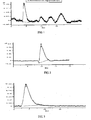
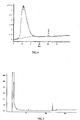
- HPLC method HPLC spectra of HP- ⁇ -CD, ⁇ -CD, HP2-SBE3- ⁇ -CD are shown in Fig. 1, 2, and 3 respectively. Under the chromatographic conditions, HP- ⁇ -CD elution spectrum has a number of broad peaks, with a retention time of about 3, 10, 13, 16 min; and ⁇ -CD has a single broad peak, retention time of about 10 min; while HP2-SBE3- ⁇ -CD elution spectrum presents a single broad peak with a retention time of 3 min, without HP- ⁇ -CD and ⁇ -CD characteristic peak, which indicates that hydroxypropyl-sulfobutyl- ⁇ -cyclodextrin does not contain HP- ⁇ -CD and ⁇ -CD.
- hydroxypropyl-sulfobutyl-o-cyclodextrin is not the physical mixture of ⁇ -CD and hydroxypropyl- ⁇ -CD and sulfobutyl- ⁇ -CD.
- Dialysis method Test results show that after dialysis of the mixed samples of HP2- ⁇ -CD and SBE6- ⁇ -CD by ratio of 1 to 1, the sample weight will reduce half, and the reserved 1H-NMR spectrum only presents SBE4- ⁇ -CD characteristic peak, basically no methyl characteristic peak of HP2- ⁇ -CD (more than 90 percent losses due to dialysis); HP2-SBE3- ⁇ -CD Comparative Test shows that there is basically no changes of 1H-NMR spectrum (dialysis loss rate ⁇ 7%).
- Hydroxypropyl-sulfobutyl- ⁇ -CD under the present invention is a series of CD derivatives composed of different degrees of substitution of hydroxypropyl group and different degrees of substitution of sulfobutyl group.
- Table 5 Main impurities of hydroxypropyl-sulfobutyl- ⁇ -CD Impurities sources of impurities limited amount of impurities (%) CD residue ⁇ 1.5% ⁇ -hydroxybutyrate sulfonate residue ⁇ 2ppm 1,2-propanediol hydrolysis product ⁇ 2.5%
- a HPLC method is adopted to analyze and detect the residual CD
- GC method is adopted to analyze and detect ⁇ -hydroxybutyrate sulfonate and 1,2-propylene glycol, which is illustrated by taking HP2-SBE3- ⁇ -CD as an example.
- the residual amount of ⁇ -CD in HP2-SBE3- ⁇ -CD detected by HPLC method is 0.8% ( Fig. 4 ).
- reverse phase-HPLC and external standard method are adopted to determine the content of hydroxypropyl-sulfobutyl- ⁇ -CD of different degrees of substitution.
- HP3-SBE6- ⁇ -CD the content of hydroxypropyl-sulfobutyl- ⁇ -CD detected by HPLC is 93.7%.
- HP4-SBE2- ⁇ -CD was mixed with 1-10 times of water by weight ratio, 1/10 of prazosin hydrochloride by weight ratio based on the weight of HP4-SBE2- ⁇ -CD as 1 were added, fully mixed by stirring for about 2 h; filtered under pressure, then the solid was flushed by water, dried, then the compound containing the inclusion of HP4-SBE2- ⁇ -CD and prazosin hydrochloride was obtained.
- UV-spectrophotometry Wang Yana, Lu Yapeng, Ren Yong, et al. Determination and its application of the inclusion constant of cyclodextrin and derivatives/drugs [J]. Pharmacy progress, 2004, 28 (1): 23 ) was adopted to measure the inclusion constant Ka of HP2-SBE3- ⁇ -CD, HP4-SBE2- ⁇ -CD, HP2-SBE2- ⁇ -CD, HP3-SBE6- ⁇ -CD, HP- ⁇ -CD and prazosin hydrochloride respectively, the results are shown in Table 6.
- Table 6 The inclusion constant of different degrees of hydroxypropyl-sulfobutyl -cyclodextrin and prazosin hydrochloride sample inclusion constant Ka HP- ⁇ -CD 597 HP 2 -SBE 3 - ⁇ -CD 610 HP 4 -SBE 2 - ⁇ -CD 4131 HP 2 -SBE 2 - ⁇ -CD 2697 HP 3 -SBE 6 - ⁇ -CD 12048
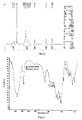
- Fig. 6 Thermal analysis of samples are shown in Fig. 6 .
- the physical mixture retains the water peak and melting peak of prazosin hydrochloride, which are basically the simple accumulation of prazosin hydrochloride and HP4-SBE2- ⁇ -CD; while in the spectrum of prazosin hydrochloride inclusion of HP4-SBE2- ⁇ -CD, the water peak of prazosin hydrochloride disappears, and the position (temperature) and shape (thermal effects) of each peak change, which show that the inclusion complex is formed.
- test results show that the hydroxypropyl-sulfobutyl- ⁇ -CD has significant solubilization effect on prazosin hydrochloride; the solubilization effect is stronger than that of HP- ⁇ -CD.
- HP4-SBE2- ⁇ -CD obtained herein was mixed with 1 ⁇ 10 times of water, ibuprofen in a weight ratio of 1 / 4 based on the weight of HP4-SBE2- ⁇ -CD as 1 was added, fully mixed by stirring for about 2 h, filtered by pressure, then the solid substance was flushed with water, dried, and the compound containing the inclusion complex of HP4-SBE2- ⁇ -CD and ibuprofen was obtained.
- Fig. 7 Thermal analysis of samples is shown in Fig. 7 .
- the physical mixture retains the water peak and melting peak of ibuprofen, which are basically the simple accumulation of ibuprofen and HP4-SBE2- ⁇ -CD; while in the spectrum of inclusion complex of ibuprofen and HP4-SBE2- ⁇ -CD, the water peak of ibuprofen disappears, and the position (temperature) and shape (thermal effects) of each peak change, which show that the inclusion complex is formed.
- test results show that the hydroxypropyl-sulfobutyl- ⁇ -CD has a certain solubilization effect on ibuprofen and the solubilization factor is about 5.
- Non-ionic drugs Puerarin
- HP4-SBE2- ⁇ -CD obtained herein was mixed with 1 ⁇ 10 times of water, puerarin in a weight ratio of 1 / 2.7 based on the weight of HP4-SBE2- ⁇ -CD as 1 was added, fully mixed by stirring for about 2 h, filtered by pressure, then the solid substance was flushed with water, dried, and the compound containing the inclusion complex of HP4-SBE2- ⁇ -CD and puerarin was obtained.
- UV-spectrophotometry Wang Yana, Lu Yapeng, Ren Yong, et al. Determination and its application of the inclusion constant of cyclodextrin and derivatives/drugs [J]. Pharmacy progress, 2004, 28 (1): 23 .
- Table 10 The inclusion constant of different degrees of hydroxypropyl-sulfobutyl-cyclodextrin and puerarin sample inclusion constant Ka HP- ⁇ -CD 345 HP 2 -SBE 3 - ⁇ -CD 2168 HP 4 -SBE 2 - ⁇ -CD 26254 HP 2 -SBE 2 - ⁇ -CD 863 HP 3 -SBE 6 - ⁇ -CD 1440
- the display thermal analysis of samples is shown in Fig. 8 .
- the physical mixture retains the water peak and melting peak of puerarin, which are basically the simple accumulation of puerarin and HP4-SBE2- ⁇ -CD; while in the spectra of inclusion complex of puerarin and HP4-SBE2- ⁇ -CD, the water peak of puerarin disappears, and the position (temperature) and shape (thermal effect) of each peak change, which show that the inclusion complex is formed.
- HP2-SBE3- ⁇ -CD the inclusion constant and solubilization effect of hydroxypropyl-sulfobutyl- ⁇ -CD with other insoluble drugs are investigated, the results are shown in Table 12.
- Table 12 The inclusion constant and solubilization effect of 10% HP2-SBE3- ⁇ -CD with insoluble drugs sample inclusion constant Ka factor of solubilization Iodoform/HP 2 -SBE 3 - ⁇ -CD 2050 125 Camptothecin / HP 2 -SBE 3 - ⁇ -CD 560 35 Lycopene/HP 2 -SBE 3 - ⁇ -CD 2566 173
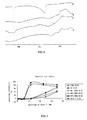
- the hemolytic test results of 11 kinds of compounds are selected, shown in Table 13 and Fig. 9-Fig. 11 .
- the results showed that: 1) under the conditions of test concentration, the degree of hemolysis of all compounds are much less than that of ⁇ -CD; 2) the degree of hemolysis of the majority of compounds is less than that of the control products - HP- ⁇ -CD and SBE4- ⁇ -CD; 3) the degree of hemolysis of compounds HP2-SBE3- ⁇ -CD, HP1-SBE4- ⁇ -CD, HP3-SBE6- ⁇ -CD is less than that of SBE7- ⁇ -CD (see Fig. 9 ), 4) the degree of hemolysis of a small number of compounds is larger than that of HP- ⁇ -CD and SBE4- ⁇ -CD when the concentration is more than 25 mmol.
- the degree of hemolysis of hydroxypropyl-sulfobutyl products under the present invention is directly related to the degree of substitution of hydroxypropyl and sulfobutyl groups: when the degree of substitution of sulfobutyl group is less than or equal to 2, it presents higher degree of hemolysis; and when the degree of substitution of sulfobutyl group is more than or equal to 2.5, the degree of hemolysis significantly reduces; when the gross degree of substitution is 4-7 and the degree of substitution of sulfobutyl group is 3-3.5, the degree of hemolysis is minimum. As long as the average degree of substitution of sulfobutyl group can be controlled to 3-6, the products of very low degree of hemolysis can be obtained.
- Table 13 The results of hemolytic test of all test samples sample concentration without hemolysis (mg/ml) Concentration when the degree of hemolysis is 50 percent (mg/ml) HP 1 -SBE 4 - ⁇ -CD 22.83 55.33 HP 2 -SBE 2 - ⁇ -CD 19.44 33.21 BP 2 -SBE 3 - ⁇ -CD 20.56 > 60.00 HP 3 -SBE 2 - ⁇ -CD 14.54 29.89 HP 3 -SBE 4 - ⁇ -CD 24.00 58.00 HP 3 -SBE 6 - ⁇ -CD 34.73 > 76.00 HP 4 -SBE 2 - ⁇ -CD 20.11 38.54 HP 4 -SBE 3 - ⁇ -CD 10.79 27.88 HP 5 -SBE 2 - ⁇ -CD 10.90 28.51 HP 5 -SBE 3 - ⁇ -CD 22.11 45.19 HP 6 -SBE 2 - ⁇ -CD 18.92 32.68 SBE 7 - ⁇ -CD 25.20 60.90 SBE 4
- Table 15 Effect on the mouse's spontaneous activities Group Dose mg/kg Animal quantity n The frequency of spontaneous activities (times/5min) at different times (min) after administration 0 30 60 120 180 Blank control - 10 316 ⁇ 46 277 ⁇ 46 225 ⁇ 55 187 ⁇ 24 170 ⁇ 36 HP 4 -SBE 3 - ⁇ -CD 80 10 319 ⁇ 50 246 ⁇ 79 225 ⁇ 38 179 ⁇ 20 166 ⁇ 45 HP 4 -SBE 3 - ⁇ -CD 160 10 289 ⁇ 43 227 ⁇ 70 207 ⁇ 63 181 ⁇ 40 150 ⁇ 48 HP 4 -SBE 3 - ⁇ -CD 320 10 296 ⁇ 43 248 ⁇ 59 206 ⁇ 56 193 ⁇ 41 146 ⁇ 53 chloropromazine 2 10 302 ⁇ 75 57 ⁇ 40 * 16 ⁇ 20 * 22 ⁇ 19 * 25 ⁇ 28 * x ⁇ sd, Student t-test, * P ⁇ 0.05, compared with the control group. 3. Effect on balance test: the result showed that the drop rate of each group is 0 after administration at each time, which indicated
- HP4-SBE3- ⁇ -CD would not change the mouse's ordinary behavior, activity times and balance movement when the intragastric administration doses provided were 80mg/kg, 160mg/kg and 320mg/kg, which indicated that the medicine had no effect on the nervous system.
- Example 1 0.02 mol ⁇ -cyclodextrin, 0.11 mol NaOH and 45 ml H 2 O were added into a 3-neck round flask with isobaric funnel, reflux condenser, and thermometer respectively; then stirred to dissolve completely and heated to about 75°C ⁇ 80°C and kept at a constant temperature, and then 0.08mol 1,4-butane sultone was added within 3 hours, and stirring was continued for about 2 hours, then it was cooled down to normal temperature of about 20°C; 0.08mol 1,2-propylene oxide was slowly pipetted for about 3 hours; stirring was continued for 5 hours and the pH value was adjusted to neutral with hydrochloric acid; it was filtered and the residual ⁇ -cyclodextrin and the resultant 1,2-propanediol and sodium ⁇ -hydroxybutyrate were removed by filtrate dialysis.
- the area of the corresponding methyl-peak of the derivative (1.05-1.06 ppm) / 3 is the total number of hydroxypropyls connected with methyl in each cyclodextrin (degree of substitution), the corresponding -CH 2 -CH 2 - group peak (1.69 ppm) area / 4; and the corresponding -CH 2 -SO 3 X-group peak (2.83-2.85 ppm) area / 2 is the degree of substitution of sulfobutyl group connected in each cyclodextrin.
- the degree of substitution of the synthesized product is respectively 1.8 of HP's average degree of substitution and 3.0 of sulfobutyl's average degree of substitution, and was abbreviated as HP2-SBE3- ⁇ -CD.
- HP2-SBE3- ⁇ -CD reference substance the HP2-SBE3- ⁇ -CD synthesized was placed in an oven at 100 °C, 72 h later, taken out and cooled down, kept in the dryer for future use. A few samples were precisely weighed, mixed with equal mols of benzoic acid (internal standard).
- Example 2 0.02mol ⁇ -cyclodextrin, 0.04mol NaOH and 90ml H 2 O were added into a 3-neck round flask with isobaric funnel, reflux condenser, and thermometer respectively; then stirred to dissolve completely and 0.03mol 1.2-propylene oxide was slowly pipetted for about 2 hours while stirring at 20°C; stirring was continued for reacting for 6 hours, 0.3mol NaOH was added, heated to about 75°C ⁇ 80°C, then 0.03mol 1,4-butane sultone was slowly pipetted for about 3 hours, stirring was continued for reacting for 5 hours, and then it was cooled to room temperature, and the pH value of the mixture was adjusted to neutral with hydrochloric acid; filtered and the residual ⁇ -cyclodextrin and the resultant 1,2-propanediol and sodium ⁇ -hydroxybutyrate were removed by filtrate dialysis.
- Example 3 The procedure was carried out basically in the same manner as in example I, but wherein 70 ml of water was added, and the feeding quantity of NaOH, 1,4-butane sultone and 1,2-propylene oxide were 0.20, 0.16, 0.10mol respectively, the final product yield is 105.5%.
- the average degree of substitution of hydroxypropyl was 5.6 and the average degree of substitution of sulfobutyl was 2.6 by 1H-NMR validation ( Fig. 15 ), abbreviated as HP3-SBE6- ⁇ -CD.
- Example 4 The procedure was carried out basically in the same manner as in example 1, but wherein the feeding quantity of NaOH, 1,4-butane sultone and 1,2-propylene oxide were 0.15, 0.12, 0.15mol respectively, the final product yield is 104.35%.
- the average degree of substitution of hydroxypropyl was 3.2 and the average degree of substitution of sulfobutyl was 4.3 by 1H-NMR validation ( Fig. 15 ), abbreviated as HP3-SBE4- ⁇ -CD.
- Example 5 The procedure was carried out basically in the same manner as in example 1, but wherein 90 ml of water was added, and the feeding quantity of NaOH, 1,4-butane sultone and 1.2-propylene oxide were 0.08, 0.04, 0.26mol respectively, the final product yield was 110.5%.
- the average degree of substitution of hydroxypropyl was 9.1 and the average degree of substitution of sulfobutyl was 1.1 by 1H-NMR validation ( Fig. 15 ), abbreviated as HP9-SBE1- ⁇ -CD.
- Example 6 The procedure was carried out basically in the same manner as in example 1, but wherein the feeding quantity of NaOH, 1,4-butane sultone and 1,2-propylene oxide were 0.06, 0.04, 0.04mol respectively, and 1,4-butane sultone was added to react for 5h and 1,2-propylene oxide was added to react for 5h. The final product yield was 101.36%.
- the average degree of substitution of hydroxypropyl was 1.3 and the average degree of substitution of sulfobutyl was 1.4 by 1H-NMR validation ( Fig. 15 ), abbreviated as HP1-SBE1- ⁇ -CD.
- Example 7-1 The procedure was carried out basically in the same manner as Example 1, but wherein the base for the catalytic reaction is KOH, and the product is potassium salt of sulfobutyl group.
- Example 7-2 The procedure was carried out basically in the same manner as in Example 1, but wherein the base for the catalytic reaction is LiOH, and the product is lithium salt of sulfobutyl group.
- Exmaple 8 Identify that hydroxypropyl-sulfobutyl- ⁇ -cyclodextrin is the cyclodextrin mixed-substituted by hydroxypropyl and sulfobutyl group, rather than the simple mixture of two or three selected among ⁇ -CD, hydroxypropyl- ⁇ -CD and sulfobutyl- ⁇ -cyclodextrin by HPLC method.
- Chromatographic conditions chromatographic column: phenyl-group column (4.6 mm x 250 mm, 5 ⁇ m); detection: display thermal analysis; the mobile phase: methanol - water (1:10); column temperature: 25 °C .
- HPLC spectra of HP- ⁇ -CD, ⁇ -CD and HP2-SBE3- ⁇ -CD are shown in Fig. 1, 2 and 3 respectively.
- Example 9 Identify that hydroxypropyl-sulfobutyl- ⁇ -cyclodextrin is the cyclodextrin mixed-substituted by hydroxypropyl and sulfobutyl group, rather than the simple mixture of two or three selected among ⁇ -CD, hydroxypropyl- ⁇ -CD and sulfobutyl- ⁇ -cyclodextrin by dialysis method.
- Example 10 Determination of purity of hydroxypropyl-sulfobutyl- ⁇ -cyclodextrin
- Chromatographic conditions chromatographic column: phenyl-group column (4.6 mm x 250 mm, 5 ⁇ m); detection: display thermal analysis; mobile phase: methanol - water (1:10); column temperature: 25 °C.
- 0.1 g of HP2-SBE3- ⁇ -CD reference substance was precisely weighed, and dissolved by mobile phase and adjusted to the constant volume of 5 ml for sample injection; the sampling amount: 20 ⁇ l, and the chromatogram is plotted ( Fig. 3 ).
- Chromatographic conditions chromatographic column: C18 (4.6mm x 250 mm, 5 ⁇ m); detection: display thermal analysis; mobile phase: methanol - water (1:10); column temperature: 40 °C.
- 0.5 g of HP2-SBE3- ⁇ -CD reference substance was precisely weighed, and dissolved by mobile phase and adjusted to the constant volume of 10 ml for sample injection; the sample injection amount: 20 ⁇ l, and the chromatogram is plotted.
- Chromatographic conditions chromatographic column: SiO 2 (4.6 mm x 250 mm, 5 ⁇ m); detection: display thermal analysis; mobile phase: acetonitrile; column temperature: 25 °C. 0.01 g of HP2-SBE3- ⁇ -CD reference substance was precisely weighed, and dissolved by mobile phase and adjusted to the constant volume of 10ml for sample injection; the sample injection amount: 20 ⁇ l, and the chromatogram is plotted ( Fig. 17 ).
- chromatographic column SiO 2 (4.6 mm x 250 mm, 5 ⁇ m); detection: display thermal analysis; mobile phase: methanol; column temperature: 25 °C.
- 0.1 g of HP2-SBE3- ⁇ -CD reference substance was precisely weighed, and dissolved by mobile phase and adjusted to the constant volume of 10ml for sample injection; the sample injection amount: 20 ⁇ l, and the chromatogram is plotted ( Fig. 18 ).
- chromatographic column SiO 2 (4.6 mm x 250 mm, 5 ⁇ m); detection: display thermal analysis; mobile phase: ethanol; column temperature: 25 °C.
- 0.1 g of HP2-SBE3- ⁇ -CD reference substance was precisely weighed, and dissolved by mobile phase and adjusted to the constant volume of 10ml for sample injection; the sampling amount: 20 ⁇ l, and the chromatogram is plotted ( Fig. 19 ).
- the preferable assay method is as follows:
- Example 12 Inclusion of hydroxypropyl-sulfobutyl- ⁇ -cyclodextrin and cationic drugs-prazosin hydrochloride
- HP4-SBE2- ⁇ -CD (10 g) was precisely weighed and mixed with pure water (10 ml), heated, then added with 3.11 g of prazosin hydrochloride, after being fully mixed for 3 h under stirring, then filtered, dried under reduced pressure and normal temperature conditions, thus white solid inclusion complex is prepared.
- Example 13 Inclusion of hydroxypropyl-sulfobutyl- ⁇ -cyclodextrin and anionic drug-ibuprofen
- HP4-SBE2- ⁇ -CD (10 g) was precisely weighed and mixed with pure water (10 ml), heated, then added with 4 g of ibuprofen, after being fully mixed for 3 h under stirring, then filtered, dried under reduced pressure and normal temperature conditions, thus white solid inclusion complex is prepared.
- Example 14 Inclusion of hydroxypropyl-sulfobutyl- ⁇ -cyclodextrin and non-ionic drug-puerarin
- Hemolysis percentage (A testee - A negative control) / A positive control ⁇ 100% Table 10: Preparation of the solutions for hemolytic test Tube # 1 2 3 4 5 6 7 5% erythrocyte (ml) 0.5 0.5 0.5 0.5 0.5 0.5 0.5 0.5 0.5 0.5 Normal Saline Solution (ml) 1.0 2.3 2.9 3.4 3.5 Distilled water (ml) 3.5 Testee (ml) 3.5 2.5 1.2 0.6 0.1 Concentration of testee (mmol) 35 25 12 6 1
- Example 16 Acute toxicity test of hydroxypropyl-sulfobutyl- ⁇ -cyclodextrin ( bibliography: State Drug Administration Bureau: "Technical Requirements of Traditional Chinese New Drug Rearch” 12 November 1999 )
- Preparation method and storage conditions 7g of HP4-SBE3- ⁇ -CD were precisely weighed to prepare HP4-SBE3- ⁇ -CD suspension solution, and tested drugs were prepared prior clinical application. Tested drugs must be kept at room temperature.
- mice Kunming mice were provided by Institute of Medicine Laboratory Animal Center, Southeast University. The mice were about 40 days old and their average weight was 20 ⁇ 2 g, half male and half female.
- test group and drug dosage 20 mice for each group, one dosage group.
- Administration method and approach intragastric administration and intravenous injection.
- a single administration was given to the animals. Due to the concentration limit of tested substance, the animals cannot be administrated according to LD 50 test, therefore the maximum administration test was carried out.
- the maximum amount of intragastric administration was set to 40 ml / kg per day.
- Intravenous injection amount was 25 ml / kg, after administration, the toxicity reaction situation, weight changes and animal deaths of the test animals were observed and recorded.
- Test conditions laboratory temperature: 18 ⁇ 25 °C, humidity: 40 - 60%, 12 hour light and 12 h dark alternatively.
- Five mice with the same gender were fed in the same cage having a size of 18 x 29 x 16 cm and the feed was fully granulated feed, drinking water freely. Wood shaving sawdust was used for padding materials, which was replaced 1-2 times every week.
- Indicators observed The toxicity reaction and the number of animals killed in each group were observed on the 14th day after drug administration. If necessary, gross anatomy was to be conducted to observe the visceral pathological changes. Animal body weights of each group were weighed after finishing the test.
- Example 17 General pharmacological test of the effect of hydroxypropyl-sulfobutyl- ⁇ -cyclodextrin on a mouse's neural and mental system (Bibliography: 1. Xu, Shuyun, Pharmacological Experimental Methodology, 2nd version, P.641, People Health Press, Beijing, 1991 . 2. Department of Medical Administration, the Ministry of Health: Guidelines on Preclinical Study of New Pharmaceuticals (western medicine), p. 42, July, 1993 .)
- HP4-SBE3- ⁇ -CD was kept in a dark refrigerator. It was prepared into the required concentration with normal saline solution prior to use.
- mice Animals and feeding conditions: Kunming mice, 18 ⁇ 22 g, half male and half female, provided by Laboratory Animal Center, Southeast University; animal environmental facility qualification number: 97004; quality certification number of the experimental animals: No. 97006. The mice were fed for three days in the laboratory prior to use.
- mice tested were fed with cage and plastic cage size: 32 x 18 ⁇ 18cm; each cage had 5 mice of the same gender.
- the basic feed is full nutrient granulated feed, prepared by the Experimental Center, drinking water freely.
- Apparatus 6 light channel SYS-I mouse spontaneous activity detector, self-made.
- Positive control drug Chlorpromazine hydrochloride injection, 50 mg / 2ml, Batch No.: 20040509, produced by Beijing Yongkang Pharmaceutical Factory; Dizepam Injection, 10 mg / 2ml, Batch No.: 041101, Produced by Shanghai Xudong Haipu Pharmaceutical Co., Ltd.
- mice 40 mice were randomly divided into four groups, control group, administration dose groups of 80 mg / kg, 160 mg / kg and 320 mg / kg respectively; one-time intragastric administration, the mice of the control group were given a constant volume of normal saline solution (blank), were then administed with drugs, after 0.5 hours, 1 hour, 2 hours and 3 hours, the ordinary behavior of the mice was observed once, the crawl, pilo-erection, slow breathing, polysialia, vibration, screaming, jumping, vertical tail, attack & biting, sound and tactile stimulation response, gait, righting reflex, earlap and caudal blood vessel color, body temperature, eye crack size, pupil changes, etc. were recorded, and the abnormity was recorded and were compared with the control groups.
- mice' spontaneous activities healthy mice, and 50 mice whose frequency of activities was 220 - 320 within 5 min were selected and randomly divided into five groups, the establishment of dosages were the same as the above.
- the frequency of activity at o min were measured before drug administration, and then were conducted by intragastric administration, 30, 60, 120 and 180 min later, the frequency of activities within 5 min was measured and recorded respectively, then compared with that of the control group.
- the measuring time was the period between 9:00 am and 4:00 pm each day.
- a six-light channel spontaneous activity instrument was used for one mouse, kept at 24 ⁇ 26 °C of room temperature; and kept quiet; the test was carried out after the test boxes were covered with black cloth. The test results are shown in Table 13.
- mice 50 mice, half male and half female were randomly divided into five groups, the dosage setting and administration method were the same as above.
- the mice were first selected before drug application, and those qualified were used for testing. When tested, the mice were placed on a wooden bar having a diameter of 0.8 cm, length of 60 cm and 60 cm from the ground. And if the mouse did not fall within 3 min, it is qualified, then administrated with drugs. The test was repeated at 30, 60, 120 and 180 min after administration of drugs, and if the mouse fell off three times, it meant balance loss and the falling rate was calculated thereof. The difference between the administration group and control group were compared.
- Example 18 General pharmacological test of the effect of hydroxypropyl-sulfobutyl- ⁇ -cyclodextrin on respiratory and cardiovascular system of the anesthesized dogs (Bibliography: Department of Medical Administration, the Ministry of Health: Guidelines on Preclinical Study of New Pharmaceuticals (western medicine), p. 42, July, 1993)
- Preparation method Normal saline solution was used to prepare the concentration level required.
- Test animals The animal tested was a beagle dog provided by Zhongke Xishan Laboratory Animals Co., Ltd. The animal's qualified number: Zhongke Hu Animal Management No. 99-0011. The Facility Environment qualified number: Zhongke Hu Animal Management Number: No. 99-0010. Prior to test, they were weighed and their food intake was observed, and their ordinary behaviour was observed.
- the various indicators mentioned above were recorded as a pre-drug value about 20 minutes after operation, and then the duodenum was injected into different doses of HP4-SBE3- ⁇ -CD with injection time of 30 seconds and a volume of 1.0 ml / kg, and then the above indicators were respectively recorded at the times of 5, 10, 30, 60, 120 and 180 min prior to administration and after administration, and the effects of the tested drug HP4-SBE3- ⁇ -CD on respiratory frequency, magnitude and electrocardio and blood pressure were observed.
- the data of the tests before and after drug administration should be processed by t-test.
- Example 19 The procedure was carried out basically in the same manner as in Example 1, but wherein 0.08 mol of sodium hydroxide, 0.04 mol of 1,4-butyl sultone and 0.055 mol of 1,2-propylene oxide were added respectively, thus HP2-SBE1- ⁇ -CD product was prepared with a production rate of 100.43%.
- Example 20 The procedure was carried out basically in the same manner as in Example 1, but wherein 0.08 mol of sodium hydroxide, 0.04 mol of 1,4-butyl sultone and 0.08 mol of 1,2-propylene oxide were added respectively, thus HP3-SBE1- ⁇ -CD product was prepared with a production rate of 99.57%.
- Example 21 The procedure was carried out basically in the same manner as in Example 1, but wherein 0.08 mol of sodium hydroxide, 0.04 mol of 1,4-butyl sultone and 0.11 mol of 1,2-propylene oxide were added respectively, thus HP4-SBE1- ⁇ -CD product was prepared with a production rate of 103.03%.
- Example 22 The procedure was carried out basically in the same manner as in Example 1, but wherein 0.08 mol of sodium hydroxide, 0.04 mol of 1,4-butyl sultone and 0.014 mol of 1,2-propylene oxide were added respectively, thus HP5-SBE1- ⁇ -CD product was prepared with a production rate of 109.36%.
- Example 23 The procedure was carried out basically in the same manner as in Example 1, but wherein 0.08 mol of sodium hydroxide, 0.04 mol of 1,4-butyl sultone and 0.017 mol of 1,2-propylene oxide were added respectively, thus HP6-SBE1- ⁇ -CD product was prepared with a production rate of 107.24%.
- Example 24 The procedure was carried out basically in the same manner as in Example 1, but wherein 0.08 mol of sodium hydroxide, 0.04 mol of 1,4-butyl sultone and 0.020 mol of 1,2-propylene oxide were added respectively, thus HP7-SBE1- ⁇ -CD product was prepared with a production rate of 112.02%.
- Example 25 The procedure was carried out basically in the same manner as in Example 1, but wherein 0.08 mol of sodium hydroxide, 0.05 mol of 1,4-butyl sultone and 0.03 mol of 1,2-propylene oxide were added respectively, thus HP1-SBE2- ⁇ -CD product was prepared with a production rate of 109.89%.
- Example 26 The procedure was carried out basically in the same manner as in Example 1, but wherein 0.08 mol of sodium hydroxide, 0.05 mol of 1,4-butyl sultone and 0.05 mol of 1,2-propylene oxide were added respectively, thus HP2-SBE2- ⁇ -CD product was prepared with a production rate of 111.16%.
- Example 27 The procedure was carried out basically in the same manner as in Example 1, but wherein 0.08 mol of sodium hydroxide, 0.05 mol of 1,4-butyl sultone and 0.07 mol of 1,2-propylene oxide were added respectively, thus HP3-SBE2- ⁇ -CD product was prepared with a production rate of 113.52%.
- Example 28 The procedure was carried out basically in the same manner as in Example 1, but wherein 0.08 mol of sodium hydroxide, 0.05 mol of 1,4-butyl sultone and 0.10 mol of 1,2-propylene oxide were added respectively, thus HP4-SBE2- ⁇ -CD product was prepared with a production rate of 113.58%.
- Example 29 The procedure was carried out basically in the same manner as in Example 1, but wherein 0.08 mol of sodium hydroxide, 0.05 mol of 1,4-butyl sultone and 0.14 mol of 1,2-propylene oxide were added respectively, thus HP5-SBE2- ⁇ -CD product was prepared with a production rate of 109.89%.
- Example 30 The procedure was carried out basically in the same manner as in Example 1, but wherein 0.08 mol of sodium hydroxide, 0.05 mol of 1,4-butyl sultone and 0.17 mol of 1,2-propylene oxide were added respectively, thus HP6-SBE2- ⁇ -CDproduct was prepared with a production rate of 111.93%.
- Example 31 The procedure was carried out basically in the same manner as in Example 1, but wherein 0.08 mol of sodium hydroxide, 0.05 mol of 1,4-butyl sultone and 0.20 mol of 1,2-propylene oxide were added respectively, thus HP7-SBE2- ⁇ -CD product was prepared with a production rate of 116.43%.
- Example 32 The procedure was carried out basically in the same manner as in Example 1, but wherein 0.08 mol of sodium hydroxide, 0.05 mol of 1,4-butyl sultone and 0.23 mol of 1,2-propylene oxide were added respectively, thus HP8-SBE2- ⁇ -CD product was prepared with a production rate of 118.21%.
- Example 33 The procedure was carried out basically in the same manner as in Example 1, but wherein 0.11 mol of sodium hydroxide, 0.08 mol of 1,4-butyl sultone and 0.03 mol of 1,2-propylene oxide were added respectively, thus HP1-SBE3- ⁇ -CD product was prepared with a production rate of 107.55%.
- Example 34 The procedure was carried out basically in the same manner as in Example 1, but wherein 0.11 mol of sodium hydroxide, 0.08 mol of 1,4-butyl sultone and 0.12 mol of 1,2-propylene oxide were added respectively, thus HP3-SBE3- ⁇ -CD product was prepared with a production rate of 111.75%.
- Example 35 The procedure was carried out basically in the same manner as in Example 1, but wherein 0.11 mol of sodium hydroxide, 0.08 mol of 1,4-butyl sultone and 0.15 mol of 1,2-propylene oxide were added respectively, thus HP4-SBE3- ⁇ -CD product was prepared with a production rate of 107.55%.
- Example 36 The procedure was carried out basically in the same manner as in Example 1, but wherein 0.11 mol of sodium hydroxide, 0.08 mol of 1,4-butyl sultone and 0.16 mol of 1,2-propylene oxide were added respectively, thus HP5-SBE3- ⁇ -CD product was prepared with a production rate of 109.02%.
- Example 37 The procedure was carried out basically in the same manner as in Example 1, but wherein 0.11 mol of sodium hydroxide, 0.08 mol of 1,4-butyl sultone and 0.20 mol of 1,2-propylene oxide were added respectively, thus HP6-SBE3- ⁇ -CD product was prepared with a production rate of 111.15%.
- Example 38 The procedure was carried out basically in the same manner as in Example 1, but wherein 0.11 mol of sodium hydroxide, 0.08 mol of 1,4-butyl sultone and 0.23 mol of 1,2-propylene oxide were added respectively, thus HP7-SBE3- ⁇ -CD product was prepared with a production rate of 111.07%.
- Example 39 The procedure was carried out basically in the same manner as in Example 2, but wherein 0.15 mol of sodium hydroxide, 0.12 mol of 1,4-butyl sultone and 0.04 mol of 1,2-propylene oxide were added respectively, thus HP1-SBE4- ⁇ -CD product was prepared with a production rate of 106.33%.
- Example 40 The procedure was carried out basically in the same manner as in Example 1, but wherein 0.15 mol of sodium hydroxide, 0.12 mol of 1,4-butyl sultone and 0.06 mol of 1,2-propylene oxide were added respectively, thus HP2-SBE4- ⁇ -CD product was prepared with a production rate of 103.15%.
- Example 41 The procedure was carried out basically in the same manner as in Example 40, but wherein 0.15 mol of sodium hydroxide, 0.12 mol of 1,4-butyl sultone and 0.09 mol of 1,2-propylene oxide were added respectively, thus HP4-SBE4- ⁇ -CD product was prepared with a production rate of 105.11 %.
- Example 42 The procedure was carried out basically in the same manner as in Example 40, but wherein 0.15 mol of sodium hydroxide, 0.12 mol of 1,4-butyl sultone and 0.12 mol of 1,2-propylene oxide were added respectively, thus HP5-SBE4- ⁇ -CD product was prepared with a production rate of 108.45%.
- Example 43 The procedure was carried out basically in the same manner as in Example 40, but wherein 0.15 mol of sodium hydroxide, 0.12 mol of 1,4-butyl sultone and 0.16 mol of 1,2-propylene oxide were added respectively, thus HP6-SBE4- ⁇ -CD product was prepared with a production rate of 111.18%.
- Example 44 The procedure was carried out basically in the same manner as in Example 40, but wherein 0.18 mol of sodium hydroxide, 0.15mol of 1,4-butyl sultone and 0.055 mol of 1,2-propylene oxide were added respectively, thus HP1-SBE5- ⁇ -CD product was prepared with a production rate of 109.34%.
- Example 45 The procedure was carried out basically in the same manner as in Example 40, but wherein 0.18 mol of sodium hydroxide, 0.15 mol of 1,4-butyl sultone and 0.08 mol of 1,2-propylene oxide were added respectively, thus HP2-SBE5- ⁇ -CD product was prepared with a production rate of 110.70%.
- Example 47 The procedure was carried out basically in the same manner as in Example 40, but wherein 0.18 mol of sodium hydroxide, 0.15 mol of 1,4-butyl sultone and 0.095 mol of 1,2-propylene oxide were added respectively, thus HP3-SBES- ⁇ -CD product was prepared with a production rate of 112.45%.
- Example 47 The procedure was carried out basically in the same manner as in Example 40, but wherein 0.18 mol of sodium hydroxide, 0.15 mol of 1,4-butyl sultone and 0.13 mol of 1,2-propylene oxide were added respectively, thus HP4-SBE5- ⁇ -CD product was prepared with a production rate of 111.86%.
- Example 48 The procedure was carried out basically in the same manner as in Example 40, but wherein 0.18 mol of sodium hydroxide, 0.15 mol of 1,4-butyl sultone and 0.17 mol of 1,2-propylene oxide were added respectively, thus HP5-SBE5- ⁇ -CD product was prepared with a production rate of 116.06%.
- Example 49 The procedure was carried out basically in the same manner as in Example 3, but wherein 0.20 mol of sodium hydroxide, 0.16 mol of 1,4-butyl sultone and 0.08 mol of 1,2-propylene oxide were added respectively, thus HP1-SBE6- ⁇ -CD product was prepared with a production rate of 117.57%.
- Example 50 The procedure was carried out basically in the same manner as in Example 3, but wherein 0.20 mol of sodium hydroxide, 0.16 mol of 1,4-butyl sultone and 0.13 mol of 1,2-propylene oxide were added respectively, thus HP2-SBE6- ⁇ -CD product was prepared with a production rate of 115.66%.
- Example 51 The procedure was carried out basically in the same manner as in Example 3, but wherein 0.20 mol of sodium hydroxide, 0.16 mol of 1,4-butyl sultone and 0.16 mol of 1,2-propylene oxide were added respectively, thus HP4-SBE6- ⁇ -CD product was prepared with a production rate of 114.82%.
- Example 52 The procedure was carried out basically in the same manner as in Example 2, but wherein 0.21 (0.02+0.19) mol of sodium hydroxide, 0.19 mol of 1,4-butyl sultone and 0.03mol of 1,2-propylene oxide were added respectively, thus HP1-SBE7- ⁇ -CD product was prepared with a production rate of 116.11 %.
- Example 53 The procedure was carried out basically in the same manner as in Example 40, but wherein 0.21 mol of sodium hydroxide, 0.19 mol of 1,4-butyl sultone and 0.06 mol of 1,2-propylene oxide were added respectively, thus BP2-SBE7- ⁇ -CD product was prepared with a production rate of 117.23%.
- Example 54 The procedure was carried out basically in the same manner as in Example 40, but wherein 0.21 mol of sodium hydroxide, 0.19mol of 1,4-butyl sultone and 0.09 mol of 1,2-propylene oxide were added respectively, thus HP3-SBE7- ⁇ -CD product was prepared with a production rate of 113.17%.
- Example 55 The procedure was carried out basically in the same manner as in Example 2, but wherein 0.29 (0.02+0.27) mol of sodium hydroxide, 0.27 mol of 1,4-butyl sultone and 0.03 mol of 1,2-propylene oxide were added respectively, thus HP1-SBE8- ⁇ -CD product was prepared with a production rate of 119.67%.
- Example 56 The procedure was carried out basically in the same manner as in Example 40, but wherein 0.24 mol of sodium hydroxide, 0.22 mol of 1,4-butyl sultone and 0.06 mol of 1,2-propylene oxide were added respectively, thus HP2-SBE8- ⁇ -CD product was prepared with a production rate of 117.54%.
- Example 57 The procedure was carried out basically in the same manner as in Example 1, but wherein 0.08 mol of sodium hydroxide, 0.04 mol of 1,4-butyl sultone and 0.023 mol of 1,2-propylene oxide were added respectively, thus HP8-SBE1- ⁇ -CD product was prepared with a production rate of 118.76%.
Landscapes
- Health & Medical Sciences (AREA)
- Chemical & Material Sciences (AREA)
- Life Sciences & Earth Sciences (AREA)
- Medicinal Chemistry (AREA)
- General Health & Medical Sciences (AREA)
- Engineering & Computer Science (AREA)
- Pharmacology & Pharmacy (AREA)
- Veterinary Medicine (AREA)
- Public Health (AREA)
- Animal Behavior & Ethology (AREA)
- Chemical Kinetics & Catalysis (AREA)
- Organic Chemistry (AREA)
- Molecular Biology (AREA)
- Epidemiology (AREA)
- Bioinformatics & Cheminformatics (AREA)
- Polymers & Plastics (AREA)
- Materials Engineering (AREA)
- Nanotechnology (AREA)
- Biochemistry (AREA)
- Nuclear Medicine, Radiotherapy & Molecular Imaging (AREA)
- General Chemical & Material Sciences (AREA)
- Dermatology (AREA)
- General Engineering & Computer Science (AREA)
- Crystallography & Structural Chemistry (AREA)
- Medical Informatics (AREA)
- Inorganic Chemistry (AREA)
- Biophysics (AREA)
- Biotechnology (AREA)
- Diabetes (AREA)
- Rheumatology (AREA)
- Pain & Pain Management (AREA)
- Obesity (AREA)
- Hematology (AREA)
- Polysaccharides And Polysaccharide Derivatives (AREA)
- Medicinal Preparation (AREA)
Applications Claiming Priority (2)
| Application Number | Priority Date | Filing Date | Title |
|---|---|---|---|
| CNB2005100951760A CN100503647C (zh) | 2005-11-02 | 2005-11-02 | 羟丙基-磺丁基-β-环糊精及其制备方法、分析方法以及在药学上的应用 |
| PCT/CN2005/002035 WO2007051358A1 (fr) | 2005-11-02 | 2005-11-28 | Hydroxypropyl-sulfobutyl-?-cyclodextrine, procede de preparation, methode analytique et application pharmaceutique de celle-ci |
Publications (3)
| Publication Number | Publication Date |
|---|---|
| EP1950227A1 true EP1950227A1 (de) | 2008-07-30 |
| EP1950227A4 EP1950227A4 (de) | 2013-01-23 |
| EP1950227B1 EP1950227B1 (de) | 2014-10-08 |
Family
ID=36810463
Family Applications (1)
| Application Number | Title | Priority Date | Filing Date |
|---|---|---|---|
| EP05817804.7A Expired - Lifetime EP1950227B1 (de) | 2005-11-02 | 2005-11-28 | HYDROXYPROPYL-SULFOBUTYL-ß-CYCLODEXTRIN, HERSTELLUNGSVERFAHREN, ANALYSENMETHODE UND PHARMAZEUTISCHE ANWENDUNG DAVON |
Country Status (4)
| Country | Link |
|---|---|
| US (1) | US8278437B2 (de) |
| EP (1) | EP1950227B1 (de) |
| CN (1) | CN100503647C (de) |
| WO (1) | WO2007051358A1 (de) |
Cited By (11)
| Publication number | Priority date | Publication date | Assignee | Title |
|---|---|---|---|---|
| US20100041625A1 (en) * | 2006-09-12 | 2010-02-18 | Nanjing Huge-Ring Medicine Technology Development Co., Ltd. | Pharmaceutical composition comprising cyclodextrin paclitaxel inclusion and preparation method thereof |
| US20100048685A1 (en) * | 2006-09-12 | 2010-02-25 | Yong Ren | Pharmaceutical composition containing docetaxel-cyclodextrin inclusion complex and its preparing process |
| EP2268269A4 (de) * | 2008-04-28 | 2011-08-17 | Cydex Pharmaceuticals Inc | Sulfoalkylether-cyclodextrin-zusammensetzungen |
| WO2012000926A1 (de) * | 2010-06-28 | 2012-01-05 | Ratiopharm Gmbh | Silodosin-cyclodextrin einschlussverbindungen |
| US8492538B1 (en) | 2009-06-04 | 2013-07-23 | Jose R. Matos | Cyclodextrin derivative salts |
| WO2015008066A1 (en) * | 2013-07-17 | 2015-01-22 | Curadev Pharma Pvt Ltd | Cyclodextrin |
| US9493582B2 (en) | 2012-02-28 | 2016-11-15 | Cydex Pharmaceuticals, Inc. | Alkylated cyclodextrin compositions and processes for preparing and using the same |
| US9751957B2 (en) | 2012-02-15 | 2017-09-05 | Cydex Pharmaceuticals, Inc. | Manufacturing process for cyclodextrin derivatives |
| US10040872B2 (en) | 2012-10-22 | 2018-08-07 | Cydex Pharmaceuticals, Inc. | Alkylated cyclodextrin compositions and processes for preparing and using the same |
| EP3359578A4 (de) * | 2015-10-07 | 2019-05-15 | UTI Limited Partnership | Multifunktionelle polyanionische cyclodextrindendrimere |
| US10851184B2 (en) | 2014-08-22 | 2020-12-01 | Cydex Pharmaceuticals, Inc. | Fractionated alkylated cyclodextrin compositions and processes for preparing and using the same |
Families Citing this family (18)
| Publication number | Priority date | Publication date | Assignee | Title |
|---|---|---|---|---|
| US20090239942A1 (en) * | 2006-09-15 | 2009-09-24 | Cloyd James C | Topiramate Compositions and Methods of Making and Using the Same |
| WO2008110035A1 (en) * | 2007-03-14 | 2008-09-18 | Nanjing Normal University | A pharmaceutical composition containing inclusion compound of cyclodextrin and adefovir dipivoxil and preparative method thereof |
| JP5681485B2 (ja) | 2007-04-27 | 2015-03-11 | サイデックス・ファーマシューティカルズ・インコーポレイテッド | クロピドグレルおよびスルホアルキルエーテルシクロデキストリンを含有する製剤ならびに使用方法 |
| US10463677B2 (en) | 2008-11-07 | 2019-11-05 | Cydex Pharmaceuticals, Inc. | Composition containing sulfoalkyl ether cyclodextrin and latanoprost |
| CA2761455C (en) | 2009-05-13 | 2018-06-12 | Cydex Pharmaceuticals, Inc. | Pharmaceutical compositions comprising prasugrel and cyclodextrin derivatives and methods of making and using the same |
| PL2434886T3 (pl) | 2009-05-29 | 2020-05-18 | Cydex Pharmaceuticals, Inc. | Kompozycje do wstrzykiwania melfalanu zawierające pochodną cyklodekstryny i sposoby ich wytwarzania i stosowania |
| US11020363B2 (en) | 2009-05-29 | 2021-06-01 | Cydex Pharmaceuticals, Inc. | Injectable nitrogen mustard compositions comprising a cyclodextrin derivative and methods of making and using the same |
| US20120171184A1 (en) | 2010-12-31 | 2012-07-05 | Lajos Szente | Cellular hydration compositions |
| CN103768010B (zh) * | 2012-10-22 | 2016-05-25 | 苏州药明康德新药开发股份有限公司 | 采用磺丁基-β-环糊精配制高浓度四氢化萘类化合物均一稳定溶液的方法 |
| CN105924545B (zh) * | 2016-05-20 | 2018-05-22 | 山东滨州智源生物科技有限公司 | 一种高安全性磺丁基醚-β-环糊精钠盐的生产工艺 |
| EP3574047B1 (de) | 2017-01-30 | 2024-03-06 | Bio-Rad Laboratories, Inc. | Emulsionszusammensetzungen und verfahren zu deren verwendung |
| WO2018146698A1 (en) * | 2017-02-07 | 2018-08-16 | Biophore India Pharmaceuticals Pvt. Ltd. | Improved method for the preparation of sulfobutylether beta cyclodextrin sodium |
| CN111175413B (zh) * | 2020-03-18 | 2022-08-02 | 山东滨州智源生物科技有限公司 | 一种磺丁基倍他环糊精钠原料或其制剂中4-氯丁醇醋酸酯含量的检测方法 |
| CN113616813B (zh) * | 2021-10-11 | 2021-12-21 | 奥信阳光(北京)药业科技有限公司 | 一种布洛芬与没食子酸改性磺丁基倍他环糊精钠的包合物 |
| CN116173236A (zh) * | 2023-02-09 | 2023-05-30 | 金河牧星(重庆)生物科技有限公司 | 一种常山酮磺丁基醚环糊精包合物及其制备方法 |
| CN116178592B (zh) * | 2023-03-17 | 2024-07-30 | 山东滨州智源生物科技有限公司 | 一种6-O-磺丁基-β-环糊精的制备方法 |
| WO2025229196A1 (en) * | 2024-05-03 | 2025-11-06 | Aalborg Universitet | Primary side modified sulfoalkyl ether- and hydroxypropyl-cyclodextrins, synthesis and use thereof |
| CN120053361B (zh) * | 2025-02-28 | 2025-11-04 | 山东大学 | 一种负载环糊精聚集体的水凝胶及其制备方法与应用 |
Family Cites Families (8)
| Publication number | Priority date | Publication date | Assignee | Title |
|---|---|---|---|---|
| KR0166088B1 (ko) * | 1990-01-23 | 1999-01-15 | . | 수용해도가 증가된 시클로덱스트린 유도체 및 이의 용도 |
| US6046177A (en) * | 1997-05-05 | 2000-04-04 | Cydex, Inc. | Sulfoalkyl ether cyclodextrin based controlled release solid pharmaceutical formulations |
| GB9711643D0 (en) * | 1997-06-05 | 1997-07-30 | Janssen Pharmaceutica Nv | Glass thermoplastic systems |
| KR100708360B1 (ko) * | 1999-01-21 | 2007-04-17 | 브리스톨-마이어스스퀴브컴파니 | 라스-파르네실트란스퍼라제 억제제와술포부틸에테르-7-β-시클로덱스트린 또는2-히드록시프로필-β-시클로덱스트린과의 착물 및 방법 |
| US7141555B2 (en) * | 2000-12-19 | 2006-11-28 | Cephalon, Inc. | Modafinil compound and cyclodextrin mixtures |
| RU2003119972A (ru) * | 2001-01-04 | 2004-12-27 | Дайити Фармасьютикал Ко., Лтд. (JP) | Препараты циклодекстрина |
| FR2861396B1 (fr) * | 2003-10-24 | 2005-12-16 | Commissariat Energie Atomique | Derives amphiphiles de cyclodextrines,leur procede de preparation et leurs utilisations |
| CN101039682A (zh) | 2003-10-31 | 2007-09-19 | 堪萨斯大学 | 磺基烷基醚-烷基醚环糊精衍生物 |
-
2005
- 2005-11-02 CN CNB2005100951760A patent/CN100503647C/zh not_active Expired - Fee Related
- 2005-11-28 WO PCT/CN2005/002035 patent/WO2007051358A1/zh not_active Ceased
- 2005-11-28 EP EP05817804.7A patent/EP1950227B1/de not_active Expired - Lifetime
- 2005-11-28 US US12/092,273 patent/US8278437B2/en not_active Expired - Fee Related
Cited By (28)
| Publication number | Priority date | Publication date | Assignee | Title |
|---|---|---|---|---|
| US8426385B2 (en) * | 2006-09-12 | 2013-04-23 | Hainan Hdeton Science And Technology Co. Ltd. | Pharmaceutical composition comprising cyclodextrin paclitaxel inclusion and preparation method thereof |
| US20100048685A1 (en) * | 2006-09-12 | 2010-02-25 | Yong Ren | Pharmaceutical composition containing docetaxel-cyclodextrin inclusion complex and its preparing process |
| US20100041625A1 (en) * | 2006-09-12 | 2010-02-18 | Nanjing Huge-Ring Medicine Technology Development Co., Ltd. | Pharmaceutical composition comprising cyclodextrin paclitaxel inclusion and preparation method thereof |
| US8481511B2 (en) * | 2006-09-12 | 2013-07-09 | Hainan Hdeton Science and Technology Co., Ltd. | Pharmaceutical composition containing docetaxel-cyclodextrin inclusion complex and its preparing process |
| US10780177B2 (en) | 2008-04-28 | 2020-09-22 | Cydex Pharmaceuticals, Inc. | Sulfoalkyl ether cyclodextrin compositions |
| US11806402B2 (en) | 2008-04-28 | 2023-11-07 | Cydex Pharmaceuticals, Inc. | Sulfoalkyl ether cyclodextrin compositions |
| JP2012072160A (ja) * | 2008-04-28 | 2012-04-12 | Cydex Pharmaceuticals Inc | スルホアルキルエーテルシクロデキストリン組成物 |
| US10117951B2 (en) | 2008-04-28 | 2018-11-06 | Cydex Pharmaceuticals, Inc. | Sulfoalkyl ether cyclodextrin compositions |
| EP3363430A1 (de) * | 2008-04-28 | 2018-08-22 | CyDex Pharmaceuticals, Inc. | Sulfoalkylether-cyclodextrin-zusammensetzungen |
| EP2268269A4 (de) * | 2008-04-28 | 2011-08-17 | Cydex Pharmaceuticals Inc | Sulfoalkylether-cyclodextrin-zusammensetzungen |
| EP4591858A3 (de) * | 2008-04-28 | 2025-11-12 | CyDex Pharmaceuticals, Inc. | Sulfoalkylethercyclodextrin-zusammensetzungen |
| US9200088B2 (en) | 2008-04-28 | 2015-12-01 | Cydex Pharmaceuticals, Inc. | Sulfoalkyl ether cyclodextrin compositions |
| US8410077B2 (en) | 2008-04-28 | 2013-04-02 | Cydex Pharmaceuticals, Inc. | Sulfoalkyl ether cyclodextrin compositions |
| US8492538B1 (en) | 2009-06-04 | 2013-07-23 | Jose R. Matos | Cyclodextrin derivative salts |
| JP2013529663A (ja) * | 2010-06-28 | 2013-07-22 | ラティオファルム ゲー・エム・ベー・ハー | シロドシン−シクロデキストリン包接化合物 |
| WO2012000926A1 (de) * | 2010-06-28 | 2012-01-05 | Ratiopharm Gmbh | Silodosin-cyclodextrin einschlussverbindungen |
| US9751957B2 (en) | 2012-02-15 | 2017-09-05 | Cydex Pharmaceuticals, Inc. | Manufacturing process for cyclodextrin derivatives |
| US11208500B2 (en) | 2012-02-15 | 2021-12-28 | Cydex Pharmaceuticals, Inc. | Manufacturing process for cyclodextrin derivatives |
| US10633462B2 (en) | 2012-02-15 | 2020-04-28 | Cydex Pharmaceuticals, Inc. | Manufacturing process for cyclodextrin derivatives |
| US9493582B2 (en) | 2012-02-28 | 2016-11-15 | Cydex Pharmaceuticals, Inc. | Alkylated cyclodextrin compositions and processes for preparing and using the same |
| US10323103B2 (en) | 2012-02-28 | 2019-06-18 | Cydex Pharmaceuticals, Inc. | Alkylated cyclodextrin compositions and processes for preparing and using the same |
| US10040872B2 (en) | 2012-10-22 | 2018-08-07 | Cydex Pharmaceuticals, Inc. | Alkylated cyclodextrin compositions and processes for preparing and using the same |
| US10800861B2 (en) | 2012-10-22 | 2020-10-13 | Cydex Pharmaceuticals, Inc. | Alkylated cyclodextrin compositions and processes for preparing and using the same |
| EP3022231B1 (de) | 2013-07-17 | 2018-04-18 | Curadev Pharma Pvt. Ltd. | Cyclodextrin |
| WO2015008066A1 (en) * | 2013-07-17 | 2015-01-22 | Curadev Pharma Pvt Ltd | Cyclodextrin |
| US10851184B2 (en) | 2014-08-22 | 2020-12-01 | Cydex Pharmaceuticals, Inc. | Fractionated alkylated cyclodextrin compositions and processes for preparing and using the same |
| US11795241B2 (en) | 2014-08-22 | 2023-10-24 | Cydex Pharmaceuticals, Inc. | Fractionated alkylated cyclodextrin compositions and processes for preparing and using the same |
| EP3359578A4 (de) * | 2015-10-07 | 2019-05-15 | UTI Limited Partnership | Multifunktionelle polyanionische cyclodextrindendrimere |
Also Published As
| Publication number | Publication date |
|---|---|
| WO2007051358A1 (fr) | 2007-05-10 |
| EP1950227A4 (de) | 2013-01-23 |
| CN100503647C (zh) | 2009-06-24 |
| US20090012042A1 (en) | 2009-01-08 |
| CN1800221A (zh) | 2006-07-12 |
| US8278437B2 (en) | 2012-10-02 |
| EP1950227B1 (de) | 2014-10-08 |
Similar Documents
| Publication | Publication Date | Title |
|---|---|---|
| EP1950227B1 (de) | HYDROXYPROPYL-SULFOBUTYL-ß-CYCLODEXTRIN, HERSTELLUNGSVERFAHREN, ANALYSENMETHODE UND PHARMAZEUTISCHE ANWENDUNG DAVON | |
| KR101314803B1 (ko) | 술포알킬에테르 시클로덱스트린 조성물 | |
| CA1234106A (en) | COMPOUNDS HAVING ANTIINFLAMMATORY ACTIVITY, OBTAINED BY COMPLEXATION WITH .beta.-CYCLODEXTRIN, AND PHARMACEUTICAL COMPOSITIONS CONTAINING THEM | |
| EP0091782B1 (de) | Einschlussverbindung von Antibiotika der Lankacidingruppe sowie deren Verwendung | |
| US8765716B2 (en) | Pharmaceutical composition containing docetaxel-cyclodextrin inclusion complex and its preparing process | |
| KR20150004797A (ko) | 알킬화된 시클로덱스트린 조성물 및 이의 제조 및 사용 방법 | |
| EP2494960A1 (de) | Liposom mit innerer wasserphase mit sulfobutyl-ethercyclodextrinsalz | |
| CN111333692B (zh) | 一种白桦脂酸衍生物及其制备方法和应用 | |
| CN101053556B (zh) | 一种水溶性辅酶Q10羟丙基-β-环糊精包合物及制备方法 | |
| US8426385B2 (en) | Pharmaceutical composition comprising cyclodextrin paclitaxel inclusion and preparation method thereof | |
| JP2021176932A (ja) | カルボキシ化分解性ポリロタキサン及びその製造方法 | |
| CN1981750B (zh) | 一种水溶性辅酶q10组合物及制备方法 | |
| CN112516331A (zh) | 一种提高橙皮苷水溶性及生物利用度的方法 | |
| Tunik et al. | Synthesis and spectral characterization of new biodegradable arabinogalactan derivatives for diagnosis and therapy | |
| CN101224298B (zh) | 一种丙泊酚组合物 | |
| WO1993017711A1 (en) | New cyclodextrins and new formulated drugs | |
| EP0821593A2 (de) | Konjugat aus einem wirkstoff, einem polyether und ggf. einem nicht als körperfremd angesehenen, nativen protein | |
| EP3770165B1 (de) | Posaconazolphosphateestermonocholinsalz, verfahren zu seiner herstellung und seine verwendung | |
| JPS6130551A (ja) | 4−ビフエニリル酢酸−シクロデキストリン包接化合物 | |
| JP2009179602A (ja) | エレウテリノシドa、b、c | |
| EP4531928A1 (de) | Zusammensetzung und verfahren | |
| Goracinova et al. | Midazolam-sirupus, formulation and pharmacodynamic efficacy | |
| AU3624193A (en) | New cyclodextrins and new formulated drugs | |
| EP0630261A1 (de) | Neue cyclodextrine und neu formulierte medikamente | |
| US20060069044A1 (en) | Modified glycosaminoglycans, pharmaceutical compositions and methods for oral delivery thereof |
Legal Events
| Date | Code | Title | Description |
|---|---|---|---|
| PUAI | Public reference made under article 153(3) epc to a published international application that has entered the european phase |
Free format text: ORIGINAL CODE: 0009012 |
|
| 17P | Request for examination filed |
Effective date: 20080602 |
|
| AK | Designated contracting states |
Kind code of ref document: A1 Designated state(s): AT BE BG CH CY CZ DE DK EE ES FI FR GB GR HU IE IS IT LI LT LU LV MC NL PL PT RO SE SI SK TR |
|
| RAP1 | Party data changed (applicant data changed or rights of an application transferred) |
Owner name: HAINAN HDETON SCIENCE AND TECHNOLOGY CO. LTD. |
|
| DAX | Request for extension of the european patent (deleted) | ||
| A4 | Supplementary search report drawn up and despatched |
Effective date: 20130102 |
|
| RIC1 | Information provided on ipc code assigned before grant |
Ipc: G01N 30/96 20060101ALI20121218BHEP Ipc: A61K 47/48 20060101ALI20121218BHEP Ipc: A61P 29/00 20060101ALI20121218BHEP Ipc: C08B 37/00 20060101ALI20121218BHEP Ipc: A61K 9/00 20060101ALI20121218BHEP Ipc: B82Y 5/00 20110101ALI20121218BHEP Ipc: C08L 5/16 20060101ALI20121218BHEP Ipc: A61K 47/40 20060101ALI20121218BHEP Ipc: C08B 37/16 20060101AFI20121218BHEP Ipc: G01N 33/15 20060101ALI20121218BHEP Ipc: A61K 31/724 20060101ALI20121218BHEP |
|
| REG | Reference to a national code |
Ref country code: DE Ref legal event code: R079 Ref document number: 602005044894 Country of ref document: DE Free format text: PREVIOUS MAIN CLASS: C08B0037160000 Ipc: G01N0030880000 |
|
| GRAP | Despatch of communication of intention to grant a patent |
Free format text: ORIGINAL CODE: EPIDOSNIGR1 |
|
| RIC1 | Information provided on ipc code assigned before grant |
Ipc: B82Y 5/00 20110101ALI20131022BHEP Ipc: A61K 31/724 20060101ALI20131022BHEP Ipc: A61K 47/48 20060101ALI20131022BHEP Ipc: G01N 33/15 20060101ALI20131022BHEP Ipc: A61K 47/40 20060101ALI20131022BHEP Ipc: A61K 9/00 20060101ALI20131022BHEP Ipc: G01N 30/88 20060101AFI20131022BHEP Ipc: C08L 5/16 20060101ALI20131022BHEP Ipc: C08B 37/16 20060101ALI20131022BHEP |
|
| INTG | Intention to grant announced |
Effective date: 20131120 |
|
| GRAJ | Information related to disapproval of communication of intention to grant by the applicant or resumption of examination proceedings by the epo deleted |
Free format text: ORIGINAL CODE: EPIDOSDIGR1 |
|
| GRAP | Despatch of communication of intention to grant a patent |
Free format text: ORIGINAL CODE: EPIDOSNIGR1 |
|
| INTG | Intention to grant announced |
Effective date: 20140612 |
|
| GRAS | Grant fee paid |
Free format text: ORIGINAL CODE: EPIDOSNIGR3 |
|
| GRAA | (expected) grant |
Free format text: ORIGINAL CODE: 0009210 |
|
| AK | Designated contracting states |
Kind code of ref document: B1 Designated state(s): AT BE BG CH CY CZ DE DK EE ES FI FR GB GR HU IE IS IT LI LT LU LV MC NL PL PT RO SE SI SK TR |
|
| REG | Reference to a national code |
Ref country code: GB Ref legal event code: FG4D |
|
| REG | Reference to a national code |
Ref country code: CH Ref legal event code: EP Ref country code: AT Ref legal event code: REF Ref document number: 690894 Country of ref document: AT Kind code of ref document: T Effective date: 20141015 |
|
| REG | Reference to a national code |
Ref country code: IE Ref legal event code: FG4D |
|
| REG | Reference to a national code |
Ref country code: DE Ref legal event code: R096 Ref document number: 602005044894 Country of ref document: DE Effective date: 20141120 |
|
| PGFP | Annual fee paid to national office [announced via postgrant information from national office to epo] |
Ref country code: LU Payment date: 20141128 Year of fee payment: 10 |
|
| PGFP | Annual fee paid to national office [announced via postgrant information from national office to epo] |
Ref country code: MC Payment date: 20141202 Year of fee payment: 10 Ref country code: IE Payment date: 20141127 Year of fee payment: 10 Ref country code: CH Payment date: 20141127 Year of fee payment: 10 |
|
| PGFP | Annual fee paid to national office [announced via postgrant information from national office to epo] |
Ref country code: FR Payment date: 20141127 Year of fee payment: 10 |
|
| REG | Reference to a national code |
Ref country code: NL Ref legal event code: VDEP Effective date: 20141008 |
|
| REG | Reference to a national code |
Ref country code: AT Ref legal event code: MK05 Ref document number: 690894 Country of ref document: AT Kind code of ref document: T Effective date: 20141008 |
|
| REG | Reference to a national code |
Ref country code: LT Ref legal event code: MG4D |
|
| PG25 | Lapsed in a contracting state [announced via postgrant information from national office to epo] |
Ref country code: NL Free format text: LAPSE BECAUSE OF FAILURE TO SUBMIT A TRANSLATION OF THE DESCRIPTION OR TO PAY THE FEE WITHIN THE PRESCRIBED TIME-LIMIT Effective date: 20141008 |
|
| REG | Reference to a national code |
Ref country code: CH Ref legal event code: NV Representative=s name: VOSSIUS AND PARTNER, CH |
|
| PG25 | Lapsed in a contracting state [announced via postgrant information from national office to epo] |
Ref country code: ES Free format text: LAPSE BECAUSE OF FAILURE TO SUBMIT A TRANSLATION OF THE DESCRIPTION OR TO PAY THE FEE WITHIN THE PRESCRIBED TIME-LIMIT Effective date: 20141008 Ref country code: LT Free format text: LAPSE BECAUSE OF FAILURE TO SUBMIT A TRANSLATION OF THE DESCRIPTION OR TO PAY THE FEE WITHIN THE PRESCRIBED TIME-LIMIT Effective date: 20141008 Ref country code: PT Free format text: LAPSE BECAUSE OF FAILURE TO SUBMIT A TRANSLATION OF THE DESCRIPTION OR TO PAY THE FEE WITHIN THE PRESCRIBED TIME-LIMIT Effective date: 20150209 Ref country code: FI Free format text: LAPSE BECAUSE OF FAILURE TO SUBMIT A TRANSLATION OF THE DESCRIPTION OR TO PAY THE FEE WITHIN THE PRESCRIBED TIME-LIMIT Effective date: 20141008 Ref country code: IS Free format text: LAPSE BECAUSE OF FAILURE TO SUBMIT A TRANSLATION OF THE DESCRIPTION OR TO PAY THE FEE WITHIN THE PRESCRIBED TIME-LIMIT Effective date: 20150208 |
|
| PGFP | Annual fee paid to national office [announced via postgrant information from national office to epo] |
Ref country code: DE Payment date: 20141223 Year of fee payment: 10 |
|
| PG25 | Lapsed in a contracting state [announced via postgrant information from national office to epo] |
Ref country code: LV Free format text: LAPSE BECAUSE OF FAILURE TO SUBMIT A TRANSLATION OF THE DESCRIPTION OR TO PAY THE FEE WITHIN THE PRESCRIBED TIME-LIMIT Effective date: 20141008 Ref country code: AT Free format text: LAPSE BECAUSE OF FAILURE TO SUBMIT A TRANSLATION OF THE DESCRIPTION OR TO PAY THE FEE WITHIN THE PRESCRIBED TIME-LIMIT Effective date: 20141008 Ref country code: CY Free format text: LAPSE BECAUSE OF FAILURE TO SUBMIT A TRANSLATION OF THE DESCRIPTION OR TO PAY THE FEE WITHIN THE PRESCRIBED TIME-LIMIT Effective date: 20141008 Ref country code: SE Free format text: LAPSE BECAUSE OF FAILURE TO SUBMIT A TRANSLATION OF THE DESCRIPTION OR TO PAY THE FEE WITHIN THE PRESCRIBED TIME-LIMIT Effective date: 20141008 Ref country code: PL Free format text: LAPSE BECAUSE OF FAILURE TO SUBMIT A TRANSLATION OF THE DESCRIPTION OR TO PAY THE FEE WITHIN THE PRESCRIBED TIME-LIMIT Effective date: 20141008 Ref country code: GR Free format text: LAPSE BECAUSE OF FAILURE TO SUBMIT A TRANSLATION OF THE DESCRIPTION OR TO PAY THE FEE WITHIN THE PRESCRIBED TIME-LIMIT Effective date: 20150109 |
|
| PG25 | Lapsed in a contracting state [announced via postgrant information from national office to epo] |
Ref country code: BE Free format text: LAPSE BECAUSE OF NON-PAYMENT OF DUE FEES Effective date: 20141130 |
|
| REG | Reference to a national code |
Ref country code: DE Ref legal event code: R097 Ref document number: 602005044894 Country of ref document: DE |
|
| PG25 | Lapsed in a contracting state [announced via postgrant information from national office to epo] |
Ref country code: EE Free format text: LAPSE BECAUSE OF FAILURE TO SUBMIT A TRANSLATION OF THE DESCRIPTION OR TO PAY THE FEE WITHIN THE PRESCRIBED TIME-LIMIT Effective date: 20141008 Ref country code: CZ Free format text: LAPSE BECAUSE OF FAILURE TO SUBMIT A TRANSLATION OF THE DESCRIPTION OR TO PAY THE FEE WITHIN THE PRESCRIBED TIME-LIMIT Effective date: 20141008 Ref country code: DK Free format text: LAPSE BECAUSE OF FAILURE TO SUBMIT A TRANSLATION OF THE DESCRIPTION OR TO PAY THE FEE WITHIN THE PRESCRIBED TIME-LIMIT Effective date: 20141008 Ref country code: SK Free format text: LAPSE BECAUSE OF FAILURE TO SUBMIT A TRANSLATION OF THE DESCRIPTION OR TO PAY THE FEE WITHIN THE PRESCRIBED TIME-LIMIT Effective date: 20141008 Ref country code: RO Free format text: LAPSE BECAUSE OF FAILURE TO SUBMIT A TRANSLATION OF THE DESCRIPTION OR TO PAY THE FEE WITHIN THE PRESCRIBED TIME-LIMIT Effective date: 20141008 |
|
| PLBE | No opposition filed within time limit |
Free format text: ORIGINAL CODE: 0009261 |
|
| STAA | Information on the status of an ep patent application or granted ep patent |
Free format text: STATUS: NO OPPOSITION FILED WITHIN TIME LIMIT |
|
| PG25 | Lapsed in a contracting state [announced via postgrant information from national office to epo] |
Ref country code: IT Free format text: LAPSE BECAUSE OF FAILURE TO SUBMIT A TRANSLATION OF THE DESCRIPTION OR TO PAY THE FEE WITHIN THE PRESCRIBED TIME-LIMIT Effective date: 20141008 |
|
| 26N | No opposition filed |
Effective date: 20150709 |
|
| PG25 | Lapsed in a contracting state [announced via postgrant information from national office to epo] |
Ref country code: SI Free format text: LAPSE BECAUSE OF FAILURE TO SUBMIT A TRANSLATION OF THE DESCRIPTION OR TO PAY THE FEE WITHIN THE PRESCRIBED TIME-LIMIT Effective date: 20141008 |
|
| PG25 | Lapsed in a contracting state [announced via postgrant information from national office to epo] |
Ref country code: BG Free format text: LAPSE BECAUSE OF FAILURE TO SUBMIT A TRANSLATION OF THE DESCRIPTION OR TO PAY THE FEE WITHIN THE PRESCRIBED TIME-LIMIT Effective date: 20141008 |
|
| REG | Reference to a national code |
Ref country code: DE Ref legal event code: R119 Ref document number: 602005044894 Country of ref document: DE |
|
| PG25 | Lapsed in a contracting state [announced via postgrant information from national office to epo] |
Ref country code: LU Free format text: LAPSE BECAUSE OF NON-PAYMENT OF DUE FEES Effective date: 20151128 Ref country code: MC Free format text: LAPSE BECAUSE OF NON-PAYMENT OF DUE FEES Effective date: 20151130 |
|
| REG | Reference to a national code |
Ref country code: CH Ref legal event code: PL |
|
| GBPC | Gb: european patent ceased through non-payment of renewal fee |
Effective date: 20151128 |
|
| PG25 | Lapsed in a contracting state [announced via postgrant information from national office to epo] |
Ref country code: HU Free format text: LAPSE BECAUSE OF FAILURE TO SUBMIT A TRANSLATION OF THE DESCRIPTION OR TO PAY THE FEE WITHIN THE PRESCRIBED TIME-LIMIT; INVALID AB INITIO Effective date: 20051128 Ref country code: CH Free format text: LAPSE BECAUSE OF NON-PAYMENT OF DUE FEES Effective date: 20151130 Ref country code: LI Free format text: LAPSE BECAUSE OF NON-PAYMENT OF DUE FEES Effective date: 20151130 Ref country code: TR Free format text: LAPSE BECAUSE OF FAILURE TO SUBMIT A TRANSLATION OF THE DESCRIPTION OR TO PAY THE FEE WITHIN THE PRESCRIBED TIME-LIMIT Effective date: 20141008 |
|
| REG | Reference to a national code |
Ref country code: IE Ref legal event code: MM4A |
|
| REG | Reference to a national code |
Ref country code: FR Ref legal event code: ST Effective date: 20160729 |
|
| PG25 | Lapsed in a contracting state [announced via postgrant information from national office to epo] |
Ref country code: GB Free format text: LAPSE BECAUSE OF NON-PAYMENT OF DUE FEES Effective date: 20151128 Ref country code: IE Free format text: LAPSE BECAUSE OF NON-PAYMENT OF DUE FEES Effective date: 20151128 Ref country code: DE Free format text: LAPSE BECAUSE OF NON-PAYMENT OF DUE FEES Effective date: 20160601 |
|
| PG25 | Lapsed in a contracting state [announced via postgrant information from national office to epo] |
Ref country code: FR Free format text: LAPSE BECAUSE OF NON-PAYMENT OF DUE FEES Effective date: 20151130 |
|
| REG | Reference to a national code |
Ref country code: GB Ref legal event code: S28 Free format text: APPLICATION FILED |
|
| REG | Reference to a national code |
Ref country code: GB Ref legal event code: S28 Free format text: RESTORATION ALLOWED Effective date: 20170912 |
|
| REG | Reference to a national code |
Ref country code: GB Ref legal event code: 732E Free format text: REGISTERED BETWEEN 20191128 AND 20191204 |
|
| PGFP | Annual fee paid to national office [announced via postgrant information from national office to epo] |
Ref country code: GB Payment date: 20211122 Year of fee payment: 17 |
|
| GBPC | Gb: european patent ceased through non-payment of renewal fee |
Effective date: 20221128 |
|
| PG25 | Lapsed in a contracting state [announced via postgrant information from national office to epo] |
Ref country code: GB Free format text: LAPSE BECAUSE OF NON-PAYMENT OF DUE FEES Effective date: 20221128 |