EP1950738B1 - Verfahren, vorrichtung und system zum ausführen der funktion der spracherkennung - Google Patents
Verfahren, vorrichtung und system zum ausführen der funktion der spracherkennung Download PDFInfo
- Publication number
- EP1950738B1 EP1950738B1 EP06805016A EP06805016A EP1950738B1 EP 1950738 B1 EP1950738 B1 EP 1950738B1 EP 06805016 A EP06805016 A EP 06805016A EP 06805016 A EP06805016 A EP 06805016A EP 1950738 B1 EP1950738 B1 EP 1950738B1
- Authority
- EP
- European Patent Office
- Prior art keywords
- media resource
- speech recognition
- speech
- recognition
- processing device
- Prior art date
- Legal status (The legal status is an assumption and is not a legal conclusion. Google has not performed a legal analysis and makes no representation as to the accuracy of the status listed.)
- Active
Links
Images
Classifications
-
- G—PHYSICS
- G10—MUSICAL INSTRUMENTS; ACOUSTICS
- G10L—SPEECH ANALYSIS TECHNIQUES OR SPEECH SYNTHESIS; SPEECH RECOGNITION; SPEECH OR VOICE PROCESSING TECHNIQUES; SPEECH OR AUDIO CODING OR DECODING
- G10L15/00—Speech recognition
- G10L15/28—Constructional details of speech recognition systems
- G10L15/30—Distributed recognition, e.g. in client-server systems, for mobile phones or network applications
-
- H—ELECTRICITY
- H04—ELECTRIC COMMUNICATION TECHNIQUE
- H04L—TRANSMISSION OF DIGITAL INFORMATION, e.g. TELEGRAPHIC COMMUNICATION
- H04L65/00—Network arrangements, protocols or services for supporting real-time applications in data packet communication
- H04L65/1066—Session management
- H04L65/1101—Session protocols
- H04L65/1106—Call signalling protocols; H.323 and related
-
- H—ELECTRICITY
- H04—ELECTRIC COMMUNICATION TECHNIQUE
- H04L—TRANSMISSION OF DIGITAL INFORMATION, e.g. TELEGRAPHIC COMMUNICATION
- H04L65/00—Network arrangements, protocols or services for supporting real-time applications in data packet communication
- H04L65/60—Network streaming of media packets
- H04L65/75—Media network packet handling
- H04L65/762—Media network packet handling at the source
-
- G—PHYSICS
- G10—MUSICAL INSTRUMENTS; ACOUSTICS
- G10L—SPEECH ANALYSIS TECHNIQUES OR SPEECH SYNTHESIS; SPEECH RECOGNITION; SPEECH OR VOICE PROCESSING TECHNIQUES; SPEECH OR AUDIO CODING OR DECODING
- G10L15/00—Speech recognition
- G10L15/08—Speech classification or search
- G10L15/18—Speech classification or search using natural language modelling
- G10L15/183—Speech classification or search using natural language modelling using context dependencies, e.g. language models
- G10L15/19—Grammatical context, e.g. disambiguation of the recognition hypotheses based on word sequence rules
Definitions
- the present invention relates to the field of information technology, and in particular, to a method, device and system for implementing a speech recognition function.
- the speech recognition refers to the function of converting a speech input by a user into a text according to a specific grammar. For example, in an interaction application, a system first plays a prompt tone "What do you want? Water, coke, or fruit juice?" to a user. The user may reply via a speech, and the speech can only include the pronunciation of key words "water”, “coke”, “fruit juice” or "nothing". The system may recognize the speech of the user and then provide the selected thing to the user.
- Method 1 The user inputs a Dual Tone Multi-Frequency (DTMF).
- DTMF Dual Tone Multi-Frequency
- Method 2 The user directly inputs a speech, and the system may deliver the speech input by the user to the other communicating party, or record the speech, or perform speech recognition.
- a function similar to DTMF input may be accomplished via the speech recognition process.
- the system may determine the user selection according to the speech of the user.
- the advantages of the speech recognition lie in that, the user may interact with a system directly via a speech and no other auxiliary input device, such as device for inputting DTMF by pressing a key, is needed, so that the user input mode may be simplified. As the speech recognition technology improves, the speech recognition technology will become the predominant input mode.
- H.248 protocol defines abundant media resource control methods via packages.
- H.248.9 protocol defines the methods via Advanced Media Server Packages, including the following.
- URI Uniform Resource Identifier
- H.248.7 protocol defines a method for playing a record according to an announcement ID.
- H.248.16 protocol defines a method for a complex DTMF digit collection operation.
- a Media gateway controller 300 is communicatively coupled to media gateways 310, 320 using the ITU-T H.248 standard.
- Media gateways are provisioned with ASR packages.
- ASR media resource allocation and deallocation requests, which include the type of a media resource (e.g., ASR) and other attributes (e.g., English Vocabulary, Banking Grammar).
- the embodiments of the invention provide a method, a device and a system for implementing a speech recognition function so that the speech recognition may be performed according to an instruction and a parameter carried in a related message, and a user may directly interact with a system via a speech.
- One embodiment of the invention provides a method for implementing a speech recognition function, in which a media resource control device controls a media resource processing device to recognize a speech input by a user via H.248 protocol.
- the invention is defined by a method according to claim 1, a device according to claim 12 and a system according to claim 14. Preferred embodiments are set forth in the dependent claims.
- a speech recognition instruction and a related parameter are carried in an H.248 message by defining an H.248 protocol extended package, so as to instruct a media resource processing device to perform a speech recognition corresponding to the parameter.
- the media resource processing device receives the H.248 message carrying the instruction and the parameter sent by the media resource control device, and performs the speech recognition according to the parameter. Therefore, the recognition for a common speech input by a user may be implemented via the H.248 protocol.
- the user may interact with a system directly via a speech, the user input mode may be simplified, and the input operation may be easier and simpler.
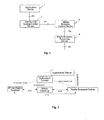
- Figure 1 is a schematic diagram showing the network architecture for processing a media resource service in a WCDMA IMS network of the prior art
- Figure 2 is a schematic diagram showing the network architecture for processing a media resource service in a fixed soft switched network of the prior art
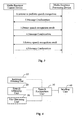
- Figure 3 is a flow chart of the method for implementing the speech recognition function according to an embodiment of the invention.
- Figure 4 is a schematic diagram showing the structure of a device for implementing a speech recognition function.
- application server 1 is adapted to process various services, such as playing an announcement to a user, DTMF digit collection, conference and recording.
- Service call session control device 2 is adapted to process a routing and forward a message sent by application server 1 to media resource control device 3 correctly, or route a message sent by media resource control device 3 to application server 1 correctly.
- Media resource control device 3 is adapted to control media resources, select a corresponding media resource processing device 4 and control the processing for media resources according to the requirement of application server 1.
- Media resource processing device 4 is adapted to process media resources, and complete the processing for the media resources issued by application server 1 under the control of media resource control device 3.
- the interface employed among application server 1, service call session control device 2 and media resource control device 3 uses SIP protocol and XML protocol, or SIP protocol and a protocol similar to XML (for example, VXML).
- the interface employed between media resource control device 3 and media resource processing device 4 is an Mp interface and uses H.248 protocol.
- the external interface of media resource processing device 4 is an Mb interface using RTP protocol to carry a user media stream.
- FIG. 2 is a schematic diagram showing the network architecture for processing a media resource service in a fixed soft switched network.
- Media Resource Server corresponds to media resource control device 3 and media resource processing device 4 in the WCDMA IMS network
- the application server corresponds to application server 1 and service call session control device 2 in the WCDMA IMS network
- the function of the softswitch device is substantially the same as that of application server 1.
- the method for implementing the speech recognition function via H.248 protocol according to the invention may be adapted to process media resources in the WCDMA IMS network shown in Figure 1 and the fixed softswitch network shown in Figure 2 .
- the method may also be applied to other networks, for example, CDMA network and fixed IMS network, and WCDMA and CDMA circuit softswitch network.
- CDMA network and fixed IMS network the architecture and service process flow of the media resource application scenario are basically the same as those of the WCDMA IMS network.
- WCDMA and CDMA circuit softswitch network the media resource application architecture and service process flow are basically the same as those of the fixed softswitch network.
- the invention may be applied to the case in which a media resource-related device is controlled via H.248 protocol to implement the speech recognition function.
- the speech recognition includes common speech recognition and DTMF recognition, and the common speech recognition and the DTMF recognition usually may occur at the same time.
- the DTMF recognition and the common speech recognition different technologies are used and the control process and parameters needed are also different. Because the detection of a DTMF has already been defined in H.248 protocol, the invention will emphasize in the common speech recognition and the simultaneous recognition of the common speech and the DTMF.
- Figure 3 is a flow chart of the process in which media resource control device 3 and media resource processing device 4 control and process media resources.
- Step 1 Media resource control device 3 sends an instruction to perform a speech recognition to media resource processing device 4.
- media resource control device 3 carries a speech recognition instruction and related parameters in an H.248 message by defining an H.248 protocol extended package, so as to control a media resource processing device to perform the speech recognition.
- the H.248 protocol extended package is defined as follows: Package Name ASR package PackageID asrp(0x??) Description Refer to the description of the solution Version 1 Extends Null
- the speech recognition includes common speech recognition and a DTMF recognition.
- the recognition grammar of DTMF has been defined in H.248 protocol.
- the common speech recognition needs to carry a recognition grammar, and there are two methods for carrying the recognition grammar parameter.
- the recognition grammar is a character string of a specific format, for example:
- the format of the text string is not recognized by a functional entity for processing H.248 protocol.
- the text string is only embedded in an H.248 message as a string.
- media resource processing device 4 may directly extract the text string and submit the text string extracted to a speech recognizer for processing.
- the speech recognizer may be configured in media resource processing device 4 and may also be configured independently.
- the speech recognition grammar may be prestored on media resource processing device 4 or other external servers, and the ID and the storage location information of the grammar file are carried in the H.248 message.
- the ID of the file may be any text string which conforms to the file naming specification.
- the storage location information of the file includes the following three forms.
- media resource processing device 4 After receiving the parameter, media resource processing device 4 first reads the grammar file from a remote server or a local storage according to the storage location of the file, puts the grammar file into a cache, and then processes the grammar file via a speech recognizer.
- parameters for performing the speech recognition are adapted to instruct media resource processing device 4 to perform the speech recognition function.
- the parameters include the following parameters.
- the user is only required to input a common speech. If this parameter is set as Yes, media resource processing device 4 will perform the common speech recognition and the DTMF recognition no matter the user inputs a common speech or a DTMF.
- This parameter is adapted to indicate the length of the recognition time. In other words, when a user starts to input, if the speech recognition is not completed in a specified duration, the process returns for time out.
- This parameter is adapted to indicate the waiting time of the recognition. In other words, when the recognition is started, if no user input is detected in a given duration, the process returns for time out.
- This parameter is adapted to indicate the type of the language employed by the media resource processing device during the common speech recognition, and this parameter conforms to, for example, the definition of RFC3066 protocol.
- This parameter represents the recognition accuracy, as indicated by a value between 0 and 100. The higher the accuracy is, the more the processing amount will be, and the longer the recognition time will be.
- This parameter is adapted to represent the sensitivity needed by the speech recognition, as indicated by a value between 0 and 100.
- the user input may be recorded and stored in a designated location.
- This parameter is adapted to indicate the storage location of the user record.
- media resource processing device 4 When the recognition grammar is stored in the mode of file, if this parameter is set as Yes, media resource processing device 4 reads the grammar file from an external server and caches the grammar file locally after receiving a request; if this parameter is set as No, the grammar file is read during the recognition.
- This parameter represents the length of time during which media resource processing device 4 caches a grammar file read from a server. If time runs out, the cache is regarded as invalid.
- the H.248 protocol package mentioned in the Step 1 uses the following definitions.
- the Signal includes Automatic Speech Recognition (ASR) Grammar File signal or ASR Grammar String signal, corresponding to the two methods for carrying a recognition grammar parameter respectively.
- ASR Automatic Speech Recognition
- the ASR Grammar File is adapted to instruct to perform the speech recognition function.
- Signal Name ASR Grammar File SignalID asrgf(0x??) Description Perform ASR function SignalType br Duration No Applicable
- Additional Parameter includes:
- Parameter Name Record File ParameterID rf(0x??) Description Record storage location of the speech to be recognized Type Character String Optional Yes Possible Value Valid URI string or local file name Default Null
- ASR Grammar String is adapted to instruct to perform the speech recognition function.
- Signal Name ASR Grammar String
- SignalID ags(0x??) Description Perform ASR function according to grammar string
- Additional Parameter includes:
- Step 2 When media resource processing device 4 receives the speech recognition instruction from media resource control device 3, media resource processing device 4 performs a message confirmation and feeds back the confirmation result to media resource control device 3. Moreover, media resource processing device 4 performs the corresponding process according to the above parameters in the message, such as, whether to recognize a DTMF and a common speech simultaneously, recognition duration, waiting time for a user to input, record storage location, whether to prefetch a grammar file, cache time of the grammar file. Specifically, a speech recognizer recognizes a speech input by a user, including the type of language, accuracy and sensitivity of the recognition.
- Step 3 Media resource control device 3 instructs media resource processing device 4 to detect an event which occurs during the speech recognition.
- Step 4 Media resource processing device 4 performs a message confirmation and feeds back the confirmation result to media resource control device 3. Moreover, media resource processing device 4 detects the event which occurs during the speech recognition.
- the possible event includes the following.
- the specific value of the error code is defined and allocated uniformly according to the related standard, and the content of the error code includes:
- media resource processing device 4 may report the type of the detected speech input by the user to media resource control device 3.
- the input speech includes the DTMF and the common speech.
- Step 4 the events defined via H.248 protocol package includes the following.
- Parameter Name Input Type ParameterID it(0x??) Description Type of User input: DTMF and common speech Parameter Type Character String Optional No Possible Value DTMF and common speech Default Null
- Step 5 After media resource processing device 4 completes the speech recognition according to the parameters carried by media resource control device 3, media resource processing device 4 reports the event detected during the speech recognition, and reports the returned recognition result reliability to media resource control device 3.
- the recognition result is a character string
- the character string may be the recognition result of a DTMF string or the recognition result of the common speech.
- the functional entity for processing H.248 protocol cannot recognize the string and then returns the string to media resource control device 3 for processing.
- Step 6 Media resource control device 3 confirms the recognition result reported by media resource processing device 4.
- an exemplary media resource processing device including:
- instruction obtaining unit 10 adapted to obtain a related control parameter and a recognition grammar
- speech obtaining unit 20 adapted to obtain a speech signal to be recognized which is input by a user and send the speech signal to a speech recognition unit;
- speech recognition unit 30 adapted to convert an input speech signal into a machine-recognizable character string according to the recognition grammar and the control parameter;
- sending unit 40 adapted to send a processing result of the speech recognition unit to a media resource control device.
- the device further includes file obtaining unit 50 adapted to obtain a grammar file prestored externally and send the grammar file to the speech recognition unit when the recognition grammar is provided via an external file, and the speech recognition unit extracts the recognition grammar from the grammar file received and processes a speech signal.
- file obtaining unit 50 adapted to obtain a grammar file prestored externally and send the grammar file to the speech recognition unit when the recognition grammar is provided via an external file, and the speech recognition unit extracts the recognition grammar from the grammar file received and processes a speech signal.
- One exemplary system for implementing a speech recognition function includes:
- a media resource control device adapted to extend H.248 protocol, send an H.248 message carrying a speech recognition instruction and a related parameter to a media resource processing device, and control the media resource processing device to perform the speech recognition;
- a media resource processing device adapted to receive the H.248 message carrying the speech recognition instruction and related parameter from the media resource control device, perform the speech recognition according to the parameter, and feed back a speech recognition result to the media resource control device.
- the related parameter includes a speech recognition grammar parameter, and the media resource processing device extracts a text string and performs the speech recognition after receiving the recognition grammar parameter.
- the recognition grammar parameter is an ID and storage location information of a recognition grammar file
- the media resource processing device reads and caches the grammar file according to the storage location information and performs the speech recognition according to the grammar file which is read.
- the media resource processing device includes:
- a speech recognition unit adapted to recognize a speech and convert a speech signal into a machine-recognizable character string.
- the speech recognition unit is configured in the media resource processing device or configured independently
- a speech recognition-related service application may be provided to a user in a media resource application of fixed or mobile network. For example, by replacing the key input with the speech input, a user may accomplish basic functions such as calling and querying via a speech.
Landscapes
- Engineering & Computer Science (AREA)
- Multimedia (AREA)
- Signal Processing (AREA)
- Computer Networks & Wireless Communication (AREA)
- Business, Economics & Management (AREA)
- Physics & Mathematics (AREA)
- Acoustics & Sound (AREA)
- Human Computer Interaction (AREA)
- Audiology, Speech & Language Pathology (AREA)
- General Business, Economics & Management (AREA)
- Health & Medical Sciences (AREA)
- Computational Linguistics (AREA)
- Telephonic Communication Services (AREA)
- Mobile Radio Communication Systems (AREA)
- Selective Calling Equipment (AREA)
- Communication Control (AREA)
- Machine Translation (AREA)
Claims (15)
- Verfahren zum Erkennen von Sprache, mit den folgenden Schritten:Empfangen einer H.248-Nachricht, die durch Definieren einer erweiterten Package des H.248-Protokolls eine Spracherkennungsanweisung und betreffende Parameter, die durch eine Medienbetriebsmittel-Steuereinrichtung (1 in Fig. 3) gesendet werden, führt, durch eine Medienbetriebsmittel-Verarbeitungseinrichtung;Durchführen von Spracherkennung durch die Medienbetriebsmittel-Verarbeitungseinrichtung gemäß der Spracherkennungsanweisung und den betreffenden Parametern (2 in Fig. 3); undMelden eines Erkennungsergebnisses an die Medienbetriebsmittel-Steuereinrichtung (5 in Fig. 3);dadurch gekennzeichnet, dass die betreffenden Parameter einen Parameter umfassen, der dafür ausgelegt ist anzuweisen, ob eine Doppelton-Mehrfrequenz DTMF und eine gemeinsame Sprache gleichzeitig zu erkennen sind, und das Durchführen von Spracherkennung durch die Medienbetriebsmittel-Verarbeitungseinrichtung gemäß der Spracherkennungsanweisung und den betreffenden Parametern ferner Folgendes umfasst:gleichzeitiges Durchführen von DTMF-Erkennung und Spracherkennung durch die Medienbetriebsmittel-Verarbeitungseinrichtung, wenn der Parameter, der dafür ausgelegt ist anzuweisen, ob eine DTMF und eine gemeinsame Sprache gleichzeitig zu erkennen sind, als Ja gesetzt ist;Durchführen nur von Spracherkennung durch die Medienbetriebsmittel-Verarbeitungseinrichtung, wenn der Parameter, der dafür ausgelegt ist anzuweisen, ob eine DTMF und eine gemeinsame Sprache gleichzeitig zu erkennen sind, als Nein gesetzt ist.
- Verfahren nach Anspruch 1, wobei die betreffenden Parameter ferner einen Parameter umfassen, der dafür ausgelegt ist, eine Zeitlänge der Spracherkennung anzugeben, und das Durchführen von Spracherkennung durch die Medienbetriebsmittel-Verarbeitungseinrichtung gemäß der Spracherkennungsanweisung und den betreffenden Parametern ferner Folgendes umfasst:Bestimmen einer Zeitlänge der Spracherkennung gemäß dem Parameter, der dafür ausgelegt ist, die Zeitlänge der Spracherkennung anzugeben.
- Verfahren nach Anspruch 1, wobei die betreffenden Parameter ferner einen Parameter umfassen, der dafür ausgelegt ist, eine Wartezeit anzugeben, und das Durchführen von Spracherkennung durch die Medienbetriebsmittel-Verarbeitungseinrichtung gemäß der Spracherkennungsanweisung und den betreffenden Parametern ferner Folgendes umfasst:Bestimmen einer Wartezeit der Erkennung für einen Benutzer zur Eingabe gemäß dem Parameter, der dafür ausgelegt ist, die Wartezeit anzugeben.
- Verfahren nach Anspruch 1, wobei die betreffenden Parameter ferner einen Parameter umfassen, der dafür ausgelegt ist, eine Art von zu erkennender Sprache anzugeben, und das Durchführen von Spracherkennung durch die Medienbetriebsmittel-Verarbeitungseinrichtung gemäß der Spracherkennungsanweisung und den betreffenden Parametern ferner Folgendes umfasst:Bestimmen einer Art der während der gemeinsamen Spracherkennung verwendeten Sprache gemäß dem Parameter, der dafür ausgelegt ist, die Art von zu erkennender Sprache anzugeben.
- Verfahren nach Anspruch 1, wobei die betreffenden Parameter ferner einen Parameter umfassen, der dafür ausgelegt ist, eine Erkennungsgenauigkeit anzugeben, und das Durchführen von Spracherkennung durch die Medienbetriebsmittel-Verarbeitungseinrichtung gemäß der Spracherkennungsanweisung und den betreffenden Parametern ferner Folgendes umfasst:Bestimmen einer während der gemeinsamen Spracherkennung erforderlichen Erkennungsgenauigkeit gemäß dem Parameter, der dafür ausgelegt ist, die Erkennungsgenauigkeit anzugeben.
- Verfahren nach Anspruch 1, wobei die betreffenden Parameter ferner einen Parameter umfassen, der dafür ausgelegt ist, eine Erkennungsempfindlichkeit anzugeben, und das Durchführen von Spracherkennung durch die Medienbetriebsmittel-Verarbeitungseinrichtung gemäß der Spracherkennungsanweisung und den betreffenden Parametern ferner Folgendes umfasst:Bestimmen einer während der gemeinsamen Spracherkennung erforderlichen Erkennungsempfindlichkeit gemäß dem Parameter, der dafür ausgelegt ist, die Erkennungsempfindlichkeit anzugeben.
- Verfahren nach Anspruch 1, wobei die betreffenden Parameter ferner einen Parameter umfassen, der dafür ausgelegt ist, den Speicherort eines Datensatzes anzugeben; wobei das Verfahren ferner das Aufzeichnen und Speichern der Benutzereingabe während der Spracherkennung an einem designierten Ort gemäß dem Parameter, der dafür ausgelegt ist, den Speicherort eines Datensatzes anzugeben, umfasst.
- Verfahren nach Anspruch 1, wobei die betreffenden Parameter ferner einen Parameter umfassen, der dafür ausgelegt ist anzugeben, ob eine Grammatikdatei vorabzurufen ist, und die Medienbetriebsmittel-Verarbeitungseinrichtung, wenn der Parameter, der dafür ausgelegt ist anzugeben, ob eine Grammatikdatei vorabzurufen ist, als Ja gesetzt ist, die Grammatikdatei aus einem externen Server liest und die Grammatikdatei lokal cache-speichert, wenn die Erkennungsgrammatik in einem Modus einer Datei gespeichert wird; und/oder
einen Parameter, der dafür ausgelegt ist, eine Cache-Zeit für die Grammatikdatei anzugeben und die Cache-Zeit für die aus einem externen Server gelesene Grammatikdatei zu setzen, wobei, wenn eine Dauer eines Cache die Cache-Zeit, die gesetzt wurde, übersteigt, der Cache ungültig ist. - Verfahren nach einem der Ansprüche 1 bis 8, das während der durch die Medienbetriebsmittel-Verarbeitungseinrichtung durchgeführten Spracherkennung ferner Folgendes umfasst:Detektieren eines abnormen Ereignisses durch die Medienbetriebsmittel-Verarbeitungseinrichtung, umfassend das Erreichen einer Zeitgrenze der Wartezeit für einen Benutzer zur Eingabe, eine Erkennungszeitgrenze, eine Fehlanpassung zwischen einer Benutzereingabe und Grammatik, Nichtexistenz der Grammatikdatei, Lesefehler bei der Grammatikdatei, das Nichterkennenkönnen einer Benutzereingabe, einen Erkennungsfehler und einen Software-/Hardwarefehler der Medienbetriebsmittel-Verarbeitungseinrichtung; und/oderDetektieren eines Ereignisses der Eingabe von Sprache durch einen Benutzer durch die Medienbetriebsmittel-Verarbeitungseinrichtung und Melden einer Sprachart einer detektierten Spracheingabe durch den Benutzer an die Medienbetriebsmittel-Steuereinrichtung, wobei die Sprache Folgendes umfasst: eine Doppelton-Mehrfrequenz DTMF und eine gemeinsame Sprache.
- Verfahren nach Anspruch 9, ferner mit den folgenden Schritten:Detektieren eines Spracherkennungsprozesses durch die Medienbetriebsmittel-Verarbeitungseinrichtung gemäß einer Anweisung der Medienbetriebsmittel-Steuereinrichtung und Rückmelden eines Detektionsergebnisses an die Medienbetriebsmittel-Steuereinrichtung.
- Verfahren nach Anspruch 10, ferner mit dem folgenden Schritt:Rückmelden eines entsprechenden Fehlercodes durch die Medienbetriebsmittel-Verarbeitungseinrichtung an die Medienbetriebsmittel-Steuereinrichtung, wenn während der Spracherkennung das abnorme Ereignis detektiert wird.
- Medienbetriebsmittel-Verarbeitungseinrichtung, dadurch gekennzeichnet, dass sie Folgendes umfasst:eine Anweisungserhaltungseinheit (10), die dafür ausgelegt ist, eine H.248-Nachricht zu erhalten, die durch Definition einer erweiterten Package des H.248-Protokolls betreffende Steuerparameter und eine Erkennungsgrammatik führt, wobei die betreffenden Steuerparameter einen Parameter umfassen, der dafür ausgelegt ist anzuweisen, ob eine Doppelton-Mehrfrequenz DTMF und eine gemeinsame Sprache gleichzeitig zu erkennen sind;eine Spracherhaltungseinheit (20), die dafür ausgelegt ist, ein zu erkennendes Sprachsignal zu erhalten, das von einem Benutzer eingegeben wird, und das Sprachsignal zu einer Spracherkennungseinheit zu senden, wobei die Medienbetriebsmittel-Verarbeitungseinrichtung dafür ausgelegt ist, gleichzeitig DTMF-Erkennung und Spracherkennung durchzuführen, wenn der Parameter, der dafür ausgelegt ist anzuweisen, ob eine DTMF und eine gemeinsame Sprache gleichzeitig zu erkennen sind, als Ja gesetzt ist, und nur Spracherkennung durchzuführen, wenn der Parameter, der dafür ausgelegt ist anzuweisen, ob eine DTMF und eine gemeinsame Sprache gleichzeitig zu erkennen sind, als Nein gesetzt ist;eine Spracherkennungseinheit (30), die dafür ausgelegt ist, das Eingangssprachsignal gemäß der Erkennungsgrammatik und den betreffenden Steuerparametern in eine maschinenerkennbare Zeichenkette umzusetzen; undeine Sendeeinheit (40), die dafür ausgelegt ist, ein Verarbeitungsergebnis der Spracherkennungseinheit zu einer Medienbetriebsmittel-Steuereinrichtung zu senden.
- Einrichtung nach Anspruch 12, ferner umfassend:eine Dateierhaltungseinheit (50), die dafür ausgelegt ist, eine extern vorgespeicherte Grammatikdatei zu erhalten und die Grammatikdatei zu der Spracherkennungseinheit zu senden, wobei die Spracherkennungseinheit dafür ausgelegt ist, die Erkennungsgrammatik aus der empfangenen Grammatikdatei zu extrahieren und das Sprachsignal zu verarbeiten.
- System zum Implementieren einer Spracherkennungsfunktion, dadurch gekennzeichnet, dass es Folgendes umfasst:eine Medienbetriebsmittel-Steuereinrichtung und eine Medienbetriebsmittel-Verarbeitungseinrichtung;wobei die Medienbetriebsmittel-Steuereinrichtung dafür ausgelegt ist, mit der Medienbetriebsmittel-Verarbeitungseinrichtung zu kommunizieren;
wobei die Medienbetriebsmittel-Steuereinrichtung dafür ausgelegt ist, eine H.248-Nachricht, die durch Definition einer erweiterten Package des H.248-Protokolls eine Spracherkennungsanweisung und betreffende Parameter führt, zu der Medienbetriebsmittel-Verarbeitungseinrichtung zu senden und die Medienbetriebsmittel-Verarbeitungseinrichtung so zu steuern, dass sie eine Spracherkennung durchführt, wobei die betreffenden Parameter einen Parameter umfassen, der dafür ausgelegt ist anzuweisen, ob eine Doppelton-Mehrfrequenz DTMF und eine gemeinsame Sprache gleichzeitig zu erkennen sind;
wobei die Medienbetriebsmittel-Verarbeitungseinrichtung dafür ausgelegt ist, die H.248-Nachricht, die die Spracherkennungsanweisung und die betreffenden Parameter führt, von der Medienbetriebsmittel-Steuereinrichtung zu empfangen, die Spracherkennung gemäß den betreffenden Parametern durchzuführen und ein Spracherkennungsergebnis an die Medienbetriebsmittel-Steuereinrichtung zurückzumelden; und
wobei die Medienbetriebsmittel-Verarbeitungseinrichtung ferner dafür ausgelegt ist, gleichzeitig DTMF-Erkennung und Spracherkennung durchzuführen, wenn der Parameter, der dafür ausgelegt ist anzuweisen, ob eine DTMF und eine gemeinsame Sprache gleichzeitig zu erkennen sind, als Ja gesetzt ist und nur Spracherkennung durchzuführen, wenn der Parameter, der dafür ausgelegt ist anzuweisen, ob eine DTMF und eine gemeinsame Sprache gleichzeitig zu erkennen sind, als Nein gesetzt ist. - System nach Anspruch 14, wobei die betreffenden Parameter ferner einen Parameter umfassen, der dafür ausgelegt ist, den Speicherort eines Datensatzes anzugeben, und die Medienbetriebsmittel-Verarbeitungseinrichtung ferner dafür ausgelegt ist, die Benutzereingabe während der Spracherkennung gemäß dem Parameter, der dafür ausgelegt ist, den Speicherort eines Datensatzes anzugeben, an einem designierten Ort aufzuzeichnen und zu speichern.
Applications Claiming Priority (2)
| Application Number | Priority Date | Filing Date | Title |
|---|---|---|---|
| CNB2005101142763A CN100426377C (zh) | 2005-10-21 | 2005-10-21 | 一种实现语音识别功能的方法 |
| PCT/CN2006/002807 WO2007045188A1 (en) | 2005-10-21 | 2006-10-20 | A method, apparatus and system for accomplishing the function of speech recognition |
Publications (3)
| Publication Number | Publication Date |
|---|---|
| EP1950738A1 EP1950738A1 (de) | 2008-07-30 |
| EP1950738A4 EP1950738A4 (de) | 2009-01-14 |
| EP1950738B1 true EP1950738B1 (de) | 2010-06-09 |
Family
ID=37962208
Family Applications (1)
| Application Number | Title | Priority Date | Filing Date |
|---|---|---|---|
| EP06805016A Active EP1950738B1 (de) | 2005-10-21 | 2006-10-20 | Verfahren, vorrichtung und system zum ausführen der funktion der spracherkennung |
Country Status (7)
| Country | Link |
|---|---|
| US (1) | US8417521B2 (de) |
| EP (1) | EP1950738B1 (de) |
| CN (1) | CN100426377C (de) |
| AT (1) | ATE470928T1 (de) |
| BR (1) | BRPI0617624B1 (de) |
| DE (1) | DE602006014857D1 (de) |
| WO (1) | WO2007045188A1 (de) |
Families Citing this family (8)
| Publication number | Priority date | Publication date | Assignee | Title |
|---|---|---|---|---|
| US20100054445A1 (en) * | 2008-08-28 | 2010-03-04 | Peter Leis | Method, apparatus and computer program product for providing routing of message signaling |
| US9190057B2 (en) * | 2012-12-12 | 2015-11-17 | Amazon Technologies, Inc. | Speech model retrieval in distributed speech recognition systems |
| CN104517606A (zh) * | 2013-09-30 | 2015-04-15 | 腾讯科技(深圳)有限公司 | 语音识别测试方法及装置 |
| KR20150145024A (ko) * | 2014-06-18 | 2015-12-29 | 한국전자통신연구원 | 화자적응 음성인식 시스템의 단말 및 서버와 그 운용 방법 |
| CN106548772A (zh) * | 2017-01-16 | 2017-03-29 | 上海智臻智能网络科技股份有限公司 | 语音识别测试系统及方法 |
| CN107221329A (zh) * | 2017-07-06 | 2017-09-29 | 上海思依暄机器人科技股份有限公司 | 一种对话控制方法、装置及机器人 |
| CN111415684B (zh) * | 2020-03-18 | 2023-12-22 | 歌尔微电子股份有限公司 | 语音模组的测试方法、装置及计算机可读存储介质 |
| CN113838457B (zh) * | 2020-06-24 | 2024-11-26 | 中兴通讯股份有限公司 | 语音交互的方法、电子设备及存储介质 |
Family Cites Families (12)
| Publication number | Priority date | Publication date | Assignee | Title |
|---|---|---|---|---|
| US6532446B1 (en) * | 1999-11-24 | 2003-03-11 | Openwave Systems Inc. | Server based speech recognition user interface for wireless devices |
| US6542867B1 (en) * | 2000-03-28 | 2003-04-01 | Matsushita Electric Industrial Co., Ltd. | Speech duration processing method and apparatus for Chinese text-to-speech system |
| US7194071B2 (en) * | 2000-12-28 | 2007-03-20 | Intel Corporation | Enhanced media gateway control protocol |
| US7068598B1 (en) * | 2001-02-15 | 2006-06-27 | Lucent Technologies Inc. | IP packet access gateway |
| US7185094B2 (en) * | 2001-03-30 | 2007-02-27 | Sandcherry, Inc. | Media session framework using a control module to direct and manage application and service servers |
| US20020184346A1 (en) * | 2001-05-31 | 2002-12-05 | Mani Babu V. | Emergency notification and override service in a multimedia-capable network |
| EP1337097A1 (de) * | 2002-02-19 | 2003-08-20 | Siemens Aktiengesellschaft | Effiziente Ausnutzung von für Vermittlungssysteme bereitgestellten IVR-Ressourcen |
| US7451207B2 (en) | 2002-06-28 | 2008-11-11 | Intel Corporation | Predictive provisioning of media resources |
| US7318030B2 (en) * | 2003-09-17 | 2008-01-08 | Intel Corporation | Method and apparatus to perform voice activity detection |
| US20050114118A1 (en) * | 2003-11-24 | 2005-05-26 | Jeff Peck | Method and apparatus to reduce latency in an automated speech recognition system |
| CN1547190A (zh) * | 2003-11-30 | 2004-11-17 | 中兴通讯股份有限公司 | 承载控制分离网络中语音通知包的构造和解析方法 |
| US8027276B2 (en) * | 2004-04-14 | 2011-09-27 | Siemens Enterprise Communications, Inc. | Mixed mode conferencing |
-
2005
- 2005-10-21 CN CNB2005101142763A patent/CN100426377C/zh not_active Expired - Lifetime
-
2006
- 2006-10-20 BR BRPI0617624-0A patent/BRPI0617624B1/pt active IP Right Grant
- 2006-10-20 DE DE602006014857T patent/DE602006014857D1/de active Active
- 2006-10-20 WO PCT/CN2006/002807 patent/WO2007045188A1/zh not_active Ceased
- 2006-10-20 EP EP06805016A patent/EP1950738B1/de active Active
- 2006-10-20 AT AT06805016T patent/ATE470928T1/de not_active IP Right Cessation
-
2008
- 2008-04-18 US US12/105,620 patent/US8417521B2/en active Active
Also Published As
| Publication number | Publication date |
|---|---|
| US20080228483A1 (en) | 2008-09-18 |
| US8417521B2 (en) | 2013-04-09 |
| EP1950738A4 (de) | 2009-01-14 |
| EP1950738A1 (de) | 2008-07-30 |
| CN100426377C (zh) | 2008-10-15 |
| BRPI0617624B1 (pt) | 2019-06-18 |
| CN1953054A (zh) | 2007-04-25 |
| ATE470928T1 (de) | 2010-06-15 |
| BRPI0617624A2 (pt) | 2013-01-01 |
| DE602006014857D1 (de) | 2010-07-22 |
| WO2007045188A1 (en) | 2007-04-26 |
Similar Documents
| Publication | Publication Date | Title |
|---|---|---|
| US8417521B2 (en) | Method, device and system for implementing speech recognition function | |
| US20030133545A1 (en) | Data processing system and method | |
| US8374864B2 (en) | Correlation of transcribed text with corresponding audio | |
| CN1894946A (zh) | 自动电话菜单导航的方法和装置 | |
| US20080095147A1 (en) | Method and apparatus for localized voice over internet protocol usage | |
| US10051115B2 (en) | Call initiation by voice command | |
| RU2005112745A (ru) | Система и способ перевода по видеотелефону | |
| US20080049909A1 (en) | Message durability and retrieval in a geographically distributed voice messaging system | |
| CA2432906A1 (en) | Enhanced media gateway control protocol | |
| US20130301085A1 (en) | System and method for distributed processing in an internet protocol network | |
| US6898568B2 (en) | Speaker verification utilizing compressed audio formants | |
| CN116636199A (zh) | 一种呼叫处理方法、呼叫处理装置及相关设备 | |
| CN110830417A (zh) | 呼叫结果获取方法、系统、ivr设备和计算机可读存储介质 | |
| US20050278177A1 (en) | Techniques for interaction with sound-enabled system or service | |
| US20050243981A1 (en) | Enhanced media resource protocol messages | |
| US20100293232A1 (en) | Unified Messaging Accessibility Architecture | |
| EP1883198B1 (de) | Verfahren und system zur interaktion mit medien-servern basierend auf dem sip-protokoll | |
| EP1950737B1 (de) | Verfahren, vorrichtung und system zur erzielung der funktion einer text-zu-sprache-umsetzung | |
| CN1960408B (zh) | 用于交互式多媒体应答系统的交互式多媒体应答方法 | |
| US7529234B1 (en) | Method of and system for supporting voice over internet protocol (VoIP) media codecs on a voice processing system | |
| US20070165792A1 (en) | Method, system and device for automatic recognition of limited speech | |
| CN101192925A (zh) | 说话人验证方法和系统及媒体资源控制实体和处理实体 | |
| EP4037349B1 (de) | Verfahren zur bereitstellung einer sprachunterstützungsfunktionalität an endbenutzer unter verwendung einer sprachverbindung, die über ein ip-basiertes telekommunikationssystem hergestellt wird | |
| CN101222541A (zh) | 一种实现语音识别功能的方法 | |
| CN1953447A (zh) | 媒体资源处理方法 |
Legal Events
| Date | Code | Title | Description |
|---|---|---|---|
| PUAI | Public reference made under article 153(3) epc to a published international application that has entered the european phase |
Free format text: ORIGINAL CODE: 0009012 |
|
| 17P | Request for examination filed |
Effective date: 20080415 |
|
| AK | Designated contracting states |
Kind code of ref document: A1 Designated state(s): AT BE BG CH CY CZ DE DK EE ES FI FR GB GR HU IE IS IT LI LT LU LV MC NL PL PT RO SE SI SK TR |
|
| A4 | Supplementary search report drawn up and despatched |
Effective date: 20081216 |
|
| 17Q | First examination report despatched |
Effective date: 20090327 |
|
| GRAJ | Information related to disapproval of communication of intention to grant by the applicant or resumption of examination proceedings by the epo deleted |
Free format text: ORIGINAL CODE: EPIDOSDIGR1 |
|
| GRAP | Despatch of communication of intention to grant a patent |
Free format text: ORIGINAL CODE: EPIDOSNIGR1 |
|
| GRAC | Information related to communication of intention to grant a patent modified |
Free format text: ORIGINAL CODE: EPIDOSCIGR1 |
|
| RTI1 | Title (correction) |
Free format text: A METHOD, DEVICE AND SYSTEM FOR ACCOMPLISHING THE FUNCTION OF SPEECH RECOGNITION |
|
| RIC1 | Information provided on ipc code assigned before grant |
Ipc: G10L 15/22 20060101AFI20100219BHEP Ipc: H04L 12/28 20060101ALI20100219BHEP |
|
| GRAS | Grant fee paid |
Free format text: ORIGINAL CODE: EPIDOSNIGR3 |
|
| GRAA | (expected) grant |
Free format text: ORIGINAL CODE: 0009210 |
|
| AK | Designated contracting states |
Kind code of ref document: B1 Designated state(s): AT BE BG CH CY CZ DE DK EE ES FI FR GB GR HU IE IS IT LI LT LU LV MC NL PL PT RO SE SI SK TR |
|
| REG | Reference to a national code |
Ref country code: CH Ref legal event code: EP |
|
| REG | Reference to a national code |
Ref country code: IE Ref legal event code: FG4D |
|
| REF | Corresponds to: |
Ref document number: 602006014857 Country of ref document: DE Date of ref document: 20100722 Kind code of ref document: P |
|
| REG | Reference to a national code |
Ref country code: NL Ref legal event code: VDEP Effective date: 20100609 |
|
| PG25 | Lapsed in a contracting state [announced via postgrant information from national office to epo] |
Ref country code: LT Free format text: LAPSE BECAUSE OF FAILURE TO SUBMIT A TRANSLATION OF THE DESCRIPTION OR TO PAY THE FEE WITHIN THE PRESCRIBED TIME-LIMIT Effective date: 20100609 Ref country code: SE Free format text: LAPSE BECAUSE OF FAILURE TO SUBMIT A TRANSLATION OF THE DESCRIPTION OR TO PAY THE FEE WITHIN THE PRESCRIBED TIME-LIMIT Effective date: 20100609 |
|
| LTIE | Lt: invalidation of european patent or patent extension |
Effective date: 20100609 |
|
| PG25 | Lapsed in a contracting state [announced via postgrant information from national office to epo] |
Ref country code: AT Free format text: LAPSE BECAUSE OF FAILURE TO SUBMIT A TRANSLATION OF THE DESCRIPTION OR TO PAY THE FEE WITHIN THE PRESCRIBED TIME-LIMIT Effective date: 20100609 Ref country code: FI Free format text: LAPSE BECAUSE OF FAILURE TO SUBMIT A TRANSLATION OF THE DESCRIPTION OR TO PAY THE FEE WITHIN THE PRESCRIBED TIME-LIMIT Effective date: 20100609 Ref country code: LV Free format text: LAPSE BECAUSE OF FAILURE TO SUBMIT A TRANSLATION OF THE DESCRIPTION OR TO PAY THE FEE WITHIN THE PRESCRIBED TIME-LIMIT Effective date: 20100609 Ref country code: SI Free format text: LAPSE BECAUSE OF FAILURE TO SUBMIT A TRANSLATION OF THE DESCRIPTION OR TO PAY THE FEE WITHIN THE PRESCRIBED TIME-LIMIT Effective date: 20100609 |
|
| PG25 | Lapsed in a contracting state [announced via postgrant information from national office to epo] |
Ref country code: CY Free format text: LAPSE BECAUSE OF FAILURE TO SUBMIT A TRANSLATION OF THE DESCRIPTION OR TO PAY THE FEE WITHIN THE PRESCRIBED TIME-LIMIT Effective date: 20100609 Ref country code: PL Free format text: LAPSE BECAUSE OF FAILURE TO SUBMIT A TRANSLATION OF THE DESCRIPTION OR TO PAY THE FEE WITHIN THE PRESCRIBED TIME-LIMIT Effective date: 20100609 Ref country code: GR Free format text: LAPSE BECAUSE OF FAILURE TO SUBMIT A TRANSLATION OF THE DESCRIPTION OR TO PAY THE FEE WITHIN THE PRESCRIBED TIME-LIMIT Effective date: 20100910 |
|
| PG25 | Lapsed in a contracting state [announced via postgrant information from national office to epo] |
Ref country code: EE Free format text: LAPSE BECAUSE OF FAILURE TO SUBMIT A TRANSLATION OF THE DESCRIPTION OR TO PAY THE FEE WITHIN THE PRESCRIBED TIME-LIMIT Effective date: 20100609 Ref country code: NL Free format text: LAPSE BECAUSE OF FAILURE TO SUBMIT A TRANSLATION OF THE DESCRIPTION OR TO PAY THE FEE WITHIN THE PRESCRIBED TIME-LIMIT Effective date: 20100609 |
|
| PG25 | Lapsed in a contracting state [announced via postgrant information from national office to epo] |
Ref country code: SK Free format text: LAPSE BECAUSE OF FAILURE TO SUBMIT A TRANSLATION OF THE DESCRIPTION OR TO PAY THE FEE WITHIN THE PRESCRIBED TIME-LIMIT Effective date: 20100609 Ref country code: RO Free format text: LAPSE BECAUSE OF FAILURE TO SUBMIT A TRANSLATION OF THE DESCRIPTION OR TO PAY THE FEE WITHIN THE PRESCRIBED TIME-LIMIT Effective date: 20100609 Ref country code: PT Free format text: LAPSE BECAUSE OF FAILURE TO SUBMIT A TRANSLATION OF THE DESCRIPTION OR TO PAY THE FEE WITHIN THE PRESCRIBED TIME-LIMIT Effective date: 20101011 Ref country code: IS Free format text: LAPSE BECAUSE OF FAILURE TO SUBMIT A TRANSLATION OF THE DESCRIPTION OR TO PAY THE FEE WITHIN THE PRESCRIBED TIME-LIMIT Effective date: 20101009 Ref country code: CZ Free format text: LAPSE BECAUSE OF FAILURE TO SUBMIT A TRANSLATION OF THE DESCRIPTION OR TO PAY THE FEE WITHIN THE PRESCRIBED TIME-LIMIT Effective date: 20100609 Ref country code: BE Free format text: LAPSE BECAUSE OF FAILURE TO SUBMIT A TRANSLATION OF THE DESCRIPTION OR TO PAY THE FEE WITHIN THE PRESCRIBED TIME-LIMIT Effective date: 20100609 |
|
| REG | Reference to a national code |
Ref country code: HU Ref legal event code: AG4A Ref document number: E009484 Country of ref document: HU |
|
| PG25 | Lapsed in a contracting state [announced via postgrant information from national office to epo] |
Ref country code: IT Free format text: LAPSE BECAUSE OF FAILURE TO SUBMIT A TRANSLATION OF THE DESCRIPTION OR TO PAY THE FEE WITHIN THE PRESCRIBED TIME-LIMIT Effective date: 20100609 |
|
| PLBE | No opposition filed within time limit |
Free format text: ORIGINAL CODE: 0009261 |
|
| STAA | Information on the status of an ep patent application or granted ep patent |
Free format text: STATUS: NO OPPOSITION FILED WITHIN TIME LIMIT |
|
| PG25 | Lapsed in a contracting state [announced via postgrant information from national office to epo] |
Ref country code: DK Free format text: LAPSE BECAUSE OF FAILURE TO SUBMIT A TRANSLATION OF THE DESCRIPTION OR TO PAY THE FEE WITHIN THE PRESCRIBED TIME-LIMIT Effective date: 20100609 |
|
| PG25 | Lapsed in a contracting state [announced via postgrant information from national office to epo] |
Ref country code: MC Free format text: LAPSE BECAUSE OF NON-PAYMENT OF DUE FEES Effective date: 20101031 |
|
| REG | Reference to a national code |
Ref country code: CH Ref legal event code: PL |
|
| REG | Reference to a national code |
Ref country code: DE Ref legal event code: R097 Ref document number: 602006014857 Country of ref document: DE Effective date: 20110309 |
|
| PG25 | Lapsed in a contracting state [announced via postgrant information from national office to epo] |
Ref country code: LI Free format text: LAPSE BECAUSE OF NON-PAYMENT OF DUE FEES Effective date: 20101031 Ref country code: HU Free format text: LAPSE BECAUSE OF NON-PAYMENT OF DUE FEES Effective date: 20101021 Ref country code: CH Free format text: LAPSE BECAUSE OF NON-PAYMENT OF DUE FEES Effective date: 20101031 |
|
| PG25 | Lapsed in a contracting state [announced via postgrant information from national office to epo] |
Ref country code: IE Free format text: LAPSE BECAUSE OF NON-PAYMENT OF DUE FEES Effective date: 20101020 |
|
| PG25 | Lapsed in a contracting state [announced via postgrant information from national office to epo] |
Ref country code: BG Free format text: LAPSE BECAUSE OF FAILURE TO SUBMIT A TRANSLATION OF THE DESCRIPTION OR TO PAY THE FEE WITHIN THE PRESCRIBED TIME-LIMIT Effective date: 20100609 Ref country code: LU Free format text: LAPSE BECAUSE OF NON-PAYMENT OF DUE FEES Effective date: 20101020 |
|
| PG25 | Lapsed in a contracting state [announced via postgrant information from national office to epo] |
Ref country code: TR Free format text: LAPSE BECAUSE OF FAILURE TO SUBMIT A TRANSLATION OF THE DESCRIPTION OR TO PAY THE FEE WITHIN THE PRESCRIBED TIME-LIMIT Effective date: 20100609 |
|
| PG25 | Lapsed in a contracting state [announced via postgrant information from national office to epo] |
Ref country code: BG Free format text: LAPSE BECAUSE OF FAILURE TO SUBMIT A TRANSLATION OF THE DESCRIPTION OR TO PAY THE FEE WITHIN THE PRESCRIBED TIME-LIMIT Effective date: 20100909 |
|
| PG25 | Lapsed in a contracting state [announced via postgrant information from national office to epo] |
Ref country code: ES Free format text: LAPSE BECAUSE OF FAILURE TO SUBMIT A TRANSLATION OF THE DESCRIPTION OR TO PAY THE FEE WITHIN THE PRESCRIBED TIME-LIMIT Effective date: 20100920 |
|
| REG | Reference to a national code |
Ref country code: FR Ref legal event code: PLFP Year of fee payment: 11 |
|
| REG | Reference to a national code |
Ref country code: FR Ref legal event code: PLFP Year of fee payment: 12 |
|
| REG | Reference to a national code |
Ref country code: FR Ref legal event code: PLFP Year of fee payment: 13 |
|
| P01 | Opt-out of the competence of the unified patent court (upc) registered |
Effective date: 20230524 |
|
| PGFP | Annual fee paid to national office [announced via postgrant information from national office to epo] |
Ref country code: GB Payment date: 20250904 Year of fee payment: 20 |
|
| PGFP | Annual fee paid to national office [announced via postgrant information from national office to epo] |
Ref country code: FR Payment date: 20250908 Year of fee payment: 20 |
|
| PGFP | Annual fee paid to national office [announced via postgrant information from national office to epo] |
Ref country code: DE Payment date: 20250902 Year of fee payment: 20 |