EP1950930B1 - Verbindungssteuerung in einem Thin-Client-System - Google Patents
Verbindungssteuerung in einem Thin-Client-System Download PDFInfo
- Publication number
- EP1950930B1 EP1950930B1 EP07122102A EP07122102A EP1950930B1 EP 1950930 B1 EP1950930 B1 EP 1950930B1 EP 07122102 A EP07122102 A EP 07122102A EP 07122102 A EP07122102 A EP 07122102A EP 1950930 B1 EP1950930 B1 EP 1950930B1
- Authority
- EP
- European Patent Office
- Prior art keywords
- client
- data
- terminal
- groups
- thin client
- Prior art date
- Legal status (The legal status is an assumption and is not a legal conclusion. Google has not performed a legal analysis and makes no representation as to the accuracy of the status listed.)
- Ceased
Links
- 238000007726 management method Methods 0.000 claims description 33
- 238000000034 method Methods 0.000 claims description 27
- 238000013523 data management Methods 0.000 claims description 24
- 238000010586 diagram Methods 0.000 description 5
- 238000007796 conventional method Methods 0.000 description 1
- 239000000725 suspension Substances 0.000 description 1
Images

Classifications
-
- H—ELECTRICITY
- H04—ELECTRIC COMMUNICATION TECHNIQUE
- H04L—TRANSMISSION OF DIGITAL INFORMATION, e.g. TELEGRAPHIC COMMUNICATION
- H04L67/00—Network arrangements or protocols for supporting network services or applications
- H04L67/50—Network services
- H04L67/56—Provisioning of proxy services
- H04L67/563—Data redirection of data network streams
-
- H—ELECTRICITY
- H04—ELECTRIC COMMUNICATION TECHNIQUE
- H04L—TRANSMISSION OF DIGITAL INFORMATION, e.g. TELEGRAPHIC COMMUNICATION
- H04L67/00—Network arrangements or protocols for supporting network services or applications
- H04L67/2866—Architectures; Arrangements
- H04L67/30—Profiles
- H04L67/303—Terminal profiles
-
- H—ELECTRICITY
- H04—ELECTRIC COMMUNICATION TECHNIQUE
- H04L—TRANSMISSION OF DIGITAL INFORMATION, e.g. TELEGRAPHIC COMMUNICATION
- H04L67/00—Network arrangements or protocols for supporting network services or applications
- H04L67/2866—Architectures; Arrangements
- H04L67/30—Profiles
- H04L67/306—User profiles
-
- H—ELECTRICITY
- H04—ELECTRIC COMMUNICATION TECHNIQUE
- H04L—TRANSMISSION OF DIGITAL INFORMATION, e.g. TELEGRAPHIC COMMUNICATION
- H04L67/00—Network arrangements or protocols for supporting network services or applications
- H04L67/50—Network services
- H04L67/51—Discovery or management thereof, e.g. service location protocol [SLP] or web services
Definitions
- the present invention relates to a connection control method in a thin client system using thin client terminals and a thin client server, and to a connection control server for the same.
- a computer having a magnetic disk unit and the like is used as a client terminal.
- a computer having a magnetic disk unit and the like is used as a client terminal.
- one user uses a plurality of computers and one computer is used for the business processes.
- management cost of the client terminal increases.
- a probability of data leakage becomes high because the client terminal includes a storage unit such as a magnetic disk unit. In this way, a system has been changing to combine terminals with a server.
- Such a terminal is diskless (which has no storage device such as the magnetic disk unit) or a write operation to the disk is forbidden (hereinafter, to be referred to as a thin client terminal), and the server stores data and executes an operating system (OS) and business applications (hereinafter, to be referred to as a thin client sever).
- OS operating system
- business applications hereinafter, to be referred to as a thin client sever.
- Japanese Patent Application No. JP2006-166559 the applicant of the present patent application already proposed a session management method which allows the operating system on the thin client server side to be booted up and shut down by the thin client terminal.
- the thin client server executes business applications that have been executed by the client terminals in the conventional system having a client server. Accordingly, the thin client server includes a client as an executing section (execution image) for every thin client terminal. An operating system, business applications, and data are installed for every connection from the thin client terminal. Since the thin client server generally manages a plurality of the thin client terminals, a plurality of clients operate on the same thin client server.
- a user connects the thin client terminal with the client in the thin client server, and makes the client to execute the business application.
- the user supplies data and commands required for execution of the business application via the thin client terminal, and confirms the execution result of the business application on a monitor of the thin client terminal.
- the connection management of the thin client terminal to the thin client server is implemented by using individuals such as the user and the thin client terminal as a key (for example, see Japanese Patent Application No. 2006-166559 ).
- a connection control method it is required to allocate one or more clients on the thin client server to one user and it is difficult to allocate a single client to a plurality of users or to share the single client by the users.
- the thin client terminal which has been connected to one client on the thin client server cannot be connected with the thin client server until the server returns to a normal condition, resulting in suspension of a user business.
- the client cannot be rebooted up at an optional timing by the user in the thin client system.
- the user cannot implement operations such as application of security patch for the business applications and software update, which require rebooting up of the client.
- a system administrator has a heavy burden because the system administrator must implement these operations.
- US 6,324,177 discloses a method for assigning an incoming connection to a server.
- a local director determines a virtual machine among a plurality of virtual machines based on an IP address of the specific Client. For example, the local director connects a welcomed Client and an unwelcomed Client to different virtual machines.
- the virtual machine is associated with a plurality of physical machines.
- the local director determines a physical machine among said plurality of physical machines based on a load balancing scheme. For example, a physical machine with the fewest connections is selected.
- the present invention provides a connection control method and a connection control server in a thin client system, in which a plurality of users can share a plurality of clients, and only a specific client can be safely rebooted up even when a fault has occurred.
- a thin client server system includes thin client servers, which comprises clients which are grouped into client groups based on client data; thin client terminals which are allocated with terminal data and are grouped into terminal groups based on the terminal data, wherein users are allocated with user identifiers and are grouped into user groups based on the user identifiers, and each of the client groups is predetermined for at least one of one of the terminal groups and one of the user groups, and a connection control server interposed between the thin client servers and the thin client terminals.
- the connection control server determines connectable client groups based on a specific user identifier of a specific user, and a specific terminal data of a specific one of the thin client terminals used by the specific user, determines a desired client of at least a desired one of the connectable client groups based on a status of each of the clients.
- the specific thin client terminal connects with the desired client based on the client data of the desired client.
- a connection control method is achieved by transmitting a specific terminal data of a specific thin client terminal and a specific user identifier of a specific user from the specific thin client terminal to a connection control server; wherein thin client terminals are allocated with terminal data and are grouped into terminal groups based on the terminal data, users are allocated with user identifiers and are grouped-into user groups based on the user identifiers, and thin client servers, which comprises clients which are grouped into client groups based on client data; wherein each of the client groups is predetermined for at least one of one of the terminal groups and one of the user groups; by determining connectable client groups based on the specific user identifier and the specific terminal data; by determining a desired client of at least a desired one of the connectable client groups based on a status of each of the clients; and by connecting the specific thin client terminal with the desired client based on the client data of the desired client.
- a computer-readable storage medium which stores a program for realizing of a connection control method which is achieved by providing terminal groups obtained by grouping thin client terminals based on terminal data allocated to the thin client terminals, user groups obtained by grouping users to which user identifiers are allocated, and client groups obtained by grouping clients of client servers based on client data; by providing each of the client groups is predetermined for at least one of one of the terminal groups and one of the user groups; by determining connectable client groups based on the specific user identifier and the specific terminal data; and by determining a desired client of at least a desired one of the connectable client groups based on a status of each of the clients, such that the specific thin client terminal is connected with the desired client based on the client data of the desired client.
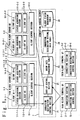
- FIG. 1 is a block diagram showing a configuration of the thin client system according to an exemplary embodiment of the present invention which performs a connection control method.
- the connection control server 2 is provided in a network to control a connection between the thin client terminal 3-j and a client on the thin client server 1-i.
- the client control section 12-i is provided for the clients 11-i-k in the thin client server 1-i in common to perform boot-up and reboot-up processes of each of the clients 11-i-k.
- an operating system client OS
- business applications business applications
- data allocated to every connection from the thin client terminal are installed in each of the clients 11-i-k
- the client 11-i-k includes a status acquiring section 111-i-k.
- the status acquiring section 111-i-k has a function of transmitting a status of the clients 11-i-k such as power-on, power-off, log-off, log-on, and the like to a connection destination control section 21 of the connection control server 2, when detecting the change of the status of the client 11-i-k.
- the connection control server 2 includes the connection destination control section 21, a boot-up control section 22, a group data management table 23, a connection destination setting data table 24, and a client status management table 25.
- the connection destination control section 21 has a function of determining a client 11-i-k to be connected to the thin client terminal 3-j. Also, the connection destination control section 21 transmits a client data of a selected client to the boot-up control section 22 and issues an instruction to the boot-up control section 22, when the client is booted up or rebooted up in response to a request from the thin client terminal 3-j.
- the boot-up control section 22 has a function of receiving requests (instructions) from the thin client terminals 3-j and the connection destination control section 21, and transferring each of the received requests to the client control section 12-i of the thin client server 1-i so that the client control section 12-i boots or reboots up the client 11-i-k.
- Data necessary for the connection destination control section 21 to perform the connection control are stored in the group data management table 23, the connection destination setting data table 24, and the client status management table 25.
- data indicating which of user groups one user (user ID) belongs to data indicating which of thin client terminal groups one thin client terminal belongs to
- data indicating which of client groups one client identifier belongs to are stored in the group data management table 23.
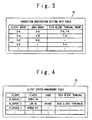
- data indicating which of the client groups the user (user ID) group and/or the thin client terminal group can be connected to are stored in the connection destination setting data table 24.
- data indicating the status of the clients 11 is stored for every client in the client status management table 25. Data of the group data management table 23 and the connection destination setting data table 24 need to be prepared before booting up of the operation of this thin client system (before connection to the clients 11 by the user).
- the thin client terminal 3-j includes a connecting section 31-j and a connection destination control section 32-j.
- the connection destination control section 32-j acquires a user ID data inputted from the user on the thin client terminal 3-j, transmits the user ID data and a data indicating a thin client terminal to the connection destination control section 21 of the connection control server 2, and then obtains a data of connectable client from the connection destination control section 21. Also, the connection destination control section 32-j transmits the connectable client data to the connecting section 31-j.
- the connecting section 31-j establishes a connection to the client 11-i-k by using the connectable client data.
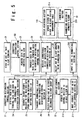
- step Z1 When the user tries to establish a connection from the thin client terminal 3-j to the client 11-i-k, usage of the thin client terminal 3-j is started (step Z1). At this time, the user inputs a user ID data into the thin client terminal 3-j, and the connection destination control section 32-j acquires the user ID data (step Z2), and then transmits the user ID data to the connection destination control section 21 of the connection control server 2 as well as the thin client terminal data (step Z3).
- the connection destination control section 21 receives the user ID data and the thin client terminal data (step Z4), and retrieves a user group and a thin client terminal group from the group data management table 23 based on the user ID data and the thin client terminal data, respectively.
- connection destination control section 21 retrieves client groups from the connection destination setting data table 24 based on each and both of the user group and the thin client terminal group (step 25). That is to say, at the step Z5, the connection destination control section 21 retrieves connectable client groups for the user group and the thin client terminal group.
- connection destination control section 21 receives "user #1" as the user ID data and "thin client terminal #1" as the thin client terminal data
- the retrieving or extracting step at the step Z5 will be described.
- the connection destination control section 21 refers to the group data management table 23.
- the "user #1” belongs to a group "U-A”
- the "thin client terminal #1” belongs to a group "T-A”.
- the connection destination control section 21 refers to the connection destination setting data table 24.
- the client group identifier "C-A" is retrieved for a combination of the user group "U-A" and the thin client terminal group "T-A". Since it is permitted that each of the user group and the thin client terminal group is optional, the client groups are also retrieved.
- the connection destination control section 21 retrieves the client groups "C-A”, “C-C” and “C-D” as the connectable client groups from the connection destination setting data table 24.
- the user ID data "U-A” and the thin client terminal data "T-A” are respectively allocated to the client groups "C-C” and "C-D” in the connection destination setting data table 24. This means that, in case of the client group "C-C”, a connection from any thin client terminal can be made if the user ID data belongs to the "U-A", and that, in case of the client group "C-D", a connection from any user can be made if the thin client terminal group belongs to the "T-A".
- the data of the connectable client groups are transmitted from the connection destination control section 21 to the connection destination control section 32-j of the thin client terminal 3-j (step Z6).
- the connection destination control section 32-j of the thin client terminal 3-j receives the connectable client group data (step Z7), and the connectable client group data are displayed on a screen.
- the user selects a desired client group from among the connectable client groups (step Z8).
- the connection destination control section 32-j transmits a data of the selected client group to the connection destination control section 21.
- the connection destination control section 21 receives the selected client group data and searches the client status management table 25 based on each of the clients of the selected client group to select a usable client 11-i-k. That is, the connection destination control section 21 selects one of the clients of the selected group to which no user logons (step Z9). When a status of the selected client indicates a connection impossible status such as a status of power-off, the connection destination control section 21 issues a request to the boot-up control section 22 (step Z10).
- the boot-up control section 22 controls the client control section 12-i of the thin client server 1-i to boot up the client 11-i-k (or to reboot up it, depending on a status of the client 11-i-k) in response to the request (step Z11).
- connection destination control section 21 transmits a data of the client 11-i-k booted up/rebooted up to the connection destination control section 32-j in the thin client terminal 3-j.
- control flow directly advances from the step Z9 to the following step Z12.
- connection destination control section 32-j receives and supplies the client data to the connecting section 31-j of the thin client terminal 3-j (step Z12).
- the connecting section 31 connects to the client 11-i (step Z13), and the status acquiring section 111-i on the client 11-i controls the connection destination control section 21 to update the status of the client 11-j on the client status management table 25 (step Z14).
- the thin client terminal 3-j is connected to the client 11-i.
- an operation by the user for selecting and connecting the client includes only inputting of the user ID data and selecting of the client group, and all of other operations are automatically processed. Therefore, the user is not requested to search the unused client by testing the client in turn.
- connection destination control section 32-j of the thin client terminals 3-j is required to be booted up in a mode for rebooting up different from a mode for the connection to the client 11.
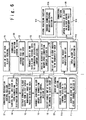
- the thin client terminals 3-j is started (step Y1).
- the user inputs the user ID data into the connection destination control section 32-j (step Y2), and the connection destination control section 32-j transmits the user ID data to the connection destination control section 21 of the connection control server 2 in addition to a data of the thin client terminals 3-j used by the user (thin client terminal data) (step Y3).
- the connection destination control section 21 receives the user ID data and the thin client terminal data (step Y4), and retrieves rebootable client groups from the client status management table 25 based on the user ID data and the thin client terminal data (step Y5).
- connection destination control section 21 retrieves the client groups to which the clients in a connection state currently by the user belong.
- a condition, "the rebootable client group” means that the client 11-i-k already connected by the user exists in the client group,
- connection destination control section 21 receives a "user #1" as the user ID data and a "thin client terminal #1" as the thin client terminal data
- the connection destination control section 21 refers to the client status management table 25.
- the clients 11-i-k has been connected based on the "user #1” and the "thin client terminal #1” and can be confirmed as a "client terminal #1-2”.
- the connection destination control section 21 refers to the group data management table 23
- the "thin client terminal #1-2" belongs to a group "C-B”
- the client group data transmitted to the connection destination control section 32-j in this case shows the group "C-B".
- the client group data transmitted to the connection destination control section 32-j is data showing "nothing" since it can be found from the client status management table 25 that there is no rebootable client.
- the data of rebootable client groups is transmitted from the connection destination control section 21 to the connection destination control section 32-j of the thin client terminal 3-j (step Y6).
- the rebootable client group data is received by the connection destination control section 32-j in the thin client terminal 3-j (step Y7), and the rebootedable client group data is displayed on a screen.
- the user selects the client group to be rebooted from among the rebootable client groups by using the thin client terminals 3-j (step Y8).
- the connection destination control section 32-j transmits data regarding the selected client group to the connection destination control section 21.
- the connection destination control section 21 receives the selected client group data, selects the rebootable client 11-i-k from among the clients 11-i-k belonging to the client group selected by the user, and transmits the data of the selected client 11-i-k to the boot-up control section 22 (step Y9).
- the selected client is already connected by the user.
- the boot-up control section 22 requests the client control section 12 to reboot up the client 11-i-k notified from the connection destination control section 21 (step Y10).
- the client control section 12 reboots up the client 11-i-k (step Y11) .
- the connection destination control section 32-j receives a reboot completion notice from the boot-up control section 22 (step Y12), and the connection destination control section 32-j supplies data of the rebooted up client into the connecting section 31 (step Y13).
- the connecting section 31 is connected to the client 11-i-k (step Y14), and the status acquiring section 111 on the corresponding client 11 updates a status of the client 11 in the client status management table 25 via the connection destination control section 21 (step Y15).
- the user can reboot the client 11-i-k via the thin client terminals 3-j.
- an operation to be performed by the user for rebooting the client includes only inputting the user data (user ID) and selecting the client group to be rebooted, and all of other operations are automatically processed. Therefore, even when the client in use is out of control, the user can reboot up the client without communicating with a system administrator.
- the group data management table 23, the connection destination setting data table 24, and the client status management table 25 are previously provided for the connection control server. Therefore, environment configuration and operation thereof when a plurality of the users share a plurality of clients can be greatly improved.
- the thin client servers 1 and the connection control server 2 may be realized by reading and executing programs by computers, respectively. Such programs are read into the computers from storage mediums such as a CD-ROM or a magnetic tape or via a network.
- one client group is selected by a user and one client is automatically selected from the selected client group.
- a plurality of client groups may be selected by the user and a plurality of clients may be booted up. In such a case, the plurality of clients may be rebooted up.
- the connection destination control section 21 may check whether the client corresponding to the terminal data and the user ID data is already booted up, before retrieving the connectable client groups.
- the resource of the thin client system can be utilized flexibly, since group data such as a user group, a terminal group, and a client group on the thin client server are employed as a key for a condition for connecting the client on the thin client server. Also, a plurality of the users can share the clients on one thin client server in time-sharing manner.
- the connection destination control section 21 receives the notice of connection failure and automatically selects another connectable client of the same client group as a group to which the failed client belongs by referring to the client status management table 25 and controls the boot-up control section 22 and the connection destination control section 32-j such that the other connectable client is booted and the booted client is connected to the terminal.
- the user can avoid impossibility of carrying out a task.
- resources of the thin client system can be efficiently utilized compared to a conventional method. Also, according to the present invention, a load on an administrator of the thin client system can be reduced.
- a connection control method is achieved in a thin client system including a thin client terminal and a client server which is connected to the thin client terminal and has a client executing an application program.
- the thin client terminal receives an identifier of a user who connects the thin client terminal with the client, and transmits the user identifier and a thin client terminal data to a connection control server,
- a connection destination control section of the connection control server retrieves a data of client groups which is connectable, from a connection destination setting data table based on the user identifier and the thin client terminal data and returns the retrieval result to the thin client terminal.
- the thin client terminal transmits a data of one of the client groups which is selected by the user based on the retrieval result to the connection control server.
- the connection destination control section retrieves an available client from a client status management table based on the data of the selected client group, and transmits a data of the available client to the thin client terminal.
- the thin client terminal performing connection with the available client based on the data of the available client.
- a connection control method is achieved in a thin client system including a thin client terminal and a client server which is connected to the thin client terminal and has a client executing an application program.
- the thin client terminal receives an identifier of a user who reboots the client, and transmits the user identifier and a thin client terminal data to a connection control server.
- a connection destination control section of the connection control server retrieves data of client groups which is rebootable, from a client status management table based on the user identifier and the thin client terminal data and returns the retrieval result to the thin client terminal.
- the thin client terminal transmits a data of one of the client groups which is selected by the user based on the retrieval result to the connection control server.
- the connection destination control section transmits the data of the selected client group to a boot-up control section of the connection control server.
- the boot-up control section specifies a client being currently connected with the thin client terminal from the selected client group data, and requests a reboot-up of the client to the thin client server which contains the specified client.
- the connection destination control section refers to the group data management table to determine the group data, and searches the group data management table for the determined result.
- a connection control server used in a thin client system includes a thin client terminal and a client server which is connected to the thin client terminal and has a client executing an application program.
- a group data management table stores results of previously grouping for each of clients, thin client terminals and users.
- a connection destination setting data table shows the group of the clients corresponding to a combination of one group of thin client terminals group and one group of the users.
- a client status management table stores a state of each of the clients.
- a connection destination control section searches the group data management table and the connection destination setting data table based on a user identifier and a thin client terminal data which are received from the thin client terminal, returns the search result to the thin client terminal, searches the client status management table for a usable client based on data of a selected group of clients from the thin client terminal, and replies data of the searched client to the thin client terminal.
- connection control server may further include a boot-up control section configured to request the thin client server having the clients to boot up or reboot up the searched client.
- a connection control server is used in a thin client system includes a thin client terminal and a client server which is connected to the thin client terminal and has a client executing an application program.
- a group data management table stores results of previously grouping for each of clients, thin client terminals and users.
- a client status management table stores a state of each of the clients.
- a boot-up control section requests the thin client server having the clients to reboot up the client.
- a connection destination control section searches the client status management table for a rebootable client based on a user identifier and a thin client terminal data which are received from the thin client terminal, returns the search result to the thin client terminal, specifies the rebootable client based on data of a selected group of clients from the thin client terminal, and controls the boot-up control section to reboot up the specified client.
Landscapes
- Engineering & Computer Science (AREA)
- Computer Networks & Wireless Communication (AREA)
- Signal Processing (AREA)
- Computer And Data Communications (AREA)
- Information Transfer Between Computers (AREA)
- Stored Programmes (AREA)
- Small-Scale Networks (AREA)
Claims (19)
- Thin-Client-Serversystem, das aufweist:Thin-Client-Server (1-1, 1-2), die Kunden (Clients) (11-1-1, 11-1-2, 11-2-1, 11-2-2) aufweisen, die anhand von Kundendaten in Kundengruppen zusammengefasst sind;Thin-Client-Endgeräte (3-1, 3-2), denen Endgerätdaten zugeordnet werden und die anhand der Endgerätdaten in Endgerätgruppen zusammengefasst werden, wobei Nutzern Nutzerkennungen zugeordnet werden und Nutzer anhand der Nutzerkennungen in Nutzergruppen zusammengefasst werden, und wobei jede der Kundengruppen für mindestens eine von einer der Endgerätgruppen und einer der Nutzergruppen vorher festgelegt ist, undeinen Verbindungssteuerungsserver (2), der zwischen die Thin-Client-Server und die Thin-Client-Endgeräte geschaltet ist,wobei der Verbindungssteuerungsserver daran angepasst ist,von einem spezifischen Thin-Client-Endgerät (3-j) Endgerätdaten des spezifischen Thin-Client-Endgeräts und eine Nutzerkennung eines spezifischen Nutzers zu empfangen,anhand der empfangenen Endgerätdaten des spezifischen Thin-Client-Endgeräts und der empfangenen Nutzerkennung des spezifischen Nutzers anschließbare Kundengruppen zu ermitteln, undeinen gewünschten Kunden mindestens einer gewünschten Kundengruppe von den anschließbaren Kundengruppen anhand eines Status jedes der Kunden zu ermitteln,wobei das spezifische Thin-Client-Endgerät daran angepasst ist, anhand der Kundendaten des gewünschten Kunden eine Verbindung zu dem gewünschten Kunden herzustellen.
- Thin-Client-Serversystem nach Anspruch 1, wobei der Verbindungssteuerungsserver aufweist:eine Speichereinrichtung zum Speichern einer Gruppendatenverwaltungstabelle (23) und einer Verbindungszieleinstellungsdatentabelle (24), wobei die Gruppendatenverwaltungstabelle die Kundengruppen für die Kunden, die Endgerätgruppen für die Thin-Client-Endgeräte und die Nutzergruppen für die Nutzer speichert, und wobei die Verbindungszieleinstellungsdatentabelle jede der anschließbaren Kundengruppen für mindestens eine von einer der Endgerätgruppen und einer der Nutzergruppen speichert, undeine Verbindungsteuerungseinrichtung, die aufweist:eine Einrichtung zum Ermitteln der anschließbaren Kundengruppen aus der Gruppendatenverwaltungstabelle (23) und der Verbindungszieleinstellungsdatentabelle (24) anhand mindestens einer Information von der Nutzerkennung und den Endgerätdaten, die von dem spezifischen Thin-Client-Endgerät empfangen werden,Senden von Daten über die ermittelten anschließbaren Kundengruppen an das spezifische Thin-Client-Endgerät (3-j), wodurch das spezifische Thin-Client-Endgerät eine der anschließbaren Kundengruppen, die durch den spezifischen Nutzer als gewünschte Kundengruppe ausgewählt wird, an den Verbindungssteuerungsserver sendet, undErmitteln eines Kunden als gewünschten Kunden in der ausgewählten Kundengruppe anhand des Status jedes der Kunden in der ausgewählten Kundengruppe.
- Thin-Client-Serversystem nach Anspruch 2, wobei die Speichereinrichtung ferner aufweist:eine Kundenstatusverwaltungstabelle (25), die einen Status jedes Kunden speichert, undwobei die Verbindungsteuerungseinrichtung ferner aufweist:eine Einrichtung zur Bezugnahme auf die Kundenstatusverwaltungstabelle (25), um anhand des Status der Kunden der gewünschten Kundengruppe den gewünschten Kunden zu ermitteln.
- Thin-Client-Serversystem nach Anspruch 3, wobei jeder der Thin-Client-Server eine Einrichtung zum Senden von Daten aufweist, die eine Statusänderung jedes Kunden des Thin-Client-Servers anzeigen,
wobei die Verbindungsteuerungseinrichtung ferner aufweist:eine Einrichtung zum Empfang der Statusänderungsdaten von jedem der Thin-Client-Server und zur Aktualisierung der Kundenstatusverwaltungstabelle (25) anhand der empfangenen Statusänderungsdaten. - Thin-Client-Serversystem nach Anspruch 3 oder 4, wobei die Verbindungsteuerungseinrichtung ferner aufweist:eine Einrichtung zum Booten des gewünschten Kunden und zum Senden der Kundendaten des gewünschten Kunden an das spezifische Thin-Client-Endgerät,wobei das spezifische Thin-Client-Endgerät daran angepasst ist, anhand der Kundendaten des gewünschten Kunden eine Verbindung zu dem gewünschten Kunden herzustellen.
- Thin-Client-Serversystem nach Anspruch 3 oder 4, wobei die Verbindungsteuerungseinrichtung ferner aufweist:eine Einrichtung zum Neubooten des gewünschten Kunden und zum Senden der Kundendaten des gewünschten Kunden an das spezifische Thin-Client-Endgerät,wobei das spezifische Thin-Client-Endgerät daran angepasst ist, anhand der Kundendaten des gewünschten Kunden eine Verbindung zu dem gewünschten Kunden herzustellen.
- Verbindungssteuerungsserver, der in dem Thin-Client-Serversystem nach einem der Ansprüche 1 bis 6 verwendet wird.
- Verbindungssteuerungsverfahren, das aufweist:Senden von Endgerätdaten eines spezifischen Thin-Client-Endgeräts (3-j) und einer Nutzerkennung eines bestimmten Nutzers von dem spezifischen Thin-Client-Endgerät an einen Verbindungssteuerungsserver (2);wobei Thin-Client-Endgeräten (3-1, 3-2) Endgerätdaten zugeordnet werden und die Endgeräte anhand der Endgerätdaten in Endgerätgruppen zusammengefasst werden, wobei Nutzern Nutzerkennungen zugeordnet werden und die Nutzer anhand der Nutzerkennungen in Nutzergruppen zusammengefasst werden, und wobei Thin-Client-Server (1-1, 1-2) Kunden aufweisen, die anhand von Kundendaten in Kundengruppen zusammengefasst werden;wobei jede der Kundengruppen für mindestens eine von einer der Endgerätgruppen und einer der Nutzergruppen vorher festgelegt ist;Ermitteln der an den Verbindungssteuerungsserver anschließbaren Kundengruppen anhand der gesendeten Endgerätdaten des spezifischen Thin-Client-Endgeräts und der gesendeten Nutzerkennung des spezifischen Nutzers;Ermitteln eines gewünschten Kunden an dem Verbindungssteuerungsserver von mindestens einer gewünschten Gruppe von den anschließbaren Kundengruppen anhand eines Status jedes Kunden; undVerbinden des spezifischen Thin-Client-Endgeräts mit dem gewünschten Kunden anhand der Kundendaten des gewünschten Kunden.
- Verbindungssteuerungsverfahren nach Anspruch 8, das ferner aufweist:Bereitstellen einer Gruppendatenverwaltungstabelle (23) und einer Verbindungszieleinstellungsdatentabelle (24), wobei die Gruppendatenverwaltungstabelle die Kundengruppen für die Kunden, die Endgerätgruppen für die Thin-Client-Endgeräte und die Nutzergruppen für die Nutzer speichert, und wobei die Verbindungszieleinstellungsdatentabelle jede der anschließbaren Kundengruppen für mindestens eine von einer der Endgerätgruppen und einer der Nutzergruppen speichert,wobei die Ermittlung von anschließbaren Kundengruppen aufweist:Ermitteln der anschließbaren Kundengruppen aus der Gruppendatenverwaltungstabelle (23) und der Verbindungszieleinstellungsdatentabelle (24) anhand mindestens einer Information von der Nutzerkennung und den Endgerätdaten, die von dem spezifischen Thin-Client-Endgerät empfangen werden, undwobei die Ermittlung eines gewünschten Kunden aufweist:Senden von Daten über die ermittelten anschließbaren Kundengruppen von dem Verbindungssteuerungsserver zu dem spezifischen Thin-Client-Endgerät (3-j);Senden von Daten über eine der anschließbaren Kundengruppen, die durch den spezifischen Nutzer ausgewählt wird, von dem spezifischen Thin-Client-Endgerät zu dem Verbindungssteuerungsserver; undErmitteln eines Kunden in der ausgewählten Kundengruppe als gewünschten Kunden am Verbindungssteuerungsserver anhand des Status jedes Kunden in der ausgewählten Kundengruppe.
- Verbindungssteuerungsverfahren nach Anspruch 9, wobei das Bereitstellen ferner aufweist:Bereitstellen einer Kundenstatusverwaltungstabelle (25), die einen Status jedes Kunden speichert, undwobei das Ermitteln eines gewünschten Kunden aufweist:Bezugnahme auf die Kundenstatusverwaltungstabelle (25), um anhand des Status der Kunden der gewünschten Kundengruppe den gewünschten Kunden zu ermitteln.
- Verbindungssteuerungsverfahren nach Anspruch 10, das ferner aufweist:Senden von Daten, die eine Statusänderung jedes Kunden der Thin-Client-Server anzeigen, an den Verbindungssteuerungsserver; undAktualisieren der Kundenstatusverwaltungstabelle (25) anhand der Statusänderungsdaten.
- Verbindungssteuerungsverfahren nach Anspruch 8, 9, 10 oder 11, das ferner aufweist:Booten des gewünschten Kunden anhand der Kundendaten des gewünschten Kunden;Senden der Kundendaten des gewünschten Kunden an das spezifische Thin-Client-Endgerät; undVerbinden des spezifischen Thin-Client-Endgeräts mit dem gewünschten Kunden.
- Verbindungssteuerungsverfahren nach Anspruch 8, 9, 10 oder 11, das ferner aufweist:Neubooten des gewünschten Kunden anhand der Kundendaten des gewünschten Kunden;Senden der Kundendaten des gewünschten Kunden an das spezifische Thin-Client-Endgerät; undVerbinden des spezifischen Thin-Client-Endgeräts mit dem gewünschten Kunden.
- Computerlesbares Speichermedium, das ein Programm zur Realisierung eines Verbindungssteuerungsverfahrens speichert, das aufweist:Bereitstellen von Endgerätgruppen, die durch Gruppieren von Thin-Client-Endgeräten anhand von den Thin-Client-Endgeräten zugeordneten Endgerätdaten ermittelt werden, von Nutzergruppen, die durch Gruppieren von Nutzern ermittelt werden, denen Nutzerkennungen zugeordnet sind, und von Kundengruppen, die durch Gruppieren von Kunden von Kundenservern anhand von Kundendaten ermittelt werden;Bereitstellen jeder der Kundengruppen, die für mindestens eine von einer der Endgerätgruppen und einer der Nutzergruppen vorher festgelegt werden;Empfangen von Endgerätdaten eines spezifischen Thin-Client-Endgeräts und einer Nutzerkennung eines spezifischen Nutzers von dem spezifischen Thin-Client-Endgerät (3-j) durch einen Verbindungssteuerungsserver;Ermitteln von anschließbaren Kundengruppen durch den Verbindungssteuerungsserver anhand der empfangenen Endgerätdaten des spezifischen Thin-Client-Endgeräts und der empfangenen Nutzerkennung des spezifischen Nutzers;Ermitteln eines gewünschten Kunden am Verbindungssteuerungsserver von mindestens einer gewünschten Gruppe der anschließbaren Kundengruppen anhand des Status jedes der Kunden und Verbinden des spezifischen Thin-Client-Endgeräts mit dem gewünschten Kunden anhand der Kundendaten des gewünschten Kunden.
- Computerlesbares Speichermedium nach Anspruch 14, wobei das Bereitstellen ferner aufweist:Bereitstellen einer Gruppendatenverwaltungstabelle (23) und einer Verbindungszieleinstellungsdatentabelle (24), wobei die Gruppendatenverwaltungstabelle die Kundengruppen für die Kunden, die Endgerätgruppen für die Thin-Client-Endgeräte und die Nutzergruppen für die Nutzer speichert, und wobei die Verbindungszieleinstellungsdatentabelle jede der anschließbaren Kundengruppen für mindestens eine von einer der Endgerätgruppen und einer der Nutzergruppen speichert,wobei das Ermitteln von anschließbaren Kundengruppen aufweist:Ermitteln der anschließbaren Kundengruppen aus der Gruppendatenverwaltungstabelle (23) und der Verbindungszieleinstellungsdatentabelle (24) anhand mindestens einer Information von der Nutzerkennung und den Endgerätdaten die von dem spezifischen Thin-Client-Endgerät empfangen werden, undwobei das Ermitteln eines gewünschten Kunden aufweist:Senden von Daten über die ermittelten anschließbaren Kundengruppen an das spezifische Thin-Client-Endgerät (3-j), wodurch eine der anschließbaren Kundengruppen durch den spezifischen Nutzer ausgewählt wird; undErmitteln eines Kunden in der ausgewählten Kundengruppe als gewünschten Kunden anhand des Status jedes Kunden in der ausgewählten Kundengruppe.
- Computerlesbares Speichermedium nach Anspruch 15, wobei das Bereitstellen ferner aufweist:Bereitstellen einer Kundenstatusverwaltungstabelle (25), die einen Status jedes der Kunden speichert, undwobei das Ermitteln eines gewünschten Kunden aufweist:Bezugnahme auf die Kundenstatusverwaltungstabelle (25), um den gewünschten Kunden anhand des Status der Kunden der gewünschten Kundengruppe zu ermitteln.
- Computerlesbares Speichermedium nach Anspruch 16, wobei das Verbindungssteuerungsverfahren ferner aufweist:Aktualisieren der Kundenstatusverwaltungstabelle anhand der Statusänderungsdaten, die eine Statusänderung jedes Kunden der Thin-Client-Server für den Verbindungssteuerungsserver anzeigen.
- Computerlesbares Speichermedium nach Anspruch 14, 15, 16 oder 17, wobei das Verbindungssteuerungsverfahren ferner aufweist:Booten des gewünschten Kunden anhand der Kundendaten des gewünschten Kunden; undSenden der Kundendaten des gewünschten Kunden an das spezifische Thin-Client-Endgerät, so dass das spezifische Thin-Client-Endgerät mit dem gewünschten Kunden verbunden wird.
- Computerlesbares Speichermedium nach Anspruch 14, 15, 16 oder 17, wobei das Verbindungssteuerungsverfahren ferner aufweist:Neubooten des gewünschten Kunden anhand der Kundendaten des gewünschten Kunden; undSenden der Kundendaten des gewünschten Kunden an das spezifische Thin-Client-Endgerät, so dass das spezifische Thin-Client-Endgerät mit dem gewünschten Kunden verbunden wird.
Applications Claiming Priority (1)
| Application Number | Priority Date | Filing Date | Title |
|---|---|---|---|
| JP2006328129A JP4293234B2 (ja) | 2006-12-05 | 2006-12-05 | シンクライアントにおける接続管理方法及び接続管理サーバ |
Publications (3)
| Publication Number | Publication Date |
|---|---|
| EP1950930A2 EP1950930A2 (de) | 2008-07-30 |
| EP1950930A3 EP1950930A3 (de) | 2008-08-13 |
| EP1950930B1 true EP1950930B1 (de) | 2012-07-18 |
Family
ID=39339236
Family Applications (1)
| Application Number | Title | Priority Date | Filing Date |
|---|---|---|---|
| EP07122102A Ceased EP1950930B1 (de) | 2006-12-05 | 2007-12-03 | Verbindungssteuerung in einem Thin-Client-System |
Country Status (9)
| Country | Link |
|---|---|
| US (1) | US8364830B2 (de) |
| EP (1) | EP1950930B1 (de) |
| JP (1) | JP4293234B2 (de) |
| CN (1) | CN101197743B (de) |
| AU (1) | AU2007237360A1 (de) |
| CA (1) | CA2613499C (de) |
| NZ (1) | NZ564021A (de) |
| SG (1) | SG143231A1 (de) |
| TW (1) | TW200826561A (de) |
Families Citing this family (27)
| Publication number | Priority date | Publication date | Assignee | Title |
|---|---|---|---|---|
| JP4787684B2 (ja) * | 2006-06-15 | 2011-10-05 | 日本電気株式会社 | セッション管理システム、セッション管理方法、及びプログラム |
| JP4293234B2 (ja) | 2006-12-05 | 2009-07-08 | 日本電気株式会社 | シンクライアントにおける接続管理方法及び接続管理サーバ |
| JP2009139990A (ja) * | 2007-12-03 | 2009-06-25 | Internatl Business Mach Corp <Ibm> | 情報の不正取得を防止する技術 |
| JP5517463B2 (ja) * | 2009-02-09 | 2014-06-11 | 三菱電機株式会社 | シンクライアントシステム、管理サーバおよびシンクライアント端末 |
| US8930532B2 (en) | 2009-12-21 | 2015-01-06 | Nec Corporation | Session management in a thin client system for effective use of the client environment |
| CN102137127A (zh) * | 2010-01-27 | 2011-07-27 | 中国工商银行股份有限公司 | 在bs模式下通过互联网远距离传输文件的系统及方法 |
| JP5561525B2 (ja) * | 2010-03-23 | 2014-07-30 | 日本電気株式会社 | シンクライアントシステム、及びシンクライアントシステムにおける認証方法 |
| JP5644150B2 (ja) * | 2010-03-23 | 2014-12-24 | 日本電気株式会社 | サービス提供システム、仮想マシンサーバ、サービス提供方法及びサービス提供プログラム |
| JP2011248419A (ja) * | 2010-05-24 | 2011-12-08 | Hitachi Ltd | 業務計算機割当て方法及び装置 |
| JP5582344B2 (ja) * | 2010-08-09 | 2014-09-03 | 日本電気株式会社 | 接続管理システム、及びシンクライアントシステムにおける接続管理サーバの連携方法 |
| JP5672893B2 (ja) | 2010-09-21 | 2015-02-18 | 日本電気株式会社 | シンクライアントシステム、管理サーバ、クライアント環境管理方法及びプログラム |
| JP5702134B2 (ja) * | 2010-12-24 | 2015-04-15 | キヤノンイメージングシステムズ株式会社 | デバイス制御装置、情報管理装置、及びその制御方法、デバイス制御システム |
| JP5757325B2 (ja) * | 2011-03-29 | 2015-07-29 | 日本電気株式会社 | 仮想デスクトップシステム、ネットワーク処理装置、管理方法、及び管理プログラム |
| US20130042312A1 (en) * | 2011-08-09 | 2013-02-14 | Mobileframe Llc | Authentication in a smart thin client server |
| KR101900994B1 (ko) | 2011-10-10 | 2018-11-08 | 휴렛-팩커드 디벨롭먼트 컴퍼니, 엘.피. | 클라이언트-호스트 접속 수립 |
| JP5684170B2 (ja) * | 2012-02-28 | 2015-03-11 | 株式会社東芝 | 情報処理装置、クライアント管理システムおよびクライアント管理方法 |
| JP2013131207A (ja) * | 2012-09-21 | 2013-07-04 | Oyo Denshi:Kk | シンクライアントシステム |
| JP6200707B2 (ja) * | 2013-06-28 | 2017-09-20 | 富士通株式会社 | スイッチおよび制御方法 |
| WO2015029176A1 (ja) * | 2013-08-29 | 2015-03-05 | 株式会社日立システムズ | 情報処理端末システム |
| WO2015093020A1 (ja) * | 2013-12-18 | 2015-06-25 | 日本電気株式会社 | カメラ端末装置、シンクライアントサーバ装置、カメラシステム、および制御方法 |
| CN104753887B (zh) * | 2013-12-31 | 2018-02-23 | 中国移动通信集团黑龙江有限公司 | 安全管控实现方法、系统及云桌面系统 |
| JP6273880B2 (ja) * | 2014-02-13 | 2018-02-07 | 日本電気株式会社 | 仮想マシン管理システム、仮想マシン管理装置、仮想マシン管理方法、及び仮想マシン管理プログラム |
| JP6356462B2 (ja) * | 2014-04-01 | 2018-07-11 | エヌ・ティ・ティ・コムウェア株式会社 | 設定装置、設定システム、設定方法、および、設定プログラム |
| US10412040B2 (en) * | 2015-02-06 | 2019-09-10 | Google Llc | Systems and methods for direct dispatching of mobile messages |
| JP6547332B2 (ja) * | 2015-02-26 | 2019-07-24 | 日本電気株式会社 | 仮想情報処理システム、及びその仮想情報処理方法 |
| WO2019074474A1 (en) * | 2017-10-09 | 2019-04-18 | Hewlett-Packard Development Company, L.P. | JUNCTION TO A DOMAIN |
| JP7794729B2 (ja) * | 2022-12-23 | 2026-01-06 | 株式会社日立製作所 | 仮想デスクトップ管理システム及び仮想デスクトップ管理方法 |
Family Cites Families (41)
| Publication number | Priority date | Publication date | Assignee | Title |
|---|---|---|---|---|
| US204562A (en) * | 1878-06-04 | Improvement in feed and water cups for bird-cages | ||
| US5341477A (en) * | 1989-02-24 | 1994-08-23 | Digital Equipment Corporation | Broker for computer network server selection |
| WO1996017306A2 (en) | 1994-11-21 | 1996-06-06 | Oracle Corporation | Media server |
| JPH08263283A (ja) | 1995-03-24 | 1996-10-11 | Ricoh Co Ltd | ソフトウェア管理システム |
| US6317775B1 (en) | 1995-11-03 | 2001-11-13 | Cisco Technology, Inc. | System for distributing load over multiple servers at an internet site |
| US6324177B1 (en) * | 1997-05-02 | 2001-11-27 | Cisco Technology | Method and apparatus for managing connections based on a client IP address |
| JP2000181821A (ja) | 1998-12-15 | 2000-06-30 | Toshiba Corp | ネットワークコンピュータシステム |
| US6615264B1 (en) | 1999-04-09 | 2003-09-02 | Sun Microsystems, Inc. | Method and apparatus for remotely administered authentication and access control |
| US6961772B1 (en) | 1999-11-30 | 2005-11-01 | Recursion Software, Inc. | Transparent connection type binding by address range |
| US6854009B1 (en) | 1999-12-22 | 2005-02-08 | Tacit Networks, Inc. | Networked computer system |
| DE60130868T2 (de) * | 2000-01-18 | 2008-07-17 | Novell, Inc., Provo | System und verfahren zur verwendung von verzeichnisdiensten zur erleichterung des zugangs zu auf thin-client-servern verfügbaren anwendungen |
| US6912578B1 (en) | 2000-02-25 | 2005-06-28 | Sun Microsystems, Inc. | Method and apparatus for improving utilization of a resource on a shared client |
| DE60100800T2 (de) * | 2000-02-25 | 2004-07-01 | Sun Microsystems, Inc., Santa Clara | Verfahren und einrichtung zur bereitstellung von einem hochverfügbaren computerdienst |
| JP2001282737A (ja) | 2000-03-28 | 2001-10-12 | Mitsubishi Electric Corp | 業務負荷分散システム |
| JP4287990B2 (ja) | 2000-07-07 | 2009-07-01 | インターナショナル・ビジネス・マシーンズ・コーポレーション | ネットワークシステム、端末管理システム、端末管理方法、データ処理方法、記録媒体およびインターネットサービス提供方法 |
| JP2002111713A (ja) | 2000-09-28 | 2002-04-12 | Toshiba Corp | ネットワークシステム、ネームサーバ、サーバ、およびネットワークシステムのip通信方法 |
| US7184764B2 (en) * | 2001-02-08 | 2007-02-27 | Starhome Gmbh | Method and apparatus for supporting cellular data communication to roaming mobile telephony devices |
| JP2003085059A (ja) | 2001-03-16 | 2003-03-20 | Matsushita Electric Ind Co Ltd | ファイアウォール設定方法およびその装置 |
| JP2002323986A (ja) | 2001-04-25 | 2002-11-08 | Hitachi Ltd | コンピュータリソース流通システム及び方法 |
| EP2234407A1 (de) | 2001-06-08 | 2010-09-29 | The Distribution Systems Research Institute | System zur Kontrolle der Kommunikationsverbindung zwischen Endgeräten für IP-Komplettdienst |
| JP4170649B2 (ja) | 2002-04-02 | 2008-10-22 | ヤフー株式会社 | メッセンジャーサーバーシステム、メッセンジャーサービスの提供方法、メッセンジャーサービスにおける接続先決定サーバー |
| US20030204562A1 (en) * | 2002-04-29 | 2003-10-30 | Gwan-Hwan Hwang | System and process for roaming thin clients in a wide area network with transparent working environment |
| WO2004006501A1 (en) | 2002-07-03 | 2004-01-15 | British Telecommunications Public Limited Company | Trust establishment for multi-party communications |
| US7478387B2 (en) | 2002-09-25 | 2009-01-13 | International Business Machines Corporation | System and method for creating a restartable non-native language routine execution environment |
| US20040121299A1 (en) | 2002-12-20 | 2004-06-24 | Electronic Data Systems Corporation | System and method for remote-access virtual-lab environment |
| JP2005100344A (ja) | 2003-08-18 | 2005-04-14 | Ricoh Co Ltd | 情報処理装置、セッションの復旧方法、セッション復旧プログラム及び記録媒体 |
| US7246174B2 (en) | 2003-10-28 | 2007-07-17 | Nacon Consulting, Llc | Method and system for accessing and managing virtual machines |
| JP2005275617A (ja) * | 2004-03-23 | 2005-10-06 | Fujitsu Ltd | サービス提供支援方法 |
| JP4028853B2 (ja) | 2004-03-30 | 2007-12-26 | 株式会社日立製作所 | 情報サービス通信ネットワークシステムおよびセッション管理サーバ |
| JP4290605B2 (ja) | 2004-05-26 | 2009-07-08 | 日本電信電話株式会社 | 共同利用パソコンシステム及び共同利用パソコンシステムの管理方法 |
| US7577959B2 (en) | 2004-06-24 | 2009-08-18 | International Business Machines Corporation | Providing on-demand capabilities using virtual machines and clustering processes |
| JP4497463B2 (ja) | 2004-07-08 | 2010-07-07 | 株式会社リコー | 画面共有システムおよび印刷装置 |
| GB2416879B (en) * | 2004-08-07 | 2007-04-04 | Surfcontrol Plc | Device resource access filtering system and method |
| JP4452156B2 (ja) | 2004-11-08 | 2010-04-21 | 日本電信電話株式会社 | 共同利用パソコン利用方法およびサーバ |
| JP4175322B2 (ja) | 2004-12-06 | 2008-11-05 | トヨタ自動車株式会社 | 車両 |
| JP4733399B2 (ja) | 2005-01-28 | 2011-07-27 | 株式会社日立製作所 | 計算機システム、計算機、ストレージ装置及び管理端末 |
| JP2007094610A (ja) | 2005-09-28 | 2007-04-12 | Hitachi Ltd | コンピュータシステム |
| US20070174429A1 (en) | 2006-01-24 | 2007-07-26 | Citrix Systems, Inc. | Methods and servers for establishing a connection between a client system and a virtual machine hosting a requested computing environment |
| US8571580B2 (en) * | 2006-06-01 | 2013-10-29 | Loopt Llc. | Displaying the location of individuals on an interactive map display on a mobile communication device |
| US8903365B2 (en) * | 2006-08-18 | 2014-12-02 | Ca, Inc. | Mobile device management |
| JP4293234B2 (ja) | 2006-12-05 | 2009-07-08 | 日本電気株式会社 | シンクライアントにおける接続管理方法及び接続管理サーバ |
-
2006
- 2006-12-05 JP JP2006328129A patent/JP4293234B2/ja not_active Expired - Fee Related
-
2007
- 2007-12-03 EP EP07122102A patent/EP1950930B1/de not_active Ceased
- 2007-12-04 NZ NZ564021A patent/NZ564021A/en not_active IP Right Cessation
- 2007-12-04 TW TW096146049A patent/TW200826561A/zh unknown
- 2007-12-04 CA CA2613499A patent/CA2613499C/en not_active Expired - Fee Related
- 2007-12-05 US US11/950,836 patent/US8364830B2/en not_active Expired - Fee Related
- 2007-12-05 AU AU2007237360A patent/AU2007237360A1/en not_active Abandoned
- 2007-12-05 CN CN200710196477.1A patent/CN101197743B/zh not_active Expired - Fee Related
- 2007-12-05 SG SG200718326-2A patent/SG143231A1/en unknown
Also Published As
| Publication number | Publication date |
|---|---|
| CN101197743B (zh) | 2015-11-25 |
| CA2613499C (en) | 2013-11-05 |
| US8364830B2 (en) | 2013-01-29 |
| HK1115251A1 (zh) | 2008-11-21 |
| JP2008140306A (ja) | 2008-06-19 |
| AU2007237360A1 (en) | 2008-06-19 |
| NZ564021A (en) | 2008-07-31 |
| CN101197743A (zh) | 2008-06-11 |
| EP1950930A3 (de) | 2008-08-13 |
| SG143231A1 (en) | 2008-06-27 |
| US20080263217A1 (en) | 2008-10-23 |
| CA2613499A1 (en) | 2008-06-05 |
| JP4293234B2 (ja) | 2009-07-08 |
| EP1950930A2 (de) | 2008-07-30 |
| TW200826561A (en) | 2008-06-16 |
Similar Documents
| Publication | Publication Date | Title |
|---|---|---|
| EP1950930B1 (de) | Verbindungssteuerung in einem Thin-Client-System | |
| US10073709B2 (en) | Session monitoring of virtual desktops in a virtual machine farm | |
| US8700811B2 (en) | Virtual machine I/O multipath configuration | |
| US10146566B2 (en) | Enabling virtual desktop connections to remote clients | |
| US8316133B2 (en) | Thin client system using session managing server and session managing method | |
| US8171119B2 (en) | Program deployment apparatus and method | |
| US8055892B2 (en) | Provision of remote system recovery services | |
| US8015559B2 (en) | System software update method | |
| US8332490B2 (en) | Method, apparatus and program product for provisioning a computer system | |
| US20160308960A1 (en) | Connection management system, and a method for linking connection management server in thin client system | |
| JP2013218687A (ja) | サーバー監視システム及びその方法 | |
| US8745342B2 (en) | Computer system for controlling backups using wide area network | |
| US20130227565A1 (en) | Apparatus and method for managing application for guest operating system | |
| US8990608B1 (en) | Failover of applications between isolated user space instances on a single instance of an operating system | |
| US20090254641A1 (en) | Network card capable of remote boot and method thereof | |
| US20070266120A1 (en) | System and method for handling instructions in a pre-boot execution environment | |
| US20090119682A1 (en) | Recovering resource connections | |
| CN111475176B (zh) | 一种数据读写的方法、相关装置、系统以及存储介质 | |
| US20060020698A1 (en) | Method and system for managing connections | |
| US20070124573A1 (en) | Method for rapid startup of a computer system | |
| US10860347B1 (en) | Virtual machine with multiple content processes | |
| US7490142B2 (en) | Automatic client management authority assignment | |
| US9270530B1 (en) | Managing imaging of multiple computing devices | |
| HK1115251B (en) | Connection control in thin client system | |
| JP6380774B1 (ja) | コンピュータシステム、サーバ装置、プログラム及び障害検出方法 |
Legal Events
| Date | Code | Title | Description |
|---|---|---|---|
| PUAI | Public reference made under article 153(3) epc to a published international application that has entered the european phase |
Free format text: ORIGINAL CODE: 0009012 |
|
| PUAL | Search report despatched |
Free format text: ORIGINAL CODE: 0009013 |
|
| AK | Designated contracting states |
Kind code of ref document: A2 Designated state(s): AT BE BG CH CY CZ DE DK EE ES FI FR GB GR HU IE IS IT LI LT LU LV MC MT NL PL PT RO SE SI SK TR |
|
| AX | Request for extension of the european patent |
Extension state: AL BA HR MK RS |
|
| AK | Designated contracting states |
Kind code of ref document: A3 Designated state(s): AT BE BG CH CY CZ DE DK EE ES FI FR GB GR HU IE IS IT LI LT LU LV MC MT NL PL PT RO SE SI SK TR |
|
| AX | Request for extension of the european patent |
Extension state: AL BA HR MK RS |
|
| 17P | Request for examination filed |
Effective date: 20090210 |
|
| AKX | Designation fees paid |
Designated state(s): DE FR GB |
|
| GRAP | Despatch of communication of intention to grant a patent |
Free format text: ORIGINAL CODE: EPIDOSNIGR1 |
|
| GRAS | Grant fee paid |
Free format text: ORIGINAL CODE: EPIDOSNIGR3 |
|
| GRAA | (expected) grant |
Free format text: ORIGINAL CODE: 0009210 |
|
| RIN1 | Information on inventor provided before grant (corrected) |
Inventor name: KIMIZUKA, MASAHIKO Inventor name: KOSHIBA, KUNIHIRO |
|
| AK | Designated contracting states |
Kind code of ref document: B1 Designated state(s): DE FR GB |
|
| REG | Reference to a national code |
Ref country code: GB Ref legal event code: FG4D |
|
| REG | Reference to a national code |
Ref country code: DE Ref legal event code: R096 Ref document number: 602007024043 Country of ref document: DE Effective date: 20120913 |
|
| PLBE | No opposition filed within time limit |
Free format text: ORIGINAL CODE: 0009261 |
|
| STAA | Information on the status of an ep patent application or granted ep patent |
Free format text: STATUS: NO OPPOSITION FILED WITHIN TIME LIMIT |
|
| 26N | No opposition filed |
Effective date: 20130419 |
|
| REG | Reference to a national code |
Ref country code: DE Ref legal event code: R097 Ref document number: 602007024043 Country of ref document: DE Effective date: 20130419 |
|
| REG | Reference to a national code |
Ref country code: FR Ref legal event code: PLFP Year of fee payment: 9 |
|
| REG | Reference to a national code |
Ref country code: FR Ref legal event code: PLFP Year of fee payment: 10 |
|
| PGFP | Annual fee paid to national office [announced via postgrant information from national office to epo] |
Ref country code: DE Payment date: 20161129 Year of fee payment: 10 |
|
| REG | Reference to a national code |
Ref country code: FR Ref legal event code: PLFP Year of fee payment: 11 |
|
| REG | Reference to a national code |
Ref country code: DE Ref legal event code: R119 Ref document number: 602007024043 Country of ref document: DE |
|
| PG25 | Lapsed in a contracting state [announced via postgrant information from national office to epo] |
Ref country code: DE Free format text: LAPSE BECAUSE OF NON-PAYMENT OF DUE FEES Effective date: 20180703 |
|
| PGFP | Annual fee paid to national office [announced via postgrant information from national office to epo] |
Ref country code: GB Payment date: 20211221 Year of fee payment: 15 Ref country code: FR Payment date: 20211224 Year of fee payment: 15 |
|
| GBPC | Gb: european patent ceased through non-payment of renewal fee |
Effective date: 20221203 |
|
| PG25 | Lapsed in a contracting state [announced via postgrant information from national office to epo] |
Ref country code: GB Free format text: LAPSE BECAUSE OF NON-PAYMENT OF DUE FEES Effective date: 20221203 |
|
| PG25 | Lapsed in a contracting state [announced via postgrant information from national office to epo] |
Ref country code: FR Free format text: LAPSE BECAUSE OF NON-PAYMENT OF DUE FEES Effective date: 20221231 |