EP1952824A1 - Zusammensetzungen und Verfahren zur Behandlung mithilfe von L-Kalzium-Kanalblockern und Cholinesterase-Inhibitoren - Google Patents
Zusammensetzungen und Verfahren zur Behandlung mithilfe von L-Kalzium-Kanalblockern und Cholinesterase-Inhibitoren Download PDFInfo
- Publication number
- EP1952824A1 EP1952824A1 EP08153319A EP08153319A EP1952824A1 EP 1952824 A1 EP1952824 A1 EP 1952824A1 EP 08153319 A EP08153319 A EP 08153319A EP 08153319 A EP08153319 A EP 08153319A EP 1952824 A1 EP1952824 A1 EP 1952824A1
- Authority
- EP
- European Patent Office
- Prior art keywords
- methoxyethyl
- isopropyl
- chloro
- dicarboxylate
- dihydro
- Prior art date
- Legal status (The legal status is an assumption and is not a legal conclusion. Google has not performed a legal analysis and makes no representation as to the accuracy of the status listed.)
- Withdrawn
Links
Images


Classifications
-
- A—HUMAN NECESSITIES
- A61—MEDICAL OR VETERINARY SCIENCE; HYGIENE
- A61K—PREPARATIONS FOR MEDICAL, DENTAL OR TOILETRY PURPOSES
- A61K45/00—Medicinal preparations containing active ingredients not provided for in groups A61K31/00 - A61K41/00
- A61K45/06—Mixtures of active ingredients without chemical characterisation, e.g. antiphlogistics and cardiaca
-
- A—HUMAN NECESSITIES
- A61—MEDICAL OR VETERINARY SCIENCE; HYGIENE
- A61K—PREPARATIONS FOR MEDICAL, DENTAL OR TOILETRY PURPOSES
- A61K31/00—Medicinal preparations containing organic active ingredients
- A61K31/33—Heterocyclic compounds
- A61K31/395—Heterocyclic compounds having nitrogen as a ring hetero atom, e.g. guanethidine or rifamycins
- A61K31/40—Heterocyclic compounds having nitrogen as a ring hetero atom, e.g. guanethidine or rifamycins having five-membered rings with one nitrogen as the only ring hetero atom, e.g. sulpiride, succinimide, tolmetin, buflomedil
- A61K31/407—Heterocyclic compounds having nitrogen as a ring hetero atom, e.g. guanethidine or rifamycins having five-membered rings with one nitrogen as the only ring hetero atom, e.g. sulpiride, succinimide, tolmetin, buflomedil condensed with other heterocyclic ring systems, e.g. ketorolac, physostigmine
-
- A—HUMAN NECESSITIES
- A61—MEDICAL OR VETERINARY SCIENCE; HYGIENE
- A61K—PREPARATIONS FOR MEDICAL, DENTAL OR TOILETRY PURPOSES
- A61K31/00—Medicinal preparations containing organic active ingredients
- A61K31/33—Heterocyclic compounds
- A61K31/395—Heterocyclic compounds having nitrogen as a ring hetero atom, e.g. guanethidine or rifamycins
- A61K31/435—Heterocyclic compounds having nitrogen as a ring hetero atom, e.g. guanethidine or rifamycins having six-membered rings with one nitrogen as the only ring hetero atom
- A61K31/44—Non condensed pyridines; Hydrogenated derivatives thereof
- A61K31/4422—1,4-Dihydropyridines, e.g. nifedipine, nicardipine
-
- A—HUMAN NECESSITIES
- A61—MEDICAL OR VETERINARY SCIENCE; HYGIENE
- A61K—PREPARATIONS FOR MEDICAL, DENTAL OR TOILETRY PURPOSES
- A61K31/00—Medicinal preparations containing organic active ingredients
- A61K31/33—Heterocyclic compounds
- A61K31/395—Heterocyclic compounds having nitrogen as a ring hetero atom, e.g. guanethidine or rifamycins
- A61K31/435—Heterocyclic compounds having nitrogen as a ring hetero atom, e.g. guanethidine or rifamycins having six-membered rings with one nitrogen as the only ring hetero atom
- A61K31/44—Non condensed pyridines; Hydrogenated derivatives thereof
- A61K31/445—Non condensed piperidines, e.g. piperocaine
-
- A—HUMAN NECESSITIES
- A61—MEDICAL OR VETERINARY SCIENCE; HYGIENE
- A61K—PREPARATIONS FOR MEDICAL, DENTAL OR TOILETRY PURPOSES
- A61K31/00—Medicinal preparations containing organic active ingredients
- A61K31/33—Heterocyclic compounds
- A61K31/395—Heterocyclic compounds having nitrogen as a ring hetero atom, e.g. guanethidine or rifamycins
- A61K31/435—Heterocyclic compounds having nitrogen as a ring hetero atom, e.g. guanethidine or rifamycins having six-membered rings with one nitrogen as the only ring hetero atom
- A61K31/44—Non condensed pyridines; Hydrogenated derivatives thereof
- A61K31/455—Nicotinic acids, e.g. niacin; Derivatives thereof, e.g. esters, amides
-
- A—HUMAN NECESSITIES
- A61—MEDICAL OR VETERINARY SCIENCE; HYGIENE
- A61K—PREPARATIONS FOR MEDICAL, DENTAL OR TOILETRY PURPOSES
- A61K31/00—Medicinal preparations containing organic active ingredients
- A61K31/33—Heterocyclic compounds
- A61K31/395—Heterocyclic compounds having nitrogen as a ring hetero atom, e.g. guanethidine or rifamycins
- A61K31/435—Heterocyclic compounds having nitrogen as a ring hetero atom, e.g. guanethidine or rifamycins having six-membered rings with one nitrogen as the only ring hetero atom
- A61K31/47—Quinolines; Isoquinolines
- A61K31/4738—Quinolines; Isoquinolines ortho- or peri-condensed with heterocyclic ring systems
- A61K31/4745—Quinolines; Isoquinolines ortho- or peri-condensed with heterocyclic ring systems condensed with ring systems having nitrogen as a ring hetero atom, e.g. phenantrolines
-
- A—HUMAN NECESSITIES
- A61—MEDICAL OR VETERINARY SCIENCE; HYGIENE
- A61P—SPECIFIC THERAPEUTIC ACTIVITY OF CHEMICAL COMPOUNDS OR MEDICINAL PREPARATIONS
- A61P25/00—Drugs for disorders of the nervous system
-
- A—HUMAN NECESSITIES
- A61—MEDICAL OR VETERINARY SCIENCE; HYGIENE
- A61P—SPECIFIC THERAPEUTIC ACTIVITY OF CHEMICAL COMPOUNDS OR MEDICINAL PREPARATIONS
- A61P25/00—Drugs for disorders of the nervous system
- A61P25/08—Antiepileptics; Anticonvulsants
-
- A—HUMAN NECESSITIES
- A61—MEDICAL OR VETERINARY SCIENCE; HYGIENE
- A61P—SPECIFIC THERAPEUTIC ACTIVITY OF CHEMICAL COMPOUNDS OR MEDICINAL PREPARATIONS
- A61P25/00—Drugs for disorders of the nervous system
- A61P25/14—Drugs for disorders of the nervous system for treating abnormal movements, e.g. chorea, dyskinesia
-
- A—HUMAN NECESSITIES
- A61—MEDICAL OR VETERINARY SCIENCE; HYGIENE
- A61P—SPECIFIC THERAPEUTIC ACTIVITY OF CHEMICAL COMPOUNDS OR MEDICINAL PREPARATIONS
- A61P25/00—Drugs for disorders of the nervous system
- A61P25/24—Antidepressants
-
- A—HUMAN NECESSITIES
- A61—MEDICAL OR VETERINARY SCIENCE; HYGIENE
- A61P—SPECIFIC THERAPEUTIC ACTIVITY OF CHEMICAL COMPOUNDS OR MEDICINAL PREPARATIONS
- A61P25/00—Drugs for disorders of the nervous system
- A61P25/28—Drugs for disorders of the nervous system for treating neurodegenerative disorders of the central nervous system, e.g. nootropic agents, cognition enhancers, drugs for treating Alzheimer's disease or other forms of dementia
-
- A—HUMAN NECESSITIES
- A61—MEDICAL OR VETERINARY SCIENCE; HYGIENE
- A61P—SPECIFIC THERAPEUTIC ACTIVITY OF CHEMICAL COMPOUNDS OR MEDICINAL PREPARATIONS
- A61P43/00—Drugs for specific purposes, not provided for in groups A61P1/00-A61P41/00
-
- A—HUMAN NECESSITIES
- A61—MEDICAL OR VETERINARY SCIENCE; HYGIENE
- A61P—SPECIFIC THERAPEUTIC ACTIVITY OF CHEMICAL COMPOUNDS OR MEDICINAL PREPARATIONS
- A61P9/00—Drugs for disorders of the cardiovascular system
- A61P9/12—Antihypertensives
Definitions
- the present invention relates to compositions comprising at least one L-type calcium channel blocker, particularly the compound (+)-isopropyl 2-methoxyethyl 4-(2-chloro-3-cyano-phenyl)-1,4-dihydro-2,6-dimethyl-pyridine-3,5-dicarboxylate, in combination with at least one cholinesterase inhibitor, particularly donepezil, and uses thereof in methods of treatment.
- L-type calcium channel blocker particularly the compound (+)-isopropyl 2-methoxyethyl 4-(2-chloro-3-cyano-phenyl)-1,4-dihydro-2,6-dimethyl-pyridine-3,5-dicarboxylate
- at least one cholinesterase inhibitor particularly donepezil
- the condition of memory impairment is manifested by impairment of the ability to leam new information and/or the inability to recall previously learned information.
- Memory impairment is a primary symptom of dementia and can also be a symptom associated with a variety of diseases and conditions such as Alzheimer's disease or age-related cognitive decline.
- the present invention relates to compositions containing at least one L-type calcium channel blockers such as (+)-isopropyl 2-methoxyethyl 4-(2-chlora-3-cyanaphenyl)-1,4-dihydro-2,6-dimethyl-pyridine-3,5-dicarboxylate in combination with at least one cholinesterase inhibitor, particularly donepezil, and uses thereof in methods of treatment, particularly treatments for memory and/or cognitive impairment.
- L-type calcium channel blockers such as (+)-isopropyl 2-methoxyethyl 4-(2-chlora-3-cyanaphenyl)-1,4-dihydro-2,6-dimethyl-pyridine-3,5-dicarboxylate
- at least one cholinesterase inhibitor particularly donepezil
- the present invention includes a method of treating memory and/or cognitive impairment comprising administering to a patient (e.g., a human), simultaneously or sequentially, an L-type calcium channel blocker and a cholinesterase inhibitor.
- a patient e.g., a human
- an L-type calcium channel blocker and a cholinesterase inhibitor can be present in a combined composition or can be administered separately.
- the L-type calcium channel blocker is selected from dihydropyridines having calcium channel blocking activity.
- the L-type calcium channel blocker is amlodipine, felodipine, isradipine, lacidipine, lercanidipine, nicardipine, nifedipine, nimodipine, nitrendipine, nisoldipine, or (+) isopropyl 2-methoxyethyl 4-(2-chloro-3-cyano-phenyl)-1,4-dihydro-2,6-dimethylpyridine-3,5-dicarboxylate.
- the cholinesterase inhibitor is donepezil, rivastigmine, galantamine, icopezil, pyridostigmine, edrophonium, neostigmine, physostigmine, Huperzine A, phenserine, or tacrine.
- the L-type calcium channel blocker is amlodipine, felodipine, isradipine, lacidipine, lercanidipine, nicardipine, nifedipine, nimodipine, nitrendipine, nisoldipine, or (+) isopropyl 2-methoxyethyl 4-(2-chloro-3-eyano-phonyl)-1,4-dihydro-2,6-dimethylpyridine-3,5-dicarboxylate, and the cholinesterase inhibitor is donepezil, rivastigmine, galantamine, icopezil, pyridostigmine, edrophonium, neostigmine, physostigmine, Huperzine A, phenserine, or tacrine.
- the compound, (+) isopropyl 2-methoxyethyl 4-(2-chloro-3-cyano-pbenyl)-1,4-dihydro-2,6-dimethylpyridine-3,5-dicarboxylate can be administered in combination with a cholinesterase inhibitors (e.g., donepezil, rivastigmine, galantamine, icopezil, pyridostigmine, edrophonium, neostigmine, physostigmine, Huperzine A, phenserine, or tacrine).
- a cholinesterase inhibitors e.g., donepezil, rivastigmine, galantamine, icopezil, pyridostigmine, edrophonium, neostigmine, physostigmine, Huperzine A, phenserine, or tacrine.
- each active ingredient can be administered either in accordance with their usual dosage range or a dose
- the invention includes a method of treating memory and/or cognitive impairment associated with Alzheimer's disease comprising administering to a patient (e.g., a human), simultaneously or sequentially, an L-type calcium channel blocker and a cholinesterase inhibitor.
- a patient e.g., a human
- the agents can be present in a combined composition or can be administered separately.
- the L-type calcium channel blocker is selected from dihydropyridines having calcium channel blocking activity.
- the L-type calcium channel blocker is amlodipine, felodipine, isradipine, lacidipine, lercanidipine, nicardipine, nifedipine, nimodipine, nitrendipine, nisoldipine, and (+) isopropyl 2-methoxyethyl 4-(2-chloro-3-cyano-phenyl)-1,4-dihydro-2,6-dimethylpyridine-3,5-dicarboxylate.
- the cholinesterase inhibitor is donepezil, rivastigmine, galantamine, icopezil, pyridostigmine, edrophonium, neostigmine, physostigmine, Huperzine A, phenserine, or tacrine.
- the L-type calcium channel blocker is amlodipine, felodipine, isradipine, lacidipine, lercanidipine, nicardipine, nifedipine, nimodipine, nitrendipine, nisoldipine, and (+) isopropyl 2-methoxyethyl 4-(2-chloro-3-cyano-phenyl)-1,4-dihydro-2,6-dimethylpyridine-3,5-dicarboxylate and the cholinesterase inhibitor is donepezil, rivastigmine, galantamine, icopezil, pyridostigmine, edrophonium, neostigmine, physostigmine, Huperzine A, phenserine, or tacrine.
- the invention includes methods for treating memory and/or cognitive impairment associated with Alzheimer's disease comprising administering to a patient (e.g., a human), simultaneously or sequentially, the compound (+) isopropyl 2-methoxyethyl 4-(2-chloro-3-cyano-phenyl)-1,4-dihydro-2,6-dimethylpyridine-3,5-dicarboxylate and a cholinesterase inhibitor used in the treatment of Alzheimer's disease such as Reminyl (galantamine, specifically galantamine hydrobromide), Cognex (tacrine, specifically tacrine hydrochloride), Aricept (donepezil, specifically donepezil hydrochloride), and Exelon (rivastigmine, specifically rivastigmine tartrate).
- the agents can be present in a combined composition or can be administered separately.
- the invention includes a method of treating memory and/or cognitive impairment associated with dementia comprising administering to a patient (e.g., a human), simultaneously or sequentially, an L-type calcium channel blocker and a cholinesterase inhibitor.
- a patient e.g., a human
- the agents can be present in a combined composition or can be administered separately.
- the L-type calcium channel blocker is selected from dihydropyridines having calcium channel blocking activity.
- the L-type calcium channel blocker is amlodipine, felodipine, isradipine, lacidipine, lercanidipine, nicardipine, nifedipine, nimodipine, nitrendipine, nisoldipine, and (+) isopropyl 2-methoxyethyl 4-(2-chloro-3-cyano-phenyl)-1,4-dihydra-2,6-dimethylpyridine-3,5-dicarboxylate.
- the cholinesterase inhibitor is donepezil,rivastigmine galantamine, icopezil, pyridostigmine, edrophonium, neostigmine, physostigmine, Huperzine A, phenserine, or tacrine.
- the L-type calcium channel blocker is amlodipine, felodipine, isradipine, lacidipine, lercanidipine, nicardipine, nifedipine, nimodipine, nitrendipine, nisoldipine, and (+) isopropyl 2-methoxyethyl 4-(2-chloro-3-cyana-phenyl)-1,4-dihydro-2,6-dimethylpyridine-3,5-dicarboxylate and the cholinesterase inhibitor is donepezil, rivastigmine, galantamine, icopezil, pyridostigmine, edrophonium, neostigmine, physostigmine, Huperzine A, phenserine, or tacrine.
- the invention includes methods for treating memory and/or cognitive impairment associated with dementia comprising administering to a patient (e.g., a human), simultaneously or sequentially, the compound (+) isopropyl 2-methoxyethyl 4-(2-chloro-3-cyano-phenyl)-1,4-dihydro-2,6-dimethylpyridine-3,5-dicarboxylate and a cholinesterase inhibitor used in the treatment of dementia such as Cognex (tacrine, specifically tacrine hydrochloride), Aricept (donepezil, specifically donepezil hydrochloride), and Exelon (rivastigmine, specifically rivastigmine tartrate).
- the agents can be present in a combined composition or can be administered separately.
- the invention includes a method of treating memory and/or cognitive impairment comprising administering to a patient (e.g., a human), simultaneously or sequentially, (+) isopropyl 2-methoxyethyl 4-(2-chloro-3-cyanophenyl)-1,4-dihydro-2,6-dimethylpyridine-3,5-dicarboxylate and donepezil (e.g., (+/-) 2,3-dihydro-5,6-dimethoxy-2-[[1-(phenylmethyl)-4-piperidinyl]methyl]-1H-indene-1-one hydrochloride).
- the agents can be present in a combined composition or can be administered separately.
- the invention includes a method of treating memory and/or cognitive impairment associated with Alzheimer's disease comprising administering to a patient (e.g., a human), simultaneously or sequentially, (+) isopropyl 2-methoxyethyl 4-(2-chloro-3-cyano-phenyl)-1,4-dihydro-2,6-dimethylpyridine-3,5-dicarboxylate and donepezil.
- a patient e.g., a human
- the agents can be present in a combined composition or can be administered separately.
- the invention includes a method of treating memory and/or cognitive impairment associated with dementia comprising administering to a patient (e.g., a human), simultaneously or sequentially, (+) isopropyl 2-methoxyethyl 4-(2-chloro-3-cyano-phenyl)-1,4-dihydro-2,6-dimethylpyridine-3,5-dicarboxylate and donepezil.
- a patient e.g., a human
- the agents can be present in a combined composition or can be administered separately.
- (+)-isopropyl 2-methoxyethyl 4-(2-chloro-3-cyano-phenyl)-1,4-dihydro-2,6-dimethyl-pyridine-3,5-dicarboxylate can be employed for: the treatment of central degenerative disorders, as, for example, occur in dementias (multi-infarct dementia, MID, primary degenerative dementia PDD, pre- and senile Alzheimer's disease, HIV dementia and other forms of dementia), Parkinson's disease or tropic lateral sclerosis; the treatment of cerebral function disorders in old age, of organic brain syndrome (OBS) and of age-associated memory impairment (AAMI); the prophylaxis and control of the sequelae of cerebral circulatory disorders such as cerebral ischaemias, strokes and of subarachnoid haemorrhages; the treatment of depressions and of mania; the treatment of migraines; the treatment of neuropathies, which are caused e,g. by metabolic disorders such
- the combination of an L-type calcium channel blocker and a cholinesterase inhibitor can also be used for the above-mentioned treatments disclosed in US 5,665,740 .
- the L-type calcium channel blocker is selected from dihydropyridines having calcium channel blocking activity.
- the L-type calcium channel blocker is amlodipine, felodipine, isradipine, lacidipine, lercanidipine, nicardipine, nifedipine, nimodipine, nitrendipine, nisoldipine, and (+) isopropyl 2-methoxyethyl 4-(2-chloro-3-cyano-phenyl)-1,4-dihydro-2,6-dimethylpyridine-3,5-dicarboxylate.
- the cholinesterase inhibitor is donepezil, rivastigmine, galantamine, icopezil, pyridostigmine, edrophonium, neostigmine, physostigmine, Huperzine A, phenserine, or tacrine.
- the L-type calcium channel blocker is amlodipine, felodipine, isradipine, lacidipine, lercanidipine, nicardipine, nifedipine, nimodipine, nitrendipine, nisoldipine, and (+) isopropyl 2-methoxyethyl 4-(2-chloro-3-cyano-phenyl)-1,4-dihydra-2,6-dimethylpyidine-3,5-dicarboxylate and the cholinesterase inhibitor is donepezil, rivastigmine, galantamine, icopezil, pyridostigmine, edrophonium, neostigmine, physostigmine, Huperzine A, phenserine, or tacrine.
- the L-type calcium channel blocker can be (+) isopropyl 2-methoxyethyl 4-(2-chloro-3-cyano-phenyl)-1,4-dihydro-2,6-dimethylpyridine-3,5-dicarboxylate and the cholinesterase inhibitor can be Reminyl (galantamine, specifically galantamine hydrobromide), Cognex (tacrine, specifically tacrine hydrochloride), Aricept (donepezil, specifically donepezil hydrochloride), and Exelon (rivastigmine, specifically rivastigmine tartrate).
- Reminyl galantamine, specifically galantamine hydrobromide
- Cognex tacrine, specifically tacrine hydrochloride
- Aricept donepezil, specifically donepezil hydrochloride
- Exelon rivastigmine, specifically rivastigmine tartrate
- the dosages of the compounds of the present invention depend upon a variety of factors including the particular syndrome to be treated, the severity of the symptoms, the route of administration, the frequency of the dosage interval, the particular compound utilized, the efficacy, toxicology profile, pharmacokinetic profile of the compound, and the presence of any deleterious side-effects, among other considerations.
- the combined treatment of the L-type calcium channel blocker (+) isopropyl 2-methoxyethyl 4-(2-chloro-3-cyano-phenyl)-1,4-dihydro-2,6-dimethylpyridine-3,5-dicarboxylate with the acetylcholine esterase inhibitor donepezil provides synergistic results with regards to the treatment of memory and/or cognitive impairment. See Example 1 discussed below.
- the compound (+) isopropyl 2-methoxyethyl 4-(2-chloro-3-cyano-phenyl)-1,4-dihydro-2,6-dimethylpyridine-3,5-dicarboxylate can be administered in an amount of, for example, 10-360 mg/day (e.g., 30mg, 60mg, or 120 mg BID).
- Donepezil is generally administered in an amount of 5-20 mg/day (generally the dose of donepezil is titrated up to a level that is tolerated but not exceeding 20 mg/day).
- isopropyl 2-methoxyethyl 4-(2-chloro-3-cyano-phenyl)-1,4-dihydro-2,6-dimethylpyridine-3,5-dicarboxylate and donepezil can each be administered in an amount which is within the mentioned general ranges or at lower amounts.
- isopropyl 2-methoxyethyl 4-(2-chloro-3-cyano-phenyl)-1,4-dihydro-2,6-dimethylpyridine-3,5-dicarboxylate can be administered at 10-360 mg/day, while donepezil is administered at an amount below 5 mg/day (e.g., 0.25, 0.5, 1.0,1.5,2.0,2.5,3.0,3.5,4.0, or 4.5 mg).
- isopropyl 2-methoxyethyl 4-(2-chloro-3-cyano-phenyl)-1,4-dihydro-2,6-dimethylpyridine-3,5-dicarboxylate can be administered at an amount below 10 mg/day (e.g., 0.5, 1.0, 1.5, 2.0, 2.5, 3.0, 3.5, 4.0, 4.5, 5.0, 6.0, 7.0, 8.0, or 9.0 mg), while donepezil is administered at 5-20 mg/day.
- isopropyl 2-methoxyethyl 4-(2-chloro-3-cyano-phenyl)-1,4-dihydro-2,6-dimethylpyridine-3,5-dicarboxylate can be administered at an amount below 10 mg/day (e.g., 0.5, 1.0, 1.5, 2.0, 2.5, 3.0, 3.5, 4.0, 4.5, 5.0, 6.0, 7.0, 8.0, or 9.0 mg), and donepezil can be administered at an amount below 5 mg/day (e.g., 0.25, 0.5, 1.0, 1.5, 2.0, 2.5, 3.0, 3.5, 4.0, or 4.5 mg).
- isopropyl 2-methoxyethyl 4-(2-chloro-3-cyano-phenyl)-1,4-dihydro-2,6-dimethylpyridine-3,5-dicarboxylate can be administered at an amount of 10-360 mg/day while donepezil is administered at 5-20 mg/day.
- the weight ratio of the daily administered amount of isopropyl 2-methoxyethyl 4-(2-chloro-3-cyano-phenyl)-1,4-dihydro-2,6-dimethylpyridine-3,5-dicarboxylate to the daily administered amount of donepezil is, for example, 5:1 to 30:1, preferably 15:1 to 25:1, for example, 10:1, 12:1, 14:1, 16:1, 17:1, 18:1, 19:1, 21:1, 22:1, 23:1,24:1, 27:1, and 29:1)
- donepezil is preferably administered in an amount of less than 5 mg/day while isopropyl 2-methoxyethyl 4-(2-chloro-3-cyanophenyl)-1,4-dihydro-2,6-dimethylpyridine-3,5-dicarboxylate can preferably be administered at 10-360 mg/day, or below 10 mg.
- Donepezil and isopropyl 2-methoxyethyl 4-(2-chloro-3-cyano-phenyl)-1,4-dihydro-2,6-dimethylpyridine-3,5-dicarboxylate can be administered simultaneously or sequentially, in combined or separate compositions.
- the mode of administration can be any of those previously described.
- oral administration, transdermal administration, and rectal administration are preferred, especially oral administration.
- the compound of the invention can be administered alone or as an active ingredient of a formulation.
- the present invention also includes pharmaceutical compositions of the compound of the invention, containing, for example, one or more pharmaceutically acceptable carriers, and/or one or more active agents.
- the invention includes a pharmaceutical composition comprising an L-type calcium channel blocker and a cholinesterase inhibitor.
- the L-type calcium channel blocker can be selected from dihydropyridines having calcium channel blocking activity, e.g., amlodipine, felodipine, isradipine, lacidipine, lercanidipine, nicardipine, nifedipine, nimodipine, nitrendipine, nisoldipine, and (+) isopropyl 2-methoxyethyl 4-(2-chloro-3-cyano-phenyl)-1,4-dihydro-2,6-dimethylpyridine-3,5-dicarboxylate.
- the cholinesterase inhibitor can be selected from, for example, is donepezil, rivastigmine, galantamine, icopezil, pyridostigmine, edrophonium, neostigmine, physostigmine, Huperzine A, phenserine, and tacrine.
- the L-type calcium channel blocker is (+) isopropyl 2-methoxyethyl 4-(2-chloro-3-cyano-phenyl)-1,4-dihydro-2,6-dimethylpyridine-3,5-dicarboxylate
- the cholinesterase inhibitor is donepezil.
- the weight ratio of (+) isopropyl 2-methoxyethyl 4-(2-chloro-3-cyano-phenyl)-1,4-dihydro-2,6-dimethylpyridine-3,5-dicarboxylate to donepezil is, for example, 5:1 to 30:1, preferably 15:1 1 to 25:1..
- compositions can, for example, contain 10-360 mg of (+) isopropyl 2-methoxyethyl 4-(2-chloro-3-cyano-phenyl)- 1,4-dihydro-2,6-dimethylpyridine-3,5-dicarboxylate and 5-20 mg of donepezil.
- compositions can, for example, contain less than 10 mg of(+) isopropyl 2-methoxyethyl 4-(2-chloro-3-cyano-phonyl)-1,4-dihydro-2,6-dimethylpyridine-3,5-dicarboxylate and 5-20 mg of donepezil, or 10-360 mg of(+) isopropyl 2-methoxyethyl 4-(2-chloro-3-cyano-phenyl)-1,4-dihydro-2,6-dimethylpyridine-3,5-dicarboxylate and less than 5 mg of donepezil, or less than 10 mg of(+) isopropyl 2-methoxyethyl 4-(2-chloro-3-cyano-phenyl)-1,4-dihydro-2,6-dimethylpyridine-3,5-dicarboxylate and less than 5 mg of donepezil.
- Administration may be accomplished according to patient needs, for example, orally, nasally, parenterally (subcutaneously, intraveneously, intramuscularly, intrasternally and by infusion), rectally, vaginally, topically and by ocular administration.
- solid oral dosage forms can be used for administering compounds of the invention including such solid forms as tablets, gelcaps, capsules, caplets, granules, lozenges and bulk powders.
- the compounds of the present invention can be administered alone or combined with various pharmaceutically acceptable carriers, diluents (such as sucrose, mannitol, lactose, starches) and excipients known in the art, including but not limited to suspending agents, solubilizers, buffering agents, binders, disintegrants, preservatives, colorants, flavorants, lubricants and the like.
- Time release capsules, tablets and gels are also advantageous in administering the compounds of the present invention.
- liquid oral dosage forms can also be used for administering compounds of the inventions, including aqueous and non-aqueous solutions, emulsions, suspensions, syrups, and elixirs.
- Such dosage forms can also contain suitable inert diluents known in the art such as water and suitable excipients known in the art such as preservatives, wetting agents, sweeteners, flavorants, as well as agents for emulsifying and/or suspending the compounds of the invention.
- the compounds of the present invention may be injected, for example, intravenously, in the form of an isotonic sterile solution. Other preparations are also possible.
- Suppositories for rectal administration of the compounds of the present invention can be prepared by mixing the compound with a suitable excipient such as cocoa butter, salicylates and polyethylene glycols.
- a suitable excipient such as cocoa butter, salicylates and polyethylene glycols.
- Formulations for vaginal administration can be in the form of a pessary, tampon, cream, gel, paste, foam, or spray formula containing, in addition to the active ingredient, such suitable carriers as are known in the art.
- the pharmaceutical composition can be in the form of creams, ointments, liniments, lotions, emulsions, suspensions, gels, solutions, pastes, powders, sprays, and drops suitable for administration to the skin, eye, ear or nose. Topical administration may also involve transdermal administration via means such as transdermal patches.
- the dosages of the compounds of the present invention depend upon a variety of factors including the particular syndrome to be treated, the severity of the symptoms, the route of administration, the frequency of the dosage interval, the particular compound utilized, the efficacy, toxicology profile, pharmacokinetic profile of the compound, and the presence of any deleterious side-effects, among other considerations.
- the active compounds should be present in these preparations in a concentration of 0. 1 to 99.5% by weight, preferably of 0.5 to 95% by weight of the total mixture. In general, it has proven advantageous to administer the active compounds in total amounts of about 0.01 to about 50 mg/kg, preferably in total amounts of about 0.1 mg/kg to 10 mg/kg of body weight every 24 hours, if appropriate in the form of several individual doses, to achieve the desired result.
- the compound isopropyl 2-methoxyethyl 4-(2-chloro-3-cyano-phenyl)-1,4-dihydro-2,6-dimethylpyridine-3,5-dicarboxylate, possesses an asymmetric carbon atom and thus is capable of existing in the form of optical isomers, as well as in the form of racemic or nonracemic mixtures thereof. All of these compounds, including racemates, nonracemic mixtures of enantiomers, substantially pure, and pure enantiomers, are within the scope of the present invention. Substantially pure enantiomers contain no more than 5% w/w of the corresponding opposite enantiomer, preferably no more than 2%, most preferably no more than 1%.
- racemic compounds can be synthesized by various procedures, for example, as described in US 5,665,740 .
- 2-chloro-3-cyanobenzaldehyde can be reacted with 2-methoxyethyl acetoacetate to obtain 2-methoxyethyl 2-acetyl-3-(2-chloro-3-cyano)-2-propenoate.
- This compound is then further reacted with isopropyl amino-2-butenoate to obtain racemic isopropyl 2-methoxyethyl 4-(2-chloro-3-cyano-phenyl)-1,4-dihydro-2,b-dirnethyl-pyridine-3,5-dicarboxylate.
- (+)-isopropyl 2-methoxyethyl 4-(2-chlaro-3-cyano-phenyl)-1,4-dihydro-2,6-dimethyl-pyridine-3,5-dicarboxylate can be obtained by subjecting the racemate to chiral chromatography. (See Example 2 of US 5,665,740 .)
- the optical isomers can be obtained by resolution of the racemic mixtures according to conventional processes, for example, by the formation of diastereoisomeric salts using an optically active acid or base or formation of covalent diastereomers.
- appropriate acids are tartaric, diacetyltartaric, dibenzoyltartaric, ditoluoyltartaric and camphorsulfonic acid.
- Mixtures of diastereoisomers can be separated into their individual diastereomers on the basis of their physical and/or chemical differences by methods known to those skilled in the art, for example, by chromatography or fractional crystallization.
- the optically active bases or acids are then liberated from the separated diastereomeric salts.
- a different process for separation of optical isomers involves the use of chiral chromatography (e.g., chiral HPLC columns), with or without conventional derivation, optimally chosen to maximize the separation of the enantiomers.
- Suitable chiral HPLC columns are manufactured by Diacel, e.g., Chiracel OD and Chiracel OJ among many others, all routinely selectable.
- Enzymatic separations, with or without derivitization, are also useful.
- the optically active compounds of the invention can likewise be obtained by utilizing optically active starting materials in chiral syntheses processes under reaction conditions that do not cause racemization.
- the optical isomer can also be obtained by resolution of the racemic mixtures according to conventional processes, for example, by the formation of diastereoisomeric salts using an optically active acid or base or formation of covalent diastereomers.
- appropriate acids are tartaric, diacetyltartaric, dibenzoyltartaric, ditoluoyltartaric and camphorsulfonic acid.
- Mixtures of diastereoisomers can be separated into their individual diastereomers on the basis of their physical and/or chemical differences by methods known to those skilled in the art, for example, by chromatography or fractional crystallization, The optically active bases or acids are then liberated from the separated diastereomeric salts.
- a different process for separation of optical isomers involves the use of chiral chromatography (e.g., chiral HPLC columns), with or without conventional derivation, optimally chosen to maximize the separation of the enantiomers.
- Suitable chiral HPLC columns are manufactured by Diacel, e.g., Chiracel OD and Chiracel OJ among many others, all routinely selectable.
- Enzymatic separations, with or without derivitization, are also useful.
- the optically active compound of the invention can likewise be obtained by utilizing optically active starting materials in chiral syntheses processes under reaction conditions that do not cause racemization.
- the compounds can be used in different enriched isotopic forms, e.g., enriched in the content of 2 H, 3 H, 11 C, 13 C and/or 14 C.
- the compounds are deuterated.
- Such deuterated forms can be made by the procedures described in U.S. Patent Nos. 5,846,514 and 6,334,997 , both of which are hereby incorporated by reference.
- deuteration can improve the efficacy and increase the duration of action of drugs.
- Deuterium substituted compounds can be synthesized using various methods such as described in: Dean, Dennis C.; Editor. Recent Advances in the Synthesis and Applications of Radiolabeled Compounds for Drug Discovery and Development. [In: Curr., Pharm. Des., 2000; 6(10)] (2000), 110 pp. CAN 133:68895 AN 2000:473538 CAPLUS; Kabalka, George W.; Varma, Rajender S. The synthesis of radiolabeled compounds VIA organometallic intermediates. Tetrahedron (1989), 45(21), 6601-21 , CODEN: TETRAB ISSN:0040-4020. CAN 112:20527 AN 1990:20527 CAPLUS; and Evans, E. Anthony.
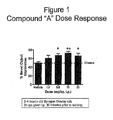
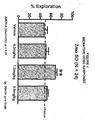
- Intraperitoneal injections of donepezil at the dose of 0.05 mg/kg; a suboptimal does approximately 1/10 the optimum dose) alone, (+) isopropyl 2-methoxyethyl 4-(2-chloro-3-cyano-phenyl)-1,4-dihydro-2,6-dimethylpyridine-3,5-dicarboxylate [hereinafter Compound A] (at the dose of 1.00 mg/kg; suboptimal does approximately 1/10 the optimum dose) alone, and co-administrations of donepezil (at the dose of 0.05 mg/kg; suboptimal does approximately 1/10 the optimum dose) and Compound A (at the dose of 1.00 mg/kg; suboptimal does approximately 1/10 the optimum dose) are evaluated for enhanced novel object recognition memory in young adult male (3 months old) Sprague-Dawley rats (obtained from Hilltop Lab Animals, Scottdale, PA), with approximate weight ranging from 350 to 450 grams.
- the vehicle is 10% Cremophore in 0.9% NaCl; 20% EtOH, 60% PEG 400, and 20% H 2 O.
- the formulations contain 0.05 mg/ml donepezil in the vehicle; and 1.00 mg/ml Compound A in vehicle.
- the total doses are 0.05 mg/kg and 1.00 mg/kg, respectively.
- the rats are divided into four groups which receive the following two injections:
- All rats receive two i.p, injections: the first injection of the first component is administered 60 minutes prior to training, and the second injection of the second component is administered 30 minutes prior to training.
- donepezil an acetylcholine esterase inhibitor
- NMDA-R modulator memantine The dose response data for memantine in the Novel Object Recognition Memory test is shown in Figure 4 .
- the data show that the approximate optimum dosage for memantine is 1.0 mg/kg.
- Figure 3 presents data for the combination of the suboptimal dose of 0.05 mg/kg donepezil and the suboptimal dose of 0.3 mg/kg of memantine. While the data show a slight improvement in % Exploration in comparison to the controls, Vehicle-Vehicle, donepezil -Vehicle, and Vehicle-memantine, the improvement is much smaller than that shown for donepezil-Compound A.
- Memantine and Compound A operate by different mechanisms.
- Memantine is an NMDA-R modulator whereas Compound A is an L-type calcium channel blocker.
- donepezil is an acetylcholine esterase inhibitor, and thus acts by a different mechanism than both memantine and Compound A.
Landscapes
- Health & Medical Sciences (AREA)
- General Health & Medical Sciences (AREA)
- Chemical & Material Sciences (AREA)
- Veterinary Medicine (AREA)
- Medicinal Chemistry (AREA)
- Public Health (AREA)
- Pharmacology & Pharmacy (AREA)
- Life Sciences & Earth Sciences (AREA)
- Animal Behavior & Ethology (AREA)
- Epidemiology (AREA)
- Bioinformatics & Cheminformatics (AREA)
- Engineering & Computer Science (AREA)
- Nuclear Medicine, Radiotherapy & Molecular Imaging (AREA)
- Chemical Kinetics & Catalysis (AREA)
- General Chemical & Material Sciences (AREA)
- Organic Chemistry (AREA)
- Neurology (AREA)
- Biomedical Technology (AREA)
- Neurosurgery (AREA)
- Pain & Pain Management (AREA)
- Psychiatry (AREA)
- Heart & Thoracic Surgery (AREA)
- Cardiology (AREA)
- Psychology (AREA)
- Hospice & Palliative Care (AREA)
- Pharmaceuticals Containing Other Organic And Inorganic Compounds (AREA)
- Acyclic And Carbocyclic Compounds In Medicinal Compositions (AREA)
- Medicines That Contain Protein Lipid Enzymes And Other Medicines (AREA)
- Hydrogenated Pyridines (AREA)
Applications Claiming Priority (3)
| Application Number | Priority Date | Filing Date | Title |
|---|---|---|---|
| US52366403P | 2003-11-21 | 2003-11-21 | |
| US60811604P | 2004-09-09 | 2004-09-09 | |
| EP04811351A EP1684806B1 (de) | 2003-11-21 | 2004-11-19 | Zusammensetzungen enhaltend l-typ-calciumcanalblockern und cholinesterase-hemmern |
Related Parent Applications (1)
| Application Number | Title | Priority Date | Filing Date |
|---|---|---|---|
| EP04811351A Division EP1684806B1 (de) | 2003-11-21 | 2004-11-19 | Zusammensetzungen enhaltend l-typ-calciumcanalblockern und cholinesterase-hemmern |
Publications (1)
| Publication Number | Publication Date |
|---|---|
| EP1952824A1 true EP1952824A1 (de) | 2008-08-06 |
Family
ID=34636482
Family Applications (3)
| Application Number | Title | Priority Date | Filing Date |
|---|---|---|---|
| EP08153319A Withdrawn EP1952824A1 (de) | 2003-11-21 | 2004-11-19 | Zusammensetzungen und Verfahren zur Behandlung mithilfe von L-Kalzium-Kanalblockern und Cholinesterase-Inhibitoren |
| EP04811352A Withdrawn EP1684755A1 (de) | 2003-11-21 | 2004-11-19 | Verwendung von (+)-isopropyl-2-methoxyethyl 4-(2-chloro-3-cyano-phenyl)-1,4-dihydro-2,6-dymethyl-pyridin-3,5-dicarboxylat bei der behandlung von gedächtnisstörungen |
| EP04811351A Expired - Lifetime EP1684806B1 (de) | 2003-11-21 | 2004-11-19 | Zusammensetzungen enhaltend l-typ-calciumcanalblockern und cholinesterase-hemmern |
Family Applications After (2)
| Application Number | Title | Priority Date | Filing Date |
|---|---|---|---|
| EP04811352A Withdrawn EP1684755A1 (de) | 2003-11-21 | 2004-11-19 | Verwendung von (+)-isopropyl-2-methoxyethyl 4-(2-chloro-3-cyano-phenyl)-1,4-dihydro-2,6-dymethyl-pyridin-3,5-dicarboxylat bei der behandlung von gedächtnisstörungen |
| EP04811351A Expired - Lifetime EP1684806B1 (de) | 2003-11-21 | 2004-11-19 | Zusammensetzungen enhaltend l-typ-calciumcanalblockern und cholinesterase-hemmern |
Country Status (9)
| Country | Link |
|---|---|
| US (4) | US20050153953A1 (de) |
| EP (3) | EP1952824A1 (de) |
| JP (2) | JP2007512338A (de) |
| AT (1) | ATE399026T1 (de) |
| AU (2) | AU2004292966A1 (de) |
| CA (2) | CA2546395A1 (de) |
| DE (1) | DE602004014635D1 (de) |
| ES (1) | ES2309594T3 (de) |
| WO (2) | WO2005051389A1 (de) |
Families Citing this family (36)
| Publication number | Priority date | Publication date | Assignee | Title |
|---|---|---|---|---|
| US20040122090A1 (en) * | 2001-12-07 | 2004-06-24 | Lipton Stuart A. | Methods for treating neuropsychiatric disorders with nmda receptor antagonists |
| WO2005005768A1 (en) | 2003-07-09 | 2005-01-20 | Shell Internationale Research Maatschappij B.V. | Tool for excavating an object |
| ATE384190T1 (de) | 2003-10-21 | 2008-02-15 | Shell Int Research | Düseneinheit und verfahren zum ausheben eines lochs in ein objekt |
| ATE374304T1 (de) | 2003-10-29 | 2007-10-15 | Shell Int Research | Fluidstrahlbohrwerkzeug |
| US7619007B2 (en) * | 2004-11-23 | 2009-11-17 | Adamas Pharmaceuticals, Inc. | Method and composition for administering an NMDA receptor antagonist to a subject |
| EP2623099A1 (de) | 2004-11-24 | 2013-08-07 | Neuromolecular Pharmaceuticals, Inc | Zusammensetzung und Verfahren zur Behandlung neurologischer Erkrankungen |
| EP2243475B1 (de) * | 2005-04-06 | 2016-01-13 | Adamas Pharmaceuticals, Inc. | Kombination von Memantin und Donepezil zur Behandlung von Erkrankungen des ZNS |
| WO2006109164A2 (en) * | 2005-04-15 | 2006-10-19 | Research & Innovation Soc. Coop. A R.L. | A method for preventing, delaying or reverting abnormal amyloid deposition |
| WO2007003941A1 (en) * | 2005-07-06 | 2007-01-11 | Cambridge Enterprise Limited | Modulation of autophagy by calpain inhibition |
| WO2008109343A1 (en) * | 2007-03-01 | 2008-09-12 | Memory Pharmaceuticals Corporation | Methods of treating bipolar disorder and memory and/or cognitive impairment associated therewith with (+)-isopropyl 2-methoxyethyl 4-(2-chloro-3-cyano-phenyl)-1,4-dihydro-2,6-dimethyl-pyridine-3,5-dicarboxylate |
| US8580776B2 (en) * | 2007-07-10 | 2013-11-12 | The Board Of Trustees Of The University Of Illinois | Compositions and methods for treating neurodegenerating diseases |
| WO2009051922A1 (en) * | 2007-10-15 | 2009-04-23 | Memory Pharmaceuticals Corporation | Methods of treating alzheimer's disease with (+) - isopropyl 2-methoxyethyl 4-(2-chloro-3- cyano-phenyl) -1, 4-dihydro-2, 6-dimethyl-pyridine-3, 5-dicarboxylate and a cholinesterase inhibitor |
| WO2009126844A2 (en) * | 2008-04-09 | 2009-10-15 | Concert Pharmaceuticals Inc. | Derivatives of 3-(2-hydroxy-5-methyphenyl)-n,n-diisopropyl-3-phenylpropylamine and methods of use thereof |
| WO2010006103A1 (en) * | 2008-07-10 | 2010-01-14 | Ore Pharmaceuticals Inc. | Method for enhancing cognition or inhibiting cognitive decline |
| ES2896678T3 (es) * | 2008-09-18 | 2022-02-25 | Auspex Pharmaceuticals Inc | Derivados deuterados de benzoquinolina como inhibidores del transportador de monoamina vesicular 2 |
| US20100143505A1 (en) * | 2008-12-09 | 2010-06-10 | Auspex Pharmaceuticals, Inc. | Indanone inhibitors of acetylcholinesterase |
| US20100292281A1 (en) * | 2009-05-15 | 2010-11-18 | The University Of Kentucky Research Foundation | Treatment of mci and alzheimer's disease |
| US9968574B2 (en) | 2009-05-15 | 2018-05-15 | The University Of Kentucky Research Foundation | Treatment of MCI and Alzheimer's disease |
| CA2782556C (en) | 2009-12-02 | 2018-03-27 | Adamas Pharma, Llc | Amantadine compositions and methods of use |
| CA2799162A1 (en) * | 2010-05-13 | 2011-11-17 | The University Of Kentucky Research Foundation | Treatment of mci and alzheimer's disease |
| US9550780B2 (en) | 2012-09-18 | 2017-01-24 | Auspex Pharmaceuticals, Inc. | Formulations pharmacokinetics of deuterated benzoquinoline inhibitors of vesicular monoamine transporter 2 |
| IN2015DN01662A (de) | 2012-09-18 | 2015-07-03 | Auspex Pharmaceuticals Inc | |
| WO2014204933A1 (en) | 2013-06-17 | 2014-12-24 | Adamas Pharmaceuticals, Inc. | Amantadine compositions and methods of use |
| NZ720301A (en) | 2013-12-03 | 2022-01-28 | Auspex Pharmaceuticals Inc | Deuterated tetrabenazine compounds |
| CN114767672A (zh) | 2015-03-06 | 2022-07-22 | 奥斯拜客斯制药有限公司 | 氘代丁苯那嗪或包含氘代丁苯那嗪的组合物 |
| CN108697655B (zh) | 2015-12-30 | 2021-12-10 | 考里安公司 | 用于长期透皮施药的系统和方法 |
| WO2017117586A1 (en) * | 2015-12-31 | 2017-07-06 | Bach Pharma, Inc. | Compositions and nethods for treating brain dysfunction |
| EP3436021A4 (de) * | 2016-03-29 | 2019-11-06 | RespireRx Pharmaceuticals Inc. | Zusammensetzungen und verfahren zur behandlung von aufmerksamkeitsdefizitstörungen |
| AU2017281789B2 (en) | 2016-06-23 | 2023-04-13 | Corium, LLC. | Adhesive matrix with hydrophilic and hydrophobic domains and a therapeutic agent |
| JP7153010B2 (ja) | 2016-07-27 | 2022-10-13 | コリウム, インコーポレイテッド | 塩薬物のin situでの塩から中性の薬物変換による、低溶解度または不安定非イオン化中性薬物の経皮配合物および送達方法 |
| US20180028461A1 (en) | 2016-07-27 | 2018-02-01 | Corium International, Inc. | Transdermal delivery systems with pharmacokinetics bioequivalent to oral delivery |
| SG11201900712SA (en) | 2016-07-27 | 2019-02-27 | Corium Int Inc | Memantine transdermal delivery systems |
| AU2018307792B2 (en) | 2017-07-26 | 2024-08-08 | Corium, LLC. | Transdermal delivery system with a microporous membrane having solvent-filled pores |
| CA3086163A1 (en) | 2017-12-20 | 2019-06-27 | Corium, Inc. | Transdermal adhesive composition comprising a volatile liquid therapeutic agent having low melting point |
| CA3206935A1 (en) * | 2021-01-29 | 2022-08-04 | 3Z Ehf | Novel treatments |
| WO2024136579A1 (ko) * | 2022-12-22 | 2024-06-27 | 서울대학교산학협력단 | 도파민 생성 억제제 또는 도파민 수용체 길항제를 포함하는 인지기능 장애의 예방, 개선 또는 치료용 조성물 |
Citations (5)
| Publication number | Priority date | Publication date | Assignee | Title |
|---|---|---|---|---|
| US5665740A (en) | 1993-12-10 | 1997-09-09 | Bayer Aktiengesellschaft | Isopropyl 2-methoxyethyl 4-(2-chloro-3-cyano-phenyl)-1, 4-dihydro-2,6-dimethyl-pyridine-3,5-dica rboxylate |
| US5846514A (en) | 1994-03-25 | 1998-12-08 | Isotechnika, Inc. | Enhancement of the efficacy of nifedipine by deuteration |
| US6036973A (en) * | 1994-06-27 | 2000-03-14 | Alza Corporation | Therapy for neurological diseases |
| US6334997B1 (en) | 1994-03-25 | 2002-01-01 | Isotechnika, Inc. | Method of using deuterated calcium channel blockers |
| WO2003082270A1 (en) * | 2002-03-22 | 2003-10-09 | Axonyx, Inc. | Method for treating cognitive disorders |
Family Cites Families (5)
| Publication number | Priority date | Publication date | Assignee | Title |
|---|---|---|---|---|
| CN1261348A (zh) * | 1997-04-25 | 2000-07-26 | 味之素株式会社 | 新型二氢吡啶衍生物 |
| US6979698B1 (en) * | 1997-08-11 | 2005-12-27 | Targacept, Inc. | Method of treating cognitive deficits in learning and memory |
| CN1283187A (zh) * | 1997-12-22 | 2001-02-07 | 味之素株式会社 | 新颖二氢吡啶衍生物 |
| US6440967B1 (en) * | 1998-11-12 | 2002-08-27 | Merck & Co., Inc. | Combination of a GABAA alpha 5 inverse agonist and COX-2 inhibitor, NSAID, estrogen or vitamin E |
| AU2003298514A1 (en) * | 2002-05-17 | 2004-05-04 | Eisai Co., Ltd. | Methods and compositions using cholinesterase inhibitors |
-
2004
- 2004-11-19 EP EP08153319A patent/EP1952824A1/de not_active Withdrawn
- 2004-11-19 WO PCT/US2004/038624 patent/WO2005051389A1/en not_active Ceased
- 2004-11-19 AU AU2004292966A patent/AU2004292966A1/en not_active Abandoned
- 2004-11-19 AU AU2004292967A patent/AU2004292967A1/en not_active Abandoned
- 2004-11-19 DE DE602004014635T patent/DE602004014635D1/de not_active Expired - Fee Related
- 2004-11-19 ES ES04811351T patent/ES2309594T3/es not_active Expired - Lifetime
- 2004-11-19 EP EP04811352A patent/EP1684755A1/de not_active Withdrawn
- 2004-11-19 US US10/992,464 patent/US20050153953A1/en not_active Abandoned
- 2004-11-19 AT AT04811351T patent/ATE399026T1/de not_active IP Right Cessation
- 2004-11-19 JP JP2006541354A patent/JP2007512338A/ja active Pending
- 2004-11-19 WO PCT/US2004/038623 patent/WO2005051426A1/en not_active Ceased
- 2004-11-19 US US10/580,008 patent/US20080026081A1/en not_active Abandoned
- 2004-11-19 CA CA002546395A patent/CA2546395A1/en not_active Abandoned
- 2004-11-19 EP EP04811351A patent/EP1684806B1/de not_active Expired - Lifetime
- 2004-11-19 CA CA002546366A patent/CA2546366A1/en not_active Abandoned
- 2004-11-19 JP JP2006541355A patent/JP2007512339A/ja active Pending
-
2008
- 2008-10-30 US US12/261,649 patent/US20090069361A1/en not_active Abandoned
-
2009
- 2009-02-20 US US12/389,576 patent/US20090156639A1/en not_active Abandoned
Patent Citations (5)
| Publication number | Priority date | Publication date | Assignee | Title |
|---|---|---|---|---|
| US5665740A (en) | 1993-12-10 | 1997-09-09 | Bayer Aktiengesellschaft | Isopropyl 2-methoxyethyl 4-(2-chloro-3-cyano-phenyl)-1, 4-dihydro-2,6-dimethyl-pyridine-3,5-dica rboxylate |
| US5846514A (en) | 1994-03-25 | 1998-12-08 | Isotechnika, Inc. | Enhancement of the efficacy of nifedipine by deuteration |
| US6334997B1 (en) | 1994-03-25 | 2002-01-01 | Isotechnika, Inc. | Method of using deuterated calcium channel blockers |
| US6036973A (en) * | 1994-06-27 | 2000-03-14 | Alza Corporation | Therapy for neurological diseases |
| WO2003082270A1 (en) * | 2002-03-22 | 2003-10-09 | Axonyx, Inc. | Method for treating cognitive disorders |
Non-Patent Citations (7)
| Title |
|---|
| "Remington's Pharmaceutical Sciences", pages: 1553 - 1593 |
| BEJAR C ET AL: "Effect of rivastigmine on scopolamine-induced memory impairment in rats", EUROPEAN JOURNAL OF PHARMACOLOGY, AMSTERDAM, NL, vol. 383, no. 3, 1 January 1999 (1999-01-01), pages 231 - 240, XP001190871, ISSN: 0014-2999 * |
| KABALKA ET AL.: "The synthesis of radiolabeled compounds VIA organometallic intermediates", TETRAHEDRON, vol. 45, no. 21, 1989, pages 6601 - 21 |
| LIEBERMAN; LACHMAN; SCHWARTZ: "Pharmaceutical Dosage Forms: Tablets", MARCEL DEKKER, INC. |
| LU WEIHUA ET AL: "Improving effect of huperzine A on discrimination performance in aged rats and adult rats with experimental cognitive impairment", CHEMICAL ABSTRACTS + INDEXES, AMERICAN CHEMICAL SOCIETY. COLUMBUS, US, vol. 108, no. 9, 29 February 1988 (1988-02-29), XP002182906, ISSN: 0009-2258 * |
| SHIGETA M ET AL: "DONEPEZIL FOR ALZHEIMER'S DISEASE: PHARMACODYNAMIC, PHARMACOKINETIC, AND CLINICAL PROFILES", CNS DRUG REVIEWS, BRANFORD, CT, US, vol. 7, no. 4, 21 December 2001 (2001-12-21), pages 353 - 368, XP009028267, ISSN: 1080-563X * |
| SVESTKA J: "NOVA PSYCHOFARMAKA: KOGNITIVUM RIVASTIGMIN. NEW PSYCHOTROPICS: COGNITIVE ENHANCER RIVASTIGMINE", PSYCHIATRIE, TIGIS, PRAGUE, CS, vol. 3, no. 2, 1 January 1999 (1999-01-01), pages 110 - 118, XP000878815, ISSN: 1211-7579 * |
Also Published As
| Publication number | Publication date |
|---|---|
| CA2546395A1 (en) | 2005-06-09 |
| JP2007512339A (ja) | 2007-05-17 |
| AU2004292967A1 (en) | 2005-06-09 |
| US20050153953A1 (en) | 2005-07-14 |
| US20090156639A1 (en) | 2009-06-18 |
| DE602004014635D1 (de) | 2008-08-07 |
| EP1684755A1 (de) | 2006-08-02 |
| WO2005051426A1 (en) | 2005-06-09 |
| ES2309594T3 (es) | 2008-12-16 |
| EP1684806B1 (de) | 2008-06-25 |
| WO2005051389A1 (en) | 2005-06-09 |
| US20090069361A1 (en) | 2009-03-12 |
| AU2004292967A2 (en) | 2005-06-09 |
| JP2007512338A (ja) | 2007-05-17 |
| ATE399026T1 (de) | 2008-07-15 |
| US20080026081A1 (en) | 2008-01-31 |
| CA2546366A1 (en) | 2005-06-09 |
| EP1684806A1 (de) | 2006-08-02 |
| AU2004292966A1 (en) | 2005-06-09 |
Similar Documents
| Publication | Publication Date | Title |
|---|---|---|
| EP1952824A1 (de) | Zusammensetzungen und Verfahren zur Behandlung mithilfe von L-Kalzium-Kanalblockern und Cholinesterase-Inhibitoren | |
| EP0971713B1 (de) | Verwendung von cholinesterasehemmer zur behandlung von konzentrationsstörungen | |
| Wang et al. | Reversal of scopolamine-induced deficits in radial maze performance by (−)-huperzine A: comparison with E2020 and tacrine | |
| CA2241611C (en) | Chronic, bolus administration of d-threo methylphenidate | |
| WO1998030243A1 (en) | Acetylcholinesterase inhibitors in combination with muscarinic agonists for the treatment of alzheimer's disease | |
| EP1112067B1 (de) | Verwendung von acetylcholinesterasen hemmern zur herstellung eines arzneimittels zur behandlung von funktionellen und/oder organischen schmerzsyndromen | |
| JP2010524844A (ja) | 認知症のためのシンナミド化合物 | |
| JP6808679B2 (ja) | 認知機能を改善するための方法および組成物 | |
| AU2004283425A1 (en) | Pharmaceutical composition comprising a monoamine neurotransmitter re-uptake inhibitor and an acetylcholinesterase inhibitor | |
| US20030144271A1 (en) | Methods for the treatment of substance abuse | |
| WO2018039159A1 (en) | Muscarinic m2-antagonist combination | |
| US7608636B2 (en) | Medicines for treatment and prevention of neurogenic pain | |
| JP2575569B2 (ja) | 薬物従属症及び禁断症状の治療に関するグリシン/nmdaレセプターリガンドの用法 | |
| EP1613328B1 (de) | Verwendung von carbamazepinderivaten zur behandlung von agitatio in demenspatienten | |
| WO1998031356A1 (en) | Idebenone containing combination agent for treating alzheimer's disease | |
| EP1781290A2 (de) | Entzündungshemmende wirkstoffe | |
| HK1057003A (en) | Medicines for treatment and prevention of neurogenic pain | |
| HK1111361A (en) | Chronic, bolus administration of d-treo methylphenidate |
Legal Events
| Date | Code | Title | Description |
|---|---|---|---|
| PUAI | Public reference made under article 153(3) epc to a published international application that has entered the european phase |
Free format text: ORIGINAL CODE: 0009012 |
|
| AC | Divisional application: reference to earlier application |
Ref document number: 1684806 Country of ref document: EP Kind code of ref document: P |
|
| AK | Designated contracting states |
Kind code of ref document: A1 Designated state(s): AT BE BG CH CY CZ DE DK EE ES FI FR GB GR HU IE IS IT LI LU MC NL PL PT RO SE SI SK TR |
|
| 17P | Request for examination filed |
Effective date: 20090204 |
|
| 17Q | First examination report despatched |
Effective date: 20090304 |
|
| AKX | Designation fees paid |
Designated state(s): AT BE BG CH CY CZ DE DK EE ES FI FR GB GR HU IE IS IT LI LU MC NL PL PT RO SE SI SK TR |
|
| STAA | Information on the status of an ep patent application or granted ep patent |
Free format text: STATUS: THE APPLICATION IS DEEMED TO BE WITHDRAWN |
|
| 18D | Application deemed to be withdrawn |
Effective date: 20090715 |