EP1953230A1 - Verbesserte In-vivo-Herstellung von Cephalosporinen - Google Patents
Verbesserte In-vivo-Herstellung von Cephalosporinen Download PDFInfo
- Publication number
- EP1953230A1 EP1953230A1 EP08101461A EP08101461A EP1953230A1 EP 1953230 A1 EP1953230 A1 EP 1953230A1 EP 08101461 A EP08101461 A EP 08101461A EP 08101461 A EP08101461 A EP 08101461A EP 1953230 A1 EP1953230 A1 EP 1953230A1
- Authority
- EP
- European Patent Office
- Prior art keywords
- expandase
- dna fragment
- host cell
- host
- apa
- Prior art date
- Legal status (The legal status is an assumption and is not a legal conclusion. Google has not performed a legal analysis and makes no representation as to the accuracy of the status listed.)
- Withdrawn
Links
- 150000001780 cephalosporins Chemical class 0.000 title abstract description 30
- 238000004519 manufacturing process Methods 0.000 title abstract description 23
- 238000001727 in vivo Methods 0.000 title abstract description 8
- 229930186147 Cephalosporin Natural products 0.000 title description 27
- 229940124587 cephalosporin Drugs 0.000 title description 27
- 101710104123 Deacetoxycephalosporin C synthase Proteins 0.000 claims abstract description 108
- 210000004027 cell Anatomy 0.000 claims abstract description 57
- 210000002500 microbody Anatomy 0.000 claims abstract description 41
- 238000000034 method Methods 0.000 claims abstract description 40
- 210000000172 cytosol Anatomy 0.000 claims abstract description 30
- 241000228150 Penicillium chrysogenum Species 0.000 claims description 43
- 239000012634 fragment Substances 0.000 claims description 43
- -1 beta-lactam compound Chemical class 0.000 claims description 24
- 230000008685 targeting Effects 0.000 claims description 21
- 238000012986 modification Methods 0.000 claims description 17
- 230000004048 modification Effects 0.000 claims description 17
- 241000233866 Fungi Species 0.000 claims description 16
- 241000187433 Streptomyces clavuligerus Species 0.000 claims description 14
- 239000002773 nucleotide Substances 0.000 claims description 13
- 125000003729 nucleotide group Chemical group 0.000 claims description 13
- 210000004899 c-terminal region Anatomy 0.000 claims description 11
- 244000005700 microbiome Species 0.000 claims description 8
- 230000008569 process Effects 0.000 claims description 8
- 230000009466 transformation Effects 0.000 claims description 8
- MTCFGRXMJLQNBG-UHFFFAOYSA-N Serine Natural products OCC(N)C(O)=O MTCFGRXMJLQNBG-UHFFFAOYSA-N 0.000 claims description 7
- 235000004400 serine Nutrition 0.000 claims description 7
- 241000228431 Acremonium chrysogenum Species 0.000 claims description 6
- 240000004808 Saccharomyces cerevisiae Species 0.000 claims description 6
- 230000001105 regulatory effect Effects 0.000 claims description 6
- XUJNEKJLAYXESH-REOHCLBHSA-N L-Cysteine Chemical group SC[C@H](N)C(O)=O XUJNEKJLAYXESH-REOHCLBHSA-N 0.000 claims description 4
- QNAYBMKLOCPYGJ-REOHCLBHSA-N L-alanine Chemical group C[C@H](N)C(O)=O QNAYBMKLOCPYGJ-REOHCLBHSA-N 0.000 claims description 4
- KDXKERNSBIXSRK-UHFFFAOYSA-N Lysine Natural products NCCCCC(N)C(O)=O KDXKERNSBIXSRK-UHFFFAOYSA-N 0.000 claims description 4
- 239000004472 Lysine Substances 0.000 claims description 4
- 235000004279 alanine Nutrition 0.000 claims description 4
- 125000000539 amino acid group Chemical group 0.000 claims description 4
- 241000351920 Aspergillus nidulans Species 0.000 claims description 3
- 241000228245 Aspergillus niger Species 0.000 claims description 3
- ROHFNLRQFUQHCH-UHFFFAOYSA-N Leucine Natural products CC(C)CC(N)C(O)=O ROHFNLRQFUQHCH-UHFFFAOYSA-N 0.000 claims description 3
- 239000004475 Arginine Chemical group 0.000 claims description 2
- ODKSFYDXXFIFQN-BYPYZUCNSA-P L-argininium(2+) Chemical group NC(=[NH2+])NCCC[C@H]([NH3+])C(O)=O ODKSFYDXXFIFQN-BYPYZUCNSA-P 0.000 claims description 2
- HNDVDQJCIGZPNO-YFKPBYRVSA-N L-histidine Chemical group OC(=O)[C@@H](N)CC1=CN=CN1 HNDVDQJCIGZPNO-YFKPBYRVSA-N 0.000 claims description 2
- ODKSFYDXXFIFQN-UHFFFAOYSA-N arginine Chemical group OC(=O)C(N)CCCNC(N)=N ODKSFYDXXFIFQN-UHFFFAOYSA-N 0.000 claims description 2
- 235000003704 aspartic acid Nutrition 0.000 claims description 2
- OQFSQFPPLPISGP-UHFFFAOYSA-N beta-carboxyaspartic acid Natural products OC(=O)C(N)C(C(O)=O)C(O)=O OQFSQFPPLPISGP-UHFFFAOYSA-N 0.000 claims description 2
- 235000018417 cysteine Nutrition 0.000 claims description 2
- XUJNEKJLAYXESH-UHFFFAOYSA-N cysteine Chemical group SCC(N)C(O)=O XUJNEKJLAYXESH-UHFFFAOYSA-N 0.000 claims description 2
- HNDVDQJCIGZPNO-UHFFFAOYSA-N histidine Chemical group OC(=O)C(N)CC1=CN=CN1 HNDVDQJCIGZPNO-UHFFFAOYSA-N 0.000 claims description 2
- 125000001909 leucine group Chemical group [H]N(*)C(C(*)=O)C([H])([H])C(C([H])([H])[H])C([H])([H])[H] 0.000 claims description 2
- 125000003588 lysine group Chemical group [H]N([H])C([H])([H])C([H])([H])C([H])([H])C([H])([H])C([H])(N([H])[H])C(*)=O 0.000 claims description 2
- 125000003607 serino group Chemical group [H]N([H])[C@]([H])(C(=O)[*])C(O[H])([H])[H] 0.000 claims description 2
- 230000001131 transforming effect Effects 0.000 claims description 2
- 125000003460 beta-lactamyl group Chemical group 0.000 claims 1
- 102000004190 Enzymes Human genes 0.000 abstract description 47
- 108090000790 Enzymes Proteins 0.000 abstract description 47
- 210000002824 peroxisome Anatomy 0.000 abstract description 12
- 230000000694 effects Effects 0.000 abstract description 5
- 108020004414 DNA Proteins 0.000 description 36
- 229930182555 Penicillin Natural products 0.000 description 20
- 108090000623 proteins and genes Proteins 0.000 description 19
- 150000002960 penicillins Chemical class 0.000 description 13
- 150000001413 amino acids Chemical class 0.000 description 12
- JGSARLDLIJGVTE-MBNYWOFBSA-N Penicillin G Chemical compound N([C@H]1[C@H]2SC([C@@H](N2C1=O)C(O)=O)(C)C)C(=O)CC1=CC=CC=C1 JGSARLDLIJGVTE-MBNYWOFBSA-N 0.000 description 11
- 230000004807 localization Effects 0.000 description 11
- 102000004169 proteins and genes Human genes 0.000 description 11
- 235000018102 proteins Nutrition 0.000 description 10
- 101150091913 cefE gene Proteins 0.000 description 9
- 238000006243 chemical reaction Methods 0.000 description 9
- 238000000855 fermentation Methods 0.000 description 8
- 230000004151 fermentation Effects 0.000 description 8
- 239000002609 medium Substances 0.000 description 8
- 235000001014 amino acid Nutrition 0.000 description 7
- 229940024606 amino acid Drugs 0.000 description 7
- 229940049954 penicillin Drugs 0.000 description 7
- NVIAYEIXYQCDAN-MHTLYPKNSA-N (6r,7s)-7-azaniumyl-3-methyl-8-oxo-5-thia-1-azabicyclo[4.2.0]oct-2-ene-2-carboxylate Chemical compound S1CC(C)=C(C([O-])=O)N2C(=O)[C@H]([NH3+])[C@@H]12 NVIAYEIXYQCDAN-MHTLYPKNSA-N 0.000 description 6
- WNLRTRBMVRJNCN-UHFFFAOYSA-N adipic acid Chemical compound OC(=O)CCCCC(O)=O WNLRTRBMVRJNCN-UHFFFAOYSA-N 0.000 description 6
- 230000015572 biosynthetic process Effects 0.000 description 6
- 150000001875 compounds Chemical class 0.000 description 6
- 239000000243 solution Substances 0.000 description 6
- MIFYHUACUWQUKT-UHFFFAOYSA-N Isopenicillin N Natural products OC(=O)C1C(C)(C)SC2C(NC(=O)CCCC(N)C(O)=O)C(=O)N21 MIFYHUACUWQUKT-UHFFFAOYSA-N 0.000 description 5
- LRHPLDYGYMQRHN-UHFFFAOYSA-N N-Butanol Chemical compound CCCCO LRHPLDYGYMQRHN-UHFFFAOYSA-N 0.000 description 5
- 108020004511 Recombinant DNA Proteins 0.000 description 5
- 230000001404 mediated effect Effects 0.000 description 5
- 238000006049 ring expansion reaction Methods 0.000 description 5
- 239000000126 substance Substances 0.000 description 5
- XLYOFNOQVPJJNP-UHFFFAOYSA-N water Substances O XLYOFNOQVPJJNP-UHFFFAOYSA-N 0.000 description 5
- 150000003952 β-lactams Chemical class 0.000 description 5
- 102000057234 Acyl transferases Human genes 0.000 description 4
- 108700016155 Acyl transferases Proteins 0.000 description 4
- 241000187390 Amycolatopsis lactamdurans Species 0.000 description 4
- 108010085186 Peroxisomal Targeting Signals Proteins 0.000 description 4
- 229950008644 adicillin Drugs 0.000 description 4
- 230000002255 enzymatic effect Effects 0.000 description 4
- 239000000543 intermediate Substances 0.000 description 4
- ZXEKIIBDNHEJCQ-UHFFFAOYSA-N isobutanol Chemical compound CC(C)CO ZXEKIIBDNHEJCQ-UHFFFAOYSA-N 0.000 description 4
- 230000035772 mutation Effects 0.000 description 4
- 239000003960 organic solvent Substances 0.000 description 4
- 239000002245 particle Substances 0.000 description 4
- MIFYHUACUWQUKT-GPUHXXMPSA-N penicillin N Chemical compound OC(=O)[C@H]1C(C)(C)S[C@@H]2[C@H](NC(=O)CCC[C@@H](N)C(O)=O)C(=O)N21 MIFYHUACUWQUKT-GPUHXXMPSA-N 0.000 description 4
- 239000013612 plasmid Substances 0.000 description 4
- 210000001938 protoplast Anatomy 0.000 description 4
- 239000013598 vector Substances 0.000 description 4
- 241000894006 Bacteria Species 0.000 description 3
- XEKOWRVHYACXOJ-UHFFFAOYSA-N Ethyl acetate Chemical compound CCOC(C)=O XEKOWRVHYACXOJ-UHFFFAOYSA-N 0.000 description 3
- 108091028043 Nucleic acid sequence Proteins 0.000 description 3
- 241000589516 Pseudomonas Species 0.000 description 3
- 241000228417 Sarocladium strictum Species 0.000 description 3
- 239000001361 adipic acid Substances 0.000 description 3
- 235000011037 adipic acid Nutrition 0.000 description 3
- 230000006696 biosynthetic metabolic pathway Effects 0.000 description 3
- 238000012217 deletion Methods 0.000 description 3
- 230000037430 deletion Effects 0.000 description 3
- 108010005802 desacetoxycephalosporin C synthetase Proteins 0.000 description 3
- 238000005516 engineering process Methods 0.000 description 3
- 239000000047 product Substances 0.000 description 3
- 238000010188 recombinant method Methods 0.000 description 3
- 239000011734 sodium Substances 0.000 description 3
- 239000000758 substrate Substances 0.000 description 3
- 238000012546 transfer Methods 0.000 description 3
- ODJQKYXPKWQWNK-UHFFFAOYSA-N 3,3'-Thiobispropanoic acid Chemical compound OC(=O)CCSCCC(O)=O ODJQKYXPKWQWNK-UHFFFAOYSA-N 0.000 description 2
- DLFVBJFMPXGRIB-UHFFFAOYSA-N Acetamide Chemical compound CC(N)=O DLFVBJFMPXGRIB-UHFFFAOYSA-N 0.000 description 2
- 229920001817 Agar Polymers 0.000 description 2
- IJGRMHOSHXDMSA-UHFFFAOYSA-N Atomic nitrogen Chemical compound N#N IJGRMHOSHXDMSA-UHFFFAOYSA-N 0.000 description 2
- HOKIDJSKDBPKTQ-GLXFQSAKSA-N Cephalosporin C Natural products S1CC(COC(=O)C)=C(C(O)=O)N2C(=O)[C@@H](NC(=O)CCC[C@@H](N)C(O)=O)[C@@H]12 HOKIDJSKDBPKTQ-GLXFQSAKSA-N 0.000 description 2
- 108020004705 Codon Proteins 0.000 description 2
- 241000196324 Embryophyta Species 0.000 description 2
- 241000588724 Escherichia coli Species 0.000 description 2
- 108700005088 Fungal Genes Proteins 0.000 description 2
- 101710107944 Isopenicillin N synthase Proteins 0.000 description 2
- 239000007836 KH2PO4 Substances 0.000 description 2
- KZSNJWFQEVHDMF-BYPYZUCNSA-N L-valine Chemical compound CC(C)[C@H](N)C(O)=O KZSNJWFQEVHDMF-BYPYZUCNSA-N 0.000 description 2
- 241000228143 Penicillium Species 0.000 description 2
- FAPWRFPIFSIZLT-UHFFFAOYSA-M Sodium chloride Chemical compound [Na+].[Cl-] FAPWRFPIFSIZLT-UHFFFAOYSA-M 0.000 description 2
- 101000981089 Streptomyces clavuligerus Deacetoxycephalosporin C synthase Proteins 0.000 description 2
- XSQUKJJJFZCRTK-UHFFFAOYSA-N Urea Chemical compound NC(N)=O XSQUKJJJFZCRTK-UHFFFAOYSA-N 0.000 description 2
- 239000008272 agar Substances 0.000 description 2
- 239000003242 anti bacterial agent Substances 0.000 description 2
- 229940088710 antibiotic agent Drugs 0.000 description 2
- 239000003782 beta lactam antibiotic agent Substances 0.000 description 2
- 125000003178 carboxy group Chemical group [H]OC(*)=O 0.000 description 2
- HOKIDJSKDBPKTQ-GLXFQSAKSA-M cephalosporin C(1-) Chemical compound S1CC(COC(=O)C)=C(C([O-])=O)N2C(=O)[C@@H](NC(=O)CCC[C@@H]([NH3+])C([O-])=O)[C@@H]12 HOKIDJSKDBPKTQ-GLXFQSAKSA-M 0.000 description 2
- 238000012512 characterization method Methods 0.000 description 2
- 238000001311 chemical methods and process Methods 0.000 description 2
- 239000013611 chromosomal DNA Substances 0.000 description 2
- 238000010367 cloning Methods 0.000 description 2
- 238000010276 construction Methods 0.000 description 2
- 238000006731 degradation reaction Methods 0.000 description 2
- 238000001212 derivatisation Methods 0.000 description 2
- 238000011161 development Methods 0.000 description 2
- 238000001493 electron microscopy Methods 0.000 description 2
- 238000004520 electroporation Methods 0.000 description 2
- 239000000706 filtrate Substances 0.000 description 2
- 125000003651 hexanedioyl group Chemical group C(CCCCC(=O)*)(=O)* 0.000 description 2
- 230000014726 immortalization of host cell Effects 0.000 description 2
- 230000006872 improvement Effects 0.000 description 2
- SQQMAOCOWKFBNP-UHFFFAOYSA-L manganese(II) sulfate Chemical compound [Mn+2].[O-]S([O-])(=O)=O SQQMAOCOWKFBNP-UHFFFAOYSA-L 0.000 description 2
- 229910000357 manganese(II) sulfate Inorganic materials 0.000 description 2
- 229910000402 monopotassium phosphate Inorganic materials 0.000 description 2
- 210000003463 organelle Anatomy 0.000 description 2
- 229940056360 penicillin g Drugs 0.000 description 2
- 230000000858 peroxisomal effect Effects 0.000 description 2
- GNSKLFRGEWLPPA-UHFFFAOYSA-M potassium dihydrogen phosphate Chemical compound [K+].OP(O)([O-])=O GNSKLFRGEWLPPA-UHFFFAOYSA-M 0.000 description 2
- 238000002360 preparation method Methods 0.000 description 2
- 150000003839 salts Chemical class 0.000 description 2
- 238000012216 screening Methods 0.000 description 2
- 239000002904 solvent Substances 0.000 description 2
- 238000004659 sterilization and disinfection Methods 0.000 description 2
- 238000003786 synthesis reaction Methods 0.000 description 2
- 238000012360 testing method Methods 0.000 description 2
- 239000011573 trace mineral Substances 0.000 description 2
- 238000000844 transformation Methods 0.000 description 2
- 239000002132 β-lactam antibiotic Substances 0.000 description 2
- 229940124586 β-lactam antibiotics Drugs 0.000 description 2
- NWUYHJFMYQTDRP-UHFFFAOYSA-N 1,2-bis(ethenyl)benzene;1-ethenyl-2-ethylbenzene;styrene Chemical compound C=CC1=CC=CC=C1.CCC1=CC=CC=C1C=C.C=CC1=CC=CC=C1C=C NWUYHJFMYQTDRP-UHFFFAOYSA-N 0.000 description 1
- NWWJFMCCTZLKNT-UHFFFAOYSA-N 3,4-dihydro-2h-thiazine Chemical group C1CC=CSN1 NWWJFMCCTZLKNT-UHFFFAOYSA-N 0.000 description 1
- NVIAYEIXYQCDAN-UHFFFAOYSA-N 7-amino-3-methyl-8-oxo-5-thia-1-azabicyclo[4.2.0]oct-2-ene-2-carboxylic acid Chemical compound S1CC(C)=C(C(O)=O)N2C(=O)C(N)C12 NVIAYEIXYQCDAN-UHFFFAOYSA-N 0.000 description 1
- DKPFZGUDAPQIHT-UHFFFAOYSA-N Butyl acetate Natural products CCCCOC(C)=O DKPFZGUDAPQIHT-UHFFFAOYSA-N 0.000 description 1
- 241001619326 Cephalosporium Species 0.000 description 1
- 108091035707 Consensus sequence Proteins 0.000 description 1
- WQZGKKKJIJFFOK-GASJEMHNSA-N Glucose Natural products OC[C@H]1OC(O)[C@H](O)[C@@H](O)[C@@H]1O WQZGKKKJIJFFOK-GASJEMHNSA-N 0.000 description 1
- SXRSQZLOMIGNAQ-UHFFFAOYSA-N Glutaraldehyde Chemical compound O=CCCCC=O SXRSQZLOMIGNAQ-UHFFFAOYSA-N 0.000 description 1
- 108090000604 Hydrolases Proteins 0.000 description 1
- 102000004157 Hydrolases Human genes 0.000 description 1
- DGAQECJNVWCQMB-PUAWFVPOSA-M Ilexoside XXIX Chemical compound C[C@@H]1CC[C@@]2(CC[C@@]3(C(=CC[C@H]4[C@]3(CC[C@@H]5[C@@]4(CC[C@@H](C5(C)C)OS(=O)(=O)[O-])C)C)[C@@H]2[C@]1(C)O)C)C(=O)O[C@H]6[C@@H]([C@H]([C@@H]([C@H](O6)CO)O)O)O.[Na+] DGAQECJNVWCQMB-PUAWFVPOSA-M 0.000 description 1
- OYIFNHCXNCRBQI-BYPYZUCNSA-N L-2-aminoadipic acid Chemical compound OC(=O)[C@@H](N)CCCC(O)=O OYIFNHCXNCRBQI-BYPYZUCNSA-N 0.000 description 1
- 239000004201 L-cysteine Substances 0.000 description 1
- 235000013878 L-cysteine Nutrition 0.000 description 1
- ROHFNLRQFUQHCH-YFKPBYRVSA-N L-leucine Chemical compound CC(C)C[C@H](N)C(O)=O ROHFNLRQFUQHCH-YFKPBYRVSA-N 0.000 description 1
- GUBGYTABKSRVRQ-QKKXKWKRSA-N Lactose Natural products OC[C@H]1O[C@@H](O[C@H]2[C@H](O)[C@@H](O)C(O)O[C@@H]2CO)[C@H](O)[C@@H](O)[C@H]1O GUBGYTABKSRVRQ-QKKXKWKRSA-N 0.000 description 1
- 241001465754 Metazoa Species 0.000 description 1
- NTIZESTWPVYFNL-UHFFFAOYSA-N Methyl isobutyl ketone Chemical compound CC(C)CC(C)=O NTIZESTWPVYFNL-UHFFFAOYSA-N 0.000 description 1
- UIHCLUNTQKBZGK-UHFFFAOYSA-N Methyl isobutyl ketone Natural products CCC(C)C(C)=O UIHCLUNTQKBZGK-UHFFFAOYSA-N 0.000 description 1
- 102000008109 Mixed Function Oxygenases Human genes 0.000 description 1
- 108010074633 Mixed Function Oxygenases Proteins 0.000 description 1
- PKEXHDRGMPOQQN-RZVRUWJTSA-N N[C@H](C(=O)O)CCCC(=O)O.N[C@@H](CCCC(=O)O)C(=O)O Chemical compound N[C@H](C(=O)O)CCCC(=O)O.N[C@@H](CCCC(=O)O)C(=O)O PKEXHDRGMPOQQN-RZVRUWJTSA-N 0.000 description 1
- 108010073038 Penicillin Amidase Proteins 0.000 description 1
- 229930195708 Penicillin V Natural products 0.000 description 1
- 101000847770 Penicillium chrysogenum N-(5'-phosphoribosyl)anthranilate isomerase Proteins 0.000 description 1
- 241000284696 Penicillium rubens Wisconsin 54-1255 Species 0.000 description 1
- 102000035195 Peptidases Human genes 0.000 description 1
- 108091005804 Peptidases Proteins 0.000 description 1
- ZLMJMSJWJFRBEC-UHFFFAOYSA-N Potassium Chemical compound [K] ZLMJMSJWJFRBEC-UHFFFAOYSA-N 0.000 description 1
- KWYUFKZDYYNOTN-UHFFFAOYSA-M Potassium hydroxide Chemical compound [OH-].[K+] KWYUFKZDYYNOTN-UHFFFAOYSA-M 0.000 description 1
- 239000004365 Protease Substances 0.000 description 1
- 241000589746 Pseudomonas sp. SE83 Species 0.000 description 1
- GZSZPKSBVAOGIE-CIUDSAMLSA-N Ser-Lys-Ala Chemical compound [H]N[C@@H](CO)C(=O)N[C@@H](CCCCN)C(=O)N[C@@H](C)C(O)=O GZSZPKSBVAOGIE-CIUDSAMLSA-N 0.000 description 1
- 241000187747 Streptomyces Species 0.000 description 1
- 239000002253 acid Substances 0.000 description 1
- 230000009471 action Effects 0.000 description 1
- CSGFFYNMTALICU-ZWNOBZJWSA-N adipyl-7-aminodesacetoxycephalosporanic acid Natural products CC1=C(N2[C@H](SC1)[C@H](NC(=O)CCCCC(O)=O)C2=O)C(O)=O CSGFFYNMTALICU-ZWNOBZJWSA-N 0.000 description 1
- 150000001298 alcohols Chemical class 0.000 description 1
- 108010049411 alpha-aminoadipyl-cysteinyl-valine synthetase Proteins 0.000 description 1
- BFNBIHQBYMNNAN-UHFFFAOYSA-N ammonium sulfate Chemical compound N.N.OS(O)(=O)=O BFNBIHQBYMNNAN-UHFFFAOYSA-N 0.000 description 1
- 229910052921 ammonium sulfate Inorganic materials 0.000 description 1
- 238000004458 analytical method Methods 0.000 description 1
- 229910052925 anhydrite Inorganic materials 0.000 description 1
- 238000013459 approach Methods 0.000 description 1
- 239000007864 aqueous solution Substances 0.000 description 1
- 230000001588 bifunctional effect Effects 0.000 description 1
- 238000004166 bioassay Methods 0.000 description 1
- 230000003115 biocidal effect Effects 0.000 description 1
- 230000001851 biosynthetic effect Effects 0.000 description 1
- 239000004202 carbamide Substances 0.000 description 1
- 230000015556 catabolic process Effects 0.000 description 1
- 238000006555 catalytic reaction Methods 0.000 description 1
- 239000003729 cation exchange resin Substances 0.000 description 1
- 238000004113 cell culture Methods 0.000 description 1
- 230000001413 cellular effect Effects 0.000 description 1
- 230000030570 cellular localization Effects 0.000 description 1
- ZAIPMKNFIOOWCQ-UEKVPHQBSA-N cephalexin Chemical compound C1([C@@H](N)C(=O)N[C@H]2[C@@H]3N(C2=O)C(=C(CS3)C)C(O)=O)=CC=CC=C1 ZAIPMKNFIOOWCQ-UEKVPHQBSA-N 0.000 description 1
- 229940106164 cephalexin Drugs 0.000 description 1
- UCKZMPLVLCKKMO-LHLIQPBNSA-N cephamycin Chemical compound S1CC(C)=C(C(O)=O)N2C(=O)[C@@H](C)[C@]21OC UCKZMPLVLCKKMO-LHLIQPBNSA-N 0.000 description 1
- 238000012993 chemical processing Methods 0.000 description 1
- 230000000052 comparative effect Effects 0.000 description 1
- 238000009833 condensation Methods 0.000 description 1
- 230000005494 condensation Effects 0.000 description 1
- 230000001086 cytosolic effect Effects 0.000 description 1
- NNQIJOYQWYKBOW-JWKOBGCHSA-N deacetoxycephalosporin C Chemical compound S1CC(C)=C(C(O)=O)N2C(=O)[C@@H](NC(=O)CCC[C@@H](N)C(O)=O)[C@@H]12 NNQIJOYQWYKBOW-JWKOBGCHSA-N 0.000 description 1
- 230000020176 deacylation Effects 0.000 description 1
- 238000005947 deacylation reaction Methods 0.000 description 1
- 230000003247 decreasing effect Effects 0.000 description 1
- 238000004925 denaturation Methods 0.000 description 1
- 230000036425 denaturation Effects 0.000 description 1
- JSYGRUBHOCKMGQ-UHFFFAOYSA-N dichloramine Chemical group ClNCl JSYGRUBHOCKMGQ-UHFFFAOYSA-N 0.000 description 1
- 238000006911 enzymatic reaction Methods 0.000 description 1
- 150000002148 esters Chemical class 0.000 description 1
- 239000013604 expression vector Substances 0.000 description 1
- 238000000605 extraction Methods 0.000 description 1
- 238000001914 filtration Methods 0.000 description 1
- 238000012215 gene cloning Methods 0.000 description 1
- 238000010353 genetic engineering Methods 0.000 description 1
- 101150055760 glcA gene Proteins 0.000 description 1
- 239000008103 glucose Substances 0.000 description 1
- PCHJSUWPFVWCPO-UHFFFAOYSA-N gold Chemical compound [Au] PCHJSUWPFVWCPO-UHFFFAOYSA-N 0.000 description 1
- 239000010931 gold Substances 0.000 description 1
- 229910052737 gold Inorganic materials 0.000 description 1
- 101150073906 gpdA gene Proteins 0.000 description 1
- YVSCCMNRWFOKDU-UHFFFAOYSA-N hexanedioic acid Chemical compound OC(=O)CCCCC(O)=O.OC(=O)CCCCC(O)=O YVSCCMNRWFOKDU-UHFFFAOYSA-N 0.000 description 1
- FUZZWVXGSFPDMH-UHFFFAOYSA-N hexanoic acid Chemical compound CCCCCC(O)=O FUZZWVXGSFPDMH-UHFFFAOYSA-N 0.000 description 1
- 238000004128 high performance liquid chromatography Methods 0.000 description 1
- 230000002209 hydrophobic effect Effects 0.000 description 1
- 125000001165 hydrophobic group Chemical group 0.000 description 1
- 238000003365 immunocytochemistry Methods 0.000 description 1
- 239000012535 impurity Substances 0.000 description 1
- 238000011534 incubation Methods 0.000 description 1
- 150000007529 inorganic bases Chemical class 0.000 description 1
- 238000003780 insertion Methods 0.000 description 1
- 230000037431 insertion Effects 0.000 description 1
- 238000002955 isolation Methods 0.000 description 1
- MIFYHUACUWQUKT-GTQWGBSQSA-N isopenicillin N Chemical compound OC(=O)[C@H]1C(C)(C)S[C@@H]2[C@H](NC(=O)CCC[C@H](N)C(O)=O)C(=O)N21 MIFYHUACUWQUKT-GTQWGBSQSA-N 0.000 description 1
- 239000008101 lactose Substances 0.000 description 1
- 239000007788 liquid Substances 0.000 description 1
- 238000009630 liquid culture Methods 0.000 description 1
- 230000007774 longterm Effects 0.000 description 1
- 238000005374 membrane filtration Methods 0.000 description 1
- 210000003470 mitochondria Anatomy 0.000 description 1
- 239000000203 mixture Substances 0.000 description 1
- 102000035118 modified proteins Human genes 0.000 description 1
- 108091005573 modified proteins Proteins 0.000 description 1
- 239000006225 natural substrate Substances 0.000 description 1
- 229910052757 nitrogen Inorganic materials 0.000 description 1
- 230000001473 noxious effect Effects 0.000 description 1
- 150000007523 nucleic acids Chemical group 0.000 description 1
- 101150074325 pcbC gene Proteins 0.000 description 1
- WSHJJCPTKWSMRR-RXMQYKEDSA-N penam group Chemical group S1CCN2[C@H]1CC2=O WSHJJCPTKWSMRR-RXMQYKEDSA-N 0.000 description 1
- 229940056367 penicillin v Drugs 0.000 description 1
- BPLBGHOLXOTWMN-MBNYWOFBSA-N phenoxymethylpenicillin Chemical compound N([C@H]1[C@H]2SC([C@@H](N2C1=O)C(O)=O)(C)C)C(=O)COC1=CC=CC=C1 BPLBGHOLXOTWMN-MBNYWOFBSA-N 0.000 description 1
- UHZYTMXLRWXGPK-UHFFFAOYSA-N phosphorus pentachloride Chemical compound ClP(Cl)(Cl)(Cl)Cl UHZYTMXLRWXGPK-UHFFFAOYSA-N 0.000 description 1
- 239000011591 potassium Substances 0.000 description 1
- 229910052700 potassium Inorganic materials 0.000 description 1
- 108090000765 processed proteins & peptides Proteins 0.000 description 1
- 102000004196 processed proteins & peptides Human genes 0.000 description 1
- 239000013587 production medium Substances 0.000 description 1
- 230000001915 proofreading effect Effects 0.000 description 1
- 238000000746 purification Methods 0.000 description 1
- 239000011541 reaction mixture Substances 0.000 description 1
- 238000011084 recovery Methods 0.000 description 1
- 230000009467 reduction Effects 0.000 description 1
- 239000006152 selective media Substances 0.000 description 1
- 238000012163 sequencing technique Methods 0.000 description 1
- 238000002741 site-directed mutagenesis Methods 0.000 description 1
- 229910052708 sodium Inorganic materials 0.000 description 1
- 239000011780 sodium chloride Substances 0.000 description 1
- 239000007787 solid Substances 0.000 description 1
- 238000000638 solvent extraction Methods 0.000 description 1
- 239000007858 starting material Substances 0.000 description 1
- 230000004960 subcellular localization Effects 0.000 description 1
- 125000001984 thiazolidinyl group Chemical group 0.000 description 1
- 235000013619 trace mineral Nutrition 0.000 description 1
- 230000002103 transcriptional effect Effects 0.000 description 1
- 238000013519 translation Methods 0.000 description 1
- 229960004295 valine Drugs 0.000 description 1
- 238000012795 verification Methods 0.000 description 1
Images



Classifications
-
- C—CHEMISTRY; METALLURGY
- C12—BIOCHEMISTRY; BEER; SPIRITS; WINE; VINEGAR; MICROBIOLOGY; ENZYMOLOGY; MUTATION OR GENETIC ENGINEERING
- C12N—MICROORGANISMS OR ENZYMES; COMPOSITIONS THEREOF; PROPAGATING, PRESERVING, OR MAINTAINING MICROORGANISMS; MUTATION OR GENETIC ENGINEERING; CULTURE MEDIA
- C12N15/00—Mutation or genetic engineering; DNA or RNA concerning genetic engineering, vectors, e.g. plasmids, or their isolation, preparation or purification; Use of hosts therefor
- C12N15/09—Recombinant DNA-technology
- C12N15/11—DNA or RNA fragments; Modified forms thereof; Non-coding nucleic acids having a biological activity
- C12N15/113—Non-coding nucleic acids modulating the expression of genes, e.g. antisense oligonucleotides; Antisense DNA or RNA; Triplex- forming oligonucleotides; Catalytic nucleic acids, e.g. ribozymes; Nucleic acids used in co-suppression or gene silencing
-
- C—CHEMISTRY; METALLURGY
- C12—BIOCHEMISTRY; BEER; SPIRITS; WINE; VINEGAR; MICROBIOLOGY; ENZYMOLOGY; MUTATION OR GENETIC ENGINEERING
- C12N—MICROORGANISMS OR ENZYMES; COMPOSITIONS THEREOF; PROPAGATING, PRESERVING, OR MAINTAINING MICROORGANISMS; MUTATION OR GENETIC ENGINEERING; CULTURE MEDIA
- C12N9/00—Enzymes; Proenzymes; Compositions thereof; Processes for preparing, activating, inhibiting, separating or purifying enzymes
- C12N9/0004—Oxidoreductases (1.)
- C12N9/0071—Oxidoreductases (1.) acting on paired donors with incorporation of molecular oxygen (1.14)
-
- C—CHEMISTRY; METALLURGY
- C12—BIOCHEMISTRY; BEER; SPIRITS; WINE; VINEGAR; MICROBIOLOGY; ENZYMOLOGY; MUTATION OR GENETIC ENGINEERING
- C12P—FERMENTATION OR ENZYME-USING PROCESSES TO SYNTHESISE A DESIRED CHEMICAL COMPOUND OR COMPOSITION OR TO SEPARATE OPTICAL ISOMERS FROM A RACEMIC MIXTURE
- C12P35/00—Preparation of compounds having a 5-thia-1-azabicyclo [4.2.0] octane ring system, e.g. cephalosporin
Definitions
- the present invention lies in the field of recombinant DNA techniques. More in particular, the invention is in the field of the production of cephalosporins using genetically modified host organisms, host organisms so modified, as well as DNA for use therein. The invention further pertains to modified enzymes expressed from recombinant DNA in said host organisms.
- ⁇ -Lactam antibiotics constitute the most important group of antibiotic compounds, with a long history of clinical use. Among this group, the prominent ones are the penicillins and cephalosporins. These compounds are naturally produced by the filamentous fungi such as Penicillium chrysogenum and Acremonium chrysogenum, respectively.
- the first two steps in the biosynthesis of penicillin in P. chrysogenum are the condensation of the three amino acids L-5-amino-5-carboxypentanoic acid (L- ⁇ -aminoadipic acid) (A), L-cysteine (C) and L-valine (V) into the tripeptide LLD-ACV, followed by cyclisation of this tripeptide to form isopenicillin N.
- L- ⁇ -aminoadipic acid A
- L-cysteine C
- L-valine V
- This compound contains the typical ⁇ -lactam structure.
- the third step involves the exchange of the hydrophilic side chain of L-5- amino-5-carboxypentanoic acid by a hydrophobic side chain by the action of the enzyme acyltransferase.
- the enzymatic exchange reaction mediated by acyltransferase takes place inside a cellular organelle, the microbody, as has been described in EP-A-0 448 180 .
- Cephalosporins are much more expensive than penicillins.
- cephalosporins e. g. cephalexin
- Cephalosporin C by far the most important starting material in this respect, is very soluble in water at any pH, thus implying lengthy and costly isolation processes using cumbersome and expensive column technology. Cephalosporin C obtained in this way has to be converted into therapeutically used cephalosporins by a number of chemical and enzymatic conversions.
- DOCS desacetoxycephalosporin C synthetase
- the expandase enzyme from the bacterium Streptomyces clavuligerus was found to carry out, in some cases, penicillin ring expansions. When introduced into P. chrysogenum, it can convert the penicillin ring structure into the cephalosporin ring structure in vivo, as described in Cantwell et al., Proc. R. Soc. Lond. B. 248 (1992), 283-289 .
- the expandase enzyme has been well characterised ( EP-A-0 366 354 ) both biochemically and functionally, as has its corresponding gene, cefE. Both physical maps of the cefE gene ( EP-A-0 341 892 ), DNA sequence and transformation studies in P. chrysogenum with cefE have been described.
- a ring expansion enzyme is for example the bacterium Nocardia lactamdurans (formerly Streptomyces lactamdurans ) and the fungus Acremonium chrysogenum (formerly Cephalosporium acremonium ).
- the expandase from Cephalosporium is a bifunctional enzyme, having expandase (ring-expansion) as well as 3-hydroxylating activity. Both the biochemical properties of the enzyme and the DNA sequence of the gene have been described ( Cortes et al., J. Gen. Microbiol. 133 (1987), 3165-3174 ; and Coque et al., Mol. Gen. Genet. 236 (1993), 453-458 , respectively).
- the expandase enzyme is capable of expanding penicillins with non-naturally occurring side chains to the corresponding 7-ADCA derivatives.
- These side chains include adipate (5-carboxyl-pentanoic acid) and various other compounds. This feature of the expandase has been exploited in a process for the in vivo production of adipoyl-7-ADCA in Penicillium chrysogenum as disclosed in EP-A-0 532 341 .
- Penicillium chrysogenum strains are transformed with the Streptomyces clavuligerus expandase to produce adipoyl-6-aminopenicillanic acid (adipoyl-6-APA) when these transformants are fed adipic acid. Subsequently, adipoyl-6-APA is "expanded" to adipoyl-7-ADCA. Production of various other 7-acylated cephalosporins has been disclosed in WO95/04148 and W095/04149 .
- the final step in the synthesis of penicillins the exchange of the ⁇ -amino adipoyl side chain of IPN by an alternative side-chain, occurs in the microbody, where the acyltransferase is localised.
- the preferred localisation of expandase is therefore believed to be in the microbody. This is based not only on the fact that the substrate for expandase is believed to be produced in the microbody, but also on the expectation that in the microbody, expandase should be better protected from degradation by proteases, which is a known drawback from the use of P.
- chrysogenum for the production of enzymes (see for example, Theilgaard et al., 1997; Purification and characterisation of ⁇ -(L- ⁇ -aminoadipyl)-L-cysteinyl-D-valine synthetase from Penicillium chrysogenum; Biochem. J. 327,185-191 ).
- the invention provides DNA, heterologous host cells capable of transcribing, translating or expressing said DNA and methods employing such host cells and cultures thereof for an improved in vivo production of acylated- cephalosporins with higher yield.
- a host cell comprising an enzyme having expandase activity which is predominantly localised in the cytosol (as opposed to localised mainly in or with the peroxisomes or microbodies) of the host cell.
- the invention provides an isolated DNA fragment coding for a modified expandase, which expandase, after expression of said DNA fragment in a Penicillium chrysogenum host, is found predominantly in the cytosol of said Penicillium host.
- a DNA fragment coding for a modified expandase can for example be obtained by modifying DNA encoding an expandase as found with Nocardia lactamdurans (formerly Streptomyces lactamdurans ) and the fungus Acremonium chrysogenum, and other related (i. e. cephalosporin/cephamycin producing) micro-organisms.
- the invention provides an isolated DNA fragment encoding a modified expandase that preferably localises predominantly in the cytosol instead of in the microbody of the heterologous host.
- a DNA fragment is obtainable from Streptomyces clavuligerus DNA encoding an expandase, and modified to obtain an DNA fragment encoding an expandase that, when expressed in a Penicillium chrysogenum host, is found predominantly in the cytosol of said Penicillium host.
- Such a modification comprises cloning by recombinant techniques of a nucleotide sequence encoding said expandase, but preferably comprises modifying by recombinant techniques of a sequence coding for a microbody or peroxisome targeting signal in said expandase.
- Modification can comprise a single or multiple mutation (such as a deletion, insertion, or reversion) of a nucleic acid sequence encoding an expandase, preferably of a sequence encoding a carboxy-terminal amino acid sequence of said expandase.
- proteins destined for the peroxisome or microbody generally contain a C-terminal targeting sequence, the amino acid sequence of which is generally S (serine) K (lysine) L (leucine), or more generally S/C/A/ - K/H/R - L.
- a targeting sequence at least in a homologous context, provides the necessary signal for a protein such as an enzyme to be routed to the microbody, where it finds its final localisation.
- Expandase from the bacterium S. clavuligerus generally comprises a C-terminal sequence, SKA (Serine-Lysine-Alanine) that seemingly functions as a peroxisomal targeting sequence when said protein is expressed in a heterologous context in a eukaryotic host.
- SKA Serine-Lysine-Alanine
- Penicillium chrysogenum strains transformed with the S. clavuligerus expandase show localisation of the respective expandase within the peroxisome.
- the enzyme carries an effective targeting signal, causing it to localise, at least predominantly, within the microbody of the heterologous Penicillium chrysogenum host cell.
- the invention now provides an effective modification of an expandase, altering the tendency to localise within the microbody and leading to a predominant localisation of said expandase in the cytosol of a host.
- PTSs N-terminal or C-terminal peroxisome targeting signals
- modification of said PTS substantially preventing such localisation in the microbodies.
- An example of such a modification is a modification in a nucleotide sequence coding for a carboxy terminal tripeptide X1-X2-X3, for instance wherein X1 is one amino acid residue selected from the group consisting of Serine, Cysteine and Alanine, X2 is one amino acid residue selected from the group consisting of Lysine, Histidine and Arginine and X3 is Leucine or Alanine.
- Such tripeptide sequences are also called SKL-like peptides, and the essential sequence of the signal may be a small amino acid at the first, a basic residue at the penultimate and a large non-polar residue at the C-terminal position.
- the invention provides a DNA fragment encoding an expandase wherein said fragment encoding an SKL-like tripeptide has been modified or selected so as to substantially prevent the expandase to be localised in the microbodies and hence to cause the expandase to be localised predominantly in the cytosol of the host cell upon expression in said heterologous cell.
- said DNA fragment is obtained from DNA encoding S. clavuligerus expandase initially comprising a nucleotide sequence coding for a carboxy-terminal tripeptide Serine-Lysine- Alanine which is modified so as to cause the expandase to be localised predominantly in the cytosol of the host cell upon expression therein.
- a modification is particularly exemplified by a DNA fragment of the invention wherein a nucleotide sequence coding for Serine-Lysine-Alanine has been modified into a sequence coding for Serine-Lysine-Aspartic acid, or where the amino acid at the ultimate position has been deleted or replaced by for example another non-hydrophobic residue.
- Yet another modification comprises Serine - Serine - Aspartic acid, or where the amino acid at the penultimate position has been deleted or replaced by a non-positively charged residue.
- modifications comprise deletions of modifications in the first position of the tripeptide that alter the routing of a thus modified protein in a heterologous host and cause it to be predominantly localised in the cytosol of the host cell used.
- modifications comprise deletions or modifications of any of a combination of these three amino acids or codons encoding these carboxy- terminal amino acids.
- proteins in nature are abound, and it is now possible to find micro-organisms that comprise an enzyme such as an expandase, that, when said enzyme would be expressed in a heterologous host, would be predominantly localised in the cytosol of said host.
- proteins or enzymes that have a C-terminal sequence deviant from the above identified targeting sequence are likely candidates to be tested for cytosolic localisation and selected for further use in improving yields of cephalosporin production.
- the invention provides a nucleotide sequence coding for an expandase which upon expression in a Penicillium chrysogenum host cell is localised predominantly in the cytosol, thereby improving cephalosporin yield over those of a host cell expressing a comparable enzyme within or at the microbodies.
- an enzyme as provided by the invention appears to be stable outside the microbodies.
- An expandase, as provided by the invention is still capable of expanding penicillins, even those with non- naturally occurring side chains (see for example EP 97201196.9 and EP 97201197.7 ) to the corresponding 7-ADCA derivatives.
- the invention also provides an isolated DNA fragment encoding a modified or selected enzyme as provided by the invention, said fragment further comprising regulatory regions for expression of said DNA in a eukaryotic host cell. It is for example within the skill of the artisan to provide a DNA fragment with regulatory regions functional in one or more host cells of various organisms, such as animal or plant or a yeast or fungus, origin. In a preferred embodiment, the invention provides a DNA fragment encoding a modified enzyme as provided by the invention comprising regulatory regions suitable for regulating expression in a host cell derived from a micro-organism such as a yeast or fungus.
- the invention also provides a host cell or host organism (or progeny thereof) having been provided with a modified or selected recombinant DNA fragment encoding a cytosol-localised enzyme as provided by the invention.
- a host organism is for example incorporating, for example as result of transformation of said host organism or ancestor of said host organism, a DNA fragment, optionally comprising regulatory regions or sequences, comprising a nucleotide sequence encoding a modified enzyme as provided by the invention.
- a host is preferably selected from the group consisting of plants and micro-organisms, preferably being a fungus selected from the group consisting of Penicillium chrysogenum, Aspergillus nidulans or A. niger and Cephalosporium acremonium.
- the invention also provides cultures of hosts cells or host organisms as provided by the invention.
- a culture comprises cells wherein a functional expandase capable of expanding penicillins with (non-naturally occurring) side chains to the corresponding 7-ADCA derivatives is predominantly found in the cytosol.
- the invention provides a culture for large scale fermentation wherein a modified expandase localised in the cytosol contributes to higher production levels of adipoyl-7-ADCA than in a comparable scale fermentation culture utilising wild-type expandase of comparable origin.
- the invention provides a host cell, and cultures thereof, having been provided by recombinant techniques with an expandase selected among others for its capacity or tendency to predominantly localise in the cytosol of a heterologous host, be it whether said expandase localises in a homologous context in a microbody or not.
- a host cell can be selected by providing a host cell with a DNA fragment encoding an expandase, and testing whether said expandase localises predominantly in the cytosol. In a preferred embodiment, testing for localisation of said enzyme is performed by electron microscopy, as explained in the experimental part of the description.
- the invention also provides a method for making a host cell or organism provided with a modified or selected DNA fragment encoding a modified or selected enzyme as provided by the invention comprising contacting cells under transforming conditions with a DNA fragment as provided by the invention and selecting for cells having obtained said DNA. Transformation of host cells, for example of P. chrysogenum or other fungi can, in general, be achieved by different means of DNA delivery, like PEG-Ca mediated protoplast uptake, electroporation or particle gun techniques, and selection of transformants.
- the invention also provides a method for expressing a DNA fragment encoding an expandase in a host cell, wherein said DNA fragment codes for an expandase causing the expandase to be produced and localised predominantly in the cytosol.
- a method comprises providing said DNA fragment with a modification in a nucleotide sequence encoding a carboxy-terminal amino acid sequence, preferably a tripeptide sequence such as SKA found with the expandase of Streptomyces clavuligerus.
- Such a method provided by the invention is preferably used with as host a Penicillium chrysogenum cell.
- the invention also provides a method for expanding the 5-membered ring of a ⁇ -lactam compound to form a six-membered cephem compound, comprising the steps of growing a host capable of producing said ⁇ -lactam compound under conditions conducive thereto and allowing said host to express an heterologous expandase derived by recombinant means ands capable of expanding the 5-membered ring of said ⁇ -lactam compound from a DNA fragment encoding it, so as to form the said 6-membered cephem compound, characterised in that the said expandase is expressed from a DNA fragment which has been modified or selected to code for an expandase that is produced or at least is localised predominantly in the cytosol of the host cell.
- the invention provides a method for expanding the 5-membered ring of a ⁇ -lactam compound by a modified expandase wherein said expandase is localised in the cytosol of a host cell due to a modification in the DNA fragment encoding it, whereby a microbody targeting signal has been modified, preferably wherein a targeting signal comprising a tripeptide amino acid sequence such as obtainable from expandase from Streptomyces clavuligerus has been modified.
- a method wherein said beta-lactam compound is selected from the group consisting of phenylacetyl-6-APA, phenoxyacetyl-6-APA, alpha-aminoadipoyl-6-APA, adipoyl-6-APA, glutaryl-6-APA, or from suberyl-6-APA, pimelyl-6-APA, trans- ⁇ -hydromuconyl-6-APA or comparable compounds.
- the invention provides a method of making a cephem compound comprising the steps of expanding the 5-membered (penam) ring of said ⁇ -lactam compound in a process or method according to the invention and recovering the cephem compound so formed.
- the invention provides a method a making a cephem compound in a host cell culture for large scale fermentation wherein the expandase that is predominantly localised in the cytosol of said host cell contributes to higher production levels of adipoyl-7- ADCA than in a method of making a cephem compound via comparable scale fermentation culture utilising an expandase (in wild-type or modified form) of comparable origin that is predominantly localised in a microbody.
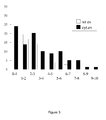
- the invention is illustrated in more detail in the following 4 Figures.
- Transformation of host cells for example of P. chrysogenum or other fungi can, in general, be achieved by different means of DNA delivery, like PEG-Ca mediated protoplast uptake, electroporation or particle gun techniques, and selection of transformants.
- PEG-Ca mediated protoplast uptake like PEG-Ca mediated protoplast uptake, electroporation or particle gun techniques, and selection of transformants.
- Van den Hondel en Punt, Gene and Transfer and Vector Development for Filamentous Fungi in: Applied Molecular Genetics of Fungi (Peberdy, Laten, Ogden, Bennett, eds.), Cambridge University Press (1991 ).
- the application of dominant and non- dominant selection markers has been described (Van den Hondel, supra ). Selection markers of both homologous ( P. chrysogenum derived) and heterologous (non- P. chrysogenum derived) origin have been described ( Gouka et al., J. Biotechnol.
- the ring-expansion reaction, mediated by the modified or selected expandase enzyme is introduced into and expressed in this way in P. chrysogenum, for instance in strain Wisconsin 54-1255 (deposited at ATCC under accession number 28089).
- Other strains of P. chrysogenum, including mutants of strain Wisconsin 54-1255, having an improved beta-lactam yield, are also suitable.
- the modified cefE gene is placed under the transcriptional and translational control of fungal gene control elements.
- Those elements can be obtained from cloned fungal genes like the P. chrysogenum IPNS or pcbC gene, the b-tubulin gene, the Aspergillus nidulans gpdA gene, or the Aspergillus niger glcA gene.
- the ⁇ -lactam intermediate adipoyl-7-ADCA is produced in P. chrysogenum transformants expressing expandase by adding adipic acid or a salt or an ester thereof to the medium. Suitable salts are for instance those of sodium or potassium.
- Adipoyl-7-ADCA is efficiently recovered from the medium through a simple solvent extraction, for instance, as follows:
- the broth is filtered and an organic solvent immiscible with water is added to the filtrate.
- the pH is adjusted in order to extract the cephalosporin from the aqueous layer.
- the pH range has to be lower than 4.5; preferably between 4 and 1, more preferably between 2 and 1. In this way the cephalosporin is separated from many other impurities present in the fermentation broth.
- a small volume of organic solvent is used, giving a more concentrated solution of the cephalosporin, so achieving reduction of the volumetric flow rates.
- a second possibility is whole broth extraction at a pH of 4 or lower.
- the broth is extracted between 4 and 1 with an organic solvent immiscible with water.
- Any solvent that does not interfere with the cephalosporin molecule can be used.
- Suitable solvents are, for instance, butyl acetate, ethyl acetate, methyl isobutyl ketone, alcohols like butanol etc..
- Preferably 1-butanol or isobutanol are used.
- cephalosporin is back extracted with water at a pH between 4 and 10, preferably between 6 and 9. Again the final volume can be reduced.
- the recovery can be carried out at temperatures between 0 and 50°C, and preferably at ambient temperatures.
- the aqueous cephalosporin solution thus obtained is treated with a suitable enzyme in order to remove the adipoyl side chain and obtain the desired 7-ADCA.
- an immobilised enzyme is used, in order to be able to use the enzyme repeatedly.
- the methodology for the preparation of such particles and the immobilisation of the enzymes have been described extensively in EP- A-0222462 .
- the pH of the aqueous solution has a value of, for example pH 4 to pH 9, at which the degradation reaction of cephalosporin is minimised and the desired conversion with the enzyme is optimised.
- the enzyme is added to the aqueous cephalosporin solution while maintaining the pH at the appropriate level by, for instance, adding an inorganic base, such as a potassium hydroxide solution, or applying a cation exchange resin.
- an inorganic base such as a potassium hydroxide solution
- a cation exchange resin When the reaction is completed the immobilised enzyme is removed by filtration.
- Another possibility is the application of the immobilised enzyme in a fixed or fluidised bed column, or using the enzyme in solution and removing the products by membrane filtration. Subsequently, the reaction mixture is acidified in the presence of an organic solvent immiscible with water.
- Suitable enzymes are, for instance, derived from a Pseudomonas SY77 micro-organism having a mutation in one or more of the positions 62,177,178 and 179. Also enzymes from other Pseudomonas micro-organisms, preferably Pseudomonas SE83, optionally having a mutation in one or more of the positions corresponding to the 62,177,178 and 179 positions in Pseudomonas SY77, may be used.
- the layers are separated and the pH of the aqueous layer is adjusted between 2 and 5, more preferably between 3 and 4.
- the crystalline 7-ADCA is then filtered off.
- the deacylation can also be carried out chemically as known in the art, for instance, via the formation of an iminochloride side chain, by adding phosphorus pentachloride at a temperature of lower than 10°C and subsequently isobutanol at ambient temperatures or lower.
- the overall approach entails i) identification of residues of expandase involved in targeting specificity, ii) selection of expandase proteins or construction of mutant expandase proteins, iii) subcloning of mutant or selected expandase genes in P. chrysogenum expression vectors and expression of the expandase in P. chrysogenum, iv) determination of the adipoyl-7-ADCA production versus production of ⁇ -D-aminoadipoyl-7-ADCA and adipoyl-6-APA.
- a person skilled in the art may also use the modified expandase enzyme in processes disclosed in W095/04148 and W095/04149 which use 3'-carboxymethylthiopropionic acid and 3,3'-thiodipropionic acid as side chains, yielding 2-(carboxyethylthio)acetyl-7-ADCA and a mixture of 3-(carboxymethylthio)propionyl-7-ADCA and 2-(carboxyethylthio)acetyl-7-ADCA respectively.
- Sources that can be used as template in PCR reactions include chromosomal DNA preparations from publicly available Streptomyces clavuligerus strains (such as ATCC 27064), or expression cassettes such pZEx (described in PCT/EP97/03879 ) and pISEWA (described in EP-02812P ).
- the expandase expression cassette pISEWA ( Fig. 1 ) contains the wild type Streptomyces clavuligerus expandase gene including the IPNS promoter and AT terminator.
- the sequence of the C-terminus of CefE is mutated from SKA to SKD.
- PCR reaction is performed, using primers 1 and 2 (see table I). PCR is performed with a proof-reading polymerase. After a denaturation step (2 min 98 °C), part of the cefE gene is amplified in 25 cycli (1.15 min 94 °C, 45 sec 55 °C, 1 min 72 °C) followed by an extension step (8 min, 72 °C).
- the product of this reaction runs from the Stul site in cefE (about 450 bp from the start of translation; see Kovacevic et al.: Cloning, characterisation, and expression in Escherichia coli of the Streptomyces clavuligerus gene encoding desacetoxycephalosporin C synthetase, J. Bacteriol., 171,754-760,1989 ) to an Nsil site downstream from the stop codon. After verification of the sequence by nucleotide sequencing, the Stul-Nsil fragment is used to exchange the'wild-type' cefE fragment in pISEWA. Thus, plasmid pISEWA-SKD is generated ( Fig. 2 ).
- chrysogenum Wisconsin 54-1255 (ATC 28089) by co-transformation with GBGLA28 ( EP635574 ), which enables P. chrysogenum transformants to grow on selection medium containing acetamide as sole nitrogen source. More preferably, a strain is utilised that has a more pronounced capacity to produce penicillins. Examples are strains such as CBS 455.95.
- Transformants are purified by repeated cultivation on selective medium. Single stable colonies are used for further screening on the presence of the expandase gene by bioassay. Transformants are grown on agar medium. E. coli ESS2231 is used as indicator bacterium in an agar overlay, that also contains Bacto penase to be able to discriminate between penicillin and cephalosporin production according to methods well known in the art and described for example in Guttiérez et al., Mol. Gen. Genet. 225 (1991), 56-64 . The presence of the cefE gene in the transformants is confirmed by PCR as described for example in WO 95/04149 on chromosomal DNA, using primers 1 and 2 (Table).
- Expandase-positive transformants are selected for further screening on the capacity to produce cephalosporins as described for example in WO 95/04149 .
- Transformants are used to inoculate shake flasks with liquid medium as described for example in WO 95/04149 .
- Transformants are inoculated at 2*10 6 conidia/ml into a seed medium consisting of for example (g/l): glucose, 30: (NH4) 2 SO 4 , 10: KH 2 PO 4 , 10, trace element solution I (MgSO 4 .7H 2 0, 25; FeSO 4 .7H 2 0, 10; CuS0 4 .5H 2 O, 0.5; ZnS0 4 .7H 2 0, 2; Na 2 S0 4 , 50 ; MnSO 4 .H 2 0, 2; CaCl 2 .2H 2 0, 5) 10 (ml/l) (pH before sterilisation 6.5).
- g/l glucose, 30: (NH4) 2 SO 4 , 10: KH 2 PO 4 , 10, trace element solution I (MgSO 4 .7H 2 0, 25; FeSO 4 .7H 2 0, 10; CuS0 4 .5H 2 O, 0.5; ZnS0 4 .7H 2 0, 2; Na 2 S0 4 , 50
- the seed medium is incubated for 48-72 hours at 25-30°C and subsequently used to inoculate 10-20 volumes of a production medium containing (g/l) lactose, 80; CaS0 4 , 4; urea, 3; MgSO 4 .7H 2 0, 2; KH 2 PO 4 , 7, NaCl, adipic acid, 2 to 5-trace element solution II (CuS0 4 .5H 2 0,0.5; ZnS0 4 .7H 2 0, 2; MnSO 4 .H 2 0, 2; Na 2 S0 4 , 50), 10 (ml/l) (pH before sterilisation 5.5-6.0). The incubation is then continued for another 96-120 hours.
- a production medium containing (g/l) lactose, 80; CaS0 4 , 4; urea, 3; MgSO 4 .7H 2 0, 2; KH 2 PO 4 , 7, NaCl, adipic acid, 2 to 5-trace element solution II (
- strains are selected for further analysis.
- a mutant expandase transformant is chosen that produces 10 % more adipoyl-7-ADCA than the transformant that is selected from the transformation with the wild-type expandase gene.
- strains are grown in a 10 L fermenter the amount of adipoyl-7-ADCA in the culture with the expandase localised predominantly in the cytosol is higher than in the fermentation with expandase localised predominantly in the microbody.
- expandase predominantly localised in the cytosol is apparently stable enough to maintain stable productivity and improved yield in a long-term or large-scale fermentation.
Landscapes
- Chemical & Material Sciences (AREA)
- Life Sciences & Earth Sciences (AREA)
- Engineering & Computer Science (AREA)
- Organic Chemistry (AREA)
- Health & Medical Sciences (AREA)
- Genetics & Genomics (AREA)
- Wood Science & Technology (AREA)
- Zoology (AREA)
- Bioinformatics & Cheminformatics (AREA)
- Biotechnology (AREA)
- General Engineering & Computer Science (AREA)
- General Health & Medical Sciences (AREA)
- Biochemistry (AREA)
- Microbiology (AREA)
- Biomedical Technology (AREA)
- Molecular Biology (AREA)
- General Chemical & Material Sciences (AREA)
- Chemical Kinetics & Catalysis (AREA)
- Medicinal Chemistry (AREA)
- Biophysics (AREA)
- Physics & Mathematics (AREA)
- Plant Pathology (AREA)
- Micro-Organisms Or Cultivation Processes Thereof (AREA)
- Preparation Of Compounds By Using Micro-Organisms (AREA)
- Enzymes And Modification Thereof (AREA)
- Cephalosporin Compounds (AREA)
- Medicines Containing Material From Animals Or Micro-Organisms (AREA)
- Pharmaceuticals Containing Other Organic And Inorganic Compounds (AREA)
- Compounds Of Unknown Constitution (AREA)
- Peptides Or Proteins (AREA)
Priority Applications (1)
| Application Number | Priority Date | Filing Date | Title |
|---|---|---|---|
| EP08101461A EP1953230A1 (de) | 1998-05-19 | 1999-05-19 | Verbesserte In-vivo-Herstellung von Cephalosporinen |
Applications Claiming Priority (3)
| Application Number | Priority Date | Filing Date | Title |
|---|---|---|---|
| EP98201655 | 1998-05-19 | ||
| EP99925015A EP1078069B1 (de) | 1998-05-19 | 1999-05-19 | Verbesserte in vivo-produktion von cephalosporinen |
| EP08101461A EP1953230A1 (de) | 1998-05-19 | 1999-05-19 | Verbesserte In-vivo-Herstellung von Cephalosporinen |
Related Parent Applications (1)
| Application Number | Title | Priority Date | Filing Date |
|---|---|---|---|
| EP99925015A Division EP1078069B1 (de) | 1998-05-19 | 1999-05-19 | Verbesserte in vivo-produktion von cephalosporinen |
Publications (1)
| Publication Number | Publication Date |
|---|---|
| EP1953230A1 true EP1953230A1 (de) | 2008-08-06 |
Family
ID=8233737
Family Applications (2)
| Application Number | Title | Priority Date | Filing Date |
|---|---|---|---|
| EP08101461A Withdrawn EP1953230A1 (de) | 1998-05-19 | 1999-05-19 | Verbesserte In-vivo-Herstellung von Cephalosporinen |
| EP99925015A Expired - Lifetime EP1078069B1 (de) | 1998-05-19 | 1999-05-19 | Verbesserte in vivo-produktion von cephalosporinen |
Family Applications After (1)
| Application Number | Title | Priority Date | Filing Date |
|---|---|---|---|
| EP99925015A Expired - Lifetime EP1078069B1 (de) | 1998-05-19 | 1999-05-19 | Verbesserte in vivo-produktion von cephalosporinen |
Country Status (16)
| Country | Link |
|---|---|
| US (2) | US6995003B1 (de) |
| EP (2) | EP1953230A1 (de) |
| JP (1) | JP2003527069A (de) |
| KR (1) | KR100648480B1 (de) |
| CN (2) | CN100390285C (de) |
| AT (1) | ATE386123T1 (de) |
| AU (1) | AU4144999A (de) |
| BR (1) | BR9910532A (de) |
| DE (1) | DE69938129D1 (de) |
| ES (1) | ES2302379T3 (de) |
| ID (1) | ID27054A (de) |
| MX (1) | MXPA00011223A (de) |
| PL (1) | PL344863A1 (de) |
| RU (1) | RU2230790C2 (de) |
| WO (1) | WO1999060102A2 (de) |
| ZA (1) | ZA200006308B (de) |
Families Citing this family (74)
| Publication number | Priority date | Publication date | Assignee | Title |
|---|---|---|---|---|
| GB0011185D0 (en) * | 2000-05-09 | 2000-06-28 | Synpac Pharmaceuticals Limited | Protein |
| CN1796537B (zh) * | 2004-12-23 | 2010-09-08 | 华北制药集团有限责任公司 | 一种新的产黄青霉菌株以及利用此菌株发酵制备青霉素 |
| US20060217971A1 (en) * | 2005-03-28 | 2006-09-28 | Tellabs Operations, Inc. | Method and apparatus for modifying an encoded signal |
| EP2687602A1 (de) | 2007-11-20 | 2014-01-22 | DSM IP Assets B.V. | Bernsteinsäureherstellung in einer eukaryotischen Zelle |
| EP2222854A1 (de) | 2007-11-20 | 2010-09-01 | DSM IP Assets B.V. | Dicarbonsäureproduktion in einem fadenpilz |
| EP2220234B1 (de) | 2007-11-20 | 2012-06-27 | DSM IP Assets B.V. | Dicarbonsäureproduktion in einer rekombinanten hefe |
| EP2116136A1 (de) | 2008-05-08 | 2009-11-11 | Nederlandse Organisatie voor toegepast- natuurwetenschappelijk onderzoek TNO | Neue Phytasen |
| WO2010107310A1 (en) | 2009-03-17 | 2010-09-23 | Nederlandse Organisatie Voor Toegepast- Natuurwetenschappelijk Onderzoek Tno | Novel cellulose and ligno-cellulose active proteins |
| WO2010118932A1 (en) | 2009-04-15 | 2010-10-21 | Dsm Ip Assets B.V. | Dicarboxylic acid production process |
| UA108853C2 (uk) | 2009-07-10 | 2015-06-25 | Спосіб ферментації галактози | |
| EP2560988A1 (de) | 2010-04-21 | 2013-02-27 | DSM IP Assets B.V. | Verfahren zur herstellung von zellen zur umwandlung von arabinose |
| EP2388331A1 (de) | 2010-05-21 | 2011-11-23 | Nederlandse Organisatie voor toegepast -natuurwetenschappelijk onderzoek TNO | Konstitutiver Promoter |
| EP2627765B1 (de) | 2010-10-13 | 2017-05-10 | DSM IP Assets B.V. | Pentose- und glukosefermentationshefezellen |
| AU2012244691A1 (en) | 2011-04-22 | 2013-10-17 | Dsm Ip Assets B.V. | Yeast cell capable of converting sugars including arabinose and xylose |
| AR087423A1 (es) | 2011-08-04 | 2014-03-19 | Dsm Ip Assets Bv | Celula capaz de fermentar azucares pentosas |
| EP2554668A1 (de) | 2011-08-04 | 2013-02-06 | DSM IP Assets B.V. | Zelle zur Fermentierung von Pentosezucker |
| MX355028B (es) | 2012-01-23 | 2018-03-28 | Dsm Ip Assets Bv | Produccion de diterpeno. |
| AR093025A1 (es) | 2012-10-16 | 2015-05-13 | Dsm Ip Assets Bv | Celulas con conversion mejorada de pentosas |
| EP2772545A1 (de) | 2013-03-01 | 2014-09-03 | Nederlandse Organisatie voor toegepast -natuurwetenschappelijk onderzoek TNO | Stärkeaktive Proteine |
| EP2981610A1 (de) | 2013-04-05 | 2016-02-10 | Université du Luxembourg | Biotechnologische herstellung von itaconsäure |
| EP2992105A1 (de) | 2013-05-02 | 2016-03-09 | Dutch DNA Biotech B.V. | Bahn für neuartige organische säuren |
| MX367033B (es) | 2013-05-31 | 2019-08-02 | Dsm Ip Assets Bv | Microorganismos para la produccion de diterpeno. |
| EP3021689B1 (de) | 2013-07-15 | 2021-03-24 | DSM IP Assets B.V. | Herstellung von diterpen |
| EP3536697A1 (de) | 2013-07-31 | 2019-09-11 | DSM IP Assets B.V. | Rückgewinnung von steviolglycosiden |
| WO2016131818A1 (en) | 2015-02-16 | 2016-08-25 | Dsm Ip Assets B.V. | Process for producing itaconic acid under anaerobic conditions |
| WO2016146711A1 (en) | 2015-03-16 | 2016-09-22 | Dsm Ip Assets B.V. | Udp-glycosyltransferases |
| CA2979957A1 (en) | 2015-03-23 | 2016-09-29 | Dsm Ip Assets B.V. | Udp-glycosyltransferases from solanum lycopersicum |
| CN107666834B (zh) | 2015-04-03 | 2021-08-24 | 帝斯曼知识产权资产管理有限公司 | 甜菊醇糖苷 |
| BR112017022488A2 (pt) | 2015-04-21 | 2018-07-17 | Dsm Ip Assets Bv | produção microbiana de terpenoides |
| CN107636144B (zh) | 2015-05-22 | 2021-02-19 | 帝斯曼知识产权资产管理有限公司 | 消耗乙酸盐/酯的酵母细胞 |
| CN107820394A (zh) | 2015-07-10 | 2018-03-20 | 帝斯曼知识产权资产管理有限公司 | 甜菊醇糖苷组合物 |
| CA2993744A1 (en) | 2015-08-13 | 2017-02-16 | Dsm Ip Assets B.V. | Steviol glycoside transport |
| WO2017050652A1 (en) | 2015-09-25 | 2017-03-30 | Dsm Ip Assets B.V. | Asparaginase |
| CN108138152B (zh) | 2015-10-05 | 2023-01-06 | 帝斯曼知识产权资产管理有限公司 | 贝壳杉烯酸羟化酶 |
| MY186400A (en) | 2015-10-06 | 2021-07-22 | Dsm Ip Assets Bv | Eukaryotic cell with increased production of fermentation product |
| US11441099B2 (en) | 2015-12-30 | 2022-09-13 | Dsm Ip Assets B.V. | Partial enzymatic hydrolysis of triacylglycerols |
| KR20180098386A (ko) | 2015-12-30 | 2018-09-03 | 디에스엠 아이피 어셋츠 비.브이. | 트라이아실글리세롤의 부분 효소적 가수 분해 |
| WO2017167849A1 (en) | 2016-03-31 | 2017-10-05 | Dsm Ip Assets B.V. | Enzyme composition and preparation of a dairy product with improved properties |
| WO2017167848A1 (en) | 2016-03-31 | 2017-10-05 | Dsm Ip Assets B.V. | Enzyme composition and preparation of a dairy product with improved properties |
| WO2017167847A1 (en) | 2016-03-31 | 2017-10-05 | Dsm Ip Assets B.V. | Production of milk with low lactose content |
| WO2017216136A1 (en) | 2016-06-14 | 2017-12-21 | Dsm Ip Assets B.V. | Recombinant yeast cell |
| CN109689864B (zh) | 2016-07-13 | 2023-04-04 | 帝斯曼知识产权资产管理有限公司 | 苹果酸脱氢酶 |
| WO2018029272A1 (en) | 2016-08-09 | 2018-02-15 | Dsm Ip Assets B.V. | Crystallization of steviol glycosides |
| CA3033243A1 (en) | 2016-08-09 | 2018-02-15 | Dsm Ip Assets B.V. | Crystallization of steviol glycosides |
| CN110036114B (zh) | 2016-08-26 | 2023-09-29 | 勒萨弗尔公司 | 提高的衣康酸生产 |
| WO2018073107A1 (en) | 2016-10-19 | 2018-04-26 | Dsm Ip Assets B.V. | Eukaryotic cell comprising xylose isomerase |
| CN109890961B (zh) | 2016-10-27 | 2024-03-08 | 帝斯曼知识产权资产管理有限公司 | 香叶基香叶基焦磷酸酯合酶 |
| BR112019011525A2 (pt) | 2016-12-08 | 2020-01-28 | Dsm Ip Assets Bv | ácido caurenoico hidroxilases |
| WO2018114912A1 (en) | 2016-12-21 | 2018-06-28 | Dsm Ip Assets B.V. | Lipolytic enzyme variants |
| MX2019007375A (es) | 2016-12-21 | 2019-09-18 | Dsm Ip Assets Bv | Variante de enzima lipolitica. |
| EP3559222A1 (de) | 2016-12-21 | 2019-10-30 | DSM IP Assets B.V. | Varianten lipolytischer enzyme |
| WO2018114938A1 (en) | 2016-12-21 | 2018-06-28 | Dsm Ip Assets B.V. | Lipolytic enzyme variants |
| WO2018114995A1 (en) | 2016-12-22 | 2018-06-28 | Dsm Ip Assets B.V. | Fermentation process for producing steviol glycosides |
| CA3064143A1 (en) | 2017-06-13 | 2018-12-20 | Dsm Ip Assets B.V. | Recombinant yeast cell |
| EP4155400A1 (de) | 2017-06-27 | 2023-03-29 | DSM IP Assets B.V. | Udp-glycosyltransferasen |
| US11414683B2 (en) | 2017-09-26 | 2022-08-16 | Dsm Ip Assets B.V. | Acetic acid consuming strain |
| EP3533878A1 (de) | 2018-02-28 | 2019-09-04 | Dutch DNA Biotech B.V. | Verfahren zur herstellung von 2-hydroxy-2-methylbutandisäure unter verwendung von aspergillus |
| WO2019243312A1 (en) | 2018-06-19 | 2019-12-26 | Dsm Ip Assets B.V. | Lipolytic enzyme variants |
| US20250290081A1 (en) | 2020-10-22 | 2025-09-18 | Dsm Ip Assets B.V. | Microorganisms for diterpene production |
| EP4359426A2 (de) | 2021-06-24 | 2024-05-01 | Fonterra Co-Operative Group Limited | Rekombinantes beta-lactoglobulin |
| CN117940570A (zh) | 2021-07-12 | 2024-04-26 | 丹尼斯科美国公司 | 重组酵母细胞 |
| US20250283121A1 (en) | 2021-07-12 | 2025-09-11 | Danisco Us Inc. | Recombinant yeast cell |
| WO2023285297A1 (en) | 2021-07-12 | 2023-01-19 | Dsm Ip Assets B.V. | Recombinant yeast cell |
| EP4370688A1 (de) | 2021-07-12 | 2024-05-22 | Danisco Us Inc | Rekombinante hefezelle |
| MX2024000509A (es) | 2021-07-12 | 2024-03-15 | Danisco Us Inc | Celula de levadura recombinante. |
| US20250320529A1 (en) | 2021-07-12 | 2025-10-16 | Danisco Us Inc. | Recombinant yeast cell |
| CN118234857A (zh) | 2021-11-04 | 2024-06-21 | 丹尼斯科美国公司 | 变体多肽和重组酵母细胞 |
| EP4426848A1 (de) | 2021-11-04 | 2024-09-11 | Danisco Us Inc | Verfahren zur herstellung von ethanol und rekombinanten hefezellen |
| US20250163361A1 (en) | 2021-11-04 | 2025-05-22 | Danisco Us Inc. | Recombinant yeast cell |
| CA3237662A1 (en) | 2021-11-09 | 2023-05-19 | Amgen Inc. | Production of therapeutic proteins |
| US20250304938A1 (en) | 2022-05-16 | 2025-10-02 | Dsm Ip Assets B.V. | Lipolytic enzyme variants |
| WO2024218244A1 (en) | 2023-04-20 | 2024-10-24 | Dsm Ip Assets B.V. | Strains and methods for the production of mogrosides |
| CN121794375A (zh) | 2023-07-11 | 2026-04-03 | 帝斯曼知识产权资产管理有限公司 | 蛋白质精氨酸脱亚胺酶 |
| WO2025144795A1 (en) | 2023-12-28 | 2025-07-03 | Dsm Ip Assets B.V. | Cells and methods for the production of glycosylated compounds |
Citations (11)
| Publication number | Priority date | Publication date | Assignee | Title |
|---|---|---|---|---|
| US4003894A (en) | 1971-08-17 | 1977-01-18 | Gist-Brocades N.V. | Preparation of 7-substituted amino-desacetoxycephalosporanic acid compounds |
| EP0222462A1 (de) | 1985-11-15 | 1987-05-20 | Gist-Brocades N.V. | Immobilisierte Biokatalysatoren, ihre Herstellung und Verwendung |
| EP0341892A1 (de) | 1988-05-09 | 1989-11-15 | Eli Lilly And Company | Rekombinante DNS-Expressionsvektoren und DNS-Zusammensetzungen, die für Deacetoxycephalosporin C-Synthetase kodieren |
| EP0366354A2 (de) | 1988-10-24 | 1990-05-02 | Eli Lilly And Company | Gereinigte Deacetoxycephalosporin-C-Synthase |
| EP0448180A2 (de) | 1990-03-23 | 1991-09-25 | Gist-Brocades N.V. | Verfahren zur Modulierung der Produktion von sekundären Metaboliten |
| EP0532341A1 (de) | 1991-09-11 | 1993-03-17 | Gist-Brocades B.V. | Neues biologisches Verfahren zur Herstellung von 7-ADCA |
| EP0635574A1 (de) | 1993-07-23 | 1995-01-25 | Gist-Brocades N.V. | Selektionmarker-genfreie rekombinante Stämme: Verfahren zur ihrer Herstellung und die Verwendung dieser Stämme |
| WO1995004148A1 (en) | 1993-07-30 | 1995-02-09 | Gist-Brocades B.V. | Process for the efficient production of 7-adca via 2-(carboxyethylthio)acetyl-7-adca and 3-(carboxymethylthio)propionyl-7-adca |
| WO1995004149A1 (en) | 1993-07-30 | 1995-02-09 | Gist-Brocades B.V. | Process for the efficient production of 7-adca via 3-(carboxyethylthio)propionyl-7-adca |
| WO1997020053A2 (en) * | 1995-11-27 | 1997-06-05 | Gist-Brocades B.V. | Improved process for the production of semi-synthetic cephalosporins via expandase activity on penicillin g |
| WO1998002551A2 (en) | 1996-07-16 | 1998-01-22 | Gist-Brocades B.V. | Process for the production of adipoyl cephalosporins |
Family Cites Families (1)
| Publication number | Priority date | Publication date | Assignee | Title |
|---|---|---|---|---|
| UA47385C2 (uk) * | 1991-10-15 | 2002-07-15 | Гіст-Брокейдс Б.В. | Спосіб одержання 7-амінодеацетилцефалоспоранової кислоти, спосіб одержання 7-аміноцефалоспоранової кислоти, вектор експресії рекомбінантної днк (варіанти), клітина-хазяїн penicillium chrysogenum (варіанти), спосіб культивування рекомбінантної клітини-хазяїна penicillium chrysogenum (варіанти) |
-
1999
- 1999-05-19 EP EP08101461A patent/EP1953230A1/de not_active Withdrawn
- 1999-05-19 ID IDW20002338A patent/ID27054A/id unknown
- 1999-05-19 BR BR9910532-2A patent/BR9910532A/pt not_active Application Discontinuation
- 1999-05-19 MX MXPA00011223A patent/MXPA00011223A/es unknown
- 1999-05-19 RU RU2000131687/13A patent/RU2230790C2/ru not_active IP Right Cessation
- 1999-05-19 US US09/700,080 patent/US6995003B1/en not_active Expired - Fee Related
- 1999-05-19 CN CNB998063142A patent/CN100390285C/zh not_active Expired - Lifetime
- 1999-05-19 PL PL99344863A patent/PL344863A1/xx not_active Application Discontinuation
- 1999-05-19 KR KR1020007012957A patent/KR100648480B1/ko not_active Expired - Fee Related
- 1999-05-19 AU AU41449/99A patent/AU4144999A/en not_active Abandoned
- 1999-05-19 DE DE69938129T patent/DE69938129D1/de not_active Expired - Lifetime
- 1999-05-19 AT AT99925015T patent/ATE386123T1/de not_active IP Right Cessation
- 1999-05-19 WO PCT/EP1999/003455 patent/WO1999060102A2/en not_active Ceased
- 1999-05-19 EP EP99925015A patent/EP1078069B1/de not_active Expired - Lifetime
- 1999-05-19 JP JP2000549710A patent/JP2003527069A/ja not_active Withdrawn
- 1999-05-19 CN CNA2008100875582A patent/CN101353660A/zh active Pending
- 1999-05-19 ES ES99925015T patent/ES2302379T3/es not_active Expired - Lifetime
-
2000
- 2000-11-03 ZA ZA200006308A patent/ZA200006308B/en unknown
-
2006
- 2006-02-07 US US11/349,381 patent/US20060127972A1/en not_active Abandoned
Patent Citations (11)
| Publication number | Priority date | Publication date | Assignee | Title |
|---|---|---|---|---|
| US4003894A (en) | 1971-08-17 | 1977-01-18 | Gist-Brocades N.V. | Preparation of 7-substituted amino-desacetoxycephalosporanic acid compounds |
| EP0222462A1 (de) | 1985-11-15 | 1987-05-20 | Gist-Brocades N.V. | Immobilisierte Biokatalysatoren, ihre Herstellung und Verwendung |
| EP0341892A1 (de) | 1988-05-09 | 1989-11-15 | Eli Lilly And Company | Rekombinante DNS-Expressionsvektoren und DNS-Zusammensetzungen, die für Deacetoxycephalosporin C-Synthetase kodieren |
| EP0366354A2 (de) | 1988-10-24 | 1990-05-02 | Eli Lilly And Company | Gereinigte Deacetoxycephalosporin-C-Synthase |
| EP0448180A2 (de) | 1990-03-23 | 1991-09-25 | Gist-Brocades N.V. | Verfahren zur Modulierung der Produktion von sekundären Metaboliten |
| EP0532341A1 (de) | 1991-09-11 | 1993-03-17 | Gist-Brocades B.V. | Neues biologisches Verfahren zur Herstellung von 7-ADCA |
| EP0635574A1 (de) | 1993-07-23 | 1995-01-25 | Gist-Brocades N.V. | Selektionmarker-genfreie rekombinante Stämme: Verfahren zur ihrer Herstellung und die Verwendung dieser Stämme |
| WO1995004148A1 (en) | 1993-07-30 | 1995-02-09 | Gist-Brocades B.V. | Process for the efficient production of 7-adca via 2-(carboxyethylthio)acetyl-7-adca and 3-(carboxymethylthio)propionyl-7-adca |
| WO1995004149A1 (en) | 1993-07-30 | 1995-02-09 | Gist-Brocades B.V. | Process for the efficient production of 7-adca via 3-(carboxyethylthio)propionyl-7-adca |
| WO1997020053A2 (en) * | 1995-11-27 | 1997-06-05 | Gist-Brocades B.V. | Improved process for the production of semi-synthetic cephalosporins via expandase activity on penicillin g |
| WO1998002551A2 (en) | 1996-07-16 | 1998-01-22 | Gist-Brocades B.V. | Process for the production of adipoyl cephalosporins |
Non-Patent Citations (18)
| Title |
|---|
| "Biotechnology of filamentous fungi, technology and products", 1992, BUTTERWORTH-HEINEMANN |
| "More Gene Manipulations in fungi", 1991, ACADEMIC PRESS |
| AHARONOWITZ; COHEN; MARTIN, ANN. REV. MICROBIOL., vol. 46, 1992, pages 461 - 495 |
| CANTWELL ET AL., PROC. R. SOC. LOND. B., vol. 248, 1992, pages 283 - 289 |
| COQUE ET AL., MOL. GEN. GENET., vol. 236, 1993, pages 453 - 458 |
| CORTES ET AL., J. GEN. MICROBIOL., vol. 133, 1987, pages 3165 - 3174 |
| DE HOOP M. J. AND AB G.: "Import of proteins into peroxisomes and other microbodies.", BIOCHEM. J., vol. 286, 1992, pages 657 - 669, XP002123389 * |
| GOUKA ET AL., J. BIOTECHNOL., vol. 20, 1991, pages 189 - 200 |
| GOULD S. J. ET AL.: "A conserved tripeptide sorts proteins to peroximsomes.", JOURNAL OF CELL BIOLOGY, vol. 108, no. 5, 1989, pages 1657 - 1664, XP002123390 * |
| GUTTIEREZ ET AL., MOL. GEN. GENET., vol. 225, 1991, pages 56 - 64 |
| KOVACEVIC ET AL.: "Cloning, characterisation, and expression in Escherichia coli of the Streptomyces clavuligerus gene encoding desacetoxycephalosporin C synthetase", J. BACTERIOL., vol. 171, 1989, pages 754 - 760 |
| QUEENER S. W. ET AL.: "Improved expression of ahybrid Streptomyces clavuligerus cefE gene in Penicillium chrysogenum.", ANNALS OF THE NEW YORK ACADEMY OF SCIENCES, vol. 721, 1994, pages 178 - 193, XP000853859 * |
| QUEENER, MED. RES. REV., vol. 9, 1989, pages 245 - 264 |
| THEILGAARD ET AL.: "Purification and characterisation of 6-(L-a-aminoadipyl)-L-cysteinyl-D-valine synthetase from Penicillium chrysogenum", BIOCHEM. J., vol. 327, 1997, pages 185 - 191 |
| TURNER: "Biotechnology", 1992, VHC |
| VAN DEN HONDEL EN PUNT: "Applied Molecular Genetics of Fungi", 1991, CAMBRIDGE UNIVERSITY PRESS, article "Gene and Transfer and Vector Development for Filamentous Fungi" |
| VERBURG ET AL., 7TH INT. SYMP. GEN. INDUSTR. MICROORG., 26 June 1994 (1994-06-26), pages 35 |
| WATERHAM ET AL., J. CELL BIOL., vol. 127, 1994, pages 737 - 749 |
Also Published As
| Publication number | Publication date |
|---|---|
| CN100390285C (zh) | 2008-05-28 |
| EP1078069B1 (de) | 2008-02-13 |
| ZA200006308B (en) | 2001-05-23 |
| KR20010025039A (ko) | 2001-03-26 |
| US6995003B1 (en) | 2006-02-07 |
| ID27054A (id) | 2001-02-22 |
| KR100648480B1 (ko) | 2006-11-24 |
| MXPA00011223A (es) | 2002-04-17 |
| CN101353660A (zh) | 2009-01-28 |
| DE69938129D1 (de) | 2008-03-27 |
| ES2302379T3 (es) | 2008-07-01 |
| PL344863A1 (en) | 2001-11-19 |
| CN1301303A (zh) | 2001-06-27 |
| WO1999060102A3 (en) | 2000-02-03 |
| ATE386123T1 (de) | 2008-03-15 |
| JP2003527069A (ja) | 2003-09-16 |
| US20060127972A1 (en) | 2006-06-15 |
| BR9910532A (pt) | 2001-10-16 |
| WO1999060102A2 (en) | 1999-11-25 |
| AU4144999A (en) | 1999-12-06 |
| EP1078069A2 (de) | 2001-02-28 |
| RU2230790C2 (ru) | 2004-06-20 |
Similar Documents
| Publication | Publication Date | Title |
|---|---|---|
| EP1078069B1 (de) | Verbesserte in vivo-produktion von cephalosporinen | |
| KR100336174B1 (ko) | 2-(카르복시에틸티오)아세틸-7-adca및3-(카르복시메틸티오)프로피오닐-7-adca를경유하여7-adca를제조하는효율적인방법 | |
| EP1141372A2 (de) | Verbesserte in vivo-produktion von cephalosporinen | |
| JP3574453B2 (ja) | 3‐(カルボキシエチルチオ)プロピオニル‐7‐adcaを経由した7‐adcaの効果的な製造法 | |
| NO315802B1 (no) | Biologisk fremgangsmåte for fremstilling av 7-ACA og 7-ADAC | |
| CN1332247A (zh) | 含有编码扩展酶的dna的表达载体及用其转化的宿主细胞 | |
| JPH0787788B2 (ja) | イソペニシリンn合成酵素をコ−ドしているdna化合物および組換えdna発現ベクタ− | |
| US5919680A (en) | Process for the production of SSC's via expandase activity on penicillin G | |
| MX2007006780A (es) | Produccion de beta-lactamas en celulas individuales. | |
| WO2001085951A1 (en) | A modified expandase and uses thereof | |
| WO1998002551A2 (en) | Process for the production of adipoyl cephalosporins | |
| US5882879A (en) | Method for influencing β-lactam antibiotic production and for isolation of large quantities of ACV synthetase | |
| EP0444758A1 (de) | Verfahren zur Modifikation der ACV-Synthetase und Verwendung des modifizierten Enzyms zur Herstellung von beta-Laktam-Antibiotika | |
| HK1036480A (en) | Improved in vivo production of cephalosporins | |
| EP0716698B1 (de) | Verfahren zur effizienten Herstellung von 7-ADCA via 2-(carboxyethylthio)acetyl-7-ADCA und 3-(carboxymethylthio)propionyl-7-ADCA | |
| WO1997038107A1 (en) | An enzyme with high adipoyl-coenzyme a synthetase activity and uses thereof | |
| RU2139350C1 (ru) | Способ эффективного производства 7-адцк через 3-(карбоксиэтилтио)пропионил-7-адцк | |
| RU2139349C1 (ru) | Способ эффективного производства 7-адцк через 2-(карбоксиэтилтио) ацетил-7-адцк и 3-(карбоксиметилтио)пропионил-7-адцк |
Legal Events
| Date | Code | Title | Description |
|---|---|---|---|
| PUAI | Public reference made under article 153(3) epc to a published international application that has entered the european phase |
Free format text: ORIGINAL CODE: 0009012 |
|
| AC | Divisional application: reference to earlier application |
Ref document number: 1078069 Country of ref document: EP Kind code of ref document: P |
|
| AK | Designated contracting states |
Kind code of ref document: A1 Designated state(s): AT BE CH CY DE DK ES FI FR GB GR IE IT LI LU MC NL PT SE |
|
| AX | Request for extension of the european patent |
Extension state: AL LT LV MK RO SI |
|
| AKX | Designation fees paid | ||
| REG | Reference to a national code |
Ref country code: DE Ref legal event code: 8566 |
|
| STAA | Information on the status of an ep patent application or granted ep patent |
Free format text: STATUS: THE APPLICATION IS DEEMED TO BE WITHDRAWN |
|
| 18D | Application deemed to be withdrawn |
Effective date: 20090207 |