EP1959332A1 - System und Verfahren zum verbesserten Erkennen der Benutzeruntätigkeit - Google Patents
System und Verfahren zum verbesserten Erkennen der Benutzeruntätigkeit Download PDFInfo
- Publication number
- EP1959332A1 EP1959332A1 EP07102265A EP07102265A EP1959332A1 EP 1959332 A1 EP1959332 A1 EP 1959332A1 EP 07102265 A EP07102265 A EP 07102265A EP 07102265 A EP07102265 A EP 07102265A EP 1959332 A1 EP1959332 A1 EP 1959332A1
- Authority
- EP
- European Patent Office
- Prior art keywords
- holster
- user
- proximity
- computing device
- report
- Prior art date
- Legal status (The legal status is an assumption and is not a legal conclusion. Google has not performed a legal analysis and makes no representation as to the accuracy of the status listed.)
- Withdrawn
Links
Images



Classifications
-
- H—ELECTRICITY
- H04—ELECTRIC COMMUNICATION TECHNIQUE
- H04M—TELEPHONIC COMMUNICATION
- H04M1/00—Substation equipment, e.g. for use by subscribers
- H04M1/66—Substation equipment, e.g. for use by subscribers with means for preventing unauthorised or fraudulent calling
- H04M1/677—Preventing the dialling or sending of predetermined telephone numbers or selected types of telephone numbers, e.g. long distance numbers
-
- G—PHYSICS
- G06—COMPUTING OR CALCULATING; COUNTING
- G06F—ELECTRIC DIGITAL DATA PROCESSING
- G06F1/00—Details not covered by groups G06F3/00 - G06F13/00 and G06F21/00
- G06F1/26—Power supply means, e.g. regulation thereof
- G06F1/32—Means for saving power
- G06F1/3203—Power management, i.e. event-based initiation of a power-saving mode
-
- G—PHYSICS
- G06—COMPUTING OR CALCULATING; COUNTING
- G06F—ELECTRIC DIGITAL DATA PROCESSING
- G06F1/00—Details not covered by groups G06F3/00 - G06F13/00 and G06F21/00
- G06F1/26—Power supply means, e.g. regulation thereof
- G06F1/32—Means for saving power
- G06F1/3203—Power management, i.e. event-based initiation of a power-saving mode
- G06F1/3206—Monitoring of events, devices or parameters that trigger a change in power modality
- G06F1/3231—Monitoring the presence, absence or movement of users
-
- G—PHYSICS
- G06—COMPUTING OR CALCULATING; COUNTING
- G06F—ELECTRIC DIGITAL DATA PROCESSING
- G06F1/00—Details not covered by groups G06F3/00 - G06F13/00 and G06F21/00
- G06F1/26—Power supply means, e.g. regulation thereof
- G06F1/32—Means for saving power
- G06F1/3203—Power management, i.e. event-based initiation of a power-saving mode
- G06F1/3234—Power saving characterised by the action undertaken
- G06F1/3287—Power saving characterised by the action undertaken by switching off individual functional units in the computer system
-
- H—ELECTRICITY
- H04—ELECTRIC COMMUNICATION TECHNIQUE
- H04M—TELEPHONIC COMMUNICATION
- H04M1/00—Substation equipment, e.g. for use by subscribers
- H04M1/02—Constructional features of telephone sets
- H04M1/04—Supports for telephone transmitters or receivers
-
- H—ELECTRICITY
- H04—ELECTRIC COMMUNICATION TECHNIQUE
- H04M—TELEPHONIC COMMUNICATION
- H04M2250/00—Details of telephonic subscriber devices
- H04M2250/12—Details of telephonic subscriber devices including a sensor for measuring a physical value, e.g. temperature or motion
-
- H—ELECTRICITY
- H04—ELECTRIC COMMUNICATION TECHNIQUE
- H04W—WIRELESS COMMUNICATION NETWORKS
- H04W52/00—Power management, e.g. Transmission Power Control [TPC] or power classes
- H04W52/02—Power saving arrangements
- H04W52/0209—Power saving arrangements in terminal devices
- H04W52/0261—Power saving arrangements in terminal devices managing power supply demand, e.g. depending on battery level
- H04W52/0267—Power saving arrangements in terminal devices managing power supply demand, e.g. depending on battery level by controlling user interface components
-
- Y—GENERAL TAGGING OF NEW TECHNOLOGICAL DEVELOPMENTS; GENERAL TAGGING OF CROSS-SECTIONAL TECHNOLOGIES SPANNING OVER SEVERAL SECTIONS OF THE IPC; TECHNICAL SUBJECTS COVERED BY FORMER USPC CROSS-REFERENCE ART COLLECTIONS [XRACs] AND DIGESTS
- Y02—TECHNOLOGIES OR APPLICATIONS FOR MITIGATION OR ADAPTATION AGAINST CLIMATE CHANGE
- Y02D—CLIMATE CHANGE MITIGATION TECHNOLOGIES IN INFORMATION AND COMMUNICATION TECHNOLOGIES [ICT], I.E. INFORMATION AND COMMUNICATION TECHNOLOGIES AIMING AT THE REDUCTION OF THEIR OWN ENERGY USE
- Y02D10/00—Energy efficient computing, e.g. low power processors, power management or thermal management
-
- Y—GENERAL TAGGING OF NEW TECHNOLOGICAL DEVELOPMENTS; GENERAL TAGGING OF CROSS-SECTIONAL TECHNOLOGIES SPANNING OVER SEVERAL SECTIONS OF THE IPC; TECHNICAL SUBJECTS COVERED BY FORMER USPC CROSS-REFERENCE ART COLLECTIONS [XRACs] AND DIGESTS
- Y02—TECHNOLOGIES OR APPLICATIONS FOR MITIGATION OR ADAPTATION AGAINST CLIMATE CHANGE
- Y02D—CLIMATE CHANGE MITIGATION TECHNOLOGIES IN INFORMATION AND COMMUNICATION TECHNOLOGIES [ICT], I.E. INFORMATION AND COMMUNICATION TECHNOLOGIES AIMING AT THE REDUCTION OF THEIR OWN ENERGY USE
- Y02D30/00—Reducing energy consumption in communication networks
- Y02D30/70—Reducing energy consumption in communication networks in wireless communication networks
Definitions
- the present application relates generally to portable computing devices and, more specifically, to a system and a method for providing improved detection of a suspension of user activity on the portable computing device.
- handheld computing devices execute telephony applications, data communication applications, a calendar application and a contact management application. As such, it is desirable to have the handheld computing devices available quickly. To this end, rather than keep a handheld computing device in a purse or briefcase, many people opt for a holster to allow the handheld computing device to be attached to a belt around the waist of the user or attached to the outside of a bag.
- Typical components of a handheld computing device include an output device, such as a display screen, an input device, such as a keypad, and a battery, to allow operation away from fixed power sources. It has been recognized that providing power to the display screen is one of the activities that drains the battery most quickly. As such, many handheld computing devices have been designed to sense the suspension of user activity on the handheld computing device. For example, a handheld computing device may sense the presence of a corresponding holster and, responsive to sensing the close proximity of the holster, enter into a user-inactive mode. Entering the user-inactive mode may be defined to include disabling the display screen. In one example, the holster is provided with a magnet.
- the corresponding handheld computing device is provided with a Hall Effect sensor in a position that corresponds, when the handheld computing device is in the holster, to the location of the magnet in the holster.
- the magnet is sensed by the Hall Effect sensor and the handheld computing device enters into the user-inactive mode.
- entering into the user-inactive mode may also involve disabling the input device, as it is unlikely that the user will be providing input while the handheld computing device is in the holster.
- disabling the input device as it is unlikely that the user will be providing input while the handheld computing device is in the holster.
- often presses of keys on the keypad are recorded as the handheld computing device is going into, and coming out of, the holster. That is, unintended input is received by the handheld computing device while the handheld computing device is too far from the magnet to sense the magnet and, responsively, enter into the user-inactive mode.
- a mobile device may trigger entry into a state of user inaction.
- a state is holster-proximity, that is, the mobile device being near to (including in) a holster is correlated with an expectation that the user will not be using the mobile device.
- Holster-proximity information may be used by the mobile device to enter a user-inactive mode wherein user interface components, such as input devices and output devices, are disabled.
- affirmative holster-proximity information may be used by the mobile device to enter the user-inactive mode wherein the keyboard is disabled, that is, wherein presses on keys in the keyboard are prevented from being recorded. Such disabling may be considered of particular importance when the mobile device is going into and coming out of the holster.
- a method of controlling an operation mode of a mobile computing device may includes detecting proximity of a holster to the mobile computing device, wherein the detecting the proximity includes: generating an electro-magnetic carrier field; and sensing modulation of the electro-magnetic carrier field by a component of said holster.
- the method may also include, responsive to the detecting, entering into a user-inactive mode. Additionally, a mobile computing device is provided for carrying out this method.
- a method of handling a report related to proximity of a device to a holster for housing the device may include determining that a report has been received, determining whether the report indicates that proximity of the holster is sensed and, responsive to determining that the report indicates that proximity of the holster is sensed, entering into a user-inactive mode.
- a method of handling a report related to proximity of a device to a holster for housing the device may include determining that a report has been received, determining whether the report indicates that previously sensed proximity of the holster has ceased and, responsive to determining that the report indicates that previously sensed proximity of the holster has ceased, entering into a user-active mode.
- FIG. 1 illustrates a mobile wireless communication device and a corresponding holster
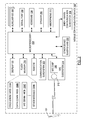
- FIG. 2 illustrates an exemplary hardware configuration for the mobile device of FIG. 1 ;
- FIG. 3 illustrates steps of an exemplary method of sensing proximity of the holster to the mobile computing device of FIG. 1 , according to an embodiment
- FIG. 4 illustrates steps of an exemplary method of controlling a user interface component of a mobile computing device based on received proximity information according to an embodiment.
- NFCIP-1 Near Field Communications Interface and Protocol
- the NFC protocol is a recently developed communication protocol that allows for communication between an Initiator device and a Target device, when the Initiator device and the Target device are brought close together.
- ECMA-340 a published standard
- Ecma International at www.ecma-international.org.
- Central to the operation of the NFC protocol is magnetic field induction.
- the NFC protocol operates within the globally available and unregulated radio frequency band of 13.56 MHz and has a working distance of up to 20 centimeters. Three data rates are available: 106 kilobits per second (kbit/s); 212 kbit/s; and 424 kbit/s.
- Two modes of communication are currently available: a Passive communication mode; and an Active communication mode.
- the Passive communication mode the Initiator device provides an electro-magnetic carrier field and the Target device answers the Initiator device by modulating the carrier field.
- the Target device may draw operating power from the carrier field provided by the Initiator device.
- only the Initiator device is required to have a power supply.
- both the Initiator device and the Target device In the Active communication mode, both the Initiator device and the Target device generate their own electro-magnetic field.
- the Initiator device starts the NFCIP-1 communication.
- the Target device responds to a command received from the Initiator device in the Active communication mode by modulating the electro-magnetic field generated by the Target device.
- both devices need to have a power supply.
- both devices can act as either Initiator or Target, while this is not the case in the Passive communication mode, wherein the device without the ability to create an electro-magnetic carrier field can't be an Initiator device.
- the Initiator device responsive to sensing modulation of the Initiator electro-magnetic carrier field by the Target device, performs an initial collision avoidance sequence by transmitting an ATR_REQ (attribute request) command to the Target device. Responsive to receiving the ATR_REQ (attribute request) command, the Target device transmits a response called ATR_RES (attribute response).
- ATR_REQ attribute request
- ATR_RES attribute response
- FIG. 1 illustrates a mobile wireless communication device 100 and a corresponding holster 102.
- the mobile device 100 has a housing 122, an input device (a keyboard 124) and an output device (a display screen 126), which is preferably a full graphic, or full color, Liquid Crystal Display (LCD). Other types of output devices may alternatively be utilized.
- the housing 122 may be elongated vertically, or may take on other sizes and shapes (including clamshell housing structures).
- the keyboard may include a mode selection key, or other hardware or software, for switching between text entry and telephony entry.
- the holster 102 includes a belt clip 112 that is rotatably attached to a body 104.
- a battery-less passive NFC card is embedded into the body 104 of the holster 102.
- the NFC card 114 includes an NFC chip, which may be a memory-based chip or a processor-based chip, and an NFC antenna that is tuned for 13.56 MHz.
- the NFC chip may be a memory-based chip or a processor-based chip and is adapted to carry out the actions necessary for communication using the NFC protocol, including modulation, demodulation, encoding and decoding. Suitable NFC chips for this application include chips using MIFARE® technology from Koninklijke Philips Electronics N.V. of the Netherlands and chips using FeliCa TM technology from Sony Corporation of Japan.
- the NFC card 114 including both the NFC chip and the antenna, can be embedded in the body 104 of the holster 102.
- a holster is a specialized article of clothing worn to hold a device, such as a handgun or other defensive weapon, cellular telephone, hand tool, or other small object about the person, most commonly in a location where it can be easily withdrawn for immediate use.
- the term "holster” is intended to cover encasements designed for use with the mobile device 100.
- placement of the mobile device 100 in the holster 102 is expected to serve to indicate suspension of user interaction with the mobile device 100.
- a holster fitting such a definition need not be equipped with a belt clip or have any relation to a belt.
- a holster could be a specifically sized and shaped pocket in a purse or briefcase.
- a processing device (a microprocessor 228) is shown schematically in FIG. 2 as coupled between the keyboard 124 and the display screen 126.
- the microprocessor 228 controls the operation of the display screen 126, as well as the overall operation of the mobile device 100, in part, responsive to actuation of keys on the keyboard 124 by a user.
- a communications subsystem 200 In addition to the microprocessor 228, other parts of the mobile device 100 are shown schematically in FIG. 2 . These include: a communications subsystem 200; a short-range communications subsystem 204; the keyboard 124 and the display screen 126, along with other input/output devices including a set of auxiliary I/O devices 206, a serial port 208, a speaker 210 and a microphone 212; as well as memory devices including a flash memory 216 and a Random Access Memory (RAM) 218; and various other device subsystems 220.
- the mobile device 100 is preferably a two-way radio frequency (RF) communication device having voice and data communication capabilities.
- the mobile device 100 preferably has the capability to communicate with other computer systems via the Internet.
- RF radio frequency
- Operating system software executed by the microprocessor 228 is preferably stored in a computer readable medium, such as the flash memory 216, but may be stored in other types of memory devices, such as a read only memory (ROM) or similar storage element.
- system software, specific device applications, or parts thereof may be temporarily loaded into a volatile store, such as the RAM 218. Communication signals received by the mobile device may also be stored to the RAM 218.
- a NFC communications/mode control module 230C may also be installed on the mobile device 100 during manufacture, to implement aspects of the present invention.
- additional software modules illustrated as an other software module 230N, which may be, for instance, a personal information manager (PIM) application, may be installed during manufacture.
- PIM personal information manager
- the PIM application is preferably capable of organizing and managing data items, such as e-mail messages, calendar events, voice mail messages, appointments and task items.
- the PIM application is also preferably capable of sending and receiving data items via a wireless carrier network.
- the data items managed by the PIM application are seamlessly integrated, synchronized and updated via the wireless carrier network with the device user's corresponding data items stored or associated with a host computer system.
- the NFC communications module 230C allows the microprocessor 228 to control an NFC subsystem 214 for communication with the holster NFC card 114.
- the NFC subsystem 214 includes an NFC chip 240 and an antenna 242 that is tuned for 13.56 MHz, as discussed with reference to the antenna in the NFC card 114 of the holster 102.
- the NFC chip may, for example, be a PN531 Microcontroller-based Transmission module from the Philips Semiconductor branch of Koninklijke Philips Electronics N.V.
- the NFC chip 240 includes analog circuitry, a contactless Universal Asynchronous Receiver Transmitter (UART), a core and set of host interfaces.
- the analog circuitry includes an output driver, an integrated demodulator, a bit decoder, a mode-detector and an RF-level detector.
- the Contactless UART includes elements for data processing, Cyclical Redundancy Checking, parity generation, framing generation and check bit coding and decoding.
- the core includes an 80c51 microcontroller, 32 kbyte of ROM and 1 kbyte of RAM.
- the set of host interfaces, for interfacing with the microprocessor 228, includes interfaces according to such known standards as 12C, serial UART, SPI and USB.
- Communication functions including data and voice communications, are performed through the communication subsystem 200 and, possibly, through the short-range communications subsystem 204.
- the communication subsystem 200 includes a receiver, a transmitter, one or more antennas and a processing module (none shown). The specific design and implementation of the communication subsystem 200 is dependent upon the communication network in which the mobile device 100 is intended to operate.
- the communication subsystem 200 of the mobile device 100 may be designed to operate with the Mobitex TM , DataTAC TM or General Packet Radio Service (GPRS) mobile data communication networks and also designed to operate with any of a variety of voice communication networks, such as Advanced Mobile Phone Service (AMPS), Time Division Multiple Access (TDMA), Code Division Multiple Access (CDMA), Personal Communications Service (PCS), Global System for Mobile Communications (GSM), etc.
- AMPS Advanced Mobile Phone Service
- TDMA Time Division Multiple Access
- CDMA Code Division Multiple Access
- PCS Personal Communications Service
- GSM Global System for Mobile Communications
- Other types of data and voice networks, both separate and integrated, may also be utilized with the mobile device 100.
- Network access requirements vary depending upon the type of communication system.
- an identifier is associated with each mobile device that uniquely identifies the mobile device or subscriber to which the mobile device has been assigned.
- the identifier is unique within a specific network or network technology. For example, in Mobitex TM networks, mobile devices are registered on the network using a Mobitex Access Number (MAN) associated with each device and in DataTAC TM networks, mobile devices are registered on the network using a Logical Link identifier (LLI) associated with each device. In GPRS networks, however, network access is associated with a subscriber or user of a device.
- MAN Mobitex Access Number
- LLI Logical Link identifier
- a GPRS device therefore requires a subscriber identity module, commonly referred to as a Subscriber Identity Module (SIM) card, in order to operate on a GPRS network.
- SIM Subscriber Identity Module
- IMEI International Mobile Equipment identity
- a received signal such as a text message or web page download
- the communication subsystem 200 is input to the microprocessor 228.
- the received signal is then further processed by the microprocessor 228 for output to the display screen 126, or alternatively to some auxiliary I/O devices 206.
- a device user may also compose data items, such as e-mail messages, using the keyboard 124 and/or some other auxiliary I/O device 206, such as a touchpad, a rocker switch, a thumb-wheel, or some other type of input device.
- the composed data items may then be transmitted over the wireless carrier network 110 via the communication subsystem 200.
- a voice communication mode In a voice communication mode, overall operation of the device is substantially similar to the data communication mode, except that received signals are output to a speaker 210, and signals for transmission are generated by a microphone 212.
- Alternative voice or audio I/O subsystems such as a voice message recording subsystem, may also be implemented on the device 100.
- the display screen 126 may also be utilized in voice communication mode, for example, to display the identity of a calling party, the duration of a voice call, or other voice call related information.
- the short-range communications subsystem 204 enables communication between the mobile device 100 and other proximate systems or devices, which need not necessarily be similar devices.
- the short-range communications subsystem may include an infrared device and associated circuits and components, or a Bluetooth TM communication module to provide for communication with similarly-enabled systems and devices.
- the mobile device 100 may trigger entry into a user-inactive mode.
- affirmative holster-proximity information i.e., whether the mobile device 100 is near to (including in) the holster 102 may trigger entry into a user-inactive mode.
- the mobile device 100 may disable user interface components such as input devices and output devices.
- the entry into the user-inactive mode may involve disabling the keyboard 124, that is, preventing presses on keys in the keyboard 124 from being recorded. Such disabling may be considered of particular importance when the mobile device 100 is going into and coming out of the holster 102.
- the mobile device 100 may be adapted to operate as an NFC Initiator device in a communication session with the holster NFC card 114 operating as an NFC Target device.
- the mobile device 100 acts as an NFC Reader/Writer while the holster NFC card 114 is adapted to respond communication from the mobile device 100 by using Load Modulation.
- the NFC subsystem 214 of the mobile device 100 and the holster NFC card 114 are arranged for communication in the Passive NFC communication mode.
- the NFC subsystem 214 initially generates (step 302) an initiator electro-magnetic carrier field.
- the NFC subsystem 214 then probes the field for Target devices, that is, the NFC subsystem 214 determines (step 304) whether modulation of the initiator electro-magnetic carrier field has been sensed. Where the NFC subsystem 214 determines (step 304) that no modulation of the initiator electro-magnetic carrier field has been sensed, the probing (step 304) of the field for Target devices continues.
- the NFC subsystem 214 determines (step 304) that modulation of the initiator electro-magnetic carrier field has been sensed, the NFC subsystem 214 transmits (step 306) a command to the device that is modulating the initiator electro-magnetic carrier field, i.e., a Target device, more particularly, the holster NFC card 114. Responsive to receiving the command, the holster NFC card 114, while drawing operating power from the initiator electro-magnetic carrier field provided by the NFC subsystem 214, transmits a response. The NFC subsystem 214 receives (step 308) the response and, based on the receiving, reports (step 310) to the microprocessor 228 that proximity of the holster 102 has been sensed.
- the NFC subsystem 214 then monitors (step 312) the status of the modulation of the initiator electro-magnetic carrier field. If the modulation continues to be sensed, then the monitoring (step 312) also continues. If, as is expected when the mobile device 100 is removed from the holster 102, the NFC subsystem 214 ceases to sense modulation (step 312), then the NFC subsystem 214 reports (step 314) to the microprocessor 228 that sensing the proximity of the holster 102 has ceased. The NFC subsystem 214 then returns to probing the field for Target devices (step 304).
- the microprocessor 228, responsive to determining (step 402, FIG. 4 ) that a report has been received from the NFC subsystem 214, determines (step 404) whether the report is a "proximity sensed" report. If the microprocessor 228 determines that the report is a "proximity sensed” report, the microprocessor 228 enters (step 406) into the user-inactive mode. After entering (step 406) the user-inactive mode, the microprocessor 228 returns to monitoring (step 402) for receipt of further reports.
- Entry into the user-inactive mode may involve several activities, where some of the activities are related to user interface components are some are not. As discussed above, it would be advantageous to disable input devices upon entry into user-inactive mode, before unintentional input occurs. Accordingly, entry into user-inactive mode may involve disabling the keyboard 124. Where a device receives user input through a touch screen, a track wheel or a track ball, any or all of these user input devices may also be disabled as part of entry into user-inactive mode.
- Entry into the user-inactive mode may also involve disabling a user interface component designed for output to the user.
- devices have disabled related display screens when entirely received within a corresponding holster.
- entry into the user-inactive mode responsive to determining (step 404) that the "proximity sensed" report has been received from the NFC subsystem 214 may, for example, involve disabling the display screen 126.
- entry into the user-inactive mode may involve a change of a notification profile.
- the mobile device 100 may be configured, by default, say, or by the user, to select a manner in which to notify the user of an incoming call, an incoming e-mail message, an incoming SMS or a scheduled event, dependent upon the mode of the mobile device 100 when the call is received. That is, the mobile device 100 may be configured to provide an audible notification, e.g., a ringing sound, when the mobile device is in user-inactive mode. Further, the mobile device 100 may be configured to provide a physical notification, e.g., a vibration alert, when the mobile device is in user-active mode.
- a physical notification e.g., a vibration alert
- the microprocessor 228 determines (step 408) whether the report is a "proximity ceased" report. If the microprocessor 228 determines that the report is a "proximity ceased” report, the microprocessor 228 enters (step 410) the user-active mode. Accordingly, as part of entering (step 410) the user-active mode, the microprocessor 228 may, for example, re-enable the keyboard 124. After entering (step 410) the user-active mode, the microprocessor 228 returns to monitoring (step 402) for receipt of further reports.
- the microprocessor 228 determines (step 404) that the report is not a "proximity ceased" report, the microprocessor 228 indicates (step 412) that a report of an unknown type has been received. Such indication may involve writing to a log or generating a dialog for showing on the display screen 126.
- a reader may consider that the combination of the NFC subsystem 214 and the holster NFC card 114 may be considered a replacement for previous proximity sensing apparatus, such as the Hall Effect sensor and magnet combination.
- previous proximity sensing apparatus such as the Hall Effect sensor and magnet combination.
- multiple proximity sensing apparatus may be complimentary. For example, once the mobile device 100 has been received in the holster 102 and has entered into user-inactive mode, it may be considered inefficient use of battery power to continue to monitor for presence of the holster 102. Instead, the relatively power conservative Hall Effect sensor and magnet combination may be used to confirm
Landscapes
- Engineering & Computer Science (AREA)
- Theoretical Computer Science (AREA)
- General Engineering & Computer Science (AREA)
- Physics & Mathematics (AREA)
- General Physics & Mathematics (AREA)
- Signal Processing (AREA)
- Computer Security & Cryptography (AREA)
- Computer Hardware Design (AREA)
- Computing Systems (AREA)
- User Interface Of Digital Computer (AREA)
- Telephone Function (AREA)
Priority Applications (1)
| Application Number | Priority Date | Filing Date | Title |
|---|---|---|---|
| EP07102265A EP1959332A1 (de) | 2007-02-13 | 2007-02-13 | System und Verfahren zum verbesserten Erkennen der Benutzeruntätigkeit |
Applications Claiming Priority (1)
| Application Number | Priority Date | Filing Date | Title |
|---|---|---|---|
| EP07102265A EP1959332A1 (de) | 2007-02-13 | 2007-02-13 | System und Verfahren zum verbesserten Erkennen der Benutzeruntätigkeit |
Publications (1)
| Publication Number | Publication Date |
|---|---|
| EP1959332A1 true EP1959332A1 (de) | 2008-08-20 |
Family
ID=38213082
Family Applications (1)
| Application Number | Title | Priority Date | Filing Date |
|---|---|---|---|
| EP07102265A Withdrawn EP1959332A1 (de) | 2007-02-13 | 2007-02-13 | System und Verfahren zum verbesserten Erkennen der Benutzeruntätigkeit |
Country Status (1)
| Country | Link |
|---|---|
| EP (1) | EP1959332A1 (de) |
Cited By (17)
| Publication number | Priority date | Publication date | Assignee | Title |
|---|---|---|---|---|
| EP2364004A1 (de) | 2010-02-26 | 2011-09-07 | Research In Motion Limited | Kommunikationsvorrichtung, die auf Nahfeldkommunikationen reagiert, um auf gesperrte und nicht gesperrte Betriebsmodi zuzugreifen |
| US8068011B1 (en) | 2010-08-27 | 2011-11-29 | Q Street, LLC | System and method for interactive user-directed interfacing between handheld devices and RFID media |
| EP2487879A1 (de) * | 2011-01-31 | 2012-08-15 | Research In Motion Limited | Mobile Vorrichtung mit erweiterten haltereigene Stromsparmerkmalen und zugehöriges Verfahren |
| WO2013072435A1 (en) * | 2011-11-15 | 2013-05-23 | Famoco | Nfc device and connection system of nfc devices |
| EP2600658A1 (de) * | 2011-12-01 | 2013-06-05 | Research In Motion Limited | Mobile drahtlose Kommunikationsvorrichtung mit NFC-Sensor und magnetischem Sensor sowie zugehörige Verfahren |
| US8526880B2 (en) | 2010-02-26 | 2013-09-03 | Blackberry Limited | Communications device responsive to near field communications (NFC) to enter locked or unlocked operating modes |
| US8744357B2 (en) | 2011-12-01 | 2014-06-03 | Blackberry Limited | Mobile wireless communications device having NFC sensor and magnetic sensor and associated methods |
| US8792824B2 (en) | 2012-02-08 | 2014-07-29 | Blackberry Limited | Mobile communications device providing near field communication (NFC) low power operating features and related methods |
| US8831509B2 (en) | 2011-01-31 | 2014-09-09 | Blackberry Limited | Mobile device having enhanced in-holster power saving features using NFC and related methods |
| EP2804326A1 (de) * | 2013-05-16 | 2014-11-19 | BlackBerry Limited | Intelligente Abdeckung für mobile Kommunikationsvorrichtung |
| EP2811363A1 (de) * | 2013-06-06 | 2014-12-10 | BlackBerry Limited | Vorrichtung zur Erkennung eines Tragekoffers unter Verwendung von Signaturen |
| US9167375B2 (en) | 2013-06-06 | 2015-10-20 | Blackberry Limited | Device for detecting a carrying case using orientation signatures |
| US9389638B2 (en) | 2013-06-06 | 2016-07-12 | Blackberry Limited | Device for detecting a carrying case |
| US9602645B2 (en) | 2013-05-16 | 2017-03-21 | Blackberry Limited | Smart covering for mobile communications device |
| US10020847B2 (en) | 2011-11-15 | 2018-07-10 | Famoco | NFC device and connection system of NFC devices |
| CN108984217A (zh) * | 2018-07-06 | 2018-12-11 | 郑州云海信息技术有限公司 | 一种主机工作状态调整方法和系统 |
| EP4024165A1 (de) * | 2013-08-09 | 2022-07-06 | Qualcomm Incorporated | Thermische abschwächungsanpassung für eine mobile elektronische vorrichtung |
Citations (6)
| Publication number | Priority date | Publication date | Assignee | Title |
|---|---|---|---|---|
| EP1411709A2 (de) | 2002-10-17 | 2004-04-21 | Research In Motion Limited | System und Verfahren zur Aktivierung einer Sicherheitsfunktion für ein elektronisches Mobilgerät |
| US20040180649A1 (en) * | 2003-03-14 | 2004-09-16 | Motorola, Inc. | Wireless device allowing for configuration of settings and method therefor |
| US20050049760A1 (en) * | 2003-08-29 | 2005-03-03 | Ibm Corporation | Power management |
| US20050136903A1 (en) | 2003-12-18 | 2005-06-23 | Nokia Corporation | Context dependent alert in a portable electronic device |
| EP1662358A1 (de) * | 2004-11-24 | 2006-05-31 | Research In Motion Limited | System und Verfahren zur selektiven Aktiverung eines Kommunikationsgerätes |
| WO2006103146A2 (de) | 2005-03-29 | 2006-10-05 | Siemens Aktiengesellschaft | Steuerung der anzeigeeinrichtung eines kommunikationsendgerätes |
-
2007
- 2007-02-13 EP EP07102265A patent/EP1959332A1/de not_active Withdrawn
Patent Citations (6)
| Publication number | Priority date | Publication date | Assignee | Title |
|---|---|---|---|---|
| EP1411709A2 (de) | 2002-10-17 | 2004-04-21 | Research In Motion Limited | System und Verfahren zur Aktivierung einer Sicherheitsfunktion für ein elektronisches Mobilgerät |
| US20040180649A1 (en) * | 2003-03-14 | 2004-09-16 | Motorola, Inc. | Wireless device allowing for configuration of settings and method therefor |
| US20050049760A1 (en) * | 2003-08-29 | 2005-03-03 | Ibm Corporation | Power management |
| US20050136903A1 (en) | 2003-12-18 | 2005-06-23 | Nokia Corporation | Context dependent alert in a portable electronic device |
| EP1662358A1 (de) * | 2004-11-24 | 2006-05-31 | Research In Motion Limited | System und Verfahren zur selektiven Aktiverung eines Kommunikationsgerätes |
| WO2006103146A2 (de) | 2005-03-29 | 2006-10-05 | Siemens Aktiengesellschaft | Steuerung der anzeigeeinrichtung eines kommunikationsendgerätes |
Non-Patent Citations (1)
| Title |
|---|
| ENRICO RUKZIO: "Physical Mobile Interactions: Mobile Devices as Pervasive Mediators for Interactions with the Real World", 19 December 2006 (2006-12-19), München, XP002441698, Retrieved from the Internet <URL:http://edoc.ub.uni-muenchen.de/archive/00006494/01/Rukzio_Enrico.pdf> [retrieved on 20070710] * |
Cited By (19)
| Publication number | Priority date | Publication date | Assignee | Title |
|---|---|---|---|---|
| US8526880B2 (en) | 2010-02-26 | 2013-09-03 | Blackberry Limited | Communications device responsive to near field communications (NFC) to enter locked or unlocked operating modes |
| EP2364004A1 (de) | 2010-02-26 | 2011-09-07 | Research In Motion Limited | Kommunikationsvorrichtung, die auf Nahfeldkommunikationen reagiert, um auf gesperrte und nicht gesperrte Betriebsmodi zuzugreifen |
| US9858455B2 (en) | 2010-08-27 | 2018-01-02 | Q Street, LLC | System and method for interactive user-directed interfacing between handheld devices and RFID media |
| US8068011B1 (en) | 2010-08-27 | 2011-11-29 | Q Street, LLC | System and method for interactive user-directed interfacing between handheld devices and RFID media |
| US8395486B2 (en) | 2010-08-27 | 2013-03-12 | Q Street, LLC | System and method for interactive user-directed interfacing between handheld devices and RFID media |
| EP2487879A1 (de) * | 2011-01-31 | 2012-08-15 | Research In Motion Limited | Mobile Vorrichtung mit erweiterten haltereigene Stromsparmerkmalen und zugehöriges Verfahren |
| US8831509B2 (en) | 2011-01-31 | 2014-09-09 | Blackberry Limited | Mobile device having enhanced in-holster power saving features using NFC and related methods |
| WO2013072435A1 (en) * | 2011-11-15 | 2013-05-23 | Famoco | Nfc device and connection system of nfc devices |
| US10020847B2 (en) | 2011-11-15 | 2018-07-10 | Famoco | NFC device and connection system of NFC devices |
| EP2600658A1 (de) * | 2011-12-01 | 2013-06-05 | Research In Motion Limited | Mobile drahtlose Kommunikationsvorrichtung mit NFC-Sensor und magnetischem Sensor sowie zugehörige Verfahren |
| US8744357B2 (en) | 2011-12-01 | 2014-06-03 | Blackberry Limited | Mobile wireless communications device having NFC sensor and magnetic sensor and associated methods |
| US8792824B2 (en) | 2012-02-08 | 2014-07-29 | Blackberry Limited | Mobile communications device providing near field communication (NFC) low power operating features and related methods |
| US9602645B2 (en) | 2013-05-16 | 2017-03-21 | Blackberry Limited | Smart covering for mobile communications device |
| EP2804326A1 (de) * | 2013-05-16 | 2014-11-19 | BlackBerry Limited | Intelligente Abdeckung für mobile Kommunikationsvorrichtung |
| US9167375B2 (en) | 2013-06-06 | 2015-10-20 | Blackberry Limited | Device for detecting a carrying case using orientation signatures |
| US9389638B2 (en) | 2013-06-06 | 2016-07-12 | Blackberry Limited | Device for detecting a carrying case |
| EP2811363A1 (de) * | 2013-06-06 | 2014-12-10 | BlackBerry Limited | Vorrichtung zur Erkennung eines Tragekoffers unter Verwendung von Signaturen |
| EP4024165A1 (de) * | 2013-08-09 | 2022-07-06 | Qualcomm Incorporated | Thermische abschwächungsanpassung für eine mobile elektronische vorrichtung |
| CN108984217A (zh) * | 2018-07-06 | 2018-12-11 | 郑州云海信息技术有限公司 | 一种主机工作状态调整方法和系统 |
Similar Documents
| Publication | Publication Date | Title |
|---|---|---|
| US8111144B2 (en) | System and method for providing improved detection of user inaction | |
| EP1709828B1 (de) | Verfahren, einrichtung und computerprogrammprodukt zur intuitiven energieverwaltung eines mit einem mobilen endgerät assoziierten kommunikationssenders/-empfängers mit kurzer reichweite | |
| US20100178866A1 (en) | Power management of a near field communication apparatus | |
| US8670712B2 (en) | Mobile terminal and method for providing enhanced contactless communication using contactless module | |
| US8744357B2 (en) | Mobile wireless communications device having NFC sensor and magnetic sensor and associated methods | |
| US20100178913A1 (en) | Low power apparatus for preventing loss of cell phone and other high value items | |
| US20090036119A1 (en) | Method and System for a Wireless Headset Receptacle | |
| US20100045441A1 (en) | Near field communication (nfc) activation | |
| KR20140098555A (ko) | 휴대 단말기에서 블루투스의 데이터를 처리하는 장치 및 방법 | |
| US8112064B2 (en) | Function lock information notification method and mobile communication terminal | |
| WO2007143248A2 (en) | Method and apparatus for dual mode communications | |
| EP1107548A2 (de) | Verfahren zum Batteriewechsel während einer Rufverarbeitung in einem schnurlosen Telefongerät | |
| KR100539892B1 (ko) | 표시부를 제어하기 위한 복합휴대단말장치 및 그 방법 | |
| EP1783658B1 (de) | Vorrichtung und Verfahren zur Änderung von RFID-Etikettdaten in einem tragbaren Endgerät | |
| US6973301B1 (en) | System for altering operational aspects of a mobile electronic device based upon location | |
| US8692694B2 (en) | Method to detect and recover from stuck keys on an electronic device keyboard | |
| CA2707896C (en) | Method to detect and recover from stuck keys on an electronic device keyboard | |
| EP2600658B1 (de) | Mobile drahtlose Kommunikationsvorrichtung mit NFC-Sensor und magnetischem Sensor sowie zugehörige Verfahren | |
| CN200941639Y (zh) | 一种可防止物品遗忘的手机 | |
| JP2001339771A (ja) | 通信装置、移動体通信システム、通信方法および記憶媒体 | |
| KR100600967B1 (ko) | 비접촉식 전자칩을 갖는 이동통신단말기 및 그를 이용한긴급상황 알림방법 | |
| JP2007243823A (ja) | 携帯端末装置、無線通信ユニット、および携帯端末装置と無線通信ユニットから成る使用制限システム | |
| CN111093173A (zh) | 一种限制启动stk应用的方法和装置 | |
| JP2002305584A (ja) | 不正利用防止機能付き携帯電話装置 |
Legal Events
| Date | Code | Title | Description |
|---|---|---|---|
| PUAI | Public reference made under article 153(3) epc to a published international application that has entered the european phase |
Free format text: ORIGINAL CODE: 0009012 |
|
| 17P | Request for examination filed |
Effective date: 20070213 |
|
| AK | Designated contracting states |
Kind code of ref document: A1 Designated state(s): AT BE BG CH CY CZ DE DK EE ES FI FR GB GR HU IE IS IT LI LT LU LV MC NL PL PT RO SE SI SK TR |
|
| AX | Request for extension of the european patent |
Extension state: AL BA HR MK RS |
|
| AKX | Designation fees paid |
Designated state(s): AT BE BG CH CY CZ DE DK EE ES FI FR GB GR HU IE IS IT LI LT LU LV MC NL PL PT RO SE SI SK TR |
|
| AXX | Extension fees paid |
Extension state: RS Payment date: 20070213 Extension state: MK Payment date: 20070213 Extension state: HR Payment date: 20070213 Extension state: BA Payment date: 20070213 Extension state: AL Payment date: 20070213 |
|
| APBK | Appeal reference recorded |
Free format text: ORIGINAL CODE: EPIDOSNREFNE |
|
| APBN | Date of receipt of notice of appeal recorded |
Free format text: ORIGINAL CODE: EPIDOSNNOA2E |
|
| APBR | Date of receipt of statement of grounds of appeal recorded |
Free format text: ORIGINAL CODE: EPIDOSNNOA3E |
|
| APAF | Appeal reference modified |
Free format text: ORIGINAL CODE: EPIDOSCREFNE |
|
| APAF | Appeal reference modified |
Free format text: ORIGINAL CODE: EPIDOSCREFNE |
|
| RAP1 | Party data changed (applicant data changed or rights of an application transferred) |
Owner name: BLACKBERRY LIMITED |
|
| APBT | Appeal procedure closed |
Free format text: ORIGINAL CODE: EPIDOSNNOA9E |
|
| STAA | Information on the status of an ep patent application or granted ep patent |
Free format text: STATUS: THE APPLICATION HAS BEEN WITHDRAWN |
|
| 18W | Application withdrawn |
Effective date: 20130927 |