EP1959366A2 - Structural formula display system, method, and program storage medium storing program thereof - Google Patents
Structural formula display system, method, and program storage medium storing program thereof Download PDFInfo
- Publication number
- EP1959366A2 EP1959366A2 EP08000355A EP08000355A EP1959366A2 EP 1959366 A2 EP1959366 A2 EP 1959366A2 EP 08000355 A EP08000355 A EP 08000355A EP 08000355 A EP08000355 A EP 08000355A EP 1959366 A2 EP1959366 A2 EP 1959366A2
- Authority
- EP
- European Patent Office
- Prior art keywords
- structural formula
- character string
- substrings
- alignment
- dividing
- Prior art date
- Legal status (The legal status is an assumption and is not a legal conclusion. Google has not performed a legal analysis and makes no representation as to the accuracy of the status listed.)
- Withdrawn
Links
Images








Classifications
-
- G—PHYSICS
- G16—INFORMATION AND COMMUNICATION TECHNOLOGY [ICT] SPECIALLY ADAPTED FOR SPECIFIC APPLICATION FIELDS
- G16C—COMPUTATIONAL CHEMISTRY; CHEMOINFORMATICS; COMPUTATIONAL MATERIALS SCIENCE
- G16C20/00—Chemoinformatics, i.e. ICT specially adapted for the handling of physicochemical or structural data of chemical particles, elements, compounds or mixtures
- G16C20/80—Data visualisation
Definitions
- the present invention relates to a system which displays structural formulae of compounds, and more particularly, relates to a method for displaying a character string as a part of a structural formula.
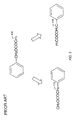
- Fig. 1 is a diagram illustrating examples of screen images displaying a structural formula of a compound.
- the methods for displaying a structural formula of a compound include a method wherein the structural formula is shown as a graphic in which individual elements constituting the compound are linked together by lines representing chemical bonds (e.g., Structural Formula 102), a method wherein the structural formula is shown as a character string in which groups (each group including one or more atoms joined together) constituting the compound are linked together (e.g., Structural Formula 104), and a method wherein a part of the structure of the compound is shown as a graphic and another part of the compound is shown as a character string (e.g., Structural Formula 106).
- the character string part is arranged on the right side of the graphic part.
- consideration is given for the case where the positions of the character string part and the graphic part are reversed.
- Fig. 2 is a diagram illustrating an example of change in expression of a character string part following change in position of the character string part according to a conventional method.
- the character string part in Structural Formula 106 is moved as it is to the left side of the graphic part.
- the group bonded to the benzene ring is "CH2".
- the group bonded to the benzene ring appears to be "CH3”, and thus, Structural Formula 112 is inconvenient. Consequently, to date, the left-to-right order in alignment of atom symbols in the character string part has been reversed as in Structural Formula 114.
- such reversal operation of the left-to-right order in alignment is referred to as "mirror-reverse".
- a structural formula display system which displays a structural formula of a compound.
- the structural formula display system includes: an input unit which accepts the structural formula; a character string divider which divides a character string which corresponds to a part of the structural formula into a plurality of substrings, wherein each of said substrings corresponds to a group which is derived by dividing the part of the structural formula at each bonding site on a main chain; an alignment reverser which reverses an order of alignment of the plurality of substrings in the character string; and an output unit which displays the structural formula after the reversal.
- the character string divider of the structural formula display system may modify a substring out of the plurality of substrings.
- a structural formula display method which is performed by a structural formula display system which displays a structural formula of a compound.
- the structural formula display method includes the steps of: accepting the structural formula; dividing a character string which corresponds to a part of the structural formula into a plurality of substrings, wherein each of the substrings corresponds to a group which is derived by dividing the part of the structural formula at each bonding site on a main chain; reversing an order of alignment of the plurality of substrings in the character string; and displaying the structural formula after the reversal.
- a program storage medium which is readable by a computer and stores a program of instructions for the computer for executing a structural formula display method to display a structural formula of a compound.
- the structural formula display method includes the steps of: accepting the structural formula; dividing a character string which corresponds to a part of the structural formula into a plurality of substrings, wherein each of the substrings corresponds to a group which is derived by dividing the part of the structural formula at each bonding site on a main chain; reversing an order of alignment of the plurality of substrings in the character string; and displaying the structural formula after the reversal.
- Fig. 3 is a diagram illustrating correspondence between the graphic expression and the character string expression.
- Structural Formula 122 a portion other than the benzene ring in Structural Formula 102 is divided into a plurality of groups at bonding sites on a main chain (i.e., backbone of the carbon skeleton in the chain structure) and displayed in character string expression. For the sake of comparison, "-" is inserted between the groups.
- Structural Formula 124 the alignment of the plurality of groups constituting the character string part in Structural Formula 122 is mirror-reversed.
- Structural Formula 126 the character string expression in Structural Formula 124 is switched back to the graphic expression.
- Structural Formula 126 is a mirror reverse of Structural Formula 102. That is, Structural Formula 124 is an expression that maintains the group patterns while keeping the bonding relationships between elements in Structural Formula 102. In Structural Formula 128, "-" is removed from the character string part in Structural Formula 124. Since Structural Formula 128 is an expression in which group patterns are maintained, it is far easier for the user to understand the structure of the compound represented by Structural Formula 128 than Structural Formula 114.
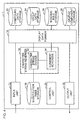
- Fig. 4 is a diagram illustrating a system configuration of a structural formula display system according to an embodiment of the present invention.
- the structural formula display system 1 includes an input unit 12 for accepting an input operation from the user, a display data former 14 for forming data of a structural formula to be displayed, a character string reverser 16 for mirror-reversing the alignment of the plurality of groups constituting the character string part in the structural formula, an output unit 18 for displaying the structural formula on the basis of display data, a control unit 20 for controlling the entire structural formula display system 1, a compound data storage 22 for storing data on compounds, a group data storage 24 for storing data on groups, a bonding rule storage 26 for storing element bonding rules, a graphic component storage 28 for storing graphic components used when a structural formula is displayed in graphic expression, and a substitution rule storage 36 for storing substitution rules used when a character string in a structural formula is divided.
- the character string reverser 16 includes a character string divider 32 for dividing a character string into a plurality of groups
- the input unit 12 accepts an input operation into the structural formula display system 1 from the user.
- the input operation from the user includes input for designating a structural formula to be displayed and input for changing the structural formula displayed.
- the input for designating a structural formula to be displayed may be performed in any manner. Examples of the method for the input include selection of a compound from a compound list, input of a composition formula of a compound, selection of a graphic component, and input of an atomic symbol. These methods may be combined.
- Examples of the change in the structural formula displayed include changes in size of the structural formula and the position to be displayed, changes in the structure in a part of the structural formula, changes in expression in a part of the structural formula from graphic expression to character string expression, changes in expression in a part of the structural formula from character string expression to graphic expression, and changes in the position to be displayed for a part of the structural formula.
- the display data former 14 forms data of the structural formula to be displayed on the basis of the input from the user and changes the data of the structural formula to be displayed on the basis of the input from the user.
- the data of the structural formula may be formed in any manner in response to the method designated by the user. For example, a structural formula stored in advance may be retrieved with respect to a compound selected by the user from the compound list. A structural formula stored in advance may be retrieved on the basis of the composition formula inputted by the user. A structural formula may be estimated on the basis of the composition formula inputted by the user and the bonding rule with respect to elements. A structural formula may be constructed on the basis of the graphic components selected by the user and the atomic symbols inputted by the user.
- the changes in expression in a part of the structural formula from character string expression to graphic expression or changes in expression in a part of the structural formula from graphic expression to character string expression may be performed in any manner.
- the character string expression and the graphic expression of a target portion may be compared.
- the character string expression and the graphic expression may be compared. Conversion between the character string expression and the graphic expression may be performed on the basis of bonding rules.
- the character string reverser 16 mirror-reverses the alignment of a plurality of groups constituting the character string.
- the character string divider 32 divides the character string into a plurality of groups at one or more bonding sites on the main chain in preparation for the reversal in alignment of the character string. Furthermore, the expression of a character string representing each group may be changed so that the user can easily understand the structural formula after the reversal is made.
- the alignment reverser 34 mirror-reverses the alignment of the plurality of groups constituting the divided character string.
- the output unit 18 displays the structural formula on the basis of the display data and also produces required outputs.
- the control unit 20 controls the entire structural formula display system 1. In the structural formula display system 1, all processes other than those carried out by the individual means described above are carried out by the control unit 20.
- the compound data storage 22 stores data on various compounds, i.e., a name of compound, a corresponding composition formula, a corresponding structural formula in character string expression, and a corresponding structural formula in graphic expression.
- the group data storage 24 stores data on various groups, i.e., name of group, a corresponding composition formula, a corresponding structural formula in character string expression, and a corresponding structural formula in graphic expression.
- the bonding rule storage 26 stores bonding rules for bonding various elements together.
- the graphic component storage 28 stores various graphic components used for displaying a structural formula in graphic expression.
- the substitution rule storage 36 stores substitution rules for substituting characters in a character string in the course of dividing a structural formula.
- Fig. 5 is a flowchart of the character string reversing process according to an embodiment of the present invention. The flow of the character string reversing process according to the embodiment will be described with reference to Fig. 5 in the order of steps S102 to S108.
- Step S102 The character string divider 32 inputs a character string to be subjected to character string reversing process.
- the character string divider 32 also acquires information on whether the character string is in a notation directed rightward or a notation directed leftward.
- Step S104 The character string divider 32 divides the inputted character string into a plurality of groups at each bonding site on a main chain. The details of the character string dividing process will be described later.
- Step S106 The alignment reverser 34 mirror-reverses the alignment of the groups in the divided character string.
- a delimiter is inserted between adjacent groups.
- the alignment reverser 34 extracts groups from the divided character string on the basis of the delimiters, and rearranges the groups in the character string such that the left-to-right order of alignment of the plurality of groups in the character string is reversed. Resulted character string includes no delimiters.
- Step S108 The alignment reverser 34 outputs the reversed character string.
- Fig. 6 is a flowchart of the character string dividing process according to an embodiment of the present invention.
- the flow of the character string dividing process according to the embodiment will be described with reference to Fig. 6 in the order of steps S202 to S222.
- the character string divider 32 according to the embodiment divides a targeted character string (a character string to be divided) into individual characters, and then the disconnected characters are joined together to reconstruct groups. Furthermore, in the process of reconstruction, the alignment of characters in the substring representing each group is changed as needed.
- Step S202 The character string divider 32 adds starting/ending symbols to a targeted character string.
- the left edge is defined as the start edge
- the right edge is defined as the end edge.
- the right edge is defined as the start edge
- the left edge is defined as the end edge.
- Fig. 7 is a diagram illustrating examples of addition of starting/ending symbols.
- the left side of each arrow represents an original targeted character string
- the right side of each arrow represents the targeted character string after addition of starting/ending symbols.
- "%" is used as the starting symbol
- "$" is used as the ending symbol.
- Example 202 is in the case of a notation directed rightward
- Example 204 is in the case of a notation directed leftward.
- Step S204 The character string divider 32 inserts a delimiter between adjacent characters constituting the targeted character string.
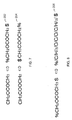
- Fig. 8 is a diagram illustrating an example of insertion of delimiters. In this embodiment, "/" is used as the delimiter.
- the character string divider 32 changes a notation related to oxo acids contained in the targeted character string in accordance with a predetermined substitution rule.
- Fig. 9 is a diagram illustrating examples of the substitution rule regarding oxo acids.
- "*" represents any character string
- "?" represents any roman letter other than “O”
- "1” represents any lower-case roman letter
- "n” represents a number equal to or larger than 3
- "n” represents a number smaller than n by 1.
- Each substitution rule means that the character string on the left side of the arrow (referred to as a pre-substitution string) should be replaced with the character string on the right side of the arrow (referred to as a post-substitution string).
- the character string divider 32 replaces a pre-substitution string contained in the targeted character string with a post-substitution string in accordance with any of the rules 212 to 218.
- Step S208 The character string divider 32 reconstructs an atomic symbol consisting of two characters contained in the targeted character string in accordance with a predetermined substitution rule.
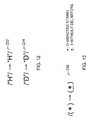
- Fig. 10 is a diagram illustrating an example of the substitution rule for reconstructing an atomic symbol consisting of two characters. In Fig. 10 , " 1 " represents any lower-case roman letter.
- the character string divider 32 replaces a pre-substitution string contained in the targeted character string with a post-substitution string in accordance with the rule 222.
- Step S210 The character string divider 32 reconstructs a notation regarding a subscript or superscript contained in the targeted character string in accordance with a predetermined substitution rule.
- Fig. 11 is a diagram illustrating examples of the substitution rule regarding a subscript or superscript. In Fig. 11 , "n" represents any number.
- the rule 224 is a substitution rule regarding a number representing the number of elements.
- Each of the rules 226 and 228 is a substitution rule regarding a superscript showing the charge.
- the rule 230 is a substitution rule regarding a number denoting an isotope.
- the character string divider 32 replaces a pre-substitution string contained in the targeted character string with a post-substitution string in accordance with any of the rules 224 to 230.
- Step S212 The character string divider 32 links hydrogen contained in the targeted character string to another element in accordance with a predetermined substitution rule.
- Fig. 12 is a diagram illustrating examples of the substitution rule regarding hydrogen.
- the character string divider 32 replaces a pre-substitution string contained in the targeted character string with a post-substitution string in accordance with the rules 232 and 234.
- Step S214 The character string divider 32 reconstructs a set of side chains contained in the targeted character string in accordance with a predetermined substitution rule.
- Fig. 13 is a diagram illustrating an example of the substitution rule for reconstructing a set of side chains.
- “(" and ")" correspond to each other, "*" represents any character string, and " * " represents a character string obtained by removing delimiters from "*”.
- the character string divider 32 replaces a pre-substitution string contained in the targeted character string with a post-substitution string in accordance with the rule 236.
- Step S216 The character string divider 32 reconstructs a character string consisting of one group in accordance with a predetermined substitution rule.
- the expression of the character string of the group is changed here.
- Fig. 14 is a diagram illustrating examples of the substitution rule for reconstructing a character string consisting of one group.
- "?” represents an roman letter other than "H” and "D”
- each of m and n represents a number equal to or larger than 2.
- the character string divider 32 replaces a pre-substitution string contained in the targeted character string with a post-substitution string in accordance with any of the rules 238 to 260.
- Step S228 The character string divider 32 reconstructs a back-end group in accordance with a predetermined substitution rule.
- the expression of the character string of the group is changed here.
- Fig. 15 is a diagram illustrating examples of the substitution rule for reconstructing a back-end group.
- the character string divider 32 replaces a pre-substitution string contained in the targeted character string with a post-substitution string in accordance with any of the rules 262 to 280.
- Step S220 The character string divider 32 reconstructs a double bond in a group in accordance with a predetermined substitution rule.
- Fig. 16 is a diagram illustrating examples of the substitution rule for reconstructing a double bond in a group.
- the character string divider 32 replaces a pre-substitution string contained in the targeted character string with a post-substitution string in accordance with any of the rules 282 to 292.
- Step S222 The character string divider 32 removes starting/ending symbols from the targeted character string. Delimiters adjacent to the starting/ending symbols are, if any, also removed.
- Fig. 17 is a diagram illustrating an example of character string dividing process.
- the rules 224, 232, and 282 are applied.
- a method is used in which the targeted character string is divided into individual characters, and then the divided characters are joined together and groups are reconstructed on the basis of the substitution rules.
- the method for dividing the character string is not limited thereto.
- a method may be used in which dividable positions in a character string are determined sequentially. What is essential is that a character string is divided into a plurality of groups at each bonding sites on a main chain.
- the structural formula display system can be implemented not only as hardware but also as computer software.
- a program which makes a computer execute the functions of the input unit 12, display data former 14, character string divider 32, alignment reverser 34, output unit 18, and control unit 20 shown in Fig. 4 is written, and when the program is allowed to be read in a memory of a computer and executed, a structural formula display system can be implemented.
- a program for implementing a structural formula display system may be stored in a portable recording medium 54, such as CD-ROM, CD-RW, DVD-R, DVD-RAM, DVD-RW, or a flexible disk, as shown in Fig. 18 .
- the program may also be stored in a storage device or recording medium 60 such as a hard disk or RAM in a computer system 52, or in another storage device 58 connected via a communication line 56.
- the program is executed, the program is loaded and executed on the main memory.
Landscapes
- Engineering & Computer Science (AREA)
- Data Mining & Analysis (AREA)
- Chemical & Material Sciences (AREA)
- Crystallography & Structural Chemistry (AREA)
- Life Sciences & Earth Sciences (AREA)
- Bioinformatics & Cheminformatics (AREA)
- Bioinformatics & Computational Biology (AREA)
- Computing Systems (AREA)
- Theoretical Computer Science (AREA)
- Document Processing Apparatus (AREA)
- Controls And Circuits For Display Device (AREA)
Abstract
Description
- The present invention relates to a system which displays structural formulae of compounds, and more particularly, relates to a method for displaying a character string as a part of a structural formula.
- Systems for displaying structural formulae of compounds have been devised so that researchers who study compounds can easily handle compound data (for example, refer to Japanese Patent No.
2620402 -
Fig. 1 is a diagram illustrating examples of screen images displaying a structural formula of a compound. The methods for displaying a structural formula of a compound include a method wherein the structural formula is shown as a graphic in which individual elements constituting the compound are linked together by lines representing chemical bonds (e.g., Structural Formula 102), a method wherein the structural formula is shown as a character string in which groups (each group including one or more atoms joined together) constituting the compound are linked together (e.g., Structural Formula 104), and a method wherein a part of the structure of the compound is shown as a graphic and another part of the compound is shown as a character string (e.g., Structural Formula 106). - In
Structural Formula 106, the character string part is arranged on the right side of the graphic part. Here, consideration is given for the case where the positions of the character string part and the graphic part are reversed. -
Fig. 2 is a diagram illustrating an example of change in expression of a character string part following change in position of the character string part according to a conventional method. In Structural Formula 112, the character string part in Structural Formula 106 is moved as it is to the left side of the graphic part. InStructural Formula 106, the group bonded to the benzene ring is "CH2". However, inStructural Formula 112, the group bonded to the benzene ring appears to be "CH3", and thus, Structural Formula 112 is inconvenient. Consequently, to date, the left-to-right order in alignment of atom symbols in the character string part has been reversed as inStructural Formula 114. Hereinafter, such reversal operation of the left-to-right order in alignment is referred to as "mirror-reverse". - While the group bonded to the benzene ring is "CH2" when the structural formula is displayed as in
Structural Formula 114, it is difficult for the user to understand at a glance the structure of the compound inStructural Formula 114, since the alignment of atom symbols in the character string part is different from the typical alignment. - It is an object of the present invention to provide a structural formula display method in which the structure of a compound can be easily understood by the user even if the alignment of elements in a character string part is changed following the movement of the character string part in a structural formula.
- According to a first aspect of the present invention, there is provided a structural formula display system which displays a structural formula of a compound. The structural formula display system includes: an input unit which accepts the structural formula; a character string divider which divides a character string which corresponds to a part of the structural formula into a plurality of substrings, wherein each of said substrings corresponds to a group which is derived by dividing the part of the structural formula at each bonding site on a main chain; an alignment reverser which reverses an order of alignment of the plurality of substrings in the character string; and an output unit which displays the structural formula after the reversal.
- The character string divider of the structural formula display system may modify a substring out of the plurality of substrings.
- According to a second aspect of the present invention, there is provided a structural formula display method which is performed by a structural formula display system which displays a structural formula of a compound. The structural formula display method includes the steps of: accepting the structural formula; dividing a character string which corresponds to a part of the structural formula into a plurality of substrings, wherein each of the substrings corresponds to a group which is derived by dividing the part of the structural formula at each bonding site on a main chain; reversing an order of alignment of the plurality of substrings in the character string; and displaying the structural formula after the reversal.
- According to a third aspect of the present invention, there is provided a program storage medium which is readable by a computer and stores a program of instructions for the computer for executing a structural formula display method to display a structural formula of a compound. The structural formula display method includes the steps of: accepting the structural formula; dividing a character string which corresponds to a part of the structural formula into a plurality of substrings, wherein each of the substrings corresponds to a group which is derived by dividing the part of the structural formula at each bonding site on a main chain; reversing an order of alignment of the plurality of substrings in the character string; and displaying the structural formula after the reversal.
- According to the present invention, in the structural formula display system, even if the alignment of elements in the character string is changed, the expression of each group is maintained familiar to the user. Thus, it is possible to provide a structural formula display method in which the structure of the compound can be easily understood by the user.
-
-
Fig. 1 is a diagram illustrating examples of screen images displaying a structural formula of a compound; -
Fig. 2 is a diagram illustrating an example of change in expression of a character string part following change in position of the character string part according to a conventional method; -
Fig. 3 is a diagram illustrating correspondence between the graphic expression and the character string expression; -
Fig. 4 is a diagram illustrating a system configuration of a structural formula display system according to an embodiment of the present invention; -
Fig. 5 is a flowchart of the character string reversing process according to an embodiment of the present invention; -
Fig. 6 is a flowchart of the character string dividing process according to an embodiment of the present invention; -
Fig. 7 is a diagram illustrating examples of addition of starting/ending symbols; -
Fig. 8 is a diagram illustrating an example of insertion of delimiters; -
Fig. 9 is a diagram illustrating examples of the substitution rule regarding oxo acids; -
Fig. 10 is a diagram illustrating an example of the substitution rule for reconstructing an atomic symbol consisting of two characters; -
Fig. 11 is a diagram illustrating examples of the substitution rule regarding a subscript or superscript; -
Fig. 12 is a diagram illustrating examples of the substitution rule regarding hydrogen; -
Fig. 13 is a diagram illustrating an example of the substitution rule for reconstructing a set of side chains -
Fig. 14 is a diagram illustrating examples of the substitution rule for reconstructing a character string consisting of one group; -
Fig. 15 is a diagram illustrating examples of the substitution rule for reconstructing a back-end group; -
Fig. 16 is a diagram illustrating examples of the substitution rule for reconstructing a double bond in a group; -
Fig. 17 is a diagram illustrating an example of character string dividing process; and -
Fig. 18 is a diagram illustrating an example of a computer environment. - Embodiments of the present invention will now be described with reference to the drawings. In the following, a substring corresponding to a group is also referred to as a group for the sake of convenience. In the same way, an atomic symbol of an element is also referred to as an element, an atomic symbol of a specific element is referred to the name of the specific element, and so forth.
-
Fig. 3 is a diagram illustrating correspondence between the graphic expression and the character string expression. InStructural Formula 122, a portion other than the benzene ring inStructural Formula 102 is divided into a plurality of groups at bonding sites on a main chain (i.e., backbone of the carbon skeleton in the chain structure) and displayed in character string expression. For the sake of comparison, "-" is inserted between the groups. InStructural Formula 124, the alignment of the plurality of groups constituting the character string part inStructural Formula 122 is mirror-reversed. In Structural Formula 126, the character string expression in Structural Formula 124 is switched back to the graphic expression. Structural Formula 126 is a mirror reverse ofStructural Formula 102. That is, Structural Formula 124 is an expression that maintains the group patterns while keeping the bonding relationships between elements inStructural Formula 102. InStructural Formula 128, "-" is removed from the character string part inStructural Formula 124. Since Structural Formula 128 is an expression in which group patterns are maintained, it is far easier for the user to understand the structure of the compound represented byStructural Formula 128 than Structural Formula 114. - In typical character string notation, as shown in
Structural Formula 106, a plurality of groups are aligned in order assuming that another structure is connected to the left side of the character string. Hereinafter, such a notation will be referred to as "notation directed rightward". On the other hand, inStructural Formula 128, a plurality of groups are aligned in order assuming that another structure is connected to the right side of the character string. Hereinafter, such a notation will be referred to as "notation directed leftward". -
Fig. 4 is a diagram illustrating a system configuration of a structural formula display system according to an embodiment of the present invention. The structuralformula display system 1 includes aninput unit 12 for accepting an input operation from the user, a display data former 14 for forming data of a structural formula to be displayed, acharacter string reverser 16 for mirror-reversing the alignment of the plurality of groups constituting the character string part in the structural formula, anoutput unit 18 for displaying the structural formula on the basis of display data, acontrol unit 20 for controlling the entire structuralformula display system 1, acompound data storage 22 for storing data on compounds, agroup data storage 24 for storing data on groups, abonding rule storage 26 for storing element bonding rules, agraphic component storage 28 for storing graphic components used when a structural formula is displayed in graphic expression, and asubstitution rule storage 36 for storing substitution rules used when a character string in a structural formula is divided. Thecharacter string reverser 16 includes acharacter string divider 32 for dividing a character string into a plurality of groups at one or more bonding sites on a main chain, and analignment reverser 34 for mirror-reversing the alignment of the plurality of groups. - The
input unit 12 accepts an input operation into the structuralformula display system 1 from the user. The input operation from the user includes input for designating a structural formula to be displayed and input for changing the structural formula displayed. The input for designating a structural formula to be displayed may be performed in any manner. Examples of the method for the input include selection of a compound from a compound list, input of a composition formula of a compound, selection of a graphic component, and input of an atomic symbol. These methods may be combined. Examples of the change in the structural formula displayed include changes in size of the structural formula and the position to be displayed, changes in the structure in a part of the structural formula, changes in expression in a part of the structural formula from graphic expression to character string expression, changes in expression in a part of the structural formula from character string expression to graphic expression, and changes in the position to be displayed for a part of the structural formula. - The display data former 14 forms data of the structural formula to be displayed on the basis of the input from the user and changes the data of the structural formula to be displayed on the basis of the input from the user. The data of the structural formula may be formed in any manner in response to the method designated by the user. For example, a structural formula stored in advance may be retrieved with respect to a compound selected by the user from the compound list. A structural formula stored in advance may be retrieved on the basis of the composition formula inputted by the user. A structural formula may be estimated on the basis of the composition formula inputted by the user and the bonding rule with respect to elements. A structural formula may be constructed on the basis of the graphic components selected by the user and the atomic symbols inputted by the user. The changes in expression in a part of the structural formula from character string expression to graphic expression or changes in expression in a part of the structural formula from graphic expression to character string expression may be performed in any manner. For example, in the structural formula data of a compound stored in advance, the character string expression and the graphic expression of a target portion may be compared. In the structural formula data of a group stored in advance, the character string expression and the graphic expression may be compared. Conversion between the character string expression and the graphic expression may be performed on the basis of bonding rules.
- When a portion of a structural formula is displayed in character string expression and when the display data former 14 determines that the reversal in alignment of the character string expression is required depending on the positional relationship with the other portion of the structural formula, the
character string reverser 16 mirror-reverses the alignment of a plurality of groups constituting the character string. - The
character string divider 32 divides the character string into a plurality of groups at one or more bonding sites on the main chain in preparation for the reversal in alignment of the character string. Furthermore, the expression of a character string representing each group may be changed so that the user can easily understand the structural formula after the reversal is made. - The
alignment reverser 34 mirror-reverses the alignment of the plurality of groups constituting the divided character string. - The
output unit 18 displays the structural formula on the basis of the display data and also produces required outputs. - The
control unit 20 controls the entire structuralformula display system 1. In the structuralformula display system 1, all processes other than those carried out by the individual means described above are carried out by thecontrol unit 20. - The
compound data storage 22 stores data on various compounds, i.e., a name of compound, a corresponding composition formula, a corresponding structural formula in character string expression, and a corresponding structural formula in graphic expression. - The
group data storage 24 stores data on various groups, i.e., name of group, a corresponding composition formula, a corresponding structural formula in character string expression, and a corresponding structural formula in graphic expression. - The
bonding rule storage 26 stores bonding rules for bonding various elements together. - The
graphic component storage 28 stores various graphic components used for displaying a structural formula in graphic expression. - The
substitution rule storage 36 stores substitution rules for substituting characters in a character string in the course of dividing a structural formula. - In the structural
formula display system 1 according to the present invention, processes other than the character string reversing process performed in thecharacter string reverser 16 are the same as those in conventional structural formula display systems, and thus descriptions thereof will be omitted. -
Fig. 5 is a flowchart of the character string reversing process according to an embodiment of the present invention. The flow of the character string reversing process according to the embodiment will be described with reference toFig. 5 in the order of steps S102 to S108. - (Step S102) The
character string divider 32 inputs a character string to be subjected to character string reversing process. Thecharacter string divider 32 also acquires information on whether the character string is in a notation directed rightward or a notation directed leftward. - (Step S104) The
character string divider 32 divides the inputted character string into a plurality of groups at each bonding site on a main chain. The details of the character string dividing process will be described later. - (Step S106) The
alignment reverser 34 mirror-reverses the alignment of the groups in the divided character string. In the divided character string, a delimiter is inserted between adjacent groups. Thealignment reverser 34 extracts groups from the divided character string on the basis of the delimiters, and rearranges the groups in the character string such that the left-to-right order of alignment of the plurality of groups in the character string is reversed. Resulted character string includes no delimiters. - (Step S108) The
alignment reverser 34 outputs the reversed character string. -
Fig. 6 is a flowchart of the character string dividing process according to an embodiment of the present invention. The flow of the character string dividing process according to the embodiment will be described with reference toFig. 6 in the order of steps S202 to S222. Thecharacter string divider 32 according to the embodiment divides a targeted character string (a character string to be divided) into individual characters, and then the disconnected characters are joined together to reconstruct groups. Furthermore, in the process of reconstruction, the alignment of characters in the substring representing each group is changed as needed. - (Step S202) The
character string divider 32 adds starting/ending symbols to a targeted character string. In the case of a notation directed rightward, the left edge is defined as the start edge, and the right edge is defined as the end edge. In the case of a notation directed leftward, the right edge is defined as the start edge, and the left edge is defined as the end edge.Fig. 7 is a diagram illustrating examples of addition of starting/ending symbols. The left side of each arrow represents an original targeted character string, and the right side of each arrow represents the targeted character string after addition of starting/ending symbols. In this embodiment, "%" is used as the starting symbol, and "$" is used as the ending symbol. InFig. 7 , Example 202 is in the case of a notation directed rightward, and Example 204 is in the case of a notation directed leftward. - (Step S204) The
character string divider 32 inserts a delimiter between adjacent characters constituting the targeted character string.Fig. 8 is a diagram illustrating an example of insertion of delimiters. In this embodiment, "/" is used as the delimiter. - (Step S206) The
character string divider 32 changes a notation related to oxo acids contained in the targeted character string in accordance with a predetermined substitution rule.Fig. 9 is a diagram illustrating examples of the substitution rule regarding oxo acids. InFig. 9 , "*" represents any character string, "?" represents any roman letter other than "O", "1" represents any lower-case roman letter, "n" represents a number equal to or larger than 3, and "n" represents a number smaller than n by 1. Each substitution rule means that the character string on the left side of the arrow (referred to as a pre-substitution string) should be replaced with the character string on the right side of the arrow (referred to as a post-substitution string). Thecharacter string divider 32 replaces a pre-substitution string contained in the targeted character string with a post-substitution string in accordance with any of therules 212 to 218. - (Step S208) The
character string divider 32 reconstructs an atomic symbol consisting of two characters contained in the targeted character string in accordance with a predetermined substitution rule.Fig. 10 is a diagram illustrating an example of the substitution rule for reconstructing an atomic symbol consisting of two characters. InFig. 10 , "1 " represents any lower-case roman letter. Thecharacter string divider 32 replaces a pre-substitution string contained in the targeted character string with a post-substitution string in accordance with therule 222. - (Step S210) The
character string divider 32 reconstructs a notation regarding a subscript or superscript contained in the targeted character string in accordance with a predetermined substitution rule.Fig. 11 is a diagram illustrating examples of the substitution rule regarding a subscript or superscript. InFig. 11 , "n" represents any number. Therule 224 is a substitution rule regarding a number representing the number of elements. Each of therules rule 230 is a substitution rule regarding a number denoting an isotope. Thecharacter string divider 32 replaces a pre-substitution string contained in the targeted character string with a post-substitution string in accordance with any of therules 224 to 230. - (Step S212) The
character string divider 32 links hydrogen contained in the targeted character string to another element in accordance with a predetermined substitution rule.Fig. 12 is a diagram illustrating examples of the substitution rule regarding hydrogen. Thecharacter string divider 32 replaces a pre-substitution string contained in the targeted character string with a post-substitution string in accordance with therules - (Step S214) The
character string divider 32 reconstructs a set of side chains contained in the targeted character string in accordance with a predetermined substitution rule.Fig. 13 is a diagram illustrating an example of the substitution rule for reconstructing a set of side chains. InFig. 13 , "(" and ")" correspond to each other, "*" represents any character string, and "*" represents a character string obtained by removing delimiters from "*". Thecharacter string divider 32 replaces a pre-substitution string contained in the targeted character string with a post-substitution string in accordance with therule 236. - (Step S216) The
character string divider 32 reconstructs a character string consisting of one group in accordance with a predetermined substitution rule. The expression of the character string of the group is changed here.Fig. 14 is a diagram illustrating examples of the substitution rule for reconstructing a character string consisting of one group. InFig. 14 , "?" represents an roman letter other than "H" and "D", and each of m and n represents a number equal to or larger than 2. Thecharacter string divider 32 replaces a pre-substitution string contained in the targeted character string with a post-substitution string in accordance with any of therules 238 to 260. - (Step S218) The
character string divider 32 reconstructs a back-end group in accordance with a predetermined substitution rule. The expression of the character string of the group is changed here.Fig. 15 is a diagram illustrating examples of the substitution rule for reconstructing a back-end group. Thecharacter string divider 32 replaces a pre-substitution string contained in the targeted character string with a post-substitution string in accordance with any of therules 262 to 280. - (Step S220) The
character string divider 32 reconstructs a double bond in a group in accordance with a predetermined substitution rule.Fig. 16 is a diagram illustrating examples of the substitution rule for reconstructing a double bond in a group. Thecharacter string divider 32 replaces a pre-substitution string contained in the targeted character string with a post-substitution string in accordance with any of therules 282 to 292. - (Step S222) The
character string divider 32 removes starting/ending symbols from the targeted character string. Delimiters adjacent to the starting/ending symbols are, if any, also removed. -
Fig. 17 is a diagram illustrating an example of character string dividing process. In the example shown inFig. 17 , therules - By employing the configuration described above, it is possible to mirror-reverse the alignment of groups constituting a character string part in a structural formula.
- In this embodiment, a method is used in which the targeted character string is divided into individual characters, and then the divided characters are joined together and groups are reconstructed on the basis of the substitution rules. However, the method for dividing the character string is not limited thereto. A method may be used in which dividable positions in a character string are determined sequentially. What is essential is that a character string is divided into a plurality of groups at each bonding sites on a main chain.
- As described above, according to the present invention, since the alignment of groups constituting a character string can be mirror-reversed, the expression of each group is maintained familiar to the user. Thus, it is possible to provide a structural formula display method in which the structure of the compound can be easily understood by the user even if the alignment of the character string is changed.
- Furthermore, the structural formula display system according to any of the embodiments described above can be implemented not only as hardware but also as computer software. For example, when a program which makes a computer execute the functions of the
input unit 12, display data former 14,character string divider 32,alignment reverser 34,output unit 18, andcontrol unit 20 shown inFig. 4 is written, and when the program is allowed to be read in a memory of a computer and executed, a structural formula display system can be implemented. - A program for implementing a structural formula display system according to the embodiment of the present invention may be stored in a
portable recording medium 54, such as CD-ROM, CD-RW, DVD-R, DVD-RAM, DVD-RW, or a flexible disk, as shown inFig. 18 . The program may also be stored in a storage device orrecording medium 60 such as a hard disk or RAM in acomputer system 52, or in anotherstorage device 58 connected via acommunication line 56. When the program is executed, the program is loaded and executed on the main memory.
Claims (6)
- A structural formula display system for displaying a structural formula of a compound, comprising:an input unit for accepting the structural formula;a character string divider for dividing a character string corresponding to a part of the structural formula into a plurality of substrings, each of said substrings corresponding to a group derived by dividing the part of the structural formula at each bonding site on a main chain;an alignment reverser for reversing an order of alignment of the plurality of substrings in the character string; andan output unit for displaying the structural formula after the reversal.
- The structural formula display system of claim 1, wherein
the character string divider modifies a substring out of the plurality of substrings. - A structural formula display method performed by a structural formula display system for displaying a structural formula of a compound, said structural formula display method comprising the steps of:accepting the structural formula;dividing a character string corresponding to a part of the structural formula into a plurality of substrings, each of said substrings corresponding to a group derived by dividing the part of the structural formula at each bonding site on a main chain;reversing an order of alignment of the plurality of substrings in the character string; anddisplaying the structural formula after the reversal.
- The structural formula display method of claim 3, wherein
a substring out of the plurality of substrings is modified in the step of dividing a character string. - A program storage medium readable by a computer, said program storage medium storing a program of instructions for the computer for executing a structural formula display method for displaying a structural formula of a compound, said structural formula display method comprising the steps of:accepting the structural formula;dividing a character string corresponding to a part of the structural formula into a plurality of substrings, each of said substrings corresponding to a group derived by dividing the part of the structural formula at each bonding site on a main chain; andreversing an order of alignment of the plurality of substrings in the character string; anddisplaying the structural formula after the reversal.
- The program storage medium of claim 5, wherein
a substring out of the plurality of substrings is modified in the step of dividing a character string.
Applications Claiming Priority (1)
| Application Number | Priority Date | Filing Date | Title |
|---|---|---|---|
| JP2007034636A JP5162917B2 (en) | 2007-02-15 | 2007-02-15 | Structural formula display system, structural formula display method, and structural formula display program |
Publications (2)
| Publication Number | Publication Date |
|---|---|
| EP1959366A2 true EP1959366A2 (en) | 2008-08-20 |
| EP1959366A3 EP1959366A3 (en) | 2013-05-29 |
Family
ID=39494333
Family Applications (1)
| Application Number | Title | Priority Date | Filing Date |
|---|---|---|---|
| EP08000355.1A Withdrawn EP1959366A3 (en) | 2007-02-15 | 2008-01-10 | Structural formula display system, method, and program storage medium storing program thereof |
Country Status (3)
| Country | Link |
|---|---|
| US (1) | US7974936B2 (en) |
| EP (1) | EP1959366A3 (en) |
| JP (1) | JP5162917B2 (en) |
Citations (1)
| Publication number | Priority date | Publication date | Assignee | Title |
|---|---|---|---|---|
| JP2620402B2 (en) | 1990-09-19 | 1997-06-11 | 富士通株式会社 | Apparatus and method for processing chemical structure data |
Family Cites Families (1)
| Publication number | Priority date | Publication date | Assignee | Title |
|---|---|---|---|---|
| JP2921997B2 (en) * | 1991-02-08 | 1999-07-19 | 株式会社日立製作所 | Document processing device |
-
2007
- 2007-02-15 JP JP2007034636A patent/JP5162917B2/en not_active Expired - Fee Related
- 2007-12-11 US US12/001,313 patent/US7974936B2/en not_active Expired - Fee Related
-
2008
- 2008-01-10 EP EP08000355.1A patent/EP1959366A3/en not_active Withdrawn
Patent Citations (1)
| Publication number | Priority date | Publication date | Assignee | Title |
|---|---|---|---|---|
| JP2620402B2 (en) | 1990-09-19 | 1997-06-11 | 富士通株式会社 | Apparatus and method for processing chemical structure data |
Also Published As
| Publication number | Publication date |
|---|---|
| US7974936B2 (en) | 2011-07-05 |
| US20080201347A1 (en) | 2008-08-21 |
| JP5162917B2 (en) | 2013-03-13 |
| EP1959366A3 (en) | 2013-05-29 |
| JP2008198069A (en) | 2008-08-28 |
Similar Documents
| Publication | Publication Date | Title |
|---|---|---|
| Frisch | gaussian 09W Reference | |
| US10223076B1 (en) | Generating code based on user interactions with a user interface element in a code editor | |
| EP2474928A1 (en) | Merging of modeled objects | |
| RU2003112730A (en) | SYSTEM AND METHOD FOR USER MODIFICATION OF METADATA IN A BROWSER-SHELL | |
| JP2009526311A (en) | Scroll bar for document overview | |
| CN101346716A (en) | Method and system for editing text by utilizing a derived find and replace function using a find and replace input | |
| US7941749B2 (en) | Composition of electronic document layout | |
| WO2015050901A1 (en) | System and method for comparing objects in document revisions and displaying comparison objects | |
| JP5847448B2 (en) | Data processing apparatus, data processing method, and program | |
| US7974936B2 (en) | Structural formula display system, method, and program storage medium storing program thereof | |
| JP5023038B2 (en) | Program generating program and program generating apparatus | |
| CA2609882C (en) | Domain transformation languages | |
| JP6388756B2 (en) | Electronic manual output system, electronic manual output method, and electronic manual output program | |
| JP5536477B2 (en) | Production preparation activity program and its recording medium | |
| CN103593532B (en) | Data processing method and device for drawing | |
| Cervantes-Ojeda et al. | Specialized Tool for Editing User Interface Transitions Diagrams (UITD) | |
| JPH09171510A (en) | Structured data processor | |
| JP2007317096A (en) | Verification scenario creation program, recording medium, verification scenario creation device, and verification scenario creation method | |
| JP3796360B2 (en) | Information processing apparatus, information processing method, and storage medium storing computer-readable program | |
| JP2006285375A (en) | Display device and display method | |
| JP3171363B2 (en) | Programming device | |
| Zhang et al. | Visualization techniques in collaborative domain-specific modeling environment | |
| JP7408999B2 (en) | Information processing equipment and programs | |
| Beale et al. | Using modelling to put HCI design patterns to work | |
| JP2006276989A (en) | Web page contents generating system |
Legal Events
| Date | Code | Title | Description |
|---|---|---|---|
| PUAI | Public reference made under article 153(3) epc to a published international application that has entered the european phase |
Free format text: ORIGINAL CODE: 0009012 |
|
| AK | Designated contracting states |
Kind code of ref document: A2 Designated state(s): AT BE BG CH CY CZ DE DK EE ES FI FR GB GR HR HU IE IS IT LI LT LU LV MC MT NL NO PL PT RO SE SI SK TR |
|
| AX | Request for extension of the european patent |
Extension state: AL BA MK RS |
|
| PUAL | Search report despatched |
Free format text: ORIGINAL CODE: 0009013 |
|
| AK | Designated contracting states |
Kind code of ref document: A3 Designated state(s): AT BE BG CH CY CZ DE DK EE ES FI FR GB GR HR HU IE IS IT LI LT LU LV MC MT NL NO PL PT RO SE SI SK TR |
|
| AX | Request for extension of the european patent |
Extension state: AL BA MK RS |
|
| RIC1 | Information provided on ipc code assigned before grant |
Ipc: G06F 19/00 20110101AFI20130419BHEP |
|
| 17P | Request for examination filed |
Effective date: 20131111 |
|
| RBV | Designated contracting states (corrected) |
Designated state(s): AT BE BG CH CY CZ DE DK EE ES FI FR GB GR HR HU IE IS IT LI LT LU LV MC MT NL NO PL PT RO SE SI SK TR |
|
| 17Q | First examination report despatched |
Effective date: 20140102 |
|
| AKX | Designation fees paid |
Designated state(s): DE FR GB |
|
| STAA | Information on the status of an ep patent application or granted ep patent |
Free format text: STATUS: THE APPLICATION IS DEEMED TO BE WITHDRAWN |
|
| 18D | Application deemed to be withdrawn |
Effective date: 20140513 |