EP1962774B1 - Controle de la croissance de micro-organismes oraux et superficiels a l'aide de composes au gallium - Google Patents
Controle de la croissance de micro-organismes oraux et superficiels a l'aide de composes au gallium Download PDFInfo
- Publication number
- EP1962774B1 EP1962774B1 EP06836675.6A EP06836675A EP1962774B1 EP 1962774 B1 EP1962774 B1 EP 1962774B1 EP 06836675 A EP06836675 A EP 06836675A EP 1962774 B1 EP1962774 B1 EP 1962774B1
- Authority
- EP
- European Patent Office
- Prior art keywords
- gallium
- compound
- microorganisms
- oral cavity
- growth
- Prior art date
- Legal status (The legal status is an assumption and is not a legal conclusion. Google has not performed a legal analysis and makes no representation as to the accuracy of the status listed.)
- Ceased
Links
Images
Classifications
-
- A—HUMAN NECESSITIES
- A61—MEDICAL OR VETERINARY SCIENCE; HYGIENE
- A61K—PREPARATIONS FOR MEDICAL, DENTAL OR TOILETRY PURPOSES
- A61K33/00—Medicinal preparations containing inorganic active ingredients
- A61K33/24—Heavy metals; Compounds thereof
-
- A—HUMAN NECESSITIES
- A01—AGRICULTURE; FORESTRY; ANIMAL HUSBANDRY; HUNTING; TRAPPING; FISHING
- A01N—PRESERVATION OF BODIES OF HUMANS OR ANIMALS OR PLANTS OR PARTS THEREOF; BIOCIDES, e.g. AS DISINFECTANTS, AS PESTICIDES OR AS HERBICIDES; PEST REPELLANTS OR ATTRACTANTS; PLANT GROWTH REGULATORS
- A01N55/00—Biocides, pest repellants or attractants, or plant growth regulators, containing organic compounds containing elements other than carbon, hydrogen, halogen, oxygen, nitrogen and sulfur
- A01N55/02—Biocides, pest repellants or attractants, or plant growth regulators, containing organic compounds containing elements other than carbon, hydrogen, halogen, oxygen, nitrogen and sulfur containing metal atoms
-
- A—HUMAN NECESSITIES
- A01—AGRICULTURE; FORESTRY; ANIMAL HUSBANDRY; HUNTING; TRAPPING; FISHING
- A01N—PRESERVATION OF BODIES OF HUMANS OR ANIMALS OR PLANTS OR PARTS THEREOF; BIOCIDES, e.g. AS DISINFECTANTS, AS PESTICIDES OR AS HERBICIDES; PEST REPELLANTS OR ATTRACTANTS; PLANT GROWTH REGULATORS
- A01N59/00—Biocides, pest repellants or attractants, or plant growth regulators containing elements or inorganic compounds
- A01N59/16—Heavy metals; Compounds thereof
-
- A—HUMAN NECESSITIES
- A23—FOODS OR FOODSTUFFS; TREATMENT THEREOF, NOT COVERED BY OTHER CLASSES
- A23B—PRESERVATION OF FOODS, FOODSTUFFS OR NON-ALCOHOLIC BEVERAGES; CHEMICAL RIPENING OF FRUIT OR VEGETABLES
- A23B2/00—Preservation of foods or foodstuffs, in general
- A23B2/70—Preservation of foods or foodstuffs, in general by treatment with chemicals
- A23B2/725—Preservation of foods or foodstuffs, in general by treatment with chemicals in the form of liquids or solids
- A23B2/788—Inorganic compounds
-
- A—HUMAN NECESSITIES
- A23—FOODS OR FOODSTUFFS; TREATMENT THEREOF, NOT COVERED BY OTHER CLASSES
- A23K—FODDER
- A23K20/00—Accessory food factors for animal feeding-stuffs
- A23K20/20—Inorganic substances, e.g. oligoelements
-
- A—HUMAN NECESSITIES
- A23—FOODS OR FOODSTUFFS; TREATMENT THEREOF, NOT COVERED BY OTHER CLASSES
- A23L—FOODS, FOODSTUFFS OR NON-ALCOHOLIC BEVERAGES, NOT OTHERWISE PROVIDED FOR; PREPARATION OR TREATMENT THEREOF
- A23L33/00—Modifying nutritive qualities of foods; Dietetic products; Preparation or treatment thereof
- A23L33/10—Modifying nutritive qualities of foods; Dietetic products; Preparation or treatment thereof using additives
- A23L33/16—Inorganic salts, minerals or trace elements
-
- A—HUMAN NECESSITIES
- A61—MEDICAL OR VETERINARY SCIENCE; HYGIENE
- A61K—PREPARATIONS FOR MEDICAL, DENTAL OR TOILETRY PURPOSES
- A61K31/00—Medicinal preparations containing organic active ingredients
- A61K31/28—Compounds containing heavy metals
-
- A—HUMAN NECESSITIES
- A61—MEDICAL OR VETERINARY SCIENCE; HYGIENE
- A61K—PREPARATIONS FOR MEDICAL, DENTAL OR TOILETRY PURPOSES
- A61K31/00—Medicinal preparations containing organic active ingredients
- A61K31/33—Heterocyclic compounds
- A61K31/555—Heterocyclic compounds containing heavy metals, e.g. hemin, hematin, melarsoprol
-
- A—HUMAN NECESSITIES
- A61—MEDICAL OR VETERINARY SCIENCE; HYGIENE
- A61K—PREPARATIONS FOR MEDICAL, DENTAL OR TOILETRY PURPOSES
- A61K8/00—Cosmetics or similar toiletry preparations
- A61K8/18—Cosmetics or similar toiletry preparations characterised by the composition
- A61K8/19—Cosmetics or similar toiletry preparations characterised by the composition containing inorganic ingredients
-
- A—HUMAN NECESSITIES
- A61—MEDICAL OR VETERINARY SCIENCE; HYGIENE
- A61K—PREPARATIONS FOR MEDICAL, DENTAL OR TOILETRY PURPOSES
- A61K8/00—Cosmetics or similar toiletry preparations
- A61K8/18—Cosmetics or similar toiletry preparations characterised by the composition
- A61K8/19—Cosmetics or similar toiletry preparations characterised by the composition containing inorganic ingredients
- A61K8/24—Phosphorous; Compounds thereof
-
- A—HUMAN NECESSITIES
- A61—MEDICAL OR VETERINARY SCIENCE; HYGIENE
- A61K—PREPARATIONS FOR MEDICAL, DENTAL OR TOILETRY PURPOSES
- A61K8/00—Cosmetics or similar toiletry preparations
- A61K8/18—Cosmetics or similar toiletry preparations characterised by the composition
- A61K8/30—Cosmetics or similar toiletry preparations characterised by the composition containing organic compounds
- A61K8/33—Cosmetics or similar toiletry preparations characterised by the composition containing organic compounds containing oxygen
- A61K8/36—Carboxylic acids; Salts or anhydrides thereof
- A61K8/365—Hydroxycarboxylic acids; Ketocarboxylic acids
-
- A—HUMAN NECESSITIES
- A61—MEDICAL OR VETERINARY SCIENCE; HYGIENE
- A61K—PREPARATIONS FOR MEDICAL, DENTAL OR TOILETRY PURPOSES
- A61K9/00—Medicinal preparations characterised by special physical form
- A61K9/0012—Galenical forms characterised by the site of application
- A61K9/0053—Mouth and digestive tract, i.e. intraoral and peroral administration
- A61K9/0063—Periodont
-
- A—HUMAN NECESSITIES
- A61—MEDICAL OR VETERINARY SCIENCE; HYGIENE
- A61K—PREPARATIONS FOR MEDICAL, DENTAL OR TOILETRY PURPOSES
- A61K9/00—Medicinal preparations characterised by special physical form
- A61K9/06—Ointments; Bases therefor; Other semi-solid forms, e.g. creams, sticks, gels
-
- A—HUMAN NECESSITIES
- A61—MEDICAL OR VETERINARY SCIENCE; HYGIENE
- A61L—METHODS OR APPARATUS FOR STERILISING MATERIALS OR OBJECTS IN GENERAL; DISINFECTION, STERILISATION OR DEODORISATION OF AIR; CHEMICAL ASPECTS OF BANDAGES, DRESSINGS, ABSORBENT PADS OR SURGICAL ARTICLES; MATERIALS FOR BANDAGES, DRESSINGS, ABSORBENT PADS OR SURGICAL ARTICLES
- A61L12/00—Methods or apparatus for disinfecting or sterilising contact lenses; Accessories therefor
- A61L12/08—Methods or apparatus for disinfecting or sterilising contact lenses; Accessories therefor using chemical substances
- A61L12/088—Heavy metals
-
- A—HUMAN NECESSITIES
- A61—MEDICAL OR VETERINARY SCIENCE; HYGIENE
- A61L—METHODS OR APPARATUS FOR STERILISING MATERIALS OR OBJECTS IN GENERAL; DISINFECTION, STERILISATION OR DEODORISATION OF AIR; CHEMICAL ASPECTS OF BANDAGES, DRESSINGS, ABSORBENT PADS OR SURGICAL ARTICLES; MATERIALS FOR BANDAGES, DRESSINGS, ABSORBENT PADS OR SURGICAL ARTICLES
- A61L15/00—Chemical aspects of, or use of materials for, bandages, dressings or absorbent pads
- A61L15/16—Bandages, dressings or absorbent pads for physiological fluids such as urine or blood, e.g. sanitary towels, tampons
- A61L15/42—Use of materials characterised by their function or physical properties
- A61L15/44—Medicaments
-
- A—HUMAN NECESSITIES
- A61—MEDICAL OR VETERINARY SCIENCE; HYGIENE
- A61L—METHODS OR APPARATUS FOR STERILISING MATERIALS OR OBJECTS IN GENERAL; DISINFECTION, STERILISATION OR DEODORISATION OF AIR; CHEMICAL ASPECTS OF BANDAGES, DRESSINGS, ABSORBENT PADS OR SURGICAL ARTICLES; MATERIALS FOR BANDAGES, DRESSINGS, ABSORBENT PADS OR SURGICAL ARTICLES
- A61L15/00—Chemical aspects of, or use of materials for, bandages, dressings or absorbent pads
- A61L15/16—Bandages, dressings or absorbent pads for physiological fluids such as urine or blood, e.g. sanitary towels, tampons
- A61L15/42—Use of materials characterised by their function or physical properties
- A61L15/46—Deodorants or malodour counteractants, e.g. to inhibit the formation of ammonia or bacteria
-
- A—HUMAN NECESSITIES
- A61—MEDICAL OR VETERINARY SCIENCE; HYGIENE
- A61L—METHODS OR APPARATUS FOR STERILISING MATERIALS OR OBJECTS IN GENERAL; DISINFECTION, STERILISATION OR DEODORISATION OF AIR; CHEMICAL ASPECTS OF BANDAGES, DRESSINGS, ABSORBENT PADS OR SURGICAL ARTICLES; MATERIALS FOR BANDAGES, DRESSINGS, ABSORBENT PADS OR SURGICAL ARTICLES
- A61L2/00—Disinfection or sterilisation of materials or objects, in general; Accessories therefor
- A61L2/16—Disinfection or sterilisation of materials or objects, in general; Accessories therefor using chemical substances
-
- A—HUMAN NECESSITIES
- A61—MEDICAL OR VETERINARY SCIENCE; HYGIENE
- A61L—METHODS OR APPARATUS FOR STERILISING MATERIALS OR OBJECTS IN GENERAL; DISINFECTION, STERILISATION OR DEODORISATION OF AIR; CHEMICAL ASPECTS OF BANDAGES, DRESSINGS, ABSORBENT PADS OR SURGICAL ARTICLES; MATERIALS FOR BANDAGES, DRESSINGS, ABSORBENT PADS OR SURGICAL ARTICLES
- A61L2/00—Disinfection or sterilisation of materials or objects, in general; Accessories therefor
- A61L2/16—Disinfection or sterilisation of materials or objects, in general; Accessories therefor using chemical substances
- A61L2/18—Liquid substances
-
- A—HUMAN NECESSITIES
- A61—MEDICAL OR VETERINARY SCIENCE; HYGIENE
- A61P—SPECIFIC THERAPEUTIC ACTIVITY OF CHEMICAL COMPOUNDS OR MEDICINAL PREPARATIONS
- A61P1/00—Drugs for disorders of the alimentary tract or the digestive system
- A61P1/02—Stomatological preparations, e.g. drugs for caries, aphtae, periodontitis
-
- A—HUMAN NECESSITIES
- A61—MEDICAL OR VETERINARY SCIENCE; HYGIENE
- A61P—SPECIFIC THERAPEUTIC ACTIVITY OF CHEMICAL COMPOUNDS OR MEDICINAL PREPARATIONS
- A61P1/00—Drugs for disorders of the alimentary tract or the digestive system
- A61P1/14—Prodigestives, e.g. acids, enzymes, appetite stimulants, antidyspeptics, tonics, antiflatulents
-
- A—HUMAN NECESSITIES
- A61—MEDICAL OR VETERINARY SCIENCE; HYGIENE
- A61P—SPECIFIC THERAPEUTIC ACTIVITY OF CHEMICAL COMPOUNDS OR MEDICINAL PREPARATIONS
- A61P15/00—Drugs for genital or sexual disorders; Contraceptives
-
- A—HUMAN NECESSITIES
- A61—MEDICAL OR VETERINARY SCIENCE; HYGIENE
- A61P—SPECIFIC THERAPEUTIC ACTIVITY OF CHEMICAL COMPOUNDS OR MEDICINAL PREPARATIONS
- A61P15/00—Drugs for genital or sexual disorders; Contraceptives
- A61P15/02—Drugs for genital or sexual disorders; Contraceptives for disorders of the vagina
-
- A—HUMAN NECESSITIES
- A61—MEDICAL OR VETERINARY SCIENCE; HYGIENE
- A61P—SPECIFIC THERAPEUTIC ACTIVITY OF CHEMICAL COMPOUNDS OR MEDICINAL PREPARATIONS
- A61P17/00—Drugs for dermatological disorders
-
- A—HUMAN NECESSITIES
- A61—MEDICAL OR VETERINARY SCIENCE; HYGIENE
- A61P—SPECIFIC THERAPEUTIC ACTIVITY OF CHEMICAL COMPOUNDS OR MEDICINAL PREPARATIONS
- A61P27/00—Drugs for disorders of the senses
- A61P27/02—Ophthalmic agents
-
- A—HUMAN NECESSITIES
- A61—MEDICAL OR VETERINARY SCIENCE; HYGIENE
- A61P—SPECIFIC THERAPEUTIC ACTIVITY OF CHEMICAL COMPOUNDS OR MEDICINAL PREPARATIONS
- A61P31/00—Antiinfectives, i.e. antibiotics, antiseptics, chemotherapeutics
-
- A—HUMAN NECESSITIES
- A61—MEDICAL OR VETERINARY SCIENCE; HYGIENE
- A61P—SPECIFIC THERAPEUTIC ACTIVITY OF CHEMICAL COMPOUNDS OR MEDICINAL PREPARATIONS
- A61P31/00—Antiinfectives, i.e. antibiotics, antiseptics, chemotherapeutics
- A61P31/04—Antibacterial agents
-
- A—HUMAN NECESSITIES
- A61—MEDICAL OR VETERINARY SCIENCE; HYGIENE
- A61P—SPECIFIC THERAPEUTIC ACTIVITY OF CHEMICAL COMPOUNDS OR MEDICINAL PREPARATIONS
- A61P31/00—Antiinfectives, i.e. antibiotics, antiseptics, chemotherapeutics
- A61P31/10—Antimycotics
-
- A—HUMAN NECESSITIES
- A61—MEDICAL OR VETERINARY SCIENCE; HYGIENE
- A61Q—SPECIFIC USE OF COSMETICS OR SIMILAR TOILETRY PREPARATIONS
- A61Q11/00—Preparations for care of the teeth, of the oral cavity or of dentures; Dentifrices, e.g. toothpastes; Mouth rinses
-
- A—HUMAN NECESSITIES
- A61—MEDICAL OR VETERINARY SCIENCE; HYGIENE
- A61Q—SPECIFIC USE OF COSMETICS OR SIMILAR TOILETRY PREPARATIONS
- A61Q11/00—Preparations for care of the teeth, of the oral cavity or of dentures; Dentifrices, e.g. toothpastes; Mouth rinses
- A61Q11/02—Preparations for deodorising, bleaching or disinfecting dentures
-
- A—HUMAN NECESSITIES
- A23—FOODS OR FOODSTUFFS; TREATMENT THEREOF, NOT COVERED BY OTHER CLASSES
- A23V—INDEXING SCHEME RELATING TO FOODS, FOODSTUFFS OR NON-ALCOHOLIC BEVERAGES AND LACTIC OR PROPIONIC ACID BACTERIA USED IN FOODSTUFFS OR FOOD PREPARATION
- A23V2002/00—Food compositions, function of food ingredients or processes for food or foodstuffs
-
- A—HUMAN NECESSITIES
- A61—MEDICAL OR VETERINARY SCIENCE; HYGIENE
- A61K—PREPARATIONS FOR MEDICAL, DENTAL OR TOILETRY PURPOSES
- A61K2800/00—Properties of cosmetic compositions or active ingredients thereof or formulation aids used therein and process related aspects
- A61K2800/40—Chemical, physico-chemical or functional or structural properties of particular ingredients
- A61K2800/58—Metal complex; Coordination compounds
-
- A—HUMAN NECESSITIES
- A61—MEDICAL OR VETERINARY SCIENCE; HYGIENE
- A61L—METHODS OR APPARATUS FOR STERILISING MATERIALS OR OBJECTS IN GENERAL; DISINFECTION, STERILISATION OR DEODORISATION OF AIR; CHEMICAL ASPECTS OF BANDAGES, DRESSINGS, ABSORBENT PADS OR SURGICAL ARTICLES; MATERIALS FOR BANDAGES, DRESSINGS, ABSORBENT PADS OR SURGICAL ARTICLES
- A61L2300/00—Biologically active materials used in bandages, wound dressings, absorbent pads or medical devices
- A61L2300/10—Biologically active materials used in bandages, wound dressings, absorbent pads or medical devices containing or releasing inorganic materials
- A61L2300/102—Metals or metal compounds, e.g. salts such as bicarbonates, carbonates, oxides, zeolites, silicates
-
- A—HUMAN NECESSITIES
- A61—MEDICAL OR VETERINARY SCIENCE; HYGIENE
- A61L—METHODS OR APPARATUS FOR STERILISING MATERIALS OR OBJECTS IN GENERAL; DISINFECTION, STERILISATION OR DEODORISATION OF AIR; CHEMICAL ASPECTS OF BANDAGES, DRESSINGS, ABSORBENT PADS OR SURGICAL ARTICLES; MATERIALS FOR BANDAGES, DRESSINGS, ABSORBENT PADS OR SURGICAL ARTICLES
- A61L2300/00—Biologically active materials used in bandages, wound dressings, absorbent pads or medical devices
- A61L2300/20—Biologically active materials used in bandages, wound dressings, absorbent pads or medical devices containing or releasing organic materials
- A61L2300/224—Biologically active materials used in bandages, wound dressings, absorbent pads or medical devices containing or releasing organic materials containing metals, e.g. porphyrins, vitamin B12
-
- A—HUMAN NECESSITIES
- A61—MEDICAL OR VETERINARY SCIENCE; HYGIENE
- A61L—METHODS OR APPARATUS FOR STERILISING MATERIALS OR OBJECTS IN GENERAL; DISINFECTION, STERILISATION OR DEODORISATION OF AIR; CHEMICAL ASPECTS OF BANDAGES, DRESSINGS, ABSORBENT PADS OR SURGICAL ARTICLES; MATERIALS FOR BANDAGES, DRESSINGS, ABSORBENT PADS OR SURGICAL ARTICLES
- A61L2300/00—Biologically active materials used in bandages, wound dressings, absorbent pads or medical devices
- A61L2300/40—Biologically active materials used in bandages, wound dressings, absorbent pads or medical devices characterised by a specific therapeutic activity or mode of action
- A61L2300/404—Biocides, antimicrobial agents, antiseptic agents
-
- Y—GENERAL TAGGING OF NEW TECHNOLOGICAL DEVELOPMENTS; GENERAL TAGGING OF CROSS-SECTIONAL TECHNOLOGIES SPANNING OVER SEVERAL SECTIONS OF THE IPC; TECHNICAL SUBJECTS COVERED BY FORMER USPC CROSS-REFERENCE ART COLLECTIONS [XRACs] AND DIGESTS
- Y02—TECHNOLOGIES OR APPLICATIONS FOR MITIGATION OR ADAPTATION AGAINST CLIMATE CHANGE
- Y02A—TECHNOLOGIES FOR ADAPTATION TO CLIMATE CHANGE
- Y02A50/00—TECHNOLOGIES FOR ADAPTATION TO CLIMATE CHANGE in human health protection, e.g. against extreme weather
- Y02A50/30—Against vector-borne diseases, e.g. mosquito-borne, fly-borne, tick-borne or waterborne diseases whose impact is exacerbated by climate change
Definitions
- the present invention relates to methods of controlling growth of microorganisms, in particular, oral and superficial bacteria and fungi that cause disorders or diseases in host organisms, by applying gallium compounds to an affected or intended area topically or superficially.
- the invention further relates to formulations comprising gallium compounds for controlling growth of such microorganisms and objects or materials coated therewith or incorporating same.
- the invention relates to animal feeds containing gallium compounds.
- Gallium is a group IIIa semi-metallic element that has been used for many years for diagnosing neoplasms and inflammation in the field of nuclear medicine. Gallium has also shown some efficacy in the treatment of cancers ( Adamson et al., 1975, Cancer Chemothe. Rept 59:599-610 ; Foster et al., 1986, Cancer Treat Rep 70:1311-1319 ; Chitambar et al., 1997, Am J Clin Oncol 20:173-178 ), symptomatic cancer-related hypercalcemia ( Warrell et al., 1989, in "Gallium in the treatment of hypercalcemia and bone metastasis", Important Advances in Oncology, pp. 205-220, J.B.
- Iron is an essential element for most living organisms, including many pathogens, and is required for DNA synthesis and various oxidation-reduction reactions ( Byers et al., 1998, Metal Ions Bio syst 35:37-66 ; Guerinot et al., 1994, Annu Rev Microbiol 48:743-772 ; Howard, 1999, Clin Micobiol Reviews 12(3):394-404 ).
- Ga 3+ is known to have solution- and coordination-chemistries similar to those of Fe 3+ ( Shannon, 1976, Acta Crystallographica A32:751-767 ; Huheey et al., 1993, In Inorganic Chemistry: Principles of Structure and ReactivityI, ed.
- U.S. Patent No. 6,203,822 and International Patent Application No. WO 03/053347 disclose methods for treating patients infected with intracellular bacteria, in particular, species of the genus Mycobacterium, by intravenously or orally administering gallium compounds to patients infected by this class of bacteria (also see Olakanmi et al., 2000, Infection and Immunity 68(10):5619-5627 ). These organisms primarily infect macrophages, which are known to store large amounts of iron and overexpress transferrin receptors.
- gallium compounds are easily taken up by the macrophages through transferrin receptors and then, within the cells, are taken up by the infecting organisms, thereby interfering with the organisms metabolism.
- the antimicrobial activities of gallium against microorganisms other than intracellular organisms have thus far not been explored to a great extent.
- GB 654472 A discloses a preparation for use in contact with the teeth made by mixing a Group III element such as yttrium, cerium, gallium, indium, lanthanum, "diolymium” or samarium, with a flavouring material, a cleaning agent and other compatible ingredient or ingredients, and/or an least slightly water-soluble salt containing fluorine.
- a liquid dentifrice containing 1.0 gram of gallium nitrate and in Exmaple 4 a preparation for topical administration containing 2.0 grams of gallium nitrate is disclosed.
- WO 98/30102 discloses novel non-iron metalloporphyrins, and antibacterial compositions comprising artificial metalloporphyrins (such as protoporphyrin IX) completed with a metal ion selected from metal ions including, but not limited to, gaolinium, ruthenium, copper, gallium, indium and manganese, and methods for inhibiting or killing bacteria and other microorganisms and for treating infections caused by microorganisms using the artificial metalloporphyrin. Further disclosed are antibacterial pharmaceutical compositions comprising one or more of the non-iron metalloporphyrins incorporated in a dental rinse for application to the buccal area for the treatment or prevention of gingivitis.
- This invention is based upon the inventors' use of gallium compounds selected from the group consisting of gallium nitrate, gallium maltolate, gallium citrate, gallium phosphate, gallium chloride, gallium fluoride, gallium carbonate, gallium formate, gallium acetate, gallium sulfate, gallium tartrate, gallium oxalate, and gallium oxide to control the growth of pathogenic microorganisms at specific sites, such as oral cavity nasal cavities, eyes, skins and vagina, in host organisms of such pathogens as well as on the surfaces of various objects that need to be kept free of such pathogens.
- Such a control is accomplished through the application of gallium compounds to an affected or intended area topically, or superficially.
- the present invention provides methods for controlling the growth of iron-dependent pathogenic microorganisms, comprising applying the above specified gallium compounds to an affected or intended area topically, or superficially.
- the present invention provides methods for controlling growth of iron-dependent pathogenic microorganisms, such as bacteria and fungi, at specific sites in host organisms, preferably mammals, and most preferably humans, inflicted with such pathogens, by topically or locally applying the above specified gallium compounds to said sites.
- microorganisms include, but are not limited to, bacteria within the genera Streptococcus, Staphylococcus, Yersinia, Salmonella, Chlamydia, Coxilla, Ehrlichia, Francisella, Legionella, Pasteurella, Brucella, Proteus, Hilicobacter, Klebsiella, Enterobacter, Escherichia, Tropheryma, Acinetobacter, Aeromonas, Alcaligenes, Campylobacter, Capnocytophaga, Bacillus, Clostridium, Corynebacterium, Erysipelothrix, Listeria, Mycobacterium, Pseudomonas, and the like; and fungi, such as Candida albicans, Microsporum canis, Sporothrix schenckii, Trichophyton rubrum, Trichophyton mentagrophytes, Malassezia furfur, Pityriasis versicolor, Exophiala wasneckii,
- the microorganisms targeted by the present invention include, but are not limited to, those commonly found in the oral cavity, especially those bacteria which cause dental caries, plaques, periodontal diseases, halitosis, gingivitis and other oral diseases and disorders.
- examples of such microorganisms include, but not by way of limitation, Streptococcus mutans, Streptococcus sanguis, Streptococcus gordonii, Atopobium parvulum, Porphyromonas gingivalis, Eubacterium sulci, and so forth.
- pathogenic organisms causing infections in nasal and vaginal cavities include Staphylococcus aureus, Streptococcus pneumoniae, ⁇ -hemolytic streptococci, Corynebacterium minutissimum, Candida albicans, Microsporum audouinii, Microsporum canis, Microsporum gypseum, Microsporum canis, Sporothrix schenckii, Trichophyton rubrum, Trichophyton mentagrophytes, Pityriasis versicolor, Exophiala wasneckii, Trichosporon beigelii, Malassezia furfur, Fusarium spp., Aspergillus spp., and the like.
- one aspect of the present invention provides methods for treating or preventing diseases or disorders caused by oral bacteria or fungi in a subject, comprising applying the above specified gallium compounds to the oral cavity.
- the disease or disorder includes dental caries, gingivitis, halitosis, oral thrush and the like.
- methods for treating or preventing a superficial infection in a subject comprising topically applying gallium compounds to the affected area.
- the superficial infection includes skin infections, vaginal yeast infections, ocular infections, and the like.
- methods for controlling the growth of iron-dependent pathogenic microorganisms on the surfaces of objects such as tooth brushes, dentures, dental retainers, contact lenses, bandages, dressings, medical devices, etc., by applying gallium compounds to the surfaces of the objects to disinfect them or to prevent them from contamination with pathogenic microorganisms.
- methods for controlling the growth of iron-dependent pathogenic microorganisms in foods including grains (e.g., corn, wheat, rice, barley, and the like), vegetables (e.g ., lettuce, spinach, potatoes, and the like), animal products, ( e.g., fish, eggs and meat, and the like), by directly applying gallium compounds to the same by soaking, washing and/or spraying.
- methods for controlling the growth of iron-dependent pathogenic microorganisms by applying gallium compounds to host organisms in need thereof in combination with probiotic microorganisms.
- probiotic microorganisms include, but are not limited to, non-pathogenic species of the genera Lactobacillus, Lactococcus, Bifidobacterium, and so forth, whose growths are not affected by the presence of gallium.
- the present invention further provides formulations comprising gallium compounds for controlling the growth of iron-dependent pathogenic microorganisms.
- the gallium compounds are formulated as toothpaste, a mouthwash, or a gargle for the application to the oral cavity.
- gallium compounds formulated as ointments, lotions, creams, gels, solutions, eye drops, aerosols, and so forth, for topical or local applications.
- the gallium compounds are formulated as a coating to the surfaces of an object to disinfect the same and/or to treat the infections in a wearer of the object (e.g., contact lenses to treat ocular infections).
- the formulations of the present invention may contain probiotic microorganisms in addition to gallium compounds.
- animal feeds comprising gallium compounds with or without probiotics.
- subject refers to an animal, including a fowl (e.g., chickens, turkeys, and the like), and a mammal such as a non-primate (e.g., cows, pigs, horses, cats, dogs, rats, etc.) and a primate (e.g ., monkey and human), most preferably a human.
- fowl e.g., chickens, turkeys, and the like
- mammal such as a non-primate (e.g., cows, pigs, horses, cats, dogs, rats, etc.) and a primate (e.g ., monkey and human), most preferably a human.
- a primate e.g ., monkey and human
- topically refers to an application of the gallium compounds to a definite area of the body of a subject and is interchangeably used with the term “locally.”
- topically may refer to an application of the gallium compounds directly to an external area of the body, such as skin and eye as well as oral cavity, nasal cavity and vagina.
- topically may also refer to an application of the gallium compounds directly to a definite area inside the body which is exposed to an outer environment, for example, by injury or during surgery.
- the term "superficially” as used herein refers to an application of the gallium compounds to the surfaces of an inanimate or animate object.
- the term superficially may refer to an application of the gallium compounds to the surfaces of an inanimate or animate object by coating.
- the term superficially may refer to an application of the gallium compounds to the surfaces of an inanimate or animate object by soaking the object in a solution of the gallium compounds or adhering/bonding the gallium compounds to the surface of the object.
- prophylactically effective amount refers to that amount of the gallium compounds sufficient to prevent a disease or disorder associated with pathogenic microorganisms at a given site.
- a prophylactically effective amount may refer to the amount of the gallium compounds sufficient to prevent or suppress the growth of pathogenic microorganisms or kill pathogenic microorganisms at a given site.
- terapéuticaally effective amount refers to that amount of the gallium compounds sufficient to treat, manage or ameliorate a disease or disorder caused by pathogenic organisms at affected sites.
- a therapeutically effective amount may refer to the amount of the gallium compounds sufficient to reduce the number of pathogenic microorganisms, to suppress the growth of pathogenic microorganisms ( i.e ., stasis), or to kill pathogenic microorganisms at the affected sites.
- a therapeutically effective amount of the gallium compounds means that the amount of the gallium compounds alone, or in combination with other therapies, that provides a therapeutic benefit in the treatment, management, or amelioration of a disease or disorder.
- the term "effective amount” as used herein in one aspect refers to that amount of the gallium compounds sufficient to control the growth of pathogenic microorganisms on the surfaces of inanimate objects.
- the term may refer to that amount of the gallium compounds sufficient to reduce the number of pathogenic microorganisms, to suppress the growth of pathogenic microorganisms ( i.e ., stasis), or to kill pathogenic microorganisms ( i.e ., disinfect) on the surfaces of objects.
- the term may also refer to that amount of the gallium compounds sufficient to prevent pathogenic microorganisms from attaching themselves to or colonize onto the surfaces of the objects.
- the term "effective amount' as used herein in another aspect in relation to animal feeds refers to that amount of the gallium compounds sufficient to promote animal growth and prevent infections when fed to the animals.
- probiotics refers to viable microorganisms which alter the microflora by implantation or colonization in or onto the host, thereby exerting beneficial health effects on the host.
- the beneficial health effects of probiotics may be exerted particularly successfully in the environment which is hostile to pathogenic organisms but favorable for probiotics so that the growth of the probiotics outweigh that of the pathogenic organisms.
- Some examples of probiotics are non-pathogenic species of genera Lactobacillus, Lactococcus, Peptostreptococcus, Bifidobacterium, and so forth.
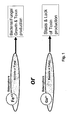
- Fig.1 is a diagram showing a mechanism by which microorganisms take in iron or gallium.
- siderophores potent iron-chelating compounds
- Microorganisms produce siderophores, which bind Fe 3+ in the environment and are transported into the cells via specific transport systems, where Fe 3+ is released as Fe 2+ and then stored.
- Known siderophores include hydroxamates, such as rhodotorulic acid, coprogens, ferrichromes, and fusarinines; polycarboxylates; phenolates-catecholates and desferioxamine (Howard, 1999, supra ).
- Ga 3+ and Fe 3+ have strong biochemical similarities, in particular, with regard to their binding to proteins and chelators. These similarities are mainly attributed to their comparable ionic radii and the degrees of ionic (electrostatic) versus covalent contributions to bonding (for review, see Bernstein, 1998, supra ). Because of these similarities, Ga 3+ can mimic Fe 3+ in various biological processes.
- Ga 3+ binds to transferrin (see, for example, Clausen et al., 1974, Cancer Res 34:1931-1937 ; Vallabhajosula et al., 1980, J Nucl Med 21:650-656 ) and is transported into the cell via transferrin-mediated endocytosis ( Chitambar, 1987, Cancer Res 47:3929-3934 ).
- Ga 3+ may competitively bind to siderophores and be easily taken up by microorganisms, where it can disrupt DNA and protein syntheses or bind to bacterial proteins and impair the growth of the microorganisms, thereby eventually leading to the stasis or death of the organisms.
- Ga 3+ may occupy membrane-reductases of the microorganisms and prevent Fe 3+ from binding to the reductases to be reduced to Fe 2+ , which would be more bioavailable than Fe 3+ .
- the present invention takes advantage of these characteristics of gallium compounds and provides methods and formulations for controlling the growth of pathogenic microorganisms to treat or prevent infections caused by such pathogens.
- Gallium compounds disclosed herein include any gallium-containing compounds that are pharmaceutically acceptable and safe for mammalian use, in particular, for human use. Gallium compounds have been used diagnostically and therapeutically in humans and are known to be very safe for human use (see Poster et al., 1986, supra ; Todd et al., 1991, Drugs 42:261-273 ; Johnkoff et al., 1993, Br J Cancer 67:693-700 ).
- gallium compounds suitable for use in the present invention include, but not by way of limitation, gallium nitrate, gallium maltolate, gallium citrate, gallium phosphate, gallium chloride, gallium fluoride, gallium carbonate, gallium formate, gallium acetate, gallium sulfate, gallium tartrate, gallium oxalate, gallium oxide, and any other gallium compounds which can safely provide effective levels of element gallium in various applications.
- gallium complexes such as gallium pyrones, gallium pyridones, and gallium oximes, as well as gallium bound to proteins, such as transferrin and lactoferrin, or gallium bound to siderophores, such as hydroxamates, polycarboxylates, and phenolates-catecholates, desferioxamine and other iron-chelators, such as cysteine, ⁇ -keto acids, hydroxy acids and pyridoxal isonicotinyl hydrazone class ( Richardson et al., 1997, Antimicrobial Agents and Chemotherapy 41(9):2061-2063 ) and the like.
- gallium bound to proteins such as transferrin and lactoferrin
- siderophores such as hydroxamates, polycarboxylates, and phenolates-catecholates, desferioxamine and other iron-chelators, such as cysteine, ⁇ -keto acids, hydroxy acids and pyridoxal isonicotiny
- the therapeutically effective amount (i.e ., dosage) of a gallium compound can vary based on the nature and severity of the disease or disorder to be treated, the location of the affected area, the age and immunological background of a subject, the types of gallium compound to be used, as well as other factors apparent to those skilled in the art.
- a therapeutically effective amount of a gallium compound can be that amount which gives gallium ion concentration, at the site of the application, of at least about 1 ⁇ M, at least about 50 ⁇ M, at least about 100 ⁇ M, at least about 500 ⁇ M, at least about 1 mM, at least about 10 mM, at least about 50 mM, at least about 100 mM, at least about 200 mM, up to about 500 mM. Due to gallium's low toxicity, the amount may be liberally increased to more than 500 mM but less than that amount which causes any toxicity. For reference, it has been reported that healthy adults can tolerate at least about 200 mg/m 2 /day gallium nitrate intravenous infusion for at least 7 days (see Schlesinger et al., supra ).
- the prophylactically effective amount of a gallium compound may be that amount sufficient to prevent a disease or disorder associated with pathogenic microorganisms and may vary based on the location of the affected area, the types and the number of the pathogenic organisms in the area, the types of gallium compound to be used, as well as on the methods of application and other factors apparent to those skilled in the art.
- the prophylactically effective amount of a gallium compound may be that amount which gives gallium ion concentration, at the site of the application, of at least about 0.1 ⁇ M, at least about 50 ⁇ M, at least about 100 ⁇ M, at least about 500 ⁇ M, at least about 1 mM, at least about 10 mM, at least about 50 mM, at least about 100 mM, up to about 200 mM.
- the amount of a gallium compound for prophylactic purposes may be liberally increased to more than 200 mM but less than the amount that causes any toxicity.
- the effective amount of a gallium compound sufficient to control the growth of pathogenic microorganisms on the surfaces of inanimate objects may vary depending on the types of the objects, frequencies of their use, frequencies of their exposure to pathogenic organisms and other factors evident to those skilled in the art.
- the effective amount of a gallium compound for this application may be the amount which gives gallium ion concentration of at least about 50 mg/m 2 , at least about 100 mg/m 2 , at least about 200 mg/m 2 , at least about 300 mg/m 2 , at least about 500 mg/m 2 , at least about 600 mg/m 2 , at least about 700 mg/m 2 , at least about 800 mg/m 2 , at least about 900 mg/m 2 , or at least about 1 g/m 2 , on the surface area of the object.
- the gallium compounds suitable for the present invention can be formulated in various forms depending on their applications. Accordingly, the present invention provides formulations comprising gallium compounds for controlling growth of iron-dependent pathogenic microorganisms.
- the gallium compounds are formulated as toothpaste, a mouthwash, a gel or a gargle for the application to the oral cavity.
- the formulations may further comprise probiotic microorganisms in addition to gallium compounds.
- probiotics can take over the microflora while the gallium compounds reduce or inhibit the growth of the pathogenic organisms, or kill the pathogenic organisms.
- the gallium compound formulations of the present invention may further contain other active or inactive ingredients.
- such other ingredients include, but are not limited to, potassium nitrate (to reduce tooth sensitivity), fluorides, abrasives, such as hydrated silica, surfactants, such as sodium lauryl sulfate, and ammonium lauryl sulfate, sequestering agents (to remove calcium and magnesium from saliva), such as tetrasodium pyrophosphate (TSPP), polymers, such as acrylic PVM/MA copolymer, polyethylene glycol (PEG), and polypropylene glycol (PPG), tooth whiteners, such as sodium carbonate peroxide, sweeteners, baking soda, as well as other anti-bacterial agents and fillers.
- emollients to reduce tooth sensitivity
- fluorides such as hydrated silica
- surfactants such as sodium lauryl sulfate, and ammonium lauryl sulfate
- sequestering agents to remove
- Dental caries is a transmissible disease which is bacterially generated in combination with other pathological factors, such as reduced salivary function and frequency of use of fermentable carbohydrates (Featherstone, 2000, supra ).
- pathological factors such as reduced salivary function and frequency of use of fermentable carbohydrates (Featherstone, 2000, supra ).
- high levels of Streptococcus mutans and lactobacilli constitute the major etiological factors in caries formation.
- an antibacterial approach has not been the focus of regular oral hygiene measures taken in the U.S. to prevent or halt the progression of dental caries.
- An exception is a prescription of chlorhexidine gluconate rinse or gel for patients with high levels of bacteria; but it is difficult for clinicians to determine the levels of cariogenic bacteria in the mouth.
- Streptococcus mutants (S. mutans ) is also known to require iron uptake for its growth and survival and expresses several iron-responsive proteins ( Spatafora et al., 2001, Microbiology 147:1599-1610 ).
- a fimA one of the iron-responsive proteins, null mutation was not lethal in S. mutans, indicating that other mechanisms for iron uptake and transport are operating in this pathogenic organism (Spatafora et al., 2001, supra). It has been reported that S.
- mutans does not excrete a readily detectable phenolate or hydroxamate siderophores, but it has a membrane-reductase which reduces ferric ion to ferrous ion, which is subsequently transported into the cell by a membrane ferrous-translocating system ( Evans et al., 1986, J of Bacteriol 168(3):1096-1099 ). Thus, iron uptake and transport seem to be crucial for cariogenic virulence of the organism.
- the present invention provides a method for preventing dental caries, comprising applying a prophylactically effective amount of a gallium compound to a tooth surface and an oral cavity of a subject.
- the gallium compound is formulated as a toothpaste comprising a gallium compound and is applied to the tooth surface and oral cavity by brushing.
- the gallium compound is formulated as a mouthwash comprising a gallium compound and applied to the tooth surface by rinsing the oral cavity.
- the gallium compound may be formulated as an ointment or a gel to be applied to a tooth surface.
- Vaginal infections are among the most common medical concerns for women.
- vaginal infections the most common is a yeast infection caused by the overgrowth of Candida albicans (C. albicans ), which is a normal resident in the vagina in small numbers.
- C. albicans Candida albicans
- siderophore uptake by sit1 s iderophores iron t ransport 1 gene product is required for C. albicans to invade and penetrate epithelial layers, indicating that iron uptake is directly linked to virulence factors of the organism ( Heymann et al., 2002, Infection and Immunity 70(9):5246-5255 ).
- sit1 s iderophores iron t ransport 1
- a method for treating vaginal yeast infection comprising applying a gallium compound to the vagina of a subject.
- the gallium compound may be formulated as creams, ointments, gels, douches, or suppositories.
- the gallium compounds may be applied in various formulations to the vagina.
- a method for treating vaginal infections comprising applying a gallium compound in combination with a probiotic, such as Lactobacillus acidophilus, Lactobacillus plantarum, Lactobacillus leichmannii, Lactobacillus johnsonni, Lactobacillus and delbrueckii.
- a probiotic such as Lactobacillus acidophilus, Lactobacillus plantarum, Lactobacillus leichmannii, Lactobacillus johnsonni, Lactobacillus and delbrueckii.
- Antimicrobial activities of the gallium compound can be also used for disinfecting or protecting the surfaces of inanimate or animate objects from microbial contaminations. Accordingly, a method is disclosed for controlling a growth of microorganisms on a surface of an inanimate or animate object, comprising applying an effective amount of a gallium compound to a surface of the object.
- a method for disinfecting the objects such as a toothbrush, a denture, a dental retainer, and other dental devices, by applying an effective amount of a gallium compoundto a surface of the object.
- the gallium compounds may be applied to the surface of the object by dipping, brushing, spraying or coating.
- the coating may be based on a certain polymer that allows slow diffusion of the gallium compound at such a rate that it prevents microorganisms from growing on the surface of the object.
- polymer coatings include, but are not limited to, hydroxyapatite, polymethacrylates, tricalcium phosphate, polyanhydrides, hydrocarbon elastomers, methyl- and ethyl cellulose, hydroxypropyl cellulose, cellulose acetate, phthalate, and so forth.
- the gallium compounds can be incorporated into materials, for example, the polymers (e.g., thermoplastics, thermoset resins, and the like), metals, and the like, which form the object itself ( e.g., bristles of a toothbrush, a catheter, medical equipment, injection needles, and the like).
- a method for disinfecting contact lenses by applying an effective amount of a gallium compound to a surface of the lenses.
- the lenses may be disinfected by dipping them in the gallium compound solution, or by coating their surfaces with or without a certain polymer containing the gallium compounds as described above.
- a method for disinfecting skin surfaces of a subject comprising applying the gallium compounds to the same, for example, as soap, shampoo, skin disinfectant (e.g., hand), and the like.
- the gallium compounds are applied to the skin surfaces in the form of cream, lotion, solution, aerosol, or ointment.
- a method for controlling the growth of microorganisms in drinks and foods including grains, vegetables, animal products, such as fish, eggs, dairy products, meat, and the like, comprising applying the gallium compound directly to the same by washing, soaking and/or spraying.
- Such a treatment of foods can effectively protect the consumers from food poisoning.
- a method for controlling a microbial growth on various environmental surfaces in households, hospitals, schools, etc., by applying the gallium compounds to the same.
- the gallium compounds can be used against any gallium-susceptible pathogenic microorganisms as discussed throughout the present specification (see Section 3 and Subsections 5.4 and 5.5, supra, and Subsections 5.7 and 5.8, infra ), including the microorganisms that are known to have become resistant to first-line antibiotics.
- Such microorganisms include Escherichia coli O157 (a causative organism for gastroenteritis, haemorrhagic colitis or urinary and genital tract infections), vancomycin-resistant Enterococcus faecalis (a causative organism for endocarditis, urinary tract infections, and wound infections), methicillin resistant Staphylococcus aureus (MRSA; a causative organism for various skin infections, eye infection, wound infections, and so forth), Salmonella typhi (the causative organism for typhoid fever), and the like.
- MRSA methicillin resistant Staphylococcus aureus
- Salmonella typhi the causative organism for typhoid fever
- the applications of the gallium compounds to various surfaces are cost effective and significantly reduce microbial contaminations in the environment without increasing the development of antibiotic-resistant microorganisms.
- antibiotics in animal feeds to boost animal growth and prevent infections has caused in a major way the development of drug-resistant bacteria.
- Such a use of antibiotics in poultry and beef industries has resulted in the emergence of antibiotics-resistant pathogens among species of genera Salmonella, Campylobacter, Shigella, Brucella, and so forth.
- Salmonella Salmonella
- Campylobacter Salmonella
- Shigella Salmonella
- Brucella Brucella
- gallium compounds have less risks of generating drug-resistant pathogens than do regular antibiotics and, therefore, are viable alternatives to the conventional antibiotics. Accordingly, the present specification discloses an animal feed comprising an effective amount of a gallium compound.
- the effective amount of a gallium compound in an animal feed sufficient to promote animal growth and prevent infections can be readily determined based on the therapeutic or prophylactic dosages of the gallium compounds described in the previous sections (see Subsection 5.2) and such a determination is within the ability of those skilled in the art.
- the animal feed may further comprise probiotics.
- probiotics The health benefits of probiotics are discussed in Subsections 3.1 and 5.3. Typical probiotic compositions and methods for increasing the number of probiotic or resident microorganisms in the gastrointestinal tract of an animal are disclosed, for example, in U.S. Patent No. 6,221,350 .
- Gallium compounds may be utilized in many different applications other than those described in the previous sections.
- gallium compounds may be applied topically or directly to a body area, including an open wound and an internal organ or tissue exposed to an outer environment during surgery in addition to an external area, that needs to be protected from or is afflicted with various infections caused by pathogenic organisms.
- infections include, but not by way of limitation, skin infections, such as cellulites, folliculitis, boils, carbuncles, erysipelas, impetigo, erythrasma, paronychia, staphylococcal scalded skin syndrome, candidiasis ( e.g., oral thrush), ring worm, tinea versicolor, etc.
- Typical yeasts or fungi that cause skin infections include Candida albicans, species of genus Microsporon, such as M. auduini and M. canis; species of Trichophyton, such as T. metagrophyte and T. tonsurans, and the like.
- Causative organisms for eye infections include Staphylococcus aureus, Streptococcus pyogerzes, Haemophilus influenzae, Chlamydia trachomatis, Neisseria gonorrhoeae, Propionibacterium spp., Nocardia spp., Bacteroides spp, Fusarium spp. and so forth.
- Nasal infections caused by Streptococcus penumoniae may lead to ear infection, sinusitis, bronchitis, pneumonia, etc.
- MRSA methicillin-resistant Staphylococcus aureus
- the applications of gallium compounds for human uses as well as veterinarian uses are very beneficial especially in view of their low toxicity and low risks for generating resistant microorganisms.
- Other applications in the fields of food industries, agricultural industries, fishing industries and so forth are also possible.
- MIC minimum inhibitory concentration
- MBC minimum bactericidal concentration
- gallium nitrate powder were dissolved in 10 ml of filter-sterilized deionized water and the resulting 20% (w/v) (i.e . , 200 mg/ml) solution was once again filter-sterilized.
- Two-fold serial dilutions were prepared in sterile deionized water down to 0.156% ( i.e., 1.56 mg/ml) for the tests for the most organisms, except for the tests for Candida albicans and Streptococcus mutans, in which 10%, 1%, 0.5%, 0.1%, 0.05%, 0.01%, 0.005% and 0.001% of gallium nitrate solutions were prepared.
- Table 1 shows the list of microorganisms tested for MIC and MBC. All organisms were obtained from the American Type Culture Collection (ATCC), Manassas, VA. Each microorganism was picked from the seed culture ( see Table 1) and inoculated in an appropriate type of broth to obtain a 0.5 McFarland turbidity standard. The standard suspension of the microorganism was then diluted to 1:100 with the broth and used for the tests.
- Table 1 TEST ORGANISM ATCC # SEED CULTURE Candida albicans 10231 On Sabouraud dextrose agar, at 25-30°C for 24-48 hours. Streptococcus mutans 25175 On blood agar, at 35-37°C for 24-48 hours, with CO 2 .
- Porphyromonas gingivalis 33277 On Brucella blood agar, at 35-37°C for 7 days under anaerobic conditions.
- Pseudomonas aeruginosa 15442 On tryptic soy agar with 5% sheep blood (BAP), at 35-37°C for 24-48 hours under aerobic conditions.
- Methicillin-resistant Staphylococcus aureus a 33592 Vancomycin-resistant Enterococcus faecalis (VRE) b 51575 Escherichia coli O157:H7 35150 Salmonella typhi 6539 Campylobacter jejuni 29428 On Brucella agar with 5% sheep blood, at 35-37°C for 48 hours under microaerophilic conditions (CampyPakTM by BBL Microbiology Systems, Cockeysville, Md).
- a. Antibiotics resistance of the organism was confirmed by CLSI (Clinical Laboratory Standards Institute) Oxacillin disk-diffusion test. The zone of inhibition was 6 mm (CLSI Oxacillin resistant range: s 10 mm).
- Antibiotics resistance of the organism was confirmed by CLSI Vancomycin disk-diffusion test. The zone of inhibition was 10 mm (CLSI Vancomycin resistant range: ⁇ 14 mm).
- microdilution broth method in 96-well plates (i.e ., 0.1 ml of the gallium nitrate solution mixed with 0.1 ml of the microorganism suspension) or a macrodilution broth method in test tubes ( i.e .,1 ml of the gallium nitrate solution mixed with 1 ml of the microorganism suspension) as follows:
- Microdilution broth method Candida albicans; Streptococcus mutans; Escherichia coli O157:H7; and Campylobacter jejuni.
- Macrodilution broth method Methicillin-resistant Staphylococcus aureus (MRSA); Vancomycin-resistant Enterococcus faecalis (VRE); Salmonella typhi; Pseudomonas aeruginosa; and Porphyromonas gingivalis.
- MRSA Methicillin-resistant Staphylococcus aureus
- VRE Vancomycin-resistant Enterococcus faecalis
- Salmonella typhi Pseudomonas aeruginosa
- Porphyromonas gingivalis Porphyromonas gingivalis
- the growth of the microorganisms were determined by visual observation of turbidity in the samples.
- concentrations of microorganisms in the suspension used in MIC test were determined by inoculating serial dilutions of the suspensions onto appropriate agar plates and counting the number of colonies.
- a toothpaste is formulated to contain gallium nitrate at 50 ⁇ M and 0.2% by weight sodium fluoride as active ingredients in the treatment and prevention of dental and periodontal disease.
- the formulation also contains conventional inactive ingredients including water, sorbitol, glycerin, hydrated silica, polyethyleneglycol, xanthan gum, sodium saccharin, methylparaben, and propylparaben. These are blended in amounts known to those skilled in the art to obtain a toothpaste of appropriate consistency.
- the formulation canbe packaged in conventional toothpaste tubes, and used in the normal manner.
- gallium citrate at 200 ⁇ M is combined with inactive ingredients including, in the case of a suppositories, gelatin, glycerin, lecithin, mineral oil, titanium oxide, and white petrolatum, or, in the case of external creams, benzoic acid, isopropylmyristate, polysorbate 60, potassium hydroxide, propyleneglycol, distilled water and stearyl alcohoL
- inactive ingredients including, in the case of a suppositories, gelatin, glycerin, lecithin, mineral oil, titanium oxide, and white petrolatum, or, in the case of external creams, benzoic acid, isopropylmyristate, polysorbate 60, potassium hydroxide, propyleneglycol, distilled water and stearyl alcohoL
- a liquid formulation in a form of an aqueous solution of 5% by weight gallium phosphate and 5% by weight dimethyl benzyl ammonium chloride is prepared and packaged for use in households, hospitals, barber shops and beauty parlors as a surface treatment agent for disinfecting objects whose surfaces are prone to acting as sites for the growth of pathogenic organisms.
- Such a formulation can be used by application to such surfaces in a conventional manner.
- gallium tartrate In the formulation of animal feeds whereby various nutrients and adjuvants are added to grains that are fed to domestic animals, gallium tartrate at 200 mg/kg feed is added to the feed separately or in combination with the aforesaid ingredients to ensure optimal mixing.
- the gallium tartrate can be applied as an aqueous solution using conventional equipment to achieve dispersal of the gallium tartrate throughout the feed.
Landscapes
- Health & Medical Sciences (AREA)
- Life Sciences & Earth Sciences (AREA)
- Chemical & Material Sciences (AREA)
- General Health & Medical Sciences (AREA)
- Animal Behavior & Ethology (AREA)
- Veterinary Medicine (AREA)
- Public Health (AREA)
- Epidemiology (AREA)
- Engineering & Computer Science (AREA)
- Medicinal Chemistry (AREA)
- Pharmacology & Pharmacy (AREA)
- Chemical Kinetics & Catalysis (AREA)
- General Chemical & Material Sciences (AREA)
- Inorganic Chemistry (AREA)
- Organic Chemistry (AREA)
- Nuclear Medicine, Radiotherapy & Molecular Imaging (AREA)
- Polymers & Plastics (AREA)
- Birds (AREA)
- Zoology (AREA)
- Food Science & Technology (AREA)
- Bioinformatics & Cheminformatics (AREA)
- Oral & Maxillofacial Surgery (AREA)
- Wood Science & Technology (AREA)
- Nutrition Science (AREA)
- Hematology (AREA)
- Materials Engineering (AREA)
- Oncology (AREA)
- Communicable Diseases (AREA)
- Dentistry (AREA)
- Plant Pathology (AREA)
- Environmental Sciences (AREA)
- Pest Control & Pesticides (AREA)
- Agronomy & Crop Science (AREA)
- Mycology (AREA)
- Emergency Medicine (AREA)
- Animal Husbandry (AREA)
- Endocrinology (AREA)
- Reproductive Health (AREA)
- Physiology (AREA)
- Dermatology (AREA)
Claims (11)
- Pâte dentifrice comprenant un composé de gallium selon une quantité efficace sur le plan prophylactique pour une utilisation dans le traitement de maladies et de troubles de la cavité orale associés à des bactéries pathogènes, par le contrôle de la croissance desdites bactéries pathogènes dans la cavité orale, caractérisé en ce que ledit composé est au moins un composé choisi dans le groupe constitué par le nitrate de gallium, le maltolate de gallium, le citrate de gallium, le phosphate de gallium, le chlorure de gallium, le fluorure de gallium, le carbonate de gallium, le formiate de gallium, l'acétate de gallium, le sulfate de gallium, le tartrate de gallium, l'oxalate de gallium et l'oxyde de gallium.
- Pâte dentifrice selon la revendication 1, caractérisée en ce que ladite maladie ou ledit trouble est choisi(e) dans le groupe constitué par les caries dentaires, la plaque dentaire, les maladies parodontales, l'halitose et la gingivite.
- Pâte dentifrice selon la revendication 1 ou la revendication 2, caractérisée en ce que la concentration en ions gallium au niveau du site d'application esti) d'au moins environ 0,1 µM; ouii) d'au moins environ 50 µM; ouiii) d'au moins environ 100 µM.
- Pâte dentifrice selon l'une quelconque des revendications à 3, caractérisée en ce que ladite bactérie pathogène est au moins une bactérie choisie dans le groupe constitué par Streptococcus mutans, Streptococcus sanguis, Streptococcus gordonii,Atopobium parvulum, Porphyromonas gingivalis et Eubacterium sulci.
- Bain de bouche comprenant un composé de gallium selon une quantité efficace sur le plan prophylactique pour une utilisation dans le traitement de maladies et de troubles de la cavité orale associés à des bactéries pathogènes, par le contrôle de la croissance desdites bactéries pathogènes dans la cavité orale, caractérisé en ce que ledit composé est au moins un composé choisi dans le groupe constitué par le nitrate de gallium, le maltolate de gallium, le citrate de gallium, le phosphate de gallium, le chlorure de gallium, le fluorure de gallium, le carbonate de gallium, le formiate de gallium, l'acétate de gallium, le sulfate de gallium, le tartrate de gallium, l'oxalate de gallium et l'oxyde de gallium.
- Bain de bouche selon la revendication 5, caractérisé en ce que ladite maladie ou ledit trouble est choisi(e) dans le groupe constitué par les caries dentaires, la plaque dentaire, les maladies parodontales, l'halitose et la gingivite.
- Bain de bouche selon la revendication 5 ou la revendication 6, caractérisé en ce que la concentration en composé de gallium esti) d'au moins environ 0,1 µM; ouii) d'au moins environ 50 µM; ouiii) d'au moins environ 100 µM.
- Bain de bouche selon l'une quelconque des revendications 5 à 7, caractérisé en ce que ladite bactérie pathogène est au moins une bactérie choisie dans le groupe constitué par Streptococcus mutans, Streptococcus sanguis, Streptococcus gordonii, Atopobium parvulum, Porphyromonas gingivalis et Eubacterium sulci.
- Composé de gallium choisi dans le groupe constitué par le nitrate de gallium, le maltolate de gallium, le citrate de gallium, le phosphate de gallium, le chlorure de gallium, le fluorure de gallium, le carbonate de gallium, le formiate de gallium, l'acétate de gallium, le sulfate de gallium, le tartrate de gallium, l'oxalate de gallium et l'oxyde de gallium, pour une utilisation dans le traitement de maladies et de troubles de la cavité orale associés à des bactéries pathogènes, par le contrôle de la croissance desdites bactéries pathogènes dans la cavité orale, caractérisé en ce que la concentration en ions gallium au niveau du site d'application esti) d'au moins environ 0,1 µM; ouii) d'au moins environ 50 µM; ouiii) d'au moins environ 100 µM.
- Composé de gallium selon la revendication 9, qui est formulé sous forme de pâte dentifrice ou de bain de bouche.
- Composé de gallium selon la revendication 9 ou la revendication 10, pour une utilisation dans une méthode de contrôle de la croissance de bactéries pathogènes dans la cavité orale, caractérisé en ce qu'une quantité efficace sur le plan prophylactique dudit composé de gallium est appliquée à une surface dentaire et/ou à la cavité orale d'un sujet.
Priority Applications (1)
| Application Number | Priority Date | Filing Date | Title |
|---|---|---|---|
| EP13190163.9A EP2689783B1 (fr) | 2005-11-01 | 2006-10-31 | Contrôle de la croissance de micro-organismes au moyen de composés de gallium |
Applications Claiming Priority (2)
| Application Number | Priority Date | Filing Date | Title |
|---|---|---|---|
| US73187505P | 2005-11-01 | 2005-11-01 | |
| PCT/US2006/042381 WO2007053581A2 (fr) | 2005-11-01 | 2006-10-31 | Controle de la croissance de micro-organismes oraux et superficiels a l'aide de composes au gallium |
Related Child Applications (2)
| Application Number | Title | Priority Date | Filing Date |
|---|---|---|---|
| EP13190163.9A Division EP2689783B1 (fr) | 2005-11-01 | 2006-10-31 | Contrôle de la croissance de micro-organismes au moyen de composés de gallium |
| EP13190163.9 Division-Into | 2013-10-24 |
Publications (3)
| Publication Number | Publication Date |
|---|---|
| EP1962774A2 EP1962774A2 (fr) | 2008-09-03 |
| EP1962774A4 EP1962774A4 (fr) | 2011-03-16 |
| EP1962774B1 true EP1962774B1 (fr) | 2014-01-01 |
Family
ID=38006451
Family Applications (2)
| Application Number | Title | Priority Date | Filing Date |
|---|---|---|---|
| EP06836675.6A Ceased EP1962774B1 (fr) | 2005-11-01 | 2006-10-31 | Controle de la croissance de micro-organismes oraux et superficiels a l'aide de composes au gallium |
| EP13190163.9A Not-in-force EP2689783B1 (fr) | 2005-11-01 | 2006-10-31 | Contrôle de la croissance de micro-organismes au moyen de composés de gallium |
Family Applications After (1)
| Application Number | Title | Priority Date | Filing Date |
|---|---|---|---|
| EP13190163.9A Not-in-force EP2689783B1 (fr) | 2005-11-01 | 2006-10-31 | Contrôle de la croissance de micro-organismes au moyen de composés de gallium |
Country Status (7)
| Country | Link |
|---|---|
| US (3) | US20110038809A1 (fr) |
| EP (2) | EP1962774B1 (fr) |
| JP (2) | JP5264494B2 (fr) |
| KR (2) | KR20080072697A (fr) |
| CN (2) | CN101484178A (fr) |
| CA (2) | CA2784168C (fr) |
| WO (1) | WO2007053581A2 (fr) |
Families Citing this family (18)
| Publication number | Priority date | Publication date | Assignee | Title |
|---|---|---|---|---|
| EP1962774B1 (fr) | 2005-11-01 | 2014-01-01 | Mount Sinai School of Medicine | Controle de la croissance de micro-organismes oraux et superficiels a l'aide de composes au gallium |
| WO2009009171A2 (fr) * | 2007-04-02 | 2009-01-15 | Sideromics, Llc | Procédés de prévention ou de traitement de maladies infectieuses causées par des micro-organismes extracellulaires, incluant leurs souches résistantes aux produits antimicrobiens, au moyen de composés de gallium |
| BE1018018A6 (nl) | 2008-02-28 | 2010-04-06 | Gielen Cornelis | Oplossing voor het biologisch reinigen van tandenborstels en bijhorende inrichting. |
| EP2765948B8 (fr) | 2011-10-05 | 2019-09-25 | Multi Oral BV | Composition pour soin dentaires, instrument pour l'appliquer en bouche et procédé pour soins dentaires. |
| SG11201402057VA (en) * | 2011-12-15 | 2014-06-27 | Colgate Palmolive Co | Oral care compositions |
| KR20140139058A (ko) * | 2012-03-30 | 2014-12-04 | 덴츠플라이 아이에이치 에이비 | 항균 금속을 포함하는 표면을 구비한 의료 기기 |
| EP2662051A1 (fr) * | 2012-05-11 | 2013-11-13 | Dentsply IH AB | Dispositif médical comportant une surface comprenant des nanoparticules |
| CN111973484A (zh) * | 2013-03-12 | 2020-11-24 | 普莱玛疗法公司 | 包含螯合剂和碱的牙用组合物 |
| US10537661B2 (en) | 2017-03-28 | 2020-01-21 | DePuy Synthes Products, Inc. | Orthopedic implant having a crystalline calcium phosphate coating and methods for making the same |
| US10537658B2 (en) | 2017-03-28 | 2020-01-21 | DePuy Synthes Products, Inc. | Orthopedic implant having a crystalline gallium-containing hydroxyapatite coating and methods for making the same |
| WO2019165425A1 (fr) * | 2018-02-26 | 2019-08-29 | The Board Of Supervisors Of Louisiana State University And Agricultural And Mechanical College | Composés antimicrobiens à base de gallium et procédés associés |
| CN109481208A (zh) * | 2018-12-21 | 2019-03-19 | 南京汉瑞生物科技有限公司 | 一种应用镓元素的医疗护理设备 |
| JP7271341B2 (ja) * | 2019-06-28 | 2023-05-11 | サンスター スイス エスエー | 歯周病進行リスク測定方法及びキット |
| CN111876879A (zh) * | 2020-07-31 | 2020-11-03 | 储旭 | 抗菌面料及其制备方法 |
| CN111719196A (zh) * | 2020-07-31 | 2020-09-29 | 储旭 | 复合抗菌纤维及其制备方法 |
| CN113600827B (zh) * | 2021-07-30 | 2022-07-19 | 山东大学 | 一种Au/Ga2O3/AuGa2多相复合材料及其制备方法与应用 |
| CN115024391A (zh) * | 2022-06-27 | 2022-09-09 | 广东粤港澳大湾区国家纳米科技创新研究院 | 一种抗菌饲料添加剂及其制备方法以及应用 |
| CN117257955B (zh) * | 2023-11-17 | 2024-03-15 | 深圳大学 | 铁氧还蛋白还原酶Fpr作为绿脓杆菌治疗药物靶点的应用 |
Family Cites Families (49)
| Publication number | Priority date | Publication date | Assignee | Title |
|---|---|---|---|---|
| GB654472A (en) * | 1947-03-12 | 1951-06-20 | Procter & Gamble | Preparations for use in contact with the teeth |
| US4177475A (en) * | 1977-10-31 | 1979-12-04 | Burroughs Corporation | High temperature amorphous memory device for an electrically alterable read-only memory |
| US4203123A (en) * | 1977-12-12 | 1980-05-13 | Burroughs Corporation | Thin film memory device employing amorphous semiconductor materials |
| US4388321A (en) * | 1981-08-06 | 1983-06-14 | Monsanto Company | Method for inhibiting growth of food poisoning organisms |
| EP0109564B1 (fr) | 1982-10-22 | 1988-04-27 | Sloan-Kettering Institute For Cancer Research | Application des sels de gallium pour la fabrication de compositions pharmaceutiques pour le traitement des troubles de l'homéostasie du calcium |
| CA2071867A1 (fr) * | 1989-11-06 | 1991-05-07 | Edith Mathiowitz | Mode de fabrication de microspheres proteiniques |
| US6004951A (en) | 1989-11-22 | 1999-12-21 | Bernstein; Lawrence Richard | Administration of gallium complexes of 3-hydroxy-4-pyrones to provide physiologically active gallium levels in a mammalian individual |
| US5574027A (en) | 1989-11-22 | 1996-11-12 | Bernstein; Lawrence R. | Pharmaceutical compositions of gallium complexes of 3-hydroxy-4-pyrones |
| US5258376A (en) | 1989-11-22 | 1993-11-02 | Bernstein Lawrence R | Pharmaceutical compositions of gallium complexes of 3-hydroxy-4-pyrones |
| US5556645A (en) * | 1990-01-12 | 1996-09-17 | Bockman; Richard | Methods of enhancing wound healing and tissue repair |
| DE69033606T2 (de) | 1990-01-12 | 2001-04-26 | New York Society For The Relief Of The Ruptured And Crippled, Maintaining The Hospital For Special Surgery | Verfahren zur verbesserung der wundheilung und gewebeerneuerung |
| US5686116A (en) * | 1990-01-12 | 1997-11-11 | New York Society For The Relief Of The Ruptured And Crippled, Maintaining The Hospital For Special Surgery | Methods of enhancing repair, healing and augmentation of bone implants |
| GB9009437D0 (en) * | 1990-04-26 | 1990-06-20 | Glaxo Group Ltd | Chemical compounds |
| SU1739957A1 (ru) * | 1990-06-29 | 1992-06-15 | Н.И.Лебедев, В.В.Степанок и С.Н.Лебедева | Способ силосовани зеленых кормов |
| JPH06506694A (ja) * | 1991-04-10 | 1994-07-28 | カペリ,クリストフアー・シー | 医療用に有用な抗微生物組成物 |
| US5286480A (en) * | 1992-06-29 | 1994-02-15 | The Procter & Gamble Company | Use of N-acetylated amino acid complexes in oral care compositions |
| US5363329A (en) * | 1993-11-10 | 1994-11-08 | Eugeniy Troyan | Semiconductor memory device for use in an electrically alterable read-only memory |
| US5858350A (en) * | 1993-12-01 | 1999-01-12 | Marine Polymer Technologies | Methods and compositions for poly-β-1→4-N-acetylglucosamine cell therapy system |
| US5641519A (en) * | 1995-05-18 | 1997-06-24 | The Ohio State University | Method of treating endotoxic shock employing gallium compounds |
| AUPN881396A0 (en) * | 1996-03-20 | 1996-04-18 | Arnott's Biscuits Limited | Enhancement of microbial colonization of the gastrointestinal tract |
| US5843936A (en) * | 1996-06-28 | 1998-12-01 | Bernstein; Lawrence R. | Topical administration of azaspiranes to prevent or treat skin conditions associated with hyperproliferation of keratinocytes |
| US5747482A (en) | 1996-07-30 | 1998-05-05 | Bernstein; Lawrence R. | Methods and compositions to inhibit keratinocyte proliferation |
| US6203822B1 (en) * | 1996-09-03 | 2001-03-20 | University Of Iowa Research Foundation | Gallium-containing compounds for the treatment of infections caused by intracellular pathogens and pathogens causing chronic pulmonary infection |
| WO1998030102A1 (fr) * | 1997-01-09 | 1998-07-16 | Emory University | Metalloporphyrines non-ferreuses et procedes d'utilisation |
| CN1092962C (zh) * | 1998-01-26 | 2002-10-23 | 贾伟 | 一种减轻骨及骨关节疾病疼痛的药物 |
| US6669399B2 (en) | 1999-07-12 | 2003-12-30 | Wedgelock Systems, Ltd. | Wedge-lockable removable punch and die bushing in retainer |
| US6297242B1 (en) * | 1999-08-12 | 2001-10-02 | Ortho-Mcneil Pharmaceutical, Inc. | N-substituted amidine and guanidine oxazolidinone antibacterials and methods of use thereof |
| US20020068761A1 (en) * | 1999-10-04 | 2002-06-06 | Bernstein Lawrence R. | Gallium complexes of 3-hydroxy-4-pyrones to treat mycobacterial infections |
| MXPA02003463A (es) * | 1999-10-04 | 2004-09-10 | R Bernstein Lawrence | Complejos de galio de 3-hidroxi-4-pironas para tratar la infeccion por procariontes intracelulares, virus de adn y retrovirus. |
| JP2001314181A (ja) * | 2000-05-10 | 2001-11-13 | Mi Tec:Kk | キレート化合物含有酒類 |
| KR100400411B1 (ko) * | 2000-09-09 | 2003-10-01 | 주식회사 바이오프로젠 | 질염 치료용 생균제제 |
| SE521022C2 (sv) * | 2001-09-20 | 2003-09-23 | Ellen Ab | Mjölksyraproducerande bakterier för användning som probiotiska organismer i vaginan hos människa |
| US20050100563A1 (en) * | 2001-01-26 | 2005-05-12 | Hexamer Don L. | Antifungal compositions and methods of treatment therewith |
| US6506413B1 (en) * | 2001-04-30 | 2003-01-14 | Joseph C. Ramaekers | Compositions for treating animal diseases and syndromes |
| US20060073197A1 (en) * | 2004-05-20 | 2006-04-06 | Ramaekers Joseph C | Encapsulated transfer factor compositions and methods of use |
| US6507061B1 (en) * | 2001-08-31 | 2003-01-14 | Intel Corporation | Multiple layer phase-change memory |
| US6660262B2 (en) * | 2001-09-28 | 2003-12-09 | Bovine Health Products, Inc. | Broad spectrum antimicrobial compound and treatment |
| US7151273B2 (en) * | 2002-02-20 | 2006-12-19 | Micron Technology, Inc. | Silver-selenide/chalcogenide glass stack for resistance variable memory |
| US6872963B2 (en) * | 2002-08-08 | 2005-03-29 | Ovonyx, Inc. | Programmable resistance memory element with layered memory material |
| JP4484468B2 (ja) * | 2002-08-20 | 2010-06-16 | 株式会社メニコン | コンタクトレンズの消毒方法及びそのための消毒液 |
| US8100872B2 (en) * | 2002-10-23 | 2012-01-24 | Tyco Healthcare Group Lp | Medical dressing containing antimicrobial agent |
| EP1601367A2 (fr) * | 2003-02-06 | 2005-12-07 | Bioresponse L.L.C. | Utilisation combinee d'indoles cruciferes et de chelateurs pour le traitement d'etats lies au papillomavirus |
| EP1691614B1 (fr) * | 2003-12-04 | 2013-02-13 | University Of Iowa Research Foundation | Gallium d'inhibition de formation de films biologiques |
| WO2005058331A1 (fr) * | 2003-12-17 | 2005-06-30 | Titan Pharmaceuticals, Inc. | Utilisation de gallium pour le traitement de l'arthrite inflammatoire |
| CN1695493A (zh) * | 2004-05-12 | 2005-11-16 | 陕西沃森生物基因技术股份有限公司 | 富有机镓豆芽的生产方法及应用 |
| EP1962774B1 (fr) | 2005-11-01 | 2014-01-01 | Mount Sinai School of Medicine | Controle de la croissance de micro-organismes oraux et superficiels a l'aide de composes au gallium |
| US20070231406A1 (en) * | 2006-01-30 | 2007-10-04 | Bucalo Louis R | Use of gallium to treat biofilm-associated infections |
| US20100074932A1 (en) | 2006-09-22 | 2010-03-25 | Silke Talsma | Antimicrobial compositions containing gallium |
| WO2009009171A2 (fr) * | 2007-04-02 | 2009-01-15 | Sideromics, Llc | Procédés de prévention ou de traitement de maladies infectieuses causées par des micro-organismes extracellulaires, incluant leurs souches résistantes aux produits antimicrobiens, au moyen de composés de gallium |
-
2006
- 2006-10-31 EP EP06836675.6A patent/EP1962774B1/fr not_active Ceased
- 2006-10-31 JP JP2008538960A patent/JP5264494B2/ja not_active Expired - Fee Related
- 2006-10-31 US US11/589,915 patent/US20110038809A1/en not_active Abandoned
- 2006-10-31 CN CNA2006800410404A patent/CN101484178A/zh active Pending
- 2006-10-31 EP EP13190163.9A patent/EP2689783B1/fr not_active Not-in-force
- 2006-10-31 KR KR1020087013139A patent/KR20080072697A/ko not_active Ceased
- 2006-10-31 CN CN201410641475.9A patent/CN104473962B/zh not_active Expired - Fee Related
- 2006-10-31 CA CA2784168A patent/CA2784168C/fr not_active Expired - Fee Related
- 2006-10-31 WO PCT/US2006/042381 patent/WO2007053581A2/fr not_active Ceased
- 2006-10-31 KR KR1020117007522A patent/KR101218854B1/ko not_active Expired - Fee Related
- 2006-10-31 CA CA2627430A patent/CA2627430C/fr not_active Expired - Fee Related
-
2012
- 2012-09-18 JP JP2012204408A patent/JP5877776B2/ja not_active Expired - Fee Related
-
2014
- 2014-03-13 US US14/208,748 patent/US20140193520A1/en not_active Abandoned
-
2015
- 2015-12-31 US US14/985,474 patent/US10632148B2/en not_active Expired - Fee Related
Non-Patent Citations (1)
| Title |
|---|
| STOJILJKOVIC I ET AL: "Non-iron metalloporphyrins: potent antibacterial compounds that exploit haem/Hb uptake systems of pathogenic bacteria", MOLECULAR MICROBIOLOGY, WILEY-BLACKWELL PUBLISHING LTD, GB, vol. 31, no. 2, 1 January 1999 (1999-01-01), pages 429 - 442, XP002571540, ISSN: 0950-382X, [retrieved on 20020530], DOI: 10.1046/J.1365-2958.1999.01175.X * |
Also Published As
| Publication number | Publication date |
|---|---|
| CA2784168C (fr) | 2018-04-10 |
| WO2007053581A3 (fr) | 2008-12-11 |
| US20110038809A1 (en) | 2011-02-17 |
| JP2009514861A (ja) | 2009-04-09 |
| WO2007053581A2 (fr) | 2007-05-10 |
| CA2627430A1 (fr) | 2007-05-10 |
| JP2013049674A (ja) | 2013-03-14 |
| CN104473962A (zh) | 2015-04-01 |
| CN104473962B (zh) | 2018-05-01 |
| EP1962774A2 (fr) | 2008-09-03 |
| KR20080072697A (ko) | 2008-08-06 |
| EP2689783B1 (fr) | 2018-08-15 |
| US20160113962A1 (en) | 2016-04-28 |
| EP1962774A4 (fr) | 2011-03-16 |
| CA2784168A1 (fr) | 2007-05-10 |
| CA2627430C (fr) | 2012-10-16 |
| JP5877776B2 (ja) | 2016-03-08 |
| EP2689783A2 (fr) | 2014-01-29 |
| EP2689783A3 (fr) | 2014-08-20 |
| KR20110042386A (ko) | 2011-04-26 |
| US20140193520A1 (en) | 2014-07-10 |
| CN101484178A (zh) | 2009-07-15 |
| US10632148B2 (en) | 2020-04-28 |
| KR101218854B1 (ko) | 2013-01-09 |
| JP5264494B2 (ja) | 2013-08-14 |
Similar Documents
| Publication | Publication Date | Title |
|---|---|---|
| US10632148B2 (en) | Growth control of oral and superficial organisms using gallium compounds | |
| Naik et al. | Contaminated tooth brushes–potential threat to oral and general health | |
| Pitten et al. | Antimicrobial efficacy of antiseptic mouthrinse solutions | |
| Nelson-Filho et al. | Evaluation of the contamination and disinfection methods of toothbrushes used by 24-to 48-month-old children | |
| KR101217415B1 (ko) | 갈륨 화합물을 이용하는 감염성 질환의 예방 및 치료 방법 | |
| Lee et al. | Antibacterial effect of electrolyzed water on oral bacteria | |
| EP3435766A1 (fr) | Compositions et procédés d'inhibition et d'interruption de formation de biofilm | |
| Noordin et al. | The Effect of probiotic mouthrinse on plaque and gingival inflammation | |
| El-Shamy et al. | In vitro antimicrobial effectiveness of vinegar against oral microorganisms: Part I | |
| KR102241761B1 (ko) | 상온에서 속효성 살균 효과를 갖는 조성물 | |
| Al-Ahmad et al. | An antimicrobial effect from silver-coated toothbrush heads. | |
| Moneib et al. | Correlation between the in vivo and in vitro antimicrobial properties of commercially available mouthwash preparations | |
| Sreenivasagan et al. | Synthesis, characterization, antimicrobial evaluation, and cytotoxic effects of miswak synthesized silver nanoparticle mouth rinse | |
| EP1883401B1 (fr) | Agent antimicrobien | |
| Yoo et al. | Post-antibiotic effects and post-antibiotic sub-minimal inhibitory concentration effects of chlorhexidine against oral bacteria | |
| Rao et al. | Evaluation of effectiveness of home remedies for toothbrush decontamination using vinegar and vinegar with common salt | |
| Darout et al. | Survival rate of oral bacteria on toothbrush and Miswak stick | |
| Chen et al. | Development of an eco-sustainable formulation against Streptococcus mutans and Candida albicans | |
| CN112999337A (zh) | 生物酶消毒液制剂及其制备方法 | |
| Mahantesha et al. | Contaminated Toothbrush: Potential Threat to Oral and General Health | |
| Ermenlieva et al. | In Vitro and In Vivo Determination of Antimicrobial Activity of Mouthwash Solutions against Resident and Pathological Oral Microflora | |
| Aristizábal et al. | Development of an Effective Triantibiotic formulation for Enterococcus faecalis in the Treatment of Endodontic Pathology | |
| KR102002399B1 (ko) | 카르노식산, 카르노졸 또는 글라브리딘을 유효성분으로 함유하는 살균소독용 조성물 | |
| Paramita et al. | Comparison of the efficacy of two disinfectants for controlling gram-positive bacteria on thermoplastic retainers in dental plaques | |
| AU759182B2 (en) | Inhibition of gram positive bacteria |
Legal Events
| Date | Code | Title | Description |
|---|---|---|---|
| PUAI | Public reference made under article 153(3) epc to a published international application that has entered the european phase |
Free format text: ORIGINAL CODE: 0009012 |
|
| 17P | Request for examination filed |
Effective date: 20080529 |
|
| AK | Designated contracting states |
Kind code of ref document: A2 Designated state(s): AT BE BG CH CY CZ DE DK EE ES FI FR GB GR HU IE IS IT LI LT LU LV MC NL PL PT RO SE SI SK TR |
|
| AX | Request for extension of the european patent |
Extension state: AL BA HR MK RS |
|
| R17D | Deferred search report published (corrected) |
Effective date: 20081211 |
|
| RIC1 | Information provided on ipc code assigned before grant |
Ipc: A61K 33/24 20060101AFI20090127BHEP |
|
| REG | Reference to a national code |
Ref country code: HK Ref legal event code: DE Ref document number: 1121408 Country of ref document: HK |
|
| A4 | Supplementary search report drawn up and despatched |
Effective date: 20110210 |
|
| 17Q | First examination report despatched |
Effective date: 20111026 |
|
| DAX | Request for extension of the european patent (deleted) | ||
| RAP1 | Party data changed (applicant data changed or rights of an application transferred) |
Owner name: SIDEROMICS LLC |
|
| RAP1 | Party data changed (applicant data changed or rights of an application transferred) |
Owner name: MOUNT SINAI SCHOOL OF MEDICINE |
|
| RIN1 | Information on inventor provided before grant (corrected) |
Inventor name: MOALEM, SHARON Inventor name: PERL, DANIEL, P. |
|
| RIC1 | Information provided on ipc code assigned before grant |
Ipc: A61Q 11/00 20060101ALI20130104BHEP Ipc: A61K 33/24 20060101ALI20130104BHEP Ipc: A61K 8/19 20060101AFI20130104BHEP |
|
| GRAP | Despatch of communication of intention to grant a patent |
Free format text: ORIGINAL CODE: EPIDOSNIGR1 |
|
| GRAS | Grant fee paid |
Free format text: ORIGINAL CODE: EPIDOSNIGR3 |
|
| GRAP | Despatch of communication of intention to grant a patent |
Free format text: ORIGINAL CODE: EPIDOSNIGR1 |
|
| INTG | Intention to grant announced |
Effective date: 20130821 |
|
| GRAA | (expected) grant |
Free format text: ORIGINAL CODE: 0009210 |
|
| AK | Designated contracting states |
Kind code of ref document: B1 Designated state(s): AT BE BG CH CY CZ DE DK EE ES FI FR GB GR HU IE IS IT LI LT LU LV MC NL PL PT RO SE SI SK TR |
|
| REG | Reference to a national code |
Ref country code: GB Ref legal event code: FG4D |
|
| REG | Reference to a national code |
Ref country code: CH Ref legal event code: EP |
|
| REG | Reference to a national code |
Ref country code: IE Ref legal event code: FG4D |
|
| REG | Reference to a national code |
Ref country code: DE Ref legal event code: R096 Ref document number: 602006039915 Country of ref document: DE Effective date: 20140213 |
|
| REG | Reference to a national code |
Ref country code: AT Ref legal event code: REF Ref document number: 647267 Country of ref document: AT Kind code of ref document: T Effective date: 20140215 |
|
| REG | Reference to a national code |
Ref country code: NL Ref legal event code: VDEP Effective date: 20140101 |
|
| REG | Reference to a national code |
Ref country code: AT Ref legal event code: MK05 Ref document number: 647267 Country of ref document: AT Kind code of ref document: T Effective date: 20140101 |
|
| REG | Reference to a national code |
Ref country code: LT Ref legal event code: MG4D |
|
| PG25 | Lapsed in a contracting state [announced via postgrant information from national office to epo] |
Ref country code: LT Free format text: LAPSE BECAUSE OF FAILURE TO SUBMIT A TRANSLATION OF THE DESCRIPTION OR TO PAY THE FEE WITHIN THE PRESCRIBED TIME-LIMIT Effective date: 20140101 Ref country code: IS Free format text: LAPSE BECAUSE OF FAILURE TO SUBMIT A TRANSLATION OF THE DESCRIPTION OR TO PAY THE FEE WITHIN THE PRESCRIBED TIME-LIMIT Effective date: 20140501 |
|
| PG25 | Lapsed in a contracting state [announced via postgrant information from national office to epo] |
Ref country code: PT Free format text: LAPSE BECAUSE OF FAILURE TO SUBMIT A TRANSLATION OF THE DESCRIPTION OR TO PAY THE FEE WITHIN THE PRESCRIBED TIME-LIMIT Effective date: 20140502 Ref country code: SE Free format text: LAPSE BECAUSE OF FAILURE TO SUBMIT A TRANSLATION OF THE DESCRIPTION OR TO PAY THE FEE WITHIN THE PRESCRIBED TIME-LIMIT Effective date: 20140101 Ref country code: AT Free format text: LAPSE BECAUSE OF FAILURE TO SUBMIT A TRANSLATION OF THE DESCRIPTION OR TO PAY THE FEE WITHIN THE PRESCRIBED TIME-LIMIT Effective date: 20140101 Ref country code: CY Free format text: LAPSE BECAUSE OF FAILURE TO SUBMIT A TRANSLATION OF THE DESCRIPTION OR TO PAY THE FEE WITHIN THE PRESCRIBED TIME-LIMIT Effective date: 20140101 Ref country code: NL Free format text: LAPSE BECAUSE OF FAILURE TO SUBMIT A TRANSLATION OF THE DESCRIPTION OR TO PAY THE FEE WITHIN THE PRESCRIBED TIME-LIMIT Effective date: 20140101 Ref country code: ES Free format text: LAPSE BECAUSE OF FAILURE TO SUBMIT A TRANSLATION OF THE DESCRIPTION OR TO PAY THE FEE WITHIN THE PRESCRIBED TIME-LIMIT Effective date: 20140101 Ref country code: FI Free format text: LAPSE BECAUSE OF FAILURE TO SUBMIT A TRANSLATION OF THE DESCRIPTION OR TO PAY THE FEE WITHIN THE PRESCRIBED TIME-LIMIT Effective date: 20140101 |
|
| PG25 | Lapsed in a contracting state [announced via postgrant information from national office to epo] |
Ref country code: BE Free format text: LAPSE BECAUSE OF FAILURE TO SUBMIT A TRANSLATION OF THE DESCRIPTION OR TO PAY THE FEE WITHIN THE PRESCRIBED TIME-LIMIT Effective date: 20140101 Ref country code: LV Free format text: LAPSE BECAUSE OF FAILURE TO SUBMIT A TRANSLATION OF THE DESCRIPTION OR TO PAY THE FEE WITHIN THE PRESCRIBED TIME-LIMIT Effective date: 20140101 |
|
| REG | Reference to a national code |
Ref country code: DE Ref legal event code: R097 Ref document number: 602006039915 Country of ref document: DE |
|
| PG25 | Lapsed in a contracting state [announced via postgrant information from national office to epo] |
Ref country code: DK Free format text: LAPSE BECAUSE OF FAILURE TO SUBMIT A TRANSLATION OF THE DESCRIPTION OR TO PAY THE FEE WITHIN THE PRESCRIBED TIME-LIMIT Effective date: 20140101 Ref country code: RO Free format text: LAPSE BECAUSE OF FAILURE TO SUBMIT A TRANSLATION OF THE DESCRIPTION OR TO PAY THE FEE WITHIN THE PRESCRIBED TIME-LIMIT Effective date: 20140101 Ref country code: EE Free format text: LAPSE BECAUSE OF FAILURE TO SUBMIT A TRANSLATION OF THE DESCRIPTION OR TO PAY THE FEE WITHIN THE PRESCRIBED TIME-LIMIT Effective date: 20140101 Ref country code: CZ Free format text: LAPSE BECAUSE OF FAILURE TO SUBMIT A TRANSLATION OF THE DESCRIPTION OR TO PAY THE FEE WITHIN THE PRESCRIBED TIME-LIMIT Effective date: 20140101 |
|
| PLBE | No opposition filed within time limit |
Free format text: ORIGINAL CODE: 0009261 |
|
| STAA | Information on the status of an ep patent application or granted ep patent |
Free format text: STATUS: NO OPPOSITION FILED WITHIN TIME LIMIT |
|
| PG25 | Lapsed in a contracting state [announced via postgrant information from national office to epo] |
Ref country code: PL Free format text: LAPSE BECAUSE OF FAILURE TO SUBMIT A TRANSLATION OF THE DESCRIPTION OR TO PAY THE FEE WITHIN THE PRESCRIBED TIME-LIMIT Effective date: 20140101 Ref country code: SK Free format text: LAPSE BECAUSE OF FAILURE TO SUBMIT A TRANSLATION OF THE DESCRIPTION OR TO PAY THE FEE WITHIN THE PRESCRIBED TIME-LIMIT Effective date: 20140101 |
|
| 26N | No opposition filed |
Effective date: 20141002 |
|
| REG | Reference to a national code |
Ref country code: DE Ref legal event code: R097 Ref document number: 602006039915 Country of ref document: DE Effective date: 20141002 |
|
| PG25 | Lapsed in a contracting state [announced via postgrant information from national office to epo] |
Ref country code: MC Free format text: LAPSE BECAUSE OF FAILURE TO SUBMIT A TRANSLATION OF THE DESCRIPTION OR TO PAY THE FEE WITHIN THE PRESCRIBED TIME-LIMIT Effective date: 20140101 Ref country code: SI Free format text: LAPSE BECAUSE OF FAILURE TO SUBMIT A TRANSLATION OF THE DESCRIPTION OR TO PAY THE FEE WITHIN THE PRESCRIBED TIME-LIMIT Effective date: 20140101 Ref country code: LU Free format text: LAPSE BECAUSE OF FAILURE TO SUBMIT A TRANSLATION OF THE DESCRIPTION OR TO PAY THE FEE WITHIN THE PRESCRIBED TIME-LIMIT Effective date: 20141031 |
|
| REG | Reference to a national code |
Ref country code: HK Ref legal event code: WD Ref document number: 1121408 Country of ref document: HK |
|
| REG | Reference to a national code |
Ref country code: FR Ref legal event code: PLFP Year of fee payment: 10 |
|
| PG25 | Lapsed in a contracting state [announced via postgrant information from national office to epo] |
Ref country code: BG Free format text: LAPSE BECAUSE OF FAILURE TO SUBMIT A TRANSLATION OF THE DESCRIPTION OR TO PAY THE FEE WITHIN THE PRESCRIBED TIME-LIMIT Effective date: 20140101 |
|
| PG25 | Lapsed in a contracting state [announced via postgrant information from national office to epo] |
Ref country code: GR Free format text: LAPSE BECAUSE OF FAILURE TO SUBMIT A TRANSLATION OF THE DESCRIPTION OR TO PAY THE FEE WITHIN THE PRESCRIBED TIME-LIMIT Effective date: 20140402 |
|
| PG25 | Lapsed in a contracting state [announced via postgrant information from national office to epo] |
Ref country code: HU Free format text: LAPSE BECAUSE OF FAILURE TO SUBMIT A TRANSLATION OF THE DESCRIPTION OR TO PAY THE FEE WITHIN THE PRESCRIBED TIME-LIMIT; INVALID AB INITIO Effective date: 20061031 Ref country code: TR Free format text: LAPSE BECAUSE OF FAILURE TO SUBMIT A TRANSLATION OF THE DESCRIPTION OR TO PAY THE FEE WITHIN THE PRESCRIBED TIME-LIMIT Effective date: 20140101 |
|
| REG | Reference to a national code |
Ref country code: FR Ref legal event code: PLFP Year of fee payment: 11 |
|
| REG | Reference to a national code |
Ref country code: FR Ref legal event code: PLFP Year of fee payment: 12 |
|
| REG | Reference to a national code |
Ref country code: FR Ref legal event code: PLFP Year of fee payment: 13 |
|
| PGFP | Annual fee paid to national office [announced via postgrant information from national office to epo] |
Ref country code: FR Payment date: 20200319 Year of fee payment: 15 |
|
| PGFP | Annual fee paid to national office [announced via postgrant information from national office to epo] |
Ref country code: CH Payment date: 20201021 Year of fee payment: 15 Ref country code: IE Payment date: 20201022 Year of fee payment: 15 Ref country code: GB Payment date: 20201022 Year of fee payment: 15 Ref country code: FR Payment date: 20201022 Year of fee payment: 15 Ref country code: IT Payment date: 20201026 Year of fee payment: 15 Ref country code: DE Payment date: 20201022 Year of fee payment: 15 |
|
| REG | Reference to a national code |
Ref country code: DE Ref legal event code: R119 Ref document number: 602006039915 Country of ref document: DE |
|
| REG | Reference to a national code |
Ref country code: CH Ref legal event code: PL |
|
| GBPC | Gb: european patent ceased through non-payment of renewal fee |
Effective date: 20211031 |
|
| PG25 | Lapsed in a contracting state [announced via postgrant information from national office to epo] |
Ref country code: GB Free format text: LAPSE BECAUSE OF NON-PAYMENT OF DUE FEES Effective date: 20211031 Ref country code: DE Free format text: LAPSE BECAUSE OF NON-PAYMENT OF DUE FEES Effective date: 20220503 |
|
| PG25 | Lapsed in a contracting state [announced via postgrant information from national office to epo] |
Ref country code: LI Free format text: LAPSE BECAUSE OF NON-PAYMENT OF DUE FEES Effective date: 20211031 Ref country code: CH Free format text: LAPSE BECAUSE OF NON-PAYMENT OF DUE FEES Effective date: 20211031 |
|
| PG25 | Lapsed in a contracting state [announced via postgrant information from national office to epo] |
Ref country code: FR Free format text: LAPSE BECAUSE OF NON-PAYMENT OF DUE FEES Effective date: 20211031 |
|
| PG25 | Lapsed in a contracting state [announced via postgrant information from national office to epo] |
Ref country code: IT Free format text: LAPSE BECAUSE OF NON-PAYMENT OF DUE FEES Effective date: 20211031 Ref country code: IE Free format text: LAPSE BECAUSE OF NON-PAYMENT OF DUE FEES Effective date: 20211031 |