EP1962961B1 - Demi-corps : agents thérapeutiques activés par dimérisation - Google Patents
Demi-corps : agents thérapeutiques activés par dimérisation Download PDFInfo
- Publication number
- EP1962961B1 EP1962961B1 EP06817559A EP06817559A EP1962961B1 EP 1962961 B1 EP1962961 B1 EP 1962961B1 EP 06817559 A EP06817559 A EP 06817559A EP 06817559 A EP06817559 A EP 06817559A EP 1962961 B1 EP1962961 B1 EP 1962961B1
- Authority
- EP
- European Patent Office
- Prior art keywords
- binding
- immunoglobulins
- functional
- cell
- portions
- Prior art date
- Legal status (The legal status is an assumption and is not a legal conclusion. Google has not performed a legal analysis and makes no representation as to the accuracy of the status listed.)
- Not-in-force
Links
Images






Classifications
-
- C—CHEMISTRY; METALLURGY
- C07—ORGANIC CHEMISTRY
- C07K—PEPTIDES
- C07K16/00—Immunoglobulins [IG], e.g. monoclonal or polyclonal antibodies
- C07K16/18—Immunoglobulins [IG], e.g. monoclonal or polyclonal antibodies against material from animals or humans
- C07K16/28—Immunoglobulins [IG], e.g. monoclonal or polyclonal antibodies against material from animals or humans against receptors, cell surface antigens or cell surface determinants
- C07K16/2887—Immunoglobulins [IG], e.g. monoclonal or polyclonal antibodies against material from animals or humans against receptors, cell surface antigens or cell surface determinants against CD20
-
- A—HUMAN NECESSITIES
- A61—MEDICAL OR VETERINARY SCIENCE; HYGIENE
- A61P—SPECIFIC THERAPEUTIC ACTIVITY OF CHEMICAL COMPOUNDS OR MEDICINAL PREPARATIONS
- A61P31/00—Antiinfectives, i.e. antibiotics, antiseptics, chemotherapeutics
- A61P31/04—Antibacterial agents
-
- A—HUMAN NECESSITIES
- A61—MEDICAL OR VETERINARY SCIENCE; HYGIENE
- A61P—SPECIFIC THERAPEUTIC ACTIVITY OF CHEMICAL COMPOUNDS OR MEDICINAL PREPARATIONS
- A61P31/00—Antiinfectives, i.e. antibiotics, antiseptics, chemotherapeutics
- A61P31/12—Antivirals
-
- A—HUMAN NECESSITIES
- A61—MEDICAL OR VETERINARY SCIENCE; HYGIENE
- A61P—SPECIFIC THERAPEUTIC ACTIVITY OF CHEMICAL COMPOUNDS OR MEDICINAL PREPARATIONS
- A61P33/00—Antiparasitic agents
- A61P33/02—Antiprotozoals, e.g. for leishmaniasis, trichomoniasis, toxoplasmosis
- A61P33/06—Antimalarials
-
- A—HUMAN NECESSITIES
- A61—MEDICAL OR VETERINARY SCIENCE; HYGIENE
- A61P—SPECIFIC THERAPEUTIC ACTIVITY OF CHEMICAL COMPOUNDS OR MEDICINAL PREPARATIONS
- A61P35/00—Antineoplastic agents
-
- A—HUMAN NECESSITIES
- A61—MEDICAL OR VETERINARY SCIENCE; HYGIENE
- A61P—SPECIFIC THERAPEUTIC ACTIVITY OF CHEMICAL COMPOUNDS OR MEDICINAL PREPARATIONS
- A61P35/00—Antineoplastic agents
- A61P35/02—Antineoplastic agents specific for leukemia
-
- C—CHEMISTRY; METALLURGY
- C07—ORGANIC CHEMISTRY
- C07K—PEPTIDES
- C07K14/00—Peptides having more than 20 amino acids; Gastrins; Somatostatins; Melanotropins; Derivatives thereof
- C07K14/435—Peptides having more than 20 amino acids; Gastrins; Somatostatins; Melanotropins; Derivatives thereof from animals; from humans
- C07K14/43504—Peptides having more than 20 amino acids; Gastrins; Somatostatins; Melanotropins; Derivatives thereof from animals; from humans from invertebrates
- C07K14/43595—Peptides having more than 20 amino acids; Gastrins; Somatostatins; Melanotropins; Derivatives thereof from animals; from humans from invertebrates from coelenteratae, e.g. medusae
-
- C—CHEMISTRY; METALLURGY
- C07—ORGANIC CHEMISTRY
- C07K—PEPTIDES
- C07K16/00—Immunoglobulins [IG], e.g. monoclonal or polyclonal antibodies
- C07K16/18—Immunoglobulins [IG], e.g. monoclonal or polyclonal antibodies against material from animals or humans
- C07K16/28—Immunoglobulins [IG], e.g. monoclonal or polyclonal antibodies against material from animals or humans against receptors, cell surface antigens or cell surface determinants
- C07K16/289—Immunoglobulins [IG], e.g. monoclonal or polyclonal antibodies against material from animals or humans against receptors, cell surface antigens or cell surface determinants against CD45
-
- C—CHEMISTRY; METALLURGY
- C07—ORGANIC CHEMISTRY
- C07K—PEPTIDES
- C07K2317/00—Immunoglobulins specific features
- C07K2317/60—Immunoglobulins specific features characterized by non-natural combinations of immunoglobulin fragments
- C07K2317/62—Immunoglobulins specific features characterized by non-natural combinations of immunoglobulin fragments comprising only variable region components
- C07K2317/622—Single chain antibody (scFv)
-
- C—CHEMISTRY; METALLURGY
- C07—ORGANIC CHEMISTRY
- C07K—PEPTIDES
- C07K2317/00—Immunoglobulins specific features
- C07K2317/70—Immunoglobulins specific features characterized by effect upon binding to a cell or to an antigen
- C07K2317/73—Inducing cell death, e.g. apoptosis, necrosis or inhibition of cell proliferation
- C07K2317/732—Antibody-dependent cellular cytotoxicity [ADCC]
-
- C—CHEMISTRY; METALLURGY
- C07—ORGANIC CHEMISTRY
- C07K—PEPTIDES
- C07K2319/00—Fusion polypeptide
-
- C—CHEMISTRY; METALLURGY
- C07—ORGANIC CHEMISTRY
- C07K—PEPTIDES
- C07K2319/00—Fusion polypeptide
- C07K2319/30—Non-immunoglobulin-derived peptide or protein having an immunoglobulin constant or Fc region, or a fragment thereof, attached thereto
Definitions
- the present invention relates generally to a set of modified immunoglobulins comprising two complementary immunoglobulins, which are referred to herein as "demibodies" which are useful in targeting particular cells in a subject. More particularly, the present invention provides a set of demibodies wherein at least two molecules from within the set, each specific for a different antigen on a target cell, are required to interact together at the cell surface in order to form an active complex which directs demibody-mediated cellular or complement mediated cytotoxicity and/or reporter function and/or therapeutic activity.
- the demibodies of the present invention are useful in the targeting of particular cells such as cancer cells including leukemic cells, pathogens including malarial, bacterial and viral agents, and stem cells including embryonic and adult stem cells and pathogen cells.
- the present invention provides, therefore, methods of treatment, diagnosis and undertaking research and compositions comprising demibodies useful for same.
- a key feature in the search for and development of therapeutic agents is target discrimination or selective toxicity.
- target cells such as cancer cells or cells infected with pathogen cells amongst a population of normal cells in a subject
- cancer therapies where the target cancer cells have many physiological, anatomical and biochemical properties in common with surrounding normal cells.
- anti-cancer drugs do cause collateral damage to normal cells, their use may be indicated or at least justified for particularly aggressive, fast growing cancers.
- Therapeutic antibodies are the most rapidly growing area of pharmaceuticals, with more than 30 antibodies in late-phase clinical trials ( Hudson and Souriau, Nat Med 9:129-134, 2003 ).
- engineered antibodies e.g. mouse monoclonal, chimeric, humanized, human monoclonal, single chain variable antibody fragments (scFv), minibodies, aptamers.
- scFv single chain variable antibody fragments
- minibodies e.g. mouse monoclonal, chimeric, humanized, human monoclonal, single chain variable antibody fragments (scFv), minibodies, aptamers.
- Diabodies developed using recombinant DNA technology contain two or more single chain variable antibody fragments (scFv) with different binding specificities and appropriate spacing between these domains to enable both scFv to bind antigens concurrently (Hudson and Souriau, supra 2003).
- Bivalent and bispecific scFv antibodies have been formed using leucine zipper-based dimerization cassettes attached to different scFv ( de Kruif and Logtenberg, J Biol Chem 271:7630-7634, 1996 ).
- Bi-specific antibodies with different scFv domains connected by a polypeptide chain have been designed to cross-link T-cells with tumours. The two or more interactions that such chimeric antibodies have with different surface antigens on a cell would greatly increase the strength of binding since the dissociation constants for the individual interactions are multiplicative.
- cytotoxic agents are linked to an antibody specific for an antigen on a target cell.
- antibodies have a high degree of target specificity, they have not achieved wide pathological therapeutic use and are primarily used in clinical imaging applications. This may be due to their relatively long circulating half-lives and their associated effector functions.
- Modified antibodies of particular interest are single chain variable fragments (scFv) carrying the variable region sequences of the light and heavy chains linked together.
- scFv antibody fragments are derived from Fragment antigen binding (Fab) portions of an antibody comprising the V region of a heavy chain linked by a stretch of synthetic peptide to a V region of a light chain.
- Fab Fragment antigen binding
- scFv antibody fragments Whilst scFv antibody fragments have achieved a reasonable level of utility as targeting molecules, they lack the Fc domain and are unable to induce ADCC or CDC.
- the present invention enables modified forms of scFv antibody fragments to be used in targeted cell therapy and/or diagnosis and/or research.
- the present invention provides a set of modified immunoglobulins comprising two complementary immunoglobulins capable of forming a functional agent or combined agents with specific properties upon binding of the first and second complementary immunoglobulins to a target cell, wherein each immunoglobulin comprises a first, second and third portion wherein:
- the present invention combines the specificity of antibody-antigen interactions to generate immunointeractive molecules which are capable of targeting particular cells and inducing cytotoxicity and/or reporter function and/or facilitating cell therapy.
- each demibody comprises an antigen-binding portion, an agent or portion thereof and one or other member of a binding pair.
- Two demibodies are designed such that when in close proximity, each member constituting one of a complementary binding pair, interacts forming a binding pair. This in turn permits interaction of portions of the agent to generate a functional agent or interaction of two agents which agent or agents have properties resulting in for example, cell death, cell therapy or providing a reporter signal.
- the agent on the demibodies can act as or form a reporter molecule, therapeutic molecule or cytotoxic molecule.
- the demibodies comprise non-functional portions of the agent.
- the reporter or therapeutic or cytotoxic molecule portions come together and a functional molecule capable of providing a signal or inducing cytotherapy or cytotoxicity is reconstituted. This increases the specificity for imaging, diagnostic and therapeutic purposes.
- the demibodies are also useful research tools such as for FACS, Flow cytometry and affinity chromatography.
- the demibodies may also be used to detect products of cells such as proteins or different phosphorylated or glycosylated or other post-translational modifications thereof. In essence, the demibodies of the present invention enable enhanced immunophenotypic selection of cells, viruses or products thereof such as proteins.
- the antigen binding portion may be derived from an immunoglobulin such as a scFv (or F'ab fragment) or any affinity scaffold such as a microaffinity scaffold.
- immunoglobulin such as a scFv (or F'ab fragment) or any affinity scaffold such as a microaffinity scaffold.
- scFv or F'ab fragment
- affinity scaffold such as a microaffinity scaffold.
- examples include dAbs, nanobodies, microproteins, fibronectins, microbodies, anticalins, aptamers, darpins, avimers, afflins, and Kunitz domains.
- the demibodies have enhanced target specificity since each demibody in the set is specific for a particular antigen. Hence, by selecting cells or virus having an unusual pair of antigens reduces the risk of non-specific binding.
- each demibody carries an incomplete Fc domain but upon binding of the pair of demibodies, the two incomplete Fc domains now form a functional Fc domain or functional portion thereof.
- the bound demibodies together have a biologically functional Fc domain and can initiate associated activities such as antibody-dependent cellular cytotoxicity (ADCC) and/or complement-dependent cytotoxicity (CDC).
- ADCC antibody-dependent cellular cytotoxicity
- CDC complement-dependent cytotoxicity
- the two incomplete domains form, when reconstituted, an agent such as a reporter molecule, therapeutic agent or cytotoxic agent.
- the agents are dyes such as fluorochromes which when together provide a particular signal.
- the present invention encompasses a composition comprising a set of demibodies according to the invention which, together, are able to induce highly selective cytotoxicity.
- the selective toxicity follows the demibodies interacting with at least two different antigens on the surface of a target cell.
- the two different antigens being predominantly only expressed simultaneously on a target cell population. Even if one of these antigens (or analogous antigens) is represented on normal cells, unless both antigens are present on the one cell, the pair of demibodies will not come together on the surface of the cell via the complementary binding pairs to form a functional cytotoxic domain such as a functional Fc domain, therapeutic molecule, cytotoxic molecule or reporter molecule.
- the reconstitution of the demibody pairs results in a functional cytotoxic or therapeutic molecule.
- reconstituted functional molecules are apoptotic, cell cycle static, lytic or cytotoxic molecules, antibiotics, peptides and cytokines.
- each demibody carries a functional reporter molecule such as a dye or fluorescent marker and when the demibodies reconstitute together, the combined signal (or combined dye) or combined fluorescent signal is different from the individual signals (or dyes).
- fluorescent markers include hydroxycoumarin, aminocoumarin, methoxyciumarin, cascade blue, Lucifer yellow, NBD, Phycoerythrin (PE), PerCP, allophycocyanin, hoechst 33342, DAP1, SYTOX Blue, hoechst 33258, chromomycin A3, mithramycin, YOYO-1, SYTOX green, SYTOX orange, 7-AAD, acridine orange, TOTO-1, To-PRO-1, thiazole orange, TOTO-3, TO-PRO-3, LDS 751, Alexa Fluor dyes including Alexa Fluro-350, -430, -488, -532, -546, -555, -556, -594, - 6
- the demibodies of the present invention are useful in the treatment of a range of conditions including cancer, infection by pathogenic agents or the selective targeting of any cell type in a subject. They are also useful in targeting cells such as stem cells.
- Reference to a subject includes a human or other primate, livestock animal, laboratory test animal, companion animal or avian species.
- a subject may also be regarded as a patient.
- the present invention contemplates, therefore, a method of treating in a subject, such as a patient, comprising administering to the subject a set of demibodies according to the invention which, when bound together via binding pairs, forms a functional cytotoxic domain such as an Fc domain or functional portion thereof capable of inducing cell cytotoxicity such as ADCC or CDC.
- a functional cytotoxic domain such as an Fc domain or functional portion thereof capable of inducing cell cytotoxicity such as ADCC or CDC.
- the demibodies reconstitute a cytotoxic agent or therapeutic molecule.
- Diagnostic compositions and methods for diagnosing and/or imaging and/or therapy also form part of the present invention.
- the pair of immunointeractive molecules may be simultaneously or sequentially administered.
- the present invention further provides an in vitro method for selectively identifying a cell, said method comprising contacting said cell with a set of immunoglobulins as defined herein wherein said first portions are capable of interacting with different antigens on the cell, said second portions comprise distinct reporter molecules or complementary non-functional portions of a single reporter molecule and said third portions are complementary binding pairs wherein upon binding of the individual immunoglobulins to the different antigens, the binding pairs combine at the cell surface enabling the reporter molecules to provide a combined signal or to reconstitute a single reporter molecule.
- the invention also provides a method for detecting a target cell said method comprising contacting a sample putatively comprising said target cell with a set of immunglobulins as defined herein wherein said first portions are capable of interacting with different target antigens on said cell, said second portions comprise distinct reporter molecules or complementary non-functional portions of a single reporter molecule wherein upon binding of the individual immunoglobulins to the different antigens, the binding pairs combine enabling the reporter molecules to provide a combined signal or to reconstitute a single reporter molecule.
- the present invention relates to a set of modified immunoglobulin molecules which form an antibody-like immunointeractive molecule.
- immunointeractive in this context is used to highlight one of the principal features of an antibody, i.e. the ability for an antibody to interact specifically with an antigen. As each molecule is effectively half of an antibody-like molecule, it is referred to herein as a "demibody".
- the present invention encompasses, therefore, antibodies modified recombinantly and/or chemically to form a single chain variable fragment (e.g. scFv) having specificity to one antigen.
- Such demibodies may also be referred to herein as immunointeractive molecules or modified or chimeric immunoglobulins or modified or chimeric antibodies.
- the demibodies described herein comprises:
- At least two demibodies are selected having:
- the incomplete non-functional portion of an agent is an Fc domain or a functional portion thereof
- complementary, incomplete and non-functional Fc domains are used on each demibody.
- the incomplete non-functional portions are distinct reporter molecules or complementary non-functional portions of a single reporter molecule.
- the non-functional portions could be a cytotoxic molecule or a reporter molecule or a therapeutic molecule.
- the agent is functional but when both agents are together, a particular result occurs (such as a signal) absent from one agent above.
- the agent when reconstituted, may have cytotoxic, medicament, therapeutic or reporter signal properties.
- the demibodies have a range of applications including cytotoxic targeting of cancer cells or pathogens, selective detection of cells such as cancer cells, stem cells (embryonic or adult) or cells infected with pathogens. Cell detection may be facilitated with FACS, Flow cytometry and fluorescent microscopy.
- the demibodies also have research applications such as affinity chromatography.
- the demibodies may also be used to detect products of cells such as proteins or different phosphorylated or glycosylated or other post-translational modifications thereof The detection of different forms of proteins is particularly useful for diagnosing or prognosing disease conditions or levels of health.
- the formation of the binding pair results in the formation of a functional Fc domain or portion thereof.
- the Fc domain generally corresponds to paired C H 2 and C H 3 domains and is the part of an antibody which interacts with effector molecules and cells carrying Fc receptors.
- the coming together of the incomplete Fc domains to form a functional Fc domain means that a sufficient amount of Fc required to interact with effector molecules or Fc receptors on cells is formed. It may still represent an incomplete Fc domain.
- the present invention encompasses, therefore, the use of complete or incomplete Fc domains provided that the Fc domain is functional with respect to interacting with effector molecules or cells when two demibodies are bound together. Individual immunointeractive molecules have incomplete, non-functional Fc domains.
- the incomplete, non-functional Fc domains correspond to the ⁇ 2a and ⁇ 2b chains.
- Each demibody in a preferred embodiment, carries either a ⁇ 2a chain or a ⁇ 2b chain of the Fc domain.
- a set of at least two demibodies is required which are complementary with respect to Fc domains and binding members and which have antigen binding portions directed to different antigens, which antigens are co-expressed on a target cell.
- a demibody may comprise first, second and third portions wherein:
- the functional Fc domain is useful for mediating ADCC of target cells.
- a set of demibodies may comprise a first demibody with first, second and third portions wherein:
- a method for selectively inducing cytotoxicity of a cell may comprise contacting cells with first and second demibodies wherein said first demibody comprises first, second and third portions wherein:
- Fc domain as the functional portion (i.e the agent)
- other cytotoxic domains may be employed such as apoptotic domains or lysing domains from agents inducing cell cycle arrest, and domains of therapeutic molecules.
- incomplete domains for cytotoxic molecules, therapeutic molecules and reporter molecules may be employed.
- a demibody may comprise first, second and third portions wherein:
- the demibody is, in effect, a modular or chimeric molecule having first, second and third modules equivalent to the first, second and third portions defined above.
- a set of demibodies may also comprise a first demibody with first, second and third portions wherein:
- a method for selectively detecting or targeting a cell may comprise contacting cells with first and second demibodies wherein said first demibody comprises first, second and third portions wherein:
- each demibody carries a reporter molecule such as a dye which when the two demibodies reconstitute with each other, the combined reporter molecules (e.g. combined dyes) provide a distinctive signal.
- dyes include fluorescent dyes such as hydroxycoumarin, aminocoumarin, methoxyciumarin, cascade blue, Lucifer yellow, NBD, Phyccerythrin (PE), PerCP, allophycocyanin, hoechst 33342, DAP1, SYTOX Blue, hoechst 33258, chromomycin A3, mithramycin, YOYO-1, SYTOX green, SYTOX orange, 7-AAD, acridine orange, TOTO-1, To-PRO-1, thiazole orange, TOTO-3, TO-PRO-3, LDS 751, Alexa Fluor dyes including Alexa Fluro-350, -430, -488, - 532, -546, -555, -556, -594
- a method for selectively identifying a cell may comprise contacting said cell with a pair of demibodies wherein each demibody comprises first, second and third portions wherein said first portions are capable of interacting with one or two antigens on the cell, said second portions comprise distinct reporter molecules or complementary non-functional portions of a single reporter molecule and said third portions are complementary binding pairs wherein upon binding of the individual demibodies to the two antigens, the binding pairs combine enabling the reporter molecules to provide a combined signal or to reconstitute a single reporter molecule.
- the antigen binding portion may be derived from an immunoglobulin or may be any affinity scaffold such as but not limited to dAbs, nanobodies, microproteins, fibronectins, microbodies, anticalins, aptamers, darpins, avimers, afflins, and Kunitz domains.
- Administration may be sequential or simultaneous. Sequential administration includes separate administration of both demibodies within nanoseconds, seconds, minutes, hours or days. Simultaneous administration includes co-administration in a single composition or in two separate compositions.
- the subject may be a human or other primate, a livestock animal (e.g. sheep, cow, pig, horse, donkey, goat), laboratory test animal (e.g. mouse, rat, rabbit, guinea pig), captive wild animal or avian species (e.g. poultry birds, caged birds, aviary birds, game birds, captive wild birds).
- a subject may also be regarded as a patient.
- the antigen-binding portion is generally a recombinant Fab fragment. This fragment corresponds to the arms of an antibody molecule which contains the complete light chains paired with the V H and C H domains of the heavy chains.
- the antigen binding portion is an scFv portion of an antibody.
- scFv are generally monomeric although the extent of monomerism compared to dimerism or multivalentism may depend on the size of the linker between the V H and V L domains.
- the construction of scFv molecules is described in Hudson (1999) supra and Kortt et al, Biomolecular Engineering 18:95-108, 2001 .
- the present invention extends to other antigen binding portions of immunoglobulins such as but not limited to dAbs, nanobodies, microproteins, fibronectins, microbodies, anticalins, aptamers, darpins, avimers, afflins, and Kunitz domains or other affinity scaffolds such as but not limited to microscaffolds.
- immunoglobulins such as but not limited to dAbs, nanobodies, microproteins, fibronectins, microbodies, anticalins, aptamers, darpins, avimers, afflins, and Kunitz domains or other affinity scaffolds such as but not limited to microscaffolds.
- the antigen binding portion is specific for an antigen on the surface or a sub-surface co-continuous with the external environment on a target cell.
- the target cell may be a cancer cell, a cell infected by a pathogen or parasite or other unwanted cell.
- a pathogen includes a eukaryotic or prokaryotic microorganism including a malaria parasite. It also includes a virus.
- a virally infected cell may express virally-derived receptors on its surface. Specific targeting of such a cell may result in loss of virus-producing cells. This would be an example of an unwanted cell.
- the present invention is particularly useful in the generation of therapeutic agents to target cancer cells including leukocyte subsets.
- Cancer cells are generally defined by the expression of particular CD antigens.
- targeting a single CD antigen may cause collateral damage to normal cells which carry the same CD antigen.
- This problem is proposed to be solved by the present invention in that a single type of demibody alone would be incapable of inducing ADCC or CDC due to lack of a functional Fc domain and an inability to cross link.
- two demibodies having complementary binding members are used which are directed to two different CD antigens or other antigens present on a cancer cell, then only cells with this unusual pair of surface molecules are cytotoxically targeted after both demibodies have bound.
- the CD antigen will move freely in the two dimensions of the lipid bilayer and the demibodies will eventually be in close proximity to each other. At that point, the members of the binding pair interact resulting in a binding pair and the two incomplete Fc domains form a functional Fc domain. Selective cytotoxicity is now induced for that cell.
- the essence of this aspect of the present invention is the unusual combination of surface molecules which correspond to particular cancer or unwanted cells or other target cells.
- CD antigens are particularly preferred such as two or more CD antigens selected from those listed in Table 2.
- Cd designation Blood-related cancer CDS + CD19/CD20 chronic lymphocytic leukemia (CLL) CD19/CD20 + ⁇ (or ⁇ ) would target most clonal B-cell populations CD19/CD20 + CD 10 follicular non-Hodgkins lymphoma (NHL) CD19/CD20 + bcl-2 follicular lymphoma (FL) CLL CD103 + CD22 (or CD25) (or CD19) hairy cell leukemia (HCL) CD4 + CD8 T-cell acute lymphocytic leukemia (T-ALL) ("cortical thymocyte”) CD8 + CD57 NK cell/large granular lymphocyte leukemia CD10 + CD34 pre-B ALL CD34 + myeloid marker (i.e.
- CD13 or CD33 acute myeloid leukemia (AML) CD117 (c-kit) + myeloid marker AML CD13 or CD33 (My) + CD14 (Mo) leukemias CD41 or CD61 + CD33 megakaryocytic leukemias
- the binding partners may constitute any of a number of entities which are capable of interacting with each other to form an association or bond.
- the binding partners can be complementary portions of a leucine zipper, a receptor-ligand (e.g. cytokine and cytokine receptor), actin and an actin-binding protein or DNA aptamers.
- a receptor-ligand e.g. cytokine and cytokine receptor
- actin e.g. cytokine and cytokine receptor
- an actin-binding protein or DNA aptamers e.g. cytokine and cytokine receptor
- the binding pairs comprise complementary portions of a leucine zipper.
- Leucine zipper amino acid sequences are shown in Table 3. Heterodimerization occurs between for example SEQ ID NOs:1 and 2, SEQ ID NOs:3 and 4 and SEQ ID NOs:3 and 5.
- the length of the leucine zipper or other complementary binding portions include but is not limited to from 10 amino acids to 100 amino acid such as 10, 11, 12, 13, 14, 15, 16, 17, 18, 19, 20, 21, 22, 23, 24, 25, 26, 27, 28, 29, 30, 31, 32, 33, 34, 35, 36, 37, 38, 39, 40, 41, 42, 43, 44, 45, 46, 47, 48, 49, 50, 51, 52, 53, 54, 55, 56, 57, 58, 59, 60, 61, 62, 63, 64, 65, 66, 67, 68, 69, 70, 71, 72, 73, 74, 75, 76, 77, 78, 79, 80, 81, 82, 83, 84, 85, 86, 87, 88, 89, 90, 91, 92, 93, 94, 95, 96, 97, 98, 99 or 100 amino acids.
- the present invention contemplates a set of demibodies wherein each demibody comprises an Fab portion (scFv) or derivative thereof, an incomplete, non-functional Fc domain (C ⁇ 2a or C ⁇ 2b) which are members of a binding pair, and one member of a complementary binding pair as described above wherein said demibody is capable of forming a functional Fc domain when the immunointeractive molecule is bound to a second complementary demibody comprising an Fab portion, an amount of an Fc domain required to complement the incomplete Fc domain on the first demibody to thereby form an active Fc domain with the other member of the binding pair.
- scFv Fab portion
- C ⁇ 2a or C ⁇ 2b incomplete, non-functional Fc domain
- the binding pairs comprise a leucine zipper.
- the Fab portion is an scFv fragment.
- the Fab or scFv fragment has specificity for an antigen on a cancer cell such as a CD antigen.
- each set comprises at least two demibodies each having the structure: x - Fc I ⁇ i - scFv Ag 1 ; or y - Fc II ⁇ i - scFv Ag 2 ; wherein:
- (Fc I ) i is the ⁇ 2a chain of the Fc domain and the (Fc II ) i is the ⁇ 2b chain of the Fc domain.
- the Fc portions may be replaced with an agent such as a dye or portions of an agent such as a cytotoxic molecule, therapeutic molecule or reporter molecule.
- each set comprises at least two demibodies each having the structure: x - Mo I ⁇ i - scFv Ag 1 ; or y - Mo II ⁇ i - scFv Ag 2 ; wherein:
- the scFv may be replaced by another antigen binding portion of an immunoglobulin or any affinity scaffold such as but not limited to dAbs, nanobodies, microproteins, fibronectins, microbodies, anticalins, aptamers, darpins, avimers, afflins, and Kunitz domains.
- an immunoglobulin or any affinity scaffold such as but not limited to dAbs, nanobodies, microproteins, fibronectins, microbodies, anticalins, aptamers, darpins, avimers, afflins, and Kunitz domains.
- the demibodies may be in different compositions or in the same composition. As stated above, multi-part pharmaceutical packs are contemplated in which the demibodies are admixed prior to use.
- the demibodies of the present invention may need to be deimmunized prior to administration.
- deimmunized includes, in relation to humans, humanization. Any technique of deimmunization may be used including generating chimeric antibodies or grafting CDAs to an antibody.
- composition of this aspect may also include one or more pharmaceutical carriers and/or diluents.
- pharmaceutical carriers and/or diluents.
- the preparation of pharmaceutical compositions is well described in the art such as Remington's Pharmaceutical Sciences; 18th Ed. (Mack Publishing Company, Easton, PA, U.S.A., 1990 ).
- a particularly useful embodiment is directed to demibodies specific for CD antigens on cancer cells.
- the repertoires of the CD antigens expressed by cancer cells is determined by a CD antibody microarray.
- demibodies specific for two CD antigens which are expressed on the target cells for example cancer cells but not commonly on normal cells are selected and used in therapy, for example cancer therapy.
- a similar approach may also be adopted in order to target other cells such as virally infected cells.
- the Fc portion comprises parts of a reporter molecule.
- a functional reporter molecule capable of giving an identifiable signal is re-constituted. This enables the design of highly specific diagnostic and imaging agents.
- a demibody may comprise a portion of a drug or other therapeutic agent which reconstitutes when a pair of demibodies come together.
- the drug or therapeutic agent may also be internalized.
- a method for diagnosing cancer in a subject may comprise contacting putative cancer cells with a pair of demibodies wherein each demibody comprises first, second and third portions wherein said first portions are capable of interacting with one or two cancer specific antigens on the cell, said second portions comprise distinct reporter molecules or complementary non-functional portions of a single reporter molecule and said third portions are complementary binding pairs wherein upon binding of the individual demibodies to the two antigens, the binding pairs combine enabling the reporter molecules to provide a combined signal or to reconstitute a single reporter molecule.
- the first portion may be an antigen binding portion of an immunoglobulin or other affinity scaffold such as but not limited to dAbs, nanobodies, microproteins, fibronectins, microbodies, anticalins, aptamers, darpins, avimers, afflins, and Kunitz domains.
- an immunoglobulin or other affinity scaffold such as but not limited to dAbs, nanobodies, microproteins, fibronectins, microbodies, anticalins, aptamers, darpins, avimers, afflins, and Kunitz domains.
- a method for detecting a target molecule may comprise contacting a sample putatively comprising said target molecule with a pair of demibodies wherein each demibody comprises first, second and third portions wherein said first portions are capable of interacting with a target molecule specific epitope, said second portions comprise distinct reporter molecules or complementary non-functional portions of a single reporter molecule and said third portions are complementary binding pairs wherein upon binding of the individual demibodies to the two epitopes, the binding pairs combine enabling the reporter molecules to provide a combined signal or to reconstitute a single reporter molecule.
- the target molecule is a cell product such as a protein including a post-translationally modified protein. Examples include a phosphorylated or glycosylated protein. Such proteins or their level of post-translational modification may be indicative of a disease condition or level of health.
- RPMI 1640 medium Hepes modification
- Gentamicin 50 mg gentamicin sulfate/ml
- L-glutamine 200 mM
- FCS fetal calf serum
- Demibodies were designed as scFV-linker-FP-linker-LZ, in the following arrangements:
- the linkers were (GGGGS GGGGS GGGGS GGG glycine serine) [SEQ ID NO:8].
- a unique 6 bp restriction endonuclease site placed on each side of each linker at the gene level gave rise to pairs of additional residues.
- the gene sequences were designed based on these protein sequences using E. coli codon preferences.
- Protein concentrations were estimated at A 280 nm using theoretical extinction coefficients of Abs 0.1% of 1.26 and 1.21 for Trx-DBA and Trx-DBB, respectively.
- the aggregation states of the proteins were assessed by SEC/MALLS (Size exclusion chromatography monitored by multi angle laser light scattering). Samples were filtered using a 0.22 ⁇ M filter and subjected to SEC on an ⁇ kta Basic (GE Healthcare) using a Superose-6 column (GE Healthcare) using a flow rate of 0.4 mL.min -1 . In addition to monitoring absorbance at (215 nm, 280 nm and 400 or 550 nm), the refractive index of the sample and scattering data at three different angles were monitored by in-line Optilab DSP Interferometric Refractometer and MiniDawn (Wyatt) instruments. BSA was used as a calibration standard.
- Fluorescence experiments were measured on a Cary Eclipse Fluorescence Spectrophotometer (Varian Inc., Palo Alto, CA). Proteins (0.1-0.9 mg/mL) in Tris-HCl (100 mM) NaCl (50 mM), pH 8.5 containing 5 % v/v glycerol (0.1 % v/v). 5-mm were used holding a volume of ⁇ 250 ⁇ L. T-Sapphire fluorescence and FRET were measured by excitation at 400 nm, and the fluorescence emission spectra recorded from 450-600 nm, using slit widths of 10 nm.
- mOrange fluorescence was measured by excitation at 510 nm and the fluorescence emission spectra recorded from 550-650 nm, using slit widths of 10 nm. Scans were recorded at a rate of 60 nm.min -1 . Data were processed using Scan Software v.1.1.
- MEC1 cells were obtained from the Dipartimento di Scienze Biomediche e Oncologia Umana, Universita di Torino, Ospedale Mauriziano Umberto 1°, Italy.
- Raji cells B-cell Burkitt's lymphoma
- CCRF-CEM cells T-cell acute lymphocytic leukaemia
- Cell lines were grown in RPMI 1640 medium supplemented with 10% v/v FCS, 50 ⁇ g/mL gentamicin and 2 mM L-glutamine at 37°C in a non-humidified atmosphere.
- Samples of cell cultures (10 mL) were harvested at a density of 8 x 10 5 cells/mL by centrifugation (600 g, 10 min, 4°C), washed in an equal volume of Hanks solution and resuspended in Hanks solution for interaction with one or both Demibodies.
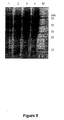
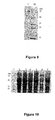
- the genes encoding DBA and DBB were synthesized (Schemes 1 and 2) and cloned into the pET32a vector to generate pET32a-30103s1, and pET32a-30103s2. After transformation into E. coli BL-21(DE3), several colonies from each transformation were selected, and tested for protein expression. The appearance of a band at ⁇ 78 kDa from an induced sample was taken to represent the successful expression of the proteins and highly expressing colonies (colony 5 for pET32a-30103s2, and colony 3 for pET32a-30103s2) were used in successive expression experiments ( Figures 2A, B ).
- the proteins were expressed as inclusion bodies so after large-scale expression (1L), the proteins were purified by metal affinity chromatography under denaturing conditions, and refolded to yield a final protein concentration of 0.1 and 0.9 mg/mL for Trx-DBA and Trx-DBB, respectively.
- the refolded proteins were ⁇ 80% pure as judged by SDS-PAGE ( Figure 2C ).
- the gene DBB was subcloned into the pGS21a vector resulting in the vector pGS21a-30103s2, which encodes His 6 -GST-DDB.
- This vector and the pGEX-30103s1 were transformed into the Origami (Novagen) E. coli strain, and highly expressing transformants were selected as described above for the BL21(DE3) strain. Both Trx-DBA and His 6 -GST-DBB were expressed in the soluble fraction with ⁇ 50% soluble protein ( Figure 2D ).
- Fluorescence excitation spectra were recorded for TRX-DBA and TRX-DBB. The emission wavelength was set at or as close to the theoretical maximum for each protein as was practical. TRX-DBA (orange) and TRX-DBB (blue) showed excitation maxima at ⁇ 344 nm and 400 nm as expected for their GFP-variant components, mOrange and T-Sapphire, respectively ( Figure 3 ). Fluorescence emission spectra were recorded for TRX-DBA and TRX-DBB. TRX-DBA (orange) and TRX-DBB (blue) showed emission maxima at ⁇ 510 nm and ⁇ 560 nm as expected for mOrange and T-Sapphire, respectively ( Figure 4 ).
- Size exclusion chromatography in combination with MALLS indicated that the refolded proteins contained a wide range of sized molecules, most likely arising from incorrectly folded protein.
- the fluorophores in GFP only form when the GFPs are correctly folded, and in general, GFPs are only fluorescent when the proteins they are fused to are also folded and soluble. Thus relative fluorescence was used to gauge the approximate concentration of active protein in each sample.
- the fluorescence properties of a 1- ⁇ M sample of a known eGFP-fusion protein were assessed. When an excitation wavelength of 430 nm (close to the fluorescence excitation maximum) was used the sample showed strong fluorescence emission at ⁇ 510 nm ( Figure 5 ).
- Residual ammonium sulfate in these concentrated Demibody solutions was removed by buffer exchange using Centricon centrifugal concentrators. Flow cytometric results obtained with these fractionated and concentrated Demibody solutions showed significant removal of inactive protein in this step.
- Demibodies To label cells with one or both Demibodies, 300 ⁇ L cell suspension (3 X 10 5 cells) was incubated with 30 ⁇ L Demibody (200 ⁇ g/mL, Demibody A (DBA; CD45-mOrange-E3), Demibody B (DBB; CD20-T-Sapphire-K3)) for 60 min in the dark at room temperature. Based upon the known immunophenotypes of these cell lines, the following binding patterns are expected. DBA CD45-mOrange-E3 bind to Raji, MEC-2, CCRF-CEM DBB CD20-T-Sapphire-K3 bind to Raji, MEC-2
- scFv fragments are derived from whole antibodies. They are constructed by linking the antigen-binding V H and V L domains of an antibody with a flexible polypeptide linker.
- the linker may comprise a combination of glycine and serine residues to provide flexibility and to enhance hydrophilicity of the peptide backbone to allow hydrogen bonding with solvent molecules as well as being resistant to protease digestion.
- the construction of scFv fragments is described in Kort et al. (2001) supra and in publications described therein.
- a schematic representation showing polypeptide segments in the demibody is shown in Figure 13 .
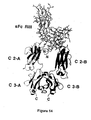
- a diagram of the structural components of the human IgGI Fc fragment is shown in Figure 14 .
- the Fc domain is preferably divided into the ⁇ 2a and ⁇ 2b chains. This is useful in generating the Fc portion of the demibody.
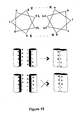
- Figure 15 shows heterodimerization of the leucine zipper.
- Antibodies specific for target antigens are used to develop scFv fragments.
- Antigens e.g. CD antigens
- target cells in isolated form or in recombinant or synthetic form, or whole cells expressing surface antigens, are used to develop monoclonal or polyclonal antibodies.
- the antibodies are isolated and scFv fragments generated as described in Examples 1 and 2.
- Bispecific antibodies are used for diagnostics as reagents which bind to a specific marker and provide a binding site for an agent which would enable detection of the antibody.
- the bispecific antibody provides a binding site for a radio-label.
- Demibodies enable enhanced diagnostic applications such as fluorescence-activated cell sorting (FACS), fluorescence microscopy and immunoassays.
- the unifying principle is that a signal is only obtained after zipping of the two scFv-fusion proteins, either by indirect labeling of the newly formed Fc domain with a fluorescence or enzyme-labeled anti-Fc-antibody, or by so called "protein fragment complementation" (PCA), where each scFv-fusion protein would contain the half of an enzyme or fluorescent protein and only after zipping such an enzyme or fluorescent protein becomes active.
- PCA protein fragment complementation
- demibodies enable staining of combinations of antigens/epitopes with only one color and thus "free" other colors for additional antigens (e.g. CD4+ helper T cell: CD3 and CD4 - actual red and green, with demibody only red or green).
- Demibodies forming different Fc-domains e.g. IgG isotypes allow differential labeling with secondary IgG subtype-specific antibodies.
- each scFv-fusion-protein could carry a part of a fluorescent protein, which after zipping would complement each other to a fluorescent protein (in case of FRET a complete fluorescence protein which in combination would allow FRET-transfer). See Figures 16A and B .
- demibodies enable detection of multimeric modified proteins and allow their differentiation, e.g. phosphorylated proteins (1 scFv against phosphotyrosine, 1 scFv against the protein, capture antibody against second subunit), or glycosylated isoforms (1 scFv against sialic acid, 1 scFv against the protein, capture antibody against second subunit) [ Figure 17 ].
- phosphorylated proteins (1 scFv against phosphotyrosine, 1 scFv against the protein, capture antibody against second subunit
- glycosylated isoforms (1 scFv against sialic acid, 1 scFv against the protein, capture antibody against second subunit
- Demibody reagents useful for diagnostics also could be used in basic research as tools for e.g. advanced cell labeling and sorting, or novel antibody-based analyses.
- Demibodies can be used for the purification of complexes, such a multimeric proteins, or modified proteins by affinity purification.
- An example would be the one-step purification of a phosphorylated protein (scFv anti-protein, scFv anti-phospho-tyrosine) [ Figure 18 ].
- Figure 19 is a diagrammatic representation showing the use of two demibodies specific for CD5 or CD19.
- the demibodies comprise an scFv portion capable of binding to CD5 or CD19, an incomplete, non-functional Fc portion and half of a leucine zipper.
- the amino acid sequence of portions of the leucine zipper are shown in Table 3 (see SEQ ID NOs:1-5). Appropriate pairs include SEQ ID NOs:1 and 2, SEQ ID NOs:3 and 4 and SEQ ID NOs:3 and 5.
- the two demibodies bind to a target cell expressing both CD5 and CD19.
- the leucine zipper portions interact and the two incomplete Fc portions form a functional Fc domain (see Figure 19 ).
- a cytotoxic cell e.g. neutrophil, macrophage, natural killer cell
- FcR Fc receptor
Landscapes
- Health & Medical Sciences (AREA)
- Chemical & Material Sciences (AREA)
- Organic Chemistry (AREA)
- Life Sciences & Earth Sciences (AREA)
- Medicinal Chemistry (AREA)
- General Health & Medical Sciences (AREA)
- Immunology (AREA)
- Genetics & Genomics (AREA)
- Molecular Biology (AREA)
- Veterinary Medicine (AREA)
- Biophysics (AREA)
- Proteomics, Peptides & Aminoacids (AREA)
- Biochemistry (AREA)
- Nuclear Medicine, Radiotherapy & Molecular Imaging (AREA)
- Pharmacology & Pharmacy (AREA)
- Chemical Kinetics & Catalysis (AREA)
- General Chemical & Material Sciences (AREA)
- Public Health (AREA)
- Animal Behavior & Ethology (AREA)
- Tropical Medicine & Parasitology (AREA)
- Oncology (AREA)
- Communicable Diseases (AREA)
- Toxicology (AREA)
- Zoology (AREA)
- Gastroenterology & Hepatology (AREA)
- Virology (AREA)
- Hematology (AREA)
- Micro-Organisms Or Cultivation Processes Thereof (AREA)
- Peptides Or Proteins (AREA)
- Medicines Containing Antibodies Or Antigens For Use As Internal Diagnostic Agents (AREA)
- Medicines That Contain Protein Lipid Enzymes And Other Medicines (AREA)
Claims (25)
- Jeu d'immunoglobulines modifiées comprenant deux immunoglobulines complémentaires capables de former un agent fonctionnel ou des agents combinés avec des propriétés spécifiques lors de la liaison des première et seconde immunoglobulines complémentaires avec une cellule cible,
dans lequel chaque immunoglobuline comprend une première, une deuxième et une troisième portion, dans lesquelles :(a) chaque première portion est un fragment scFv ou un autre fragment se liant à l'antigène d'une immunoglobuline et la première portion de la première immunoglobuline complémentaire est capable d'interagir avec un premier antigène sur la cellule cible et la première portion de la seconde immunoglobuline complémentaire est capable d'interagir avec un antigène différent sur ladite cellule cible ;(b) chaque deuxième portion est un agent ou une portion incomplète non fonctionnelle d'un agent, les deux deuxièmes portions étant :(i) des molécules rapporteurs distinctes qui fournissent en combinaison un signal combiné,(ii) des portions complémentaires non fonctionnelles d'une seule molécule rapporteur, ou(iii) des domaines Fc incomplets non fonctionnels capables de former un domaine Fc fonctionnel ; et(c) chaque troisième portion est un élément différent d'une paire de liaison complémentaire comprenant un premier et un second élément, dans lequel la paire de liaison comprend des portions complémentaires d'une tirette à leucine, d'une paire récepteur-ligand, d'une actine et d'une protéine se liant à l'actine ou des aptamères d'ADN ;
dans lequel, lors de la liaison des immunoglobulines complémentaires avec les deux antigènes, les paires de liaison se combinent(i) pour permettre aux molécules rapporteurs de fournir un signal combiné,(ii) pour permettre aux portions complémentaires non fonctionnelles d'une seule molécule rapporteur de reconstituer une seule molécule rapporteur, ou(iii) pour permettre aux domaines Fc incomplets non fonctionnels de former un domaine Fc fonctionnel. - Jeu d'immunoglobulines selon la revendication 1, dans lequel la première portion est un échafaudage d'affinité choisi parmi les dAb et les nanocorps.
- Jeu d'immunoglobulines selon la revendication 1 ou la revendication 2 pour usage en thérapie ou à des fins de diagnostic.
- Jeu d'immunoglobulines selon la revendication 1 ou la revendication 2, dans lequel la deuxième portion de chaque immunoglobuline est un domaine Fc incomplet non fonctionnel qui est capable de former un domaine Fc fonctionnel pour un usage dans le traitement du cancer ou d'une infection en induisant une réponse cytotoxique sur une cellule cible d'un sujet, dans lequel lesdites immunoglobulines complémentaires se lient auxdits différents antigènes sur la cellule cible et se lient ensuite ensemble à la surface de la cellule pour former un domaine Fc actif par lequel une ADCC ou CDC est médiée.
- Jeu d'immunoglobulines selon la revendication 1 ou la revendication 2 pour usage dans le diagnostic du cancer, dans lequel lesdites premières portions desdites immunoglobulines sont capables d'interagir avec différents antigènes spécifiques du cancer sur la cellule et lesdites deuxièmes portions comprennent des molécules rapporteurs distinctes ou des portions complémentaires non fonctionnelles d'une seule molécule rapporteur, dans lequel, lors de la liaison des immunoglobulines individuelles avec les différents antigènes, les paires de liaison se combinent pour permettre aux molécules rapporteurs de fournir un signal combiné ou de reconstituer une seule molécule rapporteur.
- Jeu d'immunoglobulines pour usage dans le diagnostic du cancer selon la revendication 5, dans lequel la molécule rapporteur ou les molécules rapporteurs est ou sont des teintures fluorescentes.
- Utilisation des immunoglobulines selon la revendication 1 ou la revendication 2 pour préparer un médicament, un agent de diagnostic ou un agent d'affinité.
- Jeu d'immunoglobulines pour usage dans le traitement du cancer ou d'une infection selon la revendication 4, dans lequel le sujet est un humain, un primate, un animal de bétail, un animal d'essai de laboratoire, un animal sauvage captif ou une espèce aviaire.
- Jeu d'immunoglobulines ou usage selon l'une quelconque des revendications 1 à 8, dans lequel chaque immunoglobuline est spécifique d'un antigène CD.
- Jeu d'immunoglobulines selon la revendication 1, dans lequel chaque jeu comprend au moins deux immunoglobulines ayant chacune la structure :

ou
dans laquelle:x et y sont des partenaires de liaison capables de former une association ou une liaison ensemble, les paires de liaison comprenant des portions complémentaires d'une tirette à leucine, d'une paire récepteur/ligand, de l'actine et une protéine des liant à l'actine ou des aptamères d'ADN ;(FcI)i et (FcII)i sont chacun des domaines Fc incomplets non fonctionnels capables de former un domaine Fc fonctionnel lors de la liaison de x et de y ; etscFv(Ag1) et scFv(Ag2) sont des fragments variables monocaténaires ayant une spécificité pour deux antigènes (Ag) différents, Ag1 ou Ag2 sur la cellule cible. - Jeu d'immunoglobulines selon la revendication 1, dans lequel chaque jeu comprend au moins deux immunoglobulines ayant chacune la structure :

ou
dans laquelle:x et y sont des partenaires de liaison capables de former une association ou une liaison ensemble, les paires de liaison comprenant des portions complémentaires d'une tirette à leucine, une paire récepteur/ligand, l'actine et une protéine se liant à l'actine ou des aptamères d'ADN ;(MoI)i et (MoII)i sont chacune des portions d'une molécule rapporteur capable de former une molécule rapporteur fonctionnelle lors de la liaison de x et y ; etscFv(Ag1) et scFv(Ag2) sont des fragments variables monocaténaires ayant une spécificité pour deux antigènes (Ag) différents, Ag1 ou Ag2 sur la cellule cible. - Procédé in vitro pour identifier sélectivement une cellule, ledit procédé comprenant la mise en contact de ladite cellule avec un jeu d'immunoglobulines selon la revendication 1 ou la revendication 2, dans lequel lesdites premières portions sont capables d'interagir avec différents antigènes sur la cellule, lesdites deuxièmes portions comprennent des molécules rapporteurs distinctes ou des portions complémentaires non fonctionnelles d'une seule molécule rapporteur et lesdites troisièmes portions sont des paires de liaison complémentaires, dans lequel, lors de la liaison des immunoglobulines individuelles avec les différents antigènes, les paires de liaison se combinent sur la surface de la cellule pour permettre aux molécules rapporteurs de fournir un signal combiné ou de reconstituer une seule molécule rapporteur.
- Procédé selon la revendication 12, dans lequel la molécule rapporteur ou les molécules rapporteurs est ou sont des teintures fluorescentes.
- Procédé selon la revendication 12 ou la revendication 13, dans lequel la cellule est une cellule cancéreuse ou une cellule souche.
- Procédé selon la revendication 12 ou la revendication 13, pour identifier des cellules cancéreuses chez un sujet, ledit procédé comprenant la mise en contact de cellules cancéreuses putatives avec un jeu d'immunoglobulines selon la revendication 1 ou la revendication 2, dans lequel lesdites premières portions desdites immunoglobulines sont capables d'interagir avec différents antigènes spécifiques du cancer sur la cellule.
- Procédé de détection d'une cellule cible, ledit procédé comprenant la mise en contact d'un échantillon comprenant de manière putative ladite cellule cible avec un jeu d'immunoglobulines tel que défini dans la revendication 1 ou la revendication 2, dans lequel lesdites premières portions sont capables d'interagir avec différents antigènes cibles sur ladite cellule, lesdites deuxièmes portions comprennent des molécules rapporteurs distinctes ou des portions complémentaires non fonctionnelles d'une seule molécule rapporteur, dans lequel, lors de la liaison des immunoglobulines individuelles avec les différents antigènes, les paires de liaison se combinent pour permettre aux molécules rapporteurs de fournir un signal combiné ou de reconstituer une seule molécule rapporteur.
- Procédé selon la revendication 16, dans lequel la molécule rapporteur ou les molécules rapporteurs est ou sont des teintures fluorescentes.
- Procédé selon la revendication 16 ou la revendication 17, dans lequel l'antigène cible est une protéine.
- Procédé selon la revendication 18, dans lequel ladite protéine est une protéine modifiée post-traductionnelle.
- Procédé selon la revendication 19, dans lequel ladite protéine est une protéine phosphorylée ou glycosylée.
- Procédé selon l'une quelconque des revendications 16 à 20, dans lequel l'échantillon a été prélevé chez un sujet.
- Procédé selon l'une quelconque des revendications 16 à 21, dans lequel le sujet est un humain.
- Procédé selon l'une quelconque des revendications 16 à 22, dans lequel la cellule cible est indicative d'une maladie ou d'une affection.
- Jeu d'immunoglobulines selon l'une quelconque des revendications 1, 2, 9, 10 ou 11 pour usage dans le traitement du cancer.
- Jeu d'immunoglobulines ou usage selon l'une quelconque des revendications 1 à 11, dans lequel la paire de liaison est une paire récepteur/ligand qui comprend une cytokine et un récepteur de cytokine.
Applications Claiming Priority (3)
| Application Number | Priority Date | Filing Date | Title |
|---|---|---|---|
| US74103005P | 2005-11-29 | 2005-11-29 | |
| AU2006901059A AU2006901059A0 (en) | 2006-03-02 | Therapeutic Agents | |
| PCT/AU2006/001810 WO2007062466A1 (fr) | 2005-11-29 | 2006-11-29 | Demi-corps : agents thérapeutiques activés par dimérisation |
Publications (3)
| Publication Number | Publication Date |
|---|---|
| EP1962961A1 EP1962961A1 (fr) | 2008-09-03 |
| EP1962961A4 EP1962961A4 (fr) | 2010-12-01 |
| EP1962961B1 true EP1962961B1 (fr) | 2013-01-09 |
Family
ID=38091796
Family Applications (1)
| Application Number | Title | Priority Date | Filing Date |
|---|---|---|---|
| EP06817559A Not-in-force EP1962961B1 (fr) | 2005-11-29 | 2006-11-29 | Demi-corps : agents thérapeutiques activés par dimérisation |
Country Status (4)
| Country | Link |
|---|---|
| US (1) | US8623356B2 (fr) |
| EP (1) | EP1962961B1 (fr) |
| JP (1) | JP5102772B2 (fr) |
| WO (1) | WO2007062466A1 (fr) |
Families Citing this family (151)
| Publication number | Priority date | Publication date | Assignee | Title |
|---|---|---|---|---|
| EP2097109A2 (fr) * | 2006-10-27 | 2009-09-09 | Trustees of Boston University | Conjugués biomoléculaires ciblés fractionnés utilisés dans le traitement de maladies, de tumeurs malignes et d'affections, et leurs procédés de production |
| EP2281006B1 (fr) | 2008-04-30 | 2017-08-02 | Immunogen, Inc. | Agents de réticulation et leurs utilisations |
| EP2437790B1 (fr) | 2009-06-03 | 2019-02-20 | Immunogen, Inc. | Procédés de conjugaison |
| JP2013506709A (ja) | 2009-10-06 | 2013-02-28 | イミュノジェン・インコーポレーテッド | 有効なコンジュゲートおよび親水性リンカー |
| DE102009047243A1 (de) * | 2009-11-27 | 2011-06-01 | Orgentec Diagnostika Gmbh | Monospezifische Polypeptidreagenzien |
| MX350954B (es) | 2011-06-21 | 2017-09-26 | Immunogen Inc | Derivados de maitansinoides novedosos con enlazador de peptido y conjugados de estos. |
| CN108034006A (zh) | 2012-01-13 | 2018-05-15 | 乌利班-马克西姆利安大学 | 双抗原诱导的双功能互补作用 |
| WO2013126962A1 (fr) * | 2012-02-28 | 2013-09-06 | The University Of Sydney | Agents diagnostiques et thérapeutiques |
| EP2961435B1 (fr) | 2013-02-28 | 2019-05-01 | ImmunoGen, Inc. | Conjugués comprenant des agents de liaison cellulaire (cba) et des agents cytotoxiques |
| HK1219422A1 (zh) | 2013-02-28 | 2017-04-07 | Immunogen, Inc. | 包含细胞结合剂及细胞毒素剂的轭合物 |
| WO2014194030A2 (fr) | 2013-05-31 | 2014-12-04 | Immunogen, Inc. | Conjugués comprenant des agents de liaison cellulaire et des agents cytotoxiques |
| CA2935423C (fr) | 2014-01-24 | 2023-11-07 | Dana-Farber Cancer Institute, Inc. | Molecules d'anticorps anti-pd-1 et leurs utilisations |
| AU2015210750B2 (en) | 2014-01-31 | 2020-08-20 | Children's Medical Center Corporation | Antibody molecules to TIM-3 and uses thereof |
| WO2015138920A1 (fr) | 2014-03-14 | 2015-09-17 | Novartis Ag | Molécules d'anticorps anti-lag-3 et leurs utilisations |
| EP3593812A3 (fr) | 2014-03-15 | 2020-05-27 | Novartis AG | Traitement du cancer à l'aide d'un récepteur d'antigène chimérique |
| CN106794236B (zh) | 2014-04-15 | 2021-09-03 | 格里菲斯大学 | A群链球菌疫苗 |
| MY181834A (en) | 2014-07-21 | 2021-01-08 | Novartis Ag | Treatment of cancer using humanized anti-bcma chimeric antigen receptor |
| US9777061B2 (en) | 2014-07-21 | 2017-10-03 | Novartis Ag | Treatment of cancer using a CD33 chimeric antigen receptor |
| US11542488B2 (en) | 2014-07-21 | 2023-01-03 | Novartis Ag | Sortase synthesized chimeric antigen receptors |
| WO2016014530A1 (fr) | 2014-07-21 | 2016-01-28 | Novartis Ag | Combinaisons de faibles doses renforçant l'immunité d'inhibiteurs de mtor et car |
| US20170209492A1 (en) | 2014-07-31 | 2017-07-27 | Novartis Ag | Subset-optimized chimeric antigen receptor-containing t-cells |
| WO2016025880A1 (fr) | 2014-08-14 | 2016-02-18 | Novartis Ag | Traitement du cancer à l'aide du récepteur d'antigène chimérique gfr alpha-4 |
| SG11201700770PA (en) | 2014-08-19 | 2017-03-30 | Novartis Ag | Anti-cd123 chimeric antigen receptor (car) for use in cancer treatment |
| PT3189056T (pt) | 2014-09-03 | 2020-09-04 | Immunogen Inc | Derivados citotóxicos de benzodiazepina |
| TW201613930A (en) | 2014-09-03 | 2016-04-16 | Immunogen Inc | Cytotoxic benzodiazepine derivatives |
| ES2891332T3 (es) | 2014-09-17 | 2022-01-27 | Novartis Ag | Direccionamiento a células citotóxicas con receptores quiméricos para la inmunoterapia adoptiva |
| WO2016061142A1 (fr) | 2014-10-14 | 2016-04-21 | Novartis Ag | Molécules d'anticorps de pd-l1 et leurs utilisations |
| US20180334490A1 (en) | 2014-12-03 | 2018-11-22 | Qilong H. Wu | Methods for b cell preconditioning in car therapy |
| JP6959869B2 (ja) | 2015-02-23 | 2021-11-05 | シーガル セラピューティクス エスアーエス | 非天然セマフォリン3およびそれらの医学的使用 |
| MX2017012939A (es) | 2015-04-08 | 2018-05-22 | Novartis Ag | Terapias cd20, terapias cd22 y terapias de combinacion con una celula que expresa un receptor quimerico de antigeno (car) de cd19. |
| EP3286211A1 (fr) | 2015-04-23 | 2018-02-28 | Novartis AG | Traitement du cancer à l'aide de protéine récepteur antigénique chimérique et un inhibiteur de protéine kinase |
| MX383614B (es) | 2015-05-21 | 2025-03-14 | Harpoon Therapeutics Inc | Proteinas de union triespecificas y metodos de uso. |
| WO2017019897A1 (fr) | 2015-07-29 | 2017-02-02 | Novartis Ag | Polythérapies comprenant des molécules d'anticorps contre tim -3 |
| ES2878188T3 (es) | 2015-07-29 | 2021-11-18 | Novartis Ag | Terapias de combinación que comprenden moléculas de anticuerpos contra LAG-3 |
| EP4378957A3 (fr) | 2015-07-29 | 2024-08-07 | Novartis AG | Traitements combinés comprenant des molécules d'anticorps qui se lient à pd-1 |
| EP3356821B1 (fr) | 2015-10-02 | 2019-10-23 | H. Hoffnabb-La Roche Ag | Analyse de fret à base cellulaire pour la détermination d'une liaison simultanée |
| DK3356411T3 (da) | 2015-10-02 | 2021-09-06 | Hoffmann La Roche | Bispecifikke antistoffer, der er specifikke for PD1 og TIM3 |
| EP3903818A1 (fr) * | 2015-11-19 | 2021-11-03 | Revitope Limited | Complémentation de fragment d'anticorps fonctionnel pour un système à deux composants pour la destruction redirigée de cellules indésirables |
| RU2018125603A (ru) | 2015-12-17 | 2020-01-21 | Новартис Аг | Комбинация ингибитора с-мет с молекулой антитела к pd-1 и ее применения |
| EP3389712B1 (fr) | 2015-12-17 | 2024-04-10 | Novartis AG | Molécules d'anticorps anti-pd-1 et leurs utilisations |
| PT3393504T (pt) | 2015-12-22 | 2025-12-30 | Novartis Ag | Recetor de antigénio quimérico (car) de mesotelina e anticorpo contra o inibidor de pd-l1 para utilização combinada em terapia anticancerígena |
| EP3405492B1 (fr) | 2016-01-21 | 2020-10-21 | Novartis AG | Molécules multispécifiques ciblant cll-1 |
| CA3016287A1 (fr) | 2016-03-04 | 2017-09-08 | Novartis Ag | Cellules exprimant de multiples molecules de recepteur d'antigene chimere (car) et leurs utilisations |
| EP3216458A1 (fr) | 2016-03-07 | 2017-09-13 | Max-Planck-Gesellschaft zur Förderung der Wissenschaften e.V. | Facteur de croissance endothéliale vasculaire (vegf-a)modifié et son utilisation médicale |
| US11549099B2 (en) | 2016-03-23 | 2023-01-10 | Novartis Ag | Cell secreted minibodies and uses thereof |
| EP3443096B1 (fr) | 2016-04-15 | 2023-03-01 | Novartis AG | Compositions et méthodes pour l'expression sélective des récepteurs antigéniques chimériques |
| WO2017189751A1 (fr) | 2016-04-26 | 2017-11-02 | The University Of Utah Research Foundation | Systèmes rapporteurs de division activés se liant à une cible pour la détection d'analytes, ainsi que composants et procédés associés |
| US10100106B2 (en) | 2016-05-20 | 2018-10-16 | Harpoon Therapeutics, Inc. | Single domain serum albumin binding protein |
| US11623958B2 (en) | 2016-05-20 | 2023-04-11 | Harpoon Therapeutics, Inc. | Single chain variable fragment CD3 binding proteins |
| AU2017267793B2 (en) | 2016-05-20 | 2024-01-25 | Harpoon Therapeutics, Inc. | Single chain variable fragment CD3 binding proteins |
| US20210177896A1 (en) | 2016-06-02 | 2021-06-17 | Novartis Ag | Therapeutic regimens for chimeric antigen receptor (car)- expressing cells |
| SG11201900344YA (en) | 2016-07-15 | 2019-02-27 | Novartis Ag | Treatment and prevention of cytokine release syndrome using a chimeric antigen receptor in combination with a kinase inhibitor |
| CN110214150A (zh) | 2016-07-28 | 2019-09-06 | 诺华股份有限公司 | 嵌合抗原受体和pd-1抑制剂的组合疗法 |
| EP3490590A2 (fr) | 2016-08-01 | 2019-06-05 | Novartis AG | Traitement du cancer au moyen d'un récepteur d'antigène chimérique en combinaison avec un inhibiteur d'une molécule de macrophage pro-m2 |
| WO2018067992A1 (fr) | 2016-10-07 | 2018-04-12 | Novartis Ag | Récepteurs antigéniques chimériques pour le traitement du cancer |
| WO2018089472A1 (fr) * | 2016-11-08 | 2018-05-17 | Beatty Kimberly | Procédés et compositions utiles dans la détection de protéines |
| US10844134B2 (en) | 2016-11-23 | 2020-11-24 | Harpoon Therapeutics, Inc. | PSMA targeting trispecific proteins and methods of use |
| KR102275008B1 (ko) | 2016-11-23 | 2021-07-13 | 하푼 테라퓨틱스, 인크. | 전립선 특이 막 항원 결합 단백질 |
| EP3574005B1 (fr) | 2017-01-26 | 2021-12-15 | Novartis AG | Compositions de cd28 et procédés pour une thérapie à base de récepteur antigénique chimérique |
| CN116785450A (zh) | 2017-02-28 | 2023-09-22 | 伊缪诺金公司 | 具有自分解肽接头的类美登素衍生物和其缀合物 |
| US20200048359A1 (en) | 2017-02-28 | 2020-02-13 | Novartis Ag | Shp inhibitor compositions and uses for chimeric antigen receptor therapy |
| WO2018160754A2 (fr) | 2017-02-28 | 2018-09-07 | Harpoon Therapeutics, Inc. | Protéine monovalente inductible de fixation d' antigène |
| EP4201953A1 (fr) | 2017-04-03 | 2023-06-28 | F. Hoffmann-La Roche AG | Immunoconjugués d'un anticorps anti-pd-1 avec une il-2 mutante ou avec l'il-15 |
| SG11201909154SA (en) | 2017-04-05 | 2019-10-30 | Hoffmann La Roche | Bispecific antibodies specifically binding to pd1 and lag3 |
| TW201839001A (zh) | 2017-04-20 | 2018-11-01 | 美商伊繆諾金公司 | 細胞毒性苯并二氮平衍生物及其綴合物 |
| US20200055948A1 (en) | 2017-04-28 | 2020-02-20 | Novartis Ag | Cells expressing a bcma-targeting chimeric antigen receptor, and combination therapy with a gamma secretase inhibitor |
| US20200179511A1 (en) | 2017-04-28 | 2020-06-11 | Novartis Ag | Bcma-targeting agent, and combination therapy with a gamma secretase inhibitor |
| AU2018265856B2 (en) | 2017-05-12 | 2023-04-27 | Harpoon Therapeutics, Inc. | Mesothelin binding proteins |
| CA3063362A1 (fr) | 2017-05-12 | 2018-11-15 | Harpoon Therapeutics, Inc. | Proteines trispecifiques ciblant la msln et procedes d'utilisation |
| US11312783B2 (en) | 2017-06-22 | 2022-04-26 | Novartis Ag | Antibody molecules to CD73 and uses thereof |
| US20200223924A1 (en) | 2017-06-27 | 2020-07-16 | Novartis Ag | Dosage regimens for anti-tim-3 antibodies and uses thereof |
| EP3652209A2 (fr) | 2017-07-11 | 2020-05-20 | Compass Therapeutics LLC | Anticorps agonistes qui lient cd137 humain et leurs utilisations |
| KR20200031659A (ko) | 2017-07-20 | 2020-03-24 | 노파르티스 아게 | 항-lag-3 항체의 투여 요법 및 그의 용도 |
| SI3694529T1 (sl) | 2017-10-13 | 2024-10-30 | Harpoon Therapeutics, Inc. | Trispecifične beljakovine in načini uporabe |
| IL315737A (en) | 2017-10-13 | 2024-11-01 | Harpoon Therapeutics Inc | B-cell maturation antigen-binding proteins |
| MX2020003497A (es) | 2017-10-20 | 2020-07-22 | Hoffmann La Roche | Metodo para generar anticuerpos multiespecificos a partir de anticuerpos monoespecificos. |
| AU2018358883B2 (en) | 2017-10-30 | 2025-09-25 | F. Hoffmann-La Roche Ag | Method for in vivo generation of multispecific antibodies from monospecific antibodies |
| WO2019089798A1 (fr) | 2017-10-31 | 2019-05-09 | Novartis Ag | Compositions anti-car et procédés |
| US11718679B2 (en) | 2017-10-31 | 2023-08-08 | Compass Therapeutics Llc | CD137 antibodies and PD-1 antagonists and uses thereof |
| CN111655288A (zh) | 2017-11-16 | 2020-09-11 | 诺华股份有限公司 | 组合疗法 |
| EP3713961A2 (fr) | 2017-11-20 | 2020-09-30 | Compass Therapeutics LLC | Anticorps cd137 et anticorps ciblant un antigène tumoral et leurs utilisations |
| WO2019122350A1 (fr) * | 2017-12-21 | 2019-06-27 | Gernot Stuhler | Régime posologique spécifique de thérapie hémicorporelle |
| EP3732178A1 (fr) | 2017-12-28 | 2020-11-04 | ImmunoGen, Inc. | Dérivés de benzodiazépine |
| WO2019139987A1 (fr) | 2018-01-09 | 2019-07-18 | Elstar Therapeutics, Inc. | Constructions de liaison à la calréticuline et lymphocytes t modifiés pour le traitement de maladies |
| AU2019215031C1 (en) | 2018-01-31 | 2026-02-26 | Novartis Ag | Combination therapy using a chimeric antigen receptor |
| US12152073B2 (en) | 2018-03-14 | 2024-11-26 | Marengo Therapeutics, Inc. | Multifunctional molecules that bind to calreticulin and uses thereof |
| US20210147547A1 (en) | 2018-04-13 | 2021-05-20 | Novartis Ag | Dosage Regimens For Anti-Pd-L1 Antibodies And Uses Thereof |
| WO2019207051A1 (fr) | 2018-04-25 | 2019-10-31 | Università Degli Studi Di Torino | Utilisation médicale de combinaisons de sémaphorines 3 et d'antimétabolites non naturels |
| EP3784351A1 (fr) | 2018-04-27 | 2021-03-03 | Novartis AG | Thérapies reposant sur des cellules car-t présentant une efficacité améliorée |
| BR112020023330A2 (pt) | 2018-05-14 | 2021-04-20 | Harpoon Therapeutics, Inc. | porção de ligação para ativação condicional de moléculas de imunoglobulina |
| WO2019226617A1 (fr) | 2018-05-21 | 2019-11-28 | Compass Therapeutics Llc | Compositions et procédés pour améliorer la destruction de cellules cibles par des lymphocytes nk |
| WO2019226658A1 (fr) | 2018-05-21 | 2019-11-28 | Compass Therapeutics Llc | Compositions multispécifiques de liaison à l'antigène et procédés d'utilisation |
| WO2019227003A1 (fr) | 2018-05-25 | 2019-11-28 | Novartis Ag | Polythérapie comprenant des thérapies par récepteur antigénique chimérique (car) |
| US20210214459A1 (en) | 2018-05-31 | 2021-07-15 | Novartis Ag | Antibody molecules to cd73 and uses thereof |
| AU2019284911B2 (en) | 2018-06-13 | 2026-04-09 | Novartis Ag | BCMA chimeric antigen receptors and uses thereof |
| KR20210035173A (ko) | 2018-06-19 | 2021-03-31 | 아타르가, 엘엘씨 | 보체 성분 5에 대한 항체분자 및 이의 용도 |
| WO2020010104A1 (fr) | 2018-07-02 | 2020-01-09 | The General Hospital Corporation | Complexes ensemble d'anticorps ciblant une tumeur |
| WO2020010250A2 (fr) | 2018-07-03 | 2020-01-09 | Elstar Therapeutics, Inc. | Molécules d'anticorps anti-tcr et leurs utilisations |
| AR116109A1 (es) | 2018-07-10 | 2021-03-31 | Novartis Ag | Derivados de 3-(5-amino-1-oxoisoindolin-2-il)piperidina-2,6-diona y usos de los mismos |
| JP2021531306A (ja) | 2018-07-25 | 2021-11-18 | アドバンスド アクセラレーター アプリケーションズ エスエー | 神経内分泌腫瘍の処置の方法 |
| WO2020037181A2 (fr) * | 2018-08-16 | 2020-02-20 | Memorial Sloan-Kettering Cancer Center | Systèmes de tri de cellules et leurs procédés d'utilisation |
| WO2020037178A1 (fr) | 2018-08-16 | 2020-02-20 | Memorial Sloan-Kettering Cancer Center | Compositions à base de fermeture à glissière à leucine et méthodes d'utilisation |
| US12195544B2 (en) | 2018-09-21 | 2025-01-14 | Harpoon Therapeutics, Inc. | EGFR binding proteins and methods of use |
| EP3856771A4 (fr) | 2018-09-25 | 2022-06-29 | Harpoon Therapeutics, Inc. | Protéines de liaison à dll3 et méthodes d'utilisation |
| WO2020102387A1 (fr) | 2018-11-13 | 2020-05-22 | Compass Therapeutics Llc | Constructions de liaison multispécifiques dirigées contre des molécules de points de contrôle et utilisations associées |
| EP3897851A2 (fr) * | 2018-12-17 | 2021-10-27 | Revitope Limited | Recruteur de cellules immunitaires jumelles |
| JP2022514280A (ja) | 2018-12-20 | 2022-02-10 | ノバルティス アーゲー | Mdm2阻害剤のための延長低用量レジメン |
| WO2020128972A1 (fr) | 2018-12-20 | 2020-06-25 | Novartis Ag | Schéma posologique et combinaison pharmaceutique comprenant des dérivés de 3-(1-oxoisoindoline-2-yl) pipéridine-2,6-dione |
| US10871640B2 (en) | 2019-02-15 | 2020-12-22 | Perkinelmer Cellular Technologies Germany Gmbh | Methods and systems for automated imaging of three-dimensional objects |
| ES3032659T3 (en) | 2019-02-15 | 2025-07-23 | Novartis Ag | 3-(1-oxo-5-(piperidin-4-yl)isoindolin-2-yl)piperidine-2,6-dione derivatives and uses thereof |
| BR112021015672A2 (pt) | 2019-02-15 | 2021-10-05 | Novartis Ag | Derivados de 3-(1-oxoisoindolin-2-il)piperidina-2,6-diona substituída e usos dos mesmos |
| AU2020226893B2 (en) | 2019-02-21 | 2025-02-27 | Marengo Therapeutics, Inc. | Multifunctional molecules that bind to T cell related cancer cells and uses thereof |
| GB2597851B (en) | 2019-02-21 | 2024-05-29 | Marengo Therapeutics Inc | Antibody molecules that bind to NKP30 and uses thereof |
| US20220088075A1 (en) | 2019-02-22 | 2022-03-24 | The Trustees Of The University Of Pennsylvania | Combination therapies of egfrviii chimeric antigen receptors and pd-1 inhibitors |
| AU2020240310A1 (en) | 2019-03-21 | 2021-10-07 | Immunogen, Inc. | Methods of preparing cell-binding agent-drug conjugates |
| JP2022527790A (ja) | 2019-03-29 | 2022-06-06 | アターガ,エルエルシー | 抗fgf23抗体分子 |
| EP3947395A1 (fr) | 2019-03-29 | 2022-02-09 | ImmunoGen, Inc. | Dérivés de bis-benzodiazépine cytotoxiques et leurs conjugués avec des agents de liaison à une cellule pour inhiber la croissance cellulaire anormale ou pour traiter des maladies prolifératives |
| HUE065484T2 (hu) | 2019-04-26 | 2024-05-28 | Immunogen Inc | Camptothecin-származékok |
| AU2020267131A1 (en) | 2019-05-02 | 2021-11-25 | Revitope Limited | TEAC and ATTAC immunooncology compositions and methods |
| KR20220008866A (ko) | 2019-05-14 | 2022-01-21 | 하푼 테라퓨틱스, 인크. | EpCAM 결합 단백질 및 사용 방법 |
| CA3158298A1 (fr) | 2019-10-21 | 2021-04-29 | Novartis Ag | Polytherapies comprenant du venetoclax et des inhibiteurs de tim-3 |
| TW202128191A (zh) | 2019-10-21 | 2021-08-01 | 瑞士商諾華公司 | Tim-3抑制劑及其用途 |
| JP7825273B2 (ja) | 2019-11-25 | 2026-03-06 | グリフィス ユニバーシティー | 淋菌感染症に対する免疫原性タンパク質 |
| EP4065158A2 (fr) | 2019-11-26 | 2022-10-05 | Novartis AG | Récepteurs antigéniques chimériques et leurs utilisations |
| KR20220116257A (ko) | 2019-12-20 | 2022-08-22 | 노파르티스 아게 | 골수섬유증 및 골수이형성 증후군을 치료하기 위한, 데시타빈 또는 항 pd-1 항체 스파르탈리주맙을 포함하거나 또는 포함하지 않는, 항 tim-3 항체 mbg453 및 항 tgf-베타 항체 nis793의 조합물 |
| AU2020416273A1 (en) | 2020-01-03 | 2022-07-28 | Marengo Therapeutics, Inc. | Anti-TCR antibody molecules and uses thereof |
| EP4090762A1 (fr) | 2020-01-17 | 2022-11-23 | Becton, Dickinson and Company | Procédés et compositions pour sécrétomique unicellulaire |
| US20230058489A1 (en) | 2020-01-17 | 2023-02-23 | Novartis Ag | Combination comprising a tim-3 inhibitor and a hypomethylating agent for use in treating myelodysplastic syndrome or chronic myelomonocytic leukemia |
| CA3170833A1 (fr) | 2020-02-21 | 2021-08-26 | Harpoon Therapeutics, Inc. | Proteines de liaison a flt3 et methodes d'utilisation |
| MX2022010685A (es) | 2020-02-27 | 2022-09-23 | Novartis Ag | Metodos de produccion de celulas que expresan receptores de antigeno quimericos. |
| CN115916199A (zh) | 2020-06-23 | 2023-04-04 | 诺华股份有限公司 | 包含3-(1-氧代异吲哚啉-2-基)哌啶-2,6-二酮衍生物的给药方案 |
| US11524998B2 (en) | 2020-07-16 | 2022-12-13 | Novartis Ag | Anti-betacellulin antibodies, fragments thereof, and multi-specific binding molecules |
| WO2022026592A2 (fr) | 2020-07-28 | 2022-02-03 | Celltas Bio, Inc. | Molécules d'anticorps contre le coronavirus et leurs utilisations |
| US20230271940A1 (en) | 2020-08-03 | 2023-08-31 | Novartis Ag | Heteroaryl substituted 3-(1-oxoisoindolin-2-yl)piperidine-2,6-dione derivatives and uses thereof |
| WO2022043557A1 (fr) | 2020-08-31 | 2022-03-03 | Advanced Accelerator Applications International Sa | Méthode de traitement de cancers exprimant le psma |
| EP4204020A1 (fr) | 2020-08-31 | 2023-07-05 | Advanced Accelerator Applications International S.A. | Méthode de traitement de cancers exprimant le psma |
| JP2023547499A (ja) | 2020-11-06 | 2023-11-10 | ノバルティス アーゲー | 抗体Fc変異体 |
| MX2023005609A (es) | 2020-11-13 | 2023-05-29 | Novartis Ag | Terapias de combinacion con celulas que expresan receptores quimericos para el antigeno (car). |
| EP4284510A1 (fr) | 2021-01-29 | 2023-12-06 | Novartis AG | Régimes posologiques d'anticorps anti-cd73 et anti-entpd2 et leurs utilisations |
| TW202304979A (zh) | 2021-04-07 | 2023-02-01 | 瑞士商諾華公司 | 抗TGFβ抗體及其他治療劑用於治療增殖性疾病之用途 |
| AR125874A1 (es) | 2021-05-18 | 2023-08-23 | Novartis Ag | Terapias de combinación |
| EP4405396A2 (fr) | 2021-09-20 | 2024-07-31 | Voyager Therapeutics, Inc. | Compositions et procédés pour le traitement du cancer positif her2 |
| US20250034559A1 (en) | 2021-11-17 | 2025-01-30 | Voyager Therapeutics, Inc. | Compositions and methods for the treatment of tau-related disorders |
| TW202342548A (zh) | 2022-02-07 | 2023-11-01 | 美商威特拉公司 | 抗獨特型(anti-idiotype)抗體分子及其用途 |
| EP4522757A2 (fr) | 2022-05-13 | 2025-03-19 | Voyager Therapeutics, Inc. | Compositions et procédés pour le traitement du cancer her2 positif |
| JP2025528068A (ja) | 2022-08-03 | 2025-08-26 | ボイジャー セラピューティクス インコーポレイテッド | 血液脳関門を通過させるための組成物及び方法 |
| WO2024168061A2 (fr) | 2023-02-07 | 2024-08-15 | Ayan Therapeutics Inc. | Molécules d'anticorps se liant au sars-cov-2 |
| WO2025016902A1 (fr) | 2023-07-14 | 2025-01-23 | Julius-Maximilians-Universität Würzburg | Anticorps à partie unique multivalents pour immunothérapie restreinte à double antigène |
| WO2025122634A1 (fr) | 2023-12-05 | 2025-06-12 | Voyager Therapeutics, Inc. | Compositions et méthodes pour le traitement de troubles liés à la protéine tau |
| WO2026036047A1 (fr) | 2024-08-08 | 2026-02-12 | Altus Enterprises, Inc. | Molécules d'anticorps se liant à fixa et fx et leurs utilisations |
| WO2026058155A1 (fr) | 2024-09-11 | 2026-03-19 | Novartis Ag | Anticorps ciblant il-31 |
Family Cites Families (7)
| Publication number | Priority date | Publication date | Assignee | Title |
|---|---|---|---|---|
| US6129914A (en) | 1992-03-27 | 2000-10-10 | Protein Design Labs, Inc. | Bispecific antibody effective to treat B-cell lymphoma and cell line |
| JP3720353B2 (ja) | 1992-12-04 | 2005-11-24 | メディカル リサーチ カウンシル | 多価および多重特異性の結合タンパク質、それらの製造および使用 |
| WO1995009917A1 (fr) | 1993-10-07 | 1995-04-13 | The Regents Of The University Of California | Anticorps bispecifiques et tetravalents, obtenus par genie genetique |
| ATE210682T1 (de) * | 1996-09-03 | 2001-12-15 | Gsf Forschungszentrum Umwelt | Zerstörung von kontaminierenden tumorzellen in stammzelltransplantaten mit bispezifischen antikörpern |
| CN1231761C (zh) | 1998-12-23 | 2005-12-14 | 梅德塞克股份有限公司 | 一种检测装置及鉴定分子的方法 |
| WO2004042404A1 (fr) * | 2002-11-07 | 2004-05-21 | Erasmus Universiteit Rotterdam | Sondes fret et procedes de detection de molecules d'interaction |
| JP2006523090A (ja) | 2002-12-27 | 2006-10-12 | ドマンティス リミテッド | リガンドに、そしてリガンド受容体に特異的な二重特異性単一ドメイン抗体 |
-
2006
- 2006-11-29 JP JP2008542559A patent/JP5102772B2/ja not_active Expired - Fee Related
- 2006-11-29 WO PCT/AU2006/001810 patent/WO2007062466A1/fr not_active Ceased
- 2006-11-29 EP EP06817559A patent/EP1962961B1/fr not_active Not-in-force
- 2006-11-29 US US12/095,468 patent/US8623356B2/en not_active Expired - Fee Related
Also Published As
| Publication number | Publication date |
|---|---|
| EP1962961A4 (fr) | 2010-12-01 |
| WO2007062466A1 (fr) | 2007-06-07 |
| US8623356B2 (en) | 2014-01-07 |
| JP5102772B2 (ja) | 2012-12-19 |
| EP1962961A1 (fr) | 2008-09-03 |
| US20090130106A1 (en) | 2009-05-21 |
| JP2009517408A (ja) | 2009-04-30 |
Similar Documents
| Publication | Publication Date | Title |
|---|---|---|
| US8623356B2 (en) | Demibodies: dimerization-activated therapeutic agents | |
| JP7577435B2 (ja) | Cldn18.2及びcd3に対する抗体コンストラクト | |
| JP6886491B2 (ja) | 前立腺特異幹細胞抗原に対する抗体およびその使用 | |
| US20210040235A1 (en) | Multispecific Antibodies | |
| JP3803790B2 (ja) | 新規なダイアボディ型二重特異性抗体 | |
| US9745381B2 (en) | Bispecific scFv immunofusion (BIf) | |
| CN109311979A (zh) | Psma和cd3双特异性t细胞接合抗体构建体 | |
| JP2018510623A (ja) | Nkg2d及び腫瘍関連抗原に対する二価抗体 | |
| EP2190861A2 (fr) | Polypeptides de liaison activables et procédés d'identification et utilisation de ceux-ci | |
| CN115003693A (zh) | 多肽、蛋白质复合物及其制造方法 | |
| JP7750852B2 (ja) | ムチン17に対する抗体及びその使用 | |
| KR20170089003A (ko) | 가용성 유니버셜 adcc 증강 합성 융합 유전자 및 펩티드 기술 및 그 용도 | |
| JP7837331B2 (ja) | Cldn6及びcd3に選択的に結合するポリペプチド構築物 | |
| JP7805362B2 (ja) | Cd3に結合するポリペプチド構築物 | |
| TW202309083A (zh) | 抗cldn4-抗cd137雙特異性抗體 | |
| TW202233678A (zh) | 具有增強的剪切特徵的多肽 | |
| AU2006319746B2 (en) | Demibodies: dimerisation-activated therapeutic agents | |
| ES2413493T3 (es) | Semicuerpos: agentes terapéuticos activados por dimerización | |
| AU2013201525B2 (en) | Therapeutic and diagnostic agents | |
| AU2013202861A1 (en) | Therapeutic and diagnostic agents |
Legal Events
| Date | Code | Title | Description |
|---|---|---|---|
| PUAI | Public reference made under article 153(3) epc to a published international application that has entered the european phase |
Free format text: ORIGINAL CODE: 0009012 |
|
| 17P | Request for examination filed |
Effective date: 20080630 |
|
| AK | Designated contracting states |
Kind code of ref document: A1 Designated state(s): AT BE BG CH CY CZ DE DK EE ES FI FR GB GR HU IE IS IT LI LT LU LV MC NL PL PT RO SE SI SK TR |
|
| A4 | Supplementary search report drawn up and despatched |
Effective date: 20101104 |
|
| RIC1 | Information provided on ipc code assigned before grant |
Ipc: C07K 16/00 20060101ALI20101022BHEP Ipc: C07K 14/435 20060101ALI20101022BHEP Ipc: C12P 21/08 20060101ALI20101022BHEP Ipc: A61K 39/395 20060101ALI20101022BHEP Ipc: A61P 35/02 20060101AFI20070803BHEP Ipc: C07K 16/46 20060101ALI20101022BHEP Ipc: C07K 16/30 20060101ALI20101022BHEP |
|
| 17Q | First examination report despatched |
Effective date: 20111121 |
|
| GRAP | Despatch of communication of intention to grant a patent |
Free format text: ORIGINAL CODE: EPIDOSNIGR1 |
|
| DAX | Request for extension of the european patent (deleted) | ||
| GRAS | Grant fee paid |
Free format text: ORIGINAL CODE: EPIDOSNIGR3 |
|
| GRAA | (expected) grant |
Free format text: ORIGINAL CODE: 0009210 |
|
| AK | Designated contracting states |
Kind code of ref document: B1 Designated state(s): AT BE BG CH CY CZ DE DK EE ES FI FR GB GR HU IE IS IT LI LT LU LV MC NL PL PT RO SE SI SK TR |
|
| REG | Reference to a national code |
Ref country code: GB Ref legal event code: FG4D |
|
| REG | Reference to a national code |
Ref country code: CH Ref legal event code: EP Ref country code: AT Ref legal event code: REF Ref document number: 592387 Country of ref document: AT Kind code of ref document: T Effective date: 20130115 |
|
| REG | Reference to a national code |
Ref country code: IE Ref legal event code: FG4D |
|
| REG | Reference to a national code |
Ref country code: DE Ref legal event code: R096 Ref document number: 602006034163 Country of ref document: DE Effective date: 20130307 |
|
| PG25 | Lapsed in a contracting state [announced via postgrant information from national office to epo] |
Ref country code: SI Free format text: LAPSE BECAUSE OF FAILURE TO SUBMIT A TRANSLATION OF THE DESCRIPTION OR TO PAY THE FEE WITHIN THE PRESCRIBED TIME-LIMIT Effective date: 20130109 |
|
| REG | Reference to a national code |
Ref country code: NL Ref legal event code: VDEP Effective date: 20130109 |
|
| REG | Reference to a national code |
Ref country code: AT Ref legal event code: MK05 Ref document number: 592387 Country of ref document: AT Kind code of ref document: T Effective date: 20130109 |
|
| REG | Reference to a national code |
Ref country code: LT Ref legal event code: MG4D |
|
| REG | Reference to a national code |
Ref country code: ES Ref legal event code: FG2A Ref document number: 2413493 Country of ref document: ES Kind code of ref document: T3 Effective date: 20130716 |
|
| PG25 | Lapsed in a contracting state [announced via postgrant information from national office to epo] |
Ref country code: LT Free format text: LAPSE BECAUSE OF FAILURE TO SUBMIT A TRANSLATION OF THE DESCRIPTION OR TO PAY THE FEE WITHIN THE PRESCRIBED TIME-LIMIT Effective date: 20130109 Ref country code: IS Free format text: LAPSE BECAUSE OF FAILURE TO SUBMIT A TRANSLATION OF THE DESCRIPTION OR TO PAY THE FEE WITHIN THE PRESCRIBED TIME-LIMIT Effective date: 20130509 Ref country code: BG Free format text: LAPSE BECAUSE OF FAILURE TO SUBMIT A TRANSLATION OF THE DESCRIPTION OR TO PAY THE FEE WITHIN THE PRESCRIBED TIME-LIMIT Effective date: 20130409 Ref country code: SE Free format text: LAPSE BECAUSE OF FAILURE TO SUBMIT A TRANSLATION OF THE DESCRIPTION OR TO PAY THE FEE WITHIN THE PRESCRIBED TIME-LIMIT Effective date: 20130109 Ref country code: AT Free format text: LAPSE BECAUSE OF FAILURE TO SUBMIT A TRANSLATION OF THE DESCRIPTION OR TO PAY THE FEE WITHIN THE PRESCRIBED TIME-LIMIT Effective date: 20130109 |
|
| PG25 | Lapsed in a contracting state [announced via postgrant information from national office to epo] |
Ref country code: GR Free format text: LAPSE BECAUSE OF FAILURE TO SUBMIT A TRANSLATION OF THE DESCRIPTION OR TO PAY THE FEE WITHIN THE PRESCRIBED TIME-LIMIT Effective date: 20130410 Ref country code: NL Free format text: LAPSE BECAUSE OF FAILURE TO SUBMIT A TRANSLATION OF THE DESCRIPTION OR TO PAY THE FEE WITHIN THE PRESCRIBED TIME-LIMIT Effective date: 20130109 Ref country code: PT Free format text: LAPSE BECAUSE OF FAILURE TO SUBMIT A TRANSLATION OF THE DESCRIPTION OR TO PAY THE FEE WITHIN THE PRESCRIBED TIME-LIMIT Effective date: 20130509 Ref country code: LV Free format text: LAPSE BECAUSE OF FAILURE TO SUBMIT A TRANSLATION OF THE DESCRIPTION OR TO PAY THE FEE WITHIN THE PRESCRIBED TIME-LIMIT Effective date: 20130109 Ref country code: FI Free format text: LAPSE BECAUSE OF FAILURE TO SUBMIT A TRANSLATION OF THE DESCRIPTION OR TO PAY THE FEE WITHIN THE PRESCRIBED TIME-LIMIT Effective date: 20130109 Ref country code: PL Free format text: LAPSE BECAUSE OF FAILURE TO SUBMIT A TRANSLATION OF THE DESCRIPTION OR TO PAY THE FEE WITHIN THE PRESCRIBED TIME-LIMIT Effective date: 20130109 |
|
| PG25 | Lapsed in a contracting state [announced via postgrant information from national office to epo] |
Ref country code: CZ Free format text: LAPSE BECAUSE OF FAILURE TO SUBMIT A TRANSLATION OF THE DESCRIPTION OR TO PAY THE FEE WITHIN THE PRESCRIBED TIME-LIMIT Effective date: 20130109 Ref country code: DK Free format text: LAPSE BECAUSE OF FAILURE TO SUBMIT A TRANSLATION OF THE DESCRIPTION OR TO PAY THE FEE WITHIN THE PRESCRIBED TIME-LIMIT Effective date: 20130109 Ref country code: EE Free format text: LAPSE BECAUSE OF FAILURE TO SUBMIT A TRANSLATION OF THE DESCRIPTION OR TO PAY THE FEE WITHIN THE PRESCRIBED TIME-LIMIT Effective date: 20130109 Ref country code: SK Free format text: LAPSE BECAUSE OF FAILURE TO SUBMIT A TRANSLATION OF THE DESCRIPTION OR TO PAY THE FEE WITHIN THE PRESCRIBED TIME-LIMIT Effective date: 20130109 Ref country code: RO Free format text: LAPSE BECAUSE OF FAILURE TO SUBMIT A TRANSLATION OF THE DESCRIPTION OR TO PAY THE FEE WITHIN THE PRESCRIBED TIME-LIMIT Effective date: 20130109 |
|
| PLBE | No opposition filed within time limit |
Free format text: ORIGINAL CODE: 0009261 |
|
| STAA | Information on the status of an ep patent application or granted ep patent |
Free format text: STATUS: NO OPPOSITION FILED WITHIN TIME LIMIT |
|
| PG25 | Lapsed in a contracting state [announced via postgrant information from national office to epo] |
Ref country code: CY Free format text: LAPSE BECAUSE OF FAILURE TO SUBMIT A TRANSLATION OF THE DESCRIPTION OR TO PAY THE FEE WITHIN THE PRESCRIBED TIME-LIMIT Effective date: 20130109 |
|
| 26N | No opposition filed |
Effective date: 20131010 |
|
| REG | Reference to a national code |
Ref country code: DE Ref legal event code: R097 Ref document number: 602006034163 Country of ref document: DE Effective date: 20131010 |
|
| PGFP | Annual fee paid to national office [announced via postgrant information from national office to epo] |
Ref country code: IE Payment date: 20131128 Year of fee payment: 8 |
|
| PGFP | Annual fee paid to national office [announced via postgrant information from national office to epo] |
Ref country code: IT Payment date: 20131129 Year of fee payment: 8 Ref country code: ES Payment date: 20131226 Year of fee payment: 8 Ref country code: BE Payment date: 20131128 Year of fee payment: 8 |
|
| PG25 | Lapsed in a contracting state [announced via postgrant information from national office to epo] |
Ref country code: MC Free format text: LAPSE BECAUSE OF FAILURE TO SUBMIT A TRANSLATION OF THE DESCRIPTION OR TO PAY THE FEE WITHIN THE PRESCRIBED TIME-LIMIT Effective date: 20130109 |
|
| PGFP | Annual fee paid to national office [announced via postgrant information from national office to epo] |
Ref country code: GB Payment date: 20141128 Year of fee payment: 9 Ref country code: CH Payment date: 20141219 Year of fee payment: 9 Ref country code: DE Payment date: 20141128 Year of fee payment: 9 |
|
| PGFP | Annual fee paid to national office [announced via postgrant information from national office to epo] |
Ref country code: FR Payment date: 20141128 Year of fee payment: 9 |
|
| PG25 | Lapsed in a contracting state [announced via postgrant information from national office to epo] |
Ref country code: BE Free format text: LAPSE BECAUSE OF NON-PAYMENT OF DUE FEES Effective date: 20141130 Ref country code: TR Free format text: LAPSE BECAUSE OF FAILURE TO SUBMIT A TRANSLATION OF THE DESCRIPTION OR TO PAY THE FEE WITHIN THE PRESCRIBED TIME-LIMIT Effective date: 20130109 |
|
| PG25 | Lapsed in a contracting state [announced via postgrant information from national office to epo] |
Ref country code: HU Free format text: LAPSE BECAUSE OF FAILURE TO SUBMIT A TRANSLATION OF THE DESCRIPTION OR TO PAY THE FEE WITHIN THE PRESCRIBED TIME-LIMIT; INVALID AB INITIO Effective date: 20061129 Ref country code: LU Free format text: LAPSE BECAUSE OF NON-PAYMENT OF DUE FEES Effective date: 20131129 |
|
| REG | Reference to a national code |
Ref country code: IE Ref legal event code: MM4A |
|
| PG25 | Lapsed in a contracting state [announced via postgrant information from national office to epo] |
Ref country code: IE Free format text: LAPSE BECAUSE OF NON-PAYMENT OF DUE FEES Effective date: 20141129 |
|
| REG | Reference to a national code |
Ref country code: ES Ref legal event code: FD2A Effective date: 20151230 |
|
| PG25 | Lapsed in a contracting state [announced via postgrant information from national office to epo] |
Ref country code: IT Free format text: LAPSE BECAUSE OF NON-PAYMENT OF DUE FEES Effective date: 20141129 |
|
| PG25 | Lapsed in a contracting state [announced via postgrant information from national office to epo] |
Ref country code: ES Free format text: LAPSE BECAUSE OF NON-PAYMENT OF DUE FEES Effective date: 20141130 |
|
| REG | Reference to a national code |
Ref country code: DE Ref legal event code: R119 Ref document number: 602006034163 Country of ref document: DE |
|
| REG | Reference to a national code |
Ref country code: CH Ref legal event code: PL |
|
| GBPC | Gb: european patent ceased through non-payment of renewal fee |
Effective date: 20151129 |
|
| PG25 | Lapsed in a contracting state [announced via postgrant information from national office to epo] |
Ref country code: LI Free format text: LAPSE BECAUSE OF NON-PAYMENT OF DUE FEES Effective date: 20151130 Ref country code: CH Free format text: LAPSE BECAUSE OF NON-PAYMENT OF DUE FEES Effective date: 20151130 |
|
| REG | Reference to a national code |
Ref country code: FR Ref legal event code: ST Effective date: 20160729 |
|
| PG25 | Lapsed in a contracting state [announced via postgrant information from national office to epo] |
Ref country code: GB Free format text: LAPSE BECAUSE OF NON-PAYMENT OF DUE FEES Effective date: 20151129 Ref country code: DE Free format text: LAPSE BECAUSE OF NON-PAYMENT OF DUE FEES Effective date: 20160601 |
|
| PG25 | Lapsed in a contracting state [announced via postgrant information from national office to epo] |
Ref country code: FR Free format text: LAPSE BECAUSE OF NON-PAYMENT OF DUE FEES Effective date: 20151130 |