EP1965312A2 - Vorrichtung und Verfahren zur Informationsverarbeitung, Programm und Speichermedium - Google Patents
Vorrichtung und Verfahren zur Informationsverarbeitung, Programm und Speichermedium Download PDFInfo
- Publication number
- EP1965312A2 EP1965312A2 EP08152077A EP08152077A EP1965312A2 EP 1965312 A2 EP1965312 A2 EP 1965312A2 EP 08152077 A EP08152077 A EP 08152077A EP 08152077 A EP08152077 A EP 08152077A EP 1965312 A2 EP1965312 A2 EP 1965312A2
- Authority
- EP
- European Patent Office
- Prior art keywords
- genre
- content
- morphological analysis
- metadata
- attributes
- Prior art date
- Legal status (The legal status is an assumption and is not a legal conclusion. Google has not performed a legal analysis and makes no representation as to the accuracy of the status listed.)
- Withdrawn
Links
Images






Classifications
-
- H—ELECTRICITY
- H04—ELECTRIC COMMUNICATION TECHNIQUE
- H04N—PICTORIAL COMMUNICATION, e.g. TELEVISION
- H04N5/00—Details of television systems
- H04N5/76—Television signal recording
- H04N5/78—Television signal recording using magnetic recording
- H04N5/782—Television signal recording using magnetic recording on tape
-
- G—PHYSICS
- G06—COMPUTING OR CALCULATING; COUNTING
- G06F—ELECTRIC DIGITAL DATA PROCESSING
- G06F40/00—Handling natural language data
- G06F40/20—Natural language analysis
- G06F40/279—Recognition of textual entities
- G06F40/289—Phrasal analysis, e.g. finite state techniques or chunking
- G06F40/295—Named entity recognition
-
- H—ELECTRICITY
- H04—ELECTRIC COMMUNICATION TECHNIQUE
- H04N—PICTORIAL COMMUNICATION, e.g. TELEVISION
- H04N21/00—Selective content distribution, e.g. interactive television or video on demand [VOD]
- H04N21/20—Servers specifically adapted for the distribution of content, e.g. VOD servers; Operations thereof
- H04N21/23—Processing of content or additional data; Elementary server operations; Server middleware
- H04N21/235—Processing of additional data, e.g. scrambling of additional data or processing content descriptors
- H04N21/2353—Processing of additional data, e.g. scrambling of additional data or processing content descriptors specifically adapted to content descriptors, e.g. coding, compressing or processing of metadata
-
- H—ELECTRICITY
- H04—ELECTRIC COMMUNICATION TECHNIQUE
- H04N—PICTORIAL COMMUNICATION, e.g. TELEVISION
- H04N21/00—Selective content distribution, e.g. interactive television or video on demand [VOD]
- H04N21/40—Client devices specifically adapted for the reception of or interaction with content, e.g. set-top-box [STB]; Operations thereof
- H04N21/47—End-user applications
- H04N21/472—End-user interface for requesting content, additional data or services; End-user interface for interacting with content, e.g. for content reservation or setting reminders, for requesting event notification, for manipulating displayed content
- H04N21/47214—End-user interface for requesting content, additional data or services; End-user interface for interacting with content, e.g. for content reservation or setting reminders, for requesting event notification, for manipulating displayed content for content reservation or setting reminders; for requesting event notification, e.g. of sport results or stock market
-
- H—ELECTRICITY
- H04—ELECTRIC COMMUNICATION TECHNIQUE
- H04N—PICTORIAL COMMUNICATION, e.g. TELEVISION
- H04N21/00—Selective content distribution, e.g. interactive television or video on demand [VOD]
- H04N21/40—Client devices specifically adapted for the reception of or interaction with content, e.g. set-top-box [STB]; Operations thereof
- H04N21/47—End-user applications
- H04N21/482—End-user interface for programme selection
-
- H—ELECTRICITY
- H04—ELECTRIC COMMUNICATION TECHNIQUE
- H04N—PICTORIAL COMMUNICATION, e.g. TELEVISION
- H04N21/00—Selective content distribution, e.g. interactive television or video on demand [VOD]
- H04N21/40—Client devices specifically adapted for the reception of or interaction with content, e.g. set-top-box [STB]; Operations thereof
- H04N21/47—End-user applications
- H04N21/482—End-user interface for programme selection
- H04N21/4821—End-user interface for programme selection using a grid, e.g. sorted out by channel and broadcast time
-
- H—ELECTRICITY
- H04—ELECTRIC COMMUNICATION TECHNIQUE
- H04N—PICTORIAL COMMUNICATION, e.g. TELEVISION
- H04N21/00—Selective content distribution, e.g. interactive television or video on demand [VOD]
- H04N21/40—Client devices specifically adapted for the reception of or interaction with content, e.g. set-top-box [STB]; Operations thereof
- H04N21/47—End-user applications
- H04N21/482—End-user interface for programme selection
- H04N21/4828—End-user interface for programme selection for searching programme descriptors
-
- H—ELECTRICITY
- H04—ELECTRIC COMMUNICATION TECHNIQUE
- H04N—PICTORIAL COMMUNICATION, e.g. TELEVISION
- H04N21/00—Selective content distribution, e.g. interactive television or video on demand [VOD]
- H04N21/80—Generation or processing of content or additional data by content creator independently of the distribution process; Content per se
- H04N21/83—Generation or processing of protective or descriptive data associated with content; Content structuring
- H04N21/84—Generation or processing of descriptive data, e.g. content descriptors
- H04N21/8405—Generation or processing of descriptive data, e.g. content descriptors represented by keywords
Definitions
- the present invention contains subject matter related to Japanese Patent Application JP 2007-051355 filed in the Japanese Patent Office on March 1, 2007, Japanese Patent Application JP 2007-205082 filed in the Japanese Patent Office on August 7, 2007 and Japanese Patent Application JP 2007-303992 filed in the Japanese Patent Office on November 26, 2007, the entire contents of which are incorporated herein by reference.
- the present invention relates to an information processing apparatus and method, a program, and a storage medium. More specifically, the present invention relates to an information processing apparatus and method, a program, and a storage medium which make it possible to efficiently extract the most appropriate keywords that represent features of content from information included in the metadata of the content.
- a technique for selecting a program that is content by using an electric program guide called EPG including metadata of content, or for reserving a program selected on the EPG is becoming increasingly commonplace.
- the following problem arises when attempting to efficiently extract the most appropriate keywords that represent features of a program as content from content metadata such as the EPG. That is, although place names or personal names can be found out by a morphological analysis, it may be difficult to distinguish whether they are the most appropriate keywords that represent features of a program. Accordingly, there are cases where keywords are extracted from the EPG irrespective of whether they are the most appropriate keywords that represent features of a program, with the result that it is often difficult to recognize features of a program by looking at the extracted keywords alone.
- An information processing apparatus includes: acquiring means for acquiring metadata of content; morphological analysis means for performing a morphological analysis of text information included in the metadata of the content; genre extracting means for extracting genre information for each individual content in the metadata of the content; and keyword extracting means for extracting words with attributes that have relevance to the genre of predetermined content in the metadata of the content by a morphological analysis result of the morphological analysis means.
- the morphological analysis means may further include exclusion means for excluding personal names and words that have little relevance to the substance of description of the content, and the keyword extracting means may extract the words with the attributes that have relevance to the genre of the predetermined content in the metadata of the content, from the morphological analysis result of the morphological analysis means from which the personal names and the words that have little relevance to the substance of description of the content are excluded by the exclusion means.
- the keyword extracting means may further include proper-noun extracting means for extracting proper nouns and words with attributes other than the attributes that have relevance to the genre of the predetermined content from the morphological analysis result, if the number of the words with the attributes that have relevance to the genre of the predetermined content in the metadata of the content, which are extracted from the morphological analysis result of the morphological analysis means, is not larger than a predetermined number.
- the information processing apparatus may further include storage means for storing a correspondence between the genre in the metadata of the content and the attributes that have relevance to the genre, and the keyword extracting means may determine the attributes that have relevance to the genre of the predetermined content in the metadata of the content on the basis of the correspondence between the genre and the attributes that have relevance to the genre which is stored in the storage means, and extracts the determined words from the morphological analysis result of the morphological analysis means.
- the information processing apparatus may further include counting means for counting an occurrence frequency of the same word in the morphological analysis result of the morphological analysis means, and the keyword extracting means may extract the words with the attributes that have relevance to the genre of the predetermined content in the metadata of the content in the order of the highest occurrence frequency as counted by the counting means, from the morphological analysis result of the morphological analysis means.
- the genre may include a main genre and a sub-genre.
- the content may include a television program, and the metadata may include information related to the television program.
- An information processing method includes the steps of: acquiring metadata of content; performing a morphological analysis of text information included in the metadata of the content; extracting genre information for each individual content in the metadata of the content; and extracting words with attributes that have relevance to the genre of predetermined content in the metadata of the content by a morphological analysis result of the morphological analysis.
- a program causes a computer to execute processing including the steps of: acquiring metadata of content; performing a morphological analysis of text information of the metadata of the content; extracting genre information for each individual content in the metadata of the content; and extracting words with attributes that have relevance to the genre of predetermined content in the metadata of the content by a morphological analysis result of the morphological analysis.
- a program storage medium may store the program according to the above-mentioned embodiment.
- metadata of content is acquired, text information included in the metadata of the content is subjected to a morphological analysis, genre information for each individual content in the metadata of the content is extracted, and words with attributes that have relevance to the genre of predetermined content in the metadata of the content are extracted from a morphological analysis result.
- the information processing apparatus may be an independent apparatus or a block that performs information processing.
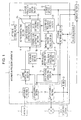
- an information processing apparatus includes: acquiring means (for example, an EPG acquiring section 12 or iPEG acquiring section 14 in Fig. 1 ) for acquiring metadata of content; morphological analysis means (for example, a morphological analysis section 15 in Fig. 1 ) for performing a morphological analysis of text information included in the metadata of the content; genre extracting means (for example, a genre extracting section 19 in Fig. 1 ) for extracting genre information for each individual content in the metadata of the content; and keyword extracting means (for example, a genre keyword extracting section 18a in Fig. 1 ) for extracting words with attributes that have relevance to the genre of predetermined content in the metadata of the content by a morphological analysis result of the morphological analysis means.
- acquiring means for example, an EPG acquiring section 12 or iPEG acquiring section 14 in Fig. 1
- morphological analysis means for example, a morphological analysis section 15 in Fig. 1
- genre extracting means for example, a genre extracting section
- the morphological analysis means may further include exclusion means (for example, an exclusion processing section 15a in Fig. 1 ) for excluding personal names and words that have little relevance to the substance of description of the content, and the keyword extracting means may extract the words with the attributes that have relevance to the genre of the predetermined content in the metadata of the content, from the morphological analysis result of the morphological analysis means from which the personal names and the words that have little relevance to the substance of description of the content are excluded by the exclusion means.
- exclusion means for example, an exclusion processing section 15a in Fig. 1
- the keyword extracting means may extract the words with the attributes that have relevance to the genre of the predetermined content in the metadata of the content, from the morphological analysis result of the morphological analysis means from which the personal names and the words that have little relevance to the substance of description of the content are excluded by the exclusion means.
- the keyword extracting means may further include proper-noun extracting means (for example, a proper-noun keyword extracting section 18b in Fig. 1 ) for extracting proper nouns and words with other than the attributes that have relevance to the genre of the predetermined content from the morphological analysis result, if the number of the words with the attributes that have relevance to the genre of the predetermined content in the metadata of the content, which are extracted from the morphological analysis result of the morphological analysis means, is not larger than a predetermined number.
- proper-noun extracting means for example, a proper-noun keyword extracting section 18b in Fig. 1
- the information processing apparatus may further include storage means (for example, an attribute storing section 20 in Fig. 1 ) for storing a correspondence between the genre in the metadata of the content and the attributes that have relevance to the genre, and the keyword extracting means (for example, a genre keyword extracting section 18a in Fig. 1 ) may determine the attributes that have relevance to the genre of the predetermined content in the metadata of the content on the basis of the correspondence between the genre and the attributes that have relevance to the genre which is stored in the storage means, and extracts the determined words from the morphological analysis result of the morphological analysis means.
- storage means for example, an attribute storing section 20 in Fig. 1
- the keyword extracting means for example, a genre keyword extracting section 18a in Fig. 1
- the information processing apparatus may further include counting means (for example, an occurrence frequency counting section 23 in Fig. 1 ) for counting an occurrence frequency of the same word in the morphological analysis result of the morphological analysis means, and the keyword extracting means (for example, a genre keyword extracting section 18a in Fig. 1 ) may extract the words with the attributes that have relevance to the genre of the predetermined content in the metadata of the content in the order of the highest occurrence frequency as counted by the counting means, from the morphological analysis result of the morphological analysis means.
- counting means for example, an occurrence frequency counting section 23 in Fig. 1
- the keyword extracting means for example, a genre keyword extracting section 18a in Fig. 1
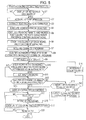
- An information processing method includes the steps of: acquiring metadata of content (for example, step S2 in Fig. 5 ); performing a morphological analysis of text information included in the metadata of the content (for example, step S4 in Fig. 5 ); extracting genre information for each individual content in the metadata of the content (for example, step S7 in Fig. 5 ); and extracting words with attributes that have relevance to the genre of predetermined content in the metadata of the content by a morphological analysis result of the morphological analysis (for example, step S11 in Fig. 5 ).
- Fig. 1 shows an information processing apparatus according to an embodiment of the present invention.
- An information processing apparatus 1 shown in Fig. 1 acquires an EPG (Electric Program Guide) including the metadata of content distributed via a network typically represented by the Internet or the like, a broadcast wave, or the like, extracts the most appropriate keywords that represent features of a program from program (content) information included in the EPG, and displays a program that corresponds to the keywords selected with an operating section 5, such as an operating button or a remote control that is a keyboard, from among the extracted keywords.
- EPG Electronic Program Guide
- an operating section 5 such as an operating button or a remote control that is a keyboard
- a receiving section 11 receives broadcast waves via an antenna 2, and supplies the broadcast waves to an EPG acquiring section 12 and a tuner 24.
- the EPG acquiring section 12 acquires EPG (Electric Program Guide) information from signals supplied from the receiving section 11, and supplies the EPG information to an EPG text data extracting section 13, a genre extracting section 19, and a program retrieving section 25.
- EPG Electronic Program Guide
- An iEPG acquiring section 14 accesses an EPG distribution server 4 specified by a predetermined URL (Uniform Resource Locator) or the like via the network 3 typically represented by the Internet, acquires EPG information, and supplies the EPG information to the EPG text data extracting section 13, the genre extracting section 19, and the program retrieving section 25.
- a predetermined URL Uniform Resource Locator
- the EPG text data extracting section 13 extracts text data from each of the EPG information supplied from the EPG acquiring section 12 and the EPG information supplied from the iEPG acquiring section 14, and supplies the text data to a morphological analysis section 15.
- the morphological analysis section 15 divides the text data of the EPG information into the smallest meaningful units of language (hereinafter, this is referred to as words), identifies the word class of each of the words through comparison against information registered in a dictionary storing section 16, thereby executing a morphological analysis process.
- the morphological analysis section 15 then stores the results of the morphological analysis into a morphological analysis result buffer 17. Further, the morphological analysis section 15 controls an exclusion processing section 15a so as to exclude (eliminate) target words to be excluded, such as personal names and words that clearly do not represent features of program description, from the text data stored in the morphological analysis section 15, and supplies other words to the morphological analysis section 15.
- Words that clearly do not represent features of program description are those words such as interruption, pause, recording, or URL (Uniform Resource Locator) or WWW (World Wide Web).
- URL Uniform Resource Locator
- WWW World Wide Web
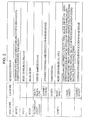
- the genre extracting section 19 extracts genre information set for each individual program included in the EPG information and supplies the information to a keyword extracting section 18. More specifically, as shown in Figs. 2 to 4 , genres included in the EPG information are grouped into main genres and sub-genres. The genre extracting section 19 extracts information of main genres and sub-genres included in the EPG information and supplies the information to the keyword extracting section 18.
- main genres include, for example, Sports, Music, Movie, Information/Variety Program, Variety, Documentary/Cultural Enrichment, and Hobby/Education.
- Sub-genres are genres included in the main genres. For example, if a main genre is Information/Variety Program, the main genre includes the following sub-genres: Health-Medical Care, Gourmet-Cooking, and Events. Also, if a main genre is Variety, the main genre includes the following sub-genres; Music Variety, Travel Variety, and Cooking Variety. Further, if a main genre is Documentary/Cultural Enrichment, the main genre includes the following sub-genres: History and Travelogue, Nature-Animal-Environment, Universe-Science-Medicine, Culture-Traditional Culture, Literature-Popular Literature, and Sports. Further, the main genre Play/Performance includes a sub-genre of Dance-Ballet.
- the main genre includes the following sub-genres: Travel-Fishing-Outdoors, Gardening-Pets-Handicraft, Music-Art-Craft, Car-Motorcycle, and University Student-Examination.
- An occurrence frequency counting section 23 counts the frequency of occurrence of each word in the morphological analysis results stored in the morphological analysis result buffer 17, and sorts the words by the highest occurrence frequency.
- the keyword extracting section 18 includes a genre keyword extracting section 18a, a proper-noun extracting section 18b, and a noun extracting section 18c.
- the genre keyword extracting section 18a accesses an attribute storing section 20, and reads keyword attributes set in advance for main genres and sub-genres supplied from the genre extracting section 19. Then, on the basis of information from the occurrence frequency counting section 23, the keyword extracting section 18 determines, in order from keywords with higher occurrence frequencies, whether or not individual keywords correspond to target keyword attributes, and stores only those keywords corresponding to target keyword attributes into a keyword extraction result storing section 21.
- the keyword attributes to be extracted are Stadium, Sports Manufacturer, Team Name, Sports Organization, Competition, Title, and Sports Terminology.
- Sports Organization refers to, for example, the Japan High School Baseball Federation
- Title refers to, for example, the Golden Club Award.
- the keyword attributes to be extracted are Music Genre and Music-related.
- Music-related refers to musical instruments, musical note names, or the like.
- the keyword attributes to be extracted are Disease Name and Drug Name. Further, if the main genre of a program is Information/Variety Program, and the sub-genre is Gourmet-Cooking, the keyword attributes to be extracted are Cooking, Food, Sweets, Beverage, Cookware, and Beverage. Further, if the main genre of a program is Information/Variety Program, and the sub-genre is Events, the keyword attributes to be extracted are Event and Festival.
- the keyword attributes to be extracted are Music Genre and Music-related. Further, if the main genre of a program is Variety, and the sub-genre is Travel Variety, the keyword attributes to be extracted are Country, province, Prefecture, City, Town, Village, and Special Ward, Street, Branch Administrative Office, Foreign Place Name, Gallery-Museum, Zoo-Botanical Garden-Aquarium, Event, Festival, Station, Train Line, Road Facilities, Land, Sea, and Air Routes, Vehicle, Sight-seeing, Natural Topography, and Hot Spring. Further, if the main genre of a program is Variety, and the sub-genre is Cooking Variety, the keyword attributes to be extracted are Cooking, Food, Sweets, Beverage, Cookware, and Beverage.
- the keyword attributes to be extracted are Age, Era Name, Thoughts-Movements, Culture-Civilization, and Historical Fact.
- Era Name refers to, for example, the Ansei era or the Onin era
- Thoughts refers to, for example, Marxism or Leninism
- Culture-Civilization refers to, for example, the Indus civilization.
- the keyword attributes to be extracted are Animal, and Zoo-Botanical Garden-Aquarium. Further, if the main genre of a program is Documentary/Cultural Enrichment, and the sub-genre is Universe-Science-Medicine, the keyword attributes to be extracted are Heavenly Body, Disease Name, and Drug Name. In this case, Heavenly Body refers to, for example, names or star names.
- the keyword attributes to be extracted are Thoughts-Movements, Religion-Sect, Historical Fact, and Traditional Craft. In this case, Traditional Craft refers to, for example, Kutani ware or Wajima ware.
- the keyword attributes to be extracted are Thoughts-Movements, Religion-Sect, Historical Fact, and Title of Piece.
- the keyword attributes to be extracted are Stadium, Sports Manufacturer, Team Name, Sports Organization, Competition, Title, and Sports Terminology.
- the keyword attribute to be extracted is Title of Piece. If the main genre of a program is Play/Performance, and the sub-genre is Dance-Ballet, the keyword attribute to be extracted is Dance. In this case, Dance refers to, for example, the quickstep or modern dance.
- the keyword attributes to be extracted are Country, province, Prefecture, City, Town, Village, and Special Ward, Street, Branch Administrative Office, Foreign Place Name, Gallery-Museum, Zoo-Botanical Garden-Aquarium, Event, Festival, Station, Train Line, Road Facilities, Land, Sea, and Air Routes, Vehicle, Sight-seeing, Natural Topography, Hot Spring, and Animal.
- the keyword attribute to be extracted is Animal. Further, if the main genre of a program is Hobby/Education, and the sub-genre is Music-Art-Craft, the keyword attributes to be extracted are Music Genre, Music-related, Traditional Craft, and Gallery-Museum.
- the keyword attribute to be extracted is Auto Manufacturer. Further, if the main genre of a program is Hobby/Education, and the sub-genre is University Student-Examination, the keyword attribute to be extracted is University.
- the proper-noun extracting section 18b further extracts, as keywords, words with attributes that do not match (have no relevance to) the target genre, and proper-noun keyword attributes.
- the noun extracting section 18c further extracts words with noun keyword attributes as keywords from among words belonging to the target genre and keyword attributes other than proper-noun keyword attributes.
- step S1 the EPG acquiring section 12 or the iEPG acquiring section 14 determines whether or not the operating section 5 has been operated and display of keywords has been designated, and the same process is repeated until it is determined that display of keywords has been designated. For example, an option tab 101 as shown in Fig. 6 is displayed, and when a button 117 indicating a keyword extracting process is operated, it is regarded that display of keywords has been designated, and the process proceeds to step S2.
- FIG. 6 shows an example of image displayed on a display section 6.
- a display field 102 for a standard broadcast program that is being selected by a tuner 24 is displayed on the left side of the option tab 101.
- buttons 111 to 117 indicated as “HDD information”, “DVD information”, “image/sound quality setting” "program recording” "program description”, “personal name” and “keyword” are displayed in order from the top to bottom.
- the button 111 is operated when displaying information of a program recorded on an HDD (Hard Disk Drive) (not shown).
- the button 112 is operated when displaying information of a program recorded on a DVD inserted in a DVD (Digital Versatile Disk) drive (not shown).
- the button 113 is operated when executing image/sound quality setting.
- the button 114 is operated when executing program recording.
- the button 115 is operated when displaying description of a program that is displayed in the display field 102 included in the EPG.
- the button 116 is operated when displaying the names of the cast members of a program that is displayed in the display field 102 included in the EPG as personal names.
- the button 117 is operated when displaying keywords for a program that is displayed in the display field 102 included in the EPG.
- step S2 the EPG acquiring section 12 acquires EPG information included in the broadcast waves received by the antenna 2 via the receiving section 11, and supplies the EPG information to the EPG text data extracting section 13. Further, the iEPG acquiring section 14 accesses the EPG distribution server 4 on the network 3 which is specified by a predetermined URL, and acquires EPG information and supplies the EPG information to the EPG text data extracting section 13 and the genre extracting section 19.
- step S3 the EPG text data extracting section 13 extracts text data from the supplied EPG information and supplies the text data to the morphological analysis section 15.
- step S4 on the basis of information stored in the dictionary storing section 16, the morphological analysis section 15 divides the text data of the EPG information supplied into words, identifies the word class of each of the words, and stores the word class into the morphological analysis result buffer 17.
- step S5 the morphological analysis section 15 controls the exclusion processing section 15a so that, of the words stored in the morphological analysis result buffer 17, personal names and words that clearly do not represent features of program description are eliminated from target keyword attributes, and excluded from words to be extracted.
- Words are classified as shown in Fig. 7 . That is, a group of noun keywords W1 is generated by a morphological analysis.
- the group of noun keywords W1 includes a group of personal names and keywords that clearly do not represent features of program description (have little relevance to the substance of program description) W11, a group of keywords W12, a group of other keywords with no attributes W14, and a group of proper-noun keywords W13 classified separately from the above groupings.
- the group of keywords with attributes W12 further includes a group of specific-genre keywords S12 having keyword attributes of a specific genre, and a group of non-specific-genre keywords S22 other than the specific-genre keywords.
- the exclusion processing section 15a can recognize the personal names and the group of keywords that clearly do not represent features of program description W11, and thus excludes those words from the morphological analysis result buffer 17.
- step S6 the occurrence frequency counting section 23 sequentially reads the words accumulated in the morphological analysis result buffer 17, counts the frequency of occurrence of the same word, and on the basis of the occurrence frequency, sorts the words by the highest occurrence frequency.
- step S7 the genre extracting section 19 extracts information of the genre of a predetermined program from the EPG information and supplies the information to the keyword extracting section 18.
- the genre of a predetermined program refers to the genre of a program that is displayed in the display field 102.
- step S8 the genre keyword extracting section 18a of the keyword extracting section 18 accesses the attribute storing section 20, and on the basis of the genre information supplied from the genre extracting section 19, identifies the keyword attributes to be extracted.
- step S9 the genre keyword extracting section 18a initializes a counter i (not shown) indicating the rank order of occurrence frequency to 1.
- step S10 the genre keyword extracting section 18a makes inquiry to the occurrence frequency counting section 23, and extracts from the morphological analysis result buffer 17 a word with the i-th highest occurrence frequency.
- the genre keyword extracting section 18a determines whether or not the word belongs to a group of keywords of a specific genre corresponding to one of groups of genre keywords W21-1 to W21-n shown in Fig. 7 , that is, whether or not the word belongs to keyword attributes that match the genre of a program.
- step S10 if, for example, the word belongs to keyword attributes of a genre to be extracted, in step S11, the word with the i-th highest occurrence frequency is stored into the keyword extraction result storing section 21, and the process proceeds to step S12.
- step S10 determines whether the word does not belong to keyword attributes to be extracted. If it is determined in step S10 that the word does not belong to keyword attributes to be extracted, the processing of step S11 is skipped, and the process proceeds to step S12.
- step S12 the genre keyword extracting section 18a determines whether or not the number of words stored in the keyword extraction result storing section 21 is equal to or larger than a predetermined number, and if the number of words is less than the predetermined number, the process proceeds to step S13.
- step S13 the genre keyword extracting section 18a accesses the morphological analysis result buffer 17, and determines whether or not processing has been finished with respect to all of the words. If processing has not been finished with respect to all of the words, the process proceeds to step S14.
- step S14 the genre keyword extracting section 18a increments the counter i by 1, and the process returns to step S10.
- steps S10 to S14 is repeated until it is determined in step S12 that a predetermined number of words serving as keywords to be extracted have been stored into the keyword extraction result storing section 21, or until it is determined with respect to every one of words whether or not the word belongs to keyword attributes to be extracted.
- an output section 22 outputs the extracted words, which are stored in the keyword extraction result storing section 21, to the display section 6, and causes the display section 6 to display the extracted words.
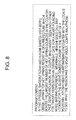
- step S3 text data as shown in Fig. 8 is extracted
- the following extracted text data is shown in Fig. 8 : "In this episode, Shigeru Tazaki and Hukumi Shirota visit Beppu Onsen, Japan's top hot spring resort in Oita prefecture which boasts the largest number of hot spring sources in the country. Once senior and junior, the couple who haven't seen each other for twenty years go on an overnight date for a heart-pounding mixed bathing experience... Meanwhile, Hirashi goes on a trip looking for the elusive domestic caviar in the heart of a mountain. Kiyoshi Hida's heartwarming encounter with the locals to see what the region has to boast about.”
- step S4 when a morphological analysis is carried out through the processing of step S4, the following nouns will be sequentially extracted: "Shigeru Tazaki, Hukumi Shirota, Beppu Onsen, Japan's top, hot spring, Oita prefecture, hot spring sources, senior, junior, ."
- the keywords attributes to be extracted are as follows: "Country, Republic, Prefecture, City, Town, Village, and Special Ward, Street, Branch Administrative Office, Foreign Place Name, Gallery-Museum, Zoo-Botanical Garden-Aquarium, Event, Festival, Station, Train Line, Road Facilities, Land, Sea, and Air Routes, Vehicle, Sight-seeing, Natural Topography, and Hot Spring", so "Oita prefecture, Beppu Onsen, and caviar " are sequentially extracted.
- the program is related to Beppu Onsen in Oita prefecture, and also that there is a topic about caviar, so it can be recognized that the program is a travel program, and the topic is about Beppu Onsen.
- the topic is about Beppu Onsen.
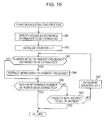
- step S13 if, although it has been determined with respect to every one of words with the keyword attributes of a specific genre whether or not the word belongs to keyword attributes to be extracted, that is, although it has been determined with respect to every one of keywords whether or not the keyword belongs to keyword attributes to be extracted, the number of extracted keywords is still less than a predetermined number, in step S15, the proper-noun extracting section 18b executes an out-of-genre-keyword extracting process.
- step S31 the proper-noun extracting section 18b of the keyword extracting section 18 accesses the attribute storing section 20, and identifies keyword attributes relating to a specific genre other than that of a program displayed in the display field 102, that is, attributes that do not match the genre of the program (attributes other than the attributes that have relevance to the genre) and proper nouns, as the target keyword attributes to be extracted.
- step S32 the proper-noun extracting section 18b initializes the counter i (not shown) indicating the rank order of occurrence frequency to 1.
- step S33 the proper-noun extracting section 18b makes inquiry to the occurrence frequency counting section 23, and extracts a word with the i-th highest occurrence frequency from the morphological analysis result buffer 17.
- the proper-noun extracting section 18b determines whether or not the word belongs to keywords attributes of a specific genre which do not match a program displayed in the display field 102, that is, non-specific-genre keyword attributes or proper-noun keyword attributes which are to be extracted, that is, for example, whether or not the word belongs to, of the group of keywords with attributes W12 shown in Fig.
- step S33 the word belongs to non-specific-genre keyword attributes of a genre not matching a program displayed in the display field 102 or proper-noun attributes
- step S34 the word with the i-th highest occurrence frequency is stored into the keyword extraction result storing section 21, and the process proceeds to step S35.
- step S33 if it is determined in step S33 that the word does not belong to keyword attributes of a non-specific genre which do not match a program displayed in the display field 102 or proper-noun keyword attributes which are to be extracted, the processing of step S34 is skipped, and the process proceeds to step S35.
- step S35 the proper-noun extracting section 18b determines whether or not the number of words stored in the keyword extraction result storing section 21 is equal to or larger than a predetermined number, and if the number of words is less than the predetermined number, the process proceeds to step S36.
- step S36 the proper-noun extracting section 18b accesses the morphological analysis result buffer 17, and determines whether or not processing has been finished with respect to all of the words. If processing has not been finished with respect to all of the words, the process proceeds to step S37.
- step S37 the proper-noun extracting section 18b increments the counter i by 1, and the process returns to step S33.
- steps S33 to S37 is repeated until it is determined in step S35 that a predetermined number of keywords relating to the genre of a program displayed in the display field 102 which are to be extracted, a predetermined number of words with attributes of a non-specific genre which do not match the program displayed in the display field 102, and a predetermined number of keywords with proper-noun keyword attributes have been stored into the keyword extraction result storing section 21, or until it has been determined with respect to every one of words whether or not the word is a word having a keyword attribute of a non-specific genre which does not match the program displayed in the display field 102 and which is a keyword attribute to be extracted, or is a proper-noun.
- step S35 if it is determined in step S35 that a predetermined number of keywords relating to the genre of a program displayed in the display field 102 which are to be extracted, a predetermined number of words with attributes relating to a non-specific genre which do not match the program displayed in the display field 102, and a predetermined number of keywords with proper-noun keyword attributes have been stored into the keyword extraction result storing section 21, the outer-of-genre keyword extracting process ends, and the process returns to the process of the flowchart shown in Fig. 5 . Then, in step S16, the output section 22 outputs the extracted words stored in the keyword extraction result storing section 21 to the display section 6, and causes the display section 6 to display the extracted words.
- step 536 if, although it has been determined with respect to every one of words whether or not the word is a word having an attribute of a non-specific genre which does not match the program displayed in the display field 102 or a proper noun which is a keyword attribute to be extracted, that is, although it has been determined with respect to every one of keywords whether or not the keyword is a word having an attribute of a non-specific genre which does not match the program displayed in the display field 102 or a proper noun which is a keyword attribute to be extracted, the number of extracted keywords is still less than a predetermined number, in step S38, the noun extracting section 18c executes a noun extracting process.
- step S41 the noun extracting section 18c of the keyword extracting section 18 accesses the attribute storing section 20, and identifies nouns as the keyword attributes to be extracted.
- step S42 the noun extracting section 18c initializes the counter i (not shown) indicating the rank order of occurrence frequency to 1.
- step S43 the noun extracting section 18c makes inquiry to the occurrence frequency counting section 23, and extracts a word with the i-th highest occurrence frequency.
- the noun extracting section 18c determines whether or not the word belongs to proper-noun keyword attributes to be extracted, that is, for example, whether or not the word belongs to the group of noun keywords W1 shown in Fig. 7 . It should be noted that at this point, extraction of words within the group of specific-genre keywords W21 and the non-specific-genre keywords S22 which belong to the group of keywords with attributes W12, and within the group of proper-noun keywords W13 has been finished already.
- the word to be extracted at this point is essentially a word belonging to the group of noun keywords W1 excluding the group of personal names and keywords that clearly do not represent features of program description W11, the group of keywords with attributes W12, and the group of proper-noun keywords S13, that is, a word belonging to the group of keywords with no attributes W14 in the group of noun keywords W1.
- step S43 if, for example, the word belongs to noun keyword attributes to be extracted, in step S44, the word with the i-th highest occurrence frequency is stored into the keyword extraction result storing section 21, and the process proceeds to step S45.
- step S43 determines whether the word does not belong to proper-noun keyword attributes to be extracted. If it is determined in step S43 that the word does not belong to proper-noun keyword attributes to be extracted, the processing of step S44 is skipped, and the process proceeds to step S45.
- step S45 the noun extracting section 18c determines whether or not the number of words stored in the keyword extraction result storing section 21 is equal to or larger than a predetermined number, and if the number of words is less than the predetermined number, the process proceeds to step S46.
- step S46 the noun extracting section 18c accesses the morphological analysis result buffer 17, and determines whether or not processing has been finished with respect to all of words. If processing has not been finished with respect to all of words, the process proceeds to step S47.
- step S47 the noun extracting section 18c increments the counter i by 1, and the process returns to step S43.
- steps S43 to S47 is repeated until it is determined in step S45 that a predetermined number of keywords have been stored into the keyword extraction result storing section 21 from the group of keywords with attributes W12, the group of proper-noun keywords W13, and the group of keywords with no attributes W14 which are to be extracted, or until processing is finished with respect to all of words.
- step S45 if it is determined in step S45 that a predetermined number of words have been stored into the keyword extraction result storing section 21 from the group of keywords with attributes W12, the group of proper-noun keywords W13, and the group of keywords with no attributes W14 which are to be extracted, of if it is determined in step S46 that processing has been finished with respect to all of words, the noun extracting process ends, and also the out-of-genre keyword extracting process ends.
- the process then returns to the flowchart of Fig. 5 , and in step S16, the output section 22 outputs the extracted words stored in the keyword extraction result storing section 21 to the display section 6, and causes the display section 6 to display the extracted words.
- keywords included in a program displayed in the display field 102 are small, words belonging to a group of non-specific-genre keywords not matching the program displayed in the display field 102, or keywords belonging to a group of proper-noun keywords are extracted, and if the number of extracted words is still small even after adding the words belonging to the group of keywords of a non-specific genre not matching the program displayed in the display field 102, or the keywords belonging to the group of proper-noun keywords, then keywords are extracted from a group of keywords with no attributes. It is thus possible to increase the possibility of being able to extract a predetermined number of keywords.
- step S16 the display section 6 displays keywords on a screen as shown in Fig. 11 , for example.
- a keyword display field 121 is provided on the right side of the display field 102 for a standard broadcast program, and buttons 131 to 134, which are operated when selecting extracted keywords, are provided in association with the keywords.
- the button 131 is provided with respect to the keyword “Oita prefecture”
- the button 132 is provided with respect to the keyword “Beppu Onsen”
- the button 133 is provided with respect to the keyword "caviar”.
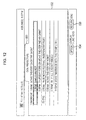
- step S17 the program retrieving section 25 determines whether or not a keyword has been selected by operating any one of the buttons 131 to 133 with the operating section 5. For example, if, in Fig. 11 , the button 131 is operated with the operating section 5 and the keyword "Oita prefecture" is selected, in step S18, the program retrieving section 25 retrieves programs by the keyword "Oita prefecture” (retrieves programs with the keyword "Oita prefecture” included in the program information of EPG information) on the basis of EPG information supplied from the EPG acquiring section 12 or the iEPG acquiring section 14, and in step S19, the program retrieving section 25 displays the retrieval results on the display section 6 in the manner as shown in Fig. 12 , for example. If no selection has been made in step S17, in step S20, it is determined whether or not termination has been designated, and if termination has not been designated, the process returns to step S17. If termination has been designated, the process ends.
- a selected keyword tab 151 showing a selected keyword.
- the selected keyword "Oita prefecture" is shown.
- a retrieval result display field 152 which displays programs retrieved by the selected keyword.
- a button 153 indicated as "Return” is provided on the right side.
- the button 153 is operated when terminating display of the selected keyword tab 151 to return.
- a button 154 indicated as “Option” is displayed on the left side of the button 153.
- the button 154 is operated when executing operation of options.
- the processing as described above on the basis of keyword attributes identified by a genre, it is possible to extract from information included in the electric program guide (EPG) corresponding words as keywords in the order of the highest occurrence frequency. If the number of the extracted keywords is less than a predetermined number, words having proper-noun keyword attributes not related to the genre are extracted as keywords, and if the number of the extracted keywords is still less than the predetermined number, words having noun keyword attributes not related to the genre are extracted in addition to the keywords having keyword attributes specified by the genre and the proper-noun keywords.
- EPG electric program guide
- Keyword attributes associated with a particular season "Christmas”, “New Year”, “The Doll's Festival”, “The Boy's Festival” or the like is set for the main genre or the like, and on the basis of information on the date and time at that moment, words having keyword attributes that are most suitable to describe the season may be extracted as keywords separately from the genre of the program.
- the metadata of content is EPG
- the metadata may be other than EPG as long as it is metadata representing additional information of content.
- the metadata may be EGC (Electronic Contents Guide) or the like.
- the content may be other than a television program as long as it contains metadata.
- the content may be dynamic image content or music content downloaded via a network, or may be dynamic image content or music content stored on a data storage medium such as a DVD (Digital Versatile Disc) or a BD (Blu-Ray Disc).
- the series of text processes described above can be executed by hardware, the series of processes can be also executed by software. If the series of processes is to be executed by software, a program constituting the software is installed from a recording medium into a computer built in dedicated hardware, or into, for example, a general purpose personal computer that can execute various processes when installed with various programs.
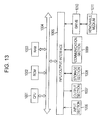
- Fig. 13 shows an example of the configuration of a general purpose personal computer.
- This personal computer has a built-in CPU (Central Processing Unit) 1001.
- An input/output interface 1005 is connected to the CPU 1001 via a bus 1004.
- a ROM (Read Only Memory) 1002 and a RAM (Random Access Memory) 1003 are connected to the bus 1004.
- an input section 1006 that is an input device such as a keyboard or a mouse with which the user inputs an operation command
- a storage section 1008 that is a hard disk drive or the like for storing programs or various kinds of data
- a communication section 1009 that is a LAN (Local Area Network) adapter or the like and executes a communication process via a network typically represented by the Internet.
- LAN Local Area Network
- a drive 1010 that reads/writes data from/into a removable medium 1011 such as a magnetic disc (including a flexible disc), an optical disc (including a CD-ROM (Compact Disc Read-Only Memory) and a DVD (Digital Versatile Disc)), a magneto-optical disc (including an MD (Mini Disc), or a semiconductor memory.
- a removable medium 1011 such as a magnetic disc (including a flexible disc), an optical disc (including a CD-ROM (Compact Disc Read-Only Memory) and a DVD (Digital Versatile Disc)), a magneto-optical disc (including an MD (Mini Disc), or a semiconductor memory.
- the CPU 1001 executes various processes in accordance with a program stored in the ROM 1002, or a program that is read from the removal medium 1011 such as a magnetic disc, an optical disc, a magneto-optical disc, or a semiconductor memory to be installed into the storage section 1008, and is loaded into the RAM 1003 from the storage section 1008. Data necessary for the CPU 1001 to execute various processes or the like is also stored in the RAM 1003 as appropriate.
- a program stored in the ROM 1002 or a program that is read from the removal medium 1011 such as a magnetic disc, an optical disc, a magneto-optical disc, or a semiconductor memory to be installed into the storage section 1008, and is loaded into the RAM 1003 from the storage section 1008.
- Data necessary for the CPU 1001 to execute various processes or the like is also stored in the RAM 1003 as appropriate.
- the steps describing a program recorded in a recording medium include not only processes that are executed time sequentially in the order as they appear in the description but also processes that are executed in parallel or independently.
Landscapes
- Engineering & Computer Science (AREA)
- Multimedia (AREA)
- Signal Processing (AREA)
- Human Computer Interaction (AREA)
- Theoretical Computer Science (AREA)
- Physics & Mathematics (AREA)
- General Physics & Mathematics (AREA)
- Audiology, Speech & Language Pathology (AREA)
- Computational Linguistics (AREA)
- General Health & Medical Sciences (AREA)
- Health & Medical Sciences (AREA)
- General Engineering & Computer Science (AREA)
- Artificial Intelligence (AREA)
- Library & Information Science (AREA)
- Business, Economics & Management (AREA)
- Finance (AREA)
- Strategic Management (AREA)
- Databases & Information Systems (AREA)
- Information Retrieval, Db Structures And Fs Structures Therefor (AREA)
- Machine Translation (AREA)
Applications Claiming Priority (3)
| Application Number | Priority Date | Filing Date | Title |
|---|---|---|---|
| JP2007051355 | 2007-03-01 | ||
| JP2007205082 | 2007-08-07 | ||
| JP2007303992A JP2009059335A (ja) | 2007-08-07 | 2007-11-26 | 情報処理装置および方法、並びにプログラム |
Publications (2)
| Publication Number | Publication Date |
|---|---|
| EP1965312A2 true EP1965312A2 (de) | 2008-09-03 |
| EP1965312A3 EP1965312A3 (de) | 2010-02-10 |
Family
ID=39638757
Family Applications (1)
| Application Number | Title | Priority Date | Filing Date |
|---|---|---|---|
| EP08152077A Withdrawn EP1965312A3 (de) | 2007-03-01 | 2008-02-28 | Vorrichtung und Verfahren zur Informationsverarbeitung, Programm und Speichermedium |
Country Status (2)
| Country | Link |
|---|---|
| US (1) | US20080215577A1 (de) |
| EP (1) | EP1965312A3 (de) |
Cited By (1)
| Publication number | Priority date | Publication date | Assignee | Title |
|---|---|---|---|---|
| CN104778184A (zh) * | 2014-01-15 | 2015-07-15 | 腾讯科技(深圳)有限公司 | 一种确定反馈关键词的方法和装置 |
Families Citing this family (6)
| Publication number | Priority date | Publication date | Assignee | Title |
|---|---|---|---|---|
| KR101644789B1 (ko) | 2009-04-10 | 2016-08-04 | 삼성전자주식회사 | 방송 프로그램 연관 정보 제공 장치 및 방법 |
| JP4576570B1 (ja) * | 2009-06-08 | 2010-11-10 | Necカシオモバイルコミュニケーションズ株式会社 | 端末装置及びプログラム |
| US20110283226A1 (en) * | 2010-05-15 | 2011-11-17 | International Business Machines Corporation | Window display management in a graphical user interface |
| US9536528B2 (en) * | 2012-07-03 | 2017-01-03 | Google Inc. | Determining hotword suitability |
| US11295735B1 (en) * | 2017-12-13 | 2022-04-05 | Amazon Technologies, Inc. | Customizing voice-control for developer devices |
| CN113255323B (zh) * | 2021-06-16 | 2021-11-19 | 明品云(北京)数据科技有限公司 | 一种描述数据处理方法、系统、电子设备及介质 |
Citations (5)
| Publication number | Priority date | Publication date | Assignee | Title |
|---|---|---|---|---|
| JP2004134858A (ja) | 2002-10-08 | 2004-04-30 | Funai Electric Co Ltd | 放送受信装置及び番組検索装置 |
| JP2006339947A (ja) | 2005-06-01 | 2006-12-14 | Sony Corp | 情報処理装置、情報処理方法および情報処理プログラム |
| JP2007051355A (ja) | 2005-08-19 | 2007-03-01 | Osaka Prefecture Univ | Co3Ti薄板の製造方法、Co3Ti薄板 |
| JP2007205082A (ja) | 2006-02-03 | 2007-08-16 | Ryudoka Shori Koho Sogo Kanri:Kk | 流動化処理土の配合設計法 |
| JP2007303992A (ja) | 2006-05-12 | 2007-11-22 | Ikegami Tsushinki Co Ltd | 感度ファイル自動設定装置及びそれを備えた物品の外観検査装置 |
Family Cites Families (4)
| Publication number | Priority date | Publication date | Assignee | Title |
|---|---|---|---|---|
| CN1922605A (zh) * | 2003-12-26 | 2007-02-28 | 松下电器产业株式会社 | 辞典制作装置以及辞典制作方法 |
| WO2005122579A1 (ja) * | 2004-06-08 | 2005-12-22 | Matsushita Electric Industrial Co., Ltd. | 番組選択支援装置 |
| JPWO2006019101A1 (ja) * | 2004-08-19 | 2008-07-31 | 日本電気株式会社 | コンテンツ関連情報取得装置、コンテンツ関連情報取得方法、およびコンテンツ関連情報取得プログラム |
| CN101167075B (zh) * | 2005-06-15 | 2010-05-12 | 松下电器产业株式会社 | 专有表现抽取装置、方法以及程序 |
-
2008
- 2008-02-28 EP EP08152077A patent/EP1965312A3/de not_active Withdrawn
- 2008-02-28 US US12/072,840 patent/US20080215577A1/en not_active Abandoned
Patent Citations (5)
| Publication number | Priority date | Publication date | Assignee | Title |
|---|---|---|---|---|
| JP2004134858A (ja) | 2002-10-08 | 2004-04-30 | Funai Electric Co Ltd | 放送受信装置及び番組検索装置 |
| JP2006339947A (ja) | 2005-06-01 | 2006-12-14 | Sony Corp | 情報処理装置、情報処理方法および情報処理プログラム |
| JP2007051355A (ja) | 2005-08-19 | 2007-03-01 | Osaka Prefecture Univ | Co3Ti薄板の製造方法、Co3Ti薄板 |
| JP2007205082A (ja) | 2006-02-03 | 2007-08-16 | Ryudoka Shori Koho Sogo Kanri:Kk | 流動化処理土の配合設計法 |
| JP2007303992A (ja) | 2006-05-12 | 2007-11-22 | Ikegami Tsushinki Co Ltd | 感度ファイル自動設定装置及びそれを備えた物品の外観検査装置 |
Cited By (1)
| Publication number | Priority date | Publication date | Assignee | Title |
|---|---|---|---|---|
| CN104778184A (zh) * | 2014-01-15 | 2015-07-15 | 腾讯科技(深圳)有限公司 | 一种确定反馈关键词的方法和装置 |
Also Published As
| Publication number | Publication date |
|---|---|
| EP1965312A3 (de) | 2010-02-10 |
| US20080215577A1 (en) | 2008-09-04 |
Similar Documents
| Publication | Publication Date | Title |
|---|---|---|
| US7546288B2 (en) | Matching media file metadata to standardized metadata | |
| CA2688921C (en) | Identification of segments within audio, video, and multimedia items | |
| JP4910582B2 (ja) | 情報処理装置および方法、並びに、プログラム | |
| JP5171718B2 (ja) | コンテンツ推薦装置、方法、及びプログラム | |
| JP4436894B2 (ja) | コンテンツ検索装置 | |
| EP1965312A2 (de) | Vorrichtung und Verfahren zur Informationsverarbeitung, Programm und Speichermedium | |
| CN101778233B (zh) | 数据处理装置以及数据处理方法 | |
| US7904452B2 (en) | Information providing server, information providing method, and information providing system | |
| US20100332497A1 (en) | Presenting an assembled sequence of preview videos | |
| US20040181391A1 (en) | Speech recognition dictionary creation apparatus and information search apparatus | |
| US8463596B2 (en) | Selecting an optimal property of a keyword associated with program guide content for keyword retrieval | |
| KR20050016198A (ko) | 정보처리 장치와 방법, 프로그램 및 기록 매체 | |
| US8397263B2 (en) | Information processing apparatus, information processing method and information processing program | |
| US20120066235A1 (en) | Content processing device | |
| US8209348B2 (en) | Information processing apparatus, information processing method, and information processing program | |
| US20070136755A1 (en) | Video content viewing support system and method | |
| US20210342393A1 (en) | Artificial intelligence for content discovery | |
| JP2009059335A (ja) | 情報処理装置および方法、並びにプログラム | |
| CN101256583A (zh) | 信息处理设备和方法、程序和存储介质 | |
| US7949667B2 (en) | Information processing apparatus, method, and program | |
| WO2008044669A1 (en) | Audio information search program and its recording medium, audio information search system, and audio information search method | |
| EP2579609A1 (de) | Verfahren und Vorrichtung zur Bereitstellung von Informationen über Elements mit Multimediainhalt | |
| JP2005202485A (ja) | 映像提示装置 | |
| JP4731288B2 (ja) | 番組推薦装置、番組推薦方法、番組推薦プログラム、および番組推薦プログラムを記録した記録媒体 | |
| JP2010050801A (ja) | 電子機器、表示制御方法、およびプログラム |
Legal Events
| Date | Code | Title | Description |
|---|---|---|---|
| PUAI | Public reference made under article 153(3) epc to a published international application that has entered the european phase |
Free format text: ORIGINAL CODE: 0009012 |
|
| AK | Designated contracting states |
Kind code of ref document: A2 Designated state(s): AT BE BG CH CY CZ DE DK EE ES FI FR GB GR HR HU IE IS IT LI LT LU LV MC MT NL NO PL PT RO SE SI SK TR |
|
| AX | Request for extension of the european patent |
Extension state: AL BA MK RS |
|
| PUAL | Search report despatched |
Free format text: ORIGINAL CODE: 0009013 |
|
| RIC1 | Information provided on ipc code assigned before grant |
Ipc: H04N 5/445 20060101ALI20091230BHEP Ipc: H04N 7/16 20060101ALI20091230BHEP Ipc: G06F 17/27 20060101AFI20080730BHEP |
|
| AK | Designated contracting states |
Kind code of ref document: A3 Designated state(s): AT BE BG CH CY CZ DE DK EE ES FI FR GB GR HR HU IE IS IT LI LT LU LV MC MT NL NO PL PT RO SE SI SK TR |
|
| AX | Request for extension of the european patent |
Extension state: AL BA MK RS |
|
| AKY | No designation fees paid | ||
| REG | Reference to a national code |
Ref country code: DE Ref legal event code: 8566 |
|
| STAA | Information on the status of an ep patent application or granted ep patent |
Free format text: STATUS: THE APPLICATION IS DEEMED TO BE WITHDRAWN |
|
| 18D | Application deemed to be withdrawn |
Effective date: 20100811 |