EP1966371B1 - Verfahren zur aktivierung von präthrombin-1 - Google Patents
Verfahren zur aktivierung von präthrombin-1 Download PDFInfo
- Publication number
- EP1966371B1 EP1966371B1 EP06846013A EP06846013A EP1966371B1 EP 1966371 B1 EP1966371 B1 EP 1966371B1 EP 06846013 A EP06846013 A EP 06846013A EP 06846013 A EP06846013 A EP 06846013A EP 1966371 B1 EP1966371 B1 EP 1966371B1
- Authority
- EP
- European Patent Office
- Prior art keywords
- thrombin
- prethrombin
- oscutarin
- immobilized
- nacl
- Prior art date
- Legal status (The legal status is an assumption and is not a legal conclusion. Google has not performed a legal analysis and makes no representation as to the accuracy of the status listed.)
- Not-in-force
Links
Images




Classifications
-
- C—CHEMISTRY; METALLURGY
- C12—BIOCHEMISTRY; BEER; SPIRITS; WINE; VINEGAR; MICROBIOLOGY; ENZYMOLOGY; MUTATION OR GENETIC ENGINEERING
- C12N—MICROORGANISMS OR ENZYMES; COMPOSITIONS THEREOF; PROPAGATING, PRESERVING, OR MAINTAINING MICROORGANISMS; MUTATION OR GENETIC ENGINEERING; CULTURE MEDIA
- C12N9/00—Enzymes; Proenzymes; Compositions thereof; Processes for preparing, activating, inhibiting, separating or purifying enzymes
- C12N9/14—Hydrolases (3)
- C12N9/48—Hydrolases (3) acting on peptide bonds (3.4)
- C12N9/50—Proteinases, e.g. Endopeptidases (3.4.21-3.4.25)
- C12N9/64—Proteinases, e.g. Endopeptidases (3.4.21-3.4.25) derived from animal tissue
- C12N9/6421—Proteinases, e.g. Endopeptidases (3.4.21-3.4.25) derived from animal tissue from mammals
- C12N9/6424—Serine endopeptidases (3.4.21)
- C12N9/6429—Thrombin (3.4.21.5)
-
- C—CHEMISTRY; METALLURGY
- C12—BIOCHEMISTRY; BEER; SPIRITS; WINE; VINEGAR; MICROBIOLOGY; ENZYMOLOGY; MUTATION OR GENETIC ENGINEERING
- C12Y—ENZYMES
- C12Y304/00—Hydrolases acting on peptide bonds, i.e. peptidases (3.4)
- C12Y304/21—Serine endopeptidases (3.4.21)
- C12Y304/21005—Thrombin (3.4.21.5)
Definitions
- the penultimate step of the coagulation cascade is the Factor Xa-complex-catalyzed conversion of the zymogen prothrombin to the active enzyme thrombin.
- Prothrombin is a single-chain, vitamin K-dependent glycoprotein that is synthesized in the liver. It contains a gla domain, two kringle regions, an A chain, and a serine protease domain (B chain). Conversion to thrombin requires that prothrombin be cleaved in two places, removing the gla domain and kringle regions and cleaving between the A and B chains to produce the active protease, termed " ⁇ -thrombin.”
- Thrombin is used therapeutically to promote hemostasis in surgery and as a component of tissue adhesives and sealants.
- Bovine thrombin has been associated with hemostatic abnormalities resulting from immunogenicity of the bovine thrombin itself and/or contaminant proteins ( Ortel et al., Ann. Surg. 233(1):88-96, 2001 ; Lawson et al., Ann. Thorac. Surg. 79(3):1037-1038, 2005 ) and carries a "black box" warning cautioning against repeat use in patients who have developed antibodies to bovine thrombin.
- production of recombinant prothrombin has proven problematic and yields have remained low.
- thrombin can be prepared from a recombinant prethrombin (e.g., prethrombin-1) as disclosed in U.S. Pat. No. 5,476,777 .
- Prethrombin-1 is an inactive thrombin precursor that does not contain the gla domain or the first kringle region of prothrombin, which can be produced by expression of a truncated prothrombin DNA in recombinant cells.
- Active thrombin is produced from prethrombin-1 by treatment with any of several activating proteases, including prothrombin activators obtained from snake venom. See, for example, Speijer et al., J. Biol. Chem. 261:13258-13267, 1986 ; Masci et al., Biochemistry International 17:825-835, 1988 ; and Morita et al., Meth. Enzym. 80:303-311, 1980 .
- prethrombin-1 Activation of prethrombin-1 to thrombin is complicated by the proteolytic activity of ⁇ -thrombin on prethrombin. This activity, which can reduce overall yield of ⁇ -thrombin, can be enhanced by conditions needed to stabilize the protein. There remains a need in the art for methods of efficiently activating prethrombin-1 to ⁇ -thrombin.
- the present invention provides methods for converting prethrombin-1 to thrombin.
- the methods of the invention comprise the steps of (a) providing prethrombin-1 at a concentration of 0.1 mg/mL to 10 mg/mL in an aqueous solution of 30 mM to 110 mM NaCl at pH 6.4 - 8.0, (b) providing oscutarin-C immobilized on a solid support, and (c) applying the aqueous solution to the immobilized oscutarin-C so as to provide from 500 mg to 4000 mg of prethrombin-1 per mL of the solid support and a contact time between the prethrombin-1 and the oscutarin-C of from 1.8 to 3.5 minutes, inclusive, whereby the prethrombin-1 is cleaved to produce thrombin, and a thrombin-containing solution is obtained.
- the prethrombin-1 is human prethrombin-1.
- the oscutarin-C is immobilized on the solid support at a concentration of from 0.1 to 20 mg of oscutarin-C per mL of support.
- the oscutarin-C is immobilized on the solid support at a concentration of from 0.1 to 5.0 mg of oscutarin-C per mL of support.
- the solid support comprises a cross-linked agarose matrix.
- the NaCl concentration in the aqueous solution of prethrombin-1 is 70 mM.
- the methods of the invention are carried out at a temperature of from 17°C to 45°C, a temperature of from 20°C to 37°C, a temperature of from 20°C to 30°C, or a temperature of 25°C.
- the methods further comprise the steps of (d) applying the thrombin-containing solution to a capture medium selected from the group consisting of an ion exchange chromatography medium and an affinity chromatography medium, whereby the thrombin is bound to the capture medium, (e) washing the bound thrombin, and (f) recovering the bound thrombin from the capture medium.
- the capture medium is an affinity chromatography medium, such as a medium that comprises para- aminobenzamidine (PABA) immobilized on a solid support.
- the capture medium comprises immoblized PABA
- the recovering step comprises washing the immobilized PABA with NaCl and isopropanol at concentrations sufficient to elute the bound thrombin.
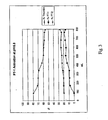
- Fig. 1 illustrates the effects on activation efficiency of varying prethrombin-1 concentration and activator contact time.
- Fig. 2 shows the rates of conversion of prethrombin-1 (PT-1) and prethrombin-2 (PT-2) to thrombin as a function of flow rate through the activator column.
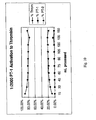
- Figs. 3 , 4 , and 5 illustrate the effects of pH on activation of prethrombin-1 to thrombin.
- Figs. 6 , 7 , and 8 illustrate the effects of NaCl concentration of the activation of prethrombin-1 to thrombin.
- Fig. 9 illustrates the effect of temperature on the conversion of PT-1 and PT-2 to thrombin.
- Fig. 10 shows the relative amounts of thrombin, PT-1, and PT-2 in an activation run using a 4.0 mg/mL PT-1 load and a contact time of 2.5 minutes.
- thrombin denotes the activated enzyme, also known as ⁇ -thrombin, which results from the proteolytic cleavage of prothrombin (factor II).
- factor II prothrombin
- Human thrombin is a 295 amino acid protein composed of two polypeptide chains joined by a disulfide bond. Both human and non-human thrombins can be used within the present invention.
- Thrombin is used medically as a hemostatic agent and as a component of tissue adhesives.
- Prethrombin-1 is a protein that results from the removal of the gla and first kringle domains (collectively known as prothrombin fragment 1) from prothrombin.
- Prethrombin-1 can be produced by cleavage of prothrombin with thrombin or directly by recombinant production.
- Prethrombin-1 can be activated to thrombin by further proteolytic cleavage.
- the present invention provides methods for activating the thrombin precursor prethrombin-1 (PT-1) to the active enzyme thrombin.
- PT-1 prethrombin-1
- the invention is described in terms of recombinant human PT-1, the invention also includes the activation of non-human and non-recombinant forms of prethrombin-1.
- the invention includes, without limitation, methods for activating human and non-human (e.g., bovine) plasma-derived PT-1 and recombinant PT-1.
- prethrombin-1 prethrombin-1
- thrombin activation of prethrombin-1 (PT-1) to thrombin is achieved enzymatically by hydrolysis of the PT-1 polypeptide backbone at two specific sites.
- the enzyme used to catalyze this conversion is derived from the venom of the Coastal Taipan snake ( Oxyuranus scutellatus ).
- a complex serine protease (Oscutarin-C) purified from the crude venom is able to mimic the functions of Factors Va and Xa that are necessary for activation of prothrombin to thrombin in situ.
- the activated thrombin is captured by affinity chromatography by passing the thrombin-containing eluant of the activator column over a column of immobilized para -aminobenzamidine (PABA).
- PABA para -aminobenzamidine
- the PABA is immobilized on a polymeric bead support.
- Suitable supports include polymers of methacrylate, acrylamide, agarose, and the like, functionalized with chemistries such as epoxy, active esters, thiol, and cyanogen bromide chemistries.
- a variety of supports and activation chemistries are known in the art. See, for example, Hermanson et al., Immobilized Affinity Ligand Techniques, Academic Press, New York, 1992 .
- Contaminants including prothrombin fragment 2 and host cell proteins
- Contaminants can be eluted from the column using 70 mM to 500 mM NaCl, 5% to 20% isopropanol by volume, or a combination of NaCl and isopropanol.
- contaminants are eluted using 264 mM NaCl in 7.1% (v/v) isopropanol, buffered to approximately neutral pH.
- the activated thrombin can then be eluted using increased concentrations of NaCl (300 mM to 500 mM, preferably about 500 mM), isopropanol (10% to 20% by volume, preferably about 15.7% by volume), or a combination of NaCl and isopropanol at these concentrations.
- the thrombin is eluted using 500 mM NaCl in 15.7% (v/v) isopropanol.
- Such a combination of NaCl and isopropanol confers stability to thrombin following elution off the PABA column. Elutions can be carried out using a concentration gradient or in a step-wise manner.
- thrombin and fragment 2 can be eluted using the same concentration ranges, with fragment 2 eluting first, the use of lower concentrations of NaCl and/or isopropanol for the elution of fragment 2 and higher concentrations for elution of thrombin results in smaller elution volumes and improved separation.
- Thrombin eluted from the activator column can also be captured by other chromatographic methods, such as ion exchange chromatography, immunoaffinity chromatography, or affinity chromatography (e.g., heparin affinity chromatography).
- Oscutarin-C (also referred to herein as "prothrombin activator” or “PTA”) is a tetramer consisting of two Factor Xa-analogous subunits and two Factor Va-analogous subunits. While not wishing to be bound by theory, it is believed that the Factor Xa-type subunits are responsible for the catalytic activity of the complex, and the Factor Va-type subunits are necessary to stabilize the PT-1 molecule in the appropriate configuration to enable activation. See, Speijer et. al. ( ibid ). To use the purified PTA as an activation agent to convert PT-1 to thrombin, the enzyme is immobilized on a solid support.
- Suitable supports include any chromatographic resin activated with chemistries reactive with amine, sulfhydryl, carboxyl, hydroxyl, or carbohydrate moieties on the PTA molecule, whereby such reaction results in a covalent linkage of the PTA with the resin.
- supports include agarose, cellulose, silica, and synthetic supports such as resins prepared from acrylamide, polystyrene, and methacrylate derivatives.
- the supporting resin is loaded with Oscutarin-C at a ratio of from 0.1 mg to 20 mg of activator per mL of settled resin.
- capacitities of individual resins may vary somewhat, and actual conditions will be established by routine process optimization.
- resin loading densities as high as 10 to 20 mg of activator per mL of resin will be achievable with conventional resin supports and may allow for higher prethrombin-1 to resin activation ratios (> 2.0 g /mL of resin) or shorter activation times.
- a cross-linked agarose resin loaded with 1.0 mg PTA per mL of resin was found to be sufficient to activate at least 2.0 grams of PT-1 to thrombin per mL of coupled resin, with an overall molar yield of thrombin in excess of 70% under optimal conditions.
- This ratio of PTA to resin has the potential of activating greater than 4 grams of PT-1 per mL of resin achieving only a slightly lower conversion to thrombin.
- Immobilization conditions were optimized using cyanogen bromide-activated, cross-linked agarose resin (utilizing SEPHAROSE FAST FLOW from Amersham BioSciences). Standard immobilization conditions (as specified by the manufacturer) were initially used. However, PTA was found to be susceptible to inactivation by low pH washes, resulting in irreversible inactivation when washing below pH 4.5, and the instability of the PTA molecule was exacerbated by addition of 0.5 M NaCl to the reaction mixture. Washing at pH 5.0 was found to be sufficient to remove any impurities while preserving resin activity. Thus, washing at a pH below 4.5 should be avoided. The enzyme was not affected by washing at higher pH levels (to at least 8.3).
- pH buffer e.g., pH 4.0
- washing the resin with buffers below pH 4.5 will inactivate the resin in a time-dependent manner. The lower the pH, the less time is required for loss of activity.
- the PTA resin can be stored under slightly acidic conditions. From a series of optimization experiments it was determined that the stability of the resin is maximum at pH 6.0 in sodium phosphate buffer containing 0.02% sodium azide as a bacteriostatic agent. The resin is only slightly less stable in 20% EtOH at pH 6.0.
- PT-1 residence time on the activator column greatly influences conversion efficiency. Shorter contact times (as may be obtained through higher flow rates) result in poorer conversion of PT-1 to thrombin.
- the relationship between PT-1 concentration and PTA contact time from 0.6 to 1.8 minute is shown in Fig. 1 . At higher PT-1 concentrations (between 4 and 6 mg/mL) a contact time of 2.5 minutes results in good conversion.
- Fig. 10 shows the relative amounts of thrombin, PT-1, and PT-2 in an activation run using a 4.0 mg/mL PT-1 load and a contact time of 2.5 minutes.
- the contact time may be increased to maintain a high rate of PT-1 to thrombin conversion.
- the concentration of PT-1 in the load solution did not greatly influence the efficiency of the conversion up to about 9.0 mg/mL. There was some loss in efficiency at higher PT-1 concentrations, but the conversion efficiency could be recovered by slightly increasing the contact time as shown in Fig. 1 .
- a portion of the PT-1 may be partially hydrolyzed by thrombin or endogenous proteases.
- the partially hydrolyzed form is called prethrombin-2 (PT-2) and lacks proteolytic activity.
- the PT-2 referred to here may exist in two forms varying in size by 13 amino acids. It is possible to convert PT-2 to thrombin via the Oscutarin-C activation pathway, but the activation kinetics are slower than those observed for PT-1 ( Fig. 2 ). Because PT-2 conversion to thrombin is slower than the conversion of PT-1, it is desirable to limit the production of PT-2 in the reaction mixture.
- the purified thrombin is formulated with a physiologically acceptable vehicle.
- Preferred formulations include weakly buffered, aqueous solutions containing sucrose, mannitol, sodium chloride, a surfactant or high molecular weight polyethylene glycol (HMW-PEG), and, optionally, calcium chloride. Typical concentration ranges of these components are shown in Table 2. Concentrations expressed as percent are on a weight-to-volume basis. Table 2 thrombin 0.01-5.0 mg/mL sucrose 2% - 4% mannitol 3.5% - 5% NaCl 50-300 mM surfactant or HMW-PEG 0.03%-1% CaCl 2 0-5mM pH 5.7-7.4
- the aqueous solution is aliquoted into sterile vials, ampoules, or other containers and lyophilized according to procedures known in the art.
- the lyophilized thrombin composition is reconstituted with a suitable diluent to the desired concentration, generally from about 100 NIH U/ml to about 5,000 NIH U/ml, typically about 1,000 NIH U/ml, although the actual concentration will be determined by the physician according to the needs of the individual patient.
- the thrombin can be applied to bleeding tissue to achieve hemostasis, often in combination with an absorbable gelatin sponge or as a spray.
- the thrombin can also be used as a component of a tissue adhesive or fibrin glue. These and other uses of thrombin are known in the art.
- Recombinant prethrombin-1 was produced in CHO DG44 cells transformed with the THR101 expression vector disclosed in U.S. Pat. No. 5,527,692 .
- the cells were cultured in a bioreactor in perfusion mode.
- Conditioned culture medium was harvested and clarified through a graduated series of depth filters and finally by ultrafiltration/diafiltration through a 0.2 ⁇ m PES (polyether sulfone) bilayer filter.
- a tangential flow ultrafiltration system configured with 30 kDa nominal molecular weight limit polyethersulfone membranes (PELLICON BIOMAX; Millipore Corp, Billerica, MA) was used to concentrate the clarified medium 10-fold.
- the concentrated medium was then continuously diafiltered with six diafiltration volumes of equilibration buffer (20 mM Tris, 120 mM NaCl, pH 9.1 ⁇ 0.1) to a concentration of 9.0 g/L prethrombin-1.
- Viral inactivation of the prethrombin-1 was achieved by detergent treatment.
- a 10% (w/v) solution of 4-(1,1,3,3-Tetramethylbutyl)phenyl-polyethylene glycol (TRITON X-100) was added to the concentrated PT-1 solution to a final concentration of 0.5% (w/v).
- the solution was mixed and held for four hours at 12°C ⁇ 2°C. The solution was then cooled to below 8°C.
- Contaminating prethrombin-2 and process impurities were removed by anion exchange chromatography.
- the detergent-treated solution was warmed to 16-22°C and filtered to remove precipitates.
- the filtrate was loaded onto an 80 cm diameter x 20 cm long column of derivatized agarose resin (Q SEPHAROSE XL; GE Healthcare) that had been equilibrated with 20 mM Tris, 120 mM NaCl, pH 9.1.
- the column was then washed with 10 column volumes of the same buffer, followed by 10 column volumes of 20 mM Tris, 142 mM NaCl, pH 8.8.
- the protein was then eluted with 5 column volumes of 20 mM Tris, 300 mM NaCl, pH 7.3. All column flows were at a linear velocity of 150 cm/hr.
- the eluate was monitored by absorbance (A 280 ), and the peak was collected and chilled to below 8°C.
- the PT-1 solution was then concentrated by ultrafiltration through 30 kDa nominal molecular weight limit polyethersulfone membrane filters in a tangential flow filtration device (PELLICON BIOMAX; Millipore Corporation, Billerica, MA) to a concentration of 20 ⁇ 3 g/L.
- the concentrate was then filtered through 0.2 ⁇ m filters and frozen at -80°C.
- the PT-1 was activated using immobilized oscutarin-C, and the thrombin was captured on a column of para- aminobenzamidine (PABA).
- PABA para- aminobenzamidine
- the PTA column was directly coupled to a 60 cm ID by 20 cm bed height (57 L) column of PABA resin (obtained from ProMetic Biosciences, Wayne, NJ).
- the PABA resin was packed into the column, sanitized with 0.5 M NaOH, then neutralized with 100 mM Tris, pH 7.5, and stored in 25 mM sodium phosphate, 20% isopropanol, pH 7.0.
- the PTA and PABA columns were equilibrated with five column volumes of 20 mM Tris, 70 mM NaCl, pH 7.3 prior to coupling.
- frozen PT-1 concentrate 400 g PT-1 was thawed and diluted to a conductivity of 9.2 ⁇ 0.2 mS/cm with 20 mM Tris, pH 7.3, then further diluted to a concentration of 5 mg/ml PT-1 with 20 mM Tris, 70 mM NaCl, pH 7.3.
- the pH of the solution was then adjusted to 7.4 ⁇ 0.1 with 1.5 M sodium phosphate, pH 6.0, and the solution was filtered through a 0.2 ⁇ m filter.
- the filtered solution was then applied to the PTA column using a flow rate designed to allow a contact time of 2.5 minutes in the PTA column (80 mL/min).
- the PTA column was washed with at least five column volumes of equilibration buffer at the loading flow rate. The columns were then disconnected to allow elution of thrombin from the PABA column. Activation and capture were done at 25°C and 17°C, respectively.
- Thrombin was eluted from the PABA column under conditions that separated prothrombin fragment 2 (F2) and contaminating host cell proteins from thrombin. All steps were carried out at a flow rate of 38 cm/hr in the same direction that the column was loaded.
- the column was washed with at least 5 column volumes of buffer A (equilibration buffer; 20 mM Tris, 70 mM NaCl, pH 7.3).
- F2 was eluted with a 3-column-volume intermediate wash using 20 mM Tris containing 264 mM NaCl and 7.1% isopropanol.
- Elution of thrombin was done using 20 mM tris buffer and increasing the NaCl and iso-propanol concentrations to 500 mM and 15.7%, respectively. Production collection was done based on A 280 absorbance.
- the activated thrombin was further purified using cation exchange chromatography.
- the PABA eluate was diluted with 10 mM histidine, pH 6.3, to a conductivity of not more than 13 mS/cm.
- the thrombin solution was then applied to a 45 cm diameter x 12 cm long column (bed volume 19 liters) of sulfopropyl agarose resin (SP SEPHAROSE Fast Flow; GE Healthcare) that had been equilibrated with 10 mM histidine, 50 mM NaCl, pH 6.3.
- SP SEPHAROSE Fast Flow sulfopropyl agarose resin
- the column was washed with three column volumes of the same buffer.
- Thrombin was eluted with 10 mM histidine, 400 mM NaCl, pH 6.3, and the Also peak was collected. All column flows were at a linear velocity of 200 cm/hr.
- Activation of PT-1 was carried out essentially as described in Example 1 using varying concentrations of NaCl at pH 7.4. Increasing concentrations of NaCl were found to inhibit the activation reaction as shown in Fig. 6 (300 mM NaCl; 29.4 mS/cm), Fig. 7 (120 mM NaCl; 14.3 , mS/cm), and Fig. 8 (70 mM NaCl; 8.7 mS/cm). However, some NaCl had to be included in the reaction buffer to maintain stability of PT-1 in solution. Through a series of experiments it was determined that 70 mM NaCl provided a suitable combination of PT-1 stability and activation efficiency.
- a contact time of 2.5 minutes resulted in good conversion.
- suitable results were obtained with a 4.0 mg/mL PT-1 load (2000mgPT-1/mL resin) and a contact time of 2.5 minutes.
Landscapes
- Chemical & Material Sciences (AREA)
- Health & Medical Sciences (AREA)
- Organic Chemistry (AREA)
- Life Sciences & Earth Sciences (AREA)
- Engineering & Computer Science (AREA)
- Wood Science & Technology (AREA)
- Genetics & Genomics (AREA)
- Bioinformatics & Cheminformatics (AREA)
- Zoology (AREA)
- General Engineering & Computer Science (AREA)
- General Health & Medical Sciences (AREA)
- Biochemistry (AREA)
- Biomedical Technology (AREA)
- Molecular Biology (AREA)
- Medicinal Chemistry (AREA)
- Biotechnology (AREA)
- Microbiology (AREA)
- Medicines That Contain Protein Lipid Enzymes And Other Medicines (AREA)
- Enzymes And Modification Thereof (AREA)
- Peptides Or Proteins (AREA)
- Materials For Photolithography (AREA)
- Gyroscopes (AREA)
- Semiconductor Lasers (AREA)
Claims (15)
- Verfahren zum Umwandeln von Präthrombin-1 in Thrombin, umfassend:Bereitstellen von Präthrombin-1 mit einer Konzentration von 0,1 mg/ml bis 10 mg/ml in einer wässerigen Lösung von 30 mM bis 110 mM NaCl bei pH 6,4-8,0;Bereitstellen von Oscutarin-C, immobilisiert auf einem festen Träger; undAufbringen der wässerigen Lösung auf das immobilisierte Oscutarin-C, um von 500 mg bis 4000 mg Präthrombin-1 pro ml des festen Trägers und eine Kontaktzeit zwischen dem Präthrombin-1 und dem Oscutarin-C von 1,8 bis 3,5 Minuten einschließlich bereitzustellen, wodurch das Präthrombin-1 gespalten wird, wobei Thrombin erzeugt wird und eine Thrombin-enthaltende Lösung erhalten wird.
- Verfahren nach Anspruch 1, weiterhin umfassend:Aufbringen der Thrombin-enthaltenden Lösung auf ein Einfangmedium, ausgewählt aus der Gruppe, bestehend aus einem Ionenaustausch-Chromatographie-Medium und einem Affinitäts-Chromatographie-Medium, wodurch das Thrombin an das Einfangmedium gebunden wird;Waschen des gebundenen Thrombins; undGewinnen des gebundenen Thrombins aus dem Einfangmedium.
- Verfahren nach Anspruch 2, wobei das Einfangmedium ein Affinitäts-Chromatographie-Medium ist.
- Verfahren nach Anspruch 3, wobei das Affinitäts-Chromatographie-Medium PABA, immobilisiert auf einem festen Träger, umfasst.
- Verfahren nach Anspruch 1, wobei das Oscutarin-C auf einer vernetzten Agarosematrix immobilisiert ist.
- Verfahren nach Anspruch 5, wobei die Konzentration von Oscutarin-C auf der Matrix 1,0 mg/ml beträgt.
- Verfahren nach Anspruch 1 oder Anspruch 2, wobei die wässerige Lösung von Präthrombin-1 bei pH=7,4 ist.
- Verfahren nach Anspruch 1 oder Anspruch 2, wobei das Präthrombin-1 humanes Präthrombin-1 ist.
- Verfahren nach Anspruch 1, welches bei einer Temperatur von 17°C bis 45°C, vorzugsweise von 20°C bis 37°C und stärker bevorzugt von 20°C bis 30°C, ausgeführt wird.
- Verfahren nach Anspruch 9, welches bei einer Temperatur von 25°C ausgeführt wird.
- Verfahren nach Anspruch 1, wobei das Oscutarin-C auf dem festen Träger mit einer Konzentration von 0,1 bis 20 mg Oscutarin-C pro ml Träger immobilisiert ist.
- Verfahren nach Anspruch 11, wobei die Konzentration von 0,1 bis 5,0 mg Oscutarin-C pro ml Träger beträgt.
- Verfahren nach Anspruch 1, wobei die NaCl-Konzentration in der wässerigen Lösung von Präthrombin-1 70 mM beträgt.
- Verfahren zum Umwandeln von Präthrombin-1 in Thrombin, umfassend:Bereitstellen von Präthrombin-1 mit einer Konzentration von 1,0 mg/ml bis 10 mg/ml in einer wässerigen Lösung von 30 mM bis 110 mM NaCl bei pH = 6,8-8,0,Bereitstellen von Oscutarin-C, immobilisiert auf einem festen Träger mit einer Konzentration von 0,1 mg bis 20 mg Oscutarin-C pro ml Träger;Aufbringen des Präthrombin-1 auf das immobilisierte Oscutarin-C, um ein Verhältnis von Präthrombin-1:Oscutarin-C von 500 mg bis 4000 mg Präthrombin-1 pro ml des festen Trägers und eine Kontaktzeit zwischen dem Präthrombin-1 und dem Oscutarin-C von 1,8 bis 3,5 Minuten bei einer Temperatur von 20°C-30°C bereitzustellen, wodurch das Präthrombin-1 gespalten wird, wobei Thrombin erzeugt wird und eine Thrombin-enthaltende Lösung erhalten wird;Aufbringen der Thrombin-enthaltenden Lösung auf immobilisierte PABA, wodurch das Thrombin an die PABA gebunden wird;Waschen des gebundenen Thrombins, um Verunreinigungen zu entfernen; undGewinnen des gebundenen Thrombins aus der immobilisierten PABA.
- Verfahren nach Anspruch 14, wobei der Schritt des Gewinnens Waschen der immobilisierten PABA mit NaCl und Isopropanol mit Konzentrationen, ausreichend, um das gebundene Thrombin zu eluieren, umfasst.
Priority Applications (3)
| Application Number | Priority Date | Filing Date | Title |
|---|---|---|---|
| SI200631148T SI1966371T1 (sl) | 2005-12-22 | 2006-12-21 | Metoda za aktivacijo pretrombina-1 |
| PL06846013T PL1966371T3 (pl) | 2005-12-22 | 2006-12-21 | Sposób aktywowania pretrombiny-1 |
| CY20111101139T CY1114698T1 (el) | 2005-12-22 | 2011-11-23 | Μεθοδος για την ενεργοποιηση της προθρομβινης-1 |
Applications Claiming Priority (2)
| Application Number | Priority Date | Filing Date | Title |
|---|---|---|---|
| US75391405P | 2005-12-22 | 2005-12-22 | |
| PCT/US2006/049076 WO2007076033A1 (en) | 2005-12-22 | 2006-12-21 | Method for activating prethrombin-1 |
Publications (2)
| Publication Number | Publication Date |
|---|---|
| EP1966371A1 EP1966371A1 (de) | 2008-09-10 |
| EP1966371B1 true EP1966371B1 (de) | 2011-08-24 |
Family
ID=37969590
Family Applications (1)
| Application Number | Title | Priority Date | Filing Date |
|---|---|---|---|
| EP06846013A Not-in-force EP1966371B1 (de) | 2005-12-22 | 2006-12-21 | Verfahren zur aktivierung von präthrombin-1 |
Country Status (13)
| Country | Link |
|---|---|
| US (1) | US8062876B2 (de) |
| EP (1) | EP1966371B1 (de) |
| JP (1) | JP5167146B2 (de) |
| AT (1) | ATE521700T1 (de) |
| AU (1) | AU2006330923B2 (de) |
| CA (1) | CA2631715C (de) |
| DK (1) | DK1966371T3 (de) |
| ES (1) | ES2371208T3 (de) |
| IL (1) | IL191818A (de) |
| PL (1) | PL1966371T3 (de) |
| PT (1) | PT1966371E (de) |
| SI (1) | SI1966371T1 (de) |
| WO (1) | WO2007076033A1 (de) |
Family Cites Families (6)
| Publication number | Priority date | Publication date | Assignee | Title |
|---|---|---|---|---|
| FI943458A7 (fi) * | 1992-01-22 | 1994-09-21 | Novo Nordisk As | Aktivoitu tekijä XIII |
| AT396937B (de) * | 1992-04-06 | 1993-12-27 | Immuno Ag | Verfahren zur aktivierung von blutgerinnungsfaktoren |
| US6413737B1 (en) * | 1999-07-09 | 2002-07-02 | Cohesion Technologies, Inc. | Ecarin prothrombin protease and methods |
| CN1298017A (zh) * | 1999-11-29 | 2001-06-06 | 中国科学技术大学 | 一种快速活化凝血酶原的方法 |
| BRPI0200269B1 (pt) * | 2002-01-31 | 2016-07-26 | Ana Marisa Chudzinski-Tavassi | processo de purificação de proteínas solúveis das cerdas da l. obliqua com atividade ativadora de protrombina e uso da fração proteica |
| US7745192B2 (en) * | 2002-04-03 | 2010-06-29 | Venomics Pty Limited | Prothrombin activating protein |
-
2006
- 2006-12-21 AU AU2006330923A patent/AU2006330923B2/en not_active Ceased
- 2006-12-21 SI SI200631148T patent/SI1966371T1/sl unknown
- 2006-12-21 PL PL06846013T patent/PL1966371T3/pl unknown
- 2006-12-21 US US12/097,027 patent/US8062876B2/en active Active
- 2006-12-21 AT AT06846013T patent/ATE521700T1/de active
- 2006-12-21 JP JP2008547622A patent/JP5167146B2/ja not_active Expired - Fee Related
- 2006-12-21 ES ES06846013T patent/ES2371208T3/es active Active
- 2006-12-21 WO PCT/US2006/049076 patent/WO2007076033A1/en not_active Ceased
- 2006-12-21 CA CA2631715A patent/CA2631715C/en active Active
- 2006-12-21 EP EP06846013A patent/EP1966371B1/de not_active Not-in-force
- 2006-12-21 PT PT06846013T patent/PT1966371E/pt unknown
- 2006-12-21 DK DK06846013.8T patent/DK1966371T3/da active
-
2008
- 2008-05-29 IL IL191818A patent/IL191818A/en not_active IP Right Cessation
Also Published As
| Publication number | Publication date |
|---|---|
| JP2009521226A (ja) | 2009-06-04 |
| PL1966371T3 (pl) | 2012-01-31 |
| AU2006330923A1 (en) | 2007-07-05 |
| WO2007076033A1 (en) | 2007-07-05 |
| IL191818A0 (en) | 2008-12-29 |
| DK1966371T3 (da) | 2011-12-12 |
| AU2006330923B2 (en) | 2011-12-15 |
| ATE521700T1 (de) | 2011-09-15 |
| US20080293122A1 (en) | 2008-11-27 |
| EP1966371A1 (de) | 2008-09-10 |
| ES2371208T3 (es) | 2011-12-28 |
| US8062876B2 (en) | 2011-11-22 |
| SI1966371T1 (sl) | 2011-11-30 |
| CA2631715A1 (en) | 2007-07-05 |
| CA2631715C (en) | 2013-07-16 |
| PT1966371E (pt) | 2011-10-27 |
| IL191818A (en) | 2013-09-30 |
| JP5167146B2 (ja) | 2013-03-21 |
Similar Documents
| Publication | Publication Date | Title |
|---|---|---|
| EP1232254B1 (de) | VERFAHREN ZUR HERSTELLUNG EINER REVERSIBEL INAKTIVEN, ANGESäUERTEN PLASMINZUSAMMENSETZUNG | |
| US8268782B2 (en) | Composition and method for preparing plasminogen | |
| AU758152B2 (en) | Pharmaceutical factor VII preparation | |
| TW585871B (en) | Improved methods for processing activated protein C | |
| JP4101309B2 (ja) | 治療的用途のためのヒトトロンビン濃厚液の製造法 | |
| AU711298B2 (en) | Therapeutic grade thrombin production and products | |
| US9175281B2 (en) | Process for the purification of tissue plasminogen activator | |
| US5393666A (en) | Method of activating prothrombin | |
| EP1966371B1 (de) | Verfahren zur aktivierung von präthrombin-1 | |
| AU709673B2 (en) | Thrombin preparation | |
| Husain | A single-step separation of the one-and two-chain forms of tissue plasminogen activator | |
| US8729244B2 (en) | Method for purifying factor B | |
| EP0416890A1 (de) | Verfahren zur Aktivierung von Protein C | |
| EP0763596A1 (de) | Verfahren zur herstellung von thrombin |
Legal Events
| Date | Code | Title | Description |
|---|---|---|---|
| PUAI | Public reference made under article 153(3) epc to a published international application that has entered the european phase |
Free format text: ORIGINAL CODE: 0009012 |
|
| 17P | Request for examination filed |
Effective date: 20080606 |
|
| AK | Designated contracting states |
Kind code of ref document: A1 Designated state(s): AT BE BG CH CY CZ DE DK EE ES FI FR GB GR HU IE IS IT LI LT LU LV MC NL PL PT RO SE SI SK TR |
|
| 17Q | First examination report despatched |
Effective date: 20081014 |
|
| GRAP | Despatch of communication of intention to grant a patent |
Free format text: ORIGINAL CODE: EPIDOSNIGR1 |
|
| DAX | Request for extension of the european patent (deleted) | ||
| GRAS | Grant fee paid |
Free format text: ORIGINAL CODE: EPIDOSNIGR3 |
|
| GRAA | (expected) grant |
Free format text: ORIGINAL CODE: 0009210 |
|
| AK | Designated contracting states |
Kind code of ref document: B1 Designated state(s): AT BE BG CH CY CZ DE DK EE ES FI FR GB GR HU IE IS IT LI LT LU LV MC NL PL PT RO SE SI SK TR |
|
| REG | Reference to a national code |
Ref country code: GB Ref legal event code: FG4D |
|
| REG | Reference to a national code |
Ref country code: CH Ref legal event code: EP |
|
| REG | Reference to a national code |
Ref country code: IE Ref legal event code: FG4D |
|
| REG | Reference to a national code |
Ref country code: CH Ref legal event code: NV Representative=s name: SERVOPATENT GMBH |
|
| REG | Reference to a national code |
Ref country code: PT Ref legal event code: SC4A Free format text: AVAILABILITY OF NATIONAL TRANSLATION Effective date: 20111018 Ref country code: DE Ref legal event code: R096 Ref document number: 602006024092 Country of ref document: DE Effective date: 20111027 |
|
| REG | Reference to a national code |
Ref country code: RO Ref legal event code: EPE |
|
| REG | Reference to a national code |
Ref country code: NL Ref legal event code: T3 |
|
| REG | Reference to a national code |
Ref country code: DK Ref legal event code: T3 |
|
| REG | Reference to a national code |
Ref country code: SE Ref legal event code: TRGR |
|
| REG | Reference to a national code |
Ref country code: ES Ref legal event code: FG2A Ref document number: 2371208 Country of ref document: ES Kind code of ref document: T3 Effective date: 20111228 |
|
| REG | Reference to a national code |
Ref country code: PL Ref legal event code: T3 |
|
| REG | Reference to a national code |
Ref country code: SK Ref legal event code: T3 Ref document number: E 10487 Country of ref document: SK |
|
| REG | Reference to a national code |
Ref country code: EE Ref legal event code: FG4A Ref document number: E006170 Country of ref document: EE Effective date: 20111122 |
|
| REG | Reference to a national code |
Ref country code: GR Ref legal event code: EP Ref document number: 20110402807 Country of ref document: GR Effective date: 20120117 |
|
| PLBE | No opposition filed within time limit |
Free format text: ORIGINAL CODE: 0009261 |
|
| STAA | Information on the status of an ep patent application or granted ep patent |
Free format text: STATUS: NO OPPOSITION FILED WITHIN TIME LIMIT |
|
| REG | Reference to a national code |
Ref country code: HU Ref legal event code: AG4A Ref document number: E013148 Country of ref document: HU |
|
| 26N | No opposition filed |
Effective date: 20120525 |
|
| REG | Reference to a national code |
Ref country code: DE Ref legal event code: R097 Ref document number: 602006024092 Country of ref document: DE Effective date: 20120525 |
|
| PGFP | Annual fee paid to national office [announced via postgrant information from national office to epo] |
Ref country code: TR Payment date: 20131126 Year of fee payment: 8 |
|
| REG | Reference to a national code |
Ref country code: FR Ref legal event code: PLFP Year of fee payment: 10 |
|
| PGFP | Annual fee paid to national office [announced via postgrant information from national office to epo] |
Ref country code: GB Payment date: 20151216 Year of fee payment: 10 Ref country code: FI Payment date: 20151209 Year of fee payment: 10 Ref country code: GR Payment date: 20151112 Year of fee payment: 10 Ref country code: EE Payment date: 20151127 Year of fee payment: 10 Ref country code: DE Payment date: 20151215 Year of fee payment: 10 Ref country code: BG Payment date: 20151027 Year of fee payment: 10 Ref country code: IE Payment date: 20151209 Year of fee payment: 10 Ref country code: DK Payment date: 20151210 Year of fee payment: 10 Ref country code: LT Payment date: 20151123 Year of fee payment: 10 Ref country code: CH Payment date: 20151211 Year of fee payment: 10 |
|
| PGFP | Annual fee paid to national office [announced via postgrant information from national office to epo] |
Ref country code: BE Payment date: 20151207 Year of fee payment: 10 Ref country code: CY Payment date: 20151110 Year of fee payment: 10 Ref country code: HU Payment date: 20151116 Year of fee payment: 10 Ref country code: SI Payment date: 20151120 Year of fee payment: 10 Ref country code: AT Payment date: 20151125 Year of fee payment: 10 Ref country code: SK Payment date: 20151113 Year of fee payment: 10 Ref country code: ES Payment date: 20151112 Year of fee payment: 10 Ref country code: SE Payment date: 20151211 Year of fee payment: 10 Ref country code: PL Payment date: 20151216 Year of fee payment: 10 Ref country code: PT Payment date: 20151221 Year of fee payment: 10 Ref country code: CZ Payment date: 20151208 Year of fee payment: 10 Ref country code: MC Payment date: 20151028 Year of fee payment: 10 Ref country code: FR Payment date: 20151110 Year of fee payment: 10 Ref country code: RO Payment date: 20151106 Year of fee payment: 10 Ref country code: LV Payment date: 20151130 Year of fee payment: 10 Ref country code: IS Payment date: 20151109 Year of fee payment: 10 |
|
| PGFP | Annual fee paid to national office [announced via postgrant information from national office to epo] |
Ref country code: LU Payment date: 20160107 Year of fee payment: 10 |
|
| PGFP | Annual fee paid to national office [announced via postgrant information from national office to epo] |
Ref country code: IT Payment date: 20151221 Year of fee payment: 10 |
|
| PG25 | Lapsed in a contracting state [announced via postgrant information from national office to epo] |
Ref country code: BE Free format text: LAPSE BECAUSE OF NON-PAYMENT OF DUE FEES Effective date: 20161231 |
|
| REG | Reference to a national code |
Ref country code: DE Ref legal event code: R119 Ref document number: 602006024092 Country of ref document: DE |
|
| REG | Reference to a national code |
Ref country code: LT Ref legal event code: MM4D Effective date: 20161221 |
|
| REG | Reference to a national code |
Ref country code: EE Ref legal event code: MM4A Ref document number: E006170 Country of ref document: EE Effective date: 20161231 |
|
| PG25 | Lapsed in a contracting state [announced via postgrant information from national office to epo] |
Ref country code: CY Free format text: LAPSE BECAUSE OF NON-PAYMENT OF DUE FEES Effective date: 20161221 Ref country code: RO Free format text: LAPSE BECAUSE OF NON-PAYMENT OF DUE FEES Effective date: 20161221 Ref country code: FI Free format text: LAPSE BECAUSE OF NON-PAYMENT OF DUE FEES Effective date: 20161221 Ref country code: CZ Free format text: LAPSE BECAUSE OF NON-PAYMENT OF DUE FEES Effective date: 20161221 Ref country code: LT Free format text: LAPSE BECAUSE OF NON-PAYMENT OF DUE FEES Effective date: 20161221 Ref country code: IS Free format text: LAPSE BECAUSE OF FAILURE TO SUBMIT A TRANSLATION OF THE DESCRIPTION OR TO PAY THE FEE WITHIN THE PRESCRIBED TIME-LIMIT Effective date: 20170630 |
|
| REG | Reference to a national code |
Ref country code: DK Ref legal event code: EBP Effective date: 20161231 Ref country code: CH Ref legal event code: PL |
|
| REG | Reference to a national code |
Ref country code: SE Ref legal event code: EUG |
|
| REG | Reference to a national code |
Ref country code: AT Ref legal event code: MM01 Ref document number: 521700 Country of ref document: AT Kind code of ref document: T Effective date: 20161221 |
|
| GBPC | Gb: european patent ceased through non-payment of renewal fee |
Effective date: 20161221 |
|
| PG25 | Lapsed in a contracting state [announced via postgrant information from national office to epo] |
Ref country code: LV Free format text: LAPSE BECAUSE OF NON-PAYMENT OF DUE FEES Effective date: 20161221 Ref country code: PT Free format text: LAPSE BECAUSE OF NON-PAYMENT OF DUE FEES Effective date: 20170621 Ref country code: SE Free format text: LAPSE BECAUSE OF NON-PAYMENT OF DUE FEES Effective date: 20161222 |
|
| REG | Reference to a national code |
Ref country code: SK Ref legal event code: MM4A Ref document number: E 10487 Country of ref document: SK Effective date: 20161221 |
|
| PG25 | Lapsed in a contracting state [announced via postgrant information from national office to epo] |
Ref country code: MC Free format text: LAPSE BECAUSE OF NON-PAYMENT OF DUE FEES Effective date: 20170102 |
|
| REG | Reference to a national code |
Ref country code: SI Ref legal event code: KO00 Effective date: 20170818 Ref country code: FR Ref legal event code: ST Effective date: 20170831 |
|
| REG | Reference to a national code |
Ref country code: IE Ref legal event code: MM4A |
|
| PG25 | Lapsed in a contracting state [announced via postgrant information from national office to epo] |
Ref country code: LU Free format text: LAPSE BECAUSE OF NON-PAYMENT OF DUE FEES Effective date: 20161221 Ref country code: LI Free format text: LAPSE BECAUSE OF NON-PAYMENT OF DUE FEES Effective date: 20161231 Ref country code: FR Free format text: LAPSE BECAUSE OF NON-PAYMENT OF DUE FEES Effective date: 20170102 Ref country code: EE Free format text: LAPSE BECAUSE OF NON-PAYMENT OF DUE FEES Effective date: 20161231 Ref country code: CH Free format text: LAPSE BECAUSE OF NON-PAYMENT OF DUE FEES Effective date: 20161231 Ref country code: GR Free format text: LAPSE BECAUSE OF NON-PAYMENT OF DUE FEES Effective date: 20170707 Ref country code: SK Free format text: LAPSE BECAUSE OF NON-PAYMENT OF DUE FEES Effective date: 20161221 Ref country code: AT Free format text: LAPSE BECAUSE OF NON-PAYMENT OF DUE FEES Effective date: 20161221 Ref country code: IT Free format text: LAPSE BECAUSE OF NON-PAYMENT OF DUE FEES Effective date: 20161221 |
|
| PG25 | Lapsed in a contracting state [announced via postgrant information from national office to epo] |
Ref country code: SI Free format text: LAPSE BECAUSE OF NON-PAYMENT OF DUE FEES Effective date: 20161222 Ref country code: HU Free format text: LAPSE BECAUSE OF NON-PAYMENT OF DUE FEES Effective date: 20161222 Ref country code: GB Free format text: LAPSE BECAUSE OF NON-PAYMENT OF DUE FEES Effective date: 20161221 Ref country code: DE Free format text: LAPSE BECAUSE OF NON-PAYMENT OF DUE FEES Effective date: 20170701 Ref country code: IE Free format text: LAPSE BECAUSE OF NON-PAYMENT OF DUE FEES Effective date: 20161221 |
|
| PG25 | Lapsed in a contracting state [announced via postgrant information from national office to epo] |
Ref country code: DK Free format text: LAPSE BECAUSE OF NON-PAYMENT OF DUE FEES Effective date: 20161231 |
|
| PGFP | Annual fee paid to national office [announced via postgrant information from national office to epo] |
Ref country code: NL Payment date: 20171226 Year of fee payment: 12 |
|
| REG | Reference to a national code |
Ref country code: BE Ref legal event code: MM Effective date: 20161231 |
|
| PG25 | Lapsed in a contracting state [announced via postgrant information from national office to epo] |
Ref country code: PL Free format text: LAPSE BECAUSE OF NON-PAYMENT OF DUE FEES Effective date: 20161221 |
|
| PG25 | Lapsed in a contracting state [announced via postgrant information from national office to epo] |
Ref country code: ES Free format text: LAPSE BECAUSE OF NON-PAYMENT OF DUE FEES Effective date: 20161222 |
|
| REG | Reference to a national code |
Ref country code: ES Ref legal event code: FD2A Effective date: 20180626 |
|
| PG25 | Lapsed in a contracting state [announced via postgrant information from national office to epo] |
Ref country code: BG Free format text: LAPSE BECAUSE OF NON-PAYMENT OF DUE FEES Effective date: 20170808 |
|
| REG | Reference to a national code |
Ref country code: NL Ref legal event code: MM Effective date: 20190101 |
|
| PG25 | Lapsed in a contracting state [announced via postgrant information from national office to epo] |
Ref country code: NL Free format text: LAPSE BECAUSE OF NON-PAYMENT OF DUE FEES Effective date: 20190101 |
|
| PG25 | Lapsed in a contracting state [announced via postgrant information from national office to epo] |
Ref country code: TR Free format text: LAPSE BECAUSE OF NON-PAYMENT OF DUE FEES Effective date: 20161221 |