EP1966996B1 - Ereigniserkennung für einen digitalen röntgendetektor - Google Patents
Ereigniserkennung für einen digitalen röntgendetektor Download PDFInfo
- Publication number
- EP1966996B1 EP1966996B1 EP06845228.3A EP06845228A EP1966996B1 EP 1966996 B1 EP1966996 B1 EP 1966996B1 EP 06845228 A EP06845228 A EP 06845228A EP 1966996 B1 EP1966996 B1 EP 1966996B1
- Authority
- EP
- European Patent Office
- Prior art keywords
- charge
- impingement
- rays
- imaging
- capacitor
- Prior art date
- Legal status (The legal status is an assumption and is not a legal conclusion. Google has not performed a legal analysis and makes no representation as to the accuracy of the status listed.)
- Not-in-force
Links
Images

Classifications
-
- G—PHYSICS
- G01—MEASURING; TESTING
- G01T—MEASUREMENT OF NUCLEAR OR X-RADIATION
- G01T1/00—Measuring X-radiation, gamma radiation, corpuscular radiation, or cosmic radiation
- G01T1/16—Measuring radiation intensity
- G01T1/24—Measuring radiation intensity with semiconductor detectors
-
- H—ELECTRICITY
- H04—ELECTRIC COMMUNICATION TECHNIQUE
- H04N—PICTORIAL COMMUNICATION, e.g. TELEVISION
- H04N23/00—Cameras or camera modules comprising electronic image sensors; Control thereof
- H04N23/30—Cameras or camera modules comprising electronic image sensors; Control thereof for generating image signals from X-rays
Definitions
- the general field of this invention is digital image radiography and, in particular, to digital radiography systems in which the digital imaging panel and accompanying electronics are in wireless communication with the main radiography system and may be used interchangeably with various manufacturer's X-ray systems.
- Digital radiography is achieving a growing acceptance as an alternative to photographic-based imaging technologies that rely on photographic film layers to capture radiation exposure to produce and store an image of a subject's internal physical features.
- digital radiography the radiation image exposures captured on radiation sensitive layers are converted, pixel by pixel, to electronic image data which is then stored in memory banks for subsequent readout and display on suitable electronic image display devices.
- One of the driving forces in the success of digital radiography is the ability to rapidly visualize and communicate stored images via data networks to one or more remote locationns for analysis and diagnosis by radiologists without the delay caused by having to send physical films through the mail or via couriers to reach the remotely located radiologists.
- Digital radiography panels have two-dimensional array of detecting elements ("pixels") organized in rows and columns. To read out image information from the panel, rows of pixels are usually selected sequentially and the corresponding pixel on each column is connected to a charge amplifier. The outputs of the charge amplifiers from each column are applied to analog-to-digital converters to generate digitized image data that then can be stored and suitably image processed as needed for subsequent display.
- pixels detecting elements
- dedicated X-ray event trigger diodes located in the imaging cassette outside the imaging panel are monitored by a computer to detect incident radiation and output a signal indicating same.
- a computer to detect incident radiation and output a signal indicating same.
- the diodes themselves may be blocked by some radiation impervious portion of the object under test or may be out of the field of the radiation beam entirely.
- the sensors of the imaging panel itself are continuously read out using frame-grabbing techniques. Determination of whether the imaging sensors were exposed to X-rays is made by continuously reading out the frames of data from the entirety of the panel sensors and determining whether the panel was exposed to X-rays by examining the frames of data.
- a drawback is that the sensors must be read out continuously which consumes a relatively high amount of electrical power which can be a serious problem for a battery-power cassette operating independently of the main imaging system.
- WO 2002/25314 A1 discloses an X-ray detector apparatus comprising an array of detector pixels, each pixel comprising a conversion element for converting incident radiation into a charge flow, a charge storage element and a switching device enabling the charge stored to be provided to an output of the pixel.
- a plurality of dose sensing pixels further comprise a dose sensing element. The dose sensing pixels enable a dose signal to be obtained without reading the charges stored on the pixel charge storage elements, so that dose sensing can be carried out during exposure.
- the imaging sensor is adapted for independent detection of the existence of impinging X-rays from a remote X-ray source and comprises an imaging panel that includes a two-dimensional array of imaging pixels, wherein each of the pixels has an intrinsic capacitor which is charged, directly or indirectly, by the impinging X-rays to establish an image of an object being X-rayed.
- the X-ray imaging sensor also includes a source of a reference voltage, a charge balance capacitor connected at a common node to the pixel intrinsic capacitors, and a control unit for varying a level of charge injection to the charge balance capacitor in response to changes in charge balance between the pixel capacitors and the charge balance capacitor for maintaining a constant charge voltage on the common node as determined by the reference voltage.
- the image sensor further includes a control signal generator that is responsive to the control unit for indicating presence of impinging X-rays on the imaging panel when the level of charge injection exceeds a predetermined threshold value.
- the X-ray imaging sensor of the type described is provided with an imaging panel including a two-dimensional array of imaging pixels, each of the pixels having an intrinsic capacitor which is charged, directly or indirectly, by the impinging X-rays to establish an image of an object being X-rayed, and an external capacitor connected at a common node to the pixel intrinsic capacitor.
- the X-ray imaging sensor is further provided with an impinging X-ray detection unit which includes a reference voltage source, a source of charge voltage coupled to the common node, and a source of a pulse-width-modulated train of pulses switchably connected to the charge voltage source and the common node to vary injection of charge to the external capacitor to establish a voltage on the common node representative of charge balance between the external capacitor and the pixel capacitors.
- an impinging X-ray detection unit which includes a reference voltage source, a source of charge voltage coupled to the common node, and a source of a pulse-width-modulated train of pulses switchably connected to the charge voltage source and the common node to vary injection of charge to the external capacitor to establish a voltage on the common node representative of charge balance between the external capacitor and the pixel capacitors.
- the detection unit also includes a controller operative during a period while awaiting onset of impinging X-rays to set the pulse width of the pulse train at a first duration necessary to maintain the common node voltage at a predetermined value determined by the reference voltage and for adjusting the pulse width to a second duration necessary to maintain the common node voltage at this predetermined value during impingement of the X-rays on the panel.
- the detection unit finally includes a pulse width detection circuit responsive to the second pulse width duration for outputting an X-ray detection signal indicative of impingement of X-rays from the remote source.
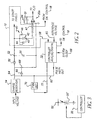
- an X-ray imaging sensor 10 comprises a flat panel X-ray imaging panel 12 in which discrete X-ray pixels are arranged in a two-dimensional array of rows and columns 14 and 16, respectively.
- the material in the pixels converts impinging X-rays into electrons which are initially stored in a charge element of the pixel for subsequent readout, typically done row-by-row under the control of a switching control unit 18.
- the charge of pixels in each column are conveyed in sequence, one row at a time, to charge amplifier (pre-amplifier) circuits, one for each column, in unit 20 and the charge values for each pixel are then converted by analog-to-digital (A/D) converters to digital data stored locally in RAM memory for subsequent transfer to a system digital image data processor 22 for suitable image processing operations prior to storage in a data storage unit 24.
- charge amplifier pre-amplifier
- an X-ray detection unit 30 operates to monitor the imaging panel 12 to detect the onset of impinging X-rays from a remote X-ray source to generate output control signals which are applied to imaging controller 32.
- Imaging controller 32 operates in response to the control signals from detection unit 30 to control, in known manner, the timing of readout of imaging pixel charge values from panel 12, among other known functions.
- an X-ray sensing pixel one of several million in imaging panel 12, is represented by an equivalent circuit 40 which includes an intrinsic capacitance (capacitor) 42, a reverse biased diode 44 and a leakage current impedance 46.
- the pixel element may be an amorphous or crystalline photodiode (indirect radiography) or a metal insulated semiconductor (MIS) for direct radiography.
- An external charge balance capacitor 50 is connected to a node 52 which is in common with all of the intrinsic capacitors 42 of the sensor pixels 40 in imaging panel 12.
- a charge reservoir 54 serves as a source of charge voltage which is coupled to node 52 via an isolation diode 56.
- Node 52 is coupled via a sense voltage line 58 to a comparator in controller 32 for comparison with a reference voltage 60 which is used to set a pixel bias voltage on node 52.
- a train of variable width pulses is generated in controller 32 and applied via line 62 to a solid state FET switch 64 to control a level of charge injection from reservoir 54 to charge balance capacitor 50.
- the voltage input to reservoir 54 generates a reservoir of charge which is metered to the charge balance capacitor 50 by the opening and closing of switch 64 under the control of the variable width pulses on line 62 generated in controller 32 in synchronism with a system clock 69. These pulses are inverted by inverter 66 to close and open FET switch 68 in opposite sequence to the opening and closing of switch 64. Thus when switch 64 is opened to block charge injection to capacitor 50, switch 68 is closed to tie the anode of diode 56 to ground to further enhance isolation of the charge reservoir from capacitor 50 and the pixel capacitors 42. Assuming that the input voltage to the charge reservoir and the voltage on node 52 are both positive, pixel diode 44 denotes that the pixel is reverse biased.
- Capacitor 42 represents the inherent or intrinsic capacitance in the diode 44 and impedance 46 represents the diode leakage resistance, which is used to model leakage currents.
- the equivalent circuit 40 may also be used to represented the parallel combination of the capacitances and resistances of each pixel. For example in a flat panel that has 2.5 Million pixels, if each pixel has a capacitance of 1pF, the equivalent capacitance would be 2.5 ⁇ F. Similarly the shunt or leakage resistance would be the resistance of an individual pixel divided by 2.5 million.
- Charge capacitor 50 may be of a nominal value, for example, 100pF.
- each individual pixel in a column has its node 45 opposite to common node 52 connected through FET switch 47 to a virtual ground potential at the readout input of the associated charge preamplifier 20a for that column. All pixels are thus maintained in a normally ON, albeit reversed biased, state pending the occurrence of the exposure of the imaging panel pixels to impinging imaging X-rays.
- Controller 32 In operation, when the panel is idle and waiting for the bias voltage on node 52 to stabilize, the voltage on node 52 is compared in controller 32 with the reference voltage on line 60. Controller 32 then operates in response to this comparison to vary the widths of the pulses applied to switches 64 and 68 to in order to inject suitable amounts of charge into capacitor 50 to result in the voltage on node 52 stabilizing at a value equal to the reference voltage 60.
- the pulse width emanating from the controller 32 is at a first value which is ideally zero or, as a practical matter, at a very narrow width needed just sufficient to compensate for charge leaking out of the parasitic elements in the imaging panel during this state.
- switches 47 and 49 are held closed. This allows the node 45 of the pixel connected to switch 47 to be at virtual ground due to the action of the amplifier 20. Closing of switch 49 in amplifier 20a allows the bias currents to bypass capacitor 51 so as to prevent the amplifier from saturating.
- Pulse width modulation detector 70 continuously monitors the pulse train from controller 32 and when the detected pulse widths rise above a predetermined threshold related to the impingement of X-rays on the imaging panel 12, an output control signal indicative of the impingement of X-rays is sent on line 72 to controller 32. Once the onset of X-ray impingement is detected, controller 32 acts to open switches 47 allowing the pixel capacitors to fully charge in proportion to the intensity of X-ray flux impinging on the pixel.
- controller 32 upon detection of X-ray impingement, acts to open all but one segment of the imaging pixel switches 47.
- this segment comprises at least one row of pixels which remain in an ON state during the exposure to impinging X-rays. This feature allows for reliable detection of cessation of exposure when the absence of impinging X-rays results in a narrowing of pulse widths so as to fall below the X-ray impingement level.
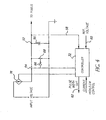
- FIG. 4 another preferred embodiment of the invention is shown in which the charge reservoir 54 is replaced by a programmable constant current source 76 having output levels of constant current set by controller 32, in response to high/low input control from the output of the pulse width modulation detector, at a first, high value during periods of operation prior to onset of X-ray impingement on imaging panel 12 and at a second, lower value immediately after detection of X-ray impingement on panel 12.
- the purpose of this is to enhance the sensitivity of the feedback detection circuit when the number of pixel capacitors has been reduced from the full panel to the one segment of pixels left connected via switches 47 to virtual ground.
- a high value of constant current enables rapid charge of capacitor 50 to set the bias voltage for the entire imaging panel.
- the constant current value is reduced by controller 32 to account for the lowered charge drain on capacitor 50 resulting from the lesser number of pixels connected to virtual ground.
- the pulse width variations would increase to maintain voltage constant on node 52 constant thereby increasing the detection sensitivity of the pulse width modulation and consequently enhancing the detection of cessation of X-ray impingement on panel 12.
- PARTS LIST 10. digital radiography sensor 12.
- X-ray imaging panel 14.
- pixel rows 16.
- digital image data processor 24 data storage unit 30. impinging X-ray detection unit 32. imaging panel controller 40. pixel equivalent circuit 42. pixel intrinsic capacitor 44. reverse biased diode 45. pixel node to amplifier 46. leakage current impedance 47. FET switch 49. capacitor bypass switch 50. external charge balance capacitor 50' variable charge balance capacitor 51. amplifier capacitor 52. common node 54. charge reservoir 56. isolation diode 58. voltage sense line 60. reference voltage source 62. PWM line 64. FET switch 66. inverter 68. FET switch 69. system clock 70. pulse width modulation detector 72. output control signal line 76. constant current source
Landscapes
- Physics & Mathematics (AREA)
- Health & Medical Sciences (AREA)
- Life Sciences & Earth Sciences (AREA)
- General Physics & Mathematics (AREA)
- High Energy & Nuclear Physics (AREA)
- Molecular Biology (AREA)
- Spectroscopy & Molecular Physics (AREA)
- Engineering & Computer Science (AREA)
- Multimedia (AREA)
- Signal Processing (AREA)
- Apparatus For Radiation Diagnosis (AREA)
- Measurement Of Radiation (AREA)
Claims (15)
- Digitaler Radiographie-Röntgenstrahlen-Abbildungssensor, der angepasst ist für die unabhängige Detektion der Existenz von einfallenden Röntgenstrahlen von einer entfernten Röntgenquelle, der Folgendes aufweist:eine Abbildungstafel bzw. ein Abbildungspanel (12) einschließlich einer zweidimensionalen Anordnung von Abbildungspixeln, wobei jedes der Pixel einen immanenten Kondensator (42) in der Photodiode besitzt, der direkt oder indirekt durch die auftreffenden Röntgenstrahlen geladen wird, um durch die einfallenden Röntgenstrahlen ein Bild bzw. Abbild eines Objekts aufzubauen, das geröntgt wird;eine Quelle einer Referenzspannung (60);einen Ladungsausgleichskondensator (50), der mit einem Knoten (52) verbunden ist, der sämtlichen pixelimmanenten Kondensatoren (42) gemein ist;eine Steuereinheit (32) zum Variieren eines Pegels der Ladungsinjektion in den Ladungsausgleichskondensator (50) ansprechend auf Veränderungen in dem Ladungsausgleich zwischen einer Vielzahl von pixelimmanenten Kondensatoren (42), deren einzelne Knoten (45) gegenüber dem gemeinsamen Knoten (52) mit einer virtuellen Erde vor und während des Wartens auf die Detektion des Röntgenstrahleneinfalls auf das Abbildungspanel (12) verbunden sind, und dem Ladungsausgleichkondensator (50) zur Aufrechterhaltung einer konstanten Ladungsspannung auf dem gemeinsamen Knoten (52) gemäß Bestimmung durch die Referenzspannung (60); undeinen Steuersignalgenerator, der auf die Steuereinheit (32) anspricht, um ein Ausgabesteuersignal zu erzeugen, das das Vorhandensein von einfallenden Röntgenstrahlen auf das Abbildungspanel anzeigt, wenn der Pegel der Ladungsinjektion einen vorbestimmten Schwellenwert übersteigt.
- Bildgebungs- bzw. Abbildungssensor gemäß Anspruch 1, der ferner Folgendes aufweist:eine Detektionseinheit (30) für einfallende Röntgenstrahlen, die Folgendes aufweist:(a) eine Referenzspannungsquelle (60),(b) eine Ladungsquelle (54), um eine Ladungsspannung bei dem gemeinsamen Knoten (52) aufzubauen,(c) eine Quelle einer pulsbreitenmodulierten Impulsfolge (62), die in umschaltbarer Weise mit der Ladungsspannungsquelle verbunden ist (64), um die Injektion der Ladung an den Ladungsausgleichskondensator (50) zu variieren, um eine Spannung auf dem gemeinsamen Knoten (52) aufzubauen, die repräsentativ für den Ladungsausgleich zwischen dem Ladungsausgleichskondensator und der Vielzahl von pixelimmanenten Kondensatoren (42) ist,(d) die Steuereinheit (32), die betriebsbereit ist, während sie den Anfang des Einfallens der Röntgenstrahlen erwartet, um die Pulsbreite der Impulsfolge (62) bei einer ersten Dauer einzustellen, die notwendig ist, um die Spannung des gemeinsamen Knotens auf einem vorbestimmten Wert zu halten, der durch die Referenzspannung (60) bestimmt wird, und um die Pulsbreite auf eine zweite Dauer anzupassen, die notwendig ist, um die Spannung des gemeinsamen Knotens auf einem vorbestimmten Wert während des Einfallens bzw. dem Aufprall der Röntgenstrahlen auf dem Panel zu halten, und(e) den Steuersignalgenerator, der eine Pulsbreitendetektionsschaltung (70) aufweist, die auf die zweite Pulsbreitendauer anspricht, um ein Röntgenstrahlensignal (72) auszugeben, das eine Anzeige für das Einfallen von Röntgenstrahlen von der entfernten Quelle bildet.
- Abbildungssensor gemäß Anspruch 1, der ferner Folgendes aufweist:eine Ladungsinjektionsquelle (54);eine Quelle einer Folge von Pulsen bzw. Impulsfolge (62), die in umschaltbarer Weise mit dem gemeinsamen Knoten (50) und der Ladungsinjektionsquelle (54) verbunden (64, 68) ist, wobei die Pulse bzw. Impulse in ihrer Breite moduliert werden, und zwar ansprechend auf Veränderungen in dem Ladungsausgleich zwischen dem Ladungsausgleichskondensator (50) und der Vielzahl der Abbildungspixelkondensatoren (42), um eine konstante Ladungsspannung bei dem gemeinsamen Knoten (52) aufrechtzuerhalten, wie sie durch die Referenzspannung (60) bestimmt wird, wobei die Pulsbreitendauern der Impulsfolge (62) über einen Schwellenwert während des Anfangs des Einfallens der Röntgenstrahlen auf die Abbildungspixel ansteigen; undder Steuersignalgenerator einen Pulsbreitenmodulationsdetektor (70) aufweist, der auf Pulsbreitendauern oberhalb des Schwellenwerts anspricht, um das Ausgabesteuersignal (72) zu erzeugen, das das Vorhandensein einfallender Röntgenstrahlen auf das Abbildungspanel (12) anzeigt.
- Abbildungssensor gemäß einem der vorangehenden Ansprüche, wobei alle außer einem Segment der einzelnen Pixelknoten von der virtuellen Erde nach der Detektion des Röntgenstrahleneinfalls gelöst sind;
wobei die Aufrechterhaltung der Verbindung der virtuellen Erde mit einem Segment die Detektion der Einstellung bzw. Beendigung des Einfalls von Röntgenstrahlen auf das Abbildungspanel (12) ermöglicht. - Abbildungssensor gemäß Anspruch 4, wobei der Pulsbreitenmodulationsdetektor (70) die Beendigung des Röntgenstrahleneinfalls anzeigt, wenn die Ladungsinjektionen in Bezug auf das eine Segment der Pixel, der mit der virtuellen Erde verbunden bleibt, unter den vorbestimmten Schwellenwert fällt.
- Abbildungssensor gemäß Anspruch 4 oder 5, wobei das Segment zumindest eine Reihe von Pixeln aufweist.
- Abbildungssensor gemäß einem der Ansprüche 4 bis 6, wobei der Ladungsausgleichskondensator ein variabler Kondensator (50') ist und die Steuereinheit (32) Mittel zum Variieren des Kondensatorwerts aufweist, nachdem der Steuersignalgenerator das Vorhandensein des Röntgenstrahleneinfalls auf dem Abbildungspanel (12) anzeigt.
- Abbildungssensor gemäß einem der Ansprüche 4 bis 7, wobei die Steuereinheit (32) eine programmierbare Konstantstromquelle (76) aufweist, die einen ersten Pegel eines Eingangsstroms an den Ladungsausgleichskondensator (50) vor der Detektion des Röntgenstrahleneinfalls ausgibt und einen zweiten, niedrigeren Pegel des Eingangsstroms an den Ladungsausgleichskondensator (50) nach der Detektion des Röntgenstrahleneinfalls ausgibt, wobei die Vielzahl der pixelimmanenten Kondensatoren sämtlichen pixelimmanenten Kondensatoren (42) entspricht.
- Abbildungssensor gemäß Anspruch 2, wobei die Pulsbreite auf eine längere Dauer während dem Einfall der Röntgenstrahlen auf das Abbildungspanel (12) erhöht wird, um die Ladung auf dem Ladungsausgleichskondensator zu erhöhen, so dass er der erhöhten Ladung auf der Anordnung der pixelimmanenten Kondensatoren entspricht.
- Abbildungssensor gemäß Anspruch 3, wobei das Ausgabesteuersignal (72) den Beginn des Röntgenstrahleneinfalls anzeigt, wenn die Pulsbreitendauern über den Schwellenwert ansteigen und das Anhalten des Röntgenstrahleneinfalls anzeigen, wenn die Pulsbreitendauern unter den Schwellenwert fallen.
- Verfahren zum Detektieren des Einfalls von Röntgenstrahlen auf eine digitales Radiographie-Abbildungspanel, das eine zweidimensionale Anordnung von Abbildungspixeln besitzt, wobei jedes der Pixel einen intrinsischen bzw. immanenten Kondensator in der Photodiode besitzt, der aufgeladen wird, und zwar direkt oder indirekt durch den Einfall von Röntgenstrahlen, um ein Bild bzw. Abbild eines Objekts aufzubauen, das geröntgt wird, das Folgendes aufweist:Vorsehen eines externen Kondensators (50) der an einem Knoten (52) verbunden ist, der sämtlichen immanenten Kondensatoren (42) der Abbildungspixel gemein ist;Aufbauen einer vorbestimmten Vorspannung auf einer Vielzahl von Pixelkondensatoren (42), deren einzelne Knoten (45) gegenüber dem gemeinsamen Knoten (52) mit einer virtuellen Erde während einer Periode verbunden sind, die vor dem Anfang des Einfalls der Röntgenstrahlen auf das Abbildungspanel (12) liegt, und zwar durch Injizieren von Ladungsimpulsen in den externen Kondensator (50) unter Steuerung einer Impulsfolge (62), die ansprechend auf die Ladungsspannung, die bei dem gemeinsamen Knoten (52) pulsbreitenmoduliert wird; undDetektieren der Breitenmodulation der Impulsfolge (62) und Erzeugen eines Ausgabesteuersignals (72), das eine Anzeige für den Anfang des Einfalls der Röntgenstrahlen auf das Abbildungspanel (12) bildet, wenn die detektierte Pulsbreite einen vorbestimmten Schwellenwert übersteigt.
- Verfahren gemäß Anspruch 11, das ferner die folgenden Schritte aufweist:Vorsehen einer Referenzspannung (60);Steuern der Pulsbreitenmodulation, um eine Ladungsspannung auf dem gemeinsamen Knoten (52) bei einem konstanten Wert in Bezug auf die Referenzspannung (60) aufrechtzuerhalten;wobei bei Beginn des Röntgenstrahleneinfalls auf das Abbildungspanel (12) die Pulsbreite erhöht wird, um den Ladungsausgleich zwischen dem externen Kondensator (50) und den Pixelkondensatoren (42) aufrechtzuerhalten, um dadurch den Ladungswert auf dem gemeinsamen Knoten (52) bei dem konstanten Wert zu halten.
- Verfahren gemäß Anspruch 11 oder 12, das ferner die folgenden Schritte aufweist:ansprechend auf das Ausgabesignal (72), das den Anfang des Einfalls der Röntgenstrahlen signalisiert, Trennen von sämtlichen außer einem Segment der Abbildungspixel von dem Potential der virtuellen Erde;Fortsetzen der Überwachung des Ladungsausgleichs bei dem gemeinsamen Knoten (52) zwischen dem externen Kondensator (50) und dem zumindest einen Segment der Abbildungspixel; undErzeugen eines zweiten Ausgabesignals (72), das eine Anzeige für die Beendigung des Einfalls der Röntgenstrahlen bildet, wenn die Pulsbreite unter den vorbestimmten Schwellenwert fällt.
- Verfahren gemäß Anspruch 13, das ferner den folgenden Schritt aufweist:nach dem Erzeugen des Steuersignals (72), das eine Anzeige für den Beginn des Einfalls von Röntgenstrahlen bildet, Variieren des Werts des externen Kondensators (50, 50'), um die Detektion der Beendigung des Einfalls der Röntgenstrahlen zu verbessern.
- Verfahren gemäß Anspruch 13, das ferner folgende Schritte aufweist:Eingeben der programmierbaren Pegel des Ladungsstroms in den externen Kondensator (50, 50');Einstellen eines ersten Pegels des Ladungsstroms in den externen Kondensator, und zwar vor der Detektion des Röntgenstrahleneinfalls; undEinstellen eines zweiten, niedrigeren Pegels des Ladungsstroms in den externen Kondensator nach der Detektion des Röntgenstrahleneinfalls.
Applications Claiming Priority (2)
| Application Number | Priority Date | Filing Date | Title |
|---|---|---|---|
| US11/323,505 US7211802B1 (en) | 2005-12-30 | 2005-12-30 | X-ray impingement event detection system and method for a digital radiography detector |
| PCT/US2006/047267 WO2007078684A1 (en) | 2005-12-30 | 2006-12-12 | Event detection for digital radiography detector |
Publications (2)
| Publication Number | Publication Date |
|---|---|
| EP1966996A1 EP1966996A1 (de) | 2008-09-10 |
| EP1966996B1 true EP1966996B1 (de) | 2013-07-17 |
Family
ID=37991438
Family Applications (1)
| Application Number | Title | Priority Date | Filing Date |
|---|---|---|---|
| EP06845228.3A Not-in-force EP1966996B1 (de) | 2005-12-30 | 2006-12-12 | Ereigniserkennung für einen digitalen röntgendetektor |
Country Status (5)
| Country | Link |
|---|---|
| US (1) | US7211802B1 (de) |
| EP (1) | EP1966996B1 (de) |
| CN (1) | CN101346988B (de) |
| TW (1) | TWI413407B (de) |
| WO (1) | WO2007078684A1 (de) |
Families Citing this family (42)
| Publication number | Priority date | Publication date | Assignee | Title |
|---|---|---|---|---|
| US20090129653A1 (en) * | 2007-11-15 | 2009-05-21 | Carestream Health, Inc. | Energy balancing for wireless diagnostic imaging system |
| US8672543B2 (en) | 2010-04-13 | 2014-03-18 | Carestream Health, Inc. | Counterweight for mobile x-ray device |
| US8568028B2 (en) | 2010-04-13 | 2013-10-29 | Carestream Health, Inc. | Mobile radiography unit having collapsible support column |
| US8976931B2 (en) | 2010-04-13 | 2015-03-10 | Carestream Health, Inc. | Mobile radiography imaging apparatus using prior related images before current image exposure and methods for same |
| US8961011B2 (en) | 2010-04-13 | 2015-02-24 | Carestream Health, Inc. | Mobile radiography unit having multiple monitors |
| US8678648B2 (en) | 2010-04-13 | 2014-03-25 | Carestream Health, Inc. | Mobile radiography unit having single sign on and methods for using the same |
| WO2011135917A1 (ja) * | 2010-04-30 | 2011-11-03 | コニカミノルタエムジー株式会社 | 放射線画像撮影装置 |
| US8622614B2 (en) | 2010-08-23 | 2014-01-07 | Carestream Health, Inc. | Locking device for mobile X-ray system |
| US10165992B2 (en) | 2010-10-18 | 2019-01-01 | Carestream Health, Inc. | X-ray imaging systems and devices |
| WO2013002933A2 (en) * | 2011-06-28 | 2013-01-03 | General Electric Company | Autonomous x-ray exposure detection and image acquisition management in a digital x-ray detector |
| JP5811653B2 (ja) * | 2011-07-15 | 2015-11-11 | コニカミノルタ株式会社 | 放射線画像撮影装置 |
| US8891734B2 (en) | 2011-10-12 | 2014-11-18 | Carestream Health, Inc. | Portable digital radiography detector loss prevention |
| TWI488500B (zh) * | 2011-12-23 | 2015-06-11 | Ind Tech Res Inst | X射線主動式畫素感測器讀取電路與讀取方法 |
| US8983036B2 (en) | 2011-12-31 | 2015-03-17 | Carestream Health, Inc. | Radiographic detector with rapid power-up, imaging apparatus and methods using the same |
| US9291720B2 (en) | 2011-12-31 | 2016-03-22 | Carestream Health, Inc. | Radiographic detector with rapid power-up, imaging apparatus and methods using the same |
| US9270904B2 (en) | 2012-08-28 | 2016-02-23 | General Electric Company | X-ray system and method with digital image acquisition using a photovoltaic device |
| WO2014070719A1 (en) * | 2012-10-30 | 2014-05-08 | Carestream Health, Inc. | Charge injection compensation for digital radiographic detectors |
| US9276031B2 (en) | 2013-03-04 | 2016-03-01 | Apple Inc. | Photodiode with different electric potential regions for image sensors |
| US9741754B2 (en) | 2013-03-06 | 2017-08-22 | Apple Inc. | Charge transfer circuit with storage nodes in image sensors |
| US9118334B2 (en) * | 2013-03-15 | 2015-08-25 | Freescale Semiconductor, Inc. | System and method for improved MEMS oscillator startup |
| BE1024007B1 (nl) | 2013-05-30 | 2017-10-27 | Agfa Healthcare | Verbeterde werkwijze voor radiografische opnames met direct radiografische panels |
| US9473706B2 (en) * | 2013-12-09 | 2016-10-18 | Apple Inc. | Image sensor flicker detection |
| US10285626B1 (en) | 2014-02-14 | 2019-05-14 | Apple Inc. | Activity identification using an optical heart rate monitor |
| US9686485B2 (en) | 2014-05-30 | 2017-06-20 | Apple Inc. | Pixel binning in an image sensor |
| CN106575075B (zh) | 2014-07-21 | 2018-10-12 | 万睿视影像有限公司 | 具有自动感测功能的低功率成像器 |
| CN105490397A (zh) * | 2016-02-01 | 2016-04-13 | 北京动力京工科技有限公司 | 脉冲注入型感应耦合式无线能量传输装置 |
| CN111682039B (zh) | 2016-09-23 | 2021-08-03 | 苹果公司 | 堆叠式背面照明spad阵列 |
| US10806424B2 (en) | 2016-09-30 | 2020-10-20 | Varex Imaging Corporation | Imager with bump detection |
| JP6799690B2 (ja) | 2017-01-25 | 2020-12-16 | アップル インコーポレイテッドApple Inc. | 変調感度を有するspad検出器 |
| US10656251B1 (en) | 2017-01-25 | 2020-05-19 | Apple Inc. | Signal acquisition in a SPAD detector |
| US10962628B1 (en) | 2017-01-26 | 2021-03-30 | Apple Inc. | Spatial temporal weighting in a SPAD detector |
| US10622538B2 (en) | 2017-07-18 | 2020-04-14 | Apple Inc. | Techniques for providing a haptic output and sensing a haptic input using a piezoelectric body |
| US10440301B2 (en) | 2017-09-08 | 2019-10-08 | Apple Inc. | Image capture device, pixel, and method providing improved phase detection auto-focus performance |
| US11019294B2 (en) | 2018-07-18 | 2021-05-25 | Apple Inc. | Seamless readout mode transitions in image sensors |
| US10848693B2 (en) | 2018-07-18 | 2020-11-24 | Apple Inc. | Image flare detection using asymmetric pixels |
| EP3643239B8 (de) * | 2018-10-22 | 2024-02-21 | Siemens Healthineers AG | Verfahren und system zur steuerung einer röntgenprojektionsbildgebungsvorrichtung |
| US11272893B2 (en) | 2019-07-09 | 2022-03-15 | Carestream Health, Inc. | Collapsible column movement apparatus for mobile x-ray device |
| US11563910B2 (en) | 2020-08-04 | 2023-01-24 | Apple Inc. | Image capture devices having phase detection auto-focus pixels |
| US11546532B1 (en) | 2021-03-16 | 2023-01-03 | Apple Inc. | Dynamic correlated double sampling for noise rejection in image sensors |
| US12192644B2 (en) | 2021-07-29 | 2025-01-07 | Apple Inc. | Pulse-width modulation pixel sensor |
| US12069384B2 (en) | 2021-09-23 | 2024-08-20 | Apple Inc. | Image capture devices having phase detection auto-focus pixels |
| US20250193990A1 (en) * | 2023-12-07 | 2025-06-12 | U.S. Army DEVCOM, Army Research Laboratory | Multi-Pulse Flash X-ray for Pulsed X-ray Cineradiography |
Family Cites Families (12)
| Publication number | Priority date | Publication date | Assignee | Title |
|---|---|---|---|---|
| SE469104B (sv) * | 1991-06-03 | 1993-05-10 | Regam Medical Systems Ab | Foerfarande och anordning vid roentgenapparat med elektronisk bildavkaenning |
| JP3421530B2 (ja) | 1997-04-11 | 2003-06-30 | 東芝マイクロエレクトロニクス株式会社 | 半導体記憶装置 |
| US5912942A (en) | 1997-06-06 | 1999-06-15 | Schick Technologies, Inc. | X-ray detection system using active pixel sensors |
| IL145489A0 (en) * | 1999-04-26 | 2002-06-30 | Simage Oy | Self-triggered imaging device for imaging radiation |
| EP1228384B1 (de) * | 2000-09-20 | 2012-03-28 | Koninklijke Philips Electronics N.V. | Belichtungssteuerung in einem Röntgenbilddetektor |
| FR2817106B1 (fr) * | 2000-11-17 | 2003-03-07 | Trixell Sas | Dispositif photosensible et procede de commande du dispositif photosensible |
| US6404845B1 (en) | 2001-05-09 | 2002-06-11 | Philips Medical Systems (Cleveland), Inc. | Aerostatic rotor bearing |
| JP3696176B2 (ja) * | 2002-05-14 | 2005-09-14 | 株式会社東芝 | 撮像装置 |
| GB0212001D0 (en) * | 2002-05-24 | 2002-07-03 | Koninkl Philips Electronics Nv | X-ray image detector |
| US6972411B2 (en) | 2002-10-03 | 2005-12-06 | Schick Technologies, Inc. | Method of event detection for intraoral image sensor |
| EP1484910A1 (de) * | 2003-06-03 | 2004-12-08 | Asulab S.A. | Adaptive redundante A/D Umsetzungsvorrichtung und -verfahren für Bildaufnahmesensor |
| CN100530664C (zh) * | 2003-08-12 | 2009-08-19 | 西蒙·弗雷瑟大学 | 多模式数字成像装置和系统 |
-
2005
- 2005-12-30 US US11/323,505 patent/US7211802B1/en not_active Expired - Lifetime
-
2006
- 2006-12-12 WO PCT/US2006/047267 patent/WO2007078684A1/en not_active Ceased
- 2006-12-12 EP EP06845228.3A patent/EP1966996B1/de not_active Not-in-force
- 2006-12-12 CN CN2006800490911A patent/CN101346988B/zh active Active
- 2006-12-29 TW TW095149960A patent/TWI413407B/zh not_active IP Right Cessation
Also Published As
| Publication number | Publication date |
|---|---|
| WO2007078684A1 (en) | 2007-07-12 |
| CN101346988B (zh) | 2013-01-02 |
| CN101346988A (zh) | 2009-01-14 |
| US7211802B1 (en) | 2007-05-01 |
| TWI413407B (zh) | 2013-10-21 |
| EP1966996A1 (de) | 2008-09-10 |
| TW200803481A (en) | 2008-01-01 |
Similar Documents
| Publication | Publication Date | Title |
|---|---|---|
| EP1966996B1 (de) | Ereigniserkennung für einen digitalen röntgendetektor | |
| US7211803B1 (en) | Wireless X-ray detector for a digital radiography system with remote X-ray event detection | |
| EP2773104B1 (de) | Strahlungsabbildungsvorrichtung und Abbildungssystem | |
| US7343000B2 (en) | Imaging apparatus and imaging system | |
| US6452633B1 (en) | Exposure control in electronic cameras by detecting overflow from active pixels | |
| EP1185888B1 (de) | Sensor und verfahren zum betrieb des sensors | |
| KR101916504B1 (ko) | 방사선 촬상 장치 및 방사선 검지 시스템 | |
| CN101584203B (zh) | 用于多帧获取的成像阵列 | |
| US9360562B2 (en) | Radiation imaging apparatus and radiation imaging system | |
| US7812879B2 (en) | Self-triggering CMOS image sensor | |
| EP1228384B1 (de) | Belichtungssteuerung in einem Röntgenbilddetektor | |
| US20090066475A1 (en) | Radiographic apparatus and control method therefor | |
| US9201150B2 (en) | Suppression of direct detection events in X-ray detectors | |
| EP1661183A1 (de) | Digitale multimodus-abbildungsvorrichtung und system | |
| WO2003000136A1 (fr) | Dispositif de diagnostic d'images radiologiques et procede de correction de donnees d'images radiologiques | |
| EP2368139B1 (de) | Röntgendetektor | |
| US7561196B2 (en) | Method and apparatus for preventing image artifacts | |
| JP2006526925A (ja) | X線放射線の検出のための検出器 | |
| US20100177229A1 (en) | Image Sensing System And Method Utilizing A Mosfet | |
| US7268607B2 (en) | Integrating capacitance circuitry for an integrating amplifier and related method | |
| JP4501745B2 (ja) | 光または放射線検出装置 | |
| JP2024066979A (ja) | 放射線撮像装置、放射線撮像システムおよび放射線撮像装置の制御方法 | |
| HK1129244B (en) | Wireless digital radiography system | |
| JP2000349269A (ja) | 放射線撮像装置 |
Legal Events
| Date | Code | Title | Description |
|---|---|---|---|
| PUAI | Public reference made under article 153(3) epc to a published international application that has entered the european phase |
Free format text: ORIGINAL CODE: 0009012 |
|
| 17P | Request for examination filed |
Effective date: 20080606 |
|
| AK | Designated contracting states |
Kind code of ref document: A1 Designated state(s): DE FR GB IT |
|
| DAX | Request for extension of the european patent (deleted) | ||
| RBV | Designated contracting states (corrected) |
Designated state(s): DE FR GB IT |
|
| RIN1 | Information on inventor provided before grant (corrected) |
Inventor name: GEISBUESCH, GORDON Inventor name: DHURJATY, SREERAM Inventor name: HAWVER, JEFFERY, R.C/O CARESTREAM HEALTH, INC. Inventor name: YORKSTON, JOHN Inventor name: SILBERMANN, JOSHUA MARCC/O CARESTREAM HEALTH, INC. |
|
| 17Q | First examination report despatched |
Effective date: 20110915 |
|
| GRAP | Despatch of communication of intention to grant a patent |
Free format text: ORIGINAL CODE: EPIDOSNIGR1 |
|
| GRAS | Grant fee paid |
Free format text: ORIGINAL CODE: EPIDOSNIGR3 |
|
| GRAA | (expected) grant |
Free format text: ORIGINAL CODE: 0009210 |
|
| AK | Designated contracting states |
Kind code of ref document: B1 Designated state(s): DE FR GB IT |
|
| REG | Reference to a national code |
Ref country code: GB Ref legal event code: FG4D |
|
| REG | Reference to a national code |
Ref country code: DE Ref legal event code: R096 Ref document number: 602006037432 Country of ref document: DE Effective date: 20130912 |
|
| PLBE | No opposition filed within time limit |
Free format text: ORIGINAL CODE: 0009261 |
|
| STAA | Information on the status of an ep patent application or granted ep patent |
Free format text: STATUS: NO OPPOSITION FILED WITHIN TIME LIMIT |
|
| PG25 | Lapsed in a contracting state [announced via postgrant information from national office to epo] |
Ref country code: IT Free format text: LAPSE BECAUSE OF FAILURE TO SUBMIT A TRANSLATION OF THE DESCRIPTION OR TO PAY THE FEE WITHIN THE PRESCRIBED TIME-LIMIT Effective date: 20130717 |
|
| 26N | No opposition filed |
Effective date: 20140422 |
|
| REG | Reference to a national code |
Ref country code: DE Ref legal event code: R097 Ref document number: 602006037432 Country of ref document: DE Effective date: 20140422 |
|
| GBPC | Gb: european patent ceased through non-payment of renewal fee |
Effective date: 20131212 |
|
| PG25 | Lapsed in a contracting state [announced via postgrant information from national office to epo] |
Ref country code: GB Free format text: LAPSE BECAUSE OF NON-PAYMENT OF DUE FEES Effective date: 20131212 |
|
| REG | Reference to a national code |
Ref country code: FR Ref legal event code: PLFP Year of fee payment: 10 |
|
| REG | Reference to a national code |
Ref country code: FR Ref legal event code: PLFP Year of fee payment: 11 |
|
| REG | Reference to a national code |
Ref country code: FR Ref legal event code: PLFP Year of fee payment: 12 |
|
| PGFP | Annual fee paid to national office [announced via postgrant information from national office to epo] |
Ref country code: DE Payment date: 20191114 Year of fee payment: 14 |
|
| PGFP | Annual fee paid to national office [announced via postgrant information from national office to epo] |
Ref country code: FR Payment date: 20191122 Year of fee payment: 14 |
|
| REG | Reference to a national code |
Ref country code: DE Ref legal event code: R119 Ref document number: 602006037432 Country of ref document: DE |
|
| PG25 | Lapsed in a contracting state [announced via postgrant information from national office to epo] |
Ref country code: FR Free format text: LAPSE BECAUSE OF NON-PAYMENT OF DUE FEES Effective date: 20201231 |
|
| PG25 | Lapsed in a contracting state [announced via postgrant information from national office to epo] |
Ref country code: DE Free format text: LAPSE BECAUSE OF NON-PAYMENT OF DUE FEES Effective date: 20210701 |