EP1968255A2 - Vorrichtung und Verfahren zur Ausgabe von Mobilstationsdaten für ein Funkzugangskommunikationssystem mit einem Multihop-Relais-Schema - Google Patents
Vorrichtung und Verfahren zur Ausgabe von Mobilstationsdaten für ein Funkzugangskommunikationssystem mit einem Multihop-Relais-Schema Download PDFInfo
- Publication number
- EP1968255A2 EP1968255A2 EP20080004291 EP08004291A EP1968255A2 EP 1968255 A2 EP1968255 A2 EP 1968255A2 EP 20080004291 EP20080004291 EP 20080004291 EP 08004291 A EP08004291 A EP 08004291A EP 1968255 A2 EP1968255 A2 EP 1968255A2
- Authority
- EP
- European Patent Office
- Prior art keywords
- path
- identifier
- information
- tunneling
- connection identifier
- Prior art date
- Legal status (The legal status is an assumption and is not a legal conclusion. Google has not performed a legal analysis and makes no representation as to the accuracy of the status listed.)
- Withdrawn
Links
Images


Classifications
-
- H—ELECTRICITY
- H04—ELECTRIC COMMUNICATION TECHNIQUE
- H04W—WIRELESS COMMUNICATION NETWORKS
- H04W40/00—Communication routing or communication path finding
- H04W40/24—Connectivity information management, e.g. connectivity discovery or connectivity update
- H04W40/248—Connectivity information update
-
- H—ELECTRICITY
- H04—ELECTRIC COMMUNICATION TECHNIQUE
- H04L—TRANSMISSION OF DIGITAL INFORMATION, e.g. TELEGRAPHIC COMMUNICATION
- H04L45/00—Routing or path finding of packets in data switching networks
- H04L45/02—Topology update or discovery
- H04L45/025—Updating only a limited number of routers, e.g. fish-eye update
-
- H—ELECTRICITY
- H04—ELECTRIC COMMUNICATION TECHNIQUE
- H04B—TRANSMISSION
- H04B7/00—Radio transmission systems, i.e. using radiation field
- H04B7/24—Radio transmission systems, i.e. using radiation field for communication between two or more posts
- H04B7/26—Radio transmission systems, i.e. using radiation field for communication between two or more posts at least one of which is mobile
- H04B7/2603—Arrangements for wireless physical layer control
- H04B7/2606—Arrangements for base station coverage control, e.g. by using relays in tunnels
-
- H—ELECTRICITY
- H04—ELECTRIC COMMUNICATION TECHNIQUE
- H04W—WIRELESS COMMUNICATION NETWORKS
- H04W76/00—Connection management
- H04W76/30—Connection release
- H04W76/32—Release of transport tunnels
-
- H—ELECTRICITY
- H04—ELECTRIC COMMUNICATION TECHNIQUE
- H04W—WIRELESS COMMUNICATION NETWORKS
- H04W84/00—Network topologies
- H04W84/02—Hierarchically pre-organised networks, e.g. paging networks, cellular networks, WLAN [Wireless Local Area Network] or WLL [Wireless Local Loop]
- H04W84/04—Large scale networks; Deep hierarchical networks
- H04W84/042—Public Land Mobile systems, e.g. cellular systems
- H04W84/047—Public Land Mobile systems, e.g. cellular systems using dedicated repeater stations
Definitions
- the present invention relates generally to a wireless access communication system using a multi-hop relay scheme, and, in particular, to an apparatus and method for a signaling process to remove mobile station information from a relay station on a multi-hop path in a wireless access communication system.
- QoS Quality of Service
- 4G fourth-generation
- BWA Broadband Wireless Access
- LAN Local Area Network
- MAN Metropolitan Area Network
- IEEE Institute of Electrical and Electronics Engineers 802.16d system and the IEEE 802.16e system standards.
- the IEEE 802.16d system and the BWA communication system use an Orthogonal Frequency Division Multiplexing (OFDM)/Orthogonal Frequency Division Multiple Access (OFDMA) scheme.
- the IEEE 802.16d system considers only a fixed Subscriber Station (SS) and a single cell structure (i.e., the mobility of an SS is not considered).
- the IEEE 802.16e system considers the mobility of an SS. When the mobility of an SS is considered, the SS will be referred to as a Mobile Station (MS).
- MS Mobile Station
- FIG 1 is a block diagram of a conventional IEEE 802.16e system.
- the IEEE 802.16e system has a multi-cell structure.
- the IEEE 802.16e system includes a cell 100, a cell 150, a Base Station (BS) 110 managing the cell 100, a BS 140 managing the cell 150, and a plurality of MSs 111, 113, 130, 151 and 153.
- the signal exchange between the BSs 110 and 140 and the MSs 111, 113, 130, 151 and 153 is performed using an OFDM/OFDMA scheme.
- the MS 130 is located in a boundary region (i.e., a handover region) between cells 100 and 150.
- the serving BS of the MS 130 changes from BS 110 to BS 140.
- the IEEE 802.16e system can easily provide a highly reliable wireless link between the BS and the MS.
- the IEEE 802.16e system has a low flexibility in constructing a wireless network. Accordingly, use of the IEEE 802.16e system makes it difficult to provide an efficient communication service in a radio environment where traffic distribution or call requirements change frequently.
- a stationary Relay Station a mobile RS or general MSs can be used to apply a multi-hop relay data transmission scheme to a general cellular communication system such as the IEEE 802.16e system.
- Use of the multi-hop relay wireless communication system makes it possible to reconfigure a network in rapid response to a change in the communication environment and to operate the entire wireless network more efficiently.
- the multi-hop relay wireless communication system can expand a cell coverage area and increase a system capacity.
- an RS is installed between the BS and the MS to establish a multi-hop relay link therebetween, thereby making it possible to provide the MS with a radio channel having better channel conditions.
- the multi-hop relay scheme is used in a cell boundary region with poor channel conditions, thereby making it possible to provide a high-rate data channel and to expand the cell coverage area.
- FIG 2 illustrates a conventional BWA communication system that uses a multi-hop relay scheme to expand a BS coverage area.
- the multi-hop relay BWA communication system has a multi-cell structure.
- the multi-hop relay BWA communication system includes a cell 200, a cell 240, a BS 210 managing the cell 200, a BS 250 managing the cell 240, a plurality of MSs 211 and 213 located within cell 200, a plurality of MSs 221 and 223 located in a region 230 outside cell 200 of the BS 210 and communicating with the BS 210, an RS 220 providing a multi-hop relay path between BS 210 and MSs 221 and 223 located in region 230, a plurality of MSs 251, 253 and 255 located in cell 240, a plurality of MSs 261 and 263 located in a region 270 outside cell 240 of BS 250 and communicating with the BS 250, and an RS 260 providing a multi-hop relay path between BS 250
- RS 220 covers region 230 to relay signals between BS 210 and MSs 221 and 223. That is, MSs 221 and 223 can communicate with BS 210 through RS 220.
- RS 260 and MSs 251, 253, and 255 located in cell 240 can directly communicate with BS 250, while MSs 261 and 263 located in the region 270 cannot directly communicate with the BS 250. Therefore, RS 260 covers region 270 to relay signals between BS 250 and MSs 261 and 263. That is, MSs 261 and 263 can communicate with BS 250 through RS 260.
- FIG 3 illustrates a conventional BWA communication system that uses a multi-hop relay scheme to increase a system capacity.
- the multi-hop relay BWA communication system includes a BS 310, a plurality of MSs 311, 313, 321, 323, 331, and 333, and RSs 320 and 330 providing multi-hop paths between BS 310 and MSs 311, 313, 321, 323, 331, and 333.
- BS 310, MSs 311, 313, 321, 323, 331, and 333, and RSs 320 and 330 communicate with one another by an OFDM/OFDMA scheme.
- BS 310 manages a cell 300.
- RSs 320 and 330 and MSs 311, 313, 321, 323, 331, and 333 that are in the cell 300 directly communicate with BS 310.
- SNRs Signal-to-Noise Ratios
- RS 320 relays unicast traffic between BS 310 and MSs 321 and 323.
- the MSs 321 and 323 make unicast communication with the BS via RS 320.
- RS 330 relays unicast traffic between BS 310 and MSs 331 and 333.
- MSs 331 and 333 make unicast communication with the BS via RS 330.
- RSs 320 and 330 provide high-rate data paths to MSs 321, 323, 331, and 333, thereby increasing the effective transfer rates of MSs 321, 323, 331, and 333 and the capacity of the multi-hop relay BWA communication system.
- RSs 220, 260, 320, and 330 can be infrastructure RSs that are installed by a service provider and managed by BSs 210, 250, and 310 or can be client RSs that operate as SSs, MSs, or RSs. Further, RSs 220, 260, 320, and 330 can be stationary RSs, nomadic RSs (e.g., notebooks), or mobile RSs having mobility like the MS.
- nomadic RSs e.g., notebooks
- an MS may perform a handover to another BS or RS when it moves out of a coverage area of a BS or RS while communicating with the BS or RS.
- the MS completes a handover process by performing a network reentry process with respect to the BS or RS corresponding to a target node, and then performs communication through the target node.
- the BS or RS corresponding to the previous serving node may retain information about the MS, which has performed a handover to the target node, for a predetermined time.
- the MS information may be used for the network reentry process between the MS and the target node.
- the previous serving node does not need to retain the MS information any more after the MS completes the handover to the target node.
- the corresponding RSs do not need to retain the MS information any more. What is therefore required is a signaling process for removing MS information from the corresponding nodes that do not need to retain the MS information any more due to, for example, a handover.
- An object of the present invention is to substantially solve at least the above problems and/or disadvantages and to provide at least the advantages below. Accordingly, an object of the present invention is to provide an apparatus and method for a signaling process to remove MS information in a multi-hop relay BWA communication system.
- Another object of the present invention is to provide an apparatus and method for a signaling process to remove MS information from an RS on a multi-hop path in a multi-hop relay BWA communication system.
- Still another object of the present invention is to provide an apparatus and method to control removal of MS information from RSs on an MS data transmission path in a multi-hop relay BWA communication system.
- a method for a communication operation of a BS in a wireless communication system using a multi-hop relay scheme includes, when a data transmission path of an MS changes, determining one or more RSs from which information about the MS is to be removed, generating a path removal message, and transmitting the path removal message to the one or more RSs.
- a method for a communication operation of an RS in a wireless communication system using a multi-hop relay scheme includes receiving a path establishment message from a BS or a superordinate RS, extracting a path identifier and a connection identifier from the path establishment message, and adding a binding of the extracted path identifier and connection identifier into a routing table.
- an apparatus for a BS in a wireless communication system using a multi-hop relay scheme includes a controller for determining a data transmission path of an MS, a message generator for generating a path establishment message including information about the determined path, and a transmitter for encoding the path establishment message from the message generator and transmitting the encoded path establishment message to an RS.
- an apparatus for an RS in a wireless communication system using a multi-hop relay scheme includes a receiver for physical-layer decoding a received message; a message processor for analyzing a signaling message received from the receiver, and extracting a path identifier and a connection identifier from a path establishment message received from a BS or a superrodinate RS; and a controller for adding a binding of the extracted path identifier and connection identifier into a routing table.
- the present invention provides a scheme for a signaling process to remove MS information from one or more RSs on an MS data transmission path in a multi-hop relay BWA communication system.
- the multi-hop relay BWA communication system uses an OFDM scheme or an OFDMA scheme.
- the multi-hop relay BWA communication system can transmit physical channel signals using a plurality of subcarriers, thereby enabling high-rate data transmission.
- the multi-hop relay BWA communication system can provide a multi-cell structure, thereby supporting the mobility of an MS.
- a multi-hop relay BWA communication system is used to describe the present invention.
- the present invention can be applied to any cellular communication system that uses a multi-hop relay scheme.
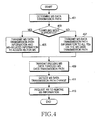
- FIG 4 is a flowchart illustrating operation of a BS for establishing/removing an MS data transmission path in a multi-hop relay BWA communication system according to an embodiment of the present invention.
- the BS determines a data transmission path for an MS in step 401. The determination of the MS data transmission path may be performed when the MS performs a network entry process or a network reentry process or when a data (or traffic) transmission path needs to be changed. Thereafter, in step 403, the BS determines whether to use a tunneling mode for transmission of data to the MS.
- the tunneling mode denotes a mode where RSs other than an RS (i.e., an access RS) connected directly to the MS, among RSs on the MS data transmission path, relay MS data without detecting that the data is transmitted from/to the MS.
- an access RS i.e., an access RS
- the tunneling mode only the access RS connected directly to the MS manages information such as an MS connection identifier or a service flow identifier for detecting that the data transmission was from/to the MS, whereas the other RSs manage information such as a tunneling identifier (i.e., a tunneling CID) for supporting the tunneling mode.
- a tunneling identifier i.e., a tunneling CID
- all the RSs on the MS data transmission path manage information such as an MS connection identifier or a service flow identifier for detecting that the data transmission was from/to the MS.
- the operation proceeds to step 405, in which the BS transmits a message for requesting establishment of the MS data transmission path (hereinafter referred to as a path establishment message) to an access node (e.g., an access RS) of the MS.
- a path establishment message may include an MS connection identifier, a service flow identifier, the service type and requirements (service flow parameters) desired by the MS, a tunneling identifier to be used for MS data transmission, and a path identifier.
- the operation proceeds to step 407, in which the BS transmits a path establishment message to all the RSs on the MS data transmission path.
- the path establishment message e.g., Dynamic Service Addition-REQuest (DSA-REQ)
- DSA-REQ Dynamic Service Addition-REQuest
- the path establishment message may include a path identifier, a connection identifier mapped (or bound) to the path, a service flow identifier, service flow parameters, and the list of RSs on the path.
- the RS receiving the path establishment message sets a routing table and transmits the path establishment message to a subordinate RS. These processes are repeated until the path establishment message is transmitted to the final node of the path (e.g., the access RS).
- the BS transmits/receives data to/from the MS using the established path.
- the BS checks whether the path changes due to, for example, a handover, during the data transmission/reception. If the path changes, the operation proceeds to step 413.
- the BS transmits a signaling message for requesting removal of the path (hereinafter referred to as a path removal message) to the access node (i.e., the access RS), which does not need to retain information about the MS any more, and the other RSs on the path.
- the other RSs receiving the path removal message delete the corresponding mapping information of the routing table to remove the unnecessary MS information that is not needed any more.
- the path removal message may include a path identifier, a connection identifier to be removed, and an MS service flow identifier. That is, the path removal message includes in a preferred embodiment information for removing the mapping (or binding) of the path and the connection identifier.
- the path removal message transmitted to the access node may be identical to a signaling message for notifying the completion of a handover of the MS.
- the BS may transmit a signaling message for requesting the tunneling deletion to the corresponding RSs in step 413.
- the tunneling deletion request message may include a tunneling identifier to be deleted.
- the BS determines whether RSs on the MS data transmission path know the corresponding tunneling information. If the RSs do not know the tunneling information, the BS may transmit a signaling message for requesting addition of the tunneling to the RSs.
- the tunneling addition request message may include an additional tunneling identifier and the service type and requirements for data transmitted using the tunneling identifier.
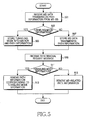
- FIG 5 is a flowchart illustrating operation of an RS for receiving an MS information establishment/removal request from a BS in the multi-hop relay BWA communication system according to an embodiment of the present invention.
- the RS receives a signaling message including path information (hereinafter referred to as a path establishment message) from the BS (i.e., a Multi-hop Relay (MR)-BS) in step 501.
- the RS may be an access node of the MS or may be another RS on the MS data transmission path.
- the RS analyzes the received path establishment message to detect whether tunneling information is received.
- the operation proceeds to step 505.
- the tunneling information may include a tunneling identifier, the service type and requirements corresponding to the tunneling identifier.
- the operation proceeds to step 507, in which the RS extracts path information from the path establishment message and adds the extracted path information to the routing table.
- the path establishment message may include a path identifier, an MS connection identifier mapped to the path, a service flow identifier, the service type and requirements desired by the MS, and the list of the RSs on the path. Meanwhile, the RS relays the MS data using the mapping information of the connection identifier and the path added to the routing table.
- step 509 the RS checks whether a signaling message for requesting removal of the path (hereinafter referred to as a path removal message) is received from the BS. If the path removal message is received in step 509, the operation proceeds to step 511, in which the RS analyzes the received path removal message to check whether tunneling removal information is received. If the tunneling removal information is received in step 511, the operation proceeds to step 513, in which the RS deletes the corresponding tunneling information from the routing table managed by the RS itself.
- a path removal message a signaling message for requesting removal of the path
- step 511 the operation proceeds to step 515, in which the RS deletes all the information related to the MS.
- the RS may delete the binding information of the path and the connection identifier from the routing table.
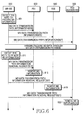
- FIG 6 is a flow diagram illustrating a signal flow between a BS and an RS for processing an MS information establishment/removal request in the multi-hop relay BWA communication system according to an embodiment of the present invention.
- an MR-BS 600 determines a path for MS data transmission and determines whether to transmit information necessary for MS data relay (i.e., a path establishment message) to RSs on the MS data transmission path.
- the path establishment message is transmitted to a first RS 630 (RS1), a second RS 640 (RS2), and a third RS 650 (RS3 or Access RS), which corresponds to an access node of the MS, which are located on the MS data transmission path.
- RS1 first RS 630
- RS2 second RS 640
- RS3 or Access RS third RS 650
- the MR-BS 600 transmits the path establishment message to the first RS 630, the second RS 640, and the third RS 650.
- the path establishment message may include a path identifier, an MS identifier (CID) mapped to the path, an MS service identifier, the service type and requirements desired by the MS (service flow parameters), and the list of RSs on the path.
- the path establishment message may include a tunneling identifier and the service type and requirements corresponding to the tunneling identifier.
- the MR-BS 600 After the path is established as above, the MR-BS 600, the first RS 630, the second RS 640, and the third RS 650 transmit/receive MS data using the established path, in step 609.
- the MR-BS 600 checks whether the MS data transmission path changes due to, for example, a handover of the MS or a mobile RS during the data transmission/reception. That is, the MR-BS 600 determines whether there is an RS needing to remove MS information (or routing information) among the RSs on the MS data transmission path.
- the MR-BS 600 transmits a signaling message for requesting removal of the path (hereinafter referred to as a path removal request message) to the RS needing to remove the MS information.
- a path removal request message is transmitted to the first RS 630, the second RS 640 and the third RS 650.
- the MR-BS 600 transmits the path removal request message to the first RS 630 in step 613, and the first RS 630 deletes information about the MS in step 615.
- the first RS 630 may delete the binding information of the path and the connection identifier from the routing table.
- the MR-BS 600 transmits the path removal request message to the second RS 640 in step 617, and the second RS 640 deletes information about the MS in step 619.
- the MR-BS 600 transmits the path removal request message to the third RS 650 in step 621, and the third RS 650 deletes all information about the MS in step 623.
- the above-described embodiment can be similarly applied to a case where established service flow information of an MS or removed service flow information of an MS is transmitted when a service flow connection of the MS is established or removed.
- the BS and the RS have the same interface module (communication module) and the same block configuration, the constructions and operations of the BS and the RS will be described with reference to the same block diagram illustrated in FIG 7 .
- the following description is made in the context of a Time Division Duplex-Orthogonal Frequency Division Multiple Access (TDD-OFDMA) communication system, to which the present invention is not limited.
- TDD-OFDMA Time Division Duplex-Orthogonal Frequency Division Multiple Access
- FDD Frequency Division Duplex
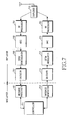
- FIG 7 is a block diagram of a BS (or RS) according to an embodiment of the present invention.
- the MS includes a receive (RX) Radio Frequency (RF) processor 701, an Analog-to-Digital Converter (ADC) 703, an OFDM demodulator 705, a decoder 707, a message processor 709, a controller 711, a message generator 713, an encoder 715, an OFDM modulator 717, a Digital-to-Analog Converter (DAC) 719, a transmit (TX) RF processor 721, and a duplexer 723.
- RX Radio Frequency
- ADC Analog-to-Digital Converter
- DAC Digital-to-Analog Converter
- TX transmit
- the duplexer 723 transfers a TX signal received from the TX RF processor 721 to an antenna and transfers an RX signal received from the antenna to the RX RF processor 701. For example, based on a TDD scheme, the duplexer 723 transfers a TX signal received from the TX RF processor 721 to the antenna in a TX mode and transfers an RX signal received from the antenna to the RX RF processor 701 in an RX mode.
- the RX RF processor 701 converts an RF signal received through the antenna into a baseband analog signal.
- the ADC 703 samples the analog signal received from the RX RF processor 701 to convert the analog signal into sample data.
- FFT Fast Fourier Transform
- the OFDM demodulator 705 transforms the sample data into frequency-domain data and selects data of subcarriers from the frequency-domain data.
- the decoder 707 demodulates and decodes the selected data from the OFDM demodulator in accordance with a predetermined Modulation and Coding Scheme (MCS) level.
- MCS Modulation and Coding Scheme
- the message processor 709 analyzes a control message from the decoder 707 and provides the resulting information to the controller 711.
- the controller 711 processes the information from the message processor 709, generates TX information, and provides the TX information to the message generator 713.
- the controller 711 performs resource scheduling.
- the message generator 713 generates a message using a variety of information received from the controller 711 and provides the message to the encoder 715 of a physical layer.
- the encoder 715 encodes and modulates data received from the message generator 713 according to a predetermined MCS level.
- the OFDM modulator 717 Inverse Fast Fourier Transform (IFFT)-processes data received from the encoder 715 to output sample data (OFDM symbols).
- the DAC 719 converts the sample data into an analog signal.
- the TX RF processor 721 converts the analog signal received from the DAC 719 into an RF signal to transmit the RF signal through the antenna.
- the controller 711 serves as a protocol controller that controls the message processor 709 and the message generator 713.
- the controller 711 may perform the functions of the message processor 709 and the message generator 713.
- the controller 711 may perform all or some of the respective functions instead of the separate units.
- the controller 711 receives information necessary for a protocol process from the corresponding unit of the physical layer, or provides a control signal to the corresponding unit of the physical layer.
- the operations of the BS and the RS will now be described with reference to the configuration illustrated in FIG 7 , concentrating on a signaling process performed in a Media Access Control (MAC) layer, initially describing the operation of the BS.
- MAC Media Access Control
- the controller 711 determines a data transmission path for an MS and determines whether a tunneling mode for the MS is supported. If the tunneling mode is supported, the controller 711 generates path establishment information according to the tunneling mode and provides the generated path establishment information to the message generator 713.
- the path establishment information may include an MS connection identifier, a service flow identifier, the service type and requirements desired by the MS, and a tunneling identifier. If an RS on the MS data transmission path needs to know tunneling mode resource information including the tunneling identifier, the controller 711 generates tunneling mode resource information to be transmitted to the RS and provides the generated tunneling mode resource information to the message generator 713.
- the controller 711 determines whether the tunneling mode is supported. If the tunneling mode is not supported, the controller 711 generates path establishment information to be transmitted to RSs on the MS data transmission path and provides the generated path establishment information to the message generator 713.
- the path establishment information may include a path identifier, an MS connection identifier mapped to the path, a service flow identifier, the service type and requirements desired by the MS, and a list of the RSs on the path.
- the controller 711 checks whether the MS data transmission path changes due to, for example, a handover of the MS. If the MS data transmission path changes, the controller 711 generates path removal information, which is to be transmitted so the RS that does not need to retain the MS information any more among the RSs on the MS data transmission path, and provides the generated path removal information to the message generator 713.
- the path removal information may include an MS identifier, a service flow identifier, and a path identifier to be removed.
- the message generator 713 generates a signaling message of a predetermined format on the basis of the MS data transmission path information and the MS path removal information received from the controller 711, and provides the generated signaling message to a physical layer.
- the generated signaling message is converted into a transmittable format at the physical layer prior to transmission through the antenna.
- the RS may be an access RS of the MS, or may be an intermediate RS on the MS data transmission path.
- the message processor 709 analyzes a signaling message received from the BS and provides the resulting information to the controller 711.
- the controller 711 checks whether the signaling message includes tunneling information.
- the controller 711 extracts the tunneling information from the signaling message and adds the extracted tunneling information to routing information (e.g., a routing table) managed by the controller 711.
- the tunneling information may include a tunneling identifier and the service type and requirements corresponding to the tunneling identifier. This tunneling information is used to relay MS data.
- the controller 711 extracts the path information from the signaling message and stores the extracted path information into the routing table.
- the path information may include a path identifier, an MS connection identifier mapped to the path, a service flow identifier, the service type and requirements (i.e., service flow parameters) desired by the MS, and the list of RSs on the path. This path information is used to relay MS data.
- the controller 711 checks whether the signaling message includes tunneling removal message.
- the controller 711 removes the tunneling information managed by the controller 711.
- the tunneling removal information may include a tunneling identifier to be removed.
- the controller 711 removes information about the MS.
- the MS path removal information may include an MS identifier, a service flow identifier, and a path identifier.
- the present invention defines the signaling messages for notifying the MS data transmission path establishment/removal request to the RSs on the multi-hop relay path for relaying the MS data in the multi-hop relay system, thereby making it possible for the RS or the BS to easily manage the MS information and resources. That is, it is possible to prevent the BS or the RS from retaining information about the MS that is not actually serviced.
Landscapes
- Engineering & Computer Science (AREA)
- Computer Networks & Wireless Communication (AREA)
- Signal Processing (AREA)
- Mobile Radio Communication Systems (AREA)
- Radio Relay Systems (AREA)
Applications Claiming Priority (1)
| Application Number | Priority Date | Filing Date | Title |
|---|---|---|---|
| KR20070023032A KR100974193B1 (ko) | 2007-03-08 | 2007-03-08 | 다중 홉 릴레이 방식을 사용하는 광대역 무선 접속 통신시스템에서 단말 정보 해제 처리 장치 및 방법 |
Publications (2)
| Publication Number | Publication Date |
|---|---|
| EP1968255A2 true EP1968255A2 (de) | 2008-09-10 |
| EP1968255A3 EP1968255A3 (de) | 2010-07-14 |
Family
ID=39446440
Family Applications (1)
| Application Number | Title | Priority Date | Filing Date |
|---|---|---|---|
| EP20080004291 Withdrawn EP1968255A3 (de) | 2007-03-08 | 2008-03-07 | Vorrichtung und Verfahren zur Ausgabe von Mobilstationsdaten für ein Funkzugangskommunikationssystem mit einem Multihop-Relais-Schema |
Country Status (5)
| Country | Link |
|---|---|
| US (1) | US20080219205A1 (de) |
| EP (1) | EP1968255A3 (de) |
| JP (1) | JP2008228300A (de) |
| KR (1) | KR100974193B1 (de) |
| CN (1) | CN101282307B (de) |
Families Citing this family (3)
| Publication number | Priority date | Publication date | Assignee | Title |
|---|---|---|---|---|
| KR101546780B1 (ko) | 2008-12-18 | 2015-08-25 | 삼성전자주식회사 | 광대역 무선통신 망에서 서비스 플로우 변경 시 오류 처리를 위한 장치 및 방법 |
| WO2010104333A2 (en) * | 2009-03-13 | 2010-09-16 | Lg Electronics Inc. | Method and apparatus for relaying data in wireless communication system |
| US10063467B2 (en) * | 2015-05-18 | 2018-08-28 | Cisco Technology, Inc. | Virtual extensible local area network performance routing |
Family Cites Families (12)
| Publication number | Priority date | Publication date | Assignee | Title |
|---|---|---|---|---|
| KR20020025427A (ko) * | 2000-09-29 | 2002-04-04 | 정덕량 | 아이피 패킷 포워딩 장치 및 그 방법 |
| JP3597511B2 (ja) * | 2002-02-22 | 2004-12-08 | エヌ・ティ・ティ・コムウェア株式会社 | 無線装置およびその通信経路制御方法、コンピュータプログラム |
| JP4014893B2 (ja) * | 2002-03-01 | 2007-11-28 | 株式会社エヌ・ティ・ティ・ドコモ | マルチホップ接続用の無線通信システム、無線通信方法、これに用いる無線局 |
| JP2004015556A (ja) * | 2002-06-07 | 2004-01-15 | Sony Corp | 通信方法、通信装置及び通信システム |
| JP2005086525A (ja) * | 2003-09-09 | 2005-03-31 | Advanced Telecommunication Research Institute International | アドホックネットワークにおける通信方式 |
| US8554232B2 (en) * | 2005-08-17 | 2013-10-08 | Apple Inc. | Method and system for a wireless multi-hop relay network |
| US7933236B2 (en) | 2005-10-27 | 2011-04-26 | Nortel Networks Limited | Methods and systems for a wireless routing architecture and protocol |
| US7986915B1 (en) * | 2006-02-24 | 2011-07-26 | Nortel Networks Limited | Method and system for a wireless multi-hop relay network |
| US8126470B2 (en) * | 2006-07-03 | 2012-02-28 | Nokia Corporation | Topology and route discovery and management for relay networks |
| US7889713B2 (en) * | 2006-07-03 | 2011-02-15 | Nokia Corporation | Transmission of management messages for relay networks |
| US7995524B2 (en) * | 2006-09-07 | 2011-08-09 | Industrial Technology Research Institute | Wireless communication system and method |
| US20080165776A1 (en) * | 2007-01-08 | 2008-07-10 | Zhifeng Tao | Relay Tunneling in Wireless Multi-User Multi-Hop Relay Networks |
-
2007
- 2007-03-08 KR KR20070023032A patent/KR100974193B1/ko not_active Expired - Fee Related
-
2008
- 2008-03-07 CN CN2008101258049A patent/CN101282307B/zh not_active Expired - Fee Related
- 2008-03-07 EP EP20080004291 patent/EP1968255A3/de not_active Withdrawn
- 2008-03-07 JP JP2008057598A patent/JP2008228300A/ja active Pending
- 2008-03-10 US US12/045,302 patent/US20080219205A1/en not_active Abandoned
Non-Patent Citations (2)
| Title |
|---|
| G.Q. WANG, W. TONG, P. ZHU, H. ZANG, DSX MESSAGE EXTENSION FOR CONTSTRAINT-BASED ROUTING AND CID/PATH BINDING, 5 March 2007 (2007-03-05) |
| H. ZHENG, Y. SIFULLAH, S. MAHESHWARI, PATH AND CONNECTION MANAGEMENT IN MULTIHOP RELAY SYSTEM, March 2007 (2007-03-01) |
Also Published As
| Publication number | Publication date |
|---|---|
| US20080219205A1 (en) | 2008-09-11 |
| EP1968255A3 (de) | 2010-07-14 |
| KR20080082318A (ko) | 2008-09-11 |
| JP2008228300A (ja) | 2008-09-25 |
| CN101282307B (zh) | 2013-02-20 |
| CN101282307A (zh) | 2008-10-08 |
| KR100974193B1 (ko) | 2010-08-05 |
Similar Documents
| Publication | Publication Date | Title |
|---|---|---|
| KR100961743B1 (ko) | 다중 홉 중계방식의 광대역 무선 접속통신시스템에서 중계서비스를 지원하기 위한 장치 및 방법 | |
| TWI384784B (zh) | 由多跳躍中繼寬頻無線存取通訊系統中之中繼站所構成的廣播訊息之傳輸資訊的處理裝置及其方法 | |
| EP2101448B1 (de) | Vorrichtung und Verfahren zur Zugangssteuerung für einen Strom von Daten in einem drahtlosen Breitbandzugangskommunikationssystem mit einem Multihop-Relay-Schema | |
| EP1775983A1 (de) | Vorrichtung und Verfahren zur Durchführung von Handover in einem drahtlosen Breitbandzugangssystem mit Relaisstationen | |
| WO2007133022A1 (en) | Apparatus and method for providing relay link zone information in a multi-hop relay broadband wireless access communication system | |
| US8626181B2 (en) | Apparatus and method for allocating a dedicated access zone to relay station (RS) in broadband wireless access (BWA) communication system | |
| JP4990357B2 (ja) | 多重ホップ中継方式を使用する広帯域無線アクセス通信システムにおける中間リンク領域の情報提供装置及び方法 | |
| US8605645B2 (en) | Apparatus and method for transmitting and receiving control information in multi-hop relay broadband wireless communication system | |
| KR100871338B1 (ko) | 다중 홉 중계 방식을 사용하는 광대역 무선 접속통신시스템에서 중계국 기능을 협상하기 위한 장치 및 방법 | |
| EP1968255A2 (de) | Vorrichtung und Verfahren zur Ausgabe von Mobilstationsdaten für ein Funkzugangskommunikationssystem mit einem Multihop-Relais-Schema | |
| KR100891295B1 (ko) | 다중 홉 릴레이 방식을 사용하는 광대역 무선 접속 통신시스템에서 중계국 타입 정보를 제공하기 위한 장치 및방법 | |
| CN101981828B (zh) | 在使用多跳中继方案的宽带无线通信系统中支持不同系统的装置和方法 | |
| US20090252081A1 (en) | Apparatus and method for supporting various systems in a multihop relay broadband wireless communication system | |
| KR101542519B1 (ko) | 다중 홉 릴레이 방식을 사용하는 광대역 무선접속 통신시스템에서 중계국의 프리앰블 변경 처리 장치 및 방법 | |
| KR101501155B1 (ko) | 광대역 무선 접속 통신 시스템에서 중계국으로 전용 억세스영역을 할당하기 위한 장치 및 방법 | |
| KR20070117407A (ko) | 다중 홉 중계방식의 광대역 무선 접속 통신시스템에서 중계서비스를 지원하기 위한 스케줄링 장치 및 방법 | |
| KR20080077806A (ko) | 다중 홉 릴레이 방식을 사용하는 광대역 무선접속통신시스템에서 비경쟁 방식의 레인징을 지원하기 위한장치 및 방법 | |
| KR20080037976A (ko) | 다중 홉 릴레이 방식을 사용하는 광대역 무선 접속 통신시스템에서 중계국 프레임 제어 메시지에 대한 인코딩 정보제공 장치 및 방법 | |
| KR20100050378A (ko) | 다중 홉 중계 방식을 사용하는 광대역 무선 접속 통신 시스템에서 중계 데이터 처리 장치 및 방법 |
Legal Events
| Date | Code | Title | Description |
|---|---|---|---|
| PUAI | Public reference made under article 153(3) epc to a published international application that has entered the european phase |
Free format text: ORIGINAL CODE: 0009012 |
|
| 17P | Request for examination filed |
Effective date: 20080307 |
|
| AK | Designated contracting states |
Kind code of ref document: A2 Designated state(s): AT BE BG CH CY CZ DE DK EE ES FI FR GB GR HR HU IE IS IT LI LT LU LV MC MT NL NO PL PT RO SE SI SK TR |
|
| AX | Request for extension of the european patent |
Extension state: AL BA MK RS |
|
| PUAL | Search report despatched |
Free format text: ORIGINAL CODE: 0009013 |
|
| AK | Designated contracting states |
Kind code of ref document: A3 Designated state(s): AT BE BG CH CY CZ DE DK EE ES FI FR GB GR HR HU IE IS IT LI LT LU LV MC MT NL NO PL PT RO SE SI SK TR |
|
| AX | Request for extension of the european patent |
Extension state: AL BA MK RS |
|
| AKX | Designation fees paid |
Designated state(s): DE FR GB IT NL |
|
| 17Q | First examination report despatched |
Effective date: 20110408 |
|
| RAP1 | Party data changed (applicant data changed or rights of an application transferred) |
Owner name: SAMSUNG ELECTRONICS CO., LTD. |
|
| STAA | Information on the status of an ep patent application or granted ep patent |
Free format text: STATUS: THE APPLICATION IS DEEMED TO BE WITHDRAWN |
|
| 18D | Application deemed to be withdrawn |
Effective date: 20161028 |