EP1969775B1 - Kompression eines Routingplankopfs in einem Paket durch einen mobilen Router in einem Adhoc-Netzwerk - Google Patents
Kompression eines Routingplankopfs in einem Paket durch einen mobilen Router in einem Adhoc-Netzwerk Download PDFInfo
- Publication number
- EP1969775B1 EP1969775B1 EP06848268.6A EP06848268A EP1969775B1 EP 1969775 B1 EP1969775 B1 EP 1969775B1 EP 06848268 A EP06848268 A EP 06848268A EP 1969775 B1 EP1969775 B1 EP 1969775B1
- Authority
- EP
- European Patent Office
- Prior art keywords
- hop
- routing
- mobile
- explicit
- hoc
- Prior art date
- Legal status (The legal status is an assumption and is not a legal conclusion. Google has not performed a legal analysis and makes no representation as to the accuracy of the status listed.)
- Not-in-force
Links
- 230000006835 compression Effects 0.000 title description 7
- 238000007906 compression Methods 0.000 title description 7
- 230000004044 response Effects 0.000 claims description 15
- 238000000034 method Methods 0.000 claims description 13
- 235000008694 Humulus lupulus Nutrition 0.000 claims description 12
- 238000003780 insertion Methods 0.000 claims 2
- 230000037431 insertion Effects 0.000 claims 2
- 238000010586 diagram Methods 0.000 description 11
- 230000004048 modification Effects 0.000 description 8
- 238000012986 modification Methods 0.000 description 8
- 230000005540 biological transmission Effects 0.000 description 4
- 230000008859 change Effects 0.000 description 4
- 238000012546 transfer Methods 0.000 description 3
- 230000015572 biosynthetic process Effects 0.000 description 2
- 230000002411 adverse Effects 0.000 description 1
- 230000000694 effects Effects 0.000 description 1
- 238000012423 maintenance Methods 0.000 description 1
- 230000006855 networking Effects 0.000 description 1
- 239000013307 optical fiber Substances 0.000 description 1
- 230000000644 propagated effect Effects 0.000 description 1
Images



Classifications
-
- H—ELECTRICITY
- H04—ELECTRIC COMMUNICATION TECHNIQUE
- H04W—WIRELESS COMMUNICATION NETWORKS
- H04W40/00—Communication routing or communication path finding
- H04W40/24—Connectivity information management, e.g. connectivity discovery or connectivity update
- H04W40/246—Connectivity information discovery
-
- H—ELECTRICITY
- H04—ELECTRIC COMMUNICATION TECHNIQUE
- H04L—TRANSMISSION OF DIGITAL INFORMATION, e.g. TELEGRAPHIC COMMUNICATION
- H04L45/00—Routing or path finding of packets in data switching networks
- H04L45/02—Topology update or discovery
- H04L45/025—Updating only a limited number of routers, e.g. fish-eye update
-
- H—ELECTRICITY
- H04—ELECTRIC COMMUNICATION TECHNIQUE
- H04L—TRANSMISSION OF DIGITAL INFORMATION, e.g. TELEGRAPHIC COMMUNICATION
- H04L45/00—Routing or path finding of packets in data switching networks
- H04L45/34—Source routing
-
- H—ELECTRICITY
- H04—ELECTRIC COMMUNICATION TECHNIQUE
- H04L—TRANSMISSION OF DIGITAL INFORMATION, e.g. TELEGRAPHIC COMMUNICATION
- H04L45/00—Routing or path finding of packets in data switching networks
- H04L45/46—Cluster building
-
- H—ELECTRICITY
- H04—ELECTRIC COMMUNICATION TECHNIQUE
- H04L—TRANSMISSION OF DIGITAL INFORMATION, e.g. TELEGRAPHIC COMMUNICATION
- H04L45/00—Routing or path finding of packets in data switching networks
- H04L45/48—Routing tree calculation
-
- H—ELECTRICITY
- H04—ELECTRIC COMMUNICATION TECHNIQUE
- H04L—TRANSMISSION OF DIGITAL INFORMATION, e.g. TELEGRAPHIC COMMUNICATION
- H04L45/00—Routing or path finding of packets in data switching networks
- H04L45/74—Address processing for routing
- H04L45/745—Address table lookup; Address filtering
- H04L45/74591—Address table lookup; Address filtering using content-addressable memories [CAM]
-
- H—ELECTRICITY
- H04—ELECTRIC COMMUNICATION TECHNIQUE
- H04W—WIRELESS COMMUNICATION NETWORKS
- H04W40/00—Communication routing or communication path finding
- H04W40/24—Connectivity information management, e.g. connectivity discovery or connectivity update
- H04W40/26—Connectivity information management, e.g. connectivity discovery or connectivity update for hybrid routing by combining proactive and reactive routing
-
- H—ELECTRICITY
- H04—ELECTRIC COMMUNICATION TECHNIQUE
- H04W—WIRELESS COMMUNICATION NETWORKS
- H04W40/00—Communication routing or communication path finding
- H04W40/24—Connectivity information management, e.g. connectivity discovery or connectivity update
- H04W40/32—Connectivity information management, e.g. connectivity discovery or connectivity update for defining a routing cluster membership
Definitions
- the present invention relates to efficient distribution of routing information in a mobile ad hoc network.
- the present invention relates to forwarding packets in a mobile ad hoc network that utilizes reactive routing protocols for route discovery, where the packets are forwarded in a manner that minimizes the transfer of routing information between nodes in the mobile ad hoc network during packet transmission.
- Mobile computing has evolved to an extent that it is no longer limited to a mobile computing model (e.g., "Mobile IP”) that relies a fixed wide area network infrastructure such as the Internet to provide connectivity between a mobile node and a correspondent node; rather, a mobile ad hoc network (MANET) model has been pursued that enables an isolated group of mobile nodes to independently establish communications amongeach other (e.g., a "mesh”) and establish optimized routing paths among each other.
- a mobile computing model e.g., "Mobile IP”
- MANET mobile ad hoc network
- the MANET model has been developed based on numerous proposals by Internet Engineering Task Force (IETF) groups: these IETF proposals (e.g., Requests for Comments (RFCs), Internet Drafts, etc.) have addressed improved mobility support of mobile devices (e.g., laptops, IP phones, personal digital assistants, etc.) in an effort to provide continuous connectivity between mobile ad hoc nodes.
- IETF Internet Engineering Task Force
- the MANET model assumes no previous existing network topology: Internet connectivity is neither assumed nor precluded, and every network node is assumed to be mobile. Consequently, the MANET model assumes no more than a group of mobile nodes (e.g., mobile hosts and mobile routers) may arbitrarily connect to each other via available link layer (“Layer 2") connections, resulting in a mesh network.
- Layer 2 link layer
- the IETF has a Mobile Ad-hoc Networks (MANET) Working Group that is working to implement this ad hoc networking model by developing standardized MANET routing specification(s) for adoption by the IETF.
- MANET Mobile Ad-hoc Networks
- the "mobile ad hoc network” (MANET) is an autonomous system of mobile routers (and associated mobile hosts) connected by wireless links--the union of which form an arbitrary graph. The routers and hosts are free to move randomly and organize themselves arbitrarily; thus, the network's wireless topology may change rapidly and unpredictably.
- Such a network may operate in a standalone fashion, or may be connected to the larger Internet.
- the MANET system is particularly suited to low-power radio networks that may exhibit an unstable topology, where wireless propagation characteristics and signal quality between a wireless transmission source and a receiver can be difficult to model and quantify. Since there is no fixed network infrastructure in a MANET, the device address is tied to the device, not a topological location. Hence, the formation of a MANET based on mobile nodes having established a mesh network raises issues as to whether a routing protocol should be deployed that provides network layer (“Layer 3") connectivity throughout the mesh network based on established routes.
- Layer 3 network layer
- a proactive routing protocol e.g., Open Shortest Path First (OSPF) as specified by RFC 1583
- OSPF Open Shortest Path First
- RFC 1583 a proactive routing protocol
- OSPF Open Shortest Path First
- a router determines how to forward a packet based on accessing routing information from an internal table.
- proactive protocols suffer the disadvantage of increased overhead in implementing the routing protocol, resulting in reduced convergence time due to movement in the MANET. Consequently, if a mobile router in a MANET moves, the movement causes a change in the routing infrastructure that requires recalculation of routes in accordance with the new topology. Such movement can have even more disruptive effects in routing protocols that calculate multiple paths to a destination. Hence, routing algorithms that fail to ensure rapid convergence based on the recalculated routes will result in a failure of the routing protocol.
- OSPF Open Shortest Path First
- Certain proactive routing protocols have attempted to reduce the overhead associated with establishing precise routes within the MANET.
- FSR Fluorescence State Routing
- a “Fisheye State Routing” (FSR) protocol described for example in an Internet Draft by Gerla et al., "Fisheye State Routing Protocol (FSR) for Ad Hoc Networks” ⁇ draft-ietf-manet-fsr-03.txt>, June 17, 2002 , describes a proactive routing protocol where nodes maintain a link state table based on link state advertisement messages received from neighboring nodes: the frequency of distributing link state advertisement messages is limited based on the "scope" of a node, wherein the nodes periodically exchange the information only with their neighbors that are within their "scope” (no flooding).
- a the link state table of a node has precise and accurate path quality information for nearby nodes within its scope, with progressively less detail of further nodes outside its scope as the distance increases.
- Reactive MANET protocols were developed to improve the convergence of MANET protocols, where routing information is acquired only when needed.
- Examples of reactive protocols include “AODV” as described in an Internet Draft by Perkins et al., “Ad hoc On-Demand Distance Vector (AODV) Routing ⁇ draft-ietf manet-aodv.13>", February 17, 2003 , and “DSR” as described in an Internet Draft by Johnson et al., “The Dynamic Source Routing Protocol for Mobile Ad Hoc Networks (DSR) ⁇ draft-ietf-manet-dsr-10.txt>", July 19, 2004 and in “ DSR: The Dynamic Source Routing Protocol for Multihop Wireless As Hoc Networks" by the same author published in 2001 , XP-002256390.
- Another example of a reactive MANET protocol is IEEE 802.5 source route bridging.
- Reactive MANET protocols such as the DSR protocol involve a source MANET host node locating a destination MANET host node by flooding the MANET with adiscovery request to locate the destination: if an intermediate mobile host receives the discovery request and does not recognize the destination, the intermediate mobile host will add its network address and will flood the discovery request on its mesh links.
- the discovery request includes an explicit hop-by-hop path as it traverses the MANET: if the destination MANET host node is found, a reply is sent to the source MANET host node that includes the explicit hop-by-hop path.
- the source MANET host node can send a packet to the destination using strict source routing, where the packet includes a routing header that explicitly specifies the hop-by-hop path to the destination, eliminating the necessity for any further routing protocols.
- strict source routing enables packets to be sent in a MANET network without relying on EP protocols, enabling deployment within layer 2 mesh networks (e.g., Token Ring, IEEE 802.1 Is, etc.), or layer 3 MANET networks utilizing reactive routing protocols such as DSR or AODV.
- layer 2 mesh networks e.g., Token Ring, IEEE 802.1 Is, etc.
- layer 3 MANET networks utilizing reactive routing protocols such as DSR or AODV.
- Another example of strict source routing is illustrated in the form of a reverse routing header as described in U.S. Patent Publication No. US 2004/01 17339, published June 17, 2004 .
- this explicit source route path substantially increases the packet size and reduces efficiency of the network.
- the repeated flooding of the MANET with discovery and reply messages for each and every destination can substantially increase the latency for many applications, and substantially increase traffic within the MANET.
- any link failure between two nodes in the explicit source route path requires a maintenance (i.e., recalculation) of all the routes that pass along the failed link, resulting in additional flooding of discovery and reply messages that bypass the failed link.
- the use of strict source routing reduces communications efficiency due to substantially increased overhead in packets utilizing routing headers, since a separate routing header is required for each hop in the path from a source node to a destination node.
- a fundamental problem with strict source routing is the associated increase in the size of a data packet
- the fundamental problem with proactive routing protocols is the amount of routing information that must be distributed to maintain network integrity (i.e., convergence of network routes) and to permit routing of packets.
- each mobile router within the mobile ad hoc network is able to learn routes to nearby nodes within a prescribed distance based on routing headers of received packets, enabling each mobile router to establish a "fisheye" routing table that specifies routing information for nearby mobile ad hoc nodes that are reachable within a prescribed distance (e.g., three to four hops), without the necessity of transmitting link state information between the mobile routers.
- each mobile router can util ize its "fisheye" routing table to selectively compress the routing headers within the received packets by removing the routing information from the routing headers.
- the mobile hosts utilizing reactive MANET protocols receive the packets containing the compressed routing headers, enabling the compression from strict source routing to lose source routing, without any modification in the mobile host nodes in the MANET network.
- reactive MANET protocols e.g., DSR, AODV, etc.
- the disclosed embodiment enables deployment of mobile routers within a mobile ad hoc network that utilize a "fisheye" routing table without the necessity of distributing link state information, and which improves efficiency of packets transmitted by mobile hosts by compressing the strict source routes into loose source routes, based on the routing information stored in the "fisheye” routing table.
- each mobile router can change a path to a destination based on updating its "fisheye” routing table, without any disruption or modification of source route information in any of the other mobile nodes in the MANET.
- Figure 1 is a diagram illustrating a mobile ad hoc network 10 formed by mobile ad hoc routers 12 and mobile hosts 14 establishing wireless layer 2 mesh links 16 according to a prescribed MANET link layer protocols.
- the disclosed MANET network 10 of Figure 1 establishes link layer connectivity via the links 16, however it is assumed herein that no proactive routing protocols are established between the mobile routers 12, and that only a reactive routing protocol such as DSR or AODV is utilized in order to learn routes to destinations while minimizing overhead and to ensuring rapid convergence based on any movement by any of the mobile routers 12 or the mobile hosts 14.
- a reactive routing protocol such as DSR or AODV
- Each mobile router 12 is configured for parsing the routing header of each received packet in order to identify available routes to nearby nodes that are within a prescribed distance, and compress the routing header in order to eliminate redundant path information to the nearby nodes. If necessary, however, each mobile router 12 will preserve or expand routing information needed by neighboring nodes, for example in the case of mobile hosts 14 that are not configured to employ a "fisheye" routing table, but rather that rely solely on existing source routing protocols. Hence, each mobile router 12 can employ loose source routes within the corresponding fisheye.
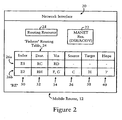
- FIG. 2 is a diagram illustrating a mobile ad hoc router 12, according to an embodiment of the present invention.
- the mobile router (e.g., "RE") 12 includes a network interface 20, aMANET resource 22, a "fisheye" routing table 24 having routing table entries 26 (e.g., 26a, 26b), and a routing resource 28.
- the network interface 20 is configured for establishing the layer 2 mesh links 16 with any other available MANET mobile node (e.g.,another mobile router 12 or a mobile host 14) based on existing link layer protocols.
- the network interface 20 also is configured for receiving data packets from next hop mobile nodes via the corresponding link 16.
- the MANET resource 22 is configured for employing reactive MANET discovery protocols, for example DSR and AODV, in order to identify a route to a destination for any packet originated by the mobile router 12.
- reactive MANET discovery protocols for example DSR and AODV
- each mobile host 14 will include the network interface 20 in the MANET resource 22, but not the routing resource 28 or the routing table 24 described herein.
- the routing resource 28 is configured for parsing each packet that is received by the network interface 20 in order to determine whether the "fisheye" routing table 24 should be updated, or whether the received packet should be modified to compress a routing header specifying a strict source route, or expand a routing header specifying a loose source route.
- the "fisheye" routing table 24 illustrates two entries, each having corresponding fields including an index field 30, a destination node field 32, an explicit path field 34, a discovery source field 36, a discovery target field 38, and a hop count field 40.
- each entry 26 is added by the routing resource 28 in response to a received packet in order to specify an explicit path 34 for reaching a mobile ad hoc node (specified in the destination node field 32) that is within a prescribed distance (e.g., less than or equal to three hops).
- the first routing table entry that specifies an index value of "E1" in the index field 30 specifies that the mobile ad hoc node ("RC") specified in the destination field 32 is reachable via the explicit path 34 of "RD”; hence, the routing resource 28 can determine that the mobile router "RC” 12 is reachable via the mobile router "RD” 12 at a single hop.
- the second routing table entry specifying the index value 30 of "E2" is added by the routing resource 28 in response to a reply message 44 sent by the mobile host 14 in response to a discovery message 42, illustrated in Figure 4 .
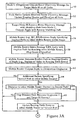
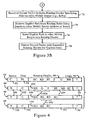
- Figures 3A and 3B are diagrams summarizing storage of explicit paths for nearby nodes based on transfer of route discovery and route reply messages between mobile host nodes, and compression and expansion of routing headers by the mobile routers, according to an embodiment of the present invention.
- the steps described in Figures 3A and 3B can be implemented as executable code stored on a computer readable medium (e.g., a hard disk drive, a floppy drive, a random access memory, a read only memory, an EPROM, a compact disk, etc.), or propagated via a computer readable medium (e.g., a transmission wire, an optical fiber, a wireless transmission medium utilizing an electromagnetic carrier wave, etc.).
- a computer readable medium e.g., a hard disk drive, a floppy drive, a random access memory, a read only memory, an EPROM, a compact disk, etc.
- propagated via a computer readable medium e.g., a transmission wire, an optical fiber, a wireless transmission medium
- the method begins in step 50, following establishment of the layer 2 MANET links 16, by a MANET host node (e.g., "C") 14 outputting a route discovery message, for example according to DSR or AODV reactive routing protocols, in order to determine a route for reaching a target node (e.g., "H") 14.
- a target node e.g., "H”
- the host node “C” 14 is the originator of the route discovery message
- the host node "H” is the target of the route discovery message.
- Each intermediate mobile node e.g., "RC”, “RD”, “RE”, “F”, "G”, “RH” adds in step 52 its corresponding network address to the routing header and forwards the discovery request on all available MANET links 16.
- the discovery request propagates along the path of mobile nodes "RC", “RD”, “RE”, “F”, “G”, “RH”, until the discovery request 42 of Figure 4 reaches the target node "H” 14 in step 54.
- the discovery request 42 received by the target node "H” 14 includes a routing header 90 that specifies the explicit path from the originator 92 of the discovery request (mobile host "C” 14) to the target 94 of the discovery request.
- the discovery request 42 received by the target node "H” 14 also includes a hop count field 96 that specifies the number of a hops from the originator 92 to the target 94 via the explicit path "RC", “RD”, “RE”, “F”, “G”, “RH” specified in the routing header 90.
- the target node "H” 14 responds in step 54 to the received route discovery message 42 by outputting a reply message 44, in accordance with the reactive routing protocol (e.g., DSR, AODV, etc.), specifying a source address field 100 with the network address of the target node "H” 14, a destination address field 102 with the network address of the originating node "C" 14, a routing header 14 specifying the reverse multi-hop path that is the reverse of the routing header 90, and the hop count field 96.
- the reactive routing protocol e.g., DSR, AODV, etc.
- the mobile router "RH” 12 receives the reply message 44, parses the message 44 including the routing header 104, and forwards the packet 44 without any update to its internal "fisheye” routing table, based on the packet having originated from the next hop mobile node "H" 14.
- the mobile hosts “G” 14 and “F” 14 forward the packet in accordance with the explicit path 106 specified in the routing header 104 according to strict source routing.
- the mobile router "RE” 12 receives in step 56 the reply 44: the routing resource 28 within the mobile router “RE” 12 detects from the explicit path 106 an explicit path to the neighboring mobile router “RH” 12 via the mobile hosts “F” and “G” 14.
- the routing resource 28 also determines that the mobile router "RF" is within its prescribed "scope” of three hops, and therefore the routing resource 28 adds in step 58 the routing table entry 26b specifying that the mobile router "RH” 12 is reachable via the explicit path 34 of nodes "F” and "G”.
- the routing resource 28 also adds the source 36 of the discovery request (host node "C” 14), the target 38 of the discovery request (host node "H” 14), and the number of hops 40 based on the hop count field 96. As described below, the hop count field 40 is used to determine whether the stored entry 26 should be replaced with an improved path to the destination node specified in the destination node field 32.
- the storage of the entry 26b in the "fisheye" routing table 24 of the mobile router "RE” 12 that the mobile router "RH” 12 is reachable via the explicit path "F-G” 34 enables the routing resource 28 to identify an established route to the mobile router "RH” 12.
- the explicit path 34 in the corresponding entry 26b renders the corresponding routing information in the strict source route 106 unnecessary; hence, the routing resource 28 of the mobile router "RE” 12 removes in step 60 of Figure 3A (step 60a of Figure 4 ) the explicit path for reaching the mobile router "RH” 12 from the strict source route 106, resulting in the modified routing header 108 of the reply message 46 of Figure 4 .
- the routing resource 28 may replace the routing information with an index (e.g., the index value "E2" 30) in order to the explicitly specify the corresponding routing table entry; however, the routing resource 28 also may identify the modified routing header 108 in a subsequently received packet as a loose source route based on using the specified address for "RH" as an index to the "fisheye” routing table 24.
- the network interface 20 of the mobile router "RE” outputs the modified reply 46 having the modified routing header 108 to the next hop mobile router "RD" 12 in step 62 for delivery to the originator host node "C" 14.
- the mobile router "RE” is able to learn the path 34 to the neighboring node “RH” 12 and create the corresponding "fisheye” routing table entry 26b from the received reply initiated by the target node "H” 14, without the necessity of outputting a single router advertisement message or requesting routing information from the mobile router "RH” 12.
- subsequent mobile routers 12 along the path to the originator host node "C" 14 can learn explicit paths to their neighboring mobile nodes, and further compress the modified routing header 108 in the reply packet 46.
- the mobile router "RD” 12 may simply forward the reply 46 to the next hop mobile router "RC” 12 without any modification, because the corresponding routing resource 28 in the mobile router "RD” 12 determines that the reply 46 does not include any explicit path to neighboring mobile routers 12 within the prescribed distance, since the mobile router "RE” 12 is a next hop node, and the mobile router "RH” 12 is outside the prescribed scope (i.e., distance) of three hops.
- each reply 44,46, and 48 also may include a local segment counter, described below with respect to Figures 6A and 6B , that is reset on every modification of the routing header 106 or 108 and incremented at each hop, in order to specify the number of hops that have occurred since modification of the routing header.
- the local segment counter also enables each mobile router 12 to ensure that only a strict source route would be compressed, and not a loose source route having already been compressed.
- the mobile router "RC" 12 in response to receiving the reply 46, determines from the local segment counter (not shown) that the mobile router "RE” 12 is within its prescribed scope of three hops, and therefore the corresponding routing resource 28 adds in its corresponding "fisheye” routing table an entry specifying the path to the neighboring mobile router "RE” 12 via the next hop mobile router "RD” 12.
- the routing resource 28 of the mobile router “RC” 12 also removes in step 60 of Figure 3A (step 60b of Figure 4 ) the unnecessary explicit path to the mobile router "RE" 12 (via mobile router "RD” 12) from the routing header 108, and compresses the routing header 108 into the modified routing header 110 of the reply 48.
- the originator of the discovery request namely the host node "C” 14
- each mobile router can determine the optimum path to the next hop specified in the loose source route path 110, improving path communications as new links are established.
- the routing resource 28 in the mobile router "RC” 12 would determine in step 66 if the distance to the other mobile router "RE” 12 was shorter via the second path; if the distance to the other mobile router was not shorter, the routing resource 28 also would determine in step 68 whether the overall distance between the originator and the target was shorter than the corresponding hop count 40 specified between the source 36 and the target 38, for example to accommodate improved paths between the source and target that are outside the scope of the mobile router.
- the routing resource 28 would update the "fisheye" routing table 24 in step 70 if the distance to the other mobile router was shorter, or if the overall hop distance between the originator and target was shorter (in the latter case, the routing resource 28 may store an exception routing table entry for use for traffic between the specified source and destinations).
- Figure 3B illustrates the method by each of the mobile routers 12 in performing the expansion of a loose source routing header 110 based on stored "fisheye" routing table entries 26 that specify an explicit path for reaching a neighboring mobile ad hoc node specified in the loose source route 110.
- the mobile host "C” outputs to the mobile router "RC” 12 a packet destined toward the mobile host "H” 14 and that specifies the loose source route 110.
- the corresponding routing resource 28 determines the explicit path to the next specified hop ("RE" via "RD”) based on retrieving in step 74 the corresponding explicit path from its "fisheye” routing table 24.
- the routing resource 28 of the mobile router "RC” may access its corresponding "fisheye" routing table 24 using either an explicit index value in the loose source route 110, or based on utilizing the address of the specified next hop as an index to the routing table 24.
- the routing resource 28 of the mobile router “RC” 12 inserts in step 76 the explicit path for reaching the next specified hop in the loose source route 110, resulting in the expanded routing header resembling the routing header 108 of Figure 4 .
- the network interface 20th of the mobile router "RC" 12 outputs in step 78 the packet having the expanded routing header to the next hop explicitly specified.
- the steps of Figure 3B are repeated by the mobile router "RE” 12 in response to detecting the loose source route resembling the routing header 108: the routing resource 28 of the mobile router “RE” 12 retrieves the explicit path 34 ("RH" via "F” and "G") from the routing table entry 26b in step 74, and inserts the explicit path 34 into the loose source route in step 76, resulting in the path resembling the strict source route 106 of Figure 4 .
- the packet is output by the mobile router "RE” 12 in step 78 with the strict source route 106.
- each mobile router 12 is configured for selectively compressing a routing header based on removing an explicit route for reaching a mobile ad hoc node identified as reachable by its corresponding "fisheye" routing table 24.
- the destination 32 in the routing table 24 may be applicable to a host node 14, as appropriate.
- the procedure in each mobile router of storing an explicit route from a routing header of a packet having passed the explicit route, removing the explicit route from the routing header, and adding the explicit route to another routing header for delivery via the explicit route enables loose source routing to be implemented in the MANET network 10 without the necessity of implementing routing protocols requiring advertisements or responses between the mobile routers 12. Rather, the mobile routers 12 can rely on learning paths from the reactive discovery and reply messages sent by the mobile hosts 14. Also note that a mobile router now may be able to respond to discovery messages based on cached replies.
- the disclosed embodiment also can be applied to reverse routing headers, as described in the U.S. Patent Publication No. US2007/0153707 .
- the mobile routers 12 can learn explicit paths to neighboring nodes within the corresponding "scope" based on parsing the reverse routing headers, and compressing the reverse routing headers by removing the explicit paths to the neighboring nodes.
- FIG. 5 is a diagram illustrating a MANET network 120 that includes mobile routers 12 and mobile hosts 14.
- the mobile routers 12 are the same as illustrated in Figure 2 , except that in this example the corresponding routing resource is configured for storing routing information retrieved from a reverse routing header.
- each MANET resource 22 is configured such that each mobile router has a home address 122 and an attachment address 124 for attachment to an attachment router 12 using a corresponding delegated address prefix 126, described in detail in the
- FIGS 6A and 6B are diagrams illustrating modification of a reverse routing header 130 within data packets 132a, 132b,... 132h by the mobile routers 12 in the MANET 120, according to an embodiment of the present invention.
- Each data packet 132 includes a source address field 134, a destination address field 136, and a reverse routing header 130 that includes a routing header type field 138, a local index field 140, and routing slots 142 (e.g., 142a, 142b, 142c, 142d).
- Figures 6A and 6B illustrate modification of the reverse routing headers described in the above-incorporated published U.S. Patent Publication No. US 2004/0117339 , in that an explicit path for reaching a neighboring mobile router is removed from the reverse routing header 130, and replaced with summary routing information in the form of an "index" (i.e., token).
- index i.e., token
- the packet 132a output by the mobile router "RH” 12 specifies the attachment address "F1::F2" 124 in the source address field 112, and its home address (HA) "F2::1" 122 in the slot 142a of the reverse routing header 130.
- the routing resource 28 of the mobile router "RH” 12 in addition to creating the reverse routing header 130, also increments the local index 140 and the segment field 144 to specify one slot in use (the segment field 144 specifies the number of slots 142 that store valid data).
- the mobile router "RG” 12 updates the reverse routing header 130, as described in the published U.S. Patent Publication No. US 2004/0117339 , by moving the source address value "F1::F2" to the next slot position 142b, incrementing the local index field 140 and the segment field 144, and adding its own attachment address "F::F1" 124 to the source address field 112 of the data packet 132b.
- the mobile router "RF" 12 repeats the procedure above-described to generate the data packet 132c. At each step, the local index field is less than three, which is the prescribed threshold utilized by the routing resource 28 in each of the mobile routers 12 to compress the reverse routing header.
- the routing resource 28 of the mobile router "RF" 12 determines that simply updating the reverse routing header 130 would cause the local index field 140 to exceed the prescribed threshold of "3"; hence, the routing resource 28 of the mobile router “RF” 12 stores the explicit path to the mobile router "RH” 12 ("F1 ::F2" via “F:: F1") and compresses the explicit path in step 150 by inserting the index 152a in slot 142b.
- the routing resource 28 of the mobile router “RF” 12 resets the local index field 140 to zero, adjusts the segment field 144, adds its care-of address "D::E” 124 to the source address field 134, and outputs the packet 132d.
- the mobile routers "RD” 12 and “RC” 12 output the packets 132e and 132f ( Figure 6B ), respectively, based on conventional updating of the reverse routing header 130 due to the local index field 140 being less than the prescribed threshold of "3".
- the routing resource 28 of the mobile router "RB” 12 determines that simply updating the reverse routing header 130 of the packet 132f would cause the local index field 140 to exceed the prescribed threshold of "3"; hence, the routing resource 28 of the mobile router “RB” 12 stores the explicit path to the mobile router "RE" 12 ("C::D” via “D::E") and compresses the explicit path in step 154 by inserting the index 152b in slot 142c.
- the routing resource 28 of the mobile router “RB” 12 resets the local index field 140 to zero, adjusts the segment field 144, adds its care-of address "A::B" 124 to the source address field 134, and outputs the packet 132g.
- the mobile router "RA” 12 outputs the packets 132h based on conventional updating of the reverse routing header 130 due to the local index field 140 being less than the prescribed threshold of "3".
- mobile ad hoc network routers obtain routing information in the form of explicit path routing information from routing headers (e.g., from discovery replies or reverse routing headers) for mobile ad hoc nodes that are within a prescribed "scope" (i.e., a prescribed distance from the mobile ad hoc router).
- each mobile ad hoc router is configured for selectively compressing the routing header by removing the explicit path routing information that is stored by the mobile ad hoc router, enabling the strict source route in the packet to be replaced by a loose source route, without the necessity of distributing routing information among the mobile routers.
- a mobile router also may parse discovery requests received via an explicit path from the originator to learn of neighboring nodes along the path in between the originator and the mobile router.
- a mobile router may obtain routing information for its fisheye routing table 24 based on an external routing protocol that exhibits fisheye properties, namely a routing protocol that provides more specific routing information for routes and nodes nearer the corresponding mobile router, and less specific routing information for routes and nodes further away from the corresponding mobile router.
Landscapes
- Engineering & Computer Science (AREA)
- Computer Networks & Wireless Communication (AREA)
- Signal Processing (AREA)
- Mobile Radio Communication Systems (AREA)
- Data Exchanges In Wide-Area Networks (AREA)
- Small-Scale Networks (AREA)
Claims (14)
- Verfahren in einem mobilen Ad-hoc-Router, der in einem mobilen Ad-hoc-Netzwerk angeordnet ist, wobei das Verfahren Folgendes umfasst:Empfangen (56) eines Pakets durch den mobilen Ad-hoc-Router (12), das eine Antwort auf eine Entdeckungsnachricht umfasst, wobei die Entdeckungsnachricht über einen expliziten Teilstrecke-für-Teilstrecke-Pfad zwischen einem Erzeuger der Entdeckungsnachricht und einem Ziel der Entdeckungsnachricht gesendet wurde, wobei die Antwort von dem Ziel gesendet wurde;Analysieren des Leitkopfdatensatzes von jedem empfangenen Paket durch den mobilen Ad-hoc-Router (12), um Leitinformationen für das Erreichen einer angegebenen Zieladresse zu erhalten, die eine verfügbare Route zu einem mobilen Ad-hoc-Knoten innerhalb des mobilen Ad-hoc-Netzwerks (10) identifiziert, der in einer vorgeschriebenen Entfernung des mobilen Ad-hoc-Routers (12) erreichbar ist;Speichern (58) von dem mobilen Ad-hoc-Router (12) eines Leittabelleneintrags (26) als Reaktion auf den Empfang der Leitinformationen, die einen expliziten Teilstrecke-für-Teilstrecke-Pfad angeben, um den mobilen Ad-hoc-Knoten innerhalb der vorgeschriebenen Entfernung zu erreichen, wobei der explizite Teilstrecke-für-Teilstrecke-Pfad eine Netzwerkadresse eines Netzwerkknotens der nächsten Teilstrecke entlang des expliziten Teilstrecke-für-Teilstrecke-Pfads umfasst, um den mobilen Ad-hoc-Knoten zu erreichen;Modifizieren durch den mobilen Ad-hoc-Router des Leitkopfdatensatzes des empfangenen Pakets in einen modifizierten Leitkopfdatensatz, basierend auf den Leitinformationen in dem Leitkopfdatensatz, wobei das Modifizieren Folgendes umfasst:(1) als Reaktion auf die Leitinformationen in dem Leitkopfdatensatz Identifizieren, dass das empfangene Paket von dem expliziten Teilstrecke-für-Teilstrecke-Pfad zum Erreichen des mobilen Ad-hoc-Knotens stammt, der in dem Leittabelleneintrag gespeichert ist, Komprimieren einer Größe des Leitkopfdatensatzes, um den modifizierten Leitkopfdatensatz zu bilden, durch Entfernen (60) des expliziten Teilstrecke-für-Teilstrecke-Pfads für das Erreichen des mobilen Ad-hoc-Knotens aus dem Leitkopfdatensatz oder(2) als Reaktion auf die Leitinformationen in dem Leitkopfdatensatz nicht Angeben eines expliziten Teilstrecke-für-Teilstrecke-Pfads für das Erreichen der Zieladresse, Expandieren des Leitkopfdatensatzes, um den modifizierten Leitkopfdatensatz zu bilden, durch Einfügen (76) des expliziten Teilstrecke-für-Teilstrecke-Pfads für das Erreichen des mobilen Ad-hoc-Knotens, der in dem Leittabelleneintrag gespeichert ist, in den Leitkopfdatensatz, und Ausgeben (62,78) des empfangenen Pakets, das den modifizierten Leitkopfdatensatz aufweist, an die angegebene Zieladresse.
- Verfahren nach Anspruch 1, das ferner Folgendes umfasst:Empfangen eines zweiten Pakets, das innerhalb des entsprechenden Leitkopfdatensatz einen zweiten expliziten Teilstrecke-für-Teilstrecke-Pfad für das Erreichen des mobilen Ad-hoc-Knotens innerhalb der vorgeschriebenen Entfernung angibt; undselektives Austauschen des expliziten Teilstrecke-für-Teilstrecke-Pfads in dem Leittabelleneintrag gegen den zweiten expliziten Teilstrecke-für-Teilstrecke-Pfad basierend darauf, ob der zweite explizite Teilstrecke-für-Teilstrecke-Pfad eine entsprechende kürzere Entfernung zu dem mobilen Ad-hoc-Knoten aufweist als der explizite Teilstrecke-für-Teilstrecke-Pfad in dem Leittabelleneintrag.
- Verfahren nach Anspruch 2, wobei:der Leitkopfdatensatz der Antwort eine entsprechende erste Anzahl von Teilstrecken angibt, die eine entsprechende Anzahl von Teilstrecken zwischen dem entsprechenden Ziel und dem entsprechenden Erzeuger identifizieren;wobei das Speichern das Angeben in dem Leittabelleneintrag der ersten Anzahl von Teilstrecken umfasst, die die entsprechende Anzahl von Teilstrecken zwischen dem Ziel und dem Erzeuger identifizieren; undwobei das selektive Austauschen das Bestimmen umfasst, ob der explizite Teilstrecke-für-Teilstrecke-Pfad ausgetauscht werden soll, basierend darauf, ob das zweite Paket eine zweite entsprechende Anzahl von Teilstrecken angibt, die kleiner als die erste Anzahl der Teilstrecken ist, die in dem Leittabelleneintrag gespeichert ist.
- Verfahren nach Anspruch 1, wobei der explizite Teilstrecke-für-Teilstrecke-Pfad die Netzwerkadresse des Netzwerkknotens der nächsten Teilstrecke sowie eine zweite Netzwerkadresse eines zweiten Netzwerkknotens, der über den Netzwerkknoten der nächsten Teilstrecke erreichbar ist, angibt.
- Verfahren nach Anspruch 1, wobei:der Leitkopfdatensatz die Leitinformationen als umgekehrten Leitkopfdatensatz angibt, der den expliziten Teilstrecke-für-Teilstrecke-Pfad umfasst;das Speichern das Speichern des expliziten Teilstrecke-für-Teilstrecke-Pfads umfasst, basierend auf dem expliziten Teilstrecke-für-Teilstrecke-Pfad, der eine vorbestimmte Mindestentfernung überschreitet; unddas Entfernen das Entfernen des expliziten Teilstrecke-für-Teilstrecke-Pfads aus dem Rückleitkopfdatensatz umfasst.
- Verfahren nach Anspruch 1, wobei das Entfernen das Austauschen des expliziten Teilstrecke-für-Teilstrecke-Pfads in dem Leitkopfdatensatz gegen einen Indexwert umfasst, der den Leittabelleneintrag identifiziert.
- Verfahren nach Anspruch 6, wobei das Einfügen Folgendes umfasst:Erfassen des Indexwerts innerhalb des Leitkopfdatensatzes, wobei der Indexwert angibt, dass das empfangene Paket über den mobilen Ad-hoc-Knoten zu senden ist; undAbrufen des expliziten Teilstrecke-für-Teilstrecke-Pfads zum Einfügen in den Leitkopfdatensatz als Reaktion auf das Erfassen des entsprechenden Indexwerts in dem Leitkopfdatensatz.
- Mobiler Ad-hoc-Router, der für das Leiten von Paketen in einem mobilen Ad-hoc-Netzwerk konfiguriert ist, wobei der mobile Ad-hoc-Router (12) Folgendes umfasst:eine Netzwerk-Schnittstelle (20), die für den Empfang (56) eines Pakets konfiguriert ist, das eine Antwort auf eine Entdeckungsnachricht umfasst, wobei die Entdeckungsnachricht über einen expliziten Teilstrecke-für-Teilstrecke-Pfad zwischen einem Erzeuger der Entdeckungsnachricht und einem Ziel der Entdeckungsnachricht gesendet wurde, wobei die Antwort von dem Ziel gesendet wurde; und Analysieren des Leitkopfdatensatzes jedes empfangenen Pakets, um Leitinformationen für das Erreichen einer angegebenen Zieladresse zu erhalten, die eine verfügbare Route zu einem mobilen Ad-hoc-Knoten innerhalb des mobilen Ad-hoc-Netzwerks (10) identifiziert, der in einer vorgeschriebenen Entfernung des mobilen Ad-hoc-Routers (12) erreichbar ist; undeine Leitressource (28), die zum Speichern (58) eines Leittabelleneintrags (26) als Reaktion auf den Empfang der Leitinformationen konfiguriert ist, die einen expliziten Teilstrecke-für-Teilstrecke-Pfad angeben, um den mobilen Ad-hoc-Knoten innerhalb der vorgeschriebenen Entfernung zu erreichen, wobei der explizite Teilstrecke-für-Teilstrecke-Pfad eine Netzwerkadresse eines Netzwerkknotens der nächsten Teilstrecke entlang des expliziten Teilstrecke-für-Teilstrecke-Pfads umfasst, um den mobilen Ad-hoc-Knoten zu erreichen;wobei die Leitressource (28) zum Modifizieren des Leitkopfdatensatzes des empfangenen Pakets in einen modifizierten Leitkopfdatensatz konfiguriert ist, und zwar durch Folgendes:wobei die Netzwerkschnittstelle (20) zum Ausgeben (62,78) des empfangenen Pakets, das den modifizierten Leitkopfdatensatz aufweist, an die angegebene Zieladresse konfiguriert ist.(1) als Reaktion auf die Leitinformationen in dem Leitkopfdatensatz Identifizieren, dass das empfangene Paket von dem expliziten Teilstrecke-für-Teilstrecke-Pfad zum Erreichen des mobilen Ad-hoc-Knotens stammt, der in dem Leittabelleneintrag gespeichert ist, Komprimieren einer Größe des Leitkopfdatensatzes, um den modifizierten Leitkopfdatensatz zu bilden, durch Entfernen (60) des expliziten Teilstrecke-für-Teilstrecke-Pfads für das Erreichen des mobilen Ad-hoc-Knotens aus dem Leitkopfdatensatz oder(2) als Reaktion auf die Leitinformationen in dem Leitkopfdatensatz nicht Angeben eines expliziten Teilstrecke-für-Teilstrecke-Pfads für das Erreichen der angegebenen Zieladresse, Expandieren des Leitkopfdatensatzes, um den modifizierten Leitkopfdatensatz zu bilden, durch Einfügen (76) des expliziten Teilstrecke-für-Teilstrecke-Pfads für das Erreichen des mobilen Ad-hoc-Knotens, der in dem Leittabelleneintrag gespeichert ist, in den Leitkopfdatensatz;
- Mobiler Ad-hoc-Router nach Anspruch 8, wobei:die Netzwerkschnittstelle zum Empfangen eines zweiten Pakets konfiguriert ist, das in dem entsprechenden Leitkopfdatensatz einen zweiten expliziten Teilstrecke-für-Teilstrecke-Pfad zum Erreichen des mobilen Ad-hoc-Knotens innerhalb der vorgeschriebenen Entfernung angibt;wobei die Leitressource für das selektive Austauschen des expliziten Teilstrecke-für-Teilstrecke-Pfads in dem Leittabelleneintrag gegen den zweiten expliziten Teilstrecke-für-Teilstrecke-Pfad konfiguriert ist basierend darauf, ob der zweite explizite Teilstrecke-für-Teilstrecke-Pfad eine entsprechende kürzere Entfernung zu dem mobilen Ad-hoc-Knoten aufweist als der explizite Teilstrecke-für-Teilstrecke-Pfad in dem Leittabelleneintrag.
- Mobiler Ad-hoc-Router nach Anspruch 9, wobei:der Leitkopfdatensatz der Antwort eine erste Anzahl von Teilstrecken angibt, die eine entsprechende Anzahl von Teilstrecken zwischen dem entsprechenden Ziel und dem entsprechenden Erzeuger angibt,wobei die Leitressource für das Angeben in dem Leittabelleneintrag der ersten Anzahl von Teilstrecken konfiguriert ist, die die entsprechende Anzahl von Teilstrecken zwischen dem Ziel und dem Erzeuger angibt, undwobei die Leitressource für die Bestimmung konfiguriert ist, ob der explizite Teilstrecke-für-Teilstrecke-Pfad ausgetauscht werden soll, basierend darauf, ob das zweite Paket eine zweite entsprechende Anzahl von Teilstrecken angibt, die kleiner als die erste Anzahl der Teilstrecken ist, die in dem Leittabelleneintrag gespeichert ist.
- Mobiler Ad-hoc-Router nach Anspruch 8, wobei der explizite Teilstrecke-für-Teilstrecke-Pfad die Netzwerkadresse des Netzwerkknotens der nächsten Teilstrecke sowie eine zweite Netzwerkadresse eines zweiten Netzwerkknotens, der über den Netzwerkknoten der nächsten Teilstrecke erreichbar ist, angibt.
- Mobiler Ad-hoc-Router nach Anspruch 8, wobei:der Leitkopfdatensatz die Leitinformationen als umgekehrten Leitkopfdatensatz angibt, der den expliziten Teilstrecke-für-Teilstrecke-Pfad umfasst;wobei die Leitressource zum Speichern des expliziten Teilstrecke-für-Teilstrecke-Pfads konfiguriert ist, basierend auf dem expliziten Teilstrecke-für-Teilstrecke-Pfad, der eine vorbestimmte Mindestentfernung überschreitet; undwobei die Leitressource für das Entfernen des expliziten Teilstrecke-für-Teilstrecke-Pfads aus dem Rückleitkopfdatensatz konfiguriert ist.
- Mobiler Ad-hoc-Router nach Anspruch 8, wobei die Leitressource für das Austauschen des expliziten Teilstrecke-für-Teilstrecke-Pfads in dem Leitkopfdatensatz gegen einen Indexwert konfiguriert ist, der den Leittabelleneintrag identifiziert.
- Mobiler Ad-hoc-Router nach Anspruch 13, wobei die Leitressource für das Einfügen des expliziten Teilstrecke-für-Teilstrecke-Pfads in den Leitkopfdatensatz basierend auf Folgendem konfiguriert ist:Erfassen des Indexwerts innerhalb des Leitkopfdatensatzes, wobei der Indexwert angibt, dass das empfangene Paket über den mobilen Ad-hoc-Knoten zu senden ist; undAbrufen des expliziten Teilstrecke-für-Teilstrecke-Pfads zum Einfügen in den Leitkopfdatensatz als Reaktion auf das Erfassen des entsprechenden Indexwerts in dem Leitkopfdatensatz.
Applications Claiming Priority (3)
| Application Number | Priority Date | Filing Date | Title |
|---|---|---|---|
| US11/324,270 US20070153707A1 (en) | 2006-01-04 | 2006-01-04 | Ad hoc network formation and management based on aggregation of ad hoc nodes according to an aggregation hierarchy |
| US11/494,585 US7778235B2 (en) | 2006-01-04 | 2006-07-28 | Compression of a routing header in a packet by a mobile router in an ad hoc network |
| PCT/US2006/049470 WO2007081566A2 (en) | 2006-01-04 | 2006-12-29 | Compression of a routing header in a packet by a mobile router in an ad hoc network |
Publications (3)
| Publication Number | Publication Date |
|---|---|
| EP1969775A2 EP1969775A2 (de) | 2008-09-17 |
| EP1969775A4 EP1969775A4 (de) | 2011-04-13 |
| EP1969775B1 true EP1969775B1 (de) | 2015-03-18 |
Family
ID=38224255
Family Applications (2)
| Application Number | Title | Priority Date | Filing Date |
|---|---|---|---|
| EP06849184.4A Not-in-force EP1969776B1 (de) | 2006-01-04 | 2006-12-29 | Aggregation von Ad-hoc-Knoten entsprechend einer Aggregationshierarchie |
| EP06848268.6A Not-in-force EP1969775B1 (de) | 2006-01-04 | 2006-12-29 | Kompression eines Routingplankopfs in einem Paket durch einen mobilen Router in einem Adhoc-Netzwerk |
Family Applications Before (1)
| Application Number | Title | Priority Date | Filing Date |
|---|---|---|---|
| EP06849184.4A Not-in-force EP1969776B1 (de) | 2006-01-04 | 2006-12-29 | Aggregation von Ad-hoc-Knoten entsprechend einer Aggregationshierarchie |
Country Status (3)
| Country | Link |
|---|---|
| US (3) | US20070153707A1 (de) |
| EP (2) | EP1969776B1 (de) |
| WO (1) | WO2007081567A2 (de) |
Families Citing this family (89)
| Publication number | Priority date | Publication date | Assignee | Title |
|---|---|---|---|---|
| US9015263B2 (en) | 2004-10-29 | 2015-04-21 | Go Daddy Operating Company, LLC | Domain name searching with reputation rating |
| US7366111B2 (en) * | 2005-04-08 | 2008-04-29 | Cisco Technology, Inc. | Arrangement for providing optimized connections between peer routers in a tree-based ad hoc mobile network |
| US8130638B2 (en) * | 2006-01-24 | 2012-03-06 | Cisco Technology, Inc. | Method and apparatus to elect ABRs dynamically and intelligently |
| US7593377B2 (en) * | 2006-03-29 | 2009-09-22 | Cisco Technology, Inc. | Route optimization for a mobile IP network node in a mobile ad hoc network |
| US8958743B2 (en) * | 2006-08-23 | 2015-02-17 | Google Inc. | Formation of wireless local area networks based on movement direction of nodes |
| US9264355B2 (en) * | 2006-09-05 | 2016-02-16 | Telefonaktiebolaget L M Ericsson (Publ) | Name-address management and routing in communication networks |
| US8578159B2 (en) * | 2006-09-07 | 2013-11-05 | Motorola Solutions, Inc. | Method and apparatus for establishing security association between nodes of an AD HOC wireless network |
| US7508803B2 (en) * | 2006-09-07 | 2009-03-24 | Motorola, Inc. | Transporting management traffic through a multi-hop mesh network |
| US7894463B2 (en) * | 2006-11-21 | 2011-02-22 | Oracle America, Inc. | Topological approach for improving network and system utilization in a non-uniform network |
| KR100896507B1 (ko) * | 2006-12-01 | 2009-05-08 | 한국전자통신연구원 | 통신 시스템에서의 계층적 헤더 포맷과 데이터 전송 방법 |
| US8203971B2 (en) * | 2007-01-12 | 2012-06-19 | Samsung Electronics Co., Ltd. | Group communication in a mobile ad-hoc network |
| US8102775B2 (en) * | 2007-03-12 | 2012-01-24 | Cisco Technology, Inc. | Joining tree-based networks into an autonomous system using peer connections between the tree-based networks |
| US8111684B2 (en) | 2007-03-30 | 2012-02-07 | Cisco Technology, Inc. | Path shortening in a wireless mesh network |
| US8179837B2 (en) * | 2007-07-12 | 2012-05-15 | Lockheed Martin Corporation | Technique for low-overhead network state dissemination for management of mobile ad-hoc networks |
| US8085686B2 (en) | 2007-09-27 | 2011-12-27 | Cisco Technology, Inc. | Aggregation and propagation of sensor data within neighbor discovery messages in a tree-based ad hoc network |
| US8018873B1 (en) * | 2007-11-08 | 2011-09-13 | Juniper Networks, Inc. | Enhanced link state protocol for identifying broadcast networks |
| US8228954B2 (en) * | 2007-11-13 | 2012-07-24 | Cisco Technology, Inc. | Routing operations using sensor data |
| EA018871B1 (ru) * | 2008-02-05 | 2013-11-29 | Басф Се | Пестицидные смеси |
| US7962438B2 (en) * | 2008-03-26 | 2011-06-14 | The Go Daddy Group, Inc. | Suggesting concept-based domain names |
| US20090265141A1 (en) * | 2008-04-21 | 2009-10-22 | Aly Salah A | Distributed storage in wireless sensor networks |
| US8219706B2 (en) * | 2008-11-14 | 2012-07-10 | At&T Intellectual Property I, Lp | Interdomain network aware peer-to-peer protocol |
| KR101030353B1 (ko) * | 2008-12-23 | 2011-04-20 | 삼성전자주식회사 | 근거리 통신 환경에서 이동단말기의 경로를 탐색하는 장치 및 방법 |
| EP2396952B1 (de) * | 2009-02-13 | 2016-04-20 | Koninklijke Philips N.V. | Verfahren zur kommunikation in einem netzwerk mit batterielosem zigbee-gerät, netzwerk und vorrichtung dafür |
| US9301238B2 (en) * | 2009-03-06 | 2016-03-29 | Qualcomm Incorporated | Methods and apparatus for automated local network formation using alternate connected interfaces |
| CN101896009B (zh) * | 2009-05-18 | 2013-03-27 | 中兴通讯股份有限公司 | 远端射频单元自发现及拓扑结构自建立系统及方法 |
| US8270313B2 (en) * | 2009-11-13 | 2012-09-18 | Mitsubishi Electric Research Laboratories, Inc. | Ranking nodes in networks with topologies arranged as directed acyclic graphs |
| US8363662B2 (en) * | 2010-03-19 | 2013-01-29 | Cisco Technology, Inc. | Alternate down paths for directed acyclic graph (DAG) routing |
| US20110228696A1 (en) * | 2010-03-19 | 2011-09-22 | Navneet Agarwal | Dynamic directed acyclic graph (dag) topology reporting |
| US8451744B2 (en) | 2010-08-16 | 2013-05-28 | Cisco Technology, Inc. | Partitioning directed acyclic graph (DAG) topologies |
| US8619780B1 (en) | 2010-09-30 | 2013-12-31 | Amazon Technologies, Inc. | Processing packet routing information |
| US8446834B2 (en) * | 2011-02-16 | 2013-05-21 | Netauthority, Inc. | Traceback packet transport protocol |
| US9148366B2 (en) * | 2011-04-11 | 2015-09-29 | Qualcomm Innovation Center, Inc. | Interactive header compression in peer-to-peer communications |
| US9002926B2 (en) | 2011-04-22 | 2015-04-07 | Go Daddy Operating Company, LLC | Methods for suggesting domain names from a geographic location data |
| US8891534B2 (en) | 2011-06-20 | 2014-11-18 | Cisco Technology, Inc. | Redirecting traffic via tunnels to discovered data aggregators |
| AU2012100460B4 (en) | 2012-01-04 | 2012-11-08 | Uniloc Usa, Inc. | Method and system implementing zone-restricted behavior of a computing device |
| AU2012100462B4 (en) | 2012-02-06 | 2012-11-08 | Uniloc Usa, Inc. | Near field authentication through communication of enclosed content sound waves |
| US9331931B2 (en) | 2012-02-28 | 2016-05-03 | Cisco Technology, Inc. | Path selection based on hop metric distributions |
| US9800423B1 (en) * | 2012-05-14 | 2017-10-24 | Crimson Corporation | Determining the status of a node based on a distributed system |
| US9185029B2 (en) * | 2012-08-17 | 2015-11-10 | Electronics And Telecommunications Research Institute | Apparatus and method for processing path management packet |
| US20140071885A1 (en) * | 2012-09-10 | 2014-03-13 | Qualcomm Incorporated | Systems, apparatus, and methods for bridge learning in multi-hop networks |
| US9338086B2 (en) | 2012-09-14 | 2016-05-10 | Cisco Technology, Inc. | Hierarchal label distribution and route installation in a loop-free routing topology using routing arcs at multiple hierarchal levels for ring topologies |
| JP2015530768A (ja) * | 2012-10-03 | 2015-10-15 | 日本電気株式会社 | 制御装置、その制御方法及びプログラム |
| US9112788B2 (en) | 2012-10-10 | 2015-08-18 | Cisco Technology, Inc. | Bicasting using non-congruent paths in a loop-free routing topology having routing arcs |
| US9712433B2 (en) * | 2012-10-16 | 2017-07-18 | Cisco Technology, Inc. | Maintaining and communicating nodal neighboring information |
| US9258208B2 (en) | 2012-10-30 | 2016-02-09 | Cisco Technology, Inc. | Multiple path availability between walkable clusters |
| US9350676B2 (en) | 2012-12-11 | 2016-05-24 | Qualcomm Incorporated | Method and apparatus for classifying flows for compression |
| US9130939B2 (en) * | 2012-12-28 | 2015-09-08 | Intel Corporation | Ad hoc decentralized cloud infrastructure |
| US9264243B2 (en) | 2013-02-19 | 2016-02-16 | Cisco Technology, Inc. | Flooding and multicasting in a loop-free routing topology using routing arcs |
| AU2013100355B4 (en) | 2013-02-28 | 2013-10-31 | Netauthority, Inc | Device-specific content delivery |
| US9282026B2 (en) * | 2013-03-11 | 2016-03-08 | Dell Products L.P. | System and method for improved routing in autonomous systems |
| US9515914B2 (en) | 2013-07-20 | 2016-12-06 | Cisco Technology, Inc. | Path computation element proxying for deterministic wireless networks |
| US9882804B2 (en) | 2013-09-26 | 2018-01-30 | Cisco Technology, Inc. | Co-existence of a distributed routing protocol and centralized path computation for deterministic wireless networks |
| US9715694B2 (en) | 2013-10-10 | 2017-07-25 | Go Daddy Operating Company, LLC | System and method for website personalization from survey data |
| US9684918B2 (en) | 2013-10-10 | 2017-06-20 | Go Daddy Operating Company, LLC | System and method for candidate domain name generation |
| WO2015139026A2 (en) | 2014-03-14 | 2015-09-17 | Go Tenna Inc. | System and method for digital communication between computing devices |
| US9660836B2 (en) | 2014-05-06 | 2017-05-23 | Lattice Semiconductor Corporation | Network topology discovery |
| US9686101B2 (en) * | 2014-05-09 | 2017-06-20 | Lattice Semiconductor Corporation | Stream creation with limited topology information |
| US9559971B2 (en) * | 2014-08-29 | 2017-01-31 | Metaswitch Networks Ltd | Device configuration |
| US9479421B2 (en) | 2014-09-10 | 2016-10-25 | Cisco Technology, Inc. | Dynamic installation of local storing mode paths in a non-storing low-power and lossy network |
| US9953105B1 (en) | 2014-10-01 | 2018-04-24 | Go Daddy Operating Company, LLC | System and method for creating subdomains or directories for a domain name |
| US9779125B2 (en) | 2014-11-14 | 2017-10-03 | Go Daddy Operating Company, LLC | Ensuring accurate domain name contact information |
| US9785663B2 (en) | 2014-11-14 | 2017-10-10 | Go Daddy Operating Company, LLC | Verifying a correspondence address for a registrant |
| US9596180B2 (en) | 2015-01-06 | 2017-03-14 | Cisco Technology, Inc. | Installation of cached downward paths based on upward data traffic in a non-storing low-power and lossy network |
| US9930145B2 (en) | 2015-05-27 | 2018-03-27 | Huawei Technologies Co., Ltd. | System and method of header compression for online network codes |
| EP3342246B1 (de) * | 2015-08-27 | 2022-03-30 | Signify Holding B.V. | Maschennetzwerkknoten |
| US10303662B1 (en) * | 2015-09-30 | 2019-05-28 | EMC IP Holding Company LLC | System and method for efficiently measuring physical space for an ad-hoc subset of files in protection storage filesystem with stream segmentation and data deduplication |
| US9980154B2 (en) * | 2015-10-16 | 2018-05-22 | Bae Systems Information And Electronic Systems Integration Inc. | Directional broadcasting method |
| US10009256B2 (en) | 2016-01-20 | 2018-06-26 | Cisco Technology, Inc. | Hybrid routing table for reaching unstable destination device in a tree-based network |
| US10389619B2 (en) | 2016-11-23 | 2019-08-20 | Cisco Technology, Inc. | Wireless bypass of next-hop device in source route path |
| US10320659B2 (en) | 2016-11-28 | 2019-06-11 | Cisco Technology, Inc. | Source routed deterministic packet in a deterministic data network |
| US10320652B2 (en) | 2017-01-09 | 2019-06-11 | Cisco Technology, Inc. | Dynamic installation of bypass path by intercepting node in storing mode tree-based network |
| US10892986B2 (en) * | 2017-03-27 | 2021-01-12 | Arista Networks, Inc. | Efficient algorithm to eliminate redundant specific prefixes in forwarding information base using trie |
| CN112039772B (zh) | 2017-06-29 | 2024-04-09 | 华为技术有限公司 | 一种传输路径的确定方法及节点 |
| US10917334B1 (en) * | 2017-09-22 | 2021-02-09 | Amazon Technologies, Inc. | Network route expansion |
| US10944669B1 (en) | 2018-02-09 | 2021-03-09 | GoTenna, Inc. | System and method for efficient network-wide broadcast in a multi-hop wireless network using packet echos |
| US11140020B1 (en) | 2018-03-01 | 2021-10-05 | Amazon Technologies, Inc. | Availability-enhancing gateways for network traffic in virtualized computing environments |
| US11082324B2 (en) | 2018-07-27 | 2021-08-03 | goTenna Inc. | Vine: zero-control routing using data packet inspection for wireless mesh networks |
| US11050566B2 (en) * | 2018-12-18 | 2021-06-29 | Citrix Systems, Inc. | Method for securing the rendezvous connection in a cloud service using routing tokens |
| EP3697034A1 (de) * | 2019-02-14 | 2020-08-19 | Siemens Aktiengesellschaft | Verfahren zur datenübertragung, gerät, computerprogramm und computerlesbares medium |
| WO2020185707A1 (en) | 2019-03-08 | 2020-09-17 | goTenna Inc. | Method for utilization-based traffic throttling in a wireless mesh network |
| US10856170B1 (en) | 2019-06-12 | 2020-12-01 | Cisco Technology, Inc. | Reducing traffic in a low power and lossy network based on removing redundant certificate from authentication message destined for constrained wireless device via authenticated wireless device |
| US11265796B2 (en) | 2019-08-08 | 2022-03-01 | Cisco Technology, Inc. | Overlapping subdags in a RPL network |
| US20210266255A1 (en) * | 2020-02-24 | 2021-08-26 | Cisco Technology, Inc. | Vrf segregation for shared services in multi-fabric cloud networks |
| US11703342B2 (en) | 2020-04-14 | 2023-07-18 | Bank Of America Corporation | Resilient vehicle route system |
| CN111601361B (zh) * | 2020-05-22 | 2021-11-16 | 中国人民解放军国防科技大学 | 一种实时检测Ad hoc网络关键节点的方法及装置 |
| US11616715B2 (en) * | 2020-08-17 | 2023-03-28 | Nokia Solutions And Networks Oy | Stateless multicast with traffic engineering |
| CN112969211B (zh) * | 2021-02-25 | 2024-03-15 | 新开普电子股份有限公司 | 一种网状结构的LoRa自组网方法及系统 |
| US12317375B2 (en) | 2022-06-27 | 2025-05-27 | Cisco Technology, Inc. | Dynamic compression context in a wireless data network based on applying generic network context and device-specific context to a rule template |
| US12580999B2 (en) * | 2022-11-08 | 2026-03-17 | Nokia Solutions And Networks Oy | Universal loop detection in communication networks |
Family Cites Families (18)
| Publication number | Priority date | Publication date | Assignee | Title |
|---|---|---|---|---|
| US6704293B1 (en) * | 1999-12-06 | 2004-03-09 | Telefonaktiebolaget Lm Ericsson (Publ) | Broadcast as a triggering mechanism for route discovery in ad-hoc networks |
| US7698463B2 (en) * | 2000-09-12 | 2010-04-13 | Sri International | System and method for disseminating topology and link-state information to routing nodes in a mobile ad hoc network |
| FI112152B (fi) * | 2000-09-29 | 2003-10-31 | Nokia Corp | Osoitteistus ja reititys ad hoc-liikkuvuusverkoissa |
| US6744740B2 (en) * | 2001-12-21 | 2004-06-01 | Motorola, Inc. | Network protocol for wireless devices utilizing location information |
| US7184421B1 (en) | 2001-12-21 | 2007-02-27 | Itt Manufacturing Enterprises, Inc. | Method and apparatus for on demand multicast and unicast using controlled flood multicast communications |
| US7561553B2 (en) * | 2002-02-27 | 2009-07-14 | Motorola, Inc. | Method and apparatus for providing IP mobility for mobile networks and detachable mobile network nodes |
| US7177295B1 (en) * | 2002-03-08 | 2007-02-13 | Scientific Research Corporation | Wireless routing protocol for ad-hoc networks |
| US7203175B2 (en) * | 2002-08-15 | 2007-04-10 | Cisco Technology, Inc. | Arrangement for router attachments between roaming mobile routers in a mobile network |
| US7190678B2 (en) * | 2002-10-28 | 2007-03-13 | Cisco Technology, Inc. | Arrangement for router attachments between roaming mobile routers in a clustered network |
| US7209978B2 (en) * | 2002-12-13 | 2007-04-24 | Cisco Technology, Inc. | Arrangement in a router of a mobile network for optimizing use of messages carrying reverse routing headers |
| US20040167988A1 (en) * | 2002-12-23 | 2004-08-26 | Johan Rune | Bridging between a Bluetooth scatternet and an Ethernet LAN |
| US7701974B2 (en) * | 2003-10-21 | 2010-04-20 | Nokia Corporation | Routing information processing for network hiding scheme |
| US7039035B2 (en) * | 2003-11-10 | 2006-05-02 | Cisco Technology, Inc. | Arrangement in an access router for optimizing mobile router connections based on delegated network prefixes |
| US7376122B2 (en) * | 2004-02-23 | 2008-05-20 | Microsoft Corporation | System and method for link quality source routing |
| US7428221B2 (en) * | 2004-06-01 | 2008-09-23 | Cisco Technology, Inc. | Arrangement for providing network prefix information from attached mobile routers to a clusterhead in a tree-based ad hoc mobile network |
| US20060088051A1 (en) * | 2004-10-22 | 2006-04-27 | Geoff Mulligan | Method for lossless IPv6 header compression |
| US7710986B2 (en) * | 2005-01-05 | 2010-05-04 | Meshnetworks, Inc. | Multicast architecture for wireless mesh networks |
| US7366111B2 (en) * | 2005-04-08 | 2008-04-29 | Cisco Technology, Inc. | Arrangement for providing optimized connections between peer routers in a tree-based ad hoc mobile network |
-
2006
- 2006-01-04 US US11/324,270 patent/US20070153707A1/en not_active Abandoned
- 2006-07-28 US US11/494,585 patent/US7778235B2/en active Active
- 2006-12-29 EP EP06849184.4A patent/EP1969776B1/de not_active Not-in-force
- 2006-12-29 EP EP06848268.6A patent/EP1969775B1/de not_active Not-in-force
- 2006-12-29 WO PCT/US2006/049471 patent/WO2007081567A2/en not_active Ceased
-
2007
- 2007-11-13 US US11/984,049 patent/US7668119B2/en active Active
Also Published As
| Publication number | Publication date |
|---|---|
| US7778235B2 (en) | 2010-08-17 |
| EP1969776A4 (de) | 2011-04-13 |
| US20070153764A1 (en) | 2007-07-05 |
| US20080212494A1 (en) | 2008-09-04 |
| EP1969775A2 (de) | 2008-09-17 |
| WO2007081567A2 (en) | 2007-07-19 |
| EP1969776A2 (de) | 2008-09-17 |
| EP1969776B1 (de) | 2015-03-18 |
| WO2007081567A8 (en) | 2008-04-17 |
| US20070153707A1 (en) | 2007-07-05 |
| US7668119B2 (en) | 2010-02-23 |
| EP1969775A4 (de) | 2011-04-13 |
| WO2007081567A3 (en) | 2007-12-27 |
Similar Documents
| Publication | Publication Date | Title |
|---|---|---|
| US7778235B2 (en) | Compression of a routing header in a packet by a mobile router in an ad hoc network | |
| US7860025B2 (en) | Directed acyclic graph discovery and network prefix information distribution relative to a clusterhead in an ad hoc mobile network | |
| US7366111B2 (en) | Arrangement for providing optimized connections between peer routers in a tree-based ad hoc mobile network | |
| US7333461B2 (en) | Arrangement in a router of a mobile network for generating a local router prefix for anonymous route connections | |
| US7209978B2 (en) | Arrangement in a router of a mobile network for optimizing use of messages carrying reverse routing headers | |
| CA2387569C (en) | System for communicating labeled routing trees | |
| US7428221B2 (en) | Arrangement for providing network prefix information from attached mobile routers to a clusterhead in a tree-based ad hoc mobile network | |
| US7567577B2 (en) | Link state advertisements specifying dynamic routing metrics and associated variation metrics and selective distribution thereof | |
| US20070086358A1 (en) | Directed acyclic graph computation by orienting shortest path links and alternate path links obtained from shortest path computation | |
| Margaryan et al. | Development of an Adaptive Routing Algorithm in MANET | |
| WO2007081566A2 (en) | Compression of a routing header in a packet by a mobile router in an ad hoc network | |
| Le et al. | An efficient hybrid routing approach for hybrid wireless mesh networks | |
| KR100833506B1 (ko) | 후보 노드를 이용한 aodv 경로복구방법 및 그 장치 | |
| Raju et al. | ZRP versus aodv and dsr: A comprehensive study on zrp performance on manets | |
| Chen et al. | Dynamic AODV backup routing in dense mobile ad-hoc networks | |
| KR20050079459A (ko) | 보안 라우터 및 그 라우팅 방법 | |
| Li et al. | An analytical evaluation on the performance of heterogeneous ad hoc networks | |
| KR101029497B1 (ko) | 리엑티브 방식의 라우팅 프로토콜을 사용하는 이동 애드혹 네트워크 상에서 경로탐색 과정을 통한 에이알피 프로토콜 대체 방법 | |
| Agrawal et al. | Behaviour Analysis of Wireless Ad-Hoc Networks under Different Transmission Rate | |
| Tay et al. | INTERNET-DRAFT Mingliang Jiang | |
| Baishnab et al. | Improved Ad-hoc On-Demand Vector Routing |
Legal Events
| Date | Code | Title | Description |
|---|---|---|---|
| PUAI | Public reference made under article 153(3) epc to a published international application that has entered the european phase |
Free format text: ORIGINAL CODE: 0009012 |
|
| 17P | Request for examination filed |
Effective date: 20080630 |
|
| AK | Designated contracting states |
Kind code of ref document: A2 Designated state(s): AT BE BG CH CY CZ DE DK EE ES FI FR GB GR HU IE IS IT LI LT LU LV MC NL PL PT RO SE SI SK TR |
|
| RIN1 | Information on inventor provided before grant (corrected) |
Inventor name: RIBIERE, VINCENT, JEAN Inventor name: THUBERT, PASCAL Inventor name: WHITE, RUSSELL, IVAN Inventor name: BERRY, THOMAS Inventor name: RETANA, ALVARO, ENRIQUE |
|
| A4 | Supplementary search report drawn up and despatched |
Effective date: 20110314 |
|
| 17Q | First examination report despatched |
Effective date: 20111028 |
|
| DAX | Request for extension of the european patent (deleted) | ||
| GRAP | Despatch of communication of intention to grant a patent |
Free format text: ORIGINAL CODE: EPIDOSNIGR1 |
|
| INTG | Intention to grant announced |
Effective date: 20141009 |
|
| GRAS | Grant fee paid |
Free format text: ORIGINAL CODE: EPIDOSNIGR3 |
|
| GRAA | (expected) grant |
Free format text: ORIGINAL CODE: 0009210 |
|
| AK | Designated contracting states |
Kind code of ref document: B1 Designated state(s): AT BE BG CH CY CZ DE DK EE ES FI FR GB GR HU IE IS IT LI LT LU LV MC NL PL PT RO SE SI SK TR |
|
| REG | Reference to a national code |
Ref country code: GB Ref legal event code: FG4D |
|
| REG | Reference to a national code |
Ref country code: CH Ref legal event code: EP |
|
| REG | Reference to a national code |
Ref country code: IE Ref legal event code: FG4D |
|
| REG | Reference to a national code |
Ref country code: AT Ref legal event code: REF Ref document number: 717159 Country of ref document: AT Kind code of ref document: T Effective date: 20150415 |
|
| REG | Reference to a national code |
Ref country code: DE Ref legal event code: R096 Ref document number: 602006044858 Country of ref document: DE Effective date: 20150430 |
|
| REG | Reference to a national code |
Ref country code: NL Ref legal event code: VDEP Effective date: 20150318 |
|
| REG | Reference to a national code |
Ref country code: NL Ref legal event code: VDEP Effective date: 20150318 |
|
| PG25 | Lapsed in a contracting state [announced via postgrant information from national office to epo] |
Ref country code: LT Free format text: LAPSE BECAUSE OF FAILURE TO SUBMIT A TRANSLATION OF THE DESCRIPTION OR TO PAY THE FEE WITHIN THE PRESCRIBED TIME-LIMIT Effective date: 20150318 Ref country code: SE Free format text: LAPSE BECAUSE OF FAILURE TO SUBMIT A TRANSLATION OF THE DESCRIPTION OR TO PAY THE FEE WITHIN THE PRESCRIBED TIME-LIMIT Effective date: 20150318 Ref country code: FI Free format text: LAPSE BECAUSE OF FAILURE TO SUBMIT A TRANSLATION OF THE DESCRIPTION OR TO PAY THE FEE WITHIN THE PRESCRIBED TIME-LIMIT Effective date: 20150318 |
|
| REG | Reference to a national code |
Ref country code: AT Ref legal event code: MK05 Ref document number: 717159 Country of ref document: AT Kind code of ref document: T Effective date: 20150318 |
|
| REG | Reference to a national code |
Ref country code: LT Ref legal event code: MG4D |
|
| PG25 | Lapsed in a contracting state [announced via postgrant information from national office to epo] |
Ref country code: GR Free format text: LAPSE BECAUSE OF FAILURE TO SUBMIT A TRANSLATION OF THE DESCRIPTION OR TO PAY THE FEE WITHIN THE PRESCRIBED TIME-LIMIT Effective date: 20150619 Ref country code: LV Free format text: LAPSE BECAUSE OF FAILURE TO SUBMIT A TRANSLATION OF THE DESCRIPTION OR TO PAY THE FEE WITHIN THE PRESCRIBED TIME-LIMIT Effective date: 20150318 |
|
| PG25 | Lapsed in a contracting state [announced via postgrant information from national office to epo] |
Ref country code: NL Free format text: LAPSE BECAUSE OF FAILURE TO SUBMIT A TRANSLATION OF THE DESCRIPTION OR TO PAY THE FEE WITHIN THE PRESCRIBED TIME-LIMIT Effective date: 20150318 |
|
| PG25 | Lapsed in a contracting state [announced via postgrant information from national office to epo] |
Ref country code: RO Free format text: LAPSE BECAUSE OF FAILURE TO SUBMIT A TRANSLATION OF THE DESCRIPTION OR TO PAY THE FEE WITHIN THE PRESCRIBED TIME-LIMIT Effective date: 20150318 Ref country code: SK Free format text: LAPSE BECAUSE OF FAILURE TO SUBMIT A TRANSLATION OF THE DESCRIPTION OR TO PAY THE FEE WITHIN THE PRESCRIBED TIME-LIMIT Effective date: 20150318 Ref country code: PT Free format text: LAPSE BECAUSE OF FAILURE TO SUBMIT A TRANSLATION OF THE DESCRIPTION OR TO PAY THE FEE WITHIN THE PRESCRIBED TIME-LIMIT Effective date: 20150720 Ref country code: ES Free format text: LAPSE BECAUSE OF FAILURE TO SUBMIT A TRANSLATION OF THE DESCRIPTION OR TO PAY THE FEE WITHIN THE PRESCRIBED TIME-LIMIT Effective date: 20150318 Ref country code: CZ Free format text: LAPSE BECAUSE OF FAILURE TO SUBMIT A TRANSLATION OF THE DESCRIPTION OR TO PAY THE FEE WITHIN THE PRESCRIBED TIME-LIMIT Effective date: 20150318 Ref country code: EE Free format text: LAPSE BECAUSE OF FAILURE TO SUBMIT A TRANSLATION OF THE DESCRIPTION OR TO PAY THE FEE WITHIN THE PRESCRIBED TIME-LIMIT Effective date: 20150318 |
|
| PG25 | Lapsed in a contracting state [announced via postgrant information from national office to epo] |
Ref country code: PL Free format text: LAPSE BECAUSE OF FAILURE TO SUBMIT A TRANSLATION OF THE DESCRIPTION OR TO PAY THE FEE WITHIN THE PRESCRIBED TIME-LIMIT Effective date: 20150318 Ref country code: AT Free format text: LAPSE BECAUSE OF FAILURE TO SUBMIT A TRANSLATION OF THE DESCRIPTION OR TO PAY THE FEE WITHIN THE PRESCRIBED TIME-LIMIT Effective date: 20150318 Ref country code: IS Free format text: LAPSE BECAUSE OF FAILURE TO SUBMIT A TRANSLATION OF THE DESCRIPTION OR TO PAY THE FEE WITHIN THE PRESCRIBED TIME-LIMIT Effective date: 20150718 |
|
| REG | Reference to a national code |
Ref country code: FR Ref legal event code: PLFP Year of fee payment: 10 |
|
| REG | Reference to a national code |
Ref country code: DE Ref legal event code: R097 Ref document number: 602006044858 Country of ref document: DE |
|
| PG25 | Lapsed in a contracting state [announced via postgrant information from national office to epo] |
Ref country code: IT Free format text: LAPSE BECAUSE OF FAILURE TO SUBMIT A TRANSLATION OF THE DESCRIPTION OR TO PAY THE FEE WITHIN THE PRESCRIBED TIME-LIMIT Effective date: 20150318 |
|
| PLBE | No opposition filed within time limit |
Free format text: ORIGINAL CODE: 0009261 |
|
| STAA | Information on the status of an ep patent application or granted ep patent |
Free format text: STATUS: NO OPPOSITION FILED WITHIN TIME LIMIT |
|
| PG25 | Lapsed in a contracting state [announced via postgrant information from national office to epo] |
Ref country code: DK Free format text: LAPSE BECAUSE OF FAILURE TO SUBMIT A TRANSLATION OF THE DESCRIPTION OR TO PAY THE FEE WITHIN THE PRESCRIBED TIME-LIMIT Effective date: 20150318 |
|
| 26N | No opposition filed |
Effective date: 20151221 |
|
| PG25 | Lapsed in a contracting state [announced via postgrant information from national office to epo] |
Ref country code: SI Free format text: LAPSE BECAUSE OF FAILURE TO SUBMIT A TRANSLATION OF THE DESCRIPTION OR TO PAY THE FEE WITHIN THE PRESCRIBED TIME-LIMIT Effective date: 20150318 |
|
| PG25 | Lapsed in a contracting state [announced via postgrant information from national office to epo] |
Ref country code: BE Free format text: LAPSE BECAUSE OF NON-PAYMENT OF DUE FEES Effective date: 20151231 |
|
| PG25 | Lapsed in a contracting state [announced via postgrant information from national office to epo] |
Ref country code: LU Free format text: LAPSE BECAUSE OF FAILURE TO SUBMIT A TRANSLATION OF THE DESCRIPTION OR TO PAY THE FEE WITHIN THE PRESCRIBED TIME-LIMIT Effective date: 20151229 Ref country code: MC Free format text: LAPSE BECAUSE OF FAILURE TO SUBMIT A TRANSLATION OF THE DESCRIPTION OR TO PAY THE FEE WITHIN THE PRESCRIBED TIME-LIMIT Effective date: 20150318 |
|
| REG | Reference to a national code |
Ref country code: CH Ref legal event code: PL |
|
| PG25 | Lapsed in a contracting state [announced via postgrant information from national office to epo] |
Ref country code: BE Free format text: LAPSE BECAUSE OF FAILURE TO SUBMIT A TRANSLATION OF THE DESCRIPTION OR TO PAY THE FEE WITHIN THE PRESCRIBED TIME-LIMIT Effective date: 20150318 |
|
| REG | Reference to a national code |
Ref country code: IE Ref legal event code: MM4A |
|
| PG25 | Lapsed in a contracting state [announced via postgrant information from national office to epo] |
Ref country code: CH Free format text: LAPSE BECAUSE OF NON-PAYMENT OF DUE FEES Effective date: 20151231 Ref country code: LI Free format text: LAPSE BECAUSE OF NON-PAYMENT OF DUE FEES Effective date: 20151231 Ref country code: IE Free format text: LAPSE BECAUSE OF NON-PAYMENT OF DUE FEES Effective date: 20151229 |
|
| REG | Reference to a national code |
Ref country code: FR Ref legal event code: PLFP Year of fee payment: 11 |
|
| PG25 | Lapsed in a contracting state [announced via postgrant information from national office to epo] |
Ref country code: BG Free format text: LAPSE BECAUSE OF FAILURE TO SUBMIT A TRANSLATION OF THE DESCRIPTION OR TO PAY THE FEE WITHIN THE PRESCRIBED TIME-LIMIT Effective date: 20150318 Ref country code: HU Free format text: LAPSE BECAUSE OF FAILURE TO SUBMIT A TRANSLATION OF THE DESCRIPTION OR TO PAY THE FEE WITHIN THE PRESCRIBED TIME-LIMIT; INVALID AB INITIO Effective date: 20061229 |
|
| PG25 | Lapsed in a contracting state [announced via postgrant information from national office to epo] |
Ref country code: CY Free format text: LAPSE BECAUSE OF FAILURE TO SUBMIT A TRANSLATION OF THE DESCRIPTION OR TO PAY THE FEE WITHIN THE PRESCRIBED TIME-LIMIT Effective date: 20150318 |
|
| PG25 | Lapsed in a contracting state [announced via postgrant information from national office to epo] |
Ref country code: TR Free format text: LAPSE BECAUSE OF FAILURE TO SUBMIT A TRANSLATION OF THE DESCRIPTION OR TO PAY THE FEE WITHIN THE PRESCRIBED TIME-LIMIT Effective date: 20150318 |
|
| REG | Reference to a national code |
Ref country code: FR Ref legal event code: PLFP Year of fee payment: 12 |
|
| PGFP | Annual fee paid to national office [announced via postgrant information from national office to epo] |
Ref country code: GB Payment date: 20201228 Year of fee payment: 15 Ref country code: FR Payment date: 20201227 Year of fee payment: 15 |
|
| PGFP | Annual fee paid to national office [announced via postgrant information from national office to epo] |
Ref country code: DE Payment date: 20201229 Year of fee payment: 15 |
|
| REG | Reference to a national code |
Ref country code: DE Ref legal event code: R119 Ref document number: 602006044858 Country of ref document: DE |
|
| GBPC | Gb: european patent ceased through non-payment of renewal fee |
Effective date: 20211229 |
|
| PG25 | Lapsed in a contracting state [announced via postgrant information from national office to epo] |
Ref country code: GB Free format text: LAPSE BECAUSE OF NON-PAYMENT OF DUE FEES Effective date: 20211229 Ref country code: DE Free format text: LAPSE BECAUSE OF NON-PAYMENT OF DUE FEES Effective date: 20220701 |
|
| PG25 | Lapsed in a contracting state [announced via postgrant information from national office to epo] |
Ref country code: FR Free format text: LAPSE BECAUSE OF NON-PAYMENT OF DUE FEES Effective date: 20211231 |
|
| P01 | Opt-out of the competence of the unified patent court (upc) registered |
Effective date: 20230525 |