EP1970079B1 - Préparation adhésive contenant du fentanyl - Google Patents
Préparation adhésive contenant du fentanyl Download PDFInfo
- Publication number
- EP1970079B1 EP1970079B1 EP08250660A EP08250660A EP1970079B1 EP 1970079 B1 EP1970079 B1 EP 1970079B1 EP 08250660 A EP08250660 A EP 08250660A EP 08250660 A EP08250660 A EP 08250660A EP 1970079 B1 EP1970079 B1 EP 1970079B1
- Authority
- EP
- European Patent Office
- Prior art keywords
- adhesive layer
- adhesive
- drug
- proportion
- organic liquid
- Prior art date
- Legal status (The legal status is an assumption and is not a legal conclusion. Google has not performed a legal analysis and makes no representation as to the accuracy of the status listed.)
- Not-in-force
Links
- 239000000853 adhesive Substances 0.000 title claims abstract description 72
- 230000001070 adhesive effect Effects 0.000 title claims abstract description 72
- 238000002360 preparation method Methods 0.000 title claims abstract description 66
- 229960002428 fentanyl Drugs 0.000 title claims description 8
- PJMPHNIQZUBGLI-UHFFFAOYSA-N fentanyl Chemical compound C=1C=CC=CC=1N(C(=O)CC)C(CC1)CCN1CCC1=CC=CC=C1 PJMPHNIQZUBGLI-UHFFFAOYSA-N 0.000 title 1
- 239000012790 adhesive layer Substances 0.000 claims abstract description 128
- 229940079593 drug Drugs 0.000 claims abstract description 74
- 239000003814 drug Substances 0.000 claims abstract description 74
- 229920003051 synthetic elastomer Polymers 0.000 claims abstract description 48
- 239000005061 synthetic rubber Substances 0.000 claims abstract description 48
- 239000007788 liquid Substances 0.000 claims abstract description 37
- LFQSCWFLJHTTHZ-UHFFFAOYSA-N Ethanol Chemical compound CCO LFQSCWFLJHTTHZ-UHFFFAOYSA-N 0.000 claims description 28
- 235000014113 dietary fatty acids Nutrition 0.000 claims description 22
- 229930195729 fatty acid Natural products 0.000 claims description 22
- 239000000194 fatty acid Substances 0.000 claims description 22
- 125000004432 carbon atom Chemical group C* 0.000 claims description 9
- IVLVTNPOHDFFCJ-UHFFFAOYSA-N fentanyl citrate Chemical compound OC(=O)CC(O)(C(O)=O)CC(O)=O.C=1C=CC=CC=1N(C(=O)CC)C(CC1)CCN1CCC1=CC=CC=C1 IVLVTNPOHDFFCJ-UHFFFAOYSA-N 0.000 claims description 7
- 229920006395 saturated elastomer Polymers 0.000 claims description 5
- 239000002904 solvent Substances 0.000 claims description 5
- 238000012937 correction Methods 0.000 claims description 4
- 150000003839 salts Chemical class 0.000 claims description 3
- GGCSSNBKKAUURC-UHFFFAOYSA-N sufentanil Chemical group C1CN(CCC=2SC=CC=2)CCC1(COC)N(C(=O)CC)C1=CC=CC=C1 GGCSSNBKKAUURC-UHFFFAOYSA-N 0.000 claims description 3
- 150000001298 alcohols Chemical class 0.000 claims description 2
- 150000002148 esters Chemical class 0.000 claims 1
- 150000004671 saturated fatty acids Chemical class 0.000 claims 1
- 235000003441 saturated fatty acids Nutrition 0.000 claims 1
- 150000004670 unsaturated fatty acids Chemical class 0.000 claims 1
- 235000021122 unsaturated fatty acids Nutrition 0.000 claims 1
- 238000004321 preservation Methods 0.000 abstract description 17
- 235000019441 ethanol Nutrition 0.000 description 24
- 210000003491 skin Anatomy 0.000 description 18
- 229920000642 polymer Polymers 0.000 description 17
- JREYOWJEWZVAOR-UHFFFAOYSA-N triazanium;[3-methylbut-3-enoxy(oxido)phosphoryl] phosphate Chemical compound [NH4+].[NH4+].[NH4+].CC(=C)CCOP([O-])(=O)OP([O-])([O-])=O JREYOWJEWZVAOR-UHFFFAOYSA-N 0.000 description 17
- 230000000052 comparative effect Effects 0.000 description 15
- -1 glycerol fatty acid ester Chemical class 0.000 description 13
- 238000012360 testing method Methods 0.000 description 13
- 230000000694 effects Effects 0.000 description 11
- 238000002425 crystallisation Methods 0.000 description 9
- 230000008025 crystallization Effects 0.000 description 9
- 230000007423 decrease Effects 0.000 description 9
- 229920000139 polyethylene terephthalate Polymers 0.000 description 8
- 239000005020 polyethylene terephthalate Substances 0.000 description 8
- 239000000243 solution Substances 0.000 description 8
- 229920005989 resin Polymers 0.000 description 7
- 239000011347 resin Substances 0.000 description 7
- 238000000926 separation method Methods 0.000 description 7
- YXFVVABEGXRONW-UHFFFAOYSA-N Toluene Chemical compound CC1=CC=CC=C1 YXFVVABEGXRONW-UHFFFAOYSA-N 0.000 description 6
- 239000007787 solid Substances 0.000 description 6
- 230000004907 flux Effects 0.000 description 5
- 239000000463 material Substances 0.000 description 5
- 239000000203 mixture Substances 0.000 description 5
- 239000000123 paper Substances 0.000 description 5
- 230000000638 stimulation Effects 0.000 description 5
- 206010040880 Skin irritation Diseases 0.000 description 4
- 239000013078 crystal Substances 0.000 description 4
- 150000004665 fatty acids Chemical class 0.000 description 4
- IPCSVZSSVZVIGE-UHFFFAOYSA-N hexadecanoic acid Chemical compound CCCCCCCCCCCCCCCC(O)=O IPCSVZSSVZVIGE-UHFFFAOYSA-N 0.000 description 4
- 239000005001 laminate film Substances 0.000 description 4
- 238000002844 melting Methods 0.000 description 4
- 230000008018 melting Effects 0.000 description 4
- 239000004745 nonwoven fabric Substances 0.000 description 4
- 238000012856 packing Methods 0.000 description 4
- 229920000728 polyester Polymers 0.000 description 4
- 230000036556 skin irritation Effects 0.000 description 4
- 231100000475 skin irritation Toxicity 0.000 description 4
- TWJNQYPJQDRXPH-UHFFFAOYSA-N 2-cyanobenzohydrazide Chemical compound NNC(=O)C1=CC=CC=C1C#N TWJNQYPJQDRXPH-UHFFFAOYSA-N 0.000 description 3
- LEACJMVNYZDSKR-UHFFFAOYSA-N 2-octyldodecan-1-ol Chemical compound CCCCCCCCCCC(CO)CCCCCCCC LEACJMVNYZDSKR-UHFFFAOYSA-N 0.000 description 3
- OKTJSMMVPCPJKN-UHFFFAOYSA-N Carbon Chemical compound [C] OKTJSMMVPCPJKN-UHFFFAOYSA-N 0.000 description 3
- KFZMGEQAYNKOFK-UHFFFAOYSA-N Isopropanol Chemical compound CC(C)O KFZMGEQAYNKOFK-UHFFFAOYSA-N 0.000 description 3
- OKKJLVBELUTLKV-UHFFFAOYSA-N Methanol Chemical compound OC OKKJLVBELUTLKV-UHFFFAOYSA-N 0.000 description 3
- 239000000654 additive Substances 0.000 description 3
- 229910052799 carbon Inorganic materials 0.000 description 3
- 238000001035 drying Methods 0.000 description 3
- 239000004744 fabric Substances 0.000 description 3
- 230000000717 retained effect Effects 0.000 description 3
- 231100000245 skin permeability Toxicity 0.000 description 3
- 238000010998 test method Methods 0.000 description 3
- 239000002759 woven fabric Substances 0.000 description 3
- KBPLFHHGFOOTCA-UHFFFAOYSA-N 1-Octanol Chemical compound CCCCCCCCO KBPLFHHGFOOTCA-UHFFFAOYSA-N 0.000 description 2
- IANQTJSKSUMEQM-UHFFFAOYSA-N 1-benzofuran Chemical compound C1=CC=C2OC=CC2=C1 IANQTJSKSUMEQM-UHFFFAOYSA-N 0.000 description 2
- UZKWTJUDCOPSNM-UHFFFAOYSA-N 1-ethenoxybutane Chemical compound CCCCOC=C UZKWTJUDCOPSNM-UHFFFAOYSA-N 0.000 description 2
- WNWHHMBRJJOGFJ-UHFFFAOYSA-N 16-methylheptadecan-1-ol Chemical compound CC(C)CCCCCCCCCCCCCCCO WNWHHMBRJJOGFJ-UHFFFAOYSA-N 0.000 description 2
- HIQIXEFWDLTDED-UHFFFAOYSA-N 4-hydroxy-1-piperidin-4-ylpyrrolidin-2-one Chemical compound O=C1CC(O)CN1C1CCNCC1 HIQIXEFWDLTDED-UHFFFAOYSA-N 0.000 description 2
- IAZDPXIOMUYVGZ-UHFFFAOYSA-N Dimethylsulphoxide Chemical compound CS(C)=O IAZDPXIOMUYVGZ-UHFFFAOYSA-N 0.000 description 2
- PEDCQBHIVMGVHV-UHFFFAOYSA-N Glycerol Natural products OCC(O)CO PEDCQBHIVMGVHV-UHFFFAOYSA-N 0.000 description 2
- 235000021360 Myristic acid Nutrition 0.000 description 2
- TUNFSRHWOTWDNC-UHFFFAOYSA-N Myristic acid Natural products CCCCCCCCCCCCCC(O)=O TUNFSRHWOTWDNC-UHFFFAOYSA-N 0.000 description 2
- LRHPLDYGYMQRHN-UHFFFAOYSA-N N-Butanol Chemical compound CCCCO LRHPLDYGYMQRHN-UHFFFAOYSA-N 0.000 description 2
- 241000283973 Oryctolagus cuniculus Species 0.000 description 2
- RODZIAKMFCIGPL-UHFFFAOYSA-N P.I.I Chemical compound P.I.I RODZIAKMFCIGPL-UHFFFAOYSA-N 0.000 description 2
- 235000021314 Palmitic acid Nutrition 0.000 description 2
- PXIPVTKHYLBLMZ-UHFFFAOYSA-N Sodium azide Chemical compound [Na+].[N-]=[N+]=[N-] PXIPVTKHYLBLMZ-UHFFFAOYSA-N 0.000 description 2
- FAPWRFPIFSIZLT-UHFFFAOYSA-M Sodium chloride Chemical compound [Na+].[Cl-] FAPWRFPIFSIZLT-UHFFFAOYSA-M 0.000 description 2
- 239000004480 active ingredient Substances 0.000 description 2
- 230000000996 additive effect Effects 0.000 description 2
- 229910052782 aluminium Inorganic materials 0.000 description 2
- XAGFODPZIPBFFR-UHFFFAOYSA-N aluminium Chemical compound [Al] XAGFODPZIPBFFR-UHFFFAOYSA-N 0.000 description 2
- BTFJIXJJCSYFAL-UHFFFAOYSA-N arachidyl alcohol Natural products CCCCCCCCCCCCCCCCCCCCO BTFJIXJJCSYFAL-UHFFFAOYSA-N 0.000 description 2
- YKPUWZUDDOIDPM-SOFGYWHQSA-N capsaicin Chemical compound COC1=CC(CNC(=O)CCCC\C=C\C(C)C)=CC=C1O YKPUWZUDDOIDPM-SOFGYWHQSA-N 0.000 description 2
- 229920001577 copolymer Polymers 0.000 description 2
- 230000003247 decreasing effect Effects 0.000 description 2
- 238000004090 dissolution Methods 0.000 description 2
- POULHZVOKOAJMA-UHFFFAOYSA-N dodecanoic acid Chemical compound CCCCCCCCCCCC(O)=O POULHZVOKOAJMA-UHFFFAOYSA-N 0.000 description 2
- 229920001971 elastomer Polymers 0.000 description 2
- 229920006244 ethylene-ethyl acrylate Polymers 0.000 description 2
- 239000011086 glassine Substances 0.000 description 2
- 238000004128 high performance liquid chromatography Methods 0.000 description 2
- XUGNVMKQXJXZCD-UHFFFAOYSA-N isopropyl palmitate Chemical compound CCCCCCCCCCCCCCCC(=O)OC(C)C XUGNVMKQXJXZCD-UHFFFAOYSA-N 0.000 description 2
- 238000000034 method Methods 0.000 description 2
- WQEPLUUGTLDZJY-UHFFFAOYSA-N n-Pentadecanoic acid Natural products CCCCCCCCCCCCCCC(O)=O WQEPLUUGTLDZJY-UHFFFAOYSA-N 0.000 description 2
- 238000005192 partition Methods 0.000 description 2
- 229920001083 polybutene Polymers 0.000 description 2
- 229920000915 polyvinyl chloride Polymers 0.000 description 2
- 239000004800 polyvinyl chloride Substances 0.000 description 2
- BDERNNFJNOPAEC-UHFFFAOYSA-N propan-1-ol Chemical compound CCCO BDERNNFJNOPAEC-UHFFFAOYSA-N 0.000 description 2
- 239000005060 rubber Substances 0.000 description 2
- OVGRCEFMXPHEBL-UHFFFAOYSA-N 1-ethenoxypropane Chemical compound CCCOC=C OVGRCEFMXPHEBL-UHFFFAOYSA-N 0.000 description 1
- GNUGVECARVKIPH-UHFFFAOYSA-N 2-ethenoxypropane Chemical compound CC(C)OC=C GNUGVECARVKIPH-UHFFFAOYSA-N 0.000 description 1
- ODHCTXKNWHHXJC-VKHMYHEASA-M 5-oxo-L-prolinate Chemical compound [O-]C(=O)[C@@H]1CCC(=O)N1 ODHCTXKNWHHXJC-VKHMYHEASA-M 0.000 description 1
- RSWGJHLUYNHPMX-UHFFFAOYSA-N Abietic-Saeure Natural products C12CCC(C(C)C)=CC2=CCC2C1(C)CCCC2(C)C(O)=O RSWGJHLUYNHPMX-UHFFFAOYSA-N 0.000 description 1
- NLHHRLWOUZZQLW-UHFFFAOYSA-N Acrylonitrile Chemical compound C=CC#N NLHHRLWOUZZQLW-UHFFFAOYSA-N 0.000 description 1
- 101100125366 Caenorhabditis elegans ipp-5 gene Proteins 0.000 description 1
- RRHGJUQNOFWUDK-UHFFFAOYSA-N Isoprene Chemical compound CC(=C)C=C RRHGJUQNOFWUDK-UHFFFAOYSA-N 0.000 description 1
- 239000005639 Lauric acid Substances 0.000 description 1
- 241000124008 Mammalia Species 0.000 description 1
- SECXISVLQFMRJM-UHFFFAOYSA-N N-Methylpyrrolidone Chemical compound CN1CCCC1=O SECXISVLQFMRJM-UHFFFAOYSA-N 0.000 description 1
- 206010028980 Neoplasm Diseases 0.000 description 1
- 239000004677 Nylon Substances 0.000 description 1
- 239000005062 Polybutadiene Substances 0.000 description 1
- 239000004698 Polyethylene Substances 0.000 description 1
- 229920002367 Polyisobutene Polymers 0.000 description 1
- 239000004743 Polypropylene Substances 0.000 description 1
- 229920001328 Polyvinylidene chloride Polymers 0.000 description 1
- KHPCPRHQVVSZAH-HUOMCSJISA-N Rosin Natural products O(C/C=C/c1ccccc1)[C@H]1[C@H](O)[C@@H](O)[C@@H](O)[C@@H](CO)O1 KHPCPRHQVVSZAH-HUOMCSJISA-N 0.000 description 1
- 229920003182 Surlyn® Polymers 0.000 description 1
- 229940124532 absorption promoter Drugs 0.000 description 1
- 238000010521 absorption reaction Methods 0.000 description 1
- 239000002390 adhesive tape Substances 0.000 description 1
- 150000001338 aliphatic hydrocarbons Chemical class 0.000 description 1
- 230000000202 analgesic effect Effects 0.000 description 1
- 230000004888 barrier function Effects 0.000 description 1
- 230000015572 biosynthetic process Effects 0.000 description 1
- 230000037396 body weight Effects 0.000 description 1
- 238000009835 boiling Methods 0.000 description 1
- 229920005549 butyl rubber Polymers 0.000 description 1
- 201000011510 cancer Diseases 0.000 description 1
- 229960002504 capsaicin Drugs 0.000 description 1
- 235000017663 capsaicin Nutrition 0.000 description 1
- 239000003795 chemical substances by application Substances 0.000 description 1
- 238000007906 compression Methods 0.000 description 1
- 230000006835 compression Effects 0.000 description 1
- 238000009792 diffusion process Methods 0.000 description 1
- 230000002500 effect on skin Effects 0.000 description 1
- 239000005038 ethylene vinyl acetate Substances 0.000 description 1
- 239000011888 foil Substances 0.000 description 1
- 238000009472 formulation Methods 0.000 description 1
- 125000000524 functional group Chemical group 0.000 description 1
- 238000010438 heat treatment Methods 0.000 description 1
- 230000006872 improvement Effects 0.000 description 1
- 239000012535 impurity Substances 0.000 description 1
- 230000003993 interaction Effects 0.000 description 1
- 238000010030 laminating Methods 0.000 description 1
- 239000010410 layer Substances 0.000 description 1
- 230000014759 maintenance of location Effects 0.000 description 1
- 238000005259 measurement Methods 0.000 description 1
- 230000007246 mechanism Effects 0.000 description 1
- 229910052751 metal Inorganic materials 0.000 description 1
- 239000002184 metal Substances 0.000 description 1
- 229920001778 nylon Polymers 0.000 description 1
- 239000003960 organic solvent Substances 0.000 description 1
- 238000006864 oxidative decomposition reaction Methods 0.000 description 1
- 230000035699 permeability Effects 0.000 description 1
- 239000003208 petroleum Substances 0.000 description 1
- 239000005011 phenolic resin Substances 0.000 description 1
- 239000002504 physiological saline solution Substances 0.000 description 1
- 239000011505 plaster Substances 0.000 description 1
- 239000002985 plastic film Substances 0.000 description 1
- 229920006255 plastic film Polymers 0.000 description 1
- 229920001200 poly(ethylene-vinyl acetate) Polymers 0.000 description 1
- 229920006267 polyester film Polymers 0.000 description 1
- 229920000573 polyethylene Polymers 0.000 description 1
- 229920000098 polyolefin Polymers 0.000 description 1
- 229920001155 polypropylene Polymers 0.000 description 1
- 229920001296 polysiloxane Polymers 0.000 description 1
- 229920000346 polystyrene-polyisoprene block-polystyrene Polymers 0.000 description 1
- 229920001343 polytetrafluoroethylene Polymers 0.000 description 1
- 239000004810 polytetrafluoroethylene Substances 0.000 description 1
- 239000005033 polyvinylidene chloride Substances 0.000 description 1
- 229940071139 pyrrolidone carboxylate Drugs 0.000 description 1
- 239000012488 sample solution Substances 0.000 description 1
- 229920006298 saran Polymers 0.000 description 1
- 229920002050 silicone resin Polymers 0.000 description 1
- 239000011780 sodium chloride Substances 0.000 description 1
- 238000013112 stability test Methods 0.000 description 1
- 239000007858 starting material Substances 0.000 description 1
- 210000000434 stratum corneum Anatomy 0.000 description 1
- 229920000468 styrene butadiene styrene block copolymer Polymers 0.000 description 1
- 239000004094 surface-active agent Substances 0.000 description 1
- 208000024891 symptom Diseases 0.000 description 1
- 150000003505 terpenes Chemical class 0.000 description 1
- 235000007586 terpenes Nutrition 0.000 description 1
- KHPCPRHQVVSZAH-UHFFFAOYSA-N trans-cinnamyl beta-D-glucopyranoside Natural products OC1C(O)C(O)C(CO)OC1OCC=CC1=CC=CC=C1 KHPCPRHQVVSZAH-UHFFFAOYSA-N 0.000 description 1
- XLYOFNOQVPJJNP-UHFFFAOYSA-N water Substances O XLYOFNOQVPJJNP-UHFFFAOYSA-N 0.000 description 1
Images
Classifications
-
- A—HUMAN NECESSITIES
- A61—MEDICAL OR VETERINARY SCIENCE; HYGIENE
- A61K—PREPARATIONS FOR MEDICAL, DENTAL OR TOILETRY PURPOSES
- A61K9/00—Medicinal preparations characterised by special physical form
- A61K9/70—Web, sheet or filament bases ; Films; Fibres of the matrix type containing drug
-
- A—HUMAN NECESSITIES
- A61—MEDICAL OR VETERINARY SCIENCE; HYGIENE
- A61L—METHODS OR APPARATUS FOR STERILISING MATERIALS OR OBJECTS IN GENERAL; DISINFECTION, STERILISATION OR DEODORISATION OF AIR; CHEMICAL ASPECTS OF BANDAGES, DRESSINGS, ABSORBENT PADS OR SURGICAL ARTICLES; MATERIALS FOR BANDAGES, DRESSINGS, ABSORBENT PADS OR SURGICAL ARTICLES
- A61L24/00—Surgical adhesives or cements; Adhesives for colostomy devices
- A61L24/001—Use of materials characterised by their function or physical properties
- A61L24/0015—Medicaments; Biocides
-
- A—HUMAN NECESSITIES
- A61—MEDICAL OR VETERINARY SCIENCE; HYGIENE
- A61L—METHODS OR APPARATUS FOR STERILISING MATERIALS OR OBJECTS IN GENERAL; DISINFECTION, STERILISATION OR DEODORISATION OF AIR; CHEMICAL ASPECTS OF BANDAGES, DRESSINGS, ABSORBENT PADS OR SURGICAL ARTICLES; MATERIALS FOR BANDAGES, DRESSINGS, ABSORBENT PADS OR SURGICAL ARTICLES
- A61L15/00—Chemical aspects of, or use of materials for, bandages, dressings or absorbent pads
- A61L15/16—Bandages, dressings or absorbent pads for physiological fluids such as urine or blood, e.g. sanitary towels, tampons
- A61L15/42—Use of materials characterised by their function or physical properties
- A61L15/58—Adhesives
-
- A—HUMAN NECESSITIES
- A61—MEDICAL OR VETERINARY SCIENCE; HYGIENE
- A61L—METHODS OR APPARATUS FOR STERILISING MATERIALS OR OBJECTS IN GENERAL; DISINFECTION, STERILISATION OR DEODORISATION OF AIR; CHEMICAL ASPECTS OF BANDAGES, DRESSINGS, ABSORBENT PADS OR SURGICAL ARTICLES; MATERIALS FOR BANDAGES, DRESSINGS, ABSORBENT PADS OR SURGICAL ARTICLES
- A61L24/00—Surgical adhesives or cements; Adhesives for colostomy devices
- A61L24/04—Surgical adhesives or cements; Adhesives for colostomy devices containing macromolecular materials
-
- A—HUMAN NECESSITIES
- A61—MEDICAL OR VETERINARY SCIENCE; HYGIENE
- A61P—SPECIFIC THERAPEUTIC ACTIVITY OF CHEMICAL COMPOUNDS OR MEDICINAL PREPARATIONS
- A61P25/00—Drugs for disorders of the nervous system
- A61P25/04—Centrally acting analgesics, e.g. opioids
-
- A—HUMAN NECESSITIES
- A61—MEDICAL OR VETERINARY SCIENCE; HYGIENE
- A61P—SPECIFIC THERAPEUTIC ACTIVITY OF CHEMICAL COMPOUNDS OR MEDICINAL PREPARATIONS
- A61P29/00—Non-central analgesic, antipyretic or antiinflammatory agents, e.g. antirheumatic agents; Non-steroidal antiinflammatory drugs [NSAID]
- A61P29/02—Non-central analgesic, antipyretic or antiinflammatory agents, e.g. antirheumatic agents; Non-steroidal antiinflammatory drugs [NSAID] without antiinflammatory effect
-
- A—HUMAN NECESSITIES
- A61—MEDICAL OR VETERINARY SCIENCE; HYGIENE
- A61L—METHODS OR APPARATUS FOR STERILISING MATERIALS OR OBJECTS IN GENERAL; DISINFECTION, STERILISATION OR DEODORISATION OF AIR; CHEMICAL ASPECTS OF BANDAGES, DRESSINGS, ABSORBENT PADS OR SURGICAL ARTICLES; MATERIALS FOR BANDAGES, DRESSINGS, ABSORBENT PADS OR SURGICAL ARTICLES
- A61L2300/00—Biologically active materials used in bandages, wound dressings, absorbent pads or medical devices
- A61L2300/40—Biologically active materials used in bandages, wound dressings, absorbent pads or medical devices characterised by a specific therapeutic activity or mode of action
- A61L2300/402—Anaestetics, analgesics, e.g. lidocaine
Definitions
- the present invention relates to an adhesive preparation having an adhesive layer on at least one surface of a support.
- Adhesive preparations containing a drug are widely used. Since synthetic rubbers used as an adhesive do not have a functional group, they are advantageous in that the contained drug shows good stability. However, since such synthetic rubbers show low drug solubility, when a drug is contained in an adhesive layer, separation of the drug from the adhesive layer becomes a problem. For example, the following reference deals with problems relating to the dissolution of a drug in an adhesive layer.
- JP-A-2006-76994 discloses an adhesive preparation containing two kinds of polyisobutylene having different molecular weights, fentanyl (drug), and fatty acid alkyl ester and long chain branched alcohol (organic liquid components).
- the proportion of the drug relative to the total weight of an adhesive layer is preferably not more than 2.5 wt%. This is because when a large amount of a drug is added to an adhesive layer of this kind of adhesive preparation, the drug may be separated from the adhesive layer, and this problem is yet to be improved.
- an organic liquid component may be added as a dissolution agent to an adhesive layer.
- the cohesion strength of the adhesive layer may decrease, and oozing during preservation of the adhesive preparation and adhesive residue on the skin upon peeling off of the adhesive preparation from the skin may be developed.
- this reference describes that when a proportion of an organic liquid component relative to the total weight of an adhesive layer exceeds 20%, the cohesion strength of the adhesive layer decreases markedly and a cohesive failure easily occurs. As described above, the aforementioned reference suggests difficulty associated with a large amount of an organic liquid component in an adhesive layer of such an adhesive preparation.
- EP 1686162 describes a tape preparation comprising an adhesive layer containing at least one kind of rubber polymer and capsaicin as an active ingredient.
- the present invention aims at providing an adhesive preparation wherein a drug is sufficiently dissolved in an adhesive layer and is not easily separated from the adhesive layer even during preservation of the adhesive preparation.
- the present invention provides:
- the adhesive layer contains a first synthetic rubber having a viscosity average molecular weight of 2,500,000 - 6,500,000. Since an adhesive layer containing such an adhesive contains complicatedly entangled polymer chains, it can retain a large amount of an organic liquid component. Therefore, even when the drug does not easily dissolve in an adhesive layer, it can be sufficiently dissolved by adding a large amount of an organic liquid component to the adhesive layer, whereby an adhesive preparation wherein the drug is not easily separated from an adhesive layer even during preservation of the adhesive preparation can be obtained.
- an adhesive layer may sufficiently retain its shape even when it contains a large amount of an organic liquid component, oozing of the adhesive from an edge of the adhesive layer during preservation of an adhesive preparation, and an adhesive residue on the skin surface upon release of the adhesive preparation from the skin can be suppressed.
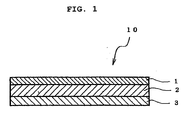
- FIG. 1 A sectional view showing one embodiment of the adhesive preparation of the present invention.
- the adhesive preparation of the present invention has an adhesive layer on at least one surface of a support, and the adhesive layer contains a first synthetic rubber having a viscosity average molecular weight of 2,500,000 - 6,500,000, a second synthetic rubber having a viscosity average molecular weight of 40,000 - 85,000, drug, an organic liquid component comprising two or more kinds of fatty acid alkyl esters and a tackifier.
- the first synthetic rubber is not particularly limited as long as it has a viscosity average molecular weight of 2,500,000 - 6,500,000.
- examples of include polydimethyl siloxane-resin, butyl rubber, ethylene-vinyl acetate-copolymer, ethylene-ethyl acrylate-copolymer, poly-alkylvinylether (e.g., poly-propylvinylether, poly-isopropylvinylether, poly-butylvinylether etc.), 2-methylpropene-polymer, ethylethylene-polymer, 1,2-dimethylethylene-polymer, ethylethylene-1,2-dimethylethylene-copolymer, poly-isoprene, poly-butadiene, styrene-isoprene-styrene block copolymer, styrene-butadienestyrene block copolymer and the like.
- branched aliphatic hydrocarbon e.g., 2-methylpropene-polymer, ethylethylene-polymer, 1,2-dimethylethylene-polymer and ethylethylene-1,2-dimethylethylene-copolymer
- 2-methylpropene-polymer is particularly preferable.
- the viscosity average molecular weight of the synthetic rubber is not less than 2,500,000 and the molecular chain is long and complicatedly entangled, a large amount of an organic liquid component can be retained.
- An adhesive layer containing such a synthetic rubber may sufficiently retain its shape.
- a synthetic rubber having a viscosity average molecular weight of not less than 2,500,000 can sufficiently retain its shape even when an adhesive layer contains an organic liquid component in a proportion of not less than 20 wt% relative to the total weight of the adhesive layer, while retaining the organic liquid component.
- the organic liquid component may ooze out from the adhesive layer containing the synthetic rubber. Even if oozing does not occur, the adhesive may ooze out during preservation of the adhesive preparation or the adhesive may remain on the skin surface upon release of the adhesive preparation from the skin, since the adhesive layer shows poor shape retention.
- an adhesive layer containing a synthetic rubber having a viscosity average molecular weight exceeding 6,500,000 may have decreased skin adhesive strength or tackiness.
- the viscosity average molecular weight of the first synthetic rubber is preferably 2,500,000 - 6,000,000, more preferably 2,500,000 - 5,500,000, most preferably 3,000,000 - 5,000,000.
- the proportion of the first synthetic rubber in an adhesive layer is 10 - 30 wt%, preferably 16 - 20 wt%, relative to the total weight of the adhesive layer.
- the proportion of the first synthetic rubber in an adhesive layer is less than 5 wt%, the internal cohesion strength of the adhesive layer may decrease, and when it exceeds 50 wt%, the adhesive layer may become stiff and the tackiness may decrease.
- the adhesive layer further contains a second synthetic rubber having a viscosity average molecular weight of 40,000 - 85,000.
- the second synthetic rubber has a viscosity average molecular weight of less than 40,000, moreover, a tackifier and a second synthetic rubber have high affinity, and a tackifier and a first synthetic rubber have low affinity and they may be separated from each other.
- a viscosity average molecular weight exceeding 85,000 furthermore, a second synthetic rubber and a first synthetic rubber have high affinity, and a tackifier and a first synthetic rubber have low affinity and they may be separated from each other.
- the kind of the second synthetic rubber is independently selected from the kinds of the first synthetic rubber. While the first synthetic rubber and the second synthetic rubber may be of the same kind or different kinds, they are preferably of the same kind in view of the compatibility thereof.
- the proportion of the second synthetic rubber in an adhesive layer is 10 - 40 wt%, preferably 23 - 30 wt%, relative to the total weight of the adhesive layer.
- a tackifier and a first synthetic rubber may be separated, and when it exceeds 50 wt%, the internal cohesion strength of the adhesive layer may be degraded.
- a tertiary synthetic rubber may be added to the adhesive layer.
- the drug is one that can be administered to mammals such as human and the like through the skin thereof, namely, a transdermally absorptive drug.
- the drug preferably has a coefficient of partition (1-octanol/water), i.e., logPow of preferably 0.5 - 5.5, more preferably 1.0 - 5.0.
- the drug preferably has a molecular weight of not more than 500, more preferably not more than 450.
- the logPow When the logPow is less than 0.5, the possibility of crystallization of the drug in an adhesive layer may increase since the hydrophilicity of the drug is high. When the logPow exceeds 5.5, the possibility of crystallization of the drug in an adhesive layer is sufficiently small even when the present invention is not applied, since the hydrophobicity of the drug is high. When the molecular weight exceeds 500, however, the solubility of the drug in an adhesive layer or an organic liquid component decreases, and the possibility of crystallization of the drug in an adhesive layer may increase.
- logPow is an index showing the hydrophilicity-hydrophobicity of a drug, which refers to values calculated using a logP calculation software Cache (registered trade mark, manufactured by FUJITSU) and according to the instructions of the manufacturer.
- the drug is a solid drug.
- the solid drug means a drug that is solid at room temperature (25°C), namely, a drug having a melting point higher than 25°C.
- separation from an adhesive layer namely, crystal growth in an adhesive layer, can be advantageously suppressed.
- the melting point here means values measured by DSC, model number DSC6220 (manufactured by Seiko Instruments Inc. (SII)), where the measurement conditions are as follows: in an aluminum container (open type), a specimen is subjected to temperature rise at 10°C/min and the melting peak temperature is measured.
- fentanyls are used since they can afford analgesic adhesive preparations for terminal cancer patients.
- the fentanyls here are chosen from fentanyl, sufentanyl, and pharmaceutically acceptable salts thereof.
- the proportion of the drug in an adhesive layer is not particularly limited as long as it affords the effect of the transdermal absorption drug and does not impair the adhesion property of an adhesive layer. It is preferably 0.1 - 10 wt%, more preferably 0.5 - 5 wt%, relative to the weight of an adhesive layer. When it is less than 0.1 wt%, the treatment effect may be insufficient, and when it is higher than 10 wt%, crystallization may occur and skin irritation may be developed.
- the organic liquid component is not particularly limited as long as it shows flowability at ambient temperature (25°C).
- examples thereof include polyvalent alcohols such as glycols Fatty acid alkyl esters are used in a mixture of two or more kinds thereof, to achieve a drug transdermal absorption-promoting effect.
- long chain alcohol is used.
- the long chain alcohol here means an alcohol having not less than 16 carbon atoms.
- a fatty acid alkyl ester made of a fatty acid having an unnecessarily many or small carbon number may show poor compatibility with the aforementioned synthetic rubber and the like, or volatilized in a heating step during formulation of a preparation.
- one made of a fatty acid having a double bond in a molecule may undergo oxidative decomposition and the like to cause problems in the preservation stability.
- a fatty acid alkyl ester made of a saturated or unsaturated higher fatty acid preferably having 12 - 16, more preferably 12 - 14, carbon atoms, and a saturated or unsaturated lower monohydroxy alcohol preferably having 1 - 4 carbon atoms is preferably adopted.
- preferable higher fatty acid include lauric acid (C12), myristic acid (C14) and palmitic acid (C16), particularly myristic acid and palmitic acid.
- examples of the lower monohydroxy alcohol include methyl alcohol, ethyl alcohol, propyl alcohol and butyl alcohol, which may be straight chain alcohol or branched alcohol, particularly preferably isopropyl alcohol.
- examples of the most preferable fatty acid alkyl ester include isopropyl myristate and isopropyl palmitate.
- Examples of the long chain alcohol include saturated or unsaturated, branched or straight chain alcohol, and branched type is preferable in view of the compatibility with synthetic rubbers. From the aspect of preservation stability, a saturated type is preferable.
- Examples of such long chain branched alcohol include long chain branched alcohol preferably having 16 - 22, more preferably 18 - 20, carbon atoms. When the carbon number is lower than 16, the compatibility with synthetic rubber decreases since the hydrophilicity increases, and oozing out from an adhesive layer and the like may occur. When the carbon number exceeds 22, the drug dissolution-aiding effect may be degraded since the hydrophobicity increases. Therefore, isostearyl alcohol (C18), octyldodecanol (C20) and the like are specifically preferable.
- the total proportion of these organic liquid components in the adhesive layer is preferably 20 wt% or above, more preferably more than 20 wt%, relative to the total weight of the adhesive layer.
- the adhesive preparation of the present invention can contain 20 wt% or more of an organic liquid component relative to the total weight of the adhesive layer while suppressing oozing from the adhesive layer.
- an adhesive layer since the shape of an adhesive layer cannot be retained easily when the amount of the organic liquid component is too high, its content is preferably less than 50 wt%. Since a greater content of long chain alcohol in an adhesive layer affords a higher solubility of a drug, it is considered that the adhesive layer can dissolve a large amount of a drug, and is advantageously associated with a lower possibility of separation of a drug from the adhesive layer during preservation.
- an adhesive layer can dissolve a large amount of a drug and shows a lower possibility of separation of a drug from the adhesive layer during preservation
- a long chain alcohol contained in a proportion of not less than 7.5 wt% of the adhesive layer relative to the total weight remarkably decreases the skin permeability of the drug.
- the decrease mechanism is not bound by theory, and is believed to be caused by interactions of the properties of fentanyls, more preferably fentanyl, and those of long chain alcohol.
- the proportion of a long chain alcohol in an adhesive layer is greater than 0 wt% and less than 7.5 wt%, more preferably not more than 6.5 wt%, and most preferably not more than 5.5 wt%, relative to the total weight of the adhesive layer.
- fatty acid alkyl ester was assumed to have no drug dissolution-aiding effect, it unexpectedly exhibited a drug dissolution-aiding effect, though lower than that by long chain alcohol.
- a combination of two or more kinds thereof provides an effect of decreasing the impurity derived from respective fatty acid alkyl esters.
- the weight ratio is not particularly limited when two or more kinds of fatty acid alkyl esters are used. In the case of using two kinds, the ratio is preferably 100:1 - 1:100, more preferably 10:1 - 1:10, most preferably 2:1 - 1:2.
- tackifier examples include polybutenes, rosin resin, terpene resin, petroleum resin, coumarone resin and the like.
- a tackifier may be used alone or in a combination of two or more kinds thereof.
- the proportion of a tackifier in the adhesive layer is 10 - 40 wt%, preferably 16 - 28 wt%, relative to the total weight of the adhesive layer. When the proportion of the tackifier is less than 5 wt%, the tackiness may be insufficient, and when it exceeds 50 wt%, the adhesive layer sometimes unpreferably shows a tendency toward breakage.
- the adhesive constituting the adhesive layer may contain other additives as an optional component (e.g., surfactants such as glycerol fatty acid ester, sorbitan fatty acid ester and the like, organic solvents with a high boiling point such as dimethyl sulfoxide, N-methylpyrrolidone and the like, absorption promoters such as pyrrolidone carboxylate, and the like), as long as they do not inhibit the effect of the present invention.
- the proportion of an additive as an optional component is preferably 0 - 15 wt% in total relative to the total weight of the adhesive layer.
- the thickness of the adhesive layer is generally 30 - 300 ⁇ m, preferably 60 - 180 ⁇ m.
- a support to be used for the present invention is not particularly limited, one substantially impermeable to a drug and the like, in other words, one that does not permit a decrease in the content of a drug (active ingredient), an additive and the like in the adhesive layer, which are lost from the back face through the support, is preferable.
- polyester for example, polyester, nylon, Saran (registered trademark), polyethylene, polypropylene, polyvinyl chloride, ethylene-ethyl acrylate copolymer, polytetrafluoroethylene, Surlyn (registered trademark), independent film such as metal foil and the like, or a laminate film thereof and the like can be used.
- Saran registered trademark
- polyethylene polypropylene
- polyvinyl chloride polyvinyl chloride
- ethylene-ethyl acrylate copolymer polytetrafluoroethylene
- Surlyn registered trademark
- independent film such as metal foil and the like, or a laminate film thereof and the like
- the support is preferably a laminate film of a non-porous plastic film made of the above-mentioned material and a porous film, to improve adhesive strength (anchor strength) thereof with an adhesive layer.
- the adhesive layer is preferably formed on the side of the porous film.
- porous film one capable of improving the anchor strength with the adhesive layer is adopted.
- Specific examples include paper, woven fabric, non-woven fabric, knitted fabric, sheet with mechanical perforation treatment and the like. Of these, paper, woven fabric and non-woven fabric are particularly preferable from the aspect of handling property and the like.
- the porous film preferably has a thickness of 10 - 200 ⁇ m from the aspects of improvement of anchor strength, flexibility of the whole adhesive preparation, adhesion operability and the like.
- a preferable thickness is within the range of 10 - 100 ⁇ m.
- the fabric weight is preferably 5 - 30 g/m 2 , more preferably 6 - 15 g/m 2 .
- the most preferable support in the present invention is a laminate film made of a 1.5 - 6 ⁇ m-thick polyester film (preferably polyethylene terephthalate film) and a polyester (preferably polyethylene terephthalate) non-woven fabric (fabric weight 6 - 12 g/m 2 ).
- the adhesive preparation of the present invention preferably has a release liner laminated on an adhesive face to protect the face of the adhesive layer until use.
- the release liner is not particularly limited as long as it can be release-treated, and secures sufficiently light release force.
- films of polyester, polyvinyl chloride, polyvinylidene chloride, polyethylene terephthalate and the like, paper such as high-quality paper, glassine paper and the like, or a laminate film of high-quality paper, glassine paper and the like with polyolefin and the like can be used after a release treatment by applying silicone resin, fluororesin and the like to the surface to be in contact with an adhesive layer.
- the thickness of the release liner is generally 10 - 200 ⁇ m, preferably 25 - 100 ⁇ m.
- the release liner of the present invention is preferably made of a polyester (particularly, polyethylene terephthalate) resin, from the aspects of barrier property and cost. In this case, moreover, one having a thickness of about 25 - 100 ⁇ m is more preferable from the aspect of handling property.
- the shape of the adhesive preparation of the present invention is not particularly limited and, for example, tape, sheet, reservoir and the like can be employed.
- the adhesive preparation of the present invention can be produced by, for example, dissolving the first and second synthetic rubbers, a drug, an organic liquid component and a tackifier in a suitable solvent such as toluene and the like, applying a solvent solution of the obtained composition for forming an adhesive layer to a release liner and drying same to form an adhesive layer, and laminating a support on the adhesive layer.
- the adhesive preparation of the present invention can be produced by, for example, directly applying the above-mentioned solvent solution of a composition for forming an adhesive layer to a support, drying same to form an adhesive layer on the support.
- the adhesive preparation of the present invention can be used by peeling off the release liner just before use and adhering the exposed adhesive face to the skin and the like.
- a preparation containing 0.1 - 100 mg of a drug is applied to 1 - 100 cm 2 of the skin of an adult about 1 - 7 times in 7 days.
- a solution of a composition for adhesive layer formation in toluene was prepared, and the obtained solution was applied to a polyethylene terephthalate (PET) liner (thickness 75 ⁇ m) after a silicone release treatment in such a manner that the thickness after drying would be as shown in Table 1.
- PET polyethylene terephthalate
- the liner was dried in a circulating-air oven at 100°C for 5 min to form an adhesive layer.
- the adhesive layer was adhered to a PET support to give a sheet-like adhesive preparation.
- Preparations preserved at room temperature for 3 months were evaluated according to the following criteria when taken out from a packing material. O: Almost no oozing was observed, and preparation could be taken out easily from a packing material without sticking. ⁇ : Oozing was observed, and preparation stuck to a packing material and could not be taken out easily.
- Adhesive preparations preserved at room temperature for 3 months were observed visually and with a microscope, and evaluated according to the following criteria.
- an adhesive face of a test piece (10 mm width) was lightly adhered to a clean phenol resin board as a test plate, and press-adhered by one reciprocation of a 850 g adhesion roller on the test piece.
- the compression area was set to 200 mm 2 .
- the test plate was stood for 30 min in a shear adhesion testing machine set to a 40 ⁇ 2°C environment, and one end of the test plate was held to hang it perpendicularly. A 150 g load was applied to the lower end and the time (min) before dropping was measured. The failure was confirmed to be of a cohesive failure mode for all the test pieces measured at this time.
- Preliminary Experimental Example 1 using A as the first synthetic rubber, almost no oozing was observed even when the total ratio of the organic liquid component was 20 wt% or above.
- Preliminary Experimental Example 2 which is the same as Preliminary Experimental Example 1 except that C was used instead of A, however, oozing was observed. Therefore, it has been clarified that use of a first synthetic rubber having a viscosity average molecular weight of 2,500,000 - 6,500,000 almost completely prevents oozing even when a large amount of an organic liquid component is contained in an adhesive layer.
- Comparative Examples using C instead of A oozing was developed (Comparative Examples 1 and 2) and crystallization of a drug occurred (Comparative Examples 2 - 5), despite the fact that the total amount of an organic liquid component was not more than 20 wt%.
- Comparative Examples 6 and 7 using G or H instead of A oozing was developed and the shear adhesion was low.
- Examples 7 - 10 and Comparative Examples 6 - 7 containing 23.5 wt% of an organic liquid component Examples containing the first synthetic rubber component having a viscosity average molecular weight of not less than 2,500,000 had high shear adhesion.
- Comparative Examples 6 - 7 containing a synthetic rubber component having a viscosity average molecular weight of less than 2,500,000 showed insufficient shear adhesion.
- the shear adhesion was high, and the adhesive layers thereof retained their shape extremely well, and were free of possibility of oozing during storage of the adhesive preparation and adhesive residue on the skin surface upon peeling off of the adhesive preparation from the skin.
- the above-mentioned adhesive preparation was cut into a 12 mm ⁇ circle and applied to the stratum corneum of the human skin.
- the dermal layer side was set on a Franz diffusion cell, and a test was performed using physiological saline (0.9 wt% NaCl+0.01 wt% NaN 3 , 32°C) as a receptor solution.
- physiological saline 0.9 wt% NaCl+0.01 wt% NaN 3 , 32°C
- the receptor solution was sampled at given time intervals and the weight of the drug in the sample solution was quantified by an HPLC method, based on which the maximum flux up to 48 hr was calculated.
- the maximum flux is a relative value when Comparative Example 1 is 100.
- Example 4 - 7 and 11 wherein the proportion of ODO is not more than 7.5 wt%, showed a high value of 133 - 165.
- Example 12 wherein the proportion of ODO is 7.5 wt%, showed a tendency toward a lower maximum flux of 117. Therefore, to achieve particularly high skin permeability while suppressing crystallization of a solid drug in an adhesive layer, it was preferable to set the total amount of the organic liquid component to not less than 20 wt%, and long chain alcohol to not less than 0 wt% and not more than 7.5 wt%.
- a rabbit primary skin irritation test was performed using the adhesive preparations obtained in Examples 5 and 7, and Comparative Example 1.
- the rabbit primary skin irritation test was performed according to the Draze method.
- the adhesive preparations of Reference Example 5 and Example 7 showed low skin stimulation as compared to the adhesive preparation of Comparative Example 1.
- the P.I.I. primary skin irritation index
- the P.I.I. primary skin irritation index of the adhesive preparations of Examples 5 and 7 was not more than 2, which is the level of a weak stimulant, and the skin stimulation was sufficiently low.
Landscapes
- Health & Medical Sciences (AREA)
- Public Health (AREA)
- Life Sciences & Earth Sciences (AREA)
- Animal Behavior & Ethology (AREA)
- General Health & Medical Sciences (AREA)
- Veterinary Medicine (AREA)
- Chemical & Material Sciences (AREA)
- Epidemiology (AREA)
- Engineering & Computer Science (AREA)
- Materials Engineering (AREA)
- Surgery (AREA)
- Medicinal Chemistry (AREA)
- Pharmacology & Pharmacy (AREA)
- Pain & Pain Management (AREA)
- Nuclear Medicine, Radiotherapy & Molecular Imaging (AREA)
- Hematology (AREA)
- Organic Chemistry (AREA)
- Chemical Kinetics & Catalysis (AREA)
- General Chemical & Material Sciences (AREA)
- Bioinformatics & Cheminformatics (AREA)
- Biomedical Technology (AREA)
- Neurosurgery (AREA)
- Neurology (AREA)
- Rheumatology (AREA)
- Medicinal Preparation (AREA)
- Pharmaceuticals Containing Other Organic And Inorganic Compounds (AREA)
- Adhesives Or Adhesive Processes (AREA)
Claims (5)
- Préparation adhésive comprenant une couche adhésive sur au moins une surface d'un support, dans laquelle la couche adhésive comprend un premier caoutchouc synthétique en une proportion de 10 à 30 % en poids par rapport au poids total de la couche adhésive, ayant un poids moléculaire moyen en viscosité, obtenu par calcul de l'indice de Staudinger (J0) à partir du temps d'écoulement du capillaire 1 d'un viscosimètre Ubdelohde à 20 °C selon l'équation de Schulz-Blaschke, et à partir de la formule suivante après insertion de la valeur J0 obtenue :

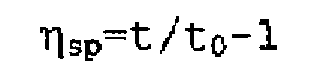 t : temps d'écoulement de la solution (corrigé selon Hagenbach-couette)t0 : temps d'écoulement du solvant (corrigé selon Hagenbach-couette)c : concentration de la solution (g/cm3)
 de 2 500 000 à 6 500 000, un médicament, un composant liquide organique et un agent collant en une proportion de 10 à 40 % en poids par rapport au poids total de la couche adhésive, dans laquelle la couche adhésive comprend, en outre, un second caoutchouc synthétique en une proportion de 10 à 40 % en poids par rapport au poids total de la couche adhésive, ayant un poids moléculaire moyen en viscosité de 40 000 à 85 000 et dans laquelle le composant liquide organique comprend deux types ou plus d'esters d'alkyle d'acides gras, dans lequel l'alcool à chaîne longue de 16 atomes de carbone ou plus est présent dans la couche adhésive en une proportion de plus de 0 % en poids à moins de 7,5 % en poids de la couche adhésive, et le médicament est le fentanyle, le sufentanyle, ou un sel pharmaceutiquement acceptable de ceux-ci.
Mv : poids moléculaire moyen en viscosité, - Préparation adhésive selon la revendication 1, dans laquelle le composant liquide organique est présent dans la couche adhésive en une proportion de 20 % en poids ou plus par rapport au poids total de la couche adhésive.
- Préparation adhésive selon la revendication 1 ou la revendication 2, dans laquelle les esters d'alkyle d'acides gras sont des esters d'acides gras saturés ou insaturés ayant de 12 à 16 atomes de carbone et des alcools monohydroxylés ayant de 1 à 4 atomes de carbone.
- Préparation adhésive selon l'une quelconque des revendications 1 à 3, dans laquelle l'alcool à chaîne longue est un alcool ramifié à chaîne longue ayant de 16 à 22 atomes de carbone.
- Préparation selon l'une quelconque des revendications précédentes comprenant, en outre, une feuille antiadhésive collée sur une face de la préparation adhésive.
Applications Claiming Priority (1)
| Application Number | Priority Date | Filing Date | Title |
|---|---|---|---|
| JP2007050379 | 2007-02-28 |
Publications (3)
| Publication Number | Publication Date |
|---|---|
| EP1970079A2 EP1970079A2 (fr) | 2008-09-17 |
| EP1970079A3 EP1970079A3 (fr) | 2009-06-17 |
| EP1970079B1 true EP1970079B1 (fr) | 2012-04-18 |
Family
ID=39671711
Family Applications (1)
| Application Number | Title | Priority Date | Filing Date |
|---|---|---|---|
| EP08250660A Not-in-force EP1970079B1 (fr) | 2007-02-28 | 2008-02-27 | Préparation adhésive contenant du fentanyl |
Country Status (8)
| Country | Link |
|---|---|
| US (1) | US8309119B2 (fr) |
| EP (1) | EP1970079B1 (fr) |
| JP (1) | JP5227041B2 (fr) |
| KR (1) | KR20080080051A (fr) |
| CN (1) | CN101254306B (fr) |
| AT (1) | ATE553788T1 (fr) |
| CA (1) | CA2622736A1 (fr) |
| ES (1) | ES2382684T3 (fr) |
Families Citing this family (3)
| Publication number | Priority date | Publication date | Assignee | Title |
|---|---|---|---|---|
| IL177071A0 (en) * | 2005-08-01 | 2006-12-10 | Nitto Denko Corp | Method of preparing a nicotine transdermal preparation |
| JP5192297B2 (ja) | 2007-07-05 | 2013-05-08 | 日東電工株式会社 | 貼付剤および貼付製剤 |
| CN108531097A (zh) * | 2018-05-29 | 2018-09-14 | 惠州市浩明科技股份有限公司 | 皮肤抗过敏胶粘材料及其制备方法 |
Family Cites Families (14)
| Publication number | Priority date | Publication date | Assignee | Title |
|---|---|---|---|---|
| ES2239372T3 (es) * | 1997-07-17 | 2005-09-16 | Nitto Denko Corporation | Lamina adhesiva medica y su produccion. |
| US5948433A (en) * | 1997-08-21 | 1999-09-07 | Bertek, Inc. | Transdermal patch |
| US6348210B1 (en) * | 1998-11-13 | 2002-02-19 | Alza Corporation | Methods for transdermal drug administration |
| JP4378028B2 (ja) * | 1999-04-13 | 2009-12-02 | 日東電工株式会社 | 経皮吸収型製剤 |
| FR2807323A1 (fr) * | 2000-04-10 | 2001-10-12 | Oreal | Composition, notamment cosmetique, renfermant un steroide et un 2-alkyl alcanol ou un ester |
| US20020119187A1 (en) * | 2000-09-29 | 2002-08-29 | Cantor Adam S. | Composition for the transdermal delivery of fentanyl |
| JP2003300873A (ja) * | 2002-04-12 | 2003-10-21 | Nitto Denko Corp | 貼付剤およびその製造方法 |
| US20050163831A1 (en) * | 2002-08-02 | 2005-07-28 | Hisamitsu Pharmaceutical Co., Inc. | Patch for transdermal administration |
| EP1676895B1 (fr) * | 2003-10-20 | 2013-05-08 | Hisamitsu Pharmaceutical Co., Inc. | Patch adhesif a usage externe sur la peau |
| JP4824963B2 (ja) * | 2004-08-12 | 2011-11-30 | 日東電工株式会社 | 貼付材及び貼付製剤 |
| JP4745747B2 (ja) * | 2004-08-12 | 2011-08-10 | 日東電工株式会社 | フェンタニル含有貼付製剤 |
| JP2006206471A (ja) | 2005-01-26 | 2006-08-10 | Nitto Denko Corp | テープ製剤 |
| JP2006288887A (ja) | 2005-04-13 | 2006-10-26 | Nitto Denko Corp | 貼付製剤 |
| JP4392016B2 (ja) | 2006-11-22 | 2009-12-24 | 日東電工株式会社 | 貼付製剤 |
-
2008
- 2008-02-05 JP JP2008024967A patent/JP5227041B2/ja not_active Expired - Fee Related
- 2008-02-27 EP EP08250660A patent/EP1970079B1/fr not_active Not-in-force
- 2008-02-27 CA CA002622736A patent/CA2622736A1/fr not_active Abandoned
- 2008-02-27 US US12/071,867 patent/US8309119B2/en not_active Expired - Fee Related
- 2008-02-27 AT AT08250660T patent/ATE553788T1/de active
- 2008-02-27 ES ES08250660T patent/ES2382684T3/es active Active
- 2008-02-28 CN CN2008100820166A patent/CN101254306B/zh not_active Expired - Fee Related
- 2008-02-28 KR KR1020080018355A patent/KR20080080051A/ko not_active Ceased
Also Published As
| Publication number | Publication date |
|---|---|
| JP5227041B2 (ja) | 2013-07-03 |
| ES2382684T3 (es) | 2012-06-12 |
| JP2008239603A (ja) | 2008-10-09 |
| ATE553788T1 (de) | 2012-05-15 |
| KR20080080051A (ko) | 2008-09-02 |
| CN101254306A (zh) | 2008-09-03 |
| EP1970079A2 (fr) | 2008-09-17 |
| CN101254306B (zh) | 2012-10-24 |
| US8309119B2 (en) | 2012-11-13 |
| EP1970079A3 (fr) | 2009-06-17 |
| US20080206315A1 (en) | 2008-08-28 |
| CA2622736A1 (fr) | 2008-08-28 |
Similar Documents
| Publication | Publication Date | Title |
|---|---|---|
| RU2375050C2 (ru) | Клейкий препарат, содержащий фентанил | |
| EP2110125B1 (fr) | Dispositif d'administration de médicament transdermique | |
| KR101246400B1 (ko) | 비소프롤롤 함유 접착 제제 | |
| EP2011526B1 (fr) | Patch et préparation de patch | |
| KR20090118957A (ko) | 비소프롤롤 경피 투여 디바이스 | |
| EP1625846B1 (fr) | Materiau adhésif et préparation d'adhésif | |
| US8309119B2 (en) | Drug containing adhesive preparation | |
| KR101374436B1 (ko) | 비소프롤롤 함유 접착 제제 | |
| CA2633027C (fr) | Preparation pharmaceutique adhesive | |
| EP2135905A2 (fr) | Emplâtre et procédé de fabrication de celui-ci | |
| JP5548727B2 (ja) | ビソプロロール含有貼付製剤 | |
| EP2671573B1 (fr) | Timbre transdermique et préparation de timbre transdermique | |
| WO2012060431A1 (fr) | Timbre | |
| WO2014068600A1 (fr) | Système transdermique stable d'administration de médicaments comprenant du diclofénac | |
| EP2011525B1 (fr) | Patch et préparation de patch | |
| KR20250130752A (ko) | 테트라하이드로칸나비놀을 유효성분으로 포함하는 경피흡수 패치제 |
Legal Events
| Date | Code | Title | Description |
|---|---|---|---|
| PUAI | Public reference made under article 153(3) epc to a published international application that has entered the european phase |
Free format text: ORIGINAL CODE: 0009012 |
|
| AK | Designated contracting states |
Kind code of ref document: A2 Designated state(s): AT BE BG CH CY CZ DE DK EE ES FI FR GB GR HR HU IE IS IT LI LT LU LV MC MT NL NO PL PT RO SE SI SK TR |
|
| AX | Request for extension of the european patent |
Extension state: AL BA MK RS |
|
| PUAL | Search report despatched |
Free format text: ORIGINAL CODE: 0009013 |
|
| AK | Designated contracting states |
Kind code of ref document: A3 Designated state(s): AT BE BG CH CY CZ DE DK EE ES FI FR GB GR HR HU IE IS IT LI LT LU LV MC MT NL NO PL PT RO SE SI SK TR |
|
| AX | Request for extension of the european patent |
Extension state: AL BA MK RS |
|
| 17P | Request for examination filed |
Effective date: 20091216 |
|
| AKX | Designation fees paid |
Designated state(s): AT BE BG CH CY CZ DE DK EE ES FI FR GB GR HR HU IE IS IT LI LT LU LV MC MT NL NO PL PT RO SE SI SK TR |
|
| 17Q | First examination report despatched |
Effective date: 20100401 |
|
| GRAJ | Information related to disapproval of communication of intention to grant by the applicant or resumption of examination proceedings by the epo deleted |
Free format text: ORIGINAL CODE: EPIDOSDIGR1 |
|
| GRAP | Despatch of communication of intention to grant a patent |
Free format text: ORIGINAL CODE: EPIDOSNIGR1 |
|
| GRAP | Despatch of communication of intention to grant a patent |
Free format text: ORIGINAL CODE: EPIDOSNIGR1 |
|
| RIN1 | Information on inventor provided before grant (corrected) |
Inventor name: INOSAKA, KEIGO Inventor name: TERASHI, SACHIKO Inventor name: SATODA, SHIRO Inventor name: MATSUOKA, KENSUKE Inventor name: NISHIMURA, MASATO |
|
| RTI1 | Title (correction) |
Free format text: FENTANYL CONTAINING ADHESIVE PREPARATION |
|
| RAP1 | Party data changed (applicant data changed or rights of an application transferred) |
Owner name: NITTO DENKO CORPORATION |
|
| GRAS | Grant fee paid |
Free format text: ORIGINAL CODE: EPIDOSNIGR3 |
|
| GRAA | (expected) grant |
Free format text: ORIGINAL CODE: 0009210 |
|
| AK | Designated contracting states |
Kind code of ref document: B1 Designated state(s): AT BE BG CH CY CZ DE DK EE ES FI FR GB GR HR HU IE IS IT LI LT LU LV MC MT NL NO PL PT RO SE SI SK TR |
|
| REG | Reference to a national code |
Ref country code: GB Ref legal event code: FG4D |
|
| REG | Reference to a national code |
Ref country code: CH Ref legal event code: EP |
|
| REG | Reference to a national code |
Ref country code: IE Ref legal event code: FG4D |
|
| REG | Reference to a national code |
Ref country code: AT Ref legal event code: REF Ref document number: 553788 Country of ref document: AT Kind code of ref document: T Effective date: 20120515 |
|
| REG | Reference to a national code |
Ref country code: ES Ref legal event code: FG2A Ref document number: 2382684 Country of ref document: ES Kind code of ref document: T3 Effective date: 20120612 |
|
| REG | Reference to a national code |
Ref country code: DE Ref legal event code: R096 Ref document number: 602008014886 Country of ref document: DE Effective date: 20120621 |
|
| REG | Reference to a national code |
Ref country code: NL Ref legal event code: VDEP Effective date: 20120418 |
|
| REG | Reference to a national code |
Ref country code: AT Ref legal event code: MK05 Ref document number: 553788 Country of ref document: AT Kind code of ref document: T Effective date: 20120418 |
|
| LTIE | Lt: invalidation of european patent or patent extension |
Effective date: 20120418 |
|
| PG25 | Lapsed in a contracting state [announced via postgrant information from national office to epo] |
Ref country code: IS Free format text: LAPSE BECAUSE OF FAILURE TO SUBMIT A TRANSLATION OF THE DESCRIPTION OR TO PAY THE FEE WITHIN THE PRESCRIBED TIME-LIMIT Effective date: 20120818 Ref country code: FI Free format text: LAPSE BECAUSE OF FAILURE TO SUBMIT A TRANSLATION OF THE DESCRIPTION OR TO PAY THE FEE WITHIN THE PRESCRIBED TIME-LIMIT Effective date: 20120418 Ref country code: LT Free format text: LAPSE BECAUSE OF FAILURE TO SUBMIT A TRANSLATION OF THE DESCRIPTION OR TO PAY THE FEE WITHIN THE PRESCRIBED TIME-LIMIT Effective date: 20120418 Ref country code: SE Free format text: LAPSE BECAUSE OF FAILURE TO SUBMIT A TRANSLATION OF THE DESCRIPTION OR TO PAY THE FEE WITHIN THE PRESCRIBED TIME-LIMIT Effective date: 20120418 Ref country code: PL Free format text: LAPSE BECAUSE OF FAILURE TO SUBMIT A TRANSLATION OF THE DESCRIPTION OR TO PAY THE FEE WITHIN THE PRESCRIBED TIME-LIMIT Effective date: 20120418 Ref country code: NO Free format text: LAPSE BECAUSE OF FAILURE TO SUBMIT A TRANSLATION OF THE DESCRIPTION OR TO PAY THE FEE WITHIN THE PRESCRIBED TIME-LIMIT Effective date: 20120718 Ref country code: CY Free format text: LAPSE BECAUSE OF FAILURE TO SUBMIT A TRANSLATION OF THE DESCRIPTION OR TO PAY THE FEE WITHIN THE PRESCRIBED TIME-LIMIT Effective date: 20120418 |
|
| PG25 | Lapsed in a contracting state [announced via postgrant information from national office to epo] |
Ref country code: SI Free format text: LAPSE BECAUSE OF FAILURE TO SUBMIT A TRANSLATION OF THE DESCRIPTION OR TO PAY THE FEE WITHIN THE PRESCRIBED TIME-LIMIT Effective date: 20120418 Ref country code: HR Free format text: LAPSE BECAUSE OF FAILURE TO SUBMIT A TRANSLATION OF THE DESCRIPTION OR TO PAY THE FEE WITHIN THE PRESCRIBED TIME-LIMIT Effective date: 20120418 Ref country code: GR Free format text: LAPSE BECAUSE OF FAILURE TO SUBMIT A TRANSLATION OF THE DESCRIPTION OR TO PAY THE FEE WITHIN THE PRESCRIBED TIME-LIMIT Effective date: 20120719 Ref country code: LV Free format text: LAPSE BECAUSE OF FAILURE TO SUBMIT A TRANSLATION OF THE DESCRIPTION OR TO PAY THE FEE WITHIN THE PRESCRIBED TIME-LIMIT Effective date: 20120418 Ref country code: PT Free format text: LAPSE BECAUSE OF FAILURE TO SUBMIT A TRANSLATION OF THE DESCRIPTION OR TO PAY THE FEE WITHIN THE PRESCRIBED TIME-LIMIT Effective date: 20120820 |
|
| PG25 | Lapsed in a contracting state [announced via postgrant information from national office to epo] |
Ref country code: BE Free format text: LAPSE BECAUSE OF FAILURE TO SUBMIT A TRANSLATION OF THE DESCRIPTION OR TO PAY THE FEE WITHIN THE PRESCRIBED TIME-LIMIT Effective date: 20120418 |
|
| PG25 | Lapsed in a contracting state [announced via postgrant information from national office to epo] |
Ref country code: RO Free format text: LAPSE BECAUSE OF FAILURE TO SUBMIT A TRANSLATION OF THE DESCRIPTION OR TO PAY THE FEE WITHIN THE PRESCRIBED TIME-LIMIT Effective date: 20120418 Ref country code: SK Free format text: LAPSE BECAUSE OF FAILURE TO SUBMIT A TRANSLATION OF THE DESCRIPTION OR TO PAY THE FEE WITHIN THE PRESCRIBED TIME-LIMIT Effective date: 20120418 Ref country code: DK Free format text: LAPSE BECAUSE OF FAILURE TO SUBMIT A TRANSLATION OF THE DESCRIPTION OR TO PAY THE FEE WITHIN THE PRESCRIBED TIME-LIMIT Effective date: 20120418 Ref country code: EE Free format text: LAPSE BECAUSE OF FAILURE TO SUBMIT A TRANSLATION OF THE DESCRIPTION OR TO PAY THE FEE WITHIN THE PRESCRIBED TIME-LIMIT Effective date: 20120418 Ref country code: AT Free format text: LAPSE BECAUSE OF FAILURE TO SUBMIT A TRANSLATION OF THE DESCRIPTION OR TO PAY THE FEE WITHIN THE PRESCRIBED TIME-LIMIT Effective date: 20120418 Ref country code: CZ Free format text: LAPSE BECAUSE OF FAILURE TO SUBMIT A TRANSLATION OF THE DESCRIPTION OR TO PAY THE FEE WITHIN THE PRESCRIBED TIME-LIMIT Effective date: 20120418 Ref country code: NL Free format text: LAPSE BECAUSE OF FAILURE TO SUBMIT A TRANSLATION OF THE DESCRIPTION OR TO PAY THE FEE WITHIN THE PRESCRIBED TIME-LIMIT Effective date: 20120418 |
|
| PLBE | No opposition filed within time limit |
Free format text: ORIGINAL CODE: 0009261 |
|
| STAA | Information on the status of an ep patent application or granted ep patent |
Free format text: STATUS: NO OPPOSITION FILED WITHIN TIME LIMIT |
|
| 26N | No opposition filed |
Effective date: 20130121 |
|
| REG | Reference to a national code |
Ref country code: DE Ref legal event code: R097 Ref document number: 602008014886 Country of ref document: DE Effective date: 20130121 |
|
| PG25 | Lapsed in a contracting state [announced via postgrant information from national office to epo] |
Ref country code: BG Free format text: LAPSE BECAUSE OF FAILURE TO SUBMIT A TRANSLATION OF THE DESCRIPTION OR TO PAY THE FEE WITHIN THE PRESCRIBED TIME-LIMIT Effective date: 20120718 |
|
| PG25 | Lapsed in a contracting state [announced via postgrant information from national office to epo] |
Ref country code: MC Free format text: LAPSE BECAUSE OF NON-PAYMENT OF DUE FEES Effective date: 20130228 |
|
| REG | Reference to a national code |
Ref country code: CH Ref legal event code: PL |
|
| PG25 | Lapsed in a contracting state [announced via postgrant information from national office to epo] |
Ref country code: LI Free format text: LAPSE BECAUSE OF NON-PAYMENT OF DUE FEES Effective date: 20130228 Ref country code: CH Free format text: LAPSE BECAUSE OF NON-PAYMENT OF DUE FEES Effective date: 20130228 |
|
| REG | Reference to a national code |
Ref country code: IE Ref legal event code: MM4A |
|
| PG25 | Lapsed in a contracting state [announced via postgrant information from national office to epo] |
Ref country code: IE Free format text: LAPSE BECAUSE OF NON-PAYMENT OF DUE FEES Effective date: 20130227 |
|
| PGFP | Annual fee paid to national office [announced via postgrant information from national office to epo] |
Ref country code: ES Payment date: 20140113 Year of fee payment: 7 Ref country code: IT Payment date: 20140213 Year of fee payment: 7 Ref country code: FR Payment date: 20140211 Year of fee payment: 7 |
|
| PGFP | Annual fee paid to national office [announced via postgrant information from national office to epo] |
Ref country code: GB Payment date: 20140226 Year of fee payment: 7 |
|
| PG25 | Lapsed in a contracting state [announced via postgrant information from national office to epo] |
Ref country code: MT Free format text: LAPSE BECAUSE OF FAILURE TO SUBMIT A TRANSLATION OF THE DESCRIPTION OR TO PAY THE FEE WITHIN THE PRESCRIBED TIME-LIMIT Effective date: 20120418 |
|
| PGFP | Annual fee paid to national office [announced via postgrant information from national office to epo] |
Ref country code: DE Payment date: 20140417 Year of fee payment: 7 |
|
| PG25 | Lapsed in a contracting state [announced via postgrant information from national office to epo] |
Ref country code: TR Free format text: LAPSE BECAUSE OF FAILURE TO SUBMIT A TRANSLATION OF THE DESCRIPTION OR TO PAY THE FEE WITHIN THE PRESCRIBED TIME-LIMIT Effective date: 20120418 |
|
| PG25 | Lapsed in a contracting state [announced via postgrant information from national office to epo] |
Ref country code: LU Free format text: LAPSE BECAUSE OF NON-PAYMENT OF DUE FEES Effective date: 20130227 Ref country code: HU Free format text: LAPSE BECAUSE OF FAILURE TO SUBMIT A TRANSLATION OF THE DESCRIPTION OR TO PAY THE FEE WITHIN THE PRESCRIBED TIME-LIMIT; INVALID AB INITIO Effective date: 20080227 |
|
| REG | Reference to a national code |
Ref country code: DE Ref legal event code: R119 Ref document number: 602008014886 Country of ref document: DE |
|
| GBPC | Gb: european patent ceased through non-payment of renewal fee |
Effective date: 20150227 |
|
| REG | Reference to a national code |
Ref country code: FR Ref legal event code: ST Effective date: 20151030 |
|
| PG25 | Lapsed in a contracting state [announced via postgrant information from national office to epo] |
Ref country code: IT Free format text: LAPSE BECAUSE OF NON-PAYMENT OF DUE FEES Effective date: 20150227 |
|
| PG25 | Lapsed in a contracting state [announced via postgrant information from national office to epo] |
Ref country code: DE Free format text: LAPSE BECAUSE OF NON-PAYMENT OF DUE FEES Effective date: 20150901 Ref country code: GB Free format text: LAPSE BECAUSE OF NON-PAYMENT OF DUE FEES Effective date: 20150227 |
|
| PG25 | Lapsed in a contracting state [announced via postgrant information from national office to epo] |
Ref country code: FR Free format text: LAPSE BECAUSE OF NON-PAYMENT OF DUE FEES Effective date: 20150302 |
|
| REG | Reference to a national code |
Ref country code: ES Ref legal event code: FD2A Effective date: 20160329 |
|
| PG25 | Lapsed in a contracting state [announced via postgrant information from national office to epo] |
Ref country code: ES Free format text: LAPSE BECAUSE OF NON-PAYMENT OF DUE FEES Effective date: 20150228 |