EP1970366A1 - Clathrate dérivé d isohumulone et préparation contenant ledit clathrate - Google Patents
Clathrate dérivé d isohumulone et préparation contenant ledit clathrate Download PDFInfo
- Publication number
- EP1970366A1 EP1970366A1 EP06834346A EP06834346A EP1970366A1 EP 1970366 A1 EP1970366 A1 EP 1970366A1 EP 06834346 A EP06834346 A EP 06834346A EP 06834346 A EP06834346 A EP 06834346A EP 1970366 A1 EP1970366 A1 EP 1970366A1
- Authority
- EP
- European Patent Office
- Prior art keywords
- isohumulones
- γcd
- aqueous solvent
- inclusion compound
- composition
- Prior art date
- Legal status (The legal status is an assumption and is not a legal conclusion. Google has not performed a legal analysis and makes no representation as to the accuracy of the status listed.)
- Withdrawn
Links
Images




Classifications
-
- C—CHEMISTRY; METALLURGY
- C07—ORGANIC CHEMISTRY
- C07C—ACYCLIC OR CARBOCYCLIC COMPOUNDS
- C07C45/00—Preparation of compounds having >C = O groups bound only to carbon or hydrogen atoms; Preparation of chelates of such compounds
- C07C45/78—Separation; Purification; Stabilisation; Use of additives
- C07C45/85—Separation; Purification; Stabilisation; Use of additives by treatment giving rise to a chemical modification
-
- A—HUMAN NECESSITIES
- A23—FOODS OR FOODSTUFFS; TREATMENT THEREOF, NOT COVERED BY OTHER CLASSES
- A23L—FOODS, FOODSTUFFS OR NON-ALCOHOLIC BEVERAGES, NOT OTHERWISE PROVIDED FOR; PREPARATION OR TREATMENT THEREOF
- A23L33/00—Modifying nutritive qualities of foods; Dietetic products; Preparation or treatment thereof
- A23L33/10—Modifying nutritive qualities of foods; Dietetic products; Preparation or treatment thereof using additives
- A23L33/105—Plant extracts, their artificial duplicates or their derivatives
-
- A—HUMAN NECESSITIES
- A61—MEDICAL OR VETERINARY SCIENCE; HYGIENE
- A61K—PREPARATIONS FOR MEDICAL, DENTAL OR TOILETRY PURPOSES
- A61K36/00—Medicinal preparations of undetermined constitution containing material from algae, lichens, fungi or plants, or derivatives thereof, e.g. traditional herbal medicines
- A61K36/18—Magnoliophyta (angiosperms)
- A61K36/185—Magnoliopsida (dicotyledons)
- A61K36/60—Moraceae (Mulberry family), e.g. breadfruit or fig
-
- A—HUMAN NECESSITIES
- A61—MEDICAL OR VETERINARY SCIENCE; HYGIENE
- A61K—PREPARATIONS FOR MEDICAL, DENTAL OR TOILETRY PURPOSES
- A61K47/00—Medicinal preparations characterised by the non-active ingredients used, e.g. carriers or inert additives; Targeting or modifying agents chemically bound to the active ingredient
- A61K47/30—Macromolecular organic or inorganic compounds, e.g. inorganic polyphosphates
- A61K47/36—Polysaccharides; Derivatives thereof, e.g. gums, starch, alginate, dextrin, hyaluronic acid, chitosan, inulin, agar or pectin
- A61K47/40—Cyclodextrins; Derivatives thereof
-
- A—HUMAN NECESSITIES
- A61—MEDICAL OR VETERINARY SCIENCE; HYGIENE
- A61K—PREPARATIONS FOR MEDICAL, DENTAL OR TOILETRY PURPOSES
- A61K47/00—Medicinal preparations characterised by the non-active ingredients used, e.g. carriers or inert additives; Targeting or modifying agents chemically bound to the active ingredient
- A61K47/50—Medicinal preparations characterised by the non-active ingredients used, e.g. carriers or inert additives; Targeting or modifying agents chemically bound to the active ingredient the non-active ingredient being chemically bound to the active ingredient, e.g. polymer-drug conjugates
- A61K47/69—Medicinal preparations characterised by the non-active ingredients used, e.g. carriers or inert additives; Targeting or modifying agents chemically bound to the active ingredient the non-active ingredient being chemically bound to the active ingredient, e.g. polymer-drug conjugates the conjugate being characterised by physical or galenical forms, e.g. emulsion, particle, inclusion complex, stent or kit
- A61K47/6949—Medicinal preparations characterised by the non-active ingredients used, e.g. carriers or inert additives; Targeting or modifying agents chemically bound to the active ingredient the non-active ingredient being chemically bound to the active ingredient, e.g. polymer-drug conjugates the conjugate being characterised by physical or galenical forms, e.g. emulsion, particle, inclusion complex, stent or kit inclusion complexes, e.g. clathrates, cavitates or fullerenes
- A61K47/6951—Medicinal preparations characterised by the non-active ingredients used, e.g. carriers or inert additives; Targeting or modifying agents chemically bound to the active ingredient the non-active ingredient being chemically bound to the active ingredient, e.g. polymer-drug conjugates the conjugate being characterised by physical or galenical forms, e.g. emulsion, particle, inclusion complex, stent or kit inclusion complexes, e.g. clathrates, cavitates or fullerenes using cyclodextrin
-
- A—HUMAN NECESSITIES
- A61—MEDICAL OR VETERINARY SCIENCE; HYGIENE
- A61K—PREPARATIONS FOR MEDICAL, DENTAL OR TOILETRY PURPOSES
- A61K9/00—Medicinal preparations characterised by special physical form
- A61K9/0012—Galenical forms characterised by the site of application
- A61K9/0053—Mouth and digestive tract, i.e. intraoral and peroral administration
- A61K9/0056—Mouth soluble or dispersible forms; Suckable, eatable, chewable coherent forms; Forms rapidly disintegrating in the mouth; Lozenges; Lollipops; Bite capsules; Baked products; Baits or other oral forms for animals
-
- A—HUMAN NECESSITIES
- A61—MEDICAL OR VETERINARY SCIENCE; HYGIENE
- A61K—PREPARATIONS FOR MEDICAL, DENTAL OR TOILETRY PURPOSES
- A61K9/00—Medicinal preparations characterised by special physical form
- A61K9/0087—Galenical forms not covered by A61K9/02 - A61K9/7023
- A61K9/0095—Drinks; Beverages; Syrups; Compositions for reconstitution thereof, e.g. powders or tablets to be dispersed in a glass of water; Veterinary drenches
-
- B—PERFORMING OPERATIONS; TRANSPORTING
- B82—NANOTECHNOLOGY
- B82Y—SPECIFIC USES OR APPLICATIONS OF NANOSTRUCTURES; MEASUREMENT OR ANALYSIS OF NANOSTRUCTURES; MANUFACTURE OR TREATMENT OF NANOSTRUCTURES
- B82Y5/00—Nanobiotechnology or nanomedicine, e.g. protein engineering or drug delivery
-
- C—CHEMISTRY; METALLURGY
- C07—ORGANIC CHEMISTRY
- C07C—ACYCLIC OR CARBOCYCLIC COMPOUNDS
- C07C49/00—Ketones; Ketenes; Dimeric ketenes; Ketonic chelates
- C07C49/587—Unsaturated compounds containing a keto groups being part of a ring
- C07C49/703—Unsaturated compounds containing a keto groups being part of a ring containing hydroxy groups
- C07C49/743—Unsaturated compounds containing a keto groups being part of a ring containing hydroxy groups having unsaturation outside the rings, e.g. humulones, lupulones
-
- C—CHEMISTRY; METALLURGY
- C08—ORGANIC MACROMOLECULAR COMPOUNDS; THEIR PREPARATION OR CHEMICAL WORKING-UP; COMPOSITIONS BASED THEREON
- C08B—POLYSACCHARIDES; DERIVATIVES THEREOF
- C08B37/00—Preparation of polysaccharides not provided for in groups C08B1/00 - C08B35/00; Derivatives thereof
- C08B37/0006—Homoglycans, i.e. polysaccharides having a main chain consisting of one single sugar, e.g. colominic acid
- C08B37/0009—Homoglycans, i.e. polysaccharides having a main chain consisting of one single sugar, e.g. colominic acid alpha-D-Glucans, e.g. polydextrose, alternan, glycogen; (alpha-1,4)(alpha-1,6)-D-Glucans; (alpha-1,3)(alpha-1,4)-D-Glucans, e.g. isolichenan or nigeran; (alpha-1,4)-D-Glucans; (alpha-1,3)-D-Glucans, e.g. pseudonigeran; Derivatives thereof
- C08B37/0012—Cyclodextrin [CD], e.g. cycle with 6 units (alpha), with 7 units (beta) and with 8 units (gamma), large-ring cyclodextrin or cycloamylose with 9 units or more; Derivatives thereof
-
- C—CHEMISTRY; METALLURGY
- C08—ORGANIC MACROMOLECULAR COMPOUNDS; THEIR PREPARATION OR CHEMICAL WORKING-UP; COMPOSITIONS BASED THEREON
- C08B—POLYSACCHARIDES; DERIVATIVES THEREOF
- C08B37/00—Preparation of polysaccharides not provided for in groups C08B1/00 - C08B35/00; Derivatives thereof
- C08B37/0006—Homoglycans, i.e. polysaccharides having a main chain consisting of one single sugar, e.g. colominic acid
- C08B37/0009—Homoglycans, i.e. polysaccharides having a main chain consisting of one single sugar, e.g. colominic acid alpha-D-Glucans, e.g. polydextrose, alternan, glycogen; (alpha-1,4)(alpha-1,6)-D-Glucans; (alpha-1,3)(alpha-1,4)-D-Glucans, e.g. isolichenan or nigeran; (alpha-1,4)-D-Glucans; (alpha-1,3)-D-Glucans, e.g. pseudonigeran; Derivatives thereof
- C08B37/0012—Cyclodextrin [CD], e.g. cycle with 6 units (alpha), with 7 units (beta) and with 8 units (gamma), large-ring cyclodextrin or cycloamylose with 9 units or more; Derivatives thereof
- C08B37/0015—Inclusion compounds, i.e. host-guest compounds, e.g. polyrotaxanes
-
- C—CHEMISTRY; METALLURGY
- C07—ORGANIC CHEMISTRY
- C07C—ACYCLIC OR CARBOCYCLIC COMPOUNDS
- C07C2601/00—Systems containing only non-condensed rings
- C07C2601/06—Systems containing only non-condensed rings with a five-membered ring
- C07C2601/10—Systems containing only non-condensed rings with a five-membered ring the ring being unsaturated
Definitions
- the present invention relates to an inclusion compound of isohumulones in which isohumulones are included in ⁇ -cyclodextrin (CD), and a composition containing the same, as well as a composition obtainable by mixing isohumulones and ⁇ CD in a determined ratio.
- CD ⁇ -cyclodextrin
- the isohumulones such as isohumulone, isocohumulone and isoadohumulone, are derived by isomerizing humulones contained in hop cones, such as humulone, cohumulone and adohumulone, and are known as primary ingredients for bitter taste of beer and low-malt beer.
- hop cones such as humulone, cohumulone and adohumulone
- a hop plays various roles, such as addition of characteristic flavors, preservation, clarification and improvement of head retention in brewing of beer or low-malt beer.
- the hop ( Humulus lupulus L .) belongs to Cannabaceae, and is a dioecious and perennial bine, probably originated from the area between West Asia and Central Europe.
- the hop grows naturally in a comparatively cold district and commercially cultivated for marketing in Germany, USA, Czech, China, etc.
- the isohumulones have, in addition to the role in brewing of beer or low-malt beer, various beneficial physiological effects. Examples include: a cariostatic effect (Japanese Patent Laid-Open Publication No. 211219/1988 ), anti-osteoporosis effect (Japanese Patent Laid-Open Publication No. 330594/1995 ), growth inhibitory effect on Helicobacter pylori (Japanese Patent Laid-Open Publication No. 25247/1998 ), aldose reductase inhibition effect (Japanese Patent Laid-Open Publication No. 226640/2003 ), and improving effect on blood glucose level (Japanese Patent Laid-Open Publication No. 224795/2004 ). With such background it has been expected to apply the isohumulones to a health oriented food and drink, called as a health food, a function food, etc.
- the isohumulones have a characteristic bitter taste. Their content in beer or low-malt beer is around 20 ppm or lower, and the content beyond 30 ppm causes, with certain differences among individuals, slight discomfort, and beyond 50 ppm strong discomfort. However, in order to enjoy the beneficial physiological effects by eating or drinking, the amount causing such discomfort is required. Further, the isohumulones have drawbacks, such as tendency to degrade during storage, or oily properties unsuitable for food processing. Consequently, a food and drink containing high level of the isohumulones has been hardly realized.
- a low molecular weight physiologically active substance originated from a plant has in general a bitter or astringent taste, and several techniques have been proposed to mitigate it.
- a technique using cyclodextrin (CD) has been also reported.
- CD is a generic name for cyclic oligosaccharides that are obtained by making a cyclodextrin glucanotransferase (CGTase) act on starches, and have a cyclic chain structure formed by glucose molecules bonded by ⁇ -1,4-linkages. Since the second half of the 19 th century its existence in nature has been known, and at the beginning of the 20 th century Shardinger discovered a method of separation and purification of it, and its cyclic structure. In 1970s a CGTase originated from bacteria was discovered, which has accelerated the development of a production technology of crystalline CD. Currently CDs with 6, 7, and 8 polymerized glucose units are available for practical use, and named as ⁇ CD, ⁇ CD and ⁇ CD respectively.
- CD has a structure of a bottomless bucket, and while the outer surface of the cylinder is hydrophilic, the inner surface is characteristically hydrophobic. Due to the above nature, CD tends to include a specific organic compound as a "guest molecule" in the cavity, and such a phenomenon is called inclusion (clathration). They say a taste or solubility of a guest molecule can be modified by utilization of the inclusion effect. As for a mechanism of the inclusion, however, little concrete study has been made about the specific congruency between CD and a guest molecule. Such limited knowledge includes an opinion that the molecular weight suitable for a guest molecule is about 120 to 350 ( Spec Chem, vol. 7, No. 6, p. 374 (1987 )).
- Patent Document 1 Japanese Patent Laid-Open Publication No. 146271/1983
- isohumulones inclusion of isohumulones is not confirmed and a noticeable mitigating effect on the bitter taste has been hardly obtained.
- a food and drink with a medicinal plant included by CD is disclosed in Japanese Patent Laid-Open Publication No. 305116/2004 (Patent Document 2), and a hop is exemplified as one of the medicinal plants.
- Patent Document 2 Japanese Patent Laid-Open Publication No. 305116/2004
- a hop is exemplified as one of the medicinal plants.
- An object of the present invention is to provide isohumulones included in ⁇ CD and a composition containing the same, as well as a composition containing isohumulones with a substantially mitigated bitter taste characteristic of the isohumulones.
- a composition prepared according to the first embodiment, the second embodiment or the third embodiment is diluted under acidic conditions to prepare a composition containing an inclusion compound of isohumulones in a target concentration (Example 5 and 6).
- an inclusion compound of isohumulones with substantially mitigated bitter taste a composition comprising the same, and a composition comprising isohumulones with substantially mitigated bitter taste.
- an inclusion compound of isohumulones a composition comprising the same and a composition containing isohumulones with substantially mitigated bitter taste can be prepared efficiently by mixing isohumulones, ⁇ CD and an aqueous solvent in a determined ratio. Mixing can be preferably done at a pH of 9 or below.
- a composition according to the first embodiment of the present invention can comprise the isohumulones included in ⁇ CD in an amount of 70% or more relative to the total amount of the isohumulones.
- a change of a membrane potential upon dissolution of the composition according to the first embodiment of the present invention in an aqueous solvent can be 15% or less compared with that of a solution of the isohumulones alone.
- a composition with a low concentration of isohumulones and an inclusion compound of isohumulones can be prepared by diluting the composition according to the first embodiment in accordance with the conditions disclosed as the fourth embodiment while the inclusion compound of isohumulones is maintained, or the bitter taste of isohumulones remains substantially mitigated.
- the produced composition can comprise the isohumulones included in ⁇ CD in an amount of 70% or more relative to the total amount of the isohumulones.
- a change of a membrane potential of the produced composition in an aqueous solvent can be 15% or less compared with that of a solution of the isohumulones alone.
- isohumulones, ⁇ CD and an aqueous solvent can be preferably mixed at a pH of 9 or below.
- Concentration and separation of the inclusion compound of isohumulones from the composition produced according to the aforementioned method can be carried out by a known method.
- the composition produced according to the aforementioned method is subjected to a solid-liquid separation method such as a centrifuge to recover a solid matter, at need followed by washing with water and solid-liquid separation again, to give an inclusion compound of isohumulones as a paste-like substance.
- the composition and the paste-like substance obtained according to the aforementioned method can be subjected to spray-drying, freeze-drying, etc. to obtain a solid-state inclusion compound of isohumulones.
- an inclusion compound of isohumulones a composition comprising the same and a composition containing isohumulones with substantially mitigated bitter taste can be prepared efficiently by mixing isohumulones, ⁇ CD and an aqueous solvent at a pH of 4.0 or below in a determined ratio.
- a composition according to the second embodiment of the present invention can comprise the isohumulones included in ⁇ CD in an amount of 70% or more relative to the total amount of the isohumulones.
- a change of a membrane potential upon dissolution of the composition according to the second embodiment of the present invention in an aqueous solvent can be 15% or less compared with that of a solution of the isohumulones alone.
- a composition with a low concentration of isohumulones and an inclusion compound of isohumulones can be prepared by diluting the composition according to the second embodiment in accordance with the conditions disclosed as the fourth embodiment while the inclusion compound of isohumulonesis maintained, or the bitter taste of isohumulones remains substantially mitigated.
- the produced composition can comprise the isohumulones included in ⁇ CD in an amount of 70% or more relative to the total amount of the isohumulones.
- a change of a membrane potential of the produced composition in an aqueous solvent can be 15% or less compared with that a solution of the isohumulones alone.
- Concentration and separation of an inclusion compound of isohumulones from the composition produced according to the aforementioned method can be carried out by a known method.
- the composition produced according to the aforementioned method is subjected to a solid-liquid separation method such as a centrifuge to recover a solid matter, at need followed by washing with water and solid-liquid separation again, to give an inclusion compound of isohumulones as a paste-like substance.
- the composition and the paste-like substance obtained according to the aforementioned method can be subjected to spray-drying, freeze-drying, etc. to obtain a solid-state inclusion compound of isohumulones.
- an inclusion compound of isohumulones, a composition comprising the same and a composition containing isohumulones with substantially mitigated bitter taste can be prepared efficiently by mixing isohumulones, ⁇ CD and an aqueous solvent under acidic conditions in a determined ratio, even when a ratio of the aqueous solvent is increased.
- Mixing can be preferably done at a pH of 3.5 or below.
- a pH during mixing can be in a range of pH 2.0 to 4.5, or more preferably pH 2.0 to 3.5.
- a composition according to the third embodiment of the present invention can comprise the isohumulones included in ⁇ CD in an amount of 70% or more relative to the total amount of the isohumulones.
- a change of a membrane potential upon dissolution of the composition according to the third embodiment of the present invention in an aqueous solvent can be 15% or less compared with that of a solution of the isohumulones alone.
- a composition with a low concentration of isohumulones and an inclusion compound of isohumulones can be prepared by diluting the composition according to the third embodiment in accordance with the conditions disclosed as the fourth embodiment while the inclusion compound of isohumulones is maintained, or the bitter taste of isohumulones remains substantially mitigated.
- the produced composition can comprise the isohumulones included in ⁇ CD in an amount of 70% or more relative to the total amount of the isohumulones.
- a change of a membrane potential of the produced composition in an aqueous solvent can be 15% or less compared with that of a solution of the isohumulones alone.
- isohumulones, ⁇ CD and an aqueous solvent are preferably mixed at a pH of 3.5 or below.
- a pH during mixing can be preferably in a range of pH 2.0 to 4.5, or more preferably pH 2.0 to 3.5.
- Concentration and separation of the inclusion compound of isohumulones from the composition produced according to the aforementioned method can be carried out by a known method.
- the composition produced according to the aforementioned method is subjected to a solid-liquid separation method, such as a centrifuge to recover a solid matter, at need followed by washing with water and solid-liquid separation again, to give an inclusion compound of isohumulones as a paste-like substance.
- the composition and the paste-like substance obtained according to the aforementioned method can be subjected to spray-drying, freeze-drying, etc. to obtain a solid-state inclusion compound of isohumulones.
- an inclusion compound of isohumulones can be prepared efficiently by diluting a composition according to the first embodiment, a composition according to the second embodiment or a composition according to the third embodiment of the present invention under acidic conditions in a determined ratio of isohumulones, ⁇ CD and an aqueous solvent, even when a ratio of the aqueous solvent is increased.
- a composition with a low concentration of isohumulones and the inclusion compound of isohumulones can be produced by diluting the composition of the first embodiment or the composition of the second embodiment with an aqueous solvent under acidic conditions while the inclusion compound of isohumulones is maintained, or the bitter taste of isohumulones remains substantially mitigated.
- an aqueous solvent such as water or various drinks having pH 4.5 or below, preferably pH 3.5 or below, can be used for the dilution.
- a pH after the dilution can be in a range of 2.0 to 4.5, preferably 2.0 to 3.5.
- the concentration of isohumulones and the inclusion compound of isohumulones after the dilution can be preferably 20 to 200 ppm.
- Example 5 It was confirmed in Example 5 that, within a certain range, an inclusion compound of isohumulones could be obtained more efficiently by preparing the inclusion compound of isohumulones at a high concentration, and then diluting it in a target concentration, than directly preparing the same at a target concentration. Specifically, it was confirmed that the inclusion compound could be formed more easily by conducting the dilution under more acidic conditions, and that with a higher ratio of ⁇ CD to isohumulones, the inclusion compound was formed more easily.
- a pH after the dilution can be in a range of 3.5 or below.
- a pH after the dilution can be also in a range of 2.0 to 4.5, preferably 2.0 to 3.5.
- concentrations of the isohumulones and the inclusion compound of isohumulones in a composition after the dilution are preferably in a range of 20 to 200 ppm.
- a beverage containing an inclusion compound of isohumulones can be prepared by diluting the composition according to the third embodiment with a drink.
- the ratio among isohumulones : ⁇ CD : aqueous solvent, and the pH value after the dilution can be set in accordance with the aforementioned conditions in order to maintain the inclusion of isohumulones after the dilution.
- the concentrations of the isohumulones and the inclusion compound of isohumulones in the drink after the dilution are preferably in a range of 20 to 200 ppm.
- a method for producing a composition comprising an inclusion compound of isohumulones comprising the steps of:
- a method for producing a composition comprising an inclusion compound of isohumulones comprising the steps of:
- the obtained composition according to step (a) can comprise the isohumulones included in ⁇ CD in an amount of 70% or more relative to the total amount of the isohumulones.
- step (a) isohumulones, ⁇ CD and an aqueous solvent can be mixed at pH 9.0 or below.
- step (b) isohumulones, ⁇ CD and an aqueous solvent can be mixed at pH 4.5 or below, preferably at pH 3.5 or below.
- a pH after the dilution can be in a range of 2.0 to 4.5, preferably 2.0 to 3.5.
- step (b) a change of a membrane potential of the composition obtained in step (a) in an aqueous solvent can be 15% or less compared with that of a solution of the isohumulones alone.
- the concentrations of the isohumulones and the inclusion compound of isohumulones after the dilution can be in a range of 20 to 200 ppm.
- a method for producing a composition comprising an inclusion compound of isohumulones comprising the steps of:
- the obtained composition according to step (c) can comprise the isohumulones included in ⁇ CD in an amount of 70% or more relative to the total amount of the isohumulones.
- isohumulones, ⁇ CD and an aqueous solvent can be preferably mixed at pH 3.5 or below.
- a pH during mixing can be in a range of 2.0 to 4.5, preferably pH 2.0 to 3.5.
- the dilution can be carried out so that the pH value (X) after the dilution in step (d) satisfies (6.5-X) 2 x ( ⁇ CD amount/isohumulone amount) > 50, where X ⁇ 4.5.
- a pH after the dilution can be in a range of pH 4.5 or below, preferably pH 3.5 or below.
- a pH after the dilution can also be in a range of 2.0 to 4.5, preferably 2.0 to 3.5.
- step (d) a change of a membrane potential of the composition obtained in step (c) in an aqueous solution can be 15% or less compared with that of a solution of the isohumulones alone.
- the concentrations of isohumulones and the inclusion compound of isohumulones after the dilution can be preferably in a range of 20 to 200 ppm.
- isohumulones can be selected from the group consisting of isohumulone, isoadhumulone, isocohumulone and a combination thereof.
- Isohumulones can also be produced according to a known method, for instance, can be synthesized according to a method described in " Chemistry and Analysis of Hop and Beer Bitter Acids", Developments in Food Science 27, M. Verzele, ELSEVIER . Isohumulones can be obtained by separating and purifying from a hop extract or an isomerized hop extract obtained by a method described hereinbelow.
- An isomerized hop extract can be obtained by isomerizing an extract from lupulin grains of the hop (a hop extract).
- the hop is a perennial plant belonging to Cannabaceae, as well as a cone (a matured unfertilized female flower) thereof.
- the lupulin grains of the hop are raw materials for beer brewing and used for bittering and flavoring beer.
- humulones humulone, cohumulone, adhumulone, posthumulone, prehumulone, etc .
- isomerized to isohumulones isohumulone, isocohumulone, isoadhumulone, isoposthumulone, isoprehumulone, etc . giving beer a characteristic taste and flavor.
- a hop extract can be prepared by subjecting, for examples, cones or a compression thereof with or without crushing to an extraction process.
- extraction methods used in a beer brewery for preparing a hop extract include: an extraction method with ethanol solvent and an extraction method with supercritical carbon dioxide.
- the extraction method with supercritical carbon dioxide is characterized by a low content of polyphenols and highly concentrated bitter matters and essential oil components.
- Other general methods can also be applied to hop extraction, examples are: dipping hop cones or the crushed chips thereof in a solvent at a low or elevated temperature; extraction under agitation at an elevated temperature followed by filtration to obtain an extract; and percolation.
- the obtained extract is used as it is, after removing a solid matter by filtration or centrifugation at need, or after removing a solvent for partial concentration or drying, depending on a mode of the use. After concentration or drying, the extract may be washed with a non-solubilizing solvent for purification and used, or dissolved or suspended in an appropriate solvent and used. According to the present invention, the solvent extract obtained as above may be dried according to a general method, such as vacuum drying or freeze drying, to a dried form of a hop extract and used.
- Examples of a solvent for the above extraction include: water; C1 to C4 lower alcohols such as methanol, ethanol, propanol and butanol; lower alkyl esters such as ethyl acetate; glycols such as ethylene glycol, butylene glycol, propylene glycol and glycerin; other polar solvents such as ethyl ether, acetone and acetic acid; hydrocarbons such as benzene and hexane; known organic solvents of non-polar solvents such as ethyl ether and petroleum ether. Two or more of the above solvents may be used together.
- C1 to C4 lower alcohols such as methanol, ethanol, propanol and butanol
- lower alkyl esters such as ethyl acetate
- glycols such as ethylene glycol, butylene glycol, propylene glycol and glycerin
- other polar solvents such as ethyl ether,
- the extract may be filtered to remove insoluble matters, concentrated by vacuum, etc. and eventually removing a solvent to dryness according to the need. Extraction of cones or the crushed chips thereof by supercritical carbon dioxide or liquefied carbon dioxide is also preferable.
- the crude extract contains humulones as well as their isomerized ones, isohumulones.
- the isohumulones to be used according to the present invention may be separated and purified from the crude extracts by applying a conventional method. Since isolated and purified isohumulones are hardly available in the market, the isomerized hop extract may be used as it is.
- the crude extract In order to increase the content of isohumulones, the crude extract should be preferably heated up in the presence of alkali or magnesium oxide for further isomerization. By the isomerization, humulones in the hop extract are completely converted to isohumulones.
- the hop extract is dissolved in an alcoholic solvent such as ethanol to which weak alkaline water is added and the mixture is heated (at about 92 to 93°C) in the presence of the alkaline water with a reflux to isomerize the hop extract by heat and to obtain an isomerized hop extract.
- the obtained isomerized hop extract may be, at need, concentrated or purified according to a known method ( e . g . filtration, concentration under a reduced pressure and freeze-drying).
- weak alkaline water e . g .
- the isomerized hop extract may be used directly according to the present invention for the production of the composition and the food, however it is more preferable to use a fraction containing the active ingredient at higher concentration.
- Hop extracts and isomerized extracts according to various methods are commercially available as beer additives. Therefore such commercial hop extracts or isomerized hop extracts may be used as they are or after a further isomerizing treatment at need, according to the present invention.
- Examples of a commercially available usable isomerized hop extract include: a hop extract obtained by extracting mainly humulones and lupulones from crushed hop cones using supercritical carbon oxide (e . g . CO2 Pure Resin Extract (Hopsteiner)), an extract obtained by isomerizing an extract of crushed hop cones using carbon dioxide (e . g . Isomerized Kettle Extract (SS.
- tetrahydro-isohumulone and p-isohumulone which are produced by an organic synthesis technique and used in some area as a substitute or a supplement for hops, can be used according to the present invention.
- ⁇ CD commercially available ⁇ CD can be used. Any product form of ⁇ CD such as powder, granule and syrup may be used.
- ⁇ CD can be analogous compounds of ⁇ CD such as branched ⁇ CD or modified ⁇ CD.
- an aqueous medium is preferably used as a medium facilitating the contact between the isohumulone and the ⁇ CD; however, there are no particular restrictions insofar as the isohumulones and the ⁇ CD can be homogeneously dissolved or dispersed.
- aqueous mediums other than water include: a pH buffer solution and a solvent mixture of a polar organic solvent and water.
- a dry form of the inclusion compound of isohumulones obtained by drying the composition containing isohumulones according to the present invention.
- the dry form can be obtained by subjecting the composition according to the present invention and a paste-like substance obtained therefrom to spray-drying or freeze-drying.
- a water content in the dry form can be 10% or less, or preferably 8% or less.
- the dry form of the inclusion compound of isohumulones can preferably be a freeze-dried form, more preferably a freeze-dried powder form, according to a freeze-dry method.
- the obtained dry form of the inclusion compound of isohumulones can be dissolved in an aqueous medium such as water to obtain a composition comprising the inclusion compound of isohumulones.
- an aqueous solvent e . g . water and various drinks
- a pH after the dissolution may be in a range of 3.5 to 5.5, preferably in a range of 4.5 to 5.5.
- Concentrations of isohumulones and the inclusion compound of isohumulones after the dissolution can be made preferably in a range of 20 to 200 ppm.
- the dry form of the inclusion compound of isohumulones can be processed to a capsule, a tablet, etc. according to a known method.
- the dry form of the inclusion compound of isohumulones has excellent stability (Example 3). Therefore, high stability of the obtained capsule and tablet can be expected.
- the inclusion compound of isohumulones according to the present invention releases isohumulones by treatment with an appropriate amount of ⁇ -amylase derived from swine pancreas (Sigma Aldrich, Inc.) to degrade ⁇ CD.
- This phenomenon can be recognized by clarification of a turbid solution with relatively low concentration of isohumulones by the above treatment, and glucose, maltose and maltotriose can be detected by analying the clarified solution.
- ⁇ CD forming an inclusion compound is degraded by ⁇ -amylase to glucose, maltose and maltotriose, thereby releasing isohumulones.
- isohumulones are dissociated from ⁇ CD at the upper small intestine and absorbed at the small intestine rapidly without inhibition of the aforementioned beneficial physiological effects recognized on isohumulones.
- the food according to the present invention is that containing an effective amount of isohumulones, which form an inclusion compound.
- the expression "containing an effective amount” herein means that isohumulones are contained in such an amount that they can be ingested in the range described below when each of the foods is taken in an ordinary amount.
- the inclusion compound of isohumulones according to the present invention can be added in the food according to the present invention in a form of a composition or a dry form.
- the food according to the present invention may be that prepared by using the composition or the dry form according to the present invention as it is for a food, that prepared by further adding various proteins, carbohydrates, fats, trace elements, vitamins, etc., that formed in a liquid, semi-liquid, solid or paste type, or that prepared by mixing the same to ordinary foods.
- a form of the food according to the present invention insofar as it can be ingested by mammals.
- the term "food” used in the present invention includes health foods (e.g. a food for specified health uses, a food with nutrient function claims, a nutraceutical product), functional foods, and foods for patients.
- health foods e.g. a food for specified health uses, a food with nutrient function claims, a nutraceutical product
- functional foods e.g. a food with nutrient function claims, a nutraceutical product
- the health food may be in an ordinary form of a food or in a form of a nutraceutical product (for example, a supplement).
- nutraceutical product examples include: a tablet, a capsule (soft capsule, hard capsule), powders, a stick and a jelly.
- a food form may include a drink.
- the food according to the present invention may be provided as a food for specified health uses having functions of isohumulones desired by consumers, such as a lipid metabolism improving function ( WO03/068205 ), a blood-pressure reducing function and a blood vessel flexibility improving function ( WO2004/064818 ).
- a lipid metabolism improving function WO03/068205
- a blood-pressure reducing function WO2004/064818
- WO2004/064818 a blood vessel flexibility improving function
- a food containing an effective amount of the inclusion compound of isohumulones according to the present invention with labeling of the aforementioned functions.
- the labeling of the various functions may be put on any of a food itself, a container, a package, an instruction, an attached document and an advertisement.
- target daily foods include, but not limited thereto: foods containing carbohydrate, such as rice products, noodles, breads and pastas; various confectioneries such as western-style confectioneries as cookies or cakes, Japanese-style confectioneries as buns with a filling and steamed adzuki-bean pastes, candies, chewing-gums, and chilled or ice confectioneries as yogurt or custard pudding; alcoholic drinks, such as whiskey, bourbon, spirits, liqueur, wine, fruit liquors, sake, Chinese liquors, Japanese spirits, beer, non-alcohol beer with an alcohol level of not more than 1%, low-malt beer, cocktail; non-alcoholic drinks such as fruit drink, vegetable drink, fruit and vegetable drink, soft drink, cow's milk, soybean milk, lactic drink, yogurt drink, coffee, cocoa, tea, energy drink, sports drink, mineral water; and processed foods (including delicacies),
- examples of the target foods for addition/mixture include: alcoholic drinks (e . g . beer, low-malt beer), and non-alcoholic drinks (e . g . soft drink, fruit drink, vegetable drink, fruit and vegetable drink, tea, lactic drink).
- alcoholic drinks e . g . beer, low-malt beer
- non-alcoholic drinks e . g . soft drink, fruit drink, vegetable drink, fruit and vegetable drink, tea, lactic drink.
- Examples of the fruits used for a fruit drink and a fruit and vegetable drink include: apples, oranges, grapes, bananas, pears and Japanese apricots.
- Examples of the vegetables used for a vegetable drink and a fruit and vegetable drink include: tomatoes, carrots, celery, cucumbers and watermelons.
- the "tea” means a drink infusing leaves of a tea tree (a tea tree is an evergreen tree belonging to Theaceae ), or leaves or grains of other plants than the tea tree, and includes all of fermented tea, half-fermented tea and non-fermented tea.
- Specific examples of the tea include: Japanese tea (e . g . green tea, barley tea), black tea, herb tea ( e . g . jasmine tea), Chinese tea ( e . g . green tea, oolong tea) and roasted tea.
- the "lactic drink” means a drink using as main raw materials raw milk, milk, or a food produced therefrom, and includes a drink using processed milk, such as nutrient-enriched milk, flavored milk and sweetened hydrolyzed milk, as a raw material in addition to milk and the like.
- the drink including a health food and functional food in a form of a drink
- carbohydrates, flavors, fruit juice, food additives as used in recipes for ordinary drinks may be appropriately added.
- a conventional method known in the art may be referred to, for example to " Soft Drinks (revised new edition)" (Korin Publishing Co., Ltd .).
- isohumulones an active ingeredient of the composition according to the present invention
- a hop extract that has been ingested by humans for many years as a food, they are low in toxicity and can be used safely for mammals ( e . g . humans, mouse, rat, rabbit, dog, cat, cattle, horse, pig, and monkey).
- the amount of intake of the active ingredient according to the present invention can be determined depending on the ingesting subject, the age and body weight of the subject, symptoms, the time of administration, the formulation type, the route of administration, the combination with other medicines, etc.
- the inclusion compound of isohumulones according to the present invention when ingested as a food, the same can be so formulated that the ingested amount falls within the range of 20 mg to 150 mg, preferably 35 mg to 55 mg per day per adult.
- an isomerized hop extract ("Iso-Extract 30%", S. S. Steiner, Inc. New York (USA)) was used as a raw material of isohumulones, and the weight of the contained isohumulone was described.
- ⁇ CD "Dexipearl ⁇ -100" (( ⁇ CD content ⁇ 98%) Ensuiko Sugar Refining Co., Ltd.) was used.
- the amounts of isohumulones and ⁇ CD were expressed as substantially bone-dry weight, and water was expressed by the status quo weight.
- Citrate buffer solutions (1 mM) with stepwise different pH values in a range of pH 2 to 7 were prepared and ⁇ CD solutions were prepared using them (Dexipearl ⁇ -100 1% solutions).
- the isomerized hop extract was added to the respective ⁇ CD solutions so that the amounts of isohumulones in them become 100 ppm respectively.
- the solutions were used as samples for measurements.
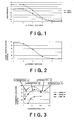
- the amount of isohumulones participating in the turbidity could be determined by measuring the amount of isohumulones that are not precipitated by centrifugation, in case direct measurement of the turbidity was difficult, and that such determined turbid isohumulones amount was deemed as the amount of the isohumulones (clathrated isohumulones), which bitter taste was mitigated by an effect of ⁇ CD.
- the turbid isohumulones rate of 70% or higher is preferable.
- an auxiliary line at 70% as illustrated in Figure 3 , 4 intersections of A, B, C and D were observed.
- the weight ratios among isohumulones, ⁇ CD and water at the 4 intersections were shown in Table 2. [Table 2] Isohumulones ⁇ CD Water Intersection A 1 25 100 Intersection B 1 12.5 112.5 Intersection C 1 6 54 Intersection D 1 5 20
- the turbid isohumulones rate namely the rate of isohumulones forming an inclusion compound, exceeds the 70% line in a range between intersections B and C.
- the isohumulones rate exceeds the 70% line in a range between intersections A and D.
- Example 1 the acidic conditions are favorable for forming the inclusion compound, and therefore it is clear to those skilled in the art that the inclusion compound can be also formed in the above ratio range below pH 9.0.
- compositions generated significantly turbidity and turned to slurries. They were centrifuged (3000 g x 10 min) respectively as in Example 2 (1), and the isohumulones in the supernatants were measured to calculate the turbid isohumulones rate.
- Figure 4 the results were plotted, thereby the weight ratio of isohumulones to ⁇ CD was taken along the abscissa, and the turbid isohumulone rate was taken along the ordinate.
- Example 2 (1) the inclusion compound is favorably formed at a higher ⁇ CD concentration, and it is therefore apparent to those of skilled in the art that the inclusion compound can be formed at the above ratio also at a ⁇ CD concentration of 5% or more.
- the high concentration slurry was centrifuged (3000 g x 10 min) to recover solid matter, which was washed by a 1 mM citrate buffer solution (pH 3.5) and centrifuged again to recover a past-like inclusion compound of isohumulones.
- the paste was subjected to freeze-drying (Sample A).
- the isomerized hop extract per se was subjected to freeze-drying to be solidified and crushed for mixing with ⁇ CD powders.
- the mixture was used as a comparative sample (Sample B).
- the freeze-drying was carried out by mild heating of a frozen sample under a reduced pressure.
- Samples A and B were stored unclosed at a temperature of 45°C and a moisture of 75% for 1 week, the white colored appearance of sample A remained and no change whatever was observed ( Figure 5 left). On the other hand the appearance of sample B turned yellowish, and, sensually, smelled like fermented soy beans, showing apparent changes from the original status ( Figure 5 right). The contents of isohumulones in the both samples were measured. There was no significant change in sample A, but a sharp decrease was observed in sample B ( Figure 6 ).
- sample A was clearly different from a plain mixture of isohumulones and ⁇ CD in properties and appearance and that sample A forms an inclusion compound.
- an inclusion compound of isohumulones was prepared 3 times and the content of isohumulones was measured by HPLC (JASCO Corp.) to be 11.9%, 12.2% and 11.9%. Assuming that 1 molecule of isohumulones and 2 molecules of ⁇ CD form an inclusion compound, the theoretical content of isohumulones is 12.2%. The results indicated that the inclusion compound of isohumulones was composed by the aforementioned molecule ratio. In accordance with the method of Example 3, an amount of isohumulones was changed stepwise from 0.25 mol to 1 mol based on 2 mol of ⁇ CD to prepare powders of the inclusion compound of isohumulones.
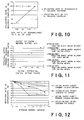
- the isohumulones contents in the obtained powders were measured by HPLC (HPLC) to obtain the results as shown in Figure 10 .
- HPLC HPLC
- Example 5 Comparison of a direct method and a dilution method in formation of an inclusion compound of isohumulones
- the turbid isohumulones rate of the above case was defined as a dilution method turbid rate (A), and a rate where a mixture having the final ratio was directly prepared without dilution (direct method) was defined as a direct method turbid rate (B).
- A dilution method turbid rate
- B direct method turbid rate
- the large differences between the two rates mean that initial preparation of a higher concentration solution of the inclusion compound followed by dilution under acidic conditions is more advantageous to obtain a solution of the inclusion compound with mitigated bitter taste, than directly preparing the final solution of the inclusion compound.
- the evaluation results of the differences between the two rates were represented as: ⁇ 50% (" ⁇ "), 50%> ⁇ 20% (" ⁇ "), 20%> "x” (Table 5).
- the turbid isohumulones rate of the above case was defined as a dilution method turbid rate (A), and a rate where a mixture having the final ratio was directly prepared without dilution (direct method) was defined as a direct method turbid rate (B).
- the degree of mitigation of the bitter taste of the inclusion compound of isohumulones was confirmed by sensory evaluation.
- the sensory evaluation was carried out with samples which were prepared by adding respectively the inclusion compound of isohumulones and the isomerized hop extract obtained in Example 2 to respective products (pH 3.6 to 4.3) so that the concentration of isohumulones is 50 ppm.
- the evaluation method was carried out in such a way that the isohumulones standard solutions having stepwise-predefined concentrations of 10, 20, 30, 40, 50 and 60 ppm were previously prepared and that 6 to 7 in-house panelists compare the samples and the standard solutions to find which concentration (bitter taste) of the standarad solutions the samples correspond to.
- the degree of mitigation of the bitter taste of the composition comprising the inclusion compound of isohumulones was confirmed by measuring the change rate of the membrane potential.
- various types of CD were added by the direct method or the dilution method (see Example 5) to prepare the samples shown in Table 8 and the solutions of isohumulones alone of the same concentrations and pH values were used as the control solutions.
- the membrane potential change was measured by a Taste Sensing System (Model SA402B, Probe used: SB2C00, Intelligent Sensor Technology, Inc.), and the ratio to the membrane potential change of the control solution was determined (membrane potential change rate).
- Example 6 a sensory evaluation similar to Example 6 was carried out concerning the mitigation degree of the bitter taste of the respective isohumulones- ⁇ CD compositions in reference to the solutions of isohumulones alone of the same concentrations and pH values.
- the samples were diluted 2-fold and 1% of glucose corresponding to the sweetness of 2.5% of CD was added to the standard solutions of isohumulones.
- the powdered inclusion compound of isohumulones obtained in Example 3 was tested for storage stability.
- the storage stability test was carried out by measuring the retention rate of isohumulones over time.
- the retention rate of isohumulones was measured by HPLC (JASCO Corp.). The results confirmed that the retention rate of isohumulones of the powdered inclusion compound of isohumulones was maintained better than that of the powdered isomerized hop extract ( Figure 12 ).
- the high concentration slurry containing 2.6% of isohumulones obtained by adding and mixing an isomerized hop extract to a 20% ⁇ CD solution (pH 4.0) similarly as in Example 3 was subjected to spray-drying at various temperature conditions to obtain similar powdered inclusion compounds of isohumulones as by freeze-drying.
- the temperature conditions (incoming gas temperature / outgoing gas temperature) of spray-drying were: (1) 150°C / 80°C, (2) 180°C / 80°C, (3) 150°C / 70°C and (4) 150°C / 60°C.
- the storage stability test was carried out by measuring the retention rate of isohumulones over time.
- the retention rate of isohumulones was measured by HPLC (JASCO Corp.).
- HPLC JASCO Corp.
- the 20% ⁇ CD solution was then adjusted to the pH of 3.5, 4.0 and 4.5, and the isomerized hop extract was added to the solution and mixed to obtain the high concentration slurries containing 2.6% of isohumulones.
- the slurries were subjected to spray-drying to obtain similar powdered inclusion compounds of isohumulones as by freeze-drying.
- the temperature condition (incoming gas temperature / outgoing gas temperature) of the spray-drying was 150°C / 60°C.
- Example 8 (2) The obtained powdered inclusion compound of isohumulones in Example 8 (2) was tableted. The tableting conditions were as described below.
- the above formulation was directly tableted to a sample (direct tablet) or was tableted to a sample after wet pelletizing (wet pellet tablet).
- Addition of lactose to the powdered inclusion compound improved the handling properties by suppressing the dispersion of the powdered inclusion compound of isohumulones.
- the tabletability was quite well for both the direct tablet and the wet pellet tablet, and according to the measurement of the isohumulones content in the tablets, the decrease of isohumulones during pelletizing and tableting was not observed.
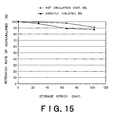
- the stability of the powdered inclusion compound of isohumulones in the direct tablet and the wet pellet tablet was tested. As a result, even after a long term storage, the retention rate of isohumulones in the tablet was maintained ( Figure 15 ).
- a soft capsule, a jelly food, a biscuit and a carbonated drink containing the inclusion compound of isohumulones were prepared according to the following recipes.
- the recipes were based on the premise that 36 mg of iso- ⁇ -acids was ingested daily, which was equivalent to a plan of daily ingestion of 324 mg of the inclusion compound of isohumulones.
- Powdered inclusion compound 81 mg (27 parts by weight) Safflower oil:190 mg (63 parts by weight) Beeswax:29 mg (10 parts by weight)
- Powdered inclusion compound 324 mg (0.5 parts by weight) Gelatin:3 g (2.5 parts by weight) Water:97 g (80 parts by weight) Sugar: 20 g (17 parts by weight)
- Powdered inclusion compound 324 mg (0.3 parts by weight) Kanten-agar:1 g (0.9 parts by weight) Water: 99 g (90 parts by weight) Sugar: 10 g (8.8 parts by weight)
- Powdered inclusion compound 324 mg (0.4 parts by weight)
- Cake flour 30 g (31.1 parts by weight)
- Powdered inclusion compound 324 mg (0.3 parts by weight)
- Carbonated water 100 g (99.7 parts by weight)
- a mixture of predetermined quantities of skim milk and sucrose was inoculated with Lactobacillus paracasei, and kept at 30 to 33°C for 12 to 24 hours for fermentation.
- the fermented liquid was diluted with water, to which the powdered inclusion compound of isohumulones (Example 3) was added to complete a lactic acid bacteria drink of a drinking yogurt type (lactic acid bacteria drink 1).
- the fermented liquid was diluted with water and orange juice, to which the powdered inclusion compound of isohumulones (Example 3) was added to complete a lactic acid bacteria drink of a juice type (lactic acid bacteria drink 2).
- Their recipes are shown in Table 9. Lactic acid bacteria drink 1 Lactic acid bacteria drink 2 Powdered inclusion compound 324mg 324mg Skim milk 40g 5g Sucrose 14g 14g Water 45g 45g Fruit juice 0g 35g
Landscapes
- Chemical & Material Sciences (AREA)
- Health & Medical Sciences (AREA)
- Life Sciences & Earth Sciences (AREA)
- Organic Chemistry (AREA)
- Engineering & Computer Science (AREA)
- Medicinal Chemistry (AREA)
- General Health & Medical Sciences (AREA)
- Veterinary Medicine (AREA)
- Pharmacology & Pharmacy (AREA)
- Public Health (AREA)
- Animal Behavior & Ethology (AREA)
- Epidemiology (AREA)
- Natural Medicines & Medicinal Plants (AREA)
- Chemical Kinetics & Catalysis (AREA)
- Polymers & Plastics (AREA)
- Molecular Biology (AREA)
- Nanotechnology (AREA)
- Botany (AREA)
- Medical Informatics (AREA)
- Biotechnology (AREA)
- Nutrition Science (AREA)
- Bioinformatics & Cheminformatics (AREA)
- Mycology (AREA)
- Biochemistry (AREA)
- Materials Engineering (AREA)
- General Chemical & Material Sciences (AREA)
- General Engineering & Computer Science (AREA)
- Crystallography & Structural Chemistry (AREA)
- Alternative & Traditional Medicine (AREA)
- Microbiology (AREA)
- Biophysics (AREA)
- Food Science & Technology (AREA)
- Zoology (AREA)
- Physiology (AREA)
- Inorganic Chemistry (AREA)
- Medicinal Preparation (AREA)
- Acyclic And Carbocyclic Compounds In Medicinal Compositions (AREA)
- Organic Low-Molecular-Weight Compounds And Preparation Thereof (AREA)
- Coloring Foods And Improving Nutritive Qualities (AREA)
Applications Claiming Priority (2)
| Application Number | Priority Date | Filing Date | Title |
|---|---|---|---|
| JP2005355268 | 2005-12-08 | ||
| PCT/JP2006/324591 WO2007066773A1 (fr) | 2005-12-08 | 2006-12-08 | Clathrate dérivé d’isohumulone et préparation contenant ledit clathrate |
Publications (2)
| Publication Number | Publication Date |
|---|---|
| EP1970366A1 true EP1970366A1 (fr) | 2008-09-17 |
| EP1970366A4 EP1970366A4 (fr) | 2010-07-28 |
Family
ID=38122918
Family Applications (1)
| Application Number | Title | Priority Date | Filing Date |
|---|---|---|---|
| EP06834346A Withdrawn EP1970366A4 (fr) | 2005-12-08 | 2006-12-08 | Clathrate dérivé d isohumulone et préparation contenant ledit clathrate |
Country Status (7)
| Country | Link |
|---|---|
| US (1) | US20090186142A1 (fr) |
| EP (1) | EP1970366A4 (fr) |
| JP (1) | JP5242165B2 (fr) |
| KR (1) | KR101351228B1 (fr) |
| CN (1) | CN101365671B (fr) |
| AU (1) | AU2006323689B2 (fr) |
| WO (1) | WO2007066773A1 (fr) |
Families Citing this family (16)
| Publication number | Priority date | Publication date | Assignee | Title |
|---|---|---|---|---|
| JP2009091309A (ja) * | 2007-10-10 | 2009-04-30 | Japan Organo Co Ltd | バコパモニエラエキスを含有する組成物およびその製造方法ならびに飲食品 |
| JP2010209029A (ja) * | 2009-03-12 | 2010-09-24 | Nagase Iyakuhin Kk | 呈味が改善された医薬組成物又は健康食品 |
| JP5615609B2 (ja) * | 2010-07-12 | 2014-10-29 | 日本食品化工株式会社 | シクロデキストリン包接体の製造方法 |
| WO2012101931A1 (fr) | 2011-01-24 | 2012-08-02 | 富士フイルム株式会社 | Composition pour administration orale |
| CA2839524C (fr) | 2011-06-20 | 2016-05-17 | H.J. Heinz Company | Methodes et compositions probiotiques |
| DK3351554T3 (da) | 2012-06-18 | 2021-08-30 | Heinz Co Brands H J Llc | Glutenrelaterede forstyrrelser |
| US10660351B2 (en) * | 2012-06-20 | 2020-05-26 | Kirin Holdings Kabushiki Kaisha | Beverage containing aqueous medium extract of hop subjected to oxidation treatment |
| DE102012214608A1 (de) * | 2012-08-16 | 2014-02-20 | Henkel Ag & Co. Kgaa | Wasserlösliche Verpackung mit Bittermittel II |
| JP5657721B2 (ja) * | 2013-02-28 | 2015-01-21 | サッポロビール株式会社 | ビールテイスト飲料及びその製造方法 |
| ES2729641T3 (es) | 2013-05-10 | 2019-11-05 | Heinz Co Brands H J Llc | Probióticos y métodos de uso |
| JP5714752B2 (ja) * | 2014-08-08 | 2015-05-07 | サッポロビール株式会社 | ビールテイスト飲料のコク及びキレを改善する方法 |
| JP5719071B2 (ja) * | 2014-09-19 | 2015-05-13 | サッポロビール株式会社 | ビールテイスト飲料 |
| KR101561406B1 (ko) * | 2015-02-02 | 2015-10-16 | 환인제약 주식회사 | 두타스테라이드 함유 고체 분산체 및 이를 포함하는 조성물 |
| JP5945346B2 (ja) * | 2015-03-19 | 2016-07-05 | サッポロビール株式会社 | ビールテイスト飲料及びその製造方法 |
| AU2018408879B2 (en) | 2018-02-16 | 2024-12-12 | The New Zealand Institute For Plant And Food Research Limited | Oral dosage forms comprising a hops extract |
| DE102021002339A1 (de) | 2020-11-17 | 2022-05-19 | DÖHLER GmbH | Verfahren zur selektiven Abtrennung eines oder mehrerer Aromastoffe sowie Verwendung dieser selektiv abgetrennten Aromastoffe zur Aromatisierung eines Lebensmittel-, Kosmetik- oder Pharmaproduktes |
Family Cites Families (8)
| Publication number | Priority date | Publication date | Assignee | Title |
|---|---|---|---|---|
| US3965188A (en) * | 1972-01-10 | 1976-06-22 | Miller Brewing Company | Hop extract process and product |
| AU476799B2 (en) * | 1974-02-04 | 1976-08-05 | Carlton And United Breweries Limited | Preparation of a water soluble isomerised hop extract |
| JPS58146271A (ja) * | 1982-02-26 | 1983-08-31 | Toyo Jozo Co Ltd | 酒類の加工法 |
| DE3513169A1 (de) * | 1985-04-12 | 1986-10-16 | Hopstabil Hopfenverarbeitungs-Gesellschaft mbH, 8069 Wolnzach | Verfahren zur herstellung von isohumulonen |
| JPH06237750A (ja) * | 1993-02-12 | 1994-08-30 | Sapporo Breweries Ltd | サイクロデキストリン含有ビールおよびその製造法 |
| US5866162A (en) * | 1993-08-10 | 1999-02-02 | Smithkline Beecham P.L.C. | Pharmaceutical composition containing a drug/β-cyclodextrin complex in combination with an acid-base couple |
| US20090087512A1 (en) * | 2004-05-14 | 2009-04-02 | Tripp Matthew L | Encapsulated fractions isolated or derived from hops |
| WO2006065131A1 (fr) * | 2004-11-22 | 2006-06-22 | Universiteit Leiden, Faculteit Van Wiskunde En Natuurwetenschappen | Procede d’amelioration de la stabilite d’extraits de houblon et de boissons aromatisees au houblon |
-
2006
- 2006-12-08 EP EP06834346A patent/EP1970366A4/fr not_active Withdrawn
- 2006-12-08 AU AU2006323689A patent/AU2006323689B2/en not_active Ceased
- 2006-12-08 US US12/096,681 patent/US20090186142A1/en not_active Abandoned
- 2006-12-08 JP JP2007549198A patent/JP5242165B2/ja not_active Expired - Fee Related
- 2006-12-08 CN CN2006800525696A patent/CN101365671B/zh not_active Expired - Fee Related
- 2006-12-08 WO PCT/JP2006/324591 patent/WO2007066773A1/fr not_active Ceased
- 2006-12-08 KR KR1020087016515A patent/KR101351228B1/ko not_active Expired - Fee Related
Non-Patent Citations (2)
| Title |
|---|
| No further relevant documents disclosed * |
| See also references of WO2007066773A1 * |
Also Published As
| Publication number | Publication date |
|---|---|
| KR20080077258A (ko) | 2008-08-21 |
| CN101365671A (zh) | 2009-02-11 |
| KR101351228B1 (ko) | 2014-01-13 |
| JPWO2007066773A1 (ja) | 2009-05-21 |
| EP1970366A4 (fr) | 2010-07-28 |
| WO2007066773A1 (fr) | 2007-06-14 |
| US20090186142A1 (en) | 2009-07-23 |
| JP5242165B2 (ja) | 2013-07-24 |
| CN101365671B (zh) | 2012-07-04 |
| AU2006323689A1 (en) | 2007-06-14 |
| AU2006323689B2 (en) | 2012-11-08 |
Similar Documents
| Publication | Publication Date | Title |
|---|---|---|
| AU2006323689B2 (en) | Isohumulone compound clathrate and composition containing the same | |
| JP2001270881A (ja) | プロアントシアニジン含有組成物 | |
| JP7018019B2 (ja) | 飲料用粉末植物エキスとその製造方法 | |
| TW201929683A (zh) | 飲料及其製造方法 | |
| JPWO2018151156A1 (ja) | 容器詰非発酵飲料およびその製造方法 | |
| CN102361562B (zh) | 多酚组合物 | |
| JP2007176919A (ja) | カルコン類化合物含有組成物 | |
| JP2018102245A (ja) | ビールテイスト飲料およびその製造方法 | |
| JP7138052B2 (ja) | 容器詰発酵飲料およびその製造方法 | |
| KR101310648B1 (ko) | 갯기름나물 잎 추출물을 함유하는 숙취해소용 조성물 또는 갯기름나물 잎을 함유하는 발효주 | |
| JP4688795B2 (ja) | バナバ抽出物の調製方法 | |
| KR20210081629A (ko) | 오미자 증류물을 유효성분으로 포함하는 항산화 또는 피부미백용 식품 또는 화장료 조성물 | |
| JP2010173989A (ja) | イソフムロン類包接体を含んでなるw/o/w型乳化組成物およびその製造方法 | |
| KR101880239B1 (ko) | 젖산발효물을 이용한 쑥식초 및 그 제조방법 | |
| JP7463058B2 (ja) | Ace阻害活性を有する組成物 | |
| JP7353173B2 (ja) | ノンアルコールビールテイスト飲料 | |
| JP5615609B2 (ja) | シクロデキストリン包接体の製造方法 | |
| CN1748582B (zh) | 风味改善组合物、饮食品和医药品以及改善饮食品和医药品风味的方法 | |
| JP2845349B2 (ja) | 胚芽抽出エキスの製造法 | |
| JP2021024858A (ja) | 血圧降下用組成物 | |
| KR102597975B1 (ko) | 항산화능이 향상된 상황버섯 추출물을 포함하는 기능성 어린이 음료 및 그의 제조방법 | |
| KR20210029535A (ko) | 배와 미나리의 발효물을 포함하는 면역 증진용 식품 조성물 및 이의 제조방법 | |
| JP7253372B2 (ja) | 血圧降下用組成物 | |
| JP7691693B2 (ja) | 血圧低下作用を有するナス由来組成物 | |
| EP3895544A1 (fr) | Procédé de production de produit raffiné de jus de poire |
Legal Events
| Date | Code | Title | Description |
|---|---|---|---|
| PUAI | Public reference made under article 153(3) epc to a published international application that has entered the european phase |
Free format text: ORIGINAL CODE: 0009012 |
|
| 17P | Request for examination filed |
Effective date: 20080702 |
|
| AK | Designated contracting states |
Kind code of ref document: A1 Designated state(s): AT BE BG CH CY CZ DE DK EE ES FI FR GB GR HU IE IS IT LI LT LU LV MC NL PL PT RO SE SI SK TR |
|
| A4 | Supplementary search report drawn up and despatched |
Effective date: 20100630 |
|
| 17Q | First examination report despatched |
Effective date: 20110317 |
|
| DAX | Request for extension of the european patent (deleted) | ||
| GRAP | Despatch of communication of intention to grant a patent |
Free format text: ORIGINAL CODE: EPIDOSNIGR1 |
|
| RIC1 | Information provided on ipc code assigned before grant |
Ipc: A61K 9/00 20060101ALI20160506BHEP Ipc: A61K 36/60 20060101ALI20160506BHEP Ipc: B82Y 5/00 20110101ALI20160506BHEP Ipc: A61K 47/40 20060101ALI20160506BHEP Ipc: C08B 37/16 20060101ALI20160506BHEP Ipc: A61K 9/48 20060101ALI20160506BHEP Ipc: A61K 9/20 20060101ALI20160506BHEP Ipc: C07C 45/85 20060101AFI20160506BHEP Ipc: C07C 49/743 20060101ALI20160506BHEP Ipc: A61K 31/122 20060101ALI20160506BHEP Ipc: A61K 47/48 20060101ALI20160506BHEP |
|
| INTG | Intention to grant announced |
Effective date: 20160610 |
|
| STAA | Information on the status of an ep patent application or granted ep patent |
Free format text: STATUS: THE APPLICATION IS DEEMED TO BE WITHDRAWN |
|
| 18D | Application deemed to be withdrawn |
Effective date: 20161021 |